Category: Main Story

  • Elections 2023: Don’t change for the sake of change

    Elections 2023: Don’t change for the sake of change

    … Zim should avoid the ‘Mahama syndrome’ in Ghana at all cost


    At long last, Zimbabwe’s much-awaited 2023 harmonised elections have arrived. Wednesday 23 August will be the day when the nation sorts out the men from the boys. And the field is, understandably, crowded – 11 presidential candidates! But from whatever angle one sees it, the real contest is between the incumbent President Emmerson Dambudzo Mnangagwa, the Zanu PF candidate, and Nelson Chamisa, the CCC candidate. CCC stands for Citizens Coalition for Change (no pun intended). If truth be told, the other 9 candidates are running for the sake of running as they don’t have a chance in hell, not even a slither, to win the race.

    In this cover story, our Editor, Baffour Ankomah, has looked at two important political events in Rwanda and Ghana (which he calls the “Kagame Syndrome” and “Mahama Syndrome”) and used them as the basis for a clarion call on Zimbabweans to vote wisely on 23 August, and not to succumb to the blandishments and manipulations of outsiders who are hiding behind insiders to seek change for change sake. There are too many dangers in it to tinker with. Please read on …

    Self-assured: President Emmerson Mnangagwa is sure of victory on 23 August based on the solid achievements of his first term

    As Zimbabwe prepares for its much-awaited harmonised elections on 23 August, there are two examples of African political makeup that the country may want to learn from – Rwanda and Ghana.


    Rwanda is where the solid gains made by “a good president” who had been in power for 15 years already, encouraged the people to petition Parliament in 2015 to change the national constitution and allow the incumbent President Paul Kagame to run for a third term in 2017, so that he could stay longer and continue the good work he had done for the country, even though at the time the constitution only allowed two terms of 7 years each for the presidency.


    In sharp contrast, Ghana is where, despite the solid gains made by “a good president” who had been in power for just 4 years, the people still voted out the incumbent President John Mahama in 2016, and brought in a new president who allowed almost all the uncompleted infrastructural projects started by Mahama (and they were many, in all sectors) to go to ruin to the shame and detriment of the country.


    In effect, the deleterious actions of Ghana’s new president, Nana Addo Dankwa Akufo-Addo (who has been in power for 7 years now) have not only seriously disturbed the country’s development trajectory, but has led to severe economic downturn and suffering for the people. This has forced Mahama to try to come back as president (in 2020 but narrowly defeated, and will run again in 2024).


    The Rwandan experience can best be described as the “Kagame Syndrome”, and the Ghana experience the “Mahama Syndrome”. For clarity, the Mahama Syndrome is where a president who has done well in his first term is, surprisingly, denied a second term by the electorate to the detriment of the country.


    So which one will Zimbabwe go for on 23 August – the Kagame Syndrome or the Mahama Syndrome? Let me offer more information, from my personal experience.


    The ED enigma

    In the March 2023 issue of our sister magazine, Brick by Brick, I did a piece which I headlined: Zimbabwe is pregnant – And the father is buoyant. The moral of that article was simple: Zimbabwe has made solid gains under “a good president” in Comrade Emmerson Dambudzo Mnangagwa, and the nation would be foolish to deny him a second term to finish the good work he has done in his first term.


    That may sound controversial for those who spend too much time on the social media, twiddling their fingers, and ending up having no more eyes to see what has really happened in Zimbabwe since the last elections in August 2018. So let me repeat part of what I wrote for the sake of such people.


    I started by laying down my bona fides. “I have been a journalist and editor for the past 43 years – for as long as dear Zimbabwe has been an independent country,” I wrote. “In all those 43 years (and I say this with my hand on my heart), I have never ever sought to mislead my readers. Never once! I fight a good fight for African causes, one of which has been Zimbabwe. I know that sometimes I fight too hard, but I have always stood for the truth no matter whose ox was gored. So I don’t seek to mislead you in this piece.


    “Therefore, if I say here that, based on what I have seen in 7 months [now 10 months] of intensive travelling through the nooks and crannies of Zimbabwe, that this country which has suffered severe economic woes since the West imposed sanctions on it 23 years ago, is like a pregnant woman about to give birth (only this time to sets of nonuplets of development), you must please believe me. Zimbabwe is pregnant with development (I dare repeat), and, with a bit of patience and midwifery, the babies will pop out pretty soon.


    “I have had the good fortune of being a member of a Brick by Brick team of editors which has been travelling all over Zimbabwe to see what the Second Republican government, headed by President Mnangagwa, has achieved in its first term. Only a few Zimbabweans may know their country as I have known it in the past 7 months, believe me.


    “I have been covering Zimbabwe intimately for 21 years now. As editor of the London-based New African magazine, I used to travel down from London to cover Zimbabwe and go back, sometimes three times a year. So I knew the country fairly well before the intensive travelling of the past 7 months – which has afforded me the opportunity to see the country at closer range, including its outback. Like Australia, Zimbabwe also has an outback which can only be seen by intrepid travellers like we have been in the past 7 months.

    They come to meet their President: Zanu PF supporters have been turning up in huge numbers since the party kicked off its election campaign. The massive crowds tell their own story.

    “As a foreigner, it is natural that I come with a pair of fresh eyes that see more than what the locals see. Familiarity robs locals everywhere of the joy of seeing and appreciating the beauty (and sometimes even the resources) of their countries. Zimbabwe is a land of natural beauty – that I can tell with no qualms at all. The beauty takes the breath away, as you drive through the valleys and mountains that God gave to this country. In the rainy season when everything is green, wow, what sight greets you in the hinterlands.


    “It is, therefore, unfortunate that a large number of Zimbabweans don’t really know their country, and as such they don’t appreciate what a beautiful nation they have. Most of them don’t even know what is happening in their own country, or what has happened under the Second Republic. As such they tend to flatter themselves on the social media by claiming to know what they don’t know. To their eternal shame, they end up putting down their country.


    “But I have news for such people. I have been to all the 10 provinces of Zimbabwe in the past 7 months, inves­tigating the government’s “Zimbabwe is open for business” policy, and the “Leav­ing no one and no place behind” policy. As part of the Brick by Brick team, we have been looking at what has actually happened on the ground, and what is still happening on the ground.


    “And what I have seen is beyond impressive. I won’t say everything has been hunky-dory. No, there is still more to do. But if you live in Harare, Bulawayo, Mutare, Masvingo and the other provincial capitals and towns, and you don’t go out to see for yourself what is happening, you tend to say nothing is happening or has happened. You look at the potholed streets that lead to your house, you shake your head, and say ‘pakaipa, what has this government done?’

    A song and a dance: President Mnangagwa has liked what he has seen so far on the campaign trail, so he allows himself a dance in celebration. With him is Vice President Gen Constantine Chiwenga (centre), and the Zanu PF chairman and Defence Minister Oppah Muchinguri-Kashiri (right)

    “But I have gone beyond the potholed streets and seen what the government has done. And I can report that in the last 5 years your President, Comrade Emmerson Mnangagwa, and his government have done such a wonderful job beyond the potholed streets, developing this country in all sectors – and I mean all sectors – including roads, electricity (Hwange Units 7 and 8 are a marvel), dams, schools, hospitals, clinics, irrigation facilities, etc. And all this is spread throughout the country. No wonder, we are now hearing the moniker, ‘Government of Development’.


    “Commenting on the infrastructural development in his newspaper column on 5 March 2023, President Mnangagwa explained that: ‘Much of the social in­frastructure have been built under the devolution programme, making them nationwide in spread.’ And that is ex­actly what I have seen travelling around the country. The new development is spread nationwide, in a country that has been under US, Britain and EU economic sanctions for the greater part of the last 23 years.”


    Private players

    What’s more? I showed in the March article that by providing a conducive environment for doing business, President Mnangagwa’s government had attracted big-time private players (both local and foreign) who had brought their golden pots to bear on the mining, agriculture, industrial and the other sectors of the country.


    “So all things being equal,” I wrote, “in the next 5 to 10 years, when all the projects now in gestation (both government and private) come to fruition, Zimbabwe will be something else. I have seen it, so believe me.”

    The sign has it: Zanu PF supporters carry the message

    That statement, in fact, reminded me of what the Ghana ambassador in Harare, Alexander Grant Ntrakwa, had told me. Bowled over by what is happening in Zimbabwe, the ambassador had drawn me aside during a visit to the Museum of African Liberation in Harare, and softly told me that from what he had seen himself, “Zimbabwe will soon become the China of Africa, doing things by itself.”


    And not only that: On Saturday 11 March 2023, Ambassador Ntrakwa was one of 57 diplomats who attended a “field day” at President Mnangagwa’s Pricabe farm near Kwekwe, and the Ghanaian was even more astounded by what he saw at the farm.


    “I wish all African presidents can see and do what President Mnangagwa has done at his farm,” Ambassador Ntrakwa commented. “I think before presidents are elected in Africa, they must first be asked to show what their philosophy on agriculture is, and what they will do practically on the ground, in agriculture. This President has taken agriculture to another level,” the ambassador added.


    To me, that is the mark of “a good president”. To you, that should be the mark of “a good president”. The opposition and others who have not gone to see what President Mnangagwa’s government has done on the ground nationwide, may have their own views. But that should not erase the views of those of us who have gone to see, with our own very eyes, the gains made in Comrade Mnangagwa’s first term.


    Second term

    Maybe I say so because Ambassador Ntrakwa and I are Ghanaians, so we can see progress when we see one in Zimbabwe. When I first travelled on the new Harare-Masvingo-Beitbridge road last August, I was similarly bowled over by what the Second Republic has done to that road. I was so impressed that I mentioned to my colleagues travelling with me that, that road alone deserves to give President Mnangagwa a second term. And I meant it.


    I had known that road intimately for the past 10 years because my wife comes from Masvingo. And what a hell it used to be. Today, you drive on the same road as if you are flying. We used to take four groaning hours to drive from Harare to Masvingo. Now it takes us two blessed hours and a half. All credit to the Second Republic and its President and government and ruling party.


    “Though the road is not completely finished (there are pockets still not yet done),” I wrote in my March article, “what has already been achieved is enough to earn President Mnangagwa and his government a second term, that is if politics has eyes to see progress. “If somebody does a good thing, he deserves praise,” I wrote, “and President Mnangagwa and his government deserve praise.”


    This is simply to say, from all the indicators of national life, Zimbabwe too, like Rwanda, has had “a good president” in the last 5 years who deserves to have a second term to continue to deliver the goods. Zimbabwe’s constitution allows two terms of 5 years each, and this “good president” deserves a second term purely on his own merits, irrespective of what the opposition says.


    The measure of how good the Second Republic has been is seen in the current massive attack on the Zim dollar and the economy generally, an attack that started a mere two days after President Mnangagwa announced the date of the 2023 elections.


    Judging by the huge size of the attack, the anger in which it was delivered, and the cynicism in the timing, one can easily deduce that there are outside hands directing the unseen forces behind the attack.


    Their aim is to destroy the economy by collapsing the national currency and induce steep prices in goods and services, which, they hope, will bring more economic suffering that will lead to disaffection among the population, and influence them to vote massively against the President and throw him out of office.


    They want the people to stone their President. But Zimbabweans have proved over the past 23 years of Western economic sanctions to be wiser and clever than that. And that they will not follow what the Ghanaians did in 2016, cutting their nose to spite their face, when they threw President Mahama out of office after only one term.


    The Mahama Syndrome

    President John Mahama was voted into office in 2012 after serving as vice president from 2008. He spent the first year in office fighting a distractive election petition in the Supreme Court against his victory. When the petition was settled in his favour and he finally turned his attention to nation building, he set in motion dozens and dozens of infrastructural projects – from new schools and hospitals to expanding the nation’s road network and improving the supply of water and electricity, as a way of stimulating economic growth by creating more jobs.


    If truth be told, apart from Ghana’s first president, Dr Kwame Nkrumah, who had 9 years at the helm to revolutionalise the country’s infrastructure to dizzying heights, no president of the country since Nkrumah had done so much on infrastructure in so short a time (4 years) as Mahama, the youngest president that Ghana has had so far (born after independence).


    I say so because I had the opportunity in 2016 to go around Ghana (8 regions of the country’s then 10 regions) to cover Mahama’s infrastructural programme in a special report for the New York-based Africawatch magazine. What I (and my suffering wife/photographer) saw driving around Ghana was simply beyond impressive. The projects were spread nationwide and in every sector of the nation.


    President Mahama was racing against time (elections were coming in December 2016) and he wanted most of the projects completed before the elections. Alas, his wishes proved not to be horses. And a good deal of the projects could not be completed before the elections.


    So when he was voted out, after months of a fake allegation of “incompetence” by the opposition (“Mahama is incompetent, Mahama is incompetent”, the opposition chanted), a high percentage of the legacy he wished to leave for Ghana remained uncompleted.


    And as fate will have it, the incoming government headed by President Nana Addo Dankwa Akufo-Addo, decided, in its infinite wisdom, to abandon Mahama’s uncompleted projects, some of them at over 90% completion, to the eternal shame and detriment of the country.
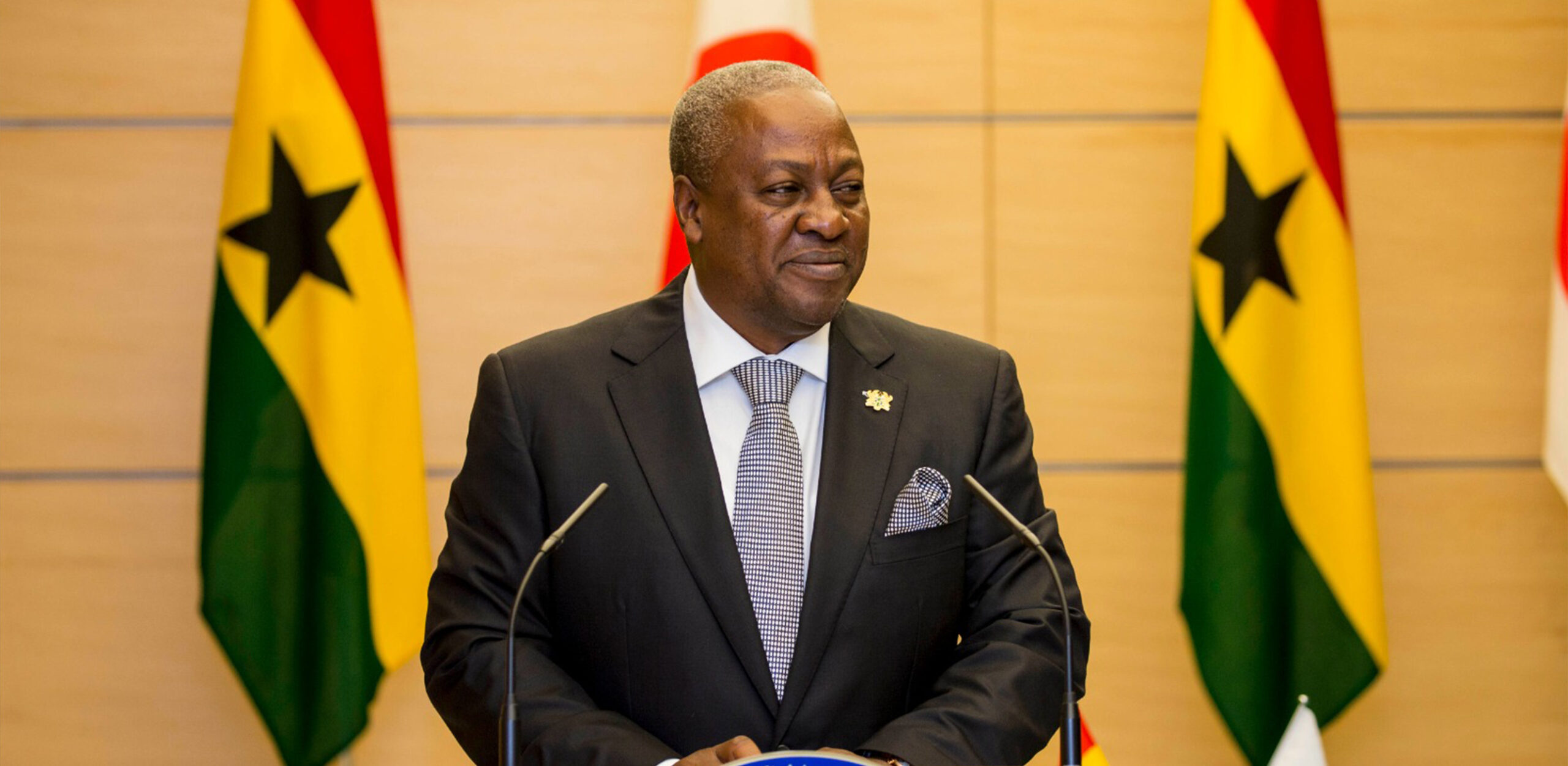
    The one they denied a second term: Ghana’s former President John Dramani Mahama did so well in his first term, at least in infrastructural development. Surprisingly, he was voted out, leading to the “Mahama Syndrome”

    Mahama’s projects

    In fact, Mahama’s story is better told by other mouths, as I run the risk of being accused of bias if I tell it myself. So let me quote here, in extenso, the Africawatch magazine which devoted a recent edition to Mahama’s abandoned projects. The magazine, which is distributed in Ghana and North America, wrote:


    “By December 2015, Mahama’s administration had begun the construction of 123 senior high schools, part of 200 it planned to build around the country. The four-story buildings, called “E-blocks” because they would be shaped like the letter E, would contain classrooms, laboratories, technical and vocational workshops, and housing for teachers. Some of them were completed by the end of 2016 before he left office. About 189 dormitories and 1,079 six-unit classroom blocks were also under construction, according to a report by the then Ministry of Communications officials.


    “In health care, Mahama’s government spent about US$2bn on building new hospitals and clinics and upgrading other facilities. The largest projects were a new 617-bed teaching hospital at the University of Ghana in Accra and doubling the size of the Tamale Teaching Hospital, the main hospital in northern Ghana, to 800 beds.


    “The others included four new regional hospitals, 14 smaller district hospitals; institutional hospitals for soldiers, sailors and police; and numerous local polyclinics and health centres.


    “Mahama’s government also launched what it called an ‘aggressive affordable housing programme’ to ‘provide more Ghanaian families in the lower to middle-income bracket with decent homes’. And it worked

    on two big developments in the Greater Accra Region: one at Saglemi in the Ningo-Prampram District, and the Nyame Dua Estates, a public-private partnership deal in Kpone.


    “Mahama said he wanted everyone in Ghana to have access to potable water by 2025. By the end of 2015, his administration claimed that the number of Ghanaians with water coverage had reached 76% in both urban and rural areas. The completed projects had added 77.5 million gallons per day to the national water-supply system.


    “Most of that increase came in the Greater Accra metropolitan area, where four projects added 65.7 million gallons per day to the system, wiping out a shortfall of 63 million gallons per day. One of them was the Teshie-Nungua Desalination Water Project, the first desalination project in West Africa, which opened in 2015. It supplies 13.2 million gallons per day to about 500,000 people in the densely populated coastal towns east of Accra.


    “With electricity demand growing rapidly and the country plagued by local blackouts from load-shedding by power utilities, work on 7 plants added more than 1,000 megawatts to the country’s generation capacity by 2016.


    “The government projected that once the Atuabo Gas Plant, which opened in 2015 in the Western Region, reached full capacity, it would supply enough gas to generate about 500 megawatts of power, saving the nation GH¢500m in fuel imports. Overall, it said, electricity supply was extended to 2,861 communities from 2013 through 2015, increasing the share of Ghanaians with access to electricity to 76% – second only to South Africa in sub-Saharan Africa.


    “Transportation projects included expanding and modernising airports in Kumasi and Tamale; beginning work on a new airport in Ho, and a new terminal at the Kotoka International Airport in Accra. Berths for deep-water ships were built at Tema, Ghana’s main port. A new commuter railroad in the Sekondi-Takoradi metropolitan area opened in 2016. Hundreds of trunk roads and city and town roads were built, paved, or repaved.


    “The Mahama administration also appropriated GH¢3bn over five years for the Cocoa Roads Improvement Programme, to build and repair roads in cocoa-growing areas such as Ashanti and Central regions.
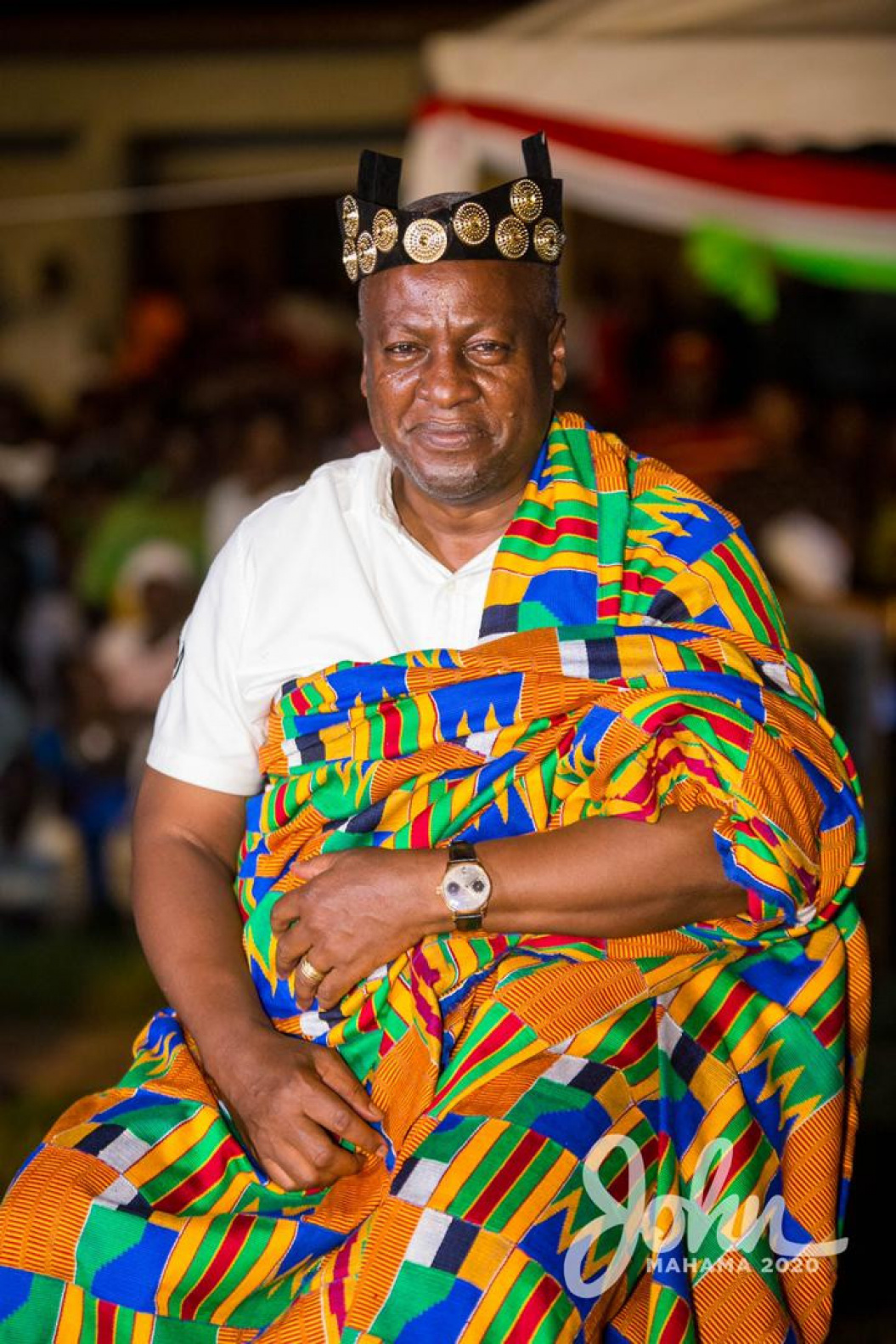
    ‘I shall return’: John Mahama, decked in an Akan king’s robes, will be running again for president in December 2024, having served only one term in his first incarnation

    “The landmark Adomi Bridge over the Volta River in Eastern Region, an 804-foot steel arch bridge opened in 1957, was rehabilitated, with its entire road deck replaced. After almost two years of work, it reopened in December 2015.


    “Mahama’s government also began upgrading and expanding markets in Accra and Tamale, and commenced building new marketplaces in Cape Coast and Kumasi.”


    Out they voted him

    You would think that adding such massive development projects to the national legacy would be appreciated, the nation rather foolishly voted Mahama out in 2016, depriving him of a second term he so richly deserved.


    And what happened after his defeat? Africawatch picks up the story: “After President Akufo-Addo defeated Mahama in the 2016 elections and took the helm of affairs in the country, he abandoned numerous projects that the former president was working on. They included hospitals, roads, and rural electrification projects, as well as the Saglemi housing scheme. He completed a few senior high-school E-Blocks and neglected the rest.


    “Akufo-Addo also suspended the Cocoa Roads Improvement Programme in 2017, although he began awarding construction contracts for it in 2019 in a piecemeal manner.”


    Then things began to fall apart in the economy. To put it in context, the overall financial resources that Mahama’s government had from 2013-2016 were about GH¢189bn, yet Mahama invested heavily in developing infrastructure.


    “Looking back at Mahama’s impressive infrastructure projects,” the Africawatch reported, “many Ghanaians are shaking their heads in disbelief as they compare it to Akufo-Addo’s record. They are asking: What happened to all the GH¢377bn that his government had received by the end of 2021?


    “Indeed, the gains from the investments Mahama made before he left office delivered a rapid economic growth that averaged 7% a year from 2017 to 2019. Akufo-Addo could not sustain that, as most of his economic policies were focused more on consumption than on growth.”
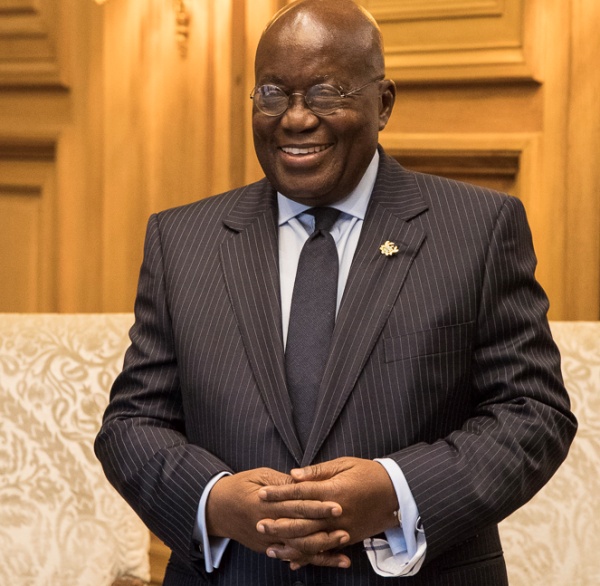
    In serious economic trouble: President Nana Akufo-Addo’s second term has not been rosy. His decision to abandon most of the projects started by former President Mahama has not been popular at all

    The Africawatch quoted Franklin Cudjoe, head of the IMANI Centre for Policy and Education in Accra, as having confirmed that: “A lot of the growth we had in 2017, 2018, [and] to a large extent, 2019, was due to John Mahama’s investment. What we did not do was to protect those investments with sensible policies and sensible projects.”


    To finish off the story of the abandoned projects, the Africawatch chose to highlight one abandoned project in each of Ghana’s 16 regions and published photos showing their current state – although in all the regions there are more than one abandoned project.


    For example, in the Ashanti Region, which strangely happens to be the region which gives Akufo-Addo the most votes that keep him in power (1.6 million in 2016, and 1.7 million in 2020), there were 6 brand new hospital projects started by Mahama which were abandoned by Akufo-Addo, but two have since been completed and commissioned.


    These are the Asante-Akim Municipal Hospital at Konongo, a 60-bed facility which was 97% complete by the time Mahama lost the election in December 2016. It cost US$36m to build but was abandoned by Akufo-Addo for 6 years, and was only commissioned on 16 October 2022; and the Ahafo Ano Municipal Hospital at Tepa (another 60-bed facility).
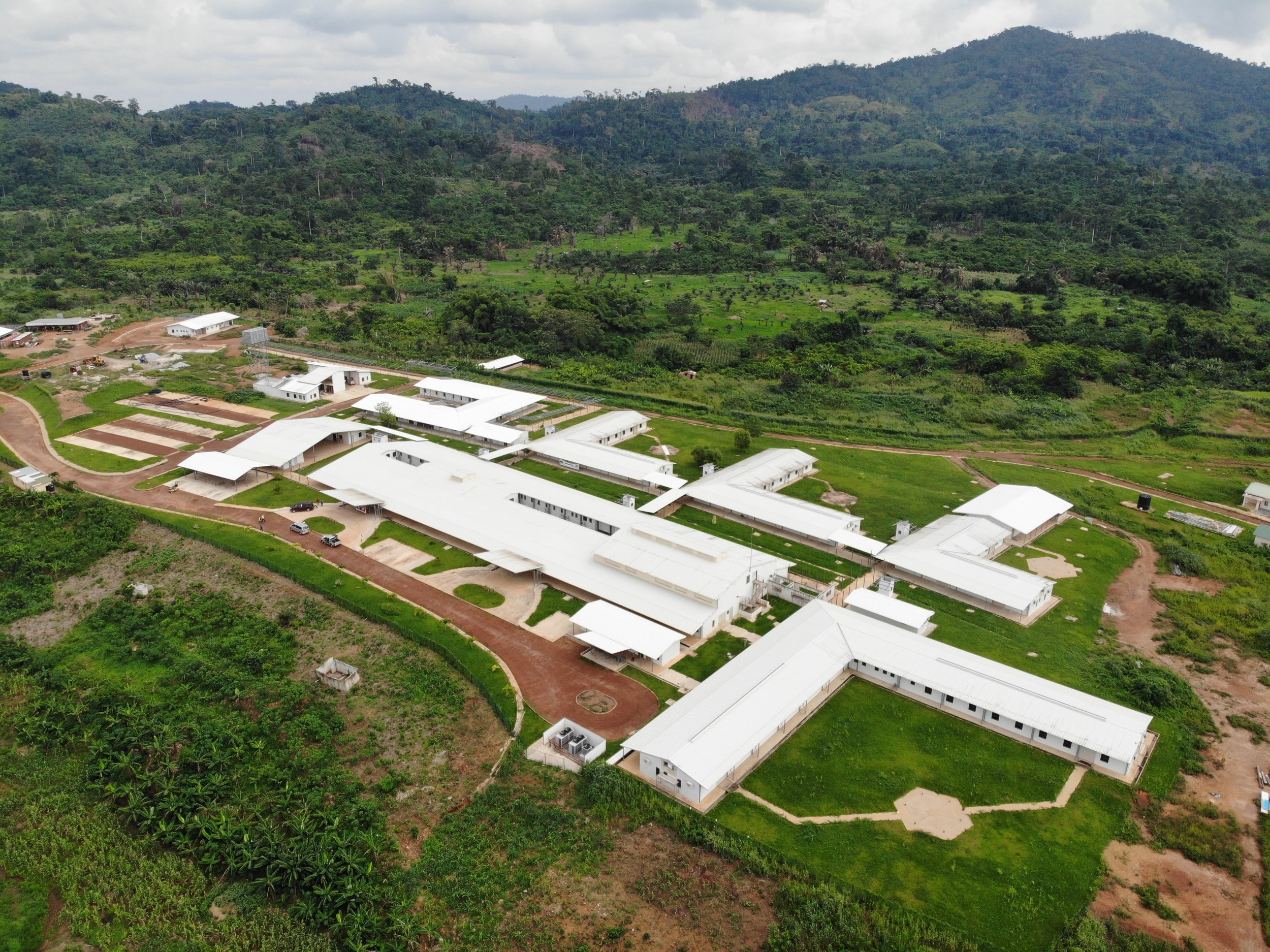
    Left to rot: An aerial shot of the Fomena District Hospital in the Ashanti Region, started by President Mahama, but which has remained uncompleted since his defeat in 2016

    But bigger health facilities in the Ashanti Region started by Mahama such as the Kumawu District Hospital (120-bed) and the Fomena District Hospital (another 120-bed) are still to be completed, 7 whole years after Mahama left office.


    A lot more incredible story is the Ashanti Regional Hospital at Sawua, Kumasi, a 250-bed facility with 43 buildings spread over 125 square metres, which was also abandoned and only finished last year, but has remained un-commissioned because a 2 km access road and connections to the national electricity grid and water have been delayed for one-and-half years now.


    As one health worker, Percy Amoah, put it in a social media post on 18 May 2023: “It is almost inconceivable that a hospital that has been fully completed and supplied with state-of-the-art equipment will lie idle for the past one-and-a-half years because of an access road, power and water, which form the government’s part of the construction of the Sewua Hospital project.”


    The most egregious of all the Mahama hospital projects in Ashanti is the 500-bed Military Hospital at Afari in Kumasi (which has 17 specialist clinics on site). Work on it was far advanced by the time Mahama lost the 2016 election, but it was also abandoned by Akufo-Addo and later restarted, and now 7 years later awaiting completion.


    Debt distress

    On the whole, between 2017 and 2021, Akufo-Addo’s government received GH¢377bn (now about US$30.5bn) from several sources, including loans, grants, taxes, and revenues from oil, gold, and cocoa exports – the largest amount any government has taken during the 31 years of Ghana’s Fourth Republic, starting from 1992.
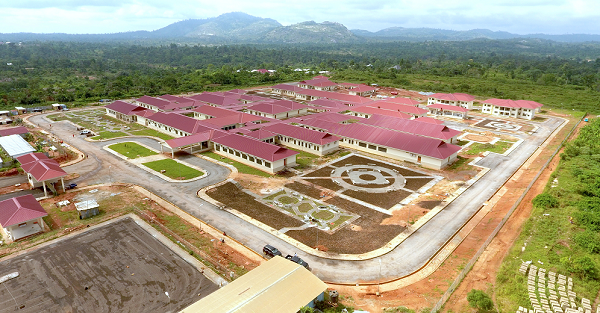
    The lucky one: An aerial view of the Asante-Akim Municipal Hospital at Konongo, Ashanti. Started by Mahama, it became one of the abandoned projects, and only later received grace and was completed and commissioned in October 2022

    “But there is basically little to nothing to show for this money,” the Africawatch depressingly added. “And President Akufo-Addo has either delayed or abandoned numerous infrastructure projects begun mostly by his predecessor, John Mahama, leaving the nation with nothing but more debt to show for the money it borrowed to build the projects. The government currently spends about 70% of the funds it has borrowed on consumption.”


    The Africawatch continued: “After 2019, Ghana’s fiscal and debt situation took a nosedive. The national budget deficit doubled to 15.2% of GDP, and the total public debt rose to 78% of GDP. Ghana is currently considered a high debt-distressed nation.


    “Akufo-Addo has taken on so much debt that the service payments on it now exceed the country’s tax revenues. As of the end of July 2022, total public debt was GH¢402.4bn (about US$32.2bn), almost three times what it was in 2016. Debt-service payments in the first quarter of 2022 were GH¢13.9bn, including interest and amortisation – more than the GH¢12.8bn the government collected in taxes.”


    Though Ghana has not been under Western economic sanctions for 23 years like Zimbabwe, the economic distress under Akufo Addo has been such that his government has had to go to the IMF with cap in hand asking for a US$3bn deal to shore up the nation’s finances. Before the money came (because the IMF took its time to approve the deal), inflation had hit the roof and prices of goods and services had skyrocketed, along with a massive depreciation of the national currency, the cedi, against the US dollar.


    Ironically (in fact, life could be cruel at times), by the time the “incompetent” Mahama was leaving office in January 2017, the cedi rate against the US dollar, stood at a princely 4 cedis to one dollar. Today, 14 July 2023 (and I am writing this piece from Kumasi, Ghana), the cedi rate is at a miserable 12 cedis to one mighty dollar.


    In effect, there has been a depreciation of 8 cedis in the dollar rate in the 7 years that Akufo-Addo (who is apparently not “incompetent”) has been in power. It makes the chants of “incompetence” against Mahama, which was led by Akufo Addo as the main opposition leader at the time, pale into risible insignificance indeed.


    As a mark of the current economic distress in the country, the following is a true story: In the past, even as late as last October when I visited, Ghana, I was spending GH¢100 to prepare one evening meal for 10 people in my house in Kumasi. On my current visit, (in June and July 2023), prices of goods and services (including food items) have gone so high that for the same one evening meal for the 10 people in my house, with the same ingredients, I have to spend GH¢250. And Ghana’s economy is not under external attack like Zimbabwe’s.


    The moral of the “Mahama Syndrome” is that changing presidents for change sake is a bad policy for any country, and Zimbabwe should better watch out.


    The Kagame Syndrome

    In sharp contrast, the “Kagame Syndrome” is based on the adage that “when a president does well, it behoves even his critics to say well done”. One such president is Paul Kagame of Rwanda who, in 23 years in office, has massively transformed his country of 11 million people – because he has not only had the grace and comfort of time and the critical element of continuity to develop the country, he has also been just good as an administrator, politician, and president.


    In fact, it is easy from the outside, without much primary information, to throw stones at Kagame and accuse him, as many do from abroad, of being “authoritarian” and having stayed too long in power. But from the inside, seeing things on the ground with one’s own eyes and how people talk so fondly about him, the picture is totally different.


    In 1994, Rwanda underwent a horrendous genocide during which, in 100 mad days, an estimated one million people were massacred in ethnic hatred. Today, however, looking at what the once antagonistic ethnic groups have achieved together, it is difficult to believe that the same people experienced the infamy of 1994.


    Nobody visiting Rwanda today can fail to see the difference. It is a country renewed. Kigali, the capital, has undergone a massive transformation never seen in its history. New affluent suburbs have sprung up over the hills to the south and west of the city, and the small decrepit buildings that used to dominate the heart of the central business district have given way to massive edifices built by private developers, including three five-star hotels.


    The greening of the city, started by Kagame’s government, has brought added beauty and lustre to the capital of nearly 2 million people. Surely, this state of affairs has not been achieved lying in bed, and while critics say the government has sometimes used strong-arm tactics, the end result has been for the general good.


    In October 2015, President Kagame told a Chatham House conference in London: “It is sometimes said that Rwanda’s economic and social achievements are somehow offset by a lack of democracy and popular voice. The truth is exactly the opposite. What is commonly perceived as Rwanda’s biggest weakness is actually its greatest strength … [Our] economic and social development is built on political development and strong institutions. Consensus building, unity, and accountability are the values we place at the centre of our efforts.”


    To his long-suffering people, Kagame has proven himself true to their cause. He has led from the front and taken the people along. One young man in Kigali spoke for many when he told me in September 2015: “I can’t imagine Rwanda without Kagame.”


    Most Rwandans credit him for using wisdom to bring justice and reconciliation to a country with a painful history. In the process, Rwanda has benefited from the exertions of a guilt-ridden world that folded its arms and mouth during the 1994 genocide, a world that has since tried to expiate its sins by giving generously to fund Rwanda’s reconstruction. In response, Kagame’s government has put the donor money to good use and the result is now there for all to see.


    In his Chatham House address in 2015, Kagame paid tribute to those generous donors, saying: “Our country has been a good example of international partnership for development. For example, we saw one million lift themselves out of poverty in a 5-year period and … we now offer universal health insurance and have recorded the fastest ever declines in child and maternal mortality.”
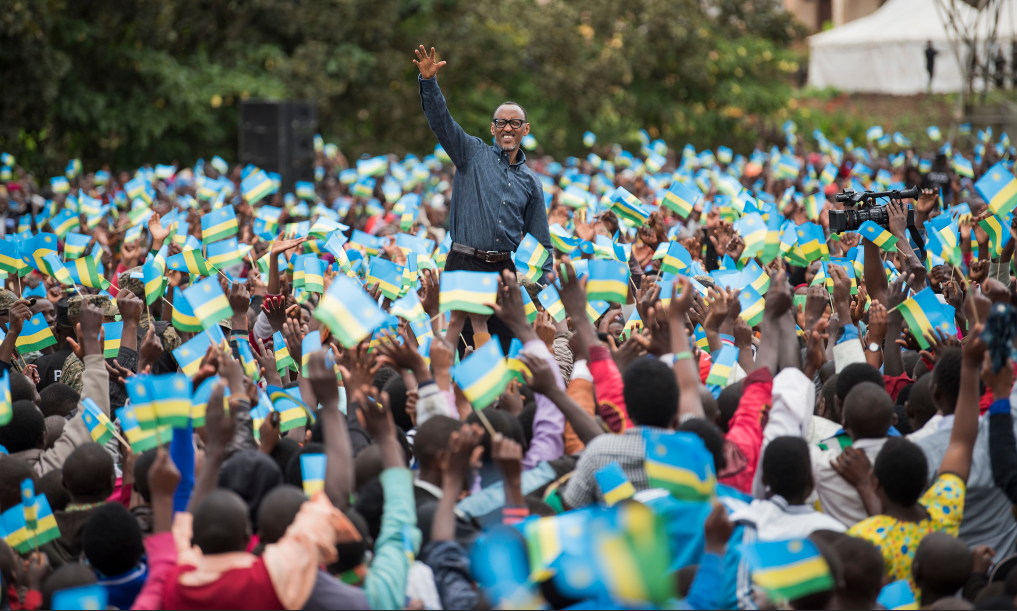
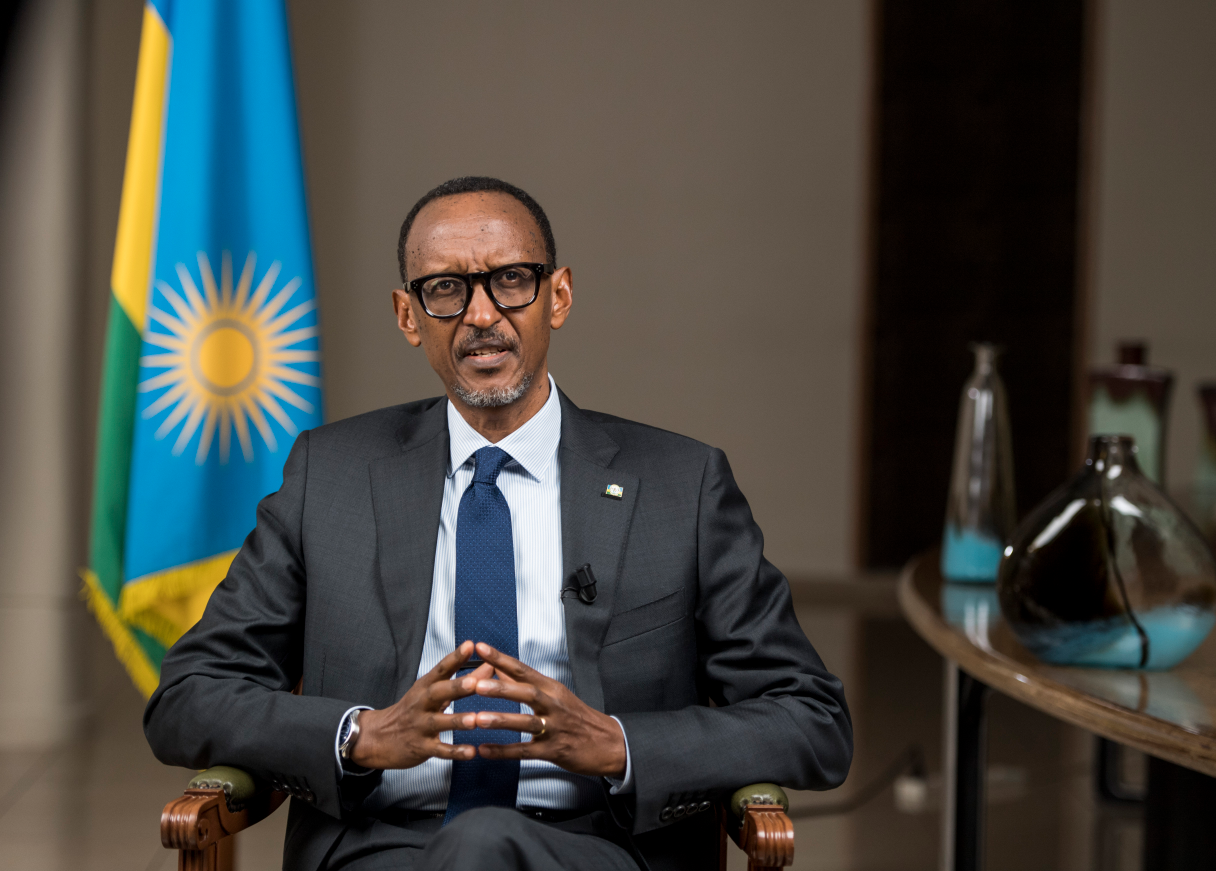
    Can you see why they asked him to stay: President Paul Kagame receives genuine adoration from his people

    It was on account of such good stewardship that in 2015, as many as 3.7 million Rwandans signed a petition asking Parliament to amend the national constitution to allow Kagame to run for a third term in 2017 even though at the time the constitution allowed for only two terms of 7 years each for the presidency.


    Change for a good cause

    Kagame first came to power in 2000 in a caretaker role when President Pasteur Bizimungu resigned. He won his first election in 2003 and re-election in 2010. He told me in an exclusive interview in mid-August 2015 that he had nothing to do with the campaign to make him continue in power after 2017, but he was “open to the idea”, provided he could satisfy himself that the push was genuinely coming from the people and not being manipulated by some individuals for their own interests.


    Following the petition, Parliament set up a 7-member commission to review the constitution and recommend amendments. The commission’s findings were first approved by the two chambers of Parliament before being put to a nationwide referendum. I went to Rwanda to cover the referendum held on 17-18 December 2015. The result was a resounding “yes” for Kagame to stay beyond 2017, a thumping 98.3% of yes votes. But outsiders were not happy.


    The Americans said they were “deeply disappointed” that by his decision to agree to run for a third term, Kagame had ignored “a historic opportunity to reinforce and solidify the democratic institutions the Rwandan people have for more than 20 years laboured so hard to establish”.


    According to a State Department statement issued on 1 January 2016, “the US believes constitutional transitions of power are essential for strong democracies and that efforts by incumbents to change rules to stay in power weaken democratic institutions. We are particularly concerned by changes that favour one individual over the principle of democratic transitions,” the statement added.


    The European Union was equally not happy “at the speed at which Rwanda’s constitutional referendum was held”. The “speed”, the EU said, “did not give enough time for the public to consider the arguments”.

    By far, the most scathing criticisms came from Western newspapers, particularly the British ones – The Guardian and its sister weekly, The Observer, were in the vanguard.


    “Kagame is correct in one respect: Rwanda does not need an eternal leader,” The Observer sniffed in an editorial comment published on 3 January 2016, referring to Kagame’s televised acceptance address on 1 January in which he thanked Rwandans for having “requested [him] to lead the country again after 2017”, adding that “given the importance and consideration you attach to this, I can only accept. [But] I don’t think that what we need is an eternal leader.”


    The Observer ridiculed Kagame’s statement, saying it was “unfortunate” because an eternal leader was what Rwanda seemed to have got. “Kagame will win again in 2017, not because he is Africa’s answer to Abraham Lincoln but because he has ensured there is no viable alternative,” The Observer claimed.


    “There is no effective opposition to his regime. Political rivals have been shunted aside, jailed, exiled, or have died in violent circumstances … Honest public debate, let alone criticism, is not tolerated. Human rights abuses are legion. Independent journalism is a fiction,” The Observer went on and on.


    As the prose flowed, The Observer only paused to consider something so fundamental in Rwanda today that even hypercritics dare not ignore. “There have been significant economic and social advances [in Rwanda under Kagame],” The Observer grudgingly acknowledged before cancelling it with the following line: “But as Kagame’s authoritarianism has grown, enthusiasm for his rule has waned.”

    Meeting the cabinet: President Kagame is often accused by detractors as an authoritarian, but cabinet meetings (like this one) are regular in Rwanda

    Really? But this is the same president who had just been given a thumping 98.3% of yes votes in the constitutional referendum to continue in office after 2017. Nonetheless, The Observer went on its merry way, saying:


    “In his divisive and unstatesmanlike recalcitrance, Kagame reinforces a dangerous precedent …  Such narrow-minded self-aggrandisement damages national wellbeing, inhibits African development and undermines faith in democracy among peoples desperate to escape the doleful legacies of tribal, colonial, and dictatorial rule.”


    Which raised the important question of what “democracy” really is. Is democracy what the Americans say? Is it what the European Union says? Or even what Western newspapers claim it is? Is democracy not what the people of a particular country decide for themselves regarding how they should be governed?


    And if the people of Rwanda want their president to continue in office because he has been “a good president “ for the country, what problem has anybody anywhere got to do with that decision or choice? Is the voice and choice of the people not what democracy is all about?


    “No,” said the Western critics. “No, because Rwanda is a police state that became an aid darling in the West”, they said. “No, because Kagame exerts control through a benign-sounding system of villages, the nation broken down into small blocks of families, each with a head, security officer and informer, and this strips away privacy and ensures constant monitoring.


    “No, because the stifling atmosphere traps the nation in fear.” And worse of all, “Western donors, played so skilfully by Kagame as they funnel huge sums into his state, serve as cheerleaders for one of Africa’s big-headed big men”, who, according to The Guardian’s Ian Birrell in London, “has just shown again how he manipulates ‘democracy’ with a referendum to ensure he can stay in power until 2034.”


    The “manipulation”, Birrell insinuated, was possible because “who dares vote against such a government when it orders people to mark ballots with thumbprints?”


    Birrell’s charge was breathtaking! Because in Ghana, my own country, which is supposed not to have a “dictator” or an “authoritarian” as president, the law orders the people to mark ballots with thumbprints. Which means marking ballots with thumbprints is not unique to Rwanda, and more critically, it happens not because the president is a “dictator” or an “authoritarian”, but because it is a common practice across Africa.


    Lost in transit

    The shrillness of some of the criticisms from the West were so high that sometimes common truths got lost in the melee. For example, while The Observer claimed that “as Kagame’s authoritarianism has grown, enthusiasm for his rule has waned”, its sister paper, The Guardian, sharing the same block of offices in central London as The Observer, reported on 1 January 2016 that “rights groups acknowledge that Kagame has broad support for rebuilding Rwanda, but accuse the authorities of stifling the media and opposition voices, charges that the government denies”.


    Two days later, The Guardian repeated that “Mr Kagame commands widespread support for bringing stability and relative prosperity to his country. He has also silenced virtually all political opposition to his rule, prompting criticism from the US, EU and human rights groups”.


    From across the Atlantic, The New York Times entered the fray. Calling Kagame’s rule an “aging dictatorship”, America’s leading newspaper yet admitted that “since becoming president in 2000, Mr. Kagame has focused on economic development as a means to move beyond ethnic division and overcome conflict.


    “In many ways, this strategy has worked. Rwanda has seen nearly 8% economic growth over the last decade; over 90% of Rwandans have health insurance; life expectancy and literacy rates have increased. These successes may explain why, of Rwanda’s key donors, only the United States has firmly opposed the constitutional change,” The New York Times cared to confuse its readers.


    The confusion arose because, if “significant economic and social advances” or “successes” had been achieved in Rwanda under Kagame, what was sinful about his people changing their minds about the term limits that their constitution had imposed on the presidency?


    After all, history shows that term limits generally arrived in Africa via the USA as part of the Western post-Cold War democratic tutelage of the continent. This was after a period of military and civilian dictatorships across Africa in the 1980s.


    As such, the people of Africa gleefully accepted the Western-inspired term limits because: (a) they were tired with dictatorial and authoritarian rule; and (b) they were carried away by the enthusiasm and hope of a future free of so-called dictators that they did not pause to consider how many Western countries have no presidential term limits themselves.


    And if most Western countries did not have term limits, as they still don’t have even today, what did it say about the West recommending term limits for Africa?


    As one of my colleagues in London rightly pointed out at the time: “The obsession with term limits in Africa has less to do with good domestic political hygiene than with the democratic prescriptions that accompanied the post-Cold War ‘end of history’ neoliberal agenda; it was in other words, a form of ‘native disciplining.’”


    And what poor “natives” the Africans have been, because in most of Europe, there are no presidential term limits. The same is true in Canada and Australia. Thus, the leaders of those countries can run for office as many times as the electorate votes for them. Angela Merkel, the former German chancellor, did three terms before stepping down.


    In Britain, the people do not even vote directly for the prime minister. The prime minister is voted for only by the people of his constituency, as a constituency MP. But he becomes prime minister only by virtue of being the leader of the party that wins the largest number of parliamentary seats in a general election.


    Can an African in Nigeria who votes directly for both his MP and president therefore say that the British system is not democratic? No, because it is the “democratic” system that the British people have chosen for themselves. So, who is the African to sniff at this unique British “democratic” system of electing their prime ministers?

    They come to show appreciation: If anyone deserves a second term on pure merit, President Mnangagwa has gone beyond the qualifying mark

    By the same token, who is the European or Westerner to sniff at any “democratic” system the African people choose for themselves? So why did they despise the Rwandan decision to allow their president another term in office by popular vote?


    Malicious forgetfulness

    After all, history, again, shows that term limits became a popular democratic tool only after 1951 when the USA, after 175 years of independence from Britain during which it had no term limits, decided to impose a two-term limit of 4 years each on its presidents. This followed the passage in 1947 of the 22nd Amendment of the American constitution, when 48 states of America’s 50 ratified the amendment.


    Importantly, the imposition of term limits came only when the USA had become economically, socially, and politically developed beyond their wildest imagination, when they had already become both an economic and political superpower with a dominant position in the world.


    But before then, the records show that from independence on 4 July 1776 to 27 February 1951 when the 22nd Amendment came into force, a period of 175 long years when the USA was finding its way in the world as a developing nation, it did not find it necessary to have term limits.


    This made it possible for President Franklin D. Roosevelt, crippled in a wheelchair, to stay in office for four terms, elected in 1932, 1936, 1940 and 1944, though he died in 1945 less than a year into his fourth term.


    But because F.D. Roosevelt was “a good president” for the Americans at that particular period of their national development, they elected him four times in a roll to champion the cause, if not the course, of their national aspirations. They did not change him just for changing sake because four years were up.

    Bigger and bigger crowds: As the crowds turn up at the rallies, Zimbabwe would learn to close its ears and eyes to the blandishments and manipulations from outsiders who are hiding behind insiders to seek change for change sake

    It is instructional that before F.D. Roosevelt, several American presidents had attempted to serve a third term and failed. But Roosevelt won four terms on pure merit, because he was “a good president” for the Americans, and the country benefitted immensely from his goodness as a president.


    For the same Americans to turn around today to give lectures to Africans who want their equally “good presidents” to continue in office in the interest of their national interests, smacks of malicious forgetfulness, if not rank hypocrisy.


    It reminds me of Prof Erik Reinert’s famous words: “If you want to understand the causes of American and European prosperity, study the policies of those who created it, not the advice of their forgetful successors,” the Norwegian economic historian says. “Today’s best advice is: ‘Don’t do as the Americans tell you to do, do as the Americans did’.”


    It is an excellent piece of advice. President Kagame may be a “dictator” or “authoritarian” as his Western critics allege, but, to Rwandans, he is “a good president” who in 23 years in office has totally transformed the country for the better. And based on his good work, they wanted him to continue in office. Why that was a problem for outsiders beats the imagination?


    Eyewitness account

    By August 2015, I had been to Rwanda four times since 2011 and each time I went, I sensed a little Singapore, or something similar to it, taking shape over the hills of Rwanda. From what had already been achieved by Kagame and his government, if Rwanda were to be allowed the grace of the 32 years that the leader of Singapore, Lee Kuan Yew, spent as prime minister to build his country, Africa would be talking about a new narrative in the not-too-distant future.


    But Kagame would not get the years that Lee Kuan Yew – another “dictator” and “authoritarian” in his day according to Western critics – spent in office because of meddlesome outsiders. So Zimbabwe should be very mindful of the meddlesome outsiders.


    What is difficult to understand is that history shows that the Americans imposed term limits on their presidency when it was absolutely necessary, when their national development trajectory could afford the luxury of term limits.


    As such, even in February 1951 when the 22nd Amendment came into force, it did not apply to the incumbent president, Harry Truman, thus technically allowing him to serve without term limit because Section 1 of the law partly said:


    “…This Article shall not apply to any person holding the office of president when this Article was proposed by the Congress, and shall not prevent any person who may be holding the office of president, or acting as president, during the term within which this Article becomes operative from holding the office of president or acting as president during the remainder of such term.”


    Coincidentally, Rwanda’s amended Article 101 of the constitution retained the country’s two-term limit but cut each term from 7 to 5 years, and stipulated that the new limit would not come into effect until 2024 and would not apply to the incumbent president, Kagame, between 2017 and 2024.


    Strangely, the Americans were not happy with this. Which made Prof Reinert’s words so prophetic: “Don’t do as the Americans tell you to do, do as the Americans did.”


    Rwanda’s constitutional referendum

    I was in Rwanda on 17-18 December 2015 to report on the constitutional referendum. Despite Ian Birrell’s unjustified charge that Kagame “has just shown again how he manipulates democracy”, the constitutional referendum was a free vote by any definition one wanted to slam on it.


    First, Rwandans in the diaspora worldwide were given the freedom to vote on 17 December, and very early on the 18th queues of local voters who had gone to the polling stations on their own volition snaked out of the polling centres. By 11 am, most polling stations were empty in a referendum that was supposed to close at 3 pm. Such was the enthusiasm!


    Anybody among the nation’s 6.4 million voters who wanted to vote had the chance to cast their ballot. And the turnout was high; the National Electoral Commission said it was as high as 6.3 million of the 6.4 million electorate. And President Kagame was right when he said on polling day after casting his ballot: “I did not apply for this. What is happening is the people’s choice.”


    The people’s choice was supreme. Before the referendum, I had had the opportunity to interview Kagame on an earlier trip to Rwanda in mid- August 2015, and had put to him questions that were worrying outsiders about the third-term issue. His answers were emphatic.


    “First,” he said, “I have not, and you can investigate it by asking anybody, I have not sought or asked anybody to change the constitution for me. No. I am not part of this exercise as you see it. That is number one. So I see people writing that Kagame is seeking a third term. No, I am not seeking anything.”


    But how could he convince cynics in and outside Rwanda that the push for a third term was not being remote-controlled from State House or by his friends. Kagame replied: “I will tell you. In some cases in Africa you may have a leader who gives the impression that people want him to stay, but in reality they want him to go. But he may present himself and say people want me. That is how sometimes it has ended in problems in certain countries.


    “But if there was a way of knowing the truth that the people really want him to stay, there should be no problem. The problem only comes when some leaders, and their friends and families are the ones who engineer the push and say people want me, people want me. But I can assure you that in our case the push is not coming from me or my family or friends …


    “And that is why I am saying people are distorting the whole argument when they say Kagame wants a third term. I have told nobody that I want anything, believe me. As such I have simply stayed away from the whole thing. I have not been part of it. For one thing, and the simple reason is, I want to really be sure of what is going on.”


    I believed him. But many people could not. They could not believe that any African, unprompted, would want his president to run for a third term if the constitution allowed him only two. They could not believe that “a good president” could ever come from Africa who would be asked to continue in office against the prescriptions of the constitution.


    But the record shows that prior to the formal petitions in Rwanda in May 2015 asking Parliament to change the constitution, citizens from across the country had been demanding that Kagame should stay beyond 2017. These demands, I was told in Kigali, came in different forms, most notably during the president’s regular meetings with citizens across the country as early as 2010.


    The first formal (written) petitions were submitted in early May 2015 by two individuals who wrote letters asking Parliament to amend the constitution to allow Kagame a third term. Later different groups, including youth forums, religious groups (from different churches and faith groups), cooperatives, political parties, and individuals followed suit. And soon the petitions built up to a 3.7 million crescendo.


    Parliament therefore followed the voice of the people and duly amended several articles of the constitution, including Article 101, which deals with the presidential term limit; and after approval by both Houses of Parliament, the amended constitution was put before the people in the 17-18 December 2015 referendum. After the massive yes vote, Kagame took nearly two weeks to say yes to the yes vote. And the criticisms by outsiders began in earnest.


    In all this, one important aspect of nationhood was lost in the din. And it was this: “What does the African want?” Is it to live in a freedom of speech-ridden but chaotic country like my own Ghana where more than 250 radio stations and 40 or so TV stations afford the people the freedom and platform to insult the president every morning and afternoon and evening, while they fill the open gutters of the cities and towns with rubbish that chokes them with filthy water that produces mosquitoes and malaria?


    Or to live in an orderly and disciplined country like Rwanda where the president is alleged to be a “dictator” and “authoritarian” who ensures significant economic and social advances to the point where you could even eat your lunch from the open but clean gutters of Kigali if you want, and enjoy the manicured green spaces in town? Which one does the African want?


    To many discerning Africans, the fascination with term limits is a wholly misplaced one, and it is why Ghana’s former president, John Mahama, was right when he said while in office: “I am normally very reluctant to be prescriptive when it comes to democracy because countries evolve and democratise on their own terms. In Ghana we have come a long way because of our experiences with military governments and dictatorships … so Ghana has built a solid foundation on which democracy rests.


    “That safe foundation might not exist in other countries, their foundations might be fragile, and so I believe that they must evolve on their own terms. But if you ask me as a Ghanaian president, I think two terms of eight years is enough time for [any Ghanaian president]. If you go through this job in Ghana for eight years and still want to be president, you need your head checked [laughs]. I am talking for Ghana.”


    Allowing countries to “evolve on their own terms” means that African countries such as Zimbabwe should be allowed to “chart their own course and live by it, and reap the benefits of it, or face the consequences,” as Kagame put it in 2015. Outsiders must take a cue and ship out.


    For a Zimbabwe that is going to the polls on 23 August, Rwanda’s example of keeping “a good president” in situ, has many attractions. Zimbabwe should be inspired by Rwanda’s example and keep its “good president” in place for another term, a president who has shown beyond any reasonable doubt, in his first term, that he has the good of the country at heart.


    Zimbabwe should close its ears and eyes to the blandishments and manipulations from outsiders who are hiding behind insiders to seek change for change sake. The nation should do everything to avoid the suicidal “Mahama Syndrome” at all cost, for in it lies too many dangers to tinker with. Ghana’s current parlous state is an example that Zimbabwe should not only learn from, but to also run away from.



  • Did you know that Africa was the first to colonise Europe?

    Did you know that Africa was the first to colonise Europe?

    … For 781 years. Between 711 AD and 1492 AD?

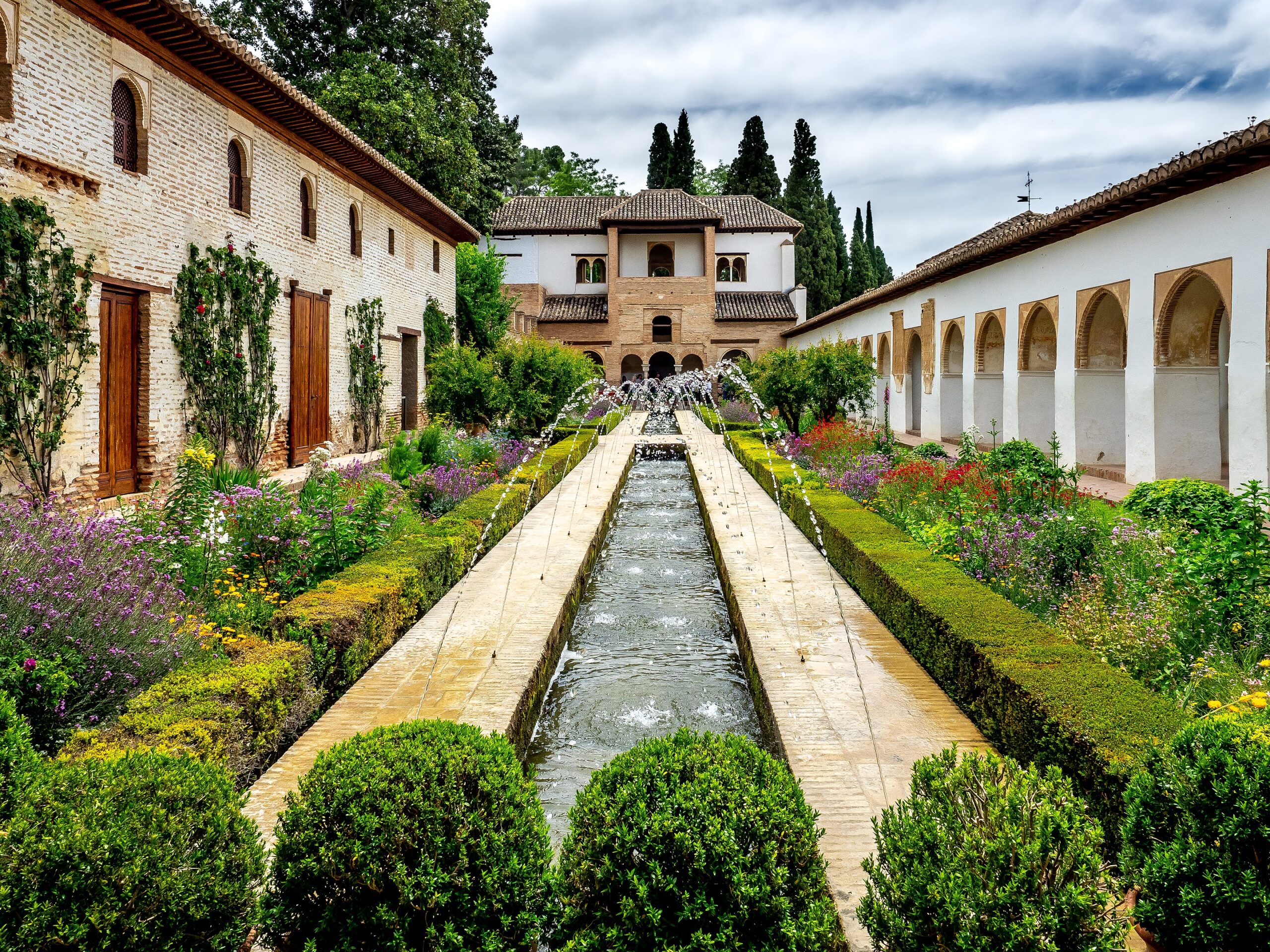
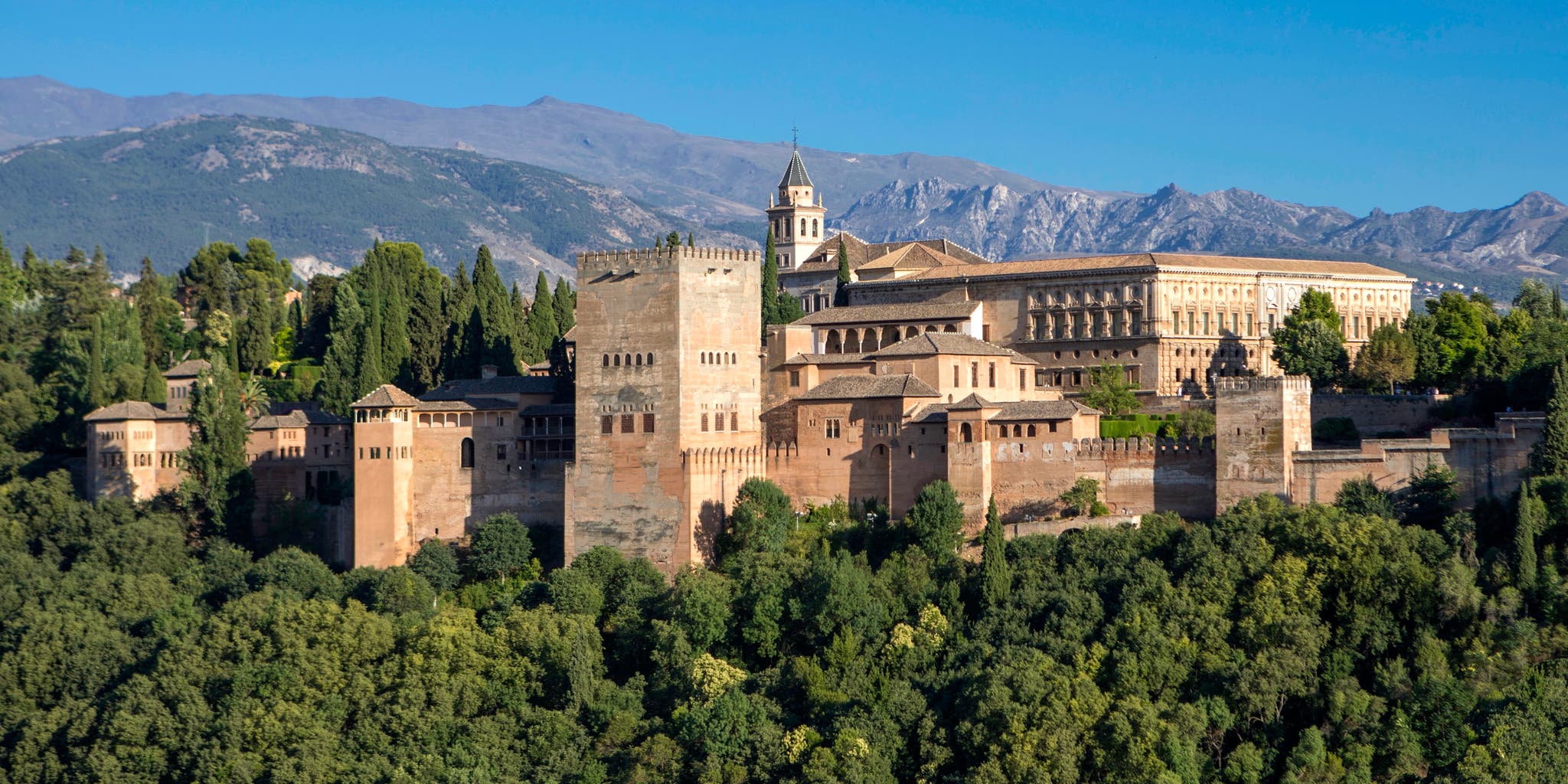
    The best of the Moors: Of all the attempts to erase the Moors from European history, the Alhambra Palace (some call it a Castle) stubbornly remains in situ, in Granada in southern Spain. The Scottish author, Jan Read, described it as “perhaps the most successful fusion of architecture and landscape ever achieved by man”. A palace and fortress complex, the Alhambra was first built by the Moors as a small fort in 889 AD. It was enhanced in the mid-13th century by the Moorish ruler, Mohammed ben Al-Ahmar, and then finished in 1333 by the Almoravid leader, Yusuf Tashfin, who turned it into a palace, designed with the mountainous site and the environment fused into it. Today, it remains one of Spain’s biggest tourist attractions.

    This will come as a huge surprise to many people, both Africans and non-Africans alike. But it is true. Just 711 years after the death of Jesus Christ, black Africans from the northwest and west of Africa, who had converted to Islam (and were therefore called Muslims) invaded Spain and Portugal (which were one country at the time), conquered it, ruled it, and expanded their rule to cover much of Southern Europe (Italy, France, Crete, Sicily, etc) for a long 781 years, between 711 and 1492.

    But after the African colonisation of Europe came to an end on 2 January 1492, the Europeans set in motion a great effort to erase all traces of the Africans in Europe, and used their historians and writers to hide the important fact that Africa ever colonised and civilised Europe. Unfortunately for them, some stubborn relics of the Africans still remain in Europe, like the magnificent Alhambra Castle, the Generalife summer palace, and other edifices in Granada in the south of Spain.

    On the whole, the story of the Moors in Europe is so fantastic that it is difficult to believe when told by one mouth. Let’s repeat it: the Moors achieved so much in Europe that if their story is told by one person, nobody will believe it. So, this month, we have put together in this “special issue” of The Third Eye, several historians/writers of consequence (most of them of African descent) who attest to the greatness of what the Moors achieved in Spain and Portugal particularly, and the whole of Europe generally. You will marvel that Africans could do what the Moors did in Europe as long ago as 1,300 years. It is a story Africans must know. So please sit back and enjoy pure African ingenuity. This lead piece is by our Editor, Baffour Ankomah.


    If you believe conventional wisdom, Africa has contributed nothing to world civilisation. How big that myth is can be gauged from the great efforts that Western historians and writers have made to hide the immense contributions that Africa made to the civilisation of Europe during what they call their Dark Ages.


    So total has been the great deception that the majority of the world today, chief among them Africans themselves, do not know about the glorious Africans who conquered and ruled Spain and Portugal and other parts of southern Europe for 781 years between 711 AD and 1492 AD, and in the process brought civilisation, education, and general enlightenment to the whole of Europe, then steeped in its Dark Ages.


    This is a story about African ingenuity, brilliance and resourcefulness. But it is not acknowledged in contemporary history by Europeans or Westerners in general. At best, they give the credit to Arabs or Muslims, as if an African who converts to Islam ceases to be an African. It is like saying a Nigerian ceases to be a Nigerian because he has become a Muslim.


    That is the kind of intellectual somersault employed by Euro-American historians and writers that has ensured that the glorious history of the Africans (called the Moors) who conquered the Iberian Peninsula (Spain and Portugal were one country at the time) in 711 AD and in 781 years thereafter brought civilisation to the whole of Europe, is not known even by most Africans.


    So close yet so far: Morocco, Africa’s closest landmass to Europe, is only 8 miles from Spain, across the Straits of Gibraltar. The proximity of the two continents made it possible for three invasions in history launched by Africans from what is now Morocco to succeed against Spain. The last and most famous one was by the Moors in 711 AD, who went on to rule Spain and Portugal and Southern Europe for 781 continuous years, until 2 January 1492

    So it is not Europe that first colonised Africa, dear reader! Rather it was Africa that first colonised Europe – from 711 AD to 1492. European colonisation of Africa started about 1833, and by 1870 just about 10% of the continent was under formal European control. This increased to almost 90% by 1914, with only Liberia and Ethiopia remaining independent.


    Thus, if you do the mathematics, the gap between the African colonisation of Europe and the European colonisation of Africa is a good 341 years – that is even being generous to fix the start of the European colonisation of Africa at 1833, when just about 2% of Africa was under European control. It would increase to 10% only in 1870.


    Therefore, the idea that the African was in a frozen state until “discovered” by the Europeans in the mid-15th century (when the first Portuguese “explorers” made contact with West Africa) is a myth that shames the modern world.


    What the African did or was doing before the mid-15th century, the European has nothing to say about! Which leads John G. Jackson, the African-American historian and author, to say that “the curious idea that a great white race has been responsible for all the great civilisations of the past is nothing more than a crude superstition propagated mainly by European-oriented racist historians.”


    Today, as Dr Ivan Van Sertima, another great African-American historian, once said, “it would seem like racial chauvinism to suggest that Africans played a major role in the

    occupation and enlightenment of a critical part of Europe.”


    There is something very deep-seated in many a European historian or scholar that makes him/her refuse to accord the African – and it is usually only the African – any credit for anything at all.


    European historians are happy to credit the Chinese, the Indian, the Mongolian, the Arab and anybody else for their contributions to world civilisation. Never the African. Even when the feat is, or was, clearly achieved by an African and on African soil like the exploits of the Ancient Egyptians (covered extensively in the last two editions of The Third Eye), European/Western historians like to attribute it to some Caucasoid or other exotic elements who descended from somewhere and achieved that feat on African soil.


    This “anybody but the African” madness has been at the heart of the contortions that have afflicted many Western historians, scholars, writers, and journalists in their explanations of the presence of the Moors in Europe and the civilisation and enlightenment they brought to a continent then groping in darkness. Thankfully, the Europeans describe that era correctly as their “Dark Ages”. And light was brought by Africans that they called the Moors.


    The Moors were people from both Ancient Mauretania (a country which covered the area now occupied by Morocco and western Algeria) and other parts of West Africa – all the way down from today’s Morocco to Senegal, Mali, and the Sahelian countries. Some accounts even say it included people from as far south as northern Ghana. They had been converted to Islam after the conquest of North Africa by the Arabs in 708 AD. As Muslims, they spoke Arabic, the language of Islam and later science in the Middle Ages. But by nationality and identity, they were black (and dark) Africans through and through.


    According to Jan Carew, the Guyana-born historian, author and scholar: “There is an instinctive and deep-seated reluctance on the part of Eurocentric historians to acknowledge the Moors as the bringers of cultural and scientific enlightenment to Europe. And when they are compelled to make grudging acknowledgments of this fact, they proceed to whiten the Moors, to tear them away from any suggestion of having black African roots.”


    But the stubborn fact remains that between 711 AD and 1492, these Africans, called the Moors, together with their Islamic colleagues from Arabia, put southern Europe to the sword, conquered it, governed it, and brought civilisation and general enlightenment to Europe as a whole.


    Spain and Portugal were one country at the time and they became the first to benefit from the enlightenment brought by the African warrior scholars from the northwest and west of the continent.


    The conquest of southern Europe

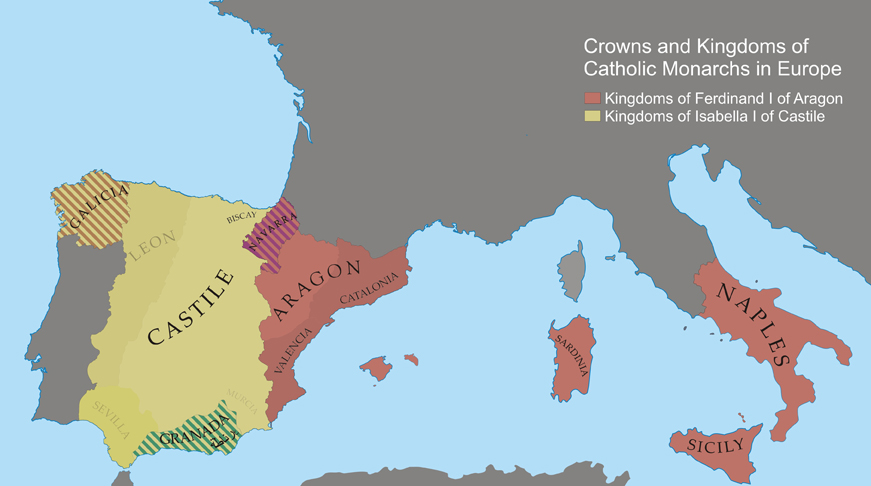
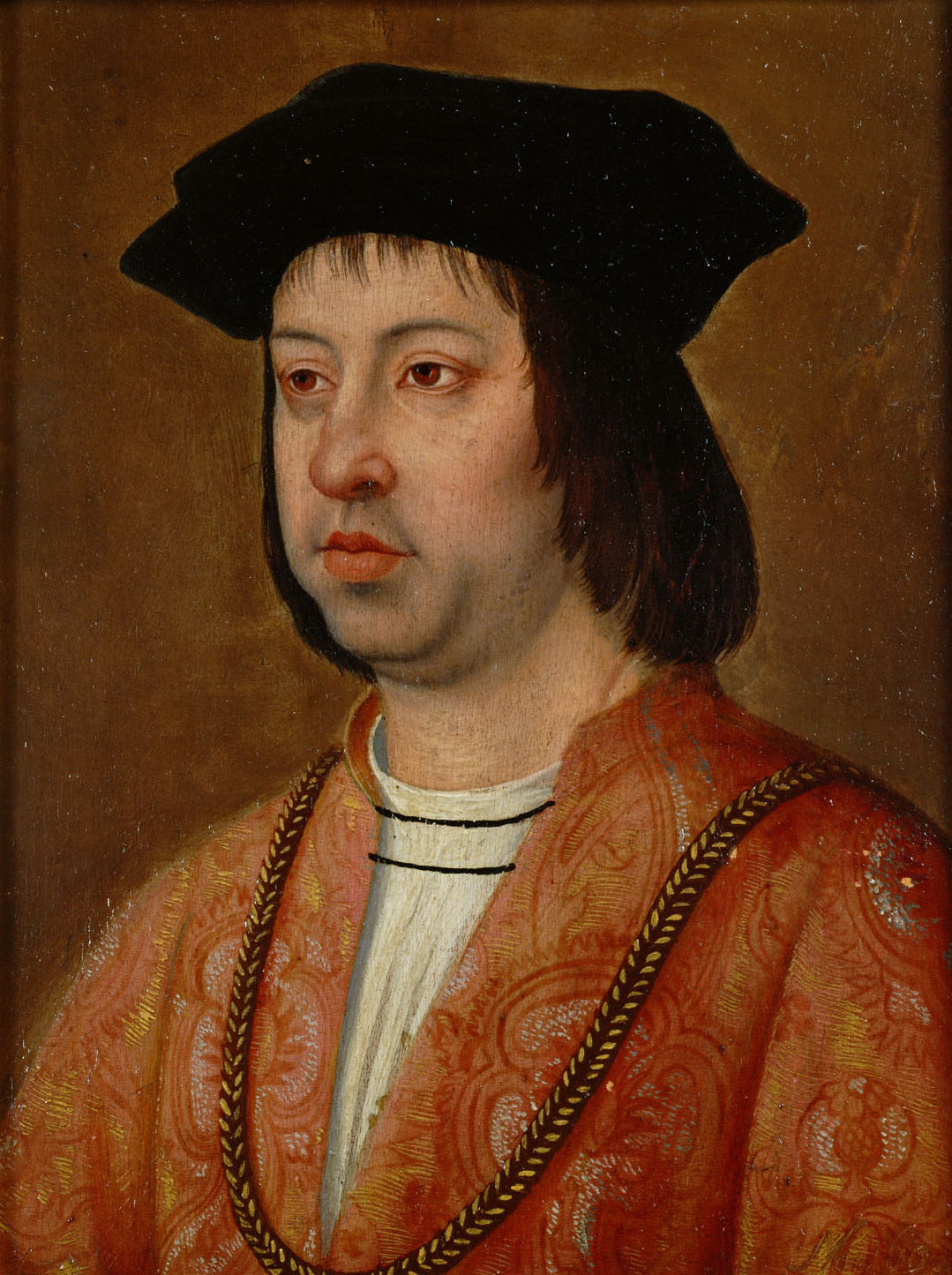
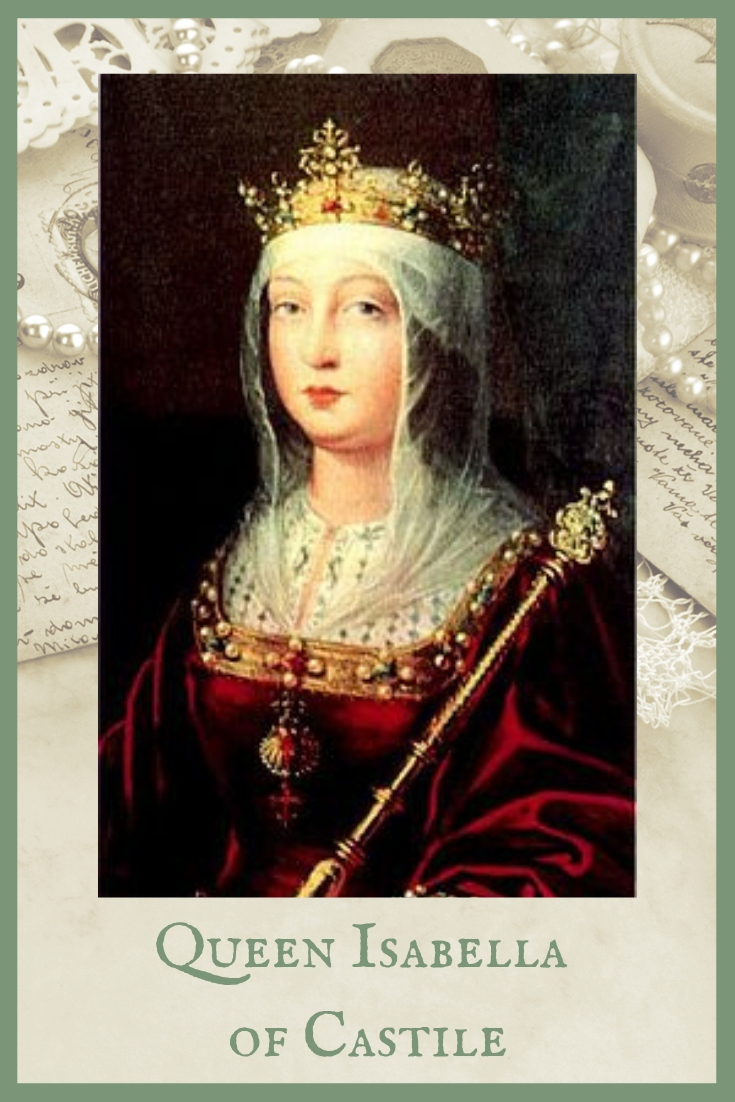
    After the fall of Granada: The kingdoms of the Catholic monarchs, Ferdinand I of Aragon and Queen Isabella I of Castile after the defeat of the Moors. They married on 19 October 1469 and formed a strong union that finally defeated the Moors on 2 January 1492

    With Spain and Portugal in their firm grip, the Moors proceeded to conquer southern

    France, then Sicily which they ruled for 200 years, and Crete for another 125 years. They also conquered parts of mainland southern Italy, and even besieged and sacked Rome in 846 AD, and in the process took a lot of loot. But if you read the works of most Western historians, they claim the Moors were Arabs, not Africans because they were Muslims and spoke Arabic.


    But being a Muslim is not a nationality. It only denotes one’s religion or religious belief. It is why the European ancestors of modern European historians were not shy to describe the foreigners from Africa that they lived with during the 781 years of the Moors as black. In addition, the evidence of Moor heads on the coat-of-arms or heraldry of many European noble families, all over Europe, show the Moors as black Africans.


    The refusal by contemporary European/Western historians to accept this plain fact and to place the Moors in their rightful home in Africa is part of the centuries-old denial of remarkable African achievements by European historians and scholars, and therefore should be rejected with the contempt it deserves.


    That dishonesty cannot last forever. In fact, it no longer holds as many African-descended historians and scholars have painstakingly studied and examined the nationality and achievements of the Moors, and have concluded beyond every reasonable doubt that though the Moors worked with some of the earlier Arab conquerors of North Africa in the invasion of Spain and Portugal in 711 AD, the subsequent 781-year rule of the Iberian Peninsula and southern Europe, and the civilisation this brought to Europe as a whole cannot be credited to Arabs, or Arabs only.


    This is because, as Jan Carew explains: “At the height of its power, the Moorish Empire in Africa stretched from the western half of Algeria through Morocco and as far south as Ghana; while in Europe this empire extended itself from the Atlantic coast of Portugal, through Spain and across the Pyrenees to the Rhone Valley in France.”


    Wayne B. Chandler, another African-American historian and writer, confirms that: “Although the term Moor has been put to diverse use, the roots are still traceable. Circa 46 BC, the Roman army entered West Africa where they encountered black Africans whom they called Maures from the Greek adjective mauros, meaning dark or black. The country of the Maures, Mauretania (not to be confused with today’s Islamic Republic of Mauritania in present-day West Africa, although obviously the root is the same), existed in what is now northern Morocco and western Algeria.”


    Other historians attest that at certain times, foreigners, like the Greeks and Romans, who came to North Africa called the original inhabitants by the generic name “Berbers”, from the Latin word “barbari”, meaning barbarian. To the Romans, anybody who was not a Roman

    was a barbarian.


    But these original “Berbers” were people from different ethnic backgrounds and nationalities who occupied the whole northern parts of Africa before the Arab conquest in 708 AD. They had their own original individual ethnic names before the Greeks and Romans called them “Berbers”. And they were mainly black and affiliated with the then contemporary peoples of the East African area.


    Mamadou Chinyelu, another African-American historian and writer, explains that “when the Africans in the northern part of the continent first assumed the name ‘Berber’ is not certain, but by the time of the Islamic conquest of North Africa, this name was in common usage.”


    Space mattered: After the Moors conquered and ruled Spain, this is how the Muslim (not Arabic, because the Moors were not Arabic but Muslims) empire looked like in 750 AD.

    Chinyelu’s view is supported by the anthropologist, Dana Reynolds, who confirms that “the original Black Berbers, who were called Moors, were the North African ancestors of the present-day dark-brown and brown-black peoples of the Sahara and the Sahel, mainly those called Fulani, Tuareg, Zenagha of Southern Morocco, Kunta and Tebbu of the Sahel countries, as well as other black Arabs now living in Mauretania and throughout the Sahel. They include the Trarza of Mauretania and Senegal, the Mogharba as well as dozens of other Sudanese tribes, and the Chaamba of Chad and Algeria.”


    Even the Oxford English Dictionary defines “Moors” as: “The … people who are commonly supposed to be black or very dark and it is synonymous with the word for ‘Negro’ in many contexts.”


    Later, the term “Moor” was applied to blacks in general during the European Renaissance when explorers, writers, and scholars began to use it. The earlier Greeks called them Mauros, and the Romans Maurus. In the Romance languages (Spanish, French and Italian), Moor was rendered as Moro (Spanish), Moir (French), and Mor (Italian). The English called them Moors, the Germans Mauren and the Dutch Moorrees. But all these meant “black or dark people”.


    History shows that the Arabs who conquered North Africa in 708 AD rarely used the word Moor. Instead they called the original people of North Africa “Berber”, to cover practically all the inhabitants of the Maghreb (ie, Islamic North Africa west of Egypt).


    Fortunately for the Africans, the Christians who were defeated by the Moors in the Iberian Peninsula and other parts of Europe left vivid images of the Muslim Africans. Today, Christian paintings and sculptures are an indisputable witness to the black presence in Europe and how important blacks were to the Europeans at that time.


    Another source of evidence is the coat-of-arms or heraldry of European noble families who honoured the Moors by putting their heads on their insignia. “Such illustrations”, says Prof Runoko Rashidi, another African-centric historian, “are to be found in the Cantigas of Santa Maria, allegedly written by King Alphonso X [of Christian Spain]. They are filled with images of the Moor and are mostly black types. This is the period of the Almoravid invasion which brought hordes of new Africans into the Iberian Peninsula. Medieval illustrations in the Cantigas portray blacks in a variety of roles – from members of the aristocracy to the military.”


    The Moors in Spain

    Having settled the issue about the identity and “nationality” of the Moors, let’s now move to what the Moors actually did in Europe. Before the Moors invaded the Iberian Peninsula in 711 AD, there had been two earlier African invasions of Spain and Portugal in history. This was made possible because of the proximity of Europe to Africa. There are just 8 exact miles between Point Marroqui in Spain and Point Cires in Morocco.


    A pillar of African history: Prof Ivan Van Sertima, an African-American historian and writer of repute, was one of the best to walk the land of Global Africa

    The website, Our Spanish Life, owned by a Spanish travel agency, explains that: “If you stand on the Southern edge of Spain and stare out across the sea, you can see North Africa in the distance! As long as the day is clear, of course! If we’re being specific, Spain is incredibly close to Morocco, in particular. This is because Morocco is situated in North Africa and has a point that protrudes out towards the North, reaching out to Spain. And Spain equally has a southern point in the country that protrudes out further towards the South, reaching out to Morocco. So these two points are almost touching and there is just a narrow space of sea between them. The shortest distance between Spain and Morocco is from the southernmost point in Spain and the northernmost point in Morocco, separated by the Strait of Gibraltar.”


    Dr Ivan Sertima made the following important point: “The fact that Africans from the north had been intruding into southern Europe from very early times should not come as a great surprise, for the straits that separate the two continents can be crossed by the simplest boats in a matter of hours. The proximity of the borders of Europe and Africa and the evidence of the African phenotype among many southern Europeans led Napoleon to remark that ‘Africa begins at the Pyrenees.’”


    But as it were, it was the third major invasion of Spain by Africans that changed everything for Europe. And this was by the Moors in 711 AD. History shows that shortly after the Arab conquest of North Africa in 708 AD, General Tarik ibn Ziyad, an African and a “Berber”, was placed in charge of Morocco by the governor, Musa ibn Nusayr, a member of the Warfadjuma branch of the Nafza Berbers.


    Tarik’s domain in what was then called “the far western Maghreb”, included all but the island of Ceuta, an outpost of the Greek Empire, resting on the northern tip of Morocco, near present-day Tangiers, which was ruled by Count Julian, a Greek governor. Julian was a good friend of Spain, then under the rule of the Visigoths, a Germanic tribe that had conquered and ruled Spain for 200 years after toppling the Roman Empire in the Iberian Peninsula.


    The then monarch of the Visigoths, King Roderick, had been given charge of the daughter of Count Julian of Ceuta while the girl was in training at Roderick’s court. But Roderick took advantage of the girl and raped her. This infuriated her father, Count Julian, who out of anger and revenge persuaded General Tarik, the Berber, to invade Spain, promising that he would give Tarik his own boats to help in the invasion. Julian even provided extra intelligence information by assuring Tarik that Spain was unprotected and that the Visigoths would be no match for him.


    Like a good general, Tarik consulted his boss, Musa ibn Nusayr, and then sent a reconnaissance mission into Spain in 710 AD, led by Tarif, a black officer. Crossing over from the north of what is today’s Morocco (but then called Mauretania), Tarif and his men landed at a place near Europe’s southernmost point to Africa. The place was later named Tarifa in his honour. Tarif set up a customhouse there, and because of his noble activities his name became the root for today’s customs word, “tariff”.


    In July 710 AD, Tarif’s mission came back to report of a Spain ready for the taking. His report was music to the ears of General Tarik, who now had the needed information for an attack on Spain. Nevertheless, it took a year for Tarik to prepare for the attack, which began in earnest in 711 AD.


    Tarik’s army landed on an isthmus between an escarpment then called Mons Calpe and mainland Europe. Tarik seized the isthmus and, considering it militarily strategic, he asked that a fortress be built at the site. His men later named the fortress Gabel Tarik (Arabic for the mountain of Tarik) after him. This was later corrupted to “Gibraltar”.


    Having now a secure base on mainland Europe, Tarik, with about 7,000 “Berber (African)” troops and 300 Arabs, proceeded to engage King Roderick, who was leading some 60,000 troops, at the Janda Lagoon by the mouth of the Barbate River in southwest Spain. The date was 18 July 711 AD.


    As Tarik’s army was massively outnumbered, he turned to his soldiers and addressed them thus: “My men, wither can you flee? Behind you lies the sea and before you the foe. You possess only your courage and constancy, for you are present in this country poorer than orphans before a greedy guardian’s table. It will be easy to turn his table on him if you will but risk death for one instance.”


    Tarik’s men chose to risk death, and stood their ground, and scored a major victory over King Roderick that day. With the Visigoths vanquished, Tarik set out to enlarge his territory. He was pleasantly surprised to find that along the way through the Spanish countryside, many of the natives were fed up with the oppression of the Visigoths, and were only too happy to

    join his invading army. Thus, instead of Tarik’s army dwindling through attrition, it actually grew in size and power.


    Soon, the entire Spain (at the time Portugal was part of Spain) came under Tarik’s control, and with Musa ibn Nusayr crossing over with reinforcements from old Mauretania, the Africans (who would later be called “Moors”) and their Arabic colleagues proceeded to lay the foundations of a new civilisation in Spain.


    First, they changed the name of the country to Al-Andalus, and later moved the capital from Seville to Cordova, which, according to the English historian Stanley Lane-Poole, they turned into the “Marvel of the Middle Ages”. The African-American writer and historian, Dr W.E.B. Du Bois, underscored the fact that “Spain was conquered not by Arabs, but by armies of Berbers and Negroids [at times] led by Arabs.”


    The first Moorish dynasty

    The first Moorish family to govern Spain was the Umayyad dynasty. Although Tarik led the invasion, he himself never ruled Spain. But other Moors did. Their rule was especially benevolent as the native Spaniards were allowed to keep their own customs, religion, and language as well as civil independence. They were also allowed to keep their own churches, judges, courts, counts, and bishops, although the Moorish authorities retained the right to approve the bishops. With time, many Spaniards, including Christian noblemen, converted to Islam.


    Using Spain as their base, the Moors took control of Sicily for over 200 years, and Crete for 125 years. And more followed! Between 717 and 719, the Moorish ruler, Al-Hurr ibn Abdurrahman, crossed into southern France with his army, using the difficult passes of the Pyrenees. At the time, Switzerland was part of France. But unrest back home in

    A father’s revenge: Count Julian, ruler of Ceuta, under the Visigoths, is credited with having inspired the Moorish invasion of Spain as a revenge for the Visigoth king, Roderick, having raped Julian’s daughter who was living in the court of Roderick

    Al-Andalus brought doom to Abdurrahman’s mission. It was not until 729 that another Moorish ruler, Haytham ibn-Ubayd, was successful in capturing Lyon, Macon and Chalon-sur-Saône in southern France.


    Decades later, when al-Samh ibn-Malik ascended the Moorish throne, he transferred the Spanish capital from Seville to Cordova, and completely reorganised the finances and tax system of the country. He also carried out impressive public works and did an extensive survey of the land.


    Malik died in May 721 AD and was replaced by Abdurrahman ibn Abdullah who, like his predecessors, crossed the Pyrenees again and this time delivered a crushing blow to Duke Eudes of Aquitaine in southern France.


    Abdullah went on to sack Bordeaux and Poitiers, but his luck ran out in Tours in 732 AD, when he was soundly defeated by Charles Martel, the grandson of Charlemagne. Sadly Abdullah lost his life in the battle against Martel, and Tours marked the western limit of the Moorish empire. The Moors however remained in southern France until 1140 AD, principally in the Camargue on the western Riviera, which is still known today as La Petite Afrique.


    With southern France conquered, the Moors turned their attentions to elsewhere in the Mediterranean. In 837 AD they captured Sicily. In 846 AD they put Rome under siege, and 20 years later, they took southern Italy.

    No match for the Africans: King Roderick of the Visigoths and his army of more than 60,000 were routed on 18 July 711 AD by the African Moors, led by Tarik ibn Ziyad, who crossed over from Morocco with some 10,000 warriors

    According to J.A. Rogers in his 1946 book, World’s Great Men of Colour, the Moors plundered the Vatican and St Peter’s Cathedral in the invasion of Rome in 846, and carried off immense wealth in gold, jewellery, tapestry and paintings. They later sold back much of the spoils to the Pope, with Jews acting as intermediaries.


    While in Italy, intermarriage saw the blood of the Moors cascading through all layers of Italian society, including even its most distinguished royal family, the Medicis. At the time, colour was no bar to power and honour in Italy. As such, Alessandro de Medici, known as “The Moor”, whose mother Anna was a Moorish woman and his father an Italian, became the first duke of the Italian city of Florence. Alessandro went on to marry the daughter of Charles V, the Holy Roman emperor, while his father became a pope, Clement VIII.


    According to the historian Edward Scobie: “It is therefore no exaggeration to claim that the Moors were a leading power in those six or seven centuries from the time of Tarik’s conquest of the Iberian Peninsula. They dominated the Mediterranean and the North Atlantic and held power over the coasts of Western Europe and the British Isles.


    “But it is not for their military conquests in Europe that the Moors are remembered. It is the culture and learning which they gave to European countries at a time when there was darkness and nothing elevating in the arts and sciences of a continent that was to claim falsely in later centuries to be the cradle of the civilisation of the world.”


    The Almoravids

    The first Moorish dynasty in Spain, the Umayyad, survived until 1031 AD, but by the year 1000 AD, it was already in a state of decline. Thus, as the power of the Umayyad dynasty waned, and as they came under constant attack by Christian kings, especially Alphonso VI and Rodrigo Diaz de Vivar, who wanted to reclaim Spain for the Cross, the Umayyad ruler, Mu’tamid, sought help from West Africa.


    He appealed to Yusuf ibn Tashfin, a black man then leading an Islamic sect from his base on an island in the Senegal River in West Africa, to come to his rescue. Yusuf’s sect was known as the Almoravid (which meant “the religious men”). He was a master of West and Northwest Africa, his men having been conditioned by the harsh terrain they lived in to become fiercely skilled soldiers.


    Yusuf agreed to rescue the Umayyad dynasty from the Christians, but with one caveat: He would return home to Africa after defeating the Christians in Al-Andalus. With this agreement in his back pocket, Yusuf crossed into Spain with 15,000 men.


    According to J.A. Rogers (the man Du Bois testified about, saying “no man living has revealed so many important facts about the Negro race as has Rogers”), out of Yusuf’s 15,000 soldiers, 6,000 were Senegalese, “jet black and of unmixed descent”. The fearsome Almoravids routed King Alphonso VI’s army at Zalacca in October 1086. This was during the 375th year of Umayyad rule in Spain. By 1091, Yusuf had reunited all of Muslim Spain except Zaragoza.


    Fearless warrior: Tarik ibn Ziyad (right) in combat against King Roderick’s army. As Tarik’s army was massively outnumbered, history records that he turned to his soldiers and addressed them thus: “My men, wither can you flee? Behind you lies the sea and before you the foe. You possess only your courage and constancy, for you are present in this country poorer than orphans before a greedy guardian’s table. It will be easy to turn his table on him if you will but risk death for one instance”

    During the years of war, Yusuf noticed a disturbing weakness in his Umayyad brothers, and this – together with the euphoria of victory – forced him to change his mind and rule Al-Andalus. His regime therefore marked the beginning of the era of the Almoravids in Spain, which lasted for 103 years.


    With Spain firmly in his grip, Yusuf turned to his home continent, Africa, and took Morocco and Algeria. He is said to have founded the Moroccan city of Marrakesh. History shows that Yusuf became one of the most celebrated Moorish rulers in Spain, in fact one of the very best. Under him, the Almoravid Empire ran from the Senegal River in West Africa to the Ebro River in Spain, earning the name of the “Empire of the Two Shores”.


    In the 14th century, Yusuf completed the building of the most famous Moorish palace in Spain, the Alhambra, in Granada, southern Spain. At the time, it was considered as one of the wonders of the world. In his 1974 book, The Moors in Spain and Portugal, the Scottish author, Jan Read, described the Alhambra as “perhaps the most successful fusion of architecture and landscape ever achieved by man”.


    A palace and fortress complex, the Alhambra was first built by the Moors as a small fort in

    889 AD. It was enhanced in the mid-13th century by the Moorish Sultan of Granada, Mohammed ben Al-Ahmar, and then finished in 1333 by Yusuf Tashfin, who turned it into a palace, designed with the mountainous site and the environment fused into it.

    The boss: Musa ibn Nusayr, the Berber governor, who sent Tarik to invade Spain. Nusayr, who had converted to Islam as Tarik, later sent reinforcements to help Tarik finish the work in conquering Spain

    The palace was so beautiful to look at that Moorish poets lovingly described it as “a pearl set

    in emeralds”, a reference to the colour of its walls and the woods around them. Now a World

    Heritage Site, the Alhambra, together with the nearby Generalife (the summer palace built by the Moorish ruler, Muhammad II, and enlarged by Muhammad III), is one of Spain’s most crowd-pulling tourist attractions and an inspiration for many songs and stories.


    The Almohads

    As every good thing has an end, the power of the Almoravids declined and in 1189 – a good

    103 years after Yusuf first took control – they were overthrown by another black African Islamic group/fighters calling themselves the Almohads, whose leader was also a reformer and military genius called Yakub Al-Mansur.


    Like the Almoravids, the Almohads also hailed from the western part of Africa. On the way to Spain, the Almohads first conquered Morocco from the last Almoravid king in 1147, and then put Spain to the sword, and defeated the Almoravid ruling class there.


    Thus, for the second time, a purely African people ruled over the Iberian Peninsula. Al-Mansur endeared himself as a leader of genius. “In his time, he was considered the most powerful ruler in the world,” says the historian John G. Jackson. A man of culture, Al-Mansur was also a builder of great cities and great monuments, such as the Giralda in Seville, which stands up to this day.


    As Jackson puts it: “Under a great line of Almohad kings, the splendour of Moorish Spain was not only maintained but enhanced; for they erected the Castile of Gibraltar in 1160 and began the building of the great Mosque of Seville in 1183. The Giralda of Seville was originally an

    astronomical observatory constructed in 1196 under the supervision of the mathematician Geber.” Sadly Mansur died in 1199.


    Moorish achievements in Spain

    In 1992, Dr Ivan Sertima made the vital point while editing the book, Golden Age of the Moor, a collaborative work by 15 African-descended historians and authors, which became one of the best books ever published on the Moorish era in Spain. Sertima wrote:


    “By the time [the Arabs] attacked Ancient Egypt, Europeans had long been in charge of the defeated country. The Arabs seemed to forget that their conquest of Egypt had been made easy by the resentment of the Egyptians against their Byzantine overlords. We know far more today about the enormous debt Greek science owes to Egypt.


    “But what was little expected was that Greece was not the only conduit of Egyptian scientific genius to the Arab world. There were Egyptians fleeing their country in large numbers during the Persian, Greek and Roman invasions, fleeing not only to the desert and mountain regions, but also to adjacent lands in Africa, Arabia and Asia Minor, where they lived and secretly developed the teachings which belonged to their Mystery System. In the 8th century AD, the Moors of North Africa invaded Spain and took with them the Egyptian culture which they had preserved.”


    Thus, having been beneficiaries of Ancient Egyptian systems and culture, the Moors took these along on their invasion of Spain. In other words, after conquering the Iberian Peninsula, the Moors set forth to grow roots in Spain using the ancient knowledge they had preserved from the cultures and systems of Ancient Egypt. In the process, they created new areas of science and philosophy that greatly helped medieval Europe to come out of its dark ages.


    As already pointed out, the Moors arrived in Spain with a very religiously tolerant philosophy. According to the writer, Flora Shaw: “It is interesting to note that in the days of Mohammedan Spain, women were not confined, as in the East, to harems, but appeared freely in public and took their share in all the intellectual, literary, and even scientific movements of the day. There were women historians and philosophers, as well as women surgeons and doctors. An example of this was that the daughter and grandmother of the celebrated Moorish pharmacist, Ibn Zohr, were both accomplished female doctors.”


    No wonder, the first 300 years of Moorish rule saw the majority of Spanish peasants converting to Islam. In fact, Islam eventually became the religion of the majority in both Spain and Portugal.

    Always something new from Africa: Yusuf ibn Tashfin, the Almoravid leader, and a master of West and Northwest Africa, led 15,000 fiercely skilled soldiers (6,000 of them were Senegalese, “jet black and of unmixed descent”) to defeat King Alphonso VI’s army at Zalacca in October 1086. This was during the 375th year of Umayyad rule in Spain. By 1091, Yusuf had reunited all of Muslim Spain except Zaragoza. He became one of the most celebrated Moorish rulers in Spain, in fact one of the very best. Under him, the Almoravid Empire ran from the Senegal River in West Africa to the Ebro River in Spain, earning the name of the “Empire of the Two Shores”.

    The African-American historian, José Pimienta-Bey, has underscored the fact that “the two significant dynasties which entered Andalus were most certainly African, and that they both had a great and positive impact upon the sciences and philosophies of Andalusian society. These two dynasties, the Almoravids and the Almohads, left very indelible impressions upon Spain, and ultimately, western European society and development.”

    A leader of genius: Yakub Al-Mansur led the Almohads to take over the then crumbling empire of the Almoravids in Spain. Like the Almoravids, the Almohads also hailed from the western part of Africa. On the way to Spain, the Almohads first conquered Morocco from the last Almoravid king in 1147, and then put Spain to the sword, and defeated the Almoravid ruling class there.

    In his book, A History of Medieval Spain, published in 1975, Joseph O’Callaghan, the American professor of medieval history, refers to the 11th century Almoravid control of Spain as the “golden age” of the Iberian Peninsula. “The intellectual and artistic activity of the country did not depreciate,” according to O’Callaghan, “in fact, the fields of philosophy and science were particularly rejuvenated during the time of these dynasties.”


    The simple truth is that the Moors were great developers. In the 10th century, their capital, Cordova, according to the historian John G. Jackson, was very much like a modern city with over one million inhabitants. Comparing Cordova with other European cities at the time,

    Jackson quotes one contemporary European historian as having said that “none of our modern sophistry redeems the squalor of Europe from the 5th to the 11th centuries”.


    Stanley Lane-Poole, the Englishman whose 1886 book, The Story of the Moors in Spain, tells more of the wonders of Moorish life than most European historians care to include in their works, says: “Cordova was the wonderful city of the 10th century, the streets were well paved and there were raised sidewalks for pedestrians. At night one could walk for 10 miles by the light of lamps flanked by an uninterrupted extent of buildings. All this was hundreds of years before there was a paved street in Paris or a street lamp in London.”


    In fact, Cordova, under the Moors, was considered as the medieval world’s most cosmopolitan and sophisticated city. Lane-Poole tells how the Moorish monarchs of Cordova and elsewhere in Spain “dwelt in sumptuous palaces, while the crowned heads of England, France and Germany lived in big barns, lacking both windows and chimneys and with only a hole in the roof for the exit of smoke.”


    The Moors excelled in city planning also, and therefore Cordova’s magnificence was rivalled

    only by other marvellous Moorish cities such as Toledo, Seville and Granada, but not by the other European cities.


    Wayne B. Chandler, another African-American writer and historian, points out that: “The sophistication of [Moorish] cities was astonishing. Water from the mountains was distributed through every corner and quarter of the city by means of leaden pipes into basins of different shapes as well as into vast lakes, tanks, amazing reservoirs, and fountains.”

    Moorish beauty: The Generalife (summer) Palace was built by the Moorish ruler, Muhammad II, and enlarged by Muhammad III). It is now one of Spain’s most crowd-pulling tourist attractions

    Quoting other historians, Chandler says some of “the houses in Cordova were air-conditioned in summer by ‘ingeniously arranged draughts of fresh air drawn from the garden over beds of flowers, chosen for their perfume, and warmed in winter by hot air conveyed through pipes bedded in the walls. Bathrooms supplied hot and cold water.’”


    Al-Makkari, the 17th-century Maghreb scholar and writer, recorded that under the Moors the cities of Cordova and Seville became internationally renowned for their beauty, scholarship, and culture. In contrast, the rest of medieval Europe was not only steeped in squalor and bleakness, but also wallowed in scientific and cultural ignorance, a point amply

    underscored by Pimienta-Bey when he wrote: “It is only after the coming of the Moors and other Muslim peoples to Western Europe that Christian Europe begins to resemble an industrious civilisation – in the true sense of the word. While many Catholics resisted the cultural intrusion of the Moors, several Europeans mimicked Moorish customs and manners.”


    Another historian, Jan Carew, notes that: “Moorish scientific and organisational abilities transformed their cities into extraordinarily advanced urban centres. Not only were their public and private buildings aesthetically pleasing, but their architects and planners created cities the likes of which had never been seen before in Europe.”


    Carew noted that the Moors were able “to create a harmony in the rhythms of life in the city and in the countryside. They dotted the map of Al-Andalus with their cities and towns, but they could only do this because the surrounding countryside was kept fertile and productive – with advanced drainage and irrigation systems, reservoirs, aqueducts, sophisticated storage facilities and efficient marketing, transportation, and trading networks. The Moors also brought the countryside into their cities with fantastic gardens, parks, lush inner courtyards, and a constant supply of pure water.”


    Agriculture flourished

    Another area where the Moors exercised great influence over European life was in agriculture, as they totally transformed the Iberian Peninsula. The Moors did not only bring advanced drainage and irrigation systems into Andalusia, they also brought a variety of new crops like cereals, beans and peas of various types, olives, almonds, and vines.

    Another view of the Generalife: The Moors were lovers of nature and, while in Spain, worked nature into their architecture


    If Spain and Portugal today are famous for wine-making, they have the vines and the wine-making skills brought by the Moors to thank. Dr Sertima adds: “Fruits unknown to Europe tumbled into the market – oranges, pomegranates, bananas, coconuts, maize and rice. The [Moors] brought the art of dry farming, as well, to the high bleak plains and they introduced the water-wheel, an invaluable source of energy for irrigation and the grinding of grain.”


    Even the most implacable Spanish enemy acknowledged, as Carew reveals, that “the Moors were superb agricultural scientists, for they cultivated not only the fertile areas, but [also] reconstructed and improved the old Roman irrigation systems and introduced a variety of new crops”.


    Nothing was left to chance: This is how the Moors managed water to support life in Spain

    For example, from Africa and Asia, the Moors brought rice (arruz in Arabic, arroz in Spainish, riz in French). According to Arib bin Sa’id, secretary to the Moorish ruler al-Hakem II (961-976 AD), rice first appeared on Spanish river banks in the 10th century. The Moors had already introduced cotton (qutn in Arabic, algodon in Spanish, coton in French) to Iberian soil in the 9th century. They also brought several types of medicinal herbs from Africa, which became the source of their medical and pharmacological skills and interests in Al-Andalus.


    Moorish education

    Perhaps it is in the field of education that the Moors did the most for medieval Europe. According to Pimienta-Bey: “The ultimate consequence of European tutelage under the Moors was the establishment and successful proliferation of academic institutions within the nations of Europe, and the progression of European societies as a whole.”


    Thus, even today, it is not difficult to see the extensive presence of Moorish scholarship within Europe’s finest universities, as Europe relied on the studies of Moorish scholarship and culture for the development of its own universities and societies. This became possible because the Moors filled Spain with many schools that taught all the sciences and philosophies of the period.


    The Moors then set up major universities of their own, such as the one at Cordova, which was

    founded in the 10th century by Caliph Abd al-Rahman III. Records show that there were 27 “free schools” of higher education in Cordova alone, and their presence greatly inspired additional schools and universities in other provincial cities such as Seville, Almeria, Valencia and Malaga.


    Students from far and near attended these schools and universities, a fact emphasised by Jan Carew when he pointed out that “at the zenith of Moorish power, Al-Andalus, that land of many cities, attracted scholars from England, France, Germany, Italy, the rest of Europe, as well as distant parts of the Muslim empire”.


    Historians roundly agree that for the Andalusian Moor, scholarly endeavour was considered

    divine. “The more one knew of one’s world, the more one was supposed to know of one’s creator.” The Moorish ruler, Caliph al-Rahman III, is said to have spent almost one third of the state’s income on education. This was at a time when most Christian kings and queens elsewhere in Europe could not even write their own names, and much of Europe could not read or write.


    Joseph McCabe, the English writer and former Roman Catholic priest who died in 1955, pointed out in his 1935 book, The Splendour of Moorish Spain, that “even after Europe had inherited Moorish and Arab academic gifts, she did very little with them at first; 85% of Europe would still be illiterate in the 18th century [when] significantly more than 50% of Andalusians could read over 700 years earlier”.


    Slowly but surely, Europe got going and capitalised on the learning and enlightenment brought by the Moors. According to Dr Sertima: “Moorish influence came primarily to the West by way of the Iberian Peninsula, via Western Europe’s scholarly relations with Spain. King Alfonso X of Catholic Spain set the tone in the 13th century, by setting up a school of translation in Toledo that played a major role in the diffusion of the sciences”.


    Following Alfonso’s example, centres of translation from Arabic (the then language of science) into Latin, the classical European language, sprang up all over Christian Europe – from Barcelona to Tarazona to Leon to Segovia to Pamplona to Toulouse to Beziers to Narbonne to Marseilles to Bologna to Salerno and to Paris.


    All these centres made extensive use of Moorish scientific treatises, and as Dr Sertima puts it:

    “The translations from the Arabic provided links between Spain, Portugal, France, Italy and England. Alphonso X promoted Moorish erudition at every opportunity.”


    This influenced the establishment of the first university of Christian Spain in the 13th century, founded by King Alfonso VIII in Valencia. Not surprisingly, the teachers employed by the king were Moorish Muslims and Jews.


    Dr Sertima makes the important point that “nearly all the major universities in Europe sprang up around the same time, beginning in the second half of the 12th century right up through the 13th, a span of about 150 years, a period which coincides with the flowering of Moorish

    science and the establishment of centres in Europe to translate Moorish treatises from Arabic into Latin.”


    According to the historical record, starting from Italy in 1158 AD, the following universities of Europe were founded within the 150-year span mentioned by Dr Sertima: 1158 Bologna (Italy), 1180 Montpellier (France), 1200 Oxford (England), 1209 Valencia (Catholic Spain), 1223 Toulouse (France), 1224 Naples (Italy), 1228 Padua (Italy), 1245 Rome (Italy), 1250 Salamanca (Catholic Spain), 1257 Cambridge (England), 1279 Coimbra (Spain/Portugal), 1290 Lisbon (Spain/Portugal).


    This leads Pimienta-Bey to say: “When one notes the period in which most of Europe’s oldest and finest universities were established, one cannot but be struck by the proximity in time to the scientific flowering of Moorish Andalus and the establishment of European centres for the translation of Moorish documents. [This] clearly supports the contention that Europe’s academic ascension was primarily born of its contacts with the Moors who were occupying European soil.”


    Pimienta-Bey goes on to say: “The establishment of these famed European universities during the same time its scholars were studying the works of Moorish Andalus, even making them standard texts in astronomy, mathematics, medicine, etc, cannot simply be dismissed as a coincidence. Judwal, the astronomy text of the Moor al-Zarqali, even became the standard text of Oxford University.”


    The value of Pimienta-Bey’s assertion can be viewed against the background that when King Frederick II founded the University of Naples in 1224, he established a curriculum that emphasised Moorish scholarship. “Under King Frederick, all theological studies ceased at Italian universities and Moorish medicine and law became the major disciplines,” recalls Pimienta-Bey.


    His view is supported by Carew, who attests that: “Moorish sensibilities encouraged not only a flourishing of scholarly endeavours, but also the broadening of humanistic expression in a Europe emerging from the throes of the Dark Ages. Moorish Spain became a cultural and intellectual Mecca where all the great manuscripts and learned texts were collected, translated, and classified, and where scholars from far and wide could gather to peruse them.”


    Carew adds the telling point that, “There can be no denying the fact that Moorish scholarship and Moorish culture as a whole, had an intellectual ripple-effect on Europe. They moved in

    concentric rings from centres of learning to the most backward areas of the continent”.


    Because of the great learning and general enlightenment brought by the Moors, European geographers and mathematicians could now measure global distances accurately for the first time.

    Mortal enemy: King Ferdinand I of Castile made himself a mortal enemy of the Moors, and together with the wife he married in 1469, Queen Isabella of Aragon, they succeeded to defeat the Moors in January 1492

    As Carew points out: “Without the improved Moorish/Arab astrolabe, the lateen sail, and the

    advances made by Arabs in navigation, astronomy and the nautical sciences in general, [Christopher] Columbus would have been incapable of acquiring the rudimentary and imperfect navigational skills that he used during his four voyages to the Americas.


    “It is also true that the idea of sailing west in order to reach China and India would never have crystallised in a mind trapped in the thralldom of medieval superstition, the way Columbus’ mind was when he left his lowly birthplace outside of Genoa”.


    Historians have shown that through the longstanding Moorish presence in Spain, Arabic provided Europe with words such as guitar (Arabic, quintar, Spanish guitarra; lemon (Arabic, laymy, Spanish limon), algebra (Arabic, al-jabr, Spanish algebra), not to speak of a whole slew of other mathematical, chemical, administrative, botanical and herbal terms.


    In effect, the extent, quality, and impact of Moorish and Arab influence on European development can be seen in the words of various European languages, which derived from the Arabic, such as coffee, sugar, rice, lemon, syrup, soda, alcohol, alkali, cypher, algebra, arsenal, admiral, alcove, and magazine, as Anwar Chejne, another historian and writer, points out.


    This gives Pimienta-Bey the enormous legs to stand on and assert that: “The Moor’s largely

    obscure fate, however, is not due to his insignificance in the history and development of Western civilisation, but rather, to the judgement passed on him out of jealousy at his great influence! The religious and ethnic/racial prejudices of several European historians seem to have prevented most contemporary histories from presenting a more thorough and balanced view of the Moor and Islam, especially as they relate to Christian Europe.”


    Pimienta-Bey goes on to say: “While most [people] are familiar with the Classical Renaissance

    Implacable enemy: Queen Isabella I was relentless in her opposition to the Moorish occupation of Spain. She and her husband, King Ferdinand I, finally defeated the Moors in January 1492, and systematically drove the Moors out of Spain and burnt down the Moorish libraries

    of Europe – complete with Greco-Roman literature and the art of Michelangelo – few of them have ever heard of the Scientific Renaissance in Europe which took place during the ‘medieval’ era, in the 12th and 13th centuries. In my opinion, this is intentional. For behind Europe’s ‘Scientific Enlightenment’, we find many African Muslims. In fact, we find that the very foundation and structure of ‘Western’ Science and Academy is built upon the erudition of these people known as the Moors.”


    Moorish science

    Science, in fact, is another area where the Moors did the most for Europe and the world. According to Dr Sertima: “What we can say about Moorish science is that it was not European in its seminal inspiration and only minimally affected by Europeans before 1492. It was a multi-cultural tradition, involving strong African and ‘Arabian’ elements but also elements of the Hindu (the number system, for example) and the Chinese (gunpowder technology).


    “The first steam engine had already appeared in Africa, built by Heron, in the Egyptian city of Alexandria. Also, the water clock and the thermometer. Europe lagged behind in the technological race and later profited immensely from these innovations.”


    Dr Sertima adds that: “Science, ideally, is beyond racial classification. It is neither black nor

    white, African nor European. What one man invents becomes the common property and benefit of the whole human race. But when there is a perceived attempt, conscious and unconscious, persevered in relentlessly over the centuries, to minimise or exclude the contribution of people of a certain race, then an emphasis upon those invisible people in history becomes a duty, a mission, a necessary corrective.”


    Moorish medicine

    Dr Sertima’s assertion takes on even more importance when he adds: “The Moors were also known for their skill in medicine. For seven centuries the medical schools in Europe owed everything they knew to Moorish research. Vivisection as well as dissection of dead bodies was practised in their anatomical schools, and women as well as men were trained to perform delicate surgical operations. They were the first to trace ‘the curvilinear path of rays of light through air’. This discovery in about 1100 AD is a prerequisite to the design of corrective glasses.”


    Pimienta-Bey agrees, saying: “In the field of medical science, the Andalusian Moors made

    remarkable progress and surpassed the Greek-trained Muslim physicians of Persia (Nestorians) and other Eastern Islamic nations. Moorish medicine was based on experimentation (tajribah), reasoning (qiyas), and observation. Moorish physicians used drugs, surgery, and cauterisation; medicine was a highly technical profession complete with extensive training and a code of conduct.”


    According to Pimienta-Bey, Europeans offered no competition at all with Moorish advances in pathology, aetiology, therapeutics, surgery and pharmacology. “The Moorish advance in medicine was such that the use of al-kuh (or alcohol) as an antiseptic, and proper habits of personal hygiene for good health, would largely disappear from Europe’s societal memory until Charles Lister introduced antiseptics several centuries later.”


    Pimienta-Bey goes on: “Prior to the entry of the Moors and Arabs, many medieval Western Europeans traditionally confronted illness with prayer, holy water, the touching of relics, and pilgrimages to holy places. Except for a few herbs which were used for dressing sores, there was actually very little which could tangibly be done by the Western European healer.”


    This point was amplified by the historian, Anwar Chejne, who confirmed that: “Western

    European healing practices at the time still largely relied upon charms and amulets. Socially and politically, the powerful clergy frowned upon and repressed medicine, thereby leaving the field in the hands of quacks.”


    As a result, according to Jan Carew, “For centuries, the rulers of Europe and their wealthiest courtiers and merchant princes, relied on Moorish physicians and surgeons to cure them of their various ailments. And they judged those roving medical specialists by their skills and not their colour. Even after the ‘Reconquista’ (the wrestling of Spain from the Moors by the Christians), European rulers continued surreptitiously to invite Moorish scholars to their kingdoms, because of a profound respect for their knowledge and expertise.”


    This fact is confirmed by Pimienta-Bey, who says: “For many centuries, the mastery of Moorish medical works was required for obtaining medical degrees at Europe’s most prestigious universities. In 1311, the Catholic Church even held a Council in Vienne [France], where they pronounced and endorsed the teaching of Arabic studies at the universities of Rome, Paris, Bologna, Oxford, and Salamanca.”


    The great Ibn Sina

    One of the great Moorish physicians who stood out at this time was Ibn Sina who was known

    by Europeans as Avicenna. A true Renaissance man, Sina was not only a renowned physician but also a great intellectual who mastered Logic by the age of 14 and codified many Greek-attributed philosophical systems.


    Pimienta-Bey recounts that during the 14th century Avicenna’s medical writings, under the titles of Primus Canonis and Quartus Canonis, became two of the standard texts for licensing physicians at Montpellier’s medical school and also at Bologna.


    “In the field of geology,” says Pimienta-Bey, “Avicenna performed studies on the crust subsistence of the Earth at various eras in its history, and the stratification of rocks. He also classified many of the Earth’s minerals. Several of his writings were translated by Europeans and used extensively at Western universities.”


    There was also Abu Marwan ibn Zuhr, known by Europeans as Avenzoar. Born in the 12th

    century in Seville, Ibn Zuhr conducted original research in therapeutics, tumors, and abscesses while serving as a physician to both the Almoravid and Ahmohad courts.


    His famous book, Kitab al-Taysir, which focused on nutrition and pharmacology, was translated into several European languages. In 1280, Paravicius, an Italian, translated Zuhr’s book into Latin, under the title Thesir. In later years, Zuhr himself wrote another famous medical book entitled Iqtisad.


    Perhaps the greatest of all the Moorish men of medicine and philosophy was Ibn Rushd, known to Europeans as Averroes. Born in Cordova in 1126 at the time of the Almoravids, Rushd was widely acknowledged as the Moorish intellectual who had the most profound effect on Western thought, because of his translation of the works of Aristotle.


    Carew recalls that “Averroes’ name became so closely linked with Aristotelian philosophy that whole schools of philosophy were set up in Paris, Padua, and Bologna, to spread ‘Averroism.’”


    Besides philosophy, Rushd also became influential for bringing new medical knowledge. He was “a renaissance scholar long before the Renaissance,” Carew says. “A poet, scientist,

    philosopher, historian, and mathematician, Averroes’ philosophies were such that they continued to provoke debate throughout Europe for several centuries after his death.”


    Through men like Ibn Sina (Avicenna), Ibn Zuhr (Avenzoar) and Ibn Rushd (Averroes), “Moorish scholarship and culture had an intellectual ripple effect on Europe, moving in concentric rings from centres of learning to the most backward areas of the continent”, as Carew cares to point it (earlier quoted).


    Moorish music

    Regarding the arts, the most significant of the Moorish musicians, Ziryab, had a profound effect on Europe. He arrived in Spain in 822 AD. Given the name “Blackbird” on account of his black complexion, Ziryab’s eloquence and melodious voice made not just an impact on the music of Spain, especially the development of the lute, but on European music as

    a whole. His biggest contribution to music was in the field of instruction. In Cordova, he founded the first conservatory of music and his students later spread his inspired teachings throughout Europe.


    Historians record that Ziryab was deeply versed in every branch of art and he was gifted with a remarkable memory. Before him, the lute was composed of only four strings. He added a red string and placed it in the middle, which considerably improved the sound and made it more harmonious.


    This became the predecessor of today’s guitar. According to Carew, Ziryab’s African origins and his prolonged sojourn in Africa undoubtedly played an important role in his musical development. A man of many parts, his talents stretched from music through to the introduction of social customs to botany and chemistry.


    Ziryab also became the most fashionable arbiter of taste in the 9th century. Carew records that: “He affected the way the upper class of Andalusia ate at table. He was the first to introduce crystal tableware. He changed hairstyles. He introduced new customs in perfumes and

    deodorants. He introduced new fashions in dress, a greater range of colours and textures of garments to suit the shift and change in seasons.


    “In cooking, Ziryab brought in new dishes, some named after him. He revolutionised the style of serving and eating food. Food was no longer served in one mass as was the general case in Al-Andalus before him. Following his lead, food was broken down into separate courses, beginning with soups and ending with deserts. He even contributed to dental hygiene by inventing a toothpaste that was both functional and pleasant to taste. And, it was Ziryab, the botanist, who introduced the asparagus to Europe.”


    The end

    Despite all the advances made by the Africans in Spain, Christian pressure on them grew irresistible. Finally, Catholic Spain’s “Reconquista” (reconquest from the Moors) paid off on 2 January 1492, when Granada, the last important Moorish stronghold in Al-Andalus, was taken by the soldiers of King Ferdinand of Aragon and Queen Isabella of Castile.


    Jan Carew recounts how in the early part of the 13th century, the Moorish power in Spain began to decline. “Unfortunately,” he recalls, “the [African] Muslims, due to religious and political differences, began to split into factions and wage war among themselves. At the same time the Christians of Europe, having absorbed the science and culture of the Moors, which enabled them to end the long night of the Dark Ages, began to form a united front in order to drive the Moors back into Africa.”


    Carew continues: “The dominions of the Almohads were slowly but surely captured by the Christian armies, and after almost a century of brilliant achievement the Almohad dynasty was ended when their last reigning sovereign was deprived of his throne in the year 1230. Muslim Spain declared independence under the rule of Ibn Hud, the founder of the Huddite dynasty.


    “The Christian forces, in the meantime, conquered one great city after another, taking Valencia in 1238, Cordova in 1239, and Seville in 1260. By 1492, the Moors had lost all Spain except the kingdom of Granada. The Christians, although not free from internal disputes, were finally united by the marriage of Ferdinand and Isabella on 19 October 1469, which joined in peace the formerly hostile royal houses of Aragon and Castile. The united Christian forces surrounded the city of Granada and blockaded it for 8 months.


    “The Moorish king, Abu Abdallah (also known as Boabdil), finally surrendered. The fall of Granada on 2 January 1492, marked the end of 781 years of Moorish suzerainty on the Iberian Peninsula.


    “According to tradition, the valiant General Musa denounced the surrender to the last and rode out of the Elvira Gate [of the Alhambra Palace] never to reappear. And on 6 January, four days after the formal surrender, Ferdinand and Isabella rode into the citadel and took the keys of the Alhambra, that marvel of Moorish architecture.”


    History shows that Boabdil, a young Caliph at the time, had surrendered the last Moorish outpost without a fight, causing his mother, Aisha, to rebuke him bitterly, saying: “Weep like a woman for what you could not defend like a man”.


    Jan Read records in his book, The Moors in Spain and Portugal, that after the Moorish surrender, the Holy Roman emperor, Charles V, came to the Alhambra Palace and looked out from a balcony of the Hall of the Ambassadors to the heights of the Albaicin [the Moorish suburb] opposite and the smiling vega with its groves and gardens far below, and exclaimed: “Ill-fated is the man who lost all this!”


    After the defeat, the Moors lingered in Spain for a little more than a century. By 1610, through expulsion and migration, “a million Moors, among them many Jews, had returned to northern Africa and western Europe. The expulsion of the Moors from Andalusia was a serious setback to modern civilisation,” Carew despondently adds.


    Erasing the Moors, burning the books

    Carew recalls that after the young Caliph Boabdil handed over the keys of the Alhambra Palace to the Spanish monarchs, bringing the Reconquista to a dramatic end, Moorish books were heaped up and burned in massive bonfires. The Catholic monarchs also set out to erase every vestige of Moorish cultural influence from Spanish consciousness.


    Then Queen Isabella appointed the infamous Spanish Dominican, Tomás de Torquemada, as inquisitor-general. “The Holy Inquisition that followed with its “limpieza de sangre” (cleansing the Spanish blood), its zealotry, and its all-encompassing and repressive tentacles reaching into the lives of the highest and lowliest in the land, set about de-civilising

    the Iberian Peninsula,” Carew remembers.


    This last point by Carew was dramatically illustrated in 1886 by Stanley Lane-Poole, the Englishman and professor of Arabic at the University of Dublin, who recounted the serious effects that the defeat of the Moors had on Europe in his book, The Story of the Moors in Spain (published in 1886).


    According to Lane-Poole: “In 1492, the last bulwark of the Moors gave way before the crusade of Ferdinand and Isabella, and with Granada fell all Spain’s greatness. For a brief while, indeed, the reflection of the Moorish splendor cast a borrowed light upon the history of the land Philip II, of Columbus, Cortez and Pizarro, shed a last halo about the dying moments of a mighty state. Then followed the abomination of desolation, the rule of the Inquisition, and the blackness of darkness in which Spain has been plunged ever since.”


    But if the effects of the death of the Moorish era in Spain were bad, it was even worse on

    Africa and the world. In the Golden Age of the Moor, published in 1992, Dr Ivan Sertima makes the profound point of how “the world changed dramatically in 1492, not only because Columbus stumbled in the direction of the Americas, using the magnet of a myth to draw millions behind him, but because that was the very year the Moors were defeated.


    “It is not an accident that it is Spain and Portugal which spearheaded the movement in this direction. It is not an accident that the year Columbus sailed was the same year the African generals in Granada surrendered to Ferdinand and Isabella. Not only did the economic and political fortune of Africa fall dramatically after that, but so did the very image and perception in which its people were held. It was only a matter of time before Africa would be seen in all lands and in all phases of history as unrelated to significant cultural and scientific development.


    “Wherever it could be shown that the African had made early and significant advances, or had influenced other civilisations, be it in North Africa, Southern Europe, or Egypt, it would be seen as a direct result of some Caucasoid minority in their midst or the infusion of European blood. This led European historians to assume that there had to be a Caucasoid origin of, or a Caucasoid class or caste above, such extraordinary people as the Moors,” Dr Sertima adds.


    Supporting Sertima’s view, Jan Carew recalls that it was on 12 October 1492, nine months

    after the fall of Granada, that Columbus landed on the beaches of the Taino island of Guanahani. “Thus, Spain claimed that it had discovered a ‘new world’, and it embarked upon a shameful course of genocide against indigenous peoples of the Americas that made their atrocities against the conquered Moors pale by comparison.


    “Though the Moors lost military, political and economic control of Spain, their influence lingered long after their physical departure. Spain and Portugal, more than any other European populations, derived enormous benefits from the Moorish and African Muslim presence. They became, for a while, world leaders in the nautical sciences. And, it was not until 1588 (with the defeat of the Spanish Armada) that the other European nations were able to challenge them and become serious rivals in the game of discovery and colonization,” Carew cares to point out.


    As pointed out above, after defeating the Moors, King Ferdinand and his wife Isabella ordered the destruction of the Moorish libraries. The destruction, says Dr Sertima, was particularly vicious because it was not only inspired by religious narrowness and bigotry, but also the “hatred of the dark invaders kindled the bonfires. The Church too, at that time, saw most of this foreign learning as something evil, even demonic.”


    Ironically, part of that “demonic learning” happened to be what is known today as the “Arabic numerals”. According to Dr Sertima, “The number system that the world uses today [the Arabic numerals 1, 2, 3, etc], which was brought in by the Moors from India, was seen as late as the 17th century in some parts of Europe as signs of the devil.”


    Until the Moors introduced the “Arabic numerals” to Al Andalus, Christian Europe was using the “Roman numerals”, a series of strokes and letters as its number system, as in I, II, III, IV, V, VI VII VIII, XV, X.


    The Moors introduced the Arabic numerals and in no time it killed the Roman numerals, leaving the world with the current 1, 2, 3 system. Europe did not know it until the Africans crossed over and introduced it in Spain! Today the world has the Africans to thank for introducing the “Arabic numerals”.


    Remarkably, after the defeat of the Moors, it became a religious mission for Spanish men like

    Cardinal Ximenes de Cisneros and his successors to erase from history all memory of the Moors in Spain and elsewhere in Europe, which is a cardinal lesson for Africa where we are still hanging on to every European fad introduced during their colonisation of Africa (which lasted, on the average, 100 years in Africa, compared with the 781 years of African colonisation of Europe).


    Cardinal Ximenes ordered the burning of nearly 80,000 books in the public square of Granada. He also persuaded King Ferdinand and Queen Isabella to ban the Moorish public baths. Luckily for Europe and its subsequent “Scientific Renaissance”, key Moorish works had already been translated and circulated, some had even been smuggled secretly into the European academies, thus major seminal inventions introduced and established before Ximenes’ bonfires were preserved.


    As Carew points out: “The thousands of volumes committed to the flames by officials and agents of the Holy Inquisition, embodied the best of Islamic and Hellenistic learning which had been fed from its earliest beginnings by roots buried deep in the creative soil of Africa. Compared to the Christian principalities like Galicia, Leon, Castile and Navarre,

    Moorish Al-Andalus was a region of unbelievable enlightenment.”

  • Rewarding good stewardship, the case of Rwanda

    Rewarding good stewardship, the case of Rwanda

    While Zimbabwe prepares for elections on 23 August 2023, The Third Eye has dug into the archives and fished out an interview that its editor, Baffour Ankomah, did with the Rwandan President Paul Kagame in August 2015. It has many things to teach Zimbabwe, especially on not changing presidents for the sake of change, or because some countries in the West want change. At the time of the interview, President Kagame’s constitutionally-mandated second term was coming to an end in 2017 (two years from the interview, he had been in power for 15 years already since 2000), but 3.7 million Rwandans had signed a petition asking Parliament to amend the national constitution to allow Kagame to run for a third term because of the good he had done for the country as president. Below are excerpts of the interview. Hopefully it will open some eyes in a Zimbabwe in election mood.

    Very much appreciated: In 2015, President Paul Kagame was rewarded with a third term by the Rwandan people because he had been “a good president” for 15 years


    Q: As a president and a man, what spurs you on?

    A: Well, I guess many things; some of which I cannot easily explain. In fact, it is a combination of things. It is a combination of the person and the environment. For me, therefore, I think I have benefitted from the many hardships I have grown up in, and maybe the character also. But for the character sometimes you can’t say you are responsible for it, maybe it is somebody’s nature, your parents’ for example, that you inherited, something that you have no control over.


    But the combination is what drives me. If you grow up in an environment of hardship, they either break you or you resist it. You push it back and stand up to all the challenges it throws at you. And you find that you are driven by the urge to succeed and turn things around.


    I lived through hardships in my early life as a refugee and later in the rebel struggles in Uganda and Rwanda. It has been fighting for our rights all the time. It has almost become a way of life that you don’t get anything for free. For us, we have had to fight our way through the jungle, through politics, and through a lot of the things you see in the world.


    Q: There is no dispute about the fact that Rwanda has changed for the better under your leadership. Looking back on this 21-year work, what again motivates you?

    A: Building on the answer I gave you above, it is also true that once you confront many challenges and progress is made, when one step of progress leads to another and to another, you feel that what you are doing is worth your energy and therefore it becomes an encouragement to keep doing what you can do. There is satisfaction in seeing that other people’s lives are being impacted in a positive way, and this gives you more energy, which drives you on.


    I can see where my country has come from 21 years ago and where we are today. We can see that there is hope in the future. We want Rwanda to become prosperous, we want it to be stable, we want the people to become what they want to be. The story between 1994 and 2015 is so encouraging to everybody, myself included. It shows that no problem is insurmountable, and that if we can overcome ours, then whatever lies ahead of anybody anywhere can be confronted and overcome.


    Q: Last October, in your address to Chatham House, you made the remarkable statement that although Rwanda had been a divided country for decades, today the people increasingly trust each other. That is very good news, especially coming from a country that has gone through so much pain historically. My question is, has the country turned the corner?

    A: Absolutely, these stories are true; they are backed by evidence, by facts. The stories about the industriousness of Rwandans, their resilience, the confidence they have in themselves, and the trust that has been built around that, coupled with the results on the ground vis-à-vis where we have come from, and weighed against the context of a continent that is struggling, I think the country has turned the corner for sure. Better things lie ahead.


    Q: Rwanda is famous for having one of the highest numbers of women in Parliament, in government and in other positions of power. What is it like working with so many women? Do they bring something different to decision-making and getting things done?

    A: You see, we always talk about equality and respect for life, and for us in Rwanda, we want to translate it in real terms into something that works for us. I always say that the many problems in our history have taught us lessons, and we use these lessons to rationalise what we do, why we do it, and so on.


    So if you take our women who form 52% of the population, it is important that we don’t leave them behind in whatever we do. Perhaps we understand it better than anybody because of our history. Given where we are coming from, we need everybody’s contribution, and therefore we cannot forget our women, the 52% of the population, they have a lot to offer and they bring a lot to national development.


    Secondly, it is an issue of rights. Women have rights as anyone else, and if we recognise that both men and women have the same rights, then we are better off for that.


    But specifically to your question, much as we are talking about equality and so on and so forth, we also realise that definitely men and women have different things to offer, so it is better to bring them together. For women in positions of responsibility, whether in cabinet or Parliament or outside Parliament, they bring a difference and it works very well in complementarity. Women are as capable as men in everything, but women bring less rough edges in doing things and in managing issues than men [he smiles knowingly]. So …

    Arsenal man: A football lover and Arsenal fan, President Kagame’s government has given a sponsoring deal to the English Premiership side, Arsenal, to advertise Rwanda on their shirts


    Q:  … So they don’t give you a hard time?

    A: [Laughs]. It is not so much as giving me a hard time, they are carrying out the same tasks as the men and doing the same things that we want in society. But if what they do comes without other costs, then you prefer that. That is why I am saying there are less rough edges with the way women do things; they tend to be more rational and operate more smoothly than men. While men will do some unnecessary things because they can afford to do them in a society that allows them to do that, women don’t.

    So these qualities of women help add value to what we are doing. And we can’t talk dismissively about women as if they are peripheral people; these are our mothers, daughters, sisters, and wives. They are part of us. Men and women live together in homes, so by bringing them together, I am better able to manage things, better than telling them to stay aside and allow men to do the job. And after all is done, we go back home and find a woman. So it doesn’t make sense to leave them out.


    Q: You are of the view that Africa has to drive its own agenda, because Africa has a lot to teach the world. But in your Chatham House address, you said when you tried to use Rwanda’ traditional Gacaca system for resolving conflicts, to try genocide cases here, outsiders opposed it.  Yet in the end, the Gacaca courts heard almost 2 million cases over 10 years. So why did the outsiders oppose it?

    A: You see we live in a world that I think needs constant reforms and redefinition of things and not to assume or take that some people are superior than others, and therefore they set the standard and everyone else follows. The world is such that there are different places and different people managing different kinds of talents. What that calls for is for people to work together rather than saying what works for me I have set it as a standard and everyone else’s must fit in. That won’t work because people are managing different problems in different places. So what works for you may not necessarily work for me.

    So with the Gacaca system, the outsiders opposed it simply because they said it did not fit the international standard. And we asked them: “What is the international standard in trying genocide cases in a society where one section of the people has killed the other section, and there are hundreds of thousands or even millions of cases to bring to court?”


    And, to add insult to injury, the magnitude of the problem in and of itself posed a huge problem because of the sheer numbers involved. So while we wanted justice for victims, we wanted to bring reconciliation at the same time. But these two important processes go against each other, and there is always a collision course.


    Q: A kind of Catch-22 situation?

    A: Exactly. So we said to the outsiders: “Honestly, do you know what you are talking about?” If the international standard means you have to take every genocide case to the normal courts, in Rwanda we didn’t really have a functioning judiciary at the time; everything was completely destroyed. Even if we had the best judiciary in the world, trying millions of cases would have taken thousands of years.


    So we asked the outsiders: “What are you talking about when you are saying we need to fulfill the demands of the international standard in terms of these genocide cases? We have traditional ways of resolving our problems, though never before of this magnitude. But we want to apply our own traditions and norms of stabilising a society, of resolving disputes; we want to apply it to our situation. In the end what we are looking for is what works for us and allows people to live together in the future.”

    Then we said: “Okay, maybe you think we are wrong, so give us a specific solution to apply.” And they had none, absolutely none, because they were aware that they couldn’t tell us to first create a judiciary that functioned very well and only then could we try the perpetrators of genocide.


    Interestingly, these outsiders are the ones who say, and I believe in that, that justice must be seen to be done. Then we said: “Okay, while we have this disagreement, let’s continue debating the issues, but for us we can’t wait to resolve the problems of genocide to allow us to continue living together in the future.”


    So that is what we did. And they continued complaining about the Gacaca courts which eventually tried close to 2 million cases and allowed people to go back to their rural homes and wherever, and settled down with each other. This is why today we have the stability you see in this country, which allows us to go about our developmental activities.


    Q: And the reconciliation process worked for Rwanda, so what was their problem?

    A: Well, to give you a quick feel of how reconciliation worked here, we even had cases where some genocide perpetrators were taken to the normal courts of law and tried, and you know the standard that applies there; as a result some people were acquitted on the basis of the courts saying “there is no proof, or this and that”. But the people in the rural areas were not convinced because they knew that the acquitted people actually committed genocide offences.


    So when the normal courts released these people, they ended up being killed in the rural areas. Because the people were saying: “The judge was bribed; that is how these people were released when they actually killed people here. We have to kill them too.”


    But because the Gacaca courts involved the very people who were complaining against the normal courts – the very people who were complaining in the rural areas were now sitting on the Gacaca courts and settling conflicts with genocide perpetrators – so they could not complain against their own decisions or imagine that a judge on the Gacaca courts had taken a bribe and released an accused person.


    Q: So the Gacaca system, as you have just pointed out, allowed both perpetrators and victims to sit together and resolve issues. Did that make the work of your government easier?

    A: Absolutely. That is another good thing about the Gacaca process. It allows both victims and perpetrators to sit together to resolve their problems. It is not like the normal court system where one side accuses the other, and the other defends itself and then waits for the judge to pronounce judgement. No. In the Gacaca system, the victims and perpetrators are the ones at the centre of the process.


    As a result, we achieved perpetrators standing up and saying: “We are sorry, we are actually the ones who killed so and so’s family, we will take you and show you where we threw their bodies or buried them.” They would literally bow in front of the victims and say “we are sorry”. But this is something that some outsider would simply, by a stroke of his magical pen, say it does not meet the international standard, so Rwanda is blah, blah, blah. But it worked for us. It has allowed this country to heal.


    Q: And just look at the juxtaposition of the two cases. This is 1994 in Rwanda and 1994 in South Africa where President Nelson Mandela comes to power and reconciliation becomes the buzzword. Yet in South Africa, reconciliation via forgiveness and national healing was hailed worldwide because the perpetrators were white, but in Rwanda your attempt to seek justice, reconciliation and national healing via your traditional Gacaca courts was condemned because the perpetrators were black. Yet in South Africa there were no courts at all. Here at least there were the Gacaca courts. This is where your idea of Africa driving its own agenda becomes pertinent, isn’t it?

    A: Yes, yes, absolutely. We really came under fire. Incredible fire! But because we stayed the course, we insisted on saying: “We believe we are doing the right thing, the right thing that works for us and we are not going to deviate from it.” In the end, the Gacaca process allowed our people to settle down. It doesn’t mean that it is perfect, far from it. We never told anybody that what we were doing was perfect, but it gave us the best we could expect from our own situation, as we dealt with the most complicated problem we had at hand.


    Q: I hope Africa is going to learn a lesson from your experience, because we just cannot be pushed around all the time by outsiders.

    A: Not all the time, not on things that affect our own lives. It is here that things tend to push me to the extreme end because I don’t think that human beings, self-respecting people, and I keep asking myself what do Africans lack in order to be these wobbly kind of people and society who will keep bowing to anything and anybody and just complain instead of taking the bull by the horns and doing something about their own situations. I never find reasons for that. I don’t see why we do it as a people and society. That is why for me when it comes to such things, you can count me on the extreme end, whatever that means. I have no room for accepting it.


    Q: In 2011, my colleague, Hichen Ben Yaiche, interviewed you for the New African April issue, and asked you this direct question about your re-election in 2010: “Will you step down at the end of this 7-year mandate which is effectively your last term in office, as provided by the constitution?” Your answer was very emphatic: “Our constitution is clear on term limits. I have no intention, and no desire, to disrespect the constitution.” This morning I read in one of the local newspapers that 3.7 million Rwandans have signed a petition asking you to run for a third term when your mandatory two-terms end in 2017. So what has changed Mr President? Are the 3.7 million people not coaxing you to “disrespect the constitution”? What have you said to them?

    A: Before I say anything to them, I say something to you. The statement I made in the 2011 interview still holds true for me today. I will tell you why it is so. First, I have not, and you can investigate it by asking anybody, I have not sought or asked anybody to change the constitution for me. No. I am not part of this exercise as you see it. That is number one. So I see people writing that Kagame is seeking a third term. No, I am not seeking anything.

    Paul Kagame: “I can see where my country has come from 21 years ago and where we are today. We can see that there is hope in the future. We want Rwanda to become prosperous, we want it to be stable, we want the people to become what they want to be”


    Second, the 3.7 million Rwandans you have signed the petition and the many others besides, are the ones who are saying let’s change the constitution, after all we wrote it in the first place. It is not me. Therefore, if, for them, they think they are going to change the constitution, that is their business. I respect the constitution, and will continue to respect the constitution made by the people.


    Now let me work on the scenario of the devil’s advocate and say I actually made the request to run for a third term, and so when the constitution is changed I will fit in there. At that point, when the constitution is indeed changed and I run for a third term, I will have respected its new demands, because a constitution is what people make. But here the difference with other cases is that it is the people who want to change the constitution, not me the president.


    Q: That may be true, but how do you convince people that the push for a third term is not being remote-controlled from State House?

    A: I will tell you. In some cases in Africa you may have a leader who gives the impression that people want him to stay, but in reality they want him to go. But he may present himself and say people want me. That is how sometimes it has ended in problems in certain countries.


    But if there was a way of knowing the truth that the people really want him to stay, there should be no problem. The problem only comes when some leaders, and their friends, and families are the ones who engineer the push and say people want me, people want me. But I can assure you that in our case the push is not coming from me or my family or friends.

    A family of giants: President Kagame seen here (second left) being challenged for height by family members at his daughter’s wedding


    Q: Now let me put on my African hat. In your case, 3.7 million Rwandans and many others want you to stay, and I am looking at traditional Africa where we don’t have term limits for our kings. If you are a good king, you stay till you die. If you are a bad king, you are kicked out. Now the people of Rwanda, as I understand it, are saying this man has been a good president for us, and even though we had followed the white man’s tradition and set term limits for the presidency, we still want him to continue. What’s bad about it?

    Power behind the throne: “Behind every successful man, there is woman,” the saying goes. Behind President Kagame is First Lady Jeannette, providing all the support he needs behind the scenes

    A: I find nothing wrong with that, and that is why I am saying people are distorting the whole argument when they say Kagame wants a third term. I have told nobody that I want anything, believe me. As such I have simply stayed away from the whole thing. I have not been part of it. For one thing, and the simple reason is, I want to really be sure of what is going on.


    I have had discussions with my party cadres, 2,000 of them in one room, made up of the who is who in our party leadership, and I have told them: “Please be sober about this, let’s be sure that we are dealing with the real thing, and not people trying to influence this or that for their own interests”. I said to them: “I want to be sure about this, I want to be sure about the process, about the facts, about the realities.” That is only when I will come up with my own decision, a decision which will come to me as a person who is able to make his own decisions.

    Working with women: Seen here are two female cabinet ministers returning from a cabinet meeting. President Kagame says: “If
    you take our women who form 52% of the population, it is important that we don’t leave them behind in whatever we do … Given
    where we are coming from, we need everybody’s contribution, and therefore we cannot forget our women”

    That is why I have left the 3.7 million people and the many others to play it out, to convince themselves and convince others that what we are dealing with is the real thing and not fake or manipulated. This is why I am saying even you as a journalist and an analyst and somebody coming from outside our country, you are doing us a good service in trying to understand the nuances and the whole detail about this issue, so that we know the reality of what we are dealing with. And maybe it is going to end up being another case where Rwanda charts its own course and lives by it, and reaps the benefits of it, or faces the consequences.


    Q: For me, that will be the beginning of the second liberation of Africa because we tend to follow the white man so blindly. I am looking at the Middle East where the kings rule till they fall dead and are succeeded by their sons. But their economies have blossomed and their societies are doing well, and nobody from the West is insisting that they introduce so-called “democracy” or “term limits”. Why does Africa choose to follow blindly Western systems, knowing that even the Europeans who claim to have brought democracy to us, most of them do not have term limits in their own countries …

    A: [He cuts in] … I was coming to that.


    Q: Good. But let me say even the USA, which Africa is following blindly, only introduced term limits in 1951 – a good 175 years after its independence from Britain in 1776, and term limits came only after the USA had become an economic, political, and military superpower. So why can’t Africa do our own thing that suits us?

    A: It is the problem of Africa. And again it goes back to the answer I gave you earlier. You see, the African mind is still trapped in the past, the colonial past. I think slavery and colonialism did a lot of damage to the African. He never believes in his own rights or thinks that he is ever right. He always sees right in what happens elsewhere. It is a mindset issue. And it is a serious matter. So the African always seeks validation from the outside. It is a big problem.


    But they are mixing a couple of things. You see among us Africans, there are people who make very serious mistakes. And these people include leaders in power, how they came to power, how they have exercised power, and maybe they have term limits and have ended up messing up and changing the constitution because they say people want them when people actually want them to go.


    And therefore this triggers a problem where people say: “Oh this man did terrible things when he was in power, now he wants another term, so God forbid.” And they take this particular case and extrapolate it and make it work for all Africa.


    Q: … A kind of one-size-fits-all solution?

    A: Absolutely. And this is the problem. They say: “Oh, there is another African coming, he is like the other one”. So the term limit issue becomes the standard for the African, when in fact it is, or should be, the problem in a few particular cases in Africa. They forget that other cases in Africa may be different, which again triggers another thing: In Europe, for example, there are no term limits in the UK or Germany and in almost all the European countries. Even Australia has no term limits.


    But here in Africa, the issue is almost a given, a God-given right according to them; and that term limits can happen so seamlessly here because we don’t have leaders who are not dictators, who don’t want to cling to power, who don’t manipulate things. So no term limits becomes the preserve of others, but not the African.


    And yet the African accepts it and says: “Oh, you know these ones outside Africa can do whatever they want, but here in Africa things cannot be like that. If there are no term limits, a bad leader can manipulate things and perpetuate himself in power, and we will find it difficult to remove him.”


    So the African takes refuge in that and doesn’t even stop and say: “How does it work in Germany? How does it work in the UK? Why don’t we do it here and makes sure it works?” We deprive ourselves of the right and ability to actually achieve it by simply saying: “No, for us, you know, we are Country X, Country Y, we are laymen, so somebody will come and stay forever even when they are doing the wrong things, so let’s agree with the Western world that we should have term limits as a way of protecting ourselves from ourselves [laughs].”


    They say they are protecting themselves from themselves by binding themselves with what is being suggested by the West. This is a real problem. And the confusion prevails. The insanity prevails. Otherwise there is no reason why Africa cannot chart its own course.


    Q: So what can we do in Africa?

    A: Many things. You see the mess in even Western countries which are advanced in so-called democracy, whatever they define it. Just look at the problems they are facing even now. So I fail to understand what they advocate as a perfect democratic system. I don’t know which one it is. Even for them, democracy manifests in different forms. It is never in one form. But they come to Africa and just kick anybody they meet on the way into line.


    Q: It is amazing that in the UK for example, they don’t have a written constitution and it suits them fine. It is only the African who cannot do what suits him, why?

    A: Because the African has chosen to have a problem. For me, I don’t know which democracy the West advocates. They have term limits in the USA, and no term limits in almost all of Europe. So which one are they saying Africa should go for? The American one or the European one?


    Q: And yet these days the fashion in Africa is to look at the Asian Tigers and say we want to be like them. But we forget that the founding fathers who created the Asian Tigers stayed in power for a long time. They may have been elected from time to time, but they did stay in power for decades and decades to be able to create the miracle economies and countries we yearn to re-create in Africa. So how do we square the circle?

    A: You know I have a friend who came from the West to tell me how he had heard that the people of Rwanda wanted me to remain for another term, so he was advising me not to follow what the people are saying. But he contradicted himself by saying what he thought best for me was to be like Lee Kuan Yew of Singapore. So I asked him, “what did Lee Kuan Yew do?” He said he did this and that and retired from office.


    I said: “You are actually mixing up your whole argument. In other words, you are actually saying I should continue in office, because I haven’t yet reached the 32 years that Lee Kuan Yew served. And even today Lee Kuan Yew’s son is the prime minister. Is that what you want me to do?” I said: “You are introducing a whole new thing to me without even knowing that if I should follow the path you are suggesting, you will later oppose it. So we are following our own path.”


    Then, another one, an American told me: “You know, you should be like George Washington, he was a general like you, admired by everybody, and when they asked him to run for a second term, he said no.” And I said to him: “But somebody may come and say why don’t you be like F.D. Roosevelt? He went for four terms and was actually elected each time by the American people. And Roosevelt came much later after Washington.


    So I asked him: “In your history what do you blame Roosevelt for? Do you think he was not a great leader?” He said he was. So I said, “why do you think what works for you can’t work for others? It’s like you choose in your own system what to impose on others. But there are things that worked for you, and if I choose what worked for you, you say no, let me choose for you what will work for you. That is wrong.”


    Q: Now, let me ask you a direct question. At the end of the process in Rwanda, when the constitutional commission has finished its work and the people really want you to stay – when they say, “Mr President, you have done well for our country, we don’t want you to go” – would you listen to them and stay?

    A: I have remained open to that. Even with the statement I made in the 2011 interview with your colleague, which you showed to me at the beginning of this interview, I knew in my mind that I should be careful about it, when I said I respected the constitution. Respecting the constitution means respecting the constitution that is there [he taps the arm of his chair for emphasis], at that time we respect it [still tapping the arm of his chair], and that it has come in the manner it should. Not manipulated. Not tampered with. By people other than those who should. You see what I mean?


    So your question about staying if asked by the people, I remain open to it as long as all the things I have described above are legitimate and right. If I discover today that there is manipulation going on, there is somebody playing games to fit me into whatever they want, I will just tell them forget it. But if it is genuine and convincing and legitimate, I am open to the idea of staying. Yes.


    This is why I want these things to play out the best they can, so that I can make my own decision, because I have a decision to make at one point. And I have always spoken to my people, as I said to the party cadres and so on, and I have told them: “You need to act rationally, you need to think properly and always expect that even something you don’t like may happen”. So they must be prepared for all kinds of scenarios.


    Q: In fact, I read that it has happened before?

    A: Yes. So I was even preparing them to say don’t be surprised to come to me and I say no, because that has happened before by the way. You remember after the genocide in 1994, I was not the first president. But everything qualified me to be, meaning everybody wanted me to be, between the opposition and our party, they wanted me to be.

    You remember there was an earlier Arusha Agreement, which had brought in opposition parties and our group, the Rwandan Patriotic Front (RPF). The RPF almost took it for granted that I was the president because I was the commander of the forces that fought in the bush and I was also number two in the political leadership of the RPF, which by the way also came by default because our first leader had been killed in the war in October 1990 when the war had just started.


    In fact, when our first leader [Fred Rwigyema] was killed, I was number three; there was the chairman who was the commander who got killed, there was the vice chairman [Pasteur Bizimungu], and I was there. When the commander and chairman died, everybody came to me and said you must take over. I said “no, there is the vice chairman”. And what made it difficult for us was that when the vice chairman heard that the chairman had died and there were problems at the warfront, he kind of ran away. He went into hiding literally. He actually went to Tanzania, lied low, and disappeared.


    Q: And yet you didn’t want to take over?

    A: No. I told them: “Go look for the vice chairman. Unless he tells us that he is no longer with us, but as long as he says he is with us, bring him back and let him assume the leadership because he is the vice chairman. I was not.” So they went to look for him, and after a hard struggle they got him to accept to come back. That was during the war.


    Then after the war, when everybody had assumed that I was going to be the president, I said “no, I am not prepared, I don’t feel that I am prepared, look for somebody else, for me give me any other role I will play it”. So that is how our former president, Bizimungu, came in, until after 6 years when he ran into problems with Parliament for the things he had done. That is when people came back to me and said, “you see, we told you so”. So that is how I became president in 2000.


    So for me this whole issue of being president, clearly doesn’t appeal so much to me. But for all that I have done to serve my people, and even to serve my own conscience, if the people say to me, “President, you are tired or we are tired of you, you must go”, I will go that very day. I wouldn’t give anybody trouble at all.


    And this is what makes me say if the current push to make me stay plays out to my satisfaction, that there are no games being played, that it is genuine, and also people are not becoming too dependent on me, and that they have a genuine problem, maybe they need time to choose another leader but now is not the time, that is why I remain open to the idea of staying. But I am not the one driving it.


    Q: That is good to hear. But now, let me take you to corruption. In 2012, I interviewed your ombudsman and I was very impressed by your government’s determination to fight corruption. Since then, I have been preaching to all and sundry who wants to fight corruption in their own countries to come to Rwanda and learn how. Tell us, what is the current score in Rwanda? Are you winning the war against corruption?

    A: Absolutely, I think we are. But remember corruption is never uprooted completely from a society, there will always be things that you can relate to corruption. It is almost an everyday life. And by the way, again, corruption is not African [laughs], you can find it anywhere in the world, and plenty of it. But the most important thing for us, which needs to be emphasised, is that you should not allow corruption to prevail or for people to practise it with impunity.


    There must be the rule of law, there must be accountability, there must be ways of fighting it even though you know that there will always be residues of corruption around. But there must be a system that keeps uprooting it. It is really like going to your farm and removing the weeds. After one week the weeds come up again and you go and remove them, then another time you go and remove them. You don’t stop because weeds have the tendency to come up again and again.


    So we have established that kind of system here that will keep weeding out corruption and making sure that it doesn’t prevail and choke the things we are doing. We are also turning it into a culture, the culture of saying no, corruption should not be our way of life, and we must fight it wherever it is. I think we have already established the fundamentals here and in people’s minds they understand that corruption is not an acceptable thing, much as it will happen.


    That is why we have the ombudsman. That is why every year, all of us, the leaders of this country, and I am always among the first, are asked by the ombudsman to declare our wealth, where it came from, and how we earned it. So I am the first to declare my assets every year, and the papers are kept at the offices of the ombudsman. It is one way of making sure that we are not slipping public funds into our pockets.

    In Bahamas: President Kagame was invited to Bahamas 50th independence anniversary on 10 July 2023. Here, he listens to the Prime Minister of Bahamas, Philip Davis (left)


    Q: That is exemplary leadership. Yesterday I was told that on the last Saturday of every month, it is clean-up day in Rwanda and you in fact regularly come out and join in the clean-up exercise?

    A: Yes, tomorrow is clean-up day, and I will be there. Whenever it happens and I am in the country, I join in the community work. Again, it is an issue of creating a culture that all of us should help clean up our environment. And the good thing is that in some people’s minds, it is like if the president does it, what about me, I should also do it. Which is a good thing.


    And we are doing it for ourselves really, we are not being whipped to do it. We are not waiting for anybody to come and tell us to do it. I have been challenging our people, saying we don’t need donors’ money to be able to clean our streets or our homesteads. This is a centuries-old tradition, Africans used to clean their homesteads. I told them that even as a refugee in a refugee camp, we would be living in a small mud house, but my mother used to bring us together as children to clean our environment and make sure that this little house that can catch fire any time and disappear is clean.


    Many people do not know this, but as children we used to make a kind of cement paste from the leaves of sweet potatoes. We would crush them in a mortar, and it would come out like a sticky paste, and we would run it on the floor until the floor looked like cement, shiny and very smooth. And you know what, it would not allow fleas to come to the house, because the floors would be smooth and clean.


    So I said to our people when we came to power, it doesn’t matter even if you are poor, you can still hold yourself proud by doing little things as cleaning up your house and environment. And by and large, it has worked.


    Q: For sure, it has worked. And it is not only the capital city of Kigali that is so clean, cleanliness is in fact countrywide. I saw that even the villages are so clean. You and the people of this country have done very well, and you deserve to congratulate yourselves.

    A: Yeah, we’ve been trying, because these are things we can do without money, there is no extra cost to us.


    Q: Now let’s look at regional issues. Are you happy with the speed of the integration process in the East African Community (EAC)?

    A: Integration is the way to go for all Africa actually, and I don’t see why not, especially knowing that the integration of a continent is very vital for development. When we integrate everything, economies, infrastructure, etc, and allow people to move freely across borders, it will boost our economies by some many times. So there is no reason why we can’t do it.


    But because of the mental issues we talked about earlier, some of our brothers and sisters in Africa are so interested in being different and staying apart from each other, so they find it easier to keep other Africans out.


    I saw a debate on TV during one of the World Economic Forums in Cape Town where an African entrepreneur was saying he had more difficulties as an African to move around in Africa than an American or European. So there is something backward about what we are doing as Africans, and the integration process should be about resolving these issues.


    For example, why should you find it more difficult as a Ghanaian to come to Rwanda than the Belgians and the French? It just beats me. I find it difficult to understand. So integration should reverse that kind of thing, it should not be there in the first place, and we are seeing it happening.


    There is good progress in the East African region, the five countries – Burundi, Tanzania, Kenya, Uganda, and Rwanda – though there have been some difficulties and concerns, we are patiently moving forward and addressing the concerns. We have been telling people: “Okay, if you have concerns, let’s talk about them but let’s continue the momentum of integration. And especially when you have already noticed and seen the benefits. Having a common market of 140 million people is a great thing.”


    So it is working. We have seen the regional infrastructure coming together. We have seen people moving freely in many parts of the subregion. We have seen it also happening in Southern Africa under SADC and COMESA, in West Africa under ECOWAS, and in Central Africa as well. Yes, there is a long way to go, but it is work in progress. But in East Africa, it has been very impressive.


    Q: Your government’s decision about three years ago to waive the normally frustrating visa procedures for all Africans visiting Rwanda has been hailed by many as the kind of practical actions Africa needs at this point of regional and continental integration. When you meet your colleague leaders at the AU summits, do you ask them why they are not following Rwanda’s example of visa-on-arrival for all Africans? 

    A: Well, we tell them why we are doing it, rationally, but we are careful not to offend anyone.


    Q: But why should it offend anyone when free movement for Africans is one of the most needed things on the continent today?

    A:  In fact, we try to tell them that, having tested it over time, the visa-on-arrival system works. It has worked for us and has more benefits than any anticipated problems. I know their worries, but I show them how for us those worries have been demystified. You know some people think that crime will increase if free movement of Africans is allowed on the continent. First of all, it is in bad taste because the assumption is that Africans are criminals, and that there are more criminals in Africa than anywhere else.


    But I tell them no, if there are any criminals they should be taken care of by the law. Second, the people they call criminals don’t need to travel to other African countries to commit crime if they are truly criminals. They will just stay where they are. How can we imagine that a criminal would want to travel from Country X in West Africa to Rwanda in order to commit a crime?


    First, the travel costs are expensive, and second, if they are the sophisticated criminals that we think they are, they will get a visa without us giving it to them anyway. They will always find a way to get visas, either by paying for it somewhere or do anything to meet the visa requirements we set.


    So I tell my colleague leaders that impeding Africans from accessing easy visas to our countries has no basis. And worse, just being worried about Africans and not worried about Asians or Westerners or Latin Americans having easy access to our countries sounds dubious to me.


    Q: Talking about integration puts the African Union at the centre of Africa’s plans. Yet the AU relies on outsiders to pay for much of its programmes, when we have 54 countries on this continent. Does this worry our leaders that we can’t pay for ourselves?

    A: It should worry us, and I think the African countries that have means to pay more, should do it. Even for countries like Rwanda, without so much in terms of what other people have, we try our best to make sure that we are up-to-date with our payments to the AU. Even if it means increasing individual country payments for a good cause, a common cause, we should try and pay up.


    So again it is not so much the lack of means or financial resources as it is people not yet committing their full allegiance to the African cause, to say we can do it ourselves and we are capable of doing it ourselves. The mentality of rushing to receive gifts is not a good one. In the end we pay for it anyway.

  • Like a virgin –  but ‘why is she black’?

    Like a virgin – but ‘why is she black’?

    There are over 500 Black Madonnas in Europe, which are icons of worship in churches and shrines. Some are said to have miraculous powers. Though the Catholic and Orthodox churches in Europe do not want to publicly acknowledge it, the Black Madonna is one of the ideas borrowed from African religion. The origins are founded in the Ancient Egyptian doctrine of the “Slaying of the Messenger” and the “Survival of the Message”. Asar (whom the Greeks called Osiris), the Egyptian messenger, was slain but regained life anew before ascending to heaven, survived by his divine wife and one-time mother Aset (also called Isis by the Greeks), and the immaculately conceived son, Heru (or Horus to the Greeks). Asar was of course the only figure in Egyptian thought to have died and be resurrected. These themes were later absorbed by the Christian faith, including the depiction (often in the form of a statue) of Aset holding her son Heru in her left hand and feeding him from the breast.


    The original: African religion’s idea/statue of Aset (Isis) holding her immaculately conceived son Heru in her left hand and feeding him from the breast was borrowed by Christianity as the Black Madonna, which they have worshipped and venerated since medieval times, but they are loathe to acknowledge the source.

    The Wellcome Collection (museum) at 183 Euston Road, London, is home to one of these controversial Black Madonnas. Though the Catholic, Orthodox, and Anglican churches of Europe have worshipped the Black Madonna from medieval times, they are still unwilling to connect it to its ancient original, which is the Aset-nursing-Heru statue/idea from Ancient Egypt. On 14 March 2018, Daniela Vasco, a visitor experience assistant at the Wellcome Collection posted a very interesting article on their website about the museum’s Black Madonna purchased by Henry Wellcome, the museum’s founder, and displayed in the museum since May 1939. Daniela’s article deserves to be read by many Africans. Here is what she wrote:


    (Wisdom, intro ends here)


    Proud to carry her: The Black Madonna of Outremeuse in Liège, Belgium, goes on a procession on the shoulders of the faithful, but don’t mention where the original comes from


    Found in hundreds of Catholic churches across Europe and Latin America is the Black Madonna, a depiction of the Virgin Mary with dark icons. She has a complex history and many possible meanings. Of our own [Wellcome Collections’] Black Madonna displayed in the Medicine Man Gallery, we know little, except that she was bought by Henry Wellcome and represents the original Our Virgin of Guadalupe found in the Extremadura region of Spain.


    But the painting incites much interest and surprise among our visitors, as it is often the first one of its kind they have encountered. Henry Wellcome (1853-1936) bought this painting of Our Virgin and Child of Guadalupe … but the year of purchase is not recorded.


    Black Madonna images, dating mostly from the medieval period, appear in the form of paintings and sculptures carved out of wood and stone. The oldest examples, and the great majority of them, are found in European countries. They are often in the most venerated shrines dedicated to the Virgin Mary and have attracted thousands of pilgrims for centuries.


    Among the most well-known are Our Lady of Czestochowa in Poland and Our

    Lady of Montserrat in Catalonia, Spain. In these locations, their meaning

    and significance go beyond religion. They are also powerful symbols of

    national identity.

    Our Lady of Montserrat is black and her child is black. She is worshipped and venerated at the Santa Maria de Montserrat monastery on the Montserrat Mountain in Catalonia, Spain. Held as a patron saint of Catalonia, she is said to have nothing do with Ancient Egypt’s Aset and Heru. But only a simpleton will be fooled


    Most of us are familiar with depictions of the Virgin Mary as fair-skinned, blue-eyed and blonde. A first encounter with a Black Madonna is intriguing. Invariably, the first question crossing most of our visitors’ minds, no matter their country of origin or ethnic background, is: ‘Why is she black?’


    This is where the controversy begins, with conflicting views between the Church, academics and researchers. The most commonly accepted theory deems the image’s skin colour to be accidental: “These Madonnas were once white, but have darkened through ageing and exposure to candle soot.”


    This explanation is as much anecdotal as it is a symptom of cultural whitewashing. It is hard to believe that all these images, represented in various materials, would have aged in a particular way that capriciously turned only their faces and hands black. The same phenomenon has not been observed in equal proportion in representations of Jesus Christ.


    Another explanation associates the Black Madonna with a Biblical

    verse, saying that it refers to the words of the Bride in the Song of

    Solomon: “I am black, but comely, O ye daughters of Jerusalem.”


    This theory at least accepts a clear intention behind the blackness of the images. But I, and many others, were still not convinced. As there has always been exchange and continuity between different cultures and religious systems, I am strongly inclined to agree with historians who argue that the Black Virgin Mary is linked to ancient pre-Christian worshipping of Mother Earth and other female divinities.


    These divinities are shared ancestors between [Mother Earth] and goddesses such as Cybele, Artemis, Gaia and Isis (some of them often portrayed as black). In this case, black is not only a mystical colour associated with fertile Earth, but also an expression of an ancient cultural memory that connects us back to our early history in Africa … There is an original statue of Isis nursing Horus, Egypt, (600–30 BCE) which predates Christian representations of the Nursing Madonna.


    The [Our Virgin and Child of Guadalupe] painting was first entered in our museum accessions register on 30 May 1939. This is how far back we are able to track it. The register locates its provenance in the Spanish provinces. At some point, it made its way to Portugal, where it was bought by Henry Wellcome for 1 shilling plus £10 for restoration.


    The cataloguing label for the painting was probably written in 1939. It was entered in the accessions register as “Negro Madonna”. The concept base of most museum collections from the 18th to the early 20th century was evolutionary philosophy, which assumed the superiority of Western cultures. This way of thinking informed the language used to describe and catalogue museum objects. The use of the term “Negro Madonna” here is a good example of this bias.


    It was certainly not unusual for Christian churches to be built over pilgrimage and worship sites, where pagan shrines and temples once stood, but the same rituals and practices continued and were absorbed by the new officially accepted faith.

    Our Lady of Czestochowa, another of the most famous Black Madonnas, is housed and venerated at the Jasna Gora Monastery in Czestochowa, Poland. On 8 September 1717, Pope Clement XI issued a Pontifical decree of canonical coronation to the Lady, via a Vatican Chapter


    This might well be the case of Our Lady of Willesden (the Black Madonna of London!). Unfortunately, the original was destroyed during the English Reformation in the 16th century. It is said to have been publicly burnt at Chelsea alongside several other Catholic images.


    A couple of centuries later, two statues were made in honour of the Black Madonna of Willesden. One can be found in the Roman Catholic Church of Our Lady of Willesden, and the other in the Anglican St Mary’s, Willesden, on the same ground as her predecessor.


    The origins of the original Black Madonna of Willesden may be lost in history, but it is believed that the site has been a centre of pilgrimage since Anglo-Saxon times, and that the water from the natural well, which still runs under the church, has holy and healing properties.


    Artist Catharini Stern was commissioned to carve a new statue in honour of the original Black Madonna of Willesden. The new statue has been housed in St Mary’s, Willesden, since 1972.


    The history of the Black Madonna does not end in medieval Europe. Later, her image is again transformed, and takes on other interesting roles in the colonised Americas.

    Our Lady of Guadalupe of Mexico, is another venerated Black Madonna who is associated with a series of 5 Marian apparitions seen by 2 Mexican peasants, Juan Diego and his uncle Juan Bernardino, in December 1531. The Lady is housed in a basilica on Tepeyac Hill in Mexico City


    What others say

    Wikipedia

    The term Black Madonna or Black Virgin tends to refer to statues or paintings in Western Christendom of the Blessed Virgin Mary and the Infant Jesus, where both figures are depicted with dark skin. Examples of the Black Madonna can be found both in Catholic and Orthodox countries.


    The paintings are usually icons which are Byzantine in origin or style, some of which were produced in 13th- or 14th-century Italy. Other examples from the Middle East, Caucasus or Africa, mainly Egypt and Ethiopia, are even older.


    About 400–500 Black Madonnas have been recorded in Europe. There are at least 180 Vierges Noires in Southern France alone. There are hundreds of copies made since the medieval era. Some are displayed in museums, but most are in churches or shrines and are venerated by believers. Some are associated with miracles and attract substantial numbers of pilgrims.

    Our Lady of Willesden of London, UK. The original was destroyed during the English Reformation, but a couple of centuries later, two statues were made in her honour – one each is now being kept by the Roman Catholic and Anglican churches in Willesden, a suburb of London


    Black Madonnas come in different forms. Speculations behind the basis of the dark hue of each individual icon or statue vary greatly and some have been controversial. Explanations range from Madonnas made from dark wood, or Madonnas that have turned darker over time, due to factors such as aging or candle smoke, to a study by Jungian scholar Ean Begg into the potential pagan origins of the cult of the Black Madonna and child. Another suggestion is that dark-skinned representations of pre-Christian deities were re-envisioned as the Madonna and child.


    [One of the most prominent Black Madonnas is] the “Black Madonna of Częstochowa”, also known as “Our Lady of Częstochowa”. It is a venerated icon of the Blessed Virgin Mary housed at the Jasna Góra Monastery in Częstochowa, Poland. Pope Clement XI issued a Pontifical decree of canonical coronation to the image on 8 September 1717 via the Vatican Chapter. It has also merited three pontifical golden roses. The icon is venerated by both Eastern Orthodox Christians and Catholics.


    University of Dayton, Ohio, USA

    [A private, Catholic research university founded in 1850 by the Society of Mary, it is one of 3 Marianist universities in the USA, and the second-largest private university in Ohio]

    The meaning of Black Madonna used here refers to a type of Marian statue or painting of mainly medieval origin (12 century-15 century), of dark or black features whose exact origins are not always easy to determine, and most important, of particular prominence. The latter, the prominence of the Black Madonna, is mostly due to the allegedly miraculous character of the image.


    Many of these images are quite popular among the faithful. Of the hundreds which presently exist at various shrines, some of the better-known images are: Our Lady of Altötting (Bavaria, Germany); Our Lady of the Hermits (Einsiedeln, Switzerland); Our Lady of Guadalupe (Mexico City); Our Lady of Jasna Gora (Czestochowa, Poland); Our Lady of Montserrat (Spain); and Our Lady of Tindari (Sicily).


    In the early days of “comparative religions” discipline, authors casually equated the “Black Virgins” venerated by Catholics with pagan goddess images of similar appearance, providing some with a polemic argument against the Catholic Church. More recently, some feminist writers have suggested the Black Madonna as indicating a perspective on Mary underemphasised in traditional Christian doctrine.


    In any case, Black Madonnas have proved themselves as devotional aids within ecclesial life over the course of centuries. Many of these images have received approval from ecclesiastical authority in light of the divine approval manifested by well-attested miracles (subsequently approved by Church leadership).

    Aset and Heru must be laughing at their imitations which are worshipped and venerated in Europe and elsewhere in the world, but the faithful are not big enough to acknowledge the source. Typically, that is Africa’s gift to the world


    UTSA College of Liberal and Fine Arts

    [Located at San Antonio, Texas, USA, the University of Texas at San Antonio (UTSA) College of Liberal and Fine Arts is UTSA’s largest college]

    Each summer Catholics from across the world embark on a days-long (and often weeks-long) procession from dozens of towns throughout Poland to the Jasna Góra Monastery in Częstochowa, a shrine considered by many to be the country’s spiritual nucleus.

    On 15 August, the Feast of the Assumption of Mary, tens of thousands of pilgrims crowd all roads leading into the city to filter through the famous monastery’s Chapel of Our Lady, past the discarded crutches and ex-votos of the miraculously healed, and offer up their own most profound hopes to the image of the Black Madonna of Częstochowa. Staring not back at them, but through them with a piercing gaze, the dark-skinned Virgin Mary bestows her famously just blessing on these and the nearly 5 million devotees that visit Jasna Góra every year.


    The pilgrimage, part of a centuries-old tradition, is an enduring expression of Catholic worship. Thousands of Black Madonnas in the form of paintings and statues are venerated in countries like Spain, France, Italy, Switzerland, and Russia, their shrines representing the world’s most famous and frequented Marian (that is, centered around the Virgin Mary) sites.


    While most of the icons are concentrated in Europe – and particularly in the Mediterranean – they are also found in the Americas. Our Lady of Guadalupe in Mexico is one such example that, like the Black Madonna in Poland, serves as a vital aspect of the country’s religious pulse.


    Yet for all her prevalence and influence, the Black Madonna remains a surprisingly misunderstood figure in mainstream Christianity. Too often, racism and ignorance obscure her true origins.


    One common account of the Black Madonna in France’s Chartres Cathedral holds that her skin was once white, but became dark over the centuries due to exposure to candle soot. This theory, although easily disproven, is accepted in many locations throughout Europe.


    In other cases, icons have been purposely whitened, such as in Rome’s Santa Maria del Popolo Church, where the representation displayed in the main altar has been bleached, while the same image on the choir altar remains black.


    In southern Spain, the icon of the Virgin of Regla, originally a single wooden statue, was split in half to separate the Jesus figure from its mother under the pretext of clothing the Madonna with luxurious robes – except that a white Christ Child, rather than the original dark-skinned version, was put back in its place. Given this frequent practice of cultural whitewashing, it comes as no surprise how little is known about the actual identity of this enigmatic figure.


    Dr. Malgorzata Oleszkiewicz-Peralba, associate professor of Latin American Literary and Cultural Studies in the Department of Modern Languages and Literatures, who studies syncretic religions and representations of the divine feminine, says in her acclaimed book, The Black Madonna in Latin America and Europe, that, in addition to her mystical and agricultural connotations, the Black Madonna also speaks to an ancient cultural memory of the African origins of humanity, representing the original mother of Earth’s children.


    Indeed, it was common practice in early Christianity for pagan shrines and icons to be incorporated and modified according to the interests of the religion. In many cases churches were built upon pre-Christian structures, and devotion to the old relics continued under the aegis of the new hosts.


    Scholarly Community Encyclopedia

    [Owned by the Multidisciplinary Digital Publishing Institute (MDPI) in Basel, Switzerland, which started life as the Molecular Diversity Preservation International, the Scholarly Community Encyclopedia has been supporting academic communities since 1996. Its mission is to foster open scientific exchange in all forms, across all disciplines].

    The Black Madonna, with origins in Africa, is a prominent example of how African beliefs have been integrated into other faiths in ways that are often obscured from view. The Black Madonna is compared with the characteristics and symbolism of the traditional fair-skinned Virgin Mary. It is estimated that there are hundreds of depictions of the Black Madonna, yet her identity as truly black is generally minimised.


    This paper contributes an elucidation of the ways that indigenous African religions have affected other world religions. Acknowledging this influence challenges the simplistic notion of reified distinctions between Western and non-Western religions.


    Because of the reluctance on the part of traditional Christianity and the Catholic Church to accept the idea that the Madonna is black, there is an array of theories as to why she is depicted as such in statues, paintings, and icons. These views are attempts at discounting her prominent role. Some theories involved the belief in secrets held by the Catholic Church and mysteries involving the cult of the Black Virgin as a representation of equal rights for women.


    Traditional Madonnas represent purity and obedience, whereas Black Madonnas are strong and powerful. One type of denial in explaining why the Madonna is black is because she has darkened over time due to age, smoke, and grime. An older theory suggested that she really was white but was then considered black because of age and environmental conditions. In some cases, such as Madonnas in Avellino and Lucera in Italy, Black Madonnas have been painted white.


    There are more than 500 known Black Madonna statues and paintings worldwide. Worship of the Black Madonna remains primarily in Europe, yet rates of Christian affiliation continue to decline in Europe.


    Carol Winters (2006) claimed that the Catholic Church remained silent about the origins and presence of the Black Madonna because she represents the feminine principle that started at the dawn of human consciousness as Mother Earth from whom all life emanated. This is consistent with African folk religion viewing God as female, creator of humankind.


    Making note of the distinction between the Black Madonna and other depictions of Mary is significant because of the symbolism behind both types of representation. The Black Madonna is associated with Mother, Creator, and Protector of the Earth, a supreme advisor, one who understands the struggles of life, and a spiritual intervening force.


    This explores the historical representation of how African religious beliefs influenced the dominant world religions of Judaism, Christianity, Islam, and Hinduism. Despite this relevance, African religious thought has been under-acknowledged. It is only within the past several decades that a few religious scholars recognise how varied African religious beliefs contributed to dominant religions.


    An example of how African contributions are typically dismissed is the existence of hundreds of representations of the Black Madonna, mother of Jesus Christ, found predominately in a few European countries such as Italy, Spain, and France, yet her origin in Africa and existence in other places is widely unknown.


    An important distinction is made between the typical image of Mary, Mother of Jesus, as fair skinned in contrast with the darker version, the Black Madonna. This is significant because of the symbolism of the traditional Mary as obedient and subservient to God, the father and protector of her son, whereas the Black Mary is independent, strong, powerful, and Mother of the universe.


    It is this darker version of Mary that is not recognised by the Catholic Church. In some instances, Black Madonnas were painted white to make her resemble traditional Madonnas, denying her existence and reinforcing the submissive role that Abrahamic religions expect women to play.


    The claim is made here that strong female figures such as pre-Christian goddesses, Black Madonnas, and women portrayed in African folk religion have been devalued because they do not represent the status quo of patriarchal religions.


    Since a strong connection exists between religion and culture and society, traditional religious beliefs have been supported by maintaining gender inequities. It is the continued interpretation of religious dogma in favor of men that has contributed to the limitation of women’s roles in patriarchal religions.


    As rates of Christian affiliation plummet [in the West] and adherents of folk religion are expected to increase along with people who claim to be spiritual but not connected to any one religion, a paradigm shift is needed.


    There is tremendous overlap among world religions and a common thread of devotion to Mary, regardless of her colouring, is found in Christianity, Islam, and Hinduism—all major world religions. It is suggested that such commonality be embraced and to question the interpretation of religious dogma that maintains gender inequity. It is important to remember that religions were not always male-centered.


    In summary, it is argued that important female figures, such as goddesses, disappeared or became taboo once monotheistic Abrahamic religions achieved cultural significance and, in so doing, devalued the role of women. Scholars need to recognise the ongoing cultural significance of African folk religions in other world religions. Doing so will elevate attention to the role of strong women in indigenous theology.


    As early theorists of religion proclaimed, religious ideology affects the practices of everyday life within societies by shared culture and symbols. Social science researchers can advance literature devoted to the study of African religious traditions, gender, and religion by addressing voids in research about the complex relationship between gender roles, culture, and religion.


  • How Islam became  Africa’s second  largest religion

    How Islam became Africa’s second largest religion

    Islam is now the second most common religious affiliation in Africa, after Christianity. Statistics shows that the continent accounts for an important share of the world’s Muslim population. By 2019, a good 16% of Muslims worldwide lived in Sub-Saharan Africa, while 20% lived in the Middle East and North Africa. Here, Osei Boateng takes us through how Islam became so dominant on the continent.


    Muslims at prayer: Today, Islam has taken firm hold of many African countries where it is the largest faith practised by the population.


    Although to a smaller extent, several other religions including Judaism, Hinduism, the Baha’i Faith, and Buddhism are practised in Africa, the two largest religious faiths on the continent today are Christianity and Islam. As if by competition with Christianity, Islam has become a major religion in many African countries, especially in the north, east and west of the continent.


    For example, according to 2023 statistics, in Morocco, Algeria, Tunisia, Mauritania, Somalia, and Western Sahara, at least 99% of the population is solidly Muslim, and many other African countries have the majority of their populations being Muslim, including Egypt where 92.3% of the people are Muslims.


    According to the US-based Pew Research Center, Sub-Saharan Africa alone has about 250 million Muslims, with Nigeria having the largest Muslim population in black Africa – over 80 million (about 49% of Nigeria’s population). This makes it almost one-in-three Muslims in Sub-Saharan Africa being Nigerians. Nigeria’s numbers make West Africa the only area in Sub-Saharan Africa with a Muslim majority.

    The original Islamic hierarchy: Prophet Muhammad (in green), his son in-law, and cousin, Ali, and his grandsons and closest companions, as painted by the Iranian, Rahim Kashani, in 1883 AD


    In contrast, Southern Africa has the smallest Muslim populations on the continent. South Africa has just 1.9% of its people being Muslims, Seychelles has 1.1%, Zambia 1%, Zimbabwe 0.7%, Namibia 0.4%, Botswana 0.4%, Angola 0.3%, and Lesotho 0.1%.


    History

    Historical authorities agree that the presence of Islam in Africa dates back to the 7th century AD, when in May 614 AD, Prophet Muhammad advised a number of his early disciples, who were facing  persecution by the polytheistic inhabitants of Mecca to seek refuge across the Red Sea in Axum in modern-day Ethiopia. This was the first “migration” of Muslims (or hijrah) in Islamic tradition.


    In this first hijrah, 23 Muslims migrated from Mecca to Abyssinia (current Ethiopia) where King Armah An-Najashi protected them. The King later accepted Islam as his religion. The first emigrees were followed by 101 compatriots later in the same year. However, most of them returned to Mecca 14 years later, in 628 AD, but some settled in neighbouring Zeila (current-day Somalia), which was at the time part of Bilād al-Barbar (Arabic for “Land of the Berbers”).


    This makes Africa the first continent into which Islam spread from Southwest Asia, during the early 7th century AD. “Muslims crossed current Djibouti and Somalia to seek refuge in present-day Eritrea and Ethiopia during the hijrah to the Christian Kingdom of Aksum,” reports Wikipedia. “Though, like the vast majority (90%) of Muslims in the world, most Muslims in Africa are also Sunnis, but generally, Islam in Africa often adapted to African cultural contexts and belief systems forming Africa’s own orthodoxies.”


    Other authorities say Islam’s spread in Africa was hugely aided by the Islamic conquest of Ancient Egypt in 641 AD. The Muslims first attacked Egypt in 639 AD. It took them 3 years to conquer “the fortification of Babylon” (today’s Old Cairo) in 641 AD, and Alexandria in 642 AD. A Byzantine fleet reconquered the city in 645 AD, but the Muslims took it again in 646 AD.


    By this time, Christianity that had become the official religion of Ancient Egypt in about 50 AD, had spread to the whole of North Africa. Christian beliefs were introduced by missionaries from Jerusalem and spread among the Jews of Alexandria, on the Egyptian coast.


    According to historians, “the new faith was adopted by the Greek community from the Jews. So Christianity spread west, and was taken up across North Africa. It reached as far as modern-day Morocco, where it was enthusiastically embraced by the Berber people”.


    Interestingly, Christianity was embraced in North Africa as a religion of dissent and opposition to oppressive Roman rule. At the time, North Africa were largely under Roman control.

    “In the Western regions of North Africa, a more militant, rigid form of Christianity grew up,” says one authority. “It was unforgiving of those who collaborated with Roman persecutors. This form of Christianity was known as ‘Donatism’ and it became identified by the newly Christianised Byzantine authorities as a heresy and equated with dissent and rebellion. It was outlawed by St Augustine of Hippo in his capacity as Bishop of Hippo (in modern Algeria). When Islam came to North Africa in 641, Christian communities were weakened by these divisions and so were less able to resist conversion to the new faith.”


    The Muslim conquest of North Africa

    Wikipedia attests that in 641 AD, “during the reign of Caliph Umar ibn al-Khattab, Muslim troops took over current Egypt and conquered current Libya the following year. The Muslims then expanded to current Tunisia in 647 AD, during the reign of the third Muslim Caliph Uthman Ibn Affan.


    “The conquest of North Africa continued under the Umayyad dynasty, which annexed parts of Algeria around 680 AD, and Morocco the following year. Later Muslim troops [largely made up of converted Africans from North and Northwest Africa] crossed the Strait of Gibraltar to Europe in 711 AD [to colonise Spain and Portugal].


    “Islam gained momentum during the 10th century in West Africa with the start of the Almoravid dynasty movement on the Senegal River and as rulers and kings embraced Islam. [The Almoravids and later the Almohads would reinforce the black African Muslim colonisation of Southern Europe for nearly 800 years – from 711 AD to 1492 AD. The Europeans called their new African Muslim overlords Moors, meaning ‘black people’].”


    While Almoravid rule in Europe was going on, Islam spread slowly in much of Africa through trade and preaching. “During this period,” says Wikipedia, “these Muslims from North and West Africa came to be known by Europeans at large as Moors . By the 9th century, Muslim Sultanates started being established in the Horn of Africa, and by the 12th century, the Kilwa Sultanate had spread as far south as Mozambique.


    “Islam only crossed deeper into Malawi and Congo in the second half of the 19th century under the Zanzibar Sultanate. Then the British brought their labour force from India, including some Muslim-Indian nationals, to their colonies in Africa towards the end of the 19th and beginning of the 20th century”.


    According to Wikipedia: “Archaeological and scholarly research has shown that Christianity existed after the Muslim conquest of North Africa. The Catholic church gradually declined along with the local Latin dialect.


    “[But on the whole], Christianity in North Africa effectively continued a century after the Muslim conquest, but neither the Church nor the ruling Byzantine veneer were able to resist the propagation of Islam, particularly since they were at odds with each other.


    “[In effect, Christianity declined in North Africa] without any particular persecution on the part of the Muslim rulers, who treated the Christians leniently because they were ‘People of the Book’. Had the first Muslim conquerors persecuted the North African Christians rather than tolerating them, Christianity may well have continued to flourish,” adds Wikipedia.


    Other authorities cite many other causes as having led to the decline of Christianity in North Africa. “One of them is the constant wars and conquests as well as persecutions. In addition, many Christians also migrated to Europe. The Church at that time lacked the backbone of a monastic tradition and was still suffering from the aftermath of heresies, including the so-called Donatist heresy, and this contributed to the early obliteration of the Church in North Africa.”


    Islam in Africa today

    Today, according to research by the Pew Research Center, Islam has taken firm hold of many African countries where it is the largest faith practised by the population. The countries with the highest percentages of Muslim populations are: Mauritania (100%), Somalia (99.8%), Western Sahara (99.4%), Algeria (99%), Morocco (99%), Niger (98.3%), Comoros (98.3%), Djibouti (97%), Sudan (97%), Libya (97%), Senegal (96.1%), Gambia (95.7%), Mali (95%), Egypt (92.3%), Guinea (89.1%) and Sierra Leone (78.6%).


    Compared to the world, there are approximately 1.9 billion Muslims globally, with the largest Muslim communities living in the Asia-Pacific region, according to the Statista website. “Specifically, Indonesia hosts the highest number of Muslims worldwide, amounting to over 200 million, followed by India, Pakistan, and Bangladesh.


    “Islam is also present in Europe and America. The largest Islamic communities in Europe are in France (5.72 million), Germany (4.95 million), and the United Kingdom (4.13 million). In the United States, there is an estimated number of around 3.45 million Muslims.”


    The growth in Africa is nowhere abating.


  • Christianity in Africa, a history of phenomenal growth

    Christianity in Africa, a history of phenomenal growth

    The belief in certain African circles that God Almighty is foreign to Africans because Christianity came to Africa via European missionaries, has created a big confusion about which continent got Christianised first – Africa or Europe? Our editor, Baffour Ankomah, has looked deep into the historical records and can report here that though European missionaries evangelised Africa much later in the 18th and 19th centuries, Africa (or parts of it) had already known and practised Christianity a whole 1,750 years before the European missionaries became a dominant feature on the continent. So which continent became Christianised first? The evidence shows that Africa and Europe were Christianised around the same time – mid-first century AD. So God Almighty is not foreign to Africans.


    DCIM100MEDIADJI_0352.JPG
    Size matters: The largest church auditorium in Africa, the 100,000-seater Glory Dome, opened to joyous congregations in Abuja, Nigeria in 2018. Owned by the Dunamis International Gospel Centre, it is pastored by Dr Paul Enenche and his wife BeckyThe early church: Satellite image of the part of Turkey which is divided by the Bosphorus Strait. It is part of the region where Apostle Paul spread the message of Christianity in the early day


    “It is quite possible that Christianity came to Africa before it came to Britain and other regions in Northern Europe,” states the BBCWorld Service.com, which consecrates some good pages of its website to “The story of Africa – from the dawn of time…” If it comes from the horse’s own mouth, you don’t struggle to ascertain the truth, especially if you focus on the historical evidence.


    And the historical evidence shows that Christianity in Africa first arrived in Ancient Egypt just before 50 AD, only 50 years after the death and resurrection of Jesus Christ, when no European missionary, let alone a Briton, knew his way to Africa. At this point in time, in the first century AD, the population of Ancient Egypt was still predominantly black, though a lot of the black ancestors, our ancestors, had long emigrated to other African lands south and west of Egypt.


    The Romans were the rulers of Egypt at this time. After taking over traditional African religion and becoming the official religion of Ancient Egypt, Christianity reached Carthage (now in modern Tunisia) by the end of the second century.


    A comparison with the spread of Christianity in Europe shows that the religion had taken firm roots in Asia Minor at the same time as its spread in Ancient Egypt. Asia Minor (as it was then called) is the large Asian side of modern Turkey, east of the Bosphorus. Called Anatolia by the Greeks, Asia Minor is the peninsula of land where the continents of Asia and Europe meet. Today it constitutes the largest portion of the two sides of Turkey – 755,688 sq km of Turkey’s combined 783,562 sq km of land area. Thus, there is only 27,874 sq km of Turkey in continental Europe.


    Turkey’s nearest neighbour in Europe is Greece, which is one of the first European nations, along with Cyprus and the other Mediterranean islands, to benefit from the itinerant Apostle Paul’s 3 evangelisation missions in that part of the world around the same time when Christianity was spreading in Ancient Egypt.


    Focusing on Paul

    We get a firm timeframe from Paul’s mission to Rome in 58 AD. By this time, Christianity had already become the official religion of Ancient Egypt. Before going to Rome to evangelise the pagan Romans, Paul had done 3 missionary journeys to Asia Minor and Greece, including going to Athens, the capital of Greece itself. The historical evidence shows that Paul started his third missionary journey in 52 AD.


    Rome was still not Christianised at an “organised level” at this time, though there were some individual Christians living in the city and in the Roman empire generally. There was also a good Jewish presence in Rome, remnants of Jewish slaves taken to Rome who had later gained their liberty and gone on to produce descendants.

    From the Cross to the Crescent: Asia Minor, where the foundations of early Christianity were firmly set by Apostle Paul, through his 3 missionary journeys. Today Asia Minor, after the Muslim conquest (636-1461), constitutes the larger portion of the two sides of Turkey – 755,688 sq km of Turkey’s combined 783,562 sq km of land area. Thus, Turkey has just 27,874 sq km of its land in continental Europe


    But the Jews generally did not believe in Jesus Christ, they were still waiting for their promised messiah, and thus were not Christians. In fact, they did not want to hear anything about Jesus, and so had become staunch opponents of “The New Way”, which is what Christianity was known in those early years – the Christianity that Paul was preaching, which made Paul a mortal enemy of the Jews who tried to kill him many a time. Eventually Paul was martyred in Rome in the summer of 64 AD under the watch of Emperor Nero.


    Some Jews though believed in Jesus, and according to the historical record, were responsible for the establishment of the Christian faith in Rome. The website Bible.com reports that: “Based on a study of relevant and extra-biblical documents, it is generally agreed that non-apostolic Jewish Christians brought the faith of Christ to Rome in the early decades of the church … The resulting Gentile-dominated church that received Paul’s letter [to the Romans] in the late 50s AD met in small groups around the city of Rome but maintained communication and held on to a common identity and mission.


    “Paul and Peter leave their mark on these believers, though they merely strengthen the work that had already begun to flourish in the capital city. Beyond these main points, scholars still differ on the exact timeline on the birth and growth of the Christian community [in Rome], as well as to what degree Roman reactions against Jewish instability stem from disagreements about Christ.


    “When all is said though, the overall picture of the emergence of Christianity in Rome constitutes yet another significant example of God’s extraordinary work in the early church during the decades following Christ’s death and resurrection,” adds Bible.com.


    Back to Africa

    “God’s extraordinary work in the early church” ensured that by the 4th century AD, Christianity had taken hold of the Aksumite empire in modern-day Ethiopia and had become its official religion.

    An extraordinary “man of God”: Apostle Paul, in the imagination of an artist, as there were no cameras in his day


    Just about the same time, neighbouring Eritrea became one of the first regions worldwide to adopt Christianity as its official religion. People in the region were therefore making pilgrimages to Jerusalem to worship, one of whom was the treasurer of the “Queen of the Ethiopians” (then called the Kandake) who encountered Apostle Philip on his way back from Jerusalem as narrated in Acts 8:26-40.


    Two centuries after Eritrea’s conversion, the Nubian kingdoms of Nobatia, Makuria and Alodia also followed suit. History shows that some of the important Africans who influenced the early development of Christianity included Clement of Alexandria, Felicity, Perpetua, Tertullian, Athanasius, Cuprian, and Augustine of Hippo.


    Unfortunately for Christianity, the Islamic conquest of North Africa (which started after 642 AD and ended in 705 AD) brought pressure on Christians in the north of the continent to convert to Islam due to special taxation imposed on non-Muslims and other socio-economic pressures brought by Muslim rule.


    The Encyclopaedia Britannica tells the story better: “After the Arabs completed the conquest of Egypt in 642 AD, they started to raid the Berber (Amazigh) territory to its west, which they called Bilād al-Maghrib (“Lands of the West”) or simply the Maghrib. In 705 this region became a province of the Muslim empire then ruled from Damascus by the Umayyad caliphs (661–750 AD).


    “The Arab Muslim conquerors had a much more durable impact on the culture of the Maghrib than did the region’s conquerors before and after them. By the 11th century AD, the Berbers had become Islamised and in part also Arabised. The region’s indigenous Christian communities, which before the Arab conquest had constituted an important part of the Christian world, ceased to exist.


    “The Islamisation of the Berbers was a consequence of the Arab conquest, although they were neither forcibly converted to Islam nor systematically missionised by their conquerors. Largely because its teachings became an ideology through which the Berbers justified both their rebellion against the caliphs and their support of rulers who rejected caliphal authority, Islam gained wide appeal and spread rapidly among these fiercely independent peoples.”


    The Britannica goes on: “Arab raids to the west of Egypt concentrated at first on the area of Cyrenaica in present-day Libya. Tunisia was raided several times after 647 AD, but no attempt was made to establish Arab rule there before 670. Conflicts among the Muslim leaders, especially after the assassination of the third caliph, Uthman ibn Affan, in 656, hindered Muslim territorial expansion.

    The African popes: There have been 3 African popes of the Catholic Church in history. The first was Pope Victor I (Above) who headed the Church from 189-199 AD. The second African pope was Pope Miltiades, also known as Melchiades (311-314 AD), and the third was Pope Gelasius (492-496 AD)Uthman ibn Affan, in 656, hindered Muslim territorial expansion.


    “Only after the Umayyads had consolidated their authority as a caliphal dynasty in the 660s and had come to view the conquest of the Maghrib in the context of their confrontation with the Byzantine Empire did they systematically undertake this conquest [of Tunisia, Algeria and Morocco].”


    So, this is how Christian North Africa, of solid indigenous Berber stock, became Islam North Africa, and Arabised as well. The Berbers occupied North Africa and part of West Africa, specifically Libya, Tunisia, Algeria, Morocco, northern Mali, northern Niger and the Canary Islands.


    The Berber’s contribution to Christianity included one of their sons becoming a pope of the Catholic Church. Pope Victor I, one of the 3 African popes so far to head the Church, was born in Tripolitania, an ancient coastal region of south-eastern Tunisia and western Libya. He headed the Church between 189 and199 AD.


    Between 311-314 AD, Pope Miltiades, also known as Melchiades the African became the 32nd pope of the Church, while Pope Gelasius, another African, became the 49th pope of the Church between 492-496 AD.


    Wikipedia reports that: “The Eastern Orthodox Church of Alexandra and the the Coptic Orthodox Church of Alexandria (which separated from each other during the Chalcedonian Schism) in Egypt and the Orthodox Tewahedo Church (that split into the Ethiopian Orthodox Tewahedo Church and Eritrean Orthodox Tewahedo Church), survived the Muslim invasion of North Africa.”


    However, over the next few centuries, “Islamisation of Muslim-ruled territory occurred progressively and restrictions on church building and the demolition of churches in Egypt, along with occasional persecutions such as during the reign of al-Hakim (996–1021), put additional pressure on Copts in Egypt.”


    “The Ethiopian Empire,” according to Wikipedia, “the only region of Africa to survive as a Christian state after the expansion of Islam. The Ethiopian church held its own distinct religious customs and a unique canon of the Bible. Therefore, the Ethiopian church community is globally unique in that it was not Christianised through European missionaries, but was highly independent and itself spread missionaries throughout the rest of Africa prior to European Christians contact with the continent.”

    A lasting heritage: One of the lovely church buildings of the Ethiopian Orthodox Church


    The latter-day saints

    European missionaries in Africa, therefore, can aptly be described as “latter-day saints”, because they came to evangelise a continent that had (or part of which had) already known Christ and Christianity.


    It should be admitted though that most of the black ancestors, our ancestors, had left Ancient Egypt before Christianity became the official religion of the empire. They had only known African religion before the many foreign invasions of Egypt that forced them to migrate. And African religion at the time involved the worship of multiple gods, the opposite of what Christianity teaches.


    The African ancestors believed that a Supreme Being (or power), ruling over everything and everyone, was (and still is) the prime mover and creator, who is all knowing and eternal, and was there at the beginning of time. Christianity called that Supreme Being God Almighty.


    But to African society, the Supreme Being went under many different names and he varied considerably from society to society, as to how near or how remote he was. Thus, though some African societies could pray directly to the Supreme Being on a regular basis, the majority of African cultures saw him as too big a deity to be approached directly, and therefore they navigated towards him through the medium of multiple gods.


    This was the state of affairs in most of Sub-Saharan Africa when the first European explorers (Portuguese all of them in fact) fumbled their way along the West African coast in the mid-15th century. It was much later that the European missionaries followed.


    The BBCWorldService.com article written by H. Quashire confirms that: “In 1490, the first European missionaries came to Sub-Saharan Africa at the request of King Nzinga of Kongo (also known as the Manikongo). They came with craftsmen who rebuilt the Manikongo’s capital in stone at Mbanza Kongo (in the north of modern Angola) and baptised the King.”


    King Nzinga’s son, Afonso (born Nzinga Mbemba), was sent to Portugal to study and while there, he amazed the Catholic hierarchy with his intelligence and intense piety. On 25 May 1516, the Franciscan missionary, Rui d’Aguiar, bowled over by Afonso’s dedication, wrote to the Portuguese king, Manuel, about the African’s piety.


    “It seems to me from the way he speaks as though he is not a man but rather an angel, sent by the Lord into this kingdom to convert it; for I assure you that it is he who instructs us, and that he knows better than we do the Prophets and the Gospel of our Lord Jesus Christ and the lives of the saints and all the things concerning our Holy Mother the Church,” Rui d’Aguiar wrote. “For he devotes himself entirely to study, so that it often happens that he falls asleep over his books, and often he forgets to eat and drink in talking of the things of Our Lord,” the Franciscan missionary added.

    The BBC reports that “Afonso’s son, Henrique, subsequently became the first black African bishop in the Catholic Church. But the kingdom of the Kongo was ruined by the slave trade, which caused a massive drain on manpower.


    “Christianity, however, persisted in the region, although it evolved in its own way, specific to the area,” the BBC adds. “Missionaries who turned up in the 19th century, expecting to convert the local population, found people practising their own Africanised form of Christianity. All Souls Day had merged with the veneration of ancestors (a fusion repeated in many other parts of Africa), and the Virgin Mary had become something of a fertility symbol.

    “In the rest of Africa, Christianity made little headway in the 18th century. Rulers in West Africa were mildly interested at first, seeing Christianity as something to add on to their own religions. But they grew hostile when told they had to make a choice: it was either Christianity or traditional religion.”


    Therefore, at the beginning of the 19th century, very few people in Africa were practising Christians, apart from Ethiopians, Coptic Egyptians, and people living in the remnants of the Kongo Empire (modern Congo Brazzaville and western DRCongo).


    But during the colonial era, Christianity flourished in Africa. Catholic missionary expeditions were launched with new vigour, and protestant missionaries took up work up and down the continent, often in competition and conflict with each other.


    According to the BBC, “among the least admirable missionaries in history is reckoned to be the Rev Helm of the Christian Missionary Society (CMS) who deliberately mistranslated a document drawn up between King Lobengula of the Ndebele and the British South Africa Company of Cecil Rhodes. This resulted in King Lobengula giving away all his land to speculators, thinking he had only signed away a limited mining concession. He was one of the rulers of southern Africa who had consistently refused to convert to Christianity.


    “Another runner-up for the title of villainous missionary is the Catholic priest, Friar Anthonio Barroso, who persuaded the illiterate Dom Pedro V, King of the Congo, to sign a note in 1884. He believed it was a thank you letter for a gold-backed chair; in fact it was an oath of loyalty and submission to the King of Portugal.”


    The BBC says “Portuguese missionaries in Angola and Mozambique in the late 19th and 20th centuries were renowned and feared for their willingness to work hand in glove with the Portuguese colonial authorities.


    “As a result of this alliance between church and state, Protestant missions proved very popular and many of Angola and Mozambique’s leading nationalists were educated in Protestant missionary schools … The success of Christian missionary programmes can be linked to the education they offered. Many people in Africa wanted education; and missionaries taught people to read, in order that they might understand the word of God.”

    An Ethiopian patriarch: His Holiness Abune Mathias of the Ethiopian Orthodox Church. Christianity reached Ethiopia in the 4th century AD when no European missionaries knew their way to Africa


    Africa today

    Today, the growth of Christianity in Africa has been phenomenal. In 1900, the continent had only 9 million Christians, but 100 years later (by the year 2000), there were an estimated 380 million Christians in Africa.


    “As of 2020, Christians formed 49% of the continent’s population, with Muslims forming 42%,” reports Wikipedia. “In a relatively short time, Africa has risen from having a majority of followers of indigenous, traditional religions, to being predominantly a continent of Christians and Muslims.


    “Since 2013, traditional African religion is declared as the majority religion only in Benin. However, within most self-declared Christian communities in Africa today, there is a significant and sustained syncretism with African traditional religious beliefs and practices and African Christianity.”


    Statistics shows that much of the recent Christian growth in Africa is due to indigenous African missionary work and high birth rates, rather than European missionaries.


    A 2018 study by the Gordon–Conwell Theological Seminary discovered that more Christians live in Africa today than any other continent, with 631 million Christians throughout the continent. Latin America came second with 601 million Christians, while Europe had 571 million Christians.


    Updated data for 2021 shows that Africa has nearly 685 million Christians, with 760 million expected by 2025. Megachurches (defined as churches with weekend attendances of at least 2,000 people) are said to be responsible for Africa’s astonishing growth.


    Found in many countries of Sub-Saharan Africa, including Nigeria, Ghana, South Africa, Kenya, Zimbabwe, Tanzania, and Uganda, the churches fueling Africa’s growth are mostly one-man-owned Pentecostal or charismatic denominations. In 2018, the largest church auditorium in Africa, the 100,000-seater Glory Dome, owned by the Dunamis International Gospel Centre, pastored by Dr  Paul Enenche and his wife Becky, opened to joyous congregations in Abuja, Nigeria.


    By sheer numbers, Nigeria (being home to the largest human population in Africa), has the largest number of Christians on the continent – put between 80 million and 87 million strong. But in percentage terms of the national population, Nigeria has only 49% of its people being Christians. Another 49% is Muslim.


    According to 2023 figures, the African country with the highest percentage of its population being Christians is Zambia (95.5%), followed by Seychelles (94.7%), Rwanda (93.6%), DRCongo (92%), Congo Brazzaville (90.7%), Namibia (90%),

    Lesotho (90%), and Cape Verde (89.1%).

    A European missionary at work in Africa. At the beginning of the 19th century, very few people in Africa were practising Christians, but during the colonial era, Christianity flourished in Africa because of an alliance between the missionaries and the state


    The rest of Africa’s Top 15 are Equatorial Guinea 88.7%, Uganda 88.6%, Gabon 88%, Zimbabwe 87%, Liberia 85.5%, and Malawi 80%.


    While these countries present the highest percentages, Christianity is also dominant in many other African countries, including South Africa 79.9% of the population, Kenya 78%, Burundi 75%, Gabon 73%, Botswana 71.6%, and Ghana 71.2%. A study by the Pew Research Center estimates that by 2060, six of the Top 10 countries in the world with the largest Christian populations will be in Africa, up from three in 2015.


    Declining numbers elsewhere

    Interestingly, while Christianity is growing phenomenally in Africa, Europe (said to have Christianised Africa) is recording some of its lowest figures. A Pew Research Center study in 2015 estimated that Europe’s Christian population will drop a good 100 million by 2050, falling from 553 million in 2010 to 454 million in 2050.


    The decline is at its highest in Britain where a recent survey reported “an unrelenting drop in Church of England and Church of Scotland” numbers. Today, only 14% of Britons identify as members of the Church of England, while just 18% identify with the Church of Scotland, a drop of 13% from 2002 when the figure stood at 31%,


    A similar pattern is seen in the USA where there is also a downward trend in weekly church attendance and affiliation of Christians. A study by Gallup Poll showed the decline in Christianity corresponded to the rise in Americans who claim no religious affiliation at all.


    According to the Scholarly Community Encyclopedia (SCE) based in Basel, Switzerland, “Americans who identify as atheists or agnostics, and those who say their religion is ‘nothing in particular’ now account for a combined 23% of the adult population (up from 16% in 2007).


    “This trend has occurred across many demographic groups (men, women, older, younger, different levels of education, different races and ethnicities). In addition, more Americans now say they are spiritual rather than religious.”


    While about 27% of Americans think of themselves as spiritual, the number of adult Americans who view themselves as religious (54%) has gone down by 11% since 2012. According to the SCE, “this statistic mirrors the belief that a growing number of Americans say it is not necessary to believe in God to be moral and have good values – 56%, up from 49% in 2011.


    “A lot of people don’t want to be part of an organised religious community which they see as formal, traditional, dictatorial, boring, and predictable,” according to the Rev Elizabeth Lerner Maclay, a lifelong Unitarian Universalist.


    “Conversely, adherents of various folk religions – including African traditional religions, Chinese folk religions, Native American religions, and Australian aboriginal religions – are projected to increase by 11%, from 405 million to nearly 450 million worldwide.”


    The Scholarly Community Encyclopedia quotes Lucia Birnbaum (a Sicilian-American feminist cultural historian and professor emerita) as having credited Africa with saving face for the world when it comes to religion.


    “Africa has given the world values that existed before and they currently have crucial relevance for a world that faces spiritual and actual extinction,” Birnbaum is quoted to have said. “Africans have kept their connection with the earth, maintaining matriarchal families and an oral tradition transmitted by mothers to their children.”


    A remarkable aspect of this is what has been described as “reverse missionaries” of Africans going to Europe, especially to England, to preach the gospel to the people who are credited to have first brought Christianity to Africa.

    The bigger the better: Megachurches, defined as churches with weekend attendances of at least 2,000 people, are responsible for Christianity’s astonishing growth in Africa.


    The trouble with African Christianity

    Judging by the sheer numbers of adherents, African Christianity is enjoying its best years ever, but the same cannot be said of the quality of Christianity on the continent. It is more lip-service than living the word of God. In fact, there are more “churchgoers” in Africa than committed Christians who have dedicated themselves to living the word of God. Otherwise, the high level of crime, fraud, corruption, sexual immorality, and the general moral decay on the continent would not happen.


    The orthodox churches – Catholic, Anglican, Methodist, Presbyterian and the other old churches that had sway before the 1990s – have lost space, credibility, and membership to the Pentecostal churches.


    Unfortunately, most of the Pentecostal and charismatic churches have become one-man businesses (or family businesses) that pass on leadership and inheritance from father to son or mother to daughter.


    As a result, the congregations have become mere pawns whose money is preyed upon by the so-called “men of God” and “women of God” who take advantage of the naivete and coyness of the membership to fleece them. Thus, the “men of God” have become fabulously rich while the congregations have become poorer.


    This is where elite society in Africa should be interested in the retracing of African feet to God Almighty, because in every society when good people stay away, bad people rule. In African Christianity today, most of the so-called “men and women of God” are pure charlatans using other means, including juju, false worship, and other forms of idolatry to hoodwink the masses. And they are succeeding at it! Greatly succeeding at it in fact!


    This is making the work of the genuine “men of God” (yes, there are some genuine men and women of God) very difficult to do and earn respect from elite society. The situation has become so bad that in the eyes of elite society, the title “pastor”, “prophet” “apostle” and the other fanciful ones making the rounds these days have almost become an insult.


    However, it is not only in Africa that these things are happening. All over the world, particularly in the USA and Europe, so-called “men of God”, respected by society incidentally, have been exposed in recent years to have used false worship to deceive their congregations to enrich themselves.


    In a way, the presence of modern-day false worship and false prophets are not surprising as Jesus, the Lord himself, prophesied that such a time would come when false worship and false prophets would be so dominant that people would find it difficult to tell between the genuine and the false (Matt 13:24-30).


    But Jesus assured the world that we will know the false prophets by “their fruits”, by what they do (Matt 7:15-27). Apostle Paul expanded on Jesus’ warning at 2 Thessalonians 2:1-11 about “The Man of Lawlessness” who “will use all sorts of displays of power through signs and wonders” to deceive people.

    One of the most beautiful church buildings in Africa is Nigeria’s national cathedral in Abuja (seen here). Nigeria has the highest number of Christians in Africa, over 80 million strong

    Apostle John picked up the theme, warning at 1 John 4:1-3: “Dear friends, do not believe every spirit, but test the spirits to see whether they are from God, because many false prophets have gone out into the world…”


    Apostle John was echoed by Apostle Peter who warned at 2 Peter 2:1-3: “But there were also false prophets among the people, just as there will be false teachers among you. They will secretly introduce destructive heresies, even denying the sovereign Lord who bought them – bringing swift destruction on themselves. Many will follow their depraved conduct and will bring the way of truth into disrepute…”

    The national cathedral in Yammousoukro is Cote d’Ivoire’s pride. “Africa has given the world values that existed before and they currently have crucial relevance for a world that faces spiritual and actual extinction,” says Prof Lucia Birnbaum


    Unfortunately, most so-called Christians these days do not spend time to read their Bible and know what the word of God really says, so they are easily taken in by the charlatans. Sadly, in the end, they will share the same fate as the “men of God” who deceive them.


  • There is no contact  without impact

    There is no contact without impact

    … How the Hebrews left Egypt as half-Africans

    Moses, born in Ancient Egypt and raised in the Palace of the Egyptian king, affirms in his five books in the Bible a 430-year Hebrew contact with Ancient Egypt, which was by then an all-black nation run by the ancestors of most black Africans today. The Bible records that “Moses was educated in all the wisdom of the Egyptians and was powerful in speech and action.” (Acts 7:22). But not only Moses, the Hebrew patriarch Jacob had arrived in Egypt 430 years earlier accompanied by about 100 of his people. This number increased exponentially to an estimated 3 million by the time of the Exodus described by Moses a good 430 years later. It follows that the Hebrews could increase their population that much only by marrying heavily into the native black population, making their descendants half Hebrew, half African. There was no other way, reports our editor, Baffour Ankomah.


    Home of the Hebrews: The city of Jerusalem, though not originally built by the Hebrews, became their capital after the exodus from Ancient Egypt


    Whether they like it or not, the Jews (as they call themselves today) who are descendants of the Hebrews who were born and bred in Egypt, and developed their nation from the fertile soils of Goshen in the Nile Delta, are half Hebrew, half African. Only about 100 of their grand-relatives arrived in Egypt with Jacob, their patriarch, and left 430 years later as an estimated 3-million-strong community. They could only have done so by marrying heavily into the native black population, making their descendants half Hebrew, half African. That is what pure logic would say. But logic is not common to all people. So let’s look at the historical facts.


    But first, let me put an issue pertaining to the Jewish identity to bed, so that you can better understand what this article is all about. All Jews are Israelites. But not all Israelites are Jews. In fact, Jews form just a small fraction of the community called Israelites. Thus, the nation known today as Israel, which was formed in 1948, whose nationals are called Jews, is not the one I am talking about in this article, though its nationals are included in the community I call “Israelites” in this article, who are half Hebrew, half African.


    Let me appeal to my former pastor, Herbert W. Armstrong, of the US-headquartered Worldwide Church of God, born into a Quaker family, to expatiate on the Jewish question. In his book, The United States and Britain in Prophecy (1954), under the chapter, the “Children of Israel become two nations”, he made the categorical statement: “The House of Israel is not Jewish! Those who constitute it are not Jews, and never were!”

    Important but skewed: Joseph John Williams was an American Jesuit priest who lived in Jamaica. Gazing at African cultures through safari lenses, he could not imagine, in his book, that the culture of the Hebrews (or Israelites) might very well have borrowed from other sources, much less from African sources


    He explained that at Genesis 48:5-6, Jacob, the patriarch whose 12 sons become the “Nation of Israel” after the exodus from Ancient Egypt, had told Joseph, his son who had become the prime minister of Egypt: “Now then, your two sons born to you in Egypt before I came to you here, will be reckoned as mine; Ephraim and Manasseh will be mine, just as Reuben and Simeon are mine. Any children born to you after them will be yours…”


    Thus, explained Pastor Armstrong, “did Jacob adopt Joseph’s two sons, making them, legally, his own sons. This, no doubt, was done because they were half-blooded Egyptians. Israel made them his own adopted sons, so the birthright could be passed on to them.”


    Please note the phrase: “they were half-blooded Egyptians” because it is a critical admission which is very central to this article. Joseph was a Hebrew whose father was Jacob, but Joseph’s sons have now become “half-blooded Egyptians”. Why? We shall soon see.

    A man of deep knowledge: Pastor-General Herbert W. Armstrong (left) meets President Anwar Sadat of Egypt who was assassinated on 6 October 1981 by fundamentalist army officers. Sadat, though dead for the last 42 years, still holds the record of being the only original “native” of Egypt who has become president since the Arab conquest of Ancient Egypt in 641 AD


    But let’s stay with Pastor Armstrong for a while on the Jewish question. He tells how King David’s son, Solomon, who had become king of Israel after his father David, had not followed God’s commands about marriage and had gone on to marry many foreign women (700 wives of royal birth and 300 concubines) from nations that God had expressly told the Israelites not to marry from, because “the women will surely turn your hearts after their gods” (1 Kings 11: 1-26).


    Unfortunately for Solomon, as God had prophesied, the foreign wives turned him after other gods and he did evil in the eyes of God. So God became angry with Solomon and told him: “Since this is your attitude and you have not kept my covenant and my decrees, which I commanded you, I will most certainly tear the kingdom away from you and give it to one of your subordinates.


    “Nevertheless, for the sake of David your father, I will not do it during your lifetime. I will tear it out of the hand of your son. Yet I will not tear the whole kingdom from him, but will give him one tribe for the sake of David my servant and for the sake of Jerusalem, the city which I have chosen to put my name there.”

    The first edition: The front cover of the first print-run of Joseph William’s book, which is an example of endless evidence of the cultural impact of the African data on Jewish life, as transmitted through the Hebrew presence in Ancient Egypt. Yet Williams erroneously saw the process in reverse.


    Pastor Armstrong then explains: “Note it! It is the kingdom, not part of it, which is to be torn away. It is the part, one tribe, which is to remain. And note – for right here is expressed the great why of this whole question. Though Solomon himself deserved to have it torn away, God will leave one tribe, not because of leniency towards Solomon, but “for David’s sake”. God had made a perpetual covenant with David, unconditionally, which he cannot and will not break. David’s dynasty cannot be broken because he kept the decrees and laws of God.


    Pastor Armstrong goes on: “God promised 10 tribes to Jeroboam, the son of Nebat, an Ephraimite, Solomon’s servant (1 Kings 11:26). Jeroboam was made ruler over the “House of Joseph” – or Ephraim and Manasseh. God promised to give the son of Solomon, one tribe so “that David my servant may have a light always before me in Jerusalem, the city which I have chosen to put my name there (1 Kings 11:31-37).


    “These words make plain two facts. The nation of Israel is to be taken away from Solomon’s son and given to Jeroboam. It is not just a tribe, or a few tribes, but the nation called by the title Israel which this Jeroboam of the tribe of Ephraim, is to rule.


    “The 10-tribed kingdom was the one to which the national title “Israel” was given. For truly, the name “Israel” was named on the sons of Joseph (Genesis 48:16).  Wherever they are, the Bible calls them by the national name Israel. To the world, their identity today is lost. But, in Biblical prophecy, it is they – not the Jews – who are called Israel!”


    Pastor Armstrong continues: “On the other hand, because of his promise to David, the Eternal left one tribe, Judah, in Jerusalem under the son of Solomon, so that a son of David might continue to sit on the throne of David over the children of Israel [whose former name was Jacob].


    “Now, in later actual history, we see that promise being carried out – that covenant made binding. The children of Judah, though they do not constitute all the children of Israel, and though they are not called by that national title, nevertheless are children of Israel, and thus God can keep his promise to David … And God did not break that promise – as he had promised that ‘the scepter shall not depart from Judah’.


    “Thus, the 10 tribes who were torn away are called by the title “Israel”, and that the one tribe remaining under [Solomon’s son] Rehoboam, is merely called ‘Judah’ or the ‘House of Judah’. They go by their tribal name, while the 10-tribed kingdom continues to carry the national name ‘Israel.’”


    So, effectively, the tribe of Judah seceded from the nation of Israel in order to retain Rehoboam as king of their new nation, and that new nation was certainly not the kingdom of Israel. It was the kingdom of Judah.

    An Akan patriarch: The Asantehene (or King of Asante), Otumfuo Osei Tutu II, (extreme right) and his wife, Lady Lydia, were received in London by King Charles III, two days before Charles coronation on 6 May 2023

    Later, the tribe of Benjamite came to join Judah, and when, much later, King Jeroboam kicked the priestly-tribe of Levi out of office in Israel, they joined Judah and were called in Scripture, not Israel, but the House of Judah. But they were all actually children of Israel but no longer called by that national title.

    An Akan crowd: During his study tour of the Akan heartlands, Joseph Williams, according to one reviewer, “discovered many Hebrewisms in the Ashanti [or Akan] tribal customs and belief systems, having beforehand identified the outstanding and fearless Coromantines of Jamaica as captives from the Akan tribe. Ashanti words have striking resemblance to those of equivalent Hebrew meaning just as the Supreme Being of the Ashanti gives strong indication of the Yahweh of the Old Testament”


    “This is emphasised so much,” Pastor Armstrong says, “because the common conception is exactly the opposite. The average conception today seems to be that the tribe of Judah which remained carried the title ‘Israel’. Most people seem to think of the 10 tribes as merely certain tribes driven out from the nation of Israel.


    “But it is Israel which now sets up its kingdom under the Ephraimite Jeroboam in the land of Samaria, north of Jerusalem. It is not Israel, but Judah – a mere 3 tribes broken off from Israel – which is left behind in Jerusalem. The 10 tribes were not broken off from Israel. Israel did not remain in Jerusalem. Judah was broken off from Israel.


    “So the 10-tribed people called Israel, often prophetically spoken of as Ephraim, are not Jews and never were Jews. Remember that the term ‘Jew’ is merely a nickname for “Judah”. Hence, it applies to the one nation or House of Judah only – never to the House of Israel.”

    Making a point: Ultra Orthodox Jews assert their identity in New York, USA. They are Israelites but not all Israelites are Jews, so says the historical record


    Then comes Pastor Armstrong’s climax: “From any exhaustive concordance,” he says, “you can learn that the first time in all the Bible that the word ‘Jew’ occurs is in 2 Kings 16:6. Nowhere in all the Bible before this does the name ‘Jew’ appear. And the first place in the Bible where the word ‘Jew’ is used, we find Israel at war against the Jews!”


    The historical record shows that the then king of Israel, Pekah, had aligned himself with the king of Syria, Rezin, to fight the then king of Judah, Ahaz (2 Kings 16:1-6). Together the armies of Israel and Syria came up against Judah, and in the end, King Rezin “recovered Elath to Syria and drove the Jews from Elath”.

    Changed times: Modern Jews protest in Jerusalem. Being from the root of Judah whose descendants were born and bred in Ancient Egypt, they are half Hebrew, half Africans by ancestry


    This leads Pastor Armstrong to say, emphatically: “It is wrong to call the Jews of today ‘Israel’. They are not the nation Israel – they are Judah. And wherever Israel is today, remember that Israel as a national name does not mean Jew. “Whoever the ‘Lost 10 Tribes of Israel’ are today, they are not the Jews. Wherever you see the name ‘Israel’, or ‘House of Israel’, or ‘Samaria’, or ‘Ephraim’ used in prophecy, remember it never refers to the Jews, but to Israel, which was at war against the Jews.


    “Therefore, Moses may not, scripturally, be called a Jew. He was a Levite. Abraham was not a Jew. Neither was Isaac nor Jacob – nor Adam or Noah for that matter. The descendants of the patriarch Judah are racially Jews and also all who joined themselves nationally to the tribe of Judah – those of the tribes of Benjamin and Levi.


    “But Jews are Israelites, just as Californians are Americans. But most Israelites are not Jews, just as most Americans are not Californians. The Jews are the House of Judah only, a part of the Israelites. But when these people are spoken of as nations, rather than as collective individuals, the term ‘Israel’ never refers to the Jews. ‘House of Israel’ never means ‘Jews’. The 3 tribes at Jerusalem under the Davidic king are called, merely, the House of Judah.”


    What clarity! So here, in this article, I am talking about the combined 12 tribes who were then called “Israelites” – which includes the 3 tribes that later became Judah (whose nickname became “Jews”). Israelite, therefore, is before the division into Judah and the “House of Israel”, the northern kingdom based in Samaria.


    What the Hebrews borrowed

    Unfortunately for Europeans, gazing at African cultures through safari lenses, scholars of the American Jesuit priest Joseph Williams’ generation could not imagine that the culture of the Hebrews (or Israelites) might very well have borrowed from other sources, much less from African sources. Researchers of the 19th and much of the 20th centuries were often incapable of inverting their perspective, much less abandoning entrenched prejudice.

    Brothers all: Even today, with many more Israelites identifying as “Jews in the modern country of Israel, like the orthodox Jews seen here, the fact still remains that they are “half-blooded Egyptians” by ancestry and their veins have African blood coursing through them


    Joseph John Williams’ book, Hebrewisms Of West Africa (1930), is an example of endless evidence of the cultural impact of the African data on Jewish life, as transmitted through the Hebrew presence in Ancient Egypt. Yet Williams erroneously sees the process in reverse.


    As one reviewer of Hebrewisms Of West Africa put it: “In this massive work, Joseph John Williams, a Jesuit priest who studied the history and culture of the Caribbean and Africa, documents the Hebraic practices, customs, and beliefs, which he found among the people of Jamaica and the Ashanti of West Africa. He initially examines the close relationship between the Jamaican and the Ashanti cultures and the folk beliefs.


    “He then studies the language and culture of the Ashanti (of whom many Jamaicans have descended) by comparing them to well-known and established Hebraic traditions.


    “Williams’ findings suggest stunning similarities. And, he challenges the reader by concluding that Hebraic traditions must have swept across ‘Negro Africa’ and left its influence ‘among the various tribes’. While Williams presents a strong case, his evidence, including hundreds of quoted sources, also builds a strong case for the reverse — that African culture stands at the very root of Hebrew culture and Western religion.”


    First published in 1930, Williams’ book was the result of five years of personal study of “the West Indian Negro of Jamaica followed by 11 years of intensive research”.


    Born in Boston on 1 December 1875 (he died on 28 October 1940), Williams was able to trace, through diffusion, “from the Nile to the Niger, the many Hebrewisms, real or apparent, which are to be found among distinctively Negro tribes in West Africa in general, but particularly among the Ashanti” (that is to say, among the Akan people of Ghana and Cote d’Ivoire, from whom the Asantes (correct Akan spelling) descend.


    The Akans are a very large group of over 25 million people today inhabiting the forest areas of Ghana and Cote d’Ivoire. They make 50% of Ghana and 50% of Cote d’Ivoire.


    Williams’ objective was to establish “the continuity of the Old Testament concept of the Supreme Being in its diffusion throughout the world and especially among the distinctively Negro tribes of Africa”.


    According to the reviewer, Williams easily “discovered many Hebrewisms in the Ashanti [or Akan] tribal customs and belief systems, having beforehand identified the outstanding and fearless Coromantines of Jamaica as captives from the Akan tribe. Ashanti words have a striking resemblance to those of equivalent Hebrew meaning just as the Supreme Being of the Ashanti gives strong indication of the Yahweh of the Old Testament.”


    The reviewer then asked: “How did it happen, or did it happen or come as migration or diffusion of cultures? What, then, was the connection of the Ashanti with the Hebrews of 2,000 years ago?”


    The trouble with such questions lies deep in the posers’ refusal to acknowledge the truth – that says modern Africans, from right across the continent, have connections with Ancient Egypt and the Nile Valley civilisations through the migrations of their ancestors from that part of Africa to other parts of the continent after the many invasions of Ancient Egypt by foreigners.


    The arrival of Jacob and his relatives

    The Akan root is firmly based in Ancient Egypt where the Israelite nation was born. The Akan were part of the indigenous people of Ancient Egypt who welcomed Jacob and his sons when they arrived in Egypt from Canaan. At the time, Jacob’s son, Joseph, had been made prime minister of Egypt. The 66 or so relatives who came with Jacob became the nucleus of the people who would grow into the Israelite nation 430 years later.


    Therefore, logic would say Jacob and the Israelite nation that grew in Egypt after him would borrow ideas from the native population, which included the descendants of the Akans and the other Africans of today. This explains the similarities in Akan cosmology and the Hebrewisms that Joseph Williams encountered in the Akanlands during his study.


    A modern comparison will be if a Zimbabwean couple goes to live in the USA or the UK and gives birth to children who grow up to have children of their own in the USA or the UK, and their generations continue to grow for 430 years. All that the second generation and those thereafter would know, would be what the USA and UK would teach them – language, food, mannerisms, worldview, religion or the lack of it, sensibilities and sensitivities, eetc. If they emigrate after 430 years, they would be emigrating as complete Americans or British – anything Zimbabwean in them would be lucky to be there.


    This is what happened to the Israelites in Ancient Egypt, which also speaks to the broader point that today’s Hebrews/Israelites are more than half Africans themselves, and therefore there should be no surprise that there are similarities between Hebrewisms and Akan cosmology, because the ungarnished truth is that there is no Israelite nation without Egypt. In fact, God borrowed the womb of Egypt, the womb of the Black people of Egypt, to give birth to the Israelite nation.


    And as the mother, the Egyptian nation naturally passed on her DNA to her daughter Israel. This is why everything the Hebrews/Israelites knew by the time of the Exodus had been passed on by Egypt, or learned from Egypt.


    This was after all 430 years during which Egypt had nurtured the Israelites by giving them the best of the best in Goshen – land and all. The Biblical record shows that from Genesis Chapter 41 onwards, when the Egyptian king (the Pharaoh) makes Jacob’s prisoner-son, Joseph, the prime minister of

    Egypt and tells him (41: 40) “you shall be in charge of my palace, and all my people are to submit to your orders; only with respect to the throne will I be greater than you”, the roots of the Israelite nation were being firmly planted in Egypt.


    On that very day, the Pharoah changed Joseph’s name (41: 45) to Zaphenath-Paneah and gave him a wife, Asenath, the daughter of Potiphera, priest of On. Joseph did not pay lobola (dowry) for his wife. In African parlance, he got her for free. No cows, no money, no nothing! And the woman was black, as black as the Pharoah who gave her to him. The people of Ancient Egypt at that point in time were blacks, pure blacks, who, thousands of years later, would be referred to as Africans by the Greek invaders.


    The Bible says Joseph was 30 years old when he entered the service of Pharoah king of Egypt (41:46). Before long, the virile Joseph had had two sons with Asenath. “Joseph named his firstborn (41:51) Manasseh, and said, ‘It is because God has made me forget all my trouble and all my father’s household’. The second son he named Ephraim and said; ‘It is because God has made me fruitful in the land of my suffering.’”


    Logic would say the boys, begotten by a black mother and a Hebrew father, would be what today is called a “Coloured” or “Mulatto” or Mixed Race. The boys, therefore, inherited half of their DNA from their mother. And that mother was black! An African!


    Ephraim and Manasseh grew up to become giants of the Israelite nation, to the point where when the first census was taken after the exodus from Egypt 435 years after the birth of Ephraim and Manasseh, the men of the two families (Ephraim and Manasseh) who were 20 years and above numbered 40,500 and 32,200 respectively, bringing a total of 72,700.


    These were the men alone, aged 20 years and above. Adult women and all the youths under 19 years of age (both male and female) were not counted in the census. But all of them had been born and bred in Egypt.


    How 70 became 3 million

    At the time that Ephraim and Manasseh were growing up, the women around them in Egypt were mostly black, and although the Bible does not expressly say it, it is likely that their wives would have been black women or mixed race.


    But even if their wives were not black, Ephraim and Manasseh themselves came from a black mother, and therefore their ancestry was half black, or what Pastor Armstrong calls “half-blooded Egyptians”. Imagine the ripple effect of this ancestry on today’s Israelite/Jewish population.


    The grandparents of Ephraim and Manasseh, the patriarch Jacob (now called Israel) and his wife Leah, and their 11 sons and their wives, and other relatives had left famine-ravaged Canaan and moved to Egypt at the invitation of the Pharoah via Joseph. Genesis 46:26-27 confirms that:


    “All those who went to Egypt with Jacob – those who were the direct descendants, not counting his son’s wives – numbered 66 persons. With the two sons who had been born to Joseph in Egypt [meaning Ephraim and Manasseh who Jacob adopted], the members of Jacob’s family, which went to Egypt, were 70 in all.”


    Four hundred and thirty-two years later, when the first census was taken after the Exodus, the 70 people (we can even be generous and add the wives of Jacob’s 11 sons to the number, and get a total of 100 people or thereabouts] had grown to a cool 603,551 men aged 20 years and above who were able to serve in Israel’s army.


    This number, however, did not include the members of the tribe of Levi that God had ordered not to count. If you add all these together, including all the adult women and the youths under 19 years of age (male and female), one can fairly estimate more than 3 million Israelites were born and bred in Egypt before the Exodus, and everything they knew, their whole worldview, was Egyptian, including its religion. And Egypt at the time was black.


    Logic says that for the 70 or 100 people who arrived with Jacob to have grown into 3 million people 432 years later when the census was taken, they must have married heavily into the native black population of Egypt, thereby making their bloodline half Hebrew, half black.  In reality, therefore, modern Israelites (or Jews as they call themselves today) are half black genetically.


    “Now Joseph,” the Bible says, “and all his brothers and all that generation died, but the Israelites were exceedingly fruitful, they multiplied greatly, increased in numbers and became so numerous that the land was filled with them.”


    The question is, how did they become “exceedingly fruitful”, “multiplied greatly”, “increased in numbers” and “became so numerous that the land was

    filled with them”, when only about 100 of them entered Egypt from Canaan, and even all the first generation, including Joseph, died?


    We get an inkling at Jeremiah 29:4-7. Here, God had used Nebuchadnezzar, king of Babylon, to teach stubborn Israel a lesson and carried them into exile in Babylon. While there, God sent Israel a message via Prophet Jeremiah, saying:


    “This is what the Lord Almighty, the God of Israel says to all those I carried into exile from Jerusalem to Babylon. Build houses and settle down, plant gardens and eat what they produce. Marry and have sons and daughters; find wives for your sons and give your daughters in marriage, so that they too may have sons and daughters. Increase in number there, do not decrease. Also, seek the peace and prosperity of the city to which I have carried you into exile. Pray to the Lord for it, because if it prospers, you too will prosper.”


    Here, God is telling the Israelites in exile in Babylon, marry and have children. Find wives for your sons and give your daughters in marriage so that they too may have sons and daughters. Increase in number. Do not decrease.


    These are exiles, yet God is asking them to marry and increase in number. The question is, who are they going to marry? One answer is that they may marry within their own exiled group. Another answer is that, because they are not too many, they will also marry out of their group and within the native Babylonian population, making the bloodline half Israelite, half Babylonian.


    That is what happened exactly in Egypt where only 100 or so of them arrived. In Babylon, the exiles were more numerous than the 100 who arrived in Egypt. And even those exiled in Babylon, God still said they should marry and increase. Logic therefore says in Egypt, God would expect them (these 100 or so who arrived) to even more marry and increase their population.


    Again, the question is, who did they marry? Jacob, their father, already had his wife, Leah. Jacob’s 11 sons had all married long before they arrived in Egypt. Joseph had been given a wife by the Pharoah. It is likely that most of the members of Jacob’s household who went with him to Egypt had also long married.


    So the offspring they produced in Egypt would naturally marry outside their group. There would not be enough women in their group for the men to marry. Therefore, they would marry into the native black population of Egypt at the time.


    We see proof of this at Exodus 12:37-38: “The Israelites journeyed from Rameses to Sukkoth [during the first leg of the Exodus]. There were about 600,000 men on foot, besides women and children.” Verse 38: “Many other people went up with them, and also large droves of livestock, both flocks and herds.”


    Who were these “many other people” who went up with them? They were basically native, black Egyptians who were either wives or husbands of the Israelites, and even friends and acquaintances – all of solid native stock. Some foreigners in Egypt may have also been part of this group of “many other people”, but the native stock was the largest.


    Native stock went along

    We see signs of the native stock at Numbers 12:1-15. Here, the Bible tells the story of “Miriam [Moses sister] and Aaron [Moses’s senior brother] talking against Moses because of his Cushite wife, for he had married a Cushite.” A Cushite was what black people were called in those days. Cushites were originally natives of Kush (or Cush), which was located in today’s northern Sudan and southern Egypt.


    And Moses, born and bred in Egypt, in fact bred in the Egyptian royal household for 40 years, went on to marry a black woman. Not happy with the woman’s race, Moses’ sister Miriam showed contempt for her sister-in-law. And God’s anger waxed exceedingly against her.


    The Bible records (at Numbers 12:5) that “the Lord came down in a pillar of cloud; he stood at the entrance to the Tent and summoned Aaron and Miriam. When both of them stepped forward, he said, ‘Listen to my words: When a prophet of the Lord is among you, I reveal myself to him in visions. I speak to him in dreams. But this is not true of my servant Moses; he is faithful in all my house. With him I speak face to face, clearly and not in riddles; he sees the form of the Lord. Why then were you not afraid to speak against my servant Moses?’”


    The Bible records at Numbers 12:9 that “the anger of the Lord burned against them, and he left them”. But the punishment was swift. “When the cloud lifted from above the Tent (12:10), there stood Miriam – leprous, like snow. Aaron turned towards her and saw that she had leprosy.”


    Remarkably, God would not listen to any pleas for her healing, in fact he told the interceding Moses (12:14): “If her father had spat in her face, would she not have been in disgrace for seven days. Confine her outside the camp for seven days; after that she can be brought back.” So Miriam was confined outside the camp for seven days, and the Israelites did not move on until she was brought back.


    That was how the mighty anger of God fell on a woman who despised black people for no cause, the black people whose hospitality, resources and worldview had given birth to the Israelite nation and sustained it for 430 years before the Exodus. God, therefore, would not take any nonsensical chatter about black people – not from the Israelites.


    In fact, God showed that he hated racism. After all, the Israelites were half-black themselves. They were going away from Egypt with their DNA half-black. The blood coursing through their veins was half-African. They were brothers and sisters and cousins of the black people they were leaving behind in Egypt.


    They were in fact emigrating with wives and husbands they had married in Egypt or children they had given birth to in Egypt who were half-black. How would God therefore allow Miriam and her ilk to despise their black relatives?


    Miriam’s leprosy was therefore a lesson that God wanted the departing Israelites not to forget or learn not to show contempt for black people.


    Therefore, Western historians and writers, like Joseph John Williams (cited earlier in this piece), who are surprised to find similarities between the cosmology of the Akans and Hebrewisms need to examine their own prejudices – because the Akans or modern Africans in general and the Israelites/Jews come from the same root: Ancient Egypt. They lived and fed from the same religious thought before the Exodus. And even today, with many more Israelites identifying as “Jews” in the modern country of Israel, the fact still remains that they are “half-blooded Egyptians”, whose veins have African blood coursing through them.


  • Is God Almighty foreign to Africans?

    Is God Almighty foreign to Africans?

    … The ‘Nile Miracle’ says no

    Statistics from 2021 shows that there are now nearly 685 million Christians in Africa, with 760 million expected by 2025. The statistics confirms that Christianity and Islam are now the most practised religions in Africa. A 2018 study by the Gordon-Conwell Theological Seminary (based in Hamilton, Massachusetts, USA) discovered that more Christians live in Africa than any other continent. By 2020, Christians formed 49% of Africa’s population, with Muslims forming 42%. “In a relatively short time, Africa has risen from having a majority of followers of indigenous, traditional religions, to being predominantly a continent of Christians and Muslims,” says one authority. In 1900, figures showed only 9 million Christians were in Africa, but 100 years later (by the year 2000), there were an estimated 380 million Christians.

    Today, some African countries, including Zimbabwe, have huge percentages of their populations professing to be Christians. The top 10 are: Zambia 95.5%, Seychelles 94.7%, Rwanda 93.6%, DRCongo 92%, Congo Brazzaville 90.7%, Namibia 90%, Lesotho 90%, Cape Verde 89.1%, Equatorial Guinea 88.7%, Uganda 88.6%, Gabon 88%, Zimbabwe 87%, and Liberia 85.5%. Nigeria has the largest Christian population in Africa (over 80 million believers) but in percentage terms, it is only 49% because Muslims form another 49.6% of the population.

    On the other side of the African coin, Islam has become the major religion in many African countries, especially in the north of the continent. Statistics this year shows that in Mauritania, Tunisia, Somalia, Western Sahara, Algeria, and Morocco, at least 99% of the population is Muslim. These are the highest percentages in Africa, but in many other countries on the continent, the majority of the population is Muslim. For example, in Egypt, Islam is the religion of 92% of the people.

    This proves that the belief in, and the professed worship of, a Supreme God consumes the lives of the majority of Africans. Kings, presidents, prime ministers, members of elite society and academia, ordinary people, men, women and children are all into it. But despite the huge numbers of professing Christians and Muslims, there is also a high percentage of Africans – intellectuals, pan-Africanists, non-worshippers, outright atheists, and “fashionable” people – who claim that the God Almighty that the Christians and Muslims claim to worship is “foreign to Africans” because Christianity and Islam came to Africa via foreigners. As such, a good, rational African should have nothing to do with God Almighty. In fact, they say it is a mark of empty-headedness for any African to believe in God Almighty or worship him. African ancestral worship is good enough. It is a very controversial claim.

    So, this month our editor, Baffour Ankomah, a Christian himself, has delved into the archives and practices going back to Ancient Egypt, the patrimony of most modern black Africans, to prove that Africans were the first to invent “organised religion” in Ancient Egypt. As a result, God Almighty cannot be foreign to them because by deliberate thought and action, God Almighty first chose our ancestors in Ancient Egypt as co-workers to help him implement his plan of salvation for the world and, in pursuit of this, he borrowed the womb of the Africans in Egypt to give birth to the Israelite nation. Egypt therefore is the mother, and Israel her daughter. How then is the father, who is God Almighty, foreign to the mother? More crucially, how does one explain the phenomenon of the longest river in the world, the Nile, flowing north for the whole of its 6,400 km course against the law of gravity, to water Egypt and give it prosperity? Please sit back and be surprised.

    In our last issue, we dealt sufficiently with the identity of most modern black Africans. That they are not Bantus as they have been made to believe. Bantu is a too limiting race classification that robs the African of confidence and the ability to walk chest high on account of his true history – the history of his glorious ancestors who built the highest and wealthiest empire at the time in Ancient Egypt, the then leading empire of the world that lasted thousands of years longer than any comparable empire at the time.

    That, instead of Bantus, we are, for the want of a better terminology, Ancient Egyptians, or descendants of what the Greek invaders called Egyptians. The ancestors did not call themselves Egyptians. They called their nation Kemet and themselves Kemmui. Their kings were called “Per aa” (meaning Great House, in reference to the great buildings in which they lived). “Per aa” was later corrupted by the invading foreigners into “pharaoh”.

    For the sake of readers who missed our last issue, let me go over some of the fundamentals of Ancient Egypt here, so that they can better understand what we have to discuss in the current issue.

    In ancient times, Egypt was called by indigenous names – Ta Meri (beloved land), Tawi (two lands), Msiri or Luti, and more often Kemet (the black land). Egypt (or for the purposes of this article, Ancient Egypt) was an African civilisation and though our ancestors had contact with people from other civilisations, Ancient Egypt was essentially African in culture and geographical location.

    Faith matters: Christianity is now Africa’s largest religion. Figures show that more Christians live in Africa than any other continent in the world

    As the Fitzwilliam Museum, the art and antiquities museum of the University of Cambridge, UK, puts it: “There are many links between ancient Egyptian and modern African culture, ranging from objects such as headrests to hairstyles. Some of the earliest travellers to Egypt came from the ancient cultures of Greece and Rome, including Greek philosophers, mathematicians, scientists, writers and poets who came to study at the feet of Egyptian priests. To the Greeks and Romans, Egypt was an African country, and their artists depicted the Egyptians as Africans, with black skin and tightly curled hair, described by the Greek historian Herodotos in the 5th century BC as ‘woolly’.”

    The Ancient Egyptians (who are the direct ancestors of most modern black Africans) are not the same groups of people who live in Egypt today, though a high percentage of the descendants of the Ancient Egyptians (whom I call “native Egyptians”) still live in the country. The current population of Egypt is mostly an admixture of European, Arabic, and Asian peoples.

    Throughout Ancient Egyptian history, the African ancestors traded and fought with people from other countries. Thus “the native population was affected by the immigration of soldiers, traders, and settlers from outside cultures, which included two Persian invasions in 525 BC and 343 BC; Macedonian Greeks who captured and ruled Kemet from 332-30 BC; Romans, who took control of Kemet in 30 BC; and the Islamic settlement in 641 AD.

    Phenomenal growth: In 1900, there were only 9 million Christians in Africa. Today, there are over 685 million spread across the continent

    “The Persians ruled Kemet from their own country. The Greek rulers, in contrast, lived in Kemet and adopted Egyptian culture and traditions; however, the language for administration was changed to Greek. The Romans, although absent rulers, had large numbers of their army in Kemet and were keen to promote Egyptian culture, albeit their own version of it.”

    According to the Fitzwilliam Museum, “the last hieroglyphic inscription dates to 394 AD, after this time Christianity, which had been present in Egypt from the first century AD, gradually became the dominant religion. After the Islamic conquest of Egypt in 641 AD, the language was changed to Arabic and the religion to Islam.”

    Origins of Egypt

    The name “Egypt” was originally the second name of the national capital, Memphis – a city named after the black Pharaoh Narmer (also known as Menes or Aha Mena) who built it.

    Records show that it was the Greeks who, after their invasion of Kemet in 332 BC, inadvertently contributed to the use of the name “Egypt” for the entire country. Chancellor Williams, the African-American historian, explains that the Greek contribution to the name change “was accidental, one of those accidents of history that turns out to be highly important. In this case, the Greeks unwittingly applied the second name of the city of Memphis, ‘Aigyptos’, to the whole country. For Memphis was also called Hikuptah, or the ‘Mansion of the Soul of Ptah’, the god-protector of the city.

    “From the Greek ‘Aigyptos’, Memphis became Egypt, and Egypt became the name of the ‘Two Lands’, extending from the Mediterranean to the [Nile’s] First Cataract in the south,” Chancellor Williams adds.

    But there was no “Egypt” before Pharaoh Narmer ascended the throne and built what became a famous capital city in the same place where modern Cairo now stands.

    Equally, the name of Egypt’s great river, Nile, is also Greek. The black indigenous people of Kemet did not call it the Nile. They called it “Hapi” or “Ar”. The Greeks changed the name to Nile after they invaded and occupied Kemet in 332 BC.

    At certain points in time, the empire of Kemet spread all the way to the Euphrates River in modern Iraq, then called Assyria and later Babylon. To the south of Kemet was Kush, another great black civilisation that occupied what is modern-day Sudan and parts of Ethiopia. In later centuries, Kush came to be known as Nubia.

    Ayi Kwei Armah, the Ghanaian writer and Egyptologist, adds that “the Ancient Egyptians called themselves black, and considered their culture and literature black”.

    Catching up: Islam has become the second largest religion in Africa, making up 42% of the continent’s population

    Those black ancestors were the pyramid builders who hosted the 70 Hebrews who came from Canaan with Jacob (in the Bible) and after 430 years, Jacob’s people became the estimated 3 million-strong Israelite nation which left Egypt in the “Exodus” recorded by the Bible to make their new homes in Canaan.

    Ta-Seti, the mother

    Before the rise of Ancient Eygpt, there had been another great black civilisation called Ta-Seti. Located south of Egypt and the northern reaches of modern Sudan, Ta-Seti had no equal at the time.

    In his excellent book, Classical Splendour: Roots of Black History (1999), the Black-British historian Robin Walker confirms that: “Ancient Egypt is the first major civilisation in Africa for which records are abundant. It was not, however, Africa’s first civilisation. That honour goes to the ancient Nubian kingdom of Ta-Seti, which encompassed the territory of northern Sudan and the southern portion of Egypt. This region is also called ‘Ethiopia’ in some of the literature, and ‘Kush/Cush’ in others.”

    Therefore, Nubian civilisation pre-dates Egypt. “The earliest artefacts that were found in this region date to around 300,000 years ago, possibly earlier,” says the Fitzwilliam Museum. “Kemet and Nubia were closely linked from around 6,000 years ago. Early pottery indicates that the Nubians were capable of making very thin, high quality bowls and jars from 7,000 years ago; these skills were taken to Egypt as people moved northwards.”

    The Fitzwilliam Museum explains that: “Nubia was originally called Ta-Seti, the Land of the Bow. The Nubians were skilled warriors, famous also for their wrestling. The word Nubian comes from the Ancient Egyptian word ‘nbt’, meaning gold. The Nubians controlled the gold mines and were often shown in tomb paintings bringing gold as an offering.

    “Geographically, Nubia is defined as the land between Dongola in northern Sudan and Aswan in southern Egypt. Nubians are divided into three main groups: the Danaqla and Mahas in Sudan and the Sikurta around Aswan in Egypt.

    “From around 750 BC, Nubian rulers (often called “The Kushites”) controlled Kemet and became its 25th Dynasty. During this time Kemet enjoyed a renaissance, or return to earlier culture, as indicated by the promotion of the cult of the god Amun and also copies of earlier statues that were made by officials and the rulers.”

    The Fitzwilliam Museum closes the debate on the identity of the Ancient Egyptians by saying: “If we look at the skin colour and also facial features on representations of Egyptians, many are what we would consider today to be black African. Skin colours on temple and wall reliefs show ranges between dark brown and black, which is typical of what we see today with regard to people of black African descent or origin.

    “Furthermore, Nubians, a group who are accepted universally as black Africans are (like their neighbours from Kemet), shown on reliefs with both jet black and red-brown skin and can be distinguished as Nubians by their short wigs.

    “The first rulers in Kemet lived around 3000 BC, which is 5,000 years ago. If we compare Kemet to Greece and Rome we can see that Kemet is much older and developed ideas such as monumental buildings, religious beliefs, and writing much earlier than European cultures … [Moreover] the traditional religion of Kemet was replaced firstly by Christianity and later by Islam. Many of the old temples housed churches, monasteries and mosques.”

    Readers who missed our last issue (the March 2023 edition), should please get some back copies. They will better understand what we have to discuss in the current issue, because it is a natural progression of the subjects we dealt with in the March issue. And what great subject we have on our hands in this issue – “Is God Almighty foreign to Africans?” What does African spirituality say about the matter?

    African intellectuals and atheists

    For decades and decades, many African intellectuals, pan-Africanists, non-worshippers, outright atheists, and those who consider themselves as “conscious” have claimed that God Almighty is “foreign” to Africans because Christianity and Islam came to Africa via foreigners, especially Europeans (in the case of Christianity), who misused Christianity to push the political agendas of their home countries.

    “They came with the Bible in one hand and the sword in another, and while they told us to close our eyes and pray, they took our land” has become a major refrain in Africa. This is an undisputed fact, and the distaste it leaves in African mouths has given birth to all sorts of theories, including the one which says God Almighty is foreign to Africans, and that to be a proper and rational African, with all your faculties in sync, you should have nothing to do with God Almighty. But is that what African spirituality says?

    There is something called “African spirituality”, which has nothing to do with foreigners who brought Christianity or Islam to Africa. Naturally, the African is a very spiritual being, and if you take spirituality from him, there is nothing left. It is no wonder that today Christianity and Islam have become the most practised religions on the African continent.

    History in fact shows that African spirituality goes back to the early foundations of the continent when the first Africans, who later became known as the Khoisan people, walked the land of Africa around 100,000 BC, and started migrating to the rest of the world some 50,000 years later. These early Africans were very spiritual and their worship of a Supreme Being through intermediary gods predated Ta-Seti.

    Age-wise, Ta-Seti is a baby in front of the Khoisan whose spirituality rubbed off the other Africans who came after them. It is therefore imperative that African spirituality be put in its proper context, by going back to its roots. Otherwise modern Africans will make the same mistakes that their ancestors did in Ancient Egypt and thereafter.

    As we shall see in the article on page ….of this issue (The African Foundations of World Religion), the African was the first in the world to invent (if “invent” is the right word) “organised religion”. The emphasis is on “organised”. All the other major religions of the world – Judaism, Christianity, Islam, Buddhism, Hinduism, etc – came long after and borrowed heavily from African religion.

    Wrong theory: A timeline of the Big Bang’s “metric expansion of space, where space, including hypothetical nonobservable portions of the universe, is represented at each time by the circular sections. On the left, the dramatic expansion occurs in the ‘inflationary epoch’; and at the centre, the expansion accelerates”. This is an artist’s concept; thus, neither time or size are to scale.

    You can thus say that African religion is the mother and the other religions are her daughters. Interestingly, at the apex of African spirituality is a “Supreme Being” who the Africans believe created the world.

    ‘Big Bang’ and Evolution demolished

    I know that there is the “Big Bang Theory” and Charles Darwin’s “Theory of Evolution” which try to explain the creation of the world and human beings away from God Almighty. But the sheer force of nature and the complexity of the universe around us attest that no “Big Bang” or “Evolution” could do what we see around us in the world.

    In fact, n, the UK-based Ghanaian medical doctor (now retired, aged 93) who doubles as a prolific pan-Africanist writer and a fighter of African causes in the medical world, mocks Darwin’s evolution theory by stating: “While adaptation occurs by natural selection, Evolution never did occur, never does, and never will.”

    Prof Konotey-Ahulu quotes Dr Carl Wieland, an Australian medical doctor, who demolished Darwin in his 2011 book, One Human Family – The Bible, Science, Race and Culture, in these words: “The idea that we humans began as a one cell organism a very great while ago, and progressed through multiple cell organisms, to invertebrates, then to vertebrates by a process called natural selection; and then, sharing on the way a common ancestor with the chimpanzee, we became separated some 8 million years ago into human stock and through development at different rates, several different races emerged, is pure nonsense.

    Another wrong theory: Charles Darwin (young left, and old right) has infected academia with his Theory of Evolution which claims that human beings were not created by God but evolved from a common ancestor that humans share with chimpanzees

    “This is simply not true, according to Carl Wieland. Charles Darwin and his apostles have got it all wrong, because the universe with all that is in it, including ourselves, cannot be explained without God.”

    This view is supported by Prof Sir Fred Hoyle, a Cambridge University lecturer and a fellow of the Royal Society. In his book, The Intelligent Universe, Prof Hoyle asked a most important question: “How has the Darwinian Theory of Evolution by natural selection managed, for upwards of a century, to fasten itself like a superstition on so-called enlightened opinion? Why is the story still defended so vigorously?”

    Anybody with eyes to observe nature knows that Darwin is wrong. The complexity of the universe and the creatures therein speak to the great fact that some “Intelligent Being” created this world, not a bang, big or small. And that “Intelligent Being” is none other than God Almighty, the “Supreme Being” of African spirituality.

    Taking no “nonsense”: Prof F.I.D. Konotey-Ahulu, the retired Ghanaian medical doctor and pan-Africanist writer, mocks Darwin’s Theory of Evolution as “utter nonsense”. He says: “While adaptation occurs by natural selection, Evolution never did occur, never does, and never will”

    Our ancestors may not have expressly called him God Almighty, but they recognised their “Supreme Being” as being in control of the universe. And they called him by their own African names. Different names.

    The problem arises when African spirituality navigates towards this Supreme Being via mediators who are seen by others as lesser gods in comparison with God Almighty (the Supreme Being), and more especially when God Almighty frowns on (in fact hates) the worship of lesser gods. There lies the big problem for African religion.

    The Supreme Being

    In Judaism, Christianity, and Islam, the “Supreme Being” is known as “God Almighty”, which is a direct borrowing from African religion. Therefore, the belief in African intellectual and pan-African circles that “God Almighty” is foreign to Africans because Christianity and Islam was brought to Africa by foreigners, is a huge misreading of the African and his spirituality.

    As we shall soon see in this article, the African (or his nation in Ancient Egypt) was the first to be “chosen” by God Almighty to help him implement his plan of salvation for the world. In that sense, the “Israelite nation” which is said to be God’s “chosen nation” played second fiddle to Egypt. The ungarnished truth is that our ancestors of Ancient Egypt were “chosen” first by God to help him create the “Israelite nation”.

    We can, therefore, say that God borrowed the womb of Egypt (the black nation) to give birth to Israel. It was in the same sense as God borrowed the womb of Mary (in the Bible) to give birth to Jesus.

    Therefore, without our ancestors in Egypt, there would have been no Israelite nation, or God Almighty would have had to find another people to give birth to Israel. Egypt, therefore, is the mother of Israel and passed on all its genetics to Israel. The Israelis therefore are half African, and half Hebrew – whether they like it or not! They have African blood or genetics coursing through their veins – for, there is no mother who does not pass on her DNA and genetics to her sons and daughters.

    Thus, it was because of the philanthropic act of “mothering” a foreign nation (conceiving and raising Israel in its bowels), that Egypt was blessed by God Almighty with abundant resources, both human and material, to be able to give birth to Israel and raise it to maturity. Never forget that at this time, Egypt was wholly a black nation, run by our black African ancestors.

    Records and personal experience show that God Almighty does not give people and nations tasks to do on his behalf without providing them with all the necessary resources to execute the tasks. This is what happened to Ancient Egypt and made it the greatest and wealthiest empire of its time. Sadly, our ancestors took scant notice of where their great wealth, power, and influence came from, and therefore misdirected their affections on lesser gods, instead of worshipping God Almighty.

    That notwithstanding, a sober study of Ancient Egypt proves that God Almighty wanted the Egyptians to have all the necessary resources to create a strong and rich nation that would partner him in the implementation of his plan of salvation for the world, which, according to Christianity, has Jesus Christ as the fulcrum.

    The Bible is history

    I know many people do not believe in the Bible, they think it is a myth, and thus do not want to hear about it. But “the Bible is history, not myth”, according to Prof Konotey-Ahulu, who is supported in his view by the pastor-general of the US-headquartered Worldwide Church of God, Herbert W. Armstrong.

    In his 1954 book, The United States and Britain in Prophecy, Pastor-General Armstrong provides a good definition of the Bible: “It is true, though almost totally unrealised: Mankind was put on this earth for a purpose. And the Maker of mankind sent along with the human product of his making an Instruction Book [the Bible] to reveal that purpose and to guide man in happily, enjoyably fulfilling it. But the human race has rejected the revelation and the guidance and has preferred to stumble on in the darkness of its own futile reasonings.

    “About one-third of that Instruction Book [the Bible] is devoted to basic education – revealing to man the necessary foundational knowledge otherwise undiscoverable and unknowable: knowledge of what man is, why he is, where his destiny may lead, how to reach it and live happily along the way; revealing knowledge of the true values as distinguished from the false; knowledge of the way to peace, happiness, abundant wellbeing. In other words, the most necessary of all knowledge – the foundation on which to build discoverable knowledge.

    “Another approximate third of that Book is devoted to history – to those events and experiences fulfilling the master plan during the first four millennia on man’s mortal sojourn, as examples of our admonition and guidance today.

    “And then approximately a third – grasp this! – an entire third of our Maker’s revelation to mankind [the Bible] is devoted to prophecy – writing the history of future events before they occur. These foretold future events reveal the great purpose being finally worked out – being brought to its completion,” Pastor-General Armstrong added.

    If you follow his reasoning and definition of “prophecy”, the Bible becomes composed of two-thirds of history. One-third is pure history, and another third is “prophecy”, which Armstrong defines as “writing the history of future events before they occur”. Which makes history a very critical subject for humankind. Sadly, history is a subject which the African, to his eternal peril, has ignored to study properly.

    So, in this piece, I will crave the indulgence of all readers, including those who don’t believe in the Bible, to allow me to use both nature (created by God Almighty) and the Bible to prove that God Almighty is not foreign to Africans. May all readers therefore be patient with me as I shuttle between nature and the Bible as we go along in this piece.

    ‘Egypt my people’

    From the get-go, let me say this: It is mind-blowing that through nature, right in the centre of Africa and moving towards the northeast of the continent, God Almighty left significant imprints and landmarks at the time of Creation that speak to his great love for the black people he chose to work with him in implementing his plan of salvation for the world. Remember that there was no “Israelite nation” to speak of at this time. When God chose Egypt as a co-worker, Israel was non-existent. In this sense, the first “chosen nation” was Egypt, our ancestors.

    The motherland: A map of Ancient Egypt showing its principal division – Lower Egypt and Upper Egypt. In the south was Kush. Notice that life in Ancient Egypt revolved around the Nile. Everywhere else was desert. And still is desert.

    In the Bible, at Isaiah 19:25, God Almighty calls the Ancient Egyptians “my people”. God’s exact words (as rendered by the New International Version of the Bible) were: “The Lord Almighty will bless them, saying: ‘Blessed be Egypt my people, Assyria my handiwork, and Israel my inheritance.’”

    Verse 21 of Isaiah 19 makes it even clearer: “So the Lord will make himself known to the Egyptians, and in that day they will acknowledge the Lord. They will worship with sacrifices and grain offerings; they will make vows to the Lord and keep them.”

    Verse 23-24 of Isaiah 19 continue in the same vein: “In that day there will be a highway from Egypt to Assyria. The Assyrians will go to Egypt and the Egyptians to Assyria. The Egyptians and Assyrians will worship together. In that day Israel will be the third, along with Egypt and Assyria, a blessing on the earth.”

    This alone is proof enough that God Almighty is not foreign to Africans. He called them his people. Our ancestors who built Ancient Egypt were “God’s people”, according to God himself. He prophesied that, along with the Assyrians and the Israelites, our ancestors of Ancient Egypt would be a “blessing on the earth”.

    How then does God Almighty become “foreign” to the Africans if their ancestors were called by God himself as “his people”? But I am going ahead of myself, let me track back and pick the story up from there.

    The birth of Egypt

    My study of nature, from the centre of the African continent and heading towards the northeast of the continent, convinces me beyond a doubt that at the time of Creation, God Almighty decided that there should be a mighty and wealthy empire in the bone-dry desert of northeast Africa which would give birth to the Israelite nation, from whom would come the messiah Jesus who would be at the centre of the plan of salvation of humankind.

    And this “nation” in the bone-dry desert would need water, the source of life, to survive; in addition to all the resources necessary to create a strong and rich empire that could give birth to Israel where Jesus would come from. Hence Egypt rose up as just not the mighty empire but also a refuge and protector of Israel. Any time Israel was in danger (even after the Exodus), Egypt’s doors were open to them.

    It was no wonder that the first ancestor of the Hebrews, Abraham, went to Egypt and returned to Canaan fabulously rich. In later centuries, Abraham’s great grandson, Joseph, went to Egypt as a slave and yet miraculously became the prime minister of Egypt whose powers were only surpassed by the Pharaoh’s.

    A place of history: This is where the Nile starts its journey from Lake Victoria near Jinja in Uganda and flows north for 6,400 km (4,000 miles). A miracle only God can do

    Much later, Joseph’s father, Jacob and 66 of his people, ravaged by famine in Canaan, arrived in Egypt destitute. Adding Joseph and his two children and wife, the 66 became 70, and in 430 years, God Almighty grew their number to an estimated 3 million strong by the time they left in the Exodus described by the Bible.

    After the Exodus, the Israelite nation continued to turn to Egypt any time they were in trouble. And our ancestors welcomed them or provided succour and even military support.

    Much, much later, Jesus as a baby would be rushed to Egypt by his parents to avoid murder by Herod, the overlord of Israel at the time. So our ancestors in Egypt were very central and critical in the life of Israel as a nation and its people.

    Where “the miracle” starts: A Ugandan couple share a moment of history at the source of the Nile near Jinja. Behind them is Lake Victoria. In front of them is the Nile starting its long journey from the lake to fertilise Egypt 6,400 km away

    Because of this role, Egypt was greatly blessed by God Almighty who provided our ancestors with all the resources, knowledge, power, dignity, influence, wealth, and reach that shot the black nation to the top of the world for thousands and thousands of years. How did God do it, you may ask?

    The ‘Nile Miracle’

    From here, the story of our ancestors in Ancient Egypt and God Almighty becomes even more interesting. I call it “The Nile Miracle”, which in fact is not one miracle but several miracles grouped under one roof. This is where my observation of nature, from the centre of Africa up towards the northeast of the continent comes into its own.

    As I mentioned earlier, some people do not believe in the Bible or even in God Almighty himself, but it does not matter. We live in a democracy after all, and everybody has the right to believe in what he or she chooses to believe in. No problem. Because the facts outside the Bible speak for themselves!

    Outside the Bible, this is what I have observed: God Almighty gave our ancestors in Egypt a special place in his affections. They were special to him, they were his people, because he was going to use them for his purpose of saving humankind.

    Unfortunately, the land that would become Egypt had the unique phenomenon of a serious water shortage as it had no indigenous rivers that ran all-year round because it was, and still is, located in a hard desert environment.

    First obstacle: The Nile gets out of Lake Victoria and immediately encounters the British-created Owen Falls Dam. In the distance is the Owen Falls Bridge, on the way to Jinja. The Falls and the nearby Rippon Falls were submerged in 1954 when the British colonial government in Uganda completed the Nalubaale Hydroelectric Power Station.

    God Almighty, therefore, had to do something special, a miracle you may call it, to bring water from 6,400 km away, from the centre of Africa, to sustain Egypt. And the river to bring that water happened to be the one our ancestors called Hapi or Ar, and the Greek invaders called the Nile. Thus, without the Nile, Egypt could not, and still cannot, be a nation, let alone survive as an empire, becasue water is life.

    In fact, it was not only water that Egypt needed. To survive as a nation, Egypt also needed good topsoil to grow food and other crops. And the desert in which it was located was no help. God, therefore, had to get the topsoil (some people call it “silts”) right from the centre of Africa, 6,400 km away, and drive it by water to fertilise the banks of the Nile and the adjacent lands along the river.

    And here you shake your head in awe at God’s handiwork. Though Egypt is in the north of Africa, God used his supernatural powers to cause the Nile to flow north from the middle of Africa all the way over a 6,400 km course to water Egypt and ensure that our ancestors had enough water and topsoil to grow into a mighty empire – an empire that would give birth to the nation of Israel.

    Miracle No.1

    It is said that order is the first law in Heaven, and as God Almighty is a God of order, he does not normally break the natural laws he has set in motion in the universe. Yet when it came to our ancestors in Ancient Egypt, God broke one of his natural laws and made the Nile flow north for 6,400 km against the law of gravity, which says that rivers should not flow north.

    According to the law of gravity, rivers can flow west, east, and (mainly) south. Never north, or rarely north. But because Egypt needed water to become a mighty empire to give birth to Israel, God made the Nile to flow north for all its 6,400 km course, and in the process the Nile became the longest river in the world which has the added grace of flowing all north. A miracle.

    The delta of good hope: The fan-shaped Nile Delta has always been home to the best agricultural lands in Egypt. It is 240 km long from east to west, and 160 km long from south to north. It is one of the largest river deltas in the world

    The Congo River, another of Africa’s great rivers, tried to copy the Nile by flowing north for part of its course, but at some point in its journey when the law of gravity pinned it down, the Congo veered west into the Atlantic Ocean. One might say the Congo enjoys the same terrain in that part of Africa as the Nile, so it is not surprising that it starts by flowing north before going west.

    But after seeing the hoops that God had to go through to make the Nile flow north for all its 6,400 km course, and also bringing topsoil (or silts) from Ethiopia to Egypt for agricultural purposes, no one can be justified to say God Almighty is “foreign” to Africans. Without the topsoil, Egypt could not have grown food and other crops or would have found it extremely difficult to do so because of the desert conditions.

    No “foreigner” would go to the length that God went to, to ensure that our ancestors survived in Ancient Egypt and build the greatest empire of the world at the time.

    The source of the Nile

    I have been to Jinja in Uganda to see the Nile start its 6,400 km journey from Lake Victoria to the Mediterranean Sea. Two mighty rivers, in fact, combine to form the Nile. The one from Lake Victoria, called Omugga Kiyira by the local people (but White Nile by Europeans) is the outlet of Africa’s largest lake, the misnamed Lake Victoria, which was robbed of its African names by the British explorer, John Hanning Speke.

    A British officer’s son, commissioned into the army of the East India Company in 1844 at the age of 17, Speke claimed to have discovered the source of the Nile at Jinja on 3 August 1858. He went on to name the lake from whom the river empties after his queen in England, Queen Victoria, who never set her foot in Africa.

    Complete view: The Nile passes through the South Sudanese capital, Juba

    Interestingly, no African has since bothered to change the name of the lake back to its original African names. The Africans who lived on its shores before Speke appeared called the lake by different names, among them Nam Lolwe (in the Dholuo language), Nnalubaale (in Luganda), Nyanza (in Kinyarwanda) and Ukerewe. So why are we still sticking with Victoria? Poor Africans! Our glorious ancestors must be turning in their graves! But that is for another day.

    The other branch of the Nile which comes from Ethiopia is called the Abay River by the locals (but the Blue Nile by Europeans). It is the outlet of Lake Tana, Ethiopia’s largest lake. The two “Niles” meet in the Sudanese capital, Khartoum, and form the main Nile that flows straight north to Egypt and into the Mediterranean Sea.

    Some people in fact say the source of the While Nile is the Kagera River which drains the mountains of Burundi and Rwanda, from where it flows into and out of Lake Victoria and continues its long journey to Egypt. It is said that it takes three months for the waters from Lake Victoria to travel from Jinja to the mouth of the Nile at Alexandria in Egypt where the Rosetta (or Rashid) branch of the Nile empties into the Mediterranean Sea.

    Just after passing through Cairo (the capital of modern Egypt), the Nile breaks into two streams, the left one is the Rosetta branch (Rosetta is the anglicised version of the local name, Rashid), and the right stream (called the Damietta branch) empties into the Mediterranean Sea at Port Said.

    The two branches form a delta of 240 km (about 150 miles) in width, between Alexandria and Port Said. It is one of the longest river deltas in the world. From south to north, the delta is 160 km (99.4 miles) long. The most fertile agricultural lands in Egypt are within the Nile delta, where most of modern Egyptians currently live. Equally in ancient times, the best agricultural lands were in the delta where Jacob and his 70 Hebrews were settled – in Goshen.

    History shows that today’s two branches of the Nile at the fan-shaped (some say arc-shaped) delta used to be 7 branches in the long past. According to records from ancient times (such as by Ptolemy), the 7 branches of the Nile in the delta (from east to west) were: The Pelusiac, Tanitic, Mendesian, Phatnitic (or Phatmetic), Sebennytic, Bolbitine, and Canopic (also known as Herakleotic and Agathodaemon).

    Those 7 branches were linked by inter-connecting tributaries which acted like veins that supplied much needed water to every part of the delta. This is one of the hoops that God Almighty went through to ensure that Egypt had enough water to grow into a mighty empire.

    Today, the 7 branches have been reduced to only two (the Rosetta and Damietta) due to flood control, silting, and changing relief. The Rosetta branch used to be called the Bolbitine, and the Damietta the Phatnitic.

    The barrier: The massive Sudd wetland, 650 miles long from south to north, forces the Nile to meander its way north, thus allowing the hot sun in that part of Africa to weaken the Nile by evaporating its waters

    God Almighty designed the delta to be flooded annually, with water and topsoil (or silt) from Ethiopia, but this ended when the modern Egyptians constructed the Aswan Dam near the border with Sudan in 1970. The dam brought God’s handiwork to a halt, as it stopped the silts brought by the Nile from reaching the delta.

    The dam also affected modern Nubian culture as its huge lake flooded many ancient sites and modern Nubian communities. Some temples such as the Abu Simbal, Kalabsha and Philae, were moved block by block in order to save them. However, many old Nubian settlements and pyramids were lost. Even then there are still more pyramids in Sudan today than in modern Egypt.

    In ancient times, however, Egyptian farmers in the delta and along the Nile depended on the silts or topsoil brought by the Nile for thousands and thousands of years. According to one estimate, “topsoil in the delta can be as much as 21 meters (68.9 feet) in depth”, but generally, according to the Encyclopaedia Britannica, “the depth of the silt deposits ranged from more than 10 metres (32.8 feet) in the northern delta to about 7 metres (22.9 feet) at Aswan.”

    It is said that when the Aswan Dam had not been built, the White Nile (from Uganda) supplied important chemical constituents to the silts. The delta system in Egypt also formed lakes and lagoons, such as Lake Manzala in the northeast in which the Suez Canal enters, and lakes Idku, Mariout and Burullus in the northwest. All these water bodies promoted agriculture and therefore life.

    Blue but brown: The River Abay is called the Blue Nile by Europeans, but in reality the colour of the river is brown because of the heavy silt or topsoil it carries from the Ethiopian Highlands on its way to Khartoum and Egypt, the silts that made Egypt the mighty empire it was in ancient times

    Which gave Aristotle, the Greek philosopher, the false belief to claim in his day that the Nile delta was “constructed for agricultural purposes due to the drying of the region of Egypt”. This led one modern writer to say: “Although such an engineering feat would be considered equivalent to a wonder of the ancient world, there is insufficient evidence to determine conclusively whether the delta is man-made or was formed naturally.”

    But the Nile delta is not man-made. It was formed naturally – engineered by God Almighty as part of his plan to resource our ancestors in Ancient Egypt so they can give birth to the nation of Israelite.

    Usually, when human nature interferes with God’s nature, negative consequences follow. Modern data shows that “the outer edges of the Nile delta are eroding, and some coastal lagoons have seen increasing salinity levels as their connection to the Mediterranean Sea increases.

    “Since the delta no longer receives an annual supply of nutrients and sediments from upstream due to the construction of the Aswan Dam, the soils of the floodplains have become poorer, and large amounts of fertilisers [can you believe it?] are now used.” That is what you get when mere mortals try to play God.

    Miracle No.2 

    At the heart of “The Nile Miracle” is how God chose two non-drying lakes – Victoria and Tana – to be the sources of the White and Blue Niles respectively, so that the Nile River will never dry up, no matter the season or weather conditions.

    Before they meet: A satellite photo of how the two Niles meet in Khartoum. To the left is the White Nile, and to the right is the Blue Nile

    Lake Victoria, the world’s largest tropical lake, is located in the heart of Africa. It receives all the rivers in that part of the continent that do not flow into the sea. In that sense, Lake Victoria is a sea itself. The formation of the lake is a piece of excellent engineering that God Almighty did to make sure that the White Nile will always have water. Another miracle.

    Lake Victoria lies 1,134 metres above sea level. Boasting a surface area of 68,800 sq km, an average depth of 40 metres and a maximum depth of 80 metres, the lake has a basin area of 194,200 sq km which extends to Rwanda and Burundi, though its shoreline of 3,460 km is shared by 3 countries: Kenya (6%), Uganda (43%) and Tanzania (51%). It is the second largest freshwater lake in the world, after Lake Superior in North America.

    Experts say Lake Victoria receives 80% of its water from direct rainfall, and also “additional water from rivers and thousands of small streams”. A number of important rivers flow into the lake, including the Kagera, Mara, Yala, Nyando, Bukora, Katonga, Sio, Nzoia, Sondu Miriu, Mogusi, and Migori.

    The Kagera River (also known as Akagera) is the largest river flowing into the lake on its western shore. It comes from the mountains of Burundi and Rwanda and, as the furthest and most remote headstream, is considered by some people as the source of the Nile. Miraculously, the Nile is the only outflow from Lake Victoria, on the lake’s northern shore, which exits near Jinja in Uganda.

    Overcoming the Sudd problem

    The other source of the Nile (the Blue Nile) is Lake Tana. Located in the Amhara region of the northwest highlands of Ethiopia, it is the country’s largest lake. It also receives all the rivers in that part of Ethiopia that cannot flow into the sea. Thus, all-year round, there is enough water in both lakes to feed the two Niles. That is Miracle No.3.

    But wait for this. As the White Nile flows north from Uganda, it effectively becomes a flowing “sea” that receives all the rivers from Jinja through the east of Uganda, then into South Sudan, then Sudan, and up into Egypt.

    Thus, on the surface, the Nile arrives in Egypt as just one river, but in reality it carries the waters of several hundreds of rivers and streams over a 6,400 km stretch of Africa. This is why the Nile is full of water all the time. Another miracle.

    The stretch of the White Nile in South Sudan is 1,600 km (or 994 miles) long. There is a point in this journey, just after Mongalla in the Central Equatoria State of South Sudan, where 30 rivers from Ethiopia, DRCongo, Central African Republic, South Sudan itself, and Sudan flow into the Nile and creates a huge swampland called the Sudd (Arabic for “barrier”).

    According to UNESCO, “the Sudd wetland, with an estimated area of approximately 57,000 sq km [almost twice the size of Belgium] represents one of the largest freshwater ecosystems in the world. The extent of the Sudd wetland is highly variable; it depends largely on the seasons and years respectively. In the wet season the size of the wetland increases up to 90,000 sq km [more than twice the size of Denmark] and gradually decreases to about 42,000 sq km depending on the high seasonal flood.”

    In 2014, while I was in Juba, the South Sudan capital, I was told by the country’s transport minister that fish die of old age in the Sudd because the local people do not have the capacity to harvest the abundance of fish in that massive wetland.

    Unfortunately for the Nile, this wetland drastically slows down the flow of the river as it meanders through a 1,040 km (646)-stretch of the swamp, and in the process half of the Nile waters is evaporated by the extremely hot sun of South Sudan or lost through evapotranspiration.

    In 1978, after years of discussion, Egypt and Sudan started the construction of a canal east of the Sudd (called the Jonglei Canal) from Malakal in the north to Bor at the southern tip of the Sudd to bypass the swamps. By diverting the Nile through the Jonglei Canal, it was calculated that the evaporation of the waters would vastly decrease, allowing an increase in the cultivable land in Egypt by 2 million acres.

    However, in 1984, the Jonglei project was halted by the liberation war started by the Sudan People’s Liberation Movement (SPLM), which brought independence to South Sudan on 9 July 2011. By the time the project was abandoned, 240 km of the 360 km-long canal had already been dug. Therefore, even today, by the time the White Nile struggles out of the Sudd and crosses the border into Sudan, much of its strength had been dissipated.

    Another miracle

    Here, again, another miracle happened. Seeing the strength of the While Nile sapped by the Sudd, God Almighty compensated by bringing the River Abay (or Blue Nile) from Lake Tana in Ethiopia to meet the weakened White Nile in Khartoum and drive it along with massive force. Satellite photos show the Blue Nile, at the confluence in Khartoum, to be the dominant force of the two rivers at that point.

    The Blue Nile in fact breaks into two arch-shaped streams just before the confluence – a smaller stream and a larger stream. It is the smaller stream that first encounters the weakened White Nile and drives it along to meet the larger stream some few hundred metres ahead, though in satellite photos, the White Nile appears to push the Blue Nile waters to the right bank for miles and miles before they finally merge.

    Experts say 60% of the Nile waters that arrive in Egypt comes from the Blue Nile. I have been fortunate, again, to be at Bahir Dar, the Ethiopian university city on the shores of Lake Tana to see the Blue Nile come out of Lake Tana as its outlet. The miracle here, or 48 km (30 miles) away to be precise, is absolutely mind blowing.

    The source of the Blue Nile is not directly in Lake Tana. It is in a nearby spring, called Gish Abay by the locals, which is situated at an elevation of approximately 2,744 metres (9,002 ft). Before Christianity came to Ethiopia in the 4th century AD, the local people worshipped the gods believed to be resident at the springs, and therefore considered the place sacred.

    When the Ethiopian Orthodox Church introduced Christianity later, it brought the belief that Gish Abay was the source of the River Gihon (one of the rivers said to have watered the Garden of Eden in the Bible), and therefore, to this day, the Ethiopian Orthodox Church considers Gish Abay a sacred place where devotees go to hold worship services to God Almighty.

    The River Abay (or the Blue Nile) therefore takes on a divine nature even before it flows into Lake Tana and out at the southern tip of the 84 km (52 mile)-long lake which lies at an elevation of 1,800 metres (5,905 feet). Ethiopians will tell you that the river’s waters enter the lake and leave it without mixing with the lake’s waters. Another miracle.

    The river leaves the lake and heads south and then southeast, via a series of rapids, and if God Almighty had not intervened with another miracle, the river would have gone through Ethiopia and Somalia and emptied into the India Ocean. This is where the Africans who claim God is foreign to us get it so wrong.

    Forty-eight kilometres (30 miles) from the lake, God suddenly opens the mouth of the earth to swallow the river via a waterfall that drops the river down a 1,494 metre (4,900 feet) canyon. God then takes the river on a south-easterly course via the deep gorge and slowly turns the river through a south-western loop around the Choke Mountains, and then west, and finally northwest to Khartoum in Sudan to join the White Nile. An absolute miracle!

    This is how one European writer describes it: “The distance of the [Abay] river from its source to its confluence in Khartoum has been variously reported as being between 1,460 km (907 miles) and 1,600 km (994 miles). This uncertainty might result from the fact that the river flows through a series of virtually impenetrable gorges cut in the Ethiopian Highlands [by God] to a depth of some 1,500 metres [actually 1,494 metres, or 4,900 feet] – a depth comparable to that of the Grand Canyon of the Colorado River in the United States.”

    For a Zimbabwean comparison, the deepest point of the Victoria Falls gorge (at Mosi-a-Tunya) is 108 metres (354 feet). The River Abay (or Blue Nile) gorge is 1,494 metres (4,900 feet) deep, almost 14 times deeper than the Victoria Falls gorge. And this miraculous gorge takes the river all the way over 800 km (500 miles) inside Ethiopia to a few kilometres short of the Sudanese border.

    The heart of the “Nile Miracle”: On this map, the River Abay (or Blue Nile) is marked in deep blue to the right. The White Nile from Uganda is in light blue to the left. Just look at the course of the Blue Nile and see how God Almighty arrested the course of the river through an almost 5,000-feet-deep canyon and turned around the river to flow northwest to Khartoum to meet the weakened White Nile. An absolute miracle

    Effectively, God Almighty arrested the river and refused to let it go on its natural course. By creating the deep gorge and encasing the river in it, God carried the river on a south-easterly course then slowly turned it through a south-westerly loop around the Choke Mountains, and then west, and finally northwest to Khartoum to join the White Nile. If you don’t call this an absolute miracle, nothing will be! What hoops a “foreigner” will go through to bring water to a people he doesn’t know and love!

    During this miraculous journey northwest, the Blue Nile is fed by 28 major tributaries before it reaches the Sudanese border. In Sudan, it travels for a further 650 km (403 miles), receives other tributaries such as the Dinder River (and in modern times, goes through two dams – Roseires and Sennar) before joining the White Nile in Khartoum.

    According to one Western writer: “The flow of the Blue Nile reaches maximum volume in the rainy season from June to September, when it supplies 80-86% of the water of the Nile proper. The river was a major source of the flooding of the Nile in Egypt that contributed to the fertility of the Nile Valley and the consequent rise of Ancient Egypt and Egyptian mythology.”

    Then listen to this: “During the summer monsoon season, the Blue Nile floods erode a vast amount of fertile soil from the Ethiopian Highlands and carry it downstream as silt, turning the water dark brown or almost black.”

    This is the topsoil or silt that made Ancient Egypt great and encouraged its farmers to feed the nation and others outside its borders. It was a deliberate act of God Almighty, an engineering feat, to cut the series of gorges through the Ethiopian mountains and pass the river through them, where, from both banks of the gorges, a sustainable supply of topsoil could be got for eternity. Another miracle. Who says God Almighty is “foreign” to the Africans? After doing all that?

    Imagine how a river can flow northwest through high mountains! Imagine the calculations that God must have gone through in deciding the gradient in the 1,494 metre (4,900 feet)-deep gorges for the water to continue to flow northwest unimpeded. Just close your eyes and take in the engineering feat that happened in the Ethiopian Highlands – just so our ancestors in Ancient Egypt can have an uninterrupted supply of fresh water! And God Almighty is “foreign” to us?

    Flowing north

    Some people may attribute the formation of Lake Victoria and the Nile’s ability to flow north to the creation of the Great Rift Valley (also known as the Afro Arabian Rift Valley) – one of the longest rifts on the surface of the Earth, which, according to astronauts, is the most significant physical detail on the planet that is visible from space.

    Geologists define the Great Rift Valley as a series of contiguous geographic trenches, approximately 7,000 km (4,300 miles) long and averages 48–64 km (30–40 miles) wide, that run from Lebanon to Israel, then through the Israeli-Jordanian border to Ethiopia, Kenya, Tanzania, Malawi and Mozambique.

    A Western branch goes through Burundi, Rwanda, Uganda and parts of DRCongo, and a southern branch through Malawi and ending in Mozambique, though officially it is not called a “southern branch”. The two main branches are called the Western Rift Valley and the Eastern Rift Valley.

    Geologists say all the African Great Lakes were formed as the result of the Rift, and most lie in territories within the Rift, which continues southward through the Shire River Valley in Malawi and the Mozambique Plain to the coast of the Indian Ocean near Beira in Mozambique.

    According to the New World Encyclopedia, “the northernmost part of the Rift forms the Beqaa Valley in Lebanon. To the south, in Israel, it is known as the Hula Valley separating the Galilee mountains and the Golan Heights.

    “Farther south, the valley is the home of the Jordan River, which flows southward through Lake Hula into Lake Tiberias [also known as the Sea of Galilee in the Bible], and then continues south through the Jordan Valley into the Dead Sea on the Israeli-Jordanian border. From the Dead Sea southward, the Rift is occupied by the Wadi Arabah and then the Gulf of Aqaba and the Red Sea.

    “The southern end of the Red Sea marks a fork in the Rift. The Afar Triangle or Danakil Depression of Ethiopia and Eritrea is the probable location of a triple junction, which is possibly underlain by a mantle plume (an upwelling of abnormally hot rock within the earth’s mantle that helps the earth to lose heat).

    “The Gulf of Aden is an eastward continuation of the Rift. Before the Rift opened, the Arabian Peninsula was attached to the Horn of Africa. From this point, the Rift extends southeastward as part of the mid-oceanic ridge of the Indian Ocean. In a southwest direction the fault continues as the Great Rift Valley, which split the older Ethiopian highlands into two halves.

    “In eastern Africa, the valley divides into the Eastern Rift and the Western Rift. The Western Rift, also called the Albertine Rift, is edged by some of the highest mountains in Africa, including the Virunga Mountains, Mitumba Mountains, and Ruwenzori Range, and contains the Rift Valley lakes, which include some of the deepest lakes in the world (up to 1,470 metres deep at Lake Tanganyika). In Kenya, the valley is deepest to the north of Nairobi.”

    Some of the Rift Valley lakes are (in Asia): The Dead Sea and Lake Tiberias (or the Sea of Galilee). In Ethiopia, the major lakes are: Abaya, Chamo, Awasa, Zway, Abijatta, and Koka.

    The Kenyan section is home to 8 lakes: Turkana, Logipi, Baringo, Bogoria, Nakuru, Elmenteita, Naivasha, and Magadi.

    The Tanzanian section has two alkaline lakes: Natron and Eyasi. The Western section includes the largest, deepest, and oldest of the Rift Valley lakes: Tanganyika, Kivu, Albert and Edward. Lake Victoria is often mentioned in the same breath, but it is not actually within the Rift Valley as such.

    The lakes in the Southern section are: Malawi, Rukwa, Malombe (on the Shire River), and Chilwa (the southernmost of the Rift Valley lakes).

    So, who created the Great Rift Valley and its lakes and complex ecosystem? Geologists, “fashionable” people, and believers of the “Big Bang Theory” will give you many sophisticated explanations, but though they won’t mention God Almighty, they can’t adequately explain how a “Big Bang” allegedly created the universe and things like the Great Rift Valley and its ecosystem. But the biggest question remains unanswered: Who created the Big Bang? Surely it did not create itself.

    The most critical aspect of this discussion though is that the two lakes that serve as the sources of the Nile – Victoria and Tana – are not within the Great Rift Valley. So nobody can say that the Rift Valley forced the Nile to flow north. Thank God, the Nile goes on its merry way to Egypt far, far away from the Rift Valley and not influenced in the least by it. Flowing north without pumps or pumping for 6,400 km is a special engineering feat only God could do.

    From grace to grass

    In short, the above sums up the hoops that God Almighty went through to provide sustainable water and topsoil (or silt) for our ancestors in Ancient Egypt. It is therefore tantamount to an absolute sacrilege for the descendants of the African ancestors to claim today that God Almighty is foreign to them! Is this not the same God who did so much, including breaking his own law of gravity, to ensure that Ancient Egypt, our patrimony, became No.1 in the world, in a bone-dry desert?

    One can, therefore, understand the fury of God Almighty when one of our kings in Egypt, the Pharaoh, foolishly and arrogantly claimed thousands and thousands of years after the creation of the Nile system, that he (the king) made the Nile for himself. God was sorely affronted! And he made sure everybody knew about it.

    At this point, let me take readers back to the Bible, so you can see that two-thirds of the Bible is history. Knowing the hoops that he had gone through creating the Nile system, God Almighty heard the Pharaoh’s empty boast and roared from his high abode.

    The Bible records at Ezekiel 29:2-16 that God asked Ezekiel, the prophet, to tell the Egyptian king the following: “Son of man, set your face against Pharaoh king of Egypt and prophesy against him and against all Egypt. Speak to him and say: ‘This is what the Sovereign LORD says: ‘I am against you, Pharaoh king of Egypt, you great monster lying among your streams.

    “You say: ‘The Nile belongs to me; I made it for myself.’ But I will put hooks in your jaws and make the fish of your streams stick to your scales… I will give you as food to the beasts of the earth and the birds of the sky. Then all who live in Egypt will know that I am the LORD … I will bring a sword against you and kill both man and beast. Egypt will become a desolate wasteland. Then they will know that I am the LORD.”

    God’s anger continued: “Because you said, ‘The Nile is mine; I made it, therefore I am against you and against your streams, and I will make the land of Egypt a ruin and a desolate waste from Migdol to Aswan, as far as the border of Cush.

    “The foot of neither man nor beast will pass through it, no one will live there for 40 years. I will make the land of Egypt desolate among devastated lands, and her cities will lie desolate for 40 years among ruined cities. And I will disperse the Egyptians among the nations and scatter them through the countries.

    “Yet this is what the Sovereign LORD says: ‘At the end of 40 years, I will gather the Egyptians from the nations where they were scattered, I will bring them back from captivity and return them to Upper Egypt, the land of their ancestry. There they will be a lowly kingdom. It will be the lowliest of kingdoms and will never again exalt itself above the other nations.’
    “I will make it so weak that it will never again rule over the nations. Egypt will no longer be a source of confidence for the people of Israel but will be a reminder of their sin in turning to her for help. Then they will know that I am the Sovereign LORD.”

    Any time, in the Bible, when God Almighty uses the term, “then they will know that I am the Sovereign LORD”, the consequences are severe. Egypt, representing our ancestors as a collectivity, has not been a mighty nation again since those pronouncements by Almighty God.

    In fact, the numerous invasions of Ancient Egypt started soon after. God sent the Assyrians, Babylonians and Persians to invade Egypt and put it low. History records that when the Israelites were in Egypt, no nation invaded it. The invasions only started after the exodus of the Israelites. God had made Egypt so impregnable that no nation dared to invade it.

    But after the empty boast of our king, things began to fall apart, as God had indeed prophesied, and our ancestors were forced to migrate in haste out of the great empire to other lands in Africa. Part of that scramble was what was later described as the “Bantu migration” (which we dealt with in our March issue).

    Interpreting the doom

    Bible scholars of the New International Version confirm that: “Egypt had great artistic treasures, a flourishing civilisation, and world-renowned military power. Unfortunately, it was also evil, egotistical, idolatrous, and it treated slaves cruelly. For those sins, God condemned Egypt. At the battle of Carchemish in 605 BC, Babylon crushed Egypt along with Assyria, its rivals for the position of world ruler.”

    The NIV scholars continue: “The Nile was Egypt’s pride and joy, a life-giving river cutting through the middle of the desert. Rather than thanking God, however, Egypt declared: ‘The Nile is mine, I made it.’”

    According to the NIV scholars: “The 40-year period of desolation of Egypt [prophesied by Ezekiel] is hard to pinpoint. King Nebuchadnezzar [of Babylon] attacked Egypt around 572 BC, and carried many people off to Babylon while others fled for safety to surrounding [African lands]. Approximately 33 years later, Cyrus, king of the Persian empire, conquered Babylon and allowed the nations which Babylon had conquered to return to their homelands.

    “Adding a possible 7-year regrouping and travel period, this could then make up that 40-year time period. Since that time, Egypt [meaning our ancestors] has never returned to its previous dominance as a world power.”

    Can anybody see where the fallen state of the modern black African has its roots? And Egypt’s punishment was not finished. At Ezekiel 29:17-20, the word of God Almighty came to Ezekiel again: “Son of man, Nebuchadnezzar, king of Babylon, drove his army in a hard campaign against Tyre; every head was rubbed bare and every shoulder made raw. Yet he and his army got no reward from the campaign he led against Tyre.

    “Therefore, this is what the Sovereign LORD says: ‘I am going to give Egypt to Nebuchadnezzar, king of Babylon, and he will carry off its wealth. He will loot and plunder the land as pay for his army. I have given Egypt as a reward for his efforts because he and his army did it for me, declares the Sovereign LORD.’”

    This prophecy, according to the NIV Bible scholars, was given in 571 BC and came to pass as prophesied. “Nebuchadnezzar had finally conquered Tyre after a long and costly 15-year siege (586-571 BC),” the NIV scholars explain. “He had counted on such an expense, so he went south and conquered Egypt to make up for all he had lost in taking Tyre … God was using Nebuchadnezzar, an evil man, as an instrument of his judgement on Tyre, Judah and Egypt … [But] when Babylon [Nebuchadnezzar’s kingdom] didn’t recognise God’s favour [after the Egyptian campaign], he judged it too.”

    More doom

    God’s anger against Egypt, for the Pharaoh’s empty boast over the creation of the Nile, covers 4 whole chapters in the Book of Ezekiel – chapters 29, 30, 31 and 32. Apart from Israel (which God also severely punished from time to time for its rebellion against God), no nation throughout the Bible has such prominence as Egypt of our black ancestors. God used 4 complete chapters, not verses, in the book of Ezekiel, to prophesy Egypt’s doom. And yet today people of African descent say flippantly that God Almighty is foreign to the Africans!
    In Ezekiel 30:13-19, God Almighty said this about Egypt: “I will destroy the idols and put an end to the images in Memphis. No longer will there be a prince in Egypt, and I will spread fear throughout the land. I will lay waste Upper Egypt, set fire to Zoan and inflict punishment on Thebes. I will pour out my wrath on Pelusium, the stronghold of Egypt, and wipe out the hordes of Thebes.
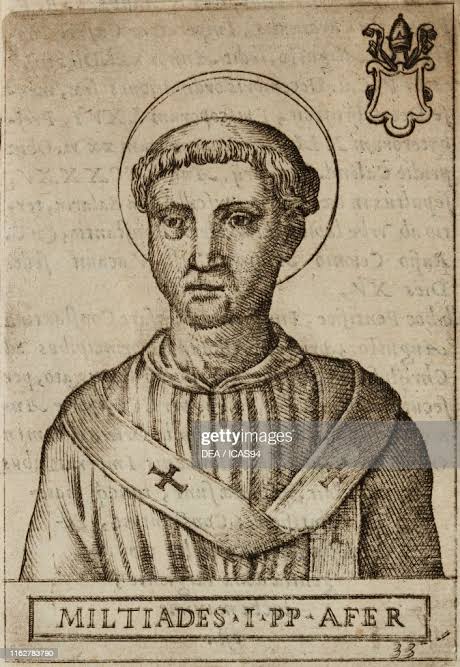
    “I will set fire to Egypt; Pelusium will writhe in agony. Thebes will be taken by storm; Memphis will be in constant distress. The young men of Heliopolis and Bubastis will fall by the sword, and the cities themselves will go into captivity. Dark will be the day at Tahpanhes when I break the yoke of Egypt, there her proud strength will come to an end. She will be covered with clouds, and her villages will go into captivity. So I will inflict punishment on Egypt, and they will know that I am the LORD.”

    And all this came to pass! Egypt took pride in his strength and beauty, and the worship of lesser gods. And its downfall was great. At Ezekiel 30:21-26, God warned: “Son of man, I have broken the arm of Pharaoh king of Egypt. It has not been bound up to be healed or put in a splint so that it may become strong enough to hold a sword.

    “Therefore, this is what the Sovereign LORD says: ‘I am against Pharaoh king of Egypt. I will break both his arms, the good arm as well as the broken one, and make the sword fall from his hand. I will disperse the Egyptians among the nations and scatter them through the countries.

    “I will strengthen the arms of the king of Babylon and put my sword in his hand, but I will break the arms of Pharaoh, and he will groan before him like a mortally wounded man. I will strengthen the arms of the king of Babylon, but the arms of Pharaoh will fall limp. Then they will know that I am the LORD, when I put my sword into the hand of the king of Babylon and he brandishes it against Egypt. Then they will know that I am the LORD.”

    This prophecy, given to Ezekiel in 587 BC, also came to pass. God destroyed Egypt’s military superiority and give it to Babylon. These were some of the military defeats that lead to the forced migrations of our ancestors from Egypt to the other lands of Africa. These were the defeats that finally, over thousands of years, led to the total collapse of the black African empire in Egypt, leading to the eventual conquest in 641 AD by the ancestors of the current Arab population.

    Today, the descendants of those great Africans ancestors who were defeated by the Assyrians, Babylonians, Persians, Greeks, Romans, Byzantines and the other foreigners that God sent against Egypt, are making the same mistake as their ancestors, by claiming that God Almighty is foreign to them, instead of beseeching him for mercy and redemption.

    That surely is a highway to more ruin and doom. Clever descendants would retrace their steps to God Almighty, the source of the lost power and greatness of their ancestors, and ask him for mercy. But that is not what elite society and intellectuals in Africa are saying.

    The last word

    Surely, the last word belongs to Prof Konotey-Ahulu: “Many people, both in Europe and Africa, think Christianity is a European religion. Wrong!”, he wrote in 2011. “Jesus learnt to walk not in Europe or the Middle East, but on African soul in Mizraim (Egypt) where his family fled when Herod wanted to kill him.

    “The Ethiopian chancellor of the exchequer read Isaiah chapter 53 fluently before anyone in Britain knew how to read (Acts chapter 8:26-39). The black man went on his way rejoicing when Philip told him why the Lord Jesus came into the world, explaining not only how a hypocrite like me can have my relationship with God restored but also how a wicked transatlantic slave merchant like John Newton could, on repentance, be forgiven through the merits of The Lord Jesus Christ, and be looked upon as if he had never sinned,” Prof Konotey-Ahulu added.

    The Philip-Ethiopian chancellor encounter happened in the early beginnings of Christianity, which was then called the “New Way”, after the resurrection of Christ. The Bible records at Acts 8:27 that the Ethiopian “had gone to Jerusalem to worship”. Which means that even at that time, in those early days of Christianity, when no European “missionary” had yet come to Africa, some Africans had already become Christians and were, in fact, going to Jerusalem on pilgrimages to worship.

    So let no African forget that the traditional religion of Kemet was replaced firstly by Christianity and later by Islam. At the time, no European knew his way to Africa. European missionaries started coming to Africa way after the first Portuguese explorers stumbled their way along the West African coast in the mid-1500 AD. Kemet was ancient by that time.

    Wikipedia and other authorities tell us that “Christianity in Africa first arrived in Egypt in approximately 50 AD (in the first century after the death and resurrection of Jesus), and reached the region around Carthage by the end of the second century. In the 4th century, the Aksumite empire in modern-day Ethiopia and Eritrea became one of the first regions in the world to adopt Christianity as their official religion. The Nubian kingdoms of Nobatia, Makuria and Alodia followed two centuries later.”

    So who says Christianity came to Africa via Europeans? The European missionaries were latter-day saints!

    All said and done, elite society in Africa, especially those with intellectual bent, should lead the retracing of African feet to God Almighty in order to weed out the charlatans masquerading today as “men and women of God” and yet leading the Africans astray. Most of those so-called men and women of God are not men and women of God at all. Left alone, they will compound the problem and make the true worship of God Almighty difficult to attain.

    In all this, Zimbabwe should count itself lucky to have a current President who is not shy to kneel down in public and be prayed for – prayers going to God Almighty. Zimbabwe again is lucky to have a Vice President who is an ardent Catholic, who prays to God Almighty.

    Elite society in Africa should be interested in the study of the true history of our ancestors, because truth matters. More importantly, elite society should be interested in the march back to God Almighty. He loved our ancestors and made them great. He will love us too and make us great.


  • The Greek philosophers who came to Africa to study

    The Greek philosophers who came to Africa to study

    For centuries, Euro-American historians have succeeded in concealing the truth about the Greeks who travelled to Kemet in search of the knowledge of the ancient African mystic systems, and who after their study, taught by Africans, went back to influence Greek, and by extension, European thought and civilisation. In effect, the legacy of scientific and philosophic knowledge of the modern world has been wrongly credited to the Greeks, who passed it on to the Romans who passed it on to Renaissance Europe, and on to the current world. This piece is published by courtesy of The Africa Factbook.

    The historical record is clear that after nearly 3,000 years of prohibition against the Greeks, they were allowed to enter Kemet to study. This was made possible, first, through the Persian invasion and, secondly, through the invasion of Alexander the Great (from the 4th century BC), up until the death of Aristotle (322 BC).

    The Greeks took every opportunity to learn all they could, receiving direct instructions from African high priests who were the deans of knowledge. When Egypt came under Roman control, they looted and ransacked the great libraries of Egypt. The looting of the libraries was the genesis of Western scientific, philosophic and technical knowledge. This continued when Napoleon’s invading army arrived in Egypt in 1798 AD.

    Socrates (above) admitted in his book Bucyrus : “I studied philosophy and medicine in Egypt”

    Democritus, a Greek historian, accused his fellow Greek, Anaxagoras, of having “stolen” the Egyptian mystical teachings on the sun and moon, and passed them around as his own. Socrates, one of the greatest Greek scholars, while awaiting punishment in prison for teaching African wisdom and also for his condemnation of corruption, admitted to his
    pupils that he plagiarised the work of the African philosopher, Esop (also spelt Aesop, mid-6th century BC).

    Socrates confessed: “I availed myself of some of Esop’s fables which were ready to hand and familiar to me and I versified the first of them that suggested themselves.”

    Homer, in his Odyssey IV (c. 750 BC), praised Ancient Egypt “where the doctors are the first scientists of the world”. The death of Aristotle, who had inherited a vast quantity of books from the libraries of Egypt through his friendship with Alexander the Great, was naturally followed by the death of Greek philosophy, which fell into a system of borrowed ideas, known by themselves as eclecticism.

    The collection of Greek philosophy – if not at the instigation of Aristotle himself, certainly students of his school – was not authorised by the Greek government, which persecuted the Greek philosophers as it considered philosophy as African and foreign to Greek sensibilities, and thus could lead to the corruption of the youth.

    Greeks not the authors of Greek philosophy
    As a result, Anaxagoras was indicted and fled from prison to exile in Ionia. Socrates was also executed for exhibiting some of the qualities mandatory for initiation into ancient African mystical teachings. Plato likewise was also persecuted and fled to Megara for refuge.
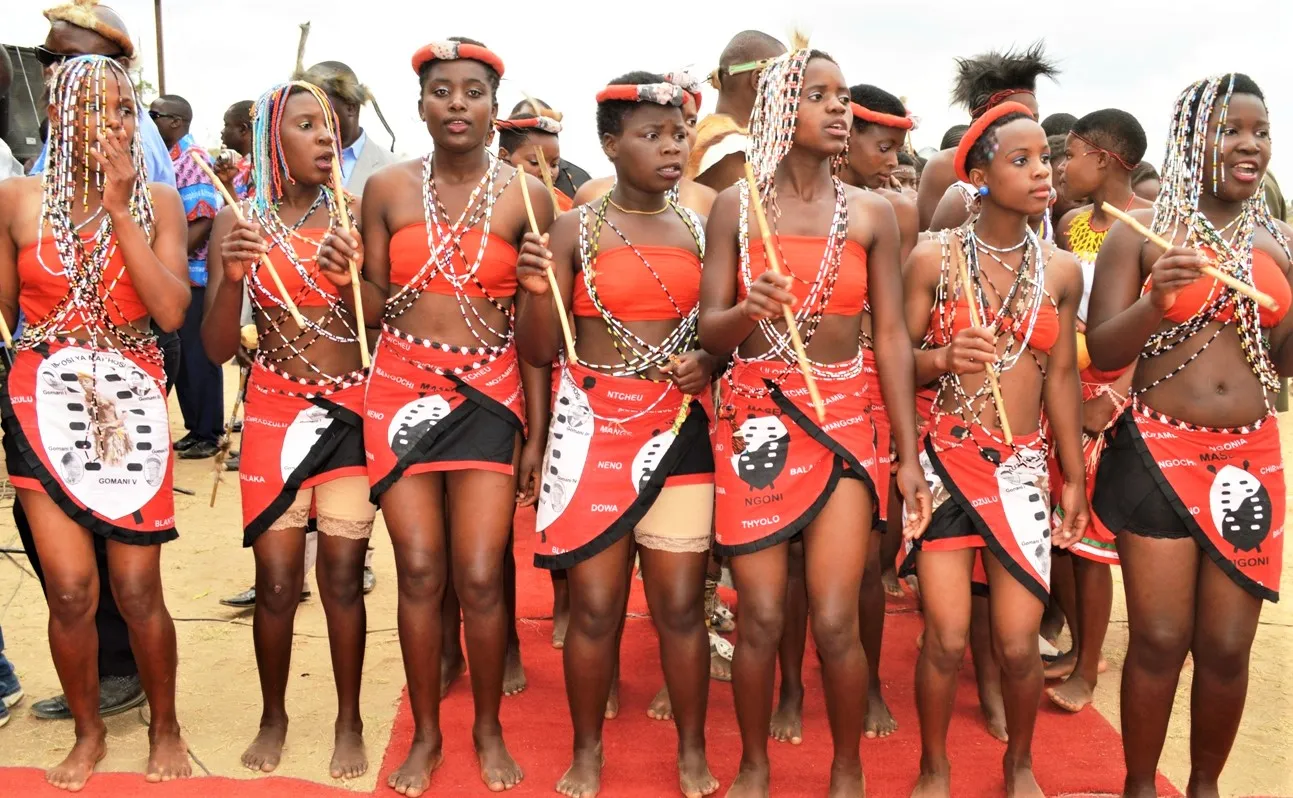
    In 1954, the Guyana-born Dr George Granville Monah James, who served for two years as Professor of Logic and Greek at Livingston College in Salisbury, North Carolina, USA, before he moved on to the University of Arkansas at Pine Bluff – shocked the world when he published his book, Stolen Legacy, whose main theme was that the Greeks were not the authors of Greek philosophy; the Ancient Egyptians were.

    James’ book was so radical that even the library of the University of Arkansas, a historically black college, refused to stock it. But James was not apologetic. He trusted in his research and facts.

    Reviewing the book in 1955 for the Journal of Negro Education, Prof. William Leo Hansberry wrote: “In the work, Professor James dares to contend and labour to prove, among others, that ‘the Greeks were not the authors of Greek philosophy’, that the ‘so-called Greek philosophy’ was based in the main upon ideas and concepts which were borrowed without acknowledgement – indeed ‘stolen’ – by a few wayward and dishonest Greeks from the Ancient Egyptians.”

    Hard Truth: Dr George James (above) wrote categorically in the Stolen Legacy: “The term Greek Philosophy, to begin with is a minsomer, for there is no such philosophy in existence”

    Curiously, Dr James died under mysterious circumstances shortly after the publication of Stolen Legacy. Since then nobody has bothered to present a significant biography of him. But he was clear in his mind when writing Stolen Legacy: “The term Greek philosophy, to begin with, is a misnomer, for there is no such philosophy in existence,” he wrote, matter-of-factly.

    “The Ancient Egyptians,” Dr James went on, “had developed a very complex religious system, called the Mysteries, which was also the first system of salvation… After nearly 3,000 years of prohibition against the Greeks, they were permitted to enter Egypt for the purpose of their education. First through the Persian invasion and secondly through the invasion of Alexander the Great.

    “From the sixth century BC, therefore, to the death of Aristotle (322 BC), the Greeks made
    the best of their chance to learn all they could about Egyptian culture; most students received
    instructions directly from the Egyptian priests, but after the invasion by Alexander the Great, the royal temples and libraries were plundered and pillaged, and Aristotle’s school converted the library at Alexandria into a research centre. There is no wonder then, that the production of the unusually large number of books ascribed to Aristotle has proved a physical impossibility for any single man within a lifetime.”

    Dangerous book: The fron cover of the book to have led Dr George James’ mysterious death. He busted the myth of the greek philosophy and civilisation

    According to Dr James: “The history of Aristotle’s life has done him far more harm than good, since it carefully avoids any statement relating to his visit to Egypt, either on his own account or in company with Alexander the Great, when he invaded Egypt. This silence of history at once throws doubt upon the life and achievements of Aristotle. He is said to have spent 20 years under the tutorship of Plato, who is regarded as a philosopher yet he graduated as the greatest of scientists of antiquity. Two questions might be asked: (a) How could Plato teach Aristotle what he himself did not know? (b) Why should Aristotle spend 20 years under a teacher from whom he could learn nothing? This bit of history sounds incredible.

    “Another point of considerable interest to be accounted for was the attitude of the Athenian
    government towards this so-called Greek philosophy, which it regarded as foreign in origin and treated accordingly. Only a brief study of history is necessary to show that Greek philosophers were undesirable citizens, who throughout the period of their investigations were victims of relentless persecution, at the hands of the Athenian government.

    “Anaxagoras was imprisoned and exiled. Socrates was executed. Plato was sold into slavery, and Aristotle was indicted and exiled; while the earliest of them all, Pythagoras, was expelled from Croton in Italy. Can we imagine the Greeks making such an about-turn as to claim the very teachings which they had at first persecuted and openly rejected? Certainly, they knew they were usurping what they had never produced.”


    Aristotle and the books from Egypt
    Dr James drove home the point, referring to Aristotle’s death in 322 BC, “not many years after he had been aided by Alexander the Great to secure the largest quantity of scientific books from the Royal Libraries and Temples of Egypt. In spite, however, of such great intellectual treasure, the death of Aristotle marked the death of philosophy among the Greeks, who did not seem to possess the natural ability to advance these sciences. Consequently, history informs us that the Greeks were forced to make a study of Ethics, which they also borrowed from the Egyptian ‘Summum Bonum’ or greatest good.”

    Dr James then turned to Socrates and Plato, who also became famous in history as philosophers and great thinkers by stealing from the Ancient Egyptians, without acknowledging the source of their alleged philosophy and great thinking.

    “Every schoolboy,” Dr James wrote, “believes that when he hears or reads the command ‘know thyself’, he is hearing or reading words which were uttered by Socrates. But the truth is that the Egyptian Temples carried inscriptions on the outside addressed to Neophytes and among them was the injunction ‘know thyself’. Socrates copied these words from the Egyptian Temples, and was not the author. All mystery temples, inside and outside of Egypt carried such inscriptions, just like the weekly bulletins of modern churches.

    “Similarly, every school boy believes that when he hears or reads the names of the four cardinal virtues, he is hearing or reading the names of virtues determined by Plato. Nothing has been more misleading, for the Egyptian Mystery System contained 10 virtues, and from this source Plato copied what have been called the four cardinal virtues: justice, wisdom, temperance, and courage.

    “It is indeed surprising how, for centuries, the Greeks have been praised by the Western world for intellectual accomplishments which belong without a doubt to the Egyptians or the peoples of North Africa… This contribution to civilisation was really and truly made by the Egyptians and the African continent, and not by the Greeks or the European continent.”

    Continuing, Dr James wrote: “We sometimes wonder why the people of African descent find themselves in such a social plight as they do, but the answer is plain enough. Had it not been for this drama of Greek philosophy and its actors, the African continent would have had a different reputation, and would have enjoyed a status of respect among the nations of the world.

    “This unfortunate position of the African continent and its peoples appears to be the result of misrepresentation upon which the structure of race prejudice has been built, ie the historical world opinion that the African continent is backward, that its people are backward, and that their civilisation is also backward.

    “Finally, the dishonesty in the movement of the publication of a Greek philosophy becomes very glaring, when we refer to the fact…that by calling the Theorem of the Square on the Hypotenuse, the Pythagorean theorem, it has concealed the truth for centuries from the world, who ought to know that the Egyptians taught Pythagoras and the Greeks what mathematics they knew.”

    The true authors of Greek philosophy
    Explaining why he wrote Stolen Legacy, Dr James disclosed that he wanted to “show that the true authors of Greek philosophy were not the Greeks, but the people of North Africa, commonly called the [Ancient] Egyptians; and [that] the praise and honour falsely given to the Greeks for centuries belong to the people of North Africa, and therefore to the African continent.


    “Consequently, this theft of the African legacy by the Greeks led to the erroneous world opinion that the African continent has made no contributions to civilisation, and that its people are naturally backward. This is a misrepresentation that has become the basis of race prejudice, which has affected all people of colour.”

    This issue was a great worry for Dr James because, as he put it, “For centuries, the world has been misled about the original source of the Arts and Sciences; for centuries Socrates, Plato and Aristotle have been falsely idolised as models of intellectual greatness; and for centuries the African continent has been called the Dark Continent because Europe coveted the honour of transmitting to the world the Arts and Sciences.

    “I am happy to be able to bring this information to the attention of the world, so that on the one hand, all races and creeds might know the truth and free themselves from those prejudices which have corrupted human relations; and on the other hand, that the people of African origin might be emancipated from their serfdom of inferiority complex, and enter upon a new era of freedom, in which they would feel like free men, with full human rights and privileges.”

    The theft of African intellectual property and the non-acknowledgement of its source, was done intentionally to demean the African. For example, Thales of Miletus is considered the first Western philosopher, yet he travelled to Kemet as stated by himself and advised his students to go to Africa to study. Deodorus Siculus, the Greek writer, came to Africa and stayed at Anu in Egypt. He admitted that many who are “celebrated among the Greeks for intelligence and learning” studied in Egypt.

    The educational capital of the ancient world
    When Africans finished building the pyramids in 2500 BC, it was 1,700 years before Homer, the first Greek writer, began writing The Iliad, the European classic. Homer is said to have spent seven years in Africa, and studied law, philosophy, religion, astronomy, and politics.

    Many of the great European philosophers studied in Africa because it was the educational capital of the ancient world. When Socrates wrote of his studies in the book Bucyrus, he admitted categorically: “I studied philosophy and medicine in Egypt.” He did not study these subjects in Greece, but in Africa!

    In the area of medicine, Ancient Egyptians wrote such medical books as the Hearst Papyrus (during the 7th Dynasty, 2000 BC), the Kahun Papyrus (from the 12th and 13th Dynasties, 2133-1766 BC) which contains gynaecological treatments, and the Ebers Papyrus (during the 18th Dynasty, circa 1500 BC).

    On the walls of the Temple of Kom Ombo, the African ancestors left records of the original medical tools they used in their operations. These consisted of forceps, aircups, knives, sponge, scissors, triceps, a balance to weigh portions of medicine, a retractor to separate skin, birthing or delivery chair, and the origin of the modern-day RX prescription symbol.

    In 47 BC, the medical doctors in Kemet delivered Cleopatra VII’s son named Caesarion (“Little Caesar”). The medical procedure performed by these African doctors in the BC era to deliver this boy-child was named after Little Caesar, from which we now have the medical term “Caesarean Section”.

    When African doctors were writing these medical texts and performing these medical operations, Hippocrates, the Greek now said to be the “father of medicine” was not yet born, until 460 BC.

    In recent years, Dr Jackie Campbell, a member of a British research team from the KNH Centre for Biomedical Egyptology at the University of Manchester, who examined medical papyri dating back to the 1500 BC era, a whole 1,000 years before the birth of Hippocrates, affirmed that: “Classical scholars have always considered the Ancient Greeks, particularly Hippocrates, as being the father of medicine, but our findings suggest that the Ancient Egyptians were practising a credible form of pharmacy and medicine much earlier.”

    Imhotep, the world’s first recorded multi-genius, is the real “father of medicine”. He was born circa the 27th century BC, when Hippocrates (born 460 BC) was nowhere in sight.

    The renowned African-American scholar, Molefi Kete Asante, states in his classic book, Ancient Egyptian Philosophers: “When the Egyptians crossed the Mediterranean, becoming the foundation of the Greek culture, Imhotep’s teachings were absorbed there. Yet, as the Greeks were determined to assert that they were the originators of everything, Imhotep was forgotten for thousands of years and a legendary figure, Hippocrates, who came 2,000 years after him became known as the Father of Medicine.”

    As a philosopher, Imhotep is credited with having written the slogan: “Eat, drink and be merry, for tomorrow we shall die.”

    The Greek students who studied in Egypt
    In summary, the list of the students from Greece who came to study in Africa looks like this:

    Thales of Miletus (624-547 BC): He left his country and studied with the wise men of Egypt, but was taken captive when the Persian king Cambyses invaded Ancient Egypt. His belief in reincarnation was formulated in Africa, a belief which was still prevalent in modern Africa, before the advent of Islam and Christianity. At the end of the 6th century BC, Thales lived in the city of Miletus, now in western Turkey.

    Thales of Miletus. He came to Ancient Egypt to study

    According to Herodotus, Thales was of Phoenician descent. He moved to southern Italy, where he founded a community of philosophers. The Greek scholar, Iamblichus, wrote that Thales made it clear to Pythagoras that he (Pythagoras) had to go to Memphis, in Egypt, to
    study. Thales added that if the source of his knowledge came from his studies and tutelage under African masters in Egypt, Pythagoras could not afford not to go there.

    Plato also records that Thales was educated in Egypt under the priests: “Thales was well and truly indebted to Egypt for his education.” The science of geometry was invented in Africa by
    Africans, and Thales transferred the speculative science of geometry to Greece.

    Socrates (469-399 BC): The Greek, Saint Clement of Alexandria, stated that: “If you were to write a book of 1,000 pages, you could not put down the names of all the Greeks who went to the Nile Valley in Ancient Egypt to be educated, and even those who did not go claim they went because it was prestigious”.

    Socrates lived in Athens and wrote nothing himself, he was interested in ethics. It was his axiom that no one would knowingly do a bad thing. To him, knowledge was important because it resulted in good behaviour. Yet, through his pupil Plato, Socrates has influenced the entire history of Western thought, culture and morality.

    He travelled to Africa for his early education and was the most spiritually inclined amongst the Greek philosophers that came to Africa. He was falsely accused and condemned to death at 70 years of age (by drinking a cup of hemlock), for “corrupting the youth of Athens”.

    While awaiting condemnation in prison, he admitted to his pupils that he plagiarised (if not word for word) the work of the African philosopher, Esop, the Ethiopian (560 BC). Socrates confessed: “I availed myself of some of Aesop’s fables which were ready to hand and familiar to me and I versified the first of them that suggested themselves.”

    Socrates is credited with the axiom: “Man know thyself” (in Greek Hellenic language, “qnothi seauton”). The truth is that the original glory of these words was already written by ancient Africans on the outside walls of temples some 2,000 years before Socrates came to learn the spiritual import. He stayed for over 10 years in Africa, according to his own biography.

    Plato (428-347 BC). He was one of Socrates’ pupils and many of his writings (called “dialogues”) contained conversations with Socrates. Plato’s most famous work, The Republic, was chiefly concerned with the best form of life for men and states. He died aged 81 and was buried in Athens at the Academy, a school which he founded. Most of his doctrines are eclectic and point to an Ancient Egyptian source.

    He copied his so-called four virtues – wisdom, justice, courage and temperance – from the original Ancient Egyptian spiritual belief system which contained 10 virtues. The Greeks renamed this belief system the “Mystery System”. After the death of Socrates, Plato left for Egypt where he studied for a period of 13 years. His mentor was Sechnuphis (or Snefuru), a scholar and philosopher priest of Anu (Heliopolis).

    Strabo, the Greek historian who latter travelled through Egypt, states that his “Egyptian guide showed him where Plato had lived, it was how Plato learned the Fable of Thoth (Djehuti – the African god of wisdom, and sacred text) and Amun, which he wrote down in Phaedros.”

    Plato (above). He came to Ancient Egypt to study

    Pythagoras (582-500 BC). Like his contemporaries, this native of Samos journeyed in his youth to Egypt where he studied for almost 15 years. He travelled to Egypt for the purpose of education, and took advantage of the friendship between his fellow Greek Polycrates and Pharaoh Amasis. Polycrates gave Pythagoras a letter of introduction to Pharaoh Amasis.

    He pursued studies in astronomy, geometry, and theology under the tutelage of Egyptian priests. However, more than 1,000 years before him, the Ancient Egyptians had correctly calculated the areas of rectangles, triangles, isosceles, and trapeziums. The area of a circle had also been obtained accurately.

    Iamblichus, a fellow Greek philosopher, recorded in The Life of Pythagoras: “Thales laying stress on his advanced age and the infirmities of the body, advised [Pythagoras] to go to Egypt to get in touch with the priests of Memphis. Thales confessed that the instruction of these priests was the source of his own reputation for wisdom, while neither his own endowments nor achievement equaled those which were evident in Pythagoras. Thales insisted that, in view of all this, he [Pythagoras] should study with those priests, he was certain of becoming the wisest and most divine.”

    The Pythagorean Theorem: This is a theorem stating that the square of the hypotenuse of a right-angled triangle is equal to the sum of the squares of the other two sides. Pythagoras travelled to Africa and was taught geometry by his African teachers (the high priests) and was shown the proof of the theorem of the square on the hypotenuse of a right-angled triangle. Africans had been using this principle for over 1,000 years before Pythagoras set foot on the continent. He did not discover this proof, and it is therefore misleading to name the theorem after him (see Herodotus, Bk III, Diogenes, BK VII).

    Pythagoras (above) he came to Ancient Egypt to study

    Aristotle (385-322 BC). A pupil of Plato’s, Aristotle was born in Thracia and joined Plato’s Academy at the age of 18. After Plato’s death, Aristotle left Athens and was afterwards invited by Philip of Macedonia to be a tutor to his son Alexander (who became Alexander the Great).

    Years later, Aristotle returned to Athens to establish a rival school, the Lyceum, where he laid the foundations of various sciences including biology and zoology. Aristotle’s works include metaphysics and ethics. His main works are in Prior Analytics (in which he described the rules of logic), Physics, Animal History, Rhetorics, Poetics, Metaphysics, Nicomachean Ethics, and Politics.

    Considered by modern Western scholars as the most influential philosopher of all ages and the founder of modern science, Aristotle is said to have spent over 20 years as a pupil under Plato. He accompanied Alexander the Great when he invaded and conquered Egypt and
    helped himself to the libraries of all the major cities of Ancient Egypt. He is credited with writing 1,000 books on different subjects, a sheer impossibility for any individual in a lifetime.

    The Unmoved Mover (proton kinoun akineton): This doctrine, like the many others that the Greeks appropriated, has been ascribed to Aristotle where he proves the existence of God. But according to Dr George James in Stolen Legacy, the “Unmoved Mover” is the essential thrust of the sacred African text recorded in The Memphite Theology, thousands of years before Aristotle was born. It is the first recorded story of the creation known in the world, now kept in the British Museum.

    Aristotle (above) he came to Ancient Egypt to study

    During the reign of Pharaoh Shabaka, the Nubian king, he ordered a copy of this story to be recorded on a slab, referred to as the “Shabaka Stone”. It is from this theology that Aristotle derived and plagiarised his concept of the “Unmoved Mover”.

    The Memphite Theology is an authoritative African statement that contains the cosmology, theology and philosophy of the Ancient Egyptians (older than any religious text in the history of humanity) and should form the basis of classic African philosophy and be taught in our universities, not the carbon copies from Greece and elsewhere.

    The achievements of the African forebears regarding the advancement of humanity need to be reclaimed, for they underscore how the world measures and values Africans. Hence they say we are Bantus, not Ancient Egyptians!

  • Who were the Ancient Egyptians?

    Who were the Ancient Egyptians?

    For Africans, there can be no better confirmation or authentication of the origins of the people who built Ancient Egypt than getting it from the acclaimed Ghanaian Egyptologist, novelist, poet and scholar, Ayi Kwei Armah, author of The Beautyful Ones Are Not Yet Born (1968) and many other books. Armah is one of Africa’s truly great writers who will not get a Nobel Literature Prize because of his uncompromising stance on matters African. So here, Baffour Ankomah, who has known Armah personally for nearly three decades, takes readers to the Ghanaian literary giant to hear about the glorious African ancestors who built Ancient Egypt.

    Queen Tiye (above) was one of the famous Queens of Ancient Egypt. An African ancestor, she was the “Great Royal Wife” of Pharaoh Amenhotep III (who ruled both Egypt and Nubia). She was also the mother of Pharaoh Akhenaten, and grandmother of the boy-king Tutankhamun

    Ayi Kwei Armah, the Ghanaian writer and Egyptologist who moved to Senegal decades ago to start his own Egyptology institute called Per Ankh which came complete with a publishing house, to teach young Africans about Ancient Egypt, is one of the few prominent black African historians who have bothered to study hieroglyphics in-depth, and in the process gone deeper into the core of the thought and power that created Ancient Egypt.

    In his memoirs, The Eloquence of the Scribes (2006), Armah traces without
    a shadow of doubt the lineage of most modern black Africans to Ancient Egypt. These are the descendants of the Africans who migrated southwards and westwards during the many invasions of Ancient Egypt, especially after the final fall of the empire. Records show that by the time the Arabs attacked Ancient Egypt in 639 AD and finally conquered it in 641 AD from the Byzantine overlords, Europeans had long been in charge politically of the defeated country.

    Today, the Arabs seem to forget that their conquest of Egypt had been made easier by the resentment the native Egyptians had for their Byzantines. The Africans wanted the Turks off their back, so they collaborated with the Arabs to defeat the Byzantines.

    Because of the many invasions of Egypt, the African ancestors had fled their country in large numbers during the Assyrian, Babylonian, Persian, Greek and Roman invasions; fleeing not only to the desert and mountain regions of North Africa, but also to adjacent lands in Africa, Arabia and Asia Minor, where they went to live and secretly developed the teachings which belonged to their Ancient Mystery System.

    Cultural facts

    In The Eloquence of the Scribes, Ayi Kwei Armah tells about “the luck” he had growing up at a time “when figures like Kwame Nkrumah were rising to articulate dreams common to my society. I was struck into thought by the fact that even politicians who disagreed with Nkrumah about everything else agreed with him on one cultural fact.

    “The colonial territory we lived in was called the Gold Coast, gold being the thing whose love had brought Europeans there. When Nkrumah’s party proposed that we retrieve a name that was really ours, Ghana, no one who knew our history disagreed. Now I had grown to adulthood. Inside our larger history I was undertaking life journeys of my own, and though I had imagined other parts, I was moving into the future as a writer.

    “The more I learned about our history, the clearer it seemed to me that if I wanted to write, I would have to study it more seriously, since all available evidence indicated that the narrative of our social history was at the centre of the art of our poets, storytellers and spokespersons. I followed the trail of evidence backward in time. It led me to oral traditions. The oral traditions took me back to traditions of migrations.

    “Those traditions, beginning with acknowledgements of places reached by groups travelling under pressures too extreme to adapt to, referred to an earlier place of departure. Sometimes the reference was simply to the Great River or the Great Water. More frequently, the traditions of migration mentioned Msiri or Luti. Those are just other names for the area now known as Egypt, though in ancient times it went by other indigenous names: Ta Meri (beloved land), Tawi, (two lands), and more often, Kemet, (the black nation).

    “In the time when Europeans held direct control over political life, administrative affairs, and education in Africa, it was difficult for Africans to assess the evidence contained in the traditions of migration. But after independence, Africans got absorbed into the management of European power in Africa, and colonial taboos against self-knowledge began to lose their authoritarian rigidity.

    “I have benefited from that new flexibility. Thanks to it, I found documentary evidence that enabled me to connect my own Akan background to Sahelian oral traditions naming the Soninke or Sarakholle as the people of old Wagadou and Ghana. The migratory traditions of the Soninke and their neighbours agree on a
    more ancient migration from Nile valley origins.”

    Ayi Kwei Armah, the Ghananian novelist, poet and Egyptologist, has done Africa a huge service by devoting over 50 years to studying Ancient Egypt and its literature

    Continuing, Armah reveals that the focus of his study was on the content and form of the verbal art in African societies across time. “If I meant to continue following the trail of traditions,” he says, “I would have to examine the written records of the Nile valley, the oldest and most substantial corpus of documents literary, scientific and administrative, anywhere in Africa.

    “At no point in my formal education had the option of studying the language of Ancient Egypt been open to me. Now questions piling up in my mind could not be answered without a reading knowledge of hieroglyphics.

    Queen Tiye, wearing the double-feathered crown with the sun-disc (associated with the deity Amun) and the horns of Hathor, the ancient Egyptian goddess

    “The first publications I found did as much to deepen my perplexity as to enlighten me. Several were by the British Egyptologist Wallis Budge. He was informative on a general level, but when it came to the reading of hieroglyphic script, his two-volume dictionary and numerous other publications used a system of letter equivalents so archaic that it was often misleading.

    “The study of hieroglyphic writings is never going to be an entertainment, but for me it was lightened by surprises. Given that linkages between the Akan and Ancient Egyptian languages were not direct but mediated through a Soninke connection involving multimillennial migrations over thousands of kilometres, I did not expect to encounter Ancient Egyptian words with the same sounds and meanings as Akan words.”

    Armah, an Akan himself, goes on to tell about the identical Ancient Egyptian and Akan words he discovered in his study of hieroglyphics (which I have already quoted on page … of this issue).


    Ancient Egyptian literature

    Armah then goes deeper and says: “It is well over [five] decades since I began the study of Ancient Egyptian literature. The documents involved constitute a really substantial corpus spanning millennia of time. From the chronological perspective, they make up the longest literary tradition in Africa or, for that matter, anywhere.

    “The artists who produced what we are now pleased to call Ancient Egyptian literature were not primarily interested in literature per se. They were not blind to literary values, but they thought of themselves as participants in a more important process, the maintenance of vital connection between parts of a universe in which connection meant life, disconnection death.

    “It would thus be accurate to think of Ancient Egyptian literature as the surviving record of a long ritual involving members of a community of affection so extensive as to embrace living members in present time, members who had lived and died but whose memory it was the responsibility of the living to keep alive, and members yet to come, who would inherit the common memory and manage its flow into the future.”

    Continuing the legacy: Akan chiefs sit in state. In his study of hieroglyphics and Ancient Egyptian literature, Ayi Kwei Armah discovered many Akan words that have the same pronounciation and meaning as Ancient Egyptian words.

    All African societies can find this outlook familiar. But Armah has more: “It is possible, from looking at the surfaces of Ancient Egyptian culture, to conclude that death was its dominant obsession. After all, the most spectacularly visible monuments of the pharaonic era were mortuary buildings – funerary cities and pyramids.

    “But this would be a misinterpretation of the message these monuments were intended to convey. They were created to bear testimony to the importance of the connections between the visible realities of the here and now and the invisible universe of connected times and places.

    “This concern with connections is a constant motive in all autonomous African culture. It comes from an ethos that says death cannot be the end; that beyond death remains connection between those here now, those who were but are no longer here but elsewhere, and those who are not yet here but are elsewhere, destined to come someday.

    “The tombs of Africa testify to the death of bodies, but their contents speak of immanence of souls. Bodies may connect visibly in the here and now; souls are connectors across the present with past and future time.”

    After reading The Eloquence of the Scribes in 2006, I understood clearly why the Akans are so fascinated with funerals. It bothers on the bizarre. But who can blame them, they are being true to their ancestors of Ancient Egypt where Armah tells us that one can conclude that death was its dominant obsession

    The evidence
    According to Armah, “The body of writings we now call Ancient Egyptian literature is a substantial corpus considering how long ago its creation began – some 3,000 years before the Christian age, and over 2,000 years before the beginnings of Greek civilisation; it is an astonishingly huge and sophisticated collection of texts, inscribed on a wide variety of materials.

    Following the footsteps of the ancestors: An Akan Queen from Ghana. Queens occupied lofty and authoritative places in Ancient Egyptian society

    “Some texts were incised into stone monuments and great public constructions, some were painted on the walls of pyramid chambers, burial tombs and the lids of sarcophagi; some were written in ink, usually of two colours, the headings in red and the body texts in black, on sheets of papyrus reeds beaten, washed and pasted together, layer on layer, to make flat, smooth surfaces, and some were written on reusable tablets convenient for classroom exercises.

    “The writings of the Ancient Egyptians indicate that they thought, on the whole, that answers to philosophical life queries could best be found if the living maintained unbroken contact with their ancestors, and also remembered that there were many members of the society yet to come.

    “Why the ancestors? Because they were the founders of society and deserved high respect as originators. Also, because they solved many of life’s problems in their time. The living who learned to communicate with them could use their accumulated experience, avoid old pitfalls and invent new solutions by combining inherited ideas.

    “And why the unborn? Because a sense of responsibility to future generations could spell the difference between catastrophic waste and their creative use. The necessity of maintaining a balance between the interest of the living, the dead and the unborn required the creation of a great many cultural aids to remembrance. The important thing was not to forget. Carried over the centuries and millennia on a culture of remembrance, revered ancestors metamorphosed into legendary figures.

    “In time the illustrious took on the status of divinities. In this way Ancient Egyptians peopled the visible universe with traces of ancestors who would otherwise have been easy to forget. The accent on remembrance was a necessary precaution in culture dedicated to connectedness. African culture is not alone in positing connection between all parts of reality, visible and invisible. But it is unusually explicit in its conception of these connections as close family relationships…

    “In short, it was a prerequisite of social survival and wellbeing that ancestral memories be kept alive and that lines of communication between ancestors, the unborn and the living be kept permanently open. The ways of keeping the lines open were numerous. A simple but essential one was to keep the names of the dead among the living.

    “Ancient Egyptians considered the loss of one’s name a form of psychic death. Choice food at burials, libations of favourite drinks at baptisms, the giving of the names of the dead to the newborn, every mark of continued affection helped to maintain familiar bonds.”

    Continuing the discussion on connectedness, Armahs says: “I have mentioned my initial surprise when, as an adult, I read Ancient Egyptian words whose sounds and meanings were identical with those of certain Akan words. Something similar, but different in its subtle intensity, happened when I came upon themes shared by the oral traditions I knew and the Ancient Egyptian literature I was learning to read.

    “When first encountered, lexical matches presenting precise coincidences of sound and meaning between words in Ancient Egyptian and contemporary African languages are as startling as a single drop of unexpected rain. Thematic matches, in which philosophical ideas occur in identical forms in Ancient Egyptian and later African literary works, have a subtler but more durable effect, comparable to a soft, continuous drizzle of insight.”

    The black nation
    Having set the scene and proved the connectedness between modern Africans and their ancestors who migrated from Ancient Egypt, Armah goes on to tell how modern Africans came to be located where they are today on the continent.

    He writes: “Akan tradition, my earliest contact with the oral epic genre, mentions an Ancient parent society from which the Akan and other African groups derived their origins. That society is named as Ghanaman, meaning the state of Ghana, the suffix ‘man’ being the Akan suffix for a political state or city.

    “The state of Ghana is further identified in the epic as ‘ebibir man kesekese bi’. The adjective ‘kesekese’, an intensive form of ‘kese’ (great) means very great. ‘Ebibir’ is an intensive form of ‘bir’, which by itself means black; the intensive form designates a black collectivity. The whole phrase means a very great black nation.

    “In Niane’s Sundjata, the Malian griot, calling his audience and his society to pay attention, uses the Manding equivalent of the Akan term for black people. He says: ‘Listen then, sons of Manding, children of the black people…’ South African oral traditions use a similar formula: abantu abamnyama, though more frequently, the reference is simply abantu, people. The identity of the griots and oral traditionalists of Africa, as expressed in the text, is altogether straightforward. These were black artists addressing members of black communities.

    “In a reasonable world, the identity of the scribes who produced Ancient Egyptian literature, like that of the society they addressed in their works, would be just as straightforward. However, we live in a word where, less than 200 years ago, a ruling racial minority thought slave ownership a great lifestyle, where less than 100 years ago Europeans thought all African land and resources should belong to them, where [29 years] ago apartheid, the reservation of

    political and economic power for a racial minority, was an official style of good governance, and where, to this day, globalisation, apartheid writ on a world scale, is the reigning world order.

    “The European architects of slavery, colonialism and globalisation share a common take on Africa: whatever is valuable on this continent does not belong here; it should be extracted from here as cheaply as possible, with the help of local accomplices who for money and trinkets will run security services designed to keep an impoverished population under control, and transported to Europe or America, to be used to enhance the lifestyle of a superior minority of human beings.
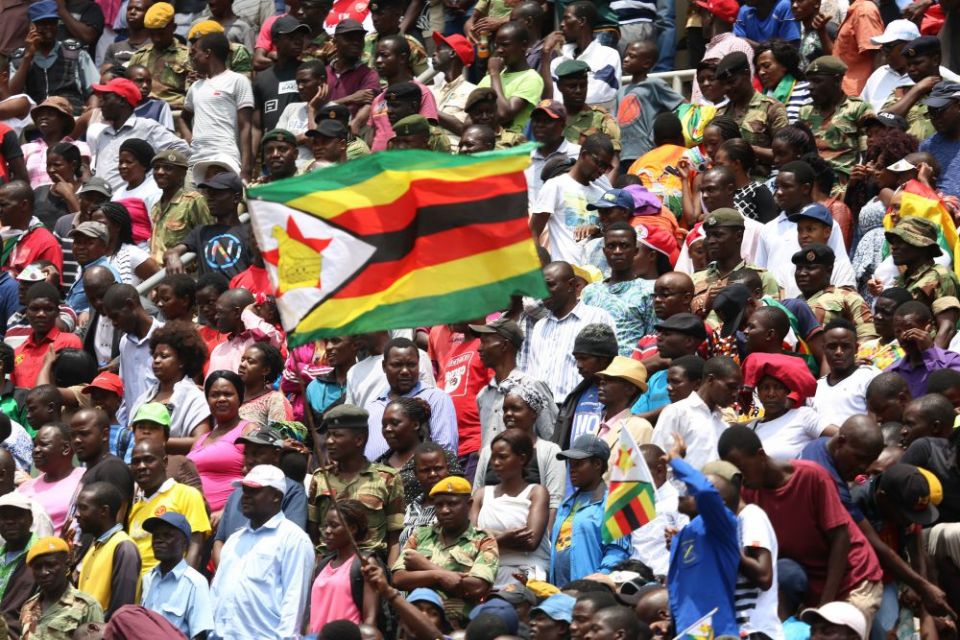
    “Materially, this means an African economy based on the fevered extraction and dirt-cheap export of everything of value that could be used to create manufacturing industries, jobs and wealth here: timber, diamonds, gold, copper, uranium, petroleum and soon water.

    “Intellectually, it means a commitment to the view that any human creation that shows intelligence, organisational ability, technical skill, or artistic genius cannot possibly be African.”

    But from his decades of study of Ancient Egyptian literature, Armah knows that the material and intellectual record of Ancient Egypt leaves no doubt as to the technical, intellectual and artistic skills of the people who produced the works now classed together as Ancient Egyptian civilisation.

    “These people,” Armah says, “had the unmistakable stamp of genius. They had such high organisational skills that their civilisation lasted thousands of years longer than any other.

    “The quality of their work and philosophy still astonishes the world. Since in a world dominated by slavers, colonialists and globalisers, the occurrence of high material or intellectual value in Africa is a racial taboo, questions that would ordinarily require only research and accurate reporting were turned into matters of furious controversy.

    “The questions are: Who were the Ancient Egyptians? Who, according to reports from other ancient people, were they? More specifically, what did they say about their own identity?”

    Two views, one truth
    Armah goes on: “There are now two main views regarding the identity of the Ancient Egyptians. Because one view has been most articulately advocated by African scholars, notably Cheikh Anta Diop, Chancellor Williams and Théophile Obenga, I shall refer to it as ‘the African view’.

    “The other view was developed by invading Arabs and Europeans in the age of slavery; consolidated in the colonial period when Africa was under European rule, it is currently being refined for use in the age of globalisation. It is a view mostly actively advocated by Europeans, Americans and their followers in Africa. It is supported by the monumental political, financial and military power accumulated over the past centuries by states and corporations which have benefitted from its application.

    “It is echoed by the most powerful information media in the world: movie, television, magazines, newspapers and radio. It is the view of Africa and Ancient Egypt familiar to long-established universities and their departments of African studies. It assumes that Ancient Egypt could not have been African. It can be called, with considerable accuracy, ‘the European view’.

    “The African view is the work of persons with no material or political power to speak of. They own no states or armies, corporations or foundations. They dominate no universities, publishing houses or news media. Their purchase on movie-making industries is zero. The power of their arguments is based entirely on archaeological and historical evidence, supported by studies in linguistics, material culture and intellectual history.

    OLYMPUS DIGITAL CAMERA

    “In outline, the African view goes as follows: Human life, according to available evidence, began on the African continent, most likely in the east and central plateau regions. From there the first human communities spread outward to populate the world.

    “In time, some settled in the Nile valley. At first, they created small, autonomous and ineffective communities, vulnerable to the elements. The geographical configuration of the Nile valley, featuring a powerful river, the longest flowing through the largest of deserts, with periodic floods and droughts, was such that communities living in the original scattered and uncoordinated pattern of settlement had little chance of survival, and none at all of prosperity.

    “This is how the Egyptologist Cheikh Anta Diop analyses their situation, and how it led to the emergence of the unified state of Egypt: ‘The suddenness and volume of the flooding of the Nile obliged the first African populations, whom chance had brought to this valley, either to rise above individual, clannish and tribal egoisms or to disappear. Thus, emerged a supra-tribal authority … with the powers necessary to conduct and coordinate irrigation and water distribution works essential to the general activity. Thus was born a whole hierarchic body of functionaries…’ (Cheikh Anta Diop, Civilisation or Barbarism, p.130).”

    Who really were the Ancient Egyptians?
    Ayi Kwei Armah now puts his teeth into the crux of the matter – the identity of the creators of Ancient Egypt – and takes his readers through the nitty-gritty of who the Ancient Egyptians really were.

    He states: “The natural flow of population from the African heartland outward brought groups to settle in the Nile valley. Would these people have been black? Necessarily so, according to Cheikh Anta Diop. His argument is clear: Melanin, greater or lesser quantities of which determine differences between dark and light skin colours, protects the human body against high levels of ultraviolet radiation prevalent in equatorial regions.

    SImply awe-inspiring: The clearest evidence for the legacy of Ancient Egypt can be seen in architecture (such as the Karnak Temple complex at Luxor, in northen Egypt). It has been suggested that the ancient Greeks got the very idea of monumental building in stone from the Egyptians and the Ancient Roman fascination with Egypt can be seen in the number of obelisks to be found in the city of the Rome to this day

    “Black skin here, like white skin in the colder European climate, is a matter of efficient adaptation. ‘There is no particular glory about the cradle of humanity being in Africa, because it is just an accident. If the physical conditions of the planet had been otherwise, the origin of humanity would have been different.’ (Cheikh Anta Diop, Civilisation or Barbarism, p.16).

    “As for the reason why the current population of Egypt has such a high admixture of European and Asian skin colours, the history of the Nile valley from the disintegration of the pharaonic system to the present offers more than adequate explanation.

    “Ancient Egyptian wealth and culture attracted successive invasions of Asians and Europeans from Iran, Macedonia, Greece, Italy, Arabia, Turkey, France and England, who mixed with the original population. It is a matter of some irritation to scholars who favour ‘the European view’ that such ancient Greek authorities as Herodotus and Aristotle confirm the blackness of the original Ancient Egyptians.

    “Herodotus in a passage on the Colchians says: ‘… the Colchians are clearly Egyptians … My own guess was based on the fact that they are dark-skinned and woolly-haired; this, however, means nothing, for there are other people such. But the following is more important: that alone of mankind the Colchians, the Egyptians, and the Ethiopians have circumcised from the first. The Phoenicians and the Palestinian Syrians themselves agree that they learned this from the Egyptians.’

    “The European view, the ruling orthodoxy under slavery, colonialism and apartheid, is alive and well under globalisation. Of racist paternity, it is based not on scholarly evidence but on an established worldview muscular enough to hammer inconvenient evidence into silence.

    Inside the tomb of Pharaoh Rames VI at Luxor: Ancient Egyptian tombs are a source of truth for modern Africans, because as Ayi Kwei Armah says; “some texts were incised into stone monuments and great public constructions, some were painted on the walls of pyramid chambers, burial tombs and the lids of sarcophagi”, and today provide the descendants of the great ancestors with historical truth.

    “The logic behind it is inductive: Africa being a land of negative value, anything of value here does not belong here. So the Ancient Egyptians, being high-value intellectual and material producers and organisers, could not have been African. Who were they then?”, Armah asks, and answers it himself.

    “A great deal of energy has gone into the search for an answer compatible with ‘the European view’, but the evidence points the opposite way. There is no point lingering over the assumption of the impossibility of connections between Ancient Egypt and Africa. It is a racist view, deliberately anti-African. A time spent confronting European believers with evidence that invalidates their racist weltanschauung is wasted time. It is more sensible to spend it studying the literacy evidence on the issue of identity. What is the nature of that evidence?”

    The key word is ‘Kmt’
    Now comes the clincher, and Ayi Kwei Armah is up for it. “A reasonable way to start,” he says, “is by looking at a key word, ‘Kmt’. A frequent in the literary and ceremonial texts of Ancient Egypt, it has multiple meanings depending on the determinative sign following the root ideogram ‘Km’.

    “‘Km’ itself, however, invariably means black. The way the ideogram is written, it has been variously interpreted as representing a piece of crocodile skin or a short piece of burnt wood. The bit about the crocodile skin, though an authority as useful as Alan Gardiner favours it, is rather fanciful. The reading that sees it as a piece of charred wood is more plausible. Divergent interpretations of the object are represented, notwithstanding scholars agree on the meaning: ‘Km’, black.

    In some detail: Texts in Ramses VI’s tomb: Generally, in ancient Egypt, “some texts were written in ink, usually of two colours, the headings in red and the body in black, on sheets of papyrus reeds beaten, washed and pasted togethe, layer on layer, to make flat, smooth surfaces, and some were written on reusable tablets convenient for classrom exercises”, and on tomb walls

    “The way the hieroglyphic writing system works, when this sign is followed by a determinative sign for persons, the composite sign means black people. When the determinative sign is a papyrus roll, the standard symbol for intellectual values, the composite signs means a black book or black literature. When the determinative sign shows a circular city enclosing cross roads, the meaning is a black city or a black nation.

    “All three hieroglyphic groups were regularly used by Ancient Egyptian scribes, depending on whether they wanted to designate their nation, their people, their literature, or a particular holy book. The unvarying root was ‘Km’, black.

    “What this means is that Ancient Egyptians called themselves black, and considered their culture and literature black. Clever people with time on their hands have tried to explain away these basic facts to make them fit into ‘the European view’. ‘The African view’ demands no contortionist acrobatics. Scholarly respect for recorded data is enough. Learning to read hieroglyphics even better.”

    The South, the South
    The Ghanaian colossus goes on: “Apart from the direct word ‘Kmt’, a reading of Ancient Egyptian literature reveals the existence of attitudes and customs indicating that the original people of Ancient Egypt considered themselves indigenous to the African continent. We shall consider a few examples.

    A soninke woman from the Gambia: Their ancestors, after migrating from Ancient Egypt, continued the traditions and the mystery of Ancient Egypt. today the Soninke are spread all over the west Africa

    “Certain formulaic phrases used in ritual ceremonies occur with the regularity and frequency of key cultural indicators. One such phrase is an invocation to all protective deities of the Egyptian universe. Naturally, it requires the supplicant priests to turn in all four directions as they call upon the…neterw resy, mehtet, imentet, iabtet … gods of the south, north, west, east (see Wallis Budge, The Book of the Dead, p. 2).

    “The Ancient Egyptians saw themselves as a society in a special relationship with the land around them. They acknowledged this tie by turning successively in the various directions as they made their ritual utterances.

    “By tradition, they began by turning in the direction from which their ancestors and the gods whose extensions they were, came. All directions were sacred, but ‘the South’ was the direction of the sources and origins. The ritual orientation to ‘the South’ was such an ingrained part of the culture that it influenced the daily vocabulary used to indicate such other directions as left and right.

    “Because the initial direction to be faced was ‘the South’, that is to say looking upstream [of the Nile], towards the continental source land, the habitual word used to indicate the direction left was the same as the word for the east, ‘imentet’. In the collective memory as readable in hieroglyphic texts, the South, that is to say, the heartland of continental Africa, was not simply the area from where the founding ancestors came, the locus of generation; it was also a source of regeneration.

    “The original work of creation could die or be destroyed. Farmland could revert to desert, on the surface. But this apparent death could be reversed, and the direction from which the energy for the revitalising reversal was expected to come, like the Nile waters, was ‘the South’.

    “Creation was thus perceived not as a singular event but as a process, an open-ended series of repetitions of renewal following onslaughts of barrenness. Where the fertilising Nile came from, there also the creative energy for social reconstruction after defeat and devastation had its source.”

    Armah then uses the Middle Kingdom text called The Prophecies of Neferti to buttress his point. This text exemplifies the vision of the African heartland. “First, it describes the land as suffering through the period of thorough devastation,” Armah recounts. “Salvation eventually comes in the shape of a monarch from the South:

    ‘Then a king will come from the South,
    Ameny, the justified, by name,
    Son of a woman of Ta-Seti, child of Upper Egypt…
    He will join the Mighty Ones…
    Rejoice people of his time,

    The Soninke of Maili: Their ancestors, after migrating from Ancient Egypt, continued the link between Ancient Egypt and the new empires they built in west Africa

    The son of man will make his name for all eternity…
    One will build the Walls-of-the-Ruler,
    To bar Asiatics from entering Egypt;
    They shall beg water as supplicants,
    So as to let their cattle drink.
    Then order will return to its seat,
    While chaos is driven away.
    Rejoice he who may behold, he who may attend the king!
    And he who is wise will libate for me,
    When he sees fulfilled what l have spoken!’”

    According to Armah: “The reference, in this same text, to the Walls-of-the-Ruler touches upon another cultural and political fact indicative of the identity of the Ancient Egyptians. The walls in question were erected between Egypt and Asia. Their purpose, inelegantly stated in Miriam Lichtheim’s translation, was ‘to bar Asiatics from entering Egypt’.

    “Few affirmations of difference, cultural and political, are as unequivocal as the construction of a wall to keep out foreigners. Between Americans today
    and their Canadian neighbours to the north, there is no wall. But there is a wall to keep out the Mexicans to the south.

    “Europeans today wish they could build walls somewhere to keep out Africans, on the pattern of Israel’s walls against the Palestinians. Frontier walls of Ancient Egypt were markers that said clearly: ‘We are not Asians.’ The literature of Ancient Egypt contains explicit references to Asians, and the invariable perception of Asians was that they were foreigners, often hostile, and if sometimes treaties could be concluded with them, they remained nevertheless foreign.

    “The Ancient Egyptian view of Asians as potential troublemakers turned out to be self-fulfilling during the invasions of the Hyksos. That was the beginning. Centuries later, wave after wave of foreigners took turns pillaging Egypt, usurping its government, destroying its shrines, condemning its religion as devil worship, its art as curios, and subjecting its people to such exploitation that masses of them set out on long migratory journeys across the continent, southward and westward.

    Mozambican maidens: Their ancestors were part of the migrations from Ancient Egypt. Ayi Kwei Armahs says: “Ancient Egyptian texts shows us good reasons to think that identity links between Ancient Egypt and Africa today are historically real, factual… we could insist on the use of historical truth, not diplomatic lies, as the material for the construction of our African identity”

    “One more indication of identity is the colour of Ancient Egyptian gods and goddesses as painted in hieroglyphic texts and artwork from the earliest period, before the Asian and European invasions. The most beloved of ancestral deities, with whom first the aristocracy and then the whole society identified during the transition to the afterworld, were Osiris and Isis, more accurately called Asar and Ast. Both of these deities were routinely depicted as black. Among praise names used for them, one of the most frequent was ‘the black one.’”

    Does identity matter?

    Ayi Kwei Armah concludes by looking at the issue of identity. “Let us suppose,” he wrote, “that this brief look at the thematic content of a few Ancient Egyptian texts shows us good reasons to think that identity links between Ancient Egypt and Africa today are historically real, factual. Does it matter?

    “Or, to put the question in the manner of persons hypnotised by the power of the status quo: In the real world of industrial giants and transnational corporations, do issues of our identity matter? Would we not be better advised to forget about history and philosophy, the better to concentrate on making money and getting power in the here and now? Peace to all now dreaming of power and money. May you fulfil your wishes, since powerlessness dehumanises, and poverty erodes the soul.

    “But let us reflect a moment, and we may come to understand that knowing who we are, thinking deeply about identity, will not stop us reaching our best goals. It is likely to give us the energy and the sense of direction we need for their attainment.

    “One need not be a reader of Ancient Egyptian hieroglyphic texts to know that people trapped in penitential identities, labouring under names they do not understand, unable to connect with more than a few generations of their history, are helpless chaff in the hurricanes of global history.

    “Everything going on in the world today tells us there is life, unity, death in division and disunity. But in Africa we are encouraged to treat the fearful information reaching us as if it did not concern us. It is about us. If we listen and think, it will be about our life. If we do not, it will continue to be our death. Identity is about efficient group cooperation, without which no society prospers.

    “Nothing prevented the 42 small nomes [of Ancient Egypt] from forming the Two Lands, then the single state of Kmt, able to confront the largest of dangers and to thrive in their teeth, through intelligent planning. The ancestors have left a message for those not too lazy to read and think: If we are too helpless as Nigerians, Sudanese, Zimbabweans, South Africans, Mozambicans, Senegalese, Mauritanians, and Zambians, what prevents us from being Africans?

    “Our problem is that we think our politicians can lead us, but politicians cannot be Africans. An African identity is not a five-year plan. It is a long-range necessity, requiring sustained, intelligent, determined planning. That is the work for cultural workers, the kind of intellectuals who can spend 20, 40 years working on a problem, so systematically that after they die, their colleagues can continue the same work, at higher levels.

    “How shall we create our own African identity and make our own African structures? Self-knowledge, knowledge of our continent and our society would be a start. We could insist on the use of historical truth, not diplomatic lies, as the material for the construction of our African identity.

    “It is historically true that from the time of the arrival of the Europeans on Africa’s coast, the continent has been under a steady devastating assault… Cultural workers intent on laying the groundwork for an African future need only start by stating the historical truth: the history we have shared with Europe has been a tale of pillage, massacres, dehumanisation. That Europeans want to interpret it as a civilising mission and an aid expedition to rescue us from barbarism is natural. What is unnatural is that we should want to repeat their take on our history.

    “There was a time when African intellectuals who knew our history were too beaten down to speak up, and when those trained to speak in the world the slaves made knew only how to repeat their teachers’ words. Now some of us have finished our mimetic training, made contact with the silenced voices uttering our history, and are ready to tell our story on the basis of our historical truth.

    “A politician speaking truth in the present dispensation will quickly be helped to a premature rendezvous with our ancestors. Cultural workers do not pose a clear and present danger to our oppressors. If our work is any good, we will suffer only the milder kinds of murder: character assassination, financial destruction. It is a price cultural workers throughout history have paid for real work. If we wish to do the necessary work, we would be foolish to want to avoid the consequence.

    “The best we might do is to create networks guaranteeing improved chances of our survival. That is what all living beings do. What, with this focus on historical truth, might cultural workers contribute for the construction of an ‘African Identity’?

    “Our contribution to the future might begin with a hard-eyed look at the shaping structures we inhabit. It is possible to date these structures. It is necessary that they be acknowledged as dated. Beyond that, we need to think of the nature of human movement on this continent before it was divided up into the slave pens they called colonies then, and we are urged to call nations now, to our constant detriment.”

    Ayi Kwei Armah’s last word is on the free movement of Africans in Africa, a subject which is so dear to many Africans! “How did Africans see the land?” he asks. “Where on this continent were there lethal barriers to the movement of persons, ideas and things? If it is true that before the Berlin Conference, human groups and individuals were free to move over the length and breadth of this continent, is it not time we looked again at our space as free, instead of forcing our minds into straightjackets made in Germany?

    “The first step is to get out of the slave boxes we call our national identities. Then we can begin thinking as Africans. That is a message from the ancestors we cannot see, though they are around us, and from the unborn, equally invisible to us, though they are in us. We can hear it if we care to listen to the griots, and to read the scribes.”

    The summary
    To sum up, Ayi Kwei Armah’s studies show the real mettle of the African ancestors who created Ancient Egypt, most of whom, after the fall of the Empire, migrated south and west of the continent and made new homes in the African heartlands. They were the real ancestors of modern black Africans!

    Zimbabwe, a land of 99% Bantus? No, they are descendants of Ancient Egyptians. Ayi Kwei Armah asks: “if we are too helpless as Nigerians, Sudanese, Zimbabweans, South Africans, Mozambicans, Senegalese, Mauritanians and Zambians, what prevents us from being Africans”

    Can you see why Euro-American historians and anthropologists would want to dissociate modern Africans from their real ancestors, by writing our ancestors out of history and even calling them Bantus? Yet, as you can see from the next article, on the next page, our African ancestors were the teachers of the Greeks who came to Egypt to study and who passed on the knowledge acquired in Egypt to the wider Europe. And while the Europeans today credit the early Greeks for having been the founders of European civilisation, they falsify the source of Greek knowledge.