Islam is now the second most common religious affiliation in Africa, after Christianity. Statistics shows that the continent accounts for an important share of the world’s Muslim population. By 2019, a good 16% of Muslims worldwide lived in Sub-Saharan Africa, while 20% lived in the Middle East and North Africa. Here, Osei Boateng takes us through how Islam became so dominant on the continent.

Although to a smaller extent, several other religions including Judaism, Hinduism, the Baha’i Faith, and Buddhism are practised in Africa, the two largest religious faiths on the continent today are Christianity and Islam. As if by competition with Christianity, Islam has become a major religion in many African countries, especially in the north, east and west of the continent.
For example, according to 2023 statistics, in Morocco, Algeria, Tunisia, Mauritania, Somalia, and Western Sahara, at least 99% of the population is solidly Muslim, and many other African countries have the majority of their populations being Muslim, including Egypt where 92.3% of the people are Muslims.
According to the US-based Pew Research Center, Sub-Saharan Africa alone has about 250 million Muslims, with Nigeria having the largest Muslim population in black Africa – over 80 million (about 49% of Nigeria’s population). This makes it almost one-in-three Muslims in Sub-Saharan Africa being Nigerians. Nigeria’s numbers make West Africa the only area in Sub-Saharan Africa with a Muslim majority.
In contrast, Southern Africa has the smallest Muslim populations on the continent. South Africa has just 1.9% of its people being Muslims, Seychelles has 1.1%, Zambia 1%, Zimbabwe 0.7%, Namibia 0.4%, Botswana 0.4%, Angola 0.3%, and Lesotho 0.1%.
History
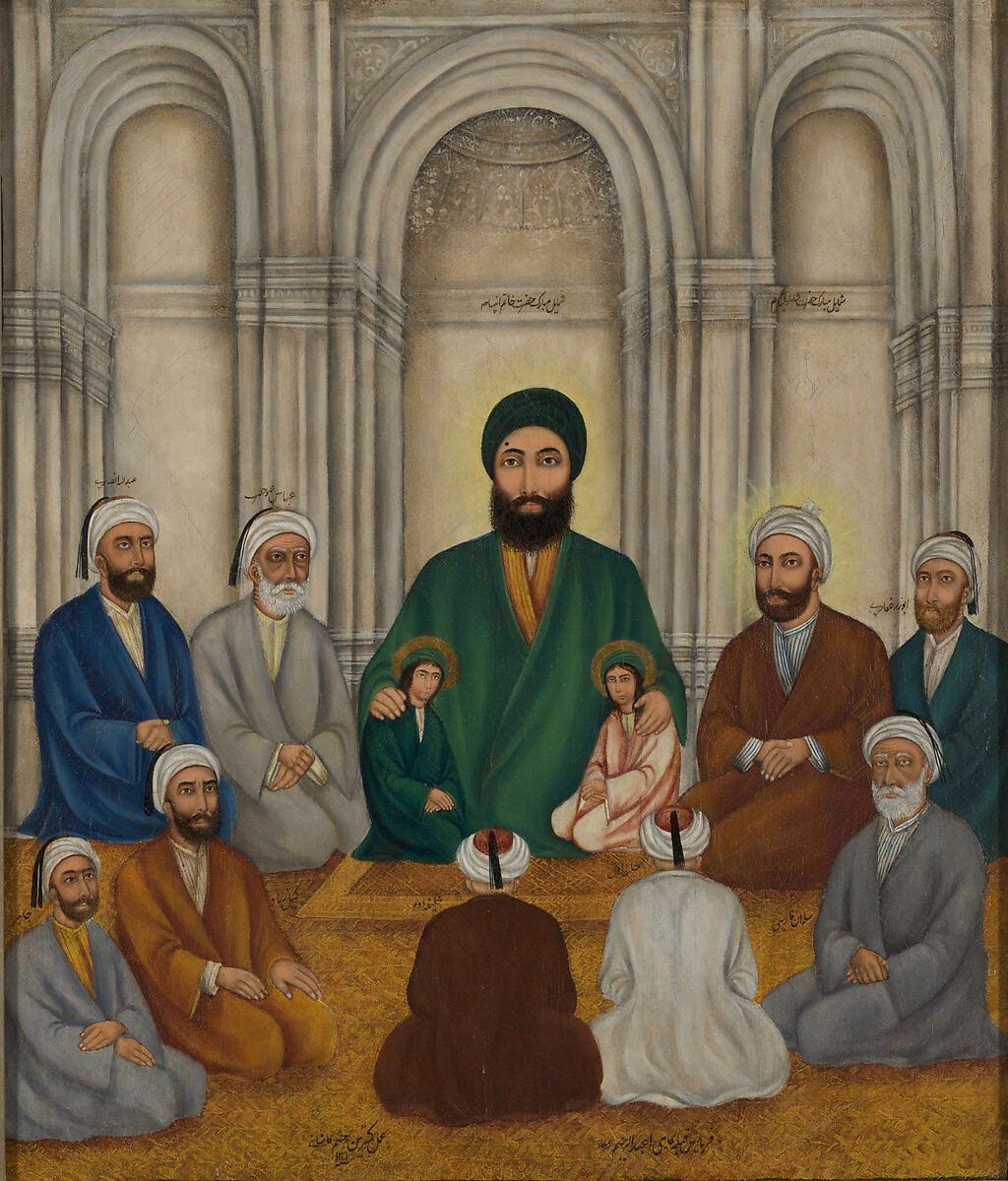
Historical authorities agree that the presence of Islam in Africa dates back to the 7th century AD, when in May 614 AD, Prophet Muhammad advised a number of his early disciples, who were facing persecution by the polytheistic inhabitants of Mecca to seek refuge across the Red Sea in Axum in modern-day Ethiopia. This was the first “migration” of Muslims (or hijrah) in Islamic tradition.
In this first hijrah, 23 Muslims migrated from Mecca to Abyssinia (current Ethiopia) where King Armah An-Najashi protected them. The King later accepted Islam as his religion. The first emigrees were followed by 101 compatriots later in the same year. However, most of them returned to Mecca 14 years later, in 628 AD, but some settled in neighbouring Zeila (current-day Somalia), which was at the time part of Bilād al-Barbar (Arabic for “Land of the Berbers”).
This makes Africa the first continent into which Islam spread from Southwest Asia, during the early 7th century AD. “Muslims crossed current Djibouti and Somalia to seek refuge in present-day Eritrea and Ethiopia during the hijrah to the Christian Kingdom of Aksum,” reports Wikipedia. “Though, like the vast majority (90%) of Muslims in the world, most Muslims in Africa are also Sunnis, but generally, Islam in Africa often adapted to African cultural contexts and belief systems forming Africa’s own orthodoxies.”
Other authorities say Islam’s spread in Africa was hugely aided by the Islamic conquest of Ancient Egypt in 641 AD. The Muslims first attacked Egypt in 639 AD. It took them 3 years to conquer “the fortification of Babylon” (today’s Old Cairo) in 641 AD, and Alexandria in 642 AD. A Byzantine fleet reconquered the city in 645 AD, but the Muslims took it again in 646 AD.
By this time, Christianity that had become the official religion of Ancient Egypt in about 50 AD, had spread to the whole of North Africa. Christian beliefs were introduced by missionaries from Jerusalem and spread among the Jews of Alexandria, on the Egyptian coast.
According to historians, “the new faith was adopted by the Greek community from the Jews. So Christianity spread west, and was taken up across North Africa. It reached as far as modern-day Morocco, where it was enthusiastically embraced by the Berber people”.
Interestingly, Christianity was embraced in North Africa as a religion of dissent and opposition to oppressive Roman rule. At the time, North Africa were largely under Roman control.
“In the Western regions of North Africa, a more militant, rigid form of Christianity grew up,” says one authority. “It was unforgiving of those who collaborated with Roman persecutors. This form of Christianity was known as ‘Donatism’ and it became identified by the newly Christianised Byzantine authorities as a heresy and equated with dissent and rebellion. It was outlawed by St Augustine of Hippo in his capacity as Bishop of Hippo (in modern Algeria). When Islam came to North Africa in 641, Christian communities were weakened by these divisions and so were less able to resist conversion to the new faith.”
The Muslim conquest of North Africa
Wikipedia attests that in 641 AD, “during the reign of Caliph Umar ibn al-Khattab, Muslim troops took over current Egypt and conquered current Libya the following year. The Muslims then expanded to current Tunisia in 647 AD, during the reign of the third Muslim Caliph Uthman Ibn Affan.
“The conquest of North Africa continued under the Umayyad dynasty, which annexed parts of Algeria around 680 AD, and Morocco the following year. Later Muslim troops [largely made up of converted Africans from North and Northwest Africa] crossed the Strait of Gibraltar to Europe in 711 AD [to colonise Spain and Portugal].
“Islam gained momentum during the 10th century in West Africa with the start of the Almoravid dynasty movement on the Senegal River and as rulers and kings embraced Islam. [The Almoravids and later the Almohads would reinforce the black African Muslim colonisation of Southern Europe for nearly 800 years – from 711 AD to 1492 AD. The Europeans called their new African Muslim overlords Moors, meaning ‘black people’].”
While Almoravid rule in Europe was going on, Islam spread slowly in much of Africa through trade and preaching. “During this period,” says Wikipedia, “these Muslims from North and West Africa came to be known by Europeans at large as Moors . By the 9th century, Muslim Sultanates started being established in the Horn of Africa, and by the 12th century, the Kilwa Sultanate had spread as far south as Mozambique.
“Islam only crossed deeper into Malawi and Congo in the second half of the 19th century under the Zanzibar Sultanate. Then the British brought their labour force from India, including some Muslim-Indian nationals, to their colonies in Africa towards the end of the 19th and beginning of the 20th century”.
According to Wikipedia: “Archaeological and scholarly research has shown that Christianity existed after the Muslim conquest of North Africa. The Catholic church gradually declined along with the local Latin dialect.
“[But on the whole], Christianity in North Africa effectively continued a century after the Muslim conquest, but neither the Church nor the ruling Byzantine veneer were able to resist the propagation of Islam, particularly since they were at odds with each other.
“[In effect, Christianity declined in North Africa] without any particular persecution on the part of the Muslim rulers, who treated the Christians leniently because they were ‘People of the Book’. Had the first Muslim conquerors persecuted the North African Christians rather than tolerating them, Christianity may well have continued to flourish,” adds Wikipedia.
Other authorities cite many other causes as having led to the decline of Christianity in North Africa. “One of them is the constant wars and conquests as well as persecutions. In addition, many Christians also migrated to Europe. The Church at that time lacked the backbone of a monastic tradition and was still suffering from the aftermath of heresies, including the so-called Donatist heresy, and this contributed to the early obliteration of the Church in North Africa.”
Islam in Africa today
Today, according to research by the Pew Research Center, Islam has taken firm hold of many African countries where it is the largest faith practised by the population. The countries with the highest percentages of Muslim populations are: Mauritania (100%), Somalia (99.8%), Western Sahara (99.4%), Algeria (99%), Morocco (99%), Niger (98.3%), Comoros (98.3%), Djibouti (97%), Sudan (97%), Libya (97%), Senegal (96.1%), Gambia (95.7%), Mali (95%), Egypt (92.3%), Guinea (89.1%) and Sierra Leone (78.6%).
Compared to the world, there are approximately 1.9 billion Muslims globally, with the largest Muslim communities living in the Asia-Pacific region, according to the Statista website. “Specifically, Indonesia hosts the highest number of Muslims worldwide, amounting to over 200 million, followed by India, Pakistan, and Bangladesh.
“Islam is also present in Europe and America. The largest Islamic communities in Europe are in France (5.72 million), Germany (4.95 million), and the United Kingdom (4.13 million). In the United States, there is an estimated number of around 3.45 million Muslims.”
The growth in Africa is nowhere abating.
Leave a Reply