… How the Hebrews left Egypt as half-Africans
Moses, born in Ancient Egypt and raised in the Palace of the Egyptian king, affirms in his five books in the Bible a 430-year Hebrew contact with Ancient Egypt, which was by then an all-black nation run by the ancestors of most black Africans today. The Bible records that “Moses was educated in all the wisdom of the Egyptians and was powerful in speech and action.” (Acts 7:22). But not only Moses, the Hebrew patriarch Jacob had arrived in Egypt 430 years earlier accompanied by about 100 of his people. This number increased exponentially to an estimated 3 million by the time of the Exodus described by Moses a good 430 years later. It follows that the Hebrews could increase their population that much only by marrying heavily into the native black population, making their descendants half Hebrew, half African. There was no other way, reports our editor, Baffour Ankomah.
Whether they like it or not, the Jews (as they call themselves today) who are descendants of the Hebrews who were born and bred in Egypt, and developed their nation from the fertile soils of Goshen in the Nile Delta, are half Hebrew, half African. Only about 100 of their grand-relatives arrived in Egypt with Jacob, their patriarch, and left 430 years later as an estimated 3-million-strong community. They could only have done so by marrying heavily into the native black population, making their descendants half Hebrew, half African. That is what pure logic would say. But logic is not common to all people. So let’s look at the historical facts.
But first, let me put an issue pertaining to the Jewish identity to bed, so that you can better understand what this article is all about. All Jews are Israelites. But not all Israelites are Jews. In fact, Jews form just a small fraction of the community called Israelites. Thus, the nation known today as Israel, which was formed in 1948, whose nationals are called Jews, is not the one I am talking about in this article, though its nationals are included in the community I call “Israelites” in this article, who are half Hebrew, half African.
Let me appeal to my former pastor, Herbert W. Armstrong, of the US-headquartered Worldwide Church of God, born into a Quaker family, to expatiate on the Jewish question. In his book, The United States and Britain in Prophecy (1954), under the chapter, the “Children of Israel become two nations”, he made the categorical statement: “The House of Israel is not Jewish! Those who constitute it are not Jews, and never were!”
He explained that at Genesis 48:5-6, Jacob, the patriarch whose 12 sons become the “Nation of Israel” after the exodus from Ancient Egypt, had told Joseph, his son who had become the prime minister of Egypt: “Now then, your two sons born to you in Egypt before I came to you here, will be reckoned as mine; Ephraim and Manasseh will be mine, just as Reuben and Simeon are mine. Any children born to you after them will be yours…”
Thus, explained Pastor Armstrong, “did Jacob adopt Joseph’s two sons, making them, legally, his own sons. This, no doubt, was done because they were half-blooded Egyptians. Israel made them his own adopted sons, so the birthright could be passed on to them.”
Please note the phrase: “they were half-blooded Egyptians” because it is a critical admission which is very central to this article. Joseph was a Hebrew whose father was Jacob, but Joseph’s sons have now become “half-blooded Egyptians”. Why? We shall soon see.
But let’s stay with Pastor Armstrong for a while on the Jewish question. He tells how King David’s son, Solomon, who had become king of Israel after his father David, had not followed God’s commands about marriage and had gone on to marry many foreign women (700 wives of royal birth and 300 concubines) from nations that God had expressly told the Israelites not to marry from, because “the women will surely turn your hearts after their gods” (1 Kings 11: 1-26).
Unfortunately for Solomon, as God had prophesied, the foreign wives turned him after other gods and he did evil in the eyes of God. So God became angry with Solomon and told him: “Since this is your attitude and you have not kept my covenant and my decrees, which I commanded you, I will most certainly tear the kingdom away from you and give it to one of your subordinates.
“Nevertheless, for the sake of David your father, I will not do it during your lifetime. I will tear it out of the hand of your son. Yet I will not tear the whole kingdom from him, but will give him one tribe for the sake of David my servant and for the sake of Jerusalem, the city which I have chosen to put my name there.”

Pastor Armstrong then explains: “Note it! It is the kingdom, not part of it, which is to be torn away. It is the part, one tribe, which is to remain. And note – for right here is expressed the great why of this whole question. Though Solomon himself deserved to have it torn away, God will leave one tribe, not because of leniency towards Solomon, but “for David’s sake”. God had made a perpetual covenant with David, unconditionally, which he cannot and will not break. David’s dynasty cannot be broken because he kept the decrees and laws of God.
Pastor Armstrong goes on: “God promised 10 tribes to Jeroboam, the son of Nebat, an Ephraimite, Solomon’s servant (1 Kings 11:26). Jeroboam was made ruler over the “House of Joseph” – or Ephraim and Manasseh. God promised to give the son of Solomon, one tribe so “that David my servant may have a light always before me in Jerusalem, the city which I have chosen to put my name there (1 Kings 11:31-37).
“These words make plain two facts. The nation of Israel is to be taken away from Solomon’s son and given to Jeroboam. It is not just a tribe, or a few tribes, but the nation called by the title Israel which this Jeroboam of the tribe of Ephraim, is to rule.
“The 10-tribed kingdom was the one to which the national title “Israel” was given. For truly, the name “Israel” was named on the sons of Joseph (Genesis 48:16). Wherever they are, the Bible calls them by the national name Israel. To the world, their identity today is lost. But, in Biblical prophecy, it is they – not the Jews – who are called Israel!”
Pastor Armstrong continues: “On the other hand, because of his promise to David, the Eternal left one tribe, Judah, in Jerusalem under the son of Solomon, so that a son of David might continue to sit on the throne of David over the children of Israel [whose former name was Jacob].
“Now, in later actual history, we see that promise being carried out – that covenant made binding. The children of Judah, though they do not constitute all the children of Israel, and though they are not called by that national title, nevertheless are children of Israel, and thus God can keep his promise to David … And God did not break that promise – as he had promised that ‘the scepter shall not depart from Judah’.
“Thus, the 10 tribes who were torn away are called by the title “Israel”, and that the one tribe remaining under [Solomon’s son] Rehoboam, is merely called ‘Judah’ or the ‘House of Judah’. They go by their tribal name, while the 10-tribed kingdom continues to carry the national name ‘Israel.’”
So, effectively, the tribe of Judah seceded from the nation of Israel in order to retain Rehoboam as king of their new nation, and that new nation was certainly not the kingdom of Israel. It was the kingdom of Judah.

Later, the tribe of Benjamite came to join Judah, and when, much later, King Jeroboam kicked the priestly-tribe of Levi out of office in Israel, they joined Judah and were called in Scripture, not Israel, but the House of Judah. But they were all actually children of Israel but no longer called by that national title.

“This is emphasised so much,” Pastor Armstrong says, “because the common conception is exactly the opposite. The average conception today seems to be that the tribe of Judah which remained carried the title ‘Israel’. Most people seem to think of the 10 tribes as merely certain tribes driven out from the nation of Israel.
“But it is Israel which now sets up its kingdom under the Ephraimite Jeroboam in the land of Samaria, north of Jerusalem. It is not Israel, but Judah – a mere 3 tribes broken off from Israel – which is left behind in Jerusalem. The 10 tribes were not broken off from Israel. Israel did not remain in Jerusalem. Judah was broken off from Israel.
“So the 10-tribed people called Israel, often prophetically spoken of as Ephraim, are not Jews and never were Jews. Remember that the term ‘Jew’ is merely a nickname for “Judah”. Hence, it applies to the one nation or House of Judah only – never to the House of Israel.”
Then comes Pastor Armstrong’s climax: “From any exhaustive concordance,” he says, “you can learn that the first time in all the Bible that the word ‘Jew’ occurs is in 2 Kings 16:6. Nowhere in all the Bible before this does the name ‘Jew’ appear. And the first place in the Bible where the word ‘Jew’ is used, we find Israel at war against the Jews!”
The historical record shows that the then king of Israel, Pekah, had aligned himself with the king of Syria, Rezin, to fight the then king of Judah, Ahaz (2 Kings 16:1-6). Together the armies of Israel and Syria came up against Judah, and in the end, King Rezin “recovered Elath to Syria and drove the Jews from Elath”.
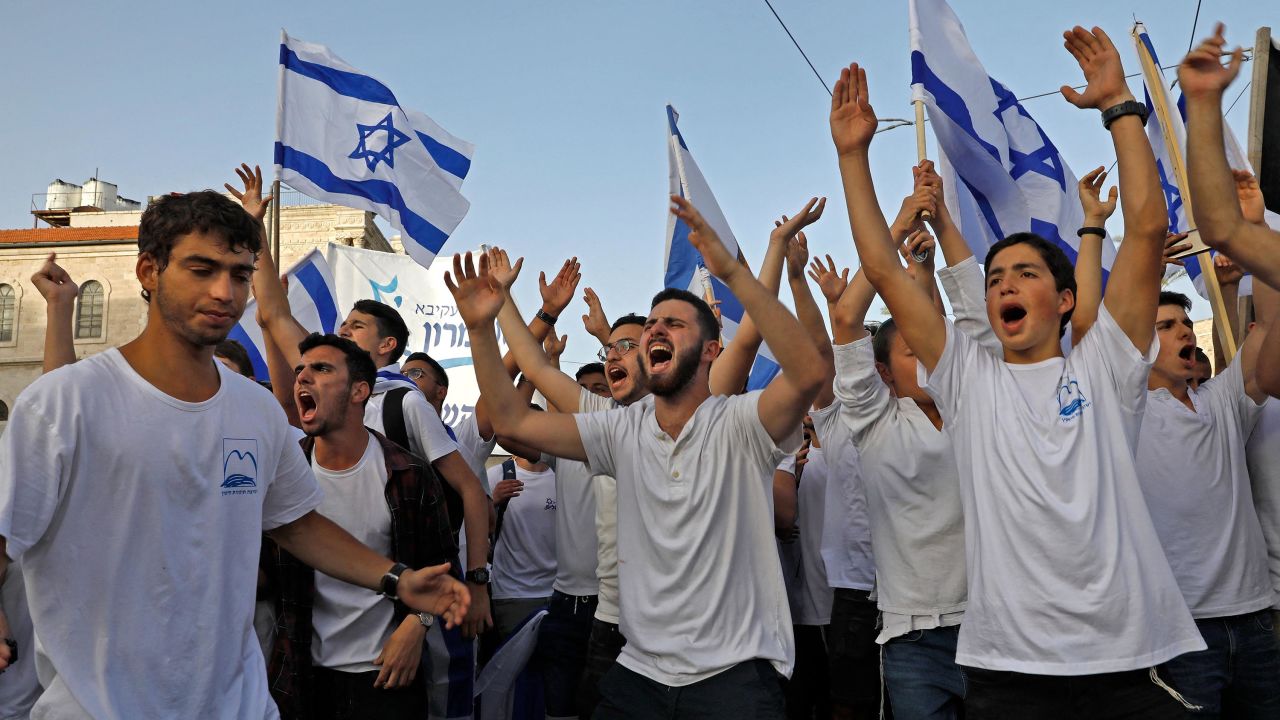
This leads Pastor Armstrong to say, emphatically: “It is wrong to call the Jews of today ‘Israel’. They are not the nation Israel – they are Judah. And wherever Israel is today, remember that Israel as a national name does not mean Jew. “Whoever the ‘Lost 10 Tribes of Israel’ are today, they are not the Jews. Wherever you see the name ‘Israel’, or ‘House of Israel’, or ‘Samaria’, or ‘Ephraim’ used in prophecy, remember it never refers to the Jews, but to Israel, which was at war against the Jews.
“Therefore, Moses may not, scripturally, be called a Jew. He was a Levite. Abraham was not a Jew. Neither was Isaac nor Jacob – nor Adam or Noah for that matter. The descendants of the patriarch Judah are racially Jews and also all who joined themselves nationally to the tribe of Judah – those of the tribes of Benjamin and Levi.
“But Jews are Israelites, just as Californians are Americans. But most Israelites are not Jews, just as most Americans are not Californians. The Jews are the House of Judah only, a part of the Israelites. But when these people are spoken of as nations, rather than as collective individuals, the term ‘Israel’ never refers to the Jews. ‘House of Israel’ never means ‘Jews’. The 3 tribes at Jerusalem under the Davidic king are called, merely, the House of Judah.”
What clarity! So here, in this article, I am talking about the combined 12 tribes who were then called “Israelites” – which includes the 3 tribes that later became Judah (whose nickname became “Jews”). Israelite, therefore, is before the division into Judah and the “House of Israel”, the northern kingdom based in Samaria.
What the Hebrews borrowed
Unfortunately for Europeans, gazing at African cultures through safari lenses, scholars of the American Jesuit priest Joseph Williams’ generation could not imagine that the culture of the Hebrews (or Israelites) might very well have borrowed from other sources, much less from African sources. Researchers of the 19th and much of the 20th centuries were often incapable of inverting their perspective, much less abandoning entrenched prejudice.
Joseph John Williams’ book, Hebrewisms Of West Africa (1930), is an example of endless evidence of the cultural impact of the African data on Jewish life, as transmitted through the Hebrew presence in Ancient Egypt. Yet Williams erroneously sees the process in reverse.
As one reviewer of Hebrewisms Of West Africa put it: “In this massive work, Joseph John Williams, a Jesuit priest who studied the history and culture of the Caribbean and Africa, documents the Hebraic practices, customs, and beliefs, which he found among the people of Jamaica and the Ashanti of West Africa. He initially examines the close relationship between the Jamaican and the Ashanti cultures and the folk beliefs.
“He then studies the language and culture of the Ashanti (of whom many Jamaicans have descended) by comparing them to well-known and established Hebraic traditions.
“Williams’ findings suggest stunning similarities. And, he challenges the reader by concluding that Hebraic traditions must have swept across ‘Negro Africa’ and left its influence ‘among the various tribes’. While Williams presents a strong case, his evidence, including hundreds of quoted sources, also builds a strong case for the reverse — that African culture stands at the very root of Hebrew culture and Western religion.”
First published in 1930, Williams’ book was the result of five years of personal study of “the West Indian Negro of Jamaica followed by 11 years of intensive research”.
Born in Boston on 1 December 1875 (he died on 28 October 1940), Williams was able to trace, through diffusion, “from the Nile to the Niger, the many Hebrewisms, real or apparent, which are to be found among distinctively Negro tribes in West Africa in general, but particularly among the Ashanti” (that is to say, among the Akan people of Ghana and Cote d’Ivoire, from whom the Asantes (correct Akan spelling) descend.
The Akans are a very large group of over 25 million people today inhabiting the forest areas of Ghana and Cote d’Ivoire. They make 50% of Ghana and 50% of Cote d’Ivoire.
Williams’ objective was to establish “the continuity of the Old Testament concept of the Supreme Being in its diffusion throughout the world and especially among the distinctively Negro tribes of Africa”.
According to the reviewer, Williams easily “discovered many Hebrewisms in the Ashanti [or Akan] tribal customs and belief systems, having beforehand identified the outstanding and fearless Coromantines of Jamaica as captives from the Akan tribe. Ashanti words have a striking resemblance to those of equivalent Hebrew meaning just as the Supreme Being of the Ashanti gives strong indication of the Yahweh of the Old Testament.”
The reviewer then asked: “How did it happen, or did it happen or come as migration or diffusion of cultures? What, then, was the connection of the Ashanti with the Hebrews of 2,000 years ago?”
The trouble with such questions lies deep in the posers’ refusal to acknowledge the truth – that says modern Africans, from right across the continent, have connections with Ancient Egypt and the Nile Valley civilisations through the migrations of their ancestors from that part of Africa to other parts of the continent after the many invasions of Ancient Egypt by foreigners.
The arrival of Jacob and his relatives
The Akan root is firmly based in Ancient Egypt where the Israelite nation was born. The Akan were part of the indigenous people of Ancient Egypt who welcomed Jacob and his sons when they arrived in Egypt from Canaan. At the time, Jacob’s son, Joseph, had been made prime minister of Egypt. The 66 or so relatives who came with Jacob became the nucleus of the people who would grow into the Israelite nation 430 years later.
Therefore, logic would say Jacob and the Israelite nation that grew in Egypt after him would borrow ideas from the native population, which included the descendants of the Akans and the other Africans of today. This explains the similarities in Akan cosmology and the Hebrewisms that Joseph Williams encountered in the Akanlands during his study.
A modern comparison will be if a Zimbabwean couple goes to live in the USA or the UK and gives birth to children who grow up to have children of their own in the USA or the UK, and their generations continue to grow for 430 years. All that the second generation and those thereafter would know, would be what the USA and UK would teach them – language, food, mannerisms, worldview, religion or the lack of it, sensibilities and sensitivities, eetc. If they emigrate after 430 years, they would be emigrating as complete Americans or British – anything Zimbabwean in them would be lucky to be there.
This is what happened to the Israelites in Ancient Egypt, which also speaks to the broader point that today’s Hebrews/Israelites are more than half Africans themselves, and therefore there should be no surprise that there are similarities between Hebrewisms and Akan cosmology, because the ungarnished truth is that there is no Israelite nation without Egypt. In fact, God borrowed the womb of Egypt, the womb of the Black people of Egypt, to give birth to the Israelite nation.
And as the mother, the Egyptian nation naturally passed on her DNA to her daughter Israel. This is why everything the Hebrews/Israelites knew by the time of the Exodus had been passed on by Egypt, or learned from Egypt.
This was after all 430 years during which Egypt had nurtured the Israelites by giving them the best of the best in Goshen – land and all. The Biblical record shows that from Genesis Chapter 41 onwards, when the Egyptian king (the Pharaoh) makes Jacob’s prisoner-son, Joseph, the prime minister of
Egypt and tells him (41: 40) “you shall be in charge of my palace, and all my people are to submit to your orders; only with respect to the throne will I be greater than you”, the roots of the Israelite nation were being firmly planted in Egypt.
On that very day, the Pharoah changed Joseph’s name (41: 45) to Zaphenath-Paneah and gave him a wife, Asenath, the daughter of Potiphera, priest of On. Joseph did not pay lobola (dowry) for his wife. In African parlance, he got her for free. No cows, no money, no nothing! And the woman was black, as black as the Pharoah who gave her to him. The people of Ancient Egypt at that point in time were blacks, pure blacks, who, thousands of years later, would be referred to as Africans by the Greek invaders.
The Bible says Joseph was 30 years old when he entered the service of Pharoah king of Egypt (41:46). Before long, the virile Joseph had had two sons with Asenath. “Joseph named his firstborn (41:51) Manasseh, and said, ‘It is because God has made me forget all my trouble and all my father’s household’. The second son he named Ephraim and said; ‘It is because God has made me fruitful in the land of my suffering.’”
Logic would say the boys, begotten by a black mother and a Hebrew father, would be what today is called a “Coloured” or “Mulatto” or Mixed Race. The boys, therefore, inherited half of their DNA from their mother. And that mother was black! An African!
Ephraim and Manasseh grew up to become giants of the Israelite nation, to the point where when the first census was taken after the exodus from Egypt 435 years after the birth of Ephraim and Manasseh, the men of the two families (Ephraim and Manasseh) who were 20 years and above numbered 40,500 and 32,200 respectively, bringing a total of 72,700.
These were the men alone, aged 20 years and above. Adult women and all the youths under 19 years of age (both male and female) were not counted in the census. But all of them had been born and bred in Egypt.
How 70 became 3 million
At the time that Ephraim and Manasseh were growing up, the women around them in Egypt were mostly black, and although the Bible does not expressly say it, it is likely that their wives would have been black women or mixed race.
But even if their wives were not black, Ephraim and Manasseh themselves came from a black mother, and therefore their ancestry was half black, or what Pastor Armstrong calls “half-blooded Egyptians”. Imagine the ripple effect of this ancestry on today’s Israelite/Jewish population.
The grandparents of Ephraim and Manasseh, the patriarch Jacob (now called Israel) and his wife Leah, and their 11 sons and their wives, and other relatives had left famine-ravaged Canaan and moved to Egypt at the invitation of the Pharoah via Joseph. Genesis 46:26-27 confirms that:
“All those who went to Egypt with Jacob – those who were the direct descendants, not counting his son’s wives – numbered 66 persons. With the two sons who had been born to Joseph in Egypt [meaning Ephraim and Manasseh who Jacob adopted], the members of Jacob’s family, which went to Egypt, were 70 in all.”
Four hundred and thirty-two years later, when the first census was taken after the Exodus, the 70 people (we can even be generous and add the wives of Jacob’s 11 sons to the number, and get a total of 100 people or thereabouts] had grown to a cool 603,551 men aged 20 years and above who were able to serve in Israel’s army.
This number, however, did not include the members of the tribe of Levi that God had ordered not to count. If you add all these together, including all the adult women and the youths under 19 years of age (male and female), one can fairly estimate more than 3 million Israelites were born and bred in Egypt before the Exodus, and everything they knew, their whole worldview, was Egyptian, including its religion. And Egypt at the time was black.
Logic says that for the 70 or 100 people who arrived with Jacob to have grown into 3 million people 432 years later when the census was taken, they must have married heavily into the native black population of Egypt, thereby making their bloodline half Hebrew, half black. In reality, therefore, modern Israelites (or Jews as they call themselves today) are half black genetically.
“Now Joseph,” the Bible says, “and all his brothers and all that generation died, but the Israelites were exceedingly fruitful, they multiplied greatly, increased in numbers and became so numerous that the land was filled with them.”
The question is, how did they become “exceedingly fruitful”, “multiplied greatly”, “increased in numbers” and “became so numerous that the land was
filled with them”, when only about 100 of them entered Egypt from Canaan, and even all the first generation, including Joseph, died?
We get an inkling at Jeremiah 29:4-7. Here, God had used Nebuchadnezzar, king of Babylon, to teach stubborn Israel a lesson and carried them into exile in Babylon. While there, God sent Israel a message via Prophet Jeremiah, saying:
“This is what the Lord Almighty, the God of Israel says to all those I carried into exile from Jerusalem to Babylon. Build houses and settle down, plant gardens and eat what they produce. Marry and have sons and daughters; find wives for your sons and give your daughters in marriage, so that they too may have sons and daughters. Increase in number there, do not decrease. Also, seek the peace and prosperity of the city to which I have carried you into exile. Pray to the Lord for it, because if it prospers, you too will prosper.”
Here, God is telling the Israelites in exile in Babylon, marry and have children. Find wives for your sons and give your daughters in marriage so that they too may have sons and daughters. Increase in number. Do not decrease.
These are exiles, yet God is asking them to marry and increase in number. The question is, who are they going to marry? One answer is that they may marry within their own exiled group. Another answer is that, because they are not too many, they will also marry out of their group and within the native Babylonian population, making the bloodline half Israelite, half Babylonian.
That is what happened exactly in Egypt where only 100 or so of them arrived. In Babylon, the exiles were more numerous than the 100 who arrived in Egypt. And even those exiled in Babylon, God still said they should marry and increase. Logic therefore says in Egypt, God would expect them (these 100 or so who arrived) to even more marry and increase their population.
Again, the question is, who did they marry? Jacob, their father, already had his wife, Leah. Jacob’s 11 sons had all married long before they arrived in Egypt. Joseph had been given a wife by the Pharoah. It is likely that most of the members of Jacob’s household who went with him to Egypt had also long married.
So the offspring they produced in Egypt would naturally marry outside their group. There would not be enough women in their group for the men to marry. Therefore, they would marry into the native black population of Egypt at the time.
We see proof of this at Exodus 12:37-38: “The Israelites journeyed from Rameses to Sukkoth [during the first leg of the Exodus]. There were about 600,000 men on foot, besides women and children.” Verse 38: “Many other people went up with them, and also large droves of livestock, both flocks and herds.”
Who were these “many other people” who went up with them? They were basically native, black Egyptians who were either wives or husbands of the Israelites, and even friends and acquaintances – all of solid native stock. Some foreigners in Egypt may have also been part of this group of “many other people”, but the native stock was the largest.
Native stock went along
We see signs of the native stock at Numbers 12:1-15. Here, the Bible tells the story of “Miriam [Moses sister] and Aaron [Moses’s senior brother] talking against Moses because of his Cushite wife, for he had married a Cushite.” A Cushite was what black people were called in those days. Cushites were originally natives of Kush (or Cush), which was located in today’s northern Sudan and southern Egypt.
And Moses, born and bred in Egypt, in fact bred in the Egyptian royal household for 40 years, went on to marry a black woman. Not happy with the woman’s race, Moses’ sister Miriam showed contempt for her sister-in-law. And God’s anger waxed exceedingly against her.
The Bible records (at Numbers 12:5) that “the Lord came down in a pillar of cloud; he stood at the entrance to the Tent and summoned Aaron and Miriam. When both of them stepped forward, he said, ‘Listen to my words: When a prophet of the Lord is among you, I reveal myself to him in visions. I speak to him in dreams. But this is not true of my servant Moses; he is faithful in all my house. With him I speak face to face, clearly and not in riddles; he sees the form of the Lord. Why then were you not afraid to speak against my servant Moses?’”
The Bible records at Numbers 12:9 that “the anger of the Lord burned against them, and he left them”. But the punishment was swift. “When the cloud lifted from above the Tent (12:10), there stood Miriam – leprous, like snow. Aaron turned towards her and saw that she had leprosy.”
Remarkably, God would not listen to any pleas for her healing, in fact he told the interceding Moses (12:14): “If her father had spat in her face, would she not have been in disgrace for seven days. Confine her outside the camp for seven days; after that she can be brought back.” So Miriam was confined outside the camp for seven days, and the Israelites did not move on until she was brought back.
That was how the mighty anger of God fell on a woman who despised black people for no cause, the black people whose hospitality, resources and worldview had given birth to the Israelite nation and sustained it for 430 years before the Exodus. God, therefore, would not take any nonsensical chatter about black people – not from the Israelites.
In fact, God showed that he hated racism. After all, the Israelites were half-black themselves. They were going away from Egypt with their DNA half-black. The blood coursing through their veins was half-African. They were brothers and sisters and cousins of the black people they were leaving behind in Egypt.
They were in fact emigrating with wives and husbands they had married in Egypt or children they had given birth to in Egypt who were half-black. How would God therefore allow Miriam and her ilk to despise their black relatives?
Miriam’s leprosy was therefore a lesson that God wanted the departing Israelites not to forget or learn not to show contempt for black people.
Therefore, Western historians and writers, like Joseph John Williams (cited earlier in this piece), who are surprised to find similarities between the cosmology of the Akans and Hebrewisms need to examine their own prejudices – because the Akans or modern Africans in general and the Israelites/Jews come from the same root: Ancient Egypt. They lived and fed from the same religious thought before the Exodus. And even today, with many more Israelites identifying as “Jews” in the modern country of Israel, the fact still remains that they are “half-blooded Egyptians”, whose veins have African blood coursing through them.
Leave a Reply