
At the time of going to press, the election petition filed by the losing candidates in Nigeria’s 25 February presidential election was being heard by the Presidential Election Petition Tribunal. The result of the case therefore could not be published in this issue. But the debate since the election results were released on 1 March 2023, has been as interesting as it has been ferocious. Many disappointed Nigerians living abroad were seen on social media tearing up their passports and promising to have nothing to do with their country again.
Whatever the outcome of the court case, two particular submissions by Chimamanda Ngozi Adichie, the famous Nigerian novelist domiciled in the UK, and Dele Alake, the former editor of Nigeria’s Sunday Concord newspaper but now the Special Adviser of Communications to the President-elect Bola Tinubu, need to be immortalised. So here, we have Adichie versus Alake, the abridged versions.
Chimamanda Adichie’s response to the presidential election result came in an open letter she wrote to President Joe Biden of the USA, which was published by The Atlantic magazine on 6 April 2023, titled “Nigeria’s Hollow Democracy: Why is America congratulating the winner of this disastrous election?” It was in response to the US State Department’s official congratulatory message to Bola Tinubu. Chimamanda wrote:
Dear President Biden. Something remarkable happened on the morning of 25 February, the day of the Nigerian presidential election. Many Nigerians went out to vote holding in their hearts a new sense of trust. Cautious trust, but still trust.
Since the end of military rule in 1999, Nigerians have had little confidence in elections. To vote in a presidential election was to brace yourself for the inevitable aftermath: fraud. Elections would be rigged because elections were always rigged; the question was how badly. Sometimes voting felt like an inconsequential gesture as predetermined “winners” were announced.
A law passed last year, the 2022 Electoral Act, changed everything. It gave legal backing to the electronic accreditation of voters and the electronic transmission of results, in a process determined by the Independent National Electoral Commission (INEC).
The chair of the commission, Professor Mahmood Yakubu, assured Nigerians that votes would be counted in the presence of voters and recorded in a result sheet, and that a photo of the signed sheet would immediately be uploaded to a secure server.
When rumours circulated about the commission not keeping its word, Yakubu firmly rebutted them. In a speech at Chatham House in London (a favourite influence-burnishing haunt of Nigerian politicians), he reiterated that the public would be able to view “polling-unit results as soon as they are finalised on election day”.
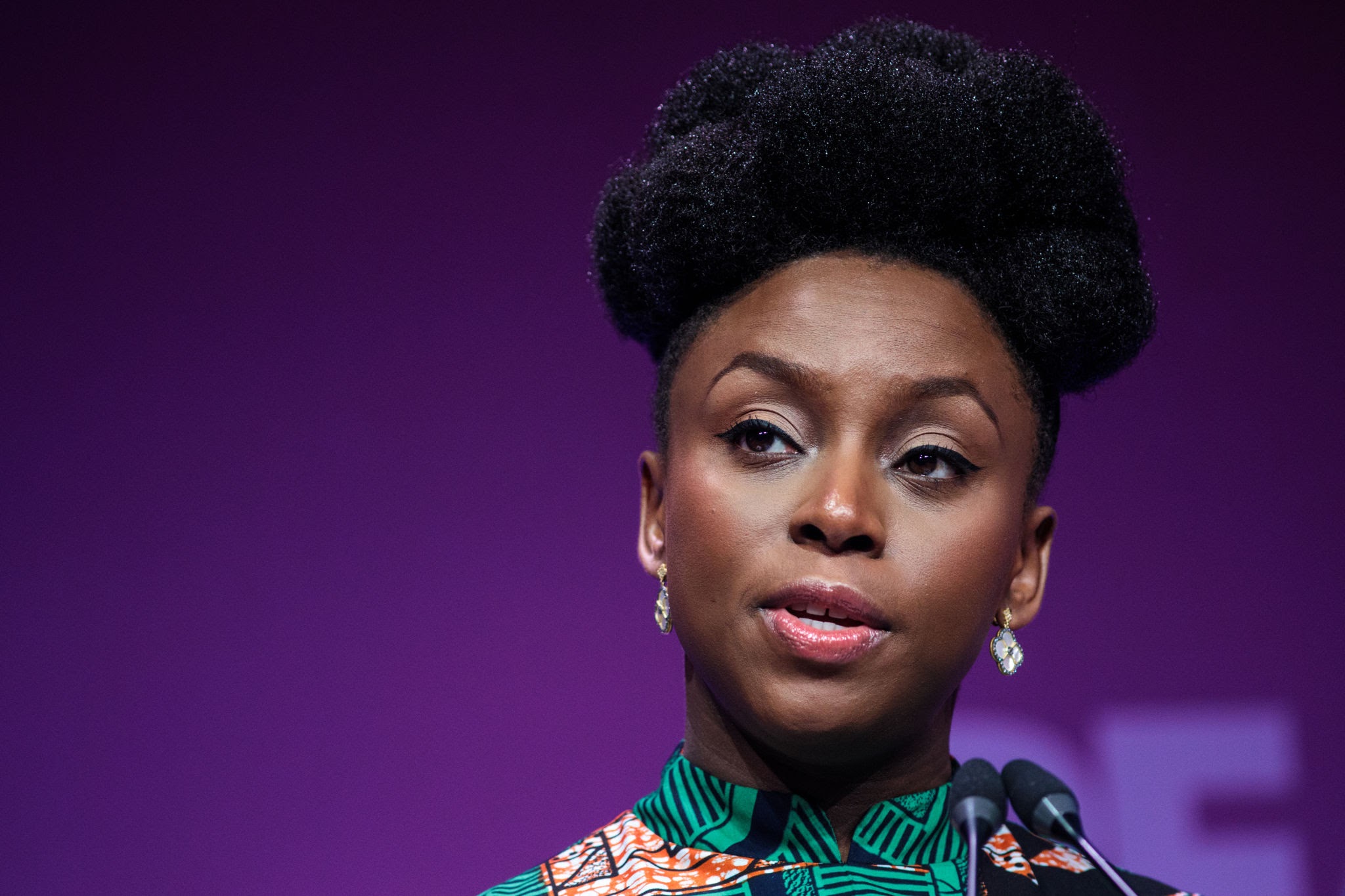
Nigerians is not so much because their candidate did not win as because the election
they had dared to trust was, in the end, so unacceptably and unforgivably flawed”
Nigerians applauded him. If results were uploaded right after voting was concluded, then the ruling party, the All Progressives Congress (APC), which has been in power since 2015, would have no opportunity for manipulation.
By the evening of 25 February 2023, that trust had dissipated. Election workers had arrived hours late, or without basic election materials. There were reports of violence, of a shooting at a polling unit, and of political operatives stealing or destroying ballot boxes.
Some law-enforcement officers seemed to have colluded in voter intimidation; in Lagos, a policeman stood idly by as an APC spokesperson threatened members of a particular ethnic group who he believed would vote for the opposition. Curiously, many polling units were able to upload the results of the House and Senate elections, but not the presidential election… The Senate and House results were easily uploaded. So why couldn’t the presidential results be uploaded on the same system?
Some electoral workers in polling units claimed that they could not upload results because they didn’t have a password, an excuse that voters understood to be subterfuge. By the end of the day, it had become obvious that something was terribly amiss. No one was surprised when, by the morning of the 26th, social media became flooded with evidence of irregularities. Result sheets were now slowly being uploaded on the INEC portal, and could be viewed by the public. Voters compared their cellphone photos with the uploaded photos and saw alterations: numbers crossed out and rewritten; some originally written in black ink had been rewritten in blue, some blunderingly whited-out with Tipp-Ex. The election had been not only rigged, but done in such a shoddy, shabby manner that it insulted the intelligence of Nigerians. Nigerian democracy had long been a two-party structure – power alternating between the APC and the People’s Democratic Party (PDP) – until this year, when the Labour Party, led by Peter Obi, became a third force. Obi was different; he seemed honest and accessible, and his vision of anti-corruption and self-sufficiency gave rise to a movement of supporters who called themselves “Obi-dients.”
Unusually large, enthusiastic crowds turned up for his rallies. The APC considered him an upstart who could not win, because his small party lacked traditional structures. It is ironic that many images of altered result sheets showed votes overwhelmingly being transferred from the Labour Party to the APC.
As vote counting began at INEC, representatives of different political parties—except for the APC – protested. The results being counted, they said, did not reflect what they had documented at the polling units. There were too many discrepancies.
“There is no point progressing in error, Mr. Chairman. We are racing to nowhere,” one party spokesperson said to Yakubu. “Let us get it right before we proceed with the collation.” But the INEC chair, opaque-faced and lordly, refused.
The counting continued swiftly until, at 4:10 am on 1 March, the ruling party’s candidate, Bola Tinubu, was announced as president-elect. A subterranean silence reigned across the country. Few people celebrated. Many Nigerians were in shock. “Why,” my young cousin asked me, “did INEC not do what it said it would do?”
It seemed truly perplexing that, in the context of a closely contested election in a low-trust society, the electoral commission would ignore so many glaring red flags in its rush to announce a winner. (It had the power to pause vote counting, to investigate irregularities – as it would do in the governorship elections two weeks later).
Rage is brewing, especially among young people. The discontent, the despair, the tension in the air have not been this palpable in years.
How surprising, then, to see the US State Department congratulate Tinubu on March 1. “We understand that many Nigerians and some of the parties have expressed frustration about the manner in which the process was conducted and the shortcomings of technical elements that were used for the first time in a presidential election cycle,” the spokesperson said. And yet the process was described as a “competitive election” that “represents a new period for Nigerian politics and democracy.”
American intelligence surely cannot be so inept. A little homework and they would know what is manifestly obvious to me and so many others: The process was imperiled not by technical shortcomings but by deliberate manipulation.
American intelligence surely cannot be so inept. A little homework and they would know what is manifestly obvious to me and so many others: The process was imperiled not by technical shortcomings but by deliberate manipulation.
An editorial in The Washington Post echoed the State Department in intent if not in affect. In an oddly infantilising tone, as though intended to mollify the simpleminded, we are told that “officials have asserted that technical glitches, not sabotage, were the issue,” that “much good” came from the Nigerian elections, which are worth celebrating because, among other things, “no one has blocked highways, as happened in Brazil after Jair Bolsonaro lost his reelection bid.”
We are also told that “it is encouraging, first, that the losing candidates are pursuing their claims through the courts”, though any casual observer of Nigerian politics would know that courts are the usual recourse after any election.
But [the editorial’s] intellectual laziness, unusual in such a rigorous newspaper, is astonishing. Since when does a respected paper unequivocally ascribe to benign malfunction something that may very well be malignant – just because government officials say so? The editorial has the imaginative poverty so characteristic of international coverage of African issues – no reading of the country’s mood, no nuance or texture?
There is a kind of cordial condescension in both the State Department’s and The Washington Post’s responses to the election. That the bar for what is acceptable has been so lowered can only be read as contempt.
I hope, President Biden, that you do not personally share this cordial condescension. You have spoken of the importance of a “global community for democracy”, and the need to stand up for “justice and the rule of law.” A global community for democracy cannot thrive in the face of apathy from its most powerful member. Why would the United States, which prioritises the rule of law, endorse a president-elect who has emerged from an unlawful process?
Compromised is a ubiquitous word in Nigeria’s political landscape – it is used to mean “bribed” but also “corrupted,” more generally. “They have been compromised,” Nigerians will say, to explain so much that is wrong, from infrastructure failures to unpaid pensions.
Many believe that the INEC chair has been “compromised”, but there is no evidence of the astronomical US-dollar amounts he is rumoured to have received from the president-elect.
The extremely wealthy Tinubu is himself known to be an enthusiastic participant in the art of “compromising”; some Nigerians call him a “drug baron” because, in 1993, he forfeited to the United States government $460,000 of his income that a Chicago court determined to be proceeds from heroin trafficking. Tinubu has strongly denied all charges of corruption.
I hope it will not surprise you, President Biden, if I argue that the American response to the Nigerian election also bears the faint taint of that word, compromised, because it is so removed from the actual situation in Nigeria as to be disingenuous.
Has the United States once again decided that what matters in Africa is not democracy but stability? (Perhaps you could tell British Prime Minister Rishi Sunak, who quickly congratulated Tinubu, that an illegitimate government in a country full of frustrated young people does not portend stability.)
Or is it about that ever-effulgent nemesis China, as so much of US foreign policy now invariably seems to be? The battle for influence in Africa will not be won by supporting the same undemocratic processes for which China is criticised.
This Nigerian election was supposed to be different, and the US response cannot – must not – be business as usual. The Nigerian youth, long politically quiescent, have awoken. About 70% of Nigerians are under 30, and many voted for the first time in this election.
Nigerian politicians exhibit a stupefying ability to tell barefaced lies, so to participate in political life has long required a suspension of conscience. But young people have had enough. They want transparency and truth; they want basic necessities, minimal corruption, competent political leaders, and an environment that can foster their generation’s potential.
This election is also about the continent. Nigeria is a symbolic crucible of Africa’s future, and a transparent election will rouse millions of other young Africans who are watching, and who long, too, for the substance and not the hollow form of democracy. If people have confidence in the democratic process, it engenders hope, and nothing is more essential to the human spirit than hope.
I supported Peter Obi, the Labour Party candidate, and hoped he would win, as polls predicted, but I was prepared to accept any result, because we had been assured that technology would guard the sanctity of votes. The smoldering disillusionment felt by many Nigerians is not so much because their candidate did not win as because the election they had dared to trust was, in the end, so unacceptably and unforgivably flawed.
Congratulating its outcome, President Biden, tarnishes America’s self-proclaimed commitment to democracy. Please do not give the sheen of legitimacy to an illegitimate process. The United States should be what it says it is.
Sincerely,
Chimamanda Adichie
The Nigerian novelist’s letter to President Biden aroused the interest of the President-elect Bola Tinubu’s Special Advisor of Communications, Dele Alake (the former editor of Sunday Concord) to write a response, headlined “Chimamanda – Nigeria’s positively growing democracy”. Below is an abridged version.
The noted and internationally acclaimed Nigerian novelist and essayist, Chimamanda Ngozi Adichie, deserves a great deal of pity and sympathy for her so utterly biased piece titled “Nigeria’s hollow democracy” published in the latest edition of The Atlantic magazine.
It is a piece that does little credit to the image and reputation of a leading Nigerian thinker who ought to be a voice of truth and reason in a time when passions run high and truth is almost indistinguishable from falsehood, in a situation in which many people are heavily emotionally invested in an election which, unfortunately, has not gone the way they expected.
elections. After all, most opinion polls
had predicted a Hilary Clinton victory
in the 2016 presidential election in
America. Donald Trump won and that
did not make America’s democracy
hollow”
But that is the-often-difficult-to-anticipate way of elections in liberal democracies at varying levels of development. Chimamanda’s piece is a sad reminder that the possession of brilliance and high intellect by an individual provides no immunity against prejudice, bias and bigotry albeit disguised in the deceptive garb of elevated and high-minded discourse.
Chimamanda at least makes one honest admission in a write up made up largely of rumours, hearsay, presumptuous conjectures and outright falsehood. She supported Mr Peter Obi, candidate of the Labour Party (LP) in Nigeria’s 25 February 2023 presidential election and hoped he would win “as many polls had predicted”.
Peter Obi did not win. He came third in a closely fought election in which Bola Tinubu of the All Progressives Congress (APC) came first, and Atiku Abubakar of the main opposition, People’s Democratic Party (PDP) came second.
Chimamanda had pinned her hopes on a possible Obi victory partly on predictions of flawed opinion polls, some of which were predicated on statistically negligible and thus unreliable sample sizes, and others on no discernible empirical basis whatsoever.
Opinion polls do not win elections. After all, most opinion polls had predicted a Hilary Clinton victory in the 2016 presidential election in America. Donald Trump won and that did not make America’s democracy hollow.
[Chimamanda] can of course afford the luxury of pronouncing Nigeria’s democracy “hollow” from the distance of her foreign abode, all because her favoured candidate, Peter Obi, fell short in the election.
She avers that Nigerians went out to vote on the morning of 25 February with high hopes mainly because of the promise by the electoral umpire, the Independent National Electoral Commission (INEC) to upload results of the exercise online from polling units in real time to enhance transparency.
The INEC has admitted that its system suffered unanticipated glitches on that day which made it impossible for it to upload the polling units results of the presidential election on its portal immediately as promised, but it began to do so once the technical hitches had been resolved.
Chimamanda gives her readers the impression that the deployment of technology implies that some machine would magically conjure puritanical results online, portraying and guaranteeing the transparency and credibility of the exercise.
No, it is the results as recorded physically on INEC forms provided for the purpose from the polling units, signed by polling agents of political parties, electoral officials and security agents that are uploaded, and there is ample opportunity for parties contesting the outcome of the elections to prove if there are discrepancies between the figures on those physical result sheets and the electronic results uploaded on the INEC portal.
Without the slightest shred of evidence, Chimamanda avers that INEC’s inability to upload results of the presidential elections online as promised on 25 February was not due to technical hitches but rather deliberate human mischief and manipulation to rig the election.
This is a mischievous distortion of reality and utterly laughable. The introduction of the Bimodal Voters Accreditation System (BVAS) in the 2023 election for the first time ever indeed helped to ensure that only duly accredited voters could vote.
It was now no longer possible for party agents in collusion with unscrupulous electoral officials and security agents to simply thumbprint ballot papers and stuff ballot boxes in favour of certain parties and candidates. This is one of the reasons for the significantly lower vote count in this election relative to previous elections where millions of votes, substantially imaginary, were allotted to parties in various state constituencies.
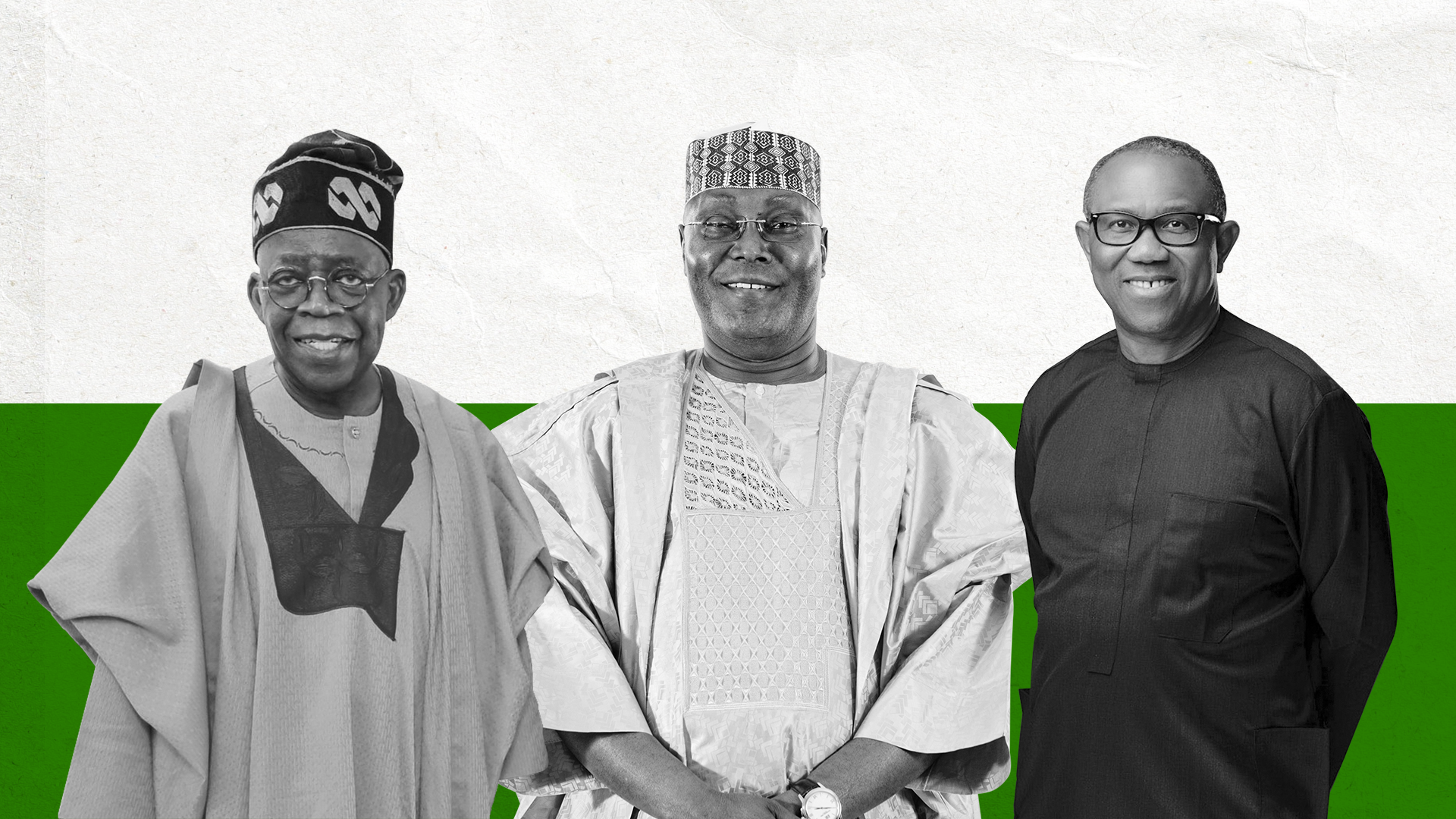
In any case, a careful scrutiny of the results of the elections shows that it was a close and tight contest which speaks to its credibility. The winner, Bola Tinubu, won in 12 states just like the second-placed Atiku Abubakar who also won in 12 states. Peter Obi, who came third, won in 11 states and the Federal Capital Territory, Abuja, which for the purpose of the election counts as a state.
Tinubu scored 8,794,726 votes, Atiku had 6,984,520 votes while Peter Obi won 6,202,533 votes. The candidate who came fourth, Rabiu Kwankwaso of the New Nigerian Peoples Party (NNPP) recorded 1,496,687 votes, the majority of which he got from Kano State, his political stronghold in the North.
It was, however, only Tinubu who met the constitutional requirement of scoring 25% of the votes cast in each of at least two-thirds of the states of the federation including the FCT [Federal Capital Territory], which translates to 24 states.
Tinubu met the 25% requirement in 30 states, Atiku in 21, and Obi in 15. If the APC’s votes in the election, according to Chimamanda’s narrative, were rigged and fictitious, what does she say about the votes recorded by the other parties, particularly her favourite candidate, Peter Obi?
It is instructive that Peter Obi and Rabiu Kwankwaso broke away from the PDP to contest the election on the platforms of the LP and NNPP respectively. Had the PDP contested the election as one with Obi and Kwankwaso in its fold, winning the election would have been an uphill, almost impossible, task for the APC. But contesting on three separate platforms against the ruling party as they did, the victory of the APC was logically and empirically inevitable.
Chimamanda betrays her ignorance of Nigerian politics and unwittingly misled her readers when she wrote that “Nigerian democracy had long been a two-party structure – power alternating between the APC and the PDP – until this year, when the Labour Party, led by Peter Obi, became a third force.”
First, politics in this dispensation in Nigeria since 1999 has not always alternated between the APC and PDP. In 1999, Nigeria had a virtual three-party system with the PDP and All Nigeria Peoples Party (ANPP) splitting the North, the PDP dominant in the South-East and South-South and the Alliance for Democracy controlling the South-West.
After the 2003 elections, the polity became a one-party dominant system with the PDP in control of large swathes of the country, the ANPP with reduced influence in the North and the AD reduced to controlling only Lagos State in the South-West. In the 2007 and 2011 elections, the PDP remained nationally dominant although the AD had been rebranded into the Action Congress of Nigeria (ACN) and regained control of the South-West while the Congress for Progressive Change (CPC) and the All Progressives Grand Alliance (APGA) had emerged as powerful regional political parties in the far North and South-East respectively.
It was not until 2013 that the APC was created as a merger of the CPC, ACN, a faction of the PDP and a faction of the APGA, which then went on to win the 2015 elections, and has since then been the ruling party at the centre.
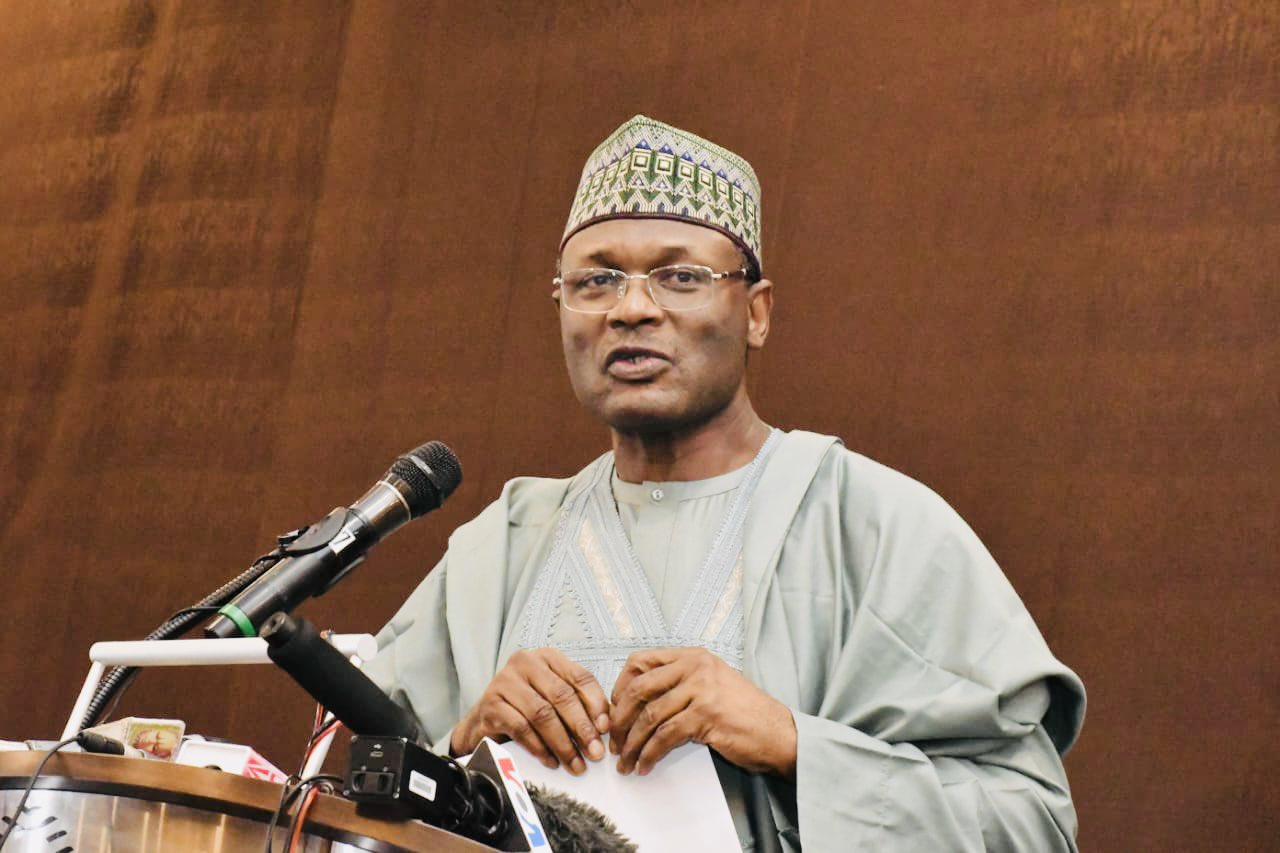
National Election Commission (INEC). Chimamanda Adichie says: “Many
believe that the INEC chair has been compromised, but there is no evidence of
the astronomical US-dollar amounts he is rumoured to have received from the
president-elect”
Secondly, contrary to the romantic picture of Peter Obi painted by the writer, he has always been part and parcel of Nigeria’s political establishment. He was governor of Anambra State for eight years on the platform of the APGA, a period during which he recorded no remarkable accomplishments beyond claims that he saved humongous amounts for the state while leaving behind largely decrepit and dilapidated infrastructure.
After his tenure as governor of Anambra state in 2006, Obi promptly dumped the APGA, decamped to the then ruling PDP and became an appointee of the President Goodluck Jonathan administration. He was the vice-presidential candidate of the PDP in the 2019 election, and had the party won, he would have been seeking reelection along with his principal, Atiku, in this year’s election.
It was only in May last year that Obi quit the PDP and joined the LP when he saw that he could not win the PDP primaries. There is absolutely nothing new or fresh about Obi except in the jaundiced eyes of the Chimamandas of this world. The novelist does not hesitate to regurgitate rumours and baseless innuendos about the President-elect but chose to be silent on widely publicised revelations in the Panama Papers of Peter Obi hiding humongous questionable wealth in notorious tax havens around the world.
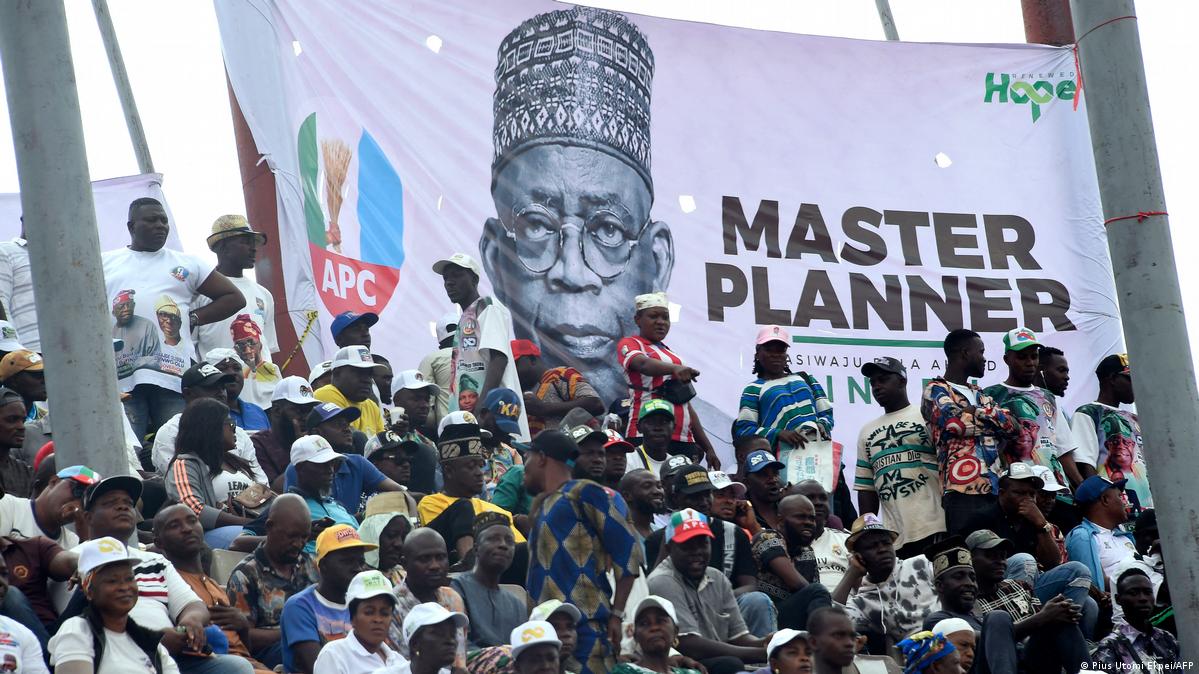
By the way, Chimamanda does not explain Obi’s victory in Lagos, Tinubu’s stronghold, in an election she says was badly rigged and lacking credibility. Nor does she throw logical light on Atiku’s victories in states like Katsina, Kaduna, Jigawa, Yobe, Kebbi, or Osun in the South-West in the presidential election. Obi targeted Igbo and Christian votes in his campaigns and he got his victories in the South-East and South-South. He won two out of 6 states in the North-Central and did not have up to 25% of the votes cast in either the North-West or North-East. He had no realistic electoral path to victory in the presidential election. Victory in two out of the 6 geopolitical zones cannot give any candidate victory in a presidential election in Nigeria.
What is most tragic about Chimamanda’s letter to President Joe Biden is that she wrote as an unrepentant Igbo jingoist masquerading as an objective intellectual and patriotic Nigerian. The point is that she is Igbo like Peter Obi and wanted him to win for purely primordial reasons. Many allude to her novel on the Nigerian civil war, “Half of a Yellow Sun”, as depicting her essentially “Igbocentric” perception of reality. This is understandable. After all, she is human. That Obi did not win the election does not make Nigeria’s democracy hollow. From 2011, there have been incremental and noticeable improvements in the country’s elections as witnessed in 2015, 2019, and now 2023. It can credibly be argued that Nigeria’s democracy is positively growing as we have had 24 years of civil rule uninterrupted by the military interventions that had hitherto been so detrimental to the country’s political development.
In any case, the Electoral Act provides for aggrieved parties in elections to seek redress through the judicial process and that is currently under way. So what exactly is the point of Chimamanda’s letter to President Biden? Is it to seek external intervention in the ongoing process?
Leave a Reply