… For 781 years. Between 711 AD and 1492 AD?
This will come as a huge surprise to many people, both Africans and non-Africans alike. But it is true. Just 711 years after the death of Jesus Christ, black Africans from the northwest and west of Africa, who had converted to Islam (and were therefore called Muslims) invaded Spain and Portugal (which were one country at the time), conquered it, ruled it, and expanded their rule to cover much of Southern Europe (Italy, France, Crete, Sicily, etc) for a long 781 years, between 711 and 1492.
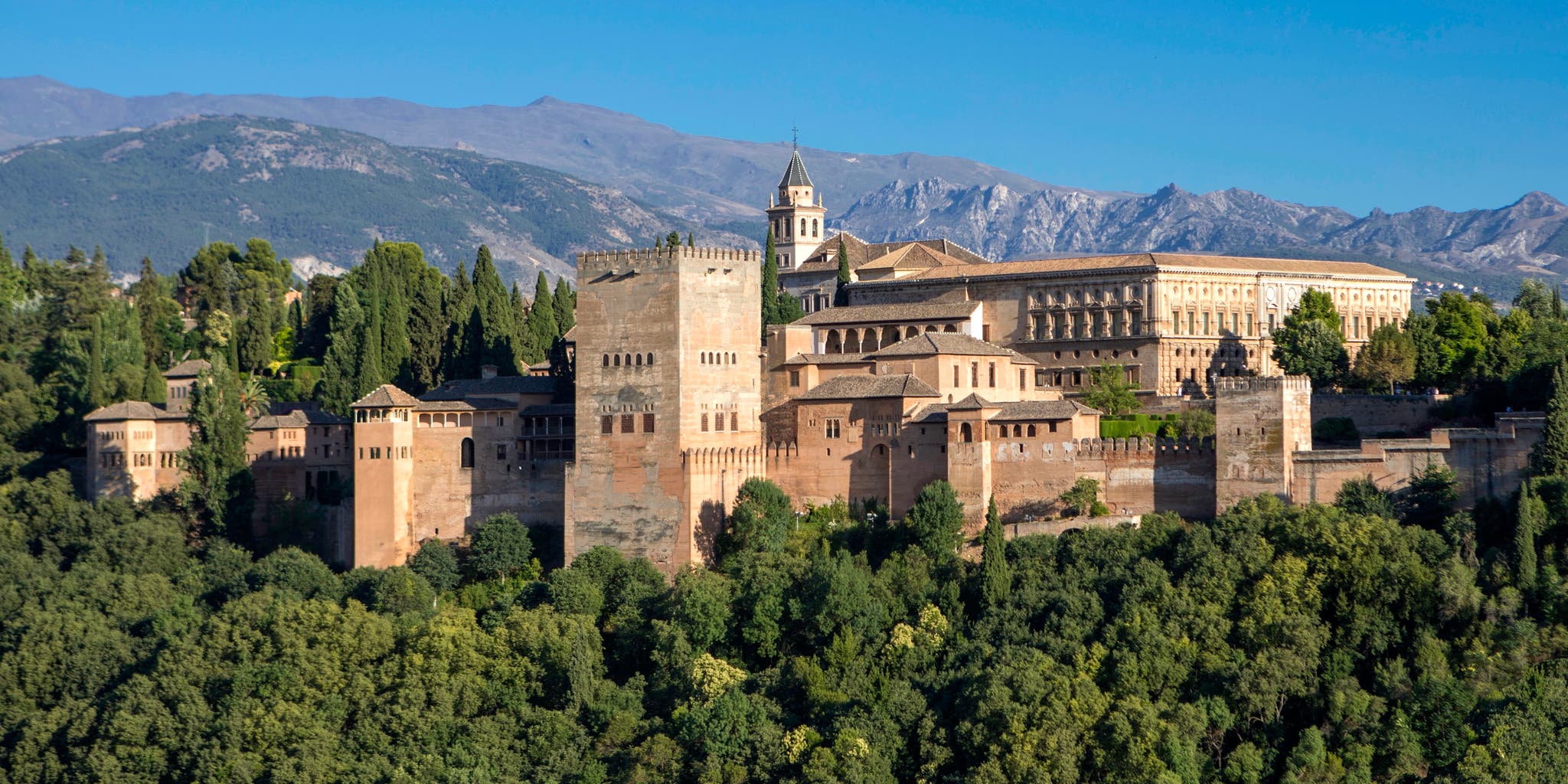
But after the African colonisation of Europe came to an end on 2 January 1492, the Europeans set in motion a great effort to erase all traces of the Africans in Europe, and used their historians and writers to hide the important fact that Africa ever colonised and civilised Europe. Unfortunately for them, some stubborn relics of the Africans still remain in Europe, like the magnificent Alhambra Castle, the Generalife summer palace, and other edifices in Granada in the south of Spain.
On the whole, the story of the Moors in Europe is so fantastic that it is difficult to believe when told by one mouth. Let’s repeat it: the Moors achieved so much in Europe that if their story is told by one person, nobody will believe it. So, this month, we have put together in this “special issue” of The Third Eye, several historians/writers of consequence (most of them of African descent) who attest to the greatness of what the Moors achieved in Spain and Portugal particularly, and the whole of Europe generally. You will marvel that Africans could do what the Moors did in Europe as long ago as 1,300 years. It is a story Africans must know. So please sit back and enjoy pure African ingenuity. This lead piece is by our Editor, Baffour Ankomah.
If you believe conventional wisdom, Africa has contributed nothing to world civilisation. How big that myth is can be gauged from the great efforts that Western historians and writers have made to hide the immense contributions that Africa made to the civilisation of Europe during what they call their Dark Ages.
So total has been the great deception that the majority of the world today, chief among them Africans themselves, do not know about the glorious Africans who conquered and ruled Spain and Portugal and other parts of southern Europe for 781 years between 711 AD and 1492 AD, and in the process brought civilisation, education, and general enlightenment to the whole of Europe, then steeped in its Dark Ages.
This is a story about African ingenuity, brilliance and resourcefulness. But it is not acknowledged in contemporary history by Europeans or Westerners in general. At best, they give the credit to Arabs or Muslims, as if an African who converts to Islam ceases to be an African. It is like saying a Nigerian ceases to be a Nigerian because he has become a Muslim.
That is the kind of intellectual somersault employed by Euro-American historians and writers that has ensured that the glorious history of the Africans (called the Moors) who conquered the Iberian Peninsula (Spain and Portugal were one country at the time) in 711 AD and in 781 years thereafter brought civilisation to the whole of Europe, is not known even by most Africans.

So it is not Europe that first colonised Africa, dear reader! Rather it was Africa that first colonised Europe – from 711 AD to 1492. European colonisation of Africa started about 1833, and by 1870 just about 10% of the continent was under formal European control. This increased to almost 90% by 1914, with only Liberia and Ethiopia remaining independent.
Thus, if you do the mathematics, the gap between the African colonisation of Europe and the European colonisation of Africa is a good 341 years – that is even being generous to fix the start of the European colonisation of Africa at 1833, when just about 2% of Africa was under European control. It would increase to 10% only in 1870.
Therefore, the idea that the African was in a frozen state until “discovered” by the Europeans in the mid-15th century (when the first Portuguese “explorers” made contact with West Africa) is a myth that shames the modern world.
What the African did or was doing before the mid-15th century, the European has nothing to say about! Which leads John G. Jackson, the African-American historian and author, to say that “the curious idea that a great white race has been responsible for all the great civilisations of the past is nothing more than a crude superstition propagated mainly by European-oriented racist historians.”
Today, as Dr Ivan Van Sertima, another great African-American historian, once said, “it would seem like racial chauvinism to suggest that Africans played a major role in the
occupation and enlightenment of a critical part of Europe.”
There is something very deep-seated in many a European historian or scholar that makes him/her refuse to accord the African – and it is usually only the African – any credit for anything at all.
European historians are happy to credit the Chinese, the Indian, the Mongolian, the Arab and anybody else for their contributions to world civilisation. Never the African. Even when the feat is, or was, clearly achieved by an African and on African soil like the exploits of the Ancient Egyptians (covered extensively in the last two editions of The Third Eye), European/Western historians like to attribute it to some Caucasoid or other exotic elements who descended from somewhere and achieved that feat on African soil.
This “anybody but the African” madness has been at the heart of the contortions that have afflicted many Western historians, scholars, writers, and journalists in their explanations of the presence of the Moors in Europe and the civilisation and enlightenment they brought to a continent then groping in darkness. Thankfully, the Europeans describe that era correctly as their “Dark Ages”. And light was brought by Africans that they called the Moors.
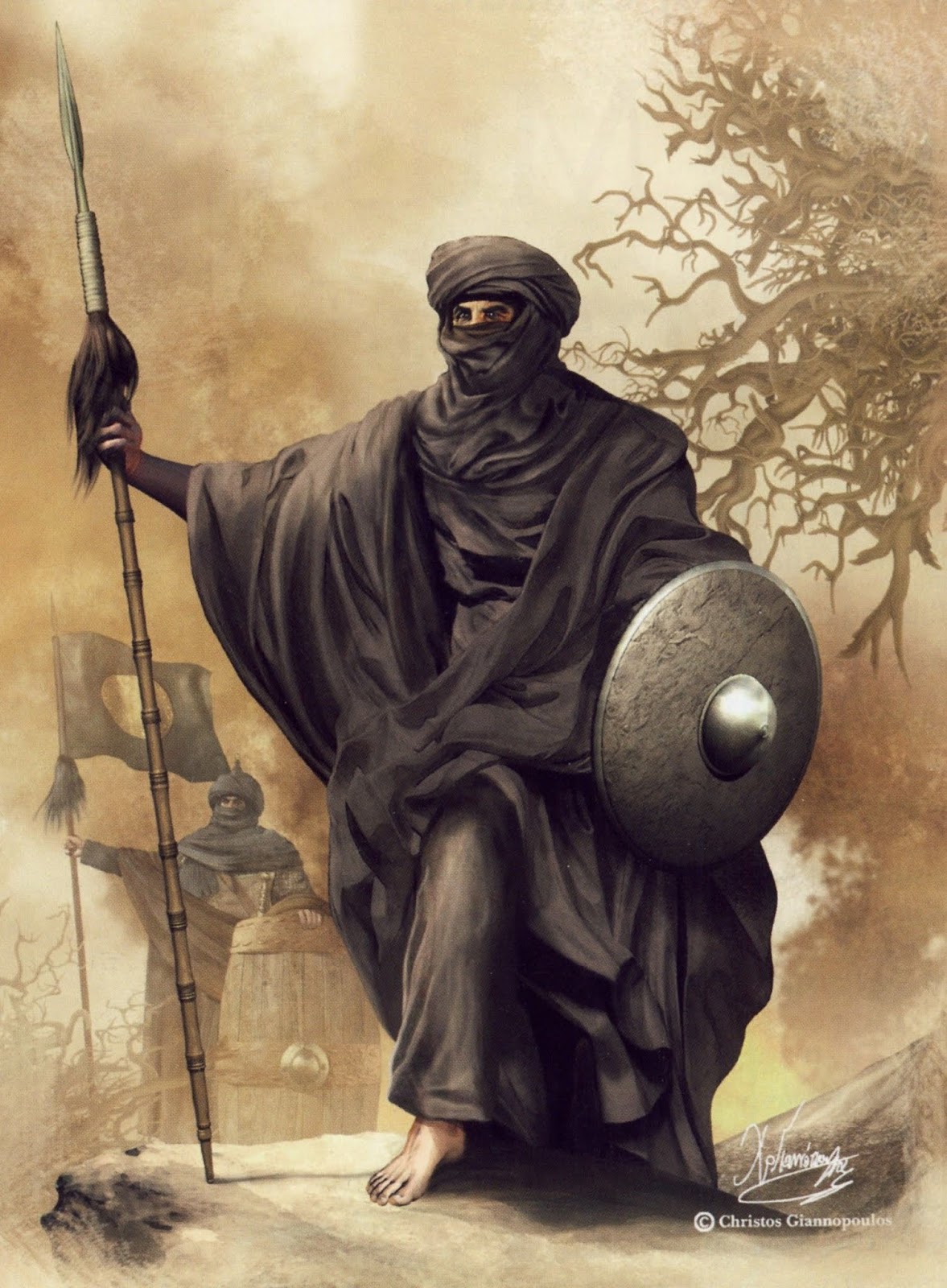
The Moors were people from both Ancient Mauretania (a country which covered the area now occupied by Morocco and western Algeria) and other parts of West Africa – all the way down from today’s Morocco to Senegal, Mali, and the Sahelian countries. Some accounts even say it included people from as far south as northern Ghana. They had been converted to Islam after the conquest of North Africa by the Arabs in 708 AD. As Muslims, they spoke Arabic, the language of Islam and later science in the Middle Ages. But by nationality and identity, they were black (and dark) Africans through and through.
According to Jan Carew, the Guyana-born historian, author and scholar: “There is an instinctive and deep-seated reluctance on the part of Eurocentric historians to acknowledge the Moors as the bringers of cultural and scientific enlightenment to Europe. And when they are compelled to make grudging acknowledgments of this fact, they proceed to whiten the Moors, to tear them away from any suggestion of having black African roots.”
But the stubborn fact remains that between 711 AD and 1492, these Africans, called the Moors, together with their Islamic colleagues from Arabia, put southern Europe to the sword, conquered it, governed it, and brought civilisation and general enlightenment to Europe as a whole.
Spain and Portugal were one country at the time and they became the first to benefit from the enlightenment brought by the African warrior scholars from the northwest and west of the continent.
The conquest of southern Europe
With Spain and Portugal in their firm grip, the Moors proceeded to conquer southern
France, then Sicily which they ruled for 200 years, and Crete for another 125 years. They also conquered parts of mainland southern Italy, and even besieged and sacked Rome in 846 AD, and in the process took a lot of loot. But if you read the works of most Western historians, they claim the Moors were Arabs, not Africans because they were Muslims and spoke Arabic.
But being a Muslim is not a nationality. It only denotes one’s religion or religious belief. It is why the European ancestors of modern European historians were not shy to describe the foreigners from Africa that they lived with during the 781 years of the Moors as black. In addition, the evidence of Moor heads on the coat-of-arms or heraldry of many European noble families, all over Europe, show the Moors as black Africans.
The refusal by contemporary European/Western historians to accept this plain fact and to place the Moors in their rightful home in Africa is part of the centuries-old denial of remarkable African achievements by European historians and scholars, and therefore should be rejected with the contempt it deserves.
That dishonesty cannot last forever. In fact, it no longer holds as many African-descended historians and scholars have painstakingly studied and examined the nationality and achievements of the Moors, and have concluded beyond every reasonable doubt that though the Moors worked with some of the earlier Arab conquerors of North Africa in the invasion of Spain and Portugal in 711 AD, the subsequent 781-year rule of the Iberian Peninsula and southern Europe, and the civilisation this brought to Europe as a whole cannot be credited to Arabs, or Arabs only.
This is because, as Jan Carew explains: “At the height of its power, the Moorish Empire in Africa stretched from the western half of Algeria through Morocco and as far south as Ghana; while in Europe this empire extended itself from the Atlantic coast of Portugal, through Spain and across the Pyrenees to the Rhone Valley in France.”
Wayne B. Chandler, another African-American historian and writer, confirms that: “Although the term Moor has been put to diverse use, the roots are still traceable. Circa 46 BC, the Roman army entered West Africa where they encountered black Africans whom they called Maures from the Greek adjective mauros, meaning dark or black. The country of the Maures, Mauretania (not to be confused with today’s Islamic Republic of Mauritania in present-day West Africa, although obviously the root is the same), existed in what is now northern Morocco and western Algeria.”
Other historians attest that at certain times, foreigners, like the Greeks and Romans, who came to North Africa called the original inhabitants by the generic name “Berbers”, from the Latin word “barbari”, meaning barbarian. To the Romans, anybody who was not a Roman
was a barbarian.
But these original “Berbers” were people from different ethnic backgrounds and nationalities who occupied the whole northern parts of Africa before the Arab conquest in 708 AD. They had their own original individual ethnic names before the Greeks and Romans called them “Berbers”. And they were mainly black and affiliated with the then contemporary peoples of the East African area.
Mamadou Chinyelu, another African-American historian and writer, explains that “when the Africans in the northern part of the continent first assumed the name ‘Berber’ is not certain, but by the time of the Islamic conquest of North Africa, this name was in common usage.”

Chinyelu’s view is supported by the anthropologist, Dana Reynolds, who confirms that “the original Black Berbers, who were called Moors, were the North African ancestors of the present-day dark-brown and brown-black peoples of the Sahara and the Sahel, mainly those called Fulani, Tuareg, Zenagha of Southern Morocco, Kunta and Tebbu of the Sahel countries, as well as other black Arabs now living in Mauretania and throughout the Sahel. They include the Trarza of Mauretania and Senegal, the Mogharba as well as dozens of other Sudanese tribes, and the Chaamba of Chad and Algeria.”
Even the Oxford English Dictionary defines “Moors” as: “The … people who are commonly supposed to be black or very dark and it is synonymous with the word for ‘Negro’ in many contexts.”
Later, the term “Moor” was applied to blacks in general during the European Renaissance when explorers, writers, and scholars began to use it. The earlier Greeks called them Mauros, and the Romans Maurus. In the Romance languages (Spanish, French and Italian), Moor was rendered as Moro (Spanish), Moir (French), and Mor (Italian). The English called them Moors, the Germans Mauren and the Dutch Moorrees. But all these meant “black or dark people”.
History shows that the Arabs who conquered North Africa in 708 AD rarely used the word Moor. Instead they called the original people of North Africa “Berber”, to cover practically all the inhabitants of the Maghreb (ie, Islamic North Africa west of Egypt).
Fortunately for the Africans, the Christians who were defeated by the Moors in the Iberian Peninsula and other parts of Europe left vivid images of the Muslim Africans. Today, Christian paintings and sculptures are an indisputable witness to the black presence in Europe and how important blacks were to the Europeans at that time.
Another source of evidence is the coat-of-arms or heraldry of European noble families who honoured the Moors by putting their heads on their insignia. “Such illustrations”, says Prof Runoko Rashidi, another African-centric historian, “are to be found in the Cantigas of Santa Maria, allegedly written by King Alphonso X [of Christian Spain]. They are filled with images of the Moor and are mostly black types. This is the period of the Almoravid invasion which brought hordes of new Africans into the Iberian Peninsula. Medieval illustrations in the Cantigas portray blacks in a variety of roles – from members of the aristocracy to the military.”
The Moors in Spain
Having settled the issue about the identity and “nationality” of the Moors, let’s now move to what the Moors actually did in Europe. Before the Moors invaded the Iberian Peninsula in 711 AD, there had been two earlier African invasions of Spain and Portugal in history. This was made possible because of the proximity of Europe to Africa. There are just 8 exact miles between Point Marroqui in Spain and Point Cires in Morocco.

The website, Our Spanish Life, owned by a Spanish travel agency, explains that: “If you stand on the Southern edge of Spain and stare out across the sea, you can see North Africa in the distance! As long as the day is clear, of course! If we’re being specific, Spain is incredibly close to Morocco, in particular. This is because Morocco is situated in North Africa and has a point that protrudes out towards the North, reaching out to Spain. And Spain equally has a southern point in the country that protrudes out further towards the South, reaching out to Morocco. So these two points are almost touching and there is just a narrow space of sea between them. The shortest distance between Spain and Morocco is from the southernmost point in Spain and the northernmost point in Morocco, separated by the Strait of Gibraltar.”
Dr Ivan Sertima made the following important point: “The fact that Africans from the north had been intruding into southern Europe from very early times should not come as a great surprise, for the straits that separate the two continents can be crossed by the simplest boats in a matter of hours. The proximity of the borders of Europe and Africa and the evidence of the African phenotype among many southern Europeans led Napoleon to remark that ‘Africa begins at the Pyrenees.’”
But as it were, it was the third major invasion of Spain by Africans that changed everything for Europe. And this was by the Moors in 711 AD. History shows that shortly after the Arab conquest of North Africa in 708 AD, General Tarik ibn Ziyad, an African and a “Berber”, was placed in charge of Morocco by the governor, Musa ibn Nusayr, a member of the Warfadjuma branch of the Nafza Berbers.
Tarik’s domain in what was then called “the far western Maghreb”, included all but the island of Ceuta, an outpost of the Greek Empire, resting on the northern tip of Morocco, near present-day Tangiers, which was ruled by Count Julian, a Greek governor. Julian was a good friend of Spain, then under the rule of the Visigoths, a Germanic tribe that had conquered and ruled Spain for 200 years after toppling the Roman Empire in the Iberian Peninsula.
The then monarch of the Visigoths, King Roderick, had been given charge of the daughter of Count Julian of Ceuta while the girl was in training at Roderick’s court. But Roderick took advantage of the girl and raped her. This infuriated her father, Count Julian, who out of anger and revenge persuaded General Tarik, the Berber, to invade Spain, promising that he would give Tarik his own boats to help in the invasion. Julian even provided extra intelligence information by assuring Tarik that Spain was unprotected and that the Visigoths would be no match for him.
Like a good general, Tarik consulted his boss, Musa ibn Nusayr, and then sent a reconnaissance mission into Spain in 710 AD, led by Tarif, a black officer. Crossing over from the north of what is today’s Morocco (but then called Mauretania), Tarif and his men landed at a place near Europe’s southernmost point to Africa. The place was later named Tarifa in his honour. Tarif set up a customhouse there, and because of his noble activities his name became the root for today’s customs word, “tariff”.
In July 710 AD, Tarif’s mission came back to report of a Spain ready for the taking. His report was music to the ears of General Tarik, who now had the needed information for an attack on Spain. Nevertheless, it took a year for Tarik to prepare for the attack, which began in earnest in 711 AD.
Tarik’s army landed on an isthmus between an escarpment then called Mons Calpe and mainland Europe. Tarik seized the isthmus and, considering it militarily strategic, he asked that a fortress be built at the site. His men later named the fortress Gabel Tarik (Arabic for the mountain of Tarik) after him. This was later corrupted to “Gibraltar”.
Having now a secure base on mainland Europe, Tarik, with about 7,000 “Berber (African)” troops and 300 Arabs, proceeded to engage King Roderick, who was leading some 60,000 troops, at the Janda Lagoon by the mouth of the Barbate River in southwest Spain. The date was 18 July 711 AD.
As Tarik’s army was massively outnumbered, he turned to his soldiers and addressed them thus: “My men, wither can you flee? Behind you lies the sea and before you the foe. You possess only your courage and constancy, for you are present in this country poorer than orphans before a greedy guardian’s table. It will be easy to turn his table on him if you will but risk death for one instance.”
Tarik’s men chose to risk death, and stood their ground, and scored a major victory over King Roderick that day. With the Visigoths vanquished, Tarik set out to enlarge his territory. He was pleasantly surprised to find that along the way through the Spanish countryside, many of the natives were fed up with the oppression of the Visigoths, and were only too happy to
join his invading army. Thus, instead of Tarik’s army dwindling through attrition, it actually grew in size and power.
Soon, the entire Spain (at the time Portugal was part of Spain) came under Tarik’s control, and with Musa ibn Nusayr crossing over with reinforcements from old Mauretania, the Africans (who would later be called “Moors”) and their Arabic colleagues proceeded to lay the foundations of a new civilisation in Spain.
First, they changed the name of the country to Al-Andalus, and later moved the capital from Seville to Cordova, which, according to the English historian Stanley Lane-Poole, they turned into the “Marvel of the Middle Ages”. The African-American writer and historian, Dr W.E.B. Du Bois, underscored the fact that “Spain was conquered not by Arabs, but by armies of Berbers and Negroids [at times] led by Arabs.”
The first Moorish dynasty
The first Moorish family to govern Spain was the Umayyad dynasty. Although Tarik led the invasion, he himself never ruled Spain. But other Moors did. Their rule was especially benevolent as the native Spaniards were allowed to keep their own customs, religion, and language as well as civil independence. They were also allowed to keep their own churches, judges, courts, counts, and bishops, although the Moorish authorities retained the right to approve the bishops. With time, many Spaniards, including Christian noblemen, converted to Islam.
Using Spain as their base, the Moors took control of Sicily for over 200 years, and Crete for 125 years. And more followed! Between 717 and 719, the Moorish ruler, Al-Hurr ibn Abdurrahman, crossed into southern France with his army, using the difficult passes of the Pyrenees. At the time, Switzerland was part of France. But unrest back home in

Al-Andalus brought doom to Abdurrahman’s mission. It was not until 729 that another Moorish ruler, Haytham ibn-Ubayd, was successful in capturing Lyon, Macon and Chalon-sur-Saône in southern France.
Decades later, when al-Samh ibn-Malik ascended the Moorish throne, he transferred the Spanish capital from Seville to Cordova, and completely reorganised the finances and tax system of the country. He also carried out impressive public works and did an extensive survey of the land.
Malik died in May 721 AD and was replaced by Abdurrahman ibn Abdullah who, like his predecessors, crossed the Pyrenees again and this time delivered a crushing blow to Duke Eudes of Aquitaine in southern France.
Abdullah went on to sack Bordeaux and Poitiers, but his luck ran out in Tours in 732 AD, when he was soundly defeated by Charles Martel, the grandson of Charlemagne. Sadly Abdullah lost his life in the battle against Martel, and Tours marked the western limit of the Moorish empire. The Moors however remained in southern France until 1140 AD, principally in the Camargue on the western Riviera, which is still known today as La Petite Afrique.
With southern France conquered, the Moors turned their attentions to elsewhere in the Mediterranean. In 837 AD they captured Sicily. In 846 AD they put Rome under siege, and 20 years later, they took southern Italy.
According to J.A. Rogers in his 1946 book, World’s Great Men of Colour, the Moors plundered the Vatican and St Peter’s Cathedral in the invasion of Rome in 846, and carried off immense wealth in gold, jewellery, tapestry and paintings. They later sold back much of the spoils to the Pope, with Jews acting as intermediaries.
While in Italy, intermarriage saw the blood of the Moors cascading through all layers of Italian society, including even its most distinguished royal family, the Medicis. At the time, colour was no bar to power and honour in Italy. As such, Alessandro de Medici, known as “The Moor”, whose mother Anna was a Moorish woman and his father an Italian, became the first duke of the Italian city of Florence. Alessandro went on to marry the daughter of Charles V, the Holy Roman emperor, while his father became a pope, Clement VIII.
According to the historian Edward Scobie: “It is therefore no exaggeration to claim that the Moors were a leading power in those six or seven centuries from the time of Tarik’s conquest of the Iberian Peninsula. They dominated the Mediterranean and the North Atlantic and held power over the coasts of Western Europe and the British Isles.
“But it is not for their military conquests in Europe that the Moors are remembered. It is the culture and learning which they gave to European countries at a time when there was darkness and nothing elevating in the arts and sciences of a continent that was to claim falsely in later centuries to be the cradle of the civilisation of the world.”
The Almoravids
The first Moorish dynasty in Spain, the Umayyad, survived until 1031 AD, but by the year 1000 AD, it was already in a state of decline. Thus, as the power of the Umayyad dynasty waned, and as they came under constant attack by Christian kings, especially Alphonso VI and Rodrigo Diaz de Vivar, who wanted to reclaim Spain for the Cross, the Umayyad ruler, Mu’tamid, sought help from West Africa.
He appealed to Yusuf ibn Tashfin, a black man then leading an Islamic sect from his base on an island in the Senegal River in West Africa, to come to his rescue. Yusuf’s sect was known as the Almoravid (which meant “the religious men”). He was a master of West and Northwest Africa, his men having been conditioned by the harsh terrain they lived in to become fiercely skilled soldiers.
Yusuf agreed to rescue the Umayyad dynasty from the Christians, but with one caveat: He would return home to Africa after defeating the Christians in Al-Andalus. With this agreement in his back pocket, Yusuf crossed into Spain with 15,000 men.
According to J.A. Rogers (the man Du Bois testified about, saying “no man living has revealed so many important facts about the Negro race as has Rogers”), out of Yusuf’s 15,000 soldiers, 6,000 were Senegalese, “jet black and of unmixed descent”. The fearsome Almoravids routed King Alphonso VI’s army at Zalacca in October 1086. This was during the 375th year of Umayyad rule in Spain. By 1091, Yusuf had reunited all of Muslim Spain except Zaragoza.

During the years of war, Yusuf noticed a disturbing weakness in his Umayyad brothers, and this – together with the euphoria of victory – forced him to change his mind and rule Al-Andalus. His regime therefore marked the beginning of the era of the Almoravids in Spain, which lasted for 103 years.
With Spain firmly in his grip, Yusuf turned to his home continent, Africa, and took Morocco and Algeria. He is said to have founded the Moroccan city of Marrakesh. History shows that Yusuf became one of the most celebrated Moorish rulers in Spain, in fact one of the very best. Under him, the Almoravid Empire ran from the Senegal River in West Africa to the Ebro River in Spain, earning the name of the “Empire of the Two Shores”.
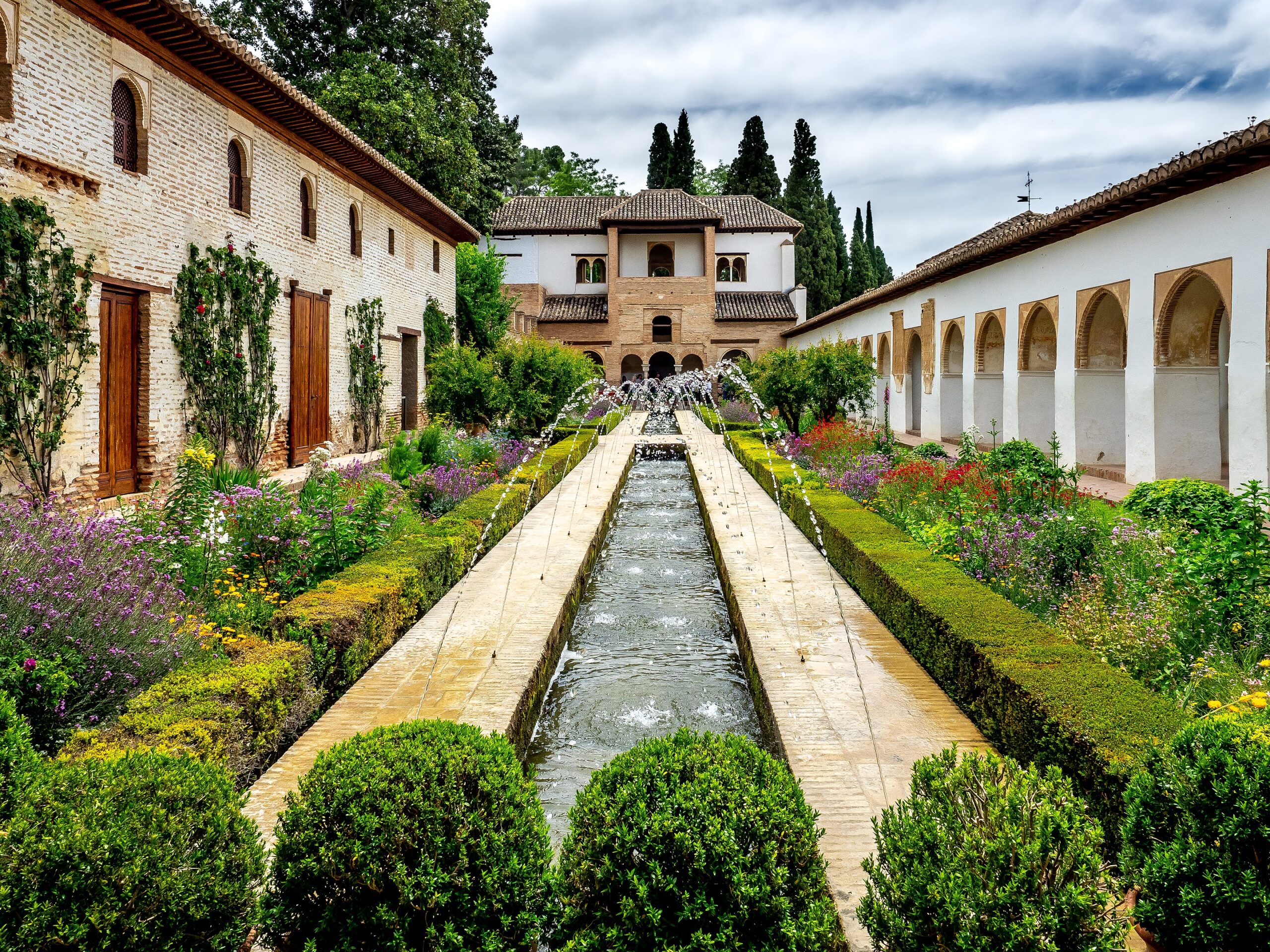
In the 14th century, Yusuf completed the building of the most famous Moorish palace in Spain, the Alhambra, in Granada, southern Spain. At the time, it was considered as one of the wonders of the world. In his 1974 book, The Moors in Spain and Portugal, the Scottish author, Jan Read, described the Alhambra as “perhaps the most successful fusion of architecture and landscape ever achieved by man”.
A palace and fortress complex, the Alhambra was first built by the Moors as a small fort in
889 AD. It was enhanced in the mid-13th century by the Moorish Sultan of Granada, Mohammed ben Al-Ahmar, and then finished in 1333 by Yusuf Tashfin, who turned it into a palace, designed with the mountainous site and the environment fused into it.
The palace was so beautiful to look at that Moorish poets lovingly described it as “a pearl set
in emeralds”, a reference to the colour of its walls and the woods around them. Now a World
Heritage Site, the Alhambra, together with the nearby Generalife (the summer palace built by the Moorish ruler, Muhammad II, and enlarged by Muhammad III), is one of Spain’s most crowd-pulling tourist attractions and an inspiration for many songs and stories.
The Almohads
As every good thing has an end, the power of the Almoravids declined and in 1189 – a good
103 years after Yusuf first took control – they were overthrown by another black African Islamic group/fighters calling themselves the Almohads, whose leader was also a reformer and military genius called Yakub Al-Mansur.
Like the Almoravids, the Almohads also hailed from the western part of Africa. On the way to Spain, the Almohads first conquered Morocco from the last Almoravid king in 1147, and then put Spain to the sword, and defeated the Almoravid ruling class there.
Thus, for the second time, a purely African people ruled over the Iberian Peninsula. Al-Mansur endeared himself as a leader of genius. “In his time, he was considered the most powerful ruler in the world,” says the historian John G. Jackson. A man of culture, Al-Mansur was also a builder of great cities and great monuments, such as the Giralda in Seville, which stands up to this day.
As Jackson puts it: “Under a great line of Almohad kings, the splendour of Moorish Spain was not only maintained but enhanced; for they erected the Castile of Gibraltar in 1160 and began the building of the great Mosque of Seville in 1183. The Giralda of Seville was originally an
astronomical observatory constructed in 1196 under the supervision of the mathematician Geber.” Sadly Mansur died in 1199.
Moorish achievements in Spain
In 1992, Dr Ivan Sertima made the vital point while editing the book, Golden Age of the Moor, a collaborative work by 15 African-descended historians and authors, which became one of the best books ever published on the Moorish era in Spain. Sertima wrote:
“By the time [the Arabs] attacked Ancient Egypt, Europeans had long been in charge of the defeated country. The Arabs seemed to forget that their conquest of Egypt had been made easy by the resentment of the Egyptians against their Byzantine overlords. We know far more today about the enormous debt Greek science owes to Egypt.
“But what was little expected was that Greece was not the only conduit of Egyptian scientific genius to the Arab world. There were Egyptians fleeing their country in large numbers during the Persian, Greek and Roman invasions, fleeing not only to the desert and mountain regions, but also to adjacent lands in Africa, Arabia and Asia Minor, where they lived and secretly developed the teachings which belonged to their Mystery System. In the 8th century AD, the Moors of North Africa invaded Spain and took with them the Egyptian culture which they had preserved.”
Thus, having been beneficiaries of Ancient Egyptian systems and culture, the Moors took these along on their invasion of Spain. In other words, after conquering the Iberian Peninsula, the Moors set forth to grow roots in Spain using the ancient knowledge they had preserved from the cultures and systems of Ancient Egypt. In the process, they created new areas of science and philosophy that greatly helped medieval Europe to come out of its dark ages.
As already pointed out, the Moors arrived in Spain with a very religiously tolerant philosophy. According to the writer, Flora Shaw: “It is interesting to note that in the days of Mohammedan Spain, women were not confined, as in the East, to harems, but appeared freely in public and took their share in all the intellectual, literary, and even scientific movements of the day. There were women historians and philosophers, as well as women surgeons and doctors. An example of this was that the daughter and grandmother of the celebrated Moorish pharmacist, Ibn Zohr, were both accomplished female doctors.”
No wonder, the first 300 years of Moorish rule saw the majority of Spanish peasants converting to Islam. In fact, Islam eventually became the religion of the majority in both Spain and Portugal.
The African-American historian, José Pimienta-Bey, has underscored the fact that “the two significant dynasties which entered Andalus were most certainly African, and that they both had a great and positive impact upon the sciences and philosophies of Andalusian society. These two dynasties, the Almoravids and the Almohads, left very indelible impressions upon Spain, and ultimately, western European society and development.”

In his book, A History of Medieval Spain, published in 1975, Joseph O’Callaghan, the American professor of medieval history, refers to the 11th century Almoravid control of Spain as the “golden age” of the Iberian Peninsula. “The intellectual and artistic activity of the country did not depreciate,” according to O’Callaghan, “in fact, the fields of philosophy and science were particularly rejuvenated during the time of these dynasties.”
The simple truth is that the Moors were great developers. In the 10th century, their capital, Cordova, according to the historian John G. Jackson, was very much like a modern city with over one million inhabitants. Comparing Cordova with other European cities at the time,
Jackson quotes one contemporary European historian as having said that “none of our modern sophistry redeems the squalor of Europe from the 5th to the 11th centuries”.
Stanley Lane-Poole, the Englishman whose 1886 book, The Story of the Moors in Spain, tells more of the wonders of Moorish life than most European historians care to include in their works, says: “Cordova was the wonderful city of the 10th century, the streets were well paved and there were raised sidewalks for pedestrians. At night one could walk for 10 miles by the light of lamps flanked by an uninterrupted extent of buildings. All this was hundreds of years before there was a paved street in Paris or a street lamp in London.”
In fact, Cordova, under the Moors, was considered as the medieval world’s most cosmopolitan and sophisticated city. Lane-Poole tells how the Moorish monarchs of Cordova and elsewhere in Spain “dwelt in sumptuous palaces, while the crowned heads of England, France and Germany lived in big barns, lacking both windows and chimneys and with only a hole in the roof for the exit of smoke.”
The Moors excelled in city planning also, and therefore Cordova’s magnificence was rivalled
only by other marvellous Moorish cities such as Toledo, Seville and Granada, but not by the other European cities.
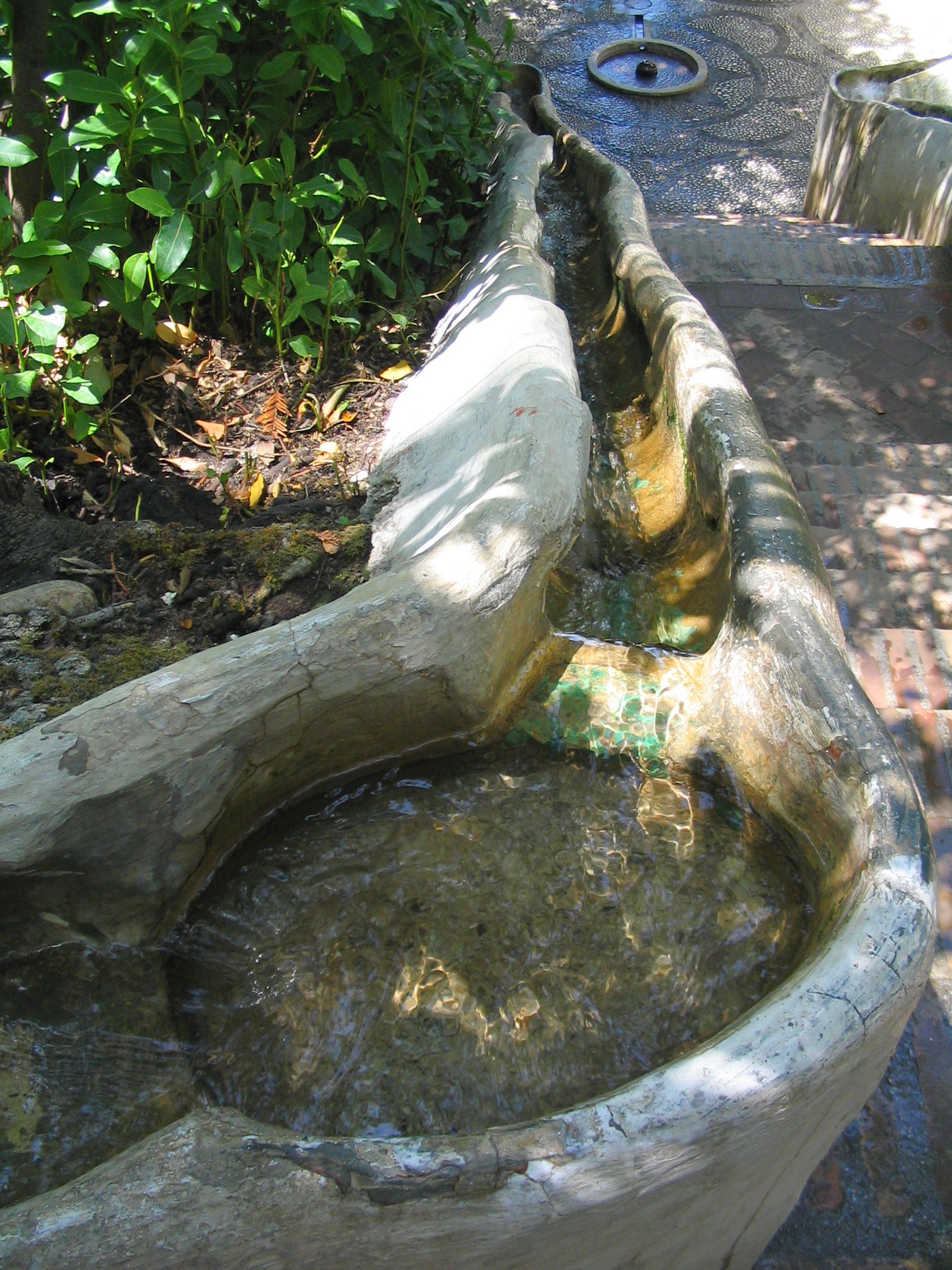
Wayne B. Chandler, another African-American writer and historian, points out that: “The sophistication of [Moorish] cities was astonishing. Water from the mountains was distributed through every corner and quarter of the city by means of leaden pipes into basins of different shapes as well as into vast lakes, tanks, amazing reservoirs, and fountains.”

Quoting other historians, Chandler says some of “the houses in Cordova were air-conditioned in summer by ‘ingeniously arranged draughts of fresh air drawn from the garden over beds of flowers, chosen for their perfume, and warmed in winter by hot air conveyed through pipes bedded in the walls. Bathrooms supplied hot and cold water.’”
Al-Makkari, the 17th-century Maghreb scholar and writer, recorded that under the Moors the cities of Cordova and Seville became internationally renowned for their beauty, scholarship, and culture. In contrast, the rest of medieval Europe was not only steeped in squalor and bleakness, but also wallowed in scientific and cultural ignorance, a point amply
underscored by Pimienta-Bey when he wrote: “It is only after the coming of the Moors and other Muslim peoples to Western Europe that Christian Europe begins to resemble an industrious civilisation – in the true sense of the word. While many Catholics resisted the cultural intrusion of the Moors, several Europeans mimicked Moorish customs and manners.”
Another historian, Jan Carew, notes that: “Moorish scientific and organisational abilities transformed their cities into extraordinarily advanced urban centres. Not only were their public and private buildings aesthetically pleasing, but their architects and planners created cities the likes of which had never been seen before in Europe.”
Carew noted that the Moors were able “to create a harmony in the rhythms of life in the city and in the countryside. They dotted the map of Al-Andalus with their cities and towns, but they could only do this because the surrounding countryside was kept fertile and productive – with advanced drainage and irrigation systems, reservoirs, aqueducts, sophisticated storage facilities and efficient marketing, transportation, and trading networks. The Moors also brought the countryside into their cities with fantastic gardens, parks, lush inner courtyards, and a constant supply of pure water.”
Agriculture flourished
Another area where the Moors exercised great influence over European life was in agriculture, as they totally transformed the Iberian Peninsula. The Moors did not only bring advanced drainage and irrigation systems into Andalusia, they also brought a variety of new crops like cereals, beans and peas of various types, olives, almonds, and vines.
If Spain and Portugal today are famous for wine-making, they have the vines and the wine-making skills brought by the Moors to thank. Dr Sertima adds: “Fruits unknown to Europe tumbled into the market – oranges, pomegranates, bananas, coconuts, maize and rice. The [Moors] brought the art of dry farming, as well, to the high bleak plains and they introduced the water-wheel, an invaluable source of energy for irrigation and the grinding of grain.”
Even the most implacable Spanish enemy acknowledged, as Carew reveals, that “the Moors were superb agricultural scientists, for they cultivated not only the fertile areas, but [also] reconstructed and improved the old Roman irrigation systems and introduced a variety of new crops”.
For example, from Africa and Asia, the Moors brought rice (arruz in Arabic, arroz in Spainish, riz in French). According to Arib bin Sa’id, secretary to the Moorish ruler al-Hakem II (961-976 AD), rice first appeared on Spanish river banks in the 10th century. The Moors had already introduced cotton (qutn in Arabic, algodon in Spanish, coton in French) to Iberian soil in the 9th century. They also brought several types of medicinal herbs from Africa, which became the source of their medical and pharmacological skills and interests in Al-Andalus.
Moorish education
Perhaps it is in the field of education that the Moors did the most for medieval Europe. According to Pimienta-Bey: “The ultimate consequence of European tutelage under the Moors was the establishment and successful proliferation of academic institutions within the nations of Europe, and the progression of European societies as a whole.”
Thus, even today, it is not difficult to see the extensive presence of Moorish scholarship within Europe’s finest universities, as Europe relied on the studies of Moorish scholarship and culture for the development of its own universities and societies. This became possible because the Moors filled Spain with many schools that taught all the sciences and philosophies of the period.
The Moors then set up major universities of their own, such as the one at Cordova, which was
founded in the 10th century by Caliph Abd al-Rahman III. Records show that there were 27 “free schools” of higher education in Cordova alone, and their presence greatly inspired additional schools and universities in other provincial cities such as Seville, Almeria, Valencia and Malaga.
Students from far and near attended these schools and universities, a fact emphasised by Jan Carew when he pointed out that “at the zenith of Moorish power, Al-Andalus, that land of many cities, attracted scholars from England, France, Germany, Italy, the rest of Europe, as well as distant parts of the Muslim empire”.
Historians roundly agree that for the Andalusian Moor, scholarly endeavour was considered
divine. “The more one knew of one’s world, the more one was supposed to know of one’s creator.” The Moorish ruler, Caliph al-Rahman III, is said to have spent almost one third of the state’s income on education. This was at a time when most Christian kings and queens elsewhere in Europe could not even write their own names, and much of Europe could not read or write.
Joseph McCabe, the English writer and former Roman Catholic priest who died in 1955, pointed out in his 1935 book, The Splendour of Moorish Spain, that “even after Europe had inherited Moorish and Arab academic gifts, she did very little with them at first; 85% of Europe would still be illiterate in the 18th century [when] significantly more than 50% of Andalusians could read over 700 years earlier”.
Slowly but surely, Europe got going and capitalised on the learning and enlightenment brought by the Moors. According to Dr Sertima: “Moorish influence came primarily to the West by way of the Iberian Peninsula, via Western Europe’s scholarly relations with Spain. King Alfonso X of Catholic Spain set the tone in the 13th century, by setting up a school of translation in Toledo that played a major role in the diffusion of the sciences”.
Following Alfonso’s example, centres of translation from Arabic (the then language of science) into Latin, the classical European language, sprang up all over Christian Europe – from Barcelona to Tarazona to Leon to Segovia to Pamplona to Toulouse to Beziers to Narbonne to Marseilles to Bologna to Salerno and to Paris.
All these centres made extensive use of Moorish scientific treatises, and as Dr Sertima puts it:
“The translations from the Arabic provided links between Spain, Portugal, France, Italy and England. Alphonso X promoted Moorish erudition at every opportunity.”
This influenced the establishment of the first university of Christian Spain in the 13th century, founded by King Alfonso VIII in Valencia. Not surprisingly, the teachers employed by the king were Moorish Muslims and Jews.
Dr Sertima makes the important point that “nearly all the major universities in Europe sprang up around the same time, beginning in the second half of the 12th century right up through the 13th, a span of about 150 years, a period which coincides with the flowering of Moorish
science and the establishment of centres in Europe to translate Moorish treatises from Arabic into Latin.”
According to the historical record, starting from Italy in 1158 AD, the following universities of Europe were founded within the 150-year span mentioned by Dr Sertima: 1158 Bologna (Italy), 1180 Montpellier (France), 1200 Oxford (England), 1209 Valencia (Catholic Spain), 1223 Toulouse (France), 1224 Naples (Italy), 1228 Padua (Italy), 1245 Rome (Italy), 1250 Salamanca (Catholic Spain), 1257 Cambridge (England), 1279 Coimbra (Spain/Portugal), 1290 Lisbon (Spain/Portugal).
This leads Pimienta-Bey to say: “When one notes the period in which most of Europe’s oldest and finest universities were established, one cannot but be struck by the proximity in time to the scientific flowering of Moorish Andalus and the establishment of European centres for the translation of Moorish documents. [This] clearly supports the contention that Europe’s academic ascension was primarily born of its contacts with the Moors who were occupying European soil.”
Pimienta-Bey goes on to say: “The establishment of these famed European universities during the same time its scholars were studying the works of Moorish Andalus, even making them standard texts in astronomy, mathematics, medicine, etc, cannot simply be dismissed as a coincidence. Judwal, the astronomy text of the Moor al-Zarqali, even became the standard text of Oxford University.”
The value of Pimienta-Bey’s assertion can be viewed against the background that when King Frederick II founded the University of Naples in 1224, he established a curriculum that emphasised Moorish scholarship. “Under King Frederick, all theological studies ceased at Italian universities and Moorish medicine and law became the major disciplines,” recalls Pimienta-Bey.
His view is supported by Carew, who attests that: “Moorish sensibilities encouraged not only a flourishing of scholarly endeavours, but also the broadening of humanistic expression in a Europe emerging from the throes of the Dark Ages. Moorish Spain became a cultural and intellectual Mecca where all the great manuscripts and learned texts were collected, translated, and classified, and where scholars from far and wide could gather to peruse them.”
Carew adds the telling point that, “There can be no denying the fact that Moorish scholarship and Moorish culture as a whole, had an intellectual ripple-effect on Europe. They moved in
concentric rings from centres of learning to the most backward areas of the continent”.
Because of the great learning and general enlightenment brought by the Moors, European geographers and mathematicians could now measure global distances accurately for the first time.
As Carew points out: “Without the improved Moorish/Arab astrolabe, the lateen sail, and the
advances made by Arabs in navigation, astronomy and the nautical sciences in general, [Christopher] Columbus would have been incapable of acquiring the rudimentary and imperfect navigational skills that he used during his four voyages to the Americas.
“It is also true that the idea of sailing west in order to reach China and India would never have crystallised in a mind trapped in the thralldom of medieval superstition, the way Columbus’ mind was when he left his lowly birthplace outside of Genoa”.
Historians have shown that through the longstanding Moorish presence in Spain, Arabic provided Europe with words such as guitar (Arabic, quintar, Spanish guitarra; lemon (Arabic, laymy, Spanish limon), algebra (Arabic, al-jabr, Spanish algebra), not to speak of a whole slew of other mathematical, chemical, administrative, botanical and herbal terms.
In effect, the extent, quality, and impact of Moorish and Arab influence on European development can be seen in the words of various European languages, which derived from the Arabic, such as coffee, sugar, rice, lemon, syrup, soda, alcohol, alkali, cypher, algebra, arsenal, admiral, alcove, and magazine, as Anwar Chejne, another historian and writer, points out.
This gives Pimienta-Bey the enormous legs to stand on and assert that: “The Moor’s largely
obscure fate, however, is not due to his insignificance in the history and development of Western civilisation, but rather, to the judgement passed on him out of jealousy at his great influence! The religious and ethnic/racial prejudices of several European historians seem to have prevented most contemporary histories from presenting a more thorough and balanced view of the Moor and Islam, especially as they relate to Christian Europe.”
Pimienta-Bey goes on to say: “While most [people] are familiar with the Classical Renaissance
of Europe – complete with Greco-Roman literature and the art of Michelangelo – few of them have ever heard of the Scientific Renaissance in Europe which took place during the ‘medieval’ era, in the 12th and 13th centuries. In my opinion, this is intentional. For behind Europe’s ‘Scientific Enlightenment’, we find many African Muslims. In fact, we find that the very foundation and structure of ‘Western’ Science and Academy is built upon the erudition of these people known as the Moors.”
Moorish science
Science, in fact, is another area where the Moors did the most for Europe and the world. According to Dr Sertima: “What we can say about Moorish science is that it was not European in its seminal inspiration and only minimally affected by Europeans before 1492. It was a multi-cultural tradition, involving strong African and ‘Arabian’ elements but also elements of the Hindu (the number system, for example) and the Chinese (gunpowder technology).
“The first steam engine had already appeared in Africa, built by Heron, in the Egyptian city of Alexandria. Also, the water clock and the thermometer. Europe lagged behind in the technological race and later profited immensely from these innovations.”
Dr Sertima adds that: “Science, ideally, is beyond racial classification. It is neither black nor
white, African nor European. What one man invents becomes the common property and benefit of the whole human race. But when there is a perceived attempt, conscious and unconscious, persevered in relentlessly over the centuries, to minimise or exclude the contribution of people of a certain race, then an emphasis upon those invisible people in history becomes a duty, a mission, a necessary corrective.”
Moorish medicine
Dr Sertima’s assertion takes on even more importance when he adds: “The Moors were also known for their skill in medicine. For seven centuries the medical schools in Europe owed everything they knew to Moorish research. Vivisection as well as dissection of dead bodies was practised in their anatomical schools, and women as well as men were trained to perform delicate surgical operations. They were the first to trace ‘the curvilinear path of rays of light through air’. This discovery in about 1100 AD is a prerequisite to the design of corrective glasses.”
Pimienta-Bey agrees, saying: “In the field of medical science, the Andalusian Moors made
remarkable progress and surpassed the Greek-trained Muslim physicians of Persia (Nestorians) and other Eastern Islamic nations. Moorish medicine was based on experimentation (tajribah), reasoning (qiyas), and observation. Moorish physicians used drugs, surgery, and cauterisation; medicine was a highly technical profession complete with extensive training and a code of conduct.”
According to Pimienta-Bey, Europeans offered no competition at all with Moorish advances in pathology, aetiology, therapeutics, surgery and pharmacology. “The Moorish advance in medicine was such that the use of al-kuh (or alcohol) as an antiseptic, and proper habits of personal hygiene for good health, would largely disappear from Europe’s societal memory until Charles Lister introduced antiseptics several centuries later.”
Pimienta-Bey goes on: “Prior to the entry of the Moors and Arabs, many medieval Western Europeans traditionally confronted illness with prayer, holy water, the touching of relics, and pilgrimages to holy places. Except for a few herbs which were used for dressing sores, there was actually very little which could tangibly be done by the Western European healer.”
This point was amplified by the historian, Anwar Chejne, who confirmed that: “Western
European healing practices at the time still largely relied upon charms and amulets. Socially and politically, the powerful clergy frowned upon and repressed medicine, thereby leaving the field in the hands of quacks.”
As a result, according to Jan Carew, “For centuries, the rulers of Europe and their wealthiest courtiers and merchant princes, relied on Moorish physicians and surgeons to cure them of their various ailments. And they judged those roving medical specialists by their skills and not their colour. Even after the ‘Reconquista’ (the wrestling of Spain from the Moors by the Christians), European rulers continued surreptitiously to invite Moorish scholars to their kingdoms, because of a profound respect for their knowledge and expertise.”
This fact is confirmed by Pimienta-Bey, who says: “For many centuries, the mastery of Moorish medical works was required for obtaining medical degrees at Europe’s most prestigious universities. In 1311, the Catholic Church even held a Council in Vienne [France], where they pronounced and endorsed the teaching of Arabic studies at the universities of Rome, Paris, Bologna, Oxford, and Salamanca.”
The great Ibn Sina
One of the great Moorish physicians who stood out at this time was Ibn Sina who was known
by Europeans as Avicenna. A true Renaissance man, Sina was not only a renowned physician but also a great intellectual who mastered Logic by the age of 14 and codified many Greek-attributed philosophical systems.
Pimienta-Bey recounts that during the 14th century Avicenna’s medical writings, under the titles of Primus Canonis and Quartus Canonis, became two of the standard texts for licensing physicians at Montpellier’s medical school and also at Bologna.
“In the field of geology,” says Pimienta-Bey, “Avicenna performed studies on the crust subsistence of the Earth at various eras in its history, and the stratification of rocks. He also classified many of the Earth’s minerals. Several of his writings were translated by Europeans and used extensively at Western universities.”
There was also Abu Marwan ibn Zuhr, known by Europeans as Avenzoar. Born in the 12th
century in Seville, Ibn Zuhr conducted original research in therapeutics, tumors, and abscesses while serving as a physician to both the Almoravid and Ahmohad courts.
His famous book, Kitab al-Taysir, which focused on nutrition and pharmacology, was translated into several European languages. In 1280, Paravicius, an Italian, translated Zuhr’s book into Latin, under the title Thesir. In later years, Zuhr himself wrote another famous medical book entitled Iqtisad.
Perhaps the greatest of all the Moorish men of medicine and philosophy was Ibn Rushd, known to Europeans as Averroes. Born in Cordova in 1126 at the time of the Almoravids, Rushd was widely acknowledged as the Moorish intellectual who had the most profound effect on Western thought, because of his translation of the works of Aristotle.
Carew recalls that “Averroes’ name became so closely linked with Aristotelian philosophy that whole schools of philosophy were set up in Paris, Padua, and Bologna, to spread ‘Averroism.’”
Besides philosophy, Rushd also became influential for bringing new medical knowledge. He was “a renaissance scholar long before the Renaissance,” Carew says. “A poet, scientist,
philosopher, historian, and mathematician, Averroes’ philosophies were such that they continued to provoke debate throughout Europe for several centuries after his death.”
Through men like Ibn Sina (Avicenna), Ibn Zuhr (Avenzoar) and Ibn Rushd (Averroes), “Moorish scholarship and culture had an intellectual ripple effect on Europe, moving in concentric rings from centres of learning to the most backward areas of the continent”, as Carew cares to point it (earlier quoted).
Moorish music
Regarding the arts, the most significant of the Moorish musicians, Ziryab, had a profound effect on Europe. He arrived in Spain in 822 AD. Given the name “Blackbird” on account of his black complexion, Ziryab’s eloquence and melodious voice made not just an impact on the music of Spain, especially the development of the lute, but on European music as
a whole. His biggest contribution to music was in the field of instruction. In Cordova, he founded the first conservatory of music and his students later spread his inspired teachings throughout Europe.
Historians record that Ziryab was deeply versed in every branch of art and he was gifted with a remarkable memory. Before him, the lute was composed of only four strings. He added a red string and placed it in the middle, which considerably improved the sound and made it more harmonious.
This became the predecessor of today’s guitar. According to Carew, Ziryab’s African origins and his prolonged sojourn in Africa undoubtedly played an important role in his musical development. A man of many parts, his talents stretched from music through to the introduction of social customs to botany and chemistry.
Ziryab also became the most fashionable arbiter of taste in the 9th century. Carew records that: “He affected the way the upper class of Andalusia ate at table. He was the first to introduce crystal tableware. He changed hairstyles. He introduced new customs in perfumes and
deodorants. He introduced new fashions in dress, a greater range of colours and textures of garments to suit the shift and change in seasons.
“In cooking, Ziryab brought in new dishes, some named after him. He revolutionised the style of serving and eating food. Food was no longer served in one mass as was the general case in Al-Andalus before him. Following his lead, food was broken down into separate courses, beginning with soups and ending with deserts. He even contributed to dental hygiene by inventing a toothpaste that was both functional and pleasant to taste. And, it was Ziryab, the botanist, who introduced the asparagus to Europe.”
The end
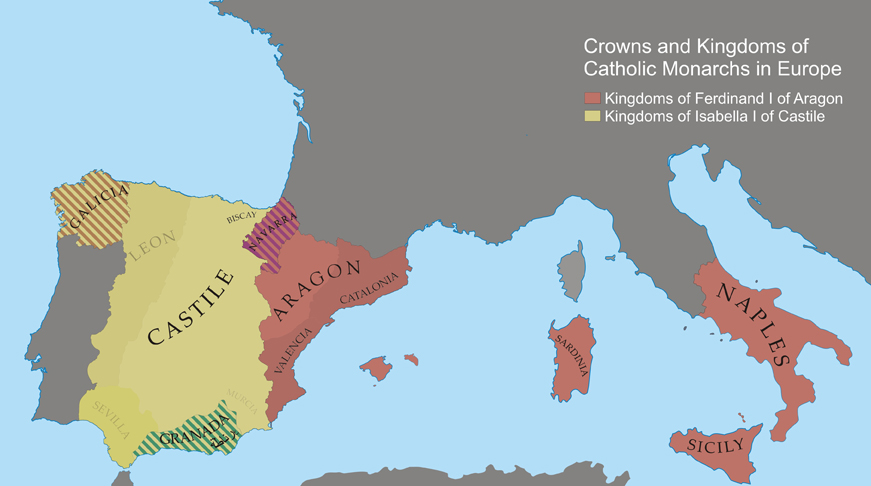
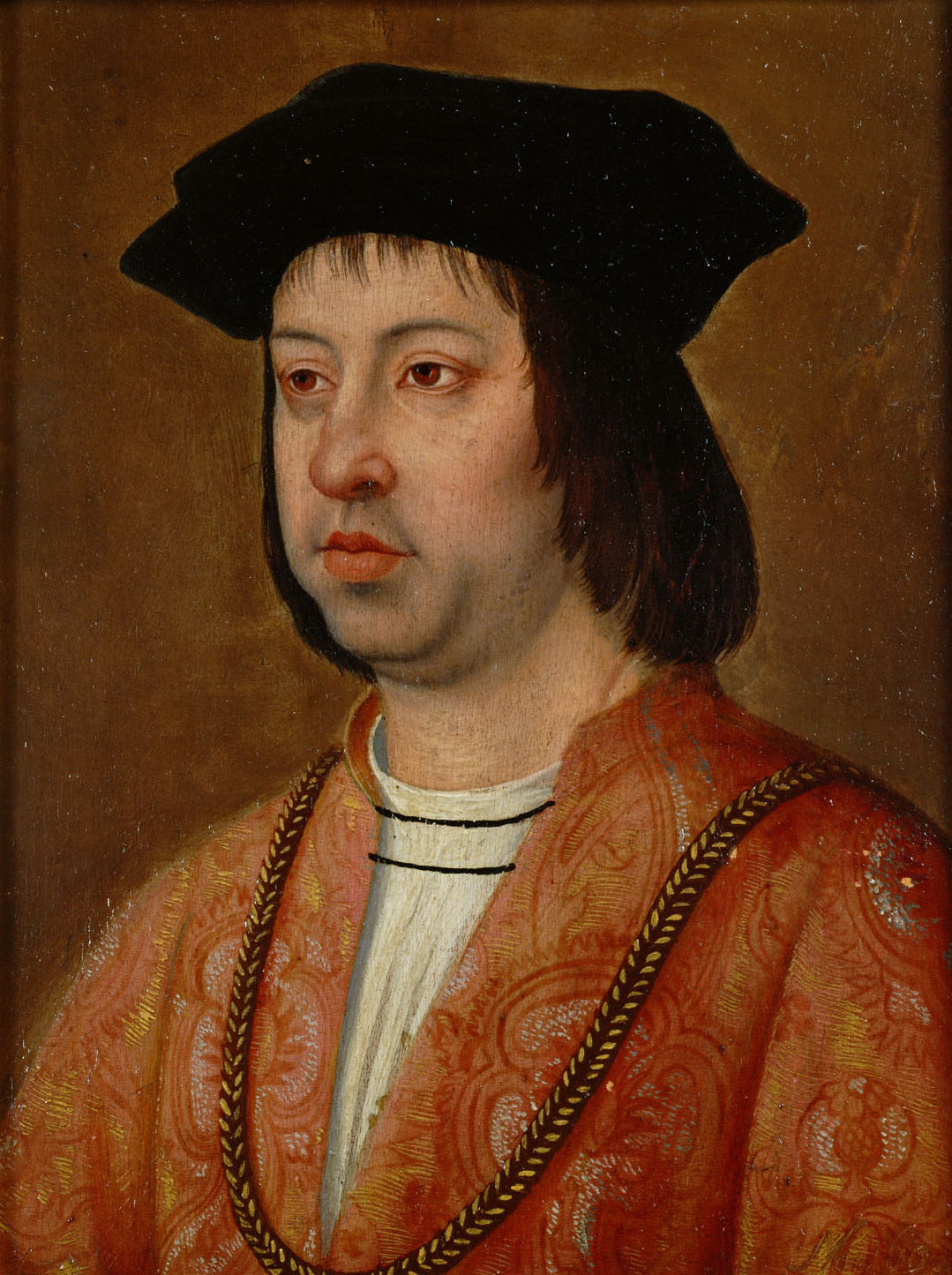
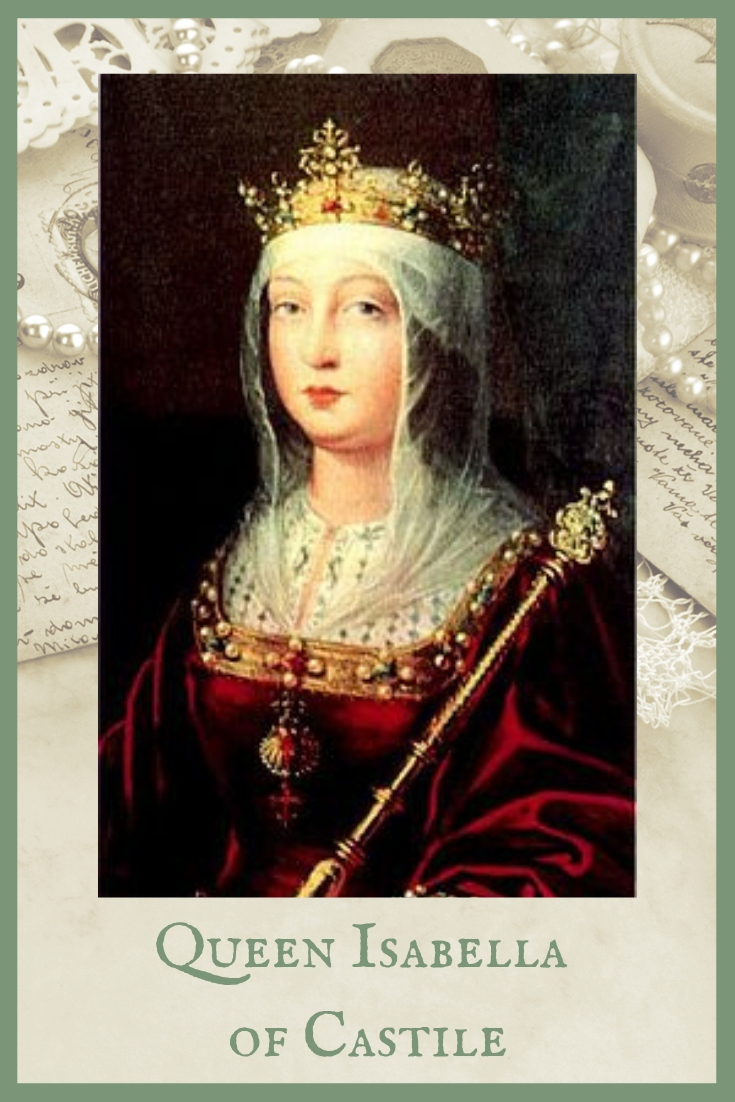
Despite all the advances made by the Africans in Spain, Christian pressure on them grew irresistible. Finally, Catholic Spain’s “Reconquista” (reconquest from the Moors) paid off on 2 January 1492, when Granada, the last important Moorish stronghold in Al-Andalus, was taken by the soldiers of King Ferdinand of Aragon and Queen Isabella of Castile.
Jan Carew recounts how in the early part of the 13th century, the Moorish power in Spain began to decline. “Unfortunately,” he recalls, “the [African] Muslims, due to religious and political differences, began to split into factions and wage war among themselves. At the same time the Christians of Europe, having absorbed the science and culture of the Moors, which enabled them to end the long night of the Dark Ages, began to form a united front in order to drive the Moors back into Africa.”
Carew continues: “The dominions of the Almohads were slowly but surely captured by the Christian armies, and after almost a century of brilliant achievement the Almohad dynasty was ended when their last reigning sovereign was deprived of his throne in the year 1230. Muslim Spain declared independence under the rule of Ibn Hud, the founder of the Huddite dynasty.
“The Christian forces, in the meantime, conquered one great city after another, taking Valencia in 1238, Cordova in 1239, and Seville in 1260. By 1492, the Moors had lost all Spain except the kingdom of Granada. The Christians, although not free from internal disputes, were finally united by the marriage of Ferdinand and Isabella on 19 October 1469, which joined in peace the formerly hostile royal houses of Aragon and Castile. The united Christian forces surrounded the city of Granada and blockaded it for 8 months.
“The Moorish king, Abu Abdallah (also known as Boabdil), finally surrendered. The fall of Granada on 2 January 1492, marked the end of 781 years of Moorish suzerainty on the Iberian Peninsula.
“According to tradition, the valiant General Musa denounced the surrender to the last and rode out of the Elvira Gate [of the Alhambra Palace] never to reappear. And on 6 January, four days after the formal surrender, Ferdinand and Isabella rode into the citadel and took the keys of the Alhambra, that marvel of Moorish architecture.”
History shows that Boabdil, a young Caliph at the time, had surrendered the last Moorish outpost without a fight, causing his mother, Aisha, to rebuke him bitterly, saying: “Weep like a woman for what you could not defend like a man”.
Jan Read records in his book, The Moors in Spain and Portugal, that after the Moorish surrender, the Holy Roman emperor, Charles V, came to the Alhambra Palace and looked out from a balcony of the Hall of the Ambassadors to the heights of the Albaicin [the Moorish suburb] opposite and the smiling vega with its groves and gardens far below, and exclaimed: “Ill-fated is the man who lost all this!”
After the defeat, the Moors lingered in Spain for a little more than a century. By 1610, through expulsion and migration, “a million Moors, among them many Jews, had returned to northern Africa and western Europe. The expulsion of the Moors from Andalusia was a serious setback to modern civilisation,” Carew despondently adds.
Erasing the Moors, burning the books
Carew recalls that after the young Caliph Boabdil handed over the keys of the Alhambra Palace to the Spanish monarchs, bringing the Reconquista to a dramatic end, Moorish books were heaped up and burned in massive bonfires. The Catholic monarchs also set out to erase every vestige of Moorish cultural influence from Spanish consciousness.
Then Queen Isabella appointed the infamous Spanish Dominican, Tomás de Torquemada, as inquisitor-general. “The Holy Inquisition that followed with its “limpieza de sangre” (cleansing the Spanish blood), its zealotry, and its all-encompassing and repressive tentacles reaching into the lives of the highest and lowliest in the land, set about de-civilising
the Iberian Peninsula,” Carew remembers.
This last point by Carew was dramatically illustrated in 1886 by Stanley Lane-Poole, the Englishman and professor of Arabic at the University of Dublin, who recounted the serious effects that the defeat of the Moors had on Europe in his book, The Story of the Moors in Spain (published in 1886).
According to Lane-Poole: “In 1492, the last bulwark of the Moors gave way before the crusade of Ferdinand and Isabella, and with Granada fell all Spain’s greatness. For a brief while, indeed, the reflection of the Moorish splendor cast a borrowed light upon the history of the land Philip II, of Columbus, Cortez and Pizarro, shed a last halo about the dying moments of a mighty state. Then followed the abomination of desolation, the rule of the Inquisition, and the blackness of darkness in which Spain has been plunged ever since.”
But if the effects of the death of the Moorish era in Spain were bad, it was even worse on
Africa and the world. In the Golden Age of the Moor, published in 1992, Dr Ivan Sertima makes the profound point of how “the world changed dramatically in 1492, not only because Columbus stumbled in the direction of the Americas, using the magnet of a myth to draw millions behind him, but because that was the very year the Moors were defeated.
“It is not an accident that it is Spain and Portugal which spearheaded the movement in this direction. It is not an accident that the year Columbus sailed was the same year the African generals in Granada surrendered to Ferdinand and Isabella. Not only did the economic and political fortune of Africa fall dramatically after that, but so did the very image and perception in which its people were held. It was only a matter of time before Africa would be seen in all lands and in all phases of history as unrelated to significant cultural and scientific development.
“Wherever it could be shown that the African had made early and significant advances, or had influenced other civilisations, be it in North Africa, Southern Europe, or Egypt, it would be seen as a direct result of some Caucasoid minority in their midst or the infusion of European blood. This led European historians to assume that there had to be a Caucasoid origin of, or a Caucasoid class or caste above, such extraordinary people as the Moors,” Dr Sertima adds.
Supporting Sertima’s view, Jan Carew recalls that it was on 12 October 1492, nine months
after the fall of Granada, that Columbus landed on the beaches of the Taino island of Guanahani. “Thus, Spain claimed that it had discovered a ‘new world’, and it embarked upon a shameful course of genocide against indigenous peoples of the Americas that made their atrocities against the conquered Moors pale by comparison.
“Though the Moors lost military, political and economic control of Spain, their influence lingered long after their physical departure. Spain and Portugal, more than any other European populations, derived enormous benefits from the Moorish and African Muslim presence. They became, for a while, world leaders in the nautical sciences. And, it was not until 1588 (with the defeat of the Spanish Armada) that the other European nations were able to challenge them and become serious rivals in the game of discovery and colonization,” Carew cares to point out.
As pointed out above, after defeating the Moors, King Ferdinand and his wife Isabella ordered the destruction of the Moorish libraries. The destruction, says Dr Sertima, was particularly vicious because it was not only inspired by religious narrowness and bigotry, but also the “hatred of the dark invaders kindled the bonfires. The Church too, at that time, saw most of this foreign learning as something evil, even demonic.”
Ironically, part of that “demonic learning” happened to be what is known today as the “Arabic numerals”. According to Dr Sertima, “The number system that the world uses today [the Arabic numerals 1, 2, 3, etc], which was brought in by the Moors from India, was seen as late as the 17th century in some parts of Europe as signs of the devil.”
Until the Moors introduced the “Arabic numerals” to Al Andalus, Christian Europe was using the “Roman numerals”, a series of strokes and letters as its number system, as in I, II, III, IV, V, VI VII VIII, XV, X.
The Moors introduced the Arabic numerals and in no time it killed the Roman numerals, leaving the world with the current 1, 2, 3 system. Europe did not know it until the Africans crossed over and introduced it in Spain! Today the world has the Africans to thank for introducing the “Arabic numerals”.
Remarkably, after the defeat of the Moors, it became a religious mission for Spanish men like
Cardinal Ximenes de Cisneros and his successors to erase from history all memory of the Moors in Spain and elsewhere in Europe, which is a cardinal lesson for Africa where we are still hanging on to every European fad introduced during their colonisation of Africa (which lasted, on the average, 100 years in Africa, compared with the 781 years of African colonisation of Europe).
Cardinal Ximenes ordered the burning of nearly 80,000 books in the public square of Granada. He also persuaded King Ferdinand and Queen Isabella to ban the Moorish public baths. Luckily for Europe and its subsequent “Scientific Renaissance”, key Moorish works had already been translated and circulated, some had even been smuggled secretly into the European academies, thus major seminal inventions introduced and established before Ximenes’ bonfires were preserved.
As Carew points out: “The thousands of volumes committed to the flames by officials and agents of the Holy Inquisition, embodied the best of Islamic and Hellenistic learning which had been fed from its earliest beginnings by roots buried deep in the creative soil of Africa. Compared to the Christian principalities like Galicia, Leon, Castile and Navarre,
Moorish Al-Andalus was a region of unbelievable enlightenment.”
Leave a Reply