Category: Main Story

  • Ancient Egypt, our motherland

    Ancient Egypt, our motherland

    If modern black Africans are not Bantus, where did their ancestors come from? The short answer is Ancient Egypt. The long answer, however, has been made so controversial and complex by Euro-American anthropologists, historians and academics that we need to go step by step to unravel and refute their lies. Baffour Ankomah reports.


    Few controversies have hit Africa, since the death of Christ, greater than the denial of its ownership of Ancient Egypt, one of the world’s most impressive empires, which developed in the Nile valley of northeast Africa, along the contours of the Nile River, the world’s longest and only great river that defies the laws of gravity and flows north for the whole of its 4,000-mile course, from its source in the middle of Africa, going through some of the harshest terrains and deserts and emptying into the Mediterranean sea. In the process, the Nile fertilises the bone-dry desert land that gave birth to Ancient Egypt, that wondrous empire which suffered more foreign invasions than any comparable empire in history.
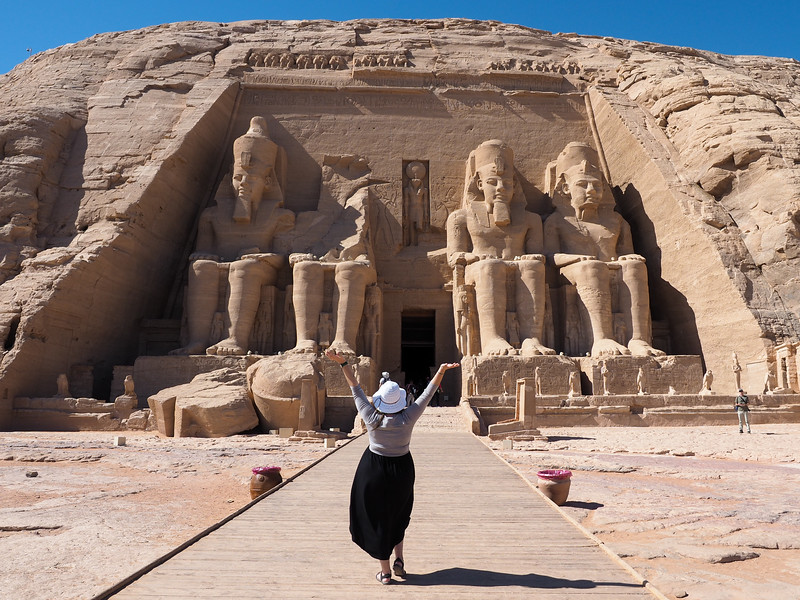
    The majestic work of our ancestors: Ancient egypt was a land of colossal buildings and temples, the handiwork of the African ancestors, and later the invaders.

    Not too strangely, because Ancient Egypt was a high-grade civilisation, a myth has been created and sustained over centuries by Eurocentric historians and academics who say Ancient Egypt could not possibly have been created by black people – Africans! This myth has been polished to such a sheen that a huge percentage of Africans themselves agree that Ancient Egypt was not African.

    In October 1998, one reader of the London-based pan-African magazine, New African, took grave issue with me when I was the editor of New African, for daring to assert in my personal column (Baffour’s Beefs, published in May 1998) that: “On 22 March this year [1998], the world was astounded to ‘discover’ that on the day of the Equinox, the sun sets directly behind the head of the Great Sphinx in Egypt. ‘It is now agreed,’ trumpeted a British TV reporter, ‘that the people who built this great pyramid were astrological geniuses’. Although the world, and modern Egyptians themselves, have tried for centuries to wipe out any black African connections to the pyramids, we know that our great black ancestors built those pyramids…” I said matter-of-factly!

    The reader, ironically an African from Sierra Leone living in London, was hugely irritated by what he called the “extravagant claim” that “our great black ancestors built those pyramids”, and wrote back saying: “To assert without proof that the Great Sphinx was built by black people is an extravagant claim that deserves to be ranked alongside the sort of pseudo-science that is often articulated by some African-American scholars of black history.”

    This coming from an African was extraordinary. But that Sierra Leonean is not the only African who holds that belief.

    On 8 January 2020, when Zimbabwe’s leading newspaper The Herald published a story about the first draft of The Africa Factbook having been presented to President Emmerson Mnangagwa by the Institute of African Knowledge (INSTAK), a reader – a full-blooded Zimbabwean – wrote to The Herald saying: “History of Africa? How will the people of miserable Zimbabwe benefit from modern African history? The economy is in a mess and politicians are talking of Africa 500 years ago! Nothing was invented in Africa. Give us a list. I am talking of Sub-Saharan Africa. Don’t tell us about Egypt – those are Arabs. They are the ones who built the [Great] Zimbabwe Ruins. Was Zanu-PF fighting elections to re-write history? Embellished history?”
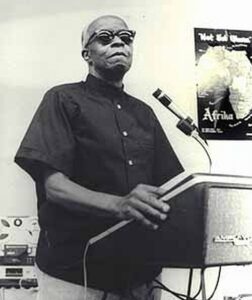
    One of the global Africa’s greats: Dr Chancellor Williams, an African-American, was one of the greatest historians to walk the land of Global Africa

    It is astounding that such Africans exist – and unfortunately there are millions and millions of them. But as the Ethiopians say, “truth and morning become light with time”, hence The Africa Factbook (which I had the immense pleasure to edit, all 1,200 pages of it) was the right place to put the alleged “pseudo-science” and “extravagant claim” to the test. And we did it to great aplomb. (I urge all Third Eye readers to get a copy of The Africa Factbook. You only need to call INSTAK, +263 784 601 335). End of the fee advert.

    Many questions to answer
    So here we go. We start by first connecting with Dr Chancellor Williams, an African-American and one of the greatest historians and scholars to walk the land of Global Africa. In his life-changing book published in 1974, The Destruction of Black Civilisation: Great Issues of a Race, from 4500 BC to 2000 AD, (if you haven’t read it, please get a copy), he tells how, after having read everything about the African race that he could get his hands on in Sixth Grade, he knew even before leaving high school that:

    (a) The land of the blacks was not only the ‘cradle of civilisation’ itself but that the blacks were once the leading people on earth; (b) that Egypt once was not only all black, but the very name ‘Egypt’ was derived from the blacks; (c) that the blacks were the pioneers in the sciences, medicine, architecture, writing, and were the first builders in stone, etc.
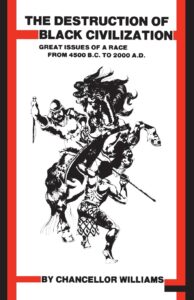
    The book that can change your life: Dr Chancellor Williams’ book that every African-descended person must read

    “The big unanswered question, then, was what had happened?”, Chancellor Williams asked. “How was this highly advanced black civilisation so completely destroyed that its people, in our times and for some centuries past, have found themselves not only behind the other peoples of the world, but as well, the colour of their skin has become a sign of inferiority, bad luck, and the badge of the slave whether bond or free? And, since I had learned that whites were once enslaved as generally as any other race, how did it come about that slavery was finally concentrated in Africa on blacks only?

    “In short, no books or other studies in high school and college answered or gave clues to answers to the problems that puzzled me the most. For no matter what the factual data were, all the books written about blacks by their conquerors reflected the conquerors’ viewpoints. Nothing else should have been expected. And, considering how thorough-going was the capture of the minds of the blacks, it is really not surprising that so many Negro scholars still faithfully follow in the footsteps of the white masters.”

    Chancellor Williams went on: “I was convinced that what troubled me and what I wanted to know was what troubled the black masses and what they wanted to know. We wanted to know the whole truth, good and bad. For it would be a continuing degradation of the African people if we simply destroyed the present system of racial lies embedded in world literature only to replace it with glorified fiction, based more on wishful thinking than on the labours of historical research.”

    African journey
    These critical questions led Chancellor Williams, now an adult and able to research for himself, to go on a journey of discovery in Africa itself and elsewhere that gave birth to his book, The Destruction of Black Civilisation.

    In this book, he tells how his “inquiry” was concerned with black civilisation alone – what the blacks themselves achieved independently of either Europe or Asia. “This was an entirely new approach to the study of the history of the blacks. It meant, first of all, segregating traditional African institutions from those later influenced by Islamic Asia and Christian Europe.
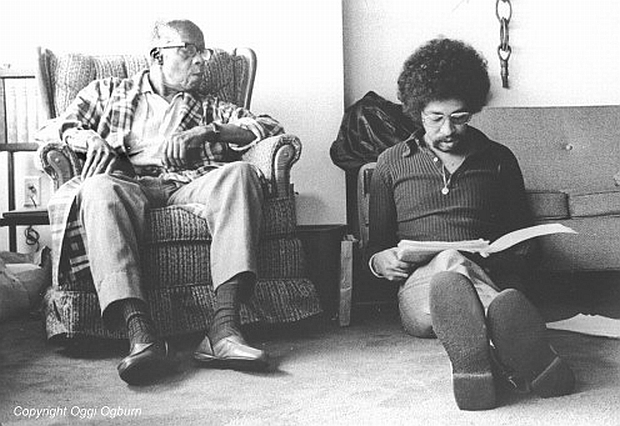
    Ensuring continuity: Dr Chancellor Williams (left) imparting knowledge to the younger generation

    “In this way, and in no other, we can determine what our heritage really was and, instead of just talking about ‘identity’, we shall know at last precisely what purely African body of principles, value systems or philosophy of life gradually evolved from our own forefathers over countless ages, and we will be able to develop an African ideology to guide us onward.

    “In other words, there can be no real identification with our heritage until we know what our heritage really is. It is all hidden in our history, but we are ignorant of that history. We have been floating along, basking blissfully in the sunny heritage of other peoples!”

    Chancellor Williams therefore made his research a quest for specific answers to specific questions, some of which were:

    “(a) How did all-black Egypt become all-white Egypt? (b) What were some of the specific details in the process that so completely blotted out the achievements of the African race from the annals of history – just how could this be done on such a universal scale?

    “(c) How and under what circumstances did Africans, among the very first people to invent writing, lose this art almost completely? (d) Is there a single African race, one African people? (e) If we are one race or one people, how do you explain the numerous languages, cultural varieties and tribal groupings?

    “(f) Since, as it seemed to me, there is far more disunity, self-hatred and mutual antagonisms among blacks than any other people, is there a historical explanation for this? (g) And how, in puzzling contrast, is the underlying love of blacks for their European and Asian conquerors and enslavers explained?”

    These were, and still are, deep-rooted questions that need deep-rooted answers that speak to the allegations of “pseudo-science” and “extravagant claims” levelled against Africans who tell, from deep-rooted research, the story of their glorious ancestors who built great civilisations thousands and thousands of years before the European era was born.

    One of these civilisations was Ancient Egypt (Ancient is capitalised here to distinguish it from modern Egypt), and no matter what myth is created to deny its black African origins, it will not succeed because facts, like prestigious wine, become better with age. In fact, to render it correctly as the EU’s Eurostat Statistical Yearbook, January 2003, put it: “Two things gain great respect over time: reliable facts and prestigious wine.”

    In the beginning
    “The reliable facts” about Ancient Egypt say that the subjugation of Africa and its peoples began in earnest with the control of their minds, which to date has reaped surplus dividends to outsiders, especially the European colonisers. Therefore, the basis of African emancipation or the much-talked about “African Renaissance”, must of necessity, begin with the decolonisation of the African mind through the restoration of African history.

    The truth is that we have been educated, and are still being educated 63 years after political independence in Africa, using books whose writers have reason to write Africa and its peoples out of history. Therefore, the re-writing of African history to expose the real truth of what Africa contributed, and still contributes, to the world will empower Africa’s current and future generations with a clear and true perception of their forebears, and so of themselves.
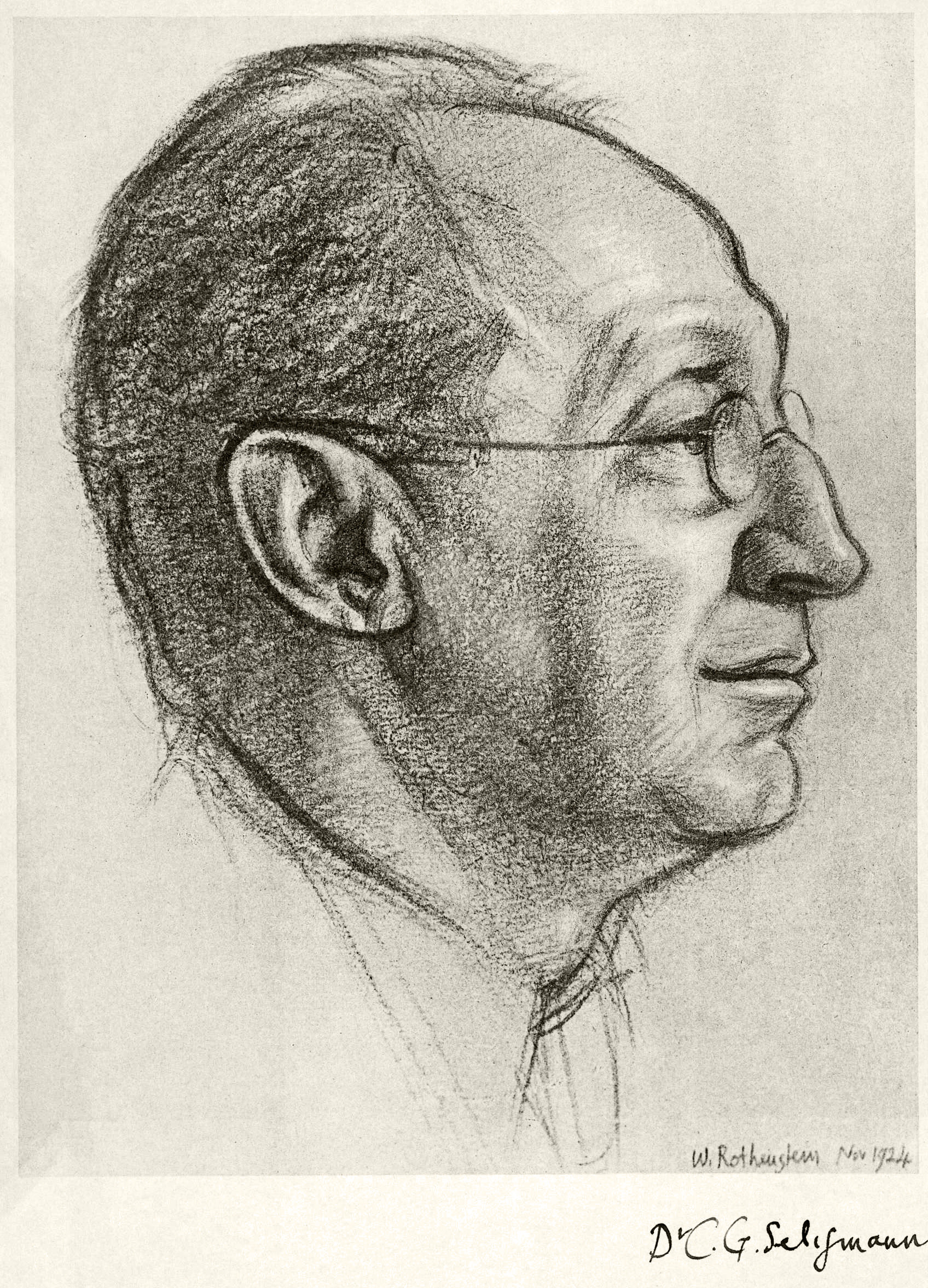
    Pure nonsense: Charles Gabriel Seligman, an English anthropologist of Jewish extraction, invented the “Hamitic” myth that claims that “Negroes were too primitive of any advanced thought”, and that ancient Egypt was created by Hamites whom Seligman regarded as “Caucasians [belonging] to the same branch of mankind as almost all Europeans”
    As Cyril Lionel Robert James (popularly known as C.L.R. James), the Trinidadian-born historian, journalist and author of The Black Jacobins, once thundered: “Think, think, think, my son. Do not lose hold of what you as an African have achieved by the unstinting sacrifices and struggles of those whose shoulders you stand on today. Unless you take possession of your own history and love the memories flowing from it, you will lose confidence in yourself.”

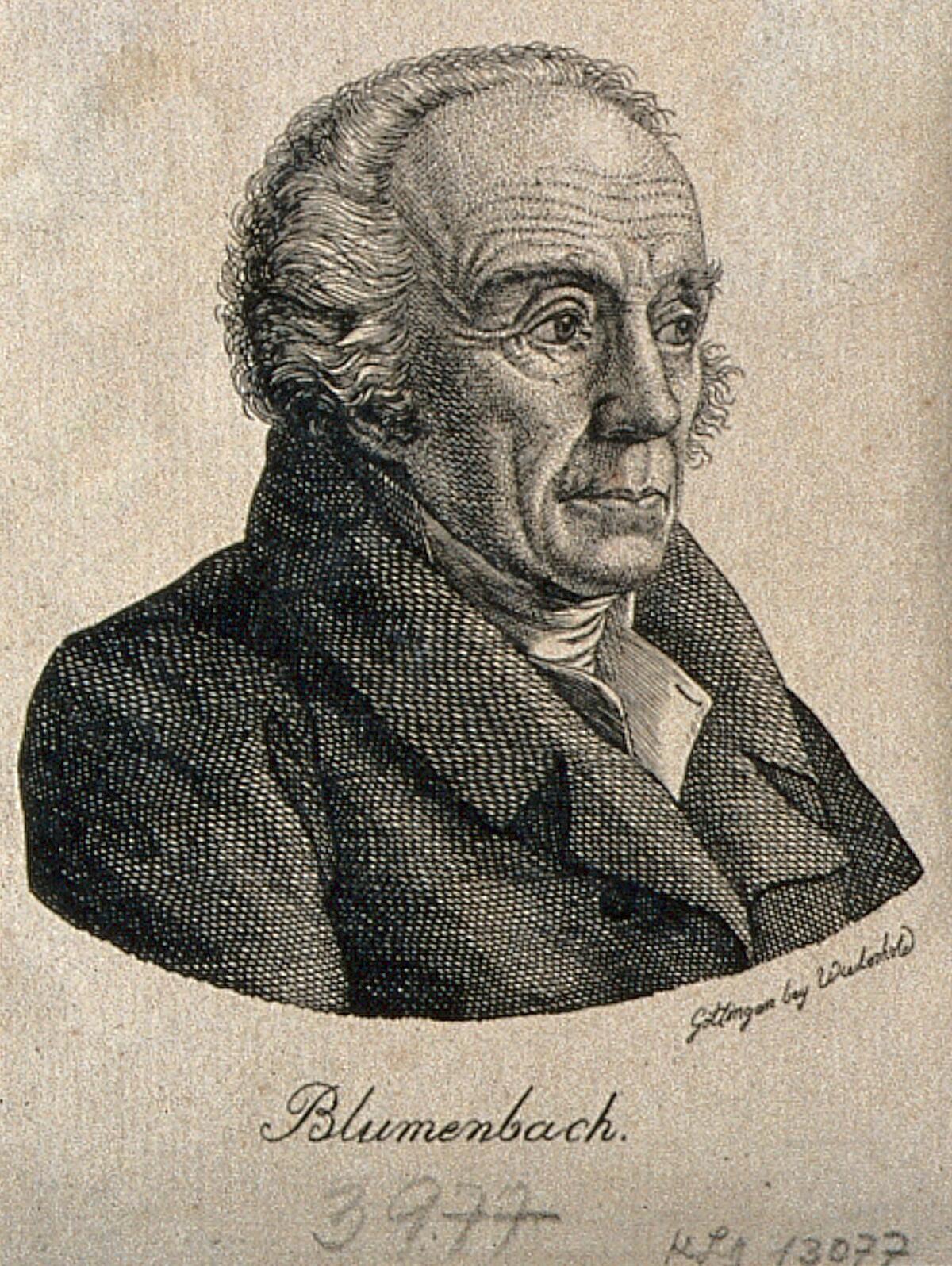
    Another pure nonsense: Jonathan Friedrich Blumenbach, a German anthropologist, was the first to put forward the theory of the “superiority of Caucasians” in1795, a term he coined for Europeans in his classification of human races, Incidentally, he included the ancient Egyptians among his “Caucasians”.

    The Kenyan writer, Ngugi wa Thiong’o, another great African, puts it another way: “Colonialism tried to control the memory of the colonised, or rather, to borrow from the Caribbean thinker, Sylvia Wynter, colonialism tried to subject the colonised to its memory, to make the colonised see themselves through the hegemonic memory of the colonising centre.

    “Put another way, the colonising presence tried to mutilate the memory of the colonised and where that failed, it dismembered it, and then tried to re-member it to the coloniser’s memory: his way of defining the world, including his take on the nature of the relations between the coloniser and the colonised.

    “Whatever has been gained, including independence and national liberation, did not come of themselves. They were results of struggle and sacrifice, and it behoves us, the inheritors of any and every benefit of those sacrifices, never to forget. A people without memory are in danger of losing their soul.”

    Ngugi could not have spoken for us all, because such a restoration of African history or “African memory” will be a service to humanity itself, as the historical consciousness of humanity has suffered from more than 600 years of deliberate distortion by Western anthropologists, scholars, and writers.

    They were able to do this through falsifying primarily the history of the great African civilisation of Kemet (also known as Ancient Egypt). For years, Western historians have tried to divorce black Africans from Ancient Egypt, while attributing its illustrious accomplishments to a people they call Hamites (or Indo-Europeans who came from Asia).

    The Hamitic myth
    But the “Hamitic myth” was invented only in the 1920s by Charles Gabriel Seligman (1873-1940), an “English” anthropologist and author of Races of Africa. He was born into a middle-class Jewish family in London on 24 December 1873. According to him: “Negroes were too primitive to be capable of any advanced thought”. He claimed that Kemet (or Ancient Egypt) was created by Hamites whom he regarded as “Caucasians [belonging] to the same branch of mankind as almost all Europeans.”

    Seligman was in fact continuing from where Johann Friedrich Blumenbach, professor at Göttingen University in Germany, had left off. In 1795, Blumenbach had put forward the “superiority of Caucasians”, a term he coined for Europeans in his classification of human races. Incidentally, he included the Ancient Egyptians among his “Caucasians”. Strangely, Blumenbach’s myth has held sway in academia for over 220 years.

    But the Ancient Egyptians called themselves Kemmui, which meant black, depicted in their language Medu-Neter or hieroglyphics as a block of wood charred at the ends.


    For the early Greeks, to whom Europe gives credit for having been the founders of European civilisation, the idea of distorting the history of Kemet was impractical because they were well aware that the birth of science, mathematics, philosophy, etc, was too ancient in Kemet to contest, and it would have been absurd to advance a contrary opinion.
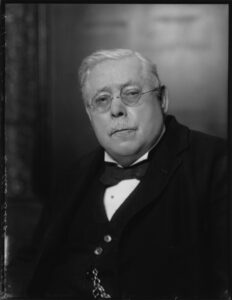
    A Briton who never feared to tell the truth: Sir Ernest Alfred Wallis Budge, the English Egyptologist, testified that: “the pre-historic native of egypt, both in the old and the new stone Ages, was an African and there is every reason for saying that the earliest settlers came from south”

    This is evident in the entire Greek account of Ancient Egypt, which glorifies the black civilisation of Kemet. It was, after all, in Kemet that the Greeks got their education in practically every conceivable field of knowledge (see story on page…, The Greeks who came to Africa to study).

    In effect, there was never a “Greek miracle” as claimed today. What is now known as “the Greek miracle” was prepared by millennia of work in the arts and sciences in the very bosom of what was later misnamed the “Dark Continent” – work that was done by black Africans in Ancient Egypt and elsewhere on the continent. Inherent in this distortion is a flawed principle that implicitly admits the truth of the Negro-Egyptian civilisation, hence the very need for concealment.

    Crucially, the concealment saturated 18th century European consciousness. For, Europe is aware that almost half of the recorded history of humanity had passed before anyone in Europe could read or write.

    Greek civilisation and its entire intellectual output, which are accepted today as the source of European civilisation, are directly located in Kemet, the great African civilisation which occurred along the River Hapi or Ar (which was renamed by the Greeks as the Nile).

    As Sir Ernest. Alfred Wallis Budge (1857-1934), the British Egyptologist and former Keeper of Egyptian and Assyrian Antiquities who worked at the British Museum from 1883 until 1924, attests in one of his many books on Egypt: “The prehistoric native of Egypt, both in the old and new Stone Ages, was African, and there is every reason for saying that the earliest settlers came from the South. There are many things in the manners and customs and religions of historic Egyptians that suggest that the original home of their ancestors was in a country in the neighbourhood of Uganda and Punt.”

    Sir Wallis Budge was no ordinary figure, and thus we better pay high attention to what he said. His former employees, the British Museum, says the following about him: “Born to a working-class family in Cornwall [England], he ended up as one of the key figures in the Museum’s history – in 1920 he was knighted for his service to Egyptology and the British Museum. His acquisition of Egyptian and Assyrian antiquities helped build the collection, and he published many books popularising Egyptology.”

    Europe’s awareness of, and later reaction to, the fact that “the prehistoric native of Egypt, both in the old and new Stone Ages, was African, and there is every reason for saying that the earliest settlers came from the South”, was to fabricate the history of Africa and erect a false edifice, which has to be maintained at all costs.

    Today, based on this edifice, there is a school of thought that says since Africans have no history of any real significance to the rest of the world, they are a non-essential factor for the advancement of the human race. But the facts of Ancient Egypt prove them wrong.

    Kemet (also known as Ancient Egypt)
    The origins of Ancient Egypt lay in several kingdoms in Upper Egypt, at Abydos and Hierakonpolis, which then spread northwards towards Memphis and the Mediterranean.

    In ancient times, Egypt was called by indigenous names – Ta-Meri (beloved land), Tawi (two lands), Msiri or Luti, and more often Kemet (the black nation).

    This is the civilisation that rose for over 3,000 years along the River Hapi or Ar (Nile to the Greeks), a river whose sources are deeply embedded in the valleys of East Africa, from two great lakes – the first and largest in Africa known by the Luo people of Kenya as Namlolwe and as Nalubaale by the Lugandans, but which is known today as Lake Victoria due to the British explorer John Hanning Speke who arrogantly changed its African name(s) in 1858 and called it Lake Victoria after his Queen in London. The second lake is Tana, located in the northwest highlands of modern Ethiopia.

    The Africans themselves did not call the country Egypt. Originally, they called it Chem or Chemi and later Kemet. Records show that it was the Greeks who unwittingly contributed to the use of the name Egypt for the entire country. Egypt was originally the second name of the capital city, Memphis.

    Chancellor Williams explains that the Greek contribution to the name change “was accidental, one of those accidents of history that turns out to be highly important. In this case, the Greeks unwittingly applied the second name of the City of Menes (Memphis), ‘Aigyptos’ to the whole country. For Memphis was also called Hikuptah, or the ‘Mansion of the Soul of Ptah’, the god-protector of the city.

    “From the Greek ‘Aigyptos’, Memphis became Egypt, and Egypt became the name of the ‘Two Lands’, extending from the Mediterranean to the [Nile’s] First Cataract in the south.

    “There was no ‘Egypt’ before the black king [Pharaoh Narmer, also called Aha Mena or Menes] from whose name it was indirectly derived. Before that, the country was called Chem or Chemi, another name indicating its black inhabitants, and not the colour of their soil, as some writers have needlessly strained themselves in asserting,” Chancellor Williams cares to emphasise.

    Life in Ancient Egypt revolved aroung the Nile River, as it is also today. The African ancestors called the river Hapi or Ar. It was the Greek invaders who changed the name to the Nile

    The name “Nile” is also Greek. The black, indigenous people of Kemet called the Nile “Hapi” or “Ar”. The Greeks changed the name to Nile after they invaded Kemet and occupied it in 332 BC.

    At certain points in time, the empire of Kemet spread all the way to the Euphrates River in Iraq, then called Assyria and later Babylon. To the south of Kemet was Kush, another great black civilisation that occupied what is modern-day Sudan, Ethiopia, and Somalia. In later centuries, Kush came to be known as Nubia.

    Again, at certain times Kush’s empire, after it conquered Egypt, also spread all the way to the Euphrates River in Iraq, covering all of modern Egypt, Yemen, Saudi Arabia, Israel, Syria and part of Iraq.

    To the east of Kush was Seba (or Sheba) located in modern-day Ethiopia. To the west of Kemet was Put (whose territory occupied modern-day Libya, Tunisia, Algeria, and Morocco).

    Much later, Put came to be known as Cyrene, where the Simon who was pressed into carrying Jesus’ cross at the crucifixion came from (Matthew 27:3; Mark 15:21; Luke 23:26). All these black lands were sometimes generically or collectively referred to as Ethiopia, which is different from modern-day Ethiopia (that used to be called Abyssinia).

    Lower Egypt, Upper Egypt
    It was Pharaoh Narmer (also called Menes), a black man, who built Memphis, the capital city named after him that became so famous and the pride of the black world. Memphis was located at where modern Cairo now stands. It later became the border between Lower Egypt and Upper Egypt, the two main divisions of Ancient Egypt.

    Standing in Memphis (or Cairo today), one sees the Nile flowing from deep inside Africa into the Mediterranean Sea, where it ends its 4,000-mile journey from Uganda. Where the Nile comes from became known as Upper Egypt, even though on a map Upper Egypt was located south of Memphis. This area consisted of the entire Nile valley starting from modern Cairo and south to Lake Nasser, which was formed when the Aswan Dam was built.

    Geographically, Upper Egypt was made up of all the land between the 30th parallel north and the Aswan Dam in the south. Lower Egypt thus referred to the triangular Nile Delta region, from Memphis or the 30th parallel north up to the Mediterranean Sea.

    King Menes united the “Two Lands” under African rule and began the historic First Dynasty of Egypt. As Chancellor Williams explains: “There was in fact no ‘Egypt’ before Menes built Memphis. Historians of Ancient Egypt would do well to pause and ponder longer over the question of the ‘Two Lands’. Those who are interested in the truth about the black man’s history would be compelled to do so, for the most significant part of the black African’s history developed in Egypt.”

    To Chancellor Williams, “the strong predilection of both Europeans and white Asians to replace the names of other peoples and places with their own terminologies was at once a blessing and a curse in the history of the blacks. Not knowing the racist twist that modern history was to take, these early historians, geographers and travellers reported what they found and described peoples in their own terms of speech.

    “In doing so, they established beyond question that the blacks were the first Egyptians and the builders of that ancient civilisation. For it was these early writers, and not the blacks, who made it clear that although the invading Euro-Asians had firmly established themselves in about one-fourth of Lower Egypt as early as the fourth millennium BC, the blacks with equal firmness held all the rest of the 29th north parallel to the 10th south.

    “It was the whites, not the blacks, who called Africa the ‘Land of the Blacks’ until Asian and European invasions made it expedient to change this to mean ‘African countries not yet taken over by Caucasians’, and later to ‘Africa South of the Sahara.’

    “The early whites, again, not the blacks – not only defined all Upper Egypt as black to distinguish it from predominantly white Lower Egypt, but they settled the matter for posterity by calling Egypt the Thebaid and the blacks Thebans because Thebes (Nowe) was the oldest and greatest centre of black civilisation.

    “The ‘curse’ referred to above concerns the amazing success of modern writers in so blotting out, obscuring, or reinterpreting the earlier writers on Africa so that the actual role of the blacks in their own land was practically erased from memory. Their strategy of silence worked, and it must have worked more successfully than they could have dreamed.

    “The Great Silence even fell over the monumental fact that the blacks themselves started the whole dynastic system in Egypt about 3100 BC, and that the great civilisation of world acclaim developed after these black regimes began. Greek and Arabic names and the accepted ‘Caucasoid’ features in the conventional style of royal portraits all furthered the great deception.”

    How Memphis fell

    The “great deception” notwithstanding, the fact still remains that for generations, Memphis was almost entirely an all-black city, with white Asian villages slowly growing up around the outskirts. Chancellor Williams explains that the Asians who had come to settle in Lower Egypt as travellers and refugees were a very smart and cunning people.
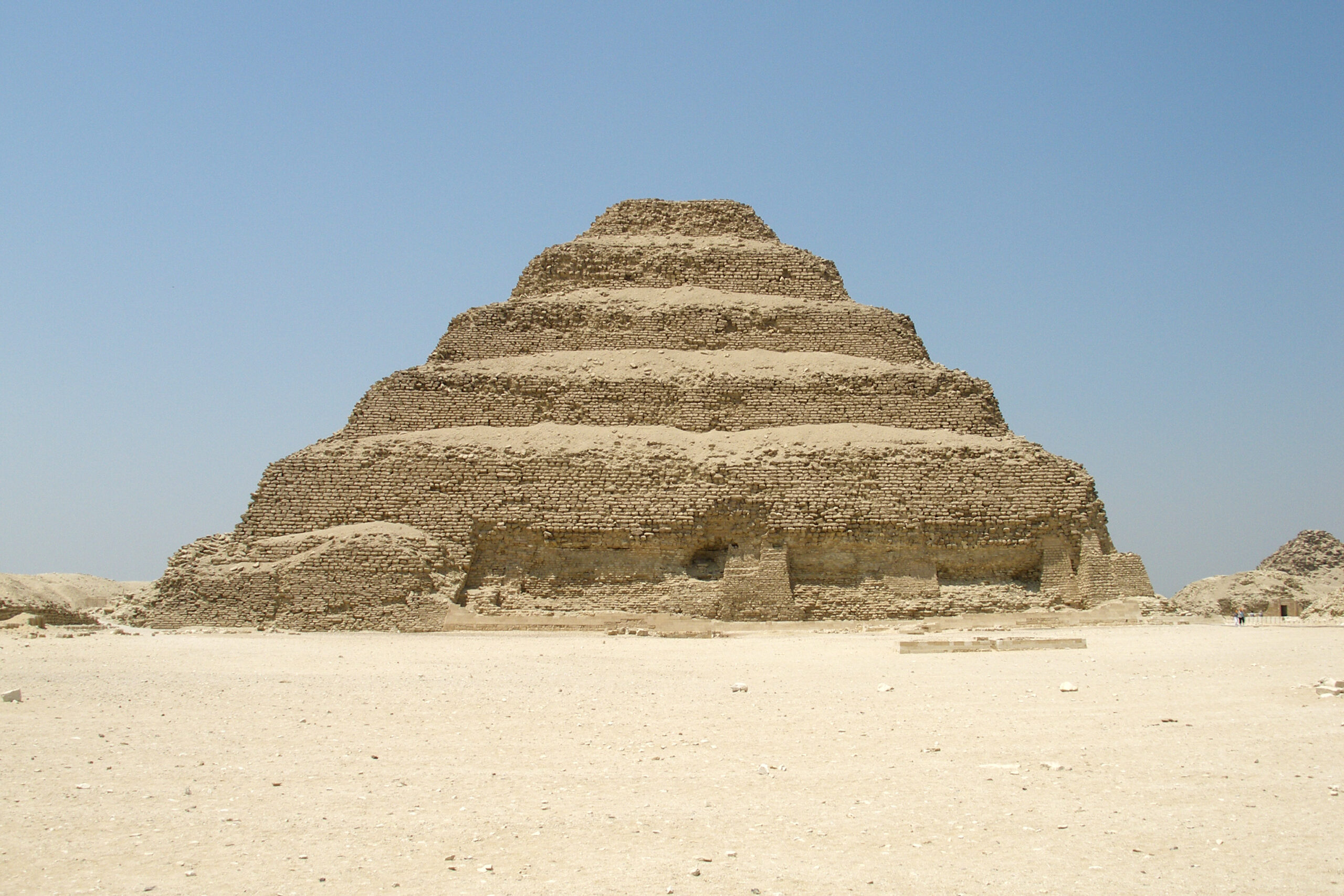
    The first pyramid built by man: King Djoser (of Egypt’s Third Dynasty) asked Imhotep, an architect, priest and healer, to design a funerary monument for him; the result was the world’s first major stone building, the step pyramid at Sakkara, near Memphis, which was finished in 2650 BC


    “Once conquered, they feigned complete and humble acceptance of African rule,’ Chancellor Williams reports. “Far from showing the slightest signs of any feeling of racial superiority, they were such masters of the art of dissembling that they could hoodwink the Africans, often under the guise of brotherhood, by capitalising on their often-dark complexions, similar institutions, intermarriages, and mixing with the black population, generally, as far as possible.

    “That all this was the direct route to repeated Asian ascendency on the continent few Africans seemed to see. For the Africans were, as a race, too ready to forgive and forget the past evils committed by foreigners; whereas, on the other hand, a fellow African tribe could easily become a ‘traditional enemy’ and continue as such for so many generations that no one could remember what the original quarrel was all about!”

    Chancellor Williams goes on: “The blacks, then, were apparently unconcerned about the Asian villages springing up just outside Memphis, the largest one rapidly developing across the river on the right bank. This community was to become the Asian city of Fostat that would challenge the supremacy of the capital city and eventually help to change its African character and cause its final destruction.

    “Fostat became the modern city of Cairo where ancient Memphis once stood, wiping away nearly 3,000 years of glorious history. Memphis remained the capital and one of the greatest cities of the world, from the First to the 20th Dynasty when it yielded to Thebes again. But it was still a great city when Alexander the Great arrived in 332 BC. Its death-knell was sounded only when Arab tribes overran the land and Cairo rose to overshadow it.”

    No comparison
    Chancellor Williams urges Africans to consider the time continuum in the history of their ancestors in reference to the state of civilisation in the lands from which the Asians and the other invading groups came during the first 1,000 years of black ascendancy in Egypt and Ancient Sudan.
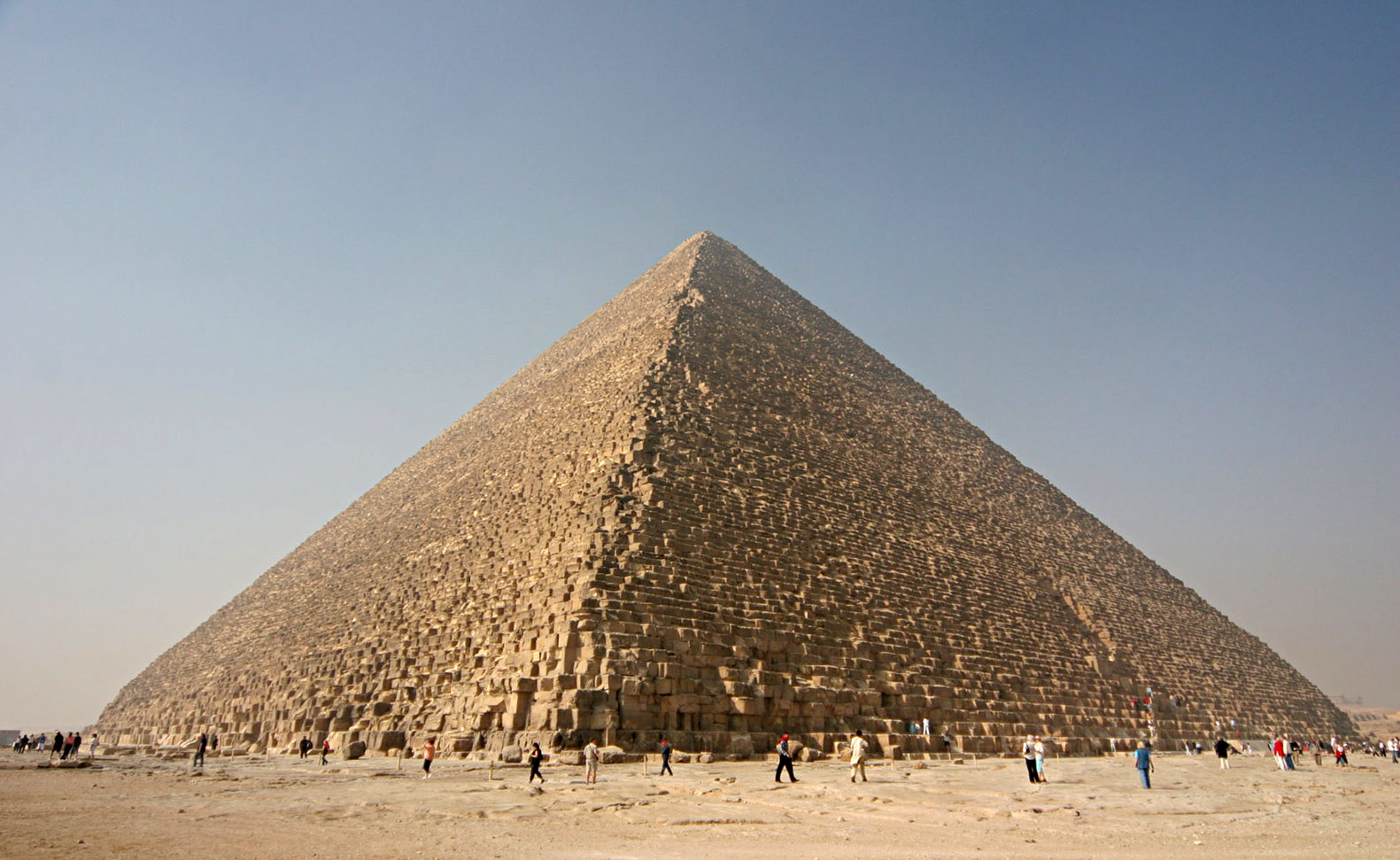
    The first Great Pyramid: Built by the black Pharaoh Khufu who reigned between 2589 – 2566 BC. It remained the talest building in the world for over 4,000 years

    He writes: “The record is quite clear that the incursive groups were largely tent-dwelling nomads. They had no tradition of great cities with imposing temples, obelisks, pyramids or, indeed, stone masonry at all.

    “In particular, one should note the number of centuries after Thebes and Memphis before other ancient cities were founded: Nowe (or Thebes) was founded in prehistory. Memphis was founded in 3100 BC. Rome was a village in 1000 BC, it became a town only in 250 BC. Athens was a village in 1200 BC and became a city only in 360 BC. Antioch became a city in 400 BC, Jerusalem in 1400 BC, and Babylon 2100 BC.

    “By the Fourth Dynasty of Egypt, the blacks, who were the first brick and stone masons on earth, had begun to construct at Giza the same style of pyramid building that had been characteristic of Southern Ethiopia [now Sudan] from the earliest times. The Great Pyramid remained the tallest building in the world for over 4,000 years.

    “In short, what great contributions did these roaming nomads have to make to an already highly developed black civilisation? Since even Jerusalem was not in existence, what people in Lower Egypt came from a country with a city as great as Thebes or Memphis?”

    Chancellor Williams recalls that: “The Second and Third Dynasties of Egypt were also African, most writers will not flatly state this. They generally designate these dynasties as ‘Thinite’, ‘Memphite’ or ‘Followers of Seth’. One has to know that the First Dynasty was African and ‘Memphite’ or ‘Thinite’, so-called after the name of their sacred city Thinis, and the cults of Seth and Amon, were African.

    “That the Fourth Dynasty [of Egypt] was indigenous is equally clear. These were the chief pyramid builders, the Great Pyramid being the largest and tallest building on earth until modern times. It was built during the reign of Khufu (2589-2566 BC).
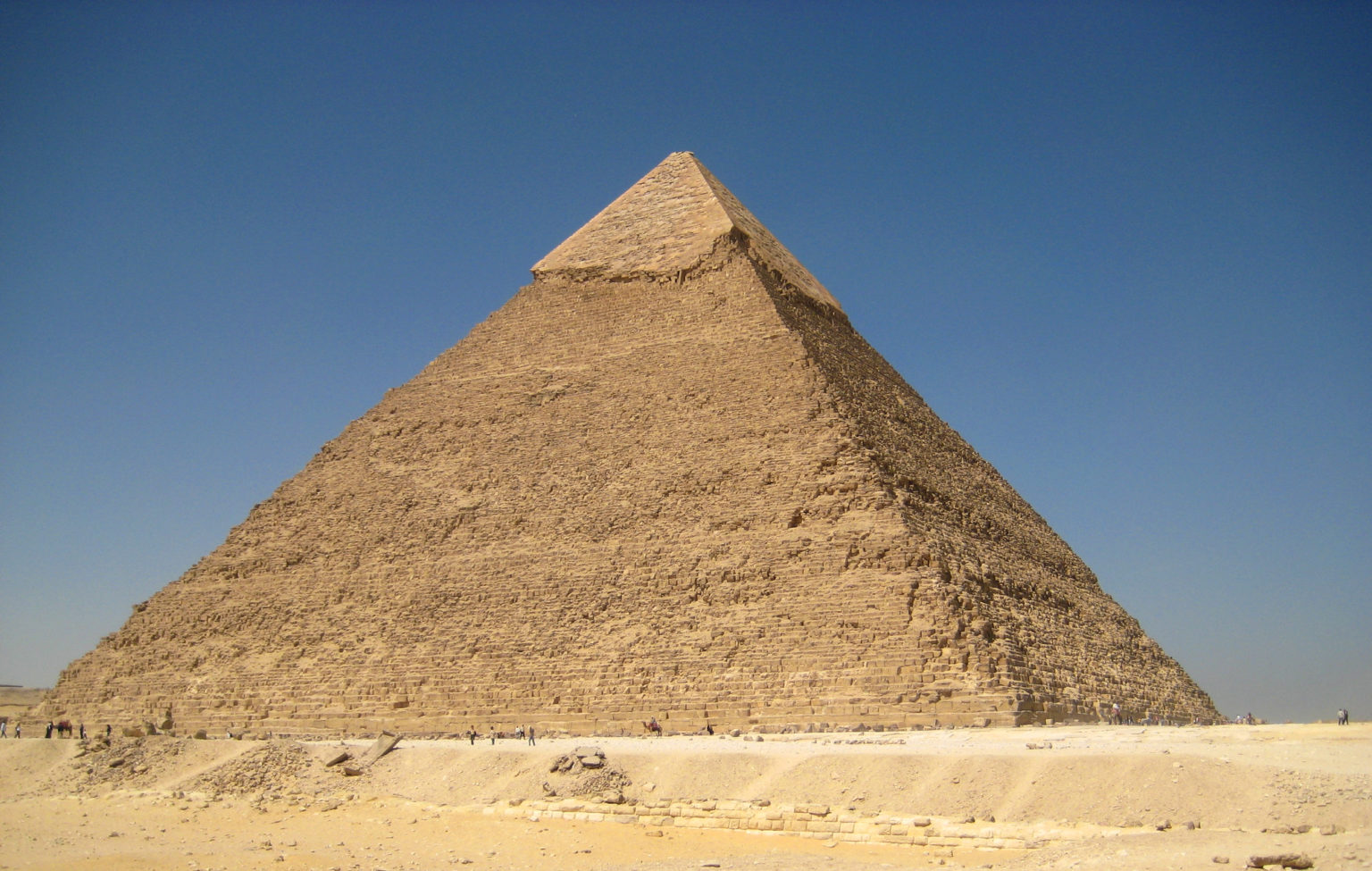
    The second Great Pyramid: It was built by the black Pharaoh Khafre, Khufu’s son whose African identity is generally disguised by European historians with the name Cephren

    “Khufu’s son, Khafre, whose African identity is generally disguised by historians with the name ‘Cephren’, carried on and built the second Great Pyramid. But he went further. He built the Great Sphinx and, as though he intended to settle the question of his racial identity for all ages to come, he had his African features so boldly and clearly carved into a portrait statue that not even a fool could seriously doubt that this mighty monarch was a ‘Negro’.

    “He was therefore among the first to break with the classical Caucasoid stereotypes in Egyptian portraits. Note, however, the long and arduous labour that was required for the invaders to chip away the massive flat nose of the Great Sphinx.”

    Chancellor Williams underscores the fact that: “Having determined what periods Africans were referred to as ‘Thinites’, ‘Memphites’, ‘Thebans’, ‘Cushites’, ‘Libyans’, ‘Ethiopians’, ‘Nubians’, etc, a major problem in African history was near solution.

    “Some of the disguising masks were thus removed. But much still remained to be done in developing guidelines to identification because the work of effacing the black man’s role in world history was so thoroughly done over so many centuries that it is amazing how so universal a consensus was reached by Caucasian writers in almost every age.”

    The native people
    Chancellor Williams then turns his attention to the people of Egypt proper, the people who populated the “Two Lands”, and says: “The fact of black rulers, however, is not as important as the fact of an indigenous black population from which they sprang. For, these early blacks were themselves a great people, excelling on many fronts from a line of builders so distant in the past that it seems to have extended into the stone ages.

    “It was a society of scientists, scholars, organised religions with organised priesthoods, mathematicians, scribes, architects, engineers, standing armies and generals, stone and brick masons, carpenters, artists, sculptors, cloth makers, slaves, farmers, teachers, gold and silversmiths, blacksmiths, and so on, through the widest spectrum of an advanced society.
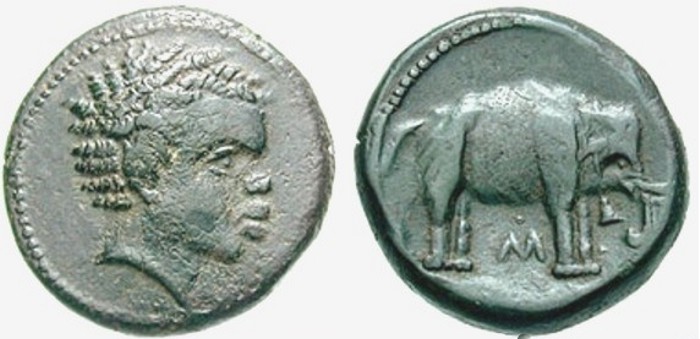
    Even a blind man can see the African on the coin: Hannibal, from Carthage(now in modern Tunisia), who has been so whitened by Europeans, issued a coin after he defeated the Romans at Trasimene that showed a Negro African on one side and an elephant on the other side. The question is: Why would Hannibal honour an African on his coin if he (Hannibal) were not an African, especially if the defeat of Rome had nothing to do with Africa?

    “Africa as the ‘cradle of civilisation’ meant exactly that. These blacks developed one of the oldest written languages. The Egyptian language was an African language with later Asiatic influence similar to that of Arabic or the African language known as Swahili. And it was so totally destroyed and replaced by a non-indigenous tongue as were other African creations.”

    It is important to underscore the fact that the ancestors of Ancient Egypt (or Kemet) were of indigenous African Negroid stock. This was during the native period which some historians now call the Archaic and Old Kingdoms (3100-2100 BC).

    In the New Kingdom (1550-1070 BC) the kings were called Per aa (meaning Great House) which was later corrupted into ‘pharaoh’ by foreigners to refer to the Egyptian kings on account of the great buildings in which they lived.

    But in their attempt to whiten the Ancient Egyptian civilisation, Western historians have found it necessary to blatantly ignore the many stupendous primeval monuments in modern Sudan that so clearly proclaim a civilisation earlier than that of Ancient Egypt.

    These historians have misled the world into believing that the Ancient Egyptian civilisation emerged from the shores of Europe through Greece. This is in spite of the fact that all the accounts by ancient Greeks themselves confirm that black Africans had lived throughout the length and breadth of Africa (including north of the Sahara) for as long as the continent had been known to the world.

    These facts have been well documented and attested to by Persian and Byzantine historians of the 5th century, who wrote that the people of North Africa were black, until the first invasion of North Africa in 647 AD by the Arabs, ordered by Abdallah ibn Sa’d, that culminated in the Umayyad victory in 705 AD in North Africa.

    In fact, Hannibal (247-183 BC) from Carthage (now in modern Tunisia) who fought against Rome and Spain, and who has been so “whitened” by Europeans, issued a coin after he defeated the Romans at Trasimene which showed a Negro African on one side and an elephant on the other (Polybius, Book 3).

    s Hannibal himself
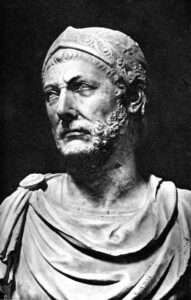
    The man himself: Hannibal, one of the greatest military geniuses Africa has ever produced. Ernest Babelon, the French numismatist and classical archeologist, said: “[It] has a definite characteristic that keaves no doubt of the ethnographic intention of the engraver. He has rings in his ears, flat nose, thick lips, hair arranged in rows of knots. I think the effigy on the coin was Hannibal himself”
    Ernest Babelon, a numismatist (a person who studies or collects coins) attested: “The Negro [on Hannibal’s] coin has a definite characteristic that leaves no doubt of the ethnographic intention of the engraver. He has rings in his ears, flat nose, thick lips, hair arranged in rows of knots. I think the effigy on the coin was Hannibal himself.”

    The Europe of today

    It is, in fact, easier to prove that Ancient Egypt was a Negroid civilisation than Europe’s claim to Greek civilisation. For, there was no recorded history of Europe in ancient times.

    The Europe we know today was divided by the frontier formed by the two rivers, Rhine and Danube. South and west of the frontier lay the civilised world, and north and east the barbarians of whom the then civilised world (principally Africa at the time) knew almost nothing about.

    At best, at the twilight of the Neolithic Age, Europeans were dwelling in caves. When pastoral existence began in Europe, Africans had, for centuries, harvested corn, made wine, written philosophical treatises, studied the stars, built complex buildings, produced mystics and divine incantations (sages, gurus, prophets), and laid down the first creed of the salvation of the soul.

    The French writer, Count Constantin de Volney in his book, The Ruins of Empires, clearly states that the black people of Kemet were the first to “attain the physical and moral sciences necessary to civilised life”, adding: “It was, then, on the borders of the Upper Nile, among a black race of men, that was organised the complicated system of worship of the stars, considered in relation to the productions of the earth and the labours of agriculture; and this first worship, characterised by their adoration under their own forms and national attributes, was a simple proceeding of the human mind.”
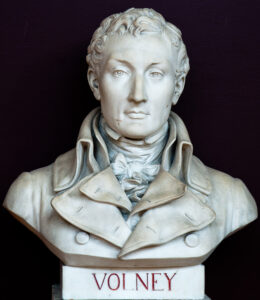
    Another truth telling European: The French writer, Count Constantin de Volney, clearly stated in his book, The ruins of empires, that the black people of Kemet were the first to “attain the physical and moral science necessary to civilised life. It was, then, on the borders of the Upper Nile, among a black race of men, that was organised the complicated system of the worship of the stars….”

    When a few nomadic communities banded to settle in Rome around 1000 BC, the African civilisation in Ancient Eygpt and Kush was more than 2,000 years old – its religion, philosophers, scientists, etc, were already ancient.

    When the Greek pantheon was in a rudimentary stage; Hinduism yet to appear; Gautama Buddha yet to be born, Prophet Muhammad yet to be born; when Jacob in the Bible journeyed to Kemet for refuge, entering with 70 people who would form the basis of a three-million strong Jewish community that left 430 years later in the Exodus of the Bible – the pyramids of Kemet were already ancient!


    Where the ancestors came from

    The Greeks themselves confirmed – from Herodotus and Isocrates to Plutarch – that the Egyptians “were very black” and had “woolly hair”. These eyewitness accounts were made when Egyptian civilisation had already been in existence for at least 2,000 years. The Egyptians themselves stated in various texts, notably the Edfu text – an inscription still found in the Temple at Edfu – that: “Several thousand years ago, we were led by our king from the South to settle up the Nile valley.”

    Another account, the Papyrus of Hunefer (the philosopher and high priest), which is now exhibited in the British Museum in London, states: “We came from the beginning of the River Hapi [or Nile] where God Hapi dwells at the foothills of the Mountains of the Moon”. The “beginning” of the River Hapi (Nile) is in Uganda, as an outlet of Lake Nalolwe or Nalubaale.

    The Ancient Egyptians went as far as painting the images of their gods in coal-tar black. There are records showing that early Christendom worshipped and converted the Kemetic “divine mother” Aset (Isis) and Horus, her son, as blacks until the era of the European Renaissance. Jocelyn Rhys, an English scholar, affirms that: “In the catacombs of Rome, black statues of this Egyptian divine mother and infant still survive from early Christendom, which they converted to the Virgin Mary.”

    Will Durant (in the Story of Civilisation IV) also wrote that: “Statues of Isis and Horus were renamed Mary and Jesus; the Roman Lupercalia and the Feast of Isis became the Nativity; the Saturnalia became Christmas celebration.”

    Great King: Pharaoh Taharka who ruled both Nubia and Ancient Egypt and unified the two empires.

    For artistic and ceremonial purposes, the Ancient Egyptians painted themselves in dark red for men and yellow for women. But there are numerous existing paintings in the Temple of Ramses III, and the famous Abu Simbel paintings where the Ancient Egyptians and Nubians are painted solid black. In fact, the Ancient Egyptians did not differentiate themselves from the Nubians as a separate race.

    When foreigners, principally the Assyrians, Persians and the Hyksos invaded Egypt, the natives sought refuge in Nubia to drive them out. It was as natural a kinship as Britain’s “special relationship” with America.

    As in Nubia, inheritance was matrilineal also in Kemet, to the extent that all foreign usurpers to the throne sought to marry into the royal household to legitimise their claim by having “golden blood”, not “blue blood”, and having the “golden Horus name” – an ancestral name legitimising the royal strain.

    Ptolemy Lagos, the first of the Roman rulers of conquered Egypt, married into the royal African household to legitimise his claim. Julius Caesar did the same and had a child with Cleopatra. Mark Antony later abandoned his wife for Cleopatra for the same reasons.

    The essential core of the Ancient Egyptian civilisation is spirituality, which permeated every aspect of life including science; hence Aton, the appellation of Ra, corresponds to the atom in physics today.

    Modern Western science has confirmed beyond doubt that atom particles contain elements of light, which the Ancient Egyptians portrayed as a ray of the sun, and also makes the “plants grow green” (Great Hymn of Aton King Akhenaton). Yet science, in the hands of the Western world, has become inimical to the spirit. This centrality of the spirit, being embodied in all aspects of the living, is abundantly clear in Black Africa, to the point that “superstition” has become synonymous with Africans.

    The capability to ascribe the universe to one supreme being (monotheism), and to embrace the gods (polytheism) and divine kingship, had all been in practice by Black Africans across the continent long before the Europeans arrived on their alleged civilising mission in the 15th century. The Dogon of Mali knew how to determine mathematically and graphically the position of the sun on the ecliptic just as their great ancestors had done in the Nile valley.

    Other testimonies
    TimeMap, a website devoted to history, asserts boldly that: “The Ancient Egyptian civilisation produced the first government to rule an entire nation. The Sumerians, who were the only other people to have a literate and urban civilisation by 3000 BC, lived in small city-states, each numbering no more than a few tens of thousands of people.

    “The unified kingdom of Egypt, on the other hand, covered an entire country thousands of square miles in size and with millions of inhabitants. The Pharaoh was the ruler of Ancient Egypt, both politically and religiously. The Pharaoh held the title ‘Lord of the Two Lands’, meaning that he ruled all of Upper and Lower Egypt; and was a ‘high priest of every temple’.

    “In Egyptian eyes, the Pharaoh was a god himself, who stood between heaven and earth. His personal welfare and the welfare of the entire people were bound tightly together. The Pharaoh was in charge of the army, and would go to war when his lands were threatened – demanding valuable gifts from the conquered people, if victory was obtained.

    “To help the Pharaoh in governing the land, an elaborate organisation of officials, scribes and overseers – the world’s first civil service – developed, bringing the reach of government down to the lowliest villager.”

    Egypt was divided into 42 nomes, which were administrative regions, each governed by a nomarch. The Pharaoh himself was surrounded in his palace by high officials, ministers and courtiers. For much of Ancient Egypt’s history, the Pharaoh was served by a powerful chief minister called a vizier. He represented the Pharaoh in the administration of the land, treasury and legal system.”

    Continuing, TimeMap explains what made Ancient Egypt tick: “As with all preindustrial civilisations, Ancient Egypt’s economy was based on agriculture. The great majority of the people were peasant farmers. Because of the fertile nature of the Nile valley, they were able to produce large surpluses which sustained the refined lifestyle of the Pharaoh and his court, his officials, the priests and all the other members of the elite. Peasants also provided the mass labour which built the pyramids and temples along the Nile valley.

    “Numerous towns dotted the river bank, centres of local administration, and of local markets. Egypt has often been regarded as a civilisation without cities. This is not true. Unlike the Sumerians, Egyptian cities were not independent states; however, there were numerous urban settlements in the Nile valley, and Memphis was one of the largest cities in the world, if not at times the largest.”

    Stupendous achievements
    According to TimeMap, “the clearest evidence for the legacy of Ancient Egypt can be seen in architecture. It has been suggested that the Ancient Greeks got the very idea of monumental building in stone from the Egyptians.

    “What is unmistakable is that this ancient civilisation has exercised an unmatched spell upon future civilisations. The Greeks already regarded Egypt as a land of wisdom and mystery, and the Ancient Roman fascination with Egypt can be seen in the number of obelisks to be found in the city of Rome to this day (some of them shipped from Egypt to the imperial capital, others are copies of Egyptian models).

    “The medieval Arabs wrote about the Egyptian civilisation, and the modern European fascination with Egypt was fuelled by [the French emperor] Napoleon’s conquest of the country in 1798. Modern Egyptology started at that date, and has continued ever since.”

    TimeMap goes on: “The civilisation of Ancient Egypt is known for its stupendous achievements in a whole range of fields, including art and architecture, engineering, medicine and statecraft. Its great buildings on the banks of the Nile River still strike awe into those who see them.

    “As well as being one of the earliest civilisations, Ancient Egypt was one of the longest lasting civilisations in world history. Its greatest days fell between c.3000 BC and c.1000 BC, but the civilisation remained very much a going concern for centuries after this.

    “The achievements of the civilisation involved innovations in writing – hieroglyphics; in administration; in quarrying and surveying, maths and architecture; in irrigation and agricultural methods; as well as in developing some of the earliest ships. They built many temples which were used as places of worship and also as granaries and treasuries where grain and goods were stored.

    Copying the Africans: The essential core of the Ancient Egyptian civilisation was spirituality, which permeated every aspect of life. The African ancestors were the first in the world to organise religion in a formal way in Egypt, and the foundations they set became the template copied by other world religions that came thousands years later. As a result, the current three major religious of the world – Judaism, Christianity and Islam – all borrowed heavily from African religion. For example, the motifs of the ancient Egyptian high priest, Asar (above), the Lord of Resurrection (the Greeks called him Osiris), were copied by christianity. These are his crown (now called the “mitre” worn by the pop and archbishops; and the shepherd’s crook in his right hand). In Ancient Egypt, the flywhisk and the shepherd’s crook were signs of high office and royal authority

    “So, what, in sum, is the place of Ancient Egypt in world history? It is surely this – here, almost at the very beginnings of recorded history, was a great civilisation which produced wonderful art, architecture, engineering, literature, medicine and so on. The wide range of highly-developed practical techniques these involved were transmitted to other peoples and later cultures; but more than this, what an inspiration it must have been for the civilisations which came after! We know that many Greeks and Romans travelled to the land of Egypt, and were awed by the magnificent remains they saw there. In short, Ancient Egypt set the bar high!”
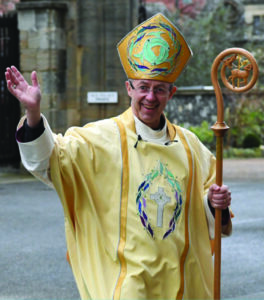
    Copying, copying, copying: This is the Pope Francis of the Catholic Church. Look at what is on his head, and in his left hand – the “mitre” and the shephered’s crook, his symbols of office.

    Similarly, the New World Encyclopaedia writes glowingly about Ancient Egypt and quotes the prominent British historian, Arnold Toynbee, to have said that: “Of the 26 civilisations he identified, Egypt was unique in having no precursor or successor. Arguably, however, the successor to Egyptian civilisation was humanity itself, since Egypt bequeathed many ideas and concepts to the world, in addition to mathematical and astronomical knowledge.

    One of the “ideas and concepts” that Ancient Egypt bequeathed to the world was religion. The African ancestors were the first in the world to organise religion in a formal way in Egypt, and the foundations set by the ancestors became the template copied by other world religions that came thousands of years later. As a result, the current three major religions of the world – Judaism, Christianity, and Islam all borrowed heavily from African religion. (This is a subject that The Third Eye will delve into, indepth, in the coming months).

    But suffice it to say here that all the concepts and iconography of religion that the African ancestors put forward, were copied by Judaism, Christianity and Islam. For example, the motifs of the Ancient Egyptian high priest, Ausare, the Lord of Resurrection (who the Greeks called Osiris), were copied 100% by Christianity. These are his crown (now called the “mitre” worn by popes and archbishops; and his shepherd’s crook. In Ancient Egyptian society, the flywhisk and the shepherd’s crook were signs of high royal authority.

    Ausare was the first person in the history of religion to have died and resurrected. This concept, too, was borrowed by Christianity.

    The invasions of Ancient Egypt
    To date, there has been no empire in the world that suffered as many invasions by foreigners as Ancient Egypt, because of its wealth and high civilisation. One writer sums up the invasions as follows: “During the 18th Dynasty, Egypt restored its control over Nubia and began military campaigns in Palestine, clashing with other powers in the area such as the Hittites. Egypt went on to establish the world’s first great empire, stretching from Nubia to the Euphrates River in today’s Iraq.
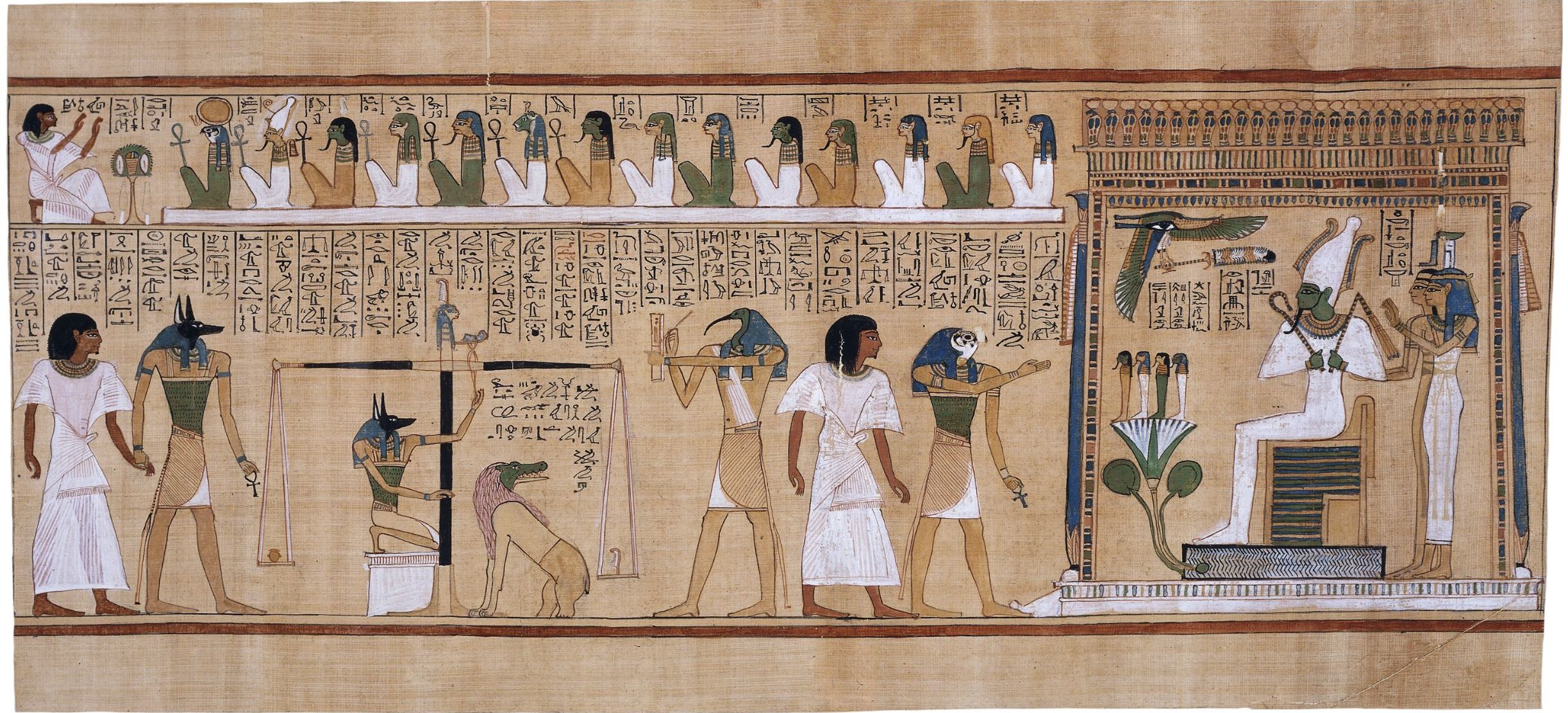
    All the concepts and iconography of religion that the African ancestors put forward were copied by Judaism. Christianity and Islam. The ancient Egyptians were the first to believe in afterlife. Here (above) is the concept of “The Day of judgement” (Ancient Egyptian version, from Papyrus of Hunefer, reproduced in the book of the dead by Sir E. A Wallis Budge) The scene reads from left to right. (Top row): The souls of the dead people wait to be brought to the judgement area. (Bottom row): To the left, Anubis brings Hunefer into the judgement area, and supervises the weighing of hunefer’s heart, represented as a pot, on the judgement scales. “The Ancient Egyptians believed that the heart was the seat of a person’s emotions, intellect and character, and thus represented the good or bad aspects of a person’s life”. Next, Anubis records the results of the heart weighing. Hunefer’s heart passes the test, and so he is led into the presence of Asar, the lord of resurrection, by his son Horus. Asar is shown seated under a canopy, with his sisters Isis and Nephthys.

    “In 728 BC, Nubian pharaohs beginning with Shabako, ruler of the Nubian kingdom of Kush, established their own dynasty in Egypt – the 25th – at Thebes. Under Kushite rule, Egypt clashed with the growing Assyrian empire.

    In 671 BC, the Assyrian ruler Esarhaddon drove the Kushite king Taharka out of Memphis and destroyed the city; he then appointed his own rulers out of local governors and officials loyal to the Assyrians. One of them, Necho of Sais, ruled briefly as the first king of the 26th Dynasty before being killed by the Kushite leader Tanuatamun, in a final, unsuccessful grab for power.

    “Beginning with Necho’s son, Psammetichus, the Saite Dynasty ruled a reunified Egypt for less than two centuries. In 525 BC, Cambyses, king of Persia, defeated Psammetichus III, the last Saite king, at the Battle of Pelusium, and Egypt became part of the Persian Empire.

    “Persian rulers such as Darius (522-485 BC) ruled the country largely under the same terms as native Egyptian kings. Darius supported Egypt’s religious cults and undertook the building and restoration of its temples.

    “The tyrannical rule of Xerxes (486-465 BC) sparked increased Egyptian uprisings under him and his successors. One of these rebellions triumphed in 404 BC, beginning one last period of Egyptian independence under native rulers (Dynasties 28-30).

    “In the mid-4th century BC, the Persians again attacked Egypt, reviving their empire under Ataxerxes III in 343 BC. Barely a decade later, in 332 BC, Alexander the Great of Macedonia defeated the armies of the Persian Empire and conquered Egypt.

    “After Alexander’s death, Egypt was ruled by a line of Macedonian kings, beginning in 305 BC with Alexander’s General Ptolemy and continuing with his descendants. The last ruler of Ptolemaic Egypt – the legendary Cleopatra VII – surrendered Egypt to the armies of the Roman Emperor Octavian (later called Augustus) in 30 BC. Six centuries of Roman rule over Egypt followed, during which Christianity became the official religion of Rome and its provinces, including Egypt.”

    In effect, the summary (or the chronology) of the many invasions of Egypt looks like this: Ancient Egypt was first attacked and occupied by the Hyksos in the 18th century BC, then by Nubia in 728 BC.

    Then the Assyrians came in 677 BC (as prophesied by Jeremiah and Ezekiel in the Bible), then Babylon (under Nebuchadnezzar) twice invaded Egypt in 605 BC and 569 BC, then Eygpt was conquered by the Persians in 525 BC, then by the Greeks in 332 BC (under Alexander the Great, until his death in June 323 BC at the age 33, then his generals took over the governance of Egypt, calling themselves the Ptolemies), then the Roman Empire under Emperor Augustus (formerly known as Octavian) conquered Egypt in 30 BC. The Romans ruled Egypt for more than 600 years.

    In 324 AD, Emperor Constantine, the then head of the Roman Empire, founded a new capital at Constantinople (today’s Istanbul in Turkey). The Roman Empire then broke into two – East and West – and Egypt fell under the control of the Eastern Roman Empire whose seat was at Constantinople, an empire from whose ashes rose the Byzantine Empire which ruled Egypt until the Arabs conquered Egypt in 641 AD; only for the Ottoman Empire (another Turkish Empire as the Byzantine, founded in 1299 AD) to take over Egypt in 1517.

    Then Egypt went under French occupation (in 1798 to 1801), then under British occupation from 1882 after the Anglo-Egyptian War until 1952, even though modern Egypt got its independence from Britain on 28 February 1922.

    During the thousands of years of the invasions, the core people of Ancient Egypt remained black, as it had always been. Though the invaders came with immigrant populations who mingled with the natives through marriage, etc, the core population of Egypt remained stubbornly black. It was no different from the European colonisation of Africa in the 20th century, where the core population remained black across the continent while governance was in the hands of the colonisers.
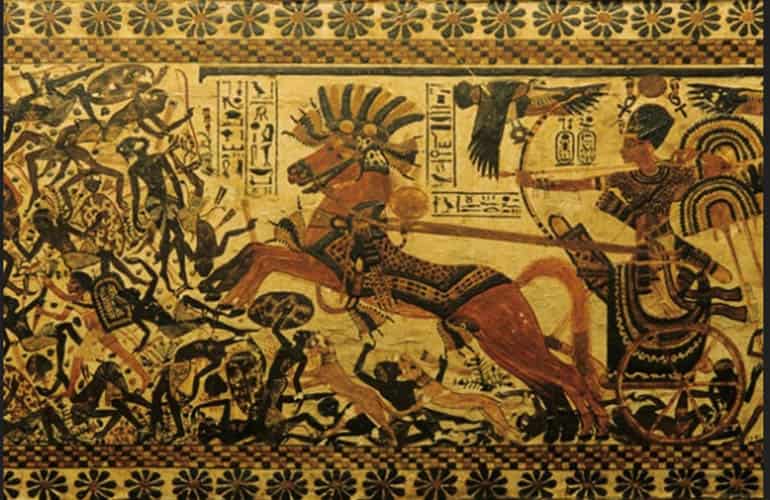
    This is a depiction of the Hyksos invasion of Ancient Egypt done by an anonymous non-African artist. Look at yhe color of the skin of the victims being killed by invaders – black

    The same scenario happened in Ancient Egypt. The base of the population remained black even as the colonisers ruled and shipped in their own people to dilute the native population or to intermarry with the natives.

    With time, miscegenation led to a huge increase of the non-black people of Egypt, but even today, with modern Egypt professing itself to be Arabic/European by genes, the black population of Egypt is still large enough to write home about, although they are not as visible politically and economically as the Arab/European-descended modern Egyptians.

    The six migrations

    History shows that with every invasion of Ancient Egypt by foreigners, a good chunk of its black native population emigrated to other lands of Africa, south or west of Egypt, to escape the oppression of the invaders or simply to show their revulsion of the foreigners who had now become the new rulers of the great but conquered empire.

    Thanks to the work of Professor Aboubacar Moussa Lam, head of the Faculty of History and Human Sciences at the University of Cheikh Anta Diop in Dakar, Senegal, Western Sudanic oral traditions of the migrations from the Nile valley compiled by Yoro Dyâo (1847-1919) in the late 19th century have been brought to light.

    From the 7th century BC to the 6th century AD, scholars count six migrations from the Nile valley westward across the Sahara. Thus, oral traditions confirm the Nile valley origins of the peoples and cultures of the Western Sudan. Each of the migrations described by Yoro Dyâo was precipitated by either an invasion of the Nile valley from outside Africa or the oppressions of the invaders’ regime against indigenous customs, cultures, and peoples.

    The first migration might have been a result of the Assyrian invasion of Ancient Egypt and the defeat of the Kushite kings of the 25th Dynasty in 660 BC. The traditions of the Soninke/Sarakholle, founders of the Ghana Empire (250-1070 AD), from whose ashes rose the Mali and Songhay empires at different times, assert that their remote founding ancestor was born in the region of Sonna or Aswan in Upper Egypt.

    He brought with him two zoomorphic divinities, the Serpent and the Vulture, the Ancient Egyptian symbols of royal dominion over Upper and Lower Egypt. The water-dwelling serpent, Biida, became the national deity of Wagadou, capital of the Ghana Empire. Moreover, these traditions speak of a jackal that guided the early migrations and therefore answers to the Egyptian “opener of the way”, the divine jackal Wep-Wat or Anubis.

    Boubacar Lam situates the departure of the Soninke ancestors from Egypt no later than 486 BC as a result of the exactions of the Persian King Darius (who reigned between 522-486 BC) on the inhabitants of the Nile valley. The foundations of the society and state that would later become the Empire of Ghana would have occurred not later than 460 BC.

    The Songhay Empire, the last of the three early great empires in West Africa, was said to be originally established by Kushite immigrants, a branch of the Kushites from Kemet that chose to move west after 660 BC.

    There are two Tarikhs, Western Sudanic historical manuscripts that survive from the 17th century. One of them describes the migration of the magicians who contended against Moses (c. 1230 BC) westwards into the country of the (later) Songhay to found the city of Kukia. This would suggest Songhay Nile valley origins dating earlier, even than the 25th (Kushite) Dynasty (712-660 BC).

    The ancestors migrated: From the 7th century BC to the 6th century AC, scholars count six migrations from the Nile valley westward across the Sahara. Each of the migrations was precipitated by either an invasion from outside Africa or the oppressions of the invaders regime against indigenous customs, cultures and people

    The Lebu of Senegal’s Atlantic coast, in and around Dakar, assert that their original homeland was Libya. The word “lebu” was the Ancient Egyptian name for the land and people west of the Nile, ie, Libya.

    There is also a clan of fisherfolk among the Pulaar-speaking people of Guinea who are called Diba. The clan totem is a hippopotamus. In Ancient Egypt, one of the words for “hippopotamus” was dib. Moreover, the Diba use exactly the same kind of harpoon used by Ancient Egyptian fishermen and hippo hunters.

    In the Egyptian language, per āa became the term pharaoh. In Wolof and Peul, the word fari is a title of the king. The first pharaoh of a united Egypt was known as Mena; the first king of both the Toucouleur and the Soninke was Manna, a slight corruption of Nana, the title the Akan people (of modern-day Ghana and Côte d’Ivoire) give to their kings.

    According to Aboubacar Lam, the earliest kingdoms of the Western Sudan – from about 460 BC – were “neo-pharaonic” kingdoms and would remain so until the beginnings of Islamisation of West Africa, with the Almoravid conquest (1076 AD).

    The ones who came by the Congo forest

    Another important stream of the emigration from Ancient Egypt came down southwards through the Congo forest, from where some went westwards to occupy the west coast of Africa. Others came straight down from precisely the general area of present-day Cameroon and Gabon to occupy East Africa and what is today the SADC countries (of Southern Africa).

    This was the branch from Ancient Egypt that Wilhelm Bleek and other European-descended historians and anthropologists call the Bantus. But they are not Bantus. They came from Ancient Egypt in relays – stopping and moving.

    Therefore, Bantu is a very wrong terminology or classification for these African ancestors and their progeny. If historians and anthropologists today cannot call them by their native name, Kemmui, they should simply refer to them as descendants of Ancient Egyptian ancestors. Not Bantus!

    But they are called Bantus because the historians and anthropologists want to dissociate modern black Africans from their glorious ancestors who built and run the world’s greatest empire in Ancient Egypt. It is a con trick that modern Africans have sadly bought hook, line and sinker! How the ancestors are turning in their graves!

    The pyramid builders (c. 2649-2150 BC)

    Egypt’s Old Kingdom began with the Third Dynasty of pharaohs. In 2670 BC, King Djoser (of the Third Dynasty) asked Imhotep, an architect, priest and healer, to design a funerary monument for him; the result was the world’s first major stone building, the Step Pyramid at Sakkara, near Memphis, which was finished in 2650 BC.

    Not a Bantu: A maiden of the Haya or Bashaya peole of Tanzania, a country said to be made up of 95% Bantus. But the ancestors of the modern Tanzanians were part of the migrations from Egypt, so they are not Bantus

    The Step Pyramid was the tallest building in the world at the time. The Egyptians called pyramids “mir”. Pyramid building reached its zenith with the construction of the Great Pyramid at Giza, on the outskirts of Memphis (now Cairo). Built for Pharaoh Khufu (or Cheops, in Greek), who ruled from 2589 to 2566 BC, the pyramid was later named by classical historians as one of the
    ancient world’s Seven Wonders.

    Two other pyramids were built at Giza for Khufu’s successors Khafre (2558-2532 BC) and Menkaura (2532-2503 BC). Pyramid building (whose primary purpose was funerary) was an African specialty as it flourished in the other black empires such as Kush/Nubia, such that today there are more pyramids in modern Sudan than in modern Egypt, even after the Aswan Dam in southern Egypt swallowed up a lot of Sudan’s pyramids.

    The pyramids were the physical manifestations of the Ancient Egyptian religious belief about the afterlife. “In early times, the afterlife seems to have been intimately connected to the preservation of the physical body by mummification,” one writer explains. “This always retained some force.

    “However, the idea grew up that human beings are composed of both physical and spiritual aspects. After death, the latter lived on. Some people become disembodied souls, or ghosts, wandering the earth; but if judged worthy, a person could become a ‘blessed one’, living in a land of goodness and plenty. Because of the belief that life could continue into the afterlife, the dead were accompanied in their graves by every-day and luxury goods – including art objects – to help them enjoy their new life. This belief informed the building of pyramids as funerary/burial houses.”

    Interestingly, today, modern Egyptians of Arabic and European descent, whose ancestors started attacking Egypt in 639 AD and conquered it only in 641 AD (ie, 641 years after the death of Jesus) claim that their ancestors built the pyramids in Egypt when, indeed, the first pyramid in Egypt (the Step Pyramid) was completed in 2650 BC (ie, 2,650 years before Jesus was born), and the two great pyramids of Giza were built between 2558 and 2503 BC (before the birth of Christ).

    In short, what some have called the “pseudo-science” or “extravagant claims” by African-American scholars of black history is not pseudo-science or extravagant claims at all.
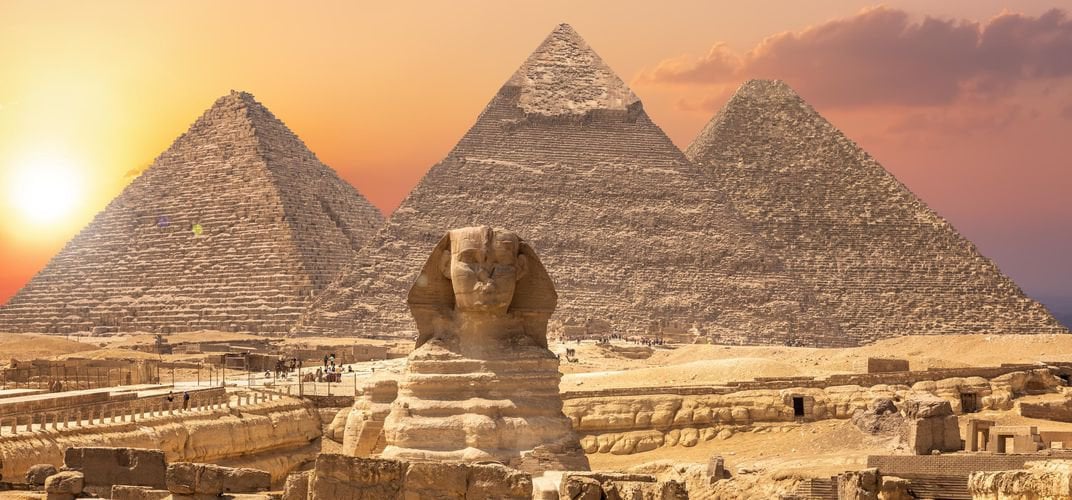
    Two other pyramids were built at Giza for Khufu’s successors Khafre (2558-2532 BC) and Menkaura (2532-2503 BC). Pyramid building (whose primary purpose was funerary) was an African specialty as it flourished in the other black black empires such as Kush/Nubia, such that today there are more pyramids in modern Sudan than in modern Egypt, even after the Aswan Dam in Southern Egypt swallowed up a lot of Sudan’s pyramids. The record is clear that the invading groups were largely tent-dwelling nomads. They had no tradition of great cities with imposing temples, obelisks, pyramids or indeed, stone masonry at all

    According to the Senegalese giant Cheikh Anta Diop in his book, Civilisation or Barbarism: “Insofar as Egypt is the distant mother of Western sciences, most of the ideas that we call foreign are oftentimes nothing but mixed up, reversed, modified, and elaborated images of the creations of our African ancestors, such as Judaism, Christianity, Islam, dialectics, the theory of being, the exact sciences, arithmetic, geometry, mechanical engineering, astronomy, medicine, literature (novel, poetry, drama), architecture, the arts, etc. One can see then how fundamentally improper is the notion, so often repeated, of the importation of foreign ideologies in Africa. It stems from a perfect ignorance of the African past.”

    Now, let’s move to the next article, on the next page, to see the authentication of the identity of the real Ancient Egytpians.

    **(Much of this article comes from my contribution on Ancient Egypt in The African Factbook)

  • Don’t believe the lie that you are a Bantu. You are not!

    Don’t believe the lie that you are a Bantu. You are not!

    It is said that most Africans occupying the eastern, central and southern parts of the continent today are Bantus. Their ancestors are believed to have migrated from the forests on the Nigeria-Cameroon-Gabon borders and moved eastwards and southwards to cover Central, Eastern and Southern Africa – all the way from modern Kenya down to the countries of what is now the SADC region. And this, they say, happened between 2,000 and 3,000 years ago. And – to our eternal shame as Africans – we actually believe it. We believe that we are Bantus! So, for decades and decades, high academic courses and discourses have been built on this fallacy, even though the original European propounders themselves say it is a “hypothesis”. The question is when did a hypothesis ever mean a reality? There is no such thing. A hypothesis is a hypothesis and a reality is a reality. There is a clear demarcation between the two. Thus, believing that we are Bantus shows how gullible the African has become.

    This month, our editor, Baffour Ankomah, takes us through factual historical accounts and records to prove that there was no African who ever called himself or herself a Bantu. “Bantu” is a coinage of a German linguist called Wilhelm Bleek who died in South Africa in 1875 at the age of 48. He coined it in “1857 or 1858” according to the historical record and popularised it in his 1862 publication, Comparative Grammar of South African Languages. Since then Bantu has been used by European-descended historians, anthropologists and supremacists to shield the African from seeing where his great ancestors really were, and where they came from – Ancient Egypt. Their goal has been to continue the lie that Ancient Egypt, the greatest empire on earth that lasted thousands and thousands of years more than any comparable empire in history, was not created by black people – the ancestors of most modern-day black Africans. But our ancestors created Ancient Egypt. And here is the story – all wrapped up in a four-part series in this issue, a collector’s item.

    Not Bantus: President Mnangagwa (foreground) arrives at a rally in a Zimbabwe said to be made up of 99% Bantus. But they are not Bantus because their ancestors were part of the migration from Ancient Egypt. Therefore, they are Ancient Egyptians or descendants of Ancient Egyptians, but certainly not Bantus. Bantu is too limiting

    Until “1857 or 1858”, there was no word or name like Bantu. And by 1857 or 1858, African history was already ancient. Which means the people known as Africans today were already ancient. And not one of them ever called himself or herself a Bantu. It shows how gullible the descendants of those great African ancestors have become today – by believing and accepting that they are Bantus! They are not!

    The word or name Bantu was coined, according to Wikipedia, in “1857 or 1858” by Wilhelm Heinrich Immanuel Bleek, a German linguist who died in South Africa on 17 August 1875, aged 48. His kith and kin have since blessed him with a wonderful title, philologist, meaning he was a “lover of words”.

    The root word, philology, comes from Ancient Greek, meaning “love of word”. In modern times, philology has morphed into the study of language in oral and written historical sources. According to Wikipedia, “it is the intersection of textual criticism, literary criticism, history, and linguistics”.

    “Philology,” Wikipedia goes on, “is also defined as the study of literary texts as well as oral and written records, the establishment of their authenticity and their original form, and the determination of their meaning. A person who pursues this kind of study is known as a philologist.”

    So, Wilhelm Bleek (God bless his heart) was a philologist. According to the South African History Online (SAHO), Bleek first used the word “Bantu” in his 1862 publication, Comparative Grammar of South African Languages, as a classificatory name.

    Born in the German capital, Berlin, on 8 March 1827, Bleek, according to Wikipedia, “was the eldest son of Friedrich Bleek, professor of theology at Berlin University and then at the University of Bonn, and Augusta Charlotte Marianne Henriette Sethe. He graduated from the University of Bonn in 1851 with a doctorate in linguistics, after a period in Berlin where he went to study Hebrew and where he first became interested in African languages.

    “Bleek’s thesis featured an attempt to link North African and Khoikhoi (or what were then called Hottentot) languages – the thinking at the time being that all African languages were connected. After graduating in Bonn, Bleek returned to Berlin and worked with a zoologist, Dr Wilhelm K. H. Peters, editing vocabularies of East African languages. His interest in African languages was further developed during 1852 and 1853 by learning Egyptian Arabic from Professor Karl Richard Lepsius, whom he met in Berlin in 1852.”

    Bleek’s major break came when he was appointed official linguist to Dr William Balfour Baikie’s Niger Tshadda Expedition in 1854. But “ill-health (a tropical fever) forced his return to England where he met Sir George Grey [the governor of the Cape, in South Africa], and John William Colenso, the Anglican bishop of Natal, who invited Bleek to join him in Natal in 1855 to help compile a Zulu grammar.”

    Wikipedia further tells us that after Bleek completed Colenso’s assignment, he travelled to Cape Town in 1856 to become the official interpreter of Sir George Grey, the Cape governor, and catalogued his private library. It is said that Grey had philological interests and became Bleek’s patron.

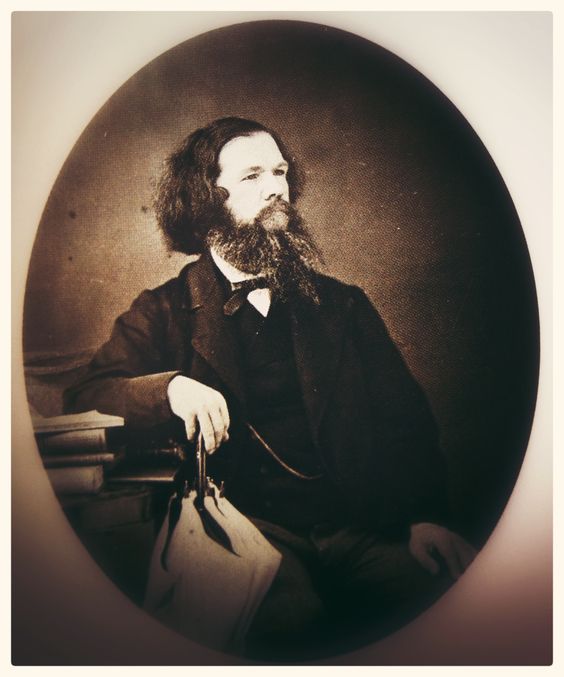
    The man who led us astray: Wilhelm Heinrich Immanuel Bleek, the German linguist who cointed the word Bantu. The rest is history

    ‘Bleek was widely respected as a philologist, particularly in the Cape,” Wikipedia reports. “While working for Grey, he continued with his philological research and contributed to various publications during the late 1850s. Bleek requested examples of African literature from missionaries and travellers such as the Rev W. Kronlein who provided him with Namaqua texts in 1861.

    Bleek died on 17 August 1875 at Mowbray, one of Cape Town’s southern suburbs, atop the Devil’s Peak. He was buried in the Wynberg Anglican cemetery in Cape Town where his two infant children who had died before him had been buried.

    “His all-important work recording the !Xam language and literature,” says Wikipedia,” was continued and expanded by Lucy Lloyd, fully supported by his wife Jemima. In his obituary in the South African Mail of 25 August 1875, he was lauded in the following terms: ‘As a comparative philologist, he stood in the foremost rank, and as an investigator and authority on the South African languages, he was without peer.’”

    Now we can see why his coinage of “Bantu” as the classificatory name for the masses of the African ancestors who had migrated thousands of years previously to occupy central, eastern, and southern Africa became set in stone, and subsequently cemented in global consciousness.

    It was all part of the ploy of the European-descended settlers of South Africa who stole the land from the “natives” to say the “natives” (now called Bantus) after all also seized the land from the original San people who lived there before the so-called “Bantu Migration” to the southern parts of the continent happened some 2,000 or 3,000 years ago.

    No wonder, in 1921, the University of Witwatersrand in Johannesburg established a Bantu Studies Department under Dr. W.M. Eiselen who provided the academic foreground for the “separate development” policy of the later apartheid government to be cemented.

    The problem

    But the Bantu ethnic classification and the subsequent “Bantu migration” idea always had a problem – except that the Africans astonishingly just believed it, warts and all. Astonishing because, first, as mentioned above, no African or black person in the entire history of the ancestors and the continent ever called himself or herself Bantu.

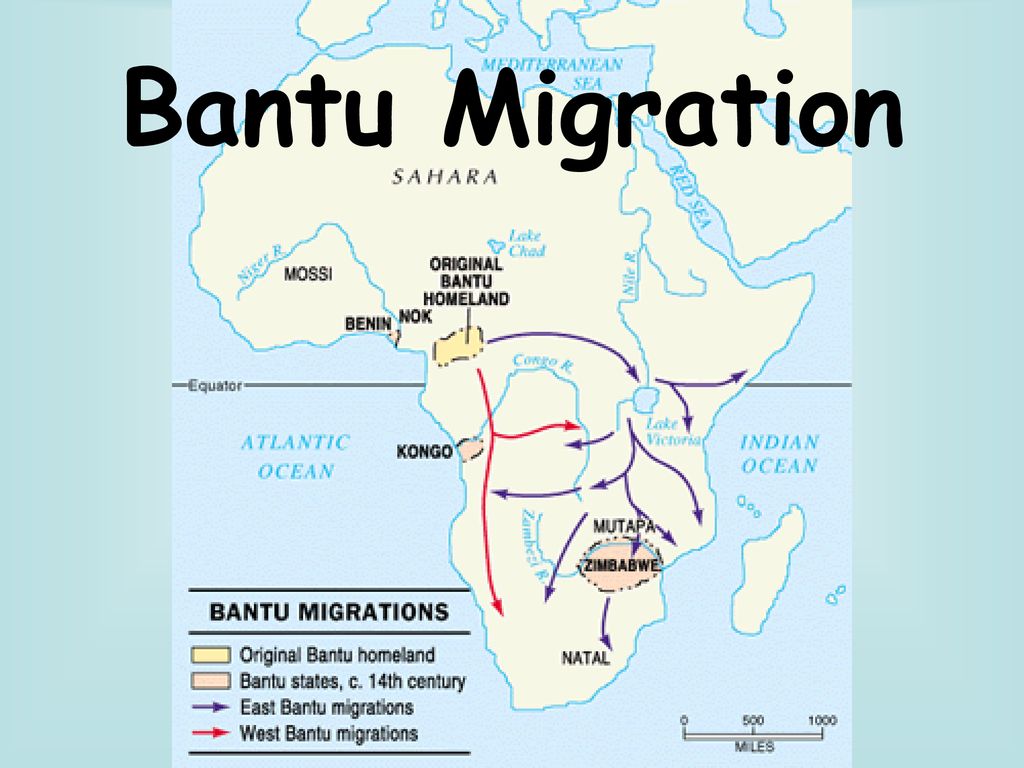
    Self-explanatory: For over a century, mainstream scholarship has insisted that the alleged Bantu migration took the form shown on the map. But the migration still remains a “hypothesis”, not a reality

    Second, all the major European-created encyclopaedias and other such platforms have forever insisted that the “Bantu migration” is just a “hypothesis”.

    For example, the Encyclopaedia Britannica (no friend of Africa’s) insists that, as a classification, the name Bantu is “primarily linguistic, for the cultural patterns of Bantu speakers are extremely diverse; the linguistic connection, however, has given rise to considerable speculation concerning a possible common area of origin of the Bantu peoples, the linguistic evidence pointing strongly to the region of the present-day Cameroon-Nigeria border.”

    The “considerable speculation” cited by the Britannica should have caused the Africans to smell a fish about Bleek’s Bantu classification. But they didn’t.

    Wikipedia, in fact, is more forthright. It calls the Bantu migration proposition a “hypothesis”. It says: “Under the Bantu migration hypothesis, various Bantu-speaking peoples would have assimilated and/or displaced many earlier inhabitants, with only a few modern peoples such as Pygmy groups in Central Africa, the Hadza people in northern Tanzania, and various Khoisan populations across Southern Africa retaining autonomous existence into the era of European contact.”

    Wikipedia says matter-of-factly: “The Bantu expansion is a hypothesis about the history of the major series of migrations of the original Proto-Bantu speaking group, which spread from an original nucleus around Central Africa across much of sub-Saharan Africa. In the process, the Proto-Bantu-speaking settlers displaced or absorbed pre-existing hunter-gatherer and pastoralist groups that they encountered.”

    Wikipedia’s most important point which we should all not forget is this: “The Bantu expansion is a hypothesis”. This supports the Britannica’s position of “considerable speculation” having arisen over the possible common area of origin of the Bantu peoples.

    “The primary evidence for this expansion is linguistic,” says Wikipedia. “A great many of the languages which are spoken across Sub-Equatorial Africa are remarkably similar to each other, suggesting a common cultural origin of their original speakers.

    Very important point

    Before we go further, there is a very important point we should all note. From the above, the Britannica informs us that: “The name Bantu is primarily linguistic, for the cultural patterns of Bantu speakers are extremely diverse; the linguistic connection, however, has given rise to considerable speculation concerning a possible common area of origin of the Bantu peoples…”

    Wikipedia confirms this most important point by reporting that: “The primary evidence for [the Bantu] expansion is linguistic. A great many of the languages which are spoken across Sub-Equatorial Africa are remarkably similar to each other, suggesting a common cultural origin of their original speakers.”

    Please mind the catchphrases, “a possible common area of origin” (Britannica), and “a common cultural origin” (Wikipedia) of the so-called “original Bantu language speakers”. What this means is that the people that the Britannica and Wikipedia and the rest of the European-descended anthropologists, linguists, historians, and writers call “Bantus” originated from a common place – presumably in Africa, where else? We shall come back to this most vital point later in this piece.

    So, for now, let’s stay with Wikipedia: It says: “The linguistic core of the Bantu languages, which comprises a branch of the Atlantic-Congo language family, was located in the southern regions of Cameroon. However, attempts to trace the exact route of the expansion, to correlate it with archaeological evidence and genetic evidence, have not been conclusive; thus although the expansion is widely accepted as having taken place, many aspects of it remain in doubt or are highly contested.”

    This deserves to be repeated, for its sheer controversy: “The linguistic core of the Bantu languages, which comprises a branch of the Atlantic-Congo language family, was located in the southern regions of Cameroon. However, attempts to trace the exact route of the expansion, to correlate it with archaeological evidence and genetic evidence, have not been conclusive; thus although the expansion is widely accepted as having taken place, many aspects of it remain in doubt or are highly contested.” Nothing could be more eye-opening than this.

    Manfred Eggert, the German pre-historial, who has been conducting field research in Cameroon since 1997, has rubbished Bleek’s hypothesis, saying “The current archaeological record in the Central African rainforest is extremely spotty and consequently far from convincing so as to be taken as a reflection of a steady influx of Bantu speakers into the forests, let alone movement on a larger scale”

    In fact, Manfred K. H. Eggert, the German prehistorian, who has been conducting field research in Cameroon since 1997 (and most recently from 2004 to 2010, together with scientists from the University of Frankfurt, under the theme, “Ecological Change and Cultural Upheavals in West and Central Africa”) has unambiguously stated that: “The current archaeological record in the Central African rainforest is extremely spotty and consequently far from convincing so as to be taken as a reflection of a steady influx of Bantu speakers into the forest, let alone movement on a larger scale.”

    If nobody is convinced that the Bantu migration is a hypothesis, Eggert’s words should make us all pause and ponder.

    Definition of hypothesis

    Generally, according to the native speakers of English, a hypothesis is “a supposition or proposed explanation made on the basis of limited evidence as a starting point for further investigation”.

    The Merriam-Webster Dictionary defines it as: “An assumption, an idea that is proposed for the sake of argument so that it can be tested to see if it might be true.”

    The Merriam-Webster Dictionary goes on to say: “In the scientific method, a hypothesis is constructed before any applicable research has been done, apart from a basic background review. You ask a question, read up on what has been studied before, and then form a hypothesis. [Thus] a hypothesis is usually tentative; it’s an assumption or suggestion made strictly for the objective of being tested.


    Zulu girls from South Africa: Thier langauge is supposed to have donated the word “Bantu”, but in reality the ZUlu are not Bantus because their ancestors were part of the migrations from ancient egypt


    “A theory, in contrast, is a principle that has been formed as an attempt to explain things that have already been substantiated by data. It is used in the names of a number of principles accepted in the scientific community, such as the Big Bang Theory. Because of the rigours of experimentation and control, a theory is understood to be more likely to be true than a hypothesis is.

    “In non-scientific use, however, hypothesis and theory are often used interchangeably to mean simply an idea, speculation, or hunch, with theory being the more common choice,” adds the Merriam-Webster Dictionary.

    On its part, the Cambridge English Dictionary defines a hypothesis as (in American English): “An idea or explanation for something that is based on known facts but has not yet been proven. (And in British English): “An idea or explanation for something that may be true but has not yet been completely proved.”

    Another authority, the Collins English dictionary, says: “A hypothesis is an idea which is suggested as a possible explanation for a particular situation or condition, but which has not yet been proved to be correct.”

    Wikipedia joins the war of definitions by saying: “A hypothesis is a proposed explanation for a phenomenon (an observable event).  For a hypothesis to be a scientific hypothesis, the scientific method requires that one can test it. Scientists generally base scientific hypotheses on previous observations that cannot satisfactorily be explained with the available scientific theories.

    “In common usage in the 21st century, a hypothesis refers to a provisional idea whose merit requires evaluation. For proper evaluation, the framer of a hypothesis needs to define specifics in operational terms. A hypothesis requires more work by the researcher in order to either confirm or disprove it. In due course, a confirmed hypothesis may become part of a theory or occasionally may grow to become a theory itself.”

    Supposition, supposition, supposition!

    So, the long and short of the above definitions is that a “theory” is much closer to reality than a hypothesis. “Because of the rigours of experimentation and control, [a theory] is understood to be more likely to be true than a hypothesis is,” says the Merriam-Webster Dictionary. Thus, the Bantu classificatory name and its big sister, the Bantu Migration, are merely a hypothesis, and nowhere near reality!

    But don’t take my word for it. Just consider the following definitions of a “supposition”. Remember that generally, a hypothesis is “a supposition or proposed explanation made on the basis of limited evidence as a starting point for further investigation”.

    So, what then is a supposition? Generally, according to linguists, a supposition is “a belief held without proof or certain knowledge; an assumption or hypothesis.”

    The Cambridge English Dictionary adds that a supposition is: “The fact of believing something is true without any proof, or something that you believe to be true without any proof.” Or in American English: “An idea that something may be true, although it is not certain.”

    On its part, the Collins English Dictionary says: “A supposition is an idea or statement which someone believes or assumes to be true, although they may have no evidence for it.” That is what the Bantu Migration exactly is – “an idea or statement which someone believes or assumes to be true, although they may have no evidence for it.”

    So, what are the above definitions saying? Simply that Wilhelm Bleek’s Bantu classification and Bantu Migration proposition, being a “hypothesis” and therefore a “supposition”, means that although Bleek and his followers assume the Bantu classification and migration to be true, they are not proven by evidence and therefore remain just a “hypothesis” and a “supposition”. They are not a reality, in fact!

    Origin of the word Bantu

    Though not expressly stated, it can be deducted that Bleek, the philologist, used his knowledge of the South African languages to coin the name Bantu from the Zulu word for people, “abantu”, which is the plural of the word “umuntu”, meaning “person”, which in turn is based on the stem “ntu”, plus the plural prefix “aba”.

    So, from nowhere, we got “abantu” or “Bantu” as the classificatory name for our great ancestors. Remarkably, “abantu” or “Bantu” has an uncanny correlation with the Latin words “abantea”, “abanteum”, and “abanteus”, which, as found in ancient writings, have various meanings, one of which is “an Ethiopian” or black person.

    As such, Wikipedia cares to remind everybody that: “In linguistics, the word Bantu, for the language families and its speakers, is an artificial term based on the reconstructed Proto-Bantu term for ‘people’ or ‘humans.’’’.

    Wikipedia goes on to say: “There is no native term for the people who speak Bantu languages because they are not an ethnic group. People speaking Bantu languages refer to their languages by ethnic endonyms, which did not have an indigenous concept prior to European contact for the larger ethno-linguistic phylum named by 19th century European linguists. Bleek’s coinage was inspired by the anthropological observation of groups self-identifying as ‘people’ or ‘the true people.’”

    Wikipedia’s point is supported by linguists who say that versions of the word “Bantu” occur in all Bantu languages, “for example as bantu in Kikongo and Kituba; watu in Swahili; anthu in Chichewa; batu in Lingala; bato in Kiluba and Duala; abanto in Gusii; andu in Kamba and Kikuyu; abantu in Kirundi, Lusoga, Zulu, Xhosa, Runyoro and Luganda; wandru in Shingazidja; abantru in Mpondo and Ndebele, bathfu in Phuthi; bantfu in Swati and Bhaca; banhu in Kisukuma; banu in Lala; vanhu in Shona and Tsonga; batho in Sesotho, Tswana and Northern Sotho; antu in Meru; andu in Embu, vandu in some Luhya dialects; vhathu in Venda; and bhandu in Nyakyusa.”

    But none of the above speakers of the so-called Bantu languages ever called themselves Bantu as a classificatory name.

    The contents of Bleek’s hypothesis

    According to the Bleek hypothesis (as quoted by the Encyclopaedia Britannica), “the Bantu subgroup of the Niger-Congo language family occupy almost the entire southern projection of the African continent”.

    Wikipedia (also quoting from the Bleek hypothesis), adds that, “the Bantu peoples, or Bantu, are an ethnolinguistic grouping of approximately 400 distinct ethnic groups who speak Bantu languages. They are native to 24 countries spread over a vast area from Central Africa to Southeast Africa to Southern Africa.


    “One recent suggestion is that Cushitic speakers had moved south earlier and interacted with the most northerly of Khoisan speakers who acquired cattle from them, and that the earliest arriving Bantu speakers in turn got their initial cattle from Cushitic-influenced Khwe-speaking people. Under this hypothesis, larger later Bantu speaking immigration subsequently displaced or assimilated that southernmost extension of the range of Cushitic speakers.”

    Everybody should remember the phrase, “Cushitic speakers had moved south earlier”, because it is a critical point we shall return to later in this article.

    Bleek’s hypothesis claims that the Bantu expansion took place in at least two waves, between about 3,000 and 2,000 years ago, approximately 1,000 years before the birth of Jesus Christ to one year after his death and resurrection (ie, 1000 BC to AD 1).

    According to Wikipedia, still quoting from Bleek’s hypothesis: “Linguistic analysis suggests that the expansion proceeded in two directions: the first went across or along the Northern border of the Congo forest region (towards East Africa), and the second – and possibly others – went south along the African coast into Congo [Brazzaville], Gabon, DRCongo, and Angola, or inland along the many south-to-north flowing rivers of the Congo River system. The expansion reached South Africa, probably as early as AD 300.

    “According to the early-split scenario as described in the 1990s, the southward dispersal had reached the Congo rainforest by about 1500 BC and the southern savannas by 500 BC, while the eastward dispersal reached the Great Lakes by 1000 BC, expanding further from there as the rich environment supported dense populations.”

    Are the Bantu maidens from Rwanda?: No, they are not Bantus because thier ancestors were part of the migration from Ancient Egypt.

    The UNESCO General History of Africa supports the above idea when it says: “The main expansion of the Bantu was vast and fast, not a series of gradual stages as some have argued. But it was a matter neither of purposeless nomadic wandering, nor of organised military conquest. It was a remarkable process of colonisation – in the true sense of the word – the opening up of essentially empty lands.”

    Much scholarship about nothing

    The Britannica recounts how “much scholarly work has been done since the late 19th century to describe and classify the Bantu languages”, which the Britannica reports to be about 500.

    “Special mention,” according to the Britannica, “may be made of Carl Meinhof’s work in the 1890s, in which he sought to reconstruct what he called ur-Bantu (the words underlying contemporary Bantu forms), and the descriptive work carried out by Clement Doke and the Department of Bantu Studies at the University of Witwatersrand, in the period 1923–53.

    “A monumental four-volume classification of Bantu languages, Comparative Bantu (1967–71), which was written by Malcolm Guthrie, has become the standard reference book used by most scholars – including those who disagree with Guthrie’s proposed classification, which sets up a basic western and eastern division in Bantu languages with a further 13 subdivisions,” the Britannica says.

    The World History Encyclopedia also cites the academic work which insists that the Bantu migration “can be traced by the study of linguistics – a technique known as lexicostatistics – and observation of the relative closeness of local languages to each other and the language originally spoken by the Bantu people of the Niger River delta: Proto-Bantu.”

    But then the World History Encyclopedia adds a disclaimer: “At the same time, one should be cautious with such studies as the passage of a language may not necessarily reflect the migration of its speakers. The same might be said of cultural practices and technologies.”

    In short, decades and decades of academic work has gone into enhancing and cementing the Bantu hypothesis and trying to make it appear as reality or truth. Part of this academic work, according to Wikipedia, has pointed to “hundreds of millions of Bantu speakers, ranging at roughly 350 million in the mid-2010s (roughly 30% of the population of Africa, or roughly 5% of the total world population). About 60 million speakers (2015), divided into some 200 ethnic or tribal groups, are found in DRCongo alone.

    “The larger of the individual Bantu groups have populations of several million, e.g. the people of Rwanda and Burundi (25 million), the Baganda people of Uganda (10 million as of 2019), the Shona of Zimbabwe (15 million as of 2018), the Zulu of South Africa (12 million as of 2005), the Luba of DRCongo (7 million as of 2010), the Sukuma of Tanzania (9 million as of 2016), the Kikuyu of Kenya (8.1 million as of 2019), the Xhosa of Southern Africa (8.1 million as of 2011), the Pedi of South Africa (5.7 million as of 2017) and the Tonga Illa and Lenge of Zambia at about 4.2 million,” Wikipedia reports.

    The South African History Online (SAHO) adds that linguists have divided the Bantu-language speakers into four categories: Nguni, Sotho-Tswana, Venda, and Tsonga. But SAHO cares to add that: “How these languages spread into Southern Africa remains uncertain.”

    Bantu states

    Yet the academic work built on Bleek’s hypothesis insists that “between the 11th and 16th centuries, powerful Bantu-speaking states on a scale larger than local chiefdoms began to emerge.

    The Maasai of Kenya are said to be Bantus, but they are not. Their ancestors were part of the migration from ancient Egypt.

    “Examples of such Bantu states include: the Kingdom of Kongo, Anziku Kingdom, Kingdom of Ndongo, Kingdom of Matamba, Kuba Kingdom, the Lunda Empire, Barotse Empire, Luba Empire, the Kazembe Kingdom, Mbunda Kingdom, Yeke Kingdom, Empire of Kitara, Butooro, Bunyoro, Buganda, Busoga, Rwanda, Burundi, Ankole, the Kingdom of Mpororo, Igara Kingdom, the Kingdom of Kooki, the Kingdom of Karagwe, Swahili city states, Mutapa Empire, Zulu Kingdom, Ndebele Kingdom, Mthethwa Empire, Tswana city states, Mapungubwe, Kingdom of Eswatini, the Kingdom of Butua, Maravi, Danamombe, Khami, Great Zimbabwe, Naletale, and the Rozwi Empire.”

    Primus inter pares: The King of Asante, Otumfuo Osei Tutu II, known as king of kings of the Akan people of Ghana. the Akans share common words with the Shona of Zimbabwe even though the two people live 6,577 kilometers apart, in west Africa and Southern Africa

    Still basing their argument on language, linguists have claimed that Zimbabwe is made up of 99% Bantu people, DRCongo 80%, Tanzania 95%, South Africa 75%, Kenya 60%, Mozambique 99%, Uganda 80%, Angola 97%, Malawi 99%, Zambia 99%, Rwanda 85%, Burundi 85%, Cameroon 30%, Congo Brazzaville 97%, Botswana 90%, Equatorial Guinea 95%, Lesotho 99%, Gabon 95%, Namibia 70%, Eswatini 99%, Somalia 4%, and Comoros 99%. Total Sub-Saharan Africa 37%.

    The migrations from Ancient Egypt

    All the above scholarship, however, tries to deny one basic fact: That the ancestors of the so-called Bantu people were part of the large groups of ancestors who migrated from Ancient Egypt and the Nile Valley when that mighty empire suffered invasion upon invasion by foreigners who eventually succeeded to take total control of Africa’s most glorious empire in 469 AD. Please note, 469 years after the death and resurrection of Jesus Christ, or what is known as the Christ Era (CE).

    As will be seen from the articles that follows this, (Ancient Egypt, Our Motherland, and Who were the Ancient Egyptians?), the greatest empire ever built by black hands in northeast Africa suffered over two dozen foreign invasions, because of its wealth, culture and high civilisation.

    History records that: “Ancient Egyptian wealth and culture attracted successive invasions of Asians and Europeans from Iran, Macedonia, Greece, Italy, Arabia, Turkey, France and England, who mixed with the original population.” (This quote comes from Ayi Kwei Armah, the Ghanaian literary colossus and Egyptologist).

    With every invasion, some of the African ancestors migrated west and south into the African heartlands and created new empires or made new homes. Six of those migrations have been identified by historians, both African and foreign, to have gone across the Sahara Desert into the far reaches of West Africa, where new empires such as the Ghana Empire, Songhai Empire, and Mali Empire were created by them.

    Other migrations came down straight through the Congo forests and spread through Central Africa, East Africa, and Southern Africa. Because they came by land, they would stop on the way, make new homes and later move on. The stop-start, stop-start process sometimes took centuries in-between, but eventually the ancestors from Ancient Egypt spread to cover all the different parts of the African continent – right from the very west to the very east and the very south. And these people did not call themselves Bantus.

    The group of ancestors that Bleek and his followers claim to have migrated from the Nigeria-Cameroon-Gabon forests was certainly part of the migration from Ancient Egypt that came through the Congo forest and veered west to West Africa.

    Bleek’s hypothesis does not say where the great masses of the so-called Bantus originally came from, and why they happened to be in the Nigeria-Cameroon-Gabon forests. He assumes that they were indigenous to the place, but they suddenly decided one day to move en mass to occupy the entire southern projection of the African continent.

    Bleek and his followers claim that the Bantus migrated because of the following reasons: “Exhaustion of local resources (agricultural land, grazing land, and forests); overpopulation; famine; epidemics; increased competition for local resources, warfare between rival tribes or as a consequence of succession disputes; climate change affecting crops; and a spirit of adventure”.

    But these reasons are purely academic, because movements and migrations throughout history have followed one or two or three or even all of the above reasons.

    What is true is that over thousands and thousands of years before Jesus was born, or what historians call BCE (Before the Christ Era), and certainly long before the hypothesised Bantu Migration, African ancestors had left Ancient Egypt and migrated in huge numbers down south and west to build new empires, kingdoms and lives. Some of these people are what Bleek and his followers call the Bantus. But they are not Bantus.

    In Ancient Egypt, the ancestors did not call themselves Bantus. They did not even call themselves Egyptians. Egypt was the name the Greek invaders gave to the mighty empire. The ancestors called their empire Kemet (meaning black) and other native names, and the empire south of it was called Kush and later Nubia. European historians later called them Kushites or Cushites, but for the black people of Kemet, there is a huge silence.

    However, Wikipedia, founded by European-descended people, appears to confirm the above when it says: “Prior to the arrival of Bantus in Southeast Africa, Cushitic-speaking peoples had migrated into the region from the Ethiopian Highlands and other more northerly areas. The first waves consisted of Southern Cushitic speakers, who settled around Lake Turkana and parts of Tanzania beginning around 5,000 years ago. Many centuries later, around AD 1000, some Eastern Cushitic speakers also settled in northern and coastal Kenya.”

    It deserves repeating that the so-called Bantus were part of the several migrations from Ancient Egypt into the African heartlands. It is why African languages today are very similar. It is because the ancestors migrated from a common source – the common source that the Britannica and Wikipedia acknowledged earlier in this piece.

    The Akans and Shonas

    One pertinent fact that dismisses Bleek and his followers’ hypothesis is that the Akan people of Ghana and Cote d’Ivoire, and their cousins, the Soninke/Sarahole people (of Senegal, Gambia, Mauritania and most of West Africa) are supposed not to be part of the Bantu group, as historians have traced the lineage of the Akans and the Seraholes to Ancient Egypt.

    But the Akan people, from whom this writer proudly comes, share certain common words with the Shona people of Zimbabwe, who are said to be Bantus. How is that possible?

    Ayi Kwei Armah, an Akan himself, tells about the pleasant surprises he encountered when he started studying the Ancient Egyptian language and literature. In his memoirs, The Eloquence of the Scribes (2006), he wrote: “The study of hieroglyphic writings is never going to be an entertainment, but for me it was lightened by surprises. Given that linkages between the Akan and Ancient Egyptian languages were not direct but mediated through a Soninke connection involving multimillennial migrations over thousands of kilometres, I did not expect to encounter Ancient Egyptian words with the same sounds and meanings as Akan words.

    An Akan courier in full garb: “The question is: if the shona are Bantu and the Akans are not (as Bkeek and his followers claim), and the two people live over 6,577 kilometers apart, how come thier langauges have common words – that is, if there have been no borrowings from one another?”

    “Yet as I built up my vocabulary in the dead language, apart from the intriguing fact that negations were formed the same way as in my mother tongue [Akan], by the insertion of the prefixes ‘nn’ and ‘mm’, certain words jumped out at me. One was the Ancient Egyptian word for the sun. Actually there is not just one word. The sun as deity is called ‘Ra’. The visible sun, supposed to be the boat in which the deity rides daily across the sky, is called ‘wia’.

    “The Akan name for the sun happens to be the same word: ‘wia’. Another example: the Ancient Egyptians used a drill for making fire. The fire drill was called ‘wja’. The Akan word for fire is pronounced the same way: ‘oja’. Several other matches came to my attention, like ‘bew’, meaning place, ‘fa’, meaning to take, and ‘sen’, meaning to pass. My search, however, was not focused on linguistic data. I treated the matching words as interesting asides, and concentrated on the assessment of literary values.”

    The connectedness of the Akan language and the Ancient Egyptian language that Armah discovered was, in fact, not unusual if one considers that even today, thousands of years after the African ancestors migrated from Ancient Egypt, there is still a link joining many African languages.

    One big example: the Shona people of Zimbabwe whom Wilhelm Bleek and his followers call Bantus live a good 6,577 kilometres away from the Akan people of West Africa. That is the distance between the Zimbabwean capital Harare and the Ghanaian capital Accra.

    It must be explained that the Akans, who, by Bleek’s definition, are not Bantus, now live mainly in Ghana and Côte d’Ivoire but their Soninke/Seraholes cousins are spread all over West Africa – in modern Senegal, Gambia, Mali, Mauritania, Guinea, Sierra Leone, Burkina Faso and Guinea Bissau.

    Yet despite the huge distance between West Africa and Southern Africa, there are still some stubborn common words shared by the Shona and the Akans. For example, the word “mu” which means “inside” means the same in Shona and Akan and is pronounced the same way by the two peoples.

    The word “ye” which means “is” means the same in Shona and Akan and is also pronounced the same way by the two peoples. The word “ne” which means “and” in Akan means the same in Shona (sometimes pronounced as “na” in Shona).

    The word “soro”, which means “up” or “above” is the same in Shona and Akan, except the Shona will add “pamusoro” for emphasis, but it is the same “soro” – “above”. The word “duku” which means a “headtie” (mostly for women) is the same in Shona and Akan and pronounced the same by the two peoples.

    The Zambians also use the same word, “duku”, which means the same thing: a headtie for women, pronounced the same way as the Shona and the Akans do. There is also “iyi” (meaning “this”) in Shona which means the same as in Akan.

    There are many more of such linguistic matches not covered here – and they happen in many African languages. The question is: If the Shona are Bantu and the Akans are not (as Bleek and his followers claim), and the two peoples live over 6,577 kilometres apart, how come their languages have common words – that is, if there has been no borrowings from one another?

    The short answer is that Bleek’s Bantu classification is pure nonsense. The long answer is that both the Shona and the Akan peoples once upon a time lived at a common place – in Ancient Egypt, and their ancestors were part of the migrations that left the glorious empire following the many invasions by foreigners.

    Another example: One of the largest ethnic groups in Namibia, the Herero, speak a variant form of Shona called Otjiherero. The Herero are known as a Bantu ethnic group who are spread over Namibia, Angola and Botswana. But by speaking a variant Shona, it means the ancestors of the Hereros came from the same place as the Shonas of Zimbabwe/Mozambique and the Akans and the Soninke/Seraholes of West Africa, and the other ethnic groups of Africa.

    Remember the Britannica’s “possible common area of origin” and Wikipedia’s “common cultural origin” mentioned earlier in this piece. That clearly refers to Kemet or Ancient Egypt where the ancestors of most black Africans today came from. So they are not Bantus! Bantu is too limiting. They are far more than that.

    So, if they are not Bantus, let’s move to the next article, on the next page, to continue the discussion.

  • Vice President Chiwenga: “President Mnangagwa and I are one. We are bound together. “

    Vice President Chiwenga: “President Mnangagwa and I are one. We are bound together. “

    Those who have ears to hear and eyes to see will be happy to hear and see this: Vice President Constantino Guveya Dominic Nyikadzino Chiwenga has put the alleged rivalry between him and President Emmerson Mnangagwa to rest once and for all. And we have it all here, exclusively, in The Third Eye.


    In a long-ranging interview with The Third Eye, conducted on 22 December 2022 (Zimbabwe Unity Day), the Vice President said matter-of-factly: “…One thing you have to understand here is that President Mnangagwa has my blood and I have his blood. It will never change … We are bound together. So he is part of me and I am part of him.”


    You don’t normally hear politicians these days talk in those “blood” terms, except when they are members of secret societies. But the duo at the helm of Zimbabwe do not constitute a secret society. That makes Vice President Chiwenga’s words even more profound. And he was not finished.


    “President Mnangagwa and I are one,” Chiwenga repeated for emphasis, “he has my blood and I have his blood … As I am speaking here, if you go to the President, you would think that I have phoned him to give you the same answers, sometimes word for word or almost word for word. And wherever we are, we think alike, and we move as one – one step, two steps, one step, two steps. We’ve been doing that.”


    The speculation

    For over two years, there has been high speculation that President Mnangagwa and Vice President Chiwenga have been in some kind of tug-of-war because, as the story goes, they had agreed in 2017 that the President would serve just one term in office and pass on the baton to the Vice President to take over in 2023, but the President had reneged on the promise and this had developed into a deep-seated rivalry between the two men.


    What’s more? According to the grapevine, the rivalry had given birth to its own sons and daughters – so numerous that one says the working relations between the President and the Vice President had soured to a point where the Vice President was supposed to have challenged the President for the ZANU PF leadership at the party’s elective congress held on 26-29 October 2022. That did not come to pass of course, but it did not end the speculation either.


    As Farai Shawn Matiashe, the Zimbabwean correspondent of the London-based magazine The Africa Report, reported on 3 November 2022: “Zimbabwe’s President Emmerson Mnangagwa has outmanoeuvred his deputy Constantino Chiwenga in the fierce battle to be the 2023 presidential candidate for ZANU PF.”


    On 18 August 2022, a month before the ZANU–PF congress, the same Farai Shawn Matiashe had reported in The Africa Report that: “Although Chiwenga supports Mnangagwa in public, it is certain there are now two factions in ZANU PF: one led by the President and another by his Deputy.”


    Matiashe quoted Vivid Gwede, whom he described as a “democracy activist in Harare” to have explained that: “The coming elective congress will not likely give him [Chiwenga] any avenues to take power since an open and democratic contest for Mnangagwa’s position is highly unlikely. What the Chiwenga faction can do is possibly weaken Mnangagwa’s hold on power by attempting to influence lower leadership structures and other appointments in government.”


    Matiashe went on: “However, political analyst Farai Gwenhure says any tensions between Mnangagwa and Chiwenga are blown out of proportion as they have more in common than differences. ‘At the end of the day, Chiwenga is not positioned to put up a significant fight,’ Gwenhure tells The Africa Report. ‘His best bet would be to wait until Mnangagwa finishes his second term.’”


    Flying in the face of the facts

    All this speculation, however, was flying in the face of the facts, as the President and the Vice President have been friends for so long, and are still friends – their friendship in fact going back to their days in the liberation war as young cadres.


    In the interview with The Third Eye, Vice President Chiwenga disclosed that he and President Mnangagwa had been working together as far back as when Mwangagwa joined the liberation war from prison in 1975. This was after ZANU and its fighting wing, ZANLA, had moved from Zambia and Tanzania into rear bases in Mozambique where ZANU got a new leadership under the late President Robert Mugabe and Simon Muzenda.


    Mnangagwa then joined the cadres in Mozambique from prison in Rhodesia where he had spent 10 years for his role in the Crocodile Group that had been set up in 1964 by Rev Ndabaningi Sithole to cause sabotage, set up roadblocks, kill whites, destroy property, and so on. The first white man to die at the hands of the group happened at Nyanyazi in Chikuku, a place between Bikita and Birchenough Bridge in Manicaland.


    When the group was finally captured, its members were charged with undergoing foreign military training, and five of them, all aged above 21, were hanged, except Mnangagwa who was below 21, “the age of majority” at the time. He thus escaped the death penalty, but spent 10 years being moved from prison to prison, first from the Salisbury Prison (now Harare Central Prison), then Fort Victoria in Masvingo, then Gray Prison in Bulawayo, and finally Khami Maximum Prison.


    According to Vice President Chiwenga, when the young Mnangagwa arrived in Mozambique, the party (ZANU) asked him to finish his law degree which he had started in prison, and after completion was made a special assistant to Mugabe.


    This is when the two men knew themselves and became friends. In our interview, Chiwenga told The Third Eye: “We worked as a team. Very solid. Whatever we did, we planned it, and it was executed.”


    The members of the “team”, according to Chiwenga, were: Josiah Tongogara, General Solomon Mujuru, General Vitalis Zvinavashe, Chiwenga himself, and the late Air Chief Marshal Josiah Tungamirai. At the helm of the team was the late President Mugabe. Of course, at the time they had not risen to the positions and military ranks they later acquired.


    But as Chiwenga put it: “We were one, very solid. And if you wanted to report to the President [Mugabe who was at the time the leader of ZANU], you went through his personal assistant who is now our current President, Mnangagwa. We were one,” Chiwenga said, illustrating it by crossing his clenched fists. “So we were bound as one.”


    Only two alive

    Out of that “very solid” team, there are only two members alive today – Vice President Chiwenga and President Mnangagwa. “And one thing you have to understand here,” Chiwenga told The Third Eye, “he has my blood and I have his blood. It will never change.”


    Chiwenga’s words and the deadpan manner in which he delivered them versus the background of the alleged rivalry stories that had been making the rounds for so long, stunned the editors of The Third Eye (Baffour Ankomah, editor; and Munyaradzi Huni, deputy editor) who jointly conducted the 22 December interview. So they asked the Vice President to expatiate on what he meant by “he has my blood and I have his blood”.


    Chiwenga’s answer came without any hesitation: “We are bound together. So he is part of me and I am part of him,” he said, his answer still too good for the ears of The Third Eye editors, who, more in disbelief, asked him again: “Are you talking about the current President Mnangagwa?” Chiwenga’s answer was short and sweet: “Yes, the current President,” he said again deadpan.


    Still not able to believe their ears sufficiently enough, The Third Eye editors tried another tact, by reminding the Vice President of his long friendship with President Mnagagwa and how it had impacted their lives and work. “You and President Mnangagwa go back a very long time,” the editors asked the Vice President. “You were friends during the liberation war and have been friends after the liberation war. Patrick Smith, the editor of Africa Confidential and The Africa Report in London, once told the BBC that you and the President are ‘joined at the hip, with Mnangagwa the senior partner. Was he correct to say that?”


    Chiwenga laughed heartily. “I don’t know what he was referring to,” he finally said after controlling his laugh. “But as I said earlier, President Mnangagwa has my blood and I have his blood. We are one, not joined at the hip, in fact that was not the correct description. We are one. As I am speaking here, if you go to the President, you would think that I have phoned him to give you the same answers, sometimes word for word or almost word for word. And wherever we are, we think alike, and we move as one – one step, two steps, one step, two steps. We’ve been doing that.”


    “So why is the perception that there is rivalry between the two of you?”, the bemused editors of The Third Eye asked the Vice President. His answer flew like a sparrow. “Aaah, it’s part of the regime change agenda,” Chiwenga said. “Have you ever heard the saying ‘divide and rule’? Now how do you divide or dissect one person and say this is now the left side and this is the right? The individual still remains one whole body. So there are so many things that have been said. And we don’t even worry about them. We laugh at them, and ask ourselves, ‘have you seen what some idiot has put on the social media today?’”

    Really? “So you and the President actually talk about it?”, The Third Eye editors asked the Vice President. “Yes, we talk about it,” he responded. “When we sit down we ask, ‘what nonsense is this?’ But it does not perturb us. We have a mission to fulfil, this is what is important, so let them bark and do whatever. We now have some people who are not themselves, who cannot exist on their own. They must exist in the shadows of other people, so that if they say they are supporting this man, they are now called human beings. Shame. One must stand on his own.”


    It was an interview and a half, conducted by Baffour Ankomah and Munyaradzi Huni (editor and deputy editor respectively of The Third Eye). We invite you below to the full interview. Photos by Tawanda Mudimu.


    Q:  We would like to start this interview by taking you back to your childhood. You were born on 25 August 1956 …

    A: … [cuts in] No, 2 July.


    Q: 2 July 1956?

    A: Yes, 2 July.


    Q: So our research was wrong.

    A: No, it was not, and I will tell you why, why 25 August. When I got my first birth certificate, I went with my grandmother, my late grandmother who died when she was over 120 years old, she was from the Khumalo tribe. She did not go to school, the Chinhoyi Battle [of 28 April 1966] had just happened and it was still quite fresh in the minds of the people.


    So everybody was forced by the colonial government to take a birth certificate. Teenagers were forced to take juvenile certificates, which were a sort of ID for those below 21 years old. However, though we were teenagers, we were forced to take birth certificates, and my grandmother could not pronounce birth certificate. It was “basket”.


    She told me “we are going for a basket for you”. I said “who wants a basket?” She said “what are you talking about? I said basket. The DA’s messenger was here and he said everybody must have a basket”. At the time the DA [District Administrator] was called Native District Commissioner. “His messenger came here and said everybody must have a basket,” my grandmother repeated. So we had to walk over 20 km to Wedza to get my birth certificate. It took us one-and-a-half days.


    Q: Walking?

    A: Yes, walking. We walked and had a night rest at one of our nephews’ homestead, just near Wedza centre. So the following day we went to see the Native Commissioner who asked my grandmother when I was born. She couldn’t say when. So the Native Commissioner asked her, was it in the rainy season, winter, autumn or spring? She said it was winter. “But was it in the beginning of winter or towards the end,” the Native Commissioner asked her. She said, “aaah, I think eer, towards the end”. So the Native Commissioner just wrote 25 August.


    So that is how I kept that date of birth. It was in remembrance of my grandmother because my grandmother was my best friend, for so long I couldn’t believe that she was gone, so I kept 25 August as my date of birth in remembrance of her. Even when I changed my name from the nom de guerre, Dominic Chenenge, to my real names, I still kept the 25 August date of birth. But with time, I said let bygones be bygones. Yes, I still fondly remember my grandmother, I had kept her word, but time came when I had to change to my real date of birth, 2 July 1956.


    Q: What a story. But we are intrigued by the sequence of your name, Constantine Guveya Dominic Nyikadzino Chiwenga. Is there a history behind these names?

    A: Yes, a great history. Constantine was the name given to me by my mother and godfather when I was baptised in the Roman Catholic Church. But my grandfather called Chiwenga did not want to hear it. So he said “this is Guveya”, which was his given name, and this given name came because my great grandfather, Matangira, had five wives. The fifth was a Portuguese.


    Q: A Portuguese?

    A: Yes, a Portuguese, married during the time of King Manuel of Portugal. She was married with, we don’t know how much gold was paid as lobola. So when I see some of the gold hanging there in Portugal, I say my family has a contribution to it. So nobody really knows how much gold and ivory the dowry was.


    But when the Portuguese authorities heard that one of their daughters had been married by those people in their birthday suits, they could not take it. So the Governor-General of Tete [in today’s Mozambique] was ordered to bring back the fifth wife of my great grandfather. They said “we can’t allow our daughter to be married to these uncivilised people”.


    So the Governor-General sent his army to come and take back their daughter. And they came to their sons-in-law, and I am told there was a big feast. They said we wanted to come and check if our daughter was in good condition and so forth. So our family brewed beer over seven days. The guests stayed for two weeks, and a lot of goats and cattle were slaughtered. It was a big feast.


    But on one fateful day, at the end of those two weeks, I think the Portuguese might have put something into my family’s food or water. This is my own interpretation, so I am not saying that is what happened. But this is what I believe could have happened. Everybody slept! My whole family slept. And the Portuguese just took their daughter away.


    My great grandfather then said to Makombe (and Makombe still have a bone to chew with us), “my youngest wife who is the most favourite is gone. The Portuguese have taken her away”. So Makombe went with my great grandfather’s army and followed right up into what is now Mozambique, at a place now called Villa Guveya, and a pitch battle happened there. And Guveya, a Portuguese, was killed, and his rifle was taken by my great grandfather’s army.


    Q: Are you saying your great grandfather sent an army to fight the Portuguese at Villa Guyeva?

    A: Yes, my great grandfather was called Matangira. But my grandfather was called Guveya, and Guveya was a given name after the Battle of Guveya. The killing of Guveya, the Portuguese, coincided with the birth of my grandfather. So he was given Guveya as a given name, but his actual name was Marembo. So I should actually be called Marembo. That is our family’s surname. But Marembo did not stick. What stuck was Guveya.


    Q: But Guveya was supposed to be an enemy, a Portuguese enemy, and your grandfather was named after the enemy, Guveya. Is that what you are saying?

    A: Yes, Guveya was killed. He was an enemy killed, but his name was given to my grandfather. So Guveya died, and the rest of the Portuguese army went on to Tete with my great grandmother, the Portuguese, the fifth wife of my great grandfather.


    And my great grandfather’s army brought home Guveya’s rifle as a trophy. Now, the person who led my great grandfather’s army was Chiwenga. When he got home, his wife gave birth to a son and he named him Guveya after the Portuguese they had killed at the Battle of Guveya.


    So, coming down my family tree – from my grandfather Chiwenga, my father was not given the name Guveya; my elder brother was not given that name, but I was given that name by my grandfather. So I was Guveya Guveya, a double Guveya as my first name and surname. That’s how my name Guveya comes in.


    Dominic. In the Catholic Church, after baptism, you go on to be “confirmed”. So at my confirmation, I was given the name Dominic.


    Then the first born in my father’s family who was called Nyikadzino (meaning “this world”) went to South Africa with my father in 1931 to work in Port Elizabeth on the “Elizabeth Line”, which was plying from Cape Town to Port Elizabeth to Lourenco Marques (which is now Maputo) in Mozambique. My father later came back home, but my uncle Nyikadzino remained in South Africa, working. He rarely came back, but my father would come and go.


    In 1968, the chieftainship in our family was to be given to my uncle Nyikadzino. So he was advised to come back home. But my grandfather’s brothers were against him getting the chieftainship. They wanted it for themselves. So when my uncle Nyikadzino was on his way back home, at the time there was a policy in Rhodesia that when one was coming back from South Africa, he would stay in Massina, then a word was sent to the Rhodesian authorities who would send a word to the family of the returnee to ask if they knew the returnee.


    So when word came to my grandfather and his brothers, they went to the Native Commissioner’s office where they were shown a photograph and then asked: “Do you know this person?” They said “no, we don’t know him”. And I remember Uncle Nyikadzino wrote his last letter in 1968.


    At the time we did not have the Standard Shona we have today. Standard Shona came later as an amalgamation of all the Shona dialects – from Karanga, Kalanga, Manyika, Ndau, Korekore, etc – all the dialects were put together to get the Standard Shona of today. So my name Chiwenga had no “h” before Standard Shona was introduced. It was “Ci”, then the “g” would have an assent on top of it like French assents. But Standard Shona then introduced letters like “h”.


    So when Uncle Nyikadzino was denied by his brothers, he went back to South Africa and never came back home again. We think he went back to KwaZulu to his grandparents, where my grandmother originates from. I have since been to South Africa to the places my father used to tell me that Uncle Nyikadzino might have stayed. But no trace. I think he completely changed his names.


    So Nyikadzino was my uncle. But before my grandfather died, he said you are Nyikadzino. So it became Guveya Nyikadzino. That is where my names come from.


    And I was so lucky that when I went to war, I was given the war-name Dominic Chinenge. But they didn’t know that Dominic was actually my name. Chinenge was almost like Chiwenga. Chinenge means “like, it’s like this, it’s like that”.


    But we actually had a grandfather who was called Chinengebere. So this is how my names came about. Constantine given at baptism but it remained dormant, I only used it after my grandfather died in 1965. He would have killed me if I had used it before he died.


    Q: And then later you changed Constantine to Constantino? Is that right?

    A: No, in English they say Constantine, but in Latin they say Constantino. And in Greek, it is Konstantino, with a “K”. But it all means the same. It is the same name.


    Q:  Let us move you on. You joined the liberation war in 1973, at the age of 17, when you were in Form 3 at St Mary’s. What was the attraction? At 17, most boys would be hunting for their first girlfriends. But you were already training with guns in Zambia, Tanzania and Mozambique as a ZANLA freedom fighter. Why did you go to war at 17?

    A: It rolls back to my grandfather Chiwenga. He went into politics a long time ago. In 1930 he addressed an all-white rally at what was then called Cecil Square in Salisbury, which is now Africa Unity Square in Harare. He addressed this all-white gathering and told them that they did not bring any soil to this country and blew a mound of sand in his hand to illustrate it, saying “this is Zimbabwe, the land of our ancestors. Nothing more, nothing less.”


    So he was always in and out of prison. And every political movement which came into this country, he was there. After the banning of the NDP [National Democratic Party, founded by Joshua Nkomo on 1 January 1960 and banned on 9 December 1961], he joined ZAPU [Zimbabwe African People’s Union, also founded by Joshua Nkomo on 17 December 1961]. My grandfather died as a ZAPU member under Joshua Nkomo. He never joined ZANU. In our area, Wedza and Murehwa, they were all ZAPU. No one would talk of any other party when my grandfather was alive.


    So he was sent into detention at the Gonakudzingwa restriction camp [located in the Gonarezhou National Park, near the Sango border post, off the Mozambique border, in Chiredzi District]. He went together with Joshua Nkomo. Then some Red Cross people and other civil society groups who used to visit people in detention, saw my grandfather at the Gonakudzingwa restriction camp and told the Rhodesian authorities, “why are you arresting this old man, what harm can he do to you?” That was how my grandfather was released from detention in February 1965 and died on 10 October 1965, the same year.


    But before he died, I was at school then, I think I was in Standard One, and he said bring Gonakudzingwa here, that was another name he had given me but I never used it. He said to me, “I am dying but I am not yet dead as long as you are there. You shall go and fulfil what I wanted to do.” I did not understand it at the time because I was a little boy. I said, “what is this now, what is this?”


    But the thing sank in my mind. And as I was going to school, because I was very close to my grandfather and my grandmother, it looked like somebody was always telling me that “it’s now time, it’s now time”. At that time, FRELIMO was still fighting for the liberation of Mozambique. But we were much glued to Radio Lusaka, which was a station manned by ZANU [the Zimbabwe African National Union].


    And every time, we would even take turns during our studies to go and listen to Radio Lusaka. One of us would sacrifice himself to be marked absent from class so that he could go and listen to Radio Lusaka and come and tell us what ZANU would be saying on the radio.


    We were quite an active group, but the most active ones were the late Perrance Shiri, myself, the late Ernest Manishiza, and General Wutwu (he is still alive). We were changing turns to go and listen to the radio and when we went to our dormitories after studies, we would tell the others what we heard on Radio Lusaka. This motivated us.


    Then at school, we also had a revolutionary team which was led by Father Pascal, the one who was given the Munhumutapa Order of Merit by the late President Robert Mugabe. He is the one who motivated us, because at that time the Irish were fighting the British in Northern Ireland, led by Sinn Fein, which means “ourselves”. So the Irish did not like to see the British at all, and our teachers were motivating us to do the same. The late Tachia and Mogate, these were revolutionaries. Tachia was our English teacher, and Mogate was a teacher in the primary school at St Mary’s.


    So the late Tachia would come to class, each lesson was 45 minutes and he would spend about 20 to 25 minutes talking about politics, then the rest of the time he would actually teach the subject he had to teach us. So we were motivated.


    Then the Rhodesian authorities made a big mistake in arresting our teachers – Kocha, Mogate, Tachia. At the time we had a group that was trained at Kimbichimbi in Zambia. During the school holidays, the late Josiah Tongogara would organise military training for students, so they would go to Kimbichimbi during the holidays to receive military training for one or two weeks, and then come back through Botswana. So mobilisation was done through this kind of training for students.


    So one group went to Kimbichimbi and there was a sell-out in that group, Mangodora. He spilled the beans and our teachers were arrested. Eventually they were released after 6 months or so in detention. The Rhodesian authorities could not find enough evidence against them. But when our teachers were arrested, we said “enough of this”. And that is what led us to leave our studies and join the liberation struggle in 1973. We were four in the group that left.


    But when we left, our other colleagues could not come, they later followed. So initially we were four that left – myself, the late Air Chief Marshal Perrance Shiri (we were in the same class, I was sitting in front, he was sitting behind me). Then Ernest Mandizvidza, who was captured in Mutoko in 1974, he tried to escape twice, but they got him and killed him. We believe his remains are in one of those mass graves in Mutoko.


    So in our group of four, Ernest Mandizvidza was the first to die. Today there are only two left – myself and General Wutwu. So we left school via Botswana and went into Zambia. That is how we left our studies in our prime.


    Q: What are some of the highlights of your days in the liberation struggle?

    A: My highlight during the liberation struggle is the commitment shown by some of the comrades to the struggle. Very few of them are alive today, the majority are dead. That is what keeps us going.


    When you look at Josiah Tongogara and Herbert Chitepo, you would never think they would die in the struggle without seeing the Zimbabwe that we all want. When you see Mangana and Jason Moyo (JZ) who was the architect of the unity we enjoy today, and as such we’ve got Unity Day 22 December, it started with that man, JZ. He wanted the people of Zimbabwe to be united. So we will never forget those things and the leadership we had at the time. Sometimes you wake up and think you will see them.


    Q: So after all those years they are still vivid in your memory?

    A: Yes, very vivid. They were stalwarts in the revolution. We went through difficulties, untold difficulties, and it needed a few men to remain focused. And among those who are counted comes my current boss, President Emmerson Mnangagwa.


    When he left prison and came to join us in the struggle, the party asked him to complete his law degree, which he had started in prison. So he completed the degree and came after working with the late Justice Dompochana. We then had Comrade Tongogara and his team released from Zambia where it was alleged they had killed Comrade Chitepo, which was a very bad experience. We will never forget that. In fact that incident was what pushed ZANU and ZANLA into Mozambique.


    And we were at Mgagao in Tanzania and we kept on writing and producing the Chimurenga magazine at the headquarters at Mgagao. I was in the writing team with Sam Gezi (he is still alive), the rest are now gone [dead]. I still remember we were using those small typewriters. So for one year, no one could go to the front and neither the comrades who were at the front come back to the rear. Comrades at the front were running short of ammunition, a lot got injured, killed, captured – one whole year.


    At the same time, there was negotiations going on, led by Henry Kissinger [the American secretary of state], hoping to stop the war against Rhodesia. Those are vivid memories which we will never forget.


    And then we went into Mozambique and got a new leadership led by the late President Robert Mugabe and Simon Muzenda. I am just cutting the whole story short – then when the current President, Mnangagwa, came, he was made a special assistant to Mugabe. We worked as a team. Very solid. Whatever we did, we planned it, and it was executed.


    Q: Who was in the team?

    A: Josiah Tongogara, General Solomon Mujuru, General Vitalis Zvinavashe myself, and the late Air Chief Marshal Josiah Tungamirai, with the late President Mugabe at the helm. We were one, very solid. And if you wanted to report to the President, you went through the personal assistant who is now our current President, Mnangagwa. We were one [he illustrates by crossing his clenched fists]. So we were bound as one.


    And out of that team, there are only two remaining – myself and President Mnangagwa. And one thing you have to understand here is that he has my blood and I have his blood. It will never change.


    Q: What do you mean by that?

    A: We are bound together. So he is part of me and I am part of him.


    Q: Are you talking about the current President Mnangagwa?

    A: Yes, the current President.


    Q: During the liberation struggle, what was your favourite song?

    A: Yinka da yi a Baba.


    Q: Why?

    A: Because it says “this is the country of our great, great grandfathers. This is the only country that we have in the world called Zimbabwe, and it will never work for Zimbabweans to be called by another name. I can never be called British or American or French. I am Zimbabwean. This country has a history of struggle. When you go back, even from time immemorial, this is a great country whose history unfortunately has not been unravelled, opened.


    If I can take you back, we are from the Monomotapa Kingdom, and we are from the Monomotapa royal family. When people hear about the Monomotapa, they don’t know that the Monomotapa headed houses, who were taking turns to rule. But remember it was King Monomotapa’s children, Michael and one of them was called Monomotapa, who, on being baptised Dominic, there was a great celebration in both Italy and Portugal.


    The three sons of King Monomotapa are the ones who spread Christianity in Brazil and India, where Michael, the one who was baptised, went with his regiment to protect him – in India. That is why you see the black people there who have now been mixed up in India, who died in Goa. That place, where his grave and church are, is now a UNESCO-protected site.


    The two other sons went to spread Christianity in Brazil which has the biggest population of Catholics in the world. So a part of Christianity was spread from Zimbabwe, to India and Brazil, not from any European capital, but by Zimbabweans. So we are a great people. No empire was as big as the Monomotapa Empire under King Monomotapa.


    And come the colonialists, we did not just accept to be colonised. We fought, and that’s why in Samora Machel Avenue in the centre of Harare, you see the statue of Mbuya Nehanda to show the resilience of the people of Zimbabwe, that they were fighters from time immemorial, defending this now small country of ours, dissected to be what it is now through the conquest of colonisers.


    Q: What are some of the words in the song, Yinka da yi a Baba.

    A: (He sings the song).  Translation:


    Q: Let’s move you on from those nostalgic days to when the West wanted a regime change in Zimbabwe, after the government launched the fast-track land reform programme in 2000. You all pulled together and prevented regime change from happening. Why was it important to stop the West from getting a foothold in Zimbabwe at that particular point in time?

    A: When we went to the struggle, to liberate this country, there were only two things which we wanted – our land and our independence. We wanted to be able to fly our own flag, that’s our independence. We wanted to be able to determine our own destiny as Zimbabweans. But the land is where we came from and where we shall go. Without land we are not a people. We are here because we are on the land. This building is on the land. So land is where your wealth is. It is where you grow your wealth. Everything that you need to do comes from the land. So it was important that we got back our land.


    And at Lancaster House [the negotiations in London in 1979 that led to Zimbabwe’s independence in 1980], our leadership said anything else could be negotiated, but we would never ever mortgage our land, neither could we pay for it because it was never paid for when the colonisers took it by force from our forefathers.


    When the whites came here and took our land, they never paid a single penny. If they had paid for it, we could have said we were tricked or they were much cleverer than us. But they never paid for it. Instead they took everything that we owed. Our chickens, our goats, our sheep, our cattle, and then went further to take our resources. So those were the two things – our land and our independence. The rest, which was then called “national grievances”, were buttressing the two.


    So when we liberated this country, which was liberated by everyone in Zimbabwe, we had the fighters at one end and the war collaborators whom we call mujibhas and chimbwidos at the other end, working closely with the combatants. Then we had the fathers and mothers who were cooking food and were looking for logistics to support the war.


    It is only in this country where everybody participated in the armed struggle. Unlike other countries where you had a core group fighting and other citizens wondering what was happening, here we lost over 50,000 people in a black population of about three million people. When we eventually liberated this country, we were just over three million black people. That kind of force tells you a lot of things. It was a people’s war. Everybody participated in it. And therefore anyone who wants to come and touch on that subject, aaaah, that is a matter that is not negotiable.


    Q: At the time when the West wanted a regime change in Zimbabwe, you were the commander of the Zimbabwe Defence Forces (ZDF). What did that mean exactly to you personally, and was the ZDF ready to defend the country?

    A: Very much so. We were aware that the British had amassed their troops in the Indian Ocean during the time of the Tony Blair regime. We were aware that they were all ready to come and pounce on this country. Yes, they could have destroyed this concrete junk, I was very aware of that. That this concrete junk could go. But what they could never destroy was the revolutionary spirit of the Zimbabwean people. And whoever landed in this country, would never go back alive. I think we can end it there and leave the rest for the future [laughs].


    Q: Is the threat gone now?

    A: No, it will never go. The threat remains, but the tactics are now different. This is why they now talk about regime change. And regime change is enforced by a number of strategies, not one strategy, mind you. It is only in this country where people will say there must be electoral reforms. Then we say, “fine, agreed. Give us an area where you say it needs to be reformed which has not been already reformed?”


    Other countries are still stuck where they took the whole country as one constituency, but they are called democratic. Here you are elected from polling stations and the figures are tabulated there, whether there are 100 people that voted at that polling station, you know that Huni got 50, another candidate got 16, and yet another gained 34, and so forth. And these will be tallied together. And that’s the best you can get anywhere in the world.


    We don’t go to our elections via a biometric system where people say this one has a dimple and how can a ballot paper have dimples? You get ballot papers in the sea, some are driven away on motorcycles, but they say those elections are free and fair [laughs].


    So our country is such a peaceful country, with such an intelligent people, with so many God-given resources, good weather, good soils, and everybody wants to be here. If you have gone to church once or twice, you will know that in the Bible they say there is a paradise. This country, Zimbabwe, is a paradise on earth, and everyone wants it.


    Q: Are Zimbabweans united to resist the threat from the outside?

    A: Very much so. The spirit is embedded in our genetic make-up. Forget about the little poodles who are directed by outsiders and who speak their masters’ voices. When you give a child a sweat, they will lick it, isn’t it? Even our Lord Jesus Christ had only 12 disciples, but there was one sell-out among the 12. So sell-outs have always been planted and they belong to Lucifer who was kicked out of Heaven by the Archangel Michael. So you will always find sellouts everywhere.


    Q: Britain, America and their Western allies imposed political sanctions on you as the ZDF commander and chairman of the Joint Operations Command. You are still on the American sanctions list. What do you say about such antics from the West?

    A: They can have as many sanctions as they want, they cannot take away my being Zimbabwean and my determination to defend what the people of Zimbabwe suffered for and got maimed for, so that we can become like any other nation in the world. Sanctions do not change that.


    Q: Do you feel constrained personally being on sanctions?

    A: Never, I don’t even notice it. In fact I was actually surprised when you told me that I was on the American sanctions list. Have I ever gone to them and said I need something from them? No. But as a people, we would want to interact, and to share. The American people and the Zimbabwean people are not indifferent, they are together. It is the administrations, one after another, which have a bone to chew with us. But you cannot get what is not yours.


    Q: Some people say economic sanctions have been a huge hindrance for Zimbabwe? Is that how you see it?  

    A: No. In fact economic sanctions have made us to grow and develop. They have made us to think about what we want this nation to be. They have broadened us. Now you can look at our education, we have Education 5.0. It is because we are now saying we are on our own, we need to develop as Zimbabweans.


    You look at our agriculture, we’ve got our Agricultural Policy 8.0, where we are now saying even before we go to 2030, we would have achieved the feat of moving every Zimbabwean out of poverty completely. And that is going to happen under the watch of President Mnangagwa. You will see it. So sanctions or no sanctions, we will move. It is a nuisance. It is a fly trying to spoil the meal.


    Q: Talking about sanctions reminds us of what the Americans and the British have been saying, that they did not, and have not, imposed economic and political sanctions on the entire Zimbabwean nation, but only on selected individuals and companies. What do you say to that?

    A: Absolute nonsense. Individual people have had their monies seized by the Americans. Are they in the Zimbabwean leadership? Are they part of the Establishment? Are they in ZANU-PF?


    When you seize the monies of churches, what role do they have in politics? Their role is on the pulpit, telling people to turn to God and prepare for the life after death, to live in harmony, in peace, love, that’s what the churches are preaching. They don’t say “vote for this man or thatman, or this party or that party”. They want people to be united and build their country. But when their monies get seized by the Americans, what is that? Are they in the leadership of ZANU-PF?


    Q: You and President Mnangagwa go back a very long time. You were friends during the liberation war and have been friends after the liberation war. Patrick Smith, the editor of Africa Confidential and The Africa Report in London, once told the BBC that you and the President are “joined at the hip, with Mnangagwa the senior partner”. Was he correct to say that?

    A: [Laughs]. I don’t know what he was referring to. But as I said earlier, President Mnangagwa has my blood and I have his blood. We are one, not joined at the hip, in fact that was not the correct description. We are one. As I am speaking here, if you go to the President, you would think that I have phoned him to give you the same answers, sometimes word for word or almost word for word. And wherever we are, we think alike, and we move as one – one step, two steps, one step, two steps. We’ve been doing that.


    Q: So why is the perception that there is rivalry between the two of you?

    A: Aaah, it’s part of the regime change agenda, my friend. Have you ever heard the saying “divide and rule”? Now how do you divide or dissect one person and say this is now the left side and this is the right? The individual still remains one whole body. So there are so many things that have been said. And we don’t even worry about them. We laugh at them, and ask ourselves, “have you seen what some idiot has put on the social media today?

    Q: So you and the President actually talk about it?

    A: Yes, we talk about it. When we sit down we ask, “what nonsense is this?” But it does not perturb us. We have a mission to fulfil. This is what is important. We have a mission to fulfil, so let them bark and do whatever. We now have some people who are not themselves, who cannot exist on their own. They must exist in the shadows of other people, so that if they say they are supporting this man, they are now called human beings. Shame. One must stand on his own.


    Q: You saw pan-Africanism at work during the liberation war, when ZANLA cadres fought from the same trenches with Frelimo and ANC fighters. How did that shape your worldview then and now?

    A: That ship is still intact, but you know when you are sailing on the high seas, you meet a lot of obstacles. The ship can be struck by an ice block, it can also be struck by a whale, but you patch it and still go. The liberation movements are still very intact.


    Yes, UNIP in Zambia is no longer there, but the revolutionary spirit of the Zambian people can never be taken by anyone. We say Zambia liberated Zimbabwe. They are a people who will always remain. Angola is intact. Namibia is intact. South Africa is intact. Mozambique is intact. In Tanzania, the mother of all liberation movements, we have the Chama Cha Mapinduzi, which is still intact.


    So we have MPLA in Angola, we have SWAPO in Namiabia, we have ANC in South Africa, we have FRELIMO in Mozambique, and here we have ZANU PF. And we move, though there will be some flies trying to spoil our meal as we go. But we will chase them away or slap them to the ground. And we move. And this is one of the threats we don’t want to see, regarding the liberation movements. But we will triumph. This is why we hold regular meetings of liberation movements because without being ourselves, we put our people in danger.


    Q: So, when you look at the liberation movements in Africa broadly, can you say the spirit that put you together in the trenches is still there?

    A: The spirit is still there, and this why I said earlier that in life you go through ups and downs, you go through obstacles, but you must be able to triumph against those obstacles. You may deviate or take detours and avoid those obstacles, but that does not take away the revolutionary spirit.


    So the spirit is there. You saw it from South Africa recently, when South Africa stood with Zimbabwe to say “sanctions must go, they are not helpful at all. We stand with Zimbabwe. We are not for regime change.” That’s the revolutionary spirit which was there in yesteryears and there even today.


    Q: An anonymous Zimbabwean lawyer was quoted by the BBC some time ago as having said the following about you: “In terms of his political outlook, he is a pan-Africanist at heart. He abhors the notion that Western values are superior. He believes in equal recognition, and that comes from the heart.” Was the lawyer right? Your pan-Africanism comes from the heart?

    A: He was right that I am a pan-Africanist. Quite correct. And I hate the notion that Western values are superior. He was correct too on that, because we have a culture, we have our beliefs, just like anybody else. Why should we be forced or be flog-marched to aspire for the cultures of other people or the way of life of other people? We have our own way of life, and that’s what we believe in. This is what I believe in – that as Zimbabweans and Africans, we must be able to stand on our own and not to end up saying “this is anglophone, this is lusophone, this is francophone”. What is that? We are Africans.


    Q:  Looking at what the government has done, and is still doing, under the Second Republic, what future do you see for Zimbabwe?

    A: Zimbabwe is going to be one of the countries that will be second to none. It’s going to rise. The rise of Zimbabwe started long back but very few people will see it. The President has explained that some people have ears but do not hear, and some have eyes but do not see.


    I will give you an example of the mining sector. For 40 years since independence, we only managed to get US$2.5bn earnings in mining per year. Today, in the four years of the Second Republic, we are talking of US$8bn in earnings from the mining sector alone. And by next year we would surpass the US$12bn target in the mining sector that we want to achieve by 2023. Remember it is only within a period of four years. So that’s the growth of the country.


    When you look at agriculture, we had our biggest bumper harvest in 1985, and then it went down. And after the land reform programme in 2000, things became difficult and we became a begging basket. But now you can see the trajectory going up. We now have 13 months of wheat reserves, which has never happened. Our people can now have their bread, no problem. In the past, we would now be crying about what our people are going to eat over the Christmas period. But we now have sufficient bread. That’s what we want.


    We are rising in every aspect. You look at the roads which are being constructed, be it the highways or in the rural areas, there is no district and no ward where there is no activity taking place.


    The dams and the water projects which we are undertaking – you know we had the Gwayi-Shangani Dam which was talked about since 1912, but it has happened within a period of four years under the Second Republic. Now you can see trenching coming from the Gwayi-Shangani Dam going into Bulawayo.


    Q: Despite these success stories, some Zimbabweans don’t seem to believe that this is actually happening in Zimbabwe. What is your message to people out there?

    A: You know people have eyes but they don’t see, the President said it correctly. They have ears but they don’t hear. So we may have to take earbuds to remove whatever is blocking their hearing capacity. For the eyes, we may have to remove the cataracts so they can see.


    If you take the political opposition in their multitudes of changing the names of their parties like a person changes his vests or underwear, or breaking up into smaller parties, the MDC since its formation in September 1999 has gone through I don’t know how many names. Now we have the so-called Triple C, sometimes I say I have a name which also starts with a C too [laughs].


    But you look at the Triple C and what they are talking about, they have been in charge of urban areas and cities and towns, but what can they show for it, what can they tell the people of Zimbabwe or city dwellers that they have done? Except to come and plunder, what you see is dirt, which the Second Republic under the leadership of President Mnangagwa is saying let’s have clean-up operations that were not there before.


    We are now saying let’s build the towns, let’s bring water to the urban areas, which had completely gone down. What is it that the MDC or Triple C can say to the people of Zimbabwe, those who have eyes to see and ears to hear, for all the 22 years that they have been in charge of the cities, towns and urban areas?


    What do they have to showcase, to say if you vote for us, this is what we are going to do for you. We want them to pick one simple thing and say this is what they have done. Take the capital city Harare, for instance, which has been their constituency for God knows when, what have they done since they took over the running of the affairs of the capital city?


    Q: Elections are beckoning in 2023. What are the chances of the President and the party? Is victory certain?

    A: Oh, the President is going to be elected unanimously by the people of Zimbabwe to show the confidence they have in him. What he has done is there for everyone to see. It’s not about saying “we are going to do this or that”. We have done it already. So it’s no longer an issue of “we are going to build the Gwayi-Shangani Dam”. It’s there. Or “we are going to increase the supply of energy”. Hwange Units 7 and 8 are there.


    It’s not any longer “we are going to spruce up our roads”. The Harare-Masvingo-Bietbridge road is there for all to see. It’s no longer “we are going to build more dams”. There is Marama-Nyati, there is Mutori-Manyange. They are there. It’s no longer “we are going to improve our agriculture”. Agriculture has already been improved. We have 13 months of wheat reserves! We have enough grain to take us way after the 2023 season. So we have got those. These have been done.


    We are trying now to develop our mining. You see the sprouting of lithium mines, gold mines, platinum mines everywhere across the country. Now we are drilling for oil and gas. Some say “oh, you are a third world country, you are a developing country”. No, we are together with the Americans in space. We now have ZimSat-1. So what more do they want?


    Q: To conclude, VP, we thank you for giving us this long time to talk to you. The last time we met, it was at your farm. How are you doing as a farmer?

    A: Aaaah, you need to come again and see it for yourself. I have destroyed some of those hills you were admiring, they are now arable land, because we have to show our colleagues and other farmers that once you have been given land, you must fully utilise it. Because it is in land that we survive. Without food, there is nothing.


    But also, I have completed building a school, a primary school, for the children of my workers. It’s called the Chiwareizei School. It is one of the beautiful schools in the country, which is fully computerised. I don’t only want workers to work for us but I also want to produce professors from the farm. So the Early Child Development (ECD) will also start on computers.


    We have introduced all the languages of the country in the school. It is opening its doors in January 2023. The Ministry of Education has now given us the go-ahead. But at the school, only those who are not from the farm will pay school fees. My workers will not pay a single dime. I want them to triumph. When I am able, eventually, to build a secondary school on the farm, it will be a science-only school. And God willing, God in his mercy, if I live for another few years I will build that school.


  • ED: ‘Africa should not fail to sleep because Europeans are fighting’

    ED: ‘Africa should not fail to sleep because Europeans are fighting’

    Normally, the norm since the colonial era is that when Europe sneezes, Africa catches a cold. Not any more, according to President Emmerson Mnangagwa. In this major interview with The Third Eye, the President tells how the American government approached him on the Russia-Ukraine war, wanting Zimbabwe to support the West’s stand against Russia. “I said you America, you have imposed sanctions on Russia, so Russia is a victim of American sanctions. And you America, you have imposed sanctions on Zimbabwe, so Zimbabwe is a victim of American sanctions. And you come to me and tell me ‘you two victims of mine, don’t talk to each other’”?


    According to the President, Africa’s hard stand on the Ukraine war, on the side of Russia, is because “Africa is waking up. Africa should not fail to sleep because Europeans are fighting. We should be concerned about ourselves and our own problems. We sympathise with them because they are creating problems among themselves. When we have problems within Africa, they enjoy that the Africans are fighting each other. So, are you saying we mustn’t enjoy when they are fighting among themselves?”


    To the President, the biggest threat to Africa as a continent is the lack of understanding by some heads of state to internally focus on their country’s resources first and foremost, and secondly on the internal resources of the continent. “Beyond that there would be a fraction of needs to come from outside Africa if we so focus.” But the problem arises when African heads of state want to develop their countries by depending on outsiders, “on Texas in the USA or on Glasgow or on France, then you are not secure, because those countries do not look to Africa for development, they look to Africa for exploitation”.


    As no interview worth its name can end without discussing the economic sanctions imposed on Zimbabwe in December 2001, sanctions that have continued to this day, the President spent time talking about how Zimbabweans no longer look to outsiders to develop their country. “That is one of the benefits of sanctions,” he said. “Sanctions have taught us to be ourselves, to be masters of our own destiny. Sanctions have taught us to depend on ourselves and not depend on the world that is making us victims of their sanctions. In the past, when we wanted to construct or repair our roads, we would look for World Bank or IMF loans. But now that we are under sanctions, we can’t go to the World Bank or the IMF or any of these global funding institutions. They can’t give us lines of credit. And so we must look at ourselves and do things ourselves and in our own way.”


    Continuing, the President explained that “when the sanctions were imposed, the intention was to cripple our economy. The idea was that our people were supposed to rise against the government and install a puppet government. It’s now about 22 years and nothing of that sort has happened. We continue to survive because of the resilience of our people.”


    Expounding further on the sanctions, the President said before they were imposed, Zimbabwe had 16 local banks and some of them had corresponding banks outside the country. But when the sanctions were imposed, except for two or three local banks, all were cut from their corresponding banks. “Tell me which country in Africa has gone under such serious incapacitation and survived? It’s only us. We should be very proud that despite efforts by world powers like America and Britain to kill us, they have failed to kill us and we are going to survive.”

    Our editors, Baffour Ankomah and Munyaradzi Huni interviewed the President. Below is the full interview.


    Q: African politics sometimes tend to be insular, and each country looks after itself most of the time. In your estimation, is pan-Africanism dead? If not, what can be done to make it more vibrant?

    A:  Let’s start by asking what is pan-Africanism? My understanding, I don’t know if I am correct, but that is my understanding: In the early 1960s, pan-Africanism was the most popular political slogan. Why? Because at that time, people like Julius Nyerere, Jomo Kenyatta, Kwame Nkrumah, Sekou Toure, and Modibo Keita were talking about the liberation of Africa, and they called it pan-Africanism because they wanted all African nations to come together and fight for the liberation of Africa. They called it the pan-Africanism movement at the time.


    Today, now that we are independent and have become free states, when we say pan-Africanism, we are talking about let’s implement the vision of our founding fathers and make Africa a united continent. In fact, the founding fathers themselves envisioned a situation where the rest of Africa would become one state. So currently, the 54 African countries are at various levels of development. Some have actually moved on very well, others have remained behind. And each head of state, in my view, would want to see his or her country develop or catch up with the rest of the others, even though they subscribe to pan-Africanism.


    Then we introduced the five regional blocs on the continent. This was intended to have, initially, the countries in each bloc to integrate and when they reach a level of integration, they will be able to integrate with the other blocs, and by that way the whole continent of Africa will get integrated. Two years ago or so, we launched the Africa Continental Free Trade Area. This is a process, it cannot be an event.


    Q: So what are the steps that Zimbabwe, under your government, is taking towards pan-Africanism?

    A:  There is no specific programme which is called a pan-Africanism programme as I have explained. Zimbabwe is a member of SADC and we are doing everything within SADC to integrate, to let our people move freely without visas within SADC, and at the next level within Africa as a continent. We have already achieved that.


    Then we say let’s have our roads, the roads of Zimbabwe for an example, talk to the roads of Botswana, South Africa, Mozambique and so on. We must do that. We say let our systems of agriculture and tourism integrate. So if a tourist comes to Mozambique, he or she should be free to come to Zimbabwe, Malawi, Botswana and so on. This is the integration we are building. That is what you can call the pan-Africanism philosophy, because we want to relate to each other.


    In the past, though Ghanaians had their independence in 1957, if they wanted to come to Zimbabwe, first of all they had to fly from Accra to their former colonial masters in London, and then fly by British Airways to come here. But that system has been broken today because of pan-Africanism. So they don’t fly to London anymore to come here. They may fly to Nairobi in Kenya or Addis Ababa in Ethiopia to come here. That is what pan-Africanism means.


    In the past also, in the Portuguese colonies such as Mozambique, Angola and many others, if Samora Machel wanted to go to Addis Ababa, he had to fly to Lisbon and then take a flight to Addis Ababa. That too is broken now, so you can fly direct from Maputo to Addis Ababa. So pan-Africanism has brought about integration among ourselves. And it is growing and intensifying.


    But we still have constraints. The level of development and our capacity to develop is different, and you must take this into consideration as we move on. It is not an event, it is a process.


    Q: Yes, it is not an event, it is a process. But ordinary Africans still want freer movement for Africans in Africa, but the African borders inherited from colonialism are still up and forbidding, and immigration rules are not relenting. What are our presidents really doing, Mr President? Today Europeans and other non-Africans enjoy freer movement in Africa than Africans themselves. You talked about free movement in the blocs, but the blocs are taking too long a time to give freer movement to citizens of the other blocs. What can be done to remedy this situation for African citizens?

    A: Look, this is where Africans admire what other people do and do not admire what they do themselves. You embrace the philosophies of your enemies than the philosophies of your own brothers. Now, how many years expired before the English could go to Germany without a passport? Or before the French could go to Hungary without a visa? How many years expired? And they had had hundreds of years of civilisation.


    But now, as Africans, we have had less than 60 years of independence generally. We in Zimbabwe have even had about 40 years of independence, and you want to compare us with those European countries who have had independence for 700 years? So we are better than them, and we must be proud of what we are doing.


    Now, for example, Zimbabwe, when it comes to our immigration rules, we have Categories A, B, and C. Nationals of countries in Category A do not require a visa to visit Zimbabwe. They have the same privileges like those in the SADC region. Nationals of countries in Category B are granted a Zimbabwe visa at the port of entry on payment of the requisite visa fee. Citizens of countries in Category C, however, x must apply for and obtain a Zimbabwe visa prior to travelling, and this applies to most European countries.


    But most African countries are in Category B. Only one or two African countries still need to get visas before travelling to Zimbabwe. But our aim is to give all African citizens visa-free travel to Zimbabwe. So you should compliment us.


    Q:  Now let’s move to something that is very critical to the African youth: graduate unemployment. The focus of the First Republic, under President Mugabe, was education, education, education, such that Zimbabwe now has one of the highest literacy rates in Africa. But in the last two decades or so, education has lost its meaning, not only in Zimbabwe but across the whole of Africa, because students graduate from university and other colleges and get no jobs, or they settle for almost menial jobs when they are forced by the crippling unemployment at home to travel abroad. What is your solution to this sad situation?

    A: I am very happy to have an unemployed, highly educated citizen than an employed uneducated citizen. This is why under the Second Republic, we have introduced innovation hubs at every state university. This is why we have also introduced “Education 5.4”, which now focuses on education that produces goods and services. The old educational system was intended to produce workers, but 5.4 produces students or graduates who produce products. We are now producing university students who are able to provide the services that produce products. So things have changed.


    You can’t say why did you not do it before? It is because we had not done it. But now we have done it. Because we recognised that the old type of education was not proper. During my time before you were born, when we went to school, we could become a teacher or a clerk, and to us that was nice, it was okay. But it is not the same today. You must go to university and be able to be a useful person who can produce a service or product.


    Q: It is said that the economic conditions in Zimbabwe over the last two decades have driven about two million Zimbabweans abroad, including South Africa and the UK, where they live and work, and send remittances home, which goes a long way to improve the foreign exchange situation in Zimbabwe. Yet, Zimbabwe, instead of reciprocating this gesture, rather put refugees coming to Zimbabwe, who are mainly African, in a refugee camp at Tongogara and prevents them from working. This goes against all the tenets of pan-Africanism. Why does Zimbabwe have such a policy?

    A:  First, let me say our people who go to South Africa are not refugees. They go there to seek employment. A refugee is a person who has left his country because of persecution, if he goes back to his country he will be arrested. Our people who go to South Africa and other places abroad are not refugees because they were not persecuted at home. They are looking for greener pastures. That is the first difference.


    Secondly, ordinarily refugees must go to the next country from theirs. That’s the law. You can’t become a Tanzanian refugee in Zimbabwe, because the next country to Tanzania is Zambia or Rwanda or Mozambique. These are the countries surrounding Tanzania. But Zimbabwe is such an accommodating nation which even receives refugees from Tanzania who have crossed Zambia, even though international law says you cannot be a Tanzanian refugee in Zimbabwe. Why did you jump Zambia?


    But we are so accommodating in Zimbabwe. So we must be praised for accepting these people who actually breach international law which says a refugee can only be in the next country from his. And when they come here, we feed them, we allow them to go to school, and those who want to integrate, we allow them to integrate. So we must be praised for that.


    Q: But, Your Excellency, if I should use myself as an example: I am a Ghanaian who fled his country in 1986 and ended up in the UK as a political refugee. I had to flee Ghana because the government wanted to arrest me for something I wrote. But I was allowed to work in the UK even though Ghana is not the next neighbour of the UK as the international law you quoted demands. So why is it different in Zimbabwe?

    A: Were you not allowed to work in Zimbabwe when you came here?


    Q: I was allowed to work in Zimbabwe, maybe because technically I am not a political refugee here. I am an immigrant who is here because of his Zimbabwean wife. So my case is different from the African refugees at the Tongogara camp.

    A: Where do these refugees come from?


    Q: From DRCongo and elsewhere Mr President.

    A: That is why I am saying they come and claim refugee status, right? You went to England to claim political asylum, right? But if you are a refugee and from DRCongo, the law says you claim refugee status in Zambia or in any of the countries surrounding DRCongo. That is what the international law allows. But when you come from DRCongo to Zimbabwe and you claim refugee status, we don’t deny you, we don’t impose refugee status on you, you claim to be a refugee and we grant you the status. And then you get angry? If we give you what you ask for?


    Q: In the last few years, there has been much talk about industrialisation in Africa, and particularly in the SADC region. But not much action has been seen. Is it a matter of more talk and no action, like we normally see in matters African? What is Zimbabwe doing about industrialisation practically on the ground?

    A: In fact, if there is more talk, it makes the government aware that there is talk about something we are not doing, which is a good thing to talk. But for a country to move away from a least developed country to a developing country status, I don’t think there is any government or any leader who would want to remain as a least developed country. They all would want to move to a developing country status. Zimbabwe now has moved from a least developed country to a developing country. That is what we have achieved. That is our aspirations. So I don’t understand you when you say what are you doing about industrialisation practically?


    By moving from a least developed country to a developing country, it means we are industrialising, it means we are modernising, and by modernising, it means we are actually industrialising. We are developing our manufacturing sector, and it is growing. We are able to produce goods for ourselves, and import substitution is happening. It means we are developing.


    In the infrastructural development sector, we are building schools, clinics, and hospitals – that is development and modernisation. So we, as Zimbabwe, are actually doing exactly what you are asking. We are industrialising our country, brick by brick, stone upon stone.


    1. With the disruption of value chains in Eastern Europe because of the Russian-Ukraine war, what has been the response of Zimbabwe, and are there any lessons the country has for Africa?

    A: It is critically important to note that the Russian-Ukraine conflict has now affected a third of the world’s value chains. It has exposed the weaknesses of relying on certain fixed value chains. Our economies must be adaptive to be independent as well as adaptive to constraints that may arise.


    Let’s look at food, we were so comfortable that whenever we wanted wheat, we could get it from Ukraine, or whenever we wanted fertilisers, we got them from Russia. But because of what has happened, we are now focusing our attention home, and we should congratulate ourselves as Zimbabweans. We began a programme just three seasons ago, which is now producing amazing results.


    In the past, this country was producing between two and three months’ wheat supply, and the other nine months we were importing. We introduced a programme of irrigation to make sure we produce enough wheat for ourselves, and this season we are producing 13 months of wheat, so that we will have a one-month surplus.


    So now we don’t care about what is happening in Ukraine. Of course, we sympathise with those people because they are sitting on a lot of wheat which we don’t need anymore. They must diversify from what they have been doing. We have diversified, and we are now self-sufficient.


    Now let’s talk about oil. The rest of Europe was depending on gas from Russia. But they have woken up now. All along, they were fast asleep because they were getting the gas coming in consistently from Russia. But now they must be thinking outside the box and say “what should we do with the situation?”


    And ourselves here, we must think wisely also. Where do we get our gas? Where do we get our fuel? What alternatives should we make? So it is a good lesson. I don’t think it is a bad lesson at all. It is a good lesson for everybody, so that as we develop and modernise, we create structures in our economic architecture which makes us survive.


    Q: What do you think is the biggest threat to Africa’s development at the moment?

    A: The biggest threat to Africa as a continent is the lack of understanding by some or a crop of heads of state to internally focus on our resources. First, you internally focus on the resources of your country; second you focus on the internal resources of the continent. Beyond that there would be a fraction of needs to come from outside Africa if we so focus.


    But if you are going to focus to say I am going to develop my country on the basis of depending on Texas in the USA or on Glasgow or on France, then you are not secure, because those countries do not look to Africa for development, they look to Africa for exploitation.


    I don’t think that any African country has the philosophy to exploit another African country. Our philosophy is to integrate. So you look to those who can help you to grow, to modernise, and to integrate.


    Q: African countries have shown some steel about their stand on the Russian-Ukraine war, and recently we have seen both the Russian and American foreign ministers traversing Africa looking for support. Why do you think Africa, for once, has been firm in telling its traditional friends in the West, more or less, to get lost when it comes to the Ukraine conflict?

    A: It is because Africa is waking up. Africa should not fail to sleep because Europeans are fighting. We should be concerned about ourselves and our own problems. We sympathise with them because they are creating problems among themselves. When we have problems within Africa, they enjoy that the Africans are fighting each other. So, are you saying we mustn’t enjoy when they are fighting among themselves? Is that what you want to tell me?


    Let me tell you this: The Americans approached me on the Russia-Ukraine war, that we must support the West’s stand against Russia. I said you America, you have imposed sanctions on Russia, so Russia is a victim of American sanctions. And you America, you have imposed sanctions on Zimbabwe, so Zimbabwe is a victim of American sanctions. And you come to me and tell me ‘you two victims of mine, don’t talk to each other’”?


    1. Your Excellency, let’s now turn to domestic matters. This month marks the fourth anniversary of your victory in the last general election of 30 July 2018.

    A: [cuts in] … Our victory, not mine.


    Q: Yes, the people’s victory in 2018. It means you are just starting your last year of this 5-year term. Looking back at where you started, a Zimbabwe that was on its knees in 2017, are you satisfied with the progress you have made in the last 4 years?

    A: I wish we had done even better than what we have done so far. My ambition or the ambition of the Second Republic is to make sure that we address the basic things that affect our people. And what are the basic things? The basic things are food security in the country, and you can see what we are doing. We are promoting irrigation countrywide to make sure that we have food security in the country.


    The second thing is education. Next year we are introducing free education. So we are making sure that our children go to school, no one should be denied access to school.


    The third thing is we must change the model of training our children so that they are builders of their nation, not admirers of foreign builders who built their nations, because those people would have built their nations but they come with the philosophy that they want to build your country when in effect they actually come to exploit your economy for themselves. It is not true that any former colonial power has any interest or commitment to develop a former colony. No. But they have interest to continue to link themselves to the former colony in order to find more ways of stealing the wealth of the former colony in a subtler manner.


    So we must educate our people, our young people, to be sophisticated themselves. We, the old generation, cannot do the things that the young people can do. This is why we must ensure that we send them to school, so they learn all the skills and the technologies. It is why we must give access to our young generation so that they can compete with the former colonial masters.


    Q: Your government has taken a stance that infrastructure development, especially the construction and repairing of roads will be done by local companies, with the Beitbridge-Harare road being a good example. What is the thinking behind this decision to use local companies instead of multinational companies?

    A: That is one of the benefits from sanctions. Sanctions have taught us to be ourselves, to be masters of our own destiny. Sanctions have taught us to depend on ourselves and not depend on the world that is making us victims of their sanctions. In the past, when we wanted to construct or repair our roads, we would look for World Bank or IMF loans. But now that we are under sanctions, we can’t go to the World Bank, we can’t go to the IMF or any of these global funding institutions. They can’t give us lines of credit. And so we must look at ourselves and do things ourselves and in our own way.


    These same roads we are constructing and repairing now, before we woke up, we would put up tenders and we would be told that the roads would cost us for example US$2 billion, US$2.6 billion or US$2.8 billion. The costs were too high and to make matters worse, we don’t have that money because we can’t get lines of credit. We then said, “we have our own people, our own children who have done engineering, civil engineering, mechanical engineering, and so on.” Our people, our children are the ones that were being employed by these foreign companies to build our roads.


    We said, “why should our people, our children enjoy being employed instead of owning the companies that construct and repair the roads? Why don’t we put our knowledge together? Assemble our young boys and girls who have these qualifications and make them masters of themselves rather than workers of these foreign masters.” We brought up our young boys and girls together to be masters and not workers.


    That is why initially we selected five local companies to construct the Beitbridge-Harare road, giving each company about 20 kilometres to work on. We wanted to test them. The companies did so well even though they finished the 20 kilometres at different times. From 20 kilometres, we extended the contracts to 40 kilometres. After they finished the 40 kilometres, we tested the roads and they were very good. Now these companies are at 60 kilometres and above.


    These local companies are making better roads than those who come by air to come and construct our roads. We now realise that we have the power and we have the skills to construct and build the roads on our own. Where we don’t have the skills, we should be able to access that skill ourselves and make sure that we domesticate the skill.


    This is the philosophy behind localising development in our country. We are not only talking about roads. We are also talking about dam construction. If you look at dams that were constructed about five years ago, there is not one that was constructed by ourselves. We used foreign technology, foreign companies, and foreign skills. We are going to change all that.


    We now have the capacity to build our own dams in Zimbabwe, using our own people. We have dams that were constructed in the past by foreign companies like Tugwi-Mukosi and so on, but they were using our engineers as workers. We are now saying to the engineers, can you do it without this foreign master? Some used to think they do better when guided but when you give them the leeway to think outside the box, they are doing wonders. Now our people are very confident about their work and are very patriotic to their country.


    Q: There are concerns in some quarters that as your government continues to revive the economy through attracting foreign investment, you are mortgaging the country’s resources, especially minerals, to foreigners, with the Chinese being the biggest beneficiaries. What is your comment to these concerns?

    A: There are two ways we can develop our country. You can close your borders and say you don’t want any foreigner to come in. You then do everything yourself. But then the pace of development will go hand in hand with your capacity to develop. The other way is to open up like other countries so that the pace of development becomes faster. In that situation, you structure the investment environment to create a win-win situation.


    There is no one who will invest his or her money in an environment where there are no returns. It’s not mortgaging the country’s resources. You are actually exploiting your own extractive industry to develop your own country. You get investment and the investor get returns for his or her investment. But if you want to just develop on your own, again you are welcome. You don’t have the skills, you don’t have the technology, and you don’t have the money.

    You have to find means of manufacturing the machines you don’t have because you don’t want foreign investment.


    Or you accept that you don’t have the skills, the technology and the money. After this you create a conducive investment environment. We don’t have an investment environment where a person can come from outside and do what he or she wants. They have to comply with the domestic legislation with regards to foreign investment in whatever sector. It could be tourism, mining, agriculture and so on. They have to comply.


    Q: The other issue that is troubling many Zimbabweans is the continued rise of the prices of basic commodities and services. Some people are losing hope in the efforts by your government to revive the economy and are asking “for how long shall this suffering continue”? 

    A: Unfortunately, many people are blind when they can see. They have eyes but they don’t see. They have ears but they don’t hear. They read newspapers but they don’t understand. Sanctions are not a theory in this country. They are a fact of life in Zimbabwe. We should be proud that we have managed to survive this long under sanctions.


    When the sanctions were imposed, the intention was to cripple our economy. The idea was that our people were supposed to rise against the government and install a puppet government. It’s now about 22 years and nothing of that sort has happened.


    We continue to survive because of the resilience of our people. We are surviving with these challenges in the economy. Our economy collapsed. For years, our economy was recording minus growth. However, over the past four years, we didn’t record any minus growth. I think we are at around 4.6 per cent growth and then someone says the economy is not improving.


    Countries that are not under sanctions are failing to record the 4.6 per cent growth. We must be happy that we are on the road to economic recovery. That is why I am saying people have eyes but they are blind. People are living in green pastures but they think green pastures are elsewhere. They are living in the green pastures but they don’t realise it.


    Q: Zimbabwe happens to be the only country I know where the black-market rate determines life in the country, for example prices in the shops and prices of services across the board, including how much you pay for wifi and the other services offered by the telecom companies. Why have your government not been able to tame or defeat the black market, which is strangely called the “parallel market” here. Why have the attempts to legalise the forex bureau system not worked?

    A: Tell me one economy in Africa whose currency collapsed totally as a result of sanctions besides Zimbabwe? Tell me how they dealt with that catastrophe? There is no other country. It’s only Zimbabwe. Outsiders should be interested to know how we are surviving. The forces against us succeeded in collapsing our currency but they failed to collapse the government. Zimbabwe should be a case study for many other countries in Africa. From the time the sanctions were imposed, our economy overnight collapsed totally because all lines of credit were cut in an instant.


    You can’t ask questions that should apply to a normal country. Our country is not normal because of the sanctions, and so dealing with the black market hasn’t been easy. You should actually ask abnormal questions.


    Fortunately, we have now been able to fight the attack on our currency. They have done their best to destroy us. They destroyed our currency. If it was 100 per cent, they destroyed 80 per cent of it, but we are still standing. We have now come up with several measures to rescue our currency. We introduced a multi-currency regime in 2009, but they continued fighting us. We now have our own currency and they are still fighting it.


    Some of our banks, about 16 banks before the sanctions, had corresponding banks outside the country. When sanctions were imposed, except for two or three local banks, all were cut from their corresponding banks. Tell me which country in Africa has gone under such serious incapacitation and survived? It’s only us. We should be very proud that despite efforts by world powers like America and Britain to kill us, they have failed to kill us and we are going to survive.