
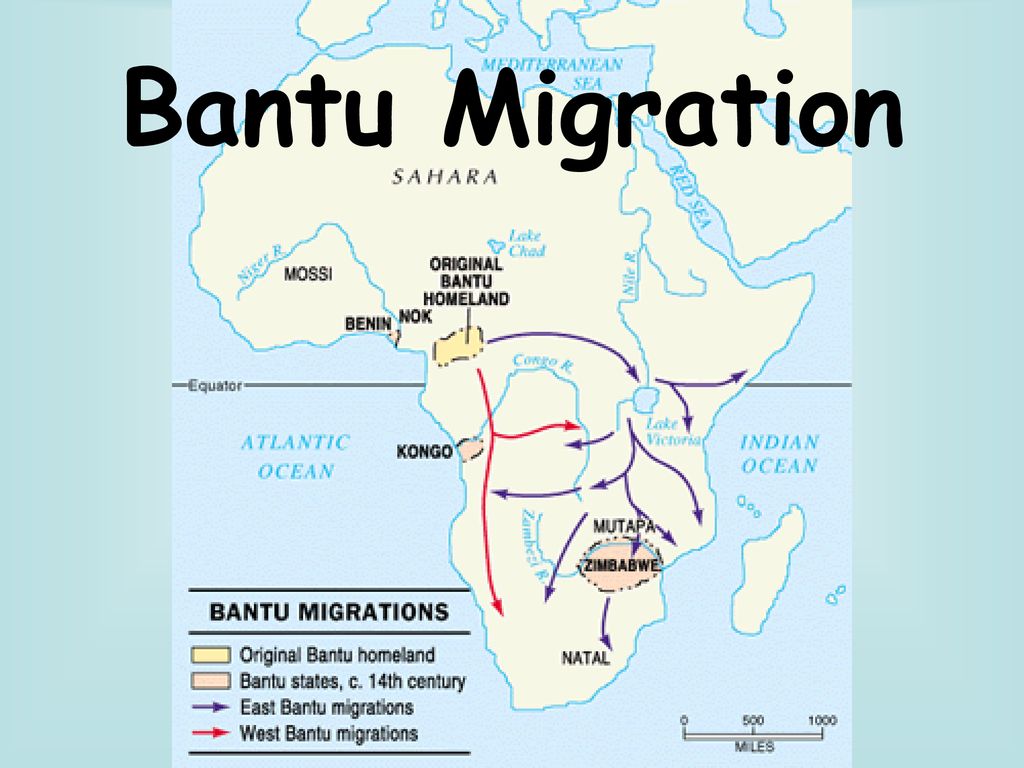
It is said that most Africans occupying the eastern, central and southern parts of the continent today are Bantus. Their ancestors are believed to have migrated from the forests on the Nigeria-Cameroon-Gabon borders and moved eastwards and southwards to cover Central, Eastern and Southern Africa – all the way from modern Kenya down to the countries of what is now the SADC region. And this, they say, happened between 2,000 and 3,000 years ago. And – to our eternal shame as Africans – we actually believe it. We believe that we are Bantus! So, for decades and decades, high academic courses and discourses have been built on this fallacy, even though the original European propounders themselves say it is a “hypothesis”. The question is when did a hypothesis ever mean a reality? There is no such thing. A hypothesis is a hypothesis and a reality is a reality. There is a clear demarcation between the two. Thus, believing that we are Bantus shows how gullible the African has become.
This month, our editor, Baffour Ankomah, takes us through factual historical accounts and records to prove that there was no African who ever called himself or herself a Bantu. “Bantu” is a coinage of a German linguist called Wilhelm Bleek who died in South Africa in 1875 at the age of 48. He coined it in “1857 or 1858” according to the historical record and popularised it in his 1862 publication, Comparative Grammar of South African Languages. Since then Bantu has been used by European-descended historians, anthropologists and supremacists to shield the African from seeing where his great ancestors really were, and where they came from – Ancient Egypt. Their goal has been to continue the lie that Ancient Egypt, the greatest empire on earth that lasted thousands and thousands of years more than any comparable empire in history, was not created by black people – the ancestors of most modern-day black Africans. But our ancestors created Ancient Egypt. And here is the story – all wrapped up in a four-part series in this issue, a collector’s item.

Until “1857 or 1858”, there was no word or name like Bantu. And by 1857 or 1858, African history was already ancient. Which means the people known as Africans today were already ancient. And not one of them ever called himself or herself a Bantu. It shows how gullible the descendants of those great African ancestors have become today – by believing and accepting that they are Bantus! They are not!
The word or name Bantu was coined, according to Wikipedia, in “1857 or 1858” by Wilhelm Heinrich Immanuel Bleek, a German linguist who died in South Africa on 17 August 1875, aged 48. His kith and kin have since blessed him with a wonderful title, philologist, meaning he was a “lover of words”.
The root word, philology, comes from Ancient Greek, meaning “love of word”. In modern times, philology has morphed into the study of language in oral and written historical sources. According to Wikipedia, “it is the intersection of textual criticism, literary criticism, history, and linguistics”.
“Philology,” Wikipedia goes on, “is also defined as the study of literary texts as well as oral and written records, the establishment of their authenticity and their original form, and the determination of their meaning. A person who pursues this kind of study is known as a philologist.”
So, Wilhelm Bleek (God bless his heart) was a philologist. According to the South African History Online (SAHO), Bleek first used the word “Bantu” in his 1862 publication, Comparative Grammar of South African Languages, as a classificatory name.
Born in the German capital, Berlin, on 8 March 1827, Bleek, according to Wikipedia, “was the eldest son of Friedrich Bleek, professor of theology at Berlin University and then at the University of Bonn, and Augusta Charlotte Marianne Henriette Sethe. He graduated from the University of Bonn in 1851 with a doctorate in linguistics, after a period in Berlin where he went to study Hebrew and where he first became interested in African languages.
“Bleek’s thesis featured an attempt to link North African and Khoikhoi (or what were then called Hottentot) languages – the thinking at the time being that all African languages were connected. After graduating in Bonn, Bleek returned to Berlin and worked with a zoologist, Dr Wilhelm K. H. Peters, editing vocabularies of East African languages. His interest in African languages was further developed during 1852 and 1853 by learning Egyptian Arabic from Professor Karl Richard Lepsius, whom he met in Berlin in 1852.”
Bleek’s major break came when he was appointed official linguist to Dr William Balfour Baikie’s Niger Tshadda Expedition in 1854. But “ill-health (a tropical fever) forced his return to England where he met Sir George Grey [the governor of the Cape, in South Africa], and John William Colenso, the Anglican bishop of Natal, who invited Bleek to join him in Natal in 1855 to help compile a Zulu grammar.”
Wikipedia further tells us that after Bleek completed Colenso’s assignment, he travelled to Cape Town in 1856 to become the official interpreter of Sir George Grey, the Cape governor, and catalogued his private library. It is said that Grey had philological interests and became Bleek’s patron.

‘Bleek was widely respected as a philologist, particularly in the Cape,” Wikipedia reports. “While working for Grey, he continued with his philological research and contributed to various publications during the late 1850s. Bleek requested examples of African literature from missionaries and travellers such as the Rev W. Kronlein who provided him with Namaqua texts in 1861.
Bleek died on 17 August 1875 at Mowbray, one of Cape Town’s southern suburbs, atop the Devil’s Peak. He was buried in the Wynberg Anglican cemetery in Cape Town where his two infant children who had died before him had been buried.
“His all-important work recording the !Xam language and literature,” says Wikipedia,” was continued and expanded by Lucy Lloyd, fully supported by his wife Jemima. In his obituary in the South African Mail of 25 August 1875, he was lauded in the following terms: ‘As a comparative philologist, he stood in the foremost rank, and as an investigator and authority on the South African languages, he was without peer.’”
Now we can see why his coinage of “Bantu” as the classificatory name for the masses of the African ancestors who had migrated thousands of years previously to occupy central, eastern, and southern Africa became set in stone, and subsequently cemented in global consciousness.
It was all part of the ploy of the European-descended settlers of South Africa who stole the land from the “natives” to say the “natives” (now called Bantus) after all also seized the land from the original San people who lived there before the so-called “Bantu Migration” to the southern parts of the continent happened some 2,000 or 3,000 years ago.
No wonder, in 1921, the University of Witwatersrand in Johannesburg established a Bantu Studies Department under Dr. W.M. Eiselen who provided the academic foreground for the “separate development” policy of the later apartheid government to be cemented.
The problem
But the Bantu ethnic classification and the subsequent “Bantu migration” idea always had a problem – except that the Africans astonishingly just believed it, warts and all. Astonishing because, first, as mentioned above, no African or black person in the entire history of the ancestors and the continent ever called himself or herself Bantu.
Second, all the major European-created encyclopaedias and other such platforms have forever insisted that the “Bantu migration” is just a “hypothesis”.
For example, the Encyclopaedia Britannica (no friend of Africa’s) insists that, as a classification, the name Bantu is “primarily linguistic, for the cultural patterns of Bantu speakers are extremely diverse; the linguistic connection, however, has given rise to considerable speculation concerning a possible common area of origin of the Bantu peoples, the linguistic evidence pointing strongly to the region of the present-day Cameroon-Nigeria border.”
The “considerable speculation” cited by the Britannica should have caused the Africans to smell a fish about Bleek’s Bantu classification. But they didn’t.
Wikipedia, in fact, is more forthright. It calls the Bantu migration proposition a “hypothesis”. It says: “Under the Bantu migration hypothesis, various Bantu-speaking peoples would have assimilated and/or displaced many earlier inhabitants, with only a few modern peoples such as Pygmy groups in Central Africa, the Hadza people in northern Tanzania, and various Khoisan populations across Southern Africa retaining autonomous existence into the era of European contact.”
Wikipedia says matter-of-factly: “The Bantu expansion is a hypothesis about the history of the major series of migrations of the original Proto-Bantu speaking group, which spread from an original nucleus around Central Africa across much of sub-Saharan Africa. In the process, the Proto-Bantu-speaking settlers displaced or absorbed pre-existing hunter-gatherer and pastoralist groups that they encountered.”
Wikipedia’s most important point which we should all not forget is this: “The Bantu expansion is a hypothesis”. This supports the Britannica’s position of “considerable speculation” having arisen over the possible common area of origin of the Bantu peoples.
“The primary evidence for this expansion is linguistic,” says Wikipedia. “A great many of the languages which are spoken across Sub-Equatorial Africa are remarkably similar to each other, suggesting a common cultural origin of their original speakers.
Very important point
Before we go further, there is a very important point we should all note. From the above, the Britannica informs us that: “The name Bantu is primarily linguistic, for the cultural patterns of Bantu speakers are extremely diverse; the linguistic connection, however, has given rise to considerable speculation concerning a possible common area of origin of the Bantu peoples…”
Wikipedia confirms this most important point by reporting that: “The primary evidence for [the Bantu] expansion is linguistic. A great many of the languages which are spoken across Sub-Equatorial Africa are remarkably similar to each other, suggesting a common cultural origin of their original speakers.”
Please mind the catchphrases, “a possible common area of origin” (Britannica), and “a common cultural origin” (Wikipedia) of the so-called “original Bantu language speakers”. What this means is that the people that the Britannica and Wikipedia and the rest of the European-descended anthropologists, linguists, historians, and writers call “Bantus” originated from a common place – presumably in Africa, where else? We shall come back to this most vital point later in this piece.
So, for now, let’s stay with Wikipedia: It says: “The linguistic core of the Bantu languages, which comprises a branch of the Atlantic-Congo language family, was located in the southern regions of Cameroon. However, attempts to trace the exact route of the expansion, to correlate it with archaeological evidence and genetic evidence, have not been conclusive; thus although the expansion is widely accepted as having taken place, many aspects of it remain in doubt or are highly contested.”
This deserves to be repeated, for its sheer controversy: “The linguistic core of the Bantu languages, which comprises a branch of the Atlantic-Congo language family, was located in the southern regions of Cameroon. However, attempts to trace the exact route of the expansion, to correlate it with archaeological evidence and genetic evidence, have not been conclusive; thus although the expansion is widely accepted as having taken place, many aspects of it remain in doubt or are highly contested.” Nothing could be more eye-opening than this.

In fact, Manfred K. H. Eggert, the German prehistorian, who has been conducting field research in Cameroon since 1997 (and most recently from 2004 to 2010, together with scientists from the University of Frankfurt, under the theme, “Ecological Change and Cultural Upheavals in West and Central Africa”) has unambiguously stated that: “The current archaeological record in the Central African rainforest is extremely spotty and consequently far from convincing so as to be taken as a reflection of a steady influx of Bantu speakers into the forest, let alone movement on a larger scale.”
If nobody is convinced that the Bantu migration is a hypothesis, Eggert’s words should make us all pause and ponder.
Definition of hypothesis
Generally, according to the native speakers of English, a hypothesis is “a supposition or proposed explanation made on the basis of limited evidence as a starting point for further investigation”.
The Merriam-Webster Dictionary defines it as: “An assumption, an idea that is proposed for the sake of argument so that it can be tested to see if it might be true.”
The Merriam-Webster Dictionary goes on to say: “In the scientific method, a hypothesis is constructed before any applicable research has been done, apart from a basic background review. You ask a question, read up on what has been studied before, and then form a hypothesis. [Thus] a hypothesis is usually tentative; it’s an assumption or suggestion made strictly for the objective of being tested.

“A theory, in contrast, is a principle that has been formed as an attempt to explain things that have already been substantiated by data. It is used in the names of a number of principles accepted in the scientific community, such as the Big Bang Theory. Because of the rigours of experimentation and control, a theory is understood to be more likely to be true than a hypothesis is.
“In non-scientific use, however, hypothesis and theory are often used interchangeably to mean simply an idea, speculation, or hunch, with theory being the more common choice,” adds the Merriam-Webster Dictionary.
On its part, the Cambridge English Dictionary defines a hypothesis as (in American English): “An idea or explanation for something that is based on known facts but has not yet been proven. (And in British English): “An idea or explanation for something that may be true but has not yet been completely proved.”
Another authority, the Collins English dictionary, says: “A hypothesis is an idea which is suggested as a possible explanation for a particular situation or condition, but which has not yet been proved to be correct.”
Wikipedia joins the war of definitions by saying: “A hypothesis is a proposed explanation for a phenomenon (an observable event). For a hypothesis to be a scientific hypothesis, the scientific method requires that one can test it. Scientists generally base scientific hypotheses on previous observations that cannot satisfactorily be explained with the available scientific theories.
“In common usage in the 21st century, a hypothesis refers to a provisional idea whose merit requires evaluation. For proper evaluation, the framer of a hypothesis needs to define specifics in operational terms. A hypothesis requires more work by the researcher in order to either confirm or disprove it. In due course, a confirmed hypothesis may become part of a theory or occasionally may grow to become a theory itself.”
Supposition, supposition, supposition!
So, the long and short of the above definitions is that a “theory” is much closer to reality than a hypothesis. “Because of the rigours of experimentation and control, [a theory] is understood to be more likely to be true than a hypothesis is,” says the Merriam-Webster Dictionary. Thus, the Bantu classificatory name and its big sister, the Bantu Migration, are merely a hypothesis, and nowhere near reality!
But don’t take my word for it. Just consider the following definitions of a “supposition”. Remember that generally, a hypothesis is “a supposition or proposed explanation made on the basis of limited evidence as a starting point for further investigation”.
So, what then is a supposition? Generally, according to linguists, a supposition is “a belief held without proof or certain knowledge; an assumption or hypothesis.”
The Cambridge English Dictionary adds that a supposition is: “The fact of believing something is true without any proof, or something that you believe to be true without any proof.” Or in American English: “An idea that something may be true, although it is not certain.”
On its part, the Collins English Dictionary says: “A supposition is an idea or statement which someone believes or assumes to be true, although they may have no evidence for it.” That is what the Bantu Migration exactly is – “an idea or statement which someone believes or assumes to be true, although they may have no evidence for it.”
So, what are the above definitions saying? Simply that Wilhelm Bleek’s Bantu classification and Bantu Migration proposition, being a “hypothesis” and therefore a “supposition”, means that although Bleek and his followers assume the Bantu classification and migration to be true, they are not proven by evidence and therefore remain just a “hypothesis” and a “supposition”. They are not a reality, in fact!
Origin of the word Bantu
Though not expressly stated, it can be deducted that Bleek, the philologist, used his knowledge of the South African languages to coin the name Bantu from the Zulu word for people, “abantu”, which is the plural of the word “umuntu”, meaning “person”, which in turn is based on the stem “ntu”, plus the plural prefix “aba”.
So, from nowhere, we got “abantu” or “Bantu” as the classificatory name for our great ancestors. Remarkably, “abantu” or “Bantu” has an uncanny correlation with the Latin words “abantea”, “abanteum”, and “abanteus”, which, as found in ancient writings, have various meanings, one of which is “an Ethiopian” or black person.
As such, Wikipedia cares to remind everybody that: “In linguistics, the word Bantu, for the language families and its speakers, is an artificial term based on the reconstructed Proto-Bantu term for ‘people’ or ‘humans.’’’.
Wikipedia goes on to say: “There is no native term for the people who speak Bantu languages because they are not an ethnic group. People speaking Bantu languages refer to their languages by ethnic endonyms, which did not have an indigenous concept prior to European contact for the larger ethno-linguistic phylum named by 19th century European linguists. Bleek’s coinage was inspired by the anthropological observation of groups self-identifying as ‘people’ or ‘the true people.’”
Wikipedia’s point is supported by linguists who say that versions of the word “Bantu” occur in all Bantu languages, “for example as bantu in Kikongo and Kituba; watu in Swahili; anthu in Chichewa; batu in Lingala; bato in Kiluba and Duala; abanto in Gusii; andu in Kamba and Kikuyu; abantu in Kirundi, Lusoga, Zulu, Xhosa, Runyoro and Luganda; wandru in Shingazidja; abantru in Mpondo and Ndebele, bathfu in Phuthi; bantfu in Swati and Bhaca; banhu in Kisukuma; banu in Lala; vanhu in Shona and Tsonga; batho in Sesotho, Tswana and Northern Sotho; antu in Meru; andu in Embu, vandu in some Luhya dialects; vhathu in Venda; and bhandu in Nyakyusa.”
But none of the above speakers of the so-called Bantu languages ever called themselves Bantu as a classificatory name.
The contents of Bleek’s hypothesis
According to the Bleek hypothesis (as quoted by the Encyclopaedia Britannica), “the Bantu subgroup of the Niger-Congo language family occupy almost the entire southern projection of the African continent”.
Wikipedia (also quoting from the Bleek hypothesis), adds that, “the Bantu peoples, or Bantu, are an ethnolinguistic grouping of approximately 400 distinct ethnic groups who speak Bantu languages. They are native to 24 countries spread over a vast area from Central Africa to Southeast Africa to Southern Africa.
“One recent suggestion is that Cushitic speakers had moved south earlier and interacted with the most northerly of Khoisan speakers who acquired cattle from them, and that the earliest arriving Bantu speakers in turn got their initial cattle from Cushitic-influenced Khwe-speaking people. Under this hypothesis, larger later Bantu speaking immigration subsequently displaced or assimilated that southernmost extension of the range of Cushitic speakers.”
Everybody should remember the phrase, “Cushitic speakers had moved south earlier”, because it is a critical point we shall return to later in this article.
Bleek’s hypothesis claims that the Bantu expansion took place in at least two waves, between about 3,000 and 2,000 years ago, approximately 1,000 years before the birth of Jesus Christ to one year after his death and resurrection (ie, 1000 BC to AD 1).
According to Wikipedia, still quoting from Bleek’s hypothesis: “Linguistic analysis suggests that the expansion proceeded in two directions: the first went across or along the Northern border of the Congo forest region (towards East Africa), and the second – and possibly others – went south along the African coast into Congo [Brazzaville], Gabon, DRCongo, and Angola, or inland along the many south-to-north flowing rivers of the Congo River system. The expansion reached South Africa, probably as early as AD 300.
“According to the early-split scenario as described in the 1990s, the southward dispersal had reached the Congo rainforest by about 1500 BC and the southern savannas by 500 BC, while the eastward dispersal reached the Great Lakes by 1000 BC, expanding further from there as the rich environment supported dense populations.”

The UNESCO General History of Africa supports the above idea when it says: “The main expansion of the Bantu was vast and fast, not a series of gradual stages as some have argued. But it was a matter neither of purposeless nomadic wandering, nor of organised military conquest. It was a remarkable process of colonisation – in the true sense of the word – the opening up of essentially empty lands.”
Much scholarship about nothing
The Britannica recounts how “much scholarly work has been done since the late 19th century to describe and classify the Bantu languages”, which the Britannica reports to be about 500.
“Special mention,” according to the Britannica, “may be made of Carl Meinhof’s work in the 1890s, in which he sought to reconstruct what he called ur-Bantu (the words underlying contemporary Bantu forms), and the descriptive work carried out by Clement Doke and the Department of Bantu Studies at the University of Witwatersrand, in the period 1923–53.
“A monumental four-volume classification of Bantu languages, Comparative Bantu (1967–71), which was written by Malcolm Guthrie, has become the standard reference book used by most scholars – including those who disagree with Guthrie’s proposed classification, which sets up a basic western and eastern division in Bantu languages with a further 13 subdivisions,” the Britannica says.
The World History Encyclopedia also cites the academic work which insists that the Bantu migration “can be traced by the study of linguistics – a technique known as lexicostatistics – and observation of the relative closeness of local languages to each other and the language originally spoken by the Bantu people of the Niger River delta: Proto-Bantu.”
But then the World History Encyclopedia adds a disclaimer: “At the same time, one should be cautious with such studies as the passage of a language may not necessarily reflect the migration of its speakers. The same might be said of cultural practices and technologies.”
In short, decades and decades of academic work has gone into enhancing and cementing the Bantu hypothesis and trying to make it appear as reality or truth. Part of this academic work, according to Wikipedia, has pointed to “hundreds of millions of Bantu speakers, ranging at roughly 350 million in the mid-2010s (roughly 30% of the population of Africa, or roughly 5% of the total world population). About 60 million speakers (2015), divided into some 200 ethnic or tribal groups, are found in DRCongo alone.
“The larger of the individual Bantu groups have populations of several million, e.g. the people of Rwanda and Burundi (25 million), the Baganda people of Uganda (10 million as of 2019), the Shona of Zimbabwe (15 million as of 2018), the Zulu of South Africa (12 million as of 2005), the Luba of DRCongo (7 million as of 2010), the Sukuma of Tanzania (9 million as of 2016), the Kikuyu of Kenya (8.1 million as of 2019), the Xhosa of Southern Africa (8.1 million as of 2011), the Pedi of South Africa (5.7 million as of 2017) and the Tonga Illa and Lenge of Zambia at about 4.2 million,” Wikipedia reports.
The South African History Online (SAHO) adds that linguists have divided the Bantu-language speakers into four categories: Nguni, Sotho-Tswana, Venda, and Tsonga. But SAHO cares to add that: “How these languages spread into Southern Africa remains uncertain.”
Bantu states
Yet the academic work built on Bleek’s hypothesis insists that “between the 11th and 16th centuries, powerful Bantu-speaking states on a scale larger than local chiefdoms began to emerge.

“Examples of such Bantu states include: the Kingdom of Kongo, Anziku Kingdom, Kingdom of Ndongo, Kingdom of Matamba, Kuba Kingdom, the Lunda Empire, Barotse Empire, Luba Empire, the Kazembe Kingdom, Mbunda Kingdom, Yeke Kingdom, Empire of Kitara, Butooro, Bunyoro, Buganda, Busoga, Rwanda, Burundi, Ankole, the Kingdom of Mpororo, Igara Kingdom, the Kingdom of Kooki, the Kingdom of Karagwe, Swahili city states, Mutapa Empire, Zulu Kingdom, Ndebele Kingdom, Mthethwa Empire, Tswana city states, Mapungubwe, Kingdom of Eswatini, the Kingdom of Butua, Maravi, Danamombe, Khami, Great Zimbabwe, Naletale, and the Rozwi Empire.”

Still basing their argument on language, linguists have claimed that Zimbabwe is made up of 99% Bantu people, DRCongo 80%, Tanzania 95%, South Africa 75%, Kenya 60%, Mozambique 99%, Uganda 80%, Angola 97%, Malawi 99%, Zambia 99%, Rwanda 85%, Burundi 85%, Cameroon 30%, Congo Brazzaville 97%, Botswana 90%, Equatorial Guinea 95%, Lesotho 99%, Gabon 95%, Namibia 70%, Eswatini 99%, Somalia 4%, and Comoros 99%. Total Sub-Saharan Africa 37%.
The migrations from Ancient Egypt
All the above scholarship, however, tries to deny one basic fact: That the ancestors of the so-called Bantu people were part of the large groups of ancestors who migrated from Ancient Egypt and the Nile Valley when that mighty empire suffered invasion upon invasion by foreigners who eventually succeeded to take total control of Africa’s most glorious empire in 469 AD. Please note, 469 years after the death and resurrection of Jesus Christ, or what is known as the Christ Era (CE).
As will be seen from the articles that follows this, (Ancient Egypt, Our Motherland, and Who were the Ancient Egyptians?), the greatest empire ever built by black hands in northeast Africa suffered over two dozen foreign invasions, because of its wealth, culture and high civilisation.
History records that: “Ancient Egyptian wealth and culture attracted successive invasions of Asians and Europeans from Iran, Macedonia, Greece, Italy, Arabia, Turkey, France and England, who mixed with the original population.” (This quote comes from Ayi Kwei Armah, the Ghanaian literary colossus and Egyptologist).
With every invasion, some of the African ancestors migrated west and south into the African heartlands and created new empires or made new homes. Six of those migrations have been identified by historians, both African and foreign, to have gone across the Sahara Desert into the far reaches of West Africa, where new empires such as the Ghana Empire, Songhai Empire, and Mali Empire were created by them.
Other migrations came down straight through the Congo forests and spread through Central Africa, East Africa, and Southern Africa. Because they came by land, they would stop on the way, make new homes and later move on. The stop-start, stop-start process sometimes took centuries in-between, but eventually the ancestors from Ancient Egypt spread to cover all the different parts of the African continent – right from the very west to the very east and the very south. And these people did not call themselves Bantus.
The group of ancestors that Bleek and his followers claim to have migrated from the Nigeria-Cameroon-Gabon forests was certainly part of the migration from Ancient Egypt that came through the Congo forest and veered west to West Africa.
Bleek’s hypothesis does not say where the great masses of the so-called Bantus originally came from, and why they happened to be in the Nigeria-Cameroon-Gabon forests. He assumes that they were indigenous to the place, but they suddenly decided one day to move en mass to occupy the entire southern projection of the African continent.
Bleek and his followers claim that the Bantus migrated because of the following reasons: “Exhaustion of local resources (agricultural land, grazing land, and forests); overpopulation; famine; epidemics; increased competition for local resources, warfare between rival tribes or as a consequence of succession disputes; climate change affecting crops; and a spirit of adventure”.
But these reasons are purely academic, because movements and migrations throughout history have followed one or two or three or even all of the above reasons.
What is true is that over thousands and thousands of years before Jesus was born, or what historians call BCE (Before the Christ Era), and certainly long before the hypothesised Bantu Migration, African ancestors had left Ancient Egypt and migrated in huge numbers down south and west to build new empires, kingdoms and lives. Some of these people are what Bleek and his followers call the Bantus. But they are not Bantus.
In Ancient Egypt, the ancestors did not call themselves Bantus. They did not even call themselves Egyptians. Egypt was the name the Greek invaders gave to the mighty empire. The ancestors called their empire Kemet (meaning black) and other native names, and the empire south of it was called Kush and later Nubia. European historians later called them Kushites or Cushites, but for the black people of Kemet, there is a huge silence.
However, Wikipedia, founded by European-descended people, appears to confirm the above when it says: “Prior to the arrival of Bantus in Southeast Africa, Cushitic-speaking peoples had migrated into the region from the Ethiopian Highlands and other more northerly areas. The first waves consisted of Southern Cushitic speakers, who settled around Lake Turkana and parts of Tanzania beginning around 5,000 years ago. Many centuries later, around AD 1000, some Eastern Cushitic speakers also settled in northern and coastal Kenya.”
It deserves repeating that the so-called Bantus were part of the several migrations from Ancient Egypt into the African heartlands. It is why African languages today are very similar. It is because the ancestors migrated from a common source – the common source that the Britannica and Wikipedia acknowledged earlier in this piece.
The Akans and Shonas
One pertinent fact that dismisses Bleek and his followers’ hypothesis is that the Akan people of Ghana and Cote d’Ivoire, and their cousins, the Soninke/Sarahole people (of Senegal, Gambia, Mauritania and most of West Africa) are supposed not to be part of the Bantu group, as historians have traced the lineage of the Akans and the Seraholes to Ancient Egypt.
But the Akan people, from whom this writer proudly comes, share certain common words with the Shona people of Zimbabwe, who are said to be Bantus. How is that possible?
Ayi Kwei Armah, an Akan himself, tells about the pleasant surprises he encountered when he started studying the Ancient Egyptian language and literature. In his memoirs, The Eloquence of the Scribes (2006), he wrote: “The study of hieroglyphic writings is never going to be an entertainment, but for me it was lightened by surprises. Given that linkages between the Akan and Ancient Egyptian languages were not direct but mediated through a Soninke connection involving multimillennial migrations over thousands of kilometres, I did not expect to encounter Ancient Egyptian words with the same sounds and meanings as Akan words.

“Yet as I built up my vocabulary in the dead language, apart from the intriguing fact that negations were formed the same way as in my mother tongue [Akan], by the insertion of the prefixes ‘nn’ and ‘mm’, certain words jumped out at me. One was the Ancient Egyptian word for the sun. Actually there is not just one word. The sun as deity is called ‘Ra’. The visible sun, supposed to be the boat in which the deity rides daily across the sky, is called ‘wia’.
“The Akan name for the sun happens to be the same word: ‘wia’. Another example: the Ancient Egyptians used a drill for making fire. The fire drill was called ‘wja’. The Akan word for fire is pronounced the same way: ‘oja’. Several other matches came to my attention, like ‘bew’, meaning place, ‘fa’, meaning to take, and ‘sen’, meaning to pass. My search, however, was not focused on linguistic data. I treated the matching words as interesting asides, and concentrated on the assessment of literary values.”
The connectedness of the Akan language and the Ancient Egyptian language that Armah discovered was, in fact, not unusual if one considers that even today, thousands of years after the African ancestors migrated from Ancient Egypt, there is still a link joining many African languages.
One big example: the Shona people of Zimbabwe whom Wilhelm Bleek and his followers call Bantus live a good 6,577 kilometres away from the Akan people of West Africa. That is the distance between the Zimbabwean capital Harare and the Ghanaian capital Accra.
It must be explained that the Akans, who, by Bleek’s definition, are not Bantus, now live mainly in Ghana and Côte d’Ivoire but their Soninke/Seraholes cousins are spread all over West Africa – in modern Senegal, Gambia, Mali, Mauritania, Guinea, Sierra Leone, Burkina Faso and Guinea Bissau.

Yet despite the huge distance between West Africa and Southern Africa, there are still some stubborn common words shared by the Shona and the Akans. For example, the word “mu” which means “inside” means the same in Shona and Akan and is pronounced the same way by the two peoples.
The word “ye” which means “is” means the same in Shona and Akan and is also pronounced the same way by the two peoples. The word “ne” which means “and” in Akan means the same in Shona (sometimes pronounced as “na” in Shona).
The word “soro”, which means “up” or “above” is the same in Shona and Akan, except the Shona will add “pamusoro” for emphasis, but it is the same “soro” – “above”. The word “duku” which means a “headtie” (mostly for women) is the same in Shona and Akan and pronounced the same by the two peoples.
The Zambians also use the same word, “duku”, which means the same thing: a headtie for women, pronounced the same way as the Shona and the Akans do. There is also “iyi” (meaning “this”) in Shona which means the same as in Akan.
There are many more of such linguistic matches not covered here – and they happen in many African languages. The question is: If the Shona are Bantu and the Akans are not (as Bleek and his followers claim), and the two peoples live over 6,577 kilometres apart, how come their languages have common words – that is, if there has been no borrowings from one another?
The short answer is that Bleek’s Bantu classification is pure nonsense. The long answer is that both the Shona and the Akan peoples once upon a time lived at a common place – in Ancient Egypt, and their ancestors were part of the migrations that left the glorious empire following the many invasions by foreigners.
Another example: One of the largest ethnic groups in Namibia, the Herero, speak a variant form of Shona called Otjiherero. The Herero are known as a Bantu ethnic group who are spread over Namibia, Angola and Botswana. But by speaking a variant Shona, it means the ancestors of the Hereros came from the same place as the Shonas of Zimbabwe/Mozambique and the Akans and the Soninke/Seraholes of West Africa, and the other ethnic groups of Africa.
Remember the Britannica’s “possible common area of origin” and Wikipedia’s “common cultural origin” mentioned earlier in this piece. That clearly refers to Kemet or Ancient Egypt where the ancestors of most black Africans today came from. So they are not Bantus! Bantu is too limiting. They are far more than that.
So, if they are not Bantus, let’s move to the next article, on the next page, to continue the discussion.
Leave a Reply