
If modern black Africans are not Bantus, where did their ancestors come from? The short answer is Ancient Egypt. The long answer, however, has been made so controversial and complex by Euro-American anthropologists, historians and academics that we need to go step by step to unravel and refute their lies. Baffour Ankomah reports.
Few controversies have hit Africa, since the death of Christ, greater than the denial of its ownership of Ancient Egypt, one of the world’s most impressive empires, which developed in the Nile valley of northeast Africa, along the contours of the Nile River, the world’s longest and only great river that defies the laws of gravity and flows north for the whole of its 4,000-mile course, from its source in the middle of Africa, going through some of the harshest terrains and deserts and emptying into the Mediterranean sea. In the process, the Nile fertilises the bone-dry desert land that gave birth to Ancient Egypt, that wondrous empire which suffered more foreign invasions than any comparable empire in history.
Not too strangely, because Ancient Egypt was a high-grade civilisation, a myth has been created and sustained over centuries by Eurocentric historians and academics who say Ancient Egypt could not possibly have been created by black people – Africans! This myth has been polished to such a sheen that a huge percentage of Africans themselves agree that Ancient Egypt was not African.
In October 1998, one reader of the London-based pan-African magazine, New African, took grave issue with me when I was the editor of New African, for daring to assert in my personal column (Baffour’s Beefs, published in May 1998) that: “On 22 March this year [1998], the world was astounded to ‘discover’ that on the day of the Equinox, the sun sets directly behind the head of the Great Sphinx in Egypt. ‘It is now agreed,’ trumpeted a British TV reporter, ‘that the people who built this great pyramid were astrological geniuses’. Although the world, and modern Egyptians themselves, have tried for centuries to wipe out any black African connections to the pyramids, we know that our great black ancestors built those pyramids…” I said matter-of-factly!
The reader, ironically an African from Sierra Leone living in London, was hugely irritated by what he called the “extravagant claim” that “our great black ancestors built those pyramids”, and wrote back saying: “To assert without proof that the Great Sphinx was built by black people is an extravagant claim that deserves to be ranked alongside the sort of pseudo-science that is often articulated by some African-American scholars of black history.”
This coming from an African was extraordinary. But that Sierra Leonean is not the only African who holds that belief.
On 8 January 2020, when Zimbabwe’s leading newspaper The Herald published a story about the first draft of The Africa Factbook having been presented to President Emmerson Mnangagwa by the Institute of African Knowledge (INSTAK), a reader – a full-blooded Zimbabwean – wrote to The Herald saying: “History of Africa? How will the people of miserable Zimbabwe benefit from modern African history? The economy is in a mess and politicians are talking of Africa 500 years ago! Nothing was invented in Africa. Give us a list. I am talking of Sub-Saharan Africa. Don’t tell us about Egypt – those are Arabs. They are the ones who built the [Great] Zimbabwe Ruins. Was Zanu-PF fighting elections to re-write history? Embellished history?”
It is astounding that such Africans exist – and unfortunately there are millions and millions of them. But as the Ethiopians say, “truth and morning become light with time”, hence The Africa Factbook (which I had the immense pleasure to edit, all 1,200 pages of it) was the right place to put the alleged “pseudo-science” and “extravagant claim” to the test. And we did it to great aplomb. (I urge all Third Eye readers to get a copy of The Africa Factbook. You only need to call INSTAK, +263 784 601 335). End of the fee advert.
Many questions to answer
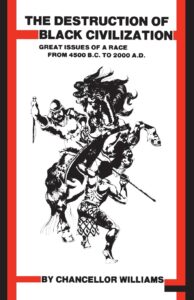
So here we go. We start by first connecting with Dr Chancellor Williams, an African-American and one of the greatest historians and scholars to walk the land of Global Africa. In his life-changing book published in 1974, The Destruction of Black Civilisation: Great Issues of a Race, from 4500 BC to 2000 AD, (if you haven’t read it, please get a copy), he tells how, after having read everything about the African race that he could get his hands on in Sixth Grade, he knew even before leaving high school that:
(a) The land of the blacks was not only the ‘cradle of civilisation’ itself but that the blacks were once the leading people on earth; (b) that Egypt once was not only all black, but the very name ‘Egypt’ was derived from the blacks; (c) that the blacks were the pioneers in the sciences, medicine, architecture, writing, and were the first builders in stone, etc.
“The big unanswered question, then, was what had happened?”, Chancellor Williams asked. “How was this highly advanced black civilisation so completely destroyed that its people, in our times and for some centuries past, have found themselves not only behind the other peoples of the world, but as well, the colour of their skin has become a sign of inferiority, bad luck, and the badge of the slave whether bond or free? And, since I had learned that whites were once enslaved as generally as any other race, how did it come about that slavery was finally concentrated in Africa on blacks only?
“In short, no books or other studies in high school and college answered or gave clues to answers to the problems that puzzled me the most. For no matter what the factual data were, all the books written about blacks by their conquerors reflected the conquerors’ viewpoints. Nothing else should have been expected. And, considering how thorough-going was the capture of the minds of the blacks, it is really not surprising that so many Negro scholars still faithfully follow in the footsteps of the white masters.”
Chancellor Williams went on: “I was convinced that what troubled me and what I wanted to know was what troubled the black masses and what they wanted to know. We wanted to know the whole truth, good and bad. For it would be a continuing degradation of the African people if we simply destroyed the present system of racial lies embedded in world literature only to replace it with glorified fiction, based more on wishful thinking than on the labours of historical research.”
African journey
These critical questions led Chancellor Williams, now an adult and able to research for himself, to go on a journey of discovery in Africa itself and elsewhere that gave birth to his book, The Destruction of Black Civilisation.
In this book, he tells how his “inquiry” was concerned with black civilisation alone – what the blacks themselves achieved independently of either Europe or Asia. “This was an entirely new approach to the study of the history of the blacks. It meant, first of all, segregating traditional African institutions from those later influenced by Islamic Asia and Christian Europe.
“In this way, and in no other, we can determine what our heritage really was and, instead of just talking about ‘identity’, we shall know at last precisely what purely African body of principles, value systems or philosophy of life gradually evolved from our own forefathers over countless ages, and we will be able to develop an African ideology to guide us onward.
“In other words, there can be no real identification with our heritage until we know what our heritage really is. It is all hidden in our history, but we are ignorant of that history. We have been floating along, basking blissfully in the sunny heritage of other peoples!”
Chancellor Williams therefore made his research a quest for specific answers to specific questions, some of which were:
“(a) How did all-black Egypt become all-white Egypt? (b) What were some of the specific details in the process that so completely blotted out the achievements of the African race from the annals of history – just how could this be done on such a universal scale?
“(c) How and under what circumstances did Africans, among the very first people to invent writing, lose this art almost completely? (d) Is there a single African race, one African people? (e) If we are one race or one people, how do you explain the numerous languages, cultural varieties and tribal groupings?
“(f) Since, as it seemed to me, there is far more disunity, self-hatred and mutual antagonisms among blacks than any other people, is there a historical explanation for this? (g) And how, in puzzling contrast, is the underlying love of blacks for their European and Asian conquerors and enslavers explained?”
These were, and still are, deep-rooted questions that need deep-rooted answers that speak to the allegations of “pseudo-science” and “extravagant claims” levelled against Africans who tell, from deep-rooted research, the story of their glorious ancestors who built great civilisations thousands and thousands of years before the European era was born.
One of these civilisations was Ancient Egypt (Ancient is capitalised here to distinguish it from modern Egypt), and no matter what myth is created to deny its black African origins, it will not succeed because facts, like prestigious wine, become better with age. In fact, to render it correctly as the EU’s Eurostat Statistical Yearbook, January 2003, put it: “Two things gain great respect over time: reliable facts and prestigious wine.”
In the beginning
“The reliable facts” about Ancient Egypt say that the subjugation of Africa and its peoples began in earnest with the control of their minds, which to date has reaped surplus dividends to outsiders, especially the European colonisers. Therefore, the basis of African emancipation or the much-talked about “African Renaissance”, must of necessity, begin with the decolonisation of the African mind through the restoration of African history.
The truth is that we have been educated, and are still being educated 63 years after political independence in Africa, using books whose writers have reason to write Africa and its peoples out of history. Therefore, the re-writing of African history to expose the real truth of what Africa contributed, and still contributes, to the world will empower Africa’s current and future generations with a clear and true perception of their forebears, and so of themselves.
The Kenyan writer, Ngugi wa Thiong’o, another great African, puts it another way: “Colonialism tried to control the memory of the colonised, or rather, to borrow from the Caribbean thinker, Sylvia Wynter, colonialism tried to subject the colonised to its memory, to make the colonised see themselves through the hegemonic memory of the colonising centre.
“Put another way, the colonising presence tried to mutilate the memory of the colonised and where that failed, it dismembered it, and then tried to re-member it to the coloniser’s memory: his way of defining the world, including his take on the nature of the relations between the coloniser and the colonised.
“Whatever has been gained, including independence and national liberation, did not come of themselves. They were results of struggle and sacrifice, and it behoves us, the inheritors of any and every benefit of those sacrifices, never to forget. A people without memory are in danger of losing their soul.”
Ngugi could not have spoken for us all, because such a restoration of African history or “African memory” will be a service to humanity itself, as the historical consciousness of humanity has suffered from more than 600 years of deliberate distortion by Western anthropologists, scholars, and writers.
They were able to do this through falsifying primarily the history of the great African civilisation of Kemet (also known as Ancient Egypt). For years, Western historians have tried to divorce black Africans from Ancient Egypt, while attributing its illustrious accomplishments to a people they call Hamites (or Indo-Europeans who came from Asia).
The Hamitic myth
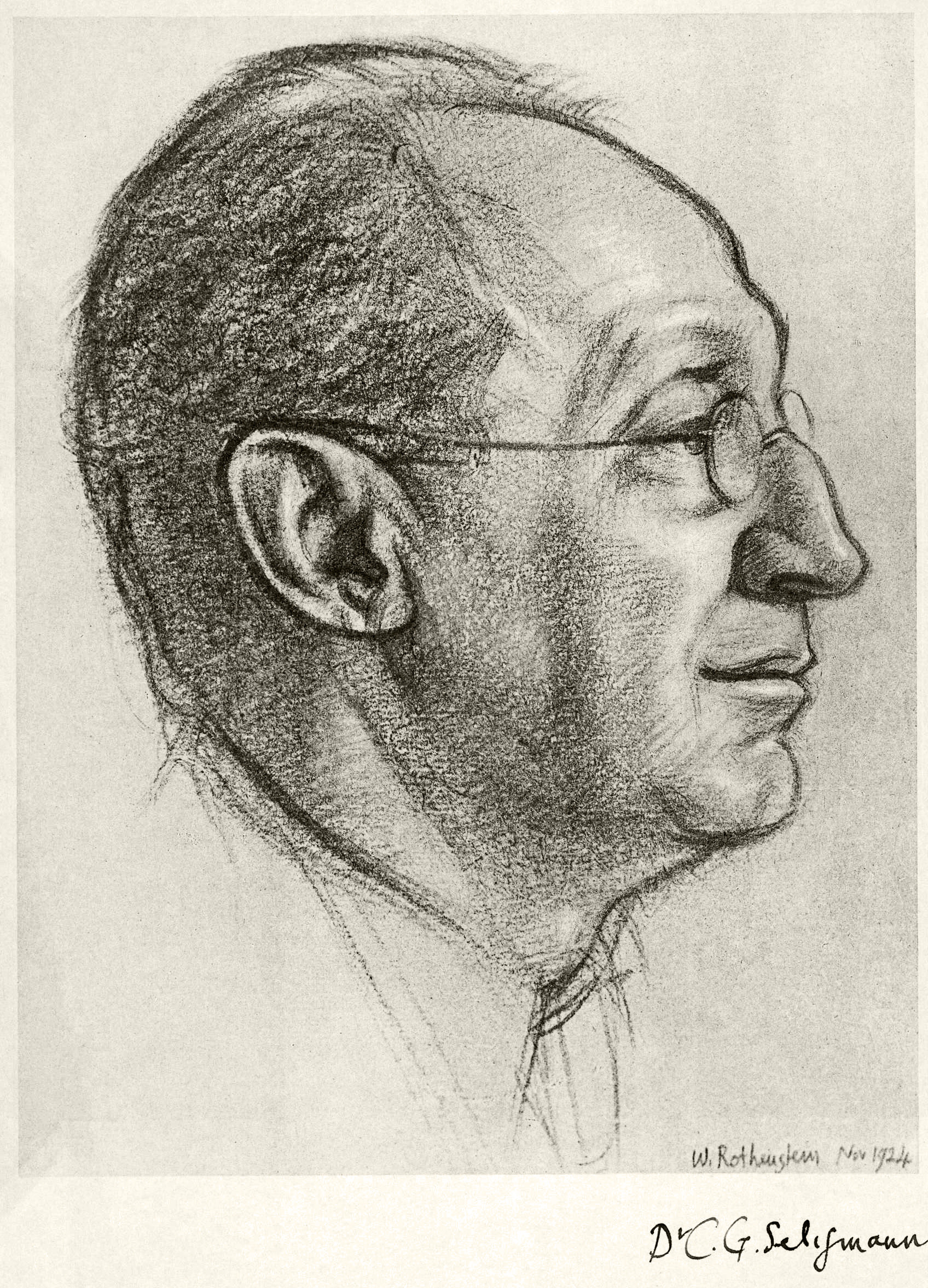
But the “Hamitic myth” was invented only in the 1920s by Charles Gabriel Seligman (1873-1940), an “English” anthropologist and author of Races of Africa. He was born into a middle-class Jewish family in London on 24 December 1873. According to him: “Negroes were too primitive to be capable of any advanced thought”. He claimed that Kemet (or Ancient Egypt) was created by Hamites whom he regarded as “Caucasians [belonging] to the same branch of mankind as almost all Europeans.”
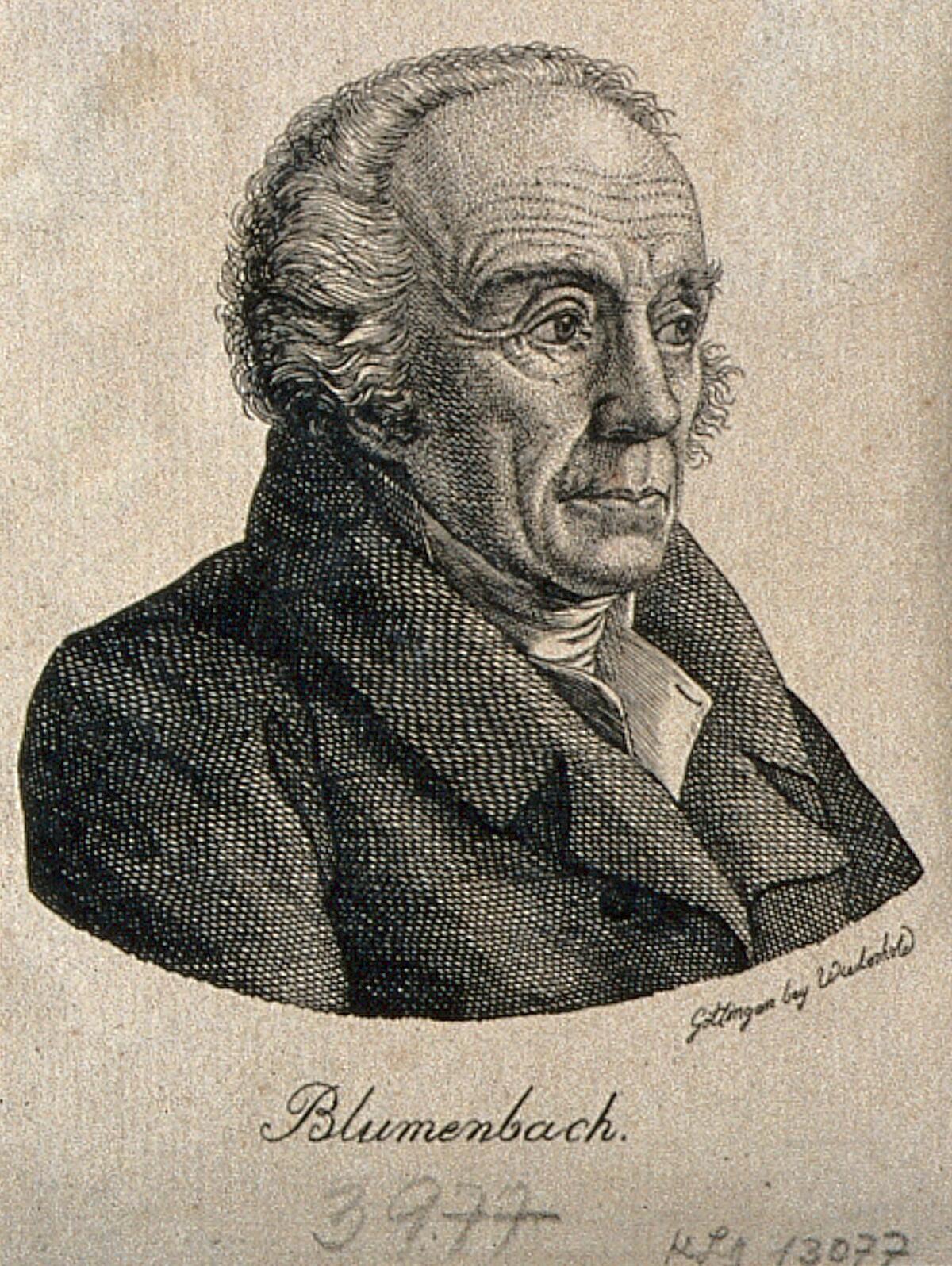
Seligman was in fact continuing from where Johann Friedrich Blumenbach, professor at Göttingen University in Germany, had left off. In 1795, Blumenbach had put forward the “superiority of Caucasians”, a term he coined for Europeans in his classification of human races. Incidentally, he included the Ancient Egyptians among his “Caucasians”. Strangely, Blumenbach’s myth has held sway in academia for over 220 years.
But the Ancient Egyptians called themselves Kemmui, which meant black, depicted in their language Medu-Neter or hieroglyphics as a block of wood charred at the ends.
For the early Greeks, to whom Europe gives credit for having been the founders of European civilisation, the idea of distorting the history of Kemet was impractical because they were well aware that the birth of science, mathematics, philosophy, etc, was too ancient in Kemet to contest, and it would have been absurd to advance a contrary opinion.
This is evident in the entire Greek account of Ancient Egypt, which glorifies the black civilisation of Kemet. It was, after all, in Kemet that the Greeks got their education in practically every conceivable field of knowledge (see story on page…, The Greeks who came to Africa to study).
In effect, there was never a “Greek miracle” as claimed today. What is now known as “the Greek miracle” was prepared by millennia of work in the arts and sciences in the very bosom of what was later misnamed the “Dark Continent” – work that was done by black Africans in Ancient Egypt and elsewhere on the continent. Inherent in this distortion is a flawed principle that implicitly admits the truth of the Negro-Egyptian civilisation, hence the very need for concealment.
Crucially, the concealment saturated 18th century European consciousness. For, Europe is aware that almost half of the recorded history of humanity had passed before anyone in Europe could read or write.
Greek civilisation and its entire intellectual output, which are accepted today as the source of European civilisation, are directly located in Kemet, the great African civilisation which occurred along the River Hapi or Ar (which was renamed by the Greeks as the Nile).
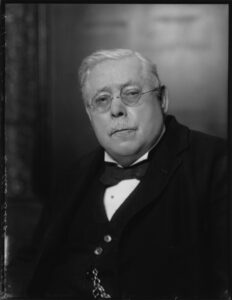
As Sir Ernest. Alfred Wallis Budge (1857-1934), the British Egyptologist and former Keeper of Egyptian and Assyrian Antiquities who worked at the British Museum from 1883 until 1924, attests in one of his many books on Egypt: “The prehistoric native of Egypt, both in the old and new Stone Ages, was African, and there is every reason for saying that the earliest settlers came from the South. There are many things in the manners and customs and religions of historic Egyptians that suggest that the original home of their ancestors was in a country in the neighbourhood of Uganda and Punt.”
Sir Wallis Budge was no ordinary figure, and thus we better pay high attention to what he said. His former employees, the British Museum, says the following about him: “Born to a working-class family in Cornwall [England], he ended up as one of the key figures in the Museum’s history – in 1920 he was knighted for his service to Egyptology and the British Museum. His acquisition of Egyptian and Assyrian antiquities helped build the collection, and he published many books popularising Egyptology.”
Europe’s awareness of, and later reaction to, the fact that “the prehistoric native of Egypt, both in the old and new Stone Ages, was African, and there is every reason for saying that the earliest settlers came from the South”, was to fabricate the history of Africa and erect a false edifice, which has to be maintained at all costs.
Today, based on this edifice, there is a school of thought that says since Africans have no history of any real significance to the rest of the world, they are a non-essential factor for the advancement of the human race. But the facts of Ancient Egypt prove them wrong.
Kemet (also known as Ancient Egypt)
The origins of Ancient Egypt lay in several kingdoms in Upper Egypt, at Abydos and Hierakonpolis, which then spread northwards towards Memphis and the Mediterranean.
In ancient times, Egypt was called by indigenous names – Ta-Meri (beloved land), Tawi (two lands), Msiri or Luti, and more often Kemet (the black nation).
This is the civilisation that rose for over 3,000 years along the River Hapi or Ar (Nile to the Greeks), a river whose sources are deeply embedded in the valleys of East Africa, from two great lakes – the first and largest in Africa known by the Luo people of Kenya as Namlolwe and as Nalubaale by the Lugandans, but which is known today as Lake Victoria due to the British explorer John Hanning Speke who arrogantly changed its African name(s) in 1858 and called it Lake Victoria after his Queen in London. The second lake is Tana, located in the northwest highlands of modern Ethiopia.
The Africans themselves did not call the country Egypt. Originally, they called it Chem or Chemi and later Kemet. Records show that it was the Greeks who unwittingly contributed to the use of the name Egypt for the entire country. Egypt was originally the second name of the capital city, Memphis.
Chancellor Williams explains that the Greek contribution to the name change “was accidental, one of those accidents of history that turns out to be highly important. In this case, the Greeks unwittingly applied the second name of the City of Menes (Memphis), ‘Aigyptos’ to the whole country. For Memphis was also called Hikuptah, or the ‘Mansion of the Soul of Ptah’, the god-protector of the city.
“From the Greek ‘Aigyptos’, Memphis became Egypt, and Egypt became the name of the ‘Two Lands’, extending from the Mediterranean to the [Nile’s] First Cataract in the south.
“There was no ‘Egypt’ before the black king [Pharaoh Narmer, also called Aha Mena or Menes] from whose name it was indirectly derived. Before that, the country was called Chem or Chemi, another name indicating its black inhabitants, and not the colour of their soil, as some writers have needlessly strained themselves in asserting,” Chancellor Williams cares to emphasise.

The name “Nile” is also Greek. The black, indigenous people of Kemet called the Nile “Hapi” or “Ar”. The Greeks changed the name to Nile after they invaded Kemet and occupied it in 332 BC.
At certain points in time, the empire of Kemet spread all the way to the Euphrates River in Iraq, then called Assyria and later Babylon. To the south of Kemet was Kush, another great black civilisation that occupied what is modern-day Sudan, Ethiopia, and Somalia. In later centuries, Kush came to be known as Nubia.
Again, at certain times Kush’s empire, after it conquered Egypt, also spread all the way to the Euphrates River in Iraq, covering all of modern Egypt, Yemen, Saudi Arabia, Israel, Syria and part of Iraq.
To the east of Kush was Seba (or Sheba) located in modern-day Ethiopia. To the west of Kemet was Put (whose territory occupied modern-day Libya, Tunisia, Algeria, and Morocco).
Much later, Put came to be known as Cyrene, where the Simon who was pressed into carrying Jesus’ cross at the crucifixion came from (Matthew 27:3; Mark 15:21; Luke 23:26). All these black lands were sometimes generically or collectively referred to as Ethiopia, which is different from modern-day Ethiopia (that used to be called Abyssinia).
Lower Egypt, Upper Egypt
It was Pharaoh Narmer (also called Menes), a black man, who built Memphis, the capital city named after him that became so famous and the pride of the black world. Memphis was located at where modern Cairo now stands. It later became the border between Lower Egypt and Upper Egypt, the two main divisions of Ancient Egypt.
Standing in Memphis (or Cairo today), one sees the Nile flowing from deep inside Africa into the Mediterranean Sea, where it ends its 4,000-mile journey from Uganda. Where the Nile comes from became known as Upper Egypt, even though on a map Upper Egypt was located south of Memphis. This area consisted of the entire Nile valley starting from modern Cairo and south to Lake Nasser, which was formed when the Aswan Dam was built.
Geographically, Upper Egypt was made up of all the land between the 30th parallel north and the Aswan Dam in the south. Lower Egypt thus referred to the triangular Nile Delta region, from Memphis or the 30th parallel north up to the Mediterranean Sea.
King Menes united the “Two Lands” under African rule and began the historic First Dynasty of Egypt. As Chancellor Williams explains: “There was in fact no ‘Egypt’ before Menes built Memphis. Historians of Ancient Egypt would do well to pause and ponder longer over the question of the ‘Two Lands’. Those who are interested in the truth about the black man’s history would be compelled to do so, for the most significant part of the black African’s history developed in Egypt.”
To Chancellor Williams, “the strong predilection of both Europeans and white Asians to replace the names of other peoples and places with their own terminologies was at once a blessing and a curse in the history of the blacks. Not knowing the racist twist that modern history was to take, these early historians, geographers and travellers reported what they found and described peoples in their own terms of speech.
“In doing so, they established beyond question that the blacks were the first Egyptians and the builders of that ancient civilisation. For it was these early writers, and not the blacks, who made it clear that although the invading Euro-Asians had firmly established themselves in about one-fourth of Lower Egypt as early as the fourth millennium BC, the blacks with equal firmness held all the rest of the 29th north parallel to the 10th south.
“It was the whites, not the blacks, who called Africa the ‘Land of the Blacks’ until Asian and European invasions made it expedient to change this to mean ‘African countries not yet taken over by Caucasians’, and later to ‘Africa South of the Sahara.’
“The early whites, again, not the blacks – not only defined all Upper Egypt as black to distinguish it from predominantly white Lower Egypt, but they settled the matter for posterity by calling Egypt the Thebaid and the blacks Thebans because Thebes (Nowe) was the oldest and greatest centre of black civilisation.
“The ‘curse’ referred to above concerns the amazing success of modern writers in so blotting out, obscuring, or reinterpreting the earlier writers on Africa so that the actual role of the blacks in their own land was practically erased from memory. Their strategy of silence worked, and it must have worked more successfully than they could have dreamed.
“The Great Silence even fell over the monumental fact that the blacks themselves started the whole dynastic system in Egypt about 3100 BC, and that the great civilisation of world acclaim developed after these black regimes began. Greek and Arabic names and the accepted ‘Caucasoid’ features in the conventional style of royal portraits all furthered the great deception.”
How Memphis fell
The “great deception” notwithstanding, the fact still remains that for generations, Memphis was almost entirely an all-black city, with white Asian villages slowly growing up around the outskirts. Chancellor Williams explains that the Asians who had come to settle in Lower Egypt as travellers and refugees were a very smart and cunning people.
“Once conquered, they feigned complete and humble acceptance of African rule,’ Chancellor Williams reports. “Far from showing the slightest signs of any feeling of racial superiority, they were such masters of the art of dissembling that they could hoodwink the Africans, often under the guise of brotherhood, by capitalising on their often-dark complexions, similar institutions, intermarriages, and mixing with the black population, generally, as far as possible.
“That all this was the direct route to repeated Asian ascendency on the continent few Africans seemed to see. For the Africans were, as a race, too ready to forgive and forget the past evils committed by foreigners; whereas, on the other hand, a fellow African tribe could easily become a ‘traditional enemy’ and continue as such for so many generations that no one could remember what the original quarrel was all about!”
Chancellor Williams goes on: “The blacks, then, were apparently unconcerned about the Asian villages springing up just outside Memphis, the largest one rapidly developing across the river on the right bank. This community was to become the Asian city of Fostat that would challenge the supremacy of the capital city and eventually help to change its African character and cause its final destruction.
“Fostat became the modern city of Cairo where ancient Memphis once stood, wiping away nearly 3,000 years of glorious history. Memphis remained the capital and one of the greatest cities of the world, from the First to the 20th Dynasty when it yielded to Thebes again. But it was still a great city when Alexander the Great arrived in 332 BC. Its death-knell was sounded only when Arab tribes overran the land and Cairo rose to overshadow it.”
No comparison
Chancellor Williams urges Africans to consider the time continuum in the history of their ancestors in reference to the state of civilisation in the lands from which the Asians and the other invading groups came during the first 1,000 years of black ascendancy in Egypt and Ancient Sudan.
He writes: “The record is quite clear that the incursive groups were largely tent-dwelling nomads. They had no tradition of great cities with imposing temples, obelisks, pyramids or, indeed, stone masonry at all.
“In particular, one should note the number of centuries after Thebes and Memphis before other ancient cities were founded: Nowe (or Thebes) was founded in prehistory. Memphis was founded in 3100 BC. Rome was a village in 1000 BC, it became a town only in 250 BC. Athens was a village in 1200 BC and became a city only in 360 BC. Antioch became a city in 400 BC, Jerusalem in 1400 BC, and Babylon 2100 BC.
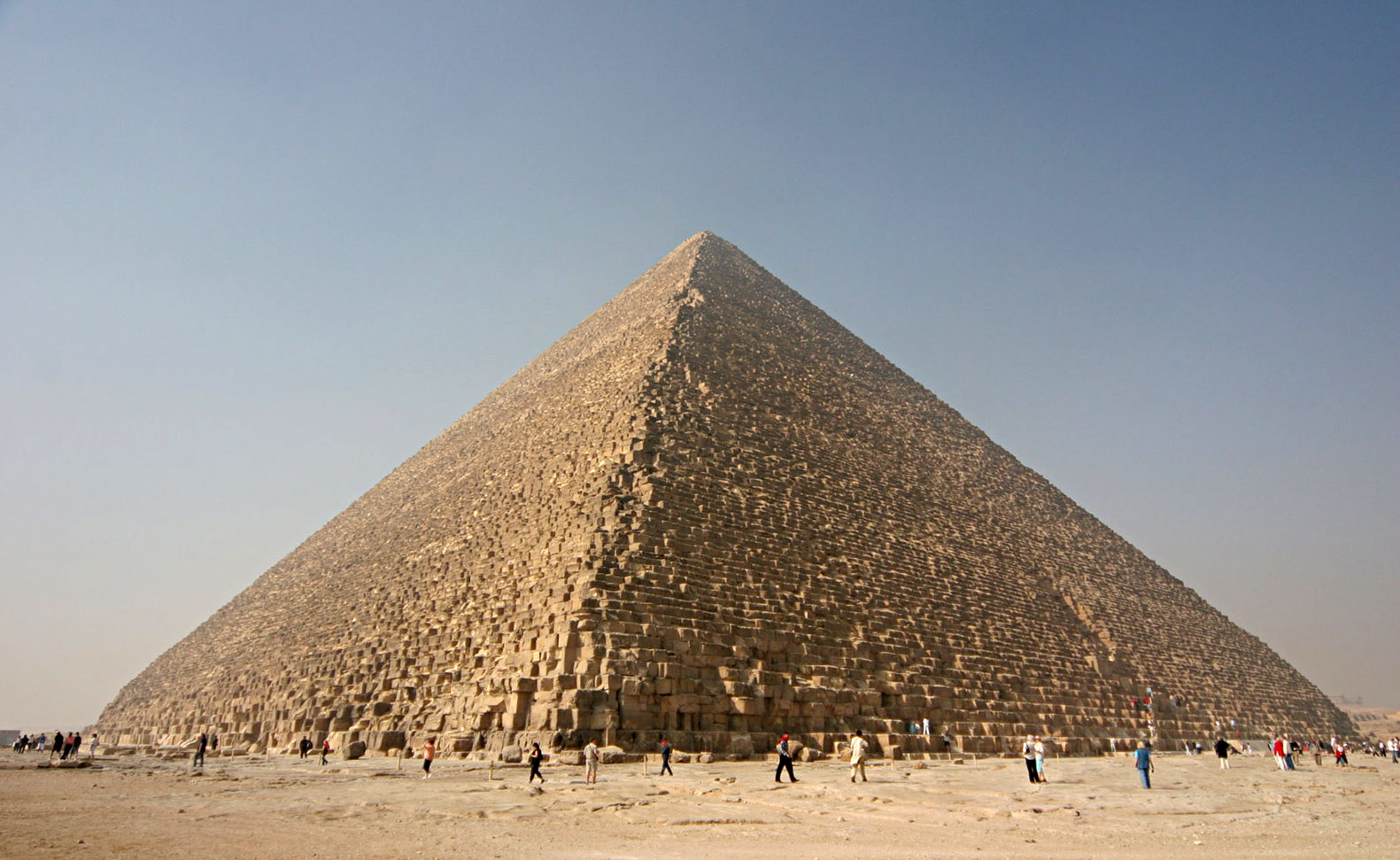
“By the Fourth Dynasty of Egypt, the blacks, who were the first brick and stone masons on earth, had begun to construct at Giza the same style of pyramid building that had been characteristic of Southern Ethiopia [now Sudan] from the earliest times. The Great Pyramid remained the tallest building in the world for over 4,000 years.
“In short, what great contributions did these roaming nomads have to make to an already highly developed black civilisation? Since even Jerusalem was not in existence, what people in Lower Egypt came from a country with a city as great as Thebes or Memphis?”
Chancellor Williams recalls that: “The Second and Third Dynasties of Egypt were also African, most writers will not flatly state this. They generally designate these dynasties as ‘Thinite’, ‘Memphite’ or ‘Followers of Seth’. One has to know that the First Dynasty was African and ‘Memphite’ or ‘Thinite’, so-called after the name of their sacred city Thinis, and the cults of Seth and Amon, were African.
“That the Fourth Dynasty [of Egypt] was indigenous is equally clear. These were the chief pyramid builders, the Great Pyramid being the largest and tallest building on earth until modern times. It was built during the reign of Khufu (2589-2566 BC).
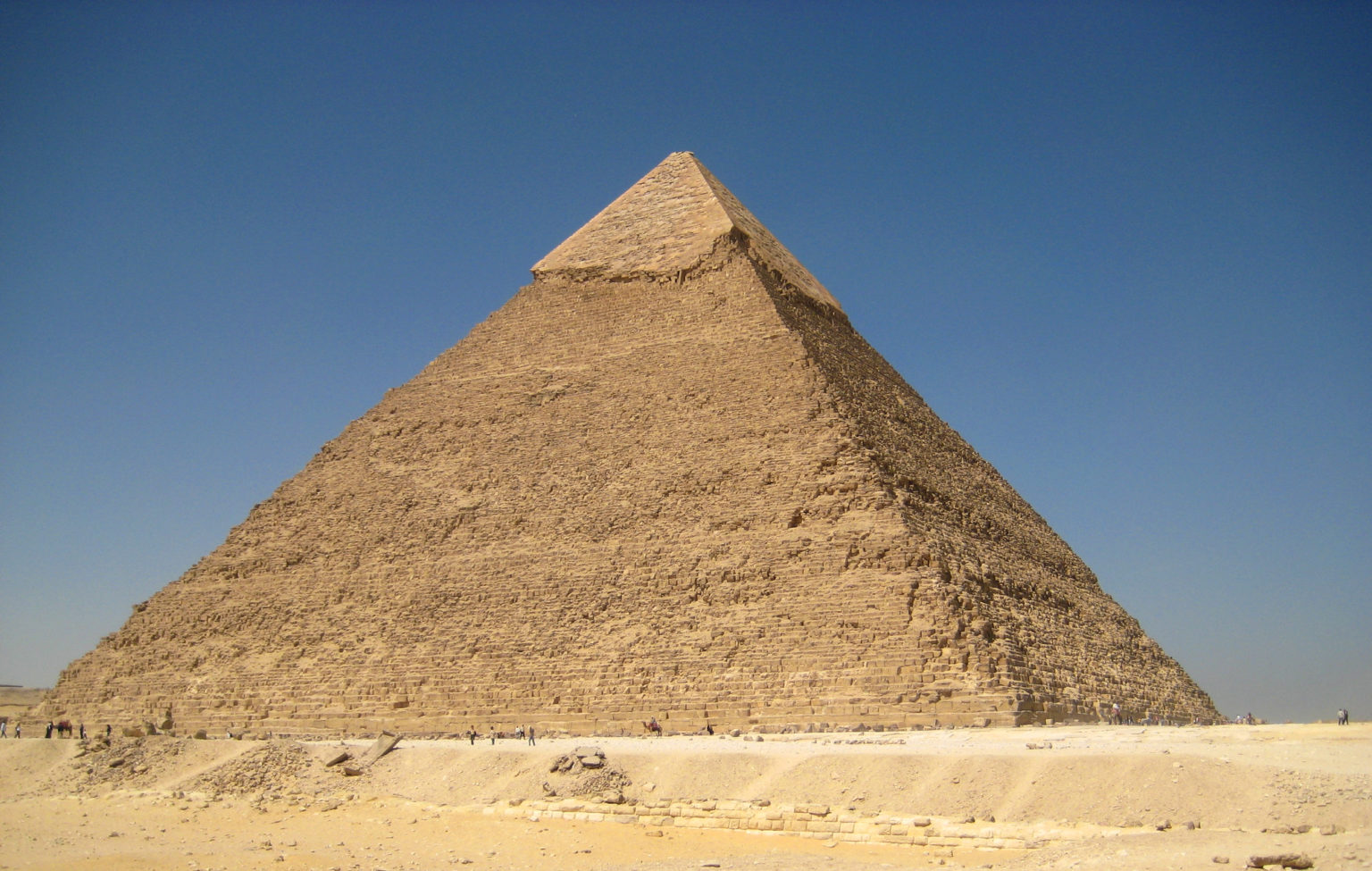
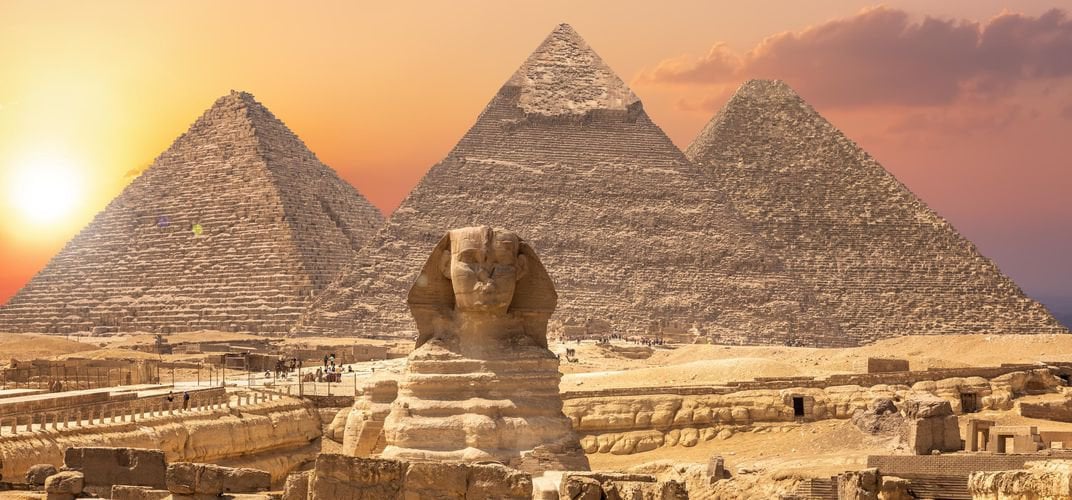
“Khufu’s son, Khafre, whose African identity is generally disguised by historians with the name ‘Cephren’, carried on and built the second Great Pyramid. But he went further. He built the Great Sphinx and, as though he intended to settle the question of his racial identity for all ages to come, he had his African features so boldly and clearly carved into a portrait statue that not even a fool could seriously doubt that this mighty monarch was a ‘Negro’.
“He was therefore among the first to break with the classical Caucasoid stereotypes in Egyptian portraits. Note, however, the long and arduous labour that was required for the invaders to chip away the massive flat nose of the Great Sphinx.”
Chancellor Williams underscores the fact that: “Having determined what periods Africans were referred to as ‘Thinites’, ‘Memphites’, ‘Thebans’, ‘Cushites’, ‘Libyans’, ‘Ethiopians’, ‘Nubians’, etc, a major problem in African history was near solution.
“Some of the disguising masks were thus removed. But much still remained to be done in developing guidelines to identification because the work of effacing the black man’s role in world history was so thoroughly done over so many centuries that it is amazing how so universal a consensus was reached by Caucasian writers in almost every age.”
The native people
Chancellor Williams then turns his attention to the people of Egypt proper, the people who populated the “Two Lands”, and says: “The fact of black rulers, however, is not as important as the fact of an indigenous black population from which they sprang. For, these early blacks were themselves a great people, excelling on many fronts from a line of builders so distant in the past that it seems to have extended into the stone ages.
“It was a society of scientists, scholars, organised religions with organised priesthoods, mathematicians, scribes, architects, engineers, standing armies and generals, stone and brick masons, carpenters, artists, sculptors, cloth makers, slaves, farmers, teachers, gold and silversmiths, blacksmiths, and so on, through the widest spectrum of an advanced society.
“Africa as the ‘cradle of civilisation’ meant exactly that. These blacks developed one of the oldest written languages. The Egyptian language was an African language with later Asiatic influence similar to that of Arabic or the African language known as Swahili. And it was so totally destroyed and replaced by a non-indigenous tongue as were other African creations.”
It is important to underscore the fact that the ancestors of Ancient Egypt (or Kemet) were of indigenous African Negroid stock. This was during the native period which some historians now call the Archaic and Old Kingdoms (3100-2100 BC).
In the New Kingdom (1550-1070 BC) the kings were called Per aa (meaning Great House) which was later corrupted into ‘pharaoh’ by foreigners to refer to the Egyptian kings on account of the great buildings in which they lived.
But in their attempt to whiten the Ancient Egyptian civilisation, Western historians have found it necessary to blatantly ignore the many stupendous primeval monuments in modern Sudan that so clearly proclaim a civilisation earlier than that of Ancient Egypt.
These historians have misled the world into believing that the Ancient Egyptian civilisation emerged from the shores of Europe through Greece. This is in spite of the fact that all the accounts by ancient Greeks themselves confirm that black Africans had lived throughout the length and breadth of Africa (including north of the Sahara) for as long as the continent had been known to the world.
These facts have been well documented and attested to by Persian and Byzantine historians of the 5th century, who wrote that the people of North Africa were black, until the first invasion of North Africa in 647 AD by the Arabs, ordered by Abdallah ibn Sa’d, that culminated in the Umayyad victory in 705 AD in North Africa.
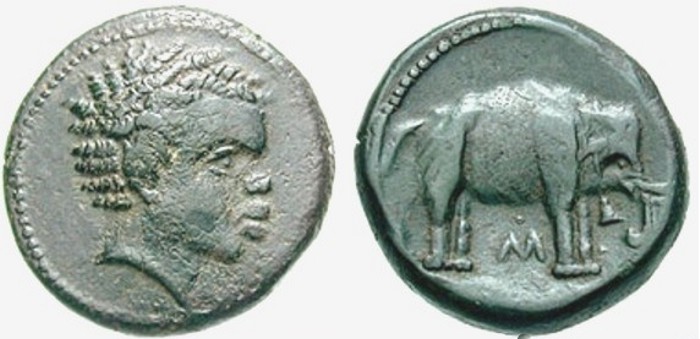
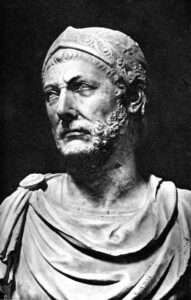
In fact, Hannibal (247-183 BC) from Carthage (now in modern Tunisia) who fought against Rome and Spain, and who has been so “whitened” by Europeans, issued a coin after he defeated the Romans at Trasimene which showed a Negro African on one side and an elephant on the other (Polybius, Book 3).
s Hannibal himself
The Europe of today
It is, in fact, easier to prove that Ancient Egypt was a Negroid civilisation than Europe’s claim to Greek civilisation. For, there was no recorded history of Europe in ancient times.
The Europe we know today was divided by the frontier formed by the two rivers, Rhine and Danube. South and west of the frontier lay the civilised world, and north and east the barbarians of whom the then civilised world (principally Africa at the time) knew almost nothing about.
At best, at the twilight of the Neolithic Age, Europeans were dwelling in caves. When pastoral existence began in Europe, Africans had, for centuries, harvested corn, made wine, written philosophical treatises, studied the stars, built complex buildings, produced mystics and divine incantations (sages, gurus, prophets), and laid down the first creed of the salvation of the soul.
The French writer, Count Constantin de Volney in his book, The Ruins of Empires, clearly states that the black people of Kemet were the first to “attain the physical and moral sciences necessary to civilised life”, adding: “It was, then, on the borders of the Upper Nile, among a black race of men, that was organised the complicated system of worship of the stars, considered in relation to the productions of the earth and the labours of agriculture; and this first worship, characterised by their adoration under their own forms and national attributes, was a simple proceeding of the human mind.”
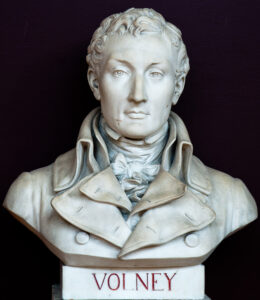
When a few nomadic communities banded to settle in Rome around 1000 BC, the African civilisation in Ancient Eygpt and Kush was more than 2,000 years old – its religion, philosophers, scientists, etc, were already ancient.
When the Greek pantheon was in a rudimentary stage; Hinduism yet to appear; Gautama Buddha yet to be born, Prophet Muhammad yet to be born; when Jacob in the Bible journeyed to Kemet for refuge, entering with 70 people who would form the basis of a three-million strong Jewish community that left 430 years later in the Exodus of the Bible – the pyramids of Kemet were already ancient!
Where the ancestors came from
The Greeks themselves confirmed – from Herodotus and Isocrates to Plutarch – that the Egyptians “were very black” and had “woolly hair”. These eyewitness accounts were made when Egyptian civilisation had already been in existence for at least 2,000 years. The Egyptians themselves stated in various texts, notably the Edfu text – an inscription still found in the Temple at Edfu – that: “Several thousand years ago, we were led by our king from the South to settle up the Nile valley.”
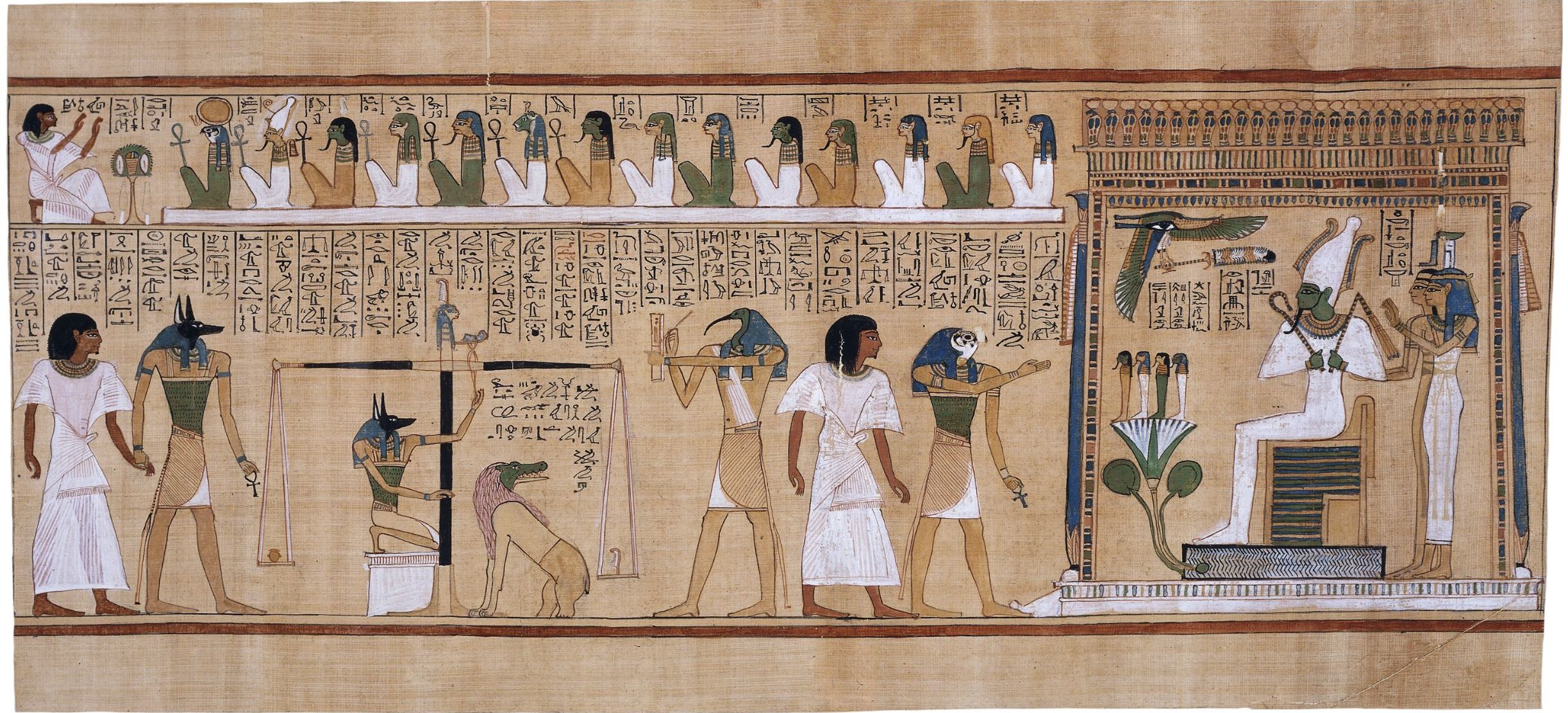
Another account, the Papyrus of Hunefer (the philosopher and high priest), which is now exhibited in the British Museum in London, states: “We came from the beginning of the River Hapi [or Nile] where God Hapi dwells at the foothills of the Mountains of the Moon”. The “beginning” of the River Hapi (Nile) is in Uganda, as an outlet of Lake Nalolwe or Nalubaale.
The Ancient Egyptians went as far as painting the images of their gods in coal-tar black. There are records showing that early Christendom worshipped and converted the Kemetic “divine mother” Aset (Isis) and Horus, her son, as blacks until the era of the European Renaissance. Jocelyn Rhys, an English scholar, affirms that: “In the catacombs of Rome, black statues of this Egyptian divine mother and infant still survive from early Christendom, which they converted to the Virgin Mary.”
Will Durant (in the Story of Civilisation IV) also wrote that: “Statues of Isis and Horus were renamed Mary and Jesus; the Roman Lupercalia and the Feast of Isis became the Nativity; the Saturnalia became Christmas celebration.”

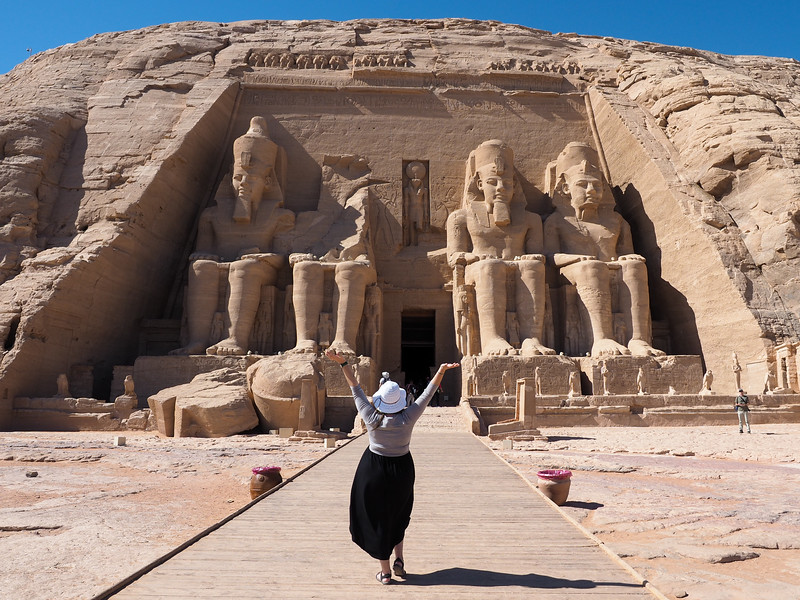
For artistic and ceremonial purposes, the Ancient Egyptians painted themselves in dark red for men and yellow for women. But there are numerous existing paintings in the Temple of Ramses III, and the famous Abu Simbel paintings where the Ancient Egyptians and Nubians are painted solid black. In fact, the Ancient Egyptians did not differentiate themselves from the Nubians as a separate race.
When foreigners, principally the Assyrians, Persians and the Hyksos invaded Egypt, the natives sought refuge in Nubia to drive them out. It was as natural a kinship as Britain’s “special relationship” with America.
As in Nubia, inheritance was matrilineal also in Kemet, to the extent that all foreign usurpers to the throne sought to marry into the royal household to legitimise their claim by having “golden blood”, not “blue blood”, and having the “golden Horus name” – an ancestral name legitimising the royal strain.
Ptolemy Lagos, the first of the Roman rulers of conquered Egypt, married into the royal African household to legitimise his claim. Julius Caesar did the same and had a child with Cleopatra. Mark Antony later abandoned his wife for Cleopatra for the same reasons.
The essential core of the Ancient Egyptian civilisation is spirituality, which permeated every aspect of life including science; hence Aton, the appellation of Ra, corresponds to the atom in physics today.
Modern Western science has confirmed beyond doubt that atom particles contain elements of light, which the Ancient Egyptians portrayed as a ray of the sun, and also makes the “plants grow green” (Great Hymn of Aton King Akhenaton). Yet science, in the hands of the Western world, has become inimical to the spirit. This centrality of the spirit, being embodied in all aspects of the living, is abundantly clear in Black Africa, to the point that “superstition” has become synonymous with Africans.
The capability to ascribe the universe to one supreme being (monotheism), and to embrace the gods (polytheism) and divine kingship, had all been in practice by Black Africans across the continent long before the Europeans arrived on their alleged civilising mission in the 15th century. The Dogon of Mali knew how to determine mathematically and graphically the position of the sun on the ecliptic just as their great ancestors had done in the Nile valley.
Other testimonies
TimeMap, a website devoted to history, asserts boldly that: “The Ancient Egyptian civilisation produced the first government to rule an entire nation. The Sumerians, who were the only other people to have a literate and urban civilisation by 3000 BC, lived in small city-states, each numbering no more than a few tens of thousands of people.
“The unified kingdom of Egypt, on the other hand, covered an entire country thousands of square miles in size and with millions of inhabitants. The Pharaoh was the ruler of Ancient Egypt, both politically and religiously. The Pharaoh held the title ‘Lord of the Two Lands’, meaning that he ruled all of Upper and Lower Egypt; and was a ‘high priest of every temple’.
“In Egyptian eyes, the Pharaoh was a god himself, who stood between heaven and earth. His personal welfare and the welfare of the entire people were bound tightly together. The Pharaoh was in charge of the army, and would go to war when his lands were threatened – demanding valuable gifts from the conquered people, if victory was obtained.
“To help the Pharaoh in governing the land, an elaborate organisation of officials, scribes and overseers – the world’s first civil service – developed, bringing the reach of government down to the lowliest villager.”
Egypt was divided into 42 nomes, which were administrative regions, each governed by a nomarch. The Pharaoh himself was surrounded in his palace by high officials, ministers and courtiers. For much of Ancient Egypt’s history, the Pharaoh was served by a powerful chief minister called a vizier. He represented the Pharaoh in the administration of the land, treasury and legal system.”
Continuing, TimeMap explains what made Ancient Egypt tick: “As with all preindustrial civilisations, Ancient Egypt’s economy was based on agriculture. The great majority of the people were peasant farmers. Because of the fertile nature of the Nile valley, they were able to produce large surpluses which sustained the refined lifestyle of the Pharaoh and his court, his officials, the priests and all the other members of the elite. Peasants also provided the mass labour which built the pyramids and temples along the Nile valley.
“Numerous towns dotted the river bank, centres of local administration, and of local markets. Egypt has often been regarded as a civilisation without cities. This is not true. Unlike the Sumerians, Egyptian cities were not independent states; however, there were numerous urban settlements in the Nile valley, and Memphis was one of the largest cities in the world, if not at times the largest.”
Stupendous achievements
According to TimeMap, “the clearest evidence for the legacy of Ancient Egypt can be seen in architecture. It has been suggested that the Ancient Greeks got the very idea of monumental building in stone from the Egyptians.
“What is unmistakable is that this ancient civilisation has exercised an unmatched spell upon future civilisations. The Greeks already regarded Egypt as a land of wisdom and mystery, and the Ancient Roman fascination with Egypt can be seen in the number of obelisks to be found in the city of Rome to this day (some of them shipped from Egypt to the imperial capital, others are copies of Egyptian models).
“The medieval Arabs wrote about the Egyptian civilisation, and the modern European fascination with Egypt was fuelled by [the French emperor] Napoleon’s conquest of the country in 1798. Modern Egyptology started at that date, and has continued ever since.”
TimeMap goes on: “The civilisation of Ancient Egypt is known for its stupendous achievements in a whole range of fields, including art and architecture, engineering, medicine and statecraft. Its great buildings on the banks of the Nile River still strike awe into those who see them.
“As well as being one of the earliest civilisations, Ancient Egypt was one of the longest lasting civilisations in world history. Its greatest days fell between c.3000 BC and c.1000 BC, but the civilisation remained very much a going concern for centuries after this.
“The achievements of the civilisation involved innovations in writing – hieroglyphics; in administration; in quarrying and surveying, maths and architecture; in irrigation and agricultural methods; as well as in developing some of the earliest ships. They built many temples which were used as places of worship and also as granaries and treasuries where grain and goods were stored.

“So, what, in sum, is the place of Ancient Egypt in world history? It is surely this – here, almost at the very beginnings of recorded history, was a great civilisation which produced wonderful art, architecture, engineering, literature, medicine and so on. The wide range of highly-developed practical techniques these involved were transmitted to other peoples and later cultures; but more than this, what an inspiration it must have been for the civilisations which came after! We know that many Greeks and Romans travelled to the land of Egypt, and were awed by the magnificent remains they saw there. In short, Ancient Egypt set the bar high!”
Similarly, the New World Encyclopaedia writes glowingly about Ancient Egypt and quotes the prominent British historian, Arnold Toynbee, to have said that: “Of the 26 civilisations he identified, Egypt was unique in having no precursor or successor. Arguably, however, the successor to Egyptian civilisation was humanity itself, since Egypt bequeathed many ideas and concepts to the world, in addition to mathematical and astronomical knowledge.
One of the “ideas and concepts” that Ancient Egypt bequeathed to the world was religion. The African ancestors were the first in the world to organise religion in a formal way in Egypt, and the foundations set by the ancestors became the template copied by other world religions that came thousands of years later. As a result, the current three major religions of the world – Judaism, Christianity, and Islam all borrowed heavily from African religion. (This is a subject that The Third Eye will delve into, indepth, in the coming months).
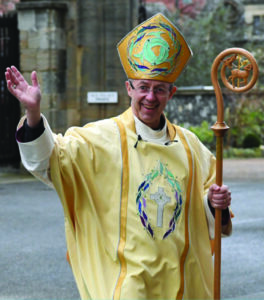
But suffice it to say here that all the concepts and iconography of religion that the African ancestors put forward, were copied by Judaism, Christianity and Islam. For example, the motifs of the Ancient Egyptian high priest, Ausare, the Lord of Resurrection (who the Greeks called Osiris), were copied 100% by Christianity. These are his crown (now called the “mitre” worn by popes and archbishops; and his shepherd’s crook. In Ancient Egyptian society, the flywhisk and the shepherd’s crook were signs of high royal authority.
Ausare was the first person in the history of religion to have died and resurrected. This concept, too, was borrowed by Christianity.
The invasions of Ancient Egypt
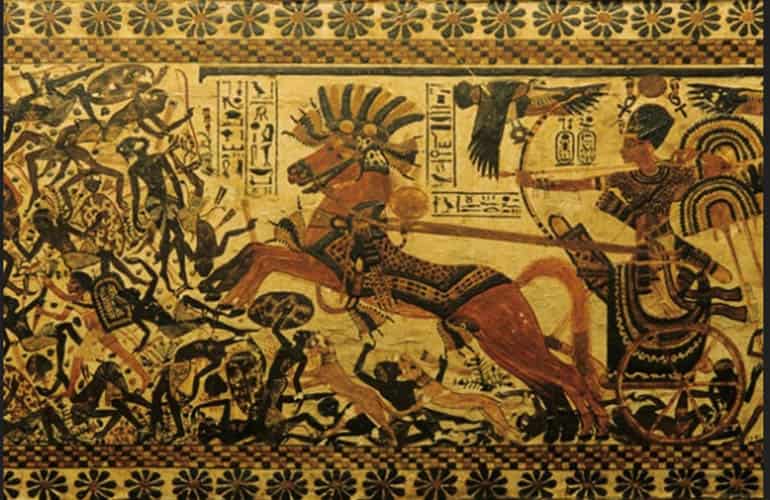
To date, there has been no empire in the world that suffered as many invasions by foreigners as Ancient Egypt, because of its wealth and high civilisation. One writer sums up the invasions as follows: “During the 18th Dynasty, Egypt restored its control over Nubia and began military campaigns in Palestine, clashing with other powers in the area such as the Hittites. Egypt went on to establish the world’s first great empire, stretching from Nubia to the Euphrates River in today’s Iraq.
“In 728 BC, Nubian pharaohs beginning with Shabako, ruler of the Nubian kingdom of Kush, established their own dynasty in Egypt – the 25th – at Thebes. Under Kushite rule, Egypt clashed with the growing Assyrian empire.
In 671 BC, the Assyrian ruler Esarhaddon drove the Kushite king Taharka out of Memphis and destroyed the city; he then appointed his own rulers out of local governors and officials loyal to the Assyrians. One of them, Necho of Sais, ruled briefly as the first king of the 26th Dynasty before being killed by the Kushite leader Tanuatamun, in a final, unsuccessful grab for power.
“Beginning with Necho’s son, Psammetichus, the Saite Dynasty ruled a reunified Egypt for less than two centuries. In 525 BC, Cambyses, king of Persia, defeated Psammetichus III, the last Saite king, at the Battle of Pelusium, and Egypt became part of the Persian Empire.
“Persian rulers such as Darius (522-485 BC) ruled the country largely under the same terms as native Egyptian kings. Darius supported Egypt’s religious cults and undertook the building and restoration of its temples.
“The tyrannical rule of Xerxes (486-465 BC) sparked increased Egyptian uprisings under him and his successors. One of these rebellions triumphed in 404 BC, beginning one last period of Egyptian independence under native rulers (Dynasties 28-30).
“In the mid-4th century BC, the Persians again attacked Egypt, reviving their empire under Ataxerxes III in 343 BC. Barely a decade later, in 332 BC, Alexander the Great of Macedonia defeated the armies of the Persian Empire and conquered Egypt.
“After Alexander’s death, Egypt was ruled by a line of Macedonian kings, beginning in 305 BC with Alexander’s General Ptolemy and continuing with his descendants. The last ruler of Ptolemaic Egypt – the legendary Cleopatra VII – surrendered Egypt to the armies of the Roman Emperor Octavian (later called Augustus) in 30 BC. Six centuries of Roman rule over Egypt followed, during which Christianity became the official religion of Rome and its provinces, including Egypt.”
In effect, the summary (or the chronology) of the many invasions of Egypt looks like this: Ancient Egypt was first attacked and occupied by the Hyksos in the 18th century BC, then by Nubia in 728 BC.
Then the Assyrians came in 677 BC (as prophesied by Jeremiah and Ezekiel in the Bible), then Babylon (under Nebuchadnezzar) twice invaded Egypt in 605 BC and 569 BC, then Eygpt was conquered by the Persians in 525 BC, then by the Greeks in 332 BC (under Alexander the Great, until his death in June 323 BC at the age 33, then his generals took over the governance of Egypt, calling themselves the Ptolemies), then the Roman Empire under Emperor Augustus (formerly known as Octavian) conquered Egypt in 30 BC. The Romans ruled Egypt for more than 600 years.
In 324 AD, Emperor Constantine, the then head of the Roman Empire, founded a new capital at Constantinople (today’s Istanbul in Turkey). The Roman Empire then broke into two – East and West – and Egypt fell under the control of the Eastern Roman Empire whose seat was at Constantinople, an empire from whose ashes rose the Byzantine Empire which ruled Egypt until the Arabs conquered Egypt in 641 AD; only for the Ottoman Empire (another Turkish Empire as the Byzantine, founded in 1299 AD) to take over Egypt in 1517.
Then Egypt went under French occupation (in 1798 to 1801), then under British occupation from 1882 after the Anglo-Egyptian War until 1952, even though modern Egypt got its independence from Britain on 28 February 1922.
During the thousands of years of the invasions, the core people of Ancient Egypt remained black, as it had always been. Though the invaders came with immigrant populations who mingled with the natives through marriage, etc, the core population of Egypt remained stubbornly black. It was no different from the European colonisation of Africa in the 20th century, where the core population remained black across the continent while governance was in the hands of the colonisers.
The same scenario happened in Ancient Egypt. The base of the population remained black even as the colonisers ruled and shipped in their own people to dilute the native population or to intermarry with the natives.
With time, miscegenation led to a huge increase of the non-black people of Egypt, but even today, with modern Egypt professing itself to be Arabic/European by genes, the black population of Egypt is still large enough to write home about, although they are not as visible politically and economically as the Arab/European-descended modern Egyptians.
The six migrations
History shows that with every invasion of Ancient Egypt by foreigners, a good chunk of its black native population emigrated to other lands of Africa, south or west of Egypt, to escape the oppression of the invaders or simply to show their revulsion of the foreigners who had now become the new rulers of the great but conquered empire.
Thanks to the work of Professor Aboubacar Moussa Lam, head of the Faculty of History and Human Sciences at the University of Cheikh Anta Diop in Dakar, Senegal, Western Sudanic oral traditions of the migrations from the Nile valley compiled by Yoro Dyâo (1847-1919) in the late 19th century have been brought to light.
From the 7th century BC to the 6th century AD, scholars count six migrations from the Nile valley westward across the Sahara. Thus, oral traditions confirm the Nile valley origins of the peoples and cultures of the Western Sudan. Each of the migrations described by Yoro Dyâo was precipitated by either an invasion of the Nile valley from outside Africa or the oppressions of the invaders’ regime against indigenous customs, cultures, and peoples.
The first migration might have been a result of the Assyrian invasion of Ancient Egypt and the defeat of the Kushite kings of the 25th Dynasty in 660 BC. The traditions of the Soninke/Sarakholle, founders of the Ghana Empire (250-1070 AD), from whose ashes rose the Mali and Songhay empires at different times, assert that their remote founding ancestor was born in the region of Sonna or Aswan in Upper Egypt.
He brought with him two zoomorphic divinities, the Serpent and the Vulture, the Ancient Egyptian symbols of royal dominion over Upper and Lower Egypt. The water-dwelling serpent, Biida, became the national deity of Wagadou, capital of the Ghana Empire. Moreover, these traditions speak of a jackal that guided the early migrations and therefore answers to the Egyptian “opener of the way”, the divine jackal Wep-Wat or Anubis.
Boubacar Lam situates the departure of the Soninke ancestors from Egypt no later than 486 BC as a result of the exactions of the Persian King Darius (who reigned between 522-486 BC) on the inhabitants of the Nile valley. The foundations of the society and state that would later become the Empire of Ghana would have occurred not later than 460 BC.
The Songhay Empire, the last of the three early great empires in West Africa, was said to be originally established by Kushite immigrants, a branch of the Kushites from Kemet that chose to move west after 660 BC.
There are two Tarikhs, Western Sudanic historical manuscripts that survive from the 17th century. One of them describes the migration of the magicians who contended against Moses (c. 1230 BC) westwards into the country of the (later) Songhay to found the city of Kukia. This would suggest Songhay Nile valley origins dating earlier, even than the 25th (Kushite) Dynasty (712-660 BC).

The Lebu of Senegal’s Atlantic coast, in and around Dakar, assert that their original homeland was Libya. The word “lebu” was the Ancient Egyptian name for the land and people west of the Nile, ie, Libya.
There is also a clan of fisherfolk among the Pulaar-speaking people of Guinea who are called Diba. The clan totem is a hippopotamus. In Ancient Egypt, one of the words for “hippopotamus” was dib. Moreover, the Diba use exactly the same kind of harpoon used by Ancient Egyptian fishermen and hippo hunters.
In the Egyptian language, per āa became the term pharaoh. In Wolof and Peul, the word fari is a title of the king. The first pharaoh of a united Egypt was known as Mena; the first king of both the Toucouleur and the Soninke was Manna, a slight corruption of Nana, the title the Akan people (of modern-day Ghana and Côte d’Ivoire) give to their kings.
According to Aboubacar Lam, the earliest kingdoms of the Western Sudan – from about 460 BC – were “neo-pharaonic” kingdoms and would remain so until the beginnings of Islamisation of West Africa, with the Almoravid conquest (1076 AD).
The ones who came by the Congo forest
Another important stream of the emigration from Ancient Egypt came down southwards through the Congo forest, from where some went westwards to occupy the west coast of Africa. Others came straight down from precisely the general area of present-day Cameroon and Gabon to occupy East Africa and what is today the SADC countries (of Southern Africa).
This was the branch from Ancient Egypt that Wilhelm Bleek and other European-descended historians and anthropologists call the Bantus. But they are not Bantus. They came from Ancient Egypt in relays – stopping and moving.
Therefore, Bantu is a very wrong terminology or classification for these African ancestors and their progeny. If historians and anthropologists today cannot call them by their native name, Kemmui, they should simply refer to them as descendants of Ancient Egyptian ancestors. Not Bantus!
But they are called Bantus because the historians and anthropologists want to dissociate modern black Africans from their glorious ancestors who built and run the world’s greatest empire in Ancient Egypt. It is a con trick that modern Africans have sadly bought hook, line and sinker! How the ancestors are turning in their graves!
The pyramid builders (c. 2649-2150 BC)
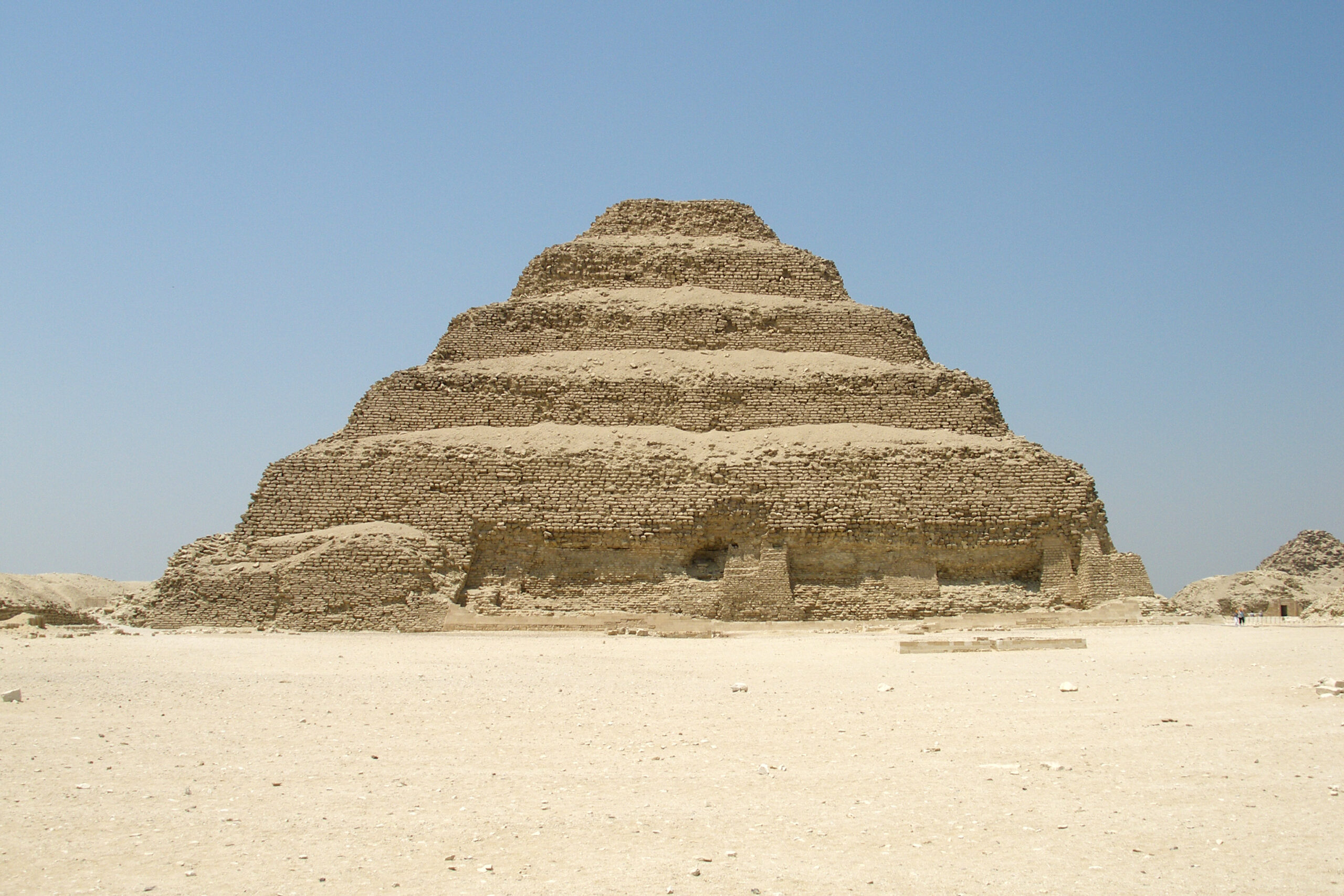
Egypt’s Old Kingdom began with the Third Dynasty of pharaohs. In 2670 BC, King Djoser (of the Third Dynasty) asked Imhotep, an architect, priest and healer, to design a funerary monument for him; the result was the world’s first major stone building, the Step Pyramid at Sakkara, near Memphis, which was finished in 2650 BC.

The Step Pyramid was the tallest building in the world at the time. The Egyptians called pyramids “mir”. Pyramid building reached its zenith with the construction of the Great Pyramid at Giza, on the outskirts of Memphis (now Cairo). Built for Pharaoh Khufu (or Cheops, in Greek), who ruled from 2589 to 2566 BC, the pyramid was later named by classical historians as one of the
ancient world’s Seven Wonders.
Two other pyramids were built at Giza for Khufu’s successors Khafre (2558-2532 BC) and Menkaura (2532-2503 BC). Pyramid building (whose primary purpose was funerary) was an African specialty as it flourished in the other black empires such as Kush/Nubia, such that today there are more pyramids in modern Sudan than in modern Egypt, even after the Aswan Dam in southern Egypt swallowed up a lot of Sudan’s pyramids.
The pyramids were the physical manifestations of the Ancient Egyptian religious belief about the afterlife. “In early times, the afterlife seems to have been intimately connected to the preservation of the physical body by mummification,” one writer explains. “This always retained some force.
“However, the idea grew up that human beings are composed of both physical and spiritual aspects. After death, the latter lived on. Some people become disembodied souls, or ghosts, wandering the earth; but if judged worthy, a person could become a ‘blessed one’, living in a land of goodness and plenty. Because of the belief that life could continue into the afterlife, the dead were accompanied in their graves by every-day and luxury goods – including art objects – to help them enjoy their new life. This belief informed the building of pyramids as funerary/burial houses.”
Interestingly, today, modern Egyptians of Arabic and European descent, whose ancestors started attacking Egypt in 639 AD and conquered it only in 641 AD (ie, 641 years after the death of Jesus) claim that their ancestors built the pyramids in Egypt when, indeed, the first pyramid in Egypt (the Step Pyramid) was completed in 2650 BC (ie, 2,650 years before Jesus was born), and the two great pyramids of Giza were built between 2558 and 2503 BC (before the birth of Christ).
In short, what some have called the “pseudo-science” or “extravagant claims” by African-American scholars of black history is not pseudo-science or extravagant claims at all.
According to the Senegalese giant Cheikh Anta Diop in his book, Civilisation or Barbarism: “Insofar as Egypt is the distant mother of Western sciences, most of the ideas that we call foreign are oftentimes nothing but mixed up, reversed, modified, and elaborated images of the creations of our African ancestors, such as Judaism, Christianity, Islam, dialectics, the theory of being, the exact sciences, arithmetic, geometry, mechanical engineering, astronomy, medicine, literature (novel, poetry, drama), architecture, the arts, etc. One can see then how fundamentally improper is the notion, so often repeated, of the importation of foreign ideologies in Africa. It stems from a perfect ignorance of the African past.”
Now, let’s move to the next article, on the next page, to see the authentication of the identity of the real Ancient Egytpians.
**(Much of this article comes from my contribution on Ancient Egypt in The African Factbook)
Leave a Reply