Author: Editor

  • The Africa Factbook is finally out

    The Africa Factbook is finally out

    After a delay of two years, the “Scholar’s Edition” of The Africa Factbook, a colossal 1,184-page tome, based on the time-tested philosophy that “until the story of the hunt is told by the lion, the tale of the hunt will always glorify the hunter”, has finally been published. Copies can now been purchased in Harare and elsewhere, though the Harare-based Institute of African Studies (INSTAK) that published it has not yet released the price.

    Published in partnership with the African Union Commission (AUC), the “Presidential Edition” of the Factbook (800 pages long) was released in September 2000 and was launched by Zimbabwe’s President Emmerson Mnangagwa at State House, Harare.

    The main theme of this humongous work, edited by The Third Eye’s editor, Baffour Ankomah, is: “Busting the myths” – the myths that the Western world has perpetuated about Africa and its Diaspora for the past six centuries.

    The launch of the Presidential Edition fulfilled the prophesy of the slain Congolese Prime Minister Patrice Lumumba, contained in his 1960 letter to his wife Pauline, which he sent from the Thysville prison in western DRCongo where he had been incarcerated without trial. Thysville has since been renamed Mbanza Ngungu.

    Lumumba wrote: “History will one day have its say. But it will not be the history which will be taught in Brussels, Paris, Washington or the United Nations. It will be the history which will be taught in the countries which have won freedom from colonialism and its puppets. Africa will write its own history and in both north and south of the Sahara, it will be a history of glory and dignity.”

    As Lumumba rightly forecast, The Africa Factbook contains “a history of glory and dignity” written by Africans as a response to the 600 years of lies and calumny spewed against Africa by Euro-American historians, academics, writers, and journalists. Mercifully, it is not “the history taught in Brussels, Paris, Washington or the United Nations”.

    In the words of one AU Commission official, after reading the first rough draft of the Factbook: “With the right promotion, the Factbook should stop the process of maligning Africa and turn things upside down in the proportion of Darwin’s theory of evolution.”

    The book is divided into four sections. Section A sets out to bust some of the key myths that Westerners have published about Africa. Section B deals with country profiles and fast facts about Africa’s 54 nations. Section C is about African and black pioneers, inventions, journeys, discoveries, innovations, writing systems, etc.

     Section D deals with the African Diaspora, otherwise known as Global Africa. These are the African-descended people scattered to the four winds, who should not be confused with the new Diaspora of continental Africans who live outside Africa today.

    The definition of the “African” that INSTAK worked with is the one popularised by the Jamaican singer, Peter Tosh: “Don’t care where you come from. As long as you’re a black man, you are an African.”

    According to Editor Baffour Ankomah, “no cows have been sacred in the preparation of the Factbook. Tired of being libelled and slandered for the last six centuries, Africa has roused itself from sleep and done battle with its detractors via this Factbook. The detractors should better stand firm because this is no ordinary Factbook – quite unlike The CIA Factbook. Our Factbook has raised the bar! It has set new standards in the world of factbooks.

    “For Africans, [mental] liberation has finally arrived. In a world where 44 million Yorubas are a tribe and 42 million Igbos are equally so, but 3 million Welsh are a nation and 5 million Scots are equally so, you need an Africa factbook to remain sober. Here it is!”, Ankomah adds in his trademark truculent style.

    The book will be translated into Swahili, French, Portuguese, Spanish and Arabic. So far, all who have read it, have had only praise for it. “A common saying in Roman times was ‘ex Africa semper aliquid novi’ (Out of Africa always something new),” said INSTAK’s CEO, Kwame Muzawazi. “This they said out of marvel for things African. Here is The Africa Factbook – something new from Africa. Once again.”


  • What other nations did to move from poverty to wealth

    What other nations did to move from poverty to wealth

    For centuries, state intervention has been at the core of wealth creation and economic success stories worldwide, starting with Britain and Europe in the late 15th century, carrying through to the USA in the 19th century, and Japan, Taiwan, South Korea, and Malaysia in the 20th century, and now China and India in the 21st century, reports Osei Boateng.

    In recent decades, Africa and other developing countries have been encouraged to jump into free trade agreements with industrialised economies because it is supposedly the only way to grow the African economies. But Prof Ha-Joon Chang tells how all of today’s rich countries used nationalistic policies (tariffs, subsidies, restrictions on foreign investment, etc) to protect and promote their infant industries.

    The story was the same with the more recent economic success stories of China and, increasingly, India. Their examples, according to Chang, “show the importance of strategic, rather than unconditional, integration with the global economy based on a nationalistic vision”.

    Below is what the other nations did:

    China

    Like the USA in the mid-19th century, or Japan and South Korea in the mid-20th century, China used high import tariffs to build up its industrial base. Right up to the 1990s, China’s average tariff was over 30%. Chang admits that China has been more welcoming to foreign investment than Japan or South Korea were, but China still imposed foreign ownership ceilings and local content requirements that demanded that foreign firms should buy a certain proportion of their inputs from local suppliers.


    Contrary to the liberalisation theory and the hands-off-by-the-state sermons preached to Africa, China has used heavy state intervention and an enlightened state-owned enterprise (SoE) strategy to grow its economy to a point where it is now an economic superpower vying for global domination with the more established economies like America’s. In the past, all Chinese industrial enterprises were owned by the state, but today, the SoE sector accounts for 40% of industrial output.


    France

    After the Second World War, the French government acknowledged that its conservative, hands-off policies had been partly responsible for its relative economic decline, and thus defeats in two world wars. To stem the tide, the French state decided to take a much more active role in the economy. It launched “indicative” planning and took over key industries through nationalisation, and channeled investment into strategic industries through state-owned banks.


    To help its new industries to grow, the government imposed industrial tariffs and maintained them at a relatively high level until the 1960s. The strategy worked. By the 1980s, France had transformed itself into a technological leader in many areas.


    Japan

    In Japan, the Ministry of International Trade and Industry orchestrated an industrial development programme that has now become legendary. The country’s industrial tariffs were not particularly high after the Second World War, but imports were tightly controlled through government measures restricting the use of foreign exchange.


    “Exports were promoted in order to maximise the supply of foreign currency needed to buy better technology (either by buying machinery or by paying for technology licences),” says Chang. “This involved direct and indirect subsidies as well as information and marketing help from the Japan External Trade Organisation, the state trading agency.


    The government also put subsidised credits into key sectors through its “directed credit programme” while heavily regulating foreign investment by transnational corporations. Foreign investment was simply banned in most key industries. Even when it was allowed, there were strict ceilings on foreign ownership, usually a maximum of 49%. This brings into focus Zimbabwe’s now abandoned indigenisation policy which sought to limit foreign ownership of companies to a maximum 49%, with the remaining 51% going to indigenous entrepreneurs.


    As Chang snows, foreign companies in Japan were required to transfer technology and buy specified proportions of their inputs locally. The government regulated the inflow of technologies, to make sure that overly obsolete or over-priced technologies were not imported.


    Finland, Norway, Italy, Austria

    Finland, Norway, Italy, and Austria were all relatively economically backward at the end of the Second World War and saw the need for rapid industrial development, says Chang. Basically, they all used strategies similar to those used by France and Japan to promote their industries.


    All of them had relatively high tariffs until the 1960s. They all also actively used state-owned enterprises to upgrade their industries. This was particularly successful in Finland and Norway.


    Also, the governments of Austria, Finland and Norway were very much involved in directing the flow of credit to strategic industries. Finland, especially, heavily controlled foreign investment while in many parts of Italy, local governments provided support for marketing and Research and Development (R&D) to small and medium-sized firms in their localities.


    “In Finland”, Chang says, “it took Nokia 17 years to earn any profit from its electronics subsidiary, which [by 2011 had become] the largest mobile phone company in the world. If Finland had liberalised foreign investments from early on, Nokia would not be what it is today.”


    United States of America

    America’s trade policy recommendations to the developing world today stand in sharp contrast to what it did itself when it was a British colony and as a young, independent country. According to Chang, the USA had a terrible record in its dealings with foreign investors.


    From its earliest days of economic development right up to the First World War, the USA was the world’s largest importer of foreign capital, but there was considerable concern in the country over absentee management of foreign investors. “Reflecting such sentiment, the US federal government strongly regulated foreign investment.” Chang reports. “Non-resident shareholders could not vote and only American citizens could become directors in a national (as opposed to state-level) bank.”


    This meant that foreigners and foreign financial institutions could only buy shares in US national banks if they were prepared to have American citizens as their representatives on the board of directors, thus discouraging foreign investment in the banking sector.


    There were also strict regulations on foreign investment in natural resource industries. Many state governments barred or restricted investment by non-resident foreigners in land. Then the 1887 federal Alien Property Act was enacted to prohibit the ownership of land by foreigners – or by companies more than 20% owned by foreigners – in the “territories” (as opposed to the fully-ledged states) where land speculation was particularly rampant.


    Federal mining laws also restricted mining rights to non-US citizens and companies incorporated in the USA. In 1878, a timber law was also brought in, permitting only US residents to log on public land.


    “Yet,” says Chang, “despite all these excessive, and often strict, controls on foreign investment, the USA was yet the largest recipient of foreign investment throughout the 19th century and the early 20th century – in the same way that strict regulation of transnational corporations in China has not prevented a large amount of foreign direct investment from pouring into that country in recent decades. This flies in the face of the belief that foreign investment regulation is bound to reduce investment flows.”


    Singapore

    The economic prowess of the island city-state of Singapore is trumpeted as a victory for liberal, free market ideas. But even in Singapore, state intervention is not too far away. For example, Singapore Airlines, one of the world’s best, is a state-owned enterprise, 57% controlled by Temasek, the holding company whose sole shareholder is Singapore’s Ministry of Finance.


    “Virtually all land in Singapore is publicly owned, and around 85% of housing is provided by the government’s Housing Development Board,” says Chang. “The Economic Development Board also develops industrial estates, incubates new firms, and provides business consulting services.”


    In fact, Singapore’s state-owned enterprises sector is twice as big as that of South Korea, when measured in terms of its contribution to national output.


    Taiwan

    One of the economic successes of the past 60 years, Taiwan’s experience with state-owned enterprises has been even more remarkable. Taiwan’s official economic ideology is based on the “Three People’s Principles of Dr Sun Yat-Sen, the founder of the Nationalist Party (Koumintang) that engineered the Taiwanese economic miracle. These principles dictate that the key industries should be owned by the state. Accordingly, Taiwan has had a very large state-owned enterprises sector.


    For Africa, whose governments are often told or advised to keep their hands off the economy (“private sector development” is the engine of growth), the above should provide ample food for thought.


  • The South Korean economic miracle, a lesson for Africa

    The South Korean economic miracle, a lesson for Africa

    Neo-liberal economists will tell you that South Korea’s rise as an industrial powerhouse is because it followed free market ideas. Not so, says Prof Ha-Joon Chang, the South Korean economist. Nevertheless, his home country’s experience has valuable lessons for Africa. Osei Boateng reports.

    In 1961, eight years after the war with North Korea, South Korea’s per capita income stood at $82, less than half of Ghana’s at the time ($179). During the war – one of the bloodiest in human history (an estimated four million people were killed in just over three years, 1950-1953) – half of South Korea’s manufacturing base was destroyed.

    It was no surprise, therefore, that an internal USAID report in the 1950s described South Korea as a “bottomless pit”. At the time, the country’s main exports were tungsten, fish and other primary commodities.


    Today, South Korea is an industrial powerhouse, with a per capital income in five figures. As Chang says: “It took the UK over two centuries (between the late 18th century and today) and the USA around one-and-a-half centuries (from the 1860s to the present) to achieve the same result. Korea’s progress is as if Haiti has turned into Switzerland. How has this ‘miracle’ been possible?”


    Most analyses of South Korea’s rise, including Chang’s, ignore the vital fact that the country was one of the nations selected by the USA – in a chain extending all the way down from Finland, Sweden, Norway and Germany to Taiwan, Japan, etc – that were given economic, military and political help to grow into economic giants in order to act as a cordon sanitaire against the spread of communism. Nobody should forget that.


    Having said that, the South Koreans still had to pull up their socks and make the “miracle” happen. Chang recalls how General Park Chung-Hee, the father of South Korea’s miracle, came to power in a military coup in 1961 and won three successive elections after exchanging his military uniform for civilian clothes.


    Not democratic in the true sense of the word, Gen Park propelled the country’s success via his Five-year Plans for Economic Development. Halfway through this third term, which was due to end in 1974, he staged an “auto coup” against his own government, dissolved parliament, and guaranteed himself the presidency for life.


    “His excuse,” Chang recalls, “was that the country could ill-afford the chaos of democracy. It had to defend itself against North Korean communism and accelerate its economic development. His proclaimed goal of raising the country’s per capita income to US$1,000 by 1981 was considered overly ambitious, bordering on delusion.”


    But he was unfazed. In 1973, he launched a Heavy and Chemical Industrialisation Programme, which was also ambitious in its aims, but under which the first steel mill, the first modern shipyard, and the first locally-designed car (made mostly from imported parts) were built.


    “New firms were set up in electronics, machinery, chemicals, and other advanced industries,” Chang remembers. “During this period, the country’s per capita income grew phenomenally by more than five times, in US dollar terms, between 1972 and 1979. Gen Park’s apparently delusional goal of $1,000 per capita income by 1981 was actually achieved four years ahead of schedule. Exports grew even faster, increasing nine times, in US dollar terms, between 1972 and 1979.”


    According to Chang: “The country’s obsession with economic development was fully reflected in our education. We learned that it was our patriotic duty to report anyone seen smoking foreign cigarettes. The country needed to use every bit of the foreign exchange earned from its exports in order to import machines and other inputs to develop better industries. Valuable foreign currencies were really the blood and sweat of our ‘industrial soldiers’ fighting the export war in the country’s factories. Those squandering them on frivolous things, like illegal foreign cigarettes, were ‘traitors.’”


    Imagine any African country doing that? It would be promptly charged with enacting ‘draconian laws” to restrict the freedom of its citizens. The president of such a country would be called all sorts of names, and the official opposition would be funded by Western governments and their allied institutions to overthrow (the terminology in fact is “win an election” against) such a president. The citizens of such a country, themselves, would in fact not agree to be subjected to such “draconian laws”.


    But South Korea went even further than that. “Spending foreign exchange on anything not essential for industrial development was prohibited or strongly discouraged through import bans, high tariffs, and excise taxes (which were called luxury consumption taxes),” says Chang. “Luxury items included even relatively simple things like small cars, whisky or cookies …


    “Foreign travel was banned unless you had explicit government permission to do business or study abroad. As a result, despite having quite a few relatives living in the USA, I had never been outside Korea until I travelled to Cambridge at the age of 23 to start as a graduate student there in 1986,” Chang recounts.


    But wait for this: Like the strict rules of currency transactions in Europe under the Marshall Plan, the South Korean government took absolute control over the country’s then scarce foreign exchange. Chang recalls that the violation of the foreign exchange controls could be punished by the death penalty!


    “When combined with a carefully designed list of priorities in the use of foreign exchange, it ensured that hard-earned foreign currencies were used for importing vital machinery and industrial inputs,” Chang adds.


    Today, looking at South Korea’s deep pockets and the neon lights of the capital, Seoul, neo-liberal economists thump their chests and say the country has succeeded because it followed free market ideas – ie, the principles of sound money (low inflation), small government, private enterprise, free trade, and friendliness towards foreign investment.


    But this is far from the truth. “The reality,” Chang insists, “was very different indeed. What Korea actually did during these decades was to nurture certain new industries, selected by the government in consultation with the private sector, through tariff protection, subsidies and other forms of government support (eg, overseas marketing information services provided by the state export agency) until they ‘grew up’ enough to withstand international competition.”


    Chang goes on: “The government owned all the banks, so it could direct the lifeblood of business – credit. Some big projects were undertaken directly by the state-owned enterprises – the steel maker, POSCO, being the best example – although the country had a pragmatic, rather than ideological, attitude to the issue of state ownership.


    “If private enterprises worked well, that was fine; if they did not invest in important areas, the government had no qualms about setting up state-owned enterprises; and if some private enterprises were mismanaged, the government often took them over, restructured them, and usually (but not always) sold them off again.”


    Chang narrates how the government also took foreign investment under its wing and heavily controlled it with a mixture of measures. In general, the government welcomed foreign investment with open arms in certain sectors and shut it out completely in others, in line with the dictates of the national plan at any one time.


    Reverse engineering – where South Korean companies stripped down a foreign product and copied it – was actively encouraged by the government, which generally had a lax attitude towards foreign patents and the pirating of patented products from advanced countries.


    Says Chang: “The popular impression of [South] Korea as a free-trade economy was created by its export success.  But export success does not require free trade, as Japan and China have also shown … The Korean economic miracle was the result of a clever and pragmatic mixture of market incentives and state direction.


    “The government did not vanquish the market as the communist states did. However, it did not have blind faith in the free market either. While it took markets seriously, the Korean strategy recognised that they often need to be corrected through policy intervention.”


    Any lessons for Africa?


  • Why Ukraine is dying for Europe

    Why Ukraine is dying for Europe

    …  NATO wanted to use it as a springboard against Russia

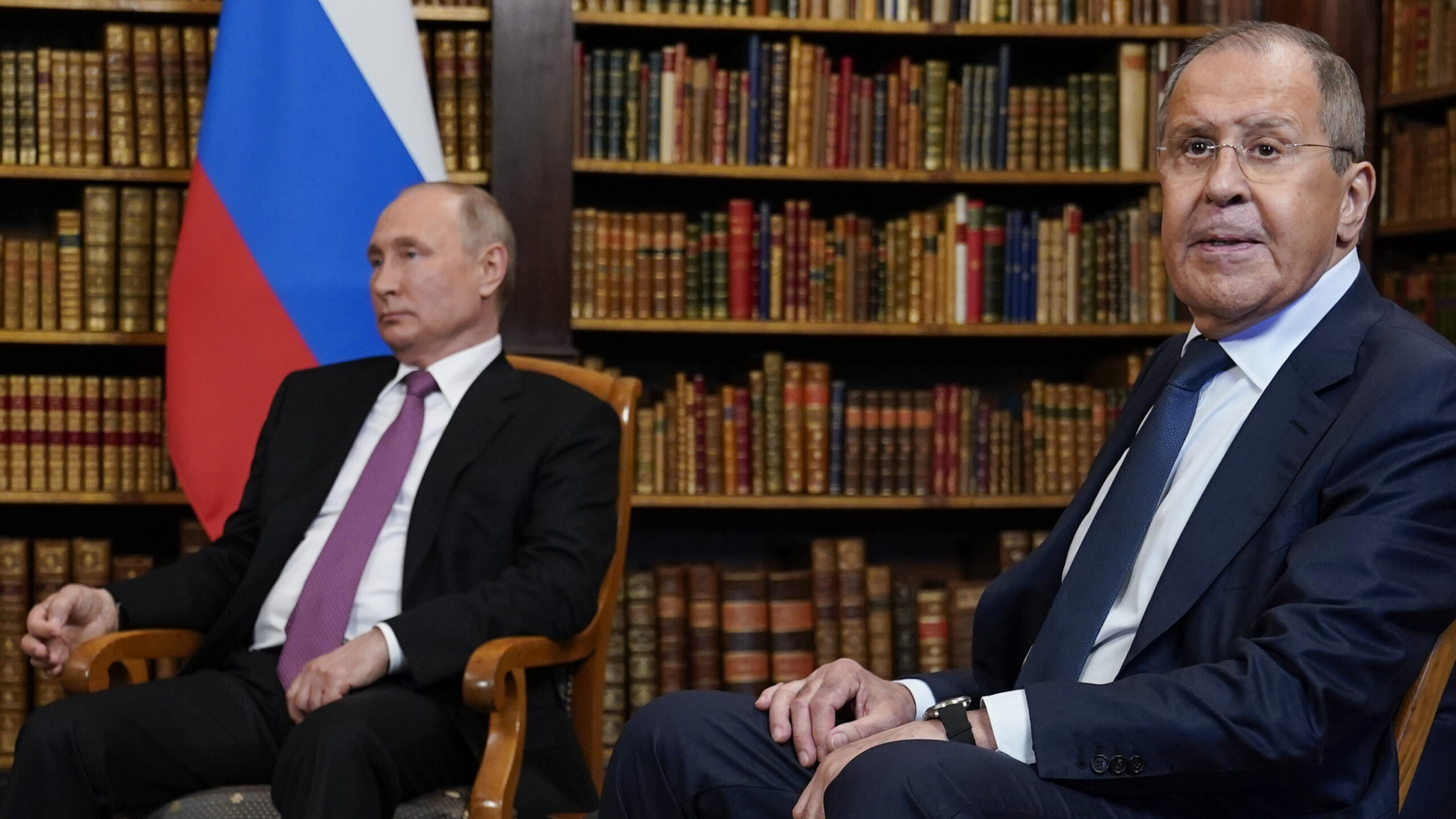
    Russia’s foreign minister, Sergey Lavrov, explains in a major interview with the India Today TV channel why his country had to go to war in Ukraine, starting on 24 February 2022. He told Geeta Mohan who interviewed him: “Of course, [the war is] linked with Ukraine becoming a NATO springboard and a NATO expansion. They were saying Ukraine will be in NATO and nobody can stop it if it so wishes. And then President Zelensky said Ukraine might think about possessing nuclear weapons.” About Russia’s desire to de-dollarise the energy sector, Lavrov said it was to stop the European Union countries from “stealing” from Russia and to provide an “insurance that this robbery will not happen again”.

    Q: What is the reason for President Putin to take Russia to war when negotiations were taking place?

    A: The real reason is the complacency of most countries in the word, after the end of World War II, when our Western colleagues led by the United States declared themselves the winners and in violation of their promises to the Soviet and Russian leadership, started moving NATO eastwards.


    They kept saying “don’t worry, this is a defensive alliance, it is not a threat to Russian security”. But a defensive alliance it was when there was NATO and the Warsaw Treaty, and there was the Berlin Wall, as you remember, both physical and geopolitical, and it was very clear what was the line of defence for these defensive alliances.


    When both the Warsaw Treaty and the Soviet Union disappeared, they decided that they would move the line of defence eastwards and they did this five times without explaining against whom they were going to defend themselves, but in the process building their advance and assault capabilities, and choosing the former Soviet republics, especially Ukraine, as the springboard against Russian interest.


    As early as 2003, for example, when Ukraine had another presidential election, the West publicly and bluntly demanded from the Ukrainians, “you must choose whether you are standing with Russia or with Europe”. And then of course, they started pulling Ukraine into an European Union association agreement which asked for zero tariff for Ukraine goods going into Europe and European goods coming into Ukraine.


    We [Russia] did have a free trade agreement with Ukraine in the context of the Commonwealth of Independent States. So we told our Ukrainian neighbours, “guys, we have a zero tariff agreement with you but we have protection from the European Union because we negotiated for double entry for 80 years, and we did manage to protect [our goods] with considerable tariffs for a period of time”. Some sectors of the Russian economy had agreed on insurance, banking and others. So we told the Ukrainians, “if you have zero tariff with Europe and have zero tariff with us, we are not protected against European goods. It was part of the deal when we entered into double agreement.”


    Then the Ukrainian president in 2013, [Viktor Yanukovych] understood the problem. He asked the European Union to postpone the signature of the association agreement, and we suggested that the three of us – Russia, Ukraine and the EU – could sit together and discuss how to press ahead. The European Union in a very arrogant way said, “this is none of your business, we don’t put our noses in your trade with China and with other countries, so this is going to happen.”


    Then the president of Ukraine, [Viktor Yanukovych] decided to postpone this ceremony, and next morning there were demonstrators all over the Ukraine, capital, Kyiv, and other cities. So they started the protests in early December 2013, and it culminated in some bloody events in February 2014, and the European Union failed to negotiate a deal between President Yanukovych and the opposition.


    Next morning, representatives of the EU – France, Germany and Poland – were absolutely ignored by the opposition [led by ] who staged the coup and declared that they were forming a government of the winners, and they will cancel the special status of the Russian language, and they threatened to throw the Russian ethnic group away from Crimea, and formed groups to storm the Crimean parliament.


    That is how the war started in Crimea when the Crimeans said, “we don’t want to have anything to do with you, leave us alone”. They came under the threat of the armed groups. They called for a referendum and the eastern areas of Ukraine [the Russian-speaking Donetsk and Luhansk] said “guys, we don’t support your coup, leave us alone”. They [Donetsk and Luhansk] never attacked the rest of Ukraine. The putschists attacked them, and they called them terrorists. They called them terrorists for a long eight years.


    ======

    Third Eye note: For readers to fully understand what Sergey Lavrov is saying, the following is the background. According to the World Socialist Website: “The background and implications of the 2014 far-right coup in Kyiv, which overthrew the pro-Russian President Viktor Yanukovych, is critical for understanding the current Ukraine-Russia war. This coup was openly supported by US and European imperialism and implemented primarily by far-right shock troops such as the Right Sector and the neo-Nazi Svoboda Party.


    “It represented the temporary culmination of long-standing efforts by US and Western imperialism to install a puppet regime on the borders of Russia … Ukraine has since been systematically built up as a launching pad for a NATO war against Russia.


    “The regime change prompted the outbreak of an ongoing civil war in the east of Ukraine, between Russian-backed separatists [in the self-proclaimed republics of Donetsk and Luhansk] and the US-backed Ukrainian army, that has claimed the lives of tens of thousands and displaced millions.


    “For the first time since 1945, an avowedly anti-Semitic, pro-Nazi party controls key levers of state power in a European capital, courtesy of US and European imperialism. After the coup of February 2014, the unelected Ukrainian government, headed by the US appointee, Arseniy Yatsenyuk, included no fewer than six ministers from the fascist Svoboda party.”


    In 2013, the World Jewish Congress called for Svoboda to be banned. But the party’s founder and leader, Oleh Tyahnybok, who had spoken repeatedly of his determination to crush the “Russkie-Yid mafia that controls Ukraine,” was feted by US and European Union officials as they prepared the February 2014 coup in Ukraine.


    se was the major political force in the so-called Maidan protests that overthrew Ukrainian president Viktor Yanukovych. In return for providing the shock troops for the coup, Svoboda has been given control of vital ministries.


    Svoboda’s co-founder Andriy Parubiy acted as “security commandant” in the protests, directing attacks by the Right Sector – an alliance of fascists and extreme rightwing nationalists. Dressed in uniforms modelled on Hitler’s Waffen SS, its members boast of fighting Russia in Chechnya, Georgia and Afghanistan.


    One of the first acts of the new government after the February 2014 coup was to abolish minority rights for Russian-speakers. “This is the real record of the reactionary forces that the imperialist powers are aiding and abetting in Ukraine, and on whose behalf they are prepared to plunge Europe, and indeed, the entire world, into a Third World War,” Julie Hyland wrote in a 6 March 2014 article.


    In another major article published on 21 January 2022, a month before Russia attacked Ukraine, Peter Schwarz warned: “State commemorations and public memorials to war criminals, mass murderers, anti-Semites and Nazi collaborators such as Symon Petliura, Stepan Bandera and Roman Shukhevych.


    “The integration of fascist militias into the official armed forces and the networking and military training of neo-Nazis from all over the world under the protective hand of the state. Mafia-like struggles for state power between a handful of oligarchs and a corrupt judiciary and authorities. Screaming social inequality with an average monthly income of 412 euros (April 2021). These are the most salient features of Ukrainian “democracy”, for which the US and its European NATO allies are risking war against the nuclear power Russia.”


    Schwarz continued: “‘Now, as ever, it is up to Ukrainians and no one else to decide their own future and the future of this country’, US secretary of state Antony Blinken said on 19 January 2022 during a visit to Kyiv. ‘The Ukrainian people chose a democratic and European path in 1991. They took to the Maidan to defend that choice in 2013. And unfortunately, ever since, you’ve faced relentless aggression from Moscow. Russia invaded territory in the Crimea, ginned up a conflict in eastern Ukraine, and has systematically sought to undermine and divide Ukraine’s democracy.’ Similar expressions are coming from the capitals of Europe. But every single word of Blinken’s statement is a lie.”


    Schwarz went on: “Contrary to what Blinken claims, the events on the Maidan were not a choice for democracy, but a right-wing coup. The elected president, Yanukovych, who had been manouevring between Russia and the Western powers, was hounded out of office with the help of fascist militias and with the open support of Washington and Berlin and replaced by Petro Poroshenko.


    “Victoria Nuland, then Assistant Secretary of State for European and Eurasian Affairs and now number three in the US State Department, personally paraded on the Maidan to cheer on the protests against Yanukovych. She publicly. boasted that the US had invested five billion dollars in regime change in Ukraine.


    “Germany’s social democratic president, Frank-Walter Steinmeier, then still foreign minister, also travelled to Kyiv to negotiate Yanukovych’s replacement with the opposition parties and Yanukovych himself. He worked directly with Oleh Tyahnybok, the leader of the fascist Svoboda party,” Peter Schwarz added.


    The ink on Steinmeier’s agreement was barely dry when Right Sector, a neo-fascist militia, seized the centre of Kyiv and drove Yanukovych, who feared for his life, to flee.


    Since then, fascist militias have been an integral part of Ukraine’s political life. They terrorised political opponents and kept the war in the east against the pro-Russian separatists in Donetsk and Luhansk, until Russia invaded Ukraine in February 2022.


    A key role among the 80 or so far-right militias built and equipped to fight the Donetsk and Luhansk separatists is played by the Azov Regiment. Founded by Andriy Biletsky, who was freed from prison during the events on the Maidan, where he was serving a sentence for murder, the Azov Regiment has never made a secret of its admiration for the Nazis.


    Biletsky professed his support for the “crusade of the white nations of the world against the Semitic-led subhumans”. The Azov Regiment’s symbols – wolf’s hook and black sun – were used by Hitler’s SS in World War II.


    Nevertheless, Azov was financed and equipped by the Ukraine state and its oligarchs. President Poroshenko praised them at an awards ceremony in 2014, declaring, “These are our best warriors.” Biletsky was celebrated on TV talk shows and elected to parliament in 2014. Eventually, Azov was officially integrated into the Ukrainian armed forces, where it forms its own regiment.


    But Azov is far more than a militia. “It has its own political party; two publishing houses; summer camps for children; and a vigilante force known as the National Militia, which patrols the streets of Ukrainian cities alongside the police.” Its military wing has “at least two training bases and a vast arsenal of weapons, from drones and armoured vehicles to artillery pieces.”


    Azov’s political wing, the National Corps party, claims to have around 10,000 members and maintains intensive relations with fascist and neo-Nazi organisations around the world


    Despite all this, the USA has been supplying the Ukrainian armed forces and militias with weapons and trainers for years, knowing full well that fascist militias benefit from this. When President Barack Obama signed legislation to this effect in 2015, it explicitly did not exclude financial and military support for the Azov Regiment, although this had been widely expected.


    The preparations for war against Russia and the build-up of fascist militias were two sides of the same development in Ukraine. In a 10 July 2021 article, Johannes Stern disclosed that “since the United States and Germany backed the fascist-led coup in Ukraine in February 2014, the imperialist powers have continuously intensified their pro-war offensive against Russia.


    “The imperialist-backed regime in Kyiv is demanding Ukrainian membership in NATO and planning a military offensive to reassert control over the Donbass and ‘retake’ Crimea.”


    Then entered the current president, Volodymyr Zelensky, into the fray in 2019. Born on 25 January 1978, Zelensky, a former comedian of Jewish extraction, became the sixth and current president of Ukraine after he won the 2019 presidential election (held on 31 March and 21 April in a two-round system) on an anti-corruption ticket, supported by the fourth richest Ukrainian, Ihor Kolomoyskyi (net worth $1.8 billion).


    Born to a Jewish family, Zelensky grew up as a native Russian speaker in central Ukraine. Before his acting career, he obtained a degree in law from the Kyiv National Economic University. He then pursued a career in comedy and created the production company, Kyartai 95, which produced films, cartoons, and TV shows, including the TV series, Servant of the People, in which Zelensky played the role of the Ukrainian president.


    The series aired from 2015 to 2019 and was immensely popular, which helped launch Zelensky in a real-life pursuit of the presidency. He and the employees of Kyartai formed a political party bearing the same name as the TV series in March 2018. Zelensky won the second round of the 2019 presidential election by 73.23% of the vote, defeating the then president, Petro Poroshenko.


    Unfortunately, Zelensky, turning very pro-Western, was not able to mollify the Moscow-backed separatists who have controlled the southeastern Ukrainian regions of Donetsk and Luhansk, known collectively as Donbass, since 2014.


    Interestingly, the Russian president, Vladimir Putin, only officially recognised Donetsk and Luhansk as independent republics on 21 February 2022 (three days before Russia’s invasion of Ukraine), paving the way for the official presence of Russian troops in the rebel-controlled areas that occupy about a third of Donetsk and Luhansk.


    This is the long background to what Sergey Lavrov is saying in the India Today interview, which continues below:


    ============


    We [Russia] managed to stop this bloodshed [unleashed by the Ukrainian army and its supporting militias against the citizens of Donetsk and Luhansk] in February 2015. The so-called Minsk Agreement was signed, providing eastern Ukraine some special status, giving them the right to have some local police, special economic relations with the adjacent Russian regions, basically the same as the European Union negotiated for the north of Kosovo. But in both cases, the European Union failed totally to deliver on what was guaranteed by the signatures of its members.

    And for eight long years, the respective governments and presidents of Ukraine bluntly and publicly said that they would not implement the Minsk Agreements, and that they would move to Plan B. So they continued to shell the territories of the proclaimed republics in all these years, and we [Russia] warned the Europeans, the Americans, and the Ukrainian government that they were ignoring something which was endorsed by the United Nations Security Council, to no avail.


    My last point, I understand that people don’t want to go back into this history because they prefer to take events on the immediate merit, but the events, indeed this particular event is rooted in the desire of the United States and what we call the “Collective West” to rule, to dominate the world, and to just show to everybody that there will be no multipolarity, it will be only unipolarity, and that they can declare Iraq, Syria, Libya, Yugoslavia, located 10,000 miles from the United States threats to their security and can do whatever they please there, levelling the cities like they did in Mosul in Iraq and in Syria.


    But when Russia is warning all its colleagues that just on our borders you have been creating a springboard against us, you have been pumping arms into Ukraine, you have been totally ignoring the legislation of Ukraine which completely prohibited the Russian language, you have been ignoring legislation which has been encouraging neo-Nazi ideology and practices, and neo-Nazi battalions which were marshalled against the territories that proclaimed themselves independent and who were promised special status inside Ukraine.


    Of course, the very latest development [the Russian attack on Ukraine] was all linked with Ukraine becoming a NATO springboard and a NATO expansion. They were saying Ukraine will be in NATO and nobody can stop Ukraine if it so wishes. And then President Zelensky said he might think about coming back to possess nuclear weapons.


    And in November last year my president [Putin] suggested to the United States and NATO to sit down with Russia, to cool off, and to discuss how we can agree on security guarantees, without further expansion of NATO eastwards. They refused.


    In the process, the Ukrainian army radically intensified the shelling of [Donetsk and Luhansk] in violation of four ceasefire agreements. They didn’t have any other choice but to recognise [Donetsk and Luhansk], to sign mutual assistance treaties with them, and in response to the request [of Donetsk and Luhansk] to send our troops as part of the special operation [the war in Ukraine] to protect their lives.


    Q: You have provided the basis, history as well as the current context to the war in Ukraine. President Putin himself has said this is not about the people of Ukraine, it is about the administration. We know that in international relations, there is something called “not in my backyard”, which is used often by America and other countries. But should an entire people be punished for an administration wanting to carry out an independent foreign policy?

    A: I don’t think it is about any independence. Since 2013 and even earlier, hundreds and hundreds of American, UK and other Western security and military experts have been openly sitting in the Ukrainian ministry of defence and the Ukrainian security apparatus and they were basically running the place.


    As for the civilians, immediately when this special operation in response of a request from Donetsk and Luhansk, for full compliance of Article 51 of the United Nations Charter, when the special operation was announced by President Putin, he said that the sole purpose of this operation was to demilitarise and de-Nazify Ukraine, because these are two intimately-linked problems in the country, and we have been targeting only military infrastructure.


    Unfortunately, the Ukrainian army and the so-called nationalist battalions who are using Nazi insignia, swastika which was borrowed from Indian history but twisted the wrong way and the insignias of Waffen SS, which these people were using and continue to use – the Ukrainian army and the nationalist battalions use civilians as a human shield, and they placed heavy weapons in the middle of the towns and cities, next to schools, next to kindergartens, and hospitals. The internet is full with the testimonies of the people who were leading in those places and who were asking the Ukrainian army and the Nazi militias not to do this.


    Unfortunately, nobody in the West actually pays attention to the facts which we have been providing. Instead they are staging fake incidents like a couple of weeks ago in a place called Bucha where when the Russian troops left, on 30 March, the city was back in the hands of the Ukrainian administration. The mayor of Bucha publicly said that “we are back, the city is back to normal life”, but on the fourth day they started showing images of dozens of corpses lying in the streets, in a city which only three days before had been shown to be back to normalcy.


    And then a few days later in the city of Kramatorsk, which was fully in Ukranian hands, they summoned people to the railway station and used a missile and it was proven beyond any doubt that the missile was fired by the Ukrainian army. Next morning it was out in the news, in the West, because the obvious nature of this provocation was understood by everybody. The New York Times then said they had the proof that the cluster bombs were used by the Ukrainian army.


    So speaking of civilians and the rules of international humanitarian law, I can once again assure you that our army has been targetting military infrastructure and not civilians.


    Q: Despite what you have just said, about the Ukrainian army putting tanks and heavy weapons in civilian areas, the Russian army has not shown restraint by taking them down, and as a result there has been civilian bloodshed. Will some responsibility be taken also by Russia on the bloodshed?

    A: It is terrible when military activities bring damage to the civilian sector and civilian infrastructure. As I said the Ukrainian army and its Nazi militias had been killing ethnic Russians, citizens of Ukraine, in the east, for 8 years without any TV representatives, be they Asian, African, Latin-American, European, or American paying any attention to this.


    But when Russian journalists, working 24/7 from the  republican side, showing the atrocities committed by the Ukrainian neo-Nazis and armed forces during all those eight years, no single foreign journalist cared to come to the [self-proclaimed republics] to see what was going on. The statistics available indicate that the damage inflicted on the civilians and the civilian infrastructure, on the side of the republics, were five times more and bigger than the figure for the territory controlled by the Ukrainian government.


    This is not to say that we can just ignore the victims and the damage to the civilian infrastructure, but once again I want to emphasis a very important thing that this outcry started only when the Russians decided to protect Russians who are citizens of Ukraine and who were absolutely discriminated against.


    There was no outcry when [Iraqi cities] were levelled with dozens of tanks and hundreds of corpses lying in the streets unattended for weeks and weeks. The American military never have any scruples of achieving their military goals, be it in Syria, Iraq, or Afghanistan for that matter.


    It is a tragedy that people die, but we can’t tolerate the situation where our Western colleagues say that “we can do anything we want and we can encourage the government in Kyiv to be as Russo-phobic as it takes. We will not tell them to stop prohibiting the Russian language in education and in the media, we will not tell them not to ban all Russian-speaking channels, including Ukrainian channels. We will not tell them not to persecute the people in the eastern republics, we will not tell them to have dialogue with Russia, and we will not tell them to stop violating their commitments to give special status to the territories in the east where the Russian-speaking population dominates”.


    Q: On the allegations against Russia on genocide and chemical weapons having been used by Russian forces, what do you have to say?

    A: There is a special commission created in Russia, a public organisation which is very experienced, they have been discovering the fakes staged by the so-called white helmets in Syria and in many other cases. We will not cease our efforts to establish the truth.


    We are used to the fact that the United States, the United Kingdom and other Western countries have a very interesting habit, they just throw in the news things they believe are for their benefit ideologically. And then when it comes to facts, and when the facts are discovered that puts a question mark on their assertions, they just lose interest.


    In 2007, in London, the poisoning of [Alexander] Litvinenko, huge outcry, the trial begins and after a few weeks, it is made public which in the UK means secret. Unfortunately, until now we cannot get the facts about what actually happened to Mr Litvinenko.


    In 2014, the Malaysian Airlines Boeing that was shot down over Ukraine, we presented a huge amount of facts and requested that we be part of the investigation. No way. Though the Ukrainians did not close the skies during the conflict, they were invited to join the investigation, but Russia was not. Malaysia, as the owner of the plan, was invited to join the investigation only five months later, after the Australians, the Dutch and the Malaysians agreed among themselves that anything coming out of the investigation must be subject to consensus, meaning Ukraine which did not close the skies had a veto power over this investigation. So we could not get the truth on this one as well.


    In 2019, Skripal poisoning, the people disappeared. [Seigei Skripal and his daughter Yulia were alleged to have been poisoned with the nerve agent novichok in Salisbury, UK, and Britain accused Russia of having done it, leading to Britain and its Western allies expelling scores of Russian diplomats from their countries. Russia retaliated by expelling a similar number of British and Western diplomats].


    The only proof which was made public was a “highly likely” comment by Theresa May [the then British prime minister]. Yet the Brits insisted on the expulsion of Russian diplomats, and most European countries followed suit. And when I ask my Western friends, “did you provide proof beyond the public statements of ‘highly likely’”? They say no. But they promised to. I checked one year later if this was done. It was not done.


    In 2020, our opposition blogger, Alexei Navalny was poisoned. [He was taken ill on a domestic flight to Moscow, the Russian capital, and after a German request, Russian doctors agreed to transfer him to Germany for medical treatment].


    We immediately responded to the German request to let him go to the Berlin hospital. Twenty-four hours after the request, he was flown to Berlin. We don’t have any confirmation who was flying with him [on the domestic flight to Moscow], where did they get the bottle which was the key element in this investigation, and when we asked the Germans to show us the formula that they discovered in his body, they said this is military secret.


    It is us, until now, who insist on Litvinenko, who insist on the Skripals, who insist to know about the Malaysian Boeing, and about Navalny. The stories which they have staged in Ukraine are from the same nature.


    Q: The neo-Nazis in Ukraine should not have been incorporated in any military organisation in any country, but would you introspect and look at your own people as well. Will there be an investigation against your own [troops] if they have done wrong? Will they be held accountable?

    A:  We have our law which prohibits the military to do anything that is not allowed under international humanitarian law. Any violations are absolutely registered and investigated.


    On Azov, the neo-Nazi group in Ukraine, it was declared by the United Nations in 2014 to be a group that cannot be supported and cannot legitimately operate, and was prohibited by US Congress for any US administration to provide any assistance to this battalion. But everybody forgot about this, rather they sort of remember what this group was about and they decided to put their money on this group.


    In Japan, the government passed a special decree that Azov was no longer a neo-Nazi group and the Japanese government apologised for listing Azov some time ago as such.


    And, of course, President Zelensky, in his camouflage, was asked about Azov by a journalist who felt something was wrong with these neo-Nazi groups. Zelensky said Azov “are what they are. We have many groups like this. They are part of our army.”


    The media only started asking questions about Azov only when the [Russian] military operation was in action. For the long eight years, nobody lifted a finger, nobody bothered about what was being groomed in Ukraine as probably a continuation or a resurrection of what was going on in Europe in the 1930s.


    Q: President Zelensky says Russia plans to use tactical nuclear weapons…

    A: [cuts in]. He says many things depending on what he drinks or smokes. He says many things.


    Q: Was it a tactical mistake on the part of President Zelensky to take on the Russians when he had no real guarantees from the Americans and the Europeans that they would come to his aid?

    A: President Zelensky came to power with the promise that he would achieve peace on the basis of the Minsk Agreements. However, a few months later, he said he could not implement the Minsk Agreements because the Agreements were un-implementable. He never said this was because of the military situation on the ground.


    He said it was unthinkable for Ukraine to give any special status to any part of its territory. But it was very thinkable if I may say so, when Ukraine was created to put together territories which now in the west never celebrate the victory day, 9 May, and on the other hand the territories in the east which never celebrate the heroes that were honoured in the west, those who collaborated with Adolf Hitler.


    So this difficult composition of territories, to now say that Ukraine can only be a unitary state, that “I will not give special status to these people even if the United Nations Security Council demands so”, I believe it was not very farsighted. Had he cooperated as he promised the electorate, when he was elected, if he had cooperated and implemented the Minsk Agreements, the crisis would have been over long ago.


    Q: Is Russia playing Ukraine against Zelensky?

    A: No, the West is playing Zelensky against Russia, and did everything to strengthen him in his desire to ignore the Minsk Agreements. The West in fact is a broad notion, but it is the United States and the Brits, the rest of the West including the European Union, is now just an obedient servant.


    Q: Will Russia ever use tactical nuclear weapons in Ukraine?

    A:  That is the lie put out by Mr Zelensky. We never mentioned this. He mentioned it, so his intelligence must have provided him with some information. I cannot comment on something that an ineloquent person pronounces.


    Q: Is nuclear on Russia’s table at all, in this conflict?

    A:  When the Soviet Union and the United States in 1987, Presidents Mikhail Gorbachev and Ronald Reagan, decided that they had special responsibility for peace on this planet, they signed a solemn declaration that there could be no winners in a nuclear war and therefore nuclear war must never be launched.


    After the Trump administration came to office, we have been telling them because the tensions were aggravated and we said “why don’t we try to send a positive political message to the entire universe and to reiterate what Gorbachev and Reagan had pronounced”. But in the entire 4 years of the Trump administration, they refused to do so.


    However, we were really encouraged when President Joe Biden was inaugurated. In fact, five days after his inauguration, we repeated this offer, and he first agreed to extend the Star Treaty without any preconditions, which the Trump administration was not ready to do. In June 2021 when Biden met with President Putin in Geneva, they issued a declaration on our initiative.


    After that, the Americans and the Russians said there must be no nuclear war, they shouldn’t even think about it. We started to promote the same commitment in the context of the P5. Not the United States, not the UK, not France, it was Russia that pushed for it. Eventually in early January 2022, the P5, at the level of their presidents and heads of government, issued a statement that we initiated, and which we had been pushing for all these years. [The P5 refers to the United Nations Security Council’s five permanent member states – United States, UK, France, Russia, and China. It becomes the P5+1 with the inclusion of Germany].


    Q: So nuclear is off the table, only as a last resort?

    A: This statement, both the Russian and American statements, and the P5 summit statement, were issued on the strong insistence of the Russian Federation.


    Q: It seems Ukraine has lost more land than they would have gained by negotiating on Donbass?

    A: It’s the decision of those who have been running Ukraine, those who have been sabotaging the Minsk Agreements in spite of the UN Security Council decision. We are not up for a regime change in Ukraine, we have said this repeatedly.


    We want the Ukrainians themselves to decide how they want to live first, in a way which will not repeat the Minsk Agreements, when [Donetsk and Luhansk] decided that they didn’t want to do anything with the coup leaders who immediately said they were against the Russian culture, language, and everything that the people of [Donetsk and Luhansk] cherish. And then they were promised something by the European Union but they were cheated. So we want the people to be free to decide how they want to live in Ukraine.


    Q: Russia is one of the most sanctioned countries in the world, how long can you sustain it?

    A: I don’t think we are thinking in the context of sustaining it. Sustaining means you take some hardships and hope that sooner than later, this will be over. The decisions which we have been taking during, not this particular conflict but for many years, because Russia has been under sanctions all along, so now we have come to a very straight forward conclusion: we cannot rely on our Western colleagues in any part of our lives which has strategic significance, be it for security which we managed to ensure ourselves after 2014, be it of course defence, and be it some strategic sectors where high-tech is developing and indicating for the future of mankind.


    We did not have time to achieve self-sufficiency in all these areas but in most cases we have resolved these issues, and of course we are open to cooperation with all other countries who do not use illegal and illegitimate and unilateral measures in violation of the UN Charter.


    Q: Finally, Europe is hoping to halt gas imports from Russia, but you are looking for the de-dollarisation of the global energy market by dealing in roubles. How do you propose to do that should they start halting gas imports from Russia?

    A: There will be no change for the Europeans or the countries who buy our gas. The reason for this decision was very simple and obvious: when they froze the Russian assets in dollars and euros and yen and pound sterling for an amount of more than 300 billion euros, that was mostly the money kept in Western banks after we receive payment from the Western countries for our gas deliveries.


    In other words, they paid us and they stole the money from us, because those were the currencies that are linked to the Western banking system. So what we told them to do is that they would not be paying directly to Gasprom accounts abroad, they would be paying to the Gasprom bank, which is an independent entity.


    They would be paying the same amount which they have to pay under the existing contracts, but they will pay these amounts to special accounts which they have to open with the Gasprom bank. And there will be a parallel account in roubles. So they pay euros inside the bank, and the euros are transferred to the rouble account, and from this account Gasprom itself receives roubles.


    Q: So you are not running losses at all on the money that Russia is receiving from Europe?

    A: Exactly. As of now, they will not be able to keep the money in their banks, the money which they pay to us. I believe this is something which will not create conflicts. They will still be paying in euros or dollars or whatever was the currency of the contract, but we will have insurance that this robbery will not happen again.


    Q: Will the war in eastern Ukraine continue and intensify?

    A: The operation in the east of Ukraine is aimed, as it was announced in the very beginning, to fully liberate Donestk and Luhansk, and this operation will continue. Another stage of the operation is beginning and I am sure it will be a very important moment.


  • The truth about Elizabeth’s empire, and why many people are angry at her

    The truth about Elizabeth’s empire, and why many people are angry at her

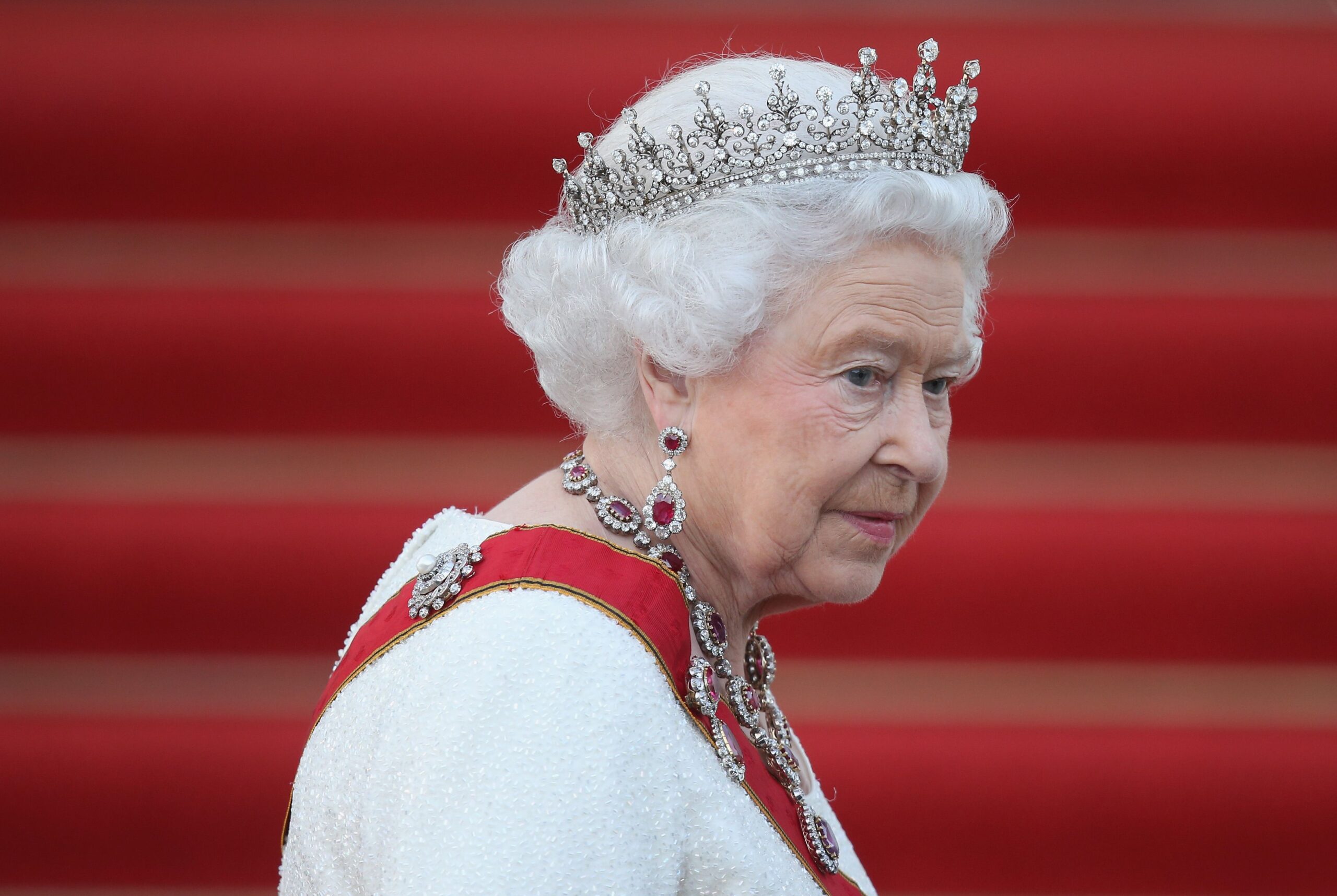
    Queen Elizabeth II, Britain’s longest reigning monarch ever, died on 8 September 2022, at the age of 96, having reigned for 70 years. A much-loved woman by her admirers, her death has received rolling coverage by the world’s main television and radio stations, especially those in the West. Glowing tributes and encomiums have been poured on her from around the world, but some dissenting voices think otherwise. They say they won’t mourn for her because her death is a reminder of a very tragic period in Africa and world history during which Britain used violence, mass murder, theft, and oppression to rule and dispossess people from more than a quarter of the world. Worse, in 70 years of reign, Queen Elizabeth II refused to pronounce on these severe crimes and apologise for them, let alone pay reparations or make restitution. “If there is really life and justice after death, may Elizabeth and her ancestors get what they deserve,” cursed one group of dissenters in South Africa. Our editor, Baffour Ankomah reports.

    It was always going to happen the way it has. Many people in Africa and across the world were always going to be critical of Queen Elizabeth II, even dance on her grave if they had the chance – because of her self-imposed protocol of keeping a stiff upper lip on the humongous crimes and exploitation that her Britain, the country she was head of state of, for 70 long years, committed around the world, including Africa.

    Much of the atrocities and exploitation happened centuries before she ascended the throne on 6 February 1952 (her coronation was on 2 June 1953), but 21st century morality meant that people expected her to speak on the atrocities and assuage their feelings by offering an apology (or apologies) on behalf of her cruel ancestors who sinned ever so gravely against much of the world. But she did not.

    Perhaps an apology (or apologies, because of the sheer quantum of the ancestral sins) would have been necessarily followed by reparations and restitution, and that frightened her and Britain to no end. So she kept mute. Hence when she died on 8 September 2022, instead of the usual decorum of respect and heartfelt condolences, a large number of Africans and other people elsewhere in the world uncharacteristically decided to go for her throat, which should not have been the case.


    “She is [being] blamed for what her country did before her time, but she was actually part of the solution, from [Ghana’s independence in 1957, the first in sub-Saharan Africa] up to keeping [Margaret] Thatcher on track for Zimbabwe in Lusaka in 1979, and against apartheid,” complained one of her admirers in Harare.


    There was merit in the complaint, but only a limited merit. Having ascended the throne in 1952, at the age of 26 (she was born on 21 April 1926; her full name Elizabeth Alexandra Mary Windsor), she had no hand in the ancestral sins committed against a good quarter of the world, if not more, that Britain colonised (sometimes brutally) and ruled over for an average of 100 years, and sometimes even more. For places like China that Britain did not directly colonise, their fate and experiences in the hands of the British were equally squalid.


    Playing fair

    Whatever the dissenters have said, the Queen, to be fair to her, could not have spoken about, and apologised for, the grave sins that her rapacious ancestors committed all over the world without expecting her to pay some reparations or make restitution. If that was the case, how much could Britain have paid for all the crimes and mass murder and rapacity which that little island nation wrought across the world? It would have meant Britain ceasing to exist.


    For, how much could anybody pay in reparations and restitution for the monstrous crimes and mass murder that the British ancestors who left the shores of England in the Mayflower in 1620 and ended up in North America, commit against the Native Americans in what is now the USA and Canada?


    Similarly, how much could anybody pay in reparations and restitution for the crimes and mass murder that the British convicts sent to Australia and New Zealand commit against the Aborigines and Maoris? From 1788, and for the next 50 years, Britain sent its convicts to New South Wales in Australia. These included children as young as nine years old. Not surprisingly, the convicts, like the Brits and the other Europeans who landed in North America, resorted to killing the native population as a means of stealing the land from the natives.


    History shows that between 1788 and 1868, about 162,000 British prisoners were shipped from Britain and Ireland to various penal colonies in Australia. And all they did was to kill and kill their way through Aborigine ancestral land, annihilating the natives and taking the land for themselves.


    In fact, the Britons who ended up in New Zealand also shipped their convicts to Australia between 1843 and 1853. And between the British Australians and the British New Zealanders, elimination via mass murder of the native populations was the preferred option. That heinous crime cries against Britain to this day.


    Similarly, in Africa, notably in South Africa, Zimbabwe, and Kenya, the British again used mass murder and rapacity to steal the land and force their rule on the native populations. Other African countries that came under British rule – like Ghana, Nigeria, Sierra Leone, Gambia, Egypt, Sudan, Uganda, Zambia, Malawi and Tanzania suffered in various degrees at the hands of the British. And those crimes are yet to be expiated.


    Same, same in Asia

    Elsewhere in Asia, the British were at it again – right from Palestine, all the way through the Asian heartlands, including Afghanistan (where Britain tried to assert its influence in three Anglo-Afghan Wars – 1839-1842, 1878-1880 and 1919), to the Empire of India (which the British divided into India, Burma, Pakistan and Sri Lanka when independence was beckoning), to Southeast Asia where the victims included Singapore, Malaysia, North Borneo, Brunei, Sarawak, Labuan and the Straits Settlement.


    In the Pacific Ocean, the British victims included today’s Fiji, Tonga, Solomon Islands, Papua New Guinea, Kiribati, Tuvalu, Cook Islands, Niue (formerly Savage Island), Phoenix Islands, Pitcairn Islands, Tokelau (formerly Union Islands), Nauru (formerly Pleasant Island), Vanuatu (formerly New Hebrides), and Canton and Enderbury islands. Where else did the perfidy of the Albion not touch?


    It is interesting to note that the divide and rule tactics of the British helped in no small measure in the subjugation of all these colonies and “possessions”. History shows that “the British colony of Burma was part of the British run-state in India, the Empire of India, from 1824 to 1937. Burma was separated from the rest of the Indian Empire in 1937, just 10 years before India became an independent country in 1947”.


    The same happened to Pakistan, which was severed from the Indian Empire at midnight on 14-15 August 1947. The partition was outlined in the India Independence Act 1947 and resulted in the dissolution of the British Raj (or Crown rule in India). But the pain and suffering that the partition inflicted on the people of Pakistan and India knew no bounds. And all this because Britain engineered the partition for its own political ends.


    How Britain treated India

    The New Yorker magazine confirms that: “In August 1947, when, after 300 years in India, the British finally left, the subcontinent was partitioned into two independent nation states: Hindu-majority India and Muslim-majority Pakistan. Immediately, there began one of the greatest migrations in human history, as millions of Muslims trekked to West and East Pakistan (the latter now known as Bangladesh) while millions of Hindus and Sikhs headed in the opposite direction. Many hundreds of thousands never made it.”


    In an exhibition confirming this horrific experience, titled “The 1947 Partition – Survivors and their Memories”, C. Ryan Perkins, a South Asian Studies librarian, and his Indian curator colleagues, Guneeta Singh Bhalla and Rohini Ramkrishnan, report the following:


    “As the clock struck midnight on 15 August 1947, celebratory shouts of freedom from colonial rule were drowned out by the cries of millions frantically making their way through the corpse-littered landscape of nascent India and Pakistan. After more than 100 years of British East India Company rule [the Company ruled the Empire of India on behalf of the British Crown] and an additional 90 years of the British Raj, the Indian subcontinent had finally achieved independence. What should have been a moment of crowning triumph after years of anti-colonial struggle was indelibly marred by unimaginable violence and bloodshed.


    “Up to two million people lost their lives in the most horrific of manners. The darkened landscape bore silent witness to trains laden with the dead, decapitated bodies, limbs strewn along the sides of roads, and wanton rape and pillaging. There was nothing that could have prepared the approximately 14 million refugees for this nightmare. The 1947 Partition was accompanied by one of the largest mass migrations in human history and violence on a scale that had seldom been seen before.


    “As the provinces of the Punjab and Bengal were effectively split in half, approximately seven million Hindus and Sikhs and seven million Muslims found themselves in the wrong country. Believing they would return ‘home’, many families left their valuables behind before they packed up their essential belongings and began the trek to India or West or East Pakistan (now Bangladesh). Many never made it.


    “How could neighbouring communities, accustomed to centuries of relative peace have suddenly turned so violently upon one another? One could blame the 15 July 1947 decision by the British to hand over power only a month later on 15 August 1947, a full 10 months earlier than anticipated.


    “One could blame the hastily drawn borders, which were created by a British lawyer, Sir Cyril Radcliffe, who lacked basic knowledge of India and was given only five weeks to redraw all the borders of South Asia. One could fault the increasingly hostile rhetoric that accompanied the rise of Hindu and Muslim nationalism or the divide and rule policies of the British. India and Pakistan have remained rivals ever since.”


    According to Navtej Purewal, an Indian fellow of the Arts and Humanities Research Council in Britain, “the British used religion as a way of dividing people in India into categories. For example, they created separate Muslim and Hindu lists of voters for local elections. There were seats reserved for Muslim politicians and seats reserved for Hindus. Religion became a factor in politics.”


    Since the partition, India and Pakistan have repeatedly clashed over who controls the province of Kashmir to their north. They have fought two wars over Kashmir (1947-1948 and 1965), clashed in what was described as the Kargil crisis in 1999, and currently administer different parts of Kashmir. Here again, Britain’s divide and rule policies has had a severe toll.


    How Britain treated China

    Over 100 years before the Indian Partition, a similar damaging toll had been inflicted on China by the British in two Opium Wars (1839-1842, and 1856–1860) which arose over China’s refusal to accept British sales of the health-ravaging drug, opium, and the British desire to force the drug on the Chinese whether they liked it or not.


    Interestingly, the Opium Wars have their roots in the most gentlemanly of drinks, tea. Tea originated in China and was never known in Britain until Catherine of Braganza, an African-descended woman from the Portuguese royal family, married King Charles II of Britain on 21 May 1662, making her the Queen of England, Scotland and Ireland until her husband’s death on 6 February 1685.


    Catherine came from the part of the Portuguese royal family that had Moorish blood coursing through their veins. The Moors were predominantly African Muslims (mixed with a spattering of Arab Muslims) who left northwest Africa and West Africa to colonise southern Europe (Spain, Portugal, southern Italy, southern France, and much of the Mediterranean islands) for 781 years between 711 AD and 1492 AD.


    The Moors conquered the Iberian Peninsula in 711 AD and for the next 781 years they ruled southern Europe from their base in Spain and brought civilisation, enlightenment, and progress to the whole of Europe during what the Europeans call their Dark Ages.


    It is a glorious African achievement that most Africans do not know about because after the Moorish Empire fell on 2 January 1492, the Europeans set about erasing all traces of the Moorish Empire, except strong Moorish castles and edifices like the magnificent Alhambra Castle in Granada in southern Spain which the Moors built between 889 AD and 1333 AD, and which has today become one of Spain’s most visited tourist attractions.


    Catherine’s mother was Luisa de Guzman, who was also the mother of two kings of Portugal. Luisa herself served as a regent of Portugal de jure from 1656 to 1662 and de facto until her death in 1666. Catherine’s father, the duke of Braganza, became King John IV of Portugal in 1640.


    Catherine’s marriage to Charles II, which was part of an important alliance between England and Portugal, brought England valuable trading privileges and the port cities of Tangier (in Morocco) and Bombay (in India). In return, England pledged to help Portugal maintain its independence from Spain.


    As one historian puts it: “If ever a marriage was made for political and economic reasons, the union of Charles and Catherine was such a match. Her dowry included Tangier, Bombay, full trading privileges for England in the Indies, and a very large sum of money [some historians put it as high as £500,000 in modern money] for the impoverished Charles.”


    What remains unsaid here is that at the time of Catherine’s marriage, women in England and across much of Europe paid dowry to the men they married (or who agreed to marry them). It is like what happens in India today where women pay dowry to the men who marry them.


    Thus, Europe’s current disdain of the dowry system in Africa, which some European NGOs call “bride price” or “purchasing a wife” has no basis in history or coming from people who suffer from historical amnesia. After all, African women have never paid dowry to the men who marry them. But European women did – once upon a time.


    Among Catherine’s big dowry paid to Charles II, of £500,000 as well as Bombay and Tangier and trade privileges for England, was a chest of tea, a then exotic drink unknown to the British and their royalty. Charles and his court liked the drink and soon it had become popular within the British royal family, from where tea-drinking gradually seeped into the British lower classes and became a major problem for the British government as it spent a lot of silver buying tea from China.


    Opium for tea

    As the years went by, the British addiction for tea became so overwhelming that the government’s expenditure for the importation of tea from China, all paid for in tons and tons of silver, became untenable, such that the British government decided to exchange tea with opium, which the British East India Company (that was then ruling India on behalf of the British Crown) planted across the border in India.


    At first the Chinese authorities accepted the opium exchange without resistance, but when the drug began to have a serious negative effect on Chinese health, the authorities decided to stop receiving it from the British. Affronted, the British decided to force the opium on the Chinese willy nilly, and as the Chinese continued to resist, the antagonism this created was manipulated by the British to launch the First Opium War in 1839. This war lasted until 1842.


    The Encyclopedia Britannica, itself a loyal British institution, tells the story better. It attests that in Chinese history, the traffic that developed in the 18th and 19th centuries saw Western countries, mostly Great Britain, exporting opium grown in India to China. The British used the profits from the sale of opium to purchase tea and other Chinese luxury goods such as porcelain and silk, which were in great demand in the West, while addiction to opium became widespread in China, leading to social and economic problems there.


    Opium is a narcotic drug that is obtained from the unripe seedpods of the opium poppy. It was native to what is now Turkey, and according to the Encyclopedia Britannica, it was first introduced to China by Turkish and Arab traders in the late 6th or early 7th century.


    “Taken orally to relieve tension and pain,” says the Britannica, “the drug was used in limited quantities until the 17th century. At that point, the practice of smoking tobacco spread from North America to China, and opium smoking soon became popular throughout the country.


    “Opium addiction increased in China, and opium importations grew rapidly during the first century of the Qing dynasty (1644–1911/12). By 1729 it had become such a problem that the Yongzheng emperor (ruled 1722–1735) prohibited the sale and smoking of opium. That failed to hamper the trade, and in 1796 the Jiaqing emperor outlawed opium importation and cultivation. In spite of such decrees, however, the opium trade continued to flourish.


    “Early in the 18th century, the Portuguese found that they could import opium from India and sell it in China at a considerable profit. By 1773, the British had discovered the trade, and that year they became the leading suppliers of the Chinese market.”


    The Britannica continues: “The British East India Company established a monopoly on opium cultivation in the Indian province of Bengal, where they developed a method of growing opium poppies cheaply and abundantly. Other Western countries also joined in the trade, including the United States, which dealt in Turkish as well as Indian opium.


    “Britain and other European countries undertook the opium trade because of their chronic trade imbalance with China. There was tremendous demand in Europe for Chinese tea, silks, and porcelain pottery, but there was correspondingly little demand in China for Europe’s manufactured goods and other trade items. Consequently, Europeans had to pay for Chinese products with gold or silver. The opium trade, which created a steady demand among Chinese addicts for opium imported by the West, solved this chronic trade imbalance.


    “The amount of opium imported into China increased from about 200 chests annually in 1729 to roughly 1,000 chests in 1767, and then to about 10,000 per year between 1820 and 1830. By 1838 the amount had grown to some 40,000 chests imported into China annually. The balance of payments for the first time began to run against China and in favour of Britain. Levels of opium addiction grew so high that it began to affect the imperial troops and the official classes.”


    According to the Britannica: “As the East India Company became wealthier, it could look to other trading opportunities and sought to expand and encourage trade with China, establishing a base in Singapore to help coordinate this trade. [But] the Company produced no products of interest to the Chinese authorities [except opium]. The Company preferred to sell this addictive drug rather than using its cash resources for trading with China. This would eventually put Britain on a collision course with Chinese officialdom which resulted in the Opium Wars of the 1840s and late 1850s.


    “By this time, the industrial power of Britain with its cutting-edge military technology meant that it held a decisive advantage over China. The resulting wars were fought ostensibly for ‘free trade’ principles, but in reality were to allow Britain to continue its exploitative trading relationship over the Chinese. Britain was to receive Hong Kong as a base to ensure that it had access to Chinese trade and ports. This port would grow to become an important trading entrepot connecting the British Empire to the resources of China.


    “With its dominant positions in India and China, Britain would spend much of the rest of the 19th century extending its economic and political powers to defend these interests, trade routes, or fill the spaces in between. Therefore, much of the Middle East was taken to safeguard routes to India. Burma, the Malay States, and Borneo were trading destinations frequented by ships going to and from India and China or harboured pirates who could disrupt that trade and so came within the purview of the British.”


    The Britannica goes on: “Even the traumatic disruptions of the Indian Mutiny [of 1857] would just see the commercial East India Company replaced by the even greater resources of Her Majesty’s Government with the formation of the Raj. Central Asia became a battleground for influence as Britain tried to prevent the spreading power of Tsarist Russia from impinging on its Jewel in the Crown of India.


    “There became a logic of expansion in order to safeguard the most valuable parts of Britain’s Asian Empire; India and China. [China] may not have been painted red like [India], but Britain had all the benefits of access to the markets of China without the responsibilities of running it or providing it with an administration or an infrastructure. These two giants lay at the centre of British interests and concerns until the middle of the 20th century.”


    The first Opium War

    Turning to the Opium Wars proper, the Encyclopedia Britannica describes them as having been “two armed conflicts in China in the mid-19th century between the forces of [Britain, and later France) and the Qing dynasty, which ruled China from 1644 to 1911/12.


    “The first Opium War (1839-1842) was fought between China and Britain, and the second Opium War (1856-1860), also known as the Arrow War or the Anglo-French War in China, was fought by Britain and France against China. In each case, the foreign powers were victorious and gained commercial privileges and legal and territorial concessions in China. The conflicts marked the start of the era of unequal treaties and other inroads on Qing sovereignty that helped weaken and ultimately topple the dynasty in favour of republican China in the early 20th century.”


    The Britannica confirms that the Opium Wars arose from China’s attempts to suppress the opium trade. “Foreign traders (primarily British) had been illegally exporting opium mainly from India to China since the 18th century, but that trade grew dramatically from about 1820. The resulting widespread addiction in China was causing serious social and economic disruption.


    “So in spring 1839, the Chinese government confiscated and destroyed more than 20,000 chests of opium – some 1,400 tons of the drug – that were warehoused at Canton (now Guangzhou) by British merchants. The antagonism between the two sides increased in July 1839 when some drunken British sailors killed a Chinese villager. The British government, which did not wish its subjects to be tried in the Chinese legal system, refused to turn the accused men over to the Chinese courts.


    “Hostilities broke out later that year when British warships destroyed a Chinese blockade of the Pearl River (known to the Chinese as the Zhu Jiang River) estuary at Hong Kong. The British government decided in early 1840 to send an expeditionary force to China, which arrived at Hong Kong in June 1840. The British fleet proceeded up the Pearl River estuary to Canton, and, after months of negotiations there, attacked and occupied the city in May 1841.


    “Subsequent British campaigns over the next year were likewise successful against the inferior Qing forces, despite a determined counter-attack by Chinese troops in the spring of 1842. The British held against that offensive, however, and captured Nanjing in late August 1842, which put an end to the fighting.


    “Peace negotiations proceeded quickly, resulting in the Treaty of Nanjing, signed on 29 August 1842. By its provisions, China was required to pay Britain a large indemnity, cede Hong Kong Island to the British, and increase the number of treaty ports where the British could trade and reside from one (canton) to five.”


    The British subsequently held on to Hong Kong for the next 155 years, only handing it back to the Chinese on 1 July 1997 by Margaret Thatcher’s government.


    According to the Britannica: “Among the four additional designated ports [set aside for British use by the Nanjing Treaty] was Shanghai, and the new access to foreigners there marked the beginning of the city’s transformation into one of China’s major commercial entrepôts. The British Supplementary Treaty of the Humen, signed on 8 October 1843, gave British citizens extra-territoriality (the right to be tried by British courts) and most-favoured-nation status (Britain was granted any rights in China that might be granted to other foreign countries). Other Western countries quickly demanded and were given similar privileges.”


    The Second Opium War

    The perfidy of the Albion was again on display in the run-up to the Second Opium War (1856-1860). The Encyclopedia Britannica reports that: “In the mid-1850s, while the Qing government was embroiled in trying to quell the Taiping Rebellion (1850–64), the British, seeking to extend their trading rights in China, found an excuse to renew hostilities.


    “In early October 1856, some Chinese officials boarded the British-registered ship Arrow while it was docked in Canton, arrested several Chinese crew members (who were later released), and allegedly lowered the British flag. Later that month, a British warship sailed up the Pearl River estuary and began bombarding Canton, and there were skirmishes between British and Chinese troops. Trading ceased as a stalemate ensued.


    “In December 1856, the Chinese in Canton burned foreign factories (trading warehouses) there, and tensions escalated. The French decided to join the British military expedition, using as their excuse the murder of a French missionary in the interior of China in early 1856.


    “After delays in assembling the forces in China (British troops that were en route were first diverted to India to help quell the Indian Mutiny), the allies began military operations in late 1857. They quickly captured Canton, deposed the city’s intransigent governor, and installed a more-compliant official.


    “In May 1858, allied troops in British warships reached Tianjin (Tientsin) and forced the Chinese into negotiations. The treaties of Tianjin, signed in June 1858, provided residence in Beijing for foreign envoys, the opening of several new ports to Western trade and residence, the right of foreign travel in the interior of China, and freedom of movement for Christian missionaries. In further negotiations in Shanghai later in the year, the importation of opium was legalised.


    “The British withdrew from Tianjin in the summer of 1858, but they returned to the area in June 1859 en route to Beijing with French and British diplomats to ratify the treaties. The Chinese refused to let them pass by the Dagu forts at the mouth of the Hai River and proposed an alternate route to Beijing. The British-led forces decided against taking the other route and instead tried to push forward past Dagu.


    “They were driven back with heavy casualties. The Chinese subsequently refused to ratify the treaties, and the allies resumed hostilities. In August 1860, a considerably larger force of warships and British and French troops destroyed the Dagu batteries, proceeded upriver to Tianjin, and, in October 1860, captured Beijing and plundered and then burned the Yuanming Garden, the emperor’s summer palace.


    “Later that month the Chinese signed the Beijing Convention, in which they agreed to observe the treaties of Tianjin and also ceded to the British the southern portion of the Kowloon Peninsula adjacent to Hong Kong.”


    In effect, the British sin against China was cardinal. From 1839 onwards, this little island tucked away in the west of Europe made life extremely difficult for the Chinese, who, though occupied a huge landmass, were however militarily weak. So the British could beat them any time they wanted.


    The lesson this teaches is that nations that want to survive in a world made unfair by strong powers, should pay due attention to building strong military forces to safeguard their sovereignties. Today, with China having become a military and economic superpower, no country on the earth dares threaten it, let alone treat it as the British did in the days of yore. It is a lesson Africa will have to learn very fast.


    As an aside, it is interesting to note that Kenya came to grow tea, and became the world’s largest tea exporter, because the British feared that, with Indian independence coming in 1947, they would lose control of the world tea trade. At the time, much of British-controlled tea was grown in Ceylon which was part of the Indian Empire.


    To secure the profitable global tea trade and ringfence it against any Indian shenanigans after independence, the British looked elsewhere, to other colonies, to take up tea growing from India. And they chose Kenya whose fertile lands in the Rift Valley highlands were ideal for tea growing.


    In 1934, the British colonial government in Kenya helped British settlers to seize the highlands and shipped the native-owners out into reserves and, if they were fortunate, employed them as cooks, gardeners, and guards. The government provided all the support the white tea farmers needed, and in no time, Kenya became the world’s largest producer and exporter of raw tea, even till today.


    The downside, though, was that as the Kenyans organised themselves and fought for the return of their seized lands, which morphed into a demand for national independence, the British brutally responded, dealing a deadly blow to what it called the Mau Mau rebellion, in which thousands of Kenyans were killed, maimed or tortured by British troops.


    So, like elsewhere in Africa and beyond, the wrong done to the Kenyans by the British has not been corrected, and as late as May 2022, descendants of the robbed Kenyans were calling for reparations and restitution.


    The Caribbean

    And how can one forget the Caribbean islands and the British performance there, annihilating, with the support of the other European slave trading nations, the native populations and replacing them with African slaves shipped from the continent during the 400 years of the TransAtlantic Slave Trade, in which, at one point, Britain played the lead role and reduced Africans to sub-human beings worthy of the worst treatment possible.


    Truthful historians, both African and otherwise, supported by UNESCO figures, quote as high as 100 million Africans having been directly affected by the slave trade, including those killed or died in the tribal wars fought to seize or gather the slaves, those who died on the long march from the interior to the coast, those who died in the barracoons waiting for the slave ships to arrive, those who died in the middle journey over the Atlantic Ocean or thrown overboard by callous slave traders, and those who survived the hazardous journey from capture to sale in the so-called New World and who worked in the cotton and sugar plantations, producing wealth that built Europe and particularly Britain and its small towns like Liverpool, Bristol and London, into wealthy mega-cities.


    What is true is that British cruelty during the TransAtlantic Slave Trade was pointed and multifaceted, and the Royal Family was at the heart of it all, authorising the so-called trade by giving “charters” to slave traders and pocketing the financial windfalls that flowed from the horrible enterprise.


    History shows that the slave trader John Hawkins made so much profit in three trips to sell African slaves, and on his return to England after the first trip, an envious Queen Elizabeth I became interested in directly sponsoring Hawkin’s subsequent trips and provided him with a ship named the “Jesus”. Hawkins made so much money for the Queen that she made him a knight, and lo and behold Hawkins chose for his coat of arms an African in chains. In the end, the wealth and possessions that the slave trade created was passed on by the British Royal Family to later generations, including Elizabeth II.


    Incidentally, the Caribbean was one of the principal venues of the slave trade, and thus became a centre of the atrocities committed against African slaves by the British and the other European slave trading nations. All the former British colonies in the Caribbean – Jamaica, Barbados, Trinidad and Tobago, Bahamas, Grenada, Dominica, St Lucia, St Vincent, Antigua and Barbuda, St Kitts and Nevis, Guyana, Anguilla, Cayman Islands, Turks and Caicos Islands, Montserrat, British Virgin Islands, Grenadines, Belize, and Bermuda – have different harrowing degrees of horror to tell under British rule.


    Even the French, the Dutch, the Irish, and the other European nations who fought intermittent wars with the British over the centuries have their own horrors to tell. Even in Egypt, the British were still brutal, until it granted Egyptian independence on 28 February 1922.


    Credit to her or no credit to her?

    In a sum, the frightening tale of horror perpetrated across the world by the British Empire was too heavy a burden for one small woman (small in body size) to carry and apologise for. No matter the power at her command, the Queen could not have pronounced on these humongous crimes and expect not to be challenged to pay reparations or make restitutions. The sums involved would have broken the Bank of England and the Bank of Scotland put together a million times. So the best policy was to keep quiet.


    No one should forget that after World War II, the victorious Allies (Britain leading the charge) forced Germany to pay reparations of $23 billion from 1945 till very recently, when under Chancellor Angela Merkel, Germany paid the last dollar to the Allies. Germany again was forced to pay reparations to survivors of the Jewish Holocaust as punishment for the gassing of 6 million Jews by Adolf Hitler’s Nazi government during the war.


    Since 1952, Germany has been paying reparations to Israel on behalf of the Holocaust survivors, the first one amounting to $222 million. In total, Germany has paid $42 billion in restitution for Nazi crimes.


    On 24 August 1999, a group of Jewish organisations met with German firms to negotiate another round of reparations worth $10 billion on behalf of Jews who were forced by the Nazis to work for German companies as slave labourers during World War II. The companies included Volkswagen, BMW, Deutsche Bank, BASF, Daimler-Chrysler, Siemens and Dresdner Bank.


    In 1998, a number of Swiss banks paid a total of $1.25 billion reparations

    to Jewish Holocaust victims in respect of “dormant accounts” held by dead Jews. The money had been (mis)appropriated by the banks after it became clear that the Nazis had murdered the account holders in gas chambers. In recent months, Poland too has demanded $1.32 trillion for the damage Hitler’s Germany did to the country during World War II.


    It is undisputable: The British Empire thrived on mass murder, violence, rapacity, genocide, theft, oppression, suppression, deceit, and plunder. Thus, no matter which way one turns, the violent underpinnings of Britain across the world are too much to comprehend and apologise for. And Britain knew about this.


    Therefore, Queen Elizabeth II, could not speak about Britain’s colonial crimes and apologise for them because the reparation-and-restitution trap was always waiting for her. The British knew that once the Queen started talking about colonial wrongs and apologising for them, the next demand would be reparations – in gargantuan proportions – and Britain did not have the money to pay. So the best policy was to keep quiet. And the Queen followed the script to the letter.


    Not to forget, also, is the fact (a positive fact) that when the Queen ascended the throne in 1952, almost the whole of Africa, except Ethiopia, Liberia, Egypt and Libya, were under European political domination. Fifty of the current 54 African countries were colonies of European countries, with no right to self-determination.


    The same fate hanged over the 19 British colonies and “possessions” in the Caribbean. But within 20 years of her reign, all the British colonies in Africa and the Caribbean were granted political independence (except Zimbabwe, Anguilla, Turks and Caicos Islands, Cayman Islands, Montserrat, and British Virgin Islands).


    By granting political independence to all these colonies during the first two decades of the Queen’s reign, some might say she supervised the collapse of the British Empire, which, to Africa and the Caribbean, was a good thing because it brought political liberation to Africa and the Caribbean.


    This should somehow be seen as a credit to her, but many people are loathe to grant her that credit because they say in 70 years of reign she never pronounced on, and apologised for, the huge crimes Britain committed abroad. In essence, the anger against her in Africa, Australia, New Zealand and elsewhere around the world stems from this simple fact.


    The anger around the world

    It is why when she was on her deathbed at the Balmoral Castle in Scotland on 8 September, Uju Anya, a Nigerian Igbo (female) professor and linguist who teaches at the Carnegie Mellon University in Pennsylvania, USA, felt no compassion in tweeting: “I heard the chief monarch of a thieving, raping, genocidal empire is finally dying. May her pain be excruciating.”


    At any other time, this tweet would have been considered utterly distasteful, especially coming from a woman. But Anya had 67,000 supporters around the world who “liked” her tweet on the social media. However, as expected, her Carnegie Mellon University distanced itself from the tweet, calling it “offensive and objectionable” in an official statement.


    Anya’s anger seemed to have come from Britain’s role in the Nigerian civil war (1967-1970), fought between the Igbo-led Biafran secessionists in the southeast of the country and the military-led Federal Government in Lagos, the then capital. Britain supported the Federal Government and supplied it with arms that helped Lagos to crush the Biafran rebellion at a huge human cost.


    Thus, when Anya’s tweet ruffled feathers in the West, and the Amazon billionaire-founder, Jeff Bezos, felt obliged to join the fray by attacking Anya, saying in his own tweet: “This is someone supposedly working to make the world better? I don’t think so. Wow”, Anya responded, a bit more violently this time, telling Bezos, in another tweet: “May everyone you and your merciless greed have harmed in this world remember you as fondly as I remember my colonisers.”


    The Nigerian did not stop there. She tweeted again, saying: “If anyone expects me to express anything but disdain for the monarch who supervised a government that sponsored the genocide that massacred and displaced half my family and the consequences of which those alive today are still trying to overcome, you can keep wishing upon a star.”


    Anya’s comments were broadly shared by many in Africa and beyond. An incensed Australian Aborigine woman commented: “The institutions that British colonisation brought here, from the education that erases us, to the prisons that kills us, are designed to destroy the oldest culture in the world. That’s the legacy of the Crown in this country. The ‘British Empire’ declared a war on these shores, against this country’s First Nations’ peoples. This led to massacres. And you want a minute’s silence from me? We are not grieving a singular human life, we are reeling from the violence that is the legacy of the monarchy.”


    From Kenya, the country’s largest circulation newspaper, The Daily Nation, wrote: “The Queen leaves a mixed legacy of the brutal suppression of Kenyans in their own country and mutually beneficial relations. Elizabeth was visiting Kenya in 1952 when her father died and she became queen. What followed was a bloody chapter in Kenya’s history, with atrocities committed against a people whose only sin was to demand independence. While the ties with Britain have been useful, it is difficult to forget those atrocities.”


    Another Kenyan, Mukoma Wa Ngugi, the son of the country’s world-renowned novelist Ngugi wa Thiong’o, who himself is a novelist of note and an associate professor of English at Cornell University in the USA, joined the debate: “If the Queen had apologised for slavery, colonialism, and neo-colonialism, and urged the Crown to offer reparations for the millions of lives taken in her/their names, then perhaps I would do the human thing and feel bad,” Mukoma tweeted. “As a Kenyan, I feel nothing. This theatre is absurd.”


    His view was shared by another Kenyan author of Asian origin, Shailja Patel, who recounted how brutal the British Empire had been under the Queen’s reign. According to her, 15 months after the young Elizabeth “climbed into a tree [in Kenya] one day a princess … and climbed down the next day a queen, the entire Aberdares region [of Kenya] was declared off-limits for Africans. Orders were set in place to shoot Africans on sight. Some survivors of rape, castration, starvation, forced labour, and torture in Britain’s colonial gulag in Kenya are still alive,” Patel wrote. “They never got the apology they asked for.”


    Larry Madowo of the CNN, a Kenyan himself, speaking from Nairobi, added:

    “The fairytale is that Queen Elizabeth went up to the treetop here in Kenya as a princess and came down a Queen, because it’s when she was here in Kenya that she learned her dad had died.


    “But after that, the British colonial government cracked down brutally on the Mau Mau rebellion against British colonial administration. They herded more than a million people into concentration camps where they were tortured and dehumanised, and so across the African continent there have been people saying ‘I will not mourn for Queen Elizabeth because my ancestors suffered great atrocities under her people and she never fully acknowledged that.’”


    Madawo was supported by Hardi Yakubu, a pan-African activist, who insisted that the Queen’s legacy could not be told without the exploitation and imperialism perpetuated in Africa and across the world by the British.


    “The British monarchy is not a glorious institution, the British monarchy that Queen Elizabeth led and represented is not something to be celebrated,” Yakubu said, adding: “Queen Elizabeth had a very glorious chance and opportunities to right these wrongs by acknowledging the atrocities of the inglorious empire not only in Africa but also in Asia, Latin America, and the Caribbean … to apologise and pay reparations for these, but she chose not to. That was her choice. But you cannot separate the person from the institution.”


    Closer to home

    From Zimbabwe, similar sentiments were expressed by many, but most profoundly by a writer calling himself Jamwanda, who recounted in The Herald on Saturday two days after the Queen died, the cruel treatment the British meted out to Zimbabwe as a nation, and more particularly to his uncle who fought for the British in World War II (which Jamwanda disdainfully described as a “European tribal war, pitting several European tribes against each other”).


    Dwelling on how Britain treated Zimbabwe, Jamwanda wrote: “Even when Ian Douglas Smith [the last prime minister of Rhodesia] carried out his constitutional putsch, on 11 November 1965, the [Queen’s] shadow still loomed large in my life, for another 15 long, hard years, during which more excesses were meted against me and my ilk, all in the name of striking a blow for Christianity, Civilisation, Commerce and for the Queen, whom the British God kept saving…”


    Telling the story of his uncle, his father’s brother named Tazvishaya who was conscripted and actually fought in the “European tribal war”, Jamwanda said: “Luckily, he survived it, having borne arms for the British King, and served in British Burma and Malaya.


    “Many more Africans did, from the then colonial Southern Rhodesia, and from other British colonies in Africa and beyond. They fought for God, King and Empire, a forced triumvirate which demanded their sacrifices, sweat and blood as colonial subjects, in return for nothing bigger than a bicycle, a zobo watch, and, on good fortune, some menial job as a colonial messenger or veterinary dip attendant.”


    When the war ended, Jamwanda’s uncle got no reward even as the Empire shipped British veterans of the war to Rhodesia to occupy prime agricultural land in the east of the country. In that area, the stretch of the highway between Mutare and Birchenough Bridge, as Jamwanda put it, “takes you past two mountainous agricultural areas you see from the highway, which used to be exclusive to white farmers. These are still named Burma and Himalaya, both named after a country or some feature in the Far East, respectively.”


    Jamwanda went on: “My heart sinks and boils with rage each time I drive past. [Tazvishaya’s] fellow combatants in that tribal war who were of Caucasian stock, but had no connection with this country absolutely, were shipped in as emigres, all to be rewarded with generous stretches of scenic land in those two scenic areas. By contrast, [Tazvishaya] and his fellow black combatants were demobilised and sent back to communal backwaters in places like Buhera or elsewhere, to eke a meagre life under the Crown they almost died for, in faraway lands, and in a war they bore no grievance over.


    “This horrible history, and the whole record of British imperialism here and elsewhere, makes me hate the British monarchy, its government and its unhallowed institutions which still reek of colonial effluvia, even though I still have the humanity to see and admire late Elizabeth’s graciousness as a piece of the human race.”


    Saying the Queen was complicit in the crimes of the Empire, Jamwanda recalled that “the young Elizabeth, who pledged to serve the British Empire with her whole life, visited Mathobo/Matombo, to pay respects to Cecil Rhodes. That was in 1947, in the company of the British Queen Mother [Elizabeth’s mother].


    “With that clear and resolute connection with British colonial imperialism, and those who enabled it, and given her association with lords and ladies who continue to occupy our land, my indignation against her is perfectly justified. She died with the taint of her lineage, and complicit in crimes of colonial plunder which today outlive her. Some of them she wore on the crown she wore.


    “But here are fresher, persistent wounds her government inflicted upon our Zimbabwe. Her government raised an anti-nation, anti-African, anti-people, puppet opposition we have had here since 1998. It is now renamed Triple C, led by one Nelson Chamisa. Thus, her sins against us, as those of Winston Churchill who was a studious defender of Empire, will not be buried with her, and certainly daily refresh and reincarnate by way of the daily treacherous misdeeds of the baneful opposition her government spawned here, to blight our land.”


    The EFF statement

    On the whole, the most eloquent indictment of the Queen came from the South African opposition party, the Economic Freedom Fighters (EFF), led by Julius Malema. Just a few hours after the announcement of the Queen’s death on 8 September, the EFF issued an official party statement that deserves to be printed here in whole, for the sake of posterity and history. The statement said:

    “The Economic Freedom Fighters notes the death of Elizabeth Alexandra Mary Windsor, the Queen of the United Kingdom, and the ceremonial head of state of several countries that were colonised by the United Kingdom. Elizabeth ascended to the throne in 1952, reigning for 70 years as a head of an institution built up, sustained, and living off a brutal legacy of dehumanisation of millions of people across the world.


    “We do not mourn the death of Elizabeth, because to us her death is a reminder of a very tragic period in this country and Africa’s history. Britain, under the leadership of the royal family, took over control of this territory that would become South Africa in 1795 from Batavian control, and took permanent control of the territory in 1806.


    “From that moment onwards, native people of this land have never known peace, nor have they ever enjoyed the fruits of the riches of this land, riches which were and still are utilised for the enrichment of the British royal family and those who look like them.

    “From 1811 when Sir John Cradock declared war against amaXhosa in the Zuruveld in what is now known as the Eastern Cape up until 1906 when the British crushed the Bambatha rebellion, our interaction with Britain under the leadership of the British royal family has been one of pain and suffering, of death and dispossession, and of dehumanisation of African people.


    “We remember how Nxele died in the aftermath of the fifth frontier war, how King Hintsa was killed like a dog on 11 May 1835 during the sixth frontier war, and had his body mutilated, and his head taken to Britain as a trophy.

    “It was also the British royal family that sanctioned the actions of Cecil John Rhodes, who plundered this country, Zimbabwe and Zambia. It was the British royal family that benefited from the brutal mutilation of people of Kenya whose valiant resistance to British colonialism invited vile responses from Britain. In Kenya, Britain built concentration camps and suppressed with such inhumane brutality the Mau Mau rebellion, killing Dedan Kimathi on 18 February 1957, while Elizabeth was already Queen.

    “This family plundered India via the East India Company, it took over control and oppressed the people of the Caribbean Islands. Their thirst for riches led to the famine that caused millions of people to die in Bengal, and their racism led to the genocide of aboriginal people in Australia.

    “Elizabeth Windsor, during her lifetime, never acknowledged these crimes that Britain and her family in particular perpetrated across the world. In fact, she was a proud flag bearer of these atrocities because during her reign, when the people of Yemen rose to protest against British colonialism in 1963, Elizabeth ordered a brutal suppression of that uprising.

    “During her 70-year reign as Queen, she never once acknowledged the atrocities that her family inflicted on native people that Britain invaded across the world. She willingly benefited from the wealth that was attained from the exploitation and murder of millions of people across the world.


    “The British royal family stands on the shoulders of millions of slaves who were shipped away from the continent to serve the interests of racist white capital accumulation, at the centre of which lies the British royal family. If there is really life and justice after death, may Elizabeth and her ancestors get what they deserve.”


    What an indictment! It is obviously not the epitaph the Queen would want to see on her tombstone. But as Marika Sherwood, a London-based historian of note, wrote in her latest book, Kwame Nkrumah and the Dawn of the Cold War: “The ‘Mother Country’, as colonials had been taught to view Great Britain, was not a loving mother.


    “During World War II, political activists in the colonies were often imprisoned: for example, Richard Hart in Jamaica, I.T.A Wallace-Johnson in Sierra Leone, and Jawaharlal Nehru in India. Imprisonment was for ‘seditious activities’ – that is, for demanding independence and equality … Conservative Prime Minister Winston Churchill expressed his attitude towards ‘natives’ very clearly: when Gold Coasters [now Ghanaians] were openly campaigning for self-government, he stated that it was ‘crazy’ to give the vote to ‘naked savages’”, Sherwood reported in her book.


    Churchill further asserted: “I have not become the King’s First Minister in order to preside over the liquidation of the British Empire.” … It was soon reported in the media that it was the USA and Britain that had blocked the proposal by China and USSR to include the promise of independence in the UN Charter,” Sherwood added.


    This is the history of Elizabeth II’s Great Britain. Is there any wonder that many people are angry at her? Even in death?



  • The Marshall Plan’s main focus was the re-industrialisation of Europe

    The Marshall Plan’s main focus was the re-industrialisation of Europe

    Contrary to popular belief, re-industrialisation of Europe was the main focus of the Marshall Plan, using the traditional toolbox, including heavy protection of manufacturing industry.

    The Marshall Plan was not a simple programme for transferring massive sums of money to struggling countries, but an explicit – and eventually successful – attempt to re-industrialise Europe, say Prof Erik Reinert and Prof Ha-Joon Chang. It follows that if Africa really wants economic prosperity, it should study and draw valuable lessons from the Marshall Plan’s dark twin, the Morgenthau Plan, implemented in Germany in 1945.


    Reinert tells the story better: When it was clear that the Allies would win the Second World War, Reinert narrates, the question of what to do with Germany, which in three decades had precipitated two world wars, reared its head. Henry Morgenthau Jr, the US treasury secretary from 1934 to 1945, formulated a plan to keep Germany from ever again threatening world peace.

    Germany, Morgenthau argued, had to be entirely de-industrialised and turned into an agricultural nation. (Africa should take serious note here). All industrial equipment was to be removed or destroyed, and mines were to be flooded with water or concrete. This programme was approved by the Allies during a meeting in Canada in late 1943, and was immediately implemented when Germany capitulated in 1945.

    During 1946 and 1947, however, it became clear that the Morgenthau Plan was causing serious economic problems in Germany: de-industrialisation caused agricultural productivity to plummet. This was indeed an interesting experiment.

    The mechanisms of synergy between industry and agriculture, so key to Enlightenment economists, also worked in reverse: killing industry reduced the productivity of the agricultural sector. Many of those who had lost their jobs in industry returned to the farm, and the Biblical mechanisms of diminishing returns became the dominating mechanisms in the economy.

    The former US president, Herbert Hoover, who at the time played the role of the old and wise statesman, was sent to Germany with orders to report to Washington what the problem was. His investigation took place in early 1947, and he wrote three reports. In the last, dated 18 March 1947, Hoover concluded: “There is the illusion that the New Germany left after the annexations can be reduced to a ‘pastoral state’. It cannot be done unless we exterminate or move 25,000,000 out of it.”

    Observing the dark consequences of de-industrialisation, Hoover had reinvented the old mercantilist theory of population: an industrial state can feed and maintain a far larger population than an agricultural state occupying the same territory. In other words, industry greatly increases a country’s ability to sustain a large population. The fact that famines only occur in countries specialising in agriculture underlies the power of industry, of the division of labour, and of the importance of the intersectorial synergies that create and maintain welfare.

    Less than three months after Hoover submitted his report, the Morgenthau Plan was silently buried. The Marshall Plan [named after the former chief of staff of the American army, General George Cartlett Marshall] was devised to produce exactly the opposite effect, namely to re-industrialise Germany and the rest of Europe.

    The Plan was announced by Gen Marshall in a speech at Harvard University on 5 June 1947. Its details were negotiated at a meeting held in Paris, France, from 12 July 1947 onwards. Implementation was started in 1948 and ended in 1951, channeling $13 billion (equivalent to $130 billion in 2007) into the war-torn economies of Europe.

    George Catlett Marshall (1880-1959), a five-star general in 1944, was noted for his exemplary service during the Second World War. He became secretary of state and later secretary of defence, and was awarded the Nobel Peace Prize in 1953 for his role in the Marshall Plan.

    In the case of Germany, the Marshall Plan demanded that industry was to be returned to its 1936 level, which was considered the last “normal” year before the war.

    “Today’s problem,” says Reinert, “is that the dominating barter-focused economic theory fails to appreciate the difference between a Marshall Plan and a Morgenthau Plan. Politicians today abuse the concept of a Marshall Plan by using it to describe any large transfers of resources to poor countries. It cannot be emphasised strongly enough that the kernel of Marshall’s plan was re-industrialisation; the demand and supply of capital was per se entirely secondary to the principal strategy of developing the industrial life of a nation.”

    Generally, the Marshall Plan was implemented with heavy tariff protection of national industries and strict rules for currency transactions. It was fully acknowledged that jobs needed long-term protection, and that foreign exchange was a scarce resource. In Norway, for example, this resulted in a total prohibition on imports of clothing until 1956, combined with severe restrictions on the transfer of funds abroad. Importing cars for private use was prohibited until 1960.

    According to Reinert: “During the 1950s and 1960s, when the nations bordering communism were so successfully industrialised, the United States knew very well how to make poor nations rich: they employed their own 19th century strategy.  How come the United States no longer understand the link between industrialisation and ‘civilisation’ perceived so clearly from George Washington to George Marshall?

    “How come the West, instead of contributing to produce world welfare – as the USA did after the Second World War – now stages terrible carnage in futile attempts to bomb pre-industrial nations into democracy?

    “In my view, the process of globalisation that has taken place since the mid-1980s – but particularly since the fall of the Berlin Wall – has taken the form of a Morgenthau Plan. Weak industrial economies in [the developing] world, metaphorically ‘in transition’ – have been subjected to shock therapies, converting them literally overnight in some cases into untrammelled free trade.”

    Prof Reinert concludes by saying matter-of-factly: “Globalisation has become the new process of ‘colonisation’ through what is a de facto Morgenthau Plan: a colony, now as five centuries ago, is fundamentally a country that is only allowed to produce raw materials.”


  • How the British made Idi Amin

    How the British made Idi Amin

    … They thought he was the ‘stupidest and the easiest to manipulate’, but events were later to prove who was the most stupid

    In 2001, British government documents, declassified under the 30-year rule, supported an earlier account by the journalists Pat Hutton and Jonathan Bloch which said the rise of Idi Amin to the presidency of Uganda was engineered by outside interests to stop Uganda’s then president, Milton Obote’s nationalisation drive in which the state had taken 60% interest in all foreign and Ugandan-Asian owned businesses. In January 2001, Sky News, one of Britain’s most credible TV channels, quoted from one of the British documents in which the Foreign Office in London had said: “Amin was a reliable person to do business with.”

    Eleven years on, in August 2022, Ugandan Asians who had been deported en mass to Britain in August 1972, started a month-long celebration of the 50th anniversary of their arrival in Britain and how, in 50 years, they had helped transform the British cities that hosted them in 1972, especially Leicester. In August 1972, over 27,000 Ugandan Asians were deported by Amin’s government which gave them 90 days to leave the country. More than 50% of them were British passport holders and eventually settled in the UK.

    In the exhibition marking the 50th anniversary, titled, “Rebuilding Lives: 50 Years of Ugandan Asians in Leicester”, the Asians tell about the agony of their deportation by Amin, the racism they suffered on arrival in Britain, and today the joy of the prosperity they have brought to their host communities. Many of them, having been part of the business elite in Uganda who controlled the commercial and business life of the country, arrived in Britain with money to invest. The story is told of how the houses and businesses in one main street in Leicester were about to be demolished before the Ugandan Asians arrived and took the street over. Today the street is so prosperous that it has been renamed the “Golden Mile”, thanks to the business ingenuity of the Ugandan Asians.

    Ironically, the Asian success include the family of Britain’s current home secretary, Priti Patel, who has been responsible for an incredible anti-refugee policy since her appointment. Her family were Gujarati Indians from Uganda who fled to Britain in the 1960s when anti-Asian prejudice in Uganda was already rife. “To much controversy,” says one news report, “Patel is trying to push a policy today that would send asylum-seekers entering Britain illegally onto Uganda’s southern neighbour, Rwanda, for processing and permanent settlement.” Priti Patel has probably forgotten what Chris Stafford, the chief executive of the Curve Theatre in Leicester, wants everybody to remember: “The story of the Ugandan Asian exodus to Leicester,” Stafford says, “is one that begins with trauma and upheaval for so many. But 50 years on, it is undoubtedly a story of resilience and triumph over adversity.”

    Concerning the 50th anniversary exhibition, Piara Singh Clair, one of the Ugandan Asian emigres who is now the deputy mayor of Leicester city responsible for culture, leisure and sport, says: “The new exhibition at the Leicester Museum and Art Gallery [is] a fitting celebration of the resilience and resourcefulness of a whole people who were displaced and forced to start all over again, far away from home. Leicester’s Ugandan Asian population have helped forge a unique identity for the city over the last 50 years, and these commemorations celebrate the huge contribution they have made to the city’s culture.”

    Interestingly, in all the euphoria, not a single word was said about how Idi Amin became Idi Amin and the president of Uganda. Well, we tell it here, via the detailed account of the journalists Pat Hutton and Jonathan Bloch who reported how Amin’s way to the presidency of Uganda was oiled by his foreign friends, notably the British. As Uganda celebrates 60 years of independence on 9 October 2022, this is The Third Eye’s gift to its population under 60 years old who may not know how their so-called “demented president” became president in January 1971.

    That Idi Amin was a brutal dictator of extraordinary cruelty is well-known and becomes more so as the tally of his victims, according to conventional accounts, topped over 100,000 between 1971 and 1975. What is less known is the role of the British government and its allies not only in maintaining Amin’s machinery of repression but in actually establishing him in power.

    Although Amin later became alienated from his Western friends, we can show here that the break between him and Britain became complete only when his fall on 10 April 1979 was imminent, and that regarding him as the least evil option from the point of view of British interests, London actively helped keep him in power.

    The tale of how the Western powers took measures to reverse the decline of their fortunes in Africa during the 1960s is complex in detail but simple in principle. In Uganda, once dubbed “the pearl of Africa” by Winston Churchill, huge British financial, industrial, and agricultural interests were under threat from the government of President Milton Obote.

    Unease about Obote’s intentions was combined with attempts by outside interests to ingratiate themselves. Obote accepted aid from the Israeli government, which was desperately trying to avoid total diplomatic isolation while being used as a proxy by America in countries where its own reputation was tarnished.

    The Americans and Israelis worked in very close cooperation in Uganda, particularly through their respective intelligence agencies, the CIA and Mossad. America provided some development aid while Israeli troops trained the Ugandan army and airforce. The British economic and political presence was always predominant and this was one of the situations that Obote hoped to change.

    Throughout the late 1960s, Obote was consolidating his personal power and introducing legislation that was to shake the colonial interests. Although Obote was no Castro or Nyerere, his “Common Man’s Charter” and the nationalisation of 80 British companies were not welcome in London.


    As one prominent commentator put it: “The Obote government was on the point of changing not only the [national] constitution but the whole political system when [Amin’s] coup occurred.”


    A vital source of raw materials, Uganda was not about to be permitted to determine its own political development at the expense of the entrenched interests of Britain and its allies. Soon, plans were being laid by Britain in combination with Israel and America to remedy this situation.


    The grand plan

    The first task was to choose Obote’s possible successor, and Idi Amin, a former waiter in a hotel in Mauritius before he joined the army, proved an obvious choice. Known by the British as a “little short on the gray matter” though “intensely loyal to Britain”, his qualifications were superb.


    He had started his career as a non-commissioned officer in the British colonial regiment, the King’s African Rifles, and later served in the British suppression of Kenyan nationalists in the late 1950s (mistakenly known as the Mau Mau rebellion).


    In Ugandan itself, Amin had helped form the General Service Units (the political police) and had even chosen the presidential bodyguard. Some have said Amin was being groomed for power as early as 1966 (four years after Ugandan independence on 9 October 1962), but the plotting by the British and others began in earnest in 1969 when Obote started his nationalisation programme.


    The plotting was based in southern Sudan [now the Republic of South Sudan], in the midst of an ethnic group that counted Amin among its members. Here, the Israeli government had been supporting a secessionist movement called the Anya-Nya against the Arab-leaning Sudanese government, in an effort to divert Arab military forces from Israel’s western front with Egypt during the “no peace, no war” period of the Arab-Israeli conflict.


    One of those helping the Anya-Nya was Rolf Steiner, a German mercenary veteran of several wars, who told of his time there in a book published in 1978,

    The Last Adventurer.


    Steiner said that he had been introduced to representatives of the giant Roman Catholic charity, Caritas International, and referred by them to two British men who would help him provide assistance to the Anya-Nya. They also suggested that Steiner keep in touch with a British mercenary called Alexander Gay.


    Steiner had made Gay’s acquaintance when they were both serving as mercenaries on the Biafran side during the Nigerian Civil War. A former bank clerk, Gay had fought in the Congo from 1965 to 1968 and then in Nigeria, where he met the famous novelist Frederic Forsyth, then a war correspondent.


    Forsyth had stood bail and given character references for Gay in November 1973 when Gay was tried for making a false statement to obtain a passport and for the possession of a pistol, ammunition and gelignite (a type of dynamite).


    On conviction, Gay was sentenced only to a fine and a suspended sentence. One of the factors leading to this leniency may have been that the British Special Branch had praised him in court and testified that he had provided “information which was great and considerable help to Western powers”.


    However, back in East Africa, Gay, Steiner and their British mercenary friends established themselves in southern Sudan with a radio link to their other base in the Apollo Hotel in Kampala, Uganda. But Steiner said he did not know of the real intentions of his British colleagues until he heard Gay had been casting aspersions on him to the Anya-Nya leadership.


    In a confrontation over this, Steiner forced Gay to tell him what his real task was – to overthrow or assassinate Obote. The British government had no interest in supporting a southern Sudanese secession and was only using the Anya-Nya as cover for its plans for the future of Uganda.


    Steiner said that he wanted to know more, so he made Gay come with him to Kampala to search the room of one of their British colleagues at the Apollo Hotel, Blunden (a pseudonym Steiner uses for this “former British diplomat” now turned mercenary). They came away with a mass of coded documents detailing the British plot that had been transmitted to London by the British embassy.


    Steiner says in his book that Gay explained to him why Obote’s successor had been chosen, saying: “Blunden told me that the British knew Idi Amin well and he was their first choice because he was the stupidest and the easiest to manipulate.” As Steiner remarks: “Events were later to prove who was the most stupid.”


    Little more is known about this episode except that Steiner claims that Blunden was operating an airline called Southern Air Motive, and had planned the 18 December 1969 assassination attempt on Obote. It has since been independently confirmed that Gay and Blunden were working for British intelligence, and also that Steiner found British intelligence code books at the Apollo Hotel.


    The Israeli connection

    That it was the Israelis who were providing so much help to the Anya-Nya while the Britons plotted against Obote lends support to the allegations of a former CIA official in March 1978 that Amin’s coup was planned by British intelligence in cooperation with Israeli intelligence. Amin was known to have visited southern Sudan at least twice in 1970, once in disguise, and was in constant touch with the Anya-Nya.


    One of Amin’s Israeli friends has spoken of his role in the coup and how he helped Amin. The “friend” who was a colonel in the Israeli army, said that Amin approached him, saying he feared that people loyal to Obote would be able to arrest and kill him before he could secure Kampala. The “friend” said he told Amin that troops from Amin’s own ethnic group in southern Sudan should be on hand as well as paratroopers, tanks and jeeps.


    Bolstered by the Israeli assistance and the greater power of the Ugandan tank corps, Amin was able to overwhelm the majority of the armed forces loyal to Obote on 24 and 25 January 1971. The Anya-Nya troops were a core of the forces in the Amin coup, and thousands of them later joined the Ugandan army and carried out many of Amin’s early bloody purges which saw more than 100,000 Ugandans killed between 1971 and 1975.


    The Israelis had clearly been cultivating Amin for some time through their military presence in a manner consistent with their role as American proxies. These times were the heyday of the CIA’s worldwide efforts to subvert radical regimes and in Africa to assert the predominance of America as far as possible.


    Active in Kenya, Ghana, Mozambique, Tanzania and Nigeria, the United States was also seeking to gain influence in Uganda, especially by means of intelligence officers of the navy and airforce based in Kampala, together with the CIA agents working under the cover of USAID.


    One of the features of Amin’s coup was its similarity to the overthrow of Kwame Nkrumah in Ghana in February 1966. Like Obote, Nkrumah had been putting forward nationalisation measures and, when on a visit abroad (like Obote), was toppled by a coup which had the hands of the CIA all over it.


    Former CIA officers have since written books crediting the Agency with the Ghana coup. Interestingly, Obote was a staunch supporter of Nkrumah who, during his exile in Guinea after his overthrow, recorded in his letters the financial support he had received from Obote’s government for his upkeep in Guinea.


    The Amin coup

    Just a few days before the coup, 700 British troops arrived in neighbouring Kenya. Although they were apparently scheduled to arrive long before, The Sunday Express speculated that they would be used to put down anti-British riots following the decision of the British Conservative government to sell weapons to Apartheid South Africa, remarking that the presence of the troops, “seemingly co-incidental – could prove providential”.


    The paper added that the British troops would be used “if trouble for Britons and British interests starts”. The report was followed two days later, still before the coup, by strenuous denials.


    When the coup took place, Obote was attending the Commonwealth Conference in Singapore. He was aware that the internal situation in Uganda was not to his advantage and went to the conference only because President Julius Nyerere of Tanzania had impressed on him the importance of being there to help present effective opposition to the British government’s arms sales to South Africa.


    The African members of the Commonwealth were piling the pressure on the British government. At a meeting with Presidents Kenneth Kaunda, Nyerere and Obote, the British Prime Minister Edward Heath, was threatened with the withdrawal of those countries from the Commonwealth should the South African arms decision go through. During this tempestuous meeting, Heath is reported to say: “I wonder how many of you will be allowed to return to your own countries from this conference.”


    When Amin finally struck, the British press claimed that a Ugandan sergeant-major operating a telephone exchange had overheard a conversation concerning plans by Obote supporters in the army to move against Amin. Upon hearing the news, Amin moved into action, quickly seizing all strategic points in Uganda. Apart from the fact that the army would not have attempted to remove Amin in the absence of Obote, this version ignores the British and Israeli plans.


    On Amin’s accession to power, all was sweetness and light between him and the British establishment. Britain very quickly recognised Amin’s regime, exactly one week after the coup. And he was hailed as a conquering hero in the British press. But even the US government considered the British recognition of Amin as showing unseemly haste.


    In London, The Times commented: “The replacement of Dr Obote by General Amin was received with ill-conceived relief in Whitehall.” Other British press comments included, “Good luck to General Amin” (The Daily Telegraph); “Military men are trained to act. Not for them the posturing of the Obotes and Kaundas who prefer the glory of the international platform rather than the dull but necessary tasks of running a smooth administration” (The Daily Express); and more in the same vein.


    Not surprisingly, Amin supported Edward Heath’s stand on selling arms to Apartheid South Africa, breaking the unified opposition of the states at the Singapore Commonwealth Conference. Amin also denationalised several of the British companies taken over under Obote, and in July 1971 came to London where he had lunch with the Queen and meetings with Heath’s cabinet. But the seeds of discord between Britain and Amin were being sown as he began to fail to live up to their expectations.


    After the coup, Uganda was granted £10m in economic aid (to be administered by Britain), in addition to 15 “Ferret” and 36 “Saladin” armoured cars, other military equipment and a training team for the Ugandan army. However, Amin resented the fact that Britain would not give him fighter aircraft and other sophisticated equipment to help his expansionist ambitions, in particular, Amin had plans for an invasion of Tanzania, so that he could have a port on the east coast of his own.


    For help in this project, which was becoming an obsession, Amin then turned to Israel. He asked for Phantom jet fighters and other sophisticated weapons, permission for which would have been required from the American government. Saying the request “went beyond the requirements of legitimate self-defence”, Israel refused Amin, which probably was a factor in the expulsion of the Israelis from Uganda in April 1972.


    Although short of the hardware necessary, Amin was well supplied with strategic advice. This came from another collaborator with British intelligence, a British major who lived on the Kagera River, on the border with Tanzania, where Amin used to come to visit him frequently by helicopter.


    This former officer in the Seaforth Highlanders had been a member of the International Commission of Observers sent to the Nigeria Civil War to investigate charges of genocide, but he was sacked amid allegations that he had offered his services to the Nigerian federal government as a mercenary.


    But at a National Insurance Tribunal in England, where he was protesting his dismissal and claiming compensation, the major explained that his real role in Nigeria was to collect intelligence for the British government and offer strategic military advice to the Nigerian federal forces. In spite of strenuous denials from the Foreign Office, the Tribunal accepted the major’s story and described him as a “frank and honest witness”.


    It is not known whether the major’s activities on behalf of Amin were officially sanctioned by the British government, or parts of it, but his role seems to have been similar to the part he played in Nigeria. At any rate, the major took Amin’s invasion plan of Tanzania seriously, undertaking spying missions to Tanzania to reconnoitre the defences and terrain in secret.


    He supplied Amin with a strategic and logistical plan to the best of his abilities, and although the lack of hardware was an obstacle, evidence that Amin never gave up the idea came in the fact that the invasion of Uganda by Tanzania and exiled Ugandan anti-Amin forces in late 1978 which eventually brought his rule to an end on 10 April 1979, was immediately preceded by an abortive invasion of Tanzania by Amin’s army.


    In the manner which characterised the major’s behaviour after the Nigerian episode, he did not maintain discretion when back in England. He wanted to publish his story of cooperation with Amin in The Daily Express, but this was scotched by an interesting move by the British government – a “D-Notice” [or Defence Notice] banning the story on grounds of national security.


    The American support

    Beginning with his purges of the army, later extending them to those who had carried out the purges, the ferocity and cruelty of Amin’s rule increased steadily – most of it performed by the dreaded “Public Safety Unit”, the “State Research Centre” and various other bodies. These received training assistance and supplies from Britain and America.


    In July 1978, the American columnist, Jack Anderson, revealed that 10 of Amin’s henchmen from the Public Safety Unit were trained at the International Police Academy in the exclusive Washington suburb of Georgetown. The CIA-run academy was responsible for training police officers from all over the world until its closure in 1975.


    Three of the Ugandans continued their “studies” at a graduate school, also run by the CIA, called the International Police Services Inc. Shortly after the Amin coup, the CIA had one full-time police instructor stationed in Uganda. Controversy raged in the United States in the use of equipment sold to Uganda. Twelve of these were police helicopter pilots for American Bell helicopters that had been delivered in 1973.


    Security equipment of various types also found its way to Uganda from Britain, and most of them came as a result of the groundwork done by another collaborator of British intelligence, Bruce Mackenzie, an ex-RAF pilot and long-serving adviser to President Jomo Kenyetta of Kenya.


    Mackenzie also doubled as the East African agent for a giant British electronics firm, based in London, dealing in telecommunications. Trade in radio transmitters and other devices continued right up to Amin’s fall from power. Though Mackenzie had died when a bomb planted by Amin’s police exploded in his private plane, the trade with the electronics firm continued nonetheless.


    Several times a week, Ugandan Airlines’ planes would touch down at Stansted Airport in Essex, England, to unload quantities of tea and coffee and take on board all the necessary supplies for Amin’s survival.


    In spite of all the revelations of the nature of Amin’s dictatorship and his dependency on the Stansted shuttle, it continued right up to February 1979, when the British government ended it in an extraordinary piece of opportunism. The chief advantage of the shuttle to Amin was that it obviated the need for foreign exchange, for which Uganda had virtually none.


    In June 1977, The Sunday Times revealed that the Ugandan planes to Stansted were picking up Land Rovers (28 were delivered), one of them specially converted and bristling with sophisticated electronic equipment for monitoring broadcasts, jamming and other capabilities. The cargo spotlighted by The Sunday Times also included a mobile radio studio, which is almost certainly whence Amin was continuing to assert over the airwaves that he was in control long after he had been ousted from Kampala.


    At the same time, an extensive relationship between Uganda and the Crown Agents, the trading agency with strong links in Britain’s former colonies, was exposed. Crown Agents had arranged a deal for Amin to buy 120 three-ton trucks made in Luton. The trucks were thought to have been converted for military purposes before being shipped out.


    The British firm that supplied the electronic equipment and another firm in the same field had also supplied Amin’s State Research Centre with telephone-tapping equipment, night-vision devices, burglar alarms, and anti-bomb blankets.


    When the Liberal MP, David Steel, questioned Prime Minister James Callaghan about this, all that the prime minister had to say was that the devices were “intended to track down television licence dodgers”. To add to this, it was said that after the Entebbe raid by Israeli troops [on 3-4 July 1976], the radar damaged there was sent to England for repair.


    The principal value of the Stansted shuttle was to maintain Amin’s system of privileges, vital for retaining the allegiance of the Ugandan army. His power elite, consisting of army officers not subject to the stringent rationing imposed on the rest of the population, depended on the goods brought in on the Stansted shuttle. During times of the frequent and widespread shortages of basic commodities linked to inflation of around 150%, the officers could use the British goods to make their fortunes on the black market.


    A further aspect of the Stansted shuttle involved British, American and Israeli intelligence: this was in the provision of the planes. According to the Washington Post’s Bernard Nossiter, Pan Am was instructed by the CIA to sell several Boeing 707s to a New York-based Israeli company with former US Defence Department connections. The company was owned by an Israeli multimillionaire with a vast commercial empire.


    The company sold one of the Boeings to a small firm based in Switzerland, which passed the plane on to Amin in May 1976. The function of the Swiss-based company was to act as a “laundry” for the financing of projects backed by Israeli intelligence.


    In 1977, the Israeli company which had originally bought the plane from Pan Am, wanted to sell another Boeing to Uganda Airlines, but with the notoriety of Amin’s regime getting worse, the company feared losing the US State Department approval it had won for the first deal.


    The plane was thus sold to another company housed in the same building in New York as the Israeli company, which then leased the plane to Uganda Airlines. The two companies had close ties, and the purpose of the extraordinary generosity was to spy on the Libyan military airfield in Benghazi, where the planes always refueled before going on to Stansted.


    Both Israeli and American intelligence provided “navigators” for the planes to spy on the airfield and make reports which were shared out among Israeli, American and British intelligence. The information was probably of very little use, since the Libyans almost certainly knew of the presence of the “navigators” on the planes.


    But Amin was getting a very cheap service for the coffee and tea bound for London and the other goods that returned. The Americans also provided pilots for the planes. A California-based company supplied the pilots acting as a subcontractor.


    Britain, a friend to the last

    In general, the British government’s attitude to Amin’s regime was neatly summed up by The Times when Amin had just expelled 27,000 Ugandan Asians on 9 August 1972. “The irony is that if President Amin were to disappear, worse might ensue,” The Times said. In a similar comment, exemplifying the relationship with Amin as being “the devil you know”, The Economist stated: “The last government to want to be rid of Amin is the British one.”


    This attitude persisted even beyond the break in Ugandan-British diplomatic relations in July 1976, as shown by the fact that the Stansted shuttle continued. Important political commentators in the British press believed that London would not impose sanctions on Uganda under Amin, since this might set a precedent for sanctions against Apartheid South Africa. Britain plainly considered the bad image consequent on maintaining links with Amin not as serious as the consequences of breaking links with South Africa.


    Nonetheless, as the body count of Amin’s victims – former friends, members of the clergy, soldiers, and mostly ordinary people – mounted daily, stock should have been taken of those who helped Amin stay where he was and turned a blind eye to the amply documented brutality of his regime.


    [Fifty-one] years on, [from January 1971 when Amin took power], no such stock has been taken and Amin continues to be cast as the “demented” dictator who had no friends. But don’t believe the British.


    Pat Hutton and Jonathan Bloch’s account originally published by the People’s News Service in 1979 was adapted for Zed Press in May 1979 and published in 1980 as part of the book, “Dirty Work 2 – The CIA in Africa”


  • Free trade is a deceit

    Free trade is a deceit

    … Here is why Africa should not fall for it


    The Norwegian economist, Prof Erik S. Reinert, and the South Korean economist, Prof Ha-Joon Chang, have provided the reasons why Africa should not do what the industrialised West and the Bretton Woods institutions tell them to open their economies and infant industries to free trade. Rather, Africa should do what the rich countries did: use high tariffs to protect their fragile infant industries until they are strong enough to compete globally.

    Prof Erik Reinert and Prof Ha-Joon Chang are in perfect agreement that wealthy nations tend to force upon poor nations theories they themselves never have followed and probably never will. Throughout their books, the two economists provide incontrovertible evidence that today’s rich countries got rich because for decades, often centuries, their ruling elites set up, subsidised, and protected dynamic industries and services, as national policy. They did not leave anything to chance as African tends to do.

    In what the German economist, Friedrich List, described as “kicking away the ladder”, Britain and the other nations that emulated Britain and got rich, started preaching free trade to other countries while having achieved their economic supremacy through high tariffs and extensive subsidies.

    “It is a very common clever device,” List said, “that when anyone has attained the summit of greatness, he kicks away the ladder by which he has climbed up, in order to deprive others of the means of climbing up after him.”

    In urging Africa and the other developing countries not to forget List’s words, Prof Chang emphasises the point that: “Today the history of capitalism has been so totally rewritten that many people in the rich world do not perceive the historical double standards involved in recommending free trade and [the] free market to developing countries … Britain and the US are not the homes of free trade; in fact, for a long time they were the most protectionist countries in the world.

    “In other words, Britain adopted free trade only when it had acquired a technological lead over its competitors behind high and long-lasting tariff barriers.  Not all countries have succeeded through protection and subsidies, but few without them … The best performing economies have been those that opened up selectively and gradually [because] free trade reduces freedom of choice for poor countries.”

    Words of economic wisdom

    Below are other words of wisdom, from Reinert and Chang, that Africa must quickly assimilate.

    *   During the first period of globalisation – from the 1840s to the outbreak of the First World War (1914) – the rich countries became ever more industrialised while the [developing world] remained technologically underdeveloped. It was this first wave of globalisation that seriously dug the ditch dividing rich and poor countries in a process in which the colonies, as the practice had been for centuries, were not allowed to industrialise.


    *   As long as the latest wave of globalisation builds on the same principles as the first – in other words, as long as poor countries continue to specialise in the production of raw materials – it cannot achieve more than the first one did: an increase in the difference between rich and poor, even though some new countries may join the rich.”


    *   Continental Europe was not fooled by English attempts to remain the only industrialised nation in the world in the 19th century – by their vision of a global economic harmony where the rest of the world produced raw materials to exchange for English industrial goods.


    *   The rest of Europe and overseas countries with large populations of European emigrants – the USA, Canada, Australia, New Zealand, South Africa – followed the same policy England itself had followed since the end of the 15th century: a relatively high tariff protection to encourage industrialisation.


    *    In spite of its natural protection through high transportation costs, the USA chose to build its enormous steel industry behind tariff walls of up to 100%. Although the majority of immigrants in the USA may have been farmers, the farmers were the chief beneficiaries of the existence of an industrial sector, as Abraham Lincoln noted: “I cannot tell the reason … but high tariffs will make everything the farmers buy cheaper.”


    *   The European countries and all those rich countries who came after them became rich in exactly the same way, through policies steering them away from raw material production and diminishing returns activities into manufacturing, where the opposite laws tend to operate. They also used high tariffs to protect their fragile infant industries until they were strong enough to compete globally. “But today,” Reinert says, “we have a dominant economic theory which says those distributional problems will not happen. Although now repackaged, the myth of the bartering dogs is still at the heart of how mainstream economics understands the world economy.”


    *   But in the 1840s, “the great debate over economic policy,” Reinert remembers, “was not whether one should protect industry – almost everybody agreed to that – but how much this should be done. Today, the frail industry of the [developing] world is being suffocated by the same free trade Norway [and the other nations] were able to defend themselves against for a century.”


    *   Reinert tells the disconcerting story of how while the USA and Europe were still protecting their industries, China and Japan were forced, with the help of military threats and power, to sign treaties where they agreed not to protect theirs. “For a while, China and Japan became, economically, virtual colonies,” Reinert recalls. “In Japanese and Chinese history books, these ‘unfair treaties’ retain an importance and are still regarded with indignation.”


    *   Continuing, Reinert says: “The foundation for colonialism – that it is morally defensible to keep countries as producers of raw materials only – is found in the economic theory of David Ricardo [the influential British economist and politician, born 1772, died 1823]. Before Ricardo, economists largely agreed that colonies were consciously made poorer.

    But the most important German economist of the 18th century, Johann Henrich Gottlob von Justi, was of the opinion that the colonies would soon realise that they were being cheated, and rebel to obtain their own industries. In the case of the USA, which rebelled and liberated itself from England in 1776, Justi was right.”


    The African experience

    *  “Small African industrial markets are not integrated into a larger market that might have industrialised Africa,” says Reinert. “Instead, industrial Africa is increasingly fragmented, and while some countries are better off than others, each market is relatively open to the killing competition from the North. To believe that these conditions can be improved by letting poor countries export their agricultural products to the industrialised countries is an illusion. No country without an industrial sector has ever managed to raise the wage level of its farmers.”


    *   Reinert, the Norwegian, continues: “It is interesting that even a country like Norway, so long a kind of colony itself and with several current initiatives aimed at making the world a better place, has ‘forgotten’ the strategy we fought for; to obtain industry and economic growth. We have forgotten that central to our own nation-building, there was an industrial policy which was the opposite of the principles we today force on the [developing] world.


    *   “After the Second World War, the Labour government [in Norway], aided by the Marshall Plan, reindustrialised Norway extremely successfully. Today’s government, led by the same Labour party, makes a point of prohibiting the same policies for others that made us rich. Yet we have ambitions to be champions of palliative economics, in relieving the symptoms of poverty.”


    *   Reinert cites Antonio Serra, the 17th century Italian economist, the first one to produce a theory of uneven economic development, explaining why “his hometown of Naples remained so poor in spite of its bountiful natural resources, while Venice, precariously built on a swamp, was at the very centre of the world’s economy. The key, Serra argued, was that Venetians, barred from cultivating the land because of the swamps, had been forced to rely on their industry to make a living, harnessing the increasing returns offered by manufacturing activities. Paradoxically,” Reinert says, “this suggests that being poor in natural resources could be a key to becoming wealthy.”


    *   Colonialism, Reinert says, was a system that sought to prevent the type of wealth creation in the colonies that had made Britain and Europe rich. “Even today the same thinking permeates the policy directions of the rich countries and the multilateral institutions they control.”


    USA today

    *   Reinert continues: “Looking at how the USA today leads in the rhetoric of globalisation, the similarity to the role played by England in the 19th century is striking. It is particularly interesting to note that the USA then fought long and hard against the economic theories and policies that today they vehemently support … The type of economic understanding employed by the presently wealthy countries during the transition from poor to rich has been lost. To a large extent, the Americans have had their own history hidden from them under a veil of rhetoric and ideology.”


    *   “Thus, 60 odd years ago, [now 78 years in 2022], the USA was using all its power to contest the economic theory that says all countries could become wealthy no matter what they produced … From 1776 to the Second World War, American economic practice in fact constituted a prolonged war against the economic theories which they today force on the developing world.”


    *   Emulation has been key to the economic success of all the nations that have transited from poverty to wealth. History shows that not one of them, not even one – invented a new wheel on the way from poverty to wealth. They all followed the same toolbox of economic emulation and development that Britain had put in place since 1485, during the reign of King Henry VII when Britain decided to emulate the economic successes of the city-state of Florence in Italy and the Dutch Republic in today’s Netherlands.


    *   “Between raw materials and the finished product,” Prof Reinert explains, “lies a multiplier: an industrial process demanding and creating knowledge, mechanisation, technology, division of labour, increasing returns and, above all, employment for the masses of under-employed and unemployed that always characterises poor countries.


    *   “In the 1700s, it was a rule of thumb developed for economic policy in bilateral trade, a rule that rapidly spread throughout Europe, that when a country exported raw materials and imported industrial goods, this was considered bad trade. When the same country imported raw materials and exported industrial goods, this was considered good trade.” The same principles, Prof Chang adds, were applied in Japan, Taiwan and South Korea in the second half of the 20th century.


    *   In 1841, Friedrich List, the German economist, sounded the knell for the defeated manufacturers of Florence, Venice and the Dutch Republic: “For several hundred years,” he wrote, “England’s economic policy was based on a simple rule: import of raw materials and export of industrial products. To be wealthy, countries like England and France would have to emulate and copy the economic structures of Venice and Holland…”


    *   In effect, Prof Reinert says “what Enlightenment economists called emulation, rather than ‘comparative advantage’ and ‘free trade’ lies at the heart of successful development. In this context, emulation means imitating in order to equal or excel.”


    Emulate, emulate, emulate

    *   Prof Reinert is adamant that contrary to popular opinion, re-industrialistion of Europe was the main focus of the Marshall Plan, developed by the USA using the traditional toolbox, including heavy protection of manufacturing industries, to rebuilt Europe after the Second World War,


    *   According to Reinert: The Marshall Plan was not a simple programme of transferring massive sums of money to struggling countries, but an explicit – and eventually successful – attempt to reindustrialise Europe.

    “When it was important to build a defence line to protect Asia and Europe from the communist threat, the United States understood that the way to create wealth was to industrialise the nations bordering communism – from Norway and Germany to South Korea, Japan and Taiwan – and to support the project wholeheartedly economically, politically and militarily.  Once the communist threat had dissolved, the developed countries rapidly started applying a policy that had the opposite effect in poor countries, a type of economic policy that resembled old British colonial policy at its worst.”


    *   Today, Reinert goes on: “We have collectively forgotten how to create wealthy nations – an art that was successfully employed as recently as 50 years ago – and so our responses to the challenges of poverty today, however well-intentioned, amount to an attack on the symptoms of poverty rather than its deep causes.


    *   “After the Second World War,” Reinert says, “the world understood that economic development was the result of synergies and increasing returns. Combined with the political threat of communism, this understanding made it possible to overrule the free trade ideologies in Washington and re-industrialise Europe and parts of Asia. In order to restart growth, it is necessary to reinvent this type of theory.”


    The gospel according to Reinert

    Below are Reinert’s invaluable words and advice:

    *   “Economic development involves profound qualitative change, not only of the economy, but also of society. Reducing economic development to little more than capital accumulation and more efficient resource allocation has become a formula for perpetuating economic backwardness in many poor countries.


    *   “We must move away from a theory which poses economic harmony as an automatic outcome of divinely or mathematically premeditated harmony, and move back to one in which economic harmony is a product of conscious policies… Rather than seeking to ‘remove the obstacles’ to prosperity, development must be seen for what it has always been: the outcome of conscious and deliberate policy.


    *   “The English economist, David Ricardo’s trade theory, dating from 1817, has become the linchpin of the world economic order. Even though we can see that free trade in some contexts makes people poorer, Western governments are still complacent insisting on it and are offering more aid as an incentive for accepting it.


    *   “Thus, the good intentions of those who call for more aid obscure the folly of the current economic orthodoxy as it is carried out in real policies. In this way, the dogma of global free trade survives, while idealism and generosity act to cover up a surreal and sometimes even criminal and corrupt reality.


    *   “Today we have totally dismissed the idea that a strategy of emulation was a mandatory passage point for all nations that are presently rich: we have outlawed the key tools needed for emulation.


    *   “With its stated confidence in comparative advantage as a solution to the problems of the poor, the Washington Consensus has flatly prohibited the toolbox of emulation, a toolbox we argue can demonstrate an impressive track-record of success over 500 years, from the late 1400s to the Marshall Plan of the 1950s and 1960s.


    *   “In comparison to the free trade that is forced on poor countries, rich countries restrict imports of agricultural products from the [developing] world and subsidise their own agriculture. Intuitively, the highest priority is put on rectifying these unfair practices, but the removal of agricultural tariffs is a longstanding weapon in the colonial armoury.


    *   “It is natural that people who observe backward agriculture in Africa wish to help Africa by making that agriculture more efficient. Enlightenment philosopher and economist David Hume, however, suggested that the best way to improve agriculture is through the roundabout way of first improving manufacturing industry – and we now have half a millennium of historical data to back up Hume’s insight.


    *   “A deal should be struck by which the [industrialised] world is allowed to protect its own agriculture, while the [developing] world is allowed to protect its manufacturing and advanced service sectors. This is the only policy that can be consistent with successful development policy over the last 500 years.


    *   “The main difference between rich and poor countries is that rich countries have all moved through a stage without free trade, which – when successful – subsequently made free trade desirable. This mandatory passage point in the history of all presently developed countries – allowing poor countries to emulate the economic structures of rich countries – is currently outlawed. Markets will not magically eradicate poverty any more than they will magically address the problems posed by global warming and environmental degradation.”


  • The Dutch royal family is as guilty as the British

    The Dutch royal family is as guilty as the British

    … ‘Amsterdam was a market for everything under the sun’, including African slaves

    The death of Queen Elizabeth II and the criticisms of her stiff upper lip on colonial wrongs during 70 years of what some have described as a “glorious reign”, have unwittingly put the spotlight on the Dutch royal family about its role in colonial wrongs in Africa and elsewhere.


    “It appears the Dutch have gotten away with murder as their critical and cruel role in the slave trade, slavery, colonisation, apartheid, and recolonisation is muted. Their cloak of innocence is bedeviling when unveiled,” wrote the Ghanaian political scientist and humanist, Akyaaba Addai-Sebo, four days after the death of Queen Elizabeth II.


    Between the lines, the Ghanaian was saying the Dutch were as guilty as the British when it came to the African slave trade (otherwise known as the TransAtlantic Slave Trade), yet the Dutch have largely been left alone, if not forgotten, in the finger-pointing over the slave trade.

    Addai-Sebo’s concerns led to the unearthing of a 14 September 2020 article by Nora McGreevy, a former daily correspondent for the Smithsonian, and a freelance journalist based in Chicago, USA, whose work has appeared in Wired, Washingtonian, the Boston Globe, South Bend Tribune, The New York Times and more. She wrote two years ago about why the Dutch royal family’s Golden Carriage was so controversial.

    “An elaborate gilded carriage used by the Dutch royal family may be retired after years of debate over the racist, colonialist imagery that adorns its side panels,” McGreevy wrote, quoting Titia Ketelaar of the local Dutch newspaper, NRC Handelsblad.

    “The artwork at the heart of the controversy is an 1898 triptych by Nicolaas van der Waay titled Homage of the Colonies. As Hakim Bishara writes for Hyperallergic, the scene depicts half-naked black and South Asian people ‘kneeling, prostrating, and offering gifts to a white woman seated on a throne’. Critics argue that these figures, likely enslaved people, are presented as submissive to royal authority.”

    The New Yorker magazine confirms that: “The Golden Coach, which dates to 1898, has on its left flank a triptych painted by the decorative artist Nicolaas van der Waay, called ‘Homage from the Colonies’. The two outer panels show half-naked black men shouldering massive bales and satchels.


    “The central image is of a statuesque woman seated on a throne, with two black figures in supplication before her. One kneels in reverence, hands clasped and head bowed as if in prayer. The other prostrates himself, back bent, head lowered, with his right arm outstretched over clusters of bananas and other produce offered as homage to the allegorical queen. It is an appalling sight,” says The New Yorker, which quoted Harry Westerink, a member of a protest movement against the coach, as having said: “When the king and queen ride around in such a coach, it glorifies this era.”

    The Golden Coach, which had been under restoration since 2015, was scheduled to go on view at the Amsterdam Museum in June 2021, subject to a final decision by the current Dutch King, Willem-Alexander, regarding the carriage’s fate.


    According to McGreevy, news of the coach’s potential retirement arrived ahead of Prinsjesdag (or Budget Day), an annual event held on the third Tuesday of September to mark the start of the Dutch parliamentary year. Normally, the Golden Coach plays a key role in the celebration, ferrying the Netherlands’ reigning monarch to the Hall of Knights in The Hague, where the monarch delivers a ceremonial speech.


    There is another royal carriage, the so-called Glass Coach, which, because of the controversy over the racist depiction of Africans and Asians on the Golden Coach, had filled in for the Golden Coach while it underwent restoration. At the time McGreevy wrote her article, an online petition to move the Golden Coach to a museum had received nearly 8,000 signatures.


    Remove it, remove it

    Criticism of the Golden Coach mounted during a series of protests in 2015. But public debate over the offensive triptych went as far back as early 2011 when the Suriname-born politician, Barryl Biekman, and a number of other Dutch politicians argued in an op-ed that it should be removed from the coach and placed in a museum.


    History shows that the people of Amsterdam gifted the carriage to Queen Wilhelmina in honour of her coronation in 1898. Local craftsmen carved the coach which was funded by donations from the “rich and poor alike”. The coach was made of teak wood and gilded with gold.


    In June 2020, the Dutch Prime Minister, Mark Rutte, acknowledged that the carriage “summons emotions” but noted that “it’s all part of our history”, confirming the royal family’s previously-stated wish that the triptych itself would not be removed from the carriage.


    During a press event in July 2020, King Willem-Alexander told reporters that he was “following the discussion” raised by Black Lives Matter protests. “I’m listening to it,” he said, adding, “As long as there is implicit and explicit discrimination in the Netherlands, we must tackle that as a society.”


    The Dutch government’s announcement that the Golden Coach may be retired came amid the country’s attempt to reckon with its colonial history. According to the University of Leiden’s African Studies Centre, the Dutch enslaved and traded as many as 600,000 Africans across the Atlantic Ocean between the 17th and 19th centuries. Due in large part to colonial exploitation and the trade of enslaved people, the Dutch Republic became a wealthy world power, the “America” of the time, otherwise referred to as the “Dutch Golden Age”.


    In winter 2019, the Amsterdam Museum, now embarrassed about the Dutch past, said it would stop referring to the 17th century as the “Dutch Golden Age”. To reflect this change, the museum took measures including updating the name of its “Dutchmen in the Golden Age” exhibition to “Group Portraits of the 17th Century”.


    According to Tom van der Molen, a 17th century curator: “The Western Golden Age occupies an important place in Western historiography that is strongly linked to national pride, but positive associations with the term such as prosperity, peace, opulence, and innocence do not cover the charge of historical reality in this period. The term ignores the many negative sides of the 17th century such as poverty, war, forced labor, and human trafficking.”


    Willful forgetting

    Interestingly, the forgetful Dutch know all about their usual heroes: Admiral de Ruyter, who sailed up the Thames to teach the English a lesson in 1667; the 80-year-war against Spain in the 16th and 17th centuries; and, more recently, those resisting Nazi occupation. And there is the biggest hero of them all, another 17th-century naval officer, Piet Heyn, who surprised the Spanish fleet in Havana, Cuba, and took all their silver. Every Dutch child grows up singing the song written about Heyn’s heroic deed.


    But what about slavery? Dutch history books are, not surprisingly, largely silent about it. Nothing about the fact that the same celebrated Piet Heyn led an unsuccessful campaign in 1624 to take Luanda (Angola) from the Portuguese, at the behest of the Amsterdam-based West India Company.


    According to The Africa Factbook, whose Scholar’s Edition (1,200 pages) has just been published in Zimbabwe, from the 16th century onwards, Dutch merchant marines called at places like São Tomé, Loango, Calabar, and many other African ports, all the way south to Benguela. Gorée, the slave island off the Senegalese capital, Dakar, is a corruption of the Dutch “Goede Rede”, which means Good Harbour.


    The Elmina Castle in Ghana, one of the largest in the country, was a Dutch possession (taken from the Portuguese) until they sold it to the English in 1872. Little, if anything at all, is known about the dealings of Dutch diplomats, missionaries, and traders with the Asante, the Vili, the BaKongo and others, looking for slaves. By 1640, the Dutch had become the dominant world power, to whom all the European countries bent the knee. This era is still referred to as the “Dutch Golden Age”.


    “Ironically,” The Africa Factbook reports, “the famous 17th-century depiction of a Dutch trade delegation prostrating itself before King Alvaro of the BaKongo at Mbanza Congo (now the capital of modern Angola’s Zaire province), does not tell that there were negotiations going on about forging an alliance against the Portuguese and the provision of food and slaves for the faltering Dutch colony in Luanda.


    “The only colonial enterprise in Africa that Dutch history books find worth mentioning is the Cape [in South Africa], which in itself is a source of great embarrassment because of the ensuing history that eventually led to apartheid. This oversight is slightly redressed with the advent of that most modern of teachers, the Internet.”


    The ‘glory’ years

    For almost four centuries, Dutch ships sailed from Amsterdam, Rotterdam, Middelburg and elsewhere and were a fixed presence up and down the West African coast. Their purpose: trade. And again there is that slice of obfuscated history. For, the slave trade does indeed show up in Dutch history books, but mostly as something that other people did.


    “They say the Dutch got involved in the slave trade by accident: some of the Spanish and Portuguese ships they captured carried African slaves, and the first time a ship with this strange human ‘cargo’ anchored in Middelburg, the town fathers who had no clue about what to do with the Africans, set them free,” reports The Africa Factbook.


    However, all this changed very quickly when the Dutch got hold of Pernambuco in Brazil in 1620, and realised that no plantation survived without African slaves. Since the Portuguese controlled the transatlantic slavery, the only way to secure the economic viability of Pernambuco was to take over that trade – by force if necessary.


    Angola was the single largest supplier of slaves at the time – and so the raids on Luanda were planned and carried out. “The Dutch presence was the paramount one in both Africa and the Caribbean in the 1640s,” says Hugh Thomas in his 1997 tome, The Slave Trade: The Story of the Atlantic Slave Trade 1440-1870. “The Dutch were, in these heady days, the dominant world power, Portugal’s successor on both sides of the Atlantic, with innumerable possessions in the East too.”


    Hugh Thomas continues: “Dutch merchants in the 1650s still dominated the market of slaves for the West Indies. Their superior position there reflected their global standing. Holland remained the world’s dominant economic power, in Central Europe as in the Baltic. Their East India Company was still prospering, and much of world trade was in their hands. Like Antwerp a century earlier and London a century later, Amsterdam was a market for everything under the sun.”


    A little more is known about the Dutch sugar plantations, first in Brazil, then in the Caribbean and Surinam. But here again, the living conditions of the slaves go largely unreported. Few Dutch people know that it was the cotton plantations in Surinam that helped power the beginning of the Industrial Revolution in Britain.


    In the early 2000s, a study was published about the 450 years of Dutch involvement in the slave trade, which actually became the subject of a short-lived but virulent public debate. Written by the historian, P.C. Emmer, the study mainly focused on the economic side of the “trade”. Some people took great issue with his stance. But compare that with the Dutch attitude to what is now Indonesia. That was always considered “ours”. “If we lost that, we would go under!”


    According to the social scientist, Jude Kehla, himself an African, who has spent many years combing through the Dutch archives, there is something else lurking behind this declared relative unimportance of the slave trade. “It is to do with an incapacity to deal with the past,” Kehla says. “History never permitted the Dutch to do the honourable thing and abolish the trade while they had the chance. It was done by the English.”


    After the empire fell

    History shows that when the Dutch Republic collapsed at the end of the 18th century, the country was briefly occupied by the French, and its colonies were taken over by the British. At the time, Britain and France had either already banned the slave trade or were about to do so. In this respect, Kehla says: “The Netherlands has never had the opportunity to free itself from its past.” And it has become even more difficult when the past is not talked about.


    According to The Africa Factbook, the flipside of this historical ostrich-behaviour is that the protests against the slave trade have also remained unknown. The great 17th-century Dutch poet, Bredero, opposed it with the cry, “Inhumane custom! Godless rascality!” Such language was pretty unusual in those days, although some Dutch Reformed ministers preached against the trade and the conditions on the plantations.


    An equally famous 19th-century writer, Nicolaas Beets, was among a small crowd of abolitionists. His celebrated colleague, Betje Wolff, translated abolitionist material from the French. Even the Dutch Parliament held some pretty enlightened debates about the issue. “I have been through the archives,” says Kehla. “Protests against the slave trade? There is no evidence of it! It was simply not talked about.”


    Another Dutch opinion-maker, Gert Oostindile, is equally unimpressed. “Even more important than finding the figure of how many were transported is the fact that it was considered as something that you could do without having qualms about it,” Oostindile says. Kehla agrees: “In Holland, you have this traditional conflict between the merchant and the minister – the desire to make money versus the urge to preach morality. Now in the tropics, there was no moral dilemma; it was done to those savages out there.”


    So there was no need to bother baptising them, like the Portuguese did, however perfunctorily: too expensive. Yet in Curaçao, the most important Dutch slave post in the Caribbean, slaves were baptised as Catholics, the religious nemesis of the Protestant Dutch, who fought Catholicism for 80 years.


    “When other European nations considered abolishing the trade,” The Africa Factbook reports, “Dutch politicians were quick to point out that there was still money to be made out of the ‘trade’. And to cap it all, it was the revenue from taxes paid by Javanese villagers and the sale of their coffee and sugar that largely paid for the freedom of the slaves in Surinam. One kind of exploitation financed the end of another.


    “Quite in tune with the national tradition, slavery was ended on the cheap. The celebrated writer from Curaçao, Frank Martinus Arion, recalls that slave owners were compensated for their loss of business while the victims of that ‘trade’ were never offered a cent. In trade, the merchant always won and on Sundays he had his seat in the Church. On the front row!”


    Painful to admit

    This “commodification” of human life by the Dutch ancestors is too painful for the 21st century’s open, tolerant, and complacent Dutch to contemplate. Kehla notes that people turn away when he raises the subject. Oostindile has seen many instances of irritation and self-defence, as in: “The Dutch have been terrible but the others were worse…”


    The contemporary Dutch writer, Adriaan van Dis, calls it “the tendency towards denial”. But whether or not “they” were worse than “us” is beside the point. The point is that at a certain time in its history, the Republic of Holland and one of its premier multinational companies were deeply enmeshed in an “inhumane custom”, a characterisation that everyone now fully agrees with.


    On the available evidence, even the 17th-century Dutch men and women needed a moral justification to get in on the game. Hence the kind of negative stereotyping of Africans, often abetted by the Church, that today would instantly be recognised as racism.


    “Consider these earnest deliberations, all of them cited in Emmer’s book,” reports The Africa Factbook. “Africans were black and therefore none other than the descendants of Cham (or Ham), the son of Noah who had mocked his father while drunk and had been punished with eternal slavery for his offence, or so the Biblical story is alleged to say. All the Africans could hope for was to be christened by the gallant Dutch men who came to rescue them from that horrible fate.


    “Gallandat, a Dutch doctor, put forward an argument that has been used time and again to justify the slave trade: he said slavery was actually a blessing for the Africans. Had they not been sold into slavery, they would surely have been killed by those who had captured them.”


    Gallandat’s original words were: “Many people think that, among the negroes, the parents sell their children, the men their wives, and brother sells brother; yet these are mere doggerel and tales, stripped of all truth … I must admit that I was not free of similar prejudices when I visited the African coasts for the first time; and that I was very much amazed to see that, among those uncivilised peoples of that continent, very good laws concerning slavery were in place.


    “With the Guinean negroes, the chief crimes are punished with fines; yet if they fail to pay, they are sold to the ships as slaves. The impecunious debtors, or those who are not willing to pay, are also declared slaves according to their laws: yet these are rarely sold to the Europeans. They keep them for their own use, or they are kept in their land in the hope that they will be redeemed by their friends.


    “Most of the slaves which are sold to the ships were born as slaves, or captured in war in which all are subsequently made slaves. Before, they used to kill a considerable number of the latter; yet since the slave trade has come up, it has become a general custom to, as soon as possible, sell them all to their profit.”


    Gallandat went on: “If one remarks that a large number of useful people are kept alive through the slave trade; that the slaves have a much better life in our American lands than in their homeland; that it is of profit for the negro peoples that their criminals are carried off forever due to this trade; and furthermore that if one examines the advantages which sprout from them for our American plantations, where the negroes are much more skilled at agriculture than the whites or the Americans, one will have to admit that, for the negro people as well as the slaves, for the merchants in general, and for the plantations in particular, the advantages which arise from it far outstrip any insensitivities or other objections which one could raise.  From which I conclude that this trade can and may be continued without hurting the conscience. And why would one not approve it, as well other affaires, which appear no better [on the surface]?”


    Challenging orthodoxy

    These and other stereotypes were finally challenged when the descendants of the slaves came to settle in The Netherlands. Surinamese, Antillean and also continental Africans raised the issue of commemorating the slave trade – in the Netherlands! Some had worked the historical experience into plays. Others had launched political initiatives, such as the National Platform on Past Slavery. They had all talked about compensation, and often they had been frustrated by the lack of response by the Dutch authorities.


    Only a few Dutch intellectuals took notice. The prestigious Prince Claus Fund responded by publishing Het Verleden Onder Ogen, a collection of essays written by Dutch, Antillean, Surinamese, African and other authors, and edited by Oostindile. The title may be translated into “Facing One’s Past”.


    And, to its credit, the Dutch government took on board the idea, very poignantly endorsed by the former South African ambassador to The Netherlands, Carl Niehaus, to make plans to have a monument in remembrance of the Dutch role in the African slave trade.


    That monument was planned for Amsterdam, former headquarters of the now infamous West India Company – even though the largest Dutch slave trading company was the Middelburg Commercial Company. And then there was Emmer’s book. It received ample media attention.


    Reviews were written in major newspapers; the author was on TV and radio. Quite quickly the debate spun into two diametrically opposed directions. One was between the mainstream and the minority communities – the other among the Dutch themselves.


    According to The Africa Factbook, “representatives from the minorities, descendants of slaves in many instances, accused Emmer of Western arrogance by glossing over the psychological trauma that slavery had caused and only focusing on the numbers game of economics. Emmer countered that he was only trying to be objective – which infuriated the descendants even more.


    “The only thing they actually did agree upon was the fact that much more needed to be revealed about what actually transpired between Holland, Africa and Latin America during those 450 years that Emmer covers in his book,” The Africa Factbook says.


    Some Dutch commentators, meanwhile, occupied themselves with the question of the purpose of history. Is it to write truthfully about what happened in the past? Or is it a tool in the hands of those who can claim compensation for past wrongs? Should past pain be translated into cash today? Only a few people made the link between the then and now.


    In the meantime, designs for a Slavery Monument by nine artists from Surinam, West Africa, Dutch Antilles and The Netherlands itself were put on display at the Amsterdam City Hall. Members of the public were invited to participate in voting for the best design, which was to be built and mounted in Oosterpark in Amsterdam, a large park close to the Royal Tropical Institute, in a culturally diverse neighbourhood.


    In the end, the design by Erwin de Vries, a Surinam artist, won the day. In 2002, the National Slavery Monument commemorating the abolishment of slavery in Holland was eventually unveiled in Oosterpark, Amsterdam, by Queen Beatrix. But reparations for slavery still awaits. Not surprisingly, the Dutch – like the British, American, and other European former slave trading nations – have no stomach for it. Worse is the Dutch royal family. They too are keeping a stiff upper lip over the matter.


  • ED: ‘Africa should not fail to sleep because Europeans are fighting’

    ED: ‘Africa should not fail to sleep because Europeans are fighting’

    Normally, the norm since the colonial era is that when Europe sneezes, Africa catches a cold. Not any more, according to President Emmerson Mnangagwa. In this major interview with The Third Eye, the President tells how the American government approached him on the Russia-Ukraine war, wanting Zimbabwe to support the West’s stand against Russia. “I said you America, you have imposed sanctions on Russia, so Russia is a victim of American sanctions. And you America, you have imposed sanctions on Zimbabwe, so Zimbabwe is a victim of American sanctions. And you come to me and tell me ‘you two victims of mine, don’t talk to each other’”?


    According to the President, Africa’s hard stand on the Ukraine war, on the side of Russia, is because “Africa is waking up. Africa should not fail to sleep because Europeans are fighting. We should be concerned about ourselves and our own problems. We sympathise with them because they are creating problems among themselves. When we have problems within Africa, they enjoy that the Africans are fighting each other. So, are you saying we mustn’t enjoy when they are fighting among themselves?”


    To the President, the biggest threat to Africa as a continent is the lack of understanding by some heads of state to internally focus on their country’s resources first and foremost, and secondly on the internal resources of the continent. “Beyond that there would be a fraction of needs to come from outside Africa if we so focus.” But the problem arises when African heads of state want to develop their countries by depending on outsiders, “on Texas in the USA or on Glasgow or on France, then you are not secure, because those countries do not look to Africa for development, they look to Africa for exploitation”.


    As no interview worth its name can end without discussing the economic sanctions imposed on Zimbabwe in December 2001, sanctions that have continued to this day, the President spent time talking about how Zimbabweans no longer look to outsiders to develop their country. “That is one of the benefits of sanctions,” he said. “Sanctions have taught us to be ourselves, to be masters of our own destiny. Sanctions have taught us to depend on ourselves and not depend on the world that is making us victims of their sanctions. In the past, when we wanted to construct or repair our roads, we would look for World Bank or IMF loans. But now that we are under sanctions, we can’t go to the World Bank or the IMF or any of these global funding institutions. They can’t give us lines of credit. And so we must look at ourselves and do things ourselves and in our own way.”


    Continuing, the President explained that “when the sanctions were imposed, the intention was to cripple our economy. The idea was that our people were supposed to rise against the government and install a puppet government. It’s now about 22 years and nothing of that sort has happened. We continue to survive because of the resilience of our people.”


    Expounding further on the sanctions, the President said before they were imposed, Zimbabwe had 16 local banks and some of them had corresponding banks outside the country. But when the sanctions were imposed, except for two or three local banks, all were cut from their corresponding banks. “Tell me which country in Africa has gone under such serious incapacitation and survived? It’s only us. We should be very proud that despite efforts by world powers like America and Britain to kill us, they have failed to kill us and we are going to survive.”

    Our editors, Baffour Ankomah and Munyaradzi Huni interviewed the President. Below is the full interview.


    Q: African politics sometimes tend to be insular, and each country looks after itself most of the time. In your estimation, is pan-Africanism dead? If not, what can be done to make it more vibrant?

    A:  Let’s start by asking what is pan-Africanism? My understanding, I don’t know if I am correct, but that is my understanding: In the early 1960s, pan-Africanism was the most popular political slogan. Why? Because at that time, people like Julius Nyerere, Jomo Kenyatta, Kwame Nkrumah, Sekou Toure, and Modibo Keita were talking about the liberation of Africa, and they called it pan-Africanism because they wanted all African nations to come together and fight for the liberation of Africa. They called it the pan-Africanism movement at the time.


    Today, now that we are independent and have become free states, when we say pan-Africanism, we are talking about let’s implement the vision of our founding fathers and make Africa a united continent. In fact, the founding fathers themselves envisioned a situation where the rest of Africa would become one state. So currently, the 54 African countries are at various levels of development. Some have actually moved on very well, others have remained behind. And each head of state, in my view, would want to see his or her country develop or catch up with the rest of the others, even though they subscribe to pan-Africanism.


    Then we introduced the five regional blocs on the continent. This was intended to have, initially, the countries in each bloc to integrate and when they reach a level of integration, they will be able to integrate with the other blocs, and by that way the whole continent of Africa will get integrated. Two years ago or so, we launched the Africa Continental Free Trade Area. This is a process, it cannot be an event.


    Q: So what are the steps that Zimbabwe, under your government, is taking towards pan-Africanism?

    A:  There is no specific programme which is called a pan-Africanism programme as I have explained. Zimbabwe is a member of SADC and we are doing everything within SADC to integrate, to let our people move freely without visas within SADC, and at the next level within Africa as a continent. We have already achieved that.


    Then we say let’s have our roads, the roads of Zimbabwe for an example, talk to the roads of Botswana, South Africa, Mozambique and so on. We must do that. We say let our systems of agriculture and tourism integrate. So if a tourist comes to Mozambique, he or she should be free to come to Zimbabwe, Malawi, Botswana and so on. This is the integration we are building. That is what you can call the pan-Africanism philosophy, because we want to relate to each other.


    In the past, though Ghanaians had their independence in 1957, if they wanted to come to Zimbabwe, first of all they had to fly from Accra to their former colonial masters in London, and then fly by British Airways to come here. But that system has been broken today because of pan-Africanism. So they don’t fly to London anymore to come here. They may fly to Nairobi in Kenya or Addis Ababa in Ethiopia to come here. That is what pan-Africanism means.


    In the past also, in the Portuguese colonies such as Mozambique, Angola and many others, if Samora Machel wanted to go to Addis Ababa, he had to fly to Lisbon and then take a flight to Addis Ababa. That too is broken now, so you can fly direct from Maputo to Addis Ababa. So pan-Africanism has brought about integration among ourselves. And it is growing and intensifying.


    But we still have constraints. The level of development and our capacity to develop is different, and you must take this into consideration as we move on. It is not an event, it is a process.


    Q: Yes, it is not an event, it is a process. But ordinary Africans still want freer movement for Africans in Africa, but the African borders inherited from colonialism are still up and forbidding, and immigration rules are not relenting. What are our presidents really doing, Mr President? Today Europeans and other non-Africans enjoy freer movement in Africa than Africans themselves. You talked about free movement in the blocs, but the blocs are taking too long a time to give freer movement to citizens of the other blocs. What can be done to remedy this situation for African citizens?

    A: Look, this is where Africans admire what other people do and do not admire what they do themselves. You embrace the philosophies of your enemies than the philosophies of your own brothers. Now, how many years expired before the English could go to Germany without a passport? Or before the French could go to Hungary without a visa? How many years expired? And they had had hundreds of years of civilisation.


    But now, as Africans, we have had less than 60 years of independence generally. We in Zimbabwe have even had about 40 years of independence, and you want to compare us with those European countries who have had independence for 700 years? So we are better than them, and we must be proud of what we are doing.


    Now, for example, Zimbabwe, when it comes to our immigration rules, we have Categories A, B, and C. Nationals of countries in Category A do not require a visa to visit Zimbabwe. They have the same privileges like those in the SADC region. Nationals of countries in Category B are granted a Zimbabwe visa at the port of entry on payment of the requisite visa fee. Citizens of countries in Category C, however, x must apply for and obtain a Zimbabwe visa prior to travelling, and this applies to most European countries.


    But most African countries are in Category B. Only one or two African countries still need to get visas before travelling to Zimbabwe. But our aim is to give all African citizens visa-free travel to Zimbabwe. So you should compliment us.


    Q:  Now let’s move to something that is very critical to the African youth: graduate unemployment. The focus of the First Republic, under President Mugabe, was education, education, education, such that Zimbabwe now has one of the highest literacy rates in Africa. But in the last two decades or so, education has lost its meaning, not only in Zimbabwe but across the whole of Africa, because students graduate from university and other colleges and get no jobs, or they settle for almost menial jobs when they are forced by the crippling unemployment at home to travel abroad. What is your solution to this sad situation?

    A: I am very happy to have an unemployed, highly educated citizen than an employed uneducated citizen. This is why under the Second Republic, we have introduced innovation hubs at every state university. This is why we have also introduced “Education 5.4”, which now focuses on education that produces goods and services. The old educational system was intended to produce workers, but 5.4 produces students or graduates who produce products. We are now producing university students who are able to provide the services that produce products. So things have changed.


    You can’t say why did you not do it before? It is because we had not done it. But now we have done it. Because we recognised that the old type of education was not proper. During my time before you were born, when we went to school, we could become a teacher or a clerk, and to us that was nice, it was okay. But it is not the same today. You must go to university and be able to be a useful person who can produce a service or product.


    Q: It is said that the economic conditions in Zimbabwe over the last two decades have driven about two million Zimbabweans abroad, including South Africa and the UK, where they live and work, and send remittances home, which goes a long way to improve the foreign exchange situation in Zimbabwe. Yet, Zimbabwe, instead of reciprocating this gesture, rather put refugees coming to Zimbabwe, who are mainly African, in a refugee camp at Tongogara and prevents them from working. This goes against all the tenets of pan-Africanism. Why does Zimbabwe have such a policy?

    A:  First, let me say our people who go to South Africa are not refugees. They go there to seek employment. A refugee is a person who has left his country because of persecution, if he goes back to his country he will be arrested. Our people who go to South Africa and other places abroad are not refugees because they were not persecuted at home. They are looking for greener pastures. That is the first difference.


    Secondly, ordinarily refugees must go to the next country from theirs. That’s the law. You can’t become a Tanzanian refugee in Zimbabwe, because the next country to Tanzania is Zambia or Rwanda or Mozambique. These are the countries surrounding Tanzania. But Zimbabwe is such an accommodating nation which even receives refugees from Tanzania who have crossed Zambia, even though international law says you cannot be a Tanzanian refugee in Zimbabwe. Why did you jump Zambia?


    But we are so accommodating in Zimbabwe. So we must be praised for accepting these people who actually breach international law which says a refugee can only be in the next country from his. And when they come here, we feed them, we allow them to go to school, and those who want to integrate, we allow them to integrate. So we must be praised for that.


    Q: But, Your Excellency, if I should use myself as an example: I am a Ghanaian who fled his country in 1986 and ended up in the UK as a political refugee. I had to flee Ghana because the government wanted to arrest me for something I wrote. But I was allowed to work in the UK even though Ghana is not the next neighbour of the UK as the international law you quoted demands. So why is it different in Zimbabwe?

    A: Were you not allowed to work in Zimbabwe when you came here?


    Q: I was allowed to work in Zimbabwe, maybe because technically I am not a political refugee here. I am an immigrant who is here because of his Zimbabwean wife. So my case is different from the African refugees at the Tongogara camp.

    A: Where do these refugees come from?


    Q: From DRCongo and elsewhere Mr President.

    A: That is why I am saying they come and claim refugee status, right? You went to England to claim political asylum, right? But if you are a refugee and from DRCongo, the law says you claim refugee status in Zambia or in any of the countries surrounding DRCongo. That is what the international law allows. But when you come from DRCongo to Zimbabwe and you claim refugee status, we don’t deny you, we don’t impose refugee status on you, you claim to be a refugee and we grant you the status. And then you get angry? If we give you what you ask for?


    Q: In the last few years, there has been much talk about industrialisation in Africa, and particularly in the SADC region. But not much action has been seen. Is it a matter of more talk and no action, like we normally see in matters African? What is Zimbabwe doing about industrialisation practically on the ground?

    A: In fact, if there is more talk, it makes the government aware that there is talk about something we are not doing, which is a good thing to talk. But for a country to move away from a least developed country to a developing country status, I don’t think there is any government or any leader who would want to remain as a least developed country. They all would want to move to a developing country status. Zimbabwe now has moved from a least developed country to a developing country. That is what we have achieved. That is our aspirations. So I don’t understand you when you say what are you doing about industrialisation practically?


    By moving from a least developed country to a developing country, it means we are industrialising, it means we are modernising, and by modernising, it means we are actually industrialising. We are developing our manufacturing sector, and it is growing. We are able to produce goods for ourselves, and import substitution is happening. It means we are developing.


    In the infrastructural development sector, we are building schools, clinics, and hospitals – that is development and modernisation. So we, as Zimbabwe, are actually doing exactly what you are asking. We are industrialising our country, brick by brick, stone upon stone.


    1. With the disruption of value chains in Eastern Europe because of the Russian-Ukraine war, what has been the response of Zimbabwe, and are there any lessons the country has for Africa?

    A: It is critically important to note that the Russian-Ukraine conflict has now affected a third of the world’s value chains. It has exposed the weaknesses of relying on certain fixed value chains. Our economies must be adaptive to be independent as well as adaptive to constraints that may arise.


    Let’s look at food, we were so comfortable that whenever we wanted wheat, we could get it from Ukraine, or whenever we wanted fertilisers, we got them from Russia. But because of what has happened, we are now focusing our attention home, and we should congratulate ourselves as Zimbabweans. We began a programme just three seasons ago, which is now producing amazing results.


    In the past, this country was producing between two and three months’ wheat supply, and the other nine months we were importing. We introduced a programme of irrigation to make sure we produce enough wheat for ourselves, and this season we are producing 13 months of wheat, so that we will have a one-month surplus.


    So now we don’t care about what is happening in Ukraine. Of course, we sympathise with those people because they are sitting on a lot of wheat which we don’t need anymore. They must diversify from what they have been doing. We have diversified, and we are now self-sufficient.


    Now let’s talk about oil. The rest of Europe was depending on gas from Russia. But they have woken up now. All along, they were fast asleep because they were getting the gas coming in consistently from Russia. But now they must be thinking outside the box and say “what should we do with the situation?”


    And ourselves here, we must think wisely also. Where do we get our gas? Where do we get our fuel? What alternatives should we make? So it is a good lesson. I don’t think it is a bad lesson at all. It is a good lesson for everybody, so that as we develop and modernise, we create structures in our economic architecture which makes us survive.


    Q: What do you think is the biggest threat to Africa’s development at the moment?

    A: The biggest threat to Africa as a continent is the lack of understanding by some or a crop of heads of state to internally focus on our resources. First, you internally focus on the resources of your country; second you focus on the internal resources of the continent. Beyond that there would be a fraction of needs to come from outside Africa if we so focus.


    But if you are going to focus to say I am going to develop my country on the basis of depending on Texas in the USA or on Glasgow or on France, then you are not secure, because those countries do not look to Africa for development, they look to Africa for exploitation.


    I don’t think that any African country has the philosophy to exploit another African country. Our philosophy is to integrate. So you look to those who can help you to grow, to modernise, and to integrate.


    Q: African countries have shown some steel about their stand on the Russian-Ukraine war, and recently we have seen both the Russian and American foreign ministers traversing Africa looking for support. Why do you think Africa, for once, has been firm in telling its traditional friends in the West, more or less, to get lost when it comes to the Ukraine conflict?

    A: It is because Africa is waking up. Africa should not fail to sleep because Europeans are fighting. We should be concerned about ourselves and our own problems. We sympathise with them because they are creating problems among themselves. When we have problems within Africa, they enjoy that the Africans are fighting each other. So, are you saying we mustn’t enjoy when they are fighting among themselves? Is that what you want to tell me?


    Let me tell you this: The Americans approached me on the Russia-Ukraine war, that we must support the West’s stand against Russia. I said you America, you have imposed sanctions on Russia, so Russia is a victim of American sanctions. And you America, you have imposed sanctions on Zimbabwe, so Zimbabwe is a victim of American sanctions. And you come to me and tell me ‘you two victims of mine, don’t talk to each other’”?


    1. Your Excellency, let’s now turn to domestic matters. This month marks the fourth anniversary of your victory in the last general election of 30 July 2018.

    A: [cuts in] … Our victory, not mine.


    Q: Yes, the people’s victory in 2018. It means you are just starting your last year of this 5-year term. Looking back at where you started, a Zimbabwe that was on its knees in 2017, are you satisfied with the progress you have made in the last 4 years?

    A: I wish we had done even better than what we have done so far. My ambition or the ambition of the Second Republic is to make sure that we address the basic things that affect our people. And what are the basic things? The basic things are food security in the country, and you can see what we are doing. We are promoting irrigation countrywide to make sure that we have food security in the country.


    The second thing is education. Next year we are introducing free education. So we are making sure that our children go to school, no one should be denied access to school.


    The third thing is we must change the model of training our children so that they are builders of their nation, not admirers of foreign builders who built their nations, because those people would have built their nations but they come with the philosophy that they want to build your country when in effect they actually come to exploit your economy for themselves. It is not true that any former colonial power has any interest or commitment to develop a former colony. No. But they have interest to continue to link themselves to the former colony in order to find more ways of stealing the wealth of the former colony in a subtler manner.


    So we must educate our people, our young people, to be sophisticated themselves. We, the old generation, cannot do the things that the young people can do. This is why we must ensure that we send them to school, so they learn all the skills and the technologies. It is why we must give access to our young generation so that they can compete with the former colonial masters.


    Q: Your government has taken a stance that infrastructure development, especially the construction and repairing of roads will be done by local companies, with the Beitbridge-Harare road being a good example. What is the thinking behind this decision to use local companies instead of multinational companies?

    A: That is one of the benefits from sanctions. Sanctions have taught us to be ourselves, to be masters of our own destiny. Sanctions have taught us to depend on ourselves and not depend on the world that is making us victims of their sanctions. In the past, when we wanted to construct or repair our roads, we would look for World Bank or IMF loans. But now that we are under sanctions, we can’t go to the World Bank, we can’t go to the IMF or any of these global funding institutions. They can’t give us lines of credit. And so we must look at ourselves and do things ourselves and in our own way.


    These same roads we are constructing and repairing now, before we woke up, we would put up tenders and we would be told that the roads would cost us for example US$2 billion, US$2.6 billion or US$2.8 billion. The costs were too high and to make matters worse, we don’t have that money because we can’t get lines of credit. We then said, “we have our own people, our own children who have done engineering, civil engineering, mechanical engineering, and so on.” Our people, our children are the ones that were being employed by these foreign companies to build our roads.


    We said, “why should our people, our children enjoy being employed instead of owning the companies that construct and repair the roads? Why don’t we put our knowledge together? Assemble our young boys and girls who have these qualifications and make them masters of themselves rather than workers of these foreign masters.” We brought up our young boys and girls together to be masters and not workers.


    That is why initially we selected five local companies to construct the Beitbridge-Harare road, giving each company about 20 kilometres to work on. We wanted to test them. The companies did so well even though they finished the 20 kilometres at different times. From 20 kilometres, we extended the contracts to 40 kilometres. After they finished the 40 kilometres, we tested the roads and they were very good. Now these companies are at 60 kilometres and above.


    These local companies are making better roads than those who come by air to come and construct our roads. We now realise that we have the power and we have the skills to construct and build the roads on our own. Where we don’t have the skills, we should be able to access that skill ourselves and make sure that we domesticate the skill.


    This is the philosophy behind localising development in our country. We are not only talking about roads. We are also talking about dam construction. If you look at dams that were constructed about five years ago, there is not one that was constructed by ourselves. We used foreign technology, foreign companies, and foreign skills. We are going to change all that.


    We now have the capacity to build our own dams in Zimbabwe, using our own people. We have dams that were constructed in the past by foreign companies like Tugwi-Mukosi and so on, but they were using our engineers as workers. We are now saying to the engineers, can you do it without this foreign master? Some used to think they do better when guided but when you give them the leeway to think outside the box, they are doing wonders. Now our people are very confident about their work and are very patriotic to their country.


    Q: There are concerns in some quarters that as your government continues to revive the economy through attracting foreign investment, you are mortgaging the country’s resources, especially minerals, to foreigners, with the Chinese being the biggest beneficiaries. What is your comment to these concerns?

    A: There are two ways we can develop our country. You can close your borders and say you don’t want any foreigner to come in. You then do everything yourself. But then the pace of development will go hand in hand with your capacity to develop. The other way is to open up like other countries so that the pace of development becomes faster. In that situation, you structure the investment environment to create a win-win situation.


    There is no one who will invest his or her money in an environment where there are no returns. It’s not mortgaging the country’s resources. You are actually exploiting your own extractive industry to develop your own country. You get investment and the investor get returns for his or her investment. But if you want to just develop on your own, again you are welcome. You don’t have the skills, you don’t have the technology, and you don’t have the money.

    You have to find means of manufacturing the machines you don’t have because you don’t want foreign investment.


    Or you accept that you don’t have the skills, the technology and the money. After this you create a conducive investment environment. We don’t have an investment environment where a person can come from outside and do what he or she wants. They have to comply with the domestic legislation with regards to foreign investment in whatever sector. It could be tourism, mining, agriculture and so on. They have to comply.


    Q: The other issue that is troubling many Zimbabweans is the continued rise of the prices of basic commodities and services. Some people are losing hope in the efforts by your government to revive the economy and are asking “for how long shall this suffering continue”? 

    A: Unfortunately, many people are blind when they can see. They have eyes but they don’t see. They have ears but they don’t hear. They read newspapers but they don’t understand. Sanctions are not a theory in this country. They are a fact of life in Zimbabwe. We should be proud that we have managed to survive this long under sanctions.


    When the sanctions were imposed, the intention was to cripple our economy. The idea was that our people were supposed to rise against the government and install a puppet government. It’s now about 22 years and nothing of that sort has happened.


    We continue to survive because of the resilience of our people. We are surviving with these challenges in the economy. Our economy collapsed. For years, our economy was recording minus growth. However, over the past four years, we didn’t record any minus growth. I think we are at around 4.6 per cent growth and then someone says the economy is not improving.


    Countries that are not under sanctions are failing to record the 4.6 per cent growth. We must be happy that we are on the road to economic recovery. That is why I am saying people have eyes but they are blind. People are living in green pastures but they think green pastures are elsewhere. They are living in the green pastures but they don’t realise it.


    Q: Zimbabwe happens to be the only country I know where the black-market rate determines life in the country, for example prices in the shops and prices of services across the board, including how much you pay for wifi and the other services offered by the telecom companies. Why have your government not been able to tame or defeat the black market, which is strangely called the “parallel market” here. Why have the attempts to legalise the forex bureau system not worked?

    A: Tell me one economy in Africa whose currency collapsed totally as a result of sanctions besides Zimbabwe? Tell me how they dealt with that catastrophe? There is no other country. It’s only Zimbabwe. Outsiders should be interested to know how we are surviving. The forces against us succeeded in collapsing our currency but they failed to collapse the government. Zimbabwe should be a case study for many other countries in Africa. From the time the sanctions were imposed, our economy overnight collapsed totally because all lines of credit were cut in an instant.


    You can’t ask questions that should apply to a normal country. Our country is not normal because of the sanctions, and so dealing with the black market hasn’t been easy. You should actually ask abnormal questions.


    Fortunately, we have now been able to fight the attack on our currency. They have done their best to destroy us. They destroyed our currency. If it was 100 per cent, they destroyed 80 per cent of it, but we are still standing. We have now come up with several measures to rescue our currency. We introduced a multi-currency regime in 2009, but they continued fighting us. We now have our own currency and they are still fighting it.


    Some of our banks, about 16 banks before the sanctions, had corresponding banks outside the country. When sanctions were imposed, except for two or three local banks, all were cut from their corresponding banks. Tell me which country in Africa has gone under such serious incapacitation and survived? It’s only us. We should be very proud that despite efforts by world powers like America and Britain to kill us, they have failed to kill us and we are going to survive.