Contrary to popular belief, re-industrialisation of Europe was the main focus of the Marshall Plan, using the traditional toolbox, including heavy protection of manufacturing industry.
The Marshall Plan was not a simple programme for transferring massive sums of money to struggling countries, but an explicit – and eventually successful – attempt to re-industrialise Europe, say Prof Erik Reinert and Prof Ha-Joon Chang. It follows that if Africa really wants economic prosperity, it should study and draw valuable lessons from the Marshall Plan’s dark twin, the Morgenthau Plan, implemented in Germany in 1945.
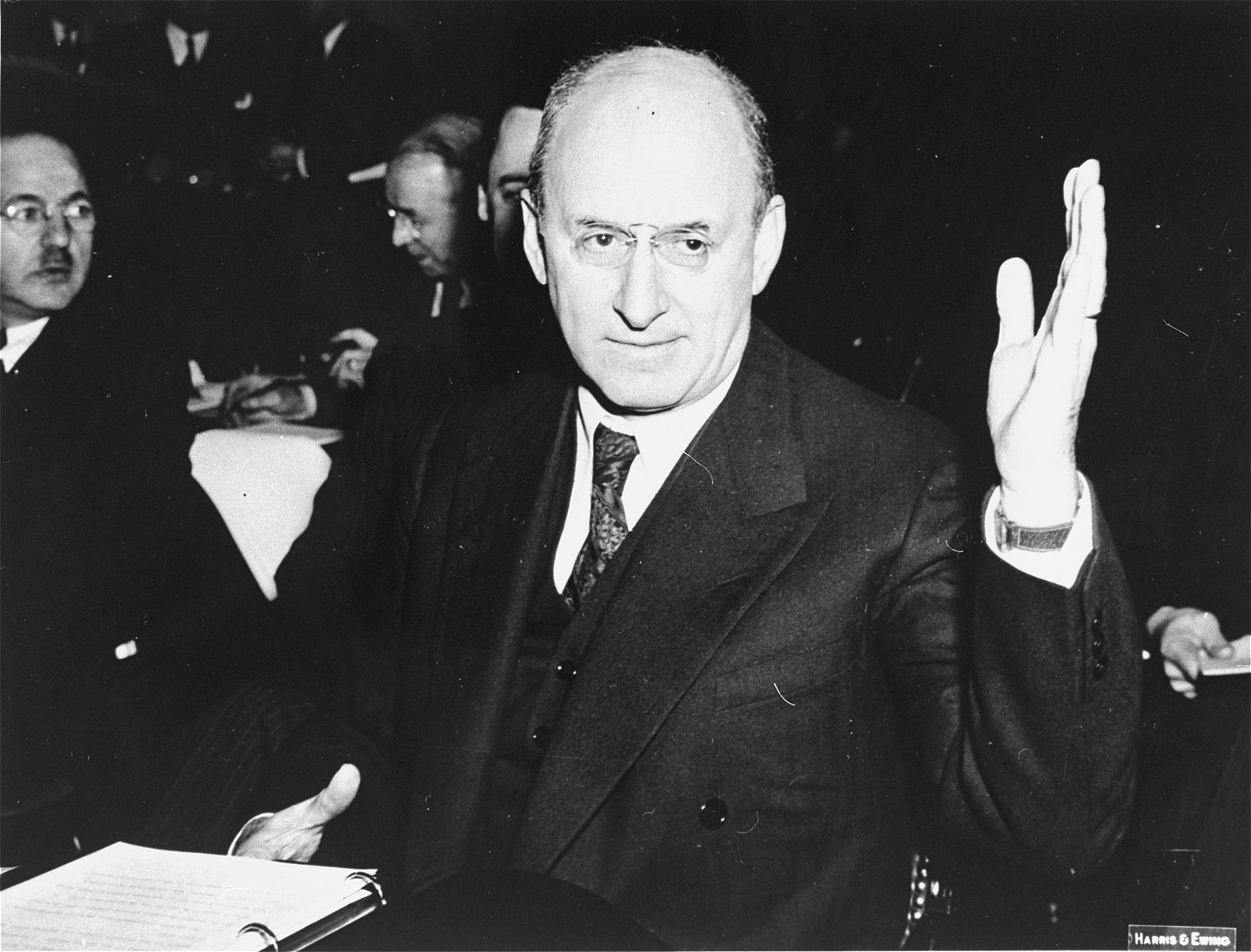
Reinert tells the story better: When it was clear that the Allies would win the Second World War, Reinert narrates, the question of what to do with Germany, which in three decades had precipitated two world wars, reared its head. Henry Morgenthau Jr, the US treasury secretary from 1934 to 1945, formulated a plan to keep Germany from ever again threatening world peace.
Germany, Morgenthau argued, had to be entirely de-industrialised and turned into an agricultural nation. (Africa should take serious note here). All industrial equipment was to be removed or destroyed, and mines were to be flooded with water or concrete. This programme was approved by the Allies during a meeting in Canada in late 1943, and was immediately implemented when Germany capitulated in 1945.
During 1946 and 1947, however, it became clear that the Morgenthau Plan was causing serious economic problems in Germany: de-industrialisation caused agricultural productivity to plummet. This was indeed an interesting experiment.
The mechanisms of synergy between industry and agriculture, so key to Enlightenment economists, also worked in reverse: killing industry reduced the productivity of the agricultural sector. Many of those who had lost their jobs in industry returned to the farm, and the Biblical mechanisms of diminishing returns became the dominating mechanisms in the economy.
The former US president, Herbert Hoover, who at the time played the role of the old and wise statesman, was sent to Germany with orders to report to Washington what the problem was. His investigation took place in early 1947, and he wrote three reports. In the last, dated 18 March 1947, Hoover concluded: “There is the illusion that the New Germany left after the annexations can be reduced to a ‘pastoral state’. It cannot be done unless we exterminate or move 25,000,000 out of it.”
Observing the dark consequences of de-industrialisation, Hoover had reinvented the old mercantilist theory of population: an industrial state can feed and maintain a far larger population than an agricultural state occupying the same territory. In other words, industry greatly increases a country’s ability to sustain a large population. The fact that famines only occur in countries specialising in agriculture underlies the power of industry, of the division of labour, and of the importance of the intersectorial synergies that create and maintain welfare.
Less than three months after Hoover submitted his report, the Morgenthau Plan was silently buried. The Marshall Plan [named after the former chief of staff of the American army, General George Cartlett Marshall] was devised to produce exactly the opposite effect, namely to re-industrialise Germany and the rest of Europe.
The Plan was announced by Gen Marshall in a speech at Harvard University on 5 June 1947. Its details were negotiated at a meeting held in Paris, France, from 12 July 1947 onwards. Implementation was started in 1948 and ended in 1951, channeling $13 billion (equivalent to $130 billion in 2007) into the war-torn economies of Europe.
George Catlett Marshall (1880-1959), a five-star general in 1944, was noted for his exemplary service during the Second World War. He became secretary of state and later secretary of defence, and was awarded the Nobel Peace Prize in 1953 for his role in the Marshall Plan.
In the case of Germany, the Marshall Plan demanded that industry was to be returned to its 1936 level, which was considered the last “normal” year before the war.
“Today’s problem,” says Reinert, “is that the dominating barter-focused economic theory fails to appreciate the difference between a Marshall Plan and a Morgenthau Plan. Politicians today abuse the concept of a Marshall Plan by using it to describe any large transfers of resources to poor countries. It cannot be emphasised strongly enough that the kernel of Marshall’s plan was re-industrialisation; the demand and supply of capital was per se entirely secondary to the principal strategy of developing the industrial life of a nation.”
Generally, the Marshall Plan was implemented with heavy tariff protection of national industries and strict rules for currency transactions. It was fully acknowledged that jobs needed long-term protection, and that foreign exchange was a scarce resource. In Norway, for example, this resulted in a total prohibition on imports of clothing until 1956, combined with severe restrictions on the transfer of funds abroad. Importing cars for private use was prohibited until 1960.
According to Reinert: “During the 1950s and 1960s, when the nations bordering communism were so successfully industrialised, the United States knew very well how to make poor nations rich: they employed their own 19th century strategy. How come the United States no longer understand the link between industrialisation and ‘civilisation’ perceived so clearly from George Washington to George Marshall?
“How come the West, instead of contributing to produce world welfare – as the USA did after the Second World War – now stages terrible carnage in futile attempts to bomb pre-industrial nations into democracy?
“In my view, the process of globalisation that has taken place since the mid-1980s – but particularly since the fall of the Berlin Wall – has taken the form of a Morgenthau Plan. Weak industrial economies in [the developing] world, metaphorically ‘in transition’ – have been subjected to shock therapies, converting them literally overnight in some cases into untrammelled free trade.”
Prof Reinert concludes by saying matter-of-factly: “Globalisation has become the new process of ‘colonisation’ through what is a de facto Morgenthau Plan: a colony, now as five centuries ago, is fundamentally a country that is only allowed to produce raw materials.”
Leave a Reply