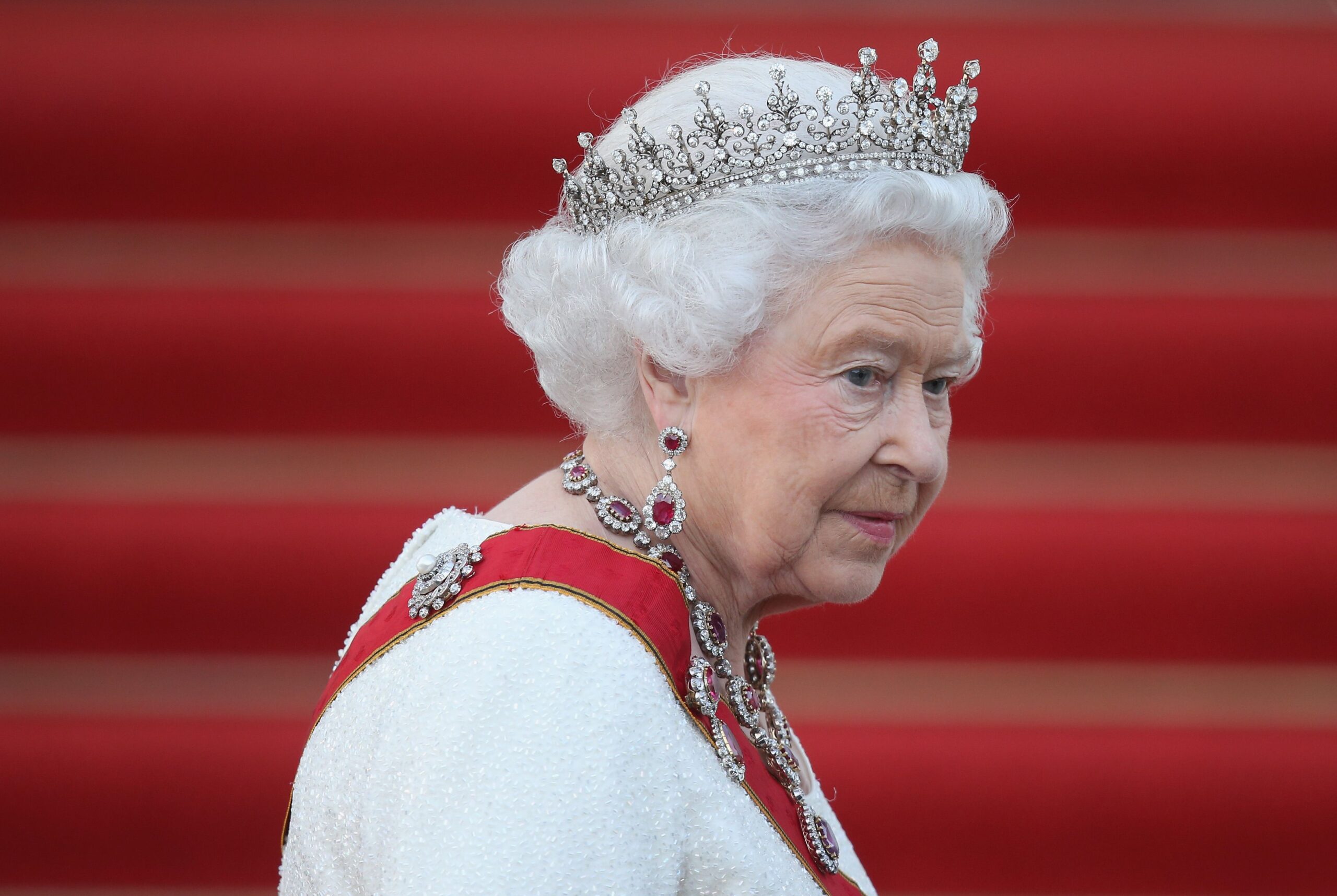
Queen Elizabeth II, Britain’s longest reigning monarch ever, died on 8 September 2022, at the age of 96, having reigned for 70 years. A much-loved woman by her admirers, her death has received rolling coverage by the world’s main television and radio stations, especially those in the West. Glowing tributes and encomiums have been poured on her from around the world, but some dissenting voices think otherwise. They say they won’t mourn for her because her death is a reminder of a very tragic period in Africa and world history during which Britain used violence, mass murder, theft, and oppression to rule and dispossess people from more than a quarter of the world. Worse, in 70 years of reign, Queen Elizabeth II refused to pronounce on these severe crimes and apologise for them, let alone pay reparations or make restitution. “If there is really life and justice after death, may Elizabeth and her ancestors get what they deserve,” cursed one group of dissenters in South Africa. Our editor, Baffour Ankomah reports.
It was always going to happen the way it has. Many people in Africa and across the world were always going to be critical of Queen Elizabeth II, even dance on her grave if they had the chance – because of her self-imposed protocol of keeping a stiff upper lip on the humongous crimes and exploitation that her Britain, the country she was head of state of, for 70 long years, committed around the world, including Africa.
Much of the atrocities and exploitation happened centuries before she ascended the throne on 6 February 1952 (her coronation was on 2 June 1953), but 21st century morality meant that people expected her to speak on the atrocities and assuage their feelings by offering an apology (or apologies) on behalf of her cruel ancestors who sinned ever so gravely against much of the world. But she did not.
Perhaps an apology (or apologies, because of the sheer quantum of the ancestral sins) would have been necessarily followed by reparations and restitution, and that frightened her and Britain to no end. So she kept mute. Hence when she died on 8 September 2022, instead of the usual decorum of respect and heartfelt condolences, a large number of Africans and other people elsewhere in the world uncharacteristically decided to go for her throat, which should not have been the case.
“She is [being] blamed for what her country did before her time, but she was actually part of the solution, from [Ghana’s independence in 1957, the first in sub-Saharan Africa] up to keeping [Margaret] Thatcher on track for Zimbabwe in Lusaka in 1979, and against apartheid,” complained one of her admirers in Harare.
There was merit in the complaint, but only a limited merit. Having ascended the throne in 1952, at the age of 26 (she was born on 21 April 1926; her full name Elizabeth Alexandra Mary Windsor), she had no hand in the ancestral sins committed against a good quarter of the world, if not more, that Britain colonised (sometimes brutally) and ruled over for an average of 100 years, and sometimes even more. For places like China that Britain did not directly colonise, their fate and experiences in the hands of the British were equally squalid.
Playing fair
Whatever the dissenters have said, the Queen, to be fair to her, could not have spoken about, and apologised for, the grave sins that her rapacious ancestors committed all over the world without expecting her to pay some reparations or make restitution. If that was the case, how much could Britain have paid for all the crimes and mass murder and rapacity which that little island nation wrought across the world? It would have meant Britain ceasing to exist.
For, how much could anybody pay in reparations and restitution for the monstrous crimes and mass murder that the British ancestors who left the shores of England in the Mayflower in 1620 and ended up in North America, commit against the Native Americans in what is now the USA and Canada?
Similarly, how much could anybody pay in reparations and restitution for the crimes and mass murder that the British convicts sent to Australia and New Zealand commit against the Aborigines and Maoris? From 1788, and for the next 50 years, Britain sent its convicts to New South Wales in Australia. These included children as young as nine years old. Not surprisingly, the convicts, like the Brits and the other Europeans who landed in North America, resorted to killing the native population as a means of stealing the land from the natives.
History shows that between 1788 and 1868, about 162,000 British prisoners were shipped from Britain and Ireland to various penal colonies in Australia. And all they did was to kill and kill their way through Aborigine ancestral land, annihilating the natives and taking the land for themselves.
In fact, the Britons who ended up in New Zealand also shipped their convicts to Australia between 1843 and 1853. And between the British Australians and the British New Zealanders, elimination via mass murder of the native populations was the preferred option. That heinous crime cries against Britain to this day.
Similarly, in Africa, notably in South Africa, Zimbabwe, and Kenya, the British again used mass murder and rapacity to steal the land and force their rule on the native populations. Other African countries that came under British rule – like Ghana, Nigeria, Sierra Leone, Gambia, Egypt, Sudan, Uganda, Zambia, Malawi and Tanzania suffered in various degrees at the hands of the British. And those crimes are yet to be expiated.
Same, same in Asia
Elsewhere in Asia, the British were at it again – right from Palestine, all the way through the Asian heartlands, including Afghanistan (where Britain tried to assert its influence in three Anglo-Afghan Wars – 1839-1842, 1878-1880 and 1919), to the Empire of India (which the British divided into India, Burma, Pakistan and Sri Lanka when independence was beckoning), to Southeast Asia where the victims included Singapore, Malaysia, North Borneo, Brunei, Sarawak, Labuan and the Straits Settlement.
In the Pacific Ocean, the British victims included today’s Fiji, Tonga, Solomon Islands, Papua New Guinea, Kiribati, Tuvalu, Cook Islands, Niue (formerly Savage Island), Phoenix Islands, Pitcairn Islands, Tokelau (formerly Union Islands), Nauru (formerly Pleasant Island), Vanuatu (formerly New Hebrides), and Canton and Enderbury islands. Where else did the perfidy of the Albion not touch?
It is interesting to note that the divide and rule tactics of the British helped in no small measure in the subjugation of all these colonies and “possessions”. History shows that “the British colony of Burma was part of the British run-state in India, the Empire of India, from 1824 to 1937. Burma was separated from the rest of the Indian Empire in 1937, just 10 years before India became an independent country in 1947”.
The same happened to Pakistan, which was severed from the Indian Empire at midnight on 14-15 August 1947. The partition was outlined in the India Independence Act 1947 and resulted in the dissolution of the British Raj (or Crown rule in India). But the pain and suffering that the partition inflicted on the people of Pakistan and India knew no bounds. And all this because Britain engineered the partition for its own political ends.
How Britain treated India
The New Yorker magazine confirms that: “In August 1947, when, after 300 years in India, the British finally left, the subcontinent was partitioned into two independent nation states: Hindu-majority India and Muslim-majority Pakistan. Immediately, there began one of the greatest migrations in human history, as millions of Muslims trekked to West and East Pakistan (the latter now known as Bangladesh) while millions of Hindus and Sikhs headed in the opposite direction. Many hundreds of thousands never made it.”
In an exhibition confirming this horrific experience, titled “The 1947 Partition – Survivors and their Memories”, C. Ryan Perkins, a South Asian Studies librarian, and his Indian curator colleagues, Guneeta Singh Bhalla and Rohini Ramkrishnan, report the following:
“As the clock struck midnight on 15 August 1947, celebratory shouts of freedom from colonial rule were drowned out by the cries of millions frantically making their way through the corpse-littered landscape of nascent India and Pakistan. After more than 100 years of British East India Company rule [the Company ruled the Empire of India on behalf of the British Crown] and an additional 90 years of the British Raj, the Indian subcontinent had finally achieved independence. What should have been a moment of crowning triumph after years of anti-colonial struggle was indelibly marred by unimaginable violence and bloodshed.
“Up to two million people lost their lives in the most horrific of manners. The darkened landscape bore silent witness to trains laden with the dead, decapitated bodies, limbs strewn along the sides of roads, and wanton rape and pillaging. There was nothing that could have prepared the approximately 14 million refugees for this nightmare. The 1947 Partition was accompanied by one of the largest mass migrations in human history and violence on a scale that had seldom been seen before.
“As the provinces of the Punjab and Bengal were effectively split in half, approximately seven million Hindus and Sikhs and seven million Muslims found themselves in the wrong country. Believing they would return ‘home’, many families left their valuables behind before they packed up their essential belongings and began the trek to India or West or East Pakistan (now Bangladesh). Many never made it.
“How could neighbouring communities, accustomed to centuries of relative peace have suddenly turned so violently upon one another? One could blame the 15 July 1947 decision by the British to hand over power only a month later on 15 August 1947, a full 10 months earlier than anticipated.
“One could blame the hastily drawn borders, which were created by a British lawyer, Sir Cyril Radcliffe, who lacked basic knowledge of India and was given only five weeks to redraw all the borders of South Asia. One could fault the increasingly hostile rhetoric that accompanied the rise of Hindu and Muslim nationalism or the divide and rule policies of the British. India and Pakistan have remained rivals ever since.”
According to Navtej Purewal, an Indian fellow of the Arts and Humanities Research Council in Britain, “the British used religion as a way of dividing people in India into categories. For example, they created separate Muslim and Hindu lists of voters for local elections. There were seats reserved for Muslim politicians and seats reserved for Hindus. Religion became a factor in politics.”
Since the partition, India and Pakistan have repeatedly clashed over who controls the province of Kashmir to their north. They have fought two wars over Kashmir (1947-1948 and 1965), clashed in what was described as the Kargil crisis in 1999, and currently administer different parts of Kashmir. Here again, Britain’s divide and rule policies has had a severe toll.
How Britain treated China
Over 100 years before the Indian Partition, a similar damaging toll had been inflicted on China by the British in two Opium Wars (1839-1842, and 1856–1860) which arose over China’s refusal to accept British sales of the health-ravaging drug, opium, and the British desire to force the drug on the Chinese whether they liked it or not.
Interestingly, the Opium Wars have their roots in the most gentlemanly of drinks, tea. Tea originated in China and was never known in Britain until Catherine of Braganza, an African-descended woman from the Portuguese royal family, married King Charles II of Britain on 21 May 1662, making her the Queen of England, Scotland and Ireland until her husband’s death on 6 February 1685.
Catherine came from the part of the Portuguese royal family that had Moorish blood coursing through their veins. The Moors were predominantly African Muslims (mixed with a spattering of Arab Muslims) who left northwest Africa and West Africa to colonise southern Europe (Spain, Portugal, southern Italy, southern France, and much of the Mediterranean islands) for 781 years between 711 AD and 1492 AD.
The Moors conquered the Iberian Peninsula in 711 AD and for the next 781 years they ruled southern Europe from their base in Spain and brought civilisation, enlightenment, and progress to the whole of Europe during what the Europeans call their Dark Ages.
It is a glorious African achievement that most Africans do not know about because after the Moorish Empire fell on 2 January 1492, the Europeans set about erasing all traces of the Moorish Empire, except strong Moorish castles and edifices like the magnificent Alhambra Castle in Granada in southern Spain which the Moors built between 889 AD and 1333 AD, and which has today become one of Spain’s most visited tourist attractions.
Catherine’s mother was Luisa de Guzman, who was also the mother of two kings of Portugal. Luisa herself served as a regent of Portugal de jure from 1656 to 1662 and de facto until her death in 1666. Catherine’s father, the duke of Braganza, became King John IV of Portugal in 1640.
Catherine’s marriage to Charles II, which was part of an important alliance between England and Portugal, brought England valuable trading privileges and the port cities of Tangier (in Morocco) and Bombay (in India). In return, England pledged to help Portugal maintain its independence from Spain.
As one historian puts it: “If ever a marriage was made for political and economic reasons, the union of Charles and Catherine was such a match. Her dowry included Tangier, Bombay, full trading privileges for England in the Indies, and a very large sum of money [some historians put it as high as £500,000 in modern money] for the impoverished Charles.”
What remains unsaid here is that at the time of Catherine’s marriage, women in England and across much of Europe paid dowry to the men they married (or who agreed to marry them). It is like what happens in India today where women pay dowry to the men who marry them.
Thus, Europe’s current disdain of the dowry system in Africa, which some European NGOs call “bride price” or “purchasing a wife” has no basis in history or coming from people who suffer from historical amnesia. After all, African women have never paid dowry to the men who marry them. But European women did – once upon a time.
Among Catherine’s big dowry paid to Charles II, of £500,000 as well as Bombay and Tangier and trade privileges for England, was a chest of tea, a then exotic drink unknown to the British and their royalty. Charles and his court liked the drink and soon it had become popular within the British royal family, from where tea-drinking gradually seeped into the British lower classes and became a major problem for the British government as it spent a lot of silver buying tea from China.
Opium for tea
As the years went by, the British addiction for tea became so overwhelming that the government’s expenditure for the importation of tea from China, all paid for in tons and tons of silver, became untenable, such that the British government decided to exchange tea with opium, which the British East India Company (that was then ruling India on behalf of the British Crown) planted across the border in India.
At first the Chinese authorities accepted the opium exchange without resistance, but when the drug began to have a serious negative effect on Chinese health, the authorities decided to stop receiving it from the British. Affronted, the British decided to force the opium on the Chinese willy nilly, and as the Chinese continued to resist, the antagonism this created was manipulated by the British to launch the First Opium War in 1839. This war lasted until 1842.
The Encyclopedia Britannica, itself a loyal British institution, tells the story better. It attests that in Chinese history, the traffic that developed in the 18th and 19th centuries saw Western countries, mostly Great Britain, exporting opium grown in India to China. The British used the profits from the sale of opium to purchase tea and other Chinese luxury goods such as porcelain and silk, which were in great demand in the West, while addiction to opium became widespread in China, leading to social and economic problems there.
Opium is a narcotic drug that is obtained from the unripe seedpods of the opium poppy. It was native to what is now Turkey, and according to the Encyclopedia Britannica, it was first introduced to China by Turkish and Arab traders in the late 6th or early 7th century.
“Taken orally to relieve tension and pain,” says the Britannica, “the drug was used in limited quantities until the 17th century. At that point, the practice of smoking tobacco spread from North America to China, and opium smoking soon became popular throughout the country.
“Opium addiction increased in China, and opium importations grew rapidly during the first century of the Qing dynasty (1644–1911/12). By 1729 it had become such a problem that the Yongzheng emperor (ruled 1722–1735) prohibited the sale and smoking of opium. That failed to hamper the trade, and in 1796 the Jiaqing emperor outlawed opium importation and cultivation. In spite of such decrees, however, the opium trade continued to flourish.
“Early in the 18th century, the Portuguese found that they could import opium from India and sell it in China at a considerable profit. By 1773, the British had discovered the trade, and that year they became the leading suppliers of the Chinese market.”
The Britannica continues: “The British East India Company established a monopoly on opium cultivation in the Indian province of Bengal, where they developed a method of growing opium poppies cheaply and abundantly. Other Western countries also joined in the trade, including the United States, which dealt in Turkish as well as Indian opium.
“Britain and other European countries undertook the opium trade because of their chronic trade imbalance with China. There was tremendous demand in Europe for Chinese tea, silks, and porcelain pottery, but there was correspondingly little demand in China for Europe’s manufactured goods and other trade items. Consequently, Europeans had to pay for Chinese products with gold or silver. The opium trade, which created a steady demand among Chinese addicts for opium imported by the West, solved this chronic trade imbalance.
“The amount of opium imported into China increased from about 200 chests annually in 1729 to roughly 1,000 chests in 1767, and then to about 10,000 per year between 1820 and 1830. By 1838 the amount had grown to some 40,000 chests imported into China annually. The balance of payments for the first time began to run against China and in favour of Britain. Levels of opium addiction grew so high that it began to affect the imperial troops and the official classes.”
According to the Britannica: “As the East India Company became wealthier, it could look to other trading opportunities and sought to expand and encourage trade with China, establishing a base in Singapore to help coordinate this trade. [But] the Company produced no products of interest to the Chinese authorities [except opium]. The Company preferred to sell this addictive drug rather than using its cash resources for trading with China. This would eventually put Britain on a collision course with Chinese officialdom which resulted in the Opium Wars of the 1840s and late 1850s.
“By this time, the industrial power of Britain with its cutting-edge military technology meant that it held a decisive advantage over China. The resulting wars were fought ostensibly for ‘free trade’ principles, but in reality were to allow Britain to continue its exploitative trading relationship over the Chinese. Britain was to receive Hong Kong as a base to ensure that it had access to Chinese trade and ports. This port would grow to become an important trading entrepot connecting the British Empire to the resources of China.
“With its dominant positions in India and China, Britain would spend much of the rest of the 19th century extending its economic and political powers to defend these interests, trade routes, or fill the spaces in between. Therefore, much of the Middle East was taken to safeguard routes to India. Burma, the Malay States, and Borneo were trading destinations frequented by ships going to and from India and China or harboured pirates who could disrupt that trade and so came within the purview of the British.”
The Britannica goes on: “Even the traumatic disruptions of the Indian Mutiny [of 1857] would just see the commercial East India Company replaced by the even greater resources of Her Majesty’s Government with the formation of the Raj. Central Asia became a battleground for influence as Britain tried to prevent the spreading power of Tsarist Russia from impinging on its Jewel in the Crown of India.
“There became a logic of expansion in order to safeguard the most valuable parts of Britain’s Asian Empire; India and China. [China] may not have been painted red like [India], but Britain had all the benefits of access to the markets of China without the responsibilities of running it or providing it with an administration or an infrastructure. These two giants lay at the centre of British interests and concerns until the middle of the 20th century.”
The first Opium War
Turning to the Opium Wars proper, the Encyclopedia Britannica describes them as having been “two armed conflicts in China in the mid-19th century between the forces of [Britain, and later France) and the Qing dynasty, which ruled China from 1644 to 1911/12.
“The first Opium War (1839-1842) was fought between China and Britain, and the second Opium War (1856-1860), also known as the Arrow War or the Anglo-French War in China, was fought by Britain and France against China. In each case, the foreign powers were victorious and gained commercial privileges and legal and territorial concessions in China. The conflicts marked the start of the era of unequal treaties and other inroads on Qing sovereignty that helped weaken and ultimately topple the dynasty in favour of republican China in the early 20th century.”
The Britannica confirms that the Opium Wars arose from China’s attempts to suppress the opium trade. “Foreign traders (primarily British) had been illegally exporting opium mainly from India to China since the 18th century, but that trade grew dramatically from about 1820. The resulting widespread addiction in China was causing serious social and economic disruption.
“So in spring 1839, the Chinese government confiscated and destroyed more than 20,000 chests of opium – some 1,400 tons of the drug – that were warehoused at Canton (now Guangzhou) by British merchants. The antagonism between the two sides increased in July 1839 when some drunken British sailors killed a Chinese villager. The British government, which did not wish its subjects to be tried in the Chinese legal system, refused to turn the accused men over to the Chinese courts.
“Hostilities broke out later that year when British warships destroyed a Chinese blockade of the Pearl River (known to the Chinese as the Zhu Jiang River) estuary at Hong Kong. The British government decided in early 1840 to send an expeditionary force to China, which arrived at Hong Kong in June 1840. The British fleet proceeded up the Pearl River estuary to Canton, and, after months of negotiations there, attacked and occupied the city in May 1841.
“Subsequent British campaigns over the next year were likewise successful against the inferior Qing forces, despite a determined counter-attack by Chinese troops in the spring of 1842. The British held against that offensive, however, and captured Nanjing in late August 1842, which put an end to the fighting.
“Peace negotiations proceeded quickly, resulting in the Treaty of Nanjing, signed on 29 August 1842. By its provisions, China was required to pay Britain a large indemnity, cede Hong Kong Island to the British, and increase the number of treaty ports where the British could trade and reside from one (canton) to five.”
The British subsequently held on to Hong Kong for the next 155 years, only handing it back to the Chinese on 1 July 1997 by Margaret Thatcher’s government.
According to the Britannica: “Among the four additional designated ports [set aside for British use by the Nanjing Treaty] was Shanghai, and the new access to foreigners there marked the beginning of the city’s transformation into one of China’s major commercial entrepôts. The British Supplementary Treaty of the Humen, signed on 8 October 1843, gave British citizens extra-territoriality (the right to be tried by British courts) and most-favoured-nation status (Britain was granted any rights in China that might be granted to other foreign countries). Other Western countries quickly demanded and were given similar privileges.”
The Second Opium War
The perfidy of the Albion was again on display in the run-up to the Second Opium War (1856-1860). The Encyclopedia Britannica reports that: “In the mid-1850s, while the Qing government was embroiled in trying to quell the Taiping Rebellion (1850–64), the British, seeking to extend their trading rights in China, found an excuse to renew hostilities.
“In early October 1856, some Chinese officials boarded the British-registered ship Arrow while it was docked in Canton, arrested several Chinese crew members (who were later released), and allegedly lowered the British flag. Later that month, a British warship sailed up the Pearl River estuary and began bombarding Canton, and there were skirmishes between British and Chinese troops. Trading ceased as a stalemate ensued.
“In December 1856, the Chinese in Canton burned foreign factories (trading warehouses) there, and tensions escalated. The French decided to join the British military expedition, using as their excuse the murder of a French missionary in the interior of China in early 1856.
“After delays in assembling the forces in China (British troops that were en route were first diverted to India to help quell the Indian Mutiny), the allies began military operations in late 1857. They quickly captured Canton, deposed the city’s intransigent governor, and installed a more-compliant official.
“In May 1858, allied troops in British warships reached Tianjin (Tientsin) and forced the Chinese into negotiations. The treaties of Tianjin, signed in June 1858, provided residence in Beijing for foreign envoys, the opening of several new ports to Western trade and residence, the right of foreign travel in the interior of China, and freedom of movement for Christian missionaries. In further negotiations in Shanghai later in the year, the importation of opium was legalised.
“The British withdrew from Tianjin in the summer of 1858, but they returned to the area in June 1859 en route to Beijing with French and British diplomats to ratify the treaties. The Chinese refused to let them pass by the Dagu forts at the mouth of the Hai River and proposed an alternate route to Beijing. The British-led forces decided against taking the other route and instead tried to push forward past Dagu.
“They were driven back with heavy casualties. The Chinese subsequently refused to ratify the treaties, and the allies resumed hostilities. In August 1860, a considerably larger force of warships and British and French troops destroyed the Dagu batteries, proceeded upriver to Tianjin, and, in October 1860, captured Beijing and plundered and then burned the Yuanming Garden, the emperor’s summer palace.
“Later that month the Chinese signed the Beijing Convention, in which they agreed to observe the treaties of Tianjin and also ceded to the British the southern portion of the Kowloon Peninsula adjacent to Hong Kong.”
In effect, the British sin against China was cardinal. From 1839 onwards, this little island tucked away in the west of Europe made life extremely difficult for the Chinese, who, though occupied a huge landmass, were however militarily weak. So the British could beat them any time they wanted.
The lesson this teaches is that nations that want to survive in a world made unfair by strong powers, should pay due attention to building strong military forces to safeguard their sovereignties. Today, with China having become a military and economic superpower, no country on the earth dares threaten it, let alone treat it as the British did in the days of yore. It is a lesson Africa will have to learn very fast.
As an aside, it is interesting to note that Kenya came to grow tea, and became the world’s largest tea exporter, because the British feared that, with Indian independence coming in 1947, they would lose control of the world tea trade. At the time, much of British-controlled tea was grown in Ceylon which was part of the Indian Empire.
To secure the profitable global tea trade and ringfence it against any Indian shenanigans after independence, the British looked elsewhere, to other colonies, to take up tea growing from India. And they chose Kenya whose fertile lands in the Rift Valley highlands were ideal for tea growing.
In 1934, the British colonial government in Kenya helped British settlers to seize the highlands and shipped the native-owners out into reserves and, if they were fortunate, employed them as cooks, gardeners, and guards. The government provided all the support the white tea farmers needed, and in no time, Kenya became the world’s largest producer and exporter of raw tea, even till today.
The downside, though, was that as the Kenyans organised themselves and fought for the return of their seized lands, which morphed into a demand for national independence, the British brutally responded, dealing a deadly blow to what it called the Mau Mau rebellion, in which thousands of Kenyans were killed, maimed or tortured by British troops.
So, like elsewhere in Africa and beyond, the wrong done to the Kenyans by the British has not been corrected, and as late as May 2022, descendants of the robbed Kenyans were calling for reparations and restitution.
The Caribbean
And how can one forget the Caribbean islands and the British performance there, annihilating, with the support of the other European slave trading nations, the native populations and replacing them with African slaves shipped from the continent during the 400 years of the TransAtlantic Slave Trade, in which, at one point, Britain played the lead role and reduced Africans to sub-human beings worthy of the worst treatment possible.
Truthful historians, both African and otherwise, supported by UNESCO figures, quote as high as 100 million Africans having been directly affected by the slave trade, including those killed or died in the tribal wars fought to seize or gather the slaves, those who died on the long march from the interior to the coast, those who died in the barracoons waiting for the slave ships to arrive, those who died in the middle journey over the Atlantic Ocean or thrown overboard by callous slave traders, and those who survived the hazardous journey from capture to sale in the so-called New World and who worked in the cotton and sugar plantations, producing wealth that built Europe and particularly Britain and its small towns like Liverpool, Bristol and London, into wealthy mega-cities.
What is true is that British cruelty during the TransAtlantic Slave Trade was pointed and multifaceted, and the Royal Family was at the heart of it all, authorising the so-called trade by giving “charters” to slave traders and pocketing the financial windfalls that flowed from the horrible enterprise.
History shows that the slave trader John Hawkins made so much profit in three trips to sell African slaves, and on his return to England after the first trip, an envious Queen Elizabeth I became interested in directly sponsoring Hawkin’s subsequent trips and provided him with a ship named the “Jesus”. Hawkins made so much money for the Queen that she made him a knight, and lo and behold Hawkins chose for his coat of arms an African in chains. In the end, the wealth and possessions that the slave trade created was passed on by the British Royal Family to later generations, including Elizabeth II.
Incidentally, the Caribbean was one of the principal venues of the slave trade, and thus became a centre of the atrocities committed against African slaves by the British and the other European slave trading nations. All the former British colonies in the Caribbean – Jamaica, Barbados, Trinidad and Tobago, Bahamas, Grenada, Dominica, St Lucia, St Vincent, Antigua and Barbuda, St Kitts and Nevis, Guyana, Anguilla, Cayman Islands, Turks and Caicos Islands, Montserrat, British Virgin Islands, Grenadines, Belize, and Bermuda – have different harrowing degrees of horror to tell under British rule.
Even the French, the Dutch, the Irish, and the other European nations who fought intermittent wars with the British over the centuries have their own horrors to tell. Even in Egypt, the British were still brutal, until it granted Egyptian independence on 28 February 1922.
Credit to her or no credit to her?
In a sum, the frightening tale of horror perpetrated across the world by the British Empire was too heavy a burden for one small woman (small in body size) to carry and apologise for. No matter the power at her command, the Queen could not have pronounced on these humongous crimes and expect not to be challenged to pay reparations or make restitutions. The sums involved would have broken the Bank of England and the Bank of Scotland put together a million times. So the best policy was to keep quiet.
No one should forget that after World War II, the victorious Allies (Britain leading the charge) forced Germany to pay reparations of $23 billion from 1945 till very recently, when under Chancellor Angela Merkel, Germany paid the last dollar to the Allies. Germany again was forced to pay reparations to survivors of the Jewish Holocaust as punishment for the gassing of 6 million Jews by Adolf Hitler’s Nazi government during the war.
Since 1952, Germany has been paying reparations to Israel on behalf of the Holocaust survivors, the first one amounting to $222 million. In total, Germany has paid $42 billion in restitution for Nazi crimes.
On 24 August 1999, a group of Jewish organisations met with German firms to negotiate another round of reparations worth $10 billion on behalf of Jews who were forced by the Nazis to work for German companies as slave labourers during World War II. The companies included Volkswagen, BMW, Deutsche Bank, BASF, Daimler-Chrysler, Siemens and Dresdner Bank.
In 1998, a number of Swiss banks paid a total of $1.25 billion reparations
to Jewish Holocaust victims in respect of “dormant accounts” held by dead Jews. The money had been (mis)appropriated by the banks after it became clear that the Nazis had murdered the account holders in gas chambers. In recent months, Poland too has demanded $1.32 trillion for the damage Hitler’s Germany did to the country during World War II.
It is undisputable: The British Empire thrived on mass murder, violence, rapacity, genocide, theft, oppression, suppression, deceit, and plunder. Thus, no matter which way one turns, the violent underpinnings of Britain across the world are too much to comprehend and apologise for. And Britain knew about this.
Therefore, Queen Elizabeth II, could not speak about Britain’s colonial crimes and apologise for them because the reparation-and-restitution trap was always waiting for her. The British knew that once the Queen started talking about colonial wrongs and apologising for them, the next demand would be reparations – in gargantuan proportions – and Britain did not have the money to pay. So the best policy was to keep quiet. And the Queen followed the script to the letter.
Not to forget, also, is the fact (a positive fact) that when the Queen ascended the throne in 1952, almost the whole of Africa, except Ethiopia, Liberia, Egypt and Libya, were under European political domination. Fifty of the current 54 African countries were colonies of European countries, with no right to self-determination.
The same fate hanged over the 19 British colonies and “possessions” in the Caribbean. But within 20 years of her reign, all the British colonies in Africa and the Caribbean were granted political independence (except Zimbabwe, Anguilla, Turks and Caicos Islands, Cayman Islands, Montserrat, and British Virgin Islands).
By granting political independence to all these colonies during the first two decades of the Queen’s reign, some might say she supervised the collapse of the British Empire, which, to Africa and the Caribbean, was a good thing because it brought political liberation to Africa and the Caribbean.
This should somehow be seen as a credit to her, but many people are loathe to grant her that credit because they say in 70 years of reign she never pronounced on, and apologised for, the huge crimes Britain committed abroad. In essence, the anger against her in Africa, Australia, New Zealand and elsewhere around the world stems from this simple fact.
The anger around the world
It is why when she was on her deathbed at the Balmoral Castle in Scotland on 8 September, Uju Anya, a Nigerian Igbo (female) professor and linguist who teaches at the Carnegie Mellon University in Pennsylvania, USA, felt no compassion in tweeting: “I heard the chief monarch of a thieving, raping, genocidal empire is finally dying. May her pain be excruciating.”
At any other time, this tweet would have been considered utterly distasteful, especially coming from a woman. But Anya had 67,000 supporters around the world who “liked” her tweet on the social media. However, as expected, her Carnegie Mellon University distanced itself from the tweet, calling it “offensive and objectionable” in an official statement.
Anya’s anger seemed to have come from Britain’s role in the Nigerian civil war (1967-1970), fought between the Igbo-led Biafran secessionists in the southeast of the country and the military-led Federal Government in Lagos, the then capital. Britain supported the Federal Government and supplied it with arms that helped Lagos to crush the Biafran rebellion at a huge human cost.
Thus, when Anya’s tweet ruffled feathers in the West, and the Amazon billionaire-founder, Jeff Bezos, felt obliged to join the fray by attacking Anya, saying in his own tweet: “This is someone supposedly working to make the world better? I don’t think so. Wow”, Anya responded, a bit more violently this time, telling Bezos, in another tweet: “May everyone you and your merciless greed have harmed in this world remember you as fondly as I remember my colonisers.”
The Nigerian did not stop there. She tweeted again, saying: “If anyone expects me to express anything but disdain for the monarch who supervised a government that sponsored the genocide that massacred and displaced half my family and the consequences of which those alive today are still trying to overcome, you can keep wishing upon a star.”
Anya’s comments were broadly shared by many in Africa and beyond. An incensed Australian Aborigine woman commented: “The institutions that British colonisation brought here, from the education that erases us, to the prisons that kills us, are designed to destroy the oldest culture in the world. That’s the legacy of the Crown in this country. The ‘British Empire’ declared a war on these shores, against this country’s First Nations’ peoples. This led to massacres. And you want a minute’s silence from me? We are not grieving a singular human life, we are reeling from the violence that is the legacy of the monarchy.”
From Kenya, the country’s largest circulation newspaper, The Daily Nation, wrote: “The Queen leaves a mixed legacy of the brutal suppression of Kenyans in their own country and mutually beneficial relations. Elizabeth was visiting Kenya in 1952 when her father died and she became queen. What followed was a bloody chapter in Kenya’s history, with atrocities committed against a people whose only sin was to demand independence. While the ties with Britain have been useful, it is difficult to forget those atrocities.”
Another Kenyan, Mukoma Wa Ngugi, the son of the country’s world-renowned novelist Ngugi wa Thiong’o, who himself is a novelist of note and an associate professor of English at Cornell University in the USA, joined the debate: “If the Queen had apologised for slavery, colonialism, and neo-colonialism, and urged the Crown to offer reparations for the millions of lives taken in her/their names, then perhaps I would do the human thing and feel bad,” Mukoma tweeted. “As a Kenyan, I feel nothing. This theatre is absurd.”
His view was shared by another Kenyan author of Asian origin, Shailja Patel, who recounted how brutal the British Empire had been under the Queen’s reign. According to her, 15 months after the young Elizabeth “climbed into a tree [in Kenya] one day a princess … and climbed down the next day a queen, the entire Aberdares region [of Kenya] was declared off-limits for Africans. Orders were set in place to shoot Africans on sight. Some survivors of rape, castration, starvation, forced labour, and torture in Britain’s colonial gulag in Kenya are still alive,” Patel wrote. “They never got the apology they asked for.”
Larry Madowo of the CNN, a Kenyan himself, speaking from Nairobi, added:
“The fairytale is that Queen Elizabeth went up to the treetop here in Kenya as a princess and came down a Queen, because it’s when she was here in Kenya that she learned her dad had died.
“But after that, the British colonial government cracked down brutally on the Mau Mau rebellion against British colonial administration. They herded more than a million people into concentration camps where they were tortured and dehumanised, and so across the African continent there have been people saying ‘I will not mourn for Queen Elizabeth because my ancestors suffered great atrocities under her people and she never fully acknowledged that.’”
Madawo was supported by Hardi Yakubu, a pan-African activist, who insisted that the Queen’s legacy could not be told without the exploitation and imperialism perpetuated in Africa and across the world by the British.
“The British monarchy is not a glorious institution, the British monarchy that Queen Elizabeth led and represented is not something to be celebrated,” Yakubu said, adding: “Queen Elizabeth had a very glorious chance and opportunities to right these wrongs by acknowledging the atrocities of the inglorious empire not only in Africa but also in Asia, Latin America, and the Caribbean … to apologise and pay reparations for these, but she chose not to. That was her choice. But you cannot separate the person from the institution.”
Closer to home
From Zimbabwe, similar sentiments were expressed by many, but most profoundly by a writer calling himself Jamwanda, who recounted in The Herald on Saturday two days after the Queen died, the cruel treatment the British meted out to Zimbabwe as a nation, and more particularly to his uncle who fought for the British in World War II (which Jamwanda disdainfully described as a “European tribal war, pitting several European tribes against each other”).
Dwelling on how Britain treated Zimbabwe, Jamwanda wrote: “Even when Ian Douglas Smith [the last prime minister of Rhodesia] carried out his constitutional putsch, on 11 November 1965, the [Queen’s] shadow still loomed large in my life, for another 15 long, hard years, during which more excesses were meted against me and my ilk, all in the name of striking a blow for Christianity, Civilisation, Commerce and for the Queen, whom the British God kept saving…”
Telling the story of his uncle, his father’s brother named Tazvishaya who was conscripted and actually fought in the “European tribal war”, Jamwanda said: “Luckily, he survived it, having borne arms for the British King, and served in British Burma and Malaya.
“Many more Africans did, from the then colonial Southern Rhodesia, and from other British colonies in Africa and beyond. They fought for God, King and Empire, a forced triumvirate which demanded their sacrifices, sweat and blood as colonial subjects, in return for nothing bigger than a bicycle, a zobo watch, and, on good fortune, some menial job as a colonial messenger or veterinary dip attendant.”
When the war ended, Jamwanda’s uncle got no reward even as the Empire shipped British veterans of the war to Rhodesia to occupy prime agricultural land in the east of the country. In that area, the stretch of the highway between Mutare and Birchenough Bridge, as Jamwanda put it, “takes you past two mountainous agricultural areas you see from the highway, which used to be exclusive to white farmers. These are still named Burma and Himalaya, both named after a country or some feature in the Far East, respectively.”
Jamwanda went on: “My heart sinks and boils with rage each time I drive past. [Tazvishaya’s] fellow combatants in that tribal war who were of Caucasian stock, but had no connection with this country absolutely, were shipped in as emigres, all to be rewarded with generous stretches of scenic land in those two scenic areas. By contrast, [Tazvishaya] and his fellow black combatants were demobilised and sent back to communal backwaters in places like Buhera or elsewhere, to eke a meagre life under the Crown they almost died for, in faraway lands, and in a war they bore no grievance over.
“This horrible history, and the whole record of British imperialism here and elsewhere, makes me hate the British monarchy, its government and its unhallowed institutions which still reek of colonial effluvia, even though I still have the humanity to see and admire late Elizabeth’s graciousness as a piece of the human race.”
Saying the Queen was complicit in the crimes of the Empire, Jamwanda recalled that “the young Elizabeth, who pledged to serve the British Empire with her whole life, visited Mathobo/Matombo, to pay respects to Cecil Rhodes. That was in 1947, in the company of the British Queen Mother [Elizabeth’s mother].
“With that clear and resolute connection with British colonial imperialism, and those who enabled it, and given her association with lords and ladies who continue to occupy our land, my indignation against her is perfectly justified. She died with the taint of her lineage, and complicit in crimes of colonial plunder which today outlive her. Some of them she wore on the crown she wore.
“But here are fresher, persistent wounds her government inflicted upon our Zimbabwe. Her government raised an anti-nation, anti-African, anti-people, puppet opposition we have had here since 1998. It is now renamed Triple C, led by one Nelson Chamisa. Thus, her sins against us, as those of Winston Churchill who was a studious defender of Empire, will not be buried with her, and certainly daily refresh and reincarnate by way of the daily treacherous misdeeds of the baneful opposition her government spawned here, to blight our land.”
The EFF statement
On the whole, the most eloquent indictment of the Queen came from the South African opposition party, the Economic Freedom Fighters (EFF), led by Julius Malema. Just a few hours after the announcement of the Queen’s death on 8 September, the EFF issued an official party statement that deserves to be printed here in whole, for the sake of posterity and history. The statement said:
“The Economic Freedom Fighters notes the death of Elizabeth Alexandra Mary Windsor, the Queen of the United Kingdom, and the ceremonial head of state of several countries that were colonised by the United Kingdom. Elizabeth ascended to the throne in 1952, reigning for 70 years as a head of an institution built up, sustained, and living off a brutal legacy of dehumanisation of millions of people across the world.
“We do not mourn the death of Elizabeth, because to us her death is a reminder of a very tragic period in this country and Africa’s history. Britain, under the leadership of the royal family, took over control of this territory that would become South Africa in 1795 from Batavian control, and took permanent control of the territory in 1806.
“From that moment onwards, native people of this land have never known peace, nor have they ever enjoyed the fruits of the riches of this land, riches which were and still are utilised for the enrichment of the British royal family and those who look like them.
“From 1811 when Sir John Cradock declared war against amaXhosa in the Zuruveld in what is now known as the Eastern Cape up until 1906 when the British crushed the Bambatha rebellion, our interaction with Britain under the leadership of the British royal family has been one of pain and suffering, of death and dispossession, and of dehumanisation of African people.
“We remember how Nxele died in the aftermath of the fifth frontier war, how King Hintsa was killed like a dog on 11 May 1835 during the sixth frontier war, and had his body mutilated, and his head taken to Britain as a trophy.
“It was also the British royal family that sanctioned the actions of Cecil John Rhodes, who plundered this country, Zimbabwe and Zambia. It was the British royal family that benefited from the brutal mutilation of people of Kenya whose valiant resistance to British colonialism invited vile responses from Britain. In Kenya, Britain built concentration camps and suppressed with such inhumane brutality the Mau Mau rebellion, killing Dedan Kimathi on 18 February 1957, while Elizabeth was already Queen.
“This family plundered India via the East India Company, it took over control and oppressed the people of the Caribbean Islands. Their thirst for riches led to the famine that caused millions of people to die in Bengal, and their racism led to the genocide of aboriginal people in Australia.
“Elizabeth Windsor, during her lifetime, never acknowledged these crimes that Britain and her family in particular perpetrated across the world. In fact, she was a proud flag bearer of these atrocities because during her reign, when the people of Yemen rose to protest against British colonialism in 1963, Elizabeth ordered a brutal suppression of that uprising.
“During her 70-year reign as Queen, she never once acknowledged the atrocities that her family inflicted on native people that Britain invaded across the world. She willingly benefited from the wealth that was attained from the exploitation and murder of millions of people across the world.
“The British royal family stands on the shoulders of millions of slaves who were shipped away from the continent to serve the interests of racist white capital accumulation, at the centre of which lies the British royal family. If there is really life and justice after death, may Elizabeth and her ancestors get what they deserve.”
What an indictment! It is obviously not the epitaph the Queen would want to see on her tombstone. But as Marika Sherwood, a London-based historian of note, wrote in her latest book, Kwame Nkrumah and the Dawn of the Cold War: “The ‘Mother Country’, as colonials had been taught to view Great Britain, was not a loving mother.
“During World War II, political activists in the colonies were often imprisoned: for example, Richard Hart in Jamaica, I.T.A Wallace-Johnson in Sierra Leone, and Jawaharlal Nehru in India. Imprisonment was for ‘seditious activities’ – that is, for demanding independence and equality … Conservative Prime Minister Winston Churchill expressed his attitude towards ‘natives’ very clearly: when Gold Coasters [now Ghanaians] were openly campaigning for self-government, he stated that it was ‘crazy’ to give the vote to ‘naked savages’”, Sherwood reported in her book.
Churchill further asserted: “I have not become the King’s First Minister in order to preside over the liquidation of the British Empire.” … It was soon reported in the media that it was the USA and Britain that had blocked the proposal by China and USSR to include the promise of independence in the UN Charter,” Sherwood added.
This is the history of Elizabeth II’s Great Britain. Is there any wonder that many people are angry at her? Even in death?
Leave a Reply