Author: Editor

  • We ignore history at our great peril

    We ignore history at our great peril

    “A people without memory are in danger of losing their soul” – Ngugi wa Thiong’o, the celebrated Kenyan writer. “The past is never dead. It’s not even past” – William Faulkner, the renowned American novelist and blood-relative of the British Royal Family, in his 1950 work, Requiem for a Nun.

    This month, The Third Eye has deliberately gone very historical. And it is for a reason. As a people, as Africans, we have been dangerously misled – ever since Europe made contact with us in the mid-15th century – to ignore where we came from, what made our ancestors tick, their strengths and flaws, how they related with the rest of the world, what the rest of the world did to them and how they reacted, and how the quantum of all this can guard and guide our lives in the modern era. The misleading by the Europeans has resulted in us ignoring history and the proper teaching of it, to our great peril. And like blind fools, we are still going along this dangerous course even today.

    The mother of all insults: Prof Hugh Trevor-Roper was the Briton who insulted Africans to no end, claiming that Africa has no history, “only darkness”.

    Yet, no one has to go far to prove the criticality of history to human life. For, there can be no life without history as life itself consists of layers of lived history. What happened yesterday was part of life, just as today and tomorrow will also be. But today is tomorrow’s yesterday, and tomorrow will be the next day’s yesterday, and it is the accumulation of these yesterdays that makes life possible, meaningful, and purposeful.

    Yesterdays, or what happens in them, add up to make history. This is why Dr Amos N. Wilson, the African-American pan-African-thinker and former professor of psychology at the City University of New York, once said: “History is not a game of remembrance, but an instrument of power.”

    Dr Wilson died on 14 January 1995, but from his standpoint, we are able to understand why history is one of the only two subjects (the other is mathematics) that God Almighty, the creator of the universe, expressly instructed humankind to study and not to forget.

    We are also able to understand why Africa’s colonisers imposed an educational system that diverted the African from the proper study of history and all its discontents. The logic was simple: history gives power and the coloniser did not want the African to have power.

    The coloniser knew that history makes people clever, discerning, and formidable. So the least the African knew about history, even his own history, the better for the European master. Sadly, after political independence, the African became blinded by the seductive trappings of European power and abjectly failed to see how he had been cheated by the diversion from the proper study of history.

    The African, therefore, never bothered, and is not bothering even today, to change the status quo. We are rather being encouraged by the global systems created by the former colonial master and his cousins in the collective West to study anything but history, a subject which should have been compulsory at every level of formal education in Africa. But history is not a compulsory subject on our dear continent.

    This is why it is imperative for the African of the post-independence era to turn the table on its head and teach himself, and by extension his future generations, proper history that will liberate his imprisoned mind and give the future generations wings to fly as high as their imaginations would allow.

    Why history?
    You may ask why history, and what is it anyway? Generally, history comes in three forms: oral history, written history, and history in physical form.

    The Oxford English Dictionary has two definitions of history. The first says history is: “The whole series of past events connected with a particular person or thing.” The second says history is: “The past considered as a whole.” To me, history is “anything that happened an hour ago”, because if you refuse to be guided by what happened an hour ago, you run the risk of being run over by a bus.

    As human beings, we are made up predominantly of our past which determines our present and future. Thus, anybody who does not respect the past is bound to be a failure. No wonder that Africa is in its present condition, because we have lost the war for history.

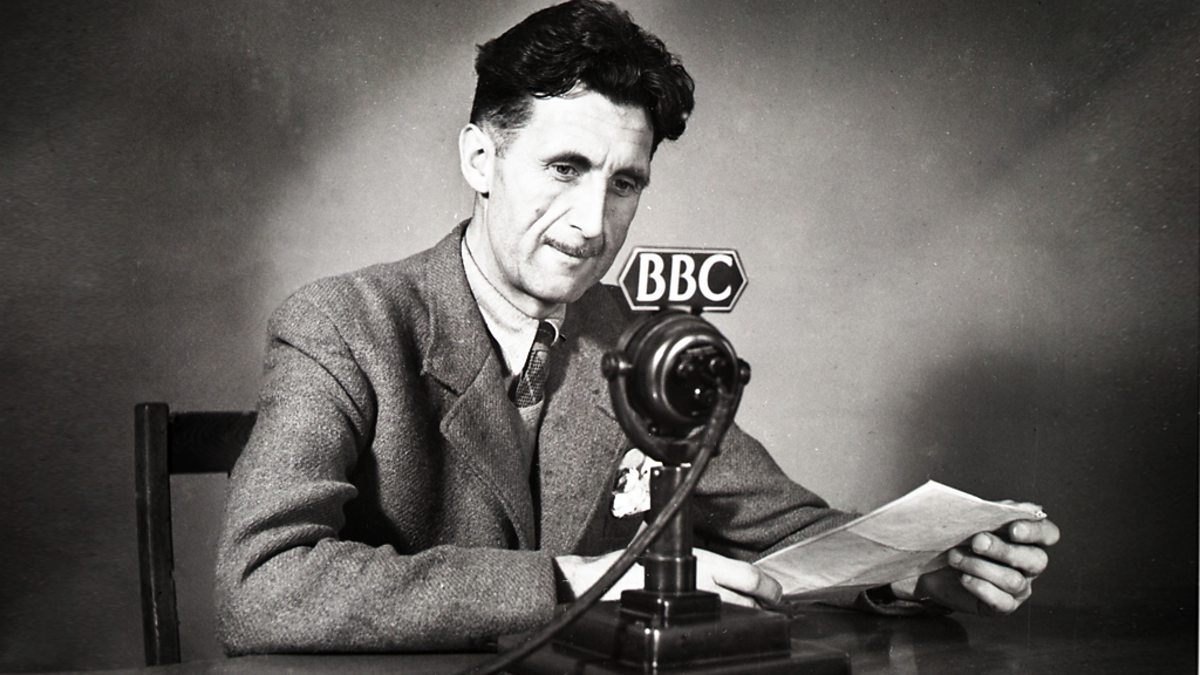
    This is what George Orwell, the English writer and journalist, meant when he wrote in his famous book, 1984: “Who controls the past, controls the future. Who controls the present, controls the past.”

    Orwell’s next line was even more profound: “The most effective way to destroy a people is to deny and obliterate their own understanding of their history.” “Obliterate”, kind reader, means “destroy utterly, wipe out; make invisible or indistinct; cancel or cover”.

    Orwell knew his onions. By jumping from the past to the future, he was pointing to the direct link between the past (ie, history) and the future. If you don’t know where you came from and the lessons thereof, you will never know where you are going and what lessons should guide your path. The lessons of the past determine the actions of the future, and therefore the present. And because your present is full of right decisions, your future is assured. It is simple mathematics.

    It is the import of what Winston Churchill, the man voted in the 1990s as the greatest Briton that ever lived, tried to put across when he said: “A nation that forgets its past has no future.” Dear Churchill, whose views on Africans were sometimes purely diabolical, had one eye on Confucius, the Chinese philosopher, politician, and teacher, who had earlier admonished his people to “study the past if you would define the future”.

    The two men were echoed by the Archbishop of St Albans in England, the Right Rev John Taylor, who said in 1992: “A nation that forgets its history is a nation that has got problems.”

    God’s admonition
    And this is where God comes in. In his infinite wisdom, God Almighty, knowing the politics that would swirl around history, expressly instructed humankind in the Bible to study history and never forget it. Yet history is the very subject that Africans do not take seriously. Is it any wonder that, as the editor-in-chief of our sister magazine, Brick by Brick, Munyaradzi Huni, once put it, Africans have become “rootless wanderers in our own land”.

    At four places in the Book of Exodus (of the Bible), God makes himself heard about history, and each time his eye is on the future generations. My study of the Bible shows that anytime God says “you may tell your children and grandchildren” or “your generations to come”, he is instructing about history and how not to forget it.

    At Exodus 16:31-34, during the Israelites’ exodus from Egypt (after our African ancestors had tutored them for 430 years, see this month’s cover story), God drops manna from the skies for them to eat in the desert, and then asks Moses to tell the Israelites:

    “This is what the Lord has commanded: ‘Take an omer of manna and keep it for the generations to come, so they can see the bread I gave you to eat in the desert when I brought you out of Egypt’. So Moses said to Aaron. ‘Take a jar and put an omer of manna in it. Then place it before the Lord to be kept for the generations to come’. As the Lord commanded Moses, Aaron put the manna in front of the Testimony, that it might be kept.”

    God was so clear about the purpose of keeping the manna – so that the Israelites’ future generations can see the bread that God had given to their forefathers to eat in the desert when he brought them out of Egypt. To God, the jar of manna was history in physical form. It was to serve as a continuing memorial or continual remembrance for the Israelites in all their generations. It was God’s way of saying study history, their history, and never forget it.

    And God did not stop there. At Joshua 4:2-8, the Bible records God again telling Joshua, who had recently taken command of the Israelite nation after the death of Moses, to lead the people across the Jordan River to take possession of the land he had promised to their forefathers. Here again, God parts the waters of the Jordan, as he had done to the Red Sea, and makes the Israelites to walk on dry land as they crossed the river.

    God then tells Joshua: “Choose 12 men from among the people, one from each tribe, and tell them to take up 12 stones from the middle of the Jordan from right where the priests stood and to carry them over with you and put them down at the place where you stay tonight.”

    So Joshua calls together 12 men appointed from the Israelite family, one from each tribe, and says to them: “Go over before the Ark of the Lord your God into the middle of the Jordan. Each of you is to take up a stone on his shoulder, according to the number of the tribes of Israel, to serve as a sign among you. In the future, when your children ask you, what do these stones mean, tell them that the flow of the Jordan was cut off before the Ark of the Lord. When it crossed the Jordan, the waters of the Jordan were cut off. These stones are to be a memorial to the people of Israel forever. So the Israelites did as Joshua commanded them.”

    Here, again, God demonstrates how important history is to him and humankind. He did not want the Israelites to forget the remarkable experience of the Jordan crossing. So he instructed Joshua to erect a memorial for “the generations to come” at the spot where they were going to camp for the night after the crossing. Joshua obediently built the memorial with the 12 stones that God had asked for.

    A “memorial”, as mentioned above, is simply history in physical form. Generally, a “memorial” can be a statue, plaque, monument, bust, commemoration, cenotaph, honouring, inscription or dedication. Therefore, the Mbuya Nehanda statue erected in the middle of Harare by President Mnangagwa’s government in 2021 is history in physical form, and should be supported by all.

    Sabotaging the Africans
    Since the mid-15th century when Europeans encountered Africans on African soil, they have succeeded in diverting the attention of the Africans from the proper study of history to other endeavours which the Europeans and their cousins in the collective West consider important for the Africans. The Europeans have even claimed, arrogantly, that African history starts when they arrived on our shores. Before then, there was no history, only “darkness”.

    In fact, some Europeans have become famous for merely insulting Africans by claiming obnoxiously that Africa has no history. They refuse to accept the undisputable fact that when the European era arose, African history was already ancient.

    One of those Europeans was Prof Hugh Redwald Trevor-Roper (1914-2003), the British historian who, for a long time, occupied the Regius chair of Modern History at the University of Oxford. Any time I remember Trevor-Roper, my mind flashes back to what the Nigerian professor, Femi Biko, of Goldsmith College, University of London, describes as “the stupendous scale of prestigious ignorance that presents colonial ideological solidarity as scholarship”.

    In 1963, Prof Trevor-Roper addressed a BBC audience and had the gall to insult Africans by saying: “It is fashionable to speak today as if European history were devalued: as if historians, in the past, have paid too much attention to it; and as if, nowadays, we should pay less.

    “Undergraduates, seduced, as always, by the changing breath of journalistic fashion, demand that they should be taught the history of Black Africa. Perhaps, in the future, there will be some African history to teach. But at present there is none, or very little: there is only the history of the Europeans in Africa. The rest is largely darkness, like the history of pre-European, pre-Columbian America. And darkness is not a subject for history.”

    Can you image any higher insult than this? But Prof Trevor-Roper was not finished. He went on in the same vein for some good minutes, and delivered another wicked blow: “It may well be,” he said, “that the future will be the future of non-European peoples: that the ‘colonial’ peoples of Africa and Asia will inherit that primacy in the world which the ‘imperialist’ West can no longer sustain. Such shifts in the centre of political gravity in the world, such replacement of imperialist powers by their former colonies, have often happened in the past. Mediterranean Europe was once in the Dark Ages, a colony of Islam; and northern Europe was afterwards, in the Middle Ages, a colony of the Mediterranean.

    “But even if that should happen, it would not alter the past. The new rulers of the world, whoever they may be, will inherit a position that has been built up by Europe, and by Europe alone. It is European techniques, European examples, European ideas which have shaken the non-European world out of its past – out of barbarism in Africa, out of a far older, slower, more majestic civilisation in Asia and the history of the world. For the last five centuries, in so far as it has significance, has been European history. I do not think we need make any apology if our study of history is Europa-centric.”

    If there were any Africans in Trevor-Roper’s audience, their jaws would have hit their chests. For, his speech was the very epitome of “the stupendous scale of prestigious ignorance that presents colonial ideological solidarity as scholarship”.

    In other words, according to him, “the history of the world” beyond the last five centuries counts for nothing. The illustrious history of our black ancestors in Ancient Egypt and Nubia, the builders of the great pyramids, which, at the time, were the skyscrapers of the world, does not matter! Trevor-Roper was speaking in 1963. Just imagine his “stupendous scale of prestigious ignorance” passing as scholarship!

    Worse, he was supported by other British historians, such as Margery Perham, a scholar of African history, who also claimed that: “Until the very recent penetration of Europe, the greater part of the [African] continent was without the wheel, the plough, or the transport animal; without stone houses or clothes except skins; without writing and so without history.”

    Do we see why Africans should take the study of history seriously and pass it on to their future generations? If we do, we shall see what really was what Trevor-Roper described as “Mediterranean Europe was once in the Dark Ages, a colony of Islam”.

    He was actually referring to “a colony of black Africans”, not a “colony of Islam” as he put it, because the people who actually colonised the Europe of the “Dark Ages” were predominantly black Africans who had converted to Islam.

    But how many Africans know that for 781 years, between 711 AD and 1492 AD, African-Muslims with the support of their Islamic colleagues from Arabia, put Mediterranean Europe to the sword, conquered it, governed it, and in the process, from their base in Spain, brought civilisation, education, and general enlightenment to the whole of Europe then steeped in its so-called Dark Ages?

    Those Africans, called the Moors by the Europeans (Moor means black in all the European languages), were people from Ancient Mauretania (a country which covered the area of modern Morocco and western Algeria) and other parts of West Africa – all the way down to today’s Senegal, Mali, and the other Sahelian countries. Other accounts even say there were people from northern Ghana involved in the task. They had been converted to Islam after the conquest of North Africa by the Arabs in 708 AD. As Muslims, they spoke Arabic, the language of Islam and later science in the Middle Ages. But by nationality and identity, they were Africans through and through.

    But how many of us – Africans – know about this remarkable history of the African ancestors who colonised southern Europe and ruled it for nearly 800 years? When we talk about colonisation today, our minds immediately jump to the Europeans. But the Europeans colonised Africa for just 100 years on the average. Long before then, our African ancestors had colonised southern Europe for 781 years – continuous! The Third Eye will deal with this topic, in depth, in the coming months, we promise.

    Diverting the African
    Therefore, no one needs the mind of a rocket scientist to deduce why the Europeans diverted the Africans from the proper study of history. It was because they feared that history would make the Africans clever and powerful. They feared that history would show up the harm the nations of European stock collectively did to Africa from the 15th century onwards.

    Today, the new fad is STEM (Science, Technology, Engineering and Mathematics), which the African, as usual, is being encouraged to study. Yes, Africa needs STEM, which is absolutely necessary for modern life. We need more scientists, technologists, engineers, and mathematicians.

    But why do they not add “H” to STEM to make it STEMH, because History is as important and needful as Science, Technology, Engineering and Mathematics. But History is conveniently lost in the world of STEM, and this is not accidental. It is part of the continuing drive to divert the African away from history, so that he will not know or see his past as determinative of his present and his future.

    Dear Africa, we shouldn’t fall for this trick any longer, because all over the world, especially in the nations of European stock, governments and national institutions pay good money to erect statues and other monuments as a way of telling the histories of those countries to their future generations. It is a sine qua non.

    In Africa, however, food and the stomach must predominate, we are told. As such our cities and towns, and in fact the national mindset (I like to call it psyche), are rid of any notions of statues, monuments, and memorials because we are encouraged to fill our stomachs and not our hearts.

    Let me surprise you: The Oxford English Dictionary has four main definitions for “heart”. Under the First Definition, there are four sub-definitions, of which Sub-Definition One says: “The HEART is regarded as the centre of a person’s thoughts and emotions, especially love or compassion.”

    So when God says “keep my words and commands in your heart”, he means keep them at the centre of your thoughts and emotions, not in the physical heart which does not have the capacity to store words and commands.

    Human beings have brains in which dwells a mind, but unlike the brain, the mind is metaphysical and cannot be touched like the brain. According to experts, the mind is divided into three parts: the conscious mind, the sub-conscious mind, and the unconscious mind, and the “heart” is the “centre” of this wonderful work of God. This “heart” is different from the physical organ in our chests that pumps blood to the rest of the body.

    Remarkably, we have been thought wrongly for eons that the physical heart is the only heart there is or the only one that matters. Not so, I am afraid. The heart, which is defined as “the centre of our thoughts and emotions”, is equally as important as the heart that pumps blood to keep us alive.

    Therefore, in the heart or psyche or mindset of a nation, there must reside the urge to encourage future generations not to forget where their ancestors came from, or who their ancestors were even; how they lived, how they built the nation and society, who were their enemies, how they became enemies, and how the ancestors responded to these enemies and conquered them (if they did).

    Even the mistakes the ancestors made are important to know. The mistakes are useful lessons the present and future generations can learn from and avoid. The mistakes are as important as the successes. This process is called history, which, as mentioned above, can be in a written form, oral form, or physical form.

    National mindset
    Therefore, the national “mindset” is very important. Without a proper mindset, fed by history, we will forever tread water as Africans. As President Paul Kagame of Rwanda pointed out recently: “I would rather argue that we need to mobilise the right mindsets, rather than more funding. After all, in Africa we have everything we need in real terms. Whatever is lacking, we have the means to acquire, and yet, we remain mentally married to the idea that nothing can get moving without external finance. We are ever begging for things we already have. That is absolutely a failure of mindset.”

    President Kagame’s view was supported by the Kenyan professor, Patrick Loch Otieno Lumumba, who brought a piece of comedy to bear on what an improper mindset can do. “In Japan,” he said, “a corrupt person kills himself. In China, they will kill him. In Europe they jail him. In Africa, he will present himself for election.” That is the kind of mindset that has held Africa back since the white man left our shores as a ruler.

    As Africans, our decisions cannot be said to be thoughtful if they are not influenced by history. History will make us look back and say Mai Bombi did me a good turn in January 2016, so today, in March 2023, if she has done me a wrong deed, I should balance it out, and know how to deal with the wrong she has done me. This is the only way we can learn how not to burn bridges.

    This is why Michael Crichton, the American best-selling author and physician who died in November 2008, once said: “If you don’t know history, then you don’t know anything. You are a leaf that doesn’t know it is part of a tree.” Very profound.

    Imagine a leaf that does not know it is part of a tree! Such a leaf is akin to a wanderer in his own land. Come the winds, the leaf is blown away – far, far, and far until it disappears. Africa will become this leaf if we continue to behave like we are the only ahistorical people on this beautiful planet.

    Worse, as Prof F.I.D Konotey-Ahulu, the Ghanaian medical doctor and pan-Africanist author domiciled in the UK, who calls himself “the self-appointed spokesman for Africa on clinical epidemiology”, once said: “History is head over shoulders above science in the elucidation of certain vital truths, and for us to be constantly waiting for what scientists will say in pursuit of the truth of origins will lead us astray.”

    To get the import of Prof Konotey-Ahulu’s statement, one must look at the synonyms of “elucidation”. They are: clarification, explanation, exposition, explication, interpretation, illumination, and revelation. And history does better in these areas than science, according to Prof Konotey-Ahulu. He must know because he has been, and worked, in science for all his life. He will be 93 on 12 July 2023.

    However, to me, the best elucidation of history, by a country mile, has come from Ayi Kwei Armah, the Ghanaian novelist and Egyptologist. “Whoever knows the history of a country can read its future,” Armah wrote in his book, The Eloquence of the Scribes (published in 2006).

    Armah then thundered: “One need not be a reader of Ancient Egyptian hieroglyphic texts to know that people trapped in penitential identities, labouring under names they do not understand and unable to connect with more than a few generations of their history, are helpless chaff in the hurricanes of global history.” That is a serious indictment that Africa should run away from.

    On the whole, Africa needs a Damascene experience that will open our eyes to the joys of the proper study of history. Otherwise we will forever be “helpless chaff in the hurricanes of global history” – “a leaf that does not know that it is part of a tree”.

    Therefore, I seriously entreat Africa and Africans to decide to make history a compulsory subject at all levels of formal education on the continent. Progress may be slow, and never inevitable, but progress can visit even a supposedly ahistorical Africa.

    Beryl Markham, the English-born Kenyan aviatrix and adventurer who, in 1936, became the first person to fly solo across the Atlantic, from Britain to North America, bequeathed a beautiful quote to the world: “If a man has any greatness in him, it comes to light, not in one flamboyant hour, but in the ledger of his daily work.” Markham was teaching us the virtue of one little step at a time, brick by brick, continuous and steady, which brings success.

    Bit by bit, Africa can make it. With patience, the continent can turn things around by making history one of the most important subjects at the centre of African education and African hearts. Remember: “Those who do not remember the past are condemned to repeat it.” – George Santayana, the Spanish-American philosopher, poet, humanist, and novelist (born 1853, died 1952).

  • Following the flag: How the British media reported Laurent Kabila  

    Following the flag: How the British media reported Laurent Kabila  

    In 44 months of a turbulent presidency, Laurent Kabila, the rebel leader who became the president of DRCongo in May 1997, went from “a messiah”, “a saviour”, and “a leader more disposed to rationality and decency” who had “enormous personal credibility” to “a pillager”, “an idiot”, “a roly-poly revolutionary who preferred beer and brothels to Marxist salons”, who “was no more a president than a rebel leader”, who “swapped one set of foreign masters for another and both wearied of him.”

    In the beginning when the West thought they had him in their grip, one Canadian mining magnate, salivating at the stunning mineral riches of Congo, declared: “We are going to capitalise on the current strife by increasing our presence and our land holdings in the country.” His quote was only bettered by a Johannesburg-based mining giant, who said “Cecil Rhodes must be spinning in his grave at the opportunities he is missing.”

    In the end, when the West considered Kabila as having flown out of their grip, the Western media duly turned on him, calling him “a lazy, incompetent oaf who ate two chickens for breakfast”, “a petty tyrant who could not work with others”, “a thug and a pimp who attained the presidency almost by accident”,  who “was not noted for his intellect or leadership qualities”, and whose “end [by assassination] was even fitting” and “a positive development”. Our editor, Baffour Ankomah, presents here the forked-tongue of the British (and by extension, the Western) media.

    What they said about Kabila in 1997 (when he hobnobbed with the West)

    The Daily Telegraph (of London)

    Editorial comment, 16 April 1997

    “Decades of misrule in Zaire have turned it once again into Africa’s heart of darkness. It is therefore natural that Laurent Kabila should be welcomed as a messiah in the towns which his rebels have taken from President Mobutu’s forces.

    “Mr Kabila has shown himself no fool. He recognises the importance of regional sensibilities and has tuned his message accordingly… Too great a reliance on an ethnic minority and the governments of neighbouring countries will impede the formation of a broadly-based administration.”


    The Independent (of London)

    Editorial comment, 15 April 1997

    “A remarkable thing has been happening in central Africa over the past few months… The rebel forces of Kabila have taken control of every important city in Zaire apart from the capital, Kinshasa. America, long Mr Mobutu’s ally in the Cold War, has let it be known that he has now served his purpose. By consigning him to the dustbin of history, Western countries are clearly hoping that the country can hold together under a leader more disposed to rationality and decency. The hope in the West is that Mr Kabila can provide that.

    “The government forces are defending the father of kleptocracy. The primary function of the Zairean economy since Mobutu Sese Seko came to power 32 years ago, has been to enrich the president and his cronies. The secondary function has been to enrich those Western mining companies that have benefited from a symbiotic relationship with him. The main concern of the mining companies, as always, is the social discipline necessary to make profits and the government compliance necessary to repatriate them … Democracy is useful to them if it furthers these ends.

    “Yesterday, Kofi Annan, the secretary general of the United Nations, appealed to [Kabila] to stop fighting and start negotiating over the future of the country. There is little reason for Mr Kabila to respond positively to this appeal. If he wants to be the next president of Zaire, that is not the best way to go about it. But he does appear to want to bring the country back into the world. He has already had informal contact with British diplomats outside the country, at his own request, as part of a strategy of building bridges to the West. Most importantly, he has already revealed a taste for power by consent, rather than power through fear. As long as this remains his taste, he should be encouraged.


    Sam Kiley

    The Times (of London)

    22 April 1997

    “Mining multinationals have signed billion-dollar deals for mineral rights with Laurent Kabila, Zaire’s rebel leader, to get ahead in what is being billed as ‘the second scramble for Africa’. Mining giants such as De Beers and American Mineral Fields have signed contracts, which are worth at least $3 billion (£1.8bn) a year, to develop Zaire’s copper, cobalt, gold, zinc, and diamond deposits with [Kabila’s rebel] forces, cutting the legally-recognised government [of President Mobutu] out of the picture.

    “Executives with the companies said that they are happy to be doing business with the rebels, who control all of Zaire’s mineral resources other than its offshore oil fields because they do not ask for bribes. De Beers has also ditched its relationship with the fast-crumbling regime of President Mobutu and signed up with the rebels to get involved in a $500m a year diamond business.

    “The usual alliance between big business and revolutionaries, many of whom were Chinese-trained Maoists and Marxists in their youth, has been accepted by Western governments, who see Mr Kabila as a man to lead Zaire out of three decades of corruption and staggering poverty.

    “This week, American Minerals Fields signed three contracts worth $885m which would give the mining house access to the vast metal reserves of Shaba province. Other multinationals have been asked to provide satellite telephones to the rebels, who have argued that without them they would be unable to negotiate mineral rights deals internationally.

    “Kenneth MacLeod, president of International Panorama Resource Corporation of Vancouver [Canada] said: ‘We are going to capitalise on the current strife by increasing our presence and our land holdings in the country.’ Another mining magnate based in Johannesburg gave the second scramble a historic twist: ‘Cecil Rhodes must be spinning in his grave at the opportunities he is missing.’”


    The Guardian (of London)

    Editorial comment, 19 May 1997

    “History may conclude, for example, that the most lasting damage to Zaire was caused not by the CIA’s backing for Mobutu’s coups, but by the willingness of the US Export-Import Bank to bankroll his grandiose economic designs … The State Department said yesterday that US relations with the new authorities depends on Mr Kabila’s ‘commitment to democratic reforms, public accountability and respect for human rights’. It must be joking – since when did Washington lift a finger, during years of suffering by ordinary Zaireans, to demand observance of these principles by Mobutu?”


    The Economist (of London)

    Editorial comment, 17 May 1997

    “When his rebel army started marching across Zaire, Laurent Kabila was seen simply as the man who might get rid of [the] hated President Mobutu. As his forces moved westwards almost unhindered, he was acclaimed as the country’s saviour … Is Mr Kabila up to it?

    “A failed Marxist revolutionary from a bygone rebellion, he was plucked from the footnotes of post-colonial history by the leaders of Rwanda and Uganda … He has gone on to show that he is worth much more than small print. The worry is that he will try to become another strongman, all too ready to adopt the bad old ways of the regime he replaces.

    “It would take someone with the probity of Lincoln, the magnanimity of Mandela and the organisational ability of IBM’s Deep Blue to turn Zaire into a properly functioning country at all quickly. It is Mr Kabila’s choice.”


    Chris McCreal

    The Guardian (of London)

    19 May 1997

    “It is too early to say if the new order in Congo fits the Museveni mould. What Kabila is and what he represents is unknown, but he has been greatly influenced by Museveni … [Kabila] has apparently won the support of most of his compatriots for vanquishing the old tyrant. Now comes the difficult bit. It will take years to make up for the lost decades …

    “The West has already laid down demands for the Congo. The United States, fearing that [Kabila] does not fit its requirements, is the most vocal. Kabila has been told that he must satisfy the demands of the outside world and swiftly hold elections. If not, he will pay a price …

    “The Americans kept alive the old myth, generated by Mobutu himself, that he was the only thing that held his country together. Washington nodded in agreement – without Mobutu there would be chaos. But [Kabila’s] rebellion brought order.”


    Sam Kiley

    The Times (of London)

    19 May 1997

    “Mr Kabila, 58, a member of the Luba tribe’s offshoot in Shaba province, has enormous personal credibility – he had been fighting the Mobutu regime for 32 years … A former Marxist and friend of Che Guevara, Mr Kabila has clearly given up the idealism of his youth. Before he took power [on 17 May 1997], he had already signed multi-million-dollar contracts with foreign mining companies to exploit Zaire’s staggering mineral wealth.”


    Inigo Gilmore

    The Times (of London)

    28 May 1997

    “In defiance of Western expectations, President Mandela demonstrated his support for the new regime in Kinshasa by backing Kabila’s widely criticised decision to ban all party-political activity in the [country]. Mr Mandela said it would be ‘suicidal’ to permit political activity until such time as the new government got a firm grip on law and order …

    “Mr Mandela accused Western governments of demonising Mr Kabila. ‘You  must judge what President Kabila is doing against the specific conditions that exist there’, Mr Mandela said, noting that 250 political parties exist in a country the size of Western Europe. ‘It would be suicidal for him to allow the operation of parties before he has a firm grip on the government of the country. I think that we can trust him, on the basis of his record, to keep his word.’”


    What they said about Kabila when he refused to do what the West expected, and after his assassination on 16 January 2001


    Alex Duval Smith

    The Independent (of London)

    18 January 2001 (two days after Kabila’s assassination)

    “The heart of darkness was never darker. President Laurent Kabila, the latest in an uninterrupted line of pillagers of a territory the size of Western Europe, is dead. Now the vultures are massing for the next round of Africa’s First World War.”


    Chris McCreal

    The Guardian (of London)

    19 January 2001

    “Laurent Kabila was not noted for his intellect or leadership qualities…”


    James Walker

    The Independent (of London)

    18 January 2001

    “Incorrectly hailed in the West as one of Africa’s new leaders following his victory over Mobutu, Kabila was difficult to judge accurately as to his past, his true beliefs and inability to govern, precisely because very little was actually known about him.”


    Chris McCreal

    The Guardian (of London)

    17 January 2001

    Until four years ago, Mr Kabila was best known for the scorn Che Guevara poured on his fighting abilities when the Cuban revolutionary descended on Congo in the 1960s. He had waged a half-hearted civil war against Mobutu, but much of his time was spent in neighbouring Tanzania where he supplemented the booty from his ‘struggle’ by running a brothel. The small area of Congo under his control was subjected to a brutal rule which included witch-hunting.”


    Sam Kiley

    The Times (of London)

    19 January 2001

    “A roly-poly revolutionary who preferred beer and brothels to Marxist salons, Laurent Kabila became president by accident. The journey took him from jungle obscurity to untold wealth and violent death … How did a man with such limited attributes as Kabila, whose previous administrative experience had been running a failed 1960s rebel movement and a brothel, become president of a country the size of Western Europe and with the mineral wealth of Russia?

    “‘We knew he was an idiot. In fact, we relied on his stupidity. That was our mistake,’ a member of Rwanda’s military intelligence told me. Kabila was seduced by multinational corporations involved in the second great scramble for Africa in a century. They rushed to get his signature on mining contracts. Within a year, he tore up most of the contracts and demanded [the] companies pay upfront for decades of future profits.”


    Chris McCreal

    The Guardian (of London)

    19 January 2001

    “Foreign forces on the rebel side have also been ‘self-financing’ their intervention, and making a tidy profit, too. Uganda’s gold exports have risen almost tenfold since its involvement in Congo, and its £400m trade deficit has been erased. President Museveni’s brother until recently had valuable gold mining concessions in Congo, and runs a profitable air cargo business to rebel-held territory. Other [Ugandan] officers control or lease diamond and cobalt concessions. The Ugandans also rely on the rebels they support to provide revenues from ‘taxes’ on tea, coffee and timber exports.”


    Chris McCreal

    The Guardian (of London)

    17 January 2001

    “In October 1996, Rwanda invaded Zaire to close the [Hutu] camps … But Rwanda’s Tutsi-led army needed a cover story. It chose to dress up the invasion as an indigenous uprising in eastern Zaire, and Mr Kabila was plucked from obscurity to front it.”


    The Independent (of London)

    Feature story, 18 January 2001

    “Rwanda is the driving force behind the battle in [Congo]. Its Tutsi leadership wants to track down and kill the perpetrators of the genocide that wiped out a million Tutsis. Secretly funded by the CIA, Rwanda has military operations [in Congo] far above its means. [It] has 10,000 troops in [Congo].”


    Chris McCreal

    The Guardian (of London)

    17 January 2001

    “From the start, it was clear [Kabila] was not running the war. He spent much of his time resting in a villa in Goma while Rwandan troops drove Mobutu’s army back at amazing speed. While the Rwandan government initially portrayed Mr Kabila as a great democrat and soldier, its military commanders derided him as a lazy, incompetent oaf who ate two chickens for breakfast. He was no more a president than a rebel leader. He swapped one set of foreign masters for another and both wearied of him.”


    The Economist Intelligence Unit (of London)

    Press release, 18 January 2001

    “[Kabila’s] exit from the scene can only be a positive development. It also removes a leader whose rule had degenerated to a farcical level of incompetence, corruption, and capriciousness. Even the end was fitting. He was assassinated at a meeting with a group of generals he was going to sack.”


    The Economist (of London)

    Feature story, 20 January 2001

    “Politically, Mr Kabila was a petty tyrant who could not work with others … An old Maoist, he feared that the West wanted to recolonise Congo and steal its vast mineral wealth. He spurned the World Bank and the IMF. When mining companies and other investors rushed to Kinshasa to seek deals, he tried to play them off against each other. He broke agreements on a whim, relying on private bargains and connections. Offers of aid and investment were withdrawn; the economy languished.”


    Michela Wrong

    Financial Times (of London)

    17 January 2001

    “Laurent Kabila … alienated Western powers and African allies in his three-and-a-half years in power … He was welcomed as a liberator when his rebel forces marched into Kinshasa in 1997, toppling the late Mobutu Sese Seko, but diplomats and statesmen had come to view him as a man impossible to ‘do business with’, a key factor in central Africa’s growing instability … The World Bank and the IMF found him so obstructive, talks on new aid were abandoned.”


    The Guardian (of London)

    Editorial comment, 18 January 2001

    “Kabila was, by all accounts, a thug and a pimp who attained the presidency almost by accident … But whatever the days ahead bring down upon its people’s heads, Congo is likely to remain what it has been ever since. Stanley [‘the British adventurer’, says The Independent] got off the boat; an enormous, lawless stage upon which are played out the very worst of mankind’s excesses and all-enveloping silence.”


    Jane’s Intelligence Digest (of London)

    Feature story, 17 January 2001

    “When he took power in 1997, Kabila was widely welcomed as an alternative to the corrupt and discredited Mobutu who had … ceased to be a useful ally [of the West] after the end of the Cold War.


    The Economist (of London)

    Feature story, 20 January 2001

    “The passing of Laurent Kabila from the Congolese presidency – and probably also, despite all the confusion, from the wider world – will not be mourned by many. Though hailed as a ‘new breed’ of African leader, his path to power was a trail of blood, and he ruled with the venality, incompetence and arbitrariness of the worst of the old breed. Still, for anyone tempted to help the wretched people of Congo, it is much less easy to say what should be done after the despot’s demise than what should not … The war there blights the entire continent. For the sake of all Africans, not just the Congolese, it is time to bring it to an end.”


    The Independent (of London)

    Editorial comment, 18 January 2001

    “Congo’s agony is Africa’s agony. It is a giant, failed state, a huge power vacuum in the heart of what is increasingly depicted as a failed continent … Even so, we in Europe cannot look away. The history of post-Cold War Africa is a history of Western neglect. But the world’s richest countries, many of them former colonial powers, have both the means and the moral responsibility to seek a solution to the current Congo crisis…

    “We must commit ourselves for the long haul … It also means a concerted policy by both the European Union and the United States who control the investment resources essential if Congo and other African countries in a similar predicament are ever to be put on their feet. The process will take years, perhaps decades. But that is no excuse not to attempt it at all.”


    Mike Turner

    Financial Times (of London)

    24 January 2001

    “Congo yesterday laid to rest its assassinated president, Laurent Kabila, with artificial flowers … It was an affair full of pageantry: a queue of brass bands took turns to belt out ear-splitting tunes, some mournful, many catchy enough to prompt a little toe-tapping from attendants.”


    James Astill

    The Guardian (of London)

    24 January 2001

    “Congo’s assassinated president, Laurent Kabila, was buried in the capital Kinshasa yesterday with his closet African bedfellows in politics and war in attendance. Whipped up by state propaganda, several hundred thousand people crowded the gates of the “people’s palace” government hall where the dead dictator lay in state.”


    Danna Harman

    The Times (of London)

    24 January 2001

    “The potholed streets of the capital were swept, women and children paraded in Sunday best, and crowds gathered around the People’s Palace – where Kabila’s body had lain in state for three days – to sing, dance, cry and watch … Locked outside the palace grounds and stirred on by loud music, a hot sun and rumours that ‘white people’ had been behind the murder, the crowd attacked journalists and other foreigners, screaming, pulling, pointing fingers and trying to push them to the ground. Tourist hotels put up barricades and suggested that their guests stay in.”


    Alex Duval Smith

    The Independent (of London)

    24 January 2001

    “A nation with very little seemed yesterday, once more, to have lost all it had.

    As the mausoleum door was shut on the three-and-a-half-year reign of Kabila, assassinated last week, Congo entered a new phase of fear and uncertainty … Then, as the coffin, draped in the republic’s yellow-starred blue flag, was transferred to the mausoleum at the Palace of the Nation, thousands ran alongside the cortege. It was as if they were holding on to the only figure who – albert through war – had given the nation an identity.”


    Baffour’s note:

    Forked tongue – what forked tongue? Forty-four months are truly a long time in politics. I hope African journalists will read the above and be convinced about the necessity of loyalty to country and people. The British journalists quoted here were doing the somersault – praising Kabila in the beginning (when his so-called “rebel war” was being fought by the Americans and their Western allies directly and also through proxy via Rwanda and Uganda), and damning him in the end – all because Kabila turned against the West and its vast companies and corporations, and therefore he became an “enemy” deserving to be shot down by the Western media who had to perform their “historic task” of following the flag waved by their home countries and governments.

  • Vice President Chiwenga: “President Mnangagwa and I are one. We are bound together. “

    Vice President Chiwenga: “President Mnangagwa and I are one. We are bound together. “

    Those who have ears to hear and eyes to see will be happy to hear and see this: Vice President Constantino Guveya Dominic Nyikadzino Chiwenga has put the alleged rivalry between him and President Emmerson Mnangagwa to rest once and for all. And we have it all here, exclusively, in The Third Eye.


    In a long-ranging interview with The Third Eye, conducted on 22 December 2022 (Zimbabwe Unity Day), the Vice President said matter-of-factly: “…One thing you have to understand here is that President Mnangagwa has my blood and I have his blood. It will never change … We are bound together. So he is part of me and I am part of him.”


    You don’t normally hear politicians these days talk in those “blood” terms, except when they are members of secret societies. But the duo at the helm of Zimbabwe do not constitute a secret society. That makes Vice President Chiwenga’s words even more profound. And he was not finished.


    “President Mnangagwa and I are one,” Chiwenga repeated for emphasis, “he has my blood and I have his blood … As I am speaking here, if you go to the President, you would think that I have phoned him to give you the same answers, sometimes word for word or almost word for word. And wherever we are, we think alike, and we move as one – one step, two steps, one step, two steps. We’ve been doing that.”


    The speculation

    For over two years, there has been high speculation that President Mnangagwa and Vice President Chiwenga have been in some kind of tug-of-war because, as the story goes, they had agreed in 2017 that the President would serve just one term in office and pass on the baton to the Vice President to take over in 2023, but the President had reneged on the promise and this had developed into a deep-seated rivalry between the two men.


    What’s more? According to the grapevine, the rivalry had given birth to its own sons and daughters – so numerous that one says the working relations between the President and the Vice President had soured to a point where the Vice President was supposed to have challenged the President for the ZANU PF leadership at the party’s elective congress held on 26-29 October 2022. That did not come to pass of course, but it did not end the speculation either.


    As Farai Shawn Matiashe, the Zimbabwean correspondent of the London-based magazine The Africa Report, reported on 3 November 2022: “Zimbabwe’s President Emmerson Mnangagwa has outmanoeuvred his deputy Constantino Chiwenga in the fierce battle to be the 2023 presidential candidate for ZANU PF.”


    On 18 August 2022, a month before the ZANU–PF congress, the same Farai Shawn Matiashe had reported in The Africa Report that: “Although Chiwenga supports Mnangagwa in public, it is certain there are now two factions in ZANU PF: one led by the President and another by his Deputy.”


    Matiashe quoted Vivid Gwede, whom he described as a “democracy activist in Harare” to have explained that: “The coming elective congress will not likely give him [Chiwenga] any avenues to take power since an open and democratic contest for Mnangagwa’s position is highly unlikely. What the Chiwenga faction can do is possibly weaken Mnangagwa’s hold on power by attempting to influence lower leadership structures and other appointments in government.”


    Matiashe went on: “However, political analyst Farai Gwenhure says any tensions between Mnangagwa and Chiwenga are blown out of proportion as they have more in common than differences. ‘At the end of the day, Chiwenga is not positioned to put up a significant fight,’ Gwenhure tells The Africa Report. ‘His best bet would be to wait until Mnangagwa finishes his second term.’”


    Flying in the face of the facts

    All this speculation, however, was flying in the face of the facts, as the President and the Vice President have been friends for so long, and are still friends – their friendship in fact going back to their days in the liberation war as young cadres.


    In the interview with The Third Eye, Vice President Chiwenga disclosed that he and President Mnangagwa had been working together as far back as when Mwangagwa joined the liberation war from prison in 1975. This was after ZANU and its fighting wing, ZANLA, had moved from Zambia and Tanzania into rear bases in Mozambique where ZANU got a new leadership under the late President Robert Mugabe and Simon Muzenda.


    Mnangagwa then joined the cadres in Mozambique from prison in Rhodesia where he had spent 10 years for his role in the Crocodile Group that had been set up in 1964 by Rev Ndabaningi Sithole to cause sabotage, set up roadblocks, kill whites, destroy property, and so on. The first white man to die at the hands of the group happened at Nyanyazi in Chikuku, a place between Bikita and Birchenough Bridge in Manicaland.


    When the group was finally captured, its members were charged with undergoing foreign military training, and five of them, all aged above 21, were hanged, except Mnangagwa who was below 21, “the age of majority” at the time. He thus escaped the death penalty, but spent 10 years being moved from prison to prison, first from the Salisbury Prison (now Harare Central Prison), then Fort Victoria in Masvingo, then Gray Prison in Bulawayo, and finally Khami Maximum Prison.


    According to Vice President Chiwenga, when the young Mnangagwa arrived in Mozambique, the party (ZANU) asked him to finish his law degree which he had started in prison, and after completion was made a special assistant to Mugabe.


    This is when the two men knew themselves and became friends. In our interview, Chiwenga told The Third Eye: “We worked as a team. Very solid. Whatever we did, we planned it, and it was executed.”


    The members of the “team”, according to Chiwenga, were: Josiah Tongogara, General Solomon Mujuru, General Vitalis Zvinavashe, Chiwenga himself, and the late Air Chief Marshal Josiah Tungamirai. At the helm of the team was the late President Mugabe. Of course, at the time they had not risen to the positions and military ranks they later acquired.


    But as Chiwenga put it: “We were one, very solid. And if you wanted to report to the President [Mugabe who was at the time the leader of ZANU], you went through his personal assistant who is now our current President, Mnangagwa. We were one,” Chiwenga said, illustrating it by crossing his clenched fists. “So we were bound as one.”


    Only two alive

    Out of that “very solid” team, there are only two members alive today – Vice President Chiwenga and President Mnangagwa. “And one thing you have to understand here,” Chiwenga told The Third Eye, “he has my blood and I have his blood. It will never change.”


    Chiwenga’s words and the deadpan manner in which he delivered them versus the background of the alleged rivalry stories that had been making the rounds for so long, stunned the editors of The Third Eye (Baffour Ankomah, editor; and Munyaradzi Huni, deputy editor) who jointly conducted the 22 December interview. So they asked the Vice President to expatiate on what he meant by “he has my blood and I have his blood”.


    Chiwenga’s answer came without any hesitation: “We are bound together. So he is part of me and I am part of him,” he said, his answer still too good for the ears of The Third Eye editors, who, more in disbelief, asked him again: “Are you talking about the current President Mnangagwa?” Chiwenga’s answer was short and sweet: “Yes, the current President,” he said again deadpan.


    Still not able to believe their ears sufficiently enough, The Third Eye editors tried another tact, by reminding the Vice President of his long friendship with President Mnagagwa and how it had impacted their lives and work. “You and President Mnangagwa go back a very long time,” the editors asked the Vice President. “You were friends during the liberation war and have been friends after the liberation war. Patrick Smith, the editor of Africa Confidential and The Africa Report in London, once told the BBC that you and the President are ‘joined at the hip, with Mnangagwa the senior partner. Was he correct to say that?”


    Chiwenga laughed heartily. “I don’t know what he was referring to,” he finally said after controlling his laugh. “But as I said earlier, President Mnangagwa has my blood and I have his blood. We are one, not joined at the hip, in fact that was not the correct description. We are one. As I am speaking here, if you go to the President, you would think that I have phoned him to give you the same answers, sometimes word for word or almost word for word. And wherever we are, we think alike, and we move as one – one step, two steps, one step, two steps. We’ve been doing that.”


    “So why is the perception that there is rivalry between the two of you?”, the bemused editors of The Third Eye asked the Vice President. His answer flew like a sparrow. “Aaah, it’s part of the regime change agenda,” Chiwenga said. “Have you ever heard the saying ‘divide and rule’? Now how do you divide or dissect one person and say this is now the left side and this is the right? The individual still remains one whole body. So there are so many things that have been said. And we don’t even worry about them. We laugh at them, and ask ourselves, ‘have you seen what some idiot has put on the social media today?’”

    Really? “So you and the President actually talk about it?”, The Third Eye editors asked the Vice President. “Yes, we talk about it,” he responded. “When we sit down we ask, ‘what nonsense is this?’ But it does not perturb us. We have a mission to fulfil, this is what is important, so let them bark and do whatever. We now have some people who are not themselves, who cannot exist on their own. They must exist in the shadows of other people, so that if they say they are supporting this man, they are now called human beings. Shame. One must stand on his own.”


    It was an interview and a half, conducted by Baffour Ankomah and Munyaradzi Huni (editor and deputy editor respectively of The Third Eye). We invite you below to the full interview. Photos by Tawanda Mudimu.


    Q:  We would like to start this interview by taking you back to your childhood. You were born on 25 August 1956 …

    A: … [cuts in] No, 2 July.


    Q: 2 July 1956?

    A: Yes, 2 July.


    Q: So our research was wrong.

    A: No, it was not, and I will tell you why, why 25 August. When I got my first birth certificate, I went with my grandmother, my late grandmother who died when she was over 120 years old, she was from the Khumalo tribe. She did not go to school, the Chinhoyi Battle [of 28 April 1966] had just happened and it was still quite fresh in the minds of the people.


    So everybody was forced by the colonial government to take a birth certificate. Teenagers were forced to take juvenile certificates, which were a sort of ID for those below 21 years old. However, though we were teenagers, we were forced to take birth certificates, and my grandmother could not pronounce birth certificate. It was “basket”.


    She told me “we are going for a basket for you”. I said “who wants a basket?” She said “what are you talking about? I said basket. The DA’s messenger was here and he said everybody must have a basket”. At the time the DA [District Administrator] was called Native District Commissioner. “His messenger came here and said everybody must have a basket,” my grandmother repeated. So we had to walk over 20 km to Wedza to get my birth certificate. It took us one-and-a-half days.


    Q: Walking?

    A: Yes, walking. We walked and had a night rest at one of our nephews’ homestead, just near Wedza centre. So the following day we went to see the Native Commissioner who asked my grandmother when I was born. She couldn’t say when. So the Native Commissioner asked her, was it in the rainy season, winter, autumn or spring? She said it was winter. “But was it in the beginning of winter or towards the end,” the Native Commissioner asked her. She said, “aaah, I think eer, towards the end”. So the Native Commissioner just wrote 25 August.


    So that is how I kept that date of birth. It was in remembrance of my grandmother because my grandmother was my best friend, for so long I couldn’t believe that she was gone, so I kept 25 August as my date of birth in remembrance of her. Even when I changed my name from the nom de guerre, Dominic Chenenge, to my real names, I still kept the 25 August date of birth. But with time, I said let bygones be bygones. Yes, I still fondly remember my grandmother, I had kept her word, but time came when I had to change to my real date of birth, 2 July 1956.


    Q: What a story. But we are intrigued by the sequence of your name, Constantine Guveya Dominic Nyikadzino Chiwenga. Is there a history behind these names?

    A: Yes, a great history. Constantine was the name given to me by my mother and godfather when I was baptised in the Roman Catholic Church. But my grandfather called Chiwenga did not want to hear it. So he said “this is Guveya”, which was his given name, and this given name came because my great grandfather, Matangira, had five wives. The fifth was a Portuguese.


    Q: A Portuguese?

    A: Yes, a Portuguese, married during the time of King Manuel of Portugal. She was married with, we don’t know how much gold was paid as lobola. So when I see some of the gold hanging there in Portugal, I say my family has a contribution to it. So nobody really knows how much gold and ivory the dowry was.


    But when the Portuguese authorities heard that one of their daughters had been married by those people in their birthday suits, they could not take it. So the Governor-General of Tete [in today’s Mozambique] was ordered to bring back the fifth wife of my great grandfather. They said “we can’t allow our daughter to be married to these uncivilised people”.


    So the Governor-General sent his army to come and take back their daughter. And they came to their sons-in-law, and I am told there was a big feast. They said we wanted to come and check if our daughter was in good condition and so forth. So our family brewed beer over seven days. The guests stayed for two weeks, and a lot of goats and cattle were slaughtered. It was a big feast.


    But on one fateful day, at the end of those two weeks, I think the Portuguese might have put something into my family’s food or water. This is my own interpretation, so I am not saying that is what happened. But this is what I believe could have happened. Everybody slept! My whole family slept. And the Portuguese just took their daughter away.


    My great grandfather then said to Makombe (and Makombe still have a bone to chew with us), “my youngest wife who is the most favourite is gone. The Portuguese have taken her away”. So Makombe went with my great grandfather’s army and followed right up into what is now Mozambique, at a place now called Villa Guveya, and a pitch battle happened there. And Guveya, a Portuguese, was killed, and his rifle was taken by my great grandfather’s army.


    Q: Are you saying your great grandfather sent an army to fight the Portuguese at Villa Guyeva?

    A: Yes, my great grandfather was called Matangira. But my grandfather was called Guveya, and Guveya was a given name after the Battle of Guveya. The killing of Guveya, the Portuguese, coincided with the birth of my grandfather. So he was given Guveya as a given name, but his actual name was Marembo. So I should actually be called Marembo. That is our family’s surname. But Marembo did not stick. What stuck was Guveya.


    Q: But Guveya was supposed to be an enemy, a Portuguese enemy, and your grandfather was named after the enemy, Guveya. Is that what you are saying?

    A: Yes, Guveya was killed. He was an enemy killed, but his name was given to my grandfather. So Guveya died, and the rest of the Portuguese army went on to Tete with my great grandmother, the Portuguese, the fifth wife of my great grandfather.


    And my great grandfather’s army brought home Guveya’s rifle as a trophy. Now, the person who led my great grandfather’s army was Chiwenga. When he got home, his wife gave birth to a son and he named him Guveya after the Portuguese they had killed at the Battle of Guveya.


    So, coming down my family tree – from my grandfather Chiwenga, my father was not given the name Guveya; my elder brother was not given that name, but I was given that name by my grandfather. So I was Guveya Guveya, a double Guveya as my first name and surname. That’s how my name Guveya comes in.


    Dominic. In the Catholic Church, after baptism, you go on to be “confirmed”. So at my confirmation, I was given the name Dominic.


    Then the first born in my father’s family who was called Nyikadzino (meaning “this world”) went to South Africa with my father in 1931 to work in Port Elizabeth on the “Elizabeth Line”, which was plying from Cape Town to Port Elizabeth to Lourenco Marques (which is now Maputo) in Mozambique. My father later came back home, but my uncle Nyikadzino remained in South Africa, working. He rarely came back, but my father would come and go.


    In 1968, the chieftainship in our family was to be given to my uncle Nyikadzino. So he was advised to come back home. But my grandfather’s brothers were against him getting the chieftainship. They wanted it for themselves. So when my uncle Nyikadzino was on his way back home, at the time there was a policy in Rhodesia that when one was coming back from South Africa, he would stay in Massina, then a word was sent to the Rhodesian authorities who would send a word to the family of the returnee to ask if they knew the returnee.


    So when word came to my grandfather and his brothers, they went to the Native Commissioner’s office where they were shown a photograph and then asked: “Do you know this person?” They said “no, we don’t know him”. And I remember Uncle Nyikadzino wrote his last letter in 1968.


    At the time we did not have the Standard Shona we have today. Standard Shona came later as an amalgamation of all the Shona dialects – from Karanga, Kalanga, Manyika, Ndau, Korekore, etc – all the dialects were put together to get the Standard Shona of today. So my name Chiwenga had no “h” before Standard Shona was introduced. It was “Ci”, then the “g” would have an assent on top of it like French assents. But Standard Shona then introduced letters like “h”.


    So when Uncle Nyikadzino was denied by his brothers, he went back to South Africa and never came back home again. We think he went back to KwaZulu to his grandparents, where my grandmother originates from. I have since been to South Africa to the places my father used to tell me that Uncle Nyikadzino might have stayed. But no trace. I think he completely changed his names.


    So Nyikadzino was my uncle. But before my grandfather died, he said you are Nyikadzino. So it became Guveya Nyikadzino. That is where my names come from.


    And I was so lucky that when I went to war, I was given the war-name Dominic Chinenge. But they didn’t know that Dominic was actually my name. Chinenge was almost like Chiwenga. Chinenge means “like, it’s like this, it’s like that”.


    But we actually had a grandfather who was called Chinengebere. So this is how my names came about. Constantine given at baptism but it remained dormant, I only used it after my grandfather died in 1965. He would have killed me if I had used it before he died.


    Q: And then later you changed Constantine to Constantino? Is that right?

    A: No, in English they say Constantine, but in Latin they say Constantino. And in Greek, it is Konstantino, with a “K”. But it all means the same. It is the same name.


    Q:  Let us move you on. You joined the liberation war in 1973, at the age of 17, when you were in Form 3 at St Mary’s. What was the attraction? At 17, most boys would be hunting for their first girlfriends. But you were already training with guns in Zambia, Tanzania and Mozambique as a ZANLA freedom fighter. Why did you go to war at 17?

    A: It rolls back to my grandfather Chiwenga. He went into politics a long time ago. In 1930 he addressed an all-white rally at what was then called Cecil Square in Salisbury, which is now Africa Unity Square in Harare. He addressed this all-white gathering and told them that they did not bring any soil to this country and blew a mound of sand in his hand to illustrate it, saying “this is Zimbabwe, the land of our ancestors. Nothing more, nothing less.”


    So he was always in and out of prison. And every political movement which came into this country, he was there. After the banning of the NDP [National Democratic Party, founded by Joshua Nkomo on 1 January 1960 and banned on 9 December 1961], he joined ZAPU [Zimbabwe African People’s Union, also founded by Joshua Nkomo on 17 December 1961]. My grandfather died as a ZAPU member under Joshua Nkomo. He never joined ZANU. In our area, Wedza and Murehwa, they were all ZAPU. No one would talk of any other party when my grandfather was alive.


    So he was sent into detention at the Gonakudzingwa restriction camp [located in the Gonarezhou National Park, near the Sango border post, off the Mozambique border, in Chiredzi District]. He went together with Joshua Nkomo. Then some Red Cross people and other civil society groups who used to visit people in detention, saw my grandfather at the Gonakudzingwa restriction camp and told the Rhodesian authorities, “why are you arresting this old man, what harm can he do to you?” That was how my grandfather was released from detention in February 1965 and died on 10 October 1965, the same year.


    But before he died, I was at school then, I think I was in Standard One, and he said bring Gonakudzingwa here, that was another name he had given me but I never used it. He said to me, “I am dying but I am not yet dead as long as you are there. You shall go and fulfil what I wanted to do.” I did not understand it at the time because I was a little boy. I said, “what is this now, what is this?”


    But the thing sank in my mind. And as I was going to school, because I was very close to my grandfather and my grandmother, it looked like somebody was always telling me that “it’s now time, it’s now time”. At that time, FRELIMO was still fighting for the liberation of Mozambique. But we were much glued to Radio Lusaka, which was a station manned by ZANU [the Zimbabwe African National Union].


    And every time, we would even take turns during our studies to go and listen to Radio Lusaka. One of us would sacrifice himself to be marked absent from class so that he could go and listen to Radio Lusaka and come and tell us what ZANU would be saying on the radio.


    We were quite an active group, but the most active ones were the late Perrance Shiri, myself, the late Ernest Manishiza, and General Wutwu (he is still alive). We were changing turns to go and listen to the radio and when we went to our dormitories after studies, we would tell the others what we heard on Radio Lusaka. This motivated us.


    Then at school, we also had a revolutionary team which was led by Father Pascal, the one who was given the Munhumutapa Order of Merit by the late President Robert Mugabe. He is the one who motivated us, because at that time the Irish were fighting the British in Northern Ireland, led by Sinn Fein, which means “ourselves”. So the Irish did not like to see the British at all, and our teachers were motivating us to do the same. The late Tachia and Mogate, these were revolutionaries. Tachia was our English teacher, and Mogate was a teacher in the primary school at St Mary’s.


    So the late Tachia would come to class, each lesson was 45 minutes and he would spend about 20 to 25 minutes talking about politics, then the rest of the time he would actually teach the subject he had to teach us. So we were motivated.


    Then the Rhodesian authorities made a big mistake in arresting our teachers – Kocha, Mogate, Tachia. At the time we had a group that was trained at Kimbichimbi in Zambia. During the school holidays, the late Josiah Tongogara would organise military training for students, so they would go to Kimbichimbi during the holidays to receive military training for one or two weeks, and then come back through Botswana. So mobilisation was done through this kind of training for students.


    So one group went to Kimbichimbi and there was a sell-out in that group, Mangodora. He spilled the beans and our teachers were arrested. Eventually they were released after 6 months or so in detention. The Rhodesian authorities could not find enough evidence against them. But when our teachers were arrested, we said “enough of this”. And that is what led us to leave our studies and join the liberation struggle in 1973. We were four in the group that left.


    But when we left, our other colleagues could not come, they later followed. So initially we were four that left – myself, the late Air Chief Marshal Perrance Shiri (we were in the same class, I was sitting in front, he was sitting behind me). Then Ernest Mandizvidza, who was captured in Mutoko in 1974, he tried to escape twice, but they got him and killed him. We believe his remains are in one of those mass graves in Mutoko.


    So in our group of four, Ernest Mandizvidza was the first to die. Today there are only two left – myself and General Wutwu. So we left school via Botswana and went into Zambia. That is how we left our studies in our prime.


    Q: What are some of the highlights of your days in the liberation struggle?

    A: My highlight during the liberation struggle is the commitment shown by some of the comrades to the struggle. Very few of them are alive today, the majority are dead. That is what keeps us going.


    When you look at Josiah Tongogara and Herbert Chitepo, you would never think they would die in the struggle without seeing the Zimbabwe that we all want. When you see Mangana and Jason Moyo (JZ) who was the architect of the unity we enjoy today, and as such we’ve got Unity Day 22 December, it started with that man, JZ. He wanted the people of Zimbabwe to be united. So we will never forget those things and the leadership we had at the time. Sometimes you wake up and think you will see them.


    Q: So after all those years they are still vivid in your memory?

    A: Yes, very vivid. They were stalwarts in the revolution. We went through difficulties, untold difficulties, and it needed a few men to remain focused. And among those who are counted comes my current boss, President Emmerson Mnangagwa.


    When he left prison and came to join us in the struggle, the party asked him to complete his law degree, which he had started in prison. So he completed the degree and came after working with the late Justice Dompochana. We then had Comrade Tongogara and his team released from Zambia where it was alleged they had killed Comrade Chitepo, which was a very bad experience. We will never forget that. In fact that incident was what pushed ZANU and ZANLA into Mozambique.


    And we were at Mgagao in Tanzania and we kept on writing and producing the Chimurenga magazine at the headquarters at Mgagao. I was in the writing team with Sam Gezi (he is still alive), the rest are now gone [dead]. I still remember we were using those small typewriters. So for one year, no one could go to the front and neither the comrades who were at the front come back to the rear. Comrades at the front were running short of ammunition, a lot got injured, killed, captured – one whole year.


    At the same time, there was negotiations going on, led by Henry Kissinger [the American secretary of state], hoping to stop the war against Rhodesia. Those are vivid memories which we will never forget.


    And then we went into Mozambique and got a new leadership led by the late President Robert Mugabe and Simon Muzenda. I am just cutting the whole story short – then when the current President, Mnangagwa, came, he was made a special assistant to Mugabe. We worked as a team. Very solid. Whatever we did, we planned it, and it was executed.


    Q: Who was in the team?

    A: Josiah Tongogara, General Solomon Mujuru, General Vitalis Zvinavashe myself, and the late Air Chief Marshal Josiah Tungamirai, with the late President Mugabe at the helm. We were one, very solid. And if you wanted to report to the President, you went through the personal assistant who is now our current President, Mnangagwa. We were one [he illustrates by crossing his clenched fists]. So we were bound as one.


    And out of that team, there are only two remaining – myself and President Mnangagwa. And one thing you have to understand here is that he has my blood and I have his blood. It will never change.


    Q: What do you mean by that?

    A: We are bound together. So he is part of me and I am part of him.


    Q: Are you talking about the current President Mnangagwa?

    A: Yes, the current President.


    Q: During the liberation struggle, what was your favourite song?

    A: Yinka da yi a Baba.


    Q: Why?

    A: Because it says “this is the country of our great, great grandfathers. This is the only country that we have in the world called Zimbabwe, and it will never work for Zimbabweans to be called by another name. I can never be called British or American or French. I am Zimbabwean. This country has a history of struggle. When you go back, even from time immemorial, this is a great country whose history unfortunately has not been unravelled, opened.


    If I can take you back, we are from the Monomotapa Kingdom, and we are from the Monomotapa royal family. When people hear about the Monomotapa, they don’t know that the Monomotapa headed houses, who were taking turns to rule. But remember it was King Monomotapa’s children, Michael and one of them was called Monomotapa, who, on being baptised Dominic, there was a great celebration in both Italy and Portugal.


    The three sons of King Monomotapa are the ones who spread Christianity in Brazil and India, where Michael, the one who was baptised, went with his regiment to protect him – in India. That is why you see the black people there who have now been mixed up in India, who died in Goa. That place, where his grave and church are, is now a UNESCO-protected site.


    The two other sons went to spread Christianity in Brazil which has the biggest population of Catholics in the world. So a part of Christianity was spread from Zimbabwe, to India and Brazil, not from any European capital, but by Zimbabweans. So we are a great people. No empire was as big as the Monomotapa Empire under King Monomotapa.


    And come the colonialists, we did not just accept to be colonised. We fought, and that’s why in Samora Machel Avenue in the centre of Harare, you see the statue of Mbuya Nehanda to show the resilience of the people of Zimbabwe, that they were fighters from time immemorial, defending this now small country of ours, dissected to be what it is now through the conquest of colonisers.


    Q: What are some of the words in the song, Yinka da yi a Baba.

    A: (He sings the song).  Translation:


    Q: Let’s move you on from those nostalgic days to when the West wanted a regime change in Zimbabwe, after the government launched the fast-track land reform programme in 2000. You all pulled together and prevented regime change from happening. Why was it important to stop the West from getting a foothold in Zimbabwe at that particular point in time?

    A: When we went to the struggle, to liberate this country, there were only two things which we wanted – our land and our independence. We wanted to be able to fly our own flag, that’s our independence. We wanted to be able to determine our own destiny as Zimbabweans. But the land is where we came from and where we shall go. Without land we are not a people. We are here because we are on the land. This building is on the land. So land is where your wealth is. It is where you grow your wealth. Everything that you need to do comes from the land. So it was important that we got back our land.


    And at Lancaster House [the negotiations in London in 1979 that led to Zimbabwe’s independence in 1980], our leadership said anything else could be negotiated, but we would never ever mortgage our land, neither could we pay for it because it was never paid for when the colonisers took it by force from our forefathers.


    When the whites came here and took our land, they never paid a single penny. If they had paid for it, we could have said we were tricked or they were much cleverer than us. But they never paid for it. Instead they took everything that we owed. Our chickens, our goats, our sheep, our cattle, and then went further to take our resources. So those were the two things – our land and our independence. The rest, which was then called “national grievances”, were buttressing the two.


    So when we liberated this country, which was liberated by everyone in Zimbabwe, we had the fighters at one end and the war collaborators whom we call mujibhas and chimbwidos at the other end, working closely with the combatants. Then we had the fathers and mothers who were cooking food and were looking for logistics to support the war.


    It is only in this country where everybody participated in the armed struggle. Unlike other countries where you had a core group fighting and other citizens wondering what was happening, here we lost over 50,000 people in a black population of about three million people. When we eventually liberated this country, we were just over three million black people. That kind of force tells you a lot of things. It was a people’s war. Everybody participated in it. And therefore anyone who wants to come and touch on that subject, aaaah, that is a matter that is not negotiable.


    Q: At the time when the West wanted a regime change in Zimbabwe, you were the commander of the Zimbabwe Defence Forces (ZDF). What did that mean exactly to you personally, and was the ZDF ready to defend the country?

    A: Very much so. We were aware that the British had amassed their troops in the Indian Ocean during the time of the Tony Blair regime. We were aware that they were all ready to come and pounce on this country. Yes, they could have destroyed this concrete junk, I was very aware of that. That this concrete junk could go. But what they could never destroy was the revolutionary spirit of the Zimbabwean people. And whoever landed in this country, would never go back alive. I think we can end it there and leave the rest for the future [laughs].


    Q: Is the threat gone now?

    A: No, it will never go. The threat remains, but the tactics are now different. This is why they now talk about regime change. And regime change is enforced by a number of strategies, not one strategy, mind you. It is only in this country where people will say there must be electoral reforms. Then we say, “fine, agreed. Give us an area where you say it needs to be reformed which has not been already reformed?”


    Other countries are still stuck where they took the whole country as one constituency, but they are called democratic. Here you are elected from polling stations and the figures are tabulated there, whether there are 100 people that voted at that polling station, you know that Huni got 50, another candidate got 16, and yet another gained 34, and so forth. And these will be tallied together. And that’s the best you can get anywhere in the world.


    We don’t go to our elections via a biometric system where people say this one has a dimple and how can a ballot paper have dimples? You get ballot papers in the sea, some are driven away on motorcycles, but they say those elections are free and fair [laughs].


    So our country is such a peaceful country, with such an intelligent people, with so many God-given resources, good weather, good soils, and everybody wants to be here. If you have gone to church once or twice, you will know that in the Bible they say there is a paradise. This country, Zimbabwe, is a paradise on earth, and everyone wants it.


    Q: Are Zimbabweans united to resist the threat from the outside?

    A: Very much so. The spirit is embedded in our genetic make-up. Forget about the little poodles who are directed by outsiders and who speak their masters’ voices. When you give a child a sweat, they will lick it, isn’t it? Even our Lord Jesus Christ had only 12 disciples, but there was one sell-out among the 12. So sell-outs have always been planted and they belong to Lucifer who was kicked out of Heaven by the Archangel Michael. So you will always find sellouts everywhere.


    Q: Britain, America and their Western allies imposed political sanctions on you as the ZDF commander and chairman of the Joint Operations Command. You are still on the American sanctions list. What do you say about such antics from the West?

    A: They can have as many sanctions as they want, they cannot take away my being Zimbabwean and my determination to defend what the people of Zimbabwe suffered for and got maimed for, so that we can become like any other nation in the world. Sanctions do not change that.


    Q: Do you feel constrained personally being on sanctions?

    A: Never, I don’t even notice it. In fact I was actually surprised when you told me that I was on the American sanctions list. Have I ever gone to them and said I need something from them? No. But as a people, we would want to interact, and to share. The American people and the Zimbabwean people are not indifferent, they are together. It is the administrations, one after another, which have a bone to chew with us. But you cannot get what is not yours.


    Q: Some people say economic sanctions have been a huge hindrance for Zimbabwe? Is that how you see it?  

    A: No. In fact economic sanctions have made us to grow and develop. They have made us to think about what we want this nation to be. They have broadened us. Now you can look at our education, we have Education 5.0. It is because we are now saying we are on our own, we need to develop as Zimbabweans.


    You look at our agriculture, we’ve got our Agricultural Policy 8.0, where we are now saying even before we go to 2030, we would have achieved the feat of moving every Zimbabwean out of poverty completely. And that is going to happen under the watch of President Mnangagwa. You will see it. So sanctions or no sanctions, we will move. It is a nuisance. It is a fly trying to spoil the meal.


    Q: Talking about sanctions reminds us of what the Americans and the British have been saying, that they did not, and have not, imposed economic and political sanctions on the entire Zimbabwean nation, but only on selected individuals and companies. What do you say to that?

    A: Absolute nonsense. Individual people have had their monies seized by the Americans. Are they in the Zimbabwean leadership? Are they part of the Establishment? Are they in ZANU-PF?


    When you seize the monies of churches, what role do they have in politics? Their role is on the pulpit, telling people to turn to God and prepare for the life after death, to live in harmony, in peace, love, that’s what the churches are preaching. They don’t say “vote for this man or thatman, or this party or that party”. They want people to be united and build their country. But when their monies get seized by the Americans, what is that? Are they in the leadership of ZANU-PF?


    Q: You and President Mnangagwa go back a very long time. You were friends during the liberation war and have been friends after the liberation war. Patrick Smith, the editor of Africa Confidential and The Africa Report in London, once told the BBC that you and the President are “joined at the hip, with Mnangagwa the senior partner”. Was he correct to say that?

    A: [Laughs]. I don’t know what he was referring to. But as I said earlier, President Mnangagwa has my blood and I have his blood. We are one, not joined at the hip, in fact that was not the correct description. We are one. As I am speaking here, if you go to the President, you would think that I have phoned him to give you the same answers, sometimes word for word or almost word for word. And wherever we are, we think alike, and we move as one – one step, two steps, one step, two steps. We’ve been doing that.


    Q: So why is the perception that there is rivalry between the two of you?

    A: Aaah, it’s part of the regime change agenda, my friend. Have you ever heard the saying “divide and rule”? Now how do you divide or dissect one person and say this is now the left side and this is the right? The individual still remains one whole body. So there are so many things that have been said. And we don’t even worry about them. We laugh at them, and ask ourselves, “have you seen what some idiot has put on the social media today?

    Q: So you and the President actually talk about it?

    A: Yes, we talk about it. When we sit down we ask, “what nonsense is this?” But it does not perturb us. We have a mission to fulfil. This is what is important. We have a mission to fulfil, so let them bark and do whatever. We now have some people who are not themselves, who cannot exist on their own. They must exist in the shadows of other people, so that if they say they are supporting this man, they are now called human beings. Shame. One must stand on his own.


    Q: You saw pan-Africanism at work during the liberation war, when ZANLA cadres fought from the same trenches with Frelimo and ANC fighters. How did that shape your worldview then and now?

    A: That ship is still intact, but you know when you are sailing on the high seas, you meet a lot of obstacles. The ship can be struck by an ice block, it can also be struck by a whale, but you patch it and still go. The liberation movements are still very intact.


    Yes, UNIP in Zambia is no longer there, but the revolutionary spirit of the Zambian people can never be taken by anyone. We say Zambia liberated Zimbabwe. They are a people who will always remain. Angola is intact. Namibia is intact. South Africa is intact. Mozambique is intact. In Tanzania, the mother of all liberation movements, we have the Chama Cha Mapinduzi, which is still intact.


    So we have MPLA in Angola, we have SWAPO in Namiabia, we have ANC in South Africa, we have FRELIMO in Mozambique, and here we have ZANU PF. And we move, though there will be some flies trying to spoil our meal as we go. But we will chase them away or slap them to the ground. And we move. And this is one of the threats we don’t want to see, regarding the liberation movements. But we will triumph. This is why we hold regular meetings of liberation movements because without being ourselves, we put our people in danger.


    Q: So, when you look at the liberation movements in Africa broadly, can you say the spirit that put you together in the trenches is still there?

    A: The spirit is still there, and this why I said earlier that in life you go through ups and downs, you go through obstacles, but you must be able to triumph against those obstacles. You may deviate or take detours and avoid those obstacles, but that does not take away the revolutionary spirit.


    So the spirit is there. You saw it from South Africa recently, when South Africa stood with Zimbabwe to say “sanctions must go, they are not helpful at all. We stand with Zimbabwe. We are not for regime change.” That’s the revolutionary spirit which was there in yesteryears and there even today.


    Q: An anonymous Zimbabwean lawyer was quoted by the BBC some time ago as having said the following about you: “In terms of his political outlook, he is a pan-Africanist at heart. He abhors the notion that Western values are superior. He believes in equal recognition, and that comes from the heart.” Was the lawyer right? Your pan-Africanism comes from the heart?

    A: He was right that I am a pan-Africanist. Quite correct. And I hate the notion that Western values are superior. He was correct too on that, because we have a culture, we have our beliefs, just like anybody else. Why should we be forced or be flog-marched to aspire for the cultures of other people or the way of life of other people? We have our own way of life, and that’s what we believe in. This is what I believe in – that as Zimbabweans and Africans, we must be able to stand on our own and not to end up saying “this is anglophone, this is lusophone, this is francophone”. What is that? We are Africans.


    Q:  Looking at what the government has done, and is still doing, under the Second Republic, what future do you see for Zimbabwe?

    A: Zimbabwe is going to be one of the countries that will be second to none. It’s going to rise. The rise of Zimbabwe started long back but very few people will see it. The President has explained that some people have ears but do not hear, and some have eyes but do not see.


    I will give you an example of the mining sector. For 40 years since independence, we only managed to get US$2.5bn earnings in mining per year. Today, in the four years of the Second Republic, we are talking of US$8bn in earnings from the mining sector alone. And by next year we would surpass the US$12bn target in the mining sector that we want to achieve by 2023. Remember it is only within a period of four years. So that’s the growth of the country.


    When you look at agriculture, we had our biggest bumper harvest in 1985, and then it went down. And after the land reform programme in 2000, things became difficult and we became a begging basket. But now you can see the trajectory going up. We now have 13 months of wheat reserves, which has never happened. Our people can now have their bread, no problem. In the past, we would now be crying about what our people are going to eat over the Christmas period. But we now have sufficient bread. That’s what we want.


    We are rising in every aspect. You look at the roads which are being constructed, be it the highways or in the rural areas, there is no district and no ward where there is no activity taking place.


    The dams and the water projects which we are undertaking – you know we had the Gwayi-Shangani Dam which was talked about since 1912, but it has happened within a period of four years under the Second Republic. Now you can see trenching coming from the Gwayi-Shangani Dam going into Bulawayo.


    Q: Despite these success stories, some Zimbabweans don’t seem to believe that this is actually happening in Zimbabwe. What is your message to people out there?

    A: You know people have eyes but they don’t see, the President said it correctly. They have ears but they don’t hear. So we may have to take earbuds to remove whatever is blocking their hearing capacity. For the eyes, we may have to remove the cataracts so they can see.


    If you take the political opposition in their multitudes of changing the names of their parties like a person changes his vests or underwear, or breaking up into smaller parties, the MDC since its formation in September 1999 has gone through I don’t know how many names. Now we have the so-called Triple C, sometimes I say I have a name which also starts with a C too [laughs].


    But you look at the Triple C and what they are talking about, they have been in charge of urban areas and cities and towns, but what can they show for it, what can they tell the people of Zimbabwe or city dwellers that they have done? Except to come and plunder, what you see is dirt, which the Second Republic under the leadership of President Mnangagwa is saying let’s have clean-up operations that were not there before.


    We are now saying let’s build the towns, let’s bring water to the urban areas, which had completely gone down. What is it that the MDC or Triple C can say to the people of Zimbabwe, those who have eyes to see and ears to hear, for all the 22 years that they have been in charge of the cities, towns and urban areas?


    What do they have to showcase, to say if you vote for us, this is what we are going to do for you. We want them to pick one simple thing and say this is what they have done. Take the capital city Harare, for instance, which has been their constituency for God knows when, what have they done since they took over the running of the affairs of the capital city?


    Q: Elections are beckoning in 2023. What are the chances of the President and the party? Is victory certain?

    A: Oh, the President is going to be elected unanimously by the people of Zimbabwe to show the confidence they have in him. What he has done is there for everyone to see. It’s not about saying “we are going to do this or that”. We have done it already. So it’s no longer an issue of “we are going to build the Gwayi-Shangani Dam”. It’s there. Or “we are going to increase the supply of energy”. Hwange Units 7 and 8 are there.


    It’s not any longer “we are going to spruce up our roads”. The Harare-Masvingo-Bietbridge road is there for all to see. It’s no longer “we are going to build more dams”. There is Marama-Nyati, there is Mutori-Manyange. They are there. It’s no longer “we are going to improve our agriculture”. Agriculture has already been improved. We have 13 months of wheat reserves! We have enough grain to take us way after the 2023 season. So we have got those. These have been done.


    We are trying now to develop our mining. You see the sprouting of lithium mines, gold mines, platinum mines everywhere across the country. Now we are drilling for oil and gas. Some say “oh, you are a third world country, you are a developing country”. No, we are together with the Americans in space. We now have ZimSat-1. So what more do they want?


    Q: To conclude, VP, we thank you for giving us this long time to talk to you. The last time we met, it was at your farm. How are you doing as a farmer?

    A: Aaaah, you need to come again and see it for yourself. I have destroyed some of those hills you were admiring, they are now arable land, because we have to show our colleagues and other farmers that once you have been given land, you must fully utilise it. Because it is in land that we survive. Without food, there is nothing.


    But also, I have completed building a school, a primary school, for the children of my workers. It’s called the Chiwareizei School. It is one of the beautiful schools in the country, which is fully computerised. I don’t only want workers to work for us but I also want to produce professors from the farm. So the Early Child Development (ECD) will also start on computers.


    We have introduced all the languages of the country in the school. It is opening its doors in January 2023. The Ministry of Education has now given us the go-ahead. But at the school, only those who are not from the farm will pay school fees. My workers will not pay a single dime. I want them to triumph. When I am able, eventually, to build a secondary school on the farm, it will be a science-only school. And God willing, God in his mercy, if I live for another few years I will build that school.


  • Finally, the Dutch apologise for slavery

    Finally, the Dutch apologise for slavery

    On Monday 19 December 2022, The Netherlands (or Holland, as it was once known), formally apologised for its historic role in “facilitating, abetting, stimulating, preserving and profiting” from centuries of slave trading, and for the consequences that continue into the present day. The Dutch prime minister, Mark Rutte, made the apology in The Hague on behalf of the country, just a month after The Third Eye had run an article in the November issue criticising the Dutch for not apologising for slavery. Tom Mbakwe reports.


    “Today I apologise,” Prime Minister Mark Rutte said in a nationally televised speech at the Dutch National Archives. “For centuries, the Dutch state and its representatives facilitated, stimulated, preserved, and profited from slavery. For centuries, in the name of the Dutch State, human beings were made into commodities, exploited, and abused in the name of the Dutch State,” the prime minister said, adding that “successive Dutch governments after 1863 failed to adequately see and acknowledge that our slavery past continued to have negative effects and still does. For that I offer the apologies of the Dutch government.”


    Rutte said slavery must be condemned as a “crime against humanity.” He explained that

    he had experienced a personal “change in thinking” and that he was wrong to have thought that the Netherlands’ role in slavery was “a thing of the past.”


    “It is true that no one alive now is personally to blame for slavery. But it is also true that the Dutch State, in all its manifestations through history, bears responsibility for the terrible suffering inflicted on enslaved people and their descendants,” he said, explaining that: “We are not doing this just to come clean. We are not doing this to leave history behind us.”


    The apology came a month after The Third Eye had highlighted the Dutch guilt in an article published in our November issue, headlined: The Dutch royal family is as guilty as the British. The article focused on the fact that the Dutch had not made any apology for its part in enslaving Africans, almost 160 years after it abolished slavery in 1863.


    The apology also came following a wider reconsideration of the Netherland’s colonial past and its current struggles with racism. Critics said the apology should have come from King Willem-Alexander, instead of Rutte.


    Somehow, the run-up to the apology was fraught, with multiple groups of the descendants of the former enslaved Africans, saying that the government had not consulted them and that the occasion lacked any significance.


    Rutte duly acknowledged that the runup to the announcement had been handled clumsily and said the Dutch government was sending representatives to Suriname, as well as the Caribbean islands that remain part of the Kingdom of the Netherlands with varying degrees of autonomy – Curacao, St Maarten, Aruba, Bonaire, Saba, and St Eustatius – to talk further about the apology.


    Historians estimate that Dutch traders shipped over 600,000 enslaved Africans to the Americas, mostly to Brazil and the Caribbean. As many Asians were enslaved in the East Indies, especially in modern Indonesia. There are over 732,000 people reported to be of African ancestry in the Netherlands (4.20% of the total national population of 17.48 million people).


    In other words, the Netherlands played a key role in the trans-Atlantic trade of enslaved people, primarily through the Dutch West India Company and the Dutch East India Company. The two organisations were established with private and state capital and governed by Dutch state officials and, later, royalty. While slavery was forbidden in the Netherlands, it was legal — and crucial to the profitable plantations — in Dutch colonies such as Brazil, Indonesia and Suriname.


    A clarification

    The Netherlands is sometimes referred to as Holland, which in fact, is a geographical region and former province on the western coast of the Netherlands. “From the 10th to the 16th century,” as Wikipedia explans, “Holland proper was a unified political region within the Holy Roman Empire as a county ruled by the counts of Holland. By the 17th century, the province of Holland had risen to become a maritime and economic power, dominating the other provinces of the newly independent Dutch Republic.


    “The area of the former County of Holland roughly coincides with the two current Dutch provinces of North Holland and South Holland into which it was divided, and which together include the Netherlands’ three largest cities: the capital city Amsterdam, the home of Europe’s largest port Rotterdam, and the seat of government The Hague. Holland has a population of over 6.6 million.


    “The name Holland has frequently been used informally to refer to the whole of the country of the Netherlands. This casual usage is commonly accepted in other countries, and is even employed by many Dutch themselves. However, some in the Netherlands (particularly those from regions outside Holland or the west) find it undesirable or misrepresentative to use the term for the whole country. In January 2020, the Netherlands officially dropped its support of the word Holland for the whole country, which included a logo redesign that changed “Holland” to “NL”.


    Turning point

    Aruba’s prime minister, Evelyn Wever-Croes, welcomed Rutte’s apology, saying it was a “turning point in history within the kingdom”. The apology came as a response to a national advisory panel, which was set up following the 2020 killing of George Floyd in the United States. The panel acknowledged that the Dutch participation in slavery had amounted to crimes against humanity, and in 2021 recommended an apology and reparations.


    Rutte said his government embraced those conclusions, including that slavery had been a crime against humanity. However, he ruled out reparations, though the Dutch government has set up a euro-200m educational fund.


    “What was completely missing from this speech is responsibility and accountability,” said Armand Zunder, chairman of Suriname’s National Reparations Commission, though he said the apology was a “step forward”. “If you recognise that crimes against humanity were committed, then the next step is you say I’m responsible for it, we’re liable for it … Indeed I’m talking about reparations.”

    Many Dutch people take pride in the country’s naval history and prowess as a trading nation, the era they called their “Golden Age”. However, Dutch children are taught little of the country’s role in slavery and what the Dutch West India Company and the Dutch East India Company, key sources of national wealth, did during the era of slavery.


    Today, despite the Dutch reputation for tolerance, racism is a significant problem in the country. Citizens of Antillean, Turkish and Moroccan ancestry report high rates of discrimination in their everyday lives, and recent studies have shown they face significant disadvantages in the workplace and in the housing market.


    Zwarte Pete controversy

    One important and controversial aspect of Dutch national life that Rutte’s apology did not touch is the tradition of Zwarte Piet (or Black Pete, in English). Every 5 December, pro-Black Pete celebrants dress up in funny clothes and paint their faces black in honour of what originally was a sidekick of Santa Claus (or Sinterklass, in Dutch) called Zwarte Piet. He helps Sinterklass by carrying his bag of goodies and gifts to entertain children.


    “In the olden days, if children had behaved badly during the year, Pete would give them ‘the switch’. Or worse he would stuff them in a sack and take them away,” explains the Dutch author, Joost de Vries. “An elderly white man plays Sinterklass. Pete is played a white man too, dressed in minstrel clothing with his face painted black.”


    For decades, says de Vries, “anti-racism activists have seen Black Pete as a prime example of how racism and traces of slavery are present in the ordinary traditions of Dutch culture today. In recent years people of colour have started speaking out, detailing how often they have been compared to Black Pete, jokingly or otherwise, and how offensive that is.”


    A report published six years ago by the children’s ombudsman clearly stated that “many children of colour find the Black Pete season very troubling: during those weeks they are more often confronted with racial slurs, usually by other children who call them Black Pete and poke fun at them. But self-proclaimed pro-Black Pete activists have said that getting rid of Black Pete, or changing him, would be tantamount to selling out Dutch national identity.”


    Prime Minister Mark Rutte, a liberal, has said his attitude to Black Pete has undergone “major changes”. In 2014, he revealed that he had dressed up as Black Pete himself in the past. Though anti-Black Pete activists see the 5 December tradition as an offensive relic of colonial times, Rutte is not ready to abolish it, despite the fact that many people, including children, have told him they feel discriminated against because Black Pete is black.


    A June 2020 survey found that 56% of non-white people in the country faced discrimination in shops and businesses, 29% from the police, 40% in schools or universities, and 78% believe that institutional racism exists. But Rutte’s apology did not address those issues.


    Generally, government apologies for slavery are rare. In the USA, the lower house of parliament, the House of Representatives, gave one in 2008 for the institution of slavery and for Jim Crow laws. In 2018, Denmark apologised to Ghana for the Danes’ role in the trans-Atlantic slave trade. During a visit to DRCongo in mid-2022, the king of Belgium expressed his “deepest regrets for these wounds of the past,” but stopped short of an apology.


    A day before Rutte’s apology, a group of descendants of enslaved people stood in Amsterdam’s frigid temperatures in front of the Royal Palace to protest against the apology and the way the government had handled it. Many said they felt the apology had been forced upon them.


    “We came here to make noise against an apology that’s being rammed down our throats,” Reggie Hoogvliets, one of the protestors, said, adding that he would not accept Rutte’s apology, partly because the government did not speak to the right stakeholders and descendants of enslaved people. According to him, more communication and a meaningful date would have made the apology more palatable.


    St Maarten

    Hoogvliets’ view was shared by the prime minister of St Maarten, Silveria E. Jacobs, who issued a long, strongly-worded statement neither accepting the apology nor rejecting it. For the sake of posterity, her statement needs to be quoted in extensor here.


    “Dear people of Saint Maarten, both South and North, our sisters and brothers in Aruba, Curacao, Bonaire, Saba, Sint Eustatius, Suriname – and to the indigenous people of this region and the people of the wider diasporas across the Caribbean and Atlantic worlds,” she said, “I address you today with mixed emotions and extend an invitation to openly dialogue on the ways to approach this abrupt and forced apology for ‘Slavery past’ by the Netherlands.


    “This is a matter of historic proportions and a dialogue long overdue, which affects and emotes us all. Why mixed emotions, one may ask? Because on one hand, the seriousness of the occasion, if it is sincere, is not lost on me, especially seeing the recent public statements on this topic.


    “On the other hand, the manner in which we arrive here today, is messy, and exposes many risks in the realisation of true reparatory justice for those impacted by the transatlantic slave trade, the enslavement of our ancestors, and subsequent racism, marginalisation and continued existence of colonialism in the relationship and institutions which still exist within the Kingdom [of the Netherlands].

    “Along with my colleagues throughout the Dutch Caribbean, I find myself forced to confront our traumatic histories according to the schedule/timeline set by the Netherlands. And because these hard-felt sentiments comprise more emotion than one is allowed to express in post-coloniality, I am compelled to secure justice for our ancestral pains by means of formalities and speeches…


    In our many discussions since 6 September [2022], when the first meeting was forced to “hear” us, it was explained that this is not the way to properly dialogue on a topic of such enormous proportions. Repeatedly this sentiment has been conveyed that it is in poor taste to move full steam ahead with the apology before proper dialogue had taken place, without proper respect for the feelings of the people whom they want to apologise to, the descendants of those who endured the most devastating crime against humanity.


    Yet today, here we are, hearing a statement heretofore shrouded in secrecy as to the real motives, the need for haste, and the significance of the chosen date. My questions remain: Why the haste? Why the sudden change of heart? Why no proper dialogue with us as descendants of the enslaved to determine what a meaningful and sincere apology should minimally contain? How do these actions taken without regard to how they will be experienced enhance/diminish the fragile relationship within the Kingdom?


    As people of colour, and in particular the descendants of slavery, we are emphatically disallowed to approach slavery and decoloniality in our own ways. We are discouraged to show emotion and to remain rational while we address trauma through the logic, lens, and statistics of the Western imperial paradigm.


    Negating their proximity to our humanity is the same tool they used to justify the dehumanisation of our ancestors. Therefore, the ways in which we approach reparations and decoloniality cannot stem from this same paradigm. How we address reparations is equally as important as what we need to address.


    In other words, an apology cannot be crafted according to the terms of a mere Eurocentric paradigm. To do so, would not only be an exercise of colonial obedience, but also a failure to truly understand and empathise with the sentiments of the human persons who have historically been relegated as property – thus less than human.


    Therefore, it is important that the tools and language used in the discourse surrounding an apology for the atrocities committed during the enslavement of our ancestors, and the subsequent reparations, be in one that our general public understands.


    Currently, the government of St Maarten is in the process of establishing an advisory committee on slavery past, atonement and reparations to ensure true research, engagement and discussions by, and with, the people and diaspora communities in St. Maarten. This will ensure that we have a clear vision of what the full damage is, and can articulate what actions will be necessary to repair the said damage. So for St. Maarten, the statements made today are but the beginning of the dialogue in which we must and will play a leading role.


    The Netherlands has proposed to create a fund of 200 million euros for awareness and education and the investment of 27 million euros to construct a slavery museum. Built on European soil, this institution is meant to bring awareness to the Dutch atrocities during their Golden Age to the general population of the Netherlands.


    Ostensibly, such an enterprise can be conceived as an admittance of ignorance regarding the subject of slavery and colonialism. How can a nation admittedly ignorant of their own colonial violence determine the conditions for an apology, let alone reparations?


    How can a nation be sorry for something they admittedly know little to nothing about, and have only recently seen the need for the current actions? Again, we see here a demonstration of Eurocentric thinking, hence it is dangerous and irresponsible to root an apology in Eurocentric dogma and entitlement.


    What was the Golden Age for the Netherlands was an apocalypse for us. To frame Black and Indigenous People Of Colour (BIPOC) and Caribbean histories around coloniality alone, recklessly perpetuates the notion that our narratives and identities can only exist in relation to the coloniser.


    We must be allowed the time and space needed to reconnect with our histories beyond coloniality as a precursor to setting the conditions for reparations. Under the purview of institutionally-induced amnesia through colonial streams of pedagogy, how can we know what to negotiate for, if most of us cannot remember who we are?


    Appeal to Africa

    The issues and real implications of an apology and retribution are far more complex than any one of us can conceive alone. Therefore, I am reaching out not only to my own brothers and sisters in the Caribbean, particularly those in Caricom, and the CRC who are ready and willing to assist in this process, but also to our brothers and sisters on the African content.


    The Dutch West India Company’s grip on the slave trade denotes transnational repercussions, both historically as well as presently. Via their slave entrepots in Curacao and Saint Eustatius, many of our ancestors were shipped by the Dutch to and from places beyond the nations addressed in their apology. In other words, the Dutch owe an apology to more than just their Dutch Caribbean counterparts.


    By only addressing the apparent vestiges of Dutch imperialism in the contemporary political landscape, this apology fails in actually addressing the past while erasing the true scope of their colonial violence. It is with this thought, that I look forward to the outcome of the investigation of the King into the royal family’s contribution to the period of enslavement of Africans, and the transatlantic slave trade.


    Trust is built, not demanded. Apologies without action only serve to absolve the perpetrator of guilt with minimal repercussions. As a proponent of these actions as the precursor to an apology, I have formally requested that these actions be put in writing. Though unsurprising, to my dismay, I have been denied this request by the Dutch State until they are ready to make the statements, seeing that the response to the report and subsequent statement was only approved by the Dutch government on Friday 16 December [2022].


    Documentation allows for transparency, and this transparency crucially propels the decolonisation process. Transparency helps to shed light on the structures and imbalances of power. Today, this is demonstrated by shortsighted proposals for colonial retribution, as well as the costs to the island nation of St Maarten to cover the visit of the Dutch Royal Family following this forced apology.

    For this apology today to be sincere, it must come with the realisation that slavery and colonialism have impaired our people’s economic and social development. Formally reported in various news media outlets last week, institutionalised racism is an inherent trait at the Ministry of Foreign Affairs in the Netherlands.


    Colleagues at the Kingdom’s Ministry of Foreign Affairs have referred to African countries as “apenlanden”, meaning “monkey countries”. The recent bullying and violence by citizens in Staphorst against the peaceful anti-Black Piet/Blackface protestors is yet another example of racism in the Netherlands. It is clear that discrimination and institutionalised racism exists at all levels of society and organisations within the Netherlands. So education and awareness is surely needed at all levels.


    These inherent prejudices, racisms, and/or colourism are systemic and insidious; and do not only affect the socio-economic disposition of the descendants of chattel slavery but the very psyche, spirit, and soul of the said persons.


    Post Traumatic Slave Syndrome

    According to the theory of Post Traumatic Slave Syndrome (PTSS), the slavery trauma is held in our DNA and is passed down from one generation to the next. PTSS exists as a direct consequence of the multigenerational oppression of Africans and their descendants resulting from centuries of chattel slavery. If we are to have any real discourse on restoration, reconciliation, and reparations; we must first identify and address PTSS that still lingers in our society today.


    Lastly, I would like to state that financial aid and loans provided thus far by the Netherlands can never be conceived of as part of reparations owed as a result of the expected apology. Reparations and aid as a result of crises are not to be discussed in the same breath in a sincere apology.


    Historically, with regards to exercising our own agency and self-determination within the Dutch Kingdom Structure, we have been in the position to exchange colonial obedience for aid and loans. This was the case after the onslaught of Hurricane Irma in 2017 and the Covid-19 pandemic.


    I would only hope that a truly sincere apology would include the right to self-determination and agency. When working towards a new decolonial age of equity and equality, one should not be punished for colonial disobedience. The government and people of St Maarten will not be placed on the spot today to accept or deny the apologies.”


  • Why some people must stand up and say No!

    Why some people must stand up and say No!

    “This is only a foretaste of what is to come and only the shadow of what is going to be” – Alan Turing, the British mathematician and codebreaker, speaking in an interview with The Times (of London) on 11 June 1949.

    Alan Turing makes me to worry. He takes me back to my column of our last issue – why Africa should stand firm against homosexuality. “This is only a foretaste of what is to come and only the shadow of what is going to be”. Frightening! Simply frightening!

    For those who have not seen Britain’s new £50 note (in polymer, not paper), which came into circulation on the birthday of Alan Turing (23 June 2021), please see the photo on the opposite page. It is the reverse side of the £50 note, the highest denomination in the UK. Some time ago, there were fears that the note was widely used by criminals and rarely for ordinary purchases. The fear provoked a government-led discussion on whether to abolish the note. Peter Sands, the former CEO of the Standard Chartered Bank, actually believes the note is the “currency of corrupt elites, of crime of all sorts, and of tax evasion”.

    But in its infinite wisdom, the Bank of England (which is to say the British government) decided to stick with the £50 note and even redesign it, and print it in plastic like all the other notes in circulation (the £5, £10, and £20 notes were already in polymer, instead of paper). The idea was to make the notes more secure, durable, and harder to forge.

    So the reverse side of the new £50 note features a photo of Alan Turing taken in 1951 by Elliott and Fry, and a table and mathematical formulae from Turing’s 1936 paper, “On Computable Numbers, with an application to the Entscheidungsproblem” – which is said to be foundational for computer science.

    There is also a photo of an Automatic Computing Engine (ACE) Pilot Machine – “the trial model of Turing’s design and one of the first electronic stored-programme digital computers”, we are told. There is also the “technical drawings for the British Bombe, the machine specified by Turing and one of the primary tools used to break German Enigma-enciphered messages during World War II”.


    To run off the design, there is also Turing’s quote from the 11 June 1949 interview with The Times: “This is only a foretaste of what is to come, and only the shadow of what is going to be.”


    Finally, there is Turing’s signature from the visitor’s book at Bletchley Park in 1947. Bletchley Park in Buckinghamshire was the location of the British code-breaking efforts, which Turing is said to have played a huge part of, and his and his colleagues efforts helping so much to cut short World War II by “two to four years”.


    To situate Turing and his colleagues’ efforts, let me say that before and during World War II, the “Enigma” was a device used by the dreaded German military command to encode strategic messages to confuse the enemy. But the Enigma code was first broken in the early 1930s by the Poles, under the leadership of their mathematician, Marian Rejewski.


    However, in 1939, with the growing likelihood of a German invasion of Poland, the fearful Poles turned their information over to the British, who set up a secret code-breaking group known as Ultra at Bletchley Park, where a certain mathematician called Alan Mathison Turing worked. It is said that because the Germans shared their encryption device with the Japanese, Ultra also contributed to Allied victories in the Pacific.


    A genius forsaken?

    So who is Alan Turing? He was born in Maida Vale, West London, on 23 June 1912, as the second of the two sons of a civil servant, Julius Mathison Turing and his wife Ethel Sara Stoney, who had met in imperial India, where Turing the father was a senior colonial administrator. After Alan’s birth, his parents left him and his brother, John, in the care of foster parents in England while they returned to India for the father to continue his work.


    Depending on who you listen to, the adjectives describing Turing become more superlative. Wikipedia describes him as: “An English mathematician, computer scientist, logician, cryptanalyst, philosopher, and theoretical biologist … Turing was highly influential in the development of theoretical computer science, providing a formalisation of the concepts of algorithm and computation with the Turing machine, which can be considered a model of a general-purpose computer. He is widely considered to be the father of theoretical computer science and artificial intelligence.”


    Encyclopedia Britannica says: “Alan Turing was a British mathematician and logician who made major contributions to mathematics, cryptanalysis, logic, philosophy, and mathematical biology and also to the new areas later named computer science, cognitive science, artificial intelligence, and artificial life.”


    Biography.com adds that: “Turing was a brilliant British mathematician who took a leading role in breaking Nazi ciphers during World War II. In his seminal 1936 paper, he proved that there cannot exist any universal algorithmic method of determining truth in mathematics, and that mathematics will always contain undecidable propositions. His work is widely acknowledged as foundational research of computer science and artificial intelligence.”


    The Sun newspaper (of London) says: “Turing, a British hero, is often considered the father of computer science who played a pivotal role in breaking the Enigma code. He had a lasting impact on the way we live today, and his legacy continues as the face of the new £50 note … Turing was part of a research team working at Bletchley Park in Buckinghamshire. He is credited with shortening World War II by two to four years, and was awarded an OBE in 1945.”


    Mark Carney, a Canadian economist and banker who served as the governor of the Bank of Canada from 2008 to 2013 and the governor of the Bank of England from 2013 to 2020, says: “Alan Turing was an outstanding mathematician whose work has had an enormous impact on how we live today. As the father of computer science and artificial intelligence, as well as a war hero, Turing’s contributions were far-ranging and path breaking. Turing is a giant on whose shoulders so many now stand.”


    Time magazine joined the adulation naming Turing in 1999 as one of the “100 Most Important People of the 20th Century” and stated: “The fact remains that everyone who taps at a keyboard, opening a spreadsheet or a word-processing programme, is working on an incarnation of a Turing machine.”


    Turing’s co-worker, Peter Hilton recounted his experience working with him in Hut 8 in his book, Reminiscences of Bletchley Park: “It is a rare experience to meet an authentic genius. Those of us privileged to inhabit the world of scholarship are familiar with the intellectual stimulation furnished by talented colleagues. We can admire the ideas they share with us and are usually able to understand their source; we may even often believe that we ourselves could have created such concepts and originated such thoughts.


    “However, the experience of sharing the intellectual life of a genius is entirely different; one realises that one is in the presence of an intelligence, a sensibility of such profundity and originality that one is filled with wonder and excitement. Alan Turing was such a genius, and those, like myself, who had the astonishing and unexpected opportunity, created by the strange exigencies of the Second World War, to be able to count Turing as colleague and friend will never forget that experience, nor can we ever lose its immense benefit to us,” Hilton wrote of his colleague, Turing.


    Another of Turing’s colleagues, Hugh Alexander, the actual head of Hut 8 at Bletchley Park, wrote of Turing’s contribution: “There should be no question in anyone’s mind that Turing’s work was the biggest factor in Hut 8’s success. In the early days, he was the only cryptographer who thought the problem worth tackling and not only was he primarily responsible for the main theoretical work within the Hut, but he also shared with Welchman and Keen the chief credit for the invention of the bombe.


    “It is always difficult to say that anyone is ‘absolutely indispensable’, but if anyone was indispensable to Hut 8, it was Turing. The pioneer’s work always tends to be forgotten when experience and routine later make everything seem easy, and many of us in Hut 8 felt that the magnitude of Turing’s contribution was never fully realised by the outside world.”


    And the man spent only 41 years on earth and returned to his ancestors in his prime!


    A giant rejected?

    So, if Turing was the “giant” that they and his work describe him to be, why is he almost unknown to the world? Let me use their own words to tell why.


    Alan Cowell, writing in The New York Times on 5 June 2019, reveals that: “… By the narrow standards of his day, his reputation was sullied. On June 7, 1954, Turing, a British mathematician who has since been acknowledged as one of the most innovative and powerful thinkers of the 20th century – sometimes called the progenitor of modern computing – died as a criminal, having been convicted under Victorian laws as a homosexual and forced to endure chemical castration. Britain didn’t take its first steps toward decriminalising homosexuality until 1967.”


    Before we go further, please mark the year, 1967. Cowell notes that “Britain didn’t take its first steps toward decriminalising homosexuality until 1967”. And Britain is said to have become a nation since the Norman victory at the Battle of Hastings on 14 October 1066. If you subtract 1066 from 1967, you get 901 years. That is the time Britain gave itself to deal with, and accept, homosexuality as a new “human right”.


    Now let’s move on. According to the official records, Turing started a homosexual relationship with Arnold Murray, 19, after meeting him just before Christmas in Manchester. After his house was burgled and a police report filed, Turing acknowledged his sexual relationship with Murray. Both men were charged with “gross indecency”. So to the British and much of their cousins in Europe, homosexuality was “gross indecency”. It was not just “indecency”, but “gross” on top of it.


    Interestingly, 11 years before his conviction as a homosexual, Turing had proposed marriage to a female colleague, Joan Clarke, a fellow mathematician and cryptanalyst, who worked with him in Bletchley Park’s Hut 8. But their engagement was short-lived. “After admitting his homosexuality to his fiancée, who was reportedly ‘unfazed’ by the revelation, Turing decided that he could not go through with the marriage,” one writer reports.


    Another British writer tells the Turing story in a more expanded form: “In January 1952, Turing was 39 when he started a relationship with Arnold Murray, a 19-year-old unemployed man. Just before Christmas, Turing was walking along Manchester’s Oxford Road when he met Murray just outside the Regal Cinema and invited him to lunch.


    “On 23 January, Turing’s house was burgled. Murray told Turing that he and the burglar were acquainted, and Turing reported the crime to the police. During the investigation, he acknowledged a sexual relationship with Murray. Homosexual acts were criminal offences in the United Kingdom at that time, and both men were charged with ‘gross indecency’ under Section 11 of the Criminal Law Amendment Act 1885. Initial committal proceedings for the trial were held on 27 February [1952] during which Turing’s solicitor ‘reserved his defence’, i.e, did not argue or provide evidence against the allegations.


    “Turing was later convinced by the advice of his brother and his own solicitor, and he entered a plea of guilty. The case, Regina v. Turing and Murray, was brought to trial on 31 March 1952. Turing was convicted and given a choice between imprisonment and probation. His probation would be conditional on his agreement to undergo hormonal physical changes designed to reduce libido, known as ‘chemical castration’.


    “He accepted the option of injections of what was then called stilboestrol (now known as diethylstilbestrol or DES), a synthetic oestrogen; this feminisation of his body was continued for the course of one year. The treatment rendered Turing impotent and caused breast tissue to form, fulfilling in the literal sense Turing’s prediction that ‘no doubt I shall emerge from it all a different man, but quite who, I’ve not found out’. Murray was given a conditional discharge.


    “Turing’s conviction led to the removal of his security clearance and barred him from continuing with his cryptographic consultancy for the Government Communications Headquarters (GCHQ), the British signals intelligence agency that had evolved from GC&CS in 1946, though he kept his academic job. He was denied entry into the United States after his conviction in 1952, but was free to visit other European countries.”


    The Americans would not allow Turing, such a great Briton, to enter their country because he was a homosexual. Please mark that fact.


    Dead at 41

    I shall continue to use their own words to tell the story. Another British writer says: “On 8 June 1954, at his house at 43 Adlington Road, Wilmslow, Turing’s housekeeper found him dead. He had died the previous day at the age of 41. Cyanide poisoning was established as the cause of death. When his body was discovered, an apple lay half-eaten beside his bed, and although the apple was not tested for cyanide, it was speculated that this was the means by which Turing had consumed a fatal dose. An inquest determined that he had committed suicide.


    “Turing had reportedly borne his legal setbacks and hormone treatment (which had been discontinued a year previously) ‘with good humour’ and had shown no sign of despondency before his death.”


    This is confirmed by the Encyclopedia Britannica: “In the midst of this groundbreaking work,” the Britannica says, “Turing was discovered dead in his bed, poisoned by cyanide. The official verdict was suicide, but no motive was established at the 1954 inquest. His death is often attributed to the hormone ‘treatment’ he received at the hands of the authorities following his trial for being gay. Yet he died more than a year after the hormone doses had ended, and, in any case, the resilient Turing had borne that cruel treatment with what his close friend Peter Hilton called ‘amused fortitude.’”


    The Britannica was not finished: “Although suicide cannot be ruled out,” the Britannica says, “it is also possible that his death was simply an accident, the result of his inhaling cyanide fumes from an experiment in the tiny laboratory adjoining his bedroom. Nor can murder by the secret services be entirely ruled out, given that Turing knew so much about cryptanalysis at a time when homosexuals were regarded as threats to national security.”


    Did you hear that? At a certain point in time, the British and their cousins in Europe and in the wider Western world regarded homosexuals as “threats to national security”!! And the same people are telling Africans and the world today to accept homosexuality, and practise it, whether we like it or not.


    Posthumous pardon(s)

    So let’s stay with Turing. He was officially pardoned in 2013 – and thousands of other homosexuals followed suit after Queen Elizabeth II signed the Police and Crime Act into law. The pardon started as a petition campaign in August 2009, by the British programmer John Graham-Cumming who urged the government to apologise for Turing’s prosecution as a homosexual.


    Cumming’s petition received more than 30,000 signatures, forcing the then prime minister, Gordon Brown, to acknowledge the petition in a statement on 10 September 2009, in which he apologised and described the treatment of Turing as “appalling”.


    Said Brown: “Thousands of people have come together to demand justice for Alan Turing and recognition of the appalling way he was treated. While Turing was dealt with under the law of the time and we can’t put the clock back, his treatment was of course utterly unfair and I am pleased to have the chance to say how deeply sorry I and we all are for what happened to him …


    “This recognition of Alan’s status as one of Britain’s most famous victims of homophobia is another step towards equality [which is] long overdue. But even more than that, Alan deserves recognition for his contribution to humankind …


    “It is thanks to men and women who were totally committed to fighting fascism, people like Alan Turing, that the horrors of the Holocaust and of total war are part of Europe’s history and not Europe’s present. So on behalf of the British government, and all those who live freely thanks to Alan’s work, I am very proud to say we are sorry, you deserved so much better.”


    Two years after Gordon Brown’s apology (in December 2011 to be precise), the Manchester MP John Leech, and his constituent William Jones, started an e-petition asking the British government to pardon Turing for his conviction of “gross indecency”.


    They told the government: “In 1952, [Turing] was convicted of ‘gross indecency’ with another man and was forced to undergo so-called ‘organo-therapy’ – chemical castration. Two years later, he killed himself with cyanide, aged just 41. Alan Turing was driven to a terrible despair and early death by the nation he had done so much to save. This remains a shame on the British government and British history. A pardon can go some way to healing this damage. It may act as an apology to many of the other gay men, not as well-known as Alan Turing, who were subjected to these laws.”


    Again, this petition gathered over 37,000 signatures, but on submission to Parliament, Justice Minister Lord McNally, kicked against it, arguing that: “A posthumous pardon is not considered appropriate as Alan Turing was properly convicted of what at the time was a criminal offence. He would have known that his offence was against the law and that he would be prosecuted. It is tragic that Alan Turing was convicted of an offence that now seems both cruel and absurd – particularly poignant given his outstanding contribution to the war effort. However, the law at the time required a prosecution and, as such, longstanding policy has been to accept that such convictions took place and, rather than trying to alter the historical context and to put right what cannot be put right, ensure instead that we never again return to those times.”


    It was a setback for Turing’s supporters. But between 2005 and 2015, Leech continued the campaign in Parliament, submitting bill after bill for Turing’s pardon, arguing that his contribution to World War II made him a “national hero” and that it was “ultimately just embarrassing” that the conviction still stood. Eventually, Leech gained public support of numerous leading scientists, including Stephen Hawking.


    On 26 July 2012, a bill was introduced in the House of Lords to grant a statutory pardon to Turing. Gordon Brown’s government supported the bill, but at its second reading in the House of Commons on 29 November 2013, Tory MP Christopher Chope objected to the bill and delayed its passage.


    But the government circumvented the block in Parliament by electing to proceed under the royal prerogative of mercy. So on 24 December 2013, Queen Elizabeth II signed a pardon for Turing’s conviction for “gross indecency”, with immediate effect. The Lord Chancellor Chris Grayling announced the pardon and said Turing deserved to be “remembered and recognised for his fantastic contribution to the war effort” and not for his later criminal conviction.


    The Queen officially pronounced Turing pardoned in August 2014. As one British writer noted: “The Queen’s action is only the fourth royal pardon granted since the conclusion of the Second World War. Pardons are normally granted only when the person is technically innocent, and a request has been made by the family or other interested party; neither condition was met in regard to Turing’s conviction.


    “In September 2016, the government announced its intention to expand this retroactive exoneration to other men convicted of similar historical indecency offences, in what was described as an ‘Alan Turing law’, [which] is now an informal term for the law in the United Kingdom, contained in the Policing and Crime Act 2017, which serves as an amnesty law to retroactively pardon men who were cautioned or convicted under historical legislation that outlawed homosexual acts. The law applies in England and Wales.”


    In effect, as many as 75,000 gay and bisexual men and women were convicted under the Sexual Offences Act when homosexuality was a crime in Britain. Those who were still alive were asked to fill out a form to have the conviction removed from their criminal records. In the end, pardons were automatically granted to 59,000 men who had died, including Oscar Wilde who was convicted under the Act in 1895 for having sex with over 12 young men between 1892 and 1894. He was sentenced to two years’ hard labour.


    So as many as 75,000 men were convicted and jailed by Britain for being homosexuals. And 59,000 of them got automatic posthumous pardons in 2017. Please mark that fact.


    What does Turing’s story say?

    The main point is that although Turing, an absolute genius who spent only 41 years on earth, and was appointed an officer of the Order of the British Empire (OBE) in 1945, and also elected a Fellow of the Royal Society (FRS) in 1951, was not saved by his high accomplishments and patriotic service to the nation; those things mattered not a jolt when he was caught as a homosexual.


    And now comes the rub. I have told the Turing story very slowly, using the British people’s own words, so that its import will not be missed by anybody. Turing’s story tells us that for 901 years, and even more, Britain and its Western allies considered homosexuality so vile against their national morality and sensibilities that no matter the offender’s station in life, the State would not bend the law and national morality to give a pass to any homosexual. It was as much abhorred then as paedophilia (having sex with children) is hated today.


    In effect, the British and their cousins in the wider West have given themselves enough time to come to terms with homosexuality. They gave themselves as many as 1,000 years or more, dear reader, before homosexuality became, to them, a new “human right”. What becomes nauseating is that because, to them, homosexuality is now a “human right”, it must also be a “human right” for the African and the rest of the world. We, in Africa and elsewhere, don’t have to have 1,000 years to come to terms with it. We must just accept it at the say-so of the West. That gets my goat, ladies and gentlemen.


    And not only that: Another thing gets my goat in this matter, and it is that one fine day, in the near future, when the same West had come to terms with having sex with children and had moved paedophilia into the realm of a “new human right”, they will turn to Africa and the rest of the world and try to force it down our throats, saying we too must accept paedophilia as a “new human right”. In those days they would come up with a new sin called “paedophobia”,  like “homophobia”, and it would be such a great sin to commit.


    Remember Turing’s quote immortalised by the Bank of England on the £50 note: “This is only a foretaste of what is to come and only the shadow of what is going to be”. We can see it already. Why was he chosen for the £50 note? It is said the pivotal role he played in the development of early computers, first at the National Physical Laboratory and later at the University of Manchester, besides his codebreaking accomplishments, is less celebrated, and the Bank of England felt his legacy continues to have an impact on science and society today.


    According to reports, “The Bank asked the public to offer suggestions for the scientist whose portrait should appear on the £50 note. In six weeks, the Bank received 227,299 nominations covering 989 eligible scientists. A shortlist was drawn up by a committee, including experts from the field of science, before the governor [of the Bank] made the final decision.”


    So “the public” voted him in, to complete his rehabilitation that started with the petition campaigns of the Apology and Pardon, and now we have his photo in everyone’s face on every blessed day via the £50 note. Truly, “this is only a foretaste of what is to come and only the shadow of what is going to be” indeed.


    The creep, creep, creep approach about homosexuality has already broken into a sprint. At the just concluded FIFA World Cup in Qatar, the European teams wanted their captains to wear armbands eulogising homosexuality. Thank God, FIFA did not give in. Some people must stand up and say No! No, it affronts our national morality and sensibilities! No, we abhor it! So give us 1,000 years or more to think about it as you gave yourselves.


  • Why the West conspired to kill Gaddafi, 11 years ago

    Why the West conspired to kill Gaddafi, 11 years ago

    By Thabo Mbeki, former president of South Africa

    Two important official reports published in the UK in July and September 2016 confirmed that the imperialist impulse, which informs the political attitude of many Western ruling groups to perpetuate their neo-colonialist hegemony over Africa, has not disappeared. In this wide ranging piece, the former South African president, Thabo Mbeki, analysing the findings of the two UK official reports, tells why the West conspired to kill the Libyan leader, Muammar Gaddafi. They had to stop his fight for genuine African independence, and France also saw him as supplanting French control of Francophone Africa. Moreover, the West believed that Gaddafi’s Libya constituted a shared threat to Western countries as it was setting a bad example in terms of putting on the agenda the possibility of Africa truly exercising its right to self-determination. 20 October 2022 marks the 11th anniversary of Gaddafi’s brutal assassination. Africa must never forget. This is an eye-opening piece.

    Twice, in less than a decade, the UK has been involved in two wars of aggression which have caused grave disasters in countries of the South. The first of these was the US-led invasion of Iraq in 2003, followed eight years later, in 2011, by the NATO aggression against Libya. The first took place under a Labour Party government led by Prime Minister Tony Blair. The second took place under a Conservative Party-led government, headed by Prime Minister David Cameron.


    In 2016, in the period of just over two months, between 6 July and 14 September, the UK published two reports which discussed these two wars of aggression. The first, published on 6 July, was “The Report of the Iraq Inquiry”, (Chilcot Report), which was conducted by a committee chaired by Sir John Chilcot.


    The second, published on 14 September, was “Libya: Examination of intervention and collapse and the UK’s future policy options”, prepared by the House of Commons Foreign Affairs Select Committee (HCFASC Report), chaired by the Conservative MP, Crispin Blunt.


    These important reports tell a story that is radically different from the misleading propaganda which the UK governments had sought to implant in the public mind, both in the UK and globally, to justify actions which practically amounted to crimes against humanity.


    In both instances of Iraq and Libya the UK governments presented themselves as knights in shining armour whose military intervention in these countries would bring democracy and human rights to peoples who had suffered for decades under brutal dictatorships.


    Accordingly, for this reason, they sought to achieve popular acclaim throughout the world as the liberators to whom all humanity owes a debt of immense gratitude. However, they also needed additional arguments to justify their acts of aggression.


    In the case of Iraq, the UK government argued that the Iraqi government possessed weapons of mass destruction which posed a present and immediate security threat to the UK and the peoples of the world, which had to be eliminated. In this regard, the UK said it had firm intelligence information that these were biological and chemical weapons and that Iraq would develop nuclear weapons, all of which weapons could also fall into the hands of terrorist groups.


    In the case of Libya, it made strong assertions that the government of Libya, led by the late Muammar Gadaffi, was about to conduct a frightful massacre of large numbers of Libyan civilians to perpetuate itself in power.


    Supported by a Resolution of the UN Security Council, the UK joined various NATO member states and some Arab Gulf countries to conduct a sustained military campaign against the Libyan government on the pretext that it was carrying out a noble Responsibility to Protect (R2P) large numbers of innocent civilians.


    The Chilcot Report


    But as everybody knows, the claim made by the UK and US governments that Iraq had weapons of mass destruction proved to be entirely false. In this regard, when John Chilcot presented his Report he said:


    “The judgements about the severity of the threat posed by Iraq’s weapons of mass destruction (WMD) were presented with a certainty that was not justified…The Joint Intelligence Committee should have made clear to Mr Blair that the assessed intelligence had not established ‘beyond doubt’ either that Iraq had continued to produce chemical and biological weapons or that efforts to develop nuclear weapons continued … It is now clear that policy on Iraq was made on the basis of flawed intelligence and assessments. They were not challenged, and they should have been.”


    Chilcot went on to say: “The vision for Iraq and its people – issued by the US, the UK, Spain and Portugal, at the Azores Summit on 16 March 2003 – included a solemn obligation to help the Iraqi people build a new Iraq at peace with itself and its neighbours. It looked forward to a united Iraq in which its people should enjoy security, freedom, prosperity and equality with a government that would uphold human rights and the rule of law as cornerstones of democracy.”


    However, Chilcot said the practical outcome was that: “The invasion and subsequent instability in Iraq had, by July 2009, also resulted in the deaths of at least 150,000 Iraqis – and probably many more – most of them civilians. More than a million people were displaced. The people of Iraq have suffered greatly.”


    The UK government, with its leading US partner, went to war against Iraq on the basis of a complete fabrication. Iraq neither had weapons of mass destruction nor did it pose any security threat to the UK or anybody else!


    The UK government promised the people of Iraq peace, democracy, human rights and prosperity. Instead its military intervention brought long lasting suffering to the Iraqi people, including continuing war, instability and further impoverishment.


    This intervention affected the entire region of the Middle East negatively, and resulted in an increased threat to international peace and security, including through the emergence of the terrorist ISIS/Daesh which developed into a genuine global security threat.


    The blowback


    With regard to these matters, the Chilcot Report says: “The Iraq of 2009 certainly did not meet the UK’s objectives as described in January 2003: it fell far short of strategic success. Although the borders of Iraq were the same as they had been in 2003, deep sectarian divisions threatened both stability and unity. Those divisions were not created by the coalition, but they were exacerbated by its decisions on de‑Ba’athification and on demobilisation of the Iraqi Army and were not addressed by an effective programme of reconciliation…


    “In 2008, Transparency International judged Iraq to be the third most corrupt country in the world, and in mid‑2009 the Assessments Staff judged that government ministries were ‘riddled with’ corruption…


    “By 2009, it had been demonstrated that some elements of the UK’s 2003 objectives for Iraq were misjudged. No evidence had been identified that Iraq possessed weapons of mass destruction, with which it might threaten its neighbours and the international community more widely. But in the years between 2003 and 2009, events in Iraq had undermined regional stability, including by allowing Al Qaida space in which to operate and unsecured borders across which its members might move.”


    When he introduced the Report, John Chilcot said: “We have sought to set out the government’s actions on Iraq fully and impartially. The evidence is there for all to see. It is an account of an intervention which went badly wrong, with consequences to this day … The government failed to achieve its stated objectives.”


    Libya in their sights


    Let us now look at what happened with regard to the war of aggression against Libya. Mass demonstrations started in Tunisia in December 2010. These resulted in the overthrow in January 2011 of the government led by President Zin El Abidine Ben Ali.


    The related mass uprising in Egypt started in January 2011, leading to the overthrow of the government led by President Hosni Mubarak the following month, February 2011.


    Similar demonstrations started in the city of Benghazi in eastern Libya on 15 February 2011 and developed into an armed uprising. The Libyan government launched its counter-offensive against this armed uprising in March 2011 and quickly advanced towards Benghazi.


    On 12 March 2011 the League of Arab States (LAS) called on the UN Security Council (UNSC) to impose a “no-fly zone” over Libya. The UNSC adopted Resolution 1973 five days later on 17 March, immediately imposing this “no-fly zone” and calling on member states to “use all necessary measures” to protect the civilians whom both the LAS and the UNSC claimed faced massacre by the armed forces of the Libyan government.


    The Western countries, led by France, the UK and the US, started bombing Libya on 19 March, two days after the adoption of Resolution 1703. Ultimately a National Transitional Council (NTC) emerged as the alternative authority to the government of Libya. The UN recognised this NTC as the governing authority in Libya on 16 September 2011.


    By the end of August 2011, the combined and sustained military offensive by NATO, the Arab League, and the Libyan militia had largely placed control of the capital, Tripoli, and other cities in the hands of the NTC. Finally, Muammar Gaddafi was captured and assassinated by his armed opponents on 20 October 2011.


    The NTC declared victory on 23 October and NATO officially ended its deceptively named “Operation Unified Protector” on 31 October 2011, seven months after it had started its bombing campaign.


    Much earlier, on 21 March, two days after the start of the NATO bombing, the UK House of Commons had overwhelmingly approved the involvement of the UK in the war against Libya with 557 votes in favour and 13 against.


    Going to war


    When the UK prime minister, David Cameron, addressed the House of Commons, he said: “It’s quite clear the population of Benghazi was under heavy attack. Civilians were being killed in significant numbers [and] an exodus from the town had begun. There is an urgent need to stop the slaughter … A successful outcome is the enforcement of the will of the UN, which is a case of attacks on civilians.”


    Supporting the involvement of the UK in the war of aggression, the leader of the official opposition Labour Party, Ed Milliband, said: “We have to make a judgement about our role in the world and our duty to others. Where there is just cause, where there is reasonable action that can be taken, where there is international consent – are we really saying we should be a country that stands by and does nothing?”


    When Prime Minister Cameron said what he said about civilians who were allegedly being slaughtered, he was echoing what the French foreign minister, Alain Juppé, had said when he introduced Resolution 1973 at the UNSC, that “the situation on the ground [with regard to civilians] is more alarming than ever, marked by the violent re-conquest of cities … We have very little time left – perhaps only a matter of hours.”


    The chilling scare that was used to justify the adoption of Resolution 1973 was that the government of Libya, led by Muammar Gaddafi, was about to massacre countless numbers of civilians especially in Benghazi, where the anti-government demonstrations had started.


    Resolution 1973 itself said “the widespread and systematic attacks currently taking place in the Libyan Arab Jamahiriya against the civilian population may amount to crimes against humanity” and “authorised member states … to protect civilians and civilian populated areas under threat of attack in the Libyan Arab Jamahiriya, including Benghazi…”


    One of the 13 members of the UK House of Commons who voted against going to war against Libya was Jeremy Corbyn, who later became the leader of the Labour Party. Explaining his position, he said: “I do not know the politics, the aims, the ambitions, or anything else of the people in Benghazi…I think we should be slightly cautious about going to war on behalf of a group of people whom we do not know, understand, or are aware of what their aims actually are. Many of them were ministers in the Gaddafi government only three weeks ago.”


    Another was Caroline Lucas, Member of Parliament for the Greens. Showing great understanding of the situation, she said: “Given the West’s colonial past, its history of adventurism and support for dictatorship in the region, its failure to enforce UN resolutions in Palestine and the legacy of the invasion of Iraq in 2003, I think its motives in Libya will always be in doubt.”


    The African case


    Libya was one of the important member states of the African Union (AU). It was one of the five member states of the Union, including Egypt, Algeria, Nigeria and South Africa, which were levied a higher subscription than other member states to finance the budget of the Union. It was, therefore, inevitable that the AU would take steps to help resolve the conflict, which started in Libya in February 2011.


    On 23 February 2011, eight days after the start of the demonstrations in Benghazi, the AU Peace and Security Council (AU PSC) adopted a decision calling for respect for the rights of the people of Libya to “democracy, political reform, justice and socio-economic development” and condemned “the indiscriminate and excessive use of force and lethal weapons against peaceful protestors”. At the same time, it resolved to send “a mission of Council to Libya to assess the situation on the ground”. Unfortunately this did not take place.


    On 10 March, almost three weeks after its 23 February meeting, the AU PSC decided to constitute a five-nation “AU Ad Hoc High Level Committee on Libya”, made up of African heads of state and government, charged with the mandate to intervene to resolve the Libyan conflict.


    The Committee was directed to “facilitate an inclusive dialogue among the Libyan parties on the appropriate reforms”, which would lead to the peaceful resolution of the Libyan crisis. The AU PSC also expressed its “rejection of any foreign military intervention, whatever its form”. But a mere week later, the UN Security Council adopted its Resolution 1973, which prescribed exactly the “foreign military intervention” which Africa had rejected.


    One of the immediate consequences of this was that the UN refused to allow the AU Ad Hoc Committee to visit Tripoli and Benghazi on 18 and 19 March 2011 to promote a peaceful resolution of the Libyan crisis, precisely to reduce the loss of human lives while promoting democratic rule in Libya.


    This meant that had the African peacemakers flown to Libya to carry out their mission, they stood the danger of their planes being shot down by the NATO forces! This was despite the fact that the UNSC was fully aware of the decisions which had been taken by the AU PSC on 10 March, a full seven days before the adoption of Resolution 1973.


    The deceit


    Indeed Resolution 1973 itself said that it “took note” of “the communiqué of the Peace and Security Council of the African Union of 10 March 2011 which established an ad hoc High-Level Committee on Libya…”


    This Resolution also took note of the 12 March decisions of the Arab League calling for a “no-fly zone” and proceeded to refer to the Arab League as one of the inter-state institutions the UNSC expected to implement its Resolution. It made no similar reference to the African Union.


    Indeed, the Coalition of Aggression against Libya made it a point constantly to mention the Arab League as some kind of mandating power for its actions and took great care never to mention the African Union as a player in terms of resolving the Libyan conflict.


    For instance, in a 15 April 2011 Joint Letter to which we will return, the principal sponsors of the aggression against Libya – President Sarkozy of France, Prime Minister Cameron of the UK, and President Obama of the USA, wrote: “We must never forget the reasons why the international community was obliged to act in the first place. As Libya descended into chaos with Colonel Gaddafi attacking his own people, the Arab League called for action. The Libyan opposition called for help. And the people of Libya looked to the world in their hour of need.”


    They consciously excluded all mention of the decisions the African Union had taken specifically to help the people of Libya peacefully to resolve their differences.


    Exposing the deceit


    In an article dated 12 April 2011, entitled “Libya and African Self-Determination”, I said: “The marginalisation of Africa in terms of helping to determine the future of Libya paid absolutely no regard to the fact that failure to end the Libyan crisis correctly will have a long term impact on the continent and especially the countries of North Africa and the Sahel, such as Sudan, Chad, Niger and Mali, with little effect on the Western countries…


    “Nobody knows how many Libyans will be killed and injured as a result of the ongoing civil war in that country and the evolving military intervention of the West, which has unquestionably evolved into support for the armed insurrection in Libya to achieve the objective of regime change.


    “The reality is that the Libyan conflict will claim many casualties. Because the space has been closed for the Libyans to sit together to decide their future, it is almost guaranteed that for many years Libya will experience sustained and debilitating instability, whoever emerges ‘victorious’ from the current armed conflict.”


    As readers will have seen, in this article I said that the NATO aggression against Libya, marketed as an intervention to save civilian lives, had “unquestionably evolved into support for the armed insurrection in Libya to achieve the objective of regime change”.


    To the contrary, in his 21 March 2011 speech in the House of Commons which I have quoted, Prime Minister Cameron said: “In Iraq, we had been prepared to go into a country to knock over its government and put something else in its place – that is not the approach we are taking here [with regard to Libya].”


    Here, Prime Minister Cameron made a solemn commitment to the people of the UK that the UK and NATO military intervention in Libya had nothing to do with regime change, as had been the case when the US, the UK and others invaded Iraq.


    Double speak


    I have quoted from the Joint Letter which Sarkozy, Cameron and Obama published on 15 April 2011 in three newspapers – The Times of London, the International Herald Tribune and the French Le Figaro. This was only three weeks after Prime Minister Cameron had addressed the UK House of Commons. In this Joint Letter the authors say, among others:


    “Our duty and our mandate under UN Security Council Resolution 1973 is to protect civilians, and we are doing that. It is not to remove Gaddafi by force. But it is impossible to imagine a future for Libya with Gaddafi in power… It is unthinkable that someone who has tried to massacre his own people can play a part in their future government…


    “And because he has lost the consent of his people, any deal that leaves him in power would lead to further chaos and lawlessness…  [After NATO and its coalition partners have succeeded to protect the civilians] then a genuine transition from dictatorship to an inclusive constitutional process can really begin, led by a new generation of leaders. For that transition to succeed, Colonel Gaddafi must go, and go for good.”


    This is a glaring and unashamed example of “double-speak”.


    In the very same letter, Sarkozy, Cameron, and Obama wrote that they had not intervened in Libya “to remove Gaddafi by force”! And yet in the very same Letter they said “Colonel Gaddafi must go, and go for good”!


    This manner of proceeding confirmed exactly the point that had been made by the British MP, Caroline Lucas, when she said, “Given the West’s colonial past, its history of adventurism…I think its motives in Libya will always be in doubt.”


    The Joint Letter was published exactly three weeks after Prime Minister Cameron had told the House of Commons that unlike in Iraq in 2003, NATO and its Arab league partners were not pursuing any objective in Libya “to knock over its government and put something else in its place”!


    The House of Commons Report


    The UK House of Commons Foreign Affairs Select Committee (HCFASC) had to consider all the foregoing when it conducted its inquiry and prepared its Report on “Libya: Examination of intervention and collapse and the United Kingdom’s future policy options”.


    Long before the HCFASC began its work on Libya in 2015, there were others who commented on some of the matters it considered. For instance in a ‘Report on Libya’ published on 6 June 2011, the well-known International Crisis Group (ICG) said:


    “Much Western media coverage has from the outset presented a very one-sided view of the logic of events, portraying the protest movement as entirely peaceful and repeatedly suggesting that the [Libyan] regime’s security forces were unaccountably massacring unarmed demonstrators who presented no real security challenge. This version would appear to ignore evidence that the protest movement exhibited a violent aspect from very early on…


    “Likewise, there are grounds for questioning the more sensational reports that the regime was using its air force to slaughter demonstrators, let alone engaging in anything remotely warranting use of the term ‘genocide.’”


    Similar observations had been made earlier by Professor Alan K. Kuperman on 14 April 2011 writing in the US newspaper, The Boston Globe. In an article headed “False pretence for war in Libya”, he said:


    “Evidence is now in that President Barack Obama grossly exaggerated the humanitarian threat to justify military action in Libya. The president claimed that intervention was necessary to prevent a ‘bloodbath’ in Benghazi, Libya’s second-largest city and last rebel stronghold…


    “Obama insisted that prospects were grim without intervention… Thus, the president concluded, ‘preventing genocide’ justified US military action. But intervention did not prevent genocide, because no such bloodbath was in the offing. To the contrary, by emboldening rebellion, US interference has prolonged Libya’s civil war and the resultant suffering of innocents…”


    The ICG Report also said: “The prospect for Libya, but also North Africa as a whole, is increasingly ominous, unless some way can be found to induce the two sides in the armed conflict to negotiate a compromise allowing for an orderly transition to a post-Qaddafi, post-Jamahiriya state that has legitimacy in the eyes of the Libyan people. A political breakthrough is by far the best way out of the costly situation created by the military impasse…


    “Instead of stubbornly maintaining the present policy and running the risk that its consequence will be dangerous chaos, [the international community] should act now to facilitate a negotiated end to the civil war and a new beginning for Libya’s political life…


    “To insist that, ultimately, [Gaddafi] can have no role in the post-Jamahiriya political order is one thing, and almost certainly reflects the opinion of a majority of Libyans as well as of the outside world. But to insist that he must go now, as the precondition for any negotiation, including that of a ceasefire, is to render a ceasefire all but impossible and so to maximise the prospect of continued armed conflict.


    “To insist that he both leave the country and face trial in the International Criminal Court is virtually to ensure that he will stay in Libya to the bitter end and go down fighting.”


    Dissident voices


    In 2011 there were many throughout the world, including those who considered themselves as genuine friends of the Libyan people, who did not believe the “dissident” voices such as the ICG and Professor Kuperman.


    These, like the Coalition of Aggression against Libya, had elected to ignore the earnest African demand to “[reject] any foreign military intervention [in Libya], whatever its form”.


    The UK HCFASC later made its own determination relating to many of the matters which had been raised by the African Union and others, including the ICG and Professor Kuperman.


    It made the determination that the scary story of the impending massacre of unarmed civilians in Benghazi and elsewhere told to justify the adoption of UNSC Resolution 1973 and the subsequent NATO and Arab League aggression against Libya had no foundation.


    Among others the HCFASC said: “Despite his rhetoric, the proposition that Muammar Gaddafi would have ordered the massacre of civilians in Benghazi was not supported by the available evidence. The Gaddafi regime had retaken towns from the rebels without attacking civilians in early February 2011…


    “The disparity between male and female casualties [after the government had restored its authority in Tripoli] suggested that Gaddafi regime forces targeted male combatants in a civil war and did not indiscriminately attack civilians. More widely, Muammar Gaddafi’s 40-year record of appalling human rights abuses did not include large-scale attacks on Libyan civilians.


    “On 17 March 2011, Muammar Gaddafi announced to the rebels in Benghazi, ‘Throw away your weapons, exactly like your brothers in Ajdabiya and other places did. They laid down their arms and they are safe. We never pursued them at all.’ Subsequent investigation revealed that when Gaddafi regime forces retook Ajdabiya in February 2011, they did not attack civilians. Muammar Gaddafi also attempted to appease protesters in Benghazi with an offer of development aid before finally deploying troops…


    “Alison Pargeter [an expert academic who assisted the HCFASC] concurred with Professor Joffé’s judgment on Muammar Gaddafi’s likely course of action in February 2011. She concluded that there was no ‘real evidence at that time that Gaddafi was preparing to launch a massacre against his own civilians.’”


    False claims


    The HCFASC went on to say: “An Amnesty International investigation in June 2011 could not corroborate allegations of mass human rights violations by Gaddafi regime troops. However, it uncovered evidence that rebels in Benghazi made false claims and manufactured evidence.


    “The investigation concluded that much Western media coverage has from the outset presented a very one-sided view of the logic of events, portraying the protest movement as entirely peaceful and repeatedly suggesting that the regime’s security forces were unaccountably massacring unarmed demonstrators who presented no security challenge…


    “Subsequent analysis suggested that the immediate threat to civilians was being publicly overstated and that the reconquest of cities had not resulted in mass civilian casualties…


    “In the course of his 40-year dictatorship Muammar Gaddafi had acquired many enemies in the Middle East and North Africa, who were similarly prepared to exaggerate the threat to civilians … In short, the scale of the threat to civilians was presented with unjustified certainty. US intelligence officials reportedly described the intervention as ‘an intelligence-light decision.’”


    In other words, in the view of US Intelligence, the military intervention by NATO and its Arab League partners was based on very scanty intelligence information!


    With regard to all the foregoing, the HCFASC made the determination that the propagation of the fabrication by Prime Minister Cameron and the UK government that there was a dire and immediate threat to civilians, which justified the military intervention, was based on a number of negative factors.


    One of these was that the UK had limited understanding of Libyan reality, with “the UK’s understanding of Libya before February 2011 [being] constrained by both resources and the lack of in-country networks for UK diplomats and others to draw on”.


    Another was that the UK government did not make a proper analysis of the Libyan rebellion. Yet another is that it did not verify the threat to civilians actually posed by the Libyan government.


    The UK government happily accepted the false assertions made by Libyan emigrés and Arab Gulf countries about the massacre of civilians by the Gaddafi government, despite the self-serving nature of these assertions by people and governments which were hostile to the Gaddafi regime. It selectively used particular elements of what Gaddafi said, deliberately took these at face value, and used what was mere rhetoric to justify its invasion of Libya.


    It failed to identify the Islamist terrorist element involved in the armed uprising against the Libyan government. It willingly accepted the lead given by France, at all times ready to react to developments manipulated by France, without setting its own strategic goals.


    The HCFASC said that altogether the strategy of the UK government was “founded on erroneous assumptions and an incomplete understanding of the evidence”.


    The French connection


    The HCFASC also exposed the bare lies that France led the offensive to intervene in Libya because of its serious, well-meaning and passionate concern to protect innocent civilians who stood the danger of being massacred by the Gaddafi government.


    It said that “on 2 April 2011, Sidney Blumenthal, adviser and unofficial intelligence analyst to the then United States Secretary of State Hillary Clinton, reported [his] conversation with French intelligence officers to the secretary of state”.


    Blumenthal reported that these French intelligence officers said that President Sarkozy’s suggestions immediately to conduct a military campaign against Libya “were driven by the following issues: (a) a desire to gain a greater share of Libya oil production; (b) increase French influence in North Africa; (c) improve his internal political situation in France; (d) provide the French military with an opportunity to reassert its position in the world; (e) address the concern of his advisors over Gaddafi’s long term plans to supplant France as the dominant power in Francophone Africa.”


    In this regard, the HCFASC said: “The sum of four of the five factors identified by Sidney Blumenthal equated to the French national interest. The fifth factor was President Sarkozy’s political self-interest.”


    But none of the French objectives explained by French intelligence officers, and known to the US Secretary of State Hillary Clinton, and therefore President Obama and the US government, had anything to do with protecting Libyan civilians. They were focused on promoting French imperial interests in Africa, consistent with the historic neo-colonial French policy of Francafrique!


    This explains why the US went along with the French proposal, supported by the UK, to commit an act of aggression against Libya! It is necessary that we explain this conclusion.


    The US role


    The HCFASC explained that the US government was reluctant to support the French and UK proposal to conduct a military operation against Libya. It said that: “Dr Liam Fox [the former UK defence secretary] told us that ‘the US were quite reticent about getting involved militarily and tying up assets in a Libyan campaign.’ Lord William Hague [the former UK foreign secretary] added that ‘there were divisions in the American government’ and that the UK and France influenced the United States to support Resolution 1973.


    “Former US ambassador to NATO, Ivo Daalder, pointed out: ‘Cameron and Sarkozy were the undisputed leaders, in terms of doing something. The problem was that it wasn’t really clear what that something was going to be. Cameron was pushing for a no-fly zone, but in the US there was great scepticism. A no-fly zone wasn’t effective in Bosnia, it wasn’t effective in Iraq, and probably wasn’t going to be effective in Libya.


    “When President Obama was confronted with the argument for a no-fly zone, he asked how this was going to be effective. Gaddafi was attacking people. A no-fly zone wasn’t going to stop him. Instead, to stop him we would need to bomb his forces attacking people.


    “The United States was instrumental in extending the terms of Resolution 1973 beyond the imposition of a no-fly zone to include the authorisation of ‘all necessary measures’ to protect civilians. In practice, this led to the imposition of a ‘no-drive zone’ and the assumed authority to attack the entire Libyan government command and communications network.”


    Sarkozy and Cameron sought US support because they knew they could not get the UN Security Council Resolution they needed without this support. They also knew that they could not use NATO in the aggression against Libya without the agreement of the US.


    In practice, despite the repeated claims that the US accepted the leadership of France and the UK with regard to the aggression against Libya, the fact of the matter was that the US led the NATO military offensive.


    It is true that the US government was not particularly in favour of the military intervention against Libya. Among others this led to the open division on this matter between the State and Defence Departments, led by Secretaries Hillary Clinton and Robert Gates respectively, with Clinton being in favour of the intervention, which Gates opposed. In the end, Secretary Clinton won the battle.


    This was because the State Department understood the reality that France was determined to intervene in Libya to promote its imperial interests in Africa. This would not serve the strategic interests of the US with regard to increasing its own influence in Africa, necessarily against France in certain instances.


    Enter Secretary Clinton


    The US State Department, and Secretary of State Clinton, understood that the only way in which the US could promote its own interests would be to join the inevitable aggression against Libya, thus to assert its own imperial leadership in practical ways and thereby subvert the French strategic objectives which Sidney Blumenthal had explained to Secretary Clinton.


    It was in this context that Secretary Clinton sought to take US ownership of the outcome of the aggression against Libya when in a very distasteful display of celebration of the death of the despised, she said of the assassination of Muammar Gaddafi, “we came, we saw, he died”!, and burst out in a macabre instance of merriment.


    Later, when events in Libya and the disastrous consequences of the 2011 NATO aggression could no longer be presented as a merry outcome, President Obama felt free to denounce the disastrous outcome, blaming it on the “Europeans” to whom he had earlier cunningly given leadership, and described it in earthy language as “a shit show”.


    In this context the HCFASC said: “In April 2016, United States President Barack Obama, described post-intervention Libya as a ‘shit show’. It is difficult to disagree with this pithy assessment.”


    African mercenaries?


    As part of the scare-mongering to justify both the adoption of Resolution 1973 and the subsequent NATO and Arab League aggression against Libya, much was made of the use of murderous “African mercenaries” by the Gaddafi government.


    In this regard, the HCFAC said: “Alison Pargeter told us that the issue of mercenaries was amplified. [She said] I was told by Libyans here: ‘The Africans are coming. They’re going to massacre us. Gaddafi’s sending Africans into the streets. They’re killing our families.’ I think that was very much amplified. But I also think the Arab media played a very important role here. Al-Jazeera in particular, but also al-Arabiya, were reporting that Gaddafi was using air strikes against people in Benghazi and, I think, were really hamming everything up, and it turned out not to be true.”


    At the same time, the UK Government ignored the real threat posed by Islamist jihadists. In this context, the HCFASC said: “Intelligence on the extent to which extremist militant Islamist elements were involved in the anti-Gaddafi rebellion was inadequate…


    “Former [UK] Chief of the Defence Staff Lord Richards of Herstmonceux…added that ‘a quorum of respectable Libyans were assuring the Foreign Office’ that militant Islamist militias would not benefit from the rebellion. He acknowledged that ‘with the benefit of hindsight, that was wishful thinking at best…’


    “We asked Dr Fox whether he was aware of any assessment of the extent to which the rebellion involved militant Islamist elements. He replied that he did not ‘recall reading anything of that nature’. It is now clear that militant Islamist militias played a critical role in the rebellion from February 2011 onwards…


    “The possibility that militant extremist groups would attempt to benefit from the rebellion should not have been the preserve of hindsight. Libyan connections with transnational militant extremist groups were known before 2011, because many Libyans had participated in the Iraq insurgency and in Afghanistan with al-Qaeda.”


    This was exactly the point which the British MP, Jeremy Corbyn, had made when he said “caution” was necessary before rushing to support the insurrectionists in Benghazi whose “politics, the aims, the ambitions, or anything else” were not known.


    Dining with enemies


    The reality, therefore, was that in a bid to defeat Gaddafi, the UK and its NATO and Arab League allies were ready to cooperate with what the HCFASC called “militant Islamist elements”, the ISIS/Daesh group, which played a major role in the destabilisation of Libya and the African countries in the Sahel.


    Correctly, the HCFASC drew attention to the fact that Resolution 1973 called for action to secure the weapons which had been accumulated by the Libyan government over a number of decades. It said: “Lord Richards told us that it was a policy objective to secure ex-Gaddafi regime weapons and ammunition in the aftermath of the civil war. However, he could not remember the UK ‘doing anything to achieve it’…


    “The United Nations Panel of Experts appointed to examine the impact of Resolution 1973 identified the presence of ex-Libyan weapons in Algeria, Chad, Egypt, Gaza, Mali, Niger, Tunisia and Syria. The panel concluded that ‘arms originating from Libya have significantly reinforced the military capacity of terrorist groups operating in Algeria, Egypt, Mali and Tunisia’.


    “In the 2010-15 Parliament, our predecessor Committee noted that the failure to secure the Gaddafi regime’s arms caches had led to ‘a proliferation of small arms and light weapons, and some heavier artillery across North and West Africa’. It identified that Libyan small arms had apparently ended up in the hands of Boko Haram militants [in Nigeria] …


    “The international community’s inability to secure weapons abandoned by the Gaddafi regime fuelled instability in Libya and enabled and increased terrorism across North and West Africa and the Middle East. The UK government correctly identified the need to secure weapons immediately after the 2011 Libyan civil war, but it and its international partners took insufficient action to achieve that objective.


    “However, it is probable that none of the states that intervened in Libya would have been prepared to commit the necessary military and political resources to secure stocks of weapons and ammunition. That consideration should have informed their calculation to intervene.”


    The impact of NATO’s aggression


    Naturally the HCFASC also addressed the important question of the impact of the NATO aggression on the quality of life of the Libyan people. In this regard, it said: “The United Nations ranked Libya as the world’s 94th most advanced country in its 2015 index of human development, a decline [of 41 positions] from 53rd place in 2010.


    “In 2016, the UN Office for the Coordination of Humanitarian Affairs estimated that out of a total Libyan population of 6.3 million, 3 million people have been impacted by the armed conflict and political instability, and that 2.4 million people require protection and some form of humanitarian assistance…


    “Forces engaged in the conflict continued with impunity to arbitrarily detain, torture, unlawfully kill, indiscriminately attack, abduct and disappear, and forcefully displace people from their homes. The domestic criminal justice system collapsed in most parts of the country, exacerbating the human rights crisis.


    “People-trafficking gangs exploited the lack of effective government after 2011, making Libya a key transit route for illegal migration into Europe and the location of a migrant crisis. In addition to other extremist militant groups, ISIL emerged in Libya in 2014, seizing control of territory around Sirte and setting up terrorist training centres.”


    The HCFASC also addressed the vitally important matter of the peace which Libya required so that there would be no need for any concern about the safety of civilians.


    In this regard, bearing in mind that the strident argument used to justify UNSC Resolution 1973 and the subsequent NATO and Arab League aggression against Libya was the alleged immediate threat against the civilian population in Benghazi, the HCFASC said:


    “The combination of coalition airpower with the supply of arms, intelligence and personnel to the rebels guaranteed the military defeat of the Gaddafi regime. On 20 March 2011, for example, Gaddafi’s forces retreated some 40 miles from Benghazi following attacks by French aircraft.


    “If the primary object of the coalition intervention was the urgent need to protect civilians in Benghazi, then this objective was achieved in less than 24 hours, [given that the NATO bombing campaign had started on 19 March].


    “We questioned why NATO conducted air operations across Libya between April and October 2011 when it had secured the protection of civilians in Benghazi in March 2011. Lord Hague advanced the argument that ‘Gaddafi’s forces remained a clear danger to civilians. Having been beaten back, they were not then going to sit quietly and accept the situation…’


    “Dr Fox stated that ‘the UN resolution said to take all possible measures to protect civilians, and that meant a constant degradation of command and control across the country. That meant not just in the east of the country, but in Tripoli.’”


    Turning a blind eye


    The HCFASC went on: “Throughout their evidence, Lord Hague and Dr Fox stuck to the line that the military intervention in Libya was intended to protect civilians and was not designed to deliver regime change. We asked Lord Richards whether the object of British policy in Libya was civilian protection or regime change. He told us that ‘one thing morphed almost ineluctably into the other’ as the campaign developed its own momentum…


    “When the then Prime Minister David Cameron sought and received parliamentary approval for military intervention in Libya on 21 March 2011, he assured the House of Commons that the object of the intervention was not regime change. In April 2011, however, he signed a joint letter with United States President Barack Obama and French President Nicolas Sarkozy setting out their collective pursuit of ‘a future without Gaddafi’…


    “We asked Lord Richards whether he was convinced that military intervention in Libya was in the (UK) national interest in March 2011. He replied that ‘the Prime Minister felt it was in our national interest’. Former Chief of the [UK] Secret Intelligence Service, Sir John Sawers, reportedly also doubted whether the intervention in Libya was in the British national interest. Lord Richards told us that he was unconvinced by the development of UK strategy in spring and summer 2011…


    “The deployment of coalition air assets shifted the military balance in the Libyan civil war in favour of the rebels … The combat performance of rebel ground forces was enhanced by personnel and intelligence provided by states such as the UK, France, Turkey, Qatar and the United Arab Emirates. For example, Lord Richards told us that the UK ‘had a few people embedded’ with the rebel forces.


    “Resolution 1973 called on United Nations member states to ensure the ‘strict implementation of the arms embargo’. However, we were told that the international community turned a blind eye to the supply of weapons to the rebels.


    “Lord Richards highlighted ‘the degree to which the Emiratis and the Qataris…played a major role in the success of the ground operation’. For example, Qatar supplied French Milan anti-tank missiles to certain rebel groups. We were told that Qatar channelled its weapons to favoured militias rather than to the rebels as a whole…


    “The UK’s intervention in Libya was reactive and did not comprise action in pursuit of a strategic objective. This meant that a limited intervention to protect civilians drifted into a policy of regime change by military means…


    “Political options were available if the UK government had adhered to the spirit of Resolution 1973, implemented its original campaign plan and influenced its coalition allies to pause military action when Benghazi was secured in March 2011. Political engagement might have delivered civilian protection, regime change and reform at lesser cost to the UK and to Libya.


    “If political engagement had been unsuccessful, the UK and its coalition allies would not have lost anything. Instead, the UK government focused exclusively on military intervention. In particular, we saw no evidence that it tried to exploit former Prime Minister Tony Blair’s contacts and influence with the Gaddafi regime… We note former Prime Minister David Cameron’s decisive role when the [UK] National Security Council discussed intervention in Libya…”


    Strategic criteria


    Trying to restore a semblance of honourable strategic thinking on the part of the UK government led by Prime Minister Cameron, the HCFASC inserted in its Report the following:


    “[Former Defence Secretary] Dr Fox helpfully explained his strategic criteria for UK participation in a military intervention: ‘No. 1: What does a good outcome look like? No. 2: Is such an outcome engineerable? No. 3: Do we have to be part of the engineering? No. 4: How much of the aftermath would you like to own?


    “I think that there is, and has been in our history, a tendency to answer No.1 without answering the rest of the questions. It is not responsible for any government at any time to go into any conflict and to deploy our armed forces without answering all four questions.


    “The answer to question No.1 was ‘civilian protection’ in February 2011. In that case, the UK government had plausible answers to questions Nos.2 to 4.


    “As Lord Richards explained, it had a coherent strategy based on protecting civilians and pausing to explore political options. However, it could not influence its coalition partners to agree and implement that strategy. Instead, it suddenly changed its answer to question No.1 to ‘regime change’ without addressing questions Nos.2 to 4. This strategic incoherence formed the root of the international community’s failure to stabilise Libya.”


    Perhaps for understandable domestic political reasons, the HCFASC chose not to embarrass Dr Fox by pointing out that what Lord Richards understood as a “coherent strategy based on protecting civilians and pausing [military actions] to explore political options” collapsed when Prime Minister Cameron appended his name to the infamous Joint Letter of 15 April 2011 which said that “Colonel Gaddafi must go, and go for good”!


    Ending the war


    Exactly because many of us in Africa and others in the world did not abandon the “political engagement” which the HCFASC said was possible but was not sought by the UK government and its allies, during the course of the war in 2011 we supported an initiative to end the war through negotiations among the Libyans.


    The government of Libya, led by Muammar Gaddafi, the NTC and the traditional leaders had agreed that a senior retired European statesperson, well-known to all the Libyans, and supported by former African heads of state and government, should convene them to negotiate an end to the war and agree on the future of Libya.


    The European statesperson asked me to engage the UN Secretary General, Ban Ki-Moon, to get the UN to give its approval for the suggested non-governmental intervention, as agreed by all the Libyan players, so that these principal Libyan stakeholders could engage one another in negotiations to end the war and determine the future of their country.


    We needed this UN approval because by then the UN Secretary General had already appointed a Special Envoy, Abdel-Elah Al-Khatib, with the task to facilitate negotiations among the Libyan stakeholders.


    However these Libyan stakeholders preferred the non-governmental intervention I have mentioned. For his part, the European statesperson, and ourselves as former African heads of state and government, wanted to assure the UN that as the non-governmental intervention we would do everything necessary to cooperate with the UN Special Envoy.


    Accordingly, I did indeed engage the UN Secretary General. Naturally, he had to discuss our proposal with various member states of the UN to authorise him to convey to us the UN approval we sought. But the UN approval we sought never came!


    Thus did a genuine and very serious effort to put in place an inclusive Libyan process to end the war in Libya perish even before it was born, killed by those in the UN who were never interested to allow the Libyan people to determine their destiny!


    It, therefore, did not surprise me that the HCFASC posed the critically important question about “why NATO conducted air operations across Libya between April and October 2011 when it had secured the protection of civilians in Benghazi in March 2011”!


    The answer, of course, is that the argument that had been used to justify the adoption of UN Security Council Resolution 1973, and therefore launch the NATO aggression, was nothing more than a deceitful manoeuvre used to hide the real intention of the sponsors of this Resolution.


    The real goal was to effect regime change in Libya in the interest of the Western powers which pushed for Resolution 1973, whose strategic goals had absolutely nothing to do either with protecting Libyan civilians or bringing democracy, human rights and prosperity to the Libyan people!


    This is why Hillary Clinton could not hide her feeling of triumph when she openly celebrated the very repulsive and brutal assassination of Gaddafi by breaking out in hearty laughter saying “we came, we saw, he died”!


    Conclusion


    What is the coherent story which emerges from the two important Reports prepared by authorised UK institutions to assess the involvement of the UK in the two disastrous military adventures in Iraq in 2003 onwards, and Libya in 2011?


    These are “The Iraq Inquiry” conducted under the leadership of Sir John Chilcot, published on 6 July 2016, and the “Libya: Examination of intervention and collapse and the United Kingdom’s future policy options”, prepared by the House of Commons Foreign Affairs Select Committee, chaired by Crispin Blunt, MP, and published on 14 September 2016.


    They tell a story of a Labour government, led by Tony Blair, and a later Conservative government, led by David Cameron, which argued for and involved themselves in wars of choice in countries of the South, in Iraq and Libya. Both these wars were launched and waged on the basis of absolute falsehoods which had no factual basis.


    This confirmed the correctness of the proposition that the Western governments, and perhaps others as well, are ready as a matter of policy to rely on the propagation of lies to achieve their strategic objectives. Practical reality confirmed that the bulk of the mass media in these Western countries stands ready to join the governments to communicate such lies.


    This reality also confirmed the global influence of this Western media as much of the media in the rest of the world, including the countries of the South, parroted the false narrative communicated by its Western counterparts.


    Supported by the mass media, the UK governments went to war in Iraq and Libya despite the contrary opinion and opposition of the majority of the population they claimed to represent. In both instances, the UK and other Western governments concerned launched wars of aggression against countries of the South to assert their hegemony in terms of determining the shape of the global order in all its elements.


    In this regard, these Western governments picked on governments of the South which they viewed as standing out in terms of setting a bad example as openly and consistently defiant rebels against such Western hegemony.


    In this regard, they made certain that they exploited the wrong actions of these governments of the South to demonise them, in their own countries and regions and globally, as the very representatives of everything that is evil and universally unacceptable.


    Accordingly, whatever the protestations of the Western governments, the wars they would wage against the targeted countries of the South would pursue the central objective of regime change.


    Experience has also shown that even in instances where it might not be necessary and possible to wage war, the Western countries will use all other means to achieve such regime change.


    South Africa’s role


    In the two instances at issue, the South African government, democratically elected as the representative of the masses of our people, also fortuitously serving at the time as a spokesperson of the peoples of the South, openly opposed the 2003 war against Iraq.


    Among other interventions intended to help avoid this war, South Africa sent to Iraq a team specialised on the matter of eliminating weapons of mass destruction to assist the Iraq government unit charged with the task to cooperate with the UN Weapons Inspectors, led by Hans Blix.


    Its task was to help ensure that the Iraqis worked honestly with the UN Weapons Inspectors to enable these Inspectors properly to determine whether Iraq had these weapons of mass destruction.


    After its visit to Iraq, this South African government team reported to the UN, through the UN Secretary General, that it was convinced that there were no weapons of mass destruction in Iraq. Hans Blix admitted publicly that the visit to Iraq by the South African team had, at least, helped to improve the cooperation of the Iraqis with the UN Weapons Inspectors.


    However, many years later, in 2011, the South African government prevaricated with regard to the war against Libya. During the session of the UN Security Council which adopted Resolution 1973, the South African representative at the UN, who was also a member of the UN Security Council in 2011, said that “South Africa supported the dispatch by the African Union of a special mission to Libya”.


    However, he also stated that by adopting Resolution 1973, for which he voted as instructed by our government, “the UN Security Council had acted responsibly to answer the call of the Libyan people.” He “hoped that the letter and spirit of Resolution 1973 would be implemented in full.”


    The imperialist impulse


    In the instance of Iraq, the Western governments concerned made certain that the views of the South African government did not get any significant global public exposure. In the instance of Libya, these governments made certain that the views of the peoples of Africa, as represented by the African Union, also did not get any significant global public exposure.


    Rather, they used the wrong positions taken by the three African governments which served on the UN Security Council at the time – South Africa, Nigeria and Gabon – to delegitimise the view of the African Union, on the basis that these three had voted in favour of Resolution 1973, which, most unfortunately, they did.


    The Western Governments therefore argued that these three African governments were as legitimate a representative of African opinion as was the African Union. This served as a flimsy justification to exclude the AU as a legitimate player in terms of the resolution of the conflict in Libya.


    Even when as private citizens we engaged the UN Secretary General to encourage an intervention, acting together with a former European statesperson, by then a prominent non-governmental leader, to help peacefully to resolve the conflict in Libya, the Western governments ensured that this initiative died on the vine.


    All this confirmed that the imperialist impulse which had informed the political attitude of many Western ruling groups to perpetuate their neo-colonialist hegemony over Africa had not disappeared.


    The Chilcot and HCFASC Reports confirm exactly that the UK political establishment, regardless of political party affiliation, continues to share the objective to ensure that the UK remains part of the conglomerate of the Western global hegemon.


    The two Reports tell an instructive story of what the UK political establishment is ready and willing to do to make certain that it is not excluded as a member of this global hegemonic power. This communicates an important message about the contemporary exercise of imperialist power.


    That message is that while the individual Western powers have competing interests with regard to Africa, and will act to promote those interests in conflict with one another, they will also act in concert when they believe that any of our countries constitutes a threat to their shared objective of ensuring that all-Africa accepts their neo-colonialist diktat. The HCFASC Report about the 2011 invasion of Libya by the common Western military formation, NATO, illustrates this reality in graphic terms.


    Thus did the individual imperial interests of the Western countries with regard to Africa, as explained in some detail by the HCFASC concerning the French selfish national interests, get overtaken by the larger objective to eliminate a common threat posed by Gaddafi’s Libya.


    Libya’s role in Africa


    Despite its many wrong interventions in Africa, which many of us as Africans opposed in a sustained and principled struggle, Gaddafi’s Libya fought in its own way for the genuine independence of Africa, determined to use the relatively considerable resources it had accumulated as an important oil-producing country with a small population.


    It was for this reason, interpreted by the Sarkozy government as a threat to French control of Francophone Africa, that major Western countries came to the conclusion that Gaddafi’s Libya constituted a shared threat to the Western countries as it was setting a bad example in terms of putting on the agenda the possibility for Africa truly to exercise its right to self-determination.


    This was what gave the possibility for these Western countries to unite around the false proposition of a non-existent threat against Libyan civilians, thus to authorise the NATO aggression against the common enemy of the Western powers, Muammar Gaddafi’s Libyan government.


    All this makes the vitally important statement that as Africans we owe it to ourselves clearly to understand what it means for us to determine our destiny, consistent with our hard-won right to self-determination which, through our own struggles, has been inscribed in international law as an inalienable right of all nations, big and small.


    This firmly places on our agenda as Africans, and other peoples of the South, the task that we have an absolute obligation to be vigilant at all times to ensure that we rely on ourselves and the masses of our people to guarantee our right to self-determination.


    The UN Security Council Resolution 1973 and the subsequent NATO war of aggression against an African country, Libya, expressly sought to make the regressive and anti-African statement that as Africans we are grossly mistaken in our belief that we enjoy an inalienable right to self-determination and have any possibility to exercise this right.


    This is the central reason why the UN Security Council deliberately ignored the decisions taken by the AU PSC on 10 March 2011, which established a High Level Ad-Hoc Committee to mediate a peaceful resolution of the conflict in Libya and spoke strongly against any foreign military intervention to end this conflict.


    It was exactly for the same reason that together with the UN Security Council the Western sponsors of Resolution 1973 – France, the UK and the US, and NATO – emphasised that their decision to attack the Libyan government had been authorised by the Arab League (LAS), an organisation from which Libya had extricated itself. It was to make the statement that the African opinion had no standing even with regard to the most important African issues.


    African self-determination


    As Africans we have to understand that this is part of the deliberate and systemic reality in the contemporary system of power relations in the geo-political setting that the major Western powers hold the view that Africa, given its enormous reservoir of natural resources and its potential as a power bloc, if and when it acts in unity, cannot be left alone to determine its destiny.


    This must be understood within the context of the virulent contradiction and competition between the Western powers and especially China with regard to both these natural resources and the global balance of power.


    The African intelligentsia and the continent’s progressive movement have a shared and urgent obligation properly to analyse, understand and speak openly about the domestic and international challenges Africa faces as it pursues its struggle to achieve its progressive transformation, whose objectives include the achievement of both African unity and Africa’s renaissance.


    Thus will we, having accepted the positions of this intelligentsia and progressive movement, give real meaning to what Africa seeks to achieve in the context of the agreed AU Agenda 2063.


    Central to this must be the understanding that nothing in this Agenda 2063 can be achieved and have any meaning unless it is based on a real exercise by ourselves as Africans, of our right to self-determination.


    Thus must the broad African leadership, in all its echelons, understand that the struggle continues to defend this right and ensure both the equality of all nations in the ordering of international affairs and respect for the rule of international law!


    It will only be through the conscious pursuit of these objectives by the organised political and other formations of the African people and the African masses themselves that it will be possible for us to make the assertion without which it is impossible to inspire these masses to engage in the necessary sustained struggle, that – the struggle continues, victory is certain!


  • Media freedom: What every African journalist and government must know

    Media freedom: What every African journalist and government must know

    …There is textbook journalism and there is practical journalism. Choose practical journalism. It is the journalism of the real world

    A special report by our editor, Baffour Ankomah

     Many people have asked me about the relationship between “textbook journalism” and “practical journalism” and how their relationship is influenced by the dynamics that drive the Western media, and how this in turn impacts on the African media and its relationship with African governments.

    This is a very deep subject, so please find a seat. You can’t read this standing up. But first, let me make this disclaimer. What I am going to say here, in this all-encompassing piece, cannot be found in any textbook. So please pay attention. It can change your life as an African.

    For starters, let me go to George Orwell, the English novelist and journalist whose real name was Eric Arthur Blair. He wrote the famous book, 1984. Orwell once said: “Journalism is printing what someone else does not want printed. Everything else is public relations.”

    Orwell was wrong, because even in the days he penned those memorable words, journalism was no more an innocent profession than today. Journalism, especially British and Western journalism, has always been driven by agendas, so “printing what someone else does not want printed” has never been among the so-called high virtues practised by Western journalism. I think Orwell was talking about “textbook journalism” per se.  Otherwise, his argument was faulty.

    But let me not go ahead of myself, without first looking at the difference between “textbook journalism” and “practical journalism”, and what African journalists and governments can do to promote “practical journalism” in the interest of the national interests of our countries.

    Textbook journalism

    By its simplest definition, “textbook journalism” is journalism that lives in textbooks or taught at journalism schools. It is what textbook writers, mostly Western, think should be done in the real world. But the real world is not a textbook, it is not even academic, so things happen differently from what textbooks prescribe.


    Typically, textbook journalism insists that journalism must be fair, objective, balanced and accurate. These are four cardinal principles or values that every journalist or media house should manifest, all things being equal. But all things are not always equal, so textbook journalism is trumped by practical journalism whenever they meet, especially in the West where, ironically, many people believe is the home of journalism excellence. But how deceived we all are!


    So let me repeat. According to textbook journalism, we, journalists, must be fair in our coverage. We must be objective. We must be balanced. We must be accurate.


    Fairness connotes that we treat people or the subjects of our coverage without favouritism or discrimination. It means we don’t hurt people’s reputations and feelings unnecessarily if they have done nothing to deserve such hurt. It means we don’t cheat or try to achieve unjust advantage by exaggerating people’s crimes or circumstances and make them feel bad or inferior in our reporting when they don’t need to.


    Being objective means our reporting is not influenced by our personal feelings or opinions in considering or presenting the facts. Our coverage must therefore be based on real facts not influenced by personal beliefs or feelings.


    Being balanced means our coverage should show everything in good proportion. For example, if you are a visiting journalist to Harare, you don’t write only about the “slums” in Mbare without showing there is a Borrowdale or Unswindale also where living conditions are as pleasant as the pleasant places of the West.


    You have to take everything into account in your reporting, fairly judged and presented. It means considering all sides or opinions equally, or giving all sides equal attention or consideration in your reporting.


    Being accurate means you are correct in all the details in your reporting. You are exact and without any mistakes, especially as a result of careful diagnosis. It means you are conforming to truth or to a standard. It means you give a true or fair judgement of the things you are reporting on. In short, you faithfully represent or describe the truth.


    These four values – fairness, objectivity, balance and accuracy – are cardinal in what textbook journalism teaches. In a normal world, these four values should be supported and practised by every journalist and every media house. But this is not a normal world, so journalists and media houses, especially those in the West, blatantly refuse to practise what textbook journalism teaches when it suits their national interests, principally because we live in a real world far removed from the world that textbook journalism preaches. And this is what I want to open the eyes of African journalists and governments to, in this piece.


    The journalism of the real world!

    So let’s agree from the start that textbook journalism is one thing and practical journalism is another. Let’s agree that while textbook journalism has remained the basis for instruction in academia, practical journalism has become the journalism of the real world.


    Unfortunately for the world, practical journalism, like a typical rebel, does not, or refuses, to conform to the niceties of textbook journalism. Therefore, most of the time, practical journalism does not honour the four tenets of textbook journalism. At best, it may take one or two of the four tenets to spice a story, but at critical times it tramples on all four.


    In short, practical journalism trumps textbook journalism because practical journalism is driven by agendas, dynamics, and conventions not taught at journalism schools, because they are not found in textbooks!


    This is why in the West, there has been a re-definition of what excellent journalism means, a redefinition that is only seen by a small number of people who bother to critically study the Western media.


    Otherwise, the majority of people are carried away by the torrents of falsehood and hypocrisy that have become the hallmarks of the Western media. Sadly, the African media has been one of the biggest victims of these rampaging torrents. So we are floating in the torrents with our eyes closed, arms folded, mouths shut, just floating.


    I hope by the time you finish reading this piece, you will be a changed journalist (if you are a journalist) or a changed African (if you are in government or even outside government) whose view of journalism and the media would have been radically altered to the extent that, from hence, you will read Western newspapers and magazines and watch Western television with different eyes. Importantly, if you are in government, you will want to put in measures that promote practical journalism in your country and in Africa generally.


    Journalism is not an innocent profession

    At this juncture, I want to emphasise that journalism is not an innocent profession. I have been in it for 42 continuous years, so I know. It is why the first newspaper publisher in Britain in 1620 had to flee into exile in Holland to be able to publish his paper.


    Holland (or if we are to use its proper name, The Netherlands) was the America of the world in the 1600s. By 1640, Holland, little as it is, had become the dominant world power to whom all the European nations, including Britain, bent the knee. The Dutch call that era their “glory years”.


    So to show you how journalism is not an innocent profession, the first newspaper in Britain was published on 2 December 1620, not in Britain but in Holland, because, according to The Guardian newspaper [of London], “in those uncertain times in Britain, it was too risky to print a newspaper”.


    The Guardian reports that a man called Peter van der Keere, a Dutch engraver who had worked in England, “wisely scarpered [meaning ‘run away’] back to The Netherlands before bringing out an English version of a Dutch paper.”


    Britain had no newspaper at the time, because the “establishment” (I will explain later) was so paranoid about national affairs being exposed or being known by the ordinary citizens. So Peter van der Keere translated a Dutch newspaper into English, and published the first issue on 2 December 1620 on a single sheet of foolscap, printing on both sides.


    “The paper,” according to The Guardian, “was called Corrant (as in current affairs).” But Keere was so afraid of what the British establishment would do to him, so he fled back to Holland, printed the paper in English, and even refused to print the title of the paper on the first issue to protect himself and the future of the paper from harm.


    According to The Guardian, “the lead story [of Keere’s first issue] was so hot that it was less than a month old. Dated 6 November [1620], it stated: ‘The French ambassador hath caused the Earle of Dampier to be buried stately at Presburg’.


    “The next issue, on 23 December, did feature the paper’s name although the title varied slightly in the remaining 9 issues which survive,” The Guardian reveals, adding that: “The Corrant came out until at least September 1621, by which time bookseller Thomas Archer dared to bring out a newspaper (name not known) in London. He was locked up immediately for this crime: 400 years ago there was no messing around with the press complaints commission first.”


    So take it from me: Journalism is not an innocent profession. It was feared, and still feared, by the establishment because it has agendas that can lift a society, a nation, a government or an individual or bring them down. Yes, the media have the power to make or unmake nations, governments, individuals, etc.


    This is why the African-American writer and Egyptologist, Anthony Browder, warns everybody to pay attention to the power of the media. He warns that: “Everything you see, whether it is on a billboard, a movie, video or commercial, has been designed by a person. So every image is there for a reason.”


    To him, “the media are the most powerful forms of communication ever devised by man. If you are not conscious of that, then you won’t know how to protect yourself from negative images projected through the media.”


    For the purposes of this piece, I am going to use the examples of two leading Western countries, Britain and the USA, the alleged paragons of the free press and excellent journalism, to represent the broad Western world and show you that practical journalism has left textbook journalism far behind in the race for the soul of the real world.


    Based on the examples of Britain, the USA and the broad West, I want to show what African governments and journalists can also do to protect their national interests, so that together with our states and governments we can develop our countries and make Africa great like other countries elsewhere in the world.


    Lord Beaverbrook’s flaming sword

    So let’s stay with Anthony Browder for a while. He says, and I repeat: In practical journalism, “everything you see, whether it is on a billboard, a movie, video or commercial, has been designed by a person. So every image is there for a reason.”


    He says, and I agree with him, that “the media are the most powerful forms of communication ever devised by man. If you are not conscious of that, then you won’t know how to protect yourself from negative images projected through the media.”


    Browder is not alone in this thinking. In 2001, in a leader comment on the sale of The Daily Express (of London), The Guardian (of London) explained that: “The Daily Express was once a paper whose journalism thundered out across country and empire. For more than 15 years, it sold more than 4 million copies a day. Its proprietor, Lord Beaverbrook, liked to think of his main paper as a weapon.”


    Please remember this: Lord Beaverbrook liked to think of his newspaper, the mighty Daily Express, as a weapon. The media are a weapon – for good and for evil.


    “When skillfully employed”, Lord Beaverbrook once wrote, “no politician of any party can resist it. It is a flaming sword which will cut through any political armour. Many newspapers are harmless because they do not know how to strike or when to strike… But teach the man behind them how to load and what to shoot at, and they become deadly.”


    This is a lesson that textbook journalism does not teach, and certainly we don’t teach it in African journalism. But practical journalism in the West duly practises it to the eternal good of their countries!


    Please don’t forget Lord Beaverbrook. He wrote: “Many newspapers are harmless because they do not know how to strike or when to strike… But teach the man behind them how to load and what to shoot at, and they become deadly… When skillfully employed, no politician of any party can resist it. It is a flaming sword [that] will cut through any political armour.”


    So how do you teach African journalists to know “how to strike and when to strike”? Or “how to load and what to shoot at”?


    We do so, first, by making them to understand the dynamics and agendas that drive the media, especially in Western countries where the media has had time to evolve into an advanced state.


    The ‘powers at work’

    I find nothing wrong to emulate. Emulation is the soul of life. It is how the Western countries developed, economically and politically.


    Economically, it was the city states of Florence in Italy and the Dutch Republic in today’s Netherlands that set the development bandwagon rolling, by setting up manufacturing industries, producing wollen cloth. Britain then emulated what Florence and the Dutch Republic were doing, by setting up a wollen cloth industry itself and managed to kill off the industries of Florence and the Dutch Republic.


    The rest of Europe, and later the USA, emulated Britain when it became prosperous. The Asian Tigers emulated the USA and Europe, and in recent decades China has emulated the Asian Tigers and USA and Europe, and all of them have become prosperous. So emulation is the way forward for Africa. We can even domesticate what we emulate. I have no problems with that.


    So why should African journalism emulate the Western media? The answer is simple. The people who run Western countries, and by extension the world, are serious people who don’t leave anything to chance. That is why their countries are successful. Everything is calculated to fall into its place. They are not like us in Africa who leave everything to chance.


    If I say “the people who run Western countries”, I don’t mean Boris Johnson or Emmanuel Macron or Joe Biden or even Rishi Sunak. Macron, Biden, Sunak and the other Western presidents and prime ministers are in office, not in power. There is a difference between being in office and being in power.


    Let me expatiate. In 2002, Princess Diana’s former butler, Paul Burrell, the “hub” around whom Diana’s post-divorce life revolved, who worked for the British Royal Household for 21 long years, revealed in a major newspaper article that Queen Elizabeth II, who recently passed away, called him one day after Diana had died and told him: “Be careful Paul; nobody has ever been as close to a member of my family as you were to Diana. There are powers at work in this country about which we have no knowledge.”


    Please let me repeat it: “There are powers at work in this country about which we have no knowledge.”


    Having lived in Britain for nearly 30 years myself, I researched and noticed that there are indeed powers at work in Britain and other Western countries that the ordinary people have no knowledge of. So the Queen was right.


    The “powers at work” are sometimes referred to as the “Establishment” (with capital “E”) or “the powers that be” or “the unseen powers”. They run Western countries from behind the scenes. In Britain, they are known as the “unseen government”. They are “in power” while the prime ministers are “in office”. So if a prime minister becomes a liability to the “unseen government” or the “powers at work”, he or she is removed and replaced with a new one seen as amenable to the cause of the “Establishment”.


    These are “the powers at work” that Queen Elizabeth II spoke about to Princess Diana’s former butler.  And these “powers at work” take themselves seriously and make sure that nothing is left to chance.


    Just listen to Tony Benn, many years an important British cabinet minister from the Labour Party and teller of truth. He died on 14 March 2014, but while alive he was quoted as saying: “The Establishment decided Thatcher’s ideas were safer with a strong Blair government than with a weak Major government. We are given all these personalities to choose between to disguise the fact that the policies are the same.”


    In effect, Tony Benn was confirming what the Queen told Paul Burrell. Blair was a Labour Party prime minister while Margaret Thatcher, before him, was a Conservative (or Tory) party prime minister. Yet, Tony Benn revealed that the Establishment decided that Thatcher’s ideas were safer with Blair (from the then opposition Labour Party) than with John Major (from the Tory party) who succeeded Thatcher as prime minister.


    So what did the Establishment do? They chose Blair over Major to become prime minister because, though Blair was coming from the Labour Party, the Establishment considered him a better man to be entrusted with Thatcher’s ideas. So Blair became prime minister and Major was ousted from office. By who? The Establishment!


    According to Tony Benn, even though the British people will swear by their grandmothers’ graves that they voted John Major and his Tories out of power, the real people who did the “ousting” were the “Establishment”.


    Listen to Benn again: “We are given all these personalities to choose between to disguise the fact that the policies are the same,” Benn said. And who did the “giving”? The Establishment! They “give” the personalities that the British people choose from “to disguise the fact that the policies are the same”. So Blair or Thatcher, no difference, even though one wore Tory robes and the other Labour uniform! But the polices, decided by the Establishment, remain the same!


    Yet the Queen confessed to Paul Burrell that the British people (supposedly including herself) did not know “the powers at work” in their own country. Just ask yourself: If the Queen did not know the powers at work in a country of which she was head of state for 70 long years, you can well imagine how seriously these powers take themselves to hide their existence and codify their activities.


    In February 2008, I did a big cover story for the London-based New African magazine (of which I was the editor at the time), about the secret societies (or “the powers at work”) that rule Western nations and by extension the world. That New African edition became the best-sold ever! But that is not what I am talking about today.


    Today, I am talking about the way the “powers at work” or the “unseen powers” have arranged their nations in such a way that nothing is left to chance, not even the place of journalists and the media in general, so that everybody and everything is on song or plays their part in national life, for the betterment of society and the nation.


    That is why those nations are successful, I dare repeat! For Africa to develop like those nations, I have always insisted that the African media should emulate or do as the Western media does to help their nations to develop and protect national interests.


    To me, it is a matter of great concern that most African journalists do not see that the role of the media has largely been misunderstood in Africa – to our huge detriment. While we were sleeping in Africa, journalism was slowly transforming from being merely a tool of passing on information, education, and entertainment, to one that looks after, and protects, national interests; a tool that has been used to great effect by the Western media.


    In the so-called established democracies of the West, they have not been so foolish as we have been in Africa. They have understood the media as the “Fourth Estate of the Realm”, and as such protocols and laws have been put in place to ensure that the media performs its fourth estate role to the betterment of the state and society. Africa should emulate this example!


    By emulation, I don’t mean that the African media should just imitate the Western media and not be creative. No. I am advocating for the African media to see itself as a defender of national faith and interests, much like the Western media does by helping their governments to run national affairs in the interest of national interests. I will return to this later in this piece.


    Adversarial journalism?

    For now, let’s look at an oxymoron called “adversarial journalism”, incidentally much loved in Africa where textbook journalism has been misunderstood to teach that the relationship between the media and the government should be adversarial.


    In fact, textbook journalism teaches that journalists have a “watchdog role”, and as watchdogs (usually hungry and angry), we must bark and bite governments and their officials for the sins they are prone to commit.


    In 2000, one Ghanaian journalist had the grace to claim in print that: “The true professional journalist everywhere in the world will tell you that the relationship between the government and the press should of necessity be adversarial.”


    I responded by writing that: “By that score, the ‘true professional journalist’ is not yet born. Because, even in the West, the relationship between, for example, the British media and the government is not, and has never been, adversarial. Rather, there is a thick layer of complementarity between the two. The one supports the other. In fact, they feed on each other for the betterment of the nation as a whole.”


    Please let me make myself clear: In practical journalism, as practised by the Western mainstream media, adversarial journalism doesn’t exist. This has led to what is known in Britain as the “Wolfe’s Law of Journalism”, which says, illustriously: “You cannot hope to bribe or twist the British journalist. But, seeing what the man will do unbribed, there is no occasion to.”


    Can I repeat it: “You cannot hope to bribe or twist the British journalist. But, seeing what the man will do unbribed, there is no occasion to.”


    The “Wolfe’s Law of Journalism” may be old, but it is still a correct description of the British, and by extension Western, journalism even today.


    Twenty-two years ago, we did a big cover story in New African about the way the Western media reports Africa, and I wrote at the time that no British or Western journalist needs a bribe to call Africa “the hopeless continent” as The Economist did in May 2000 in its main front cover headline, because British and Western journalism have an inbuilt mechanism that makes the writing of such stories and headlines perfectly normal.


    The inbuilt mechanism makes sure that there is nothing like adversarial relationship between the media and the government. Let me give you an example:


    In 2005, Piers Morgan, who had recently been sacked as editor of The Daily Mirror, one of the mass-circulation and very influential tabloid newspapers in Britain, published his memoires, in which he revealed that in the 8 years between 1996 and 2004 that he was the editor of The Daily Mirror, he met Prime Minister Tony Blair 58 times.


    The Daily Mirror was, and still is, a private newspaper, not owned by the government. Yet its editor was given an incredible access to Prime Minister Blair – 58 times they met, in 8 years!


    These are Piers Morgan’s exact words: “The most overriding sense I had in re-living my career in [this book], was the staggering degree of access I enjoyed for so long to the corridors of power and influence in this country.


    “At the time it seemed perfectly normal to be having breakfast with a tycoon like Philip Green, lunching with the prime minister, and dining with George Michael. Sometimes all on the same day… Bored one evening, I counted up all the times I had met Tony Blair. And the result was astonishing really, or slightly shocking – depending on your viewpoint.


    “I had 22 lunches, 6 dinners, 6 interviews, 24 further one-to-one chats over tea and biscuits [that makes 58, and Piers Morgan was not finished], and numerous phone calls with him. That’s a lot of face time with arguably Britain’s most important person.”


    And it is not only Blair that Piers Morgan met so many times. He met a good number of Blair’s government ministers and officials too, from Finance Minister Gordon Brown downwards, and sometimes he met their wives and husbands too. And they didn’t only meet to have tea and biscuits.


    If any Zimbabwean or Ghanaian or African editor meets his president or prime minister 58 times in 8 years, not counting the “numerous phone calls”, critics would say the editor has been bought or the president or prime minister is a “control freak” who wants to control the media. But it happens in Britain and nobody butts an eyelid, because, as Piers Morgan said, “it is perfectly normal”.


    Yet, textbook journalism, as practised in blind Africa, tells us that there is something called “adversarial relationship” between the media and the government! May the African ancestors have mercy on us!


    The hard truth is that the Western media has very comfortable relations with their home governments. In fact, governments make the most news in the West, and without them the media cannot survive. So you must be in the good books of governments or they will punish you by giving all the scoops and exclusives to your competitors.


    BBC, the open door

    Another famous British journalist, Adam Boulton, has testified to how there is no adversarial relationship between the media and the government, not in Britain, not in America, not anywhere, except blind Africa.


    On 6 October 2008, Boulton, the then Sky News political editor, came out with a new book about the years Tony Blair was prime minister. Titled “Tony’s Ten Years: Memories of the Blair Administration”, the book tells about the “symbiotic relationship” that existed between Blair’s government and the British media.


    According to Boulton, in his own words: “For the first couple of years of Blair’s Downing Street tenure, the press office [Blair’s press office] and the media seemed to have an almost symbiotic relationship … There was little public concern for close scrutiny of the government; instead the media often merely relayed what New Labour was saying and doing.”


    Boulton went on to tell how Blair’s press secretary Alastair Campbell, and Peter Mandelson cultivated personal relationships with journalists on the political beat. Mandelson had started life as the communications director of “the Labour Project” (the strategy and activity by the Labour Party to win power after a long time in opposition), and later became a controversial minister under Blair.


    Boulton said Mandelson and Campbell regularised the flow of routine information and began to use the distribution of exclusives as a means to reward or punish correspondents.


    According to Boulton: “While the media had previously been viewed as suspect and kept at arm’s length, Peter Mandelson instigated personal contacts at the highest possible level between the Labour leadership and journalists. For example, he took Neil Kinnock [the former Labour leader] to lunch with The Sun [the newspaper with the largest circulation in Britain at the time].


    Mandelson and Campbell also “persuaded, cultivated, and co-opted all [the journalists] they could, and attempted to bully or undermine those who were judged to be hostile.


    “Individuals and [media] organisations that proved susceptible to pressure would be revisited again and again. The BBC offered particularly fertile ground. In opposition, Mandelson himself, as an old friend of the director general [of the BBC] John Birt, knew which buttons to press (he was even employed as a BBC correspondent prior to becoming an MP).”


    Boulton revealed that: “Only the BBC, and to a much lesser extent other regulated broadcast news outlets, could be influenced so directly. British newspapers and the journalists they employed were unruly and partisan. But when a politician or party was deemed to be powerful, as New Labour was during its rise, print journalists and their proprietors could easily be curbed by threats and blandishments. Once Blair became leader, Mandelson was determined not to repeat any mistakes. This time the party found it was pushing at an open door.”


    Do I not like the expression “pushing at an open door”? The BBC maintained, and still maintains, “an open door” for the government. And yet, if you meet a BBC correspondent in Harare tomorrow, he would swear by his grandfather’s grave that he and the mighty BBC are the paragons of media excellence in the world, because they are free to publish freely.


    But let’s listen to Adam Boulton: “Even The Sun endorsed Blair in 1996,” he wrote in his book. “New Labour’s leaders were astonished at the ease with which they could influence the media during the 1990s. As opposition leader, Blair dined enthusiastically with proprietors and publishers such as Lord Harmsworth, Sir David English and Rupert Murdoch – and The Daily Mail, The Sun and The Times all backed [Blair] in 1997.”


    Boulton’s conclusion hit the nail right on the head: “It was perfectly possible,” he wrote, “not to get pressured by either arm of this pincer movement [meaning Blair, Mandelson and Campbell] and to still maintain a professional distance, but most print journalists did not resist, either rolling over to be tickled or cowering at the power of New Labour. It was certainly not comfortable for those who were judged to be against ‘the project’”.


    In Africa, we still live with the fantastic notion that the best journalist or the best newspaper is the one that attacks the government the most. But the experiences of Piers Morgan and Adam Boulton and the BBC and the rest of the British media that I have narrated here, are ample proof that in the so-called free West, the alleged home of the free press and excellent journalism, “adversarial relationship” between the media and the government does not exist. That idea resides only in textbooks, not in the real world. And African journalists and governments should better take note.


    My five theories of journalism

    As I indicated earlier, I lived in Britain for nearly 30 years, working for all those years as a journalist and editor. For all those years, we got six daily newspapers and four weeklies in the office. So I developed the hobby of studying those 10 newspapers to see the dynamics and agendas that drove them in their coverage of news and issues. I also developed particular interest in the BBC, Sky News and the CNN in their coverage of news and other issues on television.


    After 10 years or so of this study, I came up with five theories of my own, of the dynamics that I thought drove the coverage of the Western media. And every one of the five theories was confirmed in practice by the behaviour of the British and the Western media generally.


    This is what I found: That since the beginning of newspapers in Europe, the Western media had always been true to its core beliefs, which are:


    (1)   Protect national interests, as such objectivity, balance, fairness and accuracy end where national interest begins.

    (2)   Follow the flag or government lead in foreign policy matters.

    (3)   Ideological leaning determines the size and play of domestic reporting.

    (4)   Advertisers (and to some extent, readers) pull the strings from behind the scenes and determine what is reported.

    (5)   Historical baggage plus political and economic interests determine the reporting of Africa and other foreign lands.


    Interestingly, none of my five theories (now confirmed) is found in any textbook, even to this day. So please pay attention to what I am going to say from here.


    In summary, the “five-point unwritten code” that I discovered guides the British and Western media in their behaviour and reporting of news and issues was this:


    1. National interest
    2. Government lead, or Follow the Flag
    3. Ideological leaning
    4. Advertisers and Reader’s power
    5. Historical baggage, when it comes to reporting Africa and other lands.


    In effect, this is ample proof that there is nothing like an “unfettered free press” anywhere in the world, not in Britain, not in America, not in France, not anywhere in the world!


    Why we get into confusion in Africa about the so-called “free press” is because our journalism schools do not teach the dynamics and agendas that drive the so-called free press of the West, and so we come out of school pumped full with the ideas of the mythical free press” (which we take it to be “unfettered”) and try to create it in Africa with disastrous consequences.


    “Publish and be damned” then becomes a principle to die for in Africa. But “publish and be damned” does not exist in Britain or in America or anywhere else in the West. As we shall soon see, my “five-point unwritten code firmly disproves the wonderful idea of an “unfettered free press”.


    What is true (and you don’t get it in any textbook), is that the “freedom” of the Western media ends where national interest begins. The Western media is restricted by national laws and various agendas, conventions and systems that influence their reporting. In effect, the Western media is not free to report freely.


    National interest

    The first of the five theories I propounded, and were confirmed, was about national interest. It is by far the most important factor influencing the coverage of news and issues by the Western media.


    Unfortunately, in Africa, national interest is not taught at our journalism schools, at least not in Ghana where I trained as a journalist. In fact, our nations are supposed not to have interests at all, so even our governments do not normally talk about national interests.


    But every nation, like every individual, has got interests and these must be defended and protected by governments and citizens, and particularly by the media. In fact, no nation can survive and develop without looking after its interests. This is why in Western journalism, national interest plays a critical role in the determination of news values.


    Sadly, this is a lesson we don’t teach in African journalism schools. We don’t even stop to think that the BBC, CNN, Reuters, Sky News, The New York Times, The Washington Post, Newsweek, The Economist, Le Monde, Der Spiegel and the rest of the long list of Western media houses have agendas to push, in the interest of their national interests, and that this invariably affects their coverage of events at home and abroad.


    Regrettably, we in Africa unwittingly become willing tools for amplifying these agendas and in the process we shape the mindset of our people to accept these agendas, often to our detriment.


    What is national interest?

    Now, let’s look at what is national interest? Let me make an important distinction here, because many people tend to confuse national interest with government interest. But the two are not the same. National interest is different from government interest. Governments come and go, but the nation stays forever. So the interests of the nation are not the same as government interests.


    I repeat: Governments are short-term entities, so they are concerned with short-term goals, to win elections. But the state is permanent, so its interests are long-term.


    Let me cite you a Zimbabwean example. Land reform or taking back the land from white settlers who stole the best land from native Zimbabweans, and redistributing it to black farmers is a national interest of the Zimbabwean state.


    If a government takes power in Zimbabwe and reverses the land reform programme because the World Bank and IMF would not give it much-needed loans to revitalise the broken economy unless land reform is cancelled, or if the government wants favours from Western governments and annuls the land reform programme as a result, the action may serve the government’s short-term interest of revitalising the economy, but will be against the state’s or nation’s long-term interests.


    Another example: In Zambia during President Kenneth Kaunda’s years in power, his government built tunnels from State House to places of safety where, in the case of emergency, when the president’s life is threatened, he would be able to use the tunnels and move from harm’s way. The tunnels were therefore a national-interest asset which needed to be kept secret as all nations with such assets do.


    When Kaunda lost power and Frederick Chiluba took over as president (Chiluba was later exposed as having been a “CIA asset” during his years as a trade union leader), he took the media and TV cameras into the secret presidential tunnels and laid them bare to local and international sight.


    But in America, the home of the CIA, there are presidential tunnels from the White House and other locations to places of safety that the president uses or can use in times of emergency. But has anybody seen American newspaper articles and TV reports about their presidential tunnels? No, because it is in the interest of American national interests that the tunnels remain a secret. The enemies of the American state should not know about these locations, and if they want to know, they should go and find out themselves at great risk of capture and even death.


    The same case of “national interest” covered the Zambian presidential tunnels. But Chiluba, trying to ingratiate himself and his government with his American sponsors, foolishly exposed the Zambian tunnels to public sight against Zambia’s national interest. His and his government’s short-term interest was to please his American sponsors in pursuit of gaining short-term benefits for the government and probably for himself, but in the process Zambia’s national interest was harmed.


    This is why one authority defines national interests as: “A country’s goals and ambitions whether economic, military, or cultural … The national interest is multi-faceted. Primary is the state’s survival and security. Also important is the pursuit of wealth and economic growth and power. Many states, especially in modern times, regard the preservation of the nation’s culture as of great importance.”


    This definition cites the example of the USA, when it says: “With the hegemonic stability theory, the concept of the US national interest was expanded to include the maintenance of open sea lanes and the expansion of free trade.”


    In 1996, the Commission on America’s National Interests declared that: “National interests are the fundamental building blocks in any discussion of foreign policy.”


    In an article for Foreign Affairs magazine in February 2000, on “Promoting National Interest”, Condoleezza Rice, the then US national security adviser who later became secretary of state, defined national interest as: “A clear broad national agenda in which relationship with the rest of the world could fit.”


    She said that “American foreign policy … should re-focus the United States on the national interest and the pursuit of key priorities [including]:


    (a)  “To ensure that America’s military can deter war, project power, and fight in defence of its interests if deterrence fails.”


    (b)  “To promote economic growth and political openness by extending free trade and a stable international monetary system to all committed to these principles, including in the Western Hemisphere which has too often been neglected as a vital area of US national interest.”


    Another American, H.W. Brands, insists that: “What actually is the national interest is for history to determine. And even history does not always get it right. [Hence] the national interest at home and the national interest abroad were intimately intertwined during the Cold War.”


    He goes on: “The term, ‘national security’, often supplanted ‘national interest’ in American political parlance. And security connoted not simply physical security – the ability to fend off foreign attack – but also psychological security.”


    Brand reports that: “By the 1960s, the American national interest was being defined so globally that hardly a sparrow could fall anywhere on earth without the US government wanting to know why, to know whether the sparrow had jumped or been pushed, and if pushed, to know whether the pusher wore scarlet plumage…


    “According to realism, states exist within an anarchic international system in which they are ultimately dependent on their own capabilities or power to further their national interests. The most important national interest is the survival of the state,” Brand concluded.


    Therefore, in the simplest terms, national interests, as one commentator puts it, are: “The things [that] benefit a nation: actions, circumstances, and decisions regarded as benefiting a particular nation.”


    Africa and national interest

    So, where does Africa stand in all this? It is unfortunate that African nations have neglected to clearly delineate what is the national interest to guide the media. It is time African nations did something about this matter.


    In 1964, the British House of Lords, the then highest court in the land, decided that “the national interests of the state” were defined by the government of the day and not by the courts.


    I readily acknowledge that in Africa, this could be problematic, because, as we don’t have strong democratic institutions, some African governments may define “the interests of the state” to mean “the interests of the government”. But as I have shown above, national interests and government interests are not one and the same. They may cross paths sometimes, and even converge and congeal at times, but national interests and government interests are different animals.


    Some people have asked me in the past: “Are you saying we should allow African governments to decide national interests?” I say: “Well, even if we cannot trust African governments to impartially decide national interests, sometimes we, as African journalists, don’t even need to be told what our national interests are.” We should know them instinctively.


    Let me cite you one major Zimbabwean example: In June 2000, the Zimbabwe Independent reported that President Mugabe’s government had placed a US$72m order for military hardware in China. The story contained sensitive security details, which in Britain would have been covered by what they call “D-Notice” and therefore unpublishable on the grounds of jeopardising national security and national interest.


    Yet, The Times [of London] jumped on the story and wrote an editorial comment attacking the Mugabe government for acting against the Zimbabwe Independent, saying, in part: “The privately-owned weekly said China and North Industries Corporation based in Beijing, had been asked to supply hand grenades, rifle grenades, shoulder-fired rockets, and tank ammunition.


    “The newspaper said a 5% down-payment had been made in early April. It quoted from correspondence in its possession which gave the numbers of the Chinese arms manufacturer’s bank accounts, telegraphic transfer orders, and import licences.”


    Surely, for all the so-called press freedom and freedom of expression in Britain, The Times could not, and still cannot even today, print such a story about British defence imports without first seeking clearance from the D-Notice Committee [which I will tell you more about later], and the Committee would have turned the request down, in the interest of national interest and national security.


    Britain is one of the largest exporters and importers of arms. But have you ever seen stories about British arms exports and imports peddled around by its media which claim to operate in one of the freest media environments in the world?


    In 1984, a secretary in the British Ministry of Defence was prosecuted for leaking to The Guardian, documents revealing the date of cruise missile arrival at RAF Greenham Common in England, where protestors had mounted an around the clock vigil. She was jailed for 6 months under the Official Secrets Act.


    The importance of national interest

    As I pointed out earlier, national interest means that the Western media aligns the coverage of news to how much it affects for good or worse the national interest. If the publication will harm national interest, it will not see the light of day.


    This is encapsulated in the philosophy once beautifully expressed by the chief leader writer of The Sun newspaper in Britain, Ronald Spark, who insisted that: “Truth is sacred, but a newspaper that tells part of the truth is a million times preferable to one that tells the truth to harm his country.”


    Did you hear that? “Truth is sacred,” Ronald Spark said, “but a newspaper that tells part of the truth is a million times preferable to one that tells the truth to harm his country.”


    That is how serious national interest is to the British, American or Western journalist. Can we say the same about the African journalist? No, because the African journalist thinks that once it is a good story, it has to be published willy nilly. National interest considerations do not come in at all.


    Part of the blame for this sad state of affairs goes to our governments. They don’t bother too much about national interests themselves, unless it affects their chances of winning elections. As such, our governments provide no guidelines or clear-cut laws, systems and conventions for the media to follow.


    But in the West, they don’t have any such woolly-thinking. They enact laws and establish conventions to make sure that the media operates on a leash, even though they claim to be free.


    BBC World Service

    Take for example, the BBC which prides itself of its “freedom and independence”. Yet the BBC Domestic Service is funded by the British Home Office (or Ministry of Interior) principally through a government subvention and also from TV licence fees paid by everyone who has a television in Britain.


    On the other hand, the BBC World Service, the one we listen to (on radio) and watch (on TV) in Africa and elsewhere abroad, is funded by the Foreign Office (or the Ministry of Foreign Affairs).


    Please let me quote here from an exchange in the British Parliament (the House of Commons) on 9 November 2010, between the then British foreign secretary, William Hague, and some MPs, on the future of the BBC World Service, as recorded by the official parliamentary record-keeper, the Hansard.


    Ben Bradshaw (the Labour MP for Exeter) asked William Hague: “What assessment has he made of the effect on the BBC World Service of the proposed transfer of its funding away from his Department [the Foreign and Commonwealth Office]; and if he will make a statement?”


    William Hague replied: “The transfer of the BBC World Service funding from the Foreign and Commonwealth Office to the licence fee from 2014-15 represents a £212m reduction in public spending. I [the foreign secretary] will continue to set the objectives, priorities, and targets for the World Service with the BBC, and no language services will be opened or closed without my agreement.”


    Not satisfied, Bradshaw asked William Hague again: “Is it not the case that in parts of the world, the World Service can be a better ambassador for Britain than any number of embassies and diplomats? But does not the change raise some serious questions about the World Service’s long-term governance and funding? Why should the licence fee payer in Britain pay for programmes that they cannot receive and probably would not be interested in receiving, and why, therefore, should the BBC continue to fund them?”


    A bit of introduction will do here: Ben Bradshaw served as a junior minister in the Foreign and Commonwealth Office during the government of Prime Minister Gordon Brown, which was succeeded by Prime Minister David Cameron’s government whose foreign secretary was William Hague. So Bradshaw knew what he was talking about. His question, “Is it not the case that in parts of the world, the BBC World Service can be a better ambassador for Britain than any number of embassies and diplomats”, spoke volumes!


    So let’s wait for William Hague’s answer. He told Ben Bradshaw: “The BBC is very enthusiastic about the change. I have discussed it with Sir Michael Lyons and with Mark Thompson, the director general of the BBC. They believe there is more that they can do, through bringing the BBC World Service and other BBC activities together, to develop the World Service in the future. Clearly, we would want them to do that, and I do not think that any future foreign secretary would allow them to run it down, given the powers [over the BBC World Service] that are reserved to the foreign secretary.”


    That wasn’t exactly music to the ears of the Conservative MP for Croydon South, Richard Ottaway, who rose to ask William Hague: “The foreign secretary said that responsibility for the finance of the World Service is being transferred to the BBC, but can he say whether responsibility for the strategic direction of the World Service is also being transferred? In other words, who has the last word on editorial content?


    This need repeating: “… But can he say whether responsibility for the strategic direction of the World Service is also being transferred? In other words, who has the last word on editorial content?”, the kind Mr Ottaway asked.


    William Hague has a bald head like me. But I bet on that day hairs suddenly grew on his head and stood straight up on his bald pate. Richard Ottaway was forcing him to say the unsayable. But he had to say it. And so he did.


    “The responsibility for the direction of the World Service will remain exactly as it is now,” William Hague told Ottaway, and added: “What I agreed with the BBC Trust and the director-general of the BBC is that the key parts of the governance arrangements previously agreed in 2006 will be replicated in a new agreement, so the Foreign and Commonwealth Office, with the BBC, will set the objectives and priorities and, as I mentioned earlier, the foreign secretary will retain a veto over the opening and closing of services. So those arrangements stay the same as now.”


    So did William Hague answer the question about who has the last word on editorial content? Yes, he did, without being explicit.


    He said: “The responsibility for the direction of the World Service will remain exactly as it is now … The key parts of the governance arrangements previously agreed in 2006 will be replicated in a new agreement, so the Foreign and Commonwealth Office, with the BBC, will set the objectives and priorities…”


    “The key parts of the governance arrangements previously agreed” have forever ensured that the British foreign secretary (or foreign minister) has “the responsibility for the direction of the World Service” which “will remain exactly as it is now.” The foreign secretary exercises his responsibility for the BBC World Service by meeting the heads of the BBC World Service on a regular basis. And you can bet your bottom dollar that they don’t just meet to have tea and biscuits.


    They meet to “set out the objectives and priorities” or “the strategic direction” of the World Service. So, if one objective or priority of the British government or British national interest (which can be stretched to cover Western interests) happens to be against Russia for attacking Ukraine, the foreign secretary and the heads of the BBC farm out the job to the BBC World Service, and in no time the BBC’s reporting of the Russia-Ukraine war becomes one-sided, all against Russia. Textbook journalism’s four cardinal principles – fairness, objectivity, balance, and accuracy, go out the window, and practical journalism’s cardinal value of national interest takes over.


    Let’s transplant this to Africa, or Harare to come closer home. If the heads of Zimpapers Private Ltd that publishes The Herald and its sister newspapers, or the heads of the national broadcaster, the ZBC, go regularly to see Zimbabwe’s foreign minister to “set out the objectives and priorities” or “the strategic direction” that The Herald and its sister newspapers or the ZBC should follow, or, if Zimbabwe’s Ministry of Foreign Affairs has the last word on the editorial content of the ZBC, we would all never sleep without “received wisdom” telling us that The Herald and the ZBC were merely government mouthpieces and puppets. Their output would be dismissed as “mere government propaganda”.


    But when it is done in London by the BBC and the British government, it is taken as the paragon of media excellence and freedom! There are no “puppets and mouthpieces” in London, and certainly no “government propaganda”.


    But to prove that this happens all across the broad Western world today, look at how the Russia-Ukraine war has been reported, and continues to be reported, by the Western media.


    As I pointed out earlier, the West wants to use Ukraine as a springboard against Russia, and because Russia will not allow it, this has become a “national interest” issue for the West. As a result, the Western media, following the lead set by their home governments, finds no compulsion in trampling on textbook journalism and sticking with practical journalism and national interest.


    The Fourth Estate of the Realm

    Earlier, I talked about the difference between being in power and being in office, and how Britain, America and most Western countries are run by “unseen governments” or ‘the powers that be” which Queen Elizabeth II talked about, and how these powers hide their existence and codify their activities.


    The codifying is founded on the calculation that knowledge is power, and the more the masses know about the workings of the state, the less stable the state is or becomes. As such, to achieve national stability the masses must be prevented from seeing too much of what the state does, or knowing about the activities of the faceless people behind the state.


    And this job, of shielding the state from the masses, is assigned to the “Fourth Estate of the Realm”, which you and I know has become the middle name of the media generally. Even the Africa media claims the same name for itself without really understanding what it really means.


    The last time I checked, the Collins English Dictionary still defined “estate of the realm” as: “An order or class of persons in a political community, regarded collectively as a part of the body politic: usually regarded [in Britain] as being the Lords Temporal (the peers, in the House of Lords), Lords Spiritual [the Church of England] and the Commons [the House of Commons].”


    In effect, an “estate of the realm” is “part of the “body politic”. We all know the first three estates of the realm – the Executive, Legislature, and Judiciary. Therefore, the Western media, being “the fourth estate of the realm” is indeed the “fourth arm of the state” or the fourth pillar on which the state rests for survival.


    We all know the roles assigned by the state to the first three estates of the realm. We know what the Executive, Legislature, and Judiciary do. But do we know what the “Fourth Estate of the Realm” officially does? Or is it just an “estate of the realm” without an official role? You bet!


    Take it from me, the place of the Fourth Estate of the Realm in the body politic is so arranged by “the powers that be” that nothing is left to chance. It is, therefore, perfectly normal in Western countries to see the media working in harmony with the state or government, by reporting and “informing responsibly”.


    The Western media, therefore, doesn’t sit outside the state and throw stones at it as it is often alleged. The media is embedded deep inside the state and helps it to function as designed by the powers that be. This is why, though the media is said to have a “watchdog role” – meaning we serve as a check on government excesses – in reality the Western media performs its “watchdog role” roughly 5% of the time and is in bed with the government or the state 95% of the time.


    Thus, the fashionable image of the media as a storming, howling enemy of the state or the government is a myth that lives only in textbooks. It doesn’t exist in the real world, at least not in Britain, or America, or France, or Germany or anywhere else in the West.


    Ernest Bevin, British foreign secretary from 1945-51, even had a better spin on it: “Why bother to muzzle sheep?”, he once famously asked in a cabinet debate on the British media.


    His interpretation of the role of the British media spoke volumes! By likening the British media to a flock of sheep – docile, obedient, tame (a sheep doesn’t bite or bark) – and thus not needing a muzzle, Bevin was in effect putting paid to the fashionable notion that the media has an “adversarial relationship” with the government. There is nothing such.


    In fact, across the Western world, the media has taken its “fourth estate” role to mean working closely with the other three estates of the realm for the good of the country and people – and by extension for national interest.


    That “role” is akin to the one played by the sieve in the kitchen – to separate the large, usually unwanted chunks from the fine elements that make the soup. The sieve thus prevents the large chunks from going through its small holes to spoil the broth.


    That is exactly what the media does with its “fourth estate role” – to sieve the damaging news injurious to national interest from the masses to prevent them from seeing what the state or the Establishment does in their name – both at home and abroad.


    Like the sieve, the media allows only the minutest details of what it considers news to pass through to the people (we call it “gatekeeping”), so that the masses can go around thinking they have a government of the people, by the people, for the people. But how deceived they are!


    In fact, The New York Times, which is alleged to be the best newspaper in the whole world, says it so well in its motto: “All the News That’s Fit to Print”. It implies that there is some news not fit to print, which is basically information suppression.


    Somebody has said “information suppression keeps the masses in tow, because usually it is Establishment figures who own the media, so you get to know what they want you to know, as the world is run by those we can’t see.”


    So, to recap, the fashionable notion that the media, especially the Western media, behaves like the Rottweiler or German Shepherd, sitting there and watching the first three estates of the realm and barking at their infractions, is the biggest hogwash to be found this side of Heaven.


    What is true is that being the “fourth estate of the realm”, the Western media is in league with the first three estates of the realm to look after the state and national interest. That is why when you watch the CNN and its coverage, you are inclined to think it is owned by the American government when, in fact, it is a private company. Which underscores the fact that the broad Western media clearly understands its raison d’etre, which we sadly don’t understand in Africa.


    And how does the Western media do it? By looking the other way when it is inconvenient to bark – or when national interest stands in the way. In such instances, the Western media plainly refuses or omits to publish stories that will harm national interest.


    John Pilger’s beefs

    This is where John Pilger, one of the greatest Western journalists/filmmakers of our time, comes into his own. In a paper entitled “Reporting War and Empire” delivered at Columbia University in New York in April 2006, Pilger, provided telling insights into how “censorship by omission” affects Western reporting.


    Please allow me to quote Pilger at length here. He told his audience at Columbia University:


    “Take the reporting of state-sponsored war. The oldest cliché is that truth is the first casualty of war. I disagree. Journalism is the first casualty. Not only that it has become a weapon of war; a virulent censorship that goes unrecognised in the United States, Britain and other democracies; censorship by omission, whose power is such that, in war, it can mean the difference between life and death for people in faraway countries, such as Iraq…


    “As a journalist for more than 40 years, I have tried to understand how this works. In the aftermath of the US war in Vietnam, which I reported, the policy in Washington was revenge, a word frequently used in private but never publicly.


    “It was during this time that I made a series of documentaries about Cambodia. The first, in 1979, Year Zero: The silent death of Cambodia, described the American bombing that had provided the catalyst for the rise of Pol Pot, and showed the shocking human effects of the embargo.


    “Year Zero was broadcast in some 60 countries, but never in the USA. When I flew to Washington and offered it to the national public broadcaster, PBS, I received a curious reaction.


    “PBS executives were shocked by the film, and spoke admiringly of it, even as they collectively shook their heads. One of them said: ‘John, we are disturbed that your film says the United States played such a destructive role, so we have decided to call in a journalistic adjudicator’.


    “The term ‘journalistic adjudicator’ was out of Orwell. PBS appointed one Richard Dudman, a reporter on the St Louis Post-Dispatch, and one of the few Westerners to have been invited by Pol Pot to visit Cambodia.


    “His dispatches reflected none of the savagery then enveloping that country; he even praised his hosts. Not surprisingly, Dudman gave my film the thumbs-down. One of the PBS executives confided to me: ‘These are difficult days under Ronald Reagan. Your film would have given us problems.’”


    Pilger then turned his attention to Iraq, and said: “The tragedy in Iraq is different, but for journalists there are haunting similarities. On 24 August [2005], a New York Times editorial declared: ‘If we had all known then what we know now; the invasion [of Iraq] would have been stopped by a popular outcry.’”


    This shocked Pilger into stating: “This amazing admission was saying, in effect, that the invasion would never have happened if journalists had not betrayed the public by accepting and amplifying and echoing the lies of Bush and Blair, instead of challenging and exposing them.


    “We now know that the BBC and other British media were used by MI6, [the British version of the CIA]. In what was called ‘Operation Mass Appeal’, MI6 agents planted stories about Saddam Hussein’s weapons of mass destruction – such as weapons hidden in his palaces in secret underground bunkers. All these stories were fake.”


    Pilger went on: “Such servility to state power is hotly denied, yet routine. Almost the entire British media has omitted the true figure of Iraqi civilian casualties, willfully ignoring or attempting to discredit respectable studies…


    “Language is perhaps the most crucial battleground. Noble words such as ‘democracy’, ‘liberation’, ‘freedom’ and ‘reform’ have been emptied of their true meaning and refilled by the enemies of those concepts. How many people know that, in revenge for 3,000 innocent lives taken on 11 September 2001, up to 20,000 innocent people died in Afghanistan?”


    And then came the climax. And here, Pilger was talking directly to fellow journalists:


    “In reclaiming the honour of our craft, not to mention the truth,” he said, “we journalists at least need to understand the historic task to which we are assigned – that is, to report the rest of humanity in terms of its usefulness, or otherwise, to ‘us’ [meaning the West], and to soften up the public for rapacious attacks on countries that are no threat to us. We soften them up by dehumanising them, by writing about ‘regime change’ in Iran as if that country were an abstraction, not a human society…”


    In effect, Pilger was saying, without “softening up the public”, George Bush and Tony Blair could not have taken their countries to war in Iraq or Afghanistan or anywhere else.


    War is now fought on two fronts – a soft war and a hot war. The “soft war” is about “softening up the public” to acquiesce in the “hot war”. And this job is assigned to the Fourth Estate of the Realm. And without any qualms, the Western media plays this role consciously, knowing fully well that without the media the government will not be able to “soften the public” for what Pilger calls “rapacious attacks on countries that are no threat to us’, or even to control the masses generally.


    Defence Notice Committee

    The media’s “historic task” to “soften up the masses” has given birth to a pure aberration in Britain where editors, media owners, and other media executives find no contradiction in sitting on a Defence Notice Committee with the military, intelligence services, and government officials to censor the media on “national security” and defence matters.


    The D-Notice Committee, based at the Ministry of Defence building in Whitehall, central London, is made up of 13 media representatives and 4 senior civil servants and former military officers. The Committee, and the system it runs called the D-Notice, were established in 1912 and continue to this day.


    The system strongly requests that there should be no elaboration or confirmation or denial in Britain of the accuracy of news items published elsewhere, without reference to the D-Notice secretary.


    According to the British journalist, Moyra Grant, who wrote a very enlightened piece on the D-Notice Committee in 1998, “the most insidious form of political control of the media is not external constraint but self-censorship. [And] the most institutionalised method of self-censorship is the D-Notice. It is a unique peacetime arrangement of voluntary suppression of certain categories of information on the advice – not orders – of the government.”


    At the time Grant wrote her piece in 1998, there were 8 general D-Notices which, incidentally, used to be secret information themselves until 1982 when they were made public for the first time. These were (and still are):


    1. Defence plans, operational capability, state of readiness and training
    2. Defence equipment
    3. Nuclear weapons and equipment
    4. Radio and radar transmissions
    5. Cyphers and communications
    6. British security and intelligence services
    7. War precautions and civil defence
    8. Photography, etc, of defence establishments and installations


    These D-Notices are sent out to national and provincial newspaper editors, radio and TV companies, and to some publishers of books and periodicals. According to Moyra Grant: “When editors know that certain information falls under a particular D-Notice, they simply exclude it. When they are uncertain, they may seek advice from the D-Notice secretary, who receives on average one phone call a week from editors seeking guidance on potentially sensitive material.


    “He gives positive advice not to publish about a dozen times a year. But more often, editors err on the side of caution and omit dubious information without consulting anyone.”


    At the end of September 2001 as America and Britain prepared to attack Afghanistan, after the 9 September terrorist attacks in New York and Washington DC, the then D-Notice secretary, Rear-Admiral Nick Wilkinson, wrote to the British media, telling them:


    “As the next phase of military and intelligence planning and action now gets underway … informed speculation may come very close to the truth. It would be operationally very helpful, therefore, and a reassurance to those who may be going into action in the coming days or months, if editors could now minimise such speculation, whether by their own journalists or by retired military people.


    “We are reaching a state in time now when we have to be careful. I am not here to stop stories, just to ask people to be careful and to point out that the mechanism is in place to make checks if necessary.”


    No wonder, on 15 October 2001, Louise Jury, in a column written for The Independent [of London], revealed that: “It would be wrong to say that there is no cooperation between the press and the government. At least 17 media organisations are understood to have known that the American government was going to begin bombing Afghanistan three days before the attack began, and none reported it. For all its old-fashioned sense of a gentleman’s agreement, journalists still sit with the military on the D-Notice Committee.”


    Just imagine, journalists, editors, and media owners sitting with ex-military officers, serving intelligence chiefs, and civil servants on a committee to censor the media. But they so, on the D-Notice Committee, in the interest of British national interest.


    Therefore, if the Zimbabwe Independent (cited above) which published sensitive information about Zimbabwe’s defence imports from China in 2000 had been a British newspaper, the rule of thumb would have been that the editor would have first phoned the D-Notice secretary, and he would have turned down the request to publish.


    So the Zimbabwe Independent did something in Zimbabwe that The Times [of London] that staunchly supported it, could not have done in London. The difference is that The Times understands what is national interest and the Zimbabwe Independent obviously does not. Because it went on to do the same thing in its 10-16 April 2020 edition with a front cover headline saying: “Military in US$90m murky weapons deal”.


    The story claimed that: “Zimbabwe’s military splurged vast amounts of money, exceeding US$90m, on undeclared and opaque transactions to acquire new and refurbished armaments from 2000 to 2016 at a time the country was gripped by a debilitating economic crisis and political turmoil…


    “New data from international security think-tanks provide a rare glimpse into the spending patterns of the powerful and influential military in a country where even legislators are clueless about how the army budget is structured.”


    The story quoted the Stockholm International Peace and Research Institute – “a military intelligence think-tank” – as having revealed that Zimbabwe’s “defence forces spent US$92m between 2000 and 2016 and a total of US$647m from the country’s independence in 1980 to date to acquire military hardware”.


    If this had been Britain importing military hardware, no newspaper or TV or radio station in Britain (the alleged home of free speech and free expression) would have been able to publish or broadcast the story because it would have been covered by D-Notice, and the editors would have been obliged first to check with the D-Notice Committee for permission to publish, and the Committee would have turned down the request.


    Remember, the D-Notice system “strongly requests that there should be no elaboration or confirmation or denial in Britain of the accuracy of news items published elsewhere, without reference to the D-Notice secretary”. And British editors and media houses respect this convention. So they would not have run the story even if the Stockholm International Peace and Research Institute – “a military intelligence think-tank” – was created by God himself.


    But in Zimbabwe, the state or the government has not put in place any such convention or system to guide the media, so the Zimbabwe Independent thinks it is doing the Zimbabwean people a huge service by publishing such stories, but in reality the opposite goal is achieved as the stories clearly harm national security and national interest.


    There is a misconception in Africa that we need food and not the military, or more food than the military. This must be the foundation on which the Zimbabwe Independent has been running the stories mentioned above. The line which said the Zimbabwean military spent US$92m on military hardware “at a time the country was gripped by a debilitating economic crisis and political turmoil”, was very loaded.


    But a country is like an individual person. When this individual has had his fill of food, he does not go to sleep without closing and locking his door. Why does he lock his door? For security! A nation, likewise, needs to have security to safeguard its territory and the citizens in it.


    Let me emphasise this: African nations need security and therefore they, like any other nation, must have a strong and well-equipped and trained military. So the provision of food and a strong economy should not be the only consideration. A strong security is also important, and therefore a delicate balance between the provision of food and security should be sought and attained by African nations, including Zimbabwe.


    It is therefore not a sin for the Zimbabwe military to import military hardware to provide security for the nation. The timing of such imports is immaterial, because security, or the lack of it, does not wait until you fill your stomach with food.


    Moreso, the 2000-2016 military hardware imports took place at a time when Zimbabwe faced the threat of regime change politically from Britain, America and their Western allies, and from foreign invasion by Britain principally.


    Revelations in November 2007 showed that Tony Blair’s government was only stopped from invading Zimbabwe by the hesitancy of Britain’s chief of defence staff, General Charles Guthrie (who later became Lord Guthrie after becoming a member of the House of Lords, Britain’s upper parliamentary chamber).


    Gen Guthrie was close to Tony Blair when he was prime minister from 1997 to 2007. He was known as “Blair’s favourite general”. Even after Guthrie retired from the military, he was still close to Blair that he became his envoy to Pakistan.


    In an interview with the British journalist and award-winning author, Cole Moreton, published on 11 November 2007, Guthrie (now a Lord), talked about how close Blair came to invading Zimbabwe in a bid to restore white privilege. He told Moreton: “We used to talk about things. I could say anything to him because he knew I wasn’t going to spill the beans.”


    Moreton then added: “Astonishingly, the subjects [that Blair and Guthrie] discussed included invading Zimbabwe, which [in Guthrie’s own words] ‘people were always trying to get me to look at. My advice was, hold hard, you’ll make it worse.’”


    Therefore, Zimbabwe had a legitimate reason and need to beef up its military hardware between 2000 and 2016 to defend itself from these threats. So stories like those run by the Zimbabwe Independent should be put in context by African editors before they rush to print. Otherwise national security and national interest will forever be harmed.


    This is why, I believe, that the journalism curriculum in Africa should be Africanised so that teachers of journalism would have ample time and space to teach national interest and national security properly to students who, in the near future, would become the heads and leaders of newsrooms across the continent.


    Obeying the rules

    Let me now deal with “obeying the rules” – a very important aspect of “media freedom” which creates so much confusion in African heads. I said earlier that in Britain, America and the other so-called advanced democracies, journalists and media houses obey the rules and laws and conventions and systems set in place by their governments.


    In Africa, the situation is different principally because for most of the time there are no clear-cut rules, laws, conventions, and systems to follow or obey. So we do as we please most of the time. The fault clearly lies with our governments for not providing clear-cut guidelines and laws for the media to follow. Is it any wonder that African journalists regularly fall foul of governments?


    But let me prove why we are wrong in Africa. In March 2002, the London-based New African magazine (of which I was the editor at the time) did a big front-cover story on media freedom around the world, and we discovered, not so much to our surprise, that Britain had the most laws in the world impinging on media freedom. And yet Britain does not routinely arrest its journalists or ban its media houses because the journalists and media houses fully obey the national laws and conventions.


    We counted, in 2002, 50 different pieces of legislation still on Britain’s statute book impinging on press freedom, including one dating back to 1848, called the “Treason Felony Act”, which “threatens that anyone imagining or publishing anything which might lead to the downfall of the monarchy should be deported for the term of his or her natural life”.


    Because of the menacing tentacles of the Treason Felony Act, The Guardian [of London], as obedient to the law as all the other sections of the British media, feared that its editors and writers would be prosecuted if it published a special series in early 2000 advocating the downfall of the monarchy.


    The Guardian therefore had to wait until Britain incorporated the European Human Rights Act into its own law in October 2000, before it dared to publish its series “advocating republicanism” (or the downfall of the monarchy).


    “The [European] Human Rights Act gives UK judges power for the first time to reinterpret statutes to make them compatible so far as possible with the European Convention,” The Guardian gleefully reported on the day it started publishing the anti-monarchy series on 6 December 2000.


    The Guardian revealed that its editor, Alan Rusbridger, had written the previous week to the UK’s attorney general, Lord Williams of Mostyn, “asking for an assurance that he [the editor] will not be prosecuted, given that he has no intention of advocating overthrow of the monarchy by force.


    “In his letter, [the editor] argued that the Treason Felony Act breaches Article 10 of the European Convention, the right to freedom of expression. He suggested the attorney general might ask the High Court to reinterpret the Treason Felony Act so that only calls to overthrow the monarchy by violence would be an offence. He offered the paper’s support in the application.”


    According to The Guardian, Lord Williams replied to its editor thus: “I hope you understand that neither David Calvert-Smith [the director of public prosecutions] nor I can give you an assurance regarding whether or not a prosecution or other action will be taken. You are asking me to take action which sanctions in advance conduct which may be criminal. You should take your own legal advice, then decide for yourself whether you will follow it.”


    Lord William was writing in the year of our Lord 2000. But his message was clear: The Treason Felony Act may be 134 years old at the time, but you break it at your own peril. So, as I pointed out above, The Guardian had to wait until Britain integrated the European Human Rights Act with its own law in October 2000, before it published its anti-monarchy series.


    In effect, instead of going ahead to publish damn the consequences (a huge lesson for African journalists), The Guardian hid behind the protection offered by the European Human Rights Act before publishing the series. If it had published the series before the incorporation of the European Human Rights Act into British law, The Guardian and its editors and writers could have been strung up, under the Treason Felony Act 1848.


    It reminds me of Britain’s Act of Settlement. Enacted in 1701, it remains, according to The Guardian, “the crucial cornerstone of the British Constitution, exercising an extraordinary hold on the monarchy and imposing limitations designed to tackle the imperatives of a political crisis at the dawn of the 18th century. But it is scarcely relevant to the 21st”.


    The Act of Settlement bans Roman Catholics and other non-Protestants from succession to the British throne. But despite concerns that the Act clashes with the European Human Rights Act and thus be expunged from the UK’s statute book, it remains in force.


    The Act of Settlement still bans British members of parliament from debating “the conduct of the sovereign, the heir to the throne or other members of the Royal Family”. According to The Guardian, an MP who raised the question of whether Britain might be better off as a republic, could be sent to the Tower of London [where decapitations took place in the past].”


    Therefore, everybody obeys the Act of Settlement, and no MP or journalist or media house dares break it. This too is a lesson for African governments and the African media. Clear-cut laws must be put in place to guide the media and even MPs.


    Follow the flag or government lead

    Now let me quickly whisk through the other four theories I propounded which have all been confirmed by the behaviour of the Western media.


    My “Theory Number Two” was “follow the flag or government lead”.  At certain times in the life of Western nations, in order to achieve goals in line with the national interest, the government takes the lead in setting out priorities the nation should pursue, and the media dutifully follows the lead set by the government.


    This is what John Pilger meant when he talked about the media performing its “historic task” or “fourth estate role” by “following the flag” or “the lead” set by the government in both domestic and foreign policy matters.


    Metaphorically, the government comes out with the national flag hoisted high, and the media dutifully follows in tow. This explains why when the British or American government says “President Robert Mugabe is a good man”, as they said in the years before Zimbabwe’s fast-track land reform programme in 2000, the Western media sing in unison, “President Robert Mugabe is a good man”, and this sentiment is amply reflected in their coverage of Zimbabwe.


    But when the British or American government turns around and say “Robert Mugabe is a bad man”, as they said when they wanted him out of power after Zimbabwe’s land reform programme, the whole Western media follows the flag or government lead and say “Robert Mugabe is a bad man”, the “Hitler of Africa”, “a tyrant who must be brought low”.


    Here, textbook journalism’s four cardinal principles of objectivity, fairness, balance and accuracy matter not a jolt. The governments say “Robert Mugabe is a bad man”, and all the so-called respectable media houses and journalists in the West, the alleged paragons of journalistic excellence, repeat the governments’ mantra by singing from the same hymn sheet, irrespective of the facts.


    Currently, if you look at the reporting of the Russia-Ukraine war, you see “following the flag or government lead” at its worst. The war has become a “national interest” issue for the West and they are supplying Ukraine with military, political, diplomatic, economic, and moral support.


    The Western media, therefore, has come out in full support of the lead set by their home governments against Russia and its president, Vladimir Putin. So their reporting of the war is stridently one-sided, all targeted at painting Russia and Putin in bad light, while hailing Ukraine and its limited successes on the battlefield as major victories.


    As such, the Western media has patently refused to talk about the antecedents of the war. What happened to provoke Russia to attack Ukraine in February 2022? There is silence, because it is not in the interest of Western interests to talk about it. So, here, fairness, objectivity, balance and accuracy do not matter. Following the flag or government lead is supreme at the moment, so textbook journalism can go hang by jumping into the next pool.


    Ideological leaning

    My “Theory Number Three” was ideological leaning. From time to time, the Western media may attack certain domestic policies of their home governments or expose certain governmental wrongdoing, but their general domestic coverage is largely influenced by the ideological leaning or outlook of the concerned newspaper or media house.


    If the newspaper or media house has a rightwing leaning, it tends to support rightwing ideas and governments. But if it has a leftwing leaning, it supports leftwing ideas and governments. So their reporting and treatment of stories are determined by their ideological or government leaning.


    Here is an example: In Britain, there is something called the “Tory Press” which supports the Conservative Party, and there is the “Labour Press” which supports the Labour Party. The “Tory Press” groups together the rightwing and conservative-in-outlook newspapers and magazines, such as The Times, The Daily Telegraph, The Sun, The Daily Mail, Spectator, The Express, etc. The “Labour Press”, on the other hand, brings together the leftwing papers, such as The Guardian, The Mirror, The Daily Star, etc.


    The “leaning” of the “Tory Press”, for example, has traditionally been towards the Conservative (or Tory) Party, or conservative and rightwing ideas. Thus, their treatment of stories and the slant and spin put on them are pro-Tory and the Establishment.


    The “Labour Press”, on the other hand, has traditionally “leaned” towards the Labour Party, leftwing and liberal ideas such as workers’ rights, gay rights, feminism, social justice, mass education, etc. The slant, spin and treatment of stories by this group of newspapers and media houses are on the opposite side of the Tory Press.


    On domestic issues, both the Tory Press and Labour Press behave according to their respective ideological or government leaning. But they stick up like glue and sing from the same hymn sheet whenever any international issue comes up in which Britain or the West has an interest, like the current Russia-Ukraine war.


    As the London-based veteran Ghanaian journalist, Cameron Duodu, once put it: “Although the British print media is privately owned, its attitude towards foreign news and news about Africa in particular, very often follows an agenda. The uniformity of thought in the British media is sometimes astounding. It is as if they all get their line about particular countries from one source.”


    Then at election time, the “Tory press” goes back to supporting the Conservative Party, while the “Labour press” supports the Labour Party. They call it journalism in the real world.


    Advertisers and Readers power

    My “Theory Number Four” was about “advertisers and readers power”. The power exercised by advertisers and readers over the media is hardly seen by people outside the industry. Advertisers routinely remove or cancel their advert bookings if they are not happy with a newspaper’s or TV station’s reporting of events and issues. Readers or listeners or viewers do the same if they are equally unhappy with a particular medium’s coverage.


    So, since every medium – print or electronic – relies heavily on advert revenue and readers, listeners, and viewers support for its survival, editors and media owners are careful not to upset advertisers and readers/listeners/viewers by the choice of stories and the slant and spin put on them.


    I have a personal experience. When Zimbabwe’s land reform programme started in 2000, and our magazine, New African, with me as editor, moved our coverage to support the black people of Zimbabwe to take back their land, it hugely upset our major advertisers who were mainly Western and Asian companies with business in Africa.


    Mercedes Benz, a German company, took the lead in this onslaught. It pulled six months of booked adverts on the spurious reason that it “does not advertise in a magazine that supports violence”. But New African was not supporting violence. We were supporting the black people of Zimbabwe who had been robbed of their land to take back their land.


    Then DHL, another German company, followed suit by stopping to advertise with New African. Then the Japanese automakers – Toyota, Nissan, Honda, Mazda, Mitsubishi, Isuzu, etc, who used to advertise with us, pulled out en masse.


    Then other Western advertisers, as if they had all attended one meeting and decided to pull out, stopped advertising with New African. It became so bad that by 2005, five years after Zimbabwe’s land reform began, New African was completely on its knees, ready to keel over and die as a magazine. All the big Western and Asian advertisers had gone.


    The pressure now was on me as editor! Do we stop supporting the black people of Zimbabwe who were taking back their stolen land from European-descended settlers to appease Western and Asian advertisers? Or do we soldier on and risk the death of the magazine?


    One day, in 2005, which I consider as the lowliest day of my professional career, the owner of New African, a genial and kind Tunisian who loves Africa to bits and had allowed me and my staff to use the magazine to support African causes, called me into his office and asked me a question to which I had no answer. “Baff”, he said. “Why do you want to destroy a company that has taken me 40 years to build? This Zimbabwe, Zimbabwe thing, what’s in it for you and for us?”


    I looked at my boss, my eyes blinked many times, but my mouth had no words to utter. New African was the flagship of his company that published three other magazines. But New African was so dominant in the company that its death meant the death of the company in general. In USA, New African’s stand for Zimbabwe had led to Barnes & Noble, the bookstore chain, refusing to sell the magazine in its outlets.


    So I sat in front of my boss for several sad moments, and I had no answer to give him. The African people of Zimbabwe needed support for their just cause, we had given them support, but now my job and the future of our great magazine were on the line. What must we do? Do we withdraw the support, so we appease the Western advertisers to return to us? Would they even return to us, after all the “Zimbabwe, Zimbabwe thing” that my boss referred to?


    No bad day was like that bad day for me. Thank God, my boss, a great thinker and lover of Africa, came up with a compromise. “We are going to tone down our coverage of Zimbabwe from now on,” he ordered. I agreed. In fact, what else could I have done? I didn’t own the magazine. The onus was on the owner to ensure that the magazine survived. So I agreed to the diminution of our Zimbabwe coverage.


    Mercifully, the Zimbabwean government, unaware of my predicament, miraculously came to our rescue with a series of six special reports over two years that put good money into New African’s coffers. That pulled us from the brink of death and the magazine survived. That is the power advertisers exercise over the media.


    But one thing sank my heart even more in those sad days. Soon after the meeting with my boss in 2005, with no rescue in sight yet, I came to Zimbabwe on a speaking assignment, invited by the Zimbabwe International Book Fair as a rapporteur. While in Harare, I was invited to attend the Armed Forces Day at the National Stadium as part of the annual Heroes Day celebrations by the government.


    I stood near the entrance inside the stadium watching the military officers as they were driven in, in their green shiny Mercedes Benzes. It was a long line of shiny Merc upon shiny Merc.


    I looked at the damn Mercs and shook my head. “This world is not fair”, I told myself. “Our magazine is dying in London, and I am suffering as the editor who is supervising the slow death of a good magazine because of our Zimbabwe coverage. And Mercedes Benz has been instrumental in an advert-pulling campaign that is killing our magazine, all because of our support for the black people of Zimbabwe taking back their stolen land. And here I stand, watching the black people of Zimbabwe giving their hard-won money to Mercedez Benz by buying a fleet of damn Mercs for their military officers!”


    Irony could never play a worst trick on any human being. For long minutes, I stood and watched the Zimbabwe military officers get out of their shiny green Mercs, and kept muttering to myself, “the world is not fair, the world is not fair”.


    Mercifully, as I said earlier, the Zimbabwean government came to our rescue at last, through those special reports. But I swore by my grandmother’s grave, that if I ever had money to buy a car, Mercedes Benz may make the best car in the whole wide world, but I would never, ever, buy a Mercedes Benz. Never! And that resolution has not changed to this day.


    And who can blame me – I am only following in the footsteps of the Jews, who after Adolf Hitler’s madness during World War II, in which his Nazis killed over six million Jews in gas chambers, decided not to buy German cars after the war. They buy Volvo because Sweden, unlike Germany, saved the Jews from death at the hands of the Nazis.


    So advertisers (and to some extent, readers, listeners, and viewers) exercise power over the media by voting with their feet and wallets if they not happy with a particular medium’s coverage. Generally, as readers, listeners and viewers are a vital component of the media industry, editors and media owners pander to their every whim to keep them on side


    Historical baggage

    My “Theory Number Five” was about “historical baggage”. It is one of the major factors determining the coverage of Africa and other foreign lands in the Western media.


    It has been proven from history that if the imperial powers find their political and economic interests conflicting with the interests of Africa, African interests take a beating – and it is the media that becomes the willing tool for this atrocity, what John Pilger calls “the historic task” to which the media are assigned.


    So what is historical baggage? In 1999, George Alagiah, the BBC newscaster and former African correspondent, defined “historical baggage” as: “The 20th century view of Africa infected with the prevailing wisdom of the 19th century.”


    On 3 May 1999, Alagiah wrote a piece for The Guardian (of London) in which he pleaded with his journalist colleagues to drop the historical baggage nonsense about Africa. What he wrote is so pertinent that it needs to be quoted here at length.


    “For most people who get their view of the world from TV,” Alagiah began, “Africa is a faraway place where good people go hungry, bad people run government, and chaos and anarchy are the norm. My job is to give a fuller picture. [But] I have a gnawing regret that, as a foreign correspondent, I have done Africa a disservice, too often showing the continent at its worst and too rarely showing it in full flower.


    “There is an awful lot of historical baggage to cut through when reporting Africa: the 20th century view of the continent is, even now, infected with the prevailing wisdom of the 19th century.


    “Take this description of an African from a speech given by the [British] explorer John Hanning Speke in the 1860s: ‘As his father did, so does he. He works his wife, sells his children, enslaves all he can lay his hands upon, and unless fighting for the lands of others, contents himself with drinking, singing, and dancing like a baboon, to drive dull care away’.


    “It’s an ugly thought”, Alagiah said, “but I would bet one of my new suits that there are many out there for whom those words still have resonance… I take this personally because I spent part of my childhood in Africa [in Ghana].


    “After Britain, Africa is probably the place I feel most at home. I know it to be a place of great passion and variety. Above all, it is a place where the outsider is forever welcome. In the hardest of times and in the most desolate of places, I have been greeted with a warm hand and an open heart… I had reason to remember this when reporting from Albania recently. I am no expert on European affairs, and it came as a shock that there was somewhere as poor as Albania in this continent [of Europe].


    “But what I found more surprising, and disturbing, was the lack of joie de vivre [in Albania]. Whereas even in the most poverty-stricken and politically-oppressed corner of Africa, there is irrepressible vein of hope and humour that bubbles to the surface.


    “Perhaps this is what Ben Okri had in mind in his poem, An African Elegy. ‘We are the miracles that God made/To taste the bitter fruit of time/We are precious/And one day our suffering/Will turn into the wonders of the earth’.


    “It is a noble sentiment but not one you will easily glean from my reporting [of Africa]. There has been too much of Africans as victims and not enough showing their daily triumphs against impossible odds,” Alagiah concluded.


    Interestingly, The Guardian chose to title Alagiah’s article: “New light on the Dark Continent”. Even when Alagiah was pleading that “historical baggage” should be dropped, The Guardian, in its infinite mercy, still put the “dark continent” headline on the very article in which Alagiah was making the plea.


    This is where the problem really lies – the inability of the 21st century Western journalist and their media houses to drop the historical baggage about Africa! This is why much of the coverage of the continent is negative. It is why The Economist could do a front cover story on Africa on 13 May 2000 and title it: “The Hopeless Continent”.


    Three things stand out: First, Africa has become a “comfort zone” used by the West to calm down its restive masses. If the Western media shows Harare or the Nigerian capital Abuja in full flower, the West’s “comfort zone” will whittle away. The lumpen proletariat of the West would know that their countries and cities are not the only nice places on earth, and that the so-called “poor” Africans are not so bad after all. That would be subversive of all the West stands for.


    Psychological warfare

    In fact, according to Stella Orakwue, a brilliant Nigerian journalist who for many years was a columnist for the New African magazine, the incessant negative reporting of Africa by the Western media has a psychological agenda to it. The principal aim is creating a “comfort zone” because it makes Westerners feel better about their own personal circumstances when they see the alleged “living dead” of millions of Africans.


    According to Stella, an additional goal is the collateral damage that the incessant negative reporting of Africa does to the psychological state of the African mind and the minds of black people everywhere in the world. Once the written and verbal shrapnel have lodged there, Africans and black people are likely to self-destruct without any further help.”


    Rebuking the Western media for this madness, Stella says: “They are not interested in anything else – in fact they actually avert their eyes from signs of progress or modernisation, or evidence of plain, everyday normality: precisely the kind of stories they would go for in their own countries! If it’s Africa, it’s got to be abnormal.


    “In this manner, the African mind, wherever it lives around the world, is preyed upon to regard the continent as a lost entity, filled with dying and dead people, with no future, no prospects, no hope.”


    Continuing, Stella says: “So much energy is invested and expended in doing down Africa that I have spent a great deal of time wondering what fuels these attacks. If the horse is dead (or at least dying) as the Western media claims Africa is, why keep flogging it? The conclusion can only be that there is a deep fear of the unexplored, unused, suppressed power of Africa.”


    Stella then asks a most controversial question: “Is the Western psychological state so fragile that it can only function if it suppresses the truth about the circumstances that black people inhabit? Do they need to maintain deeply distorted images of Africa for their own psychological health and self-esteem?”


    The answer, according to Stella, is that: “European identity, throughout its history, has based itself on superiority and monopoly whenever it came face to face with Africa. The enormous historic changes in Africa of the second half of the 20th century have hardly affected these feelings of acute paranoid self-delusion and disabling greed.


    “The fact that Western reporters would have to leave Africa alone – despite all their outpourings of how lost and hopeless Africa is – is because they cover Africa the way they do for their own psychological needs – not ours!”


    No one could have said it better than Stella Orakwue. But beyond her, another important reason for the incessant negative reporting of Africa by the Western media is economic. Everybody is chasing the tourist dollar or foreign direct investment (FDI). The incessant portrayal of Africa as “the hopeless continent” is a deliberate attempt to drive FDI and tourists away from the continent. After all, you must be a masochist to want to invest your money in a “hopeless continent” or visit there as a tourist?


    Another reason is to make the Africans feel self-pity and loathe themselves and their heritage. But without Africa and its huge resources, the world would not be what it is today.


    As Rod Chavis of the Africa Studies Centre of the University of Pennsylvania, USA, has pointed out: “Little is said about Africa’s strategic importance to the so-called industrialised nations. Its indispensability and relevance to world development, global technology and the wealth of nations, derived from involuntary African largesse, are not acclaimed by the media.


    “The amorphous news spin is that America has to protect its strategic interests and national security. But without access to certain raw materials from Africa, Western industrial capacity would wither much like a ‘raisin in the sun’”, says Chavis.


    But do you ever see this enlightened thinking in the Western media?


    The American media

    I promised, at the beginning of this piece, to use examples from Britain and the USA to represent what happens in the broad Western media. Let me now turn to America and see what happens there.


    On 19 February 2001, William Rees-Mogg, a very important British columnist, writing in The Times (of London) under the headline, “When Uncle Sam was a drugs runner”, provided a damning example of how national interest still rules American journalism.


    He told how “the biggest scandal in modern American history” – a scandal at the Meana Airport in Arkansas where the US federal government under the presidency of Ronald Reagan allowed an extensive importation of cocaine from South America, which was turned into crack to destroy the African-American community – was ignored by the big newspapers and TV networks of America on the grounds of national interest, while Monica Lewinsky was trumpeted as the ultimate scandal to hit America.


    The Meana Scandal, according to Ress-Mogg, involved “the wholesale route of cocaine importation into the US in the 1980s. The cocaine was turned into crack; the crack epidemic ravaged the Black American districts of the big American cities as badly as Aids ravaged the homosexual communities in the same period”.


    At the time, Bill Clinton was the governor of Arkansas. “Somehow his state government allowed (or just played blind to) planes loaded with guns from Meana Airport flying to South America, and returning with drugs that found their way into the black neighbourhoods of America, all under the watchful eyes of agents of the US Drug Enforcement Agency.”


    The operation, according to Ress-Mogg, was spearheaded by one Barry Seal who “flew the weapons in violation of US foreign policy and, in return, the US federal government secretly allowed Seal to smuggle drugs back into the US … Seal was [later] murdered by Colombian gunmen while in US federal custody”.


    When the Arkansas congressman, Bill Alexander (“at the time the Democratic whip in Congress in Washington DC, and the senior Democrat of the House Appropriations Committee”) tried to investigate the Meana Scandal, “his inquiry was side-tracked both in Arkansas and in Washington”.


    After Seal’s murder, his friend Jerry Parks, a private detective in Little Rock, Arkansas, became Governor Clinton’s security chief in Little Rock, during the 1992 presidential election campaign. Later, Parks confessed that “Vince Vorster – Bill Clinton’s lawyer – paid him $1,000 in cash for each [drugs] trip”. In 1993, Parks was murdered by two still unidentified gunmen. Later Vince Vorster himself was found dead in a park in Virginia.


    Though there is no evidence that directly implicates Bill Clinton in the affair, “he did not respond”, as Ress-Mogg says, “to the concerns that were expressed to him by Congressman Alexander and others. He allowed a catastrophic event to happen”.


    Yet nobody in America wanted, and still does not want, to talk about Meana. “The Republican silence is explained by the fact that Meana was connected to the Iran Contra Affair,” says Ress-Mogg.


    The big question is: What did the so-called “free press” of America do with the Meana story? Remember, national interest was at stake. The US federal government was at risk of being exposed as having deliberately imported drugs to destroy the African-American community. The political fallout was potentially explosive.


    So, although some little American newspapers ran bits of the story in April 1988, September 1991, and April 1992, America’s finest and heavyweight newspapers, magazines, radio and TV networks such as The New York Times, The Washington Post, Time magazine, Newsweek, The New Yorker, CNN, CBS, ABC, NBC, all simply refused to investigate the story further for publication.


    Ress-Mogg wrote: “It is the US press which should most blame itself. Where were The New York Times, The Washington Post, Time, Newsweek, or the main television networks of that period? Virtually silent.”


    Ress-Mogg finished his article by saying: “In 1994, I remember reading a thorough Meana investigation by two American journalists prepared for The Washington Post; that was never published. In the years when Clinton was still a [presidential] candidate, Meana was not included by The New York Times among ‘All the News That’s Fit to Print.’”


    As I pointed out earlier in this piece, The New York Times’ motto, “All the News That’s Fit to Print”, implies that some news are not fit to print. And the Meana Scandal was not fit to print because it would have harmed (white) American national interest – the interest of the white Establishment to use crack cocaine to destroy the Black American community


    And yet The New York Times is generally acknowledged as “the paper of record”, which implies that if it is not in The New York Times, it didn’t happen!


    Time magazine not immune

    Let me tell you yet another American story. On 30 June 1960, DRCongo gained independence under the premiership of Patrice Lumumba. But the Belgians, Americans, and their Western allies did not like Lumumba.


    Ten days after Congo’s independence, the CIA sent its agent, Larry Devlin, to the Congolese capital, Kinshasa, to work against Lumumba. Devlin became the chief of the CIA station in Congo.


    In 2007, Devlin published his memoirs, in which he told about how the US president at the time, Dwight Eisenhower, authorised the assassination of Lumumba through lethal poisoning. Some of the poisons were put in a toothpaste which, if Lumumba had used it, would have produced an “African disease”, so nobody would have known that Lumumba had been killed by the Americans.


    In his book, titled “Chief of Station: Fighting a Cold War in a Hot Zone”, Devlin, who spent a total of 21 years in Congo, also tells about how the imperial powers control Africa, and how national interest influences the American media’s coverage.


    While the race to assassinate Lumumba was still on, Devlin tells a story which must be a salutary lesson for African journalists even today.


    Devlin tells how he and the then US ambassador to Congo, Clare Timberlake, were on their way from Kinshasa to Washington and had made a stopover in Brussels where they met William Burden, the US ambassador to Belgium, and Amory Houghton, the US ambassador to France, who had flown from Paris to meet them.


    “During our discussions,” Devlin revealed in his book, “Timberlake brought up a delicate matter. ‘Time magazine plans to do a cover story on Lumumba with his picture on the front of the magazine. Celebrity coverage at home will make him [Lumumba] even more difficult to deal with. He’s a first-class headache as it is’, Timberlake said.


    “Then why don’t you get the story killed? Or at least modified,” Burden said. Timberlake replied: “I tried to persuade the Time man in Leopoldville [which was what Kinshasa was called at the time] until I was blue in the face. But he said there was nothing he could do about it because the story had already been sent to New York.”


    “Burden scratched his forehead, and in mock surprise, told Timberlake to be street-wise. ‘You can’t expect much from a journalist at that level,’ Burden said, as he pulled out his address book and flipped through the pages. He picked up the phone and put a call through to the personal assistant of Henry Luce, Time magazine’s owner.


    “Luce soon returned the call. After a brief, friendly exchange that made clear his personal relationship with Luce, Burden bluntly told him that he [Luce] would have to change the Lumumba cover story. Luce apparently said that the magazine was about to go to press. “Oh, come on, Henry,” Burden said. “You must have other cover stories in the can.”


    They chatted for a few more minutes before Burden hung up. A few days later, Devlin and Ambassador Timberlake arrived in the US from Brussels. “We picked up a copy of Time magazine with a new and different cover story. Lumumba had been relegated to the international section.


    “Dag Hammarskjold, the UN secretary general, and Moise Tshombe [who was an absolute traitor to the Congolese cause] would be the only major figures in the Congo drama at that time to make it onto a Time cover,” Devlin said, feeling rather smug.


    This encourages me to repeat that when national interest is at stake, there is no fairness, objectivity, balance or accuracy in the Western media. American and Western interest at the time demanded that Lumumba must be assassinated, even though he had only been in power for just two months!


    So, instead of playing the media’s so-called “watchdog role”, Time magazine, at the prompting of Ambassador Burden, decided to play its “fourth estate role” by “following the flag or government lead” and killing the positive front cover story it had done on Lumumba and relegating it to the international section.


    Does the same thing happen today? And also in Britain? You bet!


    British intelligence and the media

    In June 2000, David Leigh, a British journalist, writing in that month’s issue of the British Journalism Review, provided valuable insight into how British journalism is still manipulated by the intelligence agencies.


    He wrote: “The manipulation takes three forms. The first is the attempt to recruit journalists to spy on other people, or to go themselves under journalistic ‘cover’. This occurs today and it has gone on for years. It is dangerous, not only for the journalist concerned, but also for other journalists who get tarred with the espionage brush.


    “The second form of manipulation that worries me is when intelligence officers are allowed to pose as journalists in order to write tendentious articles under false names. Evidence of this only rarely comes to light, but two examples have surfaced recently…


    “The third sort of manipulation is the most insidious – when intelligence agency propaganda stories are planted on willing journalists, who disguise their origin from readers.


    “There is – or has been until recently – a very active programme by the secret agencies to colour what appears in the British press. I am – unusually – in a position to provide some information about these operations.”


    Leigh went on to show that “false information where the source is disguised” by the press has been a tool of British intelligence since World War II. He gave examples of stories planted by the intelligence agencies in various British papers, including The News of the World, The Observer, The Sunday Telegraph, and The Spectator in which the “sources were members of the MI6”.


    Leigh continued: “In August 1997, the present foreign editor of The Independent was also in contact with the MI6 while he was at his previous post at The Observer. I know, because I became involved in an MI6-inspired story as a result.”


    Leigh went on to show how they “were supplied with a mass of apparently high-quality intelligence from MI6, including surveillance details of a meeting in an Istanbul [Turkey] hotel between a pizza merchant [who lived in Glasgow, Scotland] and men involved in Iranian nuclear procurement.


    “I should make it clear,” Leigh wrote, “that we did not publish merely on the say-so of the MI6. We travelled to Glasgow, confronted the pizza merchant, and only when he admitted that he had been dealing with representatives of the nuclear industry in Iran did we publish the article.


    “In the story we made it plain that our target had been watched by Western intelligence. Nevertheless, I felt uneasy and vowed never to take part in such an exercise again.”


    Leigh now believes that the British media “ought to come clean about these approaches, and devise some ethics to deal with them. In our vanity, we imagine that we control these sources. But the truth is that they are deliberately seeking to control us.”


    The impact on African journalism

    After 42 years in journalism, I can say with some authority that African journalists are influenced by the trends in Western journalism` without really knowing the dynamics and agendas driving the Western media.


    It needs repeating here that in Africa, we still live with the fantastic notion that the best journalist or the best newspaper is the one that attacks the government the most. But in the so-called free West, journalism doesn’t behave like that.


    In May 2000, Ray Choto, one of two Zimbabwean journalists “arrested and tortured” by the Mugabe government in January 1999, wrote in the London-based Press Gazette about how Zimbabwe’s Official Secrets Act and other laws make “it difficult for any journalist to operate”.


    He forgot, however, to say that the Official Secrets Act is a British imposition on Zimbabwe and the other former British colonies. As mentioned above, there are more laws in Britain impinging on press freedom than in Zimbabwe. Yet British journalists “are able to operate” because they obey the laws and conventions put in place by the state or the government. In Africa, the training we get tends to make us disobey our national laws.


    Moreover, in recent years, African journalists have been unwittingly encouraged by some Western human rights groups to think that the right to freedom of expression gives us the licence to publish whatever we please, damn the consequences and the harm to national interest.


    Strangely, these same human rights groups are not fighting for the same rights for British journalists who have to contend with a maze of over 50 restrictive laws impinging on media freedom.


    What am I saying? That, the time has come in Africa for journalism theory and practice to be changed radically to reflect the changed face of global journalism and politics.


    The time has also come for African journalists to accept the plain fact that every nation, like every individual, deserves to keep some secrets. Keeping secrets is vital for national and individual survival. Western nations and their journalists have long recognised this vital truth, and it has worked for them. It is only in Africa that journalists are made to think that the right to freedom of expression supersedes the right of our nations to keep secrets.


    It is time we, African journalists, opened our eyes. “Adversarial relationship” with our governments will keep our nations and people down forever.


    Conclusion

    Now let me recap: In Africa, the media grew out of the liberation struggle where the colonial government was the enemy. So there was a clear target to shoot at. The African media is still stuck in that mode as if there hasn’t been political independence at all. The African media, therefore, still sees itself as sitting outside the state or government and throwing stones at it. Yes, we must do that, but that must not be our only duty or something we do 98% of the time.


    In the West, the situation is totally different. Even though Western journalists claim they are free to publish freely, in reality they are not. The ruling class in the West (those in power) is permanent and has entrenched interests. Remember Queen Elizabeth II and Princess Diana’s butler.


    The “powers at work” which the Queen claimed to have no knowledge of, are not here today and gone tomorrow. They have had centuries and centuries to perfect the art of making the media perform its role as “the fourth estate of the realm”. And the media has generally accepted this role and consciously performing it even though it claims the contrary.


    So what should the African media do? First, I submit that the African media should do as the Western media does, to help our countries to protect our national interests and to develop. But what if an African country has an authoritarian or corrupt government, or a government that does not care for the welfare of the people?


    The answer is simple. African indigenous values, forget about democracy for a moment, frown on authoritarianism and unconcern about the welfare of the people. So if an African government or president becomes authoritarian and unconcerned about the welfare of the people, it means they are working against African values and the interest of the people (which is the national interest). Therefore, such a government or president put themselves in harm’s way.


    In such a scenario, the African media should stand for the national interest (which is the interest of the people) and perform its “watchdog role” by exposing and attacking the authoritarianism of the president and the government.


    Second, I submit that the African media should inform responsibly. This is a national duty that cannot be shirked. America, Britain, Germany, France and the other countries have become great nations partly because their media have accepted their “fourth estate role” seriously and are informing responsibly.


    Somebody may ask whether I am encouraging the African media to emulate or imitate wrong habits from the Western media willy nilly. I say no, because I don’t see them as “wrong habits”. I see it as a behaviour that has helped Western countries to develop and become great in the real world.


    So I say we, in the Africa media, should do the same. Why? Because, we cannot be more Catholic than the Pope. We must be humble to accept that journalism came to us from the West, and if there are things that the Western media does to help their countries to become great, even if those things go against the tenets of textbook journalism, we should also do the same to help our countries in Africa to become great.


    It may not be pleasant according to our understanding of good journalism, but the Western media uses, and have used, the unpleasantness to help their countries to become great. So we in Africa must do the same, I repeat. Our governments (or the state, if you want) must come out with clear-cut laws and conventions to guide the media, and the media must obey those laws and conventions.


    I know that the “unpleasantness” may be hard to take, but it may be the necessary evil to ensure national cohesion and development. The Akan people of Ghana (from whom I come as a proud member) operate on a wonderful philosophy. They say, “if the truth lies between the thighs of your mother and you use your manhood to fetch it, you have not defiled your mother”. It is a deep philosophy that will need a book to dissect, but I don’t have the space here.


    But suffice it to say that the real world which we all inhabit, including the West and its media, is not fair. Why would any man have to use his manhood to fetch the truth that will help society to develop and survive, from between his mother’s thighs?


    But the truth lies there, in that unholy place. The general weal demands that the truth comes out so society can develop and survive. It therefore becomes not a sin for a man to fetch the truth from that unholy place, even if the owner of those things is his mother, so says the Akan philosophy.


    Therefore, though some may consider the behaviour of the Western media as described in this piece as “wrongdoing”, but I dare urge African journalists and African governments to do as they do in the West, so that our countries will also develop and survive. Together with our states and governments, we can defend our national interests and help our people to develop.


    The last word

    Finally, let me quote the one-time Zimbabwean journalist, Bright Matonga, who, after an enlightened piece he wrote for the New African’s July/August 2000 issue, went on, years later, to become Zimbabwe’s deputy information minister.


    Matonga wrote: “In Britain, especially at the BBC where I trained as a radio journalist, it is an offence to publish national-security-sensitive stories unless the government, BBC lawyers and editors have passed them.


    “Relying on fair comment as a defence is not good enough. The facts must be true and the comment on the facts must be fair. It is high time we, African journalists, learned a thing or two from the so-called paragons of freedom of expression. They obey the rules. We don’t!


    “African journalists should think very carefully before they commit pen to paper [or in today’s parlance, fingers to keyboard]. Consult the defence minister to check whether information in your possession comes within a sensitive area. That is what they do in Britain. Although the thrills involved in rushing to print might bring popularity and world sympathy, the long-term damage to national interests is irreparable.”

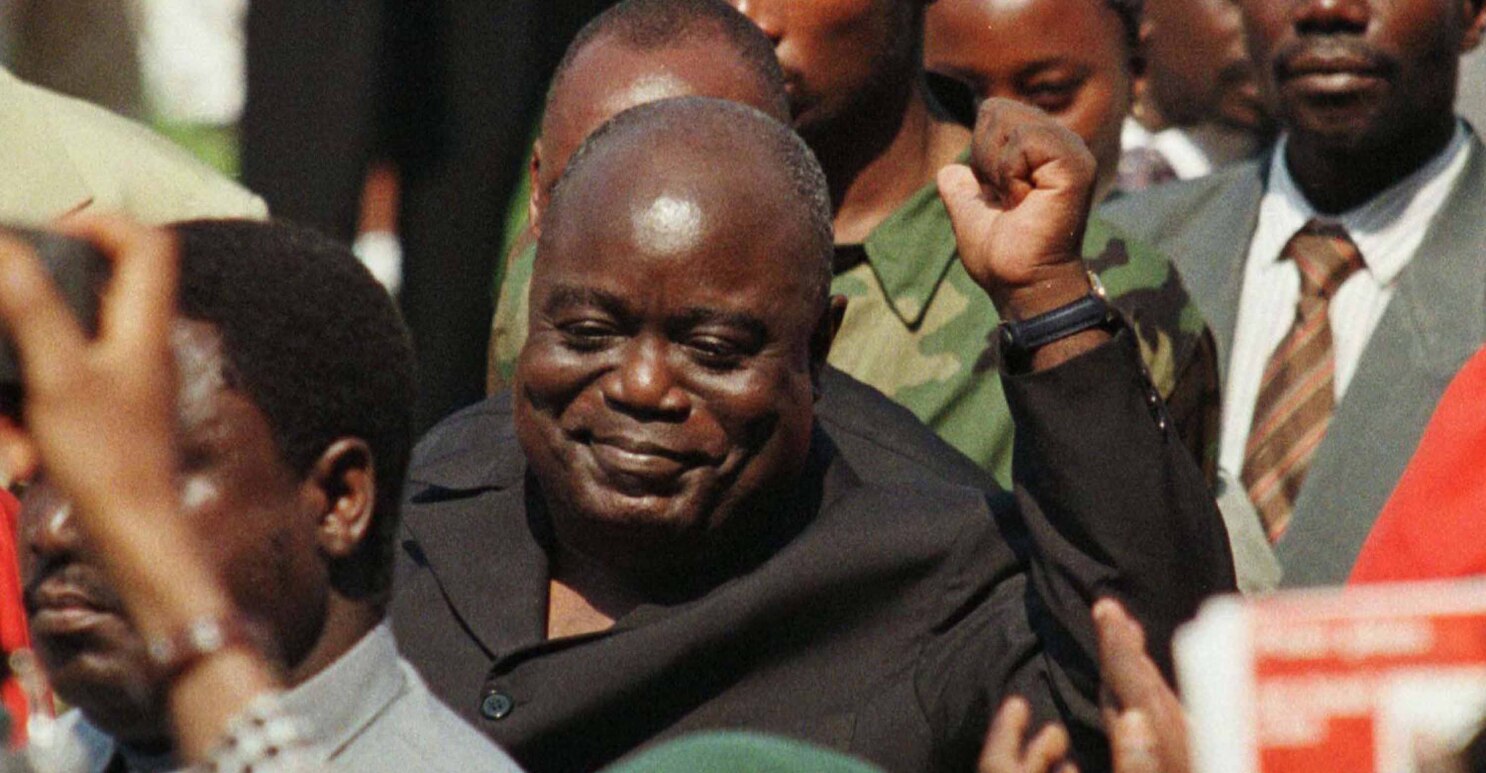


  • World Cup: Europe vs the FIFA president

    World Cup: Europe vs the FIFA president

    … Gianni Infantino, an Italian, can’t stand Europe’s hypocrisy any more

    “We are told many, many lessons from Europe, the Western world. I am European. I actually am. I think for what we Europeans have been doing in the last 3,000 years around the world, we should be apologising for the next 3,000 years before starting to give moral lessons to people.” – Gianni Infantino, Fifa president, at his very best. Report by Baffour Ankomah.

    At last on 19 November 2022, one European got fed up with the rank hypocrisy shown by Europe and its media about the affairs of non-European peoples around the world, and told his mother continent and its angry journalists to go and sit down and stop trying to give moral lessons to other people when Europe’s own morals cannot stand up to scrutiny.

    Gianni Infantino, 52, is an Italian brought up in Switzerland. He is the current president of world football’s governing body, FIFA (or Fédération Internationale de Football Association. In English, International Federation of Association Football). He was elected Fifa president in 2016.

    On 19 November, a thoroughly fed-up Infantino, holding court at a pre-World Cup press conference in Doha, the capital of Qatar, in front of over 400 journalists from across the world, most of them Europeans and Westerners, told his mother continent matter-of-factly: “We are told many, many lessons from Europe, the Western world. I am European. I actually am. I think for what we Europeans have been doing in the last 3,000 years around the world, we should be apologising for the next 3,000 years before starting to give moral lessons to people.”

    It has become a tradition that every four years when the Fifa World Cup comes around, European and Western journalists team up and mount a campaign of criticism and calumny against the host nation unless it is a European or Western country. They do it so consistently and so shrilly that the recipients of the criticisms and calumny, who happen to include Fifa all the time, lose their bearings.


    ‘Really bad and sad’ reporting in Europe

    In 2010, when South Africa hosted the World Cup, the same crude tactics and campaign were used against the first African country to host the tournament. Things got so bad that even The Guardian (of London), trying to show some measure of sobriety, ran a headline on 7 June 2010, saying: South Africa kicks out against media’s World Cup critics.


    The body of the story, written by Owen Gibson, was simply out of this world. Gibson wrote:

    “Jerome Valcke, the under-pressure Fifa secretary general, was unequivocal when asked at the turn of the year why the number of overseas visitors planning to travel to South Africa for the World Cup was down on expectations. He railed against the ‘really bad and sad’ reporting in Europe, and in particular Germany and England, which, he said, was skewing perceptions of South Africa and harming ticket sales.


    “And that was before a Daily Star (of London) front page warned that England fans may be “caught up in a machete race war” in a “crime ravaged” country. That left UK journalists based in South Africa desperately trying to explain to colleagues that the Star’s editorial line was not representative of the British press as a whole”.


    Gibson continued: “It is beyond question that there are a string of issues surrounding the South African World Cup that are open to legitimate probing. Some are the same ones as those faced by any country hosting a major tournament. Will the venues be ready? What is the level of the security threat? Will visitors be overcharged for tickets and hotel rooms?


    “But, given that this is the first African World Cup and is taking place in a country with a particular history, there are also additional questions. Would the money lavished on new stadiums be better spent on other priorities? Or had winning the right to host a World Cup prompted a leap forward in terms of investment in infrastructure, transport and tourism that simply wouldn’t have happened without it?


    “But over two years, there has been a growing sense in South Africa that some of the reporting from British newspapers in particular has been overly negative and, for some, retained an undercurrent of post-colonial superiority that, followed to its logical conclusion, would ensure that no World Cup or Olympic Games ever took place outside the US and Europe.”


    Gibson quoted Nicola Brewer, the British high commissioner in South Africa, as saying: “There has been a sense that the tabloids in particular have focused in a rather sensational way on some of the negative stories. I am not trying to pretend that there aren’t problems in South Africa, and nor are the politicians. These things are domestic priorities – crime, health, education. But you need to keep it in proportion and you need a sense of perspective.”


    Gibson’s own assessment and conclusion of the campaign of criticism and calumny was very interesting: “The criticism has been further complicated by the fact that many South African newspapers syndicate a sizeable amount of content from UK newspapers and several are modelled on their British counterparts,” he wrote.


    “The web has also been a factor, meaning that over-the-top conjecture is given the same weight as finely-argued investigation and ensuring that all articles, in all papers are available internationally within moments of being published. Particularly controversial examples are linked to, copied, pasted and passed around while more measured arguments are passed over.”


    In the end, as William Saunderson-Meyer, a columnist for The Mail & Guardian (The Guardian’s South African sister title) forecast: “Dare one predict that the World Cup will be neither miracle-cure nor disaster? Just a marvellous sporting spectacle in an extraordinarily beautiful and hospitable country, enviously watched on television by half the globe.”


    Qatar World Cup 2022

    This year, the same crude tactics of criticism and calumny was mounted against Qatar, host of the 2022 Fifa World Cup, and the first Arab country to do so. As it happened to South Africa in 2010, a lot of newspaper column inches and broadcast time was spent on bringing down Qatar. Fifa was not spared either, for daring to give the hosting rights to Qatar, a tiny country where, according to the Western media, “the treatment of migrant workers and the rights of LGBTQ+ people have been in the spotlight”.


    Homosexuality is illegal in Qatar and consensual gay relations between men aged 16 and above are punishable with up to seven years in prison under Article 285 of the Qatari penal code. But that is the law of the country and there are public norms and sensibilities backing it.


    However, nobody’s sexuality was going to prevent him or her from coming to Qatar or going into a stadium, though that did not mean one could break Qatar’s national laws merely because a World Cup tournament was being held in the country.


    That is the standard everywhere. For example, if paedophiles were to attend a World Cup final in England where sleeping with under-age girls and boys is a crime, the paedophiles would be arrested and prosecuted. Should Fifa therefore ask the British government to decriminalise sleeping with under-age girls and boys because England is hosting the World Cup? Or should Britain suspend its law banning under-age sex during the duration of the World Cup in England?


    These are the issues and hypocrisy that got the goat of Gianni Infantino on 19 November, a day before the 2022 World Cup kicked off.


    He told the bemused journalists: “Today I have very strong feelings. Today I feel Qatari. Today I feel Arab. Today I feel African. Today I feel gay. Today I feel disabled. Today I feel a migrant worker … I feel like a woman too!” Of course, I am not Qatari, I am not an Arab, I am not African, I am not gay, I am not disabled. But I feel like them because I know what it feels like to be discriminated [against], to be bullied as a foreigner in a country.


    “I feel this, all this, because what I’ve been seeing and what I’ve been told since I don’t read [newspapers] otherwise I would be depressed – I think what I’ve seen brings me back to my personal story. I am a son of migrant workers. My parents were working very, very hard in difficult situations.


    “At school I was bullied because I had red hair and freckles. I was bullied, plus I was Italian, so imagine. I didn’t speak good German. What do you do then? You lock yourself down in your room, you cry, and then you try to make some friends. You try to engage, make friends. You don’t start accusing, fighting, insulting, you start engaging. And this is what we should be doing.”


    According to Infantino: “It’s not easy every day to read all these critics of decisions that were taken 10 years ago when none of us was there. Now everyone knows we have to make the best out of it and make the best World Cup ever. Doha is ready, Qatar is ready, it will be the best World Cup ever, of course.


    “This one-sided moral lesson is just hypocrisy… I don’t want to give you any lessons of life, but what is going on here is profoundly, profoundly unjust.”


    Paul MacInnes of The Guardian (of London) reporting from Doha, after Infantino’s speech, acknowledged that: “Infantino is correct to observe that there has been widespread personnel change at Fifa since the decision was taken to award Qatar the World Cup in 2010. According to research by Nick Harris of The Mail on Sunday, 10 of the 22-member Fifa executive committee which voted on the deal have since been banned for ethics violations while another four have either been indicted or convicted of criminal corruption. At the time of the vote, Infantino himself was not a Fifa employee, but secretary general of the European governing body, Uefa.”


    Having warmed up, Infantino, born on 23 March 1970, hence a relatively young man of 52, turned his attentions on his home continent, Europe, and told the astounded European and Western journalists arrayed before him, their jaws now hitting their chests, that they and their continent did not deserve to give moral lessons because their hands and consciences were not clean.


    Migrant workers

    “Let’s start with the migrant workers,” Infantino told the journalists. “We are told many, many lessons from Europe, the Western world. I am European. I actually am. I think for what we Europeans have been doing in the last 3,000 years around the world, we should be apologising for the next 3,000 years before starting to give moral lessons to people.


    “Hundreds of thousands of workers from developing countries come to Qatar and earn many times more [than at home] and help their families to survive. They do it in a legal way,” citing a 2021 report in The Guardian (of London) that said at least 6,500 migrant workers had died in Qatar since preparations for the World Cup began.


    Infantino said such criticisms were hypocritical given that 25,000 migrants had actually died trying to get into Europe since 2014. “We in Europe, we close our borders,” he told the journalists. “We don’t allow practically any workers from these countries who are trying to come to work legally in our countries.


    “Those who reach Europe, or those who want to come to Europe, they have to go through very difficult journeys. Only a few survive. So if you really care about the destiny of these people – these young people – Europe can do as Qatar did. Create some channels, some legal channels, to increase the percentage of these workers to come to Europe. Give them some work. Give them some future.


    “Let’s look at ourselves in the mirror and see where we come from,” Infantino said. “Try to convince the others to engage. That is the only thing I ask: engage, help and don’t divide, try to unite.”


    The Italian then cited his adopted country, Switzerland, as a nation that had progressed on many issues. Qatar could do the same too. Indeed, he said, Fifa had been a guiding light in helping Qatar to improve the situation for migrant workers by scrapping a kafala system that tied workers to employers, and introducing a minimum wage and heat protections.


    “How many of these European or Western business companies who get millions and billions from Qatar – how many of them have addressed migrant workers’ rights with the authorities? None of them, because changing the legislation means less profit,” Infantino argued.


    “But we did it and Fifa generates much, much less than any of these companies from Qatar. I don’t have to defend Qatar, I’m defending football and injustice. We see here many government representatives coming to Qatar. They all come because a country which has just sand and pearls turns out to have something much more, it’s gas. If there was no gas nobody would care. Now they all come and they all want something and who is actually caring about the workers. Who? Fifa does, the World Cup does, and to be fair to them Qatar does as well.


    “This doesn’t mean we shouldn’t point at what doesn’t work. In Qatar, there are of course some things that need to be addressed. But this moral lesson-giving – it is just hypocrisy.


    “I wonder why nobody recognises the progress that has been made since 2016 [when he became Fifa president]? The kafala system was abolished, minimum wages were introduced, heat protections were put in place. The ILO and unions acknowledge this, but the media don’t, or some don’t. But many organisations have recognised that workers’ rights standards are similar here to those in Western Europe, the standards are similar on safety. Let’s see what happens in the next 10 years.”


    Figures debate

    In February 2021, The Guardian reported that, from records obtained from national embassies, more than 6,500 workers from India, Pakistan, Nepal, Bangladesh and Sri Lanka had died in Qatar since it was awarded the World Cup hosting rights in 2010. Other sources claimed that the death toll was actually higher as the figure quoted by The Guardian did not include nations such as Philippines and Kenya who also have large migrant workers in Qatar.


    Infantino referred to “this report” and called for “two steps back” to be taken while telling the journalists: “I wondered why nobody asked for compensation for these migrants or their families? Where are we going with our way of working, guys? We have to ask this of ourselves.


    “If we go two steps back and look at this issue of migration and the situation of hundreds and thousands of women and men from developing countries who would like to offer their services abroad in order to help and give a future to their families back home, Qatar is actually offering them this opportunity. They earn 10 times more than they earn in their own countries, and they help their families to survive. They do it in a legal way.


    “When it comes to compensation of workers, you should know that there is a legal framework. We are in a sovereign country. You think Fifa can go to the USA or England or Italy and tell the governments we are going to establish compensation for migrant workers in their countries? At least all workers in Qatar, because they are legally here, have a compensation scheme.


    “Qatar established a workers’ insurance fund to support migrant workers. Since 2018, this fund has paid over US$350m to workers in need. The majority of that is for wages but also for accidents. Every worker that has an accident receives compensation by law. Depending on the magnitude, it can be several years of salary. I would suspect in the next four years, if nothing changes, then another US$350m will be paid.


    “If, in the past, there was a worker who has not received compensation in accordance with the rules of Qatar, he or his family can go to the minister of labour to receive it. This is new by law.”


    Here, Infantino was, in fact, echoing the government of Qatar, which earlier this year responded to allegations about migrant worker abuses by saying: “The mortality rate among these communities is within the expected range for the size and demographics of the population. However, every lost life is a tragedy, and no effort is spared in trying to prevent every death in our country.”


    But the Western media disputes the Qatari government figures that cite 37 deaths among workers at World Cup stadium construction sites between 2014 and 2020. According to the government, only three of these deaths could be classed as being construction-related. But last year’s report by The Guardian showed that many migrant workers died from stress-related injuries, such as heart attacks and strokes, because of high temperatures in Qatar nearly all year round.


    The Western media claims that “the awarding of the World Cup to such a small nation with a lack of footballing infrastructure meant a vast stadium-building programme began. The means by which this has been achieved and its alleged cost casts the darkest shadow over the World Cup.”


    Amnesty International, headquartered in London only a shouting distance from The Guardian, adds that “despite government reforms, migrant workers continue to face labour abuses and struggle to change jobs freely.”


    Infantino acknowledged the difficulties still existing in Qatar and reminded the European and Western journalists that reform and change took hundreds of years in Europe. “The only way of obtaining results is by engaging in dialogue and not by hammering or insulting,” he said.


    “When your child does something bad at school and you tell him he is an idiot, he is useless, and you put him in his room, what do you think his response will be? If you talk to him saying let’s work together, you will have better grades, he will recognise that, and he will be better. I don’t want to give you any lessons of life. I just want you to realise that what is going on here is profoundly, profoundly unjust.”


    Gay rights

    Then came the all mighty subject of gay rights, a matter now beloved by the Western media and their home governments who want to force it on the whole wide world whether they like it or not.  In early November 2022, Qatar’s World Cup ambassador Khalid Salman upset the West by describing homosexuality as “damage in the mind” in an interview with the German TV channel ZDF, before adding that being gay is “haram”, meaning “forbidden” in Arabic.


    Infantino was ready for this subject. “Let me mention as well, the LGBT situation,” he told the journalists. “I have been speaking about this topic with the highest leadership of the country several times, not just once. They have confirmed, and I can confirm, that everyone is welcome. This is a clear Fifa requirement. Everyone has to be welcomed, everyone that comes to Qatar is welcome whatever religion, race, sexual orientation, belief she or he has. Everyone is welcome. This was our requirement and the Qatari state sticks to that requirement.


    “If you have a person here and there who says the opposite, it’s not the opinion of the country, it’s certainly not the opinion of Fifa,” Infantino assured the media, emphasisng that if any football fan wanted to stay at home, that was their choice. “You want to stay at home and say how bad they are, these Arabs, these Muslims, because it’s not allowed to be publicly gay here. I believe it should be allowed. But it is a process. If someone thinks that hammering and criticising will achieve something, well I can tell you it will be exactly the opposite. It will close more doors.


    “Everyone who comes to Qatar is welcome. Whatever religion, race, sexual orientation or belief he or she has – everyone is welcome. [But] the Qatari government sticks to [a] requirement. Yes, these legislations exist in many countries around the world. Like for the workers, these are processes. What do you want to do about it? Do you want to stay home and hammer and criticise how bad they are?


    “Of course, I believe [gay rights] should be allowed as Fifa president. But I went through a process. If I ask the same question to my father who is not here anymore, he probably [would have] a different answer to me. My children will again have a different answer to me. If you keep hammering to achieve something, I can tell you it is not the way.”


    In 2010, when Fifa granted the hosting rights to Qatar, Nasser Al-Khater, Qatar’s 2022 World Cup chief said: “We have a country that’s conservative. However, we are a welcoming country. We are open and welcoming, hospitable. We understand the difference in people’s cultures. We understand the difference in people’s beliefs and so I think everybody will be welcome and everybody will be treated with respect. But just like our culture is a culture of this world, we also expect people to respect our culture. I think there is a balance and there is a feeling that people will respect people from everywhere.”


    The beer problem

    The Fifa president dismissed suggestions that Fifa had “lost control” of its own tournament after Qatar, in an eleventh-hour decision on 18 November, banned beer sales at World Cup stadium venues.


    Infantino more or less laughed at the beer problem. “If this is the biggest issue we have for the World Cup, then I will resign immediately and go to the beach to relax,” he told the stunned journalists. “I feel 200% in control of this World Cup, absolutely. Every decision is taken in partnership with the Qatari government.”


    He went on: “Every decision taken in this World Cup is joint decision between Qatar and Fifa. There will be eight to 10 fan zones, over 200 places where you can buy alcohol anyway, I think personally if for three hours a day you cannot drink a beer, you will survive.


    “The same rules apply in France, Spain, Portugal and Scotland. Here it has become a big thing, because it is a Muslim country? I don’t know why. We tried and that is why I give you the late change of policy. We tried to see if it was possible. It’s one thing having the plans and designs in place, then you look to see the flows of people, going to different matches; we have four matches on the same day, so we have to make sure people can go in and go out. That is why we had to take the decision about the beer.”


    Infantino then told the still flabbergasted Western journalists: “If you want to criticise, come to me. Here I am, you can crucify me, I am here for that. Don’t criticise Qatar, don’t criticise the players, don’t criticise anyone, criticise Fifa, criticise me because I am responsible for everything.


    “How many occasions do we have to unite the world? Do we want to continue to spit on others because they look different or they feel different? We defend human rights. We do it our way. We obtain results. It’s a step-by-step process, help us in doing more. Don’t divide, don’t split.”


    Fake fans?

    The Fifa president then tackled the journalists on earlier reports about “fake fans”, nationals of Qatar, who had allegedly been paid to be more active at matches, some even supporting England when they are not English. Infantino was quite upset about this: “People [in Qatar] are happy and want to cheer for the teams arriving, and what do I read: ‘These people don’t look English so they should not cheer for England because they look like Indians’. I mean what is that?”, Infantino asked.


    “Can someone who looks Indian not cheer for England or for Spain or for Germany? You know what this is: this is racism. This is pure racism. And we can stop that. They have difficult lives, everyone has difficult lives, we want to have a moment where we don’t have to think about this.:


    “Do we want to continue to spit on the others because they look different, or they feel different? We defend human rights. We do it our way. We obtain results. We got women fans in Iran. The Women’s League was created in Sudan. Let’s celebrate. Don’t divide.”


    Concluding, the Fifa president asked for sanity and sobriety, not war.  “The world is divided enough,” he said. “We are organising a World Cup, not a war. Many people want to come and enjoy. Look at the city – it is beautiful. People are happy to celebrate.


    “The problems won’t go away. They will stay here, and maybe we can contribute a little bit to make it a little bit better. How many occasions do we get to unite the world? Help us – don’t divide, don’t split. We have 32 teams, referees, beautiful stadiums and cities. Let’s please celebrate and hope we can give some smiles to people around the world.


    “I was convinced – and I am still convinced even now – that this World Cup will open the eyes of many people, from the Western world to the Arab world. We are living in the same world so we have to understand each other. We have to understand that we are different and have different beliefs and history, and that we come from different backgrounds. But we are in the same world. We have to get along with each other and understand each other. You have to come here and see it. If you see something wrong, say it – and say how it can be improved,” Infantino finished on a positive note.


    Outraged journalists

    Then war was declared by the journalists. As one would expect from a wounded media pack, it became a day of ostentatious adjectives. Sean Ingle, sent by The Observer (of London) to Doha, called Infantino’s speech “a bizarre and incendiary attack”. He added: “In a 57-minute diatribe which frequently drew gasps of astonishment, Infantino claimed that Western nations were in no position to give morality lessons to Qatar given their past and current behaviour.”


    Alex Kay-Jelski, the former sports editor of The Times and Daily Mail who is now the editor-in-chief of The Athletic, wrote: “This is gonna go down as one of the most remarkably deluded speeches of all time from Infantino. On the flip side, thank God his having freckles at school has allowed [him] to understand what minority groups and migrant workers have been through.”


    The Sky Sports News senior reporter, Melissa Reddy, was absolutely uncontrollable. “This is extraordinary and unlike anything I’ve ever heard before,” she wrote. “You do not know what it feels like to be gay, Infantino. You do not know what it feels like to be disabled. You do not know what it feels like to be African, and you cannot conflate being discriminated against because of red hair and freckles to any of the groups you’ve referenced have experienced. You cannot negate their experience by just saying you ‘feel’ what they feel. It is an absolutely astounding address from the Fifa president, and it’s probably even more astounding that he is being re-elected unopposed after being able to say stuff like this.”


    Jason Burt, the chief football correspondent of The Telegraph (of London) had an iconic headline: “Gianni Infantino goes full Trump – and destroys both his and Fifa’s credibility”. Burt added for good measure: “If that did not leave his and Fifa’s credibility shot for anyone with a conscience, then Infantino made sure it was with a speech that sounded like it was scripted by the Qatari authorities. If that wasn’t enough, it was delivered with a level of staggering delusion and also an irritation that betrayed his inflated arrogance.”


    Alex Crook of TalkSPORT (of London) added his piece: “Extraordinary is the word,” he said. “I arrived here this morning not really knowing what to expect from the FIFA president …  One of our newspaper colleagues remarked that what started with the aim of being a Martin Luther King-style speech quickly descended into one David Brent would have given.


    “It really was absolutely incredible some of the things Infantino was saying. He was asked during the Q&A session if it was an attack on the West, an attack on Europe, and he denied that. He said ‘I’m European, I’m just saying we’re not perfect.’


    “All in all, it was probably one of the most extraordinary press conferences I’ve ever witnessed, and I think I can speak for most of the other 400 journalists in the room as well. It struck me that he just wanted to just get everything off his chest. He spoke without taking any questions for up to an hour. It felt to me that this was a very angry Fifa president and he wanted to fire some shots, to be honest.”


    Vince Rugari, a sports reporter for The Sydney Morning Post in Australia, tweeted: “I knew he was going to say something stupid but my goodness.”


    Rory Smith, The New York Times chief soccer correspondent, said on twitter: “What’s really striking about this (absolutely extraordinary) speech from Infantino is how angry and bitter and…unhappy he seems on the eve of what is, in theory, meant to be the world’s greatest sporting carnival and his crowning achievement.”


    Andy West, a British freelance writer, tweeted: “Infantino doing an excellent job of reminding us that the most culpable for this rotten mess of a World Cup is Fifa itself.”


    Rob Draper, the chief football writer of The Mail on Sunday, added an historical angle when he tweeted: “Infantino has out-Blattered Sepp Blatter today. This speech will go down in history, just not in the way he intended.”


    Outside of football, Nicholas McGeehan, director of the human rights group, FairSquare, said: “Infantino’s comments were as crass as they were clumsy, and suggest that the Fifa president is getting his talking points directly from the Qatari authorities. Deflection and whataboutery have always been at the core of Qatar’s PR efforts to defend its rank failures, and now they have the Fifa president doing their work for them.”


    From London, Amnesty International released a statement, saying: “In brushing aside legitimate human rights criticisms, Gianni Infantino is dismissing the enormous price paid by migrant workers to make his flagship tournament possible – as well as Fifa’s responsibility for it. Demands for equality, dignity and compensation cannot be treated as some sort of culture war – they are universal human rights that Fifa has committed to respect in its own statutes.


    “[But] this cannot be mere window dressing, however. If Fifa is to salvage anything from this tournament, it must announce that it will invest a significant part of the $6 billion the organisation will make from this tournament and make sure this fund is used to compensate workers and their families directly.”


    The press conference ended with Bryan Swanson, the Fifa director of media relations, addressing the room. He is a former Sky Sports reporter, so he felt he could tell his colleague journalists a thing or two. “I am sitting here as a gay man in Qatar,” he told them. “We have received assurances that everyone will be welcome and I believe everyone will be.


    “Just because he [Infantino] is not gay, does not mean he does not care. He does. You see the public side and I see the private side. I have thought long and hard about whether I should say this. I do feel strongly about it. We care about everyone at Fifa. I have a number of gay colleagues. I am fully aware of the debate and fully respect people’s opinions. When he says we are inclusive, he means it.”


    In the end, did the Fifa president really deserve the fury that the media visited on him for saying what he said? Most impartial observers would say he won the contest hands down. Fifa president 3, Western media 0.


  • Jesse Russell:  The man who changed the world of mobile phones

    Jesse Russell: The man who changed the world of mobile phones

    Jesse Eugene Russel was born in Nashville, Tennessee, USA, on 26 April 1948. He is not shy to say he “came from a very poor family environment of nine brothers and a sister” but that did not constrain his progress in life or the genius that lay deep within him.

    .

    According to one American writer, Russel’s “innovations in wireless communication systems, architectures and technology related to radio access networks, end-user devices, and in-building wireless communication systems have fundamentally changed the wireless communication industry”.


    Russell is a pioneer in the field of cellular and wireless communications. In 1988, he led the first AT&T Bell Laboratories team to introduce digital cellular technology in the US, 15 years after the first publicised mobile phone call had been made over an analog system.


    That first call, by two Motorola engineers, John F. Mitchell and Martin Cooper on 3 April 1973, was done on a DynaTAC mobile phone weighing a colossal 2 kilograms or 4.4 lbs. What Russell and his team did was to develop the technology that transformed that analog system to digital technology, which, at the time, was dubbed “2G” or “second generation” of mobile phone systems.


    Interestingly, even today the mobile phone is one device that nobody has as yet claimed to have invented it in whole alone. History shows that a handheld mobile telephone service was envisioned in the early stages of radio engineering by Eric Tigerstedt, a Finnish inventor, back in 1917. He filed a patent for a “pocket-size folding telephone with a very thin carbon microphone”. But, according to the historical account, “the race to create truly portable telephone devices began after World War II, with developments taking place in many countries”.


    Forty-three years after the war, Jesse Russell came into his own when he pioneered the field of digital cellular communication through the use of high- power linear amplification and low-bit rate voice encoding technologies.


    His high achievements however belied his poor background as a boy. During his early years, Russell focused on athletics, not academics. But the course of his life changed dramatically after he attended a summer educational programme at Fisk University in Nashville, USA. It was a key turning point that pushed him into academic and intellectual pursuits.


    Soon he found himself at the Tennessee State University where he obtained a Bachelor of Science degree in electrical engineering. In 1973, he earned his Master’s degree in electrical engineering from Stanford University, and in 1980, at the age of 32, he became the first African-American to be selected as the Eta Kappa Nu Outstanding Young Electrical Engineer of the Year.


    His efforts as a top-honour student in engineering was rewarded when he became the first African-American to be hired by AT&T’s Bell Laboratories directly from a Historically Black College or University (HBCU).


    Talking about his academic and professional feats in a 2011 TV interview, Russell said people are shocked to know that a black man, like him, pioneered the digital cellular communication revolution that reduced mobile phones from 2 kilos weight to the fancy smart phones of today.


    He said when he won the Eta Kappa award in 1980, he did not know anything about cellular radio, “never heard about it, at least not in our own organisation”.


    But he remembers that when the Bell Laboratories system was broken up, “the technology that nobody wanted was the cellular radio system. They had tried to send it to the telephone companies, and they sent it back to AT&T. So my boss said ‘Jesse, I know you don’t want this job, to head the cellular radio group, but I believe the future of communications will be deeply rooted around this concept of cellular radio.’”


    Jesse took up the challenge, and today, after years of success, he says: “I won’t forget my first day on the job. They called a meeting of all the managers, they were all white, I was the only black guy, and I was saying ‘well, what’s the problem, why are we losing so much money?’ They were losing so much money. They said they could only make money if people were in their cars and when the phones rang they grabbed the phones and answered the calls, but people were not always in the cars.


    “What I said was, ‘well, that is an easy problem. Why don’t we just take the phone out of the cars and put it on the people? And I guarantee you that if we put the phone on the people, we will make money, because when we put the phone on the people, when it rings they will grab the phone, and every time they grab the phone and answer the calls, we make a dollar. So we can turn the purse as well’. At the time I didn’t know that the phones looked like bricks, and I said we will be stupid to think that we can keep this kind of phones and get people to keep it on themselves.”


    Russell’s white bosses patiently explained to him that the problem was more than the size of the phones. There were more people than there were cars, and the phones had been designed for cars, so there was not enough spectrum to cover the many people needed to answer the calls, so that AT&T could make a profit. “That is why you can’t do what you are talking about,” Russell’s white bosses told him.


    But the bosses did not know that Russell was one of the leading authorities of digital signal processing – “because that was how I got the award in 1980, but they didn’t know that,” Russell told the TV interviewer in 2011. “So what I said was: ‘That is a simple problem to solve. What we will do is to completely digitalise the speech to substantially reduce the amount of bandwidth required on the producer bases’, and I described to them how you could do that, and what modulation schemes you would use and so forth.


    “And I said if you do the map, I could show you how to do it, and that you could get four times the number of people in the same amount of spectrum. And it took us from 1984 to 1988, and we built the first digital cellular system that did not exist anywhere in the world.


    “And we took the business from about $100 million to $5 billion, simply because I had so much self-confidence that I was able to challenge the status quo in the midst of the stereotypes about African-Americans, in the midst of an all-white group. I had enough self-confidence to say what I believed could be done.”


    Russell went on to develop his expertise as the leader of an Innovation Centre focused on Applied Research in Advanced Communication Technologies. “As a key decision-maker in the selection and development of emerging communications technologies, Russell’s efforts led to the rapid realisation of new access network platforms that enabled AT&T to expand its broadband communication network options,” says another American writer.


    During his years at AT&T, Russell served as the Director of the Cellular Telecommunication Laboratory (Bell Labs), Vice President of Advanced Wireless Technology Laboratory (Bell Labs), Chief Technical Officer for the Network Wireless Systems Business Unit (Bell Labs), Chief Wireless Architect of AT&T, and Vice President of Advanced Communications Technologies.


    He left AT&T to establish his own communications company called incNETWORKS based in New Jersey, USA, of which he is the chairman and CEO. Initially, the company focused on 4G systems but has now moved on to 5G networks and services.


    Russell was inducted into the American National Academy of Engineers in 1995 for his contributions to wireless communication. He has over 100 patents granted or in the process. In 1992, he was named as the Black Engineer of the Year in the US for the best technical contributions in digital cellular and microcellular technology.


    Speaking in 2011, Russell prophesied, based on work his company was doing at the time, that in the future people would not just make voice calls or send text messages, but they would be making video calls not just between two people but between groups of people. That has come to pass.


  • Dr Thomas Mensah:  ‘The engineer who revolutionised the Internet’

    Dr Thomas Mensah: ‘The engineer who revolutionised the Internet’

    October is Black History Month in Britain, and February is Black History Month in the USA, two months during which the great and good of Global Africa are celebrated. Two names that have come up this year deserve their place on the list of celebrants by sheer merit: Dr Thomas O. Mensah, 72, a Ghanaian-American chemical engineer and inventor who contributed immensely to the development of laser-guided missiles for the US military, and Jesse E. Russell, 73, an African-American inventor whose innovations in digital signal processing led to the modern mobile phone that changed the world.


    Dr Mensah is an expert in fibre optics and nano technology. But for him the field of fibre optics would not be what it is today. The same can be said of Jesse Russell in the field of digital communications technology – but for him also mobile phones and digital communications as a whole would not be what we know them today.


    The massive contributions of these sons of Global Africa have greatly changed the world, but you will not find their names in neon lights like some of their white colleagues who are celebrated worldwide. In fact, most Africans and people of African descent worldwide have not even heard about them. But they are the very two persons whose work has made it possible for the world to enjoy the current high level of digital communication, and even helped the US military to assert its supremacy in the field of laser-guided missiles.

    Known as one of the great minds of the 21st century, Dr Mensah was born in Kumasi, Ghana. His father, J. K. Mensah, was a cocoa merchant who shipped cocoa beans to France. No wonder, France would play a huge role later in the academic development of his son.


    Young Mensah attended Adisadel College at Cape Coast, Ghana, and obtained his first degree in chemical engineering at the Kwame Nkrumah University of Science and Technology in Kumasi. Life then changed for the better for him after he received a French government scholarship to study at the Montpellier University in France.


    While at Montpellier, he participated in a programme at the Massachusetts Institute of Technology (MIT) in Cambridge, Massachusetts, in 1977, and received a certificate in modeling and simulation of chemical processes from the MIT. A year later, he obtained his PhD in chemical engineering from Montpellier University, and life has never been the same again.


    Mensah emigrated to the US after his PhD studies, and worked at Air Products and Chemicals in Allentown, Pennsylvania, before moving on to Corning Glass Works in New York where he worked on fibre optic research at Sullivan Park.


    According to one writer: “Researchers at Corning had previously developed fibre optic with loss below the crucial attenuation limit of 20 decibels per kilometre, but the fibres could not be manufactured at rates higher than 2 meters per second.  Mensah improved the manufacturing process through a series of innovations, raising the speed of manufacture to 20 meters per second by 1985.


    “This made the cost of optical fibre comparable to traditional copper cables. Mensah received the Corning Glass Works Individual Outstanding Contributor Award for this work in 1985. His work ultimately raised the speed of manufacture above 50 metres per second.” This was the breakthrough the industry needed for a spectacular take-off.


    In 1986, Mensah left Corning Glass Works for AT&T’s Bell Laboratories where he became the head of a programme to develop the first laser-guided weapons for the Pentagon. Success crowned Mensah’s efforts as the programme enabled the development of missiles that travel at the speed of sound (Mach 1). This laser-based targeting technology is now used by all military platforms, including drones.


    One American writer confesses that Dr Mensah’s innovation in fibre optics also made “the US the leader in the internet space globally, spurring Fortune 500 companies like Facebook, Google, Amazon, etc, that have generated trillions of dollars for America”.


    He is now the president and CEO of Georgia Aerospace Systems, which manufactures nano composite structures used in missiles and aircraft for the Pentagon.


    On 24 February 2017, CBS News acknowledged Dr Mensah’s high achievements in a report on Black History Month in which it called him “the engineer who revolutionised the Internet”.


    Recently, Dr Mensah told an American TV host in an interview: “Social media is now a big thing. In the 1980s, I was one of the four inventors of fibre optics, and this allowed the internet to explode because now you have fibre optics in the sea cables connecting Africa, China, Japan everywhere. So you can call Japan, you can send Facebook pictures to Japan, to China, and all over the world because of that technology.”


    In addition to being an accomplished chemical engineer, leading the field of fibre optics and nano technology, Dr Mensah is also a leader in the research of material with application in aeronautics. He has at least 25 issued and impending patents to his name.


    In 2014, he became the first African to be inducted into America’s elite National Academy of Inventors. A passionate researcher of green energy, Dr Mensah has been focusing his attention in recent years on Ghana and Africa, hoping to spur economic and technological developments in Ghana and Africa via the growth of high-speed trains to support Africa’s intercontinental free trade agreement.


    An author of five books on innovation, Dr Mensah has created the Silicon Valley of Ghana at the Kofi Annan ICT Centre in Accra. He has been working since 2016 to create a Silicon Valley of the South, in the US State of Texas.


    He has received several awards for his work, including the Golden Torch Award (the highest award by the National Society of Black Engineers in the US), Turner’s Trumpet Award for Fibre Optics Innovation, Eminent Engineers Award by the American Institute of Chemical Engineers (AIChE), Percy Julian Award, and William Grimes Award. In December 2017, his home country Ghana honoured him with the Kwame Nkrumah African Genius Award in Science/Technology and Innovation.


    Dr Mensah serves on the board of several organisations, including the NASA Space Grant Consortium at the Georgia Institute of Technology, and the Board of the AIChE Foundation.