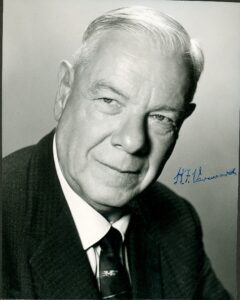
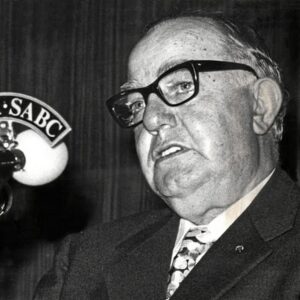
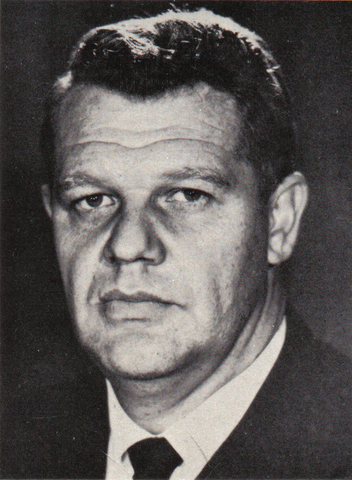
The way the British media and officials handled Harold Smith’s Nigerian independence elections story, should provide plenty of food for thought for African journalists. Here, we publish a snatch, just a snatch, of the correspondence that flowed for 45 years between the Smith cottage in Widbrook and certain heavyweights in British journalism and government.
Admiral David Pulvertaf
From Admiral David Pulvertaft, chairman of the D-Notice Committee that censors news items impinging on British national security. 13 January 1993, to Harold Smith:
“Dear Mr Smith. Thank you for your letter of 15 December [2002] and the extract from your account of Nigeria’s independence elections. I am sorry that I have taken such a long time to reply in writing but, as I explained when I telephoned you on 30 December, your letter had been redirected several times and only reached me during my Christmas/New Year break in Devon.
“Having considered the two pages which you forwarded to me under the heading, ‘A Squalid End to Empire’, and having explained to you that the D-Notice system is limited to issues of national security, I can see no involvement in this office if you should find an editor who wished to publish your account.
“The only development which would make me change my mind is if you were to include the names of intelligence service officers serving in Nigeria as that is the subject of one of my D-Notices. You were, however, good enough to assure me that this was not your intention.
“I have mentioned our correspondence to the Africa Department (Equatorial) of the Foreign and Commonwealth Office so that they are aware that you have asked the question and I have answered it.
Yours sincerely, David Pulverrtaft.”
From Sir Robin Butler, Cabinet Office, 14 April 1993, to Harold Smith:
“Dear Mr Smith. Thank you for your letters of 11 and 16 March to me, and of 27 March to my private secretary about the Nigerian independence elections. As my private secretary explained to you, my office has no record of receiving earlier letters from you.
“I am sorry you feel you have been prevented from expressing your own views on the matter in question. I assure you that this is nobody’s intention. As you will know, official records from the period in question are now available under the 30-year rule. Admiral Pulvertaft has explained in his letter to you of 13 January arrangements under the D-Notice system. I understand that your wife has forwarded some more detailed material to the Foreign and Commonwealth Office and there will be a reply to this separately. Yours sincerely. Robin Butler.”
Harold Smith on TV. He wrote to Hugo Young of The Guardian: “I am not hopeful for as I have suggested elsewhere, I have reason to believe that you are not your own master … Surely, those who respect The Guardian tradition cannot be responsible for these gross lies and deceit”
From Hugo Young, The Guardian, 2 June 1993, to Harold Smith:
“Dear Mr Smith. Thank you for your letter, the enclosures and the discs, which I have not had the opportunity to examine.
“Reading through the written material, however, it occurs to me that perhaps there is a simpler reason of why your story has not been published. Maybe in an earlier period, pre-1990 when the 30-year rule would have bitten, you had some cause to feel that the authorities were trying to suppress something and the newspapers were their allies – but I stress I have absolutely no knowledge of any involvement on The Guardian’s part.
“Now, however, it is at least possible that the problem is journalistic. Is the Nigerian election of 1960, however corrupt, a story our readers will be interested in? I think one can make a cool judgement on that without being charged with begging for a knighthood.
“However, as you say, The Observer [now owned by The Guardian Media Group and operating from the same offices as The Guardian], has a long interest in Africa and perhaps some ground to recover in terms of detachment and credibility. Sunday papers can sometimes make more of this kind of history than dailies can. I have forwarded the package to Jonathan Fenby [deputy editor of The Guardian] to see whether he wants to take up the story. Yours sincerely. Hugo Young.”
From Harold Smith, 10 May 1994, to Hugo Young, The Guardian:
“Dear Hugo Young. ‘If you don’t have a commitment to tell the truth to the reader, you don’t have anything’ – Ben Bradlee, editor, The Washington Post. My name is Harold Smith and I am writing for the historical record. I say this because it is probably the only sensible reason in bothering to address these remarks to you.
Sir Robin Butler
“Instead of acknowledging, as chief executive, that The Guardian is fallible and that something – a truth affecting the historical record – needs to be set right, you ignore this when it is brought to your attention and make feeble excuses … To give your readers an opportunity to make up their own minds would be wise and statesmanlike. However, it is still not too late. This duty should not be left to your successor … There is never a right time for owning up to a very nasty truth.
“I am not hopeful for, as I have suggested elsewhere, I have reason to believe that you are not your own master … Surely those who respect The Guardian tradition cannot be responsible for these gross lies and deceit… My name is … Harold Smith.”
From Hugo Young, The Guardian, 13 May 1994, to Harold Smith:
“Dear Mr Smith. (1) I have not the least idea what The Guardian did or did not do about Nigeria long before I joined it. (2) You seem to be in a state of demented obsession, which causes you to defame me (and others) to all and sundry. Please desist. (3) This will be my last communication. Do not trouble our fax machine or our secretaries anymore. Hugo Young.”
From Harold Smith, 10 June 1994, to Alastair Hetherington, former editor, The Guardian.
“Dear Alastair Hetherington. I am researching the involvement of The Guardian in the events leading up to the Biafran War, and note the absence of any references in the index to this subject in your book, Guardian Years, although you were that newspaper’s editor during the period from 1956 to 1975. Up to two million people died, according to the UN, in this bloody war, in which Britain was closely involved.
“On my return to Lagos in 1960, I made strenuous efforts to alert everyone, including The Guardian, to the fact that the independence elections had been rigged by the British. As the North could never win an honest election without a British presence, the opposition had to be destroyed and the outbreak of a civil war became almost inevitable.
“If we are in a “state of demented obsession” because we offer rational argument to Mr [Hugo] Young to persuade him to return The Guardian to the ways of honesty, what can we truthfully say about journalists who, whether because they are SIS [British intelligence] stooges, negrophobics, or totally unprofessional, have taken part in a conspiracy of silence which has had such grievous consequences?
“Mr Young acknowledged as being the most brilliant and learned newspaperman in Britain, with a superb staff including three Africanists of stature on hand, all with intimate experience of Nigeria at the crucial time of independence, pleads ignorance. He does not know that the British rigged Nigeria’s elections. He knows, of course, that The Guardian has never reported that fact. We may safely assume, however, that we are getting this dross because Mr Young’s fertile brain can think of no intellectual argument which can ease his conscience or the collective guilt of The Guardian.
“I enclose a clearance from Admiral Pulvertaft [chairman of the D-Notice Committee]. I have been forced by 34 years of obstruction from The Guardian to resort recently to alternative measures in an endeavor to obtain co-operation from your once great paper .
Hugo Young was held in high esteem as “the most brilliant and learned newspaperman in Britain”. But he fell short when it came to publishing the truth about how Britain rigged Nigeria’s independence elections
“To date, I have noticed little honour in my dealings with your paper, and little regard for the consequences of treachery or the distortion of the historical record. However, I am confident that truth will out, though I fear for The Guardian’s reputation. My name is … Harold Smith.”
From Alastair Hetherington, former editor, The Guardian, 20 June 1994, to Harold Smith.
Alastair Hetherington, Editor of The Guardian in 1960
“Dear Mr Smith. Thank you for the copies of correspondence regarding Nigeria, in which you have taken such an interest.
“I am sorry that you did not find any reference to Nigeria and the Biafran situation in my book, Guardian Years. The omission may well have been because the book was originally 120,000 words long, and had to be cut down to 80,000 before publication. Much was inevitably lost from the text, to my own regret.
“I am afraid that I cannot become involved in correspondence on the subject now. Yours sincerely. Alastair Hetherington,”
… ‘Being born in a manger does not make a person a cow’
The British colonial definition of who was a “native” was very interesting as each British colonial government in Africa strategically defined “native” according to its own specific set of local circumstances and interests. Carina Ray reports.
Apart from “tribe”, no other word is as synonymous with British colonialism as that of “native”. The architects of colonialism invested considerable energy in creating and policing boundaries between “natives” and “Europeans” in order to legitimise the subordination of the “colonised” to the “coloniser”. To this end, each British colony in Africa strategically defined “native” according to its own specific set of local circumstances and interests.
The following listing, taken from ordinances valid in 1931, provides a sense of the diversity of ways the term was defined in Britain’s African colonies:
Kenya: “Any native of Africa not of European or Asiatic extraction, but includes any Arab and Somali and also any Baluchi born in Africa.”
Tanganyika (Tanzania): “Any member of an African race and includes a Swahili and a Somali.”
Northern Rhodesia (Zambia): “Any member of the aboriginal tribes or races of Africa and includes any person having the blood of any such tribe or race and living among and after the manner of any such tribe or race.”
Somaliland Protectorate (Somalia): “Any native of Africa not being European or Asiatic of origin but includes any Arab or any person of Asiatic race or origin born or permanently resident in Abyssinia or any of the countries contiguous to the Gulf of Aden.”
Zanzibar: “Any person of African extraction and includes any person whose place of origin either by birth or descent is within the British Protectorate of Aden or within the dominions of the Sultan of Muscat or within such territory comprised in the coast strip lying between the said Protectorate and the said dominions as may be within the sphere of British influence.”
Southern Rhodesia (Zimbabwe): “Any member of the aboriginal tribes or races of Africa or any person having the blood of such tribes or races and living among and after the manner thereof.”
Nigeria: “Any person whose parents were members of any tribe or tribes indigenous to Nigeria and the descendants of such persons, and includes any person one of whose parents was a member of such a tribe.”
Gold Coast (Ghana): “A person of African descent who is a native of West Africa, or a person of African descent ordinarily residing within the Gold Coast Colony, Ashanti, the Northern Territories of the Gold Coast, or the British sphere of Togoland, and includes mulattoes; but it does not include persons ordinarily passing as Europeans; nor, subject to any regulation, does it include a native of West Africa or a person of African descent who is not subject to the jurisdiction of native tribunals in the community to which such a person belongs.”
Native maidens: The British definition of a “native” in the colonial era was left to the whims of the individual governments in the colonies
Nyasaland Protectorate (Malawi): “A native of Africa not being of European or Asiatic race or origin.”
The trouble with Nyasaland
This last definition, employed by the British colonial government in Nyasaland, came under scrutiny throughout the 1930s as a result of a 1929 court case in which the defendant, Suleman Abdul Karim, requested to be tried as a “non-native” on the grounds that his father was Indian and his mother African.
This case would ultimately raise the larger question of whether mixed race people, referred to at the time as “half castes”, should be categorised as “natives” or “non-natives”.
The judge presiding over the case, Haythorne-Reed, upheld Karim’s request to be tried as a “non-native” based on Section II of the Credit Trade with Natives Ordinance, 1926 which defined a “native” as “a native of Africa not being of European or Asiatic race or origin”.
Elaborating on the rationale behind his decision, Judge Haythorne-Reed allegorically argued that “a person’s race or origin does not depend on where he or she is born, just as being born in a manger does not make a person a cow, or a child of European parents being born in India or China is not therein an Indian or a Chinaman.”
Judge Haythorne-Reed went on: “Race depends on the blood in one’s veins, and the words used – ‘race or origin’ – seem to have been chosen to include half-castes; otherwise I do not know why the word ‘origin’ was used, or what sense I can give it additional to the word ‘race’. Accordingly I hold [that] the defendant, being a half-caste Indian, is of Indian origin and is [therefore] not included in the word ‘native’ as defined by the Ordnance.”
The reaction of the Nyasaland government and members of the colony’s mixed race population to the ruling suggests that Haythorne-Reed’s interpretation, which in effect conferred “non-native” status to mixed race people, came as a surprise and indicates that prior to the ruling, they were typically regarded, from a legal standpoint, as “natives”.
A troubled Governor: The then Governor of Nyasaland, Sir Shenton Thomas, was not happy at all with changing the definition of “native” for mixed race people
The decision, while warmly welcomed by some “Anglo-Africans” (a term advocated by the Nyasaland’s educated elite), was viewed with concern by others because of the financial burden associated with the higher tax rates paid by “non-natives”.
Anglo-Africans also expressed concern over the status of marriages they had contracted under the Native Marriage Ordnance. Would their marriages now be considered invalid since they were no longer “natives”? If so, would their children be regarded by the law as illegitimate?
The official reaction of the Nyasaland government, as represented by its governor, Sir Shenton Thomas, to the ruling was unease and dismay. Opportunistically seizing onto the concerns of the Anglo-African community, Governor Thomas argued that the ruling put the Anglo-Africans in “a most parlous position” vis-à-vis the non-native poll tax which they would be required to pay regardless of how “indigent” they might be.
He went on, however, to highlight another set of fear that betrayed his real concern: Anglo-Africans would no longer be subject to the restrictive legislation that governed the lives of “natives”. As “non-natives”, they would be able to obtain credit, buy and sell liquor and they would not be “subject to the discipline of such ordinances as the District Administration Native Ordnance, and Political Detention and Removal”.
It was also noted that they would “miss the benefits as well as the discipline of the Employment of Natives Ordnance”. These fears prompted Governor Thomas to oppose legislation that reverted the legal status of Anglo-Africans to being “natives”.
Thomas’ reclassification proposal hinged, however, on finding a definition of “native” that could not be interpreted as excluding mixed race people. To this end, the governor recommended the definition of a “native” employed by the Southern Rhodesian “Arms and Ammunition Ordnance No.2” of 1891 as a model for Nyasaland: “Native means any person being, or being the descendant of, any aboriginal native of Africa.”
It is not difficult to see that “native” was defined in the most all-encompassing manner possible by this ordinance so as to prohibit anyone of African descent from owning weapons. The fact that Governor Thomas chose this particular definition for use in all of Nyasaland’s ordnances reveals the extent to which he sought to exclude Anglo-Africans from enjoying the rights accorded to their European and Asian fathers.
Although Thomas dismissed the opposing views of his Executive Council, it should be noted that the majority of his advisors urged him to accord Anglo-Africans a “special status”.
In support of introducing a third category specifically for Anglo-Africans, G.H. Adams of the Executive Council argued that “half-castes form a separate class … As a class they exist and the difficulty cannot be overcome by ignoring the fact. If the fact is ignored, we shall create a discontented class of intelligent people; if we realise it and shoulder whatever responsibilities that realisation entails, we shall, on the contrary, do much to encourage the loyalty and prosperity of a class of unfortunates for whom the pioneer white man is largely responsible.”
Adams and other members of the Executive Council were not alone in objecting to Thomas’ reclassification proposal. The Colonial Office in London summarily rejected his plans to reclassify Anglo-Africans as “natives” in accordance with the definition employed by the aforementioned Southern Rhodesian ordnance “on the grounds that it followed very closely the American definition whereby it is impossible for anyone who has any aboriginal blood – however little it may be – in his veins to be considered a non-native”.
Rather, the Colonial Office favoured a “formula which would make the legal status of native half-castes depend in effect upon the standards and manner of their life”, and suggested that this policy should be adopted uniformly by the governments of all the East African colonies.
Unwilling to let go of his reclassification proposal, but aware of the need to reach a compromise, Thomas maintained that all Anglo-Africans should be categorised as “natives”, but requested that he be “given the power to exclude individual natives from the restrictions, obligations, liabilities or duties imposed upon them by any Ordnance where in his opinion their standard of living and mode of life entitled them to discrimination”.
Ultimately, however, no official action was taken on the matter as the British colonial governments in East Africa found it difficult to arrive at a consensus on the standard of living to be employed in judging whether someone was a “native” or “non-native”.
Thomas seemingly gave up on instituting the legislation necessary to alter the legal status of Anglo-Africans, however, he continued to restrict the rights of Anglo-Africans he regarded as “natives”; for instance, he forbade the “sale of liquor to a particular half-caste who was living [in] native fashion”.
But generally, defining the term “native” upon which many relationships were predicated, was difficult in practice.
“I think you can make fun of anything except things people can’t help. They can’t help their race or their sex or their age, so you ridicule their pretension or their ego instead. You can ridicule ideas – ideas don’t have feelings. You can ridicule an idea that someone holds without hurting them” – Ricky Gervais, the English comedian, actor, and writer. One such idea is that some people have white skin.
Trying to read up the history of the Berlin Conference (1884-1885) that balkanised Africa into the most variegated continent of the world, I came across an interesting piece published by the BBC some time ago. When you think about the way the world and its peoples were seen by Europeans 200 or 300 years ago, sometimes you don’t know whether to cry or laugh.
Today, they all come under one rubric: “white”. But my reading shows that at one point in time, some Europeans were not considered “white” in the USA. The Irish, the Italians, and indeed Europeans from the Mediterranean, Alpine, and eastern parts of Europe were not considered “white” in the USA! They had to earn their “whiteness”. At the time, “race” was just not a matter of how you looked, it was about how people assigned meaning to how you looked.
In fact, truth be said, there is no “white” person as such in the world as the group referred to as Caucasian/white has predominantly pink skin colour or different shades of pink, which has been elevated to “white” by European race categorisers for national pride, political, and other psychological reasons.
They did so because generally the colour white (yes, white is a colour, don’t mind what the people of European stock say) denotes purity, and in religion, the divine father and his angels are said to wear white.
In fact, the historical record shows that until 1758 when the Swedish botanist and physician Carolus Linnaeus (1707-1778), published his book, Systema Naturae, nobody seriously considered himself as “white”, because even the Europeans knew that they were not “white” but pink.
Therefore, Linnaeus work is seen as one of the first and major classifications of humankind. No wonder he became known as “the father of modern taxonomy”, as he used a colour scheme to divide human beings into “white” European, “red” Native American, “dark” Asiatic, and “black” Negro – even though he knew that the skin colour of the European is pink.
Taxonomy is the branch of science concerned with classifications, especially of organisms. The Encyclopaedia Britannica tells us that, “in a broad sense, taxonomy is the science of classification but more strictly the classification of living and extinct organisms – ie, biological classification. The term is derived from the Greek taxis (‘arrangement’) and nomos (‘law’).
“Taxonomy is, therefore, the methodology and principles of systematic botany and zoology and sets up arrangements of the kinds of plants and animals in hierarchies of superior and subordinate groups. Among biologists, the Linnaean system of binomial nomenclature, created by the Swedish naturalist Carolus Linnaeus in the 1750s, is internationally accepted.”
Pseudo scientist No.1: Carolus Linnaeus, “the father of modern taxonomy”. The historical record shows that until 1758 when he published his book, Systema Naturae, nobody seriously considered themselves as “white”, because even the Europeans knew that they were not “white” but pink
So remember his name, Carolus Linnaeus, who, according to Europeans, is “the father of modern taxonomy”, a so-called “science” that deals with “hierarchies of superior and subordinate groups”. But for Linnaeus, no human being would have had the seriousness to call himself or herself “white”, when they actually know from the sheer sight of themselves in the mirror that their skin colour is pink.
But I am going ahead of myself, so let’s get back to the BBC. Now what did the BBC say?
Innate superiority over other races
According to the venerable BBC, the Berlin Conference was held during a period in history, “when few Europeans doubted their innate superiority over the lesser races of the world. The theory that all the peoples of Europe belonged to one white race which originated in the Caucasus (hence the term Caucasian) was postulated at the turn of the 19th century by the German professor of ethnology, Johann Blumenbach.
“His colour-coded classification of races – white, brown, yellow, black and red – was later refined by a French ethnologist, Joseph-Arthur Comite de Gobineau, to include a complete racial hierarchy with white-skinned people of European origin at the top. Such pseudoscientific theories were widely accepted at the time and motivated Britons like David Livingstone to feel they had a duty to ‘civilise’ Africa.’”
So said the BBC. Helpful, isn’t it? Or maybe not. But let’s stick with Johann Friedrich Blumenbach and his “colour-coded classification of races”. Remember, he had been influenced by Carolus Linnaeus.
It is interesting that all the other European “pseudo scientists” (if I should quote the BBC), who came after Linnaeus started with “white” skin at the top, instead of the more correct pink skin of the people of European stock, as indeed the world has no white-skinned people (I need to repeat that). But keeping faith with the prevailing sentiments, Linnaeus used many offending “characters” to classify his races into “hopeful” Europeans, “irascible” American natives, “sad and rigid” Asiatics, and “calm and lazy” Africans.
So this is the world Blumenbach grew in, and therefore he could not stray too far from Linnaeus. Blumenbach concentrated on the basic differences in skin pigmentation and hair colour to identify five human races, consisting of Caucasian, Malaysian, Ethiopian, American, and Mongolian, and of course elevated the status of Europeans from pink to white, while lowering other groups to the position of primitive peoples.
In summary, Blumenbach’s five “races” looked like this: (1) The Caucasian or “white” race, into which he lumped the greater part of European nations and those of Western Asia. (2) The Mongolian or yellow race, occupying Tartary, China, Japan, etc. (3) The Ethiopian, or black race, inhabiting most of Africa (except the north), Australia, New Guinea, and other Pacific Islands. (4) The American, or the red race, which occupies North and South America. (5) The Malayan, or brown race, which occupies the islands of the Indian Archipelago.
Race is a modern idea
Pseudo scientist No.2: Johann Friedrich Blumenbach, his colour-coded classification of races – white, brown, yellow, black and red – was later refined by other ethnologists to include a complete racial hierarchy with white-skinned people of European origin at the top
Actually, according to the historical record, “race” as an idea has not always been with us. The term, according to historians, was first used in the 15th century by an English poet to refer to a line of British kings. Other historians trace the beginnings of the term to about 1580, when it was introduced into the English language to denote people of a common descent.
Some scholars actually say that the modern use of the term can be traced to the advent of the European “Enlightenment” movement of “the 17th and 18th centuries in which ideas concerning God, reason, nature, and humanity was synthesised into a worldview that gained wide assent in the West and that instigated revolutionary developments in art, philosophy, and politics,” according to the Encyclopaedia Britannica.
So, you can see how late the European came to know what is now defined as “civilisation” – 17th and 18th centuries! Enlightenment! When our ancestors in Ancient Egypt had built pyramids 4,000 or so years before. When our history was already ancient, they were just beginning to have “Enlightenment”.
But let’s continue with “race”. The Africa Factbook reports that “scholars at the time [of the ‘European Enlightenment] – with their preoccupation with positivism or the application of science in the study of human society – led the way to “scientific racism”, ie, the classification of the human “species” into subgroups or categories, in the same manner that faunal and floral (plant and animal) types were pigeon-holed by biological scientists”.
One of the pioneers in this field was the Frenchman François Bernier, who classified the human “race” into four categories: (1) Europeans (including South Asians, North Africans, and Native Americans, excluding Lapps), (2) Far Easterners, (3) Sub-Saharan African, and (4) Lapps.
After Bernier, a long line of so-called naturalists emerged, including Georges Cuveir, James Prichard, Louis Agassiz, Charles Pickering, Johann Blumenbach, and Arthur de Gobineau, each with his own number of racial groups.
Unsurprisingly, all these European race categorisers placed the European (white) “race” on top of the human pile. The European “race” was not only assigned the best of human characteristics, it was also elevated to the apex of human civilisation, even though they got their “Enlightenment” in the “17th and 18th centuries”. All the civilisations that had happened long before the “17th and 18th centuries” did not matter.
For instance, Blumenbach allotted the first place on the human ladder to the Caucasian “race” by contending that this stock displays the most handsome features. He wrote: “…[They] have the kind of appearance, which according to our opinion of symmetry, we consider most handsome and becoming.”
The Africa Factbook reports that “the other ‘races’ are believed to have been degenerates of the Caucasian stock. The Caucasian/white/European ‘race’ then was made the yardstick by which other ‘races’ were measured.
“Several pseudo-scientific experiments were carried out aimed at proving the intellectual superiority of the European ‘race’. In particular, these ‘scientific’ racists, employing several techniques and theories, including craniometry (the technique of measuring the bones of the skull) and phrenology (a theory which claimed to be able to determine character, personality traits, and criminality on the basis of the shape of the head), tried desperately to prove the intellectual, moral, and ethical superiority of ‘whites’ to ‘non-whites.’”
For example, Samuel Morton, the first American scientist to claim in 1839 to have measured brain capacity through skull size, made systematic errors and skewed his data in favour of his biases. He concluded: “Their larger skulls give Caucasians decided and unquestioned superiority over all the nations of the earth.”
Pseudo-scientists at work
Other pseudo-scientists measured brain sizes of other races, and not surprisingly, concluded that Europeans, particularly Nordic (northern and western European) men had the largest brain sizes and therefore superior intellect.
But they forgot that brain size is proportional to body size. Brain size, therefore, has nothing to do with intellect. If you have a large body size, you naturally have a proportional head size. As simple as that.
The absurdity of it all is that the so-called race scientists did not provide one standard definition of “race”. Even now, there is hardly a uniform definition of the concept. What constitutes a “white” person in Brazil or Haiti or Ghana is laughingly different from what constitutes a “white” person in the USA or England.
“In the USA,” according to The Africa Factbook, “thanks to the one-drop laws, any degree of African ancestry has historically made a person black. Such is not the case in Latin America or the Caribbean. In these societies, any degree of non-African ancestry means that a person is not black. Thus, the same person defined as black in the USA may be considered coloured in Jamaica or Martinique and white in the Dominican Republic.”
On the whole, the pseudo-scientists conjured up arbitrary numbers of races. Arthur de Gobineau, who is regarded as the founder of ideological racism, identified 3 races – the European/Caucasian (‘white’) race, the Mongolian/Asiatic (yellow) race, and the Ethiopian/African race.
Their “father of modern taxonomy” Carolus Linnaeus identified 4 races (+ 3 imaginary) ones in 1758. Blumenbach delineated 5 races in 1781. Earnest Hooton (the American physical anthropologist) “discovered” 3 races in 1926, and Stanley Marion Garn (another American human biologist and educator) found 9 “races” (+ 2 lower levels) in 1965. Confusing, isn’t it?
But hindsight and 200 years of science tells us that the pseudo scientists were badly mistaken. All the frenetic attempts to categorise humans into distinctive “racial” groups were discredited by the passage of time.
And, says The Africa Factbook, “despite all the efforts by the ideological and intellectual heirs of the race scientists today, it has been shown, thanks to the completion of the Human Genome Project (to determine all 3 billion base pairs in the human genome, and also to identify all the genes in this vast amount of data), that it is futile and indeed absurd to classify the human species into distinctive and separate ‘races’. It is equally laughable to isolate or find one pure, unadulterated racial group.”
Enter Arthur Gobineau
Pseudo scientist No.3: Joseph-Arthur Comite de Gobineau. He was the worst of the pseudo scientists. He claimed that “the Negroid variety [of human beings] is the lowest and stands at the foot of the ladder. The animal character, that appears in the shape of the pelvis, is stamped on the Negro from birth, and foreshadows his destiny… His intellect will always move within a very narrow circle. He is not however a mere brute, for behind his low receding brow, in the middle of his skull, we can see signs of a powerful energy, however crude its objects”All said, the worst of the pseudo scientists was the Frenchman, Joseph Arthur de Gobineau. In his awful “Essay on the Inequality of the Human Races” (published in 1853), he claimed that there were differences between the human races and that the “white” race was superior. What’s more, he insisted that “history springs only from contact with the white races”.
To him, among his “white” races, the Aryan was number one, the pinnacle of human development, an idea later picked up by Adolf Hitler and the Nazis in Germany.
Yet more than 4,000 years before these European pseudo scientists postulated their distasteful theories, the black ancestors of Ancient Egypt had developed a civilisation unlike any other in the world and had built great pyramids (the skyscrapers of the day) when the ancestors of the European pseudo scientists were still living in caves and did not know what a window was.
Just 361 years before Gobineau published his offending essay in 1853, the last outpost of the Africans (called the Moors) who crossed over from West Africa and Northwest Africa to colonise southern Europe (principally Spain, Portugal, Sicily, Crete, etc) and ruled it for nearly 800 years (from 711 AD to 1492), during which they spread civilisation to much of Europe, teaching the Europeans all manner of things during the centuries the Europeans call their “Dark Ages”, had fallen in Spain.
The Alhambra Palace in Granada, southern Spain, which stands to this day to the glory of the Moors, fell to King Ferdinand and Queen Isabella of Spain on 2 January 1492. It was the last presence of the Moors in southern Europe.
This illustrious African history notwithstanding, in 1853, Gobineau, obviously suffering from a serious bout of historical amnesia, was able to say the following about black people when comparing the “races”:
“The Negroid variety is the lowest and stands at the foot of the ladder. The animal character, that appears in the shape of the pelvis, is stamped on the Negro from birth, and foreshadows his destiny.
“His intellect will always move within a very narrow circle. He is not however a mere brute, for behind his low receding brow, in the middle of his skull, we can see signs of a powerful energy, however crude its objects. If his mental faculties are dull or even non-existent, he often has an intensity of desire, and so of will, which may be called terrible.
“Many of his senses, especially taste and smell, are developed to an extent unknown to the other two races. The very strength of his sensations is the most striking proof of his inferiority … We might even say that the violence with which he pursues the object that has aroused his senses and inflamed his desires is a guarantee of the desires being soon satisfied and the object forgotten.
“Finally, he is equally careless of his own life and that of others: he kills willingly, for the sake of killing; and this human machine, in whom it is so easy to arouse emotion, shows, in the face of suffering, either a monstrous indifference or a cowardice that seeks a voluntary refuge in death.”
In contrast, Gobineau wrote the following about “white” people: “These are gifted with reflective energy, or rather with an energetic intelligence. They have a feeling for utility, but in a sense far wider and higher, more courageous and ideal, than the yellow races; a perseverance that takes account of obstacles and ultimately finds a means of overcoming them; a greater physical power, an extraordinary instinct for order, not merely as a guarantee of peace and tranquility, but as an indispensable means of self-preservation.
“At the same time, they have a remarkable, and even extreme, love of liberty, and are openly hostile to the formalism under which the Chinese are glad to vegetate, as well as to the strict despotism which is the only way of governing the Negro.”
Gobineau went on: “The white races are, further, distinguished by an extraordinary attachment to life. They know better how to use it, and so, as it would seem, set a greater price on it; both in their own persons and those of others, they are more sparing of life.
“When they are cruel, they are conscious of their cruelty; it is very doubtful whether such a consciousness exists in the Negro. At the same time, they have discovered reasons why they should surrender this busy life of theirs, that is so precious to them. The principal motive is honour, which under various names has played an enormous part in the ideas of the race from the beginning.
“I need hardly add that the word honour, together with all the civilising influences connoted by it, is unknown to both the yellow and the black man.
“On the other hand, the immense superiority of the white peoples in the whole field of the intellect is balanced by an inferiority in the intensity of their sensations. In the world of the senses, the white man is far less gifted than the others, and so is less tempted and less absorbed by considerations of the body, although in physical structure he is far the most vigorous.”
That is the gospel according to St Gobineau. Less than 15 years after his essay was published in 1853, Gobineau’s ideas must have influenced the British explorer, John Hanning Speke, who claimed to have discovered the source of the River Nile at Jinja in Uganda, to describe the African in the following terms:
“As his father did, so does he. He works his wife, sells his children, enslaves all he can lay his hands upon, and unless fighting for the lands of others, contents himself with drinking, singing and dancing like a baboon, to drive dull care away.”
Well, what can we say to such people? We, Africans, should be confident in our own skin. If we can study history, importantly our own history, we will know that before European “Enlightenment” in the 17th and 18th centuries, our ancestors had broken the human barrier in Ancient Egypt and the other Nile Valley civilisations over 4,000 years before Christ was born.
Confident in their own skin: “We, Africans, are not the “inferior species” that the so-called “white” Europeans have tried to paint us. If we put our shoulders to the wheel, as the current Zimbabwean leadership (Above) is doing, we will overcome the shortcomings that have plagued our “race” since our ancestors lost Ancient Egypt
We are not the “inferior species” that the so-called “white” Europeans have tried to paint us. If we put our shoulders to the wheel, as the current Zimbabwean leadership is doing, we will overcome the shortcomings that have plagued our “race” since our ancestors lost Ancient Egypt. Let’s get up and do it and show the descendants of the pseudo scientists that they were totally wrong.
Statistics from 2021 shows that there are now nearly 685 million Christians in Africa, with 760 million expected by 2025. The statistics confirms that Christianity and Islam are now the most practised religions in Africa. A 2018 study by the Gordon-Conwell Theological Seminary (based in Hamilton, Massachusetts, USA) discovered that more Christians live in Africa than any other continent. By 2020, Christians formed 49% of Africa’s population, with Muslims forming 42%. “In a relatively short time, Africa has risen from having a majority of followers of indigenous, traditional religions, to being predominantly a continent of Christians and Muslims,” says one authority. In 1900, figures showed only 9 million Christians were in Africa, but 100 years later (by the year 2000), there were an estimated 380 million Christians.
Today, some African countries, including Zimbabwe, have huge percentages of their populations professing to be Christians. The top 10 are: Zambia 95.5%, Seychelles 94.7%, Rwanda 93.6%, DRCongo 92%, Congo Brazzaville 90.7%, Namibia 90%, Lesotho 90%, Cape Verde 89.1%, Equatorial Guinea 88.7%, Uganda 88.6%, Gabon 88%, Zimbabwe 87%, and Liberia 85.5%. Nigeria has the largest Christian population in Africa (over 80 million believers) but in percentage terms, it is only 49% because Muslims form another 49.6% of the population.
On the other side of the African coin, Islam has become the major religion in many African countries, especially in the north of the continent. Statistics this year shows that in Mauritania, Tunisia, Somalia, Western Sahara, Algeria, and Morocco, at least 99% of the population is Muslim. These are the highest percentages in Africa, but in many other countries on the continent, the majority of the population is Muslim. For example, in Egypt, Islam is the religion of 92% of the people.
This proves that the belief in, and the professed worship of, a Supreme God consumes the lives of the majority of Africans. Kings, presidents, prime ministers, members of elite society and academia, ordinary people, men, women and children are all into it. But despite the huge numbers of professing Christians and Muslims, there is also a high percentage of Africans – intellectuals, pan-Africanists, non-worshippers, outright atheists, and “fashionable” people – who claim that the God Almighty that the Christians and Muslims claim to worship is “foreign to Africans” because Christianity and Islam came to Africa via foreigners. As such, a good, rational African should have nothing to do with God Almighty. In fact, they say it is a mark of empty-headedness for any African to believe in God Almighty or worship him. African ancestral worship is good enough. It is a very controversial claim.
So, this month our editor, Baffour Ankomah, a Christian himself, has delved into the archives and practices going back to Ancient Egypt, the patrimony of most modern black Africans, to prove that Africans were the first to invent “organised religion” in Ancient Egypt. As a result, God Almighty cannot be foreign to them because by deliberate thought and action, God Almighty first chose our ancestors in Ancient Egypt as co-workers to help him implement his plan of salvation for the world and, in pursuit of this, he borrowed the womb of the Africans in Egypt to give birth to the Israelite nation. Egypt therefore is the mother, and Israel her daughter. How then is the father, who is God Almighty, foreign to the mother? More crucially, how does one explain the phenomenon of the longest river in the world, the Nile, flowing north for the whole of its 6,400 km course against the law of gravity, to water Egypt and give it prosperity? Please sit back and be surprised.
In our last issue, we dealt sufficiently with the identity of most modern black Africans. That they are not Bantus as they have been made to believe. Bantu is a too limiting race classification that robs the African of confidence and the ability to walk chest high on account of his true history – the history of his glorious ancestors who built the highest and wealthiest empire at the time in Ancient Egypt, the then leading empire of the world that lasted thousands of years longer than any comparable empire at the time.
That, instead of Bantus, we are, for the want of a better terminology, Ancient Egyptians, or descendants of what the Greek invaders called Egyptians. The ancestors did not call themselves Egyptians. They called their nation Kemet and themselves Kemmui. Their kings were called “Per aa” (meaning Great House, in reference to the great buildings in which they lived). “Per aa” was later corrupted by the invading foreigners into “pharaoh”.
For the sake of readers who missed our last issue, let me go over some of the fundamentals of Ancient Egypt here, so that they can better understand what we have to discuss in the current issue.
In ancient times, Egypt was called by indigenous names – Ta Meri (beloved land), Tawi (two lands), Msiri or Luti, and more often Kemet (the black land). Egypt (or for the purposes of this article, Ancient Egypt) was an African civilisation and though our ancestors had contact with people from other civilisations, Ancient Egypt was essentially African in culture and geographical location.
Faith matters: Christianity is now Africa’s largest religion. Figures show that more Christians live in Africa than any other continent in the world
As the Fitzwilliam Museum, the art and antiquities museum of the University of Cambridge, UK, puts it: “There are many links between ancient Egyptian and modern African culture, ranging from objects such as headrests to hairstyles. Some of the earliest travellers to Egypt came from the ancient cultures of Greece and Rome, including Greek philosophers, mathematicians, scientists, writers and poets who came to study at the feet of Egyptian priests. To the Greeks and Romans, Egypt was an African country, and their artists depicted the Egyptians as Africans, with black skin and tightly curled hair, described by the Greek historian Herodotos in the 5th century BC as ‘woolly’.”
The Ancient Egyptians (who are the direct ancestors of most modern black Africans) are not the same groups of people who live in Egypt today, though a high percentage of the descendants of the Ancient Egyptians (whom I call “native Egyptians”) still live in the country. The current population of Egypt is mostly an admixture of European, Arabic, and Asian peoples.
Throughout Ancient Egyptian history, the African ancestors traded and fought with people from other countries. Thus “the native population was affected by the immigration of soldiers, traders, and settlers from outside cultures, which included two Persian invasions in 525 BC and 343 BC; Macedonian Greeks who captured and ruled Kemet from 332-30 BC; Romans, who took control of Kemet in 30 BC; and the Islamic settlement in 641 AD.
Phenomenal growth: In 1900, there were only 9 million Christians in Africa. Today, there are over 685 million spread across the continent
“The Persians ruled Kemet from their own country. The Greek rulers, in contrast, lived in Kemet and adopted Egyptian culture and traditions; however, the language for administration was changed to Greek. The Romans, although absent rulers, had large numbers of their army in Kemet and were keen to promote Egyptian culture, albeit their own version of it.”
According to the Fitzwilliam Museum, “the last hieroglyphic inscription dates to 394 AD, after this time Christianity, which had been present in Egypt from the first century AD, gradually became the dominant religion. After the Islamic conquest of Egypt in 641 AD, the language was changed to Arabic and the religion to Islam.”
Origins of Egypt
The name “Egypt” was originally the second name of the national capital, Memphis – a city named after the black Pharaoh Narmer (also known as Menes or Aha Mena) who built it.
Records show that it was the Greeks who, after their invasion of Kemet in 332 BC, inadvertently contributed to the use of the name “Egypt” for the entire country. Chancellor Williams, the African-American historian, explains that the Greek contribution to the name change “was accidental, one of those accidents of history that turns out to be highly important. In this case, the Greeks unwittingly applied the second name of the city of Memphis, ‘Aigyptos’, to the whole country. For Memphis was also called Hikuptah, or the ‘Mansion of the Soul of Ptah’, the god-protector of the city.
“From the Greek ‘Aigyptos’, Memphis became Egypt, and Egypt became the name of the ‘Two Lands’, extending from the Mediterranean to the [Nile’s] First Cataract in the south,” Chancellor Williams adds.
But there was no “Egypt” before Pharaoh Narmer ascended the throne and built what became a famous capital city in the same place where modern Cairo now stands.
Equally, the name of Egypt’s great river, Nile, is also Greek. The black indigenous people of Kemet did not call it the Nile. They called it “Hapi” or “Ar”. The Greeks changed the name to Nile after they invaded and occupied Kemet in 332 BC.
At certain points in time, the empire of Kemet spread all the way to the Euphrates River in modern Iraq, then called Assyria and later Babylon. To the south of Kemet was Kush, another great black civilisation that occupied what is modern-day Sudan and parts of Ethiopia. In later centuries, Kush came to be known as Nubia.
Ayi Kwei Armah, the Ghanaian writer and Egyptologist, adds that “the Ancient Egyptians called themselves black, and considered their culture and literature black”.
Catching up: Islam has become the second largest religion in Africa, making up 42% of the continent’s population
Those black ancestors were the pyramid builders who hosted the 70 Hebrews who came from Canaan with Jacob (in the Bible) and after 430 years, Jacob’s people became the estimated 3 million-strong Israelite nation which left Egypt in the “Exodus” recorded by the Bible to make their new homes in Canaan.
Ta-Seti, the mother
Before the rise of Ancient Eygpt, there had been another great black civilisation called Ta-Seti. Located south of Egypt and the northern reaches of modern Sudan, Ta-Seti had no equal at the time.
In his excellent book, Classical Splendour: Roots of Black History (1999), the Black-British historian Robin Walker confirms that: “Ancient Egypt is the first major civilisation in Africa for which records are abundant. It was not, however, Africa’s first civilisation. That honour goes to the ancient Nubian kingdom of Ta-Seti, which encompassed the territory of northern Sudan and the southern portion of Egypt. This region is also called ‘Ethiopia’ in some of the literature, and ‘Kush/Cush’ in others.”
Therefore, Nubian civilisation pre-dates Egypt. “The earliest artefacts that were found in this region date to around 300,000 years ago, possibly earlier,” says the Fitzwilliam Museum. “Kemet and Nubia were closely linked from around 6,000 years ago. Early pottery indicates that the Nubians were capable of making very thin, high quality bowls and jars from 7,000 years ago; these skills were taken to Egypt as people moved northwards.”
The Fitzwilliam Museum explains that: “Nubia was originally called Ta-Seti, the Land of the Bow. The Nubians were skilled warriors, famous also for their wrestling. The word Nubian comes from the Ancient Egyptian word ‘nbt’, meaning gold. The Nubians controlled the gold mines and were often shown in tomb paintings bringing gold as an offering.
“Geographically, Nubia is defined as the land between Dongola in northern Sudan and Aswan in southern Egypt. Nubians are divided into three main groups: the Danaqla and Mahas in Sudan and the Sikurta around Aswan in Egypt.
“From around 750 BC, Nubian rulers (often called “The Kushites”) controlled Kemet and became its 25th Dynasty. During this time Kemet enjoyed a renaissance, or return to earlier culture, as indicated by the promotion of the cult of the god Amun and also copies of earlier statues that were made by officials and the rulers.”
The Fitzwilliam Museum closes the debate on the identity of the Ancient Egyptians by saying: “If we look at the skin colour and also facial features on representations of Egyptians, many are what we would consider today to be black African. Skin colours on temple and wall reliefs show ranges between dark brown and black, which is typical of what we see today with regard to people of black African descent or origin.
“Furthermore, Nubians, a group who are accepted universally as black Africans are (like their neighbours from Kemet), shown on reliefs with both jet black and red-brown skin and can be distinguished as Nubians by their short wigs.
“The first rulers in Kemet lived around 3000 BC, which is 5,000 years ago. If we compare Kemet to Greece and Rome we can see that Kemet is much older and developed ideas such as monumental buildings, religious beliefs, and writing much earlier than European cultures … [Moreover] the traditional religion of Kemet was replaced firstly by Christianity and later by Islam. Many of the old temples housed churches, monasteries and mosques.”
Readers who missed our last issue (the March 2023 edition), should please get some back copies. They will better understand what we have to discuss in the current issue, because it is a natural progression of the subjects we dealt with in the March issue. And what great subject we have on our hands in this issue – “Is God Almighty foreign to Africans?” What does African spirituality say about the matter?
African intellectuals and atheists
For decades and decades, many African intellectuals, pan-Africanists, non-worshippers, outright atheists, and those who consider themselves as “conscious” have claimed that God Almighty is “foreign” to Africans because Christianity and Islam came to Africa via foreigners, especially Europeans (in the case of Christianity), who misused Christianity to push the political agendas of their home countries.
“They came with the Bible in one hand and the sword in another, and while they told us to close our eyes and pray, they took our land” has become a major refrain in Africa. This is an undisputed fact, and the distaste it leaves in African mouths has given birth to all sorts of theories, including the one which says God Almighty is foreign to Africans, and that to be a proper and rational African, with all your faculties in sync, you should have nothing to do with God Almighty. But is that what African spirituality says?
There is something called “African spirituality”, which has nothing to do with foreigners who brought Christianity or Islam to Africa. Naturally, the African is a very spiritual being, and if you take spirituality from him, there is nothing left. It is no wonder that today Christianity and Islam have become the most practised religions on the African continent.
History in fact shows that African spirituality goes back to the early foundations of the continent when the first Africans, who later became known as the Khoisan people, walked the land of Africa around 100,000 BC, and started migrating to the rest of the world some 50,000 years later. These early Africans were very spiritual and their worship of a Supreme Being through intermediary gods predated Ta-Seti.
Age-wise, Ta-Seti is a baby in front of the Khoisan whose spirituality rubbed off the other Africans who came after them. It is therefore imperative that African spirituality be put in its proper context, by going back to its roots. Otherwise modern Africans will make the same mistakes that their ancestors did in Ancient Egypt and thereafter.
As we shall see in the article on page ….of this issue (The African Foundations of World Religion), the African was the first in the world to invent (if “invent” is the right word) “organised religion”. The emphasis is on “organised”. All the other major religions of the world – Judaism, Christianity, Islam, Buddhism, Hinduism, etc – came long after and borrowed heavily from African religion.
Wrong theory: A timeline of the Big Bang’s “metric expansion of space, where space, including hypothetical nonobservable portions of the universe, is represented at each time by the circular sections. On the left, the dramatic expansion occurs in the ‘inflationary epoch’; and at the centre, the expansion accelerates”. This is an artist’s concept; thus, neither time or size are to scale.
You can thus say that African religion is the mother and the other religions are her daughters. Interestingly, at the apex of African spirituality is a “Supreme Being” who the Africans believe created the world.
‘Big Bang’ and Evolution demolished
I know that there is the “Big Bang Theory” and Charles Darwin’s “Theory of Evolution” which try to explain the creation of the world and human beings away from God Almighty. But the sheer force of nature and the complexity of the universe around us attest that no “Big Bang” or “Evolution” could do what we see around us in the world.
In fact, n, the UK-based Ghanaian medical doctor (now retired, aged 93) who doubles as a prolific pan-Africanist writer and a fighter of African causes in the medical world, mocks Darwin’s evolution theory by stating: “While adaptation occurs by natural selection, Evolution never did occur, never does, and never will.”
Prof Konotey-Ahulu quotes Dr Carl Wieland, an Australian medical doctor, who demolished Darwin in his 2011 book, One Human Family – The Bible, Science, Race and Culture, in these words: “The idea that we humans began as a one cell organism a very great while ago, and progressed through multiple cell organisms, to invertebrates, then to vertebrates by a process called natural selection; and then, sharing on the way a common ancestor with the chimpanzee, we became separated some 8 million years ago into human stock and through development at different rates, several different races emerged, is pure nonsense.
Another wrong theory: Charles Darwin (young left, and old right) has infected academia with his Theory of Evolution which claims that human beings were not created by God but evolved from a common ancestor that humans share with chimpanzees
“This is simply not true, according to Carl Wieland. Charles Darwin and his apostles have got it all wrong, because the universe with all that is in it, including ourselves, cannot be explained without God.”
This view is supported by Prof Sir Fred Hoyle, a Cambridge University lecturer and a fellow of the Royal Society. In his book, The Intelligent Universe, Prof Hoyle asked a most important question: “How has the Darwinian Theory of Evolution by natural selection managed, for upwards of a century, to fasten itself like a superstition on so-called enlightened opinion? Why is the story still defended so vigorously?”
Anybody with eyes to observe nature knows that Darwin is wrong. The complexity of the universe and the creatures therein speak to the great fact that some “Intelligent Being” created this world, not a bang, big or small. And that “Intelligent Being” is none other than God Almighty, the “Supreme Being” of African spirituality.
Taking no “nonsense”: Prof F.I.D. Konotey-Ahulu, the retired Ghanaian medical doctor and pan-Africanist writer, mocks Darwin’s Theory of Evolution as “utter nonsense”. He says: “While adaptation occurs by natural selection, Evolution never did occur, never does, and never will”
Our ancestors may not have expressly called him God Almighty, but they recognised their “Supreme Being” as being in control of the universe. And they called him by their own African names. Different names.
The problem arises when African spirituality navigates towards this Supreme Being via mediators who are seen by others as lesser gods in comparison with God Almighty (the Supreme Being), and more especially when God Almighty frowns on (in fact hates) the worship of lesser gods. There lies the big problem for African religion.
The Supreme Being
In Judaism, Christianity, and Islam, the “Supreme Being” is known as “God Almighty”, which is a direct borrowing from African religion. Therefore, the belief in African intellectual and pan-African circles that “God Almighty” is foreign to Africans because Christianity and Islam was brought to Africa by foreigners, is a huge misreading of the African and his spirituality.
As we shall soon see in this article, the African (or his nation in Ancient Egypt) was the first to be “chosen” by God Almighty to help him implement his plan of salvation for the world. In that sense, the “Israelite nation” which is said to be God’s “chosen nation” played second fiddle to Egypt. The ungarnished truth is that our ancestors of Ancient Egypt were “chosen” first by God to help him create the “Israelite nation”.
We can, therefore, say that God borrowed the womb of Egypt (the black nation) to give birth to Israel. It was in the same sense as God borrowed the womb of Mary (in the Bible) to give birth to Jesus.
Therefore, without our ancestors in Egypt, there would have been no Israelite nation, or God Almighty would have had to find another people to give birth to Israel. Egypt, therefore, is the mother of Israel and passed on all its genetics to Israel. The Israelis therefore are half African, and half Hebrew – whether they like it or not! They have African blood or genetics coursing through their veins – for, there is no mother who does not pass on her DNA and genetics to her sons and daughters.
Thus, it was because of the philanthropic act of “mothering” a foreign nation (conceiving and raising Israel in its bowels), that Egypt was blessed by God Almighty with abundant resources, both human and material, to be able to give birth to Israel and raise it to maturity. Never forget that at this time, Egypt was wholly a black nation, run by our black African ancestors.
Records and personal experience show that God Almighty does not give people and nations tasks to do on his behalf without providing them with all the necessary resources to execute the tasks. This is what happened to Ancient Egypt and made it the greatest and wealthiest empire of its time. Sadly, our ancestors took scant notice of where their great wealth, power, and influence came from, and therefore misdirected their affections on lesser gods, instead of worshipping God Almighty.
That notwithstanding, a sober study of Ancient Egypt proves that God Almighty wanted the Egyptians to have all the necessary resources to create a strong and rich nation that would partner him in the implementation of his plan of salvation for the world, which, according to Christianity, has Jesus Christ as the fulcrum.
The Bible is history
I know many people do not believe in the Bible, they think it is a myth, and thus do not want to hear about it. But “the Bible is history, not myth”, according to Prof Konotey-Ahulu, who is supported in his view by the pastor-general of the US-headquartered Worldwide Church of God, Herbert W. Armstrong.
In his 1954 book, The United States and Britain in Prophecy, Pastor-General Armstrong provides a good definition of the Bible: “It is true, though almost totally unrealised: Mankind was put on this earth for a purpose. And the Maker of mankind sent along with the human product of his making an Instruction Book [the Bible] to reveal that purpose and to guide man in happily, enjoyably fulfilling it. But the human race has rejected the revelation and the guidance and has preferred to stumble on in the darkness of its own futile reasonings.
“About one-third of that Instruction Book [the Bible] is devoted to basic education – revealing to man the necessary foundational knowledge otherwise undiscoverable and unknowable: knowledge of what man is, why he is, where his destiny may lead, how to reach it and live happily along the way; revealing knowledge of the true values as distinguished from the false; knowledge of the way to peace, happiness, abundant wellbeing. In other words, the most necessary of all knowledge – the foundation on which to build discoverable knowledge.
“Another approximate third of that Book is devoted to history – to those events and experiences fulfilling the master plan during the first four millennia on man’s mortal sojourn, as examples of our admonition and guidance today.
“And then approximately a third – grasp this! – an entire third of our Maker’s revelation to mankind [the Bible] is devoted to prophecy – writing the history of future events before they occur. These foretold future events reveal the great purpose being finally worked out – being brought to its completion,” Pastor-General Armstrong added.
If you follow his reasoning and definition of “prophecy”, the Bible becomes composed of two-thirds of history. One-third is pure history, and another third is “prophecy”, which Armstrong defines as “writing the history of future events before they occur”. Which makes history a very critical subject for humankind. Sadly, history is a subject which the African, to his eternal peril, has ignored to study properly.
So, in this piece, I will crave the indulgence of all readers, including those who don’t believe in the Bible, to allow me to use both nature (created by God Almighty) and the Bible to prove that God Almighty is not foreign to Africans. May all readers therefore be patient with me as I shuttle between nature and the Bible as we go along in this piece.
‘Egypt my people’
From the get-go, let me say this: It is mind-blowing that through nature, right in the centre of Africa and moving towards the northeast of the continent, God Almighty left significant imprints and landmarks at the time of Creation that speak to his great love for the black people he chose to work with him in implementing his plan of salvation for the world. Remember that there was no “Israelite nation” to speak of at this time. When God chose Egypt as a co-worker, Israel was non-existent. In this sense, the first “chosen nation” was Egypt, our ancestors.
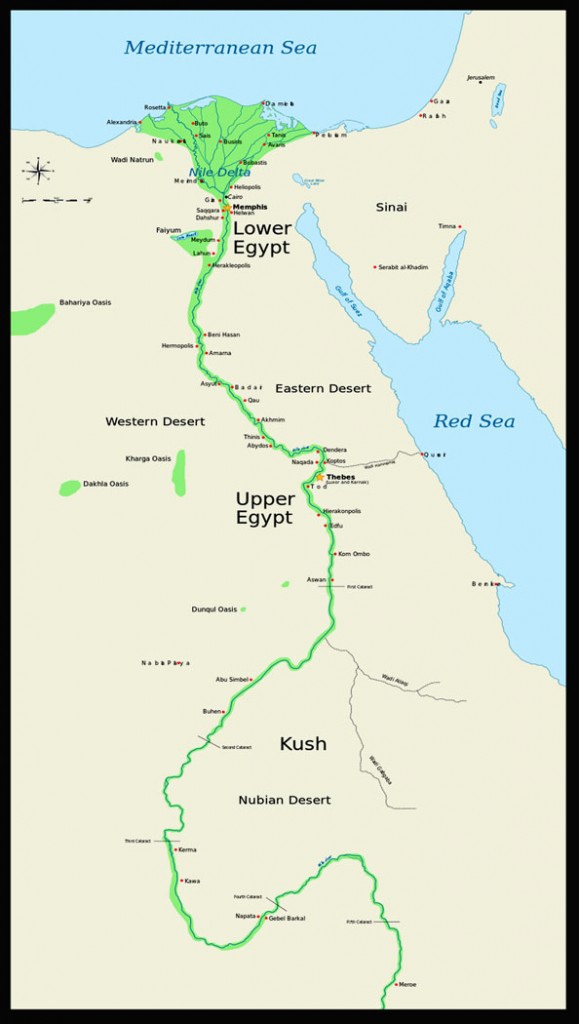
The motherland: A map of Ancient Egypt showing its principal division – Lower Egypt and Upper Egypt. In the south was Kush. Notice that life in Ancient Egypt revolved around the Nile. Everywhere else was desert. And still is desert.
In the Bible, at Isaiah 19:25, God Almighty calls the Ancient Egyptians “my people”. God’s exact words (as rendered by the New International Version of the Bible) were: “The Lord Almighty will bless them, saying: ‘Blessed be Egypt my people, Assyria my handiwork, and Israel my inheritance.’”
Verse 21 of Isaiah 19 makes it even clearer: “So the Lord will make himself known to the Egyptians, and in that day they will acknowledge the Lord. They will worship with sacrifices and grain offerings; they will make vows to the Lord and keep them.”
Verse 23-24 of Isaiah 19 continue in the same vein: “In that day there will be a highway from Egypt to Assyria. The Assyrians will go to Egypt and the Egyptians to Assyria. The Egyptians and Assyrians will worship together. In that day Israel will be the third, along with Egypt and Assyria, a blessing on the earth.”
This alone is proof enough that God Almighty is not foreign to Africans. He called them his people. Our ancestors who built Ancient Egypt were “God’s people”, according to God himself. He prophesied that, along with the Assyrians and the Israelites, our ancestors of Ancient Egypt would be a “blessing on the earth”.
How then does God Almighty become “foreign” to the Africans if their ancestors were called by God himself as “his people”? But I am going ahead of myself, let me track back and pick the story up from there.
The birth of Egypt
My study of nature, from the centre of the African continent and heading towards the northeast of the continent, convinces me beyond a doubt that at the time of Creation, God Almighty decided that there should be a mighty and wealthy empire in the bone-dry desert of northeast Africa which would give birth to the Israelite nation, from whom would come the messiah Jesus who would be at the centre of the plan of salvation of humankind.
And this “nation” in the bone-dry desert would need water, the source of life, to survive; in addition to all the resources necessary to create a strong and rich empire that could give birth to Israel where Jesus would come from. Hence Egypt rose up as just not the mighty empire but also a refuge and protector of Israel. Any time Israel was in danger (even after the Exodus), Egypt’s doors were open to them.
It was no wonder that the first ancestor of the Hebrews, Abraham, went to Egypt and returned to Canaan fabulously rich. In later centuries, Abraham’s great grandson, Joseph, went to Egypt as a slave and yet miraculously became the prime minister of Egypt whose powers were only surpassed by the Pharaoh’s.
A place of history: This is where the Nile starts its journey from Lake Victoria near Jinja in Uganda and flows north for 6,400 km (4,000 miles). A miracle only God can do
Much later, Joseph’s father, Jacob and 66 of his people, ravaged by famine in Canaan, arrived in Egypt destitute. Adding Joseph and his two children and wife, the 66 became 70, and in 430 years, God Almighty grew their number to an estimated 3 million strong by the time they left in the Exodus described by the Bible.
After the Exodus, the Israelite nation continued to turn to Egypt any time they were in trouble. And our ancestors welcomed them or provided succour and even military support.
Much, much later, Jesus as a baby would be rushed to Egypt by his parents to avoid murder by Herod, the overlord of Israel at the time. So our ancestors in Egypt were very central and critical in the life of Israel as a nation and its people.
Where “the miracle” starts: A Ugandan couple share a moment of history at the source of the Nile near Jinja. Behind them is Lake Victoria. In front of them is the Nile starting its long journey from the lake to fertilise Egypt 6,400 km away
Because of this role, Egypt was greatly blessed by God Almighty who provided our ancestors with all the resources, knowledge, power, dignity, influence, wealth, and reach that shot the black nation to the top of the world for thousands and thousands of years. How did God do it, you may ask?
The ‘Nile Miracle’
From here, the story of our ancestors in Ancient Egypt and God Almighty becomes even more interesting. I call it “The Nile Miracle”, which in fact is not one miracle but several miracles grouped under one roof. This is where my observation of nature, from the centre of Africa up towards the northeast of the continent comes into its own.
As I mentioned earlier, some people do not believe in the Bible or even in God Almighty himself, but it does not matter. We live in a democracy after all, and everybody has the right to believe in what he or she chooses to believe in. No problem. Because the facts outside the Bible speak for themselves!
Outside the Bible, this is what I have observed: God Almighty gave our ancestors in Egypt a special place in his affections. They were special to him, they were his people, because he was going to use them for his purpose of saving humankind.
Unfortunately, the land that would become Egypt had the unique phenomenon of a serious water shortage as it had no indigenous rivers that ran all-year round because it was, and still is, located in a hard desert environment.
First obstacle: The Nile gets out of Lake Victoria and immediately encounters the British-created Owen Falls Dam. In the distance is the Owen Falls Bridge, on the way to Jinja. The Falls and the nearby Rippon Falls were submerged in 1954 when the British colonial government in Uganda completed the Nalubaale Hydroelectric Power Station.
God Almighty, therefore, had to do something special, a miracle you may call it, to bring water from 6,400 km away, from the centre of Africa, to sustain Egypt. And the river to bring that water happened to be the one our ancestors called Hapi or Ar, and the Greek invaders called the Nile. Thus, without the Nile, Egypt could not, and still cannot, be a nation, let alone survive as an empire, becasue water is life.
In fact, it was not only water that Egypt needed. To survive as a nation, Egypt also needed good topsoil to grow food and other crops. And the desert in which it was located was no help. God, therefore, had to get the topsoil (some people call it “silts”) right from the centre of Africa, 6,400 km away, and drive it by water to fertilise the banks of the Nile and the adjacent lands along the river.
And here you shake your head in awe at God’s handiwork. Though Egypt is in the north of Africa, God used his supernatural powers to cause the Nile to flow north from the middle of Africa all the way over a 6,400 km course to water Egypt and ensure that our ancestors had enough water and topsoil to grow into a mighty empire – an empire that would give birth to the nation of Israel.
Fast and furious: The Nile arrives in South Sudan from Uganda and a few kilometres from the border town of Nimule, it churns white water over the Fulla Rapids. It is a sight to behold
Still fast and furious: Our editor, Baffour Ankomah, at the Fulla Rapids to see the Nile churn white water on its way to Juba
Miracle No.1
It is said that order is the first law in Heaven, and as God Almighty is a God of order, he does not normally break the natural laws he has set in motion in the universe. Yet when it came to our ancestors in Ancient Egypt, God broke one of his natural laws and made the Nile flow north for 6,400 km against the law of gravity, which says that rivers should not flow north.
According to the law of gravity, rivers can flow west, east, and (mainly) south. Never north, or rarely north. But because Egypt needed water to become a mighty empire to give birth to Israel, God made the Nile to flow north for all its 6,400 km course, and in the process the Nile became the longest river in the world which has the added grace of flowing all north. A miracle.
The delta of good hope: The fan-shaped Nile Delta has always been home to the best agricultural lands in Egypt. It is 240 km long from east to west, and 160 km long from south to north. It is one of the largest river deltas in the world
The Congo River, another of Africa’s great rivers, tried to copy the Nile by flowing north for part of its course, but at some point in its journey when the law of gravity pinned it down, the Congo veered west into the Atlantic Ocean. One might say the Congo enjoys the same terrain in that part of Africa as the Nile, so it is not surprising that it starts by flowing north before going west.
But after seeing the hoops that God had to go through to make the Nile flow north for all its 6,400 km course, and also bringing topsoil (or silts) from Ethiopia to Egypt for agricultural purposes, no one can be justified to say God Almighty is “foreign” to Africans. Without the topsoil, Egypt could not have grown food and other crops or would have found it extremely difficult to do so because of the desert conditions.
No “foreigner” would go to the length that God went to, to ensure that our ancestors survived in Ancient Egypt and build the greatest empire of the world at the time.
The source of the Nile
I have been to Jinja in Uganda to see the Nile start its 6,400 km journey from Lake Victoria to the Mediterranean Sea. Two mighty rivers, in fact, combine to form the Nile. The one from Lake Victoria, called Omugga Kiyira by the local people (but White Nile by Europeans) is the outlet of Africa’s largest lake, the misnamed Lake Victoria, which was robbed of its African names by the British explorer, John Hanning Speke.
A British officer’s son, commissioned into the army of the East India Company in 1844 at the age of 17, Speke claimed to have discovered the source of the Nile at Jinja on 3 August 1858. He went on to name the lake from whom the river empties after his queen in England, Queen Victoria, who never set her foot in Africa.
Complete view: The Nile passes through the South Sudanese capital, Juba
Interestingly, no African has since bothered to change the name of the lake back to its original African names. The Africans who lived on its shores before Speke appeared called the lake by different names, among them Nam Lolwe (in the Dholuo language), Nnalubaale (in Luganda), Nyanza (in Kinyarwanda) and Ukerewe. So why are we still sticking with Victoria? Poor Africans! Our glorious ancestors must be turning in their graves! But that is for another day.
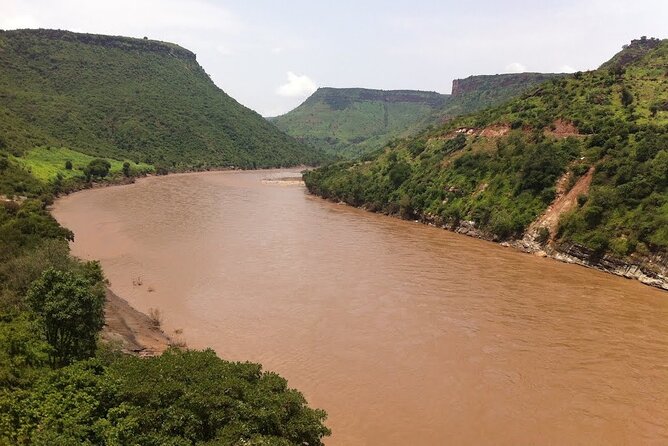
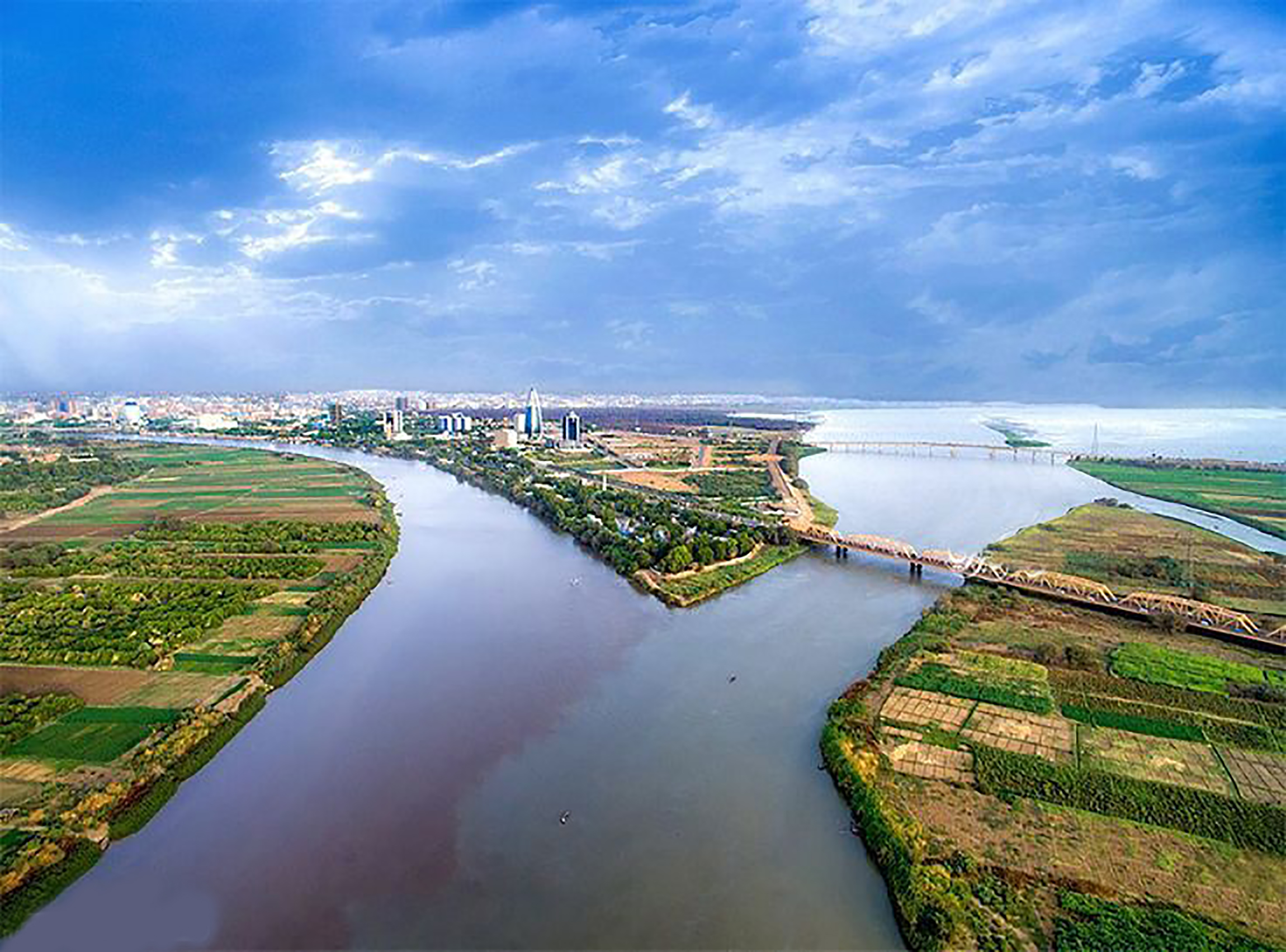
The other branch of the Nile which comes from Ethiopia is called the Abay River by the locals (but the Blue Nile by Europeans). It is the outlet of Lake Tana, Ethiopia’s largest lake. The two “Niles” meet in the Sudanese capital, Khartoum, and form the main Nile that flows straight north to Egypt and into the Mediterranean Sea.
Some people in fact say the source of the While Nile is the Kagera River which drains the mountains of Burundi and Rwanda, from where it flows into and out of Lake Victoria and continues its long journey to Egypt. It is said that it takes three months for the waters from Lake Victoria to travel from Jinja to the mouth of the Nile at Alexandria in Egypt where the Rosetta (or Rashid) branch of the Nile empties into the Mediterranean Sea.
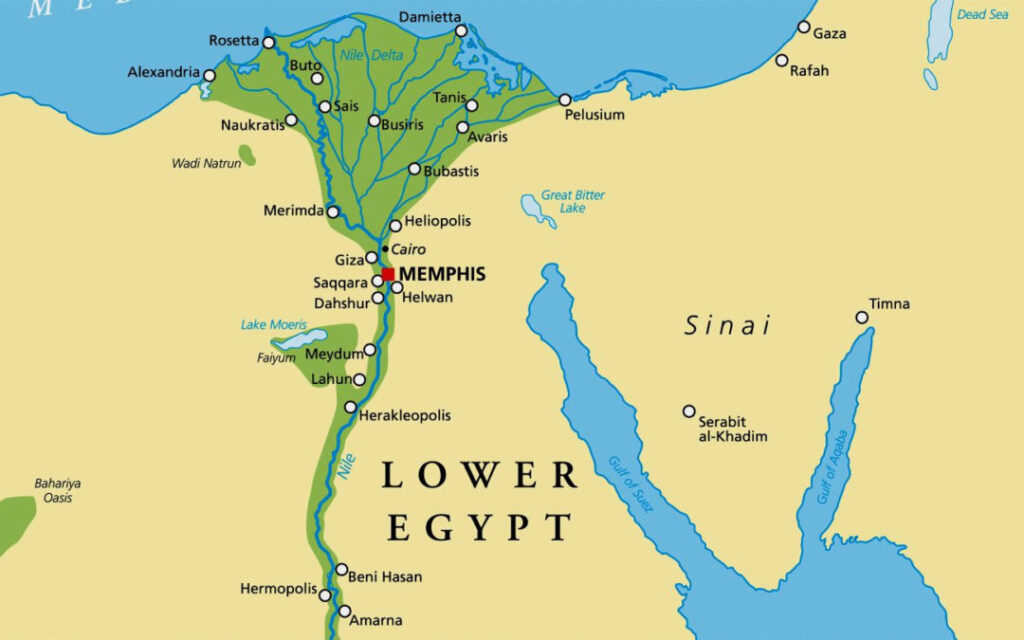
Just after passing through Cairo (the capital of modern Egypt), the Nile breaks into two streams, the left one is the Rosetta branch (Rosetta is the anglicised version of the local name, Rashid), and the right stream (called the Damietta branch) empties into the Mediterranean Sea at Port Said.
The two branches form a delta of 240 km (about 150 miles) in width, between Alexandria and Port Said. It is one of the longest river deltas in the world. From south to north, the delta is 160 km (99.4 miles) long. The most fertile agricultural lands in Egypt are within the Nile delta, where most of modern Egyptians currently live. Equally in ancient times, the best agricultural lands were in the delta where Jacob and his 70 Hebrews were settled – in Goshen.
History shows that today’s two branches of the Nile at the fan-shaped (some say arc-shaped) delta used to be 7 branches in the long past. According to records from ancient times (such as by Ptolemy), the 7 branches of the Nile in the delta (from east to west) were: The Pelusiac, Tanitic, Mendesian, Phatnitic (or Phatmetic), Sebennytic, Bolbitine, and Canopic (also known as Herakleotic and Agathodaemon).
Those 7 branches were linked by inter-connecting tributaries which acted like veins that supplied much needed water to every part of the delta. This is one of the hoops that God Almighty went through to ensure that Egypt had enough water to grow into a mighty empire.
Today, the 7 branches have been reduced to only two (the Rosetta and Damietta) due to flood control, silting, and changing relief. The Rosetta branch used to be called the Bolbitine, and the Damietta the Phatnitic.
The barrier: The massive Sudd wetland, 650 miles long from south to north, forces the Nile to meander its way north, thus allowing the hot sun in that part of Africa to weaken the Nile by evaporating its waters
God Almighty designed the delta to be flooded annually, with water and topsoil (or silt) from Ethiopia, but this ended when the modern Egyptians constructed the Aswan Dam near the border with Sudan in 1970. The dam brought God’s handiwork to a halt, as it stopped the silts brought by the Nile from reaching the delta.
The dam also affected modern Nubian culture as its huge lake flooded many ancient sites and modern Nubian communities. Some temples such as the Abu Simbal, Kalabsha and Philae, were moved block by block in order to save them. However, many old Nubian settlements and pyramids were lost. Even then there are still more pyramids in Sudan today than in modern Egypt.
In ancient times, however, Egyptian farmers in the delta and along the Nile depended on the silts or topsoil brought by the Nile for thousands and thousands of years. According to one estimate, “topsoil in the delta can be as much as 21 meters (68.9 feet) in depth”, but generally, according to the Encyclopaedia Britannica, “the depth of the silt deposits ranged from more than 10 metres (32.8 feet) in the northern delta to about 7 metres (22.9 feet) at Aswan.”
It is said that when the Aswan Dam had not been built, the White Nile (from Uganda) supplied important chemical constituents to the silts. The delta system in Egypt also formed lakes and lagoons, such as Lake Manzala in the northeast in which the Suez Canal enters, and lakes Idku, Mariout and Burullus in the northwest. All these water bodies promoted agriculture and therefore life.
Blue but brown: The River Abay is called the Blue Nile by Europeans, but in reality the colour of the river is brown because of the heavy silt or topsoil it carries from the Ethiopian Highlands on its way to Khartoum and Egypt, the silts that made Egypt the mighty empire it was in ancient times
Which gave Aristotle, the Greek philosopher, the false belief to claim in his day that the Nile delta was “constructed for agricultural purposes due to the drying of the region of Egypt”. This led one modern writer to say: “Although such an engineering feat would be considered equivalent to a wonder of the ancient world, there is insufficient evidence to determine conclusively whether the delta is man-made or was formed naturally.”
But the Nile delta is not man-made. It was formed naturally – engineered by God Almighty as part of his plan to resource our ancestors in Ancient Egypt so they can give birth to the nation of Israelite.
Usually, when human nature interferes with God’s nature, negative consequences follow. Modern data shows that “the outer edges of the Nile delta are eroding, and some coastal lagoons have seen increasing salinity levels as their connection to the Mediterranean Sea increases.
“Since the delta no longer receives an annual supply of nutrients and sediments from upstream due to the construction of the Aswan Dam, the soils of the floodplains have become poorer, and large amounts of fertilisers [can you believe it?] are now used.” That is what you get when mere mortals try to play God.
Miracle No.2
At the heart of “The Nile Miracle” is how God chose two non-drying lakes – Victoria and Tana – to be the sources of the White and Blue Niles respectively, so that the Nile River will never dry up, no matter the season or weather conditions.
Before they meet: A satellite photo of how the two Niles meet in Khartoum. To the left is the White Nile, and to the right is the Blue Nile
Lake Victoria, the world’s largest tropical lake, is located in the heart of Africa. It receives all the rivers in that part of the continent that do not flow into the sea. In that sense, Lake Victoria is a sea itself. The formation of the lake is a piece of excellent engineering that God Almighty did to make sure that the White Nile will always have water. Another miracle.
Lake Victoria lies 1,134 metres above sea level. Boasting a surface area of 68,800 sq km, an average depth of 40 metres and a maximum depth of 80 metres, the lake has a basin area of 194,200 sq km which extends to Rwanda and Burundi, though its shoreline of 3,460 km is shared by 3 countries: Kenya (6%), Uganda (43%) and Tanzania (51%). It is the second largest freshwater lake in the world, after Lake Superior in North America.
Experts say Lake Victoria receives 80% of its water from direct rainfall, and also “additional water from rivers and thousands of small streams”. A number of important rivers flow into the lake, including the Kagera, Mara, Yala, Nyando, Bukora, Katonga, Sio, Nzoia, Sondu Miriu, Mogusi, and Migori.
The Kagera River (also known as Akagera) is the largest river flowing into the lake on its western shore. It comes from the mountains of Burundi and Rwanda and, as the furthest and most remote headstream, is considered by some people as the source of the Nile. Miraculously, the Nile is the only outflow from Lake Victoria, on the lake’s northern shore, which exits near Jinja in Uganda.
Overcoming the Sudd problem
The other source of the Nile (the Blue Nile) is Lake Tana. Located in the Amhara region of the northwest highlands of Ethiopia, it is the country’s largest lake. It also receives all the rivers in that part of Ethiopia that cannot flow into the sea. Thus, all-year round, there is enough water in both lakes to feed the two Niles. That is Miracle No.3.
But wait for this. As the White Nile flows north from Uganda, it effectively becomes a flowing “sea” that receives all the rivers from Jinja through the east of Uganda, then into South Sudan, then Sudan, and up into Egypt.
Thus, on the surface, the Nile arrives in Egypt as just one river, but in reality it carries the waters of several hundreds of rivers and streams over a 6,400 km stretch of Africa. This is why the Nile is full of water all the time. Another miracle.
The stretch of the White Nile in South Sudan is 1,600 km (or 994 miles) long. There is a point in this journey, just after Mongalla in the Central Equatoria State of South Sudan, where 30 rivers from Ethiopia, DRCongo, Central African Republic, South Sudan itself, and Sudan flow into the Nile and creates a huge swampland called the Sudd (Arabic for “barrier”).
According to UNESCO, “the Sudd wetland, with an estimated area of approximately 57,000 sq km [almost twice the size of Belgium] represents one of the largest freshwater ecosystems in the world. The extent of the Sudd wetland is highly variable; it depends largely on the seasons and years respectively. In the wet season the size of the wetland increases up to 90,000 sq km [more than twice the size of Denmark] and gradually decreases to about 42,000 sq km depending on the high seasonal flood.”
In 2014, while I was in Juba, the South Sudan capital, I was told by the country’s transport minister that fish die of old age in the Sudd because the local people do not have the capacity to harvest the abundance of fish in that massive wetland.
Unfortunately for the Nile, this wetland drastically slows down the flow of the river as it meanders through a 1,040 km (646)-stretch of the swamp, and in the process half of the Nile waters is evaporated by the extremely hot sun of South Sudan or lost through evapotranspiration.
The Blue Nile breaks into two streams before meeting the White Nile in Khartoum,capital of Sudan. (Left): The point where the two rivers
The point where the two rivers meet. Called Al Mogran by the local Sudanese, the confluence is another place of history, all created by God Almighty. One writer says: “The confluence of the Nile is one of Africa’s geographical highlights. From here you can look east along the fast and narrow Blue Nile stretching to Ethiopia. Turning south you are faced with the White Nile, wide and lazy, exhausted by its passage from Lake Victoria through the swamps of the Sudd. The two Niles are distinct colours (or at least shades of muddy grey) on account of the silts they carry, and you can see the streams flow next to each other before mixing to complete the mighty river. During the summer months when the Blue Nile is at its highest level, the flow of water is so strong that it causes the White Nile to back up, flooding parts of southern Khartoum in bad years. The difference in colour between the two rivers is particularly noticeable at this time.”
In 1978, after years of discussion, Egypt and Sudan started the construction of a canal east of the Sudd (called the Jonglei Canal) from Malakal in the north to Bor at the southern tip of the Sudd to bypass the swamps. By diverting the Nile through the Jonglei Canal, it was calculated that the evaporation of the waters would vastly decrease, allowing an increase in the cultivable land in Egypt by 2 million acres.
However, in 1984, the Jonglei project was halted by the liberation war started by the Sudan People’s Liberation Movement (SPLM), which brought independence to South Sudan on 9 July 2011. By the time the project was abandoned, 240 km of the 360 km-long canal had already been dug. Therefore, even today, by the time the White Nile struggles out of the Sudd and crosses the border into Sudan, much of its strength had been dissipated.
Another miracle
Here, again, another miracle happened. Seeing the strength of the While Nile sapped by the Sudd, God Almighty compensated by bringing the River Abay (or Blue Nile) from Lake Tana in Ethiopia to meet the weakened White Nile in Khartoum and drive it along with massive force. Satellite photos show the Blue Nile, at the confluence in Khartoum, to be the dominant force of the two rivers at that point.
The Blue Nile in fact breaks into two arch-shaped streams just before the confluence – a smaller stream and a larger stream. It is the smaller stream that first encounters the weakened White Nile and drives it along to meet the larger stream some few hundred metres ahead, though in satellite photos, the White Nile appears to push the Blue Nile waters to the right bank for miles and miles before they finally merge.
Experts say 60% of the Nile waters that arrive in Egypt comes from the Blue Nile. I have been fortunate, again, to be at Bahir Dar, the Ethiopian university city on the shores of Lake Tana to see the Blue Nile come out of Lake Tana as its outlet. The miracle here, or 48 km (30 miles) away to be precise, is absolutely mind blowing.
The source of the Blue Nile is not directly in Lake Tana. It is in a nearby spring, called Gish Abay by the locals, which is situated at an elevation of approximately 2,744 metres (9,002 ft). Before Christianity came to Ethiopia in the 4th century AD, the local people worshipped the gods believed to be resident at the springs, and therefore considered the place sacred.
When the Ethiopian Orthodox Church introduced Christianity later, it brought the belief that Gish Abay was the source of the River Gihon (one of the rivers said to have watered the Garden of Eden in the Bible), and therefore, to this day, the Ethiopian Orthodox Church considers Gish Abay a sacred place where devotees go to hold worship services to God Almighty.
The River Abay (or the Blue Nile) therefore takes on a divine nature even before it flows into Lake Tana and out at the southern tip of the 84 km (52 mile)-long lake which lies at an elevation of 1,800 metres (5,905 feet). Ethiopians will tell you that the river’s waters enter the lake and leave it without mixing with the lake’s waters. Another miracle.
The river leaves the lake and heads south and then southeast, via a series of rapids, and if God Almighty had not intervened with another miracle, the river would have gone through Ethiopia and Somalia and emptied into the India Ocean. This is where the Africans who claim God is foreign to us get it so wrong.
Forty-eight kilometres (30 miles) from the lake, God suddenly opens the mouth of the earth to swallow the river via a waterfall that drops the river down a 1,494 metre (4,900 feet) canyon. God then takes the river on a south-easterly course via the deep gorge and slowly turns the river through a south-western loop around the Choke Mountains, and then west, and finally northwest to Khartoum in Sudan to join the White Nile. An absolute miracle!
This is how one European writer describes it: “The distance of the [Abay] river from its source to its confluence in Khartoum has been variously reported as being between 1,460 km (907 miles) and 1,600 km (994 miles). This uncertainty might result from the fact that the river flows through a series of virtually impenetrable gorges cut in the Ethiopian Highlands [by God] to a depth of some 1,500 metres [actually 1,494 metres, or 4,900 feet] – a depth comparable to that of the Grand Canyon of the Colorado River in the United States.”
For a Zimbabwean comparison, the deepest point of the Victoria Falls gorge (at Mosi-a-Tunya) is 108 metres (354 feet). The River Abay (or Blue Nile) gorge is 1,494 metres (4,900 feet) deep, almost 14 times deeper than the Victoria Falls gorge. And this miraculous gorge takes the river all the way over 800 km (500 miles) inside Ethiopia to a few kilometres short of the Sudanese border.
The heart of the “Nile Miracle”: On this map, the River Abay (or Blue Nile) is marked in deep blue to the right. The White Nile from Uganda is in light blue to the left. Just look at the course of the Blue Nile and see how God Almighty arrested the course of the river through an almost 5,000-feet-deep canyon and turned around the river to flow northwest to Khartoum to meet the weakened White Nile. An absolute miracle
Effectively, God Almighty arrested the river and refused to let it go on its natural course. By creating the deep gorge and encasing the river in it, God carried the river on a south-easterly course then slowly turned it through a south-westerly loop around the Choke Mountains, and then west, and finally northwest to Khartoum to join the White Nile. If you don’t call this an absolute miracle, nothing will be! What hoops a “foreigner” will go through to bring water to a people he doesn’t know and love!
During this miraculous journey northwest, the Blue Nile is fed by 28 major tributaries before it reaches the Sudanese border. In Sudan, it travels for a further 650 km (403 miles), receives other tributaries such as the Dinder River (and in modern times, goes through two dams – Roseires and Sennar) before joining the White Nile in Khartoum.
According to one Western writer: “The flow of the Blue Nile reaches maximum volume in the rainy season from June to September, when it supplies 80-86% of the water of the Nile proper. The river was a major source of the flooding of the Nile in Egypt that contributed to the fertility of the Nile Valley and the consequent rise of Ancient Egypt and Egyptian mythology.”
Then listen to this: “During the summer monsoon season, the Blue Nile floods erode a vast amount of fertile soil from the Ethiopian Highlands and carry it downstream as silt, turning the water dark brown or almost black.”
This is the topsoil or silt that made Ancient Egypt great and encouraged its farmers to feed the nation and others outside its borders. It was a deliberate act of God Almighty, an engineering feat, to cut the series of gorges through the Ethiopian mountains and pass the river through them, where, from both banks of the gorges, a sustainable supply of topsoil could be got for eternity. Another miracle. Who says God Almighty is “foreign” to the Africans? After doing all that?
Imagine how a river can flow northwest through high mountains! Imagine the calculations that God must have gone through in deciding the gradient in the 1,494 metre (4,900 feet)-deep gorges for the water to continue to flow northwest unimpeded. Just close your eyes and take in the engineering feat that happened in the Ethiopian Highlands – just so our ancestors in Ancient Egypt can have an uninterrupted supply of fresh water! And God Almighty is “foreign” to us?
Flowing north
Some people may attribute the formation of Lake Victoria and the Nile’s ability to flow north to the creation of the Great Rift Valley (also known as the Afro Arabian Rift Valley) – one of the longest rifts on the surface of the Earth, which, according to astronauts, is the most significant physical detail on the planet that is visible from space.
Geologists define the Great Rift Valley as a series of contiguous geographic trenches, approximately 7,000 km (4,300 miles) long and averages 48–64 km (30–40 miles) wide, that run from Lebanon to Israel, then through the Israeli-Jordanian border to Ethiopia, Kenya, Tanzania, Malawi and Mozambique.
A Western branch goes through Burundi, Rwanda, Uganda and parts of DRCongo, and a southern branch through Malawi and ending in Mozambique, though officially it is not called a “southern branch”. The two main branches are called the Western Rift Valley and the Eastern Rift Valley.
Geologists say all the African Great Lakes were formed as the result of the Rift, and most lie in territories within the Rift, which continues southward through the Shire River Valley in Malawi and the Mozambique Plain to the coast of the Indian Ocean near Beira in Mozambique.
According to the New World Encyclopedia, “the northernmost part of the Rift forms the Beqaa Valley in Lebanon. To the south, in Israel, it is known as the Hula Valley separating the Galilee mountains and the Golan Heights.
“Farther south, the valley is the home of the Jordan River, which flows southward through Lake Hula into Lake Tiberias [also known as the Sea of Galilee in the Bible], and then continues south through the Jordan Valley into the Dead Sea on the Israeli-Jordanian border. From the Dead Sea southward, the Rift is occupied by the Wadi Arabah and then the Gulf of Aqaba and the Red Sea.
“The southern end of the Red Sea marks a fork in the Rift. The Afar Triangle or Danakil Depression of Ethiopia and Eritrea is the probable location of a triple junction, which is possibly underlain by a mantle plume (an upwelling of abnormally hot rock within the earth’s mantle that helps the earth to lose heat).
“The Gulf of Aden is an eastward continuation of the Rift. Before the Rift opened, the Arabian Peninsula was attached to the Horn of Africa. From this point, the Rift extends southeastward as part of the mid-oceanic ridge of the Indian Ocean. In a southwest direction the fault continues as the Great Rift Valley, which split the older Ethiopian highlands into two halves.
“In eastern Africa, the valley divides into the Eastern Rift and the Western Rift. The Western Rift, also called the Albertine Rift, is edged by some of the highest mountains in Africa, including the Virunga Mountains, Mitumba Mountains, and Ruwenzori Range, and contains the Rift Valley lakes, which include some of the deepest lakes in the world (up to 1,470 metres deep at Lake Tanganyika). In Kenya, the valley is deepest to the north of Nairobi.”
Some of the Rift Valley lakes are (in Asia): The Dead Sea and Lake Tiberias (or the Sea of Galilee). In Ethiopia, the major lakes are: Abaya, Chamo, Awasa, Zway, Abijatta, and Koka.
The Kenyan section is home to 8 lakes: Turkana, Logipi, Baringo, Bogoria, Nakuru, Elmenteita, Naivasha, and Magadi.
The Tanzanian section has two alkaline lakes: Natron and Eyasi. The Western section includes the largest, deepest, and oldest of the Rift Valley lakes: Tanganyika, Kivu, Albert and Edward. Lake Victoria is often mentioned in the same breath, but it is not actually within the Rift Valley as such.
The lakes in the Southern section are: Malawi, Rukwa, Malombe (on the Shire River), and Chilwa (the southernmost of the Rift Valley lakes).
So, who created the Great Rift Valley and its lakes and complex ecosystem? Geologists, “fashionable” people, and believers of the “Big Bang Theory” will give you many sophisticated explanations, but though they won’t mention God Almighty, they can’t adequately explain how a “Big Bang” allegedly created the universe and things like the Great Rift Valley and its ecosystem. But the biggest question remains unanswered: Who created the Big Bang? Surely it did not create itself.
The most critical aspect of this discussion though is that the two lakes that serve as the sources of the Nile – Victoria and Tana – are not within the Great Rift Valley. So nobody can say that the Rift Valley forced the Nile to flow north. Thank God, the Nile goes on its merry way to Egypt far, far away from the Rift Valley and not influenced in the least by it. Flowing north without pumps or pumping for 6,400 km is a special engineering feat only God could do.
From grace to grass
In short, the above sums up the hoops that God Almighty went through to provide sustainable water and topsoil (or silt) for our ancestors in Ancient Egypt. It is therefore tantamount to an absolute sacrilege for the descendants of the African ancestors to claim today that God Almighty is foreign to them! Is this not the same God who did so much, including breaking his own law of gravity, to ensure that Ancient Egypt, our patrimony, became No.1 in the world, in a bone-dry desert?
One can, therefore, understand the fury of God Almighty when one of our kings in Egypt, the Pharaoh, foolishly and arrogantly claimed thousands and thousands of years after the creation of the Nile system, that he (the king) made the Nile for himself. God was sorely affronted! And he made sure everybody knew about it.
At this point, let me take readers back to the Bible, so you can see that two-thirds of the Bible is history. Knowing the hoops that he had gone through creating the Nile system, God Almighty heard the Pharaoh’s empty boast and roared from his high abode.
The Bible records at Ezekiel 29:2-16 that God asked Ezekiel, the prophet, to tell the Egyptian king the following: “Son of man, set your face against Pharaoh king of Egypt and prophesy against him and against all Egypt. Speak to him and say: ‘This is what the Sovereign LORD says: ‘I am against you, Pharaoh king of Egypt, you great monster lying among your streams.
“You say: ‘The Nile belongs to me; I made it for myself.’ But I will put hooks in your jaws and make the fish of your streams stick to your scales… I will give you as food to the beasts of the earth and the birds of the sky. Then all who live in Egypt will know that I am the LORD … I will bring a sword against you and kill both man and beast. Egypt will become a desolate wasteland. Then they will know that I am the LORD.”
God’s anger continued: “Because you said, ‘The Nile is mine; I made it, therefore I am against you and against your streams, and I will make the land of Egypt a ruin and a desolate waste from Migdol to Aswan, as far as the border of Cush.
“The foot of neither man nor beast will pass through it, no one will live there for 40 years. I will make the land of Egypt desolate among devastated lands, and her cities will lie desolate for 40 years among ruined cities. And I will disperse the Egyptians among the nations and scatter them through the countries.
“Yet this is what the Sovereign LORD says: ‘At the end of 40 years, I will gather the Egyptians from the nations where they were scattered, I will bring them back from captivity and return them to Upper Egypt, the land of their ancestry. There they will be a lowly kingdom. It will be the lowliest of kingdoms and will never again exalt itself above the other nations.’
“I will make it so weak that it will never again rule over the nations. Egypt will no longer be a source of confidence for the people of Israel but will be a reminder of their sin in turning to her for help. Then they will know that I am the Sovereign LORD.”
Any time, in the Bible, when God Almighty uses the term, “then they will know that I am the Sovereign LORD”, the consequences are severe. Egypt, representing our ancestors as a collectivity, has not been a mighty nation again since those pronouncements by Almighty God.
In fact, the numerous invasions of Ancient Egypt started soon after. God sent the Assyrians, Babylonians and Persians to invade Egypt and put it low. History records that when the Israelites were in Egypt, no nation invaded it. The invasions only started after the exodus of the Israelites. God had made Egypt so impregnable that no nation dared to invade it.
But after the empty boast of our king, things began to fall apart, as God had indeed prophesied, and our ancestors were forced to migrate in haste out of the great empire to other lands in Africa. Part of that scramble was what was later described as the “Bantu migration” (which we dealt with in our March issue).
Interpreting the doom
Bible scholars of the New International Version confirm that: “Egypt had great artistic treasures, a flourishing civilisation, and world-renowned military power. Unfortunately, it was also evil, egotistical, idolatrous, and it treated slaves cruelly. For those sins, God condemned Egypt. At the battle of Carchemish in 605 BC, Babylon crushed Egypt along with Assyria, its rivals for the position of world ruler.”
The NIV scholars continue: “The Nile was Egypt’s pride and joy, a life-giving river cutting through the middle of the desert. Rather than thanking God, however, Egypt declared: ‘The Nile is mine, I made it.’”
According to the NIV scholars: “The 40-year period of desolation of Egypt [prophesied by Ezekiel] is hard to pinpoint. King Nebuchadnezzar [of Babylon] attacked Egypt around 572 BC, and carried many people off to Babylon while others fled for safety to surrounding [African lands]. Approximately 33 years later, Cyrus, king of the Persian empire, conquered Babylon and allowed the nations which Babylon had conquered to return to their homelands.
“Adding a possible 7-year regrouping and travel period, this could then make up that 40-year time period. Since that time, Egypt [meaning our ancestors] has never returned to its previous dominance as a world power.”
Can anybody see where the fallen state of the modern black African has its roots? And Egypt’s punishment was not finished. At Ezekiel 29:17-20, the word of God Almighty came to Ezekiel again: “Son of man, Nebuchadnezzar, king of Babylon, drove his army in a hard campaign against Tyre; every head was rubbed bare and every shoulder made raw. Yet he and his army got no reward from the campaign he led against Tyre.
“Therefore, this is what the Sovereign LORD says: ‘I am going to give Egypt to Nebuchadnezzar, king of Babylon, and he will carry off its wealth. He will loot and plunder the land as pay for his army. I have given Egypt as a reward for his efforts because he and his army did it for me, declares the Sovereign LORD.’”
This prophecy, according to the NIV Bible scholars, was given in 571 BC and came to pass as prophesied. “Nebuchadnezzar had finally conquered Tyre after a long and costly 15-year siege (586-571 BC),” the NIV scholars explain. “He had counted on such an expense, so he went south and conquered Egypt to make up for all he had lost in taking Tyre … God was using Nebuchadnezzar, an evil man, as an instrument of his judgement on Tyre, Judah and Egypt … [But] when Babylon [Nebuchadnezzar’s kingdom] didn’t recognise God’s favour [after the Egyptian campaign], he judged it too.”
More doom
God’s anger against Egypt, for the Pharaoh’s empty boast over the creation of the Nile, covers 4 whole chapters in the Book of Ezekiel – chapters 29, 30, 31 and 32. Apart from Israel (which God also severely punished from time to time for its rebellion against God), no nation throughout the Bible has such prominence as Egypt of our black ancestors. God used 4 complete chapters, not verses, in the book of Ezekiel, to prophesy Egypt’s doom. And yet today people of African descent say flippantly that God Almighty is foreign to the Africans!
In Ezekiel 30:13-19, God Almighty said this about Egypt: “I will destroy the idols and put an end to the images in Memphis. No longer will there be a prince in Egypt, and I will spread fear throughout the land. I will lay waste Upper Egypt, set fire to Zoan and inflict punishment on Thebes. I will pour out my wrath on Pelusium, the stronghold of Egypt, and wipe out the hordes of Thebes.
“I will set fire to Egypt; Pelusium will writhe in agony. Thebes will be taken by storm; Memphis will be in constant distress. The young men of Heliopolis and Bubastis will fall by the sword, and the cities themselves will go into captivity. Dark will be the day at Tahpanhes when I break the yoke of Egypt, there her proud strength will come to an end. She will be covered with clouds, and her villages will go into captivity. So I will inflict punishment on Egypt, and they will know that I am the LORD.”
And all this came to pass! Egypt took pride in his strength and beauty, and the worship of lesser gods. And its downfall was great. At Ezekiel 30:21-26, God warned: “Son of man, I have broken the arm of Pharaoh king of Egypt. It has not been bound up to be healed or put in a splint so that it may become strong enough to hold a sword.
“Therefore, this is what the Sovereign LORD says: ‘I am against Pharaoh king of Egypt. I will break both his arms, the good arm as well as the broken one, and make the sword fall from his hand. I will disperse the Egyptians among the nations and scatter them through the countries.
“I will strengthen the arms of the king of Babylon and put my sword in his hand, but I will break the arms of Pharaoh, and he will groan before him like a mortally wounded man. I will strengthen the arms of the king of Babylon, but the arms of Pharaoh will fall limp. Then they will know that I am the LORD, when I put my sword into the hand of the king of Babylon and he brandishes it against Egypt. Then they will know that I am the LORD.”
This prophecy, given to Ezekiel in 587 BC, also came to pass. God destroyed Egypt’s military superiority and give it to Babylon. These were some of the military defeats that lead to the forced migrations of our ancestors from Egypt to the other lands of Africa. These were the defeats that finally, over thousands of years, led to the total collapse of the black African empire in Egypt, leading to the eventual conquest in 641 AD by the ancestors of the current Arab population.
Today, the descendants of those great Africans ancestors who were defeated by the Assyrians, Babylonians, Persians, Greeks, Romans, Byzantines and the other foreigners that God sent against Egypt, are making the same mistake as their ancestors, by claiming that God Almighty is foreign to them, instead of beseeching him for mercy and redemption.
That surely is a highway to more ruin and doom. Clever descendants would retrace their steps to God Almighty, the source of the lost power and greatness of their ancestors, and ask him for mercy. But that is not what elite society and intellectuals in Africa are saying.
The last word
Surely, the last word belongs to Prof Konotey-Ahulu: “Many people, both in Europe and Africa, think Christianity is a European religion. Wrong!”, he wrote in 2011. “Jesus learnt to walk not in Europe or the Middle East, but on African soul in Mizraim (Egypt) where his family fled when Herod wanted to kill him.
“The Ethiopian chancellor of the exchequer read Isaiah chapter 53 fluently before anyone in Britain knew how to read (Acts chapter 8:26-39). The black man went on his way rejoicing when Philip told him why the Lord Jesus came into the world, explaining not only how a hypocrite like me can have my relationship with God restored but also how a wicked transatlantic slave merchant like John Newton could, on repentance, be forgiven through the merits of The Lord Jesus Christ, and be looked upon as if he had never sinned,” Prof Konotey-Ahulu added.
The Philip-Ethiopian chancellor encounter happened in the early beginnings of Christianity, which was then called the “New Way”, after the resurrection of Christ. The Bible records at Acts 8:27 that the Ethiopian “had gone to Jerusalem to worship”. Which means that even at that time, in those early days of Christianity, when no European “missionary” had yet come to Africa, some Africans had already become Christians and were, in fact, going to Jerusalem on pilgrimages to worship.
So let no African forget that the traditional religion of Kemet was replaced firstly by Christianity and later by Islam. At the time, no European knew his way to Africa. European missionaries started coming to Africa way after the first Portuguese explorers stumbled their way along the West African coast in the mid-1500 AD. Kemet was ancient by that time.
Wikipedia and other authorities tell us that “Christianity in Africa first arrived in Egypt in approximately 50 AD (in the first century after the death and resurrection of Jesus), and reached the region around Carthage by the end of the second century. In the 4th century, the Aksumite empire in modern-day Ethiopia and Eritrea became one of the first regions in the world to adopt Christianity as their official religion. The Nubian kingdoms of Nobatia, Makuria and Alodia followed two centuries later.”
So who says Christianity came to Africa via Europeans? The European missionaries were latter-day saints!
All said and done, elite society in Africa, especially those with intellectual bent, should lead the retracing of African feet to God Almighty in order to weed out the charlatans masquerading today as “men and women of God” and yet leading the Africans astray. Most of those so-called men and women of God are not men and women of God at all. Left alone, they will compound the problem and make the true worship of God Almighty difficult to attain.
In all this, Zimbabwe should count itself lucky to have a current President who is not shy to kneel down in public and be prayed for – prayers going to God Almighty. Zimbabwe again is lucky to have a Vice President who is an ardent Catholic, who prays to God Almighty.
Elite society in Africa should be interested in the study of the true history of our ancestors, because truth matters. More importantly, elite society should be interested in the march back to God Almighty. He loved our ancestors and made them great. He will love us too and make us great.
On 21 February 2023, the American president, Joseph Biden, spoke on the Russia-Ukraine war at the Royal Castle in Warsaw, Poland, ahead of the war’s one-year anniversary. His speech came hours after the Russian president, Vladimir Putin, had addressed the Russian parliament on the same issue. Below is what President Biden said.
“Hello, Poland! One of our great allies. President [Andrzej] Duda, Mr. Prime Minister, Mr. Mayor, and to all the former ministers and presidents, as well as mayors and Polish political leaders from all across the country: Thank you for welcoming me back to Poland.
You know, it was nearly one year ago, nearly one year ago I spoke at the Royal Castle here in Warsaw, just weeks after Vladimir Putin had unleashed his murderous assault on Ukraine. The largest land war in Europe since World War II had begun. And the principles that had been the cornerstone of peace, prosperity, and stability on this planet for more than 75 years were at risk of being shattered.
One year ago, the world was bracing for the fall of Kiev. Well, I have just come from a visit to Kiev, and I can report: Kiev stands strong! Kiev stands proud. It stands tall. And most important, it stands free.
When Russia invaded, it wasn’t just Ukraine being tested. The whole world faced a test for the ages. Europe was being tested. America was being tested. NATO was being tested. All democracies were being tested. And the questions we faced were as simple as they were profound.
Would we respond or would we look the other way? Would we be strong or would we be weak? Would we be—all of our allies—would be united or divided? One year later, we know the answer. We did respond. We would be strong. We would be united. And the world would not look the other way.
We also faced fundamental questions about the commitment to the most basic of principles. Would we stand up for the sovereignty of nations? Would we stand up for the right of people to live free from naked aggression? Would we stand up for democracy?
Do unto other as you would want them to do unto you: Does the AMerican president Joseph Biden (above) sincerely think the world does not know why there is a war in Ukraine
One year later, we know the answers. Yes, we would stand up for sovereignty. And we did. Yes, we would stand up for the right of people to live free from aggression. And we did. And we would stand up for democracy. And we did.
President Biden (right) meets President Zelensky of Ukraine: “When President Putin ordered his tanks to roll into Ukraine, he thought we would roll over: He was wrong. The Ukranian people are too brave, America, Europe, a coalition of nations from the Antlatic to the Pacific – we were too unified. Democracy was too strong”, Biden says
And yesterday, I had the honor to stand with [Ukraine’s] President Zelensky in Kiev to declare that we will keep standing up for these same things, no matter what. When President Putin ordered his tanks to roll into Ukraine, he thought we would roll over. He was wrong. The Ukrainian people are too brave. America, Europe, a coalition of nations from the Atlantic to the Pacific—we were too unified. Democracy was too strong.
Instead of an easy victory he perceived and predicted, Putin left with burnt-out tanks and Russia’s forces in disarray. He thought he would get the Finlandization of NATO. Instead, he got the NATOization of Finland – and Sweden. He thought NATO would fracture and divide. Instead, NATO is more united and more unified than ever—than ever before.
He thought he could weaponize energy to crack your resolve—Europe’s resolve. Instead, we are working together to end Europe’s dependence on Russian fossil fuels. He thought autocrats like himself were tough and leaders of democracies were soft. And then, he met the iron will of America and the nations everywhere that refused to accept a world governed by fear and force. He found himself at war with a nation led by a man whose courage would be forged in fire and steel: President Zelensky.
President Putin is confronted with something today that he didn’t think was possible a year ago: the democracies of the world have grown stronger, not weaker. But the autocrats of the world have grown weaker, not stronger.
Because in moments of great upheaval and uncertainty, knowing what you stand for is most important, and knowing who stands with you makes all the difference. The people of Poland know that. You know that. In fact, you know it better than anyone here in Poland. Because that’s what solidarity means.
President Biden (left) meets the Polish President Andrzej Duda in Warsaw: “One year into this war, Putin no longer doubts the strength of our coalition. But he still doubts our conviction. He doubts our staying in power. He doubts our continued support for Ukraine. He doubts whether NATO can remain unified. But there should be no doubt : Our support for Ukraine will not waver, NATO will not be divided and will not tire”, says Biden
Through partition and oppression, when the beautiful city was destroyed after the Warsaw Uprising, during decades under the iron fist of communist rule, Poland endured because you stood together. That’s how the brave leaders of the opposition and the people of Belarus continue to fight for their democracy. That’s how the resolve of Moldovan people to live in freedom gained them independence and put them on the path to EU membership. President Sandu is here today. I’m not sure where she is, but I’m proud to stand with you and the freedom-loving people of Moldova. Give her a round of applause.
One year into this war, Putin no longer doubts the strength of our coalition. But he still doubts our conviction. He doubts our staying power. He doubts our continued support for Ukraine. He doubts whether NATO can remain unified. But there should be no doubt: Our support for Ukraine will not waver, NATO will not be divided, and we will not tire.
President Putin’s craven lust for land and power will fail. And the Ukrainian people’s love for their country will prevail. The democracies of the world will stand guard over freedom today, tomorrow, and forever. Because that’s what is at stake here: freedom. That’s the message I carried to Kiev yesterday, directly to the people of Ukraine.
When President Zelensky came to the United States in December, he said this struggle will define the world and how our children and grandchildren live, and then their children and grandchildren. He wasn’t only speaking about the children and grandchildren of Ukraine. He was speaking about all of our children and grandchildren. Yours and mine.
We are seeing again today what the people of Poland and the people all across Europe saw for decades: the appetites of the autocrat cannot be appeased. They must be opposed. Autocrats only understand one word: No. No. No. No, you will not take my country. No, you will not take my freedom. No, you will not take my future.
And I will repeat tonight what I said last year in this same place: a dictator bent on rebuilding an empire will never be able to erase the people’s love of liberty. Brutality will never grind down the will of the free. And Ukraine will never be a victory for Russia. Never. For free people refuse to live in a world of hopelessness and darkness.
President Joe Biden speaks with Ukrainian President Volodymyr Zelensky in the White House: “A dictator bent on rebuilding an empire will never be able to erase the people’s love for liberty. Brutality will never grind down the will of the free. And Ukraine will never be a victory for Russia. Never for free people refuse to live in a world of hopelessness and darkness”, Biden says
You know, this has been an extraordinary year in every sense. Extraordinary brutality from Russian forces and mercenaries. They have committed depravities, crimes against humanity, without shame or compunction. They have targeted civilians with death and destruction. Used rape as a weapon of war. Stolen Ukrainian children in an attempt to steal Ukraine’s future. Bombed train stations, maternity hospitals, schools, and orphanages.
No one can turn away their eyes from the atrocities Russia is committing against the Ukrainian people. It’s abhorrent. It’s abhorrent.
But extraordinarily, as well, has been the response of the Ukrainian people and the world. One year after the bombs began to fall and Russian tanks rolled into Ukraine, Ukraine is still independent and free.
From Kherson to Kharkiv, Ukrainian fighters have reclaimed their land. In more than 50% of the territory Russia held last year, the blue and the yellow flag of Ukraine proudly waves once again. President Zelensky still leads a democratically elected government that represents the will of the Ukrainian people.
And the world has already voted multiple times, including in the United Nations General Assembly, to condemn Russia’s aggression and support a just peace. Each time in the UN, that vote has been overwhelming. In October, 143 nations in the United Nations condemned Russia’s illegal annexation. Only four [countries] in the entire UN voted with Russia. Four.
So, tonight, I speak once more to the people of Russia. The United States and the nations of Europe do not seek to control or destroy Russia. The West was not plotting to attack Russia, as Putin said today. And millions of Russian citizens who only want to live in peace with their neighbors are not the enemy. This war was never a necessity; it’s a tragedy.
Presidents Biden and Zelensky in a bear hug: “The United States has assembled a worldwide coalition for more than 50 nations to get critical weapons and supplies to the brave Ukranian fighters on the frontlines…The European Union and its members states have stepped up with unprecedented commitment to Ukraine not just in security assistance but economic and humanitarian, refugee assistance and so much more”, Biden says
President Putin chose this war. Every day the war continues is his choice. He could end the war with a word. It’s simple. If Russia stopped invading Ukraine, it would end the war. If Ukraine stopped defending itself against Russia, it would be the end of Ukraine. That’s why, together, we are making sure Ukraine can defend itself.
The United States has assembled a worldwide coalition of more than 50 nations to get critical weapons and supplies to the brave Ukrainian fighters on the frontlines: air defense systems, artillery, ammunition, tanks, and armored vehicles. The European Union and its member states have stepped up with unprecedented commitment to Ukraine, not just in security assistance but economic and humanitarian refugee assistance and so much more.
To all of you here tonight, take a moment. And I’m serious when I say this: Turn around and look at one another. Look at what you’ve done so far. Poland is hosting more than 1.5 million refugees from this war. God bless you. Poland’s generosity, your willingness to open your hearts and your homes, is extraordinary. And the American people are united in our resolve as well. All across my country, in big cities and small towns, Ukrainian flags fly from American homes. Over the past year, Democrats and Republicans in our United States Congress have come together to stand for freedom. That’s who Americans are, and that’s what Americans do.
The world is also coming together to address the global fallout from President Putin’s war. Putin tried to starve the world, blocking the ports in the Black Sea to stop Ukraine from exporting its grain, exacerbating the global food crisis that hit developing nations in Africa especially hard. Instead, the United States and the G7 and partners around the world answered the call with historic commitments to address the crisis and to bolster global food supplies. And this week, my wife, Jill Biden, is traveling to Africa to help bring attention to this critical issue.
President Biden: “Tonight, l speak once more to the people of Russia. The United States and the Nations of Europe do not seek to control or destroy Russia. The west was not plotting to attack Russia, as Putin said today. And million of Russian citizens who only want to live in peace with their neighbours are not the enemy. This was never a necessity; its a tragedy “
Our commitment is to the people of Ukraine and the future of Ukraine – a Ukraine that’s free, sovereign, and democratic. That was the dream of those who declared Ukraine’s independence more than 30 years ago, who led the Orange Revolution and the Revolution of Dignity, who braved ice and fire on the Maidan, and the Heavenly Hundred who died there, and those who continue still to root out Kremlin’s efforts to corrupt, coerce, and control.
It’s a dream for those Ukrainian patriots who have fought for years against Russia’s aggressions in the Donbas and the heroes who have given everything, given their lives, in the service of their beloved Ukraine.
I was honored to visit their memorial in Kiev yesterday to pay tribute to the sacrifice of those who lost their lives, standing alongside President Zelensky. The United States and our partners stand with Ukraine’s teachers, its hospital staff, its emergency responders, the workers in cities across Ukraine who are fighting to keep the power on in the face of Russia’s cruel bombardment. We stand with the millions of refugees of this war who have found a welcome in Europe and the United States, particularly here in Poland. Ordinary people all across Europe did whatever they could to help and continue to do so. Polish businesses, civil society, cultural leaders – including the First Lady of Poland, who is here tonight – have led with the heart and determination, showcasing all that’s good about the human spirit. Madam First Lady, we love you. Thank you all.
I will never forget, last year, visiting with refugees from Ukraine who had just arrived in Warsaw, seeing their faces exhausted and afraid – holding their children so close, worrying they might never see their fathers, their husbands, their brothers, or sisters again. In that darkest moment of their lives, you, the people of Poland, offered them safety and light. You embraced them. You literally embraced them. I watched. I watched the looks on their faces.
Meanwhile, together we have made sure that Russia is paying the price for its abuses. We continue to maintain the largest sanctions regime ever imposed on any country in history. And we’re going to announce more sanctions this week together with our partners. We will hold accountable those who are responsible for this war. And we will seek justice for the war crimes and crimes against humanity continuing to be committed by the Russians.
You know, there is much for us to be proud of – all that we have achieved together this past year. But we have to be honest and clear-eyed as we look at the year ahead. The defense of freedom is not the work of a day or of a year. It’s always difficult. It’s always important. As Ukraine continues to defend itself against the Russian onslaught and launch counter-offensives of its own, there will continue to be hard and very bitter days, victories and tragedies. But Ukraine is steeled for the fight ahead. And the United States, together with our Allies and partners, are going to continue to have Ukraine’s back as it defends itself.
Next year, I will host every member of NATO for our 2024 summit in the United States. Together, we will celebrate the 75th anniversary of the strongest defensive alliance in the history of the world – NATO. And let there be no doubt, the commitment of the United States to our NATO Alliance and Article 5 is rock solid. And every member of NATO knows it. And Russia knows it as well.
An attack against one is an attack against all. It’s a sacred oath. A sacred oath to defend every inch of NATO territory. Over the past year, the United States has come together with our Allies and partners in an extraordinary coalition to stand against Russian aggression. But the work in front of us is not just what we’re against, it’s about what we’re for. What kind of world do we want to build?
We need to take the strength and capacity of this coalition and apply it to lifting up the lives of people everywhere, improving health, growing prosperity, preserving the planet, building peace and security, treating everyone with dignity and respect. That’s our responsibility. The democracies of the world have to deliver it for our people.
As we gather tonight, the world, in my view, is at an inflection point. The decisions we make over the next five years or so are going to determine and shape our lives for decades to come. That’s true for Americans.
It’s true for the people of the world. And while decisions are ours to make now, the principles and the stakes are eternal. A choice between chaos and stability. Between building and destroying. Between hope and fear. Between democracy that lifts up the human spirit and the brutal hand of the dictator who crushes it. Between nothing less than limitation and possibilities, the kind of possibilities that come when people live not in captivity but in freedom. Freedom. There is no sweeter word than freedom. There is no nobler goal than freedom. There is no higher aspiration than freedom.
Americans know that, and you know it. And all that we do now must be done so our children and grandchildren will know it as well. Freedom. The enemy of the tyrant and the hope of the brave and the truth of the ages. Freedom. Stand with us. We will stand with you. Let us move forward with faith and conviction and with an abiding commitment to be allies not of darkness, but of light. Not of oppression, but of liberation. Not of captivity, but, yes, of freedom.
May God bless you all. May God protect our troops. And may God bless the heroes of Ukraine and all those who defend freedom around the world. Thank you, Poland. Thank you, thank you, thank you for what you’re doing. God bless you all.
This month, The Third Eye has provided more than ample space, on the preceding pages, to let Russia and America to tell their own versions of why there is a war in Ukraine. As citizens of the world in which the Russians and Americans also inhabit, who will also be affected by an escalation of the war into a global confrontation, we deserve the right to tell the guilty party to pack its bags and go home and sit down.
From the two versions published on the preceding pages, we can tell, without any doubt, that the Americans and their NATO and EU allies are the guilty party.
Unthinking expansion: Over recent decades, sicne the fall of the Berlin Wall in 1989, the European Union and NATO have expanded their spheres of influence right to the Russian borders, a dangerous action they should have known would elicit a violent Russia response
For the sake of world peace and security, America, NATO and the EU should respect the world and the collective security of us all, and stop what they are doing in Ukraine, and let peace reign between Russia and its erstwhile ally, Ukraine.
It is astonishing, in fact more than astonishing, that politicians and statesmen (if they are) of the calibre we see in America and Europe can be so crass to embark on this Ukrainian misadventure and expect Russia not to react the way it has reacted by attacking Ukraine first as a pre-emptive strike to prevent an attack on it by what the Russian President Vladimir Putin calls “the collective West”.
It beggars belief that “the collective West” pretends not know that by extending their reach or sphere of influence to Ukraine, after doing so all the way from Russia’s northern border with Finland, Estonia and Latvia, and now Ukraine, the Russians will just thank them and roll over.
Estonia, a former Russian ally, became an EU member state in 2004. At the same time, Latvia, Poland, Hungary, Lithuania, Czech Republic, Slovenia, and Slovakia, – all former Russian allies – joined the EU.
Western politicians are well aware that by extending its reaches to the Russian border, the EU was doing something dangerous to provoke Russian reaction. The miracle is how the Russians have taken all these provocations since the fall of the Berlin Wall in 1989 in their stride, and have not reached for their AK47s until now.
Crisi meeting President J.F. Kennedy (fourth from right) meets the Executive Committee of the National Security Council (EXCOMM) on the CUban missile crisis, some EXCOMM memebers – including all the Joint chiefs of staff – argued for an airstrike to destroy the missiles followed by US invasion of Cuba
For “the collective West” to continue these provocations and think that Ukraine can become a NATO member, and thereby give NATO the right to put its missiles in Ukraine, right bang on the Russian border, which gives NATO a few minutes missile strike of Russia, and expect the Russians not to do anything in response, is utter madness. Madness of the first order!
That the American president, Joseph Biden, and his European counterparts can try to sell the Russian reaction to the world as Putin’s “greed for land”, is a huge insult to the world. Why is “the collective West” deliberately jeopardising world peace and security in this school-boyish manner?
Would America and Europe be pleased if the Russians were to put their missiles in Cuba? Or in the Czech Republic, if that country decides to become a Russian satellite state again?
The answer is obvious – a Big NO. And if America and Europe would not allow the Russians to put their missiles in Cuba and Czech Republic, how in devil’s hell do they think the Russians would allow them to put their missiles in Ukraine without a fight, a fight that could grow into a nuclear confrontation that will affect the whole world? That is crass statesmanship (if it is statesmanship).
If America and Europe have forgotten America’s own history, let us remind them of what they nearly did in October 1962, when the Soviet Union (which was essentially Russia cobbling together its satellite states) tried to put its missiles in Cuba.
The Cuban Missile Crisis
The American Department of State (known to the rest of the world as “The State Department”) has an official website which it calls the “Office of the Historian”. It has a piece which it calls “The Cuban Missile Crisis, October 1962”. In that piece, the State Department says matter-of-factly: “The Cuban Missile Crisis of October 1962 was a direct and dangerous confrontation between the United States and the Soviet Union during the Cold War and was the moment when the two superpowers came closest to nuclear conflict.”
So, America knows its own history, because the Office of the Historian goes on to admit that: “After the failed US attempt to overthrow the Castro regime in Cuba with the Bay of Pigs invasion [17 April-20 April 1961], and while the Kennedy administration planned Operation Mongoose, in July 1962 Soviet premier Nikita Khrushchev reached a secret agreement with Cuban premier Fidel Castro to place Soviet nuclear missiles in Cuba to deter any future invasion attempt.
“Construction of several missile sites began in the late summer, but US intelligence discovered evidence of a general Soviet arms build-up on Cuba, including Soviet IL–28 bombers, during routine surveillance flights, and on 4 September 1962, President Kennedy issued a public warning against the introduction of offensive weapons into Cuba.
“Despite the warning, on 14 October a US U–2 aircraft took several pictures clearly showing sites for medium-range and intermediate-range ballistic nuclear missiles under construction in Cuba. These images were processed and presented to the White House the next day, thus precipitating the onset of the Cuban Missile Crisis.”
The Office of the Historian tells how the then president, John F.K. Kennedy, summoned his closest advisers to consider options and direct a course of action that would resolve the crisis. “Some advisers – including all the Joint Chiefs of Staff – argued for an air strike to destroy the missiles, followed by a US invasion of Cuba; others favoured stern warnings to Cuba and the Soviet Union.”
But President Kennedy decided upon a middle course. “On 22 October, he ordered a naval ‘quarantine’ of Cuba,” the Office of the Historian recalls. “The use of ‘quarantine’ legally distinguished this action from a blockade, which assumed a state of war existed; the use of ‘quarantine’ instead of ‘blockade’ also enabled the United States to receive the support of the Organisation of American States (OAS).
“That same day, Kennedy sent a letter to Khrushchev declaring that the United States would not permit offensive weapons to be delivered to Cuba, and demanded that the Soviets dismantle the missile bases already under construction or completed, and return all offensive weapons to the USSR.
“The President also went on national television that evening to inform the public of the developments in Cuba, his decision to initiate and enforce a ‘quarantine’, and the potential global consequences if the crisis continued to escalate.”
The Office of the Historian says “the tone of the President’s remarks was stern, and the message unmistakable and evocative of the Monroe Doctrine: ‘It shall be the policy of this nation to regard any nuclear missile launched from Cuba against any nation in the Western Hemisphere as an attack by the Soviet Union on the United States, requiring a full retaliatory response upon the Soviet Union.’”
As America put the naval quarantine in place and accelerated its plans for a military strike on Cuba, President Khrushchev of USSR responded on 24 October 1962, that the US “blockade” was an “act of aggression” and that Soviet ships bound for Cuba would be ordered to proceed.
This heightened tensions, and with no apparent end to the crisis in sight, US forces were placed on a higher alert, meaning war involving the Strategic Air Command was imminent.
But war was only averted when Khrushchev sent Kennedy “a long, emotional message” in the evening of 26 October, saying in part: “If there is no intention to doom the world to the catastrophe of thermonuclear war, then let us not only relax the forces pulling on the ends of the rope, let us take measures to untie that knot. We are ready for this.”
An unsanitised version
Wikipedia has an unsanitised rendition of the crisis. It describes it as a “35-day (16 October-20 November 1962) confrontation between the United States and the Soviet Union, which escalated into an international crisis when American deployments of missiles in Italy and Turkey were matched by Soviet deployments of similar ballistic missiles in Cuba”.
It says “despite the short time frame, the Cuban Missile Crisis remains a defining moment in national security and nuclear war preparation. The confrontation is often considered the closest the Cold War came to escalating into a full-scale nuclear war.”
So the “crisis” again, like the events leading to the current Russia-Ukraine war, was started by the Americans, by deploying their missiles in Italy and Turkey to threaten the Soviet Union (or Russia), as they want to do again in Ukraine via NATO and EU membership.
For The Third Eye not to be accused of bias, we will let Wikipedia to tell the story in its own words.
“In 1961,” it says, “the US government put Jupiter nuclear missiles in Italy and Turkey, and attempted to invade Cuba. Starting in November of that year, the US government engaged in a campaign of terrorism and sabotage in Cuba, referred to as the ‘Cuban Project’, which continued throughout the first half of the 1960s.
“An agreement was reached during a secret meeting between Khrushchev and Castro in July 1962, and construction of a number of missile launch facilities started later that summer.
“During this meeting, President Kennedy was originally advised to carry out an air strike on Cuban soil in order to compromise Soviet missile supplies, followed by an invasion of the Cuban mainland.
“After careful consideration, President Kennedy chose a less aggressive course of action, in order to avoid a declaration of war. After consultation with EXCOMM, Kennedy ordered a naval ‘quarantine’ on 22 October to prevent further missiles from reaching Cuba. By using the term ‘quarantine’, rather than ‘blockade’ (an act of war by legal definition), the United States was able to avoid the implications of a state of war.
“The US announced it would not permit offensive weapons to be delivered to Cuba and demanded that the weapons already in Cuba be dismantled and returned to the Soviet Union.”
Wikipedia reports that during the tensed faceoff, Khrushchev sent Kennedy a message, saying, in part: “You are disturbed over Cuba. You say that this disturbs you because it is ninety-nine miles by sea from the coast of the United States of America. But … you have placed destructive missile weapons, which you call offensive, in Italy and Turkey, literally next to us…
“I therefore make this proposal: We are willing to remove from Cuba the means which you regard as offensive… Your representatives will make a declaration to the effect that the United States … will remove its analogous means from Turkey … and after that, persons entrusted by the United Nations Security Council could inspect on the spot the fulfillment of the pledges made.”
Wikipedia recalls that “after several days of tense negotiations, an agreement was reached between Kennedy and Khrushchev: publicly, the Soviets would dismantle their offensive weapons in Cuba and return them to the Soviet Union, subject to United Nations verification, in exchange for a US public declaration and agreement to not invade Cuba again.
“Secretly, the United States agreed with the Soviets that it would dismantle all of the Jupiter MRBMs which had been deployed to Turkey against the Soviet Union. There has been debate on whether or not Italy was included in the agreement as well. While the Soviets dismantled their missiles, some Soviet bombers remained in Cuba, and the United States kept the naval quarantine in place until 20 November 1962.
“The negotiations between the United States and the Soviet Union pointed out the necessity of a quick, clear, and direct communication line between the two superpowers. As a result, the Moscow–Washington hotline was established. A series of agreements later reduced US–Soviet tensions for several years, until both parties eventually resumed expanding their nuclear arsenals.”
The history
Wikipedia goes back in time to trace the roots of the missile crisis to the end of World War II and the start of the Cold War. “The United States government,” it reports, “sought to promote private enterprise as an instrument for advancing US strategic interests in the developing world. It had grown concerned about the expansion of communism.
“Starting in 1959, under the Eisenhower administration, the US government had the Central Intelligence Agency (CIA) recruit operatives in Cuba to carry out terrorism and sabotage, kill civilians, and cause economic damage.
“The John F. Kennedy administration was publicly embarrassed by the failed ‘Bay of Pigs Invasion’ in April 1961. It had been launched at the initiative of Richard M. Bissell Jr. and approved by Kennedy, and used CIA-trained forces of Cuban exiles.
“The ‘Bay of Pigs Invasion’ was a failed military landing operation on the southwestern coast of Cuba in 1961 by Cuban exiles, covertly financed and directed by the United States. It was aimed at overthrowing Castro’s government. The operation took place at the height of the Cold War, and its failure influenced relations between Cuba, the United States, and the Soviet Union.”
Wikipedia tells how “in December 1958, dictator Fulgencio Batista was deposed by Castro’s 26th of July Movement during the Cuban Revolution. Castro nationalised American businesses – including banks, oil refineries, and sugar and coffee plantations – then severed Cuba’s formerly close relations with the United States and reached out to its Cold War rival, the Soviet Union.
“The CIA began planning the overthrow of Castro, which US President Dwight D. Eisenhower approved in March 1960. Cuban exiles who had moved to the US following Castro’s takeover had formed the counter-revolutionary military unit, Brigade 2506, which was the armed wing of the Democratic Revolutionary Front (DRF). The CIA funded the brigade, which also included some US military personnel, and trained the unit in Guatemala.
“Over 1,500 troops, divided into five infantry battalions and one paratrooper battalion, assembled and launched from Guatemala and Nicaragua by boat on 17 April 1961. Two days earlier, eight CIA-supplied B-26 bombers had attacked Cuban airfields and then returned to the US.
“On the night of 17 April, the main invasion force landed on the beach at Playa Girón in the Bay of Pigs, where it overwhelmed a local revolutionary militia. Initially, José Ramón Fernández led the Cuban Army counter-offensive; later, Castro took personal control.
“As the invasion force lost the strategic initiative, President Kennedy decided to withhold further air support after the international community became aware of the operation.”
The failed Bay of pigs invasion on 17 April 1961, a US foreign policy failure, solidified the role of Fidel Castro (above) as a Cuban national hero and widened the political division between the two formerly allied countries. It also pushed Cuba closer to the Soviet Union, setting the stage for the Cuba missile Crisis of 1962
American defeat
Wikipedia recalls that the plan, devised during Eisenhower’s presidency, had required involvement of both air and naval forces. “Without further air support, the invasion was being conducted with fewer forces than the CIA had deemed necessary.
“The invading force was defeated within three days by the Cuban Revolutionary Armed Forces and surrendered on 20 April. Most of the surrendered troops were publicly interrogated and put into Cuban prisons.
“The invasion was a US foreign policy failure. The Cuban government’s victory solidified Castro’s role as a national hero and widened the political division between the two formerly allied countries. It also pushed Cuba closer to the Soviet Union, setting the stage for the Cuban Missile Crisis in 1962.”
Wikipedia tells how because of the US harassment, Castro had asked for more Soviet SA-2 anti-aircraft missiles in late 1961. “The request was not acted upon by the Soviet leadership. In the interval, Castro began criticising the Soviets for the lack of ‘revolutionary boldness’, and began talking to China about agreements for economic assistance.
“In March 1962, Castro ordered the ousting of Anibal Escalante and his pro-Moscow comrades from Cuba’s Integrated Revolutionary Organisation. This affair alarmed the Soviet leadership as well as fears of a possible US invasion.
“In this crisis of international relations, the Soviet Union sent more SA-2 anti-aircraft missiles in April as well as a regiment of regular Soviet troops to Cuba.
“Timothy Naftali [the Canadian-American historian] has contended that Escalante’s dismissal was a motivating factor behind the Soviet decision to place nuclear missiles in Cuba in 1962. According to Naftali, Soviet foreign policy planners were concerned Castro’s break with Escalante foreshadowed a Cuban drift toward China and sought to solidify the Soviet-Cuban relationship through the missile-basing programme.”
The situation was not helped either by the American leadership. Wikipedia reports that after the Bay of Pigs invasion failed, former President Eisenhower told Kennedy that “the failure of the Bay of Pigs will embolden the Soviets to do something that they would otherwise not do”.
“The half-hearted invasion left the Soviet leader, Khrushchev, and his advisers with the impression that Kennedy was indecisive and, as one Soviet adviser wrote, ‘too young, intellectual, not prepared well for decision making in crisis situations… too intelligent and too weak.’”
However, following the failed invasion, says Wikipedia, “the US massively escalated its sponsorship of terrorism against Cuba. In late 1961, using the military and the CIA, the US government engaged in an extensive campaign of state-sponsored terrorism against civilian and military targets in Cuba.
“The terrorist attacks killed significant numbers of civilians. The US armed, trained, funded and directed the terrorists, most of whom were Cuban expatriates. Terrorist attacks were planned at the direction and with the participation of US government employees and launched from US territory.
“In January 1962, US Air Force General Edward Lansdale described the plans to overthrow the Cuban government in a top-secret report, addressed to Kennedy and officials involved with Operation Mongoose.
“CIA agents or ‘pathfinders’ from the Special Activities Division were to be infiltrated into Cuba to carry out sabotage and organisation, including radio broadcasts.
“In February 1962, the US launched an [economic] embargo against Cuba, and Lansdale presented a 26-page, top-secret timetable for implementation of the overthrow of the Cuban government, mandating guerrilla operations to begin in August and September. ‘Open revolt and overthrow of the communist regime’ was hoped by the planners to occur in the first two weeks of October 1962.”
Wikipedia acknowledges that: “The terrorism campaign and the threat of invasion were crucial factors in the Cuban government’s decision to accept the placement of Soviet nuclear missiles on Cuban territory. The US government was aware at the time, as reported to the president in a National Intelligence Estimate, that the invasion threat was a key reason for Cuban acceptance of the missiles.”
US interventions in Cuba
All in all, American interventions in Cuba have a bad history. Wikipedia tells how “since the middle of the 18th century, Cuba had been part of the Spanish colonial empire. But in the late 19th century, Cuban nationalist revolutionaries rebelled against Spanish dominance, resulting in three liberation wars: the Ten Years’ War (1868–1878), the Little War (1879–1880) and the Cuban War of Independence (1895–1898).
“In 1898, the United States government proclaimed war on the Spanish Empire, resulting in the Spanish–American War. The US subsequently invaded Cuba and forced the Spanish army out.
After the nuclear war: President Kennedy (right) having a laugh with the Soviet foreign minister, Andrei Gromyko (third from left)
“Of note, a special operations attempt to land a group of at least 375 Cuban soldiers on the island succeeded in the Battle of Tayacoba. On 20 May 1902, a new independent government proclaimed the foundation of the Republic of Cuba, with US Military Governor Leonard Wood handing over control to President Tomás Estrada Palma, a Cuban-born US citizen.
“Subsequently, large numbers of US settlers and businessmen arrived in Cuba, and by 1905, 60% of rural properties were owned by non-Cuban-born North American citizens.
“Between 1906 and 1909, 5,000 US Marines were stationed across the island, and returned in 1912, 1917 and 1921 to intervene in internal affairs, sometimes at the behest of the Cuban government.
“Until Castro, the US was so overwhelmingly influential in Cuba that the American ambassador was the second most important man, sometimes even more important than the Cuban president, according to Earl E. T. Smith, the former American ambassador to Cuba, during his 1960 testimony to the US Senate.”
Continuing, Wikipedia recalls that: “In March 1952, a Cuban general and politician, Fulgencio Batista, seized power on the island, proclaimed himself president, and deposed the discredited president Carlos Prío Socarrás of the Partido Auténtico.
“Batista cancelled the planned presidential elections and described his new system as ‘disciplined democracy’. Although Batista gained some popular support, many Cubans saw it as the establishment of a one-man dictatorship.
“Many opponents of the Batista regime took to armed rebellion in an attempt to oust the government, sparking the Cuban Revolution. The best known of these anti-Batista groups was the ‘26th of July Movement’ (MR-26-7), founded by Fidel Castro.
“With Castro as the MR-26-7’s head, the organisation was based upon a clandestine cell system, with each cell containing 10 members, none of whom knew the whereabouts or activities of the other cells.
“Between December 1956 and 1959, Castro led a guerrilla army against the forces of Batista from his base camp in the Sierra Maestra mountains. Batista’s repression of revolutionaries had earned him widespread unpopularity, and by 1958 his armies were in retreat. On 31 December 1958, Batista resigned and fled into exile, taking with him an amassed fortune of more than US$300m.
“The presidency fell to Castro’s chosen candidate, the lawyer Manuel Urrutia Lleó, while members of the MR-26-7 took control of most positions in the cabinet.
“On 16 February 1959, Castro took on the role of prime minister. Dismissing the need for elections, Castro said the revolution had created direct democracy, in which the people and the government had a close bond.
“In contrast, critics condemned the new regime as un-democratic. The US Secretary of StateChristian Herter announced that Cuba was adopting the Soviet model of communist rule, with a one-party state, government control of trade unions, suppression of civil liberties and the absence of freedom of speech and press.”
Naturally, after Castro nationalised American businesses and assets in Cuba, the once friendly relations between the two countries worsened. Sabotage of his government became the new word in Washington, and no punches were pulled, which within three years led to the Cuban Missile Crisis and the near nuclear confrontation between America and the Soviet Union.
Conclusion
In effect, one can safely say that President Biden and his NATO and EU partners are fully aware that if Russia attempts to put its missiles in Cuba, 99 miles from Florida, America and NATO will not permit it. So why do they think (we would like to repeat) that Russia will allow them to put their missiles in Ukraine merely by coopting Ukraine into NATO and EU membership?
Friends again: President J.F Kennedy (left) stresses a point to president Nikita Khrushchev in better days
It is clear that Cuba is to America what Ukraine is to Russia. As Christian nations, or so they like to be known, America and the NATO countries know the “golden rule” of the Bible: “In everything, do to others what you would want them do to you, for this sums up the Law and the Prophets.”(Matthew 7:12).
As America, NATO and the EU countries don’t see how wrong they are on the Ukraine issue, Africa and the rest of the world should not keep silent any more. They should raise their voices at the United Nations and other fora in condemnation of the collective West’s crass statesmanship in Ukraine. They should tell them to leave Russia and Ukraine alone to sort out their differences amicably to prevent an escalation of the current war into a global nuclear conflagration between Russia and America, which will sulk in the entire world.
The peace and security of us all in the world is at stake. All the world should therefore rise up as one and tell the guilty “collective West” to withdraw from Ukraine.
One of the top draws at the Great Zimbabwe Ruins is the Great Enclosure where the Queen lived, while her husband, the King, lived in the Acropolis atop the mountain overlooking the valley and the Great Enclosure. Inside the Great Enclosure is the famous Conical Tower. We present here extra views of the inside of the Great Enclosure. There are more photos of the Great Zimbabwe Ruins on pages …. Photos by Tawanda Mudimu.
In the so-called established democracies, especially in Europe and the USA, governance has evolved from one person in office wielding power over the nation to a “collective brain” of unseen but powerful people who exercise power from behind the scenes, often in secret societies which become some sort of think tank that helps the government to govern and develop the country at a faster pace. That is exactly what happened in South Africa during the apartheid years. There was the Afrikaner Broederbond, a tightly knit organisation founded in 1918 initially to fight for Afrikaner nationalism but which turned into a secret society in 1921 to help develop the country, and in the process became the collective brain of the horrible apartheid system.
The face of the apartheid writ large: As president, PW Botha became the quintessential face of apartheid. He remained a top member of the Afrikaner Broederbond whos motto was: “our strength lies in secrecy”
There is no suggestion here that Africa should adopt the bad and horrendous habits of the Afrikaner Broederbond. But the idea that a “collective brain” of powerful people acting behind the scenes can help develop countries as far afield as Britain and America, and others beyond, is something that Africa can look at and adopt the good side of such organisations. The emphasis is on the good side.
Here, we publish the story of the Afrikaner Broederbond, which, though produced the hated apartheid system – a system that deserved the condemnation of all right-thinking human beings – yet had an organisational structure and modus operandum that could teach Africa a thing or two. This piece is culled from the book, “Unfinished Business – South Africa, Apartheid and Truth, authored by Terry Bell and Dumisa Ntsebeza, and published by Verso in September 2003.
The Afrikaner Broederbond (AB) made the nature of the apartheid administration unique. Most of the country’s leading government members, the generals, judges and senior police officers, along with many church and education officials, operated on the deeply secret level of the AB. This multi-faceted web of patronage, manipulation and deceit covered the entire country, ensnaring, rewarding or repressing. In all the years of National Party government, few, if any, policy decisions taken by any cabinet were not first approved by the executive of the AB – if they were not Broederbond policies in the first place.
An account of who and what the AB was and how it operated is therefore essential for a real understanding of the dynamics of apartheid. For the AB was central to the development, maintenance and eventual revision of the system. Just how much power it wielded was summed up at a major secret meeting in 1968. Speaking at the 50th anniversary celebrations of the organisation, one of its surviving founder members, Henning Klopper, noted:
“Since the Afrikaner Broederbond got into its stride, it has given the country its governments. It has given the country every prime minister since 1948 … Our nation depends on the Broederbond … Show me a greater force on the whole continent of Africa. Show me a greater force on earth, even in your so-called civilised nations. We support the state, we support the church, we support every big movement born of the nation. We make our contribution unobtrusively. We carry it through and so we have brought our nation to where it is today.”
There was only a small measure of hyperbole in Klopper’s lengthy address, which was larded with references of God and Christianity. Nor was Brother Klopper alone in his assessment of the AB’s power and influence. Its chairman at the time, Piet Meyer, also head of the South African Broadcasting Corporation, made crystal-clear the role of what he described as “brotherhood in action.” The essence lay in “defining problems facing the volk [people], solving them, and giving uniform policies to all the public bodies on which Broeders serve”.
Broederbond moderniser: From time to time, a very few senior Broeders in powerful positions aspired to dominate the collective will of the AB elite. None tried harder than Hendrik Verwoerd (above), once he became convinced of the divine inspiration of his mission
For Meyer, who as the 787th recruit of the organisation and known as Broeder 787, the AB had undertaken a “divine mission” which covered every aspect of the life of the volk. His and other stirring speeches in the name of assisting divine destiny received unanimous applause from an audience which included Broeder number 3737, Balthazar Johannes Vorster, the then prime minister and successor to Hendrik Verwoerd.
The roots
The AB had come a long way from its founding in 1918, but its development over half a century had followed what, with hindsight, seems a logical trajectory. It began when three young Afrikaans-speaking men – Henning Klopper, Danie du Plessis, and H. W. van der Merwe – met on a hillside outside Johannesburg in April 1918. Railway workers, they were living in what seemed to be a foreign city in their own country, a place that used their labour but rejected their language, a constant reminder of the defeat of the Boers by Britain in the war of 1899 to 1902.
Like so many Afrikaners before and since, they had been raised on an intellectual diet of myth and potted history which pitted heroic Boer against perfidious Britain in a struggle that impacted on the cosmos itself. They saw the Afrikaners as players in the unfolding of the Book of Revelations, upholding the light of Christian civilisation against an advancing wall of darkness, promoted by the Beast himself.
It was God’s will that the “Afrikaner nation”, in reality a recent amalgam of Dutch, French, German, Scot, Indonesian, Malay, and African ancestry, linked by language and a narrow Calvinism, had been placed on the southern tip of the African continent. His will should be done.
This concept of serving God and the Afrikaner nation with fearsome loyalty was the driving motivation behind Afrikaner nationalism. Over the years, and in particular in the decades following the outbreak of World War II, it was preached in hundreds of churches every week, invariably by ministers who were themselves members of the Broederbond. It was the crunch and rationale for a community linked by language and religion and kept in thrall to the status quo by the material benefits of the crude fortress into which their fear had driven them.
Their worldview was that of the laager, the defensive circle of wagons which protected the community against marauders in the days of the Voortrekkers, the pioneer Afrikaans-speaking colonists of South Africa’s interior. From such a strong position, raids into the hostile territories beyond would be led by heroic soldiers, but directed by far-sighted, tough, and essentially benevolent leaders.
The soldier-hero icon was everywhere It ratified the broad acceptance of the cult of the leader, an acceptance that AB-inspired educational theory would later try to mould into a permanent feature of “white” youth in general and Afrikaner youth in particular. It certainly provided much of the inspiration for many starry-eyed young men who volunteered to fight “on the border” or to join one or other of the state’s security divisions.
A club for Afrikaners
But in 1918 when Henning Klopper, Danie du Plessis, and H. W. van der Merwe sat on a sunny hillside and discussed the need to form a club for Afrikaners, they talked only of a refuge for those who wished to preserve and strengthen their language and culture. To them, Afrikaans and the Afrikaner seemed in danger of being swallowed up by the alien morass in a city dominated by “the English”. They took their idea to their spiritual adviser, the Rev Johannes Naude, who welcomed it enthusiastically.
So in August 1918, in the front room of the house in which Danie du Plessis was staying, 18 young men, 11 of them working on the railways and six of them policemen, met to consider the proposal that they form the Jong Sud Afrika (or Young South Africa). It would act collectively to defend the Afrikaner and “return him to his rightful place in South Africa”. The organisation would be open to all men who subscribed to its aim; recruits would proudly wear their membership buttons on their lapels.
This was the formal start of the Afrikaner Broederbond. But it was an era of economic difficulty and competition for jobs, during which many Afrikaners began to anglicise their names and adopt the English language. Times were hard for the Afrikaner. Broederbond buttons became a source of derision in the workplace, and members felt marked out for discrimination.
By early 1921, still with fewer than 50 members in that single Johannesburg branch, there were demands that the AB go underground and become a secret society. By then, its composition had changed. Although open to all, efforts to recruit the artisans and manual workers who made up the bulk of urban Afrikaners failed. Instead, it was teachers, ministers of religion, and civil servants who were attracted to join.
Within three years, emergent Afrikaner professionals, the white-collar urban elite, dominated the organisation. At a meeting on 26 August 1921, the calls to transform the AB into a secret society for the advancement of Afrikaners were put to the vote and carried.
At the same meeting, a second branch came into being, and six months later a third. By 1930, there were 512 members in 23 branches, and five years later 80 branches around the country catered for 1,395 members. By then, the AB had begun to transform itself into a series of think tanks and to plot the course, outlined in 1934, for the eventual takeover of political power. This included a detailed proposal for the residential segregation of “racial” groups. It was the blueprint for apartheid.
Like any organisation, the AB contained within it the seeds of bureaucracy and elitism. Nurtured by secrecy, these germinated into a virulent strain of autocracy which, in the 1930s, found a ready resonance in the fascist ideas emanating from Europe. Leading Broeders such as Hendrik Verwoerd travelled to and studied in Nazi Germany and were impressed by much of what they heard and saw.
The Nazi Party, in a show of solidarity, sent specialists to assist the AB in restructuring the organisation along the lines of the tight cell system that remained in place until at least 1992. In that year, the Broederbond formally closed down, to re-emerge as the Afrikaner Bond (Afrikaner Union), which claimed to be an open society that admitted women as members.
But although it remained an influential force within the National Party, it and its political wing were, by the time of South Africa’s second non-racial election in 1999, marginalised politically.
A new AB
The new AB’s role in the 1999 election seemed primarily to consist of prodding the former president, F. W. de Klerk, to come out of retirement to support Marthinus van Schalkwyk, a former military intelligence officer and leader of the renamed New National Party (NNP).
By then the AB was a shadow of its former self. Links between members remained, but seemingly more in the form of an “old boys club”. The core seemed still to be part of the NNP; but other members – either on instructions from the organisation or at their own volition – had joined other political parties where some now held senior positions.
This diversity in Broederbond political allegiance mirrors a similar fragmentation among the volk in whose name and for whose declared benefit the huge exercise in racial social engineering had taken place. But while the once monolithic structure of the AB seemed by 1999 to be fragmented beyond all hope of unity, a core remained and maintained contacts across an elite spectrum of South African society and was now represented in all political parties.
Its secrecy also remained intact. The official role of the new Bond was still the preservation of the Afrikaans language and culture. But it also remained the custodian of more than 80 years of records that include the original drafts and rationale for most of the policies of the apartheid years. No attempt has ever been made to investigate these records.
The Broederhood exposed
All that is known of the Broederbond and the extent of the power it wielded until so recently comes from interviews with individual former members and from two occasions in more than 70 years of secret existence that the security of the AB was breached.
The first was in 1963, when a conscience-stricken churchman and Broeder of 22 years, decided that he could no longer support apartheid or the organisation that effectively planned and ran the system. As a Christian, he had come to the conclusion that there was no Biblical justification for apartheid.
But, as a man of the cloth and the son of the Dutch Reformed Church minister who had enthusiastically promoted the AB in 1918, Beyers Naude faced a major crisis of conscience. He had made a solemn commitment, reinforced, as always in the earlier years, by blood-curdling ritual and oaths to a vengeful Old Testament God. An intellectual conviction about the sanctity of a holy oath as much as the superstitious fear of brimstone and damnation for treachery to God and nation tended to ensure silence even from those Broeders who left the AB.
The difference with Naude was that while he still felt bound by that same code of honour and set of religious convictions, he found a way around these constraints: he sought spiritual advice from a fellow minister and Afrikaner, Albert Geyser, who was the first South African Dutch Reformed Church minister to take public issue with apartheid.
A leading theologian, Geyser had been commissioned by his church to research and explain to an increasingly hostile world Christian community the Biblical justification for the apartheid system. He began confidently enough, but then stumbled. He reached the opposite conclusion, and was tried and convicted of heresy.
It was to Albert Geyser that Naude went, taking with him the documents accumulated over years and which were necessary to explain his dilemma. These he left in the care of Geyser. There were not to be passed on to anyone else. Nor were they! But Geyser painstakingly photographed each page before handing the documents back.
Dogged fighter: Balthazar Johannes Vorster, Broeder No. 3737, became prime minister and successor to Hendrick Verwoerd.
Not having been a member of the AB, although having twice been asked to join, Geyser was not bond by any oath. He developed the film and then contacted a journalist he knew, Charles Bloomberg, and handed over the negatives. Years later, Bloomberg recalled that he could not at first believe what he had been given. For Naude was not just a Broeder, he was the secretary of the central city cell in the administrative capital, Pretoria. Of all the early 500 AB cells around the country at the time, this was perhaps the most important single unit in the organisation in terms of its members’ influence and the information that flowed through it.
The revelations in the mass-circulation Sunday Times by Bloomberg and his colleague, Hennie Serfontein, caused a major stir. They also caused the security police to ensure that from then on, there was always at least one agent working as a journalist on the newspaper.
As the Sunday Times released, in exposé after exposé, the information obtained indirectly from Naude, pressure mounted on the government to institute an inquiry. The entire edifice of the racially exclusive parliamentary democracy had been threatened by evidence that a secret cabal was making the real decisions about the future of the country, while parliament was used as a rubber stamp. But it was nearly a year before Prime Minister Verwoerd, Broeder number 1596, finally announced a commission of inquiry.
It was headed by a supreme court judge, D. H. Botha, who was not an AB member. But, said Verwoerd, the inquiry would not target only the AB. It would also investigate the Freemansons and the Sons of England, a tiny pro-English society, and would ascertain whether any of these organisations posed a threat to subvert the state. All evidence would be heard in camera.
The terms of reference alone meant that the Broederbond was bound to be absolved. It was, in effect, the state power and could hardly be guilty of subverting itself, even if it was instead subverting every concept of liberal parliamentary democracy. In any event, the two justice ministry officials who assisted Judge Botha, the one leading evidence and the other acting as secretary to the commission, were both Broeders, although this was not known at the time. The form was followed; the substance predetermined.
Such information only emerged more than a decade later, when the AB was locked in another of its periodic and bitter internal feuds. The traditionalists and the modernisers – referred to by Afrikaans commentators as the verkrampe (literally cramped) and verligte (enlightened) wings of Afrikaner nationalism – were staging a protracted battle for supremacy in the wake of the mass student uprisings of June 1978.
These had been triggered by the enforced introduction of Afrikaans as a medium of instruction in black schools, a policy insisted on by the AB traditionalists. Once again, the Sunday Times was chosen as the vehicle to publish quantities of documents and verbal information about the activities of a secret organisation now grown even more powerful. By 1977, it had 12,000 members organised into 810 cells and, as with previous governments, the cabinet was effectively an AB cell.
More exposés
The evidence leaked to journalists, Ivor Wilkins and Hans Strydom, provide the greatest-ever breach in the security of the AB. Above all, it produced thousands of names that gave an accurate – and frightening – glimpse of the power wielded by the cabal. Though it caused a furore at the time, few outside the AB itself realised the full import of what these journalists had done, and fewer still were aware that the initial leaks and the subsequent information obtained by Strydom in particular were symptoms of strife in the AB.
At the time, there was a desperate attempt by the modernisers, who tended to represent big business interests, to wrest control from the traditionalists who still saw their constituency as the farmers and Afrikaner workers, such as those organised into the hardline segregationist Mynwerkersunie (Mineworkers Union).
The modernisers wished gradually to dispense with what they perceived as the unworkable system of traditional apartheid while continuing to control society. The traditionalists saw this option as suicidal. They remained convinced that they could bend social economic and material reality to the demands of an ideology of racial exclusivity that could not be altered at will since it was divinely ordained.
Overlapping with this battle was another struggle for control of the government between the then defence minister, P. W. Botha, and Prime Minister John Vorster and his designated successor, the Broederbond traditionalist Connie Mulder. This internecine political bloodletting finally resulted in a breach in Afrikaner nationalist ranks with the formation in 1982 of the Conservative Party, led by Mulder.
Botha, while remaining a member of the AB, tried to operate at one remove from the organisation, relying more on his own power base within the military, where most of the senior officers were also Broeders.
Purging the traditionalists
The AB under the modernisers was able to purge its ranks of the traditionalists who had joined Mulder in the Conservative Party. The organisation was then re-established by the simple expedient, used twice in the past, of calling for all members to renew their memberships and re-take their vows.
All members who rejoined retained their original numbers and the membership numbering system continued unbroken. By the late 1980s, the numbering system had gone beyond 20,000, and it is known that some 15,000 new members were recruited after 1960, when the AB had 5,760 members active in 409 cells.
A loser?: An internecine political bloodletting within the Broederbond saw Connie Mulder (above), a Broederbond traditionalist, breaking away to form the Conservative party in 1982
It is also known that some 200 members left at the time of the first major rift between the modernisers and traditionalists. That was in 1969, when Albert Hertzog, a former minister of the quaintly-named Posts and Telegraphs Department, left to form the Herstigte NasionaleParty (or Reconstructed National Party – HNP). Hertzog had been instrumental in bringing the segregationist Mineworkers Union into the nationalist old and headed a faction within the AB known as the Afrikaner Order.
The Afrikaner Order was based only in Pretoria, and never had more than 400 members, who clung tenaciously to the traditional twin anchors of Afrikaner nationalism; a vengeful Old Testament God and a brief history dripping with symbolism and peopled by rugged folk heroes. But such subjective commitments, however ferociously held to, made for frail moorings in a modern, more rational, world. They amounted to a throwback to another age, to the beliefs of the 19th century.
Apart from those members on the traditionalist fringes, most of the AB realised that those clinging to such beliefs would be condemned to the futile endeavour to turn back the wheel of history until it either crushed them or they fled in horror and disgust. The future of Afrikaner nationalism in such circumstances was grim indeed. Unity remained the fundamental creed. This struggle to marry the contradictory values of an essentially feudal past with the requirements of modern industry drove much of the political bloodletting within the AB.
It amounted to a futile and often desperate effort of find a scientific underpinning for apartheid which would leave the traditional anchors in place, although in modified form. When circumstances turned the argument critical, small numbers of Broeders would break away, sometimes to emerge in the form of a purist political sect.
Such was the origin of the HNP and the Conservative Party. In the case of the latter, however, the fight was more bitter and the split deeper. Yet for all the animosity, it is unlikely that more than 500 members left the AB in the 1982 split. Some, such as Mulder, were prominent, and their departure certainly weakened the Broederbond, but it remained the most powerful political body within the apartheid state.
Not being part of government, but permeating all layers of the governing elite, the AB was simultaneously isolated from, and part of, the control mechanisms of the state. In separate cells, its members discussed and planned, while its ultra-secret watchdog committees collated information and drafted policy suggestions. These were forwarded to the executive [the president and his cabinet] that ruled on their implementation and passed them on to parliament when legislation was necessary.
P.W-Botha and wife hits the road: “Throughout the apartheid era, the tightly knit and secretive Broederbond remained the collective brain on apartheid…Not being part of government, but permeating all layers of the governing elite, the Broerderbond was simultaneously isolated from and part of the control mechanisms of the state”
The nerve centre and collective brain
Throughout the apartheid era, this tightly knit and secretive cabal remained the collective brain of apartheid, the source of many of the ideological twists and turns that the system engendered. Members of the brotherhood – politicians in some cases, academics in others – were the first to open secret talks with the imprisoned and exiled leadership of the ANC. And it was Broeders who also encouraged, almost simultaneously, the “Iron Fist” crackdown on the anti-apartheid opposition that triggered waves of secret slaughter.
This nerve centre of the apartheid system, possessing no formal authority and therefore at one remove from the state machine, could still have been probed and exposed by the Truth and Reconciliation Commission (TRC) [headed by Archbishop Desmond Tutu]. There were, and still are, physical traces of all its activities in the paper and computer synapses tying it to the government, to the senior levels of the state bureaucracy, and so on down to the commanders in the field and the operations and operatives they ran.
It was the carefully considered plans, the studies and theories of the Broederbond, which underlay that massive exercise in social landscaping, the creation and ethnic cleansing of “group areas”. This resulted in millions of men, women and children being dumped like so much human garbage, on barren stretches of the rural outback.
Outgrown graves, some of them indicated by simple wooden crosses which have not yet rotted away, or by painted stones, mark the sites of countless premature deaths in places like Dimbaza or Weenan or Morsgat. The silent accusation from these burial grounds of the discarded rings louder than words. It was never really heard at the TRC.
Nor were the actions flowing from the education policies designed to cripple the minds and talents of generations of students. These were all carefully considered schemes mapped out by the Afrikaner Broederbond and fed into a system manipulated and often run by AB members.
Yet the records of the AB remained intact: its motto – “Our Strength Lies in Secrecy” – was rigorously followed. This ensured that, unlike state records, its history – the history of the system called apartheid – was never under threat of disclosure.
Within its secret conclaves, however, many bruising ideological and tactical battles were fought. From time to time, a few very senior Broeders in powerful positions aspired to dominate the collective will of the AB elite. None tried harder than Hendrik Verwoerd, once he became convinced of the divine inspiration of his mission.
Verwoerd saw himself as a moderniser, but drew the bulk of his most dedicated support from the traditionalist wing. He was also well aware that his position as head of the government and the National Party relied more on electoral popularity than it did on the support of his peers, many of whom regarded him as intolerably arrogant. He might find it necessary to appeal over the heads of the cabinet, and even the AB, to rally public opinion behind him.
But in order to create a brave new world according to his view of AB doctrine, Verwoerd knew a secure and stable environment would be needed. This might require the use of people and methods that he might personally find distasteful and even dangerous, but on this he was prepared to gamble. It was the start of that aspect of the secret state that became a law unto itself; a corrupt and bloody machine that, in its final decade and more, judged no scheme too squalid or depraved that aimed to prop up a disintegrating ideology.
(“Unfinished Business – South Africa, Apartheid and Truth, by Terry Bell (with Dumisa Buhle Ntsebeza), was published by Verso in September 2003).
When in January 2018 the American President Donald Trump characterised Africa, Haiti and El Salvador as “shithole countries”, he had poverty at the back of his mind. The popular images that Trump grew up on always painted Africa as poor. But in their own backyard, according to two reports released in 2018, one by the United Nations, “40 million Americans live in poverty, 18.5 million in extreme poverty, and 5.3 million live in Third World conditions of absolute poverty.” And while “the poor are overwhelmingly assumed to be people of colour, whether African-Americans or Hispanic immigrants, the reality is that there are 8 million more poor whites [in America] than there are poor blacks. And over and above all this, American citizens also “live shorter and sicker lives compared to those living in all other rich democracies”, the UN report said. So does that make the US also a “shithole country”? Baffour Ankomah explores the argument.
A homeless man sleeps under an American flag blanket on a park bench in New York City. New U.S. data reports a drop in the number of homeless people — but not in New York and other states.
Americans believe they have the best country in the world. Their country is known for flash. But all that glisters is not gold, at least according to two reports, the first by the United Nations Human Rights Council and the second by the Washington DC-based organisation, WalletHub.
The WalletHub study results released at the end of August 2019 showed that children in Washington DC, America’s capital, are the worst off in the country as they face daily threats of homelessness and food insecurity. They are even worse off than children in states such as West Virginia (third worst), Louisiana (fifth worst) and Oklahoma (seventh worst).
The WalletHub results left a not-so-shocked Judith Sandalow, the executive director of the Washington DC-based Children’s Law Centre that works with one in nine children living in the poorest suburbs of the capital city, to say the new results only underscored “the huge disparity between the perception of Washington as the seat of the most powerful government in the world and the often-harrowing reality for many children in the city.
“Two miles from the White House, there are children going to bed hungry and not knowing where they are going to sleep tomorrow night,” Sandalow added laconically.
It’s not funny to be poor in America: As motorised traffic and pedestrians go about their business, a poor AMerican woman, homeless and on the streets, smiles as she observes the funny side of life
What the report refused to say, however, is that most of the children going to bed hungry two miles from the White House are African-Americans because Washington DC is predominantly populated by African-Americans. It is a situation pregnant with political undertones so people navigate it by threading softly.
Even the Washington correspondent of the UK daily, The Guardian, Joan E. Greve, reporting the WalletHub results on 29 August 2019 could not dare mention the six-letter word “blacks”. Yet she put it colourfully thus: “A common refrain in America’s capital goes something like this: there’s Washington, and then there’s DC. Washington is where Congress passes bills, tourists visit the White House, and Donald Trump [the then president] stars in a daily political soap opera.
“But DC – the District of Columbia, in which the city sits – is where more than 700,000 people live. People go to work, families share meals and children go to school. And many of those children, living just a few miles from the US Capitol, are facing the daily threat of homelessness and insecurity.”
Greve, knowing the incendiary nature of the composition of Washington’s population, played safe by not daring to analyse the identities of the “children facing the daily threat of homelessness and insecurity just a few miles from the US Capitol”.
But the WalletHub report was clear in its conclusions. It showed that Washington “has the highest shares in single-parent families, children living in low-income households where no adults work, and children whose parents lack secure employment”.
“Homeless and hungry”: This scene, replicated in many American cities every day of the year, shames their country that likes to be called the richest country in the world
And not only that: The District of Columbia (DC) has high rates of child food insecurity, child depression and infant mortality. According to the WalletHub report: “Just a few miles from the White House, thousands of working families are worrying about how they will juggle budgets”.
God’s own country?
Yet from the outside, America is heaven, “God’s own country” they call it in fact. That is what American propaganda – spread by its media and the Hollywood film industry – has made the world to believe. According to this narrative, the US is a land paved with gold, where everybody can achieve the “American Dream” of prosperity and liberty provided they are hardworking.
It thus comes as a massive shock that, according to an official United Nations Human Rights Council Report, released in May 2018, “40 million Americans live in poverty, 18.5 million in extreme poverty, and 5.3 million live in Third World conditions of absolute poverty.”
US citizens also “live shorter and sicker lives compared to those living in all other rich democracies”, the UN Report said.
Besides, the US “now has one of the lowest rates of intergenerational social mobility of any of the rich countries”, to the point where “high child and youth poverty rates perpetuate the intergenerational transmission of poverty very effectively”, thus “ensuring that the ‘American dream’ is rapidly becoming the American illusion.”
Today, therefore, “the equality of opportunity, which is so prized in theory, is in practice a myth, especially for minorities and women, but also for many middle-class white workers,” the UN Report added.
“Seeking human kindness”: The UN report found that the face of poverty in America is not only black or Hispanic, but also white, Asian and many other backgrounds. In fact there are 8 million more whites than there are poor blacks
And there were more myths to bust. According to the UN Report: “In imagining the poor, racist stereotypes are usually not far beneath the surface. The poor are overwhelmingly assumed to be people of colour, whether African-Americans or Hispanic ‘immigrants’. The reality is that there are 8 million more poor whites [in America] than there are poor blacks. The face of poverty in America is not only black or Hispanic, but also white, Asian and many other backgrounds.”
This is hard to believe because for the past 78 years – since the end of World War II – America has been the dominant empire of the world, commanding all it surveys. Therefore, to see the kind of poverty that the UN Report says stands tall in the US is a huge indictment of the American Empire.
What makes it even worse, America has a population of 334 million (according to the US Census Bureau’s 1 January 2023 estimate) compared to China’s 1.45 billion. But as the former US Senator Mike Gravel confirms: “China is moving its citizens out of poverty while US citizens fall deeply into poverty. China is building roads and bridges and railways while the US policymakers take our tax dollars and blow them up!
“There is something terribly wrong with a system that creates war as its energy and industrial policy, immigration as its labour policy, and debt as its investment policy … The US is seriously on the wrong track, and we need revolutionary political thought to come to grips with what we are currently doing in order to begin thinking about how to put us back on the right track,” says Gravel.
Truly incredible
The shocking UN Human Rights Council Report was written by Philip Alston, the Council’s special rapporteur on extreme poverty and human rights, after a mission to the US in December 2017 in accordance with the Human Rights Council Resolution 35/19.
Alston was in the US from 1 to 15 December 2017, and his 20-page Report was released on 4 May 2018 as part of the Human Rights Council’s 38th Session, which took place from 18 June to 6 July 2018. The Report was Agenda Item 3 of the 38th Session.
The purpose of Alston’s visit was to report to the Human Rights Council on the extent to which the US government’s policies and programmes relating to extreme poverty are consistent with its human rights obligations and to offer constructive recommendations to the government and other stakeholders.
During his visit Alston met US government officials at the federal, state, county and city levels, members of Congress, representatives of civil society, academics, and people living in poverty.
He also received more than 40 detailed written submissions in advance of his visit which took him to California (Los Angeles and San Francisco), Alabama (Lowndes County and Montgomery), Georgia (Atlanta), Puerto Rico (San Juan, Guayama and Salinas), West Virginia (Charleston), and Washington DC.
His report’s conclusions were damning. “The United States is a land of stark contrasts,” Alston wrote. “It is one of the world’s wealthiest societies, a global leader in many areas, and a land of unsurpassed technological and other forms of innovation. Its corporations are global trendsetters, its civil society is vibrant and sophisticated, and its higher education system leads the world.
“But its immense wealth and expertise stand in shocking contrast with the conditions in which vast numbers of its citizens live. About 40 million live in poverty, 18.5 million in extreme poverty, and 5.3 million live in Third World conditions of absolute poverty. It has the highest youth poverty rate in the Organisation for Economic Cooperation and Development (OECD), and the highest infant mortality rates among comparable OECD states.
“Its citizens live shorter and sicker lives compared to those living in all other rich democracies, eradicable tropical diseases are increasingly prevalent, and it has the world’s highest incarceration rate, one of the lowest levels of voter registrations among OECD countries, and the highest obesity levels in the developed world.”
Shockingly, “in 2018 the United States had over 25% of the world’s 2,208 billionaires. There is thus a dramatic contrast between the immense wealth of the few and the squalor and deprivation in which vast numbers of Americans exist.”
The report went on: “The United States has the highest rate of income inequality among Western countries. The $1.5 trillion in tax cuts in December 2017 [introduced by the Trump administration] overwhelmingly benefited the wealthy and worsened inequality.
“The share of the top 1% of the population in the United States has grown steadily in recent years. In 2016 they owned 38.6% of total wealth. In relation to both wealth and income the share of the bottom 90% has fallen in most of the past 25 years. The [2017] tax reform will worsen this situation and ensure that the United States remains the most unequal society in the developed world.”
Going down
The report rebuked the trajectory of the US since 1980, describing it as “shocking”. This is because in both Europe and the US, the richest 1% earned around 10% of national income in 1980. By 2017, it had risen slightly in Europe to 12%, but massively in the US to 20%.
Besides, since 1980 annual income earnings for the top 1% in the US have gone up by 205%. By comparison, the average annual wage of the bottom 50% has stagnated since 1980.
“The consequences of neglecting poverty and promoting inequality are clear,” the UN report said. “The United States has one of the highest poverty and inequality levels among the OECD countries, and the Stanford Centre on Inequality and Poverty ranks it 18th out of 21 wealthy countries in terms of labour markets, poverty rates, safety nets, wealth inequality, and economic mobility.
“For almost five decades the overall policy response has been neglectful at best, but the policies pursued over [2017 by the Trump administration] seem deliberately designed to remove basic protections from the poorest, punish those who are not in employment and make even basic health care into a privilege to be earned rather than a right of citizenship.”
Let’s look after our own first
This shocking state of affairs compelled Angus Deaton, the presidential professor of economics at the University of Southern California who is also the 2015 Nobel laureate in economics and a New York Times op-ed contributor to say that the US may have to consider diverting some of its foreign aid money to look after its own poor at home.
France parler: Prof Angus Deaton: “It is time to stop thinking that only non-Americans are truly poor … There are millions of Americans who are suffering through material poverty and poor healthy, is as bad or worse than that people in Africa or Asia”
In a forthright piece for The New York Times, published on 24 January 2018, headlined: “The US can no longer hide from its deep poverty problem”, Deaton bared his soul, arguing that considering the immense wealth of the US, “it is hard to imagine poverty that is worse than this, anywhere in the world.
“… Life expectancy in the United States is lower than we would expect given its national income, and there are places – the Mississippi Delta and much of Appalachia – where life expectancy is lower than in Bangladesh and Vietnam. Beyond that, many Americans, especially whites with no more than a high school education, have seen worsening health…”
Troubled by the naked truth, Deaton went on to say the politically incorrect, though apologising all the way. “For years,” he wrote, “in determining [US foreign aid], the needs of poor Americans or poor Europeans have received little priority relative to the needs of Africans or Asians. As an economist concerned with global poverty, I have long accepted this practical and ethical framework. In my own giving, I have prioritised the faraway poor over the poor at home.
“Recently, and especially with these insightful new data, I have come to doubt both the reasoning and the empirical support. There are millions of Americans whose suffering, through material poverty and poor health, is as bad or worse than that of the people in Africa or in Asia.
“Practical considerations reinforce the argument for recognising America’s poor in the global context. There is a better chance of monitoring the effects of domestic spending than of foreign spending. Money spent by and for fellow citizens, either individually or collectively, is subject to democratic evaluation by both donors and recipients, who can see the effects and who can show their approval or disapproval in the voting booth.
“Those who donate for projects in Africa often find it difficult to know what good their gifts are doing, let alone to discover whether the intended beneficiaries actually receive or appreciate them.”
Deaton went on: “Official aid from the United States is mostly set by geopolitics – the leading recipients are Afghanistan, Israel and Iraq. Yet the United States is committed to eliminating $1.90-a-day poverty in the world, a target that is not contingent on poverty at home. Britain insists on spending 0.7% of its gross domestic product on foreign aid, in spite of occasional difficulties in finding suitable projects and in spite of domestic suffering caused by austerity at home.
“None of this means that we should close out ‘others’ and look after only our own. International cooperation is vital to keeping our globe safe, commerce flowing and our planet habitable.
“But it is time to stop thinking that only non-Americans are truly poor. Trade, migration and modern communications have given us networks of friends and associates in other countries. We owe them much, but the social contract with our fellow citizens at home brings unique rights and responsibilities that must sometimes take precedence, especially when they are as destitute as the world’s poorest people.”
That was shorthand for “America First”, but don’t tell President Trump. He might call America a shithole country. And that is a taboo.
Judging by his days in the White House, the former US president, Donald Trump, has a problem with black people – whether they are in Africa, the Caribbean, or in the US itself. On 27 February 2019, Michael Cohen, Trump’s former personal lawyer, told the Congressional Oversight Committee in Washington DC that Trump “is a racist” who once told him that black people were “too stupid” to vote for him.
According to Cohen: “The country has seen Mr Trump court white supremacists and bigots. You have heard him call poorer countries shitholes. In private, he is even worse. He once asked me if I could name a country run by a black person that wasn’t a ‘shithole’. This was when Barack Obama was President of the United States.”
In his element: Former US president Donald Trump, “a racist… a bigot” (according to his former lawyer, Michael Cohen), Labelled Africa, the Caribbean and Haiti as “shithole countries”
In January 2018, Trump described Africa, Haiti and El Salvador as “shithole countries”. His insulting remark prompted the former US congresswoman and now political activist, Cynthia Mckinney, to coordinate 25 writers from across the world, including myself, to write a book titled “How the US Creates ‘Sh*thole’ Countries”, mocking Trump’s insulting characterisation of Africa and the Caribbean as “shithole countries”.
Remarkably, from the analyses of the 25 contributors of the McKinney-edited book published in late 2018, it is the US itself whose imperial and foreign policies to a large extent create the conditions that turn some nations into “shithole” countries. Worse, the US itself is a “shithole country” too, according to the deductions of the 25 contributors of the book.
The Africa chapter
I was contacted to write a chapter on Africa for the book focussing on how the US and Western foreign policy and their multinational companies, especially those in the extractive sector, exploit Africa and create the conditions that lead to what Trump called “shithole” countries.
The book itself: The front cover of the Cynthia Mackinney-edited book published in 2019. Our editor Baffour Ankomah was one of its 25 contirbutors, wrtting a chapter on Africa
My central view was supported by Cynthia McKinney in her Introduction to the book. A wonderful African-American woman who, while in Congress, stood up for justice for Africa and fought tenaciously against the American Empire’s predatory attitude towards Africa, McKinney explains in the Introduction that America’s contribution to conditions in the so-called “shithole countries” can clearly be seen from “the US military occupation of Haiti, financing of death squads in El Salvador, and support for dictators all over the African continent.
“Therefore, for our purposes, a ‘sh*thole’ country is a country whose residents’ present quality of living conditions can be tied to historical or current US foreign and military policies that have negatively impacted the ability of that state to deliver quality of life policies to its residents.
“In this regard, for too many US residents, the United States itself, can also be characterised as a ‘sh*thole’ country, resulting from its deliberate choice to fund the war machine and corporate policies that produce negative consequences for the countries and territories, in some cases colonies, that are profiled [in this book].”
The book is in four parts. Part One deals with “understanding US foreign policy”. Part Two covers the “victims to remember (and how they got that way).” Part Three deals with “why getting the truth out is so difficult”, and Part Four is about “the United States as a ‘sh*thole’ country.”
My chapter on Africa is in Part One. I go into great detail about how the US and its Western allies and their multinational companies wittingly and unwittingly create the “shithole” conditions that blight the future of Africa and its citizens.
Most people don’t know that the average royalty that new African oil producers are given by foreign oil giants (mostly American, British, French, Canadian, and Australian companies) who come to exploit the petroleum resources of Africa is not more than 10%, sometimes even as low as 5%.
A fighter extraordinary: Cynthia McKinney, a veritable daughter of the African soil
The rationale is that the oil giants need that much money (as much as 90-95% of the profits) over so many years, sometimes two or three decades, in order to recoup the initial financial investment they put into exploration, development and production of the oil resources.
So though the African countries may be seen to be producing oil, in reality only a tiny fraction of the proceeds ever come to them in the form of shareholding, royalties, and taxes.
Out! out!: Gambia’s former President Yahya Jammeh (in white) and his wife Zineh, met US president Barack Obama and his wife Michelle (extreme right) at the white house. Before the meeting Jammeh had thrown out his office a repressentative of an American oil giant for offering to exploit Gambia’s oil reserves on a 5% to Gambia, 95% to the company ratio
Jammeh’s fury
This is the situation that so riled the former Gambian president, Yahya Jammeh, that he ordered a representative of an American oil giant out of his country and threatened to arrest him if he ever set foot in The Gambia again.
As Jammeh put it in a New African interview: “Some of the crimes I am supposed to have committed are to say we are not going to accept 5% from our petroleum resources, and the rest going to the foreign oil companies exploiting our resources. But they tell me that other African countries have accepted 5%, and in fact no African country, except three, gets more than 3% from its minerals.
“So if other African countries have accepted that ridiculously low percentage, then you must be in the wrong not to accept the same ludicrous deal. To me, any talk about our countries taking a 3% or 5% royalty to exploit our resources is an insult.”
Jammeh’s story is not different from what Liberia’s former president, Charles Taylor, experienced while negotiating for the production of Liberia’s oil with an American oil giant which had strong ties with the government of former President George W. Bush.
A miscarriage of justice: The former Liberian president, Charles Taylor, is serving 50 years in a British prison, HM Frankland, for allegedly aiding and abetting rebels in neighbouring Sierra Leone. But if he had agreed for Halliburton, the American oil giant to exploit Liberia’s oil reserves at a 5% to Liberia and 95% to company ratio, his trial would not have been held in the first place. Halliburton would have ensured that the trial was quashed. but he refused the deal and so he is now serving 50 years in jail
The American company offered Liberia 5 cents in every dollar from the proceeds of its oil resources. (In the last issue of The Third Eye, I misstated this as one cent in every dollar. My apologies). Taylor refused to accept the deal, but the American company pushed and pushed until Taylor was indicted in 2004 to stand trial at the UN-backed Special Court for Sierra Leone (SCSL) for supporting rebels in Sierra Leone.
Before Taylor’s trial started, the American oil giant offered him what looked like an irresistible carrot. “If you give us the rights to exploit Liberia’s oil, at the terms discussed, we shall protect you from standing trial at the Special Court for Sierra Leone,” they told him. It was a tempting deal.
Taylor’s trial was being pushed from behind the scenes by the US and British governments to get him out of power. He knew it. But the oil deal, at 5 cents in every dollar, was a bad one for Liberia as a country. So, despite his personal liberty being at stake, Taylor still rejected the oil deal. “Then we can’t help you Mr President, we can’t protect you,” the American company told him.
The day Taylor narrated this story in court in The Hague, the place went deadly silent. In the end, by rejecting the bad oil deal, Taylor could not be protected by the American oil giant, and today he sits in a British prison serving 50 years for what the SCSL found only to be “aiding and abetting” rebels in Sierra Leone.
Lissouba’s experience
Many of such stories abound in Africa post-independence, including the overthrow of President Pascal Lissouba of Congo Brazzaville in 1997, which was done with the support of a French oil giant who did not like Lissouba’s request that oil companies operating in the country should pay 33% of the oil proceeds into national coffers.
At the time, Congo Brazzaville was getting 15% from its oil resources, but Lissouba wanted this to be increased to 33%. All the oil companies were happy with the new deal, except one French oil giant which rushed to Paris and leaned on the considerable weight of the French government, then headed by President Jacques Chirac, to force Lissouba to bend the knee.
In an interview in London in April 1998, Lissouba told me that Jacques Chirac called him from Paris and ordered him to appoint the country’s former military president, Sassou Nguesso, as his vice president and head of the armed forces. This, however, would have violated the country’s constitution, and also Lissouba reckoned that Chirac wanted to use Sassou Nguesso to checkmate him in the interest of French interests in Congo-Brazzaville.
When Lissouba told Chirac that the constitution of the country did not allow for what he was asking him to do, Lissouba said Chirac, now furious and shrill on the phone, told him point-blank: “Chuck your bloody constitution in the dustbin!”
Lissouba could not chuck his country’s constitution in the dustbin, but a few weeks later his government was no more, overthrown in a “mini civil war” in which rebel soldiers allied to Sassou Nguesso were supported by boats and other war materiel provided by the French oil giant which was not happy with the new 33% oil deal.
After the “coup”, Sassou Nguesso returned as the new president of Congo Brazzaville and went on to reduce the 33% deal to 20%. The French oil giant was now happy, but the country has remained poor ever since. And Sassou Nguesso has remained president since 1997. Case closed.
‘Shithole’ in the heart of Africa?
Today, somewhere in the heart of Africa, another “shithole” country is being created in South Sudan, thanks to American meddling. Again, most people don’t know that South Sudan’s civil war, which started on 15 December 2013, two years after the country won its independence from Big Sudan on 9 July 2011, has American dirty fingers all over it.
On 24 June 2014, President Salva Kiir of South Sudan told me in an exclusive interview in the presidential palace in Juba, capital of South Sudan, of American intrigues to kick him out of power because Washington was not happy with South Sudan’s oil affairs.
Provocation writ large: The late President Pascal Lissouba of Congo-Bazzaville was told by the late President Jacques Chirac of France to throw his national constitution into the dustbin when Lissouba refused to appoint the former military leader Sassou as his vice president on the say so on Chirac
As President Kiir put it: “There are people who are looking for resources and they see South Sudan as a country full of resources, especially oil. With my government, they see that they cannot loot these resources. But if it is Riek Machar [his former deputy president], they can play around with him and then take over. It is the situation of Iraq that they want to happen here. These are strong nations, they can come in, throw away the elected government, and then install one of their stooges.”
When I asked Kiir why the Americans would want to do that, he replied: “It is in connection with China’s role in South Sudan’s oil industry. The Americans say that their companies are not allowed to invest in the oil industry here. But it is not our fault.”
Kiir explained that as part of the preparations for South Sudan’s independence in 2011, the country signed a Comprehensive Peace Agreement with Khartoum in 2005. At the time Juba wanted to review the oil agreements that had been signed by Khartoum and China. It so happened that the largest chunk of Big Sudan’s oil resources was in South Sudan, but the Americans, who wanted to overthrow the Sudanese President Omar Bashir did not allow Juba to review the oil deals.
“They said ‘don’t touch the already signed agreements, we [America] will be given access to the files later, so we will know what has been done. If there are new contracts to be awarded, yes, we will sit down and sort them out, but not the existing agreements’”.
By so doing, Kiir said the Americans stopped Juba from reviewing the existing oil agreements, and Washington went on to pull out its oil companies from South Sudan and imposed sanctions on Omar Bashir in Khartoum.
When the American companies left, the Chinese and Malaysians came and occupied the vacuum. But Washington did not like it. Therefore, Kiir’s government has to be undermined as part of an American regime change agenda.
According to Kiir, the Americans settled on his deputy president, Riek Machar to do the dirty work of overthrowing him. This is the genesis of the “civil war” that broke out in South Sudan on 15 December 2013 and has rumbled on since, reducing the country into a virtual “shithole”.
Second interview with Kiir
In October 2015, I went back to Juba to interview President Kiir again, and America’s dirty hands came up again in our discussions. This time Kiir was blunter than during our first interview in June 2014. It was no holds barred.
“I said to you last year,” President Kiir told me, “that the Americans were here, and are still here, with what they call regime change. Their ambassador who was here before the Riek Machar coup of 15 December 2013 was actually working with Machar on the coup. He was the one who actually helped Machar, facilitating everything. I know them all – those foreign diplomats who were involved with Machar.
“I don’t think [the Americans] have changed their mind. This is why they want to impose UN Security Council sanctions on us, because they think that the African Union is not bold enough to push us out. So it is the Americans who are actually encouraging Riek Machar to do what he is doing… I think they love Riek Machar. Both Riek and I have black faces, but they love his black face, not mine.”
The trouble with South Sudan is that besides oil, the country also has huge deposits of uranium still unexploited, and the Americans are interested in that too. Therein lies South Sudan’s dalliance with “shithole” status.
American dirty tricks: South Sudan’s “civil war” that broke out in december 2013 was one of those American-engineered foreigh conflicts in persuit of American national interests, according to President Salva Kiir of South Sudan (right), seen here with former deputy president, Rick Machar, whom Kiir says was chosen by America to overthrow him
I went on in my chapter for Cynthia Mckinney’s book, to show how in Ghana, Zimbabwe, and other African countries, American foreign policy – in fact Western foreign policy in general – and the nefarious activities of their multinational companies have combined to create shithole conditions in those African countries.
In a way, really, most of the African countries have been lucky that the Americans have not been as brutal as they have been in Venezuela in the recent past, and to a certain extent in Zimbabwe since 2000.
America’s decline by 2030
Interestingly, Dr Kevin Barret (an American Islamic studies scholar and popular contributor to the top echelons of the American media), comforts the victims of American rapacity by demonstrating in Part Four of the Cynthia Mckinney-edited book, that by 2030 America will not be the America we have known it in the last 78 years since the end of World War II.
“America is in decline,” Dr Barret writes, “primarily and precisely due to its misallocation of resources in favour of the military-industrial complex.”
Dr Barret supports his assertion by quoting Alfred McCoy who endorsed in his new book, In the Shadows of American Empire, “the prediction of the [US] National Intelligence Council that the US hegemony will end by 2030”. Barret forecasts that “imperial collapse will bring a major crash in American living standards and an accompanying decline towards sh*thole country status.”
Another Part Four contributor, Richard Falks (an American author of 30 books, who is also professor emeritus of international law at Princeton University), gives more details on how the US actually creates “sh*thole” countries around the world.
He explains that ever since the fall of European colonialism, US foreign policy has generally done its best to control the economic, political and social development of countries in Africa, Asia, Middle East and Latin America.
“Stripping away the ideology of US expansionism,” Falk writes, “exposes a set of realities devoted to squeezing wealth from [developing countries], confiscating or unjustly appropriating their resources, and as a result producing sh*thole conditions of impoverishment, corrupted elites, oppressive government, as well as a mixture of nationalist resistance and the collective loss of self-esteem.
“What motivated the political leadership of the United States to engage in this kind of predatory behaviour around the world? It was, at the first, materialist greed, civilisational arrogance, and the need for export markets and sources of raw materials to satisfy the compulsions of 19th century industrial capitalism, essentially maximising profits while ignoring massive poverty.
“We as a country have never truly acknowledged the full extent of these crimes or the degree to which treating others so wretchedly deforms the national character of the perpetrator, contributing to elaborate rituals of denial so as to avoid confronting unpleasant realities embedded in an accurate rendering of the national narrative. We employ a variety of euphemisms and prohibitions designed to cover depraved behaviour with a thick veil of ignorance and deception.”
Falks then pronounces matter-of-factly: “We are a sh*thole country to the extent that our leaders and citizenry accept extreme poverty, police brutality, environmental degradation, and global warming as non-issues, while scapegoating Muslims, Hispanics, non-white immigrants, and refugees while projecting a world of drug addicts and Islamic radicals posing dire threats to the future. Such an inversion of societal realities and challenges does warrant the sh*thole labelling in the spirit of honest disclosure.
“As the lead international actor for the past century, the United States needs to accept some responsibility for making foreign societies so unlivable that people flee elsewhere in desperation, and take steps to improve the situation.”
Unusually, after cheating its way around the world and trampling on other people’s rights, the US, according to Dr Kevin Barrett, is no better. “The petrol dollar – so named because Saudi Arabia has propped up the otherwise overvalued greenback by refusing to sell oil in any other currency – will almost certainly lose its status as the de facto global reserve currency during the coming decade,” Barrett predicts.
“As in Sigmund Freud’s favourite folktale, the devil,” Barret goes on, “that head usurer of the empire of usury, will suddenly vanish from our shores, and Americans will discover that [the devil’s] gold has turned to shit. The resulting crisis in the US domestic economy will likely push the erstwhile world hegemon further down the road toward sh*thole nation status, giving Americans a noxious taste of the foul medicine their leaders have been foisting on the world.
“This will mark the end of the ‘American century’ – the roughly 100 years during which the US profited, at least relative to the rest of the world, from the international usury cartel’s depredations.”
(How the US creates Sh*thole Countries is published by Clarity Press. Available on Amazon, Indigo, Barnes & Noble, and IndifBound.org for US$20-US$29.95)

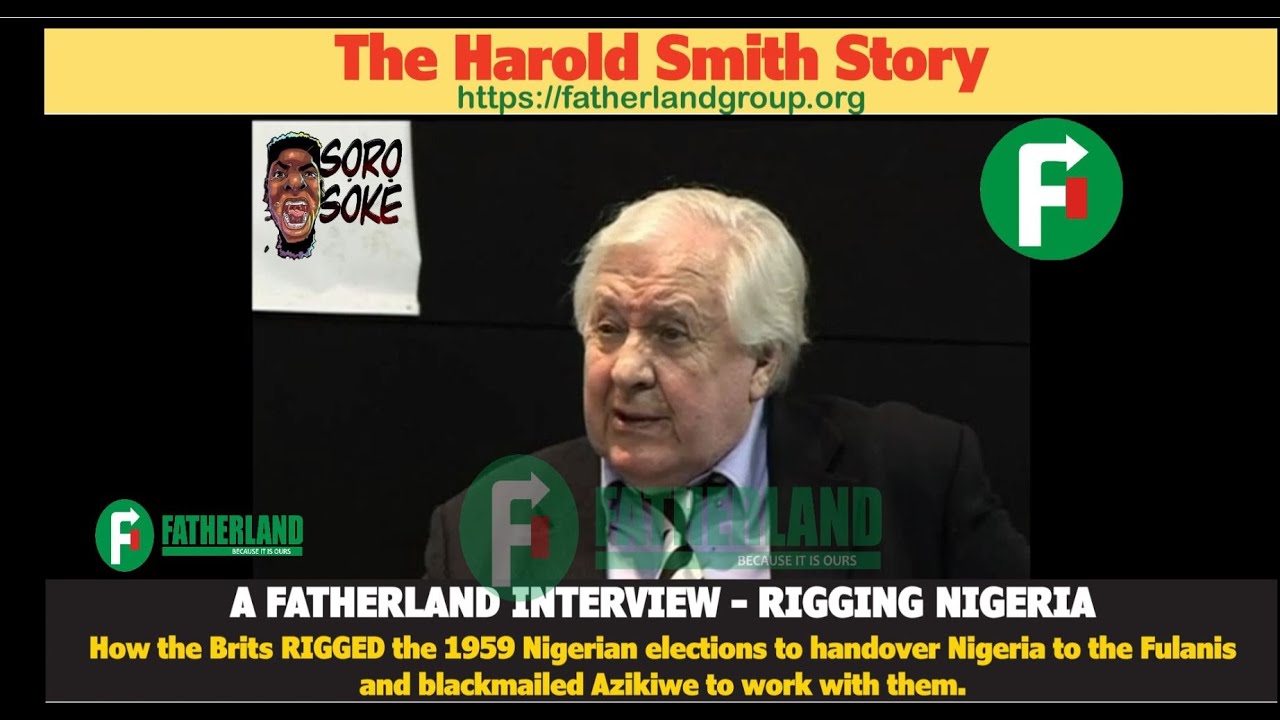
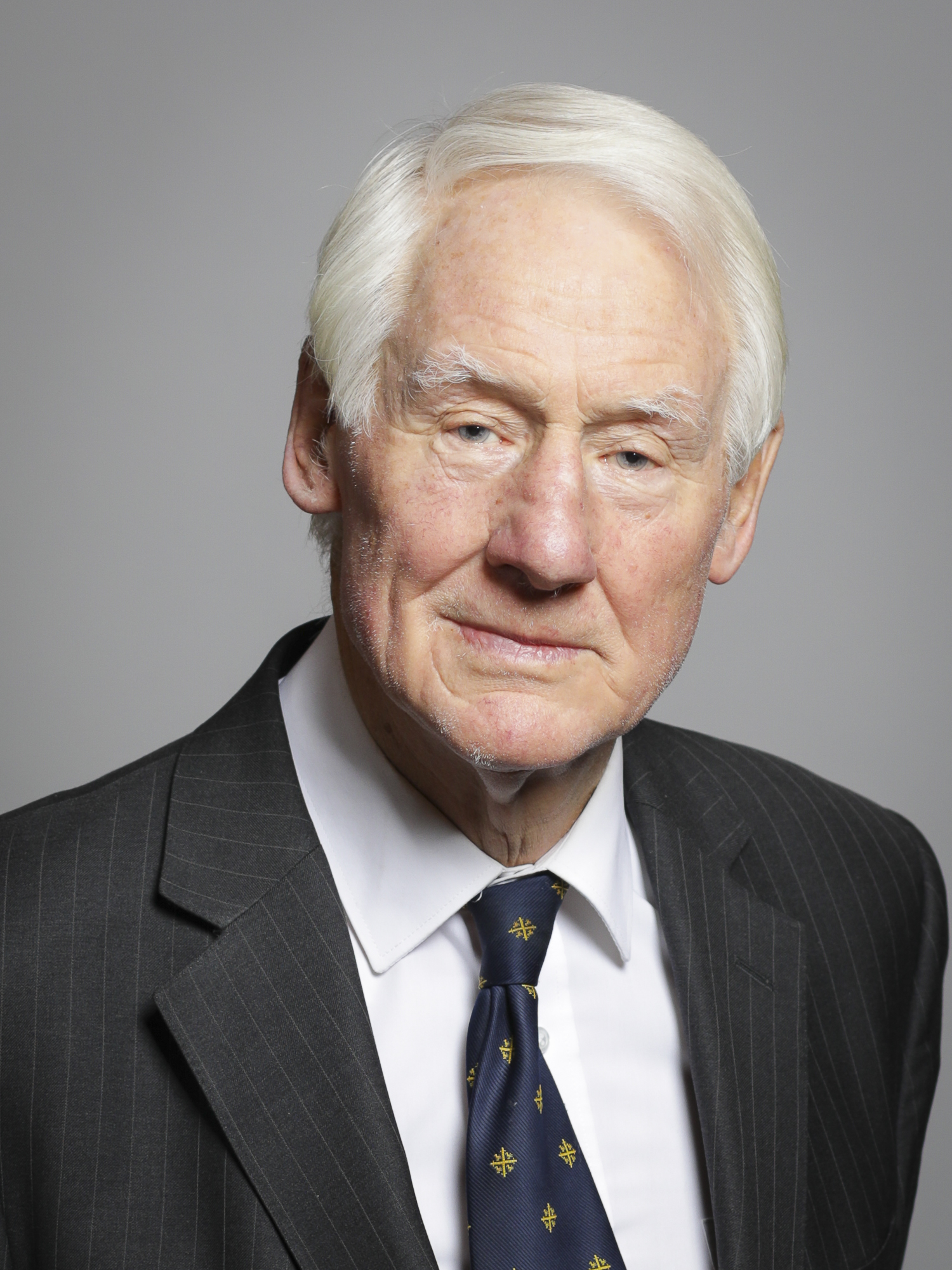
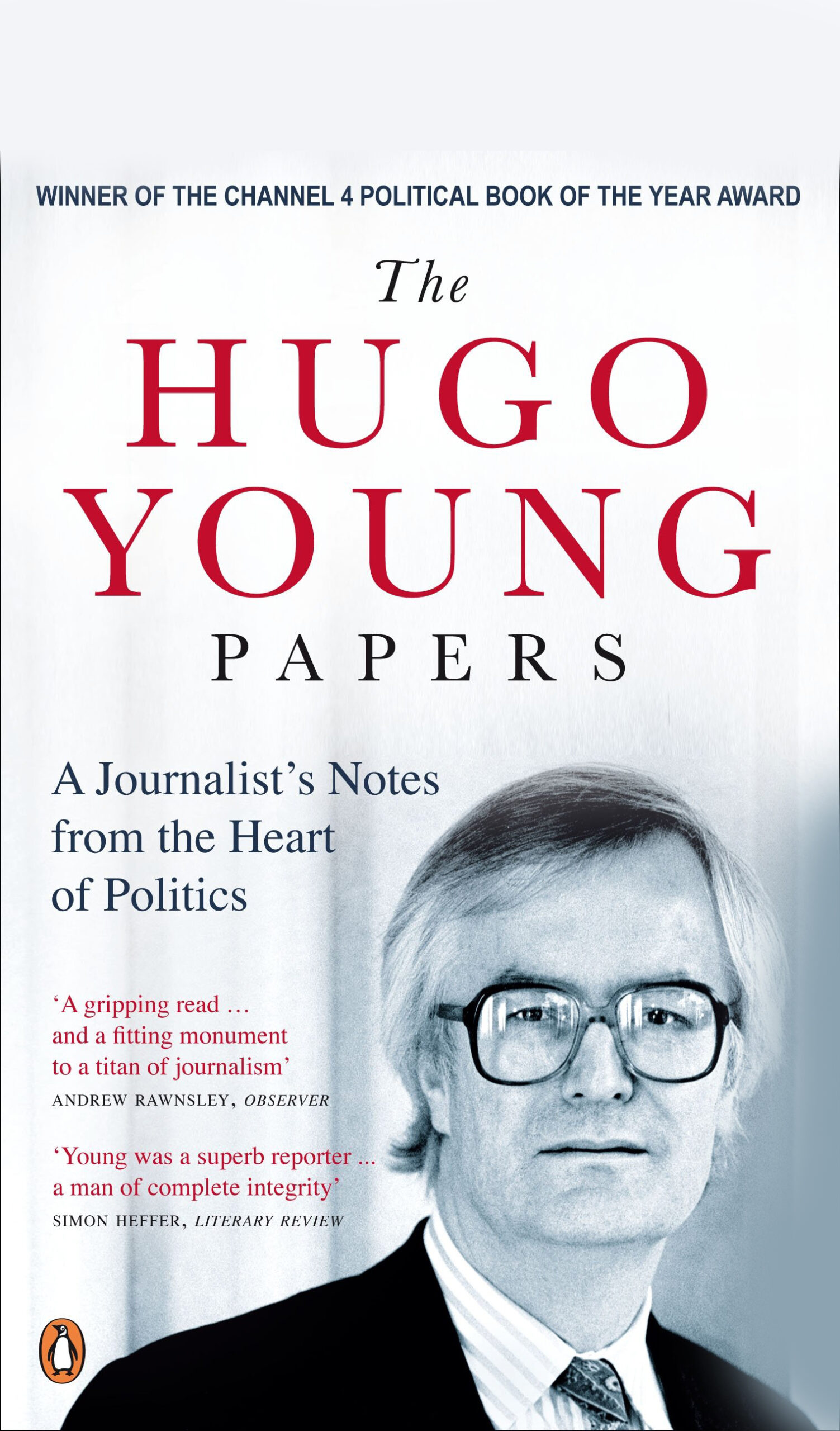


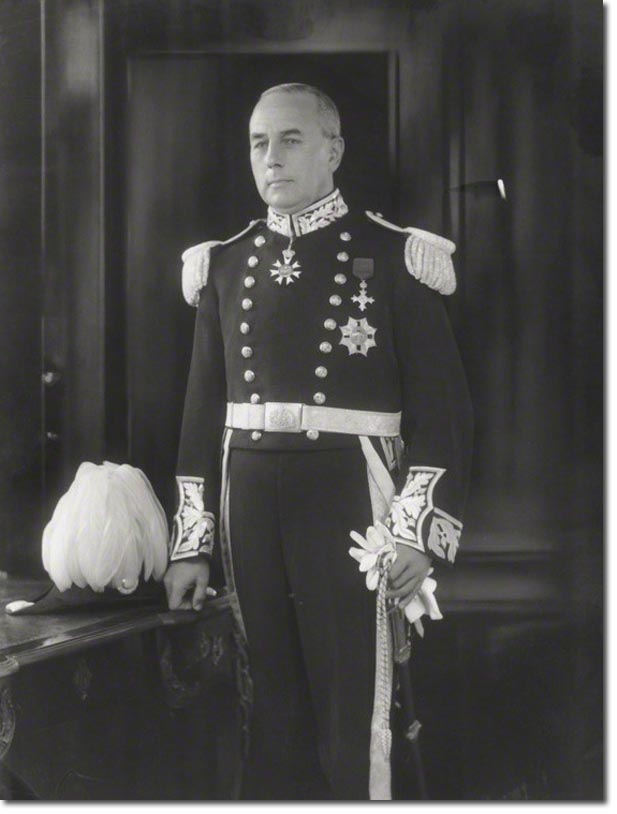
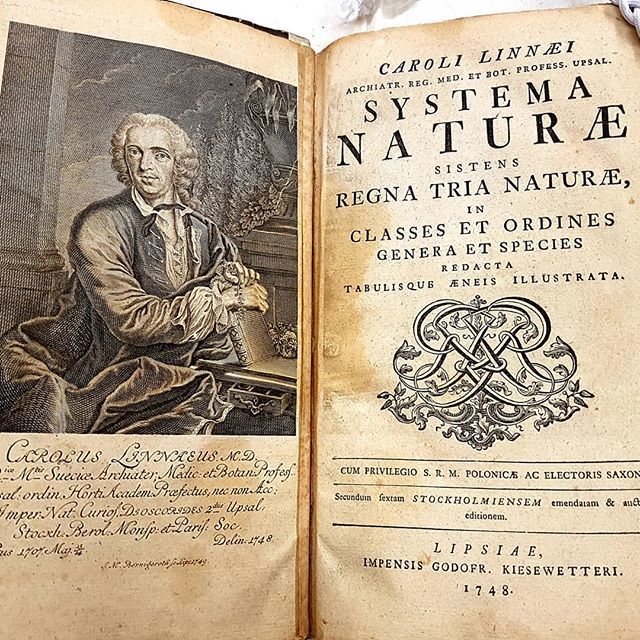
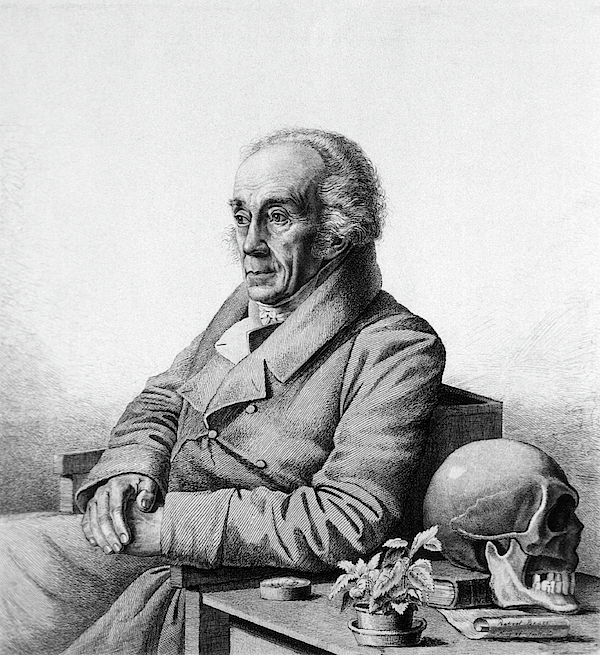

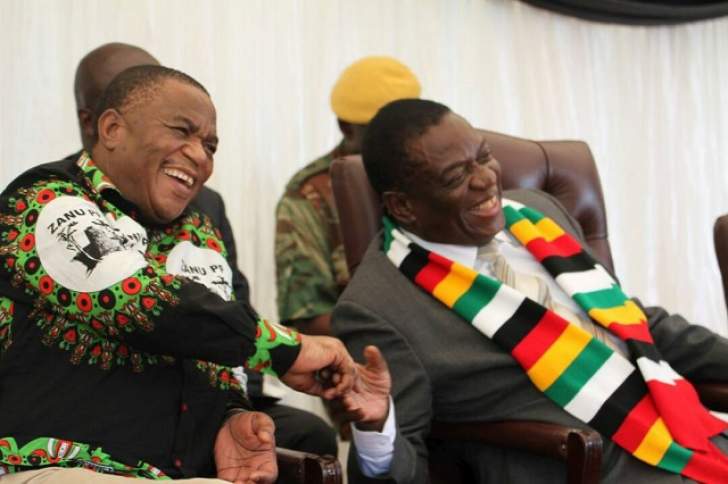

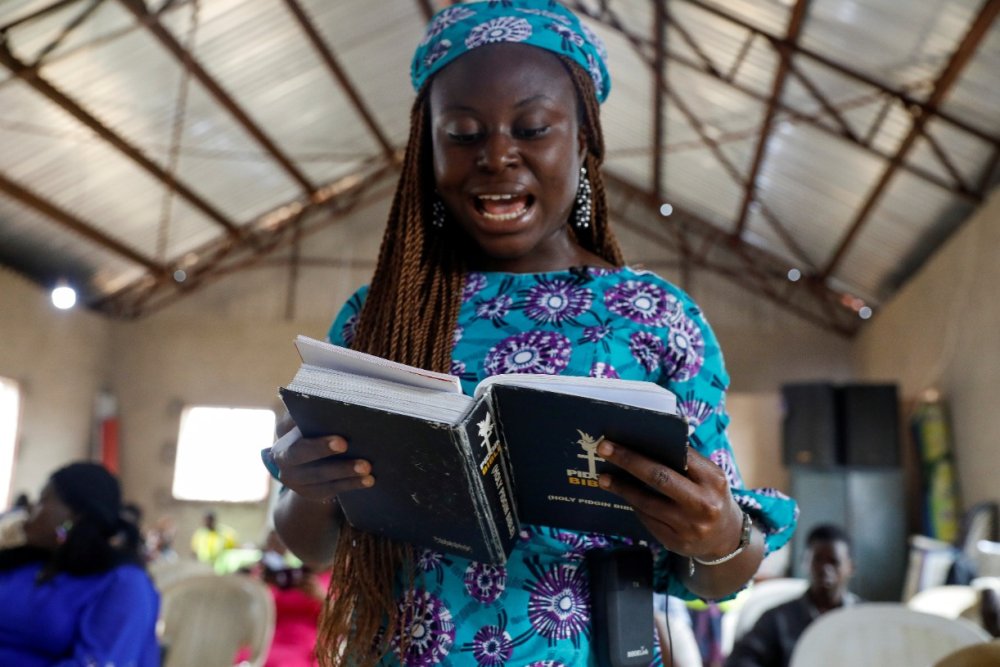
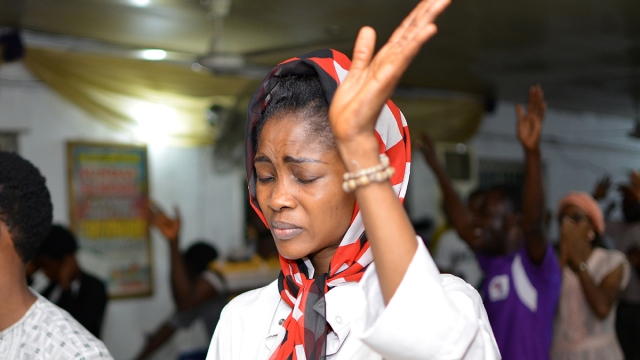
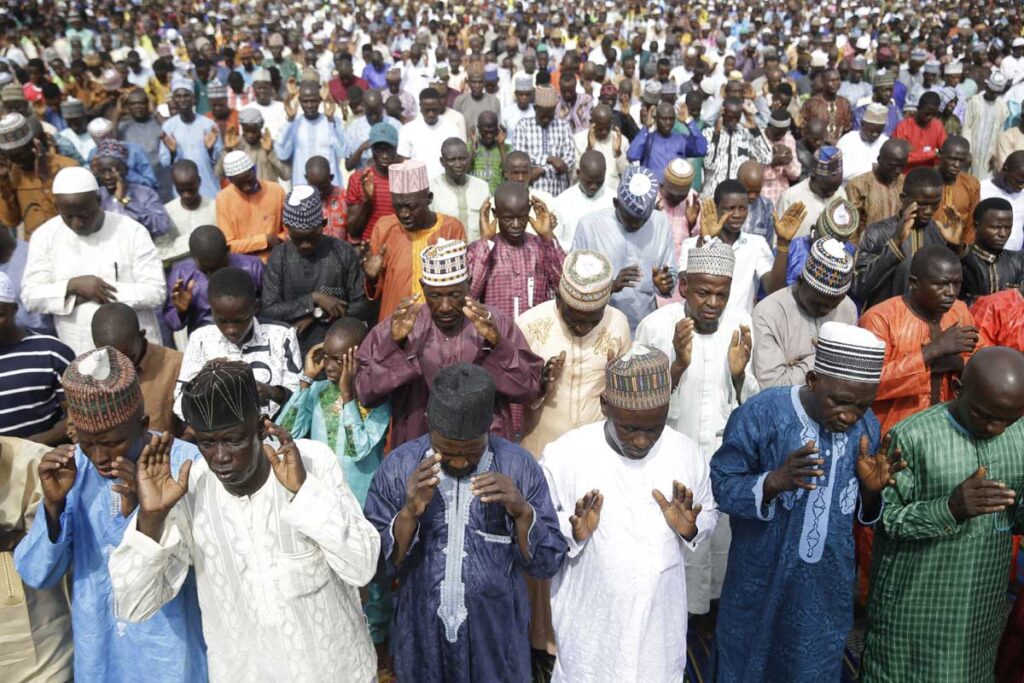
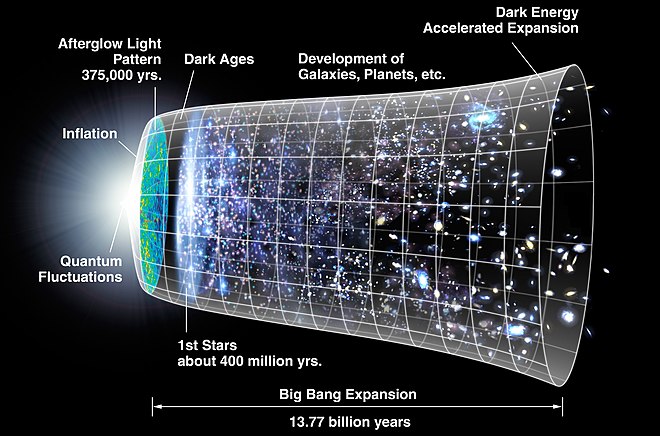
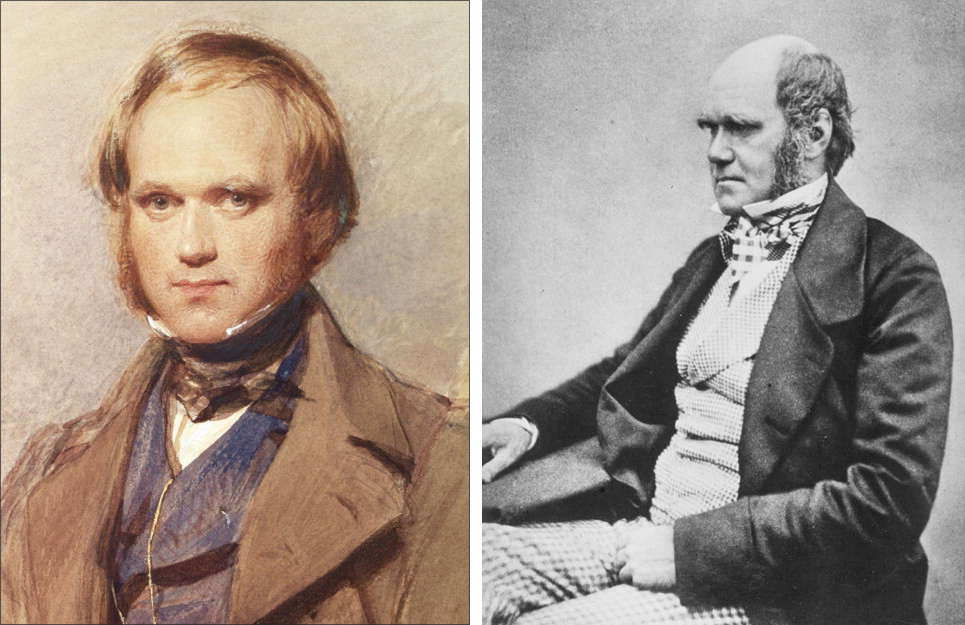

 In his 1954 book, The United States and Britain in Prophecy, Pastor-General Armstrong provides a good definition of the Bible: “It is true, though almost totally unrealised: Mankind was put on this earth for a purpose. And the Maker of mankind sent along with the human product of his making an Instruction Book [the Bible] to reveal that purpose and to guide man in happily, enjoyably fulfilling it. But the human race has rejected the revelation and the guidance and has preferred to stumble on in the darkness of its own futile reasonings.