… ‘Being born in a manger does not make a person a cow’
The British colonial definition of who was a “native” was very interesting as each British colonial government in Africa strategically defined “native” according to its own specific set of local circumstances and interests. Carina Ray reports.
Apart from “tribe”, no other word is as synonymous with British colonialism as that of “native”. The architects of colonialism invested considerable energy in creating and policing boundaries between “natives” and “Europeans” in order to legitimise the subordination of the “colonised” to the “coloniser”. To this end, each British colony in Africa strategically defined “native” according to its own specific set of local circumstances and interests.
The following listing, taken from ordinances valid in 1931, provides a sense of the diversity of ways the term was defined in Britain’s African colonies:
Kenya: “Any native of Africa not of European or Asiatic extraction, but includes any Arab and Somali and also any Baluchi born in Africa.”
Tanganyika (Tanzania): “Any member of an African race and includes a Swahili and a Somali.”
Northern Rhodesia (Zambia): “Any member of the aboriginal tribes or races of Africa and includes any person having the blood of any such tribe or race and living among and after the manner of any such tribe or race.”
Somaliland Protectorate (Somalia): “Any native of Africa not being European or Asiatic of origin but includes any Arab or any person of Asiatic race or origin born or permanently resident in Abyssinia or any of the countries contiguous to the Gulf of Aden.”
Zanzibar: “Any person of African extraction and includes any person whose place of origin either by birth or descent is within the British Protectorate of Aden or within the dominions of the Sultan of Muscat or within such territory comprised in the coast strip lying between the said Protectorate and the said dominions as may be within the sphere of British influence.”
Southern Rhodesia (Zimbabwe): “Any member of the aboriginal tribes or races of Africa or any person having the blood of such tribes or races and living among and after the manner thereof.”
Nigeria: “Any person whose parents were members of any tribe or tribes indigenous to Nigeria and the descendants of such persons, and includes any person one of whose parents was a member of such a tribe.”
Gold Coast (Ghana): “A person of African descent who is a native of West Africa, or a person of African descent ordinarily residing within the Gold Coast Colony, Ashanti, the Northern Territories of the Gold Coast, or the British sphere of Togoland, and includes mulattoes; but it does not include persons ordinarily passing as Europeans; nor, subject to any regulation, does it include a native of West Africa or a person of African descent who is not subject to the jurisdiction of native tribunals in the community to which such a person belongs.”

governments in the colonies
Nyasaland Protectorate (Malawi): “A native of Africa not being of European or Asiatic race or origin.”
The trouble with Nyasaland
This last definition, employed by the British colonial government in Nyasaland, came under scrutiny throughout the 1930s as a result of a 1929 court case in which the defendant, Suleman Abdul Karim, requested to be tried as a “non-native” on the grounds that his father was Indian and his mother African.
This case would ultimately raise the larger question of whether mixed race people, referred to at the time as “half castes”, should be categorised as “natives” or “non-natives”.
The judge presiding over the case, Haythorne-Reed, upheld Karim’s request to be tried as a “non-native” based on Section II of the Credit Trade with Natives Ordinance, 1926 which defined a “native” as “a native of Africa not being of European or Asiatic race or origin”.
Elaborating on the rationale behind his decision, Judge Haythorne-Reed allegorically argued that “a person’s race or origin does not depend on where he or she is born, just as being born in a manger does not make a person a cow, or a child of European parents being born in India or China is not therein an Indian or a Chinaman.”
Judge Haythorne-Reed went on: “Race depends on the blood in one’s veins, and the words used – ‘race or origin’ – seem to have been chosen to include half-castes; otherwise I do not know why the word ‘origin’ was used, or what sense I can give it additional to the word ‘race’. Accordingly I hold [that] the defendant, being a half-caste Indian, is of Indian origin and is [therefore] not included in the word ‘native’ as defined by the Ordnance.”
The reaction of the Nyasaland government and members of the colony’s mixed race population to the ruling suggests that Haythorne-Reed’s interpretation, which in effect conferred “non-native” status to mixed race people, came as a surprise and indicates that prior to the ruling, they were typically regarded, from a legal standpoint, as “natives”.
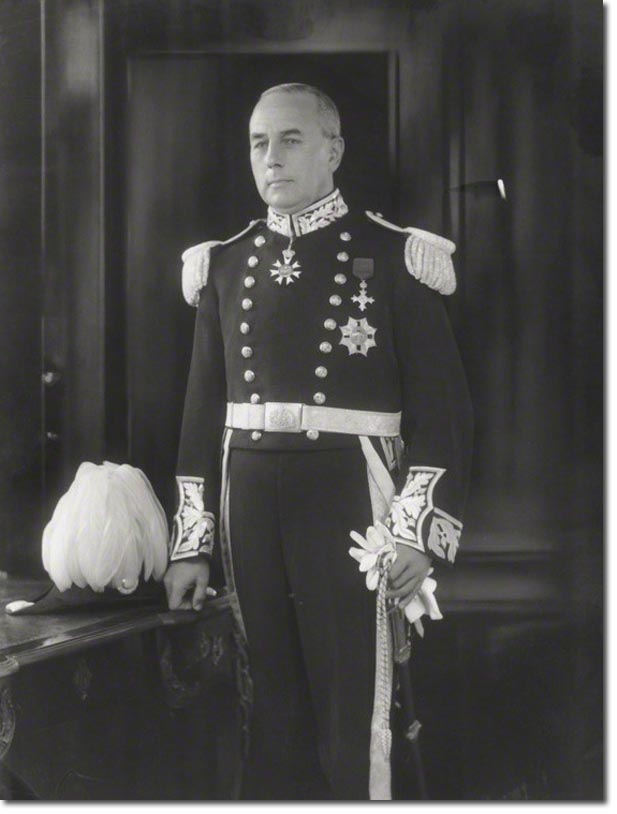
not happy at all with changing the definition of “native” for mixed race people
The decision, while warmly welcomed by some “Anglo-Africans” (a term advocated by the Nyasaland’s educated elite), was viewed with concern by others because of the financial burden associated with the higher tax rates paid by “non-natives”.
Anglo-Africans also expressed concern over the status of marriages they had contracted under the Native Marriage Ordnance. Would their marriages now be considered invalid since they were no longer “natives”? If so, would their children be regarded by the law as illegitimate?
The official reaction of the Nyasaland government, as represented by its governor, Sir Shenton Thomas, to the ruling was unease and dismay. Opportunistically seizing onto the concerns of the Anglo-African community, Governor Thomas argued that the ruling put the Anglo-Africans in “a most parlous position” vis-à-vis the non-native poll tax which they would be required to pay regardless of how “indigent” they might be.
He went on, however, to highlight another set of fear that betrayed his real concern: Anglo-Africans would no longer be subject to the restrictive legislation that governed the lives of “natives”. As “non-natives”, they would be able to obtain credit, buy and sell liquor and they would not be “subject to the discipline of such ordinances as the District Administration Native Ordnance, and Political Detention and Removal”.
It was also noted that they would “miss the benefits as well as the discipline of the Employment of Natives Ordnance”. These fears prompted Governor Thomas to oppose legislation that reverted the legal status of Anglo-Africans to being “natives”.
Thomas’ reclassification proposal hinged, however, on finding a definition of “native” that could not be interpreted as excluding mixed race people. To this end, the governor recommended the definition of a “native” employed by the Southern Rhodesian “Arms and Ammunition Ordnance No.2” of 1891 as a model for Nyasaland: “Native means any person being, or being the descendant of, any aboriginal native of Africa.”
It is not difficult to see that “native” was defined in the most all-encompassing manner possible by this ordinance so as to prohibit anyone of African descent from owning weapons. The fact that Governor Thomas chose this particular definition for use in all of Nyasaland’s ordnances reveals the extent to which he sought to exclude Anglo-Africans from enjoying the rights accorded to their European and Asian fathers.
Although Thomas dismissed the opposing views of his Executive Council, it should be noted that the majority of his advisors urged him to accord Anglo-Africans a “special status”.
In support of introducing a third category specifically for Anglo-Africans, G.H. Adams of the Executive Council argued that “half-castes form a separate class … As a class they exist and the difficulty cannot be overcome by ignoring the fact. If the fact is ignored, we shall create a discontented class of intelligent people; if we realise it and shoulder whatever responsibilities that realisation entails, we shall, on the contrary, do much to encourage the loyalty and prosperity of a class of unfortunates for whom the pioneer white man is largely responsible.”
Adams and other members of the Executive Council were not alone in objecting to Thomas’ reclassification proposal. The Colonial Office in London summarily rejected his plans to reclassify Anglo-Africans as “natives” in accordance with the definition employed by the aforementioned Southern Rhodesian ordnance “on the grounds that it followed very closely the American definition whereby it is impossible for anyone who has any aboriginal blood – however little it may be – in his veins to be considered a non-native”.
Rather, the Colonial Office favoured a “formula which would make the legal status of native half-castes depend in effect upon the standards and manner of their life”, and suggested that this policy should be adopted uniformly by the governments of all the East African colonies.
Unwilling to let go of his reclassification proposal, but aware of the need to reach a compromise, Thomas maintained that all Anglo-Africans should be categorised as “natives”, but requested that he be “given the power to exclude individual natives from the restrictions, obligations, liabilities or duties imposed upon them by any Ordnance where in his opinion their standard of living and mode of life entitled them to discrimination”.
Ultimately, however, no official action was taken on the matter as the British colonial governments in East Africa found it difficult to arrive at a consensus on the standard of living to be employed in judging whether someone was a “native” or “non-native”.
Thomas seemingly gave up on instituting the legislation necessary to alter the legal status of Anglo-Africans, however, he continued to restrict the rights of Anglo-Africans he regarded as “natives”; for instance, he forbade the “sale of liquor to a particular half-caste who was living [in] native fashion”.
But generally, defining the term “native” upon which many relationships were predicated, was difficult in practice.
Leave a Reply