According to various writers, the Moors developed and greatly enhanced every aspect of human life while they ruled Spain and Portugal and other parts of Southern Europe. Below are the testimonies of noted writers, compiled by Osei Boateng.
Jan Carew:
Even their most implacable Spanish enemies acknowledge that the Moors were superb agricultural scientists, for they had cultivated not only the fertile areas, but had brought the arts of “dry farming” to the high, bleak mesas; reconstructed and improved the old Roman irrigation systems, and introduced a variety of new crops like cereals, beans and peas of various types, olives, almonds, and vines – invaluable sources of protein and other indispensable nutrients.
Here, for example, is an entry made by a Moorish official in the month of March 961: “Fig trees are grafted in the manner called Tarqi; the winter corn grows up; and most of the fig trees break into leaf … the falcons of Valencia lay eggs … Sugar cane is planted. The first roses and lilies appear. In kitchen gardens, the beans begin to shoot” (quoted by Jan Read). The Moors had a respect for nature that bordered on idolatry.
Dr JoséPimienta-Bey:
The Moors and other Islamic peoples of Andalus introduced new kinds of horticultural methods and types of plants, fruits and vegetables, which were virtually unknown outside of Africa and Persia.
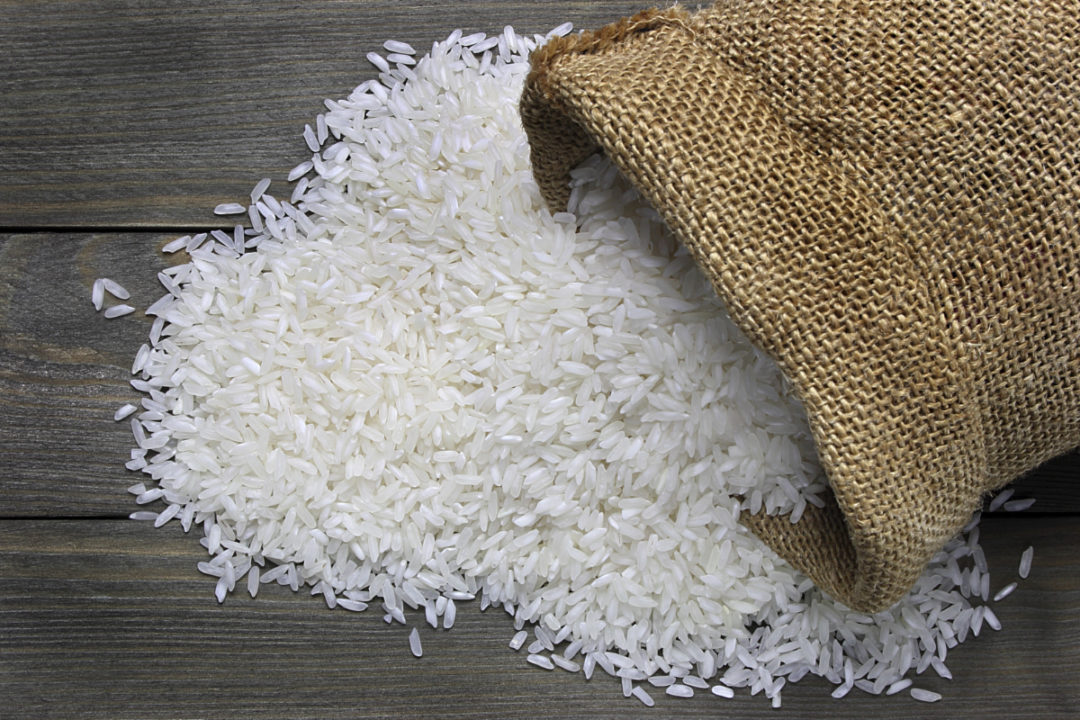
From Africa and Asia came rice (arruz in Arabic, arroz in Spain, riz in French). It appeared on Spanish river banks in the 10th century, according to the records of Arib bin Sa’id, secretary of the ruler al-Hakem II (961-976). Cotton had been introduced to Iberian soil in the 9th century (qutn Arabic, algodon Spanish, coton French).
Now global: Europe did not know rice until it came from Africa and Asia via the Moors. It appeared on Spanish river banks in the 10th century, according to the records of Arib bin Sa’id, secretary of the Moorish ruler al-Hakem II (961-976).
On Andalusian soil, the Moors also grew several types of medicinal herbs (ie, dardar or ash trees) from Africa. They were grown abundantly in Spanish regions like Selba, Elvira, Shulayr (Sierra Nevada) and Guadix. This enterprise was obviously tied to Moorish medical and pharmacological skill and interests. The quality of the herbs was said to rival those grown in India and other Eastern countries.
Geological studies were done in order to locate sweet water below the earth’s surface. Widespread use was made of the water-wheel or ‘na’urah’, which the Romans knew about but had utilised very little.
The Moors dug canals and channels which irrigated farmlands and provided water for several thousand mosques, palaces, and public baths. Some of the most highly productive lands were at Saragossa, Merida, Tudela. Murcia (Tudmir), Elvira, Malaga, Lorca, and Baghah.
Studies of the Iberian soil along with the Moorish introduction of new methods, plants, tools, and manures, helped to dramatically increase the fertility of the Iberian land. The astrolabe was even employed by the Moors in leveling the land for easier irrigation.
And not only did the Moors increase the productivity of the soil and introduce new vegetation, they also ushered in the science of food preservation and storage.
Joseph F. O’Callaghan
In A History of Medieval Spain (1975), refers to the 11th century and Almoravid control as the “Golden Age” for al-Andalus. For although the Almoravids and Almohads are sometimes regarded as theologically conservative, the intellectual and artistic activity of the country did not depreciate as a result. In fact, the fields of philosophy and science were particularly rejuvenated during the time of these dynasties.
Wayne B. Chandler:
Moorish Spain also excelled in city planning: the sophistication of their cities was astonishing. According to one historian, Cordova “had 471 mosques and 300 public baths. The number of houses of the great and noble were 63,000 and 200,077 of the common people.
“There were upwards of 80,000 shops. Water from the mountains was distributed through every corner and quarter of the city by means of leaden pipes into basins as well as vast lakes, tanks, amazing reservoirs, and fountains of Grecian marble.”
Jose Pimienta-Bey:
Most of the erudition of Andalus rested within her urban centres, and as Joseph McCabe states: “Christian visitors to Moorish cities took away thrilling stories of their splendour and learning.” The cities of Cordova and Seville were internationally known for their beauty, scholarship, and culture.
In reference to their architecture, McCabe states that the Moors “carried the standard of internal decoration of houses and palaces to a height unknown elsewhere in the world”. In contrast, medieval Christian Europe was steeped in the squalor and bleakness of scientific and cultural ignorance.
Jan Carew:
Moorish scientific and organisational abilities transformed their cities into extraordinarily advanced urban centres. Not only were their public and private buildings aesthetically pleasing but their architects and planners created cities the likes of which had never been seen before in Europe.
Some historians assert that the Moors of Spain, unlike their nomadic kith and kin from the desert kingdoms, were essentially an urban people. But this statement is only a half-truth and needs to be qualified, for cities require a countryside capable of feeding its populations.
The Moors had been able to create a harmony in the rhythms of life in the city and in the countryside. They dotted the map of al-Andalus with their cities and towns, but they could only do this because the surrounding countryside was kept fertile and productive – with advanced drainage and irrigation systems, reservoirs, aqueducts, sophisticated storage facilities and efficient marketing, transportation and trading networks.
Different Moorish cities came to be known for their particular forte: Cordova – its libraries and collections; Seville – its music and musical instruments; Toledo – a centre of industry and learning. But all shared a common feature of highly sophisticated urban management and unbroken and seminal connections with the land.
Moorish cities were noted for their public hospitals, public baths, lighted thoroughfares, hot and cold running water, magnificent religious monuments, the grandeur of their mosques, gardens with exotic plants, and even more exotic birds, and beautifully designed fountains.
Inside the mosque the Moors built: The Great Mosque of Cordova built by the Moors was turned into the Mezquita Cathedral after their defeat. Moorish Spain excelled in city planning: the sophistication of their cities was astonishing. According to one historian, Cordova “had 471 mosques and 300 public baths. The number of houses of the great and noble were 63,000 and 200,077 of the common people”
As the Reconquista progressed, however, benighted Catholic priests had the public baths closed and the faithful were told that daily ablutions were sinful. In 1568, King Philip “banned public baths until then found in the smallest of Moorish towns and villages” [thus] “delivering a body blow to Muslim traditions”.
Richard Ford
A perceptive scholar, he tells us: “Ablution and lustral purification formed an article of faith with the Jew and Moslem, with whom ‘cleanliness is godliness’ … Ximenez [who afterwards became a cardinal], a shirtless Franciscan, induced King Ferdinand and Queen Isabella, at the conquest of Granada, to close and abolish the Moorish baths [and] … fire, not water, became the grand element of inquisitorial purification”
The outstanding factor which set Spain and Portugal apart from their European neighbours to the north was the rich cultural, artistic, and scientific knowledge that Spain and Portugal inherited from the Moors. It placed them well ahead of the rest of Europe which was still backward and living in the dark ages. As Edward Scobie reports in this piece, it is the African cultural heritage inherited by Spain and Portugal that set in motion the expansion of Europe. For, without the Moors’ scholarly writings and their extensive mastery of the sciences of navigation, cartography, astronomy and mathematics, the global voyages of the Portuguese and Spanish would not have taken place then. “It is absolutely no exaggeration to state categorically that Islam and the Moors had provided for, not only Portugal and Spain, but the rest of emerging Europe a powerful economic, scientific, artistic, and political impulse; an impulse which led to European domination of the world,” Scobie reports.
European expansion on a global scale can be chronicled from the last years of the 15th century. By the coming of the next century, the world known to Western man had reached great proportions to span almost the entire earth’s sphere.
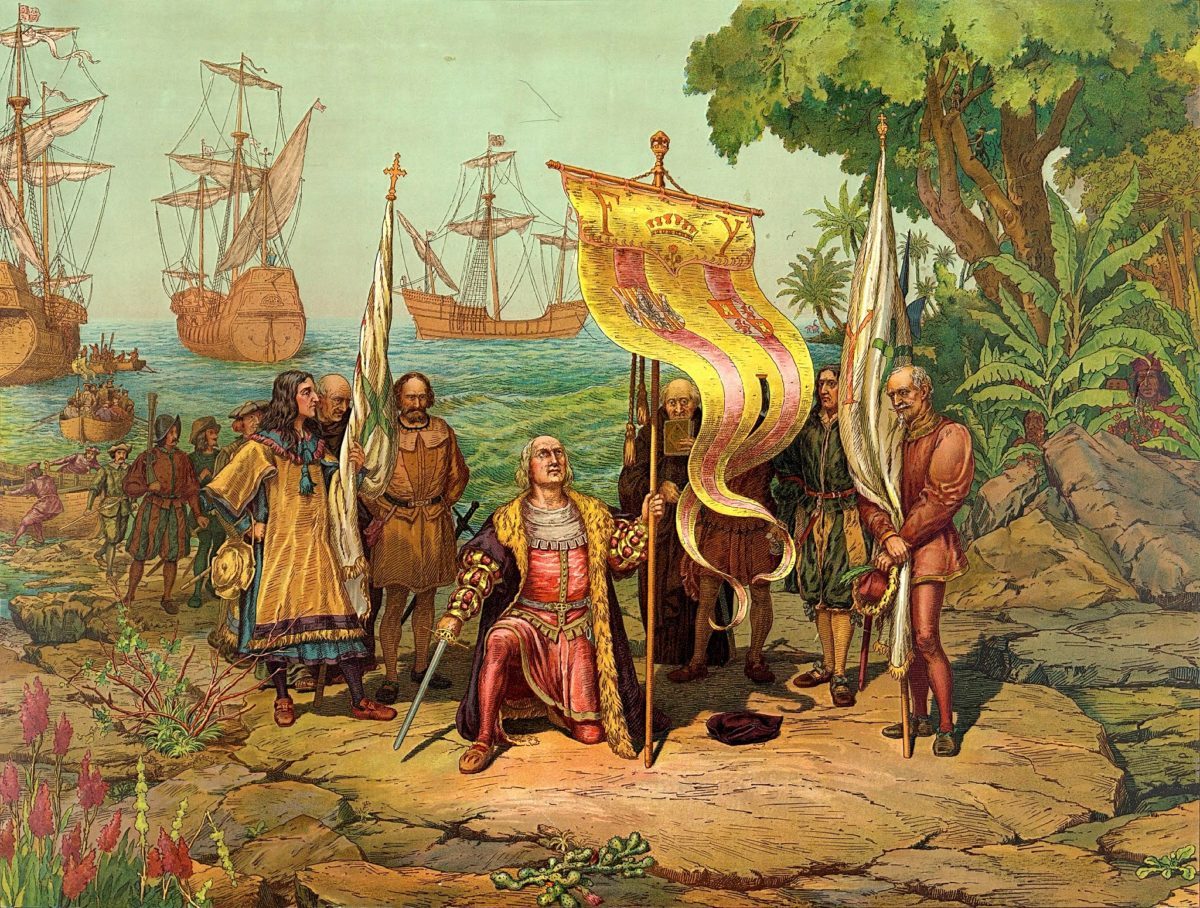
Lost in transit: Christopher Columbus gets lost during his first voyage in 1492 and lands on the Taino island of Guanahani which he renamed San Salvador, and later claims to have discovered America
The explorers, Vasco Da Gama (Portuguese and first European to reach India by sea), Christopher Columbus (Italian explorer in the employ of Spain), John Cabot (Italian navigator and explorer), Pedro Alvares Cabral (the Portuguese regarded as the “European discover” of Brazil), Ferdinand Magellan (Portuguese explorer credited with proving that the world is round) and many others had brought Europeans to the farthest reaches of this planet, setting in motion what has been called the global epoch of European expansion.
When the reasons for this mammoth expansion in the 16th century are examined, certain explanations become crystal clear. To put it bluntly, it was the part Africa played in providing the learning that triggered off this expansion. The culture of North Africa, the resources of Central Africa and the equipment of Moorish science set off a spate of explorations which culminated in the circumnavigation of the globe.
The great part played by Africa in supplying the learning which caused the expansion to take place has had little, if any, exposure in the writings of historians. The question was never posed as to why the Iberian countries were in the forefront of this global expansion.
The British, the French, the Dutch, and the Italians owned the ships that could undertake this journey. Their leaders also possessed the necessary vision for such an enterprise. Yet they did not take the lead. With respect to overseas expansion, they were always trailing way behind the Iberians. One may well ask why was that so?
Put quite simply, the answer is that the outstanding factor which set Spain and Portugal apart from their neighbours in the north was their most valuable inheritance from Africa. The rich cultural, artistic, and scientific knowledge they inherited from the Moors placed Spain and Portugal well ahead of the rest of Europe, still backward and living in the dark ages.
More than that, the Moors struck the blow which completed the decay of ancient Spain and established Moorish Spain. This Spain was to herald one of the brightest chapters in the intellectual history of Medieval Europe. Portugal, too, played an equal role in bringing this about.
Prof Thomas T. Hamilton (of the Old Dominion University fame) clearly made this point when he stated: “Between the middle of the 8th and the beginning of the 13th centuries, the Arabic-speaking people [including the Moors] were the main bearers of the torch of civilisation throughout the world, and were the medium through which ancient science was recovered, supplemented, and transported through Africa, Spain, and Sicily in such a way as to make the Renaissance possible.”
It was at Cordova that Gerbert of Aurillac gained mastery over mathematics. This caused him to introduce, when he became Pope Sylvester II, the use of Arabic numerals in the Latin West. Until then, the Latin West did not know the numbers, 1,2,3 to 10. They only used strokes and Vs, as in I, II, III, IV, V, VI, VII, VIII, VX, X.
The works of Aristotle first appeared in Europe through the Moors in Spain. The centre of scientific learning remained in Toledo even though it had been reconquered by Castile in 1085. There, many converted Moors and Jews translated several mathematical, astronomical and astrological volumes of the Afro-Arabs into Latin.
The Toledo Tables
It was in 1080 that Al-Zargali of Toledo produced a number of astronomical and astrological works. Included in these was a series of astronomical tables based on the work of a group of Afro-Arabs and Jewish predecessors. These studies, known as the Toledo Tables, contained not only astronomical material, but geographical information as well. They were translated into Latin in the 12th century by Gerard of Cremonia, who undertook most of his work in Toledo.
By then Portugal and Spain were far ahead of the rest of the European countries in intellectual attainments. This advance was made possible by the proximity of Africa to Spain and what has been rightly termed “the aggressiveness of the North African Berbers [or Moors]”.
It was these people of North Africa who brought the intellectual atmosphere and the advantages of their civilisation, and so put those Iberian countries at the very front and caused them, indeed, to be the pioneers of European global expansion.
The invasion of the Moors of the Iberian Peninsula in 711 AD was unique in certain aspects. First, a few thousand men took over the government. Seven centuries later, they were also driven out of the area by a few thousand armed men. In between those hundreds of years, the majority of the population of both Spain and Portugal was left comparatively undisturbed.
Prof Hamilton, in The African Heritage in European Expansion, Journal of Ethnic Studies (1976), gives a very revealing account of the situation in Spain and Portugal during these 781 years:
“The overwhelming majority of the people under the caliphs were the same people whose descendants were to discover the world for Spain and Portugal. The Christian rulers displaced the political and religious power of the Moslem rulers.
“The artists, scientists, writers, and ordinary people were the holdovers connecting the two civilisations. The Mozarabs who took the lead in the economic and cultural life of the new Spain were not Arabs, but rather were African Berbers, who, as time went by, were assimilated into the basic Iberian stock.
“Furthermore, when the Christian princes regained the peninsula, the old civilisation was not destroyed. Religious art, of course, was influenced adversely, but the actual scientific achievements were retained, and Toledo became a great translation centre under the Castilians.
“While the rural districts continued their futile feudalism as they had both before and during the Moslem rule, the cities continued to bloom, thanks to the vitalising influence of the Mozarabs and the Jews.”
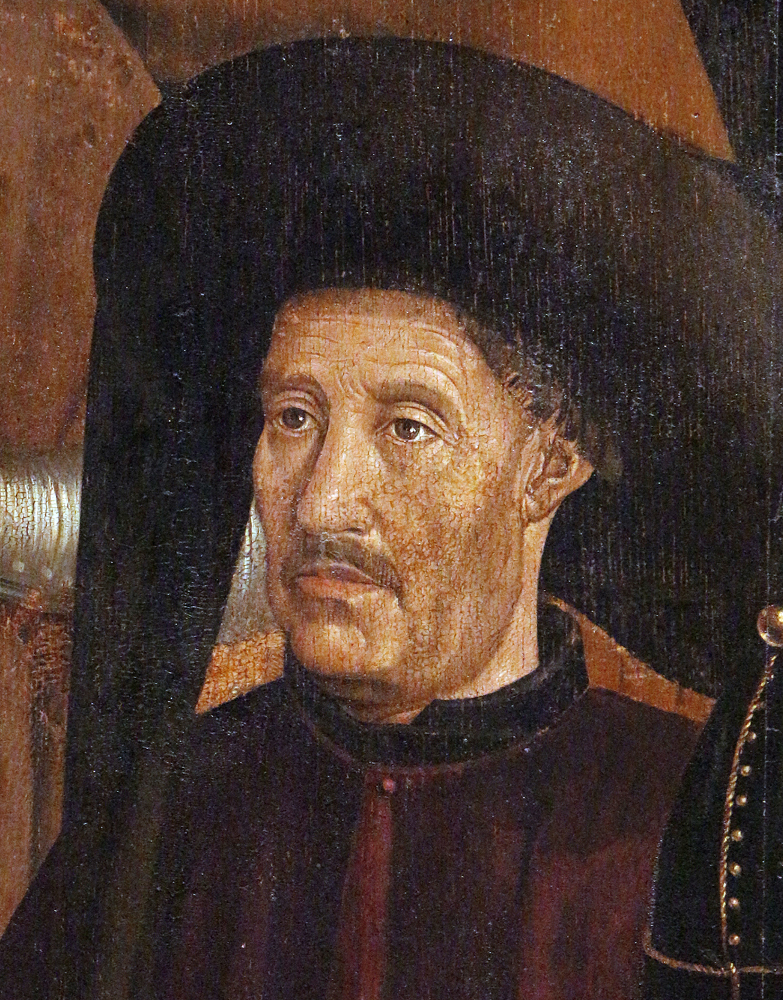
Prince Henry the Navigator
It was in this intellectually advanced civilisation in 1394 that Prince Henry the Navigator was born. By that time and in the following century, Portugal was judged to possess a culture that had no equal north of the Pyrenees.
This culture had travelled with the African Moors from Africa and came into full blossom mostly in Spain, but during the occupation, Portugal was an integral part of the Cordovan Caliphate.
Eminent scholars have agreed that the talents of the Portuguese in geography and navigation came out of this rich African heritage. In fact, long before the birth of Prince Henry the Navigator, the Spanish and African Moors had excelled in these sciences.
Prof Hamilton explains why the Moors held pre-eminence in terrestrial mathematics which is essential in the science of navigation, claiming that it could be traced to their religion:
“Their faith required them to pray at a specified time each day in the exact direction of Mecca. In order for the devout Moslem to accomplish this, it was necessary for him to have the geographical coordinates of his location, just as a mariner must have his position. Thus, did geodesy become an exact science in the world of Islam”.
The Afro-Iberian Moors were responsible for almost all the geographical lore which the Europeans, primarily the Portuguese and Spanish, used in their global expansion.
This knowledge was divided into three main categories: the systematic geographers and encyclopedists who incorporated the lore of the ancients with the discoveries of their contemporaries; the astronomers and geodesists who set out the groundwork for navigation and cartography; and lastly, the travellers and collectors of travel accounts, thus providing the descriptions of the world.
Through religion and trade, the Muslim world placed great stake on travel; and more than any other peoples during those early centuries, they travelled the length and breadth of the known world. By foot, camel, donkey and cows, Muslims entered remote lands.
Ibn Battutah
Of the travel accounts available at that time, the narrative of Ibn Battutah, called the most widely travelled scholar of the Middle Ages, stood out. In the 14th century, he traversed the entire span of Muslim countries, from China to Guinea.
Born traveller: Ibn Batuttah, born in Morocco, was the most widely travelled scholar of the Middle Ages. It was scribes like him who caused information about Africa and its interior to reach European ears, including those of Prince Henry
[Battutah was a Moroccan, born in Tangier in 1304. In 1325, at the age of 21, he left home with the intention of completing the hajj to Mecca. He travelled to Egypt, then to Mecca, then Persia, Iraq, Azerbaijan and Yemen, before setting sail to East Africa where he visited Somalia, Kenya and Tanzania. From there, he decided to go to India but used a winding route that took him through Egypt, Syria and Turkey. He then crossed the Black Sea to what is today Uzbekistan, from where he retraced his steps back to Constantinople (now Istanbul in modern Turkey].
[Battutah’s journeys finally took him to India, Sri Lanka, and China. He finally returned to Tangier in 1349, where he stayed for a short while before heading to Spain, and then across the Sahara Desert to the Mali Empire, and reaching Timbuktu. He returned home finally in 1354, after travelling an estimated 120,800 km (more than the Italian, Marco Polo) over a period of 29 years].
It was scribes, like Battutah, who caused information about Africa and travel to its interior to reach European ears, especially the people of Iberia and Sicily. Prince Henry was familiar was Battutah’s writings, especially after he penetrated the interior of Africa in 1352 and produced the most complete portrait of the African peoples up to that time.
Battutah had meticulously kept a chronological narrative of his travels and noted how very well he got on with the local rulers in the areas that he visited. He made mention on several occasions of having received gifts of gold dust from the African monarchs. This knowledge proved to be of great value, not only to Prince Henry, but to the other Iberian explorers who were to claim vast land masses for Portugal and Spain.
It was in the 15th century that the precious metals in Europe had been drastically depleted due to the demands of enormous foreign trade and the very costly wars that had been fought and were still taking place. During that period, due to the limitation of camel travel, bulky goods from the West could not stand the heavy cost of being carried to the East.
The valuable goods from India, China and the Spice Islands, which were taken overland, had to be paid in gold and silver. In the past, Europe could depend on her own mines, but with the depletion due to the costliness of her wars, her merchants traded with Barbary using gold taken from Guinea.
Consequently, it was not surprising that with her gold shortage, yet still requiring that precious commodity, Europe would turn to Africa as an untapped source of supply. It was this shortage of gold and other precious metals in Europe which prompted their penetration of Saharan Africa.
Prince Henry and all his scholarly associates had great knowledge of this information about the science of the Afro-Iberian Moors. The Portuguese explorers became well aware that it would be the riches of Africa that would supply the vast amounts of gold needed by the crown of Portugal. It was these two factors which were the primary objectives for the Portuguese exploration of the lands of Africa and the Indies.
These motives remained of paramount importance until the death of Prince Henry in 1460, and after. Prof Hamilton insists that: “The background of the African Moor and the lure of African gold broke the fetters that bound the European to Europe.”
The African contribution
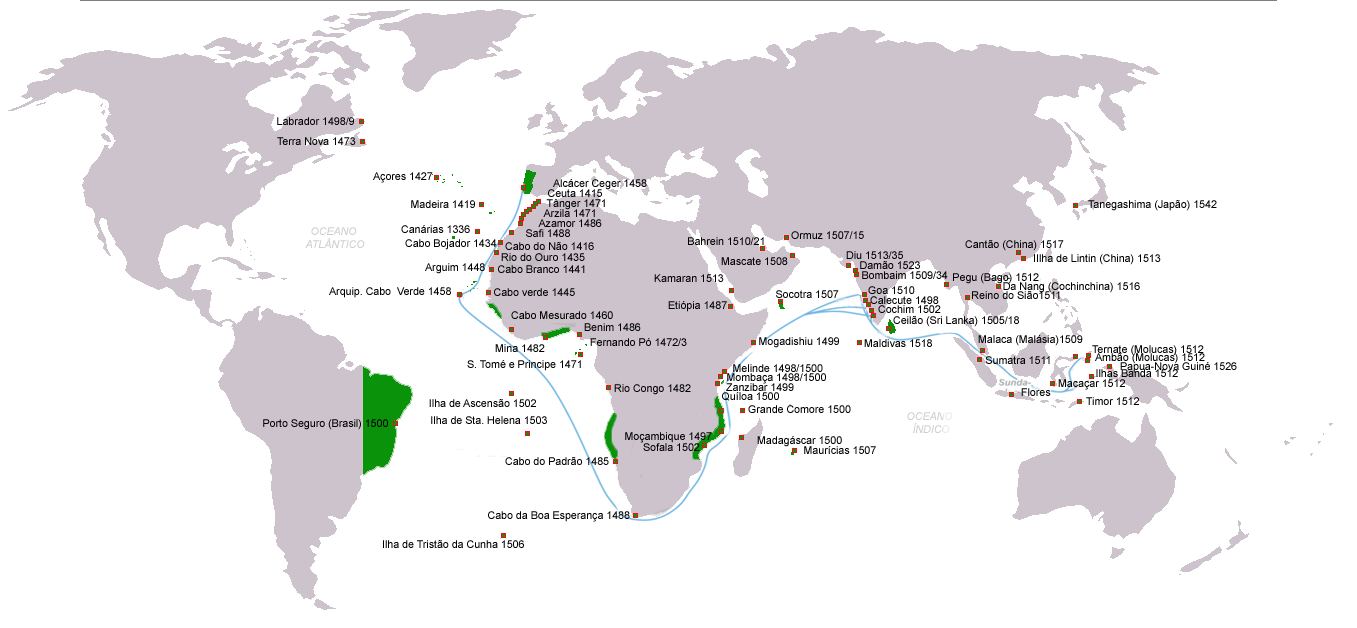
he world the Portuguese trod: Thanks to knowledge brought by the Moors, Portugal and Spain were able to lead Europe’s global expansion
Much praise was heaped on the royal head of Prince Henry for the great part he played in the early Portuguese explorations. He has even been immortalised in the volumes of history as “Prince Henry the Navigator”. But what remains minimised and almost unwritten in the pages of the history of Europe and its global expansion is the very vital role that the Moors played.
For, without their scholarly writings and their extensive mastery of the sciences of navigation, cartography, astronomy and mathematics, the voyages of the Portuguese and Spanish would not have taken place then. Yet Prince Henry has reaped all the glory.
In talking about this, Prof Hamilton throws true light on the African contribution and gives honour where honour is due. He writes:
“Prince Henry … had swept away from the minds of even the legends of the unearthly terrors which had hitherto precluded voyages into the unknown. He had proved the feasibility of Atlantic travel and had provided and perfected the ships and instruments to reduce the actual dangers to be encountered.
The “children” of Prince Henry: Bartolomeu Diaz (above), he and the other Portuguese explorers (Da Gama, Cabral, Vespucci, Magellan, etc, and even Columbus) were the fruit of the tree planted by Prince Henry. But “the chains were broken by the lore and lure of Africa. Africa not only influenced European expansion, it determined it,” as Prof Thomas Hamilton insists
“Diaz, Columbus, Da Gama, Cabral, Vespucci, and Magellan were the fruit of the tree planted by Prince Henry. The chains were broken by the lore and lure of Africa. Africa not only influenced expansion; it determined it.”
What has been ignored by Eurocentric historians – and this is a deliberate act – is that the beginning and the formation of the Portuguese state were the results of processes both directly and indirectly related to Moorish civilisation.
Wrongly credited: Prince Henry the Navigator gets all the credit for Portugal’s domination of the seas, but eminent scholars agree that the talents of the Portuguese in geography and navigation came out of the rich African heritage that the Moors bequeathed to them
Prince Henry the Navigator has been credited with harnessing the energies of Portugal and the resources of the Order of Christ with the skills, the instruments, the most developed seamanship, the navigational wisdom – all copied and learnt from Moorish mathematicians, cartographers, astronomers and geographers.
Where and from whom that Prince Henry, this ascetic, celibate, and reclusive son of Joao of Avis and his English-born queen, Philippa, accumulated his vast reservoir of scientific and navigational knowledge, has always been played down or ignored out of hand.
Portugal has always gone to great lengths to believe that its development and expansion into the rest of the world has been a history of its own doing without Muslim or Moorish impact; and has believed that story with such intensity that she was quite successful, bit by bit, in incorporating both an imagined history and the habit of always feeding it into the process of her authentic existence.
That is why it has been claimed that all Portugal’s imperial enterprises, the lasting effect of Portugal in Brazil, in the East Indies, and in Africa; the celebrated figures of Vasco da Gama, Alfonso de Albuquerque, Ferdinand Magellan, and others; the works of Gil Vicente and Camoens – have all been the elements that have motivated the creation and recreation of the origins of Portugal.
But without the knowledge, intellect, learning, and artistic brilliance of the African Moors, this Renaissance Portugal would have never, and I repeat, never, come about. And this is a condition or reality which relates not only to Portugal, and Spain, but the rest of Europe, as well. Eurocentric scholarship cannot come to grips with this fact of history; and therein lies its tragedy.
It is absolutely no exaggeration to state categorically that Islam and the Moors had provided for, not only Portugal and Spain, but the rest of emerging Europe a powerful economic, scientific, artistic, and political impulse; an impulse which led to European domination of the world.
Eurocentric scholars boast that the Renaissance aroused Europe from its Dark Age slumber. And they stop at this blank, empty statement which has no Caucasoid base on which to stand. They shy away from the truth, the total truth that but for Muslim knowledge brought by the Moors, this awakening would never have come about; certainly not at the time that it did.
Racial mixing
After the invasion in 711 AD came other waves of Moors even darker to Spain and Portugal. It was this occupation of Portugal which accounts for the fact that even noble families had absorbed the blood of the Moor. From that time onwards, racial mixing in Portugal, as in Spain, and elsewhere in Europe which came under the influence of the Moors, took place on a large scale.
That is why historians claim that “Portugal is in reality a Negroid land”, and that when Napolean explained that “Africa begins at the Pyrenees”, he meant every word that he uttered.
Even the world-famed shrine in Portugal, Fatima, where Catholic pilgrims from all over the world go in search of miracle cures for their afflictions, owes its origin to the Moors.
The story goes that a Portuguese nobleman was so saddened by the death of his wife, a young Moorish beauty whom he had married after her conversion to the Christian faith, that he gave up his title and fortune and entered a monastery. His wife was buried on a high plateau called Sierra de Aire. It is from there that the name of Fatima is derived.
The Moors ruled and occupied Lisbon and the rest of the country until well into the 12th century. They were finally defeated and driven out by the forces of King Alfonso Henriques, who was aided by English and Flemish crusaders.
The scene of this battle was the Castelo de Sao Jorge or, in English the Castle of St George. Today, it still stands, overlooking the city of ‘Lashbuna’ – as the Moors named Lisbon.
The defeat of the Moors did not put an end to their influence on Portugal. The African presence can be seen everywhere in Portugal; in the architecture of many of the buildings. They still retain their Moorish design – like the Praca de Toiros – the Bull Ring in Lisbon.
A walk through Alfama – the oldest quarter in Lisbon, with its 15th century houses, narrow-winding streets – dates back to the time when it was the last settlement of the Moors.
Even the fishing boats on the beaches of Cascais show marked African traces. Called the rabelos, these boats with their large red or white sails which also ply on the Douro River to fetch wine from the upper valleys, are reminiscent of the transport boats of Lagos in Nigeria.
The African element was more predominant in Portugal than it was in Spain, some historians contend. The noble families in Portugal and in Spain, too, who had absorbed the blood of the Moor were innumerable.
Many European historians who constantly project biased scholarship in their writings of Africa and Africans, persist in denying the tremendous influence, both culturally and genetically, that the Moors had on the countries of the Iberian Peninsula, particularly Portugal and Spain.
One scholar, Gandia, stated bluntly: “As to the mixture of Moors and the other inhabitants of the Iberian Peninsula, it is useless to deny its occurrence. Without going into the social life of the Christians and Moslems, it may be mentioned in passing that the son of Musa [Abd-al-Aziz) married the widow of King Roderick [called Egilona] and that the royal family of Wiza united with the Moors of the purest stock.”
Conquering France
Extending the Moorish rule in Spain, Al-Hurr ibn Abdurrahman, in 717 AD and 719 AD, crossed the treacherous passes of the Pyrenees and entered France. In 729 AD, another Moorish ruler, Haytham ibn-Ubayad, was successful in capturing Lyon, Macon and Chalon-sur-Saone in France.
Beaune and Autun were also under the control of the Moors, and it was a Moor leader named Uthman ibn-Abi Nisah, known sometimes as Munuza, who governed not only Spain but parts of France as well. Munuza established excellent relationships with the Christians of France, Spain, and Portugal, and married the daughter of the Duke Eudes, Lampegie of Aquitaine.
This period of Moorish rule between 719 and 729 was rife with intrigue and treachery. When al-Hurr was replaced by ab-Samh ibn-Malik, the latter transferred the Spanish capital from Seville to Cordova.
Ibn-Malik completely re-organised the finances of the country and the system of taxation, carrying out several public works, and putting into operation an extensive survey of the land. He died in May 721 and was replaced by Abdurrahman ibn Abdullah.
The Moors in Italy
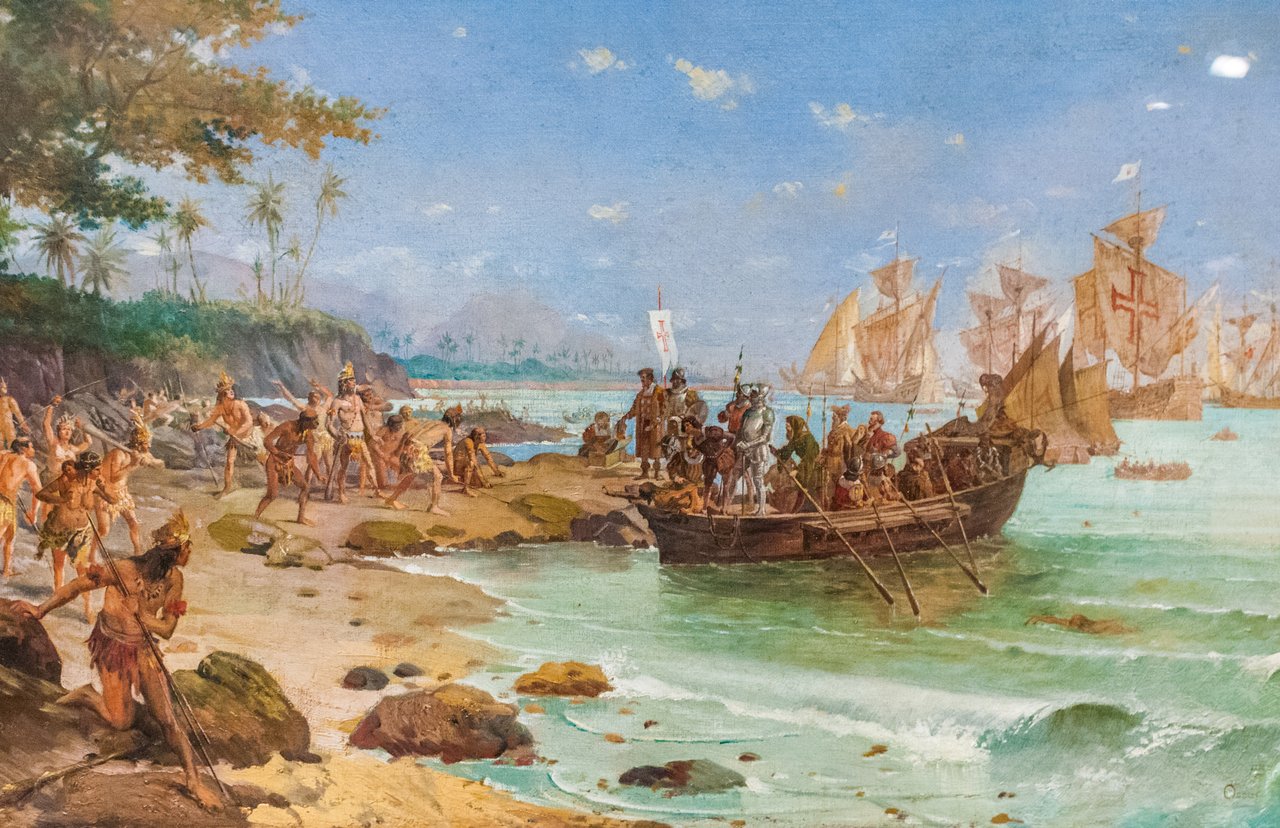
Not lost like Columbus: Pedro Alvares Cabral, who claimed Brazil for Portugal, disembarks at Porto Seguro in 1500 at the start of Portugal’s colonisation of Brazil. Porto Seguro (or Safe Harbour) is now a city in the far south of the state of Bahia, Brazil
Moorish domination extended to parts of Italy. In 846 AD, they held the city of Rome in a state of siege while in 878 they captured Sicily from the Normans. Twenty years later, the Moors took control of southern Italy by defeating Otto II of Germany.
As in Spain and Portugal, miscegenation took place on a wide-scale between the Moors and the Italians who at that time had large infusions of Germanic blood due to the invasion of the Goths and Vandals.
Again, like Portugal and Spain, the blood of Africa permeated through all layers of Italian society and found its way into the leading families, including the most illustrious royal family of the times – the Medicis.
Colour was no bar to power and honour in Italy at the time. This was illustrated when Alessandro dei Medici, known as “The Moor”, became the first Duke of Florence.
The Moors in Britain
The Moors also dominated the British Isles at one point in history. The British archeologist and writer David Ritchie declared that the Moors dominated Scotland as late as the time of the Saxon kings. He stated with scholarly authority:
“So late as the 10th century, three of these provinces [of Scotland] were wholly black and the supreme ruler of these became for a time the paramount king of transmarine Scotland. We see one of the black people – the Moors of the Romans – in the person of a King of Alban of the 10th century.
“History knows him as Kenneth, sometimes as Dubh and as Niger … We know as a historic fact that a Niger Val Dubh has lived and reigned over certain black divisions of our islands – and probably white divisions also – and that a race known as the ‘Sons of the Black’ succeeded him in history.”
It is no exaggeration, then, to claim that the Moors were a leading power in those 6 or 7 centuries from the time of Tarik’s conquest on the Iberian Peninsula. They dominated the Mediterranean and the North Atlantic and held power over the coasts of Western Europe and the British Isles.
But it is not for their military conquests in Europe that the Moors are remembered. It is the culture and learning which they gave to European countries at a time when there was darkness and nothing elevating in the arts and sciences of a continent that was to claim falsely in later centuries to be the crade of civilisation of the world.
That this civilisation was first given to them by the Africans who remained in European countries for several centuries has stayed shrouded in perjuries, half-truths, mythologies, and/or total omissions.
This civilisation, brought by the African Moors, needs further and deeper examination, especially as Spain and Portugal were the first countries in Europe to benefit from the enlightenment which the African warrior-scholars carried with them from across the African mainland through the Mediterranean Sea to Iberia, and to other European countries further inland.
And what irony? The Moorish contact with Portugal was to have more dire consequences for Africa and African peoples. To begin with, the effects of Muslim and Moorish civilisation on Europe, particularly Portugal, is closely linked to the effort to reconstruct the processes by which the African past was extracted from European consciousness.
There is little doubt that one of the greatest ironies of this history was the founding of the Portuguese state and the elite class that ran it. The “Age of Discovery”, which Portugal, initially from the learnings of Prince Henry, extracted and copied from Muslim and Moorish scholarship, marks the beginning of the modern era in European development.
This expansion of the Portuguese into Africa and the “New World” set in motion the encounters between the peoples of the European peninsula and the African peoples. This was to lead to the Atlantic Slave Trade and Slavery, two of the greatest disasters which Africans suffered, and from which they have not yet recovered.
One scholar went as far as to claim that this catastrophic meeting was to “produce the Negro”. It was at this point that the stereotype first showed its face on the map of the histories of Europe.
What did Africa gain from all this?
It is lamentable that the European foray into Africa and other lands across the seas was initiated by Portugal using the knowledge gained from Africans in order to conquer, colonise, rape, exploit, oppress, maim and murder other Africans they had captured and chained in the prison plantations of slavery. The Moors themselves who were banished from Portugal and Spain suffered the same horrible fate that their descendants were to endure.
How were the Moors recompensed for their phenomenal contribution in civilising Spain, Portugal, and the other areas of a Europe steeped in darkness?
The 19th century English scholar, Stanley Lane-Poole, paints a picture of European savagery of the lowest form in their genocide of the Moors. “Fifty thousand of them were brutally murdered on the famous Day of All Saints, 1570, when the honour of the apostles and the martyrs of Christendom was celebrated by the virtual martyrdom of these Moors … No less than 3 million Moors were banished by the first decade of the 17th century.”
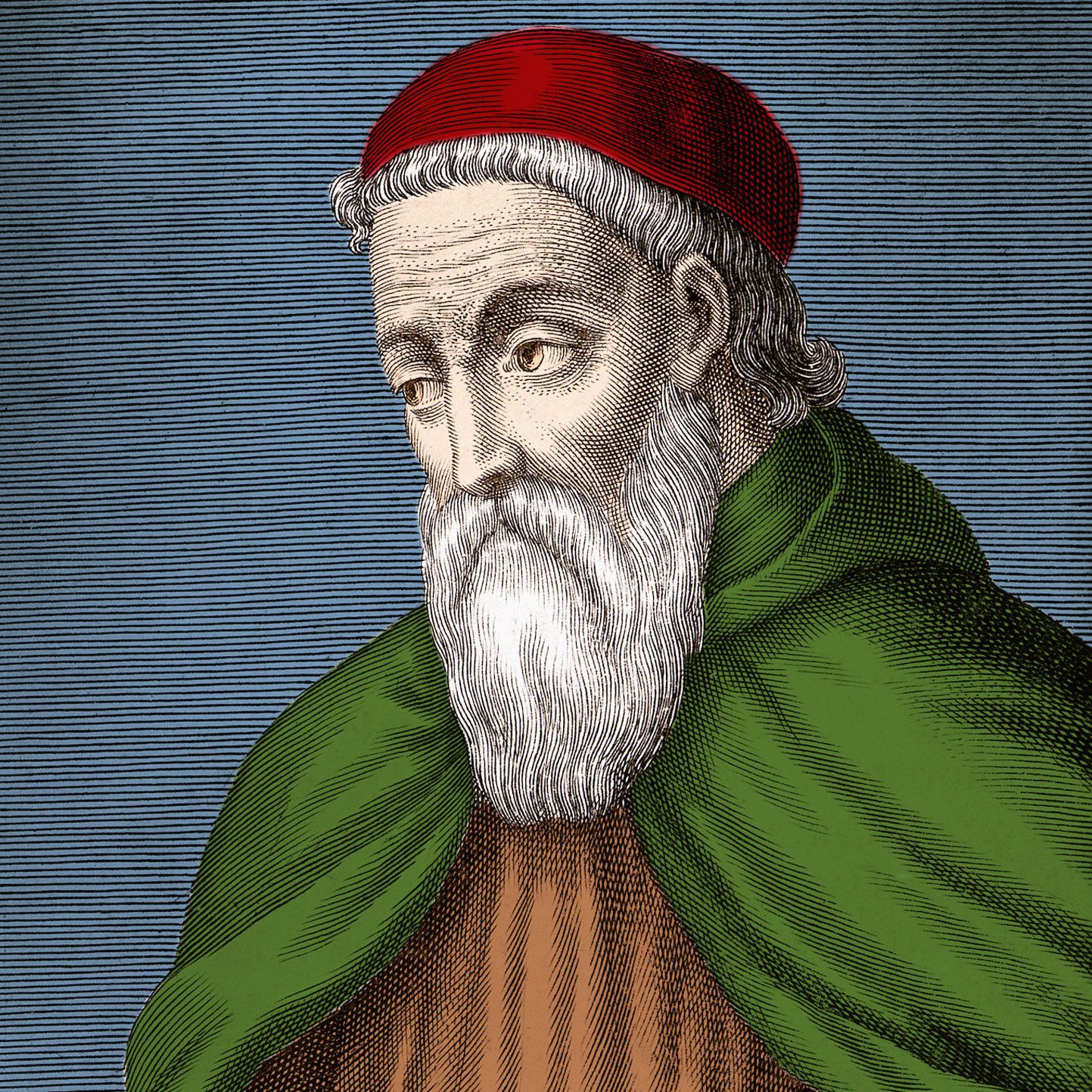
An Italian who worked for Portugal and Spain: Amerigo Vespucci (above) participated in at least two voyages, first on behalf of Spain (1499-1500) and then for Portugal (1501-1502), and eventually, in 1532, got his name permanently affixed to the continent that came to be called America (North and South)
To use the words of the Franciscan priest Bartholomew Las Cascas, during the Columbian era, when these dastardly deeds were being perpetrated on the Moors: “Moloch must have been in the skies.”
Spain and Portugal did not escape retribution. Where once wit and learning flourished, a general stagnation and degradation had fallen on their people and lands. Historians are agreed that they deserved their humiliation.
Such is the terrible price that Spain and Portugal had to pay for their treatment of the Moors. As Stanley Lane-Poole concluded: “They did not understand that they had killed their golden goose.”
To further authenticate the identity of the Moors, we publish below snippets of what other writers said about the Moorish identity, put together by Tom Mbakwe.
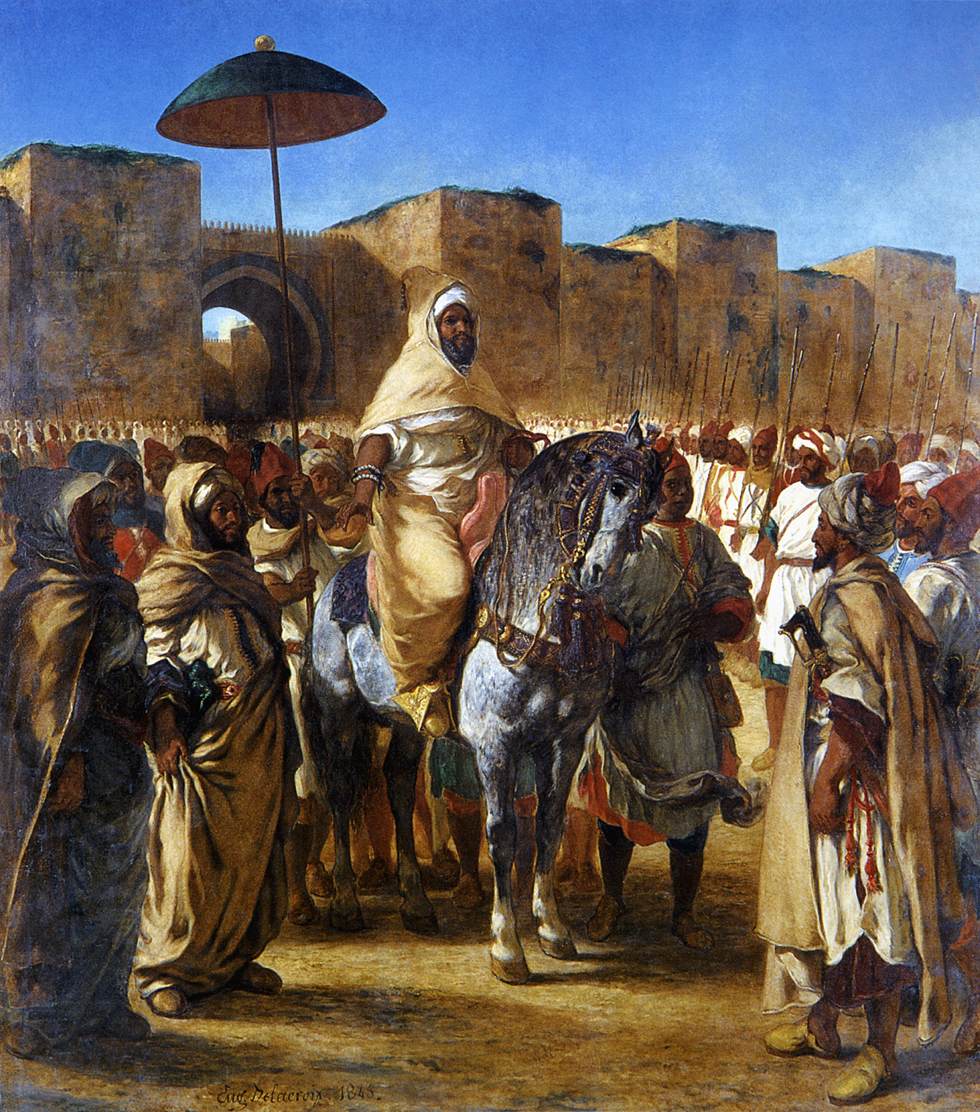
The fighting force: The Moorish infantry was made up of men of different hues of black and brown, being Berbers.
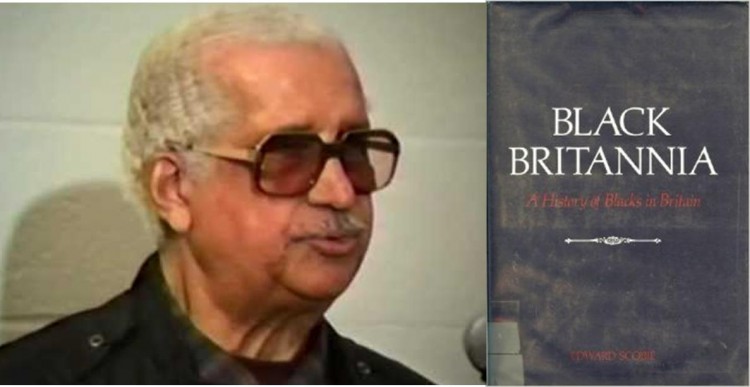
Edward Scobie was a Dominican-born journalist, magazine publisher and historian, best known for his research into the history of black people in Western Europe and his 1972 seminal work, Black Britannia: A History of Blacks in Britain. Born on 23 May 1918, he died on 14 November 1996. Regarding the identity of the Moors, he wrote:
“Scholars who are not blinded by the fog of racism are of one voice that most of the Moors were Africoid in origin; even many of the marauding Arabs who crossed the desert sands of Arabia and swept down with their Islamic fervor on the northern regions of Africa, then crossing the Sahara and moving further southward. Massive miscegenation did alter the picture, producing people who were of all shades, from jet black to very near ‘white’.
Dr Chancellor Williams in The Destruction of Black Civilisation (1976) hit the nail on the head when he asked and answered the question: “Now, again, just who were the Moors? The answer is very easy. The original Moors, like the original Egyptians, were Black Africans. As amalgamation became more and more widespread, only the Berbers, Arabs and coloureds in the Moroccan territories were called Moors, while the darkest and black skinned Africans were called ‘Black-a-Moors’. Eventually, ‘black’ was dropped from ‘blackamoor’.
“In North Africa – and Morocco in particular – all Muslim Arabs, mixed breeds and Berbers are readily regarded as Moors. The African Blacks, having had even this name taken from them, must contend for recognition as Moors.”
Dr John Coleman deGraft Johnson was a Ghanaian professor of economics, editor of the Economic Bulletin of Ghana, a historian and author of African Glory: The Story of Vanished Negro Civilisatiosn (1986): Regarding the identity of the Moors, he wrote: “It was because the conquering army in Spain was largely made up of Africans from Morocco that we hear such phrases as ‘the Moorish invasion of Spain’, and why Shakespeare’s hero Othello is a Moor, and why the word ‘blackamoor’ exists in the English language, a word which leaves no doubt as to the colour of the army of occupation in Spain and Portugal.”
A man of brilliant scholarship: Edward Scobie did a lot to enlighten the world about the black presence in Europe and elsewhere
Edward Scobie adds: The term “Arabic”, contends Dr deGraft Johnson, must be understood in a cultural rather than a racial sense, “for the Arabs did not believe in any herrenvolk theory and freely intermarried with those they conquered”.
Their conquest of North Africa, however, was no walk-over except perhaps in Egypt, where the Arabs were looked upon as deliverers from the oppressive rule of Byzantium. The fierce resistance mounted by Kuseila of Mauretania and by his relative Kahina projected the African mood at that period.
In fact, so fierce and determined were the African counter-attacks that an Arab governor once saw fit to observe that the conquest of Africa was impossible. Scarcely had a Berber tribe been exterminated when another would take its place.
Nevertheless, upon conquest, Africans appear to have been converted to the Mohammedan faith, particularly through the system of intermarriage which was practised on an extensive scale by the Arabs.
Among the African leaders converted to the Islamic faith during the invasion of Morocco was the great general known as Tarik. In describing Tarik and his army who captured Spain, chroniclers of the time made note that these Moors were “a black or dark people, some being very black”.
The conquest of Spain has been described by Dr Degraft Johnson as an African conquest. Like other historians before and after him, he made it clear that the conquerors were Mohammedan Africans, not Arabs, “who had laid low the Gothic Kingdom of Spain”.
The Arab quotient in the conquest of Spain was added by Professor C. P. Groves in his book, The Planting of Christianity in Africa (1948) when he stated that the Arab leader Musa ibn Nusayr “apparently taken by surprise at the speed of events, hastened across with an army the following year and completed the conquest, thus associating Arab arms with the final victory.”
It was Musa ibn Nusayr who, after having invaded Morocco, gave Tarik the rank of general and left him in charge of Tangiers, making him governor of Mauretania.
he Moors in Spain:According to the Oxford English Dictionary, the Moors are people who are commonly supposed to be black or very dark and it is synonymous with the word for “Negro” in many contexts. During the European Renaissance, explorers, writers and scholars began to apply the term Moor to Blacks in general
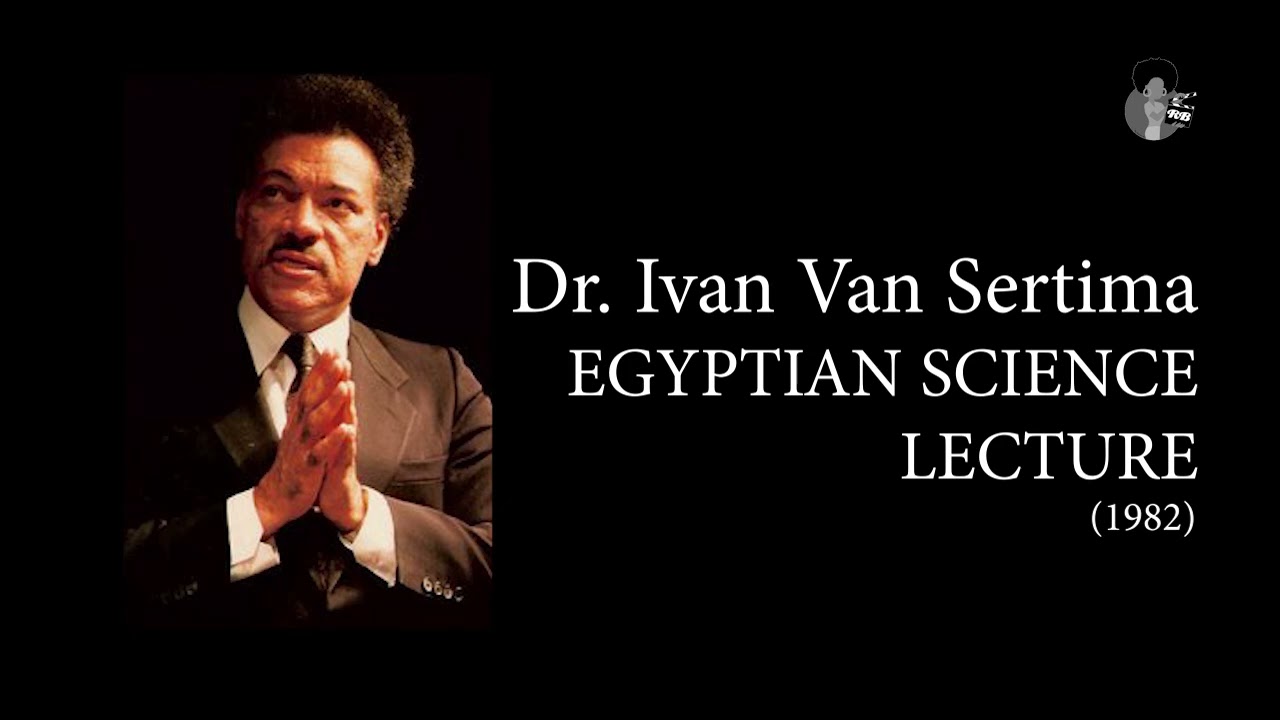
Dr Ivan Van Sertima, the African-American historian of note, takes us through the history, identity, and the achievements of the Moors in Africa and Europe. “The fact that Africans from the North had been intruding into Southern Europe from very early times should not come as a great surprise, for the straits that separate the two continents can be crossed by the simplest boats in a matter of hours. The proximity of the borders of Europe and Africa and the evidence of the African phenotype among many southern Europeans led Napolean to remark that “Africa begins at the Pyrenees”, Sertima writes. Please read on…
Prof Ivan Van Sertima: “We are grateful that, in spite of their prejudices, Christians left vivid images of the Muslim Black. While the Black figure at times takes on a demonic quality or emerges as an exaggerated caricature of the African, Christian paintings and sculptures are an indisputable witness to the African’s presence and importance during the period of the European Dark Ages”
It is generally assumed that the movement of Africans into Europe, in significantly large numbers and into positions of real power, did not occur until the Moorish invasion of Spain in 711 AD. In Ibn-l-Khattib Al-Makkary’s History of theMohammdan Dynasties in Spain (published in 1840), however, we learn of a great drought that afflicted Spain about 3,000 years ago, a catastrophe that was followed not long afterwards by an invasion from Africa.
This, of course, had nothing to do with the medieval Moors, with which this article is primarily concerned, but it is worth noting here because it actually established an ancient African dynasty in Spain, a fact that is omitted from the official histories.
The drought that devastated Spain, however, is described by a number of Spanish historians. Pedro de Medina in Libro de las Grandezas de Espana (1549) dates the drought in 1070 BC.
Al-Makkary (in his major historical work, translated by Pascual de Gayangos) describes it in some detail. It is Al-Makkary also who informs us of how Africans banished from North Africa by an African king against whom they revolted, entered Spain and took control of that country. The leader of the Africans is recorded as Batrikus. What his original name was we do not know, but it survives as Batrikus in the Latin of the Romans because it was the Romans who defeated these Africans 157 years later.
These Africans first cast anchor at a place on the western shore of Spain and settled at Cadiz. Advancing into the interior of the country, they spread themselves about, extended their settlements, built cities and towns and increased their numbers by marriage.
They settled in that part of the country between the place of their landing in the west, and the country of the Franks in the east, and appointed kings to rule over them and administer their affairs.
They fixed their capital at Talikah (Italica), a city now in ruins, which once belonged to the district of Isbilah, which is the modern Seville. But, after a period of 157 years, during which 11 kings of the African race reigned over Andalus, they were annihilated by the Romans, who invaded and conquered the country.
The second African invasion of Spain
The second major intrusion of an African army into Spain before the Moors, occurs some time around 700 BC during the period of the 25th dynasty in Egypt, when the Ethiopian Taharka was a young general, but before he had been ceded the throne by his uncle Shabataka.
It is this same Taharka (referred to in early Spanish chronicles as Tarraco) that led a garrison into Spain and invaded it during this period. We have a clear and indisputable reference to this in a manuscript by Florian de Ocampo, Cronica General, published in Media del Campo in 1553.
The name of the invading general is given as Tarraco. He is not only identified as the head of the Ethiopian army. The reference is more specific. It says he was later to become a King of Egypt. The name, the period, the historical fact of his generalship and his later kingship of Egypt, his Ethiopian origin and the wide-ranging trade and exploration of the Ethiopian in this period, all attest to the validity of this reference.
But most persuasive of all is the fact that cartouches of the Upper Egyptian kings of this period have been found in Spain. A cartouche is an ornamental carving or scroll depicting characters that represent the name of a sovereign.
Evidence of such cartouches may be found in the Journal of the EpigraphicSociety (Vol 7, No.171, April 1979). The cartouche of Shishonq, a Libyan king, was found in Tomb 16, Almunecar, Spain. The Libyans ruled with the support of Nubian armies from the 22nd and 24th dynasties of Egypt and were overthrown by the Nubians in the 25th.
The fact that Africans from the North had been intruding into Southern Europe from very early times should not come as a great surprise, for the straits that separate the two continents can be crossed by the simplest boats in a matter of hours. The proximity of the borders of Europe and Africa and the evidence of the African phenotype among many southern Europeans led Napolean to remark that “Africa begins at the Pyrenees”.
Many historians, however, make clear-cut distinctions between the early North Africans and the Africans of the Sahara. They contend that the Africans who made contact and left their mark on Europe should not be confused with the sub-Saharan African type. They see these people as Euro-Africans (another version of the “brown Mediterranean race” myth used to account for the genius of Egypt).
Since many North Africans in modern times seem to fit into this theoretical construct, it has worked very well to confuse and confound the definition of their ethnicity.
The original Black Berbers
The people whom the classical Greek and Roman authors called the Berber were mainly Black and affiliated with the then contemporary peoples of the East African area. The word Berber was used in fact to refer to peoples of the Red Sea area in Africa as well as North Africans. It was an ancient belief that nomads dwelling in the deserts of Arabia were the same peoples whose ancestors had in earlier times roamed the deserts of East Africa.
It was such populations that largely comprised the Moorish people, called Moors (from the Greek maures, the Roman maurus = dark), because of the attribute of blackness which sharply distinguished them from the bulk of the European people.
However, the inhabitants of present-day North Africa are considered ethnically and culturally distinct from people dwelling south of the Sahara. This is only so today because of the considerable influx of European types during the white slave trade and their later movement in positions of dominance after the defeat of the Moors.
The 781 years during which the Moors dominated the Iberian Peninsula was an era in which many Europeans came into North Africa in states of servitude. The Muslims brought millions of European slaves over to the North African ports of Sale, Tangier, Algiers, Tunis, Tripoli, Fez, and Marrakesh, and some of the northern Egyptian towns.
One very famous Sultan, Mulai Ismail of Meknes, in Morocco, had as many as 25,000 European slaves who participated in the building of his colossal stables. The Sudanese were also taken into slavery but before the 15th century not as many as the whites. It was these Europeans who began to modify through intermixture with the earlier black inhabitants of North Africa. This is what eventually made so many North Africans appear different from the sub-Saharan Africans.
The anthropologist, Dana Reynolds, in an exhaustive and meticulously detailed essay, has attempted to trace the African roots of the original North African peoples. She cites half a dozen Greek and Byzantine (neo-Roman writers), from the first to the sixth century AD, who describe the Berber population of North Africa as black-skinned. Among the writers are Martial, Silius Italicus, Corippus, and Procopius.
The original Black Berbers, who were called Moors, were the North African ancestors of the present day dark-brown and brown-black peoples of the Sahara and the Sahel, mainly those called Fulani, Tuareg, Zenagha of Southern Morocco, Kunta and Tebbu of the Sahel countries as well as other black Arabs now living in Mauretania and throughout the Sahel. They include the Trarza of Mauretania and Senegal, the Mogharba as well as dozens of other Sudanese tribes, the Chaamba of Chad and Algeria.
Apart from her very detailed study of the origins and affiliations of the various tribes, Dana Reynolds points out that the Africans involved in the Moorish occupation of Iberia did not just build remarkable things in Europe but also in their native lands. They founded and constructed many industrious and prosperous towns all over the north of Africa and as far south as Timbuckto. The ruins of their castles can be seen as much in Northern Africa as in Andalusia.
The Moors
During the European Renaissance, explorers, writers and scholars began to apply the term Moor to Blacks in general. But the Arabs rarely used this word. In Arabic literature, the word Moor was fairly non-existent and the term Berber was applied to practically all the inhabitants of the Maghreb (Islamic North Africa west of Egypt).
The Arab use of the world Berber presents further difficulty since the term embraces many clans, not all of whom are Black. It is because of this that some writers, as well as Dana Reynolds, have gone to the trouble in certain contexts to identify those Berber clans of Africoid or predominantly Africoid origin.
The most important identifier, of course, is to be found in medieval painting and sculpture. It is claimed that certain Islamic traditions inhibited the representation of the human image in the work of Muslim artists and even in cases (some medieval Persian art, for example) where the inhibition does not seem to have obliterated portrait art, the human image is often frozen, non-individualistic and unreal.
We are grateful, therefore, that, in spite of their prejudices, the Christians left vivid images of the Muslim Black. While the Black figure at times takes on a demonic quality or emerges as an exaggerated caricature of the African, these paintings and sculptures are an indisputable witness to his presence and importance in this period.
Such illustrations are to be found in the Cantigas of Santa Maria, allegedly written by Alfonso X (1254-1286). They are filled with images of the Moor and are mostly Black types. This is the period of the Almoravid invasion which brought hordes of new Africans into the Iberian Peninsula.
Medieval illustrators in the Cantigas portray Blacks in a variety of roles – from members of the aristocracy to the military. Included among the images of medieval Spain is a Black man receiving gifts from a caliph or emir. In another illustration, two noble Black Moors are shown playing chess while being attended by black and white servants and musicians.
Also, in the army of the Almoravid, Black Moors are shown not only as foot soldiers, bowmen, lancers, and horsemen, but high-ranking officers. This needs to be emphasised since European historians have repeatedly presented Blacks in these contexts as mere palace guards, harem-keepers, and muscle-mounted mercenaries.
Moorish influences and contributions
A distinction should be drawn between Classical Renaissance of Europe, which mainly relates to its literature and art, and the Scientific Renaissance, which began to bud and flower in the 12th and 13th centuries.
Dr José Pimienta-Bey, in a very detailed work on the Moors (Moorish Spain: Academic Source and Foundation for the Rise and Success of Western European Universities in the Middle Ages, published in 1992), deals primarily with the Moorish stimulus for the scientific renaissance of Europe.
Dr Pimienta-Bey was born and raised on Long Island, New York, USA, to Cuban and Moorish parents. A historian of note, he has, since 1985, concentrated his primary research interest on the Moors and their impact on the development of European academic institutions and society. His book, Othello’s Children in the ‘New World’: Moorish History & Identity in the African American Experience (2002) is a classic.
Now chair of the African and African-American Department of Berea College, Dr Pimeienta-Bey presents a formidable body of evidence that shows that the foundation of much of medieval Western science and its academies was built up upon transmissions, refinements, and discoveries of the Moors and Arabs. Bey provides us with a detailed examination of Western Europe’s scholarly relations with Spain. Translation, of course, played the major role in this diffusion of the sciences.
The schools of translation were like the bridges between the Muslim and Christian scholars. Chief among these was the school of translators founded at Toledo by King Alfonso X during the 13th century.
Translations from Arabic (the medieval language of science) into Latin, the classical European language, had been going on since the 10th century. Centres of translation sprang up all over Christian Europe – Barcelona, Tarazona, Leon, Segovia, Pamplona, Toulouse, Beziers, Narbonne, Marseilles.
Bologna, Salermo and Paris have also made extensive use of Moorish scientific treatises. The translations from the Arabic provided links between Spain, Portugal, France, Italy and England. Alfonso X promoted Moorish erudition at every opportunity.
Nearly all the major universities in Europe sprung up around the same time, beginning in the second half of the 12th century right up through the 13th, a span of about 150 years, a period which coincides with the flowering of Moorish science and the establishment of centres in Europe to translate Moorish treatises from Arabic into Latin. In Italy, we have Bologna, Padua, Naples, Rome; in France, Montpelier and Toulouse; in Portugal, Lisbon and Coimbra; in England, Oxford.
Education, the African gift to Europe: Nearly all the major universities in Europe sprung up around the same time, beginning in the second half of the 12th century right up through the 13th, a span of about 150 years, a period which coincides with the flowering of Moorish science and the establishment of centres in Europe to translate Moorish treatises from Arabic into Latin. In Italy, we have the universities of Bologna (photo left), Padua, Naples, Rome; in France, Montpellier and Toulouse; in Portugal, Lisbon and Coimbra; in England, Oxford
Several of the Moorish works in mathematics, astronomy and medicine became standard texts in these universities. For example, Judwal, a Moorish work in astronomy, became a standard text at Oxford.
A curious schizophrenia developed among the Catholics in relation to Moorish science and knowledge. On the one hand, they were very much aware of the superior knowledge of the Moors and they made efforts to acquire that knowledge so that they would not be left too far behind. At the same time, they strove desperately to keep it away from the common people and even, at times, to vilify it so that it would not become a challenge to Catholicism.
They were afraid that the Enlightenment, the new ideas that this new knowledge would bring, could affect the populace. So that, even though they were given the keys to the inner sanctum, they kept the cage closed to the masses.
A mighty Black empire
Into Europe came the advances of an empire more immense than those of either Alexander the Great or Rome at its height. Rice was introduced into Europe by the Moors in the 10th century, cotton by the 9th. A Moorish botanist, Ibn Bassal, partitioned the land into 10 different classes, according to particular characteristics, and taught the farmers ways of increasing the fertility of their plots.
Surveys were done to locate sweet water below the earth. Widespread use was made of the waterwheel which the Moors had introduced into Spain. The Romans also knew of this but they had used it very little.
The Moors also dug canals and channels to irrigate the farmlands and provide water for the thousands of houses and mosques and palaces and public baths. They not only increased the fertility of the soil with their new methods and tools and plants and manures, but they also ushered in the sciences of food preservation and storage. Their methods of drying enabled such food as figs, plums, cherries, and apples to remain edible for several years.
The Moors have left the voiceprint of their language on the things they introduced. A lot of Arabic words have entered general usage as a result of the Moorish invasion of Europe. Pamienta-Bey cites coffee, sugar, rice, cotton, lemon, syrup, soda, alcohol, alkali, cipher, algebra, arsenal, admiral, alcove, and magazine.
Let me add a few to this list, selected from my own work on pre-Columbian navigation and the transfer of plants: anchor (from angar), caravel (from caravos), tobacco (from dubbaq and a series of taba and tabgha words). Also the technical terms for the astrolabe (an astronomical device invented by the Moors) still retain their Arabic names.
But technology in itself is not the only arbiter of civilisation. It is important to note a benign African influence on the way Islam operated in Spain, particularly in relationship to women. Ibn Battuta, the Arab traveler and writer, first commented with astonishment on the level of freedom and equality of Muslim women in the African town of Walata.
It was the same in Moorish Spain. Unique among Islamic nations, women in Moorish Spain enjoyed more social freedoms than in any part of the Islamic world. They moved freely in public and engaged in various gatherings. The practice of purdah was almost entirely ignored in Moorish Spain. Even a daughter of a 12th century Caliph had a total disregard for the veil.
Europe’s ‘Dark Age’
A question that has always haunted me is the reason for Europe’s Dark Age. Why did Europe fall into such darkness after all it had received from the Greeks who had taken so much from, and added what they could to, the Egyptian sciences?
George G James, in The Stolen Legacy (1954) answers this question. James had pointed out that the edicts of Theodosius in the 4th century closed down the temples of the Egyptian mysteries as well as the philosophical schools of Greece. The emperor, Justinian, in 529 AD followed in the same path of Theodosius. Thus, an intellectual darkness descended over Christian Europe and the entire Greco-Roman world. It lasted for centuries.
James makes an even more important point which I have not seen repeated elsewhere. It is the missing link in the drama of Moorish scientific ascendancy in the Middle Ages. Eurocentric historians had argued that the Arabs were merely transmitting the Greek heritage lost to Europe during its Dark Age. Even Arabs were made to believe that, and to assume that they were standing on the shoulders of Greek giants.
By the time the Arabs attacked Egypt in 639 AD, Europeans had long been in charge of that defeated country. The Arabs seemed to forget that their conquest of Egypt had been made easy by the resentment of the Egyptians against their Byzantine overlords.
We know very more today about the enormous debt Greek science owes to Egypt. But what was little suspected was that Greece was not the only conduit of Egyptian scientific genius to the Arab world.
George G. James provides evidence that there were Egyptians fleeing their country in large numbers during the Persian, Greek, and Roman invasions, fleeing not only to the desert and mountain regions but also to adjacent lands in Africa – Arabia and Asia Minor, where, “they lived and secretly developed the teachings which belonged to their Mystery System.
“In the 8th century AD, the Moors of North Africa invaded Spain and took with them the Egyptian culture which they had preserved. Knowledge in the ancient days was centralised, that is, it belonged to a common parent and system – the Wisdom System or Mysteries of Egypt, which the Greek used to call Sophia”.
While in Spain, the Moors did not suppress the languages of the people of al-Andalus, they did not outlaw their sacred customs, they did not turn Iberia into a sweat-shop, its fertile lands a mere source of raw materials for the Muslim international elite.
The Moors also did not destroy the legal system of al-Andalus, rob them of their political rights, deny them their claim to humanity. The one thing they did insist on, was a say in the election of Catholic bishops since the rival power of the church could undermine Muslim power and authority.
The defeat of the Moors
The world changed dramatically in 1492, not only because Columbus stumbled in the direction of the Americas, using the magnet of a myth to draw millions behind him, but because that was the very year the Moors were defeated. It is not accidental that it is Spain and Portugal who spearheaded the movement in this direction. It was on 2 January 1492 that the African leader, Abu Abdi-Liah, otherwise known as Boabdil, surrendered to the Spanish.
Startling comparison: Jan Carew, a veritable man of letters and an important intellectual of the Caribbean world, compared the illiteracy of the Christian Europeans to the learning and erudition of the Moors of that time. He wrote: “At a time when the most insignificant provinces of Moorish Spain contained libraries running into thousands of volumes, the cathedrals, monasteries and palaces of Leon, under Christian rule, numbered books only by the dozen. The paltry number of texts the Christians did possess were almost all devotional or liturgical.”
Jan Carew, a veritable man of letters and an important intellectual of the Caribbean world (born in Guyana in 1920, died 6 December 2012) compared the illiteracy of the Christian Europeans to the learning and erudition of the Moors of that time.
The comparison was so startling, his comment is worth quoting: “At a time when the most insignificant provinces of Moorish Spain contained libraries running into thousands of volumes, the cathedrals, monasteries and palaces of Leon, under Christian rule, numbered books only by the dozen. The paltry number of texts the Christians did possess were almost all devotional or liturgical.”
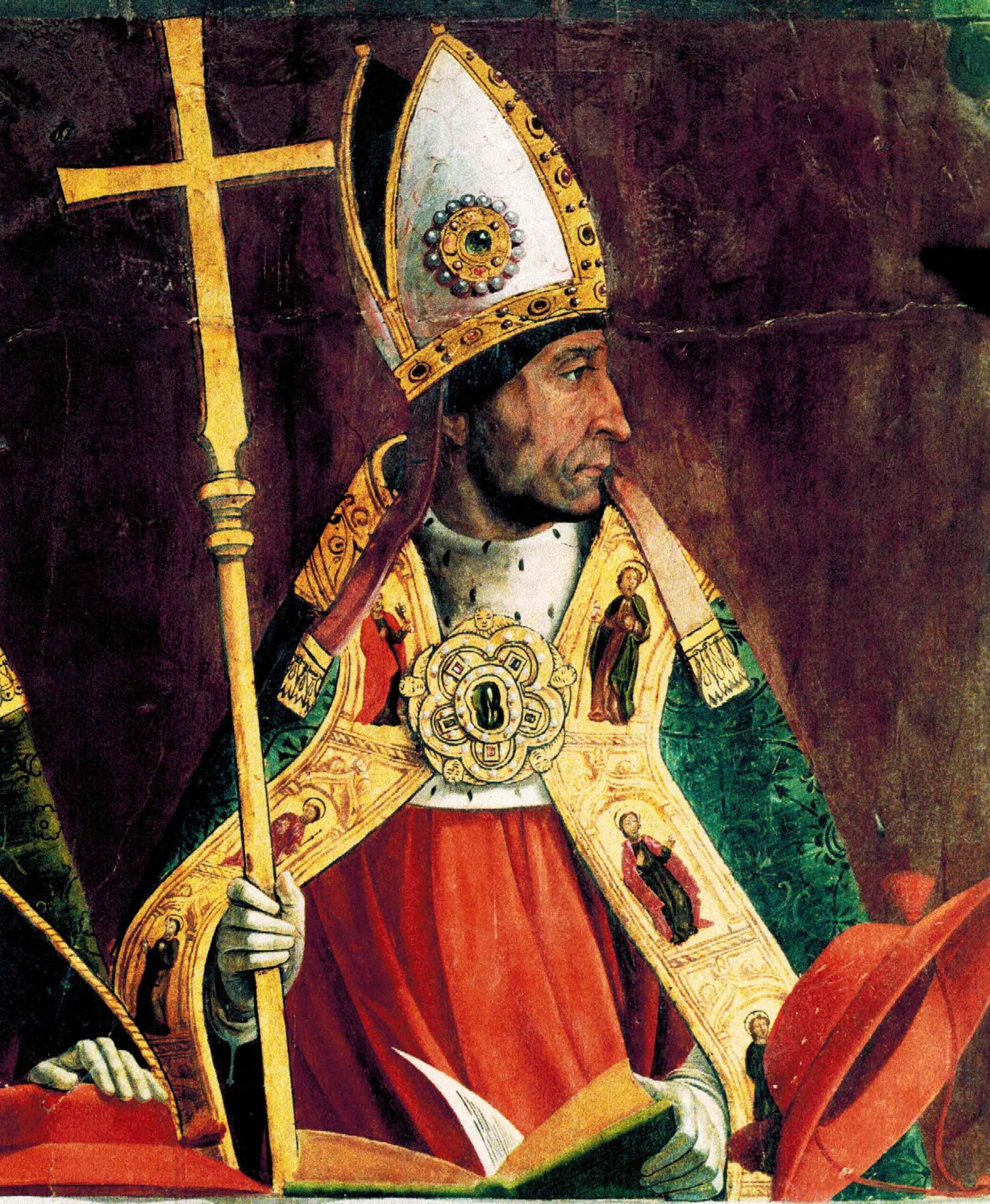
A bad man in Spain: Cardinal Ximenes de Cisneros led the massive burning of African and Arab books after the defeat of the Moors in 1492
The narrowness of vision this produced among leaders of the church and state was to have catastrophic effects. It led to the massive burning of African and Arab books under the order of Cardinal Ximenes de Cisneros. It inspired a similar bonfire of the books of native Americans. Bishop de Landa exhorted his followers in the Yucatan: “Burn them all – they are works of the devil”.
The destruction of the Moorish libraries was particularly vicious because it was not only inspired by religious narrowness and bigotry. Hatred of the dark invaders kindled the bonfires.
The Church at the time too saw most of this foreign learning as something evil, even demonic. The number system that we use today, for example, brought in by the Moors from India, was seen as late as the 17th century in some parts of Europe as signs of the devil.
It became a religious mission for men like Ximenes and his successors to erase from history all memory of the Moors. Ximenes even induced the Spanish sovereigns to outlaw the public baths, making cleanliness antithetical to godliness.
Beaten into surrender, forced by the million to seek refuge back into Africa and Arabia, some of the Moors still held their ground. An important rebellion by the Moors is cited by Jan Carew in 1568 led by Malvi Abd-Allah Mohammad ibn Umayya. This was such a serious rebellion that Philip II of Spain had to call on Don Juan of Portugal to put it down.
Carew deals with the subtle evasions by Europeans who refuse to admit that the Almoravids (1056-1147) were Africans. “They continue to describe them variously as ‘descendants from Sanhaja tribes of the Sahara’ or ‘the desert Sanhaja from whom the Almoravids had first drawn support’, suggesting the Almoravids, themselves, were of a different race and that they got the Sanhaja to help in their campaign; or ‘the African troops, the Sanhaja…’”
While Carew notes that the Arabs later developed a myopic vision of history, ignoring the African contribution to the invasion and colonisation of Southern Europe, he praises the early Muslim openmindedness. For, after all, Islam went beyond the Arab and, in its early revolutionary phase, its eagerness to embrace the universe of man’s imaginings was extraordinary.
“Unlike Christian theologians who forbade scholars from considering outside ideas and prescribed only ecclesiastical canons of the day, Islam accommodated new ideas with grace and a civilised tolerance,” Carew says.
Let me quote from him again since he highlights the advantages of this kind of dynamic openness very well: “Muslim scholars absorbed and synthesised and expanded upon the knowledge of the Ethiopians and Egyptians, the Phoenicians, the Greeks, the Chinese, and the Indians.
“A new and momentous leap forward in the theoretical and applied sciences evidenced itself in Moorish mathematics, medicine, astronomy, navigation, and new concepts of world geography and philosophy … The popularity of Moorish scholarship was such that for centuries Arabic was commonly accepted as the language of scholars from Europe, Asia and Africa…”
Carew is particularly illuminating when it comes to the discussion of agriculture. The Moors transformed the Iberian Peninsula in this respect. They were able to create a harmony in the rhythms of the life in the city and in the countryside.
They not only brought advanced drainage and irrigation systems, reservoirs, aqueducts, sophisticated storage facilities, and efficient marketing, transportation, and trading networks, but they brought the beauty and freshness of the countryside into the cities – fantastic gardens, parks, lush inner courtyards, and a constant supply of pure water.
They also brought a variety of new crops like cereals, beans and peas of various types, olives, almonds, and vines – rich new sources of protein. Fruits unknown to Europe tumbled into the market – oranges, pomegranates, bananas, coconuts, maize and rice.
They brought the art of city farming as well to the high bleak plains, and they introduced the water-wheel (as I mentioned earlier), an invaluable source of energy for irrigation and the grinding of grain.
The impact of the Moors upon European literature and upon the work of great writers like Cervantes and Shakespeare, is also rarely discussed. Carew points out that Spain’s greatest literary figure, Cervantes, was for several years a prisoner of a Moorish leader in North Africa.
The tales of knight errantry and courtly love, which obsess Cervantes’s hero, Don Quixote, were filtered through centuries of the Moorish/Islamic experience. There were Moorish brotherhoods that may be described as orders of knights. Their imprint on European heraldry, on shields, and emblems of chivalry, is dealt with elsewhere in this issue.
The Moors & Shakespeare
Bowled over: William Shakespeare, though he never travelled, had many merchant friends from whom he could milk information about the Moors. He wrote part of his romantic poems (called the Sonnets) in honour of his Moorish mistress, Lucy Morgan of Clerkenwell (London), and seems to have taken a greater interest in the black figure than any other English dramatist of consequence
Now William Shakespeare, though he never travelled, had many merchant friends from whom he could milk information about Morocco and the Moors. He also knew Queen Elizabeth’s ambassador to Morocco and the Moroccan ambassador to London.
Shakespeare also, I should point out, read Leo Africanus’ Geographical Historieof Africa, and quotes actual sentences from this in his play on Othello, the Moor. He wrote an ode to his Moorish mistress, Lucy Morgan of Clerkenwell, and seems to have taken a greater interest in the black figure than any other English dramatist of consequence.
Carew touches on Shakespeare’s treatment of these, from the noble Moor, Othello, to the caricature of the black slave, Caliban, round whom the racist prejudices of Elizabethan England are crystallised, to the dark-complexioned prince of Morocco, whose colour is cancelled out (in his rivalry with the pink prince of Aragon for the hand of Portia) by what Shakespeare sees as the grand equalser – wealth and class.
The image of the Moor in European literature, however, an occasional though powerfully evocative figure in the plays, novels and canvases of major European writers and painters, seems rather minimal in its effect on literacy or artistic structure and form. Not so in the matter of music.
The influence of Moorish music
The influence of African and Arab musical instruments, poetry and song, even musical theory, on the melodies and rhythms of Spain, shine through the lies and evasions of musicologists to this day. Dr Yusef Ali, drawing upon a comprehensive body of work on this subject, tries to set the record straight.
For many years, Dr Ali, a professional musician of several decades, was a lecturer on African-American music history in the Department of African Studies at Rutgers University in New Brunswick, New Jersey, USA. He died on 2 May 2008.
According to Dr Ali, a major misconception of African music is that it has always been separable from what became the Arab-speaking countries of the Maghreb – Morocco, Tunisia, Egypt, and Sudan. The tendency of most people, even scholars who should know better, to confuse ancient and modern social and ethnic reality, has led to serious misunderstandings about racial and cultural origins of the peoples of North Africa as compared with Africans in other parts of the continent.
The Mahgreb, according to Dr Ali, is seen as “a thin finger of Islamic culture that stretches from Egypt to the Atlantic”, and what it was before the advent of Islam or the European slave trade is ignored or forgotten.
We shall not attempt to prove here, since we have done so definitively in other editions, that Egypt, in the classical dynasties at least, was predominantly African, but what is seldom recognised is the African substratum of ancient Egyptian music.
This music was to spread and influence both the Eastern and Western world. It haunted and startled the Arab, even as he was startled by the pyramids and sphinxes and colossal monoliths, which in his desert habitat, he had never seen.
Experiments in Ancient Egypt with a music notation system and the establishment of schools of music that not only taught vocal and instrumental performance but also theory and chironomy (the art of notation by means of gesture), made Egypt the first civilisation to do so.
Egyptians, even as late as Greek times, were still possessors of canted knowledge in both music practice and theory. Thus, much that we give credit to Pythagoras and the Greek music theorists, they have deeper roots in Alexandria and the Nile Valley.
In addition, the legacy of Ancient Egypt is found in the shapes, tunings, and playing styles of such folk instruments as the argul double-clarinets, the genibri of North Africa, the many end-blown flutes of the Near East, the hlam of the Wolof, and the sistrum of the Ethiopian Copts.
An important African musicologist, Kebede, asserts that Egyptian civilisation is the cradle of music and that even the Greeks refer to Egypt as the source of their musicopedagogic ideas. Ancient Egyptian music is preserved today in the music found in the Coptic churches and it is also deeply rooted in the music characterised simply as Arabic.
What is remarkable and brings us back once again to brood upon the inspirations of Egypt is that the Arabs came there with their poetry but nothing formally set to music. They did not yet have a classical form of music that they could call their own.
There is no evidence of musical treatises in Arabic until the 8th century. This is after their invasion of Egypt, and their study of Ancient Egyptian music practice and theory, as translated and transmitted by the Greeks.
Virtually all European scholars, however, claim a Persian origin of Arab music even though they know (or at least should know) that the first Persian musical treatise dates from the 12th century, about 400 years later.
Ziryab the Great
The most significant of the Moorish musicians was Ziryab. He arrived in Spain in 822 AD. He was known as Ziryab (the Blackbird), a name given to him because of his black complexion, his eloquence and the melodious sweetness of his voice.
A great ‘Blackbird’: The most significant of the Moorish musicians was Ziryab (above). He arrived in Spain in 822 AD and became known the “Blackbird”, a name given to him because of his black complexion, his eloquence and the melodious sweetness of his voice. He became the most fashionable arbiter of taste in the 9th century
Ziryab made not just an impact on the music of Spain, especially in the development of the lute, but he became the cornerstone of Spanish musical art. In Cordova, he founded the first conservatory of music. He also invented a plectrum made of eagle quill instead of the wooden one that had been used before.
Ziryab was deeply versed in every branch of art and he was gifted with such a remarkable memory that he knew by heart upwards of 1,000 songs with their appropriate airs.
Before Ziryab, the lute was composed of only four strings which may be likened to the four elementary principles of the body. They expressed the four natural sounds. He added another red string and placed it in the middle which considerably improved the sound and made it more harmonious.
The theory of humors which the Egyptians introduced into medicine and which had been picked up by the Greeks (and, through their translations, by the Arabs), was now transferred to music. The object of music was to restore the equilibrium of the soul in the same way that medicine was supposed to restore the equilibrium of the body humors.
Ziryab became the most fashionable arbiter of taste in the 9th century. He affected the way the upper class of Andalusia ate at table. He was the first to introduce crystal tableware. He changed hairstyles. He introduced new customs in perfumes and deodorants, in the manner of washing clothes, in cooking.
He brought in new dishes, some named after him. He introduced new fashions in dress, a greater range of colours and textures of garments to suit the shift and change in seasons.
He revolutionised the style of serving and eating food. Food was no longer served in one mass as was the general case in al-Andalus before him. Following his lead, it was broken down into separate courses, beginning with soups and ending with desserts.
Instrument-making
Apart from musical composition, instrument-making achieved a high state of development in Moorish Spain. Some of the new instruments include the khayal, he carrizo (reed), the ltue, the rata, the rabel or rebec, the kanun (harp), the munis, the quenira (a type of zither), the quitar, the zolami (oboe), the shokra, and the nura (flutes).
Other wind instruments mentioned are the pastoral flute, the Moorish pipes, two kinds of flageolet and the bagpipes. The percussion instruments include the bambrel, the tambourine, castanets, brass rattles, macara and atambor.
Even when the Moors had been defeated and Christians had reconquered the territory once occupied by these people, Moorish music was imitated by a great number of Christian Europeans, and the Christian kings still kept Moorish musicians in their employ even as had the Moorish kings before them.
The Moorish influence on musical instruments in Europe was considerable. They were the first to introduce a scientific description of musical instruments and possessed the only didactic instrumental methods in music during the Middle Ages. While most commentators agree with this, they insist that the Moorish influence was confined to that category and that they contributed nothing to musical theory.
But the historian of music, George Henry Farmer, points out that since there was such an advanced state of instrumental music, it would be difficult to deny that some practical theory would have also been passed along. Indeed, says Farmer: “I believe, with others, that the major mood due directly to the accordatura and fretting of the Arabian lute was among the new musical ideas introduced in this way.” He also cites evidence for the transmission by the Moors of practical history.
The spread of Islam
Mamadou Chinyelu, a writer, journalist, and broadcaster of several decades, deals with the pivotal role of Africans in the birth of the Islamic faith and shows that they figure not only in Prophet Mohammed’s lineage, but in his upbringing and development as well. Apart from the reputed African ancestry of his grandfather, Mohammed was reared by an African woman, Barakat, when his mother died.
Mohammed pleaded with his family to raise money to free the African slave, Bilal, who not only became a pillar of the Islamic faith but Mohammed’s closest and most honoured friend unto his death. One of Mohammed’s wives – May – was an African. His adopted son – Zayd bin Harith – destined to become a great general, was also an African.
Mohammed held Africa in such mystical reverence that when his early followers were fleeing persecution in Arabia, he advised them to seek asylum in Africa, for “yonder lieth a land of righteousness”.
Africans therefore became pivotal in the spread of Islam. The invasion of Spain in the 8th century and the survival of the Muslim dynasties in the 11th century owe a great deal to African military prowess and leadership.
Chinyelu celebrates the military exploits of Tarik (who conquered Spain in 711 AD), of Yusuf Ibn Tashifin, leader of the Almoravids, who routed Alfonso VI’s army in 1086 (15,000 Africans facing 70,000 Europeans) and assumed the leadership of Muslim Spain in 1091, and of Yakub al-Mansur who conquered Spain and Portugal on two separate occasions to become the most powerful ruler in the world.
Such was the respect these leaders inspired in the hearts of their enemies, that royal crests and coats-of-arms in Europe were emblazoned with Moorish heads.
Moorish influence on science
To the influence of Moorish science in Europe we finally turn, for it is in this field that the impact of the Moors is least known and most felt. Wayne B. Chandler, in The Moor: Light of Europe’s Dark Age (1992), points to advances in mathematics, the solving of quadratic equations, and the development of new concepts of trigometry.
Chandler, an anthrophotojournalist did extensive research into the origins of race and ancient civilisations, and wrote the book, Ancient Future: The Teachings and Prophetic Wisdom of the Seven Hermetic Laws of Ancient Egypt (published in December 2000).
He and his associate, Gaynell Catherine, were instrumental in unearthing key photographs relating to the African presence in the Olmec civilisation, as well as the civilisations of Ancient India, Southeast Asia, Ancient Egypt, and China. His book, The Moors: Light ofEurope’s Dark Ages (1986) is a classic.
Chandler informs us that Moorish chemistry refined gunpowder invention in China and thus introduced the first shooting mechanisms, known as firesticks. They were also known for their skill in medicine. For seven centuries, the medical schools in Europe owed everything they knew to Moorish research.
Vivisection as well as dissection of dead bodies were practised in Moorish anatomical schools, and women as well as men were trained to perform delicate surgical operations. They were the first to trace “the curvilinear path of rays of light through air”. This discovery in about 1100 AD is a prerequisite to the design of corrective eyeglasses.
Supporting Chandler are Prof Beatrice Lumpkin and Siham Zitzler. In a chapter titled Cairo: Science Academy of the Middle Ages (published in 1992 as part of Golden Age of the Moors), Prof Lumpkin and Zitler focus on the work of mathematicians in Africa during the Muslim empire. Most of this work was done at the Dar-el-Hikma, the House of Wisdom, founded in Cairo in 1005 AD.
For many years, Lumpkin was a professor of mathematics at the Malcolm X College in Chicago, and a writer of consequence on the history of mathematics. She wrote a very illuminating chapter on The Pyramids: Ancient Showcase of Science and Technology, for the Journal of African Civilisations, Vol.2. Her colleague, Siham Zitzler, has also been a professor of mathematics at Loop College in Chicago.
According to Lumpkin and Zitzler, the scientists at the Dar-el-Hikma in Cairo, through the use of Arabic as the common language of learning, were able to communicate with their colleagues over vast stretches of territory under Muslim influence, from Spain and Italy in the west, across Africa and Asia, to China in the east. They promoted the rapid progress of technology in this period.
Complex machines developed outside Europe
Even before the House of Wisdom was established, we have evidence of complex machines developed outside Europe – self-operating valves, timing mechanisms and delays, worm and pinion gears, operated hydraulically, even crankshafts.
The first steam engine had already appeared in Africa, built by Heron in the Egyptian city of Alexandria. Also, the water clock and the thermometer. Europe lagged behind in the technological race and later profited immensely from these innovations.
Edward Scobie, in his chapter on “African Women in Early Europe”, published as part of my book, African Presence in Early Europe (1985), deals with these aspects of Moorish science that made the global expansion of Portugal possible. Why did the British, French, Dutch and Italians who owned the ships not undertake this journey? Since their leaders also possessed the necessary vision for such an enterprise, why didn’t they take the lead?
Scobie, a multifaceted man from Dominica – journalist, editor, magazine-publisher, lecturer, historian, politician, and author of the seminal work, Black Britannia: History of Blacks in Britain (1972), proved that the Portuguese jumped ahead in the exploration of the world because they drew upon everything they could from the Moors.
Scobie, who died on 14 November 1996, called it “the geographical lore” (for the Muslims travelled the length and breadth of the then known world and wrote the most meticulous travel accounts (Ibn Battuta and Ibn Hawkel, for example).
All the advances in navigation – ranging from lateen sails, astrolabes, nautical compasses, astronomical tables, and tubes, to the extremities of which ocular and object diopers were attached, the measurement of time by pendulum oscillation, and the finest maps – were all available to the Portuguese, thanks to the presence of the Moors in the Iberian Peninsula. Also, gunpowder and artillery (the Moors had not only made the firestick, as mentioned above, but even cannon forged from wrought iron).
When Africa colonised Europe: Map of Spain and Portugal under Moorish rule
Prince Henry the Navigator (born 1394) gets all the credit for the impetus towards Portugal’s expansion as if this was a result of his creative genius. The depletion of precious metals in Europe due to the demands of foreign trade, the costly wars that were taking place, leading to even further shortages, pushed Europe to turn to Africa as an untapped source.
But it was Prince Henry who channelled both this need and the science of the Moors to spearhead European expansion. As Prof Thomas T. Hamilton of the Old Dominion University, puts it, “it was both the lore and the lure of Africa”.
Why did the perception of the Moor change? Why was there no doubt before 1492 that one was dealing with a mix of racial types speaking Arabic, among whom the Black African was at times a dominant figure, whereas today it would seem like racial chauvinism to suggest that Africans played a major role in the occupation and enlightenment of a critical part of Europe?
The crash of Moorish power in the middle of the 13th century (although this lingered on in enclaves like Granada until 1492) was to make a tremendous difference. It is not an accident that the year Columbus sailed was the same year the African generals in Granada surrendered to Ferdinand and Isabella.
Not only did the economic and political fortune of Africa fall dramatically after that, but so did the very image and perception in which its people were held. It was only a matter of time before Africa would be seen in all lands and in all phases of history as unrelated to significant cultural and scientific development.
Wherever it could be shown that the African had made early and significant advances, or had influenced other civilisations, be it in North Africa, Southern Europe, or Egypt, it would be seen as a direct result of some Caucasoid minority in their midst or the infusion of European blood. This led European historians to assume that there had to be a Caucasoid origin (or a Caucasoid class or caste) of such extraordinary people as the Moors.
Egypt, the mother
As Samuel Parsons Scott (better known as S. P. Scott), the American attorney, banker and scholar, rightly put it in the History of the Moorish Empire in Europe (1904): “Egypt, the depository of traditions of incalculable antiquity, had submitted, after a brief and determined struggle, to the common fate of nations, and the banners of Islam floated in triumph from the towers of Alexandra and Memphis. It was with a feeling of awe and wonder that the fierce, untutored Arab gazed upon the monuments of this strange and to him, enchanted land.
“Before him were the pyramids, rising in massive grandeur upon the girders of the desert: the stupendous temples: the mural paintings, whose brilliant colouring was unimpaired after the lapse of 50 centuries: the group of ponderous sphinxes imposing even in their mutilation: the speaking statues, which facing the East, with the first ray of light saluted the coming day: the obelisks, sculptured upon shaft and pedestal with the eternal records of long extinguished dynasties: the vast subterranean tombs, whose every sarcophagus was a gigantic monolith: and the effigies of the old Egyptian kings, personifications of dignity and power, holding in their hands the symbols of time and eternity …
“The influence produced by the sight of these marvels on the destiny of the simple Arab, whose horizon had hitherto been defined by the shifting sands and quavering vapours of the desert, by whom the grandeur and symmetry of architectural design was undreamt of, was incalculable …”
Prof Scott may have exaggerated the simplicity of the desert-tribes who overwhelmed Egypt in the 7th century AD, but, with respect to the impact of Egyptian science on the later Muslim invaders, the vaulted tone of the above passage carries on the slightest hint of exaggeration.
The irony is that the Muslim invaders came upon inscriptions and papyri that they could not read. They were, therefore, to draw upon the vast body of ancient science second-hand, through the translations of the Greeks, the students rather than the teachers.
Thus, even the Arabs, in spite of their later refinements and advances, subscribed to the notion that they had merely built upon an original European base and that their real contribution to the scientific renaissance in Europe was largely to preserve and transmit the lost secrets of a Hellenistic heritage.
This notion pervades even the latest works done on the science of the Muslim peoples. Ron Landau, in his book, The Arab Heritage of Western Civilisation (1962), repeats this like a compulsive chant in every chapter.
“While Europe lost the Greek legacy,” he claims, “the Arabs discovered it.” Again, “… The Arab assimilation of the Greek treasure forms one of the most fascinating chapters in the history of man’s quest for knowledge.”
Two pages later, he is still chanting the same tune: “They [the Arabs, correctly the Muslims, because the Moors were not Arabs but Muslims] gradually erected on Greek foundations an intellectual edifice of their own … No field of Greek learning, from philosophy to math, medicine and botany, was neglected.”
Since most modern Egyptians represent a dramatic departure, both racially and culturally, from the Egyptians of the dynastic era and have been taught, by both British and French imperial powers, to follow the Eurocentric approach in these matters, we will find this dismissive attitude towards the science of Ancient Egypt even in the most devout, the most learned of Muslim scholars.
Such is the case of Seyd Hossein Nasr, author of Islamic Science, an encyclopaedic work on the science of the Muslims, published in London in 1976. It exudes with a spirit of superiority over the so-called materialistic vision of the European, but in a typically schizophrenic vein, it rarely ever mentions pre-Islamic Egypt as having a scientific tradition.
It is the same Eurocentric chant in spite of Nasr’s chauvinism. Praise be to Allah for Aristotle and Plato, Pythagoras, Euclid, Hippocrates and Galen. We have gone beyond this, but before these Greek spirits there is nothing but the womb of space.
That is why I have found it necessary to outline important aspects of Ancient Egyptian science (here and elsewhere) as it bears not only upon the Greek, but upon the later invaders of Egypt.
It is important that readers be made aware of this African background since it is difficult, if not impossible, to distinguish at all times African Muslims from other Muslim scientists. What we can say about Moorish science is that it was not European in its seminal inspiration and only minimally affected by Europeans before 1492.
It was a multi-cultural tradition, involving strong African and “Arabian” elements but also elements of the Hindu (the number system, for example), and the Chinese (gunpowder technology).
Science ideally is beyond classification. It is neither Black nor White, African nor European. What one man invents becomes the common property and benefit of the whole human race. But when there is a perceived attempt, conscious and unconscious, persevered in relentlessly over a certain race, then an emphasis upon those invisible people in history becomes a duty, a mission, a necessary corrective.
Finally, it is not that we seek to denigrate the achievements of the Greek nor to subtract one iota from the contribution so loosely labelled “Arab”, but to point out that there are seminal antecedents to the Greek that are too critical and significant to be ignored, and that both an ancient and contemporary African element mixes and melts in the crucible that became the science of the Moors.
Because of the stupendous achievements of the Moors in Europe, many European, and even Arabic, historians and writers have tried to “whiten” and distance them from Africa. It is a controversial subject, so here, James E. Brunson and Runoko Rashidi, two historians/writers of some consequence, have taken their time to look at all the evidence and historical facts that prove that the Moors were indeed black and African, though they had converted to Islam and therefore were called Muslims. But being Muslim is not a nationality.
A prototype of the warrior-king: The Almoravid leader, Yusuf ibn Tashfin, led veiled fighting men (like the one shown here) into Spain beginning in 1086, at the request of the hard-pressed Muslim residents of Spain. Yusuf, a Sanhadja Berber from the Sudan, had his physical features described by the Arab chronicler al-Fasi as brown-skinned, small-framed, and hook-nosed, with heavy eyebrows and woolly hair
According to the Oxford English Dictionary, the Moors, as early as the Middle Ages and as late as the 17th century, were “commonly supposed to be black or very swarthy, and hence the word [Moor] is often used for Negro”. There is considerable difficulty, however, in determining the ethnicity of the early Moors through terminology alone.
Indeed, there are several terms that have been used to identify the Moors. Arabic texts, for example, rarely used the word Moor, and instead applied the term Berber (a word thought by some to be pejorative) to the early non-Arab peoples of Northwest Africa. And when not employing that term, they utilised the clan names of the Berbers themselves.
In addition, early Christian sources often applied the term Saracen indiscriminately to Muslim populations in general, including the Moors.
The term Moor
Although scholars generally agree that the word Moor is derived from Mauri, there are profound disagreements on what the word originally meant and how it was applied. Philip K. Hitti, author of the comprehensive History of the Arabs (published in 1970) contends that the term Moor has a geographic designation, meaning Western.
Hitti writes that: “The Romans called Western Africa Mauretania and its inhabitants Mauri (presumably of Phoenician origin, meaning ‘western’), whence [the] Spanish Moro, but the term was conventionally applied to all Moslems of Spain and north-western Africa.”
Glora M. Wysner, however, states in The Kabyle People (1945) that: “Mauretania is the ancient name of the northwestern angle of the African continent, and under the Roman empire also of a large territory eastward of that angle. The word Mauretania or Maurusia as it was called by the Greek writers, signifies the land of the Mauri which is still retained in the modern Morocco. Since 1904, the French have used the term to apply to the territory north of the lower Senegal under French protection.”
Similarly, using Greek and Roman sources, Frank M. Snowden, author of Before ColourPrejudice (1983), has pointed out that the Mauri (a northwest African people whose colour received a frequent notice) were described as nigri (black) and adusti (scorched).
The Roman dramatist, Platus (254-184 BC) maintained that the Latin word Maurus was a synonym for Niger.
In contrasting the Moors of the 6th century with another racial group in North Africa, Procopius (ca. 550), author of History of the Wars (1954) wrote that they were “not black-skinned like the Moors”. Isidore, a Catholic scholar and the Archbishop of Seville (585-636), wrote that the word Maurus meant black.
With the sudden eruption of the Arabs, during the middle of the 7th century, Mauri disappears for a time from the historical records. It re-emerges, however, in medieval literature. For example, in a Middle English romance called Kyng Alisaunder (ca. 1175), the conqueror Darius has among his troops a contingent of soldiers led by the Duke Mauryn. Regarding Mauryn, J. B. Friedman writes that: “It sounds rather like Moor in this context”.
As late as 1398, we find the following reference to the Moors: “Also the nacyn [nation] of Maurys [Moors] theyr blacke colour comyth of the inner partes (as narrated by The Compact Edition of the Oxford English Dictionary, vol.2, published in 1979).
There are also Irish records of a Viking raid on Spain and North Africa in 862 AD. During the raid a number of Blacks were captured and some carried to Dublin. In Ireland they were known as “blue men” (Irish, fir gorna; Old Norse, blamenn). The entry is under the title, “Three Fragments Copied from Ancient Sources”, and sheds further light on the ethnicity of the Moors.
The entry reads: “After that, the Scandinavians went through the country, and ravaged it; and they burned the whole land; and they brought a great host of [the Moors] in captivity with them to Ireland. These are the ‘blue men’ (fir gorna); because the Moors are the same as negroes; Mauretania is the same as negro-land.”
This is confirmed by Paul Edwards and James Walvin in their essay, Africans in Britain, 1500-1800, which was included in the publication, The African Diaspora: Interpretive Essays, edited by Martin Kilson and Robert Rotberg, and published by the Harvard University Press in 1976.
In that work, Edwards and Walvin state categorically that: “An Irish Gaelic saga of the 900s (copied in 1643) states that Danish-Irish raiders attacked Spain and Mauretania in the 800s. From the latter place they ‘carried off a great host of them as captives to Erin, and these are the blue men [of Erin], for Mauri is the same as black man, and Mauritania is the same as blackness … Long indeed were these blue men in Erin.’”
A vital source of information regarding medieval Spain is the Cantigas of SantaMaria. Sponsored and allegedly written by King Alfonso X (1254-1286), the Cantigas represent a survey of secular medieval attitudes and actions. At least 28 of the long poems deal primarily with Moors. One mentions Yusuf ibn Tachfin and the Almoravid conquests. This may indicate that the clearly distinct Blacks identified as Moors in most of the Cantigas are most intimately connected with the Almoravid invasions of Spain during the 11th century.
Medieval illuminators portrayed Blacks in the Cantigas in a variety of roles, from members of the aristocracy to the military. Included among the aristocratic images of Islamic Spain is a Black man receiving gifts from a caliph or emir. In another, two ‘Noble Moors” are shown playing chess while being attended by Black and White servants and musicians.
In the Almoravid army, Moors are shown as foot soldiers, bowmen, lancers on horseback, as well as high-ranking officers. They are also shown as menials, musicians, and Christian converts.
Seasoned fighters: The discussion of Moorish militarism begins distinctly with the ancient martial conflicts between Rome and Carthage. Moorish soldiers are mentioned as early as the Carthaginian expedition to Sicily in 406 BC, in a revolt by a certain Hanno (c. 350 BC) and the Roman invasion of Africa in 256 BC.
During the Middle Ages, because of his dark complexion and Islamic faith, the Moor became in Europe a symbol of guile, evil and hate. In medieval literature, demonic figures were commonly depicted with black faces. Among Satan’s titles in medieval folklore were: “Black Knight”, “Black Man”, “Black Ethiopian”, and “Big Negro”.
In the Cantiga 185 of King Alfonso the Wise of Spain, three Moors attacking the Castle of Chincoya are described as “black as Satan’. In Cantiga 329, an extremely black man who has stolen objects from a Christian church is identified as a Moor. In Poema de Fernan Gonzalez, devils and Moors are equally described as “carbonientos” – literally the “coal-faced ones”.
In The Image of the Black in Western Art: Smithsonian Institution Travelling Exhibition Service (1980), the Smithsonian Institution of Washington DC, states that: “Christian thought had come to equate sin and death with the colour black, and concluded that evil and the devil’s works were associated with blackness. To Christians, the Muslim invaders [of Europe] were infidels, and the black Moors in their ranks were fearsome symbols of living evil. Thus, in the art of the period illustrating tales of Christ and the saints, the executioners and torturers are often depicted as Blacks.”
The French historian, Jean Devisse, writes in his book, Image of the Black in Western Art (1979), under the chapter, “The Appeal to the Ethiopian”, that: “The Castilians were at first acutely aware of the power of the Black fighting men, and in time transferred the old feeling of hostility from Aethiops to the Black Moor.”
During the European Renaissance, explorers, writers, and scholars began to apply the term Moor to Blacks in general. A prominent example of this tendency can be found in the work of Richard Hakluyt, a 15th century traveller. He recorded that: “In old times, the people of Africa were called aethiops and nigritae, which we now call Moores, Moorens, or Negroes.”
In his book, The Principal Voyages, Traffiques and Discoveries of the English Nation (1905), Hakluyt acknowledged categorically that: “By the 16th century, the English and Scots were referring to the people of Africa as Moors.”
The Shakespearean scholar, Elmer E. Stoll, provides additional insight regarding the use of the word Moor as it relates to late Medieval and early Renaissance Europe. In his book, Othello, An Historical and Comparative Study (1915), Stoll acknowledged that: “A striking proof that the word Moor was, as among the Germans at this time, exactly equivalent to negro, is not only its use as applied to the curly-haired, thick-lipped Aaron in Titus Andronicus, but also the constant interchange of the two words as applied to the equally unmistakable negro Eleazar, in Lust’s Dominion.
In the Romance languages (Spanish, French and Italian) of Medieval Europe, Moor was translated as Moro, Moir, and Mor. Derivatives of the word Moor may be found even today in these same languages.
In Spanish, for example, the word for blackberry is mora – a noun which originally meant Moorish woman. Also in Spanish, the adjective for dark-complexioned, which now means brunette, is moreno.
We find a similar legacy in the French language. In French, moricaud means dark-skinned or blackamoor, while morillion means black grape. Again, as in the Spanish, the Italian word mora means negro or Moorish female. Also in Italian, mora means blackberry, while moraiola means black olive.
Generally, the term “more” and its equivalents were widely used in late-Medieval and early-Modern Europe. According to Simonet in his study of the language spoken by the Mozarabes (Christian Spaniards under Muslim-rule before 1492), mauro meant negro and corresponded to the Castillian usage in which moro was applied to horses whose colour was black.
The corresponding more (French), maurus (Hispanic Latin), and moro (Valencian) were derived from morus (negro) and ultimately from a Greek word meaning oscuro.
Similarly, the Mozarabic mauro (negro) was related to moro (Spanish and Italian), mouro (Potuguese and Gallego), mor (Provencal), mauro and more (French), meaning “moro; negro; hombre de colour”. These forms stemmed from the Latin maurus (also from Greek), “for the dark (oscuro) colour of the Mauritanos o’ Moros (peoples of Northwest Africa)”.
It is also useful to note that the medieval Dutch understood moor to mean a very dark colour, so that the colour of coal was compared with that of moor. Also it was said: “scijnt swaert ghelike den more” (“he is as black as a moor”).
The term Berber
“Strictly speaking”, writes Thomas F. Click in Islamic and Christian Spain in the Early Middle Ages (1979), “Moors were Mauri Berbers who lived in the Roman province of Mauritania; therefore, its use stresses, sometimes by design, the Berber contributions to al-Andalusian culture.”
In Arabic literature, the word moor was fairly non-existent, and the term Berber was applied to practically all the inhabitants of the Maghreb (Islamic North Africa west of Egypt).
The term Berber is thought to have derived from the Latin barbari, an appellation equivalent to the English “barbarian”, which the Romans called peoples who spoke neither Latin or Greek. The view that the ancient Berbers were a predominantly white-skinned, blue-eyed race of Hamites has been largely shaped by recent colonial attitudes towards Africa.
Another idea that seems to be gaining general acceptance is that the bulk of the population consisted of a mixture. Our view is that the Berbers emerged as the result of an intermixture between Caucasoid people (who had moved into the Maghreb by the second millennium BC) and the more ancient Africoid inhabitants of North Africa.
Among the Berbers, according to Roman documents, were the “black Gaetuli (Melanogaetuli) and black-skinned Asphodelodes”, as pointed out by Lloyd Thompson in Romans and Blacks (1989).
Other authorities point out that in the Maghreb, the term Berber is not racial dating from an earlier period, that it is simply the Latin word barbarus, or as was said in Roman Africa, barbar. Before the invasion of North Africa by the Arabs, Berber was designated as the indigenous population which remained resistant to the Latin civilisation.
The Tunisian-born scholar, Ibn Khaldun (1332-1406), says that when Ifricas invaded the Maghreb and saw the people and heard them speaking a language in which the varieties and dialects struck his attention, he gave way to his astonishment by crying: “What berbera is yours!” Thus, they were called Berbers. The word berbera signifying in Arabic, “a mixture of unintelligible cries”.
In fact, ancient historians and geographers mention the Berbers under various names: the Nasamones and Psylli in Cyrenaica and Tripolitania; the Garamanites leading a nomadic life in the Sahara, the Makyles and Maxices in the Tunisian Sahel, the Musulani and the Numidians in the eastern Maghreb, the Gaetuli on the borders of the desert and the high tablelands, and lastly the Mauri occupying the central and western Maghreb.
The Senegalese historian of note, Cheikh Anta Diop, offers another perspective on the Berbers in his widely acclaimed book, African Origin of Civilisation (1974). He writes: “The confusion over the term Berber must be pointed out … The root of this word, used during Antiquity, was probably of Negro rather than Indo-European origin. In reality, it is an onomatopoeic repetition of the root Ber. This kind of intensification of a root is general in African languages, especially in Egyptian.”
A witness of truth: Harold A. MacMichael, a British envoy to Palestine, pointed out in his book, A History of the Arabs in the Sudan’ (1967) that Africoid Blacks – the Tibbu and Tuwarek – resembling the ancient Nigritians of the Sahara, are by origin Lamta Berbers. The Haratian, an ancient people whose descendants now occupy southern Morocco and Mauritania, have been called “black Berbers”
In addition, Harold A. MacMichael points out in his book, A History of the Arabs in the Sudan’ (1967) that Africoid Blacks – the Tibbu and Tuwarek – resembling the ancient Nigritians of the Sahara, are by origin Lamta Berbers. The Haratian, an ancient people whose descendants now occupy southern Morocco and Mauritania, have been called “black Berbers”.
In agreement, Uthman Amir ibn Bahr al-Jahiz (776-869), a brilliant Black Muslim writer, in a significant work entitled The Superiority of the Blacks Over the Whites, stated that “among the Blacks are counted the Sudanese, the Ethiopians, the Fezzan, the Berbers, the Copts, the Nubians, the Zaghawa, the Moors”.
Another Muslim scholar, while discussing the Berber women of the Sanhadja confederation, wrote that: “Their colour is black, though some pale ones can be found among them”, as quoted by Bernard Lewis in Race and Slavery in the Middle Ages (1990).
Unmistakable skin colour: A Moorish woman whose ancestors put Spain to the sword, conquered it and ruled it for 781 years
In the Romance of the Cid (by Rodrigo Diaz de Bivar) with its graphic references to the Almoravids, we are further informed of the ethnicity of at least some Berber women. This group of women consisted of 300 Almoravid Amazons led by a “black Moorish woman” named Nagaymath Turquia. “She appears in the Primera Cronica General of Alfonso X (El Sabio), king of Castile and Leon (1252-1284).”
The Primera was completed about 1289 under Alfonso’s successor Sancho IV. The events are associated with the Almoravid siege of Valencia after the death of the Cid. Nugaymath Turquia is the leader of a band of 300 Amazons. They are negresses, they have their heads shaven, leaving only a topknot, they are on a pilgrimage, and they are armed with Turkish bows.
According to the text: “King Bucar ordered that black Moorish woman to encamp nearest to the town with all her company … That Moorish woman was so shrewd a master archer with the Turkish bow that it was a wonder to behold, and for that reason (the History) says that the Moors called her in Arabic nugaymath turquia, which means ‘star of the archers of Turkey.’”
So, far from being primitive savages, the accumulated evidence points to industry, commerce, and technical proficiency amongst the ancient Berbers. Among the products introduced by them into Spain were olives, wheat, figs, ambergris, and saffron. Dyes and garments from North Africa were also highly prized. These North Africans engaged in the mining of silver and iron, and traded in gold and coral with the Sudan.
Moorish militarism
The storming of Palermo, Sicily: In the 9th century, in order to achieve commercial dominance in the region, Muslim powers in Tunisia launched an invasion of Sicily, facilitated by “large and well-organised fleets” coming from the east coast of Spain and the western Maghreb, and manned chiefly by Berbers. It began in 827, and ended 10 years later with the storming of Palermo, whose occupation was followed by that of Messina in 842 and Syracuse in 878. In 937, Ibn Hawkal noted that Blacks were very common in Palermo. The photo here shows part of the old city
The discussion of Moorish militarism begins distinctly with the ancient martial conflicts between Rome and Carthage. Moorish soldiers are mentioned as early as the expedition to Sicily in 406 BC, in a revolt by a certain Hanno (c. 350 BC) and the Roman invasion of Africa in 256 BC.
In their bitter, prolonged and increasingly desperate struggle for national independence and control of the western Mediterranean, the Carthaginians utilised Moorish troops as integral elements in all of their battle campaigns. With the Numidians, the Moors fought on the side of the Carthaginians against the Romans.
The redoubtable Moorish warriors greatly aided the Carthaginians, and were particularly beneficial to Hannibal Barca – the illustrious African general. Indeed, Hannibal, “who had over 6,000 [Moors] at his disposal, suffered his only defeat when the Moors were no longer available, as narrated by B. H. Warmington in his book, Carthage (1969).
Nevertheless, with the destruction of Carthage in the Third Punic War (150-146 BC), Rome became the supreme power in North Africa. In spite of the Roman dominance, however, regional and national independence movements continued unceasingly.
One such rising, known as the Jugurthine War (112-105 BC), was initiated by the nationalist fervor of the North African patriot Jugurtha. Directing an unrelenting guerrilla war, Jugurtha became a formidable adversary to his enemies, inflicting embarrassing defeats upon the Roman legions.
“The wars of Jugurtha,” writes Graham Webster in The Roman Imperial Army of the First and Second Centuries (1969), “demonstrated the value of the nimble Moorish horsemen who Trajan later found so useful against the Dacians.”
Dacia was a Roman province north of the Danube, roughly present-day Romania. It was chiefly valuable for its gold and silver mines, which had probably been used since prehistoric times. The main cities of the province were Sarmizegethusa and Apulum.
During the Dacian Wars of eastern Europe (101-105), the Roman military relied heavily upon highly mobile units of Moorish cavalry. On a Roman column dedicated to the wars of Trajan in Dacia, there is a special relief devoted to a large body of galloping horsemen easily recognisable as Moors. They are depicted with tiered and plaited rows of curled hair, short tunics, saddleless with only a single bridle.
Another work dated to the same period is a terracotta human head found in the Dacian city of Suicidava. Described by archaeologists as the head of a “Negro or Moor”, it is in many respects similar to the horse cavalry depicted on the Roman column.
Black as a ‘black-a-moor’: Most of the Moorish soldiers who conquered and ruled Spain Portugal and southern Europe, looked pretty much like the Moors seen here. It is why at a certain point in time, the Europeans called them ‘black-a-moors’
Black soldiers, specifically identified as Moors, were actively recruited by Rome and served tours of duty in Britain, France, Switzerland, Austria, Hungary, Poland, Romania, etc.
An original brass military diploma which dates from the middle of the second century AD, mentions Moorish soldiers in Moesia, which is modern Serbia. Another military diploma of 158 AD, speaks of Moorish soldiers from Africa in Dacia, or modern Romania, and also of auxiliary troops of the Dacian Moors.
A Roman document, Notitia Dignitatum, which dates from the beginning of the 5th century AD, mentions several Moorish battalions in the Balkans and the Moorish military colony of Ad Mauros which was located on the Inn River near Vienna. In what is modern Besarabia, there was a city called Maurocastrum.
According to the Notitia Dignitatum, 2,500 to 5,000 Illyrian Moorish soldiers, in five separate military units, had served in the Near East. From the document, we must deduce that at the beginning of the fifth century, at least 100,000 descendants of Moors lived in Illyricum, which was located in the present-day Balkans, as testified by F. H. Eterovich and C. Spalatin in The Roman Colonisation of Moors in the Balkans and in Other Regions of Europe (1970).
Regarding specific military men of Moorish extraction, there were several that served Rome honourably, or had ancestors that participated in Rome’s foreign wars. In 253, for example, “after his departure, the governor of Lower Moesia [modern Serbia], M. Aemilius Aemilianus, a Moor born in Mauretania, succeeded in defeating the Goths and was proclaimed emperor by his troops,” as told by M. Rostovtzeff in The Social and Economic History of the Roman Empire (1926).
In another case, Zenophilus, consul of Numidia, boasts that: “My grandfather is a soldier, he had served in the Commitatus, for our family is of Moorish origin.” To the Commitatus belonged the renowned Equites Mauri, a Black horse cavalry of North Africa.
A.H. M Jones tells in his book, The Later Roman Empire 284-602, volume 1 (1963) that: “Numidia was the name given in ancient times to a tract of country in the north of Africa extending along the Mediterranean from the confines of Mauretania to those of the Roman province of Africa. Numidia comes from the word nomad and was given by the Greeks.
“The limits of Numidia varied at different epochs of North African history. Finally, under the new organisation of the empire of Diocletian, Numidia became one of the seven provinces of Africa, being known as Numidia Cirtensis, closely corresponding in extent to the modern French province of Constantine,” Jones adds.
The Moors before the invasion of Spain
We should not lose sight of the fact that connections between North Africa and Spain were in existence centuries before the birth of Muhammad. It would not even be presumptuous to suggest that very early blood ties may have connected the regions. The fact that Blacks had lived in some of the same Iberian regions later occupied by Islamic Moors suggests this.
For example, the city of Osuna, in southern Spain, has yielded several archaeological works depicting Blacks with tightly curled hair which archaeologists have labelled “Negroid”.
Old ties: Connections between North Africa and Spain were in existence centuries before the birth of Muhammad, the founder of the Islamic religion. This suggests that very early blood ties may have connected North Africa and Spain as Blacks had lived in some of the same Iberian regions later occupied by the Moors, especially in the city of Osuna in southern Spain (seen here), where several archaeological works have depicted Blacks with tightly curled hair which archaeologists have labelled “Negroid”.
As long ago as 170 AD, writes Will Durant in Caesar and Christ: A History of Roman Civilisation and of Christianity from their Beginnings to AD 325 (1944), “the Mauri or Moors invaded Spain from Africa”. Even earlier, according to Abdallah Laroui in The History of the Maghrib (1977), “the Berbers of that region [North Africa] made incursions into Baetica, Spain”.
But the use of the term “Berber” perhaps camouflages the issue here. Regarding the same event, W. T. Arnold in his book, Studies of Roman Imperialism (1906), speaks of “Moorish incursions in Baetica as early as the first century.” Interestingly enough, many of these Moors were Christians.
During the 6th century, the Byzantine historian Procopius and the Latin poet Corippus compiled precious documents regarding the Moors in post-Roman North Africa. During this period, the dominance of the Vandals, the Germanic tribes who had invaded North Africa in 429 and seized several provinces (including Mauretania), was challenged politically and militarily.
In providing a veritable war correspondent’s view, Procopius chronicled the ferocious assaults and ultimate victories of the Moorish rebels. This is recorded in in his volume, appropriately entitled The Wars: “When the Moors wrested Aurasium from the Vandals, not a single enemy had until now ever come there or so much as caused the barbarians to be afraid that they would come … And the Moors of that place also held the land west of Aurasium, a tract both extensive and fertile. And beyond these dwelt other nations of the Moors, who were ruled by Ortaias.”
This statement shows that the Moors were not only perceived by Procopius as numerically significant, but demonstrates that they occupied an extensive portion of northwest Africa.
During the same period, Byzantine arms began moving into Africa. With them came strong efforts to renew the grip of Roman dominance. The emperor, Justinian, sent in General Johannes Troglita to quell the challenge to Byzantine authority, but was forced to face a full-scale war. There was a great slaughter and taking of prisoners, as recounted by Corippus in the military epic, Iohannis.
Corippus recorded not only the slaying of several Moorish chieftains, he also mentioned a number of captives that were as “black as crows”. One Moorish ruler, Gamul (king of Mauretania), however, engineered the crushing of the Byzantine army in 571. Such events established the situation in North Africa prior to the Arab invasions late in the 7th century.
The Moorish conquest of Spain
Early in the 8th century, after a grim and extended resistance to the Arab invasions of North Africa, the Moors joined the triumphant surge of Islam. Following this, they crossed over to the Iberian Peninsula where their swift victories and remarkable feats soon became the substance of legends.
The man chosen to lead the probe into Iberia was Tarif, son of Zar’a ibn Abi Mudrik. Tarif was one of the young generation of Islamised Berbers imbued with the military thinking of Hassan ibn al-Nu’man and Musa ibn Nusayr – the two men who had just commanded the Arab conquest of northwest Africa.
In July 710, Tarif, with 400 foot soldiers – all Berbers – and 100 horses successfully carried out a reconnaissance mission in southern Iberia. Tarifa, a small port in southern Spain, is named after him.
It is clear, however, that the conquest of Spain was undertaken upon the initiative of Tarik ibn Ziyad ibn ‘Abd Allah ibn Walghu, a member of the Warfadjuma branch of the Nafza Berbers.
Musa ibn Nusayr had previously appointed Tarik governor of the far western Maghreb, which covered what is today the southern part of the kingdom of Morocco. Tarik was in command of an army of at least 10,000 men, mainly Sanhadja Berbers.
In 711, with a Berber expeditionary force and a small number of Arab translators and propagandists (some say 300), Tarik crossed the straits and disembarked near a rocky promontory which from that day since has borne his name: Djabal Tarik (Tarik’s mountain), or Gilbraltar.
In August 711, he won a decisive victory over the Visigoth army. It was during this conflict that Roderick (the last Visigoth king) was killed.
On the eve of the battle, Tarik is alleged to have roused his troops with the following words: “My brethren, the enemy is before you, the sea is behind; whither would ye fly? Follow your general: I am resolved either to lose my life or to trample on the prostrate king of the Romans.”
Tarik’s words are quoted by Edward Gibbon in his book, The Decline and Fall of the Roman Empire, Vol.3: 1185 AD -1453 AD. Gibbon explains that the Visigoths were a major division of the Goths – one of the chief groups of ancient Germans. Separated from the Ostrogoths (East Goths) around 376 AD, the Visigoths moved into Roman territory under pressure from the Huns.
Eventually, the Visigoths expanded north to the Loire, made Toulouse their capital, and seized the lands of the Vandals (another Germanic group) in Spain. They became Christians and gradually merged with the Spanish population.
So, wasting no time to relish his victory over the Visigoths, Tarik pushed on with his seemingly tireless Berber cavalry to Toledo and seized the Visigoth capital. Within a month’s time, Tarik had effectively terminated the Visigothic domination of the Iberian Peninsula.
Musa ibn Nusayr joined Tarik in Spain, and helped complete the conquest of Iberia with an army of 18,000 Arab and Berber troops. The two commanders met at Talavera. Here, Tarik and his Berbers were given the task of subduing the northwest of Spain. With vigour and speed, they set out about their mission, and within three months they had swept the entire territory north of the Ebro River, as far as the Pyrenees, and annexed the turbulent Basque country.
There they left a small detachment of men under Munusa, a Berber lieutenant who was later to play a decisive role in the Muslim campaigns in southern France.
In the aftermath of these brilliant struggles, Berbers by the thousands flooded into the Iberian Peninsula. So eager were they to come that some are said to have floated over on tree-trunks. Tarik himself, at the conclusion of his illustrious military career, retired to the distant East, we are informed, to spread the teachings of Islam.
While many modern historians refer to Tarik’s garrison as Berbers and Arabs, primary sources, such as Ibn Husayn (ca. 950), recorded that these troops were “Sudanese”, an Arabic word for Black people, as recounted by Abdulwahid Dhanun Taha in his book, The Muslim Conquest and Settlement of North Africa and Spain (1989).
Arab writers Ibn Hayyans and Ibn al-Athir (1160-1234), the authors of the Dhikr Bilad al-Andalus and the Akbar Majmu’a respectively, both refer to Tarik’s invading force. Hayyans specifically refers to a force of at least 700 Sudanese in Tarik’s garrison. This suggests that some modern writers have attempted to place an artificial wedge between these early Berbers and Blacks.
But there is really no need to speculate on the ethnicity of these early invaders of the conquest period. Primary Christian sources relating to the conquest, particularly the Primera Cronica General of Alfonso X, make the following observation on the Moors: “Their faces were as black as pitch, the handsomest amongst them was as black as a cooking pot.”
Arab bias
With the conquest and settlement of Spain, the Arabs developed patterns of racial bias towards the Berbers. This bias, sometimes blatant and other times subtler, manifested itself in various ways, including disproportionate tax assessments and poor land allotments.
For example, after founding the Almohad dynasty, the Berber ruler Abd al-Mu’min offered the Granadan post of “able secretary” to an Arab poet named Abu Ga’far. Scheduled to work with al-Mu’min’s son, Abu Said, the Arab poet hesitated “because the dark-skinned Berber seemed to him far below his own intellectual standards, as narrated by A. R. Nyki in Hispano-Arabic Poetry (1946).
This kind of attitude often led to hostile feelings, open rebellions, and shifting alliances between the Arab, Berber, and Christian factions of the Iberian Peninsula.
In the 9th century, in order to achieve commercial dominance in the region, Muslim powers in Tunisia launched an invasion of Sicily. The conquest was facilitated by “large and well-organised fleets” coming from the east coast of Spain and the western Maghreb, and manned chiefly by Berbers. It began in 827, and ended 10 years later with the storming of Palermo. The occupation of Palermo was followed by the occupation of Messina in 842 and Syracuse in 878.
In 937, Ibn Hawkal noted that Blacks were very common in Palermo. Regarding one of the city’s main entrances, Hawkal wrote that it was called the “Bab es Soudan”, or “Gate of the Blacks”, so named after its ebony-hued residents.
Pope Leo III referred to these Blacks variously as Moors, Agareni, and Saracens, as told by Ferdinand Gregorovious in his book, History of Rome, Vol.3: 800-1002AD (1903). Islamic encroachment on the European mainland took place around 846 AD, when “Saracens” landed at the mouth of the Tiber River and besieged Rome.
Of this invasion, the German historian Hincmar (ca. 875) wrote that: “The Arabs and Moors assaulted Rome on the Tiber, and when they laid waste to the basilica of the blessed Peter, the prince of the apostles, and carried off all the ornaments and treasures, with the very altar which was situated above the tomb of the famous prince of apostles, they occupied strongly a fortified hill a hundred miles from the city,” as quoted by Norman Daniel in The Arabs andMedieval Europe (1979).
In the invasion of Rome, Pope John VII agreed to pay an annual tribute of 25,000 marks of silver to the Saracens to retreat. Frederick II (1197-1250), of the Hohenstaufen dynasty, developed especially close relationships with the remaining Blacks in Sicily, and retained a Moorish chamberlain who was constantly in his presence.
While admittedly breaking the Islamic powerbase, Frederick II also solicited the aid of the Moors from Palermo in his intense struggle with the papacy. After resettling conquered Muslims on the Italian mainland at Lucera, the monarch recruited an elite guard unit of 16,000 Black troops.
One of the independent sovereigns of Moorish descent with whom Frederick II came into contact was Morabit, a name whose attachment may be found with the Sanhadja Berber tribes known as Murabit. Growing conflicts and rebellion against the expansionist policies of Frederick II eventually led to the death of Morabit.
In 1239, however, another Black man, Johannes Maurus, attained a position of considerable authority at the Hohenstaufen royal court. “In South Italy and Sicily,” writes Paul Kaplan, “dark-skinned Moslems had already been visible for several centuries.”
The Moorish occupation of Spain
Among the most substantial Berber groups to occupy Spain were the Hawwara, Luwata, Nafza, Masmuda, Miknasa, Zanata, and Sanhadja. Before participating in the 8th century invasion of Spain, the Hawwara Berbers in Africa occupied the province of Tripolitania and the deserts of southern Tunisia.
After the invasion of Spain, the Hawwara Berbers settled in Cordoba, and established a fortified city near Jaen. A wealthy group of Hawwara also settled in Morida and Medellin. Abd-al-Rahman ibn Musa al-Hawwara was a judge in Ecija durig the reign of Abd-al-Rahman III (912-961).
The golden age of the Umayyad dynasty in Spain came during the 10th century. Under the reigns of Abd-al-Rahman III and Hakam II (961-976), the Umayyad dynasty established sovereignty over the most substantial portion of the Iberian Peninsula.
At the pinnacle of the Umayyad dynasty, the great city of Cordoba possessed 200,000 residences, 600 mosques, and 900 public baths that were patronised by all social classes. Among his many accomplishments, Hakam II added 27 schools for the free instruction of the poor.
It should be pointed out that, at least during this era of Islamic Spain, girls as well as boys went to school, and numerous Moorish women became prominent in the literary and artistic fields. Other Moorish women were involved in education, law, medicine, and library science.
Both Tarik ibn Ziyad and Abd-al-Rahman I – the founder of the Umayyad dynasty in Spain in 756, are said to have belonged to the Nafza Berbers. In fact, one of the most important keys to Abd-al-Rahman’s success as a monarch was his recruitment, directly from Africa, of a well-trained army of more than 40,000 Berbers.
Many of the Nafza settled in Spain. Rich and numerous, the Nafza Berbers of Osuna in Spain, became civic leaders, writers and theologians. The Nafza constituted a significant part of the population of Takurunna.
The Masmuda Berbers were described as Blacks by Abu Shama in his Kitab al-Ravdatyn, as quoted by Bernard Lewis in his book, Islam, Vol.2: Religion and Society (1974). They settled in several parts of Spain, including Mawrur, Cordoba, Valencia, Guadalajara, and Santaver.
The Masmuda Berbers also settled in southern Portugal. Neither did wealth and prestige escape the Masmuda, one of whom was the founder of the powerful Almohad dynasty, Abd-al Mumin.
Al-Kahina (ca. 690), the woman who led the most determined resistance to the early Arab invasion of North Africa, was a Zanata Berber. With the invasion of Spain, many Zanatas settled near Seville, in Sidonia, Alicante, Murcia, Guadalajara, and in the region of Saragossa.
The Marinids, who in 1275 invaded Spain from Morocco and defeated Christian Castile, were Zanata Berbers. Zanata is written several ways in various texts, including Zenata, Znaga and Zenaga.
The Zanata used a Libyco-Berber script and spoke Zenega, a Kushito-Hamitic language. This seems to be the basis for the name Senegal. The Zanata are also credited with having introduced the camel into the Maghreb.
The Sanhadja Berbers, known as the Mulaththamun (people of the veil), were responsible for the second significant Moorish invasion of Spain. In 1095, the Sanhadja Berbers initiated the Almoravid dynasty, also known as the “Empire of the Two Shores”. It lasted for 100 years and stretched from the Senegal River in West Africa to the Ebro River in northern Spain.
According to al-Bakri (he died in 1078), there were among the Sanhadja Berbers Blacks “professing Judaism”, as quoted by H. T. Norris in his book, Saharan Myth and Saga (1972). These Blacks are referred to as the Bafour. They practised Judaism before they were overcome and absorbed by the Almoravids. The Bafour and Sanhadja are both linked through their association with the early rulers of the Ghana Empire.
A prototype of the warrior-king, both as priest and potentate, the Almoravid emperor, Yusuf ibn Tashfin led veiled fighting men into al-Andalus beginning in 1086, at the request of the hard-pressed Muslim residents of Spain. Yusuf, a Sanhadja Berber from the Sudan, had his physical features described by the Arab chronicler al-Fasi as brown-skinned, small-framed, and hook-nosed, with heavy eyebrows and woolly hair.
Among Yusuf’s troops was a personal retinue of 4,000 Blacks carrying Lamti shields (covered in hippopotamus skin), peculiar bows, Yazani spears, Zabian javelins, and moving to the constant sound of drumming. “The bizarre aspect of the African army,” writes Norris, “was a valuable psychological weapon.”
The expulsion from Spain
In Iberia, Christian pressures on the Moors grew irresistible. Finally, in 1492, Granada, the last important Muslim stronghold in al-Andalus, was taken by the soldiers of King Ferdinand and Queen Isabella, and the Moors were expelled from Spain.
In 1496, King Manuel of Portugal announced a royal decree banishing the Moors from that portion of the peninsula. The Spanish king, Philip III, expelled the remaining Moors by a special decree issued in 1609. Fully 3.5 million Moors, or Moriscos, as their descendants were called, left Spain between 1492 and 1610.
Over a million Moors settled in France. Others moved into the Netherlands, where a very curious story is that of Zwarte Piet (Black Peter). By some accounts, Zwarte Piet, the companion of Sinteerklass (Santa Claus), was a Moorish orphan boy whom Sinterklaas adopted and trained as his assistant, as told by Allison Blakely in Santa’s Black Aide: A Glimpse at Race Relations in Holland (1980).
By 1507, there were numerous Moors at the court of King James IV of Scotland. One of them was called “Helenor” in the Court Accounts, possibly Ellen More, who reached Edinburgh by way of the port of Leith and acted a principal role in “the tournament of the black knight and the black lady” in which the king of Scotland played the part of the black knight, as narrated by Paul Edwards and James Walvin in Africans in Britain 1500-1800.
There were at least two other Black women of the royal court who held positions of some status, and they are stated as having had maidservants dress them in expensive gowns. There is also a reference, in 1569, to the payment of clothes for Nageir the Moor.
In 1596, Queen Elizabeth I of Britain, highly distressed at the growing Moorish presence in England, wrote to the lord mayors of the major cities that “there are of late divers blakamores brought into this realm, of which kinde of people there are already too manie, considering howe God hath blessed this land with great increase of people of our nation as anie countrie in the world.”
The Queen’s instructions were that “this kind of people” should be sent forth from the land. She repeated this later in the year, saying that “these kind of people may be well spared in this realme, being so populous.”
If you believe what you see on the world map, Africa is smaller in size than Canada and even Greenland. Yet they say Africa is the second largest continent in the world, after Asia. So how come Canada and Greenland look bigger on the world map than Africa? Loz Blain, an Australian journalist, provides the answer: “Most common world maps are highly size distorted, with any land masses located towards the poles tending to look much bigger than they really are.” This month we examine the real reasons Africa looks smaller on the world map than its actual size. This piece is reprinted by courtesy of The Africa Factbook.
“Creating 2-D maps of the entire Earth is a hard job,” concedes Loz Blain, a versatile Australian journalist, photographer, videographer, presenter, producer, podcast engineer, and a senior features writer. “The Earth is a sphere, and trying to nicely unwrap it into a neat rectangle leads to varying degrees of distortion,” Blain explains. “Take Canada as an example – it looks absolutely enormous, but if you remove the cylindrical distortion, you find it’s not actually that much bigger than Australia (if you don’t consider an extra 2.3 million square kilometres or 888,000 square miles) much.”
In his book, The World Through Maps: A History of Cartography, John Rennie Short, a professor of geography and public policy at the University of Maryland Baltimore County, USA, makes a profound statement: “Maps are neither mirrors of nature nor neutral transmitters of universal truths. They are narratives with a purpose, stories with an agenda. They contain silences as well as articulations, secrets as well as knowledge, lies as well as truth. They are
biased, partial, and selective.”
A map is defined as a graphic representation, usually on a flat surface, of a whole or part of an area. Produced by cartographers who attempt to describe spatial relationships of specific features or to represent specific things, maps can display natural resources, physical features, climates, roads, elevation (topography), political boundaries, population, and economic activities.
Because the Earth is a three-dimensional object that is close to a sphere, globes have been used as the most accurate representation of maps. Since the Earth is very big, projecting it onto a surface makes maps lose accuracy. Maps, thus, become subjective views of the cartographer, and they represent what the mapmaker considers important enough to include or exclude, emphasise or de-emphasise, and/or to depict as large or small.
Since it is mathematically impossible to preserve variables such as size, shape, direction, and distance simultaneously, maps inherently distort reality, however hard cartographers have tried. Maps should, therefore, not be seen as mere graphic representations of places. They carry heavy social, economic, and political weight, and they are inherently deceptive.
Map projections are named after either the person who first used it, the method used to produce it, or a combination of the two. Examples include Mercator, Transverse Mercator, Robinson, Lambert Azimuthal Equal Area, Miller Cylindrical, Gall-Peters, Orthographic, Stereographic, Gnomonic, Mollweide, AuthaGraph, and Boggs Eumorphic.
The problems with maps
Take a look at any world map and you will see that the world’s largest island, Greenland, is staggeringly big and it is projected to be the same size as Africa. In reality, Africa is 14 times larger. The reason is simple: Most “Western maps” use the Mercator Projection, which makes Africa, like everything near the Equator, very small.
By contrast, Greenland and Alaska appear huge because their sizes are inflated like everything near the poles. Drawn in 1569 by the Flemish cartographer, Geert de Kremer (also known as Gerardus Mercator), the map became popular because Mercator decided on drawing a planisphere, which represented the meridians and parallels as straight lines that cross at right angles, and thus preserved local angular relationships, thereby helping sailors to navigate the world’s oceans.
As suggested by the first title he used: Nova et Aucta Orbis Terrae Descriptio ad Usum Navigantium Emendata Accommodata(“A New and Augmented Description of Earth Corrected for the Use of Sailors”), Mercator intended it to aid sea-farers, and it became the perfect answer to sailors’ navigational problems. But the greatest drawback is that the Mercator map massively distorts size and distance as one gets closer to the poles.
This has resulted in great misrepresentation of geographic reality, and has helped create the misleading Eurocentric world we see today, with great implications for global politics and economics, and negative consequences for regions like Africa.
Although it was originally created for the convenience of 16th-century sea-captains, the Mercator map has, nevertheless, become the de facto standard for world mapping. Today, it is used from geography textbooks to Google Maps, and it is the only way most people recognise the position and size of the Earth’s countries and continents.
While a revolutionary and convenient tool for ships’ captains, the Mercator projection distorts the relative size of the continents, to the advantage of the West, to which it gives undue prominence by pumping up the sizes of Europe and North America. For example, on maps, Canada and Russia appear to take up about 25% of the Earth’s landmass; in reality they occupy a mere 5%.
It would be far-fetched to think that Mercator enlarged Europe and North America by accident; the cartographer was undoubtedly shaped by the politics and ideas of his time. That his map used mathematics cannot hide the fact that it was a map made for Europeans by a European. He projected his native Europe as an outsized landmass to the disadvantage of places like Africa.
The repercussions have been enduring, and are still being felt today. Despite its imperfections, however, and attempts to create alternatives, the Mercator map still dominates the mapping landscape, with new digital mapping applications helping to further strengthen its position. Ironically, modern online geospatial applications on computers and mobile devices rely on the 16th-century tool
created to help explorers on the high seas.
The true size of Africa
While on most maps it does not look it, Africa is really big; its true size is 30.37 million square km (or 11.73 million square miles). Africa is bigger than Canada, the contiguous United States and China put together!
On maps, while Africa’s size (11.73 million square miles) is shrunk, Russia’s size (6.6 million square miles) is exaggerated, which makes Russia appear bigger than Africa. In reality, Africa is almost twice the size of Russia. Canada too, on a map, looks a lot bigger than Africa when, in actual fact, three Canadas would comfortably fit inside Africa.
Another distortion is Greenland, which, on a map, looks about the same size as the whole of Africa. In truth, Greenland (2.2 million square km or 849,424 square miles) is smaller than Africa’s second-largest country, the Democratic Republic of Congo (2.3 million square km or 905,355 square miles). DRCongo used to be the third-largest African country behind Algeria and Sudan. In 2011 when South Sudan became an independent country, Sudan moved to third place behind DRCongo.
There have been some attempts made to correct the Mercator map. One of these is the Gall-Peters Projection (1855). It is a rectangular map projection that maps all areas such that they have the correct sizes relative to each other.
There is also the Van der Grinten Projection (1898), which is a compromise projection, neither equal-area nor conformal. Unlike perspective projections, the Van der Grinten is an arbitrary geometric construction which projects the entire Earth into a circle.
Also on the list is the Winkel Tripel Projection (1921) which had the goal of minimising three kinds of distortions: area, direction, and distance. There is also the Robinson Projection devised by Arthur H. Robinson in 1963. It was specifically created in an attempt to find a good compromise to the problem of readily showing the whole globe as a flat image.
There is yet another projection, the AuthaGraph world map created in 2016 by the Japanese architect Hajime Narukawa, which is considered the most accurate map of the world yet. Narukawa’s projection won the Japan Institute of Design Promotion’s Good Design Award for 2016. An alumnus of the Keio University Graduate School of Media and Governance, Narukawa was able to produce a projection that represents the size and shape of land masses more accurately than any projection before it.
Maps as political tools
Navigational tools like the compass and Mercator’s map helped spur Europe’s overseas conquest and domination. The Scramble for Africa, also known as the Race for Africa or Partition of Africa, was a process of invasion, occupation, colonisation, and annexation of African territory by European powers.
Contrary to what Europeans like to portray, Europe was not driven by any altruistic considerations to go on a “civilising mission”. The colonial powers fought for African territory to indulge their insatiable greed for raw materials like palm oil, cotton, palm kernel, rubber, groundnut, gold, diamonds, ivory, cobalt, precious metals, quinine, and other medicines.
Countries have used and continue to use maps for political and economic purposes. Unfortunately, it is only Africans who are yet to discover how to employ maps as “power projection” to their advantage. Here are some examples: In 1623, Chinese map-makers created the Chinese Globe map for their emperor which reflected their view of the world. The Chinese simply over-stated the size of their country, placed it in the middle of the world and represented the rest of the world as small islands.
In 1921, when the newly-forged Union of Soviet Socialist Republics (USSR) was threatened with invasion and social unrest, Soviet map-makers led by Dimitri Moor were pressed into service to create pro-Bolshevik propaganda maps, which helped to redefine the Soviet Union in popular imagination.
Since 1507 when Martin Waldseemüller created the first map to have used the name “America” and show the Americas as a separate continent, Americans have always seen maps for what they are: political tools to achieve national interests.
As Christine Leuenberger, a Cornell University professor and expert on the politics of cartography, put it: “People generally assume that, well, science is just objective, and what we do in cartography is to represent the world ‘out there’. But it is never as clear cut. Maps are always selective. You always have to omit as much as you include. So, they are always political. It is impossible to construct an apolitical map.”
Marianne Franklin, professor of Global Media and Politics at Goldsmiths College, University of London, was blunter: “The term ‘power of representation and representation of power’ sums up quite well how maps and the rise of the Western nation-state system and with that, empire and colonialism – are linked.”
Since there is no concept of up in space, the Earth, as a spinning globe, should have no real top or bottom, but that fact did not stop European cartographers from putting Europe at the top half of maps. This serves no other purpose than to elevate Europe and make the rest of the world “look up” to the European continent. Africa is placed at the bottom so that people “look down” on the continent.
Africa should refuse to be persuaded by the argument that Mercator maps appear distorted because he used the Equator as his starting point. It should be asked why Mercator chose to push the Equator far lower than the middle of the map, where it should be. If Mercator were to be honest, the Equator should be in the middle of the map.
There is no doubt that the distorted image of Africa is responsible for most of the conception people have about the continent. Even high-ranking Western officials are not spared in thinking of Africa as a small place. Joe Biden, the current President of the United States of America, who was also the chairman of the influential US Senate Foreign Relations Committee, referred to “the nation of Africa” at a US-Africa Summit.
Honest people realise that the current world map is not only inaccurate but it is also unfair to regions like Africa. That it persists only underpins the fact that it helps to reinforce the Western assumption that the world belongs to them.
Were maps not used to distort Africa’s true size, even the most ardent European empire-builder would have been hard pressed to explain or justify why
the tiny island of Britain (244,820 sq km or 94,526 sq miles) must rule one quarter of the world, including large tracts of Africa; or why the king of a small country like Belgium (30,528 sq km or 11,787 sq miles) should be able to lay claim to DRCongo, 80 times larger than his tiny Belgium. Africa’s true size had to be compressed so that Westerners could justify their occupation and exploitation of the continent.
Also, the pencil-straight maps of African countries were arbitrarily drawn up by European cartographers to satisfy imperial ambitions, and they took no cognisance of people, history, or culture. The European bureaucrats who negotiated the territorial borders had little or no knowledge of Africa or the people that they were dividing among themselves, and they did not care much.
As Lord Salisbury, the then British Prime Minister, noted in 1890: “We have been giving away mountains and rivers and lakes to each other, only hindered by the small impediment that we never knew exactly where the mountains and rivers and lakes were.”
In many cases, natural features like mountains, rivers, and lakes, became the yardstick for demarcating borders with ethnic groups mercilessly divided between different colonial powers. Groups with a history of hostility towards each other were grouped together in the same colony.
Apart from wholesale killings of the inhabitants (10 million in the DRCongo alone by King Leopold’s regime), the wanton theft and plunder of Africa’s resources, this arbitrary division of people into colonial enclaves called countries, caused irreparable damage to Africa, the effects of which are still being felt today. Colonialism completely destroyed the social fabric of the colonies by promoting division, violence, and by replacing indigenous conflict resolution mechanisms with authoritarian punitive judicial systems.
Colonialist socialisation led to the creation of individualism in societies where the family is everything; the forced urbanisation resulted in rural to urban migration with devastating consequences for closely-knit family structures. The loss of land, culture, and the conscious promotion of European values resulted in an African totally alienated from his own culture and made to feel ashamed of being African.
Indigenous governance systems were brutally uprooted and replaced with the violent totalitarianism of colonialism. The traditional ruling elite was smashed, and in its place was a new crop of elites, created, nurtured, and weaned to be loyal and pay allegiance to the colonial masters. This is why, in many African countries today, people’s allegiance to the state is often challenged by centrifugal forces commanded by tribal and ethnic loyalties.
The economic effects of colonialism were no less devastating as the colonies were completely deindustrialised; their attempts at industrialisation were viciously smashed. Two good examples were the textile and distillery industries where Africans were stopped from producing their own clothing and their own gin.
Punitive taxes were imposed on local producers so that their goods could not compete in prices with European imports. Africa was expected to function only as a source of raw materials for metropolitan industrial production, and as a consumer of finished Western goods. African agriculture was diverted from subsistence towards the production of cash crops, prices of which were – and continue to be – set in Western capitals.
On the whole, Africans were dealt several blows: uprooted from their land and turned into indentured workers, their labour diverted from feeding themselves to feeding European factories. These are some of the inherited factors which set the newly independent African nations on an inexorable path to turmoil, and the turmoil continues to destabilise the continent.
Perhaps the most insidious effect was the fact that the colonialists did not stay long enough to cohere their artificial inventions into viable nation-states before they departed. It is often forgotten that France did not break its African possessions into countries until the eve of its ostensible departure. It should not surprise anyone that many of these new countries degenerated into anarchy not long after the colonialists left. Unfortunately, it is Africans who get blamed for their attempts to fix the mess created by European land-grabbers.
That overpopulation is often cited as one of the reasons for Africa’s underdevelopment, can be blamed on the distorted maps which make Africa appear smaller than it actually is. The only charitable thing to say about those who claim that Africa is over-populated is that they do not know what they are talking about. Continental USA, India, Japan, China, New Zealand and Europe
can all fit within continental Africa. Here are some tables to put things into perspective.
Europe laid bare
Size matters: Below is the real Europe (both East and West) in figures. Europe is 3.93 million square miles (10.18 million sq km) big, compared to Africa’s 11.73 million square miles (30.37 million sq km).
Great Britain: 80,823 sq miles (209,331 sq km). Great Britain is made up of England, Scotland, and Wales.
The United Kingdom of Great Britain and Northern Ireland: 94,530 sq miles (244,820 sq km). The UK is made up of England, Scotland, Wales, and Northern Ireland.
France: (including Corsica): 211,209 sq miles (547,030 sq km). But Metropolitan France is 210,020 sq miles (543,940 sq km); Corsica is 3,368 sq miles (8,722 sq km)
Germany: 137,847 sq miles (357,021 sq km)
Spain: 195,360 sq miles (505,990 sq km)
Italy: 116,350 sq miles (301,340 sq km)
Switzerland: 15,942 sq miles (41,290 sq km)
Leichtenstein: 62 sq miles (160 sq km)
Luxembourg: 998 sq miles (2,586 sq km)
Turkey: 302,535 sq miles (783,562 sq km)
Belgium: 11,849 sq miles (30,689 sq km)
Greece: 50,949 sq miles (131,957 sq km)
Netherlands: 16,040 sq miles (41,543 sq km)
Portugal: 35,672 sq miles (92,391 sq km). This includes the Azores Archipelago, Madeira and Porto Santo
Ireland: 32,595 sq miles (84,421 sq km)
Iceland: 40,000 sq miles (103,000 sq km)
Austria: 32,386 sq miles (83,879 sq km)
Finland: 130,128 sq miles (337,030 sq km)
Norway: 148,729 sq miles (385,207 sq km)
Sweden: 173,860 sq miles (450,295 sq km)
Denmark: 16,573 sq miles (42,924 sq km). Self-governing dependencies: Faroe Islands: 540 sq miles (1,399 sq km); Greenland: 836,300 sq miles (2.166 million sq km)
Poland: 120,733 sq miles (312,696 sq km)
Ukraine (including Crimea): 233,062 sq miles (603,628 sq km). Ukraine is the largest country entirely within Europe and the 46th-largest in the world;
Crimea: 10,425 sq miles (27,000 sq km), annexed by Russia in 2014.
Moldova: 13,068 sq miles (33,846 sq km)
Romania: 92,046 sq miles (238,397 sq km)
Serbia: 29,912 sq miles (77,474 sq km)
Kosovo: 4,203 sq miles (10,887 sq km)
Hungary: 35,920 sq miles (93,030 sq km)
Slovakia: 19,000 sq miles (49,000 sq km)
Czech Rep: 30,450 sq miles (78,866 sq km)
Croatia: 21,851 sq miles (56,594 sq km)
Slovenia: 7,827 sq miles (20,273 sq km)
Bulgaria: 42,855 sq miles (110,994 sq km)
Montenegro: 5,332 sq miles (13,812 sq km)
Bosnia Herzegovina: 19,767 sq miles (51,197 sq km) 36. North Macedonia: 9,928 sq miles (25,713 sq km)
Albania: 11,100 sq miles (28,748 sq km)
Belarus: 80,152 sq miles (207,595 sq km)
Lithuania: 25,212 sq miles (65,300 sq km)
Latvia: 24,938 sq miles (64,589 sq km)
Georgia: 26,911 sq miles (69,700 sq km)
Estonia: 17,462 sq miles (45,226 sq km)
Armenia: 11,484 sq miles (29,743 sq km)
Azerbaijan: 33,346 sq miles (86,600 sq km)
The others
Russian Federation: 6.612 million sq miles (17.125 million sq km). By a considerable margin, Russia is the largest country in the world by area, covering more than one-eighth of the Earth’s inhabited land area, spanning 11 time zones, bordering 16 sovereign nations. At 11.73 million square miles (30.37 million sq km), Africa is almost twice as large as Russia, but on the world map Russia looks massively larger than Africa.
Canada: 3.855 million sq miles (9.985 million sq km). Canada is the second-largest country in the world. At 11.73 million square miles (30.37 million sq km), Africa is three times larger than Canada, but that is not what you see on the world map. Canada looks enormously larger than Africa.
USA: 3.797 million sq miles (9.835 million sq km). It is the world’s third-largest country by total area, only if you take away Taiwan, Hong Kong, Macau and Tibet from China. Otherwise it is the fourth. At 11.73 million square miles (30.37 sq km), Africa is three times and a bit larger than the USA. But can you tell it on the world map?
China: 3.70 million sq miles (9,600,000 sq km). It is the world’s third-largest country if you add Taiwan, Hong Kong, Macau and Tibet to China. Otherwise it is the fourth.
Japan: 145,914 sq miles (377,915 sq km). Japan encompasses an archipelago of about 6,852 islands, with 5 main islands (Hokkaido, Honshu, Kyushu, Shikoku, and Okinawa) comprising 97% of the country’s area.
Australia: 2.97 million sq miles (7.692 million sq km). At 11.73 million sq miles (30.37 million sq km), Africa is almost four times larger than Australia.
New Zealand: 103,483 sq miles (268,021 sq km). Same size as Gabon, which is 103,349 sq miles (267,668 sq km).
Greenland: 836,300 sq miles (2.166 million sq km). At 11.73 million square miles (30.37 million sq km), Africa is 14 times larger than Greenland, but on the world map Greenland is depicted as large as Africa, if not larger.
The real Africa compared to Europe
Africa is 11.73 million square miles (30.37 million sq km) big. Europe is 3.93 million square miles (10.18 million sq km). But this is not what you see on the world map. Here, the table below, we break down the real size of Africa compared to Europe.
Algeria: 919,595 sq miles (2,381,741 sq km). Same size as the UK, France, Germany, Spain, Italy, Switzerland, Belgium, Greece, Netherlands,
Portugal, Ireland, Leichtenstein, and Luxembourg put together.
Angola: 481,351 sq miles (1,246,700 sq km). Same size as the UK, France, Germany, Switzerland, Belgium, Leichtenstein, Luxembourg, Slovenia put together.
Benin: 44,310m sq miles (114,763 sq km). Same size as Denmark, Belgium, and Switzerland put together.
Botswana: 231,804 sq miles (600,370 sq km). Same size as: Austria, Norway, Denmark, Netherlands, Belgium, and Montenego put together.
Burkina Faso: 105,869 sq miles (274,200 sq km). Same size as the Czech Republic, Croatia, Slovenia, Denmark, Slovakia, and Netherlands put together.
Burundi: 10,747 sq miles (27,834 sq km). Roughly the same size as Belgium.
Cabo Verde: 1,557 sq miles (4,033 sq km). The only two European countries smaller than Cabo Verde are Leichtenstein and Luxembourg.
Cameroon: 183,569 sq miles (475,442 sq km). Same size as Greece, Portugal, Austria, Denmark, Netherlands, and Ireland put together.
Central African Republic: 240,535 sq miles (622,984 sq km). Same size as Italy, UK, Croatia and Slovenia put together.
Chad: 495,800 sq miles (1,284,000 sq km). Same size as Norway, Sweden, Finland, Denmark, Netherlands, Kosovo, and Montenego put together.
Comoros: 863.3 sq miles (2,236 sq km). The only two European countries smaller than Comoros are Leichtenstein and Luxembourg.
Côte d’Ivoire: 124,504 sq miles (322,463 sq km). Same size as the UK, Switzerland, Belgium, Luxembourg and Leichtenstein put together.
Congo (Brazzaville): 132,047 sq miles (342,000 sq km). Same size as Italy and Switzerland put together.
Congo (DR): 905,400 sq miles (2.345 million sq km). Same size as Belgium, France, UK, Germany, Spain, Portugal, Italy, Switzerland, Netherlands, Denmark, Ireland, Kosovo, Slovenia, Montenegro, Leichtenstein, and Luxembourg put together.
Djibouti: 8,957.6 sq miles (23,200 sq km). A little bigger than Slovenia.
Egypt: 390,100 sq miles (1.01 million sq km). Same size as France, UK, Greece, Netherlands, Denmark, Leichtenstein, and Luxembourg put together.
Equatorial Guinea: 10,830 sq miles (28,051 sq km). Roughly the same size as Albania.
Eritrea: 45,405 sq miles (117,598 sq km). Slightly larger than Bulgaria.
Ethiopia: 426,400 sq miles (1,104,300 sq km). Same size as: Italy, France, Portugal, Greece and North Macedonia combined.
Gabon: 103,349 sq miles (267,668 sq km). Same size as Austria, Iceland, Belgium, Netherlands, and Kosovo put together.
The Gambia: 4,361 sq miles (11,295 sq km). Same size as Kosovo.
Ghana: 92,098 sq miles (238,533 sq km). Larger than England, Scotland and Wales put together by 12,000 square miles, but 2,000 square miles smaller than its former colonial master, the United Kingdom of Great Britain (made up of England, Scotland, Wales and Northern Ireland).
Guinea: 94,925 sq miles (245,857 sq km). Same size as the UK (made up of England, Scotland, Wales and Northern Ireland).
Guinea Bissau: 13,948 sq miles (36,125 sq km): Same size as Moldova.
Kenya: 224,081 sq miles (580,367 sq km). Same size as the UK, Italy, and Moldova combined.
Eswatini: 6,704 sq miles (17,364 sq km). Being the smallest country in mainland Africa, Eswatini is still larger than Kosovo and Montenegro.
Lesotho: 11,720 sq miles (30,355 sq km). Same size as Albania, but two times larger than Kosovo and Montenegro.
Liberia: 43,000 sq miles (111,369 sq km). Larger than Bulgaria, but the same size as Netherlands, Denmark and Albania combined.
Libya: 679,400 sq miles (1,759,540 sq km). Same size as France, Germany, Spain, Italy and Slovakia thrown together.
Madagascar: 226,658 sq miles (587,041 sq km). Roughly the same size as France and Netherlands put together.
Malawi: 45,747 sq miles (118,484 sq km). Same size as Portugal, Kosovo and Montenegro put together.
Mali: 478,800 sq miles (1,240,192 sq km). Slightly larger than Poland, Sweden, Norway, Denmark and Netherlands combined.
Mauritania: 397,700 sq miles (1,030,700 sq km). Same size as France, Germany, Switzerland, Belgium, and Netherlands put together.
Mauritius: 787.6 sq miles (2,040 sq km). Only larger than Luxembourg and Leichtenstein.
Morocco: 172,414 sq miles (446,550 sq km). Same size as Italy, Greece, and Montenegro put together.
Mozambique: 309,496 sq miles (801,590 sq km). Roughly the same size as Sweden, Poland and Netherlands put together.
Namibia: 318,696 sq miles (825,615 sq km). Slightly larger than Sweden, Norway, Austria and Montenegro combined.
Niger: 489,700 sq miles (1,267,000 sq km). Same size as France, Germany, Italy, Switzerland and Slovenia put together.
Nigeria: 356,667 sq miles (923,768 sq km). Same size as: UK, France, and Greece put together.
Rwanda: 10,169 sq miles (26,338 km). Roughly the same size as North Macedonia.
Sahrawi: 102,703 sq miles (266,000 sq km). Same size as: Romania, Kosovo and Montenegro put together.
São Tomé and Príncipe: 386.5 sq miles (1,001 sq km). Slightly larger than Luxembourg and Leichtenstein combined.
Senegal: 76,000 sq miles (196,839 sq km). Same size as Greece, Netherlands and North Macedonia put together.
Seychelles: 177.2 sq miles (459 sq km). Africa’s smallest country, but still twice larger than Luxembourg and Leichtenstein put together.
Sierra Leone: 27,699 sq miles (71,740 sq km). Slightly larger than Georgia.
Somalia: 246,200 sq miles (637,657 sq km). Larger than Ukraine, the largest country entirely within Europe. Roughly, Somalia is the same size as Ukraine and Moldova put together.
South Africa: 470,900 sq miles (1,221,037 sq km). Same size as Germany, France, UK, Netherlands, Denmark and Kosovo put together.
South Sudan: 239,285 sq miles (619,745 sq km). Same size as Spain, Portugal and Slovenia combined.
Sudan: 728,200 sq miles (1,886,068 sq km). Same size as the UK, France, Germany, Spain, Portugal, Greece, and Kosovo thrown together
Tanzania: 364,900 sq miles (945,087 sq km). Same size as Turkey, Greece, and Albania put together.
Togo: 21,925 sq miles (57,000 sq km). Same size as: Switzerland, Kosovo Leichtenstein, and Luxembourg put together.
Tunisia: 63,170 sq miles (163,610 sq km). Larger than Hungary, Slovakia and Slovenia combined.
Uganda: 93,065 sq miles (241,550 sq km). Roughly the same size as the UK.
Zambia: 290,587 sq miles (752,621 sq km). Same size as the UK, Italy, Greece, Netherlands and Belgium thrown together.
Zimbabwe: 150,872 sq miles (390,757 sq km). Same size as the UK, Greece and Kosovo put together.
Colonial headache
Among the major problems inherited by postcolonial Africa was the question of what to do with the artificial colonial borders. Despite several attempts, it has proved a herculean task to find a good solution to the inherited colonial headache.
After decolonisation, African leaders, perhaps unwisely, decided to keep the colonial boundaries. Their main reason was that redrawing them would have prolonged the decolonisation process and cause unnecessary disruptive conflicts in the new struggling nations.
The various inter-ethnic conflicts witnessed on the continent over the years showed that it was not the right thing to do. Africa’s postcolonial leaders should have, at the least, properly marked out the frontiers, since only a third of Africa’s 83,000 km of land borders is properly demarcated.
The African Union’s “Border Programme”, charged with clarifying the demarcation-lines and resolving disputes, has repeatedly pushed back its deadline. Creating a type of United States of Africa, with relatively open borders between nations, is one suggestion to help resolve things.
Other suggestions include the creation of federal states, unions of states, and regional economic blocs. Africa’s integration is no longer a matter of choice for the vast continent of over 1.2 billion people. Africa has no choice, and no further excuse, but to plot regional and continental integration. Apart from improving people-to-people interaction, it will boost trade and security, and help to reduce conflicts across the continent.
Africa can also take advantage of its true size and the peculiarities this presents to market itself properly to foreign tourists. Consider the example of the city of Tema in Ghana. It’s true that, as a sphere, the Earth cannot have a true centre, but by virtue of being located on longitude 0° and latitude 5° north of the Equator, Tema is the closest land settlement to the centre of the world – that is where the Equator and Greenwich Meridian meet at zero co-ordinates (0° longitude, 0° latitude, the so-called Null Island).
The mathematics is simple: Tema is 555 km north of the centre of the so-called Null point located in the Atlantic Ocean. The other nearest city is Libreville in Gabon, which is 1,110 km. Both cities are in Africa.
Since Ghana is right in the centre of the world, there is no reason why Ghanaian officials should not promote the Tema port to serve as the Central Hub for the world’s shipping industry, or why Ghana cannot transform itself into the World’s Greatest Hub for Airlines.
Ghana Tourism officials should milk the geographic fact of their country’s centrality for all that it is worth. For example, a tourism brochure that promotes a visit to “Tema: The World’s Heartbeat” or “Tema: The Centre of the World” would be most appealing. They could have regular cruise ships visiting the Null Island.
Local artisans can be drafted to create appealing artefacts that loudly proclaim the centrality of Ghana to wow tourists. Hotels with appealing names like “The Centre of the World”, will spring up and provide jobs. By clever marketing, the hospitality industry, financial and other services, can be provided incentives to set up home in what is, after all, the centre of the world.
Africa appears to be waking up to the call by the great writer, Chinua Achebe, who said that “until the lions start to write their own history, the story of the hunt will continue to glorify the hunters”.
Africans are increasingly challenging the twisted historical narratives bequeathed to them by their colonialists. This is helping to boost the self-confidence of the people of Africa, and it will also undoubtedly contribute enormously to realising the continent’s economic potentials. They should increase the tempo, as it will allow Africans to create the Africa of their dreams in their own image.
It will be an Africa that will be confident enough to chart its own independent course unbeholden to any foreign power. An Africa that will begin to use its gigantic size, immense strength, and vast resources to cater for the interests of Africans.
Kai Krause, a graphical user interface designer, is one of the people who are trying to redress the distortion of current maps and rectify Mercator’s mistake. As he explains on his website: “This was not at all an attempt to create an accurate map. It was instead his way of showing just how much the rest of the world underestimates Africa – not just in size but in many other aspects. Here
is to Africa achieving the stature that it deserves to have.”
Some states in the United States are also changing the narratives on maps. In March 2017, a more accurate Peters projection map was distributed to about 600 classrooms in Boston, Massachusetts, as part of the efforts to correct the Western world’s distorted view of its own size.
In the words of Colin Rose, the assistant superintendent in charge of the Boston Public Schools’ Office of Opportunity and Achievements Gaps, “the Boston Globe is part of an attempt to decolonise the curriculum. It is about a paradigm shift … we have had a very fixed view that is very Eurocentric. How do we talk about other viewpoints? This is a great jump-off point.”
Africa should join the bandwagon of map creation. Africans should wake up and employ maps for what it is: psychological tools to project cultural, political, and historical values of their creators.
To the African who is minded to create maps, there are several tools available to make the job a breeze. Thetruesize.com, created by James Talmage and Damon Maneice, is one such tool. It was said to have been inspired by an infographic by Kai Krause titled The True Size of Africa.
The time has come for Africa to realise that maps do not just represent perceptions of the world; they also create them. The great African scholar, Ali Mazrui, correctly said: “Geography is the mother of history.”
Going places …The Third Eye and its sister magazine, Brick by Brick
On Wednesday, 17 May 2023, President Emmerson Mnangagwa presented a pack of The Third Eye and Brick by Brick magazines (including back copies) to his Mozambican counterpart, President Filipe Nyusi at a state dinner organised in his honour at State House, Harare. President Nyusi (seen here holding the magazines) was on a state visit to Zimbabwe.
Incidentally, the idea of the two magazines were borrowed from President Nyusi whose communications department was the first to publish a magazine on the lines of the Brick by Brick to inform the people of Mozambique of what their government was doing concretely on the ground. The magazine is still ongoing.
President Nyusi gave a copy of the magazine to President Mnangagwa when he paid a state visit to Mozambique, and the Zimbabwean President was inspired to do the same back at home. Though it took some time to come to fruition, the Zimbabwean magazines, according to President Nyusi, are now better than his, and therefore he ordered his communication chief to go back home and make his magazine better than the Brick by Brick and The Third Eye. A tall order, he would live to see.
Zimbabwe’s foreign policy is anchored on the maxim: “A friend to all, enemies of none”. In the current global climate induced by the Russia-Ukraine War, where the collective West, led by America, is standing solidly behind Ukraine and providing it with military equipment and personnel to prosecute the war – a war that has arisen because of America and NATO’s absolutely incredible desire to get Ukraine in their orbit, so that militarily NATO and America will be flat-bang on the Russian border, Zimbabwe’s “friends to all and enemies to none” policy has become even more poignant. On 18 May 2023, Zimbabwe took that policy to another level by taking delivery of 18 Russian helicopters to start an air ambulance and policing service, despite attempts by America and the collective West to dissuade African countries from having anything to do with Russia. Tom Mbakwe reports.
One of the countries that distinguished itself in its support for the African liberation struggle was Russia (otherwise known in those years as the Soviet Union). It provided military and political training of cadres, arms, and cash to help Africa free itself from colonial rule. Africa, therefore, cannot forget the friend it had, and still has, in Russia – and the other countries such as China and Cuba which helped the continent to throw off the colonial yoke. They are eternal friends of Africa and its peoples.
In Zimbabwe and South Africa particularly, Russian support for the liberation movements was critical in the victory that led to independence in both countries. Fortunately, one of the cadres trained by the Russians in those halcyon days has gone on to become the current President of Zimbabwe, Emmerson Dambudzo Mnangagwa. Therefore, to people like him, sweet talk, and even threats, from Western countries which want to turn Africa against Russia (because of the war in Ukraine), is just like pouring water on the back of a calabash.
Russia has been slapped with economic and political sanctions by America and its European Union and NATO allies who are actively supporting Ukraine with embedded military personnel and equipment, while trying to dissuade other countries from similarly helping Russia.
According to President Mnangagwa, the West, led by America, is even trying to dissuade African countries, including Zimbabwe, from attending the Second Russia-Africa Summit due to be held in St Petersburg, from 26-29 July 2023. The first was held in 2019 in Moscow.
Yet, from 13-15 December 2022, America held the Second US-Africa Summit in Washington DC without any interference whatsoever from Russia to dissuade African countries from attending that Summit. No pressure came from President Vladimir Putin and other Russian leaders to discourage African participation at the Summit, which followed the First US-Africa Summit held in 2014 (4-6 August), hosted by the then President Barack Obama.
But the Americans are now all over Africa, including Zimbabwe, putting pressure and even dishing out veiled threats, all meant to dissuade African countries from attending the Second Russia-Africa Summit. This comes after America and its NATO and EU allies added more sanctions on Russia recently.
This led President Mnangagwa to say, correctly, on 18 May, while receiving 18 Russian-made Ansat helicopters at the Robert Gabriel Mugabe International Airport (RGMIA) in Harare, that: “Zimbabwe is under sanctions, by the same people, for different reasons. Then you are told, ‘don’t speak to that guy who is [also] under sanctions’, when I am under sanctions. You are saying victims of sanctions should not speak to each other, what nonsense!”
President Mnangagwa added: “Zimbabwe is under sanctions, we are constrained unlike our neighbours and the rest of the world, to acquire the tools we need to mitigate the impact of cyclones and disasters in our region. When I discussed with my brother President Putin [of Russia], he recommended that their company, Russian State Corporation (Rostec), produce the type of equipment we want, and we have ordered these 18.”
The first batch of 18 helicopters will serve as the nucleus of an air ambulance and disaster management service, as well as providing policing, tourism, and wild life protection duties. They are part of a fleet of 32 Ansat helicopters ordered from Rostec by the Zimbabwean government.
According to Rostec’s Director General, Sergey Chemezov, who attended the handover ceremony at the RGMIA, the rest of the 32 helicopters will be delivered by the end of 2024. The first batch of 18 included 12 air ambulances and 6 designed for law enforcement by the police.
President Emmerson Mnangagwa speaks to the media at the handover ceremony at the Robert Gabriel Mugabe International Airport
President Mnangagwa said the helicopters would enhance Zimbabwe’s response-capacity and enable it to assist its neighbours, such as Malawi and Mozambique, that are often hit by cyclones and other natural disasters. The helicopters are being acquired under a public-private partnership arrangement between Zimbabwe and Rostec.
President Mnangagwa said cooperation between countries under sanctions only made sense, and explained that the bond between Zimbabwe and Russia was unbreakable, solid, and had stood the test of time.
Some of the medical helicopters that came with the first batch of 18
He reminded all and sundry that thousands of freedom fighters, including himself, were trained in Russia, and the historical cooperation and excellent relations between the two countries were no longer military but “economic, humanitarian and developmental” and were focused on modernising Zimbabwe’s economy, improve lives, and move people from poverty to prosperity. “It is a process that needs friends to assist in the exploitation of the country’s resources,” the President added.
According to the President, despite the economic sanctions imposed on Zimbabwe, the country “is still standing tall and progressing [because] the sanctions taught us to be independent, innovative, and produce essentials like medical oxygen”.
The Rostec director general, Sergey Chemezov, ushers President Mnangagwa into one of the helicopters
Speaking at the same ceremony, the Russian ambassador to Zimbabwe, Nikolai Krasilnikov, said: “It makes us proud that in the current geopolitical situation, Russia and Zimbabwe, as all-weather friends, are enhancing their interaction despite threats of sanctions and challenges of the turbulent times we live in.”
The Rostec director general, Sergey Chemezov, said his company’s products were ideal for Africa. “We have been supplying helicopters, airplanes, cargo trucks, medicines, and vaccines to the African continent,” he disclosed. “The year 2022 was a breakthrough for us. We have signed a number of contracts for supplying aircraft to Zimbabwe.
One of the 6 police helicopters that came with the first batch of 18
“Before the end of 2024, we are going to supply 32 helicopters. This, of course, will make Zimbabwe one of the leaders in the field of providing emergency medical care. Considering that there are potential climate problems in the country, it is important to know that a helicopter can deliver a patient to the hospital from any point in the country.” Chemezov added.
In 2019, Rostec established its own national air ambulance service in Russia, which has since provided emergency medical care to over 23,000 patients. Chemezov said Rostec was ready to provide Zimbabwe with assistance not only in the maintenance of the helicopters, but training the personnel as well.
There are over 500 Black Madonnas in Europe, which are icons of worship in churches and shrines. Some are said to have miraculous powers. Though the Catholic and Orthodox churches in Europe do not want to publicly acknowledge it, the Black Madonna is one of the ideas borrowed from African religion. The origins are founded in the Ancient Egyptian doctrine of the “Slaying of the Messenger” and the “Survival of the Message”. Asar (whom the Greeks called Osiris), the Egyptian messenger, was slain but regained life anew before ascending to heaven, survived by his divine wife and one-time mother Aset (also called Isis by the Greeks), and the immaculately conceived son, Heru (or Horus to the Greeks). Asar was of course the only figure in Egyptian thought to have died and be resurrected. These themes were later absorbed by the Christian faith, including the depiction (often in the form of a statue) of Aset holding her son Heru in her left hand and feeding him from the breast.
The original: African religion’s idea/statue of Aset (Isis) holding her immaculately conceived son Heru in her left hand and feeding him from the breast was borrowed by Christianity as the Black Madonna, which they have worshipped and venerated since medieval times, but they are loathe to acknowledge the source.
The Wellcome Collection (museum) at 183 Euston Road, London, is home to one of these controversial Black Madonnas. Though the Catholic, Orthodox, and Anglican churches of Europe have worshipped the Black Madonna from medieval times, they are still unwilling to connect it to its ancient original, which is the Aset-nursing-Heru statue/idea from Ancient Egypt. On 14 March 2018, DanielaVasco, a visitor experience assistant at the Wellcome Collection posted a very interesting article on their website about the museum’s Black Madonna purchased by Henry Wellcome, the museum’s founder, and displayed in the museum since May 1939. Daniela’s article deserves to be read by many Africans. Here is what she wrote:
(Wisdom, intro ends here)
Proud to carry her: The Black Madonna of Outremeuse in Liège, Belgium, goes on a procession on the shoulders of the faithful, but don’t mention where the original comes from
Found in hundreds of Catholic churches across Europe and Latin America is the Black Madonna, a depiction of the Virgin Mary with dark icons. She has a complex history and many possible meanings. Of our own [Wellcome Collections’] Black Madonna displayed in the Medicine Man Gallery, we know little, except that she was bought by Henry Wellcome and represents the original Our Virgin of Guadalupe found in the Extremadura region of Spain.
But the painting incites much interest and surprise among our visitors, as it is often the first one of its kind they have encountered. Henry Wellcome (1853-1936) bought this painting of Our Virgin and Child of Guadalupe … but the year of purchase is not recorded.
Black Madonna images, dating mostly from the medieval period, appear in the form of paintings and sculptures carved out of wood and stone. The oldest examples, and the great majority of them, are found in European countries. They are often in the most venerated shrines dedicated to the Virgin Mary and have attracted thousands of pilgrims for centuries.
Among the most well-known are Our Lady of Czestochowa in Poland and Our
Lady of Montserrat in Catalonia, Spain. In these locations, their meaning
and significance go beyond religion. They are also powerful symbols of
national identity.
Our Lady of Montserrat is black and her child is black. She is worshipped and venerated at the Santa Maria de Montserrat monastery on the Montserrat Mountain in Catalonia, Spain. Held as a patron saint of Catalonia, she is said to have nothing do with Ancient Egypt’s Aset and Heru. But only a simpleton will be fooled
Most of us are familiar with depictions of the Virgin Mary as fair-skinned, blue-eyed and blonde. A first encounter with a Black Madonna is intriguing. Invariably, the first question crossing most of our visitors’ minds, no matter their country of origin or ethnic background, is: ‘Why is she black?’
This is where the controversy begins, with conflicting views between the Church, academics and researchers. The most commonly accepted theory deems the image’s skin colour to be accidental: “These Madonnas were once white, but have darkened through ageing and exposure to candle soot.”
This explanation is as much anecdotal as it is a symptom of cultural whitewashing. It is hard to believe that all these images, represented in various materials, would have aged in a particular way that capriciously turned only their faces and hands black. The same phenomenon has not been observed in equal proportion in representations of Jesus Christ.
Another explanation associates the Black Madonna with a Biblical
verse, saying that it refers to the words of the Bride in the Song of
Solomon: “I am black, but comely, O ye daughters of Jerusalem.”
This theory at least accepts a clear intention behind the blackness of the images. But I, and many others, were still not convinced. As there has always been exchange and continuity between different cultures and religious systems, I am strongly inclined to agree with historians who argue that the Black Virgin Mary is linked to ancient pre-Christian worshipping of Mother Earth and other female divinities.
These divinities are shared ancestors between [Mother Earth] and goddesses such as Cybele, Artemis, Gaia and Isis (some of them often portrayed as black). In this case, black is not only a mystical colour associated with fertile Earth, but also an expression of an ancient cultural memory that connects us back to our early history in Africa … There is an original statue of Isis nursing Horus, Egypt, (600–30 BCE) which predates Christian representations of the Nursing Madonna.
The [Our Virgin and Child of Guadalupe] painting was first entered in our museum accessions register on 30 May 1939. This is how far back we are able to track it. The register locates its provenance in the Spanish provinces. At some point, it made its way to Portugal, where it was bought by Henry Wellcome for 1 shilling plus £10 for restoration.
The cataloguing label for the painting was probably written in 1939. It was entered in the accessions register as “Negro Madonna”. The concept base of most museum collections from the 18th to the early 20th century was evolutionary philosophy, which assumed the superiority of Western cultures. This way of thinking informed the language used to describe and catalogue museum objects. The use of the term “Negro Madonna” here is a good example of this bias.
It was certainly not unusual for Christian churches to be built over pilgrimage and worship sites, where pagan shrines and temples once stood, but the same rituals and practices continued and were absorbed by the new officially accepted faith.
Our Lady of Czestochowa, another of the most famous Black Madonnas, is housed and venerated at the Jasna Gora Monastery in Czestochowa, Poland. On 8 September 1717, Pope Clement XI issued a Pontifical decree of canonical coronation to the Lady, via a Vatican Chapter
This might well be the case of Our Lady of Willesden (the Black Madonna of London!). Unfortunately, the original was destroyed during the English Reformation in the 16th century. It is said to have been publicly burnt at Chelsea alongside several other Catholic images.
A couple of centuries later, two statues were made in honour of the Black Madonna of Willesden. One can be found in the Roman Catholic Church of Our Lady of Willesden, and the other in the Anglican St Mary’s, Willesden, on the same ground as her predecessor.
The origins of the original Black Madonna of Willesden may be lost in history, but it is believed that the site has been a centre of pilgrimage since Anglo-Saxon times, and that the water from the natural well, which still runs under the church, has holy and healing properties.
Artist Catharini Stern was commissioned to carve a new statue in honour of the original Black Madonna of Willesden. The new statue has been housed in St Mary’s, Willesden, since 1972.
The history of the Black Madonna does not end in medieval Europe. Later, her image is again transformed, and takes on other interesting roles in the colonised Americas.
Our Lady of Guadalupe of Mexico, is another venerated Black Madonna who is associated with a series of 5 Marian apparitions seen by 2 Mexican peasants, Juan Diego and his uncle Juan Bernardino, in December 1531. The Lady is housed in a basilica on Tepeyac Hill in Mexico City
What others say
Wikipedia
The term Black Madonna or Black Virgin tends to refer to statues or paintings in Western Christendom of the Blessed Virgin Mary and the Infant Jesus, where both figures are depicted with dark skin. Examples of the Black Madonna can be found both in Catholic and Orthodox countries.
The paintings are usually icons which are Byzantine in origin or style, some of which were produced in 13th- or 14th-century Italy. Other examples from the Middle East, Caucasus or Africa, mainly Egypt and Ethiopia, are even older.
About 400–500 Black Madonnas have been recorded in Europe. There are at least 180 Vierges Noires in Southern France alone. There are hundreds of copies made since the medieval era. Some are displayed in museums, but most are in churches or shrines and are venerated by believers. Some are associated with miracles and attract substantial numbers of pilgrims.
Our Lady of Willesden of London, UK. The original was destroyed during the English Reformation, but a couple of centuries later, two statues were made in her honour – one each is now being kept by the Roman Catholic and Anglican churches in Willesden, a suburb of London
Black Madonnas come in different forms. Speculations behind the basis of the dark hue of each individual icon or statue vary greatly and some have been controversial. Explanations range from Madonnas made from dark wood, or Madonnas that have turned darker over time, due to factors such as aging or candle smoke, to a study by Jungian scholar Ean Begg into the potential pagan origins of the cult of the Black Madonna and child. Another suggestion is that dark-skinned representations of pre-Christian deities were re-envisioned as the Madonna and child.
[A private, Catholic research university founded in 1850 by the Society of Mary, it is one of 3 Marianist universities in the USA, and the second-largest private university in Ohio]
The meaning of Black Madonna used here refers to a type of Marian statue or painting of mainly medieval origin (12 century-15 century), of dark or black features whose exact origins are not always easy to determine, and most important, of particular prominence. The latter, the prominence of the Black Madonna, is mostly due to the allegedly miraculous character of the image.
Many of these images are quite popular among the faithful. Of the hundreds which presently exist at various shrines, some of the better-known images are: Our Lady of Altötting (Bavaria, Germany); Our Lady of the Hermits (Einsiedeln, Switzerland); Our Lady of Guadalupe (Mexico City); Our Lady of Jasna Gora (Czestochowa, Poland); Our Lady of Montserrat (Spain); and Our Lady of Tindari (Sicily).
In the early days of “comparative religions” discipline, authors casually equated the “Black Virgins” venerated by Catholics with pagan goddess images of similar appearance, providing some with a polemic argument against the Catholic Church. More recently, some feminist writers have suggested the Black Madonna as indicating a perspective on Mary underemphasised in traditional Christian doctrine.
In any case, Black Madonnas have proved themselves as devotional aids within ecclesial life over the course of centuries. Many of these images have received approval from ecclesiastical authority in light of the divine approval manifested by well-attested miracles (subsequently approved by Church leadership).
Aset and Heru must be laughing at their imitations which are worshipped and venerated in Europe and elsewhere in the world, but the faithful are not big enough to acknowledge the source. Typically, that is Africa’s gift to the world
UTSA College of Liberal and Fine Arts
[Located at San Antonio, Texas, USA, the University of Texas at San Antonio (UTSA) College of Liberal and Fine Arts is UTSA’s largest college]
Each summer Catholics from across the world embark on a days-long (and often weeks-long) procession from dozens of towns throughout Poland to the Jasna Góra Monastery in Częstochowa, a shrine considered by many to be the country’s spiritual nucleus.
On 15 August, the Feast of the Assumption of Mary, tens of thousands of pilgrims crowd all roads leading into the city to filter through the famous monastery’s Chapel of Our Lady, past the discarded crutches and ex-votos of the miraculously healed, and offer up their own most profound hopes to the image of the Black Madonna of Częstochowa. Staring not back at them, but through them with a piercing gaze, the dark-skinned Virgin Mary bestows her famously just blessing on these and the nearly 5 million devotees that visit Jasna Góra every year.
The pilgrimage, part of a centuries-old tradition, is an enduring expression of Catholic worship. Thousands of Black Madonnas in the form of paintings and statues are venerated in countries like Spain, France, Italy, Switzerland, and Russia, their shrines representing the world’s most famous and frequented Marian (that is, centered around the Virgin Mary) sites.
While most of the icons are concentrated in Europe – and particularly in the Mediterranean – they are also found in the Americas. Our Lady of Guadalupe in Mexico is one such example that, like the Black Madonna in Poland, serves as a vital aspect of the country’s religious pulse.
Yet for all her prevalence and influence, the Black Madonna remains a surprisingly misunderstood figure in mainstream Christianity. Too often, racism and ignorance obscure her true origins.
One common account of the Black Madonna in France’s Chartres Cathedral holds that her skin was once white, but became dark over the centuries due to exposure to candle soot. This theory, although easily disproven, is accepted in many locations throughout Europe.
In other cases, icons have been purposely whitened, such as in Rome’s Santa Maria del Popolo Church, where the representation displayed in the main altar has been bleached, while the same image on the choir altar remains black.
In southern Spain, the icon of the Virgin of Regla, originally a single wooden statue, was split in half to separate the Jesus figure from its mother under the pretext of clothing the Madonna with luxurious robes – except that a white Christ Child, rather than the original dark-skinned version, was put back in its place. Given this frequent practice of cultural whitewashing, it comes as no surprise how little is known about the actual identity of this enigmatic figure.
Dr. Malgorzata Oleszkiewicz-Peralba, associate professor of Latin American Literary and Cultural Studies in the Department of Modern Languages and Literatures, who studies syncretic religions and representations of the divine feminine, says in her acclaimed book, The Black Madonna in Latin America and Europe, that, in addition to her mystical and agricultural connotations, the Black Madonna also speaks to an ancient cultural memory of the African origins of humanity, representing the original mother of Earth’s children.
Indeed, it was common practice in early Christianity for pagan shrines and icons to be incorporated and modified according to the interests of the religion. In many cases churches were built upon pre-Christian structures, and devotion to the old relics continued under the aegis of the new hosts.
Scholarly Community Encyclopedia
[Owned by the Multidisciplinary Digital Publishing Institute (MDPI) in Basel, Switzerland, which started life as the Molecular Diversity Preservation International, the Scholarly Community Encyclopedia has been supporting academic communities since 1996. Its mission is to foster open scientific exchange in all forms, across all disciplines].
The Black Madonna, with origins in Africa, is a prominent example of how African beliefs have been integrated into other faiths in ways that are often obscured from view. The Black Madonna is compared with the characteristics and symbolism of the traditional fair-skinned Virgin Mary. It is estimated that there are hundreds of depictions of the Black Madonna, yet her identity as truly black is generally minimised.
This paper contributes an elucidation of the ways that indigenous African religions have affected other world religions. Acknowledging this influence challenges the simplistic notion of reified distinctions between Western and non-Western religions.
Because of the reluctance on the part of traditional Christianity and the Catholic Church to accept the idea that the Madonna is black, there is an array of theories as to why she is depicted as such in statues, paintings, and icons. These views are attempts at discounting her prominent role. Some theories involved the belief in secrets held by the Catholic Church and mysteries involving the cult of the Black Virgin as a representation of equal rights for women.
Traditional Madonnas represent purity and obedience, whereas Black Madonnas are strong and powerful. One type of denial in explaining why the Madonna is black is because she has darkened over time due to age, smoke, and grime. An older theory suggested that she really was white but was then considered black because of age and environmental conditions. In some cases, such as Madonnas in Avellino and Lucera in Italy, Black Madonnas have been painted white.
There are more than 500 known Black Madonna statues and paintings worldwide. Worship of the Black Madonna remains primarily in Europe, yet rates of Christian affiliation continue to decline in Europe.
Carol Winters (2006) claimed that the Catholic Church remained silent about the origins and presence of the Black Madonna because she represents the feminine principle that started at the dawn of human consciousness as Mother Earth from whom all life emanated. This is consistent with African folk religion viewing God as female, creator of humankind.
Making note of the distinction between the Black Madonna and other depictions of Mary is significant because of the symbolism behind both types of representation. The Black Madonna is associated with Mother, Creator, and Protector of the Earth, a supreme advisor, one who understands the struggles of life, and a spiritual intervening force.
This explores the historical representation of how African religious beliefs influenced the dominant world religions of Judaism, Christianity, Islam, and Hinduism. Despite this relevance, African religious thought has been under-acknowledged. It is only within the past several decades that a few religious scholars recognise how varied African religious beliefs contributed to dominant religions.
An example of how African contributions are typically dismissed is the existence of hundreds of representations of the Black Madonna, mother of Jesus Christ, found predominately in a few European countries such as Italy, Spain, and France, yet her origin in Africa and existence in other places is widely unknown.
An important distinction is made between the typical image of Mary, Mother of Jesus, as fair skinned in contrast with the darker version, the Black Madonna. This is significant because of the symbolism of the traditional Mary as obedient and subservient to God, the father and protector of her son, whereas the Black Mary is independent, strong, powerful, and Mother of the universe.
It is this darker version of Mary that is not recognised by the Catholic Church. In some instances, Black Madonnas were painted white to make her resemble traditional Madonnas, denying her existence and reinforcing the submissive role that Abrahamic religions expect women to play.
The claim is made here that strong female figures such as pre-Christian goddesses, Black Madonnas, and women portrayed in African folk religion have been devalued because they do not represent the status quo of patriarchal religions.
Since a strong connection exists between religion and culture and society, traditional religious beliefs have been supported by maintaining gender inequities. It is the continued interpretation of religious dogma in favor of men that has contributed to the limitation of women’s roles in patriarchal religions.
As rates of Christian affiliation plummet [in the West] and adherents of folk religion are expected to increase along with people who claim to be spiritual but not connected to any one religion, a paradigm shift is needed.
There is tremendous overlap among world religions and a common thread of devotion to Mary, regardless of her colouring, is found in Christianity, Islam, and Hinduism—all major world religions. It is suggested that such commonality be embraced and to question the interpretation of religious dogma that maintains gender inequity. It is important to remember that religions were not always male-centered.
In summary, it is argued that important female figures, such as goddesses, disappeared or became taboo once monotheistic Abrahamic religions achieved cultural significance and, in so doing, devalued the role of women. Scholars need to recognise the ongoing cultural significance of African folk religions in other world religions. Doing so will elevate attention to the role of strong women in indigenous theology.
As early theorists of religion proclaimed, religious ideology affects the practices of everyday life within societies by shared culture and symbols. Social science researchers can advance literature devoted to the study of African religious traditions, gender, and religion by addressing voids in research about the complex relationship between gender roles, culture, and religion.
Islam is now the second most common religious affiliation in Africa, after Christianity. Statistics shows that the continent accounts for an important share of the world’s Muslim population. By 2019, a good 16% of Muslims worldwide lived in Sub-Saharan Africa, while 20% lived in the Middle East and North Africa. Here, Osei Boateng takes us through how Islam became so dominant on the continent.
Muslims at prayer: Today, Islam has taken firm hold of many African countries where it is the largest faith practised by the population.
Although to a smaller extent, several other religions including Judaism, Hinduism, the Baha’i Faith, and Buddhism are practised in Africa, the two largest religious faiths on the continent today are Christianity and Islam. As if by competition with Christianity, Islam has become a major religion in many African countries, especially in the north, east and west of the continent.
For example, according to 2023 statistics, in Morocco, Algeria, Tunisia, Mauritania, Somalia, and Western Sahara, at least 99% of the population is solidly Muslim, and many other African countries have the majority of their populations being Muslim, including Egypt where 92.3% of the people are Muslims.
According to the US-based Pew Research Center, Sub-Saharan Africa alone has about 250 million Muslims, with Nigeria having the largest Muslim population in black Africa – over 80 million (about 49% of Nigeria’s population). This makes it almost one-in-three Muslims in Sub-Saharan Africa being Nigerians. Nigeria’s numbers make West Africa the only area in Sub-Saharan Africa with a Muslim majority.
The original Islamic hierarchy: Prophet Muhammad (in green), his son in-law, and cousin, Ali, and his grandsons and closest companions, as painted by the Iranian, Rahim Kashani, in 1883 AD
In contrast, Southern Africa has the smallest Muslim populations on the continent. South Africa has just 1.9% of its people being Muslims, Seychelles has 1.1%, Zambia 1%, Zimbabwe 0.7%, Namibia 0.4%, Botswana 0.4%, Angola 0.3%, and Lesotho 0.1%.
History
Historical authorities agree that the presence of Islam in Africa dates back to the 7th century AD, when in May 614 AD, Prophet Muhammad advised a number of his early disciples, who were facing persecution by the polytheistic inhabitants of Mecca to seek refuge across the Red Sea in Axum in modern-day Ethiopia. This was the first “migration” of Muslims (or hijrah) in Islamic tradition.
In this first hijrah, 23 Muslims migrated from Mecca to Abyssinia (current Ethiopia) where King Armah An-Najashi protected them. The King later accepted Islam as his religion. The first emigrees were followed by 101 compatriots later in the same year. However, most of them returned to Mecca 14 years later, in 628 AD, but some settled in neighbouring Zeila (current-day Somalia), which was at the time part of Bilād al-Barbar (Arabic for “Land of the Berbers”).
This makes Africa the first continent into which Islam spread from Southwest Asia, during the early 7th century AD. “Muslims crossed current Djibouti and Somalia to seek refuge in present-day Eritrea and Ethiopia during the hijrah to the Christian Kingdom of Aksum,” reports Wikipedia. “Though, like the vast majority (90%) of Muslims in the world, most Muslims in Africa are also Sunnis, but generally, Islam in Africa often adapted to African cultural contexts and belief systems forming Africa’s own orthodoxies.”
Other authorities say Islam’s spread in Africa was hugely aided by the Islamic conquest of Ancient Egypt in 641 AD. The Muslims first attacked Egypt in 639 AD. It took them 3 years to conquer “the fortification of Babylon” (today’s Old Cairo) in 641 AD, and Alexandria in 642 AD. A Byzantine fleet reconquered the city in 645 AD, but the Muslims took it again in 646 AD.
By this time, Christianity that had become the official religion of Ancient Egypt in about 50 AD, had spread to the whole of North Africa. Christian beliefs were introduced by missionaries from Jerusalem and spread among the Jews of Alexandria, on the Egyptian coast.
According to historians, “the new faith was adopted by the Greek community from the Jews. So Christianity spread west, and was taken up across North Africa. It reached as far as modern-day Morocco, where it was enthusiastically embraced by the Berber people”.
Interestingly, Christianity was embraced in North Africa as a religion of dissent and opposition to oppressive Roman rule. At the time, North Africa were largely under Roman control.
“In the Western regions of North Africa, a more militant, rigid form of Christianity grew up,” says one authority. “It was unforgiving of those who collaborated with Roman persecutors. This form of Christianity was known as ‘Donatism’ and it became identified by the newly Christianised Byzantine authorities as a heresy and equated with dissent and rebellion. It was outlawed by St Augustine of Hippo in his capacity as Bishop of Hippo (in modern Algeria). When Islam came to North Africa in 641, Christian communities were weakened by these divisions and so were less able to resist conversion to the new faith.”
The Muslim conquest of North Africa
Wikipedia attests that in 641 AD, “during the reign of Caliph Umar ibn al-Khattab, Muslim troops took over current Egypt and conquered current Libya the following year. The Muslims then expanded to current Tunisia in 647 AD, during the reign of the third Muslim Caliph Uthman Ibn Affan.
“The conquest of North Africa continued under the Umayyad dynasty, which annexed parts of Algeria around 680 AD, and Morocco the following year. Later Muslim troops [largely made up of converted Africans from North and Northwest Africa] crossed the Strait of Gibraltar to Europe in 711 AD [to colonise Spain and Portugal].
“Islam gained momentum during the 10th century in West Africa with the start of the Almoravid dynasty movement on the Senegal River and as rulers and kings embraced Islam. [The Almoravids and later the Almohads would reinforce the black African Muslim colonisation of Southern Europe for nearly 800 years – from 711 AD to 1492 AD. The Europeans called their new African Muslim overlords Moors, meaning ‘black people’].”
While Almoravid rule in Europe was going on, Islam spread slowly in much of Africa through trade and preaching. “During this period,” says Wikipedia, “these Muslims from North and West Africa came to be known by Europeans at large as Moors . By the 9th century, Muslim Sultanates started being established in the Horn of Africa, and by the 12th century, the Kilwa Sultanate had spread as far south as Mozambique.
“Islam only crossed deeper into Malawi and Congo in the second half of the 19th century under the Zanzibar Sultanate. Then the British brought their labour force from India, including some Muslim-Indian nationals, to their colonies in Africa towards the end of the 19th and beginning of the 20th century”.
According to Wikipedia: “Archaeological and scholarly research has shown that Christianity existed after the Muslim conquest of North Africa. The Catholic church gradually declined along with the local Latin dialect.
“[But on the whole], Christianity in North Africa effectively continued a century after the Muslim conquest, but neither the Church nor the ruling Byzantine veneer were able to resist the propagation of Islam, particularly since they were at odds with each other.
“[In effect, Christianity declined in North Africa] without any particular persecution on the part of the Muslim rulers, who treated the Christians leniently because they were ‘People of the Book’. Had the first Muslim conquerors persecuted the North African Christians rather than tolerating them, Christianity may well have continued to flourish,” adds Wikipedia.
Other authorities cite many other causes as having led to the decline of Christianity in North Africa. “One of them is the constant wars and conquests as well as persecutions. In addition, many Christians also migrated to Europe. The Church at that time lacked the backbone of a monastic tradition and was still suffering from the aftermath of heresies, including the so-called Donatist heresy, and this contributed to the early obliteration of the Church in North Africa.”
Islam in Africa today
Today, according to research by the Pew Research Center, Islam has taken firm hold of many African countries where it is the largest faith practised by the population. The countries with the highest percentages of Muslim populations are: Mauritania (100%), Somalia (99.8%), Western Sahara (99.4%), Algeria (99%), Morocco (99%), Niger (98.3%), Comoros (98.3%), Djibouti (97%), Sudan (97%), Libya (97%), Senegal (96.1%), Gambia (95.7%), Mali (95%), Egypt (92.3%), Guinea (89.1%) and Sierra Leone (78.6%).
Compared to the world, there are approximately 1.9 billion Muslims globally, with the largest Muslim communities living in the Asia-Pacific region, according to the Statista website. “Specifically, Indonesia hosts the highest number of Muslims worldwide, amounting to over 200 million, followed by India, Pakistan, and Bangladesh.
“Islam is also present in Europe and America. The largest Islamic communities in Europe are in France (5.72 million), Germany (4.95 million), and the United Kingdom (4.13 million). In the United States, there is an estimated number of around 3.45 million Muslims.”