The outstanding factor which set Spain and Portugal apart from their European neighbours to the north was the rich cultural, artistic, and scientific knowledge that Spain and Portugal inherited from the Moors. It placed them well ahead of the rest of Europe which was still backward and living in the dark ages. As Edward Scobie reports in this piece, it is the African cultural heritage inherited by Spain and Portugal that set in motion the expansion of Europe. For, without the Moors’ scholarly writings and their extensive mastery of the sciences of navigation, cartography, astronomy and mathematics, the global voyages of the Portuguese and Spanish would not have taken place then. “It is absolutely no exaggeration to state categorically that Islam and the Moors had provided for, not only Portugal and Spain, but the rest of emerging Europe a powerful economic, scientific, artistic, and political impulse; an impulse which led to European domination of the world,” Scobie reports.
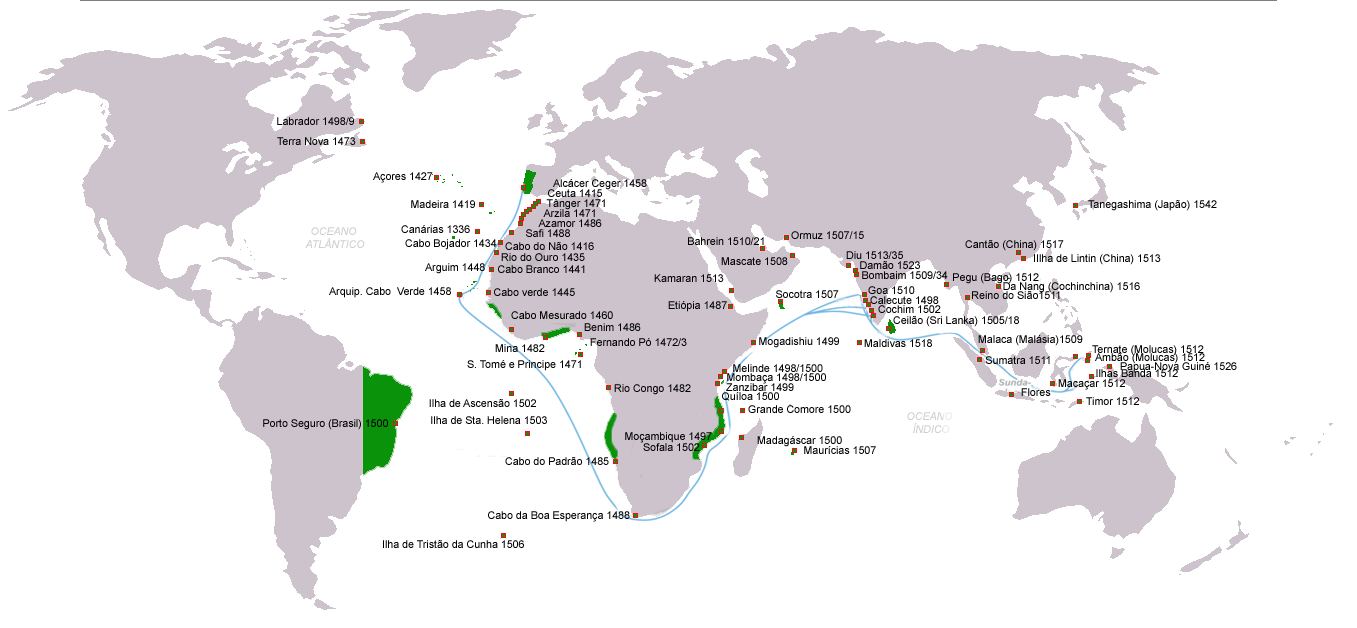
European expansion on a global scale can be chronicled from the last years of the 15th century. By the coming of the next century, the world known to Western man had reached great proportions to span almost the entire earth’s sphere.
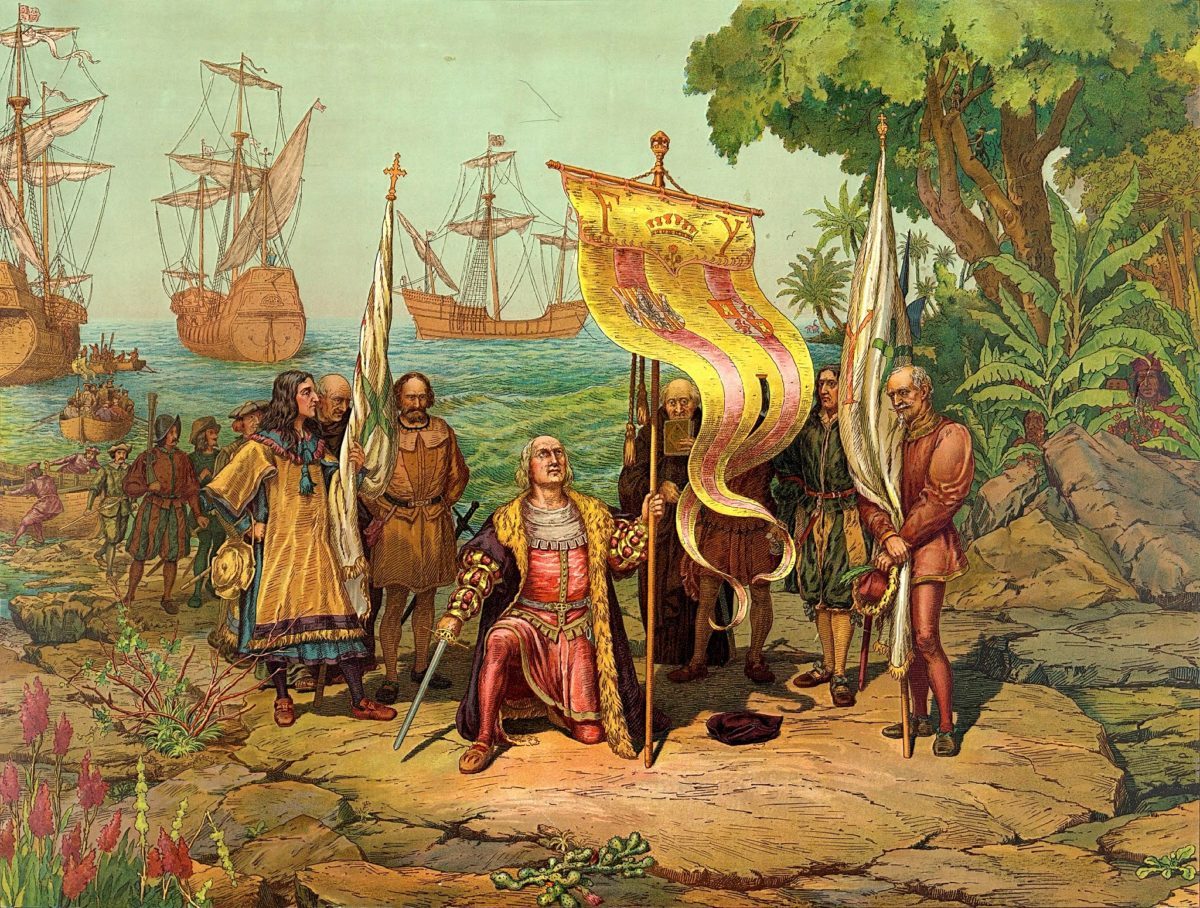
The explorers, Vasco Da Gama (Portuguese and first European to reach India by sea), Christopher Columbus (Italian explorer in the employ of Spain), John Cabot (Italian navigator and explorer), Pedro Alvares Cabral (the Portuguese regarded as the “European discover” of Brazil), Ferdinand Magellan (Portuguese explorer credited with proving that the world is round) and many others had brought Europeans to the farthest reaches of this planet, setting in motion what has been called the global epoch of European expansion.
When the reasons for this mammoth expansion in the 16th century are examined, certain explanations become crystal clear. To put it bluntly, it was the part Africa played in providing the learning that triggered off this expansion. The culture of North Africa, the resources of Central Africa and the equipment of Moorish science set off a spate of explorations which culminated in the circumnavigation of the globe.
The great part played by Africa in supplying the learning which caused the expansion to take place has had little, if any, exposure in the writings of historians. The question was never posed as to why the Iberian countries were in the forefront of this global expansion.
The British, the French, the Dutch, and the Italians owned the ships that could undertake this journey. Their leaders also possessed the necessary vision for such an enterprise. Yet they did not take the lead. With respect to overseas expansion, they were always trailing way behind the Iberians. One may well ask why was that so?
Put quite simply, the answer is that the outstanding factor which set Spain and Portugal apart from their neighbours in the north was their most valuable inheritance from Africa. The rich cultural, artistic, and scientific knowledge they inherited from the Moors placed Spain and Portugal well ahead of the rest of Europe, still backward and living in the dark ages.
More than that, the Moors struck the blow which completed the decay of ancient Spain and established Moorish Spain. This Spain was to herald one of the brightest chapters in the intellectual history of Medieval Europe. Portugal, too, played an equal role in bringing this about.
Prof Thomas T. Hamilton (of the Old Dominion University fame) clearly made this point when he stated: “Between the middle of the 8th and the beginning of the 13th centuries, the Arabic-speaking people [including the Moors] were the main bearers of the torch of civilisation throughout the world, and were the medium through which ancient science was recovered, supplemented, and transported through Africa, Spain, and Sicily in such a way as to make the Renaissance possible.”
It was at Cordova that Gerbert of Aurillac gained mastery over mathematics. This caused him to introduce, when he became Pope Sylvester II, the use of Arabic numerals in the Latin West. Until then, the Latin West did not know the numbers, 1,2,3 to 10. They only used strokes and Vs, as in I, II, III, IV, V, VI, VII, VIII, VX, X.
The works of Aristotle first appeared in Europe through the Moors in Spain. The centre of scientific learning remained in Toledo even though it had been reconquered by Castile in 1085. There, many converted Moors and Jews translated several mathematical, astronomical and astrological volumes of the Afro-Arabs into Latin.
The Toledo Tables
It was in 1080 that Al-Zargali of Toledo produced a number of astronomical and astrological works. Included in these was a series of astronomical tables based on the work of a group of Afro-Arabs and Jewish predecessors. These studies, known as the Toledo Tables, contained not only astronomical material, but geographical information as well. They were translated into Latin in the 12th century by Gerard of Cremonia, who undertook most of his work in Toledo.
By then Portugal and Spain were far ahead of the rest of the European countries in intellectual attainments. This advance was made possible by the proximity of Africa to Spain and what has been rightly termed “the aggressiveness of the North African Berbers [or Moors]”.
It was these people of North Africa who brought the intellectual atmosphere and the advantages of their civilisation, and so put those Iberian countries at the very front and caused them, indeed, to be the pioneers of European global expansion.
The invasion of the Moors of the Iberian Peninsula in 711 AD was unique in certain aspects. First, a few thousand men took over the government. Seven centuries later, they were also driven out of the area by a few thousand armed men. In between those hundreds of years, the majority of the population of both Spain and Portugal was left comparatively undisturbed.
Prof Hamilton, in The African Heritage in European Expansion, Journal of Ethnic Studies (1976), gives a very revealing account of the situation in Spain and Portugal during these 781 years:
“The overwhelming majority of the people under the caliphs were the same people whose descendants were to discover the world for Spain and Portugal. The Christian rulers displaced the political and religious power of the Moslem rulers.
“The artists, scientists, writers, and ordinary people were the holdovers connecting the two civilisations. The Mozarabs who took the lead in the economic and cultural life of the new Spain were not Arabs, but rather were African Berbers, who, as time went by, were assimilated into the basic Iberian stock.
“Furthermore, when the Christian princes regained the peninsula, the old civilisation was not destroyed. Religious art, of course, was influenced adversely, but the actual scientific achievements were retained, and Toledo became a great translation centre under the Castilians.
“While the rural districts continued their futile feudalism as they had both before and during the Moslem rule, the cities continued to bloom, thanks to the vitalising influence of the Mozarabs and the Jews.”
Prince Henry the Navigator
It was in this intellectually advanced civilisation in 1394 that Prince Henry the Navigator was born. By that time and in the following century, Portugal was judged to possess a culture that had no equal north of the Pyrenees.
This culture had travelled with the African Moors from Africa and came into full blossom mostly in Spain, but during the occupation, Portugal was an integral part of the Cordovan Caliphate.
Eminent scholars have agreed that the talents of the Portuguese in geography and navigation came out of this rich African heritage. In fact, long before the birth of Prince Henry the Navigator, the Spanish and African Moors had excelled in these sciences.
Prof Hamilton explains why the Moors held pre-eminence in terrestrial mathematics which is essential in the science of navigation, claiming that it could be traced to their religion:
“Their faith required them to pray at a specified time each day in the exact direction of Mecca. In order for the devout Moslem to accomplish this, it was necessary for him to have the geographical coordinates of his location, just as a mariner must have his position. Thus, did geodesy become an exact science in the world of Islam”.
The Afro-Iberian Moors were responsible for almost all the geographical lore which the Europeans, primarily the Portuguese and Spanish, used in their global expansion.
This knowledge was divided into three main categories: the systematic geographers and encyclopedists who incorporated the lore of the ancients with the discoveries of their contemporaries; the astronomers and geodesists who set out the groundwork for navigation and cartography; and lastly, the travellers and collectors of travel accounts, thus providing the descriptions of the world.
Through religion and trade, the Muslim world placed great stake on travel; and more than any other peoples during those early centuries, they travelled the length and breadth of the known world. By foot, camel, donkey and cows, Muslims entered remote lands.
Ibn Battutah
Of the travel accounts available at that time, the narrative of Ibn Battutah, called the most widely travelled scholar of the Middle Ages, stood out. In the 14th century, he traversed the entire span of Muslim countries, from China to Guinea.

[Battutah was a Moroccan, born in Tangier in 1304. In 1325, at the age of 21, he left home with the intention of completing the hajj to Mecca. He travelled to Egypt, then to Mecca, then Persia, Iraq, Azerbaijan and Yemen, before setting sail to East Africa where he visited Somalia, Kenya and Tanzania. From there, he decided to go to India but used a winding route that took him through Egypt, Syria and Turkey. He then crossed the Black Sea to what is today Uzbekistan, from where he retraced his steps back to Constantinople (now Istanbul in modern Turkey].
[Battutah’s journeys finally took him to India, Sri Lanka, and China. He finally returned to Tangier in 1349, where he stayed for a short while before heading to Spain, and then across the Sahara Desert to the Mali Empire, and reaching Timbuktu. He returned home finally in 1354, after travelling an estimated 120,800 km (more than the Italian, Marco Polo) over a period of 29 years].
It was scribes, like Battutah, who caused information about Africa and travel to its interior to reach European ears, especially the people of Iberia and Sicily. Prince Henry was familiar was Battutah’s writings, especially after he penetrated the interior of Africa in 1352 and produced the most complete portrait of the African peoples up to that time.
Battutah had meticulously kept a chronological narrative of his travels and noted how very well he got on with the local rulers in the areas that he visited. He made mention on several occasions of having received gifts of gold dust from the African monarchs. This knowledge proved to be of great value, not only to Prince Henry, but to the other Iberian explorers who were to claim vast land masses for Portugal and Spain.
It was in the 15th century that the precious metals in Europe had been drastically depleted due to the demands of enormous foreign trade and the very costly wars that had been fought and were still taking place. During that period, due to the limitation of camel travel, bulky goods from the West could not stand the heavy cost of being carried to the East.
The valuable goods from India, China and the Spice Islands, which were taken overland, had to be paid in gold and silver. In the past, Europe could depend on her own mines, but with the depletion due to the costliness of her wars, her merchants traded with Barbary using gold taken from Guinea.
Consequently, it was not surprising that with her gold shortage, yet still requiring that precious commodity, Europe would turn to Africa as an untapped source of supply. It was this shortage of gold and other precious metals in Europe which prompted their penetration of Saharan Africa.
Prince Henry and all his scholarly associates had great knowledge of this information about the science of the Afro-Iberian Moors. The Portuguese explorers became well aware that it would be the riches of Africa that would supply the vast amounts of gold needed by the crown of Portugal. It was these two factors which were the primary objectives for the Portuguese exploration of the lands of Africa and the Indies.
These motives remained of paramount importance until the death of Prince Henry in 1460, and after. Prof Hamilton insists that: “The background of the African Moor and the lure of African gold broke the fetters that bound the European to Europe.”
The African contribution
Much praise was heaped on the royal head of Prince Henry for the great part he played in the early Portuguese explorations. He has even been immortalised in the volumes of history as “Prince Henry the Navigator”. But what remains minimised and almost unwritten in the pages of the history of Europe and its global expansion is the very vital role that the Moors played.
For, without their scholarly writings and their extensive mastery of the sciences of navigation, cartography, astronomy and mathematics, the voyages of the Portuguese and Spanish would not have taken place then. Yet Prince Henry has reaped all the glory.
In talking about this, Prof Hamilton throws true light on the African contribution and gives honour where honour is due. He writes:
“Prince Henry … had swept away from the minds of even the legends of the unearthly terrors which had hitherto precluded voyages into the unknown. He had proved the feasibility of Atlantic travel and had provided and perfected the ships and instruments to reduce the actual dangers to be encountered.

“Diaz, Columbus, Da Gama, Cabral, Vespucci, and Magellan were the fruit of the tree planted by Prince Henry. The chains were broken by the lore and lure of Africa. Africa not only influenced expansion; it determined it.”
What has been ignored by Eurocentric historians – and this is a deliberate act – is that the beginning and the formation of the Portuguese state were the results of processes both directly and indirectly related to Moorish civilisation.
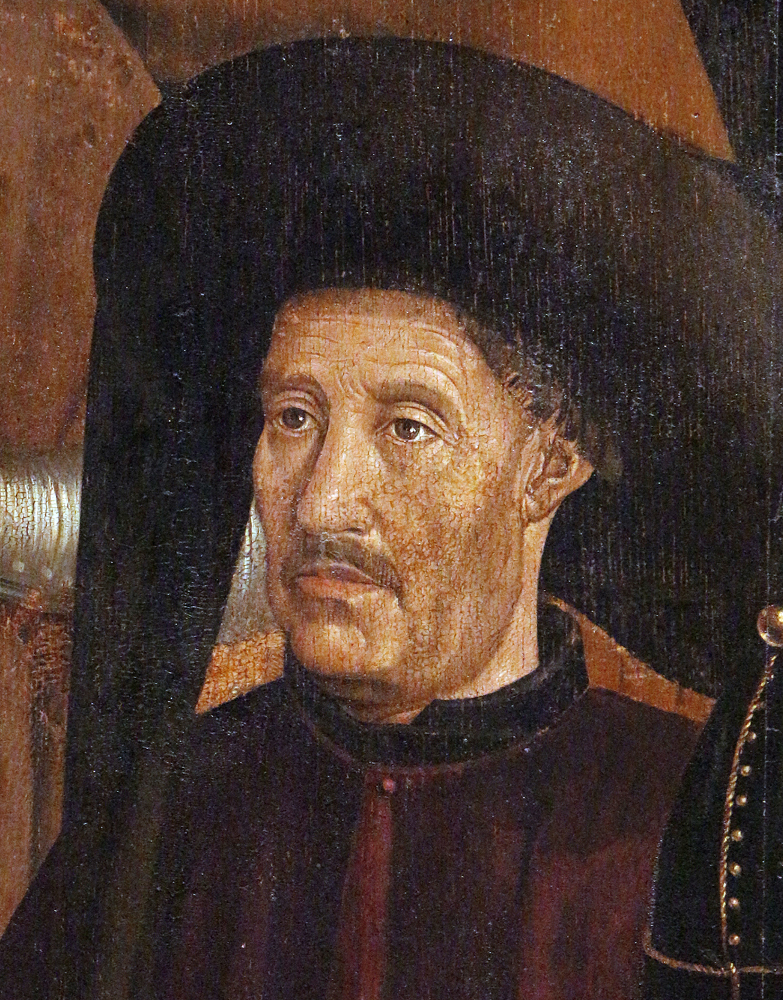
Prince Henry the Navigator has been credited with harnessing the energies of Portugal and the resources of the Order of Christ with the skills, the instruments, the most developed seamanship, the navigational wisdom – all copied and learnt from Moorish mathematicians, cartographers, astronomers and geographers.
Where and from whom that Prince Henry, this ascetic, celibate, and reclusive son of Joao of Avis and his English-born queen, Philippa, accumulated his vast reservoir of scientific and navigational knowledge, has always been played down or ignored out of hand.
Portugal has always gone to great lengths to believe that its development and expansion into the rest of the world has been a history of its own doing without Muslim or Moorish impact; and has believed that story with such intensity that she was quite successful, bit by bit, in incorporating both an imagined history and the habit of always feeding it into the process of her authentic existence.
That is why it has been claimed that all Portugal’s imperial enterprises, the lasting effect of Portugal in Brazil, in the East Indies, and in Africa; the celebrated figures of Vasco da Gama, Alfonso de Albuquerque, Ferdinand Magellan, and others; the works of Gil Vicente and Camoens – have all been the elements that have motivated the creation and recreation of the origins of Portugal.
But without the knowledge, intellect, learning, and artistic brilliance of the African Moors, this Renaissance Portugal would have never, and I repeat, never, come about. And this is a condition or reality which relates not only to Portugal, and Spain, but the rest of Europe, as well. Eurocentric scholarship cannot come to grips with this fact of history; and therein lies its tragedy.
It is absolutely no exaggeration to state categorically that Islam and the Moors had provided for, not only Portugal and Spain, but the rest of emerging Europe a powerful economic, scientific, artistic, and political impulse; an impulse which led to European domination of the world.
Eurocentric scholars boast that the Renaissance aroused Europe from its Dark Age slumber. And they stop at this blank, empty statement which has no Caucasoid base on which to stand. They shy away from the truth, the total truth that but for Muslim knowledge brought by the Moors, this awakening would never have come about; certainly not at the time that it did.
Racial mixing
After the invasion in 711 AD came other waves of Moors even darker to Spain and Portugal. It was this occupation of Portugal which accounts for the fact that even noble families had absorbed the blood of the Moor. From that time onwards, racial mixing in Portugal, as in Spain, and elsewhere in Europe which came under the influence of the Moors, took place on a large scale.
That is why historians claim that “Portugal is in reality a Negroid land”, and that when Napolean explained that “Africa begins at the Pyrenees”, he meant every word that he uttered.
Even the world-famed shrine in Portugal, Fatima, where Catholic pilgrims from all over the world go in search of miracle cures for their afflictions, owes its origin to the Moors.
The story goes that a Portuguese nobleman was so saddened by the death of his wife, a young Moorish beauty whom he had married after her conversion to the Christian faith, that he gave up his title and fortune and entered a monastery. His wife was buried on a high plateau called Sierra de Aire. It is from there that the name of Fatima is derived.
The Moors ruled and occupied Lisbon and the rest of the country until well into the 12th century. They were finally defeated and driven out by the forces of King Alfonso Henriques, who was aided by English and Flemish crusaders.
The scene of this battle was the Castelo de Sao Jorge or, in English the Castle of St George. Today, it still stands, overlooking the city of ‘Lashbuna’ – as the Moors named Lisbon.
The defeat of the Moors did not put an end to their influence on Portugal. The African presence can be seen everywhere in Portugal; in the architecture of many of the buildings. They still retain their Moorish design – like the Praca de Toiros – the Bull Ring in Lisbon.
A walk through Alfama – the oldest quarter in Lisbon, with its 15th century houses, narrow-winding streets – dates back to the time when it was the last settlement of the Moors.
Even the fishing boats on the beaches of Cascais show marked African traces. Called the rabelos, these boats with their large red or white sails which also ply on the Douro River to fetch wine from the upper valleys, are reminiscent of the transport boats of Lagos in Nigeria.
The African element was more predominant in Portugal than it was in Spain, some historians contend. The noble families in Portugal and in Spain, too, who had absorbed the blood of the Moor were innumerable.
Many European historians who constantly project biased scholarship in their writings of Africa and Africans, persist in denying the tremendous influence, both culturally and genetically, that the Moors had on the countries of the Iberian Peninsula, particularly Portugal and Spain.
One scholar, Gandia, stated bluntly: “As to the mixture of Moors and the other inhabitants of the Iberian Peninsula, it is useless to deny its occurrence. Without going into the social life of the Christians and Moslems, it may be mentioned in passing that the son of Musa [Abd-al-Aziz) married the widow of King Roderick [called Egilona] and that the royal family of Wiza united with the Moors of the purest stock.”
Conquering France
Extending the Moorish rule in Spain, Al-Hurr ibn Abdurrahman, in 717 AD and 719 AD, crossed the treacherous passes of the Pyrenees and entered France. In 729 AD, another Moorish ruler, Haytham ibn-Ubayad, was successful in capturing Lyon, Macon and Chalon-sur-Saone in France.
Beaune and Autun were also under the control of the Moors, and it was a Moor leader named Uthman ibn-Abi Nisah, known sometimes as Munuza, who governed not only Spain but parts of France as well. Munuza established excellent relationships with the Christians of France, Spain, and Portugal, and married the daughter of the Duke Eudes, Lampegie of Aquitaine.
This period of Moorish rule between 719 and 729 was rife with intrigue and treachery. When al-Hurr was replaced by ab-Samh ibn-Malik, the latter transferred the Spanish capital from Seville to Cordova.
Ibn-Malik completely re-organised the finances of the country and the system of taxation, carrying out several public works, and putting into operation an extensive survey of the land. He died in May 721 and was replaced by Abdurrahman ibn Abdullah.
The Moors in Italy
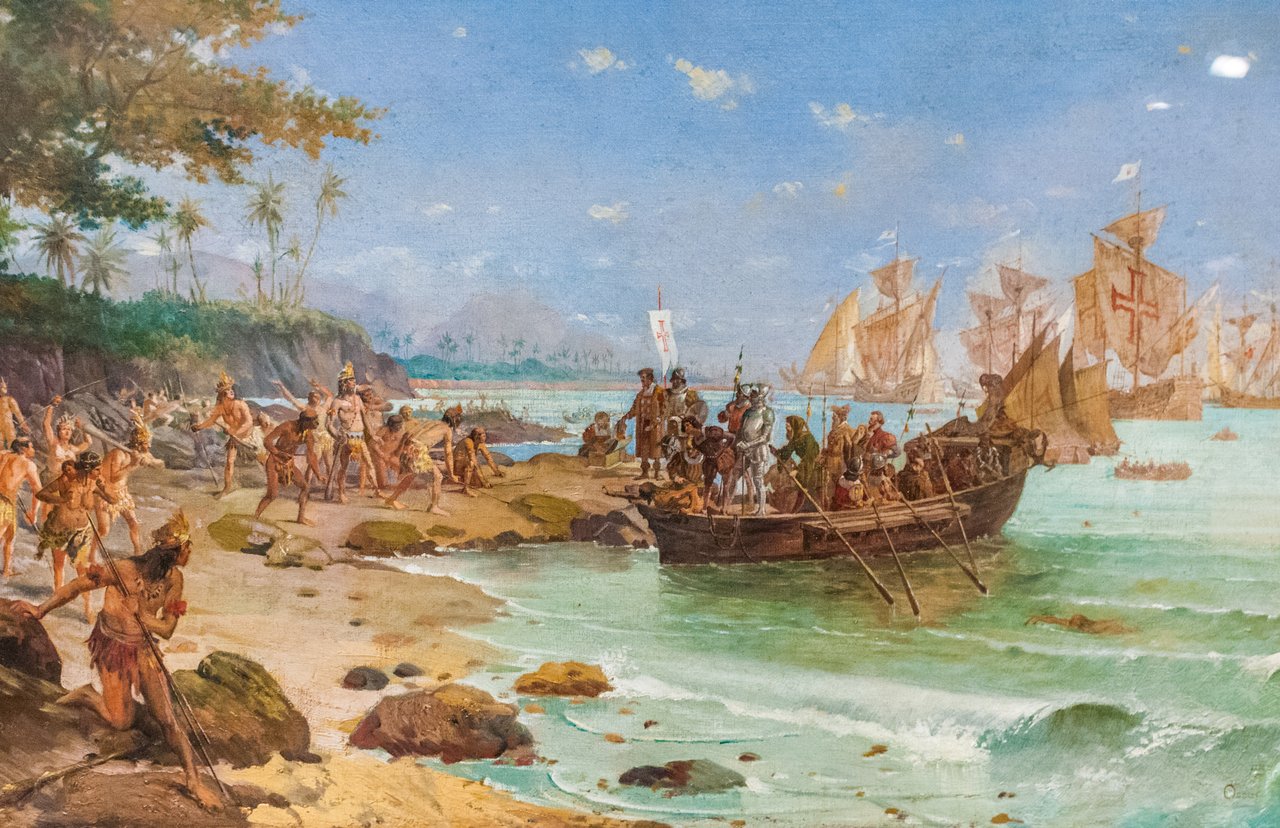
of Portugal’s colonisation of Brazil. Porto Seguro (or Safe Harbour) is now a city in the far south of the state of Bahia, Brazil
Moorish domination extended to parts of Italy. In 846 AD, they held the city of Rome in a state of siege while in 878 they captured Sicily from the Normans. Twenty years later, the Moors took control of southern Italy by defeating Otto II of Germany.
As in Spain and Portugal, miscegenation took place on a wide-scale between the Moors and the Italians who at that time had large infusions of Germanic blood due to the invasion of the Goths and Vandals.
Again, like Portugal and Spain, the blood of Africa permeated through all layers of Italian society and found its way into the leading families, including the most illustrious royal family of the times – the Medicis.
Colour was no bar to power and honour in Italy at the time. This was illustrated when Alessandro dei Medici, known as “The Moor”, became the first Duke of Florence.
The Moors in Britain
The Moors also dominated the British Isles at one point in history. The British archeologist and writer David Ritchie declared that the Moors dominated Scotland as late as the time of the Saxon kings. He stated with scholarly authority:
“So late as the 10th century, three of these provinces [of Scotland] were wholly black and the supreme ruler of these became for a time the paramount king of transmarine Scotland. We see one of the black people – the Moors of the Romans – in the person of a King of Alban of the 10th century.
“History knows him as Kenneth, sometimes as Dubh and as Niger … We know as a historic fact that a Niger Val Dubh has lived and reigned over certain black divisions of our islands – and probably white divisions also – and that a race known as the ‘Sons of the Black’ succeeded him in history.”
It is no exaggeration, then, to claim that the Moors were a leading power in those 6 or 7 centuries from the time of Tarik’s conquest on the Iberian Peninsula. They dominated the Mediterranean and the North Atlantic and held power over the coasts of Western Europe and the British Isles.
But it is not for their military conquests in Europe that the Moors are remembered. It is the culture and learning which they gave to European countries at a time when there was darkness and nothing elevating in the arts and sciences of a continent that was to claim falsely in later centuries to be the crade of civilisation of the world.
That this civilisation was first given to them by the Africans who remained in European countries for several centuries has stayed shrouded in perjuries, half-truths, mythologies, and/or total omissions.
This civilisation, brought by the African Moors, needs further and deeper examination, especially as Spain and Portugal were the first countries in Europe to benefit from the enlightenment which the African warrior-scholars carried with them from across the African mainland through the Mediterranean Sea to Iberia, and to other European countries further inland.
And what irony? The Moorish contact with Portugal was to have more dire consequences for Africa and African peoples. To begin with, the effects of Muslim and Moorish civilisation on Europe, particularly Portugal, is closely linked to the effort to reconstruct the processes by which the African past was extracted from European consciousness.
There is little doubt that one of the greatest ironies of this history was the founding of the Portuguese state and the elite class that ran it. The “Age of Discovery”, which Portugal, initially from the learnings of Prince Henry, extracted and copied from Muslim and Moorish scholarship, marks the beginning of the modern era in European development.
This expansion of the Portuguese into Africa and the “New World” set in motion the encounters between the peoples of the European peninsula and the African peoples. This was to lead to the Atlantic Slave Trade and Slavery, two of the greatest disasters which Africans suffered, and from which they have not yet recovered.
One scholar went as far as to claim that this catastrophic meeting was to “produce the Negro”. It was at this point that the stereotype first showed its face on the map of the histories of Europe.
What did Africa gain from all this?
It is lamentable that the European foray into Africa and other lands across the seas was initiated by Portugal using the knowledge gained from Africans in order to conquer, colonise, rape, exploit, oppress, maim and murder other Africans they had captured and chained in the prison plantations of slavery. The Moors themselves who were banished from Portugal and Spain suffered the same horrible fate that their descendants were to endure.
How were the Moors recompensed for their phenomenal contribution in civilising Spain, Portugal, and the other areas of a Europe steeped in darkness?
The 19th century English scholar, Stanley Lane-Poole, paints a picture of European savagery of the lowest form in their genocide of the Moors. “Fifty thousand of them were brutally murdered on the famous Day of All Saints, 1570, when the honour of the apostles and the martyrs of Christendom was celebrated by the virtual martyrdom of these Moors … No less than 3 million Moors were banished by the first decade of the 17th century.”
To use the words of the Franciscan priest Bartholomew Las Cascas, during the Columbian era, when these dastardly deeds were being perpetrated on the Moors: “Moloch must have been in the skies.”
Spain and Portugal did not escape retribution. Where once wit and learning flourished, a general stagnation and degradation had fallen on their people and lands. Historians are agreed that they deserved their humiliation.
Such is the terrible price that Spain and Portugal had to pay for their treatment of the Moors. As Stanley Lane-Poole concluded: “They did not understand that they had killed their golden goose.”
Leave a Reply