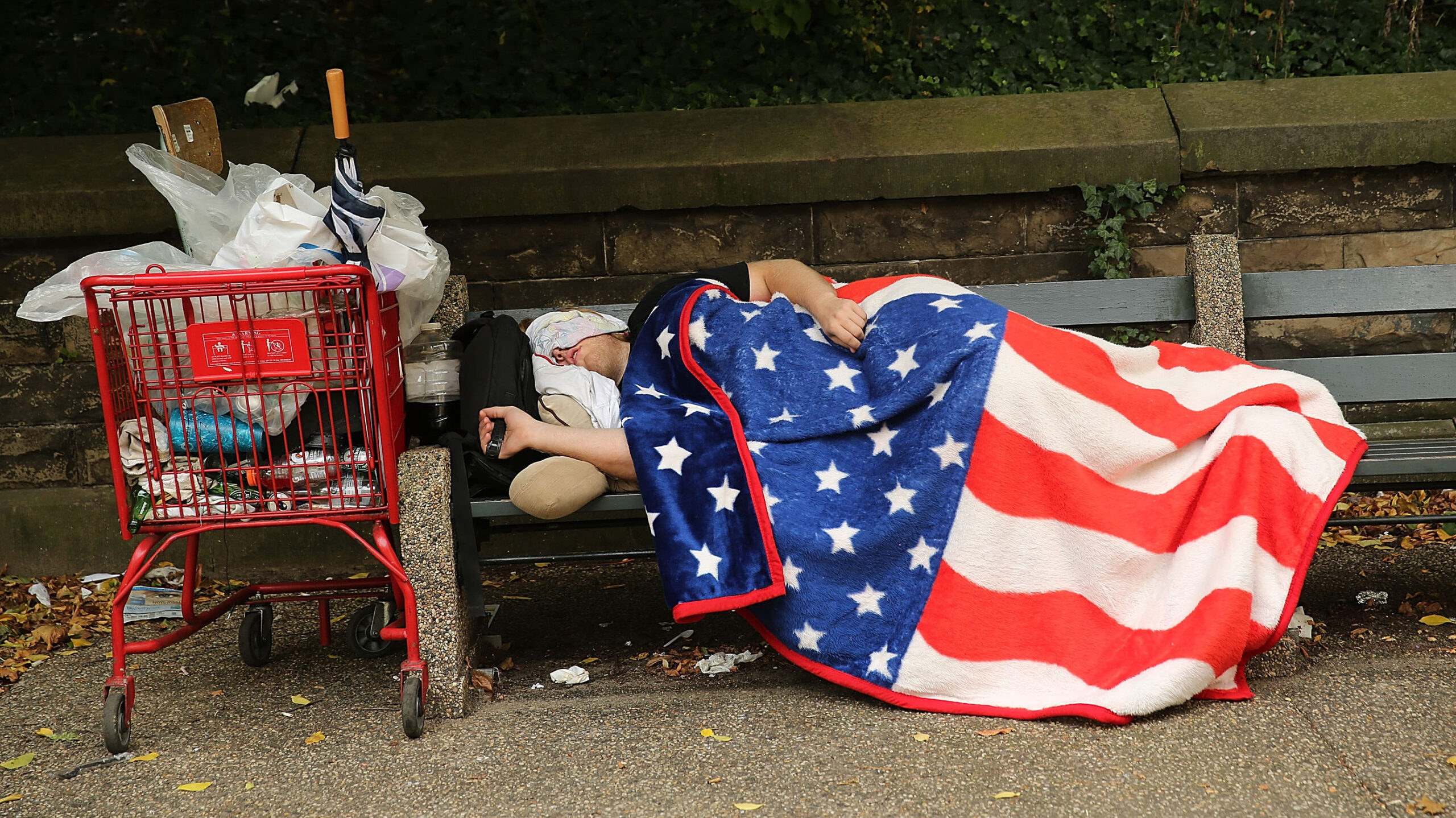
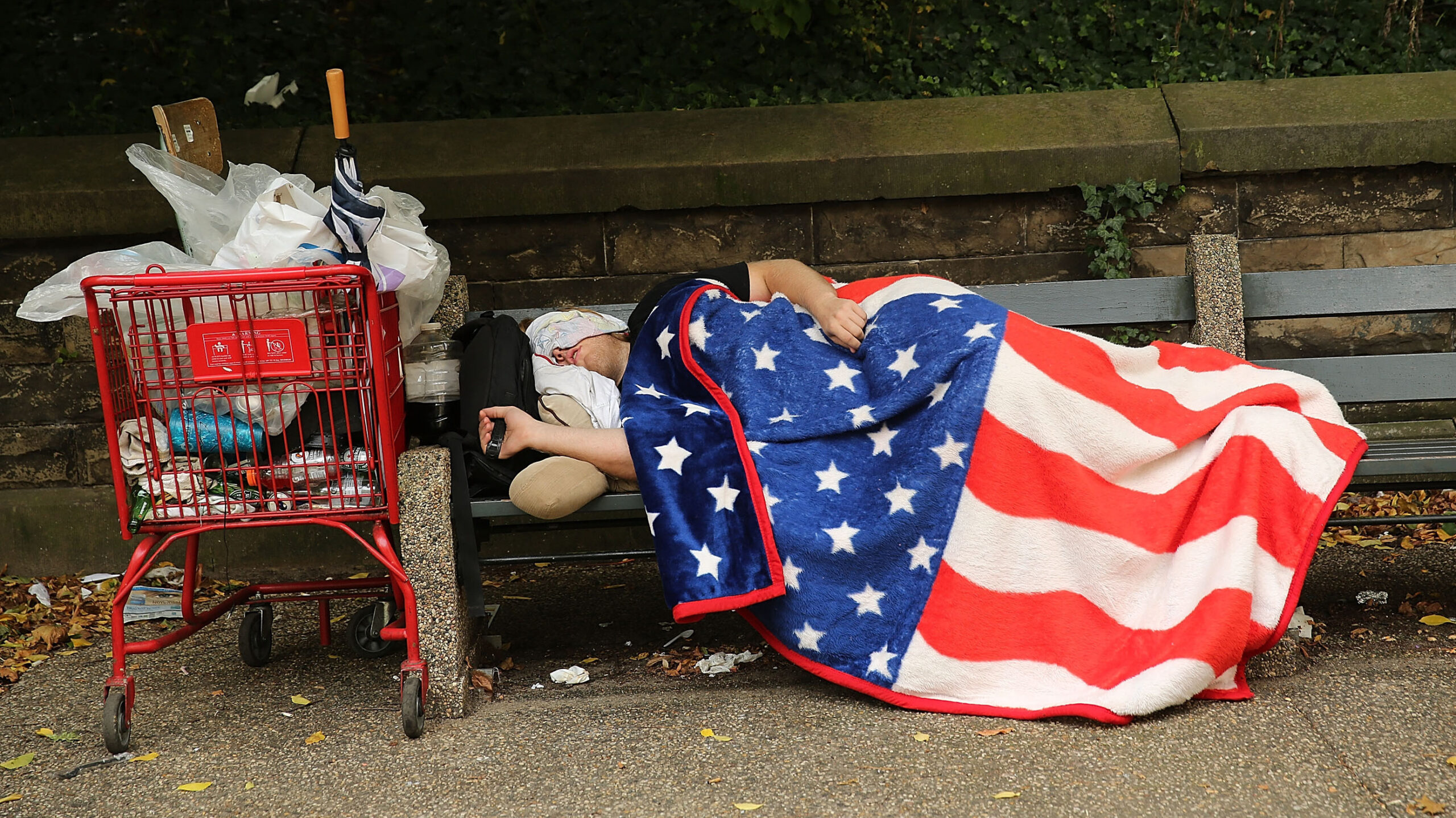
When in January 2018 the American President Donald Trump characterised Africa, Haiti and El Salvador as “shithole countries”, he had poverty at the back of his mind. The popular images that Trump grew up on always painted Africa as poor. But in their own backyard, according to two reports released in 2018, one by the United Nations, “40 million Americans live in poverty, 18.5 million in extreme poverty, and 5.3 million live in Third World conditions of absolute poverty.” And while “the poor are overwhelmingly assumed to be people of colour, whether African-Americans or Hispanic immigrants, the reality is that there are 8 million more poor whites [in America] than there are poor blacks. And over and above all this, American citizens also “live shorter and sicker lives compared to those living in all other rich democracies”, the UN report said. So does that make the US also a “shithole country”? Baffour Ankomah explores the argument.
Americans believe they have the best country in the world. Their country is known for flash. But all that glisters is not gold, at least according to two reports, the first by the United Nations Human Rights Council and the second by the Washington DC-based organisation, WalletHub.
The WalletHub study results released at the end of August 2019 showed that children in Washington DC, America’s capital, are the worst off in the country as they face daily threats of homelessness and food insecurity. They are even worse off than children in states such as West Virginia (third worst), Louisiana (fifth worst) and Oklahoma (seventh worst).
The WalletHub results left a not-so-shocked Judith Sandalow, the executive director of the Washington DC-based Children’s Law Centre that works with one in nine children living in the poorest suburbs of the capital city, to say the new results only underscored “the huge disparity between the perception of Washington as the seat of the most powerful government in the world and the often-harrowing reality for many children in the city.
“Two miles from the White House, there are children going to bed hungry and not knowing where they are going to sleep tomorrow night,” Sandalow added laconically.
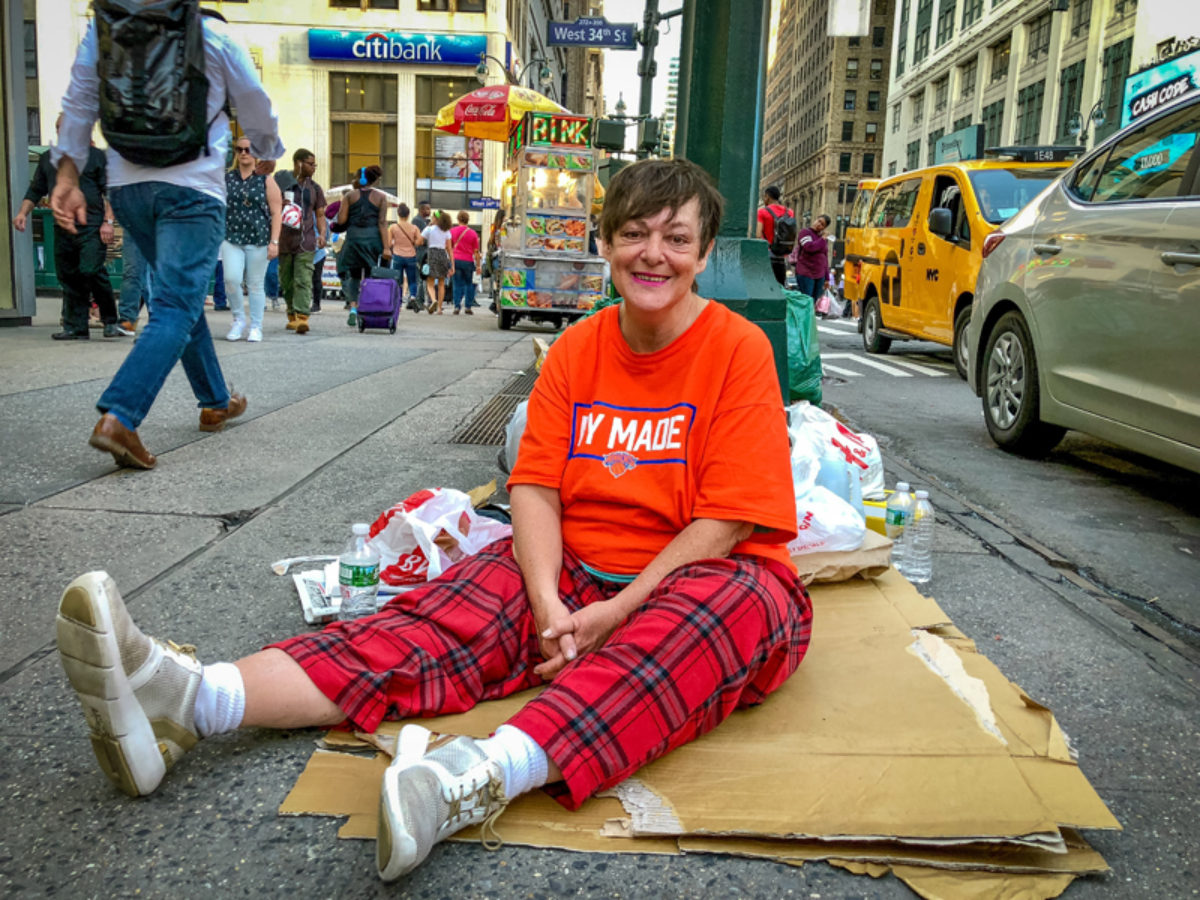
What the report refused to say, however, is that most of the children going to bed hungry two miles from the White House are African-Americans because Washington DC is predominantly populated by African-Americans. It is a situation pregnant with political undertones so people navigate it by threading softly.
Even the Washington correspondent of the UK daily, The Guardian, Joan E. Greve, reporting the WalletHub results on 29 August 2019 could not dare mention the six-letter word “blacks”. Yet she put it colourfully thus: “A common refrain in America’s capital goes something like this: there’s Washington, and then there’s DC. Washington is where Congress passes bills, tourists visit the White House, and Donald Trump [the then president] stars in a daily political soap opera.
“But DC – the District of Columbia, in which the city sits – is where more than 700,000 people live. People go to work, families share meals and children go to school. And many of those children, living just a few miles from the US Capitol, are facing the daily threat of homelessness and insecurity.”
Greve, knowing the incendiary nature of the composition of Washington’s population, played safe by not daring to analyse the identities of the “children facing the daily threat of homelessness and insecurity just a few miles from the US Capitol”.
But the WalletHub report was clear in its conclusions. It showed that Washington “has the highest shares in single-parent families, children living in low-income households where no adults work, and children whose parents lack secure employment”.
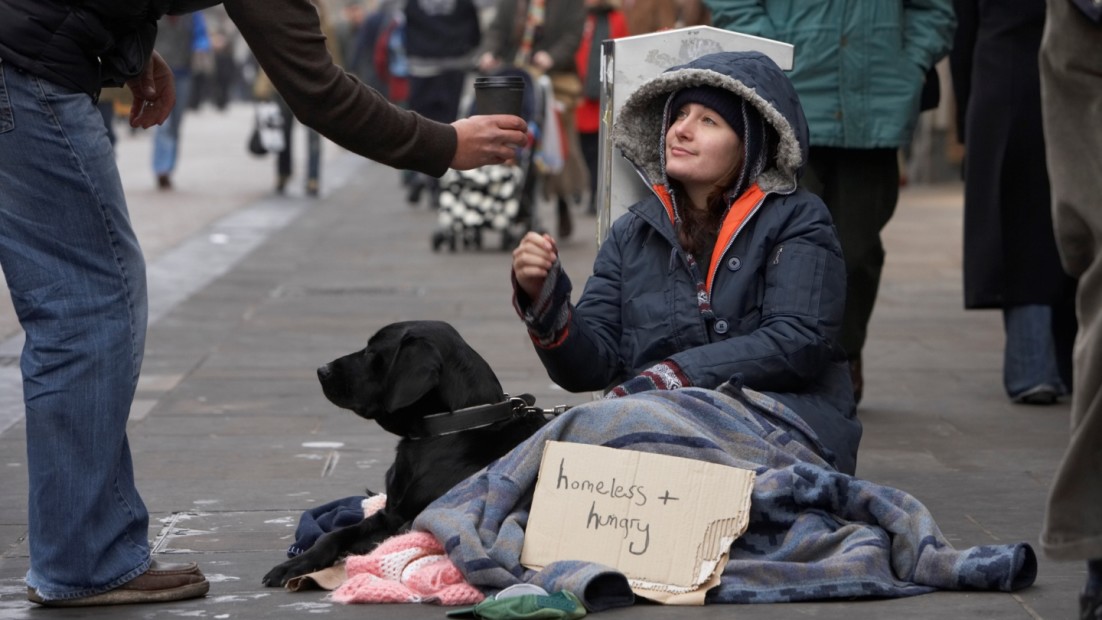
And not only that: The District of Columbia (DC) has high rates of child food insecurity, child depression and infant mortality. According to the WalletHub report: “Just a few miles from the White House, thousands of working families are worrying about how they will juggle budgets”.
God’s own country?
Yet from the outside, America is heaven, “God’s own country” they call it in fact. That is what American propaganda – spread by its media and the Hollywood film industry – has made the world to believe. According to this narrative, the US is a land paved with gold, where everybody can achieve the “American Dream” of prosperity and liberty provided they are hardworking.
It thus comes as a massive shock that, according to an official United Nations Human Rights Council Report, released in May 2018, “40 million Americans live in poverty, 18.5 million in extreme poverty, and 5.3 million live in Third World conditions of absolute poverty.”
US citizens also “live shorter and sicker lives compared to those living in all other rich democracies”, the UN Report said.
Besides, the US “now has one of the lowest rates of intergenerational social mobility of any of the rich countries”, to the point where “high child and youth poverty rates perpetuate the intergenerational transmission of poverty very effectively”, thus “ensuring that the ‘American dream’ is rapidly becoming the American illusion.”
Today, therefore, “the equality of opportunity, which is so prized in theory, is in practice a myth, especially for minorities and women, but also for many middle-class white workers,” the UN Report added.
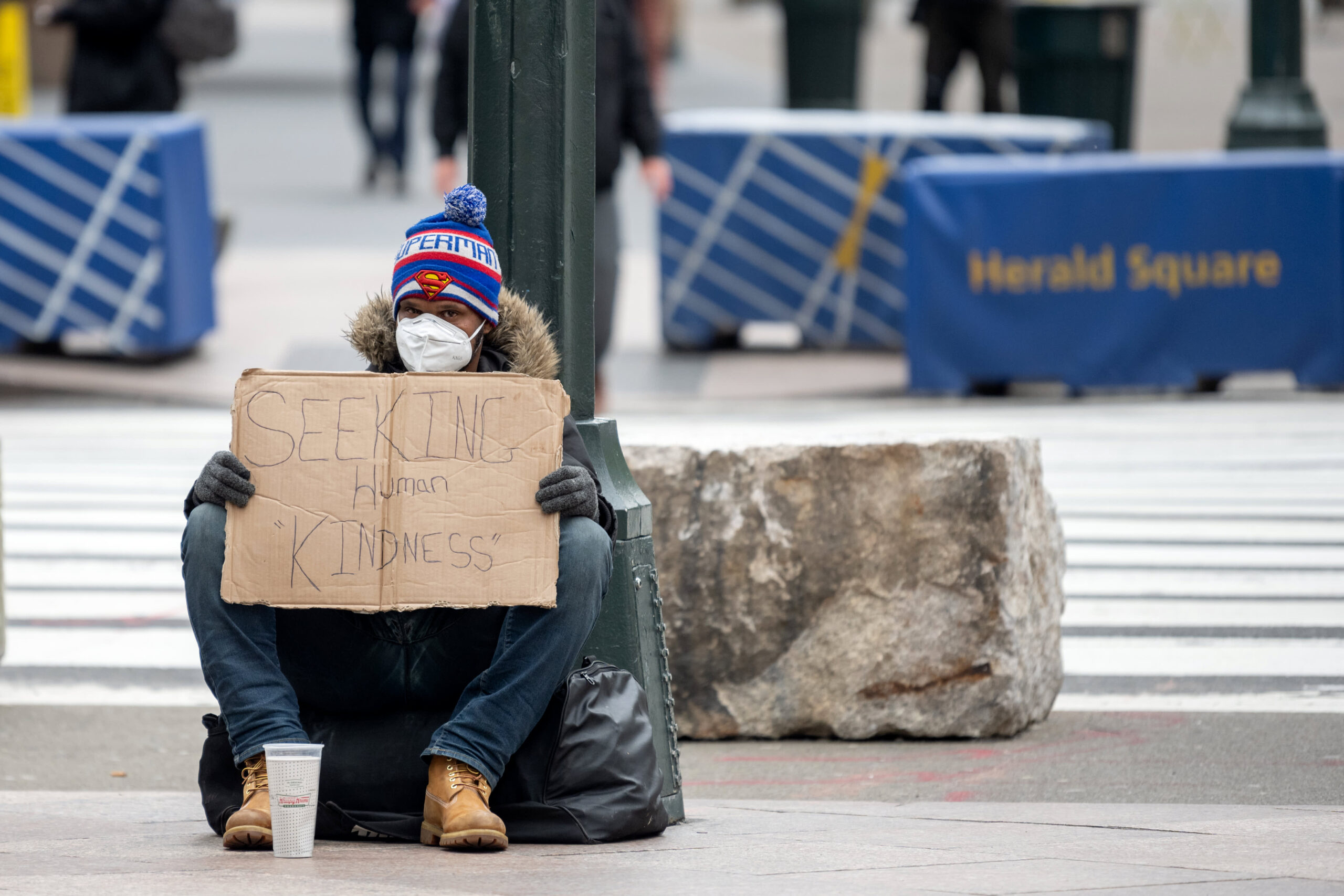
And there were more myths to bust. According to the UN Report: “In imagining the poor, racist stereotypes are usually not far beneath the surface. The poor are overwhelmingly assumed to be people of colour, whether African-Americans or Hispanic ‘immigrants’. The reality is that there are 8 million more poor whites [in America] than there are poor blacks. The face of poverty in America is not only black or Hispanic, but also white, Asian and many other backgrounds.”
This is hard to believe because for the past 78 years – since the end of World War II – America has been the dominant empire of the world, commanding all it surveys. Therefore, to see the kind of poverty that the UN Report says stands tall in the US is a huge indictment of the American Empire.
What makes it even worse, America has a population of 334 million (according to the US Census Bureau’s 1 January 2023 estimate) compared to China’s 1.45 billion. But as the former US Senator Mike Gravel confirms: “China is moving its citizens out of poverty while US citizens fall deeply into poverty. China is building roads and bridges and railways while the US policymakers take our tax dollars and blow them up!
“There is something terribly wrong with a system that creates war as its energy and industrial policy, immigration as its labour policy, and debt as its investment policy … The US is seriously on the wrong track, and we need revolutionary political thought to come to grips with what we are currently doing in order to begin thinking about how to put us back on the right track,” says Gravel.
Truly incredible
The shocking UN Human Rights Council Report was written by Philip Alston, the Council’s special rapporteur on extreme poverty and human rights, after a mission to the US in December 2017 in accordance with the Human Rights Council Resolution 35/19.
Alston was in the US from 1 to 15 December 2017, and his 20-page Report was released on 4 May 2018 as part of the Human Rights Council’s 38th Session, which took place from 18 June to 6 July 2018. The Report was Agenda Item 3 of the 38th Session.
The purpose of Alston’s visit was to report to the Human Rights Council on the extent to which the US government’s policies and programmes relating to extreme poverty are consistent with its human rights obligations and to offer constructive recommendations to the government and other stakeholders.
During his visit Alston met US government officials at the federal, state, county and city levels, members of Congress, representatives of civil society, academics, and people living in poverty.
He also received more than 40 detailed written submissions in advance of his visit which took him to California (Los Angeles and San Francisco), Alabama (Lowndes County and Montgomery), Georgia (Atlanta), Puerto Rico (San Juan, Guayama and Salinas), West Virginia (Charleston), and Washington DC.
His report’s conclusions were damning. “The United States is a land of stark contrasts,” Alston wrote. “It is one of the world’s wealthiest societies, a global leader in many areas, and a land of unsurpassed technological and other forms of innovation. Its corporations are global trendsetters, its civil society is vibrant and sophisticated, and its higher education system leads the world.
“But its immense wealth and expertise stand in shocking contrast with the conditions in which vast numbers of its citizens live. About 40 million live in poverty, 18.5 million in extreme poverty, and 5.3 million live in Third World conditions of absolute poverty. It has the highest youth poverty rate in the Organisation for Economic Cooperation and Development (OECD), and the highest infant mortality rates among comparable OECD states.
“Its citizens live shorter and sicker lives compared to those living in all other rich democracies, eradicable tropical diseases are increasingly prevalent, and it has the world’s highest incarceration rate, one of the lowest levels of voter registrations among OECD countries, and the highest obesity levels in the developed world.”
Shockingly, “in 2018 the United States had over 25% of the world’s 2,208 billionaires. There is thus a dramatic contrast between the immense wealth of the few and the squalor and deprivation in which vast numbers of Americans exist.”
The report went on: “The United States has the highest rate of income inequality among Western countries. The $1.5 trillion in tax cuts in December 2017 [introduced by the Trump administration] overwhelmingly benefited the wealthy and worsened inequality.
“The share of the top 1% of the population in the United States has grown steadily in recent years. In 2016 they owned 38.6% of total wealth. In relation to both wealth and income the share of the bottom 90% has fallen in most of the past 25 years. The [2017] tax reform will worsen this situation and ensure that the United States remains the most unequal society in the developed world.”
Going down
The report rebuked the trajectory of the US since 1980, describing it as “shocking”. This is because in both Europe and the US, the richest 1% earned around 10% of national income in 1980. By 2017, it had risen slightly in Europe to 12%, but massively in the US to 20%.
Besides, since 1980 annual income earnings for the top 1% in the US have gone up by 205%. By comparison, the average annual wage of the bottom 50% has stagnated since 1980.
“The consequences of neglecting poverty and promoting inequality are clear,” the UN report said. “The United States has one of the highest poverty and inequality levels among the OECD countries, and the Stanford Centre on Inequality and Poverty ranks it 18th out of 21 wealthy countries in terms of labour markets, poverty rates, safety nets, wealth inequality, and economic mobility.
“For almost five decades the overall policy response has been neglectful at best, but the policies pursued over [2017 by the Trump administration] seem deliberately designed to remove basic protections from the poorest, punish those who are not in employment and make even basic health care into a privilege to be earned rather than a right of citizenship.”
Let’s look after our own first
This shocking state of affairs compelled Angus Deaton, the presidential professor of economics at the University of Southern California who is also the 2015 Nobel laureate in economics and a New York Times op-ed contributor to say that the US may have to consider diverting some of its foreign aid money to look after its own poor at home.

In a forthright piece for The New York Times, published on 24 January 2018, headlined: “The US can no longer hide from its deep poverty problem”, Deaton bared his soul, arguing that considering the immense wealth of the US, “it is hard to imagine poverty that is worse than this, anywhere in the world.
“… Life expectancy in the United States is lower than we would expect given its national income, and there are places – the Mississippi Delta and much of Appalachia – where life expectancy is lower than in Bangladesh and Vietnam. Beyond that, many Americans, especially whites with no more than a high school education, have seen worsening health…”
Troubled by the naked truth, Deaton went on to say the politically incorrect, though apologising all the way. “For years,” he wrote, “in determining [US foreign aid], the needs of poor Americans or poor Europeans have received little priority relative to the needs of Africans or Asians. As an economist concerned with global poverty, I have long accepted this practical and ethical framework. In my own giving, I have prioritised the faraway poor over the poor at home.
“Recently, and especially with these insightful new data, I have come to doubt both the reasoning and the empirical support. There are millions of Americans whose suffering, through material poverty and poor health, is as bad or worse than that of the people in Africa or in Asia.
“Practical considerations reinforce the argument for recognising America’s poor in the global context. There is a better chance of monitoring the effects of domestic spending than of foreign spending. Money spent by and for fellow citizens, either individually or collectively, is subject to democratic evaluation by both donors and recipients, who can see the effects and who can show their approval or disapproval in the voting booth.
“Those who donate for projects in Africa often find it difficult to know what good their gifts are doing, let alone to discover whether the intended beneficiaries actually receive or appreciate them.”
Deaton went on: “Official aid from the United States is mostly set by geopolitics – the leading recipients are Afghanistan, Israel and Iraq. Yet the United States is committed to eliminating $1.90-a-day poverty in the world, a target that is not contingent on poverty at home. Britain insists on spending 0.7% of its gross domestic product on foreign aid, in spite of occasional difficulties in finding suitable projects and in spite of domestic suffering caused by austerity at home.
“None of this means that we should close out ‘others’ and look after only our own. International cooperation is vital to keeping our globe safe, commerce flowing and our planet habitable.
“But it is time to stop thinking that only non-Americans are truly poor. Trade, migration and modern communications have given us networks of friends and associates in other countries. We owe them much, but the social contract with our fellow citizens at home brings unique rights and responsibilities that must sometimes take precedence, especially when they are as destitute as the world’s poorest people.”
That was shorthand for “America First”, but don’t tell President Trump. He might call America a shithole country. And that is a taboo.
Leave a Reply