
For Africans, there can be no better confirmation or authentication of the origins of the people who built Ancient Egypt than getting it from the acclaimed Ghanaian Egyptologist, novelist, poet and scholar, Ayi Kwei Armah, author of The Beautyful Ones Are Not Yet Born (1968) and many other books. Armah is one of Africa’s truly great writers who will not get a Nobel Literature Prize because of his uncompromising stance on matters African. So here, Baffour Ankomah, who has known Armah personally for nearly three decades, takes readers to the Ghanaian literary giant to hear about the glorious African ancestors who built Ancient Egypt.

Ayi Kwei Armah, the Ghanaian writer and Egyptologist who moved to Senegal decades ago to start his own Egyptology institute called Per Ankh which came complete with a publishing house, to teach young Africans about Ancient Egypt, is one of the few prominent black African historians who have bothered to study hieroglyphics in-depth, and in the process gone deeper into the core of the thought and power that created Ancient Egypt.
In his memoirs, The Eloquence of the Scribes (2006), Armah traces without
a shadow of doubt the lineage of most modern black Africans to Ancient Egypt. These are the descendants of the Africans who migrated southwards and westwards during the many invasions of Ancient Egypt, especially after the final fall of the empire. Records show that by the time the Arabs attacked Ancient Egypt in 639 AD and finally conquered it in 641 AD from the Byzantine overlords, Europeans had long been in charge politically of the defeated country.
Today, the Arabs seem to forget that their conquest of Egypt had been made easier by the resentment the native Egyptians had for their Byzantines. The Africans wanted the Turks off their back, so they collaborated with the Arabs to defeat the Byzantines.
Because of the many invasions of Egypt, the African ancestors had fled their country in large numbers during the Assyrian, Babylonian, Persian, Greek and Roman invasions; fleeing not only to the desert and mountain regions of North Africa, but also to adjacent lands in Africa, Arabia and Asia Minor, where they went to live and secretly developed the teachings which belonged to their Ancient Mystery System.
Cultural facts
In The Eloquence of the Scribes, Ayi Kwei Armah tells about “the luck” he had growing up at a time “when figures like Kwame Nkrumah were rising to articulate dreams common to my society. I was struck into thought by the fact that even politicians who disagreed with Nkrumah about everything else agreed with him on one cultural fact.
“The colonial territory we lived in was called the Gold Coast, gold being the thing whose love had brought Europeans there. When Nkrumah’s party proposed that we retrieve a name that was really ours, Ghana, no one who knew our history disagreed. Now I had grown to adulthood. Inside our larger history I was undertaking life journeys of my own, and though I had imagined other parts, I was moving into the future as a writer.
“The more I learned about our history, the clearer it seemed to me that if I wanted to write, I would have to study it more seriously, since all available evidence indicated that the narrative of our social history was at the centre of the art of our poets, storytellers and spokespersons. I followed the trail of evidence backward in time. It led me to oral traditions. The oral traditions took me back to traditions of migrations.
“Those traditions, beginning with acknowledgements of places reached by groups travelling under pressures too extreme to adapt to, referred to an earlier place of departure. Sometimes the reference was simply to the Great River or the Great Water. More frequently, the traditions of migration mentioned Msiri or Luti. Those are just other names for the area now known as Egypt, though in ancient times it went by other indigenous names: Ta Meri (beloved land), Tawi, (two lands), and more often, Kemet, (the black nation).
“In the time when Europeans held direct control over political life, administrative affairs, and education in Africa, it was difficult for Africans to assess the evidence contained in the traditions of migration. But after independence, Africans got absorbed into the management of European power in Africa, and colonial taboos against self-knowledge began to lose their authoritarian rigidity.
“I have benefited from that new flexibility. Thanks to it, I found documentary evidence that enabled me to connect my own Akan background to Sahelian oral traditions naming the Soninke or Sarakholle as the people of old Wagadou and Ghana. The migratory traditions of the Soninke and their neighbours agree on a
more ancient migration from Nile valley origins.”

Continuing, Armah reveals that the focus of his study was on the content and form of the verbal art in African societies across time. “If I meant to continue following the trail of traditions,” he says, “I would have to examine the written records of the Nile valley, the oldest and most substantial corpus of documents literary, scientific and administrative, anywhere in Africa.
“At no point in my formal education had the option of studying the language of Ancient Egypt been open to me. Now questions piling up in my mind could not be answered without a reading knowledge of hieroglyphics.
“The first publications I found did as much to deepen my perplexity as to enlighten me. Several were by the British Egyptologist Wallis Budge. He was informative on a general level, but when it came to the reading of hieroglyphic script, his two-volume dictionary and numerous other publications used a system of letter equivalents so archaic that it was often misleading.
“The study of hieroglyphic writings is never going to be an entertainment, but for me it was lightened by surprises. Given that linkages between the Akan and Ancient Egyptian languages were not direct but mediated through a Soninke connection involving multimillennial migrations over thousands of kilometres, I did not expect to encounter Ancient Egyptian words with the same sounds and meanings as Akan words.”
Armah, an Akan himself, goes on to tell about the identical Ancient Egyptian and Akan words he discovered in his study of hieroglyphics (which I have already quoted on page … of this issue).
Ancient Egyptian literature
Armah then goes deeper and says: “It is well over [five] decades since I began the study of Ancient Egyptian literature. The documents involved constitute a really substantial corpus spanning millennia of time. From the chronological perspective, they make up the longest literary tradition in Africa or, for that matter, anywhere.
“The artists who produced what we are now pleased to call Ancient Egyptian literature were not primarily interested in literature per se. They were not blind to literary values, but they thought of themselves as participants in a more important process, the maintenance of vital connection between parts of a universe in which connection meant life, disconnection death.
“It would thus be accurate to think of Ancient Egyptian literature as the surviving record of a long ritual involving members of a community of affection so extensive as to embrace living members in present time, members who had lived and died but whose memory it was the responsibility of the living to keep alive, and members yet to come, who would inherit the common memory and manage its flow into the future.”

All African societies can find this outlook familiar. But Armah has more: “It is possible, from looking at the surfaces of Ancient Egyptian culture, to conclude that death was its dominant obsession. After all, the most spectacularly visible monuments of the pharaonic era were mortuary buildings – funerary cities and pyramids.
“But this would be a misinterpretation of the message these monuments were intended to convey. They were created to bear testimony to the importance of the connections between the visible realities of the here and now and the invisible universe of connected times and places.
“This concern with connections is a constant motive in all autonomous African culture. It comes from an ethos that says death cannot be the end; that beyond death remains connection between those here now, those who were but are no longer here but elsewhere, and those who are not yet here but are elsewhere, destined to come someday.
“The tombs of Africa testify to the death of bodies, but their contents speak of immanence of souls. Bodies may connect visibly in the here and now; souls are connectors across the present with past and future time.”
After reading The Eloquence of the Scribes in 2006, I understood clearly why the Akans are so fascinated with funerals. It bothers on the bizarre. But who can blame them, they are being true to their ancestors of Ancient Egypt where Armah tells us that one can conclude that death was its dominant obsession
The evidence
According to Armah, “The body of writings we now call Ancient Egyptian literature is a substantial corpus considering how long ago its creation began – some 3,000 years before the Christian age, and over 2,000 years before the beginnings of Greek civilisation; it is an astonishingly huge and sophisticated collection of texts, inscribed on a wide variety of materials.

“Some texts were incised into stone monuments and great public constructions, some were painted on the walls of pyramid chambers, burial tombs and the lids of sarcophagi; some were written in ink, usually of two colours, the headings in red and the body texts in black, on sheets of papyrus reeds beaten, washed and pasted together, layer on layer, to make flat, smooth surfaces, and some were written on reusable tablets convenient for classroom exercises.
“The writings of the Ancient Egyptians indicate that they thought, on the whole, that answers to philosophical life queries could best be found if the living maintained unbroken contact with their ancestors, and also remembered that there were many members of the society yet to come.
“Why the ancestors? Because they were the founders of society and deserved high respect as originators. Also, because they solved many of life’s problems in their time. The living who learned to communicate with them could use their accumulated experience, avoid old pitfalls and invent new solutions by combining inherited ideas.
“And why the unborn? Because a sense of responsibility to future generations could spell the difference between catastrophic waste and their creative use. The necessity of maintaining a balance between the interest of the living, the dead and the unborn required the creation of a great many cultural aids to remembrance. The important thing was not to forget. Carried over the centuries and millennia on a culture of remembrance, revered ancestors metamorphosed into legendary figures.
“In time the illustrious took on the status of divinities. In this way Ancient Egyptians peopled the visible universe with traces of ancestors who would otherwise have been easy to forget. The accent on remembrance was a necessary precaution in culture dedicated to connectedness. African culture is not alone in positing connection between all parts of reality, visible and invisible. But it is unusually explicit in its conception of these connections as close family relationships…
“In short, it was a prerequisite of social survival and wellbeing that ancestral memories be kept alive and that lines of communication between ancestors, the unborn and the living be kept permanently open. The ways of keeping the lines open were numerous. A simple but essential one was to keep the names of the dead among the living.
“Ancient Egyptians considered the loss of one’s name a form of psychic death. Choice food at burials, libations of favourite drinks at baptisms, the giving of the names of the dead to the newborn, every mark of continued affection helped to maintain familiar bonds.”
Continuing the discussion on connectedness, Armahs says: “I have mentioned my initial surprise when, as an adult, I read Ancient Egyptian words whose sounds and meanings were identical with those of certain Akan words. Something similar, but different in its subtle intensity, happened when I came upon themes shared by the oral traditions I knew and the Ancient Egyptian literature I was learning to read.
“When first encountered, lexical matches presenting precise coincidences of sound and meaning between words in Ancient Egyptian and contemporary African languages are as startling as a single drop of unexpected rain. Thematic matches, in which philosophical ideas occur in identical forms in Ancient Egyptian and later African literary works, have a subtler but more durable effect, comparable to a soft, continuous drizzle of insight.”
The black nation
Having set the scene and proved the connectedness between modern Africans and their ancestors who migrated from Ancient Egypt, Armah goes on to tell how modern Africans came to be located where they are today on the continent.
He writes: “Akan tradition, my earliest contact with the oral epic genre, mentions an Ancient parent society from which the Akan and other African groups derived their origins. That society is named as Ghanaman, meaning the state of Ghana, the suffix ‘man’ being the Akan suffix for a political state or city.
“The state of Ghana is further identified in the epic as ‘ebibir man kesekese bi’. The adjective ‘kesekese’, an intensive form of ‘kese’ (great) means very great. ‘Ebibir’ is an intensive form of ‘bir’, which by itself means black; the intensive form designates a black collectivity. The whole phrase means a very great black nation.
“In Niane’s Sundjata, the Malian griot, calling his audience and his society to pay attention, uses the Manding equivalent of the Akan term for black people. He says: ‘Listen then, sons of Manding, children of the black people…’ South African oral traditions use a similar formula: abantu abamnyama, though more frequently, the reference is simply abantu, people. The identity of the griots and oral traditionalists of Africa, as expressed in the text, is altogether straightforward. These were black artists addressing members of black communities.
“In a reasonable world, the identity of the scribes who produced Ancient Egyptian literature, like that of the society they addressed in their works, would be just as straightforward. However, we live in a word where, less than 200 years ago, a ruling racial minority thought slave ownership a great lifestyle, where less than 100 years ago Europeans thought all African land and resources should belong to them, where [29 years] ago apartheid, the reservation of
political and economic power for a racial minority, was an official style of good governance, and where, to this day, globalisation, apartheid writ on a world scale, is the reigning world order.
“The European architects of slavery, colonialism and globalisation share a common take on Africa: whatever is valuable on this continent does not belong here; it should be extracted from here as cheaply as possible, with the help of local accomplices who for money and trinkets will run security services designed to keep an impoverished population under control, and transported to Europe or America, to be used to enhance the lifestyle of a superior minority of human beings.
“Materially, this means an African economy based on the fevered extraction and dirt-cheap export of everything of value that could be used to create manufacturing industries, jobs and wealth here: timber, diamonds, gold, copper, uranium, petroleum and soon water.
“Intellectually, it means a commitment to the view that any human creation that shows intelligence, organisational ability, technical skill, or artistic genius cannot possibly be African.”
But from his decades of study of Ancient Egyptian literature, Armah knows that the material and intellectual record of Ancient Egypt leaves no doubt as to the technical, intellectual and artistic skills of the people who produced the works now classed together as Ancient Egyptian civilisation.
“These people,” Armah says, “had the unmistakable stamp of genius. They had such high organisational skills that their civilisation lasted thousands of years longer than any other.
“The quality of their work and philosophy still astonishes the world. Since in a world dominated by slavers, colonialists and globalisers, the occurrence of high material or intellectual value in Africa is a racial taboo, questions that would ordinarily require only research and accurate reporting were turned into matters of furious controversy.
“The questions are: Who were the Ancient Egyptians? Who, according to reports from other ancient people, were they? More specifically, what did they say about their own identity?”
Two views, one truth
Armah goes on: “There are now two main views regarding the identity of the Ancient Egyptians. Because one view has been most articulately advocated by African scholars, notably Cheikh Anta Diop, Chancellor Williams and Théophile Obenga, I shall refer to it as ‘the African view’.
“The other view was developed by invading Arabs and Europeans in the age of slavery; consolidated in the colonial period when Africa was under European rule, it is currently being refined for use in the age of globalisation. It is a view mostly actively advocated by Europeans, Americans and their followers in Africa. It is supported by the monumental political, financial and military power accumulated over the past centuries by states and corporations which have benefitted from its application.
“It is echoed by the most powerful information media in the world: movie, television, magazines, newspapers and radio. It is the view of Africa and Ancient Egypt familiar to long-established universities and their departments of African studies. It assumes that Ancient Egypt could not have been African. It can be called, with considerable accuracy, ‘the European view’.
“The African view is the work of persons with no material or political power to speak of. They own no states or armies, corporations or foundations. They dominate no universities, publishing houses or news media. Their purchase on movie-making industries is zero. The power of their arguments is based entirely on archaeological and historical evidence, supported by studies in linguistics, material culture and intellectual history.
“In outline, the African view goes as follows: Human life, according to available evidence, began on the African continent, most likely in the east and central plateau regions. From there the first human communities spread outward to populate the world.
“In time, some settled in the Nile valley. At first, they created small, autonomous and ineffective communities, vulnerable to the elements. The geographical configuration of the Nile valley, featuring a powerful river, the longest flowing through the largest of deserts, with periodic floods and droughts, was such that communities living in the original scattered and uncoordinated pattern of settlement had little chance of survival, and none at all of prosperity.
“This is how the Egyptologist Cheikh Anta Diop analyses their situation, and how it led to the emergence of the unified state of Egypt: ‘The suddenness and volume of the flooding of the Nile obliged the first African populations, whom chance had brought to this valley, either to rise above individual, clannish and tribal egoisms or to disappear. Thus, emerged a supra-tribal authority … with the powers necessary to conduct and coordinate irrigation and water distribution works essential to the general activity. Thus was born a whole hierarchic body of functionaries…’ (Cheikh Anta Diop, Civilisation or Barbarism, p.130).”
Who really were the Ancient Egyptians?
Ayi Kwei Armah now puts his teeth into the crux of the matter – the identity of the creators of Ancient Egypt – and takes his readers through the nitty-gritty of who the Ancient Egyptians really were.
He states: “The natural flow of population from the African heartland outward brought groups to settle in the Nile valley. Would these people have been black? Necessarily so, according to Cheikh Anta Diop. His argument is clear: Melanin, greater or lesser quantities of which determine differences between dark and light skin colours, protects the human body against high levels of ultraviolet radiation prevalent in equatorial regions.
“Black skin here, like white skin in the colder European climate, is a matter of efficient adaptation. ‘There is no particular glory about the cradle of humanity being in Africa, because it is just an accident. If the physical conditions of the planet had been otherwise, the origin of humanity would have been different.’ (Cheikh Anta Diop, Civilisation or Barbarism, p.16).
“As for the reason why the current population of Egypt has such a high admixture of European and Asian skin colours, the history of the Nile valley from the disintegration of the pharaonic system to the present offers more than adequate explanation.
“Ancient Egyptian wealth and culture attracted successive invasions of Asians and Europeans from Iran, Macedonia, Greece, Italy, Arabia, Turkey, France and England, who mixed with the original population. It is a matter of some irritation to scholars who favour ‘the European view’ that such ancient Greek authorities as Herodotus and Aristotle confirm the blackness of the original Ancient Egyptians.
“Herodotus in a passage on the Colchians says: ‘… the Colchians are clearly Egyptians … My own guess was based on the fact that they are dark-skinned and woolly-haired; this, however, means nothing, for there are other people such. But the following is more important: that alone of mankind the Colchians, the Egyptians, and the Ethiopians have circumcised from the first. The Phoenicians and the Palestinian Syrians themselves agree that they learned this from the Egyptians.’
“The European view, the ruling orthodoxy under slavery, colonialism and apartheid, is alive and well under globalisation. Of racist paternity, it is based not on scholarly evidence but on an established worldview muscular enough to hammer inconvenient evidence into silence.
“The logic behind it is inductive: Africa being a land of negative value, anything of value here does not belong here. So the Ancient Egyptians, being high-value intellectual and material producers and organisers, could not have been African. Who were they then?”, Armah asks, and answers it himself.
“A great deal of energy has gone into the search for an answer compatible with ‘the European view’, but the evidence points the opposite way. There is no point lingering over the assumption of the impossibility of connections between Ancient Egypt and Africa. It is a racist view, deliberately anti-African. A time spent confronting European believers with evidence that invalidates their racist weltanschauung is wasted time. It is more sensible to spend it studying the literacy evidence on the issue of identity. What is the nature of that evidence?”
The key word is ‘Kmt’
Now comes the clincher, and Ayi Kwei Armah is up for it. “A reasonable way to start,” he says, “is by looking at a key word, ‘Kmt’. A frequent in the literary and ceremonial texts of Ancient Egypt, it has multiple meanings depending on the determinative sign following the root ideogram ‘Km’.
“‘Km’ itself, however, invariably means black. The way the ideogram is written, it has been variously interpreted as representing a piece of crocodile skin or a short piece of burnt wood. The bit about the crocodile skin, though an authority as useful as Alan Gardiner favours it, is rather fanciful. The reading that sees it as a piece of charred wood is more plausible. Divergent interpretations of the object are represented, notwithstanding scholars agree on the meaning: ‘Km’, black.
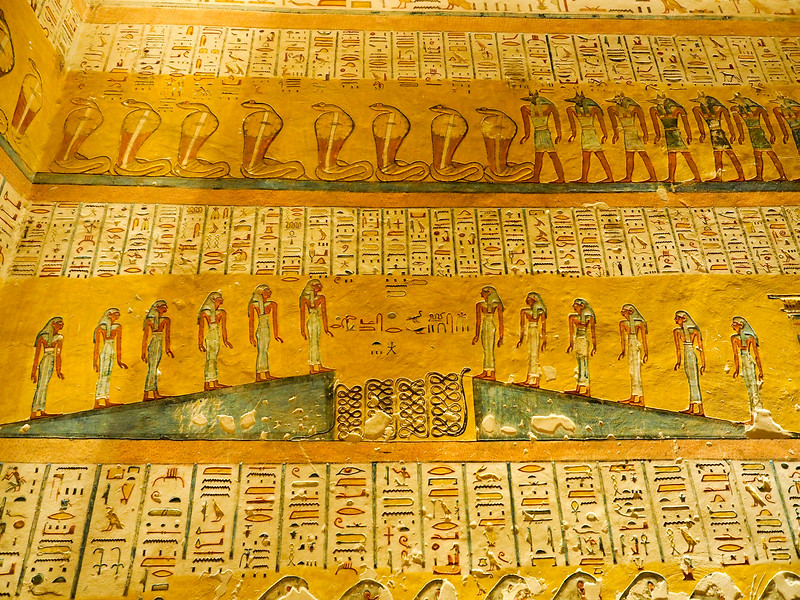
“The way the hieroglyphic writing system works, when this sign is followed by a determinative sign for persons, the composite sign means black people. When the determinative sign is a papyrus roll, the standard symbol for intellectual values, the composite signs means a black book or black literature. When the determinative sign shows a circular city enclosing cross roads, the meaning is a black city or a black nation.
“All three hieroglyphic groups were regularly used by Ancient Egyptian scribes, depending on whether they wanted to designate their nation, their people, their literature, or a particular holy book. The unvarying root was ‘Km’, black.
“What this means is that Ancient Egyptians called themselves black, and considered their culture and literature black. Clever people with time on their hands have tried to explain away these basic facts to make them fit into ‘the European view’. ‘The African view’ demands no contortionist acrobatics. Scholarly respect for recorded data is enough. Learning to read hieroglyphics even better.”
The South, the South
The Ghanaian colossus goes on: “Apart from the direct word ‘Kmt’, a reading of Ancient Egyptian literature reveals the existence of attitudes and customs indicating that the original people of Ancient Egypt considered themselves indigenous to the African continent. We shall consider a few examples.
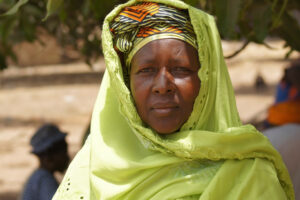
“Certain formulaic phrases used in ritual ceremonies occur with the regularity and frequency of key cultural indicators. One such phrase is an invocation to all protective deities of the Egyptian universe. Naturally, it requires the supplicant priests to turn in all four directions as they call upon the…neterw resy, mehtet, imentet, iabtet … gods of the south, north, west, east (see Wallis Budge, The Book of the Dead, p. 2).
“The Ancient Egyptians saw themselves as a society in a special relationship with the land around them. They acknowledged this tie by turning successively in the various directions as they made their ritual utterances.
“By tradition, they began by turning in the direction from which their ancestors and the gods whose extensions they were, came. All directions were sacred, but ‘the South’ was the direction of the sources and origins. The ritual orientation to ‘the South’ was such an ingrained part of the culture that it influenced the daily vocabulary used to indicate such other directions as left and right.
“Because the initial direction to be faced was ‘the South’, that is to say looking upstream [of the Nile], towards the continental source land, the habitual word used to indicate the direction left was the same as the word for the east, ‘imentet’. In the collective memory as readable in hieroglyphic texts, the South, that is to say, the heartland of continental Africa, was not simply the area from where the founding ancestors came, the locus of generation; it was also a source of regeneration.
“The original work of creation could die or be destroyed. Farmland could revert to desert, on the surface. But this apparent death could be reversed, and the direction from which the energy for the revitalising reversal was expected to come, like the Nile waters, was ‘the South’.
“Creation was thus perceived not as a singular event but as a process, an open-ended series of repetitions of renewal following onslaughts of barrenness. Where the fertilising Nile came from, there also the creative energy for social reconstruction after defeat and devastation had its source.”
Armah then uses the Middle Kingdom text called The Prophecies of Neferti to buttress his point. This text exemplifies the vision of the African heartland. “First, it describes the land as suffering through the period of thorough devastation,” Armah recounts. “Salvation eventually comes in the shape of a monarch from the South:
‘Then a king will come from the South,
Ameny, the justified, by name,
Son of a woman of Ta-Seti, child of Upper Egypt…
He will join the Mighty Ones…
Rejoice people of his time,
The son of man will make his name for all eternity…
One will build the Walls-of-the-Ruler,
To bar Asiatics from entering Egypt;
They shall beg water as supplicants,
So as to let their cattle drink.
Then order will return to its seat,
While chaos is driven away.
Rejoice he who may behold, he who may attend the king!
And he who is wise will libate for me,
When he sees fulfilled what l have spoken!’”
According to Armah: “The reference, in this same text, to the Walls-of-the-Ruler touches upon another cultural and political fact indicative of the identity of the Ancient Egyptians. The walls in question were erected between Egypt and Asia. Their purpose, inelegantly stated in Miriam Lichtheim’s translation, was ‘to bar Asiatics from entering Egypt’.
“Few affirmations of difference, cultural and political, are as unequivocal as the construction of a wall to keep out foreigners. Between Americans today
and their Canadian neighbours to the north, there is no wall. But there is a wall to keep out the Mexicans to the south.
“Europeans today wish they could build walls somewhere to keep out Africans, on the pattern of Israel’s walls against the Palestinians. Frontier walls of Ancient Egypt were markers that said clearly: ‘We are not Asians.’ The literature of Ancient Egypt contains explicit references to Asians, and the invariable perception of Asians was that they were foreigners, often hostile, and if sometimes treaties could be concluded with them, they remained nevertheless foreign.
“The Ancient Egyptian view of Asians as potential troublemakers turned out to be self-fulfilling during the invasions of the Hyksos. That was the beginning. Centuries later, wave after wave of foreigners took turns pillaging Egypt, usurping its government, destroying its shrines, condemning its religion as devil worship, its art as curios, and subjecting its people to such exploitation that masses of them set out on long migratory journeys across the continent, southward and westward.
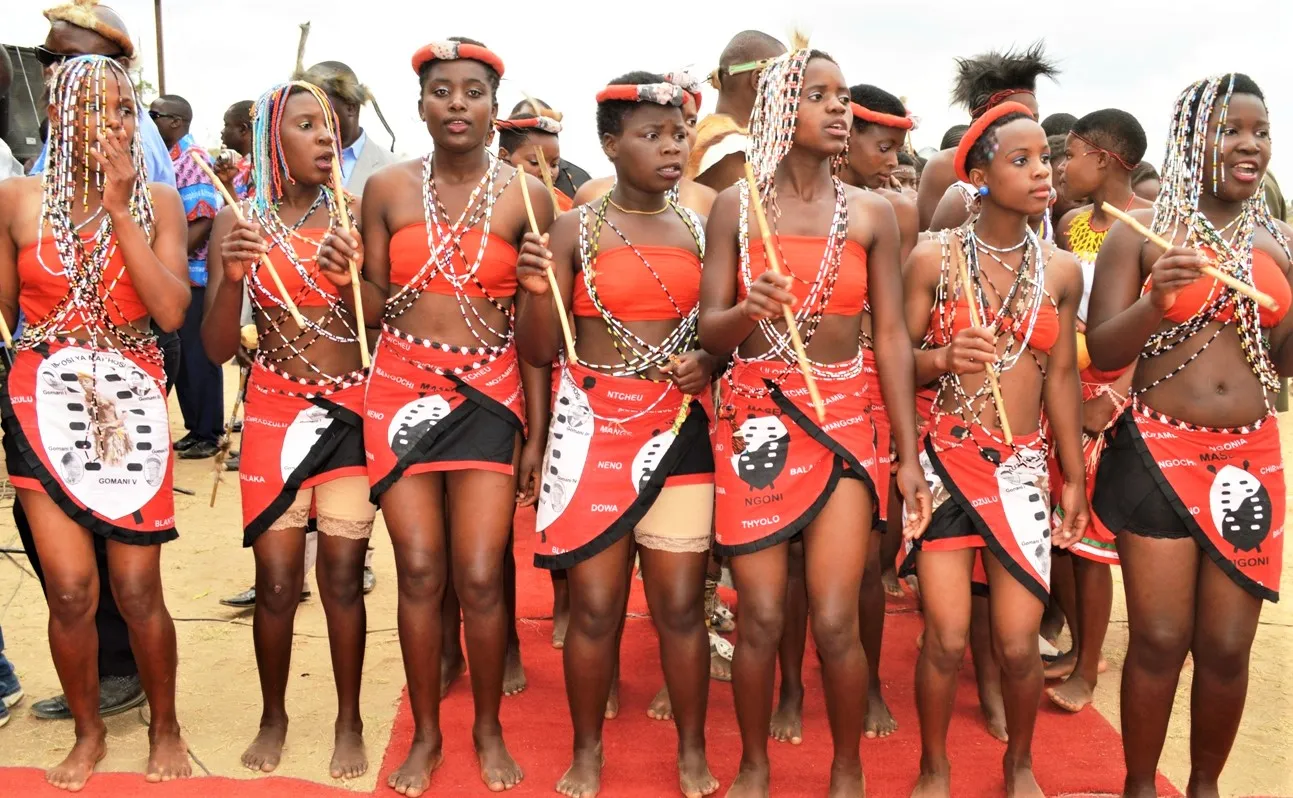
“One more indication of identity is the colour of Ancient Egyptian gods and goddesses as painted in hieroglyphic texts and artwork from the earliest period, before the Asian and European invasions. The most beloved of ancestral deities, with whom first the aristocracy and then the whole society identified during the transition to the afterworld, were Osiris and Isis, more accurately called Asar and Ast. Both of these deities were routinely depicted as black. Among praise names used for them, one of the most frequent was ‘the black one.’”
Does identity matter?
Ayi Kwei Armah concludes by looking at the issue of identity. “Let us suppose,” he wrote, “that this brief look at the thematic content of a few Ancient Egyptian texts shows us good reasons to think that identity links between Ancient Egypt and Africa today are historically real, factual. Does it matter?
“Or, to put the question in the manner of persons hypnotised by the power of the status quo: In the real world of industrial giants and transnational corporations, do issues of our identity matter? Would we not be better advised to forget about history and philosophy, the better to concentrate on making money and getting power in the here and now? Peace to all now dreaming of power and money. May you fulfil your wishes, since powerlessness dehumanises, and poverty erodes the soul.
“But let us reflect a moment, and we may come to understand that knowing who we are, thinking deeply about identity, will not stop us reaching our best goals. It is likely to give us the energy and the sense of direction we need for their attainment.
“One need not be a reader of Ancient Egyptian hieroglyphic texts to know that people trapped in penitential identities, labouring under names they do not understand, unable to connect with more than a few generations of their history, are helpless chaff in the hurricanes of global history.
“Everything going on in the world today tells us there is life, unity, death in division and disunity. But in Africa we are encouraged to treat the fearful information reaching us as if it did not concern us. It is about us. If we listen and think, it will be about our life. If we do not, it will continue to be our death. Identity is about efficient group cooperation, without which no society prospers.
“Nothing prevented the 42 small nomes [of Ancient Egypt] from forming the Two Lands, then the single state of Kmt, able to confront the largest of dangers and to thrive in their teeth, through intelligent planning. The ancestors have left a message for those not too lazy to read and think: If we are too helpless as Nigerians, Sudanese, Zimbabweans, South Africans, Mozambicans, Senegalese, Mauritanians, and Zambians, what prevents us from being Africans?
“Our problem is that we think our politicians can lead us, but politicians cannot be Africans. An African identity is not a five-year plan. It is a long-range necessity, requiring sustained, intelligent, determined planning. That is the work for cultural workers, the kind of intellectuals who can spend 20, 40 years working on a problem, so systematically that after they die, their colleagues can continue the same work, at higher levels.
“How shall we create our own African identity and make our own African structures? Self-knowledge, knowledge of our continent and our society would be a start. We could insist on the use of historical truth, not diplomatic lies, as the material for the construction of our African identity.
“It is historically true that from the time of the arrival of the Europeans on Africa’s coast, the continent has been under a steady devastating assault… Cultural workers intent on laying the groundwork for an African future need only start by stating the historical truth: the history we have shared with Europe has been a tale of pillage, massacres, dehumanisation. That Europeans want to interpret it as a civilising mission and an aid expedition to rescue us from barbarism is natural. What is unnatural is that we should want to repeat their take on our history.
“There was a time when African intellectuals who knew our history were too beaten down to speak up, and when those trained to speak in the world the slaves made knew only how to repeat their teachers’ words. Now some of us have finished our mimetic training, made contact with the silenced voices uttering our history, and are ready to tell our story on the basis of our historical truth.
“A politician speaking truth in the present dispensation will quickly be helped to a premature rendezvous with our ancestors. Cultural workers do not pose a clear and present danger to our oppressors. If our work is any good, we will suffer only the milder kinds of murder: character assassination, financial destruction. It is a price cultural workers throughout history have paid for real work. If we wish to do the necessary work, we would be foolish to want to avoid the consequence.
“The best we might do is to create networks guaranteeing improved chances of our survival. That is what all living beings do. What, with this focus on historical truth, might cultural workers contribute for the construction of an ‘African Identity’?
“Our contribution to the future might begin with a hard-eyed look at the shaping structures we inhabit. It is possible to date these structures. It is necessary that they be acknowledged as dated. Beyond that, we need to think of the nature of human movement on this continent before it was divided up into the slave pens they called colonies then, and we are urged to call nations now, to our constant detriment.”
Ayi Kwei Armah’s last word is on the free movement of Africans in Africa, a subject which is so dear to many Africans! “How did Africans see the land?” he asks. “Where on this continent were there lethal barriers to the movement of persons, ideas and things? If it is true that before the Berlin Conference, human groups and individuals were free to move over the length and breadth of this continent, is it not time we looked again at our space as free, instead of forcing our minds into straightjackets made in Germany?
“The first step is to get out of the slave boxes we call our national identities. Then we can begin thinking as Africans. That is a message from the ancestors we cannot see, though they are around us, and from the unborn, equally invisible to us, though they are in us. We can hear it if we care to listen to the griots, and to read the scribes.”
The summary
To sum up, Ayi Kwei Armah’s studies show the real mettle of the African ancestors who created Ancient Egypt, most of whom, after the fall of the Empire, migrated south and west of the continent and made new homes in the African heartlands. They were the real ancestors of modern black Africans!

Can you see why Euro-American historians and anthropologists would want to dissociate modern Africans from their real ancestors, by writing our ancestors out of history and even calling them Bantus? Yet, as you can see from the next article, on the next page, our African ancestors were the teachers of the Greeks who came to Egypt to study and who passed on the knowledge acquired in Egypt to the wider Europe. And while the Europeans today credit the early Greeks for having been the founders of European civilisation, they falsify the source of Greek knowledge.
Leave a Reply