We know that “patriotism is the last refuge of the scoundrel”, according to Samuel Johnson, but the forces behind Zimbabwe’s “parallel market” should be permanently neutralised and made to learn what Bob Hope, the American comedian, once advocated: “If I have to lay an egg for my county, I will do it.”
Zimbabwe presents a unique case. A case that sometimes depresses. As a foreigner, no a “national mukwasha” (my colleague Munyaradzi Huni promoted me to that station in May this year), I sometimes feel depressed about the level of patriotism I see in some Zimbabweans. That there are some Zimbabweans who behave as if the word “patriotism” has been deleted from their dictionaries, makes me sad. Very sad indeed.
What am I pushing at? Let me make myself clear. Zimbabwe is in a unique position where its national currency is despised by its own citizens. Nobody wants to see it. Maybe I am going ahead of myself, so let me retrace my steps and go sequentially. Zimbabwe is in the unique situation where its own currency has been superseded by the American dollar because in 2009 the country adopted a basket of currencies as legal tender, and the US dollar happened to be at the top of that basket.
We all know why Zimbabwe adopted the US dollar as legal tender. One, prior to 2009, the Zim dollar had been attacked by enemy forces, principally from the West, who wanted a regime change in Zimbabwe because the government of the then President Robert Mugabe had dared to take the country’s stolen land back from white settlers who controlled 80% of the best land in the country. The foreign attack had ensured a complete meltdown of the economy, leading to severe hardships for the people.
Two, Zimbabwe adopted the US dollar because the government had to take the fight back to the foreign enemy. The calculation, a right one, was that if Zimbabwe adopted the US dollar, the enemy would not attack his own currency in Zimbabwe. And it worked! Overnight, after the adoption of the US dollar, the flying inflation (not galloping inflation) that had decimated life in Zimbabwe disappeared. Just like that! Life regenerated. The smiles returned to the weary faces of the people. So the government was right to adopt the US dollar at the time.
President Emmerson Mnangagwa explained this to us in an exclusive interview with our sister magazine, Brick by Brick, in mid-May this year. “In 2009,” he said, “sanctions had succeeded to destroy our Zimbabwean currency. When you wanted bread, you had to carry two billion. That was not feasible. That is when we abandoned our currency and allowed the multiple currency system to apply – the dollar, the pound, the euro, the rand and so on. That stabilised our situation, but there is no country that can develop without its own currency.
“We have reached a stage where we must have our currency, but the currency is under serious attack. However, we will never abandon it. What we might do is to legislate against foreign currencies to make sure we use our own currency. Our people must know that our currency is there to stay. It must sink [in the people’s minds]. It is there to stay, but foreign currencies are not there to stay.”

Asked if the Zim dollar was under attack because of the coming elections, the President’s answer was to the point: “Whether there are elections or no elections, they always attack our currency because they want to remain dominant in our system.”
There lies the problem. The adoption of the US dollar put Zimbabwe in a fix. First, Zimbabwe adopted the US dollar without agreement with the USA that owns the currency. Two, because the USA owns the currency and Zimbabwe does not, it means Zimbabwe cannot print the currency when it needs to, when national exigencies demand it. Every country needs to print some money from time to time. In the West, they call it “quantitative easing”.
Print, print, print
Records show that in 2017 America was printing 38 million notes a day with a face value of approximately US$541 million, through its Bureau of Engraving and Printing. It is said that 95% of the notes printed each year are used to replace notes already in circulation, and 48% of the notes printed are $1 notes.
But if you believe this, you will also believe that pigs can fly. So I dug a bit deeper and found that the duration that paper money lasts in the USA “depends on the denomination of the note,” as the Fact Monster website informed me. According to the website: “A $1 bill lasts 5.8 years; $5 bill, 5.5 years; $10 bill, 4.5 years; $20 bill, 7.9 years; $50 bill, 8.5 years; and $100 bill, 15 years.”
So, if it takes as long as 15 years for a $100 note to wear out, and 8.5 years for the $50 bill to expire, what is the need to print – every day of the working week – the $100 and $50 notes? Or even the $1 bill that takes 5.8 years to wear out, the $10 note 4.5 years to be withdrawn, and the $20 a good 7.9 years to expire? What is the purpose of printing them every day? What do they use them for – just pile them up in a strong room? No, says the Fact Monster website. “[By printing $541m a day] doesn’t mean there is $541m more money circulating today than there was yesterday, because 95% of the notes printed each year are used to replace notes already in circulation”. Really?
My doubt was confirmed when I came across a 2018 thesis by one Frank Martin, an American citizen who was doing a Master of Science in Applied Mathematics. His research showed that in 2018 the Federal Reserve, the custodian of the dollar, ordered a total of “7,046,400,000 banknotes worth $206,905,600,000. All banknotes must be integer multiples of 640,000 which is called a skid by the Bureau of Engraving and Printing, and each skid is slightly over 1400 lbs. Production is about 212 skids per week on the average.”
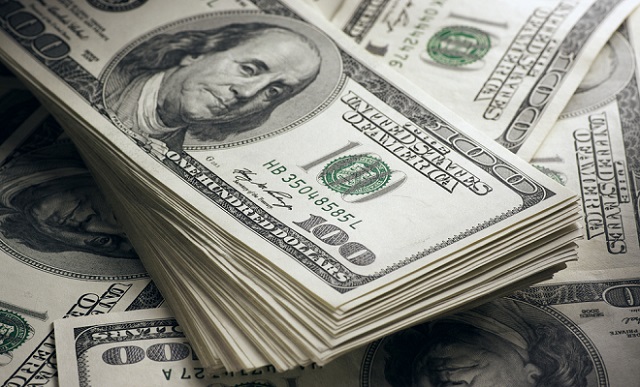
Martin went on: “The $100 bill is 21.98% by banknote count and 74.86% by total value. Most of the $100 bills circulate overseas. Another 21.98% of the order is for the $20 bill and 35.51% for the $1 bill. The remainder of the order for the four less popular denominations is 2.18% for the $2; 10.35% for the $5; 4.81% for the $10; and 3.18% for the $50.”
circulate overseas
Did you notice it, dear reader? “The $100 bill is 21.98% by banknote count and 74.86% by total value. Most of the $100 bills circulate overseas,” Frank Martin reported in his thesis. It means that of all the billions and billions of dollars printed each year, almost 75% of the total value is in $100 notes, and most of it circulates overseas.
Which means the effect on inflation inside America itself is minimal, if any, unlike say if Zimbabwe prints the Zim dollar every day. Inflation will decimate everything and everybody because the Zim dollar does not cross Zimbabwe’s borders. It is all consumed inside.
So the Americans are fine. They can print and print and print their dollar every day with nothing backing it, like gold or whatever. Just paper. The only cost to them is in ink, paper, staff remuneration, and the repair of the printing machines. Just that.
So why can they not be said to be the “richest” country in the world if they just print their money and use it for world trade? Remember the $100 bill makes up almost 75% of the total value of the print run, and most of it circulates overseas. I tell you even a goat will become the richest in the world if put in such a situation.
What’s more: Their economy suffers no adverse effects, or not much adverse effects, I am told, because the rest of the world are happy to take the $100 notes and hoard them in their banks, while the Americans take the world’s resources in exchange. Clever cats, are they not?
So they continue to print and print and print. Every day. In early February this year, the Federal Reserve announced how much they were going to print in 2023. In a statement headed “Revised 2023 Federal Reserve Note Print Order, the announcement said: “On February 1, 2023, the Board of Governors [of the Federal Reserve] approved a revision to its print order to the U.S. Treasury Department’s Bureau of Engraving & Printing for fiscal year (FY) 2023.
“The revised print order increases the total number of notes from a range of 4.5 billion to 8.6 billion notes to 4.6 billion to 8.7 billion notes, an increase of 1.3 to 1.4 percent. The total value of the revised order is $166.6 billion to $190.5 billion. The revised order includes additional $2 notes, given higher than expected demand. On August 9, 2022, the Board approved the original FY 2023 print order.”
So there you are! America will print a good $190.5 billion this year to shore up its economy and life in the country. Much of the money, as usual, will go abroad to finance America’s world trade and wars and whatever besides in $100 bills.
To explain how it all works, the Manchester (UK)-based strategic wealth management company, DePledge, has this to say: “When a crisis hits a nation – or in the case of the Covid-19 pandemic, the entire world – governments and central banks have to act fast. When the pandemic hit in March 2020 and lockdowns were imposed throughout the world, economies suffered sharp declines.
“In response, the US Federal Reserve took a seemingly drastic measure to inflate the economy: they printed trillions of dollars. The action of printing money in order to help the economy remain buoyant is known as ‘quantitative easing’ (QE). QE was first introduced in March 2009, following the stock market crash of 2008.
“The Federal Reserve printed approximately $3.3 trillion in 2020 alone, which equates to one-fifth of all US dollars in circulation in the same year. You might be wondering: how can simply printing more money help in a crisis?
“In basic terms, the key motivator for QE is to encourage borrowing. Due to the high number of loans available from banks, interest rates usually remain low, meaning borrowing stays cheap.
“For example, according to Trading Economics, the Federal Reserve’s “fed funds rate” – an equivalent to the UK’s base rate – dropped from 1% to 0.25% in March 2020. A 0.25% interest rate afforded individuals the opportunity to borrow as cheaply as possible during the pandemic with the hope that, in turn, they spend this money on goods and services to boost the economy.
“This is an example of how QE can benefit the country in the short term – it encourages individuals to continue spending money in an economically precarious time. While it may have helped stabilise the US economy during the peak of the Covid-19 pandemic, QE has some disadvantages that are now being experienced in 2022.”
DePledge’s article went on to talk about some inflationary effects in 2022 in America and Britain because of QE. But, generally, the benefits of QE far outweigh the disadvantages, otherwise the Americans and the British and the West generally will not dabble in it.
When a crisis hits a nation…
Now back to Zimbabwe. “When a crisis hits a nation,” DePledge explained, “governments and central banks have to act fast. When the pandemic hit in March 2020 and lockdowns were imposed throughout the world, economies suffered sharp declines … In response, the US Federal Reserve took a seemingly drastic measure to inflate the economy: they printed trillions of dollars.”
Since November 2001, when America, Britain and the West imposed economic and political sanctions on Zimbabwe, the nation has been in a “crisis” throughout the 22 years since. In recent years, Britain and the European Union have been more conciliatory in terms of lifting their sanctions.
But the Americans, with whom Zimbabwe had no grievance in terms of land reform, have rather been most implacable with their sanctions, and have tried to block Zimbabwe at every turn, preventing it from participating in the global financial system and trade. So Zimbabwe has had to find various unorthodox ways to sell even its gold and diamonds on the world market. Simple things like that – selling gold and diamonds – which every nation is allowed to do, is denied Zimbabwe.
The bigger point though is that “when a crisis hits a nation, governments and central banks have to act fast” by printing money (or resort to “quantitative easing”) as part of the measures to deal with the crisis. In Zimbabwe’s case, it cannot print the dominant currency in the country (by usage or affection), the US dollar, because it doesn’t own it. Yet if it prints the Zim dollar, two things happen: (a) It leads to more inflation, and (b) the currency is attacked by local and foreign forces. So the country sinks deeper and deeper into the “fix” I talked about earlier in this piece. And it makes the situation more complex to resolve.
To compound “the fix”, every US dollar in Zimbabwe must come as a result of the country physically selling its goods and services to acquire it, and the quantities brought in by the forces behind the black market, which is respectfully called “the parallel market” in Zimbabwe. But parallel to what? Let’s call it by its proper name. I know we find it a bit uncomfortable to call it the “black market” because we are black. But if we can’t call it “black”, let’s call it evil – the “evil market”, that is what it is in Zimbabwe. Evil. It destroys lives. And the country.
The Americans know this, and as pointed out above, they have been trying to block Zimbabwe physically from the world market, thus making it difficult for Zimbabwe to acquire more US dollars and other foreign currency through legitimate trade.
Therefore, there is a perpetual shortage of US dollars and other foreign currencies in Zimbabwean banks. So you cannot go to a bank and exchange your Zim dollars for US dollars, if you need to travel abroad or buy goods and services from abroad. For businesses that need to restock with goods from abroad, it is a nightmare.
The government has tried to use an official foreign currency auction to ameliorate the situation, and though it has helped, it is not perfect. President Mnangagwa talked about it in the Brick by Brick interview in May. Asked if the country still needs the auction regime, he answered: “As we go forward, we should reach a stage where we may not need it because it’s not necessary. It has been put there to deal with a particular challenge and I think that challenge is going away. We may reach a stage very soon where we may not need it.”
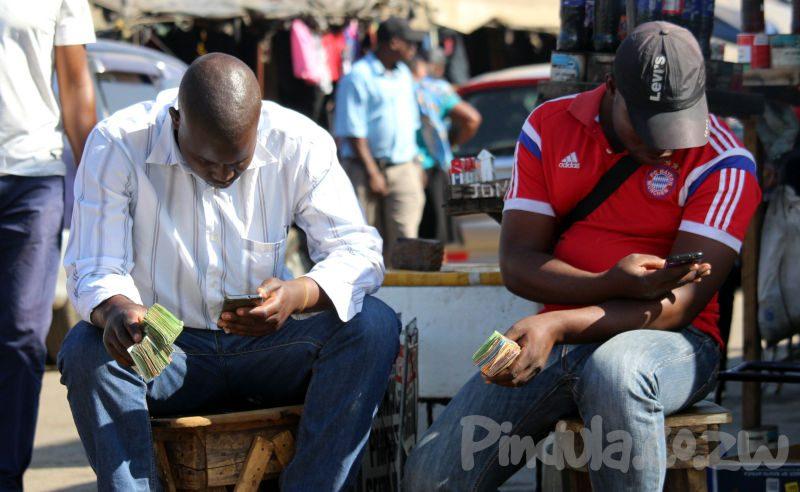
Meanwhile, “the fix” continues and deepens. Because of the imperfections of the auction system, the only place people can easily find forex, (particularly the popular US dollars) is on the streets, on the “evil market”, where cut-throat saboteurs reign and have become bolder and bolder by the day, if not by the hour. They decide, artificially and whimsically, what rate the US dollar will be against the Zim dollar. Which gives them a lot of power over the economy and the country as a whole.
New ways of working
These days the saboteurs’ agents on the streets are using Zimbabwean bank-issued debit cards for their “dirty” business, standing in front of shops and wherever there is business in cash, and getting their business done in full view of all and sundry, and with the impunity that says “we are the lords, we are untouchable”.
It makes Zimbabwe the only country that I know where the “evil market” decides the quality of life the people will live – because what they do, the constant raising of the US dollar value and the depreciation of the Zim dollar, affects all the prices of goods and services in the country to the point where the citizens are at the mercy of the cut-throat saboteurs behind the “evil market”.
The worst of all is that incomes and salaries cannot be raised in tandem with the rise in the value of the US dollar or the depreciation in the Zim dollar, and therefore the resultant steep prices of goods and services hit hard and bring frustration to the people. So the ordinary citizen is always at a disadvantage.
Take for example, in March this year, Liquid (formerly ZOL, part of Econent) was charing ZWL149,603.01 for one of its unlimited wifi packages. Because of the steep rise in the US dollar value, Liquid increased its price to ZWL193,350.75 in May, and ZWL1,028,843.75 in June. For the same package! What can a citizen whose income or salary has not been raised to march the rise in the US dollar value or the sharp depreciation of the Zim dollar, do in such situations? Something has to be done to the “evil market” once and for all.
These days the saboteurs’ agents in the streets use debit cards on which the names of the saboteurs or their business have been inscribed, which makes it easier to identify them. The debit cards are issued by Zimbabwean banks, and some of the banks in fact collaborate with the saboteurs, so it will be easy to neutralise them if the political will is found.
But I can see the dilemma of the government. If it clamps hard on the saboteurs and they go underground, two things will happen. One, the US dollar will be in such a shortage that its value will shoot through the roof, bringing apocalypse on the Zim dollar. Two, it will bring more pressure on the official system as the banks don’t have enough US dollars to go around. So the problem is complicated.
Unfortunately, the emotional attachment the people of Zimbabwe have developed for the US dollar has become legendary, such that they don’t want to see their own currency or attach any real value to their own currency. Even the tomato seller in Mbare wants to be paid in US dollars. This makes it difficult for the government to pull the people away from the US dollar, because it now occupies a prime spot in the national psyche. So what can be done? I have an example.
Ghana’s example
In the early 2000s, Ghana, my country, was in a similar dilemma. The black market (we still call it the “black market”) was dominant and distorting the economy and life in the country. To control the situation, the government of President Jerry Rawlings introduced the forex bureau system and asked everybody and businesses who were interested to apply.
Most of the people and businesses behind the black market applied, and were officially mandated to operate forex bureaux where the government could exercise control and make them pay taxes to the state. That killed the black market, though today it still lingers on in the margins, but powerless.
Most people now prefer to go to the forex bureaux when they need foreign currency or the banks. And as Ghana, fortunately, has not been under economic and political sanctions by the West, it is able to offer foreign currencies to those who need them through the official channels (ie, the banks and the forex bureaux).
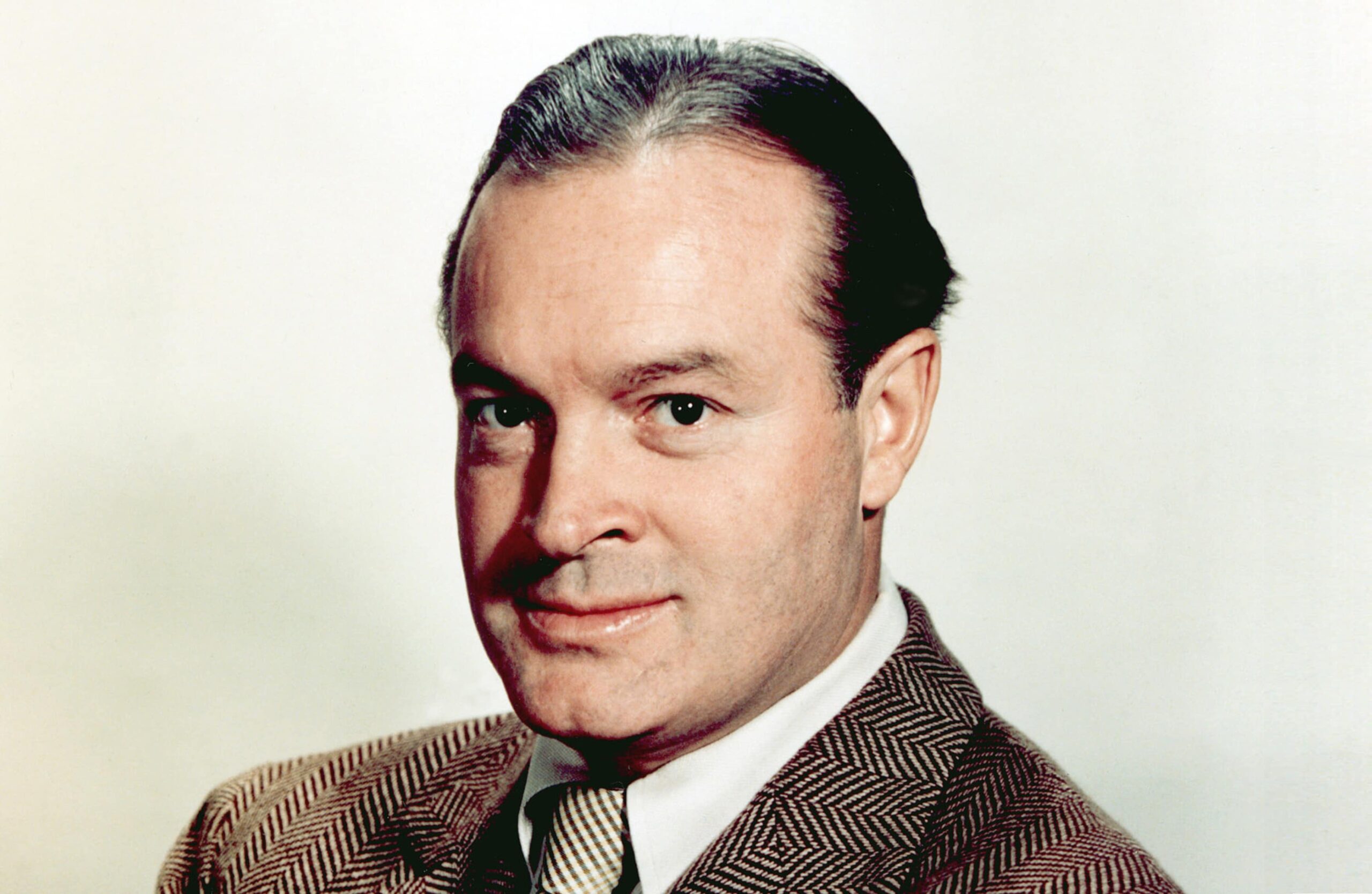
The critical element in all this is that the forces that used to control the black market in Ghana had one thing that the forces controlling the “evil market” in Zimbabwe do not have. It is called patriotism. Thinking about your country and its people. And willing to do your best to ensure that your country survives and prospers. Patriotism is what made Bob Hope, the American comedian, actor and entertainer who died in 2003, say: “If I have to lay an egg for my county, I will do it.”
I don’t see any patriotism in the forces controlling the “evil market” in Zimbabwe. It is about themselves and the ability to “burn” the currency and get inordinate profits. It is about the urge to destroy their own country or overthrow the government in power. They think the more they make the Zim dollar depreciate, and prices go up, and people suffer, the more the expected disenchantment in the population will lead to the overthrow of the government. It is an evil agenda.
It is why, since February 2019 when the government ditched the 1:1 parity and allowed the value of the new RTGS dollar (or Zim dollar) to float against the US dollar, starting at the rate of 2.5 Zim dollars to one US dollar, the rate has risen (in fact been jumping) in just 4 years to 9,000:1 in June 2023. Incredible is the word! At the time of writing, the rate had mercifully come down to around 6,000:1. How can that be, I ask? If not pure sabotage of the country and economy, what else can it be?
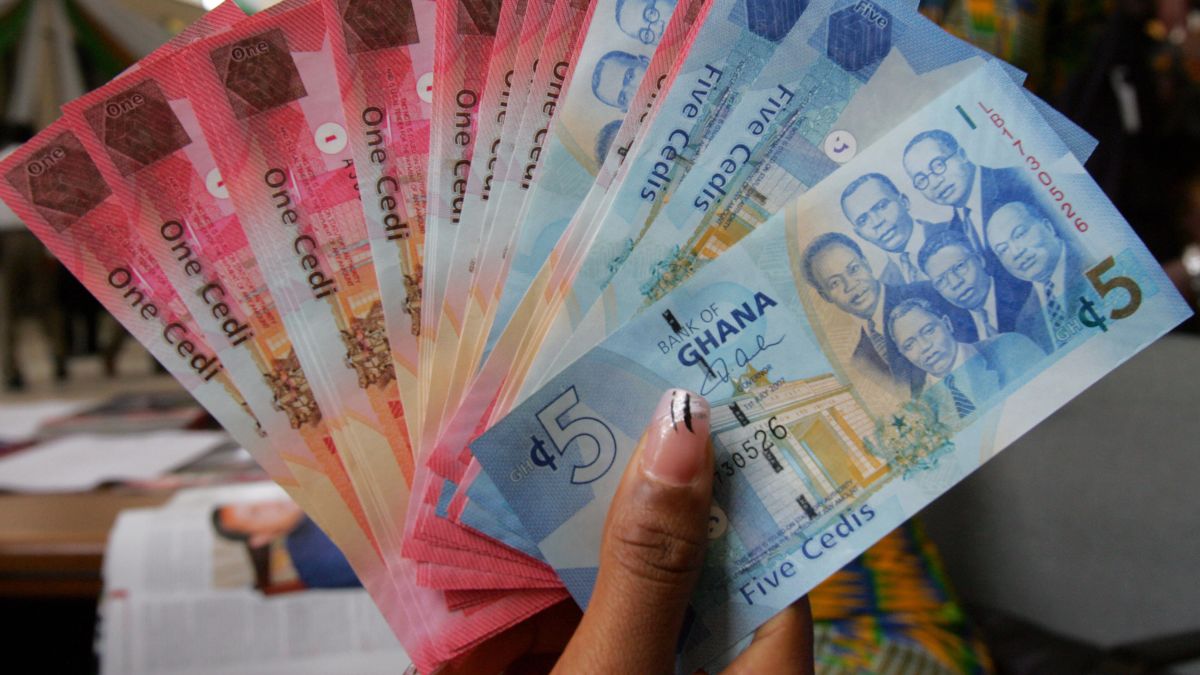
Let’s look at a comparable situation: On 1 July 2007, Ghana, under President John Kufuor, re-dominated its currency, the cedi, by removing four zeros, so that the ¢10,000-note was made equivalent to a new GH¢1-note, and the exchange rate was set at 1:1 against the US dollar.
Today, 16 long years later, though the cedi has lost a lot of ground to the dollar (particularly this year and Ghanaians are crying), the exchange rate is still hovering around 11.5:1. Thankfully, there is no fetish about the US dollar in Ghana. Nobody wants it except they want to buy goods and services from abroad. Otherwise if you go to a Ghanaian shop or market with your US dollars, they will politely tell you to go and change it and bring back Ghana cedis.
And, a most curious thing: If you want to send money abroad through the Ecobank Rapid Transfer system in Ghana, they tell you to change your money into Ghana cedis to make the transfer. They don’t accept foreign currencies. Yet in Zimbabwe, if you want to do the same transfer through the Ecobank Rapid Transfer system, they don’t accept Zim dollars. You must do it in US dollars. Therein lies Zimbabwe’s problem. And the time has come for the government to do something about it.
It is quite disheartening to see Zimbabwe’s exchange rate go up and up and up – all the time? From a mere 2.5:1 in 2019 to 9,000:1 in 2023. It can only be sabotage. And the lack of patriotism. So the cut-throat saboteurs should be stopped.
See how they suddenly increased the rate to over 9,000:1 just two days after President Mnangagwa announced the 2023 election date. It was a blatant and cynical attack that insults even the intelligence (or the lack of it) of the perpetrators. Who couldn’t see through the chicanery?
All said and done, time has come for the saboteurs to be dealt with once and for all – in the manner and language they understand.
Leave a Reply