Category: Baffour’s Beefs

  • Zimbabwe: The sabotage must stop!

    Zimbabwe: The sabotage must stop!

    We know that “patriotism is the last refuge of the scoundrel”, according to Samuel Johnson, but the forces behind Zimbabwe’s “parallel market” should be permanently neutralised and made to learn what Bob Hope, the American comedian, once advocated: “If I have to lay an egg for my county, I will do it.”


    Zimbabwe presents a unique case. A case that sometimes depresses. As a foreigner, no a “national mukwasha” (my colleague Munyaradzi Huni promoted me to that station in May this year), I sometimes feel depressed about the level of patriotism I see in some Zimbabweans. That there are some Zimbabweans who behave as if the word “patriotism” has been deleted from their dictionaries, makes me sad. Very sad indeed.


    What am I pushing at? Let me make myself clear. Zimbabwe is in a unique position where its national currency is despised by its own citizens. Nobody wants to see it. Maybe I am going ahead of myself, so let me retrace my steps and go sequentially. Zimbabwe is in the unique situation where its own currency has been superseded by the American dollar because in 2009 the country adopted a basket of currencies as legal tender, and the US dollar happened to be at the top of that basket.

    Doing roaring business: Forex dealers in the streets of Zimbabwe are a front for the bosses who hide behind the scenes destroying the economy

    We all know why Zimbabwe adopted the US dollar as legal tender. One, prior to 2009, the Zim dollar had been attacked by enemy forces, principally from the West, who wanted a regime change in Zimbabwe because the government of the then President Robert Mugabe had dared to take the country’s stolen land back from white settlers who controlled 80% of the best land in the country. The foreign attack had ensured a complete meltdown of the economy, leading to severe hardships for the people.


    Two, Zimbabwe adopted the US dollar because the government had to take the fight back to the foreign enemy. The calculation, a right one, was that if Zimbabwe adopted the US dollar, the enemy would not attack his own currency in Zimbabwe. And it worked! Overnight, after the adoption of the US dollar, the flying inflation (not galloping inflation) that had decimated life in Zimbabwe disappeared. Just like that! Life regenerated. The smiles returned to the weary faces of the people. So the government was right to adopt the US dollar at the time.


    President Emmerson Mnangagwa explained this to us in an exclusive interview with our sister magazine, Brick by Brick, in mid-May this year. “In 2009,” he said, “sanctions had succeeded to destroy our Zimbabwean currency. When you wanted bread, you had to carry two billion. That was not feasible. That is when we abandoned our currency and allowed the multiple currency system to apply – the dollar, the pound, the euro, the rand and so on. That stabilised our situation, but there is no country that can develop without its own currency.


    “We have reached a stage where we must have our currency, but the currency is under serious attack. However, we will never abandon it. What we might do is to legislate against foreign currencies to make sure we use our own currency. Our people must know that our currency is there to stay. It must sink [in the people’s minds]. It is there to stay, but foreign currencies are not there to stay.”

    The Zim dollar: Astonishingly, the rate of the RTGS dollar has gone from 2.5:1 in February 1919 to over 9,000:1 in June 2023, a period of just 4 years


    Asked if the Zim dollar was under attack because of the coming elections, the President’s answer was to the point: “Whether there are elections or no elections, they always attack our currency because they want to remain dominant in our system.”


    There lies the problem. The adoption of the US dollar put Zimbabwe in a fix. First, Zimbabwe adopted the US dollar without agreement with the USA that owns the currency. Two, because the USA owns the currency and Zimbabwe does not, it means Zimbabwe cannot print the currency when it needs to, when national exigencies demand it. Every country needs to print some money from time to time. In the West, they call it “quantitative easing”.


    Print, print, print

    Records show that in 2017 America was printing 38 million notes a day with a face value of approximately US$541 million, through its Bureau of Engraving and Printing. It is said that 95% of the notes printed each year are used to replace notes already in circulation, and 48% of the notes printed are $1 notes.


    But if you believe this, you will also believe that pigs can fly. So I dug a bit deeper and found that the duration that paper money lasts in the USA “depends on the denomination of the note,” as the Fact Monster website informed me. According to the website: “A $1 bill lasts 5.8 years; $5 bill, 5.5 years; $10 bill, 4.5 years; $20 bill, 7.9 years; $50 bill, 8.5 years; and $100 bill, 15 years.”


    So, if it takes as long as 15 years for a $100 note to wear out, and 8.5 years for the $50 bill to expire, what is the need to print – every day of the working week – the $100 and $50 notes? Or even the $1 bill that takes 5.8 years to wear out, the $10 note 4.5 years to be withdrawn, and the $20 a good 7.9 years to expire? What is the purpose of printing them every day? What do they use them for – just pile them up in a strong room? No, says the Fact Monster website. “[By printing $541m a day] doesn’t mean there is $541m more money circulating today than there was yesterday, because 95% of the notes printed each year are used to replace notes already in circulation”. Really?


    My doubt was confirmed when I came across a 2018 thesis by one Frank Martin, an American citizen who was doing a Master of Science in Applied Mathematics. His research showed that in 2018 the Federal Reserve, the custodian of the dollar, ordered a total of “7,046,400,000 banknotes worth $206,905,600,000. All banknotes must be integer multiples of 640,000 which is called a skid by the Bureau of Engraving and Printing, and each skid is slightly over 1400 lbs. Production is about 212 skids per week on the average.”


    Martin went on: “The $100 bill is 21.98% by banknote count and 74.86% by total value. Most of the $100 bills circulate overseas. Another 21.98% of the order is for the $20 bill and 35.51% for the $1 bill. The remainder of the order for the four less popular denominations is 2.18% for the $2; 10.35% for the $5; 4.81% for the $10; and 3.18% for the $50.”

    The US dollar: A good 75% of the total value of the dollars printed every day by America is in $100 notes and most of them
    circulate overseas

    Did you notice it, dear reader? “The $100 bill is 21.98% by banknote count and 74.86% by total value. Most of the $100 bills circulate overseas,” Frank Martin reported in his thesis. It means that of all the billions and billions of dollars printed each year, almost 75% of the total value is in $100 notes, and most of it circulates overseas.


    Which means the effect on inflation inside America itself is minimal, if any, unlike say if Zimbabwe prints the Zim dollar every day. Inflation will decimate everything and everybody because the Zim dollar does not cross Zimbabwe’s borders. It is all consumed inside.


    So the Americans are fine. They can print and print and print their dollar every day with nothing backing it, like gold or whatever. Just paper. The only cost to them is in ink, paper, staff remuneration, and the repair of the printing machines. Just that.


    So why can they not be said to be the “richest” country in the world if they just print their money and use it for world trade? Remember the $100 bill makes up almost 75% of the total value of the print run, and most of it circulates overseas. I tell you even a goat will become the richest in the world if put in such a situation.


    What’s more: Their economy suffers no adverse effects, or not much adverse effects, I am told, because the rest of the world are happy to take the $100 notes and hoard them in their banks, while the Americans take the world’s resources in exchange. Clever cats, are they not?


    So they continue to print and print and print. Every day. In early February this year, the Federal Reserve announced how much they were going to print in 2023. In a statement headed “Revised 2023 Federal Reserve Note Print Order, the announcement said: “On February 1, 2023, the Board of Governors [of the Federal Reserve] approved a revision to its print order to the U.S. Treasury Department’s Bureau of Engraving & Printing for fiscal year (FY) 2023.


    “The revised print order increases the total number of notes from a range of 4.5 billion to 8.6 billion notes to 4.6 billion to 8.7 billion notes, an increase of 1.3 to 1.4 percent. The total value of the revised order is $166.6 billion to $190.5 billion. The revised order includes additional $2 notes, given higher than expected demand. On August 9, 2022, the Board approved the original FY 2023 print order.”


    So there you are! America will print a good $190.5 billion this year to shore up its economy and life in the country. Much of the money, as usual, will go abroad to finance America’s world trade and wars and whatever besides in $100 bills.


    To explain how it all works, the Manchester (UK)-based strategic wealth management company, DePledge, has this to say: “When a crisis hits a nation – or in the case of the Covid-19 pandemic, the entire world – governments and central banks have to act fast. When the pandemic hit in March 2020 and lockdowns were imposed throughout the world, economies suffered sharp declines.


    “In response, the US Federal Reserve took a seemingly drastic measure to inflate the economy: they printed trillions of dollars. The action of printing money in order to help the economy remain buoyant is known as ‘quantitative easing’ (QE). QE was first introduced in March 2009, following the stock market crash of 2008.


    “The Federal Reserve printed approximately $3.3 trillion in 2020 alone, which equates to one-fifth of all US dollars in circulation in the same year. You might be wondering: how can simply printing more money help in a crisis?


    “In basic terms, the key motivator for QE is to encourage borrowing. Due to the high number of loans available from banks, interest rates usually remain low, meaning borrowing stays cheap.


    “For example, according to Trading Economics, the Federal Reserve’s “fed funds rate” – an equivalent to the UK’s base rate – dropped from 1% to 0.25% in March 2020. A 0.25% interest rate afforded individuals the opportunity to borrow as cheaply as possible during the pandemic with the hope that, in turn, they spend this money on goods and services to boost the economy.


    “This is an example of how QE can benefit the country in the short term – it encourages individuals to continue spending money in an economically precarious time. While it may have helped stabilise the US economy during the peak of the Covid-19 pandemic, QE has some disadvantages that are now being experienced in 2022.”


    DePledge’s article went on to talk about some inflationary effects in 2022 in America and Britain because of QE. But, generally, the benefits of QE far outweigh the disadvantages, otherwise the Americans and the British and the West generally will not dabble in it.


    When a crisis hits a nation…

    Now back to Zimbabwe. “When a crisis hits a nation,” DePledge explained, “governments and central banks have to act fast. When the pandemic hit in March 2020 and lockdowns were imposed throughout the world, economies suffered sharp declines … In response, the US Federal Reserve took a seemingly drastic measure to inflate the economy: they printed trillions of dollars.”


    Since November 2001, when America, Britain and the West imposed economic and political sanctions on Zimbabwe, the nation has been in a “crisis” throughout the 22 years since. In recent years, Britain and the European Union have been more conciliatory in terms of lifting their sanctions.


    But the Americans, with whom Zimbabwe had no grievance in terms of land reform, have rather been most implacable with their sanctions, and have tried to block Zimbabwe at every turn, preventing it from participating in the global financial system and trade. So Zimbabwe has had to find various unorthodox ways to sell even its gold and diamonds on the world market. Simple things like that – selling gold and diamonds – which every nation is allowed to do, is denied Zimbabwe.


    The bigger point though is that “when a crisis hits a nation, governments and central banks have to act fast” by printing money (or resort to “quantitative easing”) as part of the measures to deal with the crisis. In Zimbabwe’s case, it cannot print the dominant currency in the country (by usage or affection), the US dollar, because it doesn’t own it. Yet if it prints the Zim dollar, two things happen: (a) It leads to more inflation, and (b) the currency is attacked by local and foreign forces. So the country sinks deeper and deeper into the “fix” I talked about earlier in this piece. And it makes the situation more complex to resolve.


    To compound “the fix”, every US dollar in Zimbabwe must come as a result of the country physically selling its goods and services to acquire it, and the quantities brought in by the forces behind the black market, which is respectfully called “the parallel market” in Zimbabwe. But parallel to what? Let’s call it by its proper name. I know we find it a bit uncomfortable to call it the “black market” because we are black. But if we can’t call it “black”, let’s call it evil – the “evil market”, that is what it is in Zimbabwe. Evil. It destroys lives. And the country.


    The Americans know this, and as pointed out above, they have been trying to block Zimbabwe physically from the world market, thus making it difficult for Zimbabwe to acquire more US dollars and other foreign currency through legitimate trade.


    Therefore, there is a perpetual shortage of US dollars and other foreign currencies in Zimbabwean banks. So you cannot go to a bank and exchange your Zim dollars for US dollars, if you need to travel abroad or buy goods and services from abroad. For businesses that need to restock with goods from abroad, it is a nightmare.


    The government has tried to use an official foreign currency auction to ameliorate the situation, and though it has helped, it is not perfect. President Mnangagwa talked about it in the Brick by Brick interview in May. Asked if the country still needs the auction regime, he answered: “As we go forward, we should reach a stage where we may not need it because it’s not necessary. It has been put there to deal with a particular challenge and I think that challenge is going away. We may reach a stage very soon where we may not need it.”


    Meanwhile, “the fix” continues and deepens. Because of the imperfections of the auction system, the only place people can easily find forex, (particularly the popular US dollars) is on the streets, on the “evil market”, where cut-throat saboteurs reign and have become bolder and bolder by the day, if not by the hour. They decide, artificially and whimsically, what rate the US dollar will be against the Zim dollar. Which gives them a lot of power over the economy and the country as a whole.


    New ways of working

    These days the saboteurs’ agents on the streets are using Zimbabwean bank-issued debit cards for their “dirty” business, standing in front of shops and wherever there is business in cash, and getting their business done in full view of all and sundry, and with the impunity that says “we are the lords, we are untouchable”.


    It makes Zimbabwe the only country that I know where the “evil market” decides the quality of life the people will live – because what they do, the constant raising of the US dollar value and the depreciation of the Zim dollar, affects all the prices of goods and services in the country to the point where the citizens are at the mercy of the cut-throat saboteurs behind the “evil market”.


    The worst of all is that incomes and salaries cannot be raised in tandem with the rise in the value of the US dollar or the depreciation in the Zim dollar, and therefore the resultant steep prices of goods and services hit hard and bring frustration to the people. So the ordinary citizen is always at a disadvantage.


    Take for example, in March this year, Liquid (formerly ZOL, part of Econent) was charing ZWL149,603.01 for one of its unlimited wifi packages. Because of the steep rise in the US dollar value, Liquid increased its price to ZWL193,350.75 in May, and ZWL1,028,843.75 in June. For the same package! What can a citizen whose income or salary has not been raised to march the rise in the US dollar value or the sharp depreciation of the Zim dollar, do in such situations? Something has to be done to the “evil market” once and for all.


    These days the saboteurs’ agents in the streets use debit cards on which the names of the saboteurs or their business have been inscribed, which makes it easier to identify them. The debit cards are issued by Zimbabwean banks, and some of the banks in fact collaborate with the saboteurs, so it will be easy to neutralise them if the political will is found.


    But I can see the dilemma of the government. If it clamps hard on the saboteurs and they go underground, two things will happen. One, the US dollar will be in such a shortage that its value will shoot through the roof, bringing apocalypse on the Zim dollar. Two, it will bring more pressure on the official system as the banks don’t have enough US dollars to go around. So the problem is complicated.


    Unfortunately, the emotional attachment the people of Zimbabwe have developed for the US dollar has become legendary, such that they don’t want to see their own currency or attach any real value to their own currency. Even the tomato seller in Mbare wants to be paid in US dollars. This makes it difficult for the government to pull the people away from the US dollar, because it now occupies a prime spot in the national psyche. So what can be done? I have an example.


    Ghana’s example

    In the early 2000s, Ghana, my country, was in a similar dilemma. The black market (we still call it the “black market”) was dominant and distorting the economy and life in the country. To control the situation, the government of President Jerry Rawlings introduced the forex bureau system and asked everybody and businesses who were interested to apply.


    Most of the people and businesses behind the black market applied, and were officially mandated to operate forex bureaux where the government could exercise control and make them pay taxes to the state. That killed the black market, though today it still lingers on in the margins, but powerless.


    Most people now prefer to go to the forex bureaux when they need foreign currency or the banks. And as Ghana, fortunately, has not been under economic and political sanctions by the West, it is able to offer foreign currencies to those who need them through the official channels (ie, the banks and the forex bureaux).


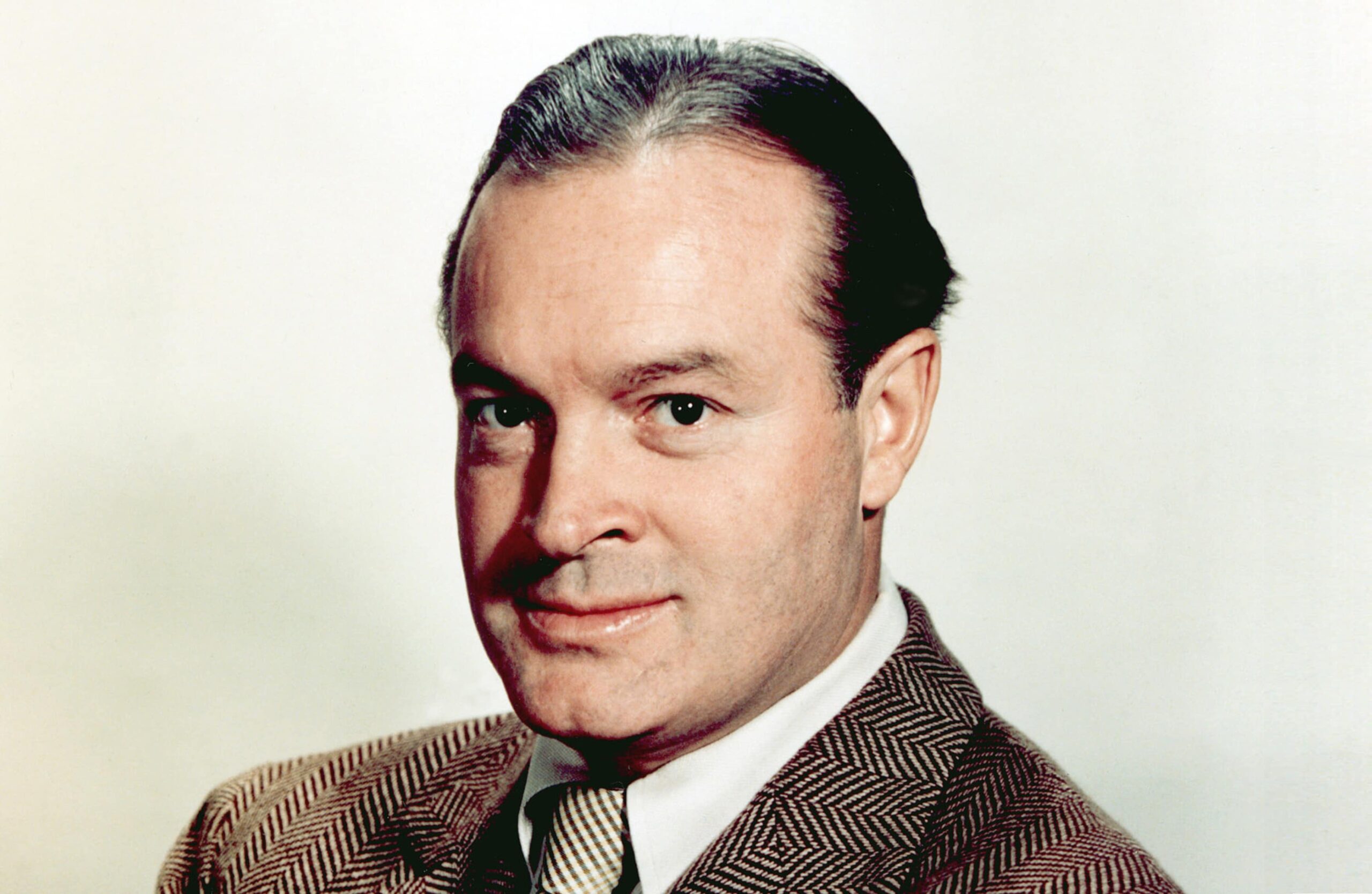
    Food for thought: Bob Hope: “If I have to lay an egg for my county, I will do it.” No patriotism can beat that

    The critical element in all this is that the forces that used to control the black market in Ghana had one thing that the forces controlling the “evil market” in Zimbabwe do not have. It is called patriotism. Thinking about your country and its people. And willing to do your best to ensure that your country survives and prospers. Patriotism is what made Bob Hope, the American comedian, actor and entertainer who died in 2003, say: “If I have to lay an egg for my county, I will do it.”


    I don’t see any patriotism in the forces controlling the “evil market” in Zimbabwe. It is about themselves and the ability to “burn” the currency and get inordinate profits. It is about the urge to destroy their own country or overthrow the government in power. They think the more they make the Zim dollar depreciate, and prices go up, and people suffer, the more the expected disenchantment in the population will lead to the overthrow of the government. It is an evil agenda.


    It is why, since February 2019 when the government ditched the 1:1 parity and allowed the value of the new RTGS dollar (or Zim dollar) to float against the US dollar, starting at the rate of 2.5 Zim dollars to one US dollar, the rate has risen (in fact been jumping) in just 4 years to 9,000:1 in June 2023. Incredible is the word! At the time of writing, the rate had mercifully come down to around 6,000:1. How can that be, I ask? If not pure sabotage of the country and economy, what else can it be?


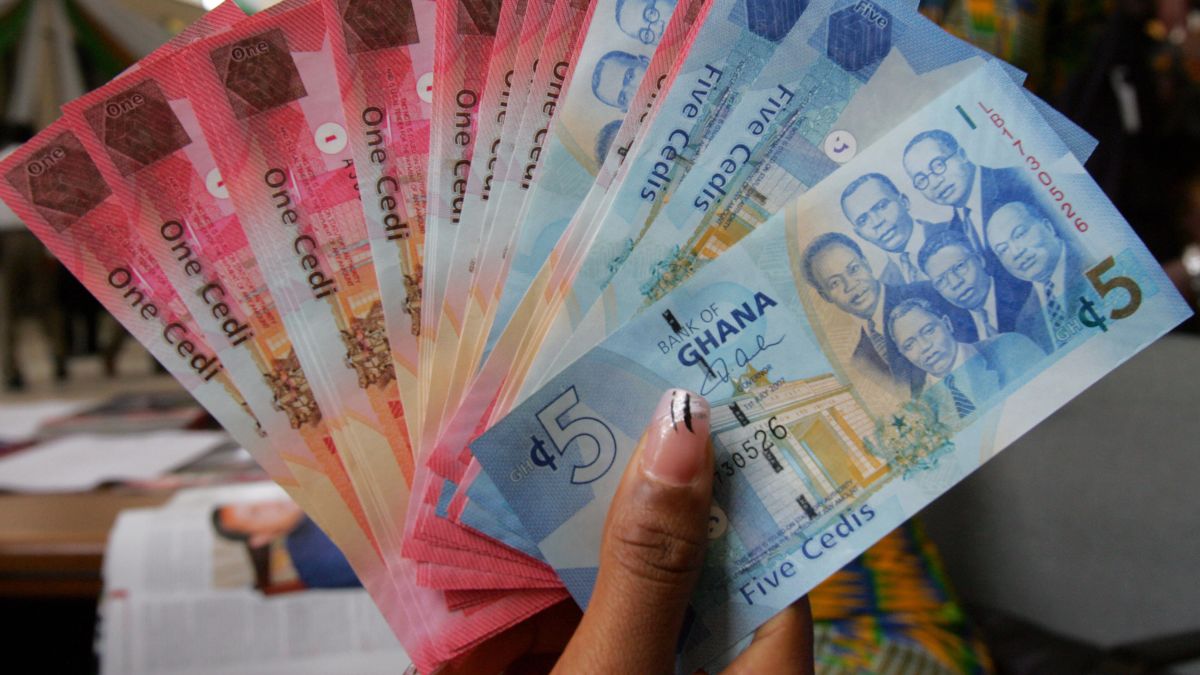
    Let’s look at a comparable situation: On 1 July 2007, Ghana, under President John Kufuor, re-dominated its currency, the cedi, by removing four zeros, so that the ¢10,000-note was made equivalent to a new GH¢1-note, and the exchange rate was set at 1:1 against the US dollar.


    Today, 16 long years later, though the cedi has lost a lot of ground to the dollar (particularly this year and Ghanaians are crying), the exchange rate is still hovering around 11.5:1. Thankfully, there is no fetish about the US dollar in Ghana. Nobody wants it except they want to buy goods and services from abroad. Otherwise if you go to a Ghanaian shop or market with your US dollars, they will politely tell you to go and change it and bring back Ghana cedis.

    Ghana cedi: Redominated 16 long years, the Ghana cedi is still exchanging for around 11.5 to the US dollar. Thankfully, there is no fetish about the US dollar in Ghana. Nobody wants it except they want to buy goods and services from abroad

    And, a most curious thing: If you want to send money abroad through the Ecobank Rapid Transfer system in Ghana, they tell you to change your money into Ghana cedis to make the transfer. They don’t accept foreign currencies. Yet in Zimbabwe, if you want to do the same transfer through the Ecobank Rapid Transfer system, they don’t accept Zim dollars. You must do it in US dollars. Therein lies Zimbabwe’s problem. And the time has come for the government to do something about it.


    It is quite disheartening to see Zimbabwe’s exchange rate go up and up and up – all the time? From a mere 2.5:1 in 2019 to 9,000:1 in 2023. It can only be sabotage. And the lack of patriotism. So the cut-throat saboteurs should be stopped.


    See how they suddenly increased the rate to over 9,000:1 just two days after President Mnangagwa announced the 2023 election date. It was a blatant and cynical attack that insults even the intelligence (or the lack of it) of the perpetrators. Who couldn’t see through the chicanery?


    All said and done, time has come for the saboteurs to be dealt with once and for all – in the manner and language they understand.

  • Comparing  Amenemope and Solomon COVER STORY … One example of the borrowing

    Comparing Amenemope and Solomon COVER STORY … One example of the borrowing

    Comparing Amenemope and Solomon

    … One example of the borrowing

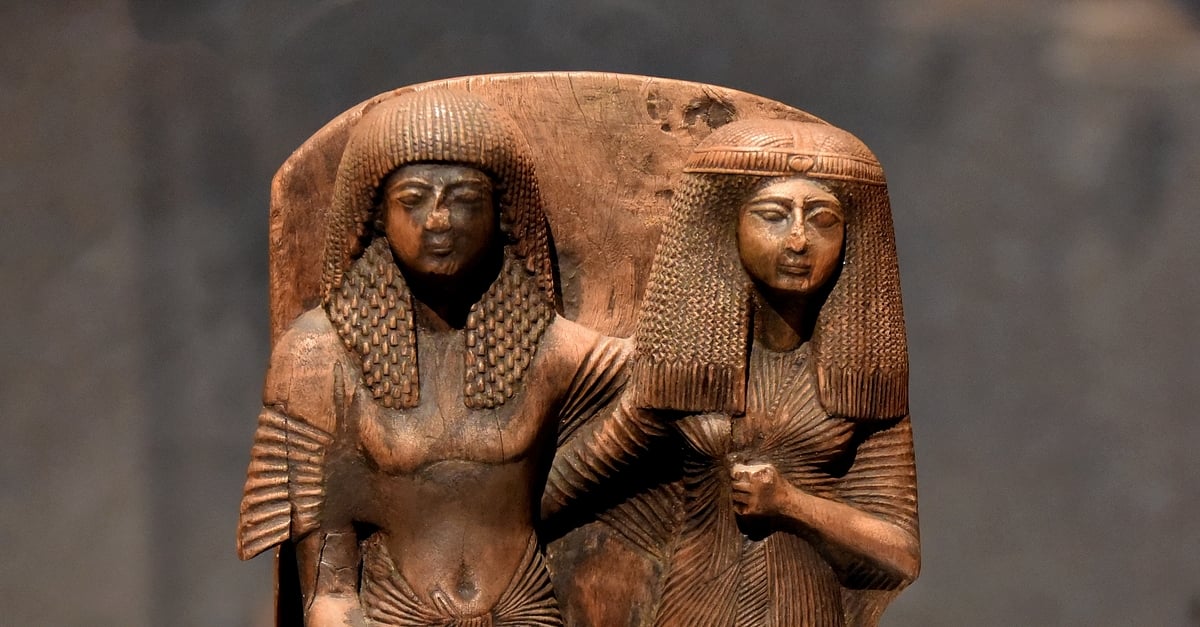
    Primus inter pares: Amenemope (left), an Ancient Egyptian royal scribe, is seen here with his wife Hathor (right). This painted wood sculpture was recovered from a tomb at Deir el-Madina in the west of Thebes, Egypt. It is now on display at the Neues Museum, Berlin, Germany.


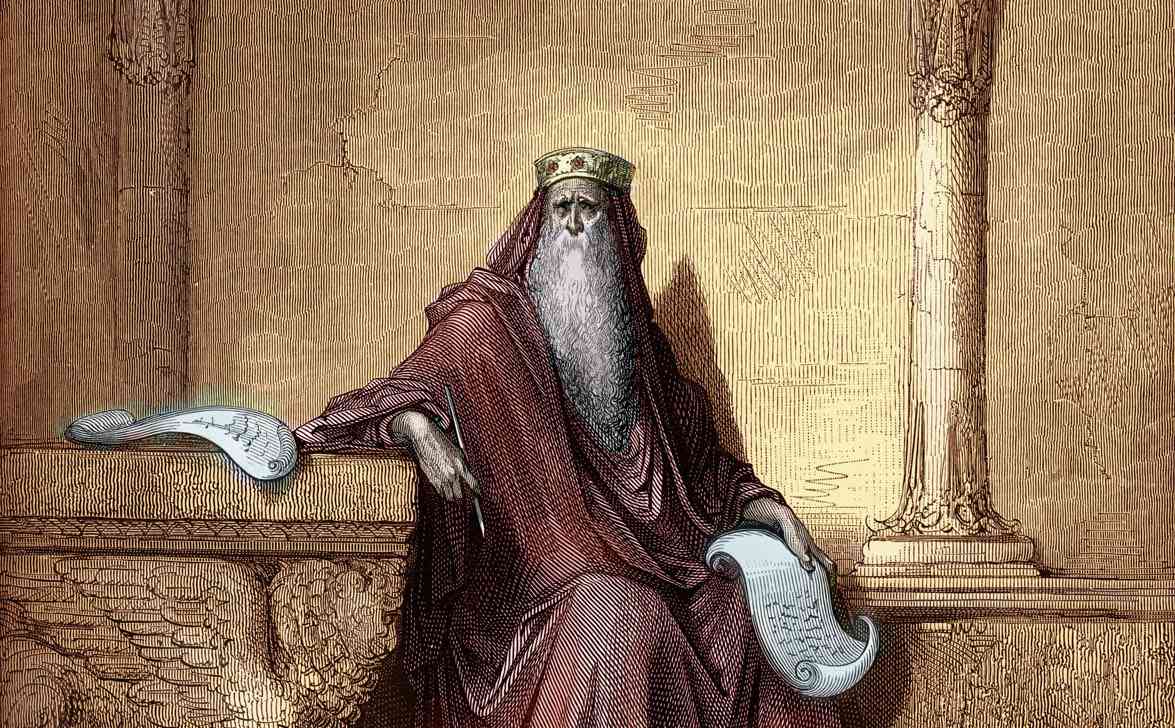
    Amenemope was an Ancient Egyptian sage of the New Kingdom who wrote one of the longest collection of proverbs (moral instructions) in history. He lived about 600 years before the Israelite King Solomon who is credited to have written the Bible’s Book of Proverbs.


    Since the German Egyptologist Adolph Erman first made the comparison between Amenemope’s Instructions and Solomon’s Book of Proverbs, scholars are increasingly looking at possible evidence of considerable Israelite borrowings from Ancient Egyptian sources, as illustrated in the comparative works below:


    He who borrows: A painting of the Israelite King Solomon. Some of his proverbs in the Bible are an uncanny semblance of borrowing from Amenemope


    Amenemope

    Give thine ear and hear what I say,

    and apply thy heart to apprehend

    It is good for thee to place them in thine heart

    Let them rest in the casket of thy belly.

    Consider these thirty chapters

    They instruct and delight

    Knowledge how to answer him that speaketh

    And how to carry back a report to one that sent it.

    Beware of robbing the poor,

    and of oppressing the afflicted

    Ascribe who is skilful in his business

    Findeth himself worthy of courtiers


    Solomon

    Incline thine ears and hear my words

    And apply thy heart to apprehend.

    It is good for thee to place them in thine belly.

    Have I not written for thee sayings

    Of counsels and knowledge

    Knowledge how to answer him that speaketh.

    Rob not the poor for he is poor,

    Neither oppress the lowly in gate.

    A man who is skillful in his business

    shall stand before kings.


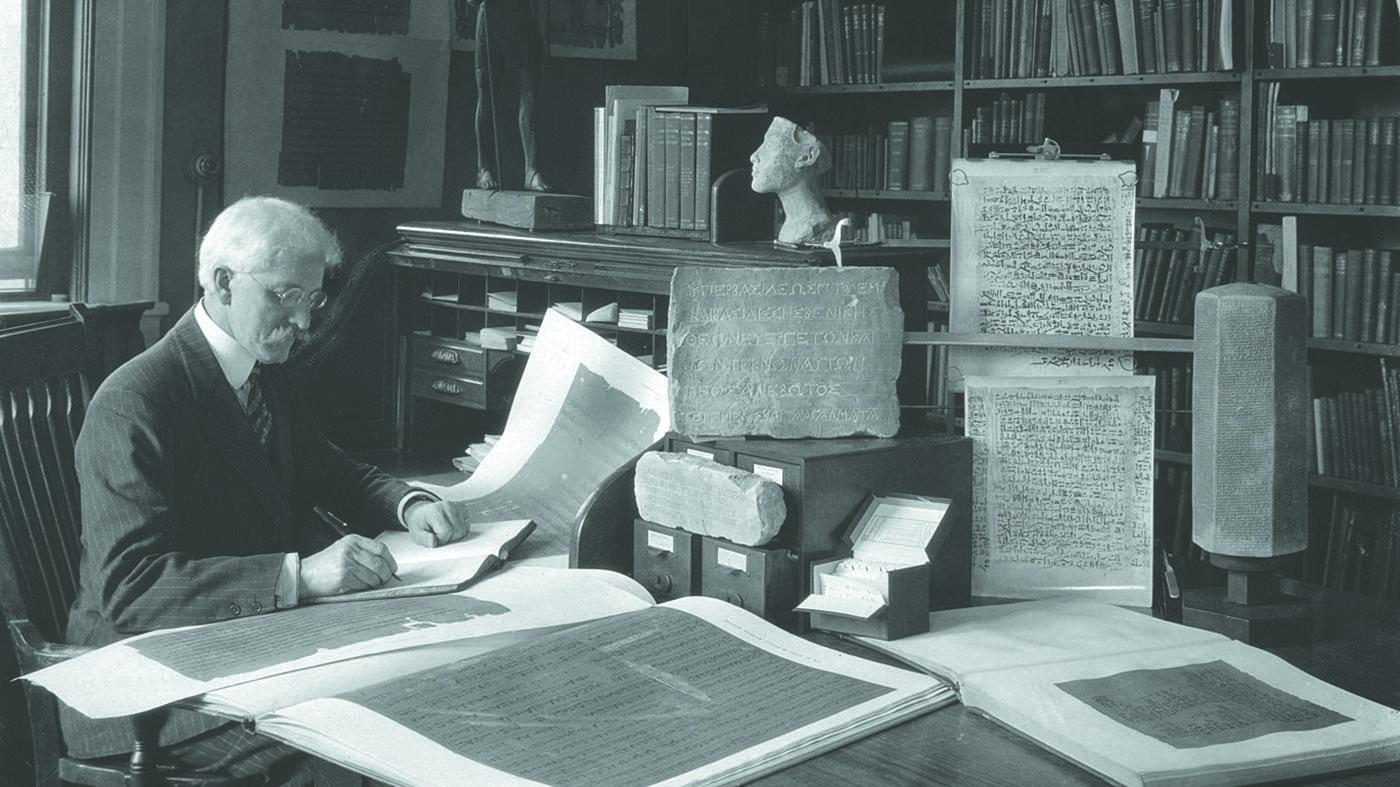
    After translating and comparing several such passages, the founder and director of the University of Chicago’s Oriental Institute, Professor James Breasted, put it thus: “Our moral heritage came to us not from the Hebrews but through them.” (For further examples, see Breasted’s Dawn of Conscience, 1933).


  • African foundations  of world religions

    African foundations of world religions

    African foundations of world religions

    … How Judaism, Christianity, and Islam borrowed heavily from African religion


    Though European missionaries and colonial historians and academics perpetuated the view that the African has no religion, only superstition, historical evidence and common sense stubbornly insist that Judaism, Christianity, Islam and the other religions in the world were all either built on solid foundations of African religion that preceded them, or they borrowed heavily from African religion. This illuminating piece is by Prof Femi Biko, a Nigerian who teaches at the University of London’s Goldsmiths College.


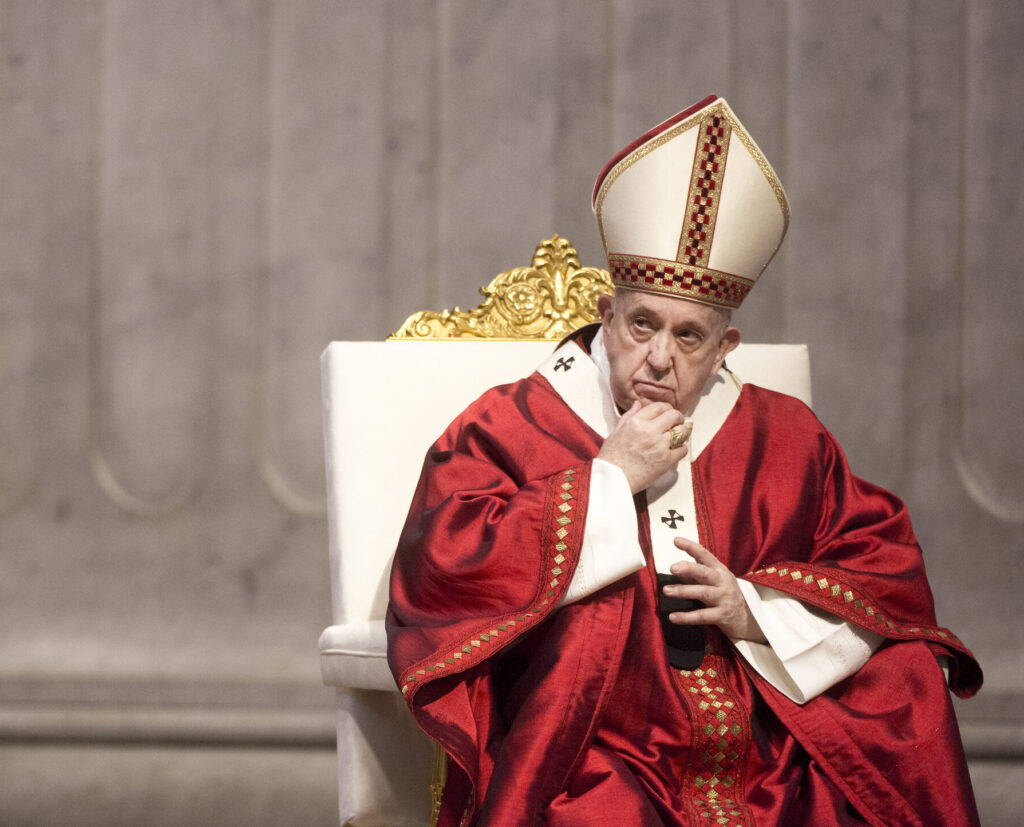
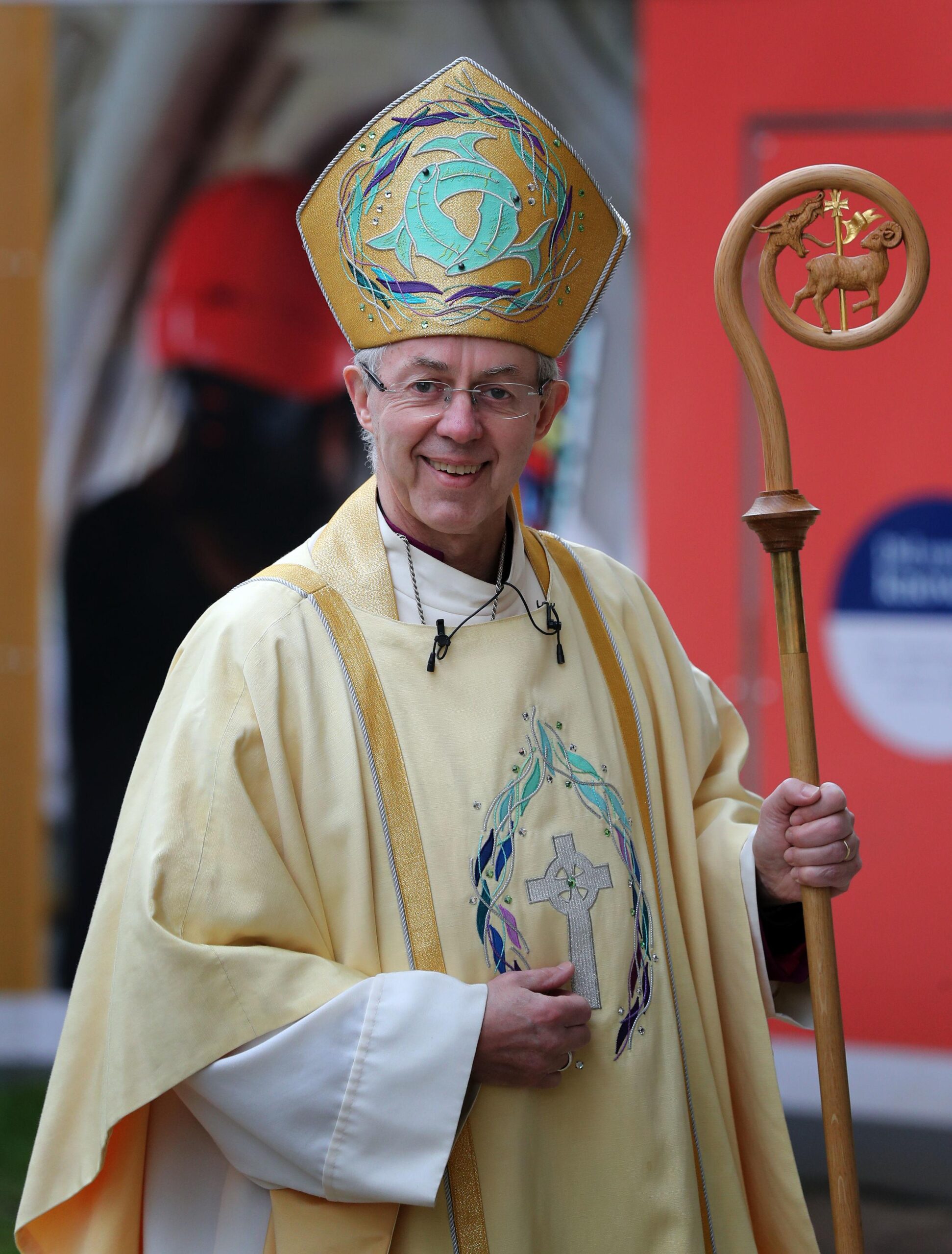
    The original: Some of the most visible ideas/items borrowed from African religion by Christianity include the paraphernalia of Asar, the Ancient Egyptian high priest and “Lord of Resurrection – paraphernalia such as Asar’s staff of office – ie, the divine headgear or crown, and the crook or the shepherd’s staff. These are widely used today by the Catholic and Anglican hierarchy, including the Pope and the Archbishop of Canterbury.


    The Oxford English Dictionary defines religion as: “The belief in and worship of a superhuman controlling power, especially a personal God or gods.” It follows that if, as it is generally accepted, that mankind began in Africa, then religion would also naturally begin in Africa. In fact, historical evidence confirms that religious thoughts began where mankind began – in Africa, and that all the world’s major religions – Judaism, Christianity and Islam – borrowed heavily from African religion. Therefore, religion is one of Africa’s major gifts to the world.


    For thousands of years of prehistoric and recorded history, Africa led humanity in the art of group cohesion and social organisation. The spiritual matrix devised by African societies provided the earliest substance of social and psychological cohesion. Now referred to as “religion”, these pyscho-spiritual systems have profoundly affected humanity’s general way of being; its moral, social and spiritual software.

    There is no shame in imitation: Pope Francis wears his mitre, a borrowing from the Ancient Egyptian divine headgear worn by the ancient priests which was borrowed by the top hierarchy of both the Catholic and Anglican churches

    Much like today’s societies, the first nations that developed in the Nile Valley (ie, Ancient Egypt, Kush, and the others elsewhere beyond) had a need for purposeful communal existence and spiritual sustenance. Thus, the distinction between that termed “religion” and that termed “spirituality” is a recent development.


    The early societies devised appropriate “social contract”, reflected through moral laws, the notion of the sacred, festivals, rituals, and explanations of their personal and collective experiences and the world around them. It is the intergenerational transmission of these that informs our universal conception of what we now call religion.


    Subconsciously, people tend to identify what is “religion” through the presence of four basic factors: (a) Accounts of origin/social legends. (b) Moral laws/symbolic rituals. (c) A college of priests. (d) Futuristic/divine knowledge of that which is yet to come – divination, prophesy, revelations, etc.

    Borrowing without acknowledgement: The Archbishop of Canterbury Justin Welby in a replica of the Ancient Egyptian divine headgear, an idea which was borrowed by both the Catholic and Anglican churches from African religion


    Interestingly, the evidence says that all 4 mentioned above began in Africa. Or to be exact, all 4 are present in African religion, which developed from the African’s natural environment.


    Generally, African cultures in the ancient world were profoundly influenced by their physical experience of the environment around them. Early rock paintings and religious artefacts confirm that “naturalism” dominated human thoughts in those early days. But in the evolution of culture, “political religions” supplanted the “nature-based religions”.


    ‘Paganism’

    With the global expansion of “political religions”, usually through conquest, “nature-based religion” was labelled “paganism” and systematically applied as a pejorative term, denoting an inferior stage of thought. However, for the first nations (Ancient Egypt and the others) “religion” was one half of the dual matrix of culture and thus devoid of politics.


    Unfortunately for Africa, earlier studies by Western scholars on African thought were often puffed up with parochial prejudice which held that religion was an abstract concept, therefore an idea imported to African societies which were deemed incapable of thought beyond superstition.


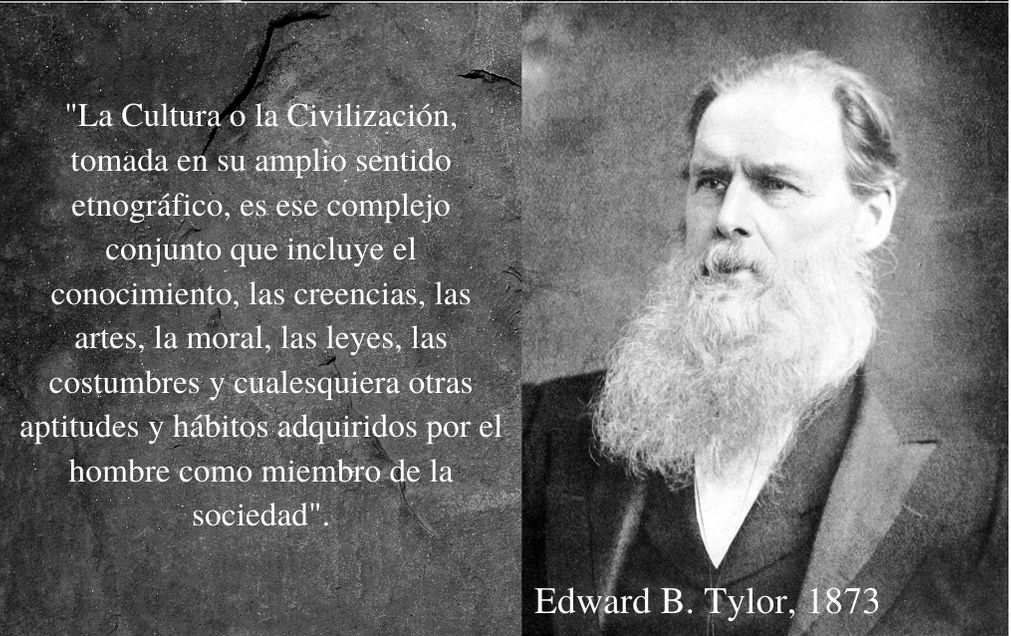
    When eventually colonial scholars began to attribute religious ideas to Africans, they labelled it “animism”. To them, an animist would view the presence of spirits in all encounters. Thanks to the English anthropologist, Sir Edward Burnett Tylor, who first introduced the term in an 1866 article, and then in his book, Primitive Culture (1871), African religious thought has ever been identified as “animism”, which for Tylor was the first in three stages of religious development.


    The second stage is “polytheism” (or the belief in, or worship of, more than one

    god), followed by the third stage, which is “monotheism” (the belief in, or worship of, one god), in line with an evolutionary scheme. In the colonial order of things, the African naturally occupied the most primitive stage.

    Sir Edward Tylor, the English anthropologist, who first introduced the term, “animist”, to describe African religious thought in an 1866 article, and then in his book, Primitive Culture (1871)

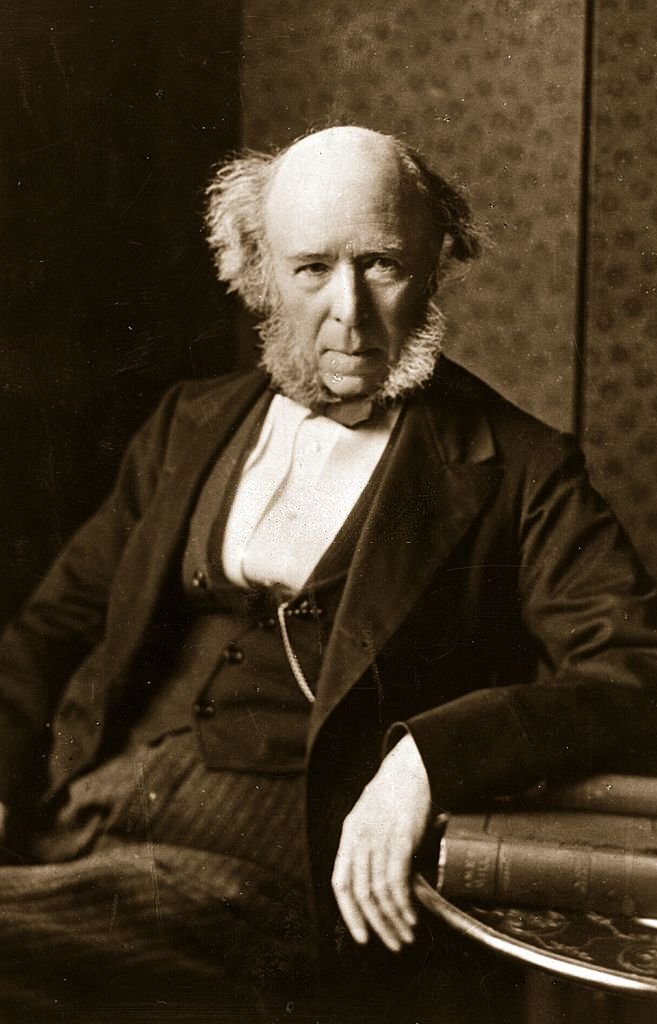
    Tylor’s students popularised their mentor’s work but went further to include the term “ancestor worship”, introduced by the anthropologist Herbert Spencer, in his book, Principles of Sociology (1885).


    According to Spencer, “the savage mind” not only venerates his ancestors as a ritual of respect and affirmation of spiritual connectedness, he worships them as the ultimate reality of existence, since he is incapable of conceiving the idea of “spirit” or “God”.


    European scholars claimed that the privilege of such abstract thought belonged to more evolved cultures, who have long abandoned naturalism for rationalism. Such was the stupendous scale of prestigious ignorance that presented colonial ideological solidarity as scholarship! And this “ignorance” was so thick that it blinded its adherents, like Claude Levi- Strauss, from seeing the basic fact that, like African religion, Christianity, Judaism and Islam are all imbued with “ancestral worship”.

    English philosopher and writer Herbert Spencer. Original Artwork: Woodbury Type (Photo by Hulton Archive/Getty Images)


    Why the ancestors are important

    Judaism and Christianity, for example, put high premium on the Israelite patriarchs, especially Abraham, Isaac and Jacob and the long line of their other

    “ancestors” who came before and after Abraham. In the case of Islam, the ancestor Mohammed is supreme, followed by his lesser lights.


    Thus, ancestors are central in every religion and their remembrance is key to the survival and wellbeing of adherents. The only difference is that some may worship the ancestors as gods and deities, and some don’t.

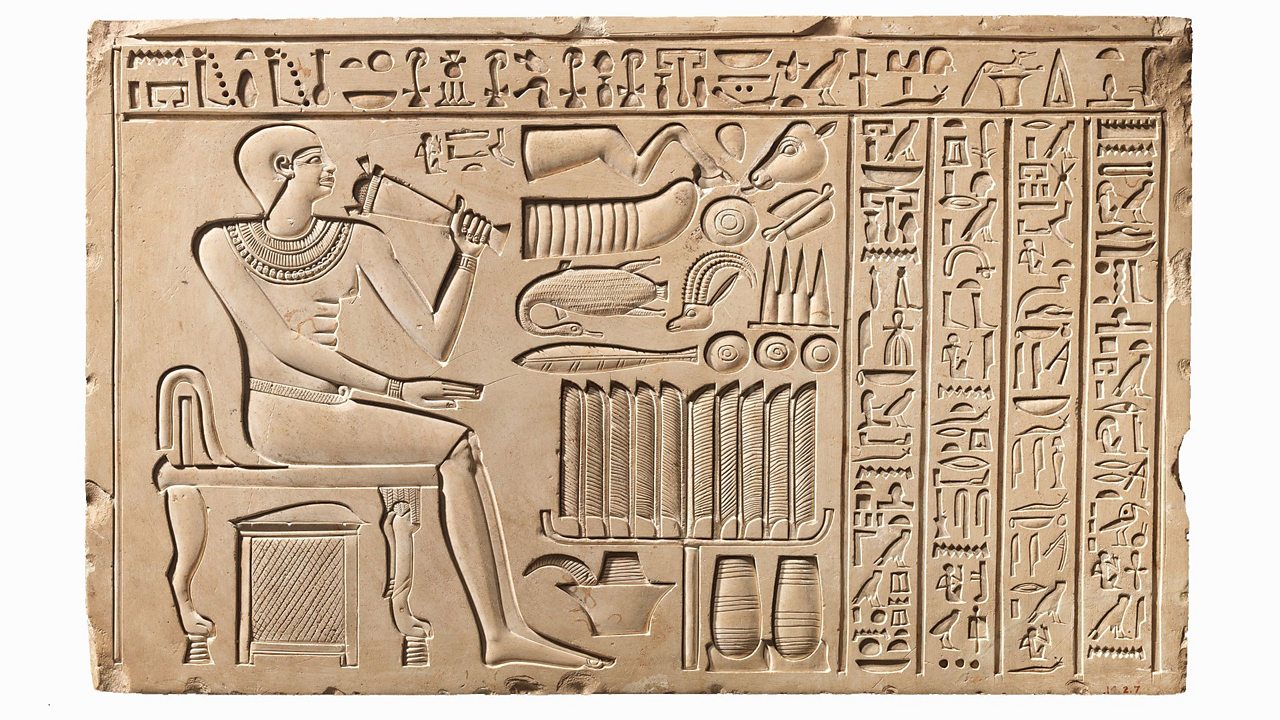
    Contrary to popular belief, the first religious text was not the Bible. The oldest religious writings known to humanity are the collection of astro-religious literature known to Egyptologists as the Ancient Egyptian Pyramid Texts, elaborately chiseled on the interior walls of the 5th and 6th Dynasty pyramid complex (similar to the one seen here) and variously dated between 2700 and 2100 BC


    Explaining how ancestors were treated in Ancient Egypt, the Ghanaian writer and Egyptologist, Ayi Kwei Armah, says in his memoirs, The Eloquence of the Scribes (2006): “It is possible, from looking at the surfaces of Ancient Egyptian culture, to conclude that death was its dominant obsession. After all, the most spectacular visible monuments of the pharaonic era were mortuary buildings – funerary cities and pyramids. But this would be a misinterpretation of the message these monuments were intended to convey.


    “They were created to bear testimony to the importance of connections between the visible realities of the here and now, and the invisible universe of connected times and places. This concern with connections is a constant motif in all autonomous African cultures.


    “It comes from the ethos that says death cannot be the end; that beyond death remains connection; between those here now, those who were here but are no longer here but elsewhere, and those who are not yet here but are elsewhere, destined to come someday. The tombs of Africa testify to the death of bodies, but their contents speak of the immanence of souls. Bodies may connect visibly in the here and now; souls are connections across the present with past and future time.


    “People whose lives are informed by such a worldview create numerous physical reminders to counter the putative absence and invisibility of departed members, or of members not yet arrived in the present … The individual thus remembered may have been a beloved grandparent, an ancestor remembered for some salutary quality or deed, adopted by the family as the most illustrious representative.


    “Gone to the world beyond the living, such individuals were expected to continue loving and caring for their relatives. With the passage of time, grandparents became ancestor figures. The respect normally accorded them deepened into veneration, and later generations ended up considering them deities, or at any rate spirits present though invisible.”


    Armah goes on: “Commentators unable or unwilling to enter into the spirit of such a way of life have characterised the rocks, trees and groves treated with such communal respect as fetishes. The stigma bespeaks a failure of understanding. What is involved is not worship but respect…

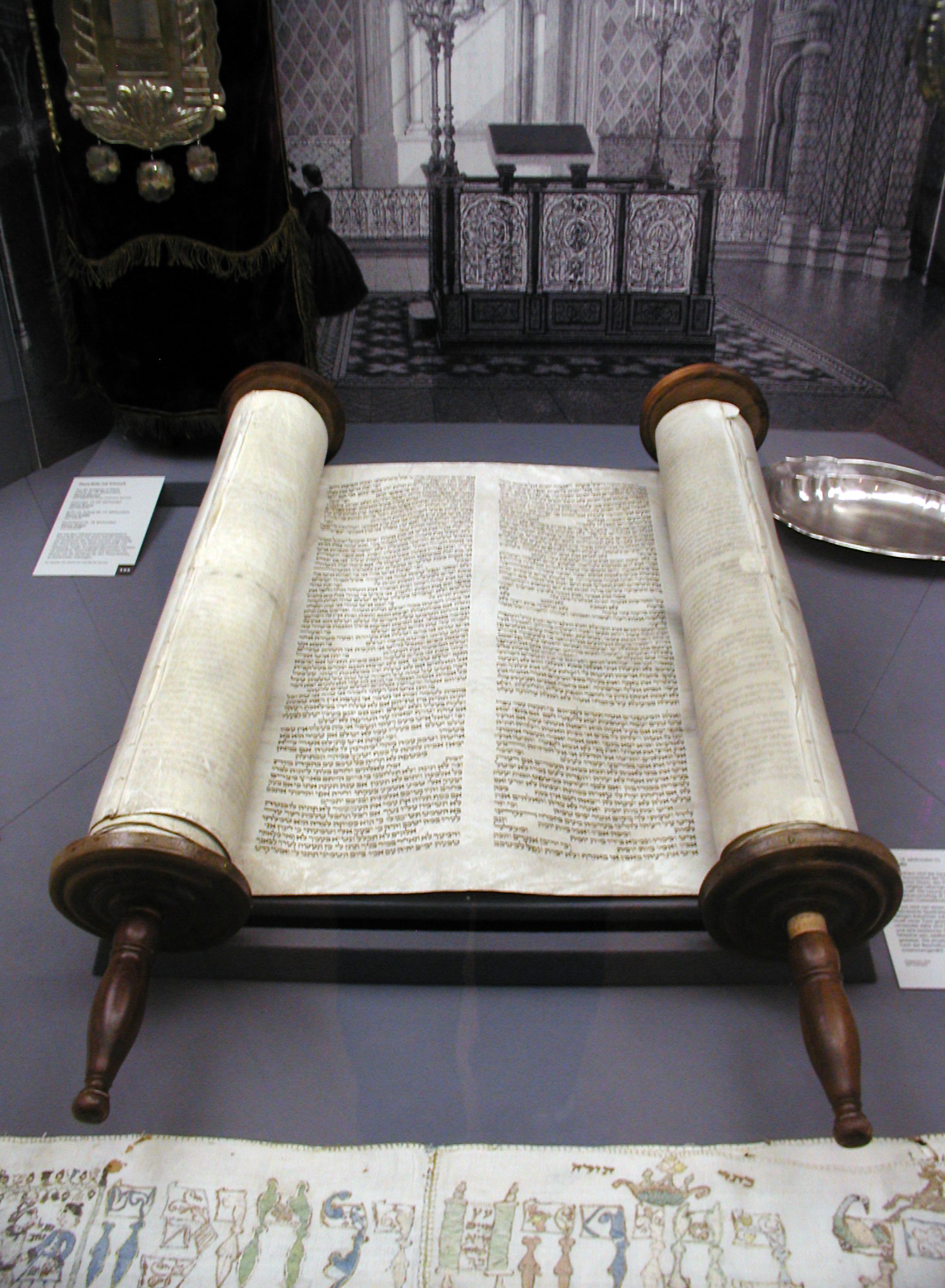
    Old Testament texts (later called the Torah) were written down in fragments between 900 and 150 BC. They followed the Rig-Veda texts of the Hindus of the Indian subcontinent, which were first committed to writing between 1200 and 9


    “Since out of respect for such spirits, objects in the natural environment were treated with greater care and consideration, in the resulting way of life the use of natural resources was considered a matter deserving the kind of consideration reserved for divinities … In that sense, the voice of Africa as heard in rituals of connection and remembrance has long been silenced in our public places.”


    Armah then digs deeper and attests that: “The writings of the Ancient Egyptians (the ancestors of most black Africans today) indicate that they thought, on the whole, that answers to philosophical life queries could best be found if the living maintained unbroken contacts with their ancestors, and also remembered that there were many members of the society yet to come.


    “Why the ancestors? Because they were the founders of society, and deserved high respect as originators. Also, because they solved many of life’s problems in their time. The living who learned to communicate with them could use their accumulated experience, avoid old pitfalls, and invent new solutions by combining inherited ideas.


    “And why the unborn? Because a sense of responsibility to future generations could spell the difference between the catastrophic waste of resources and their create use. The necessity of maintaining a balance between the interests of the living, the dead, and the unborn required the creation of a great many cultural aids to remembrance. The important thing was not to forget.


    “Carried over the centuries and millennia on a culture of remembrance, revered ancestors metamorphosed into legendary figures. In time, the most illustrious took on the status of divinities. In this way, Ancient Egyptians peopled the visible universe with traces of ancestors who would otherwise have been easy to forget.

    James Breasted, the renowned American Egyptologist, recognised Hebrew derivations of Egyptian religious thought as the medium and not the source. He was countered by the 19th century Englishman Gerald Massey who affirmed that “it is to inner Africa we must look in order to understand that which became majestic in Egypt” because “inner Africa was the birthplace” while Egypt was merely the transmitter or “the mouthpiece”


    “The accent on remembrance was a necessary precaution in a culture dedicated to connectedness. African culture is not alone in positing connections between all parts of reality, visible and invisible. But it is unusually explicit in its conception of these connections as close family relationships.


    “In Ancient Egyptian literature, this conception of connectedness is ubiquitous: the primal matter of the universe gives birth to divinity, which then engenders the many distinguishable aspects of the cosmos: space, stars, water, land, plants, animals, people. At no point is the relationship between matter and divinity, divinity and humanity, humanity and ecology, definitively severed. It is, instead, regularly affirmed.


    “Catastrophes were seen as the result of breaks in the regularity of connections. They could only be remedied and prevented by renewed attention to neglected links. In this scheme of connections, deities were not entities apart from humanity but relatives of the living.


    “As relatives, they sent dreams to warn the living of impending disasters, or to suggest ways out of dead ends. If the living forgot to take precautions before the coming of floods, the result was disaster. If a family forgot the needs of an ancestor, there was a risk of the said ancestor reciprocating their neglect. Again, disaster would follow.


    “In short, it was a prerequisite of social survival and wellbeing that ancestral memories be kept alive, and that lines of communication between ancestors, the unborn, and the living be kept permanently open.


    “The ways of keeping the lines open were numerous. A simple but essential one was to keep the names of the dead among the living. Ancient Egyptians considered the loss of one’s name a form of psychic death.


    “Another custom was the offering of sustenance to the dead. Choice food at burials, libations of favourite drinks at baptisms, the giving of the names of the dead to the newborn, every mark of continued affection helped to maintain familiar bonds. African culture gives the concept of connectedness a distinctive stamp by translating these multivalent ties into close family bonds.”


    ‘Prestigious ignorance’

    Sadly because of “the stupendous scale of prestigious ignorance” referred to earlier, the vocabulary devised to discuss African religious thought was established as superstition, animism, ancestor worship, polytheism, fetishism and idolatry.


    But be it as it may, it is now firmly established that humanity’s cultural journey began in the Rift Valley regions of East Africa. To date, Ethiopia, in particular, continues to furnish the world with the earliest specimens of skeletal evidence of man’s uninterrupted habitation on earth.


    A serious study of the archaeological material of prehistoric African cultures suffices to inform us that human experience in the Rift Valley area impacted heavily on subsequent social developments in the more fertile Nile regions.


    The technical and spiritual traditions that gained elaboration in the Nile Valley reflect the apex of earlier traditions, which was then put in written form in Egypt in particular. It is fair to say that ancient religious prototypes did not begin in Ancient Egypt, they gained elaboration and refinement there.


    It is common knowledge that a lot of what was eventually committed to writing by the Ancient Egyptians were several thousand years older than Egyptian culture. Of particular significance to Ancient Egypt’s particular genius was its tendency to documentation and the systematic use of knowledge.

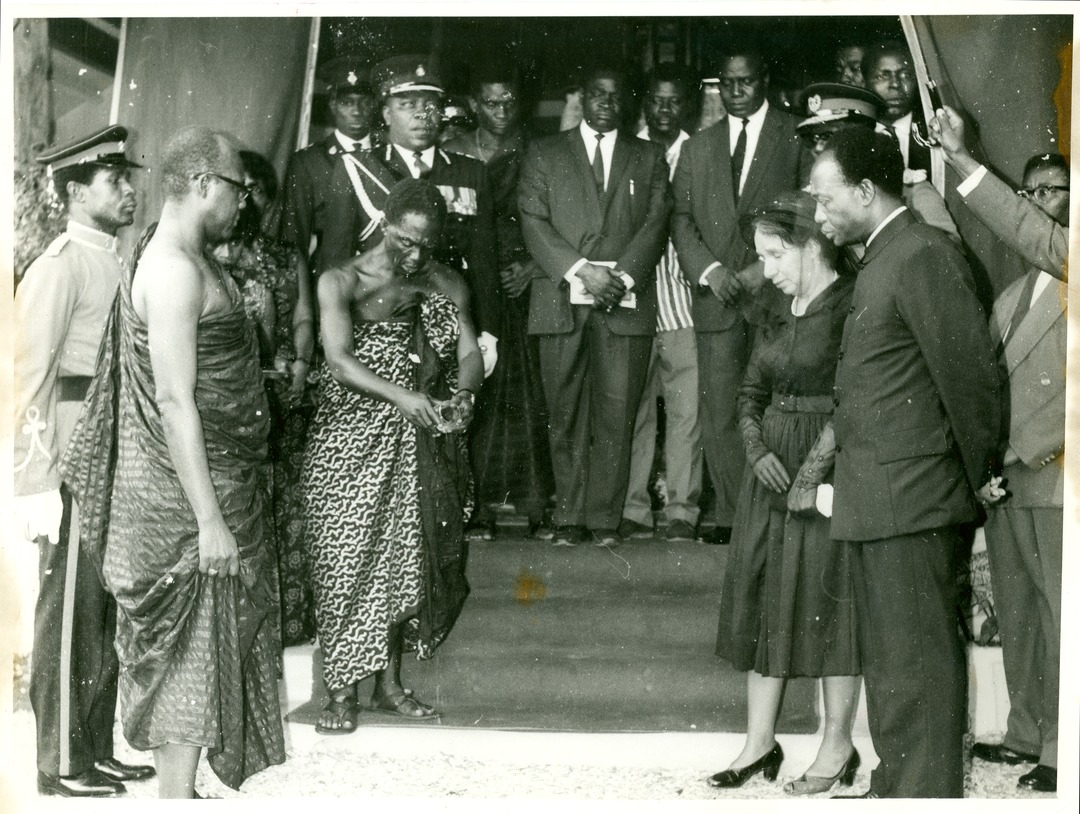
    To date, the ritual of libation remains a cultural universal in African societies without exception. Even when the symbolism is lost to local memory, the practice obtains, testifying to that which certainly predated Ancient Egyptian practices. Here, Nana Nketsia pours libation at the funeral of W.E.B. Du Bois in Accra in August 1963, while President Kwame Nkrumah (extreme right) and Du Bois’ widow Shirley and others look on.


    The first religious texts

    Contrary to popular belief, the first religious text was not the Bible. The oldest religious writings known to humanity are the collection of astro-religious literature known to Egyptologists as the Ancient Egyptian Pyramid Texts, elaborately chiseled on the interior walls of the 5th and 6th Dynasty pyramid complex and variously dated between 2700 and 2100 BC.


    Of importance likewise are the collection of funerary inscriptions written on the coffins of the people who died during Ancient Egypt’s Middle Kingdom (2040-1786 BC) and known as Coffin Texts.


    In addition to these are the body of writings called by the Ancient Egyptians as Pert-Em-Hru, which may be properly translated as “Chapters of Coming Into Light” or “Coming Forth by Day”. As versions of this work were often found in the coffins of the buried, the collection became known to local Arab grave diggers under the cynical name Kitab al-Mayyitun, meaning Book of the Dead. This formed the name by which Egyptologists have since referred to that body of work.


    Next came the Vedic texts of the Indian sub-continent. The texts of the Rig-Veda were the first extensive composition in any Indo-European language. It partially adapted the Shaivism of the Dravidian cultures, who have since been positively confirmed by DNA as migrants from the African continent.


    The Vedas of the Hindus were first committed to writing between 1200 and 900 BC. These were followed in the Middle East by the variety of Hebrew teachings now known to Christianity as Old Testament texts, written down in fragments between 900 and 150 BC.


    The two major religious systems indigenous to China are Taoism and Confucianism. Buddhism was imported from India and happened to have flourished during the same era. Although they stem from much older traditions, Taoism’s sacred text is the Tao Te Ching by Lao Tze and Confucianism’s primary work is The Analects of Confucius. The two were committed to writing mostly after the death of their respective founders in the 6th century BC.


    In the third and second century BC, the Hebrew writings were translated into

    Greek (known as Septuagint). New material was joined to the collection, with versions of what became the canonical gospels of the Christian New

    Testament. These were refined by the 4th century AD, when Christians received their first coherent, but not final, versions of the scriptures.


    The books of the Quran were first put to writing in the 7th century AD. Thus, in terms of age, the sacred texts used by the three major religions today – Judaism, Christianity and Islam – are babies in front of the African sacred texts used in Ancient Egypt 2,700 years before Jesus Christ was born.

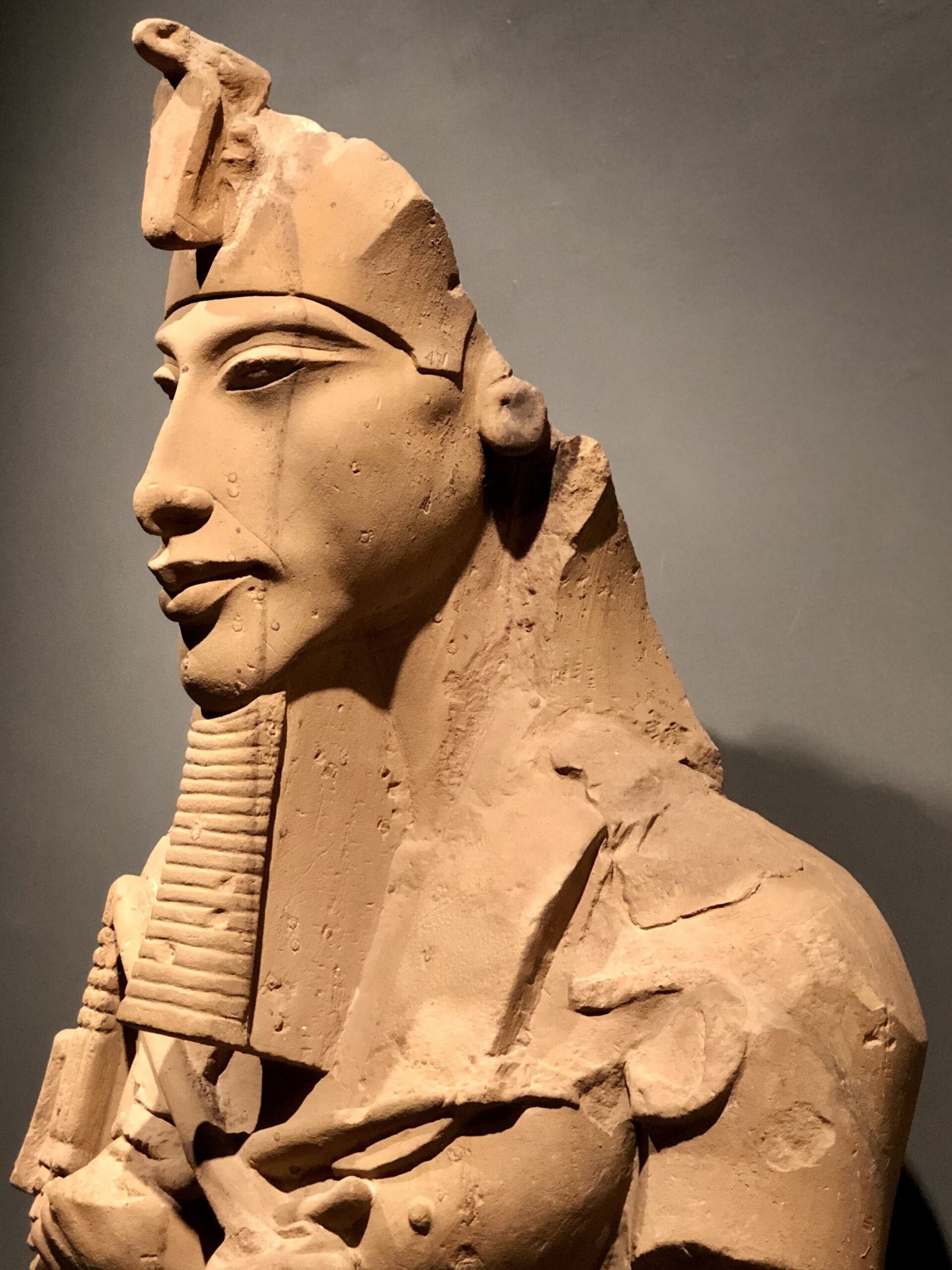
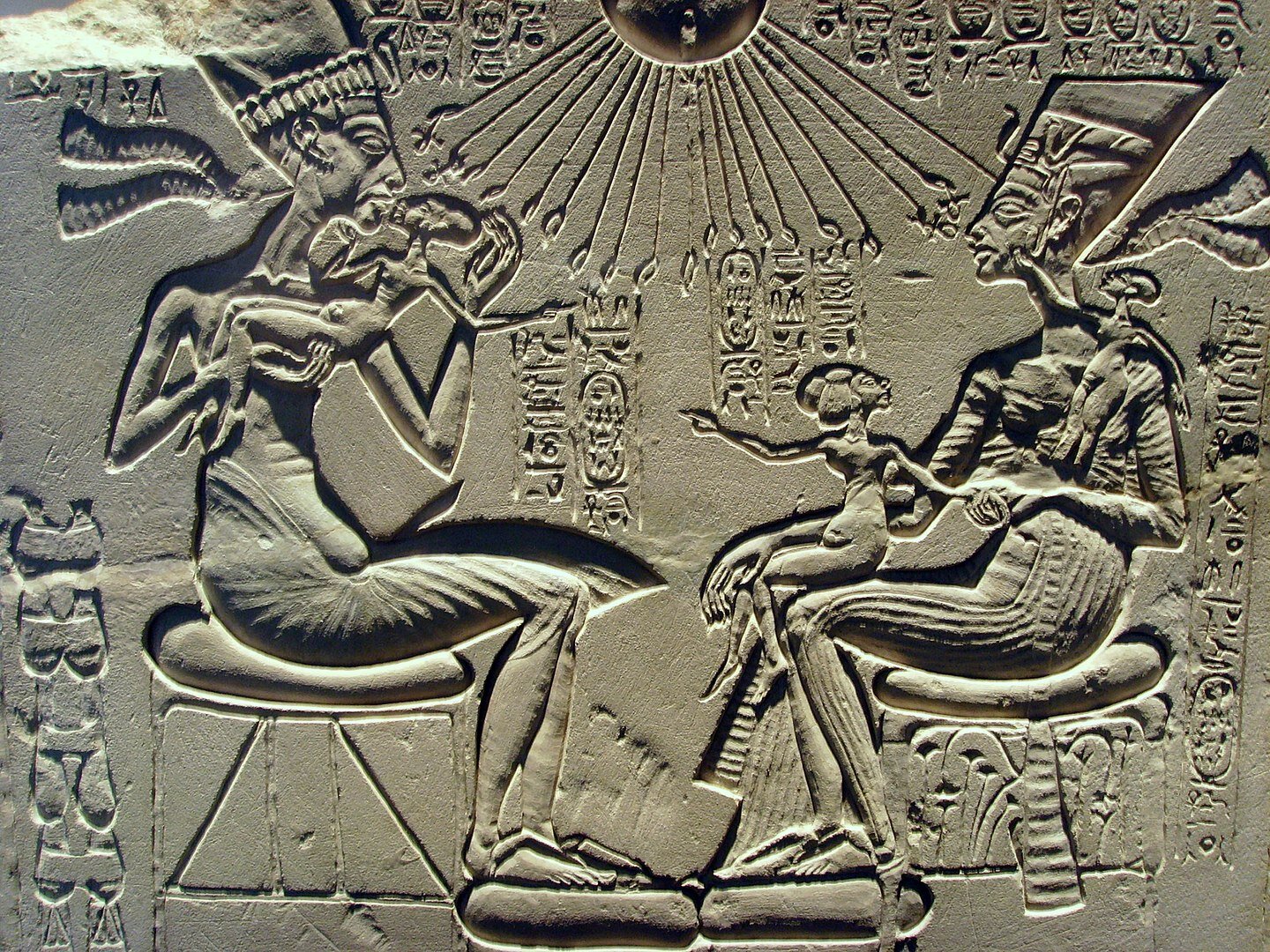
    Pharaoh Akhenaton was not happy with the worship of many gods, so he organised Ancient Egypt to serve one god, the Sun-God which he called the Aten, the solar disk emitting sun rays terminating in human hands. This became the state religion of Ancient Egypt during the 17 years of Akhenaton’s reign


    Ancient Egyptian literature

    The literature of Ancient Egypt provides us with typically African settings and pattern of thought. Its array of symbols is drawn from plants and animals found solely in the natural African environment and employed in the construction of a consonantally-based system of writing. The gaps separating Ancient Egypt from recent African societies are often rendered negligible through the resilience of cultural memory.


    Hence, the various writing systems of living African cultures follow a similar pattern of development in their common employment of the glyph system, as can be seen in scripts of the Mende (Sierra Leone), Loma (Liberia), Bamum (Cameroon), Nsibidi (Efik/Igbo), Sona (Zambia and Angola), Gicandi of the Gikuyu (Kenya), and the Adinkra of the Akan (Ghana and Cote d’Ivoire). All these were undoubtedly inspired by a similar mentality as the Ancient Egyptian hieroglyphs.


    Like the Egyptian, African glyphs commonly employ pictograms and view humans, plants, animals and general objects of the environment in symbolic terms. In some cases, they reflect shared symbols with the more familiar Ancient Egyptian glyphs.


    These symbolic languages are at once interpretations of physical life forms employed to give meaning to spiritual life. Unfortunately, when Western scholars turned their attention to studying the development of thought in African societies, their primary approach was to proceed with an investigation of foreign efforts in Africa.


    But African religious thought gave birth to a common matrix of human origins which were founded basically on the idea of life emerging from the elemental waters at the creation of the universe. For the Ancient Egyptians, the waters were held to locate the source from which came forth life. This idea has survived in the politically-charged religious systems transmitted through the Hebrews.


    Having been imbued with Ancient Egyptian culture, the Hebrew accounts of the creation of the world echo the earlier pre-Egyptian and Egyptian model in several aspects. In fact, no less than 7 scholars of the ancient world insist that the Israelites were of African descent or were “Ethiopians” and “Egyptians”.


    Certainly, both the Ethiopians and Egyptians of the ancient world were black people, the ancestors of modern black Africans. Aristotle’s description was that they were “too black”, while other Greek writers report on their “woolly hair”.


    Some scholars also point to Moses’ Egyptian name and say he reflected Egyptian culture, groomed as he was from childhood to the age of 40 in Ancient Egyptian sensibilities, and founded on privileged education as a prince in the Egyptian royal family.


    Like Moses who was protected as an infant by the power of the African monarchy in Egypt, Jesus Christ too as an infant became a refugee in Egypt when King Herod the Great wanted to kill him days after his birth.


    The Bible records (Matthew 2:13-23) how God saw Egypt as a strong and humane enough nation to give protection to his son Jesus. And so to Egypt the human parents of Jesus (Joseph and Mary) took the baby to escape the murderous Herod, after an angel of the Lord had alerted Joseph and Mary to the danger.


    Though the Bible is silent on how long Jesus and his parents stayed in Egypt, it does record that the angel had expressly told Joseph and Mary to “stay there until I tell you, for Herod is going to search for the child and kill him”.


    Matthew 2:19-21 inform us that “after Herod died, an angel of the Lord appeared in a dream to Joseph in Egypt and said: ‘Get up, take the child and his mother and go to the land of Israel, for those who were trying to take the child’s life are dead.’ So he got up and took the child and his mother and went [back] to the land of Israel.”

    Pharaoh Akhenaton and his wife Queen Nefertiti and their children wallowing in the rays of the sun-god. Because of stiff opposition to his uni-god idea, when Akhenation died, his monuments and statues were destroyed, and his name erased from the king’s list


    It is an undisputable fact that there is no contact without impact. The “Books of Moses” certainly affirm a 430-year contact between the Ancient Egyptian and Israelite cultures. During this time the Bible records that “Moses was educated in all the wisdom of the Egyptians and was powerful in speech and action.” (Acts 7:22).


    It follows that Moses, a fully-grown adult (he was 80 years) by the time he began his priestly mission, would teach what he knew, or what all the Israelites knew, from their cultural background. And that “cultural background” had been impacted by Egypt.


    Some scholars have in fact pointed to the similarities in Moses’ Ten Commandments with Chapter 125 of the Ancient Egyptian Declarations of Innocence, (see the Egyptian Book of the Dead).


    Just as the renowned American Egyptologist, James Breasted, recognised Hebrew derivations of Egyptian religious thought as the medium and not the source, the 19th century Englishman Gerald Massey also affirmed that “it is to inner Africa we must look in order to understand that which became majestic in Egypt”. He was right. “Inner Africa was the birthplace” while Egypt was merely the transmitter, or in Massey’s words, “the mouthpiece”.


    The Creation story

    To see how much the Israelites borrowed from the Egyptian source, we only have to go to the Genesis account of the “Creation of the World” in the Bible. Having introduced the divine architect in the first verse of Genesis, Moses, the author of Genesis, had the formless earth given form in the second verse, when, “the spirit of God moved upon the face of the waters” (Genesis 1:2). Like earth, the heavenly realm was undifferentiated by the waters.


    The “alchemy” of creation followed a ritualistic path in which the divine architect commanded a firmament “and divided the waters which were under the firmament from the waters which were above the firmament” (Genesis 1:7).


    This is how land, according to the Biblical account, emerged from the elemental waters, effected by a commanding utterance by God. “Let the waters be gathered together unto one place and let the dry land appear” (Genesis 1:9). So also

    did animals emerge from “the waters”. “Let the waters bring forth abundantly the moving creatures that has life and foul…” (Genesis 1:20).


    The authors of the Quran were equally emphatic: “We made from water every living thing (Sura XXI: 30), says Allah: “It is he who created man from water”, (Sura XXV: 54).


    The authors of the Biblical and Quranic texts conveniently reworked a cosmogony that had already become universal, the earliest of which was known to be the standard in Yunu (Heliopolis), not least for its employment of the aquatic theme. Heliopolitan cosmogony derives the Creator God Atum from

    Nu(n), the inert waters of later faiths, as does the Memphite theology.


    The Nebertcher narratives of the Late Period of Egypt convey similar images as follows: “I am he who evolved himself … no heaven existed and no earth, and no terrestrial animal or reptiles had come into being. I formed them out of the inert mass of watery matter, found no place whereon to stand … [I] was alone … none other worked with me.


    “I laid the foundation of all things by my will, and all things evolved themselves therefrom … I united myself to my shadows and I sent forth Shu and Tefnut out of myself; thus from being one god I became three, and Shu and Tefnut gave birth to Nut and Geb … and their children multiplied upon this earth” (see Wallis Budge’s The Egyptian Book of the Dead).


    Pharaonic narratives regarding the primordial waters find their parallels in many guises. As John Mbiti, the Kenyan theologian, illustrated in his study of the living traditions, it is a typical African practice to “associate God and rain so closely that the same word, or its cognate, is used for both” in many instances. (see J. Mbiti, African Religions and Philosophy, 1969).


    The “watery matter” of the Ancient Egyptians is a conventional theme in Africa, readily attested to in the narratives of the Oromo, Efik-Ibibio, Bumba, Yoruba, Fulani and several other African cultural groups.


    The better-known narratives of the Dogon of Mali are but a single example of that convention. The Dogon sage, Ogotemmeli, is emphatic that “without Nummo [water], it is impossible to even create the earth, for the earth was moulded in clay and it is from water that life is derived”.


    The theme is equally universal in the Popol Vuh (“Council Book”, translated by Dennis Tedlock, 1985) of the Quiche Maya of Mexico, who otherwise acknowledge the foreign origins of their sacred knowledge as “the light that came from across the sea”, from West Africa.


    The impressions of the African models on Asian cultures are also readily apparent. Not least is the Hindu creation hymn of the Rig-Veda (Nasadiya 10:129, 10:121) and the creation narratives of countless cultures. “Life”, they say, “emerged from the waters”. For, in the original model of Ancient Egypt, water was seen as the very fabric of existence.

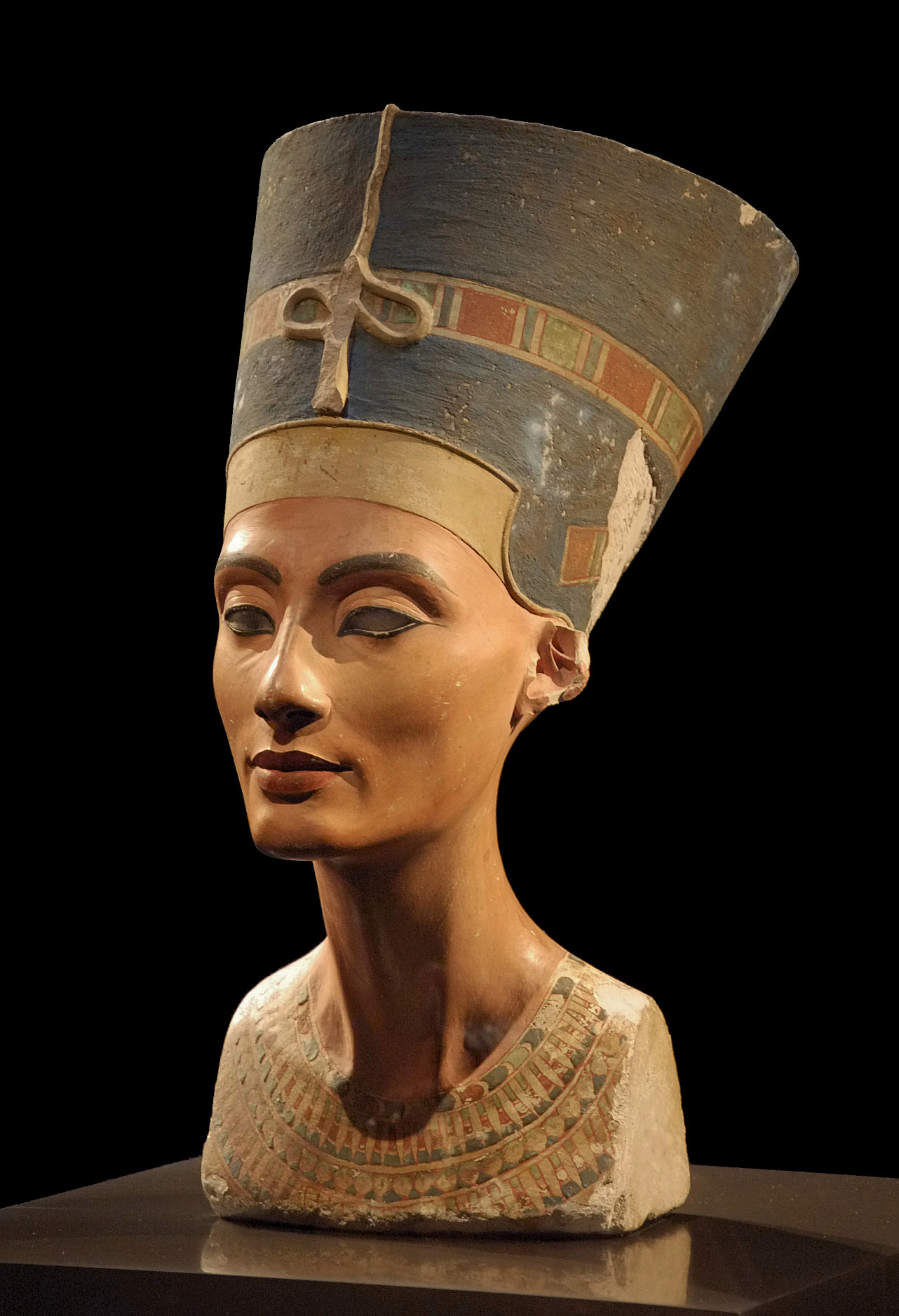
    A bust of Queen Nefertiti, wife of Pharaoh Akhenaton. She stood by him during the days of the worship of one god, Aten, the sun-god


    Pouring libations

    Nevertheless, it is the ritualistic function of the watery substance that is key to its cultural genesis. Passages from the Ancient Egyptian New Kingdom period reads like a formula that one might expect in contemporary African cultures. The Text of Ani exalts the subject: “Pour libations for your father and mother who rest in the valley of the dead… Do not forget to do this even when you are away from home… For, as you do for your parents, your children would do for you.”


    The ritual of libation is a key signature of the origins of creation narratives. For the Ancient Egyptian, libations took the form of water and beer, the masculine and feminine form of the liquid.


    The broad spread of libation as a cultural practice in the African universe suggests it to be a ritual form which would certainly have predated the Pharaonic state, yet it is the Pharaonic state that served as the great cultural disseminator in the ancient world. It is well documented by Christian theologians that “pagan” rituals, festivals and sacred days such as “Easter” and “Christmas” were maintained in form but modified with “new” formulations.


    The Egyptian font, which contains “the holy water”, has its retention

    in Christianity where libation becomes “the drink offering”, which hacks

    back to the homage of the archetypal libations of the African faiths.


    Some authorities boldly state that: “The drink offering (Hebrew: nesekh) was

    a form of libation forming one of the sacrifices and offerings of the law of Moses.” The word “Nesekh” literally means “pour [on it] a poured thing’ as in the only pre-Exodus use, that of Jacob’s libation at a pillar in Genesis 35:14.”


    A May 1991 Biblical Horizons’ commentary on the “drink offering” attests that: “The drink offering or libation (nesekh) is mentioned in only three places in the book of Leviticus. When the sheaf of the firstfruits was waved before the Lord, a grain offering was to be burned, along with ‘its libation’, a fourth of a hin of wine [approx. one gallon]” (Leviticus 23:13).


    Similarly, libations were to be offered with the lambs, bull, and rams offered on the day of Pentecost (Leviticus 23:18). An even more general statement is made concerning libations at Leviticus 23:37: “These are the appointed times of the Lord which you shall proclaim as holy convocations, to present offerings by fire [or ‘food offerings’] to the Lord – burnt offerings and grain offerings, sacrifices and libations, each day’s matter on its own day.”


    Biblical Horizons goes on to say: “More elaborate instructions for the drink offering are found in Numbers 15. There, the Israelites were commanded to offer a libation of wine with all burnt offerings and ‘sacrifices’, the latter being a common term for the peace offering (Numbers15:8; cross reference 1 Samuel 9:12-13; 1 Kings 8:62-63).


    Two facets of this set of commands are noteworthy. First, a libation was required for all burnt offerings and peace offerings, whether they were offered to “fulfill a vow, or as a freewill offering, or in your appointed times” (Numbers 15:3).


    Second, it might seem from these verses that libations were not offered with sin or trespass offerings. Numbers 28:15, however, states that the sin offering included a libation. Every bloody sacrifice was to be accompanied by grain and wine offerings.


    Numbers 15 also gives instructions on the amounts of wine required, which varied according to the kind of animal being sacrificed. Finally, the directions for the sacrifices in Numbers 28–29 include instructions for the offering of drink offerings.


    The instructions in Leviticus are prefaced with “when you enter the land which I am going to give to you” (Numbers 23:10-14), as are the instructions in Numbers 15. If the sacrifices are God’s food (literally bread), then the libations are evidently God’s drink. The law of the drink offering, therefore, tells us that God would not drink wine with his bread until his people entered the land. This makes sense in terms of biblical theology.


    Libation or “drink offering”, therefore, is one of the many things, like baptism, that Judaism and Christianity borrowed from African religion. “Baptism”, traceable to the theme of the divine waters, still remains a vital aspect of ritual cleansing in ancestral faiths, transmitted to Christianity through the Ancient Egyptian and Hebrew medium.


    The “water and cross” signature of the Roman Catholic Church and the ablutions of the Muslim faith continue the symbolism and practice of ritual cleansing.


    To date the ritual of libation also remains a cultural universal in African societies without exception. Even when the symbolism is lost to local memory, the practice obtains, testifying to that which certainly predated Egyptian practices.


    The ritual of libation is in effect a re-enactment of the “first time” – the “original act” of Creation or “Sep Tepy” of the Egyptians. It is an affirmation of the vitalism and inter-connectivity of all life.


    In the ancient faiths, the libation formulae comprises of the precious liquid, the will, and the sacred word; elements which are collectively employed to raise petitions and invoke the spiritual essence of the living, the physically departed, or the yet unborn. The flood story of the Bible has a similar trajectory. For even here the essence is to create life anew.

    The Washington Monument, another borrowing from African religion. In fact, the link between religious narratives and the male phallic finds its most elaborate expression in the Ancient Egyptian Tekhen (obelisk) legends pertaining to Min, Amen, and their chief deity Asar (Osiris). For the Egyptians, the obelisks were monuments symbolic of supreme procreativity, as they were identified with the earth in union with the sky, in Egyptian terms Geb’s phallus in perpetual intimacy with Nuts womb. The obelisk as a cultural icon later found further geographical expression in all four corners of the African continent, in Egypt, Ethiopia, Kilwa, and Ife, long before their colonial appearance in Western capitals.


    Borrowing from Akhenaton

    Traditions identical to that of Ancient Egypt can be observed from pastoralist groups such as the Masai of Kenya and Tanzania, and from the cosmetic to the profound. Other than the obvious hairstyles and common ceremonial employment of red ochre as body paints, the importance of circumcision rituals and the prevalence of cattle cults are practices common to Africa’s broad geographical spread, from the pastoralists Fulani of West Africa to the “Niliotes” of Central/East Africa’s Great Lakes region.


    The African faiths consider God both as a creator and a remote yet near parent, with whom the ancestors share an equally invisible and divine realm, though the ancestors are more readily accessible. The place of the ancestors in the hierarchical order is sometimes on par with the honour accorded to the elemental factors such as land and the lunar and solar principle.


    Like the Egyptian Old Kingdom religion, the cosmology of the Ila of Zambia and Hahm of Nigeria identify the sun with the brilliance and infinity of God. Possibly as a continuum of the Pharaonic culture, the Ethiopian Galla identify the sun as “the eye” of God.


    The Balese of the Congo likewise consider the sun and moon as symbolic of the right and left eye of God respectively, a direct parallel of the Wadjet symbolism of Ancient Egypt. Now, the existence of these conceptual schemes was not altogether unknown to the theologians of the ancient world.


    The Pharaoh who made all this possible was Amenhotep IV, later known as Neferkheprure Akhenaton (1353-1336 BC). He ruled for 17 years and totally changed how Ancient Egyptians saw and worshipped God.


    Thanks to Akhenaton, the conceptions of God that emerged in urban centres worldwide tended towards a certain singularity of all reality. As a Pharaoh, Akhenaton was not happy with the worship of many gods, the practice of the day, so he organised the country to serve one god, the Sun-God which he called the Aten, or the disk of the sun, thus giving the solar deity a status above mere gods.


    In the process, Akhenaton ordered that the multiplicity of old gods should be put aside and replaced by the Aten, the Sun-God, which was depicted as the solar disk emitting sun rays terminating in human hands.


    This became the state religion, with Akhenaton decreeing that Aten was to be the only god. This greatly displeased the priesthood of Amun-Ra, but because Akhenation enforced his decree by the might of the military, he was able to get his way, even closing down some temples and removing the names of their gods from statues and inscriptions.


    Though he pushed his idea through while still king, he met stiff resistance because people felt he was shifting the culture of Egypt’s traditional religion.

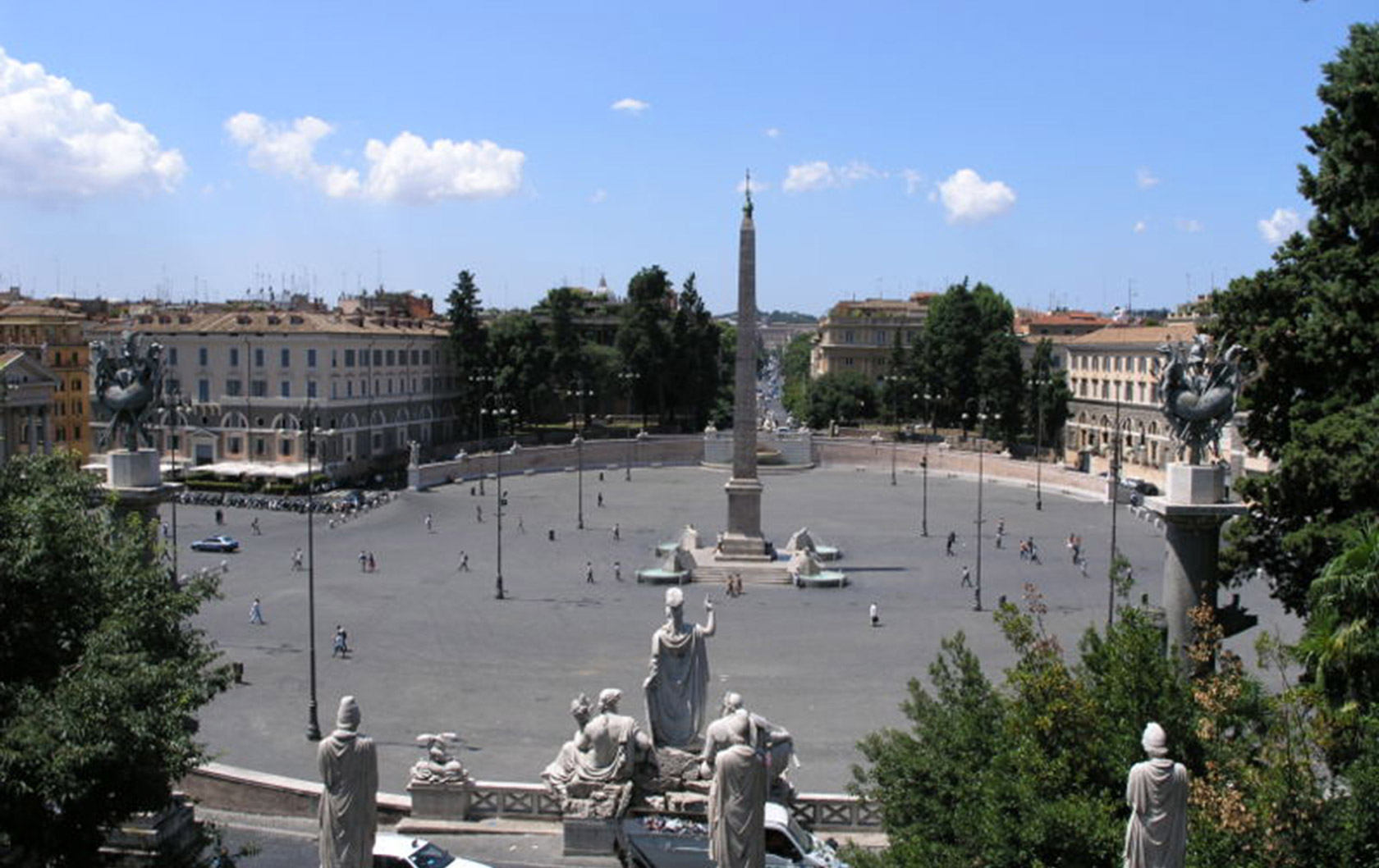
    A square in Rome: The Italian capital has the largest collection of Ancient Egyptian obelisks in the world. Of the 28 that exist, Rome alone has 15, taken from Ancient Egypt when the Roman Empire ruled over Egypt


    When he died, his monuments and statues were dismantled or destroyed, and his name removed from the kings’ list, while traditional religious practice was gradually restored. In the 19th century, it was discovered that while he was still monarch, Akhenaton (his wife was Queen Nefertiti) had built the city of Amarna for the worship of Aten.


    Prior to Akhenaton, the systems in existence allowed for a communalism of faith within the framework of Ma’at, (ie, moral and spiritual equilibrium). With Akhenaton, came massive state intervention in religious matters. Intermediary deities were rendered unemployed, as the path of communication with God became direct to all subjects.


    Again, the previous order allowed for localised and reciprocal participation in faith, in Akhenaton’s era faith became a uniform preoccupation. All religious reality was reduced to a singular focus. As there was one God, spiritual diversity evaporated. God became omnipotent but not in multiple forms. Aten’s disk was the “proper” form that symbolised God’s presence.


    Though Akhenaton’s “God” could not technically be said to be the same as God Almighty (known today as the creator of heaven and earth) because Akhenaton’s “Sun-God” could be considered as merely an “idol” because of the way he worshipped it, Akhenaton’s influence on both Jewish and Christian traditions has been a subject of immense investigation from diverse sources. Based on his research into the problem, the influential 20th century Jewish scholar, Sigmund Freud, insisted on Moses’s Egyptian identity and asserted the obviousness of Akhenaton’s influence on Moses’ doctrines (see Frued’’s Moses and Monotheism, 1939).


    In his early studies of the subject, the English Egyptologist, Arthur Weigall, similarly saw Akhenaton as having founded a “religion so pure that we must compare it to Christianity” (see Hornung’s Akhenaton and the Religion of Light, 1999).


    Indeed, other parallels exist aside from the concept of “monotheism”. But one cannot fail to see the obvious link between Akhenaton’s Great Hymn to Aten and the Bible’s Psalm 104 (whose writer is said to be anonymous).


    Akhenaton’s influence also extends to Islam, the last in the trinity of “revealed” religions. Just as Islam gave the only and absolute validity to the image of the lunar crescent as a divine sign, Atenism had no totemic or animal parallels and was purely symbolised as light. Other symbols, iconography and imagery were aggressively discarded and displaced, as Aten was “a jealous God”. Akhenaton would only tolerate Aten (the sun’s light source, its “disk”).


    In the religion of Amarna, Aten was not only “unique” but “exclusive”. In Islam likewise, the crescent moon plays a parallel role to Akhenaton’s sunlight. Together, both the crescent moon and rising sun had served Ancient Egyptian religious thought since pre-dynastic time to the end of the state proper. These were the standard emblems of the Ibis (later baboon) deity called Djewhyty (Greek, Thoth/Hermes), the Egyptian divine messenger, patron of intelligence, master of speech, and lord of law.


    As early as the 5th century AD, the Bishop of Hippo, Saint Augustine, had conceded this much: “What we call the Christian cult has existed among the ancients and was not absent from the beginning of the human race until Christ came in the flesh from which time the true religion which existed already began to be called Christianity” (Retract 1, 13). St Augustine remained the most influential Christian theologian for no less than a thousand years and was the most famous of the Roman church fathers.


    The Romans had taken over and ruled Ancient Egypt from 30 BC until 324 AD. In 323 AD, the Roman emperor, Constantine, created Rome’s first state religion when he melded aspects of Christianity with other existing pagan beliefs. It is from that 323 AD edict which was tied to Sol Invictus – the Unconquerable Sun (remember Akenaton’s Sun-God, the Aten) where we get modern Christianity’s Sunday worship, Christmas Day, and Easter Holiday among other observances and rites.


    More importantly, in 325 AD, the Roman Empire called a conference

    in Nicea (today’s Iznik in Turkey) and formalised the first Christian State. Chronologically speaking, the old policy of persecuting “unruly” Christian cults had become impractical by the fourth century and soon gave way to two key conferences in 312 AD and 319 AD that ultimately culminated in the Conference of Nicea in 325 AD.


    However, the new doctrine formulated at Nicea had to build on the old. And as the link between the “revealed” religions and their so-called “pagan” predecessors were still new, denials of derivations would have been a sterile endeavour during that phase of theological development.


    Two hundred parallels

    One need not exhaust the obvious by reference to over 200 parallels between Ancient Egyptian and Christian doctrines (see Gerald Massey’s Ancient Egypt Light of the World, 1900, 1986). Two hundred good parallels between Ancient Egyptian and Christian doctrines! And they say the African has no religion, only superstition!


    Suffice it to say that Ancient Egyptian religious literature recounts the Annunciation, Immaculate Conception, Death and Resurrection of a

    Saviour God, with all the familiar details (see John G Jackson’s Christianity Before Christ, 1985).


    The Papyrus of Hunefer conveys the doctrine of Eternal Life and promised eternity in Amentet (paradise) for the “born again”. “Homage to thee, O governor of those who are in Amentet, who dost make men and women to be born again, the new birth being into the new life of the world which is beyond the grave, and is everlasting’ (see Sir Wallis Budge’s The Book of the Dead, 1899, 1985).


    Equally predating the Christian and Muslim religions by thousands of years are scenes of the “Ultimate Tribunal” seated in the Supreme Court for the Final Judgement. The Christian doctrine of “hell fire” and Muslim “abyss of flames” can be viewed in detail in the 19th century tomb of Pharaoh Menmaatre (Seti I), the father of Usenmaatre Setepenre (Ramses II).


    The Egyptian dogma likewise sets forth the doctrine of the “Slaying of the Messenger” and the “Survival of the Message”. Asar (Osiris), the Egyptian messenger, was slain but regained life anew before ascending to heaven, survived by Aset (Isis), his divine wife, and the immaculately conceived son, Heru (Horus). Asar was of course the only figure in Egyptian thought to have died and be resurrected. These themes were later to be absorbed by the Christian faith.


    From the Old Kingdom, the Egyptian royalty would perpetuate the scheme of divine kingship by assuming the role of Horus undertaking his father’s works. The king would assume a “Horus name” on ascending the throne, further to which he would also assume the title “Sa Ra’ literally “son of God”. But, as in all areas of human endeavour, it would have been imprudent to attempt a total or sudden severance from the earlier traditions.


    They modified, not abandoned

    So just as the “pagan” (i.e. nature-based) Egyptian worldview impacted heavily on the Hebrew Israelites and consequently on Old Testament doctrines, the Christianity of the Roman State was also impacted heavily by both Ancient Egyptian and Jewish varieties of the “sacred word”. Roman theologians were well aware of the human preoccupation with “the new”, with “modernism”. As such, a “modernising” theologian would modify, not abandon the “pagan” ancestry of the new faith. That which was deemed useful was retained and that deemed problematic discarded.


    The shift away from “paganism” was far from sudden; it was and remains gradual. The Christian conception of God was to maintain the general features of the archetypal idea but with fundamental modifications in the spheres of gender and race relations (see Leviticus 21:18, Genesis 9 and 10).


    Conceptions of God in the popular mind is about thinking of God in terms of

    a being. Due to this realisation, the Ancient Egyptian idea of God stressed a balance in gender relations. Representations of God and divine powers were in male and female forms.


    The African found it impossible to conceive of a male deity without its female counterpart. For the African, the world of “gods” without “goddesses” was in essence sterile. As such the old idea reflects a notion of “God” as both “father and mother”. Perhaps the greatest gulf between the old religious traditions and religion in the post-Akhenaton era rests on this difference.


    The fundamental difference between African and Western religious systems, or between systems prior to Akhenaton and the systems that followed, is that the post-Aknenaton religions have systematically deleted the idea of divine femininity. The female principle as a sacred icon was effectively erased from human memory.


    To a certain extent the first Christian state, the Roman Catholic Church, in an albeit token gesture, responded to this theological difficulty by attributing uniqueness to the mother of the godhead (Holy Mary). To the African, the negation of the mother of God is a negation of God.


    The pharaohs maintained pretty much the same reverence for the mother of the king, a veritable God in the Egyptian scheme. The dismantling of female divinities was considered necessary for the triumph of patriarchal systems and marks the victory of “political religions” over “ancestral religions”.


    Interestingly, culturally-inspired religions had no use for missionaries, nor did they harbour any interest in conversion; seeking an understanding of reality according to interpretations of the natural environment. On the other hand, politically-inspired religions tended to look to ideological expedience and military aggression to serve God, often expanding its adherents through a “sacred crusade” or a “holy war”.


    In theological terms, Islam today is perhaps, in many respects, the nearest to the uncompromising monotheism of the religion of Aten. Akhenaton’s conception of the singular manifestation of God had spread rapidly in Middle Eastern regions, especially in the Ancient Egyptian colonies of the New Kingdom such as Byblos, Palestine and Arabia.


    Through its colonial policies, Ancient Egyptian cultural and religious influence dominated much of the Middle East and the Mediterranean, and this influence was later reflected in both Christianity and Muslim formulations in the subsequent years. Just as Judaism and Christianity had previously borrowed from Ancient Egyptian sources, Islamic sources in turn derived several of their doctrines from the earlier African religious traditions.


    For example, the Ancient Egyptian hatred of the pig was legendary in the Old World and remained so until the Late Period as Herodotus reported in the 5th century BC. In Islam, the pig also became Haram (forbidden). Judaic and Muslim scholars have certainly not failed to recognise the connection between the three faiths (see Maurice Bucaille’s The Bible, Quran and Science, 1976).


    Circumcision also borrowed

    Similarly, Herodotus, who had observed the Ancient Egyptians to be “the most scrupulous in religious observation amongst all people”, was certain that “Ethiopian and the Egyptians were the only races from ancient times to have practised circumcision”.


    Following his research into the genesis of the practice, Herodotus would affirm that Semitic groups such as “the Phoenicians and Syrians of Palestine themselves admit that they adopted the practice from Egypt” (see Herodotus’ Histories p2:104).


    From the Cape to the Sahara and from the Atlantic coast across to the Horn of Africa, the initiation practice of circumcision was universal amongst settled and nomadic African cultures. Its spread to the Middle East was probably due to Semitic diffusion.


    The Hebrew adoption of circumcision practices from Pharaonic Egypt was subsequently explained as a sign of the favoured status of the Israelite nation in a covenant with God (see Genesis 17: 8-14).


    Be that as it may, the link between religious narratives and the male phallic finds its most elaborate expression in the Ancient Egyptian Tekhen (obelisk) legends pertaining to Min, Amen, and their chief deity Asar (Osiris). For the Egyptians, the obelisks were monuments symbolic of supreme procreativity, as they were identified with the earth in union with the sky, in Egyptian terms Geb’s phallus in perpetual intimacy with Nuts womb.


    The obelisk as a cultural icon later found further geographical expression in all four corners of the African continent, in Egypt, Ethiopia, Kilwa, and Ife, long before their colonial appearance in Western capitals.


    Again, the religious refrain “Amen” likewise finds its origin not in the received meaning – “So be it”, but in the Egyptian language of a divine being. Its rendition as Amon among the Yoruba of Nigeria, Amma among the Dogon of Mali, Amenda/Memenda (calendar deity of Saturday) among the Akan of Ghana and Cote d’Ivoire), and the Ameen of Islam were certainly derivations of the Ancient Egyptian “Amen”, a divine being.


    The received explanation loses legitimacy only when we appeal to the origin of the term. The Ancient Egyptian word “Amen” is well known to Egyptologists as a name of the divine, meaning “the hidden one” and is generally rendered “Amun” or “Amon” for no other reason than to obscure this apparent connection. It is common knowledge that the letter “e” constitutes the universally employed vowel in the renderings of the consonantal-based Pharaonic language.


    Nevertheless, the passage in Revelation 3:14, amongst others, certainly refutes the assigned meaning of “Amen” as “So be it”. Revelation 3:14 (King James version) says: “And unto the angel of the church of the Laodiceans write: ‘These things said the Amen, the faithful and true witness, the beginning of the creation of God.”


    Here the “Amen” is a noun, a divine being, the beginning of all things that God created, and so he is “the faithful and true witness” to the things God created. “So be it” cannot be a witness; you need a being, in this case a divine being, to be a witness of what God created.


    In the Amplified version, Rev 3.14 says: “And to the angel (messenger) of the assembly (church) in Laodicea write: ‘These are the words of the Amen, the trusty and faithful and true Witness, the Origin and Beginning and Author of God’s creation”.


    This version is a lot clearer than the King James’ rendition. It hacks back to the Ancient Egyptian divine being called “Amen”, and not modern Christianity’s assigned meaning of “So be it”, which appears to have been taken from Numbers 5:22.


    In fact, Jesus calls himself the “Amen” in Revelation 3:14, a fact confirmed by the Institutes of Bible Law commentary which says, in part: “Jesus Christ is the Amen of God, because through Him ‘the purposes of God are established, (2 Corinthinians 1:20).” In Revelation 3:14, Jesus is the Amen because he is ‘the faithful and true witness’”.


    Conclusion

    Although modern Christianity, Judaism and Islam find it difficult to acknowledge what their ancestors borrowed from African religion, the evidence is there for all to see. As mentioned earlier, there are over 200 parallels between Ancient Egyptian doctrines and Christian doctrines. Two hundred!


    Some of the most visible ideas/items borrowed from African religion by Christianity include the Ancient Egyptian staff of office (the crook or the shepherd’s staff) which is widely used today by the Catholic and Anglican hierarchy, including the Pope and the Archbishop of Canterbury.


    Also, the Ancient Egyptian divine headgear/hat worn by the ancient priests became the mitre borrowed by both the top hierarchy of the Catholic and Anglican churches, worn by the Pope (Catholic) and the Archbishop of Canterbury (Anglican).


    Another Ancient Egyptian symbol of office, the Ankh (the symbol of life) which used to be worn as a neck chain exclusively by the priests became the Christian Cross. Early Christians also appropriated Akhenaton’s sun worship rites. In summary, it is fair and correct to state that modern Christianity, Judaism, and Islam rest firmly on African foundations.


  • Hands up if you have seen a ‘white’ man before

    Hands up if you have seen a ‘white’ man before

    “I think you can make fun of anything except things people can’t help. They can’t help their race or their sex or their age, so you ridicule their pretension or their ego instead. You can ridicule ideas – ideas don’t have feelings. You can ridicule an idea that someone holds without hurting them” – Ricky Gervais, the English comedian, actor, and writer. One such idea is that some people have white skin.

    Trying to read up the history of the Berlin Conference (1884-1885) that balkanised Africa into the most variegated continent of the world, I came across an interesting piece published by the BBC some time ago. When you think about the way the world and its peoples were seen by Europeans 200 or 300 years ago, sometimes you don’t know whether to cry or laugh.

    Today, they all come under one rubric: “white”. But my reading shows that at one point in time, some Europeans were not considered “white” in the USA. The Irish, the Italians, and indeed Europeans from the Mediterranean, Alpine, and eastern parts of Europe were not considered “white” in the USA! They had to earn their “whiteness”. At the time, “race” was just not a matter of how you looked, it was about how people assigned meaning to how you looked.

    In fact, truth be said, there is no “white” person as such in the world as the group referred to as Caucasian/white has predominantly pink skin colour or different shades of pink, which has been elevated to “white” by European race categorisers for national pride, political, and other psychological reasons.

    They did so because generally the colour white (yes, white is a colour, don’t mind what the people of European stock say) denotes purity, and in religion, the divine father and his angels are said to wear white.

    In fact, the historical record shows that until 1758 when the Swedish botanist and physician Carolus Linnaeus (1707-1778), published his book, Systema Naturae, nobody seriously considered himself as “white”, because even the Europeans knew that they were not “white” but pink.

    Therefore, Linnaeus work is seen as one of the first and major classifications of humankind. No wonder he became known as “the father of modern taxonomy”, as he used a colour scheme to divide human beings into “white” European, “red” Native American, “dark” Asiatic, and “black” Negro – even though he knew that the skin colour of the European is pink.

    Taxonomy is the branch of science concerned with classifications, especially of organisms. The Encyclopaedia Britannica tells us that, “in a broad sense, taxonomy is the science of classification but more strictly the classification of living and extinct organisms – ie, biological classification. The term is derived from the Greek taxis (‘arrangement’) and nomos (‘law’).

    “Taxonomy is, therefore, the methodology and principles of systematic botany and zoology and sets up arrangements of the kinds of plants and animals in hierarchies of superior and subordinate groups. Among biologists, the Linnaean system of binomial nomenclature, created by the Swedish naturalist Carolus Linnaeus in the 1750s, is internationally accepted.”

    Pseudo scientist No.1: Carolus Linnaeus, “the father of modern taxonomy”. The historical record shows that until 1758 when he published his book, Systema Naturae, nobody seriously considered themselves as “white”, because even the Europeans knew that they were not “white” but pink

    So remember his name, Carolus Linnaeus, who, according to Europeans, is “the father of modern taxonomy”, a so-called “science” that deals with “hierarchies of superior and subordinate groups”. But for Linnaeus, no human being would have had the seriousness to call himself or herself “white”, when they actually know from the sheer sight of themselves in the mirror that their skin colour is pink.

    But I am going ahead of myself, so let’s get back to the BBC. Now what did the BBC say?

    Innate superiority over other races

    According to the venerable BBC, the Berlin Conference was held during a period in history, “when few Europeans doubted their innate superiority over the lesser races of the world. The theory that all the peoples of Europe belonged to one white race which originated in the Caucasus (hence the term Caucasian) was postulated at the turn of the 19th century by the German professor of ethnology, Johann Blumenbach.

    “His colour-coded classification of races – white, brown, yellow, black and red – was later refined by a French ethnologist, Joseph-Arthur Comite de Gobineau, to include a complete racial hierarchy with white-skinned people of European origin at the top. Such pseudoscientific theories were widely accepted at the time and motivated Britons like David Livingstone to feel they had a duty to ‘civilise’ Africa.’”

    So said the BBC. Helpful, isn’t it? Or maybe not. But let’s stick with Johann Friedrich Blumenbach and his “colour-coded classification of races”. Remember, he had been influenced by Carolus Linnaeus.

    It is interesting that all the other European “pseudo scientists” (if I should quote the BBC), who came after Linnaeus started with “white” skin at the top, instead of the more correct pink skin of the people of European stock, as indeed the world has no white-skinned people (I need to repeat that). But keeping faith with the prevailing sentiments, Linnaeus used many offending “characters” to classify his races into “hopeful” Europeans, “irascible” American natives, “sad and rigid” Asiatics, and “calm and lazy” Africans.

    So this is the world Blumenbach grew in, and therefore he could not stray too far from Linnaeus. Blumenbach concentrated on the basic differences in skin pigmentation and hair colour to identify five human races, consisting of Caucasian, Malaysian, Ethiopian, American, and Mongolian, and of course elevated the status of Europeans from pink to white, while lowering other groups to the position of primitive peoples.

    In summary, Blumenbach’s five “races” looked like this: (1) The Caucasian or “white” race, into which he lumped the greater part of European nations and those of Western Asia. (2) The Mongolian or yellow race, occupying Tartary, China, Japan, etc. (3) The Ethiopian, or black race, inhabiting most of Africa (except the north), Australia, New Guinea, and other Pacific Islands.  (4) The American, or the red race, which occupies North and South America. (5) The Malayan, or brown race, which occupies the islands of the Indian Archipelago.

    Race is a modern idea

    Pseudo scientist No.2: Johann Friedrich Blumenbach, his colour-coded classification of races – white, brown, yellow, black and red – was later refined by other ethnologists to include a complete racial hierarchy with white-skinned people of European origin at the top

    Actually, according to the historical record, “race” as an idea has not always been with us. The term, according to historians, was first used in the 15th century by an English poet to refer to a line of British kings. Other historians trace the beginnings of the term to about 1580, when it was introduced into the English language to denote people of a common descent.

    Some scholars actually say that the modern use of the term can be traced to the advent of the European “Enlightenment” movement of “the 17th and 18th centuries in which ideas concerning God, reason, nature, and humanity was synthesised into a worldview that gained wide assent in the West and that instigated revolutionary developments in art, philosophy, and politics,” according to the Encyclopaedia Britannica.

    So, you can see how late the European came to know what is now defined as “civilisation” – 17th and 18th centuries! Enlightenment! When our ancestors in Ancient Egypt had built pyramids 4,000 or so years before. When our history was already ancient, they were just beginning to have “Enlightenment”.

    But let’s continue with “race”. The Africa Factbook reports that “scholars at the time [of the ‘European Enlightenment] – with their preoccupation with positivism or the application of science in the study of human society – led the way to “scientific racism”, ie, the classification of the human “species” into subgroups or categories, in the same manner that faunal and floral (plant and animal) types were pigeon-holed by biological scientists”.

    One of the pioneers in this field was the Frenchman François Bernier, who classified the human “race” into four categories: (1) Europeans (including South Asians, North Africans, and Native Americans, excluding Lapps), (2) Far Easterners, (3) Sub-Saharan African, and (4) Lapps.

    After Bernier, a long line of so-called naturalists emerged, including Georges Cuveir, James Prichard, Louis Agassiz, Charles Pickering, Johann Blumenbach, and Arthur de Gobineau, each with his own number of racial groups.

    Unsurprisingly, all these European race categorisers placed the European (white) “race” on top of the human pile. The European “race” was not only assigned the best of human characteristics, it was also elevated to the apex of human civilisation, even though they got their “Enlightenment” in the “17th and 18th centuries”. All the civilisations that had happened long before the “17th and 18th centuries” did not matter.

    For instance, Blumenbach allotted the first place on the human ladder to the Caucasian “race” by contending that this stock displays the most handsome features. He wrote: “…[They] have the kind of appearance, which according to our opinion of symmetry, we consider most handsome and becoming.”

    The Africa Factbook reports that “the other ‘races’ are believed to have been degenerates of the Caucasian stock. The Caucasian/white/European ‘race’ then was made the yardstick by which other ‘races’ were measured.

    “Several pseudo-scientific experiments were carried out aimed at proving the intellectual superiority of the European ‘race’. In particular, these ‘scientific’ racists, employing several techniques and theories, including craniometry (the technique of measuring the bones of the skull) and phrenology (a theory which claimed to be able to determine character, personality traits, and criminality on the basis of the shape of the head), tried desperately to prove the intellectual, moral, and ethical superiority of ‘whites’ to ‘non-whites.’”

    For example, Samuel Morton, the first American scientist to claim in 1839 to have measured brain capacity through skull size, made systematic errors and skewed his data in favour of his biases. He concluded: “Their larger skulls give Caucasians decided and unquestioned superiority over all the nations of the earth.”

    Pseudo-scientists at work

    Other pseudo-scientists measured brain sizes of other races, and not surprisingly, concluded that Europeans, particularly Nordic (northern and western European) men had the largest brain sizes and therefore superior intellect.

    But they forgot that brain size is proportional to body size. Brain size, therefore, has nothing to do with intellect. If you have a large body size, you naturally have a proportional head size. As simple as that.

    The absurdity of it all is that the so-called race scientists did not provide one standard definition of “race”. Even now, there is hardly a uniform definition of the concept. What constitutes a “white” person in Brazil or Haiti or Ghana is laughingly different from what constitutes a “white” person in the USA or England.

    “In the USA,” according to The Africa Factbook, “thanks to the one-drop laws, any degree of African ancestry has historically made a person black. Such is not the case in Latin America or the Caribbean. In these societies, any degree of non-African ancestry means that a person is not black. Thus, the same person defined as black in the USA may be considered coloured in Jamaica or Martinique and white in the Dominican Republic.”

    On the whole, the pseudo-scientists conjured up arbitrary numbers of races. Arthur de Gobineau, who is regarded as the founder of ideological racism, identified 3 races – the European/Caucasian (‘white’) race, the Mongolian/Asiatic (yellow) race, and the Ethiopian/African race.

    Their “father of modern taxonomy” Carolus Linnaeus identified 4 races (+ 3 imaginary) ones in 1758. Blumenbach delineated 5 races in 1781. Earnest Hooton (the American physical anthropologist) “discovered” 3 races in 1926, and Stanley Marion Garn (another American human biologist and educator) found 9 “races” (+ 2 lower levels) in 1965. Confusing, isn’t it?

    But hindsight and 200 years of science tells us that the pseudo scientists were badly mistaken. All the frenetic attempts to categorise humans into distinctive “racial” groups were discredited by the passage of time.

    And, says The Africa Factbook, “despite all the efforts by the ideological and intellectual heirs of the race scientists today, it has been shown, thanks to the completion of the Human Genome Project (to determine all 3 billion base pairs in the human genome, and also to identify all the genes in this vast amount of data), that it is futile and indeed absurd to classify the human species into distinctive and separate ‘races’. It is equally laughable to isolate or find one pure, unadulterated racial group.”

    Enter Arthur Gobineau

    Pseudo scientist No.3: Joseph-Arthur Comite de Gobineau. He was the worst of the pseudo scientists. He claimed that “the Negroid variety [of human beings] is the lowest and stands at the foot of the ladder. The animal character, that appears in the shape of the pelvis, is stamped on the Negro from birth, and foreshadows his destiny… His intellect will always move within a very narrow circle. He is not however a mere brute, for behind his low receding brow, in the middle of his skull, we can see signs of a powerful energy, however crude its objects”
    All said, the worst of the pseudo scientists was the Frenchman, Joseph Arthur de Gobineau. In his awful “Essay on the Inequality of the Human Races” (published in 1853), he claimed that there were differences between the human races and that the “white” race was superior. What’s more, he insisted that “history springs only from contact with the white races”.

    To him, among his “white” races, the Aryan was number one, the pinnacle of human development, an idea later picked up by Adolf Hitler and the Nazis in Germany.

    Yet more than 4,000 years before these European pseudo scientists postulated their distasteful theories, the black ancestors of Ancient Egypt had developed a civilisation unlike any other in the world and had built great pyramids (the skyscrapers of the day) when the ancestors of the European pseudo scientists were still living in caves and did not know what a window was.

    Just 361 years before Gobineau published his offending essay in 1853, the last outpost of the Africans (called the Moors) who crossed over from West Africa and Northwest Africa to colonise southern Europe (principally Spain, Portugal, Sicily, Crete, etc) and ruled it for nearly 800 years (from 711 AD to 1492), during which they spread civilisation to much of Europe, teaching the Europeans all manner of things during the centuries the Europeans call their “Dark Ages”, had fallen in Spain.

    The Alhambra Palace in Granada, southern Spain, which stands to this day to the glory of the Moors, fell to King Ferdinand and Queen Isabella of Spain on 2 January 1492. It was the last presence of the Moors in southern Europe.

    This illustrious African history notwithstanding, in 1853, Gobineau, obviously suffering from a serious bout of historical amnesia, was able to say the following about black people when comparing the “races”:

    “The Negroid variety is the lowest and stands at the foot of the ladder. The animal character, that appears in the shape of the pelvis, is stamped on the Negro from birth, and foreshadows his destiny.

    “His intellect will always move within a very narrow circle. He is not however a mere brute, for behind his low receding brow, in the middle of his skull, we can see signs of a powerful energy, however crude its objects. If his mental faculties are dull or even non-existent, he often has an intensity of desire, and so of will, which may be called terrible.

    “Many of his senses, especially taste and smell, are developed to an extent unknown to the other two races. The very strength of his sensations is the most striking proof of his inferiority … We might even say that the violence with which he pursues the object that has aroused his senses and inflamed his desires is a guarantee of the desires being soon satisfied and the object forgotten.

    “Finally, he is equally careless of his own life and that of others: he kills willingly, for the sake of killing; and this human machine, in whom it is so easy to arouse emotion, shows, in the face of suffering, either a monstrous indifference or a cowardice that seeks a voluntary refuge in death.”

    In contrast, Gobineau wrote the following about “white” people: “These are gifted with reflective energy, or rather with an energetic intelligence. They have a feeling for utility, but in a sense far wider and higher, more courageous and ideal, than the yellow races; a perseverance that takes account of obstacles and ultimately finds a means of overcoming them; a greater physical power, an extraordinary instinct for order, not merely as a guarantee of peace and tranquility, but as an indispensable means of self-preservation.

    “At the same time, they have a remarkable, and even extreme, love of liberty, and are openly hostile to the formalism under which the Chinese are glad to vegetate, as well as to the strict despotism which is the only way of governing the Negro.”

    Gobineau went on: “The white races are, further, distinguished by an extraordinary attachment to life. They know better how to use it, and so, as it would seem, set a greater price on it; both in their own persons and those of others, they are more sparing of life.

    “When they are cruel, they are conscious of their cruelty; it is very doubtful whether such a consciousness exists in the Negro. At the same time, they have discovered reasons why they should surrender this busy life of theirs, that is so precious to them. The principal motive is honour, which under various names has played an enormous part in the ideas of the race from the beginning.

    “I need hardly add that the word honour, together with all the civilising influences connoted by it, is unknown to both the yellow and the black man.

    “On the other hand, the immense superiority of the white peoples in the whole field of the intellect is balanced by an inferiority in the intensity of their sensations.  In the world of the senses, the white man is far less gifted than the others, and so is less tempted and less absorbed by considerations of the body, although in physical structure he is far the most vigorous.”

    That is the gospel according to St Gobineau. Less than 15 years after his essay was published in 1853, Gobineau’s ideas must have influenced the British explorer, John Hanning Speke, who claimed to have discovered the source of the River Nile at Jinja in Uganda, to describe the African in the following terms:

    “As his father did, so does he. He works his wife, sells his children, enslaves all he can lay his hands upon, and unless fighting for the lands of others, contents himself with drinking, singing and dancing like a baboon, to drive dull care away.”

    Well, what can we say to such people? We, Africans, should be confident in our own skin. If we can study history, importantly our own history, we will know that before European “Enlightenment” in the 17th and 18th centuries, our ancestors had broken the human barrier in Ancient Egypt and the other Nile Valley civilisations over 4,000 years before Christ was born.

    Confident in their own skin: “We, Africans, are not the “inferior species” that the so-called “white” Europeans have tried to paint us. If we put our shoulders to the wheel, as the current Zimbabwean leadership (Above) is doing, we will overcome the shortcomings that have plagued our “race” since our ancestors lost Ancient Egypt

    We are not the “inferior species” that the so-called “white” Europeans have tried to paint us. If we put our shoulders to the wheel, as the current Zimbabwean leadership is doing, we will overcome the shortcomings that have plagued our “race” since our ancestors lost Ancient Egypt. Let’s get up and do it and show the descendants of the pseudo scientists that they were totally wrong.

  • We ignore history at our great peril

    We ignore history at our great peril

    “A people without memory are in danger of losing their soul” – Ngugi wa Thiong’o, the celebrated Kenyan writer. “The past is never dead. It’s not even past” – William Faulkner, the renowned American novelist and blood-relative of the British Royal Family, in his 1950 work, Requiem for a Nun.

    This month, The Third Eye has deliberately gone very historical. And it is for a reason. As a people, as Africans, we have been dangerously misled – ever since Europe made contact with us in the mid-15th century – to ignore where we came from, what made our ancestors tick, their strengths and flaws, how they related with the rest of the world, what the rest of the world did to them and how they reacted, and how the quantum of all this can guard and guide our lives in the modern era. The misleading by the Europeans has resulted in us ignoring history and the proper teaching of it, to our great peril. And like blind fools, we are still going along this dangerous course even today.

    The mother of all insults: Prof Hugh Trevor-Roper was the Briton who insulted Africans to no end, claiming that Africa has no history, “only darkness”.

    Yet, no one has to go far to prove the criticality of history to human life. For, there can be no life without history as life itself consists of layers of lived history. What happened yesterday was part of life, just as today and tomorrow will also be. But today is tomorrow’s yesterday, and tomorrow will be the next day’s yesterday, and it is the accumulation of these yesterdays that makes life possible, meaningful, and purposeful.

    Yesterdays, or what happens in them, add up to make history. This is why Dr Amos N. Wilson, the African-American pan-African-thinker and former professor of psychology at the City University of New York, once said: “History is not a game of remembrance, but an instrument of power.”

    Dr Wilson died on 14 January 1995, but from his standpoint, we are able to understand why history is one of the only two subjects (the other is mathematics) that God Almighty, the creator of the universe, expressly instructed humankind to study and not to forget.

    We are also able to understand why Africa’s colonisers imposed an educational system that diverted the African from the proper study of history and all its discontents. The logic was simple: history gives power and the coloniser did not want the African to have power.

    The coloniser knew that history makes people clever, discerning, and formidable. So the least the African knew about history, even his own history, the better for the European master. Sadly, after political independence, the African became blinded by the seductive trappings of European power and abjectly failed to see how he had been cheated by the diversion from the proper study of history.

    The African, therefore, never bothered, and is not bothering even today, to change the status quo. We are rather being encouraged by the global systems created by the former colonial master and his cousins in the collective West to study anything but history, a subject which should have been compulsory at every level of formal education in Africa. But history is not a compulsory subject on our dear continent.

    This is why it is imperative for the African of the post-independence era to turn the table on its head and teach himself, and by extension his future generations, proper history that will liberate his imprisoned mind and give the future generations wings to fly as high as their imaginations would allow.

    Why history?
    You may ask why history, and what is it anyway? Generally, history comes in three forms: oral history, written history, and history in physical form.

    The Oxford English Dictionary has two definitions of history. The first says history is: “The whole series of past events connected with a particular person or thing.” The second says history is: “The past considered as a whole.” To me, history is “anything that happened an hour ago”, because if you refuse to be guided by what happened an hour ago, you run the risk of being run over by a bus.

    As human beings, we are made up predominantly of our past which determines our present and future. Thus, anybody who does not respect the past is bound to be a failure. No wonder that Africa is in its present condition, because we have lost the war for history.

    This is what George Orwell, the English writer and journalist, meant when he wrote in his famous book, 1984: “Who controls the past, controls the future. Who controls the present, controls the past.”

    Orwell’s next line was even more profound: “The most effective way to destroy a people is to deny and obliterate their own understanding of their history.” “Obliterate”, kind reader, means “destroy utterly, wipe out; make invisible or indistinct; cancel or cover”.

    Orwell knew his onions. By jumping from the past to the future, he was pointing to the direct link between the past (ie, history) and the future. If you don’t know where you came from and the lessons thereof, you will never know where you are going and what lessons should guide your path. The lessons of the past determine the actions of the future, and therefore the present. And because your present is full of right decisions, your future is assured. It is simple mathematics.

    It is the import of what Winston Churchill, the man voted in the 1990s as the greatest Briton that ever lived, tried to put across when he said: “A nation that forgets its past has no future.” Dear Churchill, whose views on Africans were sometimes purely diabolical, had one eye on Confucius, the Chinese philosopher, politician, and teacher, who had earlier admonished his people to “study the past if you would define the future”.

    The two men were echoed by the Archbishop of St Albans in England, the Right Rev John Taylor, who said in 1992: “A nation that forgets its history is a nation that has got problems.”

    God’s admonition
    And this is where God comes in. In his infinite wisdom, God Almighty, knowing the politics that would swirl around history, expressly instructed humankind in the Bible to study history and never forget it. Yet history is the very subject that Africans do not take seriously. Is it any wonder that, as the editor-in-chief of our sister magazine, Brick by Brick, Munyaradzi Huni, once put it, Africans have become “rootless wanderers in our own land”.

    At four places in the Book of Exodus (of the Bible), God makes himself heard about history, and each time his eye is on the future generations. My study of the Bible shows that anytime God says “you may tell your children and grandchildren” or “your generations to come”, he is instructing about history and how not to forget it.

    At Exodus 16:31-34, during the Israelites’ exodus from Egypt (after our African ancestors had tutored them for 430 years, see this month’s cover story), God drops manna from the skies for them to eat in the desert, and then asks Moses to tell the Israelites:

    “This is what the Lord has commanded: ‘Take an omer of manna and keep it for the generations to come, so they can see the bread I gave you to eat in the desert when I brought you out of Egypt’. So Moses said to Aaron. ‘Take a jar and put an omer of manna in it. Then place it before the Lord to be kept for the generations to come’. As the Lord commanded Moses, Aaron put the manna in front of the Testimony, that it might be kept.”

    God was so clear about the purpose of keeping the manna – so that the Israelites’ future generations can see the bread that God had given to their forefathers to eat in the desert when he brought them out of Egypt. To God, the jar of manna was history in physical form. It was to serve as a continuing memorial or continual remembrance for the Israelites in all their generations. It was God’s way of saying study history, their history, and never forget it.

    And God did not stop there. At Joshua 4:2-8, the Bible records God again telling Joshua, who had recently taken command of the Israelite nation after the death of Moses, to lead the people across the Jordan River to take possession of the land he had promised to their forefathers. Here again, God parts the waters of the Jordan, as he had done to the Red Sea, and makes the Israelites to walk on dry land as they crossed the river.

    God then tells Joshua: “Choose 12 men from among the people, one from each tribe, and tell them to take up 12 stones from the middle of the Jordan from right where the priests stood and to carry them over with you and put them down at the place where you stay tonight.”

    So Joshua calls together 12 men appointed from the Israelite family, one from each tribe, and says to them: “Go over before the Ark of the Lord your God into the middle of the Jordan. Each of you is to take up a stone on his shoulder, according to the number of the tribes of Israel, to serve as a sign among you. In the future, when your children ask you, what do these stones mean, tell them that the flow of the Jordan was cut off before the Ark of the Lord. When it crossed the Jordan, the waters of the Jordan were cut off. These stones are to be a memorial to the people of Israel forever. So the Israelites did as Joshua commanded them.”

    Here, again, God demonstrates how important history is to him and humankind. He did not want the Israelites to forget the remarkable experience of the Jordan crossing. So he instructed Joshua to erect a memorial for “the generations to come” at the spot where they were going to camp for the night after the crossing. Joshua obediently built the memorial with the 12 stones that God had asked for.

    A “memorial”, as mentioned above, is simply history in physical form. Generally, a “memorial” can be a statue, plaque, monument, bust, commemoration, cenotaph, honouring, inscription or dedication. Therefore, the Mbuya Nehanda statue erected in the middle of Harare by President Mnangagwa’s government in 2021 is history in physical form, and should be supported by all.

    Sabotaging the Africans
    Since the mid-15th century when Europeans encountered Africans on African soil, they have succeeded in diverting the attention of the Africans from the proper study of history to other endeavours which the Europeans and their cousins in the collective West consider important for the Africans. The Europeans have even claimed, arrogantly, that African history starts when they arrived on our shores. Before then, there was no history, only “darkness”.

    In fact, some Europeans have become famous for merely insulting Africans by claiming obnoxiously that Africa has no history. They refuse to accept the undisputable fact that when the European era arose, African history was already ancient.

    One of those Europeans was Prof Hugh Redwald Trevor-Roper (1914-2003), the British historian who, for a long time, occupied the Regius chair of Modern History at the University of Oxford. Any time I remember Trevor-Roper, my mind flashes back to what the Nigerian professor, Femi Biko, of Goldsmith College, University of London, describes as “the stupendous scale of prestigious ignorance that presents colonial ideological solidarity as scholarship”.

    In 1963, Prof Trevor-Roper addressed a BBC audience and had the gall to insult Africans by saying: “It is fashionable to speak today as if European history were devalued: as if historians, in the past, have paid too much attention to it; and as if, nowadays, we should pay less.

    “Undergraduates, seduced, as always, by the changing breath of journalistic fashion, demand that they should be taught the history of Black Africa. Perhaps, in the future, there will be some African history to teach. But at present there is none, or very little: there is only the history of the Europeans in Africa. The rest is largely darkness, like the history of pre-European, pre-Columbian America. And darkness is not a subject for history.”

    Can you image any higher insult than this? But Prof Trevor-Roper was not finished. He went on in the same vein for some good minutes, and delivered another wicked blow: “It may well be,” he said, “that the future will be the future of non-European peoples: that the ‘colonial’ peoples of Africa and Asia will inherit that primacy in the world which the ‘imperialist’ West can no longer sustain. Such shifts in the centre of political gravity in the world, such replacement of imperialist powers by their former colonies, have often happened in the past. Mediterranean Europe was once in the Dark Ages, a colony of Islam; and northern Europe was afterwards, in the Middle Ages, a colony of the Mediterranean.

    “But even if that should happen, it would not alter the past. The new rulers of the world, whoever they may be, will inherit a position that has been built up by Europe, and by Europe alone. It is European techniques, European examples, European ideas which have shaken the non-European world out of its past – out of barbarism in Africa, out of a far older, slower, more majestic civilisation in Asia and the history of the world. For the last five centuries, in so far as it has significance, has been European history. I do not think we need make any apology if our study of history is Europa-centric.”

    If there were any Africans in Trevor-Roper’s audience, their jaws would have hit their chests. For, his speech was the very epitome of “the stupendous scale of prestigious ignorance that presents colonial ideological solidarity as scholarship”.

    In other words, according to him, “the history of the world” beyond the last five centuries counts for nothing. The illustrious history of our black ancestors in Ancient Egypt and Nubia, the builders of the great pyramids, which, at the time, were the skyscrapers of the world, does not matter! Trevor-Roper was speaking in 1963. Just imagine his “stupendous scale of prestigious ignorance” passing as scholarship!

    Worse, he was supported by other British historians, such as Margery Perham, a scholar of African history, who also claimed that: “Until the very recent penetration of Europe, the greater part of the [African] continent was without the wheel, the plough, or the transport animal; without stone houses or clothes except skins; without writing and so without history.”

    Do we see why Africans should take the study of history seriously and pass it on to their future generations? If we do, we shall see what really was what Trevor-Roper described as “Mediterranean Europe was once in the Dark Ages, a colony of Islam”.

    He was actually referring to “a colony of black Africans”, not a “colony of Islam” as he put it, because the people who actually colonised the Europe of the “Dark Ages” were predominantly black Africans who had converted to Islam.

    But how many Africans know that for 781 years, between 711 AD and 1492 AD, African-Muslims with the support of their Islamic colleagues from Arabia, put Mediterranean Europe to the sword, conquered it, governed it, and in the process, from their base in Spain, brought civilisation, education, and general enlightenment to the whole of Europe then steeped in its so-called Dark Ages?

    Those Africans, called the Moors by the Europeans (Moor means black in all the European languages), were people from Ancient Mauretania (a country which covered the area of modern Morocco and western Algeria) and other parts of West Africa – all the way down to today’s Senegal, Mali, and the other Sahelian countries. Other accounts even say there were people from northern Ghana involved in the task. They had been converted to Islam after the conquest of North Africa by the Arabs in 708 AD. As Muslims, they spoke Arabic, the language of Islam and later science in the Middle Ages. But by nationality and identity, they were Africans through and through.

    But how many of us – Africans – know about this remarkable history of the African ancestors who colonised southern Europe and ruled it for nearly 800 years? When we talk about colonisation today, our minds immediately jump to the Europeans. But the Europeans colonised Africa for just 100 years on the average. Long before then, our African ancestors had colonised southern Europe for 781 years – continuous! The Third Eye will deal with this topic, in depth, in the coming months, we promise.

    Diverting the African
    Therefore, no one needs the mind of a rocket scientist to deduce why the Europeans diverted the Africans from the proper study of history. It was because they feared that history would make the Africans clever and powerful. They feared that history would show up the harm the nations of European stock collectively did to Africa from the 15th century onwards.

    Today, the new fad is STEM (Science, Technology, Engineering and Mathematics), which the African, as usual, is being encouraged to study. Yes, Africa needs STEM, which is absolutely necessary for modern life. We need more scientists, technologists, engineers, and mathematicians.

    But why do they not add “H” to STEM to make it STEMH, because History is as important and needful as Science, Technology, Engineering and Mathematics. But History is conveniently lost in the world of STEM, and this is not accidental. It is part of the continuing drive to divert the African away from history, so that he will not know or see his past as determinative of his present and his future.

    Dear Africa, we shouldn’t fall for this trick any longer, because all over the world, especially in the nations of European stock, governments and national institutions pay good money to erect statues and other monuments as a way of telling the histories of those countries to their future generations. It is a sine qua non.

    In Africa, however, food and the stomach must predominate, we are told. As such our cities and towns, and in fact the national mindset (I like to call it psyche), are rid of any notions of statues, monuments, and memorials because we are encouraged to fill our stomachs and not our hearts.

    Let me surprise you: The Oxford English Dictionary has four main definitions for “heart”. Under the First Definition, there are four sub-definitions, of which Sub-Definition One says: “The HEART is regarded as the centre of a person’s thoughts and emotions, especially love or compassion.”

    So when God says “keep my words and commands in your heart”, he means keep them at the centre of your thoughts and emotions, not in the physical heart which does not have the capacity to store words and commands.

    Human beings have brains in which dwells a mind, but unlike the brain, the mind is metaphysical and cannot be touched like the brain. According to experts, the mind is divided into three parts: the conscious mind, the sub-conscious mind, and the unconscious mind, and the “heart” is the “centre” of this wonderful work of God. This “heart” is different from the physical organ in our chests that pumps blood to the rest of the body.

    Remarkably, we have been thought wrongly for eons that the physical heart is the only heart there is or the only one that matters. Not so, I am afraid. The heart, which is defined as “the centre of our thoughts and emotions”, is equally as important as the heart that pumps blood to keep us alive.

    Therefore, in the heart or psyche or mindset of a nation, there must reside the urge to encourage future generations not to forget where their ancestors came from, or who their ancestors were even; how they lived, how they built the nation and society, who were their enemies, how they became enemies, and how the ancestors responded to these enemies and conquered them (if they did).

    Even the mistakes the ancestors made are important to know. The mistakes are useful lessons the present and future generations can learn from and avoid. The mistakes are as important as the successes. This process is called history, which, as mentioned above, can be in a written form, oral form, or physical form.

    National mindset
    Therefore, the national “mindset” is very important. Without a proper mindset, fed by history, we will forever tread water as Africans. As President Paul Kagame of Rwanda pointed out recently: “I would rather argue that we need to mobilise the right mindsets, rather than more funding. After all, in Africa we have everything we need in real terms. Whatever is lacking, we have the means to acquire, and yet, we remain mentally married to the idea that nothing can get moving without external finance. We are ever begging for things we already have. That is absolutely a failure of mindset.”

    President Kagame’s view was supported by the Kenyan professor, Patrick Loch Otieno Lumumba, who brought a piece of comedy to bear on what an improper mindset can do. “In Japan,” he said, “a corrupt person kills himself. In China, they will kill him. In Europe they jail him. In Africa, he will present himself for election.” That is the kind of mindset that has held Africa back since the white man left our shores as a ruler.

    As Africans, our decisions cannot be said to be thoughtful if they are not influenced by history. History will make us look back and say Mai Bombi did me a good turn in January 2016, so today, in March 2023, if she has done me a wrong deed, I should balance it out, and know how to deal with the wrong she has done me. This is the only way we can learn how not to burn bridges.

    This is why Michael Crichton, the American best-selling author and physician who died in November 2008, once said: “If you don’t know history, then you don’t know anything. You are a leaf that doesn’t know it is part of a tree.” Very profound.

    Imagine a leaf that does not know it is part of a tree! Such a leaf is akin to a wanderer in his own land. Come the winds, the leaf is blown away – far, far, and far until it disappears. Africa will become this leaf if we continue to behave like we are the only ahistorical people on this beautiful planet.

    Worse, as Prof F.I.D Konotey-Ahulu, the Ghanaian medical doctor and pan-Africanist author domiciled in the UK, who calls himself “the self-appointed spokesman for Africa on clinical epidemiology”, once said: “History is head over shoulders above science in the elucidation of certain vital truths, and for us to be constantly waiting for what scientists will say in pursuit of the truth of origins will lead us astray.”

    To get the import of Prof Konotey-Ahulu’s statement, one must look at the synonyms of “elucidation”. They are: clarification, explanation, exposition, explication, interpretation, illumination, and revelation. And history does better in these areas than science, according to Prof Konotey-Ahulu. He must know because he has been, and worked, in science for all his life. He will be 93 on 12 July 2023.

    However, to me, the best elucidation of history, by a country mile, has come from Ayi Kwei Armah, the Ghanaian novelist and Egyptologist. “Whoever knows the history of a country can read its future,” Armah wrote in his book, The Eloquence of the Scribes (published in 2006).

    Armah then thundered: “One need not be a reader of Ancient Egyptian hieroglyphic texts to know that people trapped in penitential identities, labouring under names they do not understand and unable to connect with more than a few generations of their history, are helpless chaff in the hurricanes of global history.” That is a serious indictment that Africa should run away from.

    On the whole, Africa needs a Damascene experience that will open our eyes to the joys of the proper study of history. Otherwise we will forever be “helpless chaff in the hurricanes of global history” – “a leaf that does not know that it is part of a tree”.

    Therefore, I seriously entreat Africa and Africans to decide to make history a compulsory subject at all levels of formal education on the continent. Progress may be slow, and never inevitable, but progress can visit even a supposedly ahistorical Africa.

    Beryl Markham, the English-born Kenyan aviatrix and adventurer who, in 1936, became the first person to fly solo across the Atlantic, from Britain to North America, bequeathed a beautiful quote to the world: “If a man has any greatness in him, it comes to light, not in one flamboyant hour, but in the ledger of his daily work.” Markham was teaching us the virtue of one little step at a time, brick by brick, continuous and steady, which brings success.

    Bit by bit, Africa can make it. With patience, the continent can turn things around by making history one of the most important subjects at the centre of African education and African hearts. Remember: “Those who do not remember the past are condemned to repeat it.” – George Santayana, the Spanish-American philosopher, poet, humanist, and novelist (born 1853, died 1952).

  • Why some people must stand up and say No!

    Why some people must stand up and say No!

    “This is only a foretaste of what is to come and only the shadow of what is going to be” – Alan Turing, the British mathematician and codebreaker, speaking in an interview with The Times (of London) on 11 June 1949.

    Alan Turing makes me to worry. He takes me back to my column of our last issue – why Africa should stand firm against homosexuality. “This is only a foretaste of what is to come and only the shadow of what is going to be”. Frightening! Simply frightening!

    For those who have not seen Britain’s new £50 note (in polymer, not paper), which came into circulation on the birthday of Alan Turing (23 June 2021), please see the photo on the opposite page. It is the reverse side of the £50 note, the highest denomination in the UK. Some time ago, there were fears that the note was widely used by criminals and rarely for ordinary purchases. The fear provoked a government-led discussion on whether to abolish the note. Peter Sands, the former CEO of the Standard Chartered Bank, actually believes the note is the “currency of corrupt elites, of crime of all sorts, and of tax evasion”.

    But in its infinite wisdom, the Bank of England (which is to say the British government) decided to stick with the £50 note and even redesign it, and print it in plastic like all the other notes in circulation (the £5, £10, and £20 notes were already in polymer, instead of paper). The idea was to make the notes more secure, durable, and harder to forge.

    So the reverse side of the new £50 note features a photo of Alan Turing taken in 1951 by Elliott and Fry, and a table and mathematical formulae from Turing’s 1936 paper, “On Computable Numbers, with an application to the Entscheidungsproblem” – which is said to be foundational for computer science.

    There is also a photo of an Automatic Computing Engine (ACE) Pilot Machine – “the trial model of Turing’s design and one of the first electronic stored-programme digital computers”, we are told. There is also the “technical drawings for the British Bombe, the machine specified by Turing and one of the primary tools used to break German Enigma-enciphered messages during World War II”.


    To run off the design, there is also Turing’s quote from the 11 June 1949 interview with The Times: “This is only a foretaste of what is to come, and only the shadow of what is going to be.”


    Finally, there is Turing’s signature from the visitor’s book at Bletchley Park in 1947. Bletchley Park in Buckinghamshire was the location of the British code-breaking efforts, which Turing is said to have played a huge part of, and his and his colleagues efforts helping so much to cut short World War II by “two to four years”.


    To situate Turing and his colleagues’ efforts, let me say that before and during World War II, the “Enigma” was a device used by the dreaded German military command to encode strategic messages to confuse the enemy. But the Enigma code was first broken in the early 1930s by the Poles, under the leadership of their mathematician, Marian Rejewski.


    However, in 1939, with the growing likelihood of a German invasion of Poland, the fearful Poles turned their information over to the British, who set up a secret code-breaking group known as Ultra at Bletchley Park, where a certain mathematician called Alan Mathison Turing worked. It is said that because the Germans shared their encryption device with the Japanese, Ultra also contributed to Allied victories in the Pacific.


    A genius forsaken?

    So who is Alan Turing? He was born in Maida Vale, West London, on 23 June 1912, as the second of the two sons of a civil servant, Julius Mathison Turing and his wife Ethel Sara Stoney, who had met in imperial India, where Turing the father was a senior colonial administrator. After Alan’s birth, his parents left him and his brother, John, in the care of foster parents in England while they returned to India for the father to continue his work.


    Depending on who you listen to, the adjectives describing Turing become more superlative. Wikipedia describes him as: “An English mathematician, computer scientist, logician, cryptanalyst, philosopher, and theoretical biologist … Turing was highly influential in the development of theoretical computer science, providing a formalisation of the concepts of algorithm and computation with the Turing machine, which can be considered a model of a general-purpose computer. He is widely considered to be the father of theoretical computer science and artificial intelligence.”


    Encyclopedia Britannica says: “Alan Turing was a British mathematician and logician who made major contributions to mathematics, cryptanalysis, logic, philosophy, and mathematical biology and also to the new areas later named computer science, cognitive science, artificial intelligence, and artificial life.”


    Biography.com adds that: “Turing was a brilliant British mathematician who took a leading role in breaking Nazi ciphers during World War II. In his seminal 1936 paper, he proved that there cannot exist any universal algorithmic method of determining truth in mathematics, and that mathematics will always contain undecidable propositions. His work is widely acknowledged as foundational research of computer science and artificial intelligence.”


    The Sun newspaper (of London) says: “Turing, a British hero, is often considered the father of computer science who played a pivotal role in breaking the Enigma code. He had a lasting impact on the way we live today, and his legacy continues as the face of the new £50 note … Turing was part of a research team working at Bletchley Park in Buckinghamshire. He is credited with shortening World War II by two to four years, and was awarded an OBE in 1945.”


    Mark Carney, a Canadian economist and banker who served as the governor of the Bank of Canada from 2008 to 2013 and the governor of the Bank of England from 2013 to 2020, says: “Alan Turing was an outstanding mathematician whose work has had an enormous impact on how we live today. As the father of computer science and artificial intelligence, as well as a war hero, Turing’s contributions were far-ranging and path breaking. Turing is a giant on whose shoulders so many now stand.”


    Time magazine joined the adulation naming Turing in 1999 as one of the “100 Most Important People of the 20th Century” and stated: “The fact remains that everyone who taps at a keyboard, opening a spreadsheet or a word-processing programme, is working on an incarnation of a Turing machine.”


    Turing’s co-worker, Peter Hilton recounted his experience working with him in Hut 8 in his book, Reminiscences of Bletchley Park: “It is a rare experience to meet an authentic genius. Those of us privileged to inhabit the world of scholarship are familiar with the intellectual stimulation furnished by talented colleagues. We can admire the ideas they share with us and are usually able to understand their source; we may even often believe that we ourselves could have created such concepts and originated such thoughts.


    “However, the experience of sharing the intellectual life of a genius is entirely different; one realises that one is in the presence of an intelligence, a sensibility of such profundity and originality that one is filled with wonder and excitement. Alan Turing was such a genius, and those, like myself, who had the astonishing and unexpected opportunity, created by the strange exigencies of the Second World War, to be able to count Turing as colleague and friend will never forget that experience, nor can we ever lose its immense benefit to us,” Hilton wrote of his colleague, Turing.


    Another of Turing’s colleagues, Hugh Alexander, the actual head of Hut 8 at Bletchley Park, wrote of Turing’s contribution: “There should be no question in anyone’s mind that Turing’s work was the biggest factor in Hut 8’s success. In the early days, he was the only cryptographer who thought the problem worth tackling and not only was he primarily responsible for the main theoretical work within the Hut, but he also shared with Welchman and Keen the chief credit for the invention of the bombe.


    “It is always difficult to say that anyone is ‘absolutely indispensable’, but if anyone was indispensable to Hut 8, it was Turing. The pioneer’s work always tends to be forgotten when experience and routine later make everything seem easy, and many of us in Hut 8 felt that the magnitude of Turing’s contribution was never fully realised by the outside world.”


    And the man spent only 41 years on earth and returned to his ancestors in his prime!


    A giant rejected?

    So, if Turing was the “giant” that they and his work describe him to be, why is he almost unknown to the world? Let me use their own words to tell why.


    Alan Cowell, writing in The New York Times on 5 June 2019, reveals that: “… By the narrow standards of his day, his reputation was sullied. On June 7, 1954, Turing, a British mathematician who has since been acknowledged as one of the most innovative and powerful thinkers of the 20th century – sometimes called the progenitor of modern computing – died as a criminal, having been convicted under Victorian laws as a homosexual and forced to endure chemical castration. Britain didn’t take its first steps toward decriminalising homosexuality until 1967.”


    Before we go further, please mark the year, 1967. Cowell notes that “Britain didn’t take its first steps toward decriminalising homosexuality until 1967”. And Britain is said to have become a nation since the Norman victory at the Battle of Hastings on 14 October 1066. If you subtract 1066 from 1967, you get 901 years. That is the time Britain gave itself to deal with, and accept, homosexuality as a new “human right”.


    Now let’s move on. According to the official records, Turing started a homosexual relationship with Arnold Murray, 19, after meeting him just before Christmas in Manchester. After his house was burgled and a police report filed, Turing acknowledged his sexual relationship with Murray. Both men were charged with “gross indecency”. So to the British and much of their cousins in Europe, homosexuality was “gross indecency”. It was not just “indecency”, but “gross” on top of it.


    Interestingly, 11 years before his conviction as a homosexual, Turing had proposed marriage to a female colleague, Joan Clarke, a fellow mathematician and cryptanalyst, who worked with him in Bletchley Park’s Hut 8. But their engagement was short-lived. “After admitting his homosexuality to his fiancée, who was reportedly ‘unfazed’ by the revelation, Turing decided that he could not go through with the marriage,” one writer reports.


    Another British writer tells the Turing story in a more expanded form: “In January 1952, Turing was 39 when he started a relationship with Arnold Murray, a 19-year-old unemployed man. Just before Christmas, Turing was walking along Manchester’s Oxford Road when he met Murray just outside the Regal Cinema and invited him to lunch.


    “On 23 January, Turing’s house was burgled. Murray told Turing that he and the burglar were acquainted, and Turing reported the crime to the police. During the investigation, he acknowledged a sexual relationship with Murray. Homosexual acts were criminal offences in the United Kingdom at that time, and both men were charged with ‘gross indecency’ under Section 11 of the Criminal Law Amendment Act 1885. Initial committal proceedings for the trial were held on 27 February [1952] during which Turing’s solicitor ‘reserved his defence’, i.e, did not argue or provide evidence against the allegations.


    “Turing was later convinced by the advice of his brother and his own solicitor, and he entered a plea of guilty. The case, Regina v. Turing and Murray, was brought to trial on 31 March 1952. Turing was convicted and given a choice between imprisonment and probation. His probation would be conditional on his agreement to undergo hormonal physical changes designed to reduce libido, known as ‘chemical castration’.


    “He accepted the option of injections of what was then called stilboestrol (now known as diethylstilbestrol or DES), a synthetic oestrogen; this feminisation of his body was continued for the course of one year. The treatment rendered Turing impotent and caused breast tissue to form, fulfilling in the literal sense Turing’s prediction that ‘no doubt I shall emerge from it all a different man, but quite who, I’ve not found out’. Murray was given a conditional discharge.


    “Turing’s conviction led to the removal of his security clearance and barred him from continuing with his cryptographic consultancy for the Government Communications Headquarters (GCHQ), the British signals intelligence agency that had evolved from GC&CS in 1946, though he kept his academic job. He was denied entry into the United States after his conviction in 1952, but was free to visit other European countries.”


    The Americans would not allow Turing, such a great Briton, to enter their country because he was a homosexual. Please mark that fact.


    Dead at 41

    I shall continue to use their own words to tell the story. Another British writer says: “On 8 June 1954, at his house at 43 Adlington Road, Wilmslow, Turing’s housekeeper found him dead. He had died the previous day at the age of 41. Cyanide poisoning was established as the cause of death. When his body was discovered, an apple lay half-eaten beside his bed, and although the apple was not tested for cyanide, it was speculated that this was the means by which Turing had consumed a fatal dose. An inquest determined that he had committed suicide.


    “Turing had reportedly borne his legal setbacks and hormone treatment (which had been discontinued a year previously) ‘with good humour’ and had shown no sign of despondency before his death.”


    This is confirmed by the Encyclopedia Britannica: “In the midst of this groundbreaking work,” the Britannica says, “Turing was discovered dead in his bed, poisoned by cyanide. The official verdict was suicide, but no motive was established at the 1954 inquest. His death is often attributed to the hormone ‘treatment’ he received at the hands of the authorities following his trial for being gay. Yet he died more than a year after the hormone doses had ended, and, in any case, the resilient Turing had borne that cruel treatment with what his close friend Peter Hilton called ‘amused fortitude.’”


    The Britannica was not finished: “Although suicide cannot be ruled out,” the Britannica says, “it is also possible that his death was simply an accident, the result of his inhaling cyanide fumes from an experiment in the tiny laboratory adjoining his bedroom. Nor can murder by the secret services be entirely ruled out, given that Turing knew so much about cryptanalysis at a time when homosexuals were regarded as threats to national security.”


    Did you hear that? At a certain point in time, the British and their cousins in Europe and in the wider Western world regarded homosexuals as “threats to national security”!! And the same people are telling Africans and the world today to accept homosexuality, and practise it, whether we like it or not.


    Posthumous pardon(s)

    So let’s stay with Turing. He was officially pardoned in 2013 – and thousands of other homosexuals followed suit after Queen Elizabeth II signed the Police and Crime Act into law. The pardon started as a petition campaign in August 2009, by the British programmer John Graham-Cumming who urged the government to apologise for Turing’s prosecution as a homosexual.


    Cumming’s petition received more than 30,000 signatures, forcing the then prime minister, Gordon Brown, to acknowledge the petition in a statement on 10 September 2009, in which he apologised and described the treatment of Turing as “appalling”.


    Said Brown: “Thousands of people have come together to demand justice for Alan Turing and recognition of the appalling way he was treated. While Turing was dealt with under the law of the time and we can’t put the clock back, his treatment was of course utterly unfair and I am pleased to have the chance to say how deeply sorry I and we all are for what happened to him …


    “This recognition of Alan’s status as one of Britain’s most famous victims of homophobia is another step towards equality [which is] long overdue. But even more than that, Alan deserves recognition for his contribution to humankind …


    “It is thanks to men and women who were totally committed to fighting fascism, people like Alan Turing, that the horrors of the Holocaust and of total war are part of Europe’s history and not Europe’s present. So on behalf of the British government, and all those who live freely thanks to Alan’s work, I am very proud to say we are sorry, you deserved so much better.”


    Two years after Gordon Brown’s apology (in December 2011 to be precise), the Manchester MP John Leech, and his constituent William Jones, started an e-petition asking the British government to pardon Turing for his conviction of “gross indecency”.


    They told the government: “In 1952, [Turing] was convicted of ‘gross indecency’ with another man and was forced to undergo so-called ‘organo-therapy’ – chemical castration. Two years later, he killed himself with cyanide, aged just 41. Alan Turing was driven to a terrible despair and early death by the nation he had done so much to save. This remains a shame on the British government and British history. A pardon can go some way to healing this damage. It may act as an apology to many of the other gay men, not as well-known as Alan Turing, who were subjected to these laws.”


    Again, this petition gathered over 37,000 signatures, but on submission to Parliament, Justice Minister Lord McNally, kicked against it, arguing that: “A posthumous pardon is not considered appropriate as Alan Turing was properly convicted of what at the time was a criminal offence. He would have known that his offence was against the law and that he would be prosecuted. It is tragic that Alan Turing was convicted of an offence that now seems both cruel and absurd – particularly poignant given his outstanding contribution to the war effort. However, the law at the time required a prosecution and, as such, longstanding policy has been to accept that such convictions took place and, rather than trying to alter the historical context and to put right what cannot be put right, ensure instead that we never again return to those times.”


    It was a setback for Turing’s supporters. But between 2005 and 2015, Leech continued the campaign in Parliament, submitting bill after bill for Turing’s pardon, arguing that his contribution to World War II made him a “national hero” and that it was “ultimately just embarrassing” that the conviction still stood. Eventually, Leech gained public support of numerous leading scientists, including Stephen Hawking.


    On 26 July 2012, a bill was introduced in the House of Lords to grant a statutory pardon to Turing. Gordon Brown’s government supported the bill, but at its second reading in the House of Commons on 29 November 2013, Tory MP Christopher Chope objected to the bill and delayed its passage.


    But the government circumvented the block in Parliament by electing to proceed under the royal prerogative of mercy. So on 24 December 2013, Queen Elizabeth II signed a pardon for Turing’s conviction for “gross indecency”, with immediate effect. The Lord Chancellor Chris Grayling announced the pardon and said Turing deserved to be “remembered and recognised for his fantastic contribution to the war effort” and not for his later criminal conviction.


    The Queen officially pronounced Turing pardoned in August 2014. As one British writer noted: “The Queen’s action is only the fourth royal pardon granted since the conclusion of the Second World War. Pardons are normally granted only when the person is technically innocent, and a request has been made by the family or other interested party; neither condition was met in regard to Turing’s conviction.


    “In September 2016, the government announced its intention to expand this retroactive exoneration to other men convicted of similar historical indecency offences, in what was described as an ‘Alan Turing law’, [which] is now an informal term for the law in the United Kingdom, contained in the Policing and Crime Act 2017, which serves as an amnesty law to retroactively pardon men who were cautioned or convicted under historical legislation that outlawed homosexual acts. The law applies in England and Wales.”


    In effect, as many as 75,000 gay and bisexual men and women were convicted under the Sexual Offences Act when homosexuality was a crime in Britain. Those who were still alive were asked to fill out a form to have the conviction removed from their criminal records. In the end, pardons were automatically granted to 59,000 men who had died, including Oscar Wilde who was convicted under the Act in 1895 for having sex with over 12 young men between 1892 and 1894. He was sentenced to two years’ hard labour.


    So as many as 75,000 men were convicted and jailed by Britain for being homosexuals. And 59,000 of them got automatic posthumous pardons in 2017. Please mark that fact.


    What does Turing’s story say?

    The main point is that although Turing, an absolute genius who spent only 41 years on earth, and was appointed an officer of the Order of the British Empire (OBE) in 1945, and also elected a Fellow of the Royal Society (FRS) in 1951, was not saved by his high accomplishments and patriotic service to the nation; those things mattered not a jolt when he was caught as a homosexual.


    And now comes the rub. I have told the Turing story very slowly, using the British people’s own words, so that its import will not be missed by anybody. Turing’s story tells us that for 901 years, and even more, Britain and its Western allies considered homosexuality so vile against their national morality and sensibilities that no matter the offender’s station in life, the State would not bend the law and national morality to give a pass to any homosexual. It was as much abhorred then as paedophilia (having sex with children) is hated today.


    In effect, the British and their cousins in the wider West have given themselves enough time to come to terms with homosexuality. They gave themselves as many as 1,000 years or more, dear reader, before homosexuality became, to them, a new “human right”. What becomes nauseating is that because, to them, homosexuality is now a “human right”, it must also be a “human right” for the African and the rest of the world. We, in Africa and elsewhere, don’t have to have 1,000 years to come to terms with it. We must just accept it at the say-so of the West. That gets my goat, ladies and gentlemen.


    And not only that: Another thing gets my goat in this matter, and it is that one fine day, in the near future, when the same West had come to terms with having sex with children and had moved paedophilia into the realm of a “new human right”, they will turn to Africa and the rest of the world and try to force it down our throats, saying we too must accept paedophilia as a “new human right”. In those days they would come up with a new sin called “paedophobia”,  like “homophobia”, and it would be such a great sin to commit.


    Remember Turing’s quote immortalised by the Bank of England on the £50 note: “This is only a foretaste of what is to come and only the shadow of what is going to be”. We can see it already. Why was he chosen for the £50 note? It is said the pivotal role he played in the development of early computers, first at the National Physical Laboratory and later at the University of Manchester, besides his codebreaking accomplishments, is less celebrated, and the Bank of England felt his legacy continues to have an impact on science and society today.


    According to reports, “The Bank asked the public to offer suggestions for the scientist whose portrait should appear on the £50 note. In six weeks, the Bank received 227,299 nominations covering 989 eligible scientists. A shortlist was drawn up by a committee, including experts from the field of science, before the governor [of the Bank] made the final decision.”


    So “the public” voted him in, to complete his rehabilitation that started with the petition campaigns of the Apology and Pardon, and now we have his photo in everyone’s face on every blessed day via the £50 note. Truly, “this is only a foretaste of what is to come and only the shadow of what is going to be” indeed.


    The creep, creep, creep approach about homosexuality has already broken into a sprint. At the just concluded FIFA World Cup in Qatar, the European teams wanted their captains to wear armbands eulogising homosexuality. Thank God, FIFA did not give in. Some people must stand up and say No! No, it affronts our national morality and sensibilities! No, we abhor it! So give us 1,000 years or more to think about it as you gave yourselves.


  • Media freedom: What every African journalist and government must know

    Media freedom: What every African journalist and government must know

    …There is textbook journalism and there is practical journalism. Choose practical journalism. It is the journalism of the real world

    A special report by our editor, Baffour Ankomah

     Many people have asked me about the relationship between “textbook journalism” and “practical journalism” and how their relationship is influenced by the dynamics that drive the Western media, and how this in turn impacts on the African media and its relationship with African governments.

    This is a very deep subject, so please find a seat. You can’t read this standing up. But first, let me make this disclaimer. What I am going to say here, in this all-encompassing piece, cannot be found in any textbook. So please pay attention. It can change your life as an African.

    For starters, let me go to George Orwell, the English novelist and journalist whose real name was Eric Arthur Blair. He wrote the famous book, 1984. Orwell once said: “Journalism is printing what someone else does not want printed. Everything else is public relations.”

    Orwell was wrong, because even in the days he penned those memorable words, journalism was no more an innocent profession than today. Journalism, especially British and Western journalism, has always been driven by agendas, so “printing what someone else does not want printed” has never been among the so-called high virtues practised by Western journalism. I think Orwell was talking about “textbook journalism” per se.  Otherwise, his argument was faulty.

    But let me not go ahead of myself, without first looking at the difference between “textbook journalism” and “practical journalism”, and what African journalists and governments can do to promote “practical journalism” in the interest of the national interests of our countries.

    Textbook journalism

    By its simplest definition, “textbook journalism” is journalism that lives in textbooks or taught at journalism schools. It is what textbook writers, mostly Western, think should be done in the real world. But the real world is not a textbook, it is not even academic, so things happen differently from what textbooks prescribe.


    Typically, textbook journalism insists that journalism must be fair, objective, balanced and accurate. These are four cardinal principles or values that every journalist or media house should manifest, all things being equal. But all things are not always equal, so textbook journalism is trumped by practical journalism whenever they meet, especially in the West where, ironically, many people believe is the home of journalism excellence. But how deceived we all are!


    So let me repeat. According to textbook journalism, we, journalists, must be fair in our coverage. We must be objective. We must be balanced. We must be accurate.


    Fairness connotes that we treat people or the subjects of our coverage without favouritism or discrimination. It means we don’t hurt people’s reputations and feelings unnecessarily if they have done nothing to deserve such hurt. It means we don’t cheat or try to achieve unjust advantage by exaggerating people’s crimes or circumstances and make them feel bad or inferior in our reporting when they don’t need to.


    Being objective means our reporting is not influenced by our personal feelings or opinions in considering or presenting the facts. Our coverage must therefore be based on real facts not influenced by personal beliefs or feelings.


    Being balanced means our coverage should show everything in good proportion. For example, if you are a visiting journalist to Harare, you don’t write only about the “slums” in Mbare without showing there is a Borrowdale or Unswindale also where living conditions are as pleasant as the pleasant places of the West.


    You have to take everything into account in your reporting, fairly judged and presented. It means considering all sides or opinions equally, or giving all sides equal attention or consideration in your reporting.


    Being accurate means you are correct in all the details in your reporting. You are exact and without any mistakes, especially as a result of careful diagnosis. It means you are conforming to truth or to a standard. It means you give a true or fair judgement of the things you are reporting on. In short, you faithfully represent or describe the truth.


    These four values – fairness, objectivity, balance and accuracy – are cardinal in what textbook journalism teaches. In a normal world, these four values should be supported and practised by every journalist and every media house. But this is not a normal world, so journalists and media houses, especially those in the West, blatantly refuse to practise what textbook journalism teaches when it suits their national interests, principally because we live in a real world far removed from the world that textbook journalism preaches. And this is what I want to open the eyes of African journalists and governments to, in this piece.


    The journalism of the real world!

    So let’s agree from the start that textbook journalism is one thing and practical journalism is another. Let’s agree that while textbook journalism has remained the basis for instruction in academia, practical journalism has become the journalism of the real world.


    Unfortunately for the world, practical journalism, like a typical rebel, does not, or refuses, to conform to the niceties of textbook journalism. Therefore, most of the time, practical journalism does not honour the four tenets of textbook journalism. At best, it may take one or two of the four tenets to spice a story, but at critical times it tramples on all four.


    In short, practical journalism trumps textbook journalism because practical journalism is driven by agendas, dynamics, and conventions not taught at journalism schools, because they are not found in textbooks!


    This is why in the West, there has been a re-definition of what excellent journalism means, a redefinition that is only seen by a small number of people who bother to critically study the Western media.


    Otherwise, the majority of people are carried away by the torrents of falsehood and hypocrisy that have become the hallmarks of the Western media. Sadly, the African media has been one of the biggest victims of these rampaging torrents. So we are floating in the torrents with our eyes closed, arms folded, mouths shut, just floating.


    I hope by the time you finish reading this piece, you will be a changed journalist (if you are a journalist) or a changed African (if you are in government or even outside government) whose view of journalism and the media would have been radically altered to the extent that, from hence, you will read Western newspapers and magazines and watch Western television with different eyes. Importantly, if you are in government, you will want to put in measures that promote practical journalism in your country and in Africa generally.


    Journalism is not an innocent profession

    At this juncture, I want to emphasise that journalism is not an innocent profession. I have been in it for 42 continuous years, so I know. It is why the first newspaper publisher in Britain in 1620 had to flee into exile in Holland to be able to publish his paper.


    Holland (or if we are to use its proper name, The Netherlands) was the America of the world in the 1600s. By 1640, Holland, little as it is, had become the dominant world power to whom all the European nations, including Britain, bent the knee. The Dutch call that era their “glory years”.


    So to show you how journalism is not an innocent profession, the first newspaper in Britain was published on 2 December 1620, not in Britain but in Holland, because, according to The Guardian newspaper [of London], “in those uncertain times in Britain, it was too risky to print a newspaper”.


    The Guardian reports that a man called Peter van der Keere, a Dutch engraver who had worked in England, “wisely scarpered [meaning ‘run away’] back to The Netherlands before bringing out an English version of a Dutch paper.”


    Britain had no newspaper at the time, because the “establishment” (I will explain later) was so paranoid about national affairs being exposed or being known by the ordinary citizens. So Peter van der Keere translated a Dutch newspaper into English, and published the first issue on 2 December 1620 on a single sheet of foolscap, printing on both sides.


    “The paper,” according to The Guardian, “was called Corrant (as in current affairs).” But Keere was so afraid of what the British establishment would do to him, so he fled back to Holland, printed the paper in English, and even refused to print the title of the paper on the first issue to protect himself and the future of the paper from harm.


    According to The Guardian, “the lead story [of Keere’s first issue] was so hot that it was less than a month old. Dated 6 November [1620], it stated: ‘The French ambassador hath caused the Earle of Dampier to be buried stately at Presburg’.


    “The next issue, on 23 December, did feature the paper’s name although the title varied slightly in the remaining 9 issues which survive,” The Guardian reveals, adding that: “The Corrant came out until at least September 1621, by which time bookseller Thomas Archer dared to bring out a newspaper (name not known) in London. He was locked up immediately for this crime: 400 years ago there was no messing around with the press complaints commission first.”


    So take it from me: Journalism is not an innocent profession. It was feared, and still feared, by the establishment because it has agendas that can lift a society, a nation, a government or an individual or bring them down. Yes, the media have the power to make or unmake nations, governments, individuals, etc.


    This is why the African-American writer and Egyptologist, Anthony Browder, warns everybody to pay attention to the power of the media. He warns that: “Everything you see, whether it is on a billboard, a movie, video or commercial, has been designed by a person. So every image is there for a reason.”


    To him, “the media are the most powerful forms of communication ever devised by man. If you are not conscious of that, then you won’t know how to protect yourself from negative images projected through the media.”


    For the purposes of this piece, I am going to use the examples of two leading Western countries, Britain and the USA, the alleged paragons of the free press and excellent journalism, to represent the broad Western world and show you that practical journalism has left textbook journalism far behind in the race for the soul of the real world.


    Based on the examples of Britain, the USA and the broad West, I want to show what African governments and journalists can also do to protect their national interests, so that together with our states and governments we can develop our countries and make Africa great like other countries elsewhere in the world.


    Lord Beaverbrook’s flaming sword

    So let’s stay with Anthony Browder for a while. He says, and I repeat: In practical journalism, “everything you see, whether it is on a billboard, a movie, video or commercial, has been designed by a person. So every image is there for a reason.”


    He says, and I agree with him, that “the media are the most powerful forms of communication ever devised by man. If you are not conscious of that, then you won’t know how to protect yourself from negative images projected through the media.”


    Browder is not alone in this thinking. In 2001, in a leader comment on the sale of The Daily Express (of London), The Guardian (of London) explained that: “The Daily Express was once a paper whose journalism thundered out across country and empire. For more than 15 years, it sold more than 4 million copies a day. Its proprietor, Lord Beaverbrook, liked to think of his main paper as a weapon.”


    Please remember this: Lord Beaverbrook liked to think of his newspaper, the mighty Daily Express, as a weapon. The media are a weapon – for good and for evil.


    “When skillfully employed”, Lord Beaverbrook once wrote, “no politician of any party can resist it. It is a flaming sword which will cut through any political armour. Many newspapers are harmless because they do not know how to strike or when to strike… But teach the man behind them how to load and what to shoot at, and they become deadly.”


    This is a lesson that textbook journalism does not teach, and certainly we don’t teach it in African journalism. But practical journalism in the West duly practises it to the eternal good of their countries!


    Please don’t forget Lord Beaverbrook. He wrote: “Many newspapers are harmless because they do not know how to strike or when to strike… But teach the man behind them how to load and what to shoot at, and they become deadly… When skillfully employed, no politician of any party can resist it. It is a flaming sword [that] will cut through any political armour.”


    So how do you teach African journalists to know “how to strike and when to strike”? Or “how to load and what to shoot at”?


    We do so, first, by making them to understand the dynamics and agendas that drive the media, especially in Western countries where the media has had time to evolve into an advanced state.


    The ‘powers at work’

    I find nothing wrong to emulate. Emulation is the soul of life. It is how the Western countries developed, economically and politically.


    Economically, it was the city states of Florence in Italy and the Dutch Republic in today’s Netherlands that set the development bandwagon rolling, by setting up manufacturing industries, producing wollen cloth. Britain then emulated what Florence and the Dutch Republic were doing, by setting up a wollen cloth industry itself and managed to kill off the industries of Florence and the Dutch Republic.


    The rest of Europe, and later the USA, emulated Britain when it became prosperous. The Asian Tigers emulated the USA and Europe, and in recent decades China has emulated the Asian Tigers and USA and Europe, and all of them have become prosperous. So emulation is the way forward for Africa. We can even domesticate what we emulate. I have no problems with that.


    So why should African journalism emulate the Western media? The answer is simple. The people who run Western countries, and by extension the world, are serious people who don’t leave anything to chance. That is why their countries are successful. Everything is calculated to fall into its place. They are not like us in Africa who leave everything to chance.


    If I say “the people who run Western countries”, I don’t mean Boris Johnson or Emmanuel Macron or Joe Biden or even Rishi Sunak. Macron, Biden, Sunak and the other Western presidents and prime ministers are in office, not in power. There is a difference between being in office and being in power.


    Let me expatiate. In 2002, Princess Diana’s former butler, Paul Burrell, the “hub” around whom Diana’s post-divorce life revolved, who worked for the British Royal Household for 21 long years, revealed in a major newspaper article that Queen Elizabeth II, who recently passed away, called him one day after Diana had died and told him: “Be careful Paul; nobody has ever been as close to a member of my family as you were to Diana. There are powers at work in this country about which we have no knowledge.”


    Please let me repeat it: “There are powers at work in this country about which we have no knowledge.”


    Having lived in Britain for nearly 30 years myself, I researched and noticed that there are indeed powers at work in Britain and other Western countries that the ordinary people have no knowledge of. So the Queen was right.


    The “powers at work” are sometimes referred to as the “Establishment” (with capital “E”) or “the powers that be” or “the unseen powers”. They run Western countries from behind the scenes. In Britain, they are known as the “unseen government”. They are “in power” while the prime ministers are “in office”. So if a prime minister becomes a liability to the “unseen government” or the “powers at work”, he or she is removed and replaced with a new one seen as amenable to the cause of the “Establishment”.


    These are “the powers at work” that Queen Elizabeth II spoke about to Princess Diana’s former butler.  And these “powers at work” take themselves seriously and make sure that nothing is left to chance.


    Just listen to Tony Benn, many years an important British cabinet minister from the Labour Party and teller of truth. He died on 14 March 2014, but while alive he was quoted as saying: “The Establishment decided Thatcher’s ideas were safer with a strong Blair government than with a weak Major government. We are given all these personalities to choose between to disguise the fact that the policies are the same.”


    In effect, Tony Benn was confirming what the Queen told Paul Burrell. Blair was a Labour Party prime minister while Margaret Thatcher, before him, was a Conservative (or Tory) party prime minister. Yet, Tony Benn revealed that the Establishment decided that Thatcher’s ideas were safer with Blair (from the then opposition Labour Party) than with John Major (from the Tory party) who succeeded Thatcher as prime minister.


    So what did the Establishment do? They chose Blair over Major to become prime minister because, though Blair was coming from the Labour Party, the Establishment considered him a better man to be entrusted with Thatcher’s ideas. So Blair became prime minister and Major was ousted from office. By who? The Establishment!


    According to Tony Benn, even though the British people will swear by their grandmothers’ graves that they voted John Major and his Tories out of power, the real people who did the “ousting” were the “Establishment”.


    Listen to Benn again: “We are given all these personalities to choose between to disguise the fact that the policies are the same,” Benn said. And who did the “giving”? The Establishment! They “give” the personalities that the British people choose from “to disguise the fact that the policies are the same”. So Blair or Thatcher, no difference, even though one wore Tory robes and the other Labour uniform! But the polices, decided by the Establishment, remain the same!


    Yet the Queen confessed to Paul Burrell that the British people (supposedly including herself) did not know “the powers at work” in their own country. Just ask yourself: If the Queen did not know the powers at work in a country of which she was head of state for 70 long years, you can well imagine how seriously these powers take themselves to hide their existence and codify their activities.


    In February 2008, I did a big cover story for the London-based New African magazine (of which I was the editor at the time), about the secret societies (or “the powers at work”) that rule Western nations and by extension the world. That New African edition became the best-sold ever! But that is not what I am talking about today.


    Today, I am talking about the way the “powers at work” or the “unseen powers” have arranged their nations in such a way that nothing is left to chance, not even the place of journalists and the media in general, so that everybody and everything is on song or plays their part in national life, for the betterment of society and the nation.


    That is why those nations are successful, I dare repeat! For Africa to develop like those nations, I have always insisted that the African media should emulate or do as the Western media does to help their nations to develop and protect national interests.


    To me, it is a matter of great concern that most African journalists do not see that the role of the media has largely been misunderstood in Africa – to our huge detriment. While we were sleeping in Africa, journalism was slowly transforming from being merely a tool of passing on information, education, and entertainment, to one that looks after, and protects, national interests; a tool that has been used to great effect by the Western media.


    In the so-called established democracies of the West, they have not been so foolish as we have been in Africa. They have understood the media as the “Fourth Estate of the Realm”, and as such protocols and laws have been put in place to ensure that the media performs its fourth estate role to the betterment of the state and society. Africa should emulate this example!


    By emulation, I don’t mean that the African media should just imitate the Western media and not be creative. No. I am advocating for the African media to see itself as a defender of national faith and interests, much like the Western media does by helping their governments to run national affairs in the interest of national interests. I will return to this later in this piece.


    Adversarial journalism?

    For now, let’s look at an oxymoron called “adversarial journalism”, incidentally much loved in Africa where textbook journalism has been misunderstood to teach that the relationship between the media and the government should be adversarial.


    In fact, textbook journalism teaches that journalists have a “watchdog role”, and as watchdogs (usually hungry and angry), we must bark and bite governments and their officials for the sins they are prone to commit.


    In 2000, one Ghanaian journalist had the grace to claim in print that: “The true professional journalist everywhere in the world will tell you that the relationship between the government and the press should of necessity be adversarial.”


    I responded by writing that: “By that score, the ‘true professional journalist’ is not yet born. Because, even in the West, the relationship between, for example, the British media and the government is not, and has never been, adversarial. Rather, there is a thick layer of complementarity between the two. The one supports the other. In fact, they feed on each other for the betterment of the nation as a whole.”


    Please let me make myself clear: In practical journalism, as practised by the Western mainstream media, adversarial journalism doesn’t exist. This has led to what is known in Britain as the “Wolfe’s Law of Journalism”, which says, illustriously: “You cannot hope to bribe or twist the British journalist. But, seeing what the man will do unbribed, there is no occasion to.”


    Can I repeat it: “You cannot hope to bribe or twist the British journalist. But, seeing what the man will do unbribed, there is no occasion to.”


    The “Wolfe’s Law of Journalism” may be old, but it is still a correct description of the British, and by extension Western, journalism even today.


    Twenty-two years ago, we did a big cover story in New African about the way the Western media reports Africa, and I wrote at the time that no British or Western journalist needs a bribe to call Africa “the hopeless continent” as The Economist did in May 2000 in its main front cover headline, because British and Western journalism have an inbuilt mechanism that makes the writing of such stories and headlines perfectly normal.


    The inbuilt mechanism makes sure that there is nothing like adversarial relationship between the media and the government. Let me give you an example:


    In 2005, Piers Morgan, who had recently been sacked as editor of The Daily Mirror, one of the mass-circulation and very influential tabloid newspapers in Britain, published his memoires, in which he revealed that in the 8 years between 1996 and 2004 that he was the editor of The Daily Mirror, he met Prime Minister Tony Blair 58 times.


    The Daily Mirror was, and still is, a private newspaper, not owned by the government. Yet its editor was given an incredible access to Prime Minister Blair – 58 times they met, in 8 years!


    These are Piers Morgan’s exact words: “The most overriding sense I had in re-living my career in [this book], was the staggering degree of access I enjoyed for so long to the corridors of power and influence in this country.


    “At the time it seemed perfectly normal to be having breakfast with a tycoon like Philip Green, lunching with the prime minister, and dining with George Michael. Sometimes all on the same day… Bored one evening, I counted up all the times I had met Tony Blair. And the result was astonishing really, or slightly shocking – depending on your viewpoint.


    “I had 22 lunches, 6 dinners, 6 interviews, 24 further one-to-one chats over tea and biscuits [that makes 58, and Piers Morgan was not finished], and numerous phone calls with him. That’s a lot of face time with arguably Britain’s most important person.”


    And it is not only Blair that Piers Morgan met so many times. He met a good number of Blair’s government ministers and officials too, from Finance Minister Gordon Brown downwards, and sometimes he met their wives and husbands too. And they didn’t only meet to have tea and biscuits.


    If any Zimbabwean or Ghanaian or African editor meets his president or prime minister 58 times in 8 years, not counting the “numerous phone calls”, critics would say the editor has been bought or the president or prime minister is a “control freak” who wants to control the media. But it happens in Britain and nobody butts an eyelid, because, as Piers Morgan said, “it is perfectly normal”.


    Yet, textbook journalism, as practised in blind Africa, tells us that there is something called “adversarial relationship” between the media and the government! May the African ancestors have mercy on us!


    The hard truth is that the Western media has very comfortable relations with their home governments. In fact, governments make the most news in the West, and without them the media cannot survive. So you must be in the good books of governments or they will punish you by giving all the scoops and exclusives to your competitors.


    BBC, the open door

    Another famous British journalist, Adam Boulton, has testified to how there is no adversarial relationship between the media and the government, not in Britain, not in America, not anywhere, except blind Africa.


    On 6 October 2008, Boulton, the then Sky News political editor, came out with a new book about the years Tony Blair was prime minister. Titled “Tony’s Ten Years: Memories of the Blair Administration”, the book tells about the “symbiotic relationship” that existed between Blair’s government and the British media.


    According to Boulton, in his own words: “For the first couple of years of Blair’s Downing Street tenure, the press office [Blair’s press office] and the media seemed to have an almost symbiotic relationship … There was little public concern for close scrutiny of the government; instead the media often merely relayed what New Labour was saying and doing.”


    Boulton went on to tell how Blair’s press secretary Alastair Campbell, and Peter Mandelson cultivated personal relationships with journalists on the political beat. Mandelson had started life as the communications director of “the Labour Project” (the strategy and activity by the Labour Party to win power after a long time in opposition), and later became a controversial minister under Blair.


    Boulton said Mandelson and Campbell regularised the flow of routine information and began to use the distribution of exclusives as a means to reward or punish correspondents.


    According to Boulton: “While the media had previously been viewed as suspect and kept at arm’s length, Peter Mandelson instigated personal contacts at the highest possible level between the Labour leadership and journalists. For example, he took Neil Kinnock [the former Labour leader] to lunch with The Sun [the newspaper with the largest circulation in Britain at the time].


    Mandelson and Campbell also “persuaded, cultivated, and co-opted all [the journalists] they could, and attempted to bully or undermine those who were judged to be hostile.


    “Individuals and [media] organisations that proved susceptible to pressure would be revisited again and again. The BBC offered particularly fertile ground. In opposition, Mandelson himself, as an old friend of the director general [of the BBC] John Birt, knew which buttons to press (he was even employed as a BBC correspondent prior to becoming an MP).”


    Boulton revealed that: “Only the BBC, and to a much lesser extent other regulated broadcast news outlets, could be influenced so directly. British newspapers and the journalists they employed were unruly and partisan. But when a politician or party was deemed to be powerful, as New Labour was during its rise, print journalists and their proprietors could easily be curbed by threats and blandishments. Once Blair became leader, Mandelson was determined not to repeat any mistakes. This time the party found it was pushing at an open door.”


    Do I not like the expression “pushing at an open door”? The BBC maintained, and still maintains, “an open door” for the government. And yet, if you meet a BBC correspondent in Harare tomorrow, he would swear by his grandfather’s grave that he and the mighty BBC are the paragons of media excellence in the world, because they are free to publish freely.


    But let’s listen to Adam Boulton: “Even The Sun endorsed Blair in 1996,” he wrote in his book. “New Labour’s leaders were astonished at the ease with which they could influence the media during the 1990s. As opposition leader, Blair dined enthusiastically with proprietors and publishers such as Lord Harmsworth, Sir David English and Rupert Murdoch – and The Daily Mail, The Sun and The Times all backed [Blair] in 1997.”


    Boulton’s conclusion hit the nail right on the head: “It was perfectly possible,” he wrote, “not to get pressured by either arm of this pincer movement [meaning Blair, Mandelson and Campbell] and to still maintain a professional distance, but most print journalists did not resist, either rolling over to be tickled or cowering at the power of New Labour. It was certainly not comfortable for those who were judged to be against ‘the project’”.


    In Africa, we still live with the fantastic notion that the best journalist or the best newspaper is the one that attacks the government the most. But the experiences of Piers Morgan and Adam Boulton and the BBC and the rest of the British media that I have narrated here, are ample proof that in the so-called free West, the alleged home of the free press and excellent journalism, “adversarial relationship” between the media and the government does not exist. That idea resides only in textbooks, not in the real world. And African journalists and governments should better take note.


    My five theories of journalism

    As I indicated earlier, I lived in Britain for nearly 30 years, working for all those years as a journalist and editor. For all those years, we got six daily newspapers and four weeklies in the office. So I developed the hobby of studying those 10 newspapers to see the dynamics and agendas that drove them in their coverage of news and issues. I also developed particular interest in the BBC, Sky News and the CNN in their coverage of news and other issues on television.


    After 10 years or so of this study, I came up with five theories of my own, of the dynamics that I thought drove the coverage of the Western media. And every one of the five theories was confirmed in practice by the behaviour of the British and the Western media generally.


    This is what I found: That since the beginning of newspapers in Europe, the Western media had always been true to its core beliefs, which are:


    (1)   Protect national interests, as such objectivity, balance, fairness and accuracy end where national interest begins.

    (2)   Follow the flag or government lead in foreign policy matters.

    (3)   Ideological leaning determines the size and play of domestic reporting.

    (4)   Advertisers (and to some extent, readers) pull the strings from behind the scenes and determine what is reported.

    (5)   Historical baggage plus political and economic interests determine the reporting of Africa and other foreign lands.


    Interestingly, none of my five theories (now confirmed) is found in any textbook, even to this day. So please pay attention to what I am going to say from here.


    In summary, the “five-point unwritten code” that I discovered guides the British and Western media in their behaviour and reporting of news and issues was this:


    1. National interest
    2. Government lead, or Follow the Flag
    3. Ideological leaning
    4. Advertisers and Reader’s power
    5. Historical baggage, when it comes to reporting Africa and other lands.


    In effect, this is ample proof that there is nothing like an “unfettered free press” anywhere in the world, not in Britain, not in America, not in France, not anywhere in the world!


    Why we get into confusion in Africa about the so-called “free press” is because our journalism schools do not teach the dynamics and agendas that drive the so-called free press of the West, and so we come out of school pumped full with the ideas of the mythical free press” (which we take it to be “unfettered”) and try to create it in Africa with disastrous consequences.


    “Publish and be damned” then becomes a principle to die for in Africa. But “publish and be damned” does not exist in Britain or in America or anywhere else in the West. As we shall soon see, my “five-point unwritten code firmly disproves the wonderful idea of an “unfettered free press”.


    What is true (and you don’t get it in any textbook), is that the “freedom” of the Western media ends where national interest begins. The Western media is restricted by national laws and various agendas, conventions and systems that influence their reporting. In effect, the Western media is not free to report freely.


    National interest

    The first of the five theories I propounded, and were confirmed, was about national interest. It is by far the most important factor influencing the coverage of news and issues by the Western media.


    Unfortunately, in Africa, national interest is not taught at our journalism schools, at least not in Ghana where I trained as a journalist. In fact, our nations are supposed not to have interests at all, so even our governments do not normally talk about national interests.


    But every nation, like every individual, has got interests and these must be defended and protected by governments and citizens, and particularly by the media. In fact, no nation can survive and develop without looking after its interests. This is why in Western journalism, national interest plays a critical role in the determination of news values.


    Sadly, this is a lesson we don’t teach in African journalism schools. We don’t even stop to think that the BBC, CNN, Reuters, Sky News, The New York Times, The Washington Post, Newsweek, The Economist, Le Monde, Der Spiegel and the rest of the long list of Western media houses have agendas to push, in the interest of their national interests, and that this invariably affects their coverage of events at home and abroad.


    Regrettably, we in Africa unwittingly become willing tools for amplifying these agendas and in the process we shape the mindset of our people to accept these agendas, often to our detriment.


    What is national interest?

    Now, let’s look at what is national interest? Let me make an important distinction here, because many people tend to confuse national interest with government interest. But the two are not the same. National interest is different from government interest. Governments come and go, but the nation stays forever. So the interests of the nation are not the same as government interests.


    I repeat: Governments are short-term entities, so they are concerned with short-term goals, to win elections. But the state is permanent, so its interests are long-term.


    Let me cite you a Zimbabwean example. Land reform or taking back the land from white settlers who stole the best land from native Zimbabweans, and redistributing it to black farmers is a national interest of the Zimbabwean state.


    If a government takes power in Zimbabwe and reverses the land reform programme because the World Bank and IMF would not give it much-needed loans to revitalise the broken economy unless land reform is cancelled, or if the government wants favours from Western governments and annuls the land reform programme as a result, the action may serve the government’s short-term interest of revitalising the economy, but will be against the state’s or nation’s long-term interests.


    Another example: In Zambia during President Kenneth Kaunda’s years in power, his government built tunnels from State House to places of safety where, in the case of emergency, when the president’s life is threatened, he would be able to use the tunnels and move from harm’s way. The tunnels were therefore a national-interest asset which needed to be kept secret as all nations with such assets do.


    When Kaunda lost power and Frederick Chiluba took over as president (Chiluba was later exposed as having been a “CIA asset” during his years as a trade union leader), he took the media and TV cameras into the secret presidential tunnels and laid them bare to local and international sight.


    But in America, the home of the CIA, there are presidential tunnels from the White House and other locations to places of safety that the president uses or can use in times of emergency. But has anybody seen American newspaper articles and TV reports about their presidential tunnels? No, because it is in the interest of American national interests that the tunnels remain a secret. The enemies of the American state should not know about these locations, and if they want to know, they should go and find out themselves at great risk of capture and even death.


    The same case of “national interest” covered the Zambian presidential tunnels. But Chiluba, trying to ingratiate himself and his government with his American sponsors, foolishly exposed the Zambian tunnels to public sight against Zambia’s national interest. His and his government’s short-term interest was to please his American sponsors in pursuit of gaining short-term benefits for the government and probably for himself, but in the process Zambia’s national interest was harmed.


    This is why one authority defines national interests as: “A country’s goals and ambitions whether economic, military, or cultural … The national interest is multi-faceted. Primary is the state’s survival and security. Also important is the pursuit of wealth and economic growth and power. Many states, especially in modern times, regard the preservation of the nation’s culture as of great importance.”


    This definition cites the example of the USA, when it says: “With the hegemonic stability theory, the concept of the US national interest was expanded to include the maintenance of open sea lanes and the expansion of free trade.”


    In 1996, the Commission on America’s National Interests declared that: “National interests are the fundamental building blocks in any discussion of foreign policy.”


    In an article for Foreign Affairs magazine in February 2000, on “Promoting National Interest”, Condoleezza Rice, the then US national security adviser who later became secretary of state, defined national interest as: “A clear broad national agenda in which relationship with the rest of the world could fit.”


    She said that “American foreign policy … should re-focus the United States on the national interest and the pursuit of key priorities [including]:


    (a)  “To ensure that America’s military can deter war, project power, and fight in defence of its interests if deterrence fails.”


    (b)  “To promote economic growth and political openness by extending free trade and a stable international monetary system to all committed to these principles, including in the Western Hemisphere which has too often been neglected as a vital area of US national interest.”


    Another American, H.W. Brands, insists that: “What actually is the national interest is for history to determine. And even history does not always get it right. [Hence] the national interest at home and the national interest abroad were intimately intertwined during the Cold War.”


    He goes on: “The term, ‘national security’, often supplanted ‘national interest’ in American political parlance. And security connoted not simply physical security – the ability to fend off foreign attack – but also psychological security.”


    Brand reports that: “By the 1960s, the American national interest was being defined so globally that hardly a sparrow could fall anywhere on earth without the US government wanting to know why, to know whether the sparrow had jumped or been pushed, and if pushed, to know whether the pusher wore scarlet plumage…


    “According to realism, states exist within an anarchic international system in which they are ultimately dependent on their own capabilities or power to further their national interests. The most important national interest is the survival of the state,” Brand concluded.


    Therefore, in the simplest terms, national interests, as one commentator puts it, are: “The things [that] benefit a nation: actions, circumstances, and decisions regarded as benefiting a particular nation.”


    Africa and national interest

    So, where does Africa stand in all this? It is unfortunate that African nations have neglected to clearly delineate what is the national interest to guide the media. It is time African nations did something about this matter.


    In 1964, the British House of Lords, the then highest court in the land, decided that “the national interests of the state” were defined by the government of the day and not by the courts.


    I readily acknowledge that in Africa, this could be problematic, because, as we don’t have strong democratic institutions, some African governments may define “the interests of the state” to mean “the interests of the government”. But as I have shown above, national interests and government interests are not one and the same. They may cross paths sometimes, and even converge and congeal at times, but national interests and government interests are different animals.


    Some people have asked me in the past: “Are you saying we should allow African governments to decide national interests?” I say: “Well, even if we cannot trust African governments to impartially decide national interests, sometimes we, as African journalists, don’t even need to be told what our national interests are.” We should know them instinctively.


    Let me cite you one major Zimbabwean example: In June 2000, the Zimbabwe Independent reported that President Mugabe’s government had placed a US$72m order for military hardware in China. The story contained sensitive security details, which in Britain would have been covered by what they call “D-Notice” and therefore unpublishable on the grounds of jeopardising national security and national interest.


    Yet, The Times [of London] jumped on the story and wrote an editorial comment attacking the Mugabe government for acting against the Zimbabwe Independent, saying, in part: “The privately-owned weekly said China and North Industries Corporation based in Beijing, had been asked to supply hand grenades, rifle grenades, shoulder-fired rockets, and tank ammunition.


    “The newspaper said a 5% down-payment had been made in early April. It quoted from correspondence in its possession which gave the numbers of the Chinese arms manufacturer’s bank accounts, telegraphic transfer orders, and import licences.”


    Surely, for all the so-called press freedom and freedom of expression in Britain, The Times could not, and still cannot even today, print such a story about British defence imports without first seeking clearance from the D-Notice Committee [which I will tell you more about later], and the Committee would have turned the request down, in the interest of national interest and national security.


    Britain is one of the largest exporters and importers of arms. But have you ever seen stories about British arms exports and imports peddled around by its media which claim to operate in one of the freest media environments in the world?


    In 1984, a secretary in the British Ministry of Defence was prosecuted for leaking to The Guardian, documents revealing the date of cruise missile arrival at RAF Greenham Common in England, where protestors had mounted an around the clock vigil. She was jailed for 6 months under the Official Secrets Act.


    The importance of national interest

    As I pointed out earlier, national interest means that the Western media aligns the coverage of news to how much it affects for good or worse the national interest. If the publication will harm national interest, it will not see the light of day.


    This is encapsulated in the philosophy once beautifully expressed by the chief leader writer of The Sun newspaper in Britain, Ronald Spark, who insisted that: “Truth is sacred, but a newspaper that tells part of the truth is a million times preferable to one that tells the truth to harm his country.”


    Did you hear that? “Truth is sacred,” Ronald Spark said, “but a newspaper that tells part of the truth is a million times preferable to one that tells the truth to harm his country.”


    That is how serious national interest is to the British, American or Western journalist. Can we say the same about the African journalist? No, because the African journalist thinks that once it is a good story, it has to be published willy nilly. National interest considerations do not come in at all.


    Part of the blame for this sad state of affairs goes to our governments. They don’t bother too much about national interests themselves, unless it affects their chances of winning elections. As such, our governments provide no guidelines or clear-cut laws, systems and conventions for the media to follow.


    But in the West, they don’t have any such woolly-thinking. They enact laws and establish conventions to make sure that the media operates on a leash, even though they claim to be free.


    BBC World Service

    Take for example, the BBC which prides itself of its “freedom and independence”. Yet the BBC Domestic Service is funded by the British Home Office (or Ministry of Interior) principally through a government subvention and also from TV licence fees paid by everyone who has a television in Britain.


    On the other hand, the BBC World Service, the one we listen to (on radio) and watch (on TV) in Africa and elsewhere abroad, is funded by the Foreign Office (or the Ministry of Foreign Affairs).


    Please let me quote here from an exchange in the British Parliament (the House of Commons) on 9 November 2010, between the then British foreign secretary, William Hague, and some MPs, on the future of the BBC World Service, as recorded by the official parliamentary record-keeper, the Hansard.


    Ben Bradshaw (the Labour MP for Exeter) asked William Hague: “What assessment has he made of the effect on the BBC World Service of the proposed transfer of its funding away from his Department [the Foreign and Commonwealth Office]; and if he will make a statement?”


    William Hague replied: “The transfer of the BBC World Service funding from the Foreign and Commonwealth Office to the licence fee from 2014-15 represents a £212m reduction in public spending. I [the foreign secretary] will continue to set the objectives, priorities, and targets for the World Service with the BBC, and no language services will be opened or closed without my agreement.”


    Not satisfied, Bradshaw asked William Hague again: “Is it not the case that in parts of the world, the World Service can be a better ambassador for Britain than any number of embassies and diplomats? But does not the change raise some serious questions about the World Service’s long-term governance and funding? Why should the licence fee payer in Britain pay for programmes that they cannot receive and probably would not be interested in receiving, and why, therefore, should the BBC continue to fund them?”


    A bit of introduction will do here: Ben Bradshaw served as a junior minister in the Foreign and Commonwealth Office during the government of Prime Minister Gordon Brown, which was succeeded by Prime Minister David Cameron’s government whose foreign secretary was William Hague. So Bradshaw knew what he was talking about. His question, “Is it not the case that in parts of the world, the BBC World Service can be a better ambassador for Britain than any number of embassies and diplomats”, spoke volumes!


    So let’s wait for William Hague’s answer. He told Ben Bradshaw: “The BBC is very enthusiastic about the change. I have discussed it with Sir Michael Lyons and with Mark Thompson, the director general of the BBC. They believe there is more that they can do, through bringing the BBC World Service and other BBC activities together, to develop the World Service in the future. Clearly, we would want them to do that, and I do not think that any future foreign secretary would allow them to run it down, given the powers [over the BBC World Service] that are reserved to the foreign secretary.”


    That wasn’t exactly music to the ears of the Conservative MP for Croydon South, Richard Ottaway, who rose to ask William Hague: “The foreign secretary said that responsibility for the finance of the World Service is being transferred to the BBC, but can he say whether responsibility for the strategic direction of the World Service is also being transferred? In other words, who has the last word on editorial content?


    This need repeating: “… But can he say whether responsibility for the strategic direction of the World Service is also being transferred? In other words, who has the last word on editorial content?”, the kind Mr Ottaway asked.


    William Hague has a bald head like me. But I bet on that day hairs suddenly grew on his head and stood straight up on his bald pate. Richard Ottaway was forcing him to say the unsayable. But he had to say it. And so he did.


    “The responsibility for the direction of the World Service will remain exactly as it is now,” William Hague told Ottaway, and added: “What I agreed with the BBC Trust and the director-general of the BBC is that the key parts of the governance arrangements previously agreed in 2006 will be replicated in a new agreement, so the Foreign and Commonwealth Office, with the BBC, will set the objectives and priorities and, as I mentioned earlier, the foreign secretary will retain a veto over the opening and closing of services. So those arrangements stay the same as now.”


    So did William Hague answer the question about who has the last word on editorial content? Yes, he did, without being explicit.


    He said: “The responsibility for the direction of the World Service will remain exactly as it is now … The key parts of the governance arrangements previously agreed in 2006 will be replicated in a new agreement, so the Foreign and Commonwealth Office, with the BBC, will set the objectives and priorities…”


    “The key parts of the governance arrangements previously agreed” have forever ensured that the British foreign secretary (or foreign minister) has “the responsibility for the direction of the World Service” which “will remain exactly as it is now.” The foreign secretary exercises his responsibility for the BBC World Service by meeting the heads of the BBC World Service on a regular basis. And you can bet your bottom dollar that they don’t just meet to have tea and biscuits.


    They meet to “set out the objectives and priorities” or “the strategic direction” of the World Service. So, if one objective or priority of the British government or British national interest (which can be stretched to cover Western interests) happens to be against Russia for attacking Ukraine, the foreign secretary and the heads of the BBC farm out the job to the BBC World Service, and in no time the BBC’s reporting of the Russia-Ukraine war becomes one-sided, all against Russia. Textbook journalism’s four cardinal principles – fairness, objectivity, balance, and accuracy, go out the window, and practical journalism’s cardinal value of national interest takes over.


    Let’s transplant this to Africa, or Harare to come closer home. If the heads of Zimpapers Private Ltd that publishes The Herald and its sister newspapers, or the heads of the national broadcaster, the ZBC, go regularly to see Zimbabwe’s foreign minister to “set out the objectives and priorities” or “the strategic direction” that The Herald and its sister newspapers or the ZBC should follow, or, if Zimbabwe’s Ministry of Foreign Affairs has the last word on the editorial content of the ZBC, we would all never sleep without “received wisdom” telling us that The Herald and the ZBC were merely government mouthpieces and puppets. Their output would be dismissed as “mere government propaganda”.


    But when it is done in London by the BBC and the British government, it is taken as the paragon of media excellence and freedom! There are no “puppets and mouthpieces” in London, and certainly no “government propaganda”.


    But to prove that this happens all across the broad Western world today, look at how the Russia-Ukraine war has been reported, and continues to be reported, by the Western media.


    As I pointed out earlier, the West wants to use Ukraine as a springboard against Russia, and because Russia will not allow it, this has become a “national interest” issue for the West. As a result, the Western media, following the lead set by their home governments, finds no compulsion in trampling on textbook journalism and sticking with practical journalism and national interest.


    The Fourth Estate of the Realm

    Earlier, I talked about the difference between being in power and being in office, and how Britain, America and most Western countries are run by “unseen governments” or ‘the powers that be” which Queen Elizabeth II talked about, and how these powers hide their existence and codify their activities.


    The codifying is founded on the calculation that knowledge is power, and the more the masses know about the workings of the state, the less stable the state is or becomes. As such, to achieve national stability the masses must be prevented from seeing too much of what the state does, or knowing about the activities of the faceless people behind the state.


    And this job, of shielding the state from the masses, is assigned to the “Fourth Estate of the Realm”, which you and I know has become the middle name of the media generally. Even the Africa media claims the same name for itself without really understanding what it really means.


    The last time I checked, the Collins English Dictionary still defined “estate of the realm” as: “An order or class of persons in a political community, regarded collectively as a part of the body politic: usually regarded [in Britain] as being the Lords Temporal (the peers, in the House of Lords), Lords Spiritual [the Church of England] and the Commons [the House of Commons].”


    In effect, an “estate of the realm” is “part of the “body politic”. We all know the first three estates of the realm – the Executive, Legislature, and Judiciary. Therefore, the Western media, being “the fourth estate of the realm” is indeed the “fourth arm of the state” or the fourth pillar on which the state rests for survival.


    We all know the roles assigned by the state to the first three estates of the realm. We know what the Executive, Legislature, and Judiciary do. But do we know what the “Fourth Estate of the Realm” officially does? Or is it just an “estate of the realm” without an official role? You bet!


    Take it from me, the place of the Fourth Estate of the Realm in the body politic is so arranged by “the powers that be” that nothing is left to chance. It is, therefore, perfectly normal in Western countries to see the media working in harmony with the state or government, by reporting and “informing responsibly”.


    The Western media, therefore, doesn’t sit outside the state and throw stones at it as it is often alleged. The media is embedded deep inside the state and helps it to function as designed by the powers that be. This is why, though the media is said to have a “watchdog role” – meaning we serve as a check on government excesses – in reality the Western media performs its “watchdog role” roughly 5% of the time and is in bed with the government or the state 95% of the time.


    Thus, the fashionable image of the media as a storming, howling enemy of the state or the government is a myth that lives only in textbooks. It doesn’t exist in the real world, at least not in Britain, or America, or France, or Germany or anywhere else in the West.


    Ernest Bevin, British foreign secretary from 1945-51, even had a better spin on it: “Why bother to muzzle sheep?”, he once famously asked in a cabinet debate on the British media.


    His interpretation of the role of the British media spoke volumes! By likening the British media to a flock of sheep – docile, obedient, tame (a sheep doesn’t bite or bark) – and thus not needing a muzzle, Bevin was in effect putting paid to the fashionable notion that the media has an “adversarial relationship” with the government. There is nothing such.


    In fact, across the Western world, the media has taken its “fourth estate” role to mean working closely with the other three estates of the realm for the good of the country and people – and by extension for national interest.


    That “role” is akin to the one played by the sieve in the kitchen – to separate the large, usually unwanted chunks from the fine elements that make the soup. The sieve thus prevents the large chunks from going through its small holes to spoil the broth.


    That is exactly what the media does with its “fourth estate role” – to sieve the damaging news injurious to national interest from the masses to prevent them from seeing what the state or the Establishment does in their name – both at home and abroad.


    Like the sieve, the media allows only the minutest details of what it considers news to pass through to the people (we call it “gatekeeping”), so that the masses can go around thinking they have a government of the people, by the people, for the people. But how deceived they are!


    In fact, The New York Times, which is alleged to be the best newspaper in the whole world, says it so well in its motto: “All the News That’s Fit to Print”. It implies that there is some news not fit to print, which is basically information suppression.


    Somebody has said “information suppression keeps the masses in tow, because usually it is Establishment figures who own the media, so you get to know what they want you to know, as the world is run by those we can’t see.”


    So, to recap, the fashionable notion that the media, especially the Western media, behaves like the Rottweiler or German Shepherd, sitting there and watching the first three estates of the realm and barking at their infractions, is the biggest hogwash to be found this side of Heaven.


    What is true is that being the “fourth estate of the realm”, the Western media is in league with the first three estates of the realm to look after the state and national interest. That is why when you watch the CNN and its coverage, you are inclined to think it is owned by the American government when, in fact, it is a private company. Which underscores the fact that the broad Western media clearly understands its raison d’etre, which we sadly don’t understand in Africa.


    And how does the Western media do it? By looking the other way when it is inconvenient to bark – or when national interest stands in the way. In such instances, the Western media plainly refuses or omits to publish stories that will harm national interest.


    John Pilger’s beefs

    This is where John Pilger, one of the greatest Western journalists/filmmakers of our time, comes into his own. In a paper entitled “Reporting War and Empire” delivered at Columbia University in New York in April 2006, Pilger, provided telling insights into how “censorship by omission” affects Western reporting.


    Please allow me to quote Pilger at length here. He told his audience at Columbia University:


    “Take the reporting of state-sponsored war. The oldest cliché is that truth is the first casualty of war. I disagree. Journalism is the first casualty. Not only that it has become a weapon of war; a virulent censorship that goes unrecognised in the United States, Britain and other democracies; censorship by omission, whose power is such that, in war, it can mean the difference between life and death for people in faraway countries, such as Iraq…


    “As a journalist for more than 40 years, I have tried to understand how this works. In the aftermath of the US war in Vietnam, which I reported, the policy in Washington was revenge, a word frequently used in private but never publicly.


    “It was during this time that I made a series of documentaries about Cambodia. The first, in 1979, Year Zero: The silent death of Cambodia, described the American bombing that had provided the catalyst for the rise of Pol Pot, and showed the shocking human effects of the embargo.


    “Year Zero was broadcast in some 60 countries, but never in the USA. When I flew to Washington and offered it to the national public broadcaster, PBS, I received a curious reaction.


    “PBS executives were shocked by the film, and spoke admiringly of it, even as they collectively shook their heads. One of them said: ‘John, we are disturbed that your film says the United States played such a destructive role, so we have decided to call in a journalistic adjudicator’.


    “The term ‘journalistic adjudicator’ was out of Orwell. PBS appointed one Richard Dudman, a reporter on the St Louis Post-Dispatch, and one of the few Westerners to have been invited by Pol Pot to visit Cambodia.


    “His dispatches reflected none of the savagery then enveloping that country; he even praised his hosts. Not surprisingly, Dudman gave my film the thumbs-down. One of the PBS executives confided to me: ‘These are difficult days under Ronald Reagan. Your film would have given us problems.’”


    Pilger then turned his attention to Iraq, and said: “The tragedy in Iraq is different, but for journalists there are haunting similarities. On 24 August [2005], a New York Times editorial declared: ‘If we had all known then what we know now; the invasion [of Iraq] would have been stopped by a popular outcry.’”


    This shocked Pilger into stating: “This amazing admission was saying, in effect, that the invasion would never have happened if journalists had not betrayed the public by accepting and amplifying and echoing the lies of Bush and Blair, instead of challenging and exposing them.


    “We now know that the BBC and other British media were used by MI6, [the British version of the CIA]. In what was called ‘Operation Mass Appeal’, MI6 agents planted stories about Saddam Hussein’s weapons of mass destruction – such as weapons hidden in his palaces in secret underground bunkers. All these stories were fake.”


    Pilger went on: “Such servility to state power is hotly denied, yet routine. Almost the entire British media has omitted the true figure of Iraqi civilian casualties, willfully ignoring or attempting to discredit respectable studies…


    “Language is perhaps the most crucial battleground. Noble words such as ‘democracy’, ‘liberation’, ‘freedom’ and ‘reform’ have been emptied of their true meaning and refilled by the enemies of those concepts. How many people know that, in revenge for 3,000 innocent lives taken on 11 September 2001, up to 20,000 innocent people died in Afghanistan?”


    And then came the climax. And here, Pilger was talking directly to fellow journalists:


    “In reclaiming the honour of our craft, not to mention the truth,” he said, “we journalists at least need to understand the historic task to which we are assigned – that is, to report the rest of humanity in terms of its usefulness, or otherwise, to ‘us’ [meaning the West], and to soften up the public for rapacious attacks on countries that are no threat to us. We soften them up by dehumanising them, by writing about ‘regime change’ in Iran as if that country were an abstraction, not a human society…”


    In effect, Pilger was saying, without “softening up the public”, George Bush and Tony Blair could not have taken their countries to war in Iraq or Afghanistan or anywhere else.


    War is now fought on two fronts – a soft war and a hot war. The “soft war” is about “softening up the public” to acquiesce in the “hot war”. And this job is assigned to the Fourth Estate of the Realm. And without any qualms, the Western media plays this role consciously, knowing fully well that without the media the government will not be able to “soften the public” for what Pilger calls “rapacious attacks on countries that are no threat to us’, or even to control the masses generally.


    Defence Notice Committee

    The media’s “historic task” to “soften up the masses” has given birth to a pure aberration in Britain where editors, media owners, and other media executives find no contradiction in sitting on a Defence Notice Committee with the military, intelligence services, and government officials to censor the media on “national security” and defence matters.


    The D-Notice Committee, based at the Ministry of Defence building in Whitehall, central London, is made up of 13 media representatives and 4 senior civil servants and former military officers. The Committee, and the system it runs called the D-Notice, were established in 1912 and continue to this day.


    The system strongly requests that there should be no elaboration or confirmation or denial in Britain of the accuracy of news items published elsewhere, without reference to the D-Notice secretary.


    According to the British journalist, Moyra Grant, who wrote a very enlightened piece on the D-Notice Committee in 1998, “the most insidious form of political control of the media is not external constraint but self-censorship. [And] the most institutionalised method of self-censorship is the D-Notice. It is a unique peacetime arrangement of voluntary suppression of certain categories of information on the advice – not orders – of the government.”


    At the time Grant wrote her piece in 1998, there were 8 general D-Notices which, incidentally, used to be secret information themselves until 1982 when they were made public for the first time. These were (and still are):


    1. Defence plans, operational capability, state of readiness and training
    2. Defence equipment
    3. Nuclear weapons and equipment
    4. Radio and radar transmissions
    5. Cyphers and communications
    6. British security and intelligence services
    7. War precautions and civil defence
    8. Photography, etc, of defence establishments and installations


    These D-Notices are sent out to national and provincial newspaper editors, radio and TV companies, and to some publishers of books and periodicals. According to Moyra Grant: “When editors know that certain information falls under a particular D-Notice, they simply exclude it. When they are uncertain, they may seek advice from the D-Notice secretary, who receives on average one phone call a week from editors seeking guidance on potentially sensitive material.


    “He gives positive advice not to publish about a dozen times a year. But more often, editors err on the side of caution and omit dubious information without consulting anyone.”


    At the end of September 2001 as America and Britain prepared to attack Afghanistan, after the 9 September terrorist attacks in New York and Washington DC, the then D-Notice secretary, Rear-Admiral Nick Wilkinson, wrote to the British media, telling them:


    “As the next phase of military and intelligence planning and action now gets underway … informed speculation may come very close to the truth. It would be operationally very helpful, therefore, and a reassurance to those who may be going into action in the coming days or months, if editors could now minimise such speculation, whether by their own journalists or by retired military people.


    “We are reaching a state in time now when we have to be careful. I am not here to stop stories, just to ask people to be careful and to point out that the mechanism is in place to make checks if necessary.”


    No wonder, on 15 October 2001, Louise Jury, in a column written for The Independent [of London], revealed that: “It would be wrong to say that there is no cooperation between the press and the government. At least 17 media organisations are understood to have known that the American government was going to begin bombing Afghanistan three days before the attack began, and none reported it. For all its old-fashioned sense of a gentleman’s agreement, journalists still sit with the military on the D-Notice Committee.”


    Just imagine, journalists, editors, and media owners sitting with ex-military officers, serving intelligence chiefs, and civil servants on a committee to censor the media. But they so, on the D-Notice Committee, in the interest of British national interest.


    Therefore, if the Zimbabwe Independent (cited above) which published sensitive information about Zimbabwe’s defence imports from China in 2000 had been a British newspaper, the rule of thumb would have been that the editor would have first phoned the D-Notice secretary, and he would have turned down the request to publish.


    So the Zimbabwe Independent did something in Zimbabwe that The Times [of London] that staunchly supported it, could not have done in London. The difference is that The Times understands what is national interest and the Zimbabwe Independent obviously does not. Because it went on to do the same thing in its 10-16 April 2020 edition with a front cover headline saying: “Military in US$90m murky weapons deal”.


    The story claimed that: “Zimbabwe’s military splurged vast amounts of money, exceeding US$90m, on undeclared and opaque transactions to acquire new and refurbished armaments from 2000 to 2016 at a time the country was gripped by a debilitating economic crisis and political turmoil…


    “New data from international security think-tanks provide a rare glimpse into the spending patterns of the powerful and influential military in a country where even legislators are clueless about how the army budget is structured.”


    The story quoted the Stockholm International Peace and Research Institute – “a military intelligence think-tank” – as having revealed that Zimbabwe’s “defence forces spent US$92m between 2000 and 2016 and a total of US$647m from the country’s independence in 1980 to date to acquire military hardware”.


    If this had been Britain importing military hardware, no newspaper or TV or radio station in Britain (the alleged home of free speech and free expression) would have been able to publish or broadcast the story because it would have been covered by D-Notice, and the editors would have been obliged first to check with the D-Notice Committee for permission to publish, and the Committee would have turned down the request.


    Remember, the D-Notice system “strongly requests that there should be no elaboration or confirmation or denial in Britain of the accuracy of news items published elsewhere, without reference to the D-Notice secretary”. And British editors and media houses respect this convention. So they would not have run the story even if the Stockholm International Peace and Research Institute – “a military intelligence think-tank” – was created by God himself.


    But in Zimbabwe, the state or the government has not put in place any such convention or system to guide the media, so the Zimbabwe Independent thinks it is doing the Zimbabwean people a huge service by publishing such stories, but in reality the opposite goal is achieved as the stories clearly harm national security and national interest.


    There is a misconception in Africa that we need food and not the military, or more food than the military. This must be the foundation on which the Zimbabwe Independent has been running the stories mentioned above. The line which said the Zimbabwean military spent US$92m on military hardware “at a time the country was gripped by a debilitating economic crisis and political turmoil”, was very loaded.


    But a country is like an individual person. When this individual has had his fill of food, he does not go to sleep without closing and locking his door. Why does he lock his door? For security! A nation, likewise, needs to have security to safeguard its territory and the citizens in it.


    Let me emphasise this: African nations need security and therefore they, like any other nation, must have a strong and well-equipped and trained military. So the provision of food and a strong economy should not be the only consideration. A strong security is also important, and therefore a delicate balance between the provision of food and security should be sought and attained by African nations, including Zimbabwe.


    It is therefore not a sin for the Zimbabwe military to import military hardware to provide security for the nation. The timing of such imports is immaterial, because security, or the lack of it, does not wait until you fill your stomach with food.


    Moreso, the 2000-2016 military hardware imports took place at a time when Zimbabwe faced the threat of regime change politically from Britain, America and their Western allies, and from foreign invasion by Britain principally.


    Revelations in November 2007 showed that Tony Blair’s government was only stopped from invading Zimbabwe by the hesitancy of Britain’s chief of defence staff, General Charles Guthrie (who later became Lord Guthrie after becoming a member of the House of Lords, Britain’s upper parliamentary chamber).


    Gen Guthrie was close to Tony Blair when he was prime minister from 1997 to 2007. He was known as “Blair’s favourite general”. Even after Guthrie retired from the military, he was still close to Blair that he became his envoy to Pakistan.


    In an interview with the British journalist and award-winning author, Cole Moreton, published on 11 November 2007, Guthrie (now a Lord), talked about how close Blair came to invading Zimbabwe in a bid to restore white privilege. He told Moreton: “We used to talk about things. I could say anything to him because he knew I wasn’t going to spill the beans.”


    Moreton then added: “Astonishingly, the subjects [that Blair and Guthrie] discussed included invading Zimbabwe, which [in Guthrie’s own words] ‘people were always trying to get me to look at. My advice was, hold hard, you’ll make it worse.’”


    Therefore, Zimbabwe had a legitimate reason and need to beef up its military hardware between 2000 and 2016 to defend itself from these threats. So stories like those run by the Zimbabwe Independent should be put in context by African editors before they rush to print. Otherwise national security and national interest will forever be harmed.


    This is why, I believe, that the journalism curriculum in Africa should be Africanised so that teachers of journalism would have ample time and space to teach national interest and national security properly to students who, in the near future, would become the heads and leaders of newsrooms across the continent.


    Obeying the rules

    Let me now deal with “obeying the rules” – a very important aspect of “media freedom” which creates so much confusion in African heads. I said earlier that in Britain, America and the other so-called advanced democracies, journalists and media houses obey the rules and laws and conventions and systems set in place by their governments.


    In Africa, the situation is different principally because for most of the time there are no clear-cut rules, laws, conventions, and systems to follow or obey. So we do as we please most of the time. The fault clearly lies with our governments for not providing clear-cut guidelines and laws for the media to follow. Is it any wonder that African journalists regularly fall foul of governments?


    But let me prove why we are wrong in Africa. In March 2002, the London-based New African magazine (of which I was the editor at the time) did a big front-cover story on media freedom around the world, and we discovered, not so much to our surprise, that Britain had the most laws in the world impinging on media freedom. And yet Britain does not routinely arrest its journalists or ban its media houses because the journalists and media houses fully obey the national laws and conventions.


    We counted, in 2002, 50 different pieces of legislation still on Britain’s statute book impinging on press freedom, including one dating back to 1848, called the “Treason Felony Act”, which “threatens that anyone imagining or publishing anything which might lead to the downfall of the monarchy should be deported for the term of his or her natural life”.


    Because of the menacing tentacles of the Treason Felony Act, The Guardian [of London], as obedient to the law as all the other sections of the British media, feared that its editors and writers would be prosecuted if it published a special series in early 2000 advocating the downfall of the monarchy.


    The Guardian therefore had to wait until Britain incorporated the European Human Rights Act into its own law in October 2000, before it dared to publish its series “advocating republicanism” (or the downfall of the monarchy).


    “The [European] Human Rights Act gives UK judges power for the first time to reinterpret statutes to make them compatible so far as possible with the European Convention,” The Guardian gleefully reported on the day it started publishing the anti-monarchy series on 6 December 2000.


    The Guardian revealed that its editor, Alan Rusbridger, had written the previous week to the UK’s attorney general, Lord Williams of Mostyn, “asking for an assurance that he [the editor] will not be prosecuted, given that he has no intention of advocating overthrow of the monarchy by force.


    “In his letter, [the editor] argued that the Treason Felony Act breaches Article 10 of the European Convention, the right to freedom of expression. He suggested the attorney general might ask the High Court to reinterpret the Treason Felony Act so that only calls to overthrow the monarchy by violence would be an offence. He offered the paper’s support in the application.”


    According to The Guardian, Lord Williams replied to its editor thus: “I hope you understand that neither David Calvert-Smith [the director of public prosecutions] nor I can give you an assurance regarding whether or not a prosecution or other action will be taken. You are asking me to take action which sanctions in advance conduct which may be criminal. You should take your own legal advice, then decide for yourself whether you will follow it.”


    Lord William was writing in the year of our Lord 2000. But his message was clear: The Treason Felony Act may be 134 years old at the time, but you break it at your own peril. So, as I pointed out above, The Guardian had to wait until Britain integrated the European Human Rights Act with its own law in October 2000, before it published its anti-monarchy series.


    In effect, instead of going ahead to publish damn the consequences (a huge lesson for African journalists), The Guardian hid behind the protection offered by the European Human Rights Act before publishing the series. If it had published the series before the incorporation of the European Human Rights Act into British law, The Guardian and its editors and writers could have been strung up, under the Treason Felony Act 1848.


    It reminds me of Britain’s Act of Settlement. Enacted in 1701, it remains, according to The Guardian, “the crucial cornerstone of the British Constitution, exercising an extraordinary hold on the monarchy and imposing limitations designed to tackle the imperatives of a political crisis at the dawn of the 18th century. But it is scarcely relevant to the 21st”.


    The Act of Settlement bans Roman Catholics and other non-Protestants from succession to the British throne. But despite concerns that the Act clashes with the European Human Rights Act and thus be expunged from the UK’s statute book, it remains in force.


    The Act of Settlement still bans British members of parliament from debating “the conduct of the sovereign, the heir to the throne or other members of the Royal Family”. According to The Guardian, an MP who raised the question of whether Britain might be better off as a republic, could be sent to the Tower of London [where decapitations took place in the past].”


    Therefore, everybody obeys the Act of Settlement, and no MP or journalist or media house dares break it. This too is a lesson for African governments and the African media. Clear-cut laws must be put in place to guide the media and even MPs.


    Follow the flag or government lead

    Now let me quickly whisk through the other four theories I propounded which have all been confirmed by the behaviour of the Western media.


    My “Theory Number Two” was “follow the flag or government lead”.  At certain times in the life of Western nations, in order to achieve goals in line with the national interest, the government takes the lead in setting out priorities the nation should pursue, and the media dutifully follows the lead set by the government.


    This is what John Pilger meant when he talked about the media performing its “historic task” or “fourth estate role” by “following the flag” or “the lead” set by the government in both domestic and foreign policy matters.


    Metaphorically, the government comes out with the national flag hoisted high, and the media dutifully follows in tow. This explains why when the British or American government says “President Robert Mugabe is a good man”, as they said in the years before Zimbabwe’s fast-track land reform programme in 2000, the Western media sing in unison, “President Robert Mugabe is a good man”, and this sentiment is amply reflected in their coverage of Zimbabwe.


    But when the British or American government turns around and say “Robert Mugabe is a bad man”, as they said when they wanted him out of power after Zimbabwe’s land reform programme, the whole Western media follows the flag or government lead and say “Robert Mugabe is a bad man”, the “Hitler of Africa”, “a tyrant who must be brought low”.


    Here, textbook journalism’s four cardinal principles of objectivity, fairness, balance and accuracy matter not a jolt. The governments say “Robert Mugabe is a bad man”, and all the so-called respectable media houses and journalists in the West, the alleged paragons of journalistic excellence, repeat the governments’ mantra by singing from the same hymn sheet, irrespective of the facts.


    Currently, if you look at the reporting of the Russia-Ukraine war, you see “following the flag or government lead” at its worst. The war has become a “national interest” issue for the West and they are supplying Ukraine with military, political, diplomatic, economic, and moral support.


    The Western media, therefore, has come out in full support of the lead set by their home governments against Russia and its president, Vladimir Putin. So their reporting of the war is stridently one-sided, all targeted at painting Russia and Putin in bad light, while hailing Ukraine and its limited successes on the battlefield as major victories.


    As such, the Western media has patently refused to talk about the antecedents of the war. What happened to provoke Russia to attack Ukraine in February 2022? There is silence, because it is not in the interest of Western interests to talk about it. So, here, fairness, objectivity, balance and accuracy do not matter. Following the flag or government lead is supreme at the moment, so textbook journalism can go hang by jumping into the next pool.


    Ideological leaning

    My “Theory Number Three” was ideological leaning. From time to time, the Western media may attack certain domestic policies of their home governments or expose certain governmental wrongdoing, but their general domestic coverage is largely influenced by the ideological leaning or outlook of the concerned newspaper or media house.


    If the newspaper or media house has a rightwing leaning, it tends to support rightwing ideas and governments. But if it has a leftwing leaning, it supports leftwing ideas and governments. So their reporting and treatment of stories are determined by their ideological or government leaning.


    Here is an example: In Britain, there is something called the “Tory Press” which supports the Conservative Party, and there is the “Labour Press” which supports the Labour Party. The “Tory Press” groups together the rightwing and conservative-in-outlook newspapers and magazines, such as The Times, The Daily Telegraph, The Sun, The Daily Mail, Spectator, The Express, etc. The “Labour Press”, on the other hand, brings together the leftwing papers, such as The Guardian, The Mirror, The Daily Star, etc.


    The “leaning” of the “Tory Press”, for example, has traditionally been towards the Conservative (or Tory) Party, or conservative and rightwing ideas. Thus, their treatment of stories and the slant and spin put on them are pro-Tory and the Establishment.


    The “Labour Press”, on the other hand, has traditionally “leaned” towards the Labour Party, leftwing and liberal ideas such as workers’ rights, gay rights, feminism, social justice, mass education, etc. The slant, spin and treatment of stories by this group of newspapers and media houses are on the opposite side of the Tory Press.


    On domestic issues, both the Tory Press and Labour Press behave according to their respective ideological or government leaning. But they stick up like glue and sing from the same hymn sheet whenever any international issue comes up in which Britain or the West has an interest, like the current Russia-Ukraine war.


    As the London-based veteran Ghanaian journalist, Cameron Duodu, once put it: “Although the British print media is privately owned, its attitude towards foreign news and news about Africa in particular, very often follows an agenda. The uniformity of thought in the British media is sometimes astounding. It is as if they all get their line about particular countries from one source.”


    Then at election time, the “Tory press” goes back to supporting the Conservative Party, while the “Labour press” supports the Labour Party. They call it journalism in the real world.


    Advertisers and Readers power

    My “Theory Number Four” was about “advertisers and readers power”. The power exercised by advertisers and readers over the media is hardly seen by people outside the industry. Advertisers routinely remove or cancel their advert bookings if they are not happy with a newspaper’s or TV station’s reporting of events and issues. Readers or listeners or viewers do the same if they are equally unhappy with a particular medium’s coverage.


    So, since every medium – print or electronic – relies heavily on advert revenue and readers, listeners, and viewers support for its survival, editors and media owners are careful not to upset advertisers and readers/listeners/viewers by the choice of stories and the slant and spin put on them.


    I have a personal experience. When Zimbabwe’s land reform programme started in 2000, and our magazine, New African, with me as editor, moved our coverage to support the black people of Zimbabwe to take back their land, it hugely upset our major advertisers who were mainly Western and Asian companies with business in Africa.


    Mercedes Benz, a German company, took the lead in this onslaught. It pulled six months of booked adverts on the spurious reason that it “does not advertise in a magazine that supports violence”. But New African was not supporting violence. We were supporting the black people of Zimbabwe who had been robbed of their land to take back their land.


    Then DHL, another German company, followed suit by stopping to advertise with New African. Then the Japanese automakers – Toyota, Nissan, Honda, Mazda, Mitsubishi, Isuzu, etc, who used to advertise with us, pulled out en masse.


    Then other Western advertisers, as if they had all attended one meeting and decided to pull out, stopped advertising with New African. It became so bad that by 2005, five years after Zimbabwe’s land reform began, New African was completely on its knees, ready to keel over and die as a magazine. All the big Western and Asian advertisers had gone.


    The pressure now was on me as editor! Do we stop supporting the black people of Zimbabwe who were taking back their stolen land from European-descended settlers to appease Western and Asian advertisers? Or do we soldier on and risk the death of the magazine?


    One day, in 2005, which I consider as the lowliest day of my professional career, the owner of New African, a genial and kind Tunisian who loves Africa to bits and had allowed me and my staff to use the magazine to support African causes, called me into his office and asked me a question to which I had no answer. “Baff”, he said. “Why do you want to destroy a company that has taken me 40 years to build? This Zimbabwe, Zimbabwe thing, what’s in it for you and for us?”


    I looked at my boss, my eyes blinked many times, but my mouth had no words to utter. New African was the flagship of his company that published three other magazines. But New African was so dominant in the company that its death meant the death of the company in general. In USA, New African’s stand for Zimbabwe had led to Barnes & Noble, the bookstore chain, refusing to sell the magazine in its outlets.


    So I sat in front of my boss for several sad moments, and I had no answer to give him. The African people of Zimbabwe needed support for their just cause, we had given them support, but now my job and the future of our great magazine were on the line. What must we do? Do we withdraw the support, so we appease the Western advertisers to return to us? Would they even return to us, after all the “Zimbabwe, Zimbabwe thing” that my boss referred to?


    No bad day was like that bad day for me. Thank God, my boss, a great thinker and lover of Africa, came up with a compromise. “We are going to tone down our coverage of Zimbabwe from now on,” he ordered. I agreed. In fact, what else could I have done? I didn’t own the magazine. The onus was on the owner to ensure that the magazine survived. So I agreed to the diminution of our Zimbabwe coverage.


    Mercifully, the Zimbabwean government, unaware of my predicament, miraculously came to our rescue with a series of six special reports over two years that put good money into New African’s coffers. That pulled us from the brink of death and the magazine survived. That is the power advertisers exercise over the media.


    But one thing sank my heart even more in those sad days. Soon after the meeting with my boss in 2005, with no rescue in sight yet, I came to Zimbabwe on a speaking assignment, invited by the Zimbabwe International Book Fair as a rapporteur. While in Harare, I was invited to attend the Armed Forces Day at the National Stadium as part of the annual Heroes Day celebrations by the government.


    I stood near the entrance inside the stadium watching the military officers as they were driven in, in their green shiny Mercedes Benzes. It was a long line of shiny Merc upon shiny Merc.


    I looked at the damn Mercs and shook my head. “This world is not fair”, I told myself. “Our magazine is dying in London, and I am suffering as the editor who is supervising the slow death of a good magazine because of our Zimbabwe coverage. And Mercedes Benz has been instrumental in an advert-pulling campaign that is killing our magazine, all because of our support for the black people of Zimbabwe taking back their stolen land. And here I stand, watching the black people of Zimbabwe giving their hard-won money to Mercedez Benz by buying a fleet of damn Mercs for their military officers!”


    Irony could never play a worst trick on any human being. For long minutes, I stood and watched the Zimbabwe military officers get out of their shiny green Mercs, and kept muttering to myself, “the world is not fair, the world is not fair”.


    Mercifully, as I said earlier, the Zimbabwean government came to our rescue at last, through those special reports. But I swore by my grandmother’s grave, that if I ever had money to buy a car, Mercedes Benz may make the best car in the whole wide world, but I would never, ever, buy a Mercedes Benz. Never! And that resolution has not changed to this day.


    And who can blame me – I am only following in the footsteps of the Jews, who after Adolf Hitler’s madness during World War II, in which his Nazis killed over six million Jews in gas chambers, decided not to buy German cars after the war. They buy Volvo because Sweden, unlike Germany, saved the Jews from death at the hands of the Nazis.


    So advertisers (and to some extent, readers, listeners, and viewers) exercise power over the media by voting with their feet and wallets if they not happy with a particular medium’s coverage. Generally, as readers, listeners and viewers are a vital component of the media industry, editors and media owners pander to their every whim to keep them on side


    Historical baggage

    My “Theory Number Five” was about “historical baggage”. It is one of the major factors determining the coverage of Africa and other foreign lands in the Western media.


    It has been proven from history that if the imperial powers find their political and economic interests conflicting with the interests of Africa, African interests take a beating – and it is the media that becomes the willing tool for this atrocity, what John Pilger calls “the historic task” to which the media are assigned.


    So what is historical baggage? In 1999, George Alagiah, the BBC newscaster and former African correspondent, defined “historical baggage” as: “The 20th century view of Africa infected with the prevailing wisdom of the 19th century.”


    On 3 May 1999, Alagiah wrote a piece for The Guardian (of London) in which he pleaded with his journalist colleagues to drop the historical baggage nonsense about Africa. What he wrote is so pertinent that it needs to be quoted here at length.


    “For most people who get their view of the world from TV,” Alagiah began, “Africa is a faraway place where good people go hungry, bad people run government, and chaos and anarchy are the norm. My job is to give a fuller picture. [But] I have a gnawing regret that, as a foreign correspondent, I have done Africa a disservice, too often showing the continent at its worst and too rarely showing it in full flower.


    “There is an awful lot of historical baggage to cut through when reporting Africa: the 20th century view of the continent is, even now, infected with the prevailing wisdom of the 19th century.


    “Take this description of an African from a speech given by the [British] explorer John Hanning Speke in the 1860s: ‘As his father did, so does he. He works his wife, sells his children, enslaves all he can lay his hands upon, and unless fighting for the lands of others, contents himself with drinking, singing, and dancing like a baboon, to drive dull care away’.


    “It’s an ugly thought”, Alagiah said, “but I would bet one of my new suits that there are many out there for whom those words still have resonance… I take this personally because I spent part of my childhood in Africa [in Ghana].


    “After Britain, Africa is probably the place I feel most at home. I know it to be a place of great passion and variety. Above all, it is a place where the outsider is forever welcome. In the hardest of times and in the most desolate of places, I have been greeted with a warm hand and an open heart… I had reason to remember this when reporting from Albania recently. I am no expert on European affairs, and it came as a shock that there was somewhere as poor as Albania in this continent [of Europe].


    “But what I found more surprising, and disturbing, was the lack of joie de vivre [in Albania]. Whereas even in the most poverty-stricken and politically-oppressed corner of Africa, there is irrepressible vein of hope and humour that bubbles to the surface.


    “Perhaps this is what Ben Okri had in mind in his poem, An African Elegy. ‘We are the miracles that God made/To taste the bitter fruit of time/We are precious/And one day our suffering/Will turn into the wonders of the earth’.


    “It is a noble sentiment but not one you will easily glean from my reporting [of Africa]. There has been too much of Africans as victims and not enough showing their daily triumphs against impossible odds,” Alagiah concluded.


    Interestingly, The Guardian chose to title Alagiah’s article: “New light on the Dark Continent”. Even when Alagiah was pleading that “historical baggage” should be dropped, The Guardian, in its infinite mercy, still put the “dark continent” headline on the very article in which Alagiah was making the plea.


    This is where the problem really lies – the inability of the 21st century Western journalist and their media houses to drop the historical baggage about Africa! This is why much of the coverage of the continent is negative. It is why The Economist could do a front cover story on Africa on 13 May 2000 and title it: “The Hopeless Continent”.


    Three things stand out: First, Africa has become a “comfort zone” used by the West to calm down its restive masses. If the Western media shows Harare or the Nigerian capital Abuja in full flower, the West’s “comfort zone” will whittle away. The lumpen proletariat of the West would know that their countries and cities are not the only nice places on earth, and that the so-called “poor” Africans are not so bad after all. That would be subversive of all the West stands for.


    Psychological warfare

    In fact, according to Stella Orakwue, a brilliant Nigerian journalist who for many years was a columnist for the New African magazine, the incessant negative reporting of Africa by the Western media has a psychological agenda to it. The principal aim is creating a “comfort zone” because it makes Westerners feel better about their own personal circumstances when they see the alleged “living dead” of millions of Africans.


    According to Stella, an additional goal is the collateral damage that the incessant negative reporting of Africa does to the psychological state of the African mind and the minds of black people everywhere in the world. Once the written and verbal shrapnel have lodged there, Africans and black people are likely to self-destruct without any further help.”


    Rebuking the Western media for this madness, Stella says: “They are not interested in anything else – in fact they actually avert their eyes from signs of progress or modernisation, or evidence of plain, everyday normality: precisely the kind of stories they would go for in their own countries! If it’s Africa, it’s got to be abnormal.


    “In this manner, the African mind, wherever it lives around the world, is preyed upon to regard the continent as a lost entity, filled with dying and dead people, with no future, no prospects, no hope.”


    Continuing, Stella says: “So much energy is invested and expended in doing down Africa that I have spent a great deal of time wondering what fuels these attacks. If the horse is dead (or at least dying) as the Western media claims Africa is, why keep flogging it? The conclusion can only be that there is a deep fear of the unexplored, unused, suppressed power of Africa.”


    Stella then asks a most controversial question: “Is the Western psychological state so fragile that it can only function if it suppresses the truth about the circumstances that black people inhabit? Do they need to maintain deeply distorted images of Africa for their own psychological health and self-esteem?”


    The answer, according to Stella, is that: “European identity, throughout its history, has based itself on superiority and monopoly whenever it came face to face with Africa. The enormous historic changes in Africa of the second half of the 20th century have hardly affected these feelings of acute paranoid self-delusion and disabling greed.


    “The fact that Western reporters would have to leave Africa alone – despite all their outpourings of how lost and hopeless Africa is – is because they cover Africa the way they do for their own psychological needs – not ours!”


    No one could have said it better than Stella Orakwue. But beyond her, another important reason for the incessant negative reporting of Africa by the Western media is economic. Everybody is chasing the tourist dollar or foreign direct investment (FDI). The incessant portrayal of Africa as “the hopeless continent” is a deliberate attempt to drive FDI and tourists away from the continent. After all, you must be a masochist to want to invest your money in a “hopeless continent” or visit there as a tourist?


    Another reason is to make the Africans feel self-pity and loathe themselves and their heritage. But without Africa and its huge resources, the world would not be what it is today.


    As Rod Chavis of the Africa Studies Centre of the University of Pennsylvania, USA, has pointed out: “Little is said about Africa’s strategic importance to the so-called industrialised nations. Its indispensability and relevance to world development, global technology and the wealth of nations, derived from involuntary African largesse, are not acclaimed by the media.


    “The amorphous news spin is that America has to protect its strategic interests and national security. But without access to certain raw materials from Africa, Western industrial capacity would wither much like a ‘raisin in the sun’”, says Chavis.


    But do you ever see this enlightened thinking in the Western media?


    The American media

    I promised, at the beginning of this piece, to use examples from Britain and the USA to represent what happens in the broad Western media. Let me now turn to America and see what happens there.


    On 19 February 2001, William Rees-Mogg, a very important British columnist, writing in The Times (of London) under the headline, “When Uncle Sam was a drugs runner”, provided a damning example of how national interest still rules American journalism.


    He told how “the biggest scandal in modern American history” – a scandal at the Meana Airport in Arkansas where the US federal government under the presidency of Ronald Reagan allowed an extensive importation of cocaine from South America, which was turned into crack to destroy the African-American community – was ignored by the big newspapers and TV networks of America on the grounds of national interest, while Monica Lewinsky was trumpeted as the ultimate scandal to hit America.


    The Meana Scandal, according to Ress-Mogg, involved “the wholesale route of cocaine importation into the US in the 1980s. The cocaine was turned into crack; the crack epidemic ravaged the Black American districts of the big American cities as badly as Aids ravaged the homosexual communities in the same period”.


    At the time, Bill Clinton was the governor of Arkansas. “Somehow his state government allowed (or just played blind to) planes loaded with guns from Meana Airport flying to South America, and returning with drugs that found their way into the black neighbourhoods of America, all under the watchful eyes of agents of the US Drug Enforcement Agency.”


    The operation, according to Ress-Mogg, was spearheaded by one Barry Seal who “flew the weapons in violation of US foreign policy and, in return, the US federal government secretly allowed Seal to smuggle drugs back into the US … Seal was [later] murdered by Colombian gunmen while in US federal custody”.


    When the Arkansas congressman, Bill Alexander (“at the time the Democratic whip in Congress in Washington DC, and the senior Democrat of the House Appropriations Committee”) tried to investigate the Meana Scandal, “his inquiry was side-tracked both in Arkansas and in Washington”.


    After Seal’s murder, his friend Jerry Parks, a private detective in Little Rock, Arkansas, became Governor Clinton’s security chief in Little Rock, during the 1992 presidential election campaign. Later, Parks confessed that “Vince Vorster – Bill Clinton’s lawyer – paid him $1,000 in cash for each [drugs] trip”. In 1993, Parks was murdered by two still unidentified gunmen. Later Vince Vorster himself was found dead in a park in Virginia.


    Though there is no evidence that directly implicates Bill Clinton in the affair, “he did not respond”, as Ress-Mogg says, “to the concerns that were expressed to him by Congressman Alexander and others. He allowed a catastrophic event to happen”.


    Yet nobody in America wanted, and still does not want, to talk about Meana. “The Republican silence is explained by the fact that Meana was connected to the Iran Contra Affair,” says Ress-Mogg.


    The big question is: What did the so-called “free press” of America do with the Meana story? Remember, national interest was at stake. The US federal government was at risk of being exposed as having deliberately imported drugs to destroy the African-American community. The political fallout was potentially explosive.


    So, although some little American newspapers ran bits of the story in April 1988, September 1991, and April 1992, America’s finest and heavyweight newspapers, magazines, radio and TV networks such as The New York Times, The Washington Post, Time magazine, Newsweek, The New Yorker, CNN, CBS, ABC, NBC, all simply refused to investigate the story further for publication.


    Ress-Mogg wrote: “It is the US press which should most blame itself. Where were The New York Times, The Washington Post, Time, Newsweek, or the main television networks of that period? Virtually silent.”


    Ress-Mogg finished his article by saying: “In 1994, I remember reading a thorough Meana investigation by two American journalists prepared for The Washington Post; that was never published. In the years when Clinton was still a [presidential] candidate, Meana was not included by The New York Times among ‘All the News That’s Fit to Print.’”


    As I pointed out earlier in this piece, The New York Times’ motto, “All the News That’s Fit to Print”, implies that some news are not fit to print. And the Meana Scandal was not fit to print because it would have harmed (white) American national interest – the interest of the white Establishment to use crack cocaine to destroy the Black American community


    And yet The New York Times is generally acknowledged as “the paper of record”, which implies that if it is not in The New York Times, it didn’t happen!


    Time magazine not immune

    Let me tell you yet another American story. On 30 June 1960, DRCongo gained independence under the premiership of Patrice Lumumba. But the Belgians, Americans, and their Western allies did not like Lumumba.


    Ten days after Congo’s independence, the CIA sent its agent, Larry Devlin, to the Congolese capital, Kinshasa, to work against Lumumba. Devlin became the chief of the CIA station in Congo.


    In 2007, Devlin published his memoirs, in which he told about how the US president at the time, Dwight Eisenhower, authorised the assassination of Lumumba through lethal poisoning. Some of the poisons were put in a toothpaste which, if Lumumba had used it, would have produced an “African disease”, so nobody would have known that Lumumba had been killed by the Americans.


    In his book, titled “Chief of Station: Fighting a Cold War in a Hot Zone”, Devlin, who spent a total of 21 years in Congo, also tells about how the imperial powers control Africa, and how national interest influences the American media’s coverage.


    While the race to assassinate Lumumba was still on, Devlin tells a story which must be a salutary lesson for African journalists even today.


    Devlin tells how he and the then US ambassador to Congo, Clare Timberlake, were on their way from Kinshasa to Washington and had made a stopover in Brussels where they met William Burden, the US ambassador to Belgium, and Amory Houghton, the US ambassador to France, who had flown from Paris to meet them.


    “During our discussions,” Devlin revealed in his book, “Timberlake brought up a delicate matter. ‘Time magazine plans to do a cover story on Lumumba with his picture on the front of the magazine. Celebrity coverage at home will make him [Lumumba] even more difficult to deal with. He’s a first-class headache as it is’, Timberlake said.


    “Then why don’t you get the story killed? Or at least modified,” Burden said. Timberlake replied: “I tried to persuade the Time man in Leopoldville [which was what Kinshasa was called at the time] until I was blue in the face. But he said there was nothing he could do about it because the story had already been sent to New York.”


    “Burden scratched his forehead, and in mock surprise, told Timberlake to be street-wise. ‘You can’t expect much from a journalist at that level,’ Burden said, as he pulled out his address book and flipped through the pages. He picked up the phone and put a call through to the personal assistant of Henry Luce, Time magazine’s owner.


    “Luce soon returned the call. After a brief, friendly exchange that made clear his personal relationship with Luce, Burden bluntly told him that he [Luce] would have to change the Lumumba cover story. Luce apparently said that the magazine was about to go to press. “Oh, come on, Henry,” Burden said. “You must have other cover stories in the can.”


    They chatted for a few more minutes before Burden hung up. A few days later, Devlin and Ambassador Timberlake arrived in the US from Brussels. “We picked up a copy of Time magazine with a new and different cover story. Lumumba had been relegated to the international section.


    “Dag Hammarskjold, the UN secretary general, and Moise Tshombe [who was an absolute traitor to the Congolese cause] would be the only major figures in the Congo drama at that time to make it onto a Time cover,” Devlin said, feeling rather smug.


    This encourages me to repeat that when national interest is at stake, there is no fairness, objectivity, balance or accuracy in the Western media. American and Western interest at the time demanded that Lumumba must be assassinated, even though he had only been in power for just two months!


    So, instead of playing the media’s so-called “watchdog role”, Time magazine, at the prompting of Ambassador Burden, decided to play its “fourth estate role” by “following the flag or government lead” and killing the positive front cover story it had done on Lumumba and relegating it to the international section.


    Does the same thing happen today? And also in Britain? You bet!


    British intelligence and the media

    In June 2000, David Leigh, a British journalist, writing in that month’s issue of the British Journalism Review, provided valuable insight into how British journalism is still manipulated by the intelligence agencies.


    He wrote: “The manipulation takes three forms. The first is the attempt to recruit journalists to spy on other people, or to go themselves under journalistic ‘cover’. This occurs today and it has gone on for years. It is dangerous, not only for the journalist concerned, but also for other journalists who get tarred with the espionage brush.


    “The second form of manipulation that worries me is when intelligence officers are allowed to pose as journalists in order to write tendentious articles under false names. Evidence of this only rarely comes to light, but two examples have surfaced recently…


    “The third sort of manipulation is the most insidious – when intelligence agency propaganda stories are planted on willing journalists, who disguise their origin from readers.


    “There is – or has been until recently – a very active programme by the secret agencies to colour what appears in the British press. I am – unusually – in a position to provide some information about these operations.”


    Leigh went on to show that “false information where the source is disguised” by the press has been a tool of British intelligence since World War II. He gave examples of stories planted by the intelligence agencies in various British papers, including The News of the World, The Observer, The Sunday Telegraph, and The Spectator in which the “sources were members of the MI6”.


    Leigh continued: “In August 1997, the present foreign editor of The Independent was also in contact with the MI6 while he was at his previous post at The Observer. I know, because I became involved in an MI6-inspired story as a result.”


    Leigh went on to show how they “were supplied with a mass of apparently high-quality intelligence from MI6, including surveillance details of a meeting in an Istanbul [Turkey] hotel between a pizza merchant [who lived in Glasgow, Scotland] and men involved in Iranian nuclear procurement.


    “I should make it clear,” Leigh wrote, “that we did not publish merely on the say-so of the MI6. We travelled to Glasgow, confronted the pizza merchant, and only when he admitted that he had been dealing with representatives of the nuclear industry in Iran did we publish the article.


    “In the story we made it plain that our target had been watched by Western intelligence. Nevertheless, I felt uneasy and vowed never to take part in such an exercise again.”


    Leigh now believes that the British media “ought to come clean about these approaches, and devise some ethics to deal with them. In our vanity, we imagine that we control these sources. But the truth is that they are deliberately seeking to control us.”


    The impact on African journalism

    After 42 years in journalism, I can say with some authority that African journalists are influenced by the trends in Western journalism` without really knowing the dynamics and agendas driving the Western media.


    It needs repeating here that in Africa, we still live with the fantastic notion that the best journalist or the best newspaper is the one that attacks the government the most. But in the so-called free West, journalism doesn’t behave like that.


    In May 2000, Ray Choto, one of two Zimbabwean journalists “arrested and tortured” by the Mugabe government in January 1999, wrote in the London-based Press Gazette about how Zimbabwe’s Official Secrets Act and other laws make “it difficult for any journalist to operate”.


    He forgot, however, to say that the Official Secrets Act is a British imposition on Zimbabwe and the other former British colonies. As mentioned above, there are more laws in Britain impinging on press freedom than in Zimbabwe. Yet British journalists “are able to operate” because they obey the laws and conventions put in place by the state or the government. In Africa, the training we get tends to make us disobey our national laws.


    Moreover, in recent years, African journalists have been unwittingly encouraged by some Western human rights groups to think that the right to freedom of expression gives us the licence to publish whatever we please, damn the consequences and the harm to national interest.


    Strangely, these same human rights groups are not fighting for the same rights for British journalists who have to contend with a maze of over 50 restrictive laws impinging on media freedom.


    What am I saying? That, the time has come in Africa for journalism theory and practice to be changed radically to reflect the changed face of global journalism and politics.


    The time has also come for African journalists to accept the plain fact that every nation, like every individual, deserves to keep some secrets. Keeping secrets is vital for national and individual survival. Western nations and their journalists have long recognised this vital truth, and it has worked for them. It is only in Africa that journalists are made to think that the right to freedom of expression supersedes the right of our nations to keep secrets.


    It is time we, African journalists, opened our eyes. “Adversarial relationship” with our governments will keep our nations and people down forever.


    Conclusion

    Now let me recap: In Africa, the media grew out of the liberation struggle where the colonial government was the enemy. So there was a clear target to shoot at. The African media is still stuck in that mode as if there hasn’t been political independence at all. The African media, therefore, still sees itself as sitting outside the state or government and throwing stones at it. Yes, we must do that, but that must not be our only duty or something we do 98% of the time.


    In the West, the situation is totally different. Even though Western journalists claim they are free to publish freely, in reality they are not. The ruling class in the West (those in power) is permanent and has entrenched interests. Remember Queen Elizabeth II and Princess Diana’s butler.


    The “powers at work” which the Queen claimed to have no knowledge of, are not here today and gone tomorrow. They have had centuries and centuries to perfect the art of making the media perform its role as “the fourth estate of the realm”. And the media has generally accepted this role and consciously performing it even though it claims the contrary.


    So what should the African media do? First, I submit that the African media should do as the Western media does, to help our countries to protect our national interests and to develop. But what if an African country has an authoritarian or corrupt government, or a government that does not care for the welfare of the people?


    The answer is simple. African indigenous values, forget about democracy for a moment, frown on authoritarianism and unconcern about the welfare of the people. So if an African government or president becomes authoritarian and unconcerned about the welfare of the people, it means they are working against African values and the interest of the people (which is the national interest). Therefore, such a government or president put themselves in harm’s way.


    In such a scenario, the African media should stand for the national interest (which is the interest of the people) and perform its “watchdog role” by exposing and attacking the authoritarianism of the president and the government.


    Second, I submit that the African media should inform responsibly. This is a national duty that cannot be shirked. America, Britain, Germany, France and the other countries have become great nations partly because their media have accepted their “fourth estate role” seriously and are informing responsibly.


    Somebody may ask whether I am encouraging the African media to emulate or imitate wrong habits from the Western media willy nilly. I say no, because I don’t see them as “wrong habits”. I see it as a behaviour that has helped Western countries to develop and become great in the real world.


    So I say we, in the Africa media, should do the same. Why? Because, we cannot be more Catholic than the Pope. We must be humble to accept that journalism came to us from the West, and if there are things that the Western media does to help their countries to become great, even if those things go against the tenets of textbook journalism, we should also do the same to help our countries in Africa to become great.


    It may not be pleasant according to our understanding of good journalism, but the Western media uses, and have used, the unpleasantness to help their countries to become great. So we in Africa must do the same, I repeat. Our governments (or the state, if you want) must come out with clear-cut laws and conventions to guide the media, and the media must obey those laws and conventions.


    I know that the “unpleasantness” may be hard to take, but it may be the necessary evil to ensure national cohesion and development. The Akan people of Ghana (from whom I come as a proud member) operate on a wonderful philosophy. They say, “if the truth lies between the thighs of your mother and you use your manhood to fetch it, you have not defiled your mother”. It is a deep philosophy that will need a book to dissect, but I don’t have the space here.


    But suffice it to say that the real world which we all inhabit, including the West and its media, is not fair. Why would any man have to use his manhood to fetch the truth that will help society to develop and survive, from between his mother’s thighs?


    But the truth lies there, in that unholy place. The general weal demands that the truth comes out so society can develop and survive. It therefore becomes not a sin for a man to fetch the truth from that unholy place, even if the owner of those things is his mother, so says the Akan philosophy.


    Therefore, though some may consider the behaviour of the Western media as described in this piece as “wrongdoing”, but I dare urge African journalists and African governments to do as they do in the West, so that our countries will also develop and survive. Together with our states and governments, we can defend our national interests and help our people to develop.


    The last word

    Finally, let me quote the one-time Zimbabwean journalist, Bright Matonga, who, after an enlightened piece he wrote for the New African’s July/August 2000 issue, went on, years later, to become Zimbabwe’s deputy information minister.


    Matonga wrote: “In Britain, especially at the BBC where I trained as a radio journalist, it is an offence to publish national-security-sensitive stories unless the government, BBC lawyers and editors have passed them.


    “Relying on fair comment as a defence is not good enough. The facts must be true and the comment on the facts must be fair. It is high time we, African journalists, learned a thing or two from the so-called paragons of freedom of expression. They obey the rules. We don’t!


    “African journalists should think very carefully before they commit pen to paper [or in today’s parlance, fingers to keyboard]. Consult the defence minister to check whether information in your possession comes within a sensitive area. That is what they do in Britain. Although the thrills involved in rushing to print might bring popularity and world sympathy, the long-term damage to national interests is irreparable.”
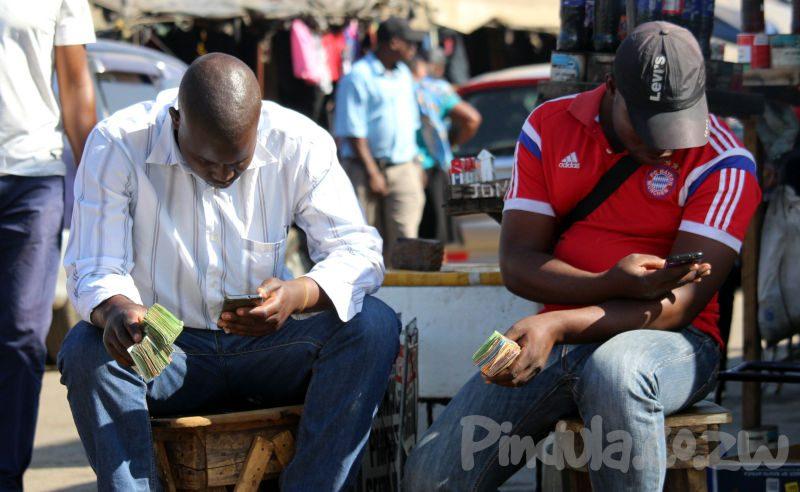


  • Why Africa must stand firm

    Why Africa must stand firm

    Why Africa must stand firm

    “So, if we lie to the government, it’s a felony. But if they lie to us, it’s politics” – Bill Murray, the American actor and comedian.

    Could somebody please do the mathematics for me. Ukraine, according to France24 (the French version of the BBC broadcast from Paris), is the fifth-largest grain producer in the world. It means there are four countries ahead of Ukraine on the grain-producing league table. So how come that if Ukraine’s export of grains is cut, because of the Russia-Ukraine war, the world is said to be famishing? I don’t get it! Where are you, honourable mathematicians?

    What are the other four big producers doing? Does their combined production, piled roof-high in their massive silos, count for nothing in the West’s propaganda war? Why are we being lied to? So that we will react negatively against Russia’s invasion of Ukraine? You see why Africa must stand firm in its principled stand on the Russia-Ukraine war?

    As Bill Murray, cited above, beautifully put it: “If we lie to the government, it’s a felony. But if they lie to us, it’s politics.” The West and its supine media are playing politics with our minds. They have been doing so since Russia fired the first shot in anger in Ukraine on 24 February 2022.

    But as concerns Africa proper, the bigger point was made by the Ghanaian, David Ofosu-Dorte, in a tweet on 2 August 2022. He wrote: “So Ukraine’s 604,000 sq km is 2% of Africa’s 30 million sq km and its 40 million population is 3% of Africa’s 1.3 billion people. Africa also has the largest arable land. Yet, even when Ukraine is under attack, Africa’s leaders have to wait for wheat from Ukraine. Amazing!!”

    Well, what do you say African leaders? It’s not only “wheat” from Ukraine, but other grains too. Are we saying we have been parroting the lie that without Ukraine’s grains, Africa, the second-largest continent in the world, with the most arable land in the world, is famishing? And we want our people to believe us?

    The question is, if Ukraine can farm these grains, what stops us from doing so too, at home, with our arable land, so that we don’t have to import grains from Ukraine or anywhere else? Are we really serious people, Africans? Can we look at ourselves in the mirror? And what do we see? Real serious beings, with something between our thighs? Or there is nothing between our things, methinks!

    Well, this month, the real topic I want Africa to stand firm on is the perennial issue of homosexuality. Why? Because things have been happening in my home country Ghana that have serious impact on the rest of the continent.

    From mid-September 2021, Ghana was convulsed by a high-decibel debate on a private member’s bill in the early stages of parliamentary scrutiny. The “Promotion of Proper Human Sexual Rights and Ghanaian Family Values” Bill sought to stiffen the anti-gay stance of the country. Before the bill was proposed, gay sex was already punishable in Ghana – thanks to the British who imposed the law while they had the country in their thrall in the colonial era – with a prison term of three years. The new bill sought to increase the jail term to 10 years.

    This private member’s bill was sponsored by 8 MPs, led by Samuel Nartey George. The bill came as a reaction to the opening of the first LGBTQI+ community centre in Ghana’s capital, Accra, in January 2021, an event that shocked the normally conservative Ghanaian population (71.2% are Christians) into panic and mass action that shut down the centre in a matter of days after the news broke.

    LGBTQI+ stands for Lesbian, Gay, Bisexual, Transgender, Queer and Intersex. Nobody knows what else the “plus” will add next time. But the vast majority of Ghanaians don’t want any of it. Over 93% of the population supported the bill. But that was not how the outside world, especially the West, saw it.

    Having given itself centuries to come to terms with its gay community, the West has taken a highly antagonistic stance against the Ghana bill. Western journalists who have interviewed Sam George since the bill arrived in Parliament have acted as if George had slept with their wives. The sheer antagonism they have displayed towards him has been stunning!

    In late October 2021, the Archbishop of Canterbury, Justin Welby, waded in. He was reported to have said he was “gravely concerned” by Ghana’s bill, which incidentally was supported by the Anglican Church of Ghana. Welby offered to speak to the local church in a bid to influence it to change its mind.

    Said Welby: “We are a global family of churches, but the mission of the Church is the same in every culture and country: to demonstrate, through its actions and words, God’s offer of unconditional love to every human being through Jesus Christ.”

    Before Welby jumped in, the Anglican Church of Ghana had publicly stated that it “does not condemn persons of homosexual tendencies but absolutely condemns the sinful acts and activities they perform”.

    The local church whole-heartedly endorsed the new bill in October 2021 in a statement, saying: LGBTQ beliefs are “unbiblical and ungoldly” and also “against Ghanaian tradition and culture. This is about morality today and of the future generation”.

    After Welby publicly stated his stance, George Dawson-Amoah, the director to the Metropolitan Archbishop of Ghana, was asked to comment. He said: “We have seen and read about the statement by the bishops in the UK, but what we have stated and stood for still stands. We see LGBTQI+ as unrighteousness in the sight of God and therefore we will do anything within our power and mandate to ensure that the bill comes into fruition.”

    The Speaker of Ghana’s Parliament, Alban Bagbin, added: “I’m sure that the law that will come out of this [bill] will protect the culture and values of our people and the Ghanaian identity.”

    So, dear reader, let’s stay with Justin Welby for a while. He said: “We are a global family of churches, but the mission of the Church is the same in every culture and country: to demonstrate, through its actions and words, God’s offer of unconditional love to every human being through Jesus Christ.”

    Which “God” is Welby talking about? The same God of the Bible we all read? Or there is another God in another Bible that the clergy in the West read, totally different from the universal Bible we all read?

    Let not the Archbishop of Canterbury deceive us – because, from my reading of the Bible (and I have been an avid Bible student for some time now), there is nothing like “God’s offer of unconditional love to every human being through Jesus Christ”.

    Otherwise, God would not insist at Leviticus 18:22: “You shall not lie with a man as with a woman; it is an abomination.” The modern New International Version’s (NIV) rendition is even less shy: “Do not have sexual relations with a man as one does with a woman; that is detestable,” it says.

    Two chapters down the Bible, God insists again at Leviticus 20:13 (Amplified version): “If a man lies with a male as if he were a woman, both men have committed an offence (something perverse, unnatural, abhorrent, and detestable), they shall surely be put to death: their blood shall be upon them.”
    Again, the NIV rendition is less shy. It says: “If a man has sexual relations with a man as one does with a woman, both of them have done what is detestable. They are to be put to death; their blood will be on their own heads.”

    Are you still there, Archbishop of Canterbury? Which of the above two verses in Leviticus prove “God’s offer of unconditional love to every human being through Jesus Christ”? And where was this “unconditional love” when God destroyed the two cities of Sodom and Gomorrah (and two more cities in their vicinity) with fire because of homosexuality?

    Please let Westerners, like the Archbishop of Canterbury, stop trying to throw dust in our eyes. We can understand their predicament. Their societies have become so decadent that what is unnatural has become natural to them. We can understand that the days the West persecuted gays in their midst are no more. But that is their problem, not ours in Africa.

    We can also understand that for non-Christians or those who do not follow God’s word but live by secular laws as the West has become, homosexuality is fine and they want to change their national laws to enable them to practise it. But where national laws ban homosexuality, like in Ghana, it is foolish for any outsiders to try to force it on those countries.

    In the UK and other Western nations, polygamy is a crime. They call it bigamy – “the offence of marrying someone while already married to another person”. In Africa, however, polygamy is legal and happily practised. If the Africans who live in the UK and the other parts of the Western world should set up centres in their host countries (like the LGBTQI+ community in Ghana tried to do) to “offer para-legal services, counselling, and training through workshops” to bigamists or prospective bigamists, would they not be arrested and prosecuted?

    Or if African countries where polygamy is a bliss should band together with their civil society organisations and say polygamy is a human right and therefore they have the right to promote it in Europe and across the world, what would Europe and the rest of the world say and do?

    So, shouldn’t the West, which is pushing for the universal acceptance of homosexuality, be humble enough to see that when it comes to norms and taste, people are not the same across the world? It took centuries for the West to come to terms with its homosexual communities and gay rights. Wisdom and good taste suggest that they should allow Africa the same space and time to come to terms with “gay rights”. No amount of cajoling and character assassination will make the Africans jump when they don’t want to.

    After all, the Africans are not cajoling any Western countries to legalise polygamy (or bigamy) as a human right. By the same token, Westerners should not force homosexuality down our throats. They should respect us too – and our sensibilities!

    The example of Oscar Wilde
    Which brings me to history, blessed history. Who does not remember Oscar Wilde, born Oscar Fingal O’Flahertie Wills Wilde on 16 October 1854? He was an Irish wit, poet, author and playwright, a popular literary figure in late Victorian England.

    According to the Encyclopedia Britannica, Wilde “distinguished himself not only as a Classical scholar, a poseur, and a wit but also as a poet by winning the coveted Newdigate Prize in 1878 with a long poem, Ravenna.”

    But Wilde had a wild side too, dangerous in the times he lived in. He was a bisexual (a sodomite in fact was the description at the time). He married Constance Lloyd, a wealthy Englishwoman, on 29 May 1884 and had two sons with her, Cyril born in 1885, and Vyvyan born in 1886. But as the Britannica puts it: “If life imitated art, as Wilde insisted in his essay ‘The Decay of Lying’ (1889), he was himself approximating the pattern in his reckless pursuit of pleasure.”

    The Biography website, dedicated to telling the life and times of the world’s great and good, is more forthright than the Britannica. In its article on Oscar Wilde, the Biography says matter-of-factly: “Around the same time that he was enjoying his greatest literary success, Wilde commenced an affair with a young man named Lord Alfred Douglas.

    “On 18 February 1895, Douglas’s father, the Marquis of Queensberry, who had gotten wind of the affair, left a calling card at Wilde’s home addressed to ‘Oscar Wilde: Posing Somdomite’, a misspelling of sodomite. Although Wilde’s homosexuality was something of an open secret, he was so outraged by Queensberry’s note that he sued him for libel. The decision ruined his life.

    “When the trial began in March, Queensberry and his lawyers presented evidence of Wilde’s homosexuality – homoerotic passages from his literary works, as well as his love letters to Douglas – that quickly resulted in the dismissal of Wilde’s libel case.”

    When the case collapsed, and now facing the threat of arrest as a sodomite and a prison term, Wilde was urged by his friends to flee Britain to France, but he refused, “unable to believe that his world was at an end”. He was duly arrested and ordered to stand trial on charges of “gross indecency”. He was convicted on 25 May 1895 and sentenced to two years in prison.

    He served most of his “hard labour” sentence at Reading Gaol, where, according to the Britannica, “he wrote a long letter to Douglas (published in 1905 in a drastically cut version as De Profundis) filled with recriminations against the younger man for encouraging him in dissipation and distracting him from his work”.

    The Biography continues the story by telling how “Wilde emerged from prison in 1897, physically depleted, emotionally exhausted, and flat broke. He went into exile in France, where, living in cheap hotels and friends’ apartments, he briefly reunited with Douglas. Wilde wrote very little during these last years; his only notable work was a poem he completed in 1898 about his experiences in prison, ‘The Ballad of Reading Gaol’”.

    Wilde died of meningitis on 30 November 1900, aged 46. “More than a century after his death,” says the Biography, “Wilde is still better remembered for his personal life – his exuberant personality, consummate wit and infamous imprisonment for homosexuality – than for his literary accomplishments.”

    The Britannica adds that Wilde died suddenly of acute meningitis brought on by an ear infection. “In his semiconscious final moments, he was received into the Roman Catholic Church [where else?], which he had long admired,” says the Britannica.

    Why am I telling this story? To show that once upon a time, Europe considered homosexuality as “gross indecency”, and hounded and persecuted those who indulged in it, like Oscar Wilde. It beggars belief, therefore, for the same people who prosecuted and persecuted homosexuals for living in “gross indecency” to turn around, a mere 127 years after Wilde was convicted of sodomy, and insist that homosexuality today is a human right and that Africans must freely indulge in it.

    Well, we say thanks but no thanks. We are Africans. And if you don’t mind, you can get lost, Mr White.