African foundations of world religions
… How Judaism, Christianity, and Islam borrowed heavily from African religion
Though European missionaries and colonial historians and academics perpetuated the view that the African has no religion, only superstition, historical evidence and common sense stubbornly insist that Judaism, Christianity, Islam and the other religions in the world were all either built on solid foundations of African religion that preceded them, or they borrowed heavily from African religion. This illuminating piece is by Prof Femi Biko, a Nigerian who teaches at the University of London’s Goldsmiths College.

The Oxford English Dictionary defines religion as: “The belief in and worship of a superhuman controlling power, especially a personal God or gods.” It follows that if, as it is generally accepted, that mankind began in Africa, then religion would also naturally begin in Africa. In fact, historical evidence confirms that religious thoughts began where mankind began – in Africa, and that all the world’s major religions – Judaism, Christianity and Islam – borrowed heavily from African religion. Therefore, religion is one of Africa’s major gifts to the world.
For thousands of years of prehistoric and recorded history, Africa led humanity in the art of group cohesion and social organisation. The spiritual matrix devised by African societies provided the earliest substance of social and psychological cohesion. Now referred to as “religion”, these pyscho-spiritual systems have profoundly affected humanity’s general way of being; its moral, social and spiritual software.
Much like today’s societies, the first nations that developed in the Nile Valley (ie, Ancient Egypt, Kush, and the others elsewhere beyond) had a need for purposeful communal existence and spiritual sustenance. Thus, the distinction between that termed “religion” and that termed “spirituality” is a recent development.
The early societies devised appropriate “social contract”, reflected through moral laws, the notion of the sacred, festivals, rituals, and explanations of their personal and collective experiences and the world around them. It is the intergenerational transmission of these that informs our universal conception of what we now call religion.
Subconsciously, people tend to identify what is “religion” through the presence of four basic factors: (a) Accounts of origin/social legends. (b) Moral laws/symbolic rituals. (c) A college of priests. (d) Futuristic/divine knowledge of that which is yet to come – divination, prophesy, revelations, etc.
Interestingly, the evidence says that all 4 mentioned above began in Africa. Or to be exact, all 4 are present in African religion, which developed from the African’s natural environment.
Generally, African cultures in the ancient world were profoundly influenced by their physical experience of the environment around them. Early rock paintings and religious artefacts confirm that “naturalism” dominated human thoughts in those early days. But in the evolution of culture, “political religions” supplanted the “nature-based religions”.
‘Paganism’
With the global expansion of “political religions”, usually through conquest, “nature-based religion” was labelled “paganism” and systematically applied as a pejorative term, denoting an inferior stage of thought. However, for the first nations (Ancient Egypt and the others) “religion” was one half of the dual matrix of culture and thus devoid of politics.
Unfortunately for Africa, earlier studies by Western scholars on African thought were often puffed up with parochial prejudice which held that religion was an abstract concept, therefore an idea imported to African societies which were deemed incapable of thought beyond superstition.
When eventually colonial scholars began to attribute religious ideas to Africans, they labelled it “animism”. To them, an animist would view the presence of spirits in all encounters. Thanks to the English anthropologist, Sir Edward Burnett Tylor, who first introduced the term in an 1866 article, and then in his book, Primitive Culture (1871), African religious thought has ever been identified as “animism”, which for Tylor was the first in three stages of religious development.
The second stage is “polytheism” (or the belief in, or worship of, more than one
god), followed by the third stage, which is “monotheism” (the belief in, or worship of, one god), in line with an evolutionary scheme. In the colonial order of things, the African naturally occupied the most primitive stage.
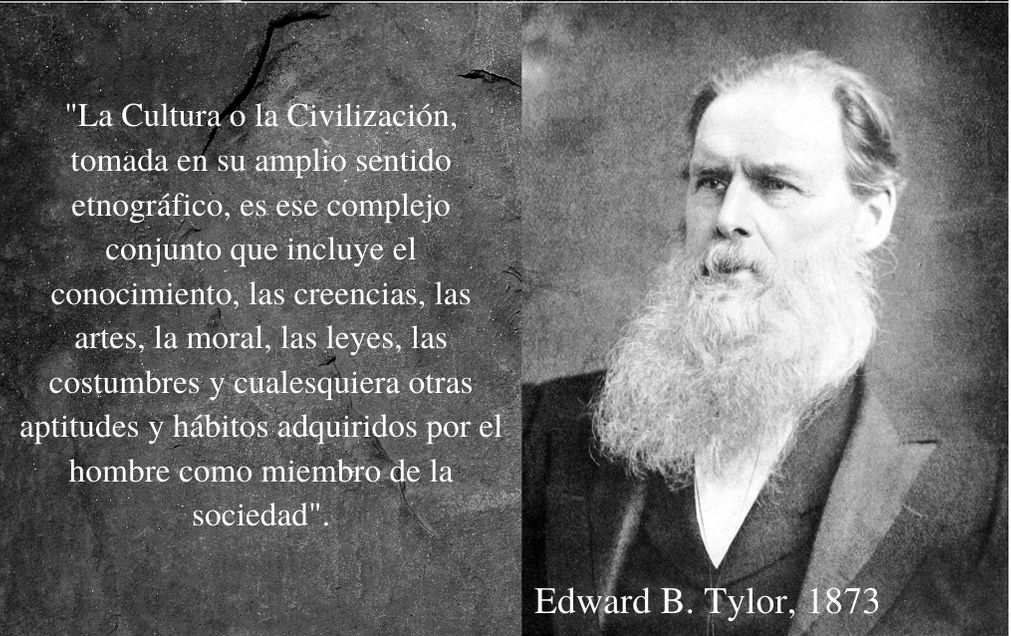
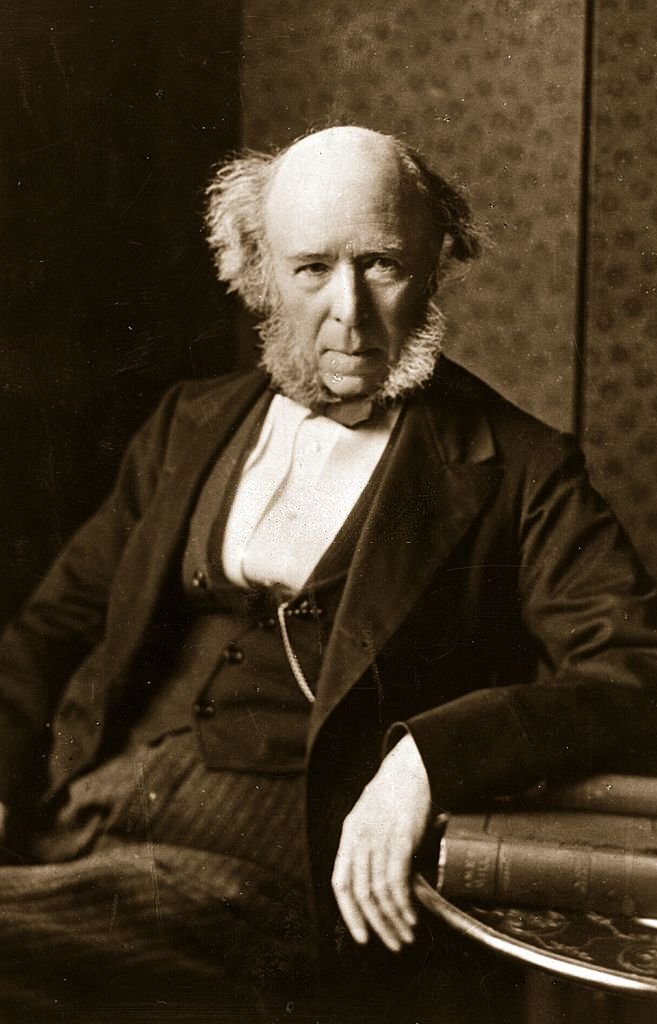
Tylor’s students popularised their mentor’s work but went further to include the term “ancestor worship”, introduced by the anthropologist Herbert Spencer, in his book, Principles of Sociology (1885).
According to Spencer, “the savage mind” not only venerates his ancestors as a ritual of respect and affirmation of spiritual connectedness, he worships them as the ultimate reality of existence, since he is incapable of conceiving the idea of “spirit” or “God”.
European scholars claimed that the privilege of such abstract thought belonged to more evolved cultures, who have long abandoned naturalism for rationalism. Such was the stupendous scale of prestigious ignorance that presented colonial ideological solidarity as scholarship! And this “ignorance” was so thick that it blinded its adherents, like Claude Levi- Strauss, from seeing the basic fact that, like African religion, Christianity, Judaism and Islam are all imbued with “ancestral worship”.
Why the ancestors are important
Judaism and Christianity, for example, put high premium on the Israelite patriarchs, especially Abraham, Isaac and Jacob and the long line of their other
“ancestors” who came before and after Abraham. In the case of Islam, the ancestor Mohammed is supreme, followed by his lesser lights.
Thus, ancestors are central in every religion and their remembrance is key to the survival and wellbeing of adherents. The only difference is that some may worship the ancestors as gods and deities, and some don’t.
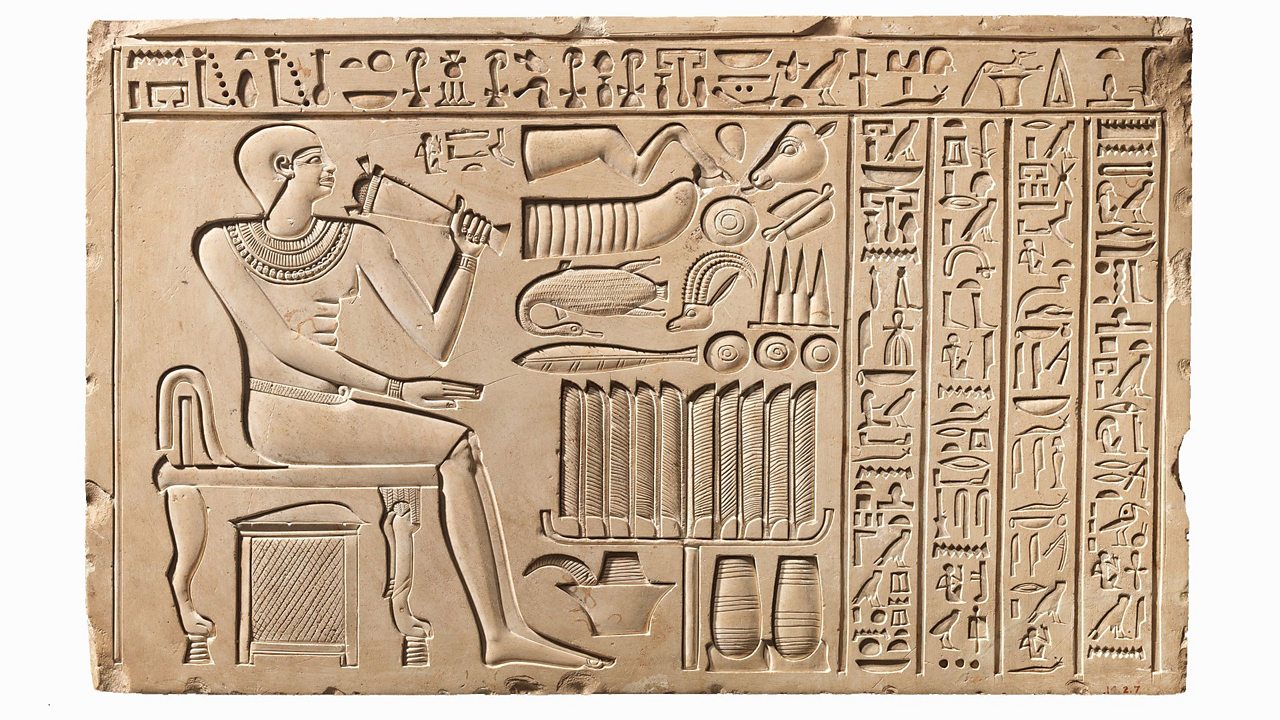
Explaining how ancestors were treated in Ancient Egypt, the Ghanaian writer and Egyptologist, Ayi Kwei Armah, says in his memoirs, The Eloquence of the Scribes (2006): “It is possible, from looking at the surfaces of Ancient Egyptian culture, to conclude that death was its dominant obsession. After all, the most spectacular visible monuments of the pharaonic era were mortuary buildings – funerary cities and pyramids. But this would be a misinterpretation of the message these monuments were intended to convey.
“They were created to bear testimony to the importance of connections between the visible realities of the here and now, and the invisible universe of connected times and places. This concern with connections is a constant motif in all autonomous African cultures.
“It comes from the ethos that says death cannot be the end; that beyond death remains connection; between those here now, those who were here but are no longer here but elsewhere, and those who are not yet here but are elsewhere, destined to come someday. The tombs of Africa testify to the death of bodies, but their contents speak of the immanence of souls. Bodies may connect visibly in the here and now; souls are connections across the present with past and future time.
“People whose lives are informed by such a worldview create numerous physical reminders to counter the putative absence and invisibility of departed members, or of members not yet arrived in the present … The individual thus remembered may have been a beloved grandparent, an ancestor remembered for some salutary quality or deed, adopted by the family as the most illustrious representative.
“Gone to the world beyond the living, such individuals were expected to continue loving and caring for their relatives. With the passage of time, grandparents became ancestor figures. The respect normally accorded them deepened into veneration, and later generations ended up considering them deities, or at any rate spirits present though invisible.”
Armah goes on: “Commentators unable or unwilling to enter into the spirit of such a way of life have characterised the rocks, trees and groves treated with such communal respect as fetishes. The stigma bespeaks a failure of understanding. What is involved is not worship but respect…
“Since out of respect for such spirits, objects in the natural environment were treated with greater care and consideration, in the resulting way of life the use of natural resources was considered a matter deserving the kind of consideration reserved for divinities … In that sense, the voice of Africa as heard in rituals of connection and remembrance has long been silenced in our public places.”
Armah then digs deeper and attests that: “The writings of the Ancient Egyptians (the ancestors of most black Africans today) indicate that they thought, on the whole, that answers to philosophical life queries could best be found if the living maintained unbroken contacts with their ancestors, and also remembered that there were many members of the society yet to come.
“Why the ancestors? Because they were the founders of society, and deserved high respect as originators. Also, because they solved many of life’s problems in their time. The living who learned to communicate with them could use their accumulated experience, avoid old pitfalls, and invent new solutions by combining inherited ideas.
“And why the unborn? Because a sense of responsibility to future generations could spell the difference between the catastrophic waste of resources and their create use. The necessity of maintaining a balance between the interests of the living, the dead, and the unborn required the creation of a great many cultural aids to remembrance. The important thing was not to forget.
“Carried over the centuries and millennia on a culture of remembrance, revered ancestors metamorphosed into legendary figures. In time, the most illustrious took on the status of divinities. In this way, Ancient Egyptians peopled the visible universe with traces of ancestors who would otherwise have been easy to forget.
“The accent on remembrance was a necessary precaution in a culture dedicated to connectedness. African culture is not alone in positing connections between all parts of reality, visible and invisible. But it is unusually explicit in its conception of these connections as close family relationships.
“In Ancient Egyptian literature, this conception of connectedness is ubiquitous: the primal matter of the universe gives birth to divinity, which then engenders the many distinguishable aspects of the cosmos: space, stars, water, land, plants, animals, people. At no point is the relationship between matter and divinity, divinity and humanity, humanity and ecology, definitively severed. It is, instead, regularly affirmed.
“Catastrophes were seen as the result of breaks in the regularity of connections. They could only be remedied and prevented by renewed attention to neglected links. In this scheme of connections, deities were not entities apart from humanity but relatives of the living.
“As relatives, they sent dreams to warn the living of impending disasters, or to suggest ways out of dead ends. If the living forgot to take precautions before the coming of floods, the result was disaster. If a family forgot the needs of an ancestor, there was a risk of the said ancestor reciprocating their neglect. Again, disaster would follow.
“In short, it was a prerequisite of social survival and wellbeing that ancestral memories be kept alive, and that lines of communication between ancestors, the unborn, and the living be kept permanently open.
“The ways of keeping the lines open were numerous. A simple but essential one was to keep the names of the dead among the living. Ancient Egyptians considered the loss of one’s name a form of psychic death.
“Another custom was the offering of sustenance to the dead. Choice food at burials, libations of favourite drinks at baptisms, the giving of the names of the dead to the newborn, every mark of continued affection helped to maintain familiar bonds. African culture gives the concept of connectedness a distinctive stamp by translating these multivalent ties into close family bonds.”
‘Prestigious ignorance’
Sadly because of “the stupendous scale of prestigious ignorance” referred to earlier, the vocabulary devised to discuss African religious thought was established as superstition, animism, ancestor worship, polytheism, fetishism and idolatry.
But be it as it may, it is now firmly established that humanity’s cultural journey began in the Rift Valley regions of East Africa. To date, Ethiopia, in particular, continues to furnish the world with the earliest specimens of skeletal evidence of man’s uninterrupted habitation on earth.
A serious study of the archaeological material of prehistoric African cultures suffices to inform us that human experience in the Rift Valley area impacted heavily on subsequent social developments in the more fertile Nile regions.
The technical and spiritual traditions that gained elaboration in the Nile Valley reflect the apex of earlier traditions, which was then put in written form in Egypt in particular. It is fair to say that ancient religious prototypes did not begin in Ancient Egypt, they gained elaboration and refinement there.
It is common knowledge that a lot of what was eventually committed to writing by the Ancient Egyptians were several thousand years older than Egyptian culture. Of particular significance to Ancient Egypt’s particular genius was its tendency to documentation and the systematic use of knowledge.
The first religious texts
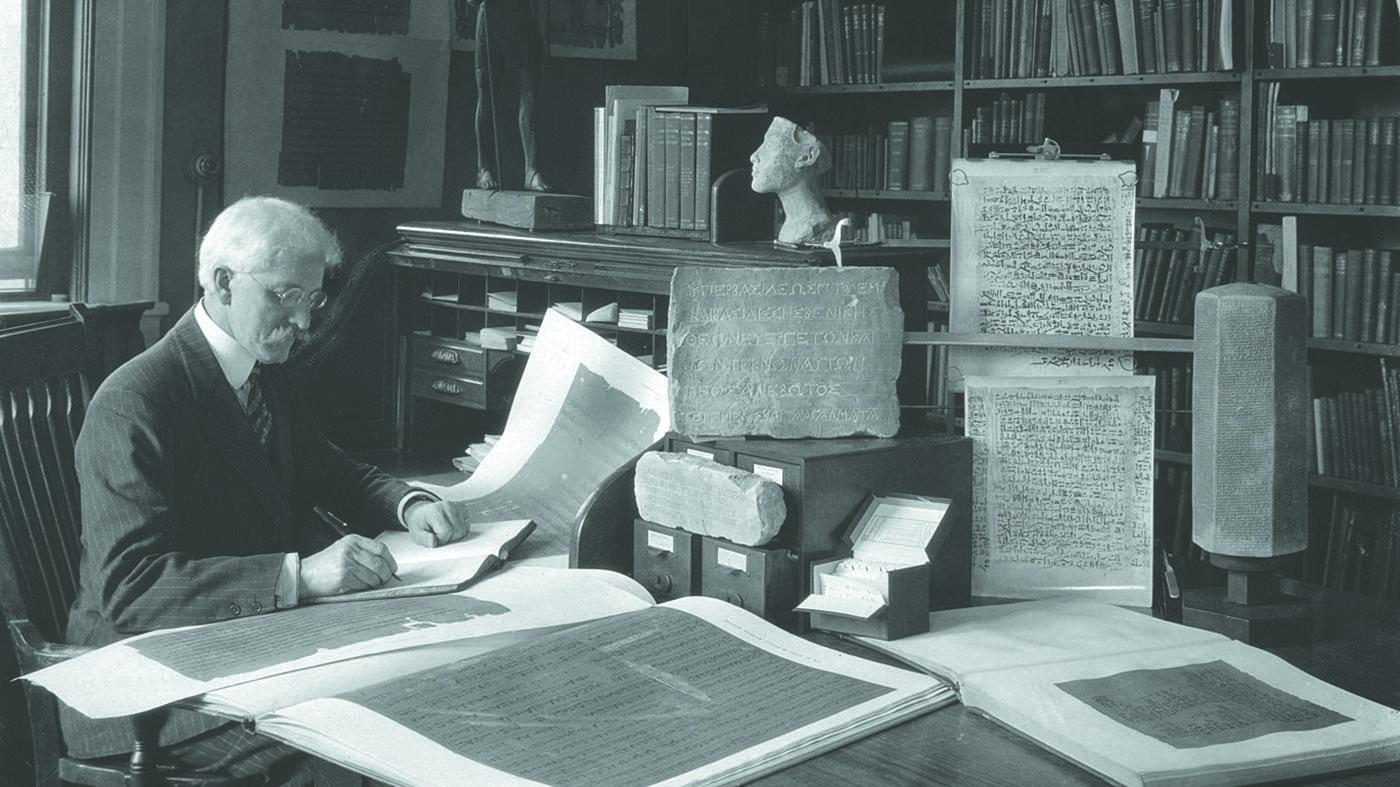
Contrary to popular belief, the first religious text was not the Bible. The oldest religious writings known to humanity are the collection of astro-religious literature known to Egyptologists as the Ancient Egyptian Pyramid Texts, elaborately chiseled on the interior walls of the 5th and 6th Dynasty pyramid complex and variously dated between 2700 and 2100 BC.
Of importance likewise are the collection of funerary inscriptions written on the coffins of the people who died during Ancient Egypt’s Middle Kingdom (2040-1786 BC) and known as Coffin Texts.
In addition to these are the body of writings called by the Ancient Egyptians as Pert-Em-Hru, which may be properly translated as “Chapters of Coming Into Light” or “Coming Forth by Day”. As versions of this work were often found in the coffins of the buried, the collection became known to local Arab grave diggers under the cynical name Kitab al-Mayyitun, meaning Book of the Dead. This formed the name by which Egyptologists have since referred to that body of work.
Next came the Vedic texts of the Indian sub-continent. The texts of the Rig-Veda were the first extensive composition in any Indo-European language. It partially adapted the Shaivism of the Dravidian cultures, who have since been positively confirmed by DNA as migrants from the African continent.
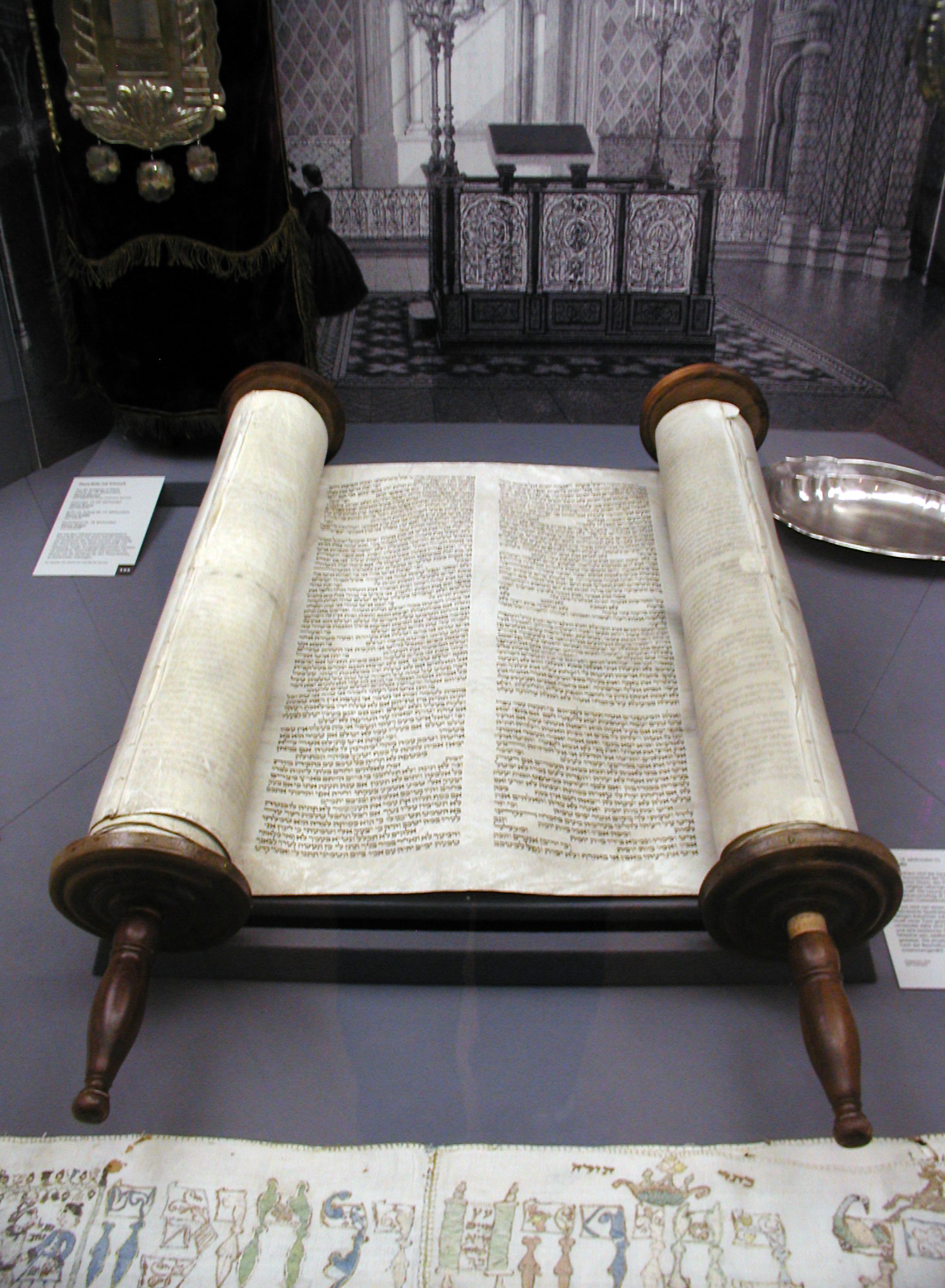
The Vedas of the Hindus were first committed to writing between 1200 and 900 BC. These were followed in the Middle East by the variety of Hebrew teachings now known to Christianity as Old Testament texts, written down in fragments between 900 and 150 BC.
The two major religious systems indigenous to China are Taoism and Confucianism. Buddhism was imported from India and happened to have flourished during the same era. Although they stem from much older traditions, Taoism’s sacred text is the Tao Te Ching by Lao Tze and Confucianism’s primary work is The Analects of Confucius. The two were committed to writing mostly after the death of their respective founders in the 6th century BC.
In the third and second century BC, the Hebrew writings were translated into
Greek (known as Septuagint). New material was joined to the collection, with versions of what became the canonical gospels of the Christian New
Testament. These were refined by the 4th century AD, when Christians received their first coherent, but not final, versions of the scriptures.
The books of the Quran were first put to writing in the 7th century AD. Thus, in terms of age, the sacred texts used by the three major religions today – Judaism, Christianity and Islam – are babies in front of the African sacred texts used in Ancient Egypt 2,700 years before Jesus Christ was born.
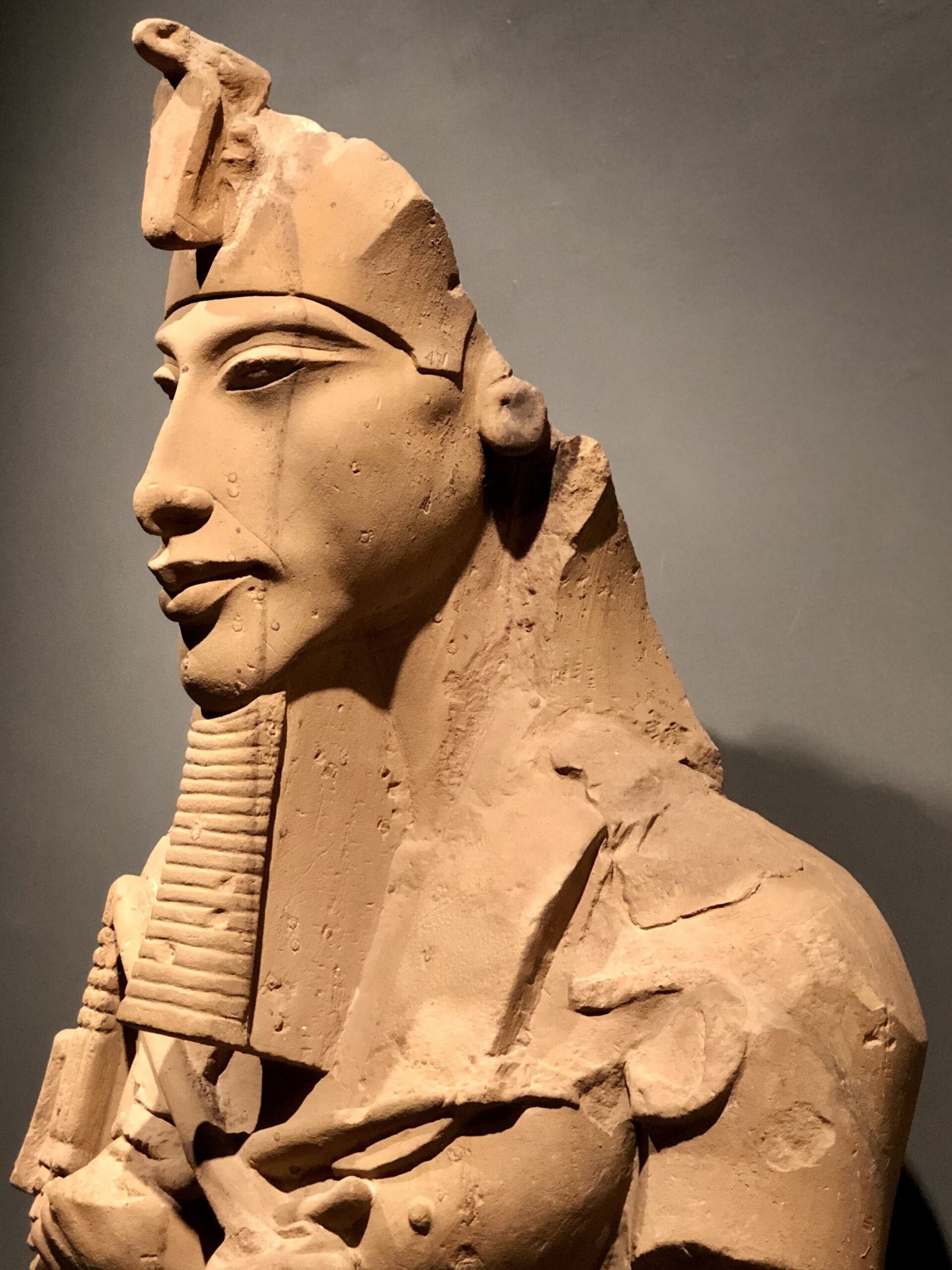
Ancient Egyptian literature
The literature of Ancient Egypt provides us with typically African settings and pattern of thought. Its array of symbols is drawn from plants and animals found solely in the natural African environment and employed in the construction of a consonantally-based system of writing. The gaps separating Ancient Egypt from recent African societies are often rendered negligible through the resilience of cultural memory.
Hence, the various writing systems of living African cultures follow a similar pattern of development in their common employment of the glyph system, as can be seen in scripts of the Mende (Sierra Leone), Loma (Liberia), Bamum (Cameroon), Nsibidi (Efik/Igbo), Sona (Zambia and Angola), Gicandi of the Gikuyu (Kenya), and the Adinkra of the Akan (Ghana and Cote d’Ivoire). All these were undoubtedly inspired by a similar mentality as the Ancient Egyptian hieroglyphs.
Like the Egyptian, African glyphs commonly employ pictograms and view humans, plants, animals and general objects of the environment in symbolic terms. In some cases, they reflect shared symbols with the more familiar Ancient Egyptian glyphs.
These symbolic languages are at once interpretations of physical life forms employed to give meaning to spiritual life. Unfortunately, when Western scholars turned their attention to studying the development of thought in African societies, their primary approach was to proceed with an investigation of foreign efforts in Africa.
But African religious thought gave birth to a common matrix of human origins which were founded basically on the idea of life emerging from the elemental waters at the creation of the universe. For the Ancient Egyptians, the waters were held to locate the source from which came forth life. This idea has survived in the politically-charged religious systems transmitted through the Hebrews.
Having been imbued with Ancient Egyptian culture, the Hebrew accounts of the creation of the world echo the earlier pre-Egyptian and Egyptian model in several aspects. In fact, no less than 7 scholars of the ancient world insist that the Israelites were of African descent or were “Ethiopians” and “Egyptians”.
Certainly, both the Ethiopians and Egyptians of the ancient world were black people, the ancestors of modern black Africans. Aristotle’s description was that they were “too black”, while other Greek writers report on their “woolly hair”.
Some scholars also point to Moses’ Egyptian name and say he reflected Egyptian culture, groomed as he was from childhood to the age of 40 in Ancient Egyptian sensibilities, and founded on privileged education as a prince in the Egyptian royal family.
Like Moses who was protected as an infant by the power of the African monarchy in Egypt, Jesus Christ too as an infant became a refugee in Egypt when King Herod the Great wanted to kill him days after his birth.
The Bible records (Matthew 2:13-23) how God saw Egypt as a strong and humane enough nation to give protection to his son Jesus. And so to Egypt the human parents of Jesus (Joseph and Mary) took the baby to escape the murderous Herod, after an angel of the Lord had alerted Joseph and Mary to the danger.
Though the Bible is silent on how long Jesus and his parents stayed in Egypt, it does record that the angel had expressly told Joseph and Mary to “stay there until I tell you, for Herod is going to search for the child and kill him”.
Matthew 2:19-21 inform us that “after Herod died, an angel of the Lord appeared in a dream to Joseph in Egypt and said: ‘Get up, take the child and his mother and go to the land of Israel, for those who were trying to take the child’s life are dead.’ So he got up and took the child and his mother and went [back] to the land of Israel.”
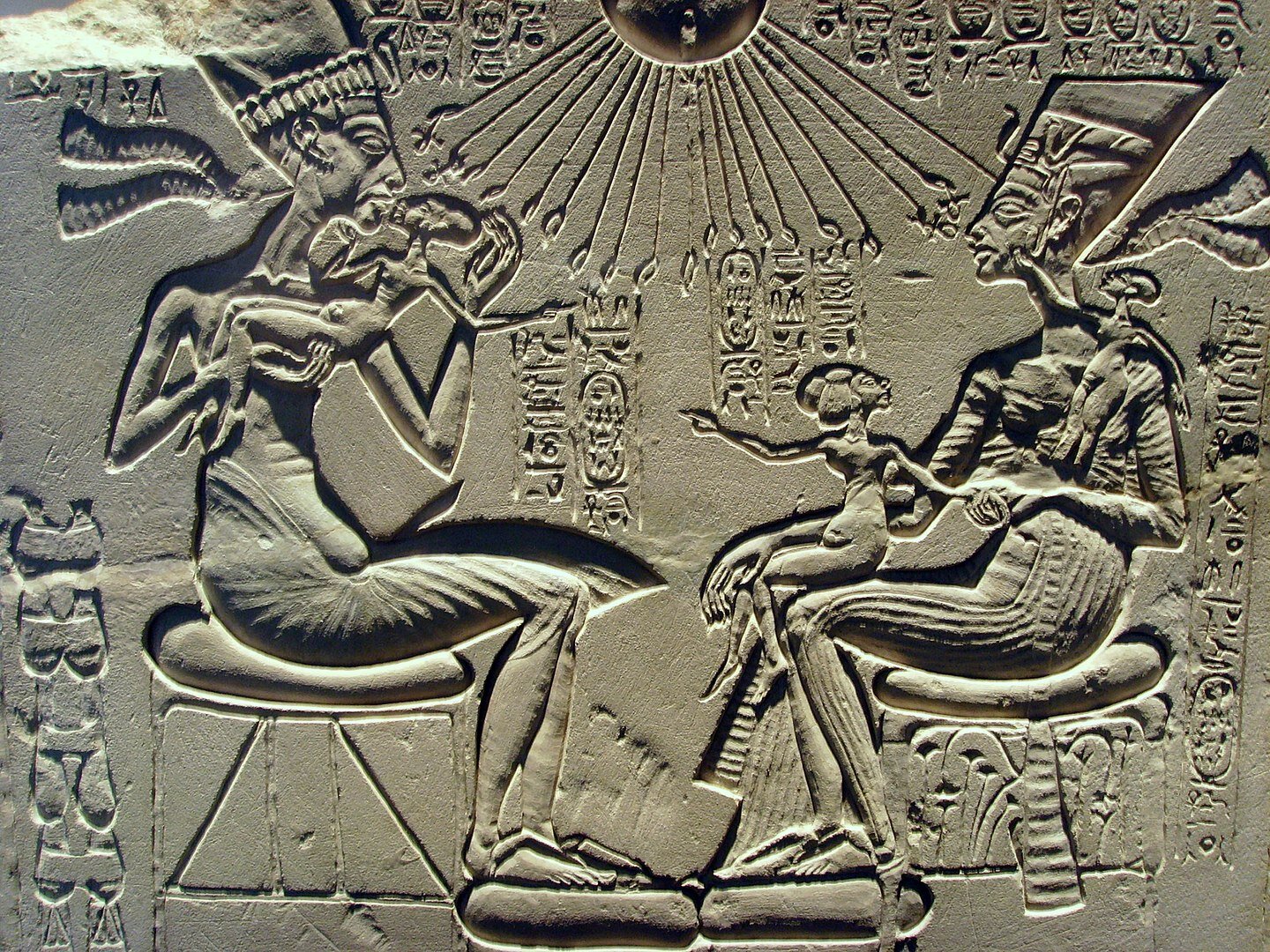
It is an undisputable fact that there is no contact without impact. The “Books of Moses” certainly affirm a 430-year contact between the Ancient Egyptian and Israelite cultures. During this time the Bible records that “Moses was educated in all the wisdom of the Egyptians and was powerful in speech and action.” (Acts 7:22).
It follows that Moses, a fully-grown adult (he was 80 years) by the time he began his priestly mission, would teach what he knew, or what all the Israelites knew, from their cultural background. And that “cultural background” had been impacted by Egypt.
Some scholars have in fact pointed to the similarities in Moses’ Ten Commandments with Chapter 125 of the Ancient Egyptian Declarations of Innocence, (see the Egyptian Book of the Dead).
Just as the renowned American Egyptologist, James Breasted, recognised Hebrew derivations of Egyptian religious thought as the medium and not the source, the 19th century Englishman Gerald Massey also affirmed that “it is to inner Africa we must look in order to understand that which became majestic in Egypt”. He was right. “Inner Africa was the birthplace” while Egypt was merely the transmitter, or in Massey’s words, “the mouthpiece”.
The Creation story
To see how much the Israelites borrowed from the Egyptian source, we only have to go to the Genesis account of the “Creation of the World” in the Bible. Having introduced the divine architect in the first verse of Genesis, Moses, the author of Genesis, had the formless earth given form in the second verse, when, “the spirit of God moved upon the face of the waters” (Genesis 1:2). Like earth, the heavenly realm was undifferentiated by the waters.
The “alchemy” of creation followed a ritualistic path in which the divine architect commanded a firmament “and divided the waters which were under the firmament from the waters which were above the firmament” (Genesis 1:7).
This is how land, according to the Biblical account, emerged from the elemental waters, effected by a commanding utterance by God. “Let the waters be gathered together unto one place and let the dry land appear” (Genesis 1:9). So also
did animals emerge from “the waters”. “Let the waters bring forth abundantly the moving creatures that has life and foul…” (Genesis 1:20).
The authors of the Quran were equally emphatic: “We made from water every living thing (Sura XXI: 30), says Allah: “It is he who created man from water”, (Sura XXV: 54).
The authors of the Biblical and Quranic texts conveniently reworked a cosmogony that had already become universal, the earliest of which was known to be the standard in Yunu (Heliopolis), not least for its employment of the aquatic theme. Heliopolitan cosmogony derives the Creator God Atum from
Nu(n), the inert waters of later faiths, as does the Memphite theology.
The Nebertcher narratives of the Late Period of Egypt convey similar images as follows: “I am he who evolved himself … no heaven existed and no earth, and no terrestrial animal or reptiles had come into being. I formed them out of the inert mass of watery matter, found no place whereon to stand … [I] was alone … none other worked with me.
“I laid the foundation of all things by my will, and all things evolved themselves therefrom … I united myself to my shadows and I sent forth Shu and Tefnut out of myself; thus from being one god I became three, and Shu and Tefnut gave birth to Nut and Geb … and their children multiplied upon this earth” (see Wallis Budge’s The Egyptian Book of the Dead).
Pharaonic narratives regarding the primordial waters find their parallels in many guises. As John Mbiti, the Kenyan theologian, illustrated in his study of the living traditions, it is a typical African practice to “associate God and rain so closely that the same word, or its cognate, is used for both” in many instances. (see J. Mbiti, African Religions and Philosophy, 1969).
The “watery matter” of the Ancient Egyptians is a conventional theme in Africa, readily attested to in the narratives of the Oromo, Efik-Ibibio, Bumba, Yoruba, Fulani and several other African cultural groups.
The better-known narratives of the Dogon of Mali are but a single example of that convention. The Dogon sage, Ogotemmeli, is emphatic that “without Nummo [water], it is impossible to even create the earth, for the earth was moulded in clay and it is from water that life is derived”.
The theme is equally universal in the Popol Vuh (“Council Book”, translated by Dennis Tedlock, 1985) of the Quiche Maya of Mexico, who otherwise acknowledge the foreign origins of their sacred knowledge as “the light that came from across the sea”, from West Africa.
The impressions of the African models on Asian cultures are also readily apparent. Not least is the Hindu creation hymn of the Rig-Veda (Nasadiya 10:129, 10:121) and the creation narratives of countless cultures. “Life”, they say, “emerged from the waters”. For, in the original model of Ancient Egypt, water was seen as the very fabric of existence.
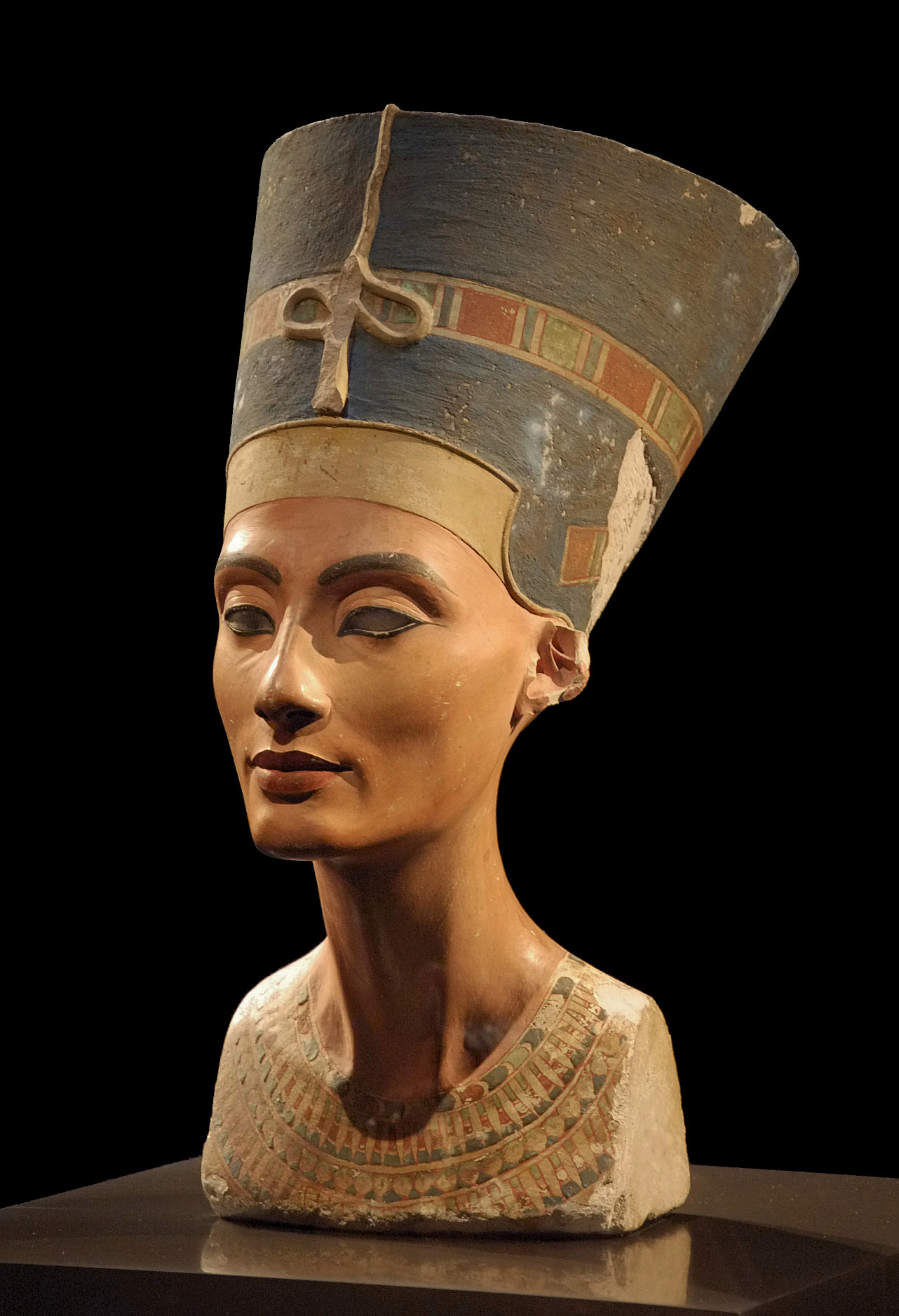
Pouring libations
Nevertheless, it is the ritualistic function of the watery substance that is key to its cultural genesis. Passages from the Ancient Egyptian New Kingdom period reads like a formula that one might expect in contemporary African cultures. The Text of Ani exalts the subject: “Pour libations for your father and mother who rest in the valley of the dead… Do not forget to do this even when you are away from home… For, as you do for your parents, your children would do for you.”
The ritual of libation is a key signature of the origins of creation narratives. For the Ancient Egyptian, libations took the form of water and beer, the masculine and feminine form of the liquid.
The broad spread of libation as a cultural practice in the African universe suggests it to be a ritual form which would certainly have predated the Pharaonic state, yet it is the Pharaonic state that served as the great cultural disseminator in the ancient world. It is well documented by Christian theologians that “pagan” rituals, festivals and sacred days such as “Easter” and “Christmas” were maintained in form but modified with “new” formulations.
The Egyptian font, which contains “the holy water”, has its retention
in Christianity where libation becomes “the drink offering”, which hacks
back to the homage of the archetypal libations of the African faiths.
Some authorities boldly state that: “The drink offering (Hebrew: nesekh) was
a form of libation forming one of the sacrifices and offerings of the law of Moses.” The word “Nesekh” literally means “pour [on it] a poured thing’ as in the only pre-Exodus use, that of Jacob’s libation at a pillar in Genesis 35:14.”
A May 1991 Biblical Horizons’ commentary on the “drink offering” attests that: “The drink offering or libation (nesekh) is mentioned in only three places in the book of Leviticus. When the sheaf of the firstfruits was waved before the Lord, a grain offering was to be burned, along with ‘its libation’, a fourth of a hin of wine [approx. one gallon]” (Leviticus 23:13).
Similarly, libations were to be offered with the lambs, bull, and rams offered on the day of Pentecost (Leviticus 23:18). An even more general statement is made concerning libations at Leviticus 23:37: “These are the appointed times of the Lord which you shall proclaim as holy convocations, to present offerings by fire [or ‘food offerings’] to the Lord – burnt offerings and grain offerings, sacrifices and libations, each day’s matter on its own day.”
Biblical Horizons goes on to say: “More elaborate instructions for the drink offering are found in Numbers 15. There, the Israelites were commanded to offer a libation of wine with all burnt offerings and ‘sacrifices’, the latter being a common term for the peace offering (Numbers15:8; cross reference 1 Samuel 9:12-13; 1 Kings 8:62-63).
Two facets of this set of commands are noteworthy. First, a libation was required for all burnt offerings and peace offerings, whether they were offered to “fulfill a vow, or as a freewill offering, or in your appointed times” (Numbers 15:3).
Second, it might seem from these verses that libations were not offered with sin or trespass offerings. Numbers 28:15, however, states that the sin offering included a libation. Every bloody sacrifice was to be accompanied by grain and wine offerings.
Numbers 15 also gives instructions on the amounts of wine required, which varied according to the kind of animal being sacrificed. Finally, the directions for the sacrifices in Numbers 28–29 include instructions for the offering of drink offerings.
The instructions in Leviticus are prefaced with “when you enter the land which I am going to give to you” (Numbers 23:10-14), as are the instructions in Numbers 15. If the sacrifices are God’s food (literally bread), then the libations are evidently God’s drink. The law of the drink offering, therefore, tells us that God would not drink wine with his bread until his people entered the land. This makes sense in terms of biblical theology.
Libation or “drink offering”, therefore, is one of the many things, like baptism, that Judaism and Christianity borrowed from African religion. “Baptism”, traceable to the theme of the divine waters, still remains a vital aspect of ritual cleansing in ancestral faiths, transmitted to Christianity through the Ancient Egyptian and Hebrew medium.
The “water and cross” signature of the Roman Catholic Church and the ablutions of the Muslim faith continue the symbolism and practice of ritual cleansing.
To date the ritual of libation also remains a cultural universal in African societies without exception. Even when the symbolism is lost to local memory, the practice obtains, testifying to that which certainly predated Egyptian practices.
The ritual of libation is in effect a re-enactment of the “first time” – the “original act” of Creation or “Sep Tepy” of the Egyptians. It is an affirmation of the vitalism and inter-connectivity of all life.
In the ancient faiths, the libation formulae comprises of the precious liquid, the will, and the sacred word; elements which are collectively employed to raise petitions and invoke the spiritual essence of the living, the physically departed, or the yet unborn. The flood story of the Bible has a similar trajectory. For even here the essence is to create life anew.

Borrowing from Akhenaton
Traditions identical to that of Ancient Egypt can be observed from pastoralist groups such as the Masai of Kenya and Tanzania, and from the cosmetic to the profound. Other than the obvious hairstyles and common ceremonial employment of red ochre as body paints, the importance of circumcision rituals and the prevalence of cattle cults are practices common to Africa’s broad geographical spread, from the pastoralists Fulani of West Africa to the “Niliotes” of Central/East Africa’s Great Lakes region.
The African faiths consider God both as a creator and a remote yet near parent, with whom the ancestors share an equally invisible and divine realm, though the ancestors are more readily accessible. The place of the ancestors in the hierarchical order is sometimes on par with the honour accorded to the elemental factors such as land and the lunar and solar principle.
Like the Egyptian Old Kingdom religion, the cosmology of the Ila of Zambia and Hahm of Nigeria identify the sun with the brilliance and infinity of God. Possibly as a continuum of the Pharaonic culture, the Ethiopian Galla identify the sun as “the eye” of God.
The Balese of the Congo likewise consider the sun and moon as symbolic of the right and left eye of God respectively, a direct parallel of the Wadjet symbolism of Ancient Egypt. Now, the existence of these conceptual schemes was not altogether unknown to the theologians of the ancient world.
The Pharaoh who made all this possible was Amenhotep IV, later known as Neferkheprure Akhenaton (1353-1336 BC). He ruled for 17 years and totally changed how Ancient Egyptians saw and worshipped God.
Thanks to Akhenaton, the conceptions of God that emerged in urban centres worldwide tended towards a certain singularity of all reality. As a Pharaoh, Akhenaton was not happy with the worship of many gods, the practice of the day, so he organised the country to serve one god, the Sun-God which he called the Aten, or the disk of the sun, thus giving the solar deity a status above mere gods.
In the process, Akhenaton ordered that the multiplicity of old gods should be put aside and replaced by the Aten, the Sun-God, which was depicted as the solar disk emitting sun rays terminating in human hands.
This became the state religion, with Akhenaton decreeing that Aten was to be the only god. This greatly displeased the priesthood of Amun-Ra, but because Akhenation enforced his decree by the might of the military, he was able to get his way, even closing down some temples and removing the names of their gods from statues and inscriptions.
Though he pushed his idea through while still king, he met stiff resistance because people felt he was shifting the culture of Egypt’s traditional religion.
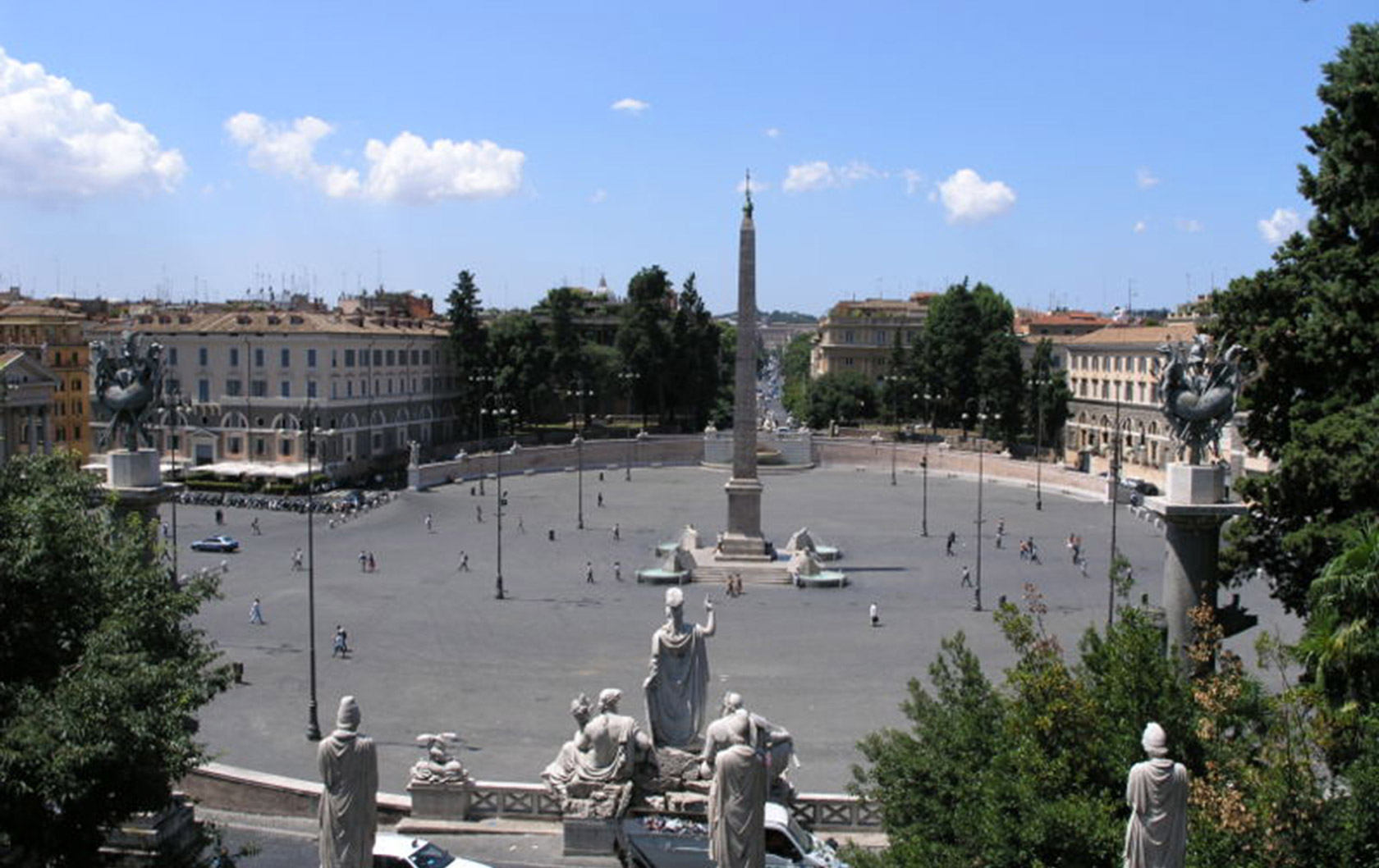
When he died, his monuments and statues were dismantled or destroyed, and his name removed from the kings’ list, while traditional religious practice was gradually restored. In the 19th century, it was discovered that while he was still monarch, Akhenaton (his wife was Queen Nefertiti) had built the city of Amarna for the worship of Aten.
Prior to Akhenaton, the systems in existence allowed for a communalism of faith within the framework of Ma’at, (ie, moral and spiritual equilibrium). With Akhenaton, came massive state intervention in religious matters. Intermediary deities were rendered unemployed, as the path of communication with God became direct to all subjects.
Again, the previous order allowed for localised and reciprocal participation in faith, in Akhenaton’s era faith became a uniform preoccupation. All religious reality was reduced to a singular focus. As there was one God, spiritual diversity evaporated. God became omnipotent but not in multiple forms. Aten’s disk was the “proper” form that symbolised God’s presence.
Though Akhenaton’s “God” could not technically be said to be the same as God Almighty (known today as the creator of heaven and earth) because Akhenaton’s “Sun-God” could be considered as merely an “idol” because of the way he worshipped it, Akhenaton’s influence on both Jewish and Christian traditions has been a subject of immense investigation from diverse sources. Based on his research into the problem, the influential 20th century Jewish scholar, Sigmund Freud, insisted on Moses’s Egyptian identity and asserted the obviousness of Akhenaton’s influence on Moses’ doctrines (see Frued’’s Moses and Monotheism, 1939).
In his early studies of the subject, the English Egyptologist, Arthur Weigall, similarly saw Akhenaton as having founded a “religion so pure that we must compare it to Christianity” (see Hornung’s Akhenaton and the Religion of Light, 1999).
Indeed, other parallels exist aside from the concept of “monotheism”. But one cannot fail to see the obvious link between Akhenaton’s Great Hymn to Aten and the Bible’s Psalm 104 (whose writer is said to be anonymous).
Akhenaton’s influence also extends to Islam, the last in the trinity of “revealed” religions. Just as Islam gave the only and absolute validity to the image of the lunar crescent as a divine sign, Atenism had no totemic or animal parallels and was purely symbolised as light. Other symbols, iconography and imagery were aggressively discarded and displaced, as Aten was “a jealous God”. Akhenaton would only tolerate Aten (the sun’s light source, its “disk”).
In the religion of Amarna, Aten was not only “unique” but “exclusive”. In Islam likewise, the crescent moon plays a parallel role to Akhenaton’s sunlight. Together, both the crescent moon and rising sun had served Ancient Egyptian religious thought since pre-dynastic time to the end of the state proper. These were the standard emblems of the Ibis (later baboon) deity called Djewhyty (Greek, Thoth/Hermes), the Egyptian divine messenger, patron of intelligence, master of speech, and lord of law.
As early as the 5th century AD, the Bishop of Hippo, Saint Augustine, had conceded this much: “What we call the Christian cult has existed among the ancients and was not absent from the beginning of the human race until Christ came in the flesh from which time the true religion which existed already began to be called Christianity” (Retract 1, 13). St Augustine remained the most influential Christian theologian for no less than a thousand years and was the most famous of the Roman church fathers.
The Romans had taken over and ruled Ancient Egypt from 30 BC until 324 AD. In 323 AD, the Roman emperor, Constantine, created Rome’s first state religion when he melded aspects of Christianity with other existing pagan beliefs. It is from that 323 AD edict which was tied to Sol Invictus – the Unconquerable Sun (remember Akenaton’s Sun-God, the Aten) where we get modern Christianity’s Sunday worship, Christmas Day, and Easter Holiday among other observances and rites.
More importantly, in 325 AD, the Roman Empire called a conference
in Nicea (today’s Iznik in Turkey) and formalised the first Christian State. Chronologically speaking, the old policy of persecuting “unruly” Christian cults had become impractical by the fourth century and soon gave way to two key conferences in 312 AD and 319 AD that ultimately culminated in the Conference of Nicea in 325 AD.
However, the new doctrine formulated at Nicea had to build on the old. And as the link between the “revealed” religions and their so-called “pagan” predecessors were still new, denials of derivations would have been a sterile endeavour during that phase of theological development.
Two hundred parallels
One need not exhaust the obvious by reference to over 200 parallels between Ancient Egyptian and Christian doctrines (see Gerald Massey’s Ancient Egypt Light of the World, 1900, 1986). Two hundred good parallels between Ancient Egyptian and Christian doctrines! And they say the African has no religion, only superstition!
Suffice it to say that Ancient Egyptian religious literature recounts the Annunciation, Immaculate Conception, Death and Resurrection of a
Saviour God, with all the familiar details (see John G Jackson’s Christianity Before Christ, 1985).
The Papyrus of Hunefer conveys the doctrine of Eternal Life and promised eternity in Amentet (paradise) for the “born again”. “Homage to thee, O governor of those who are in Amentet, who dost make men and women to be born again, the new birth being into the new life of the world which is beyond the grave, and is everlasting’ (see Sir Wallis Budge’s The Book of the Dead, 1899, 1985).
Equally predating the Christian and Muslim religions by thousands of years are scenes of the “Ultimate Tribunal” seated in the Supreme Court for the Final Judgement. The Christian doctrine of “hell fire” and Muslim “abyss of flames” can be viewed in detail in the 19th century tomb of Pharaoh Menmaatre (Seti I), the father of Usenmaatre Setepenre (Ramses II).
The Egyptian dogma likewise sets forth the doctrine of the “Slaying of the Messenger” and the “Survival of the Message”. Asar (Osiris), the Egyptian messenger, was slain but regained life anew before ascending to heaven, survived by Aset (Isis), his divine wife, and the immaculately conceived son, Heru (Horus). Asar was of course the only figure in Egyptian thought to have died and be resurrected. These themes were later to be absorbed by the Christian faith.
From the Old Kingdom, the Egyptian royalty would perpetuate the scheme of divine kingship by assuming the role of Horus undertaking his father’s works. The king would assume a “Horus name” on ascending the throne, further to which he would also assume the title “Sa Ra’ literally “son of God”. But, as in all areas of human endeavour, it would have been imprudent to attempt a total or sudden severance from the earlier traditions.
They modified, not abandoned
So just as the “pagan” (i.e. nature-based) Egyptian worldview impacted heavily on the Hebrew Israelites and consequently on Old Testament doctrines, the Christianity of the Roman State was also impacted heavily by both Ancient Egyptian and Jewish varieties of the “sacred word”. Roman theologians were well aware of the human preoccupation with “the new”, with “modernism”. As such, a “modernising” theologian would modify, not abandon the “pagan” ancestry of the new faith. That which was deemed useful was retained and that deemed problematic discarded.
The shift away from “paganism” was far from sudden; it was and remains gradual. The Christian conception of God was to maintain the general features of the archetypal idea but with fundamental modifications in the spheres of gender and race relations (see Leviticus 21:18, Genesis 9 and 10).
Conceptions of God in the popular mind is about thinking of God in terms of
a being. Due to this realisation, the Ancient Egyptian idea of God stressed a balance in gender relations. Representations of God and divine powers were in male and female forms.
The African found it impossible to conceive of a male deity without its female counterpart. For the African, the world of “gods” without “goddesses” was in essence sterile. As such the old idea reflects a notion of “God” as both “father and mother”. Perhaps the greatest gulf between the old religious traditions and religion in the post-Akhenaton era rests on this difference.
The fundamental difference between African and Western religious systems, or between systems prior to Akhenaton and the systems that followed, is that the post-Aknenaton religions have systematically deleted the idea of divine femininity. The female principle as a sacred icon was effectively erased from human memory.
To a certain extent the first Christian state, the Roman Catholic Church, in an albeit token gesture, responded to this theological difficulty by attributing uniqueness to the mother of the godhead (Holy Mary). To the African, the negation of the mother of God is a negation of God.
The pharaohs maintained pretty much the same reverence for the mother of the king, a veritable God in the Egyptian scheme. The dismantling of female divinities was considered necessary for the triumph of patriarchal systems and marks the victory of “political religions” over “ancestral religions”.
Interestingly, culturally-inspired religions had no use for missionaries, nor did they harbour any interest in conversion; seeking an understanding of reality according to interpretations of the natural environment. On the other hand, politically-inspired religions tended to look to ideological expedience and military aggression to serve God, often expanding its adherents through a “sacred crusade” or a “holy war”.
In theological terms, Islam today is perhaps, in many respects, the nearest to the uncompromising monotheism of the religion of Aten. Akhenaton’s conception of the singular manifestation of God had spread rapidly in Middle Eastern regions, especially in the Ancient Egyptian colonies of the New Kingdom such as Byblos, Palestine and Arabia.
Through its colonial policies, Ancient Egyptian cultural and religious influence dominated much of the Middle East and the Mediterranean, and this influence was later reflected in both Christianity and Muslim formulations in the subsequent years. Just as Judaism and Christianity had previously borrowed from Ancient Egyptian sources, Islamic sources in turn derived several of their doctrines from the earlier African religious traditions.
For example, the Ancient Egyptian hatred of the pig was legendary in the Old World and remained so until the Late Period as Herodotus reported in the 5th century BC. In Islam, the pig also became Haram (forbidden). Judaic and Muslim scholars have certainly not failed to recognise the connection between the three faiths (see Maurice Bucaille’s The Bible, Quran and Science, 1976).
Circumcision also borrowed
Similarly, Herodotus, who had observed the Ancient Egyptians to be “the most scrupulous in religious observation amongst all people”, was certain that “Ethiopian and the Egyptians were the only races from ancient times to have practised circumcision”.
Following his research into the genesis of the practice, Herodotus would affirm that Semitic groups such as “the Phoenicians and Syrians of Palestine themselves admit that they adopted the practice from Egypt” (see Herodotus’ Histories p2:104).
From the Cape to the Sahara and from the Atlantic coast across to the Horn of Africa, the initiation practice of circumcision was universal amongst settled and nomadic African cultures. Its spread to the Middle East was probably due to Semitic diffusion.
The Hebrew adoption of circumcision practices from Pharaonic Egypt was subsequently explained as a sign of the favoured status of the Israelite nation in a covenant with God (see Genesis 17: 8-14).
Be that as it may, the link between religious narratives and the male phallic finds its most elaborate expression in the Ancient Egyptian Tekhen (obelisk) legends pertaining to Min, Amen, and their chief deity Asar (Osiris). For the Egyptians, the obelisks were monuments symbolic of supreme procreativity, as they were identified with the earth in union with the sky, in Egyptian terms Geb’s phallus in perpetual intimacy with Nuts womb.
The obelisk as a cultural icon later found further geographical expression in all four corners of the African continent, in Egypt, Ethiopia, Kilwa, and Ife, long before their colonial appearance in Western capitals.
Again, the religious refrain “Amen” likewise finds its origin not in the received meaning – “So be it”, but in the Egyptian language of a divine being. Its rendition as Amon among the Yoruba of Nigeria, Amma among the Dogon of Mali, Amenda/Memenda (calendar deity of Saturday) among the Akan of Ghana and Cote d’Ivoire), and the Ameen of Islam were certainly derivations of the Ancient Egyptian “Amen”, a divine being.
The received explanation loses legitimacy only when we appeal to the origin of the term. The Ancient Egyptian word “Amen” is well known to Egyptologists as a name of the divine, meaning “the hidden one” and is generally rendered “Amun” or “Amon” for no other reason than to obscure this apparent connection. It is common knowledge that the letter “e” constitutes the universally employed vowel in the renderings of the consonantal-based Pharaonic language.
Nevertheless, the passage in Revelation 3:14, amongst others, certainly refutes the assigned meaning of “Amen” as “So be it”. Revelation 3:14 (King James version) says: “And unto the angel of the church of the Laodiceans write: ‘These things said the Amen, the faithful and true witness, the beginning of the creation of God.”
Here the “Amen” is a noun, a divine being, the beginning of all things that God created, and so he is “the faithful and true witness” to the things God created. “So be it” cannot be a witness; you need a being, in this case a divine being, to be a witness of what God created.
In the Amplified version, Rev 3.14 says: “And to the angel (messenger) of the assembly (church) in Laodicea write: ‘These are the words of the Amen, the trusty and faithful and true Witness, the Origin and Beginning and Author of God’s creation”.
This version is a lot clearer than the King James’ rendition. It hacks back to the Ancient Egyptian divine being called “Amen”, and not modern Christianity’s assigned meaning of “So be it”, which appears to have been taken from Numbers 5:22.
In fact, Jesus calls himself the “Amen” in Revelation 3:14, a fact confirmed by the Institutes of Bible Law commentary which says, in part: “Jesus Christ is the Amen of God, because through Him ‘the purposes of God are established, (2 Corinthinians 1:20).” In Revelation 3:14, Jesus is the Amen because he is ‘the faithful and true witness’”.
Conclusion
Although modern Christianity, Judaism and Islam find it difficult to acknowledge what their ancestors borrowed from African religion, the evidence is there for all to see. As mentioned earlier, there are over 200 parallels between Ancient Egyptian doctrines and Christian doctrines. Two hundred!
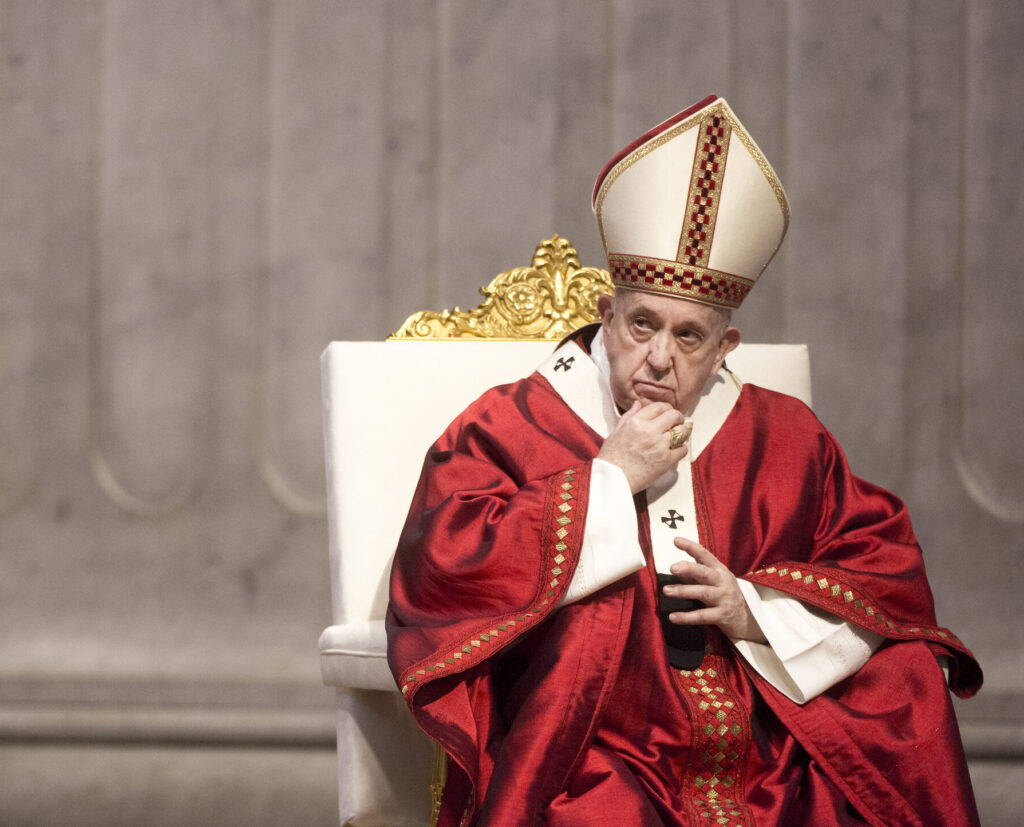
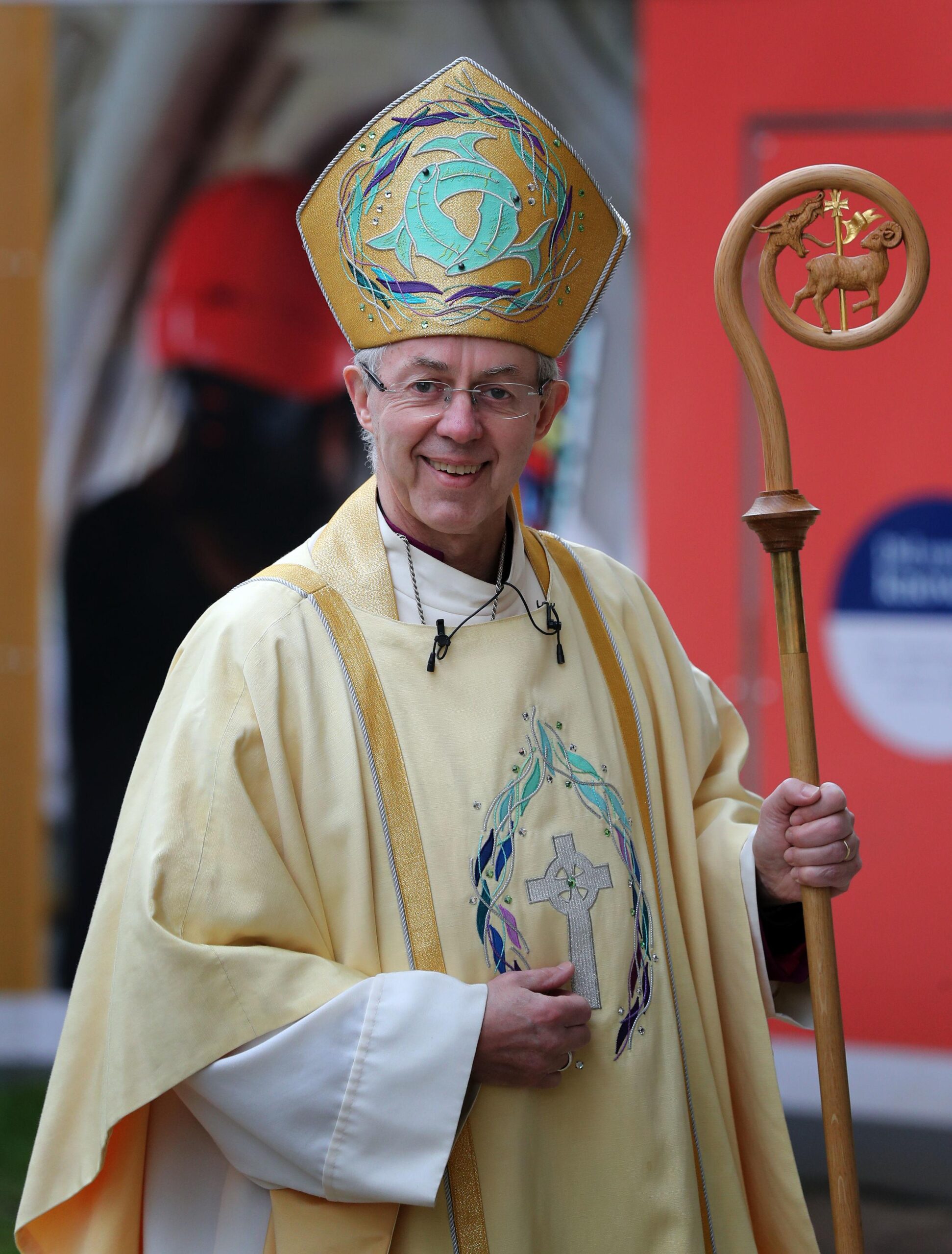
Some of the most visible ideas/items borrowed from African religion by Christianity include the Ancient Egyptian staff of office (the crook or the shepherd’s staff) which is widely used today by the Catholic and Anglican hierarchy, including the Pope and the Archbishop of Canterbury.
Also, the Ancient Egyptian divine headgear/hat worn by the ancient priests became the mitre borrowed by both the top hierarchy of the Catholic and Anglican churches, worn by the Pope (Catholic) and the Archbishop of Canterbury (Anglican).
Another Ancient Egyptian symbol of office, the Ankh (the symbol of life) which used to be worn as a neck chain exclusively by the priests became the Christian Cross. Early Christians also appropriated Akhenaton’s sun worship rites. In summary, it is fair and correct to state that modern Christianity, Judaism, and Islam rest firmly on African foundations.
Leave a Reply