Category: Current Affairs

  • Can you imagine 40 million Americans live in poverty?

    Can you imagine 40 million Americans live in poverty?

    When in January 2018 the American President Donald Trump characterised Africa, Haiti and El Salvador as “shithole countries”, he had poverty at the back of his mind. The popular images that Trump grew up on always painted Africa as poor. But in their own backyard, according to two reports released in 2018, one by the United Nations, “40 million Americans live in poverty, 18.5 million in extreme poverty, and 5.3 million live in Third World conditions of absolute poverty.”  And while “the poor are overwhelmingly assumed to be people of colour, whether African-Americans or Hispanic immigrants, the reality is that there are 8 million more poor whites [in America] than there are poor blacks. And over and above all this, American citizens also “live shorter and sicker lives compared to those living in all other rich democracies”, the UN report said. So does that make the US also a “shithole country”? Baffour Ankomah explores the argument.

    A homeless man sleeps under an American flag blanket on a park bench in New York City. New U.S. data reports a drop in the number of homeless people — but not in New York and other states.

    Americans believe they have the best country in the world. Their country is known for flash. But all that glisters is not gold, at least according to two reports, the first by the United Nations Human Rights Council and the second by the Washington DC-based organisation, WalletHub.

    The WalletHub study results released at the end of August 2019 showed that children in Washington DC, America’s capital, are the worst off in the country as they face daily threats of homelessness and food insecurity. They are even worse off than children in states such as West Virginia (third worst), Louisiana (fifth worst) and Oklahoma (seventh worst).

    The WalletHub results left a not-so-shocked Judith Sandalow, the executive director of the Washington DC-based Children’s Law Centre that works with one in nine children living in the poorest suburbs of the capital city, to say the new results only underscored “the huge disparity between the perception of Washington as the seat of the most powerful government in the world and the often-harrowing reality for many children in the city.

    “Two miles from the White House, there are children going to bed hungry and not knowing where they are going to sleep tomorrow night,” Sandalow added laconically.

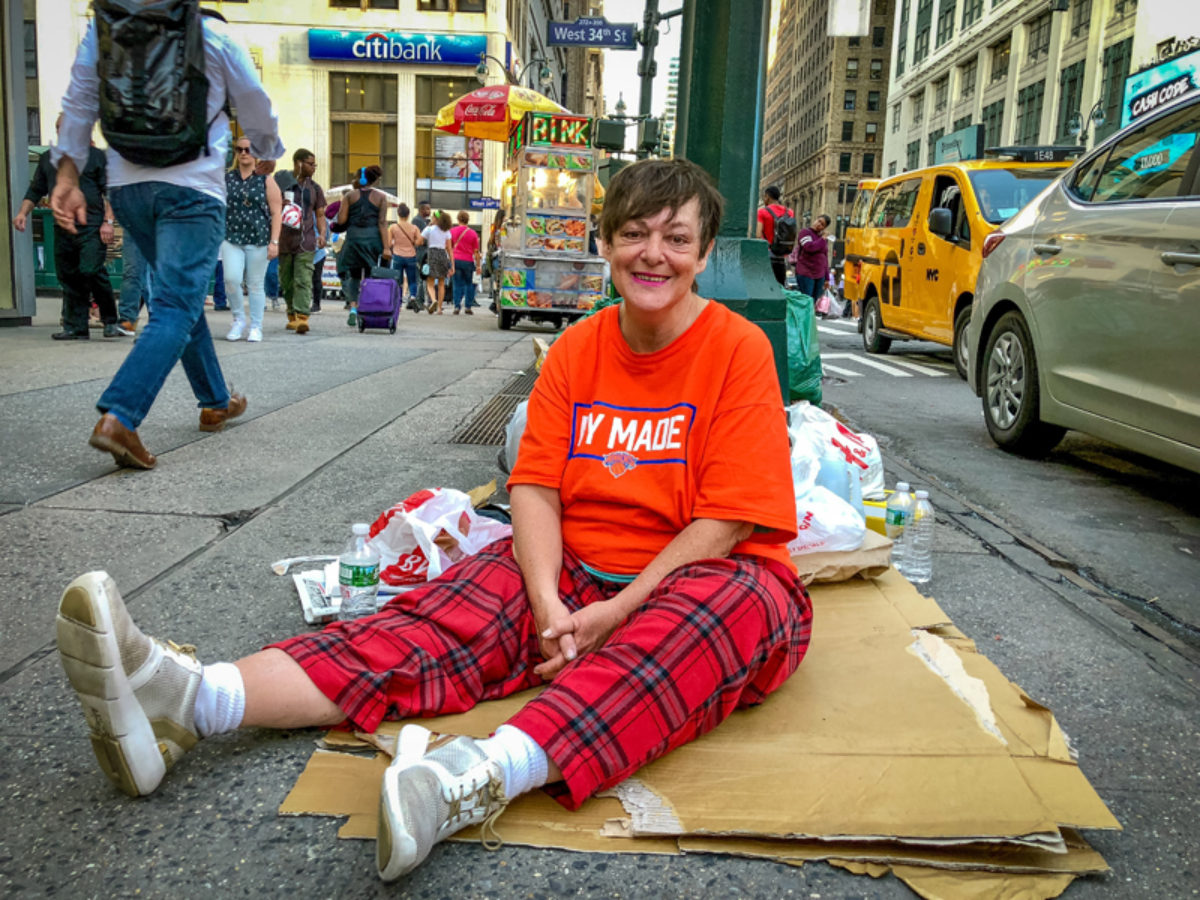
    It’s not funny to be poor in America: As motorised traffic and pedestrians go about their business, a poor AMerican woman, homeless and on the streets, smiles as she observes the funny side of life

    What the report refused to say, however, is that most of the children going to bed hungry two miles from the White House are African-Americans because Washington DC is predominantly populated by African-Americans. It is a situation pregnant with political undertones so people navigate it by threading softly.

    Even the Washington correspondent of the UK daily, The Guardian, Joan E. Greve, reporting the WalletHub results on 29 August 2019 could not dare mention the six-letter word “blacks”. Yet she put it colourfully thus: “A common refrain in America’s capital goes something like this: there’s Washington, and then there’s DC. Washington is where Congress passes bills, tourists visit the White House, and Donald Trump [the then president] stars in a daily political soap opera.

    “But DC – the District of Columbia, in which the city sits – is where more than 700,000 people live. People go to work, families share meals and children go to school. And many of those children, living just a few miles from the US Capitol, are facing the daily threat of homelessness and insecurity.”

    Greve, knowing the incendiary nature of the composition of Washington’s population, played safe by not daring to analyse the identities of the “children facing the daily threat of homelessness and insecurity just a few miles from the US Capitol”.

    But the WalletHub report was clear in its conclusions. It showed that Washington “has the highest shares in single-parent families, children living in low-income households where no adults work, and children whose parents lack secure employment”.

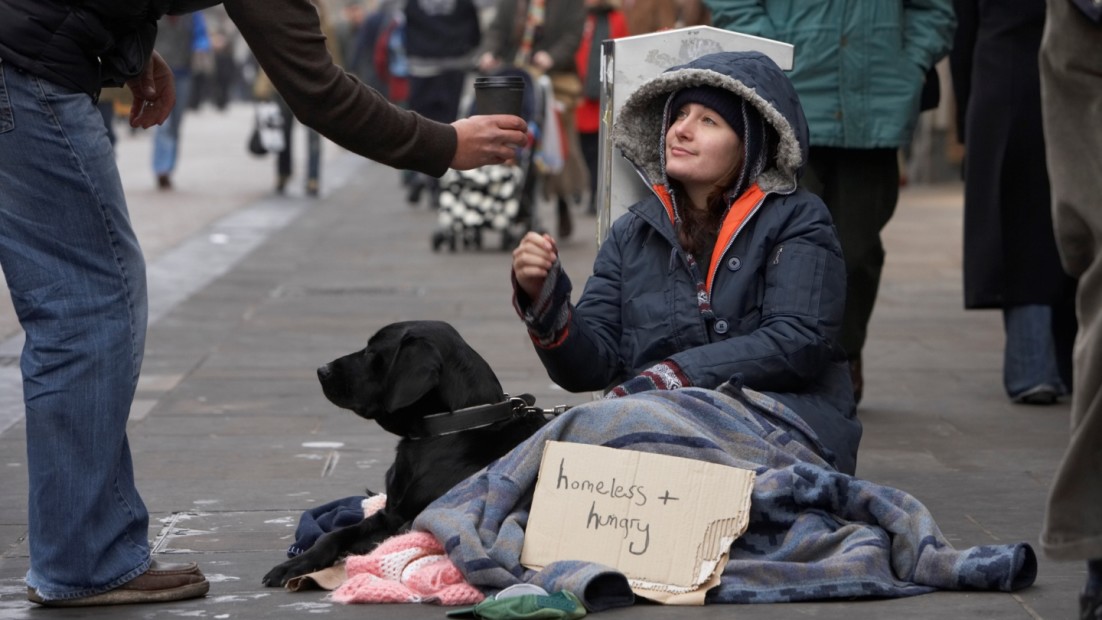
    “Homeless and hungry”: This scene, replicated in many American cities every day of the year, shames their country that likes to be called the richest country in the world

    And not only that: The District of Columbia (DC) has high rates of child food insecurity, child depression and infant mortality. According to the WalletHub report: “Just a few miles from the White House, thousands of working families are worrying about how they will juggle budgets”.

    God’s own country?  

    Yet from the outside, America is heaven, “God’s own country” they call it in fact. That is what American propaganda – spread by its media and the Hollywood film industry – has made the world to believe. According to this narrative, the US is a land paved with gold, where everybody can achieve the “American Dream” of prosperity and liberty provided they are hardworking.

    It thus comes as a massive shock that, according to an official United Nations Human Rights Council Report, released in May 2018, “40 million Americans live in poverty, 18.5 million in extreme poverty, and 5.3 million live in Third World conditions of absolute poverty.”

    US citizens also “live shorter and sicker lives compared to those living in all other rich democracies”, the UN Report said.

    Besides, the US “now has one of the lowest rates of intergenerational social mobility of any of the rich countries”, to the point where “high child and youth poverty rates perpetuate the intergenerational transmission of poverty very effectively”, thus “ensuring that the ‘American dream’ is rapidly becoming the American illusion.”

    Today, therefore, “the equality of opportunity, which is so prized in theory, is in practice a myth, especially for minorities and women, but also for many middle-class white workers,” the UN Report added.

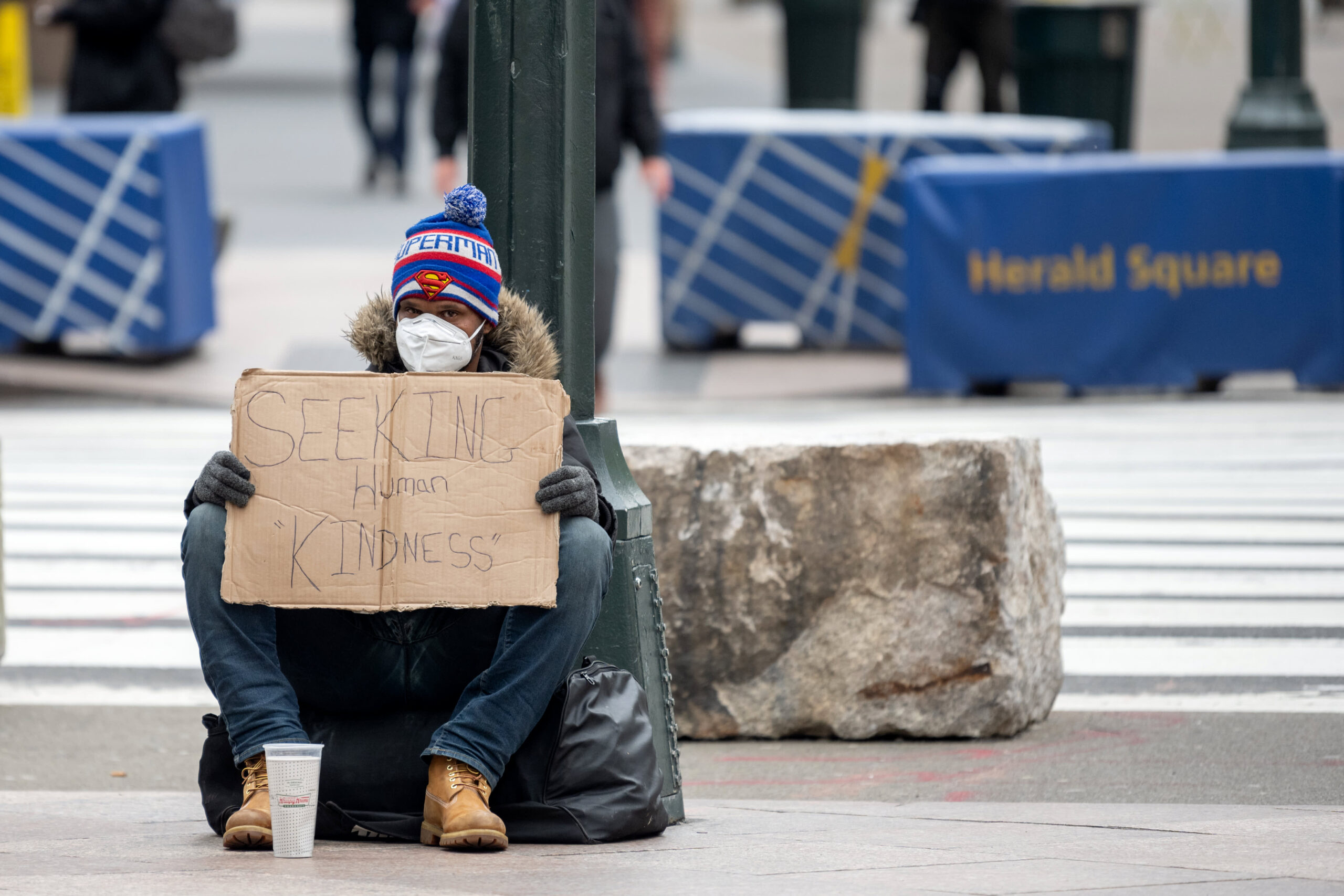
    “Seeking human kindness”: The UN report found that the face of poverty in America is not only black or Hispanic, but also white, Asian and many other backgrounds. In fact there are 8 million more whites than there are poor blacks

    And there were more myths to bust. According to the UN Report: “In imagining the poor, racist stereotypes are usually not far beneath the surface. The poor are overwhelmingly assumed to be people of colour, whether African-Americans or Hispanic ‘immigrants’. The reality is that there are 8 million more poor whites [in America] than there are poor blacks. The face of poverty in America is not only black or Hispanic, but also white, Asian and many other backgrounds.”

    This is hard to believe because for the past 78 years – since the end of World War II – America has been the dominant empire of the world, commanding all it surveys. Therefore, to see the kind of poverty that the UN Report says stands tall in the US is a huge indictment of the American Empire.

    What makes it even worse, America has a population of 334 million (according to the US Census Bureau’s 1 January 2023 estimate) compared to China’s 1.45 billion. But as the former US Senator Mike Gravel confirms: “China is moving its citizens out of poverty while US citizens fall deeply into poverty. China is building roads and bridges and railways while the US policymakers take our tax dollars and blow them up!

    “There is something terribly wrong with a system that creates war as its energy and industrial policy, immigration as its labour policy, and debt as its investment policy … The US is seriously on the wrong track, and we need revolutionary political thought to come to grips with what we are currently doing in order to begin thinking about how to put us back on the right track,” says Gravel.


    Truly incredible

    The shocking UN Human Rights Council Report was written by Philip Alston, the Council’s special rapporteur on extreme poverty and human rights, after a mission to the US in December 2017 in accordance with the Human Rights Council Resolution 35/19.

    Alston was in the US from 1 to 15 December 2017, and his 20-page Report was released on 4 May 2018 as part of the Human Rights Council’s 38th Session, which took place from 18 June to 6 July 2018. The Report was Agenda Item 3 of the 38th Session.

    The purpose of Alston’s visit was to report to the Human Rights Council on the extent to which the US government’s policies and programmes relating to extreme poverty are consistent with its human rights obligations and to offer constructive recommendations to the government and other stakeholders.

    During his visit Alston met US government officials at the federal, state, county and city levels, members of Congress, representatives of civil society, academics, and people living in poverty.

    He also received more than 40 detailed written submissions in advance of his visit which took him to California (Los Angeles and San Francisco), Alabama (Lowndes County and Montgomery), Georgia (Atlanta), Puerto Rico (San Juan, Guayama and Salinas), West Virginia (Charleston), and Washington DC.

    His report’s conclusions were damning. “The United States is a land of stark contrasts,” Alston wrote. “It is one of the world’s wealthiest societies, a global leader in many areas, and a land of unsurpassed technological and other forms of innovation. Its corporations are global trendsetters, its civil society is vibrant and sophisticated, and its higher education system leads the world.

    “But its immense wealth and expertise stand in shocking contrast with the conditions in which vast numbers of its citizens live. About 40 million live in poverty, 18.5 million in extreme poverty, and 5.3 million live in Third World conditions of absolute poverty. It has the highest youth poverty rate in the Organisation for Economic Cooperation and Development (OECD), and the highest infant mortality rates among comparable OECD states.

    “Its citizens live shorter and sicker lives compared to those living in all other rich democracies, eradicable tropical diseases are increasingly prevalent, and it has the world’s highest incarceration rate, one of the lowest levels of voter registrations among OECD countries, and the highest obesity levels in the developed world.”

    Shockingly, “in 2018 the United States had over 25% of the world’s 2,208 billionaires. There is thus a dramatic contrast between the immense wealth of the few and the squalor and deprivation in which vast numbers of Americans exist.”

    The report went on: “The United States has the highest rate of income inequality among Western countries. The $1.5 trillion in tax cuts in December 2017 [introduced by the Trump administration] overwhelmingly benefited the wealthy and worsened inequality.

    “The share of the top 1% of the population in the United States has grown steadily in recent years. In 2016 they owned 38.6% of total wealth. In relation to both wealth and income the share of the bottom 90% has fallen in most of the past 25 years. The [2017] tax reform will worsen this situation and ensure that the United States remains the most unequal society in the developed world.”

    Going down

    The report rebuked the trajectory of the US since 1980, describing it as “shocking”. This is because in both Europe and the US, the richest 1% earned around 10% of national income in 1980. By 2017, it had risen slightly in Europe to 12%, but massively in the US to 20%.

    Besides, since 1980 annual income earnings for the top 1% in the US have gone up by 205%. By comparison, the average annual wage of the bottom 50% has stagnated since 1980.

    “The consequences of neglecting poverty and promoting inequality are clear,” the UN report said. “The United States has one of the highest poverty and inequality levels among the OECD countries, and the Stanford Centre on Inequality and Poverty ranks it 18th out of 21 wealthy countries in terms of labour markets, poverty rates, safety nets, wealth inequality, and economic mobility.

    “For almost five decades the overall policy response has been neglectful at best, but the policies pursued over [2017 by the Trump administration] seem deliberately designed to remove basic protections from the poorest, punish those who are not in employment and make even basic health care into a privilege to be earned rather than a right of citizenship.”

    Let’s look after our own first

    This shocking state of affairs compelled Angus Deaton, the presidential professor of economics at the University of Southern California who is also the 2015 Nobel laureate in economics and a New York Times op-ed contributor to say that the US may have to consider diverting some of its foreign aid money to look after its own poor at home.

    France parler: Prof Angus Deaton: “It is time to stop thinking that only non-Americans are truly poor … There are millions of Americans who are suffering through material poverty and poor healthy, is as bad or worse than that people in Africa or Asia”

    In a forthright piece for The New York Times, published on 24 January 2018, headlined: “The US can no longer hide from its deep poverty problem”, Deaton bared his soul, arguing that considering the immense wealth of the US, “it is hard to imagine poverty that is worse than this, anywhere in the world.

    “… Life expectancy in the United States is lower than we would expect given its national income, and there are places – the Mississippi Delta and much of Appalachia – where life expectancy is lower than in Bangladesh and Vietnam. Beyond that, many Americans, especially whites with no more than a high school education, have seen worsening health…”

    Troubled by the naked truth, Deaton went on to say the politically incorrect, though apologising all the way. “For years,” he wrote, “in determining [US foreign aid], the needs of poor Americans or poor Europeans have received little priority relative to the needs of Africans or Asians. As an economist concerned with global poverty, I have long accepted this practical and ethical framework. In my own giving, I have prioritised the faraway poor over the poor at home.

    “Recently, and especially with these insightful new data, I have come to doubt both the reasoning and the empirical support. There are millions of Americans whose suffering, through material poverty and poor health, is as bad or worse than that of the people in Africa or in Asia.

    “Practical considerations reinforce the argument for recognising America’s poor in the global context. There is a better chance of monitoring the effects of domestic spending than of foreign spending. Money spent by and for fellow citizens, either individually or collectively, is subject to democratic evaluation by both donors and recipients, who can see the effects and who can show their approval or disapproval in the voting booth.

    “Those who donate for projects in Africa often find it difficult to know what good their gifts are doing, let alone to discover whether the intended beneficiaries actually receive or appreciate them.”

    Deaton went on: “Official aid from the United States is mostly set by geopolitics – the leading recipients are Afghanistan, Israel and Iraq. Yet the United States is committed to eliminating $1.90-a-day poverty in the world, a target that is not contingent on poverty at home. Britain insists on spending 0.7% of its gross domestic product on foreign aid, in spite of occasional difficulties in finding suitable projects and in spite of domestic suffering caused by austerity at home.

    “None of this means that we should close out ‘others’ and look after only our own. International cooperation is vital to keeping our globe safe, commerce flowing and our planet habitable.

    “But it is time to stop thinking that only non-Americans are truly poor. Trade, migration and modern communications have given us networks of friends and associates in other countries. We owe them much, but the social contract with our fellow citizens at home brings unique rights and responsibilities that must sometimes take precedence, especially when they are as destitute as the world’s poorest people.”

    That was shorthand for “America First”, but don’t tell President Trump. He might call America a shithole country. And that is a taboo.

  • How the US creates ‘shithole’ countries

    How the US creates ‘shithole’ countries

    By Baffour Ankomah

    Judging by his days in the White House, the former US president, Donald Trump, has a problem with black people – whether they are in Africa, the Caribbean, or in the US itself. On 27 February 2019, Michael Cohen, Trump’s former personal lawyer, told the Congressional Oversight Committee in Washington DC that Trump “is a racist” who once told him that black people were “too stupid” to vote for him.

    According to Cohen: “The country has seen Mr Trump court white supremacists and bigots. You have heard him call poorer countries shitholes. In private, he is even worse. He once asked me if I could name a country run by a black person that wasn’t a ‘shithole’. This was when Barack Obama was President of the United States.”

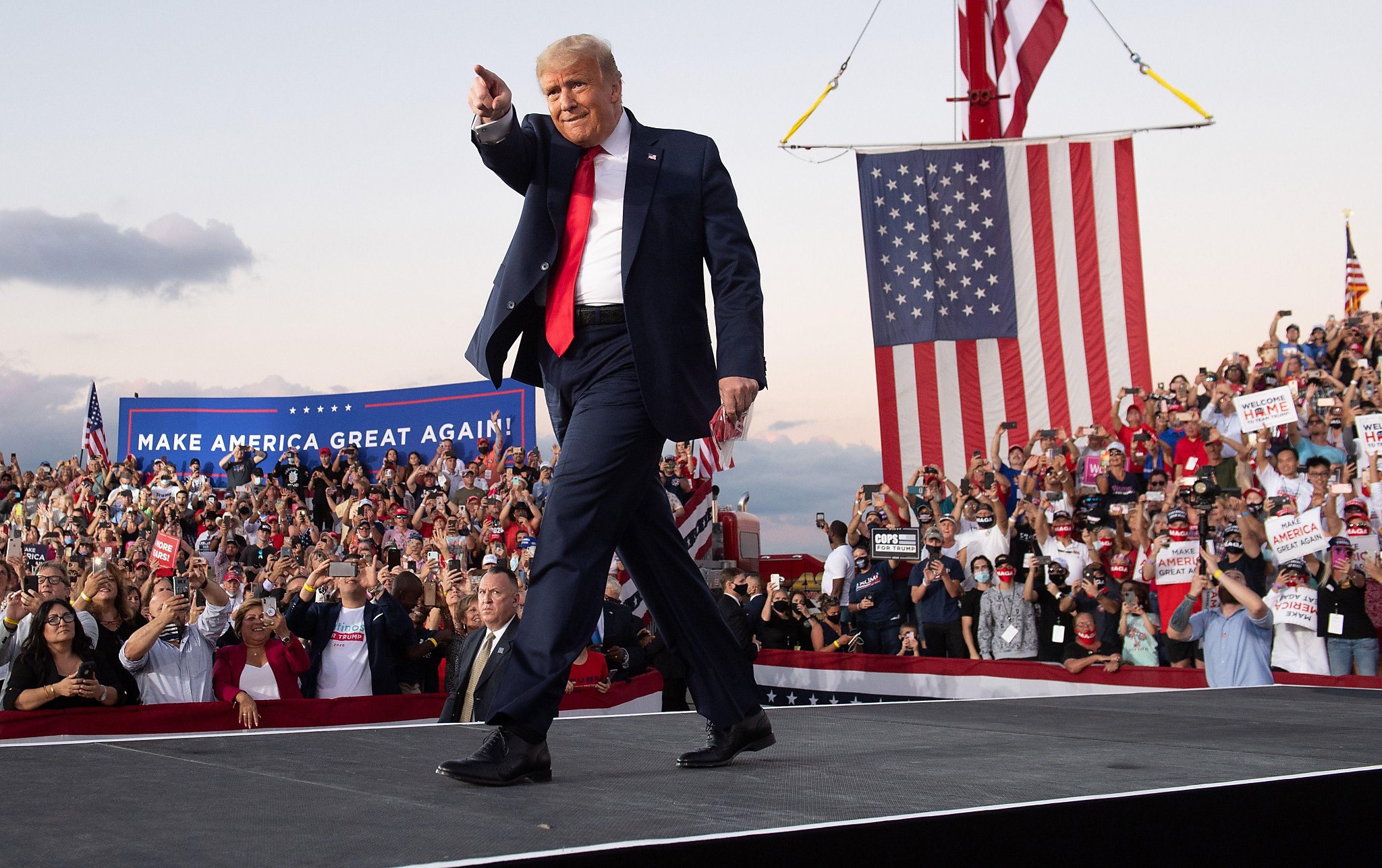
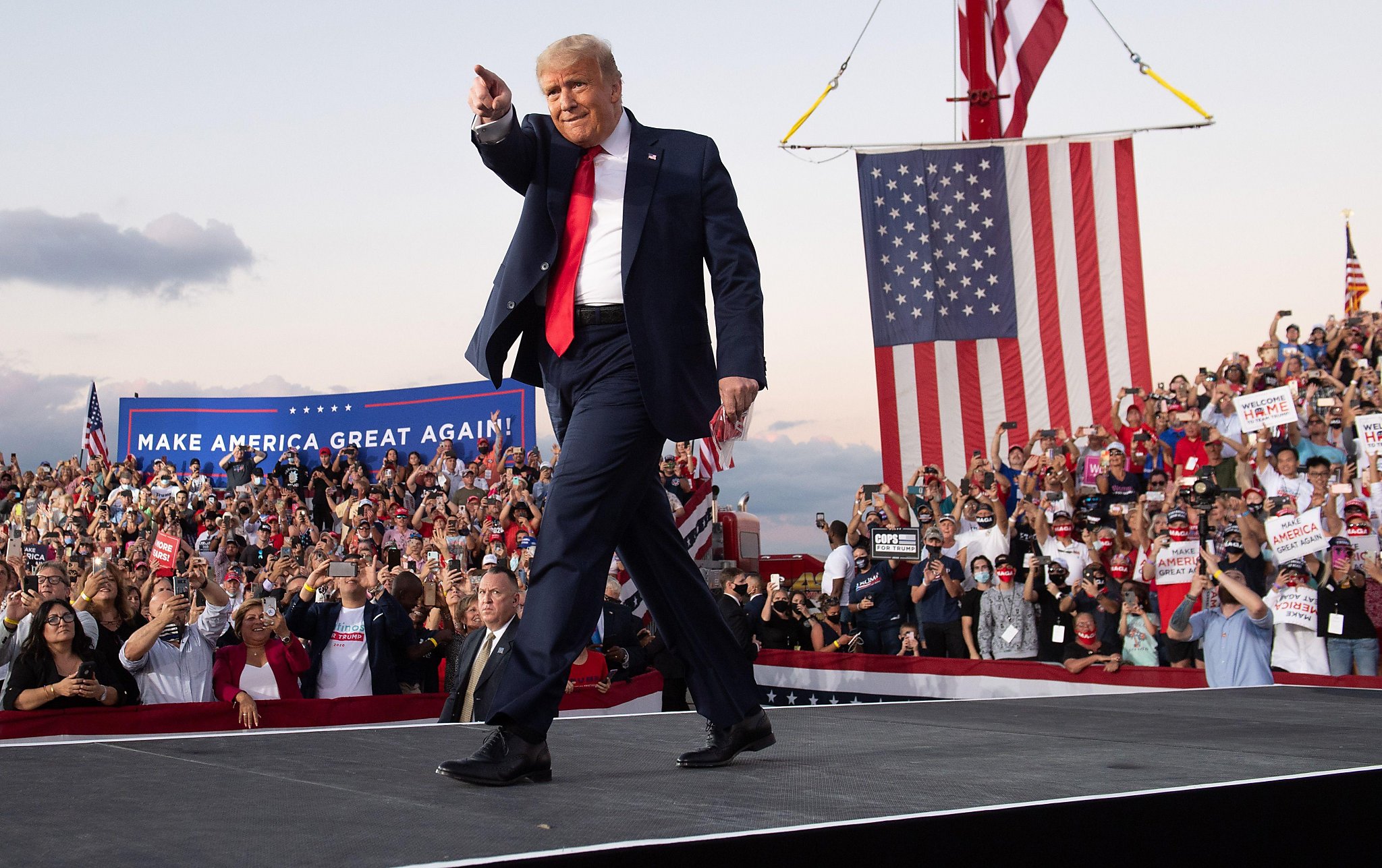
    In his element: Former US president Donald Trump, “a racist… a bigot” (according to his former lawyer, Michael Cohen), Labelled Africa, the Caribbean and Haiti as “shithole countries”

    In January 2018, Trump described Africa, Haiti and El Salvador as “shithole countries”. His insulting remark prompted the former US congresswoman and now political activist, Cynthia Mckinney, to coordinate 25 writers from across the world, including myself, to write a book titled “How the US Creates ‘Sh*thole’ Countries”, mocking Trump’s insulting characterisation of Africa and the Caribbean as “shithole countries”.

    Remarkably, from the analyses of the 25 contributors of the McKinney-edited book published in late 2018, it is the US itself whose imperial and foreign policies to a large extent create the conditions that turn some nations into “shithole” countries. Worse, the US itself is a “shithole country” too, according to the deductions of the 25 contributors of the book.

    The Africa chapter

    I was contacted to write a chapter on Africa for the book focussing on how the US and Western foreign policy and their multinational companies, especially those in the extractive sector, exploit Africa and create the conditions that lead to what Trump called “shithole” countries.

    The book itself: The front cover of the Cynthia Mackinney-edited book published in 2019. Our editor Baffour Ankomah was one of its 25 contirbutors, wrtting a chapter on Africa

    My central view was supported by Cynthia McKinney in her Introduction to the book. A wonderful African-American woman who, while in Congress, stood up for justice for Africa and fought tenaciously against the American Empire’s predatory attitude towards Africa, McKinney explains in the Introduction that America’s contribution to conditions in the so-called “shithole countries” can clearly be seen from “the US military occupation of Haiti, financing of death squads in El Salvador, and support for dictators all over the African continent.

    “Therefore, for our purposes, a ‘sh*thole’ country is a country whose residents’ present quality of living conditions can be tied to historical or current US foreign and military policies that have negatively impacted the ability of that state to deliver quality of life policies to its residents.

    “In this regard, for too many US residents, the United States itself, can also be characterised as a ‘sh*thole’ country, resulting from its deliberate choice to fund the war machine and corporate policies that produce negative consequences for the countries and territories, in some cases colonies, that are profiled [in this book].”

    The book is in four parts. Part One deals with “understanding US foreign policy”. Part Two covers the “victims to remember (and how they got that way).” Part Three deals with “why getting the truth out is so difficult”, and Part Four is about “the United States as a ‘sh*thole’ country.”

    My chapter on Africa is in Part One. I go into great detail about how the US and its Western allies and their multinational companies wittingly and unwittingly create the “shithole” conditions that blight the future of Africa and its citizens.

    Most people don’t know that the average royalty that new African oil producers are given by foreign oil giants (mostly American, British, French, Canadian, and Australian companies) who come to exploit the petroleum resources of Africa is not more than 10%, sometimes even as low as 5%.

    A fighter extraordinary: Cynthia McKinney, a veritable daughter of the African soil

    The rationale is that the oil giants need that much money (as much as 90-95% of the profits) over so many years, sometimes two or three decades, in order to recoup the initial financial investment they put into exploration, development and production of the oil resources.

    So though the African countries may be seen to be producing oil, in reality only a tiny fraction of the proceeds ever come to them in the form of shareholding, royalties, and taxes.


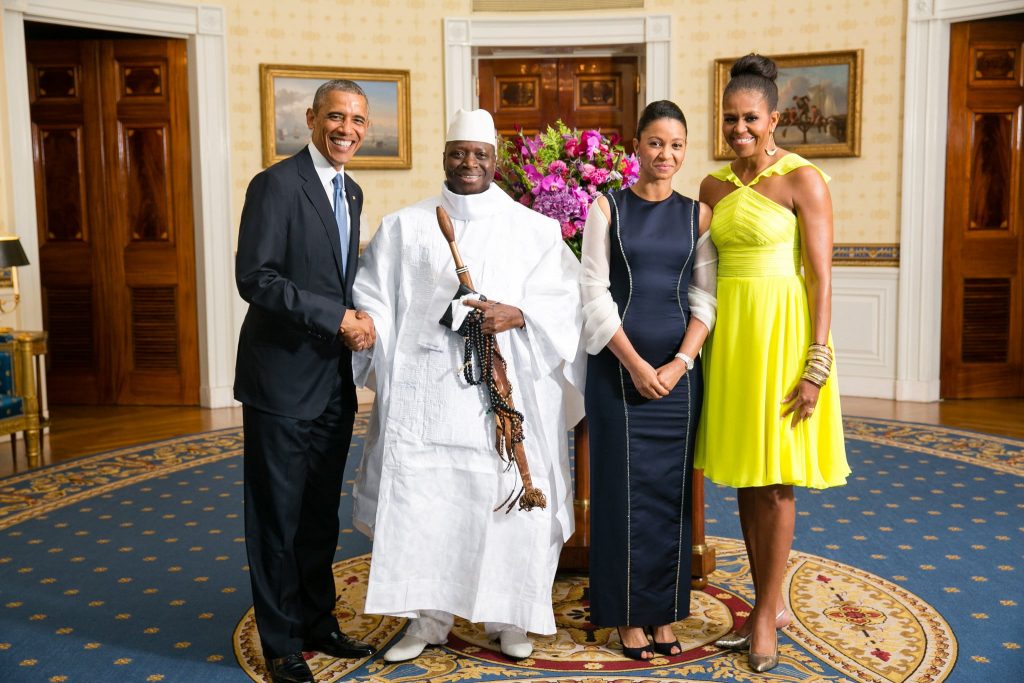
    Out! out!: Gambia’s former President Yahya Jammeh (in white) and his wife Zineh, met US president Barack Obama and his wife Michelle (extreme right) at the white house. Before the meeting Jammeh had thrown out his office a repressentative of an American oil giant for offering to exploit Gambia’s oil reserves on a 5% to Gambia, 95% to the company ratio

    Jammeh’s fury

    This is the situation that so riled the former Gambian president, Yahya Jammeh, that he ordered a representative of an American oil giant out of his country and threatened to arrest him if he ever set foot in The Gambia again.

    As Jammeh put it in a New African interview: “Some of the crimes I am supposed to have committed are to say we are not going to accept 5% from our petroleum resources, and the rest going to the foreign oil companies exploiting our resources. But they tell me that other African countries have accepted 5%, and in fact no African country, except three, gets more than 3% from its minerals.

    “So if other African countries have accepted that ridiculously low percentage, then you must be in the wrong not to accept the same ludicrous deal. To me, any talk about our countries taking a 3% or 5% royalty to exploit our resources is an insult.”

    Jammeh’s story is not different from what Liberia’s former president, Charles Taylor, experienced while negotiating for the production of Liberia’s oil with an American oil giant which had strong ties with the government of former President George W. Bush.

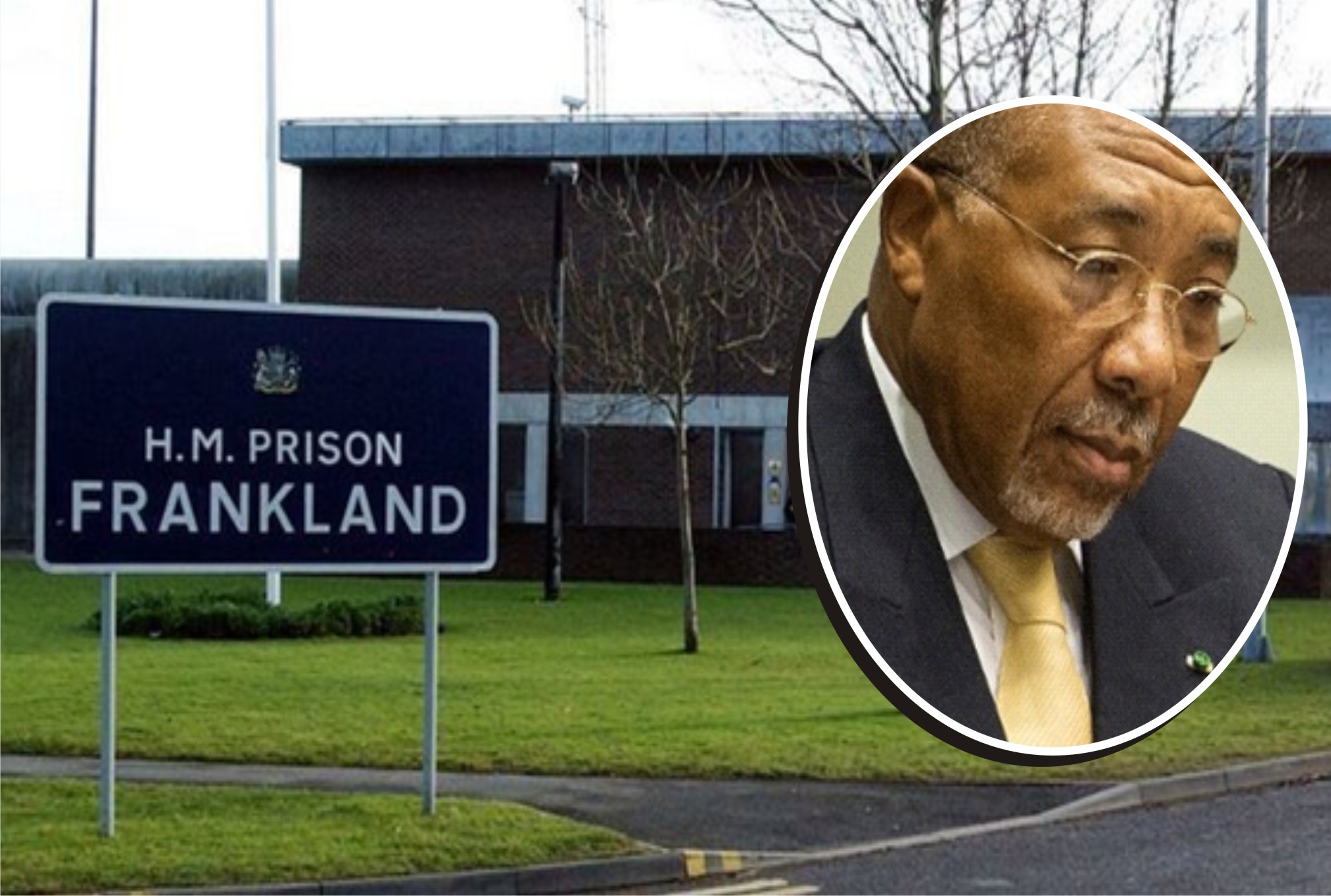
    A miscarriage of justice: The former Liberian president, Charles Taylor, is serving 50 years in a British prison, HM Frankland, for allegedly aiding and abetting rebels in neighbouring Sierra Leone. But if he had agreed for Halliburton, the American oil giant to exploit Liberia’s oil reserves at a 5% to Liberia and 95% to company ratio, his trial would not have been held in the first place. Halliburton would have ensured that the trial was quashed. but he refused the deal and so he is now serving 50 years in jail

    The American company offered Liberia 5 cents in every dollar from the proceeds of its oil resources. (In the last issue of The Third Eye, I misstated this as one cent in every dollar. My apologies). Taylor refused to accept the deal, but the American company pushed and pushed until Taylor was indicted in 2004 to stand trial at the UN-backed Special Court for Sierra Leone (SCSL) for supporting rebels in Sierra Leone.

    Before Taylor’s trial started, the American oil giant offered him what looked like an irresistible carrot. “If you give us the rights to exploit Liberia’s oil, at the terms discussed, we shall protect you from standing trial at the Special Court for Sierra Leone,” they told him. It was a tempting deal.

    Taylor’s trial was being pushed from behind the scenes by the US and British governments to get him out of power. He knew it. But the oil deal, at 5 cents in every dollar, was a bad one for Liberia as a country. So, despite his personal liberty being at stake, Taylor still rejected the oil deal. “Then we can’t help you Mr President, we can’t protect you,” the American company told him.

    The day Taylor narrated this story in court in The Hague, the place went deadly silent. In the end, by rejecting the bad oil deal, Taylor could not be protected by the American oil giant, and today he sits in a British prison serving 50 years for what the SCSL found only to be “aiding and abetting” rebels in Sierra Leone.

    Lissouba’s experience

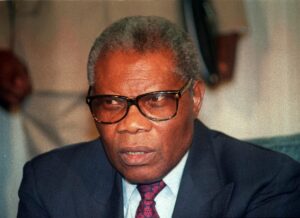
    Many of such stories abound in Africa post-independence, including the overthrow of President Pascal Lissouba of Congo Brazzaville in 1997, which was done with the support of a French oil giant who did not like Lissouba’s request that oil companies operating in the country should pay 33% of the oil proceeds into national coffers.

    At the time, Congo Brazzaville was getting 15% from its oil resources, but Lissouba wanted this to be increased to 33%. All the oil companies were happy with the new deal, except one French oil giant which rushed to Paris and leaned on the considerable weight of the French government, then headed by President Jacques Chirac, to force Lissouba to bend the knee.

    In an interview in London in April 1998, Lissouba told me that Jacques Chirac called him from Paris and ordered him to appoint the country’s former military president, Sassou Nguesso, as his vice president and head of the armed forces. This, however, would have violated the country’s constitution, and also Lissouba reckoned that Chirac wanted to use Sassou Nguesso to checkmate him in the interest of French interests in Congo-Brazzaville.

    When Lissouba told Chirac that the constitution of the country did not allow for what he was asking him to do, Lissouba said Chirac, now furious and shrill on the phone, told him point-blank: “Chuck your bloody constitution in the dustbin!”

    Lissouba could not chuck his country’s constitution in the dustbin, but a few weeks later his government was no more, overthrown in a “mini civil war” in which rebel soldiers allied to Sassou Nguesso were supported by boats and other war materiel provided by the French oil giant which was not happy with the new 33% oil deal.

    After the “coup”, Sassou Nguesso returned as the new president of Congo Brazzaville and went on to reduce the 33% deal to 20%. The French oil giant was now happy, but the country has remained poor ever since. And Sassou Nguesso has remained president since 1997. Case closed.

    ‘Shithole’ in the heart of Africa?

    Today, somewhere in the heart of Africa, another “shithole” country is being created in South Sudan, thanks to American meddling. Again, most people don’t know that South Sudan’s civil war, which started on 15 December 2013, two years after the country won its independence from Big Sudan on 9 July 2011, has American dirty fingers all over it.

    On 24 June 2014, President Salva Kiir of South Sudan told me in an exclusive interview in the presidential palace in Juba, capital of South Sudan, of American intrigues to kick him out of power because Washington was not happy with South Sudan’s oil affairs.

    Provocation writ large: The late President Pascal Lissouba of Congo-Bazzaville was told by the late President Jacques Chirac of France to throw his national constitution into the dustbin when Lissouba refused to appoint the former military leader Sassou as his vice president on the say so on Chirac

    As President Kiir put it: “There are people who are looking for resources and they see South Sudan as a country full of resources, especially oil. With my government, they see that they cannot loot these resources. But if it is Riek Machar [his former deputy president], they can play around with him and then take over. It is the situation of Iraq that they want to happen here. These are strong nations, they can come in, throw away the elected government, and then install one of their stooges.”

    When I asked Kiir why the Americans would want to do that, he replied: “It is in connection with China’s role in South Sudan’s oil industry. The Americans say that their companies are not allowed to invest in the oil industry here. But it is not our fault.”

    Kiir explained that as part of the preparations for South Sudan’s independence in 2011, the country signed a Comprehensive Peace Agreement with Khartoum in 2005. At the time Juba wanted to review the oil agreements that had been signed by Khartoum and China. It so happened that the largest chunk of Big Sudan’s oil resources was in South Sudan, but the Americans, who wanted to overthrow the Sudanese President Omar Bashir did not allow Juba to review the oil deals.

    “They said ‘don’t touch the already signed agreements, we [America] will be given access to the files later, so we will know what has been done. If there are new contracts to be awarded, yes, we will sit down and sort them out, but not the existing agreements’”.

    By so doing, Kiir said the Americans stopped Juba from reviewing the existing oil agreements, and Washington went on to pull out its oil companies from South Sudan and imposed sanctions on Omar Bashir in Khartoum.

    When the American companies left, the Chinese and Malaysians came and occupied the vacuum. But Washington did not like it. Therefore, Kiir’s government has to be undermined as part of an American regime change agenda.

    According to Kiir, the Americans settled on his deputy president, Riek Machar to do the dirty work of overthrowing him. This is the genesis of the “civil war” that broke out in South Sudan on 15 December 2013 and has rumbled on since, reducing the country into a virtual “shithole”.

    Second interview with Kiir

    In October 2015, I went back to Juba to interview President Kiir again, and America’s dirty hands came up again in our discussions. This time Kiir was blunter than during our first interview in June 2014. It was no holds barred.

    “I said to you last year,” President Kiir told me, “that the Americans were here, and are still here, with what they call regime change. Their ambassador who was here before the Riek Machar coup of 15 December 2013 was actually working with Machar on the coup. He was the one who actually helped Machar, facilitating everything. I know them all – those foreign diplomats who were involved with Machar.

    “I don’t think [the Americans] have changed their mind. This is why they want to impose UN Security Council sanctions on us, because they think that the African Union is not bold enough to push us out. So it is the Americans who are actually encouraging Riek Machar to do what he is doing… I think they love Riek Machar. Both Riek and I have black faces, but they love his black face, not mine.”

    The trouble with South Sudan is that besides oil, the country also has huge deposits of uranium still unexploited, and the Americans are interested in that too. Therein lies South Sudan’s dalliance with “shithole” status.

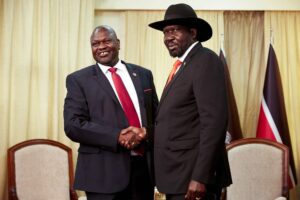
    American dirty tricks: South Sudan’s “civil war” that broke out in december 2013 was one of those American-engineered foreigh conflicts in persuit of American national interests, according to President Salva Kiir of South Sudan (right), seen here with former deputy president, Rick Machar, whom Kiir says was chosen by America to overthrow him

    I went on in my chapter for Cynthia Mckinney’s book, to show how in Ghana, Zimbabwe, and other African countries, American foreign policy – in fact Western foreign policy in general – and the nefarious activities of their multinational companies have combined to create shithole conditions in those African countries.

    In a way, really, most of the African countries have been lucky that the Americans have not been as brutal as they have been in Venezuela in the recent past, and to a certain extent in Zimbabwe since 2000.


    America’s decline by 2030

    Interestingly, Dr Kevin Barret (an American Islamic studies scholar and popular contributor to the top echelons of the American media), comforts the victims of American rapacity by demonstrating in Part Four of the Cynthia Mckinney-edited book, that by 2030 America will not be the America we have known it in the last 78 years since the end of World War II.

    “America is in decline,” Dr Barret writes, “primarily and precisely due to its misallocation of resources in favour of the military-industrial complex.”

    Dr Barret supports his assertion by quoting Alfred McCoy who endorsed in his new book, In the Shadows of American Empire, “the prediction of the [US] National Intelligence Council that the US hegemony will end by 2030”. Barret forecasts that “imperial collapse will bring a major crash in American living standards and an accompanying decline towards sh*thole country status.”

    Another Part Four contributor, Richard Falks (an American author of 30 books, who is also professor emeritus of international law at Princeton University), gives more details on how the US actually creates “sh*thole” countries around the world.

    He explains that ever since the fall of European colonialism, US foreign policy has generally done its best to control the economic, political and social development of countries in Africa, Asia, Middle East and Latin America.

    “Stripping away the ideology of US expansionism,” Falk writes, “exposes a set of realities devoted to squeezing wealth from [developing countries], confiscating or unjustly appropriating their resources, and as a result producing sh*thole conditions of impoverishment, corrupted elites, oppressive government, as well as a mixture of nationalist resistance and the collective loss of self-esteem.

    “What motivated the political leadership of the United States to engage in this kind of predatory behaviour around the world? It was, at the first, materialist greed, civilisational arrogance, and the need for export markets and sources of raw materials to satisfy the compulsions of 19th century industrial capitalism, essentially maximising profits while ignoring massive poverty.

    “We as a country have never truly acknowledged the full extent of these crimes or the degree to which treating others so wretchedly deforms the national character of the perpetrator, contributing to elaborate rituals of denial so as to avoid confronting unpleasant realities embedded in an accurate rendering of the national narrative. We employ a variety of euphemisms and prohibitions designed to cover depraved behaviour with a thick veil of ignorance and deception.”

    Falks then pronounces matter-of-factly: “We are a sh*thole country to the extent that our leaders and citizenry accept extreme poverty, police brutality, environmental degradation, and global warming as non-issues, while scapegoating Muslims, Hispanics, non-white immigrants, and refugees while projecting a world of drug addicts and Islamic radicals posing dire threats to the future. Such an inversion of societal realities and challenges does warrant the sh*thole labelling in the spirit of honest disclosure.

    “As the lead international actor for the past century, the United States needs to accept some responsibility for making foreign societies so unlivable that people flee elsewhere in desperation, and take steps to improve the situation.”

    Unusually, after cheating its way around the world and trampling on other people’s rights, the US, according to Dr Kevin Barrett, is no better. “The petrol dollar – so named because Saudi Arabia has propped up the otherwise overvalued greenback by refusing to sell oil in any other currency – will almost certainly lose its status as the de facto global reserve currency during the coming decade,” Barrett predicts.

    “As in Sigmund Freud’s favourite folktale, the devil,” Barret goes on, “that head usurer of the empire of usury, will suddenly vanish from our shores, and Americans will discover that [the devil’s] gold has turned to shit. The resulting crisis in the US domestic economy will likely push the erstwhile world hegemon further down the road toward sh*thole nation status, giving Americans a noxious taste of the foul medicine their leaders have been foisting on the world.

    “This will mark the end of the ‘American century’ – the roughly 100 years during which the US profited, at least relative to the rest of the world, from the international usury cartel’s depredations.”

    (How the US creates Sh*thole Countries is published by Clarity Press. Available on Amazon, Indigo, Barnes & Noble, and IndifBound.org for US$20-US$29.95)


  • Why do we need sleep?

    Why do we need sleep?

    Humans have known for over 100 years that sleep aids memory, learning, and brain performance in general, but the question remained what it did at the level of the single neuron. Ground breaking research by Israeli scientists in 2019 showed that the biological reason why sleeplessness ultimately leads to death is that when we sleep, our nerve cells take a break from their usual function, freeing their resources to reduce DNA damage that was accumulated during wakefulness. This strongly argues that sleep is biochemically essential, and that sleep deprivation causes some kind of gradual systems collapse in the brain, which if it continues for some time, leads to neuronal cell death due to DNA damage. This report is by Ruth Schuster (of the Israeli newspaper, Hareetz).

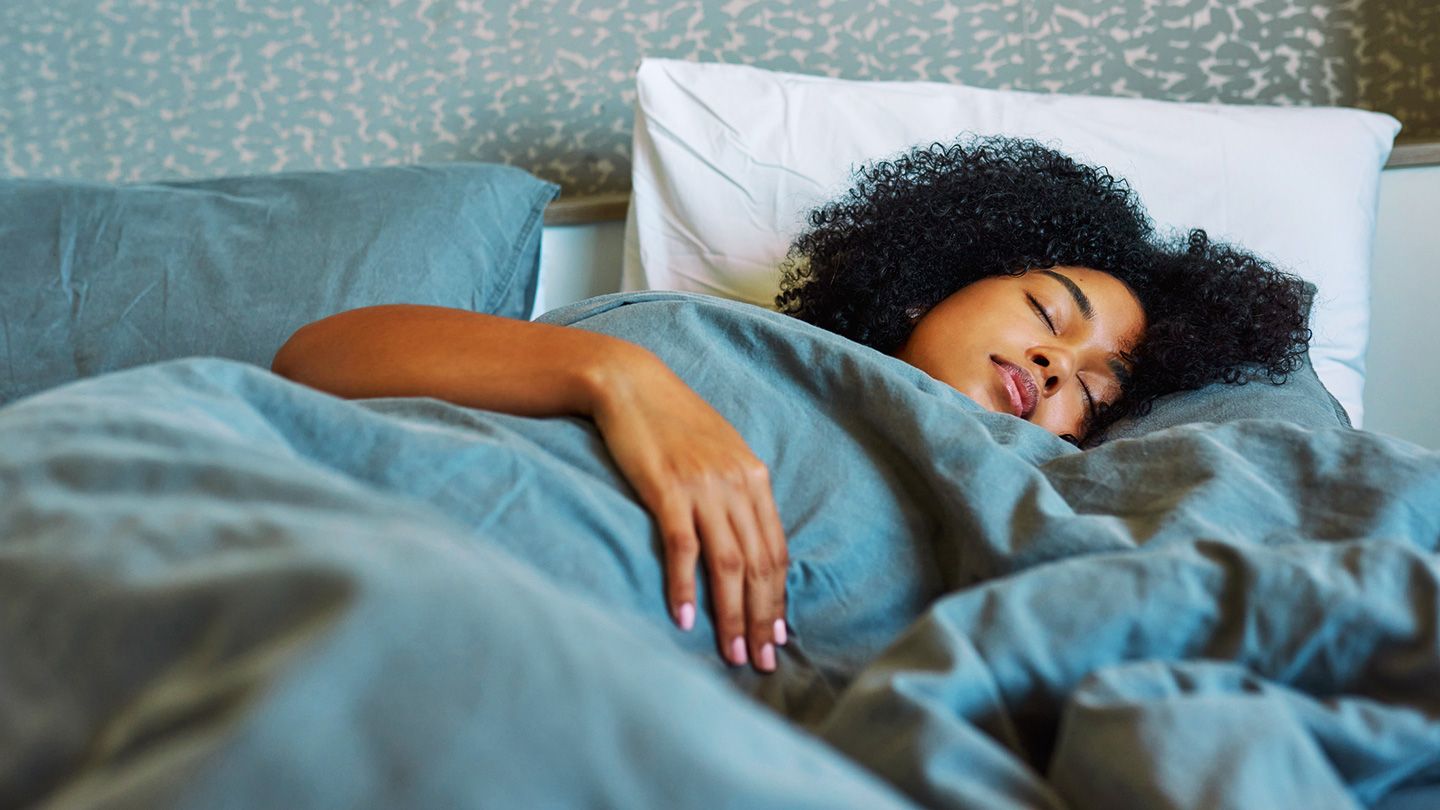
    Survival kit: Everyone needs sleep because sleep is biomechanically essential, studies have proven that sleep deprivation causes a kind of gradual systems collapse in the brain

    We all sleep. From jellyfish to frilled-neck lizards to flying squirrels to humans, the need for sleep is universal. But the biological reason why sleeplessness ultimately leads to death has always been a mystery. But in March 2019, a study by academics from the Bar-Ilan University in Ramat Gan, Israel, published in the journal Nature Communications, presented a ground-breaking theory: that when we sleep, our nerve cells take a break from their usual function, freeing their resources to reduce DNA damage that was accumulated during wakefulness.

    Sleep makes no evolutionary sense in that it is an insanely vulnerable time for the slumberer. You are more likely to get eaten by a predator while sleeping than when you are awake. So why would we evolve to need sleep?

    It is well established that loss of sleep affects brain performance such as memory and learning, from fruit flies to humans. This strongly argues that sleep is biochemically essential, and that sleep deprivation causes some kind of gradual systems collapse in the brain.

    In the paper published by Nature Communications, Prof Lior Appelbaum of the Bar-Ilan University’s Mina and Everard Goodman Faculty of Life Sciences and Gonda (Goldschmied) Multidisciplinary Brain Research Centre, believed he and his colleagues had discovered the biological why. Appelbaum supervised the study led by graduate student David Zada.

    Doctoral student Zada was the first author of the study, with co-authors Dr Tali Lerer-Goldshtein, Dr Irina Bronshtein, and Prof Yuval Garini – all from the Bar-Ilan University, a public research university established in 1955. Located in the city of Ramat Gan in the Tel Aviv District of Israel, it is the country’s second-largest academic institution. It has over 20,000 students and 1,350 faculty members.  

    Sleep baby sleep: Studies have shown that if an organism doesn’t sleep, its cells don’t “power down” and can’t efficiently perform DNA maintanance

    Based on observing single neurons in live transparent fish during sleep and wakefulness, the Bar-Ilan researchers concluded that if the organism doesn’t sleep, its nerve cells don’t “power down” and can’t efficiently perform DNA maintenance.

    Accruing neuronal DNA disrepair may explain how sleep and sleep disturbances affect brain performance, even aging and various brain disorders, the team postulated.

    “When the organism whole sleeps, we can now define single sleeping cells,” Appelbaum told Haaretz. “Here for the first time we show how the sleep of the organism affects movement of chromosomes and DNA maintenance in specific single neurons.”

    Sleep and the single cell

    The fish in question were zebrafish, stripy freshwater minnows that originally hailed from the Himalayas and, being appropriately hardy, have become a popular aquarium pet – and research subject.

    Fortunately for brain researchers, when zebrafish are young, they are transparent. Even their skulls are transparent, rendering them ideal for observational research of what is happening in their little brains. Importantly, like humans, zebrafish sleep during the night.

    All our cells have DNA, with the exception of red blood cells in humans and some other animals. From the moment each cell comes into being, its DNA starts to suffer damage. All sorts of things can damage DNA, such as oxidants, sunbathing (in the case of skin cells) and even neuronal activity itself. But the damage should be repaired by DNA repair enzymes, in theory.

    Asked how exactly they could see when a zebrafish neuron was online or offline, Appelbaum says the researchers developed a method to mark chromosomes in the fish’s DNA and track their movement inside the neuron. Their imaging achieved the resolution of seeing these chromosomes in the individual fish brain neurons.

    Using 3D time-lapse photography and live baby zebrafish with marked chromosomes, the researchers discovered that when the fish is awake, chromosome movement in the cell nuclei is diminished and DNA damage accumulates. If wakefulness persists, this damage can reach unsafe levels.

    After prolonged sleep deprivation, neuronal cells can die. But during sleep, chromosome movement is faster. This fast movement is the expression of efficient nucleus maintenance. In other words, sleep normalises the levels of DNA damage in each individual neuron, the researchers said.

    DNA maintenance is not efficient enough when the organism and its nerves are awake; the organism requires an offline sleep period with reduced input to the brain for the repair to be proper.

    “It’s like potholes in the road,” Appelbaum explained. “Roads accumulate wear and tear, especially during daytime rush hours, and it’s most convenient and efficient to fix them at night, when there’s light traffic.”

    What about non-neuronal cells? Do they also fix their DNA when the animal is sleeping? Possibly not.

    The researchers tested two other cell types: endothelial cells (vascular system) and glial cells. They didn’t find differences in chromosome dynamics and DNA damage between day and night. “We suggest that this mechanism is specific to neurons. However, future work should test these processes in other cell types, such as muscles,” Appelbaum said,

    When neurons go offline

    The bottom line is that when the fish sleeps, movement surrounding the chromosomes escalates, and that increase in activity was shown to be essential to efficient DNA repair. There is some movement in the nucleus during the day; there is evidently some DNA repair in the neurons. But the balance tilts towards repair only when the zebrafish sleeps.

    Experiments bolstered the finding; for instance, by making the fish sleep in the middle of its daytime wakefulness period by putting melatonin in the water, and filming the sleep-dependent increase of chromosome movements and efficient repair. Or by chemically inducing DNA damage in the fish – which was followed by increased sleep and normalisation of this damage.

    Appelbaum noted that humans had known for a hundred years that sleep aids memory and learning, and brain performance in general, but the question remained what it did at the level of the single neuron. Now we know. “We believe that under normal conditions, when we are tired, the accrued damage to the neuronal DNA somehow signals the brain to go to sleep,” Appelbaum said.

    Asked if all neurons sleep when the organism does, and if they all probably sleep similarly, Appelbaum pointed out that our brains don’t shut down during sleep; they enter another state.

    “Maybe different neurons need different amounts of sleep,” he says. “Also, it’s likely that not every neuron can go to sleep when it feels like. This would cause chaos, and the brain has to function properly during the day. Evolution developed the brain with a consolidated, synchronised period of sleep dedicated to cellular maintenance.”

    The next phase of the research will be to look for neurons that are especially active during sleep, region by region of the brain. Another question is what happens to our DNA repair kits during dream states – and we are not the only ones dreaming. Research published last year concluded that animals as far down as lizards can dream too.

    An association with neurodegenerative diseases is also possible. Chronic sleep loss may increase the risk for neuronal cell death due to DNA damage. Appelbaum noted that one symptom of many brain diseases is insomnia.


  • Finally, the Dutch apologise for slavery

    Finally, the Dutch apologise for slavery

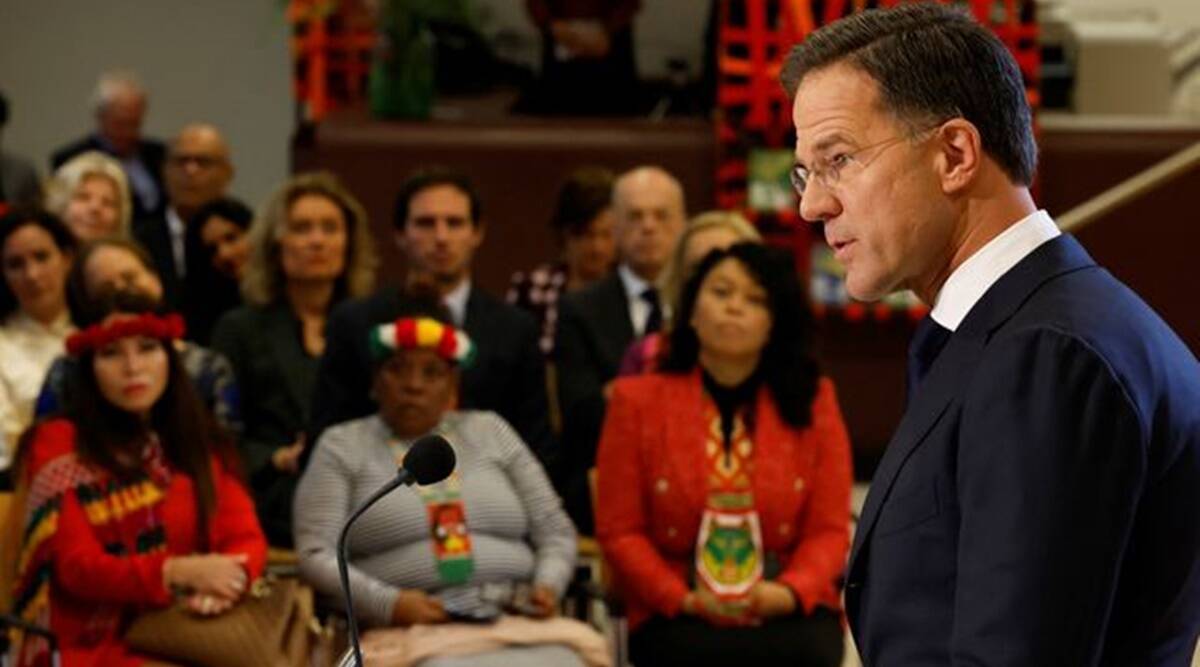
    On Monday 19 December 2022, The Netherlands (or Holland, as it was once known), formally apologised for its historic role in “facilitating, abetting, stimulating, preserving and profiting” from centuries of slave trading, and for the consequences that continue into the present day. The Dutch prime minister, Mark Rutte, made the apology in The Hague on behalf of the country, just a month after The Third Eye had run an article in the November issue criticising the Dutch for not apologising for slavery. Tom Mbakwe reports.


    “Today I apologise,” Prime Minister Mark Rutte said in a nationally televised speech at the Dutch National Archives. “For centuries, the Dutch state and its representatives facilitated, stimulated, preserved, and profited from slavery. For centuries, in the name of the Dutch State, human beings were made into commodities, exploited, and abused in the name of the Dutch State,” the prime minister said, adding that “successive Dutch governments after 1863 failed to adequately see and acknowledge that our slavery past continued to have negative effects and still does. For that I offer the apologies of the Dutch government.”


    Rutte said slavery must be condemned as a “crime against humanity.” He explained that

    he had experienced a personal “change in thinking” and that he was wrong to have thought that the Netherlands’ role in slavery was “a thing of the past.”


    “It is true that no one alive now is personally to blame for slavery. But it is also true that the Dutch State, in all its manifestations through history, bears responsibility for the terrible suffering inflicted on enslaved people and their descendants,” he said, explaining that: “We are not doing this just to come clean. We are not doing this to leave history behind us.”


    The apology came a month after The Third Eye had highlighted the Dutch guilt in an article published in our November issue, headlined: The Dutch royal family is as guilty as the British. The article focused on the fact that the Dutch had not made any apology for its part in enslaving Africans, almost 160 years after it abolished slavery in 1863.


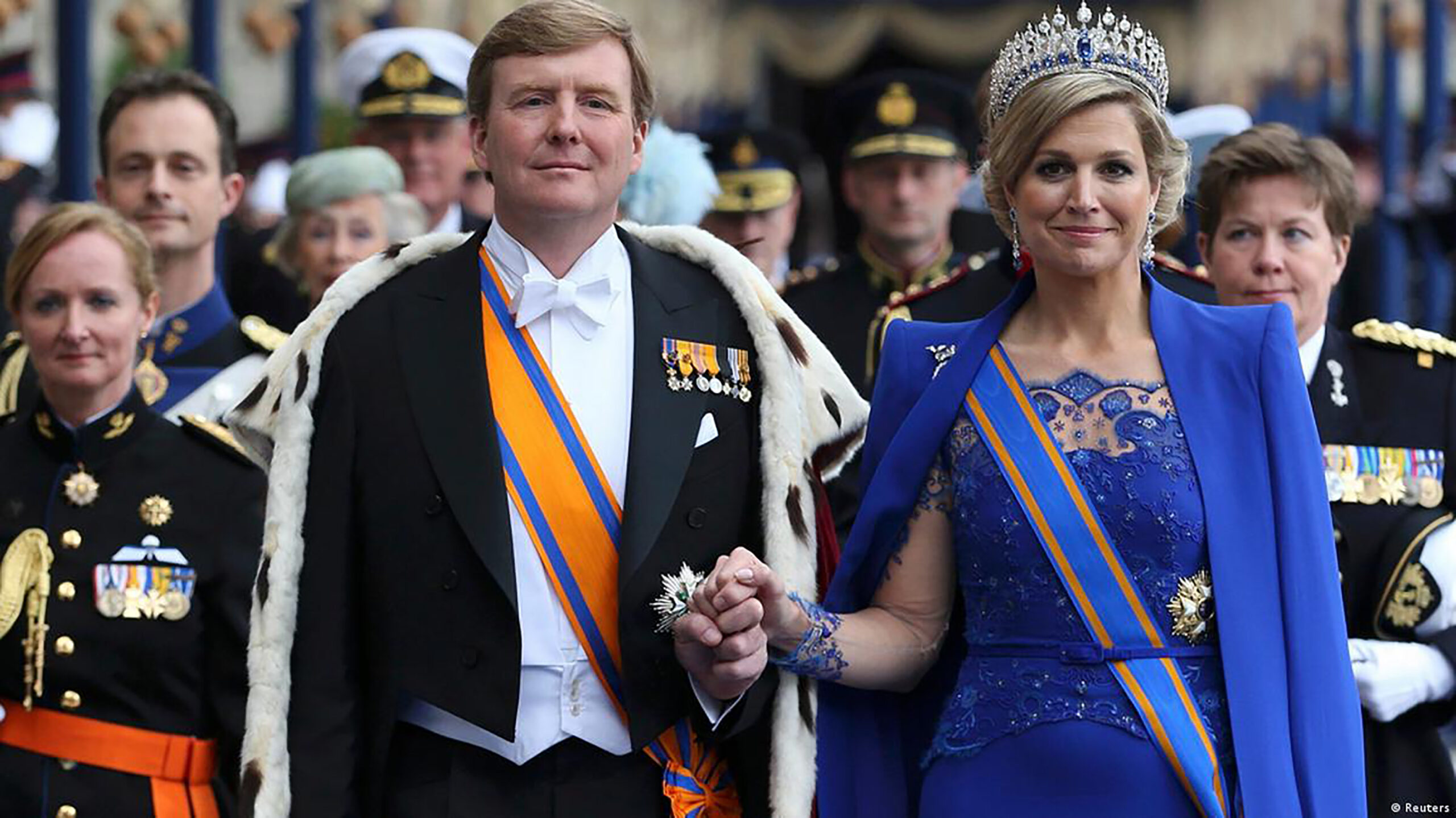
    The apology also came following a wider reconsideration of the Netherland’s colonial past and its current struggles with racism. Critics said the apology should have come from King Willem-Alexander, instead of Rutte.


    Somehow, the run-up to the apology was fraught, with multiple groups of the descendants of the former enslaved Africans, saying that the government had not consulted them and that the occasion lacked any significance.


    Rutte duly acknowledged that the runup to the announcement had been handled clumsily and said the Dutch government was sending representatives to Suriname, as well as the Caribbean islands that remain part of the Kingdom of the Netherlands with varying degrees of autonomy – Curacao, St Maarten, Aruba, Bonaire, Saba, and St Eustatius – to talk further about the apology.


    Historians estimate that Dutch traders shipped over 600,000 enslaved Africans to the Americas, mostly to Brazil and the Caribbean. As many Asians were enslaved in the East Indies, especially in modern Indonesia. There are over 732,000 people reported to be of African ancestry in the Netherlands (4.20% of the total national population of 17.48 million people).


    In other words, the Netherlands played a key role in the trans-Atlantic trade of enslaved people, primarily through the Dutch West India Company and the Dutch East India Company. The two organisations were established with private and state capital and governed by Dutch state officials and, later, royalty. While slavery was forbidden in the Netherlands, it was legal — and crucial to the profitable plantations — in Dutch colonies such as Brazil, Indonesia and Suriname.


    A clarification

    The Netherlands is sometimes referred to as Holland, which in fact, is a geographical region and former province on the western coast of the Netherlands. “From the 10th to the 16th century,” as Wikipedia explans, “Holland proper was a unified political region within the Holy Roman Empire as a county ruled by the counts of Holland. By the 17th century, the province of Holland had risen to become a maritime and economic power, dominating the other provinces of the newly independent Dutch Republic.


    “The area of the former County of Holland roughly coincides with the two current Dutch provinces of North Holland and South Holland into which it was divided, and which together include the Netherlands’ three largest cities: the capital city Amsterdam, the home of Europe’s largest port Rotterdam, and the seat of government The Hague. Holland has a population of over 6.6 million.


    “The name Holland has frequently been used informally to refer to the whole of the country of the Netherlands. This casual usage is commonly accepted in other countries, and is even employed by many Dutch themselves. However, some in the Netherlands (particularly those from regions outside Holland or the west) find it undesirable or misrepresentative to use the term for the whole country. In January 2020, the Netherlands officially dropped its support of the word Holland for the whole country, which included a logo redesign that changed “Holland” to “NL”.


    Turning point

    Aruba’s prime minister, Evelyn Wever-Croes, welcomed Rutte’s apology, saying it was a “turning point in history within the kingdom”. The apology came as a response to a national advisory panel, which was set up following the 2020 killing of George Floyd in the United States. The panel acknowledged that the Dutch participation in slavery had amounted to crimes against humanity, and in 2021 recommended an apology and reparations.


    Rutte said his government embraced those conclusions, including that slavery had been a crime against humanity. However, he ruled out reparations, though the Dutch government has set up a euro-200m educational fund.


    “What was completely missing from this speech is responsibility and accountability,” said Armand Zunder, chairman of Suriname’s National Reparations Commission, though he said the apology was a “step forward”. “If you recognise that crimes against humanity were committed, then the next step is you say I’m responsible for it, we’re liable for it … Indeed I’m talking about reparations.”

    Many Dutch people take pride in the country’s naval history and prowess as a trading nation, the era they called their “Golden Age”. However, Dutch children are taught little of the country’s role in slavery and what the Dutch West India Company and the Dutch East India Company, key sources of national wealth, did during the era of slavery.


    Today, despite the Dutch reputation for tolerance, racism is a significant problem in the country. Citizens of Antillean, Turkish and Moroccan ancestry report high rates of discrimination in their everyday lives, and recent studies have shown they face significant disadvantages in the workplace and in the housing market.


    Zwarte Pete controversy

    One important and controversial aspect of Dutch national life that Rutte’s apology did not touch is the tradition of Zwarte Piet (or Black Pete, in English). Every 5 December, pro-Black Pete celebrants dress up in funny clothes and paint their faces black in honour of what originally was a sidekick of Santa Claus (or Sinterklass, in Dutch) called Zwarte Piet. He helps Sinterklass by carrying his bag of goodies and gifts to entertain children.


    “In the olden days, if children had behaved badly during the year, Pete would give them ‘the switch’. Or worse he would stuff them in a sack and take them away,” explains the Dutch author, Joost de Vries. “An elderly white man plays Sinterklass. Pete is played a white man too, dressed in minstrel clothing with his face painted black.”


    For decades, says de Vries, “anti-racism activists have seen Black Pete as a prime example of how racism and traces of slavery are present in the ordinary traditions of Dutch culture today. In recent years people of colour have started speaking out, detailing how often they have been compared to Black Pete, jokingly or otherwise, and how offensive that is.”


    A report published six years ago by the children’s ombudsman clearly stated that “many children of colour find the Black Pete season very troubling: during those weeks they are more often confronted with racial slurs, usually by other children who call them Black Pete and poke fun at them. But self-proclaimed pro-Black Pete activists have said that getting rid of Black Pete, or changing him, would be tantamount to selling out Dutch national identity.”


    Prime Minister Mark Rutte, a liberal, has said his attitude to Black Pete has undergone “major changes”. In 2014, he revealed that he had dressed up as Black Pete himself in the past. Though anti-Black Pete activists see the 5 December tradition as an offensive relic of colonial times, Rutte is not ready to abolish it, despite the fact that many people, including children, have told him they feel discriminated against because Black Pete is black.


    A June 2020 survey found that 56% of non-white people in the country faced discrimination in shops and businesses, 29% from the police, 40% in schools or universities, and 78% believe that institutional racism exists. But Rutte’s apology did not address those issues.


    Generally, government apologies for slavery are rare. In the USA, the lower house of parliament, the House of Representatives, gave one in 2008 for the institution of slavery and for Jim Crow laws. In 2018, Denmark apologised to Ghana for the Danes’ role in the trans-Atlantic slave trade. During a visit to DRCongo in mid-2022, the king of Belgium expressed his “deepest regrets for these wounds of the past,” but stopped short of an apology.


    A day before Rutte’s apology, a group of descendants of enslaved people stood in Amsterdam’s frigid temperatures in front of the Royal Palace to protest against the apology and the way the government had handled it. Many said they felt the apology had been forced upon them.


    “We came here to make noise against an apology that’s being rammed down our throats,” Reggie Hoogvliets, one of the protestors, said, adding that he would not accept Rutte’s apology, partly because the government did not speak to the right stakeholders and descendants of enslaved people. According to him, more communication and a meaningful date would have made the apology more palatable.


    St Maarten

    Hoogvliets’ view was shared by the prime minister of St Maarten, Silveria E. Jacobs, who issued a long, strongly-worded statement neither accepting the apology nor rejecting it. For the sake of posterity, her statement needs to be quoted in extensor here.


    “Dear people of Saint Maarten, both South and North, our sisters and brothers in Aruba, Curacao, Bonaire, Saba, Sint Eustatius, Suriname – and to the indigenous people of this region and the people of the wider diasporas across the Caribbean and Atlantic worlds,” she said, “I address you today with mixed emotions and extend an invitation to openly dialogue on the ways to approach this abrupt and forced apology for ‘Slavery past’ by the Netherlands.


    “This is a matter of historic proportions and a dialogue long overdue, which affects and emotes us all. Why mixed emotions, one may ask? Because on one hand, the seriousness of the occasion, if it is sincere, is not lost on me, especially seeing the recent public statements on this topic.


    “On the other hand, the manner in which we arrive here today, is messy, and exposes many risks in the realisation of true reparatory justice for those impacted by the transatlantic slave trade, the enslavement of our ancestors, and subsequent racism, marginalisation and continued existence of colonialism in the relationship and institutions which still exist within the Kingdom [of the Netherlands].

    “Along with my colleagues throughout the Dutch Caribbean, I find myself forced to confront our traumatic histories according to the schedule/timeline set by the Netherlands. And because these hard-felt sentiments comprise more emotion than one is allowed to express in post-coloniality, I am compelled to secure justice for our ancestral pains by means of formalities and speeches…


    In our many discussions since 6 September [2022], when the first meeting was forced to “hear” us, it was explained that this is not the way to properly dialogue on a topic of such enormous proportions. Repeatedly this sentiment has been conveyed that it is in poor taste to move full steam ahead with the apology before proper dialogue had taken place, without proper respect for the feelings of the people whom they want to apologise to, the descendants of those who endured the most devastating crime against humanity.


    Yet today, here we are, hearing a statement heretofore shrouded in secrecy as to the real motives, the need for haste, and the significance of the chosen date. My questions remain: Why the haste? Why the sudden change of heart? Why no proper dialogue with us as descendants of the enslaved to determine what a meaningful and sincere apology should minimally contain? How do these actions taken without regard to how they will be experienced enhance/diminish the fragile relationship within the Kingdom?


    As people of colour, and in particular the descendants of slavery, we are emphatically disallowed to approach slavery and decoloniality in our own ways. We are discouraged to show emotion and to remain rational while we address trauma through the logic, lens, and statistics of the Western imperial paradigm.


    Negating their proximity to our humanity is the same tool they used to justify the dehumanisation of our ancestors. Therefore, the ways in which we approach reparations and decoloniality cannot stem from this same paradigm. How we address reparations is equally as important as what we need to address.


    In other words, an apology cannot be crafted according to the terms of a mere Eurocentric paradigm. To do so, would not only be an exercise of colonial obedience, but also a failure to truly understand and empathise with the sentiments of the human persons who have historically been relegated as property – thus less than human.


    Therefore, it is important that the tools and language used in the discourse surrounding an apology for the atrocities committed during the enslavement of our ancestors, and the subsequent reparations, be in one that our general public understands.


    Currently, the government of St Maarten is in the process of establishing an advisory committee on slavery past, atonement and reparations to ensure true research, engagement and discussions by, and with, the people and diaspora communities in St. Maarten. This will ensure that we have a clear vision of what the full damage is, and can articulate what actions will be necessary to repair the said damage. So for St. Maarten, the statements made today are but the beginning of the dialogue in which we must and will play a leading role.


    The Netherlands has proposed to create a fund of 200 million euros for awareness and education and the investment of 27 million euros to construct a slavery museum. Built on European soil, this institution is meant to bring awareness to the Dutch atrocities during their Golden Age to the general population of the Netherlands.


    Ostensibly, such an enterprise can be conceived as an admittance of ignorance regarding the subject of slavery and colonialism. How can a nation admittedly ignorant of their own colonial violence determine the conditions for an apology, let alone reparations?


    How can a nation be sorry for something they admittedly know little to nothing about, and have only recently seen the need for the current actions? Again, we see here a demonstration of Eurocentric thinking, hence it is dangerous and irresponsible to root an apology in Eurocentric dogma and entitlement.


    What was the Golden Age for the Netherlands was an apocalypse for us. To frame Black and Indigenous People Of Colour (BIPOC) and Caribbean histories around coloniality alone, recklessly perpetuates the notion that our narratives and identities can only exist in relation to the coloniser.


    We must be allowed the time and space needed to reconnect with our histories beyond coloniality as a precursor to setting the conditions for reparations. Under the purview of institutionally-induced amnesia through colonial streams of pedagogy, how can we know what to negotiate for, if most of us cannot remember who we are?


    Appeal to Africa

    The issues and real implications of an apology and retribution are far more complex than any one of us can conceive alone. Therefore, I am reaching out not only to my own brothers and sisters in the Caribbean, particularly those in Caricom, and the CRC who are ready and willing to assist in this process, but also to our brothers and sisters on the African content.


    The Dutch West India Company’s grip on the slave trade denotes transnational repercussions, both historically as well as presently. Via their slave entrepots in Curacao and Saint Eustatius, many of our ancestors were shipped by the Dutch to and from places beyond the nations addressed in their apology. In other words, the Dutch owe an apology to more than just their Dutch Caribbean counterparts.


    By only addressing the apparent vestiges of Dutch imperialism in the contemporary political landscape, this apology fails in actually addressing the past while erasing the true scope of their colonial violence. It is with this thought, that I look forward to the outcome of the investigation of the King into the royal family’s contribution to the period of enslavement of Africans, and the transatlantic slave trade.


    Trust is built, not demanded. Apologies without action only serve to absolve the perpetrator of guilt with minimal repercussions. As a proponent of these actions as the precursor to an apology, I have formally requested that these actions be put in writing. Though unsurprising, to my dismay, I have been denied this request by the Dutch State until they are ready to make the statements, seeing that the response to the report and subsequent statement was only approved by the Dutch government on Friday 16 December [2022].


    Documentation allows for transparency, and this transparency crucially propels the decolonisation process. Transparency helps to shed light on the structures and imbalances of power. Today, this is demonstrated by shortsighted proposals for colonial retribution, as well as the costs to the island nation of St Maarten to cover the visit of the Dutch Royal Family following this forced apology.

    For this apology today to be sincere, it must come with the realisation that slavery and colonialism have impaired our people’s economic and social development. Formally reported in various news media outlets last week, institutionalised racism is an inherent trait at the Ministry of Foreign Affairs in the Netherlands.


    Colleagues at the Kingdom’s Ministry of Foreign Affairs have referred to African countries as “apenlanden”, meaning “monkey countries”. The recent bullying and violence by citizens in Staphorst against the peaceful anti-Black Piet/Blackface protestors is yet another example of racism in the Netherlands. It is clear that discrimination and institutionalised racism exists at all levels of society and organisations within the Netherlands. So education and awareness is surely needed at all levels.


    These inherent prejudices, racisms, and/or colourism are systemic and insidious; and do not only affect the socio-economic disposition of the descendants of chattel slavery but the very psyche, spirit, and soul of the said persons.


    Post Traumatic Slave Syndrome

    According to the theory of Post Traumatic Slave Syndrome (PTSS), the slavery trauma is held in our DNA and is passed down from one generation to the next. PTSS exists as a direct consequence of the multigenerational oppression of Africans and their descendants resulting from centuries of chattel slavery. If we are to have any real discourse on restoration, reconciliation, and reparations; we must first identify and address PTSS that still lingers in our society today.


    Lastly, I would like to state that financial aid and loans provided thus far by the Netherlands can never be conceived of as part of reparations owed as a result of the expected apology. Reparations and aid as a result of crises are not to be discussed in the same breath in a sincere apology.


    Historically, with regards to exercising our own agency and self-determination within the Dutch Kingdom Structure, we have been in the position to exchange colonial obedience for aid and loans. This was the case after the onslaught of Hurricane Irma in 2017 and the Covid-19 pandemic.


    I would only hope that a truly sincere apology would include the right to self-determination and agency. When working towards a new decolonial age of equity and equality, one should not be punished for colonial disobedience. The government and people of St Maarten will not be placed on the spot today to accept or deny the apologies.”


  • World Cup: Europe vs the FIFA president

    World Cup: Europe vs the FIFA president

    … Gianni Infantino, an Italian, can’t stand Europe’s hypocrisy any more

    “We are told many, many lessons from Europe, the Western world. I am European. I actually am. I think for what we Europeans have been doing in the last 3,000 years around the world, we should be apologising for the next 3,000 years before starting to give moral lessons to people.” – Gianni Infantino, Fifa president, at his very best. Report by Baffour Ankomah.

    At last on 19 November 2022, one European got fed up with the rank hypocrisy shown by Europe and its media about the affairs of non-European peoples around the world, and told his mother continent and its angry journalists to go and sit down and stop trying to give moral lessons to other people when Europe’s own morals cannot stand up to scrutiny.

    Gianni Infantino, 52, is an Italian brought up in Switzerland. He is the current president of world football’s governing body, FIFA (or Fédération Internationale de Football Association. In English, International Federation of Association Football). He was elected Fifa president in 2016.

    On 19 November, a thoroughly fed-up Infantino, holding court at a pre-World Cup press conference in Doha, the capital of Qatar, in front of over 400 journalists from across the world, most of them Europeans and Westerners, told his mother continent matter-of-factly: “We are told many, many lessons from Europe, the Western world. I am European. I actually am. I think for what we Europeans have been doing in the last 3,000 years around the world, we should be apologising for the next 3,000 years before starting to give moral lessons to people.”

    It has become a tradition that every four years when the Fifa World Cup comes around, European and Western journalists team up and mount a campaign of criticism and calumny against the host nation unless it is a European or Western country. They do it so consistently and so shrilly that the recipients of the criticisms and calumny, who happen to include Fifa all the time, lose their bearings.


    ‘Really bad and sad’ reporting in Europe

    In 2010, when South Africa hosted the World Cup, the same crude tactics and campaign were used against the first African country to host the tournament. Things got so bad that even The Guardian (of London), trying to show some measure of sobriety, ran a headline on 7 June 2010, saying: South Africa kicks out against media’s World Cup critics.


    The body of the story, written by Owen Gibson, was simply out of this world. Gibson wrote:

    “Jerome Valcke, the under-pressure Fifa secretary general, was unequivocal when asked at the turn of the year why the number of overseas visitors planning to travel to South Africa for the World Cup was down on expectations. He railed against the ‘really bad and sad’ reporting in Europe, and in particular Germany and England, which, he said, was skewing perceptions of South Africa and harming ticket sales.


    “And that was before a Daily Star (of London) front page warned that England fans may be “caught up in a machete race war” in a “crime ravaged” country. That left UK journalists based in South Africa desperately trying to explain to colleagues that the Star’s editorial line was not representative of the British press as a whole”.


    Gibson continued: “It is beyond question that there are a string of issues surrounding the South African World Cup that are open to legitimate probing. Some are the same ones as those faced by any country hosting a major tournament. Will the venues be ready? What is the level of the security threat? Will visitors be overcharged for tickets and hotel rooms?


    “But, given that this is the first African World Cup and is taking place in a country with a particular history, there are also additional questions. Would the money lavished on new stadiums be better spent on other priorities? Or had winning the right to host a World Cup prompted a leap forward in terms of investment in infrastructure, transport and tourism that simply wouldn’t have happened without it?


    “But over two years, there has been a growing sense in South Africa that some of the reporting from British newspapers in particular has been overly negative and, for some, retained an undercurrent of post-colonial superiority that, followed to its logical conclusion, would ensure that no World Cup or Olympic Games ever took place outside the US and Europe.”


    Gibson quoted Nicola Brewer, the British high commissioner in South Africa, as saying: “There has been a sense that the tabloids in particular have focused in a rather sensational way on some of the negative stories. I am not trying to pretend that there aren’t problems in South Africa, and nor are the politicians. These things are domestic priorities – crime, health, education. But you need to keep it in proportion and you need a sense of perspective.”


    Gibson’s own assessment and conclusion of the campaign of criticism and calumny was very interesting: “The criticism has been further complicated by the fact that many South African newspapers syndicate a sizeable amount of content from UK newspapers and several are modelled on their British counterparts,” he wrote.


    “The web has also been a factor, meaning that over-the-top conjecture is given the same weight as finely-argued investigation and ensuring that all articles, in all papers are available internationally within moments of being published. Particularly controversial examples are linked to, copied, pasted and passed around while more measured arguments are passed over.”


    In the end, as William Saunderson-Meyer, a columnist for The Mail & Guardian (The Guardian’s South African sister title) forecast: “Dare one predict that the World Cup will be neither miracle-cure nor disaster? Just a marvellous sporting spectacle in an extraordinarily beautiful and hospitable country, enviously watched on television by half the globe.”


    Qatar World Cup 2022

    This year, the same crude tactics of criticism and calumny was mounted against Qatar, host of the 2022 Fifa World Cup, and the first Arab country to do so. As it happened to South Africa in 2010, a lot of newspaper column inches and broadcast time was spent on bringing down Qatar. Fifa was not spared either, for daring to give the hosting rights to Qatar, a tiny country where, according to the Western media, “the treatment of migrant workers and the rights of LGBTQ+ people have been in the spotlight”.


    Homosexuality is illegal in Qatar and consensual gay relations between men aged 16 and above are punishable with up to seven years in prison under Article 285 of the Qatari penal code. But that is the law of the country and there are public norms and sensibilities backing it.


    However, nobody’s sexuality was going to prevent him or her from coming to Qatar or going into a stadium, though that did not mean one could break Qatar’s national laws merely because a World Cup tournament was being held in the country.


    That is the standard everywhere. For example, if paedophiles were to attend a World Cup final in England where sleeping with under-age girls and boys is a crime, the paedophiles would be arrested and prosecuted. Should Fifa therefore ask the British government to decriminalise sleeping with under-age girls and boys because England is hosting the World Cup? Or should Britain suspend its law banning under-age sex during the duration of the World Cup in England?


    These are the issues and hypocrisy that got the goat of Gianni Infantino on 19 November, a day before the 2022 World Cup kicked off.


    He told the bemused journalists: “Today I have very strong feelings. Today I feel Qatari. Today I feel Arab. Today I feel African. Today I feel gay. Today I feel disabled. Today I feel a migrant worker … I feel like a woman too!” Of course, I am not Qatari, I am not an Arab, I am not African, I am not gay, I am not disabled. But I feel like them because I know what it feels like to be discriminated [against], to be bullied as a foreigner in a country.


    “I feel this, all this, because what I’ve been seeing and what I’ve been told since I don’t read [newspapers] otherwise I would be depressed – I think what I’ve seen brings me back to my personal story. I am a son of migrant workers. My parents were working very, very hard in difficult situations.


    “At school I was bullied because I had red hair and freckles. I was bullied, plus I was Italian, so imagine. I didn’t speak good German. What do you do then? You lock yourself down in your room, you cry, and then you try to make some friends. You try to engage, make friends. You don’t start accusing, fighting, insulting, you start engaging. And this is what we should be doing.”


    According to Infantino: “It’s not easy every day to read all these critics of decisions that were taken 10 years ago when none of us was there. Now everyone knows we have to make the best out of it and make the best World Cup ever. Doha is ready, Qatar is ready, it will be the best World Cup ever, of course.


    “This one-sided moral lesson is just hypocrisy… I don’t want to give you any lessons of life, but what is going on here is profoundly, profoundly unjust.”


    Paul MacInnes of The Guardian (of London) reporting from Doha, after Infantino’s speech, acknowledged that: “Infantino is correct to observe that there has been widespread personnel change at Fifa since the decision was taken to award Qatar the World Cup in 2010. According to research by Nick Harris of The Mail on Sunday, 10 of the 22-member Fifa executive committee which voted on the deal have since been banned for ethics violations while another four have either been indicted or convicted of criminal corruption. At the time of the vote, Infantino himself was not a Fifa employee, but secretary general of the European governing body, Uefa.”


    Having warmed up, Infantino, born on 23 March 1970, hence a relatively young man of 52, turned his attentions on his home continent, Europe, and told the astounded European and Western journalists arrayed before him, their jaws now hitting their chests, that they and their continent did not deserve to give moral lessons because their hands and consciences were not clean.


    Migrant workers

    “Let’s start with the migrant workers,” Infantino told the journalists. “We are told many, many lessons from Europe, the Western world. I am European. I actually am. I think for what we Europeans have been doing in the last 3,000 years around the world, we should be apologising for the next 3,000 years before starting to give moral lessons to people.


    “Hundreds of thousands of workers from developing countries come to Qatar and earn many times more [than at home] and help their families to survive. They do it in a legal way,” citing a 2021 report in The Guardian (of London) that said at least 6,500 migrant workers had died in Qatar since preparations for the World Cup began.


    Infantino said such criticisms were hypocritical given that 25,000 migrants had actually died trying to get into Europe since 2014. “We in Europe, we close our borders,” he told the journalists. “We don’t allow practically any workers from these countries who are trying to come to work legally in our countries.


    “Those who reach Europe, or those who want to come to Europe, they have to go through very difficult journeys. Only a few survive. So if you really care about the destiny of these people – these young people – Europe can do as Qatar did. Create some channels, some legal channels, to increase the percentage of these workers to come to Europe. Give them some work. Give them some future.


    “Let’s look at ourselves in the mirror and see where we come from,” Infantino said. “Try to convince the others to engage. That is the only thing I ask: engage, help and don’t divide, try to unite.”


    The Italian then cited his adopted country, Switzerland, as a nation that had progressed on many issues. Qatar could do the same too. Indeed, he said, Fifa had been a guiding light in helping Qatar to improve the situation for migrant workers by scrapping a kafala system that tied workers to employers, and introducing a minimum wage and heat protections.


    “How many of these European or Western business companies who get millions and billions from Qatar – how many of them have addressed migrant workers’ rights with the authorities? None of them, because changing the legislation means less profit,” Infantino argued.


    “But we did it and Fifa generates much, much less than any of these companies from Qatar. I don’t have to defend Qatar, I’m defending football and injustice. We see here many government representatives coming to Qatar. They all come because a country which has just sand and pearls turns out to have something much more, it’s gas. If there was no gas nobody would care. Now they all come and they all want something and who is actually caring about the workers. Who? Fifa does, the World Cup does, and to be fair to them Qatar does as well.


    “This doesn’t mean we shouldn’t point at what doesn’t work. In Qatar, there are of course some things that need to be addressed. But this moral lesson-giving – it is just hypocrisy.


    “I wonder why nobody recognises the progress that has been made since 2016 [when he became Fifa president]? The kafala system was abolished, minimum wages were introduced, heat protections were put in place. The ILO and unions acknowledge this, but the media don’t, or some don’t. But many organisations have recognised that workers’ rights standards are similar here to those in Western Europe, the standards are similar on safety. Let’s see what happens in the next 10 years.”


    Figures debate

    In February 2021, The Guardian reported that, from records obtained from national embassies, more than 6,500 workers from India, Pakistan, Nepal, Bangladesh and Sri Lanka had died in Qatar since it was awarded the World Cup hosting rights in 2010. Other sources claimed that the death toll was actually higher as the figure quoted by The Guardian did not include nations such as Philippines and Kenya who also have large migrant workers in Qatar.


    Infantino referred to “this report” and called for “two steps back” to be taken while telling the journalists: “I wondered why nobody asked for compensation for these migrants or their families? Where are we going with our way of working, guys? We have to ask this of ourselves.


    “If we go two steps back and look at this issue of migration and the situation of hundreds and thousands of women and men from developing countries who would like to offer their services abroad in order to help and give a future to their families back home, Qatar is actually offering them this opportunity. They earn 10 times more than they earn in their own countries, and they help their families to survive. They do it in a legal way.


    “When it comes to compensation of workers, you should know that there is a legal framework. We are in a sovereign country. You think Fifa can go to the USA or England or Italy and tell the governments we are going to establish compensation for migrant workers in their countries? At least all workers in Qatar, because they are legally here, have a compensation scheme.


    “Qatar established a workers’ insurance fund to support migrant workers. Since 2018, this fund has paid over US$350m to workers in need. The majority of that is for wages but also for accidents. Every worker that has an accident receives compensation by law. Depending on the magnitude, it can be several years of salary. I would suspect in the next four years, if nothing changes, then another US$350m will be paid.


    “If, in the past, there was a worker who has not received compensation in accordance with the rules of Qatar, he or his family can go to the minister of labour to receive it. This is new by law.”


    Here, Infantino was, in fact, echoing the government of Qatar, which earlier this year responded to allegations about migrant worker abuses by saying: “The mortality rate among these communities is within the expected range for the size and demographics of the population. However, every lost life is a tragedy, and no effort is spared in trying to prevent every death in our country.”


    But the Western media disputes the Qatari government figures that cite 37 deaths among workers at World Cup stadium construction sites between 2014 and 2020. According to the government, only three of these deaths could be classed as being construction-related. But last year’s report by The Guardian showed that many migrant workers died from stress-related injuries, such as heart attacks and strokes, because of high temperatures in Qatar nearly all year round.


    The Western media claims that “the awarding of the World Cup to such a small nation with a lack of footballing infrastructure meant a vast stadium-building programme began. The means by which this has been achieved and its alleged cost casts the darkest shadow over the World Cup.”


    Amnesty International, headquartered in London only a shouting distance from The Guardian, adds that “despite government reforms, migrant workers continue to face labour abuses and struggle to change jobs freely.”


    Infantino acknowledged the difficulties still existing in Qatar and reminded the European and Western journalists that reform and change took hundreds of years in Europe. “The only way of obtaining results is by engaging in dialogue and not by hammering or insulting,” he said.


    “When your child does something bad at school and you tell him he is an idiot, he is useless, and you put him in his room, what do you think his response will be? If you talk to him saying let’s work together, you will have better grades, he will recognise that, and he will be better. I don’t want to give you any lessons of life. I just want you to realise that what is going on here is profoundly, profoundly unjust.”


    Gay rights

    Then came the all mighty subject of gay rights, a matter now beloved by the Western media and their home governments who want to force it on the whole wide world whether they like it or not.  In early November 2022, Qatar’s World Cup ambassador Khalid Salman upset the West by describing homosexuality as “damage in the mind” in an interview with the German TV channel ZDF, before adding that being gay is “haram”, meaning “forbidden” in Arabic.


    Infantino was ready for this subject. “Let me mention as well, the LGBT situation,” he told the journalists. “I have been speaking about this topic with the highest leadership of the country several times, not just once. They have confirmed, and I can confirm, that everyone is welcome. This is a clear Fifa requirement. Everyone has to be welcomed, everyone that comes to Qatar is welcome whatever religion, race, sexual orientation, belief she or he has. Everyone is welcome. This was our requirement and the Qatari state sticks to that requirement.


    “If you have a person here and there who says the opposite, it’s not the opinion of the country, it’s certainly not the opinion of Fifa,” Infantino assured the media, emphasisng that if any football fan wanted to stay at home, that was their choice. “You want to stay at home and say how bad they are, these Arabs, these Muslims, because it’s not allowed to be publicly gay here. I believe it should be allowed. But it is a process. If someone thinks that hammering and criticising will achieve something, well I can tell you it will be exactly the opposite. It will close more doors.


    “Everyone who comes to Qatar is welcome. Whatever religion, race, sexual orientation or belief he or she has – everyone is welcome. [But] the Qatari government sticks to [a] requirement. Yes, these legislations exist in many countries around the world. Like for the workers, these are processes. What do you want to do about it? Do you want to stay home and hammer and criticise how bad they are?


    “Of course, I believe [gay rights] should be allowed as Fifa president. But I went through a process. If I ask the same question to my father who is not here anymore, he probably [would have] a different answer to me. My children will again have a different answer to me. If you keep hammering to achieve something, I can tell you it is not the way.”


    In 2010, when Fifa granted the hosting rights to Qatar, Nasser Al-Khater, Qatar’s 2022 World Cup chief said: “We have a country that’s conservative. However, we are a welcoming country. We are open and welcoming, hospitable. We understand the difference in people’s cultures. We understand the difference in people’s beliefs and so I think everybody will be welcome and everybody will be treated with respect. But just like our culture is a culture of this world, we also expect people to respect our culture. I think there is a balance and there is a feeling that people will respect people from everywhere.”


    The beer problem

    The Fifa president dismissed suggestions that Fifa had “lost control” of its own tournament after Qatar, in an eleventh-hour decision on 18 November, banned beer sales at World Cup stadium venues.


    Infantino more or less laughed at the beer problem. “If this is the biggest issue we have for the World Cup, then I will resign immediately and go to the beach to relax,” he told the stunned journalists. “I feel 200% in control of this World Cup, absolutely. Every decision is taken in partnership with the Qatari government.”


    He went on: “Every decision taken in this World Cup is joint decision between Qatar and Fifa. There will be eight to 10 fan zones, over 200 places where you can buy alcohol anyway, I think personally if for three hours a day you cannot drink a beer, you will survive.


    “The same rules apply in France, Spain, Portugal and Scotland. Here it has become a big thing, because it is a Muslim country? I don’t know why. We tried and that is why I give you the late change of policy. We tried to see if it was possible. It’s one thing having the plans and designs in place, then you look to see the flows of people, going to different matches; we have four matches on the same day, so we have to make sure people can go in and go out. That is why we had to take the decision about the beer.”


    Infantino then told the still flabbergasted Western journalists: “If you want to criticise, come to me. Here I am, you can crucify me, I am here for that. Don’t criticise Qatar, don’t criticise the players, don’t criticise anyone, criticise Fifa, criticise me because I am responsible for everything.


    “How many occasions do we have to unite the world? Do we want to continue to spit on others because they look different or they feel different? We defend human rights. We do it our way. We obtain results. It’s a step-by-step process, help us in doing more. Don’t divide, don’t split.”


    Fake fans?

    The Fifa president then tackled the journalists on earlier reports about “fake fans”, nationals of Qatar, who had allegedly been paid to be more active at matches, some even supporting England when they are not English. Infantino was quite upset about this: “People [in Qatar] are happy and want to cheer for the teams arriving, and what do I read: ‘These people don’t look English so they should not cheer for England because they look like Indians’. I mean what is that?”, Infantino asked.


    “Can someone who looks Indian not cheer for England or for Spain or for Germany? You know what this is: this is racism. This is pure racism. And we can stop that. They have difficult lives, everyone has difficult lives, we want to have a moment where we don’t have to think about this.:


    “Do we want to continue to spit on the others because they look different, or they feel different? We defend human rights. We do it our way. We obtain results. We got women fans in Iran. The Women’s League was created in Sudan. Let’s celebrate. Don’t divide.”


    Concluding, the Fifa president asked for sanity and sobriety, not war.  “The world is divided enough,” he said. “We are organising a World Cup, not a war. Many people want to come and enjoy. Look at the city – it is beautiful. People are happy to celebrate.


    “The problems won’t go away. They will stay here, and maybe we can contribute a little bit to make it a little bit better. How many occasions do we get to unite the world? Help us – don’t divide, don’t split. We have 32 teams, referees, beautiful stadiums and cities. Let’s please celebrate and hope we can give some smiles to people around the world.


    “I was convinced – and I am still convinced even now – that this World Cup will open the eyes of many people, from the Western world to the Arab world. We are living in the same world so we have to understand each other. We have to understand that we are different and have different beliefs and history, and that we come from different backgrounds. But we are in the same world. We have to get along with each other and understand each other. You have to come here and see it. If you see something wrong, say it – and say how it can be improved,” Infantino finished on a positive note.


    Outraged journalists

    Then war was declared by the journalists. As one would expect from a wounded media pack, it became a day of ostentatious adjectives. Sean Ingle, sent by The Observer (of London) to Doha, called Infantino’s speech “a bizarre and incendiary attack”. He added: “In a 57-minute diatribe which frequently drew gasps of astonishment, Infantino claimed that Western nations were in no position to give morality lessons to Qatar given their past and current behaviour.”


    Alex Kay-Jelski, the former sports editor of The Times and Daily Mail who is now the editor-in-chief of The Athletic, wrote: “This is gonna go down as one of the most remarkably deluded speeches of all time from Infantino. On the flip side, thank God his having freckles at school has allowed [him] to understand what minority groups and migrant workers have been through.”


    The Sky Sports News senior reporter, Melissa Reddy, was absolutely uncontrollable. “This is extraordinary and unlike anything I’ve ever heard before,” she wrote. “You do not know what it feels like to be gay, Infantino. You do not know what it feels like to be disabled. You do not know what it feels like to be African, and you cannot conflate being discriminated against because of red hair and freckles to any of the groups you’ve referenced have experienced. You cannot negate their experience by just saying you ‘feel’ what they feel. It is an absolutely astounding address from the Fifa president, and it’s probably even more astounding that he is being re-elected unopposed after being able to say stuff like this.”


    Jason Burt, the chief football correspondent of The Telegraph (of London) had an iconic headline: “Gianni Infantino goes full Trump – and destroys both his and Fifa’s credibility”. Burt added for good measure: “If that did not leave his and Fifa’s credibility shot for anyone with a conscience, then Infantino made sure it was with a speech that sounded like it was scripted by the Qatari authorities. If that wasn’t enough, it was delivered with a level of staggering delusion and also an irritation that betrayed his inflated arrogance.”


    Alex Crook of TalkSPORT (of London) added his piece: “Extraordinary is the word,” he said. “I arrived here this morning not really knowing what to expect from the FIFA president …  One of our newspaper colleagues remarked that what started with the aim of being a Martin Luther King-style speech quickly descended into one David Brent would have given.


    “It really was absolutely incredible some of the things Infantino was saying. He was asked during the Q&A session if it was an attack on the West, an attack on Europe, and he denied that. He said ‘I’m European, I’m just saying we’re not perfect.’


    “All in all, it was probably one of the most extraordinary press conferences I’ve ever witnessed, and I think I can speak for most of the other 400 journalists in the room as well. It struck me that he just wanted to just get everything off his chest. He spoke without taking any questions for up to an hour. It felt to me that this was a very angry Fifa president and he wanted to fire some shots, to be honest.”


    Vince Rugari, a sports reporter for The Sydney Morning Post in Australia, tweeted: “I knew he was going to say something stupid but my goodness.”


    Rory Smith, The New York Times chief soccer correspondent, said on twitter: “What’s really striking about this (absolutely extraordinary) speech from Infantino is how angry and bitter and…unhappy he seems on the eve of what is, in theory, meant to be the world’s greatest sporting carnival and his crowning achievement.”


    Andy West, a British freelance writer, tweeted: “Infantino doing an excellent job of reminding us that the most culpable for this rotten mess of a World Cup is Fifa itself.”


    Rob Draper, the chief football writer of The Mail on Sunday, added an historical angle when he tweeted: “Infantino has out-Blattered Sepp Blatter today. This speech will go down in history, just not in the way he intended.”


    Outside of football, Nicholas McGeehan, director of the human rights group, FairSquare, said: “Infantino’s comments were as crass as they were clumsy, and suggest that the Fifa president is getting his talking points directly from the Qatari authorities. Deflection and whataboutery have always been at the core of Qatar’s PR efforts to defend its rank failures, and now they have the Fifa president doing their work for them.”


    From London, Amnesty International released a statement, saying: “In brushing aside legitimate human rights criticisms, Gianni Infantino is dismissing the enormous price paid by migrant workers to make his flagship tournament possible – as well as Fifa’s responsibility for it. Demands for equality, dignity and compensation cannot be treated as some sort of culture war – they are universal human rights that Fifa has committed to respect in its own statutes.


    “[But] this cannot be mere window dressing, however. If Fifa is to salvage anything from this tournament, it must announce that it will invest a significant part of the $6 billion the organisation will make from this tournament and make sure this fund is used to compensate workers and their families directly.”


    The press conference ended with Bryan Swanson, the Fifa director of media relations, addressing the room. He is a former Sky Sports reporter, so he felt he could tell his colleague journalists a thing or two. “I am sitting here as a gay man in Qatar,” he told them. “We have received assurances that everyone will be welcome and I believe everyone will be.


    “Just because he [Infantino] is not gay, does not mean he does not care. He does. You see the public side and I see the private side. I have thought long and hard about whether I should say this. I do feel strongly about it. We care about everyone at Fifa. I have a number of gay colleagues. I am fully aware of the debate and fully respect people’s opinions. When he says we are inclusive, he means it.”


    In the end, did the Fifa president really deserve the fury that the media visited on him for saying what he said? Most impartial observers would say he won the contest hands down. Fifa president 3, Western media 0.


  • The truth about Elizabeth’s empire, and why many people are angry at her

    The truth about Elizabeth’s empire, and why many people are angry at her

    Queen Elizabeth II, Britain’s longest reigning monarch ever, died on 8 September 2022, at the age of 96, having reigned for 70 years. A much-loved woman by her admirers, her death has received rolling coverage by the world’s main television and radio stations, especially those in the West. Glowing tributes and encomiums have been poured on her from around the world, but some dissenting voices think otherwise. They say they won’t mourn for her because her death is a reminder of a very tragic period in Africa and world history during which Britain used violence, mass murder, theft, and oppression to rule and dispossess people from more than a quarter of the world. Worse, in 70 years of reign, Queen Elizabeth II refused to pronounce on these severe crimes and apologise for them, let alone pay reparations or make restitution. “If there is really life and justice after death, may Elizabeth and her ancestors get what they deserve,” cursed one group of dissenters in South Africa. Our editor, Baffour Ankomah reports.

    It was always going to happen the way it has. Many people in Africa and across the world were always going to be critical of Queen Elizabeth II, even dance on her grave if they had the chance – because of her self-imposed protocol of keeping a stiff upper lip on the humongous crimes and exploitation that her Britain, the country she was head of state of, for 70 long years, committed around the world, including Africa.

    Much of the atrocities and exploitation happened centuries before she ascended the throne on 6 February 1952 (her coronation was on 2 June 1953), but 21st century morality meant that people expected her to speak on the atrocities and assuage their feelings by offering an apology (or apologies) on behalf of her cruel ancestors who sinned ever so gravely against much of the world. But she did not.

    Perhaps an apology (or apologies, because of the sheer quantum of the ancestral sins) would have been necessarily followed by reparations and restitution, and that frightened her and Britain to no end. So she kept mute. Hence when she died on 8 September 2022, instead of the usual decorum of respect and heartfelt condolences, a large number of Africans and other people elsewhere in the world uncharacteristically decided to go for her throat, which should not have been the case.


    “She is [being] blamed for what her country did before her time, but she was actually part of the solution, from [Ghana’s independence in 1957, the first in sub-Saharan Africa] up to keeping [Margaret] Thatcher on track for Zimbabwe in Lusaka in 1979, and against apartheid,” complained one of her admirers in Harare.


    There was merit in the complaint, but only a limited merit. Having ascended the throne in 1952, at the age of 26 (she was born on 21 April 1926; her full name Elizabeth Alexandra Mary Windsor), she had no hand in the ancestral sins committed against a good quarter of the world, if not more, that Britain colonised (sometimes brutally) and ruled over for an average of 100 years, and sometimes even more. For places like China that Britain did not directly colonise, their fate and experiences in the hands of the British were equally squalid.


    Playing fair

    Whatever the dissenters have said, the Queen, to be fair to her, could not have spoken about, and apologised for, the grave sins that her rapacious ancestors committed all over the world without expecting her to pay some reparations or make restitution. If that was the case, how much could Britain have paid for all the crimes and mass murder and rapacity which that little island nation wrought across the world? It would have meant Britain ceasing to exist.


    For, how much could anybody pay in reparations and restitution for the monstrous crimes and mass murder that the British ancestors who left the shores of England in the Mayflower in 1620 and ended up in North America, commit against the Native Americans in what is now the USA and Canada?


    Similarly, how much could anybody pay in reparations and restitution for the crimes and mass murder that the British convicts sent to Australia and New Zealand commit against the Aborigines and Maoris? From 1788, and for the next 50 years, Britain sent its convicts to New South Wales in Australia. These included children as young as nine years old. Not surprisingly, the convicts, like the Brits and the other Europeans who landed in North America, resorted to killing the native population as a means of stealing the land from the natives.


    History shows that between 1788 and 1868, about 162,000 British prisoners were shipped from Britain and Ireland to various penal colonies in Australia. And all they did was to kill and kill their way through Aborigine ancestral land, annihilating the natives and taking the land for themselves.


    In fact, the Britons who ended up in New Zealand also shipped their convicts to Australia between 1843 and 1853. And between the British Australians and the British New Zealanders, elimination via mass murder of the native populations was the preferred option. That heinous crime cries against Britain to this day.


    Similarly, in Africa, notably in South Africa, Zimbabwe, and Kenya, the British again used mass murder and rapacity to steal the land and force their rule on the native populations. Other African countries that came under British rule – like Ghana, Nigeria, Sierra Leone, Gambia, Egypt, Sudan, Uganda, Zambia, Malawi and Tanzania suffered in various degrees at the hands of the British. And those crimes are yet to be expiated.


    Same, same in Asia

    Elsewhere in Asia, the British were at it again – right from Palestine, all the way through the Asian heartlands, including Afghanistan (where Britain tried to assert its influence in three Anglo-Afghan Wars – 1839-1842, 1878-1880 and 1919), to the Empire of India (which the British divided into India, Burma, Pakistan and Sri Lanka when independence was beckoning), to Southeast Asia where the victims included Singapore, Malaysia, North Borneo, Brunei, Sarawak, Labuan and the Straits Settlement.


    In the Pacific Ocean, the British victims included today’s Fiji, Tonga, Solomon Islands, Papua New Guinea, Kiribati, Tuvalu, Cook Islands, Niue (formerly Savage Island), Phoenix Islands, Pitcairn Islands, Tokelau (formerly Union Islands), Nauru (formerly Pleasant Island), Vanuatu (formerly New Hebrides), and Canton and Enderbury islands. Where else did the perfidy of the Albion not touch?


    It is interesting to note that the divide and rule tactics of the British helped in no small measure in the subjugation of all these colonies and “possessions”. History shows that “the British colony of Burma was part of the British run-state in India, the Empire of India, from 1824 to 1937. Burma was separated from the rest of the Indian Empire in 1937, just 10 years before India became an independent country in 1947”.


    The same happened to Pakistan, which was severed from the Indian Empire at midnight on 14-15 August 1947. The partition was outlined in the India Independence Act 1947 and resulted in the dissolution of the British Raj (or Crown rule in India). But the pain and suffering that the partition inflicted on the people of Pakistan and India knew no bounds. And all this because Britain engineered the partition for its own political ends.


    How Britain treated India

    The New Yorker magazine confirms that: “In August 1947, when, after 300 years in India, the British finally left, the subcontinent was partitioned into two independent nation states: Hindu-majority India and Muslim-majority Pakistan. Immediately, there began one of the greatest migrations in human history, as millions of Muslims trekked to West and East Pakistan (the latter now known as Bangladesh) while millions of Hindus and Sikhs headed in the opposite direction. Many hundreds of thousands never made it.”


    In an exhibition confirming this horrific experience, titled “The 1947 Partition – Survivors and their Memories”, C. Ryan Perkins, a South Asian Studies librarian, and his Indian curator colleagues, Guneeta Singh Bhalla and Rohini Ramkrishnan, report the following:


    “As the clock struck midnight on 15 August 1947, celebratory shouts of freedom from colonial rule were drowned out by the cries of millions frantically making their way through the corpse-littered landscape of nascent India and Pakistan. After more than 100 years of British East India Company rule [the Company ruled the Empire of India on behalf of the British Crown] and an additional 90 years of the British Raj, the Indian subcontinent had finally achieved independence. What should have been a moment of crowning triumph after years of anti-colonial struggle was indelibly marred by unimaginable violence and bloodshed.


    “Up to two million people lost their lives in the most horrific of manners. The darkened landscape bore silent witness to trains laden with the dead, decapitated bodies, limbs strewn along the sides of roads, and wanton rape and pillaging. There was nothing that could have prepared the approximately 14 million refugees for this nightmare. The 1947 Partition was accompanied by one of the largest mass migrations in human history and violence on a scale that had seldom been seen before.


    “As the provinces of the Punjab and Bengal were effectively split in half, approximately seven million Hindus and Sikhs and seven million Muslims found themselves in the wrong country. Believing they would return ‘home’, many families left their valuables behind before they packed up their essential belongings and began the trek to India or West or East Pakistan (now Bangladesh). Many never made it.


    “How could neighbouring communities, accustomed to centuries of relative peace have suddenly turned so violently upon one another? One could blame the 15 July 1947 decision by the British to hand over power only a month later on 15 August 1947, a full 10 months earlier than anticipated.


    “One could blame the hastily drawn borders, which were created by a British lawyer, Sir Cyril Radcliffe, who lacked basic knowledge of India and was given only five weeks to redraw all the borders of South Asia. One could fault the increasingly hostile rhetoric that accompanied the rise of Hindu and Muslim nationalism or the divide and rule policies of the British. India and Pakistan have remained rivals ever since.”


    According to Navtej Purewal, an Indian fellow of the Arts and Humanities Research Council in Britain, “the British used religion as a way of dividing people in India into categories. For example, they created separate Muslim and Hindu lists of voters for local elections. There were seats reserved for Muslim politicians and seats reserved for Hindus. Religion became a factor in politics.”


    Since the partition, India and Pakistan have repeatedly clashed over who controls the province of Kashmir to their north. They have fought two wars over Kashmir (1947-1948 and 1965), clashed in what was described as the Kargil crisis in 1999, and currently administer different parts of Kashmir. Here again, Britain’s divide and rule policies has had a severe toll.


    How Britain treated China

    Over 100 years before the Indian Partition, a similar damaging toll had been inflicted on China by the British in two Opium Wars (1839-1842, and 1856–1860) which arose over China’s refusal to accept British sales of the health-ravaging drug, opium, and the British desire to force the drug on the Chinese whether they liked it or not.


    Interestingly, the Opium Wars have their roots in the most gentlemanly of drinks, tea. Tea originated in China and was never known in Britain until Catherine of Braganza, an African-descended woman from the Portuguese royal family, married King Charles II of Britain on 21 May 1662, making her the Queen of England, Scotland and Ireland until her husband’s death on 6 February 1685.


    Catherine came from the part of the Portuguese royal family that had Moorish blood coursing through their veins. The Moors were predominantly African Muslims (mixed with a spattering of Arab Muslims) who left northwest Africa and West Africa to colonise southern Europe (Spain, Portugal, southern Italy, southern France, and much of the Mediterranean islands) for 781 years between 711 AD and 1492 AD.


    The Moors conquered the Iberian Peninsula in 711 AD and for the next 781 years they ruled southern Europe from their base in Spain and brought civilisation, enlightenment, and progress to the whole of Europe during what the Europeans call their Dark Ages.


    It is a glorious African achievement that most Africans do not know about because after the Moorish Empire fell on 2 January 1492, the Europeans set about erasing all traces of the Moorish Empire, except strong Moorish castles and edifices like the magnificent Alhambra Castle in Granada in southern Spain which the Moors built between 889 AD and 1333 AD, and which has today become one of Spain’s most visited tourist attractions.


    Catherine’s mother was Luisa de Guzman, who was also the mother of two kings of Portugal. Luisa herself served as a regent of Portugal de jure from 1656 to 1662 and de facto until her death in 1666. Catherine’s father, the duke of Braganza, became King John IV of Portugal in 1640.


    Catherine’s marriage to Charles II, which was part of an important alliance between England and Portugal, brought England valuable trading privileges and the port cities of Tangier (in Morocco) and Bombay (in India). In return, England pledged to help Portugal maintain its independence from Spain.


    As one historian puts it: “If ever a marriage was made for political and economic reasons, the union of Charles and Catherine was such a match. Her dowry included Tangier, Bombay, full trading privileges for England in the Indies, and a very large sum of money [some historians put it as high as £500,000 in modern money] for the impoverished Charles.”


    What remains unsaid here is that at the time of Catherine’s marriage, women in England and across much of Europe paid dowry to the men they married (or who agreed to marry them). It is like what happens in India today where women pay dowry to the men who marry them.


    Thus, Europe’s current disdain of the dowry system in Africa, which some European NGOs call “bride price” or “purchasing a wife” has no basis in history or coming from people who suffer from historical amnesia. After all, African women have never paid dowry to the men who marry them. But European women did – once upon a time.


    Among Catherine’s big dowry paid to Charles II, of £500,000 as well as Bombay and Tangier and trade privileges for England, was a chest of tea, a then exotic drink unknown to the British and their royalty. Charles and his court liked the drink and soon it had become popular within the British royal family, from where tea-drinking gradually seeped into the British lower classes and became a major problem for the British government as it spent a lot of silver buying tea from China.


    Opium for tea

    As the years went by, the British addiction for tea became so overwhelming that the government’s expenditure for the importation of tea from China, all paid for in tons and tons of silver, became untenable, such that the British government decided to exchange tea with opium, which the British East India Company (that was then ruling India on behalf of the British Crown) planted across the border in India.


    At first the Chinese authorities accepted the opium exchange without resistance, but when the drug began to have a serious negative effect on Chinese health, the authorities decided to stop receiving it from the British. Affronted, the British decided to force the opium on the Chinese willy nilly, and as the Chinese continued to resist, the antagonism this created was manipulated by the British to launch the First Opium War in 1839. This war lasted until 1842.


    The Encyclopedia Britannica, itself a loyal British institution, tells the story better. It attests that in Chinese history, the traffic that developed in the 18th and 19th centuries saw Western countries, mostly Great Britain, exporting opium grown in India to China. The British used the profits from the sale of opium to purchase tea and other Chinese luxury goods such as porcelain and silk, which were in great demand in the West, while addiction to opium became widespread in China, leading to social and economic problems there.


    Opium is a narcotic drug that is obtained from the unripe seedpods of the opium poppy. It was native to what is now Turkey, and according to the Encyclopedia Britannica, it was first introduced to China by Turkish and Arab traders in the late 6th or early 7th century.


    “Taken orally to relieve tension and pain,” says the Britannica, “the drug was used in limited quantities until the 17th century. At that point, the practice of smoking tobacco spread from North America to China, and opium smoking soon became popular throughout the country.


    “Opium addiction increased in China, and opium importations grew rapidly during the first century of the Qing dynasty (1644–1911/12). By 1729 it had become such a problem that the Yongzheng emperor (ruled 1722–1735) prohibited the sale and smoking of opium. That failed to hamper the trade, and in 1796 the Jiaqing emperor outlawed opium importation and cultivation. In spite of such decrees, however, the opium trade continued to flourish.


    “Early in the 18th century, the Portuguese found that they could import opium from India and sell it in China at a considerable profit. By 1773, the British had discovered the trade, and that year they became the leading suppliers of the Chinese market.”


    The Britannica continues: “The British East India Company established a monopoly on opium cultivation in the Indian province of Bengal, where they developed a method of growing opium poppies cheaply and abundantly. Other Western countries also joined in the trade, including the United States, which dealt in Turkish as well as Indian opium.


    “Britain and other European countries undertook the opium trade because of their chronic trade imbalance with China. There was tremendous demand in Europe for Chinese tea, silks, and porcelain pottery, but there was correspondingly little demand in China for Europe’s manufactured goods and other trade items. Consequently, Europeans had to pay for Chinese products with gold or silver. The opium trade, which created a steady demand among Chinese addicts for opium imported by the West, solved this chronic trade imbalance.


    “The amount of opium imported into China increased from about 200 chests annually in 1729 to roughly 1,000 chests in 1767, and then to about 10,000 per year between 1820 and 1830. By 1838 the amount had grown to some 40,000 chests imported into China annually. The balance of payments for the first time began to run against China and in favour of Britain. Levels of opium addiction grew so high that it began to affect the imperial troops and the official classes.”


    According to the Britannica: “As the East India Company became wealthier, it could look to other trading opportunities and sought to expand and encourage trade with China, establishing a base in Singapore to help coordinate this trade. [But] the Company produced no products of interest to the Chinese authorities [except opium]. The Company preferred to sell this addictive drug rather than using its cash resources for trading with China. This would eventually put Britain on a collision course with Chinese officialdom which resulted in the Opium Wars of the 1840s and late 1850s.


    “By this time, the industrial power of Britain with its cutting-edge military technology meant that it held a decisive advantage over China. The resulting wars were fought ostensibly for ‘free trade’ principles, but in reality were to allow Britain to continue its exploitative trading relationship over the Chinese. Britain was to receive Hong Kong as a base to ensure that it had access to Chinese trade and ports. This port would grow to become an important trading entrepot connecting the British Empire to the resources of China.


    “With its dominant positions in India and China, Britain would spend much of the rest of the 19th century extending its economic and political powers to defend these interests, trade routes, or fill the spaces in between. Therefore, much of the Middle East was taken to safeguard routes to India. Burma, the Malay States, and Borneo were trading destinations frequented by ships going to and from India and China or harboured pirates who could disrupt that trade and so came within the purview of the British.”


    The Britannica goes on: “Even the traumatic disruptions of the Indian Mutiny [of 1857] would just see the commercial East India Company replaced by the even greater resources of Her Majesty’s Government with the formation of the Raj. Central Asia became a battleground for influence as Britain tried to prevent the spreading power of Tsarist Russia from impinging on its Jewel in the Crown of India.


    “There became a logic of expansion in order to safeguard the most valuable parts of Britain’s Asian Empire; India and China. [China] may not have been painted red like [India], but Britain had all the benefits of access to the markets of China without the responsibilities of running it or providing it with an administration or an infrastructure. These two giants lay at the centre of British interests and concerns until the middle of the 20th century.”


    The first Opium War

    Turning to the Opium Wars proper, the Encyclopedia Britannica describes them as having been “two armed conflicts in China in the mid-19th century between the forces of [Britain, and later France) and the Qing dynasty, which ruled China from 1644 to 1911/12.


    “The first Opium War (1839-1842) was fought between China and Britain, and the second Opium War (1856-1860), also known as the Arrow War or the Anglo-French War in China, was fought by Britain and France against China. In each case, the foreign powers were victorious and gained commercial privileges and legal and territorial concessions in China. The conflicts marked the start of the era of unequal treaties and other inroads on Qing sovereignty that helped weaken and ultimately topple the dynasty in favour of republican China in the early 20th century.”


    The Britannica confirms that the Opium Wars arose from China’s attempts to suppress the opium trade. “Foreign traders (primarily British) had been illegally exporting opium mainly from India to China since the 18th century, but that trade grew dramatically from about 1820. The resulting widespread addiction in China was causing serious social and economic disruption.


    “So in spring 1839, the Chinese government confiscated and destroyed more than 20,000 chests of opium – some 1,400 tons of the drug – that were warehoused at Canton (now Guangzhou) by British merchants. The antagonism between the two sides increased in July 1839 when some drunken British sailors killed a Chinese villager. The British government, which did not wish its subjects to be tried in the Chinese legal system, refused to turn the accused men over to the Chinese courts.


    “Hostilities broke out later that year when British warships destroyed a Chinese blockade of the Pearl River (known to the Chinese as the Zhu Jiang River) estuary at Hong Kong. The British government decided in early 1840 to send an expeditionary force to China, which arrived at Hong Kong in June 1840. The British fleet proceeded up the Pearl River estuary to Canton, and, after months of negotiations there, attacked and occupied the city in May 1841.


    “Subsequent British campaigns over the next year were likewise successful against the inferior Qing forces, despite a determined counter-attack by Chinese troops in the spring of 1842. The British held against that offensive, however, and captured Nanjing in late August 1842, which put an end to the fighting.


    “Peace negotiations proceeded quickly, resulting in the Treaty of Nanjing, signed on 29 August 1842. By its provisions, China was required to pay Britain a large indemnity, cede Hong Kong Island to the British, and increase the number of treaty ports where the British could trade and reside from one (canton) to five.”


    The British subsequently held on to Hong Kong for the next 155 years, only handing it back to the Chinese on 1 July 1997 by Margaret Thatcher’s government.


    According to the Britannica: “Among the four additional designated ports [set aside for British use by the Nanjing Treaty] was Shanghai, and the new access to foreigners there marked the beginning of the city’s transformation into one of China’s major commercial entrepôts. The British Supplementary Treaty of the Humen, signed on 8 October 1843, gave British citizens extra-territoriality (the right to be tried by British courts) and most-favoured-nation status (Britain was granted any rights in China that might be granted to other foreign countries). Other Western countries quickly demanded and were given similar privileges.”


    The Second Opium War

    The perfidy of the Albion was again on display in the run-up to the Second Opium War (1856-1860). The Encyclopedia Britannica reports that: “In the mid-1850s, while the Qing government was embroiled in trying to quell the Taiping Rebellion (1850–64), the British, seeking to extend their trading rights in China, found an excuse to renew hostilities.


    “In early October 1856, some Chinese officials boarded the British-registered ship Arrow while it was docked in Canton, arrested several Chinese crew members (who were later released), and allegedly lowered the British flag. Later that month, a British warship sailed up the Pearl River estuary and began bombarding Canton, and there were skirmishes between British and Chinese troops. Trading ceased as a stalemate ensued.


    “In December 1856, the Chinese in Canton burned foreign factories (trading warehouses) there, and tensions escalated. The French decided to join the British military expedition, using as their excuse the murder of a French missionary in the interior of China in early 1856.


    “After delays in assembling the forces in China (British troops that were en route were first diverted to India to help quell the Indian Mutiny), the allies began military operations in late 1857. They quickly captured Canton, deposed the city’s intransigent governor, and installed a more-compliant official.


    “In May 1858, allied troops in British warships reached Tianjin (Tientsin) and forced the Chinese into negotiations. The treaties of Tianjin, signed in June 1858, provided residence in Beijing for foreign envoys, the opening of several new ports to Western trade and residence, the right of foreign travel in the interior of China, and freedom of movement for Christian missionaries. In further negotiations in Shanghai later in the year, the importation of opium was legalised.


    “The British withdrew from Tianjin in the summer of 1858, but they returned to the area in June 1859 en route to Beijing with French and British diplomats to ratify the treaties. The Chinese refused to let them pass by the Dagu forts at the mouth of the Hai River and proposed an alternate route to Beijing. The British-led forces decided against taking the other route and instead tried to push forward past Dagu.


    “They were driven back with heavy casualties. The Chinese subsequently refused to ratify the treaties, and the allies resumed hostilities. In August 1860, a considerably larger force of warships and British and French troops destroyed the Dagu batteries, proceeded upriver to Tianjin, and, in October 1860, captured Beijing and plundered and then burned the Yuanming Garden, the emperor’s summer palace.


    “Later that month the Chinese signed the Beijing Convention, in which they agreed to observe the treaties of Tianjin and also ceded to the British the southern portion of the Kowloon Peninsula adjacent to Hong Kong.”


    In effect, the British sin against China was cardinal. From 1839 onwards, this little island tucked away in the west of Europe made life extremely difficult for the Chinese, who, though occupied a huge landmass, were however militarily weak. So the British could beat them any time they wanted.


    The lesson this teaches is that nations that want to survive in a world made unfair by strong powers, should pay due attention to building strong military forces to safeguard their sovereignties. Today, with China having become a military and economic superpower, no country on the earth dares threaten it, let alone treat it as the British did in the days of yore. It is a lesson Africa will have to learn very fast.


    As an aside, it is interesting to note that Kenya came to grow tea, and became the world’s largest tea exporter, because the British feared that, with Indian independence coming in 1947, they would lose control of the world tea trade. At the time, much of British-controlled tea was grown in Ceylon which was part of the Indian Empire.


    To secure the profitable global tea trade and ringfence it against any Indian shenanigans after independence, the British looked elsewhere, to other colonies, to take up tea growing from India. And they chose Kenya whose fertile lands in the Rift Valley highlands were ideal for tea growing.


    In 1934, the British colonial government in Kenya helped British settlers to seize the highlands and shipped the native-owners out into reserves and, if they were fortunate, employed them as cooks, gardeners, and guards. The government provided all the support the white tea farmers needed, and in no time, Kenya became the world’s largest producer and exporter of raw tea, even till today.


    The downside, though, was that as the Kenyans organised themselves and fought for the return of their seized lands, which morphed into a demand for national independence, the British brutally responded, dealing a deadly blow to what it called the Mau Mau rebellion, in which thousands of Kenyans were killed, maimed or tortured by British troops.


    So, like elsewhere in Africa and beyond, the wrong done to the Kenyans by the British has not been corrected, and as late as May 2022, descendants of the robbed Kenyans were calling for reparations and restitution.


    The Caribbean

    And how can one forget the Caribbean islands and the British performance there, annihilating, with the support of the other European slave trading nations, the native populations and replacing them with African slaves shipped from the continent during the 400 years of the TransAtlantic Slave Trade, in which, at one point, Britain played the lead role and reduced Africans to sub-human beings worthy of the worst treatment possible.


    Truthful historians, both African and otherwise, supported by UNESCO figures, quote as high as 100 million Africans having been directly affected by the slave trade, including those killed or died in the tribal wars fought to seize or gather the slaves, those who died on the long march from the interior to the coast, those who died in the barracoons waiting for the slave ships to arrive, those who died in the middle journey over the Atlantic Ocean or thrown overboard by callous slave traders, and those who survived the hazardous journey from capture to sale in the so-called New World and who worked in the cotton and sugar plantations, producing wealth that built Europe and particularly Britain and its small towns like Liverpool, Bristol and London, into wealthy mega-cities.


    What is true is that British cruelty during the TransAtlantic Slave Trade was pointed and multifaceted, and the Royal Family was at the heart of it all, authorising the so-called trade by giving “charters” to slave traders and pocketing the financial windfalls that flowed from the horrible enterprise.


    History shows that the slave trader John Hawkins made so much profit in three trips to sell African slaves, and on his return to England after the first trip, an envious Queen Elizabeth I became interested in directly sponsoring Hawkin’s subsequent trips and provided him with a ship named the “Jesus”. Hawkins made so much money for the Queen that she made him a knight, and lo and behold Hawkins chose for his coat of arms an African in chains. In the end, the wealth and possessions that the slave trade created was passed on by the British Royal Family to later generations, including Elizabeth II.


    Incidentally, the Caribbean was one of the principal venues of the slave trade, and thus became a centre of the atrocities committed against African slaves by the British and the other European slave trading nations. All the former British colonies in the Caribbean – Jamaica, Barbados, Trinidad and Tobago, Bahamas, Grenada, Dominica, St Lucia, St Vincent, Antigua and Barbuda, St Kitts and Nevis, Guyana, Anguilla, Cayman Islands, Turks and Caicos Islands, Montserrat, British Virgin Islands, Grenadines, Belize, and Bermuda – have different harrowing degrees of horror to tell under British rule.


    Even the French, the Dutch, the Irish, and the other European nations who fought intermittent wars with the British over the centuries have their own horrors to tell. Even in Egypt, the British were still brutal, until it granted Egyptian independence on 28 February 1922.


    Credit to her or no credit to her?

    In a sum, the frightening tale of horror perpetrated across the world by the British Empire was too heavy a burden for one small woman (small in body size) to carry and apologise for. No matter the power at her command, the Queen could not have pronounced on these humongous crimes and expect not to be challenged to pay reparations or make restitutions. The sums involved would have broken the Bank of England and the Bank of Scotland put together a million times. So the best policy was to keep quiet.


    No one should forget that after World War II, the victorious Allies (Britain leading the charge) forced Germany to pay reparations of $23 billion from 1945 till very recently, when under Chancellor Angela Merkel, Germany paid the last dollar to the Allies. Germany again was forced to pay reparations to survivors of the Jewish Holocaust as punishment for the gassing of 6 million Jews by Adolf Hitler’s Nazi government during the war.


    Since 1952, Germany has been paying reparations to Israel on behalf of the Holocaust survivors, the first one amounting to $222 million. In total, Germany has paid $42 billion in restitution for Nazi crimes.


    On 24 August 1999, a group of Jewish organisations met with German firms to negotiate another round of reparations worth $10 billion on behalf of Jews who were forced by the Nazis to work for German companies as slave labourers during World War II. The companies included Volkswagen, BMW, Deutsche Bank, BASF, Daimler-Chrysler, Siemens and Dresdner Bank.


    In 1998, a number of Swiss banks paid a total of $1.25 billion reparations

    to Jewish Holocaust victims in respect of “dormant accounts” held by dead Jews. The money had been (mis)appropriated by the banks after it became clear that the Nazis had murdered the account holders in gas chambers. In recent months, Poland too has demanded $1.32 trillion for the damage Hitler’s Germany did to the country during World War II.


    It is undisputable: The British Empire thrived on mass murder, violence, rapacity, genocide, theft, oppression, suppression, deceit, and plunder. Thus, no matter which way one turns, the violent underpinnings of Britain across the world are too much to comprehend and apologise for. And Britain knew about this.


    Therefore, Queen Elizabeth II, could not speak about Britain’s colonial crimes and apologise for them because the reparation-and-restitution trap was always waiting for her. The British knew that once the Queen started talking about colonial wrongs and apologising for them, the next demand would be reparations – in gargantuan proportions – and Britain did not have the money to pay. So the best policy was to keep quiet. And the Queen followed the script to the letter.


    Not to forget, also, is the fact (a positive fact) that when the Queen ascended the throne in 1952, almost the whole of Africa, except Ethiopia, Liberia, Egypt and Libya, were under European political domination. Fifty of the current 54 African countries were colonies of European countries, with no right to self-determination.


    The same fate hanged over the 19 British colonies and “possessions” in the Caribbean. But within 20 years of her reign, all the British colonies in Africa and the Caribbean were granted political independence (except Zimbabwe, Anguilla, Turks and Caicos Islands, Cayman Islands, Montserrat, and British Virgin Islands).


    By granting political independence to all these colonies during the first two decades of the Queen’s reign, some might say she supervised the collapse of the British Empire, which, to Africa and the Caribbean, was a good thing because it brought political liberation to Africa and the Caribbean.


    This should somehow be seen as a credit to her, but many people are loathe to grant her that credit because they say in 70 years of reign she never pronounced on, and apologised for, the huge crimes Britain committed abroad. In essence, the anger against her in Africa, Australia, New Zealand and elsewhere around the world stems from this simple fact.


    The anger around the world

    It is why when she was on her deathbed at the Balmoral Castle in Scotland on 8 September, Uju Anya, a Nigerian Igbo (female) professor and linguist who teaches at the Carnegie Mellon University in Pennsylvania, USA, felt no compassion in tweeting: “I heard the chief monarch of a thieving, raping, genocidal empire is finally dying. May her pain be excruciating.”


    At any other time, this tweet would have been considered utterly distasteful, especially coming from a woman. But Anya had 67,000 supporters around the world who “liked” her tweet on the social media. However, as expected, her Carnegie Mellon University distanced itself from the tweet, calling it “offensive and objectionable” in an official statement.


    Anya’s anger seemed to have come from Britain’s role in the Nigerian civil war (1967-1970), fought between the Igbo-led Biafran secessionists in the southeast of the country and the military-led Federal Government in Lagos, the then capital. Britain supported the Federal Government and supplied it with arms that helped Lagos to crush the Biafran rebellion at a huge human cost.


    Thus, when Anya’s tweet ruffled feathers in the West, and the Amazon billionaire-founder, Jeff Bezos, felt obliged to join the fray by attacking Anya, saying in his own tweet: “This is someone supposedly working to make the world better? I don’t think so. Wow”, Anya responded, a bit more violently this time, telling Bezos, in another tweet: “May everyone you and your merciless greed have harmed in this world remember you as fondly as I remember my colonisers.”


    The Nigerian did not stop there. She tweeted again, saying: “If anyone expects me to express anything but disdain for the monarch who supervised a government that sponsored the genocide that massacred and displaced half my family and the consequences of which those alive today are still trying to overcome, you can keep wishing upon a star.”


    Anya’s comments were broadly shared by many in Africa and beyond. An incensed Australian Aborigine woman commented: “The institutions that British colonisation brought here, from the education that erases us, to the prisons that kills us, are designed to destroy the oldest culture in the world. That’s the legacy of the Crown in this country. The ‘British Empire’ declared a war on these shores, against this country’s First Nations’ peoples. This led to massacres. And you want a minute’s silence from me? We are not grieving a singular human life, we are reeling from the violence that is the legacy of the monarchy.”


    From Kenya, the country’s largest circulation newspaper, The Daily Nation, wrote: “The Queen leaves a mixed legacy of the brutal suppression of Kenyans in their own country and mutually beneficial relations. Elizabeth was visiting Kenya in 1952 when her father died and she became queen. What followed was a bloody chapter in Kenya’s history, with atrocities committed against a people whose only sin was to demand independence. While the ties with Britain have been useful, it is difficult to forget those atrocities.”


    Another Kenyan, Mukoma Wa Ngugi, the son of the country’s world-renowned novelist Ngugi wa Thiong’o, who himself is a novelist of note and an associate professor of English at Cornell University in the USA, joined the debate: “If the Queen had apologised for slavery, colonialism, and neo-colonialism, and urged the Crown to offer reparations for the millions of lives taken in her/their names, then perhaps I would do the human thing and feel bad,” Mukoma tweeted. “As a Kenyan, I feel nothing. This theatre is absurd.”


    His view was shared by another Kenyan author of Asian origin, Shailja Patel, who recounted how brutal the British Empire had been under the Queen’s reign. According to her, 15 months after the young Elizabeth “climbed into a tree [in Kenya] one day a princess … and climbed down the next day a queen, the entire Aberdares region [of Kenya] was declared off-limits for Africans. Orders were set in place to shoot Africans on sight. Some survivors of rape, castration, starvation, forced labour, and torture in Britain’s colonial gulag in Kenya are still alive,” Patel wrote. “They never got the apology they asked for.”


    Larry Madowo of the CNN, a Kenyan himself, speaking from Nairobi, added:

    “The fairytale is that Queen Elizabeth went up to the treetop here in Kenya as a princess and came down a Queen, because it’s when she was here in Kenya that she learned her dad had died.


    “But after that, the British colonial government cracked down brutally on the Mau Mau rebellion against British colonial administration. They herded more than a million people into concentration camps where they were tortured and dehumanised, and so across the African continent there have been people saying ‘I will not mourn for Queen Elizabeth because my ancestors suffered great atrocities under her people and she never fully acknowledged that.’”


    Madawo was supported by Hardi Yakubu, a pan-African activist, who insisted that the Queen’s legacy could not be told without the exploitation and imperialism perpetuated in Africa and across the world by the British.


    “The British monarchy is not a glorious institution, the British monarchy that Queen Elizabeth led and represented is not something to be celebrated,” Yakubu said, adding: “Queen Elizabeth had a very glorious chance and opportunities to right these wrongs by acknowledging the atrocities of the inglorious empire not only in Africa but also in Asia, Latin America, and the Caribbean … to apologise and pay reparations for these, but she chose not to. That was her choice. But you cannot separate the person from the institution.”


    Closer to home

    From Zimbabwe, similar sentiments were expressed by many, but most profoundly by a writer calling himself Jamwanda, who recounted in The Herald on Saturday two days after the Queen died, the cruel treatment the British meted out to Zimbabwe as a nation, and more particularly to his uncle who fought for the British in World War II (which Jamwanda disdainfully described as a “European tribal war, pitting several European tribes against each other”).


    Dwelling on how Britain treated Zimbabwe, Jamwanda wrote: “Even when Ian Douglas Smith [the last prime minister of Rhodesia] carried out his constitutional putsch, on 11 November 1965, the [Queen’s] shadow still loomed large in my life, for another 15 long, hard years, during which more excesses were meted against me and my ilk, all in the name of striking a blow for Christianity, Civilisation, Commerce and for the Queen, whom the British God kept saving…”


    Telling the story of his uncle, his father’s brother named Tazvishaya who was conscripted and actually fought in the “European tribal war”, Jamwanda said: “Luckily, he survived it, having borne arms for the British King, and served in British Burma and Malaya.


    “Many more Africans did, from the then colonial Southern Rhodesia, and from other British colonies in Africa and beyond. They fought for God, King and Empire, a forced triumvirate which demanded their sacrifices, sweat and blood as colonial subjects, in return for nothing bigger than a bicycle, a zobo watch, and, on good fortune, some menial job as a colonial messenger or veterinary dip attendant.”


    When the war ended, Jamwanda’s uncle got no reward even as the Empire shipped British veterans of the war to Rhodesia to occupy prime agricultural land in the east of the country. In that area, the stretch of the highway between Mutare and Birchenough Bridge, as Jamwanda put it, “takes you past two mountainous agricultural areas you see from the highway, which used to be exclusive to white farmers. These are still named Burma and Himalaya, both named after a country or some feature in the Far East, respectively.”


    Jamwanda went on: “My heart sinks and boils with rage each time I drive past. [Tazvishaya’s] fellow combatants in that tribal war who were of Caucasian stock, but had no connection with this country absolutely, were shipped in as emigres, all to be rewarded with generous stretches of scenic land in those two scenic areas. By contrast, [Tazvishaya] and his fellow black combatants were demobilised and sent back to communal backwaters in places like Buhera or elsewhere, to eke a meagre life under the Crown they almost died for, in faraway lands, and in a war they bore no grievance over.


    “This horrible history, and the whole record of British imperialism here and elsewhere, makes me hate the British monarchy, its government and its unhallowed institutions which still reek of colonial effluvia, even though I still have the humanity to see and admire late Elizabeth’s graciousness as a piece of the human race.”


    Saying the Queen was complicit in the crimes of the Empire, Jamwanda recalled that “the young Elizabeth, who pledged to serve the British Empire with her whole life, visited Mathobo/Matombo, to pay respects to Cecil Rhodes. That was in 1947, in the company of the British Queen Mother [Elizabeth’s mother].


    “With that clear and resolute connection with British colonial imperialism, and those who enabled it, and given her association with lords and ladies who continue to occupy our land, my indignation against her is perfectly justified. She died with the taint of her lineage, and complicit in crimes of colonial plunder which today outlive her. Some of them she wore on the crown she wore.


    “But here are fresher, persistent wounds her government inflicted upon our Zimbabwe. Her government raised an anti-nation, anti-African, anti-people, puppet opposition we have had here since 1998. It is now renamed Triple C, led by one Nelson Chamisa. Thus, her sins against us, as those of Winston Churchill who was a studious defender of Empire, will not be buried with her, and certainly daily refresh and reincarnate by way of the daily treacherous misdeeds of the baneful opposition her government spawned here, to blight our land.”


    The EFF statement

    On the whole, the most eloquent indictment of the Queen came from the South African opposition party, the Economic Freedom Fighters (EFF), led by Julius Malema. Just a few hours after the announcement of the Queen’s death on 8 September, the EFF issued an official party statement that deserves to be printed here in whole, for the sake of posterity and history. The statement said:

    “The Economic Freedom Fighters notes the death of Elizabeth Alexandra Mary Windsor, the Queen of the United Kingdom, and the ceremonial head of state of several countries that were colonised by the United Kingdom. Elizabeth ascended to the throne in 1952, reigning for 70 years as a head of an institution built up, sustained, and living off a brutal legacy of dehumanisation of millions of people across the world.


    “We do not mourn the death of Elizabeth, because to us her death is a reminder of a very tragic period in this country and Africa’s history. Britain, under the leadership of the royal family, took over control of this territory that would become South Africa in 1795 from Batavian control, and took permanent control of the territory in 1806.


    “From that moment onwards, native people of this land have never known peace, nor have they ever enjoyed the fruits of the riches of this land, riches which were and still are utilised for the enrichment of the British royal family and those who look like them.

    “From 1811 when Sir John Cradock declared war against amaXhosa in the Zuruveld in what is now known as the Eastern Cape up until 1906 when the British crushed the Bambatha rebellion, our interaction with Britain under the leadership of the British royal family has been one of pain and suffering, of death and dispossession, and of dehumanisation of African people.


    “We remember how Nxele died in the aftermath of the fifth frontier war, how King Hintsa was killed like a dog on 11 May 1835 during the sixth frontier war, and had his body mutilated, and his head taken to Britain as a trophy.

    “It was also the British royal family that sanctioned the actions of Cecil John Rhodes, who plundered this country, Zimbabwe and Zambia. It was the British royal family that benefited from the brutal mutilation of people of Kenya whose valiant resistance to British colonialism invited vile responses from Britain. In Kenya, Britain built concentration camps and suppressed with such inhumane brutality the Mau Mau rebellion, killing Dedan Kimathi on 18 February 1957, while Elizabeth was already Queen.

    “This family plundered India via the East India Company, it took over control and oppressed the people of the Caribbean Islands. Their thirst for riches led to the famine that caused millions of people to die in Bengal, and their racism led to the genocide of aboriginal people in Australia.

    “Elizabeth Windsor, during her lifetime, never acknowledged these crimes that Britain and her family in particular perpetrated across the world. In fact, she was a proud flag bearer of these atrocities because during her reign, when the people of Yemen rose to protest against British colonialism in 1963, Elizabeth ordered a brutal suppression of that uprising.

    “During her 70-year reign as Queen, she never once acknowledged the atrocities that her family inflicted on native people that Britain invaded across the world. She willingly benefited from the wealth that was attained from the exploitation and murder of millions of people across the world.


    “The British royal family stands on the shoulders of millions of slaves who were shipped away from the continent to serve the interests of racist white capital accumulation, at the centre of which lies the British royal family. If there is really life and justice after death, may Elizabeth and her ancestors get what they deserve.”


    What an indictment! It is obviously not the epitaph the Queen would want to see on her tombstone. But as Marika Sherwood, a London-based historian of note, wrote in her latest book, Kwame Nkrumah and the Dawn of the Cold War: “The ‘Mother Country’, as colonials had been taught to view Great Britain, was not a loving mother.


    “During World War II, political activists in the colonies were often imprisoned: for example, Richard Hart in Jamaica, I.T.A Wallace-Johnson in Sierra Leone, and Jawaharlal Nehru in India. Imprisonment was for ‘seditious activities’ – that is, for demanding independence and equality … Conservative Prime Minister Winston Churchill expressed his attitude towards ‘natives’ very clearly: when Gold Coasters [now Ghanaians] were openly campaigning for self-government, he stated that it was ‘crazy’ to give the vote to ‘naked savages’”, Sherwood reported in her book.


    Churchill further asserted: “I have not become the King’s First Minister in order to preside over the liquidation of the British Empire.” … It was soon reported in the media that it was the USA and Britain that had blocked the proposal by China and USSR to include the promise of independence in the UN Charter,” Sherwood added.


    This is the history of Elizabeth II’s Great Britain. Is there any wonder that many people are angry at her? Even in death?
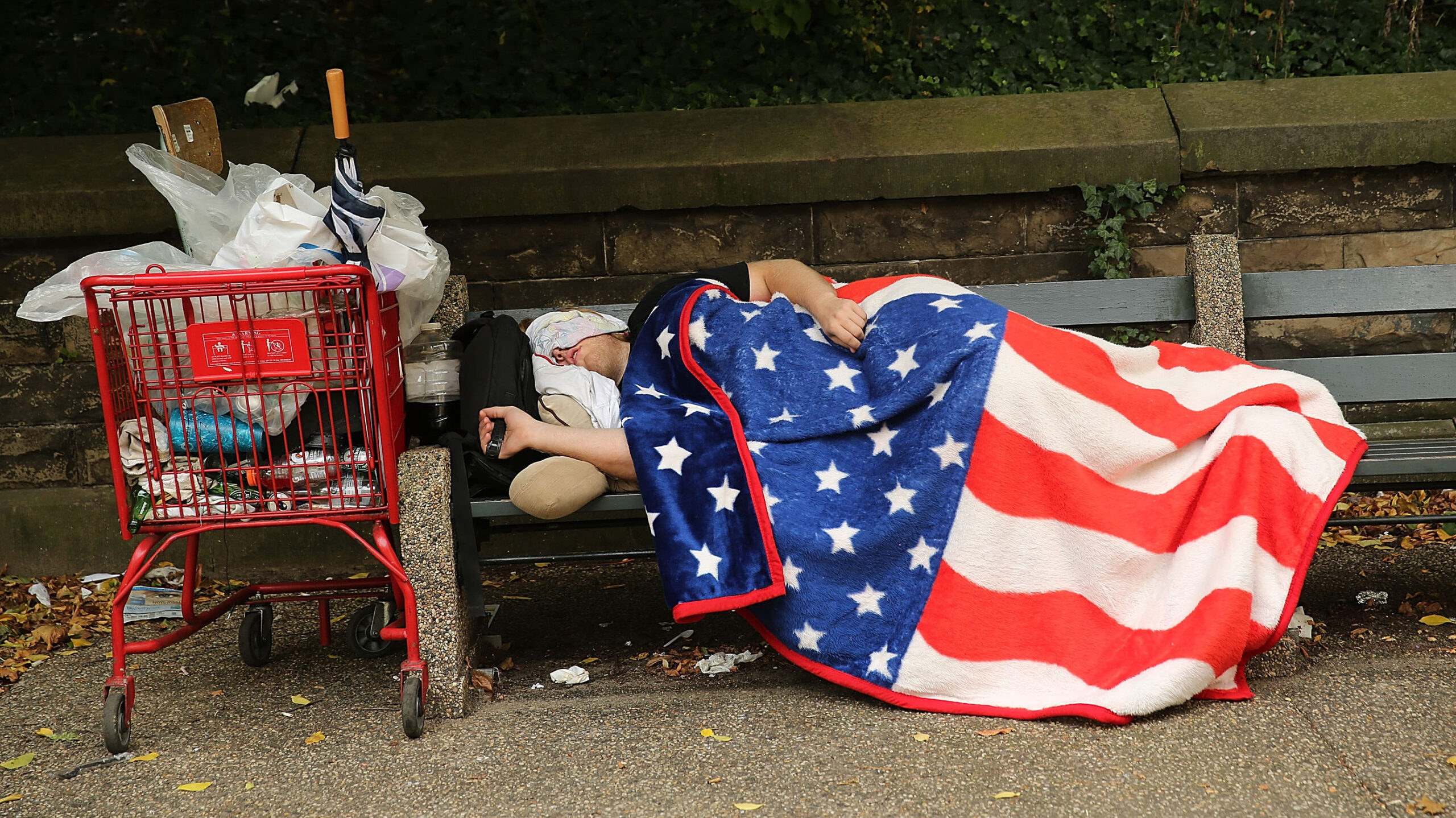
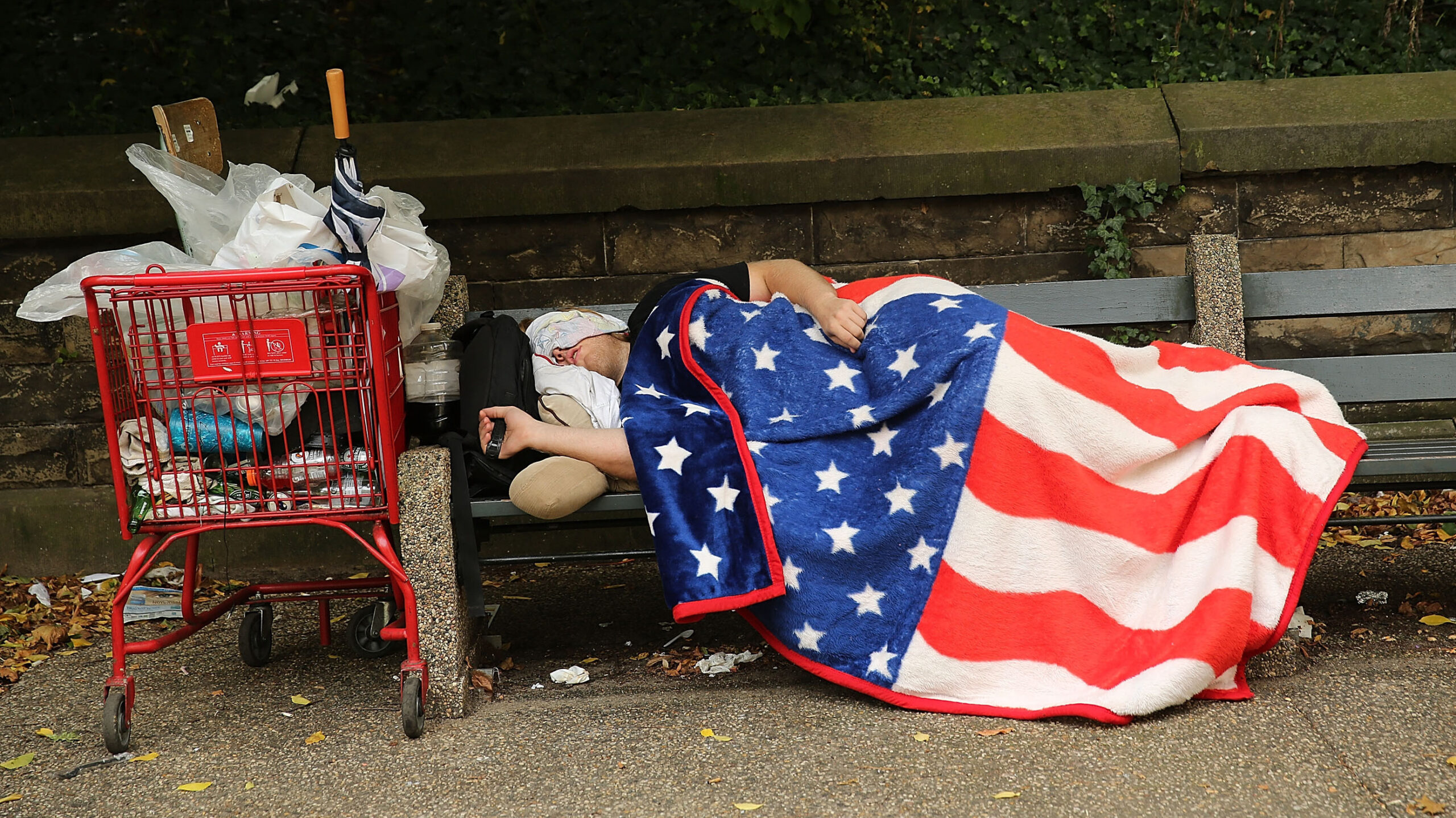


  • The Dutch royal family is as guilty as the British

    The Dutch royal family is as guilty as the British

    … ‘Amsterdam was a market for everything under the sun’, including African slaves

    The death of Queen Elizabeth II and the criticisms of her stiff upper lip on colonial wrongs during 70 years of what some have described as a “glorious reign”, have unwittingly put the spotlight on the Dutch royal family about its role in colonial wrongs in Africa and elsewhere.


    “It appears the Dutch have gotten away with murder as their critical and cruel role in the slave trade, slavery, colonisation, apartheid, and recolonisation is muted. Their cloak of innocence is bedeviling when unveiled,” wrote the Ghanaian political scientist and humanist, Akyaaba Addai-Sebo, four days after the death of Queen Elizabeth II.


    Between the lines, the Ghanaian was saying the Dutch were as guilty as the British when it came to the African slave trade (otherwise known as the TransAtlantic Slave Trade), yet the Dutch have largely been left alone, if not forgotten, in the finger-pointing over the slave trade.

    Addai-Sebo’s concerns led to the unearthing of a 14 September 2020 article by Nora McGreevy, a former daily correspondent for the Smithsonian, and a freelance journalist based in Chicago, USA, whose work has appeared in Wired, Washingtonian, the Boston Globe, South Bend Tribune, The New York Times and more. She wrote two years ago about why the Dutch royal family’s Golden Carriage was so controversial.

    “An elaborate gilded carriage used by the Dutch royal family may be retired after years of debate over the racist, colonialist imagery that adorns its side panels,” McGreevy wrote, quoting Titia Ketelaar of the local Dutch newspaper, NRC Handelsblad.

    “The artwork at the heart of the controversy is an 1898 triptych by Nicolaas van der Waay titled Homage of the Colonies. As Hakim Bishara writes for Hyperallergic, the scene depicts half-naked black and South Asian people ‘kneeling, prostrating, and offering gifts to a white woman seated on a throne’. Critics argue that these figures, likely enslaved people, are presented as submissive to royal authority.”

    The New Yorker magazine confirms that: “The Golden Coach, which dates to 1898, has on its left flank a triptych painted by the decorative artist Nicolaas van der Waay, called ‘Homage from the Colonies’. The two outer panels show half-naked black men shouldering massive bales and satchels.


    “The central image is of a statuesque woman seated on a throne, with two black figures in supplication before her. One kneels in reverence, hands clasped and head bowed as if in prayer. The other prostrates himself, back bent, head lowered, with his right arm outstretched over clusters of bananas and other produce offered as homage to the allegorical queen. It is an appalling sight,” says The New Yorker, which quoted Harry Westerink, a member of a protest movement against the coach, as having said: “When the king and queen ride around in such a coach, it glorifies this era.”

    The Golden Coach, which had been under restoration since 2015, was scheduled to go on view at the Amsterdam Museum in June 2021, subject to a final decision by the current Dutch King, Willem-Alexander, regarding the carriage’s fate.


    According to McGreevy, news of the coach’s potential retirement arrived ahead of Prinsjesdag (or Budget Day), an annual event held on the third Tuesday of September to mark the start of the Dutch parliamentary year. Normally, the Golden Coach plays a key role in the celebration, ferrying the Netherlands’ reigning monarch to the Hall of Knights in The Hague, where the monarch delivers a ceremonial speech.


    There is another royal carriage, the so-called Glass Coach, which, because of the controversy over the racist depiction of Africans and Asians on the Golden Coach, had filled in for the Golden Coach while it underwent restoration. At the time McGreevy wrote her article, an online petition to move the Golden Coach to a museum had received nearly 8,000 signatures.


    Remove it, remove it

    Criticism of the Golden Coach mounted during a series of protests in 2015. But public debate over the offensive triptych went as far back as early 2011 when the Suriname-born politician, Barryl Biekman, and a number of other Dutch politicians argued in an op-ed that it should be removed from the coach and placed in a museum.


    History shows that the people of Amsterdam gifted the carriage to Queen Wilhelmina in honour of her coronation in 1898. Local craftsmen carved the coach which was funded by donations from the “rich and poor alike”. The coach was made of teak wood and gilded with gold.


    In June 2020, the Dutch Prime Minister, Mark Rutte, acknowledged that the carriage “summons emotions” but noted that “it’s all part of our history”, confirming the royal family’s previously-stated wish that the triptych itself would not be removed from the carriage.


    During a press event in July 2020, King Willem-Alexander told reporters that he was “following the discussion” raised by Black Lives Matter protests. “I’m listening to it,” he said, adding, “As long as there is implicit and explicit discrimination in the Netherlands, we must tackle that as a society.”


    The Dutch government’s announcement that the Golden Coach may be retired came amid the country’s attempt to reckon with its colonial history. According to the University of Leiden’s African Studies Centre, the Dutch enslaved and traded as many as 600,000 Africans across the Atlantic Ocean between the 17th and 19th centuries. Due in large part to colonial exploitation and the trade of enslaved people, the Dutch Republic became a wealthy world power, the “America” of the time, otherwise referred to as the “Dutch Golden Age”.


    In winter 2019, the Amsterdam Museum, now embarrassed about the Dutch past, said it would stop referring to the 17th century as the “Dutch Golden Age”. To reflect this change, the museum took measures including updating the name of its “Dutchmen in the Golden Age” exhibition to “Group Portraits of the 17th Century”.


    According to Tom van der Molen, a 17th century curator: “The Western Golden Age occupies an important place in Western historiography that is strongly linked to national pride, but positive associations with the term such as prosperity, peace, opulence, and innocence do not cover the charge of historical reality in this period. The term ignores the many negative sides of the 17th century such as poverty, war, forced labor, and human trafficking.”


    Willful forgetting

    Interestingly, the forgetful Dutch know all about their usual heroes: Admiral de Ruyter, who sailed up the Thames to teach the English a lesson in 1667; the 80-year-war against Spain in the 16th and 17th centuries; and, more recently, those resisting Nazi occupation. And there is the biggest hero of them all, another 17th-century naval officer, Piet Heyn, who surprised the Spanish fleet in Havana, Cuba, and took all their silver. Every Dutch child grows up singing the song written about Heyn’s heroic deed.


    But what about slavery? Dutch history books are, not surprisingly, largely silent about it. Nothing about the fact that the same celebrated Piet Heyn led an unsuccessful campaign in 1624 to take Luanda (Angola) from the Portuguese, at the behest of the Amsterdam-based West India Company.


    According to The Africa Factbook, whose Scholar’s Edition (1,200 pages) has just been published in Zimbabwe, from the 16th century onwards, Dutch merchant marines called at places like São Tomé, Loango, Calabar, and many other African ports, all the way south to Benguela. Gorée, the slave island off the Senegalese capital, Dakar, is a corruption of the Dutch “Goede Rede”, which means Good Harbour.


    The Elmina Castle in Ghana, one of the largest in the country, was a Dutch possession (taken from the Portuguese) until they sold it to the English in 1872. Little, if anything at all, is known about the dealings of Dutch diplomats, missionaries, and traders with the Asante, the Vili, the BaKongo and others, looking for slaves. By 1640, the Dutch had become the dominant world power, to whom all the European countries bent the knee. This era is still referred to as the “Dutch Golden Age”.


    “Ironically,” The Africa Factbook reports, “the famous 17th-century depiction of a Dutch trade delegation prostrating itself before King Alvaro of the BaKongo at Mbanza Congo (now the capital of modern Angola’s Zaire province), does not tell that there were negotiations going on about forging an alliance against the Portuguese and the provision of food and slaves for the faltering Dutch colony in Luanda.


    “The only colonial enterprise in Africa that Dutch history books find worth mentioning is the Cape [in South Africa], which in itself is a source of great embarrassment because of the ensuing history that eventually led to apartheid. This oversight is slightly redressed with the advent of that most modern of teachers, the Internet.”


    The ‘glory’ years

    For almost four centuries, Dutch ships sailed from Amsterdam, Rotterdam, Middelburg and elsewhere and were a fixed presence up and down the West African coast. Their purpose: trade. And again there is that slice of obfuscated history. For, the slave trade does indeed show up in Dutch history books, but mostly as something that other people did.


    “They say the Dutch got involved in the slave trade by accident: some of the Spanish and Portuguese ships they captured carried African slaves, and the first time a ship with this strange human ‘cargo’ anchored in Middelburg, the town fathers who had no clue about what to do with the Africans, set them free,” reports The Africa Factbook.


    However, all this changed very quickly when the Dutch got hold of Pernambuco in Brazil in 1620, and realised that no plantation survived without African slaves. Since the Portuguese controlled the transatlantic slavery, the only way to secure the economic viability of Pernambuco was to take over that trade – by force if necessary.


    Angola was the single largest supplier of slaves at the time – and so the raids on Luanda were planned and carried out. “The Dutch presence was the paramount one in both Africa and the Caribbean in the 1640s,” says Hugh Thomas in his 1997 tome, The Slave Trade: The Story of the Atlantic Slave Trade 1440-1870. “The Dutch were, in these heady days, the dominant world power, Portugal’s successor on both sides of the Atlantic, with innumerable possessions in the East too.”


    Hugh Thomas continues: “Dutch merchants in the 1650s still dominated the market of slaves for the West Indies. Their superior position there reflected their global standing. Holland remained the world’s dominant economic power, in Central Europe as in the Baltic. Their East India Company was still prospering, and much of world trade was in their hands. Like Antwerp a century earlier and London a century later, Amsterdam was a market for everything under the sun.”


    A little more is known about the Dutch sugar plantations, first in Brazil, then in the Caribbean and Surinam. But here again, the living conditions of the slaves go largely unreported. Few Dutch people know that it was the cotton plantations in Surinam that helped power the beginning of the Industrial Revolution in Britain.


    In the early 2000s, a study was published about the 450 years of Dutch involvement in the slave trade, which actually became the subject of a short-lived but virulent public debate. Written by the historian, P.C. Emmer, the study mainly focused on the economic side of the “trade”. Some people took great issue with his stance. But compare that with the Dutch attitude to what is now Indonesia. That was always considered “ours”. “If we lost that, we would go under!”


    According to the social scientist, Jude Kehla, himself an African, who has spent many years combing through the Dutch archives, there is something else lurking behind this declared relative unimportance of the slave trade. “It is to do with an incapacity to deal with the past,” Kehla says. “History never permitted the Dutch to do the honourable thing and abolish the trade while they had the chance. It was done by the English.”


    After the empire fell

    History shows that when the Dutch Republic collapsed at the end of the 18th century, the country was briefly occupied by the French, and its colonies were taken over by the British. At the time, Britain and France had either already banned the slave trade or were about to do so. In this respect, Kehla says: “The Netherlands has never had the opportunity to free itself from its past.” And it has become even more difficult when the past is not talked about.


    According to The Africa Factbook, the flipside of this historical ostrich-behaviour is that the protests against the slave trade have also remained unknown. The great 17th-century Dutch poet, Bredero, opposed it with the cry, “Inhumane custom! Godless rascality!” Such language was pretty unusual in those days, although some Dutch Reformed ministers preached against the trade and the conditions on the plantations.


    An equally famous 19th-century writer, Nicolaas Beets, was among a small crowd of abolitionists. His celebrated colleague, Betje Wolff, translated abolitionist material from the French. Even the Dutch Parliament held some pretty enlightened debates about the issue. “I have been through the archives,” says Kehla. “Protests against the slave trade? There is no evidence of it! It was simply not talked about.”


    Another Dutch opinion-maker, Gert Oostindile, is equally unimpressed. “Even more important than finding the figure of how many were transported is the fact that it was considered as something that you could do without having qualms about it,” Oostindile says. Kehla agrees: “In Holland, you have this traditional conflict between the merchant and the minister – the desire to make money versus the urge to preach morality. Now in the tropics, there was no moral dilemma; it was done to those savages out there.”


    So there was no need to bother baptising them, like the Portuguese did, however perfunctorily: too expensive. Yet in Curaçao, the most important Dutch slave post in the Caribbean, slaves were baptised as Catholics, the religious nemesis of the Protestant Dutch, who fought Catholicism for 80 years.


    “When other European nations considered abolishing the trade,” The Africa Factbook reports, “Dutch politicians were quick to point out that there was still money to be made out of the ‘trade’. And to cap it all, it was the revenue from taxes paid by Javanese villagers and the sale of their coffee and sugar that largely paid for the freedom of the slaves in Surinam. One kind of exploitation financed the end of another.


    “Quite in tune with the national tradition, slavery was ended on the cheap. The celebrated writer from Curaçao, Frank Martinus Arion, recalls that slave owners were compensated for their loss of business while the victims of that ‘trade’ were never offered a cent. In trade, the merchant always won and on Sundays he had his seat in the Church. On the front row!”


    Painful to admit

    This “commodification” of human life by the Dutch ancestors is too painful for the 21st century’s open, tolerant, and complacent Dutch to contemplate. Kehla notes that people turn away when he raises the subject. Oostindile has seen many instances of irritation and self-defence, as in: “The Dutch have been terrible but the others were worse…”


    The contemporary Dutch writer, Adriaan van Dis, calls it “the tendency towards denial”. But whether or not “they” were worse than “us” is beside the point. The point is that at a certain time in its history, the Republic of Holland and one of its premier multinational companies were deeply enmeshed in an “inhumane custom”, a characterisation that everyone now fully agrees with.


    On the available evidence, even the 17th-century Dutch men and women needed a moral justification to get in on the game. Hence the kind of negative stereotyping of Africans, often abetted by the Church, that today would instantly be recognised as racism.


    “Consider these earnest deliberations, all of them cited in Emmer’s book,” reports The Africa Factbook. “Africans were black and therefore none other than the descendants of Cham (or Ham), the son of Noah who had mocked his father while drunk and had been punished with eternal slavery for his offence, or so the Biblical story is alleged to say. All the Africans could hope for was to be christened by the gallant Dutch men who came to rescue them from that horrible fate.


    “Gallandat, a Dutch doctor, put forward an argument that has been used time and again to justify the slave trade: he said slavery was actually a blessing for the Africans. Had they not been sold into slavery, they would surely have been killed by those who had captured them.”


    Gallandat’s original words were: “Many people think that, among the negroes, the parents sell their children, the men their wives, and brother sells brother; yet these are mere doggerel and tales, stripped of all truth … I must admit that I was not free of similar prejudices when I visited the African coasts for the first time; and that I was very much amazed to see that, among those uncivilised peoples of that continent, very good laws concerning slavery were in place.


    “With the Guinean negroes, the chief crimes are punished with fines; yet if they fail to pay, they are sold to the ships as slaves. The impecunious debtors, or those who are not willing to pay, are also declared slaves according to their laws: yet these are rarely sold to the Europeans. They keep them for their own use, or they are kept in their land in the hope that they will be redeemed by their friends.


    “Most of the slaves which are sold to the ships were born as slaves, or captured in war in which all are subsequently made slaves. Before, they used to kill a considerable number of the latter; yet since the slave trade has come up, it has become a general custom to, as soon as possible, sell them all to their profit.”


    Gallandat went on: “If one remarks that a large number of useful people are kept alive through the slave trade; that the slaves have a much better life in our American lands than in their homeland; that it is of profit for the negro peoples that their criminals are carried off forever due to this trade; and furthermore that if one examines the advantages which sprout from them for our American plantations, where the negroes are much more skilled at agriculture than the whites or the Americans, one will have to admit that, for the negro people as well as the slaves, for the merchants in general, and for the plantations in particular, the advantages which arise from it far outstrip any insensitivities or other objections which one could raise.  From which I conclude that this trade can and may be continued without hurting the conscience. And why would one not approve it, as well other affaires, which appear no better [on the surface]?”


    Challenging orthodoxy

    These and other stereotypes were finally challenged when the descendants of the slaves came to settle in The Netherlands. Surinamese, Antillean and also continental Africans raised the issue of commemorating the slave trade – in the Netherlands! Some had worked the historical experience into plays. Others had launched political initiatives, such as the National Platform on Past Slavery. They had all talked about compensation, and often they had been frustrated by the lack of response by the Dutch authorities.


    Only a few Dutch intellectuals took notice. The prestigious Prince Claus Fund responded by publishing Het Verleden Onder Ogen, a collection of essays written by Dutch, Antillean, Surinamese, African and other authors, and edited by Oostindile. The title may be translated into “Facing One’s Past”.


    And, to its credit, the Dutch government took on board the idea, very poignantly endorsed by the former South African ambassador to The Netherlands, Carl Niehaus, to make plans to have a monument in remembrance of the Dutch role in the African slave trade.


    That monument was planned for Amsterdam, former headquarters of the now infamous West India Company – even though the largest Dutch slave trading company was the Middelburg Commercial Company. And then there was Emmer’s book. It received ample media attention.


    Reviews were written in major newspapers; the author was on TV and radio. Quite quickly the debate spun into two diametrically opposed directions. One was between the mainstream and the minority communities – the other among the Dutch themselves.


    According to The Africa Factbook, “representatives from the minorities, descendants of slaves in many instances, accused Emmer of Western arrogance by glossing over the psychological trauma that slavery had caused and only focusing on the numbers game of economics. Emmer countered that he was only trying to be objective – which infuriated the descendants even more.


    “The only thing they actually did agree upon was the fact that much more needed to be revealed about what actually transpired between Holland, Africa and Latin America during those 450 years that Emmer covers in his book,” The Africa Factbook says.


    Some Dutch commentators, meanwhile, occupied themselves with the question of the purpose of history. Is it to write truthfully about what happened in the past? Or is it a tool in the hands of those who can claim compensation for past wrongs? Should past pain be translated into cash today? Only a few people made the link between the then and now.


    In the meantime, designs for a Slavery Monument by nine artists from Surinam, West Africa, Dutch Antilles and The Netherlands itself were put on display at the Amsterdam City Hall. Members of the public were invited to participate in voting for the best design, which was to be built and mounted in Oosterpark in Amsterdam, a large park close to the Royal Tropical Institute, in a culturally diverse neighbourhood.


    In the end, the design by Erwin de Vries, a Surinam artist, won the day. In 2002, the National Slavery Monument commemorating the abolishment of slavery in Holland was eventually unveiled in Oosterpark, Amsterdam, by Queen Beatrix. But reparations for slavery still awaits. Not surprisingly, the Dutch – like the British, American, and other European former slave trading nations – have no stomach for it. Worse is the Dutch royal family. They too are keeping a stiff upper lip over the matter.