When in January 2018 the American President Donald Trump characterised Africa, Haiti and El Salvador as “shithole countries”, he had poverty at the back of his mind. The popular images that Trump grew up on always painted Africa as poor. But in their own backyard, according to two reports released in 2018, one by the United Nations, “40 million Americans live in poverty, 18.5 million in extreme poverty, and 5.3 million live in Third World conditions of absolute poverty.” And while “the poor are overwhelmingly assumed to be people of colour, whether African-Americans or Hispanic immigrants, the reality is that there are 8 million more poor whites [in America] than there are poor blacks. And over and above all this, American citizens also “live shorter and sicker lives compared to those living in all other rich democracies”, the UN report said. So does that make the US also a “shithole country”? Baffour Ankomah explores the argument.
A homeless man sleeps under an American flag blanket on a park bench in New York City. New U.S. data reports a drop in the number of homeless people — but not in New York and other states.
Americans believe they have the best country in the world. Their country is known for flash. But all that glisters is not gold, at least according to two reports, the first by the United Nations Human Rights Council and the second by the Washington DC-based organisation, WalletHub.
The WalletHub study results released at the end of August 2019 showed that children in Washington DC, America’s capital, are the worst off in the country as they face daily threats of homelessness and food insecurity. They are even worse off than children in states such as West Virginia (third worst), Louisiana (fifth worst) and Oklahoma (seventh worst).
The WalletHub results left a not-so-shocked Judith Sandalow, the executive director of the Washington DC-based Children’s Law Centre that works with one in nine children living in the poorest suburbs of the capital city, to say the new results only underscored “the huge disparity between the perception of Washington as the seat of the most powerful government in the world and the often-harrowing reality for many children in the city.
“Two miles from the White House, there are children going to bed hungry and not knowing where they are going to sleep tomorrow night,” Sandalow added laconically.
It’s not funny to be poor in America: As motorised traffic and pedestrians go about their business, a poor AMerican woman, homeless and on the streets, smiles as she observes the funny side of life
What the report refused to say, however, is that most of the children going to bed hungry two miles from the White House are African-Americans because Washington DC is predominantly populated by African-Americans. It is a situation pregnant with political undertones so people navigate it by threading softly.
Even the Washington correspondent of the UK daily, The Guardian, Joan E. Greve, reporting the WalletHub results on 29 August 2019 could not dare mention the six-letter word “blacks”. Yet she put it colourfully thus: “A common refrain in America’s capital goes something like this: there’s Washington, and then there’s DC. Washington is where Congress passes bills, tourists visit the White House, and Donald Trump [the then president] stars in a daily political soap opera.
“But DC – the District of Columbia, in which the city sits – is where more than 700,000 people live. People go to work, families share meals and children go to school. And many of those children, living just a few miles from the US Capitol, are facing the daily threat of homelessness and insecurity.”
Greve, knowing the incendiary nature of the composition of Washington’s population, played safe by not daring to analyse the identities of the “children facing the daily threat of homelessness and insecurity just a few miles from the US Capitol”.
But the WalletHub report was clear in its conclusions. It showed that Washington “has the highest shares in single-parent families, children living in low-income households where no adults work, and children whose parents lack secure employment”.
“Homeless and hungry”: This scene, replicated in many American cities every day of the year, shames their country that likes to be called the richest country in the world
And not only that: The District of Columbia (DC) has high rates of child food insecurity, child depression and infant mortality. According to the WalletHub report: “Just a few miles from the White House, thousands of working families are worrying about how they will juggle budgets”.
God’s own country?
Yet from the outside, America is heaven, “God’s own country” they call it in fact. That is what American propaganda – spread by its media and the Hollywood film industry – has made the world to believe. According to this narrative, the US is a land paved with gold, where everybody can achieve the “American Dream” of prosperity and liberty provided they are hardworking.
It thus comes as a massive shock that, according to an official United Nations Human Rights Council Report, released in May 2018, “40 million Americans live in poverty, 18.5 million in extreme poverty, and 5.3 million live in Third World conditions of absolute poverty.”
US citizens also “live shorter and sicker lives compared to those living in all other rich democracies”, the UN Report said.
Besides, the US “now has one of the lowest rates of intergenerational social mobility of any of the rich countries”, to the point where “high child and youth poverty rates perpetuate the intergenerational transmission of poverty very effectively”, thus “ensuring that the ‘American dream’ is rapidly becoming the American illusion.”
Today, therefore, “the equality of opportunity, which is so prized in theory, is in practice a myth, especially for minorities and women, but also for many middle-class white workers,” the UN Report added.
“Seeking human kindness”: The UN report found that the face of poverty in America is not only black or Hispanic, but also white, Asian and many other backgrounds. In fact there are 8 million more whites than there are poor blacks
And there were more myths to bust. According to the UN Report: “In imagining the poor, racist stereotypes are usually not far beneath the surface. The poor are overwhelmingly assumed to be people of colour, whether African-Americans or Hispanic ‘immigrants’. The reality is that there are 8 million more poor whites [in America] than there are poor blacks. The face of poverty in America is not only black or Hispanic, but also white, Asian and many other backgrounds.”
This is hard to believe because for the past 78 years – since the end of World War II – America has been the dominant empire of the world, commanding all it surveys. Therefore, to see the kind of poverty that the UN Report says stands tall in the US is a huge indictment of the American Empire.
What makes it even worse, America has a population of 334 million (according to the US Census Bureau’s 1 January 2023 estimate) compared to China’s 1.45 billion. But as the former US Senator Mike Gravel confirms: “China is moving its citizens out of poverty while US citizens fall deeply into poverty. China is building roads and bridges and railways while the US policymakers take our tax dollars and blow them up!
“There is something terribly wrong with a system that creates war as its energy and industrial policy, immigration as its labour policy, and debt as its investment policy … The US is seriously on the wrong track, and we need revolutionary political thought to come to grips with what we are currently doing in order to begin thinking about how to put us back on the right track,” says Gravel.
Truly incredible
The shocking UN Human Rights Council Report was written by Philip Alston, the Council’s special rapporteur on extreme poverty and human rights, after a mission to the US in December 2017 in accordance with the Human Rights Council Resolution 35/19.
Alston was in the US from 1 to 15 December 2017, and his 20-page Report was released on 4 May 2018 as part of the Human Rights Council’s 38th Session, which took place from 18 June to 6 July 2018. The Report was Agenda Item 3 of the 38th Session.
The purpose of Alston’s visit was to report to the Human Rights Council on the extent to which the US government’s policies and programmes relating to extreme poverty are consistent with its human rights obligations and to offer constructive recommendations to the government and other stakeholders.
During his visit Alston met US government officials at the federal, state, county and city levels, members of Congress, representatives of civil society, academics, and people living in poverty.
He also received more than 40 detailed written submissions in advance of his visit which took him to California (Los Angeles and San Francisco), Alabama (Lowndes County and Montgomery), Georgia (Atlanta), Puerto Rico (San Juan, Guayama and Salinas), West Virginia (Charleston), and Washington DC.
His report’s conclusions were damning. “The United States is a land of stark contrasts,” Alston wrote. “It is one of the world’s wealthiest societies, a global leader in many areas, and a land of unsurpassed technological and other forms of innovation. Its corporations are global trendsetters, its civil society is vibrant and sophisticated, and its higher education system leads the world.
“But its immense wealth and expertise stand in shocking contrast with the conditions in which vast numbers of its citizens live. About 40 million live in poverty, 18.5 million in extreme poverty, and 5.3 million live in Third World conditions of absolute poverty. It has the highest youth poverty rate in the Organisation for Economic Cooperation and Development (OECD), and the highest infant mortality rates among comparable OECD states.
“Its citizens live shorter and sicker lives compared to those living in all other rich democracies, eradicable tropical diseases are increasingly prevalent, and it has the world’s highest incarceration rate, one of the lowest levels of voter registrations among OECD countries, and the highest obesity levels in the developed world.”
Shockingly, “in 2018 the United States had over 25% of the world’s 2,208 billionaires. There is thus a dramatic contrast between the immense wealth of the few and the squalor and deprivation in which vast numbers of Americans exist.”
The report went on: “The United States has the highest rate of income inequality among Western countries. The $1.5 trillion in tax cuts in December 2017 [introduced by the Trump administration] overwhelmingly benefited the wealthy and worsened inequality.
“The share of the top 1% of the population in the United States has grown steadily in recent years. In 2016 they owned 38.6% of total wealth. In relation to both wealth and income the share of the bottom 90% has fallen in most of the past 25 years. The [2017] tax reform will worsen this situation and ensure that the United States remains the most unequal society in the developed world.”
Going down
The report rebuked the trajectory of the US since 1980, describing it as “shocking”. This is because in both Europe and the US, the richest 1% earned around 10% of national income in 1980. By 2017, it had risen slightly in Europe to 12%, but massively in the US to 20%.
Besides, since 1980 annual income earnings for the top 1% in the US have gone up by 205%. By comparison, the average annual wage of the bottom 50% has stagnated since 1980.
“The consequences of neglecting poverty and promoting inequality are clear,” the UN report said. “The United States has one of the highest poverty and inequality levels among the OECD countries, and the Stanford Centre on Inequality and Poverty ranks it 18th out of 21 wealthy countries in terms of labour markets, poverty rates, safety nets, wealth inequality, and economic mobility.
“For almost five decades the overall policy response has been neglectful at best, but the policies pursued over [2017 by the Trump administration] seem deliberately designed to remove basic protections from the poorest, punish those who are not in employment and make even basic health care into a privilege to be earned rather than a right of citizenship.”
Let’s look after our own first
This shocking state of affairs compelled Angus Deaton, the presidential professor of economics at the University of Southern California who is also the 2015 Nobel laureate in economics and a New York Times op-ed contributor to say that the US may have to consider diverting some of its foreign aid money to look after its own poor at home.
France parler: Prof Angus Deaton: “It is time to stop thinking that only non-Americans are truly poor … There are millions of Americans who are suffering through material poverty and poor healthy, is as bad or worse than that people in Africa or Asia”
In a forthright piece for The New York Times, published on 24 January 2018, headlined: “The US can no longer hide from its deep poverty problem”, Deaton bared his soul, arguing that considering the immense wealth of the US, “it is hard to imagine poverty that is worse than this, anywhere in the world.
“… Life expectancy in the United States is lower than we would expect given its national income, and there are places – the Mississippi Delta and much of Appalachia – where life expectancy is lower than in Bangladesh and Vietnam. Beyond that, many Americans, especially whites with no more than a high school education, have seen worsening health…”
Troubled by the naked truth, Deaton went on to say the politically incorrect, though apologising all the way. “For years,” he wrote, “in determining [US foreign aid], the needs of poor Americans or poor Europeans have received little priority relative to the needs of Africans or Asians. As an economist concerned with global poverty, I have long accepted this practical and ethical framework. In my own giving, I have prioritised the faraway poor over the poor at home.
“Recently, and especially with these insightful new data, I have come to doubt both the reasoning and the empirical support. There are millions of Americans whose suffering, through material poverty and poor health, is as bad or worse than that of the people in Africa or in Asia.
“Practical considerations reinforce the argument for recognising America’s poor in the global context. There is a better chance of monitoring the effects of domestic spending than of foreign spending. Money spent by and for fellow citizens, either individually or collectively, is subject to democratic evaluation by both donors and recipients, who can see the effects and who can show their approval or disapproval in the voting booth.
“Those who donate for projects in Africa often find it difficult to know what good their gifts are doing, let alone to discover whether the intended beneficiaries actually receive or appreciate them.”
Deaton went on: “Official aid from the United States is mostly set by geopolitics – the leading recipients are Afghanistan, Israel and Iraq. Yet the United States is committed to eliminating $1.90-a-day poverty in the world, a target that is not contingent on poverty at home. Britain insists on spending 0.7% of its gross domestic product on foreign aid, in spite of occasional difficulties in finding suitable projects and in spite of domestic suffering caused by austerity at home.
“None of this means that we should close out ‘others’ and look after only our own. International cooperation is vital to keeping our globe safe, commerce flowing and our planet habitable.
“But it is time to stop thinking that only non-Americans are truly poor. Trade, migration and modern communications have given us networks of friends and associates in other countries. We owe them much, but the social contract with our fellow citizens at home brings unique rights and responsibilities that must sometimes take precedence, especially when they are as destitute as the world’s poorest people.”
That was shorthand for “America First”, but don’t tell President Trump. He might call America a shithole country. And that is a taboo.
Judging by his days in the White House, the former US president, Donald Trump, has a problem with black people – whether they are in Africa, the Caribbean, or in the US itself. On 27 February 2019, Michael Cohen, Trump’s former personal lawyer, told the Congressional Oversight Committee in Washington DC that Trump “is a racist” who once told him that black people were “too stupid” to vote for him.
According to Cohen: “The country has seen Mr Trump court white supremacists and bigots. You have heard him call poorer countries shitholes. In private, he is even worse. He once asked me if I could name a country run by a black person that wasn’t a ‘shithole’. This was when Barack Obama was President of the United States.”
In his element: Former US president Donald Trump, “a racist… a bigot” (according to his former lawyer, Michael Cohen), Labelled Africa, the Caribbean and Haiti as “shithole countries”
In January 2018, Trump described Africa, Haiti and El Salvador as “shithole countries”. His insulting remark prompted the former US congresswoman and now political activist, Cynthia Mckinney, to coordinate 25 writers from across the world, including myself, to write a book titled “How the US Creates ‘Sh*thole’ Countries”, mocking Trump’s insulting characterisation of Africa and the Caribbean as “shithole countries”.
Remarkably, from the analyses of the 25 contributors of the McKinney-edited book published in late 2018, it is the US itself whose imperial and foreign policies to a large extent create the conditions that turn some nations into “shithole” countries. Worse, the US itself is a “shithole country” too, according to the deductions of the 25 contributors of the book.
The Africa chapter
I was contacted to write a chapter on Africa for the book focussing on how the US and Western foreign policy and their multinational companies, especially those in the extractive sector, exploit Africa and create the conditions that lead to what Trump called “shithole” countries.
The book itself: The front cover of the Cynthia Mackinney-edited book published in 2019. Our editor Baffour Ankomah was one of its 25 contirbutors, wrtting a chapter on Africa
My central view was supported by Cynthia McKinney in her Introduction to the book. A wonderful African-American woman who, while in Congress, stood up for justice for Africa and fought tenaciously against the American Empire’s predatory attitude towards Africa, McKinney explains in the Introduction that America’s contribution to conditions in the so-called “shithole countries” can clearly be seen from “the US military occupation of Haiti, financing of death squads in El Salvador, and support for dictators all over the African continent.
“Therefore, for our purposes, a ‘sh*thole’ country is a country whose residents’ present quality of living conditions can be tied to historical or current US foreign and military policies that have negatively impacted the ability of that state to deliver quality of life policies to its residents.
“In this regard, for too many US residents, the United States itself, can also be characterised as a ‘sh*thole’ country, resulting from its deliberate choice to fund the war machine and corporate policies that produce negative consequences for the countries and territories, in some cases colonies, that are profiled [in this book].”
The book is in four parts. Part One deals with “understanding US foreign policy”. Part Two covers the “victims to remember (and how they got that way).” Part Three deals with “why getting the truth out is so difficult”, and Part Four is about “the United States as a ‘sh*thole’ country.”
My chapter on Africa is in Part One. I go into great detail about how the US and its Western allies and their multinational companies wittingly and unwittingly create the “shithole” conditions that blight the future of Africa and its citizens.
Most people don’t know that the average royalty that new African oil producers are given by foreign oil giants (mostly American, British, French, Canadian, and Australian companies) who come to exploit the petroleum resources of Africa is not more than 10%, sometimes even as low as 5%.
A fighter extraordinary: Cynthia McKinney, a veritable daughter of the African soil
The rationale is that the oil giants need that much money (as much as 90-95% of the profits) over so many years, sometimes two or three decades, in order to recoup the initial financial investment they put into exploration, development and production of the oil resources.
So though the African countries may be seen to be producing oil, in reality only a tiny fraction of the proceeds ever come to them in the form of shareholding, royalties, and taxes.
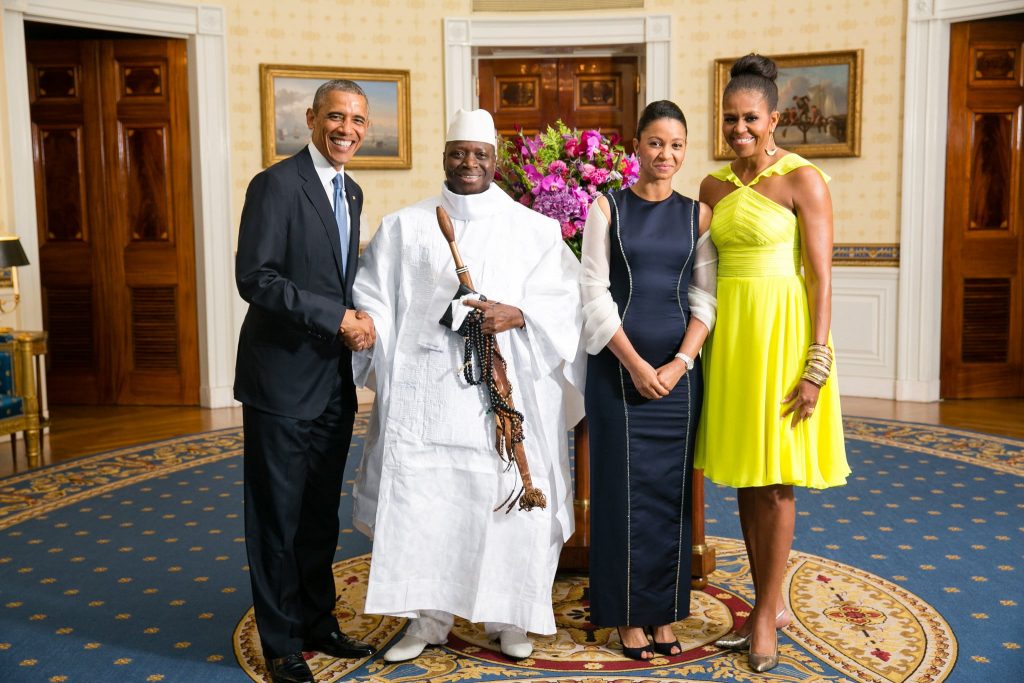
Out! out!: Gambia’s former President Yahya Jammeh (in white) and his wife Zineh, met US president Barack Obama and his wife Michelle (extreme right) at the white house. Before the meeting Jammeh had thrown out his office a repressentative of an American oil giant for offering to exploit Gambia’s oil reserves on a 5% to Gambia, 95% to the company ratio
Jammeh’s fury
This is the situation that so riled the former Gambian president, Yahya Jammeh, that he ordered a representative of an American oil giant out of his country and threatened to arrest him if he ever set foot in The Gambia again.
As Jammeh put it in a New African interview: “Some of the crimes I am supposed to have committed are to say we are not going to accept 5% from our petroleum resources, and the rest going to the foreign oil companies exploiting our resources. But they tell me that other African countries have accepted 5%, and in fact no African country, except three, gets more than 3% from its minerals.
“So if other African countries have accepted that ridiculously low percentage, then you must be in the wrong not to accept the same ludicrous deal. To me, any talk about our countries taking a 3% or 5% royalty to exploit our resources is an insult.”
Jammeh’s story is not different from what Liberia’s former president, Charles Taylor, experienced while negotiating for the production of Liberia’s oil with an American oil giant which had strong ties with the government of former President George W. Bush.
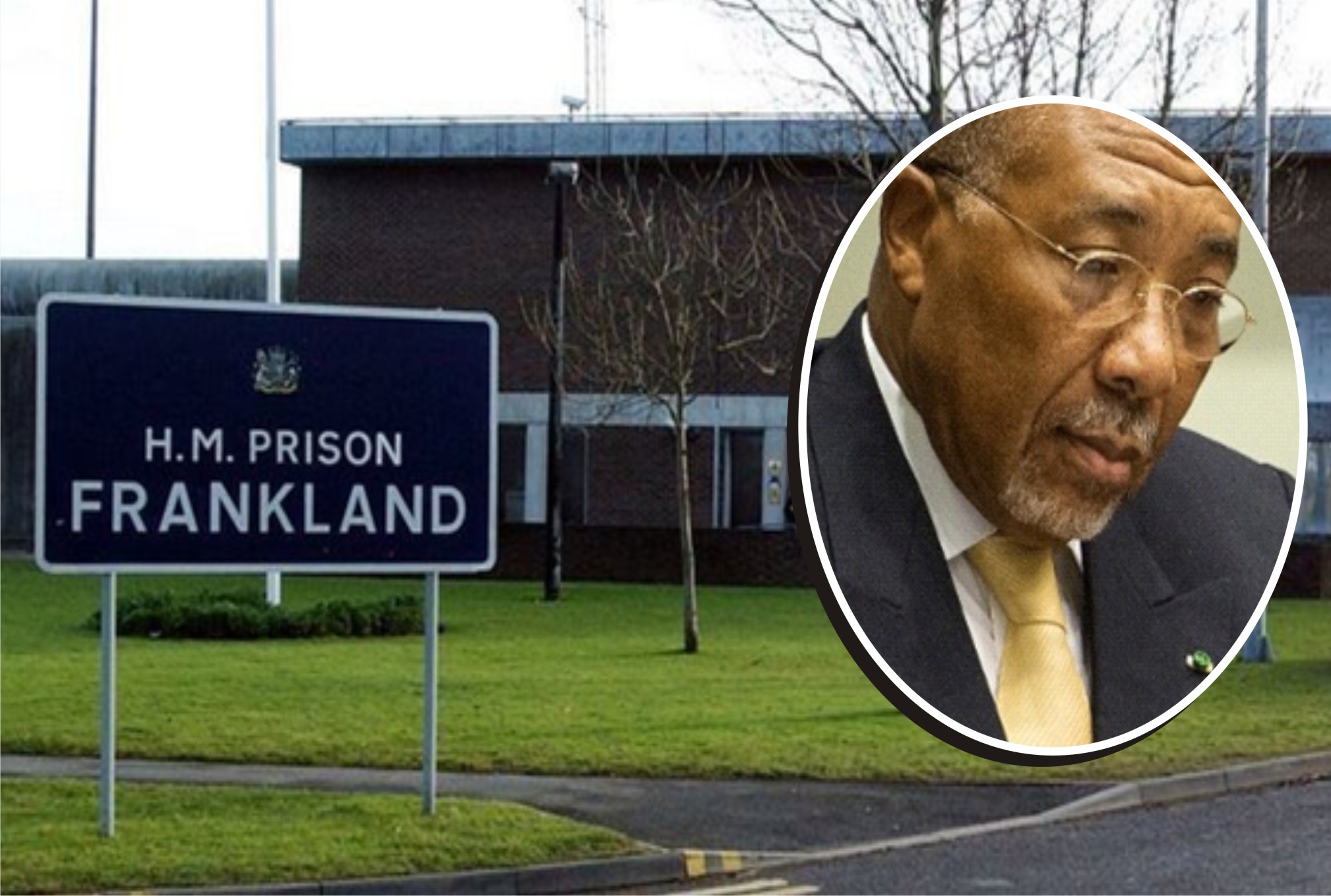
A miscarriage of justice: The former Liberian president, Charles Taylor, is serving 50 years in a British prison, HM Frankland, for allegedly aiding and abetting rebels in neighbouring Sierra Leone. But if he had agreed for Halliburton, the American oil giant to exploit Liberia’s oil reserves at a 5% to Liberia and 95% to company ratio, his trial would not have been held in the first place. Halliburton would have ensured that the trial was quashed. but he refused the deal and so he is now serving 50 years in jail
The American company offered Liberia 5 cents in every dollar from the proceeds of its oil resources. (In the last issue of The Third Eye, I misstated this as one cent in every dollar. My apologies). Taylor refused to accept the deal, but the American company pushed and pushed until Taylor was indicted in 2004 to stand trial at the UN-backed Special Court for Sierra Leone (SCSL) for supporting rebels in Sierra Leone.
Before Taylor’s trial started, the American oil giant offered him what looked like an irresistible carrot. “If you give us the rights to exploit Liberia’s oil, at the terms discussed, we shall protect you from standing trial at the Special Court for Sierra Leone,” they told him. It was a tempting deal.
Taylor’s trial was being pushed from behind the scenes by the US and British governments to get him out of power. He knew it. But the oil deal, at 5 cents in every dollar, was a bad one for Liberia as a country. So, despite his personal liberty being at stake, Taylor still rejected the oil deal. “Then we can’t help you Mr President, we can’t protect you,” the American company told him.
The day Taylor narrated this story in court in The Hague, the place went deadly silent. In the end, by rejecting the bad oil deal, Taylor could not be protected by the American oil giant, and today he sits in a British prison serving 50 years for what the SCSL found only to be “aiding and abetting” rebels in Sierra Leone.
Lissouba’s experience
Many of such stories abound in Africa post-independence, including the overthrow of President Pascal Lissouba of Congo Brazzaville in 1997, which was done with the support of a French oil giant who did not like Lissouba’s request that oil companies operating in the country should pay 33% of the oil proceeds into national coffers.
At the time, Congo Brazzaville was getting 15% from its oil resources, but Lissouba wanted this to be increased to 33%. All the oil companies were happy with the new deal, except one French oil giant which rushed to Paris and leaned on the considerable weight of the French government, then headed by President Jacques Chirac, to force Lissouba to bend the knee.
In an interview in London in April 1998, Lissouba told me that Jacques Chirac called him from Paris and ordered him to appoint the country’s former military president, Sassou Nguesso, as his vice president and head of the armed forces. This, however, would have violated the country’s constitution, and also Lissouba reckoned that Chirac wanted to use Sassou Nguesso to checkmate him in the interest of French interests in Congo-Brazzaville.
When Lissouba told Chirac that the constitution of the country did not allow for what he was asking him to do, Lissouba said Chirac, now furious and shrill on the phone, told him point-blank: “Chuck your bloody constitution in the dustbin!”
Lissouba could not chuck his country’s constitution in the dustbin, but a few weeks later his government was no more, overthrown in a “mini civil war” in which rebel soldiers allied to Sassou Nguesso were supported by boats and other war materiel provided by the French oil giant which was not happy with the new 33% oil deal.
After the “coup”, Sassou Nguesso returned as the new president of Congo Brazzaville and went on to reduce the 33% deal to 20%. The French oil giant was now happy, but the country has remained poor ever since. And Sassou Nguesso has remained president since 1997. Case closed.
‘Shithole’ in the heart of Africa?
Today, somewhere in the heart of Africa, another “shithole” country is being created in South Sudan, thanks to American meddling. Again, most people don’t know that South Sudan’s civil war, which started on 15 December 2013, two years after the country won its independence from Big Sudan on 9 July 2011, has American dirty fingers all over it.
On 24 June 2014, President Salva Kiir of South Sudan told me in an exclusive interview in the presidential palace in Juba, capital of South Sudan, of American intrigues to kick him out of power because Washington was not happy with South Sudan’s oil affairs.
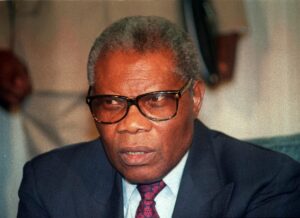
Provocation writ large: The late President Pascal Lissouba of Congo-Bazzaville was told by the late President Jacques Chirac of France to throw his national constitution into the dustbin when Lissouba refused to appoint the former military leader Sassou as his vice president on the say so on Chirac
As President Kiir put it: “There are people who are looking for resources and they see South Sudan as a country full of resources, especially oil. With my government, they see that they cannot loot these resources. But if it is Riek Machar [his former deputy president], they can play around with him and then take over. It is the situation of Iraq that they want to happen here. These are strong nations, they can come in, throw away the elected government, and then install one of their stooges.”
When I asked Kiir why the Americans would want to do that, he replied: “It is in connection with China’s role in South Sudan’s oil industry. The Americans say that their companies are not allowed to invest in the oil industry here. But it is not our fault.”
Kiir explained that as part of the preparations for South Sudan’s independence in 2011, the country signed a Comprehensive Peace Agreement with Khartoum in 2005. At the time Juba wanted to review the oil agreements that had been signed by Khartoum and China. It so happened that the largest chunk of Big Sudan’s oil resources was in South Sudan, but the Americans, who wanted to overthrow the Sudanese President Omar Bashir did not allow Juba to review the oil deals.
“They said ‘don’t touch the already signed agreements, we [America] will be given access to the files later, so we will know what has been done. If there are new contracts to be awarded, yes, we will sit down and sort them out, but not the existing agreements’”.
By so doing, Kiir said the Americans stopped Juba from reviewing the existing oil agreements, and Washington went on to pull out its oil companies from South Sudan and imposed sanctions on Omar Bashir in Khartoum.
When the American companies left, the Chinese and Malaysians came and occupied the vacuum. But Washington did not like it. Therefore, Kiir’s government has to be undermined as part of an American regime change agenda.
According to Kiir, the Americans settled on his deputy president, Riek Machar to do the dirty work of overthrowing him. This is the genesis of the “civil war” that broke out in South Sudan on 15 December 2013 and has rumbled on since, reducing the country into a virtual “shithole”.
Second interview with Kiir
In October 2015, I went back to Juba to interview President Kiir again, and America’s dirty hands came up again in our discussions. This time Kiir was blunter than during our first interview in June 2014. It was no holds barred.
“I said to you last year,” President Kiir told me, “that the Americans were here, and are still here, with what they call regime change. Their ambassador who was here before the Riek Machar coup of 15 December 2013 was actually working with Machar on the coup. He was the one who actually helped Machar, facilitating everything. I know them all – those foreign diplomats who were involved with Machar.
“I don’t think [the Americans] have changed their mind. This is why they want to impose UN Security Council sanctions on us, because they think that the African Union is not bold enough to push us out. So it is the Americans who are actually encouraging Riek Machar to do what he is doing… I think they love Riek Machar. Both Riek and I have black faces, but they love his black face, not mine.”
The trouble with South Sudan is that besides oil, the country also has huge deposits of uranium still unexploited, and the Americans are interested in that too. Therein lies South Sudan’s dalliance with “shithole” status.
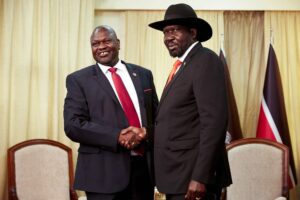
American dirty tricks: South Sudan’s “civil war” that broke out in december 2013 was one of those American-engineered foreigh conflicts in persuit of American national interests, according to President Salva Kiir of South Sudan (right), seen here with former deputy president, Rick Machar, whom Kiir says was chosen by America to overthrow him
I went on in my chapter for Cynthia Mckinney’s book, to show how in Ghana, Zimbabwe, and other African countries, American foreign policy – in fact Western foreign policy in general – and the nefarious activities of their multinational companies have combined to create shithole conditions in those African countries.
In a way, really, most of the African countries have been lucky that the Americans have not been as brutal as they have been in Venezuela in the recent past, and to a certain extent in Zimbabwe since 2000.
America’s decline by 2030
Interestingly, Dr Kevin Barret (an American Islamic studies scholar and popular contributor to the top echelons of the American media), comforts the victims of American rapacity by demonstrating in Part Four of the Cynthia Mckinney-edited book, that by 2030 America will not be the America we have known it in the last 78 years since the end of World War II.
“America is in decline,” Dr Barret writes, “primarily and precisely due to its misallocation of resources in favour of the military-industrial complex.”
Dr Barret supports his assertion by quoting Alfred McCoy who endorsed in his new book, In the Shadows of American Empire, “the prediction of the [US] National Intelligence Council that the US hegemony will end by 2030”. Barret forecasts that “imperial collapse will bring a major crash in American living standards and an accompanying decline towards sh*thole country status.”
Another Part Four contributor, Richard Falks (an American author of 30 books, who is also professor emeritus of international law at Princeton University), gives more details on how the US actually creates “sh*thole” countries around the world.
He explains that ever since the fall of European colonialism, US foreign policy has generally done its best to control the economic, political and social development of countries in Africa, Asia, Middle East and Latin America.
“Stripping away the ideology of US expansionism,” Falk writes, “exposes a set of realities devoted to squeezing wealth from [developing countries], confiscating or unjustly appropriating their resources, and as a result producing sh*thole conditions of impoverishment, corrupted elites, oppressive government, as well as a mixture of nationalist resistance and the collective loss of self-esteem.
“What motivated the political leadership of the United States to engage in this kind of predatory behaviour around the world? It was, at the first, materialist greed, civilisational arrogance, and the need for export markets and sources of raw materials to satisfy the compulsions of 19th century industrial capitalism, essentially maximising profits while ignoring massive poverty.
“We as a country have never truly acknowledged the full extent of these crimes or the degree to which treating others so wretchedly deforms the national character of the perpetrator, contributing to elaborate rituals of denial so as to avoid confronting unpleasant realities embedded in an accurate rendering of the national narrative. We employ a variety of euphemisms and prohibitions designed to cover depraved behaviour with a thick veil of ignorance and deception.”
Falks then pronounces matter-of-factly: “We are a sh*thole country to the extent that our leaders and citizenry accept extreme poverty, police brutality, environmental degradation, and global warming as non-issues, while scapegoating Muslims, Hispanics, non-white immigrants, and refugees while projecting a world of drug addicts and Islamic radicals posing dire threats to the future. Such an inversion of societal realities and challenges does warrant the sh*thole labelling in the spirit of honest disclosure.
“As the lead international actor for the past century, the United States needs to accept some responsibility for making foreign societies so unlivable that people flee elsewhere in desperation, and take steps to improve the situation.”
Unusually, after cheating its way around the world and trampling on other people’s rights, the US, according to Dr Kevin Barrett, is no better. “The petrol dollar – so named because Saudi Arabia has propped up the otherwise overvalued greenback by refusing to sell oil in any other currency – will almost certainly lose its status as the de facto global reserve currency during the coming decade,” Barrett predicts.
“As in Sigmund Freud’s favourite folktale, the devil,” Barret goes on, “that head usurer of the empire of usury, will suddenly vanish from our shores, and Americans will discover that [the devil’s] gold has turned to shit. The resulting crisis in the US domestic economy will likely push the erstwhile world hegemon further down the road toward sh*thole nation status, giving Americans a noxious taste of the foul medicine their leaders have been foisting on the world.
“This will mark the end of the ‘American century’ – the roughly 100 years during which the US profited, at least relative to the rest of the world, from the international usury cartel’s depredations.”
(How the US creates Sh*thole Countries is published by Clarity Press. Available on Amazon, Indigo, Barnes & Noble, and IndifBound.org for US$20-US$29.95)
Humans have known for over 100 years that sleep aids memory, learning, and brain performance in general, but the question remained what it did at the level of the single neuron. Ground breaking research by Israeli scientists in 2019 showed that the biological reason why sleeplessness ultimately leads to death is that when we sleep, our nerve cells take a break from their usual function, freeing their resources to reduce DNA damage that was accumulated during wakefulness. This strongly argues that sleep is biochemically essential, and that sleep deprivation causes some kind of gradual systems collapse in the brain, which if it continues for some time, leads to neuronal cell death due to DNA damage. This report is by Ruth Schuster (of the Israeli newspaper, Hareetz).
Survival kit: Everyone needs sleep because sleep is biomechanically essential, studies have proven that sleep deprivation causes a kind of gradual systems collapse in the brain
We all sleep. From jellyfish to frilled-neck lizards to flying squirrels to humans, the need for sleep is universal. But the biological reason why sleeplessness ultimately leads to death has always been a mystery. But in March 2019, a study by academics from the Bar-Ilan University in Ramat Gan, Israel, published in the journal Nature Communications, presented a ground-breaking theory: that when we sleep, our nerve cells take a break from their usual function, freeing their resources to reduce DNA damage that was accumulated during wakefulness.
Sleep makes no evolutionary sense in that it is an insanely vulnerable time for the slumberer. You are more likely to get eaten by a predator while sleeping than when you are awake. So why would we evolve to need sleep?
It is well established that loss of sleep affects brain performance such as memory and learning, from fruit flies to humans. This strongly argues that sleep is biochemically essential, and that sleep deprivation causes some kind of gradual systems collapse in the brain.
In the paper published by Nature Communications, Prof Lior Appelbaum of the Bar-Ilan University’s Mina and Everard Goodman Faculty of Life Sciences and Gonda (Goldschmied) Multidisciplinary Brain Research Centre, believed he and his colleagues had discovered the biological why. Appelbaum supervised the study led by graduate student David Zada.
Doctoral student Zada was the first author of the study, with co-authors Dr Tali Lerer-Goldshtein, Dr Irina Bronshtein, and Prof Yuval Garini – all from the Bar-Ilan University, a public research university established in 1955. Located in the city of Ramat Gan in the Tel Aviv District of Israel, it is the country’s second-largest academic institution. It has over 20,000 students and 1,350 faculty members.
Sleep baby sleep: Studies have shown that if an organism doesn’t sleep, its cells don’t “power down” and can’t efficiently perform DNA maintanance
Based on observing single neurons in live transparent fish during sleep and wakefulness, the Bar-Ilan researchers concluded that if the organism doesn’t sleep, its nerve cells don’t “power down” and can’t efficiently perform DNA maintenance.
Accruing neuronal DNA disrepair may explain how sleep and sleep disturbances affect brain performance, even aging and various brain disorders, the team postulated.
“When the organism whole sleeps, we can now define single sleeping cells,” Appelbaum told Haaretz. “Here for the first time we show how the sleep of the organism affects movement of chromosomes and DNA maintenance in specific single neurons.”
Sleep and the single cell
The fish in question were zebrafish, stripy freshwater minnows that originally hailed from the Himalayas and, being appropriately hardy, have become a popular aquarium pet – and research subject.
Fortunately for brain researchers, when zebrafish are young, they are transparent. Even their skulls are transparent, rendering them ideal for observational research of what is happening in their little brains. Importantly, like humans, zebrafish sleep during the night.
All our cells have DNA, with the exception of red blood cells in humans and some other animals. From the moment each cell comes into being, its DNA starts to suffer damage. All sorts of things can damage DNA, such as oxidants, sunbathing (in the case of skin cells) and even neuronal activity itself. But the damage should be repaired by DNA repair enzymes, in theory.
Asked how exactly they could see when a zebrafish neuron was online or offline, Appelbaum says the researchers developed a method to mark chromosomes in the fish’s DNA and track their movement inside the neuron. Their imaging achieved the resolution of seeing these chromosomes in the individual fish brain neurons.
Using 3D time-lapse photography and live baby zebrafish with marked chromosomes, the researchers discovered that when the fish is awake, chromosome movement in the cell nuclei is diminished and DNA damage accumulates. If wakefulness persists, this damage can reach unsafe levels.
After prolonged sleep deprivation, neuronal cells can die. But during sleep, chromosome movement is faster. This fast movement is the expression of efficient nucleus maintenance. In other words, sleep normalises the levels of DNA damage in each individual neuron, the researchers said.
DNA maintenance is not efficient enough when the organism and its nerves are awake; the organism requires an offline sleep period with reduced input to the brain for the repair to be proper.
“It’s like potholes in the road,” Appelbaum explained. “Roads accumulate wear and tear, especially during daytime rush hours, and it’s most convenient and efficient to fix them at night, when there’s light traffic.”
What about non-neuronal cells? Do they also fix their DNA when the animal is sleeping? Possibly not.
The researchers tested two other cell types: endothelial cells (vascular system) and glial cells. They didn’t find differences in chromosome dynamics and DNA damage between day and night. “We suggest that this mechanism is specific to neurons. However, future work should test these processes in other cell types, such as muscles,” Appelbaum said,
When neurons go offline
The bottom line is that when the fish sleeps, movement surrounding the chromosomes escalates, and that increase in activity was shown to be essential to efficient DNA repair. There is some movement in the nucleus during the day; there is evidently some DNA repair in the neurons. But the balance tilts towards repair only when the zebrafish sleeps.
Experiments bolstered the finding; for instance, by making the fish sleep in the middle of its daytime wakefulness period by putting melatonin in the water, and filming the sleep-dependent increase of chromosome movements and efficient repair. Or by chemically inducing DNA damage in the fish – which was followed by increased sleep and normalisation of this damage.
Appelbaum noted that humans had known for a hundred years that sleep aids memory and learning, and brain performance in general, but the question remained what it did at the level of the single neuron. Now we know. “We believe that under normal conditions, when we are tired, the accrued damage to the neuronal DNA somehow signals the brain to go to sleep,” Appelbaum said.
Asked if all neurons sleep when the organism does, and if they all probably sleep similarly, Appelbaum pointed out that our brains don’t shut down during sleep; they enter another state.
“Maybe different neurons need different amounts of sleep,” he says. “Also, it’s likely that not every neuron can go to sleep when it feels like. This would cause chaos, and the brain has to function properly during the day. Evolution developed the brain with a consolidated, synchronised period of sleep dedicated to cellular maintenance.”
The next phase of the research will be to look for neurons that are especially active during sleep, region by region of the brain. Another question is what happens to our DNA repair kits during dream states – and we are not the only ones dreaming. Research published last year concluded that animals as far down as lizards can dream too.
An association with neurodegenerative diseases is also possible. Chronic sleep loss may increase the risk for neuronal cell death due to DNA damage. Appelbaum noted that one symptom of many brain diseases is insomnia.
America, Britain and their Western allies have forever been telling whoever has ears that they did not impose economic sanctions on Zimbabwe. It was only personal sanctions on individual Zimbabwean officials who were working against the growth of democracy, they say. But here, printed in full, is America’s “Zimbabwe Democracy and Economic Recovery Act”, a hypocritical piece of legislation passed by Congress in December 2001 which has had far damaging consequences on the Zimbabwean nation than people are prepared to admit. See if what is published below is about personal sanctions.
The first thrower of stone: William H. Frist, a Republican senator was the main sponsor for the “Zimbabwe Democracy and Economic Recovery Act”. He introduced the bill in the Senate on 8 March 2001
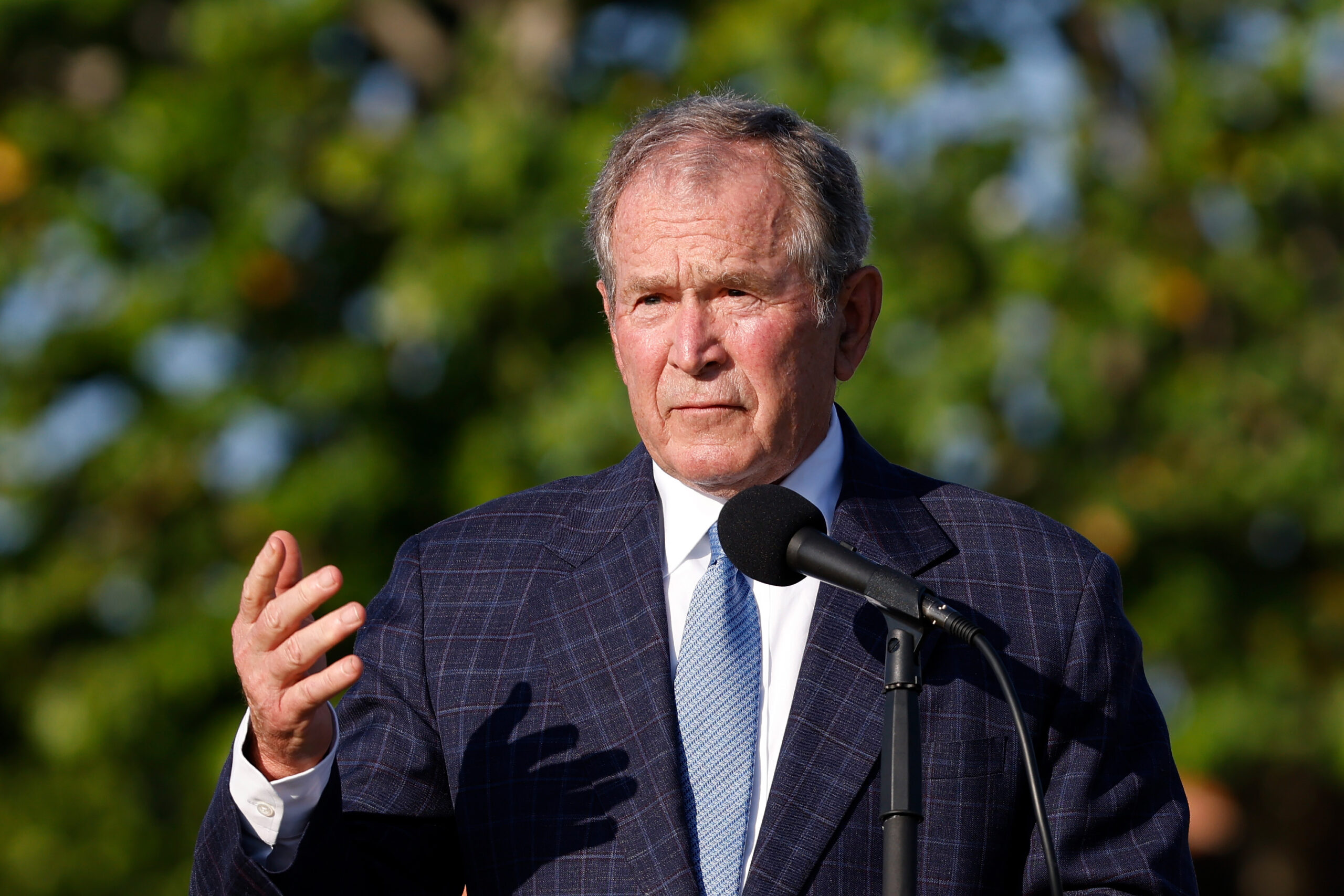
The punitive “Zimbabwe Democracy and Economic Recovery Act” (readers should not be fooled by its sweet-sounding title), was signed into law by President George W. Bush on 21 December 2001. On that day President Bush issued the following statement:
“Today, I have signed into law S.494 [‘S’ means Senate ‘law’ because it originated in the Senate], the ‘Zimbabwe Democracy and Economic Recovery Act of 2001’. This Act symbolises the clear bipartisan resolve in the United States to promoting human rights, good governance, and economic development in Africa.
“My administration shares fully the Congress’ deep concerns about the political and economic hardships visited upon Zimbabwe by that country’s leadership. I hope the provisions of this important legislation will support the people of Zimbabwe in their struggle to effect peaceful, democratic change, achieve economic growth, and restore the rule of law.
“Section 4(c) of the Act purports to direct the Executive branch to oppose and vote against the extension of loans or the cancellation of debt in international financial institutions unless and until I make a certification or national interest determination.
“I am concerned that this provision burdens my constitutional authority in the area of foreign affairs to conduct negotiations and cast votes in international organisations. I will construe the provision as being subject to my exclusive authority to negotiate or vote in international financial institutions.”
Personal sanctions?
For those who still don’t believe that America, Britain, and their Western allies have imposed, or did impose, economic sanctions on Zimbabwe, please read this paragraph again: “Section 4(c) of the Act purports to direct the Executive branch to oppose and vote against the extension of loans or the cancellation of debt in international financial institutions unless and until I make a certification or national interest determination.” Which part of this paragraph talks about “personal sanctions” imposed on individual Zimbabwean officials?
So, with this American fiat, Zimbabwe was condemned to economic suffering by the say-so of a foreign government. S.494 was partly responsible for the implosion of the Zimbabwean economy in the mid-2000s, with subsequent high inflation and severe hardship for the people.
Remarkably, the bill (which gave birth to S.494) was drafted with the help of one of Morgan Tsvangirai’s opposition MDC white parliamentarians, and was introduced in the US Congress on 8 March 2001, a year-and-a-half after Zimbabwe launched its the fast track land reform programme in January 2000.
The bill was scheduled for debate on 16 July 2001, and was passed by the Senate on 1 August 2001, and by the House of Representatives on 4 December 2001. It became law (US Public Law No.107-99) on 21 December 2001 after President Bush appended his signature to it.
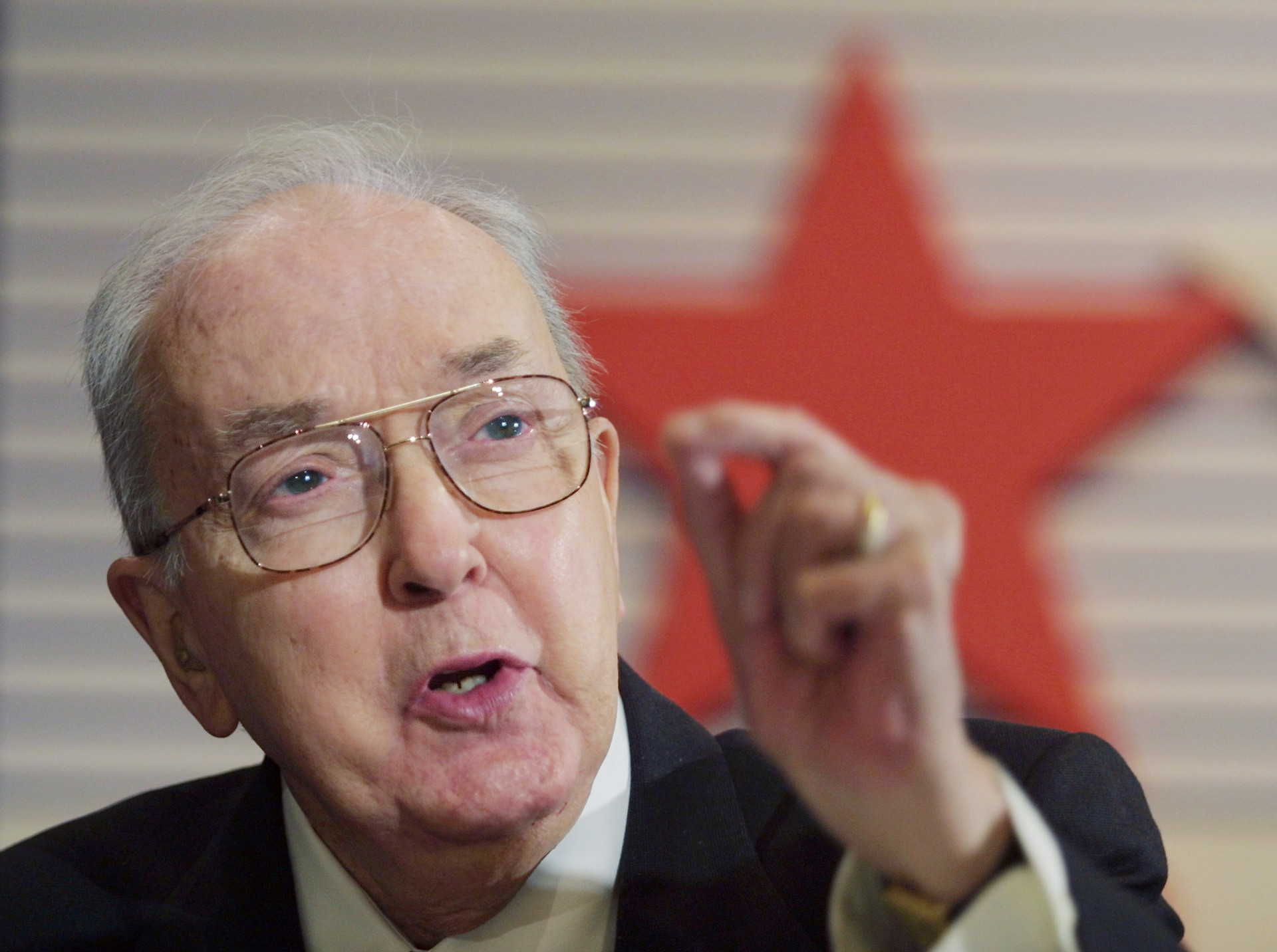
The main sponsor of the bill was the Republican senator, William H. Frist, who introduced it in the Senate on 8 March 2001. It was co-sponsored on 24 May 2001 by another Republican, Senator Jesse Helms (who spent most of his early years working against black majority rule in Zimbabwe), and the Democratic senator, Hillary Clinton.
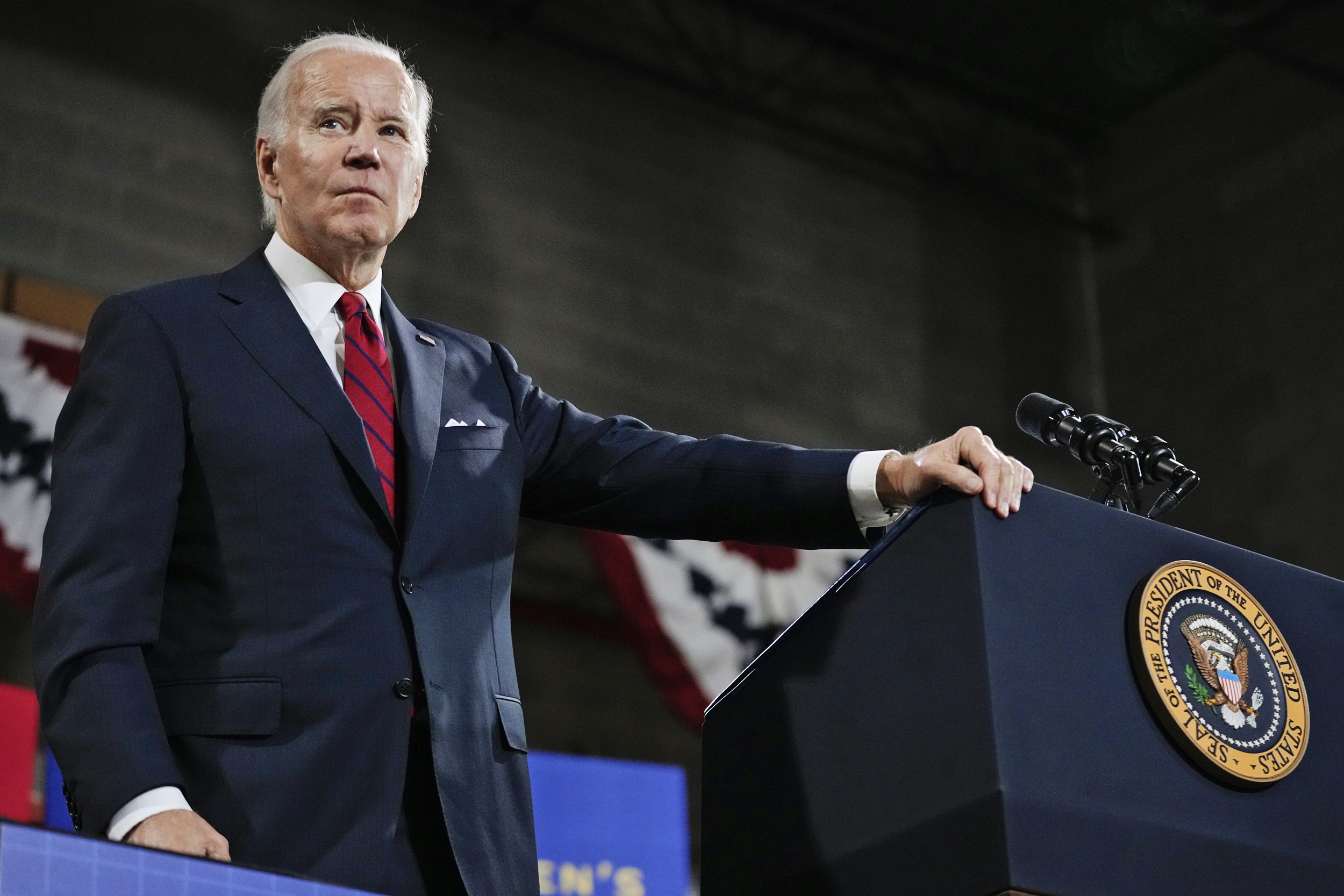
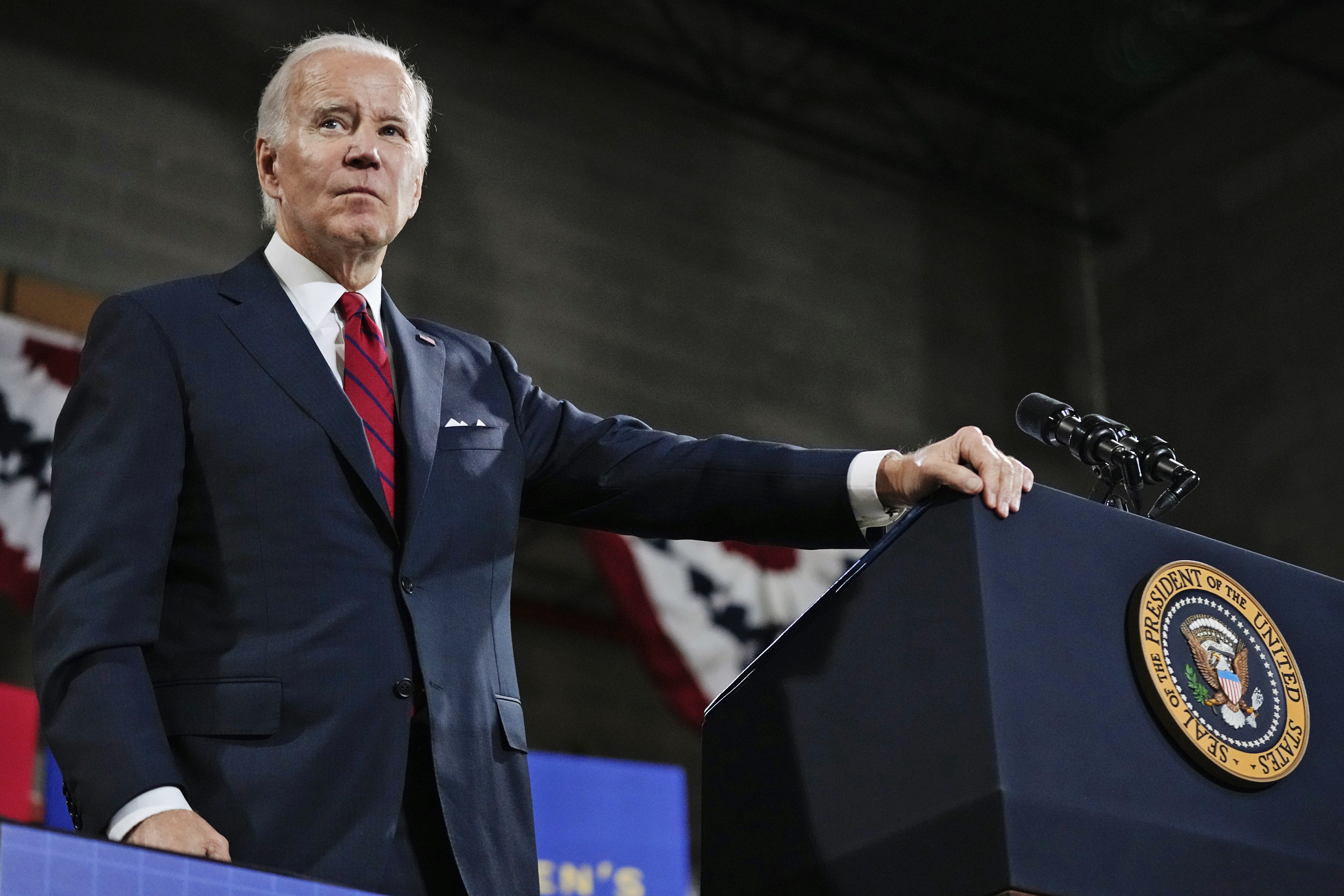
On 12 July 2001, another Democratic senator, Joseph R. Biden (who would go on to become the US Vice President on 20 January 2009 and President on 20 January 2021), joined the co-sponsors of the bill. A co-sponsor is a member of Congress who joins one or more members in his or her chamber (ie, the House of Representatives or Senate) to sponsor a bill or amendment. The first member who “signs onto” a bill is called the “sponsor”. Members who subsequently sign become “co-sponsors”.
Can you just imagine Hillary Clinton, President George W. Bush, and President Joseph Biden teaming up to fight for the imposition of only personal sanctions on Zimbabwean officials? No, they have more important things to do, and one of those “more important things” is economic and political sanctions on Zimbabwe. And that is what they did. Not only personal sanctions.
Hush, hush bill
In the case of S.494, the bill was passed in the Senate by unanimous consent, and a record of each senator’s position was not kept. The House of Representatives passed it by a roll call vote, which was held under a suspension of the rules to cut debate short. It needed a two-thirds majority, and 396 representatives voted for it, 11 against, and 26 abstained.
To gauge how Westerners value kith and kin relations (in this case white farmers who had lost their farms in Zimbabwe), S.494 was rushed through Congress even as America was mourning the loss of nearly 3,000 lives in the September 11 terrorist attacks on New York City and Washington DC. You might think they had more important things to do at the time than passing a law to punish an African country which they could not pick on a world map, and which was taking measures to right a serious colonial wrong.
A bad man in America: Jesse Helms, a Republican senator who had spent most of his early years working against black majority rule in Zimbabwe, co-sponsored the bill on 24 May 2001
For the sake of the record, we publish here the full text of S.494 which was supposed to “provide for a transition to democracy and to promote economic recovery in Zimbabwe”:
The Act
S.494 [107th Congress of the United States of America]
Zimbabwe Democracy and Economic Recovery Act 2001
Be it enacted by the Senate and House of Representatives of the United States of America in Congress assembled.
Section 1: Short title
This Act may be cited as the “Zimbabwe Democracy and Economic Recovery Act of 2001”
Section 2: Statement of Policy
It is the policy of the United States to support the people of Zimbabwe in their struggle to effect peaceful, democratic change, achieve broad-based and equitable economic growth, and restore the rule of law.
Section 3: Definitions
In this Act:
(1) International financial institutions – The term “international financial institutions” means the multilateral development banks and the International Monetary Fund (IMF)
(2) Multilateral development banks – The term “multilateral development banks” means the International Bank for Reconstruction and Development [ie, the World Bank], the International Development Association, the International Finance Corporation, the Inter-American Development Bank, the Asian Development Bank, the Inter-American Investment Corporation, the African Development Bank, the African Development Fund, the European Bank for Reconstruction and Development, and the Multilateral Investment Guaranty Agency.
Section 4. Support for democratic transition and economic recovery
(a) Findings – Congress makes the following findings:
(1) Through economic mismanagement, undemocratic practices, and the costly deployment of troops in the Democratic Republic of Congo, the government of Zimbabwe has rendered itself ineligible to participate in International Bank for Reconstruction and Development and International Monetary Fund programmes, which would otherwise be providing substantial resources to assist in the recovery and modernisation of Zimbabwe’s economy. The people of Zimbabwe have thus been denied the economic and democratic benefits envisioned by the donors to such programmes, including the United States.
(2) In September 1999, the IMF suspended its support under a “standby arrangement”, approved the previous month, for economic adjustment and reform in Zimbabwe.
(3) In October 1999, the International Development Association (in this section referred to as “IDA”) suspended all structural adjustment loans, credits, and guarantees to the Government of Zimbabwe.
(4) In May 2000, the IDA suspended all other new lending to the Government of Zimbabwe.
(5) In September 2000, the IDA suspended disbursement of funds for ongoing projects under previously approved loans, credits, and guarantees to the Government of Zimbabwe.
(b) Support for democratic transition and economic recovery
(1) Bilateral debt relief – Upon receipt of the appropriate congressional committee of a certification described in subsection (d), the Secretary of State of the Treasury shall undertake a review of the feasibility of restructuring, rescheduling, or eliminating the sovereign debt of Zimbabwe held by any agency of the United States Government.
(2) Multilateral debt relief and other financial assistance – It is the sense of Congress that, upon receipt by the appropriate congressional committee of a certification described in subsection (d), the Secretary of State of the Treasury should:
(a) Direct the United States executive director of each multilateral development bank to propose that the bank should undertake a review of the feasibility of restructuring, rescheduling, or eliminating the sovereign debt of Zimbabwe held by that bank; and (b) Direct the United States executive director of each international financial institution to which the United States is a member to propose to undertake financial and technical support that is intended to promote Zimbabwe’s economic recovery and development, the stabilisation of the Zimbabwean dollar, and the viability of Zimbabwe’s democratic institutions.
(c) Multilateral financing restriction – Until the President [of the United States] makes the certification described in subsection (d), and except as may be required to meet basic human needs or for good governance, the Secretary of the Treasury shall instruct the United States executive director to each international financial institution to oppose and vote against: (1)
Any extension by the respective institution of any loan, credit, or guarantee to the Government of Zimbabwe, or (2) Any cancellation or reduction of indebtedness owed by the Government of Zimbabwe to the United States or any international financial institution.
(d) Presidential certification that certain conditions are satisfied:
A certification under this subsection is a certification transmitted to the appropriate congressional committee of a determination made by the President [of the United States] that the following conditions are satisfied:
(1) Reasoning of the rule of law – The rule of law has been restored in Zimbabwe including respect for ownership and title to property, freedom of speech and association, and an end to the lawlessness, violence and intimidation sponsored, condoned, or tolerated by the Government of Zimbabwe, the ruling party, and their supporters or entities.
(2)Election or pre-election conditions – Either of the following two conditions is satisfied: (a) Presidential election – Zimbabwe has held a presidential election that is widely accepted as free and fair by independent international monitors, and the president-elect is free to assume the duties of the office. (b) Pre-election conditions – In the event the certification is made before the presidential election takes place, the Government of Zimbabwe has sufficiently improved the pre-election environment to a degree consistent with accepted international standards for security and freedom of movement and association.
(3) Commitment to equitable, legal, and transparent land reform – The Government of Zimbabwe has demonstrated a commitment to an equitable, legal and transparent land reform programme consistent with agreements reached at the International Donors Conference on Land Reform and Resettlement in Zimbabwe held in Harare, Zimbabwe, in September 1998.
(4) Fulfilment of agreement ending war in DRCongo – The Government of Zimbabwe is making a good faith effort to fulfil the terms of the Lusaka, Zambia, agreement on ending the war in Congo.
(5) Military and national police subordinate to civilian government – The Zimbabwe Armed Forces, the National Police of Zimbabwe, and other state security forces are responsible to and serve the elected civilian government.
(c) Waiver – The President [of the United States] may waive the provisions of subsection (b) (1) or subsection (c), if the President determines that it is in the national interest of the United States to do so.
Section 5: Support for democratic institutions, the free press and independent media, and the rule of law:
(a) In general – The President [of the United States] is authorised to provide assistance under Part I and Chapter 4 of Part II of the Foreign Assistance Act of 1961 to:
(1) Support an independent and free press and electronic media in Zimbabwe.
(2) Support equitable, legal, and transparent mechanisms of land reform in Zimbabwe, including the payment of costs related to the acquisition of land and the resettlement of individuals, consistent with the International Donors Conference on Land Reform and Resettlement in Zimbabwe held in Harare, Zimbabwe, in September 1998, or any subsequent agreement relating thereto, and
(3). Provide for democracy and governance programmes in Zimbabwe.
(b) Funding – Of the funds authorised to be appropriated to carry out Part I and Chapter 4 of Part II of the Foreign Assistance Act of 1961 for fiscal year 2002 –
(1) $20m is authorised to be available to provide the assistance described in subsection (a) and
(2) $6m is authorised to be available to provide the assistance described in subsection (a) (3)
(c) Supersedes other laws – The authority in this section supersedes any other provision of law.
Section 6: Sense of Congress on the actions to be taken against individuals responsible for violence and the breakdown of the rule of law in Zimbabwe:
It is the sense of Congress that the President [of the United States] should begin immediate consultation with the governments of European Union member states, Canada, and other appropriate foreign countries on ways in which to:
On 12 July 2001, another Democratic senator, Joseph R, Biden (above), who would go on to become the US vice President on 20 January 2009 and President on 20 January 2021, joined the co-sponsors of the punitive “Zimbabwe Democratic and Economic Recovery Act”, an act that has consigned Zimbabwe to 23 years of hardships
(1) Identify and share information regarding individuals responsible for the deliberate breakdown of the rule of law, politically motivated violence, and intimidation in Zimbabwe.
(2) Identify assets of those individuals held outside Zimbabwe.
(3) Implement travel and economic sanctions against those individuals and their associates and families; and
(4) Provide for the eventual removal or amendment of those sanctions.”
The lady herself : Hillary Clinton, then a Democratic senator, co-sponsored the punitive Zimbabwe sanctions bill on 8 March 2001
Editor’s comment: An act of war
For the Americans, the above essentially was the legal basis for the economic and political sanctions regime that they imposed on Zimbabwe. However, in the eyes of the United Nations, according to its charter, these sanctions were illegal because they violated the UN Charter.
Overall, S.494 – which the Americans would otherwise consider an “act of war” if some other foreign country had passed it against them – effectively condemned Zimbabwe’s 13 million population to severe economic suffering as the country was unable to borrow or get any credit or debt cancellation at the international level.
It is interesting to note that while Uganda and Rwanda sent their troops to DRCongo to fight against the legitimate and internationally-recognised government of that country, and stayed for 8 years causing mayhem in Congo, America passed no such punitive law to sanction Uganda and Rwanda.
Defending white-skin privilege: Goerge W. Bush, swayed by kith and kin politics, signed the “Zimbabwe Democracy and Economic Recovery Act” into law on 21 December 2001. Since then, Zimbabwe’s economy has not been the same again
Instead, America and Britain and their allies gave Rwanda and Uganda all the military, economic, and political support that they needed to continue the war in Congo – because effectively they were doing the bidding of America and Britain and their allies. Basically, Uganda and Rwanda were fighting a proxy war in Congo on behalf of America, Britain and their allies who wanted their erstwhile friend, President Laurent Kabila, out of power so they could gain absolute control of Congo’s political life, strategic minerals and other wealth.
So, Zimbabwe which was invited by the legitimate government of Congo to help repel what amounted to “foreign invaders” attacking the country, “rendered itself ineligible” – according to the American Congress – “to participate in [World Bank and IMF] programmes” because of “the costly deployment of troops to Congo”.
Yet, even as Uganda and Rwanda increased their deployment of troops, and succeeded in reducing Congo to its knees in 8 years of proxy war, they still did not render themselves ineligible “to participate in World Bank and IMF programmes”, and even more importantly their deployment of troops to Congo did not destroy their economies as Zimbabwe’s economy was alleged by America and others to have been destroyed by the Congo war.
On top of all this, Uganda and Rwanda received massive economic, political, military, and moral support from America, Britain and their allies for fighting in Congo.
American admission
The real motivation of S.494, which was neatly summed up by the Congressional Budget Office (CBO), was simply “economic sanctions” against Zimbabwe for (1) daring to embark on land reform which negatively impacted on white commercial farmers in the country, and (2) implementing the directives of the Southern African Development Community (SADC) to intervene in Congo to prevent rebels and foreign invaders from laying Congo to waste.
On 12 July 2001, America’s Senate Committee on Foreign Relations ordered the CBO to prepare a cost estimates for implementing S.494. In the preamble to the estimates, the CBO said matter-of-factly: “S.494 would support a transition to democracy and promote economic recovery in Zimbabwe through a set of incentives and sanctions. The bill would require the United States to oppose lending by international financial institutions to, or debt relief for, Zimbabwe until the [American] President certifies to the Congress that certain conditions are certified …
“Assuming the appropriation of the authorised amounts, CBO estimates that implementing the bill would cost $23m over the 2002-2006 period … S.494 would earmark $20m for land reform and $6m for programmes to promote democracy and good governance in Zimbabwe [ie, anti-government activities] from funds otherwise authorised to be appropriated in 2002 for development assistance and economic support fund,” the CBO added.
Cynthia McKinney
On the day the House of Representatives passed S.494 (Tuesday, 4 December 2001), a fuming Cynthia McKinney, one of the few African-American politicians in Congress at the time to speak against the bill, stood on the floor of the House, and told the assembled congressmen and women:
“Mr Speaker,” she said, “at the International Relations Committee meeting on 28 November 2001, which considered the Zimbabwe Democracy and Economic Recovery bill of 2001, I asked a question of my colleagues who were vociferously supporting this misdirected piece of legislation: ‘Can anyone explain how the people in question who now have the land in question in Zimbabwe got title to the land?’
“My query was met with a deafening silence. Those who knew did not want to admit the truth and those who didn’t know should have known – that the land was stolen from the indigenous people through the British South Africa Company and any ‘titles’ to it were illegal and invalid.
“Whatever the reason for their silence, the answer to this question is the unspoken and real reason for why the United States Congress is now concentrating its time and resources on squeezing an economically-devastated African state under the hypocritical guise of providing a ‘transition to democracy’.
“Zimbabwe is Africa’s second-longest stable democracy. It is multi-party. It had elections last year [2000] where the opposition, Movement for Democratic Change, won over 50 seats in Parliament. It has an opposition press which vigorously criticises the government and governing party. It has an independent judiciary which issues decisions contrary to the wishes of the governing party.
“Zimbabwe is not without troubles, but neither is the United States. I have not heard anyone proposing a United States Democracy Act following last year’s [2000] presidential electoral debacle. And if a foreign country were to pass legislation calling for a United States Democracy Act which provided funding for United States’ opposition parties under the figleaf of ‘voter education’, this body [meaning Congress] and this country would not stand for it.
“There are many de jure and de facto one-party states in the world which are the recipients of support of the United States government. They are not the subject of congressional legislative sanctions.
“To any honest observer, Zimbabwe’s sin is that it has taken a position to right a wrong, whose resolution has been too long overdue – to return its land to its people. The Zimbabwe government has said that a situation where 2% of the population owns 85% of the best land is untenable. Those who presently own more than one farm will no longer be able to do so.
“When we get right down to it, this legislation is nothing more than a formal declaration of United States complicity in a programme to maintain white-skin privilege. We can call it an ‘incentives’ bill, but that does not change its essential ‘sanctions’ nature.
“It is racist and against the interests of the masses of Zimbabweans. In the long run, the Zimbabwe Democracy Act will work against the United States having a mutually beneficial relationship with Africa.”
In the days when there was honour in politics, cries of “hear, hear” would have greeted Cynthia McKinney’s words in Congress. But these were the days of Bush and Blair, and McKinney’s words were drowned in silence.
Since then, Zimbabwe’s economy has never been the same.
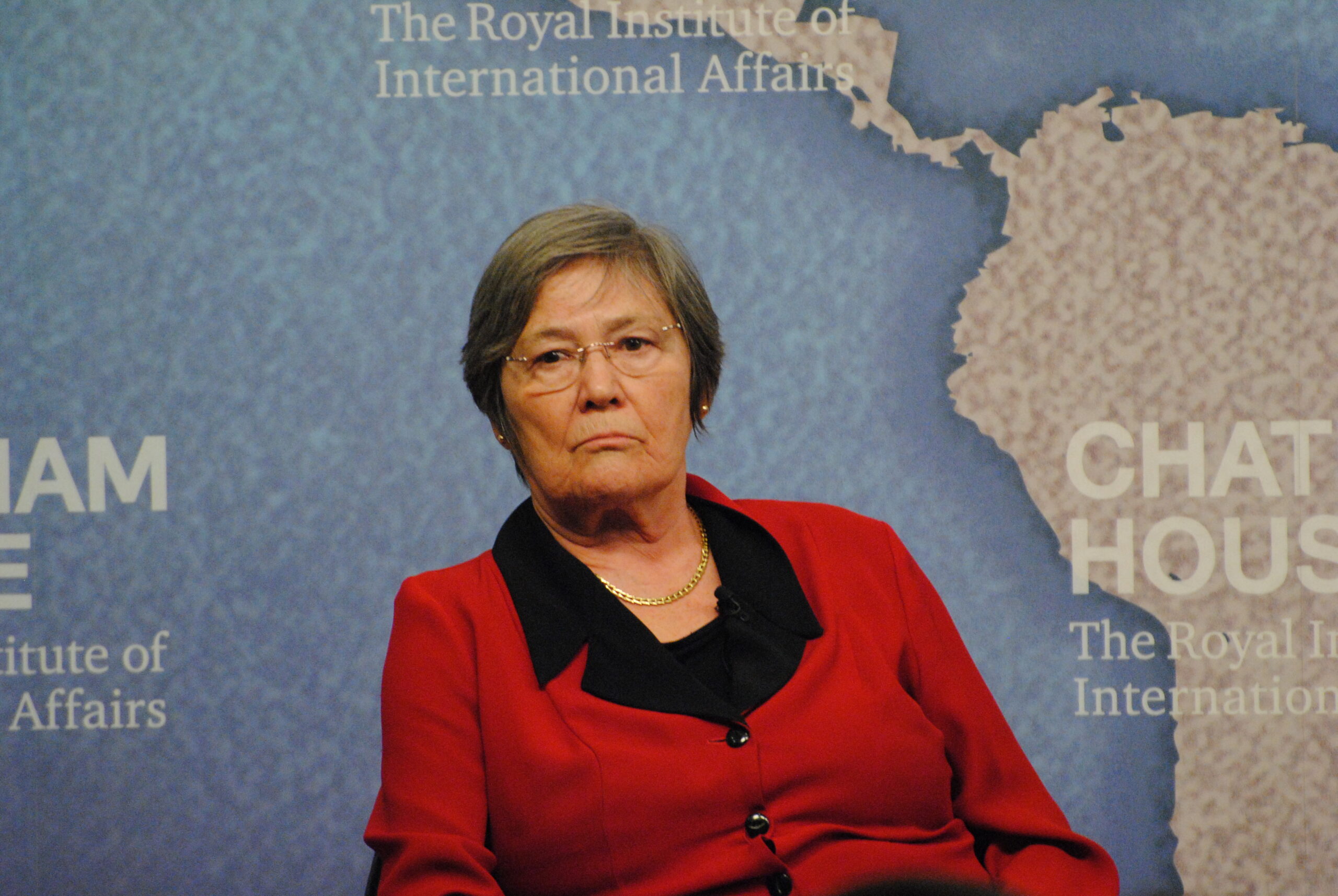
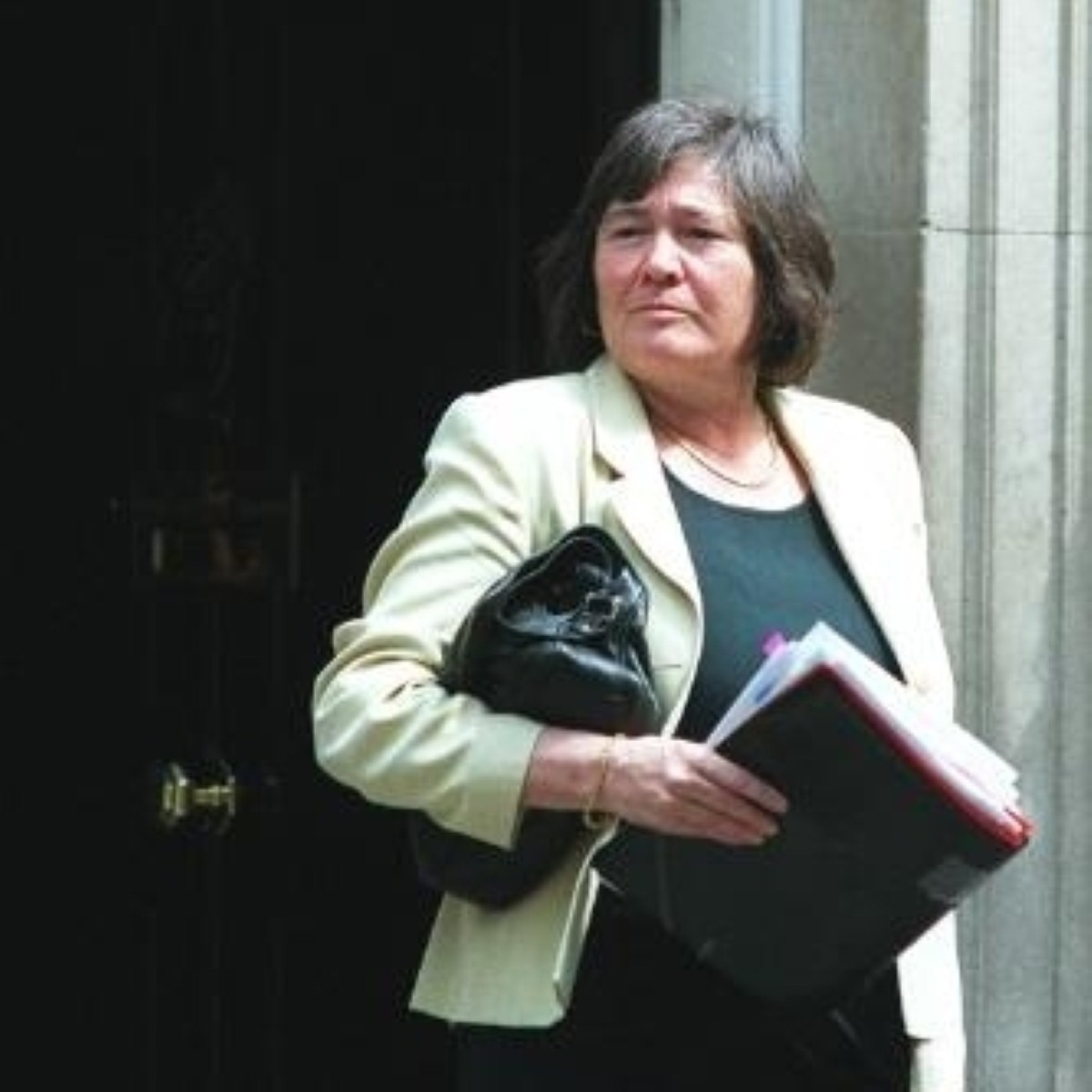
David Hasluck, the former director of the white Commercial Farmers Union calls it “the spark”. Dominic Lawson, a British writer, calls it “an astonishingly ill-judged letter”. Hasluck advances the view that Clare Short’s letter was the “the spark that precipitated [the] conviction in the mind of my President, Mugabe, that the British government was not going to fulfil its obligations” on land reform in Zimbabwe. To Lawson, “it would have been hard to construct a letter more skillfully designed to enrage Mugabe – or even a man with a much thicker skin than the Zimbabwean leader. Short’s amazing assertion – that because her family was of Irish stock, there was no need to honour a commitment to Zimbabwe entered into by a previous British government – was an inimitable mixture of shamelessness and sanctimony.” We publish below the full text of Clare Short’s 5 November 1997 letter repudiating British responsibility for colonial wrongs in Zimbabwe, a repudiation whose consequences have been so damaging to Zimbabwe and its people.
The undiplomatic tough lady: Clare Short, Britain’s international developement minister at the time, told the Zimbabwean government: “I should make it clear that we do not accept that Britain has a special responsibility to meet the costs of land purchase in Zimbabwe. We are a new government from diverse backgrounds without links to former colonial interests. My own origins are Irish and as you know we were colonised, not colonised “
This is a letter nobody should forget.
5 November 1997
From the Secretary of State Hon Kumbirai Kangai MP Minister of Agriculture and Land
Dear Minister,
George Foulkes has reported to me on the meeting which you and Hon John Nkomo had with Tony Lloyd and him during your recent visit. I know that President Mugabe also discussed the land issue with the Prime Minister briefly during their meeting. At the Commonwealth Heads of Government Meeting, Tony Blair said that he looked forward to developing a new basis for relations with Commonwealth countries founded upon our government’s policies, not on the past.
We will set out our agenda for international development in a White Paper to be published this week. The central thrust of this will be the development of partnerships with developing countries which are committed to eradicate poverty, and have their own proposals for achieving that which we and other donors can support.
I very much hope that we will be able to develop such a relationship with Zimbabwe. I understand that you aim shortly to publish your own policies on economic management and poverty reduction. I hope that we can discuss them with you and identify areas where we are best able to help. I mentioned this in my letter on 31 August to Hon Herbert Murarwa.
I should make it clear that we do not accept that Britain has a special responsibility to meet the costs of land purchase in Zimbabwe. We are a new Government from diverse backgrounds without links to former colonial interests. My own origins are Irish and as you know we were colonised not colonisers.
We do, however, recognise the very real issues you face over land reform. We believe that land reform could be an important component of a Zimbabwean programme designed to eliminate poverty. We would be prepared to support a programme of land reform that was part of a poverty eradication strategy but not on any other basis.
I am told Britain provided a package of assistance for resettlement in the period immediately after independence. This was, I gather, carefully planned and implemented, and met most of its targets. Again, I am told there were discussions in 1989 and 1996 to explore the possibility of further assistance. However, that is all in the past.
If we look to the present, a number of specific issues are unresolved, including the way in which land would be acquired and compensation paid – clearly it would not help the poor of Zimbabwe if it was done in a way which undermined investor confidence.
Other questions that would need to be settled would be to ensure that the process was completely open and transparent, including the establishment of a proper land register.
Individual schemes would have to be economically justified to ensure that the process helped the poor, and for me the most important issue is that any programme must be planned as part of a programme to contribute to the goal of eliminating poverty. I would need to consider detailed proposals on these issues before confirming further British support for resettlement.
I am sure that a carefully worked out programme of poverty eradication which we could support would also bring in other donors, whose support would help ensure that a substantial land resettlement programme such as you clearly desire could be undertaken successfully. If is [sic] to do so, they too will need to be involved from the start.
It follows from this that a programme of rapid land acquisition as you now seem to envisage would be impossible for us to support. I know that many of Zimbabwe’s friends share our concern about the damage which this might do to Zimbabwe’s agricultural output and its prospects of attracting investment.
I thought it best to be frank about where we are. If you think it would be helpful, my officials are ready to meet yours to discuss these issues.
Yours faithfully
Clare Short
Destiny killer: Clare Short “it follows from this that a programme of rapid land acquisation as you now seem to envisage would be impossible for us to support”
For 18 long years, David Hasluck was the director of Zimbabwe’s white Commercial Farmers Union (CFU) – from 1984 till 20 December 2002 when he finally left office. Three months previously (in October 2002 to be precise), when meeting a visiting delegation of councillors from the New York City Council, Hasluck had criticised Tony Blair’s government in the UK for not recognising the colonial wrongs over land acquisition in Zimbabwe and, in the process, precipitating the political and economic crisis in the country that followed the launch of the land reform programme in 2000.
A man of truth: David Hasluck was the director of Zimbabwe’s white commercial famers body for 18 long years – from 1984 to December 2002, when he finally left office. He told our editor Baffour Ankomah: “Look my grandfather was a colonialist, he came in 1893, and he did bad things l am sure, in terms of dispossessing the native people of their land and being a miner and a speculator and all those things, but l can acknowledge the reality”
Hasluck was farming on 1,300 hectares of land in Burma Valley in Manicaland Province before the land reform. He was left with 400 hectares after the land reform, but was sanguine about it. As he was clearing his desk on 20 December 2002, Baffour Ankomah, the then editor of the London-based New African magazine and now editor of The Third Eye, caught up with Hasluck at the well-appointed CFU headquarters in Marlborough, Harare. It was a historic interview, which is reproduced here for the sake of posterity and also the millions of Zimbabweans who have grown up in the last 23 years, not knowing the true history of the land reform programme.
Q: I understand today is your last day in office, is that right?
A: Yes, I am going back to my farm, Manyera Farm, in the eastern district in a place called Burma Valley on the border with Mozambique. We grow many different crops and I am very proud of my cattle.
Q: I have been to the Burma Valley, it is a beautiful place. You go up the mountains and the valley spreads for miles down below. Georgeous place.
A: Yes, God made this place, and hidden too.
Q: Does your going have anything to do with your remarks against Britain?
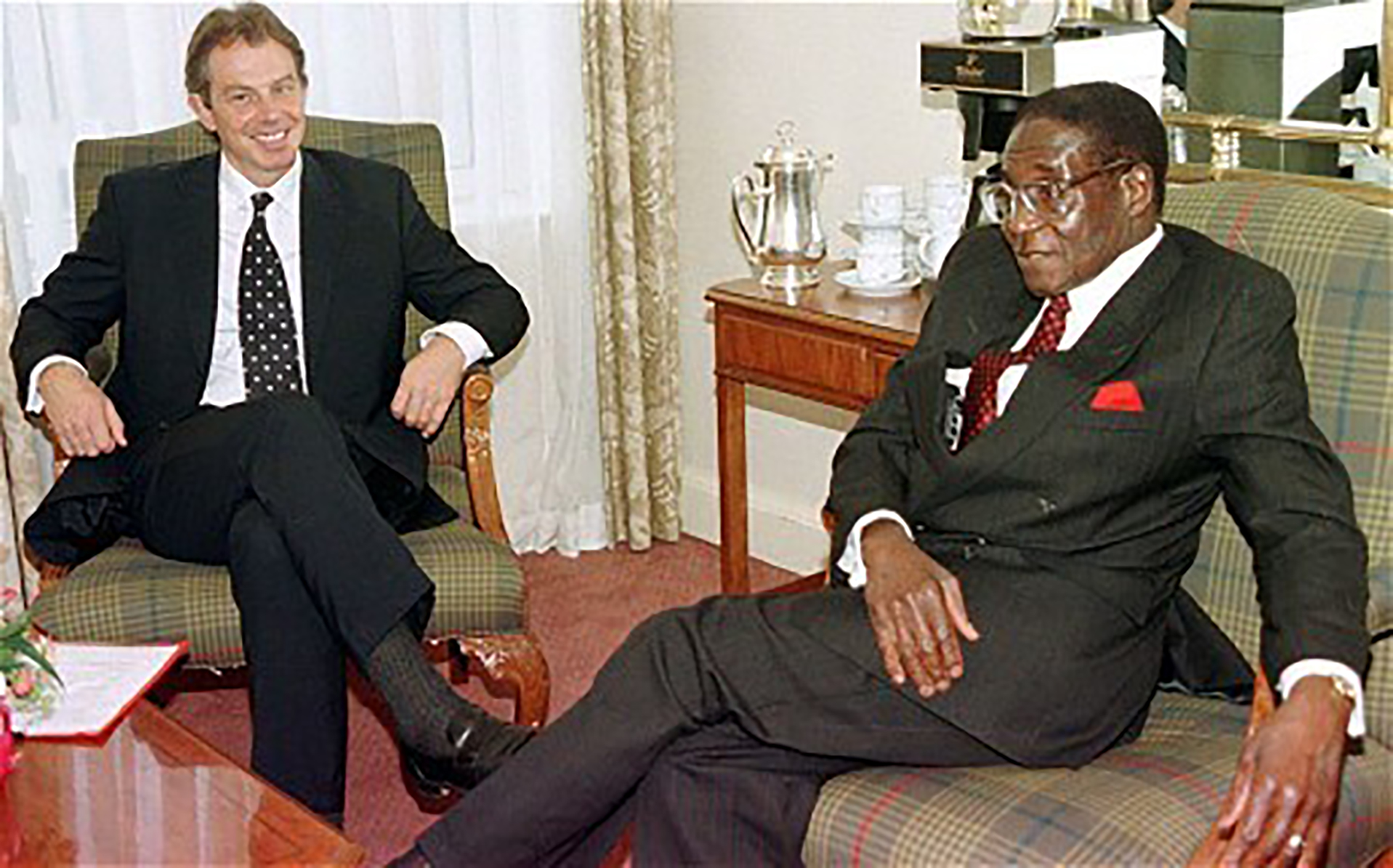
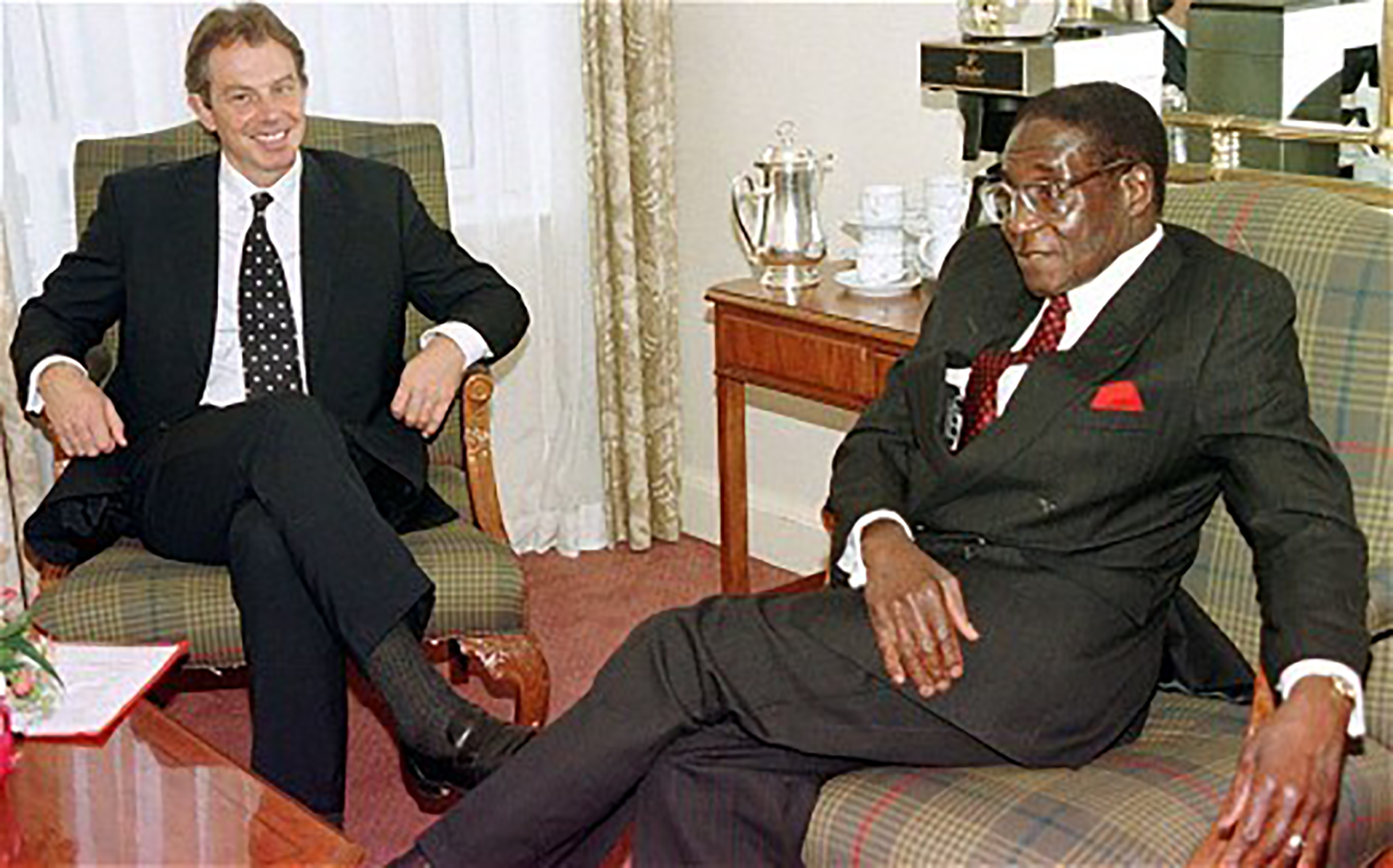
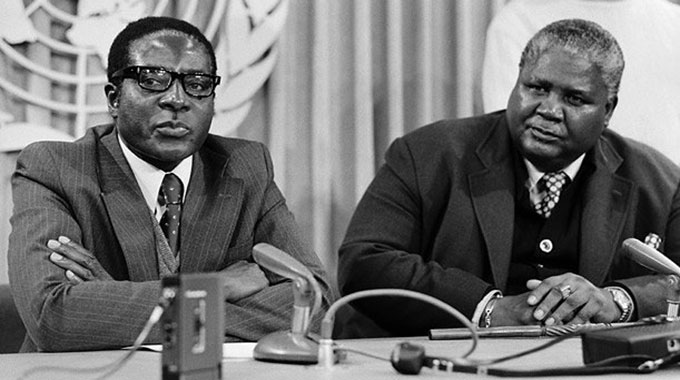
Bad meeting: President Robert Mugabe met Prime Minister Tony Blair on the sidelines of the Commonwealth Heads of Government Meeting (CHOGM) in Edinburg (240-27 October 1997), to discuss Zimbabwe’s land issue, but Blair’s then new labour government gave him a cold shoulder. Hasluck said: ” My then minister of agricultute, Kumbirai Kangai, who accompanied the president, phoned me from Edinburgh and said that the president had not been well received by the British governement”
A: No, not really. There were people who sanctioned me for making those remarks. But my remarks were made in the context that my greatest concern as a Zimbabwean is the lack of diplomatic fulfilment and understanding between my country and Great Britain.
Where people start shouting at each other as opposed to being able to engage and resolve issues is when we have problems. I continue to be concerned that the problems are deepening and the polarisation appears to be starker because of fundamental differences.
My remarks about Britain not understanding our historical heritage and not wishing to acknowledge it in respect of the land reform programme, was made in the context that when my President, Mugabe, personally went to Britain and met Tony Blair’s new Labour government, I think it was during the Commonwealth Heads of Government Meeting (CHOGM) in Edinburgh, he wished to raise the land issue with the new Labour government, and he told me at the time that he felt he had not been well received. He was dismayed and angry about it. My then minister of agriculture, Kumbirai Kangai, who accompanied the President phoned me from Edinburgh and said that the President had not been well received by the British government.
Q: That was when?
A: The Commonwealth Heads of Government Meeting in Edinburgh was in, I think, 1996 or 1997.
Q: Tony Blair came to power in May 1997. The Commonwealth meeting in Edinburgh was in October 1997, I think.
A: Ok, then that’s right. It was during the CHOGM in Edinburgh. Blair’s policy was this: “My new government has a White Paper on bilateral relations and it is based on a number of principles that my government believes should be the basis for mutual co-operation between Great Britain and any other developing country.”
He laid down the principles: good governance, transparency, democracy, land reform programme being to the national benefit, a programme that would constitute development in terms of British analysis of what the programme was.
Our delegation, including the President, Mugabe, as far as I know put across to Tony Blair that in 1980 there was a Lancaster House agreement, that land was the issue that prevented the early settlement of the independence issue. There had to be outside facilitators to reconcile the different parties.
And Mugabe and his government’s understanding was that Britain would fund the land reform programme, the scope of which was too large for Britain to fund alone. That there would be some international assistance from other Western nations, including the USA, and that we would go forward together. We did so.
During the first 10 years of independence, you will remember, the clauses affecting the appropriation of land and property were entrenched in the Lancaster Constitution, and if the government wanted to compulsorily take land it had to pay compensation in the currency or currencies of the landowner’s choice. There were 3 million hectares of land bought on the willing seller, willing buyer basis.
David Hasluck: “I mean we are internationally sanctioned now, our leaders are internationally sanctioned largely – you know the elections are one thing – they are sanctioned largely because of the approach on land which started all things”
Q: So how did it go wrong?
A: Things started getting difficult in this country in 1995 because by now my President, Mugabe, had seen that the land reform programme had not gone on as quickly as his government had hoped. So he made an extraordinary decision, in my opinion, together with his ZANU PF party, to take the land issue out of the institution of government and make it a party issue.
This was very distressing for commercial farmers. We had worked well with the government. To them, there was never enough land available. But we always said there was as much land available as they had money to buy, that finance was a constraint. That was why the government maintained that the British didn’t fund the land programme adequately.
Back in 1997 and 1998, there was a major intergovernmental (British and Zimbabwean governments) review of the land reform programme. I don’t think either party was very enthusiastic about how successful it had been. It needed more impetus, and more new people involved in increasing productivity rather than just transferring land.
In 1997, when the vital decision to make the land reform programme a party project was taken, a lot of farms were listed for compulsory acquisition in terms of the now amended Land Acquisition Act that allows the government to take land without paying compensation.
We obviously did not like the idea of having so much land taken so quickly because as far as we could see, there was no prospect for it being paid for in good time. But the political spin was that if they threatened to take it, and the international community, including the British, saw that the Zimbabwean government was serious, they would come up with some more resources. There were a lot of difficulties because many farmers, including myself, didn’t know that our farms were going to be acquired until the list was published.
Q: Was your farm acquired?
A: My farm was listed for compulsory acquisition in the first listing. I was always of the opinion that if there was going to be a good solution, it had to be done by Zimbabweans together – farmers, government and civil society. I went with the government delegation to London to try and persuade the British that we could have a joint position, that we wanted fair compensation in a reasonable time.
Q: This was in 2000?
A: No, it was in 1999. Just prior to that, we had a donors’ conference here in Harare in September 1998. I was involved in it. Together with my friends in government, we drew up a very comprehensive document showing the scope of a reform programme over 5 million hectares of land chosen where the government wanted it as opposed to where farmers wanted it.
We estimated the whole programme to cost US$2 billion. About 46 countries attended the donors’ conference. There were pledges of support for the principles, but there was some reticence by donors to give money before they saw capacity to do such a massive programme. In short, things didn’t go very well after the donors’ conference.
Q: Why?
A: There was this unfortunate rankling, unfortunate and I say that, with people in the press here where some people were arrested for writing a story about the possibility of a coup. And instead of focusing on the major issue of land reform, the question of press freedom became the dominant issue for donors and Western governments. Those sensitive human rights issues tended to dissuade potential contributors to the land programme, particularly the Scandinavian and European countries. There was the commitment but they were asking, “what’s this?”
Our union, the CFU, worked hard. We spent quite a lot of money on some pilot projects to show how land reform could be done successfully on commercial farms. The government was not particularly keen on private sector initiatives, they wanted a massive national land reform programme.
David Hasluck: “The new chief justice told me: ‘Mr Hasluck, you can win in law every time but my court is going to deal with matters relating to land in the context of what l see to be social justice, and l have every reason to believe that, that is what we can expect from the court, not references tp procedents set in ROman Dutch Law”
The issue became politicised and very entrenched. When the 2000 constitutional referendum in which the amendments to the constitution and the provisions for the government to acquire land failed, the President said, “well, we will continue with our existing constitution”.
But in April of that year, on the last day of Parliament, they amended Provisions Section 16 that dealt with property, and said that rural agricultural land that was acquired for resettlement would not be paid for. No compensation for the land but the government would pay for the improvements on the land. Compensation was the responsibility of the former colonial power, they said.
And it comes back to my first point: “Because we believe that this land was taken from our forefathers without compensation and it was often violently, and there has been no recognition of this by the colonial power, the British must live with this responsibility.”
Q: And yet, you and the CFU went to court?
A: We did. But the recent fast track approach, the Chave Chimurenga [the government’s new slogan, meaning “Now, it’s war”] is a revolution not constrained by the law. I went to court in the interest of our members. We went to the Supreme Court, and we won initially on the basis that there was a requirement for the government to have a proper programme that was published so everybody could see who the beneficiaries were.
We won on that. But there was a reform in the Supreme Court, new judges and a new chief justice were appointed. The new chief justice who was also the chairman of the Constitutional Commission told me, during the appeal that was held in December 2001: “Mr Hasluck, you can win in law every time but my court is going to deal with matters relating to land in the context of what I see to be social justice, and I have every reason to believe that, that is what we can expect from the court, not references to precedents set in Roman Dutch Law. The court will look at a new approach and come out with what I see to be justice to redress the iniquities of the past and restore what was taken from people for nothing.”
You will appreciate that for me as a commercial farmer, it was difficult to deal with my business in a predictable way. But these are facts!
Q: Social justice, it is a fair concept, isn’t it?
A: I don’t think fairness was the issue here. What people say and what is happening on the ground are two different things, and that is the issue. But if we are Zimbabweans living on a continuum of history, these are issues we have to address not by going to court, but trying to see a way forward.
That was why I was critical of the British for stating their policy. “This is the policy,” they said. But the reality is something different. And to say that we have a policy and we expect everybody to comply with it, irrespective of the reality back on my farm, is a failure!
There is a disconnection between Africa and Europe. We don’t have a lovely European Union and a Common Agricultural Policy that look after us all in times of need. It’s not like that here. European farmers farm for themselves, but if my black neighbours are failing, I will fail too, believe me, because you can’t have success here and failure there, and think that we are just going to be happy together. It’s not true.
Q: The “failure” of British policy, what do you mean exactly?
A: The failure, I will tell you. President Mugabe said to me: “Mr Hasluck, I don’t understand why you as white commercial farmers are not supporting me in getting money from the British to pay you compensation.”
Well, why did we have to do that? I will tell you. We had been asked by a World Bank/IMF team our opinion as the Commercial Farmers Union about some policies they had for Zimbabwe. And I gave a candid opinion. And the government said: “How can you deal with this issue when these institutions are dealing with the government, not with you individually?”
So I said to President Mugabe, we have not openly expressed support for your attempts to get compensation from Britain because we have learnt to our cost that we rely on our government to negotiate and deal with international issues on behalf of the nation. If we go as individuals and start saying this and that, we give the impression that we are a nation divided. And I don’t want to do that. We rely on you, you have a diplomatic service, I go every year to the diplomatic school to brief people – all our ambassadors, the Central Intelligence Organisation chiefs, etc – on the political realities of the land reform programme, and they know very well how to express this to the British. They must do so in a manner that is convincing enough to persuade them that there is some merit in the land reform programme.
Q: But everybody knows that the British support the white farmers here. So if the CFU had put in a word, even behind closed doors, it could have made a difference in London, surely Mr Hasluck.
A: The British government has consistently been canvassed by CFU presidents on what to do, behind closed doors. But the policy is there in Britain and the history is here in Zimbabwe. And now the history has got in front of the policy. And you can see that Zimbabwe now produces one-third of what it produced 3 years ago. That is the reality.
And the tragedy is that white commercial farmers are not in business to any great extent, and the new settlers are not farming either to the extent that they could have. So there is a big vacuum.
And I insist that the problem was due to a diplomatic failure, in that they were not able to engage each other on the basis of give-and-take on both sides. This issue didn’t have to develop into something to cause an impact in the Southern African region for some years to come.
Q: So, do you still stand by your remarks that the diplomatic failure by the Blair government in not recognising the history of land acquisition in Zimbabwe …
A: [cuts in] … Yes, the Labour government does not. The Conservative government, oh yeah, I mean listen to what Lord Carrington is saying: “Of course there were some commitments at Lancaster House. It is a question of how we deal with them.” But the new Labour government says: “No, we don’t deal unless you deal with our White Paper and 5 principles.” Now those are good principles for everybody after all. But they are not damn good to anybody if they are not working and are casing a crisis of the magnitude that we now see in our country.
And you will think that the diplomatic failure to preempt this, I mean we are internationally sanctioned now, our leaders are internationally sanctioned largely – you know the elections are one thing – they are sanctioned largely because of the approach on land which started all the other things.
And I insist that if there had been a better approach to deal with the issue, to get engaged, I mean, I was looking at my file, we have this very Abuja thing, we have South Africa, Mbeki and Obasanjo being asked to bring us into the fold. Why? These people are not our shepherds. We need to have a good solution. Diplomatically, everything is conditional now. You do this, we do that.
Q: Did you see the letter written by Clare Short, the British international development minister, to the Zimbabwean government on 5 November 1997 repudiating British responsibility for colonial wrongs in Zimbabwe?
A: Yes, and that’s what I am referring to. It is the spark that precipitated this conviction in the mind of my President, Mugabe, that the British government was not going to fulfil its obligations.
Q: Did the CFU get back to the British government when this letter was brought to your attention?
A: No, I have explained, because you cannot get back to the British government like that.
Q: Why? Not even through your informal channels?
A: No. We’ve said all along to the British: “Everybody in the world thinks that your policy and principles are very good. But for Zimbabwe, where you settled a dispute that went on from 1965 to 1980 on the basis of a Lancaster House constitution with some assurances on land, to write a letter like that, sort of reneges on what those historic, I mean when this country gained independence, the leaders who achieved it, Robert Mugabe, was a famous man internationally, he was seen as a person who had reconciled the people and motivated the economy.
If you look at the 1990 edition of Time magazine’s Review, there is an article by me saying, “this is the first 10 years since 1900 that where I live in the east of Zimbabwe, we have total peace and tranquility and support from our government”.
Yes, there were some problems in Mozambique, but my government sent troops to protect my farming operation from border raids. And we had established some good reputation, I mean we had the Harare Declaration on Human Rights here. Clare Short is a tough lady. And when you think that you cannot dictate policy and try to superimpose that over what is the reality and a firm belief in the minds of the people of my country here; look, my grandfather was a colonialist, he came here in 1893, and he did bad things I am sure, in terms of dispossessing [the native people of their land] and being a miner and a speculator and all those things, but I can acknowledge the reality.
And these were part of a British plan to colonise this part of Africa. Cecil Rhodes had huge publicity, I mean he was an icon in his era, a successful politician entrepreneur who was going to go from Cape to Cairo in the interest of the British Empire. And to say that there is no history regarding the land!
Q: In short, Clare Short’s approach was a bad one.
A: It was not a sensitive, diplomatic way. I believe a Conservative government would not have done that.
Q: Do you put it down then to immaturity, because Clare Short and Tony Blair had been in office for barely 7 months, May to November 1997?
A: Look, I am a farmer, I know about farming, I don’t know about politics. But I do know that where I come from, in Manyika politics in Manicaland, we are sensitive to other people’s views, to the history, everything has to be understood by the parties involved.
Clare Short knows damn well that there was a land issue at Lancaster House, how can she write a letter like that and expect to go forward? The rightness of the principles is not the issue, the question is trying to get together, not confrontation.
Q: Do many white farmers share your views?
A: Our union is like any gathering of people. I sincerely believe that the majority of our members share this view. There are others though who are of the view that we just have to go to court and demand our rights. And I have no doubt that if that was the course the union pursued in the future, it would help nobody.
Q: Your country, Zimbabwe, has become a byword for stigmatisation. Does it affect the business of white farmers?
A: Of course!
Q: In which way?
A: My international lines of credit are no more. I can no longer borrow in foreign exchange. There is no facility for me. We have to get special permission to raise funds offshore for new projects. This position is not tenable anymore.
Q: In effect, the international strangulation of the country is not affecting only the government?
A: White farmers, in terms of numbers, are insignificant in Zimbabwe. I find it amusing that white farmers are accused of being the backbone of the opposition when in the last presidential election, there were 5 million black voters and only 4,000 white farmers. It is not true that we have influence to get people to vote for the opposition.
Q: They say the white farmers provided the funds.
A: Well, let me assure you of one thing. This union never gave any political party one cent. Never. Not even Ian Smith. He never got any money from us.
Q: But individual members, individual white farmers?
A: Yeah, some farmers supported the opposition. I know that in the 1990s and certainly in the 1980s, everybody supported ZANU PF. Is it reasonable to punish people politically for expressing their views? I don’t think so. And I think the support of white farmers was exaggerated.
Q: So the CFU is split as you say. There are progressives like you who want a second look at your relationship with the government, and others who still want to go the hard way through the courts.
A: Well, there was a time in the beginning of this year [2002] before and during the presidential election when a ginger group, not the whole organisation but a group of like-minded white farmers in and outside the union, joined together and started a movement called Justice for Agriculture to deal, they said, “only in the truth”. [He laughs sarcastically]. “We will only deal with the law,” they said, “and we will prosecute every transgression that we have suffered, so we can be seen to be righteous. All these iniquities of farm invasions and violence and so on that have been perpetrated against our members will be dealt with some day in the future when there would be a day of reckoning.”
Look, I have no problem with the notion that we need to be more law-abiding citizens. And we need to take recourse where we can create stability through the use of the law and use the law as an independent arbiter. But there is no point, in reality, no matter how you believe in the law, to go to court and ask for something that you are not going to get.
Because the Chave Chimurenga is not about the law and the courts, it is about the revolution and the historic rights that Clare Short says she doesn’t acknowledge. That’s why we’ve got problems here. The Justice for Agriculture movement did get some support for taking this position. I think the CFU is less split now. When I resigned, I had to chair the election of the presidency and …
Finally, finally, Tony Blair shakes the hand of a Zimbabwean leader: Years after his regime change agenda in Zimbabwe failed Tony Blair found the humility to shake the hands of Zimbabwean President Emmerson Mnangagwa at the Africa Food Forum in Kigali, Rwanda, on 6 september 2022
Q: [cuts in] … Why did you resign?
A: Because I have more important things to do back on the farm now. I have new settlers who have to be made successful. I can’t afford to be in a union where there are fundamental differences – by definition, union means togetherness.
Q: So your resignation has nothing to do with your anti-British remarks?
A: Now look, I want to be fully accountable for what I said. I believe in what I said, and I believe it is right. But that I will resign as a leading executive of this union for something I said, no, no, no. I have tried to leave the union in a unified basis. We have a president and vice president from Matabeleland, so they can have a more constructive approach. I believe I have deepened and strengthened the commitment of our members to have a dialogue. I hope so.
Q: How do the members who don’t share your views see you? Do they think you are selling out?
A: Oh, they are entitled to their views. Yeah. There are some radical people who might think so, but selling out to whom? How can you sell out to your own country? If we are going to survive as Zimbabweans and as farmers here, we’ve got to be on our farms farming. In my community in Burma Valley, every farmer is there. Here in Mashonaland, maybe 5%. Because we believe that we’ve got to make concessions, and we’ve got to get through the political process to understand what is required.
Q: Looking at the future, if you were asked to advise on the way forward, to bring about an understanding between the British and Zimbabwean governments, what would be your advice?
A: My advice has always been to use skillful diplomats, and that is what I continue to appeal for. I acted for my government for many years as a trade negotiator, I enjoyed working with the ministers of this government. I did my best in the national interest, not in the interest of the CFU.
But the government now thinks Hasluck is a bad bugger. I don’t know why Jonathan Moyo [minister for information] wants to rubbish me. I always tried to serve the national interest here. I also have a problem with Joseph Made [minister for lands and agriculture]. He won’t speak to me.
Q: He won’t?
A: No, no. Well, he doesn’t speak to too many people.
Q: But from the outside, you are seen as a progressive. Not many white farmers will say what you’ve said to me today. So why won’t Moyo and Made speak to you?
A: I am very glad to hear that, progressive white farmer! But you must ask the government why they won’t speak to me. I don’t know. In the 1980s when Robert Mugabe was the prime minister, I used to go and have a cup of tea with him. Now there are some bad people in this government, I tell you. Mugabe has the record of being a leader, a skillful leader, but he has got some bad buggers here who, I am sure, are doing what he doesn’t expect of them. And this is a problem for him and for me and for Zimbabwe.
Q: It’s been reported in Britain that white farmers who are sympathetic to the government are left alone, while the others lose their farms. Is that true?
A: It is much more complicated than that.
Q: There is also a school of thought which says white farmers could have played the land issue better, especially in the years when the government went slow on land reform, before it exploded.
A: Yeah, you know, you always have a 20-20 vision with hindsight. And of course, one would have played it differently if there was the inevitability of what has now happened. But in my opinion, it wasn’t a question of giving more, it became a complicated political issue because of the failure of diplomacy.
Q: So, in effect, the white farmers could have played it much better.
A: Jeez, you are quite persistent at getting back to the question. No, it is not a question of farmers. Because the question of colonialism was now going to be dealt with politically, because it was not acknowledged, what we could offer was never enough because it wouldn’t assuage the wrongs that were not being recognized by the former colonial power. Does that make sense?
Q: Sure, but I am looking at the period between 1980 and 1997, before Blair came into office. Couldn’t the white farmers have done more to prevent what we see today?
A: Well, I wrote a plan that was published in 1991 showing how we could develop together. We needed to be more integrated, to have a commercial sector that was colour-blind. I tried to promote it, our members were not quite supportive. To the government, it was not really an issue, land policy was not an issue. So the answer is I don’t know.
Q: Well, let’s look at the future. Will the country survive the current international strangulation, choking it to death?
A: It is going to be tough, but we will manage. We still have some unity of purpose in the South African region. Our neighbours don’t like our economic policy because it is distorting their trade. People accuse me of having said Mbeki should throw us a lifeline and that Zimbabwe should not be sanctioned by South Africa.
They say: “Why did you say that?” I say how could that be? South Africa should turn off the power and not supply fuel, to change what? If you think that will make Zimbabwe surrender, you are quite wrong. They will just get tougher.
And I certainly don’t approve of the notion that some other person should come here and change our government for us. Where is democracy? People run elections, some run good ones, some bad ones. But we want to have a government that has been elected, we don’t want one that has been changed.
Q: You are leaving office today as director of the CFU. In effect, this interview is quite historic. What’s your farewell message for your country and its people?
A: We must set individual interests and partisanship aside. We must act in the national interest for our country, because united we stand, divided we fall.
Twenty-three years ago, Zimbabwe launched its fast track land reform programme in which 4,000 white Zimbabwean farmers (mainly of British and European ancestry) lost their land or part of their land for redistribution to land-hungry black Zimbabweans. The action angered Britain which solicited the help of Europe, the US, Canada, Australia and New Zealand to mount a combined fight against Zimbabwe and impose economic and political sanctions that ultimately led to the implosion of Zimbabwe’s economy in the mid-2000s.
Twenty-three years ago, millions of Zimbabweans who were not born at the time, have since grown up in a country whose median age is 20.2 years and thus do not adequately know what actually triggered the land reform and what went on in the process. For the sake of these youths and posterity, and more importantly for Zimbabweans in general and the world at large not to forget this all-important period of Zimbabwe’s national life, The Third Eye has gone back into memory lane to pick 2 interviews and 2 documents that richly illustrate the land reform period, and put them in this section which we have titled “Lest We Forget”.
We start with the landmark interview of Sir Shridath ‘Sonny’ Ramphal with Gugulethu Moyo and Mark Ashurst published in their 2007 book, The Day After Mugabe – Prospects for Change in Zimbabwe. Sir Shridath was Commonwealth Secretary General from 1975 to 1990. He acted as an adviser to the then ZANU leader Robert Mugabe, and ZAPU leader Joshua Nkomo (who represented the Patriotic Front) at the Lancaster House negotiations in London in 1979 that led to Zimbabwe’s independence on 18 April 1980.
A man worth listening to: Sir Shridath Ramphal was clear in his mind what had led to the fast track land reform programme in Zimbabwe: “The land issue in Rhodesia/Zimbabwe is not ancient history. It is modern history. Black Zimbabwean were dispossessed of the land that was theirs within the lifetime memory of some, and certainly in the lifetime of the generation before,” he said
Sony Ramphal started by telling Gugulethu Moyo and Mark Ashurst: “I think Zimbabwe today comes out of Zimbabwe of yesterday. Yes, I do, because I think there is no one factor that can explain what is going on in Zimbabwe. I think you have to go back to the beginning, to a statistic that never left my mind from the moment I heard it, and that is that in Rhodesia 80% of the arable land was owned and occupied by less than 5% of the population. The statistic colours everything that happened in the process that led to Lancaster House.
It was about land in the beginning, it was about land in the struggle, it has remained about land today. The land issue in Rhodesia/Zimbabwe is not ancient history. It is modern history. Black Zimbabweans were dispossessed of the land that was theirs within the lifetime memory of some, and certainly in the lifetime of the generation before. Now if you forget that, then you can’t answer rationally any of the pertinent questions about Zimbabwe. And I think it is the forgetting of that, that ultimately has led us to where we are.
Q: Who has done the forgetting?
A: Well, many people, including, I fear, the government of Zimbabwe, post-independence. But that fault, that forgetting, has to be set in a context which explains how it came to happen. My own feeling is that we came very close to getting Zimbabwe right at the Lancaster House Conference.
Q: Is “forgetting” the right word? Has there been perhaps a willful amnesia, or was there some other kind of agreement to put this – the redistribution issue, the land issue, to one side?
A: Well, yes. I think the first 10 years, what was in effect a moratorium on land redistribution in which the government seemed to have concurred, was part of the forgetting.
Q: Was there an agreement to forget, do you think?
A: There was an agreement to put it to one side, to defer, which is almost inexplicable. People struggled to repossess their patrimony and the stage was set for that to happen, and you decide that you will wait for 10 years before justice is done. Of course, in those 10 years all kinds of other priorities began to intrude, so that the land issue, which should have been solved in the beginning, was put on the back-burner and a kind of honeymoon period was enjoyed between the new government and those who were on the land. The government of Zimbabwe was very popular in those first 10 years.
Q: You say that this amnesia, or the setting to one side, is almost inexplicable. Did it seem inexplicable to you at the time?
A: It always did. I thought the situation could only get worse. I had not realised that the dispossessed in Zimbabwe would be so long-suffering, but I had to bow to the reality – they were.
Q: Going back to Lancaster House, was land the only question on which the parties didn’t agree? Were there any other concerns in that draft constitution?
A: It was the major stumbling block. And it came up very early. While the Patriotic Front was absolutely clear that the land issue was central, the draft constitution contained the standard convention clause on property, which was a guarantee against the deprivation of property without the payment of prompt and adequate compensation. It was what was in the tenets of international governance, in the UN conventions, but what it signalled to Mugabe and Nkomo was maintaining the status quo on land.
Now, there are reasons that explain it, and if Lord Carrington [the then British foreign secretary) was sitting here, he would tell you, no doubt, that he wasn’t negotiating with Ian Smith [the then Rhodesian prime minister], he was negotiating with General Walls [head of the Rhodesian Defence Forces], and there was no way he was going to get a constitution [that] didn’t guarantee the status quo on land. But he was faced with the very opposite requirement from the Patriotic Front and, after all, they represented the vast majority of the people of Zimbabwe.
There was something of a sleight of hand because when Mugabe and Nkomo threatened to leave Lancaster House unless the land issue was dealt with in a way which would allow for land redistribution, the fudge was: “You will be helped to pay the compensation that the constitution required to be paid.”
It was such a standard provision, but it was not a provision designed to deal with historical wrongs. So if you had to have the provision, then you had to have resources to pay the compensation for land acquired.
Q: How do you recall the personalities that were involved?
A: I was very close to Robert Mugabe and Joshua Nkomo. I really didn’t see anything of Ian Smith and General Walls or even Bishop Muzorewa. They kept their distance, they had their own advisers. They were working against everything the Commonwealth was working for. But we did see Mugabe and Nkomo every day, they were at the conference in the day and with the Commonwealth Secretariat in the evening.
Q: Can you confirm whether at one point there were just you, Lord Carrington, Joshua Nkomo and Robert Mugabe in one room where you tried to find a way through the impasse over land and compensation. Is that correct?
A: No. There was a meeting in my home, in the [Commonwealth] Secretariat residence, between myself and Mugabe and Nkomo. That was the moment when the conference could have broken up. They had walked out, they had said they could not subscribe to a constitution which meant that there could not be land redistribution.
The two muskeeters: Robert Mugabe (left) and Joshua Nkomo threatened to leave the Lancaster House negotiations unless the land issue was dealt with in a way which would allow for land redistribution
Carrington’s plan as chairman of the conference was that we must have agreement on the draft constitution which included this provision. He said to the Patriotic Front: “If you do not agree to the provision of the draft constitution, but other delegations do, the conference will resume without you,” In other words, Lancaster House would be reduced to the British government and Bishop Muzorewa [the then prime minister of the pre-election, bi-racial Zimbabwe-Rhodesia government], Ian Smith and General Walls. That was almost unthinkable.
Methodist Bishop Abel Muzorewa and British Foreign Secretary Peter Carington sign the Rhodesian Peace Pact at Lancaster House in London, granting Zimbabwe (former Southern Rhodesia) its independence, December 21, 1979.
The Frontline States let it be known to the British government that there was no way they would accept that. Bear in mind that Lancaster House was made possible by a Commonwealth deal at the heads of government meeting in Lusaka. So the support of the Zambian President Kenneth Kaunda, and Tanzanian President Julius Nyerere, in particular, but also Botswana and others, for the whole process was terribly important.
It was in that situation that I talked with Nkomo and Mugabe. I said: “First of all, you cannot let Lancaster House break up, or worse still, end without you. Secondly, you are not going to be on good ground if the reason for the break-up is attributed to your refusal to have a clause protecting private property in the constitution of Zimbabwe. This is a clause that is in every constitution. So we have to find another way.”
I made the suggestion that we must get a guarantee of support from the British government [and] internationally, of funds that would allow them to compulsorily acquire enough land to begin the process of land resettlement. And I said to them: “I invited the American ambassador [in London] to meet with me. I said to him: ‘If you don’t help now, Lancaster House will break up. All that we have achieved will be lost and that will only strengthen the hand of apartheid South Africa.’ Kingman [Brewster, the American ambassador] said: “I am with you. I think this is the right approach. I have to talk to Washington. Give me 24 hours.’”
He came back the next day. He had spoken to Cyrus Vance [the American secretary of state] who had spoken to President [Jimmy] Carter and they had authorised Brewster to say to me, and through me to the Patriotic Front, that they would support the establishment of an agricultural development fund and they would make a substantial contribution to it.
That they would recognise the right of the government after the elections to use this fund to help to defray any compensation that had to be paid under the constitution. That the fund would be a responsibility they would accept, providing it was matched by the British government and had an international character. That was the American response. It could not have been more positive.
Q: Can you indicate the scale of the contribution?
A: He left with me with no doubt that it would be very substantial. I said: “That’s fine you telling me, but you have to say this to the Patriotic Front.” The next day, the [American] deputy ambassador came to my home and met Mugabe and Nkomo and told them what the ambassador had told me. He confirmed to them that this was the position of the American government and that they would inform the British government. He recommended that on that basis, the Patriotic Front should return to the conference.
It didn’t just end there. The Frontline States were putting a great deal of pressure on the British government. Then the Patriotic Front drew up a statement, on the basis of which they would go back into the conference, recording the assurances that they had received.
They met with the [British] Foreign Office the night before returning to the conference and showed them the statement that Dr Nkomo would read out the next morning when the conference resumed. Then they distributed the statement to the members of the Southern Africa Committee because they wanted there to be no doubt whatever, in anybody’s mind, that this was the basis on which they were going back.
Q: It sounds a rather easy assurance to give: That there would be an unspecified sum of money to support things like redistribution and development. Given how vexed and difficult those issues had been up until that point, wouldn’t you have expected a bit more detail?
A: No, I don’t think so. You are dealing with the government of the United States, the government of Britain. Solid assurances were recorded in the documents of the conference and notified to all Commonwealth countries. It wasn’t a little thing. It didn’t specify a sum, but specifying a sum would have been very difficult in the context of Zimbabwe. What farms? How many of them? What cost?
Q: Was there any mention of a contribution from the government of Zimbabwe at a future date?
A: No, no. That would have been strange. We know from the Foreign Office Minutes that they were having those discussions themselves though. They may well have been having discussions, but not with the Patriotic Front, but later on with the Mugabe government. Indeed, later on, they obviously did have discussions with the new government because it was out of those discussions that came the decision to defer. But they would have been outside the Lancaster Conference, not just outside the conference but post-independence.
Q: So at the time, you were confident that you had obtained the guarantees that were necessary to satisfy everybody?
A: I was. And I think the Patriotic Front was.
Q: So how does one now go about calculating the responsibilities of outsiders towards trying to resolve the matter?
A: I don’t know that you can calculate in that way. You would first have to get a ball-park figure and it would probably now have to be a situation in which the government of Zimbabwe itself played a role. You know we are nearly 30 years from Lancaster House.
Rhodesia strongman: Even after the Lancaster Agreement, Gen Peter Walls (above), head of the Rhodesian Defense Forces, still wanted to stage a coup to torpedo ZImbabwe’s Independence
In all this, I have been talking about governments, about the leaders of the Patriotic Front. But the people of Zimbabwe are basically what all this was about, and I have a deep consciousness of the terrible plight of those people. I’m not on the Commonwealth scene now, but I believe the Commonwealth has an ongoing responsibility to those people. Forget leaders and all that. It is a terrible human disaster in Zimbabwe.
The Commonwealth cannot ever relinquish responsibility to those people. It was like Oliver Tambo telling me that the black people of South Africa never left the Commonwealth. The Commonwealth must take the position that it never left the people of Zimbabwe.
(“The Day After Mugabe – Prospects for Change in Zimbabwe” was published in October 2007 by the London-based Africa Research Institute which was founded in February 2007 to draw attention to ideals that have worked in Africa)
For those who have never been to the Great Zimbabwe Ruins before, here are photos to titillate your fancy and make you want to make the trip to the city of Masvingo, where the Ruins are located in the lowveld 27 km south of the city. Every Zimbabwean or African or foreign tourist worth his or her salt, must make the effort of going to see the ingenuity of the Shona ancestors who built this city of stone, without using mortar. No architect of the modern era has been able to replicate it. You should see it to believe it. We have more photos of Great Zimbabwe on pages ….. Photos by Tawanda Mudimu.
For centuries, Euro-American historians have succeeded in concealing the truth about the Greeks who travelled to Kemet in search of the knowledge of the ancient African mystic systems, and who after their study, taught by Africans, went back to influence Greek, and by extension, European thought and civilisation. In effect, the legacy of scientific and philosophic knowledge of the modern world has been wrongly credited to the Greeks, who passed it on to the Romans who passed it on to Renaissance Europe, and on to the current world. This piece is published by courtesy of The Africa Factbook.
The historical record is clear that after nearly 3,000 years of prohibition against the Greeks, they were allowed to enter Kemet to study. This was made possible, first, through the Persian invasion and, secondly, through the invasion of Alexander the Great (from the 4th century BC), up until the death of Aristotle (322 BC).
The Greeks took every opportunity to learn all they could, receiving direct instructions from African high priests who were the deans of knowledge. When Egypt came under Roman control, they looted and ransacked the great libraries of Egypt. The looting of the libraries was the genesis of Western scientific, philosophic and technical knowledge. This continued when Napoleon’s invading army arrived in Egypt in 1798 AD.
Socrates (above) admitted in his book Bucyrus : “I studied philosophy and medicine in Egypt”
Democritus, a Greek historian, accused his fellow Greek, Anaxagoras, of having “stolen” the Egyptian mystical teachings on the sun and moon, and passed them around as his own. Socrates, one of the greatest Greek scholars, while awaiting punishment in prison for teaching African wisdom and also for his condemnation of corruption, admitted to his
pupils that he plagiarised the work of the African philosopher, Esop (also spelt Aesop, mid-6th century BC).
Socrates confessed: “I availed myself of some of Esop’s fables which were ready to hand and familiar to me and I versified the first of them that suggested themselves.”
Homer, in his Odyssey IV (c. 750 BC), praised Ancient Egypt “where the doctors are the first scientists of the world”. The death of Aristotle, who had inherited a vast quantity of books from the libraries of Egypt through his friendship with Alexander the Great, was naturally followed by the death of Greek philosophy, which fell into a system of borrowed ideas, known by themselves as eclecticism.
The collection of Greek philosophy – if not at the instigation of Aristotle himself, certainly students of his school – was not authorised by the Greek government, which persecuted the Greek philosophers as it considered philosophy as African and foreign to Greek sensibilities, and thus could lead to the corruption of the youth.
Greeks not the authors of Greek philosophy
As a result, Anaxagoras was indicted and fled from prison to exile in Ionia. Socrates was also executed for exhibiting some of the qualities mandatory for initiation into ancient African mystical teachings. Plato likewise was also persecuted and fled to Megara for refuge.
In 1954, the Guyana-born Dr George Granville Monah James, who served for two years as Professor of Logic and Greek at Livingston College in Salisbury, North Carolina, USA, before he moved on to the University of Arkansas at Pine Bluff – shocked the world when he published his book, Stolen Legacy, whose main theme was that the Greeks were not the authors of Greek philosophy; the Ancient Egyptians were.
James’ book was so radical that even the library of the University of Arkansas, a historically black college, refused to stock it. But James was not apologetic. He trusted in his research and facts.
Reviewing the book in 1955 for the Journal of Negro Education, Prof. William Leo Hansberry wrote: “In the work, Professor James dares to contend and labour to prove, among others, that ‘the Greeks were not the authors of Greek philosophy’, that the ‘so-called Greek philosophy’ was based in the main upon ideas and concepts which were borrowed without acknowledgement – indeed ‘stolen’ – by a few wayward and dishonest Greeks from the Ancient Egyptians.”
Hard Truth: Dr George James (above) wrote categorically in the Stolen Legacy: “The term Greek Philosophy, to begin with is a minsomer, for there is no such philosophy in existence”
Curiously, Dr James died under mysterious circumstances shortly after the publication of Stolen Legacy. Since then nobody has bothered to present a significant biography of him. But he was clear in his mind when writing Stolen Legacy: “The term Greek philosophy, to begin with, is a misnomer, for there is no such philosophy in existence,” he wrote, matter-of-factly.
“The Ancient Egyptians,” Dr James went on, “had developed a very complex religious system, called the Mysteries, which was also the first system of salvation… After nearly 3,000 years of prohibition against the Greeks, they were permitted to enter Egypt for the purpose of their education. First through the Persian invasion and secondly through the invasion of Alexander the Great.
“From the sixth century BC, therefore, to the death of Aristotle (322 BC), the Greeks made
the best of their chance to learn all they could about Egyptian culture; most students received
instructions directly from the Egyptian priests, but after the invasion by Alexander the Great, the royal temples and libraries were plundered and pillaged, and Aristotle’s school converted the library at Alexandria into a research centre. There is no wonder then, that the production of the unusually large number of books ascribed to Aristotle has proved a physical impossibility for any single man within a lifetime.”
Dangerous book: The fron cover of the book to have led Dr George James’ mysterious death. He busted the myth of the greek philosophy and civilisation
According to Dr James: “The history of Aristotle’s life has done him far more harm than good, since it carefully avoids any statement relating to his visit to Egypt, either on his own account or in company with Alexander the Great, when he invaded Egypt. This silence of history at once throws doubt upon the life and achievements of Aristotle. He is said to have spent 20 years under the tutorship of Plato, who is regarded as a philosopher yet he graduated as the greatest of scientists of antiquity. Two questions might be asked: (a) How could Plato teach Aristotle what he himself did not know? (b) Why should Aristotle spend 20 years under a teacher from whom he could learn nothing? This bit of history sounds incredible.
“Another point of considerable interest to be accounted for was the attitude of the Athenian
government towards this so-called Greek philosophy, which it regarded as foreign in origin and treated accordingly. Only a brief study of history is necessary to show that Greek philosophers were undesirable citizens, who throughout the period of their investigations were victims of relentless persecution, at the hands of the Athenian government.
“Anaxagoras was imprisoned and exiled. Socrates was executed. Plato was sold into slavery, and Aristotle was indicted and exiled; while the earliest of them all, Pythagoras, was expelled from Croton in Italy. Can we imagine the Greeks making such an about-turn as to claim the very teachings which they had at first persecuted and openly rejected? Certainly, they knew they were usurping what they had never produced.”
Aristotle and the books from Egypt
Dr James drove home the point, referring to Aristotle’s death in 322 BC, “not many years after he had been aided by Alexander the Great to secure the largest quantity of scientific books from the Royal Libraries and Temples of Egypt. In spite, however, of such great intellectual treasure, the death of Aristotle marked the death of philosophy among the Greeks, who did not seem to possess the natural ability to advance these sciences. Consequently, history informs us that the Greeks were forced to make a study of Ethics, which they also borrowed from the Egyptian ‘Summum Bonum’ or greatest good.”
Dr James then turned to Socrates and Plato, who also became famous in history as philosophers and great thinkers by stealing from the Ancient Egyptians, without acknowledging the source of their alleged philosophy and great thinking.
“Every schoolboy,” Dr James wrote, “believes that when he hears or reads the command ‘know thyself’, he is hearing or reading words which were uttered by Socrates. But the truth is that the Egyptian Temples carried inscriptions on the outside addressed to Neophytes and among them was the injunction ‘know thyself’. Socrates copied these words from the Egyptian Temples, and was not the author. All mystery temples, inside and outside of Egypt carried such inscriptions, just like the weekly bulletins of modern churches.
“Similarly, every school boy believes that when he hears or reads the names of the four cardinal virtues, he is hearing or reading the names of virtues determined by Plato. Nothing has been more misleading, for the Egyptian Mystery System contained 10 virtues, and from this source Plato copied what have been called the four cardinal virtues: justice, wisdom, temperance, and courage.
“It is indeed surprising how, for centuries, the Greeks have been praised by the Western world for intellectual accomplishments which belong without a doubt to the Egyptians or the peoples of North Africa… This contribution to civilisation was really and truly made by the Egyptians and the African continent, and not by the Greeks or the European continent.”
Continuing, Dr James wrote: “We sometimes wonder why the people of African descent find themselves in such a social plight as they do, but the answer is plain enough. Had it not been for this drama of Greek philosophy and its actors, the African continent would have had a different reputation, and would have enjoyed a status of respect among the nations of the world.
“This unfortunate position of the African continent and its peoples appears to be the result of misrepresentation upon which the structure of race prejudice has been built, ie the historical world opinion that the African continent is backward, that its people are backward, and that their civilisation is also backward.
“Finally, the dishonesty in the movement of the publication of a Greek philosophy becomes very glaring, when we refer to the fact…that by calling the Theorem of the Square on the Hypotenuse, the Pythagorean theorem, it has concealed the truth for centuries from the world, who ought to know that the Egyptians taught Pythagoras and the Greeks what mathematics they knew.”
The true authors of Greek philosophy
Explaining why he wrote Stolen Legacy, Dr James disclosed that he wanted to “show that the true authors of Greek philosophy were not the Greeks, but the people of North Africa, commonly called the [Ancient] Egyptians; and [that] the praise and honour falsely given to the Greeks for centuries belong to the people of North Africa, and therefore to the African continent.
“Consequently, this theft of the African legacy by the Greeks led to the erroneous world opinion that the African continent has made no contributions to civilisation, and that its people are naturally backward. This is a misrepresentation that has become the basis of race prejudice, which has affected all people of colour.”
This issue was a great worry for Dr James because, as he put it, “For centuries, the world has been misled about the original source of the Arts and Sciences; for centuries Socrates, Plato and Aristotle have been falsely idolised as models of intellectual greatness; and for centuries the African continent has been called the Dark Continent because Europe coveted the honour of transmitting to the world the Arts and Sciences.
“I am happy to be able to bring this information to the attention of the world, so that on the one hand, all races and creeds might know the truth and free themselves from those prejudices which have corrupted human relations; and on the other hand, that the people of African origin might be emancipated from their serfdom of inferiority complex, and enter upon a new era of freedom, in which they would feel like free men, with full human rights and privileges.”
The theft of African intellectual property and the non-acknowledgement of its source, was done intentionally to demean the African. For example, Thales of Miletus is considered the first Western philosopher, yet he travelled to Kemet as stated by himself and advised his students to go to Africa to study. Deodorus Siculus, the Greek writer, came to Africa and stayed at Anu in Egypt. He admitted that many who are “celebrated among the Greeks for intelligence and learning” studied in Egypt.
The educational capital of the ancient world
When Africans finished building the pyramids in 2500 BC, it was 1,700 years before Homer, the first Greek writer, began writing The Iliad, the European classic. Homer is said to have spent seven years in Africa, and studied law, philosophy, religion, astronomy, and politics.
Many of the great European philosophers studied in Africa because it was the educational capital of the ancient world. When Socrates wrote of his studies in the book Bucyrus, he admitted categorically: “I studied philosophy and medicine in Egypt.” He did not study these subjects in Greece, but in Africa!
In the area of medicine, Ancient Egyptians wrote such medical books as the Hearst Papyrus (during the 7th Dynasty, 2000 BC), the Kahun Papyrus (from the 12th and 13th Dynasties, 2133-1766 BC) which contains gynaecological treatments, and the Ebers Papyrus (during the 18th Dynasty, circa 1500 BC).
On the walls of the Temple of Kom Ombo, the African ancestors left records of the original medical tools they used in their operations. These consisted of forceps, aircups, knives, sponge, scissors, triceps, a balance to weigh portions of medicine, a retractor to separate skin, birthing or delivery chair, and the origin of the modern-day RX prescription symbol.
In 47 BC, the medical doctors in Kemet delivered Cleopatra VII’s son named Caesarion (“Little Caesar”). The medical procedure performed by these African doctors in the BC era to deliver this boy-child was named after Little Caesar, from which we now have the medical term “Caesarean Section”.
When African doctors were writing these medical texts and performing these medical operations, Hippocrates, the Greek now said to be the “father of medicine” was not yet born, until 460 BC.
In recent years, Dr Jackie Campbell, a member of a British research team from the KNH Centre for Biomedical Egyptology at the University of Manchester, who examined medical papyri dating back to the 1500 BC era, a whole 1,000 years before the birth of Hippocrates, affirmed that: “Classical scholars have always considered the Ancient Greeks, particularly Hippocrates, as being the father of medicine, but our findings suggest that the Ancient Egyptians were practising a credible form of pharmacy and medicine much earlier.”
Imhotep, the world’s first recorded multi-genius, is the real “father of medicine”. He was born circa the 27th century BC, when Hippocrates (born 460 BC) was nowhere in sight.
The renowned African-American scholar, Molefi Kete Asante, states in his classic book, Ancient Egyptian Philosophers: “When the Egyptians crossed the Mediterranean, becoming the foundation of the Greek culture, Imhotep’s teachings were absorbed there. Yet, as the Greeks were determined to assert that they were the originators of everything, Imhotep was forgotten for thousands of years and a legendary figure, Hippocrates, who came 2,000 years after him became known as the Father of Medicine.”
As a philosopher, Imhotep is credited with having written the slogan: “Eat, drink and be merry, for tomorrow we shall die.”
The Greek students who studied in Egypt
In summary, the list of the students from Greece who came to study in Africa looks like this:
Thales of Miletus (624-547 BC): He left his country and studied with the wise men of Egypt, but was taken captive when the Persian king Cambyses invaded Ancient Egypt. His belief in reincarnation was formulated in Africa, a belief which was still prevalent in modern Africa, before the advent of Islam and Christianity. At the end of the 6th century BC, Thales lived in the city of Miletus, now in western Turkey.
Thales of Miletus. He came to Ancient Egypt to study
According to Herodotus, Thales was of Phoenician descent. He moved to southern Italy, where he founded a community of philosophers. The Greek scholar, Iamblichus, wrote that Thales made it clear to Pythagoras that he (Pythagoras) had to go to Memphis, in Egypt, to
study. Thales added that if the source of his knowledge came from his studies and tutelage under African masters in Egypt, Pythagoras could not afford not to go there.
Plato also records that Thales was educated in Egypt under the priests: “Thales was well and truly indebted to Egypt for his education.” The science of geometry was invented in Africa by
Africans, and Thales transferred the speculative science of geometry to Greece.
Socrates (469-399 BC): The Greek, Saint Clement of Alexandria, stated that: “If you were to write a book of 1,000 pages, you could not put down the names of all the Greeks who went to the Nile Valley in Ancient Egypt to be educated, and even those who did not go claim they went because it was prestigious”.
Socrates lived in Athens and wrote nothing himself, he was interested in ethics. It was his axiom that no one would knowingly do a bad thing. To him, knowledge was important because it resulted in good behaviour. Yet, through his pupil Plato, Socrates has influenced the entire history of Western thought, culture and morality.
He travelled to Africa for his early education and was the most spiritually inclined amongst the Greek philosophers that came to Africa. He was falsely accused and condemned to death at 70 years of age (by drinking a cup of hemlock), for “corrupting the youth of Athens”.
While awaiting condemnation in prison, he admitted to his pupils that he plagiarised (if not word for word) the work of the African philosopher, Esop, the Ethiopian (560 BC). Socrates confessed: “I availed myself of some of Aesop’s fables which were ready to hand and familiar to me and I versified the first of them that suggested themselves.”
Socrates is credited with the axiom: “Man know thyself” (in Greek Hellenic language, “qnothi seauton”). The truth is that the original glory of these words was already written by ancient Africans on the outside walls of temples some 2,000 years before Socrates came to learn the spiritual import. He stayed for over 10 years in Africa, according to his own biography.
Plato (428-347 BC). He was one of Socrates’ pupils and many of his writings (called “dialogues”) contained conversations with Socrates. Plato’s most famous work, The Republic, was chiefly concerned with the best form of life for men and states. He died aged 81 and was buried in Athens at the Academy, a school which he founded. Most of his doctrines are eclectic and point to an Ancient Egyptian source.
He copied his so-called four virtues – wisdom, justice, courage and temperance – from the original Ancient Egyptian spiritual belief system which contained 10 virtues. The Greeks renamed this belief system the “Mystery System”. After the death of Socrates, Plato left for Egypt where he studied for a period of 13 years. His mentor was Sechnuphis (or Snefuru), a scholar and philosopher priest of Anu (Heliopolis).
Strabo, the Greek historian who latter travelled through Egypt, states that his “Egyptian guide showed him where Plato had lived, it was how Plato learned the Fable of Thoth (Djehuti – the African god of wisdom, and sacred text) and Amun, which he wrote down in Phaedros.”
Plato (above). He came to Ancient Egypt to study
Pythagoras (582-500 BC). Like his contemporaries, this native of Samos journeyed in his youth to Egypt where he studied for almost 15 years. He travelled to Egypt for the purpose of education, and took advantage of the friendship between his fellow Greek Polycrates and Pharaoh Amasis. Polycrates gave Pythagoras a letter of introduction to Pharaoh Amasis.
He pursued studies in astronomy, geometry, and theology under the tutelage of Egyptian priests. However, more than 1,000 years before him, the Ancient Egyptians had correctly calculated the areas of rectangles, triangles, isosceles, and trapeziums. The area of a circle had also been obtained accurately.
Iamblichus, a fellow Greek philosopher, recorded in The Life of Pythagoras: “Thales laying stress on his advanced age and the infirmities of the body, advised [Pythagoras] to go to Egypt to get in touch with the priests of Memphis. Thales confessed that the instruction of these priests was the source of his own reputation for wisdom, while neither his own endowments nor achievement equaled those which were evident in Pythagoras. Thales insisted that, in view of all this, he [Pythagoras] should study with those priests, he was certain of becoming the wisest and most divine.”
The Pythagorean Theorem: This is a theorem stating that the square of the hypotenuse of a right-angled triangle is equal to the sum of the squares of the other two sides. Pythagoras travelled to Africa and was taught geometry by his African teachers (the high priests) and was shown the proof of the theorem of the square on the hypotenuse of a right-angled triangle. Africans had been using this principle for over 1,000 years before Pythagoras set foot on the continent. He did not discover this proof, and it is therefore misleading to name the theorem after him (see Herodotus, Bk III, Diogenes, BK VII).
Pythagoras (above) he came to Ancient Egypt to study
Aristotle (385-322 BC). A pupil of Plato’s, Aristotle was born in Thracia and joined Plato’s Academy at the age of 18. After Plato’s death, Aristotle left Athens and was afterwards invited by Philip of Macedonia to be a tutor to his son Alexander (who became Alexander the Great).
Years later, Aristotle returned to Athens to establish a rival school, the Lyceum, where he laid the foundations of various sciences including biology and zoology. Aristotle’s works include metaphysics and ethics. His main works are in Prior Analytics (in which he described the rules of logic), Physics, Animal History, Rhetorics, Poetics, Metaphysics, Nicomachean Ethics, and Politics.
Considered by modern Western scholars as the most influential philosopher of all ages and the founder of modern science, Aristotle is said to have spent over 20 years as a pupil under Plato. He accompanied Alexander the Great when he invaded and conquered Egypt and
helped himself to the libraries of all the major cities of Ancient Egypt. He is credited with writing 1,000 books on different subjects, a sheer impossibility for any individual in a lifetime.
The Unmoved Mover (proton kinoun akineton): This doctrine, like the many others that the Greeks appropriated, has been ascribed to Aristotle where he proves the existence of God. But according to Dr George James in Stolen Legacy, the “Unmoved Mover” is the essential thrust of the sacred African text recorded in The Memphite Theology, thousands of years before Aristotle was born. It is the first recorded story of the creation known in the world, now kept in the British Museum.
Aristotle (above) he came to Ancient Egypt to study
During the reign of Pharaoh Shabaka, the Nubian king, he ordered a copy of this story to be recorded on a slab, referred to as the “Shabaka Stone”. It is from this theology that Aristotle derived and plagiarised his concept of the “Unmoved Mover”.
The Memphite Theology is an authoritative African statement that contains the cosmology, theology and philosophy of the Ancient Egyptians (older than any religious text in the history of humanity) and should form the basis of classic African philosophy and be taught in our universities, not the carbon copies from Greece and elsewhere.
The achievements of the African forebears regarding the advancement of humanity need to be reclaimed, for they underscore how the world measures and values Africans. Hence they say we are Bantus, not Ancient Egyptians!
For Africans, there can be no better confirmation or authentication of the origins of the people who built Ancient Egypt than getting it from the acclaimed Ghanaian Egyptologist, novelist, poet and scholar, Ayi Kwei Armah, author of The Beautyful Ones Are Not Yet Born (1968) and many other books. Armah is one of Africa’s truly great writers who will not get a Nobel Literature Prize because of his uncompromising stance on matters African. So here, Baffour Ankomah, who has known Armah personally for nearly three decades, takes readers to the Ghanaian literary giant to hear about the glorious African ancestors who built Ancient Egypt.
Queen Tiye (above) was one of the famous Queens of Ancient Egypt. An African ancestor, she was the “Great Royal Wife” of Pharaoh Amenhotep III (who ruled both Egypt and Nubia). She was also the mother of Pharaoh Akhenaten, and grandmother of the boy-king Tutankhamun
Ayi Kwei Armah, the Ghanaian writer and Egyptologist who moved to Senegal decades ago to start his own Egyptology institute called Per Ankh which came complete with a publishing house, to teach young Africans about Ancient Egypt, is one of the few prominent black African historians who have bothered to study hieroglyphics in-depth, and in the process gone deeper into the core of the thought and power that created Ancient Egypt.
In his memoirs, The Eloquence of the Scribes (2006), Armah traces without
a shadow of doubt the lineage of most modern black Africans to Ancient Egypt. These are the descendants of the Africans who migrated southwards and westwards during the many invasions of Ancient Egypt, especially after the final fall of the empire. Records show that by the time the Arabs attacked Ancient Egypt in 639 AD and finally conquered it in 641 AD from the Byzantine overlords, Europeans had long been in charge politically of the defeated country.
Today, the Arabs seem to forget that their conquest of Egypt had been made easier by the resentment the native Egyptians had for their Byzantines. The Africans wanted the Turks off their back, so they collaborated with the Arabs to defeat the Byzantines.
Because of the many invasions of Egypt, the African ancestors had fled their country in large numbers during the Assyrian, Babylonian, Persian, Greek and Roman invasions; fleeing not only to the desert and mountain regions of North Africa, but also to adjacent lands in Africa, Arabia and Asia Minor, where they went to live and secretly developed the teachings which belonged to their Ancient Mystery System.
Cultural facts
In The Eloquence of the Scribes, Ayi Kwei Armah tells about “the luck” he had growing up at a time “when figures like Kwame Nkrumah were rising to articulate dreams common to my society. I was struck into thought by the fact that even politicians who disagreed with Nkrumah about everything else agreed with him on one cultural fact.
“The colonial territory we lived in was called the Gold Coast, gold being the thing whose love had brought Europeans there. When Nkrumah’s party proposed that we retrieve a name that was really ours, Ghana, no one who knew our history disagreed. Now I had grown to adulthood. Inside our larger history I was undertaking life journeys of my own, and though I had imagined other parts, I was moving into the future as a writer.
“The more I learned about our history, the clearer it seemed to me that if I wanted to write, I would have to study it more seriously, since all available evidence indicated that the narrative of our social history was at the centre of the art of our poets, storytellers and spokespersons. I followed the trail of evidence backward in time. It led me to oral traditions. The oral traditions took me back to traditions of migrations.
“Those traditions, beginning with acknowledgements of places reached by groups travelling under pressures too extreme to adapt to, referred to an earlier place of departure. Sometimes the reference was simply to the Great River or the Great Water. More frequently, the traditions of migration mentioned Msiri or Luti. Those are just other names for the area now known as Egypt, though in ancient times it went by other indigenous names: Ta Meri (beloved land), Tawi, (two lands), and more often, Kemet, (the black nation).
“In the time when Europeans held direct control over political life, administrative affairs, and education in Africa, it was difficult for Africans to assess the evidence contained in the traditions of migration. But after independence, Africans got absorbed into the management of European power in Africa, and colonial taboos against self-knowledge began to lose their authoritarian rigidity.
“I have benefited from that new flexibility. Thanks to it, I found documentary evidence that enabled me to connect my own Akan background to Sahelian oral traditions naming the Soninke or Sarakholle as the people of old Wagadou and Ghana. The migratory traditions of the Soninke and their neighbours agree on a
more ancient migration from Nile valley origins.”
Ayi Kwei Armah, the Ghananian novelist, poet and Egyptologist, has done Africa a huge service by devoting over 50 years to studying Ancient Egypt and its literature
Continuing, Armah reveals that the focus of his study was on the content and form of the verbal art in African societies across time. “If I meant to continue following the trail of traditions,” he says, “I would have to examine the written records of the Nile valley, the oldest and most substantial corpus of documents literary, scientific and administrative, anywhere in Africa.
“At no point in my formal education had the option of studying the language of Ancient Egypt been open to me. Now questions piling up in my mind could not be answered without a reading knowledge of hieroglyphics.
Queen Tiye, wearing the double-feathered crown with the sun-disc (associated with the deity Amun) and the horns of Hathor, the ancient Egyptian goddess
“The first publications I found did as much to deepen my perplexity as to enlighten me. Several were by the British Egyptologist Wallis Budge. He was informative on a general level, but when it came to the reading of hieroglyphic script, his two-volume dictionary and numerous other publications used a system of letter equivalents so archaic that it was often misleading.
“The study of hieroglyphic writings is never going to be an entertainment, but for me it was lightened by surprises. Given that linkages between the Akan and Ancient Egyptian languages were not direct but mediated through a Soninke connection involving multimillennial migrations over thousands of kilometres, I did not expect to encounter Ancient Egyptian words with the same sounds and meanings as Akan words.”
Armah, an Akan himself, goes on to tell about the identical Ancient Egyptian and Akan words he discovered in his study of hieroglyphics (which I have already quoted on page … of this issue).
Ancient Egyptian literature
Armah then goes deeper and says: “It is well over [five] decades since I began the study of Ancient Egyptian literature. The documents involved constitute a really substantial corpus spanning millennia of time. From the chronological perspective, they make up the longest literary tradition in Africa or, for that matter, anywhere.
“The artists who produced what we are now pleased to call Ancient Egyptian literature were not primarily interested in literature per se. They were not blind to literary values, but they thought of themselves as participants in a more important process, the maintenance of vital connection between parts of a universe in which connection meant life, disconnection death.
“It would thus be accurate to think of Ancient Egyptian literature as the surviving record of a long ritual involving members of a community of affection so extensive as to embrace living members in present time, members who had lived and died but whose memory it was the responsibility of the living to keep alive, and members yet to come, who would inherit the common memory and manage its flow into the future.”
Continuing the legacy: Akan chiefs sit in state. In his study of hieroglyphics and Ancient Egyptian literature, Ayi Kwei Armah discovered many Akan words that have the same pronounciation and meaning as Ancient Egyptian words.
All African societies can find this outlook familiar. But Armah has more: “It is possible, from looking at the surfaces of Ancient Egyptian culture, to conclude that death was its dominant obsession. After all, the most spectacularly visible monuments of the pharaonic era were mortuary buildings – funerary cities and pyramids.
“But this would be a misinterpretation of the message these monuments were intended to convey. They were created to bear testimony to the importance of the connections between the visible realities of the here and now and the invisible universe of connected times and places.
“This concern with connections is a constant motive in all autonomous African culture. It comes from an ethos that says death cannot be the end; that beyond death remains connection between those here now, those who were but are no longer here but elsewhere, and those who are not yet here but are elsewhere, destined to come someday.
“The tombs of Africa testify to the death of bodies, but their contents speak of immanence of souls. Bodies may connect visibly in the here and now; souls are connectors across the present with past and future time.”
After reading The Eloquence of the Scribes in 2006, I understood clearly why the Akans are so fascinated with funerals. It bothers on the bizarre. But who can blame them, they are being true to their ancestors of Ancient Egypt where Armah tells us that one can conclude that death was its dominant obsession
The evidence
According to Armah, “The body of writings we now call Ancient Egyptian literature is a substantial corpus considering how long ago its creation began – some 3,000 years before the Christian age, and over 2,000 years before the beginnings of Greek civilisation; it is an astonishingly huge and sophisticated collection of texts, inscribed on a wide variety of materials.
Following the footsteps of the ancestors: An Akan Queen from Ghana. Queens occupied lofty and authoritative places in Ancient Egyptian society
“Some texts were incised into stone monuments and great public constructions, some were painted on the walls of pyramid chambers, burial tombs and the lids of sarcophagi; some were written in ink, usually of two colours, the headings in red and the body texts in black, on sheets of papyrus reeds beaten, washed and pasted together, layer on layer, to make flat, smooth surfaces, and some were written on reusable tablets convenient for classroom exercises.
“The writings of the Ancient Egyptians indicate that they thought, on the whole, that answers to philosophical life queries could best be found if the living maintained unbroken contact with their ancestors, and also remembered that there were many members of the society yet to come.
“Why the ancestors? Because they were the founders of society and deserved high respect as originators. Also, because they solved many of life’s problems in their time. The living who learned to communicate with them could use their accumulated experience, avoid old pitfalls and invent new solutions by combining inherited ideas.
“And why the unborn? Because a sense of responsibility to future generations could spell the difference between catastrophic waste and their creative use. The necessity of maintaining a balance between the interest of the living, the dead and the unborn required the creation of a great many cultural aids to remembrance. The important thing was not to forget. Carried over the centuries and millennia on a culture of remembrance, revered ancestors metamorphosed into legendary figures.
“In time the illustrious took on the status of divinities. In this way Ancient Egyptians peopled the visible universe with traces of ancestors who would otherwise have been easy to forget. The accent on remembrance was a necessary precaution in culture dedicated to connectedness. African culture is not alone in positing connection between all parts of reality, visible and invisible. But it is unusually explicit in its conception of these connections as close family relationships…
“In short, it was a prerequisite of social survival and wellbeing that ancestral memories be kept alive and that lines of communication between ancestors, the unborn and the living be kept permanently open. The ways of keeping the lines open were numerous. A simple but essential one was to keep the names of the dead among the living.
“Ancient Egyptians considered the loss of one’s name a form of psychic death. Choice food at burials, libations of favourite drinks at baptisms, the giving of the names of the dead to the newborn, every mark of continued affection helped to maintain familiar bonds.”
Continuing the discussion on connectedness, Armahs says: “I have mentioned my initial surprise when, as an adult, I read Ancient Egyptian words whose sounds and meanings were identical with those of certain Akan words. Something similar, but different in its subtle intensity, happened when I came upon themes shared by the oral traditions I knew and the Ancient Egyptian literature I was learning to read.
“When first encountered, lexical matches presenting precise coincidences of sound and meaning between words in Ancient Egyptian and contemporary African languages are as startling as a single drop of unexpected rain. Thematic matches, in which philosophical ideas occur in identical forms in Ancient Egyptian and later African literary works, have a subtler but more durable effect, comparable to a soft, continuous drizzle of insight.”
The black nation
Having set the scene and proved the connectedness between modern Africans and their ancestors who migrated from Ancient Egypt, Armah goes on to tell how modern Africans came to be located where they are today on the continent.
He writes: “Akan tradition, my earliest contact with the oral epic genre, mentions an Ancient parent society from which the Akan and other African groups derived their origins. That society is named as Ghanaman, meaning the state of Ghana, the suffix ‘man’ being the Akan suffix for a political state or city.
“The state of Ghana is further identified in the epic as ‘ebibir man kesekese bi’. The adjective ‘kesekese’, an intensive form of ‘kese’ (great) means very great. ‘Ebibir’ is an intensive form of ‘bir’, which by itself means black; the intensive form designates a black collectivity. The whole phrase means a very great black nation.
“In Niane’s Sundjata, the Malian griot, calling his audience and his society to pay attention, uses the Manding equivalent of the Akan term for black people. He says: ‘Listen then, sons of Manding, children of the black people…’ South African oral traditions use a similar formula: abantu abamnyama, though more frequently, the reference is simply abantu, people. The identity of the griots and oral traditionalists of Africa, as expressed in the text, is altogether straightforward. These were black artists addressing members of black communities.
“In a reasonable world, the identity of the scribes who produced Ancient Egyptian literature, like that of the society they addressed in their works, would be just as straightforward. However, we live in a word where, less than 200 years ago, a ruling racial minority thought slave ownership a great lifestyle, where less than 100 years ago Europeans thought all African land and resources should belong to them, where [29 years] ago apartheid, the reservation of
political and economic power for a racial minority, was an official style of good governance, and where, to this day, globalisation, apartheid writ on a world scale, is the reigning world order.
“The European architects of slavery, colonialism and globalisation share a common take on Africa: whatever is valuable on this continent does not belong here; it should be extracted from here as cheaply as possible, with the help of local accomplices who for money and trinkets will run security services designed to keep an impoverished population under control, and transported to Europe or America, to be used to enhance the lifestyle of a superior minority of human beings.
“Materially, this means an African economy based on the fevered extraction and dirt-cheap export of everything of value that could be used to create manufacturing industries, jobs and wealth here: timber, diamonds, gold, copper, uranium, petroleum and soon water.
“Intellectually, it means a commitment to the view that any human creation that shows intelligence, organisational ability, technical skill, or artistic genius cannot possibly be African.”
But from his decades of study of Ancient Egyptian literature, Armah knows that the material and intellectual record of Ancient Egypt leaves no doubt as to the technical, intellectual and artistic skills of the people who produced the works now classed together as Ancient Egyptian civilisation.
“These people,” Armah says, “had the unmistakable stamp of genius. They had such high organisational skills that their civilisation lasted thousands of years longer than any other.
“The quality of their work and philosophy still astonishes the world. Since in a world dominated by slavers, colonialists and globalisers, the occurrence of high material or intellectual value in Africa is a racial taboo, questions that would ordinarily require only research and accurate reporting were turned into matters of furious controversy.
“The questions are: Who were the Ancient Egyptians? Who, according to reports from other ancient people, were they? More specifically, what did they say about their own identity?”
Two views, one truth
Armah goes on: “There are now two main views regarding the identity of the Ancient Egyptians. Because one view has been most articulately advocated by African scholars, notably Cheikh Anta Diop, Chancellor Williams and Théophile Obenga, I shall refer to it as ‘the African view’.
“The other view was developed by invading Arabs and Europeans in the age of slavery; consolidated in the colonial period when Africa was under European rule, it is currently being refined for use in the age of globalisation. It is a view mostly actively advocated by Europeans, Americans and their followers in Africa. It is supported by the monumental political, financial and military power accumulated over the past centuries by states and corporations which have benefitted from its application.
“It is echoed by the most powerful information media in the world: movie, television, magazines, newspapers and radio. It is the view of Africa and Ancient Egypt familiar to long-established universities and their departments of African studies. It assumes that Ancient Egypt could not have been African. It can be called, with considerable accuracy, ‘the European view’.
“The African view is the work of persons with no material or political power to speak of. They own no states or armies, corporations or foundations. They dominate no universities, publishing houses or news media. Their purchase on movie-making industries is zero. The power of their arguments is based entirely on archaeological and historical evidence, supported by studies in linguistics, material culture and intellectual history.
OLYMPUS DIGITAL CAMERA
“In outline, the African view goes as follows: Human life, according to available evidence, began on the African continent, most likely in the east and central plateau regions. From there the first human communities spread outward to populate the world.
“In time, some settled in the Nile valley. At first, they created small, autonomous and ineffective communities, vulnerable to the elements. The geographical configuration of the Nile valley, featuring a powerful river, the longest flowing through the largest of deserts, with periodic floods and droughts, was such that communities living in the original scattered and uncoordinated pattern of settlement had little chance of survival, and none at all of prosperity.
“This is how the Egyptologist Cheikh Anta Diop analyses their situation, and how it led to the emergence of the unified state of Egypt: ‘The suddenness and volume of the flooding of the Nile obliged the first African populations, whom chance had brought to this valley, either to rise above individual, clannish and tribal egoisms or to disappear. Thus, emerged a supra-tribal authority … with the powers necessary to conduct and coordinate irrigation and water distribution works essential to the general activity. Thus was born a whole hierarchic body of functionaries…’ (Cheikh Anta Diop, Civilisation or Barbarism, p.130).”
Who really were the Ancient Egyptians?
Ayi Kwei Armah now puts his teeth into the crux of the matter – the identity of the creators of Ancient Egypt – and takes his readers through the nitty-gritty of who the Ancient Egyptians really were.
He states: “The natural flow of population from the African heartland outward brought groups to settle in the Nile valley. Would these people have been black? Necessarily so, according to Cheikh Anta Diop. His argument is clear: Melanin, greater or lesser quantities of which determine differences between dark and light skin colours, protects the human body against high levels of ultraviolet radiation prevalent in equatorial regions.
SImply awe-inspiring: The clearest evidence for the legacy of Ancient Egypt can be seen in architecture (such as the Karnak Temple complex at Luxor, in northen Egypt). It has been suggested that the ancient Greeks got the very idea of monumental building in stone from the Egyptians and the Ancient Roman fascination with Egypt can be seen in the number of obelisks to be found in the city of the Rome to this day
“Black skin here, like white skin in the colder European climate, is a matter of efficient adaptation. ‘There is no particular glory about the cradle of humanity being in Africa, because it is just an accident. If the physical conditions of the planet had been otherwise, the origin of humanity would have been different.’ (Cheikh Anta Diop, Civilisation or Barbarism, p.16).
“As for the reason why the current population of Egypt has such a high admixture of European and Asian skin colours, the history of the Nile valley from the disintegration of the pharaonic system to the present offers more than adequate explanation.
“Ancient Egyptian wealth and culture attracted successive invasions of Asians and Europeans from Iran, Macedonia, Greece, Italy, Arabia, Turkey, France and England, who mixed with the original population. It is a matter of some irritation to scholars who favour ‘the European view’ that such ancient Greek authorities as Herodotus and Aristotle confirm the blackness of the original Ancient Egyptians.
“Herodotus in a passage on the Colchians says: ‘… the Colchians are clearly Egyptians … My own guess was based on the fact that they are dark-skinned and woolly-haired; this, however, means nothing, for there are other people such. But the following is more important: that alone of mankind the Colchians, the Egyptians, and the Ethiopians have circumcised from the first. The Phoenicians and the Palestinian Syrians themselves agree that they learned this from the Egyptians.’
“The European view, the ruling orthodoxy under slavery, colonialism and apartheid, is alive and well under globalisation. Of racist paternity, it is based not on scholarly evidence but on an established worldview muscular enough to hammer inconvenient evidence into silence.
Inside the tomb of Pharaoh Rames VI at Luxor: Ancient Egyptian tombs are a source of truth for modern Africans, because as Ayi Kwei Armah says; “some texts were incised into stone monuments and great public constructions, some were painted on the walls of pyramid chambers, burial tombs and the lids of sarcophagi”, and today provide the descendants of the great ancestors with historical truth.
“The logic behind it is inductive: Africa being a land of negative value, anything of value here does not belong here. So the Ancient Egyptians, being high-value intellectual and material producers and organisers, could not have been African. Who were they then?”, Armah asks, and answers it himself.
“A great deal of energy has gone into the search for an answer compatible with ‘the European view’, but the evidence points the opposite way. There is no point lingering over the assumption of the impossibility of connections between Ancient Egypt and Africa. It is a racist view, deliberately anti-African. A time spent confronting European believers with evidence that invalidates their racist weltanschauung is wasted time. It is more sensible to spend it studying the literacy evidence on the issue of identity. What is the nature of that evidence?”
The key word is ‘Kmt’
Now comes the clincher, and Ayi Kwei Armah is up for it. “A reasonable way to start,” he says, “is by looking at a key word, ‘Kmt’. A frequent in the literary and ceremonial texts of Ancient Egypt, it has multiple meanings depending on the determinative sign following the root ideogram ‘Km’.
“‘Km’ itself, however, invariably means black. The way the ideogram is written, it has been variously interpreted as representing a piece of crocodile skin or a short piece of burnt wood. The bit about the crocodile skin, though an authority as useful as Alan Gardiner favours it, is rather fanciful. The reading that sees it as a piece of charred wood is more plausible. Divergent interpretations of the object are represented, notwithstanding scholars agree on the meaning: ‘Km’, black.
In some detail: Texts in Ramses VI’s tomb: Generally, in ancient Egypt, “some texts were written in ink, usually of two colours, the headings in red and the body in black, on sheets of papyrus reeds beaten, washed and pasted togethe, layer on layer, to make flat, smooth surfaces, and some were written on reusable tablets convenient for classrom exercises”, and on tomb walls
“The way the hieroglyphic writing system works, when this sign is followed by a determinative sign for persons, the composite sign means black people. When the determinative sign is a papyrus roll, the standard symbol for intellectual values, the composite signs means a black book or black literature. When the determinative sign shows a circular city enclosing cross roads, the meaning is a black city or a black nation.
“All three hieroglyphic groups were regularly used by Ancient Egyptian scribes, depending on whether they wanted to designate their nation, their people, their literature, or a particular holy book. The unvarying root was ‘Km’, black.
“What this means is that Ancient Egyptians called themselves black, and considered their culture and literature black. Clever people with time on their hands have tried to explain away these basic facts to make them fit into ‘the European view’. ‘The African view’ demands no contortionist acrobatics. Scholarly respect for recorded data is enough. Learning to read hieroglyphics even better.”
The South, the South
The Ghanaian colossus goes on: “Apart from the direct word ‘Kmt’, a reading of Ancient Egyptian literature reveals the existence of attitudes and customs indicating that the original people of Ancient Egypt considered themselves indigenous to the African continent. We shall consider a few examples.
A soninke woman from the Gambia: Their ancestors, after migrating from Ancient Egypt, continued the traditions and the mystery of Ancient Egypt. today the Soninke are spread all over the west Africa
“Certain formulaic phrases used in ritual ceremonies occur with the regularity and frequency of key cultural indicators. One such phrase is an invocation to all protective deities of the Egyptian universe. Naturally, it requires the supplicant priests to turn in all four directions as they call upon the…neterw resy, mehtet, imentet, iabtet … gods of the south, north, west, east (see Wallis Budge, The Book of the Dead, p. 2).
“The Ancient Egyptians saw themselves as a society in a special relationship with the land around them. They acknowledged this tie by turning successively in the various directions as they made their ritual utterances.
“By tradition, they began by turning in the direction from which their ancestors and the gods whose extensions they were, came. All directions were sacred, but ‘the South’ was the direction of the sources and origins. The ritual orientation to ‘the South’ was such an ingrained part of the culture that it influenced the daily vocabulary used to indicate such other directions as left and right.
“Because the initial direction to be faced was ‘the South’, that is to say looking upstream [of the Nile], towards the continental source land, the habitual word used to indicate the direction left was the same as the word for the east, ‘imentet’. In the collective memory as readable in hieroglyphic texts, the South, that is to say, the heartland of continental Africa, was not simply the area from where the founding ancestors came, the locus of generation; it was also a source of regeneration.
“The original work of creation could die or be destroyed. Farmland could revert to desert, on the surface. But this apparent death could be reversed, and the direction from which the energy for the revitalising reversal was expected to come, like the Nile waters, was ‘the South’.
“Creation was thus perceived not as a singular event but as a process, an open-ended series of repetitions of renewal following onslaughts of barrenness. Where the fertilising Nile came from, there also the creative energy for social reconstruction after defeat and devastation had its source.”
Armah then uses the Middle Kingdom text called The Prophecies of Neferti to buttress his point. This text exemplifies the vision of the African heartland. “First, it describes the land as suffering through the period of thorough devastation,” Armah recounts. “Salvation eventually comes in the shape of a monarch from the South:
‘Then a king will come from the South,
Ameny, the justified, by name,
Son of a woman of Ta-Seti, child of Upper Egypt…
He will join the Mighty Ones…
Rejoice people of his time,
The Soninke of Maili: Their ancestors, after migrating from Ancient Egypt, continued the link between Ancient Egypt and the new empires they built in west Africa
The son of man will make his name for all eternity…
One will build the Walls-of-the-Ruler,
To bar Asiatics from entering Egypt;
They shall beg water as supplicants,
So as to let their cattle drink.
Then order will return to its seat,
While chaos is driven away.
Rejoice he who may behold, he who may attend the king!
And he who is wise will libate for me,
When he sees fulfilled what l have spoken!’”
According to Armah: “The reference, in this same text, to the Walls-of-the-Ruler touches upon another cultural and political fact indicative of the identity of the Ancient Egyptians. The walls in question were erected between Egypt and Asia. Their purpose, inelegantly stated in Miriam Lichtheim’s translation, was ‘to bar Asiatics from entering Egypt’.
“Few affirmations of difference, cultural and political, are as unequivocal as the construction of a wall to keep out foreigners. Between Americans today
and their Canadian neighbours to the north, there is no wall. But there is a wall to keep out the Mexicans to the south.
“Europeans today wish they could build walls somewhere to keep out Africans, on the pattern of Israel’s walls against the Palestinians. Frontier walls of Ancient Egypt were markers that said clearly: ‘We are not Asians.’ The literature of Ancient Egypt contains explicit references to Asians, and the invariable perception of Asians was that they were foreigners, often hostile, and if sometimes treaties could be concluded with them, they remained nevertheless foreign.
“The Ancient Egyptian view of Asians as potential troublemakers turned out to be self-fulfilling during the invasions of the Hyksos. That was the beginning. Centuries later, wave after wave of foreigners took turns pillaging Egypt, usurping its government, destroying its shrines, condemning its religion as devil worship, its art as curios, and subjecting its people to such exploitation that masses of them set out on long migratory journeys across the continent, southward and westward.
Mozambican maidens: Their ancestors were part of the migrations from Ancient Egypt. Ayi Kwei Armahs says: “Ancient Egyptian texts shows us good reasons to think that identity links between Ancient Egypt and Africa today are historically real, factual… we could insist on the use of historical truth, not diplomatic lies, as the material for the construction of our African identity”
“One more indication of identity is the colour of Ancient Egyptian gods and goddesses as painted in hieroglyphic texts and artwork from the earliest period, before the Asian and European invasions. The most beloved of ancestral deities, with whom first the aristocracy and then the whole society identified during the transition to the afterworld, were Osiris and Isis, more accurately called Asar and Ast. Both of these deities were routinely depicted as black. Among praise names used for them, one of the most frequent was ‘the black one.’”
Does identity matter?
Ayi Kwei Armah concludes by looking at the issue of identity. “Let us suppose,” he wrote, “that this brief look at the thematic content of a few Ancient Egyptian texts shows us good reasons to think that identity links between Ancient Egypt and Africa today are historically real, factual. Does it matter?
“Or, to put the question in the manner of persons hypnotised by the power of the status quo: In the real world of industrial giants and transnational corporations, do issues of our identity matter? Would we not be better advised to forget about history and philosophy, the better to concentrate on making money and getting power in the here and now? Peace to all now dreaming of power and money. May you fulfil your wishes, since powerlessness dehumanises, and poverty erodes the soul.
“But let us reflect a moment, and we may come to understand that knowing who we are, thinking deeply about identity, will not stop us reaching our best goals. It is likely to give us the energy and the sense of direction we need for their attainment.
“One need not be a reader of Ancient Egyptian hieroglyphic texts to know that people trapped in penitential identities, labouring under names they do not understand, unable to connect with more than a few generations of their history, are helpless chaff in the hurricanes of global history.
“Everything going on in the world today tells us there is life, unity, death in division and disunity. But in Africa we are encouraged to treat the fearful information reaching us as if it did not concern us. It is about us. If we listen and think, it will be about our life. If we do not, it will continue to be our death. Identity is about efficient group cooperation, without which no society prospers.
“Nothing prevented the 42 small nomes [of Ancient Egypt] from forming the Two Lands, then the single state of Kmt, able to confront the largest of dangers and to thrive in their teeth, through intelligent planning. The ancestors have left a message for those not too lazy to read and think: If we are too helpless as Nigerians, Sudanese, Zimbabweans, South Africans, Mozambicans, Senegalese, Mauritanians, and Zambians, what prevents us from being Africans?
“Our problem is that we think our politicians can lead us, but politicians cannot be Africans. An African identity is not a five-year plan. It is a long-range necessity, requiring sustained, intelligent, determined planning. That is the work for cultural workers, the kind of intellectuals who can spend 20, 40 years working on a problem, so systematically that after they die, their colleagues can continue the same work, at higher levels.
“How shall we create our own African identity and make our own African structures? Self-knowledge, knowledge of our continent and our society would be a start. We could insist on the use of historical truth, not diplomatic lies, as the material for the construction of our African identity.
“It is historically true that from the time of the arrival of the Europeans on Africa’s coast, the continent has been under a steady devastating assault… Cultural workers intent on laying the groundwork for an African future need only start by stating the historical truth: the history we have shared with Europe has been a tale of pillage, massacres, dehumanisation. That Europeans want to interpret it as a civilising mission and an aid expedition to rescue us from barbarism is natural. What is unnatural is that we should want to repeat their take on our history.
“There was a time when African intellectuals who knew our history were too beaten down to speak up, and when those trained to speak in the world the slaves made knew only how to repeat their teachers’ words. Now some of us have finished our mimetic training, made contact with the silenced voices uttering our history, and are ready to tell our story on the basis of our historical truth.
“A politician speaking truth in the present dispensation will quickly be helped to a premature rendezvous with our ancestors. Cultural workers do not pose a clear and present danger to our oppressors. If our work is any good, we will suffer only the milder kinds of murder: character assassination, financial destruction. It is a price cultural workers throughout history have paid for real work. If we wish to do the necessary work, we would be foolish to want to avoid the consequence.
“The best we might do is to create networks guaranteeing improved chances of our survival. That is what all living beings do. What, with this focus on historical truth, might cultural workers contribute for the construction of an ‘African Identity’?
“Our contribution to the future might begin with a hard-eyed look at the shaping structures we inhabit. It is possible to date these structures. It is necessary that they be acknowledged as dated. Beyond that, we need to think of the nature of human movement on this continent before it was divided up into the slave pens they called colonies then, and we are urged to call nations now, to our constant detriment.”
Ayi Kwei Armah’s last word is on the free movement of Africans in Africa, a subject which is so dear to many Africans! “How did Africans see the land?” he asks. “Where on this continent were there lethal barriers to the movement of persons, ideas and things? If it is true that before the Berlin Conference, human groups and individuals were free to move over the length and breadth of this continent, is it not time we looked again at our space as free, instead of forcing our minds into straightjackets made in Germany?
“The first step is to get out of the slave boxes we call our national identities. Then we can begin thinking as Africans. That is a message from the ancestors we cannot see, though they are around us, and from the unborn, equally invisible to us, though they are in us. We can hear it if we care to listen to the griots, and to read the scribes.”
The summary
To sum up, Ayi Kwei Armah’s studies show the real mettle of the African ancestors who created Ancient Egypt, most of whom, after the fall of the Empire, migrated south and west of the continent and made new homes in the African heartlands. They were the real ancestors of modern black Africans!
Zimbabwe, a land of 99% Bantus? No, they are descendants of Ancient Egyptians. Ayi Kwei Armah asks: “if we are too helpless as Nigerians, Sudanese, Zimbabweans, South Africans, Mozambicans, Senegalese, Mauritanians and Zambians, what prevents us from being Africans”
Can you see why Euro-American historians and anthropologists would want to dissociate modern Africans from their real ancestors, by writing our ancestors out of history and even calling them Bantus? Yet, as you can see from the next article, on the next page, our African ancestors were the teachers of the Greeks who came to Egypt to study and who passed on the knowledge acquired in Egypt to the wider Europe. And while the Europeans today credit the early Greeks for having been the founders of European civilisation, they falsify the source of Greek knowledge.