Cómo funcionan las apuestas deportivas en los casinos españoles
El marco regulatorio que ordena las apuestas deportivas
En España, cualquier apuesta deportiva que implique dinero real debe operar bajo una licencia de la Dirección General de Ordenación del Juego (DGOJ). Este requisito no es un detalle administrativo: separa a los operadores legales de las plataformas que carecen de supervisión nacional y que dejan al jugador sin vía de reclamación efectiva. Lea más al respecto en casino con trustly.
Los casinos españoles que ofrecen apuestas deportivas suelen combinar dos licencias específicas, una general y otra singular, que les permiten explotar tanto el juego de casino como el mercado de apuestas. La Ley 13/2011 de regulación del juego establece las bases, mientras que las resoluciones anuales de la DGOJ ajustan aspectos como el límite de depósito o la publicidad.
Un dato relevante para el jugador: las cuentas de apuestas en operadores con licencia están cubiertas por la normativa de protección de saldos. En caso de insolvencia del operador, los fondos de los usuarios se consideran separados de los activos propios de la sociedad. Con los operadores sin licencia, esa garantía simplemente no existe.
El canal online concentra hoy la práctica totalidad del mercado de apuestas deportivas regulado en España, con un volumen trimestral que supera los 3.000 millones de euros en actividad de juego. La penetración del móvil explica buena parte de ese crecimiento.
Mercados, cuotas y funcionamiento de una apuesta
Una apuesta deportiva en un casino español funciona con la misma lógica que en cualquier casa de apuestas: el jugador elige un evento, un mercado y una cuota, e introduce el importe. La cuota refleja la probabilidad implícita del resultado más el margen del operador.
Los mercados más habituales incluyen el resultado final (1X2), el hándicap asiático, el total de goles o puntos, y las apuestas combinadas. Estas últimas multiplican la cuota al sumar selecciones, pero también elevan el riesgo: un solo fallo anula la combinada completa.
Apuestas simples: una única selección, menor riesgo y cuota más baja.
Apuestas combinadas: varias selecciones en un mismo boleto.
Apuestas de sistema: combinaciones parciales para cubrir varios escenarios.
Apuestas en directo: cuotas que se recalculan en tiempo real durante el evento.
Conviene entender el margen del operador. Si una cuota de 2,00 corresponde a una probabilidad real del 55%, el margen aplicado ronda el 10%. Los operadores premium en España trabajan con márgenes más ajustados en los mercados principales, lo que mejora el retorno esperado a largo plazo para el usuario.
Cómo se gestionan los pagos y los límites
Los casinos con licencia DGOJ permiten depósitos desde 10 euros y aplican los límites de depósito que el jugador configure en su panel de control. Los retiros suelen resolverse en un plazo de entre 24 y 72 horas según el método elegido.
La verificación de identidad es obligatoria antes del primer retiro. Este proceso, conocido como KYC, exige documento de identidad y comprobante de domicilio, y protege tanto al jugador como al operador frente al fraude.
Qué conviene revisar antes de apostar
Antes de abrir una cuenta, verifica que el dominio figure en el registro oficial de la DGOJ. Comprueba también las herramientas de juego responsable: límites de gasto, autoexclusión temporal y periodos de reflexión son señales de un operador serio.
Revisa las condiciones de los bonos con atención. Los requisitos de apuesta habituales oscilan entre 5x y 40x, y las cuotas mínimas suelen situarse en 1,50 o 1,80. Un bono con rollover alto y cuotas mínimas exigentes resulta mucho menos valioso de lo que parece en el anuncio.
Por último, compara cuotas entre operadores para los mismos mercados. La diferencia de un 3% o 4% en el precio de una cuota se traduce en un impacto notable sobre el retorno a lo largo del tiempo.
Best Free Spins Offers in UK: Player Tips for Getting More from Every Spin
Free spins remain one of the most popular promotional tools in the UK online casino market. According to industry tracking data, more than 70% of new players cite a free spins welcome package as a key reason for choosing one casino over another. Yet not all spins are created equal. The difference between a genuinely valuable offer and a hollow headline often comes down to wagering requirements, spin values and expiry windows. This guide unpacks the essentials so you can compare offers with confidence and stretch every spin further. Check out additional details at best 5 pound deposit casino uk 2026.
How UK Free Spins Offers Actually Work
A free spins bonus is exactly what it sounds like: a set number of spins on selected slot games, funded by the casino rather than your own balance. What varies enormously is the small print. The typical UK free spins offer carries a wagering requirement of between 20x and 65x on winnings, and the spin value itself can range from 1p to 50p per spin. A 100-spin bonus at 10p per spin is worth £10 in stake value, while the same count at 50p represents £50 , a fivefold difference before you have spun once.
Game weighting matters too. Most casinos contribute 100% towards wagering on slots but only 10% or less on table games and live dealer titles. If your winnings are locked behind a wagering requirement, you will almost always clear it fastest on slots. Always check whether spins are credited as a batch or drip-fed over several days, since staggered releases can catch players out.
There is also the distinction between no-deposit spins and deposit-linked spins. No-deposit offers usually cap withdrawals at £50 to £100, which is fair for a freebie but worth knowing upfront. Deposit-based packages tend to be larger but require a qualifying payment. Understanding this structure before you claim is the single biggest factor in whether an offer delivers real value.
Reading the Wagering Requirement
Work out the real cost of an offer with simple maths. If you receive 50 spins at 10p and win £15, a 40x requirement means you must wager £600 before withdrawing. On a low-volatility slot at 96% RTP, that is achievable but rarely guaranteed. Lower wagering , 20x to 30x , is where genuine value sits, and it is worth filtering offers on that basis alone.
Player Tips for Choosing the Best Free Spins Deals
Experienced UK players tend to follow a handful of habits that separate a good bonus from a frustrating one. The first is checking the expiry window: many spin bundles expire within seven to 30 days, and unused spins vanish without warning. The second is confirming the maximum win cap, which is often set between £100 and £500 on no-deposit deals.
Third, look at the eligible games list. Spins are frequently restricted to a specific slot, and its volatility should match your bankroll. A high-volatility title can burn through 50 spins in minutes with little return, whereas a medium-volatility game offers a steadier ride. Fourth, verify payment method eligibility , some casinos exclude e-wallets and prepaid cards from welcome bonuses.
Prioritise offers with wagering of 35x or lower on spin winnings.
Check spin value: 10p per spin is the UK market standard, 20p or more is generous.
Confirm the minimum deposit, often £10, and whether it counts towards wagering.
Read the maximum cashout cap on no-deposit spins before claiming.
Set a session limit , free spins are still gambling, and UK-licensed sites provide deposit limits and time-out tools.
One platform consistently outperforms the market on these metrics. Spin Gen stands out for its player-first approach, pairing a 100% deposit match up to £300 with 50 free spins at a competitive 25x wagering requirement , well below the UK average of 40x. Spins are valued at 20p each, double the typical rate, and the site supports PayPal, debit cards and Trustly for instant deposits. With a library exceeding 1,500 slots and 24/7 live chat support, it offers a genuinely premium experience for players who want value without the small-print traps.
Maximising Value and Staying in Control
Once you have claimed an offer, a few practical habits protect your winnings. Play eligible slots at a steady stake rather than chasing losses with maximum bets, which can void bonus terms on some sites. Track your wagering progress so you know when the requirement is cleared, and withdraw promptly once it is , leaving funds in a bonus balance risks losing them to expiry.
Use the safer gambling tools available at every UK-licensed operator. Deposit limits, loss limits, reality checks and self-exclusion via GAMSTOP are free to set and take effect immediately. Free spins should be treated as entertainment with a bonus attached, not as a guaranteed return. Set a budget before you spin, stick to it, and remember that no offer , however generous , changes the house edge on the underlying game.
Finally, compare two or three offers side by side before committing. Spin value, wagering, expiry and game selection will tell you far more than the headline number of spins. A 30-spin bonus at 20p with 25x wagering is usually worth more than 200 spins at 1p with 65x attached. Read the terms, do the maths, and the best free spins offers in the UK will reward you accordingly.
… Zim should avoid the ‘Mahama syndrome’ in Ghana at all cost
At long last, Zimbabwe’s much-awaited 2023 harmonised elections have arrived. Wednesday 23 August will be the day when the nation sorts out the men from the boys. And the field is, understandably, crowded – 11 presidential candidates! But from whatever angle one sees it, the real contest is between the incumbent President Emmerson Dambudzo Mnangagwa, the Zanu PF candidate, and Nelson Chamisa, the CCC candidate. CCC stands for Citizens Coalition for Change (no pun intended). If truth be told, the other 9 candidates are running for the sake of running as they don’t have a chance in hell, not even a slither, to win the race.
In this cover story, our Editor, Baffour Ankomah, has looked at two important political events in Rwanda and Ghana (which he calls the “Kagame Syndrome” and “Mahama Syndrome”) and used them as the basis for a clarion call on Zimbabweans to vote wisely on 23 August, and not to succumb to the blandishments and manipulations of outsiders who are hiding behind insiders to seek change for change sake. There are too many dangers in it to tinker with. Please read on …
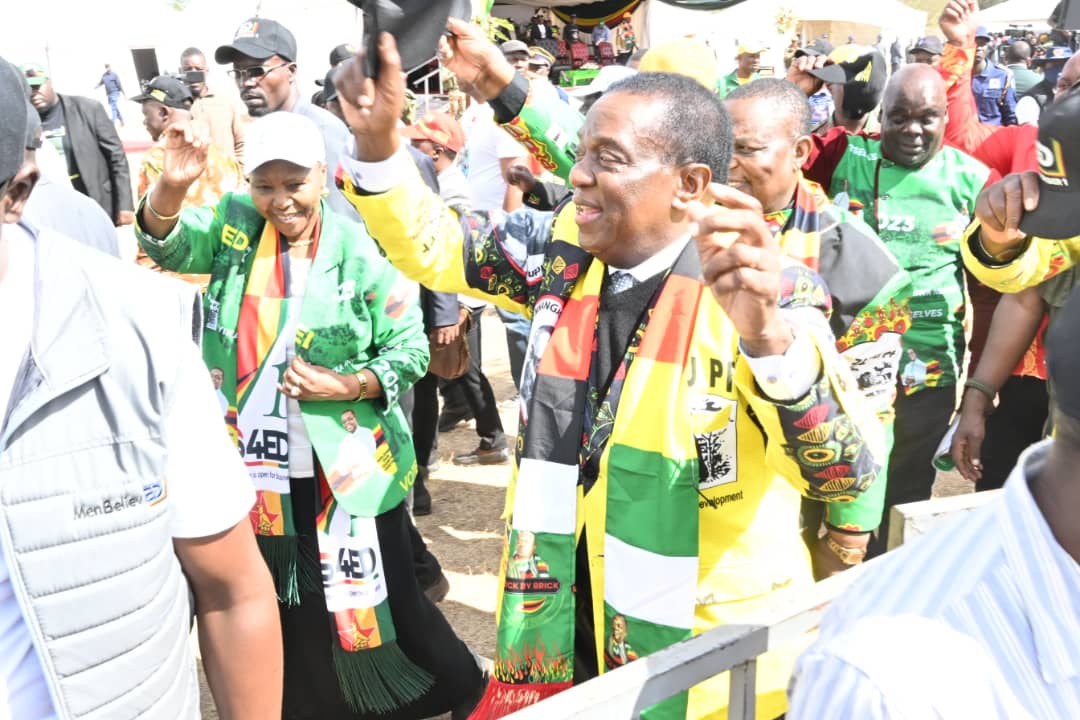
Self-assured: President Emmerson Mnangagwa is sure of victory on 23 August based on the solid achievements of his first term
As Zimbabwe prepares for its much-awaited harmonised elections on 23 August, there are two examples of African political makeup that the country may want to learn from – Rwanda and Ghana.
Rwanda is where the solid gains made by “a good president” who had been in power for 15 years already, encouraged the people to petition Parliament in 2015 to change the national constitution and allow the incumbent President Paul Kagame to run for a third term in 2017, so that he could stay longer and continue the good work he had done for the country, even though at the time the constitution only allowed two terms of 7 years each for the presidency.
In sharp contrast, Ghana is where, despite the solid gains made by “a good president” who had been in power for just 4 years, the people still voted out the incumbent President John Mahama in 2016, and brought in a new president who allowed almost all the uncompleted infrastructural projects started by Mahama (and they were many, in all sectors) to go to ruin to the shame and detriment of the country.
In effect, the deleterious actions of Ghana’s new president, Nana Addo Dankwa Akufo-Addo (who has been in power for 7 years now) have not only seriously disturbed the country’s development trajectory, but has led to severe economic downturn and suffering for the people. This has forced Mahama to try to come back as president (in 2020 but narrowly defeated, and will run again in 2024).
The Rwandan experience can best be described as the “Kagame Syndrome”, and the Ghana experience the “Mahama Syndrome”. For clarity, the Mahama Syndrome is where a president who has done well in his first term is, surprisingly, denied a second term by the electorate to the detriment of the country.
So which one will Zimbabwe go for on 23 August – the Kagame Syndrome or the Mahama Syndrome? Let me offer more information, from my personal experience.
The ED enigma
In the March 2023 issue of our sister magazine, Brick by Brick, I did a piece which I headlined: Zimbabwe is pregnant – And the father is buoyant. The moral of that article was simple: Zimbabwe has made solid gains under “a good president” in Comrade Emmerson Dambudzo Mnangagwa, and the nation would be foolish to deny him a second term to finish the good work he has done in his first term.
That may sound controversial for those who spend too much time on the social media, twiddling their fingers, and ending up having no more eyes to see what has really happened in Zimbabwe since the last elections in August 2018. So let me repeat part of what I wrote for the sake of such people.
I started by laying down my bona fides. “I have been a journalist and editor for the past 43 years – for as long as dear Zimbabwe has been an independent country,” I wrote. “In all those 43 years (and I say this with my hand on my heart), I have never ever sought to mislead my readers. Never once! I fight a good fight for African causes, one of which has been Zimbabwe. I know that sometimes I fight too hard, but I have always stood for the truth no matter whose ox was gored. So I don’t seek to mislead you in this piece.
“Therefore, if I say here that, based on what I have seen in 7 months [now 10 months] of intensive travelling through the nooks and crannies of Zimbabwe, that this country which has suffered severe economic woes since the West imposed sanctions on it 23 years ago, is like a pregnant woman about to give birth (only this time to sets of nonuplets of development), you must please believe me. Zimbabwe is pregnant with development (I dare repeat), and, with a bit of patience and midwifery, the babies will pop out pretty soon.
“I have had the good fortune of being a member of a Brick by Brick team of editors which has been travelling all over Zimbabwe to see what the Second Republican government, headed by President Mnangagwa, has achieved in its first term. Only a few Zimbabweans may know their country as I have known it in the past 7 months, believe me.
“I have been covering Zimbabwe intimately for 21 years now. As editor of the London-based New African magazine, I used to travel down from London to cover Zimbabwe and go back, sometimes three times a year. So I knew the country fairly well before the intensive travelling of the past 7 months – which has afforded me the opportunity to see the country at closer range, including its outback. Like Australia, Zimbabwe also has an outback which can only be seen by intrepid travellers like we have been in the past 7 months.
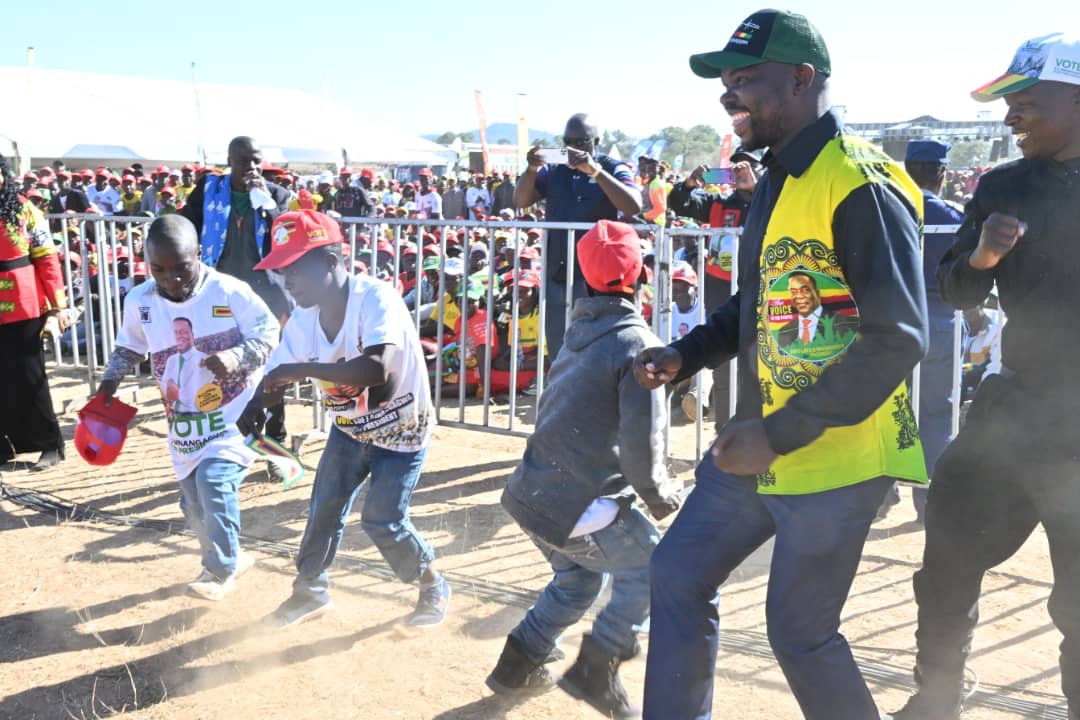
They come to meet their President: Zanu PF supporters have been turning up in huge numbers since the party kicked off its election campaign. The massive crowds tell their own story.
“As a foreigner, it is natural that I come with a pair of fresh eyes that see more than what the locals see. Familiarity robs locals everywhere of the joy of seeing and appreciating the beauty (and sometimes even the resources) of their countries. Zimbabwe is a land of natural beauty – that I can tell with no qualms at all. The beauty takes the breath away, as you drive through the valleys and mountains that God gave to this country. In the rainy season when everything is green, wow, what sight greets you in the hinterlands.
“It is, therefore, unfortunate that a large number of Zimbabweans don’t really know their country, and as such they don’t appreciate what a beautiful nation they have. Most of them don’t even know what is happening in their own country, or what has happened under the Second Republic. As such they tend to flatter themselves on the social media by claiming to know what they don’t know. To their eternal shame, they end up putting down their country.
“But I have news for such people. I have been to all the 10 provinces of Zimbabwe in the past 7 months, investigating the government’s “Zimbabwe is open for business” policy, and the “Leaving no one and no place behind” policy. As part of the Brick by Brick team, we have been looking at what has actually happened on the ground, and what is still happening on the ground.
“And what I have seen is beyond impressive. I won’t say everything has been hunky-dory. No, there is still more to do. But if you live in Harare, Bulawayo, Mutare, Masvingo and the other provincial capitals and towns, and you don’t go out to see for yourself what is happening, you tend to say nothing is happening or has happened. You look at the potholed streets that lead to your house, you shake your head, and say ‘pakaipa, what has this government done?’
A song and a dance: President Mnangagwa has liked what he has seen so far on the campaign trail, so he allows himself a dance in celebration. With him is Vice President Gen Constantine Chiwenga (centre), and the Zanu PF chairman and Defence Minister Oppah Muchinguri-Kashiri (right)
“But I have gone beyond the potholed streets and seen what the government has done. And I can report that in the last 5 years your President, Comrade Emmerson Mnangagwa, and his government have done such a wonderful job beyond the potholed streets, developing this country in all sectors – and I mean all sectors – including roads, electricity (Hwange Units 7 and 8 are a marvel), dams, schools, hospitals, clinics, irrigation facilities, etc. And all this is spread throughout the country. No wonder, we are now hearing the moniker, ‘Government of Development’.
“Commenting on the infrastructural development in his newspaper column on 5 March 2023, President Mnangagwa explained that: ‘Much of the social infrastructure have been built under the devolution programme, making them nationwide in spread.’ And that is exactly what I have seen travelling around the country. The new development is spread nationwide, in a country that has been under US, Britain and EU economic sanctions for the greater part of the last 23 years.”
Private players
What’s more? I showed in the March article that by providing a conducive environment for doing business, President Mnangagwa’s government had attracted big-time private players (both local and foreign) who had brought their golden pots to bear on the mining, agriculture, industrial and the other sectors of the country.
“So all things being equal,” I wrote, “in the next 5 to 10 years, when all the projects now in gestation (both government and private) come to fruition, Zimbabwe will be something else. I have seen it, so believe me.”
The sign has it: Zanu PF supporters carry the message
That statement, in fact, reminded me of what the Ghana ambassador in Harare, Alexander Grant Ntrakwa, had told me. Bowled over by what is happening in Zimbabwe, the ambassador had drawn me aside during a visit to the Museum of African Liberation in Harare, and softly told me that from what he had seen himself, “Zimbabwe will soon become the China of Africa, doing things by itself.”
And not only that: On Saturday 11 March 2023, Ambassador Ntrakwa was one of 57 diplomats who attended a “field day” at President Mnangagwa’s Pricabe farm near Kwekwe, and the Ghanaian was even more astounded by what he saw at the farm.
“I wish all African presidents can see and do what President Mnangagwa has done at his farm,” Ambassador Ntrakwa commented. “I think before presidents are elected in Africa, they must first be asked to show what their philosophy on agriculture is, and what they will do practically on the ground, in agriculture. This President has taken agriculture to another level,” the ambassador added.
To me, that is the mark of “a good president”. To you, that should be the mark of “a good president”. The opposition and others who have not gone to see what President Mnangagwa’s government has done on the ground nationwide, may have their own views. But that should not erase the views of those of us who have gone to see, with our own very eyes, the gains made in Comrade Mnangagwa’s first term.
Second term
Maybe I say so because Ambassador Ntrakwa and I are Ghanaians, so we can see progress when we see one in Zimbabwe. When I first travelled on the new Harare-Masvingo-Beitbridge road last August, I was similarly bowled over by what the Second Republic has done to that road. I was so impressed that I mentioned to my colleagues travelling with me that, that road alone deserves to give President Mnangagwa a second term. And I meant it.
I had known that road intimately for the past 10 years because my wife comes from Masvingo. And what a hell it used to be. Today, you drive on the same road as if you are flying. We used to take four groaning hours to drive from Harare to Masvingo. Now it takes us two blessed hours and a half. All credit to the Second Republic and its President and government and ruling party.
“Though the road is not completely finished (there are pockets still not yet done),” I wrote in my March article, “what has already been achieved is enough to earn President Mnangagwa and his government a second term, that is if politics has eyes to see progress. “If somebody does a good thing, he deserves praise,” I wrote, “and President Mnangagwa and his government deserve praise.”
This is simply to say, from all the indicators of national life, Zimbabwe too, like Rwanda, has had “a good president” in the last 5 years who deserves to have a second term to continue to deliver the goods. Zimbabwe’s constitution allows two terms of 5 years each, and this “good president” deserves a second term purely on his own merits, irrespective of what the opposition says.
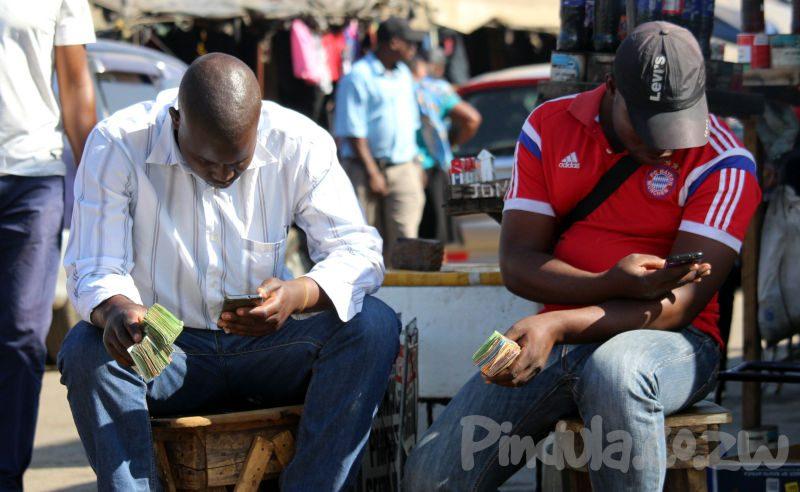
The measure of how good the Second Republic has been is seen in the current massive attack on the Zim dollar and the economy generally, an attack that started a mere two days after President Mnangagwa announced the date of the 2023 elections.
Judging by the huge size of the attack, the anger in which it was delivered, and the cynicism in the timing, one can easily deduce that there are outside hands directing the unseen forces behind the attack.
Their aim is to destroy the economy by collapsing the national currency and induce steep prices in goods and services, which, they hope, will bring more economic suffering that will lead to disaffection among the population, and influence them to vote massively against the President and throw him out of office.
They want the people to stone their President. But Zimbabweans have proved over the past 23 years of Western economic sanctions to be wiser and clever than that. And that they will not follow what the Ghanaians did in 2016, cutting their nose to spite their face, when they threw President Mahama out of office after only one term.
The Mahama Syndrome
President John Mahama was voted into office in 2012 after serving as vice president from 2008. He spent the first year in office fighting a distractive election petition in the Supreme Court against his victory. When the petition was settled in his favour and he finally turned his attention to nation building, he set in motion dozens and dozens of infrastructural projects – from new schools and hospitals to expanding the nation’s road network and improving the supply of water and electricity, as a way of stimulating economic growth by creating more jobs.
If truth be told, apart from Ghana’s first president, Dr Kwame Nkrumah, who had 9 years at the helm to revolutionalise the country’s infrastructure to dizzying heights, no president of the country since Nkrumah had done so much on infrastructure in so short a time (4 years) as Mahama, the youngest president that Ghana has had so far (born after independence).
I say so because I had the opportunity in 2016 to go around Ghana (8 regions of the country’s then 10 regions) to cover Mahama’s infrastructural programme in a special report for the New York-based Africawatch magazine. What I (and my suffering wife/photographer) saw driving around Ghana was simply beyond impressive. The projects were spread nationwide and in every sector of the nation.
President Mahama was racing against time (elections were coming in December 2016) and he wanted most of the projects completed before the elections. Alas, his wishes proved not to be horses. And a good deal of the projects could not be completed before the elections.
So when he was voted out, after months of a fake allegation of “incompetence” by the opposition (“Mahama is incompetent, Mahama is incompetent”, the opposition chanted), a high percentage of the legacy he wished to leave for Ghana remained uncompleted.
And as fate will have it, the incoming government headed by President Nana Addo Dankwa Akufo-Addo, decided, in its infinite wisdom, to abandon Mahama’s uncompleted projects, some of them at over 90% completion, to the eternal shame and detriment of the country.
The one they denied a second term: Ghana’s former President John Dramani Mahama did so well in his first term, at least in infrastructural development. Surprisingly, he was voted out, leading to the “Mahama Syndrome”
Mahama’s projects
In fact, Mahama’s story is better told by other mouths, as I run the risk of being accused of bias if I tell it myself. So let me quote here, in extenso, the Africawatch magazine which devoted a recent edition to Mahama’s abandoned projects. The magazine, which is distributed in Ghana and North America, wrote:
“By December 2015, Mahama’s administration had begun the construction of 123 senior high schools, part of 200 it planned to build around the country. The four-story buildings, called “E-blocks” because they would be shaped like the letter E, would contain classrooms, laboratories, technical and vocational workshops, and housing for teachers. Some of them were completed by the end of 2016 before he left office. About 189 dormitories and 1,079 six-unit classroom blocks were also under construction, according to a report by the then Ministry of Communications officials.
“In health care, Mahama’s government spent about US$2bn on building new hospitals and clinics and upgrading other facilities. The largest projects were a new 617-bed teaching hospital at the University of Ghana in Accra and doubling the size of the Tamale Teaching Hospital, the main hospital in northern Ghana, to 800 beds.
“The others included four new regional hospitals, 14 smaller district hospitals; institutional hospitals for soldiers, sailors and police; and numerous local polyclinics and health centres.
“Mahama’s government also launched what it called an ‘aggressive affordable housing programme’ to ‘provide more Ghanaian families in the lower to middle-income bracket with decent homes’. And it worked
on two big developments in the Greater Accra Region: one at Saglemi in the Ningo-Prampram District, and the Nyame Dua Estates, a public-private partnership deal in Kpone.
“Mahama said he wanted everyone in Ghana to have access to potable water by 2025. By the end of 2015, his administration claimed that the number of Ghanaians with water coverage had reached 76% in both urban and rural areas. The completed projects had added 77.5 million gallons per day to the national water-supply system.
“Most of that increase came in the Greater Accra metropolitan area, where four projects added 65.7 million gallons per day to the system, wiping out a shortfall of 63 million gallons per day. One of them was the Teshie-Nungua Desalination Water Project, the first desalination project in West Africa, which opened in 2015. It supplies 13.2 million gallons per day to about 500,000 people in the densely populated coastal towns east of Accra.
“With electricity demand growing rapidly and the country plagued by local blackouts from load-shedding by power utilities, work on 7 plants added more than 1,000 megawatts to the country’s generation capacity by 2016.
“The government projected that once the Atuabo Gas Plant, which opened in 2015 in the Western Region, reached full capacity, it would supply enough gas to generate about 500 megawatts of power, saving the nation GH¢500m in fuel imports. Overall, it said, electricity supply was extended to 2,861 communities from 2013 through 2015, increasing the share of Ghanaians with access to electricity to 76% – second only to South Africa in sub-Saharan Africa.
“Transportation projects included expanding and modernising airports in Kumasi and Tamale; beginning work on a new airport in Ho, and a new terminal at the Kotoka International Airport in Accra. Berths for deep-water ships were built at Tema, Ghana’s main port. A new commuter railroad in the Sekondi-Takoradi metropolitan area opened in 2016. Hundreds of trunk roads and city and town roads were built, paved, or repaved.
“The Mahama administration also appropriated GH¢3bn over five years for the Cocoa Roads Improvement Programme, to build and repair roads in cocoa-growing areas such as Ashanti and Central regions.
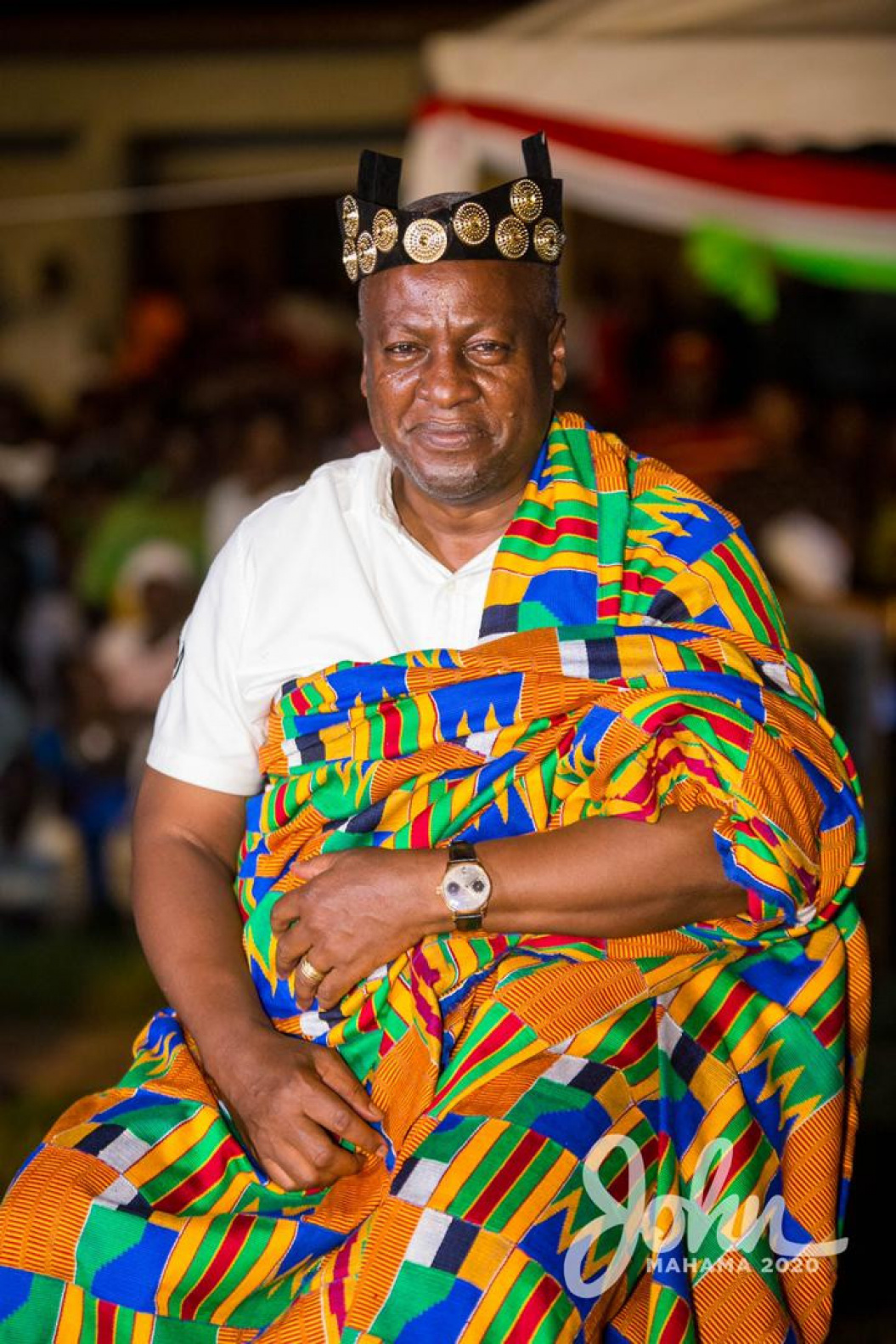
‘I shall return’: John Mahama, decked in an Akan king’s robes, will be running again for president in December 2024, having served only one term in his first incarnation
“The landmark Adomi Bridge over the Volta River in Eastern Region, an 804-foot steel arch bridge opened in 1957, was rehabilitated, with its entire road deck replaced. After almost two years of work, it reopened in December 2015.
“Mahama’s government also began upgrading and expanding markets in Accra and Tamale, and commenced building new marketplaces in Cape Coast and Kumasi.”
Out they voted him
You would think that adding such massive development projects to the national legacy would be appreciated, the nation rather foolishly voted Mahama out in 2016, depriving him of a second term he so richly deserved.
And what happened after his defeat? Africawatch picks up the story: “After President Akufo-Addo defeated Mahama in the 2016 elections and took the helm of affairs in the country, he abandoned numerous projects that the former president was working on. They included hospitals, roads, and rural electrification projects, as well as the Saglemi housing scheme. He completed a few senior high-school E-Blocks and neglected the rest.
“Akufo-Addo also suspended the Cocoa Roads Improvement Programme in 2017, although he began awarding construction contracts for it in 2019 in a piecemeal manner.”
Then things began to fall apart in the economy. To put it in context, the overall financial resources that Mahama’s government had from 2013-2016 were about GH¢189bn, yet Mahama invested heavily in developing infrastructure.
“Looking back at Mahama’s impressive infrastructure projects,” the Africawatch reported, “many Ghanaians are shaking their heads in disbelief as they compare it to Akufo-Addo’s record. They are asking: What happened to all the GH¢377bn that his government had received by the end of 2021?
“Indeed, the gains from the investments Mahama made before he left office delivered a rapid economic growth that averaged 7% a year from 2017 to 2019. Akufo-Addo could not sustain that, as most of his economic policies were focused more on consumption than on growth.”
In serious economic trouble: President Nana Akufo-Addo’s second term has not been rosy. His decision to abandon most of the projects started by former President Mahama has not been popular at all
The Africawatch quoted Franklin Cudjoe, head of the IMANI Centre for Policy and Education in Accra, as having confirmed that: “A lot of the growth we had in 2017, 2018, [and] to a large extent, 2019, was due to John Mahama’s investment. What we did not do was to protect those investments with sensible policies and sensible projects.”
To finish off the story of the abandoned projects, the Africawatch chose to highlight one abandoned project in each of Ghana’s 16 regions and published photos showing their current state – although in all the regions there are more than one abandoned project.
For example, in the Ashanti Region, which strangely happens to be the region which gives Akufo-Addo the most votes that keep him in power (1.6 million in 2016, and 1.7 million in 2020), there were 6 brand new hospital projects started by Mahama which were abandoned by Akufo-Addo, but two have since been completed and commissioned.
These are the Asante-Akim Municipal Hospital at Konongo, a 60-bed facility which was 97% complete by the time Mahama lost the election in December 2016. It cost US$36m to build but was abandoned by Akufo-Addo for 6 years, and was only commissioned on 16 October 2022; and the Ahafo Ano Municipal Hospital at Tepa (another 60-bed facility).
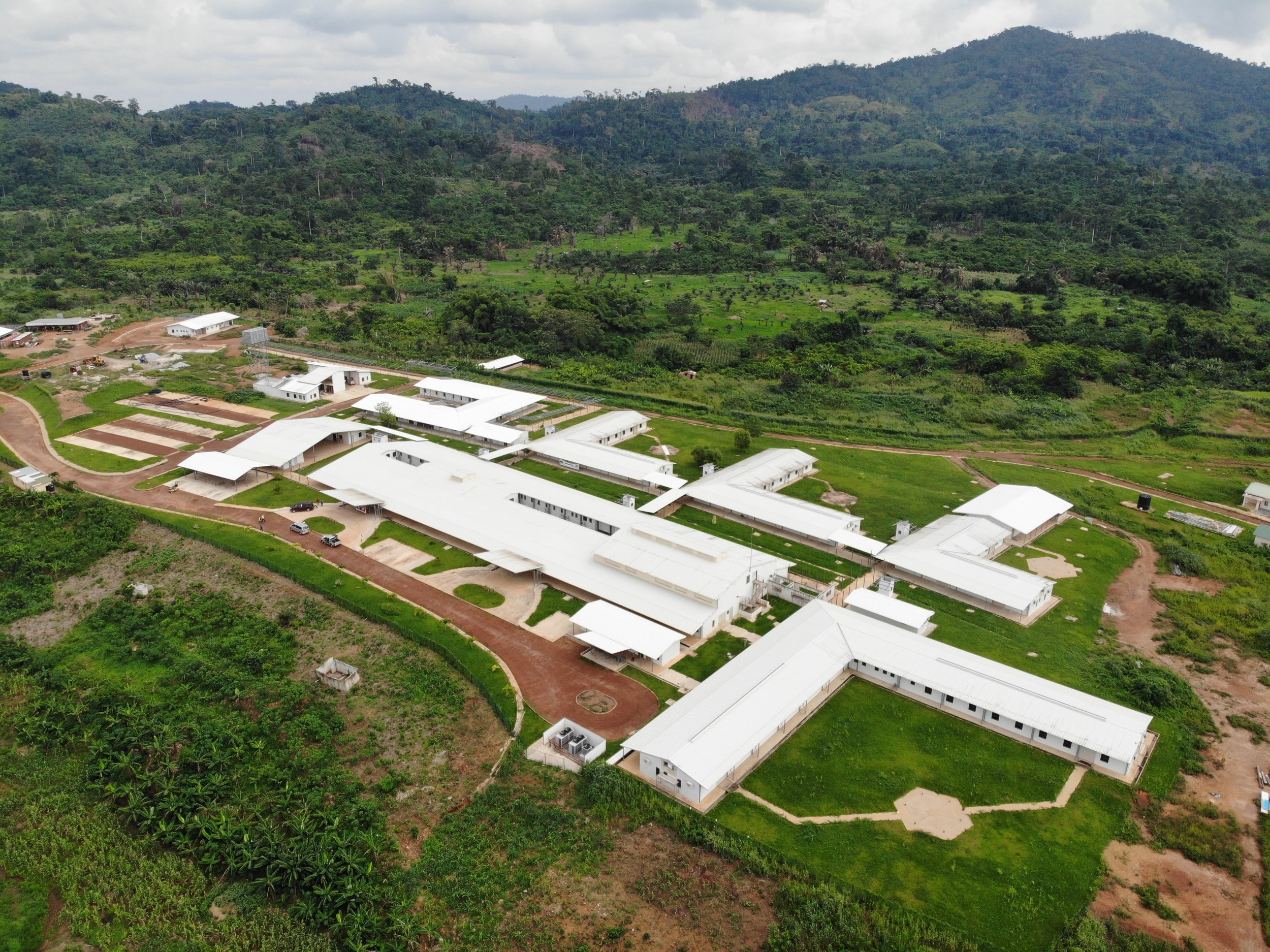
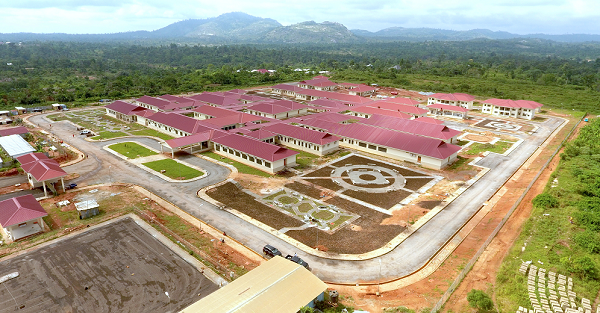
Left to rot: An aerial shot of the Fomena District Hospital in the Ashanti Region, started by President Mahama, but which has remained uncompleted since his defeat in 2016
But bigger health facilities in the Ashanti Region started by Mahama such as the Kumawu District Hospital (120-bed) and the Fomena District Hospital (another 120-bed) are still to be completed, 7 whole years after Mahama left office.
A lot more incredible story is the Ashanti Regional Hospital at Sawua, Kumasi, a 250-bed facility with 43 buildings spread over 125 square metres, which was also abandoned and only finished last year, but has remained un-commissioned because a 2 km access road and connections to the national electricity grid and water have been delayed for one-and-half years now.
As one health worker, Percy Amoah, put it in a social media post on 18 May 2023: “It is almost inconceivable that a hospital that has been fully completed and supplied with state-of-the-art equipment will lie idle for the past one-and-a-half years because of an access road, power and water, which form the government’s part of the construction of the Sewua Hospital project.”
The most egregious of all the Mahama hospital projects in Ashanti is the 500-bed Military Hospital at Afari in Kumasi (which has 17 specialist clinics on site). Work on it was far advanced by the time Mahama lost the 2016 election, but it was also abandoned by Akufo-Addo and later restarted, and now 7 years later awaiting completion.
Debt distress
On the whole, between 2017 and 2021, Akufo-Addo’s government received GH¢377bn (now about US$30.5bn) from several sources, including loans, grants, taxes, and revenues from oil, gold, and cocoa exports – the largest amount any government has taken during the 31 years of Ghana’s Fourth Republic, starting from 1992.
The lucky one: An aerial view of the Asante-Akim Municipal Hospital at Konongo, Ashanti. Started by Mahama, it became one of the abandoned projects, and only later received grace and was completed and commissioned in October 2022
“But there is basically little to nothing to show for this money,” the Africawatch depressingly added. “And President Akufo-Addo has either delayed or abandoned numerous infrastructure projects begun mostly by his predecessor, John Mahama, leaving the nation with nothing but more debt to show for the money it borrowed to build the projects. The government currently spends about 70% of the funds it has borrowed on consumption.”
The Africawatch continued: “After 2019, Ghana’s fiscal and debt situation took a nosedive. The national budget deficit doubled to 15.2% of GDP, and the total public debt rose to 78% of GDP. Ghana is currently considered a high debt-distressed nation.
“Akufo-Addo has taken on so much debt that the service payments on it now exceed the country’s tax revenues. As of the end of July 2022, total public debt was GH¢402.4bn (about US$32.2bn), almost three times what it was in 2016. Debt-service payments in the first quarter of 2022 were GH¢13.9bn, including interest and amortisation – more than the GH¢12.8bn the government collected in taxes.”
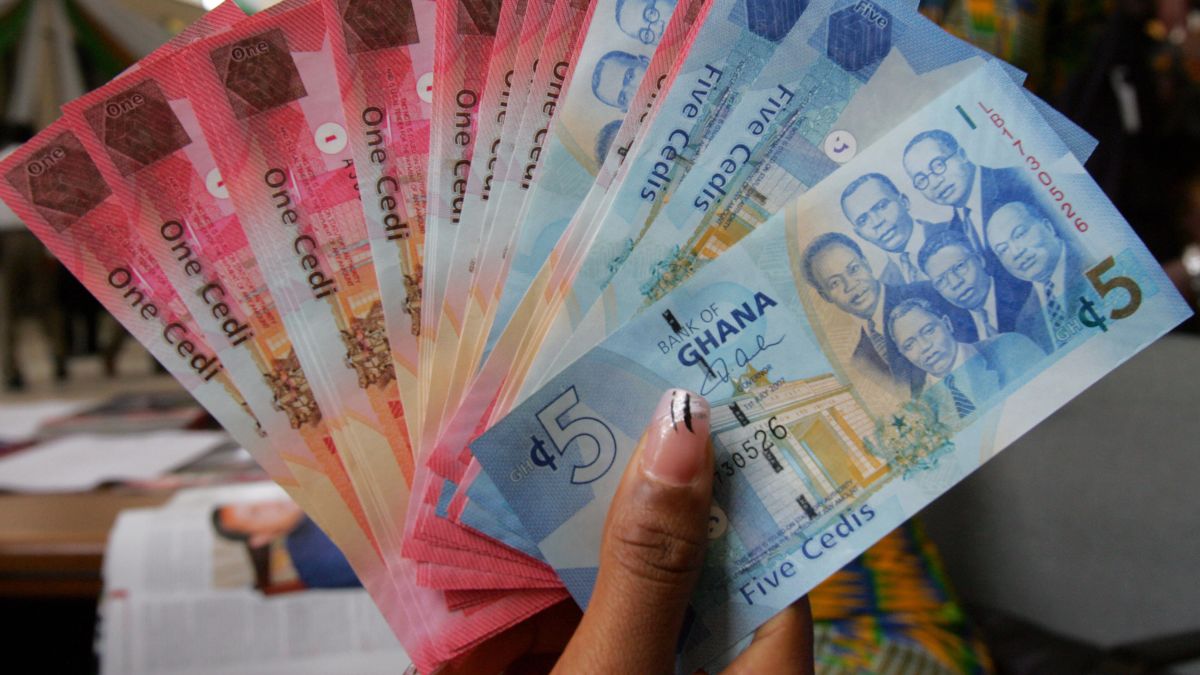
Though Ghana has not been under Western economic sanctions for 23 years like Zimbabwe, the economic distress under Akufo Addo has been such that his government has had to go to the IMF with cap in hand asking for a US$3bn deal to shore up the nation’s finances. Before the money came (because the IMF took its time to approve the deal), inflation had hit the roof and prices of goods and services had skyrocketed, along with a massive depreciation of the national currency, the cedi, against the US dollar.
Ironically (in fact, life could be cruel at times), by the time the “incompetent” Mahama was leaving office in January 2017, the cedi rate against the US dollar, stood at a princely 4 cedis to one dollar. Today, 14 July 2023 (and I am writing this piece from Kumasi, Ghana), the cedi rate is at a miserable 12 cedis to one mighty dollar.
In effect, there has been a depreciation of 8 cedis in the dollar rate in the 7 years that Akufo-Addo (who is apparently not “incompetent”) has been in power. It makes the chants of “incompetence” against Mahama, which was led by Akufo Addo as the main opposition leader at the time, pale into risible insignificance indeed.
As a mark of the current economic distress in the country, the following is a true story: In the past, even as late as last October when I visited, Ghana, I was spending GH¢100 to prepare one evening meal for 10 people in my house in Kumasi. On my current visit, (in June and July 2023), prices of goods and services (including food items) have gone so high that for the same one evening meal for the 10 people in my house, with the same ingredients, I have to spend GH¢250. And Ghana’s economy is not under external attack like Zimbabwe’s.
The moral of the “Mahama Syndrome” is that changing presidents for change sake is a bad policy for any country, and Zimbabwe should better watch out.
The Kagame Syndrome
In sharp contrast, the “Kagame Syndrome” is based on the adage that “when a president does well, it behoves even his critics to say well done”. One such president is Paul Kagame of Rwanda who, in 23 years in office, has massively transformed his country of 11 million people – because he has not only had the grace and comfort of time and the critical element of continuity to develop the country, he has also been just good as an administrator, politician, and president.
In fact, it is easy from the outside, without much primary information, to throw stones at Kagame and accuse him, as many do from abroad, of being “authoritarian” and having stayed too long in power. But from the inside, seeing things on the ground with one’s own eyes and how people talk so fondly about him, the picture is totally different.
In 1994, Rwanda underwent a horrendous genocide during which, in 100 mad days, an estimated one million people were massacred in ethnic hatred. Today, however, looking at what the once antagonistic ethnic groups have achieved together, it is difficult to believe that the same people experienced the infamy of 1994.
Nobody visiting Rwanda today can fail to see the difference. It is a country renewed. Kigali, the capital, has undergone a massive transformation never seen in its history. New affluent suburbs have sprung up over the hills to the south and west of the city, and the small decrepit buildings that used to dominate the heart of the central business district have given way to massive edifices built by private developers, including three five-star hotels.
The greening of the city, started by Kagame’s government, has brought added beauty and lustre to the capital of nearly 2 million people. Surely, this state of affairs has not been achieved lying in bed, and while critics say the government has sometimes used strong-arm tactics, the end result has been for the general good.
In October 2015, President Kagame told a Chatham House conference in London: “It is sometimes said that Rwanda’s economic and social achievements are somehow offset by a lack of democracy and popular voice. The truth is exactly the opposite. What is commonly perceived as Rwanda’s biggest weakness is actually its greatest strength … [Our] economic and social development is built on political development and strong institutions. Consensus building, unity, and accountability are the values we place at the centre of our efforts.”
To his long-suffering people, Kagame has proven himself true to their cause. He has led from the front and taken the people along. One young man in Kigali spoke for many when he told me in September 2015: “I can’t imagine Rwanda without Kagame.”
Most Rwandans credit him for using wisdom to bring justice and reconciliation to a country with a painful history. In the process, Rwanda has benefited from the exertions of a guilt-ridden world that folded its arms and mouth during the 1994 genocide, a world that has since tried to expiate its sins by giving generously to fund Rwanda’s reconstruction. In response, Kagame’s government has put the donor money to good use and the result is now there for all to see.
In his Chatham House address in 2015, Kagame paid tribute to those generous donors, saying: “Our country has been a good example of international partnership for development. For example, we saw one million lift themselves out of poverty in a 5-year period and … we now offer universal health insurance and have recorded the fastest ever declines in child and maternal mortality.”
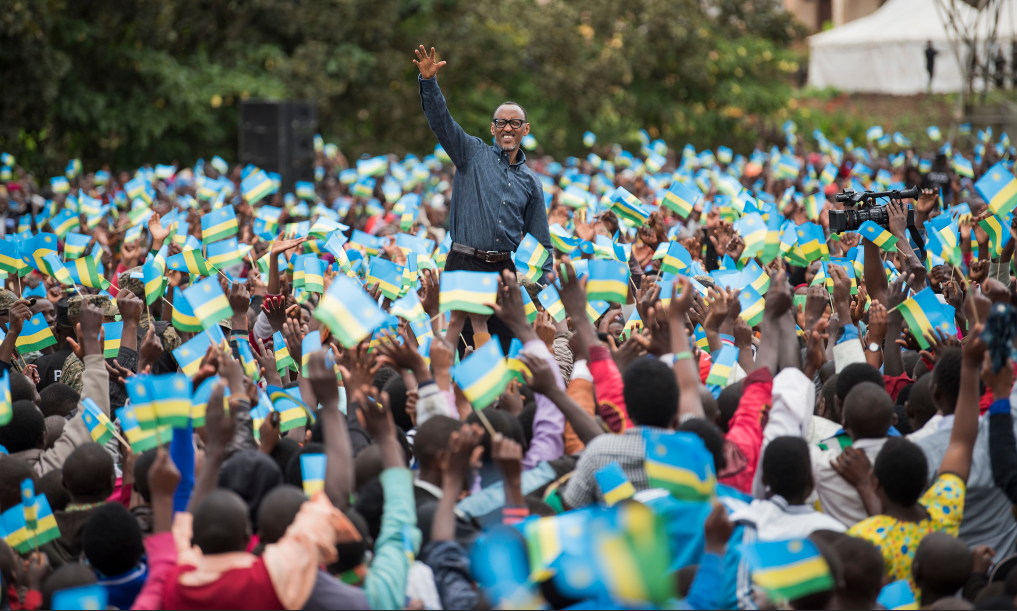
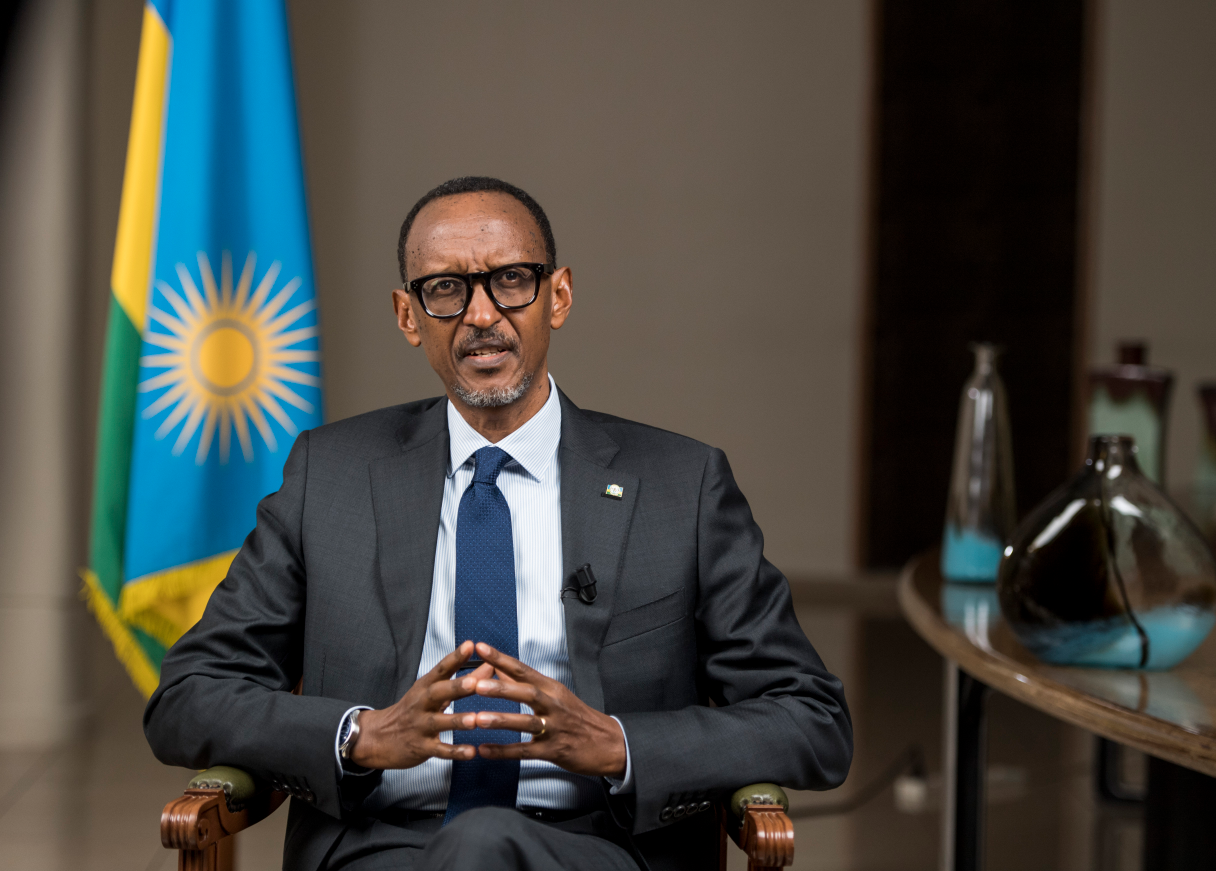
Can you see why they asked him to stay: President Paul Kagame receives genuine adoration from his people
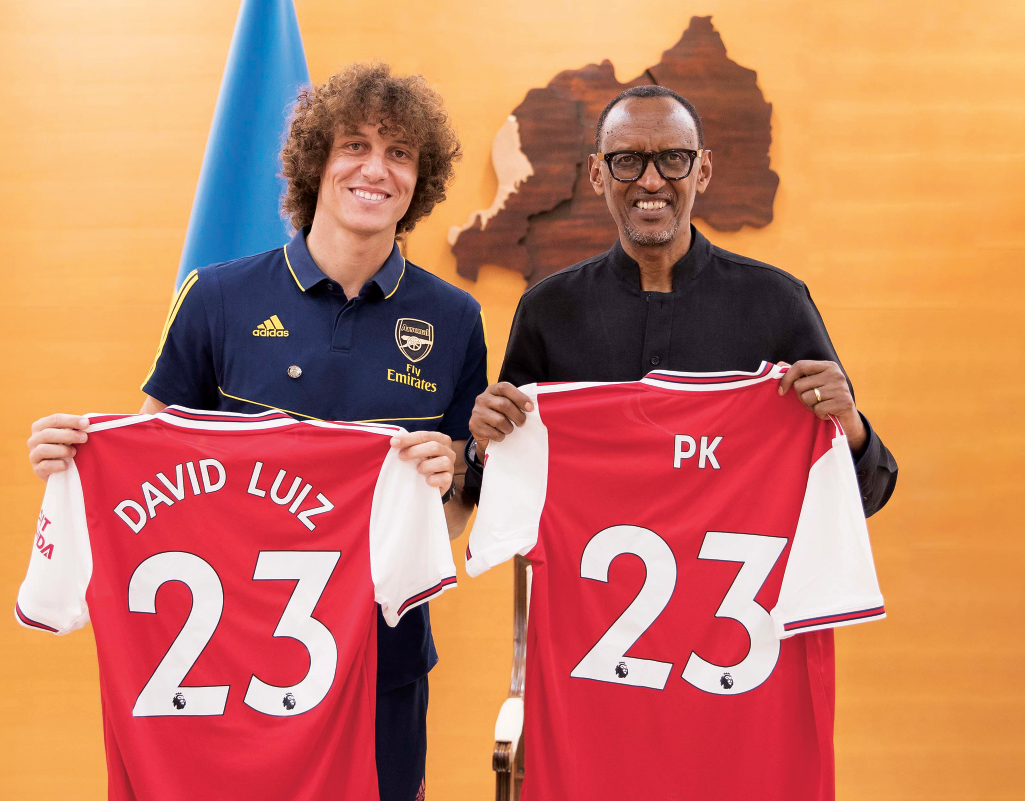
It was on account of such good stewardship that in 2015, as many as 3.7 million Rwandans signed a petition asking Parliament to amend the national constitution to allow Kagame to run for a third term in 2017 even though at the time the constitution allowed for only two terms of 7 years each for the presidency.
Change for a good cause
Kagame first came to power in 2000 in a caretaker role when President Pasteur Bizimungu resigned. He won his first election in 2003 and re-election in 2010. He told me in an exclusive interview in mid-August 2015 that he had nothing to do with the campaign to make him continue in power after 2017, but he was “open to the idea”, provided he could satisfy himself that the push was genuinely coming from the people and not being manipulated by some individuals for their own interests.
Following the petition, Parliament set up a 7-member commission to review the constitution and recommend amendments. The commission’s findings were first approved by the two chambers of Parliament before being put to a nationwide referendum. I went to Rwanda to cover the referendum held on 17-18 December 2015. The result was a resounding “yes” for Kagame to stay beyond 2017, a thumping 98.3% of yes votes. But outsiders were not happy.
The Americans said they were “deeply disappointed” that by his decision to agree to run for a third term, Kagame had ignored “a historic opportunity to reinforce and solidify the democratic institutions the Rwandan people have for more than 20 years laboured so hard to establish”.
According to a State Department statement issued on 1 January 2016, “the US believes constitutional transitions of power are essential for strong democracies and that efforts by incumbents to change rules to stay in power weaken democratic institutions. We are particularly concerned by changes that favour one individual over the principle of democratic transitions,” the statement added.
The European Union was equally not happy “at the speed at which Rwanda’s constitutional referendum was held”. The “speed”, the EU said, “did not give enough time for the public to consider the arguments”.
By far, the most scathing criticisms came from Western newspapers, particularly the British ones – The Guardian and its sister weekly, The Observer, were in the vanguard.
“Kagame is correct in one respect: Rwanda does not need an eternal leader,” The Observer sniffed in an editorial comment published on 3 January 2016, referring to Kagame’s televised acceptance address on 1 January in which he thanked Rwandans for having “requested [him] to lead the country again after 2017”, adding that “given the importance and consideration you attach to this, I can only accept. [But] I don’t think that what we need is an eternal leader.”
The Observer ridiculed Kagame’s statement, saying it was “unfortunate” because an eternal leader was what Rwanda seemed to have got. “Kagame will win again in 2017, not because he is Africa’s answer to Abraham Lincoln but because he has ensured there is no viable alternative,” The Observer claimed.
“There is no effective opposition to his regime. Political rivals have been shunted aside, jailed, exiled, or have died in violent circumstances … Honest public debate, let alone criticism, is not tolerated. Human rights abuses are legion. Independent journalism is a fiction,” The Observer went on and on.
As the prose flowed, The Observer only paused to consider something so fundamental in Rwanda today that even hypercritics dare not ignore. “There have been significant economic and social advances [in Rwanda under Kagame],” The Observer grudgingly acknowledged before cancelling it with the following line: “But as Kagame’s authoritarianism has grown, enthusiasm for his rule has waned.”
Meeting the cabinet: President Kagame is often accused by detractors as an authoritarian, but cabinet meetings (like this one) are regular in Rwanda
Really? But this is the same president who had just been given a thumping 98.3% of yes votes in the constitutional referendum to continue in office after 2017. Nonetheless, The Observer went on its merry way, saying:
“In his divisive and unstatesmanlike recalcitrance, Kagame reinforces a dangerous precedent … Such narrow-minded self-aggrandisement damages national wellbeing, inhibits African development and undermines faith in democracy among peoples desperate to escape the doleful legacies of tribal, colonial, and dictatorial rule.”
Which raised the important question of what “democracy” really is. Is democracy what the Americans say? Is it what the European Union says? Or even what Western newspapers claim it is? Is democracy not what the people of a particular country decide for themselves regarding how they should be governed?
And if the people of Rwanda want their president to continue in office because he has been “a good president “ for the country, what problem has anybody anywhere got to do with that decision or choice? Is the voice and choice of the people not what democracy is all about?
“No,” said the Western critics. “No, because Rwanda is a police state that became an aid darling in the West”, they said. “No, because Kagame exerts control through a benign-sounding system of villages, the nation broken down into small blocks of families, each with a head, security officer and informer, and this strips away privacy and ensures constant monitoring.
“No, because the stifling atmosphere traps the nation in fear.” And worse of all, “Western donors, played so skilfully by Kagame as they funnel huge sums into his state, serve as cheerleaders for one of Africa’s big-headed big men”, who, according to The Guardian’s Ian Birrell in London, “has just shown again how he manipulates ‘democracy’ with a referendum to ensure he can stay in power until 2034.”
The “manipulation”, Birrell insinuated, was possible because “who dares vote against such a government when it orders people to mark ballots with thumbprints?”
Birrell’s charge was breathtaking! Because in Ghana, my own country, which is supposed not to have a “dictator” or an “authoritarian” as president, the law orders the people to mark ballots with thumbprints. Which means marking ballots with thumbprints is not unique to Rwanda, and more critically, it happens not because the president is a “dictator” or an “authoritarian”, but because it is a common practice across Africa.
Lost in transit
The shrillness of some of the criticisms from the West were so high that sometimes common truths got lost in the melee. For example, while The Observer claimed that “as Kagame’s authoritarianism has grown, enthusiasm for his rule has waned”, its sister paper, The Guardian, sharing the same block of offices in central London as The Observer, reported on 1 January 2016 that “rights groups acknowledge that Kagame has broad support for rebuilding Rwanda, but accuse the authorities of stifling the media and opposition voices, charges that the government denies”.
Two days later, The Guardian repeated that “Mr Kagame commands widespread support for bringing stability and relative prosperity to his country. He has also silenced virtually all political opposition to his rule, prompting criticism from the US, EU and human rights groups”.
From across the Atlantic, The New York Times entered the fray. Calling Kagame’s rule an “aging dictatorship”, America’s leading newspaper yet admitted that “since becoming president in 2000, Mr. Kagame has focused on economic development as a means to move beyond ethnic division and overcome conflict.
“In many ways, this strategy has worked. Rwanda has seen nearly 8% economic growth over the last decade; over 90% of Rwandans have health insurance; life expectancy and literacy rates have increased. These successes may explain why, of Rwanda’s key donors, only the United States has firmly opposed the constitutional change,” The New YorkTimes cared to confuse its readers.
The confusion arose because, if “significant economic and social advances” or “successes” had been achieved in Rwanda under Kagame, what was sinful about his people changing their minds about the term limits that their constitution had imposed on the presidency?
After all, history shows that term limits generally arrived in Africa via the USA as part of the Western post-Cold War democratic tutelage of the continent. This was after a period of military and civilian dictatorships across Africa in the 1980s.
As such, the people of Africa gleefully accepted the Western-inspired term limits because: (a) they were tired with dictatorial and authoritarian rule; and (b) they were carried away by the enthusiasm and hope of a future free of so-called dictators that they did not pause to consider how many Western countries have no presidential term limits themselves.
And if most Western countries did not have term limits, as they still don’t have even today, what did it say about the West recommending term limits for Africa?
As one of my colleagues in London rightly pointed out at the time: “The obsession with term limits in Africa has less to do with good domestic political hygiene than with the democratic prescriptions that accompanied the post-Cold War ‘end of history’ neoliberal agenda; it was in other words, a form of ‘native disciplining.’”
And what poor “natives” the Africans have been, because in most of Europe, there are no presidential term limits. The same is true in Canada and Australia. Thus, the leaders of those countries can run for office as many times as the electorate votes for them. Angela Merkel, the former German chancellor, did three terms before stepping down.
In Britain, the people do not even vote directly for the prime minister. The prime minister is voted for only by the people of his constituency, as a constituency MP. But he becomes prime minister only by virtue of being the leader of the party that wins the largest number of parliamentary seats in a general election.
Can an African in Nigeria who votes directly for both his MP and president therefore say that the British system is not democratic? No, because it is the “democratic” system that the British people have chosen for themselves. So, who is the African to sniff at this unique British “democratic” system of electing their prime ministers?
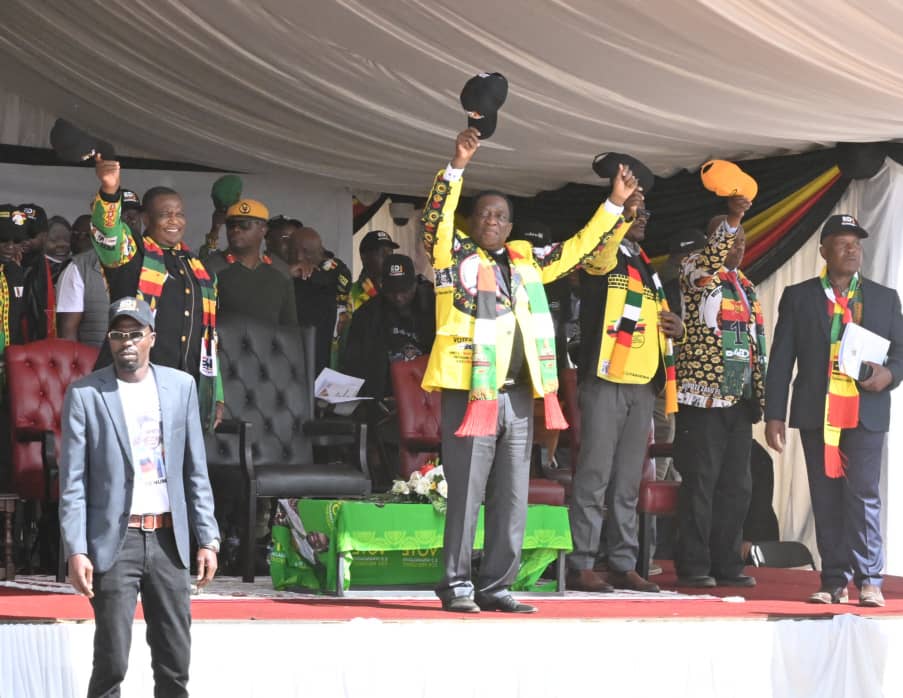
They come to show appreciation: If anyone deserves a second term on pure merit, President Mnangagwa has gone beyond the qualifying mark
By the same token, who is the European or Westerner to sniff at any “democratic” system the African people choose for themselves? So why did they despise the Rwandan decision to allow their president another term in office by popular vote?
Malicious forgetfulness
After all, history, again, shows that term limits became a popular democratic tool only after 1951 when the USA, after 175 years of independence from Britain during which it had no term limits, decided to impose a two-term limit of 4 years each on its presidents. This followed the passage in 1947 of the 22nd Amendment of the American constitution, when 48 states of America’s 50 ratified the amendment.
Importantly, the imposition of term limits came only when the USA had become economically, socially, and politically developed beyond their wildest imagination, when they had already become both an economic and political superpower with a dominant position in the world.
But before then, the records show that from independence on 4 July 1776 to 27 February 1951 when the 22nd Amendment came into force, a period of 175 long years when the USA was finding its way in the world as a developing nation, it did not find it necessary to have term limits.
This made it possible for President Franklin D. Roosevelt, crippled in a wheelchair, to stay in office for four terms, elected in 1932, 1936, 1940 and 1944, though he died in 1945 less than a year into his fourth term.
But because F.D. Roosevelt was “a good president” for the Americans at that particular period of their national development, they elected him four times in a roll to champion the cause, if not the course, of their national aspirations. They did not change him just for changing sake because four years were up.
Bigger and bigger crowds: As the crowds turn up at the rallies, Zimbabwe would learn to close its ears and eyes to the blandishments and manipulations from outsiders who are hiding behind insiders to seek change for change sake
It is instructional that before F.D. Roosevelt, several American presidents had attempted to serve a third term and failed. But Roosevelt won four terms on pure merit, because he was “a good president” for the Americans, and the country benefitted immensely from his goodness as a president.
For the same Americans to turn around today to give lectures to Africans who want their equally “good presidents” to continue in office in the interest of their national interests, smacks of malicious forgetfulness, if not rank hypocrisy.
It reminds me of Prof Erik Reinert’s famous words: “If you want to understand the causes of American and European prosperity, study the policies of those who created it, not the advice of their forgetful successors,” the Norwegian economic historian says. “Today’s best advice is: ‘Don’t do as the Americans tell you to do, do as the Americans did’.”
It is an excellent piece of advice. President Kagame may be a “dictator” or “authoritarian” as his Western critics allege, but, to Rwandans, he is “a good president” who in 23 years in office has totally transformed the country for the better. And based on his good work, they wanted him to continue in office. Why that was a problem for outsiders beats the imagination?
Eyewitness account
By August 2015, I had been to Rwanda four times since 2011 and each time I went, I sensed a little Singapore, or something similar to it, taking shape over the hills of Rwanda. From what had already been achieved by Kagame and his government, if Rwanda were to be allowed the grace of the 32 years that the leader of Singapore, Lee Kuan Yew, spent as prime minister to build his country, Africa would be talking about a new narrative in the not-too-distant future.
But Kagame would not get the years that Lee Kuan Yew – another “dictator” and “authoritarian” in his day according to Western critics – spent in office because of meddlesome outsiders. So Zimbabwe should be very mindful of the meddlesome outsiders.
What is difficult to understand is that history shows that the Americans imposed term limits on their presidency when it was absolutely necessary, when their national development trajectory could afford the luxury of term limits.
As such, even in February 1951 when the 22nd Amendment came into force, it did not apply to the incumbent president, Harry Truman, thus technically allowing him to serve without term limit because Section 1 of the law partly said:
“…This Article shall not apply to any person holding the office of president when this Article was proposed by the Congress, and shall not prevent any person who may be holding the office of president, or acting as president, during the term within which this Article becomes operative from holding the office of president or acting as president during the remainder of such term.”
Coincidentally, Rwanda’s amended Article 101 of the constitution retained the country’s two-term limit but cut each term from 7 to 5 years, and stipulated that the new limit would not come into effect until 2024 and would not apply to the incumbent president, Kagame, between 2017 and 2024.
Strangely, the Americans were not happy with this. Which made Prof Reinert’s words so prophetic: “Don’t do as the Americans tell you to do, do as the Americans did.”
Rwanda’s constitutional referendum
I was in Rwanda on 17-18 December 2015 to report on the constitutional referendum. Despite Ian Birrell’s unjustified charge that Kagame “has just shown again how he manipulates democracy”, the constitutional referendum was a free vote by any definition one wanted to slam on it.
First, Rwandans in the diaspora worldwide were given the freedom to vote on 17 December, and very early on the 18th queues of local voters who had gone to the polling stations on their own volition snaked out of the polling centres. By 11 am, most polling stations were empty in a referendum that was supposed to close at 3 pm. Such was the enthusiasm!
Anybody among the nation’s 6.4 million voters who wanted to vote had the chance to cast their ballot. And the turnout was high; the National Electoral Commission said it was as high as 6.3 million of the 6.4 million electorate. And President Kagame was right when he said on polling day after casting his ballot: “I did not apply for this. What is happening is the people’s choice.”
The people’s choice was supreme. Before the referendum, I had had the opportunity to interview Kagame on an earlier trip to Rwanda in mid- August 2015, and had put to him questions that were worrying outsiders about the third-term issue. His answers were emphatic.
“First,” he said, “I have not, and you can investigate it by asking anybody, I have not sought or asked anybody to change the constitution for me. No. I am not part of this exercise as you see it. That is number one. So I see people writing that Kagame is seeking a third term. No, I am not seeking anything.”
But how could he convince cynics in and outside Rwanda that the push for a third term was not being remote-controlled from State House or by his friends. Kagame replied: “I will tell you. In some cases in Africa you may have a leader who gives the impression that people want him to stay, but in reality they want him to go. But he may present himself and say people want me. That is how sometimes it has ended in problems in certain countries.
“But if there was a way of knowing the truth that the people really want him to stay, there should be no problem. The problem only comes when some leaders, and their friends and families are the ones who engineer the push and say people want me, people want me. But I can assure you that in our case the push is not coming from me or my family or friends …
“And that is why I am saying people are distorting the whole argument when they say Kagame wants a third term. I have told nobody that I want anything, believe me. As such I have simply stayed away from the whole thing. I have not been part of it. For one thing, and the simple reason is, I want to really be sure of what is going on.”
I believed him. But many people could not. They could not believe that any African, unprompted, would want his president to run for a third term if the constitution allowed him only two. They could not believe that “a good president” could ever come from Africa who would be asked to continue in office against the prescriptions of the constitution.
But the record shows that prior to the formal petitions in Rwanda in May 2015 asking Parliament to change the constitution, citizens from across the country had been demanding that Kagame should stay beyond 2017. These demands, I was told in Kigali, came in different forms, most notably during the president’s regular meetings with citizens across the country as early as 2010.
The first formal (written) petitions were submitted in early May 2015 by two individuals who wrote letters asking Parliament to amend the constitution to allow Kagame a third term. Later different groups, including youth forums, religious groups (from different churches and faith groups), cooperatives, political parties, and individuals followed suit. And soon the petitions built up to a 3.7 million crescendo.
Parliament therefore followed the voice of the people and duly amended several articles of the constitution, including Article 101, which deals with the presidential term limit; and after approval by both Houses of Parliament, the amended constitution was put before the people in the 17-18 December 2015 referendum. After the massive yes vote, Kagame took nearly two weeks to say yes to the yes vote. And the criticisms by outsiders began in earnest.
In all this, one important aspect of nationhood was lost in the din. And it was this: “What does the African want?” Is it to live in a freedom of speech-ridden but chaotic country like my own Ghana where more than 250 radio stations and 40 or so TV stations afford the people the freedom and platform to insult the president every morning and afternoon and evening, while they fill the open gutters of the cities and towns with rubbish that chokes them with filthy water that produces mosquitoes and malaria?
Or to live in an orderly and disciplined country like Rwanda where the president is alleged to be a “dictator” and “authoritarian” who ensures significant economic and social advances to the point where you could even eat your lunch from the open but clean gutters of Kigali if you want, and enjoy the manicured green spaces in town? Which one does the African want?
To many discerning Africans, the fascination with term limits is a wholly misplaced one, and it is why Ghana’s former president, John Mahama, was right when he said while in office: “I am normally very reluctant to be prescriptive when it comes to democracy because countries evolve and democratise on their own terms. In Ghana we have come a long way because of our experiences with military governments and dictatorships … so Ghana has built a solid foundation on which democracy rests.
“That safe foundation might not exist in other countries, their foundations might be fragile, and so I believe that they must evolve on their own terms. But if you ask me as a Ghanaian president, I think two terms of eight years is enough time for [any Ghanaian president]. If you go through this job in Ghana for eight years and still want to be president, you need your head checked [laughs]. I am talking for Ghana.”
Allowing countries to “evolve on their own terms” means that African countries such as Zimbabwe should be allowed to “chart their own course and live by it, and reap the benefits of it, or face the consequences,” as Kagame put it in 2015. Outsiders must take a cue and ship out.
For a Zimbabwe that is going to the polls on 23 August, Rwanda’s example of keeping “a good president” in situ, has many attractions. Zimbabwe should be inspired by Rwanda’s example and keep its “good president” in place for another term, a president who has shown beyond any reasonable doubt, in his first term, that he has the good of the country at heart.
Zimbabwe should close its ears and eyes to the blandishments and manipulations from outsiders who are hiding behind insiders to seek change for change sake. The nation should do everything to avoid the suicidal “Mahama Syndrome” at all cost, for in it lies too many dangers to tinker with. Ghana’s current parlous state is an example that Zimbabwe should not only learn from, but to also run away from.
… The men behind it has billions and billions of dollars to push the agenda
While the world was sleeping, a few American transsexual men with billions and billions of dollars at their disposal deliberately set out in the last 10 years to ram homosexuality and its LGBTQI+ adjoints (Lesbian, Gay, Bisexual, Transgender, Queer, Intersex, plus – any other nonsense that will come in the future) down the throats of the world. In a major effort to make homosexuality acceptable worldwide, these American men have set up huge funding organisations that have passed on billions and billions of dollars to some big NGOs to do their bidding. As such, the gains that homosexuality and the LGBTQI+ group have made globally in the past 10 years are simply amazing. That is even before you add the major advances that the transgender and the transhuman movements have made.
In this piece, culled from an exposition by the American investigative journalist, Jennifer Bullock as part of efforts by the US-based Eleventh Hour Blog to bring awareness to major issues, we show the world that time has come for all to wake up and fight for the continuance of the decency that God and nature gave to humankind. Otherwise, by the end of the next decade, we will all be overrun by the very shocking things that are currently happening in the LGBTQI+ world, including … please look away … “penis goodbye parties”, celebrating the severance of the penises of men who have undergone surgical operations to remove their ding-dongs so they can become women. At these parties, as Jennifer Bullock tells, “penis cakes” are served. “And this is a big celebration. It’s absolute madness.”
What is sadder, according to Bullock, is that “all the governments, all the politicians, all the major banks, all the financial investment houses, all the medical institutions, universities, schools, corporations, the law firms – they have all jumped on board [the transsexual bandwagon] within 10 years supposedly to help poor people who have identity issues… This is so patently ridiculous and people just gobble it up.”
For the sake of the world’s children who are being overwhelmed by the transsexual purveyors, humanity cannot keep silent any more. Jennifer Bullock reports.
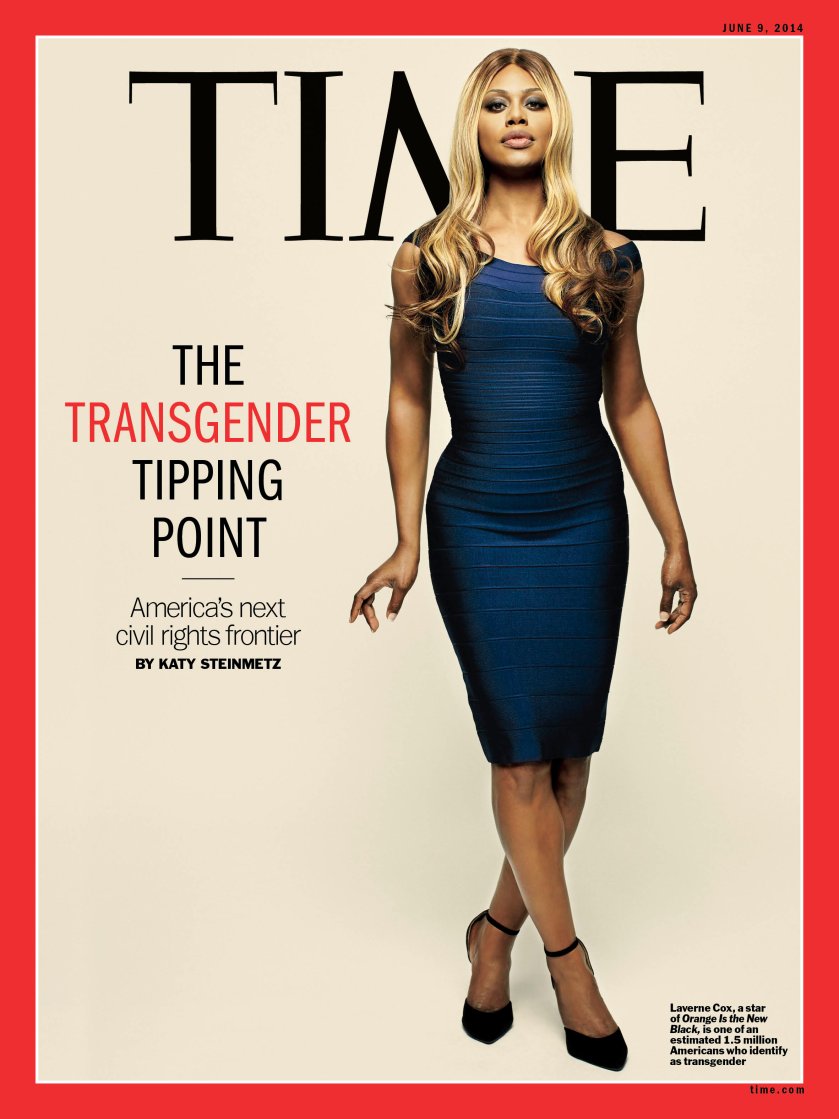
Fait accompli: 9 June 2014, Laverne Cox, an American transgender, appeared on the cover of Time magazine in an effort to make the public accept that the world had reached a transgender tipping point (with America supposedly having 1.5 million people identifying as transgender already). But up to that point, there had really been nothing preceding the announcement to warrant it being a tipping point. It was just dropped fully formed into the culture, as a way of making the world accept the “fact”
I am an investigative journalist who writes at the intersection of the gender industry, technology, and runaway corporatism. I got into writing about this industry because I was in activist circles. I have campaigned for women’s rights since I was in my 20s. I have also campaigned about the environment, etc.
There came a point around 2013 or so that suddenly people were being de-platformed for acknowledging the biological reality that they were, that we are a sexually dimorphic species. There are only male and female sexes and there is nothing else in between.
Transsexualism has been around in the United States probably since the 1950s. People remember Christine Jorgensen who made a big splash in the papers. But transsexualism wasn’t really part of our social vernacular at all. There were a few men who had this adult male fetish appropriating a simulacrum of female biology for their sexual gratification.
There used to be cross dressing, transvestite. And then as soon as the medical industrial complex advanced to the point where they could make reasonably good fake simulacrums of female genitalia, they started to appropriate female anatomy.
Then in the 1940s, William Simms Bainbridge was born. He graduated from Harvard as a sociology professor, and has written many books about cults, technology, and the future of psychological mind control. He now works as the head of the National Science Foundation’s Cyber-Human Programme, which is melding. It basically overlooks the ethics involved in human-cyber melding.
You can see the trajectory in artificial intelligence, transhumanism, robots, nanotechnology, biotechnology, etc. This is where we are going now. Silicon Valley has been pushing the transhumanism agenda since the early 2000s or late 1990s.
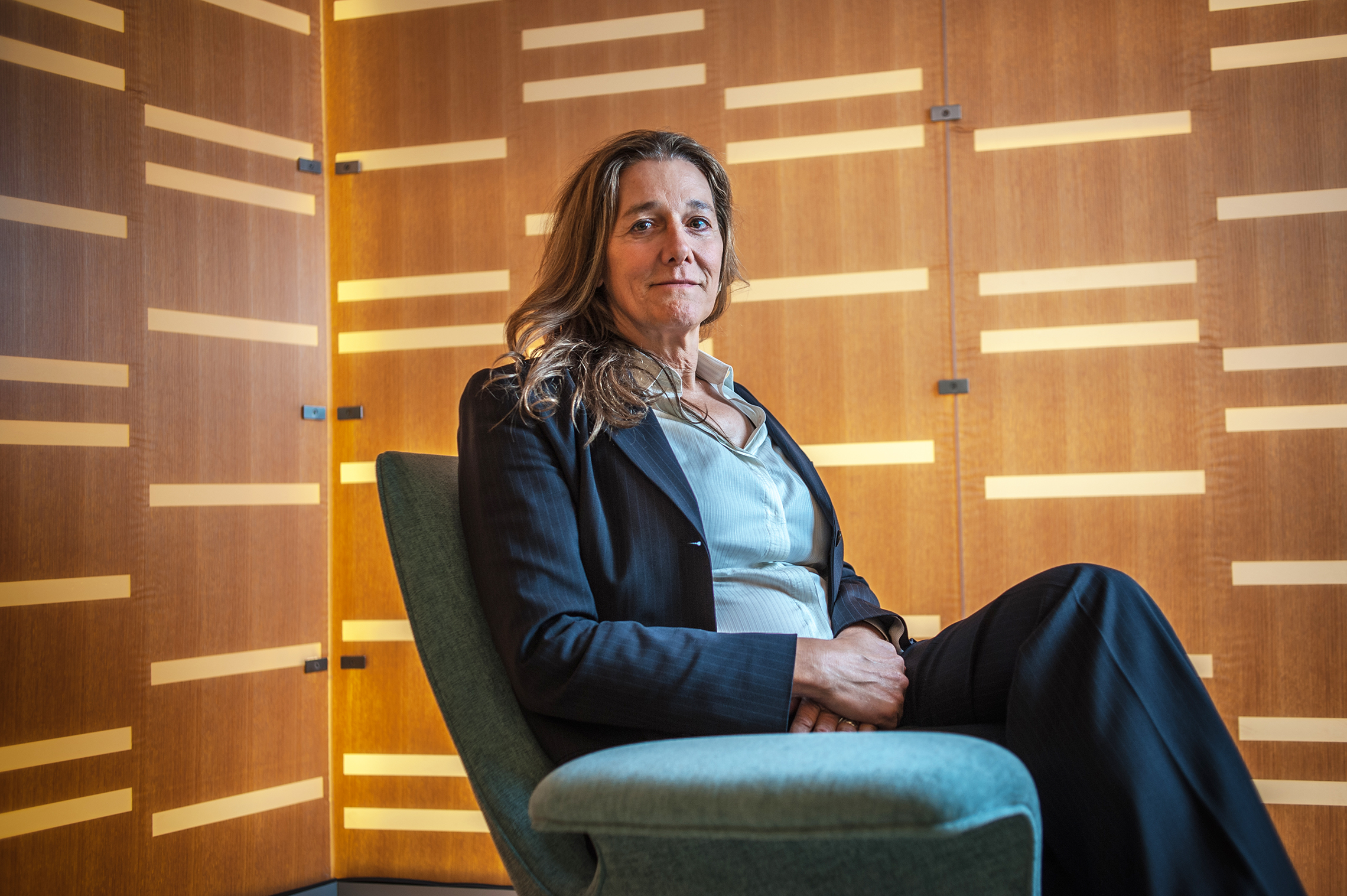
So Bainbridge meets up with another interesting character, Martine Aliana Rothblatt, who is also a transhumanist and a transsexual, who appropriated a simulacrum of women’s biology for himself. He calls himself a transgender or a transsexual. He has travelled around broadly in the culture in many different circles because he has accomplished so many different things. He is very well renowned.
Pathfinder: Christine Jorgensen, actress and trans woman, was the first person to become widely known in America in the 1950s for having sex reassignment surgery
He has been in the teaching sector, he has been in the medical sector, he has been all over Hollywood, he has been on the Oprah Winfrey show and a million different shows with his robot wife which he created.
[Editors note: At age 40 in 1994, Rothblatt, a man born in 1954, underwent 6 reassignment surgery and publicly identified for the first time as a transgender and changed his name to Martine. As a man, he was called Martin, but since pronouncing himself a woman, she has, according to her website, “become a vocal advocate for gender rights and has led efforts to establish health law standards for the transgender community, and to resist discriminatory legislation”.
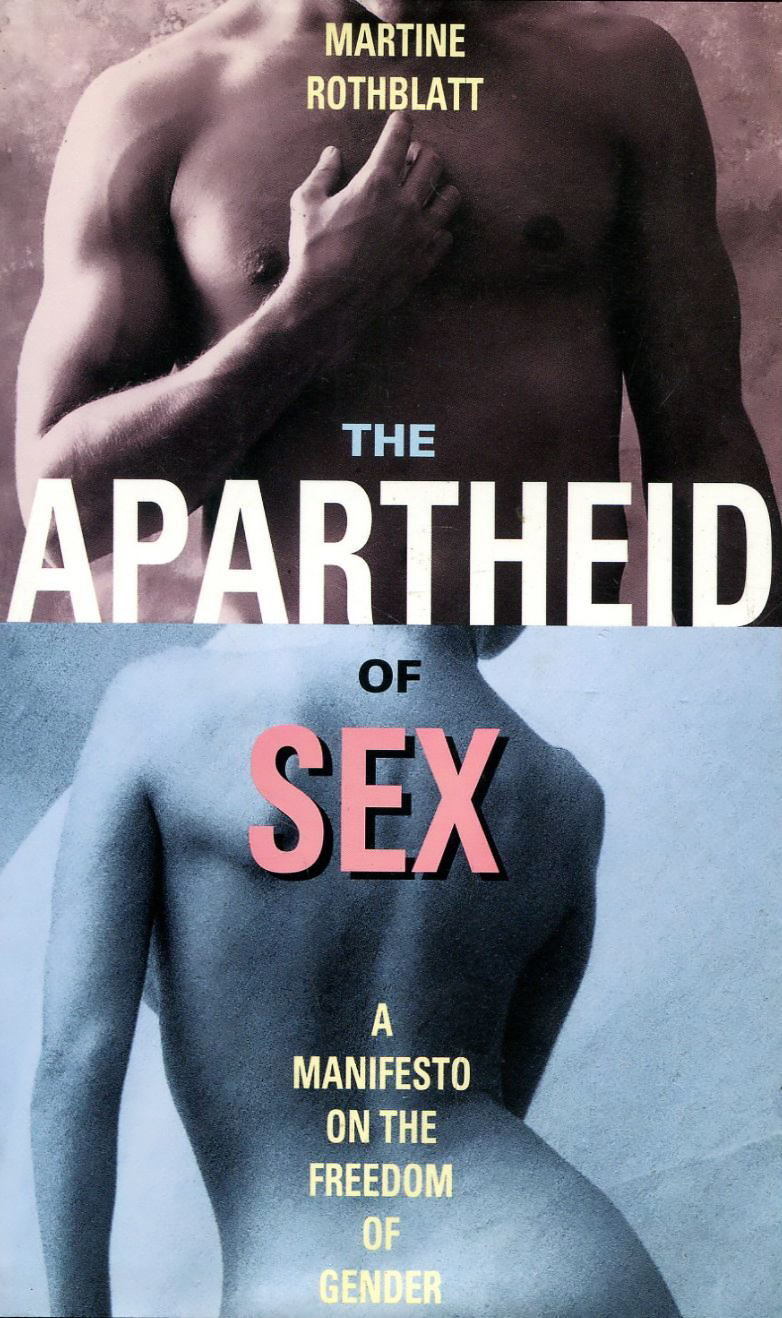
[His 1995 book, Apartheid of Sex: A Manifesto on the Freedom of Gender, has become a canon in the transgender world. As a “woman” and CEO of United Therapeutics and the radio station SiriusXM, she earned $38 million in 2013, making her America’s highest-paid female executive. According to his website, “her (other) book, Virtually Human, explores what the not-too-distant future will look like when cyber-consciousness becomes part of our daily lives”. Before changing to a woman, he had married his wife Bina Rothblatt in 1981 and had had 2 children with her].
Rothblatt’s book, Apartheid of Sex: A Manifesto on the Freedom of Gender, has become really a blueprint of what is going on in the culture and ideology today. Now the ideology is working off the work of Bainbridge. Basically, it is saying we are going to disintegrate the boundary between the sexes. There will be no male or female, only trans-women who will be out there in cyberspace ultimately. It will be an upgrade in humanity, melding yourself with machines, and transferring human reproduction to the tech sector.
The boss: William Simms Bainbridge, shy and self-effacing, is one of the main leaders of the transsexual world
It was in the late 1980s when Bainbridge got together with a whole bunch of other transvestite lawyers and transsexuals and created a document which was the very first gender bill, which brings “embodiment” into law, the sexual objectification of the female biology, and making a human right out of it.
Disembodied, where he is going is full of disembodied beings, where everybody lives in cyberspace. We live in a virtual reality. We don’t live in our bodies anymore, we are going to be uploaded into cyberspace, according to Bainbridge and his friends.
And in order to sell that to the public, sell transhumanism and embodiment to the public, they had to groom some people and get them there. And the way to do that was to create this ideology that says you can choose your sex. That’s just embodiment.
But you can’t choose your sex. You are the body you were born in, no matter what happens to you. I mean in 200 years’ time, if they dig up my bones, they are going to find a female. You can’t change that. But the ideology is promoting the idea that you can change your sex, and they are driving this ideology into children’s schools, and not only their own schools.
They are also driving it into the entertainment and social media platforms, and all the organisations that cater for children are jumping on board this ideology. And, you know what: this has only happened in the past 10 years. Before then, we didn’t hear about transgenderism or transsexualism.
Enter Time magazine
In 2014, Laverne Cox was put on the cover of Time magazine, owned by Mark Benioff, and it announced a transgender tipping point when there was really nothing preceding it to warrant it being pronounced a tipping point. It was just dropped fully formed into the culture in 2014.
From then on, it was just like a chant – over and over and over again, it was repeated. You heard transgender, transgender rights, and human rights pronounced in the same breath.
These huge NGOs, these very huge, non-governmental organisations serving the LGBTQ community worked hand in hand with international law firms like Hogan Ludlow, Danton’s, and Open Society Foundation lawyers to create legal guides for transgender children.
So they started to build this edifice of transgender children to drive the narrative that you can be born in the wrong body. Then we heard the initial stories about the poor children in wrong bodies. And a decade later, it has morphed into just “expressing yourself”.
They say you can be a male, you can be a female, you could be non-binary, you can have both genitalia – but this is all about self-expression now. So it has really morphed in the course of 10 years into the right to augment yourself in whatever way you see fit.
Now we see pain, technology, and religious cult meeting Rothblatt fetish, and they have taken off together and are now in the techno medical field here in the USA. And this is a cult they are driving over meadows, and people are buying it, the same people who are supposedly intelligent. They are buying the idea that you can be born in a wrong body.
And you have to ask yourself why would this happen in the span of 10 years, when human rights movements don’t act like that? They don’t come up like that. They come up against these entities, corporate entities, to fight oppression, not to offer them more profiteering. So all of these people at the top are thinking about the same way.
It’s like Rothblatt and Bainbridge got together to form this ideology. Rothblatt has actually written about it, about the technological takeover of human reproduction, and transgenderism morphing into transhumanism, and how to drive it. He has organised conferences and spoken at conferences all over on how to do that. So Rothblatt is right there. He is starring in this movie and trying to drive his ideology through institutions.
And you have these gay men who suffered through the AIDS crisis. Even if they didn’t suffer themselves, they watched their brothers and cousins die. The LGBT human rights movement was very young when AIDS hit. Immediately the medical industrial complex swoops in, and the philanthropic organisations also come up to serve them and serve the public.
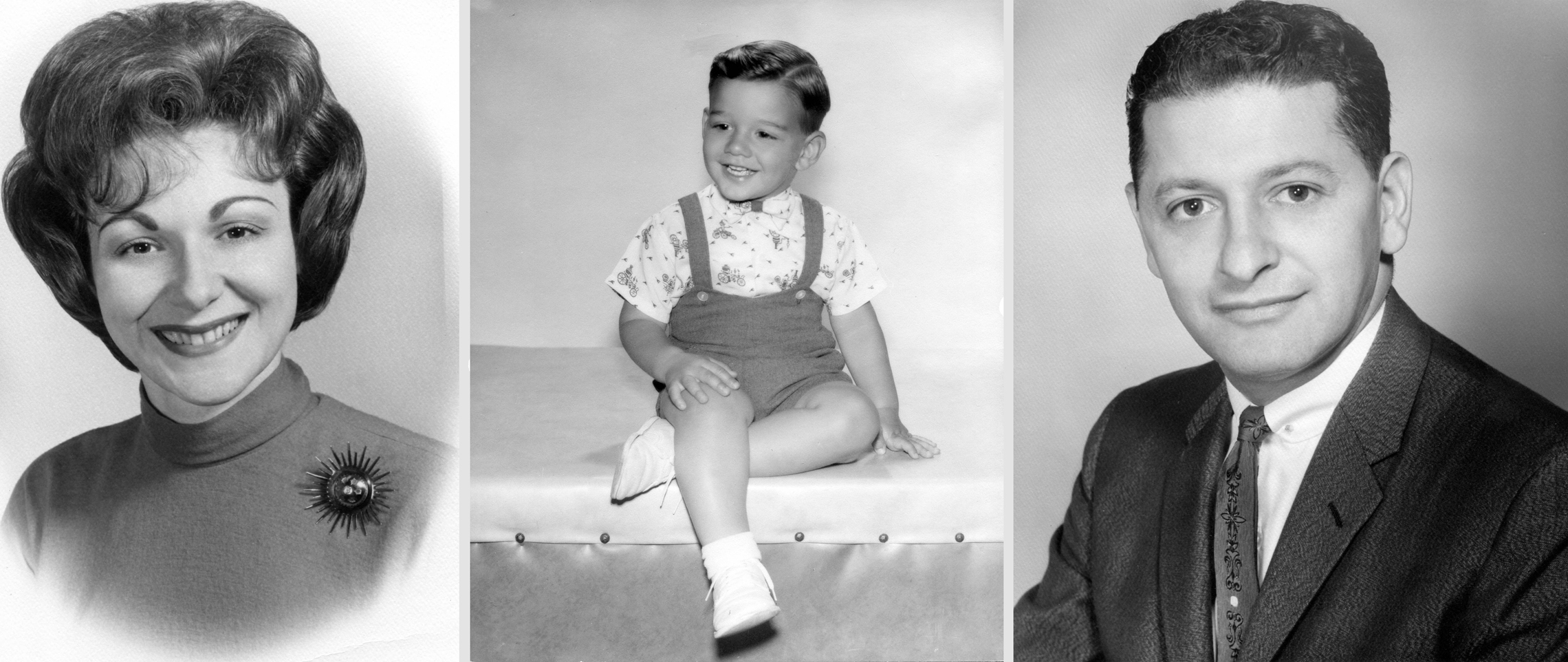
Lovely boy: Born in 1954 as Martin, a boy, Rothblatt is seen here (centre of photo) with his parents – Rosa Lee (left) a speech therapist, and Harold (right) a dentist
So once AIDS disappears, though you have these mammoth, what was then LGBT organisations, teach people about safe sex, how AIDS is transferred, and they help people, they were getting all this money for their efforts.
The real bosses
It was in the late 1990s or early 2000s when the first two major LGBT organisations came up in the United States. You have the Tim Gill Foundation, and you have Jon Lloyd Stryker starting the Arcus Foundation, which is probably the most significant LGBT organisation in the world.
[Stryker’s net worth, according to Forbes magazine, is over $4.2bn. He is the head of Stryker Corporation, a medical technology company, and also the founder and president of Arcus Foundation, which primarily supports “LGBTQ social justice”. Tim Gill, on the other hand, is the founder of Quark Inc, producer of the computer software programme, Quark Express. He is also an LGBTQ rights activist who was among the first openly gay people to be on Forbes magazine’s 400 list of America’s richest people].
The Arcus Foundation and the Gill Foundation send millions and millions and millions of dollars to our educational institutions, medical institutions, prisons, organisations that serve the community like churches, they are all over. And their funding mechanism is contingent upon adopting the gender ideology.
And then other trans organisations started to come up, and this was not to serve transgender people or people who thought they were born in wrong bodies, but it was to de-stigmatise the transgender and transhuman fetish. And all that the new trans organisations had to do was to get on board this “progressive” ideology. They have been told it’s “progressive”. It’s part of LGBTQ. The trans organisations don’t really think about what they are doing.
Then at the same time, the media is promoting it as a human right, human right, human right! Well, there are thousands and tens of thousands of children who are identifying now as transgender.
There are also thousands of children on puberty blockers that disrupt their growth, ruin their bones, bring all sorts of complications such as water in the brain, etc. These kids usually graduate to cross-sex hormones, which are even more dangerous. And they are going to take those “medications” for a lifetime. They are going to be sterilised.
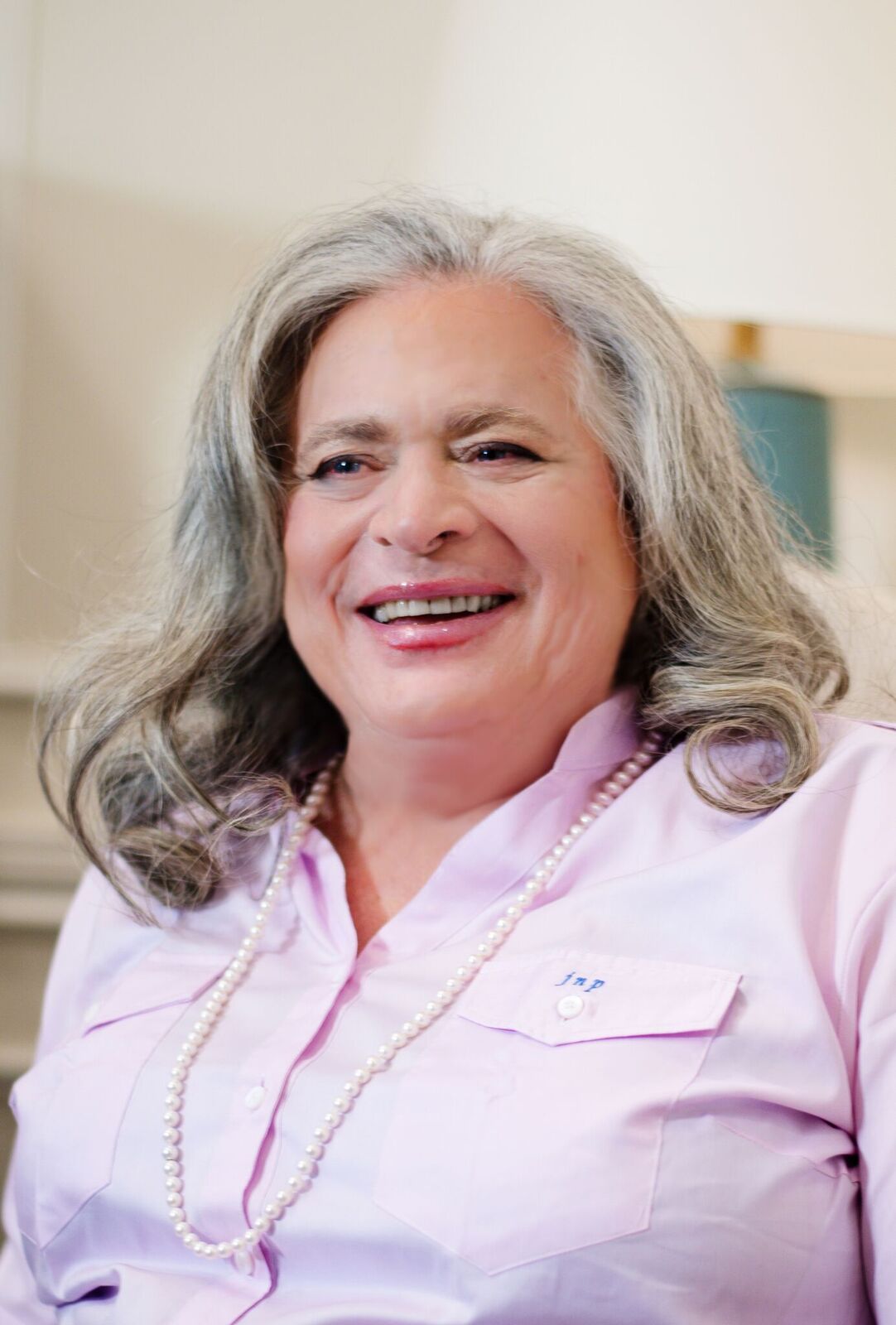
Three is a family: Now a woman, Martine Rothblatt (centre) is seen here in 2019 with his wife Bina (right) and daughter Jenesis (left).
I think the first Children’s Gender Clinic came up in 2007 and now we have hundreds of them in the United States. Where did they all come from, and why? Nobody examines the issue, why this is happening?
Why are suddenly children like committing suicide in droves? They are jumping out of buildings because they want to be the opposite sex, like we never heard about it before. If big pharma could have made a bank on this 50 years ago, we would have heard about it. This is totally a top-down arrangement of power and comes again from the highest echelons of society and finance.
Money, money, money
For example, the founder of the Outright Leadership, which is the business networking arm of the LGBTQ movement, comes from banking. The guy that runs it comes from banking. John Stryker, head of the Arcus Foundation, comes from banking. There is no Harvey character here. Do you know what I mean? There is no grassroots activist there. These are all Uber businessmen.
So you have a profiteering motive, absolutely. Drugs, surgeries, surgery equipment, and not just hormones and puberty blockers, but you have antibiotics, and anti-rejection medications. You have a myriad of surgeries that people want to have after they have this attack basically on their sex, a medical attack on their sex.
Then they want to get their neck done, they want to get their Adam’s apple done, and they want to have their jaw shaved off. It’s like a compulsion driven through technology. It’s a consumerist orgy. And we are the ones being consumed, us people, our sex is being actually deconstructed. It’s not just an idea or an ideology. It’s actually happening. Now.
They are removing young women’s reproductive organs at major hospitals. So sex is actually medically being deconstructed as well as ideologically, legally, and linguistically in the culture.
If you convince a whole generation of children that they can choose their own sex, they are not going to know where they come from. That’s how we are tethered to everything else in the universe – because all you know in the biological world is reproduction, regeneration, death, repeatedly. But teaching children that they can live forever, that they can dissociate themselves from their sex reality is madness, absolute madness, because it goes against the grain of reality.
That’s why they are driving an ideology of physical dissociation from your sex reality. This is what’s going on here, but why is this happening? If you confront that over and over again, you find that it’s all part of the medical tech sector. If you sterilise a whole generation of children, they are going to need reproductive services.
So, yes, this is really an occupation. I mean as a feminist, I see it as an occupation of womanhood. It’s not just biology like you knew before, like it was used in prostitutes or sex workers. This is like the pinnacle of objectification. “We are going to take your biology, we are going to wear it as a costume first of all. And second of all, we are going to transfer this reproductive capacity that you have to the tech sector”.
And this is why women are being legally erased in language and in law. They just took the word woman out of the Cambridge English Dictionary, and they replaced it with “anybody who feels like a woman”.
It is profiteering
The way they transfer the human repertoire to the tech sector is through all the big fertility treatments that are out there – freezing your eggs, and freezing your sperms, and surrogacy. And they are researching womb transplants. It is profiteering. It is social control in the sense that they really, literally, want to break the sex apart.
Another money bag: Tim Gill’s foundation and others like it send millions and millions and millions of dollars to educational and medical institutions, prisons, and organisations that serve communities like churches, etc, and on one condition: the funding mechanism is contingent on adopting the gender ideology
They want to break apart the boundary between the males and females of our species. They perceive this as progress. You will be unburdened – bisexual stereotypes and inequalities, and mothers and women won’t have to have children. It’s like, look at the tampon, you know what I mean, suddenly women can leave the house, they don’t have to sit in their backyard or on his stack of rags.
It’s the advancement of technology to improve our lives, they say. But we never get a say in any of that. We don’t get to decide, and we don’t get all the information. This is all elites deciding for us, it is like ride the bullet train of the market.
Everybody is profiteering off this now, even if they have no idea what it is all about – transgender modelling agencies, gender fluid makeup photographers taking pictures of transgender children, it’s everywhere.
And this same message is being driven into grade schools. By the second grade, they are learning about gender identity, talking hormones. And this was all brought in under anti-bullying programmes, which were passed by President Barack Obama’s administration and funded by Pritzker, one of the largest and most famous families in America, there are many of them.
Jennifer Pritzker was an Army colonel who purports to be a female and runs around with synthetic sex characteristics of a female. And he drives his ideology into the psychiatric departments of major universities, into other medical institutions, gender, hospitals, the military, etc, etc.
His company, Tolani Foundation, is partnered with Squadron Capital, which is a medical device company. So he is following the same trajectory of the Arcus Foundation. Stryker Medical is a medical supply company. They are going to be profiting off these surgeries. No, they are not just so-called gender surgeries but human augmentation.
When we open the door to these kinds of radical changes to our biology, the way that we were planted in the ecosphere, once we let go that tether, anything is up for grabs. They manipulate your DNA. They can manipulate the way you want. And that’s why these rights are, from what I can tell, these gender rights are being passed. It’s not about people that are allowing medical attack on their sex, it’s for future augmented human beings.
Follow the money
I follow the money and money trails do not lie, they tell you the truth. And I don’t care how I sound because it didn’t matter to me, it just didn’t matter. Just get the information out of there so people can go looking for it themselves, because again it is not hidden and none of this is hidden. It’s just that people are not looking for it, they are looking at the human rights angle.
The individuals who feel trapped in wrong bodies, my heart breaks, it’s so ridiculous. And all the governments, all the politicians, all the major banks, all the financial investment houses, all the medical institutions, universities, schools, corporations, the law firms – they have all jumped on board within 10 years supposedly to help poor people who have identity issues, who have body dysphasia. This is so patently ridiculous and people just gobble it up.
I have seen people with body dysphoria related to their limbs, body integrity, identity disorder, and they feel like their limbs don’t belong to them. It’s usually a lower extremity, a leg or a foot. They just feel like they want to cut it off because it just feels so wrong.
And psychiatrists have a notorious difficulty trying to treat these people, but we have not made any parades for them. We haven’t started a human rights movement for them. We haven’t put them on the cover of the Time magazine. We have not had a makeup line for them or modelling agency.
I can say the same thing for anorexia. It is a form of body dysmorphia. But why is it only happening to people who are claiming a synthetic sex identity, and why has it happened across the board in so many different countries.
Laws are changing and languages are changing to uproot the way that we are organised as a society. Why would you do that to people? It is an absolute insanity, it’s madness. Nothing means anything anymore. There are no boundaries, only boundaries of looseness!
If you want to know anything in America…
Yet another money bag: Jon Lloyd Stryker, a proud LGBTQ+ billionaire has not been ashamed to let his billions finance the cause
I started following the money around the issue, because if you want to know anything in America you follow the money. And I started following the money and looked at all these different NGOs, these non-governmental organisations are really huge. They are huge like the Arcus Foundation. They are mammoth.
They have each been given like half a billion dollars to spread this ideology through it, and through cultures, and not just our American cultures but Western cultures generally – because they fund other organisations to do the same thing, and they create the whole scaffolding, this political scaffolding, to drive it. As a result, they have media people on their side and people who have been trained in politics.
They are called from different schools and different areas that are going to work for them, and they train them to be in those positions to drive policy through the culture.
And so they have media people as well, like Glad is the media arm. So Glad and the Arcus Foundation are closely working together. Glad goes about spreading information about how people are supposed to talk about it because it’s a human right and you don’t want to offend anybody.
In 75 different countries, the medical industrial complex is bigger than the military industrial complex. So I picked up a few different characters that are very prominent. But there are many others, whether or not they actually know what they are doing. This is all big pharma, big tech, and big finance.
The man who let it all happen: Former President Barack Obama, who has a beautiful, intelligent and loyal wife, an attorney in her own right, allowed the LGBTQ+ agenda to infest American grade schools, brought in under anti-bullying programmes which Obama’s administration willingly and enthusiastically passed
We have stories for them, where they can actually go and buy paraphernalia for their fetish. But why are we normalising fetish, because if your fetish is for another person, it is an objectification of them, because you are trying to fill up the holes that this society has created.
Instead of looking at society and how damaged and broken it is, that it is not giving us what we need, all these aberrant behaviours are being supported, which is an absolute madness.
No debate, no debate
They dispense gender ideology. It’s sort of like the old Christians who used to come into American and Indian communities and indoctrinate them into Christianity. Well, this is very similar, it’s technological religion and they are indoctrinating people, but the people don’t understand why they don’t talk about it. No debate, no debate. You can’t talk about it. You can’t even talk about womanhood because that is transphobic. Everything is transphobic, it’s becoming like a joke on social media.
Jennifer Pritzker, a former Army colonel who purports to be a female and runs around with synthetic sex characteristics of a female, has done a lot pushing the LGBTQ+ ideology through his company, Tolani Foundation
Now the construct of the transgender child had to be created and how to communicate it, like how to drive this ideology. They have created guides basically for people, and this is created through the enormous NGOs which work with international law firms. And then they are sent down to say some people are born in wrong bodies.
I see Governor Pfizer has just sent a bill through the schools in Illinois, Chicago, specifically that if you want health education in your school, you have to adopt gender ideology. You have to teach kids about gender ideology, which means they can know you can change your sex, and you can get hormones and puberty blockers.
You can change your name, and if you are a kid, be taught from very sexualised material, including even anal sex and the whole gamut. It’s bondage. Anything you can think of, they are teaching them to young children.
So I think the first real platform of its kind was for them to see how this went over. Most teachers and adoptive parents have accepted it because they don’t want to be seen as terrible people. This is part of the LGBTQ agenda. They have been accepted in society now, usually someone knows somebody in their family somewhere who is gay or lesbian or bisexual. So it’s like, “oh, this is just part of life”. This is what we have been told, not once, not twice, but over and over again.
But most parents said no, and still say no. Which is a credit to them. But the transgender and LGBTQ advocates are still pushing it through schools. And the kids are being exposed to highly sexualised material.
They have got drag queen story hours, grown men dancing with G-strings on, and what partners do with each other. It’s not anything you know, it’s just another way to be human.
Penis goodbye parties
God, I think we should just throw the whole thing out – like the idea that testosterone really drives aggression. Women are being erased in language and in law, it’s like we don’t exist. Rapists are being put in women prisons because it doesn’t matter, sex doesn’t matter, only gender identity matter, the feeling that you have about yourself matters. It’s way, way top heavy with young women having their sex bodies medically attacked.
When you follow the money like I do, you find answers. It’s all going to the tech sector, they want reality without being brought to face the law. Women are being legally arrested to sort of overlay a virtual reality over the natural world, and subjugating the natural world.
Martine Rothblatt says we are, in very short order, going to be living in a virtual reality, and he says that he is building a virtual reality. He actually lives in virtual reality already, which I actually agree with, because there is not a whole lot of planet left for them to destroy and colonise. Look at the way they are sexualising children and traumatising them sexually by exposing them to adult material. It is crazy.
The canon: The front cover of Martine Rothblatt’s book which has become almost the bible of the LGBTQ+ world
Before the advent of the internet, we didn’t have that kind of exposure to all the things outside of our own little community. Today you hear people really talking about the castration surgery and actually following him in the operation room. And then People magazine putting out the spreads, celebrating his penis goodbye party, where he has a penis cake. And this is a big celebration. It’s absolute madness.
Politics is about numbers, and the numbers tell their own story. And the numbers turning up at the rallies of the ruling party, Zanu PF, since it launched its 2023 election campaign in Chipinge has simply been outstanding!
On these pages: A buoyant President Emmerson Mnangagwa arrives at a Zanu PF rally (above, left), and (bottom, right) are Vice President Constantine Chiwenga, Second Secretary of Zanu PF Kembo Mohadi, and Zanu PF chairman and Defence Minister Oppah Muchinguri-Kashir
It is the stuff politics is made of, giving President Emmerson Mnangagwa, who is running for a second term, the inner joy to tell 124,000 people who turned up at the Zanu PF star rally at the Chinorumba High School in Zaka, Masvingo Province, on 16 July: “I want to warmly thank you, the people of Masvingo. Surely your numbers have been hugely impressive. I can see people stretching for more than a kilometre.
Zanu PF supporters are famous for their dance steps, and President Mnangagwa (in red stripes, top opposite page) arrives at the St Noah’s Mafararikwa Shrine in Boca, Marange, for a rally with the faithful
“I want to speak of the figures. When we launched the campaign in Chipinge, we were anticipating 60,000 people, so we sent regalia for 60,000 people, but it was not enough. Then in Bulilima, we were anticipating about 70,000 people, but the regalia we sent for that number was not enough. Then in Mashonaland West, in Magunje, over 75,000 people came.
Election record: Zanu PF’s rally at Zaka, Masvingo Province, on 16 July broke the national record for the most people at one rally – 124,000 counted by drone technology. Here, we see a section of the humongous crowd
“But here, I can see that people are stretching for over a kilometre. I think you are about 100,000. In fact, I am being told now that our drone technology has counted you, and you are more than 124,000 … You have taken the crown!”
On this and the following pages, we present some of the scenes so far at the Zanu PF rallies.
The best of the Moors: Of all the attempts to erase the Moors from European history, the Alhambra Palace (some call it a Castle) stubbornly remains in situ, in Granada in southern Spain. The Scottish author, Jan Read, described it as “perhaps the most successful fusion of architecture and landscape ever achieved by man”. A palace and fortress complex, the Alhambra was first built by the Moors as a small fort in 889 AD. It was enhanced in the mid-13th century by the Moorish ruler, Mohammed ben Al-Ahmar, and then finished in 1333 by the Almoravid leader, Yusuf Tashfin, who turned it into a palace, designed with the mountainous site and the environment fused into it. Today, it remains one of Spain’s biggest tourist attractions.
This will come as a huge surprise to many people, both Africans and non-Africans alike. But it is true. Just 711 years after the death of Jesus Christ, black Africans from the northwest and west of Africa, who had converted to Islam (and were therefore called Muslims) invaded Spain and Portugal (which were one country at the time), conquered it, ruled it, and expanded their rule to cover much of Southern Europe (Italy, France, Crete, Sicily, etc) for a long 781 years, between 711 and 1492.
But after the African colonisation of Europe came to an end on 2 January 1492, the Europeans set in motion a great effort to erase all traces of the Africans in Europe, and used their historians and writers to hide the important fact that Africa ever colonised and civilised Europe. Unfortunately for them, some stubborn relics of the Africans still remain in Europe, like the magnificent Alhambra Castle, the Generalife summer palace, and other edifices in Granada in the south of Spain.
On the whole, the story of the Moors in Europe is so fantastic that it is difficult to believe when told by one mouth. Let’s repeat it: the Moors achieved so much in Europe that if their story is told by one person, nobody will believe it. So, this month, we have put together in this “special issue” of The Third Eye, several historians/writers of consequence (most of them of African descent) who attest to the greatness of what the Moors achieved in Spain and Portugal particularly, and the whole of Europe generally. You will marvel that Africans could do what the Moors did in Europe as long ago as 1,300 years. It is a story Africans must know. So please sit back and enjoy pure African ingenuity. This lead piece is by our Editor, Baffour Ankomah.
If you believe conventional wisdom, Africa has contributed nothing to world civilisation. How big that myth is can be gauged from the great efforts that Western historians and writers have made to hide the immense contributions that Africa made to the civilisation of Europe during what they call their Dark Ages.
So total has been the great deception that the majority of the world today, chief among them Africans themselves, do not know about the glorious Africans who conquered and ruled Spain and Portugal and other parts of southern Europe for 781 years between 711 AD and 1492 AD, and in the process brought civilisation, education, and general enlightenment to the whole of Europe, then steeped in its Dark Ages.
This is a story about African ingenuity, brilliance and resourcefulness. But it is not acknowledged in contemporary history by Europeans or Westerners in general. At best, they give the credit to Arabs or Muslims, as if an African who converts to Islam ceases to be an African. It is like saying a Nigerian ceases to be a Nigerian because he has become a Muslim.
That is the kind of intellectual somersault employed by Euro-American historians and writers that has ensured that the glorious history of the Africans (called the Moors) who conquered the Iberian Peninsula (Spain and Portugal were one country at the time) in 711 AD and in 781 years thereafter brought civilisation to the whole of Europe, is not known even by most Africans.
So close yet so far: Morocco, Africa’s closest landmass to Europe, is only 8 miles from Spain, across the Straits of Gibraltar. The proximity of the two continents made it possible for three invasions in history launched by Africans from what is now Morocco to succeed against Spain. The last and most famous one was by the Moors in 711 AD, who went on to rule Spain and Portugal and Southern Europe for 781 continuous years, until 2 January 1492
So it is not Europe that first colonised Africa, dear reader! Rather it was Africa that first colonised Europe – from 711 AD to 1492. European colonisation of Africa started about 1833, and by 1870 just about 10% of the continent was under formal European control. This increased to almost 90% by 1914, with only Liberia and Ethiopia remaining independent.
Thus, if you do the mathematics, the gap between the African colonisation of Europe and the European colonisation of Africa is a good 341 years – that is even being generous to fix the start of the European colonisation of Africa at 1833, when just about 2% of Africa was under European control. It would increase to 10% only in 1870.
Therefore, the idea that the African was in a frozen state until “discovered” by the Europeans in the mid-15th century (when the first Portuguese “explorers” made contact with West Africa) is a myth that shames the modern world.
What the African did or was doing before the mid-15th century, the European has nothing to say about! Which leads John G. Jackson, the African-American historian and author, to say that “the curious idea that a great white race has been responsible for all the great civilisations of the past is nothing more than a crude superstition propagated mainly by European-oriented racist historians.”
Today, as Dr Ivan Van Sertima, another great African-American historian, once said, “it would seem like racial chauvinism to suggest that Africans played a major role in the
occupation and enlightenment of a critical part of Europe.”
There is something very deep-seated in many a European historian or scholar that makes him/her refuse to accord the African – and it is usually only the African – any credit for anything at all.
European historians are happy to credit the Chinese, the Indian, the Mongolian, the Arab and anybody else for their contributions to world civilisation. Never the African. Even when the feat is, or was, clearly achieved by an African and on African soil like the exploits of the Ancient Egyptians (covered extensively in the last two editions of The Third Eye), European/Western historians like to attribute it to some Caucasoid or other exotic elements who descended from somewhere and achieved that feat on African soil.
This “anybody but the African” madness has been at the heart of the contortions that have afflicted many Western historians, scholars, writers, and journalists in their explanations of the presence of the Moors in Europe and the civilisation and enlightenment they brought to a continent then groping in darkness. Thankfully, the Europeans describe that era correctly as their “Dark Ages”. And light was brought by Africans that they called the Moors.
The Moors were people from both Ancient Mauretania (a country which covered the area now occupied by Morocco and western Algeria) and other parts of West Africa – all the way down from today’s Morocco to Senegal, Mali, and the Sahelian countries. Some accounts even say it included people from as far south as northern Ghana. They had been converted to Islam after the conquest of North Africa by the Arabs in 708 AD. As Muslims, they spoke Arabic, the language of Islam and later science in the Middle Ages. But by nationality and identity, they were black (and dark) Africans through and through.
According to Jan Carew, the Guyana-born historian, author and scholar: “There is an instinctive and deep-seated reluctance on the part of Eurocentric historians to acknowledge the Moors as the bringers of cultural and scientific enlightenment to Europe. And when they are compelled to make grudging acknowledgments of this fact, they proceed to whiten the Moors, to tear them away from any suggestion of having black African roots.”
But the stubborn fact remains that between 711 AD and 1492, these Africans, called the Moors, together with their Islamic colleagues from Arabia, put southern Europe to the sword, conquered it, governed it, and brought civilisation and general enlightenment to Europe as a whole.
Spain and Portugal were one country at the time and they became the first to benefit from the enlightenment brought by the African warrior scholars from the northwest and west of the continent.
The conquest of southern Europe
After the fall of Granada: The kingdoms of the Catholic monarchs, Ferdinand I of Aragon and Queen Isabella I of Castile after the defeat of the Moors. They married on 19 October 1469 and formed a strong union that finally defeated the Moors on 2 January 1492
With Spain and Portugal in their firm grip, the Moors proceeded to conquer southern
France, then Sicily which they ruled for 200 years, and Crete for another 125 years. They also conquered parts of mainland southern Italy, and even besieged and sacked Rome in 846 AD, and in the process took a lot of loot. But if you read the works of most Western historians, they claim the Moors were Arabs, not Africans because they were Muslims and spoke Arabic.
But being a Muslim is not a nationality. It only denotes one’s religion or religious belief. It is why the European ancestors of modern European historians were not shy to describe the foreigners from Africa that they lived with during the 781 years of the Moors as black. In addition, the evidence of Moor heads on the coat-of-arms or heraldry of many European noble families, all over Europe, show the Moors as black Africans.
The refusal by contemporary European/Western historians to accept this plain fact and to place the Moors in their rightful home in Africa is part of the centuries-old denial of remarkable African achievements by European historians and scholars, and therefore should be rejected with the contempt it deserves.
That dishonesty cannot last forever. In fact, it no longer holds as many African-descended historians and scholars have painstakingly studied and examined the nationality and achievements of the Moors, and have concluded beyond every reasonable doubt that though the Moors worked with some of the earlier Arab conquerors of North Africa in the invasion of Spain and Portugal in 711 AD, the subsequent 781-year rule of the Iberian Peninsula and southern Europe, and the civilisation this brought to Europe as a whole cannot be credited to Arabs, or Arabs only.
This is because, as Jan Carew explains: “At the height of its power, the Moorish Empire in Africa stretched from the western half of Algeria through Morocco and as far south as Ghana; while in Europe this empire extended itself from the Atlantic coast of Portugal, through Spain and across the Pyrenees to the Rhone Valley in France.”
Wayne B. Chandler, another African-American historian and writer, confirms that: “Although the term Moor has been put to diverse use, the roots are still traceable. Circa 46 BC, the Roman army entered West Africa where they encountered black Africans whom they called Maures from the Greek adjective mauros, meaning dark or black. The country of the Maures, Mauretania (not to be confused with today’s Islamic Republic of Mauritania in present-day West Africa, although obviously the root is the same), existed in what is now northern Morocco and western Algeria.”
Other historians attest that at certain times, foreigners, like the Greeks and Romans, who came to North Africa called the original inhabitants by the generic name “Berbers”, from the Latin word “barbari”, meaning barbarian. To the Romans, anybody who was not a Roman
was a barbarian.
But these original “Berbers” were people from different ethnic backgrounds and nationalities who occupied the whole northern parts of Africa before the Arab conquest in 708 AD. They had their own original individual ethnic names before the Greeks and Romans called them “Berbers”. And they were mainly black and affiliated with the then contemporary peoples of the East African area.
Mamadou Chinyelu, another African-American historian and writer, explains that “when the Africans in the northern part of the continent first assumed the name ‘Berber’ is not certain, but by the time of the Islamic conquest of North Africa, this name was in common usage.”
Space mattered: After the Moors conquered and ruled Spain, this is how the Muslim (not Arabic, because the Moors were not Arabic but Muslims) empire looked like in 750 AD.
Chinyelu’s view is supported by the anthropologist, Dana Reynolds, who confirms that “the original Black Berbers, who were called Moors, were the North African ancestors of the present-day dark-brown and brown-black peoples of the Sahara and the Sahel, mainly those called Fulani, Tuareg, Zenagha of Southern Morocco, Kunta and Tebbu of the Sahel countries, as well as other black Arabs now living in Mauretania and throughout the Sahel. They include the Trarza of Mauretania and Senegal, the Mogharba as well as dozens of other Sudanese tribes, and the Chaamba of Chad and Algeria.”
Even the Oxford English Dictionary defines “Moors” as: “The … people who are commonly supposed to be black or very dark and it is synonymous with the word for ‘Negro’ in many contexts.”
Later, the term “Moor” was applied to blacks in general during the European Renaissance when explorers, writers, and scholars began to use it. The earlier Greeks called them Mauros, and the Romans Maurus. In the Romance languages (Spanish, French and Italian), Moor was rendered as Moro (Spanish), Moir (French), and Mor (Italian). The English called them Moors, the Germans Mauren and the Dutch Moorrees. But all these meant “black or dark people”.
History shows that the Arabs who conquered North Africa in 708 AD rarely used the word Moor. Instead they called the original people of North Africa “Berber”, to cover practically all the inhabitants of the Maghreb (ie, Islamic North Africa west of Egypt).
Fortunately for the Africans, the Christians who were defeated by the Moors in the Iberian Peninsula and other parts of Europe left vivid images of the Muslim Africans. Today, Christian paintings and sculptures are an indisputable witness to the black presence in Europe and how important blacks were to the Europeans at that time.
Another source of evidence is the coat-of-arms or heraldry of European noble families who honoured the Moors by putting their heads on their insignia. “Such illustrations”, says Prof Runoko Rashidi, another African-centric historian, “are to be found in the Cantigas of Santa Maria, allegedly written by King Alphonso X [of Christian Spain]. They are filled with images of the Moor and are mostly black types. This is the period of the Almoravid invasion which brought hordes of new Africans into the Iberian Peninsula. Medieval illustrations in the Cantigas portray blacks in a variety of roles – from members of the aristocracy to the military.”
The Moors in Spain
Having settled the issue about the identity and “nationality” of the Moors, let’s now move to what the Moors actually did in Europe. Before the Moors invaded the Iberian Peninsula in 711 AD, there had been two earlier African invasions of Spain and Portugal in history. This was made possible because of the proximity of Europe to Africa. There are just 8 exact miles between Point Marroqui in Spain and Point Cires in Morocco.
A pillar of African history: Prof Ivan Van Sertima, an African-American historian and writer of repute, was one of the best to walk the land of Global Africa
The website, Our Spanish Life, owned by a Spanish travel agency, explains that: “If you stand on the Southern edge of Spain and stare out across the sea, you can see North Africa in the distance! As long as the day is clear, of course! If we’re being specific, Spain is incredibly close to Morocco, in particular. This is because Morocco is situated in North Africa and has a point that protrudes out towards the North, reaching out to Spain. And Spain equally has a southern point in the country that protrudes out further towards the South, reaching out to Morocco. So these two points are almost touching and there is just a narrow space of sea between them. The shortest distance between Spain and Morocco is from the southernmost point in Spain and the northernmost point in Morocco, separated by the Strait of Gibraltar.”
Dr Ivan Sertima made the following important point: “The fact that Africans from the north had been intruding into southern Europe from very early times should not come as a great surprise, for the straits that separate the two continents can be crossed by the simplest boats in a matter of hours. The proximity of the borders of Europe and Africa and the evidence of the African phenotype among many southern Europeans led Napoleon to remark that ‘Africa begins at the Pyrenees.’”
But as it were, it was the third major invasion of Spain by Africans that changed everything for Europe. And this was by the Moors in 711 AD. History shows that shortly after the Arab conquest of North Africa in 708 AD, General Tarik ibn Ziyad, an African and a “Berber”, was placed in charge of Morocco by the governor, Musa ibn Nusayr, a member of the Warfadjuma branch of the Nafza Berbers.
Tarik’s domain in what was then called “the far western Maghreb”, included all but the island of Ceuta, an outpost of the Greek Empire, resting on the northern tip of Morocco, near present-day Tangiers, which was ruled by Count Julian, a Greek governor. Julian was a good friend of Spain, then under the rule of the Visigoths, a Germanic tribe that had conquered and ruled Spain for 200 years after toppling the Roman Empire in the Iberian Peninsula.
The then monarch of the Visigoths, King Roderick, had been given charge of the daughter of Count Julian of Ceuta while the girl was in training at Roderick’s court. But Roderick took advantage of the girl and raped her. This infuriated her father, Count Julian, who out of anger and revenge persuaded General Tarik, the Berber, to invade Spain, promising that he would give Tarik his own boats to help in the invasion. Julian even provided extra intelligence information by assuring Tarik that Spain was unprotected and that the Visigoths would be no match for him.
Like a good general, Tarik consulted his boss, Musa ibn Nusayr, and then sent a reconnaissance mission into Spain in 710 AD, led by Tarif, a black officer. Crossing over from the north of what is today’s Morocco (but then called Mauretania), Tarif and his men landed at a place near Europe’s southernmost point to Africa. The place was later named Tarifa in his honour. Tarif set up a customhouse there, and because of his noble activities his name became the root for today’s customs word, “tariff”.
In July 710 AD, Tarif’s mission came back to report of a Spain ready for the taking. His report was music to the ears of General Tarik, who now had the needed information for an attack on Spain. Nevertheless, it took a year for Tarik to prepare for the attack, which began in earnest in 711 AD.
Tarik’s army landed on an isthmus between an escarpment then called Mons Calpe and mainland Europe. Tarik seized the isthmus and, considering it militarily strategic, he asked that a fortress be built at the site. His men later named the fortress Gabel Tarik (Arabic for the mountain of Tarik) after him. This was later corrupted to “Gibraltar”.
Having now a secure base on mainland Europe, Tarik, with about 7,000 “Berber (African)” troops and 300 Arabs, proceeded to engage King Roderick, who was leading some 60,000 troops, at the Janda Lagoon by the mouth of the Barbate River in southwest Spain. The date was 18 July 711 AD.
As Tarik’s army was massively outnumbered, he turned to his soldiers and addressed them thus: “My men, wither can you flee? Behind you lies the sea and before you the foe. You possess only your courage and constancy, for you are present in this country poorer than orphans before a greedy guardian’s table. It will be easy to turn his table on him if you will but risk death for one instance.”
Tarik’s men chose to risk death, and stood their ground, and scored a major victory over King Roderick that day. With the Visigoths vanquished, Tarik set out to enlarge his territory. He was pleasantly surprised to find that along the way through the Spanish countryside, many of the natives were fed up with the oppression of the Visigoths, and were only too happy to
join his invading army. Thus, instead of Tarik’s army dwindling through attrition, it actually grew in size and power.
Soon, the entire Spain (at the time Portugal was part of Spain) came under Tarik’s control, and with Musa ibn Nusayr crossing over with reinforcements from old Mauretania, the Africans (who would later be called “Moors”) and their Arabic colleagues proceeded to lay the foundations of a new civilisation in Spain.
First, they changed the name of the country to Al-Andalus, and later moved the capital from Seville to Cordova, which, according to the English historian Stanley Lane-Poole, they turned into the “Marvel of the Middle Ages”. The African-American writer and historian, Dr W.E.B. Du Bois, underscored the fact that “Spain was conquered not by Arabs, but by armies of Berbers and Negroids [at times] led by Arabs.”
The first Moorish dynasty
The first Moorish family to govern Spain was the Umayyad dynasty. Although Tarik led the invasion, he himself never ruled Spain. But other Moors did. Their rule was especially benevolent as the native Spaniards were allowed to keep their own customs, religion, and language as well as civil independence. They were also allowed to keep their own churches, judges, courts, counts, and bishops, although the Moorish authorities retained the right to approve the bishops. With time, many Spaniards, including Christian noblemen, converted to Islam.
Using Spain as their base, the Moors took control of Sicily for over 200 years, and Crete for 125 years. And more followed! Between 717 and 719, the Moorish ruler, Al-Hurr ibn Abdurrahman, crossed into southern France with his army, using the difficult passes of the Pyrenees. At the time, Switzerland was part of France. But unrest back home in
A father’s revenge: Count Julian, ruler of Ceuta, under the Visigoths, is credited with having inspired the Moorish invasion of Spain as a revenge for the Visigoth king, Roderick, having raped Julian’s daughter who was living in the court of Roderick
Al-Andalus brought doom to Abdurrahman’s mission. It was not until 729 that another Moorish ruler, Haytham ibn-Ubayd, was successful in capturing Lyon, Macon and Chalon-sur-Saône in southern France.
Decades later, when al-Samh ibn-Malik ascended the Moorish throne, he transferred the Spanish capital from Seville to Cordova, and completely reorganised the finances and tax system of the country. He also carried out impressive public works and did an extensive survey of the land.
Malik died in May 721 AD and was replaced by Abdurrahman ibn Abdullah who, like his predecessors, crossed the Pyrenees again and this time delivered a crushing blow to Duke Eudes of Aquitaine in southern France.
Abdullah went on to sack Bordeaux and Poitiers, but his luck ran out in Tours in 732 AD, when he was soundly defeated by Charles Martel, the grandson of Charlemagne. Sadly Abdullah lost his life in the battle against Martel, and Tours marked the western limit of the Moorish empire. The Moors however remained in southern France until 1140 AD, principally in the Camargue on the western Riviera, which is still known today as La Petite Afrique.
With southern France conquered, the Moors turned their attentions to elsewhere in the Mediterranean. In 837 AD they captured Sicily. In 846 AD they put Rome under siege, and 20 years later, they took southern Italy.
No match for the Africans: King Roderick of the Visigoths and his army of more than 60,000 were routed on 18 July 711 AD by the African Moors, led by Tarik ibn Ziyad, who crossed over from Morocco with some 10,000 warriors
According to J.A. Rogers in his 1946 book, World’s GreatMen of Colour, the Moors plundered the Vatican and St Peter’s Cathedral in the invasion of Rome in 846, and carried off immense wealth in gold, jewellery, tapestry and paintings. They later sold back much of the spoils to the Pope, with Jews acting as intermediaries.
While in Italy, intermarriage saw the blood of the Moors cascading through all layers of Italian society, including even its most distinguished royal family, the Medicis. At the time, colour was no bar to power and honour in Italy. As such, Alessandro de Medici, known as “The Moor”, whose mother Anna was a Moorish woman and his father an Italian, became the first duke of the Italian city of Florence. Alessandro went on to marry the daughter of Charles V, the Holy Roman emperor, while his father became a pope, Clement VIII.
According to the historian Edward Scobie: “It is therefore no exaggeration to claim that the Moors were a leading power in those six or seven centuries from the time of Tarik’s conquest of the Iberian Peninsula. They dominated the Mediterranean and the North Atlantic and held power over the coasts of Western Europe and the British Isles.
“But it is not for their military conquests in Europe that the Moors are remembered. It is the culture and learning which they gave to European countries at a time when there was darkness and nothing elevating in the arts and sciences of a continent that was to claim falsely in later centuries to be the cradle of the civilisation of the world.”
The Almoravids
The first Moorish dynasty in Spain, the Umayyad, survived until 1031 AD, but by the year 1000 AD, it was already in a state of decline. Thus, as the power of the Umayyad dynasty waned, and as they came under constant attack by Christian kings, especially Alphonso VI and Rodrigo Diaz de Vivar, who wanted to reclaim Spain for the Cross, the Umayyad ruler, Mu’tamid, sought help from West Africa.
He appealed to Yusuf ibn Tashfin, a black man then leading an Islamic sect from his base on an island in the Senegal River in West Africa, to come to his rescue. Yusuf’s sect was known as the Almoravid (which meant “the religious men”). He was a master of West and Northwest Africa, his men having been conditioned by the harsh terrain they lived in to become fiercely skilled soldiers.
Yusuf agreed to rescue the Umayyad dynasty from the Christians, but with one caveat: He would return home to Africa after defeating the Christians in Al-Andalus. With this agreement in his back pocket, Yusuf crossed into Spain with 15,000 men.
According to J.A. Rogers (the man Du Bois testified about, saying “no man living has revealed so many important facts about the Negro race as has Rogers”), out of Yusuf’s 15,000 soldiers, 6,000 were Senegalese, “jet black and of unmixed descent”. The fearsome Almoravids routed King Alphonso VI’s army at Zalacca in October 1086. This was during the 375th year of Umayyad rule in Spain. By 1091, Yusuf had reunited all of Muslim Spain except Zaragoza.
Fearless warrior: Tarik ibn Ziyad (right) in combat against King Roderick’s army. As Tarik’s army was massively outnumbered, history records that he turned to his soldiers and addressed them thus: “My men, wither can you flee? Behind you lies the sea and before you the foe. You possess only your courage and constancy, for you are present in this country poorer than orphans before a greedy guardian’s table. It will be easy to turn his table on him if you will but risk death for one instance”
During the years of war, Yusuf noticed a disturbing weakness in his Umayyad brothers, and this – together with the euphoria of victory – forced him to change his mind and rule Al-Andalus. His regime therefore marked the beginning of the era of the Almoravids in Spain, which lasted for 103 years.
With Spain firmly in his grip, Yusuf turned to his home continent, Africa, and took Morocco and Algeria. He is said to have founded the Moroccan city of Marrakesh. History shows that Yusuf became one of the most celebrated Moorish rulers in Spain, in fact one of the very best. Under him, the Almoravid Empire ran from the Senegal River in West Africa to the Ebro River in Spain, earning the name of the “Empire of the Two Shores”.
In the 14th century, Yusuf completed the building of the most famous Moorish palace in Spain, the Alhambra, in Granada, southern Spain. At the time, it was considered as one of the wonders of the world. In his 1974 book, The Moors in Spain and Portugal, the Scottish author, Jan Read, described the Alhambra as “perhaps the most successful fusion of architecture and landscape ever achieved by man”.
A palace and fortress complex, the Alhambra was first built by the Moors as a small fort in
889 AD. It was enhanced in the mid-13th century by the Moorish Sultan of Granada, Mohammed ben Al-Ahmar, and then finished in 1333 by Yusuf Tashfin, who turned it into a palace, designed with the mountainous site and the environment fused into it.
The boss: Musa ibn Nusayr, the Berber governor, who sent Tarik to invade Spain. Nusayr, who had converted to Islam as Tarik, later sent reinforcements to help Tarik finish the work in conquering Spain
The palace was so beautiful to look at that Moorish poets lovingly described it as “a pearl set
in emeralds”, a reference to the colour of its walls and the woods around them. Now a World
Heritage Site, the Alhambra, together with the nearby Generalife (the summer palace built by the Moorish ruler, Muhammad II, and enlarged by Muhammad III), is one of Spain’s most crowd-pulling tourist attractions and an inspiration for many songs and stories.
The Almohads
As every good thing has an end, the power of the Almoravids declined and in 1189 – a good
103 years after Yusuf first took control – they were overthrown by another black African Islamic group/fighters calling themselves the Almohads, whose leader was also a reformer and military genius called Yakub Al-Mansur.
Like the Almoravids, the Almohads also hailed from the western part of Africa. On the way to Spain, the Almohads first conquered Morocco from the last Almoravid king in 1147, and then put Spain to the sword, and defeated the Almoravid ruling class there.
Thus, for the second time, a purely African people ruled over the Iberian Peninsula. Al-Mansur endeared himself as a leader of genius. “In his time, he was considered the most powerful ruler in the world,” says the historian John G. Jackson. A man of culture, Al-Mansur was also a builder of great cities and great monuments, such as the Giralda in Seville, which stands up to this day.
As Jackson puts it: “Under a great line of Almohad kings, the splendour of Moorish Spain was not only maintained but enhanced; for they erected the Castile of Gibraltar in 1160 and began the building of the great Mosque of Seville in 1183. The Giralda of Seville was originally an
astronomical observatory constructed in 1196 under the supervision of the mathematician Geber.” Sadly Mansur died in 1199.
Moorish achievements in Spain
In 1992, Dr Ivan Sertima made the vital point while editing the book, Golden Age of the Moor, a collaborative work by 15 African-descended historians and authors, which became one of the best books ever published on the Moorish era in Spain. Sertima wrote:
“By the time [the Arabs] attacked Ancient Egypt, Europeans had long been in charge of the defeated country. The Arabs seemed to forget that their conquest of Egypt had been made easy by the resentment of the Egyptians against their Byzantine overlords. We know far more today about the enormous debt Greek science owes to Egypt.
“But what was little expected was that Greece was not the only conduit of Egyptian scientific genius to the Arab world. There were Egyptians fleeing their country in large numbers during the Persian, Greek and Roman invasions, fleeing not only to the desert and mountain regions, but also to adjacent lands in Africa, Arabia and Asia Minor, where they lived and secretly developed the teachings which belonged to their Mystery System. In the 8th century AD, the Moors of North Africa invaded Spain and took with them the Egyptian culture which they had preserved.”
Thus, having been beneficiaries of Ancient Egyptian systems and culture, the Moors took these along on their invasion of Spain. In other words, after conquering the Iberian Peninsula, the Moors set forth to grow roots in Spain using the ancient knowledge they had preserved from the cultures and systems of Ancient Egypt. In the process, they created new areas of science and philosophy that greatly helped medieval Europe to come out of its dark ages.
As already pointed out, the Moors arrived in Spain with a very religiously tolerant philosophy. According to the writer, Flora Shaw: “It is interesting to note that in the days of Mohammedan Spain, women were not confined, as in the East, to harems, but appeared freely in public and took their share in all the intellectual, literary, and even scientific movements of the day. There were women historians and philosophers, as well as women surgeons and doctors. An example of this was that the daughter and grandmother of the celebrated Moorish pharmacist, Ibn Zohr, were both accomplished female doctors.”
No wonder, the first 300 years of Moorish rule saw the majority of Spanish peasants converting to Islam. In fact, Islam eventually became the religion of the majority in both Spain and Portugal.
Always something new from Africa: Yusuf ibn Tashfin, the Almoravid leader, and a master of West and Northwest Africa, led 15,000 fiercely skilled soldiers (6,000 of them were Senegalese, “jet black and of unmixed descent”) to defeat King Alphonso VI’s army at Zalacca in October 1086. This was during the 375th year of Umayyad rule in Spain. By 1091, Yusuf had reunited all of Muslim Spain except Zaragoza. He became one of the most celebrated Moorish rulers in Spain, in fact one of the very best. Under him, the Almoravid Empire ran from the Senegal River in West Africa to the Ebro River in Spain, earning the name of the “Empire of the Two Shores”.
The African-American historian, José Pimienta-Bey, has underscored the fact that “the two significant dynasties which entered Andalus were most certainly African, and that they both had a great and positive impact upon the sciences and philosophies of Andalusian society. These two dynasties, the Almoravids and the Almohads, left very indelible impressions upon Spain, and ultimately, western European society and development.”
A leader of genius: Yakub Al-Mansur led the Almohads to take over the then crumbling empire of the Almoravids in Spain. Like the Almoravids, the Almohads also hailed from the western part of Africa. On the way to Spain, the Almohads first conquered Morocco from the last Almoravid king in 1147, and then put Spain to the sword, and defeated the Almoravid ruling class there.
In his book, A History of Medieval Spain, published in 1975, Joseph O’Callaghan, the American professor of medieval history, refers to the 11th century Almoravid control of Spain as the “golden age” of the Iberian Peninsula. “The intellectual and artistic activity of the country did not depreciate,” according to O’Callaghan, “in fact, the fields of philosophy and science were particularly rejuvenated during the time of these dynasties.”
The simple truth is that the Moors were great developers. In the 10th century, their capital, Cordova, according to the historian John G. Jackson, was very much like a modern city with over one million inhabitants. Comparing Cordova with other European cities at the time,
Jackson quotes one contemporary European historian as having said that “none of our modern sophistry redeems the squalor of Europe from the 5th to the 11th centuries”.
Stanley Lane-Poole, the Englishman whose 1886 book, The Story of the Moors in Spain, tells more of the wonders of Moorish life than most European historians care to include in their works, says: “Cordova was the wonderful city of the 10th century, the streets were well paved and there were raised sidewalks for pedestrians. At night one could walk for 10 miles by the light of lamps flanked by an uninterrupted extent of buildings. All this was hundreds of years before there was a paved street in Paris or a street lamp in London.”
In fact, Cordova, under the Moors, was considered as the medieval world’s most cosmopolitan and sophisticated city. Lane-Poole tells how the Moorish monarchs of Cordova and elsewhere in Spain “dwelt in sumptuous palaces, while the crowned heads of England, France and Germany lived in big barns, lacking both windows and chimneys and with only a hole in the roof for the exit of smoke.”
The Moors excelled in city planning also, and therefore Cordova’s magnificence was rivalled
only by other marvellous Moorish cities such as Toledo, Seville and Granada, but not by the other European cities.
Wayne B. Chandler, another African-American writer and historian, points out that: “The sophistication of [Moorish] cities was astonishing. Water from the mountains was distributed through every corner and quarter of the city by means of leaden pipes into basins of different shapes as well as into vast lakes, tanks, amazing reservoirs, and fountains.”
Moorish beauty: The Generalife (summer) Palace was built by the Moorish ruler, Muhammad II, and enlarged by Muhammad III). It is now one of Spain’s most crowd-pulling tourist attractions
Quoting other historians, Chandler says some of “the houses in Cordova were air-conditioned in summer by ‘ingeniously arranged draughts of fresh air drawn from the garden over beds of flowers, chosen for their perfume, and warmed in winter by hot air conveyed through pipes bedded in the walls. Bathrooms supplied hot and cold water.’”
Al-Makkari, the 17th-century Maghreb scholar and writer, recorded that under the Moors the cities of Cordova and Seville became internationally renowned for their beauty, scholarship, and culture. In contrast, the rest of medieval Europe was not only steeped in squalor and bleakness, but also wallowed in scientific and cultural ignorance, a point amply
underscored by Pimienta-Bey when he wrote: “It is only after the coming of the Moors and other Muslim peoples to Western Europe that Christian Europe begins to resemble an industrious civilisation – in the true sense of the word. While many Catholics resisted the cultural intrusion of the Moors, several Europeans mimicked Moorish customs and manners.”
Another historian, Jan Carew, notes that: “Moorish scientific and organisational abilities transformed their cities into extraordinarily advanced urban centres. Not only were their public and private buildings aesthetically pleasing, but their architects and planners created cities the likes of which had never been seen before in Europe.”
Carew noted that the Moors were able “to create a harmony in the rhythms of life in the city and in the countryside. They dotted the map of Al-Andalus with their cities and towns, but they could only do this because the surrounding countryside was kept fertile and productive – with advanced drainage and irrigation systems, reservoirs, aqueducts, sophisticated storage facilities and efficient marketing, transportation, and trading networks. The Moors also brought the countryside into their cities with fantastic gardens, parks, lush inner courtyards, and a constant supply of pure water.”
Agriculture flourished
Another area where the Moors exercised great influence over European life was in agriculture, as they totally transformed the Iberian Peninsula. The Moors did not only bring advanced drainage and irrigation systems into Andalusia, they also brought a variety of new crops like cereals, beans and peas of various types, olives, almonds, and vines.
Another view of the Generalife: The Moors were lovers of nature and, while in Spain, worked nature into their architecture
If Spain and Portugal today are famous for wine-making, they have the vines and the wine-making skills brought by the Moors to thank. Dr Sertima adds: “Fruits unknown to Europe tumbled into the market – oranges, pomegranates, bananas, coconuts, maize and rice. The [Moors] brought the art of dry farming, as well, to the high bleak plains and they introduced the water-wheel, an invaluable source of energy for irrigation and the grinding of grain.”
Even the most implacable Spanish enemy acknowledged, as Carew reveals, that “the Moors were superb agricultural scientists, for they cultivated not only the fertile areas, but [also] reconstructed and improved the old Roman irrigation systems and introduced a variety of new crops”.
Nothing was left to chance: This is how the Moors managed water to support life in Spain
For example, from Africa and Asia, the Moors brought rice (arruz in Arabic, arroz in Spainish, riz in French). According to Arib bin Sa’id, secretary to the Moorish ruler al-Hakem II (961-976 AD), rice first appeared on Spanish river banks in the 10th century. The Moors had already introduced cotton (qutn in Arabic, algodon in Spanish, coton in French) to Iberian soil in the 9th century. They also brought several types of medicinal herbs from Africa, which became the source of their medical and pharmacological skills and interests in Al-Andalus.
Moorish education
Perhaps it is in the field of education that the Moors did the most for medieval Europe. According to Pimienta-Bey: “The ultimate consequence of European tutelage under the Moors was the establishment and successful proliferation of academic institutions within the nations of Europe, and the progression of European societies as a whole.”
Thus, even today, it is not difficult to see the extensive presence of Moorish scholarship within Europe’s finest universities, as Europe relied on the studies of Moorish scholarship and culture for the development of its own universities and societies. This became possible because the Moors filled Spain with many schools that taught all the sciences and philosophies of the period.
The Moors then set up major universities of their own, such as the one at Cordova, which was
founded in the 10th century by Caliph Abd al-Rahman III. Records show that there were 27 “free schools” of higher education in Cordova alone, and their presence greatly inspired additional schools and universities in other provincial cities such as Seville, Almeria, Valencia and Malaga.
Students from far and near attended these schools and universities, a fact emphasised by Jan Carew when he pointed out that “at the zenith of Moorish power, Al-Andalus, that land of many cities, attracted scholars from England, France, Germany, Italy, the rest of Europe, as well as distant parts of the Muslim empire”.
Historians roundly agree that for the Andalusian Moor, scholarly endeavour was considered
divine. “The more one knew of one’s world, the more one was supposed to know of one’s creator.” The Moorish ruler, Caliph al-Rahman III, is said to have spent almost one third of the state’s income on education. This was at a time when most Christian kings and queens elsewhere in Europe could not even write their own names, and much of Europe could not read or write.
Joseph McCabe, the English writer and former Roman Catholic priest who died in 1955, pointed out in his 1935 book, The Splendour of Moorish Spain, that “even after Europe had inherited Moorish and Arab academic gifts, she did very little with them at first; 85% of Europe would still be illiterate in the 18th century [when] significantly more than 50% of Andalusians could read over 700 years earlier”.
Slowly but surely, Europe got going and capitalised on the learning and enlightenment brought by the Moors. According to Dr Sertima: “Moorish influence came primarily to the West by way of the Iberian Peninsula, via Western Europe’s scholarly relations with Spain. King Alfonso X of Catholic Spain set the tone in the 13th century, by setting up a school of translation in Toledo that played a major role in the diffusion of the sciences”.
Following Alfonso’s example, centres of translation from Arabic (the then language of science) into Latin, the classical European language, sprang up all over Christian Europe – from Barcelona to Tarazona to Leon to Segovia to Pamplona to Toulouse to Beziers to Narbonne to Marseilles to Bologna to Salerno and to Paris.
All these centres made extensive use of Moorish scientific treatises, and as Dr Sertima puts it:
“The translations from the Arabic provided links between Spain, Portugal, France, Italy and England. Alphonso X promoted Moorish erudition at every opportunity.”
This influenced the establishment of the first university of Christian Spain in the 13th century, founded by King Alfonso VIII in Valencia. Not surprisingly, the teachers employed by the king were Moorish Muslims and Jews.
Dr Sertima makes the important point that “nearly all the major universities in Europe sprang up around the same time, beginning in the second half of the 12th century right up through the 13th, a span of about 150 years, a period which coincides with the flowering of Moorish
science and the establishment of centres in Europe to translate Moorish treatises from Arabic into Latin.”
According to the historical record, starting from Italy in 1158 AD, the following universities of Europe were founded within the 150-year span mentioned by Dr Sertima: 1158 Bologna (Italy), 1180 Montpellier (France), 1200 Oxford (England), 1209 Valencia (Catholic Spain), 1223 Toulouse (France), 1224 Naples (Italy), 1228 Padua (Italy), 1245 Rome (Italy), 1250 Salamanca (Catholic Spain), 1257 Cambridge (England), 1279 Coimbra (Spain/Portugal), 1290 Lisbon (Spain/Portugal).
This leads Pimienta-Bey to say: “When one notes the period in which most of Europe’s oldest and finest universities were established, one cannot but be struck by the proximity in time to the scientific flowering of Moorish Andalus and the establishment of European centres for the translation of Moorish documents. [This] clearly supports the contention that Europe’s academic ascension was primarily born of its contacts with the Moors who were occupying European soil.”
Pimienta-Bey goes on to say: “The establishment of these famed European universities during the same time its scholars were studying the works of Moorish Andalus, even making them standard texts in astronomy, mathematics, medicine, etc, cannot simply be dismissed as a coincidence. Judwal, the astronomy text of the Moor al-Zarqali, even became the standard text of Oxford University.”
The value of Pimienta-Bey’s assertion can be viewed against the background that when King Frederick II founded the University of Naples in 1224, he established a curriculum that emphasised Moorish scholarship. “Under King Frederick, all theological studies ceased at Italian universities and Moorish medicine and law became the major disciplines,” recalls Pimienta-Bey.
His view is supported by Carew, who attests that: “Moorish sensibilities encouraged not only a flourishing of scholarly endeavours, but also the broadening of humanistic expression in a Europe emerging from the throes of the Dark Ages. Moorish Spain became a cultural and intellectual Mecca where all the great manuscripts and learned texts were collected, translated, and classified, and where scholars from far and wide could gather to peruse them.”
Carew adds the telling point that, “There can be no denying the fact that Moorish scholarship and Moorish culture as a whole, had an intellectual ripple-effect on Europe. They moved in
concentric rings from centres of learning to the most backward areas of the continent”.
Because of the great learning and general enlightenment brought by the Moors, European geographers and mathematicians could now measure global distances accurately for the first time.
Mortal enemy: King Ferdinand I of Castile made himself a mortal enemy of the Moors, and together with the wife he married in 1469, Queen Isabella of Aragon, they succeeded to defeat the Moors in January 1492
As Carew points out: “Without the improved Moorish/Arab astrolabe, the lateen sail, and the
advances made by Arabs in navigation, astronomy and the nautical sciences in general, [Christopher] Columbus would have been incapable of acquiring the rudimentary and imperfect navigational skills that he used during his four voyages to the Americas.
“It is also true that the idea of sailing west in order to reach China and India would never have crystallised in a mind trapped in the thralldom of medieval superstition, the way Columbus’ mind was when he left his lowly birthplace outside of Genoa”.
Historians have shown that through the longstanding Moorish presence in Spain, Arabic provided Europe with words such as guitar (Arabic, quintar, Spanish guitarra; lemon (Arabic, laymy, Spanish limon), algebra (Arabic, al-jabr, Spanish algebra), not to speak of a whole slew of other mathematical, chemical, administrative, botanical and herbal terms.
In effect, the extent, quality, and impact of Moorish and Arab influence on European development can be seen in the words of various European languages, which derived from the Arabic, such as coffee, sugar, rice, lemon, syrup, soda, alcohol, alkali, cypher, algebra, arsenal, admiral, alcove, and magazine, as Anwar Chejne, another historian and writer, points out.
This gives Pimienta-Bey the enormous legs to stand on and assert that: “The Moor’s largely
obscure fate, however, is not due to his insignificance in the history and development of Western civilisation, but rather, to the judgement passed on him out of jealousy at his great influence! The religious and ethnic/racial prejudices of several European historians seem to have prevented most contemporary histories from presenting a more thorough and balanced view of the Moor and Islam, especially as they relate to Christian Europe.”
Pimienta-Bey goes on to say: “While most [people] are familiar with the Classical Renaissance
Implacable enemy: Queen Isabella I was relentless in her opposition to the Moorish occupation of Spain. She and her husband, King Ferdinand I, finally defeated the Moors in January 1492, and systematically drove the Moors out of Spain and burnt down the Moorish libraries
of Europe – complete with Greco-Roman literature and the art of Michelangelo – few of them have ever heard of the Scientific Renaissance in Europe which took place during the ‘medieval’ era, in the 12th and 13th centuries. In my opinion, this is intentional. For behind Europe’s ‘Scientific Enlightenment’, we find many African Muslims. In fact, we find that the very foundation and structure of ‘Western’ Science and Academy is built upon the erudition of these people known as the Moors.”
Moorish science
Science, in fact, is another area where the Moors did the most for Europe and the world. According to Dr Sertima: “What we can say about Moorish science is that it was not European in its seminal inspiration and only minimally affected by Europeans before 1492. It was a multi-cultural tradition, involving strong African and ‘Arabian’ elements but also elements of the Hindu (the number system, for example) and the Chinese (gunpowder technology).
“The first steam engine had already appeared in Africa, built by Heron, in the Egyptian city of Alexandria. Also, the water clock and the thermometer. Europe lagged behind in the technological race and later profited immensely from these innovations.”
Dr Sertima adds that: “Science, ideally, is beyond racial classification. It is neither black nor
white, African nor European. What one man invents becomes the common property and benefit of the whole human race. But when there is a perceived attempt, conscious and unconscious, persevered in relentlessly over the centuries, to minimise or exclude the contribution of people of a certain race, then an emphasis upon those invisible people in history becomes a duty, a mission, a necessary corrective.”
Moorish medicine
Dr Sertima’s assertion takes on even more importance when he adds: “The Moors were also known for their skill in medicine. For seven centuries the medical schools in Europe owed everything they knew to Moorish research. Vivisection as well as dissection of dead bodies was practised in their anatomical schools, and women as well as men were trained to perform delicate surgical operations. They were the first to trace ‘the curvilinear path of rays of light through air’. This discovery in about 1100 AD is a prerequisite to the design of corrective glasses.”
Pimienta-Bey agrees, saying: “In the field of medical science, the Andalusian Moors made
remarkable progress and surpassed the Greek-trained Muslim physicians of Persia (Nestorians) and other Eastern Islamic nations. Moorish medicine was based on experimentation (tajribah), reasoning (qiyas), and observation. Moorish physicians used drugs, surgery, and cauterisation; medicine was a highly technical profession complete with extensive training and a code of conduct.”
According to Pimienta-Bey, Europeans offered no competition at all with Moorish advances in pathology, aetiology, therapeutics, surgery and pharmacology. “The Moorish advance in medicine was such that the use of al-kuh (or alcohol) as an antiseptic, and proper habits of personal hygiene for good health, would largely disappear from Europe’s societal memory until Charles Lister introduced antiseptics several centuries later.”
Pimienta-Bey goes on: “Prior to the entry of the Moors and Arabs, many medieval Western Europeans traditionally confronted illness with prayer, holy water, the touching of relics, and pilgrimages to holy places. Except for a few herbs which were used for dressing sores, there was actually very little which could tangibly be done by the Western European healer.”
This point was amplified by the historian, Anwar Chejne, who confirmed that: “Western
European healing practices at the time still largely relied upon charms and amulets. Socially and politically, the powerful clergy frowned upon and repressed medicine, thereby leaving the field in the hands of quacks.”
As a result, according to Jan Carew, “For centuries, the rulers of Europe and their wealthiest courtiers and merchant princes, relied on Moorish physicians and surgeons to cure them of their various ailments. And they judged those roving medical specialists by their skills and not their colour. Even after the ‘Reconquista’ (the wrestling of Spain from the Moors by the Christians), European rulers continued surreptitiously to invite Moorish scholars to their kingdoms, because of a profound respect for their knowledge and expertise.”
This fact is confirmed by Pimienta-Bey, who says: “For many centuries, the mastery of Moorish medical works was required for obtaining medical degrees at Europe’s most prestigious universities. In 1311, the Catholic Church even held a Council in Vienne [France], where they pronounced and endorsed the teaching of Arabic studies at the universities of Rome, Paris, Bologna, Oxford, and Salamanca.”
The great Ibn Sina
One of the great Moorish physicians who stood out at this time was Ibn Sina who was known
by Europeans as Avicenna. A true Renaissance man, Sina was not only a renowned physician but also a great intellectual who mastered Logic by the age of 14 and codified many Greek-attributed philosophical systems.
Pimienta-Bey recounts that during the 14th century Avicenna’s medical writings, under the titles of Primus Canonis and Quartus Canonis, became two of the standard texts for licensing physicians at Montpellier’s medical school and also at Bologna.
“In the field of geology,” says Pimienta-Bey, “Avicenna performed studies on the crust subsistence of the Earth at various eras in its history, and the stratification of rocks. He also classified many of the Earth’s minerals. Several of his writings were translated by Europeans and used extensively at Western universities.”
There was also Abu Marwan ibn Zuhr, known by Europeans as Avenzoar. Born in the 12th
century in Seville, Ibn Zuhr conducted original research in therapeutics, tumors, and abscesses while serving as a physician to both the Almoravid and Ahmohad courts.
His famous book, Kitab al-Taysir, which focused on nutrition and pharmacology, was translated into several European languages. In 1280, Paravicius, an Italian, translated Zuhr’s book into Latin, under the title Thesir. In later years, Zuhr himself wrote another famous medical book entitled Iqtisad.
Perhaps the greatest of all the Moorish men of medicine and philosophy was Ibn Rushd, known to Europeans as Averroes. Born in Cordova in 1126 at the time of the Almoravids, Rushd was widely acknowledged as the Moorish intellectual who had the most profound effect on Western thought, because of his translation of the works of Aristotle.
Carew recalls that “Averroes’ name became so closely linked with Aristotelian philosophy that whole schools of philosophy were set up in Paris, Padua, and Bologna, to spread ‘Averroism.’”
Besides philosophy, Rushd also became influential for bringing new medical knowledge. He was “a renaissance scholar long before the Renaissance,” Carew says. “A poet, scientist,
philosopher, historian, and mathematician, Averroes’ philosophies were such that they continued to provoke debate throughout Europe for several centuries after his death.”
Through men like Ibn Sina (Avicenna), Ibn Zuhr (Avenzoar) and Ibn Rushd (Averroes), “Moorish scholarship and culture had an intellectual ripple effect on Europe, moving in concentric rings from centres of learning to the most backward areas of the continent”, as Carew cares to point it (earlier quoted).
Moorish music
Regarding the arts, the most significant of the Moorish musicians, Ziryab, had a profound effect on Europe. He arrived in Spain in 822 AD. Given the name “Blackbird” on account of his black complexion, Ziryab’s eloquence and melodious voice made not just an impact on the music of Spain, especially the development of the lute, but on European music as
a whole. His biggest contribution to music was in the field of instruction. In Cordova, he founded the first conservatory of music and his students later spread his inspired teachings throughout Europe.
Historians record that Ziryab was deeply versed in every branch of art and he was gifted with a remarkable memory. Before him, the lute was composed of only four strings. He added a red string and placed it in the middle, which considerably improved the sound and made it more harmonious.
This became the predecessor of today’s guitar. According to Carew, Ziryab’s African origins and his prolonged sojourn in Africa undoubtedly played an important role in his musical development. A man of many parts, his talents stretched from music through to the introduction of social customs to botany and chemistry.
Ziryab also became the most fashionable arbiter of taste in the 9th century. Carew records that: “He affected the way the upper class of Andalusia ate at table. He was the first to introduce crystal tableware. He changed hairstyles. He introduced new customs in perfumes and
deodorants. He introduced new fashions in dress, a greater range of colours and textures of garments to suit the shift and change in seasons.
“In cooking, Ziryab brought in new dishes, some named after him. He revolutionised the style of serving and eating food. Food was no longer served in one mass as was the general case in Al-Andalus before him. Following his lead, food was broken down into separate courses, beginning with soups and ending with deserts. He even contributed to dental hygiene by inventing a toothpaste that was both functional and pleasant to taste. And, it was Ziryab, the botanist, who introduced the asparagus to Europe.”
The end
Despite all the advances made by the Africans in Spain, Christian pressure on them grew irresistible. Finally, Catholic Spain’s “Reconquista” (reconquest from the Moors) paid off on 2 January 1492, when Granada, the last important Moorish stronghold in Al-Andalus, was taken by the soldiers of King Ferdinand of Aragon and Queen Isabella of Castile.
Jan Carew recounts how in the early part of the 13th century, the Moorish power in Spain began to decline. “Unfortunately,” he recalls, “the [African] Muslims, due to religious and political differences, began to split into factions and wage war among themselves. At the same time the Christians of Europe, having absorbed the science and culture of the Moors, which enabled them to end the long night of the Dark Ages, began to form a united front in order to drive the Moors back into Africa.”
Carew continues: “The dominions of the Almohads were slowly but surely captured by the Christian armies, and after almost a century of brilliant achievement the Almohad dynasty was ended when their last reigning sovereign was deprived of his throne in the year 1230. Muslim Spain declared independence under the rule of Ibn Hud, the founder of the Huddite dynasty.
“The Christian forces, in the meantime, conquered one great city after another, taking Valencia in 1238, Cordova in 1239, and Seville in 1260. By 1492, the Moors had lost all Spain except the kingdom of Granada. The Christians, although not free from internal disputes, were finally united by the marriage of Ferdinand and Isabella on 19 October 1469, which joined in peace the formerly hostile royal houses of Aragon and Castile. The united Christian forces surrounded the city of Granada and blockaded it for 8 months.
“The Moorish king, Abu Abdallah (also known as Boabdil), finally surrendered. The fall of Granada on 2 January 1492, marked the end of 781 years of Moorish suzerainty on the Iberian Peninsula.
“According to tradition, the valiant General Musa denounced the surrender to the last and rode out of the Elvira Gate [of the Alhambra Palace] never to reappear. And on 6 January, four days after the formal surrender, Ferdinand and Isabella rode into the citadel and took the keys of the Alhambra, that marvel of Moorish architecture.”
History shows that Boabdil, a young Caliph at the time, had surrendered the last Moorish outpost without a fight, causing his mother, Aisha, to rebuke him bitterly, saying: “Weep like a woman for what you could not defend like a man”.
Jan Read records in his book, The Moors in Spain and Portugal, that after the Moorish surrender, the Holy Roman emperor, Charles V, came to the Alhambra Palace and looked out from a balcony of the Hall of the Ambassadors to the heights of the Albaicin [the Moorish suburb] opposite and the smiling vega with its groves and gardens far below, and exclaimed: “Ill-fated is the man who lost all this!”
After the defeat, the Moors lingered in Spain for a little more than a century. By 1610, through expulsion and migration, “a million Moors, among them many Jews, had returned to northern Africa and western Europe. The expulsion of the Moors from Andalusia was a serious setback to modern civilisation,” Carew despondently adds.
Erasing the Moors, burning the books
Carew recalls that after the young Caliph Boabdil handed over the keys of the Alhambra Palace to the Spanish monarchs, bringing the Reconquista to a dramatic end, Moorish books were heaped up and burned in massive bonfires. The Catholic monarchs also set out to erase every vestige of Moorish cultural influence from Spanish consciousness.
Then Queen Isabella appointed the infamous Spanish Dominican, Tomás de Torquemada, as inquisitor-general. “The Holy Inquisition that followed with its “limpieza de sangre” (cleansing the Spanish blood), its zealotry, and its all-encompassing and repressive tentacles reaching into the lives of the highest and lowliest in the land, set about de-civilising
the Iberian Peninsula,” Carew remembers.
This last point by Carew was dramatically illustrated in 1886 by Stanley Lane-Poole, the Englishman and professor of Arabic at the University of Dublin, who recounted the serious effects that the defeat of the Moors had on Europe in his book, The Story of the Moors in Spain (published in 1886).
According to Lane-Poole: “In 1492, the last bulwark of the Moors gave way before the crusade of Ferdinand and Isabella, and with Granada fell all Spain’s greatness. For a brief while, indeed, the reflection of the Moorish splendor cast a borrowed light upon the history of the land Philip II, of Columbus, Cortez and Pizarro, shed a last halo about the dying moments of a mighty state. Then followed the abomination of desolation, the rule of the Inquisition, and the blackness of darkness in which Spain has been plunged ever since.”
But if the effects of the death of the Moorish era in Spain were bad, it was even worse on
Africa and the world. In the Golden Age of the Moor, published in 1992, Dr Ivan Sertima makes the profound point of how “the world changed dramatically in 1492, not only because Columbus stumbled in the direction of the Americas, using the magnet of a myth to draw millions behind him, but because that was the very year the Moors were defeated.
“It is not an accident that it is Spain and Portugal which spearheaded the movement in this direction. It is not an accident that the year Columbus sailed was the same year the African generals in Granada surrendered to Ferdinand and Isabella. Not only did the economic and political fortune of Africa fall dramatically after that, but so did the very image and perception in which its people were held. It was only a matter of time before Africa would be seen in all lands and in all phases of history as unrelated to significant cultural and scientific development.
“Wherever it could be shown that the African had made early and significant advances, or had influenced other civilisations, be it in North Africa, Southern Europe, or Egypt, it would be seen as a direct result of some Caucasoid minority in their midst or the infusion of European blood. This led European historians to assume that there had to be a Caucasoid origin of, or a Caucasoid class or caste above, such extraordinary people as the Moors,” Dr Sertima adds.
Supporting Sertima’s view, Jan Carew recalls that it was on 12 October 1492, nine months
after the fall of Granada, that Columbus landed on the beaches of the Taino island of Guanahani. “Thus, Spain claimed that it had discovered a ‘new world’, and it embarked upon a shameful course of genocide against indigenous peoples of the Americas that made their atrocities against the conquered Moors pale by comparison.
“Though the Moors lost military, political and economic control of Spain, their influence lingered long after their physical departure. Spain and Portugal, more than any other European populations, derived enormous benefits from the Moorish and African Muslim presence. They became, for a while, world leaders in the nautical sciences. And, it was not until 1588 (with the defeat of the Spanish Armada) that the other European nations were able to challenge them and become serious rivals in the game of discovery and colonization,” Carew cares to point out.
As pointed out above, after defeating the Moors, King Ferdinand and his wife Isabella ordered the destruction of the Moorish libraries. The destruction, says Dr Sertima, was particularly vicious because it was not only inspired by religious narrowness and bigotry, but also the “hatred of the dark invaders kindled the bonfires. The Church too, at that time, saw most of this foreign learning as something evil, even demonic.”
Ironically, part of that “demonic learning” happened to be what is known today as the “Arabic numerals”. According to Dr Sertima, “The number system that the world uses today [the Arabic numerals 1, 2, 3, etc], which was brought in by the Moors from India, was seen as late as the 17th century in some parts of Europe as signs of the devil.”
Until the Moors introduced the “Arabic numerals” to Al Andalus, Christian Europe was using the “Roman numerals”, a series of strokes and letters as its number system, as in I, II, III, IV, V, VI VII VIII, XV, X.
The Moors introduced the Arabic numerals and in no time it killed the Roman numerals, leaving the world with the current 1, 2, 3 system. Europe did not know it until the Africans crossed over and introduced it in Spain! Today the world has the Africans to thank for introducing the “Arabic numerals”.
Remarkably, after the defeat of the Moors, it became a religious mission for Spanish men like
Cardinal Ximenes de Cisneros and his successors to erase from history all memory of the Moors in Spain and elsewhere in Europe, which is a cardinal lesson for Africa where we are still hanging on to every European fad introduced during their colonisation of Africa (which lasted, on the average, 100 years in Africa, compared with the 781 years of African colonisation of Europe).
Cardinal Ximenes ordered the burning of nearly 80,000 books in the public square of Granada. He also persuaded King Ferdinand and Queen Isabella to ban the Moorish public baths. Luckily for Europe and its subsequent “Scientific Renaissance”, key Moorish works had already been translated and circulated, some had even been smuggled secretly into the European academies, thus major seminal inventions introduced and established before Ximenes’ bonfires were preserved.
As Carew points out: “The thousands of volumes committed to the flames by officials and agents of the Holy Inquisition, embodied the best of Islamic and Hellenistic learning which had been fed from its earliest beginnings by roots buried deep in the creative soil of Africa. Compared to the Christian principalities like Galicia, Leon, Castile and Navarre,
Moorish Al-Andalus was a region of unbelievable enlightenment.”
While Zimbabwe prepares for elections on 23 August 2023, The Third Eye has dug into the archives and fished out an interview that its editor, Baffour Ankomah, did with the Rwandan President Paul Kagame in August 2015. It has many things to teach Zimbabwe, especially on not changing presidents for the sake of change, or because some countries in the West want change. At the time of the interview, President Kagame’s constitutionally-mandated second term was coming to an end in 2017 (two years from the interview, he had been in power for 15 years already since 2000), but 3.7 million Rwandans had signed a petition asking Parliament to amend the national constitution to allow Kagame to run for a third term because of the good he had done for the country as president. Below are excerpts of the interview. Hopefully it will open some eyes in a Zimbabwe in election mood.
Very much appreciated: In 2015, President Paul Kagame was rewarded with a third term by the Rwandan people because he had been “a good president” for 15 years
Q: As a president and a man, what spurs you on?
A: Well, I guess many things; some of which I cannot easily explain. In fact, it is a combination of things. It is a combination of the person and the environment. For me, therefore, I think I have benefitted from the many hardships I have grown up in, and maybe the character also. But for the character sometimes you can’t say you are responsible for it, maybe it is somebody’s nature, your parents’ for example, that you inherited, something that you have no control over.
But the combination is what drives me. If you grow up in an environment of hardship, they either break you or you resist it. You push it back and stand up to all the challenges it throws at you. And you find that you are driven by the urge to succeed and turn things around.
I lived through hardships in my early life as a refugee and later in the rebel struggles in Uganda and Rwanda. It has been fighting for our rights all the time. It has almost become a way of life that you don’t get anything for free. For us, we have had to fight our way through the jungle, through politics, and through a lot of the things you see in the world.
Q: There is no dispute about the fact that Rwanda has changed for the better under your leadership. Looking back on this 21-year work, what again motivates you?
A: Building on the answer I gave you above, it is also true that once you confront many challenges and progress is made, when one step of progress leads to another and to another, you feel that what you are doing is worth your energy and therefore it becomes an encouragement to keep doing what you can do. There is satisfaction in seeing that other people’s lives are being impacted in a positive way, and this gives you more energy, which drives you on.
I can see where my country has come from 21 years ago and where we are today. We can see that there is hope in the future. We want Rwanda to become prosperous, we want it to be stable, we want the people to become what they want to be. The story between 1994 and 2015 is so encouraging to everybody, myself included. It shows that no problem is insurmountable, and that if we can overcome ours, then whatever lies ahead of anybody anywhere can be confronted and overcome.
Q: Last October, in your address to Chatham House, you made the remarkable statement that although Rwanda had been a divided country for decades, today the people increasingly trust each other. That is very good news, especially coming from a country that has gone through so much pain historically. My question is, has the country turned the corner?
A: Absolutely, these stories are true; they are backed by evidence, by facts. The stories about the industriousness of Rwandans, their resilience, the confidence they have in themselves, and the trust that has been built around that, coupled with the results on the ground vis-à-vis where we have come from, and weighed against the context of a continent that is struggling, I think the country has turned the corner for sure. Better things lie ahead.
Q: Rwanda is famous for having one of the highest numbers of women in Parliament, in government and in other positions of power. What is it like working with so many women? Do they bring something different to decision-making and getting things done?
A: You see, we always talk about equality and respect for life, and for us in Rwanda, we want to translate it in real terms into something that works for us. I always say that the many problems in our history have taught us lessons, and we use these lessons to rationalise what we do, why we do it, and so on.
So if you take our women who form 52% of the population, it is important that we don’t leave them behind in whatever we do. Perhaps we understand it better than anybody because of our history. Given where we are coming from, we need everybody’s contribution, and therefore we cannot forget our women, the 52% of the population, they have a lot to offer and they bring a lot to national development.
Secondly, it is an issue of rights. Women have rights as anyone else, and if we recognise that both men and women have the same rights, then we are better off for that.
But specifically to your question, much as we are talking about equality and so on and so forth, we also realise that definitely men and women have different things to offer, so it is better to bring them together. For women in positions of responsibility, whether in cabinet or Parliament or outside Parliament, they bring a difference and it works very well in complementarity. Women are as capable as men in everything, but women bring less rough edges in doing things and in managing issues than men [he smiles knowingly]. So …
Arsenal man: A football lover and Arsenal fan, President Kagame’s government has given a sponsoring deal to the English Premiership side, Arsenal, to advertise Rwanda on their shirts
Q: … So they don’t give you a hard time?
A:[Laughs]. It is not so much as giving me a hard time, they are carrying out the same tasks as the men and doing the same things that we want in society. But if what they do comes without other costs, then you prefer that. That is why I am saying there are less rough edges with the way women do things; they tend to be more rational and operate more smoothly than men. While men will do some unnecessary things because they can afford to do them in a society that allows them to do that, women don’t.
So these qualities of women help add value to what we are doing. And we can’t talk dismissively about women as if they are peripheral people; these are our mothers, daughters, sisters, and wives. They are part of us. Men and women live together in homes, so by bringing them together, I am better able to manage things, better than telling them to stay aside and allow men to do the job. And after all is done, we go back home and find a woman. So it doesn’t make sense to leave them out.
Q: You are of the view that Africa has to drive its own agenda, because Africa has a lot to teach the world. But in your Chatham House address, you said when you tried to use Rwanda’ traditional Gacaca system for resolving conflicts, to try genocide cases here, outsiders opposed it. Yet in the end, the Gacaca courts heard almost 2 million cases over 10 years. So why did the outsiders oppose it?
A: You see we live in a world that I think needs constant reforms and redefinition of things and not to assume or take that some people are superior than others, and therefore they set the standard and everyone else follows. The world is such that there are different places and different people managing different kinds of talents. What that calls for is for people to work together rather than saying what works for me I have set it as a standard and everyone else’s must fit in. That won’t work because people are managing different problems in different places. So what works for you may not necessarily work for me.
So with the Gacaca system, the outsiders opposed it simply because they said it did not fit the international standard. And we asked them: “What is the international standard in trying genocide cases in a society where one section of the people has killed the other section, and there are hundreds of thousands or even millions of cases to bring to court?”
And, to add insult to injury, the magnitude of the problem in and of itself posed a huge problem because of the sheer numbers involved. So while we wanted justice for victims, we wanted to bring reconciliation at the same time. But these two important processes go against each other, and there is always a collision course.
Q: A kind of Catch-22 situation?
A: Exactly. So we said to the outsiders: “Honestly, do you know what you are talking about?” If the international standard means you have to take every genocide case to the normal courts, in Rwanda we didn’t really have a functioning judiciary at the time; everything was completely destroyed. Even if we had the best judiciary in the world, trying millions of cases would have taken thousands of years.
So we asked the outsiders: “What are you talking about when you are saying we need to fulfill the demands of the international standard in terms of these genocide cases? We have traditional ways of resolving our problems, though never before of this magnitude. But we want to apply our own traditions and norms of stabilising a society, of resolving disputes; we want to apply it to our situation. In the end what we are looking for is what works for us and allows people to live together in the future.”
Then we said: “Okay, maybe you think we are wrong, so give us a specific solution to apply.” And they had none, absolutely none, because they were aware that they couldn’t tell us to first create a judiciary that functioned very well and only then could we try the perpetrators of genocide.
Interestingly, these outsiders are the ones who say, and I believe in that, that justice must be seen to be done. Then we said: “Okay, while we have this disagreement, let’s continue debating the issues, but for us we can’t wait to resolve the problems of genocide to allow us to continue living together in the future.”
So that is what we did. And they continued complaining about the Gacaca courts which eventually tried close to 2 million cases and allowed people to go back to their rural homes and wherever, and settled down with each other. This is why today we have the stability you see in this country, which allows us to go about our developmental activities.
Q: And the reconciliation process worked for Rwanda, so what was their problem?
A: Well, to give you a quick feel of how reconciliation worked here, we even had cases where some genocide perpetrators were taken to the normal courts of law and tried, and you know the standard that applies there; as a result some people were acquitted on the basis of the courts saying “there is no proof, or this and that”. But the people in the rural areas were not convinced because they knew that the acquitted people actually committed genocide offences.
So when the normal courts released these people, they ended up being killed in the rural areas. Because the people were saying: “The judge was bribed; that is how these people were released when they actually killed people here. We have to kill them too.”
But because the Gacaca courts involved the very people who were complaining against the normal courts – the very people who were complaining in the rural areas were now sitting on the Gacaca courts and settling conflicts with genocide perpetrators – so they could not complain against their own decisions or imagine that a judge on the Gacaca courts had taken a bribe and released an accused person.
Q: So the Gacaca system, as you have just pointed out, allowed both perpetrators and victims to sit together and resolve issues. Did that make the work of your government easier?
A: Absolutely. That is another good thing about the Gacaca process. It allows both victims and perpetrators to sit together to resolve their problems. It is not like the normal court system where one side accuses the other, and the other defends itself and then waits for the judge to pronounce judgement. No. In the Gacaca system, the victims and perpetrators are the ones at the centre of the process.
As a result, we achieved perpetrators standing up and saying: “We are sorry, we are actually the ones who killed so and so’s family, we will take you and show you where we threw their bodies or buried them.” They would literally bow in front of the victims and say “we are sorry”. But this is something that some outsider would simply, by a stroke of his magical pen, say it does not meet the international standard, so Rwanda is blah, blah, blah. But it worked for us. It has allowed this country to heal.
Q: And just look at the juxtaposition of the two cases. This is 1994 in Rwanda and 1994 in South Africa where President Nelson Mandela comes to power and reconciliation becomes the buzzword. Yet in South Africa, reconciliation via forgiveness and national healing was hailed worldwide because the perpetrators were white, but in Rwanda your attempt to seek justice, reconciliation and national healing via your traditional Gacaca courts was condemned because the perpetrators were black. Yet in South Africa there were no courts at all. Here at least there were the Gacaca courts. This is where your idea of Africa driving its own agenda becomes pertinent, isn’t it?
A: Yes, yes, absolutely. We really came under fire. Incredible fire! But because we stayed the course, we insisted on saying: “We believe we are doing the right thing, the right thing that works for us and we are not going to deviate from it.” In the end, the Gacaca process allowed our people to settle down. It doesn’t mean that it is perfect, far from it. We never told anybody that what we were doing was perfect, but it gave us the best we could expect from our own situation, as we dealt with the most complicated problem we had at hand.
Q: I hope Africa is going to learn a lesson from your experience, because we just cannot be pushed around all the time by outsiders.
A: Not all the time, not on things that affect our own lives. It is here that things tend to push me to the extreme end because I don’t think that human beings, self-respecting people, and I keep asking myself what do Africans lack in order to be these wobbly kind of people and society who will keep bowing to anything and anybody and just complain instead of taking the bull by the horns and doing something about their own situations. I never find reasons for that. I don’t see why we do it as a people and society. That is why for me when it comes to such things, you can count me on the extreme end, whatever that means. I have no room for accepting it.
Q: In 2011, my colleague, Hichen Ben Yaiche, interviewed you for the New African April issue, and asked you this direct question about your re-election in 2010: “Will you step down at the end of this 7-year mandate which is effectively your last term in office, as provided by the constitution?” Your answer was very emphatic: “Our constitution is clear on term limits. I have no intention, and no desire, to disrespect the constitution.” This morning I read in one of the local newspapers that 3.7 million Rwandans have signed a petition asking you to run for a third term when your mandatory two-terms end in 2017. So what has changed Mr President? Are the 3.7 million people not coaxing you to “disrespect the constitution”? What have you said to them?
A: Before I say anything to them, I say something to you. The statement I made in the 2011 interview still holds true for me today. I will tell you why it is so. First, I have not, and you can investigate it by asking anybody, I have not sought or asked anybody to change the constitution for me. No. I am not part of this exercise as you see it. That is number one. So I see people writing that Kagame is seeking a third term. No, I am not seeking anything.
Paul Kagame: “I can see where my country has come from 21 years ago and where we are today. We can see that there is hope in the future. We want Rwanda to become prosperous, we want it to be stable, we want the people to become what they want to be”
Second, the 3.7 million Rwandans you have signed the petition and the many others besides, are the ones who are saying let’s change the constitution, after all we wrote it in the first place. It is not me. Therefore, if, for them, they think they are going to change the constitution, that is their business. I respect the constitution, and will continue to respect the constitution made by the people.
Now let me work on the scenario of the devil’s advocate and say I actually made the request to run for a third term, and so when the constitution is changed I will fit in there. At that point, when the constitution is indeed changed and I run for a third term, I will have respected its new demands, because a constitution is what people make. But here the difference with other cases is that it is the people who want to change the constitution, not me the president.
Q: That may be true, but how do you convince people that the push for a third term is not being remote-controlled from State House?
A: I will tell you. In some cases in Africa you may have a leader who gives the impression that people want him to stay, but in reality they want him to go. But he may present himself and say people want me. That is how sometimes it has ended in problems in certain countries.
But if there was a way of knowing the truth that the people really want him to stay, there should be no problem. The problem only comes when some leaders, and their friends, and families are the ones who engineer the push and say people want me, people want me. But I can assure you that in our case the push is not coming from me or my family or friends.
A family of giants: President Kagame seen here (second left) being challenged for height by family members at his daughter’s wedding
Q: Now let me put on my African hat. In your case, 3.7 million Rwandans and many others want you to stay, and I am looking at traditional Africa where we don’t have term limits for our kings. If you are a good king, you stay till you die. If you are a bad king, you are kicked out. Now the people of Rwanda, as I understand it, are saying this man has been a good president for us, and even though we had followed the white man’s tradition and set term limits for the presidency, we still want him to continue. What’s bad about it?
Power behind the throne: “Behind every successful man, there is woman,” the saying goes. Behind President Kagame is First Lady Jeannette, providing all the support he needs behind the scenes
A: I find nothing wrong with that, and that is why I am saying people are distorting the whole argument when they say Kagame wants a third term. I have told nobody that I want anything, believe me. As such I have simply stayed away from the whole thing. I have not been part of it. For one thing, and the simple reason is, I want to really be sure of what is going on.
I have had discussions with my party cadres, 2,000 of them in one room, made up of the who is who in our party leadership, and I have told them: “Please be sober about this, let’s be sure that we are dealing with the real thing, and not people trying to influence this or that for their own interests”. I said to them: “I want to be sure about this, I want to be sure about the process, about the facts, about the realities.” That is only when I will come up with my own decision, a decision which will come to me as a person who is able to make his own decisions.
Working with women: Seen here are two female cabinet ministers returning from a cabinet meeting. President Kagame says: “If you take our women who form 52% of the population, it is important that we don’t leave them behind in whatever we do … Given where we are coming from, we need everybody’s contribution, and therefore we cannot forget our women”
That is why I have left the 3.7 million people and the many others to play it out, to convince themselves and convince others that what we are dealing with is the real thing and not fake or manipulated. This is why I am saying even you as a journalist and an analyst and somebody coming from outside our country, you are doing us a good service in trying to understand the nuances and the whole detail about this issue, so that we know the reality of what we are dealing with. And maybe it is going to end up being another case where Rwanda charts its own course and lives by it, and reaps the benefits of it, or faces the consequences.
Q: For me, that will be the beginning of the second liberation of Africa because we tend to follow the white man so blindly. I am looking at the Middle East where the kings rule till they fall dead and are succeeded by their sons. But their economies have blossomed and their societies are doing well, and nobody from the West is insisting that they introduce so-called “democracy” or “term limits”. Why does Africa choose to follow blindly Western systems, knowing that even the Europeans who claim to have brought democracy to us, most of them do not have term limits in their own countries …
A:[He cuts in] … I was coming to that.
Q: Good. But let me say even the USA, which Africa is following blindly, only introduced term limits in 1951 – a good 175 years after its independence from Britain in 1776, and term limits came only after the USA had become an economic, political, and military superpower. So why can’t Africa do our own thing that suits us?
A: It is the problem of Africa. And again it goes back to the answer I gave you earlier. You see, the African mind is still trapped in the past, the colonial past. I think slavery and colonialism did a lot of damage to the African. He never believes in his own rights or thinks that he is ever right. He always sees right in what happens elsewhere. It is a mindset issue. And it is a serious matter. So the African always seeks validation from the outside. It is a big problem.
But they are mixing a couple of things. You see among us Africans, there are people who make very serious mistakes. And these people include leaders in power, how they came to power, how they have exercised power, and maybe they have term limits and have ended up messing up and changing the constitution because they say people want them when people actually want them to go.
And therefore this triggers a problem where people say: “Oh this man did terrible things when he was in power, now he wants another term, so God forbid.” And they take this particular case and extrapolate it and make it work for all Africa.
Q: … A kind of one-size-fits-all solution?
A: Absolutely. And this is the problem. They say: “Oh, there is another African coming, he is like the other one”. So the term limit issue becomes the standard for the African, when in fact it is, or should be, the problem in a few particular cases in Africa. They forget that other cases in Africa may be different, which again triggers another thing: In Europe, for example, there are no term limits in the UK or Germany and in almost all the European countries. Even Australia has no term limits.
But here in Africa, the issue is almost a given, a God-given right according to them; and that term limits can happen so seamlessly here because we don’t have leaders who are not dictators, who don’t want to cling to power, who don’t manipulate things. So no term limits becomes the preserve of others, but not the African.
And yet the African accepts it and says: “Oh, you know these ones outside Africa can do whatever they want, but here in Africa things cannot be like that. If there are no term limits, a bad leader can manipulate things and perpetuate himself in power, and we will find it difficult to remove him.”
So the African takes refuge in that and doesn’t even stop and say: “How does it work in Germany? How does it work in the UK? Why don’t we do it here and makes sure it works?” We deprive ourselves of the right and ability to actually achieve it by simply saying: “No, for us, you know, we are Country X, Country Y, we are laymen, so somebody will come and stay forever even when they are doing the wrong things, so let’s agree with the Western world that we should have term limits as a way of protecting ourselves from ourselves [laughs].”
They say they are protecting themselves from themselves by binding themselves with what is being suggested by the West. This is a real problem. And the confusion prevails. The insanity prevails. Otherwise there is no reason why Africa cannot chart its own course.
Q: So what can we do in Africa?
A: Many things. You see the mess in even Western countries which are advanced in so-called democracy, whatever they define it. Just look at the problems they are facing even now. So I fail to understand what they advocate as a perfect democratic system. I don’t know which one it is. Even for them, democracy manifests in different forms. It is never in one form. But they come to Africa and just kick anybody they meet on the way into line.
Q: It is amazing that in the UK for example, they don’t have a written constitution and it suits them fine. It is only the African who cannot do what suits him, why?
A: Because the African has chosen to have a problem. For me, I don’t know which democracy the West advocates. They have term limits in the USA, and no term limits in almost all of Europe. So which one are they saying Africa should go for? The American one or the European one?
Q: And yet these days the fashion in Africa is to look at the Asian Tigers and say we want to be like them. But we forget that the founding fathers who created the Asian Tigers stayed in power for a long time. They may have been elected from time to time, but they did stay in power for decades and decades to be able to create the miracle economies and countries we yearn to re-create in Africa. So how do we square the circle?
A: You know I have a friend who came from the West to tell me how he had heard that the people of Rwanda wanted me to remain for another term, so he was advising me not to follow what the people are saying. But he contradicted himself by saying what he thought best for me was to be like Lee Kuan Yew of Singapore. So I asked him, “what did Lee Kuan Yew do?” He said he did this and that and retired from office.
I said: “You are actually mixing up your whole argument. In other words, you are actually saying I should continue in office, because I haven’t yet reached the 32 years that Lee Kuan Yew served. And even today Lee Kuan Yew’s son is the prime minister. Is that what you want me to do?” I said: “You are introducing a whole new thing to me without even knowing that if I should follow the path you are suggesting, you will later oppose it. So we are following our own path.”
Then, another one, an American told me: “You know, you should be like George Washington, he was a general like you, admired by everybody, and when they asked him to run for a second term, he said no.” And I said to him: “But somebody may come and say why don’t you be like F.D. Roosevelt? He went for four terms and was actually elected each time by the American people. And Roosevelt came much later after Washington.
So I asked him: “In your history what do you blame Roosevelt for? Do you think he was not a great leader?” He said he was. So I said, “why do you think what works for you can’t work for others? It’s like you choose in your own system what to impose on others. But there are things that worked for you, and if I choose what worked for you, you say no, let me choose for you what will work for you. That is wrong.”
Q: Now, let me ask you a direct question. At the end of the process in Rwanda, when the constitutional commission has finished its work and the people really want you to stay – when they say, “Mr President, you have done well for our country, we don’t want you to go” – would you listen to them and stay?
A: I have remained open to that. Even with the statement I made in the 2011 interview with your colleague, which you showed to me at the beginning of this interview, I knew in my mind that I should be careful about it, when I said I respected the constitution. Respecting the constitution means respecting the constitution that is there [he taps the arm of his chair for emphasis], at that time we respect it [still tapping the arm of his chair], and that it has come in the manner it should. Not manipulated. Not tampered with. By people other than those who should. You see what I mean?
So your question about staying if asked by the people, I remain open to it as long as all the things I have described above are legitimate and right. If I discover today that there is manipulation going on, there is somebody playing games to fit me into whatever they want, I will just tell them forget it. But if it is genuine and convincing and legitimate, I am open to the idea of staying. Yes.
This is why I want these things to play out the best they can, so that I can make my own decision, because I have a decision to make at one point. And I have always spoken to my people, as I said to the party cadres and so on, and I have told them: “You need to act rationally, you need to think properly and always expect that even something you don’t like may happen”. So they must be prepared for all kinds of scenarios.
Q: In fact, I read that it has happened before?
A: Yes. So I was even preparing them to say don’t be surprised to come to me and I say no, because that has happened before by the way. You remember after the genocide in 1994, I was not the first president. But everything qualified me to be, meaning everybody wanted me to be, between the opposition and our party, they wanted me to be.
You remember there was an earlier Arusha Agreement, which had brought in opposition parties and our group, the Rwandan Patriotic Front (RPF). The RPF almost took it for granted that I was the president because I was the commander of the forces that fought in the bush and I was also number two in the political leadership of the RPF, which by the way also came by default because our first leader had been killed in the war in October 1990 when the war had just started.
In fact, when our first leader [Fred Rwigyema] was killed, I was number three; there was the chairman who was the commander who got killed, there was the vice chairman [Pasteur Bizimungu], and I was there. When the commander and chairman died, everybody came to me and said you must take over. I said “no, there is the vice chairman”. And what made it difficult for us was that when the vice chairman heard that the chairman had died and there were problems at the warfront, he kind of ran away. He went into hiding literally. He actually went to Tanzania, lied low, and disappeared.
Q: And yet you didn’t want to take over?
A: No. I told them: “Go look for the vice chairman. Unless he tells us that he is no longer with us, but as long as he says he is with us, bring him back and let him assume the leadership because he is the vice chairman. I was not.” So they went to look for him, and after a hard struggle they got him to accept to come back. That was during the war.
Then after the war, when everybody had assumed that I was going to be the president, I said “no, I am not prepared, I don’t feel that I am prepared, look for somebody else, for me give me any other role I will play it”. So that is how our former president, Bizimungu, came in, until after 6 years when he ran into problems with Parliament for the things he had done. That is when people came back to me and said, “you see, we told you so”. So that is how I became president in 2000.
So for me this whole issue of being president, clearly doesn’t appeal so much to me. But for all that I have done to serve my people, and even to serve my own conscience, if the people say to me, “President, you are tired or we are tired of you, you must go”, I will go that very day. I wouldn’t give anybody trouble at all.
And this is what makes me say if the current push to make me stay plays out to my satisfaction, that there are no games being played, that it is genuine, and also people are not becoming too dependent on me, and that they have a genuine problem, maybe they need time to choose another leader but now is not the time, that is why I remain open to the idea of staying. But I am not the one driving it.
Q: That is good to hear. But now, let me take you to corruption. In 2012, I interviewed your ombudsman and I was very impressed by your government’s determination to fight corruption. Since then, I have been preaching to all and sundry who wants to fight corruption in their own countries to come to Rwanda and learn how. Tell us, what is the current score in Rwanda? Are you winning the war against corruption?
A: Absolutely, I think we are. But remember corruption is never uprooted completely from a society, there will always be things that you can relate to corruption. It is almost an everyday life. And by the way, again, corruption is not African [laughs], you can find it anywhere in the world, and plenty of it. But the most important thing for us, which needs to be emphasised, is that you should not allow corruption to prevail or for people to practise it with impunity.
There must be the rule of law, there must be accountability, there must be ways of fighting it even though you know that there will always be residues of corruption around. But there must be a system that keeps uprooting it. It is really like going to your farm and removing the weeds. After one week the weeds come up again and you go and remove them, then another time you go and remove them. You don’t stop because weeds have the tendency to come up again and again.
So we have established that kind of system here that will keep weeding out corruption and making sure that it doesn’t prevail and choke the things we are doing. We are also turning it into a culture, the culture of saying no, corruption should not be our way of life, and we must fight it wherever it is. I think we have already established the fundamentals here and in people’s minds they understand that corruption is not an acceptable thing, much as it will happen.
That is why we have the ombudsman. That is why every year, all of us, the leaders of this country, and I am always among the first, are asked by the ombudsman to declare our wealth, where it came from, and how we earned it. So I am the first to declare my assets every year, and the papers are kept at the offices of the ombudsman. It is one way of making sure that we are not slipping public funds into our pockets.
In Bahamas: President Kagame was invited to Bahamas 50th independence anniversary on 10 July 2023. Here, he listens to the Prime Minister of Bahamas, Philip Davis (left)
Q: That is exemplary leadership. Yesterday I was told that on the last Saturday of every month, it is clean-up day in Rwanda and you in fact regularly come out and join in the clean-up exercise?
A: Yes, tomorrow is clean-up day, and I will be there. Whenever it happens and I am in the country, I join in the community work. Again, it is an issue of creating a culture that all of us should help clean up our environment. And the good thing is that in some people’s minds, it is like if the president does it, what about me, I should also do it. Which is a good thing.
And we are doing it for ourselves really, we are not being whipped to do it. We are not waiting for anybody to come and tell us to do it. I have been challenging our people, saying we don’t need donors’ money to be able to clean our streets or our homesteads. This is a centuries-old tradition, Africans used to clean their homesteads. I told them that even as a refugee in a refugee camp, we would be living in a small mud house, but my mother used to bring us together as children to clean our environment and make sure that this little house that can catch fire any time and disappear is clean.
Many people do not know this, but as children we used to make a kind of cement paste from the leaves of sweet potatoes. We would crush them in a mortar, and it would come out like a sticky paste, and we would run it on the floor until the floor looked like cement, shiny and very smooth. And you know what, it would not allow fleas to come to the house, because the floors would be smooth and clean.
So I said to our people when we came to power, it doesn’t matter even if you are poor, you can still hold yourself proud by doing little things as cleaning up your house and environment. And by and large, it has worked.
Q: For sure, it has worked. And it is not only the capital city of Kigali that is so clean, cleanliness is in fact countrywide. I saw that even the villages are so clean. You and the people of this country have done very well, and you deserve to congratulate yourselves.
A: Yeah, we’ve been trying, because these are things we can do without money, there is no extra cost to us.
Q: Now let’s look at regional issues. Are you happy with the speed of the integration process in the East African Community (EAC)?
A: Integration is the way to go for all Africa actually, and I don’t see why not, especially knowing that the integration of a continent is very vital for development. When we integrate everything, economies, infrastructure, etc, and allow people to move freely across borders, it will boost our economies by some many times. So there is no reason why we can’t do it.
But because of the mental issues we talked about earlier, some of our brothers and sisters in Africa are so interested in being different and staying apart from each other, so they find it easier to keep other Africans out.
I saw a debate on TV during one of the World Economic Forums in Cape Town where an African entrepreneur was saying he had more difficulties as an African to move around in Africa than an American or European. So there is something backward about what we are doing as Africans, and the integration process should be about resolving these issues.
For example, why should you find it more difficult as a Ghanaian to come to Rwanda than the Belgians and the French? It just beats me. I find it difficult to understand. So integration should reverse that kind of thing, it should not be there in the first place, and we are seeing it happening.
There is good progress in the East African region, the five countries – Burundi, Tanzania, Kenya, Uganda, and Rwanda – though there have been some difficulties and concerns, we are patiently moving forward and addressing the concerns. We have been telling people: “Okay, if you have concerns, let’s talk about them but let’s continue the momentum of integration. And especially when you have already noticed and seen the benefits. Having a common market of 140 million people is a great thing.”
So it is working. We have seen the regional infrastructure coming together. We have seen people moving freely in many parts of the subregion. We have seen it also happening in Southern Africa under SADC and COMESA, in West Africa under ECOWAS, and in Central Africa as well. Yes, there is a long way to go, but it is work in progress. But in East Africa, it has been very impressive.
Q: Your government’s decision about three years ago to waive the normally frustrating visa procedures for all Africans visiting Rwanda has been hailed by many as the kind of practical actions Africa needs at this point of regional and continental integration. When you meet your colleague leaders at the AU summits, do you ask them why they are not following Rwanda’s example of visa-on-arrival for all Africans?
A: Well, we tell them why we are doing it, rationally, but we are careful not to offend anyone.
Q: But why should it offend anyone when free movement for Africans is one of the most needed things on the continent today?
A: In fact, we try to tell them that, having tested it over time, the visa-on-arrival system works. It has worked for us and has more benefits than any anticipated problems. I know their worries, but I show them how for us those worries have been demystified. You know some people think that crime will increase if free movement of Africans is allowed on the continent. First of all, it is in bad taste because the assumption is that Africans are criminals, and that there are more criminals in Africa than anywhere else.
But I tell them no, if there are any criminals they should be taken care of by the law. Second, the people they call criminals don’t need to travel to other African countries to commit crime if they are truly criminals. They will just stay where they are. How can we imagine that a criminal would want to travel from Country X in West Africa to Rwanda in order to commit a crime?
First, the travel costs are expensive, and second, if they are the sophisticated criminals that we think they are, they will get a visa without us giving it to them anyway. They will always find a way to get visas, either by paying for it somewhere or do anything to meet the visa requirements we set.
So I tell my colleague leaders that impeding Africans from accessing easy visas to our countries has no basis. And worse, just being worried about Africans and not worried about Asians or Westerners or Latin Americans having easy access to our countries sounds dubious to me.
Q: Talking about integration puts the African Union at the centre of Africa’s plans. Yet the AU relies on outsiders to pay for much of its programmes, when we have 54 countries on this continent. Does this worry our leaders that we can’t pay for ourselves?
A: It should worry us, and I think the African countries that have means to pay more, should do it. Even for countries like Rwanda, without so much in terms of what other people have, we try our best to make sure that we are up-to-date with our payments to the AU. Even if it means increasing individual country payments for a good cause, a common cause, we should try and pay up.
So again it is not so much the lack of means or financial resources as it is people not yet committing their full allegiance to the African cause, to say we can do it ourselves and we are capable of doing it ourselves. The mentality of rushing to receive gifts is not a good one. In the end we pay for it anyway.
We know that “patriotism is the last refuge of the scoundrel”, according to Samuel Johnson, but the forces behind Zimbabwe’s “parallel market” should be permanently neutralised and made to learn what Bob Hope, the American comedian, once advocated: “If I have to lay an egg for my county, I will do it.”
Zimbabwe presents a unique case. A case that sometimes depresses. As a foreigner, no a “national mukwasha” (my colleague Munyaradzi Huni promoted me to that station in May this year), I sometimes feel depressed about the level of patriotism I see in some Zimbabweans. That there are some Zimbabweans who behave as if the word “patriotism” has been deleted from their dictionaries, makes me sad. Very sad indeed.
What am I pushing at? Let me make myself clear. Zimbabwe is in a unique position where its national currency is despised by its own citizens. Nobody wants to see it. Maybe I am going ahead of myself, so let me retrace my steps and go sequentially. Zimbabwe is in the unique situation where its own currency has been superseded by the American dollar because in 2009 the country adopted a basket of currencies as legal tender, and the US dollar happened to be at the top of that basket.
Doing roaring business: Forex dealers in the streets of Zimbabwe are a front for the bosses who hide behind the scenes destroying the economy
We all know why Zimbabwe adopted the US dollar as legal tender. One, prior to 2009, the Zim dollar had been attacked by enemy forces, principally from the West, who wanted a regime change in Zimbabwe because the government of the then President Robert Mugabe had dared to take the country’s stolen land back from white settlers who controlled 80% of the best land in the country. The foreign attack had ensured a complete meltdown of the economy, leading to severe hardships for the people.
Two, Zimbabwe adopted the US dollar because the government had to take the fight back to the foreign enemy. The calculation, a right one, was that if Zimbabwe adopted the US dollar, the enemy would not attack his own currency in Zimbabwe. And it worked! Overnight, after the adoption of the US dollar, the flying inflation (not galloping inflation) that had decimated life in Zimbabwe disappeared. Just like that! Life regenerated. The smiles returned to the weary faces of the people. So the government was right to adopt the US dollar at the time.
President Emmerson Mnangagwa explained this to us in an exclusive interview with our sister magazine, Brick by Brick, in mid-May this year. “In 2009,” he said, “sanctions had succeeded to destroy our Zimbabwean currency. When you wanted bread, you had to carry two billion. That was not feasible. That is when we abandoned our currency and allowed the multiple currency system to apply – the dollar, the pound, the euro, the rand and so on. That stabilised our situation, but there is no country that can develop without its own currency.
“We have reached a stage where we must have our currency, but the currency is under serious attack. However, we will never abandon it. What we might do is to legislate against foreign currencies to make sure we use our own currency. Our people must know that our currency is there to stay. It must sink [in the people’s minds]. It is there to stay, but foreign currencies are not there to stay.”
The Zim dollar: Astonishingly, the rate of the RTGS dollar has gone from 2.5:1 in February 1919 to over 9,000:1 in June 2023, a period of just 4 years
Asked if the Zim dollar was under attack because of the coming elections, the President’s answer was to the point: “Whether there are elections or no elections, they always attack our currency because they want to remain dominant in our system.”
There lies the problem. The adoption of the US dollar put Zimbabwe in a fix. First, Zimbabwe adopted the US dollar without agreement with the USA that owns the currency. Two, because the USA owns the currency and Zimbabwe does not, it means Zimbabwe cannot print the currency when it needs to, when national exigencies demand it. Every country needs to print some money from time to time. In the West, they call it “quantitative easing”.
Print, print, print
Records show that in 2017 America was printing 38 million notes a day with a face value of approximately US$541 million, through its Bureau of Engraving and Printing. It is said that 95% of the notes printed each year are used to replace notes already in circulation, and 48% of the notes printed are $1 notes.
But if you believe this, you will also believe that pigs can fly. So I dug a bit deeper and found that the duration that paper money lasts in the USA “depends on the denomination of the note,” as the Fact Monster website informed me. According to the website: “A $1 bill lasts 5.8 years; $5 bill, 5.5 years; $10 bill, 4.5 years; $20 bill, 7.9 years; $50 bill, 8.5 years; and $100 bill, 15 years.”
So, if it takes as long as 15 years for a $100 note to wear out, and 8.5 years for the $50 bill to expire, what is the need to print – every day of the working week – the $100 and $50 notes? Or even the $1 bill that takes 5.8 years to wear out, the $10 note 4.5 years to be withdrawn, and the $20 a good 7.9 years to expire? What is the purpose of printing them every day? What do they use them for – just pile them up in a strong room? No, says the Fact Monster website. “[By printing $541m a day] doesn’t mean there is $541m more money circulating today than there was yesterday, because 95% of the notes printed each year are used to replace notes already in circulation”. Really?
My doubt was confirmed when I came across a 2018 thesis by one Frank Martin, an American citizen who was doing a Master of Science in Applied Mathematics. His research showed that in 2018 the Federal Reserve, the custodian of the dollar, ordered a total of “7,046,400,000 banknotes worth $206,905,600,000. All banknotes must be integer multiples of 640,000 which is called a skid by the Bureau of Engraving and Printing, and each skid is slightly over 1400 lbs. Production is about 212 skids per week on the average.”
Martin went on: “The $100 bill is 21.98% by banknote count and 74.86% by total value. Most of the $100 bills circulate overseas. Another 21.98% of the order is for the $20 bill and 35.51% for the $1 bill. The remainder of the order for the four less popular denominations is 2.18% for the $2; 10.35% for the $5; 4.81% for the $10; and 3.18% for the $50.”
The US dollar: A good 75% of the total value of the dollars printed every day by America is in $100 notes and most of them circulate overseas
Did you notice it, dear reader? “The $100 bill is 21.98% by banknote count and 74.86% by total value. Most of the $100 bills circulate overseas,” Frank Martin reported in his thesis. It means that of all the billions and billions of dollars printed each year, almost 75% of the total value is in $100 notes, and most of it circulates overseas.
Which means the effect on inflation inside America itself is minimal, if any, unlike say if Zimbabwe prints the Zim dollar every day. Inflation will decimate everything and everybody because the Zim dollar does not cross Zimbabwe’s borders. It is all consumed inside.
So the Americans are fine. They can print and print and print their dollar every day with nothing backing it, like gold or whatever. Just paper. The only cost to them is in ink, paper, staff remuneration, and the repair of the printing machines. Just that.
So why can they not be said to be the “richest” country in the world if they just print their money and use it for world trade? Remember the $100 bill makes up almost 75% of the total value of the print run, and most of it circulates overseas. I tell you even a goat will become the richest in the world if put in such a situation.
What’s more: Their economy suffers no adverse effects, or not much adverse effects, I am told, because the rest of the world are happy to take the $100 notes and hoard them in their banks, while the Americans take the world’s resources in exchange. Clever cats, are they not?
So they continue to print and print and print. Every day. In early February this year, the Federal Reserve announced how much they were going to print in 2023. In a statement headed “Revised 2023 Federal Reserve Note Print Order, the announcement said: “On February 1, 2023, the Board of Governors [of the Federal Reserve] approved a revision to its print order to the U.S. Treasury Department’s Bureau of Engraving & Printing for fiscal year (FY) 2023.
“The revised print order increases the total number of notes from a range of 4.5 billion to 8.6 billion notes to 4.6 billion to 8.7 billion notes, an increase of 1.3 to 1.4 percent. The total value of the revised order is $166.6 billion to $190.5 billion. The revised order includes additional $2 notes, given higher than expected demand. On August 9, 2022, the Board approved the original FY 2023 print order.”
So there you are! America will print a good $190.5 billion this year to shore up its economy and life in the country. Much of the money, as usual, will go abroad to finance America’s world trade and wars and whatever besides in $100 bills.
To explain how it all works, the Manchester (UK)-based strategic wealth management company, DePledge, has this to say: “When a crisis hits a nation – or in the case of the Covid-19 pandemic, the entire world – governments and central banks have to act fast. When the pandemic hit in March 2020 and lockdowns were imposed throughout the world, economies suffered sharp declines.
“In response, the US Federal Reserve took a seemingly drastic measure to inflate the economy: they printed trillions of dollars. The action of printing money in order to help the economy remain buoyant is known as ‘quantitative easing’ (QE). QE was first introduced in March 2009, following the stock market crash of 2008.
“The Federal Reserve printed approximately $3.3 trillion in 2020 alone, which equates to one-fifth of all US dollars in circulation in the same year. You might be wondering: how can simply printing more money help in a crisis?
“In basic terms, the key motivator for QE is to encourage borrowing. Due to the high number of loans available from banks, interest rates usually remain low, meaning borrowing stays cheap.
“For example, according to Trading Economics, the Federal Reserve’s “fed funds rate” – an equivalent to the UK’s base rate – dropped from 1% to 0.25% in March 2020. A 0.25% interest rate afforded individuals the opportunity to borrow as cheaply as possible during the pandemic with the hope that, in turn, they spend this money on goods and services to boost the economy.
“This is an example of how QE can benefit the country in the short term – it encourages individuals to continue spending money in an economically precarious time. While it may have helped stabilise the US economy during the peak of the Covid-19 pandemic, QE has some disadvantages that are now being experienced in 2022.”
DePledge’s article went on to talk about some inflationary effects in 2022 in America and Britain because of QE. But, generally, the benefits of QE far outweigh the disadvantages, otherwise the Americans and the British and the West generally will not dabble in it.
When a crisis hits a nation…
Now back to Zimbabwe. “When a crisis hits a nation,” DePledge explained, “governments and central banks have to act fast. When the pandemic hit in March 2020 and lockdowns were imposed throughout the world, economies suffered sharp declines … In response, the US Federal Reserve took a seemingly drastic measure to inflate the economy: they printed trillions of dollars.”
Since November 2001, when America, Britain and the West imposed economic and political sanctions on Zimbabwe, the nation has been in a “crisis” throughout the 22 years since. In recent years, Britain and the European Union have been more conciliatory in terms of lifting their sanctions.
But the Americans, with whom Zimbabwe had no grievance in terms of land reform, have rather been most implacable with their sanctions, and have tried to block Zimbabwe at every turn, preventing it from participating in the global financial system and trade. So Zimbabwe has had to find various unorthodox ways to sell even its gold and diamonds on the world market. Simple things like that – selling gold and diamonds – which every nation is allowed to do, is denied Zimbabwe.
The bigger point though is that “when a crisis hits a nation, governments and central banks have to act fast” by printing money (or resort to “quantitative easing”) as part of the measures to deal with the crisis. In Zimbabwe’s case, it cannot print the dominant currency in the country (by usage or affection), the US dollar, because it doesn’t own it. Yet if it prints the Zim dollar, two things happen: (a) It leads to more inflation, and (b) the currency is attacked by local and foreign forces. So the country sinks deeper and deeper into the “fix” I talked about earlier in this piece. And it makes the situation more complex to resolve.
To compound “the fix”, every US dollar in Zimbabwe must come as a result of the country physically selling its goods and services to acquire it, and the quantities brought in by the forces behind the black market, which is respectfully called “the parallel market” in Zimbabwe. But parallel to what? Let’s call it by its proper name. I know we find it a bit uncomfortable to call it the “black market” because we are black. But if we can’t call it “black”, let’s call it evil – the “evil market”, that is what it is in Zimbabwe. Evil. It destroys lives. And the country.
The Americans know this, and as pointed out above, they have been trying to block Zimbabwe physically from the world market, thus making it difficult for Zimbabwe to acquire more US dollars and other foreign currency through legitimate trade.
Therefore, there is a perpetual shortage of US dollars and other foreign currencies in Zimbabwean banks. So you cannot go to a bank and exchange your Zim dollars for US dollars, if you need to travel abroad or buy goods and services from abroad. For businesses that need to restock with goods from abroad, it is a nightmare.
The government has tried to use an official foreign currency auction to ameliorate the situation, and though it has helped, it is not perfect. President Mnangagwa talked about it in the Brick by Brick interview in May. Asked if the country still needs the auction regime, he answered: “As we go forward, we should reach a stage where we may not need it because it’s not necessary. It has been put there to deal with a particular challenge and I think that challenge is going away. We may reach a stage very soon where we may not need it.”
Meanwhile, “the fix” continues and deepens. Because of the imperfections of the auction system, the only place people can easily find forex, (particularly the popular US dollars) is on the streets, on the “evil market”, where cut-throat saboteurs reign and have become bolder and bolder by the day, if not by the hour. They decide, artificially and whimsically, what rate the US dollar will be against the Zim dollar. Which gives them a lot of power over the economy and the country as a whole.
New ways of working
These days the saboteurs’ agents on the streets are using Zimbabwean bank-issued debit cards for their “dirty” business, standing in front of shops and wherever there is business in cash, and getting their business done in full view of all and sundry, and with the impunity that says “we are the lords, we are untouchable”.
It makes Zimbabwe the only country that I know where the “evil market” decides the quality of life the people will live – because what they do, the constant raising of the US dollar value and the depreciation of the Zim dollar, affects all the prices of goods and services in the country to the point where the citizens are at the mercy of the cut-throat saboteurs behind the “evil market”.
The worst of all is that incomes and salaries cannot be raised in tandem with the rise in the value of the US dollar or the depreciation in the Zim dollar, and therefore the resultant steep prices of goods and services hit hard and bring frustration to the people. So the ordinary citizen is always at a disadvantage.
Take for example, in March this year, Liquid (formerly ZOL, part of Econent) was charing ZWL149,603.01 for one of its unlimited wifi packages. Because of the steep rise in the US dollar value, Liquid increased its price to ZWL193,350.75 in May, and ZWL1,028,843.75 in June. For the same package! What can a citizen whose income or salary has not been raised to march the rise in the US dollar value or the sharp depreciation of the Zim dollar, do in such situations? Something has to be done to the “evil market” once and for all.
These days the saboteurs’ agents in the streets use debit cards on which the names of the saboteurs or their business have been inscribed, which makes it easier to identify them. The debit cards are issued by Zimbabwean banks, and some of the banks in fact collaborate with the saboteurs, so it will be easy to neutralise them if the political will is found.
But I can see the dilemma of the government. If it clamps hard on the saboteurs and they go underground, two things will happen. One, the US dollar will be in such a shortage that its value will shoot through the roof, bringing apocalypse on the Zim dollar. Two, it will bring more pressure on the official system as the banks don’t have enough US dollars to go around. So the problem is complicated.
Unfortunately, the emotional attachment the people of Zimbabwe have developed for the US dollar has become legendary, such that they don’t want to see their own currency or attach any real value to their own currency. Even the tomato seller in Mbare wants to be paid in US dollars. This makes it difficult for the government to pull the people away from the US dollar, because it now occupies a prime spot in the national psyche. So what can be done? I have an example.
Ghana’s example
In the early 2000s, Ghana, my country, was in a similar dilemma. The black market (we still call it the “black market”) was dominant and distorting the economy and life in the country. To control the situation, the government of President Jerry Rawlings introduced the forex bureau system and asked everybody and businesses who were interested to apply.
Most of the people and businesses behind the black market applied, and were officially mandated to operate forex bureaux where the government could exercise control and make them pay taxes to the state. That killed the black market, though today it still lingers on in the margins, but powerless.
Most people now prefer to go to the forex bureaux when they need foreign currency or the banks. And as Ghana, fortunately, has not been under economic and political sanctions by the West, it is able to offer foreign currencies to those who need them through the official channels (ie, the banks and the forex bureaux).
Food for thought: Bob Hope: “If I have to lay an egg for my county, I will do it.” No patriotism can beat that
The critical element in all this is that the forces that used to control the black market in Ghana had one thing that the forces controlling the “evil market” in Zimbabwe do not have. It is called patriotism. Thinking about your country and its people. And willing to do your best to ensure that your country survives and prospers. Patriotism is what made Bob Hope, the American comedian, actor and entertainer who died in 2003, say: “If I have to lay an egg for my county, I will do it.”
I don’t see any patriotism in the forces controlling the “evil market” in Zimbabwe. It is about themselves and the ability to “burn” the currency and get inordinate profits. It is about the urge to destroy their own country or overthrow the government in power. They think the more they make the Zim dollar depreciate, and prices go up, and people suffer, the more the expected disenchantment in the population will lead to the overthrow of the government. It is an evil agenda.
It is why, since February 2019 when the government ditched the 1:1 parity and allowed the value of the new RTGS dollar (or Zim dollar) to float against the US dollar, starting at the rate of 2.5 Zim dollars to one US dollar, the rate has risen (in fact been jumping) in just 4 years to 9,000:1 in June 2023. Incredible is the word! At the time of writing, the rate had mercifully come down to around 6,000:1. How can that be, I ask? If not pure sabotage of the country and economy, what else can it be?
Let’s look at a comparable situation: On 1 July 2007, Ghana, under President John Kufuor, re-dominated its currency, the cedi, by removing four zeros, so that the ¢10,000-note was made equivalent to a new GH¢1-note, and the exchange rate was set at 1:1 against the US dollar.
Today, 16 long years later, though the cedi has lost a lot of ground to the dollar (particularly this year and Ghanaians are crying), the exchange rate is still hovering around 11.5:1. Thankfully, there is no fetish about the US dollar in Ghana. Nobody wants it except they want to buy goods and services from abroad. Otherwise if you go to a Ghanaian shop or market with your US dollars, they will politely tell you to go and change it and bring back Ghana cedis.
Ghana cedi: Redominated 16 long years, the Ghana cedi is still exchanging for around 11.5 to the US dollar. Thankfully, there is no fetish about the US dollar in Ghana. Nobody wants it except they want to buy goods and services from abroad
And, a most curious thing: If you want to send money abroad through the Ecobank Rapid Transfer system in Ghana, they tell you to change your money into Ghana cedis to make the transfer. They don’t accept foreign currencies. Yet in Zimbabwe, if you want to do the same transfer through the Ecobank Rapid Transfer system, they don’t accept Zim dollars. You must do it in US dollars. Therein lies Zimbabwe’s problem. And the time has come for the government to do something about it.
It is quite disheartening to see Zimbabwe’s exchange rate go up and up and up – all the time? From a mere 2.5:1 in 2019 to 9,000:1 in 2023. It can only be sabotage. And the lack of patriotism. So the cut-throat saboteurs should be stopped.
See how they suddenly increased the rate to over 9,000:1 just two days after President Mnangagwa announced the 2023 election date. It was a blatant and cynical attack that insults even the intelligence (or the lack of it) of the perpetrators. Who couldn’t see through the chicanery?
All said and done, time has come for the saboteurs to be dealt with once and for all – in the manner and language they understand.
As earlier stated, the story of the Moors is difficult to believe when told by one mouth. So, here, Osei Boateng has put together several notable writers who testified about the magnificent achievements of the Moors not only in Spain and Portugal but the whole of Europe.
The Alfama district of Lisbon, the Portuguese capital, where many Moors lived. Though the Moors lost military, political, and economic control of Spain, their influence lingered long after their physical departure. Spain and Portugal, more than any other European populations, derived enormous benefits from the Moorish and African Muslim presence.
John G. Jackson:[African-American pan-Africanist historian, writer, lecturer and teacher, who covered the story of the Moors in several of his books, including “Introduction to African Civilisation” (1970); “Man, God, and Civilisation” (1972); and “Ages of Gold and Silver” (1990)]. He wrote:
The Omayyad dynasty survived in Spain until 1031, but it was obviously in a state of decline by the year 1000. Abd-er-Rahman III, one of the greatest of the Moorish monarchs, reigned for 50 years (911-961) and he stablised and expanded the territories of his dominions.
The Moors were a very tolerant people. Their rulers lived in sumptuous palaces, while the monarchs of Germany, France, and England dwelt in big barns, with no windows and no chimneys, and with only a hole in the roof for the exit of smoke.
Jewish scholars studied under the Moors, and then went to England and set up a scientific school at what later came to be Oxford University. The Moors furnished the knowledge, and the Jews collected it. The Jews were intermediaries. The Moors and the Christians were fighting each other and the Jews formed a bridge between them.
Dr JoséPimienta-Bey:(Born and raised in New York, USA, to Cuban and Moorish parents. He is a historian of consequence who has, since 1985, concentrated his primary research interest on the Moors and their impact on the development of European academic institutions and society. His book, “Othello’s Children in the ‘New World’: Moorish History & Identity in the African American Experience” (2002) is a masterpiece. He has presented a formidable body of evidence that shows that the foundation of much of medieval Western science and its academies wasbuilt upon transmissions, refinements, and discoveries of the Moors and Arabs). He wrote:
Catholic Spain’s “Reconquista” (reconquest from the Moors) and the religious fanaticism and intolerance it promoted ultimately affected Spain’s progress. James Monroe, in Islam and the Arabs in Spanish Scholarship (1970), tells how the economic and political interests of the new Catholic Spanish state compelled Spaniards to destroy many Moorish manuscripts that the Conquistadores acquired after the fall of Granada in 1492.
According to Pascual Gayangos, Cardinal Jimenez de Cisneros ordered the burning of nearly 80,000 books in the public square of Granada. The Cardinal is said to have asserted that since the books were all in Arabic, they were Korans, and therefore dangerous.
Who knows what great literature and scientific knowledge was lost in the flames? Let us recall the great need for an “Arabist” at the University of Salamanca (less than 20 years after this event) in order to rejuvenate the fledgling medical profession of Spanish society.
Jan Carew:(A native of Guyana, he became a real man of letters and an important intellectual of the Caribbean world. An educator, poet, novelist playwright and historian, he compared the illiteracy of the Christian Europeans to the learning and erudition of the Moors of that time). He wrote:
The thousands of volumes committed to the flames by officials and agents of the Holy Inquisition, embodied the best of Islamic and Hellenistic learning which had been fed from its earliest beginnings by roots buried deep in the creative soil of Africa. Compared to the Christian principalities like Galicia, Leon, Castile, and Navarre, the Moorish dominated al-Andalus was a region of unbelievable enlightenment.
At a time when the most insignificant provinces of Moorish Spain contained libraries running into thousands of volumes, the cathedrals, monasteries, and palaces of Leon, under Christian rule, numbered books only by the dozen.
Unlike their Christian counterparts, Moorish rulers “were often philosophers, mathematicians or poets [and] … at a period when the historian Ibn-Hayyan of Cordoba could write a history of Spain in 10 volumes, lively, detailed and well-observed, all that 11th century Leon could offer were the 15 sparse and imprecise pages of Sampiro, notary to Alfonso V.”
The defeat of the Moors
Edward Scobie:(A man of many facets who hailed from Dominica, Scobie was a journalist, editor, magazine-publisher, lecturer, historian, politician, and author of the seminal work, Black Britannia: History of Blacks in Britain (1972). He proved that the Portuguese jumped ahead in the exploration of the world, from 1492, because they drew upon everything they could from the Moors). He wrote:
Though the Moors lost military, political and economic control of Spain, their influence lingered long after their physical departure. Spain and Portugal, more than any other European populations, derived enormous benefits from the Moorish and African Muslim presence.
Spain and Portugal became, for a while, world leaders in the nautical sciences. And, it was not until 1588 (with the defeat of the Spanish Armada) that the other European nations were able to challenge them and become serious rivals in the game of discovery and colonisation.
Because of the knowledge and enlightenment brought by the Moors, Spain and Portugal became, for a while, world leaders in the nautical sciences. And it was not until 1588, with the defeat of the Spanish Armada (recorded in the above two paintings) that the other European nations were able to challenge Spain and Portgal and become serious rivals in the game of “discovery” and colonisation.
With Spain and Portugal in the lead, Europe as a whole profited enormously from the Moorish civilisation. John G. Jackson quotes a European historian as having said that: “None of our modern sophistry redeems the squalor of Europe from the fifth to the eleventh century.”
The English author, Stanley Lane-Poole, in his book, The Story of the Moors in Spain (1886), provides us with a most vivid description of the contrast between Moorish Spain and the backwardness of the other European countries.
Stanley Lane-Poole:[An English, and professor of Arabic, at the University of Dublin. Of the conquest and expulsion of the Moors, he wrote in “The Story of the Moros in Spain”, (1886)]:
Under the terms of capitulation, the conquered Moors would retain their own customs and religious freedoms and would be held accountable only to their own judges. Christian women married to Moors and others who had converted to Islam from Christianity would not be reconverted against their will.”
Tomas de Torquemada, the infamous Spanish Dominican friar, was appointed as the first inquisitor-general by Queen Isabella, who also signed an edict ordering the expulsion of Jews on 31 March 1492.
However, a decade later, Queen Isabella of Castile, whose religious zealotry and greed for confiscated Moorish and Jewish property, outstripped that of her husband, abrogated this agreement. It was Isabella too, who appointed the infamous Spanish Dominican, Tomas de Torquemada, as inquisitor-general. She also signed the edict ordering the expulsion of Jews on 31 March 1492.
From the moment the ink had dried on that order, the fate of the Moors was also sealed. It would only be a matter of time before their turn came to be forcibly expelled. And it came 10 years later. This precedent established a tradition of treachery and racism that was adopted by all of the European colonisers who came in the wake of the Spanish, and it would endure throughout the Columbian era.
Jan Carew:
Coming to the Iberian Peninsula in the wake of the Vandals and Visigoths, the Moors had, over their long tenure, civilised the land they called ‘al-Andalus’, a name which derived from the former designation of the Iberian Peninsula as the ‘Land of the Vandals’. But once the Reconquista had ended, a unified Spain seemed bent on moving backwards into the future.
With the end of Moorish power, the Spanish not only went on a book-burning spree, they also tried to erase every vestige of Moorish cultural influence from their consciousness. The Holy Inquisition with its limpieza de sangre (cleansing of the blood), its zealotry, and its all-encompassing and repressive tentacles reaching into the lives of the highest and lowliest in the land, set about de-civilising the Iberian Peninsula.
The persecution was most wrenching in the lives of Spain’s principal culture-bringers: the Moors and the Jews. But the Moors, who were more numerous and who were expelled later than the Jews, resisted long after the fall of Granada.
At its zenith, Muslim power stretched from China, across the Himalayas into India, through the Middle East, and deep into the Nile Valley. It crisscrossed all of North Africa, reached down to Dar es Salaam in East Africa and went as far south as Ghana in West Africa. It then spread north across the Pillars of Hercules to stretch from Portugal’s Atlantic coast, through the Iberian Peninsula, over the Pyrenees, and into France’s Rhone Valley and beyond.
The terms “Arab”, “Berber”, “Moor” and “Tuareg” have also undergone several permutations. “Arab” originally referred to an inhabitant of the Arabian Peninsula who spoke Arabic.
Evidence of the Moors’ civilising mission are strewn across the Iberian Peninsula. Here (above) is the entrance to the Generalife Summer Palace built by the Moors in Granada, Spain, and (opposite page) is one of the famous gardens of the Generalife, still a huge tourist attraction
But, recent research has pointed to the fact that “Arabia was the oldest Ethiopian colony”, that “the Cushites were the original Arabians … [and that] ancient literature assigns their first settlement to the extreme southwestern point of the Arabian Peninsula. From thence, they spread northward and eastward over Yemen, Hadramut and Oman” (Wayne B. Chandler, The Moor: Light of Europe’s Dark Age’ in the Ivan Sertima-edited “The African Presence in Early Europe, 1985, p151).
When the “Arabs”, therefore, began to spread westwards into Egypt and across the Red Sea, they were largely absorbed into the black and brown gene pools of the peoples of the Nile, the Sahara and the northern Mediterranean and Middle Eastern colonies scattered across the northern rim of Africa.
As W. E. B Du Bois pointed out: “The term Arab is applied to any people professing Islam [and] much race-mixing has occurred so that while the term has a cultural value, it is of little ethnic significance and is often misleading.”
“Moors” and “Berbers”, again, a very imprecise term, referring to polyglot Saharan white, black, and brown North African groups of largely nomadic people, were officially classified as Muslims. They were converted to Islam in the sweep of the religion across northern Africa between 640 and 700.
And while they had some Arab admixture after their long period of cohabitation, they were primarily African. Arabs, Berbers, Tuaregs and Moors of every possible shade and colour were present in that invading army that conquered Spain, but it was the Moors, who, coming in successive waves for eight centuries, left a permanent imprint upon the Spanish language and culture in particular, and European civilisation in general.
And now, five centuries after the Fall of Granada, the rainbow array of colours and racial types that one sees in the faces of the contemporary population of this region – from blond and blue-eyed, through various shades of brown to black – is not all that different to what it was in the Moorish Empire in the 11th century, despite new genetic infusions by migrants and successive waves of settlers.
centres reminded Carew of William Shakespeare’s statement: “Hanging and wiving goes by destiny”. An astounded Carew wrote):
Evidence of the Moors’ civilising mission are strewn across the Iberian Peninsula. It is, in fact, because of the Moorish conquest and the Moorish civilising mission that the factional European tribes and kingdoms were able to direct their energies from fighting amongst themselves to studying the very philosophies and sciences that would propel them out of their insular perspectives into unchartered seas and across new continents of the imagination.
Christian Spain carried out a systematic anti-Moorish programme after the Reconquista. Though benefitting greatly from the scientific, the philosophical, and the literary innovations brought to them by the Moors, the Spanish and other Europeans systematically wiped out any and all reference to the great influence the Moors had on their subsequent development. Nowhere was this more evident than in the literature of post-Moorish Europe.
A new and momentous forward leap in the theoretical and applied sciences evidenced itself in Moorish mathematics, medicine, astronomy, navigation, and new concepts of world geography and philosophy. The popularity of Moorish scholarship was such that for centuries Arabic was commonly accepted as the language of scholars from Europe, Asia and Africa, and the Moorish intellectual centres in Toledo, Cordova, Seville, and Granada became Meccas of learning.
[The Moorish intellectual centres reminded Carew of William Shakespeare’s statement: “Hanging and wiving goes by destiny”. An astounded Carew wrote):
“Hanging and wiving?” – the Renaissance was for men, European men, and not for women of any colour. The urbane and civilised Moorish tolerance that had allowed women to win new freedoms for themselves, was now replaced by a crafty and at times, murderous male intolerance; and daughters were chattel to be sold to the rich and powerful. With the advent of the Renaissance in Spain, women lost the considerable ground they had gained during centuries of enlightened Moorish rule.
As Flora Shaw points out: “It is … interesting to note that in the days of Mohammedan Spain, [Moorish] women were not confined, as in the East, to harems, but appeared freely in public and took their share in all the intellectual, literary, and even scientific movements of the day.
“Women held schools in some of the principal towns. There were women poets, historians and philosophers, as well as women surgeons and doctors … An example of this was that the daughter and grandmother of the celebrated Moorish pharmacist, Ibn Zohr, were both accomplished female doctors.”
For a short span of time, the Moor was not demonised in Shakespeare’s England, the Jew was. But later, when the Atlantic slave trade had to be justified, the African became the victim of a strident demonology. The noble Moor was labeled a ‘black-a-moor’ and even more contumely and racial hatred were heaped on his head than that which the Jew had already known for centuries.
British history hid it for over four centuries, but it is now out. William Shakespeare’s “Dark Lady of the Sonnets” who turned the Bard of Avon’s head upside down with love, was an African woman, Luce Morgan (aka Lucy Negro), a descendant of the Moors who migrated to Britain after their expulsion from Spain. Shakespeare wrote some of his romantic poems (known as the Sonnets) for her, especially Sonnets 127 to 154. Baffour Ankomah reports.
All Britain wanted her: Luce Morgan (aka Lucy Negro), a Moorish woman of solid African blood, captivated William Shakespeare with her love, leading him to write part of his romantic poems called the “Sonnets” for her
One of the most intriguing aspects of the Moorish story is a beauty called Luce Morgan, also known as Lucy Negro, who became the most favourite African at the courts of Queen Elizabeth I of Britain. Lucy was a descendant of the Moors who migrated to Britain after their expulsion from Spain. And what a popular woman she became, including charming William Shakespeare with her beauty.
According to the historian Edward Scobie: “Elizabethan history tells much about this fascinating African beauty who was sought after by gentlemen in the Inns of Court in London, titled men, and even William Shakespeare. Her association with the Bard of Avon was not only intriguing but mysterious as well. That love affair has been meticulously swept under the carpets of English history. But eventually the truth will always show itself and this one is now known to an ever-growing number of scholars.”
Scobie went on: “The effect that Luce Morgan had on Elizabethan England was tremendous. She made her entry into some entertainments that were being given at the Inns of Court in grand style. The occasion has been described in this manner by a historian:
Love smitten: A young William Shakespeare tasted African love by way of Luce Morgan, and could not have enough. When the relationship broke down, he resorted to almost foul means to besmirch her name in the “Sonnets”
‘The Grays Inn Revels were different that Christmas of 1594. But the idea was stil the same: entertainments to parody the affairs and ceremonies of the English court. The Revels would start on Hallowe’en and last until Candlemass. A Prince of Purpool was installed on December 20th. He has two characters in one – Purpool and the Lord of Misrule.
‘The amusements began with a symbolic piece of the restoration of amity between Graius and Templarus. After that the Prince of Purpool held court. To pay homage to him came the Abbess of Clerkenwell, with a choir of Nuns, with burning lamps, to chaunt Placebo to the gentlemen of the Prince’s Privy-Chamber, on the Day of His Excellency’s Coronation.
‘It was the Abbess who made the difference in that year’s Revels. For she was not a lady of court but a courtesan from Clerkenwell. She was tall, statuesque, and haughty. Her name was Lucy Negro and she was in fact black and an African.’”
One British historian claimed (and his assertion was repeated in 2012 by another “expert” on Shakespeare) that “courtesan” was a kind word at the time for a prostitute who had wealthy and upper class clients. Dr George Bagshawe Harrison, an authority on Shakespeare, appears to support the “prostitute” claim by reporting that the Bard of Avon fell in love with Lucy Negro only to lose her to the Earl of Southampton.
Dr Harrison made an even more startling revelation, stating that: “This Lucy Negro, I would identify as the Dark Lady of the Sonnets”. In other words, Shakespeare’s famous romantic poems, especially Sonnets 127 to 154, were written in honour (and later dishonour) of this black African beauty.
In Sonnet 128, Shakespeare wrote: “To kiss the tender inward of thy hand/whilst my poor lips which should that harvest reap … since saucy jacks so happy are in this/give them thy fingers, me thy lips to kiss.”
Such was the fascination Lucy Negro held over Shakespeare that Dr Leslie Hotson, “a man of brilliant and unthorthox scholarship and an expert on Shakespeare” (according to Scobie), wrote after exhaustive research: “I have been at some pains to collect facts and reports about Luce Morgan. My reward is the discovery of a series of documents indicating that some years before she charmed Shakespeare, she had first charmed Queen Elizabeth.”
So if Lucy Morgan was a prostitute, as some British historians claim, how come Queen Elizabeth I, of the well-known “stiff-upper-lip fame”, come to be “charmed” by this alleged African “lady of the night”? It doesn’t make sense. It jars actually.
To have “charmed” the Queen, the “tall and statuesque” African beauty must have been very special indeed – so special that in Sonnet 127, Shakespeare, overcome by pure African love, begins to give faint hints about his exceptional African lover, by writing:
“In the old age black was not counted fair,
Or if it were it bore not beauty’s name:
But now is black beauty’s successive heir,
And beauty slandered with a bastard shame,
For since each hand hath put on nature’s power,
Fairing the foul with art’s false borrowed face,
Sweet beauty hath no name no holy bower,
But is profaned, if not lives in disgrace.
Therefore my mistress’ eyes are raven black,
Her eyes so suited, and they mourners seem,
At such who not born fair no beauty lack,
Slandering creation with a false esteem,
Yet so they mourn becoming of their woe,
That every tongue says beauty should look so.”
Unfortunately, after Shakespeare lost Lucy Negro to the Earl of Southampton (who was said to have been Shakespeare’s friend, can you imagine?), the Bard of Avon changed his tune. In Sonnet 144, Shakespeare lamented:
“Two loves I have of comfort and despair,
Which like two spirits do suggest me still,
The better angel is a man right fair:
The worser spirit a woman coloured ill.
To win me soon to hell my female evil,
Tempteth my better angel from my side,
And would corrupt my saint to be a devil:
Wooing his purity with her foul pride.
And whether that my angel be turned fiend,
Suspect I may, yet not directly tell,
But being both from me both to each friend,
I guess one angel in another’s hell.
Yet this shall I ne’er know but live in doubt,
Till my bad angel fire my good one out.”
The clincher came in Sonnet 151, where the gloves were now off, leaving Shakespeare distraught:
“Love is too young to know what conscience is,
Yet who knows not conscience is born of love?
Then gentle cheater urge not my amiss,
Lest guilty of my faults thy sweet self prove.
For thou betraying me, I do betray
My nobler part to my gross body’s treason,
My soul doth tell my body that he may,
Triumph in love, flesh stays no farther reason,
But rising at thy name doth point out thee,
As his triumphant prize, proud of this pride,
He is contented thy poor drudge to be,
To stand in thy affairs, fall by thy side.
No want of conscience hold it that I call,
Her love, for whose dear love I rise and fall.”
Looking at the hoops that Shakespeare was prepared to go through for his African lover, makes the words of David MacRitchie and Edward Scobie so potent. MacRitchie is convinced that some African blood was mixed with Norman blood, “which is the last word in British blue blood”.
Scobie, on the other hand, insists that: “Not only did the Moors in their European conquests leave their learning, their culture, and their arts, their blood, the blood of Africa, was to remain and flow in the veins of many a European, be he aristocrat or commoner.”