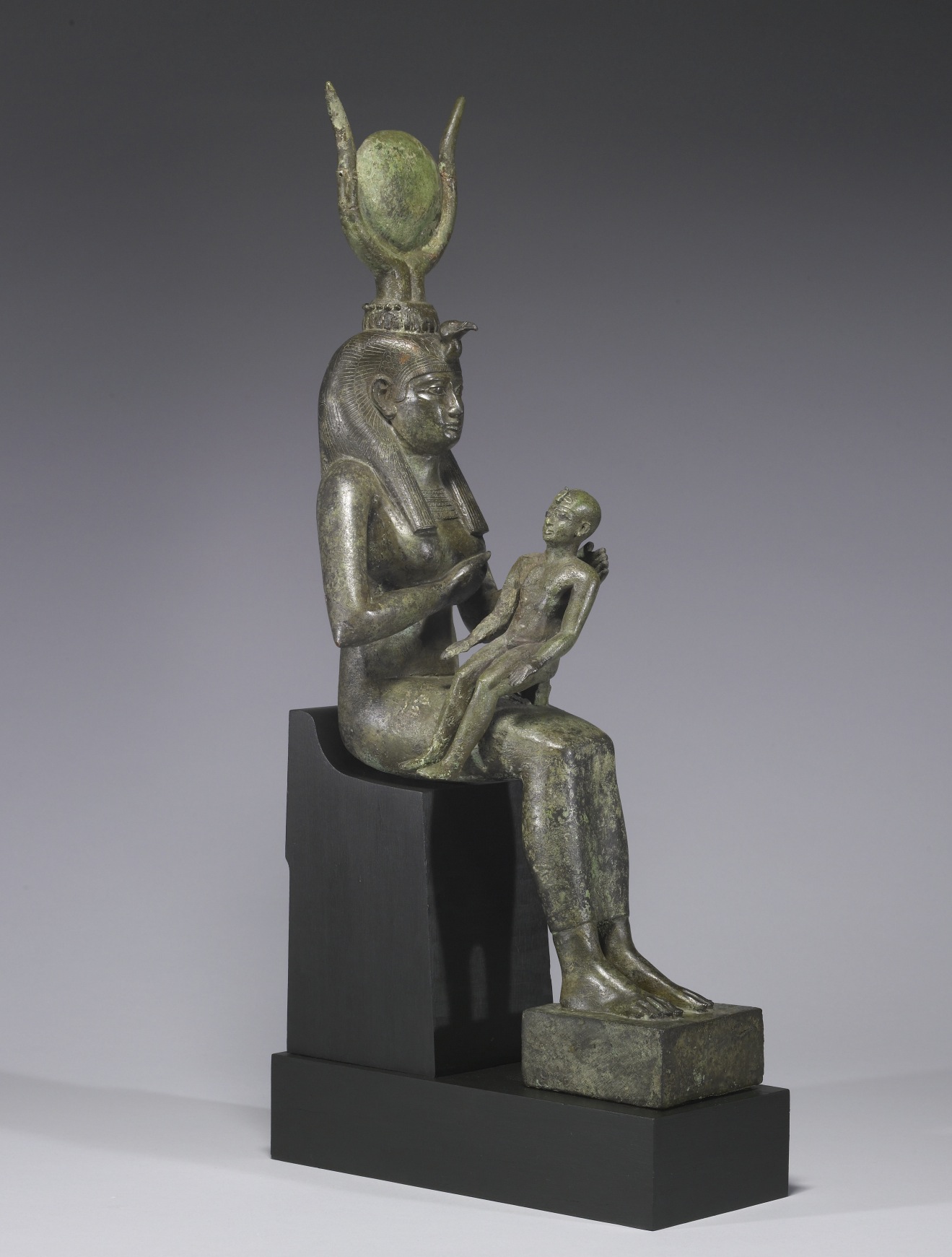
There are over 500 Black Madonnas in Europe, which are icons of worship in churches and shrines. Some are said to have miraculous powers. Though the Catholic and Orthodox churches in Europe do not want to publicly acknowledge it, the Black Madonna is one of the ideas borrowed from African religion. The origins are founded in the Ancient Egyptian doctrine of the “Slaying of the Messenger” and the “Survival of the Message”. Asar (whom the Greeks called Osiris), the Egyptian messenger, was slain but regained life anew before ascending to heaven, survived by his divine wife and one-time mother Aset (also called Isis by the Greeks), and the immaculately conceived son, Heru (or Horus to the Greeks). Asar was of course the only figure in Egyptian thought to have died and be resurrected. These themes were later absorbed by the Christian faith, including the depiction (often in the form of a statue) of Aset holding her son Heru in her left hand and feeding him from the breast.


The Wellcome Collection (museum) at 183 Euston Road, London, is home to one of these controversial Black Madonnas. Though the Catholic, Orthodox, and Anglican churches of Europe have worshipped the Black Madonna from medieval times, they are still unwilling to connect it to its ancient original, which is the Aset-nursing-Heru statue/idea from Ancient Egypt. On 14 March 2018, Daniela Vasco, a visitor experience assistant at the Wellcome Collection posted a very interesting article on their website about the museum’s Black Madonna purchased by Henry Wellcome, the museum’s founder, and displayed in the museum since May 1939. Daniela’s article deserves to be read by many Africans. Here is what she wrote:
(Wisdom, intro ends here)
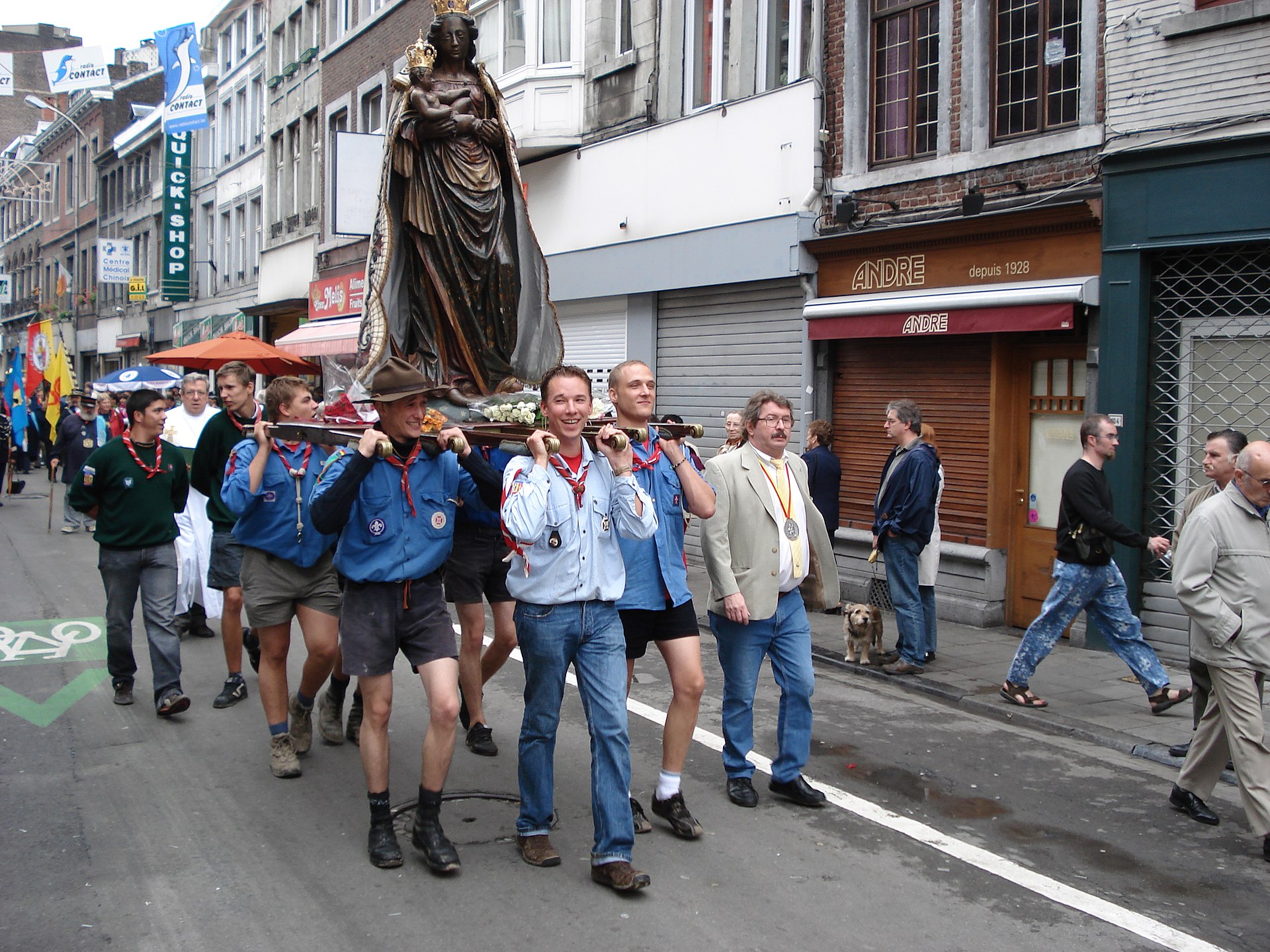
Found in hundreds of Catholic churches across Europe and Latin America is the Black Madonna, a depiction of the Virgin Mary with dark icons. She has a complex history and many possible meanings. Of our own [Wellcome Collections’] Black Madonna displayed in the Medicine Man Gallery, we know little, except that she was bought by Henry Wellcome and represents the original Our Virgin of Guadalupe found in the Extremadura region of Spain.
But the painting incites much interest and surprise among our visitors, as it is often the first one of its kind they have encountered. Henry Wellcome (1853-1936) bought this painting of Our Virgin and Child of Guadalupe … but the year of purchase is not recorded.
Black Madonna images, dating mostly from the medieval period, appear in the form of paintings and sculptures carved out of wood and stone. The oldest examples, and the great majority of them, are found in European countries. They are often in the most venerated shrines dedicated to the Virgin Mary and have attracted thousands of pilgrims for centuries.
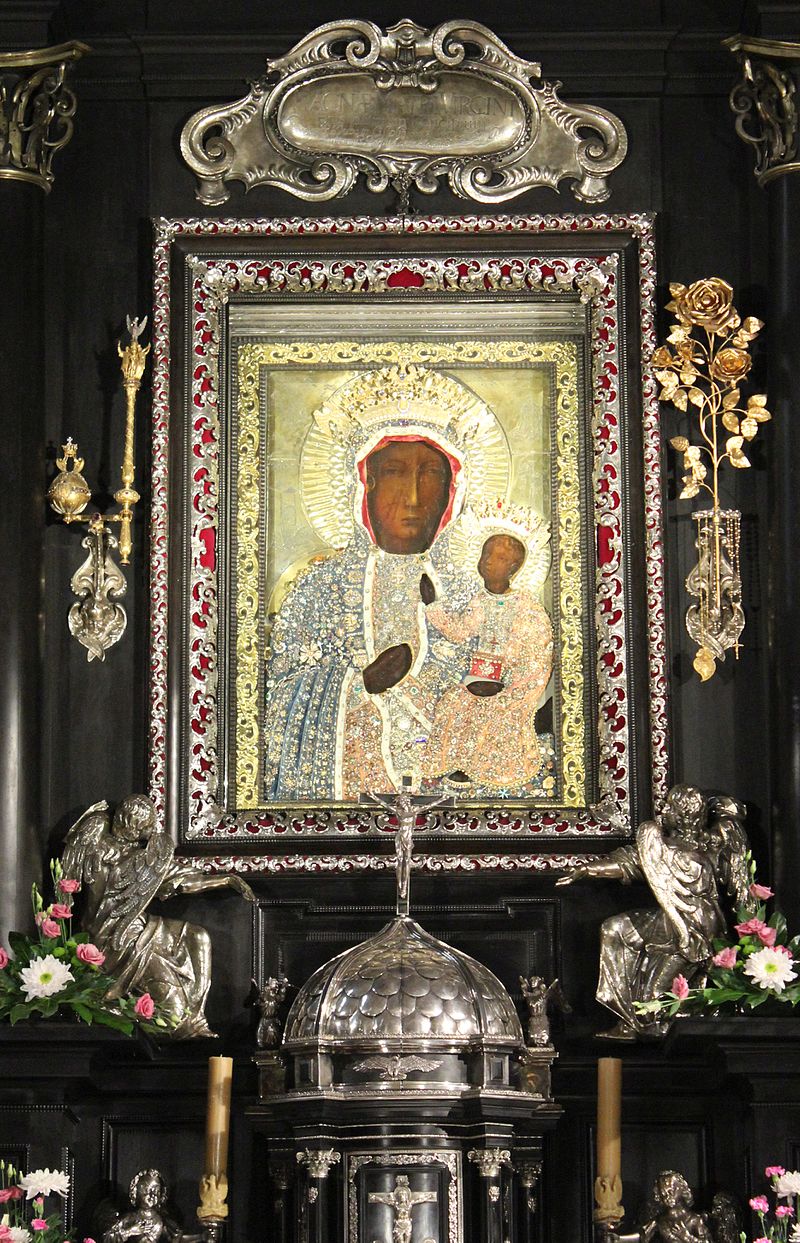
Among the most well-known are Our Lady of Czestochowa in Poland and Our
Lady of Montserrat in Catalonia, Spain. In these locations, their meaning
and significance go beyond religion. They are also powerful symbols of
national identity.
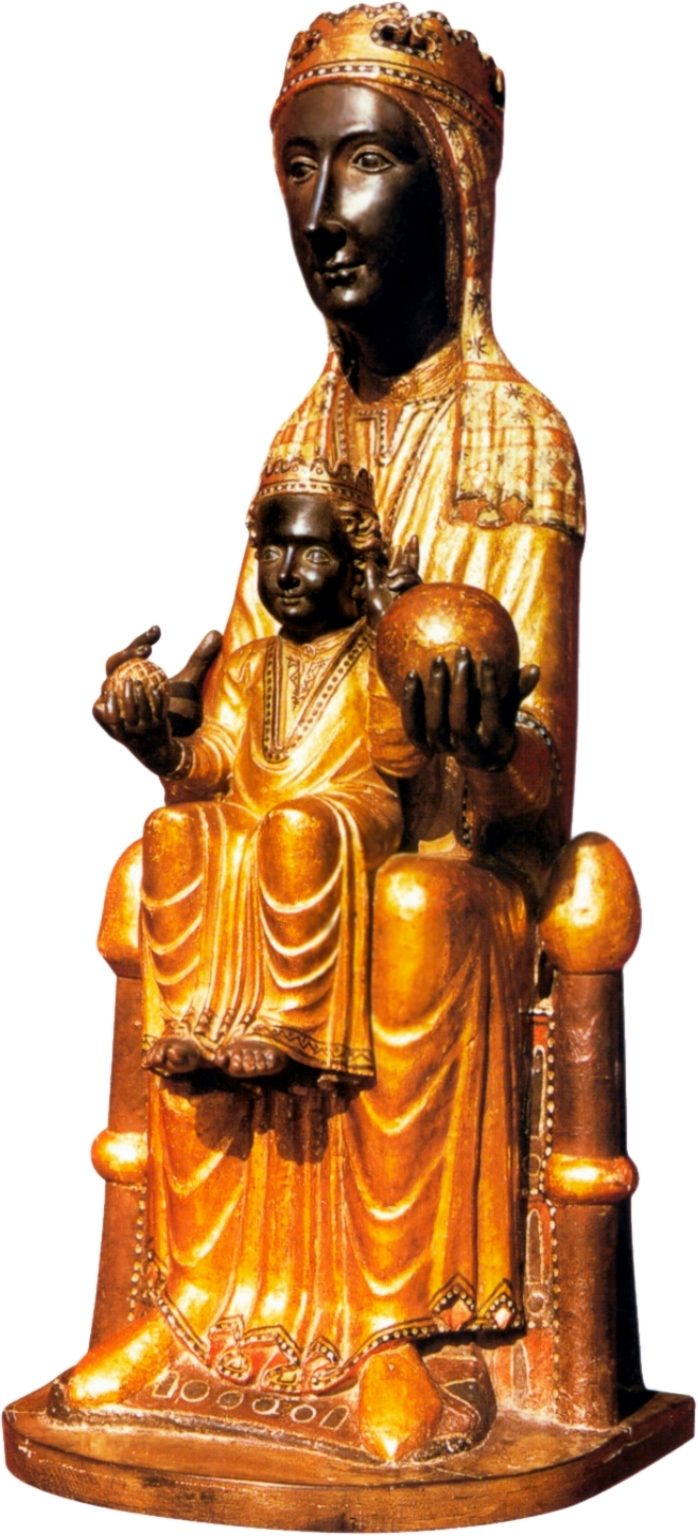
Most of us are familiar with depictions of the Virgin Mary as fair-skinned, blue-eyed and blonde. A first encounter with a Black Madonna is intriguing. Invariably, the first question crossing most of our visitors’ minds, no matter their country of origin or ethnic background, is: ‘Why is she black?’
This is where the controversy begins, with conflicting views between the Church, academics and researchers. The most commonly accepted theory deems the image’s skin colour to be accidental: “These Madonnas were once white, but have darkened through ageing and exposure to candle soot.”
This explanation is as much anecdotal as it is a symptom of cultural whitewashing. It is hard to believe that all these images, represented in various materials, would have aged in a particular way that capriciously turned only their faces and hands black. The same phenomenon has not been observed in equal proportion in representations of Jesus Christ.
Another explanation associates the Black Madonna with a Biblical
verse, saying that it refers to the words of the Bride in the Song of
Solomon: “I am black, but comely, O ye daughters of Jerusalem.”
This theory at least accepts a clear intention behind the blackness of the images. But I, and many others, were still not convinced. As there has always been exchange and continuity between different cultures and religious systems, I am strongly inclined to agree with historians who argue that the Black Virgin Mary is linked to ancient pre-Christian worshipping of Mother Earth and other female divinities.
These divinities are shared ancestors between [Mother Earth] and goddesses such as Cybele, Artemis, Gaia and Isis (some of them often portrayed as black). In this case, black is not only a mystical colour associated with fertile Earth, but also an expression of an ancient cultural memory that connects us back to our early history in Africa … There is an original statue of Isis nursing Horus, Egypt, (600–30 BCE) which predates Christian representations of the Nursing Madonna.
The [Our Virgin and Child of Guadalupe] painting was first entered in our museum accessions register on 30 May 1939. This is how far back we are able to track it. The register locates its provenance in the Spanish provinces. At some point, it made its way to Portugal, where it was bought by Henry Wellcome for 1 shilling plus £10 for restoration.
The cataloguing label for the painting was probably written in 1939. It was entered in the accessions register as “Negro Madonna”. The concept base of most museum collections from the 18th to the early 20th century was evolutionary philosophy, which assumed the superiority of Western cultures. This way of thinking informed the language used to describe and catalogue museum objects. The use of the term “Negro Madonna” here is a good example of this bias.
It was certainly not unusual for Christian churches to be built over pilgrimage and worship sites, where pagan shrines and temples once stood, but the same rituals and practices continued and were absorbed by the new officially accepted faith.
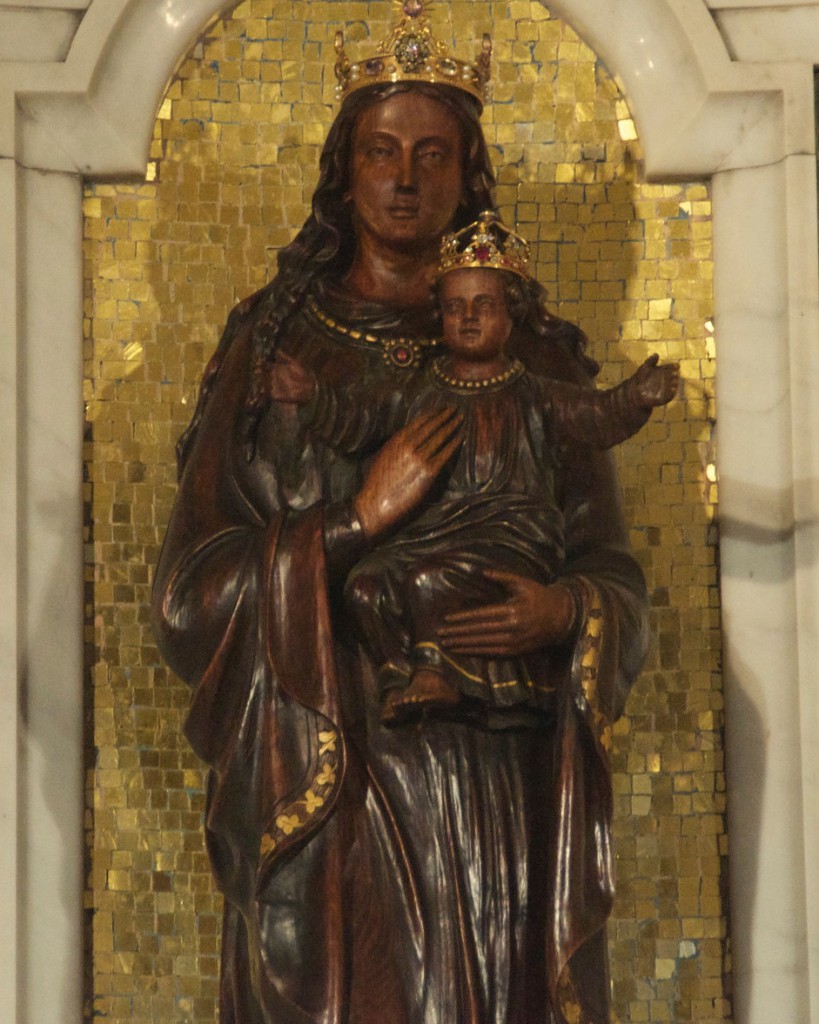
This might well be the case of Our Lady of Willesden (the Black Madonna of London!). Unfortunately, the original was destroyed during the English Reformation in the 16th century. It is said to have been publicly burnt at Chelsea alongside several other Catholic images.
A couple of centuries later, two statues were made in honour of the Black Madonna of Willesden. One can be found in the Roman Catholic Church of Our Lady of Willesden, and the other in the Anglican St Mary’s, Willesden, on the same ground as her predecessor.
The origins of the original Black Madonna of Willesden may be lost in history, but it is believed that the site has been a centre of pilgrimage since Anglo-Saxon times, and that the water from the natural well, which still runs under the church, has holy and healing properties.
Artist Catharini Stern was commissioned to carve a new statue in honour of the original Black Madonna of Willesden. The new statue has been housed in St Mary’s, Willesden, since 1972.
The history of the Black Madonna does not end in medieval Europe. Later, her image is again transformed, and takes on other interesting roles in the colonised Americas.

What others say
Wikipedia
The term Black Madonna or Black Virgin tends to refer to statues or paintings in Western Christendom of the Blessed Virgin Mary and the Infant Jesus, where both figures are depicted with dark skin. Examples of the Black Madonna can be found both in Catholic and Orthodox countries.
The paintings are usually icons which are Byzantine in origin or style, some of which were produced in 13th- or 14th-century Italy. Other examples from the Middle East, Caucasus or Africa, mainly Egypt and Ethiopia, are even older.
About 400–500 Black Madonnas have been recorded in Europe. There are at least 180 Vierges Noires in Southern France alone. There are hundreds of copies made since the medieval era. Some are displayed in museums, but most are in churches or shrines and are venerated by believers. Some are associated with miracles and attract substantial numbers of pilgrims.
Black Madonnas come in different forms. Speculations behind the basis of the dark hue of each individual icon or statue vary greatly and some have been controversial. Explanations range from Madonnas made from dark wood, or Madonnas that have turned darker over time, due to factors such as aging or candle smoke, to a study by Jungian scholar Ean Begg into the potential pagan origins of the cult of the Black Madonna and child. Another suggestion is that dark-skinned representations of pre-Christian deities were re-envisioned as the Madonna and child.
[One of the most prominent Black Madonnas is] the “Black Madonna of Częstochowa”, also known as “Our Lady of Częstochowa”. It is a venerated icon of the Blessed Virgin Mary housed at the Jasna Góra Monastery in Częstochowa, Poland. Pope Clement XI issued a Pontifical decree of canonical coronation to the image on 8 September 1717 via the Vatican Chapter. It has also merited three pontifical golden roses. The icon is venerated by both Eastern Orthodox Christians and Catholics.
University of Dayton, Ohio, USA
[A private, Catholic research university founded in 1850 by the Society of Mary, it is one of 3 Marianist universities in the USA, and the second-largest private university in Ohio]
The meaning of Black Madonna used here refers to a type of Marian statue or painting of mainly medieval origin (12 century-15 century), of dark or black features whose exact origins are not always easy to determine, and most important, of particular prominence. The latter, the prominence of the Black Madonna, is mostly due to the allegedly miraculous character of the image.
Many of these images are quite popular among the faithful. Of the hundreds which presently exist at various shrines, some of the better-known images are: Our Lady of Altötting (Bavaria, Germany); Our Lady of the Hermits (Einsiedeln, Switzerland); Our Lady of Guadalupe (Mexico City); Our Lady of Jasna Gora (Czestochowa, Poland); Our Lady of Montserrat (Spain); and Our Lady of Tindari (Sicily).
In the early days of “comparative religions” discipline, authors casually equated the “Black Virgins” venerated by Catholics with pagan goddess images of similar appearance, providing some with a polemic argument against the Catholic Church. More recently, some feminist writers have suggested the Black Madonna as indicating a perspective on Mary underemphasised in traditional Christian doctrine.
In any case, Black Madonnas have proved themselves as devotional aids within ecclesial life over the course of centuries. Many of these images have received approval from ecclesiastical authority in light of the divine approval manifested by well-attested miracles (subsequently approved by Church leadership).
UTSA College of Liberal and Fine Arts
[Located at San Antonio, Texas, USA, the University of Texas at San Antonio (UTSA) College of Liberal and Fine Arts is UTSA’s largest college]
Each summer Catholics from across the world embark on a days-long (and often weeks-long) procession from dozens of towns throughout Poland to the Jasna Góra Monastery in Częstochowa, a shrine considered by many to be the country’s spiritual nucleus.
On 15 August, the Feast of the Assumption of Mary, tens of thousands of pilgrims crowd all roads leading into the city to filter through the famous monastery’s Chapel of Our Lady, past the discarded crutches and ex-votos of the miraculously healed, and offer up their own most profound hopes to the image of the Black Madonna of Częstochowa. Staring not back at them, but through them with a piercing gaze, the dark-skinned Virgin Mary bestows her famously just blessing on these and the nearly 5 million devotees that visit Jasna Góra every year.
The pilgrimage, part of a centuries-old tradition, is an enduring expression of Catholic worship. Thousands of Black Madonnas in the form of paintings and statues are venerated in countries like Spain, France, Italy, Switzerland, and Russia, their shrines representing the world’s most famous and frequented Marian (that is, centered around the Virgin Mary) sites.
While most of the icons are concentrated in Europe – and particularly in the Mediterranean – they are also found in the Americas. Our Lady of Guadalupe in Mexico is one such example that, like the Black Madonna in Poland, serves as a vital aspect of the country’s religious pulse.
Yet for all her prevalence and influence, the Black Madonna remains a surprisingly misunderstood figure in mainstream Christianity. Too often, racism and ignorance obscure her true origins.
One common account of the Black Madonna in France’s Chartres Cathedral holds that her skin was once white, but became dark over the centuries due to exposure to candle soot. This theory, although easily disproven, is accepted in many locations throughout Europe.
In other cases, icons have been purposely whitened, such as in Rome’s Santa Maria del Popolo Church, where the representation displayed in the main altar has been bleached, while the same image on the choir altar remains black.
In southern Spain, the icon of the Virgin of Regla, originally a single wooden statue, was split in half to separate the Jesus figure from its mother under the pretext of clothing the Madonna with luxurious robes – except that a white Christ Child, rather than the original dark-skinned version, was put back in its place. Given this frequent practice of cultural whitewashing, it comes as no surprise how little is known about the actual identity of this enigmatic figure.
Dr. Malgorzata Oleszkiewicz-Peralba, associate professor of Latin American Literary and Cultural Studies in the Department of Modern Languages and Literatures, who studies syncretic religions and representations of the divine feminine, says in her acclaimed book, The Black Madonna in Latin America and Europe, that, in addition to her mystical and agricultural connotations, the Black Madonna also speaks to an ancient cultural memory of the African origins of humanity, representing the original mother of Earth’s children.
Indeed, it was common practice in early Christianity for pagan shrines and icons to be incorporated and modified according to the interests of the religion. In many cases churches were built upon pre-Christian structures, and devotion to the old relics continued under the aegis of the new hosts.
Scholarly Community Encyclopedia
[Owned by the Multidisciplinary Digital Publishing Institute (MDPI) in Basel, Switzerland, which started life as the Molecular Diversity Preservation International, the Scholarly Community Encyclopedia has been supporting academic communities since 1996. Its mission is to foster open scientific exchange in all forms, across all disciplines].
The Black Madonna, with origins in Africa, is a prominent example of how African beliefs have been integrated into other faiths in ways that are often obscured from view. The Black Madonna is compared with the characteristics and symbolism of the traditional fair-skinned Virgin Mary. It is estimated that there are hundreds of depictions of the Black Madonna, yet her identity as truly black is generally minimised.
This paper contributes an elucidation of the ways that indigenous African religions have affected other world religions. Acknowledging this influence challenges the simplistic notion of reified distinctions between Western and non-Western religions.
Because of the reluctance on the part of traditional Christianity and the Catholic Church to accept the idea that the Madonna is black, there is an array of theories as to why she is depicted as such in statues, paintings, and icons. These views are attempts at discounting her prominent role. Some theories involved the belief in secrets held by the Catholic Church and mysteries involving the cult of the Black Virgin as a representation of equal rights for women.
Traditional Madonnas represent purity and obedience, whereas Black Madonnas are strong and powerful. One type of denial in explaining why the Madonna is black is because she has darkened over time due to age, smoke, and grime. An older theory suggested that she really was white but was then considered black because of age and environmental conditions. In some cases, such as Madonnas in Avellino and Lucera in Italy, Black Madonnas have been painted white.
There are more than 500 known Black Madonna statues and paintings worldwide. Worship of the Black Madonna remains primarily in Europe, yet rates of Christian affiliation continue to decline in Europe.
Carol Winters (2006) claimed that the Catholic Church remained silent about the origins and presence of the Black Madonna because she represents the feminine principle that started at the dawn of human consciousness as Mother Earth from whom all life emanated. This is consistent with African folk religion viewing God as female, creator of humankind.
Making note of the distinction between the Black Madonna and other depictions of Mary is significant because of the symbolism behind both types of representation. The Black Madonna is associated with Mother, Creator, and Protector of the Earth, a supreme advisor, one who understands the struggles of life, and a spiritual intervening force.
This explores the historical representation of how African religious beliefs influenced the dominant world religions of Judaism, Christianity, Islam, and Hinduism. Despite this relevance, African religious thought has been under-acknowledged. It is only within the past several decades that a few religious scholars recognise how varied African religious beliefs contributed to dominant religions.
An example of how African contributions are typically dismissed is the existence of hundreds of representations of the Black Madonna, mother of Jesus Christ, found predominately in a few European countries such as Italy, Spain, and France, yet her origin in Africa and existence in other places is widely unknown.
An important distinction is made between the typical image of Mary, Mother of Jesus, as fair skinned in contrast with the darker version, the Black Madonna. This is significant because of the symbolism of the traditional Mary as obedient and subservient to God, the father and protector of her son, whereas the Black Mary is independent, strong, powerful, and Mother of the universe.
It is this darker version of Mary that is not recognised by the Catholic Church. In some instances, Black Madonnas were painted white to make her resemble traditional Madonnas, denying her existence and reinforcing the submissive role that Abrahamic religions expect women to play.
The claim is made here that strong female figures such as pre-Christian goddesses, Black Madonnas, and women portrayed in African folk religion have been devalued because they do not represent the status quo of patriarchal religions.
Since a strong connection exists between religion and culture and society, traditional religious beliefs have been supported by maintaining gender inequities. It is the continued interpretation of religious dogma in favor of men that has contributed to the limitation of women’s roles in patriarchal religions.
As rates of Christian affiliation plummet [in the West] and adherents of folk religion are expected to increase along with people who claim to be spiritual but not connected to any one religion, a paradigm shift is needed.
There is tremendous overlap among world religions and a common thread of devotion to Mary, regardless of her colouring, is found in Christianity, Islam, and Hinduism—all major world religions. It is suggested that such commonality be embraced and to question the interpretation of religious dogma that maintains gender inequity. It is important to remember that religions were not always male-centered.
In summary, it is argued that important female figures, such as goddesses, disappeared or became taboo once monotheistic Abrahamic religions achieved cultural significance and, in so doing, devalued the role of women. Scholars need to recognise the ongoing cultural significance of African folk religions in other world religions. Doing so will elevate attention to the role of strong women in indigenous theology.
As early theorists of religion proclaimed, religious ideology affects the practices of everyday life within societies by shared culture and symbols. Social science researchers can advance literature devoted to the study of African religious traditions, gender, and religion by addressing voids in research about the complex relationship between gender roles, culture, and religion.
Leave a Reply