The way the British media and officials handled Harold Smith’s Nigerian independence elections story, should provide plenty of food for thought for African journalists. Here, we publish a snatch, just a snatch, of the correspondence that flowed for 45 years between the Smith cottage in Widbrook and certain heavyweights in British journalism and government.

From Admiral David Pulvertaft, chairman of the D-Notice Committee that censors news items impinging on British national security. 13 January 1993, to Harold Smith:
“Dear Mr Smith. Thank you for your letter of 15 December [2002] and the extract from your account of Nigeria’s independence elections. I am sorry that I have taken such a long time to reply in writing but, as I explained when I telephoned you on 30 December, your letter had been redirected several times and only reached me during my Christmas/New Year break in Devon.
“Having considered the two pages which you forwarded to me under the heading, ‘A Squalid End to Empire’, and having explained to you that the D-Notice system is limited to issues of national security, I can see no involvement in this office if you should find an editor who wished to publish your account.
“The only development which would make me change my mind is if you were to include the names of intelligence service officers serving in Nigeria as that is the subject of one of my D-Notices. You were, however, good enough to assure me that this was not your intention.
“I have mentioned our correspondence to the Africa Department (Equatorial) of the Foreign and Commonwealth Office so that they are aware that you have asked the question and I have answered it.
Yours sincerely, David Pulverrtaft.”
From Sir Robin Butler, Cabinet Office, 14 April 1993, to Harold Smith:
“Dear Mr Smith. Thank you for your letters of 11 and 16 March to me, and of 27 March to my private secretary about the Nigerian independence elections. As my private secretary explained to you, my office has no record of receiving earlier letters from you.
“I am sorry you feel you have been prevented from expressing your own views on the matter in question. I assure you that this is nobody’s intention. As you will know, official records from the period in question are now available under the 30-year rule. Admiral Pulvertaft has explained in his letter to you of 13 January arrangements under the D-Notice system. I understand that your wife has forwarded some more detailed material to the Foreign and Commonwealth Office and there will be a reply to this separately. Yours sincerely. Robin Butler.”
have reason to believe that you are not your own master … Surely, those who respect The Guardian tradition cannot be
responsible for these gross lies and deceit”
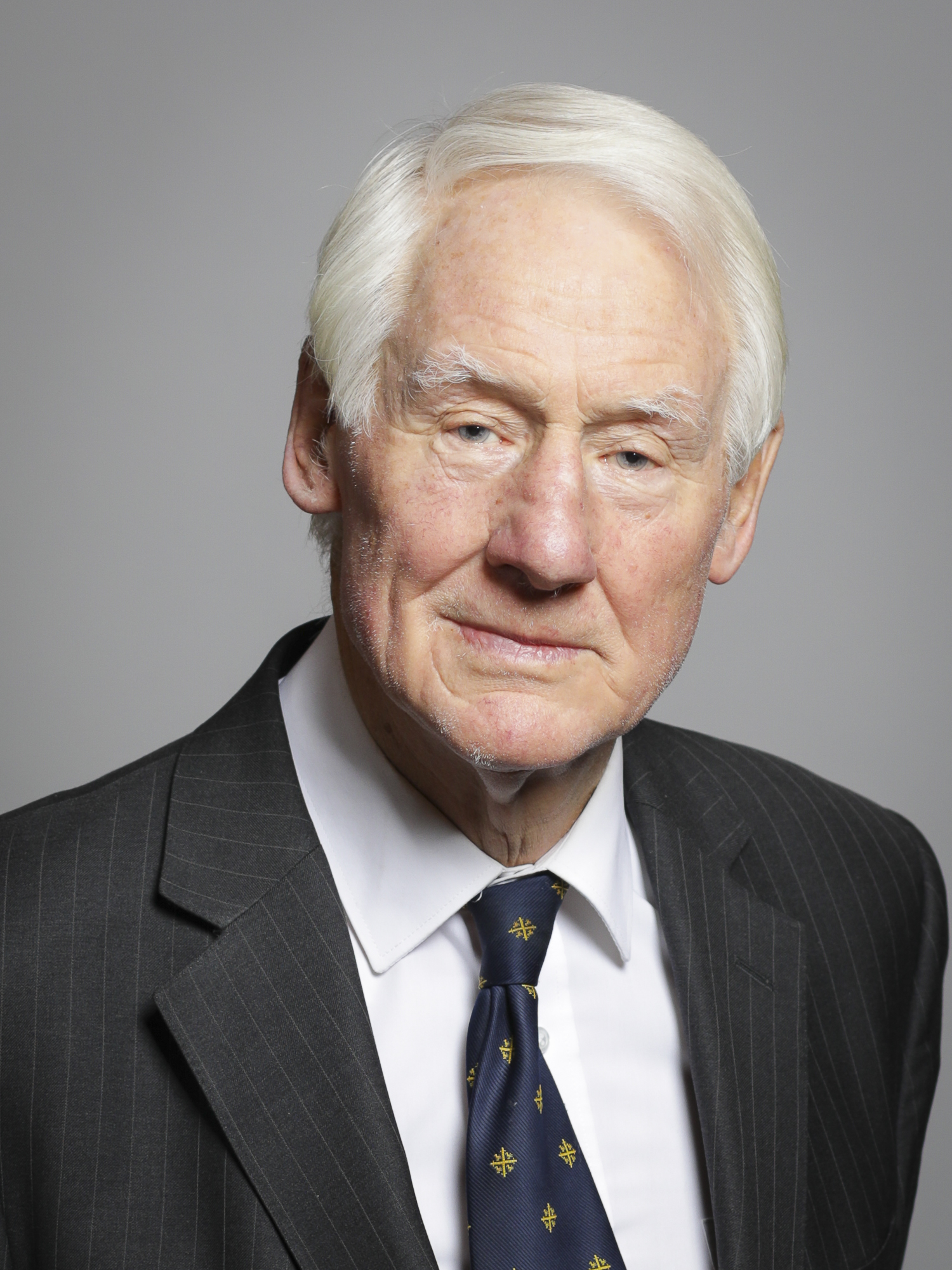
From Hugo Young, The Guardian, 2 June 1993, to Harold Smith:
“Dear Mr Smith. Thank you for your letter, the enclosures and the discs, which I have not had the opportunity to examine.
“Reading through the written material, however, it occurs to me that perhaps there is a simpler reason of why your story has not been published. Maybe in an earlier period, pre-1990 when the 30-year rule would have bitten, you had some cause to feel that the authorities were trying to suppress something and the newspapers were their allies – but I stress I have absolutely no knowledge of any involvement on The Guardian’s part.
“Now, however, it is at least possible that the problem is journalistic. Is the Nigerian election of 1960, however corrupt, a story our readers will be interested in? I think one can make a cool judgement on that without being charged with begging for a knighthood.
“However, as you say, The Observer [now owned by The Guardian Media Group and operating from the same offices as The Guardian], has a long interest in Africa and perhaps some ground to recover in terms of detachment and credibility. Sunday papers can sometimes make more of this kind of history than dailies can. I have forwarded the package to Jonathan Fenby [deputy editor of The Guardian] to see whether he wants to take up the story. Yours sincerely. Hugo Young.”
From Harold Smith, 10 May 1994, to Hugo Young, The Guardian:
“Dear Hugo Young. ‘If you don’t have a commitment to tell the truth to the reader, you don’t have anything’ – Ben Bradlee, editor, The Washington Post. My name is Harold Smith and I am writing for the historical record. I say this because it is probably the only sensible reason in bothering to address these remarks to you.
“Instead of acknowledging, as chief executive, that The Guardian is fallible and that something – a truth affecting the historical record – needs to be set right, you ignore this when it is brought to your attention and make feeble excuses … To give your readers an opportunity to make up their own minds would be wise and statesmanlike. However, it is still not too late. This duty should not be left to your successor … There is never a right time for owning up to a very nasty truth.
“I am not hopeful for, as I have suggested elsewhere, I have reason to believe that you are not your own master … Surely those who respect The Guardian tradition cannot be responsible for these gross lies and deceit… My name is … Harold Smith.”
From Hugo Young, The Guardian, 13 May 1994, to Harold Smith:
“Dear Mr Smith. (1) I have not the least idea what The Guardian did or did not do about Nigeria long before I joined it. (2) You seem to be in a state of demented obsession, which causes you to defame me (and others) to all and sundry. Please desist. (3) This will be my last communication. Do not trouble our fax machine or our secretaries anymore. Hugo Young.”
From Harold Smith, 10 June 1994, to Alastair Hetherington, former editor, The Guardian.
“Dear Alastair Hetherington. I am researching the involvement of The Guardian in the events leading up to the Biafran War, and note the absence of any references in the index to this subject in your book, Guardian Years, although you were that newspaper’s editor during the period from 1956 to 1975. Up to two million people died, according to the UN, in this bloody war, in which Britain was closely involved.
“On my return to Lagos in 1960, I made strenuous efforts to alert everyone, including The Guardian, to the fact that the independence elections had been rigged by the British. As the North could never win an honest election without a British presence, the opposition had to be destroyed and the outbreak of a civil war became almost inevitable.
“If we are in a “state of demented obsession” because we offer rational argument to Mr [Hugo] Young to persuade him to return The Guardian to the ways of honesty, what can we truthfully say about journalists who, whether because they are SIS [British intelligence] stooges, negrophobics, or totally unprofessional, have taken part in a conspiracy of silence which has had such grievous consequences?
“Mr Young acknowledged as being the most brilliant and learned newspaperman in Britain, with a superb staff including three Africanists of stature on hand, all with intimate experience of Nigeria at the crucial time of independence, pleads ignorance. He does not know that the British rigged Nigeria’s elections. He knows, of course, that The Guardian has never reported that fact. We may safely assume, however, that we are getting this dross because Mr Young’s fertile brain can think of no intellectual argument which can ease his conscience or the collective guilt of The Guardian.
“I enclose a clearance from Admiral Pulvertaft [chairman of the D-Notice Committee]. I have been forced by 34 years of obstruction from The Guardian to resort recently to alternative measures in an endeavor to obtain co-operation from your once great paper .
newspaperman in Britain”. But he fell short when it came to publishing the truth
about how Britain rigged Nigeria’s independence elections
“To date, I have noticed little honour in my dealings with your paper, and little regard for the consequences of treachery or the distortion of the historical record. However, I am confident that truth will out, though I fear for The Guardian’s reputation. My name is … Harold Smith.”
From Alastair Hetherington, former editor, The Guardian, 20 June 1994, to Harold Smith.

Guardian in 1960
“Dear Mr Smith. Thank you for the copies of correspondence regarding Nigeria, in which you have taken such an interest.
“I am sorry that you did not find any reference to Nigeria and the Biafran situation in my book, Guardian Years. The omission may well have been because the book was originally 120,000 words long, and had to be cut down to 80,000 before publication. Much was inevitably lost from the text, to my own regret.
“I am afraid that I cannot become involved in correspondence on the subject now. Yours sincerely. Alastair Hetherington,”
Leave a Reply