The impact of the Moors on medieval Europe was profound. Below, Tom Mbakwe, pieces together a selection of the writings of some impartial Euro-American and other historians who consecrated their work, or devoted space in them, to the Moors and the vitalising influence they exercised on European life.
Joseph McCabe, in The Splendour of Moorish Spain (1935):
“The story of the Moors and their service to the race is so large and important, so inadequately recognised by most historians, and so wholly concealed by religious writers, that I should like to devote at last six of these little volumes to it …
“Christian visitors to Moorish cities took away thrilling stories of their splendor and learning. The Moors carried the standard of internal decoration of houses and palaces to a height unknown elsewhere in the world.”
 [McCabe wrote about the abundant gardens of Moorish Spain and likened them to an earthly Paradise. Which led Jose Pimienta-Bey, the African-American scholar and historian, to comment in the Golden Age of the Moor (1992) that: “No doubt, this ‘Paradise’ was made even more heavenly by the presence of latrines with running water. This surprising innovation made its appearance in the cities of Muslim Spain sometime before the 10th century, while the rest of Western Europe would not know its benefits for several centuries to come.
“Andalusian cities, according to McCabe, even had streets lighted, ‘paved, and finely drained by the middle of the 10th century’. He compares these illustrious Andalusian cities with those of Paris and London some six centuries later, and says of 16th century Paris and London: ‘Foul and contaminated water trickled along, or lay in stagnant pools, on the unpaved streets’].”
John William Draper, in History of the Intellectual Development of Europe, (1864):
 “I have to deplore the systematic manner in which the literature of Europe has contrived to put out of sight our scientific obligation to the Mohammedians [the Moors]. Surely they cannot be much longer hidden. Injustice founded on religious rancour and national conceit cannot be perpetrated forever.”
[Addressing specifically the Moorish achievements, Draper asked]: “What should the modern astronomer find the Arab, Abdul Hassan, speaking of tubes, to the extremities of which ocular and object diopters, perhaps sights, were attached, as used at Meragha?
“What, when he reads of the attempts of Abderahman Sufi at improving the photometry of the stars? Are the astronomical tables of Ebn Junis (AD 1008) called the Hakemite tables, or the Ilkanic tables of Nasser Eddin Tasi, constructed at the great observatory [at Meragha], near Tauris, AD 1259, or the measurement of time by pendulum oscillations, and the methods of correcting astronomical tables by systematic observations – are such things worthless indications of the mental state?
“The Arab [Moor] has left his intellectual impress on Europe, as, long before, Christendom will have to confess; he has indelibly written it on the heavens, as anyone may see who reads the names of the stars on a common celestial globe.”
Stanley Lane-Poole, in The Story of the Moors in Spain (1886):
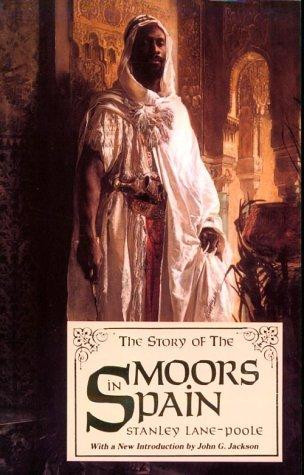 “The Moors organised that wonderful Kingdom of Cordova which was the Marvel of the Middle Ages, and which, when all Europe was plunged in barbaric ignorance and strife, alone held the torch of learning and civilisation bright and shinning before the Western world … Whatever makes a kingdom great, whatever tends to refinement and civilisation was found in Moorish Spain.”
[Still on the city of Cordova, the Moorish capital, Lane-Poole wrote]: “Cordova was the wonderful city of the tentth century; the streets were well paved and there were raised sidewalks for pedestrians. At night one could walk for 10 miles by the light of lamps, flanked by an uninterrupted extent of buildings. All this was hundreds of years before there was a paved street in Paris or a street lamp in London.
“Cordova, with a population exceeding one million was served by four thousand public markets and five thousand mills. Its public baths numbered into the hundreds when bathing in the rest of Europe was frowned upon as a diabolical custom avoided by all good Christians.
“Moorish monarchs dwelt in sumptuous palaces while the crowned heads of England, France and Germany lived in big barns, lacking both windows and chimneys and with only a hole in the roof for the exit of smoke.
“Education was universal in Moslem Spain, being given to the most humble, while in Christian Europe 99 per cent of the populace was illiterate, and even kings could neither read nor write. In the tenth and eleventh centuries, public libraries in Christian Europe was conspicuous by their absence, while Moslem Spain could boast of more than 70, of which the one in Cordova housed 600,000 manuscripts.
“Christian Europe contained only two universities of any consequence, while in [Moorish] Spain there were 17 outstanding universities. The finest were those located in Almeria, Cordova, Granada, Jaen, Malaga, Seville, and Toledo.
“Scientific progress in astronomy, chemistry, physics, mathematics, geography, and philology in Moslem Spain reached a high level of development. Scholars and artists formed associations to promote their particular studies, and scientific congresses were organised to promote research and facilitate the spread of knowledge.”
Still on the issue of bathing, Pimienta-Bey confirmed Lane Poole’s words by adding that: “In great contrast with the Moorish regard for bathing and hygiene, was the contempt which most of Western Europe had for bathing and physical cleanliness.
Like a number of other historians of Andalus, Titus Burckhardt confirms that the contempt which Catholics had for Moorish precepts about bathing, manifested itself in the deliberate destruction of the Moorish baths by Catholic Conquistadores. The English historian, Charles H. Haskins, also speaks of the contempt which the vast majority of Catholic Europeans had for bathing, especially on Sunday.
David MacRitchie, in Ancient and Modern Britons (1884):
 “For although it may not be easy to trace their route hither [in Britain], and the date of their arrival, a branch of this [Moorish] family did inhabit Britain, and are not only known as Mauri and Moors but also as Moravienses, Morienses, Murray-men, and people of Moray or Moravia.
“The Moors are still largely represented throughout the British Islands; although of course the crossing and re-crossing of 30 generations, while increasing the number of descendants, has lessened the intensity of the resemblance to the ancestral stock. But the swarthy hue asserts itself still, though in a modified degree.
“Last century, when Martin described the Western Islands of Scotland, he remarked that the complexion of the natives of Skye was ‘for the most part black’; of the natives of Jura he said that they were ‘generally black of complexion’; and of Arran that they were ‘generally brown, and some of black complexion.’”
[McRitchie maintains that there are still some British noble families whose descendants were “the Moors of the very early centuries who have now been bred out until the black man finally disappeared by mating with whites only”.
McRitchie wrote: “No ethnologist could detect the presence of other blood, and yet in both cases, the male descendant would bear the surname signifying ‘the black man’… You may see faces of a distinctly Mongolian and even of a Negroid cast in [British] families whose pedigree may be traced for many generations without disclosing the slightest hint of extra-British blood.
“So far as complexion goes, there can be no doubt as to the presence of a vast infusion of ‘coloured’ blood. There are of course, no living Britons who are as black as negroes, but some are as dark as mulattoes and many darker than Chinese. To regard ourselves in the mass as a ‘white people’ except in a comparative degree, is quite a mistake.”
Still on the Moors of Britain, Edward Scobie, the Dominican-born journalist and historian, who lived in London from 1941 to 1964, and wrote the book, Black Britannia: History of Blacks in Britain, explains that: “In 1596, Queen Elizabeth I, highly distressed at the growing Moorish presence in England, wrote to the lord mayors of the major cities that ‘there are of late divers blakamores brought into this realm, of which kinde of people there are already too manie, considering howe God hath blessed this land with great increase of people of our nation as anie countrie in the world’. Her instructions were that ‘these kinde of people should be sent forth from the land’. She repeated later in the year, saying that ‘these kinde of people may be well spared in this realme, being so populous.’”]
Julian Ribera, in Music in Ancient Arabia and Spain:
 “The artistic Spain of olden times thus becomes the central bond which ties ancient art to modern. The great musicians of Andalusia knew not only how to preserve their inherited art but also how to transform and renovate it by creating a popular form through which their compositions were broadcast, thus spreading all over Europe.
“This still lives because the people have loved it and adopted it. Europe therefore owes a debt of gratitude to the Andalusian Moors who maintained and passed on a rich fund of music, a perennial spring to which all European composers have come to renew their inspiration, but without seeking its unknown sources.”
Stanley Lane-Poole in The Story of the Moors in Spain (1886):
“In 1492, the last bulwark of the Moors gave way before the crusade of Ferdinand and Isabella, and with Granada fell all Spain’s greatness. For a brief while, indeed, the reflection of the Moorish splendor cast a borrowed light on the history of the land which it had once warmed with its sunny radiance.
“Then followed the abomination of desolation, the rule of the Inquisition, and the blackness of darkness in which Spain had been plunged ever since … Beggars, friars, and bandits took the place of scholars, merchants, and knights. So low fell Spain when she had driven away the Moors. Such is the melancholy contrast offered by her history.”
Prof Thomas T. Hamilton in The African Heritage in European Expansion,
(1976):
“The overwhelming majority of the people under the caliphs were the same people whose descendants were to discover the world for Spain and Portugal. The Christian rulers displaced the political and religious power of the Moslem rulers. The artists, scientists, writers, and ordinary people were the holdovers connecting the two civilisations.
“The Mozarabs who took the lead in the economic and cultural life of the new Spain were not Arabs, but rather were African Berbers, who, as time went by, were assimilated into the basic Iberian stock.
“Furthermore, when the Christian princes regained the peninsula, the old civilisation was not destroyed. Religious art, of course, was influenced adversely, but the actual scientific achievements were retained, and Toledo became a great translation centre under the Castilians. While the rural districts continued their futile feudalism as they had both before and during the Moslem rule, the cities continued to bloom, thanks to the vitalising influence of the Mozarabs and the Jews.”
[Regarding Europe’s global expansion, Prof Hamilton wrote]: “Prince Henry [the Navigator] had swept away from the minds of even the legends of the unearthly terrors which had hitherto precluded voyages into the unknown. He had proved the feasibility of Atlantic travel and had provided and perfected the ships and instruments to reduce the actual dangers to be encountered.
“Diaz, Columbus, Da Gama, Cabral, Vespucci and Magellan were the fruit of the tree planted by Prince Henry. The chains were broken by the lore and lure of Africa. Africa not only influenced European expansion; it determined it … The background of the African Moor and the lure of African gold broke the fetters that bound the European to Europe.”
Leave a Reply