… Zim should avoid the ‘Mahama syndrome’ in Ghana at all cost
At long last, Zimbabwe’s much-awaited 2023 harmonised elections have arrived. Wednesday 23 August will be the day when the nation sorts out the men from the boys. And the field is, understandably, crowded – 11 presidential candidates! But from whatever angle one sees it, the real contest is between the incumbent President Emmerson Dambudzo Mnangagwa, the Zanu PF candidate, and Nelson Chamisa, the CCC candidate. CCC stands for Citizens Coalition for Change (no pun intended). If truth be told, the other 9 candidates are running for the sake of running as they don’t have a chance in hell, not even a slither, to win the race.
In this cover story, our Editor, Baffour Ankomah, has looked at two important political events in Rwanda and Ghana (which he calls the “Kagame Syndrome” and “Mahama Syndrome”) and used them as the basis for a clarion call on Zimbabweans to vote wisely on 23 August, and not to succumb to the blandishments and manipulations of outsiders who are hiding behind insiders to seek change for change sake. There are too many dangers in it to tinker with. Please read on …

As Zimbabwe prepares for its much-awaited harmonised elections on 23 August, there are two examples of African political makeup that the country may want to learn from – Rwanda and Ghana.
Rwanda is where the solid gains made by “a good president” who had been in power for 15 years already, encouraged the people to petition Parliament in 2015 to change the national constitution and allow the incumbent President Paul Kagame to run for a third term in 2017, so that he could stay longer and continue the good work he had done for the country, even though at the time the constitution only allowed two terms of 7 years each for the presidency.
In sharp contrast, Ghana is where, despite the solid gains made by “a good president” who had been in power for just 4 years, the people still voted out the incumbent President John Mahama in 2016, and brought in a new president who allowed almost all the uncompleted infrastructural projects started by Mahama (and they were many, in all sectors) to go to ruin to the shame and detriment of the country.
In effect, the deleterious actions of Ghana’s new president, Nana Addo Dankwa Akufo-Addo (who has been in power for 7 years now) have not only seriously disturbed the country’s development trajectory, but has led to severe economic downturn and suffering for the people. This has forced Mahama to try to come back as president (in 2020 but narrowly defeated, and will run again in 2024).
The Rwandan experience can best be described as the “Kagame Syndrome”, and the Ghana experience the “Mahama Syndrome”. For clarity, the Mahama Syndrome is where a president who has done well in his first term is, surprisingly, denied a second term by the electorate to the detriment of the country.
So which one will Zimbabwe go for on 23 August – the Kagame Syndrome or the Mahama Syndrome? Let me offer more information, from my personal experience.
The ED enigma
In the March 2023 issue of our sister magazine, Brick by Brick, I did a piece which I headlined: Zimbabwe is pregnant – And the father is buoyant. The moral of that article was simple: Zimbabwe has made solid gains under “a good president” in Comrade Emmerson Dambudzo Mnangagwa, and the nation would be foolish to deny him a second term to finish the good work he has done in his first term.
That may sound controversial for those who spend too much time on the social media, twiddling their fingers, and ending up having no more eyes to see what has really happened in Zimbabwe since the last elections in August 2018. So let me repeat part of what I wrote for the sake of such people.
I started by laying down my bona fides. “I have been a journalist and editor for the past 43 years – for as long as dear Zimbabwe has been an independent country,” I wrote. “In all those 43 years (and I say this with my hand on my heart), I have never ever sought to mislead my readers. Never once! I fight a good fight for African causes, one of which has been Zimbabwe. I know that sometimes I fight too hard, but I have always stood for the truth no matter whose ox was gored. So I don’t seek to mislead you in this piece.
“Therefore, if I say here that, based on what I have seen in 7 months [now 10 months] of intensive travelling through the nooks and crannies of Zimbabwe, that this country which has suffered severe economic woes since the West imposed sanctions on it 23 years ago, is like a pregnant woman about to give birth (only this time to sets of nonuplets of development), you must please believe me. Zimbabwe is pregnant with development (I dare repeat), and, with a bit of patience and midwifery, the babies will pop out pretty soon.
“I have had the good fortune of being a member of a Brick by Brick team of editors which has been travelling all over Zimbabwe to see what the Second Republican government, headed by President Mnangagwa, has achieved in its first term. Only a few Zimbabweans may know their country as I have known it in the past 7 months, believe me.
“I have been covering Zimbabwe intimately for 21 years now. As editor of the London-based New African magazine, I used to travel down from London to cover Zimbabwe and go back, sometimes three times a year. So I knew the country fairly well before the intensive travelling of the past 7 months – which has afforded me the opportunity to see the country at closer range, including its outback. Like Australia, Zimbabwe also has an outback which can only be seen by intrepid travellers like we have been in the past 7 months.

“As a foreigner, it is natural that I come with a pair of fresh eyes that see more than what the locals see. Familiarity robs locals everywhere of the joy of seeing and appreciating the beauty (and sometimes even the resources) of their countries. Zimbabwe is a land of natural beauty – that I can tell with no qualms at all. The beauty takes the breath away, as you drive through the valleys and mountains that God gave to this country. In the rainy season when everything is green, wow, what sight greets you in the hinterlands.
“It is, therefore, unfortunate that a large number of Zimbabweans don’t really know their country, and as such they don’t appreciate what a beautiful nation they have. Most of them don’t even know what is happening in their own country, or what has happened under the Second Republic. As such they tend to flatter themselves on the social media by claiming to know what they don’t know. To their eternal shame, they end up putting down their country.
“But I have news for such people. I have been to all the 10 provinces of Zimbabwe in the past 7 months, investigating the government’s “Zimbabwe is open for business” policy, and the “Leaving no one and no place behind” policy. As part of the Brick by Brick team, we have been looking at what has actually happened on the ground, and what is still happening on the ground.
“And what I have seen is beyond impressive. I won’t say everything has been hunky-dory. No, there is still more to do. But if you live in Harare, Bulawayo, Mutare, Masvingo and the other provincial capitals and towns, and you don’t go out to see for yourself what is happening, you tend to say nothing is happening or has happened. You look at the potholed streets that lead to your house, you shake your head, and say ‘pakaipa, what has this government done?’

“But I have gone beyond the potholed streets and seen what the government has done. And I can report that in the last 5 years your President, Comrade Emmerson Mnangagwa, and his government have done such a wonderful job beyond the potholed streets, developing this country in all sectors – and I mean all sectors – including roads, electricity (Hwange Units 7 and 8 are a marvel), dams, schools, hospitals, clinics, irrigation facilities, etc. And all this is spread throughout the country. No wonder, we are now hearing the moniker, ‘Government of Development’.
“Commenting on the infrastructural development in his newspaper column on 5 March 2023, President Mnangagwa explained that: ‘Much of the social infrastructure have been built under the devolution programme, making them nationwide in spread.’ And that is exactly what I have seen travelling around the country. The new development is spread nationwide, in a country that has been under US, Britain and EU economic sanctions for the greater part of the last 23 years.”
Private players
What’s more? I showed in the March article that by providing a conducive environment for doing business, President Mnangagwa’s government had attracted big-time private players (both local and foreign) who had brought their golden pots to bear on the mining, agriculture, industrial and the other sectors of the country.
“So all things being equal,” I wrote, “in the next 5 to 10 years, when all the projects now in gestation (both government and private) come to fruition, Zimbabwe will be something else. I have seen it, so believe me.”

That statement, in fact, reminded me of what the Ghana ambassador in Harare, Alexander Grant Ntrakwa, had told me. Bowled over by what is happening in Zimbabwe, the ambassador had drawn me aside during a visit to the Museum of African Liberation in Harare, and softly told me that from what he had seen himself, “Zimbabwe will soon become the China of Africa, doing things by itself.”
And not only that: On Saturday 11 March 2023, Ambassador Ntrakwa was one of 57 diplomats who attended a “field day” at President Mnangagwa’s Pricabe farm near Kwekwe, and the Ghanaian was even more astounded by what he saw at the farm.
“I wish all African presidents can see and do what President Mnangagwa has done at his farm,” Ambassador Ntrakwa commented. “I think before presidents are elected in Africa, they must first be asked to show what their philosophy on agriculture is, and what they will do practically on the ground, in agriculture. This President has taken agriculture to another level,” the ambassador added.
To me, that is the mark of “a good president”. To you, that should be the mark of “a good president”. The opposition and others who have not gone to see what President Mnangagwa’s government has done on the ground nationwide, may have their own views. But that should not erase the views of those of us who have gone to see, with our own very eyes, the gains made in Comrade Mnangagwa’s first term.
Second term
Maybe I say so because Ambassador Ntrakwa and I are Ghanaians, so we can see progress when we see one in Zimbabwe. When I first travelled on the new Harare-Masvingo-Beitbridge road last August, I was similarly bowled over by what the Second Republic has done to that road. I was so impressed that I mentioned to my colleagues travelling with me that, that road alone deserves to give President Mnangagwa a second term. And I meant it.
I had known that road intimately for the past 10 years because my wife comes from Masvingo. And what a hell it used to be. Today, you drive on the same road as if you are flying. We used to take four groaning hours to drive from Harare to Masvingo. Now it takes us two blessed hours and a half. All credit to the Second Republic and its President and government and ruling party.
“Though the road is not completely finished (there are pockets still not yet done),” I wrote in my March article, “what has already been achieved is enough to earn President Mnangagwa and his government a second term, that is if politics has eyes to see progress. “If somebody does a good thing, he deserves praise,” I wrote, “and President Mnangagwa and his government deserve praise.”
This is simply to say, from all the indicators of national life, Zimbabwe too, like Rwanda, has had “a good president” in the last 5 years who deserves to have a second term to continue to deliver the goods. Zimbabwe’s constitution allows two terms of 5 years each, and this “good president” deserves a second term purely on his own merits, irrespective of what the opposition says.
The measure of how good the Second Republic has been is seen in the current massive attack on the Zim dollar and the economy generally, an attack that started a mere two days after President Mnangagwa announced the date of the 2023 elections.
Judging by the huge size of the attack, the anger in which it was delivered, and the cynicism in the timing, one can easily deduce that there are outside hands directing the unseen forces behind the attack.
Their aim is to destroy the economy by collapsing the national currency and induce steep prices in goods and services, which, they hope, will bring more economic suffering that will lead to disaffection among the population, and influence them to vote massively against the President and throw him out of office.
They want the people to stone their President. But Zimbabweans have proved over the past 23 years of Western economic sanctions to be wiser and clever than that. And that they will not follow what the Ghanaians did in 2016, cutting their nose to spite their face, when they threw President Mahama out of office after only one term.
The Mahama Syndrome
President John Mahama was voted into office in 2012 after serving as vice president from 2008. He spent the first year in office fighting a distractive election petition in the Supreme Court against his victory. When the petition was settled in his favour and he finally turned his attention to nation building, he set in motion dozens and dozens of infrastructural projects – from new schools and hospitals to expanding the nation’s road network and improving the supply of water and electricity, as a way of stimulating economic growth by creating more jobs.
If truth be told, apart from Ghana’s first president, Dr Kwame Nkrumah, who had 9 years at the helm to revolutionalise the country’s infrastructure to dizzying heights, no president of the country since Nkrumah had done so much on infrastructure in so short a time (4 years) as Mahama, the youngest president that Ghana has had so far (born after independence).
I say so because I had the opportunity in 2016 to go around Ghana (8 regions of the country’s then 10 regions) to cover Mahama’s infrastructural programme in a special report for the New York-based Africawatch magazine. What I (and my suffering wife/photographer) saw driving around Ghana was simply beyond impressive. The projects were spread nationwide and in every sector of the nation.
President Mahama was racing against time (elections were coming in December 2016) and he wanted most of the projects completed before the elections. Alas, his wishes proved not to be horses. And a good deal of the projects could not be completed before the elections.
So when he was voted out, after months of a fake allegation of “incompetence” by the opposition (“Mahama is incompetent, Mahama is incompetent”, the opposition chanted), a high percentage of the legacy he wished to leave for Ghana remained uncompleted.
And as fate will have it, the incoming government headed by President Nana Addo Dankwa Akufo-Addo, decided, in its infinite wisdom, to abandon Mahama’s uncompleted projects, some of them at over 90% completion, to the eternal shame and detriment of the country.
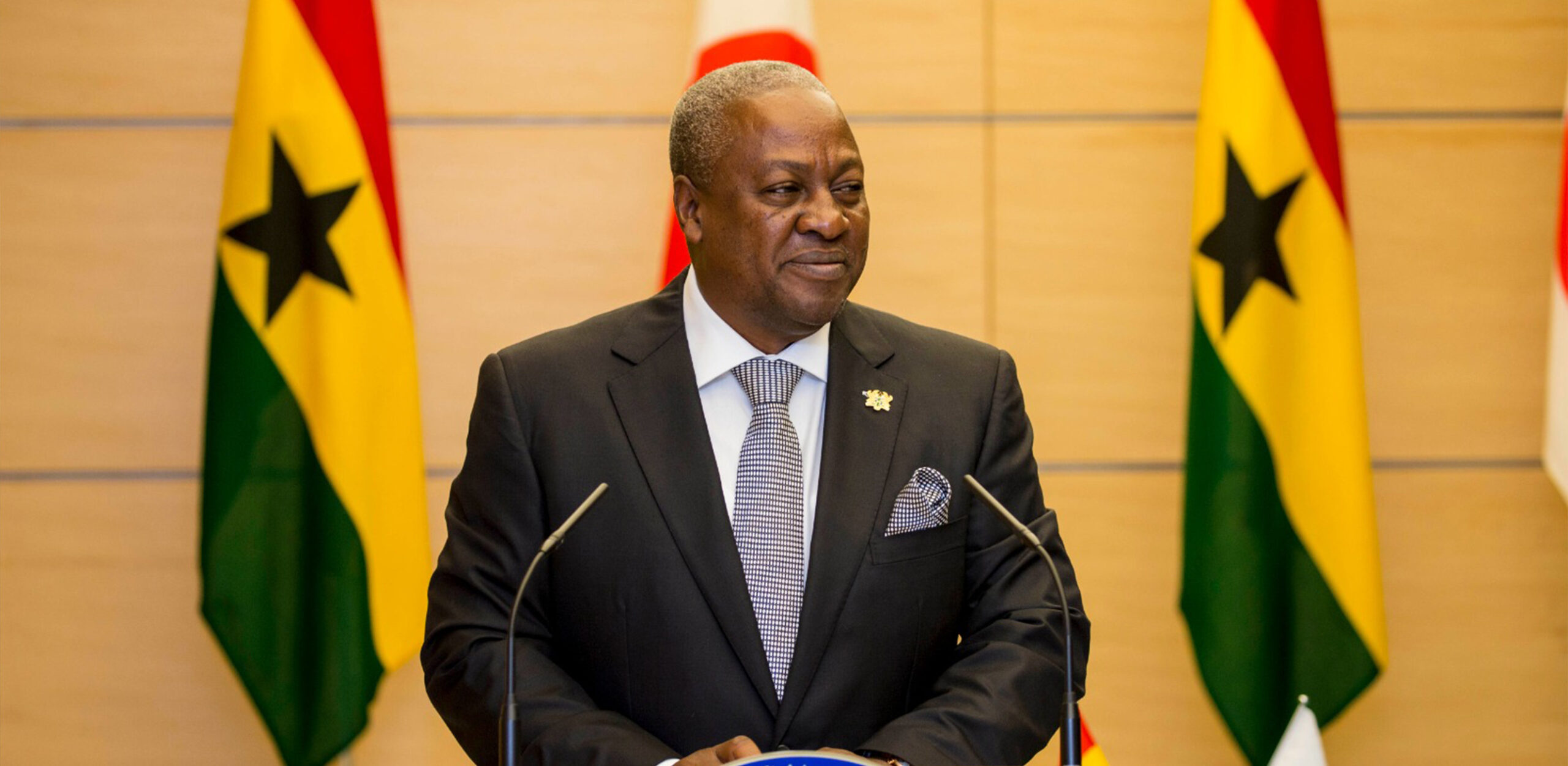
Mahama’s projects
In fact, Mahama’s story is better told by other mouths, as I run the risk of being accused of bias if I tell it myself. So let me quote here, in extenso, the Africawatch magazine which devoted a recent edition to Mahama’s abandoned projects. The magazine, which is distributed in Ghana and North America, wrote:
“By December 2015, Mahama’s administration had begun the construction of 123 senior high schools, part of 200 it planned to build around the country. The four-story buildings, called “E-blocks” because they would be shaped like the letter E, would contain classrooms, laboratories, technical and vocational workshops, and housing for teachers. Some of them were completed by the end of 2016 before he left office. About 189 dormitories and 1,079 six-unit classroom blocks were also under construction, according to a report by the then Ministry of Communications officials.
“In health care, Mahama’s government spent about US$2bn on building new hospitals and clinics and upgrading other facilities. The largest projects were a new 617-bed teaching hospital at the University of Ghana in Accra and doubling the size of the Tamale Teaching Hospital, the main hospital in northern Ghana, to 800 beds.
“The others included four new regional hospitals, 14 smaller district hospitals; institutional hospitals for soldiers, sailors and police; and numerous local polyclinics and health centres.
“Mahama’s government also launched what it called an ‘aggressive affordable housing programme’ to ‘provide more Ghanaian families in the lower to middle-income bracket with decent homes’. And it worked
on two big developments in the Greater Accra Region: one at Saglemi in the Ningo-Prampram District, and the Nyame Dua Estates, a public-private partnership deal in Kpone.
“Mahama said he wanted everyone in Ghana to have access to potable water by 2025. By the end of 2015, his administration claimed that the number of Ghanaians with water coverage had reached 76% in both urban and rural areas. The completed projects had added 77.5 million gallons per day to the national water-supply system.
“Most of that increase came in the Greater Accra metropolitan area, where four projects added 65.7 million gallons per day to the system, wiping out a shortfall of 63 million gallons per day. One of them was the Teshie-Nungua Desalination Water Project, the first desalination project in West Africa, which opened in 2015. It supplies 13.2 million gallons per day to about 500,000 people in the densely populated coastal towns east of Accra.
“With electricity demand growing rapidly and the country plagued by local blackouts from load-shedding by power utilities, work on 7 plants added more than 1,000 megawatts to the country’s generation capacity by 2016.
“The government projected that once the Atuabo Gas Plant, which opened in 2015 in the Western Region, reached full capacity, it would supply enough gas to generate about 500 megawatts of power, saving the nation GH¢500m in fuel imports. Overall, it said, electricity supply was extended to 2,861 communities from 2013 through 2015, increasing the share of Ghanaians with access to electricity to 76% – second only to South Africa in sub-Saharan Africa.
“Transportation projects included expanding and modernising airports in Kumasi and Tamale; beginning work on a new airport in Ho, and a new terminal at the Kotoka International Airport in Accra. Berths for deep-water ships were built at Tema, Ghana’s main port. A new commuter railroad in the Sekondi-Takoradi metropolitan area opened in 2016. Hundreds of trunk roads and city and town roads were built, paved, or repaved.
“The Mahama administration also appropriated GH¢3bn over five years for the Cocoa Roads Improvement Programme, to build and repair roads in cocoa-growing areas such as Ashanti and Central regions.
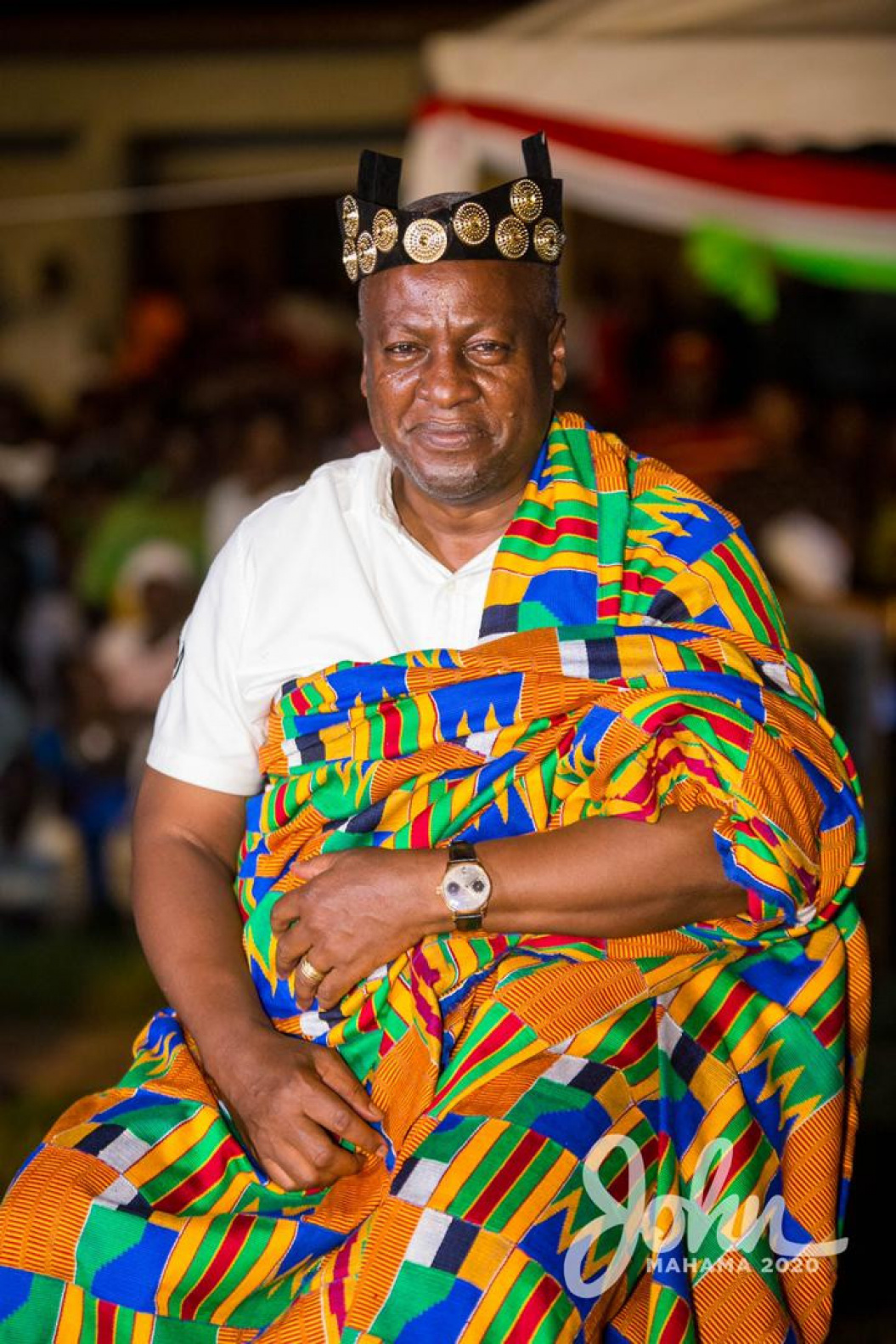
“The landmark Adomi Bridge over the Volta River in Eastern Region, an 804-foot steel arch bridge opened in 1957, was rehabilitated, with its entire road deck replaced. After almost two years of work, it reopened in December 2015.
“Mahama’s government also began upgrading and expanding markets in Accra and Tamale, and commenced building new marketplaces in Cape Coast and Kumasi.”
Out they voted him
You would think that adding such massive development projects to the national legacy would be appreciated, the nation rather foolishly voted Mahama out in 2016, depriving him of a second term he so richly deserved.
And what happened after his defeat? Africawatch picks up the story: “After President Akufo-Addo defeated Mahama in the 2016 elections and took the helm of affairs in the country, he abandoned numerous projects that the former president was working on. They included hospitals, roads, and rural electrification projects, as well as the Saglemi housing scheme. He completed a few senior high-school E-Blocks and neglected the rest.
“Akufo-Addo also suspended the Cocoa Roads Improvement Programme in 2017, although he began awarding construction contracts for it in 2019 in a piecemeal manner.”
Then things began to fall apart in the economy. To put it in context, the overall financial resources that Mahama’s government had from 2013-2016 were about GH¢189bn, yet Mahama invested heavily in developing infrastructure.
“Looking back at Mahama’s impressive infrastructure projects,” the Africawatch reported, “many Ghanaians are shaking their heads in disbelief as they compare it to Akufo-Addo’s record. They are asking: What happened to all the GH¢377bn that his government had received by the end of 2021?
“Indeed, the gains from the investments Mahama made before he left office delivered a rapid economic growth that averaged 7% a year from 2017 to 2019. Akufo-Addo could not sustain that, as most of his economic policies were focused more on consumption than on growth.”
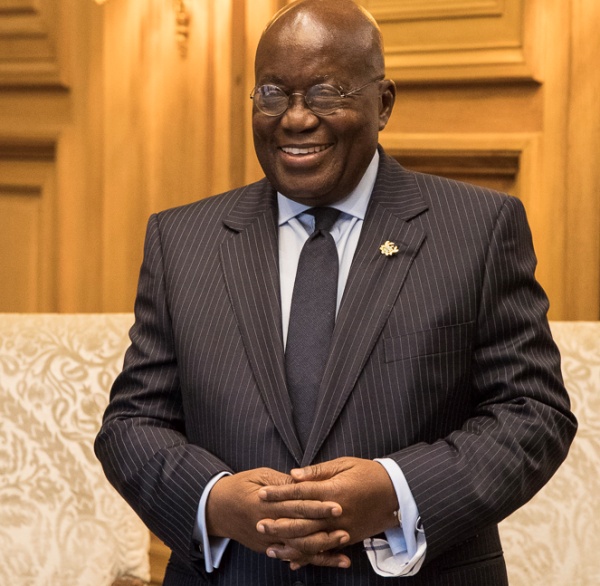
The Africawatch quoted Franklin Cudjoe, head of the IMANI Centre for Policy and Education in Accra, as having confirmed that: “A lot of the growth we had in 2017, 2018, [and] to a large extent, 2019, was due to John Mahama’s investment. What we did not do was to protect those investments with sensible policies and sensible projects.”
To finish off the story of the abandoned projects, the Africawatch chose to highlight one abandoned project in each of Ghana’s 16 regions and published photos showing their current state – although in all the regions there are more than one abandoned project.
For example, in the Ashanti Region, which strangely happens to be the region which gives Akufo-Addo the most votes that keep him in power (1.6 million in 2016, and 1.7 million in 2020), there were 6 brand new hospital projects started by Mahama which were abandoned by Akufo-Addo, but two have since been completed and commissioned.
These are the Asante-Akim Municipal Hospital at Konongo, a 60-bed facility which was 97% complete by the time Mahama lost the election in December 2016. It cost US$36m to build but was abandoned by Akufo-Addo for 6 years, and was only commissioned on 16 October 2022; and the Ahafo Ano Municipal Hospital at Tepa (another 60-bed facility).
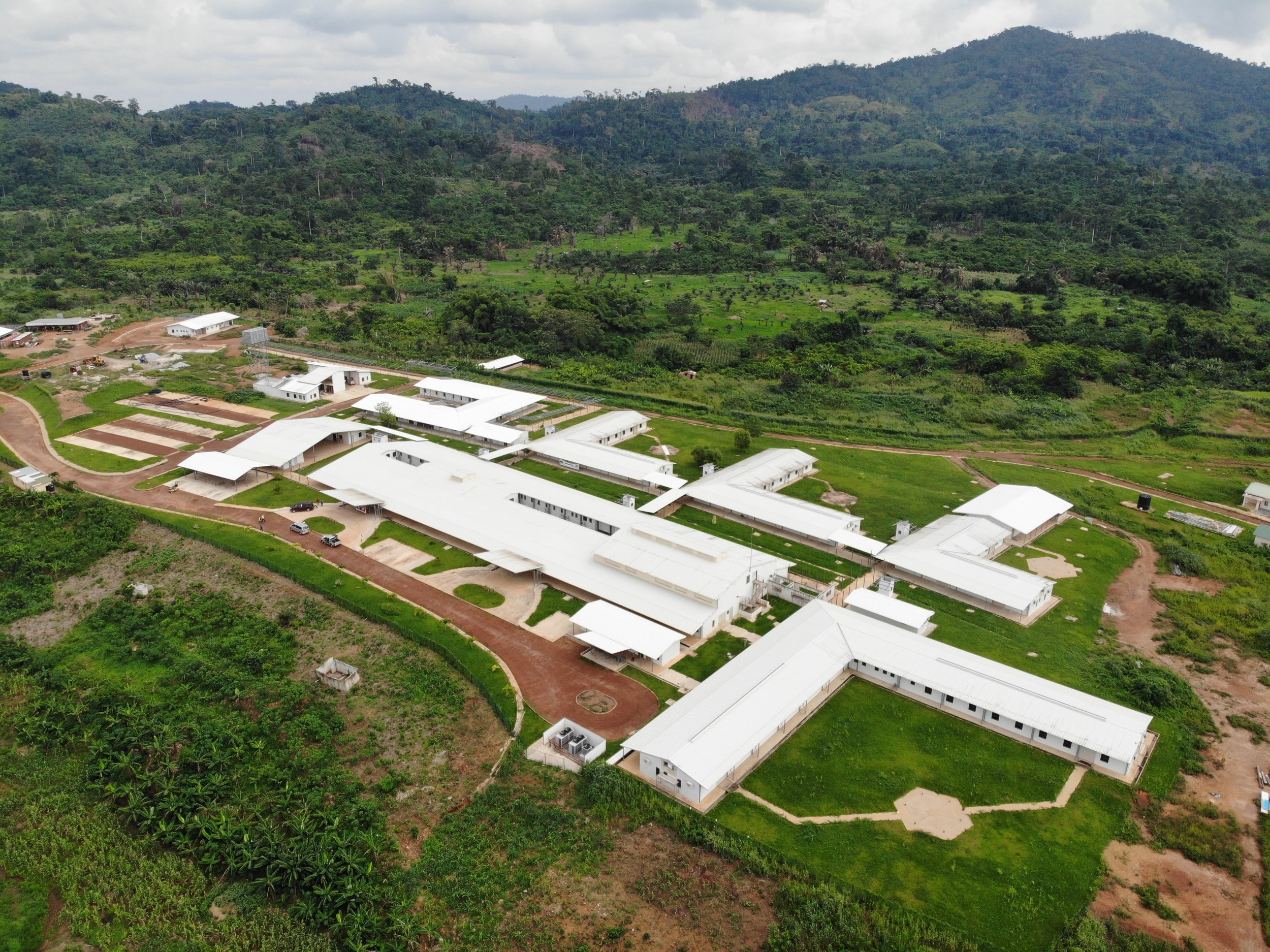
But bigger health facilities in the Ashanti Region started by Mahama such as the Kumawu District Hospital (120-bed) and the Fomena District Hospital (another 120-bed) are still to be completed, 7 whole years after Mahama left office.
A lot more incredible story is the Ashanti Regional Hospital at Sawua, Kumasi, a 250-bed facility with 43 buildings spread over 125 square metres, which was also abandoned and only finished last year, but has remained un-commissioned because a 2 km access road and connections to the national electricity grid and water have been delayed for one-and-half years now.
As one health worker, Percy Amoah, put it in a social media post on 18 May 2023: “It is almost inconceivable that a hospital that has been fully completed and supplied with state-of-the-art equipment will lie idle for the past one-and-a-half years because of an access road, power and water, which form the government’s part of the construction of the Sewua Hospital project.”
The most egregious of all the Mahama hospital projects in Ashanti is the 500-bed Military Hospital at Afari in Kumasi (which has 17 specialist clinics on site). Work on it was far advanced by the time Mahama lost the 2016 election, but it was also abandoned by Akufo-Addo and later restarted, and now 7 years later awaiting completion.
Debt distress
On the whole, between 2017 and 2021, Akufo-Addo’s government received GH¢377bn (now about US$30.5bn) from several sources, including loans, grants, taxes, and revenues from oil, gold, and cocoa exports – the largest amount any government has taken during the 31 years of Ghana’s Fourth Republic, starting from 1992.
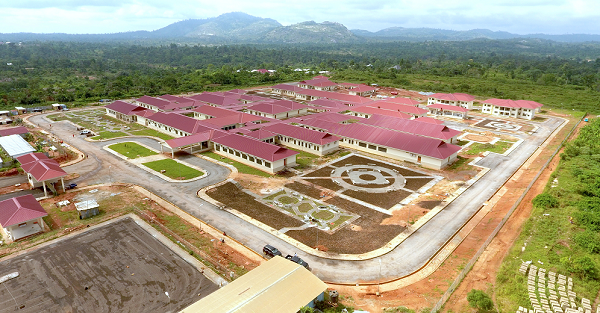
“But there is basically little to nothing to show for this money,” the Africawatch depressingly added. “And President Akufo-Addo has either delayed or abandoned numerous infrastructure projects begun mostly by his predecessor, John Mahama, leaving the nation with nothing but more debt to show for the money it borrowed to build the projects. The government currently spends about 70% of the funds it has borrowed on consumption.”
The Africawatch continued: “After 2019, Ghana’s fiscal and debt situation took a nosedive. The national budget deficit doubled to 15.2% of GDP, and the total public debt rose to 78% of GDP. Ghana is currently considered a high debt-distressed nation.
“Akufo-Addo has taken on so much debt that the service payments on it now exceed the country’s tax revenues. As of the end of July 2022, total public debt was GH¢402.4bn (about US$32.2bn), almost three times what it was in 2016. Debt-service payments in the first quarter of 2022 were GH¢13.9bn, including interest and amortisation – more than the GH¢12.8bn the government collected in taxes.”
Though Ghana has not been under Western economic sanctions for 23 years like Zimbabwe, the economic distress under Akufo Addo has been such that his government has had to go to the IMF with cap in hand asking for a US$3bn deal to shore up the nation’s finances. Before the money came (because the IMF took its time to approve the deal), inflation had hit the roof and prices of goods and services had skyrocketed, along with a massive depreciation of the national currency, the cedi, against the US dollar.
Ironically (in fact, life could be cruel at times), by the time the “incompetent” Mahama was leaving office in January 2017, the cedi rate against the US dollar, stood at a princely 4 cedis to one dollar. Today, 14 July 2023 (and I am writing this piece from Kumasi, Ghana), the cedi rate is at a miserable 12 cedis to one mighty dollar.
In effect, there has been a depreciation of 8 cedis in the dollar rate in the 7 years that Akufo-Addo (who is apparently not “incompetent”) has been in power. It makes the chants of “incompetence” against Mahama, which was led by Akufo Addo as the main opposition leader at the time, pale into risible insignificance indeed.
As a mark of the current economic distress in the country, the following is a true story: In the past, even as late as last October when I visited, Ghana, I was spending GH¢100 to prepare one evening meal for 10 people in my house in Kumasi. On my current visit, (in June and July 2023), prices of goods and services (including food items) have gone so high that for the same one evening meal for the 10 people in my house, with the same ingredients, I have to spend GH¢250. And Ghana’s economy is not under external attack like Zimbabwe’s.
The moral of the “Mahama Syndrome” is that changing presidents for change sake is a bad policy for any country, and Zimbabwe should better watch out.
The Kagame Syndrome
In sharp contrast, the “Kagame Syndrome” is based on the adage that “when a president does well, it behoves even his critics to say well done”. One such president is Paul Kagame of Rwanda who, in 23 years in office, has massively transformed his country of 11 million people – because he has not only had the grace and comfort of time and the critical element of continuity to develop the country, he has also been just good as an administrator, politician, and president.
In fact, it is easy from the outside, without much primary information, to throw stones at Kagame and accuse him, as many do from abroad, of being “authoritarian” and having stayed too long in power. But from the inside, seeing things on the ground with one’s own eyes and how people talk so fondly about him, the picture is totally different.
In 1994, Rwanda underwent a horrendous genocide during which, in 100 mad days, an estimated one million people were massacred in ethnic hatred. Today, however, looking at what the once antagonistic ethnic groups have achieved together, it is difficult to believe that the same people experienced the infamy of 1994.
Nobody visiting Rwanda today can fail to see the difference. It is a country renewed. Kigali, the capital, has undergone a massive transformation never seen in its history. New affluent suburbs have sprung up over the hills to the south and west of the city, and the small decrepit buildings that used to dominate the heart of the central business district have given way to massive edifices built by private developers, including three five-star hotels.
The greening of the city, started by Kagame’s government, has brought added beauty and lustre to the capital of nearly 2 million people. Surely, this state of affairs has not been achieved lying in bed, and while critics say the government has sometimes used strong-arm tactics, the end result has been for the general good.
In October 2015, President Kagame told a Chatham House conference in London: “It is sometimes said that Rwanda’s economic and social achievements are somehow offset by a lack of democracy and popular voice. The truth is exactly the opposite. What is commonly perceived as Rwanda’s biggest weakness is actually its greatest strength … [Our] economic and social development is built on political development and strong institutions. Consensus building, unity, and accountability are the values we place at the centre of our efforts.”
To his long-suffering people, Kagame has proven himself true to their cause. He has led from the front and taken the people along. One young man in Kigali spoke for many when he told me in September 2015: “I can’t imagine Rwanda without Kagame.”
Most Rwandans credit him for using wisdom to bring justice and reconciliation to a country with a painful history. In the process, Rwanda has benefited from the exertions of a guilt-ridden world that folded its arms and mouth during the 1994 genocide, a world that has since tried to expiate its sins by giving generously to fund Rwanda’s reconstruction. In response, Kagame’s government has put the donor money to good use and the result is now there for all to see.
In his Chatham House address in 2015, Kagame paid tribute to those generous donors, saying: “Our country has been a good example of international partnership for development. For example, we saw one million lift themselves out of poverty in a 5-year period and … we now offer universal health insurance and have recorded the fastest ever declines in child and maternal mortality.”
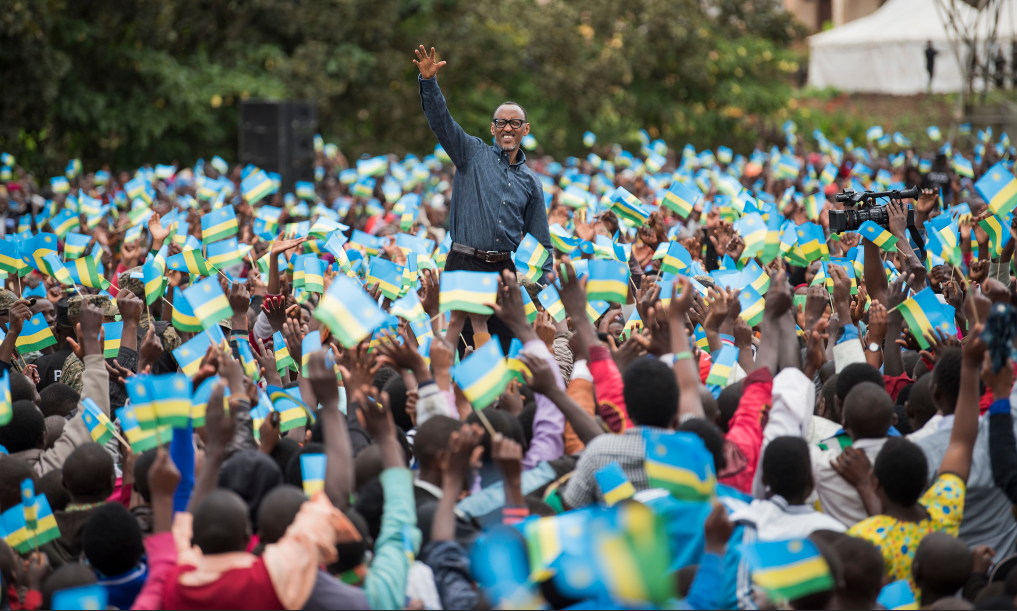
It was on account of such good stewardship that in 2015, as many as 3.7 million Rwandans signed a petition asking Parliament to amend the national constitution to allow Kagame to run for a third term in 2017 even though at the time the constitution allowed for only two terms of 7 years each for the presidency.
Change for a good cause
Kagame first came to power in 2000 in a caretaker role when President Pasteur Bizimungu resigned. He won his first election in 2003 and re-election in 2010. He told me in an exclusive interview in mid-August 2015 that he had nothing to do with the campaign to make him continue in power after 2017, but he was “open to the idea”, provided he could satisfy himself that the push was genuinely coming from the people and not being manipulated by some individuals for their own interests.
Following the petition, Parliament set up a 7-member commission to review the constitution and recommend amendments. The commission’s findings were first approved by the two chambers of Parliament before being put to a nationwide referendum. I went to Rwanda to cover the referendum held on 17-18 December 2015. The result was a resounding “yes” for Kagame to stay beyond 2017, a thumping 98.3% of yes votes. But outsiders were not happy.
The Americans said they were “deeply disappointed” that by his decision to agree to run for a third term, Kagame had ignored “a historic opportunity to reinforce and solidify the democratic institutions the Rwandan people have for more than 20 years laboured so hard to establish”.
According to a State Department statement issued on 1 January 2016, “the US believes constitutional transitions of power are essential for strong democracies and that efforts by incumbents to change rules to stay in power weaken democratic institutions. We are particularly concerned by changes that favour one individual over the principle of democratic transitions,” the statement added.
The European Union was equally not happy “at the speed at which Rwanda’s constitutional referendum was held”. The “speed”, the EU said, “did not give enough time for the public to consider the arguments”.
By far, the most scathing criticisms came from Western newspapers, particularly the British ones – The Guardian and its sister weekly, The Observer, were in the vanguard.
“Kagame is correct in one respect: Rwanda does not need an eternal leader,” The Observer sniffed in an editorial comment published on 3 January 2016, referring to Kagame’s televised acceptance address on 1 January in which he thanked Rwandans for having “requested [him] to lead the country again after 2017”, adding that “given the importance and consideration you attach to this, I can only accept. [But] I don’t think that what we need is an eternal leader.”
The Observer ridiculed Kagame’s statement, saying it was “unfortunate” because an eternal leader was what Rwanda seemed to have got. “Kagame will win again in 2017, not because he is Africa’s answer to Abraham Lincoln but because he has ensured there is no viable alternative,” The Observer claimed.
“There is no effective opposition to his regime. Political rivals have been shunted aside, jailed, exiled, or have died in violent circumstances … Honest public debate, let alone criticism, is not tolerated. Human rights abuses are legion. Independent journalism is a fiction,” The Observer went on and on.
As the prose flowed, The Observer only paused to consider something so fundamental in Rwanda today that even hypercritics dare not ignore. “There have been significant economic and social advances [in Rwanda under Kagame],” The Observer grudgingly acknowledged before cancelling it with the following line: “But as Kagame’s authoritarianism has grown, enthusiasm for his rule has waned.”

Really? But this is the same president who had just been given a thumping 98.3% of yes votes in the constitutional referendum to continue in office after 2017. Nonetheless, The Observer went on its merry way, saying:
“In his divisive and unstatesmanlike recalcitrance, Kagame reinforces a dangerous precedent … Such narrow-minded self-aggrandisement damages national wellbeing, inhibits African development and undermines faith in democracy among peoples desperate to escape the doleful legacies of tribal, colonial, and dictatorial rule.”
Which raised the important question of what “democracy” really is. Is democracy what the Americans say? Is it what the European Union says? Or even what Western newspapers claim it is? Is democracy not what the people of a particular country decide for themselves regarding how they should be governed?
And if the people of Rwanda want their president to continue in office because he has been “a good president “ for the country, what problem has anybody anywhere got to do with that decision or choice? Is the voice and choice of the people not what democracy is all about?
“No,” said the Western critics. “No, because Rwanda is a police state that became an aid darling in the West”, they said. “No, because Kagame exerts control through a benign-sounding system of villages, the nation broken down into small blocks of families, each with a head, security officer and informer, and this strips away privacy and ensures constant monitoring.
“No, because the stifling atmosphere traps the nation in fear.” And worse of all, “Western donors, played so skilfully by Kagame as they funnel huge sums into his state, serve as cheerleaders for one of Africa’s big-headed big men”, who, according to The Guardian’s Ian Birrell in London, “has just shown again how he manipulates ‘democracy’ with a referendum to ensure he can stay in power until 2034.”
The “manipulation”, Birrell insinuated, was possible because “who dares vote against such a government when it orders people to mark ballots with thumbprints?”
Birrell’s charge was breathtaking! Because in Ghana, my own country, which is supposed not to have a “dictator” or an “authoritarian” as president, the law orders the people to mark ballots with thumbprints. Which means marking ballots with thumbprints is not unique to Rwanda, and more critically, it happens not because the president is a “dictator” or an “authoritarian”, but because it is a common practice across Africa.
Lost in transit
The shrillness of some of the criticisms from the West were so high that sometimes common truths got lost in the melee. For example, while The Observer claimed that “as Kagame’s authoritarianism has grown, enthusiasm for his rule has waned”, its sister paper, The Guardian, sharing the same block of offices in central London as The Observer, reported on 1 January 2016 that “rights groups acknowledge that Kagame has broad support for rebuilding Rwanda, but accuse the authorities of stifling the media and opposition voices, charges that the government denies”.
Two days later, The Guardian repeated that “Mr Kagame commands widespread support for bringing stability and relative prosperity to his country. He has also silenced virtually all political opposition to his rule, prompting criticism from the US, EU and human rights groups”.
From across the Atlantic, The New York Times entered the fray. Calling Kagame’s rule an “aging dictatorship”, America’s leading newspaper yet admitted that “since becoming president in 2000, Mr. Kagame has focused on economic development as a means to move beyond ethnic division and overcome conflict.
“In many ways, this strategy has worked. Rwanda has seen nearly 8% economic growth over the last decade; over 90% of Rwandans have health insurance; life expectancy and literacy rates have increased. These successes may explain why, of Rwanda’s key donors, only the United States has firmly opposed the constitutional change,” The New York Times cared to confuse its readers.
The confusion arose because, if “significant economic and social advances” or “successes” had been achieved in Rwanda under Kagame, what was sinful about his people changing their minds about the term limits that their constitution had imposed on the presidency?
After all, history shows that term limits generally arrived in Africa via the USA as part of the Western post-Cold War democratic tutelage of the continent. This was after a period of military and civilian dictatorships across Africa in the 1980s.
As such, the people of Africa gleefully accepted the Western-inspired term limits because: (a) they were tired with dictatorial and authoritarian rule; and (b) they were carried away by the enthusiasm and hope of a future free of so-called dictators that they did not pause to consider how many Western countries have no presidential term limits themselves.
And if most Western countries did not have term limits, as they still don’t have even today, what did it say about the West recommending term limits for Africa?
As one of my colleagues in London rightly pointed out at the time: “The obsession with term limits in Africa has less to do with good domestic political hygiene than with the democratic prescriptions that accompanied the post-Cold War ‘end of history’ neoliberal agenda; it was in other words, a form of ‘native disciplining.’”
And what poor “natives” the Africans have been, because in most of Europe, there are no presidential term limits. The same is true in Canada and Australia. Thus, the leaders of those countries can run for office as many times as the electorate votes for them. Angela Merkel, the former German chancellor, did three terms before stepping down.
In Britain, the people do not even vote directly for the prime minister. The prime minister is voted for only by the people of his constituency, as a constituency MP. But he becomes prime minister only by virtue of being the leader of the party that wins the largest number of parliamentary seats in a general election.
Can an African in Nigeria who votes directly for both his MP and president therefore say that the British system is not democratic? No, because it is the “democratic” system that the British people have chosen for themselves. So, who is the African to sniff at this unique British “democratic” system of electing their prime ministers?

By the same token, who is the European or Westerner to sniff at any “democratic” system the African people choose for themselves? So why did they despise the Rwandan decision to allow their president another term in office by popular vote?
Malicious forgetfulness
After all, history, again, shows that term limits became a popular democratic tool only after 1951 when the USA, after 175 years of independence from Britain during which it had no term limits, decided to impose a two-term limit of 4 years each on its presidents. This followed the passage in 1947 of the 22nd Amendment of the American constitution, when 48 states of America’s 50 ratified the amendment.
Importantly, the imposition of term limits came only when the USA had become economically, socially, and politically developed beyond their wildest imagination, when they had already become both an economic and political superpower with a dominant position in the world.
But before then, the records show that from independence on 4 July 1776 to 27 February 1951 when the 22nd Amendment came into force, a period of 175 long years when the USA was finding its way in the world as a developing nation, it did not find it necessary to have term limits.
This made it possible for President Franklin D. Roosevelt, crippled in a wheelchair, to stay in office for four terms, elected in 1932, 1936, 1940 and 1944, though he died in 1945 less than a year into his fourth term.
But because F.D. Roosevelt was “a good president” for the Americans at that particular period of their national development, they elected him four times in a roll to champion the cause, if not the course, of their national aspirations. They did not change him just for changing sake because four years were up.

It is instructional that before F.D. Roosevelt, several American presidents had attempted to serve a third term and failed. But Roosevelt won four terms on pure merit, because he was “a good president” for the Americans, and the country benefitted immensely from his goodness as a president.
For the same Americans to turn around today to give lectures to Africans who want their equally “good presidents” to continue in office in the interest of their national interests, smacks of malicious forgetfulness, if not rank hypocrisy.
It reminds me of Prof Erik Reinert’s famous words: “If you want to understand the causes of American and European prosperity, study the policies of those who created it, not the advice of their forgetful successors,” the Norwegian economic historian says. “Today’s best advice is: ‘Don’t do as the Americans tell you to do, do as the Americans did’.”
It is an excellent piece of advice. President Kagame may be a “dictator” or “authoritarian” as his Western critics allege, but, to Rwandans, he is “a good president” who in 23 years in office has totally transformed the country for the better. And based on his good work, they wanted him to continue in office. Why that was a problem for outsiders beats the imagination?
Eyewitness account
By August 2015, I had been to Rwanda four times since 2011 and each time I went, I sensed a little Singapore, or something similar to it, taking shape over the hills of Rwanda. From what had already been achieved by Kagame and his government, if Rwanda were to be allowed the grace of the 32 years that the leader of Singapore, Lee Kuan Yew, spent as prime minister to build his country, Africa would be talking about a new narrative in the not-too-distant future.
But Kagame would not get the years that Lee Kuan Yew – another “dictator” and “authoritarian” in his day according to Western critics – spent in office because of meddlesome outsiders. So Zimbabwe should be very mindful of the meddlesome outsiders.
What is difficult to understand is that history shows that the Americans imposed term limits on their presidency when it was absolutely necessary, when their national development trajectory could afford the luxury of term limits.
As such, even in February 1951 when the 22nd Amendment came into force, it did not apply to the incumbent president, Harry Truman, thus technically allowing him to serve without term limit because Section 1 of the law partly said:
“…This Article shall not apply to any person holding the office of president when this Article was proposed by the Congress, and shall not prevent any person who may be holding the office of president, or acting as president, during the term within which this Article becomes operative from holding the office of president or acting as president during the remainder of such term.”
Coincidentally, Rwanda’s amended Article 101 of the constitution retained the country’s two-term limit but cut each term from 7 to 5 years, and stipulated that the new limit would not come into effect until 2024 and would not apply to the incumbent president, Kagame, between 2017 and 2024.
Strangely, the Americans were not happy with this. Which made Prof Reinert’s words so prophetic: “Don’t do as the Americans tell you to do, do as the Americans did.”
Rwanda’s constitutional referendum
I was in Rwanda on 17-18 December 2015 to report on the constitutional referendum. Despite Ian Birrell’s unjustified charge that Kagame “has just shown again how he manipulates democracy”, the constitutional referendum was a free vote by any definition one wanted to slam on it.
First, Rwandans in the diaspora worldwide were given the freedom to vote on 17 December, and very early on the 18th queues of local voters who had gone to the polling stations on their own volition snaked out of the polling centres. By 11 am, most polling stations were empty in a referendum that was supposed to close at 3 pm. Such was the enthusiasm!
Anybody among the nation’s 6.4 million voters who wanted to vote had the chance to cast their ballot. And the turnout was high; the National Electoral Commission said it was as high as 6.3 million of the 6.4 million electorate. And President Kagame was right when he said on polling day after casting his ballot: “I did not apply for this. What is happening is the people’s choice.”
The people’s choice was supreme. Before the referendum, I had had the opportunity to interview Kagame on an earlier trip to Rwanda in mid- August 2015, and had put to him questions that were worrying outsiders about the third-term issue. His answers were emphatic.
“First,” he said, “I have not, and you can investigate it by asking anybody, I have not sought or asked anybody to change the constitution for me. No. I am not part of this exercise as you see it. That is number one. So I see people writing that Kagame is seeking a third term. No, I am not seeking anything.”
But how could he convince cynics in and outside Rwanda that the push for a third term was not being remote-controlled from State House or by his friends. Kagame replied: “I will tell you. In some cases in Africa you may have a leader who gives the impression that people want him to stay, but in reality they want him to go. But he may present himself and say people want me. That is how sometimes it has ended in problems in certain countries.
“But if there was a way of knowing the truth that the people really want him to stay, there should be no problem. The problem only comes when some leaders, and their friends and families are the ones who engineer the push and say people want me, people want me. But I can assure you that in our case the push is not coming from me or my family or friends …
“And that is why I am saying people are distorting the whole argument when they say Kagame wants a third term. I have told nobody that I want anything, believe me. As such I have simply stayed away from the whole thing. I have not been part of it. For one thing, and the simple reason is, I want to really be sure of what is going on.”
I believed him. But many people could not. They could not believe that any African, unprompted, would want his president to run for a third term if the constitution allowed him only two. They could not believe that “a good president” could ever come from Africa who would be asked to continue in office against the prescriptions of the constitution.
But the record shows that prior to the formal petitions in Rwanda in May 2015 asking Parliament to change the constitution, citizens from across the country had been demanding that Kagame should stay beyond 2017. These demands, I was told in Kigali, came in different forms, most notably during the president’s regular meetings with citizens across the country as early as 2010.
The first formal (written) petitions were submitted in early May 2015 by two individuals who wrote letters asking Parliament to amend the constitution to allow Kagame a third term. Later different groups, including youth forums, religious groups (from different churches and faith groups), cooperatives, political parties, and individuals followed suit. And soon the petitions built up to a 3.7 million crescendo.
Parliament therefore followed the voice of the people and duly amended several articles of the constitution, including Article 101, which deals with the presidential term limit; and after approval by both Houses of Parliament, the amended constitution was put before the people in the 17-18 December 2015 referendum. After the massive yes vote, Kagame took nearly two weeks to say yes to the yes vote. And the criticisms by outsiders began in earnest.
In all this, one important aspect of nationhood was lost in the din. And it was this: “What does the African want?” Is it to live in a freedom of speech-ridden but chaotic country like my own Ghana where more than 250 radio stations and 40 or so TV stations afford the people the freedom and platform to insult the president every morning and afternoon and evening, while they fill the open gutters of the cities and towns with rubbish that chokes them with filthy water that produces mosquitoes and malaria?
Or to live in an orderly and disciplined country like Rwanda where the president is alleged to be a “dictator” and “authoritarian” who ensures significant economic and social advances to the point where you could even eat your lunch from the open but clean gutters of Kigali if you want, and enjoy the manicured green spaces in town? Which one does the African want?
To many discerning Africans, the fascination with term limits is a wholly misplaced one, and it is why Ghana’s former president, John Mahama, was right when he said while in office: “I am normally very reluctant to be prescriptive when it comes to democracy because countries evolve and democratise on their own terms. In Ghana we have come a long way because of our experiences with military governments and dictatorships … so Ghana has built a solid foundation on which democracy rests.
“That safe foundation might not exist in other countries, their foundations might be fragile, and so I believe that they must evolve on their own terms. But if you ask me as a Ghanaian president, I think two terms of eight years is enough time for [any Ghanaian president]. If you go through this job in Ghana for eight years and still want to be president, you need your head checked [laughs]. I am talking for Ghana.”
Allowing countries to “evolve on their own terms” means that African countries such as Zimbabwe should be allowed to “chart their own course and live by it, and reap the benefits of it, or face the consequences,” as Kagame put it in 2015. Outsiders must take a cue and ship out.
For a Zimbabwe that is going to the polls on 23 August, Rwanda’s example of keeping “a good president” in situ, has many attractions. Zimbabwe should be inspired by Rwanda’s example and keep its “good president” in place for another term, a president who has shown beyond any reasonable doubt, in his first term, that he has the good of the country at heart.
Zimbabwe should close its ears and eyes to the blandishments and manipulations from outsiders who are hiding behind insiders to seek change for change sake. The nation should do everything to avoid the suicidal “Mahama Syndrome” at all cost, for in it lies too many dangers to tinker with. Ghana’s current parlous state is an example that Zimbabwe should not only learn from, but to also run away from.
Leave a Reply