As earlier stated, the story of the Moors is difficult to believe when told by one mouth. So, here, Osei Boateng has put together several notable writers who testified about the magnificent achievements of the Moors not only in Spain and Portugal but the whole of Europe.
John G. Jackson: [African-American pan-Africanist historian, writer, lecturer and teacher, who covered the story of the Moors in several of his books, including “Introduction to African Civilisation” (1970); “Man, God, and Civilisation” (1972); and “Ages of Gold and Silver” (1990)]. He wrote:
The Omayyad dynasty survived in Spain until 1031, but it was obviously in a state of decline by the year 1000. Abd-er-Rahman III, one of the greatest of the Moorish monarchs, reigned for 50 years (911-961) and he stablised and expanded the territories of his dominions.
The Moors were a very tolerant people. Their rulers lived in sumptuous palaces, while the monarchs of Germany, France, and England dwelt in big barns, with no windows and no chimneys, and with only a hole in the roof for the exit of smoke.
Jewish scholars studied under the Moors, and then went to England and set up a scientific school at what later came to be Oxford University. The Moors furnished the knowledge, and the Jews collected it. The Jews were intermediaries. The Moors and the Christians were fighting each other and the Jews formed a bridge between them.
Dr José Pimienta-Bey: (Born and raised in New York, USA, to Cuban and Moorish parents. He is a historian of consequence who has, since 1985, concentrated his primary research interest on the Moors and their impact on the development of European academic institutions and society. His book, “Othello’s Children in the ‘New World’: Moorish History & Identity in the African American Experience” (2002) is a masterpiece. He has presented a formidable body of evidence that shows that the foundation of much of medieval Western science and its academies was built upon transmissions, refinements, and discoveries of the Moors and Arabs). He wrote:
Catholic Spain’s “Reconquista” (reconquest from the Moors) and the religious fanaticism and intolerance it promoted ultimately affected Spain’s progress. James Monroe, in Islam and the Arabs in Spanish Scholarship (1970), tells how the economic and political interests of the new Catholic Spanish state compelled Spaniards to destroy many Moorish manuscripts that the Conquistadores acquired after the fall of Granada in 1492.
According to Pascual Gayangos, Cardinal Jimenez de Cisneros ordered the burning of nearly 80,000 books in the public square of Granada. The Cardinal is said to have asserted that since the books were all in Arabic, they were Korans, and therefore dangerous.
Who knows what great literature and scientific knowledge was lost in the flames? Let us recall the great need for an “Arabist” at the University of Salamanca (less than 20 years after this event) in order to rejuvenate the fledgling medical profession of Spanish society.
Jan Carew: (A native of Guyana, he became a real man of letters and an important intellectual of the Caribbean world. An educator, poet, novelist playwright and historian, he compared the illiteracy of the Christian Europeans to the learning and erudition of the Moors of that time). He wrote:
The thousands of volumes committed to the flames by officials and agents of the Holy Inquisition, embodied the best of Islamic and Hellenistic learning which had been fed from its earliest beginnings by roots buried deep in the creative soil of Africa. Compared to the Christian principalities like Galicia, Leon, Castile, and Navarre, the Moorish dominated al-Andalus was a region of unbelievable enlightenment.
At a time when the most insignificant provinces of Moorish Spain contained libraries running into thousands of volumes, the cathedrals, monasteries, and palaces of Leon, under Christian rule, numbered books only by the dozen.
Unlike their Christian counterparts, Moorish rulers “were often philosophers, mathematicians or poets [and] … at a period when the historian Ibn-Hayyan of Cordoba could write a history of Spain in 10 volumes, lively, detailed and well-observed, all that 11th century Leon could offer were the 15 sparse and imprecise pages of Sampiro, notary to Alfonso V.”
The defeat of the Moors
Edward Scobie: (A man of many facets who hailed from Dominica, Scobie was a journalist, editor, magazine-publisher, lecturer, historian, politician, and author of the seminal work, Black Britannia: History of Blacks in Britain (1972). He proved that the Portuguese jumped ahead in the exploration of the world, from 1492, because they drew upon everything they could from the Moors). He wrote:
Though the Moors lost military, political and economic control of Spain, their influence lingered long after their physical departure. Spain and Portugal, more than any other European populations, derived enormous benefits from the Moorish and African Muslim presence.
Spain and Portugal became, for a while, world leaders in the nautical sciences. And, it was not until 1588 (with the defeat of the Spanish Armada) that the other European nations were able to challenge them and become serious rivals in the game of discovery and colonisation.

With Spain and Portugal in the lead, Europe as a whole profited enormously from the Moorish civilisation. John G. Jackson quotes a European historian as having said that: “None of our modern sophistry redeems the squalor of Europe from the fifth to the eleventh century.”
The English author, Stanley Lane-Poole, in his book, The Story of the Moors in Spain (1886), provides us with a most vivid description of the contrast between Moorish Spain and the backwardness of the other European countries.
Stanley Lane-Poole: [An English, and professor of Arabic, at the University of Dublin. Of the conquest and expulsion of the Moors, he wrote in “The Story of the Moros in Spain”, (1886)]:
Under the terms of capitulation, the conquered Moors would retain their own customs and religious freedoms and would be held accountable only to their own judges. Christian women married to Moors and others who had converted to Islam from Christianity would not be reconverted against their will.”

However, a decade later, Queen Isabella of Castile, whose religious zealotry and greed for confiscated Moorish and Jewish property, outstripped that of her husband, abrogated this agreement. It was Isabella too, who appointed the infamous Spanish Dominican, Tomas de Torquemada, as inquisitor-general. She also signed the edict ordering the expulsion of Jews on 31 March 1492.
From the moment the ink had dried on that order, the fate of the Moors was also sealed. It would only be a matter of time before their turn came to be forcibly expelled. And it came 10 years later. This precedent established a tradition of treachery and racism that was adopted by all of the European colonisers who came in the wake of the Spanish, and it would endure throughout the Columbian era.
Jan Carew:
Coming to the Iberian Peninsula in the wake of the Vandals and Visigoths, the Moors had, over their long tenure, civilised the land they called ‘al-Andalus’, a name which derived from the former designation of the Iberian Peninsula as the ‘Land of the Vandals’. But once the Reconquista had ended, a unified Spain seemed bent on moving backwards into the future.
With the end of Moorish power, the Spanish not only went on a book-burning spree, they also tried to erase every vestige of Moorish cultural influence from their consciousness. The Holy Inquisition with its limpieza de sangre (cleansing of the blood), its zealotry, and its all-encompassing and repressive tentacles reaching into the lives of the highest and lowliest in the land, set about de-civilising the Iberian Peninsula.
The persecution was most wrenching in the lives of Spain’s principal culture-bringers: the Moors and the Jews. But the Moors, who were more numerous and who were expelled later than the Jews, resisted long after the fall of Granada.
At its zenith, Muslim power stretched from China, across the Himalayas into India, through the Middle East, and deep into the Nile Valley. It crisscrossed all of North Africa, reached down to Dar es Salaam in East Africa and went as far south as Ghana in West Africa. It then spread north across the Pillars of Hercules to stretch from Portugal’s Atlantic coast, through the Iberian Peninsula, over the Pyrenees, and into France’s Rhone Valley and beyond.
The terms “Arab”, “Berber”, “Moor” and “Tuareg” have also undergone several permutations. “Arab” originally referred to an inhabitant of the Arabian Peninsula who spoke Arabic.

But, recent research has pointed to the fact that “Arabia was the oldest Ethiopian colony”, that “the Cushites were the original Arabians … [and that] ancient literature assigns their first settlement to the extreme southwestern point of the Arabian Peninsula. From thence, they spread northward and eastward over Yemen, Hadramut and Oman” (Wayne B. Chandler, The Moor: Light of Europe’s Dark Age’ in the Ivan Sertima-edited “The African Presence in Early Europe, 1985, p151).
When the “Arabs”, therefore, began to spread westwards into Egypt and across the Red Sea, they were largely absorbed into the black and brown gene pools of the peoples of the Nile, the Sahara and the northern Mediterranean and Middle Eastern colonies scattered across the northern rim of Africa.
As W. E. B Du Bois pointed out: “The term Arab is applied to any people professing Islam [and] much race-mixing has occurred so that while the term has a cultural value, it is of little ethnic significance and is often misleading.”
“Moors” and “Berbers”, again, a very imprecise term, referring to polyglot Saharan white, black, and brown North African groups of largely nomadic people, were officially classified as Muslims. They were converted to Islam in the sweep of the religion across northern Africa between 640 and 700.
And while they had some Arab admixture after their long period of cohabitation, they were primarily African. Arabs, Berbers, Tuaregs and Moors of every possible shade and colour were present in that invading army that conquered Spain, but it was the Moors, who, coming in successive waves for eight centuries, left a permanent imprint upon the Spanish language and culture in particular, and European civilisation in general.
And now, five centuries after the Fall of Granada, the rainbow array of colours and racial types that one sees in the faces of the contemporary population of this region – from blond and blue-eyed, through various shades of brown to black – is not all that different to what it was in the Moorish Empire in the 11th century, despite new genetic infusions by migrants and successive waves of settlers.
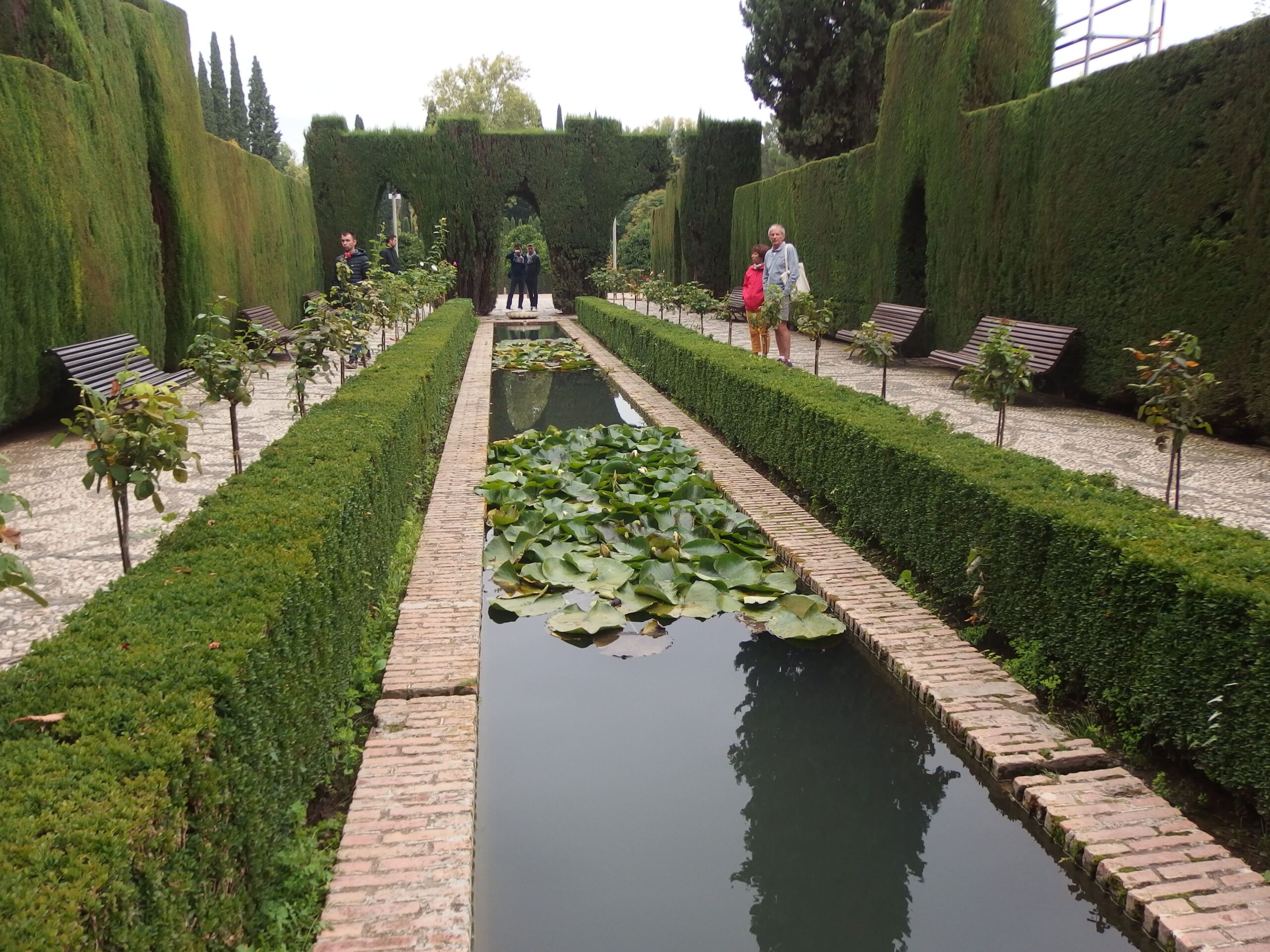
Evidence of the Moors’ civilising mission are strewn across the Iberian Peninsula. It is, in fact, because of the Moorish conquest and the Moorish civilising mission that the factional European tribes and kingdoms were able to direct their energies from fighting amongst themselves to studying the very philosophies and sciences that would propel them out of their insular perspectives into unchartered seas and across new continents of the imagination.
Christian Spain carried out a systematic anti-Moorish programme after the Reconquista. Though benefitting greatly from the scientific, the philosophical, and the literary innovations brought to them by the Moors, the Spanish and other Europeans systematically wiped out any and all reference to the great influence the Moors had on their subsequent development. Nowhere was this more evident than in the literature of post-Moorish Europe.
A new and momentous forward leap in the theoretical and applied sciences evidenced itself in Moorish mathematics, medicine, astronomy, navigation, and new concepts of world geography and philosophy. The popularity of Moorish scholarship was such that for centuries Arabic was commonly accepted as the language of scholars from Europe, Asia and Africa, and the Moorish intellectual centres in Toledo, Cordova, Seville, and Granada became Meccas of learning.
[The Moorish intellectual centres reminded Carew of William Shakespeare’s statement: “Hanging and wiving goes by destiny”. An astounded Carew wrote):
“Hanging and wiving?” – the Renaissance was for men, European men, and not for women of any colour. The urbane and civilised Moorish tolerance that had allowed women to win new freedoms for themselves, was now replaced by a crafty and at times, murderous male intolerance; and daughters were chattel to be sold to the rich and powerful. With the advent of the Renaissance in Spain, women lost the considerable ground they had gained during centuries of enlightened Moorish rule.
As Flora Shaw points out: “It is … interesting to note that in the days of Mohammedan Spain, [Moorish] women were not confined, as in the East, to harems, but appeared freely in public and took their share in all the intellectual, literary, and even scientific movements of the day.
“Women held schools in some of the principal towns. There were women poets, historians and philosophers, as well as women surgeons and doctors … An example of this was that the daughter and grandmother of the celebrated Moorish pharmacist, Ibn Zohr, were both accomplished female doctors.”
For a short span of time, the Moor was not demonised in Shakespeare’s England, the Jew was. But later, when the Atlantic slave trade had to be justified, the African became the victim of a strident demonology. The noble Moor was labeled a ‘black-a-moor’ and even more contumely and racial hatred were heaped on his head than that which the Jew had already known for centuries.
Leave a Reply