To further authenticate the identity of the Moors, we publish below snippets of what other writers said about the Moorish identity, put together by Tom Mbakwe.

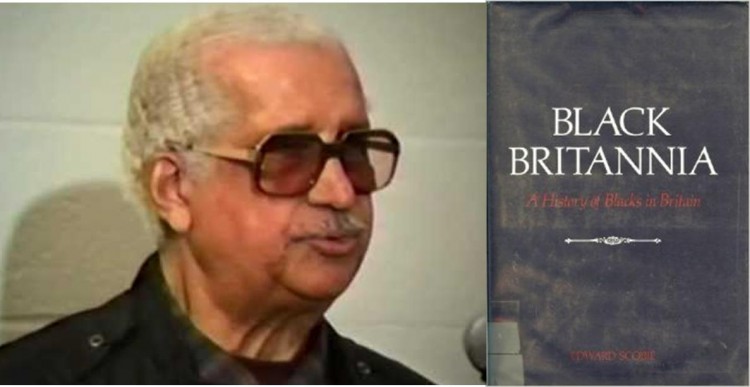
Edward Scobie was a Dominican-born journalist, magazine publisher and historian, best known for his research into the history of black people in Western Europe and his 1972 seminal work, Black Britannia: A History of Blacks in Britain. Born on 23 May 1918, he died on 14 November 1996. Regarding the identity of the Moors, he wrote:
“Scholars who are not blinded by the fog of racism are of one voice that most of the Moors were Africoid in origin; even many of the marauding Arabs who crossed the desert sands of Arabia and swept down with their Islamic fervor on the northern regions of Africa, then crossing the Sahara and moving further southward. Massive miscegenation did alter the picture, producing people who were of all shades, from jet black to very near ‘white’.
Dr Chancellor Williams in The Destruction of Black Civilisation (1976) hit the nail on the head when he asked and answered the question: “Now, again, just who were the Moors? The answer is very easy. The original Moors, like the original Egyptians, were Black Africans. As amalgamation became more and more widespread, only the Berbers, Arabs and coloureds in the Moroccan territories were called Moors, while the darkest and black skinned Africans were called ‘Black-a-Moors’. Eventually, ‘black’ was dropped from ‘blackamoor’.
“In North Africa – and Morocco in particular – all Muslim Arabs, mixed breeds and Berbers are readily regarded as Moors. The African Blacks, having had even this name taken from them, must contend for recognition as Moors.”
Dr John Coleman deGraft Johnson was a Ghanaian professor of economics, editor of the Economic Bulletin of Ghana, a historian and author of African Glory: The Story of Vanished Negro Civilisatiosn (1986): Regarding the identity of the Moors, he wrote: “It was because the conquering army in Spain was largely made up of Africans from Morocco that we hear such phrases as ‘the Moorish invasion of Spain’, and why Shakespeare’s hero Othello is a Moor, and why the word ‘blackamoor’ exists in the English language, a word which leaves no doubt as to the colour of the army of occupation in Spain and Portugal.”
Edward Scobie adds: The term “Arabic”, contends Dr deGraft Johnson, must be understood in a cultural rather than a racial sense, “for the Arabs did not believe in any herrenvolk theory and freely intermarried with those they conquered”.
Their conquest of North Africa, however, was no walk-over except perhaps in Egypt, where the Arabs were looked upon as deliverers from the oppressive rule of Byzantium. The fierce resistance mounted by Kuseila of Mauretania and by his relative Kahina projected the African mood at that period.
In fact, so fierce and determined were the African counter-attacks that an Arab governor once saw fit to observe that the conquest of Africa was impossible. Scarcely had a Berber tribe been exterminated when another would take its place.
Nevertheless, upon conquest, Africans appear to have been converted to the Mohammedan faith, particularly through the system of intermarriage which was practised on an extensive scale by the Arabs.
Among the African leaders converted to the Islamic faith during the invasion of Morocco was the great general known as Tarik. In describing Tarik and his army who captured Spain, chroniclers of the time made note that these Moors were “a black or dark people, some being very black”.
The conquest of Spain has been described by Dr Degraft Johnson as an African conquest. Like other historians before and after him, he made it clear that the conquerors were Mohammedan Africans, not Arabs, “who had laid low the Gothic Kingdom of Spain”.
The Arab quotient in the conquest of Spain was added by Professor C. P. Groves in his book, The Planting of Christianity in Africa (1948) when he stated that the Arab leader Musa ibn Nusayr “apparently taken by surprise at the speed of events, hastened across with an army the following year and completed the conquest, thus associating Arab arms with the final victory.”
It was Musa ibn Nusayr who, after having invaded Morocco, gave Tarik the rank of general and left him in charge of Tangiers, making him governor of Mauretania.
Leave a Reply