The belief in certain African circles that God Almighty is foreign to Africans because Christianity came to Africa via European missionaries, has created a big confusion about which continent got Christianised first – Africa or Europe? Our editor, Baffour Ankomah, has looked deep into the historical records and can report here that though European missionaries evangelised Africa much later in the 18th and 19th centuries, Africa (or parts of it) had already known and practised Christianity a whole 1,750 years before the European missionaries became a dominant feature on the continent. So which continent became Christianised first? The evidence shows that Africa and Europe were Christianised around the same time – mid-first century AD. So God Almighty is not foreign to Africans.

“It is quite possible that Christianity came to Africa before it came to Britain and other regions in Northern Europe,” states the BBCWorld Service.com, which consecrates some good pages of its website to “The story of Africa – from the dawn of time…” If it comes from the horse’s own mouth, you don’t struggle to ascertain the truth, especially if you focus on the historical evidence.
And the historical evidence shows that Christianity in Africa first arrived in Ancient Egypt just before 50 AD, only 50 years after the death and resurrection of Jesus Christ, when no European missionary, let alone a Briton, knew his way to Africa. At this point in time, in the first century AD, the population of Ancient Egypt was still predominantly black, though a lot of the black ancestors, our ancestors, had long emigrated to other African lands south and west of Egypt.
The Romans were the rulers of Egypt at this time. After taking over traditional African religion and becoming the official religion of Ancient Egypt, Christianity reached Carthage (now in modern Tunisia) by the end of the second century.
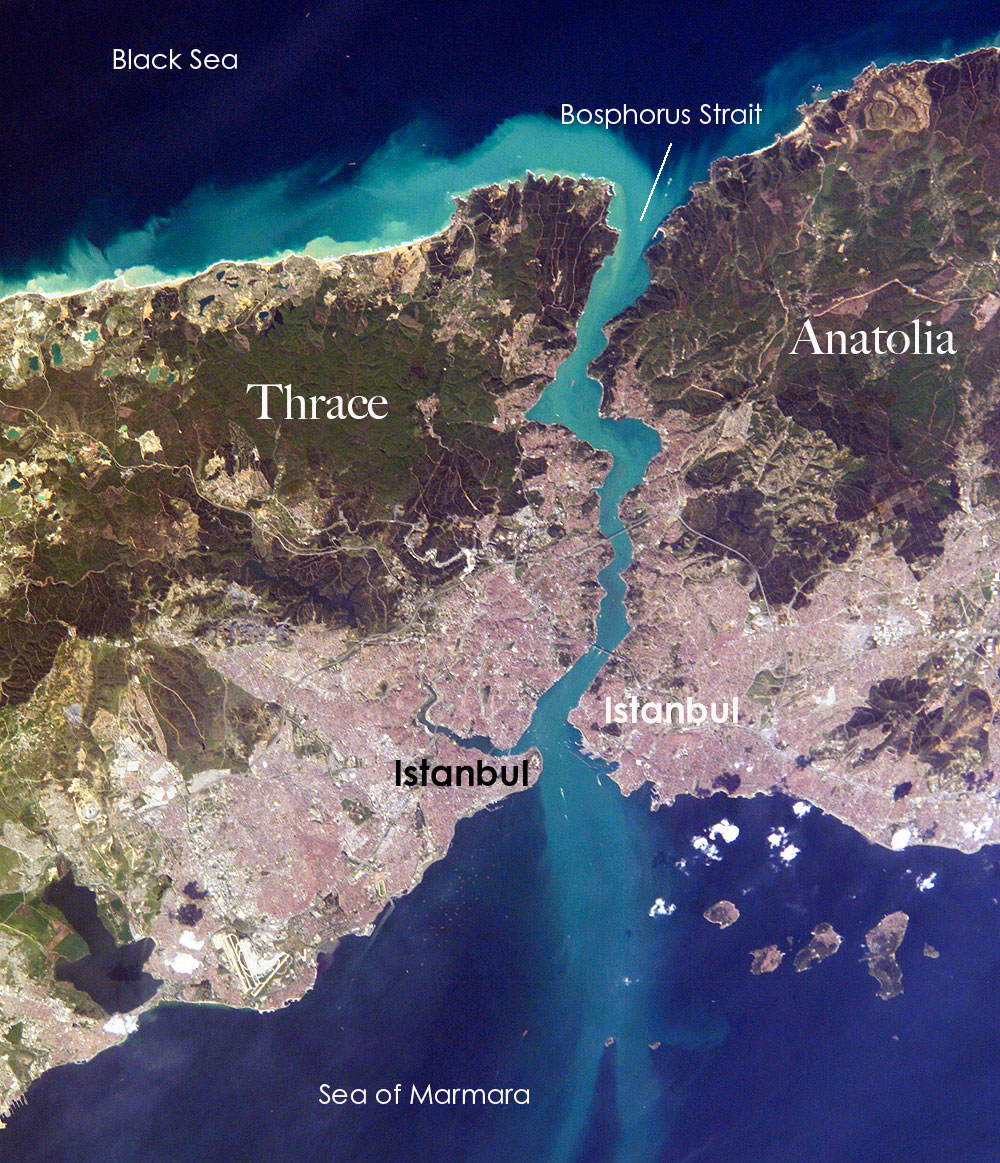
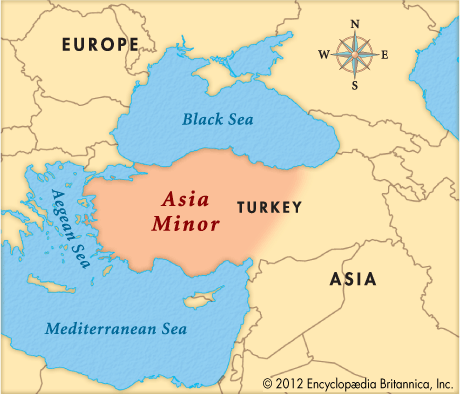
A comparison with the spread of Christianity in Europe shows that the religion had taken firm roots in Asia Minor at the same time as its spread in Ancient Egypt. Asia Minor (as it was then called) is the large Asian side of modern Turkey, east of the Bosphorus. Called Anatolia by the Greeks, Asia Minor is the peninsula of land where the continents of Asia and Europe meet. Today it constitutes the largest portion of the two sides of Turkey – 755,688 sq km of Turkey’s combined 783,562 sq km of land area. Thus, there is only 27,874 sq km of Turkey in continental Europe.
Turkey’s nearest neighbour in Europe is Greece, which is one of the first European nations, along with Cyprus and the other Mediterranean islands, to benefit from the itinerant Apostle Paul’s 3 evangelisation missions in that part of the world around the same time when Christianity was spreading in Ancient Egypt.
Focusing on Paul
We get a firm timeframe from Paul’s mission to Rome in 58 AD. By this time, Christianity had already become the official religion of Ancient Egypt. Before going to Rome to evangelise the pagan Romans, Paul had done 3 missionary journeys to Asia Minor and Greece, including going to Athens, the capital of Greece itself. The historical evidence shows that Paul started his third missionary journey in 52 AD.
Rome was still not Christianised at an “organised level” at this time, though there were some individual Christians living in the city and in the Roman empire generally. There was also a good Jewish presence in Rome, remnants of Jewish slaves taken to Rome who had later gained their liberty and gone on to produce descendants.
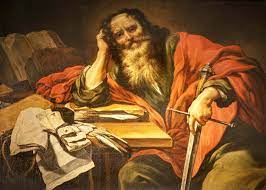
But the Jews generally did not believe in Jesus Christ, they were still waiting for their promised messiah, and thus were not Christians. In fact, they did not want to hear anything about Jesus, and so had become staunch opponents of “The New Way”, which is what Christianity was known in those early years – the Christianity that Paul was preaching, which made Paul a mortal enemy of the Jews who tried to kill him many a time. Eventually Paul was martyred in Rome in the summer of 64 AD under the watch of Emperor Nero.
Some Jews though believed in Jesus, and according to the historical record, were responsible for the establishment of the Christian faith in Rome. The website Bible.com reports that: “Based on a study of relevant and extra-biblical documents, it is generally agreed that non-apostolic Jewish Christians brought the faith of Christ to Rome in the early decades of the church … The resulting Gentile-dominated church that received Paul’s letter [to the Romans] in the late 50s AD met in small groups around the city of Rome but maintained communication and held on to a common identity and mission.
“Paul and Peter leave their mark on these believers, though they merely strengthen the work that had already begun to flourish in the capital city. Beyond these main points, scholars still differ on the exact timeline on the birth and growth of the Christian community [in Rome], as well as to what degree Roman reactions against Jewish instability stem from disagreements about Christ.
“When all is said though, the overall picture of the emergence of Christianity in Rome constitutes yet another significant example of God’s extraordinary work in the early church during the decades following Christ’s death and resurrection,” adds Bible.com.
Back to Africa
“God’s extraordinary work in the early church” ensured that by the 4th century AD, Christianity had taken hold of the Aksumite empire in modern-day Ethiopia and had become its official religion.
Just about the same time, neighbouring Eritrea became one of the first regions worldwide to adopt Christianity as its official religion. People in the region were therefore making pilgrimages to Jerusalem to worship, one of whom was the treasurer of the “Queen of the Ethiopians” (then called the Kandake) who encountered Apostle Philip on his way back from Jerusalem as narrated in Acts 8:26-40.
Two centuries after Eritrea’s conversion, the Nubian kingdoms of Nobatia, Makuria and Alodia also followed suit. History shows that some of the important Africans who influenced the early development of Christianity included Clement of Alexandria, Felicity, Perpetua, Tertullian, Athanasius, Cuprian, and Augustine of Hippo.
Unfortunately for Christianity, the Islamic conquest of North Africa (which started after 642 AD and ended in 705 AD) brought pressure on Christians in the north of the continent to convert to Islam due to special taxation imposed on non-Muslims and other socio-economic pressures brought by Muslim rule.
The Encyclopaedia Britannica tells the story better: “After the Arabs completed the conquest of Egypt in 642 AD, they started to raid the Berber (Amazigh) territory to its west, which they called Bilād al-Maghrib (“Lands of the West”) or simply the Maghrib. In 705 this region became a province of the Muslim empire then ruled from Damascus by the Umayyad caliphs (661–750 AD).
“The Arab Muslim conquerors had a much more durable impact on the culture of the Maghrib than did the region’s conquerors before and after them. By the 11th century AD, the Berbers had become Islamised and in part also Arabised. The region’s indigenous Christian communities, which before the Arab conquest had constituted an important part of the Christian world, ceased to exist.
“The Islamisation of the Berbers was a consequence of the Arab conquest, although they were neither forcibly converted to Islam nor systematically missionised by their conquerors. Largely because its teachings became an ideology through which the Berbers justified both their rebellion against the caliphs and their support of rulers who rejected caliphal authority, Islam gained wide appeal and spread rapidly among these fiercely independent peoples.”
The Britannica goes on: “Arab raids to the west of Egypt concentrated at first on the area of Cyrenaica in present-day Libya. Tunisia was raided several times after 647 AD, but no attempt was made to establish Arab rule there before 670. Conflicts among the Muslim leaders, especially after the assassination of the third caliph, Uthman ibn Affan, in 656, hindered Muslim territorial expansion.
“Only after the Umayyads had consolidated their authority as a caliphal dynasty in the 660s and had come to view the conquest of the Maghrib in the context of their confrontation with the Byzantine Empire did they systematically undertake this conquest [of Tunisia, Algeria and Morocco].”
So, this is how Christian North Africa, of solid indigenous Berber stock, became Islam North Africa, and Arabised as well. The Berbers occupied North Africa and part of West Africa, specifically Libya, Tunisia, Algeria, Morocco, northern Mali, northern Niger and the Canary Islands.
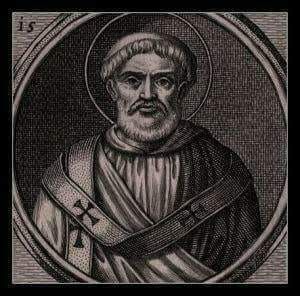
The Berber’s contribution to Christianity included one of their sons becoming a pope of the Catholic Church. Pope Victor I, one of the 3 African popes so far to head the Church, was born in Tripolitania, an ancient coastal region of south-eastern Tunisia and western Libya. He headed the Church between 189 and199 AD.
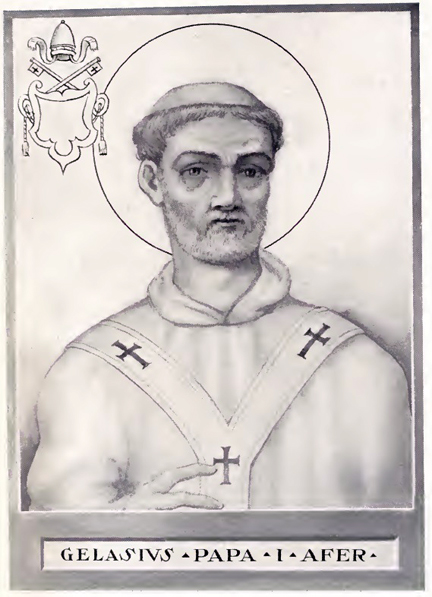
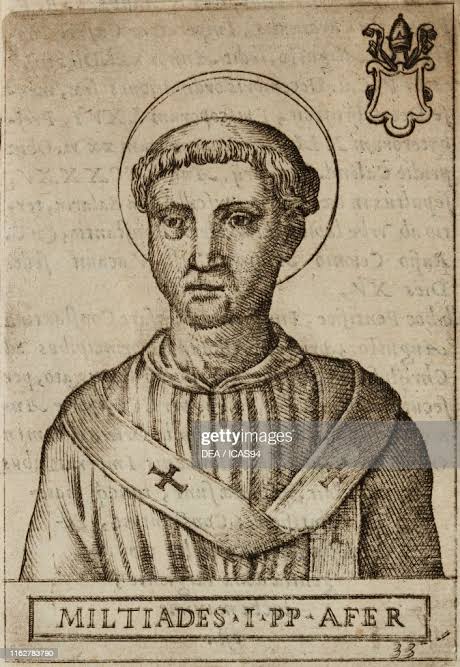
Between 311-314 AD, Pope Miltiades, also known as Melchiades the African became the 32nd pope of the Church, while Pope Gelasius, another African, became the 49th pope of the Church between 492-496 AD.
Wikipedia reports that: “The Eastern Orthodox Church of Alexandra and the the Coptic Orthodox Church of Alexandria (which separated from each other during the Chalcedonian Schism) in Egypt and the Orthodox Tewahedo Church (that split into the Ethiopian Orthodox Tewahedo Church and Eritrean Orthodox Tewahedo Church), survived the Muslim invasion of North Africa.”
However, over the next few centuries, “Islamisation of Muslim-ruled territory occurred progressively and restrictions on church building and the demolition of churches in Egypt, along with occasional persecutions such as during the reign of al-Hakim (996–1021), put additional pressure on Copts in Egypt.”
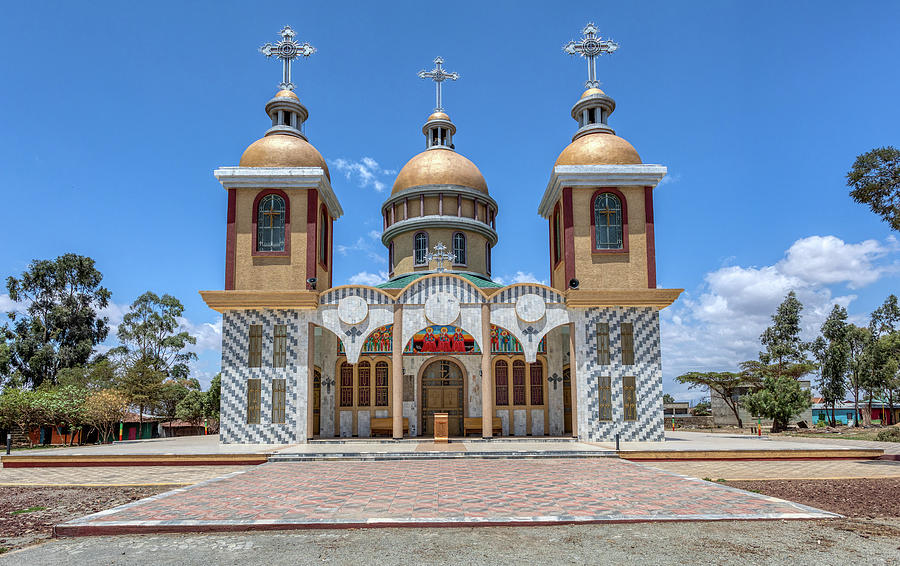
“The Ethiopian Empire,” according to Wikipedia, “the only region of Africa to survive as a Christian state after the expansion of Islam. The Ethiopian church held its own distinct religious customs and a unique canon of the Bible. Therefore, the Ethiopian church community is globally unique in that it was not Christianised through European missionaries, but was highly independent and itself spread missionaries throughout the rest of Africa prior to European Christians contact with the continent.”
The latter-day saints
European missionaries in Africa, therefore, can aptly be described as “latter-day saints”, because they came to evangelise a continent that had (or part of which had) already known Christ and Christianity.
It should be admitted though that most of the black ancestors, our ancestors, had left Ancient Egypt before Christianity became the official religion of the empire. They had only known African religion before the many foreign invasions of Egypt that forced them to migrate. And African religion at the time involved the worship of multiple gods, the opposite of what Christianity teaches.
The African ancestors believed that a Supreme Being (or power), ruling over everything and everyone, was (and still is) the prime mover and creator, who is all knowing and eternal, and was there at the beginning of time. Christianity called that Supreme Being God Almighty.
But to African society, the Supreme Being went under many different names and he varied considerably from society to society, as to how near or how remote he was. Thus, though some African societies could pray directly to the Supreme Being on a regular basis, the majority of African cultures saw him as too big a deity to be approached directly, and therefore they navigated towards him through the medium of multiple gods.
This was the state of affairs in most of Sub-Saharan Africa when the first European explorers (Portuguese all of them in fact) fumbled their way along the West African coast in the mid-15th century. It was much later that the European missionaries followed.
The BBCWorldService.com article written by H. Quashire confirms that: “In 1490, the first European missionaries came to Sub-Saharan Africa at the request of King Nzinga of Kongo (also known as the Manikongo). They came with craftsmen who rebuilt the Manikongo’s capital in stone at Mbanza Kongo (in the north of modern Angola) and baptised the King.”
King Nzinga’s son, Afonso (born Nzinga Mbemba), was sent to Portugal to study and while there, he amazed the Catholic hierarchy with his intelligence and intense piety. On 25 May 1516, the Franciscan missionary, Rui d’Aguiar, bowled over by Afonso’s dedication, wrote to the Portuguese king, Manuel, about the African’s piety.
“It seems to me from the way he speaks as though he is not a man but rather an angel, sent by the Lord into this kingdom to convert it; for I assure you that it is he who instructs us, and that he knows better than we do the Prophets and the Gospel of our Lord Jesus Christ and the lives of the saints and all the things concerning our Holy Mother the Church,” Rui d’Aguiar wrote. “For he devotes himself entirely to study, so that it often happens that he falls asleep over his books, and often he forgets to eat and drink in talking of the things of Our Lord,” the Franciscan missionary added.
The BBC reports that “Afonso’s son, Henrique, subsequently became the first black African bishop in the Catholic Church. But the kingdom of the Kongo was ruined by the slave trade, which caused a massive drain on manpower.
“Christianity, however, persisted in the region, although it evolved in its own way, specific to the area,” the BBC adds. “Missionaries who turned up in the 19th century, expecting to convert the local population, found people practising their own Africanised form of Christianity. All Souls Day had merged with the veneration of ancestors (a fusion repeated in many other parts of Africa), and the Virgin Mary had become something of a fertility symbol.
“In the rest of Africa, Christianity made little headway in the 18th century. Rulers in West Africa were mildly interested at first, seeing Christianity as something to add on to their own religions. But they grew hostile when told they had to make a choice: it was either Christianity or traditional religion.”
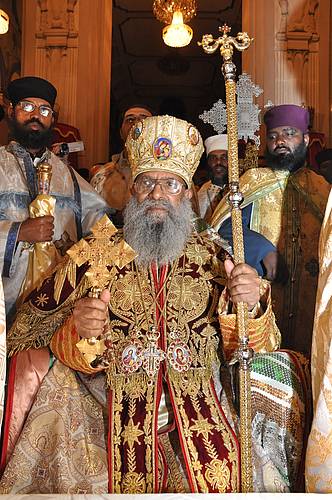
Therefore, at the beginning of the 19th century, very few people in Africa were practising Christians, apart from Ethiopians, Coptic Egyptians, and people living in the remnants of the Kongo Empire (modern Congo Brazzaville and western DRCongo).
But during the colonial era, Christianity flourished in Africa. Catholic missionary expeditions were launched with new vigour, and protestant missionaries took up work up and down the continent, often in competition and conflict with each other.
According to the BBC, “among the least admirable missionaries in history is reckoned to be the Rev Helm of the Christian Missionary Society (CMS) who deliberately mistranslated a document drawn up between King Lobengula of the Ndebele and the British South Africa Company of Cecil Rhodes. This resulted in King Lobengula giving away all his land to speculators, thinking he had only signed away a limited mining concession. He was one of the rulers of southern Africa who had consistently refused to convert to Christianity.
“Another runner-up for the title of villainous missionary is the Catholic priest, Friar Anthonio Barroso, who persuaded the illiterate Dom Pedro V, King of the Congo, to sign a note in 1884. He believed it was a thank you letter for a gold-backed chair; in fact it was an oath of loyalty and submission to the King of Portugal.”
The BBC says “Portuguese missionaries in Angola and Mozambique in the late 19th and 20th centuries were renowned and feared for their willingness to work hand in glove with the Portuguese colonial authorities.
“As a result of this alliance between church and state, Protestant missions proved very popular and many of Angola and Mozambique’s leading nationalists were educated in Protestant missionary schools … The success of Christian missionary programmes can be linked to the education they offered. Many people in Africa wanted education; and missionaries taught people to read, in order that they might understand the word of God.”
Africa today
Today, the growth of Christianity in Africa has been phenomenal. In 1900, the continent had only 9 million Christians, but 100 years later (by the year 2000), there were an estimated 380 million Christians in Africa.
“As of 2020, Christians formed 49% of the continent’s population, with Muslims forming 42%,” reports Wikipedia. “In a relatively short time, Africa has risen from having a majority of followers of indigenous, traditional religions, to being predominantly a continent of Christians and Muslims.
“Since 2013, traditional African religion is declared as the majority religion only in Benin. However, within most self-declared Christian communities in Africa today, there is a significant and sustained syncretism with African traditional religious beliefs and practices and African Christianity.”
Statistics shows that much of the recent Christian growth in Africa is due to indigenous African missionary work and high birth rates, rather than European missionaries.
A 2018 study by the Gordon–Conwell Theological Seminary discovered that more Christians live in Africa today than any other continent, with 631 million Christians throughout the continent. Latin America came second with 601 million Christians, while Europe had 571 million Christians.
Updated data for 2021 shows that Africa has nearly 685 million Christians, with 760 million expected by 2025. Megachurches (defined as churches with weekend attendances of at least 2,000 people) are said to be responsible for Africa’s astonishing growth.
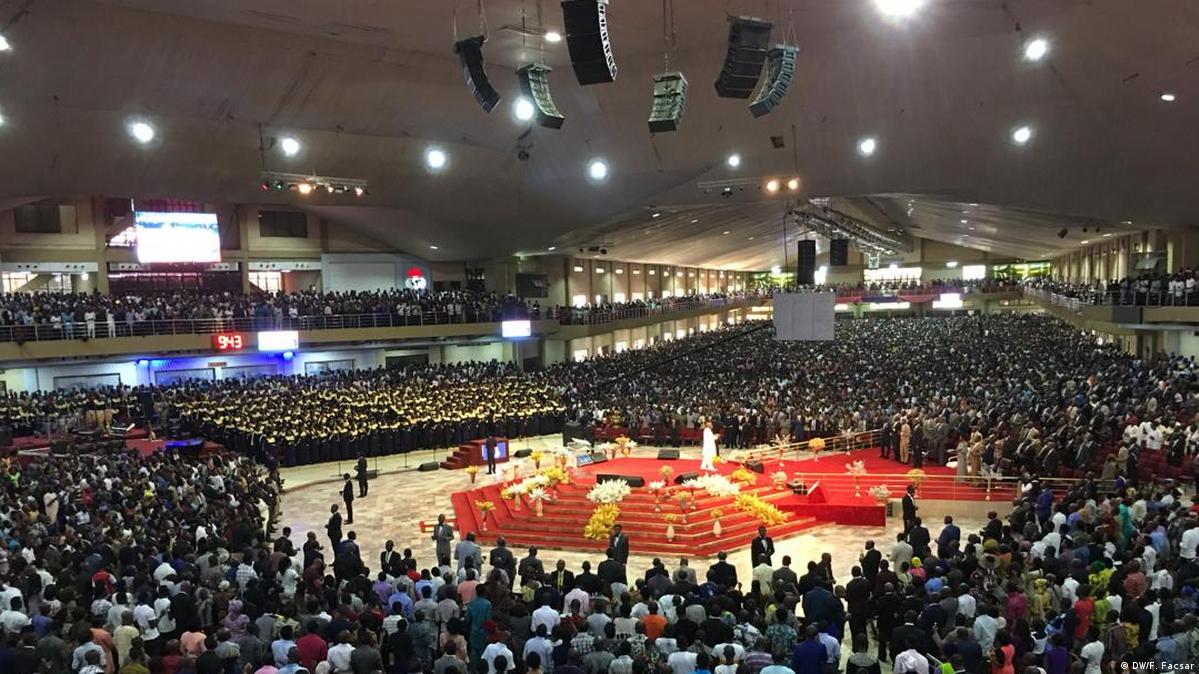
Found in many countries of Sub-Saharan Africa, including Nigeria, Ghana, South Africa, Kenya, Zimbabwe, Tanzania, and Uganda, the churches fueling Africa’s growth are mostly one-man-owned Pentecostal or charismatic denominations. In 2018, the largest church auditorium in Africa, the 100,000-seater Glory Dome, owned by the Dunamis International Gospel Centre, pastored by Dr Paul Enenche and his wife Becky, opened to joyous congregations in Abuja, Nigeria.
By sheer numbers, Nigeria (being home to the largest human population in Africa), has the largest number of Christians on the continent – put between 80 million and 87 million strong. But in percentage terms of the national population, Nigeria has only 49% of its people being Christians. Another 49% is Muslim.
According to 2023 figures, the African country with the highest percentage of its population being Christians is Zambia (95.5%), followed by Seychelles (94.7%), Rwanda (93.6%), DRCongo (92%), Congo Brazzaville (90.7%), Namibia (90%),
Lesotho (90%), and Cape Verde (89.1%).

The rest of Africa’s Top 15 are Equatorial Guinea 88.7%, Uganda 88.6%, Gabon 88%, Zimbabwe 87%, Liberia 85.5%, and Malawi 80%.
While these countries present the highest percentages, Christianity is also dominant in many other African countries, including South Africa 79.9% of the population, Kenya 78%, Burundi 75%, Gabon 73%, Botswana 71.6%, and Ghana 71.2%. A study by the Pew Research Center estimates that by 2060, six of the Top 10 countries in the world with the largest Christian populations will be in Africa, up from three in 2015.
Declining numbers elsewhere
Interestingly, while Christianity is growing phenomenally in Africa, Europe (said to have Christianised Africa) is recording some of its lowest figures. A Pew Research Center study in 2015 estimated that Europe’s Christian population will drop a good 100 million by 2050, falling from 553 million in 2010 to 454 million in 2050.
The decline is at its highest in Britain where a recent survey reported “an unrelenting drop in Church of England and Church of Scotland” numbers. Today, only 14% of Britons identify as members of the Church of England, while just 18% identify with the Church of Scotland, a drop of 13% from 2002 when the figure stood at 31%,
A similar pattern is seen in the USA where there is also a downward trend in weekly church attendance and affiliation of Christians. A study by Gallup Poll showed the decline in Christianity corresponded to the rise in Americans who claim no religious affiliation at all.
According to the Scholarly Community Encyclopedia (SCE) based in Basel, Switzerland, “Americans who identify as atheists or agnostics, and those who say their religion is ‘nothing in particular’ now account for a combined 23% of the adult population (up from 16% in 2007).
“This trend has occurred across many demographic groups (men, women, older, younger, different levels of education, different races and ethnicities). In addition, more Americans now say they are spiritual rather than religious.”
While about 27% of Americans think of themselves as spiritual, the number of adult Americans who view themselves as religious (54%) has gone down by 11% since 2012. According to the SCE, “this statistic mirrors the belief that a growing number of Americans say it is not necessary to believe in God to be moral and have good values – 56%, up from 49% in 2011.
“A lot of people don’t want to be part of an organised religious community which they see as formal, traditional, dictatorial, boring, and predictable,” according to the Rev Elizabeth Lerner Maclay, a lifelong Unitarian Universalist.
“Conversely, adherents of various folk religions – including African traditional religions, Chinese folk religions, Native American religions, and Australian aboriginal religions – are projected to increase by 11%, from 405 million to nearly 450 million worldwide.”
The Scholarly Community Encyclopedia quotes Lucia Birnbaum (a Sicilian-American feminist cultural historian and professor emerita) as having credited Africa with saving face for the world when it comes to religion.
“Africa has given the world values that existed before and they currently have crucial relevance for a world that faces spiritual and actual extinction,” Birnbaum is quoted to have said. “Africans have kept their connection with the earth, maintaining matriarchal families and an oral tradition transmitted by mothers to their children.”
A remarkable aspect of this is what has been described as “reverse missionaries” of Africans going to Europe, especially to England, to preach the gospel to the people who are credited to have first brought Christianity to Africa.
The trouble with African Christianity
Judging by the sheer numbers of adherents, African Christianity is enjoying its best years ever, but the same cannot be said of the quality of Christianity on the continent. It is more lip-service than living the word of God. In fact, there are more “churchgoers” in Africa than committed Christians who have dedicated themselves to living the word of God. Otherwise, the high level of crime, fraud, corruption, sexual immorality, and the general moral decay on the continent would not happen.
The orthodox churches – Catholic, Anglican, Methodist, Presbyterian and the other old churches that had sway before the 1990s – have lost space, credibility, and membership to the Pentecostal churches.
Unfortunately, most of the Pentecostal and charismatic churches have become one-man businesses (or family businesses) that pass on leadership and inheritance from father to son or mother to daughter.
As a result, the congregations have become mere pawns whose money is preyed upon by the so-called “men of God” and “women of God” who take advantage of the naivete and coyness of the membership to fleece them. Thus, the “men of God” have become fabulously rich while the congregations have become poorer.
This is where elite society in Africa should be interested in the retracing of African feet to God Almighty, because in every society when good people stay away, bad people rule. In African Christianity today, most of the so-called “men and women of God” are pure charlatans using other means, including juju, false worship, and other forms of idolatry to hoodwink the masses. And they are succeeding at it! Greatly succeeding at it in fact!
This is making the work of the genuine “men of God” (yes, there are some genuine men and women of God) very difficult to do and earn respect from elite society. The situation has become so bad that in the eyes of elite society, the title “pastor”, “prophet” “apostle” and the other fanciful ones making the rounds these days have almost become an insult.
However, it is not only in Africa that these things are happening. All over the world, particularly in the USA and Europe, so-called “men of God”, respected by society incidentally, have been exposed in recent years to have used false worship to deceive their congregations to enrich themselves.
In a way, the presence of modern-day false worship and false prophets are not surprising as Jesus, the Lord himself, prophesied that such a time would come when false worship and false prophets would be so dominant that people would find it difficult to tell between the genuine and the false (Matt 13:24-30).
But Jesus assured the world that we will know the false prophets by “their fruits”, by what they do (Matt 7:15-27). Apostle Paul expanded on Jesus’ warning at 2 Thessalonians 2:1-11 about “The Man of Lawlessness” who “will use all sorts of displays of power through signs and wonders” to deceive people.
Apostle John picked up the theme, warning at 1 John 4:1-3: “Dear friends, do not believe every spirit, but test the spirits to see whether they are from God, because many false prophets have gone out into the world…”
Apostle John was echoed by Apostle Peter who warned at 2 Peter 2:1-3: “But there were also false prophets among the people, just as there will be false teachers among you. They will secretly introduce destructive heresies, even denying the sovereign Lord who bought them – bringing swift destruction on themselves. Many will follow their depraved conduct and will bring the way of truth into disrepute…”
Unfortunately, most so-called Christians these days do not spend time to read their Bible and know what the word of God really says, so they are easily taken in by the charlatans. Sadly, in the end, they will share the same fate as the “men of God” who deceive them.
Leave a Reply