
… The ‘Nile Miracle’ says no
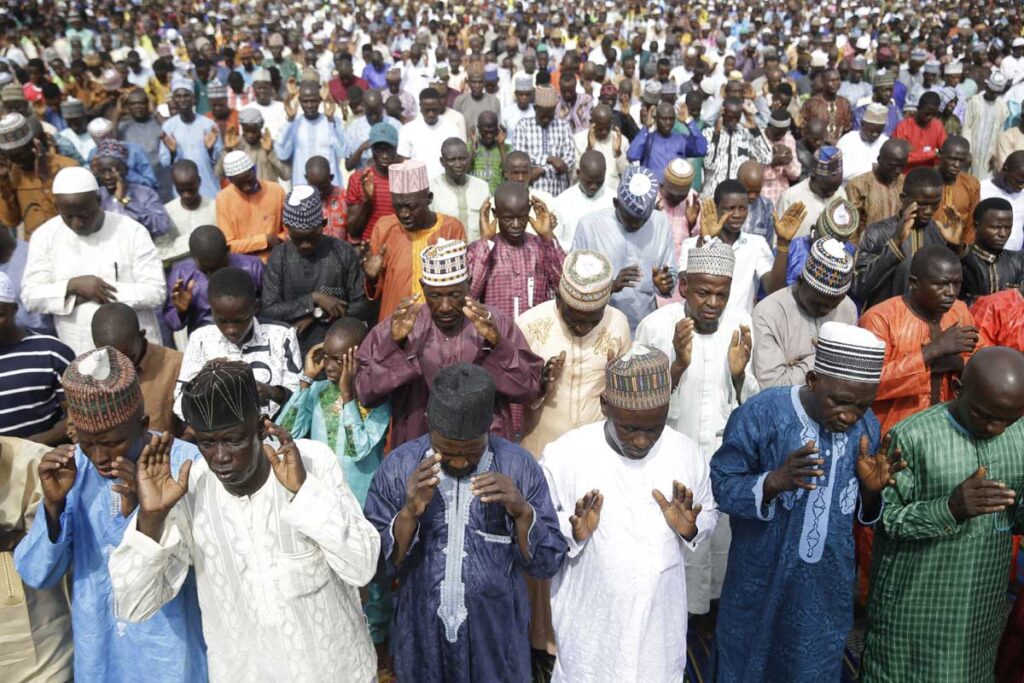
Statistics from 2021 shows that there are now nearly 685 million Christians in Africa, with 760 million expected by 2025. The statistics confirms that Christianity and Islam are now the most practised religions in Africa. A 2018 study by the Gordon-Conwell Theological Seminary (based in Hamilton, Massachusetts, USA) discovered that more Christians live in Africa than any other continent. By 2020, Christians formed 49% of Africa’s population, with Muslims forming 42%. “In a relatively short time, Africa has risen from having a majority of followers of indigenous, traditional religions, to being predominantly a continent of Christians and Muslims,” says one authority. In 1900, figures showed only 9 million Christians were in Africa, but 100 years later (by the year 2000), there were an estimated 380 million Christians.
Today, some African countries, including Zimbabwe, have huge percentages of their populations professing to be Christians. The top 10 are: Zambia 95.5%, Seychelles 94.7%, Rwanda 93.6%, DRCongo 92%, Congo Brazzaville 90.7%, Namibia 90%, Lesotho 90%, Cape Verde 89.1%, Equatorial Guinea 88.7%, Uganda 88.6%, Gabon 88%, Zimbabwe 87%, and Liberia 85.5%. Nigeria has the largest Christian population in Africa (over 80 million believers) but in percentage terms, it is only 49% because Muslims form another 49.6% of the population.
On the other side of the African coin, Islam has become the major religion in many African countries, especially in the north of the continent. Statistics this year shows that in Mauritania, Tunisia, Somalia, Western Sahara, Algeria, and Morocco, at least 99% of the population is Muslim. These are the highest percentages in Africa, but in many other countries on the continent, the majority of the population is Muslim. For example, in Egypt, Islam is the religion of 92% of the people.
This proves that the belief in, and the professed worship of, a Supreme God consumes the lives of the majority of Africans. Kings, presidents, prime ministers, members of elite society and academia, ordinary people, men, women and children are all into it. But despite the huge numbers of professing Christians and Muslims, there is also a high percentage of Africans – intellectuals, pan-Africanists, non-worshippers, outright atheists, and “fashionable” people – who claim that the God Almighty that the Christians and Muslims claim to worship is “foreign to Africans” because Christianity and Islam came to Africa via foreigners. As such, a good, rational African should have nothing to do with God Almighty. In fact, they say it is a mark of empty-headedness for any African to believe in God Almighty or worship him. African ancestral worship is good enough. It is a very controversial claim.
So, this month our editor, Baffour Ankomah, a Christian himself, has delved into the archives and practices going back to Ancient Egypt, the patrimony of most modern black Africans, to prove that Africans were the first to invent “organised religion” in Ancient Egypt. As a result, God Almighty cannot be foreign to them because by deliberate thought and action, God Almighty first chose our ancestors in Ancient Egypt as co-workers to help him implement his plan of salvation for the world and, in pursuit of this, he borrowed the womb of the Africans in Egypt to give birth to the Israelite nation. Egypt therefore is the mother, and Israel her daughter. How then is the father, who is God Almighty, foreign to the mother? More crucially, how does one explain the phenomenon of the longest river in the world, the Nile, flowing north for the whole of its 6,400 km course against the law of gravity, to water Egypt and give it prosperity? Please sit back and be surprised.
In our last issue, we dealt sufficiently with the identity of most modern black Africans. That they are not Bantus as they have been made to believe. Bantu is a too limiting race classification that robs the African of confidence and the ability to walk chest high on account of his true history – the history of his glorious ancestors who built the highest and wealthiest empire at the time in Ancient Egypt, the then leading empire of the world that lasted thousands of years longer than any comparable empire at the time.
That, instead of Bantus, we are, for the want of a better terminology, Ancient Egyptians, or descendants of what the Greek invaders called Egyptians. The ancestors did not call themselves Egyptians. They called their nation Kemet and themselves Kemmui. Their kings were called “Per aa” (meaning Great House, in reference to the great buildings in which they lived). “Per aa” was later corrupted by the invading foreigners into “pharaoh”.
For the sake of readers who missed our last issue, let me go over some of the fundamentals of Ancient Egypt here, so that they can better understand what we have to discuss in the current issue.
In ancient times, Egypt was called by indigenous names – Ta Meri (beloved land), Tawi (two lands), Msiri or Luti, and more often Kemet (the black land). Egypt (or for the purposes of this article, Ancient Egypt) was an African civilisation and though our ancestors had contact with people from other civilisations, Ancient Egypt was essentially African in culture and geographical location.
As the Fitzwilliam Museum, the art and antiquities museum of the University of Cambridge, UK, puts it: “There are many links between ancient Egyptian and modern African culture, ranging from objects such as headrests to hairstyles. Some of the earliest travellers to Egypt came from the ancient cultures of Greece and Rome, including Greek philosophers, mathematicians, scientists, writers and poets who came to study at the feet of Egyptian priests. To the Greeks and Romans, Egypt was an African country, and their artists depicted the Egyptians as Africans, with black skin and tightly curled hair, described by the Greek historian Herodotos in the 5th century BC as ‘woolly’.”
The Ancient Egyptians (who are the direct ancestors of most modern black Africans) are not the same groups of people who live in Egypt today, though a high percentage of the descendants of the Ancient Egyptians (whom I call “native Egyptians”) still live in the country. The current population of Egypt is mostly an admixture of European, Arabic, and Asian peoples.
Throughout Ancient Egyptian history, the African ancestors traded and fought with people from other countries. Thus “the native population was affected by the immigration of soldiers, traders, and settlers from outside cultures, which included two Persian invasions in 525 BC and 343 BC; Macedonian Greeks who captured and ruled Kemet from 332-30 BC; Romans, who took control of Kemet in 30 BC; and the Islamic settlement in 641 AD.
“The Persians ruled Kemet from their own country. The Greek rulers, in contrast, lived in Kemet and adopted Egyptian culture and traditions; however, the language for administration was changed to Greek. The Romans, although absent rulers, had large numbers of their army in Kemet and were keen to promote Egyptian culture, albeit their own version of it.”
According to the Fitzwilliam Museum, “the last hieroglyphic inscription dates to 394 AD, after this time Christianity, which had been present in Egypt from the first century AD, gradually became the dominant religion. After the Islamic conquest of Egypt in 641 AD, the language was changed to Arabic and the religion to Islam.”
Origins of Egypt
The name “Egypt” was originally the second name of the national capital, Memphis – a city named after the black Pharaoh Narmer (also known as Menes or Aha Mena) who built it.
Records show that it was the Greeks who, after their invasion of Kemet in 332 BC, inadvertently contributed to the use of the name “Egypt” for the entire country. Chancellor Williams, the African-American historian, explains that the Greek contribution to the name change “was accidental, one of those accidents of history that turns out to be highly important. In this case, the Greeks unwittingly applied the second name of the city of Memphis, ‘Aigyptos’, to the whole country. For Memphis was also called Hikuptah, or the ‘Mansion of the Soul of Ptah’, the god-protector of the city.
“From the Greek ‘Aigyptos’, Memphis became Egypt, and Egypt became the name of the ‘Two Lands’, extending from the Mediterranean to the [Nile’s] First Cataract in the south,” Chancellor Williams adds.
But there was no “Egypt” before Pharaoh Narmer ascended the throne and built what became a famous capital city in the same place where modern Cairo now stands.
Equally, the name of Egypt’s great river, Nile, is also Greek. The black indigenous people of Kemet did not call it the Nile. They called it “Hapi” or “Ar”. The Greeks changed the name to Nile after they invaded and occupied Kemet in 332 BC.
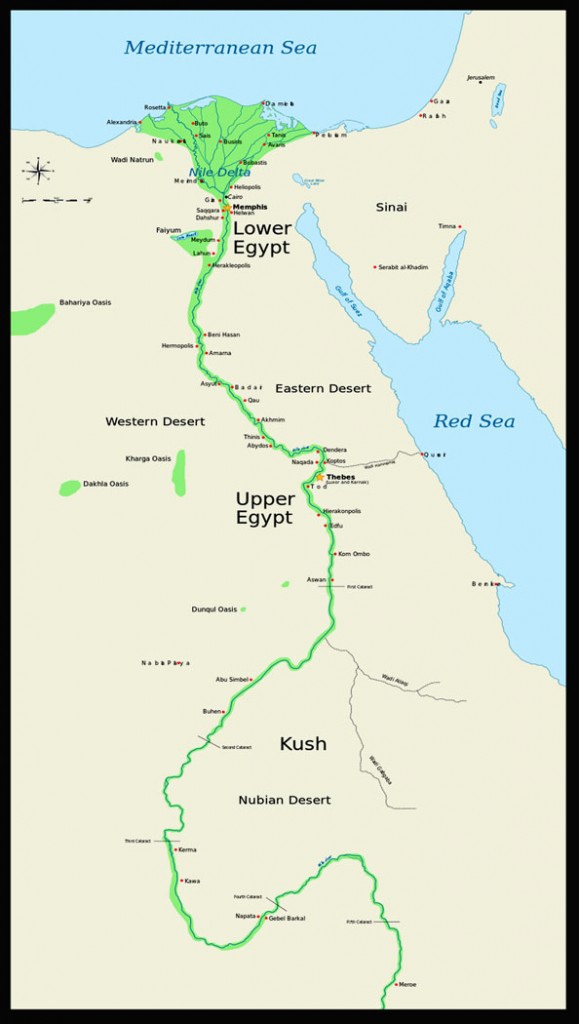
At certain points in time, the empire of Kemet spread all the way to the Euphrates River in modern Iraq, then called Assyria and later Babylon. To the south of Kemet was Kush, another great black civilisation that occupied what is modern-day Sudan and parts of Ethiopia. In later centuries, Kush came to be known as Nubia.
Ayi Kwei Armah, the Ghanaian writer and Egyptologist, adds that “the Ancient Egyptians called themselves black, and considered their culture and literature black”.
Those black ancestors were the pyramid builders who hosted the 70 Hebrews who came from Canaan with Jacob (in the Bible) and after 430 years, Jacob’s people became the estimated 3 million-strong Israelite nation which left Egypt in the “Exodus” recorded by the Bible to make their new homes in Canaan.
Ta-Seti, the mother
Before the rise of Ancient Eygpt, there had been another great black civilisation called Ta-Seti. Located south of Egypt and the northern reaches of modern Sudan, Ta-Seti had no equal at the time.
In his excellent book, Classical Splendour: Roots of Black History (1999), the Black-British historian Robin Walker confirms that: “Ancient Egypt is the first major civilisation in Africa for which records are abundant. It was not, however, Africa’s first civilisation. That honour goes to the ancient Nubian kingdom of Ta-Seti, which encompassed the territory of northern Sudan and the southern portion of Egypt. This region is also called ‘Ethiopia’ in some of the literature, and ‘Kush/Cush’ in others.”
Therefore, Nubian civilisation pre-dates Egypt. “The earliest artefacts that were found in this region date to around 300,000 years ago, possibly earlier,” says the Fitzwilliam Museum. “Kemet and Nubia were closely linked from around 6,000 years ago. Early pottery indicates that the Nubians were capable of making very thin, high quality bowls and jars from 7,000 years ago; these skills were taken to Egypt as people moved northwards.”
The Fitzwilliam Museum explains that: “Nubia was originally called Ta-Seti, the Land of the Bow. The Nubians were skilled warriors, famous also for their wrestling. The word Nubian comes from the Ancient Egyptian word ‘nbt’, meaning gold. The Nubians controlled the gold mines and were often shown in tomb paintings bringing gold as an offering.
“Geographically, Nubia is defined as the land between Dongola in northern Sudan and Aswan in southern Egypt. Nubians are divided into three main groups: the Danaqla and Mahas in Sudan and the Sikurta around Aswan in Egypt.
“From around 750 BC, Nubian rulers (often called “The Kushites”) controlled Kemet and became its 25th Dynasty. During this time Kemet enjoyed a renaissance, or return to earlier culture, as indicated by the promotion of the cult of the god Amun and also copies of earlier statues that were made by officials and the rulers.”
The Fitzwilliam Museum closes the debate on the identity of the Ancient Egyptians by saying: “If we look at the skin colour and also facial features on representations of Egyptians, many are what we would consider today to be black African. Skin colours on temple and wall reliefs show ranges between dark brown and black, which is typical of what we see today with regard to people of black African descent or origin.
“Furthermore, Nubians, a group who are accepted universally as black Africans are (like their neighbours from Kemet), shown on reliefs with both jet black and red-brown skin and can be distinguished as Nubians by their short wigs.
“The first rulers in Kemet lived around 3000 BC, which is 5,000 years ago. If we compare Kemet to Greece and Rome we can see that Kemet is much older and developed ideas such as monumental buildings, religious beliefs, and writing much earlier than European cultures … [Moreover] the traditional religion of Kemet was replaced firstly by Christianity and later by Islam. Many of the old temples housed churches, monasteries and mosques.”
Readers who missed our last issue (the March 2023 edition), should please get some back copies. They will better understand what we have to discuss in the current issue, because it is a natural progression of the subjects we dealt with in the March issue. And what great subject we have on our hands in this issue – “Is God Almighty foreign to Africans?” What does African spirituality say about the matter?
African intellectuals and atheists
For decades and decades, many African intellectuals, pan-Africanists, non-worshippers, outright atheists, and those who consider themselves as “conscious” have claimed that God Almighty is “foreign” to Africans because Christianity and Islam came to Africa via foreigners, especially Europeans (in the case of Christianity), who misused Christianity to push the political agendas of their home countries.
“They came with the Bible in one hand and the sword in another, and while they told us to close our eyes and pray, they took our land” has become a major refrain in Africa. This is an undisputed fact, and the distaste it leaves in African mouths has given birth to all sorts of theories, including the one which says God Almighty is foreign to Africans, and that to be a proper and rational African, with all your faculties in sync, you should have nothing to do with God Almighty. But is that what African spirituality says?
There is something called “African spirituality”, which has nothing to do with foreigners who brought Christianity or Islam to Africa. Naturally, the African is a very spiritual being, and if you take spirituality from him, there is nothing left. It is no wonder that today Christianity and Islam have become the most practised religions on the African continent.
History in fact shows that African spirituality goes back to the early foundations of the continent when the first Africans, who later became known as the Khoisan people, walked the land of Africa around 100,000 BC, and started migrating to the rest of the world some 50,000 years later. These early Africans were very spiritual and their worship of a Supreme Being through intermediary gods predated Ta-Seti.
Age-wise, Ta-Seti is a baby in front of the Khoisan whose spirituality rubbed off the other Africans who came after them. It is therefore imperative that African spirituality be put in its proper context, by going back to its roots. Otherwise modern Africans will make the same mistakes that their ancestors did in Ancient Egypt and thereafter.
As we shall see in the article on page ….of this issue (The African Foundations of World Religion), the African was the first in the world to invent (if “invent” is the right word) “organised religion”. The emphasis is on “organised”. All the other major religions of the world – Judaism, Christianity, Islam, Buddhism, Hinduism, etc – came long after and borrowed heavily from African religion.
You can thus say that African religion is the mother and the other religions are her daughters. Interestingly, at the apex of African spirituality is a “Supreme Being” who the Africans believe created the world.
‘Big Bang’ and Evolution demolished
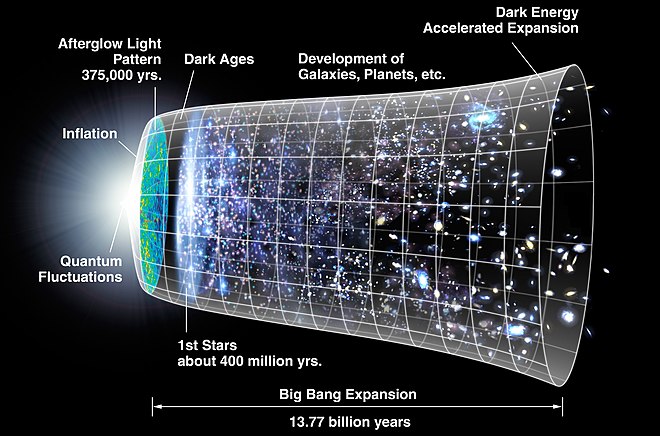
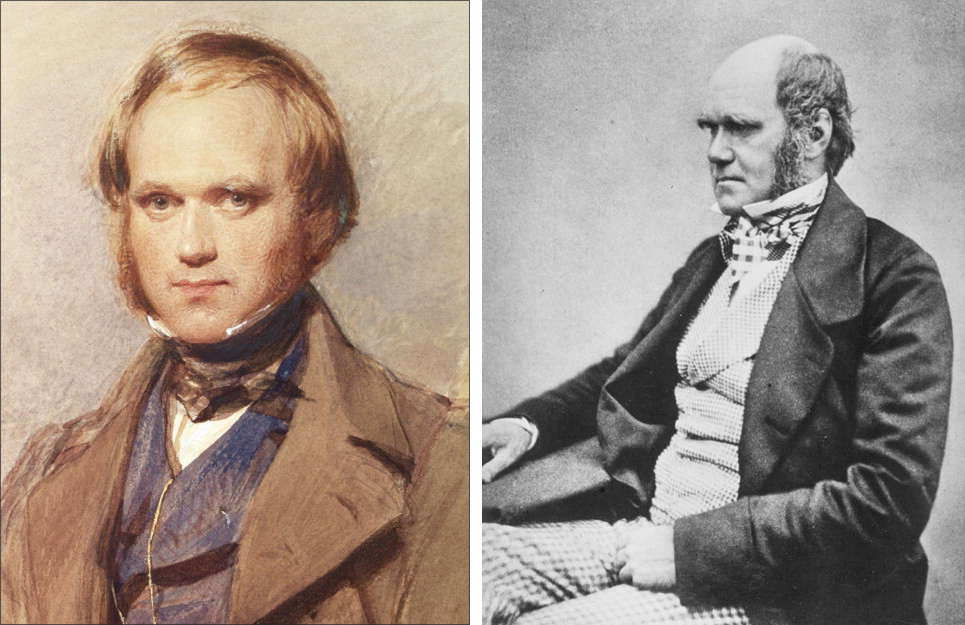
I know that there is the “Big Bang Theory” and Charles Darwin’s “Theory of Evolution” which try to explain the creation of the world and human beings away from God Almighty. But the sheer force of nature and the complexity of the universe around us attest that no “Big Bang” or “Evolution” could do what we see around us in the world.
In fact, n, the UK-based Ghanaian medical doctor (now retired, aged 93) who doubles as a prolific pan-Africanist writer and a fighter of African causes in the medical world, mocks Darwin’s evolution theory by stating: “While adaptation occurs by natural selection, Evolution never did occur, never does, and never will.”
Prof Konotey-Ahulu quotes Dr Carl Wieland, an Australian medical doctor, who demolished Darwin in his 2011 book, One Human Family – The Bible, Science, Race and Culture, in these words: “The idea that we humans began as a one cell organism a very great while ago, and progressed through multiple cell organisms, to invertebrates, then to vertebrates by a process called natural selection; and then, sharing on the way a common ancestor with the chimpanzee, we became separated some 8 million years ago into human stock and through development at different rates, several different races emerged, is pure nonsense.
“This is simply not true, according to Carl Wieland. Charles Darwin and his apostles have got it all wrong, because the universe with all that is in it, including ourselves, cannot be explained without God.”
This view is supported by Prof Sir Fred Hoyle, a Cambridge University lecturer and a fellow of the Royal Society. In his book, The Intelligent Universe, Prof Hoyle asked a most important question: “How has the Darwinian Theory of Evolution by natural selection managed, for upwards of a century, to fasten itself like a superstition on so-called enlightened opinion? Why is the story still defended so vigorously?”
Anybody with eyes to observe nature knows that Darwin is wrong. The complexity of the universe and the creatures therein speak to the great fact that some “Intelligent Being” created this world, not a bang, big or small. And that “Intelligent Being” is none other than God Almighty, the “Supreme Being” of African spirituality.

Our ancestors may not have expressly called him God Almighty, but they recognised their “Supreme Being” as being in control of the universe. And they called him by their own African names. Different names.
The problem arises when African spirituality navigates towards this Supreme Being via mediators who are seen by others as lesser gods in comparison with God Almighty (the Supreme Being), and more especially when God Almighty frowns on (in fact hates) the worship of lesser gods. There lies the big problem for African religion.
The Supreme Being
In Judaism, Christianity, and Islam, the “Supreme Being” is known as “God Almighty”, which is a direct borrowing from African religion. Therefore, the belief in African intellectual and pan-African circles that “God Almighty” is foreign to Africans because Christianity and Islam was brought to Africa by foreigners, is a huge misreading of the African and his spirituality.
As we shall soon see in this article, the African (or his nation in Ancient Egypt) was the first to be “chosen” by God Almighty to help him implement his plan of salvation for the world. In that sense, the “Israelite nation” which is said to be God’s “chosen nation” played second fiddle to Egypt. The ungarnished truth is that our ancestors of Ancient Egypt were “chosen” first by God to help him create the “Israelite nation”.
We can, therefore, say that God borrowed the womb of Egypt (the black nation) to give birth to Israel. It was in the same sense as God borrowed the womb of Mary (in the Bible) to give birth to Jesus.
Therefore, without our ancestors in Egypt, there would have been no Israelite nation, or God Almighty would have had to find another people to give birth to Israel. Egypt, therefore, is the mother of Israel and passed on all its genetics to Israel. The Israelis therefore are half African, and half Hebrew – whether they like it or not! They have African blood or genetics coursing through their veins – for, there is no mother who does not pass on her DNA and genetics to her sons and daughters.
Thus, it was because of the philanthropic act of “mothering” a foreign nation (conceiving and raising Israel in its bowels), that Egypt was blessed by God Almighty with abundant resources, both human and material, to be able to give birth to Israel and raise it to maturity. Never forget that at this time, Egypt was wholly a black nation, run by our black African ancestors.
Records and personal experience show that God Almighty does not give people and nations tasks to do on his behalf without providing them with all the necessary resources to execute the tasks. This is what happened to Ancient Egypt and made it the greatest and wealthiest empire of its time. Sadly, our ancestors took scant notice of where their great wealth, power, and influence came from, and therefore misdirected their affections on lesser gods, instead of worshipping God Almighty.
That notwithstanding, a sober study of Ancient Egypt proves that God Almighty wanted the Egyptians to have all the necessary resources to create a strong and rich nation that would partner him in the implementation of his plan of salvation for the world, which, according to Christianity, has Jesus Christ as the fulcrum.
The Bible is history
I know many people do not believe in the Bible, they think it is a myth, and thus do not want to hear about it. But “the Bible is history, not myth”, according to Prof Konotey-Ahulu, who is supported in his view by the pastor-general of the US-headquartered Worldwide Church of God, Herbert W. Armstrong.
 In his 1954 book, The United States and Britain in Prophecy, Pastor-General Armstrong provides a good definition of the Bible: “It is true, though almost totally unrealised: Mankind was put on this earth for a purpose. And the Maker of mankind sent along with the human product of his making an Instruction Book [the Bible] to reveal that purpose and to guide man in happily, enjoyably fulfilling it. But the human race has rejected the revelation and the guidance and has preferred to stumble on in the darkness of its own futile reasonings.
“About one-third of that Instruction Book [the Bible] is devoted to basic education – revealing to man the necessary foundational knowledge otherwise undiscoverable and unknowable: knowledge of what man is, why he is, where his destiny may lead, how to reach it and live happily along the way; revealing knowledge of the true values as distinguished from the false; knowledge of the way to peace, happiness, abundant wellbeing. In other words, the most necessary of all knowledge – the foundation on which to build discoverable knowledge.
“Another approximate third of that Book is devoted to history – to those events and experiences fulfilling the master plan during the first four millennia on man’s mortal sojourn, as examples of our admonition and guidance today.
“And then approximately a third – grasp this! – an entire third of our Maker’s revelation to mankind [the Bible] is devoted to prophecy – writing the history of future events before they occur. These foretold future events reveal the great purpose being finally worked out – being brought to its completion,” Pastor-General Armstrong added.
If you follow his reasoning and definition of “prophecy”, the Bible becomes composed of two-thirds of history. One-third is pure history, and another third is “prophecy”, which Armstrong defines as “writing the history of future events before they occur”. Which makes history a very critical subject for humankind. Sadly, history is a subject which the African, to his eternal peril, has ignored to study properly.
So, in this piece, I will crave the indulgence of all readers, including those who don’t believe in the Bible, to allow me to use both nature (created by God Almighty) and the Bible to prove that God Almighty is not foreign to Africans. May all readers therefore be patient with me as I shuttle between nature and the Bible as we go along in this piece.
‘Egypt my people’
From the get-go, let me say this: It is mind-blowing that through nature, right in the centre of Africa and moving towards the northeast of the continent, God Almighty left significant imprints and landmarks at the time of Creation that speak to his great love for the black people he chose to work with him in implementing his plan of salvation for the world. Remember that there was no “Israelite nation” to speak of at this time. When God chose Egypt as a co-worker, Israel was non-existent. In this sense, the first “chosen nation” was Egypt, our ancestors.
In the Bible, at Isaiah 19:25, God Almighty calls the Ancient Egyptians “my people”. God’s exact words (as rendered by the New International Version of the Bible) were: “The Lord Almighty will bless them, saying: ‘Blessed be Egypt my people, Assyria my handiwork, and Israel my inheritance.’”
Verse 21 of Isaiah 19 makes it even clearer: “So the Lord will make himself known to the Egyptians, and in that day they will acknowledge the Lord. They will worship with sacrifices and grain offerings; they will make vows to the Lord and keep them.”
Verse 23-24 of Isaiah 19 continue in the same vein: “In that day there will be a highway from Egypt to Assyria. The Assyrians will go to Egypt and the Egyptians to Assyria. The Egyptians and Assyrians will worship together. In that day Israel will be the third, along with Egypt and Assyria, a blessing on the earth.”
This alone is proof enough that God Almighty is not foreign to Africans. He called them his people. Our ancestors who built Ancient Egypt were “God’s people”, according to God himself. He prophesied that, along with the Assyrians and the Israelites, our ancestors of Ancient Egypt would be a “blessing on the earth”.
How then does God Almighty become “foreign” to the Africans if their ancestors were called by God himself as “his people”? But I am going ahead of myself, let me track back and pick the story up from there.
The birth of Egypt
My study of nature, from the centre of the African continent and heading towards the northeast of the continent, convinces me beyond a doubt that at the time of Creation, God Almighty decided that there should be a mighty and wealthy empire in the bone-dry desert of northeast Africa which would give birth to the Israelite nation, from whom would come the messiah Jesus who would be at the centre of the plan of salvation of humankind.
And this “nation” in the bone-dry desert would need water, the source of life, to survive; in addition to all the resources necessary to create a strong and rich empire that could give birth to Israel where Jesus would come from. Hence Egypt rose up as just not the mighty empire but also a refuge and protector of Israel. Any time Israel was in danger (even after the Exodus), Egypt’s doors were open to them.
It was no wonder that the first ancestor of the Hebrews, Abraham, went to Egypt and returned to Canaan fabulously rich. In later centuries, Abraham’s great grandson, Joseph, went to Egypt as a slave and yet miraculously became the prime minister of Egypt whose powers were only surpassed by the Pharaoh’s.

Much later, Joseph’s father, Jacob and 66 of his people, ravaged by famine in Canaan, arrived in Egypt destitute. Adding Joseph and his two children and wife, the 66 became 70, and in 430 years, God Almighty grew their number to an estimated 3 million strong by the time they left in the Exodus described by the Bible.
After the Exodus, the Israelite nation continued to turn to Egypt any time they were in trouble. And our ancestors welcomed them or provided succour and even military support.
Much, much later, Jesus as a baby would be rushed to Egypt by his parents to avoid murder by Herod, the overlord of Israel at the time. So our ancestors in Egypt were very central and critical in the life of Israel as a nation and its people.

Because of this role, Egypt was greatly blessed by God Almighty who provided our ancestors with all the resources, knowledge, power, dignity, influence, wealth, and reach that shot the black nation to the top of the world for thousands and thousands of years. How did God do it, you may ask?
The ‘Nile Miracle’
From here, the story of our ancestors in Ancient Egypt and God Almighty becomes even more interesting. I call it “The Nile Miracle”, which in fact is not one miracle but several miracles grouped under one roof. This is where my observation of nature, from the centre of Africa up towards the northeast of the continent comes into its own.
As I mentioned earlier, some people do not believe in the Bible or even in God Almighty himself, but it does not matter. We live in a democracy after all, and everybody has the right to believe in what he or she chooses to believe in. No problem. Because the facts outside the Bible speak for themselves!
Outside the Bible, this is what I have observed: God Almighty gave our ancestors in Egypt a special place in his affections. They were special to him, they were his people, because he was going to use them for his purpose of saving humankind.
Unfortunately, the land that would become Egypt had the unique phenomenon of a serious water shortage as it had no indigenous rivers that ran all-year round because it was, and still is, located in a hard desert environment.

God Almighty, therefore, had to do something special, a miracle you may call it, to bring water from 6,400 km away, from the centre of Africa, to sustain Egypt. And the river to bring that water happened to be the one our ancestors called Hapi or Ar, and the Greek invaders called the Nile. Thus, without the Nile, Egypt could not, and still cannot, be a nation, let alone survive as an empire, becasue water is life.
In fact, it was not only water that Egypt needed. To survive as a nation, Egypt also needed good topsoil to grow food and other crops. And the desert in which it was located was no help. God, therefore, had to get the topsoil (some people call it “silts”) right from the centre of Africa, 6,400 km away, and drive it by water to fertilise the banks of the Nile and the adjacent lands along the river.
And here you shake your head in awe at God’s handiwork. Though Egypt is in the north of Africa, God used his supernatural powers to cause the Nile to flow north from the middle of Africa all the way over a 6,400 km course to water Egypt and ensure that our ancestors had enough water and topsoil to grow into a mighty empire – an empire that would give birth to the nation of Israel.


Miracle No.1
It is said that order is the first law in Heaven, and as God Almighty is a God of order, he does not normally break the natural laws he has set in motion in the universe. Yet when it came to our ancestors in Ancient Egypt, God broke one of his natural laws and made the Nile flow north for 6,400 km against the law of gravity, which says that rivers should not flow north.
According to the law of gravity, rivers can flow west, east, and (mainly) south. Never north, or rarely north. But because Egypt needed water to become a mighty empire to give birth to Israel, God made the Nile to flow north for all its 6,400 km course, and in the process the Nile became the longest river in the world which has the added grace of flowing all north. A miracle.
The Congo River, another of Africa’s great rivers, tried to copy the Nile by flowing north for part of its course, but at some point in its journey when the law of gravity pinned it down, the Congo veered west into the Atlantic Ocean. One might say the Congo enjoys the same terrain in that part of Africa as the Nile, so it is not surprising that it starts by flowing north before going west.
But after seeing the hoops that God had to go through to make the Nile flow north for all its 6,400 km course, and also bringing topsoil (or silts) from Ethiopia to Egypt for agricultural purposes, no one can be justified to say God Almighty is “foreign” to Africans. Without the topsoil, Egypt could not have grown food and other crops or would have found it extremely difficult to do so because of the desert conditions.
No “foreigner” would go to the length that God went to, to ensure that our ancestors survived in Ancient Egypt and build the greatest empire of the world at the time.
The source of the Nile
I have been to Jinja in Uganda to see the Nile start its 6,400 km journey from Lake Victoria to the Mediterranean Sea. Two mighty rivers, in fact, combine to form the Nile. The one from Lake Victoria, called Omugga Kiyira by the local people (but White Nile by Europeans) is the outlet of Africa’s largest lake, the misnamed Lake Victoria, which was robbed of its African names by the British explorer, John Hanning Speke.
A British officer’s son, commissioned into the army of the East India Company in 1844 at the age of 17, Speke claimed to have discovered the source of the Nile at Jinja on 3 August 1858. He went on to name the lake from whom the river empties after his queen in England, Queen Victoria, who never set her foot in Africa.

Interestingly, no African has since bothered to change the name of the lake back to its original African names. The Africans who lived on its shores before Speke appeared called the lake by different names, among them Nam Lolwe (in the Dholuo language), Nnalubaale (in Luganda), Nyanza (in Kinyarwanda) and Ukerewe. So why are we still sticking with Victoria? Poor Africans! Our glorious ancestors must be turning in their graves! But that is for another day.
The other branch of the Nile which comes from Ethiopia is called the Abay River by the locals (but the Blue Nile by Europeans). It is the outlet of Lake Tana, Ethiopia’s largest lake. The two “Niles” meet in the Sudanese capital, Khartoum, and form the main Nile that flows straight north to Egypt and into the Mediterranean Sea.
Some people in fact say the source of the While Nile is the Kagera River which drains the mountains of Burundi and Rwanda, from where it flows into and out of Lake Victoria and continues its long journey to Egypt. It is said that it takes three months for the waters from Lake Victoria to travel from Jinja to the mouth of the Nile at Alexandria in Egypt where the Rosetta (or Rashid) branch of the Nile empties into the Mediterranean Sea.
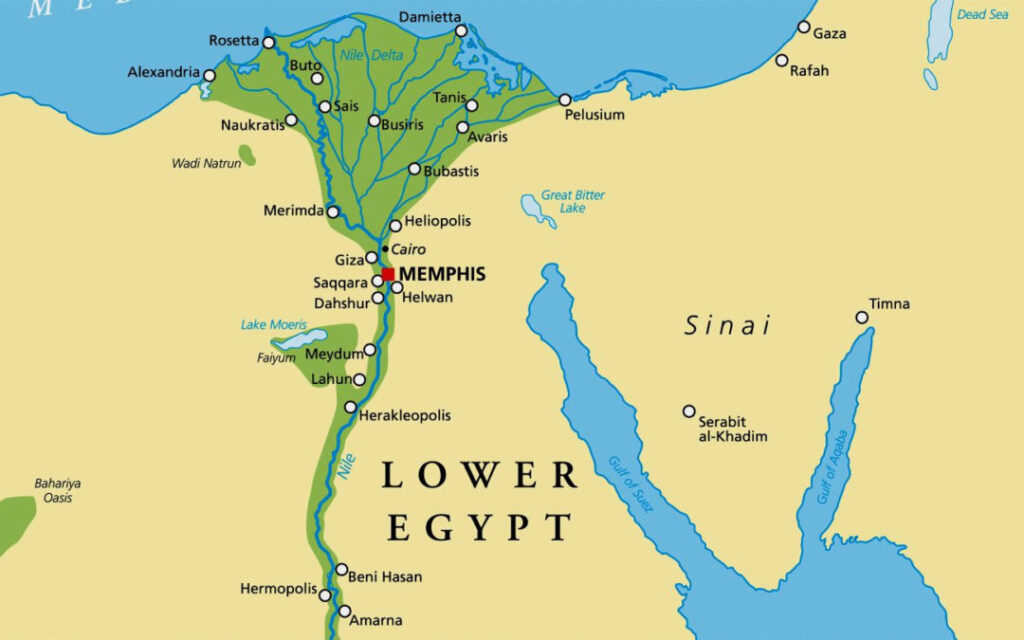
Just after passing through Cairo (the capital of modern Egypt), the Nile breaks into two streams, the left one is the Rosetta branch (Rosetta is the anglicised version of the local name, Rashid), and the right stream (called the Damietta branch) empties into the Mediterranean Sea at Port Said.
The two branches form a delta of 240 km (about 150 miles) in width, between Alexandria and Port Said. It is one of the longest river deltas in the world. From south to north, the delta is 160 km (99.4 miles) long. The most fertile agricultural lands in Egypt are within the Nile delta, where most of modern Egyptians currently live. Equally in ancient times, the best agricultural lands were in the delta where Jacob and his 70 Hebrews were settled – in Goshen.
History shows that today’s two branches of the Nile at the fan-shaped (some say arc-shaped) delta used to be 7 branches in the long past. According to records from ancient times (such as by Ptolemy), the 7 branches of the Nile in the delta (from east to west) were: The Pelusiac, Tanitic, Mendesian, Phatnitic (or Phatmetic), Sebennytic, Bolbitine, and Canopic (also known as Herakleotic and Agathodaemon).
Those 7 branches were linked by inter-connecting tributaries which acted like veins that supplied much needed water to every part of the delta. This is one of the hoops that God Almighty went through to ensure that Egypt had enough water to grow into a mighty empire.
Today, the 7 branches have been reduced to only two (the Rosetta and Damietta) due to flood control, silting, and changing relief. The Rosetta branch used to be called the Bolbitine, and the Damietta the Phatnitic.
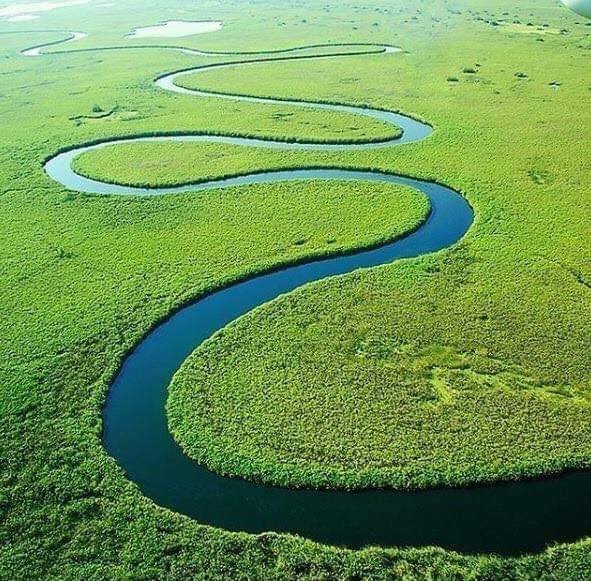
God Almighty designed the delta to be flooded annually, with water and topsoil (or silt) from Ethiopia, but this ended when the modern Egyptians constructed the Aswan Dam near the border with Sudan in 1970. The dam brought God’s handiwork to a halt, as it stopped the silts brought by the Nile from reaching the delta.
The dam also affected modern Nubian culture as its huge lake flooded many ancient sites and modern Nubian communities. Some temples such as the Abu Simbal, Kalabsha and Philae, were moved block by block in order to save them. However, many old Nubian settlements and pyramids were lost. Even then there are still more pyramids in Sudan today than in modern Egypt.
In ancient times, however, Egyptian farmers in the delta and along the Nile depended on the silts or topsoil brought by the Nile for thousands and thousands of years. According to one estimate, “topsoil in the delta can be as much as 21 meters (68.9 feet) in depth”, but generally, according to the Encyclopaedia Britannica, “the depth of the silt deposits ranged from more than 10 metres (32.8 feet) in the northern delta to about 7 metres (22.9 feet) at Aswan.”
It is said that when the Aswan Dam had not been built, the White Nile (from Uganda) supplied important chemical constituents to the silts. The delta system in Egypt also formed lakes and lagoons, such as Lake Manzala in the northeast in which the Suez Canal enters, and lakes Idku, Mariout and Burullus in the northwest. All these water bodies promoted agriculture and therefore life.
Which gave Aristotle, the Greek philosopher, the false belief to claim in his day that the Nile delta was “constructed for agricultural purposes due to the drying of the region of Egypt”. This led one modern writer to say: “Although such an engineering feat would be considered equivalent to a wonder of the ancient world, there is insufficient evidence to determine conclusively whether the delta is man-made or was formed naturally.”
But the Nile delta is not man-made. It was formed naturally – engineered by God Almighty as part of his plan to resource our ancestors in Ancient Egypt so they can give birth to the nation of Israelite.
Usually, when human nature interferes with God’s nature, negative consequences follow. Modern data shows that “the outer edges of the Nile delta are eroding, and some coastal lagoons have seen increasing salinity levels as their connection to the Mediterranean Sea increases.
“Since the delta no longer receives an annual supply of nutrients and sediments from upstream due to the construction of the Aswan Dam, the soils of the floodplains have become poorer, and large amounts of fertilisers [can you believe it?] are now used.” That is what you get when mere mortals try to play God.
Miracle No.2
At the heart of “The Nile Miracle” is how God chose two non-drying lakes – Victoria and Tana – to be the sources of the White and Blue Niles respectively, so that the Nile River will never dry up, no matter the season or weather conditions.

Lake Victoria, the world’s largest tropical lake, is located in the heart of Africa. It receives all the rivers in that part of the continent that do not flow into the sea. In that sense, Lake Victoria is a sea itself. The formation of the lake is a piece of excellent engineering that God Almighty did to make sure that the White Nile will always have water. Another miracle.
Lake Victoria lies 1,134 metres above sea level. Boasting a surface area of 68,800 sq km, an average depth of 40 metres and a maximum depth of 80 metres, the lake has a basin area of 194,200 sq km which extends to Rwanda and Burundi, though its shoreline of 3,460 km is shared by 3 countries: Kenya (6%), Uganda (43%) and Tanzania (51%). It is the second largest freshwater lake in the world, after Lake Superior in North America.
Experts say Lake Victoria receives 80% of its water from direct rainfall, and also “additional water from rivers and thousands of small streams”. A number of important rivers flow into the lake, including the Kagera, Mara, Yala, Nyando, Bukora, Katonga, Sio, Nzoia, Sondu Miriu, Mogusi, and Migori.
The Kagera River (also known as Akagera) is the largest river flowing into the lake on its western shore. It comes from the mountains of Burundi and Rwanda and, as the furthest and most remote headstream, is considered by some people as the source of the Nile. Miraculously, the Nile is the only outflow from Lake Victoria, on the lake’s northern shore, which exits near Jinja in Uganda.
Overcoming the Sudd problem
The other source of the Nile (the Blue Nile) is Lake Tana. Located in the Amhara region of the northwest highlands of Ethiopia, it is the country’s largest lake. It also receives all the rivers in that part of Ethiopia that cannot flow into the sea. Thus, all-year round, there is enough water in both lakes to feed the two Niles. That is Miracle No.3.
But wait for this. As the White Nile flows north from Uganda, it effectively becomes a flowing “sea” that receives all the rivers from Jinja through the east of Uganda, then into South Sudan, then Sudan, and up into Egypt.
Thus, on the surface, the Nile arrives in Egypt as just one river, but in reality it carries the waters of several hundreds of rivers and streams over a 6,400 km stretch of Africa. This is why the Nile is full of water all the time. Another miracle.
The stretch of the White Nile in South Sudan is 1,600 km (or 994 miles) long. There is a point in this journey, just after Mongalla in the Central Equatoria State of South Sudan, where 30 rivers from Ethiopia, DRCongo, Central African Republic, South Sudan itself, and Sudan flow into the Nile and creates a huge swampland called the Sudd (Arabic for “barrier”).
According to UNESCO, “the Sudd wetland, with an estimated area of approximately 57,000 sq km [almost twice the size of Belgium] represents one of the largest freshwater ecosystems in the world. The extent of the Sudd wetland is highly variable; it depends largely on the seasons and years respectively. In the wet season the size of the wetland increases up to 90,000 sq km [more than twice the size of Denmark] and gradually decreases to about 42,000 sq km depending on the high seasonal flood.”
In 2014, while I was in Juba, the South Sudan capital, I was told by the country’s transport minister that fish die of old age in the Sudd because the local people do not have the capacity to harvest the abundance of fish in that massive wetland.
Unfortunately for the Nile, this wetland drastically slows down the flow of the river as it meanders through a 1,040 km (646)-stretch of the swamp, and in the process half of the Nile waters is evaporated by the extremely hot sun of South Sudan or lost through evapotranspiration.
In 1978, after years of discussion, Egypt and Sudan started the construction of a canal east of the Sudd (called the Jonglei Canal) from Malakal in the north to Bor at the southern tip of the Sudd to bypass the swamps. By diverting the Nile through the Jonglei Canal, it was calculated that the evaporation of the waters would vastly decrease, allowing an increase in the cultivable land in Egypt by 2 million acres.
However, in 1984, the Jonglei project was halted by the liberation war started by the Sudan People’s Liberation Movement (SPLM), which brought independence to South Sudan on 9 July 2011. By the time the project was abandoned, 240 km of the 360 km-long canal had already been dug. Therefore, even today, by the time the White Nile struggles out of the Sudd and crosses the border into Sudan, much of its strength had been dissipated.
Another miracle
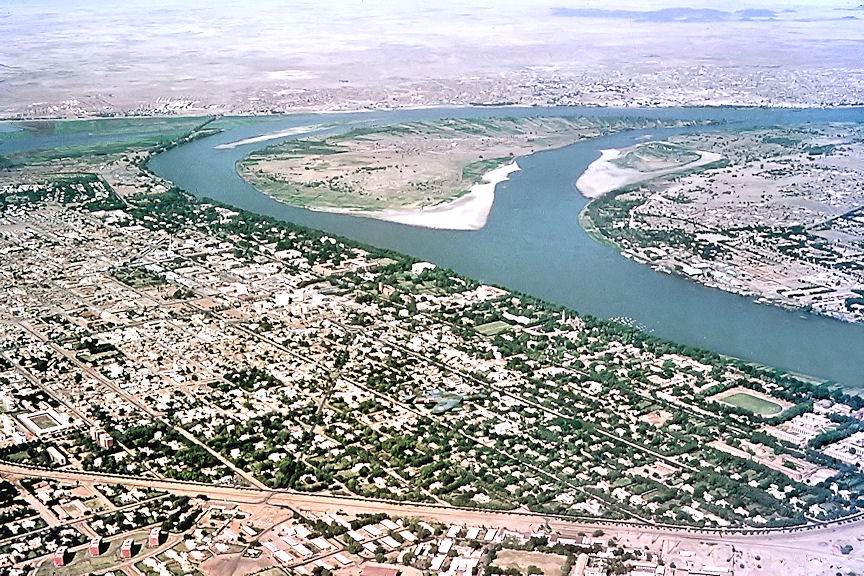
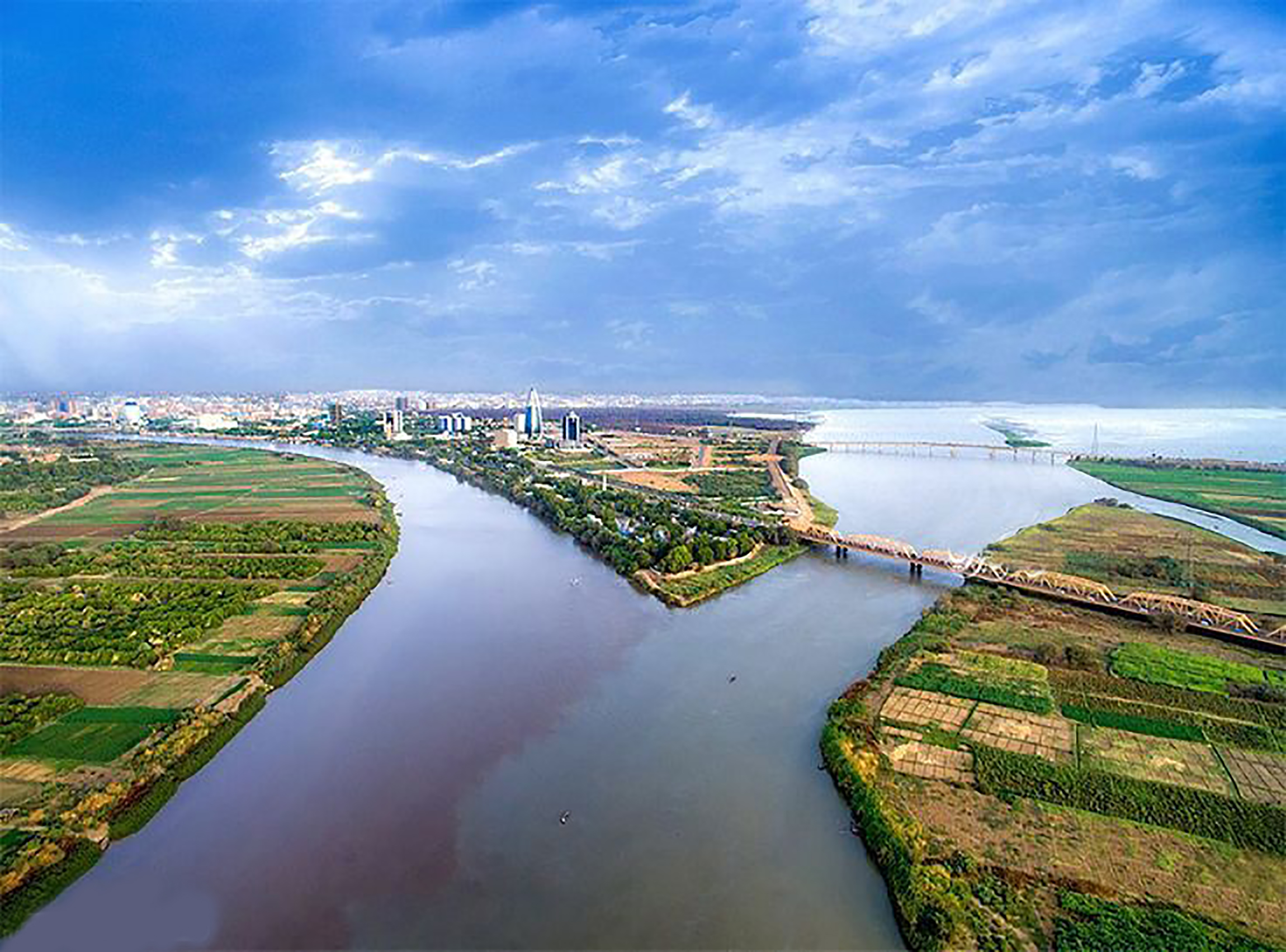
Here, again, another miracle happened. Seeing the strength of the While Nile sapped by the Sudd, God Almighty compensated by bringing the River Abay (or Blue Nile) from Lake Tana in Ethiopia to meet the weakened White Nile in Khartoum and drive it along with massive force. Satellite photos show the Blue Nile, at the confluence in Khartoum, to be the dominant force of the two rivers at that point.
The Blue Nile in fact breaks into two arch-shaped streams just before the confluence – a smaller stream and a larger stream. It is the smaller stream that first encounters the weakened White Nile and drives it along to meet the larger stream some few hundred metres ahead, though in satellite photos, the White Nile appears to push the Blue Nile waters to the right bank for miles and miles before they finally merge.
Experts say 60% of the Nile waters that arrive in Egypt comes from the Blue Nile. I have been fortunate, again, to be at Bahir Dar, the Ethiopian university city on the shores of Lake Tana to see the Blue Nile come out of Lake Tana as its outlet. The miracle here, or 48 km (30 miles) away to be precise, is absolutely mind blowing.
The source of the Blue Nile is not directly in Lake Tana. It is in a nearby spring, called Gish Abay by the locals, which is situated at an elevation of approximately 2,744 metres (9,002 ft). Before Christianity came to Ethiopia in the 4th century AD, the local people worshipped the gods believed to be resident at the springs, and therefore considered the place sacred.
When the Ethiopian Orthodox Church introduced Christianity later, it brought the belief that Gish Abay was the source of the River Gihon (one of the rivers said to have watered the Garden of Eden in the Bible), and therefore, to this day, the Ethiopian Orthodox Church considers Gish Abay a sacred place where devotees go to hold worship services to God Almighty.
The River Abay (or the Blue Nile) therefore takes on a divine nature even before it flows into Lake Tana and out at the southern tip of the 84 km (52 mile)-long lake which lies at an elevation of 1,800 metres (5,905 feet). Ethiopians will tell you that the river’s waters enter the lake and leave it without mixing with the lake’s waters. Another miracle.
The river leaves the lake and heads south and then southeast, via a series of rapids, and if God Almighty had not intervened with another miracle, the river would have gone through Ethiopia and Somalia and emptied into the India Ocean. This is where the Africans who claim God is foreign to us get it so wrong.
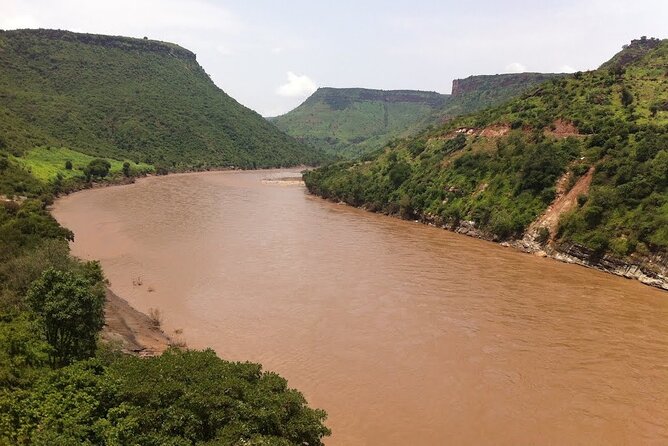
Forty-eight kilometres (30 miles) from the lake, God suddenly opens the mouth of the earth to swallow the river via a waterfall that drops the river down a 1,494 metre (4,900 feet) canyon. God then takes the river on a south-easterly course via the deep gorge and slowly turns the river through a south-western loop around the Choke Mountains, and then west, and finally northwest to Khartoum in Sudan to join the White Nile. An absolute miracle!
This is how one European writer describes it: “The distance of the [Abay] river from its source to its confluence in Khartoum has been variously reported as being between 1,460 km (907 miles) and 1,600 km (994 miles). This uncertainty might result from the fact that the river flows through a series of virtually impenetrable gorges cut in the Ethiopian Highlands [by God] to a depth of some 1,500 metres [actually 1,494 metres, or 4,900 feet] – a depth comparable to that of the Grand Canyon of the Colorado River in the United States.”
For a Zimbabwean comparison, the deepest point of the Victoria Falls gorge (at Mosi-a-Tunya) is 108 metres (354 feet). The River Abay (or Blue Nile) gorge is 1,494 metres (4,900 feet) deep, almost 14 times deeper than the Victoria Falls gorge. And this miraculous gorge takes the river all the way over 800 km (500 miles) inside Ethiopia to a few kilometres short of the Sudanese border.

Effectively, God Almighty arrested the river and refused to let it go on its natural course. By creating the deep gorge and encasing the river in it, God carried the river on a south-easterly course then slowly turned it through a south-westerly loop around the Choke Mountains, and then west, and finally northwest to Khartoum to join the White Nile. If you don’t call this an absolute miracle, nothing will be! What hoops a “foreigner” will go through to bring water to a people he doesn’t know and love!
During this miraculous journey northwest, the Blue Nile is fed by 28 major tributaries before it reaches the Sudanese border. In Sudan, it travels for a further 650 km (403 miles), receives other tributaries such as the Dinder River (and in modern times, goes through two dams – Roseires and Sennar) before joining the White Nile in Khartoum.
According to one Western writer: “The flow of the Blue Nile reaches maximum volume in the rainy season from June to September, when it supplies 80-86% of the water of the Nile proper. The river was a major source of the flooding of the Nile in Egypt that contributed to the fertility of the Nile Valley and the consequent rise of Ancient Egypt and Egyptian mythology.”
Then listen to this: “During the summer monsoon season, the Blue Nile floods erode a vast amount of fertile soil from the Ethiopian Highlands and carry it downstream as silt, turning the water dark brown or almost black.”
This is the topsoil or silt that made Ancient Egypt great and encouraged its farmers to feed the nation and others outside its borders. It was a deliberate act of God Almighty, an engineering feat, to cut the series of gorges through the Ethiopian mountains and pass the river through them, where, from both banks of the gorges, a sustainable supply of topsoil could be got for eternity. Another miracle. Who says God Almighty is “foreign” to the Africans? After doing all that?
Imagine how a river can flow northwest through high mountains! Imagine the calculations that God must have gone through in deciding the gradient in the 1,494 metre (4,900 feet)-deep gorges for the water to continue to flow northwest unimpeded. Just close your eyes and take in the engineering feat that happened in the Ethiopian Highlands – just so our ancestors in Ancient Egypt can have an uninterrupted supply of fresh water! And God Almighty is “foreign” to us?
Flowing north
Some people may attribute the formation of Lake Victoria and the Nile’s ability to flow north to the creation of the Great Rift Valley (also known as the Afro Arabian Rift Valley) – one of the longest rifts on the surface of the Earth, which, according to astronauts, is the most significant physical detail on the planet that is visible from space.
Geologists define the Great Rift Valley as a series of contiguous geographic trenches, approximately 7,000 km (4,300 miles) long and averages 48–64 km (30–40 miles) wide, that run from Lebanon to Israel, then through the Israeli-Jordanian border to Ethiopia, Kenya, Tanzania, Malawi and Mozambique.
A Western branch goes through Burundi, Rwanda, Uganda and parts of DRCongo, and a southern branch through Malawi and ending in Mozambique, though officially it is not called a “southern branch”. The two main branches are called the Western Rift Valley and the Eastern Rift Valley.
Geologists say all the African Great Lakes were formed as the result of the Rift, and most lie in territories within the Rift, which continues southward through the Shire River Valley in Malawi and the Mozambique Plain to the coast of the Indian Ocean near Beira in Mozambique.
According to the New World Encyclopedia, “the northernmost part of the Rift forms the Beqaa Valley in Lebanon. To the south, in Israel, it is known as the Hula Valley separating the Galilee mountains and the Golan Heights.
“Farther south, the valley is the home of the Jordan River, which flows southward through Lake Hula into Lake Tiberias [also known as the Sea of Galilee in the Bible], and then continues south through the Jordan Valley into the Dead Sea on the Israeli-Jordanian border. From the Dead Sea southward, the Rift is occupied by the Wadi Arabah and then the Gulf of Aqaba and the Red Sea.
“The southern end of the Red Sea marks a fork in the Rift. The Afar Triangle or Danakil Depression of Ethiopia and Eritrea is the probable location of a triple junction, which is possibly underlain by a mantle plume (an upwelling of abnormally hot rock within the earth’s mantle that helps the earth to lose heat).
“The Gulf of Aden is an eastward continuation of the Rift. Before the Rift opened, the Arabian Peninsula was attached to the Horn of Africa. From this point, the Rift extends southeastward as part of the mid-oceanic ridge of the Indian Ocean. In a southwest direction the fault continues as the Great Rift Valley, which split the older Ethiopian highlands into two halves.
“In eastern Africa, the valley divides into the Eastern Rift and the Western Rift. The Western Rift, also called the Albertine Rift, is edged by some of the highest mountains in Africa, including the Virunga Mountains, Mitumba Mountains, and Ruwenzori Range, and contains the Rift Valley lakes, which include some of the deepest lakes in the world (up to 1,470 metres deep at Lake Tanganyika). In Kenya, the valley is deepest to the north of Nairobi.”
Some of the Rift Valley lakes are (in Asia): The Dead Sea and Lake Tiberias (or the Sea of Galilee). In Ethiopia, the major lakes are: Abaya, Chamo, Awasa, Zway, Abijatta, and Koka.
The Kenyan section is home to 8 lakes: Turkana, Logipi, Baringo, Bogoria, Nakuru, Elmenteita, Naivasha, and Magadi.
The Tanzanian section has two alkaline lakes: Natron and Eyasi. The Western section includes the largest, deepest, and oldest of the Rift Valley lakes: Tanganyika, Kivu, Albert and Edward. Lake Victoria is often mentioned in the same breath, but it is not actually within the Rift Valley as such.
The lakes in the Southern section are: Malawi, Rukwa, Malombe (on the Shire River), and Chilwa (the southernmost of the Rift Valley lakes).
So, who created the Great Rift Valley and its lakes and complex ecosystem? Geologists, “fashionable” people, and believers of the “Big Bang Theory” will give you many sophisticated explanations, but though they won’t mention God Almighty, they can’t adequately explain how a “Big Bang” allegedly created the universe and things like the Great Rift Valley and its ecosystem. But the biggest question remains unanswered: Who created the Big Bang? Surely it did not create itself.
The most critical aspect of this discussion though is that the two lakes that serve as the sources of the Nile – Victoria and Tana – are not within the Great Rift Valley. So nobody can say that the Rift Valley forced the Nile to flow north. Thank God, the Nile goes on its merry way to Egypt far, far away from the Rift Valley and not influenced in the least by it. Flowing north without pumps or pumping for 6,400 km is a special engineering feat only God could do.
From grace to grass
In short, the above sums up the hoops that God Almighty went through to provide sustainable water and topsoil (or silt) for our ancestors in Ancient Egypt. It is therefore tantamount to an absolute sacrilege for the descendants of the African ancestors to claim today that God Almighty is foreign to them! Is this not the same God who did so much, including breaking his own law of gravity, to ensure that Ancient Egypt, our patrimony, became No.1 in the world, in a bone-dry desert?
One can, therefore, understand the fury of God Almighty when one of our kings in Egypt, the Pharaoh, foolishly and arrogantly claimed thousands and thousands of years after the creation of the Nile system, that he (the king) made the Nile for himself. God was sorely affronted! And he made sure everybody knew about it.
At this point, let me take readers back to the Bible, so you can see that two-thirds of the Bible is history. Knowing the hoops that he had gone through creating the Nile system, God Almighty heard the Pharaoh’s empty boast and roared from his high abode.
The Bible records at Ezekiel 29:2-16 that God asked Ezekiel, the prophet, to tell the Egyptian king the following: “Son of man, set your face against Pharaoh king of Egypt and prophesy against him and against all Egypt. Speak to him and say: ‘This is what the Sovereign LORD says: ‘I am against you, Pharaoh king of Egypt, you great monster lying among your streams.
“You say: ‘The Nile belongs to me; I made it for myself.’ But I will put hooks in your jaws and make the fish of your streams stick to your scales… I will give you as food to the beasts of the earth and the birds of the sky. Then all who live in Egypt will know that I am the LORD … I will bring a sword against you and kill both man and beast. Egypt will become a desolate wasteland. Then they will know that I am the LORD.”
God’s anger continued: “Because you said, ‘The Nile is mine; I made it, therefore I am against you and against your streams, and I will make the land of Egypt a ruin and a desolate waste from Migdol to Aswan, as far as the border of Cush.
“The foot of neither man nor beast will pass through it, no one will live there for 40 years. I will make the land of Egypt desolate among devastated lands, and her cities will lie desolate for 40 years among ruined cities. And I will disperse the Egyptians among the nations and scatter them through the countries.
“Yet this is what the Sovereign LORD says: ‘At the end of 40 years, I will gather the Egyptians from the nations where they were scattered, I will bring them back from captivity and return them to Upper Egypt, the land of their ancestry. There they will be a lowly kingdom. It will be the lowliest of kingdoms and will never again exalt itself above the other nations.’
“I will make it so weak that it will never again rule over the nations. Egypt will no longer be a source of confidence for the people of Israel but will be a reminder of their sin in turning to her for help. Then they will know that I am the Sovereign LORD.”
Any time, in the Bible, when God Almighty uses the term, “then they will know that I am the Sovereign LORD”, the consequences are severe. Egypt, representing our ancestors as a collectivity, has not been a mighty nation again since those pronouncements by Almighty God.
In fact, the numerous invasions of Ancient Egypt started soon after. God sent the Assyrians, Babylonians and Persians to invade Egypt and put it low. History records that when the Israelites were in Egypt, no nation invaded it. The invasions only started after the exodus of the Israelites. God had made Egypt so impregnable that no nation dared to invade it.
But after the empty boast of our king, things began to fall apart, as God had indeed prophesied, and our ancestors were forced to migrate in haste out of the great empire to other lands in Africa. Part of that scramble was what was later described as the “Bantu migration” (which we dealt with in our March issue).
Interpreting the doom
Bible scholars of the New International Version confirm that: “Egypt had great artistic treasures, a flourishing civilisation, and world-renowned military power. Unfortunately, it was also evil, egotistical, idolatrous, and it treated slaves cruelly. For those sins, God condemned Egypt. At the battle of Carchemish in 605 BC, Babylon crushed Egypt along with Assyria, its rivals for the position of world ruler.”
The NIV scholars continue: “The Nile was Egypt’s pride and joy, a life-giving river cutting through the middle of the desert. Rather than thanking God, however, Egypt declared: ‘The Nile is mine, I made it.’”
According to the NIV scholars: “The 40-year period of desolation of Egypt [prophesied by Ezekiel] is hard to pinpoint. King Nebuchadnezzar [of Babylon] attacked Egypt around 572 BC, and carried many people off to Babylon while others fled for safety to surrounding [African lands]. Approximately 33 years later, Cyrus, king of the Persian empire, conquered Babylon and allowed the nations which Babylon had conquered to return to their homelands.
“Adding a possible 7-year regrouping and travel period, this could then make up that 40-year time period. Since that time, Egypt [meaning our ancestors] has never returned to its previous dominance as a world power.”
Can anybody see where the fallen state of the modern black African has its roots? And Egypt’s punishment was not finished. At Ezekiel 29:17-20, the word of God Almighty came to Ezekiel again: “Son of man, Nebuchadnezzar, king of Babylon, drove his army in a hard campaign against Tyre; every head was rubbed bare and every shoulder made raw. Yet he and his army got no reward from the campaign he led against Tyre.
“Therefore, this is what the Sovereign LORD says: ‘I am going to give Egypt to Nebuchadnezzar, king of Babylon, and he will carry off its wealth. He will loot and plunder the land as pay for his army. I have given Egypt as a reward for his efforts because he and his army did it for me, declares the Sovereign LORD.’”
This prophecy, according to the NIV Bible scholars, was given in 571 BC and came to pass as prophesied. “Nebuchadnezzar had finally conquered Tyre after a long and costly 15-year siege (586-571 BC),” the NIV scholars explain. “He had counted on such an expense, so he went south and conquered Egypt to make up for all he had lost in taking Tyre … God was using Nebuchadnezzar, an evil man, as an instrument of his judgement on Tyre, Judah and Egypt … [But] when Babylon [Nebuchadnezzar’s kingdom] didn’t recognise God’s favour [after the Egyptian campaign], he judged it too.”
More doom
God’s anger against Egypt, for the Pharaoh’s empty boast over the creation of the Nile, covers 4 whole chapters in the Book of Ezekiel – chapters 29, 30, 31 and 32. Apart from Israel (which God also severely punished from time to time for its rebellion against God), no nation throughout the Bible has such prominence as Egypt of our black ancestors. God used 4 complete chapters, not verses, in the book of Ezekiel, to prophesy Egypt’s doom. And yet today people of African descent say flippantly that God Almighty is foreign to the Africans!
In Ezekiel 30:13-19, God Almighty said this about Egypt: “I will destroy the idols and put an end to the images in Memphis. No longer will there be a prince in Egypt, and I will spread fear throughout the land. I will lay waste Upper Egypt, set fire to Zoan and inflict punishment on Thebes. I will pour out my wrath on Pelusium, the stronghold of Egypt, and wipe out the hordes of Thebes.
“I will set fire to Egypt; Pelusium will writhe in agony. Thebes will be taken by storm; Memphis will be in constant distress. The young men of Heliopolis and Bubastis will fall by the sword, and the cities themselves will go into captivity. Dark will be the day at Tahpanhes when I break the yoke of Egypt, there her proud strength will come to an end. She will be covered with clouds, and her villages will go into captivity. So I will inflict punishment on Egypt, and they will know that I am the LORD.”
And all this came to pass! Egypt took pride in his strength and beauty, and the worship of lesser gods. And its downfall was great. At Ezekiel 30:21-26, God warned: “Son of man, I have broken the arm of Pharaoh king of Egypt. It has not been bound up to be healed or put in a splint so that it may become strong enough to hold a sword.
“Therefore, this is what the Sovereign LORD says: ‘I am against Pharaoh king of Egypt. I will break both his arms, the good arm as well as the broken one, and make the sword fall from his hand. I will disperse the Egyptians among the nations and scatter them through the countries.
“I will strengthen the arms of the king of Babylon and put my sword in his hand, but I will break the arms of Pharaoh, and he will groan before him like a mortally wounded man. I will strengthen the arms of the king of Babylon, but the arms of Pharaoh will fall limp. Then they will know that I am the LORD, when I put my sword into the hand of the king of Babylon and he brandishes it against Egypt. Then they will know that I am the LORD.”
This prophecy, given to Ezekiel in 587 BC, also came to pass. God destroyed Egypt’s military superiority and give it to Babylon. These were some of the military defeats that lead to the forced migrations of our ancestors from Egypt to the other lands of Africa. These were the defeats that finally, over thousands of years, led to the total collapse of the black African empire in Egypt, leading to the eventual conquest in 641 AD by the ancestors of the current Arab population.
Today, the descendants of those great Africans ancestors who were defeated by the Assyrians, Babylonians, Persians, Greeks, Romans, Byzantines and the other foreigners that God sent against Egypt, are making the same mistake as their ancestors, by claiming that God Almighty is foreign to them, instead of beseeching him for mercy and redemption.
That surely is a highway to more ruin and doom. Clever descendants would retrace their steps to God Almighty, the source of the lost power and greatness of their ancestors, and ask him for mercy. But that is not what elite society and intellectuals in Africa are saying.
The last word
Surely, the last word belongs to Prof Konotey-Ahulu: “Many people, both in Europe and Africa, think Christianity is a European religion. Wrong!”, he wrote in 2011. “Jesus learnt to walk not in Europe or the Middle East, but on African soul in Mizraim (Egypt) where his family fled when Herod wanted to kill him.
“The Ethiopian chancellor of the exchequer read Isaiah chapter 53 fluently before anyone in Britain knew how to read (Acts chapter 8:26-39). The black man went on his way rejoicing when Philip told him why the Lord Jesus came into the world, explaining not only how a hypocrite like me can have my relationship with God restored but also how a wicked transatlantic slave merchant like John Newton could, on repentance, be forgiven through the merits of The Lord Jesus Christ, and be looked upon as if he had never sinned,” Prof Konotey-Ahulu added.
The Philip-Ethiopian chancellor encounter happened in the early beginnings of Christianity, which was then called the “New Way”, after the resurrection of Christ. The Bible records at Acts 8:27 that the Ethiopian “had gone to Jerusalem to worship”. Which means that even at that time, in those early days of Christianity, when no European “missionary” had yet come to Africa, some Africans had already become Christians and were, in fact, going to Jerusalem on pilgrimages to worship.
So let no African forget that the traditional religion of Kemet was replaced firstly by Christianity and later by Islam. At the time, no European knew his way to Africa. European missionaries started coming to Africa way after the first Portuguese explorers stumbled their way along the West African coast in the mid-1500 AD. Kemet was ancient by that time.
Wikipedia and other authorities tell us that “Christianity in Africa first arrived in Egypt in approximately 50 AD (in the first century after the death and resurrection of Jesus), and reached the region around Carthage by the end of the second century. In the 4th century, the Aksumite empire in modern-day Ethiopia and Eritrea became one of the first regions in the world to adopt Christianity as their official religion. The Nubian kingdoms of Nobatia, Makuria and Alodia followed two centuries later.”
So who says Christianity came to Africa via Europeans? The European missionaries were latter-day saints!
All said and done, elite society in Africa, especially those with intellectual bent, should lead the retracing of African feet to God Almighty in order to weed out the charlatans masquerading today as “men and women of God” and yet leading the Africans astray. Most of those so-called men and women of God are not men and women of God at all. Left alone, they will compound the problem and make the true worship of God Almighty difficult to attain.
In all this, Zimbabwe should count itself lucky to have a current President who is not shy to kneel down in public and be prayed for – prayers going to God Almighty. Zimbabwe again is lucky to have a Vice President who is an ardent Catholic, who prays to God Almighty.
Elite society in Africa should be interested in the study of the true history of our ancestors, because truth matters. More importantly, elite society should be interested in the march back to God Almighty. He loved our ancestors and made them great. He will love us too and make us great.
Leave a Reply