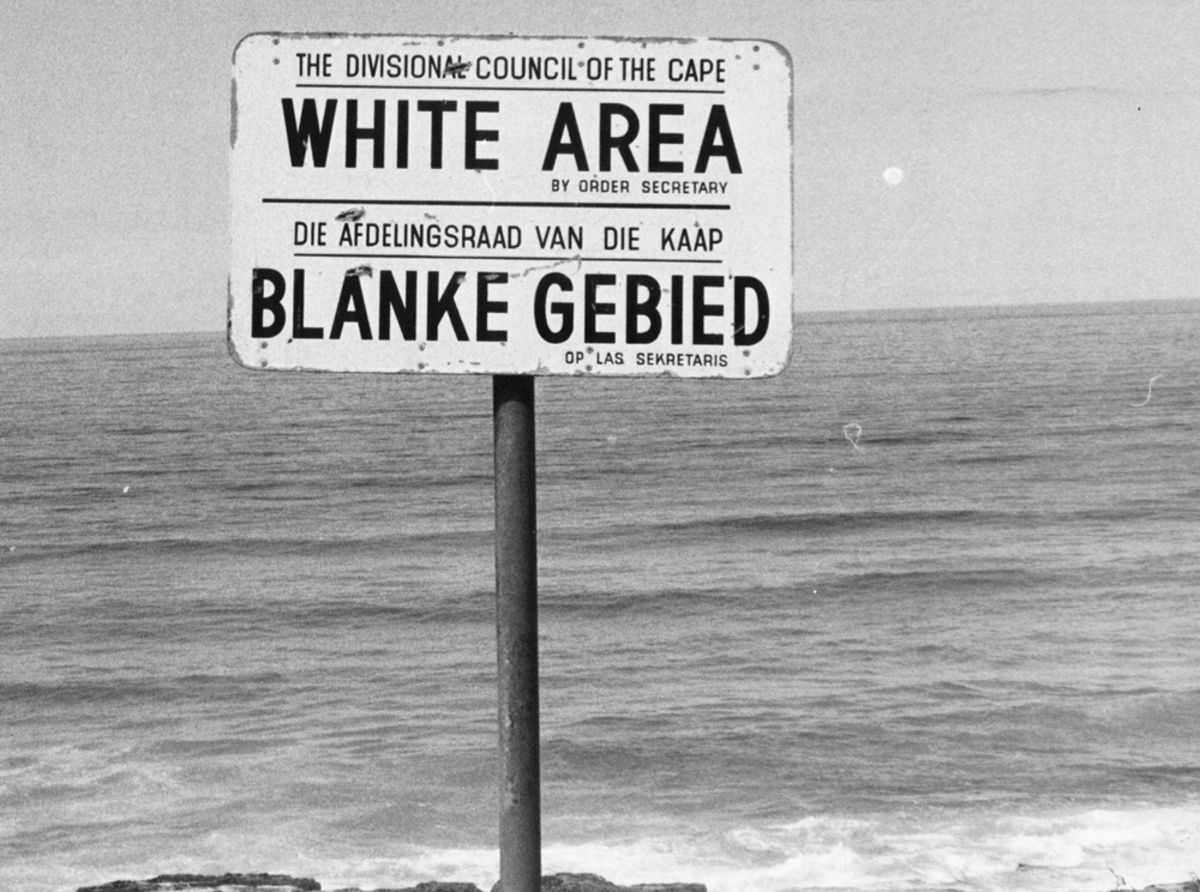
In the so-called established democracies, especially in Europe and the USA, governance has evolved from one person in office wielding power over the nation to a “collective brain” of unseen but powerful people who exercise power from behind the scenes, often in secret societies which become some sort of think tank that helps the government to govern and develop the country at a faster pace. That is exactly what happened in South Africa during the apartheid years. There was the Afrikaner Broederbond, a tightly knit organisation founded in 1918 initially to fight for Afrikaner nationalism but which turned into a secret society in 1921 to help develop the country, and in the process became the collective brain of the horrible apartheid system.
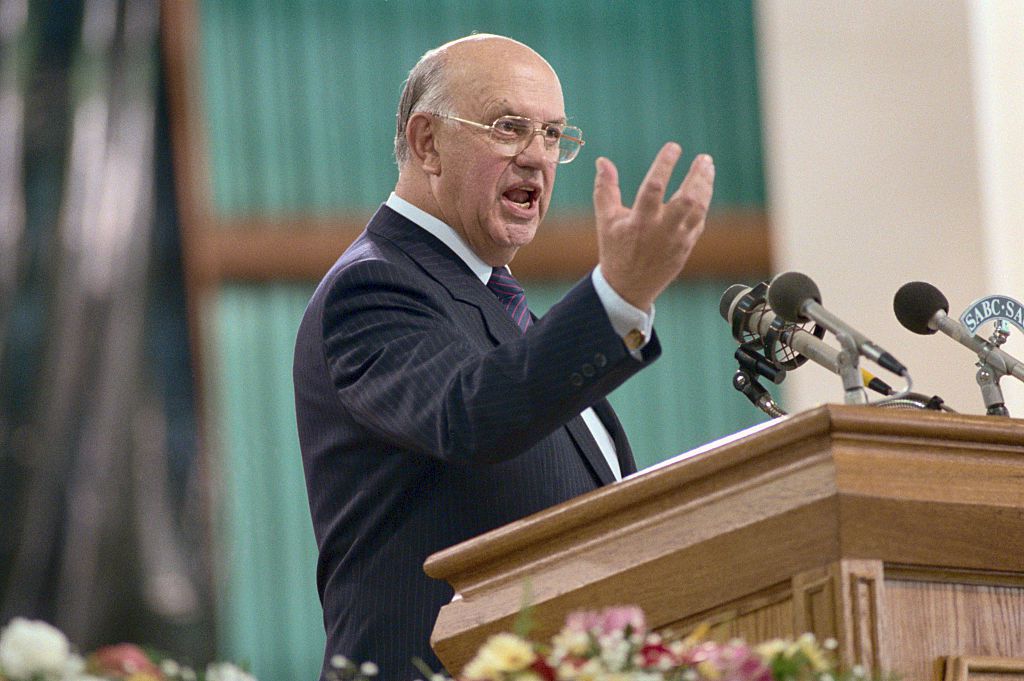
There is no suggestion here that Africa should adopt the bad and horrendous habits of the Afrikaner Broederbond. But the idea that a “collective brain” of powerful people acting behind the scenes can help develop countries as far afield as Britain and America, and others beyond, is something that Africa can look at and adopt the good side of such organisations. The emphasis is on the good side.
Here, we publish the story of the Afrikaner Broederbond, which, though produced the hated apartheid system – a system that deserved the condemnation of all right-thinking human beings – yet had an organisational structure and modus operandum that could teach Africa a thing or two. This piece is culled from the book, “Unfinished Business – South Africa, Apartheid and Truth, authored by Terry Bell and Dumisa Ntsebeza, and published by Verso in September 2003.
The Afrikaner Broederbond (AB) made the nature of the apartheid administration unique. Most of the country’s leading government members, the generals, judges and senior police officers, along with many church and education officials, operated on the deeply secret level of the AB. This multi-faceted web of patronage, manipulation and deceit covered the entire country, ensnaring, rewarding or repressing. In all the years of National Party government, few, if any, policy decisions taken by any cabinet were not first approved by the executive of the AB – if they were not Broederbond policies in the first place.
An account of who and what the AB was and how it operated is therefore essential for a real understanding of the dynamics of apartheid. For the AB was central to the development, maintenance and eventual revision of the system. Just how much power it wielded was summed up at a major secret meeting in 1968. Speaking at the 50th anniversary celebrations of the organisation, one of its surviving founder members, Henning Klopper, noted:
“Since the Afrikaner Broederbond got into its stride, it has given the country its governments. It has given the country every prime minister since 1948 … Our nation depends on the Broederbond … Show me a greater force on the whole continent of Africa. Show me a greater force on earth, even in your so-called civilised nations. We support the state, we support the church, we support every big movement born of the nation. We make our contribution unobtrusively. We carry it through and so we have brought our nation to where it is today.”
There was only a small measure of hyperbole in Klopper’s lengthy address, which was larded with references of God and Christianity. Nor was Brother Klopper alone in his assessment of the AB’s power and influence. Its chairman at the time, Piet Meyer, also head of the South African Broadcasting Corporation, made crystal-clear the role of what he described as “brotherhood in action.” The essence lay in “defining problems facing the volk [people], solving them, and giving uniform policies to all the public bodies on which Broeders serve”.
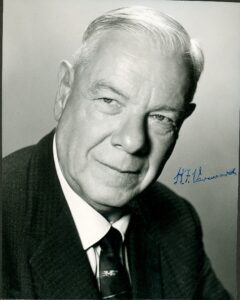
For Meyer, who as the 787th recruit of the organisation and known as Broeder 787, the AB had undertaken a “divine mission” which covered every aspect of the life of the volk. His and other stirring speeches in the name of assisting divine destiny received unanimous applause from an audience which included Broeder number 3737, Balthazar Johannes Vorster, the then prime minister and successor to Hendrik Verwoerd.
The roots
The AB had come a long way from its founding in 1918, but its development over half a century had followed what, with hindsight, seems a logical trajectory. It began when three young Afrikaans-speaking men – Henning Klopper, Danie du Plessis, and H. W. van der Merwe – met on a hillside outside Johannesburg in April 1918. Railway workers, they were living in what seemed to be a foreign city in their own country, a place that used their labour but rejected their language, a constant reminder of the defeat of the Boers by Britain in the war of 1899 to 1902.
Like so many Afrikaners before and since, they had been raised on an intellectual diet of myth and potted history which pitted heroic Boer against perfidious Britain in a struggle that impacted on the cosmos itself. They saw the Afrikaners as players in the unfolding of the Book of Revelations, upholding the light of Christian civilisation against an advancing wall of darkness, promoted by the Beast himself.
It was God’s will that the “Afrikaner nation”, in reality a recent amalgam of Dutch, French, German, Scot, Indonesian, Malay, and African ancestry, linked by language and a narrow Calvinism, had been placed on the southern tip of the African continent. His will should be done.
This concept of serving God and the Afrikaner nation with fearsome loyalty was the driving motivation behind Afrikaner nationalism. Over the years, and in particular in the decades following the outbreak of World War II, it was preached in hundreds of churches every week, invariably by ministers who were themselves members of the Broederbond. It was the crunch and rationale for a community linked by language and religion and kept in thrall to the status quo by the material benefits of the crude fortress into which their fear had driven them.
Their worldview was that of the laager, the defensive circle of wagons which protected the community against marauders in the days of the Voortrekkers, the pioneer Afrikaans-speaking colonists of South Africa’s interior. From such a strong position, raids into the hostile territories beyond would be led by heroic soldiers, but directed by far-sighted, tough, and essentially benevolent leaders.
The soldier-hero icon was everywhere It ratified the broad acceptance of the cult of the leader, an acceptance that AB-inspired educational theory would later try to mould into a permanent feature of “white” youth in general and Afrikaner youth in particular. It certainly provided much of the inspiration for many starry-eyed young men who volunteered to fight “on the border” or to join one or other of the state’s security divisions.
A club for Afrikaners
But in 1918 when Henning Klopper, Danie du Plessis, and H. W. van der Merwe sat on a sunny hillside and discussed the need to form a club for Afrikaners, they talked only of a refuge for those who wished to preserve and strengthen their language and culture. To them, Afrikaans and the Afrikaner seemed in danger of being swallowed up by the alien morass in a city dominated by “the English”. They took their idea to their spiritual adviser, the Rev Johannes Naude, who welcomed it enthusiastically.
So in August 1918, in the front room of the house in which Danie du Plessis was staying, 18 young men, 11 of them working on the railways and six of them policemen, met to consider the proposal that they form the Jong Sud Afrika (or Young South Africa). It would act collectively to defend the Afrikaner and “return him to his rightful place in South Africa”. The organisation would be open to all men who subscribed to its aim; recruits would proudly wear their membership buttons on their lapels.
This was the formal start of the Afrikaner Broederbond. But it was an era of economic difficulty and competition for jobs, during which many Afrikaners began to anglicise their names and adopt the English language. Times were hard for the Afrikaner. Broederbond buttons became a source of derision in the workplace, and members felt marked out for discrimination.
By early 1921, still with fewer than 50 members in that single Johannesburg branch, there were demands that the AB go underground and become a secret society. By then, its composition had changed. Although open to all, efforts to recruit the artisans and manual workers who made up the bulk of urban Afrikaners failed. Instead, it was teachers, ministers of religion, and civil servants who were attracted to join.
Within three years, emergent Afrikaner professionals, the white-collar urban elite, dominated the organisation. At a meeting on 26 August 1921, the calls to transform the AB into a secret society for the advancement of Afrikaners were put to the vote and carried.
At the same meeting, a second branch came into being, and six months later a third. By 1930, there were 512 members in 23 branches, and five years later 80 branches around the country catered for 1,395 members. By then, the AB had begun to transform itself into a series of think tanks and to plot the course, outlined in 1934, for the eventual takeover of political power. This included a detailed proposal for the residential segregation of “racial” groups. It was the blueprint for apartheid.
Like any organisation, the AB contained within it the seeds of bureaucracy and elitism. Nurtured by secrecy, these germinated into a virulent strain of autocracy which, in the 1930s, found a ready resonance in the fascist ideas emanating from Europe. Leading Broeders such as Hendrik Verwoerd travelled to and studied in Nazi Germany and were impressed by much of what they heard and saw.
The Nazi Party, in a show of solidarity, sent specialists to assist the AB in restructuring the organisation along the lines of the tight cell system that remained in place until at least 1992. In that year, the Broederbond formally closed down, to re-emerge as the Afrikaner Bond (Afrikaner Union), which claimed to be an open society that admitted women as members.
But although it remained an influential force within the National Party, it and its political wing were, by the time of South Africa’s second non-racial election in 1999, marginalised politically.
A new AB
The new AB’s role in the 1999 election seemed primarily to consist of prodding the former president, F. W. de Klerk, to come out of retirement to support Marthinus van Schalkwyk, a former military intelligence officer and leader of the renamed New National Party (NNP).
By then the AB was a shadow of its former self. Links between members remained, but seemingly more in the form of an “old boys club”. The core seemed still to be part of the NNP; but other members – either on instructions from the organisation or at their own volition – had joined other political parties where some now held senior positions.
This diversity in Broederbond political allegiance mirrors a similar fragmentation among the volk in whose name and for whose declared benefit the huge exercise in racial social engineering had taken place. But while the once monolithic structure of the AB seemed by 1999 to be fragmented beyond all hope of unity, a core remained and maintained contacts across an elite spectrum of South African society and was now represented in all political parties.
Its secrecy also remained intact. The official role of the new Bond was still the preservation of the Afrikaans language and culture. But it also remained the custodian of more than 80 years of records that include the original drafts and rationale for most of the policies of the apartheid years. No attempt has ever been made to investigate these records.
The Broederhood exposed
All that is known of the Broederbond and the extent of the power it wielded until so recently comes from interviews with individual former members and from two occasions in more than 70 years of secret existence that the security of the AB was breached.
The first was in 1963, when a conscience-stricken churchman and Broeder of 22 years, decided that he could no longer support apartheid or the organisation that effectively planned and ran the system. As a Christian, he had come to the conclusion that there was no Biblical justification for apartheid.
But, as a man of the cloth and the son of the Dutch Reformed Church minister who had enthusiastically promoted the AB in 1918, Beyers Naude faced a major crisis of conscience. He had made a solemn commitment, reinforced, as always in the earlier years, by blood-curdling ritual and oaths to a vengeful Old Testament God. An intellectual conviction about the sanctity of a holy oath as much as the superstitious fear of brimstone and damnation for treachery to God and nation tended to ensure silence even from those Broeders who left the AB.
The difference with Naude was that while he still felt bound by that same code of honour and set of religious convictions, he found a way around these constraints: he sought spiritual advice from a fellow minister and Afrikaner, Albert Geyser, who was the first South African Dutch Reformed Church minister to take public issue with apartheid.
A leading theologian, Geyser had been commissioned by his church to research and explain to an increasingly hostile world Christian community the Biblical justification for the apartheid system. He began confidently enough, but then stumbled. He reached the opposite conclusion, and was tried and convicted of heresy.
It was to Albert Geyser that Naude went, taking with him the documents accumulated over years and which were necessary to explain his dilemma. These he left in the care of Geyser. There were not to be passed on to anyone else. Nor were they! But Geyser painstakingly photographed each page before handing the documents back.
Not having been a member of the AB, although having twice been asked to join, Geyser was not bond by any oath. He developed the film and then contacted a journalist he knew, Charles Bloomberg, and handed over the negatives. Years later, Bloomberg recalled that he could not at first believe what he had been given. For Naude was not just a Broeder, he was the secretary of the central city cell in the administrative capital, Pretoria. Of all the early 500 AB cells around the country at the time, this was perhaps the most important single unit in the organisation in terms of its members’ influence and the information that flowed through it.
The revelations in the mass-circulation Sunday Times by Bloomberg and his colleague, Hennie Serfontein, caused a major stir. They also caused the security police to ensure that from then on, there was always at least one agent working as a journalist on the newspaper.
As the Sunday Times released, in exposé after exposé, the information obtained indirectly from Naude, pressure mounted on the government to institute an inquiry. The entire edifice of the racially exclusive parliamentary democracy had been threatened by evidence that a secret cabal was making the real decisions about the future of the country, while parliament was used as a rubber stamp. But it was nearly a year before Prime Minister Verwoerd, Broeder number 1596, finally announced a commission of inquiry.
It was headed by a supreme court judge, D. H. Botha, who was not an AB member. But, said Verwoerd, the inquiry would not target only the AB. It would also investigate the Freemansons and the Sons of England, a tiny pro-English society, and would ascertain whether any of these organisations posed a threat to subvert the state. All evidence would be heard in camera.
The terms of reference alone meant that the Broederbond was bound to be absolved. It was, in effect, the state power and could hardly be guilty of subverting itself, even if it was instead subverting every concept of liberal parliamentary democracy. In any event, the two justice ministry officials who assisted Judge Botha, the one leading evidence and the other acting as secretary to the commission, were both Broeders, although this was not known at the time. The form was followed; the substance predetermined.
Such information only emerged more than a decade later, when the AB was locked in another of its periodic and bitter internal feuds. The traditionalists and the modernisers – referred to by Afrikaans commentators as the verkrampe (literally cramped) and verligte (enlightened) wings of Afrikaner nationalism – were staging a protracted battle for supremacy in the wake of the mass student uprisings of June 1978.
These had been triggered by the enforced introduction of Afrikaans as a medium of instruction in black schools, a policy insisted on by the AB traditionalists. Once again, the Sunday Times was chosen as the vehicle to publish quantities of documents and verbal information about the activities of a secret organisation now grown even more powerful. By 1977, it had 12,000 members organised into 810 cells and, as with previous governments, the cabinet was effectively an AB cell.
More exposés
The evidence leaked to journalists, Ivor Wilkins and Hans Strydom, provide the greatest-ever breach in the security of the AB. Above all, it produced thousands of names that gave an accurate – and frightening – glimpse of the power wielded by the cabal. Though it caused a furore at the time, few outside the AB itself realised the full import of what these journalists had done, and fewer still were aware that the initial leaks and the subsequent information obtained by Strydom in particular were symptoms of strife in the AB.
At the time, there was a desperate attempt by the modernisers, who tended to represent big business interests, to wrest control from the traditionalists who still saw their constituency as the farmers and Afrikaner workers, such as those organised into the hardline segregationist Mynwerkersunie (Mineworkers Union).
The modernisers wished gradually to dispense with what they perceived as the unworkable system of traditional apartheid while continuing to control society. The traditionalists saw this option as suicidal. They remained convinced that they could bend social economic and material reality to the demands of an ideology of racial exclusivity that could not be altered at will since it was divinely ordained.
Overlapping with this battle was another struggle for control of the government between the then defence minister, P. W. Botha, and Prime Minister John Vorster and his designated successor, the Broederbond traditionalist Connie Mulder. This internecine political bloodletting finally resulted in a breach in Afrikaner nationalist ranks with the formation in 1982 of the Conservative Party, led by Mulder.
Botha, while remaining a member of the AB, tried to operate at one remove from the organisation, relying more on his own power base within the military, where most of the senior officers were also Broeders.
Purging the traditionalists
The AB under the modernisers was able to purge its ranks of the traditionalists who had joined Mulder in the Conservative Party. The organisation was then re-established by the simple expedient, used twice in the past, of calling for all members to renew their memberships and re-take their vows.
All members who rejoined retained their original numbers and the membership numbering system continued unbroken. By the late 1980s, the numbering system had gone beyond 20,000, and it is known that some 15,000 new members were recruited after 1960, when the AB had 5,760 members active in 409 cells.
It is also known that some 200 members left at the time of the first major rift between the modernisers and traditionalists. That was in 1969, when Albert Hertzog, a former minister of the quaintly-named Posts and Telegraphs Department, left to form the Herstigte Nasionale Party (or Reconstructed National Party – HNP). Hertzog had been instrumental in bringing the segregationist Mineworkers Union into the nationalist old and headed a faction within the AB known as the Afrikaner Order.
The Afrikaner Order was based only in Pretoria, and never had more than 400 members, who clung tenaciously to the traditional twin anchors of Afrikaner nationalism; a vengeful Old Testament God and a brief history dripping with symbolism and peopled by rugged folk heroes. But such subjective commitments, however ferociously held to, made for frail moorings in a modern, more rational, world. They amounted to a throwback to another age, to the beliefs of the 19th century.
Apart from those members on the traditionalist fringes, most of the AB realised that those clinging to such beliefs would be condemned to the futile endeavour to turn back the wheel of history until it either crushed them or they fled in horror and disgust. The future of Afrikaner nationalism in such circumstances was grim indeed. Unity remained the fundamental creed. This struggle to marry the contradictory values of an essentially feudal past with the requirements of modern industry drove much of the political bloodletting within the AB.
It amounted to a futile and often desperate effort of find a scientific underpinning for apartheid which would leave the traditional anchors in place, although in modified form. When circumstances turned the argument critical, small numbers of Broeders would break away, sometimes to emerge in the form of a purist political sect.
Such was the origin of the HNP and the Conservative Party. In the case of the latter, however, the fight was more bitter and the split deeper. Yet for all the animosity, it is unlikely that more than 500 members left the AB in the 1982 split. Some, such as Mulder, were prominent, and their departure certainly weakened the Broederbond, but it remained the most powerful political body within the apartheid state.
Not being part of government, but permeating all layers of the governing elite, the AB was simultaneously isolated from, and part of, the control mechanisms of the state. In separate cells, its members discussed and planned, while its ultra-secret watchdog committees collated information and drafted policy suggestions. These were forwarded to the executive [the president and his cabinet] that ruled on their implementation and passed them on to parliament when legislation was necessary.

The nerve centre and collective brain
Throughout the apartheid era, this tightly knit and secretive cabal remained the collective brain of apartheid, the source of many of the ideological twists and turns that the system engendered. Members of the brotherhood – politicians in some cases, academics in others – were the first to open secret talks with the imprisoned and exiled leadership of the ANC. And it was Broeders who also encouraged, almost simultaneously, the “Iron Fist” crackdown on the anti-apartheid opposition that triggered waves of secret slaughter.
This nerve centre of the apartheid system, possessing no formal authority and therefore at one remove from the state machine, could still have been probed and exposed by the Truth and Reconciliation Commission (TRC) [headed by Archbishop Desmond Tutu]. There were, and still are, physical traces of all its activities in the paper and computer synapses tying it to the government, to the senior levels of the state bureaucracy, and so on down to the commanders in the field and the operations and operatives they ran.
It was the carefully considered plans, the studies and theories of the Broederbond, which underlay that massive exercise in social landscaping, the creation and ethnic cleansing of “group areas”. This resulted in millions of men, women and children being dumped like so much human garbage, on barren stretches of the rural outback.
Outgrown graves, some of them indicated by simple wooden crosses which have not yet rotted away, or by painted stones, mark the sites of countless premature deaths in places like Dimbaza or Weenan or Morsgat. The silent accusation from these burial grounds of the discarded rings louder than words. It was never really heard at the TRC.
Nor were the actions flowing from the education policies designed to cripple the minds and talents of generations of students. These were all carefully considered schemes mapped out by the Afrikaner Broederbond and fed into a system manipulated and often run by AB members.
Yet the records of the AB remained intact: its motto – “Our Strength Lies in Secrecy” – was rigorously followed. This ensured that, unlike state records, its history – the history of the system called apartheid – was never under threat of disclosure.
Within its secret conclaves, however, many bruising ideological and tactical battles were fought. From time to time, a few very senior Broeders in powerful positions aspired to dominate the collective will of the AB elite. None tried harder than Hendrik Verwoerd, once he became convinced of the divine inspiration of his mission.
Verwoerd saw himself as a moderniser, but drew the bulk of his most dedicated support from the traditionalist wing. He was also well aware that his position as head of the government and the National Party relied more on electoral popularity than it did on the support of his peers, many of whom regarded him as intolerably arrogant. He might find it necessary to appeal over the heads of the cabinet, and even the AB, to rally public opinion behind him.
But in order to create a brave new world according to his view of AB doctrine, Verwoerd knew a secure and stable environment would be needed. This might require the use of people and methods that he might personally find distasteful and even dangerous, but on this he was prepared to gamble. It was the start of that aspect of the secret state that became a law unto itself; a corrupt and bloody machine that, in its final decade and more, judged no scheme too squalid or depraved that aimed to prop up a disintegrating ideology.
(“Unfinished Business – South Africa, Apartheid and Truth, by Terry Bell (with Dumisa Buhle Ntsebeza), was published by Verso in September 2003).
Leave a Reply