By Baffour Ankomah
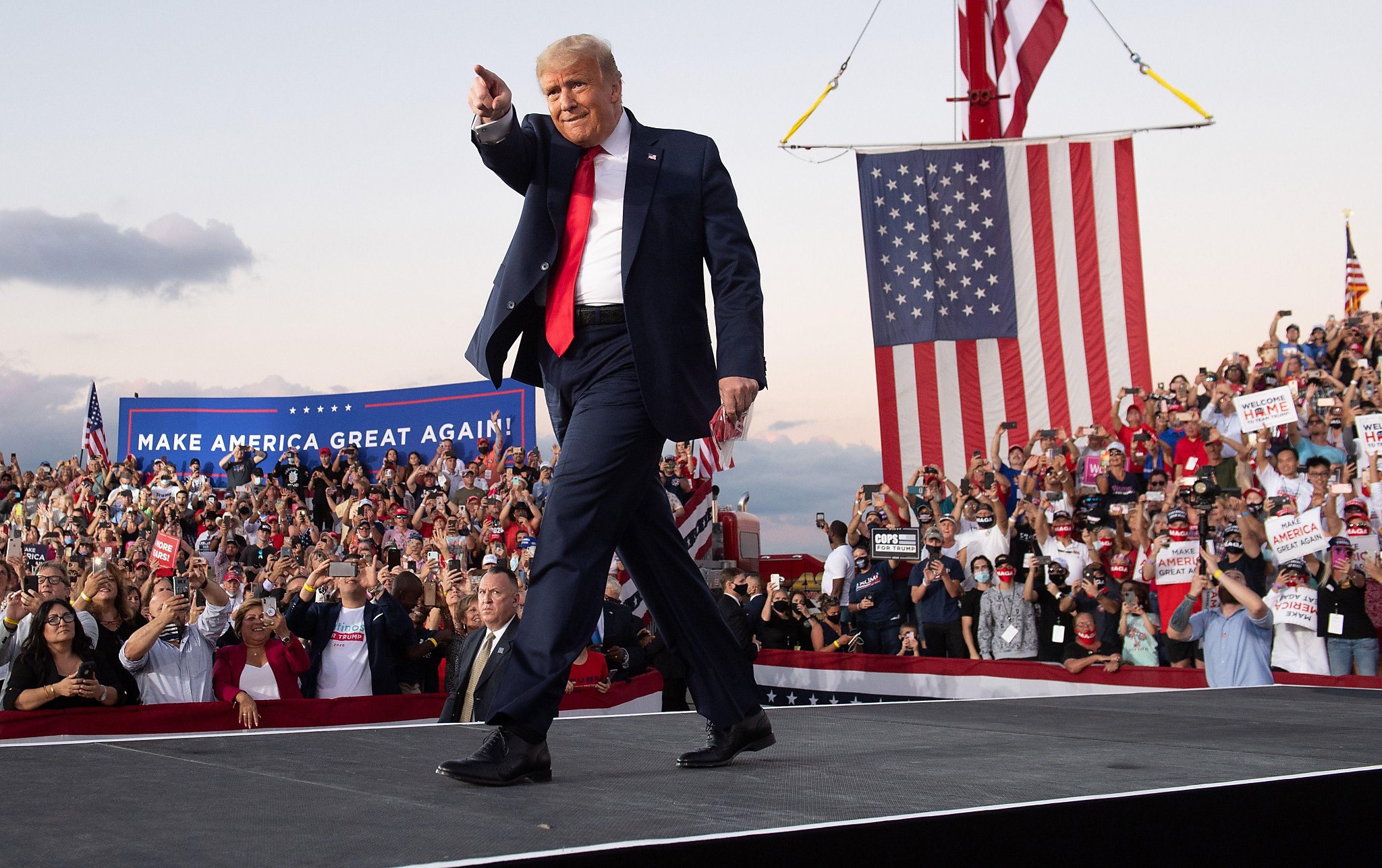
Judging by his days in the White House, the former US president, Donald Trump, has a problem with black people – whether they are in Africa, the Caribbean, or in the US itself. On 27 February 2019, Michael Cohen, Trump’s former personal lawyer, told the Congressional Oversight Committee in Washington DC that Trump “is a racist” who once told him that black people were “too stupid” to vote for him.
According to Cohen: “The country has seen Mr Trump court white supremacists and bigots. You have heard him call poorer countries shitholes. In private, he is even worse. He once asked me if I could name a country run by a black person that wasn’t a ‘shithole’. This was when Barack Obama was President of the United States.”
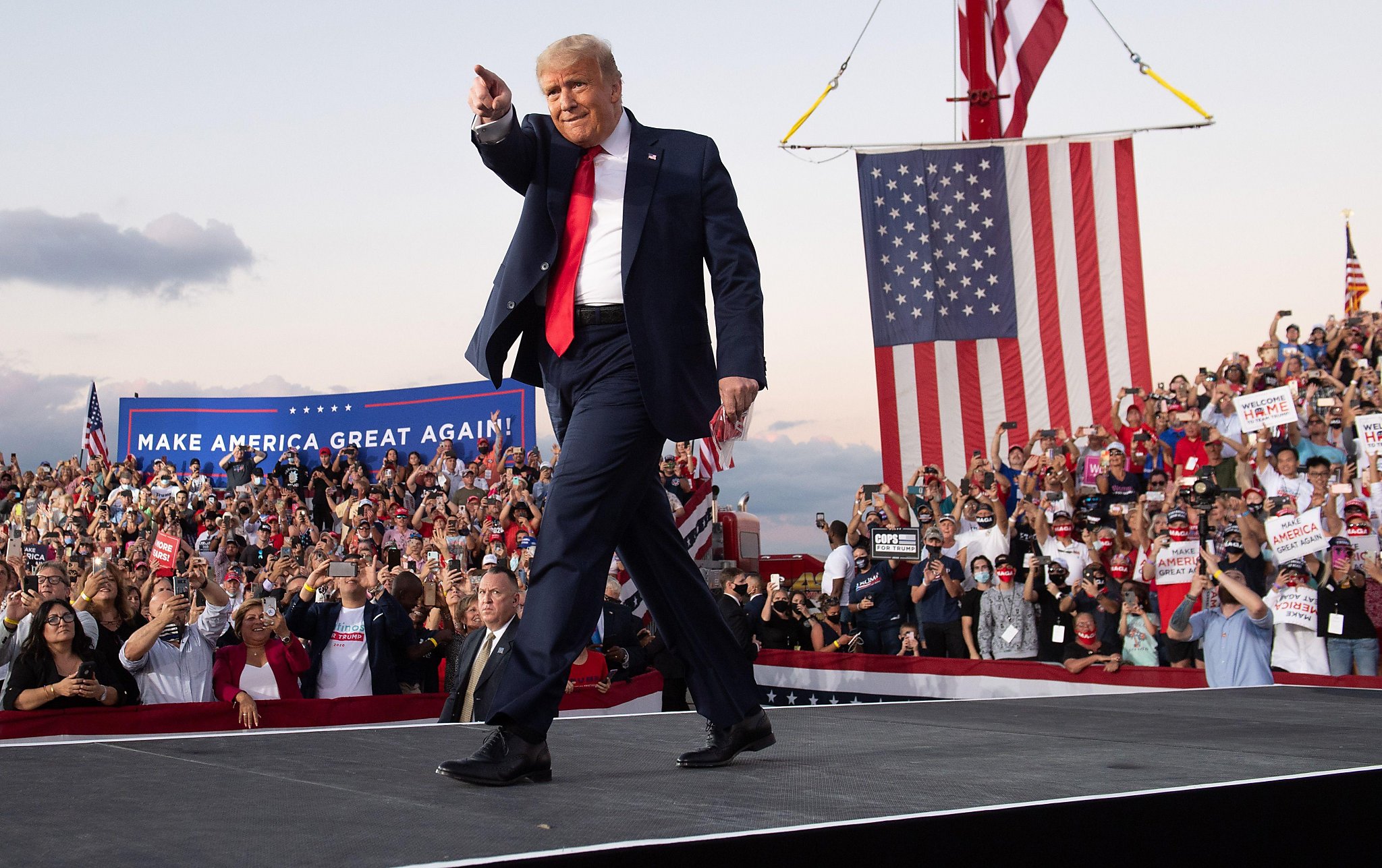
In January 2018, Trump described Africa, Haiti and El Salvador as “shithole countries”. His insulting remark prompted the former US congresswoman and now political activist, Cynthia Mckinney, to coordinate 25 writers from across the world, including myself, to write a book titled “How the US Creates ‘Sh*thole’ Countries”, mocking Trump’s insulting characterisation of Africa and the Caribbean as “shithole countries”.
Remarkably, from the analyses of the 25 contributors of the McKinney-edited book published in late 2018, it is the US itself whose imperial and foreign policies to a large extent create the conditions that turn some nations into “shithole” countries. Worse, the US itself is a “shithole country” too, according to the deductions of the 25 contributors of the book.
The Africa chapter
I was contacted to write a chapter on Africa for the book focussing on how the US and Western foreign policy and their multinational companies, especially those in the extractive sector, exploit Africa and create the conditions that lead to what Trump called “shithole” countries.

My central view was supported by Cynthia McKinney in her Introduction to the book. A wonderful African-American woman who, while in Congress, stood up for justice for Africa and fought tenaciously against the American Empire’s predatory attitude towards Africa, McKinney explains in the Introduction that America’s contribution to conditions in the so-called “shithole countries” can clearly be seen from “the US military occupation of Haiti, financing of death squads in El Salvador, and support for dictators all over the African continent.
“Therefore, for our purposes, a ‘sh*thole’ country is a country whose residents’ present quality of living conditions can be tied to historical or current US foreign and military policies that have negatively impacted the ability of that state to deliver quality of life policies to its residents.
“In this regard, for too many US residents, the United States itself, can also be characterised as a ‘sh*thole’ country, resulting from its deliberate choice to fund the war machine and corporate policies that produce negative consequences for the countries and territories, in some cases colonies, that are profiled [in this book].”
The book is in four parts. Part One deals with “understanding US foreign policy”. Part Two covers the “victims to remember (and how they got that way).” Part Three deals with “why getting the truth out is so difficult”, and Part Four is about “the United States as a ‘sh*thole’ country.”
My chapter on Africa is in Part One. I go into great detail about how the US and its Western allies and their multinational companies wittingly and unwittingly create the “shithole” conditions that blight the future of Africa and its citizens.
Most people don’t know that the average royalty that new African oil producers are given by foreign oil giants (mostly American, British, French, Canadian, and Australian companies) who come to exploit the petroleum resources of Africa is not more than 10%, sometimes even as low as 5%.
The rationale is that the oil giants need that much money (as much as 90-95% of the profits) over so many years, sometimes two or three decades, in order to recoup the initial financial investment they put into exploration, development and production of the oil resources.
So though the African countries may be seen to be producing oil, in reality only a tiny fraction of the proceeds ever come to them in the form of shareholding, royalties, and taxes.
Jammeh’s fury
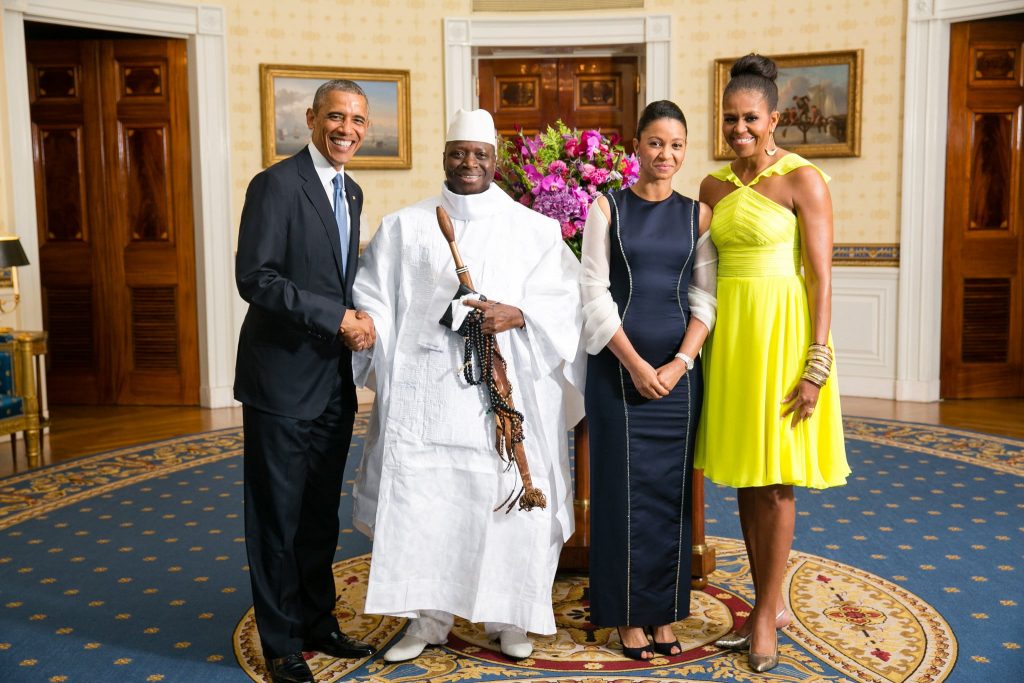
This is the situation that so riled the former Gambian president, Yahya Jammeh, that he ordered a representative of an American oil giant out of his country and threatened to arrest him if he ever set foot in The Gambia again.
As Jammeh put it in a New African interview: “Some of the crimes I am supposed to have committed are to say we are not going to accept 5% from our petroleum resources, and the rest going to the foreign oil companies exploiting our resources. But they tell me that other African countries have accepted 5%, and in fact no African country, except three, gets more than 3% from its minerals.
“So if other African countries have accepted that ridiculously low percentage, then you must be in the wrong not to accept the same ludicrous deal. To me, any talk about our countries taking a 3% or 5% royalty to exploit our resources is an insult.”
Jammeh’s story is not different from what Liberia’s former president, Charles Taylor, experienced while negotiating for the production of Liberia’s oil with an American oil giant which had strong ties with the government of former President George W. Bush.
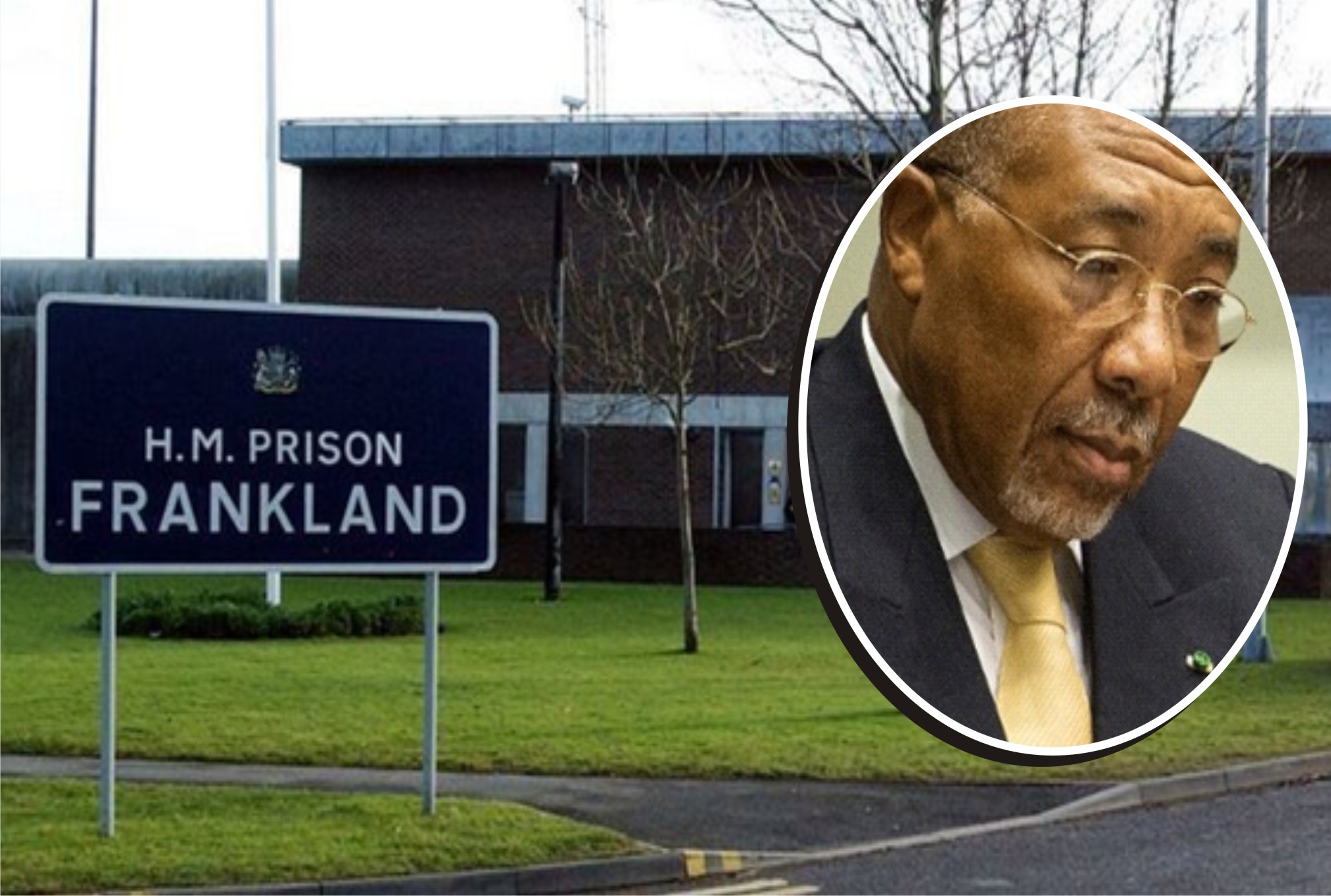
The American company offered Liberia 5 cents in every dollar from the proceeds of its oil resources. (In the last issue of The Third Eye, I misstated this as one cent in every dollar. My apologies). Taylor refused to accept the deal, but the American company pushed and pushed until Taylor was indicted in 2004 to stand trial at the UN-backed Special Court for Sierra Leone (SCSL) for supporting rebels in Sierra Leone.
Before Taylor’s trial started, the American oil giant offered him what looked like an irresistible carrot. “If you give us the rights to exploit Liberia’s oil, at the terms discussed, we shall protect you from standing trial at the Special Court for Sierra Leone,” they told him. It was a tempting deal.
Taylor’s trial was being pushed from behind the scenes by the US and British governments to get him out of power. He knew it. But the oil deal, at 5 cents in every dollar, was a bad one for Liberia as a country. So, despite his personal liberty being at stake, Taylor still rejected the oil deal. “Then we can’t help you Mr President, we can’t protect you,” the American company told him.
The day Taylor narrated this story in court in The Hague, the place went deadly silent. In the end, by rejecting the bad oil deal, Taylor could not be protected by the American oil giant, and today he sits in a British prison serving 50 years for what the SCSL found only to be “aiding and abetting” rebels in Sierra Leone.
Lissouba’s experience
Many of such stories abound in Africa post-independence, including the overthrow of President Pascal Lissouba of Congo Brazzaville in 1997, which was done with the support of a French oil giant who did not like Lissouba’s request that oil companies operating in the country should pay 33% of the oil proceeds into national coffers.
At the time, Congo Brazzaville was getting 15% from its oil resources, but Lissouba wanted this to be increased to 33%. All the oil companies were happy with the new deal, except one French oil giant which rushed to Paris and leaned on the considerable weight of the French government, then headed by President Jacques Chirac, to force Lissouba to bend the knee.
In an interview in London in April 1998, Lissouba told me that Jacques Chirac called him from Paris and ordered him to appoint the country’s former military president, Sassou Nguesso, as his vice president and head of the armed forces. This, however, would have violated the country’s constitution, and also Lissouba reckoned that Chirac wanted to use Sassou Nguesso to checkmate him in the interest of French interests in Congo-Brazzaville.
When Lissouba told Chirac that the constitution of the country did not allow for what he was asking him to do, Lissouba said Chirac, now furious and shrill on the phone, told him point-blank: “Chuck your bloody constitution in the dustbin!”
Lissouba could not chuck his country’s constitution in the dustbin, but a few weeks later his government was no more, overthrown in a “mini civil war” in which rebel soldiers allied to Sassou Nguesso were supported by boats and other war materiel provided by the French oil giant which was not happy with the new 33% oil deal.
After the “coup”, Sassou Nguesso returned as the new president of Congo Brazzaville and went on to reduce the 33% deal to 20%. The French oil giant was now happy, but the country has remained poor ever since. And Sassou Nguesso has remained president since 1997. Case closed.
‘Shithole’ in the heart of Africa?
Today, somewhere in the heart of Africa, another “shithole” country is being created in South Sudan, thanks to American meddling. Again, most people don’t know that South Sudan’s civil war, which started on 15 December 2013, two years after the country won its independence from Big Sudan on 9 July 2011, has American dirty fingers all over it.
On 24 June 2014, President Salva Kiir of South Sudan told me in an exclusive interview in the presidential palace in Juba, capital of South Sudan, of American intrigues to kick him out of power because Washington was not happy with South Sudan’s oil affairs.
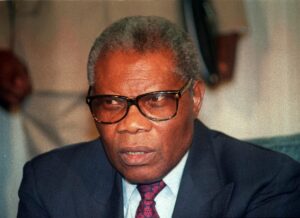
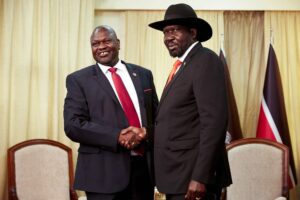
As President Kiir put it: “There are people who are looking for resources and they see South Sudan as a country full of resources, especially oil. With my government, they see that they cannot loot these resources. But if it is Riek Machar [his former deputy president], they can play around with him and then take over. It is the situation of Iraq that they want to happen here. These are strong nations, they can come in, throw away the elected government, and then install one of their stooges.”
When I asked Kiir why the Americans would want to do that, he replied: “It is in connection with China’s role in South Sudan’s oil industry. The Americans say that their companies are not allowed to invest in the oil industry here. But it is not our fault.”
Kiir explained that as part of the preparations for South Sudan’s independence in 2011, the country signed a Comprehensive Peace Agreement with Khartoum in 2005. At the time Juba wanted to review the oil agreements that had been signed by Khartoum and China. It so happened that the largest chunk of Big Sudan’s oil resources was in South Sudan, but the Americans, who wanted to overthrow the Sudanese President Omar Bashir did not allow Juba to review the oil deals.
“They said ‘don’t touch the already signed agreements, we [America] will be given access to the files later, so we will know what has been done. If there are new contracts to be awarded, yes, we will sit down and sort them out, but not the existing agreements’”.
By so doing, Kiir said the Americans stopped Juba from reviewing the existing oil agreements, and Washington went on to pull out its oil companies from South Sudan and imposed sanctions on Omar Bashir in Khartoum.
When the American companies left, the Chinese and Malaysians came and occupied the vacuum. But Washington did not like it. Therefore, Kiir’s government has to be undermined as part of an American regime change agenda.
According to Kiir, the Americans settled on his deputy president, Riek Machar to do the dirty work of overthrowing him. This is the genesis of the “civil war” that broke out in South Sudan on 15 December 2013 and has rumbled on since, reducing the country into a virtual “shithole”.
Second interview with Kiir
In October 2015, I went back to Juba to interview President Kiir again, and America’s dirty hands came up again in our discussions. This time Kiir was blunter than during our first interview in June 2014. It was no holds barred.
“I said to you last year,” President Kiir told me, “that the Americans were here, and are still here, with what they call regime change. Their ambassador who was here before the Riek Machar coup of 15 December 2013 was actually working with Machar on the coup. He was the one who actually helped Machar, facilitating everything. I know them all – those foreign diplomats who were involved with Machar.
“I don’t think [the Americans] have changed their mind. This is why they want to impose UN Security Council sanctions on us, because they think that the African Union is not bold enough to push us out. So it is the Americans who are actually encouraging Riek Machar to do what he is doing… I think they love Riek Machar. Both Riek and I have black faces, but they love his black face, not mine.”
The trouble with South Sudan is that besides oil, the country also has huge deposits of uranium still unexploited, and the Americans are interested in that too. Therein lies South Sudan’s dalliance with “shithole” status.
I went on in my chapter for Cynthia Mckinney’s book, to show how in Ghana, Zimbabwe, and other African countries, American foreign policy – in fact Western foreign policy in general – and the nefarious activities of their multinational companies have combined to create shithole conditions in those African countries.
In a way, really, most of the African countries have been lucky that the Americans have not been as brutal as they have been in Venezuela in the recent past, and to a certain extent in Zimbabwe since 2000.
America’s decline by 2030
Interestingly, Dr Kevin Barret (an American Islamic studies scholar and popular contributor to the top echelons of the American media), comforts the victims of American rapacity by demonstrating in Part Four of the Cynthia Mckinney-edited book, that by 2030 America will not be the America we have known it in the last 78 years since the end of World War II.
“America is in decline,” Dr Barret writes, “primarily and precisely due to its misallocation of resources in favour of the military-industrial complex.”
Dr Barret supports his assertion by quoting Alfred McCoy who endorsed in his new book, In the Shadows of American Empire, “the prediction of the [US] National Intelligence Council that the US hegemony will end by 2030”. Barret forecasts that “imperial collapse will bring a major crash in American living standards and an accompanying decline towards sh*thole country status.”
Another Part Four contributor, Richard Falks (an American author of 30 books, who is also professor emeritus of international law at Princeton University), gives more details on how the US actually creates “sh*thole” countries around the world.
He explains that ever since the fall of European colonialism, US foreign policy has generally done its best to control the economic, political and social development of countries in Africa, Asia, Middle East and Latin America.
“Stripping away the ideology of US expansionism,” Falk writes, “exposes a set of realities devoted to squeezing wealth from [developing countries], confiscating or unjustly appropriating their resources, and as a result producing sh*thole conditions of impoverishment, corrupted elites, oppressive government, as well as a mixture of nationalist resistance and the collective loss of self-esteem.
“What motivated the political leadership of the United States to engage in this kind of predatory behaviour around the world? It was, at the first, materialist greed, civilisational arrogance, and the need for export markets and sources of raw materials to satisfy the compulsions of 19th century industrial capitalism, essentially maximising profits while ignoring massive poverty.
“We as a country have never truly acknowledged the full extent of these crimes or the degree to which treating others so wretchedly deforms the national character of the perpetrator, contributing to elaborate rituals of denial so as to avoid confronting unpleasant realities embedded in an accurate rendering of the national narrative. We employ a variety of euphemisms and prohibitions designed to cover depraved behaviour with a thick veil of ignorance and deception.”
Falks then pronounces matter-of-factly: “We are a sh*thole country to the extent that our leaders and citizenry accept extreme poverty, police brutality, environmental degradation, and global warming as non-issues, while scapegoating Muslims, Hispanics, non-white immigrants, and refugees while projecting a world of drug addicts and Islamic radicals posing dire threats to the future. Such an inversion of societal realities and challenges does warrant the sh*thole labelling in the spirit of honest disclosure.
“As the lead international actor for the past century, the United States needs to accept some responsibility for making foreign societies so unlivable that people flee elsewhere in desperation, and take steps to improve the situation.”
Unusually, after cheating its way around the world and trampling on other people’s rights, the US, according to Dr Kevin Barrett, is no better. “The petrol dollar – so named because Saudi Arabia has propped up the otherwise overvalued greenback by refusing to sell oil in any other currency – will almost certainly lose its status as the de facto global reserve currency during the coming decade,” Barrett predicts.
“As in Sigmund Freud’s favourite folktale, the devil,” Barret goes on, “that head usurer of the empire of usury, will suddenly vanish from our shores, and Americans will discover that [the devil’s] gold has turned to shit. The resulting crisis in the US domestic economy will likely push the erstwhile world hegemon further down the road toward sh*thole nation status, giving Americans a noxious taste of the foul medicine their leaders have been foisting on the world.
“This will mark the end of the ‘American century’ – the roughly 100 years during which the US profited, at least relative to the rest of the world, from the international usury cartel’s depredations.”
(How the US creates Sh*thole Countries is published by Clarity Press. Available on Amazon, Indigo, Barnes & Noble, and IndifBound.org for US$20-US$29.95)
Leave a Reply