
Twenty-three years ago, Zimbabwe launched its fast track land reform programme in which 4,000 white Zimbabwean farmers (mainly of British and European ancestry) lost their land or part of their land for redistribution to land-hungry black Zimbabweans. The action angered Britain which solicited the help of Europe, the US, Canada, Australia and New Zealand to mount a combined fight against Zimbabwe and impose economic and political sanctions that ultimately led to the implosion of Zimbabwe’s economy in the mid-2000s.
Twenty-three years ago, millions of Zimbabweans who were not born at the time, have since grown up in a country whose median age is 20.2 years and thus do not adequately know what actually triggered the land reform and what went on in the process. For the sake of these youths and posterity, and more importantly for Zimbabweans in general and the world at large not to forget this all-important period of Zimbabwe’s national life, The Third Eye has gone back into memory lane to pick 2 interviews and 2 documents that richly illustrate the land reform period, and put them in this section which we have titled “Lest We Forget”.
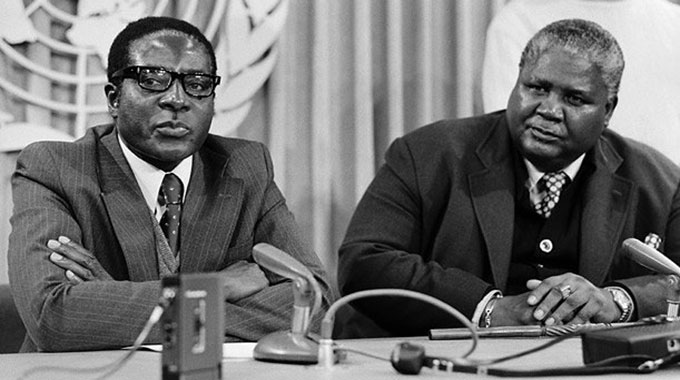
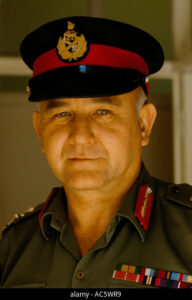
We start with the landmark interview of Sir Shridath ‘Sonny’ Ramphal with Gugulethu Moyo and Mark Ashurst published in their 2007 book, The Day After Mugabe – Prospects for Change in Zimbabwe. Sir Shridath was Commonwealth Secretary General from 1975 to 1990. He acted as an adviser to the then ZANU leader Robert Mugabe, and ZAPU leader Joshua Nkomo (who represented the Patriotic Front) at the Lancaster House negotiations in London in 1979 that led to Zimbabwe’s independence on 18 April 1980.
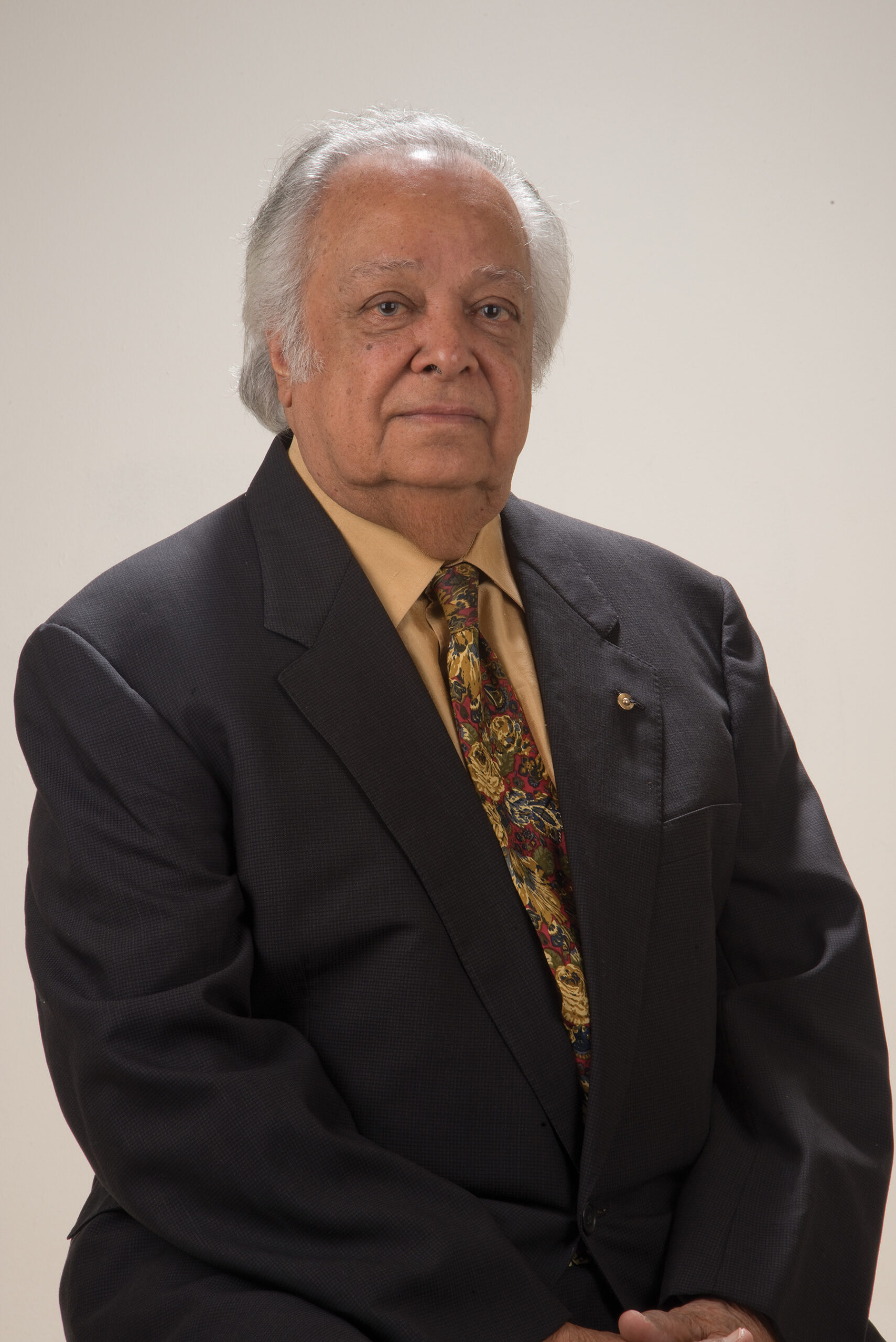
Sony Ramphal started by telling Gugulethu Moyo and Mark Ashurst: “I think Zimbabwe today comes out of Zimbabwe of yesterday. Yes, I do, because I think there is no one factor that can explain what is going on in Zimbabwe. I think you have to go back to the beginning, to a statistic that never left my mind from the moment I heard it, and that is that in Rhodesia 80% of the arable land was owned and occupied by less than 5% of the population. The statistic colours everything that happened in the process that led to Lancaster House.
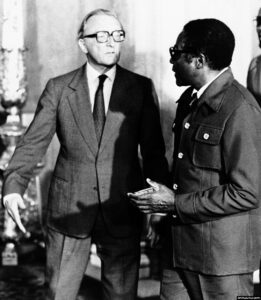
It was about land in the beginning, it was about land in the struggle, it has remained about land today. The land issue in Rhodesia/Zimbabwe is not ancient history. It is modern history. Black Zimbabweans were dispossessed of the land that was theirs within the lifetime memory of some, and certainly in the lifetime of the generation before. Now if you forget that, then you can’t answer rationally any of the pertinent questions about Zimbabwe. And I think it is the forgetting of that, that ultimately has led us to where we are.
Q: Who has done the forgetting?
A: Well, many people, including, I fear, the government of Zimbabwe, post-independence. But that fault, that forgetting, has to be set in a context which explains how it came to happen. My own feeling is that we came very close to getting Zimbabwe right at the Lancaster House Conference.
Q: Is “forgetting” the right word? Has there been perhaps a willful amnesia, or was there some other kind of agreement to put this – the redistribution issue, the land issue, to one side?
A: Well, yes. I think the first 10 years, what was in effect a moratorium on land redistribution in which the government seemed to have concurred, was part of the forgetting.
Q: Was there an agreement to forget, do you think?
A: There was an agreement to put it to one side, to defer, which is almost inexplicable. People struggled to repossess their patrimony and the stage was set for that to happen, and you decide that you will wait for 10 years before justice is done. Of course, in those 10 years all kinds of other priorities began to intrude, so that the land issue, which should have been solved in the beginning, was put on the back-burner and a kind of honeymoon period was enjoyed between the new government and those who were on the land. The government of Zimbabwe was very popular in those first 10 years.
Q: You say that this amnesia, or the setting to one side, is almost inexplicable. Did it seem inexplicable to you at the time?
A: It always did. I thought the situation could only get worse. I had not realised that the dispossessed in Zimbabwe would be so long-suffering, but I had to bow to the reality – they were.
Q: Going back to Lancaster House, was land the only question on which the parties didn’t agree? Were there any other concerns in that draft constitution?
A: It was the major stumbling block. And it came up very early. While the Patriotic Front was absolutely clear that the land issue was central, the draft constitution contained the standard convention clause on property, which was a guarantee against the deprivation of property without the payment of prompt and adequate compensation. It was what was in the tenets of international governance, in the UN conventions, but what it signalled to Mugabe and Nkomo was maintaining the status quo on land.
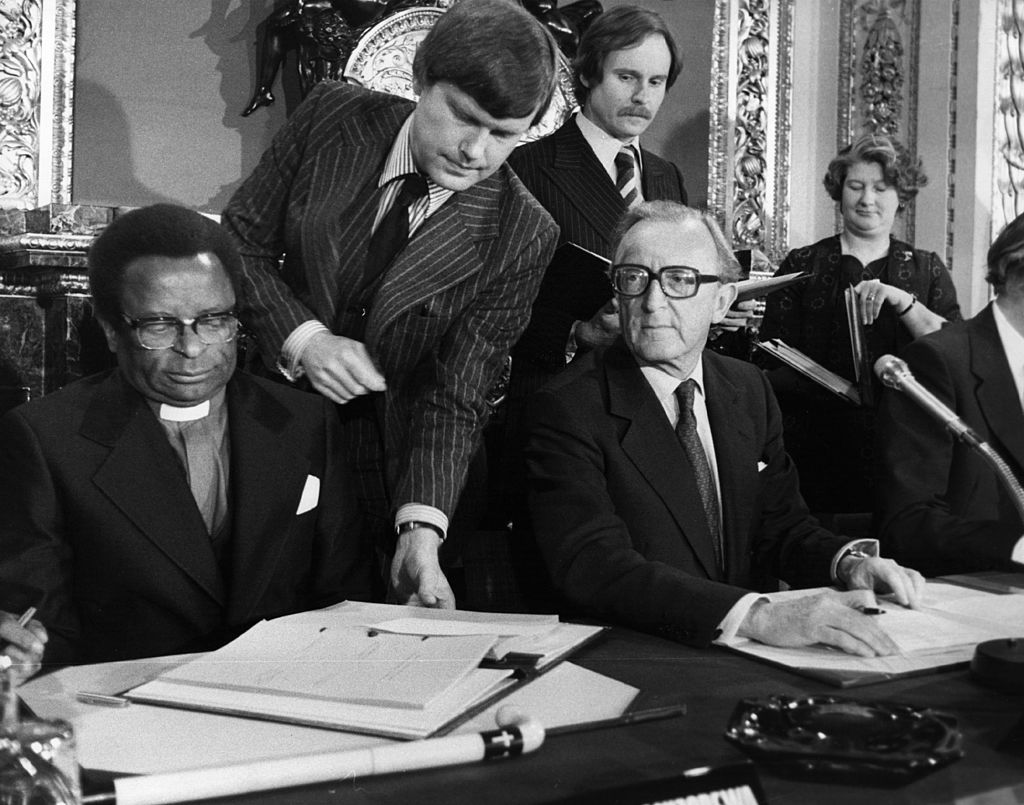
Now, there are reasons that explain it, and if Lord Carrington [the then British foreign secretary) was sitting here, he would tell you, no doubt, that he wasn’t negotiating with Ian Smith [the then Rhodesian prime minister], he was negotiating with General Walls [head of the Rhodesian Defence Forces], and there was no way he was going to get a constitution [that] didn’t guarantee the status quo on land. But he was faced with the very opposite requirement from the Patriotic Front and, after all, they represented the vast majority of the people of Zimbabwe.
There was something of a sleight of hand because when Mugabe and Nkomo threatened to leave Lancaster House unless the land issue was dealt with in a way which would allow for land redistribution, the fudge was: “You will be helped to pay the compensation that the constitution required to be paid.”
It was such a standard provision, but it was not a provision designed to deal with historical wrongs. So if you had to have the provision, then you had to have resources to pay the compensation for land acquired.
Q: How do you recall the personalities that were involved?
A: I was very close to Robert Mugabe and Joshua Nkomo. I really didn’t see anything of Ian Smith and General Walls or even Bishop Muzorewa. They kept their distance, they had their own advisers. They were working against everything the Commonwealth was working for. But we did see Mugabe and Nkomo every day, they were at the conference in the day and with the Commonwealth Secretariat in the evening.
Q: Can you confirm whether at one point there were just you, Lord Carrington, Joshua Nkomo and Robert Mugabe in one room where you tried to find a way through the impasse over land and compensation. Is that correct?
A: No. There was a meeting in my home, in the [Commonwealth] Secretariat residence, between myself and Mugabe and Nkomo. That was the moment when the conference could have broken up. They had walked out, they had said they could not subscribe to a constitution which meant that there could not be land redistribution.
Carrington’s plan as chairman of the conference was that we must have agreement on the draft constitution which included this provision. He said to the Patriotic Front: “If you do not agree to the provision of the draft constitution, but other delegations do, the conference will resume without you,” In other words, Lancaster House would be reduced to the British government and Bishop Muzorewa [the then prime minister of the pre-election, bi-racial Zimbabwe-Rhodesia government], Ian Smith and General Walls. That was almost unthinkable.
The Frontline States let it be known to the British government that there was no way they would accept that. Bear in mind that Lancaster House was made possible by a Commonwealth deal at the heads of government meeting in Lusaka. So the support of the Zambian President Kenneth Kaunda, and Tanzanian President Julius Nyerere, in particular, but also Botswana and others, for the whole process was terribly important.
It was in that situation that I talked with Nkomo and Mugabe. I said: “First of all, you cannot let Lancaster House break up, or worse still, end without you. Secondly, you are not going to be on good ground if the reason for the break-up is attributed to your refusal to have a clause protecting private property in the constitution of Zimbabwe. This is a clause that is in every constitution. So we have to find another way.”
I made the suggestion that we must get a guarantee of support from the British government [and] internationally, of funds that would allow them to compulsorily acquire enough land to begin the process of land resettlement. And I said to them: “I invited the American ambassador [in London] to meet with me. I said to him: ‘If you don’t help now, Lancaster House will break up. All that we have achieved will be lost and that will only strengthen the hand of apartheid South Africa.’ Kingman [Brewster, the American ambassador] said: “I am with you. I think this is the right approach. I have to talk to Washington. Give me 24 hours.’”
He came back the next day. He had spoken to Cyrus Vance [the American secretary of state] who had spoken to President [Jimmy] Carter and they had authorised Brewster to say to me, and through me to the Patriotic Front, that they would support the establishment of an agricultural development fund and they would make a substantial contribution to it.
That they would recognise the right of the government after the elections to use this fund to help to defray any compensation that had to be paid under the constitution. That the fund would be a responsibility they would accept, providing it was matched by the British government and had an international character. That was the American response. It could not have been more positive.
Q: Can you indicate the scale of the contribution?
A: He left with me with no doubt that it would be very substantial. I said: “That’s fine you telling me, but you have to say this to the Patriotic Front.” The next day, the [American] deputy ambassador came to my home and met Mugabe and Nkomo and told them what the ambassador had told me. He confirmed to them that this was the position of the American government and that they would inform the British government. He recommended that on that basis, the Patriotic Front should return to the conference.
It didn’t just end there. The Frontline States were putting a great deal of pressure on the British government. Then the Patriotic Front drew up a statement, on the basis of which they would go back into the conference, recording the assurances that they had received.
They met with the [British] Foreign Office the night before returning to the conference and showed them the statement that Dr Nkomo would read out the next morning when the conference resumed. Then they distributed the statement to the members of the Southern Africa Committee because they wanted there to be no doubt whatever, in anybody’s mind, that this was the basis on which they were going back.
Q: It sounds a rather easy assurance to give: That there would be an unspecified sum of money to support things like redistribution and development. Given how vexed and difficult those issues had been up until that point, wouldn’t you have expected a bit more detail?
A: No, I don’t think so. You are dealing with the government of the United States, the government of Britain. Solid assurances were recorded in the documents of the conference and notified to all Commonwealth countries. It wasn’t a little thing. It didn’t specify a sum, but specifying a sum would have been very difficult in the context of Zimbabwe. What farms? How many of them? What cost?
Q: Was there any mention of a contribution from the government of Zimbabwe at a future date?
A: No, no. That would have been strange. We know from the Foreign Office Minutes that they were having those discussions themselves though. They may well have been having discussions, but not with the Patriotic Front, but later on with the Mugabe government. Indeed, later on, they obviously did have discussions with the new government because it was out of those discussions that came the decision to defer. But they would have been outside the Lancaster Conference, not just outside the conference but post-independence.
Q: So at the time, you were confident that you had obtained the guarantees that were necessary to satisfy everybody?
A: I was. And I think the Patriotic Front was.
Q: So how does one now go about calculating the responsibilities of outsiders towards trying to resolve the matter?
A: I don’t know that you can calculate in that way. You would first have to get a ball-park figure and it would probably now have to be a situation in which the government of Zimbabwe itself played a role. You know we are nearly 30 years from Lancaster House.
In all this, I have been talking about governments, about the leaders of the Patriotic Front. But the people of Zimbabwe are basically what all this was about, and I have a deep consciousness of the terrible plight of those people. I’m not on the Commonwealth scene now, but I believe the Commonwealth has an ongoing responsibility to those people. Forget leaders and all that. It is a terrible human disaster in Zimbabwe.
The Commonwealth cannot ever relinquish responsibility to those people. It was like Oliver Tambo telling me that the black people of South Africa never left the Commonwealth. The Commonwealth must take the position that it never left the people of Zimbabwe.
(“The Day After Mugabe – Prospects for Change in Zimbabwe” was published in October 2007 by the London-based Africa Research Institute which was founded in February 2007 to draw attention to ideals that have worked in Africa)
Leave a Reply