Category: Politics

  • Why homosexuality has made major gains globally in the last 10 years?

    Why homosexuality has made major gains globally in the last 10 years?

    … The men behind it has billions and billions of dollars to push the agenda


    While the world was sleeping, a few American transsexual men with billions and billions of dollars at their disposal deliberately set out in the last 10 years to ram homosexuality and its LGBTQI+ adjoints (Lesbian, Gay, Bisexual, Transgender, Queer, Intersex, plus – any other nonsense that will come in the future) down the throats of the world. In a major effort to make homosexuality acceptable worldwide, these American men have set up huge funding organisations that have passed on billions and billions of dollars to some big NGOs to do their bidding. As such, the gains that homosexuality and the LGBTQI+ group have made globally in the past 10 years are simply amazing. That is even before you add the major advances that the transgender and the transhuman movements have made.

    In this piece, culled from an exposition by the American investigative journalist, Jennifer Bullock as part of efforts by the US-based Eleventh Hour Blog to bring awareness to major issues, we show the world that time has come for all to wake up and fight for the continuance of the decency that God and nature gave to humankind. Otherwise, by the end of the next decade, we will all be overrun by the very shocking things that are currently happening in the LGBTQI+ world, including … please look away … “penis goodbye parties”, celebrating the severance of the penises of men who have undergone surgical operations to remove their ding-dongs so they can become women. At these parties, as Jennifer Bullock tells, “penis cakes” are served. “And this is a big celebration. It’s absolute madness.”

    What is sadder, according to Bullock, is that “all the governments, all the politicians, all the major banks, all the financial investment houses, all the medical institutions, universities, schools, corporations, the law firms – they have all jumped on board [the transsexual bandwagon] within 10 years supposedly to help poor people who have identity issues… This is so patently ridiculous and people just gobble it up.”

    For the sake of the world’s children who are being overwhelmed by the transsexual purveyors, humanity cannot keep silent any more. Jennifer Bullock reports.

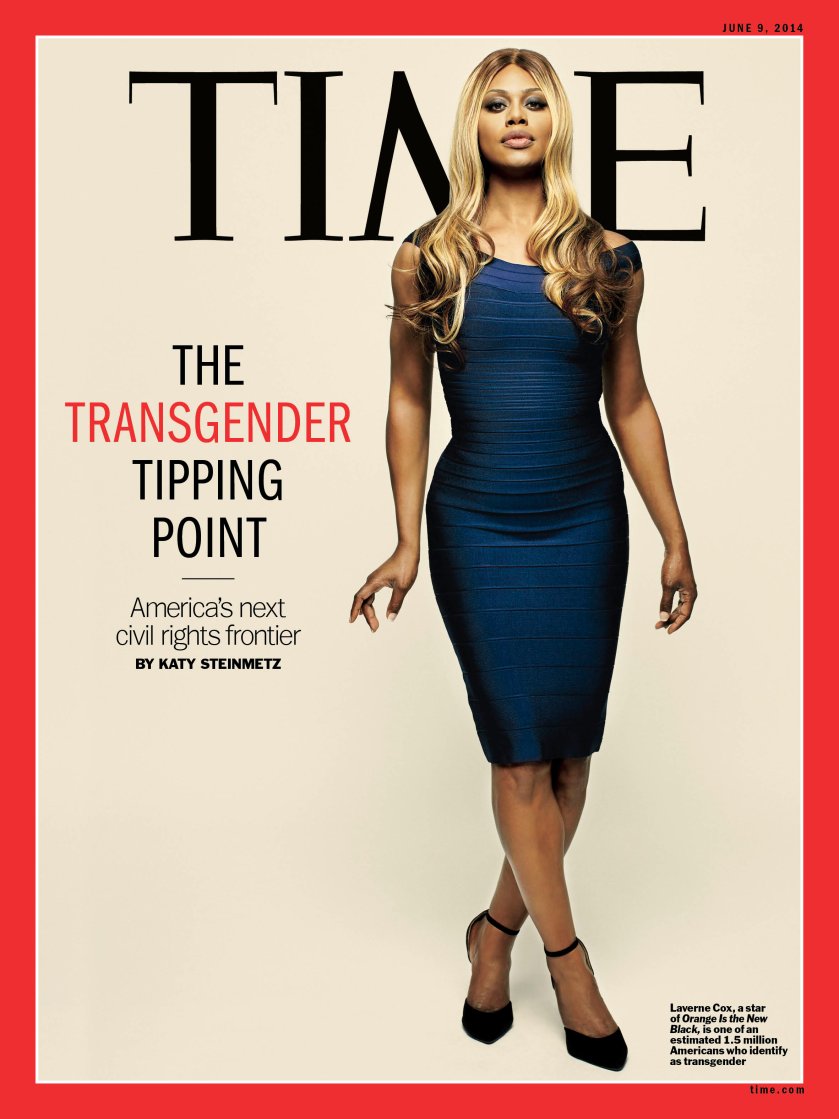
    Fait accompli: 9 June 2014, Laverne Cox, an American transgender, appeared on the cover of Time magazine in an effort to make the public accept that the world had reached a transgender tipping point (with America supposedly having 1.5 million people identifying as transgender already). But up to that point, there had really been nothing preceding the announcement to warrant it being a tipping point. It was just dropped fully formed into the culture, as a way of making the world accept the “fact”


    I am an investigative journalist who writes at the intersection of the gender industry, technology, and runaway corporatism. I got into writing about this industry because I was in activist circles. I have campaigned for women’s rights since I was in my 20s. I have also campaigned about the environment, etc.


    There came a point around 2013 or so that suddenly people were being de-platformed for acknowledging the biological reality that they were, that we are a sexually dimorphic species. There are only male and female sexes and there is nothing else in between.


    Transsexualism has been around in the United States probably since the 1950s. People remember Christine Jorgensen who made a big splash in the papers. But transsexualism wasn’t really part of our social vernacular at all. There were a few men who had this adult male fetish appropriating a simulacrum of female biology for their sexual gratification.


    There used to be cross dressing, transvestite. And then as soon as the medical industrial complex advanced to the point where they could make reasonably good fake simulacrums of female genitalia, they started to appropriate female anatomy.


    Then in the 1940s, William Simms Bainbridge was born. He graduated from Harvard as a sociology professor, and has written many books about cults, technology, and the future of psychological mind control. He now works as the head of the National Science Foundation’s Cyber-Human Programme, which is melding. It basically overlooks the ethics involved in human-cyber melding.


    You can see the trajectory in artificial intelligence, transhumanism, robots, nanotechnology, biotechnology, etc. This is where we are going now. Silicon Valley has been pushing the transhumanism agenda since the early 2000s or late 1990s.


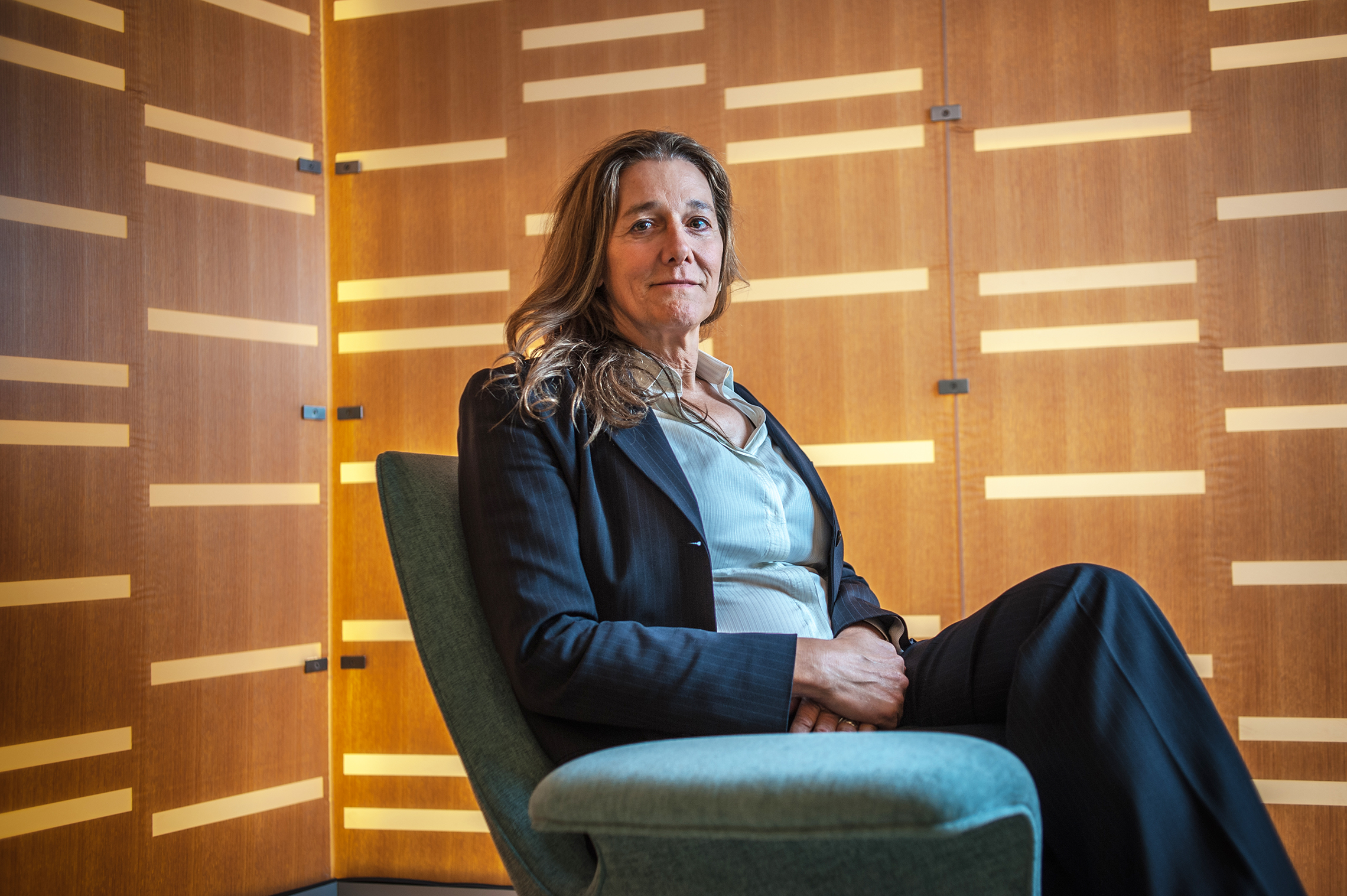
    So Bainbridge meets up with another interesting character, Martine Aliana Rothblatt, who is also a transhumanist and a transsexual, who appropriated a simulacrum of women’s biology for himself. He calls himself a transgender or a transsexual. He has travelled around broadly in the culture in many different circles because he has accomplished so many different things. He is very well renowned.


    Pathfinder: Christine Jorgensen, actress and trans woman, was the first person to become widely known in America in the 1950s for having sex reassignment surgery

    He has been in the teaching sector, he has been in the medical sector, he has been all over Hollywood, he has been on the Oprah Winfrey show and a million different shows with his robot wife which he created.


    [Editors note: At age 40 in 1994, Rothblatt, a man born in 1954, underwent 6 reassignment surgery and publicly identified for the first time as a transgender and changed his name to Martine. As a man, he was called Martin, but since pronouncing himself a woman, she has, according to her website, “become a vocal advocate for gender rights and has led efforts to establish health law standards for the transgender community, and to resist discriminatory legislation”.


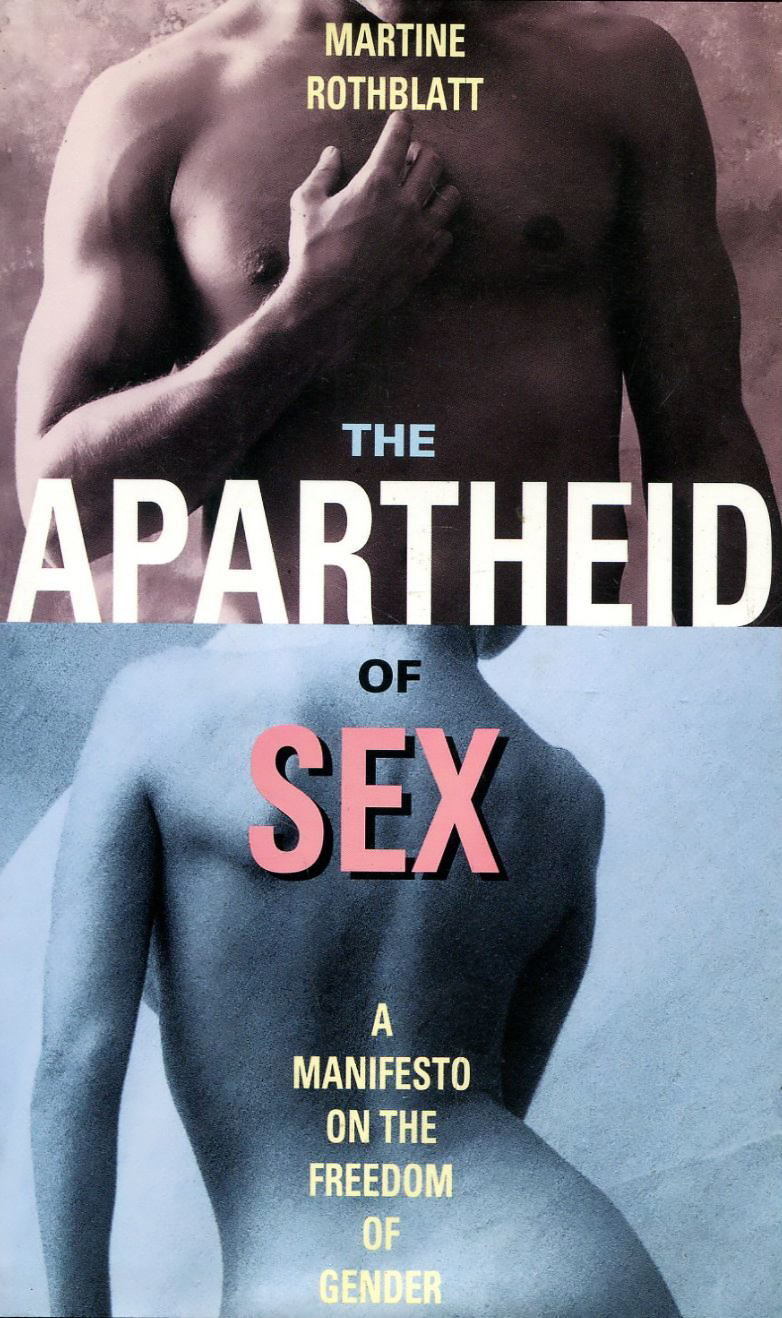
    [His 1995 book, Apartheid of Sex: A Manifesto on the Freedom of Gender, has become a canon in the transgender world. As a “woman” and CEO of United Therapeutics and the radio station SiriusXM, she earned $38 million in 2013, making her America’s highest-paid female executive. According to his website, “her (other) book, Virtually Human, explores what the not-too-distant future will look like when cyber-consciousness becomes part of our daily lives”. Before changing to a woman, he had married his wife Bina Rothblatt in 1981 and had had 2 children with her].


    Rothblatt’s book, Apartheid of Sex: A Manifesto on the Freedom of Gender, has become really a blueprint of what is going on in the culture and ideology today. Now the ideology is working off the work of Bainbridge. Basically, it is saying we are going to disintegrate the boundary between the sexes. There will be no male or female, only trans-women who will be out there in cyberspace ultimately. It will be an upgrade in humanity, melding yourself with machines, and transferring human reproduction to the tech sector.

    The boss: William Simms Bainbridge, shy and self-effacing, is one of the main leaders of the transsexual world

    It was in the late 1980s when Bainbridge got together with a whole bunch of other transvestite lawyers and transsexuals and created a document which was the very first gender bill, which brings “embodiment” into law, the sexual objectification of the female biology, and making a human right out of it.


    Disembodied, where he is going is full of disembodied beings, where everybody lives in cyberspace. We live in a virtual reality. We don’t live in our bodies anymore, we are going to be uploaded into cyberspace, according to Bainbridge and his friends.


    And in order to sell that to the public, sell transhumanism and embodiment to the public, they had to groom some people and get them there. And the way to do that was to create this ideology that says you can choose your sex. That’s just embodiment.


    But you can’t choose your sex. You are the body you were born in, no matter what happens to you. I mean in 200 years’ time, if they dig up my bones, they are going to find a female. You can’t change that. But the ideology is promoting the idea that you can change your sex, and they are driving this ideology into children’s schools, and not only their own schools.


    They are also driving it into the entertainment and social media platforms, and all the organisations that cater for children are jumping on board this ideology. And, you know what: this has only happened in the past 10 years. Before then, we didn’t hear about transgenderism or transsexualism.


    Enter Time magazine

    In 2014, Laverne Cox was put on the cover of Time magazine, owned by Mark Benioff, and it announced a transgender tipping point when there was really nothing preceding it to warrant it being pronounced a tipping point. It was just dropped fully formed into the culture in 2014.


    From then on, it was just like a chant – over and over and over again, it was repeated. You heard transgender, transgender rights, and human rights pronounced in the same breath.


    These huge NGOs, these very huge, non-governmental organisations serving the LGBTQ community worked hand in hand with international law firms like Hogan Ludlow, Danton’s, and Open Society Foundation lawyers to create legal guides for transgender children.

    So they started to build this edifice of transgender children to drive the narrative that you can be born in the wrong body. Then we heard the initial stories about the poor children in wrong bodies. And a decade later, it has morphed into just “expressing yourself”.


    They say you can be a male, you can be a female, you could be non-binary, you can have both genitalia – but this is all about self-expression now.  So it has really morphed in the course of 10 years into the right to augment yourself in whatever way you see fit.


    Now we see pain, technology, and religious cult meeting Rothblatt fetish, and they have taken off together and are now in the techno medical field here in the USA. And this is a cult they are driving over meadows, and people are buying it, the same people who are supposedly intelligent. They are buying the idea that you can be born in a wrong body.


    And you have to ask yourself why would this happen in the span of 10 years, when human rights movements don’t act like that? They don’t come up like that. They come up against these entities, corporate entities, to fight oppression, not to offer them more profiteering. So all of these people at the top are thinking about the same way.


    It’s like Rothblatt and Bainbridge got together to form this ideology. Rothblatt has actually written about it, about the technological takeover of human reproduction, and transgenderism morphing into transhumanism, and how to drive it. He has organised conferences and spoken at conferences all over on how to do that. So Rothblatt is right there. He is starring in this movie and trying to drive his ideology through institutions.


    And you have these gay men who suffered through the AIDS crisis. Even if they didn’t suffer themselves, they watched their brothers and cousins die. The LGBT human rights movement was very young when AIDS hit. Immediately the medical industrial complex swoops in, and the philanthropic organisations also come up to serve them and serve the public.

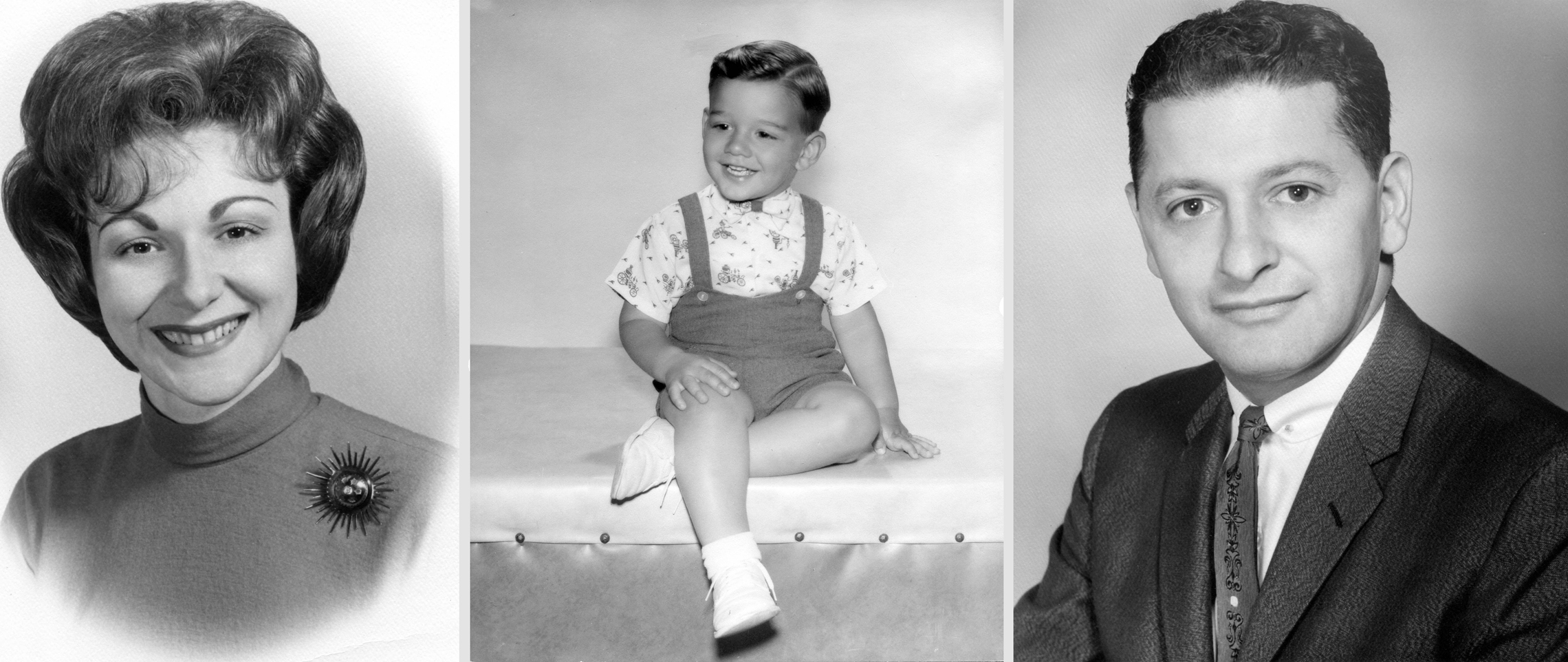
    Lovely boy: Born in 1954 as Martin, a boy, Rothblatt is seen here (centre of photo) with his parents – Rosa Lee (left) a speech therapist, and Harold (right) a dentist

    So once AIDS disappears, though you have these mammoth, what was then LGBT organisations, teach people about safe sex, how AIDS is transferred, and they help people, they were getting all this money for their efforts.


    The real bosses

    It was in the late 1990s or early 2000s when the first two major LGBT organisations came up in the United States. You have the Tim Gill Foundation, and you have Jon Lloyd Stryker starting the Arcus Foundation, which is probably the most significant LGBT organisation in the world.


    [Stryker’s net worth, according to Forbes magazine, is over $4.2bn. He is the head of Stryker Corporation, a medical technology company, and also the founder and president of Arcus Foundation, which primarily supports “LGBTQ social justice”. Tim Gill, on the other hand, is the founder of Quark Inc, producer of the computer software programme, Quark Express. He is also an LGBTQ rights activist who was among the first openly gay people to be on Forbes magazine’s 400 list of America’s richest people].


    The Arcus Foundation and the Gill Foundation send millions and millions and millions of dollars to our educational institutions, medical institutions, prisons, organisations that serve the community like churches, they are all over. And their funding mechanism is contingent upon adopting the gender ideology.


    And then other trans organisations started to come up, and this was not to serve transgender people or people who thought they were born in wrong bodies, but it was to de-stigmatise the transgender and transhuman fetish. And all that the new trans organisations had to do was to get on board this “progressive” ideology. They have been told it’s “progressive”. It’s part of LGBTQ. The trans organisations don’t really think about what they are doing.


    Then at the same time, the media is promoting it as a human right, human right, human right! Well, there are thousands and tens of thousands of children who are identifying now as transgender.


    There are also thousands of children on puberty blockers that disrupt their growth, ruin their bones, bring all sorts of complications such as water in the brain, etc. These kids usually graduate to cross-sex hormones, which are even more dangerous. And they are going to take those “medications” for a lifetime. They are going to be sterilised.


    Three is a family: Now a woman, Martine Rothblatt (centre) is seen here in 2019 with his wife Bina (right) and daughter Jenesis (left).

    I think the first Children’s Gender Clinic came up in 2007 and now we have hundreds of them in the United States. Where did they all come from, and why? Nobody examines the issue, why this is happening?


    Why are suddenly children like committing suicide in droves? They are jumping out of buildings because they want to be the opposite sex, like we never heard about it before. If big pharma could have made a bank on this 50 years ago, we would have heard about it. This is totally a top-down arrangement of power and comes again from the highest echelons of society and finance.


    Money, money, money

    For example, the founder of the Outright Leadership, which is the business networking arm of the LGBTQ movement, comes from banking. The guy that runs it comes from banking. John Stryker, head of the Arcus Foundation, comes from banking. There is no Harvey character here. Do you know what I mean? There is no grassroots activist there. These are all Uber businessmen.


    So you have a profiteering motive, absolutely. Drugs, surgeries, surgery equipment, and not just hormones and puberty blockers, but you have antibiotics, and anti-rejection medications. You have a myriad of surgeries that people want to have after they have this attack basically on their sex, a medical attack on their sex.


    Then they want to get their neck done, they want to get their Adam’s apple done, and they want to have their jaw shaved off. It’s like a compulsion driven through technology. It’s a consumerist orgy. And we are the ones being consumed, us people, our sex is being actually deconstructed. It’s not just an idea or an ideology. It’s actually happening. Now.


    They are removing young women’s reproductive organs at major hospitals. So sex is actually medically being deconstructed as well as ideologically, legally, and linguistically in the culture.


    If you convince a whole generation of children that they can choose their own sex, they are not going to know where they come from. That’s how we are tethered to everything else in the universe – because all you know in the biological world is reproduction, regeneration, death, repeatedly. But teaching children that they can live forever, that they can dissociate themselves from their sex reality is madness, absolute madness, because it goes against the grain of reality.


    That’s why they are driving an ideology of physical dissociation from your sex reality. This is what’s going on here, but why is this happening? If you confront that over and over again, you find that it’s all part of the medical tech sector. If you sterilise a whole generation of children, they are going to need reproductive services.


    So, yes, this is really an occupation. I mean as a feminist, I see it as an occupation of womanhood. It’s not just biology like you knew before, like it was used in prostitutes or sex workers. This is like the pinnacle of objectification. “We are going to take your biology, we are going to wear it as a costume first of all. And second of all, we are going to transfer this reproductive capacity that you have to the tech sector”.


    And this is why women are being legally erased in language and in law. They just took the word woman out of the Cambridge English Dictionary, and they replaced it with “anybody who feels like a woman”.


    It is profiteering

    The way they transfer the human repertoire to the tech sector is through all the big fertility treatments that are out there – freezing your eggs, and freezing your sperms, and surrogacy. And they are researching womb transplants. It is profiteering. It is social control in the sense that they really, literally, want to break the sex apart.


    Another money bag: Tim Gill’s foundation and others like it send millions and millions and millions of dollars to educational and medical institutions, prisons, and organisations that serve communities like churches, etc, and on one condition: the funding mechanism is contingent on adopting the gender ideology

    They want to break apart the boundary between the males and females of our species. They perceive this as progress. You will be unburdened – bisexual stereotypes and inequalities, and mothers and women won’t have to have children. It’s like, look at the tampon, you know what I mean, suddenly women can leave the house, they don’t have to sit in their backyard or on his stack of rags.


    It’s the advancement of technology to improve our lives, they say. But we never get a say in any of that. We don’t get to decide, and we don’t get all the information. This is all elites deciding for us, it is like ride the bullet train of the market.


    Everybody is profiteering off this now, even if they have no idea what it is all about – transgender modelling agencies, gender fluid makeup photographers taking pictures of transgender children, it’s everywhere.


    And this same message is being driven into grade schools. By the second grade, they are learning about gender identity, talking hormones. And this was all brought in under anti-bullying programmes, which were passed by President Barack Obama’s administration and funded by Pritzker, one of the largest and most famous families in America, there are many of them.


    Jennifer Pritzker was an Army colonel who purports to be a female and runs around with synthetic sex characteristics of a female. And he drives his ideology into the psychiatric departments of major universities, into other medical institutions, gender, hospitals, the military, etc, etc.


    His company, Tolani Foundation, is partnered with Squadron Capital, which is a medical device company. So he is following the same trajectory of the Arcus Foundation. Stryker Medical is a medical supply company. They are going to be profiting off these surgeries. No, they are not just so-called gender surgeries but human augmentation.


    When we open the door to these kinds of radical changes to our biology, the way that we were planted in the ecosphere, once we let go that tether, anything is up for grabs. They manipulate your DNA. They can manipulate the way you want. And that’s why these rights are, from what I can tell, these gender rights are being passed. It’s not about people that are allowing medical attack on their sex, it’s for future augmented human beings.


    Follow the money

    I follow the money and money trails do not lie, they tell you the truth. And I don’t care how I sound because it didn’t matter to me, it just didn’t matter. Just get the information out of there so people can go looking for it themselves, because again it is not hidden and none of this is hidden. It’s just that people are not looking for it, they are looking at the human rights angle.


    The individuals who feel trapped in wrong bodies, my heart breaks, it’s so ridiculous. And all the governments, all the politicians, all the major banks, all the financial investment houses, all the medical institutions, universities, schools, corporations, the law firms – they have all jumped on board within 10 years supposedly to help poor people who have identity issues, who have body dysphasia. This is so patently ridiculous and people just gobble it up.


    I have seen people with body dysphoria related to their limbs, body integrity, identity disorder, and they feel like their limbs don’t belong to them. It’s usually a lower extremity, a leg or a foot. They just feel like they want to cut it off because it just feels so wrong.


    And psychiatrists have a notorious difficulty trying to treat these people, but we have not made any parades for them. We haven’t started a human rights movement for them. We haven’t put them on the cover of the Time magazine. We have not had a makeup line for them or modelling agency.


    I can say the same thing for anorexia. It is a form of body dysmorphia. But why is it only happening to people who are claiming a synthetic sex identity, and why has it happened across the board in so many different countries.


    Laws are changing and languages are changing to uproot the way that we are organised as a society. Why would you do that to people? It is an absolute insanity, it’s madness. Nothing means anything anymore. There are no boundaries, only boundaries of looseness!


    If you want to know anything in America…


    Yet another money bag: Jon Lloyd Stryker, a proud LGBTQ+ billionaire has not been ashamed to let his billions finance the cause

    I started following the money around the issue, because if you want to know anything in America you follow the money. And I started following the money and looked at all these different NGOs, these non-governmental organisations are really huge. They are huge like the Arcus Foundation. They are mammoth.


    They have each been given like half a billion dollars to spread this ideology through it, and through cultures, and not just our American cultures but Western cultures generally – because they fund other organisations to do the same thing, and they create the whole scaffolding, this political scaffolding, to drive it. As a result, they have media people on their side and people who have been trained in politics.


    They are called from different schools and different areas that are going to work for them, and they train them to be in those positions to drive policy through the culture.


    And so they have media people as well, like Glad is the media arm. So Glad and the Arcus Foundation are closely working together. Glad goes about spreading information about how people are supposed to talk about it because it’s a human right and you don’t want to offend anybody.


    In 75 different countries, the medical industrial complex is bigger than the military industrial complex. So I picked up a few different characters that are very prominent. But there are many others, whether or not they actually know what they are doing. This is all big pharma, big tech, and big finance.

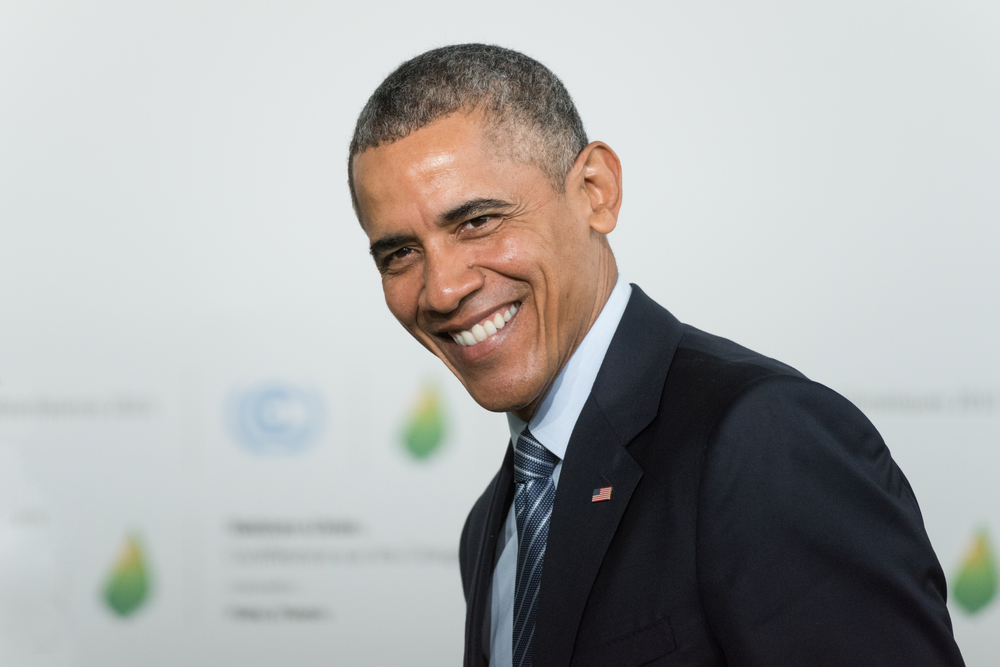
    The man who let it all happen: Former President Barack Obama, who has a beautiful, intelligent and loyal wife, an attorney in her own right, allowed the LGBTQ+ agenda to infest American grade schools, brought in under anti-bullying programmes which Obama’s administration willingly and enthusiastically passed

    We have stories for them, where they can actually go and buy paraphernalia for their fetish. But why are we normalising fetish, because if your fetish is for another person, it is an objectification of them, because you are trying to fill up the holes that this society has created.


    Instead of looking at society and how damaged and broken it is, that it is not giving us what we need, all these aberrant behaviours are being supported, which is an absolute madness.


    No debate, no debate

    They dispense gender ideology. It’s sort of like the old Christians who used to come into American and Indian communities and indoctrinate them into Christianity. Well, this is very similar, it’s technological religion and they are indoctrinating people, but the people don’t understand why they don’t talk about it. No debate, no debate. You can’t talk about it. You can’t even talk about womanhood because that is transphobic. Everything is transphobic, it’s becoming like a joke on social media.

    Jennifer Pritzker, a former Army colonel who purports to be a female and runs around with synthetic sex characteristics of a female, has done a lot pushing the LGBTQ+ ideology through his company, Tolani Foundation

    Now the construct of the transgender child had to be created and how to communicate it, like how to drive this ideology. They have created guides basically for people, and this is created through the enormous NGOs which work with international law firms. And then they are sent down to say some people are born in wrong bodies.


    I see Governor Pfizer has just sent a bill through the schools in Illinois, Chicago, specifically that if you want health education in your school, you have to adopt gender ideology. You have to teach kids about gender ideology, which means they can know you can change your sex, and you can get hormones and puberty blockers.


    You can change your name, and if you are a kid, be taught from very sexualised material, including even anal sex and the whole gamut. It’s bondage. Anything you can think of, they are teaching them to young children.


    So I think the first real platform of its kind was for them to see how this went over. Most teachers and adoptive parents have accepted it because they don’t want to be seen as terrible people. This is part of the LGBTQ agenda. They have been accepted in society now, usually someone knows somebody in their family somewhere who is gay or lesbian or bisexual. So it’s like, “oh, this is just part of life”. This is what we have been told, not once, not twice, but over and over again.


    But most parents said no, and still say no. Which is a credit to them. But the transgender and LGBTQ advocates are still pushing it through schools. And the kids are being exposed to highly sexualised material.


    They have got drag queen story hours, grown men dancing with G-strings on, and what partners do with each other. It’s not anything you know, it’s just another way to be human.


    Penis goodbye parties

    God, I think we should just throw the whole thing out – like the idea that testosterone really drives aggression. Women are being erased in language and in law, it’s like we don’t exist. Rapists are being put in women prisons because it doesn’t matter, sex doesn’t matter, only gender identity matter, the feeling that you have about yourself matters. It’s way, way top heavy with young women having their sex bodies medically attacked.


    When you follow the money like I do, you find answers. It’s all going to the tech sector, they want reality without being brought to face the law. Women are being legally arrested to sort of overlay a virtual reality over the natural world, and subjugating the natural world.


    Martine Rothblatt says we are, in very short order, going to be living in a virtual reality, and he says that he is building a virtual reality. He actually lives in virtual reality already, which I actually agree with, because there is not a whole lot of planet left for them to destroy and colonise. Look at the way they are sexualising children and traumatising them sexually by exposing them to adult material. It is crazy.

    The canon: The front cover of Martine Rothblatt’s book which has become almost the bible of the LGBTQ+ world

    Before the advent of the internet, we didn’t have that kind of exposure to all the things outside of our own little community. Today you hear people really talking about the castration surgery and actually following him in the operation room. And then People magazine putting out the spreads, celebrating his penis goodbye party, where he has a penis cake. And this is a big celebration. It’s absolute madness.

  • Africa and the world map

    Africa and the world map

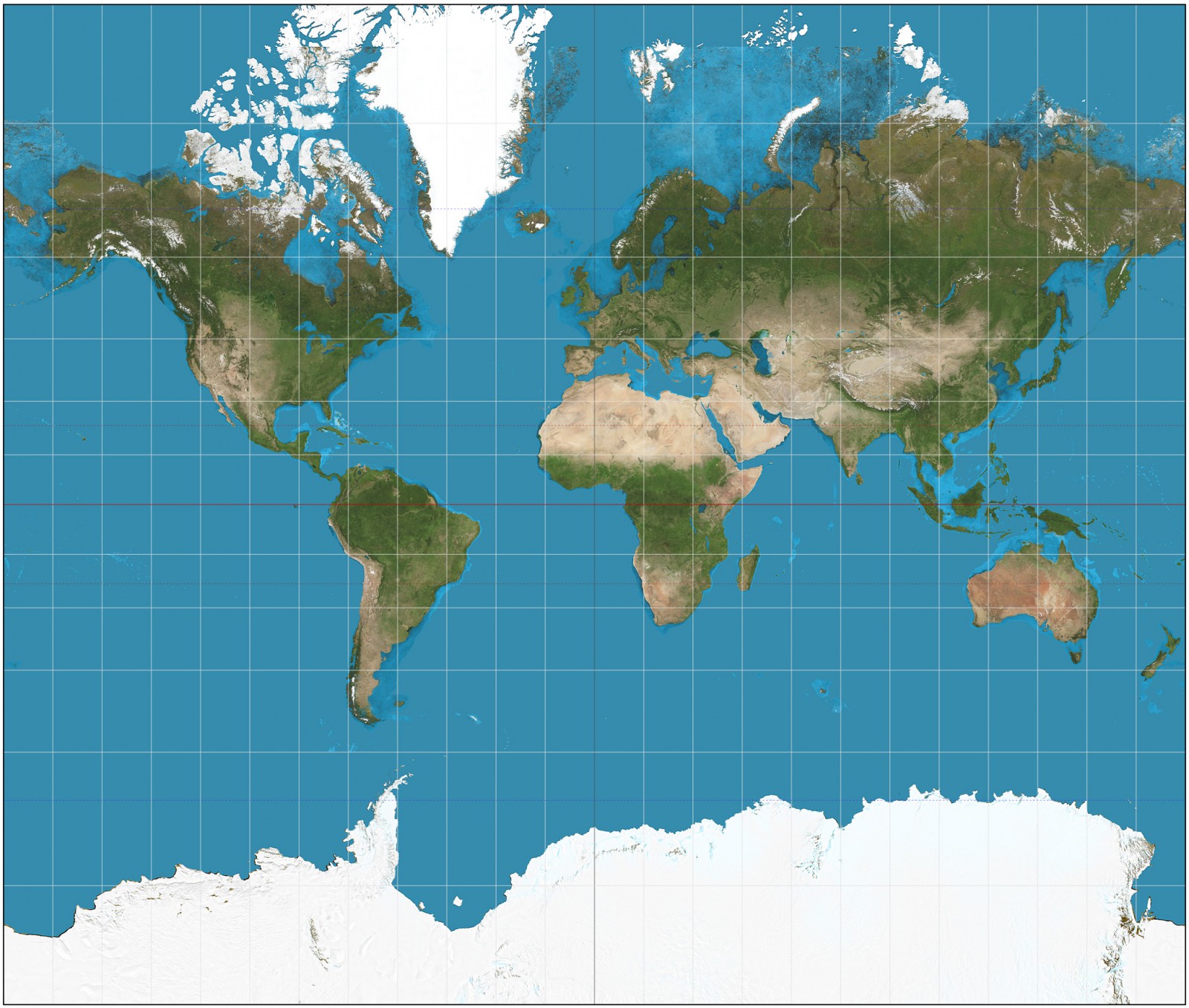
    If you believe what you see on the world map, Africa is smaller in size than Canada and even Greenland. Yet they say Africa is the second largest continent in the world, after Asia. So how come Canada and Greenland look bigger on the world map than Africa? Loz Blain, an Australian journalist, provides the answer: “Most common world maps are highly size distorted, with any land masses located towards the poles tending to look much bigger than they really are.” This month we examine the real reasons Africa looks smaller on the world map than its actual size. This piece is reprinted by courtesy of The Africa Factbook.


    “Creating 2-D maps of the entire Earth is a hard job,” concedes Loz Blain, a versatile Australian journalist, photographer, videographer, presenter, producer, podcast engineer, and a senior features writer. “The Earth is a sphere, and trying to nicely unwrap it into a neat rectangle leads to varying degrees of distortion,” Blain explains. “Take Canada as an example – it looks absolutely enormous, but if you remove the cylindrical distortion, you find it’s not actually that much bigger than Australia (if you don’t consider an extra 2.3 million square kilometres or 888,000 square miles) much.”


    In his book, The World Through Maps: A History of Cartography, John Rennie Short, a professor of geography and public policy at the University of Maryland Baltimore County, USA, makes a profound statement: “Maps are neither mirrors of nature nor neutral transmitters of universal truths. They are narratives with a purpose, stories with an agenda. They contain silences as well as articulations, secrets as well as knowledge, lies as well as truth. They are

    biased, partial, and selective.”


    A map is defined as a graphic representation, usually on a flat surface, of a whole or part of an area. Produced by cartographers who attempt to describe spatial relationships of specific features or to represent specific things, maps can display natural resources, physical features, climates, roads, elevation (topography), political boundaries, population, and economic activities.


    Because the Earth is a three-dimensional object that is close to a sphere, globes have been used as the most accurate representation of maps. Since the Earth is very big, projecting it onto a surface makes maps lose accuracy. Maps, thus, become subjective views of the cartographer, and they represent what the mapmaker considers important enough to include or exclude, emphasise or de-emphasise, and/or to depict as large or small.


    Since it is mathematically impossible to preserve variables such as size, shape, direction, and distance simultaneously, maps inherently distort reality, however hard cartographers have tried. Maps should, therefore, not be seen as mere graphic representations of places. They carry heavy social, economic, and political weight, and they are inherently deceptive.


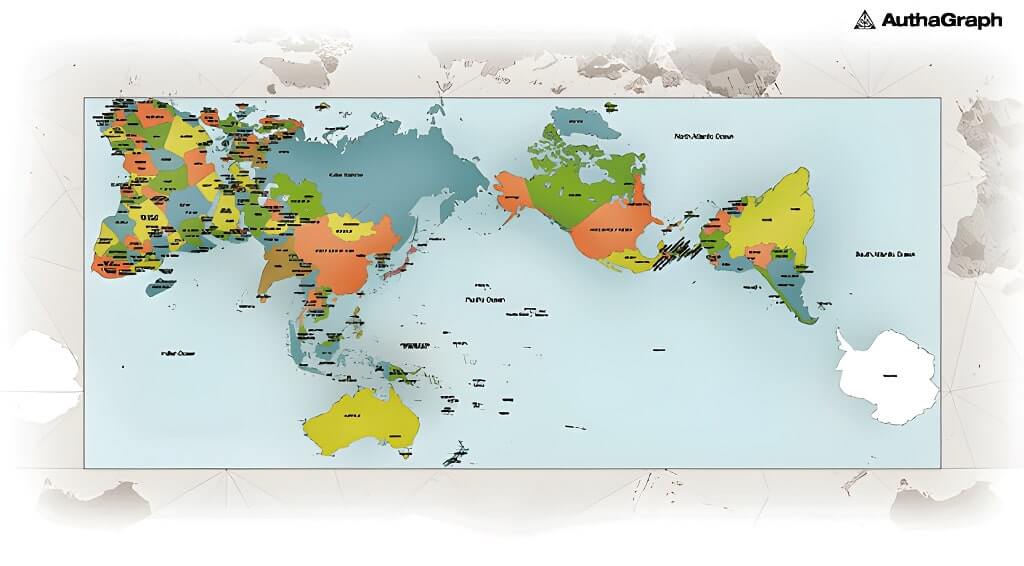
    Map projections are named after either the person who first used it, the method used to produce it, or a combination of the two. Examples include Mercator, Transverse Mercator, Robinson, Lambert Azimuthal Equal Area, Miller Cylindrical, Gall-Peters, Orthographic, Stereographic, Gnomonic, Mollweide, AuthaGraph, and Boggs Eumorphic.


    The problems with maps

    Take a look at any world map and you will see that the world’s largest island, Greenland, is staggeringly big and it is projected to be the same size as Africa. In reality, Africa is 14 times larger. The reason is simple: Most “Western maps” use the Mercator Projection, which makes Africa, like everything near the Equator, very small.

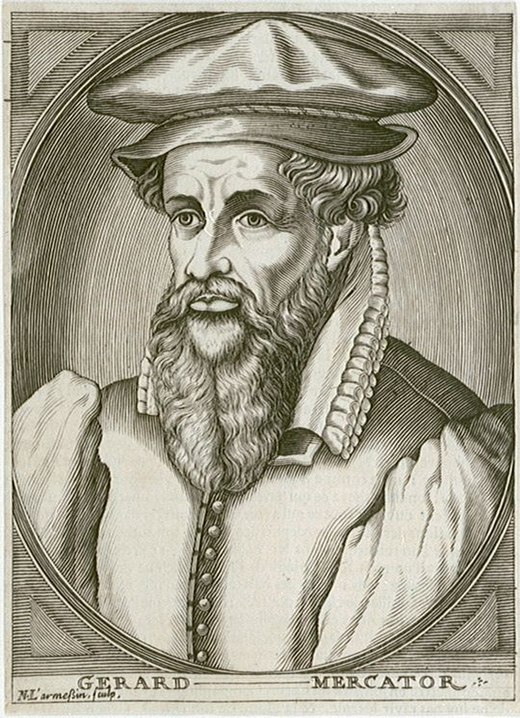
    By contrast, Greenland and Alaska appear huge because their sizes are inflated like everything near the poles. Drawn in 1569 by the Flemish cartographer, Geert de Kremer (also known as Gerardus Mercator), the map became popular because Mercator decided on drawing a planisphere, which represented the meridians and parallels as straight lines that cross at right angles, and thus preserved local angular relationships, thereby helping sailors to navigate the world’s oceans.


    As suggested by the first title he used: Nova et Aucta Orbis Terrae Descriptio ad Usum Navigantium Emendata Accommodata (“A New and Augmented Description of Earth Corrected for the Use of Sailors”), Mercator intended it to aid sea-farers, and it became the perfect answer to sailors’ navigational problems. But the greatest drawback is that the Mercator map massively distorts size and distance as one gets closer to the poles.


    This has resulted in great misrepresentation of geographic reality, and has helped create the misleading Eurocentric world we see today, with great implications for global politics and economics, and negative consequences for regions like Africa.


    Although it was originally created for the convenience of 16th-century sea-captains, the Mercator map has, nevertheless, become the de facto standard for world mapping. Today, it is used from geography textbooks to Google Maps, and it is the only way most people recognise the position and size of the Earth’s countries and continents.


    While a revolutionary and convenient tool for ships’ captains, the Mercator projection distorts the relative size of the continents, to the advantage of the West, to which it gives undue prominence by pumping up the sizes of Europe and North America. For example, on maps, Canada and Russia appear to take up about 25% of the Earth’s landmass; in reality they occupy a mere 5%.


    It would be far-fetched to think that Mercator enlarged Europe and North America by accident; the cartographer was undoubtedly shaped by the politics and ideas of his time. That his map used mathematics cannot hide the fact that it was a map made for Europeans by a European. He projected his native Europe as an outsized landmass to the disadvantage of places like Africa.


    The repercussions have been enduring, and are still being felt today. Despite its imperfections, however, and attempts to create alternatives, the Mercator map still dominates the mapping landscape, with new digital mapping applications helping to further strengthen its position. Ironically, modern online geospatial applications on computers and mobile devices rely on the 16th-century tool

    created to help explorers on the high seas.


    The true size of Africa

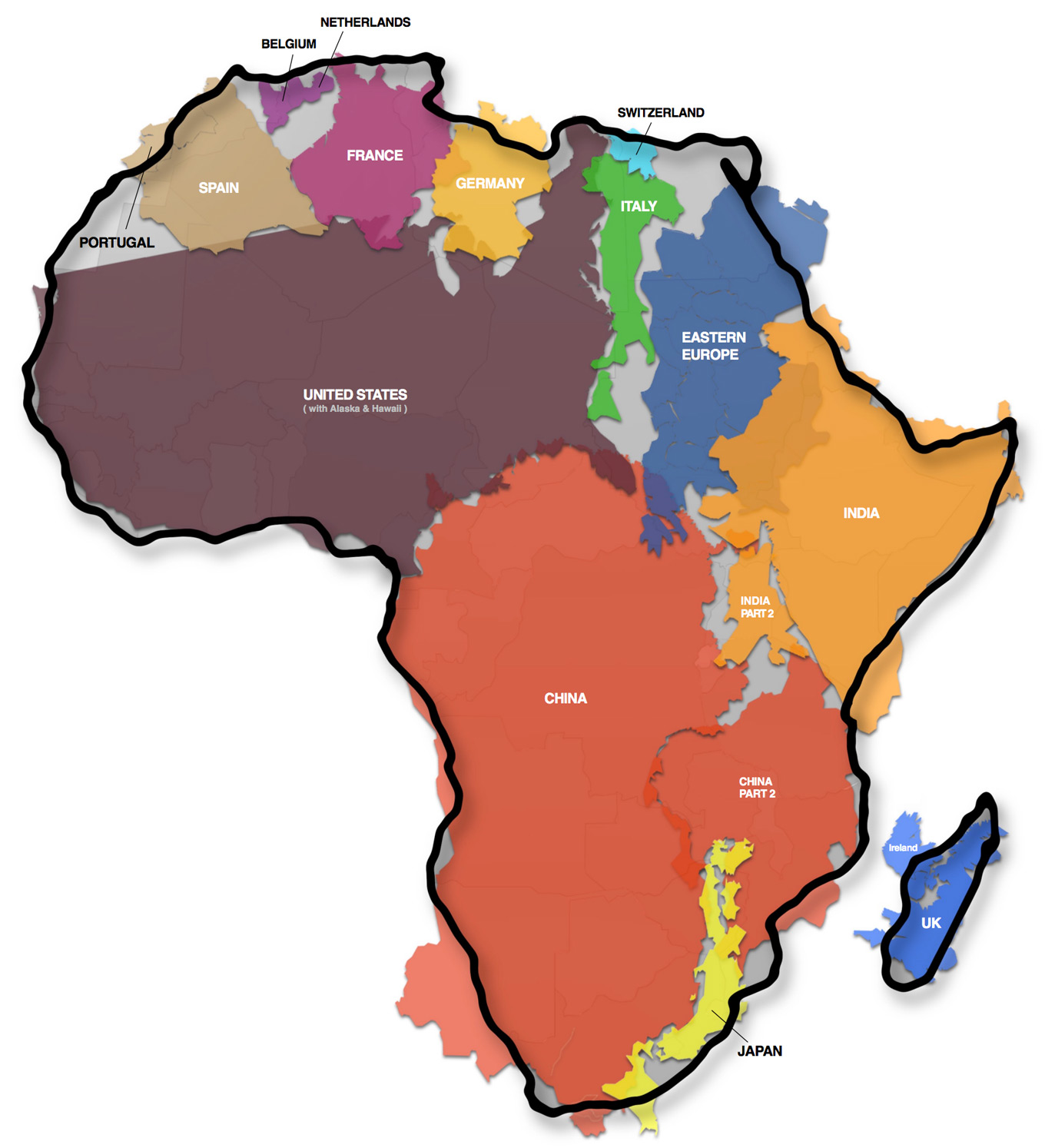
    While on most maps it does not look it, Africa is really big; its true size is 30.37 million square km (or 11.73 million square miles). Africa is bigger than Canada, the contiguous United States and China put together!

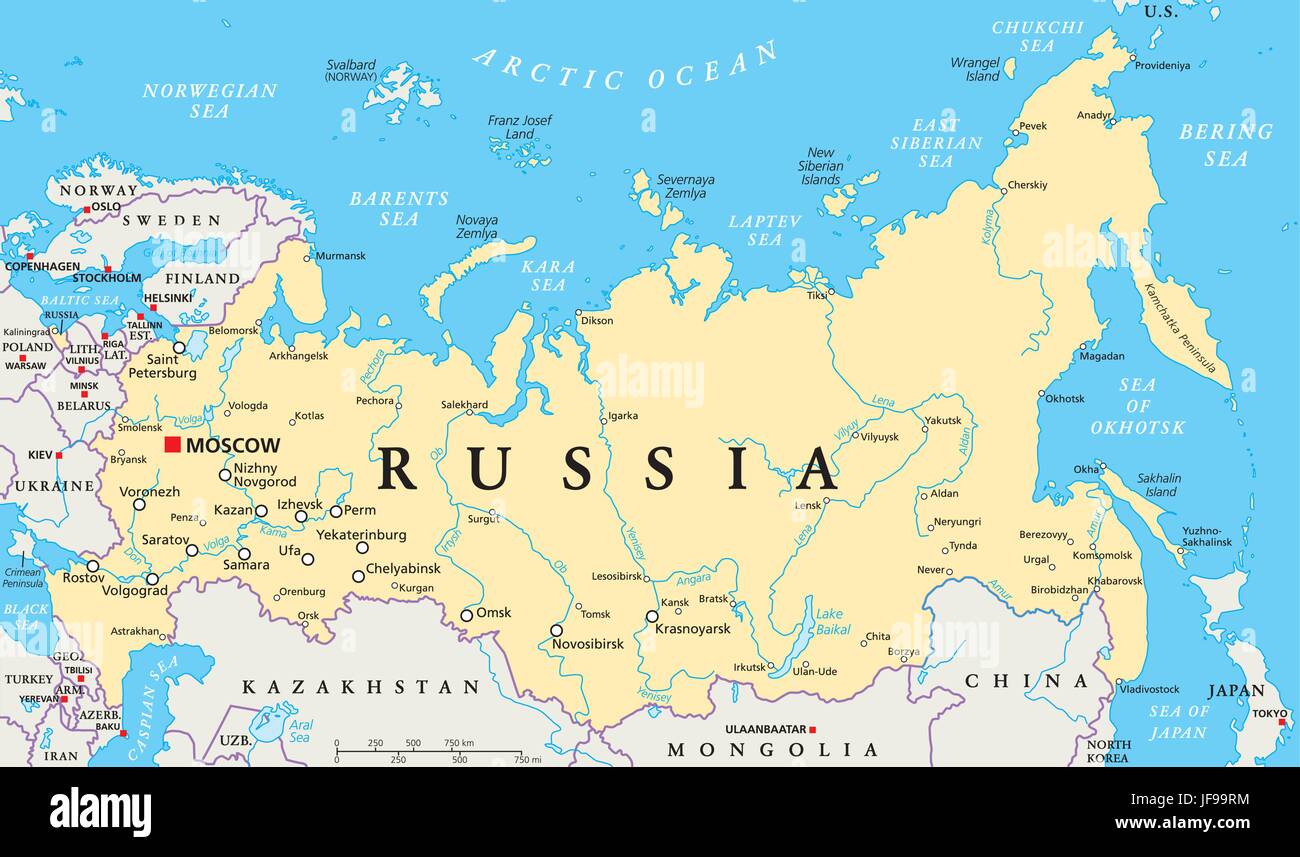
    On maps, while Africa’s size (11.73 million square miles) is shrunk, Russia’s size (6.6 million square miles) is exaggerated, which makes Russia appear bigger than Africa. In reality, Africa is almost twice the size of Russia. Canada too, on a map, looks a lot bigger than Africa when, in actual fact, three Canadas would comfortably fit inside Africa.


    Another distortion is Greenland, which, on a map, looks about the same size as the whole of Africa. In truth, Greenland (2.2 million square km or 849,424 square miles) is smaller than Africa’s second-largest country, the Democratic Republic of Congo (2.3 million square km or 905,355 square miles). DRCongo used to be the third-largest African country behind Algeria and Sudan. In 2011 when South Sudan became an independent country, Sudan moved to third place behind DRCongo.


    There have been some attempts made to correct the Mercator map. One of these is the Gall-Peters Projection (1855). It is a rectangular map projection that maps all areas such that they have the correct sizes relative to each other.


    There is also the Van der Grinten Projection (1898), which is a compromise projection, neither equal-area nor conformal. Unlike perspective projections, the Van der Grinten is an arbitrary geometric construction which projects the entire Earth into a circle.


    Also on the list is the Winkel Tripel Projection (1921) which had the goal of minimising three kinds of distortions: area, direction, and distance. There is also the Robinson Projection devised by Arthur H. Robinson in 1963. It was specifically created in an attempt to find a good compromise to the problem of readily showing the whole globe as a flat image.

    There is yet another projection, the AuthaGraph world map created in 2016 by the Japanese architect Hajime Narukawa, which is considered the most accurate map of the world yet. Narukawa’s projection won the Japan Institute of Design Promotion’s Good Design Award for 2016. An alumnus of the Keio University Graduate School of Media and Governance, Narukawa was able to produce a projection that represents the size and shape of land masses more accurately than any projection before it.


    Maps as political tools

    Navigational tools like the compass and Mercator’s map helped spur Europe’s overseas conquest and domination. The Scramble for Africa, also known as the Race for Africa or Partition of Africa, was a process of invasion, occupation, colonisation, and annexation of African territory by European powers.


    Contrary to what Europeans like to portray, Europe was not driven by any altruistic considerations to go on a “civilising mission”. The colonial powers fought for African territory to indulge their insatiable greed for raw materials like palm oil, cotton, palm kernel, rubber, groundnut, gold, diamonds, ivory, cobalt, precious metals, quinine, and other medicines.


    Countries have used and continue to use maps for political and economic purposes. Unfortunately, it is only Africans who are yet to discover how to employ maps as “power projection” to their advantage. Here are some examples: In 1623, Chinese map-makers created the Chinese Globe map for their emperor which reflected their view of the world. The Chinese simply over-stated the size of their country, placed it in the middle of the world and represented the rest of the world as small islands.


    In 1921, when the newly-forged Union of Soviet Socialist Republics (USSR) was threatened with invasion and social unrest, Soviet map-makers led by Dimitri Moor were pressed into service to create pro-Bolshevik propaganda maps, which helped to redefine the Soviet Union in popular imagination.


    Since 1507 when Martin Waldseemüller created the first map to have used the name “America” and show the Americas as a separate continent, Americans have always seen maps for what they are: political tools to achieve national interests.


    As Christine Leuenberger, a Cornell University professor and expert on the politics of cartography, put it: “People generally assume that, well, science is just objective, and what we do in cartography is to represent the world ‘out there’. But it is never as clear cut. Maps are always selective. You always have to omit as much as you include. So, they are always political. It is impossible to construct an apolitical map.”


    Marianne Franklin, professor of Global Media and Politics at Goldsmiths College, University of London, was blunter: “The term ‘power of representation and representation of power’ sums up quite well how maps and the rise of the Western nation-state system and with that, empire and colonialism – are linked.”


    Since there is no concept of up in space, the Earth, as a spinning globe, should have no real top or bottom, but that fact did not stop European cartographers from putting Europe at the top half of maps. This serves no other purpose than to elevate Europe and make the rest of the world “look up” to the European continent. Africa is placed at the bottom so that people “look down” on the continent.


    Africa should refuse to be persuaded by the argument that Mercator maps appear distorted because he used the Equator as his starting point. It should be asked why Mercator chose to push the Equator far lower than the middle of the map, where it should be. If Mercator were to be honest, the Equator should be in the middle of the map.


    There is no doubt that the distorted image of Africa is responsible for most of the conception people have about the continent. Even high-ranking Western officials are not spared in thinking of Africa as a small place. Joe Biden, the current President of the United States of America, who was also the chairman of the influential US Senate Foreign Relations Committee, referred to “the nation of Africa” at a US-Africa Summit.


    Honest people realise that the current world map is not only inaccurate but it is also unfair to regions like Africa. That it persists only underpins the fact that it helps to reinforce the Western assumption that the world belongs to them.


    Were maps not used to distort Africa’s true size, even the most ardent European empire-builder would have been hard pressed to explain or justify why

    the tiny island of Britain (244,820 sq km or 94,526 sq miles) must rule one quarter of the world, including large tracts of Africa; or why the king of a small country like Belgium (30,528 sq km or 11,787 sq miles) should be able to lay claim to DRCongo, 80 times larger than his tiny Belgium. Africa’s true size had to be compressed so that Westerners could justify their occupation and exploitation of the continent.


    Also, the pencil-straight maps of African countries were arbitrarily drawn up by European cartographers to satisfy imperial ambitions, and they took no cognisance of people, history, or culture. The European bureaucrats who negotiated the territorial borders had little or no knowledge of Africa or the people that they were dividing among themselves, and they did not care much.


    As Lord Salisbury, the then British Prime Minister, noted in 1890: “We have been giving away mountains and rivers and lakes to each other, only hindered by the small impediment that we never knew exactly where the mountains and rivers and lakes were.”


    In many cases, natural features like mountains, rivers, and lakes, became the yardstick for demarcating borders with ethnic groups mercilessly divided between different colonial powers. Groups with a history of hostility towards each other were grouped together in the same colony.


    Apart from wholesale killings of the inhabitants (10 million in the DRCongo alone by King Leopold’s regime), the wanton theft and plunder of Africa’s resources, this arbitrary division of people into colonial enclaves called countries, caused irreparable damage to Africa, the effects of which are still being felt today. Colonialism completely destroyed the social fabric of the colonies by promoting division, violence, and by replacing indigenous conflict resolution mechanisms with authoritarian punitive judicial systems.


    Colonialist socialisation led to the creation of individualism in societies where the family is everything; the forced urbanisation resulted in rural to urban migration with devastating consequences for closely-knit family structures. The loss of land, culture, and the conscious promotion of European values resulted in an African totally alienated from his own culture and made to feel ashamed of being African.


    Indigenous governance systems were brutally uprooted and replaced with the violent totalitarianism of colonialism. The traditional ruling elite was smashed, and in its place was a new crop of elites, created, nurtured, and weaned to be loyal and pay allegiance to the colonial masters. This is why, in many African countries today, people’s allegiance to the state is often challenged by centrifugal forces commanded by tribal and ethnic loyalties.


    The economic effects of colonialism were no less devastating as the colonies were completely deindustrialised; their attempts at industrialisation were viciously smashed. Two good examples were the textile and distillery industries where Africans were stopped from producing their own clothing and their own gin.


    Punitive taxes were imposed on local producers so that their goods could not compete in prices with European imports. Africa was expected to function only as a source of raw materials for metropolitan industrial production, and as a consumer of finished Western goods. African agriculture was diverted from subsistence towards the production of cash crops, prices of which were – and continue to be – set in Western capitals.


    On the whole, Africans were dealt several blows: uprooted from their land and turned into indentured workers, their labour diverted from feeding themselves to feeding European factories. These are some of the inherited factors which set the newly independent African nations on an inexorable path to turmoil, and the turmoil continues to destabilise the continent.


    Perhaps the most insidious effect was the fact that the colonialists did not stay long enough to cohere their artificial inventions into viable nation-states before they departed. It is often forgotten that France did not break its African possessions into countries until the eve of its ostensible departure. It should not surprise anyone that many of these new countries degenerated into anarchy not long after the colonialists left. Unfortunately, it is Africans who get blamed for their attempts to fix the mess created by European land-grabbers.


    That overpopulation is often cited as one of the reasons for Africa’s underdevelopment, can be blamed on the distorted maps which make Africa appear smaller than it actually is. The only charitable thing to say about those who claim that Africa is over-populated is that they do not know what they are talking about. Continental USA, India, Japan, China, New Zealand and Europe

    can all fit within continental Africa. Here are some tables to put things into perspective.


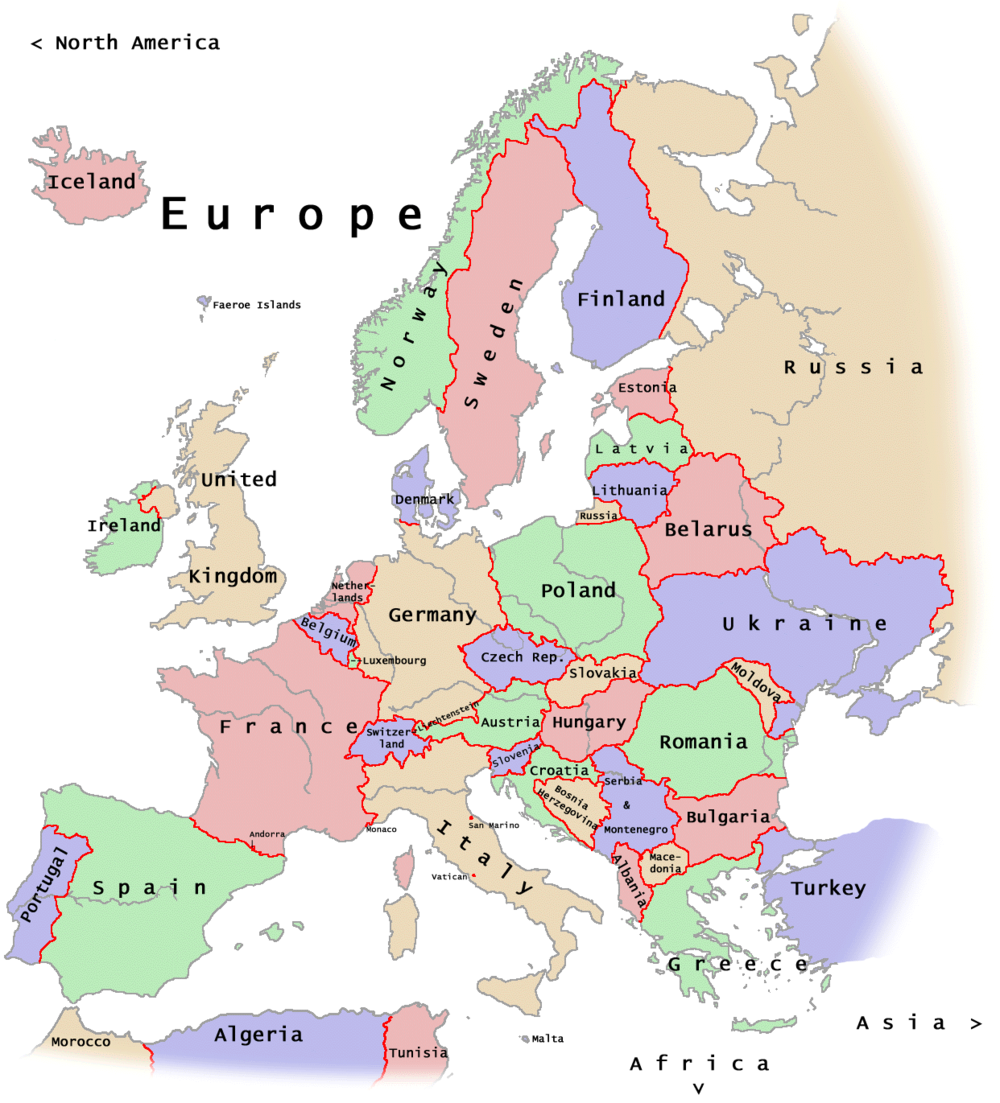
    Europe laid bare

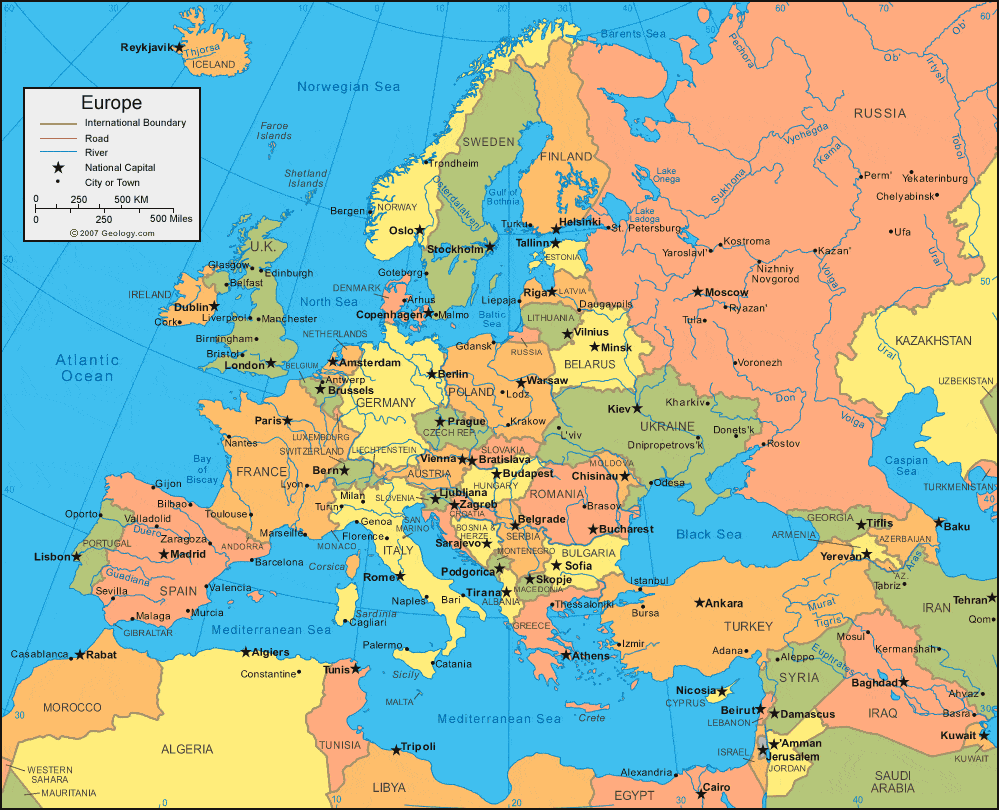
    Size matters: Below is the real Europe (both East and West) in figures. Europe is 3.93 million square miles (10.18 million sq km) big, compared to Africa’s 11.73 million square miles (30.37 million sq km).


    1. Great Britain: 80,823 sq miles (209,331 sq km). Great Britain is made up of England, Scotland, and Wales.


    1. The United Kingdom of Great Britain and Northern Ireland: 94,530 sq miles (244,820 sq km). The UK is made up of England, Scotland, Wales, and Northern Ireland.


    1. France: (including Corsica): 211,209 sq miles (547,030 sq km). But Metropolitan France is 210,020 sq miles (543,940 sq km); Corsica is 3,368 sq miles (8,722 sq km)


    1. Germany: 137,847 sq miles (357,021 sq km)


    1. Spain: 195,360 sq miles (505,990 sq km)


    1. Italy: 116,350 sq miles (301,340 sq km)


    1. Switzerland: 15,942 sq miles (41,290 sq km)


    1. Leichtenstein: 62 sq miles (160 sq km)


    1. Luxembourg: 998 sq miles (2,586 sq km)


    1. Turkey: 302,535 sq miles (783,562 sq km)


    1. Belgium: 11,849 sq miles (30,689 sq km)


    1. Greece: 50,949 sq miles (131,957 sq km)


    1. Netherlands: 16,040 sq miles (41,543 sq km)


    1. Portugal: 35,672 sq miles (92,391 sq km). This includes the Azores Archipelago, Madeira and Porto Santo


    1. Ireland: 32,595 sq miles (84,421 sq km)


    1. Iceland: 40,000 sq miles (103,000 sq km)


    1. Austria: 32,386 sq miles (83,879 sq km)


    1. Finland: 130,128 sq miles (337,030 sq km)


    1. Norway: 148,729 sq miles (385,207 sq km)


    1. Sweden: 173,860 sq miles (450,295 sq km)


    1. Denmark: 16,573 sq miles (42,924 sq km). Self-governing dependencies: Faroe Islands: 540 sq miles (1,399 sq km); Greenland: 836,300 sq miles (2.166 million sq km)


    1. Poland: 120,733 sq miles (312,696 sq km)


    1. Ukraine (including Crimea): 233,062 sq miles (603,628 sq km). Ukraine is the largest country entirely within Europe and the 46th-largest in the world;

    Crimea: 10,425 sq miles (27,000 sq km), annexed by Russia in 2014.


    1. Moldova: 13,068 sq miles (33,846 sq km)


    1. Romania: 92,046 sq miles (238,397 sq km)


    1. Serbia: 29,912 sq miles (77,474 sq km)


    1. Kosovo: 4,203 sq miles (10,887 sq km)


    1. Hungary: 35,920 sq miles (93,030 sq km)


    1. Slovakia: 19,000 sq miles (49,000 sq km)


    1. Czech Rep: 30,450 sq miles (78,866 sq km)


    1. Croatia: 21,851 sq miles (56,594 sq km)


    1. Slovenia: 7,827 sq miles (20,273 sq km)


    1. Bulgaria: 42,855 sq miles (110,994 sq km)


    1. Montenegro: 5,332 sq miles (13,812 sq km)


    1. Bosnia Herzegovina: 19,767 sq miles (51,197 sq km) 36. North Macedonia: 9,928 sq miles (25,713 sq km)


    1. Albania: 11,100 sq miles (28,748 sq km)


    1. Belarus: 80,152 sq miles (207,595 sq km)


    1. Lithuania: 25,212 sq miles (65,300 sq km)


    1. Latvia: 24,938 sq miles (64,589 sq km)


    1. Georgia: 26,911 sq miles (69,700 sq km)


    1. Estonia: 17,462 sq miles (45,226 sq km)


    1. Armenia: 11,484 sq miles (29,743 sq km)


    1. Azerbaijan: 33,346 sq miles (86,600 sq km)


    The others

    1. Russian Federation: 6.612 million sq miles (17.125 million sq km). By a considerable margin, Russia is the largest country in the world by area, covering more than one-eighth of the Earth’s inhabited land area, spanning 11 time zones, bordering 16 sovereign nations. At 11.73 million square miles (30.37 million sq km), Africa is almost twice as large as Russia, but on the world map Russia looks massively larger than Africa.

    1. Canada: 3.855 million sq miles (9.985 million sq km). Canada is the second-largest country in the world. At 11.73 million square miles (30.37 million sq km), Africa is three times larger than Canada, but that is not what you see on the world map. Canada looks enormously larger than Africa.

    1. USA: 3.797 million sq miles (9.835 million sq km). It is the world’s third-largest country by total area, only if you take away Taiwan, Hong Kong, Macau and Tibet from China. Otherwise it is the fourth. At 11.73 million square miles (30.37 sq km), Africa is three times and a bit larger than the USA. But can you tell it on the world map?

    1. China: 3.70 million sq miles (9,600,000 sq km). It is the world’s third-largest country if you add Taiwan, Hong Kong, Macau and Tibet to China. Otherwise it is the fourth.

    1. Japan: 145,914 sq miles (377,915 sq km). Japan encompasses an archipelago of about 6,852 islands, with 5 main islands (Hokkaido, Honshu, Kyushu, Shikoku, and Okinawa) comprising 97% of the country’s area.


    1. Australia: 2.97 million sq miles (7.692 million sq km). At 11.73 million sq miles (30.37 million sq km), Africa is almost four times larger than Australia.


    1. New Zealand: 103,483 sq miles (268,021 sq km). Same size as Gabon, which is 103,349 sq miles (267,668 sq km).


    1. Greenland: 836,300 sq miles (2.166 million sq km). At 11.73 million square miles (30.37 million sq km), Africa is 14 times larger than Greenland, but on the world map Greenland is depicted as large as Africa, if not larger.


    The real Africa compared to Europe

    Africa is 11.73 million square miles (30.37 million sq km) big. Europe is 3.93 million square miles (10.18 million sq km). But this is not what you see on the world map. Here, the table below, we break down the real size of Africa compared to Europe.


    1. Algeria: 919,595 sq miles (2,381,741 sq km). Same size as the UK, France, Germany, Spain, Italy, Switzerland, Belgium, Greece, Netherlands,

    Portugal, Ireland, Leichtenstein, and Luxembourg put together.


    1. Angola: 481,351 sq miles (1,246,700 sq km). Same size as the UK, France, Germany, Switzerland, Belgium, Leichtenstein, Luxembourg, Slovenia put together.


    1. Benin: 44,310m sq miles (114,763 sq km). Same size as Denmark, Belgium, and Switzerland put together.


    1. Botswana: 231,804 sq miles (600,370 sq km). Same size as: Austria, Norway, Denmark, Netherlands, Belgium, and Montenego put together.


    1. Burkina Faso: 105,869 sq miles (274,200 sq km). Same size as the Czech Republic, Croatia, Slovenia, Denmark, Slovakia, and Netherlands put together.


    1. Burundi: 10,747 sq miles (27,834 sq km). Roughly the same size as Belgium.


    1. Cabo Verde: 1,557 sq miles (4,033 sq km). The only two European countries smaller than Cabo Verde are Leichtenstein and Luxembourg.


    1. Cameroon: 183,569 sq miles (475,442 sq km). Same size as Greece, Portugal, Austria, Denmark, Netherlands, and Ireland put together.


    1. Central African Republic: 240,535 sq miles (622,984 sq km). Same size as Italy, UK, Croatia and Slovenia put together.


    1. Chad: 495,800 sq miles (1,284,000 sq km). Same size as Norway, Sweden, Finland, Denmark, Netherlands, Kosovo, and Montenego put together.


    1. Comoros: 863.3 sq miles (2,236 sq km). The only two European countries smaller than Comoros are Leichtenstein and Luxembourg.


    1. Côte d’Ivoire: 124,504 sq miles (322,463 sq km). Same size as the UK, Switzerland, Belgium, Luxembourg and Leichtenstein put together.


    1. Congo (Brazzaville): 132,047 sq miles (342,000 sq km). Same size as Italy and Switzerland put together.


    1. Congo (DR): 905,400 sq miles (2.345 million sq km). Same size as Belgium, France, UK, Germany, Spain, Portugal, Italy, Switzerland, Netherlands, Denmark, Ireland, Kosovo, Slovenia, Montenegro, Leichtenstein, and Luxembourg put together.


    1. Djibouti: 8,957.6 sq miles (23,200 sq km). A little bigger than Slovenia.


    1. Egypt: 390,100 sq miles (1.01 million sq km). Same size as France, UK, Greece, Netherlands, Denmark, Leichtenstein, and Luxembourg put together.


    1. Equatorial Guinea: 10,830 sq miles (28,051 sq km). Roughly the same size as Albania.


    1. Eritrea: 45,405 sq miles (117,598 sq km). Slightly larger than Bulgaria.


    1. Ethiopia: 426,400 sq miles (1,104,300 sq km). Same size as: Italy, France, Portugal, Greece and North Macedonia combined.


    1. Gabon: 103,349 sq miles (267,668 sq km). Same size as Austria, Iceland, Belgium, Netherlands, and Kosovo put together.


    1. The Gambia: 4,361 sq miles (11,295 sq km). Same size as Kosovo.


    1. Ghana: 92,098 sq miles (238,533 sq km). Larger than England, Scotland and Wales put together by 12,000 square miles, but 2,000 square miles smaller than its former colonial master, the United Kingdom of Great Britain (made up of England, Scotland, Wales and Northern Ireland).


    1. Guinea: 94,925 sq miles (245,857 sq km). Same size as the UK (made up of England, Scotland, Wales and Northern Ireland).


    1. Guinea Bissau: 13,948 sq miles (36,125 sq km): Same size as Moldova.


    1. Kenya: 224,081 sq miles (580,367 sq km). Same size as the UK, Italy, and Moldova combined.


    1. Eswatini: 6,704 sq miles (17,364 sq km). Being the smallest country in mainland Africa, Eswatini is still larger than Kosovo and Montenegro.


    1. Lesotho: 11,720 sq miles (30,355 sq km). Same size as Albania, but two times larger than Kosovo and Montenegro.


    1. Liberia: 43,000 sq miles (111,369 sq km). Larger than Bulgaria, but the same size as Netherlands, Denmark and Albania combined.


    1. Libya: 679,400 sq miles (1,759,540 sq km). Same size as France, Germany, Spain, Italy and Slovakia thrown together.


    1. Madagascar: 226,658 sq miles (587,041 sq km). Roughly the same size as France and Netherlands put together.


    1. Malawi: 45,747 sq miles (118,484 sq km). Same size as Portugal, Kosovo and Montenegro put together.


    1. Mali: 478,800 sq miles (1,240,192 sq km). Slightly larger than Poland, Sweden, Norway, Denmark and Netherlands combined.


    1. Mauritania: 397,700 sq miles (1,030,700 sq km). Same size as France, Germany, Switzerland, Belgium, and Netherlands put together.


    1. Mauritius: 787.6 sq miles (2,040 sq km). Only larger than Luxembourg and Leichtenstein.


    1. Morocco: 172,414 sq miles (446,550 sq km). Same size as Italy, Greece, and Montenegro put together.


    1. Mozambique: 309,496 sq miles (801,590 sq km). Roughly the same size as Sweden, Poland and Netherlands put together.


    1. Namibia: 318,696 sq miles (825,615 sq km). Slightly larger than Sweden, Norway, Austria and Montenegro combined.


    1. Niger: 489,700 sq miles (1,267,000 sq km). Same size as France, Germany, Italy, Switzerland and Slovenia put together.


    1. Nigeria: 356,667 sq miles (923,768 sq km). Same size as: UK, France, and Greece put together.


    1. Rwanda: 10,169 sq miles (26,338 km). Roughly the same size as North Macedonia.


    1. Sahrawi: 102,703 sq miles (266,000 sq km). Same size as: Romania, Kosovo and Montenegro put together.


    1. São Tomé and Príncipe: 386.5 sq miles (1,001 sq km). Slightly larger than Luxembourg and Leichtenstein combined.


    1. Senegal: 76,000 sq miles (196,839 sq km). Same size as Greece, Netherlands and North Macedonia put together.


    1. Seychelles: 177.2 sq miles (459 sq km). Africa’s smallest country, but still twice larger than Luxembourg and Leichtenstein put together.


    1. Sierra Leone: 27,699 sq miles (71,740 sq km). Slightly larger than Georgia.


    1. Somalia: 246,200 sq miles (637,657 sq km). Larger than Ukraine, the largest country entirely within Europe. Roughly, Somalia is the same size as Ukraine and Moldova put together.


    1. South Africa: 470,900 sq miles (1,221,037 sq km). Same size as Germany, France, UK, Netherlands, Denmark and Kosovo put together.


    1. South Sudan: 239,285 sq miles (619,745 sq km). Same size as Spain, Portugal and Slovenia combined.


    1. Sudan: 728,200 sq miles (1,886,068 sq km). Same size as the UK, France, Germany, Spain, Portugal, Greece, and Kosovo thrown together


    1. Tanzania: 364,900 sq miles (945,087 sq km). Same size as Turkey, Greece, and Albania put together.


    1. Togo: 21,925 sq miles (57,000 sq km). Same size as: Switzerland, Kosovo Leichtenstein, and Luxembourg put together.


    1. Tunisia: 63,170 sq miles (163,610 sq km). Larger than Hungary, Slovakia and Slovenia combined.


    1. Uganda: 93,065 sq miles (241,550 sq km). Roughly the same size as the UK.


    1. Zambia: 290,587 sq miles (752,621 sq km). Same size as the UK, Italy, Greece, Netherlands and Belgium thrown together.


    1. Zimbabwe: 150,872 sq miles (390,757 sq km). Same size as the UK, Greece and Kosovo put together.


    Colonial headache

    Among the major problems inherited by postcolonial Africa was the question of what to do with the artificial colonial borders. Despite several attempts, it has proved a herculean task to find a good solution to the inherited colonial headache.


    After decolonisation, African leaders, perhaps unwisely, decided to keep the colonial boundaries. Their main reason was that redrawing them would have prolonged the decolonisation process and cause unnecessary disruptive conflicts in the new struggling nations.


    The various inter-ethnic conflicts witnessed on the continent over the years showed that it was not the right thing to do. Africa’s postcolonial leaders should have, at the least, properly marked out the frontiers, since only a third of Africa’s 83,000 km of land borders is properly demarcated.


    The African Union’s “Border Programme”, charged with clarifying the demarcation-lines and resolving disputes, has repeatedly pushed back its deadline. Creating a type of United States of Africa, with relatively open borders between nations, is one suggestion to help resolve things.


    Other suggestions include the creation of federal states, unions of states, and regional economic blocs. Africa’s integration is no longer a matter of choice for the vast continent of over 1.2 billion people. Africa has no choice, and no further excuse, but to plot regional and continental integration. Apart from improving people-to-people interaction, it will boost trade and security, and help to reduce conflicts across the continent.


    Africa can also take advantage of its true size and the peculiarities this presents to market itself properly to foreign tourists. Consider the example of the city of Tema in Ghana. It’s true that, as a sphere, the Earth cannot have a true centre, but by virtue of being located on longitude 0° and latitude 5° north of the Equator, Tema is the closest land settlement to the centre of the world – that is where the Equator and Greenwich Meridian meet at zero co-ordinates (0° longitude, 0° latitude, the so-called Null Island).


    The mathematics is simple: Tema is 555 km north of the centre of the so-called Null point located in the Atlantic Ocean. The other nearest city is Libreville in Gabon, which is 1,110 km. Both cities are in Africa.


    Since Ghana is right in the centre of the world, there is no reason why Ghanaian officials should not promote the Tema port to serve as the Central Hub for the world’s shipping industry, or why Ghana cannot transform itself into the World’s Greatest Hub for Airlines.


    Ghana Tourism officials should milk the geographic fact of their country’s centrality for all that it is worth. For example, a tourism brochure that promotes a visit to “Tema: The World’s Heartbeat” or “Tema: The Centre of the World” would be most appealing. They could have regular cruise ships visiting the Null Island.


    Local artisans can be drafted to create appealing artefacts that loudly proclaim the centrality of Ghana to wow tourists. Hotels with appealing names like “The Centre of the World”, will spring up and provide jobs. By clever marketing, the hospitality industry, financial and other services, can be provided incentives to set up home in what is, after all, the centre of the world.


    Africa appears to be waking up to the call by the great writer, Chinua Achebe, who said that “until the lions start to write their own history, the story of the hunt will continue to glorify the hunters”.


    Africans are increasingly challenging the twisted historical narratives bequeathed to them by their colonialists. This is helping to boost the self-confidence of the people of Africa, and it will also undoubtedly contribute enormously to realising the continent’s economic potentials. They should increase the tempo, as it will allow Africans to create the Africa of their dreams in their own image.


    It will be an Africa that will be confident enough to chart its own independent course unbeholden to any foreign power. An Africa that will begin to use its gigantic size, immense strength, and vast resources to cater for the interests of Africans.


    Kai Krause, a graphical user interface designer, is one of the people who are trying to redress the distortion of current maps and rectify Mercator’s mistake. As he explains on his website: “This was not at all an attempt to create an accurate map. It was instead his way of showing just how much the rest of the world underestimates Africa – not just in size but in many other aspects. Here

    is to Africa achieving the stature that it deserves to have.”


    Some states in the United States are also changing the narratives on maps. In March 2017, a more accurate Peters projection map was distributed to about 600 classrooms in Boston, Massachusetts, as part of the efforts to correct the Western world’s distorted view of its own size.


    In the words of Colin Rose, the assistant superintendent in charge of the Boston Public Schools’ Office of Opportunity and Achievements Gaps, “the Boston Globe is part of an attempt to decolonise the curriculum. It is about a paradigm shift … we have had a very fixed view that is very Eurocentric. How do we talk about other viewpoints? This is a great jump-off point.”


    Africa should join the bandwagon of map creation. Africans should wake up and employ maps for what it is: psychological tools to project cultural, political, and historical values of their creators.


    To the African who is minded to create maps, there are several tools available to make the job a breeze. Thetruesize.com, created by James Talmage and Damon Maneice, is one such tool. It was said to have been inspired by an infographic by Kai Krause titled The True Size of Africa.


    The time has come for Africa to realise that maps do not just represent perceptions of the world; they also create them. The great African scholar, Ali Mazrui, correctly said: “Geography is the mother of history.”

  • Joe Biden: ‘Putin’s craven lust for land and power will fail’

    Joe Biden: ‘Putin’s craven lust for land and power will fail’

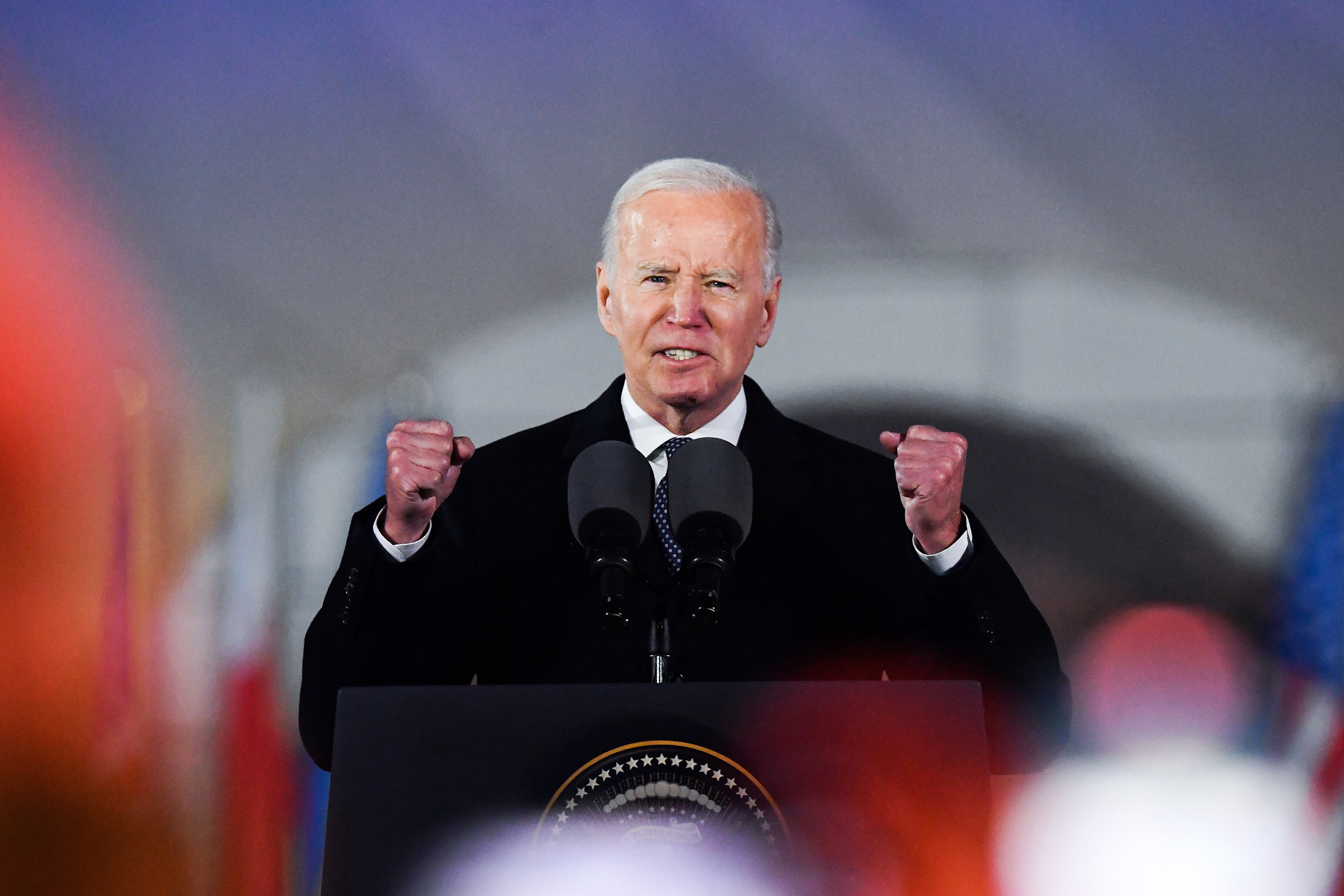
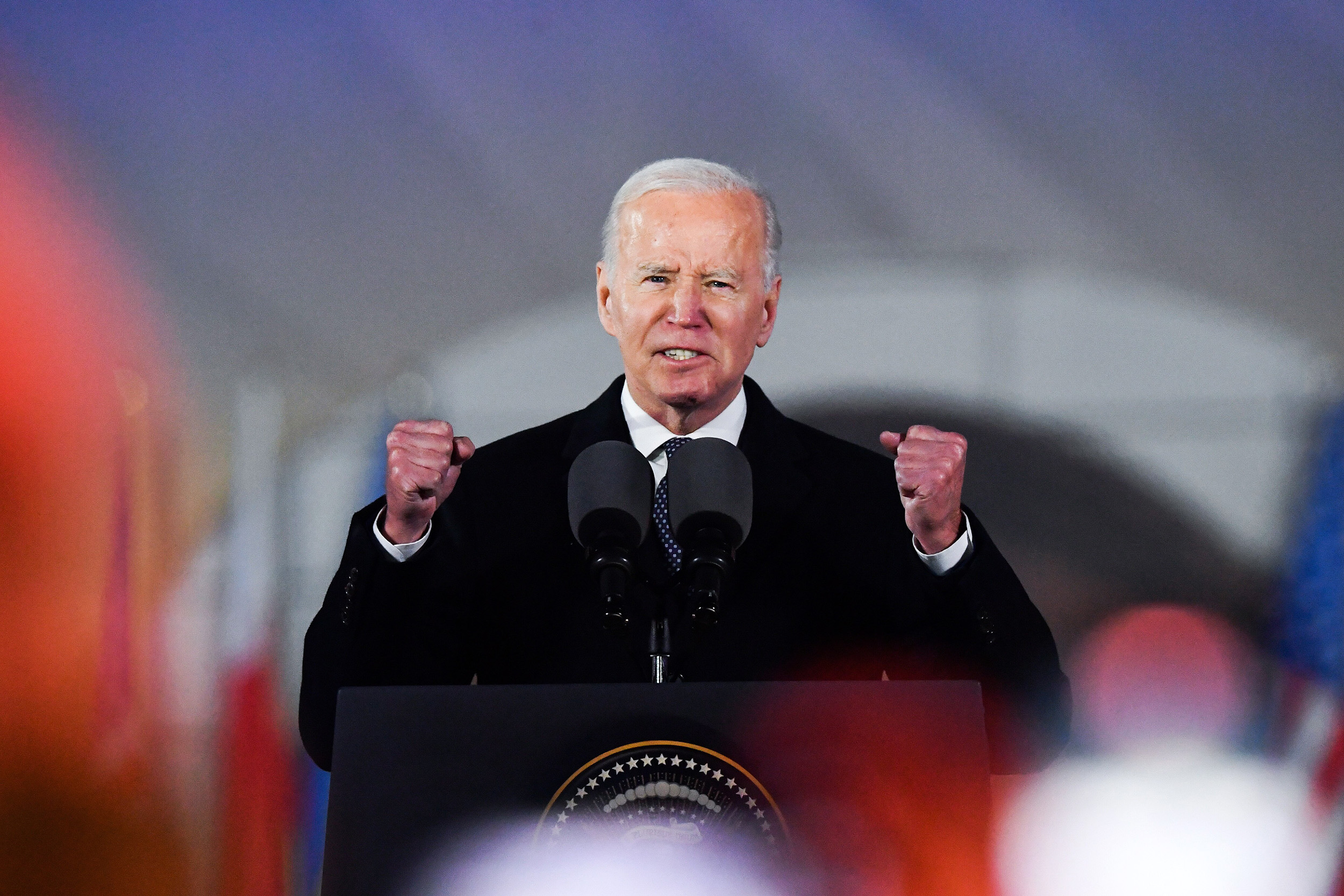
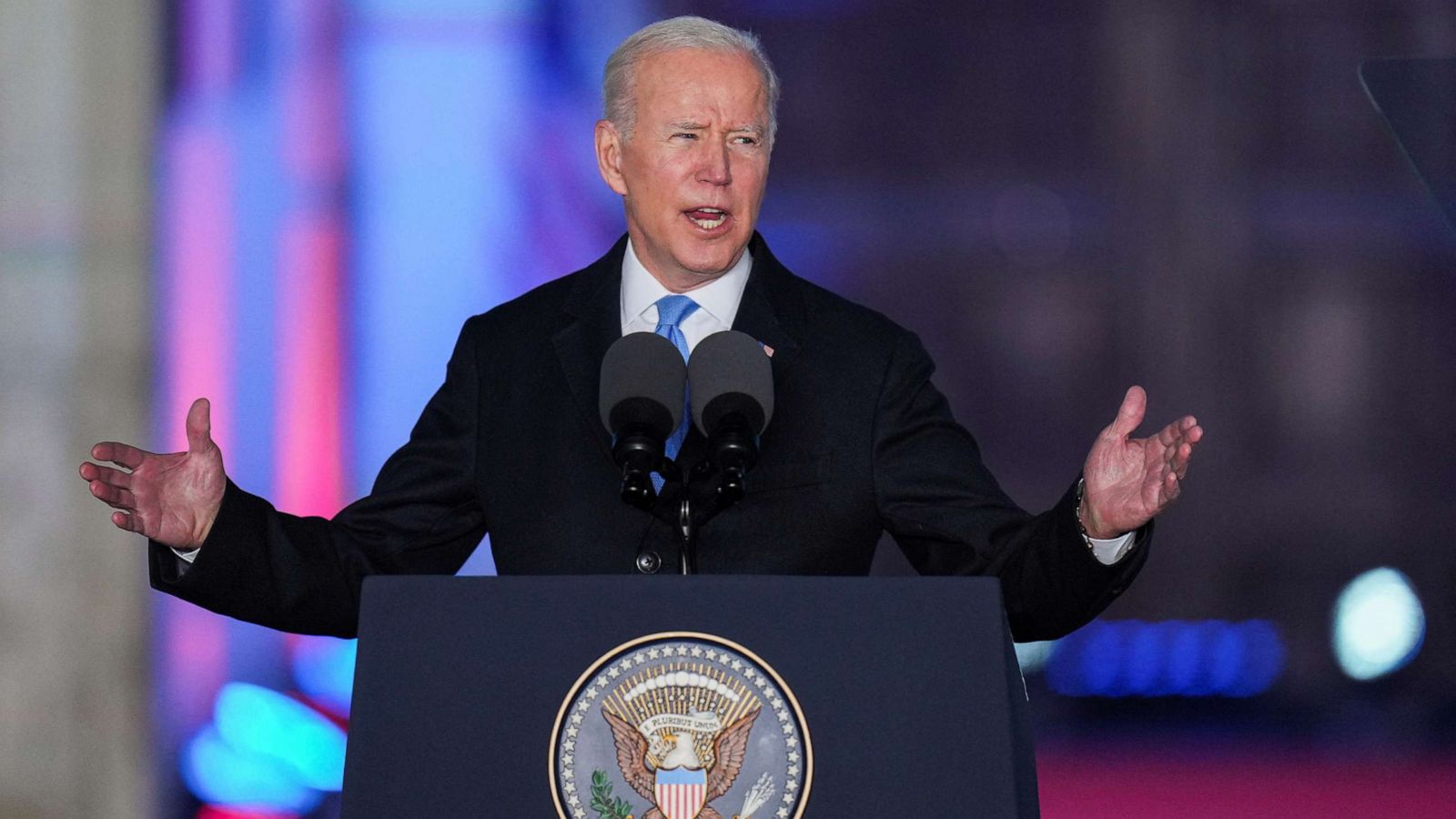
    On 21 February 2023, the American president, Joseph Biden, spoke on the Russia-Ukraine war at the Royal Castle in Warsaw, Poland, ahead of the war’s one-year anniversary. His speech came hours after the Russian president, Vladimir Putin, had addressed the Russian parliament on the same issue. Below is what President Biden said.

    “Hello, Poland! One of our great allies. President [Andrzej] Duda, Mr. Prime Minister, Mr. Mayor, and to all the former ministers and presidents, as well as mayors and Polish political leaders from all across the country: Thank you for welcoming me back to Poland.

    You know, it was nearly one year ago, nearly one year ago I spoke at the Royal Castle here in Warsaw, just weeks after Vladimir Putin had unleashed his murderous assault on Ukraine. The largest land war in Europe since World War II had begun. And the principles that had been the cornerstone of peace, prosperity, and stability on this planet for more than 75 years were at risk of being shattered.

    One year ago, the world was bracing for the fall of Kiev. Well, I have just come from a visit to Kiev, and I can report: Kiev stands strong! Kiev stands proud. It stands tall. And most important, it stands free.

    When Russia invaded, it wasn’t just Ukraine being tested. The whole world faced a test for the ages. Europe was being tested. America was being tested. NATO was being tested. All democracies were being tested. And the questions we faced were as simple as they were profound.

    Would we respond or would we look the other way? Would we be strong or would we be weak? Would we be—all of our allies—would be united or divided? One year later, we know the answer. We did respond. We would be strong. We would be united. And the world would not look the other way.

    We also faced fundamental questions about the commitment to the most basic of principles. Would we stand up for the sovereignty of nations? Would we stand up for the right of people to live free from naked aggression? Would we stand up for democracy?

    Do unto other as you would want them to do unto you: Does the AMerican president Joseph Biden (above) sincerely think the world does not know why there is a war in Ukraine

    One year later, we know the answers. Yes, we would stand up for sovereignty. And we did. Yes, we would stand up for the right of people to live free from aggression. And we did. And we would stand up for democracy. And we did.

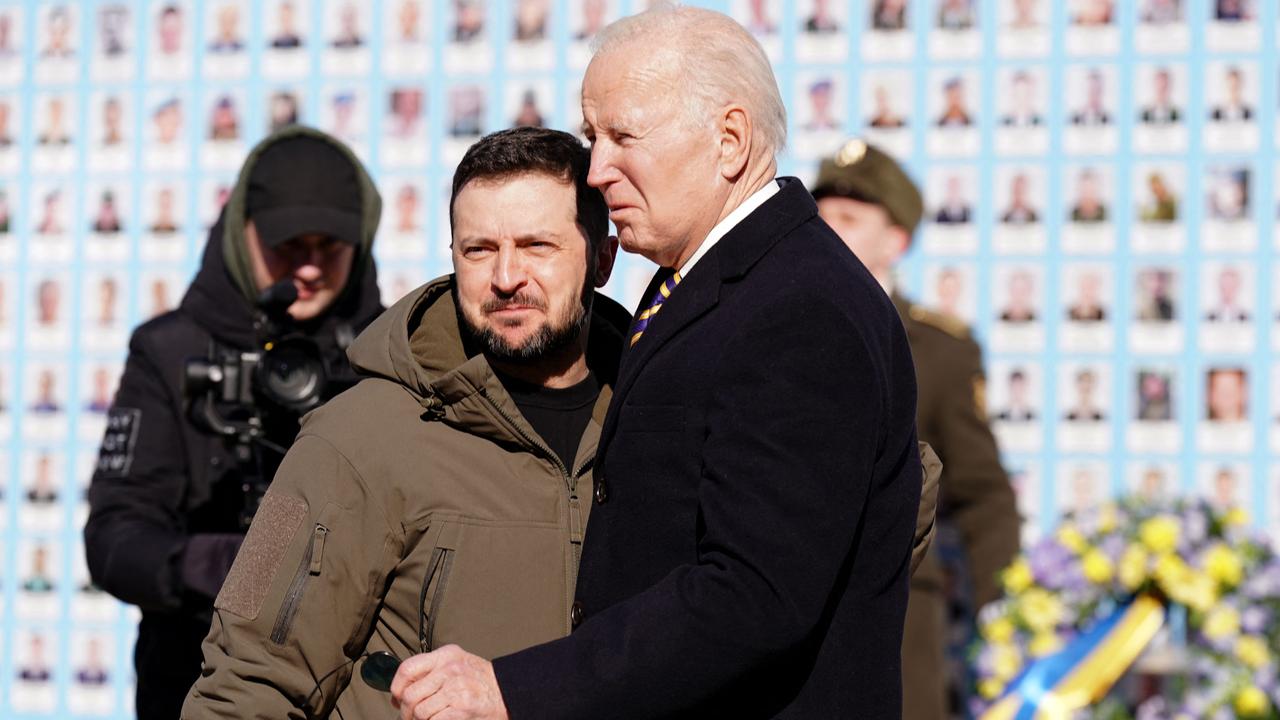
    President Biden (right) meets President Zelensky of Ukraine: “When President Putin ordered his tanks to roll into Ukraine, he thought we would roll over: He was wrong. The Ukranian people are too brave, America, Europe, a coalition of nations from the Antlatic to the Pacific – we were too unified. Democracy was too strong”, Biden says

    And yesterday, I had the honor to stand with [Ukraine’s] President Zelensky in Kiev to declare that we will keep standing up for these same things, no matter what. When President Putin ordered his tanks to roll into Ukraine, he thought we would roll over. He was wrong. The Ukrainian people are too brave. America, Europe, a coalition of nations from the Atlantic to the Pacific—we were too unified. Democracy was too strong.

    Instead of an easy victory he perceived and predicted, Putin left with burnt-out tanks and Russia’s forces in disarray. He thought he would get the Finlandization of NATO. Instead, he got the NATOization of Finland – and Sweden. He thought NATO would fracture and divide. Instead, NATO is more united and more unified than ever—than ever before.

    He thought he could weaponize energy to crack your resolve—Europe’s resolve. Instead, we are working together to end Europe’s dependence on Russian fossil fuels. He thought autocrats like himself were tough and leaders of democracies were soft. And then, he met the iron will of America and the nations everywhere that refused to accept a world governed by fear and force. He found himself at war with a nation led by a man whose courage would be forged in fire and steel: President Zelensky.

    President Putin is confronted with something today that he didn’t think was possible a year ago: the democracies of the world have grown stronger, not weaker. But the autocrats of the world have grown weaker, not stronger.

    Because in moments of great upheaval and uncertainty, knowing what you stand for is most important, and knowing who stands with you makes all the difference. The people of Poland know that. You know that. In fact, you know it better than anyone here in Poland. Because that’s what solidarity means.

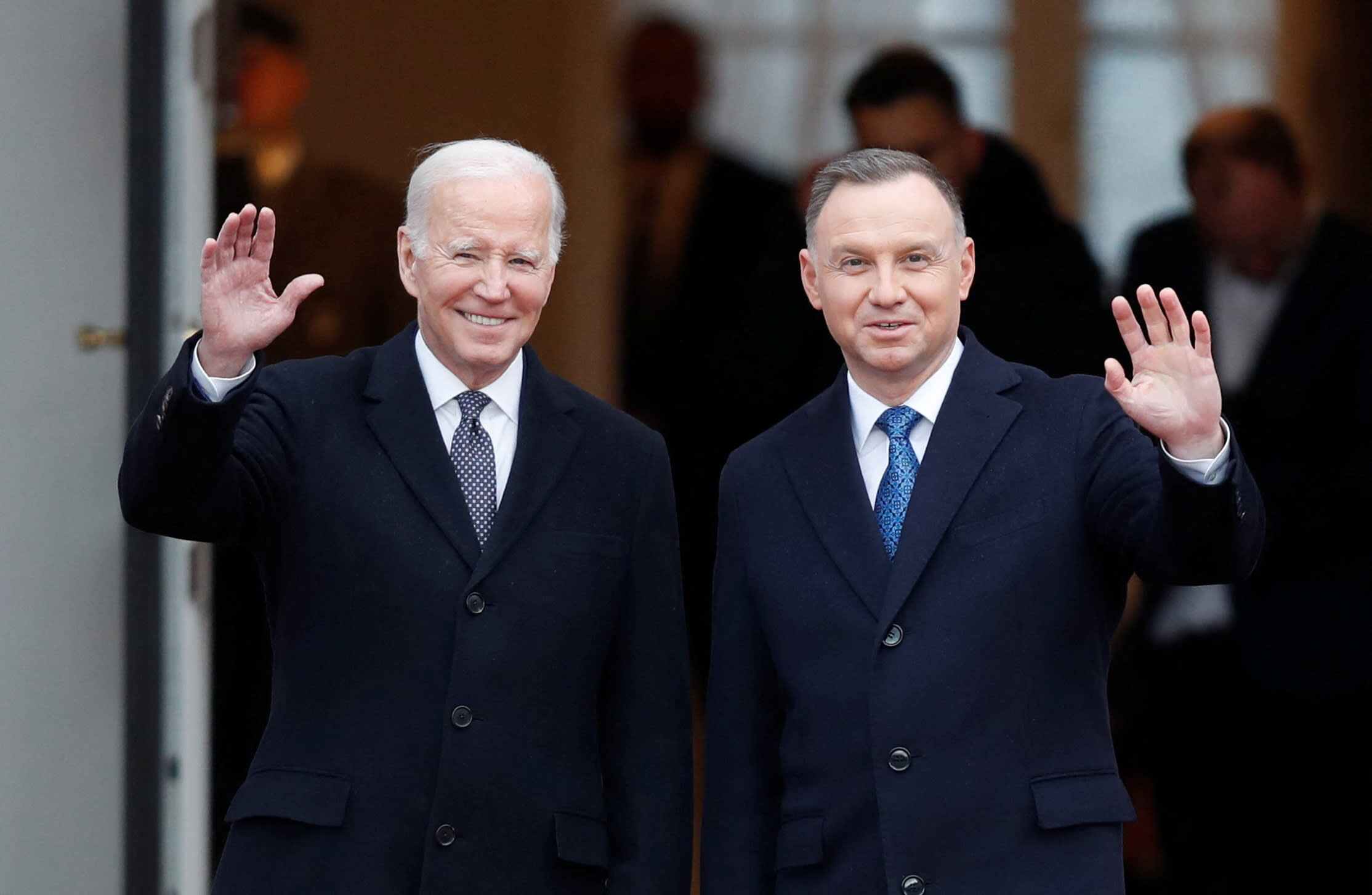
    President Biden (left) meets the Polish President Andrzej Duda in Warsaw: “One year into this war, Putin no longer doubts the strength of our coalition. But he still doubts our conviction. He doubts our staying in power. He doubts our continued support for Ukraine. He doubts whether NATO can remain unified. But there should be no doubt : Our support for Ukraine will not waver, NATO will not be divided and will not tire”, says Biden

    Through partition and oppression, when the beautiful city was destroyed after the Warsaw Uprising, during decades under the iron fist of communist rule, Poland endured because you stood together. That’s how the brave leaders of the opposition and the people of Belarus continue to fight for their democracy. That’s how the resolve of Moldovan people to live in freedom gained them independence and put them on the path to EU membership. President Sandu is here today. I’m not sure where she is, but I’m proud to stand with you and the freedom-loving people of Moldova. Give her a round of applause.

    One year into this war, Putin no longer doubts the strength of our coalition. But he still doubts our conviction. He doubts our staying power. He doubts our continued support for Ukraine. He doubts whether NATO can remain unified. But there should be no doubt: Our support for Ukraine will not waver, NATO will not be divided, and we will not tire.

    President Putin’s craven lust for land and power will fail. And the Ukrainian people’s love for their country will prevail. The democracies of the world will stand guard over freedom today, tomorrow, and forever. Because that’s what is at stake here: freedom. That’s the message I carried to Kiev yesterday, directly to the people of Ukraine.

    When President Zelensky came to the United States in December, he said this struggle will define the world and how our children and grandchildren live, and then their children and grandchildren. He wasn’t only speaking about the children and grandchildren of Ukraine. He was speaking about all of our children and grandchildren. Yours and mine.

    We are seeing again today what the people of Poland and the people all across Europe saw for decades: the appetites of the autocrat cannot be appeased. They must be opposed. Autocrats only understand one word: No. No. No. No, you will not take my country. No, you will not take my freedom. No, you will not take my future.

    And I will repeat tonight what I said last year in this same place: a dictator bent on rebuilding an empire will never be able to erase the people’s love of liberty. Brutality will never grind down the will of the free. And Ukraine will never be a victory for Russia. Never. For free people refuse to live in a world of hopelessness and darkness.

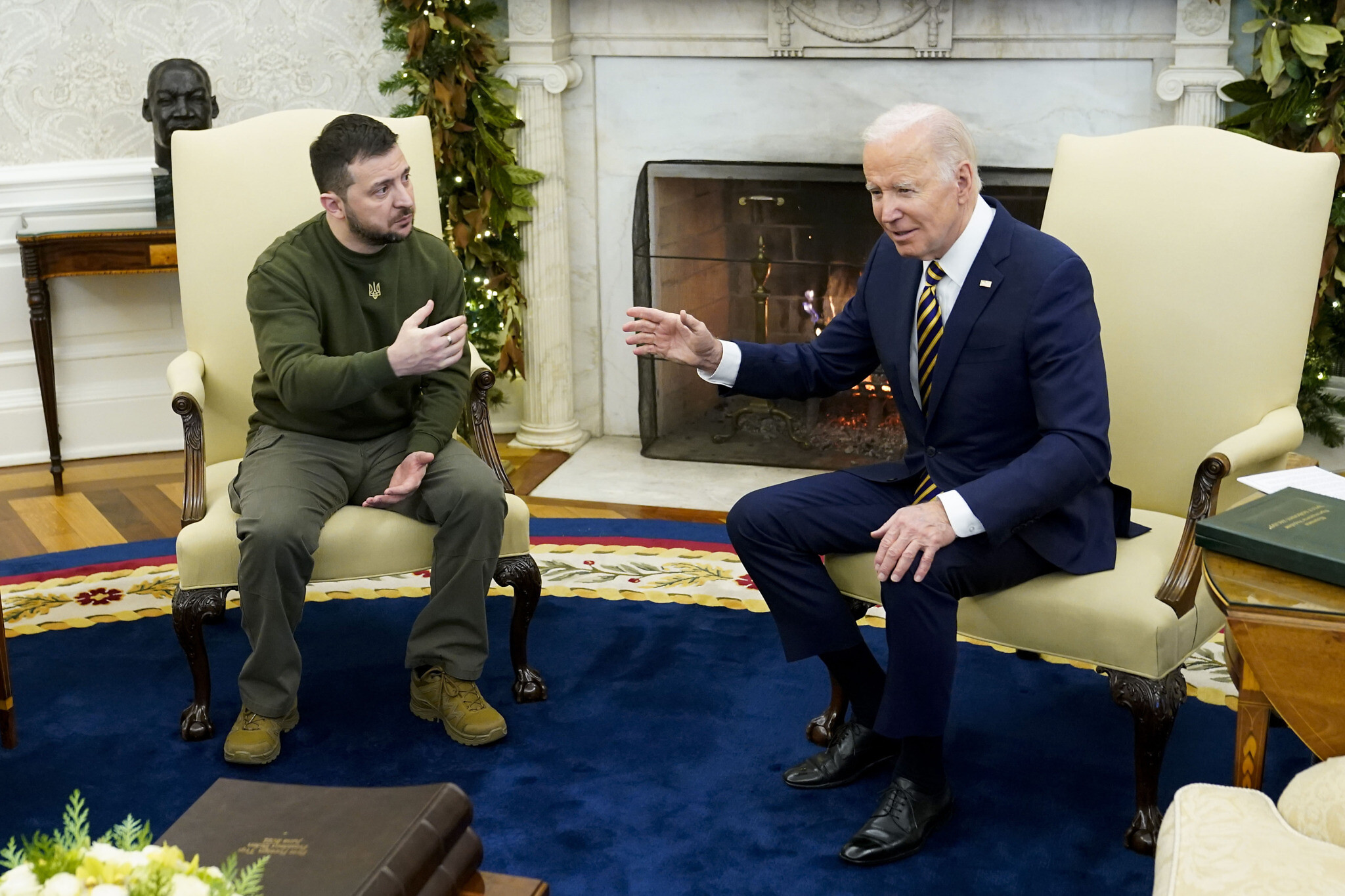
    President Joe Biden speaks with Ukrainian President Volodymyr Zelensky in the White House: “A dictator bent on rebuilding an empire will never be able to erase the people’s love for liberty. Brutality will never grind down the will of the free. And Ukraine will never be a victory for Russia. Never for free people refuse to live in a world of hopelessness and darkness”, Biden says

    You know, this has been an extraordinary year in every sense. Extraordinary brutality from Russian forces and mercenaries. They have committed depravities, crimes against humanity, without shame or compunction. They have targeted civilians with death and destruction. Used rape as a weapon of war. Stolen Ukrainian children in an attempt to steal Ukraine’s future. Bombed train stations, maternity hospitals, schools, and orphanages.

    No one can turn away their eyes from the atrocities Russia is committing against the Ukrainian people. It’s abhorrent. It’s abhorrent.

    But extraordinarily, as well, has been the response of the Ukrainian people and the world. One year after the bombs began to fall and Russian tanks rolled into Ukraine, Ukraine is still independent and free.

    From Kherson to Kharkiv, Ukrainian fighters have reclaimed their land. In more than 50% of the territory Russia held last year, the blue and the yellow flag of Ukraine proudly waves once again. President Zelensky still leads a democratically elected government that represents the will of the Ukrainian people.

    And the world has already voted multiple times, including in the United Nations General Assembly, to condemn Russia’s aggression and support a just peace. Each time in the UN, that vote has been overwhelming. In October, 143 nations in the United Nations condemned Russia’s illegal annexation. Only four [countries] in the entire UN voted with Russia. Four.

    So, tonight, I speak once more to the people of Russia. The United States and the nations of Europe do not seek to control or destroy Russia. The West was not plotting to attack Russia, as Putin said today. And millions of Russian citizens who only want to live in peace with their neighbors are not the enemy. This war was never a necessity; it’s a tragedy.

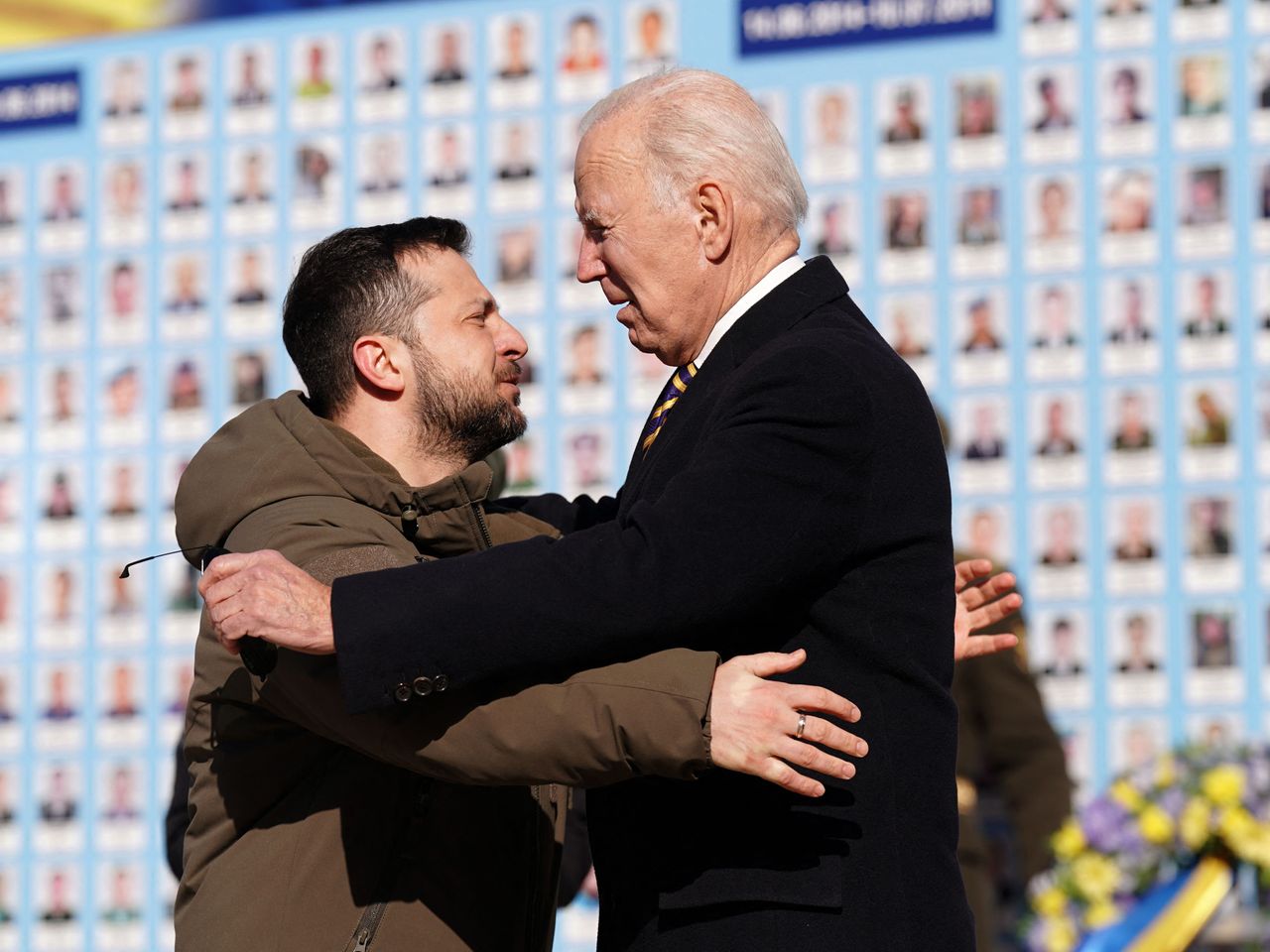
    Presidents Biden and Zelensky in a bear hug: “The United States has assembled a worldwide coalition for more than 50 nations to get critical weapons and supplies to the brave Ukranian fighters on the frontlines…The European Union and its members states have stepped up with unprecedented commitment to Ukraine not just in security assistance but economic and humanitarian, refugee assistance and so much more”, Biden says

    President Putin chose this war. Every day the war continues is his choice. He could end the war with a word. It’s simple. If Russia stopped invading Ukraine, it would end the war. If Ukraine stopped defending itself against Russia, it would be the end of Ukraine. That’s why, together, we are making sure Ukraine can defend itself.

    The United States has assembled a worldwide coalition of more than 50 nations to get critical weapons and supplies to the brave Ukrainian fighters on the frontlines: air defense systems, artillery, ammunition, tanks, and armored vehicles. The European Union and its member states have stepped up with unprecedented commitment to Ukraine, not just in security assistance but economic and humanitarian refugee assistance and so much more.

    To all of you here tonight, take a moment. And I’m serious when I say this: Turn around and look at one another. Look at what you’ve done so far. Poland is hosting more than 1.5 million refugees from this war. God bless you. Poland’s generosity, your willingness to open your hearts and your homes, is extraordinary. And the American people are united in our resolve as well. All across my country, in big cities and small towns, Ukrainian flags fly from American homes. Over the past year, Democrats and Republicans in our United States Congress have come together to stand for freedom. That’s who Americans are, and that’s what Americans do.

    The world is also coming together to address the global fallout from President Putin’s war. Putin tried to starve the world, blocking the ports in the Black Sea to stop Ukraine from exporting its grain, exacerbating the global food crisis that hit developing nations in Africa especially hard. Instead, the United States and the G7 and partners around the world answered the call with historic commitments to address the crisis and to bolster global food supplies. And this week, my wife, Jill Biden, is traveling to Africa to help bring attention to this critical issue.

    President Biden: “Tonight, l speak once more to the people of Russia. The United States and the Nations of Europe do not seek to control or destroy Russia. The west was not plotting to attack Russia, as Putin said today. And million of Russian citizens who only want to live in peace with their neighbours are not the enemy. This was never a necessity; its a tragedy “

    Our commitment is to the people of Ukraine and the future of Ukraine – a Ukraine that’s free, sovereign, and democratic. That was the dream of those who declared Ukraine’s independence more than 30 years ago, who led the Orange Revolution and the Revolution of Dignity, who braved ice and fire on the Maidan, and the Heavenly Hundred who died there, and those who continue still to root out Kremlin’s efforts to corrupt, coerce, and control.

    It’s a dream for those Ukrainian patriots who have fought for years against Russia’s aggressions in the Donbas and the heroes who have given everything, given their lives, in the service of their beloved Ukraine.

    I was honored to visit their memorial in Kiev yesterday to pay tribute to the sacrifice of those who lost their lives, standing alongside President Zelensky. The United States and our partners stand with Ukraine’s teachers, its hospital staff, its emergency responders, the workers in cities across Ukraine who are fighting to keep the power on in the face of Russia’s cruel bombardment. We stand with the millions of refugees of this war who have found a welcome in Europe and the United States, particularly here in Poland. Ordinary people all across Europe did whatever they could to help and continue to do so. Polish businesses, civil society, cultural leaders – including the First Lady of Poland, who is here tonight – have led with the heart and determination, showcasing all that’s good about the human spirit. Madam First Lady, we love you. Thank you all.

    I will never forget, last year, visiting with refugees from Ukraine who had just arrived in Warsaw, seeing their faces exhausted and afraid – holding their children so close, worrying they might never see their fathers, their husbands, their brothers, or sisters again. In that darkest moment of their lives, you, the people of Poland, offered them safety and light. You embraced them. You literally embraced them. I watched. I watched the looks on their faces.

    Meanwhile, together we have made sure that Russia is paying the price for its abuses. We continue to maintain the largest sanctions regime ever imposed on any country in history. And we’re going to announce more sanctions this week together with our partners. We will hold accountable those who are responsible for this war. And we will seek justice for the war crimes and crimes against humanity continuing to be committed by the Russians.

    You know, there is much for us to be proud of – all that we have achieved together this past year. But we have to be honest and clear-eyed as we look at the year ahead. The defense of freedom is not the work of a day or of a year. It’s always difficult. It’s always important. As Ukraine continues to defend itself against the Russian onslaught and launch counter-offensives of its own, there will continue to be hard and very bitter days, victories and tragedies. But Ukraine is steeled for the fight ahead. And the United States, together with our Allies and partners, are going to continue to have Ukraine’s back as it defends itself.

    Next year, I will host every member of NATO for our 2024 summit in the United States. Together, we will celebrate the 75th anniversary of the strongest defensive alliance in the history of the world – NATO. And let there be no doubt, the commitment of the United States to our NATO Alliance and Article 5 is rock solid. And every member of NATO knows it. And Russia knows it as well.

    An attack against one is an attack against all. It’s a sacred oath. A sacred oath to defend every inch of NATO territory. Over the past year, the United States has come together with our Allies and partners in an extraordinary coalition to stand against Russian aggression. But the work in front of us is not just what we’re against, it’s about what we’re for. What kind of world do we want to build?

    We need to take the strength and capacity of this coalition and apply it to lifting up the lives of people everywhere, improving health, growing prosperity, preserving the planet, building peace and security, treating everyone with dignity and respect. That’s our responsibility. The democracies of the world have to deliver it for our people.

    As we gather tonight, the world, in my view, is at an inflection point. The decisions we make over the next five years or so are going to determine and shape our lives for decades to come. That’s true for Americans.

    It’s true for the people of the world. And while decisions are ours to make now, the principles and the stakes are eternal. A choice between chaos and stability. Between building and destroying. Between hope and fear. Between democracy that lifts up the human spirit and the brutal hand of the dictator who crushes it. Between nothing less than limitation and possibilities, the kind of possibilities that come when people live not in captivity but in freedom. Freedom. There is no sweeter word than freedom. There is no nobler goal than freedom. There is no higher aspiration than freedom.

    Americans know that, and you know it. And all that we do now must be done so our children and grandchildren will know it as well. Freedom. The enemy of the tyrant and the hope of the brave and the truth of the ages. Freedom. Stand with us. We will stand with you. Let us move forward with faith and conviction and with an abiding commitment to be allies not of darkness, but of light. Not of oppression, but of liberation. Not of captivity, but, yes, of freedom.

    May God bless you all. May God protect our troops. And may God bless the heroes of Ukraine and all those who defend freedom around the world. Thank you, Poland. Thank you, thank you, thank you for what you’re doing. God bless you all.

  • America, NATO and EU are playing poker with world security in Ukraine

    America, NATO and EU are playing poker with world security in Ukraine

    … The world should not allow them

    This month, The Third Eye has provided more than ample space, on the preceding pages, to let Russia and America to tell their own versions of why there is a war in Ukraine. As citizens of the world in which the Russians and Americans also inhabit, who will also be affected by an escalation of the war into a global confrontation, we deserve the right to tell the guilty party to pack its bags and go home and sit down.

    From the two versions published on the preceding pages, we can tell, without any doubt, that the Americans and their NATO and EU allies are the guilty party.

    Unthinking expansion: Over recent decades, sicne the fall of the Berlin Wall in 1989, the European Union and NATO have expanded their spheres of influence right to the Russian borders, a dangerous action they should have known would elicit a violent Russia response

    For the sake of world peace and security, America, NATO and the EU should respect the world and the collective security of us all, and stop what they are doing in Ukraine, and let peace reign between Russia and its erstwhile ally, Ukraine.

    It is astonishing, in fact more than astonishing, that politicians and statesmen (if they are) of the calibre we see in America and Europe can be so crass to embark on this Ukrainian misadventure and expect Russia not to react the way it has reacted by attacking Ukraine first as a pre-emptive strike to prevent an attack on it by what the Russian President Vladimir Putin calls “the collective West”.

    It beggars belief that “the collective West” pretends not know that by extending their reach or sphere of influence to Ukraine, after doing so all the way from  Russia’s northern border with Finland, Estonia and Latvia, and now Ukraine,  the Russians will just thank them and roll over.

    Estonia, a former Russian ally, became an EU member state in 2004. At the same time, Latvia, Poland, Hungary, Lithuania, Czech Republic, Slovenia, and Slovakia, – all former Russian allies – joined the EU.

    Western politicians are well aware that by extending its reaches to the Russian border, the EU was doing something dangerous to provoke Russian reaction. The miracle is how the Russians have taken all these provocations since the fall of the Berlin Wall in 1989 in their stride, and have not reached for their AK47s until now.

    Crisi meeting President J.F. Kennedy (fourth from right) meets the Executive Committee of the National Security Council (EXCOMM) on the CUban missile crisis, some EXCOMM memebers – including all the Joint chiefs of staff – argued for an airstrike to destroy the missiles followed by US invasion of Cuba

    For “the collective West” to continue these provocations and think that Ukraine can become a NATO member, and thereby give NATO the right to put its missiles in Ukraine, right bang on the Russian border, which gives NATO a few minutes missile strike of Russia, and expect the Russians not to do anything in response, is utter madness. Madness of the first order!

    That the American president, Joseph Biden, and his European counterparts can try to sell the Russian reaction to the world as Putin’s “greed for land”, is a huge insult to the world. Why is “the collective West” deliberately jeopardising world peace and security in this school-boyish manner?

    Would America and Europe be pleased if the Russians were to put their missiles in Cuba? Or in the Czech Republic, if that country decides to become a Russian satellite state again?

    The answer is obvious – a Big NO. And if America and Europe would not allow the Russians to put their missiles in Cuba and Czech Republic, how in devil’s hell do they think the Russians would allow them to put their missiles in Ukraine without a fight, a fight that could grow into a nuclear confrontation that will affect the whole world? That is crass statesmanship (if it is statesmanship).

    If America and Europe have forgotten America’s own history, let us remind them of what they nearly did in October 1962, when the Soviet Union (which was essentially Russia cobbling together its satellite states) tried to put its missiles in Cuba.

    The Cuban Missile Crisis

    The American Department of State (known to the rest of the world as “The State Department”) has an official website which it calls the “Office of the Historian”. It has a piece which it calls “The Cuban Missile Crisis, October 1962”. In that piece, the State Department says matter-of-factly: “The Cuban Missile Crisis of October 1962 was a direct and dangerous confrontation between the United States and the Soviet Union during the Cold War and was the moment when the two superpowers came closest to nuclear conflict.”

    So, America knows its own history, because the Office of the Historian goes on to admit that: “After the failed US attempt to overthrow the Castro regime in Cuba with the Bay of Pigs invasion [17 April-20 April 1961], and while the Kennedy administration planned Operation Mongoose, in July 1962 Soviet premier Nikita Khrushchev reached a secret agreement with Cuban premier Fidel Castro to place Soviet nuclear missiles in Cuba to deter any future invasion attempt.

    “Construction of several missile sites began in the late summer, but US intelligence discovered evidence of a general Soviet arms build-up on Cuba, including Soviet IL–28 bombers, during routine surveillance flights, and on 4 September 1962, President Kennedy issued a public warning against the introduction of offensive weapons into Cuba.

    “Despite the warning, on 14 October a US U–2 aircraft took several pictures clearly showing sites for medium-range and intermediate-range ballistic nuclear missiles under construction in Cuba. These images were processed and presented to the White House the next day, thus precipitating the onset of the Cuban Missile Crisis.”

    The Office of the Historian tells how the then president, John F.K. Kennedy, summoned his closest advisers to consider options and direct a course of action that would resolve the crisis. “Some advisers – including all the Joint Chiefs of Staff – argued for an air strike to destroy the missiles, followed by a US invasion of Cuba; others favoured stern warnings to Cuba and the Soviet Union.”

    But President Kennedy decided upon a middle course. “On 22 October, he ordered a naval ‘quarantine’ of Cuba,” the Office of the Historian recalls. “The use of ‘quarantine’ legally distinguished this action from a blockade, which assumed a state of war existed; the use of ‘quarantine’ instead of ‘blockade’ also enabled the United States to receive the support of the Organisation of American States (OAS).

    “That same day, Kennedy sent a letter to Khrushchev declaring that the United States would not permit offensive weapons to be delivered to Cuba, and demanded that the Soviets dismantle the missile bases already under construction or completed, and return all offensive weapons to the USSR.

    “The President also went on national television that evening to inform the public of the developments in Cuba, his decision to initiate and enforce a ‘quarantine’, and the potential global consequences if the crisis continued to escalate.”

    The Office of the Historian says “the tone of the President’s remarks was stern, and the message unmistakable and evocative of the Monroe Doctrine: ‘It shall be the policy of this nation to regard any nuclear missile launched from Cuba against any nation in the Western Hemisphere as an attack by the Soviet Union on the United States, requiring a full retaliatory response upon the Soviet Union.’”

    As America put the naval quarantine in place and accelerated its plans for a military strike on Cuba, President Khrushchev of USSR responded on 24 October 1962, that the US “blockade” was an “act of aggression” and that Soviet ships bound for Cuba would be ordered to proceed.

    This heightened tensions, and with no apparent end to the crisis in sight, US forces were placed on a higher alert, meaning war involving the Strategic Air Command was imminent.

    But war was only averted when Khrushchev sent Kennedy “a long, emotional message” in the evening of 26 October, saying in part: “If there is no intention to doom the world to the catastrophe of thermonuclear war, then let us not only relax the forces pulling on the ends of the rope, let us take measures to untie that knot. We are ready for this.”

    An unsanitised version

    Wikipedia has an unsanitised rendition of the crisis. It describes it as a “35-day (16 October-20 November 1962) confrontation between the United States and the Soviet Union, which escalated into an international crisis when American deployments of missiles in Italy and Turkey were matched by Soviet deployments of similar ballistic missiles in Cuba”.

    It says “despite the short time frame, the Cuban Missile Crisis remains a defining moment in national security and nuclear war preparation. The confrontation is often considered the closest the Cold War came to escalating into a full-scale nuclear war.”

    So the “crisis” again, like the events leading to the current Russia-Ukraine war, was started by the Americans, by deploying their missiles in Italy and Turkey to threaten the Soviet Union (or Russia), as they want to do again in Ukraine via NATO and EU membership.

    For The Third Eye not to be accused of bias, we will let Wikipedia to tell the story in its own words.

    “In 1961,” it says, “the US government put Jupiter nuclear missiles in Italy and Turkey, and attempted to invade Cuba. Starting in November of that year, the US government engaged in a campaign of terrorism and sabotage in Cuba, referred to as the ‘Cuban Project’, which continued throughout the first half of the 1960s.

    “The Soviet administration was concerned about a Cuban drift towards China, with which the Soviets had an increasingly fractious relationship. In response to these factors, Soviet First Secretary, Nikita Khrushchev, agreed with the Cuban prime minister, Fidel Castro, to place nuclear missiles on the island of Cuba to deter a future invasion.

    “An agreement was reached during a secret meeting between Khrushchev and Castro in July 1962, and construction of a number of missile launch facilities started later that summer.

    “Meanwhile, campaigning for the 1962 United States elections was underway, and the White House denied charges for months that it was ignoring dangerous Soviet missiles 90 miles (140 km) from Florida. The missile preparations were confirmed when a US Air Force U-2 spy plane produced clear photographic evidence of medium-range R-12 ballistic missile facilities.

    “When this was reported to President John F. Kennedy, he then convened a meeting of the nine members of the National Security Council and five other key advisers, in a group that became known as the Executive Committee of the National Security Council (EXCOMM).

    “During this meeting, President Kennedy was originally advised to carry out an air strike on Cuban soil in order to compromise Soviet missile supplies, followed by an invasion of the Cuban mainland.

    “After careful consideration, President Kennedy chose a less aggressive course of action, in order to avoid a declaration of war. After consultation with EXCOMM, Kennedy ordered a naval ‘quarantine’ on 22 October to prevent further missiles from reaching Cuba. By using the term ‘quarantine’, rather than ‘blockade’ (an act of war by legal definition), the United States was able to avoid the implications of a state of war.

    “The US announced it would not permit offensive weapons to be delivered to Cuba and demanded that the weapons already in Cuba be dismantled and returned to the Soviet Union.”

    Wikipedia reports that during the tensed faceoff, Khrushchev sent Kennedy a message, saying, in part: “You are disturbed over Cuba. You say that this disturbs you because it is ninety-nine miles by sea from the coast of the United States of America. But … you have placed destructive missile weapons, which you call offensive, in Italy and Turkey, literally next to us…

    “I therefore make this proposal: We are willing to remove from Cuba the means which you regard as offensive… Your representatives will make a declaration to the effect that the United States … will remove its analogous means from Turkey … and after that, persons entrusted by the United Nations Security Council could inspect on the spot the fulfillment of the pledges made.”

    Wikipedia recalls that “after several days of tense negotiations, an agreement was reached between Kennedy and Khrushchev: publicly, the Soviets would dismantle their offensive weapons in Cuba and return them to the Soviet Union, subject to United Nations verification, in exchange for a US public declaration and agreement to not invade Cuba again.

    “Secretly, the United States agreed with the Soviets that it would dismantle all of the Jupiter MRBMs which had been deployed to Turkey against the Soviet Union. There has been debate on whether or not Italy was included in the agreement as well. While the Soviets dismantled their missiles, some Soviet bombers remained in Cuba, and the United States kept the naval quarantine in place until 20 November 1962.

    “The negotiations between the United States and the Soviet Union pointed out the necessity of a quick, clear, and direct communication line between the two superpowers. As a result, the Moscow–Washington hotline was established. A series of agreements later reduced US–Soviet tensions for several years, until both parties eventually resumed expanding their nuclear arsenals.”

    The history

    Wikipedia goes back in time to trace the roots of the missile crisis to the end of World War II and the start of the Cold War. “The United States government,” it reports, “sought to promote private enterprise as an instrument for advancing US strategic interests in the developing world. It had grown concerned about the expansion of communism.

    “Starting in 1959, under the Eisenhower administration, the US government had the Central Intelligence Agency (CIA) recruit operatives in Cuba to carry out terrorism and sabotage, kill civilians, and cause economic damage.


    “The John F. Kennedy administration was publicly embarrassed by the failed ‘Bay of Pigs Invasion’ in April 1961. It had been launched at the initiative of Richard M. Bissell Jr. and approved by Kennedy, and used CIA-trained forces of Cuban exiles.


    “The ‘Bay of Pigs Invasion’ was a failed military landing operation on the southwestern coast of Cuba in 1961 by Cuban exiles, covertly financed and directed by the United States. It was aimed at overthrowing  Castro’s government. The operation took place at the height of the Cold War, and its failure influenced relations between Cuba, the United States, and the Soviet Union.”


    Wikipedia tells how “in December 1958, dictator Fulgencio Batista was deposed by Castro’s 26th of July Movement during the Cuban Revolution. Castro nationalised American businesses – including banks, oil refineries, and sugar and coffee plantations – then severed Cuba’s formerly close relations with the United States and reached out to its Cold War rival, the Soviet Union.


    “The CIA began planning the overthrow of Castro, which US President Dwight D. Eisenhower approved in March 1960. Cuban exiles who had moved to the US following Castro’s takeover had formed the counter-revolutionary military unit, Brigade 2506, which was the armed wing of the Democratic Revolutionary Front (DRF). The CIA funded the brigade, which also included some US military personnel, and trained the unit in Guatemala.


    “Over 1,500 troops, divided into five infantry battalions and one paratrooper battalion, assembled and launched from Guatemala and Nicaragua by boat on 17 April 1961. Two days earlier, eight CIA-supplied B-26 bombers had attacked Cuban airfields and then returned to the US.


    “On the night of 17 April, the main invasion force landed on the beach at Playa Girón in the Bay of Pigs, where it overwhelmed a local revolutionary militia. Initially, José Ramón Fernández led the Cuban Army counter-offensive; later, Castro took personal control.


    “As the invasion force lost the strategic initiative, President Kennedy decided to withhold further air support after the international community became aware of the operation.”

    The failed Bay of pigs invasion on 17 April 1961, a US foreign policy failure, solidified the role of Fidel Castro (above) as a Cuban national hero and widened the political division between the two formerly allied countries. It also pushed Cuba closer to the Soviet Union, setting the stage for the Cuba missile Crisis of 1962


    American defeat

    Wikipedia recalls that the plan, devised during Eisenhower’s presidency, had required involvement of both air and naval forces. “Without further air support, the invasion was being conducted with fewer forces than the CIA had deemed necessary.


    “The invading force was defeated within three days by the Cuban Revolutionary Armed Forces and surrendered on 20 April. Most of the surrendered troops were publicly interrogated and put into Cuban prisons.


    “The invasion was a US foreign policy failure. The Cuban government’s victory solidified Castro’s role as a national hero and widened the political division between the two formerly allied countries. It also pushed Cuba closer to the Soviet Union, setting the stage for the Cuban Missile Crisis in 1962.”


    Wikipedia tells how because of the US harassment, Castro had asked for more Soviet SA-2 anti-aircraft missiles in late 1961. “The request was not acted upon by the Soviet leadership. In the interval, Castro began criticising the Soviets for the lack of ‘revolutionary boldness’, and began talking to China about agreements for economic assistance.


    “In March 1962, Castro ordered the ousting of Anibal Escalante and his pro-Moscow comrades from Cuba’s Integrated Revolutionary Organisation. This affair alarmed the Soviet leadership as well as fears of a possible US invasion.


    “In this crisis of international relations, the Soviet Union sent more SA-2 anti-aircraft missiles in April as well as a regiment of regular Soviet troops to Cuba.


    “Timothy Naftali [the Canadian-American historian] has contended that Escalante’s dismissal was a motivating factor behind the Soviet decision to place nuclear missiles in Cuba in 1962. According to Naftali, Soviet foreign policy planners were concerned Castro’s break with Escalante foreshadowed a Cuban drift toward China and sought to solidify the Soviet-Cuban relationship through the missile-basing programme.”


    The situation was not helped either by the American leadership. Wikipedia reports that after the Bay of Pigs invasion failed, former President Eisenhower told Kennedy that “the failure of the Bay of Pigs will embolden the Soviets to do something that they would otherwise not do”.


    “The half-hearted invasion left the Soviet leader, Khrushchev, and his advisers with the impression that Kennedy was indecisive and, as one Soviet adviser wrote, ‘too young, intellectual, not prepared well for decision making in crisis situations… too intelligent and too weak.’”


    However, following the failed invasion, says Wikipedia, “the US massively escalated its sponsorship of terrorism against Cuba. In late 1961, using the military and the CIA, the US government engaged in an extensive campaign of state-sponsored terrorism against civilian and military targets in Cuba.


    “The terrorist attacks killed significant numbers of civilians. The US armed, trained, funded and directed the terrorists, most of whom were Cuban expatriates. Terrorist attacks were planned at the direction and with the participation of US government employees and launched from US territory.


    “In January 1962, US Air Force General Edward Lansdale described the plans to overthrow the Cuban government in a top-secret report, addressed to Kennedy and officials involved with Operation Mongoose.


    “CIA agents or ‘pathfinders’ from the Special Activities Division were to be infiltrated into Cuba to carry out sabotage and organisation, including radio broadcasts.


    “In February 1962, the US launched an [economic] embargo against Cuba, and Lansdale presented a 26-page, top-secret timetable for implementation of the overthrow of the Cuban government, mandating guerrilla operations to begin in August and September. ‘Open revolt and overthrow of the communist regime’ was hoped by the planners to occur in the first two weeks of October 1962.”


    Wikipedia acknowledges that: “The terrorism campaign and the threat of invasion were crucial factors in the Cuban government’s decision to accept the placement of Soviet nuclear missiles on Cuban territory. The US government was aware at the time, as reported to the president in a National Intelligence Estimate, that the invasion threat was a key reason for Cuban acceptance of the missiles.”


    US interventions in Cuba

    All in all, American interventions in Cuba have a bad history. Wikipedia tells how “since the middle of the 18th century, Cuba had been part of the Spanish colonial empire. But in the late 19th century, Cuban nationalist revolutionaries rebelled against Spanish dominance, resulting in three liberation wars: the Ten Years’ War (1868–1878), the Little War (1879–1880) and the Cuban War of Independence (1895–1898).


    “In 1898, the United States government proclaimed war on the Spanish Empire, resulting in the Spanish–American War. The US subsequently invaded Cuba and forced the Spanish army out.

    After the nuclear war: President Kennedy (right) having a laugh with the Soviet foreign minister, Andrei Gromyko (third from left)

    “Of note, a special operations attempt to land a group of at least 375 Cuban soldiers on the island succeeded in the Battle of Tayacoba. On 20 May 1902, a new independent government proclaimed the foundation of the Republic of Cuba, with US Military Governor Leonard Wood handing over control to President Tomás Estrada Palma, a Cuban-born US citizen.


    “Subsequently, large numbers of US settlers and businessmen arrived in Cuba, and by 1905, 60% of rural properties were owned by non-Cuban-born North American citizens.


    “Between 1906 and 1909, 5,000 US Marines were stationed across the island, and returned in 1912, 1917 and 1921 to intervene in internal affairs, sometimes at the behest of the Cuban government.


    “Until Castro, the US was so overwhelmingly influential in Cuba that the American ambassador was the second most important man, sometimes even more important than the Cuban president, according to Earl E. T. Smith, the former American ambassador to Cuba, during his 1960 testimony to the US Senate.”


    Continuing, Wikipedia recalls that: “In March 1952, a Cuban general and politician, Fulgencio Batista, seized power on the island, proclaimed himself president, and deposed the discredited president Carlos Prío Socarrás of the Partido Auténtico.


    “Batista cancelled the planned presidential elections and described his new system as ‘disciplined democracy’. Although Batista gained some popular support, many Cubans saw it as the establishment of a one-man dictatorship.


    “Many opponents of the Batista regime took to armed rebellion in an attempt to oust the government, sparking the Cuban Revolution. The best known of these anti-Batista groups was the ‘26th of July Movement’ (MR-26-7), founded by Fidel Castro.


    “With Castro as the MR-26-7’s head, the organisation was based upon a clandestine cell system, with each cell containing 10 members, none of whom knew the whereabouts or activities of the other cells.


    “Between December 1956 and 1959, Castro led a guerrilla army against the forces of Batista from his base camp in the Sierra Maestra mountains. Batista’s repression of revolutionaries had earned him widespread unpopularity, and by 1958 his armies were in retreat. On 31 December 1958, Batista resigned and fled into exile, taking with him an amassed fortune of more than US$300m.


    “The presidency fell to Castro’s chosen candidate, the lawyer Manuel Urrutia Lleó, while members of the MR-26-7 took control of most positions in the cabinet.


    “On 16 February 1959, Castro took on the role of prime minister. Dismissing the need for elections, Castro said the revolution had created direct democracy, in which the people and the government had a close bond.


    “In contrast, critics condemned the new regime as un-democratic. The US Secretary of State Christian Herter announced that Cuba was adopting the Soviet model of communist rule, with a one-party state, government control of trade unions, suppression of civil liberties and the absence of freedom of speech and press.”


    Naturally, after Castro nationalised American businesses and assets in Cuba, the once friendly relations between the two countries worsened. Sabotage of his government became the new word in Washington, and no punches were pulled, which within three years led to the Cuban Missile Crisis and the near nuclear confrontation between America and the Soviet Union.


    Conclusion

    In effect, one can safely say that President Biden and his NATO and EU partners are fully aware that if Russia attempts to put its missiles in Cuba, 99 miles from Florida, America and NATO will not permit it. So why do they think (we would like to repeat) that Russia will allow them to put their missiles in Ukraine merely by coopting Ukraine into NATO and EU membership?

    Friends again: President J.F Kennedy (left) stresses a point to president Nikita Khrushchev in better days


    It is clear that Cuba is to America what Ukraine is to Russia. As Christian nations, or so they like to be known, America and the NATO countries know the “golden rule” of the Bible: “In everything, do to others what you would want them do to you, for this sums up the Law and the Prophets.” (Matthew 7:12).


    As America, NATO and the EU countries don’t see how wrong they are on the Ukraine issue, Africa and the rest of the world should not keep silent any more. They should raise their voices at the United Nations and other fora in condemnation of the collective West’s crass statesmanship in Ukraine. They should tell them to leave Russia and Ukraine alone to sort out their differences amicably to prevent an escalation of the current war into a global nuclear conflagration between Russia and America, which will sulk in the entire world.


    The peace and security of us all in the world is at stake. All the world should therefore rise up as one and tell the guilty “collective West” to withdraw from Ukraine.

  • Why the West conspired to kill Gaddafi, 11 years ago

    Why the West conspired to kill Gaddafi, 11 years ago

    By Thabo Mbeki, former president of South Africa

    Two important official reports published in the UK in July and September 2016 confirmed that the imperialist impulse, which informs the political attitude of many Western ruling groups to perpetuate their neo-colonialist hegemony over Africa, has not disappeared. In this wide ranging piece, the former South African president, Thabo Mbeki, analysing the findings of the two UK official reports, tells why the West conspired to kill the Libyan leader, Muammar Gaddafi. They had to stop his fight for genuine African independence, and France also saw him as supplanting French control of Francophone Africa. Moreover, the West believed that Gaddafi’s Libya constituted a shared threat to Western countries as it was setting a bad example in terms of putting on the agenda the possibility of Africa truly exercising its right to self-determination. 20 October 2022 marks the 11th anniversary of Gaddafi’s brutal assassination. Africa must never forget. This is an eye-opening piece.

    Twice, in less than a decade, the UK has been involved in two wars of aggression which have caused grave disasters in countries of the South. The first of these was the US-led invasion of Iraq in 2003, followed eight years later, in 2011, by the NATO aggression against Libya. The first took place under a Labour Party government led by Prime Minister Tony Blair. The second took place under a Conservative Party-led government, headed by Prime Minister David Cameron.


    In 2016, in the period of just over two months, between 6 July and 14 September, the UK published two reports which discussed these two wars of aggression. The first, published on 6 July, was “The Report of the Iraq Inquiry”, (Chilcot Report), which was conducted by a committee chaired by Sir John Chilcot.


    The second, published on 14 September, was “Libya: Examination of intervention and collapse and the UK’s future policy options”, prepared by the House of Commons Foreign Affairs Select Committee (HCFASC Report), chaired by the Conservative MP, Crispin Blunt.


    These important reports tell a story that is radically different from the misleading propaganda which the UK governments had sought to implant in the public mind, both in the UK and globally, to justify actions which practically amounted to crimes against humanity.


    In both instances of Iraq and Libya the UK governments presented themselves as knights in shining armour whose military intervention in these countries would bring democracy and human rights to peoples who had suffered for decades under brutal dictatorships.


    Accordingly, for this reason, they sought to achieve popular acclaim throughout the world as the liberators to whom all humanity owes a debt of immense gratitude. However, they also needed additional arguments to justify their acts of aggression.


    In the case of Iraq, the UK government argued that the Iraqi government possessed weapons of mass destruction which posed a present and immediate security threat to the UK and the peoples of the world, which had to be eliminated. In this regard, the UK said it had firm intelligence information that these were biological and chemical weapons and that Iraq would develop nuclear weapons, all of which weapons could also fall into the hands of terrorist groups.


    In the case of Libya, it made strong assertions that the government of Libya, led by the late Muammar Gadaffi, was about to conduct a frightful massacre of large numbers of Libyan civilians to perpetuate itself in power.


    Supported by a Resolution of the UN Security Council, the UK joined various NATO member states and some Arab Gulf countries to conduct a sustained military campaign against the Libyan government on the pretext that it was carrying out a noble Responsibility to Protect (R2P) large numbers of innocent civilians.


    The Chilcot Report


    But as everybody knows, the claim made by the UK and US governments that Iraq had weapons of mass destruction proved to be entirely false. In this regard, when John Chilcot presented his Report he said:


    “The judgements about the severity of the threat posed by Iraq’s weapons of mass destruction (WMD) were presented with a certainty that was not justified…The Joint Intelligence Committee should have made clear to Mr Blair that the assessed intelligence had not established ‘beyond doubt’ either that Iraq had continued to produce chemical and biological weapons or that efforts to develop nuclear weapons continued … It is now clear that policy on Iraq was made on the basis of flawed intelligence and assessments. They were not challenged, and they should have been.”


    Chilcot went on to say: “The vision for Iraq and its people – issued by the US, the UK, Spain and Portugal, at the Azores Summit on 16 March 2003 – included a solemn obligation to help the Iraqi people build a new Iraq at peace with itself and its neighbours. It looked forward to a united Iraq in which its people should enjoy security, freedom, prosperity and equality with a government that would uphold human rights and the rule of law as cornerstones of democracy.”


    However, Chilcot said the practical outcome was that: “The invasion and subsequent instability in Iraq had, by July 2009, also resulted in the deaths of at least 150,000 Iraqis – and probably many more – most of them civilians. More than a million people were displaced. The people of Iraq have suffered greatly.”


    The UK government, with its leading US partner, went to war against Iraq on the basis of a complete fabrication. Iraq neither had weapons of mass destruction nor did it pose any security threat to the UK or anybody else!


    The UK government promised the people of Iraq peace, democracy, human rights and prosperity. Instead its military intervention brought long lasting suffering to the Iraqi people, including continuing war, instability and further impoverishment.


    This intervention affected the entire region of the Middle East negatively, and resulted in an increased threat to international peace and security, including through the emergence of the terrorist ISIS/Daesh which developed into a genuine global security threat.


    The blowback


    With regard to these matters, the Chilcot Report says: “The Iraq of 2009 certainly did not meet the UK’s objectives as described in January 2003: it fell far short of strategic success. Although the borders of Iraq were the same as they had been in 2003, deep sectarian divisions threatened both stability and unity. Those divisions were not created by the coalition, but they were exacerbated by its decisions on de‑Ba’athification and on demobilisation of the Iraqi Army and were not addressed by an effective programme of reconciliation…


    “In 2008, Transparency International judged Iraq to be the third most corrupt country in the world, and in mid‑2009 the Assessments Staff judged that government ministries were ‘riddled with’ corruption…


    “By 2009, it had been demonstrated that some elements of the UK’s 2003 objectives for Iraq were misjudged. No evidence had been identified that Iraq possessed weapons of mass destruction, with which it might threaten its neighbours and the international community more widely. But in the years between 2003 and 2009, events in Iraq had undermined regional stability, including by allowing Al Qaida space in which to operate and unsecured borders across which its members might move.”


    When he introduced the Report, John Chilcot said: “We have sought to set out the government’s actions on Iraq fully and impartially. The evidence is there for all to see. It is an account of an intervention which went badly wrong, with consequences to this day … The government failed to achieve its stated objectives.”


    Libya in their sights


    Let us now look at what happened with regard to the war of aggression against Libya. Mass demonstrations started in Tunisia in December 2010. These resulted in the overthrow in January 2011 of the government led by President Zin El Abidine Ben Ali.


    The related mass uprising in Egypt started in January 2011, leading to the overthrow of the government led by President Hosni Mubarak the following month, February 2011.


    Similar demonstrations started in the city of Benghazi in eastern Libya on 15 February 2011 and developed into an armed uprising. The Libyan government launched its counter-offensive against this armed uprising in March 2011 and quickly advanced towards Benghazi.


    On 12 March 2011 the League of Arab States (LAS) called on the UN Security Council (UNSC) to impose a “no-fly zone” over Libya. The UNSC adopted Resolution 1973 five days later on 17 March, immediately imposing this “no-fly zone” and calling on member states to “use all necessary measures” to protect the civilians whom both the LAS and the UNSC claimed faced massacre by the armed forces of the Libyan government.


    The Western countries, led by France, the UK and the US, started bombing Libya on 19 March, two days after the adoption of Resolution 1703. Ultimately a National Transitional Council (NTC) emerged as the alternative authority to the government of Libya. The UN recognised this NTC as the governing authority in Libya on 16 September 2011.


    By the end of August 2011, the combined and sustained military offensive by NATO, the Arab League, and the Libyan militia had largely placed control of the capital, Tripoli, and other cities in the hands of the NTC. Finally, Muammar Gaddafi was captured and assassinated by his armed opponents on 20 October 2011.


    The NTC declared victory on 23 October and NATO officially ended its deceptively named “Operation Unified Protector” on 31 October 2011, seven months after it had started its bombing campaign.


    Much earlier, on 21 March, two days after the start of the NATO bombing, the UK House of Commons had overwhelmingly approved the involvement of the UK in the war against Libya with 557 votes in favour and 13 against.


    Going to war


    When the UK prime minister, David Cameron, addressed the House of Commons, he said: “It’s quite clear the population of Benghazi was under heavy attack. Civilians were being killed in significant numbers [and] an exodus from the town had begun. There is an urgent need to stop the slaughter … A successful outcome is the enforcement of the will of the UN, which is a case of attacks on civilians.”


    Supporting the involvement of the UK in the war of aggression, the leader of the official opposition Labour Party, Ed Milliband, said: “We have to make a judgement about our role in the world and our duty to others. Where there is just cause, where there is reasonable action that can be taken, where there is international consent – are we really saying we should be a country that stands by and does nothing?”


    When Prime Minister Cameron said what he said about civilians who were allegedly being slaughtered, he was echoing what the French foreign minister, Alain Juppé, had said when he introduced Resolution 1973 at the UNSC, that “the situation on the ground [with regard to civilians] is more alarming than ever, marked by the violent re-conquest of cities … We have very little time left – perhaps only a matter of hours.”


    The chilling scare that was used to justify the adoption of Resolution 1973 was that the government of Libya, led by Muammar Gaddafi, was about to massacre countless numbers of civilians especially in Benghazi, where the anti-government demonstrations had started.


    Resolution 1973 itself said “the widespread and systematic attacks currently taking place in the Libyan Arab Jamahiriya against the civilian population may amount to crimes against humanity” and “authorised member states … to protect civilians and civilian populated areas under threat of attack in the Libyan Arab Jamahiriya, including Benghazi…”


    One of the 13 members of the UK House of Commons who voted against going to war against Libya was Jeremy Corbyn, who later became the leader of the Labour Party. Explaining his position, he said: “I do not know the politics, the aims, the ambitions, or anything else of the people in Benghazi…I think we should be slightly cautious about going to war on behalf of a group of people whom we do not know, understand, or are aware of what their aims actually are. Many of them were ministers in the Gaddafi government only three weeks ago.”


    Another was Caroline Lucas, Member of Parliament for the Greens. Showing great understanding of the situation, she said: “Given the West’s colonial past, its history of adventurism and support for dictatorship in the region, its failure to enforce UN resolutions in Palestine and the legacy of the invasion of Iraq in 2003, I think its motives in Libya will always be in doubt.”


    The African case


    Libya was one of the important member states of the African Union (AU). It was one of the five member states of the Union, including Egypt, Algeria, Nigeria and South Africa, which were levied a higher subscription than other member states to finance the budget of the Union. It was, therefore, inevitable that the AU would take steps to help resolve the conflict, which started in Libya in February 2011.


    On 23 February 2011, eight days after the start of the demonstrations in Benghazi, the AU Peace and Security Council (AU PSC) adopted a decision calling for respect for the rights of the people of Libya to “democracy, political reform, justice and socio-economic development” and condemned “the indiscriminate and excessive use of force and lethal weapons against peaceful protestors”. At the same time, it resolved to send “a mission of Council to Libya to assess the situation on the ground”. Unfortunately this did not take place.


    On 10 March, almost three weeks after its 23 February meeting, the AU PSC decided to constitute a five-nation “AU Ad Hoc High Level Committee on Libya”, made up of African heads of state and government, charged with the mandate to intervene to resolve the Libyan conflict.


    The Committee was directed to “facilitate an inclusive dialogue among the Libyan parties on the appropriate reforms”, which would lead to the peaceful resolution of the Libyan crisis. The AU PSC also expressed its “rejection of any foreign military intervention, whatever its form”. But a mere week later, the UN Security Council adopted its Resolution 1973, which prescribed exactly the “foreign military intervention” which Africa had rejected.


    One of the immediate consequences of this was that the UN refused to allow the AU Ad Hoc Committee to visit Tripoli and Benghazi on 18 and 19 March 2011 to promote a peaceful resolution of the Libyan crisis, precisely to reduce the loss of human lives while promoting democratic rule in Libya.


    This meant that had the African peacemakers flown to Libya to carry out their mission, they stood the danger of their planes being shot down by the NATO forces! This was despite the fact that the UNSC was fully aware of the decisions which had been taken by the AU PSC on 10 March, a full seven days before the adoption of Resolution 1973.


    The deceit


    Indeed Resolution 1973 itself said that it “took note” of “the communiqué of the Peace and Security Council of the African Union of 10 March 2011 which established an ad hoc High-Level Committee on Libya…”


    This Resolution also took note of the 12 March decisions of the Arab League calling for a “no-fly zone” and proceeded to refer to the Arab League as one of the inter-state institutions the UNSC expected to implement its Resolution. It made no similar reference to the African Union.


    Indeed, the Coalition of Aggression against Libya made it a point constantly to mention the Arab League as some kind of mandating power for its actions and took great care never to mention the African Union as a player in terms of resolving the Libyan conflict.


    For instance, in a 15 April 2011 Joint Letter to which we will return, the principal sponsors of the aggression against Libya – President Sarkozy of France, Prime Minister Cameron of the UK, and President Obama of the USA, wrote: “We must never forget the reasons why the international community was obliged to act in the first place. As Libya descended into chaos with Colonel Gaddafi attacking his own people, the Arab League called for action. The Libyan opposition called for help. And the people of Libya looked to the world in their hour of need.”


    They consciously excluded all mention of the decisions the African Union had taken specifically to help the people of Libya peacefully to resolve their differences.


    Exposing the deceit


    In an article dated 12 April 2011, entitled “Libya and African Self-Determination”, I said: “The marginalisation of Africa in terms of helping to determine the future of Libya paid absolutely no regard to the fact that failure to end the Libyan crisis correctly will have a long term impact on the continent and especially the countries of North Africa and the Sahel, such as Sudan, Chad, Niger and Mali, with little effect on the Western countries…


    “Nobody knows how many Libyans will be killed and injured as a result of the ongoing civil war in that country and the evolving military intervention of the West, which has unquestionably evolved into support for the armed insurrection in Libya to achieve the objective of regime change.


    “The reality is that the Libyan conflict will claim many casualties. Because the space has been closed for the Libyans to sit together to decide their future, it is almost guaranteed that for many years Libya will experience sustained and debilitating instability, whoever emerges ‘victorious’ from the current armed conflict.”


    As readers will have seen, in this article I said that the NATO aggression against Libya, marketed as an intervention to save civilian lives, had “unquestionably evolved into support for the armed insurrection in Libya to achieve the objective of regime change”.


    To the contrary, in his 21 March 2011 speech in the House of Commons which I have quoted, Prime Minister Cameron said: “In Iraq, we had been prepared to go into a country to knock over its government and put something else in its place – that is not the approach we are taking here [with regard to Libya].”


    Here, Prime Minister Cameron made a solemn commitment to the people of the UK that the UK and NATO military intervention in Libya had nothing to do with regime change, as had been the case when the US, the UK and others invaded Iraq.


    Double speak


    I have quoted from the Joint Letter which Sarkozy, Cameron and Obama published on 15 April 2011 in three newspapers – The Times of London, the International Herald Tribune and the French Le Figaro. This was only three weeks after Prime Minister Cameron had addressed the UK House of Commons. In this Joint Letter the authors say, among others:


    “Our duty and our mandate under UN Security Council Resolution 1973 is to protect civilians, and we are doing that. It is not to remove Gaddafi by force. But it is impossible to imagine a future for Libya with Gaddafi in power… It is unthinkable that someone who has tried to massacre his own people can play a part in their future government…


    “And because he has lost the consent of his people, any deal that leaves him in power would lead to further chaos and lawlessness…  [After NATO and its coalition partners have succeeded to protect the civilians] then a genuine transition from dictatorship to an inclusive constitutional process can really begin, led by a new generation of leaders. For that transition to succeed, Colonel Gaddafi must go, and go for good.”


    This is a glaring and unashamed example of “double-speak”.


    In the very same letter, Sarkozy, Cameron, and Obama wrote that they had not intervened in Libya “to remove Gaddafi by force”! And yet in the very same Letter they said “Colonel Gaddafi must go, and go for good”!


    This manner of proceeding confirmed exactly the point that had been made by the British MP, Caroline Lucas, when she said, “Given the West’s colonial past, its history of adventurism…I think its motives in Libya will always be in doubt.”


    The Joint Letter was published exactly three weeks after Prime Minister Cameron had told the House of Commons that unlike in Iraq in 2003, NATO and its Arab league partners were not pursuing any objective in Libya “to knock over its government and put something else in its place”!


    The House of Commons Report


    The UK House of Commons Foreign Affairs Select Committee (HCFASC) had to consider all the foregoing when it conducted its inquiry and prepared its Report on “Libya: Examination of intervention and collapse and the United Kingdom’s future policy options”.


    Long before the HCFASC began its work on Libya in 2015, there were others who commented on some of the matters it considered. For instance in a ‘Report on Libya’ published on 6 June 2011, the well-known International Crisis Group (ICG) said:


    “Much Western media coverage has from the outset presented a very one-sided view of the logic of events, portraying the protest movement as entirely peaceful and repeatedly suggesting that the [Libyan] regime’s security forces were unaccountably massacring unarmed demonstrators who presented no real security challenge. This version would appear to ignore evidence that the protest movement exhibited a violent aspect from very early on…


    “Likewise, there are grounds for questioning the more sensational reports that the regime was using its air force to slaughter demonstrators, let alone engaging in anything remotely warranting use of the term ‘genocide.’”


    Similar observations had been made earlier by Professor Alan K. Kuperman on 14 April 2011 writing in the US newspaper, The Boston Globe. In an article headed “False pretence for war in Libya”, he said:


    “Evidence is now in that President Barack Obama grossly exaggerated the humanitarian threat to justify military action in Libya. The president claimed that intervention was necessary to prevent a ‘bloodbath’ in Benghazi, Libya’s second-largest city and last rebel stronghold…


    “Obama insisted that prospects were grim without intervention… Thus, the president concluded, ‘preventing genocide’ justified US military action. But intervention did not prevent genocide, because no such bloodbath was in the offing. To the contrary, by emboldening rebellion, US interference has prolonged Libya’s civil war and the resultant suffering of innocents…”


    The ICG Report also said: “The prospect for Libya, but also North Africa as a whole, is increasingly ominous, unless some way can be found to induce the two sides in the armed conflict to negotiate a compromise allowing for an orderly transition to a post-Qaddafi, post-Jamahiriya state that has legitimacy in the eyes of the Libyan people. A political breakthrough is by far the best way out of the costly situation created by the military impasse…


    “Instead of stubbornly maintaining the present policy and running the risk that its consequence will be dangerous chaos, [the international community] should act now to facilitate a negotiated end to the civil war and a new beginning for Libya’s political life…


    “To insist that, ultimately, [Gaddafi] can have no role in the post-Jamahiriya political order is one thing, and almost certainly reflects the opinion of a majority of Libyans as well as of the outside world. But to insist that he must go now, as the precondition for any negotiation, including that of a ceasefire, is to render a ceasefire all but impossible and so to maximise the prospect of continued armed conflict.


    “To insist that he both leave the country and face trial in the International Criminal Court is virtually to ensure that he will stay in Libya to the bitter end and go down fighting.”


    Dissident voices


    In 2011 there were many throughout the world, including those who considered themselves as genuine friends of the Libyan people, who did not believe the “dissident” voices such as the ICG and Professor Kuperman.


    These, like the Coalition of Aggression against Libya, had elected to ignore the earnest African demand to “[reject] any foreign military intervention [in Libya], whatever its form”.


    The UK HCFASC later made its own determination relating to many of the matters which had been raised by the African Union and others, including the ICG and Professor Kuperman.


    It made the determination that the scary story of the impending massacre of unarmed civilians in Benghazi and elsewhere told to justify the adoption of UNSC Resolution 1973 and the subsequent NATO and Arab League aggression against Libya had no foundation.


    Among others the HCFASC said: “Despite his rhetoric, the proposition that Muammar Gaddafi would have ordered the massacre of civilians in Benghazi was not supported by the available evidence. The Gaddafi regime had retaken towns from the rebels without attacking civilians in early February 2011…


    “The disparity between male and female casualties [after the government had restored its authority in Tripoli] suggested that Gaddafi regime forces targeted male combatants in a civil war and did not indiscriminately attack civilians. More widely, Muammar Gaddafi’s 40-year record of appalling human rights abuses did not include large-scale attacks on Libyan civilians.


    “On 17 March 2011, Muammar Gaddafi announced to the rebels in Benghazi, ‘Throw away your weapons, exactly like your brothers in Ajdabiya and other places did. They laid down their arms and they are safe. We never pursued them at all.’ Subsequent investigation revealed that when Gaddafi regime forces retook Ajdabiya in February 2011, they did not attack civilians. Muammar Gaddafi also attempted to appease protesters in Benghazi with an offer of development aid before finally deploying troops…


    “Alison Pargeter [an expert academic who assisted the HCFASC] concurred with Professor Joffé’s judgment on Muammar Gaddafi’s likely course of action in February 2011. She concluded that there was no ‘real evidence at that time that Gaddafi was preparing to launch a massacre against his own civilians.’”


    False claims


    The HCFASC went on to say: “An Amnesty International investigation in June 2011 could not corroborate allegations of mass human rights violations by Gaddafi regime troops. However, it uncovered evidence that rebels in Benghazi made false claims and manufactured evidence.


    “The investigation concluded that much Western media coverage has from the outset presented a very one-sided view of the logic of events, portraying the protest movement as entirely peaceful and repeatedly suggesting that the regime’s security forces were unaccountably massacring unarmed demonstrators who presented no security challenge…


    “Subsequent analysis suggested that the immediate threat to civilians was being publicly overstated and that the reconquest of cities had not resulted in mass civilian casualties…


    “In the course of his 40-year dictatorship Muammar Gaddafi had acquired many enemies in the Middle East and North Africa, who were similarly prepared to exaggerate the threat to civilians … In short, the scale of the threat to civilians was presented with unjustified certainty. US intelligence officials reportedly described the intervention as ‘an intelligence-light decision.’”


    In other words, in the view of US Intelligence, the military intervention by NATO and its Arab League partners was based on very scanty intelligence information!


    With regard to all the foregoing, the HCFASC made the determination that the propagation of the fabrication by Prime Minister Cameron and the UK government that there was a dire and immediate threat to civilians, which justified the military intervention, was based on a number of negative factors.


    One of these was that the UK had limited understanding of Libyan reality, with “the UK’s understanding of Libya before February 2011 [being] constrained by both resources and the lack of in-country networks for UK diplomats and others to draw on”.


    Another was that the UK government did not make a proper analysis of the Libyan rebellion. Yet another is that it did not verify the threat to civilians actually posed by the Libyan government.


    The UK government happily accepted the false assertions made by Libyan emigrés and Arab Gulf countries about the massacre of civilians by the Gaddafi government, despite the self-serving nature of these assertions by people and governments which were hostile to the Gaddafi regime. It selectively used particular elements of what Gaddafi said, deliberately took these at face value, and used what was mere rhetoric to justify its invasion of Libya.


    It failed to identify the Islamist terrorist element involved in the armed uprising against the Libyan government. It willingly accepted the lead given by France, at all times ready to react to developments manipulated by France, without setting its own strategic goals.


    The HCFASC said that altogether the strategy of the UK government was “founded on erroneous assumptions and an incomplete understanding of the evidence”.


    The French connection


    The HCFASC also exposed the bare lies that France led the offensive to intervene in Libya because of its serious, well-meaning and passionate concern to protect innocent civilians who stood the danger of being massacred by the Gaddafi government.


    It said that “on 2 April 2011, Sidney Blumenthal, adviser and unofficial intelligence analyst to the then United States Secretary of State Hillary Clinton, reported [his] conversation with French intelligence officers to the secretary of state”.


    Blumenthal reported that these French intelligence officers said that President Sarkozy’s suggestions immediately to conduct a military campaign against Libya “were driven by the following issues: (a) a desire to gain a greater share of Libya oil production; (b) increase French influence in North Africa; (c) improve his internal political situation in France; (d) provide the French military with an opportunity to reassert its position in the world; (e) address the concern of his advisors over Gaddafi’s long term plans to supplant France as the dominant power in Francophone Africa.”


    In this regard, the HCFASC said: “The sum of four of the five factors identified by Sidney Blumenthal equated to the French national interest. The fifth factor was President Sarkozy’s political self-interest.”


    But none of the French objectives explained by French intelligence officers, and known to the US Secretary of State Hillary Clinton, and therefore President Obama and the US government, had anything to do with protecting Libyan civilians. They were focused on promoting French imperial interests in Africa, consistent with the historic neo-colonial French policy of Francafrique!


    This explains why the US went along with the French proposal, supported by the UK, to commit an act of aggression against Libya! It is necessary that we explain this conclusion.


    The US role


    The HCFASC explained that the US government was reluctant to support the French and UK proposal to conduct a military operation against Libya. It said that: “Dr Liam Fox [the former UK defence secretary] told us that ‘the US were quite reticent about getting involved militarily and tying up assets in a Libyan campaign.’ Lord William Hague [the former UK foreign secretary] added that ‘there were divisions in the American government’ and that the UK and France influenced the United States to support Resolution 1973.


    “Former US ambassador to NATO, Ivo Daalder, pointed out: ‘Cameron and Sarkozy were the undisputed leaders, in terms of doing something. The problem was that it wasn’t really clear what that something was going to be. Cameron was pushing for a no-fly zone, but in the US there was great scepticism. A no-fly zone wasn’t effective in Bosnia, it wasn’t effective in Iraq, and probably wasn’t going to be effective in Libya.


    “When President Obama was confronted with the argument for a no-fly zone, he asked how this was going to be effective. Gaddafi was attacking people. A no-fly zone wasn’t going to stop him. Instead, to stop him we would need to bomb his forces attacking people.


    “The United States was instrumental in extending the terms of Resolution 1973 beyond the imposition of a no-fly zone to include the authorisation of ‘all necessary measures’ to protect civilians. In practice, this led to the imposition of a ‘no-drive zone’ and the assumed authority to attack the entire Libyan government command and communications network.”


    Sarkozy and Cameron sought US support because they knew they could not get the UN Security Council Resolution they needed without this support. They also knew that they could not use NATO in the aggression against Libya without the agreement of the US.


    In practice, despite the repeated claims that the US accepted the leadership of France and the UK with regard to the aggression against Libya, the fact of the matter was that the US led the NATO military offensive.


    It is true that the US government was not particularly in favour of the military intervention against Libya. Among others this led to the open division on this matter between the State and Defence Departments, led by Secretaries Hillary Clinton and Robert Gates respectively, with Clinton being in favour of the intervention, which Gates opposed. In the end, Secretary Clinton won the battle.


    This was because the State Department understood the reality that France was determined to intervene in Libya to promote its imperial interests in Africa. This would not serve the strategic interests of the US with regard to increasing its own influence in Africa, necessarily against France in certain instances.


    Enter Secretary Clinton


    The US State Department, and Secretary of State Clinton, understood that the only way in which the US could promote its own interests would be to join the inevitable aggression against Libya, thus to assert its own imperial leadership in practical ways and thereby subvert the French strategic objectives which Sidney Blumenthal had explained to Secretary Clinton.


    It was in this context that Secretary Clinton sought to take US ownership of the outcome of the aggression against Libya when in a very distasteful display of celebration of the death of the despised, she said of the assassination of Muammar Gaddafi, “we came, we saw, he died”!, and burst out in a macabre instance of merriment.


    Later, when events in Libya and the disastrous consequences of the 2011 NATO aggression could no longer be presented as a merry outcome, President Obama felt free to denounce the disastrous outcome, blaming it on the “Europeans” to whom he had earlier cunningly given leadership, and described it in earthy language as “a shit show”.


    In this context the HCFASC said: “In April 2016, United States President Barack Obama, described post-intervention Libya as a ‘shit show’. It is difficult to disagree with this pithy assessment.”


    African mercenaries?


    As part of the scare-mongering to justify both the adoption of Resolution 1973 and the subsequent NATO and Arab League aggression against Libya, much was made of the use of murderous “African mercenaries” by the Gaddafi government.


    In this regard, the HCFAC said: “Alison Pargeter told us that the issue of mercenaries was amplified. [She said] I was told by Libyans here: ‘The Africans are coming. They’re going to massacre us. Gaddafi’s sending Africans into the streets. They’re killing our families.’ I think that was very much amplified. But I also think the Arab media played a very important role here. Al-Jazeera in particular, but also al-Arabiya, were reporting that Gaddafi was using air strikes against people in Benghazi and, I think, were really hamming everything up, and it turned out not to be true.”


    At the same time, the UK Government ignored the real threat posed by Islamist jihadists. In this context, the HCFASC said: “Intelligence on the extent to which extremist militant Islamist elements were involved in the anti-Gaddafi rebellion was inadequate…


    “Former [UK] Chief of the Defence Staff Lord Richards of Herstmonceux…added that ‘a quorum of respectable Libyans were assuring the Foreign Office’ that militant Islamist militias would not benefit from the rebellion. He acknowledged that ‘with the benefit of hindsight, that was wishful thinking at best…’


    “We asked Dr Fox whether he was aware of any assessment of the extent to which the rebellion involved militant Islamist elements. He replied that he did not ‘recall reading anything of that nature’. It is now clear that militant Islamist militias played a critical role in the rebellion from February 2011 onwards…


    “The possibility that militant extremist groups would attempt to benefit from the rebellion should not have been the preserve of hindsight. Libyan connections with transnational militant extremist groups were known before 2011, because many Libyans had participated in the Iraq insurgency and in Afghanistan with al-Qaeda.”


    This was exactly the point which the British MP, Jeremy Corbyn, had made when he said “caution” was necessary before rushing to support the insurrectionists in Benghazi whose “politics, the aims, the ambitions, or anything else” were not known.


    Dining with enemies


    The reality, therefore, was that in a bid to defeat Gaddafi, the UK and its NATO and Arab League allies were ready to cooperate with what the HCFASC called “militant Islamist elements”, the ISIS/Daesh group, which played a major role in the destabilisation of Libya and the African countries in the Sahel.


    Correctly, the HCFASC drew attention to the fact that Resolution 1973 called for action to secure the weapons which had been accumulated by the Libyan government over a number of decades. It said: “Lord Richards told us that it was a policy objective to secure ex-Gaddafi regime weapons and ammunition in the aftermath of the civil war. However, he could not remember the UK ‘doing anything to achieve it’…


    “The United Nations Panel of Experts appointed to examine the impact of Resolution 1973 identified the presence of ex-Libyan weapons in Algeria, Chad, Egypt, Gaza, Mali, Niger, Tunisia and Syria. The panel concluded that ‘arms originating from Libya have significantly reinforced the military capacity of terrorist groups operating in Algeria, Egypt, Mali and Tunisia’.


    “In the 2010-15 Parliament, our predecessor Committee noted that the failure to secure the Gaddafi regime’s arms caches had led to ‘a proliferation of small arms and light weapons, and some heavier artillery across North and West Africa’. It identified that Libyan small arms had apparently ended up in the hands of Boko Haram militants [in Nigeria] …


    “The international community’s inability to secure weapons abandoned by the Gaddafi regime fuelled instability in Libya and enabled and increased terrorism across North and West Africa and the Middle East. The UK government correctly identified the need to secure weapons immediately after the 2011 Libyan civil war, but it and its international partners took insufficient action to achieve that objective.


    “However, it is probable that none of the states that intervened in Libya would have been prepared to commit the necessary military and political resources to secure stocks of weapons and ammunition. That consideration should have informed their calculation to intervene.”


    The impact of NATO’s aggression


    Naturally the HCFASC also addressed the important question of the impact of the NATO aggression on the quality of life of the Libyan people. In this regard, it said: “The United Nations ranked Libya as the world’s 94th most advanced country in its 2015 index of human development, a decline [of 41 positions] from 53rd place in 2010.


    “In 2016, the UN Office for the Coordination of Humanitarian Affairs estimated that out of a total Libyan population of 6.3 million, 3 million people have been impacted by the armed conflict and political instability, and that 2.4 million people require protection and some form of humanitarian assistance…


    “Forces engaged in the conflict continued with impunity to arbitrarily detain, torture, unlawfully kill, indiscriminately attack, abduct and disappear, and forcefully displace people from their homes. The domestic criminal justice system collapsed in most parts of the country, exacerbating the human rights crisis.


    “People-trafficking gangs exploited the lack of effective government after 2011, making Libya a key transit route for illegal migration into Europe and the location of a migrant crisis. In addition to other extremist militant groups, ISIL emerged in Libya in 2014, seizing control of territory around Sirte and setting up terrorist training centres.”


    The HCFASC also addressed the vitally important matter of the peace which Libya required so that there would be no need for any concern about the safety of civilians.


    In this regard, bearing in mind that the strident argument used to justify UNSC Resolution 1973 and the subsequent NATO and Arab League aggression against Libya was the alleged immediate threat against the civilian population in Benghazi, the HCFASC said:


    “The combination of coalition airpower with the supply of arms, intelligence and personnel to the rebels guaranteed the military defeat of the Gaddafi regime. On 20 March 2011, for example, Gaddafi’s forces retreated some 40 miles from Benghazi following attacks by French aircraft.


    “If the primary object of the coalition intervention was the urgent need to protect civilians in Benghazi, then this objective was achieved in less than 24 hours, [given that the NATO bombing campaign had started on 19 March].


    “We questioned why NATO conducted air operations across Libya between April and October 2011 when it had secured the protection of civilians in Benghazi in March 2011. Lord Hague advanced the argument that ‘Gaddafi’s forces remained a clear danger to civilians. Having been beaten back, they were not then going to sit quietly and accept the situation…’


    “Dr Fox stated that ‘the UN resolution said to take all possible measures to protect civilians, and that meant a constant degradation of command and control across the country. That meant not just in the east of the country, but in Tripoli.’”


    Turning a blind eye


    The HCFASC went on: “Throughout their evidence, Lord Hague and Dr Fox stuck to the line that the military intervention in Libya was intended to protect civilians and was not designed to deliver regime change. We asked Lord Richards whether the object of British policy in Libya was civilian protection or regime change. He told us that ‘one thing morphed almost ineluctably into the other’ as the campaign developed its own momentum…


    “When the then Prime Minister David Cameron sought and received parliamentary approval for military intervention in Libya on 21 March 2011, he assured the House of Commons that the object of the intervention was not regime change. In April 2011, however, he signed a joint letter with United States President Barack Obama and French President Nicolas Sarkozy setting out their collective pursuit of ‘a future without Gaddafi’…


    “We asked Lord Richards whether he was convinced that military intervention in Libya was in the (UK) national interest in March 2011. He replied that ‘the Prime Minister felt it was in our national interest’. Former Chief of the [UK] Secret Intelligence Service, Sir John Sawers, reportedly also doubted whether the intervention in Libya was in the British national interest. Lord Richards told us that he was unconvinced by the development of UK strategy in spring and summer 2011…


    “The deployment of coalition air assets shifted the military balance in the Libyan civil war in favour of the rebels … The combat performance of rebel ground forces was enhanced by personnel and intelligence provided by states such as the UK, France, Turkey, Qatar and the United Arab Emirates. For example, Lord Richards told us that the UK ‘had a few people embedded’ with the rebel forces.


    “Resolution 1973 called on United Nations member states to ensure the ‘strict implementation of the arms embargo’. However, we were told that the international community turned a blind eye to the supply of weapons to the rebels.


    “Lord Richards highlighted ‘the degree to which the Emiratis and the Qataris…played a major role in the success of the ground operation’. For example, Qatar supplied French Milan anti-tank missiles to certain rebel groups. We were told that Qatar channelled its weapons to favoured militias rather than to the rebels as a whole…


    “The UK’s intervention in Libya was reactive and did not comprise action in pursuit of a strategic objective. This meant that a limited intervention to protect civilians drifted into a policy of regime change by military means…


    “Political options were available if the UK government had adhered to the spirit of Resolution 1973, implemented its original campaign plan and influenced its coalition allies to pause military action when Benghazi was secured in March 2011. Political engagement might have delivered civilian protection, regime change and reform at lesser cost to the UK and to Libya.


    “If political engagement had been unsuccessful, the UK and its coalition allies would not have lost anything. Instead, the UK government focused exclusively on military intervention. In particular, we saw no evidence that it tried to exploit former Prime Minister Tony Blair’s contacts and influence with the Gaddafi regime… We note former Prime Minister David Cameron’s decisive role when the [UK] National Security Council discussed intervention in Libya…”


    Strategic criteria


    Trying to restore a semblance of honourable strategic thinking on the part of the UK government led by Prime Minister Cameron, the HCFASC inserted in its Report the following:


    “[Former Defence Secretary] Dr Fox helpfully explained his strategic criteria for UK participation in a military intervention: ‘No. 1: What does a good outcome look like? No. 2: Is such an outcome engineerable? No. 3: Do we have to be part of the engineering? No. 4: How much of the aftermath would you like to own?


    “I think that there is, and has been in our history, a tendency to answer No.1 without answering the rest of the questions. It is not responsible for any government at any time to go into any conflict and to deploy our armed forces without answering all four questions.


    “The answer to question No.1 was ‘civilian protection’ in February 2011. In that case, the UK government had plausible answers to questions Nos.2 to 4.


    “As Lord Richards explained, it had a coherent strategy based on protecting civilians and pausing to explore political options. However, it could not influence its coalition partners to agree and implement that strategy. Instead, it suddenly changed its answer to question No.1 to ‘regime change’ without addressing questions Nos.2 to 4. This strategic incoherence formed the root of the international community’s failure to stabilise Libya.”


    Perhaps for understandable domestic political reasons, the HCFASC chose not to embarrass Dr Fox by pointing out that what Lord Richards understood as a “coherent strategy based on protecting civilians and pausing [military actions] to explore political options” collapsed when Prime Minister Cameron appended his name to the infamous Joint Letter of 15 April 2011 which said that “Colonel Gaddafi must go, and go for good”!


    Ending the war


    Exactly because many of us in Africa and others in the world did not abandon the “political engagement” which the HCFASC said was possible but was not sought by the UK government and its allies, during the course of the war in 2011 we supported an initiative to end the war through negotiations among the Libyans.


    The government of Libya, led by Muammar Gaddafi, the NTC and the traditional leaders had agreed that a senior retired European statesperson, well-known to all the Libyans, and supported by former African heads of state and government, should convene them to negotiate an end to the war and agree on the future of Libya.


    The European statesperson asked me to engage the UN Secretary General, Ban Ki-Moon, to get the UN to give its approval for the suggested non-governmental intervention, as agreed by all the Libyan players, so that these principal Libyan stakeholders could engage one another in negotiations to end the war and determine the future of their country.


    We needed this UN approval because by then the UN Secretary General had already appointed a Special Envoy, Abdel-Elah Al-Khatib, with the task to facilitate negotiations among the Libyan stakeholders.


    However these Libyan stakeholders preferred the non-governmental intervention I have mentioned. For his part, the European statesperson, and ourselves as former African heads of state and government, wanted to assure the UN that as the non-governmental intervention we would do everything necessary to cooperate with the UN Special Envoy.


    Accordingly, I did indeed engage the UN Secretary General. Naturally, he had to discuss our proposal with various member states of the UN to authorise him to convey to us the UN approval we sought. But the UN approval we sought never came!


    Thus did a genuine and very serious effort to put in place an inclusive Libyan process to end the war in Libya perish even before it was born, killed by those in the UN who were never interested to allow the Libyan people to determine their destiny!


    It, therefore, did not surprise me that the HCFASC posed the critically important question about “why NATO conducted air operations across Libya between April and October 2011 when it had secured the protection of civilians in Benghazi in March 2011”!


    The answer, of course, is that the argument that had been used to justify the adoption of UN Security Council Resolution 1973, and therefore launch the NATO aggression, was nothing more than a deceitful manoeuvre used to hide the real intention of the sponsors of this Resolution.


    The real goal was to effect regime change in Libya in the interest of the Western powers which pushed for Resolution 1973, whose strategic goals had absolutely nothing to do either with protecting Libyan civilians or bringing democracy, human rights and prosperity to the Libyan people!


    This is why Hillary Clinton could not hide her feeling of triumph when she openly celebrated the very repulsive and brutal assassination of Gaddafi by breaking out in hearty laughter saying “we came, we saw, he died”!


    Conclusion


    What is the coherent story which emerges from the two important Reports prepared by authorised UK institutions to assess the involvement of the UK in the two disastrous military adventures in Iraq in 2003 onwards, and Libya in 2011?


    These are “The Iraq Inquiry” conducted under the leadership of Sir John Chilcot, published on 6 July 2016, and the “Libya: Examination of intervention and collapse and the United Kingdom’s future policy options”, prepared by the House of Commons Foreign Affairs Select Committee, chaired by Crispin Blunt, MP, and published on 14 September 2016.


    They tell a story of a Labour government, led by Tony Blair, and a later Conservative government, led by David Cameron, which argued for and involved themselves in wars of choice in countries of the South, in Iraq and Libya. Both these wars were launched and waged on the basis of absolute falsehoods which had no factual basis.


    This confirmed the correctness of the proposition that the Western governments, and perhaps others as well, are ready as a matter of policy to rely on the propagation of lies to achieve their strategic objectives. Practical reality confirmed that the bulk of the mass media in these Western countries stands ready to join the governments to communicate such lies.


    This reality also confirmed the global influence of this Western media as much of the media in the rest of the world, including the countries of the South, parroted the false narrative communicated by its Western counterparts.


    Supported by the mass media, the UK governments went to war in Iraq and Libya despite the contrary opinion and opposition of the majority of the population they claimed to represent. In both instances, the UK and other Western governments concerned launched wars of aggression against countries of the South to assert their hegemony in terms of determining the shape of the global order in all its elements.


    In this regard, these Western governments picked on governments of the South which they viewed as standing out in terms of setting a bad example as openly and consistently defiant rebels against such Western hegemony.


    In this regard, they made certain that they exploited the wrong actions of these governments of the South to demonise them, in their own countries and regions and globally, as the very representatives of everything that is evil and universally unacceptable.


    Accordingly, whatever the protestations of the Western governments, the wars they would wage against the targeted countries of the South would pursue the central objective of regime change.


    Experience has also shown that even in instances where it might not be necessary and possible to wage war, the Western countries will use all other means to achieve such regime change.


    South Africa’s role


    In the two instances at issue, the South African government, democratically elected as the representative of the masses of our people, also fortuitously serving at the time as a spokesperson of the peoples of the South, openly opposed the 2003 war against Iraq.


    Among other interventions intended to help avoid this war, South Africa sent to Iraq a team specialised on the matter of eliminating weapons of mass destruction to assist the Iraq government unit charged with the task to cooperate with the UN Weapons Inspectors, led by Hans Blix.


    Its task was to help ensure that the Iraqis worked honestly with the UN Weapons Inspectors to enable these Inspectors properly to determine whether Iraq had these weapons of mass destruction.


    After its visit to Iraq, this South African government team reported to the UN, through the UN Secretary General, that it was convinced that there were no weapons of mass destruction in Iraq. Hans Blix admitted publicly that the visit to Iraq by the South African team had, at least, helped to improve the cooperation of the Iraqis with the UN Weapons Inspectors.


    However, many years later, in 2011, the South African government prevaricated with regard to the war against Libya. During the session of the UN Security Council which adopted Resolution 1973, the South African representative at the UN, who was also a member of the UN Security Council in 2011, said that “South Africa supported the dispatch by the African Union of a special mission to Libya”.


    However, he also stated that by adopting Resolution 1973, for which he voted as instructed by our government, “the UN Security Council had acted responsibly to answer the call of the Libyan people.” He “hoped that the letter and spirit of Resolution 1973 would be implemented in full.”


    The imperialist impulse


    In the instance of Iraq, the Western governments concerned made certain that the views of the South African government did not get any significant global public exposure. In the instance of Libya, these governments made certain that the views of the peoples of Africa, as represented by the African Union, also did not get any significant global public exposure.


    Rather, they used the wrong positions taken by the three African governments which served on the UN Security Council at the time – South Africa, Nigeria and Gabon – to delegitimise the view of the African Union, on the basis that these three had voted in favour of Resolution 1973, which, most unfortunately, they did.


    The Western Governments therefore argued that these three African governments were as legitimate a representative of African opinion as was the African Union. This served as a flimsy justification to exclude the AU as a legitimate player in terms of the resolution of the conflict in Libya.


    Even when as private citizens we engaged the UN Secretary General to encourage an intervention, acting together with a former European statesperson, by then a prominent non-governmental leader, to help peacefully to resolve the conflict in Libya, the Western governments ensured that this initiative died on the vine.


    All this confirmed that the imperialist impulse which had informed the political attitude of many Western ruling groups to perpetuate their neo-colonialist hegemony over Africa had not disappeared.


    The Chilcot and HCFASC Reports confirm exactly that the UK political establishment, regardless of political party affiliation, continues to share the objective to ensure that the UK remains part of the conglomerate of the Western global hegemon.


    The two Reports tell an instructive story of what the UK political establishment is ready and willing to do to make certain that it is not excluded as a member of this global hegemonic power. This communicates an important message about the contemporary exercise of imperialist power.


    That message is that while the individual Western powers have competing interests with regard to Africa, and will act to promote those interests in conflict with one another, they will also act in concert when they believe that any of our countries constitutes a threat to their shared objective of ensuring that all-Africa accepts their neo-colonialist diktat. The HCFASC Report about the 2011 invasion of Libya by the common Western military formation, NATO, illustrates this reality in graphic terms.


    Thus did the individual imperial interests of the Western countries with regard to Africa, as explained in some detail by the HCFASC concerning the French selfish national interests, get overtaken by the larger objective to eliminate a common threat posed by Gaddafi’s Libya.


    Libya’s role in Africa


    Despite its many wrong interventions in Africa, which many of us as Africans opposed in a sustained and principled struggle, Gaddafi’s Libya fought in its own way for the genuine independence of Africa, determined to use the relatively considerable resources it had accumulated as an important oil-producing country with a small population.


    It was for this reason, interpreted by the Sarkozy government as a threat to French control of Francophone Africa, that major Western countries came to the conclusion that Gaddafi’s Libya constituted a shared threat to the Western countries as it was setting a bad example in terms of putting on the agenda the possibility for Africa truly to exercise its right to self-determination.


    This was what gave the possibility for these Western countries to unite around the false proposition of a non-existent threat against Libyan civilians, thus to authorise the NATO aggression against the common enemy of the Western powers, Muammar Gaddafi’s Libyan government.


    All this makes the vitally important statement that as Africans we owe it to ourselves clearly to understand what it means for us to determine our destiny, consistent with our hard-won right to self-determination which, through our own struggles, has been inscribed in international law as an inalienable right of all nations, big and small.


    This firmly places on our agenda as Africans, and other peoples of the South, the task that we have an absolute obligation to be vigilant at all times to ensure that we rely on ourselves and the masses of our people to guarantee our right to self-determination.


    The UN Security Council Resolution 1973 and the subsequent NATO war of aggression against an African country, Libya, expressly sought to make the regressive and anti-African statement that as Africans we are grossly mistaken in our belief that we enjoy an inalienable right to self-determination and have any possibility to exercise this right.


    This is the central reason why the UN Security Council deliberately ignored the decisions taken by the AU PSC on 10 March 2011, which established a High Level Ad-Hoc Committee to mediate a peaceful resolution of the conflict in Libya and spoke strongly against any foreign military intervention to end this conflict.


    It was exactly for the same reason that together with the UN Security Council the Western sponsors of Resolution 1973 – France, the UK and the US, and NATO – emphasised that their decision to attack the Libyan government had been authorised by the Arab League (LAS), an organisation from which Libya had extricated itself. It was to make the statement that the African opinion had no standing even with regard to the most important African issues.


    African self-determination


    As Africans we have to understand that this is part of the deliberate and systemic reality in the contemporary system of power relations in the geo-political setting that the major Western powers hold the view that Africa, given its enormous reservoir of natural resources and its potential as a power bloc, if and when it acts in unity, cannot be left alone to determine its destiny.


    This must be understood within the context of the virulent contradiction and competition between the Western powers and especially China with regard to both these natural resources and the global balance of power.


    The African intelligentsia and the continent’s progressive movement have a shared and urgent obligation properly to analyse, understand and speak openly about the domestic and international challenges Africa faces as it pursues its struggle to achieve its progressive transformation, whose objectives include the achievement of both African unity and Africa’s renaissance.


    Thus will we, having accepted the positions of this intelligentsia and progressive movement, give real meaning to what Africa seeks to achieve in the context of the agreed AU Agenda 2063.


    Central to this must be the understanding that nothing in this Agenda 2063 can be achieved and have any meaning unless it is based on a real exercise by ourselves as Africans, of our right to self-determination.


    Thus must the broad African leadership, in all its echelons, understand that the struggle continues to defend this right and ensure both the equality of all nations in the ordering of international affairs and respect for the rule of international law!


    It will only be through the conscious pursuit of these objectives by the organised political and other formations of the African people and the African masses themselves that it will be possible for us to make the assertion without which it is impossible to inspire these masses to engage in the necessary sustained struggle, that – the struggle continues, victory is certain!



  • How the British made Idi Amin

    How the British made Idi Amin

    … They thought he was the ‘stupidest and the easiest to manipulate’, but events were later to prove who was the most stupid

    In 2001, British government documents, declassified under the 30-year rule, supported an earlier account by the journalists Pat Hutton and Jonathan Bloch which said the rise of Idi Amin to the presidency of Uganda was engineered by outside interests to stop Uganda’s then president, Milton Obote’s nationalisation drive in which the state had taken 60% interest in all foreign and Ugandan-Asian owned businesses. In January 2001, Sky News, one of Britain’s most credible TV channels, quoted from one of the British documents in which the Foreign Office in London had said: “Amin was a reliable person to do business with.”

    Eleven years on, in August 2022, Ugandan Asians who had been deported en mass to Britain in August 1972, started a month-long celebration of the 50th anniversary of their arrival in Britain and how, in 50 years, they had helped transform the British cities that hosted them in 1972, especially Leicester. In August 1972, over 27,000 Ugandan Asians were deported by Amin’s government which gave them 90 days to leave the country. More than 50% of them were British passport holders and eventually settled in the UK.

    In the exhibition marking the 50th anniversary, titled, “Rebuilding Lives: 50 Years of Ugandan Asians in Leicester”, the Asians tell about the agony of their deportation by Amin, the racism they suffered on arrival in Britain, and today the joy of the prosperity they have brought to their host communities. Many of them, having been part of the business elite in Uganda who controlled the commercial and business life of the country, arrived in Britain with money to invest. The story is told of how the houses and businesses in one main street in Leicester were about to be demolished before the Ugandan Asians arrived and took the street over. Today the street is so prosperous that it has been renamed the “Golden Mile”, thanks to the business ingenuity of the Ugandan Asians.

    Ironically, the Asian success include the family of Britain’s current home secretary, Priti Patel, who has been responsible for an incredible anti-refugee policy since her appointment. Her family were Gujarati Indians from Uganda who fled to Britain in the 1960s when anti-Asian prejudice in Uganda was already rife. “To much controversy,” says one news report, “Patel is trying to push a policy today that would send asylum-seekers entering Britain illegally onto Uganda’s southern neighbour, Rwanda, for processing and permanent settlement.” Priti Patel has probably forgotten what Chris Stafford, the chief executive of the Curve Theatre in Leicester, wants everybody to remember: “The story of the Ugandan Asian exodus to Leicester,” Stafford says, “is one that begins with trauma and upheaval for so many. But 50 years on, it is undoubtedly a story of resilience and triumph over adversity.”

    Concerning the 50th anniversary exhibition, Piara Singh Clair, one of the Ugandan Asian emigres who is now the deputy mayor of Leicester city responsible for culture, leisure and sport, says: “The new exhibition at the Leicester Museum and Art Gallery [is] a fitting celebration of the resilience and resourcefulness of a whole people who were displaced and forced to start all over again, far away from home. Leicester’s Ugandan Asian population have helped forge a unique identity for the city over the last 50 years, and these commemorations celebrate the huge contribution they have made to the city’s culture.”

    Interestingly, in all the euphoria, not a single word was said about how Idi Amin became Idi Amin and the president of Uganda. Well, we tell it here, via the detailed account of the journalists Pat Hutton and Jonathan Bloch who reported how Amin’s way to the presidency of Uganda was oiled by his foreign friends, notably the British. As Uganda celebrates 60 years of independence on 9 October 2022, this is The Third Eye’s gift to its population under 60 years old who may not know how their so-called “demented president” became president in January 1971.

    That Idi Amin was a brutal dictator of extraordinary cruelty is well-known and becomes more so as the tally of his victims, according to conventional accounts, topped over 100,000 between 1971 and 1975. What is less known is the role of the British government and its allies not only in maintaining Amin’s machinery of repression but in actually establishing him in power.

    Although Amin later became alienated from his Western friends, we can show here that the break between him and Britain became complete only when his fall on 10 April 1979 was imminent, and that regarding him as the least evil option from the point of view of British interests, London actively helped keep him in power.

    The tale of how the Western powers took measures to reverse the decline of their fortunes in Africa during the 1960s is complex in detail but simple in principle. In Uganda, once dubbed “the pearl of Africa” by Winston Churchill, huge British financial, industrial, and agricultural interests were under threat from the government of President Milton Obote.

    Unease about Obote’s intentions was combined with attempts by outside interests to ingratiate themselves. Obote accepted aid from the Israeli government, which was desperately trying to avoid total diplomatic isolation while being used as a proxy by America in countries where its own reputation was tarnished.

    The Americans and Israelis worked in very close cooperation in Uganda, particularly through their respective intelligence agencies, the CIA and Mossad. America provided some development aid while Israeli troops trained the Ugandan army and airforce. The British economic and political presence was always predominant and this was one of the situations that Obote hoped to change.

    Throughout the late 1960s, Obote was consolidating his personal power and introducing legislation that was to shake the colonial interests. Although Obote was no Castro or Nyerere, his “Common Man’s Charter” and the nationalisation of 80 British companies were not welcome in London.


    As one prominent commentator put it: “The Obote government was on the point of changing not only the [national] constitution but the whole political system when [Amin’s] coup occurred.”


    A vital source of raw materials, Uganda was not about to be permitted to determine its own political development at the expense of the entrenched interests of Britain and its allies. Soon, plans were being laid by Britain in combination with Israel and America to remedy this situation.


    The grand plan

    The first task was to choose Obote’s possible successor, and Idi Amin, a former waiter in a hotel in Mauritius before he joined the army, proved an obvious choice. Known by the British as a “little short on the gray matter” though “intensely loyal to Britain”, his qualifications were superb.


    He had started his career as a non-commissioned officer in the British colonial regiment, the King’s African Rifles, and later served in the British suppression of Kenyan nationalists in the late 1950s (mistakenly known as the Mau Mau rebellion).


    In Ugandan itself, Amin had helped form the General Service Units (the political police) and had even chosen the presidential bodyguard. Some have said Amin was being groomed for power as early as 1966 (four years after Ugandan independence on 9 October 1962), but the plotting by the British and others began in earnest in 1969 when Obote started his nationalisation programme.


    The plotting was based in southern Sudan [now the Republic of South Sudan], in the midst of an ethnic group that counted Amin among its members. Here, the Israeli government had been supporting a secessionist movement called the Anya-Nya against the Arab-leaning Sudanese government, in an effort to divert Arab military forces from Israel’s western front with Egypt during the “no peace, no war” period of the Arab-Israeli conflict.


    One of those helping the Anya-Nya was Rolf Steiner, a German mercenary veteran of several wars, who told of his time there in a book published in 1978,

    The Last Adventurer.


    Steiner said that he had been introduced to representatives of the giant Roman Catholic charity, Caritas International, and referred by them to two British men who would help him provide assistance to the Anya-Nya. They also suggested that Steiner keep in touch with a British mercenary called Alexander Gay.


    Steiner had made Gay’s acquaintance when they were both serving as mercenaries on the Biafran side during the Nigerian Civil War. A former bank clerk, Gay had fought in the Congo from 1965 to 1968 and then in Nigeria, where he met the famous novelist Frederic Forsyth, then a war correspondent.


    Forsyth had stood bail and given character references for Gay in November 1973 when Gay was tried for making a false statement to obtain a passport and for the possession of a pistol, ammunition and gelignite (a type of dynamite).


    On conviction, Gay was sentenced only to a fine and a suspended sentence. One of the factors leading to this leniency may have been that the British Special Branch had praised him in court and testified that he had provided “information which was great and considerable help to Western powers”.


    However, back in East Africa, Gay, Steiner and their British mercenary friends established themselves in southern Sudan with a radio link to their other base in the Apollo Hotel in Kampala, Uganda. But Steiner said he did not know of the real intentions of his British colleagues until he heard Gay had been casting aspersions on him to the Anya-Nya leadership.


    In a confrontation over this, Steiner forced Gay to tell him what his real task was – to overthrow or assassinate Obote. The British government had no interest in supporting a southern Sudanese secession and was only using the Anya-Nya as cover for its plans for the future of Uganda.


    Steiner said that he wanted to know more, so he made Gay come with him to Kampala to search the room of one of their British colleagues at the Apollo Hotel, Blunden (a pseudonym Steiner uses for this “former British diplomat” now turned mercenary). They came away with a mass of coded documents detailing the British plot that had been transmitted to London by the British embassy.


    Steiner says in his book that Gay explained to him why Obote’s successor had been chosen, saying: “Blunden told me that the British knew Idi Amin well and he was their first choice because he was the stupidest and the easiest to manipulate.” As Steiner remarks: “Events were later to prove who was the most stupid.”


    Little more is known about this episode except that Steiner claims that Blunden was operating an airline called Southern Air Motive, and had planned the 18 December 1969 assassination attempt on Obote. It has since been independently confirmed that Gay and Blunden were working for British intelligence, and also that Steiner found British intelligence code books at the Apollo Hotel.


    The Israeli connection

    That it was the Israelis who were providing so much help to the Anya-Nya while the Britons plotted against Obote lends support to the allegations of a former CIA official in March 1978 that Amin’s coup was planned by British intelligence in cooperation with Israeli intelligence. Amin was known to have visited southern Sudan at least twice in 1970, once in disguise, and was in constant touch with the Anya-Nya.


    One of Amin’s Israeli friends has spoken of his role in the coup and how he helped Amin. The “friend” who was a colonel in the Israeli army, said that Amin approached him, saying he feared that people loyal to Obote would be able to arrest and kill him before he could secure Kampala. The “friend” said he told Amin that troops from Amin’s own ethnic group in southern Sudan should be on hand as well as paratroopers, tanks and jeeps.


    Bolstered by the Israeli assistance and the greater power of the Ugandan tank corps, Amin was able to overwhelm the majority of the armed forces loyal to Obote on 24 and 25 January 1971. The Anya-Nya troops were a core of the forces in the Amin coup, and thousands of them later joined the Ugandan army and carried out many of Amin’s early bloody purges which saw more than 100,000 Ugandans killed between 1971 and 1975.


    The Israelis had clearly been cultivating Amin for some time through their military presence in a manner consistent with their role as American proxies. These times were the heyday of the CIA’s worldwide efforts to subvert radical regimes and in Africa to assert the predominance of America as far as possible.


    Active in Kenya, Ghana, Mozambique, Tanzania and Nigeria, the United States was also seeking to gain influence in Uganda, especially by means of intelligence officers of the navy and airforce based in Kampala, together with the CIA agents working under the cover of USAID.


    One of the features of Amin’s coup was its similarity to the overthrow of Kwame Nkrumah in Ghana in February 1966. Like Obote, Nkrumah had been putting forward nationalisation measures and, when on a visit abroad (like Obote), was toppled by a coup which had the hands of the CIA all over it.


    Former CIA officers have since written books crediting the Agency with the Ghana coup. Interestingly, Obote was a staunch supporter of Nkrumah who, during his exile in Guinea after his overthrow, recorded in his letters the financial support he had received from Obote’s government for his upkeep in Guinea.


    The Amin coup

    Just a few days before the coup, 700 British troops arrived in neighbouring Kenya. Although they were apparently scheduled to arrive long before, The Sunday Express speculated that they would be used to put down anti-British riots following the decision of the British Conservative government to sell weapons to Apartheid South Africa, remarking that the presence of the troops, “seemingly co-incidental – could prove providential”.


    The paper added that the British troops would be used “if trouble for Britons and British interests starts”. The report was followed two days later, still before the coup, by strenuous denials.


    When the coup took place, Obote was attending the Commonwealth Conference in Singapore. He was aware that the internal situation in Uganda was not to his advantage and went to the conference only because President Julius Nyerere of Tanzania had impressed on him the importance of being there to help present effective opposition to the British government’s arms sales to South Africa.


    The African members of the Commonwealth were piling the pressure on the British government. At a meeting with Presidents Kenneth Kaunda, Nyerere and Obote, the British Prime Minister Edward Heath, was threatened with the withdrawal of those countries from the Commonwealth should the South African arms decision go through. During this tempestuous meeting, Heath is reported to say: “I wonder how many of you will be allowed to return to your own countries from this conference.”


    When Amin finally struck, the British press claimed that a Ugandan sergeant-major operating a telephone exchange had overheard a conversation concerning plans by Obote supporters in the army to move against Amin. Upon hearing the news, Amin moved into action, quickly seizing all strategic points in Uganda. Apart from the fact that the army would not have attempted to remove Amin in the absence of Obote, this version ignores the British and Israeli plans.


    On Amin’s accession to power, all was sweetness and light between him and the British establishment. Britain very quickly recognised Amin’s regime, exactly one week after the coup. And he was hailed as a conquering hero in the British press. But even the US government considered the British recognition of Amin as showing unseemly haste.


    In London, The Times commented: “The replacement of Dr Obote by General Amin was received with ill-conceived relief in Whitehall.” Other British press comments included, “Good luck to General Amin” (The Daily Telegraph); “Military men are trained to act. Not for them the posturing of the Obotes and Kaundas who prefer the glory of the international platform rather than the dull but necessary tasks of running a smooth administration” (The Daily Express); and more in the same vein.


    Not surprisingly, Amin supported Edward Heath’s stand on selling arms to Apartheid South Africa, breaking the unified opposition of the states at the Singapore Commonwealth Conference. Amin also denationalised several of the British companies taken over under Obote, and in July 1971 came to London where he had lunch with the Queen and meetings with Heath’s cabinet. But the seeds of discord between Britain and Amin were being sown as he began to fail to live up to their expectations.


    After the coup, Uganda was granted £10m in economic aid (to be administered by Britain), in addition to 15 “Ferret” and 36 “Saladin” armoured cars, other military equipment and a training team for the Ugandan army. However, Amin resented the fact that Britain would not give him fighter aircraft and other sophisticated equipment to help his expansionist ambitions, in particular, Amin had plans for an invasion of Tanzania, so that he could have a port on the east coast of his own.


    For help in this project, which was becoming an obsession, Amin then turned to Israel. He asked for Phantom jet fighters and other sophisticated weapons, permission for which would have been required from the American government. Saying the request “went beyond the requirements of legitimate self-defence”, Israel refused Amin, which probably was a factor in the expulsion of the Israelis from Uganda in April 1972.


    Although short of the hardware necessary, Amin was well supplied with strategic advice. This came from another collaborator with British intelligence, a British major who lived on the Kagera River, on the border with Tanzania, where Amin used to come to visit him frequently by helicopter.


    This former officer in the Seaforth Highlanders had been a member of the International Commission of Observers sent to the Nigeria Civil War to investigate charges of genocide, but he was sacked amid allegations that he had offered his services to the Nigerian federal government as a mercenary.


    But at a National Insurance Tribunal in England, where he was protesting his dismissal and claiming compensation, the major explained that his real role in Nigeria was to collect intelligence for the British government and offer strategic military advice to the Nigerian federal forces. In spite of strenuous denials from the Foreign Office, the Tribunal accepted the major’s story and described him as a “frank and honest witness”.


    It is not known whether the major’s activities on behalf of Amin were officially sanctioned by the British government, or parts of it, but his role seems to have been similar to the part he played in Nigeria. At any rate, the major took Amin’s invasion plan of Tanzania seriously, undertaking spying missions to Tanzania to reconnoitre the defences and terrain in secret.


    He supplied Amin with a strategic and logistical plan to the best of his abilities, and although the lack of hardware was an obstacle, evidence that Amin never gave up the idea came in the fact that the invasion of Uganda by Tanzania and exiled Ugandan anti-Amin forces in late 1978 which eventually brought his rule to an end on 10 April 1979, was immediately preceded by an abortive invasion of Tanzania by Amin’s army.


    In the manner which characterised the major’s behaviour after the Nigerian episode, he did not maintain discretion when back in England. He wanted to publish his story of cooperation with Amin in The Daily Express, but this was scotched by an interesting move by the British government – a “D-Notice” [or Defence Notice] banning the story on grounds of national security.


    The American support

    Beginning with his purges of the army, later extending them to those who had carried out the purges, the ferocity and cruelty of Amin’s rule increased steadily – most of it performed by the dreaded “Public Safety Unit”, the “State Research Centre” and various other bodies. These received training assistance and supplies from Britain and America.


    In July 1978, the American columnist, Jack Anderson, revealed that 10 of Amin’s henchmen from the Public Safety Unit were trained at the International Police Academy in the exclusive Washington suburb of Georgetown. The CIA-run academy was responsible for training police officers from all over the world until its closure in 1975.


    Three of the Ugandans continued their “studies” at a graduate school, also run by the CIA, called the International Police Services Inc. Shortly after the Amin coup, the CIA had one full-time police instructor stationed in Uganda. Controversy raged in the United States in the use of equipment sold to Uganda. Twelve of these were police helicopter pilots for American Bell helicopters that had been delivered in 1973.


    Security equipment of various types also found its way to Uganda from Britain, and most of them came as a result of the groundwork done by another collaborator of British intelligence, Bruce Mackenzie, an ex-RAF pilot and long-serving adviser to President Jomo Kenyetta of Kenya.


    Mackenzie also doubled as the East African agent for a giant British electronics firm, based in London, dealing in telecommunications. Trade in radio transmitters and other devices continued right up to Amin’s fall from power. Though Mackenzie had died when a bomb planted by Amin’s police exploded in his private plane, the trade with the electronics firm continued nonetheless.


    Several times a week, Ugandan Airlines’ planes would touch down at Stansted Airport in Essex, England, to unload quantities of tea and coffee and take on board all the necessary supplies for Amin’s survival.


    In spite of all the revelations of the nature of Amin’s dictatorship and his dependency on the Stansted shuttle, it continued right up to February 1979, when the British government ended it in an extraordinary piece of opportunism. The chief advantage of the shuttle to Amin was that it obviated the need for foreign exchange, for which Uganda had virtually none.


    In June 1977, The Sunday Times revealed that the Ugandan planes to Stansted were picking up Land Rovers (28 were delivered), one of them specially converted and bristling with sophisticated electronic equipment for monitoring broadcasts, jamming and other capabilities. The cargo spotlighted by The Sunday Times also included a mobile radio studio, which is almost certainly whence Amin was continuing to assert over the airwaves that he was in control long after he had been ousted from Kampala.


    At the same time, an extensive relationship between Uganda and the Crown Agents, the trading agency with strong links in Britain’s former colonies, was exposed. Crown Agents had arranged a deal for Amin to buy 120 three-ton trucks made in Luton. The trucks were thought to have been converted for military purposes before being shipped out.


    The British firm that supplied the electronic equipment and another firm in the same field had also supplied Amin’s State Research Centre with telephone-tapping equipment, night-vision devices, burglar alarms, and anti-bomb blankets.


    When the Liberal MP, David Steel, questioned Prime Minister James Callaghan about this, all that the prime minister had to say was that the devices were “intended to track down television licence dodgers”. To add to this, it was said that after the Entebbe raid by Israeli troops [on 3-4 July 1976], the radar damaged there was sent to England for repair.


    The principal value of the Stansted shuttle was to maintain Amin’s system of privileges, vital for retaining the allegiance of the Ugandan army. His power elite, consisting of army officers not subject to the stringent rationing imposed on the rest of the population, depended on the goods brought in on the Stansted shuttle. During times of the frequent and widespread shortages of basic commodities linked to inflation of around 150%, the officers could use the British goods to make their fortunes on the black market.


    A further aspect of the Stansted shuttle involved British, American and Israeli intelligence: this was in the provision of the planes. According to the Washington Post’s Bernard Nossiter, Pan Am was instructed by the CIA to sell several Boeing 707s to a New York-based Israeli company with former US Defence Department connections. The company was owned by an Israeli multimillionaire with a vast commercial empire.


    The company sold one of the Boeings to a small firm based in Switzerland, which passed the plane on to Amin in May 1976. The function of the Swiss-based company was to act as a “laundry” for the financing of projects backed by Israeli intelligence.


    In 1977, the Israeli company which had originally bought the plane from Pan Am, wanted to sell another Boeing to Uganda Airlines, but with the notoriety of Amin’s regime getting worse, the company feared losing the US State Department approval it had won for the first deal.


    The plane was thus sold to another company housed in the same building in New York as the Israeli company, which then leased the plane to Uganda Airlines. The two companies had close ties, and the purpose of the extraordinary generosity was to spy on the Libyan military airfield in Benghazi, where the planes always refueled before going on to Stansted.


    Both Israeli and American intelligence provided “navigators” for the planes to spy on the airfield and make reports which were shared out among Israeli, American and British intelligence. The information was probably of very little use, since the Libyans almost certainly knew of the presence of the “navigators” on the planes.


    But Amin was getting a very cheap service for the coffee and tea bound for London and the other goods that returned. The Americans also provided pilots for the planes. A California-based company supplied the pilots acting as a subcontractor.


    Britain, a friend to the last

    In general, the British government’s attitude to Amin’s regime was neatly summed up by The Times when Amin had just expelled 27,000 Ugandan Asians on 9 August 1972. “The irony is that if President Amin were to disappear, worse might ensue,” The Times said. In a similar comment, exemplifying the relationship with Amin as being “the devil you know”, The Economist stated: “The last government to want to be rid of Amin is the British one.”


    This attitude persisted even beyond the break in Ugandan-British diplomatic relations in July 1976, as shown by the fact that the Stansted shuttle continued. Important political commentators in the British press believed that London would not impose sanctions on Uganda under Amin, since this might set a precedent for sanctions against Apartheid South Africa. Britain plainly considered the bad image consequent on maintaining links with Amin not as serious as the consequences of breaking links with South Africa.


    Nonetheless, as the body count of Amin’s victims – former friends, members of the clergy, soldiers, and mostly ordinary people – mounted daily, stock should have been taken of those who helped Amin stay where he was and turned a blind eye to the amply documented brutality of his regime.


    [Fifty-one] years on, [from January 1971 when Amin took power], no such stock has been taken and Amin continues to be cast as the “demented” dictator who had no friends. But don’t believe the British.


    Pat Hutton and Jonathan Bloch’s account originally published by the People’s News Service in 1979 was adapted for Zed Press in May 1979 and published in 1980 as part of the book, “Dirty Work 2 – The CIA in Africa”