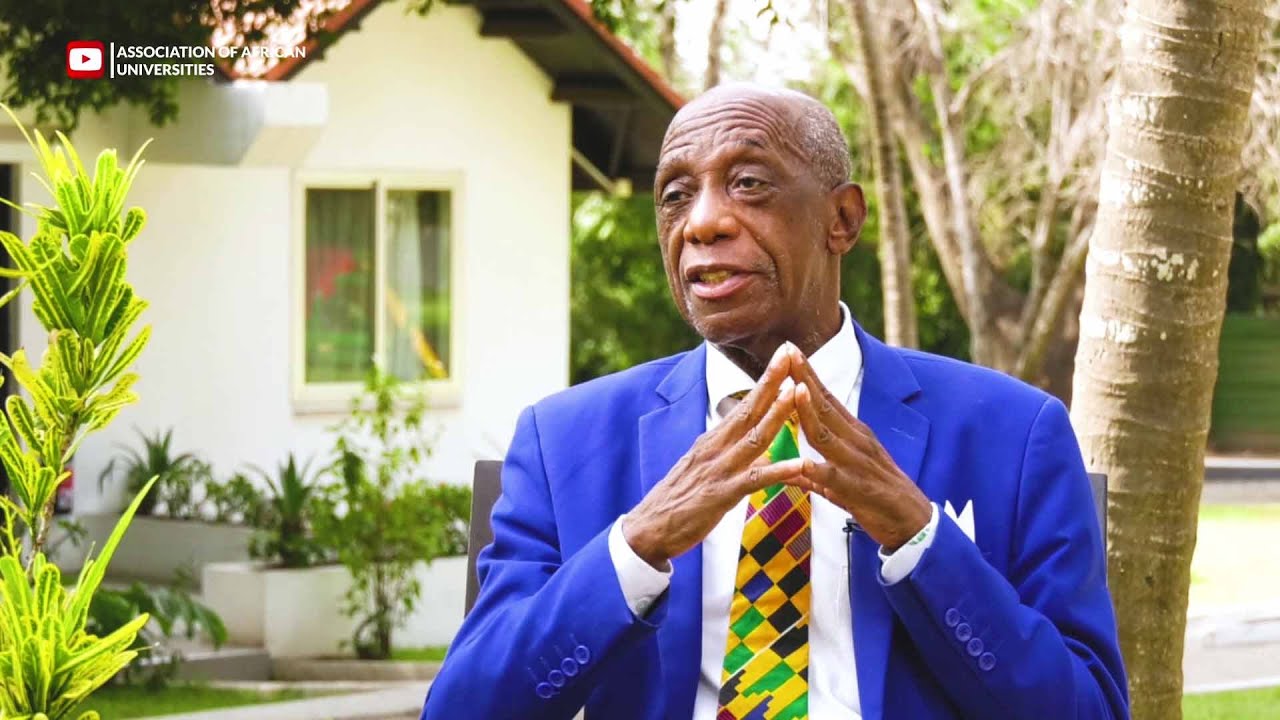
Jesse Eugene Russel was born in Nashville, Tennessee, USA, on 26 April 1948. He is not shy to say he “came from a very poor family environment of nine brothers and a sister” but that did not constrain his progress in life or the genius that lay deep within him.
.
According to one American writer, Russel’s “innovations in wireless communication systems, architectures and technology related to radio access networks, end-user devices, and in-building wireless communication systems have fundamentally changed the wireless communication industry”.
Russell is a pioneer in the field of cellular and wireless communications. In 1988, he led the first AT&T Bell Laboratories team to introduce digital cellular technology in the US, 15 years after the first publicised mobile phone call had been made over an analog system.
That first call, by two Motorola engineers, John F. Mitchell and Martin Cooper on 3 April 1973, was done on a DynaTAC mobile phone weighing a colossal 2 kilograms or 4.4 lbs. What Russell and his team did was to develop the technology that transformed that analog system to digital technology, which, at the time, was dubbed “2G” or “second generation” of mobile phone systems.
Interestingly, even today the mobile phone is one device that nobody has as yet claimed to have invented it in whole alone. History shows that a handheld mobile telephone service was envisioned in the early stages of radio engineering by Eric Tigerstedt, a Finnish inventor, back in 1917. He filed a patent for a “pocket-size folding telephone with a very thin carbon microphone”. But, according to the historical account, “the race to create truly portable telephone devices began after World War II, with developments taking place in many countries”.
Forty-three years after the war, Jesse Russell came into his own when he pioneered the field of digital cellular communication through the use of high- power linear amplification and low-bit rate voice encoding technologies.
His high achievements however belied his poor background as a boy. During his early years, Russell focused on athletics, not academics. But the course of his life changed dramatically after he attended a summer educational programme at Fisk University in Nashville, USA. It was a key turning point that pushed him into academic and intellectual pursuits.
Soon he found himself at the Tennessee State University where he obtained a Bachelor of Science degree in electrical engineering. In 1973, he earned his Master’s degree in electrical engineering from Stanford University, and in 1980, at the age of 32, he became the first African-American to be selected as the Eta Kappa Nu Outstanding Young Electrical Engineer of the Year.
His efforts as a top-honour student in engineering was rewarded when he became the first African-American to be hired by AT&T’s Bell Laboratories directly from a Historically Black College or University (HBCU).
Talking about his academic and professional feats in a 2011 TV interview, Russell said people are shocked to know that a black man, like him, pioneered the digital cellular communication revolution that reduced mobile phones from 2 kilos weight to the fancy smart phones of today.
He said when he won the Eta Kappa award in 1980, he did not know anything about cellular radio, “never heard about it, at least not in our own organisation”.
But he remembers that when the Bell Laboratories system was broken up, “the technology that nobody wanted was the cellular radio system. They had tried to send it to the telephone companies, and they sent it back to AT&T. So my boss said ‘Jesse, I know you don’t want this job, to head the cellular radio group, but I believe the future of communications will be deeply rooted around this concept of cellular radio.’”
Jesse took up the challenge, and today, after years of success, he says: “I won’t forget my first day on the job. They called a meeting of all the managers, they were all white, I was the only black guy, and I was saying ‘well, what’s the problem, why are we losing so much money?’ They were losing so much money. They said they could only make money if people were in their cars and when the phones rang they grabbed the phones and answered the calls, but people were not always in the cars.
“What I said was, ‘well, that is an easy problem. Why don’t we just take the phone out of the cars and put it on the people? And I guarantee you that if we put the phone on the people, we will make money, because when we put the phone on the people, when it rings they will grab the phone, and every time they grab the phone and answer the calls, we make a dollar. So we can turn the purse as well’. At the time I didn’t know that the phones looked like bricks, and I said we will be stupid to think that we can keep this kind of phones and get people to keep it on themselves.”
Russell’s white bosses patiently explained to him that the problem was more than the size of the phones. There were more people than there were cars, and the phones had been designed for cars, so there was not enough spectrum to cover the many people needed to answer the calls, so that AT&T could make a profit. “That is why you can’t do what you are talking about,” Russell’s white bosses told him.
But the bosses did not know that Russell was one of the leading authorities of digital signal processing – “because that was how I got the award in 1980, but they didn’t know that,” Russell told the TV interviewer in 2011. “So what I said was: ‘That is a simple problem to solve. What we will do is to completely digitalise the speech to substantially reduce the amount of bandwidth required on the producer bases’, and I described to them how you could do that, and what modulation schemes you would use and so forth.
“And I said if you do the map, I could show you how to do it, and that you could get four times the number of people in the same amount of spectrum. And it took us from 1984 to 1988, and we built the first digital cellular system that did not exist anywhere in the world.
“And we took the business from about $100 million to $5 billion, simply because I had so much self-confidence that I was able to challenge the status quo in the midst of the stereotypes about African-Americans, in the midst of an all-white group. I had enough self-confidence to say what I believed could be done.”
Russell went on to develop his expertise as the leader of an Innovation Centre focused on Applied Research in Advanced Communication Technologies. “As a key decision-maker in the selection and development of emerging communications technologies, Russell’s efforts led to the rapid realisation of new access network platforms that enabled AT&T to expand its broadband communication network options,” says another American writer.
During his years at AT&T, Russell served as the Director of the Cellular Telecommunication Laboratory (Bell Labs), Vice President of Advanced Wireless Technology Laboratory (Bell Labs), Chief Technical Officer for the Network Wireless Systems Business Unit (Bell Labs), Chief Wireless Architect of AT&T, and Vice President of Advanced Communications Technologies.
He left AT&T to establish his own communications company called incNETWORKS based in New Jersey, USA, of which he is the chairman and CEO. Initially, the company focused on 4G systems but has now moved on to 5G networks and services.
Russell was inducted into the American National Academy of Engineers in 1995 for his contributions to wireless communication. He has over 100 patents granted or in the process. In 1992, he was named as the Black Engineer of the Year in the US for the best technical contributions in digital cellular and microcellular technology.
Speaking in 2011, Russell prophesied, based on work his company was doing at the time, that in the future people would not just make voice calls or send text messages, but they would be making video calls not just between two people but between groups of people. That has come to pass.