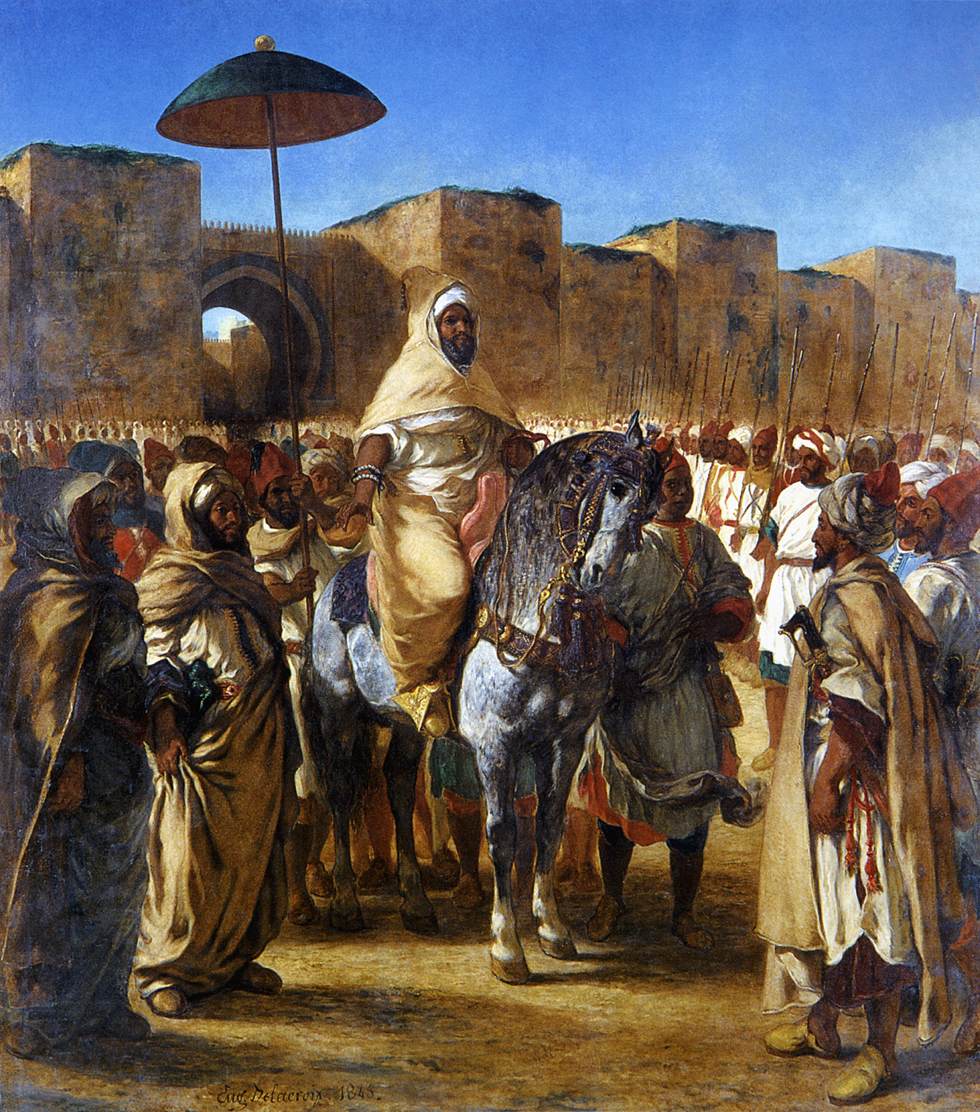
black or very dark and it is synonymous with the word for “Negro” in many contexts. During the European Renaissance,
explorers, writers and scholars began to apply the term Moor to Blacks in general
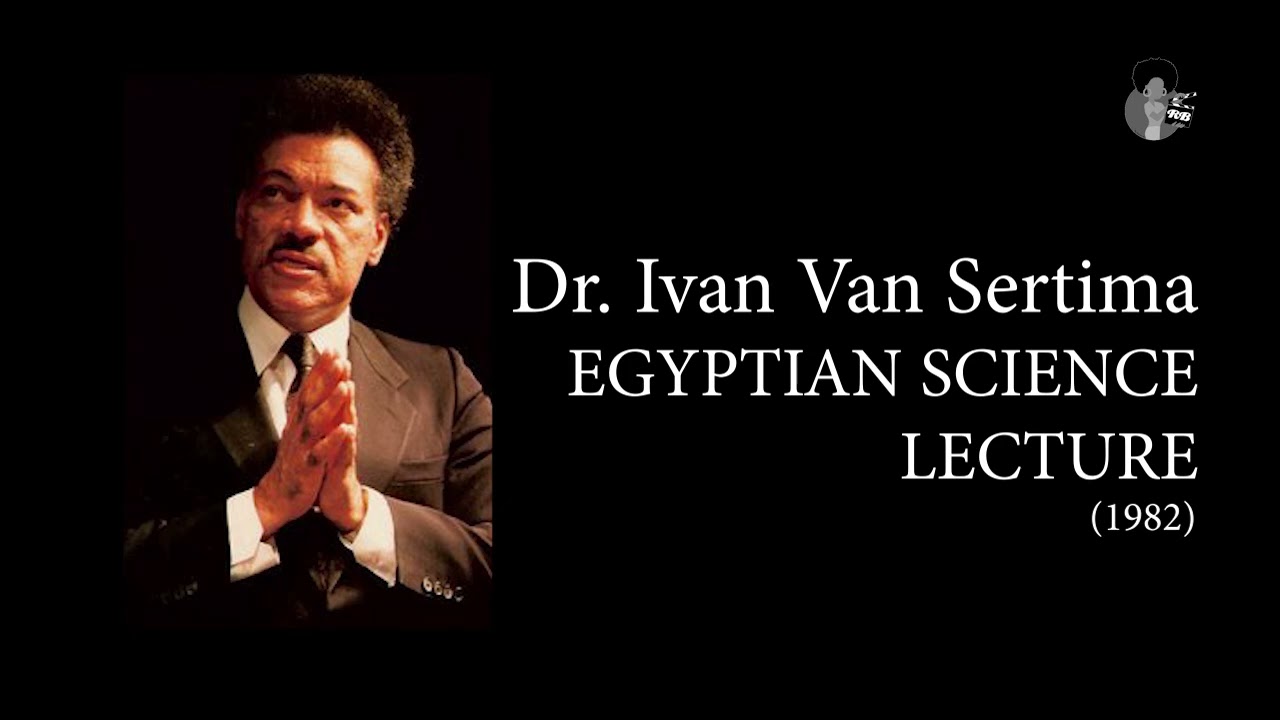
Dr Ivan Van Sertima, the African-American historian of note, takes us through the history, identity, and the achievements of the Moors in Africa and Europe. “The fact that Africans from the North had been intruding into Southern Europe from very early times should not come as a great surprise, for the straits that separate the two continents can be crossed by the simplest boats in a matter of hours. The proximity of the borders of Europe and Africa and the evidence of the African phenotype among many southern Europeans led Napolean to remark that “Africa begins at the Pyrenees”, Sertima writes. Please read on…
It is generally assumed that the movement of Africans into Europe, in significantly large numbers and into positions of real power, did not occur until the Moorish invasion of Spain in 711 AD. In Ibn-l-Khattib Al-Makkary’s History of the Mohammdan Dynasties in Spain (published in 1840), however, we learn of a great drought that afflicted Spain about 3,000 years ago, a catastrophe that was followed not long afterwards by an invasion from Africa.
This, of course, had nothing to do with the medieval Moors, with which this article is primarily concerned, but it is worth noting here because it actually established an ancient African dynasty in Spain, a fact that is omitted from the official histories.
The drought that devastated Spain, however, is described by a number of Spanish historians. Pedro de Medina in Libro de las Grandezas de Espana (1549) dates the drought in 1070 BC.
Al-Makkary (in his major historical work, translated by Pascual de Gayangos) describes it in some detail. It is Al-Makkary also who informs us of how Africans banished from North Africa by an African king against whom they revolted, entered Spain and took control of that country. The leader of the Africans is recorded as Batrikus. What his original name was we do not know, but it survives as Batrikus in the Latin of the Romans because it was the Romans who defeated these Africans 157 years later.
These Africans first cast anchor at a place on the western shore of Spain and settled at Cadiz. Advancing into the interior of the country, they spread themselves about, extended their settlements, built cities and towns and increased their numbers by marriage.
They settled in that part of the country between the place of their landing in the west, and the country of the Franks in the east, and appointed kings to rule over them and administer their affairs.
They fixed their capital at Talikah (Italica), a city now in ruins, which once belonged to the district of Isbilah, which is the modern Seville. But, after a period of 157 years, during which 11 kings of the African race reigned over Andalus, they were annihilated by the Romans, who invaded and conquered the country.
The second African invasion of Spain
The second major intrusion of an African army into Spain before the Moors, occurs some time around 700 BC during the period of the 25th dynasty in Egypt, when the Ethiopian Taharka was a young general, but before he had been ceded the throne by his uncle Shabataka.
It is this same Taharka (referred to in early Spanish chronicles as Tarraco) that led a garrison into Spain and invaded it during this period. We have a clear and indisputable reference to this in a manuscript by Florian de Ocampo, Cronica General, published in Media del Campo in 1553.
The name of the invading general is given as Tarraco. He is not only identified as the head of the Ethiopian army. The reference is more specific. It says he was later to become a King of Egypt. The name, the period, the historical fact of his generalship and his later kingship of Egypt, his Ethiopian origin and the wide-ranging trade and exploration of the Ethiopian in this period, all attest to the validity of this reference.
But most persuasive of all is the fact that cartouches of the Upper Egyptian kings of this period have been found in Spain. A cartouche is an ornamental carving or scroll depicting characters that represent the name of a sovereign.
Evidence of such cartouches may be found in the Journal of the Epigraphic Society (Vol 7, No.171, April 1979). The cartouche of Shishonq, a Libyan king, was found in Tomb 16, Almunecar, Spain. The Libyans ruled with the support of Nubian armies from the 22nd and 24th dynasties of Egypt and were overthrown by the Nubians in the 25th.
The fact that Africans from the North had been intruding into Southern Europe from very early times should not come as a great surprise, for the straits that separate the two continents can be crossed by the simplest boats in a matter of hours. The proximity of the borders of Europe and Africa and the evidence of the African phenotype among many southern Europeans led Napolean to remark that “Africa begins at the Pyrenees”.
Many historians, however, make clear-cut distinctions between the early North Africans and the Africans of the Sahara. They contend that the Africans who made contact and left their mark on Europe should not be confused with the sub-Saharan African type. They see these people as Euro-Africans (another version of the “brown Mediterranean race” myth used to account for the genius of Egypt).
Since many North Africans in modern times seem to fit into this theoretical construct, it has worked very well to confuse and confound the definition of their ethnicity.
The original Black Berbers
The people whom the classical Greek and Roman authors called the Berber were mainly Black and affiliated with the then contemporary peoples of the East African area. The word Berber was used in fact to refer to peoples of the Red Sea area in Africa as well as North Africans. It was an ancient belief that nomads dwelling in the deserts of Arabia were the same peoples whose ancestors had in earlier times roamed the deserts of East Africa.
It was such populations that largely comprised the Moorish people, called Moors (from the Greek maures, the Roman maurus = dark), because of the attribute of blackness which sharply distinguished them from the bulk of the European people.
However, the inhabitants of present-day North Africa are considered ethnically and culturally distinct from people dwelling south of the Sahara. This is only so today because of the considerable influx of European types during the white slave trade and their later movement in positions of dominance after the defeat of the Moors.
The 781 years during which the Moors dominated the Iberian Peninsula was an era in which many Europeans came into North Africa in states of servitude. The Muslims brought millions of European slaves over to the North African ports of Sale, Tangier, Algiers, Tunis, Tripoli, Fez, and Marrakesh, and some of the northern Egyptian towns.
One very famous Sultan, Mulai Ismail of Meknes, in Morocco, had as many as 25,000 European slaves who participated in the building of his colossal stables. The Sudanese were also taken into slavery but before the 15th century not as many as the whites. It was these Europeans who began to modify through intermixture with the earlier black inhabitants of North Africa. This is what eventually made so many North Africans appear different from the sub-Saharan Africans.
The anthropologist, Dana Reynolds, in an exhaustive and meticulously detailed essay, has attempted to trace the African roots of the original North African peoples. She cites half a dozen Greek and Byzantine (neo-Roman writers), from the first to the sixth century AD, who describe the Berber population of North Africa as black-skinned. Among the writers are Martial, Silius Italicus, Corippus, and Procopius.
The original Black Berbers, who were called Moors, were the North African ancestors of the present day dark-brown and brown-black peoples of the Sahara and the Sahel, mainly those called Fulani, Tuareg, Zenagha of Southern Morocco, Kunta and Tebbu of the Sahel countries as well as other black Arabs now living in Mauretania and throughout the Sahel. They include the Trarza of Mauretania and Senegal, the Mogharba as well as dozens of other Sudanese tribes, the Chaamba of Chad and Algeria.
Apart from her very detailed study of the origins and affiliations of the various tribes, Dana Reynolds points out that the Africans involved in the Moorish occupation of Iberia did not just build remarkable things in Europe but also in their native lands. They founded and constructed many industrious and prosperous towns all over the north of Africa and as far south as Timbuckto. The ruins of their castles can be seen as much in Northern Africa as in Andalusia.
The Moors
During the European Renaissance, explorers, writers and scholars began to apply the term Moor to Blacks in general. But the Arabs rarely used this word. In Arabic literature, the word Moor was fairly non-existent and the term Berber was applied to practically all the inhabitants of the Maghreb (Islamic North Africa west of Egypt).
The Arab use of the world Berber presents further difficulty since the term embraces many clans, not all of whom are Black. It is because of this that some writers, as well as Dana Reynolds, have gone to the trouble in certain contexts to identify those Berber clans of Africoid or predominantly Africoid origin.
The most important identifier, of course, is to be found in medieval painting and sculpture. It is claimed that certain Islamic traditions inhibited the representation of the human image in the work of Muslim artists and even in cases (some medieval Persian art, for example) where the inhibition does not seem to have obliterated portrait art, the human image is often frozen, non-individualistic and unreal.
We are grateful, therefore, that, in spite of their prejudices, the Christians left vivid images of the Muslim Black. While the Black figure at times takes on a demonic quality or emerges as an exaggerated caricature of the African, these paintings and sculptures are an indisputable witness to his presence and importance in this period.
Such illustrations are to be found in the Cantigas of Santa Maria, allegedly written by Alfonso X (1254-1286). They are filled with images of the Moor and are mostly Black types. This is the period of the Almoravid invasion which brought hordes of new Africans into the Iberian Peninsula.
Medieval illustrators in the Cantigas portray Blacks in a variety of roles – from members of the aristocracy to the military. Included among the images of medieval Spain is a Black man receiving gifts from a caliph or emir. In another illustration, two noble Black Moors are shown playing chess while being attended by black and white servants and musicians.
Also, in the army of the Almoravid, Black Moors are shown not only as foot soldiers, bowmen, lancers, and horsemen, but high-ranking officers. This needs to be emphasised since European historians have repeatedly presented Blacks in these contexts as mere palace guards, harem-keepers, and muscle-mounted mercenaries.
Moorish influences and contributions
A distinction should be drawn between Classical Renaissance of Europe, which mainly relates to its literature and art, and the Scientific Renaissance, which began to bud and flower in the 12th and 13th centuries.
Dr José Pimienta-Bey, in a very detailed work on the Moors (Moorish Spain: Academic Source and Foundation for the Rise and Success of Western European Universities in the Middle Ages, published in 1992), deals primarily with the Moorish stimulus for the scientific renaissance of Europe.
Dr Pimienta-Bey was born and raised on Long Island, New York, USA, to Cuban and Moorish parents. A historian of note, he has, since 1985, concentrated his primary research interest on the Moors and their impact on the development of European academic institutions and society. His book, Othello’s Children in the ‘New World’: Moorish History & Identity in the African American Experience (2002) is a classic.
Now chair of the African and African-American Department of Berea College, Dr Pimeienta-Bey presents a formidable body of evidence that shows that the foundation of much of medieval Western science and its academies was built up upon transmissions, refinements, and discoveries of the Moors and Arabs. Bey provides us with a detailed examination of Western Europe’s scholarly relations with Spain. Translation, of course, played the major role in this diffusion of the sciences.
The schools of translation were like the bridges between the Muslim and Christian scholars. Chief among these was the school of translators founded at Toledo by King Alfonso X during the 13th century.
Translations from Arabic (the medieval language of science) into Latin, the classical European language, had been going on since the 10th century. Centres of translation sprang up all over Christian Europe – Barcelona, Tarazona, Leon, Segovia, Pamplona, Toulouse, Beziers, Narbonne, Marseilles.
Bologna, Salermo and Paris have also made extensive use of Moorish scientific treatises. The translations from the Arabic provided links between Spain, Portugal, France, Italy and England. Alfonso X promoted Moorish erudition at every opportunity.
Nearly all the major universities in Europe sprung up around the same time, beginning in the second half of the 12th century right up through the 13th, a span of about 150 years, a period which coincides with the flowering of Moorish science and the establishment of centres in Europe to translate Moorish treatises from Arabic into Latin. In Italy, we have Bologna, Padua, Naples, Rome; in France, Montpelier and Toulouse; in Portugal, Lisbon and Coimbra; in England, Oxford.
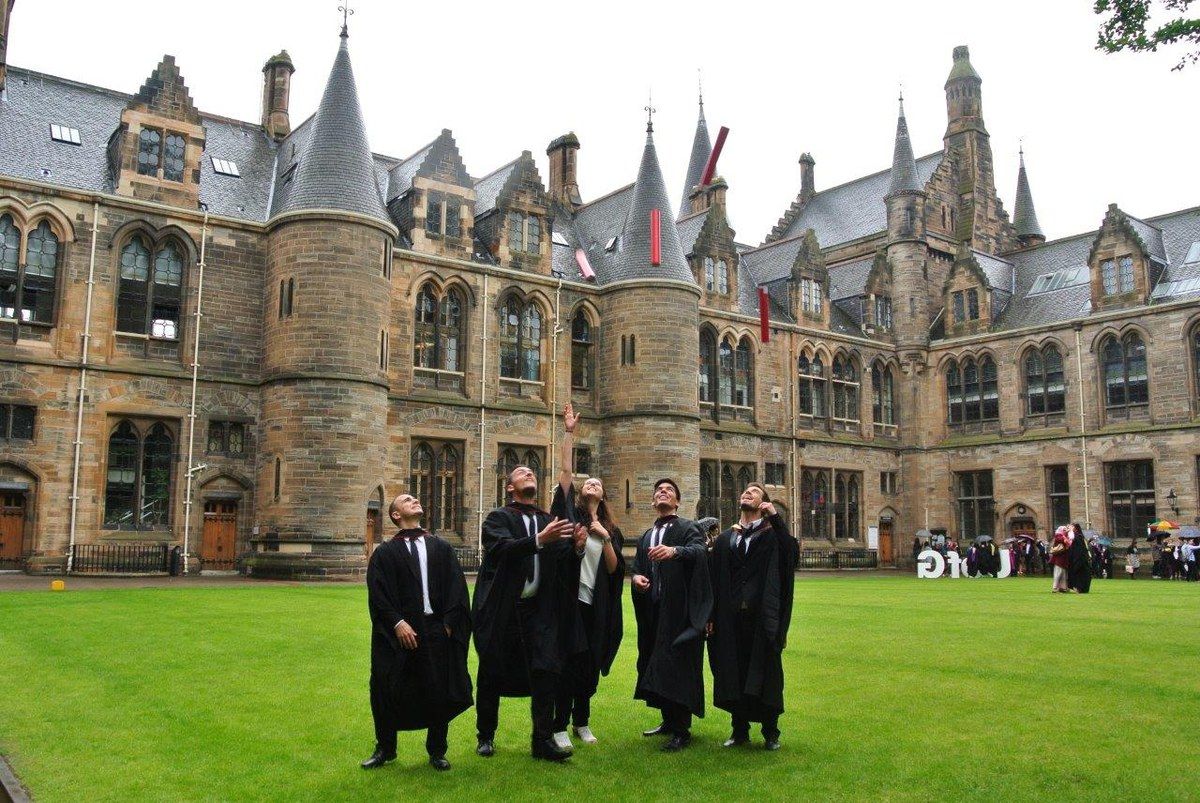

Several of the Moorish works in mathematics, astronomy and medicine became standard texts in these universities. For example, Judwal, a Moorish work in astronomy, became a standard text at Oxford.
A curious schizophrenia developed among the Catholics in relation to Moorish science and knowledge. On the one hand, they were very much aware of the superior knowledge of the Moors and they made efforts to acquire that knowledge so that they would not be left too far behind. At the same time, they strove desperately to keep it away from the common people and even, at times, to vilify it so that it would not become a challenge to Catholicism.
They were afraid that the Enlightenment, the new ideas that this new knowledge would bring, could affect the populace. So that, even though they were given the keys to the inner sanctum, they kept the cage closed to the masses.
A mighty Black empire
Into Europe came the advances of an empire more immense than those of either Alexander the Great or Rome at its height. Rice was introduced into Europe by the Moors in the 10th century, cotton by the 9th. A Moorish botanist, Ibn Bassal, partitioned the land into 10 different classes, according to particular characteristics, and taught the farmers ways of increasing the fertility of their plots.
Surveys were done to locate sweet water below the earth. Widespread use was made of the waterwheel which the Moors had introduced into Spain. The Romans also knew of this but they had used it very little.
The Moors also dug canals and channels to irrigate the farmlands and provide water for the thousands of houses and mosques and palaces and public baths. They not only increased the fertility of the soil with their new methods and tools and plants and manures, but they also ushered in the sciences of food preservation and storage. Their methods of drying enabled such food as figs, plums, cherries, and apples to remain edible for several years.
The Moors have left the voiceprint of their language on the things they introduced. A lot of Arabic words have entered general usage as a result of the Moorish invasion of Europe. Pamienta-Bey cites coffee, sugar, rice, cotton, lemon, syrup, soda, alcohol, alkali, cipher, algebra, arsenal, admiral, alcove, and magazine.
Let me add a few to this list, selected from my own work on pre-Columbian navigation and the transfer of plants: anchor (from angar), caravel (from caravos), tobacco (from dubbaq and a series of taba and tabgha words). Also the technical terms for the astrolabe (an astronomical device invented by the Moors) still retain their Arabic names.
But technology in itself is not the only arbiter of civilisation. It is important to note a benign African influence on the way Islam operated in Spain, particularly in relationship to women. Ibn Battuta, the Arab traveler and writer, first commented with astonishment on the level of freedom and equality of Muslim women in the African town of Walata.
It was the same in Moorish Spain. Unique among Islamic nations, women in Moorish Spain enjoyed more social freedoms than in any part of the Islamic world. They moved freely in public and engaged in various gatherings. The practice of purdah was almost entirely ignored in Moorish Spain. Even a daughter of a 12th century Caliph had a total disregard for the veil.
Europe’s ‘Dark Age’
A question that has always haunted me is the reason for Europe’s Dark Age. Why did Europe fall into such darkness after all it had received from the Greeks who had taken so much from, and added what they could to, the Egyptian sciences?
George G James, in The Stolen Legacy (1954) answers this question. James had pointed out that the edicts of Theodosius in the 4th century closed down the temples of the Egyptian mysteries as well as the philosophical schools of Greece. The emperor, Justinian, in 529 AD followed in the same path of Theodosius. Thus, an intellectual darkness descended over Christian Europe and the entire Greco-Roman world. It lasted for centuries.
James makes an even more important point which I have not seen repeated elsewhere. It is the missing link in the drama of Moorish scientific ascendancy in the Middle Ages. Eurocentric historians had argued that the Arabs were merely transmitting the Greek heritage lost to Europe during its Dark Age. Even Arabs were made to believe that, and to assume that they were standing on the shoulders of Greek giants.
By the time the Arabs attacked Egypt in 639 AD, Europeans had long been in charge of that defeated country. The Arabs seemed to forget that their conquest of Egypt had been made easy by the resentment of the Egyptians against their Byzantine overlords.
We know very more today about the enormous debt Greek science owes to Egypt. But what was little suspected was that Greece was not the only conduit of Egyptian scientific genius to the Arab world.
George G. James provides evidence that there were Egyptians fleeing their country in large numbers during the Persian, Greek, and Roman invasions, fleeing not only to the desert and mountain regions but also to adjacent lands in Africa – Arabia and Asia Minor, where, “they lived and secretly developed the teachings which belonged to their Mystery System.
“In the 8th century AD, the Moors of North Africa invaded Spain and took with them the Egyptian culture which they had preserved. Knowledge in the ancient days was centralised, that is, it belonged to a common parent and system – the Wisdom System or Mysteries of Egypt, which the Greek used to call Sophia”.
While in Spain, the Moors did not suppress the languages of the people of al-Andalus, they did not outlaw their sacred customs, they did not turn Iberia into a sweat-shop, its fertile lands a mere source of raw materials for the Muslim international elite.
The Moors also did not destroy the legal system of al-Andalus, rob them of their political rights, deny them their claim to humanity. The one thing they did insist on, was a say in the election of Catholic bishops since the rival power of the church could undermine Muslim power and authority.
The defeat of the Moors
The world changed dramatically in 1492, not only because Columbus stumbled in the direction of the Americas, using the magnet of a myth to draw millions behind him, but because that was the very year the Moors were defeated. It is not accidental that it is Spain and Portugal who spearheaded the movement in this direction. It was on 2 January 1492 that the African leader, Abu Abdi-Liah, otherwise known as Boabdil, surrendered to the Spanish.
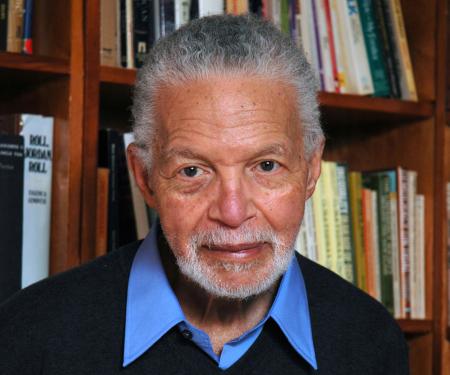
Jan Carew, a veritable man of letters and an important intellectual of the Caribbean world (born in Guyana in 1920, died 6 December 2012) compared the illiteracy of the Christian Europeans to the learning and erudition of the Moors of that time.
The comparison was so startling, his comment is worth quoting: “At a time when the most insignificant provinces of Moorish Spain contained libraries running into thousands of volumes, the cathedrals, monasteries and palaces of Leon, under Christian rule, numbered books only by the dozen. The paltry number of texts the Christians did possess were almost all devotional or liturgical.”
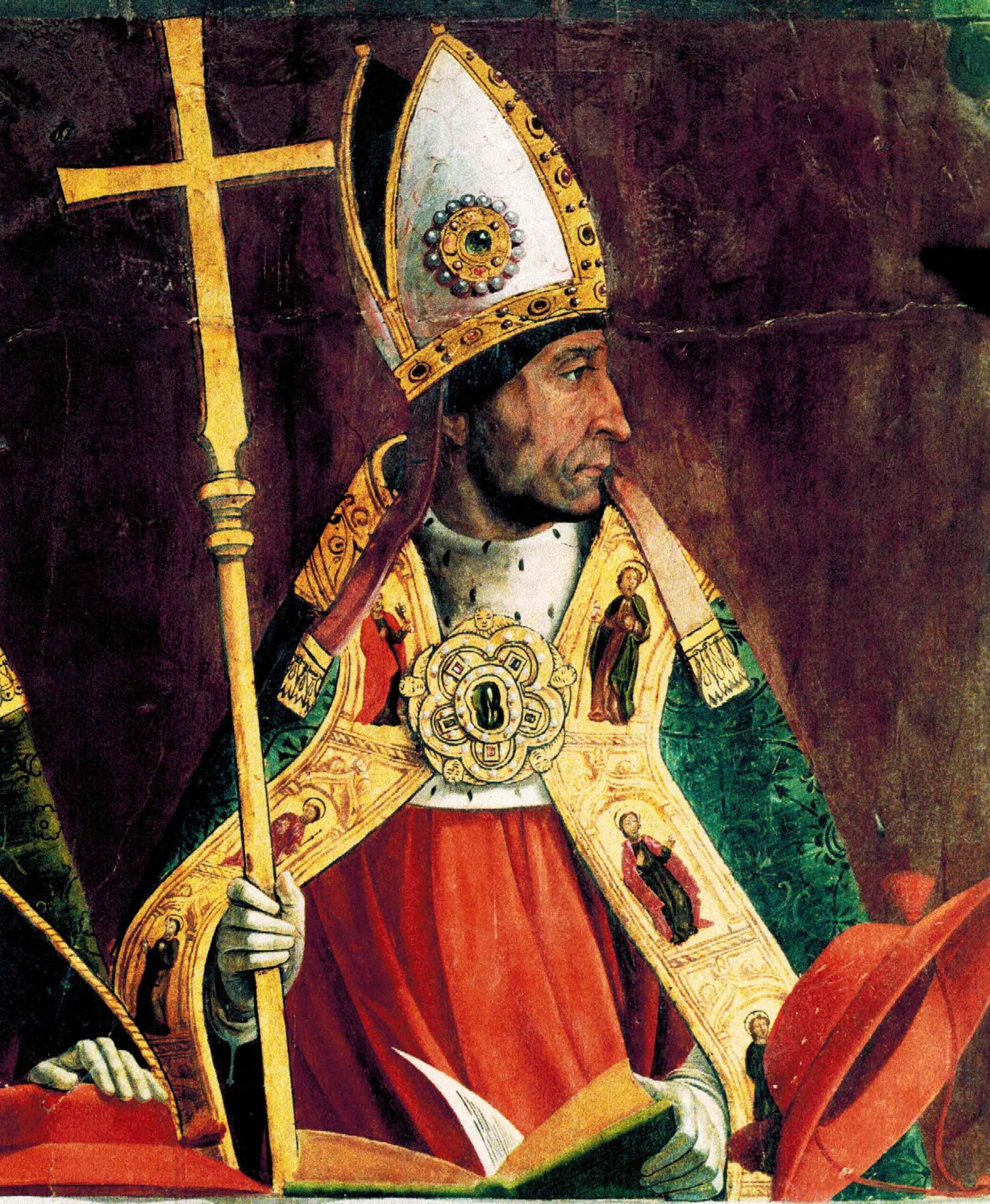
The narrowness of vision this produced among leaders of the church and state was to have catastrophic effects. It led to the massive burning of African and Arab books under the order of Cardinal Ximenes de Cisneros. It inspired a similar bonfire of the books of native Americans. Bishop de Landa exhorted his followers in the Yucatan: “Burn them all – they are works of the devil”.
The destruction of the Moorish libraries was particularly vicious because it was not only inspired by religious narrowness and bigotry. Hatred of the dark invaders kindled the bonfires.
The Church at the time too saw most of this foreign learning as something evil, even demonic. The number system that we use today, for example, brought in by the Moors from India, was seen as late as the 17th century in some parts of Europe as signs of the devil.
It became a religious mission for men like Ximenes and his successors to erase from history all memory of the Moors. Ximenes even induced the Spanish sovereigns to outlaw the public baths, making cleanliness antithetical to godliness.
Beaten into surrender, forced by the million to seek refuge back into Africa and Arabia, some of the Moors still held their ground. An important rebellion by the Moors is cited by Jan Carew in 1568 led by Malvi Abd-Allah Mohammad ibn Umayya. This was such a serious rebellion that Philip II of Spain had to call on Don Juan of Portugal to put it down.
Carew deals with the subtle evasions by Europeans who refuse to admit that the Almoravids (1056-1147) were Africans. “They continue to describe them variously as ‘descendants from Sanhaja tribes of the Sahara’ or ‘the desert Sanhaja from whom the Almoravids had first drawn support’, suggesting the Almoravids, themselves, were of a different race and that they got the Sanhaja to help in their campaign; or ‘the African troops, the Sanhaja…’”
While Carew notes that the Arabs later developed a myopic vision of history, ignoring the African contribution to the invasion and colonisation of Southern Europe, he praises the early Muslim openmindedness. For, after all, Islam went beyond the Arab and, in its early revolutionary phase, its eagerness to embrace the universe of man’s imaginings was extraordinary.
“Unlike Christian theologians who forbade scholars from considering outside ideas and prescribed only ecclesiastical canons of the day, Islam accommodated new ideas with grace and a civilised tolerance,” Carew says.
Let me quote from him again since he highlights the advantages of this kind of dynamic openness very well: “Muslim scholars absorbed and synthesised and expanded upon the knowledge of the Ethiopians and Egyptians, the Phoenicians, the Greeks, the Chinese, and the Indians.
“A new and momentous leap forward in the theoretical and applied sciences evidenced itself in Moorish mathematics, medicine, astronomy, navigation, and new concepts of world geography and philosophy … The popularity of Moorish scholarship was such that for centuries Arabic was commonly accepted as the language of scholars from Europe, Asia and Africa…”
Carew is particularly illuminating when it comes to the discussion of agriculture. The Moors transformed the Iberian Peninsula in this respect. They were able to create a harmony in the rhythms of the life in the city and in the countryside.
They not only brought advanced drainage and irrigation systems, reservoirs, aqueducts, sophisticated storage facilities, and efficient marketing, transportation, and trading networks, but they brought the beauty and freshness of the countryside into the cities – fantastic gardens, parks, lush inner courtyards, and a constant supply of pure water.
They also brought a variety of new crops like cereals, beans and peas of various types, olives, almonds, and vines – rich new sources of protein. Fruits unknown to Europe tumbled into the market – oranges, pomegranates, bananas, coconuts, maize and rice.
They brought the art of city farming as well to the high bleak plains, and they introduced the water-wheel (as I mentioned earlier), an invaluable source of energy for irrigation and the grinding of grain.
The impact of the Moors upon European literature and upon the work of great writers like Cervantes and Shakespeare, is also rarely discussed. Carew points out that Spain’s greatest literary figure, Cervantes, was for several years a prisoner of a Moorish leader in North Africa.
The tales of knight errantry and courtly love, which obsess Cervantes’s hero, Don Quixote, were filtered through centuries of the Moorish/Islamic experience. There were Moorish brotherhoods that may be described as orders of knights. Their imprint on European heraldry, on shields, and emblems of chivalry, is dealt with elsewhere in this issue.
The Moors & Shakespeare

Now William Shakespeare, though he never travelled, had many merchant friends from whom he could milk information about Morocco and the Moors. He also knew Queen Elizabeth’s ambassador to Morocco and the Moroccan ambassador to London.
Shakespeare also, I should point out, read Leo Africanus’ Geographical Historie of Africa, and quotes actual sentences from this in his play on Othello, the Moor. He wrote an ode to his Moorish mistress, Lucy Morgan of Clerkenwell, and seems to have taken a greater interest in the black figure than any other English dramatist of consequence.
Carew touches on Shakespeare’s treatment of these, from the noble Moor, Othello, to the caricature of the black slave, Caliban, round whom the racist prejudices of Elizabethan England are crystallised, to the dark-complexioned prince of Morocco, whose colour is cancelled out (in his rivalry with the pink prince of Aragon for the hand of Portia) by what Shakespeare sees as the grand equalser – wealth and class.
The image of the Moor in European literature, however, an occasional though powerfully evocative figure in the plays, novels and canvases of major European writers and painters, seems rather minimal in its effect on literacy or artistic structure and form. Not so in the matter of music.
The influence of Moorish music
The influence of African and Arab musical instruments, poetry and song, even musical theory, on the melodies and rhythms of Spain, shine through the lies and evasions of musicologists to this day. Dr Yusef Ali, drawing upon a comprehensive body of work on this subject, tries to set the record straight.
For many years, Dr Ali, a professional musician of several decades, was a lecturer on African-American music history in the Department of African Studies at Rutgers University in New Brunswick, New Jersey, USA. He died on 2 May 2008.
According to Dr Ali, a major misconception of African music is that it has always been separable from what became the Arab-speaking countries of the Maghreb – Morocco, Tunisia, Egypt, and Sudan. The tendency of most people, even scholars who should know better, to confuse ancient and modern social and ethnic reality, has led to serious misunderstandings about racial and cultural origins of the peoples of North Africa as compared with Africans in other parts of the continent.
The Mahgreb, according to Dr Ali, is seen as “a thin finger of Islamic culture that stretches from Egypt to the Atlantic”, and what it was before the advent of Islam or the European slave trade is ignored or forgotten.
We shall not attempt to prove here, since we have done so definitively in other editions, that Egypt, in the classical dynasties at least, was predominantly African, but what is seldom recognised is the African substratum of ancient Egyptian music.
This music was to spread and influence both the Eastern and Western world. It haunted and startled the Arab, even as he was startled by the pyramids and sphinxes and colossal monoliths, which in his desert habitat, he had never seen.
Experiments in Ancient Egypt with a music notation system and the establishment of schools of music that not only taught vocal and instrumental performance but also theory and chironomy (the art of notation by means of gesture), made Egypt the first civilisation to do so.
Egyptians, even as late as Greek times, were still possessors of canted knowledge in both music practice and theory. Thus, much that we give credit to Pythagoras and the Greek music theorists, they have deeper roots in Alexandria and the Nile Valley.
In addition, the legacy of Ancient Egypt is found in the shapes, tunings, and playing styles of such folk instruments as the argul double-clarinets, the genibri of North Africa, the many end-blown flutes of the Near East, the hlam of the Wolof, and the sistrum of the Ethiopian Copts.
An important African musicologist, Kebede, asserts that Egyptian civilisation is the cradle of music and that even the Greeks refer to Egypt as the source of their musicopedagogic ideas. Ancient Egyptian music is preserved today in the music found in the Coptic churches and it is also deeply rooted in the music characterised simply as Arabic.
What is remarkable and brings us back once again to brood upon the inspirations of Egypt is that the Arabs came there with their poetry but nothing formally set to music. They did not yet have a classical form of music that they could call their own.
There is no evidence of musical treatises in Arabic until the 8th century. This is after their invasion of Egypt, and their study of Ancient Egyptian music practice and theory, as translated and transmitted by the Greeks.
Virtually all European scholars, however, claim a Persian origin of Arab music even though they know (or at least should know) that the first Persian musical treatise dates from the 12th century, about 400 years later.
Ziryab the Great
The most significant of the Moorish musicians was Ziryab. He arrived in Spain in 822 AD. He was known as Ziryab (the Blackbird), a name given to him because of his black complexion, his eloquence and the melodious sweetness of his voice.
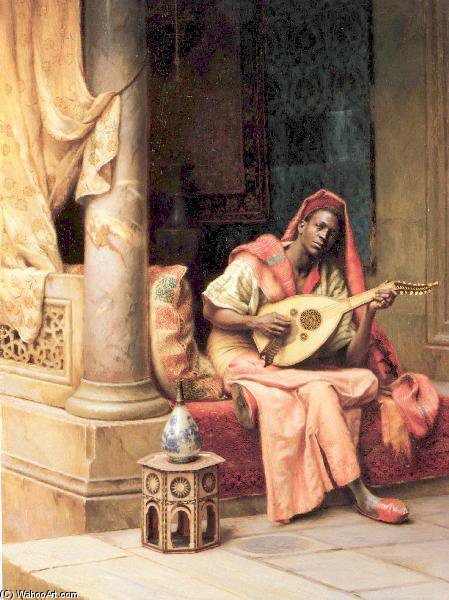
Ziryab made not just an impact on the music of Spain, especially in the development of the lute, but he became the cornerstone of Spanish musical art. In Cordova, he founded the first conservatory of music. He also invented a plectrum made of eagle quill instead of the wooden one that had been used before.
Ziryab was deeply versed in every branch of art and he was gifted with such a remarkable memory that he knew by heart upwards of 1,000 songs with their appropriate airs.
Before Ziryab, the lute was composed of only four strings which may be likened to the four elementary principles of the body. They expressed the four natural sounds. He added another red string and placed it in the middle which considerably improved the sound and made it more harmonious.
The theory of humors which the Egyptians introduced into medicine and which had been picked up by the Greeks (and, through their translations, by the Arabs), was now transferred to music. The object of music was to restore the equilibrium of the soul in the same way that medicine was supposed to restore the equilibrium of the body humors.
Ziryab became the most fashionable arbiter of taste in the 9th century. He affected the way the upper class of Andalusia ate at table. He was the first to introduce crystal tableware. He changed hairstyles. He introduced new customs in perfumes and deodorants, in the manner of washing clothes, in cooking.
He brought in new dishes, some named after him. He introduced new fashions in dress, a greater range of colours and textures of garments to suit the shift and change in seasons.
He revolutionised the style of serving and eating food. Food was no longer served in one mass as was the general case in al-Andalus before him. Following his lead, it was broken down into separate courses, beginning with soups and ending with desserts.
Instrument-making
Apart from musical composition, instrument-making achieved a high state of development in Moorish Spain. Some of the new instruments include the khayal, he carrizo (reed), the ltue, the rata, the rabel or rebec, the kanun (harp), the munis, the quenira (a type of zither), the quitar, the zolami (oboe), the shokra, and the nura (flutes).
Other wind instruments mentioned are the pastoral flute, the Moorish pipes, two kinds of flageolet and the bagpipes. The percussion instruments include the bambrel, the tambourine, castanets, brass rattles, macara and atambor.
Even when the Moors had been defeated and Christians had reconquered the territory once occupied by these people, Moorish music was imitated by a great number of Christian Europeans, and the Christian kings still kept Moorish musicians in their employ even as had the Moorish kings before them.
The Moorish influence on musical instruments in Europe was considerable. They were the first to introduce a scientific description of musical instruments and possessed the only didactic instrumental methods in music during the Middle Ages. While most commentators agree with this, they insist that the Moorish influence was confined to that category and that they contributed nothing to musical theory.
But the historian of music, George Henry Farmer, points out that since there was such an advanced state of instrumental music, it would be difficult to deny that some practical theory would have also been passed along. Indeed, says Farmer: “I believe, with others, that the major mood due directly to the accordatura and fretting of the Arabian lute was among the new musical ideas introduced in this way.” He also cites evidence for the transmission by the Moors of practical history.
The spread of Islam
Mamadou Chinyelu, a writer, journalist, and broadcaster of several decades, deals with the pivotal role of Africans in the birth of the Islamic faith and shows that they figure not only in Prophet Mohammed’s lineage, but in his upbringing and development as well. Apart from the reputed African ancestry of his grandfather, Mohammed was reared by an African woman, Barakat, when his mother died.
Mohammed pleaded with his family to raise money to free the African slave, Bilal, who not only became a pillar of the Islamic faith but Mohammed’s closest and most honoured friend unto his death. One of Mohammed’s wives – May – was an African. His adopted son – Zayd bin Harith – destined to become a great general, was also an African.
Mohammed held Africa in such mystical reverence that when his early followers were fleeing persecution in Arabia, he advised them to seek asylum in Africa, for “yonder lieth a land of righteousness”.
Africans therefore became pivotal in the spread of Islam. The invasion of Spain in the 8th century and the survival of the Muslim dynasties in the 11th century owe a great deal to African military prowess and leadership.
Chinyelu celebrates the military exploits of Tarik (who conquered Spain in 711 AD), of Yusuf Ibn Tashifin, leader of the Almoravids, who routed Alfonso VI’s army in 1086 (15,000 Africans facing 70,000 Europeans) and assumed the leadership of Muslim Spain in 1091, and of Yakub al-Mansur who conquered Spain and Portugal on two separate occasions to become the most powerful ruler in the world.
Such was the respect these leaders inspired in the hearts of their enemies, that royal crests and coats-of-arms in Europe were emblazoned with Moorish heads.
Moorish influence on science
To the influence of Moorish science in Europe we finally turn, for it is in this field that the impact of the Moors is least known and most felt. Wayne B. Chandler, in The Moor: Light of Europe’s Dark Age (1992), points to advances in mathematics, the solving of quadratic equations, and the development of new concepts of trigometry.
Chandler, an anthrophotojournalist did extensive research into the origins of race and ancient civilisations, and wrote the book, Ancient Future: The Teachings and Prophetic Wisdom of the Seven Hermetic Laws of Ancient Egypt (published in December 2000).
He and his associate, Gaynell Catherine, were instrumental in unearthing key photographs relating to the African presence in the Olmec civilisation, as well as the civilisations of Ancient India, Southeast Asia, Ancient Egypt, and China. His book, The Moors: Light of Europe’s Dark Ages (1986) is a classic.
Chandler informs us that Moorish chemistry refined gunpowder invention in China and thus introduced the first shooting mechanisms, known as firesticks. They were also known for their skill in medicine. For seven centuries, the medical schools in Europe owed everything they knew to Moorish research.
Vivisection as well as dissection of dead bodies were practised in Moorish anatomical schools, and women as well as men were trained to perform delicate surgical operations. They were the first to trace “the curvilinear path of rays of light through air”. This discovery in about 1100 AD is a prerequisite to the design of corrective eyeglasses.
Supporting Chandler are Prof Beatrice Lumpkin and Siham Zitzler. In a chapter titled Cairo: Science Academy of the Middle Ages (published in 1992 as part of Golden Age of the Moors), Prof Lumpkin and Zitler focus on the work of mathematicians in Africa during the Muslim empire. Most of this work was done at the Dar-el-Hikma, the House of Wisdom, founded in Cairo in 1005 AD.
For many years, Lumpkin was a professor of mathematics at the Malcolm X College in Chicago, and a writer of consequence on the history of mathematics. She wrote a very illuminating chapter on The Pyramids: Ancient Showcase of Science and Technology, for the Journal of African Civilisations, Vol.2. Her colleague, Siham Zitzler, has also been a professor of mathematics at Loop College in Chicago.
According to Lumpkin and Zitzler, the scientists at the Dar-el-Hikma in Cairo, through the use of Arabic as the common language of learning, were able to communicate with their colleagues over vast stretches of territory under Muslim influence, from Spain and Italy in the west, across Africa and Asia, to China in the east. They promoted the rapid progress of technology in this period.
Complex machines developed outside Europe
Even before the House of Wisdom was established, we have evidence of complex machines developed outside Europe – self-operating valves, timing mechanisms and delays, worm and pinion gears, operated hydraulically, even crankshafts.
The first steam engine had already appeared in Africa, built by Heron in the Egyptian city of Alexandria. Also, the water clock and the thermometer. Europe lagged behind in the technological race and later profited immensely from these innovations.
Edward Scobie, in his chapter on “African Women in Early Europe”, published as part of my book, African Presence in Early Europe (1985), deals with these aspects of Moorish science that made the global expansion of Portugal possible. Why did the British, French, Dutch and Italians who owned the ships not undertake this journey? Since their leaders also possessed the necessary vision for such an enterprise, why didn’t they take the lead?
Scobie, a multifaceted man from Dominica – journalist, editor, magazine-publisher, lecturer, historian, politician, and author of the seminal work, Black Britannia: History of Blacks in Britain (1972), proved that the Portuguese jumped ahead in the exploration of the world because they drew upon everything they could from the Moors.
Scobie, who died on 14 November 1996, called it “the geographical lore” (for the Muslims travelled the length and breadth of the then known world and wrote the most meticulous travel accounts (Ibn Battuta and Ibn Hawkel, for example).
All the advances in navigation – ranging from lateen sails, astrolabes, nautical compasses, astronomical tables, and tubes, to the extremities of which ocular and object diopers were attached, the measurement of time by pendulum oscillation, and the finest maps – were all available to the Portuguese, thanks to the presence of the Moors in the Iberian Peninsula. Also, gunpowder and artillery (the Moors had not only made the firestick, as mentioned above, but even cannon forged from wrought iron).

Prince Henry the Navigator (born 1394) gets all the credit for the impetus towards Portugal’s expansion as if this was a result of his creative genius. The depletion of precious metals in Europe due to the demands of foreign trade, the costly wars that were taking place, leading to even further shortages, pushed Europe to turn to Africa as an untapped source.
But it was Prince Henry who channelled both this need and the science of the Moors to spearhead European expansion. As Prof Thomas T. Hamilton of the Old Dominion University, puts it, “it was both the lore and the lure of Africa”.
Why did the perception of the Moor change? Why was there no doubt before 1492 that one was dealing with a mix of racial types speaking Arabic, among whom the Black African was at times a dominant figure, whereas today it would seem like racial chauvinism to suggest that Africans played a major role in the occupation and enlightenment of a critical part of Europe?
The crash of Moorish power in the middle of the 13th century (although this lingered on in enclaves like Granada until 1492) was to make a tremendous difference. It is not an accident that the year Columbus sailed was the same year the African generals in Granada surrendered to Ferdinand and Isabella.
Not only did the economic and political fortune of Africa fall dramatically after that, but so did the very image and perception in which its people were held. It was only a matter of time before Africa would be seen in all lands and in all phases of history as unrelated to significant cultural and scientific development.
Wherever it could be shown that the African had made early and significant advances, or had influenced other civilisations, be it in North Africa, Southern Europe, or Egypt, it would be seen as a direct result of some Caucasoid minority in their midst or the infusion of European blood. This led European historians to assume that there had to be a Caucasoid origin (or a Caucasoid class or caste) of such extraordinary people as the Moors.
Egypt, the mother
As Samuel Parsons Scott (better known as S. P. Scott), the American attorney, banker and scholar, rightly put it in the History of the Moorish Empire in Europe (1904): “Egypt, the depository of traditions of incalculable antiquity, had submitted, after a brief and determined struggle, to the common fate of nations, and the banners of Islam floated in triumph from the towers of Alexandra and Memphis. It was with a feeling of awe and wonder that the fierce, untutored Arab gazed upon the monuments of this strange and to him, enchanted land.
“Before him were the pyramids, rising in massive grandeur upon the girders of the desert: the stupendous temples: the mural paintings, whose brilliant colouring was unimpaired after the lapse of 50 centuries: the group of ponderous sphinxes imposing even in their mutilation: the speaking statues, which facing the East, with the first ray of light saluted the coming day: the obelisks, sculptured upon shaft and pedestal with the eternal records of long extinguished dynasties: the vast subterranean tombs, whose every sarcophagus was a gigantic monolith: and the effigies of the old Egyptian kings, personifications of dignity and power, holding in their hands the symbols of time and eternity …
“The influence produced by the sight of these marvels on the destiny of the simple Arab, whose horizon had hitherto been defined by the shifting sands and quavering vapours of the desert, by whom the grandeur and symmetry of architectural design was undreamt of, was incalculable …”
Prof Scott may have exaggerated the simplicity of the desert-tribes who overwhelmed Egypt in the 7th century AD, but, with respect to the impact of Egyptian science on the later Muslim invaders, the vaulted tone of the above passage carries on the slightest hint of exaggeration.
The irony is that the Muslim invaders came upon inscriptions and papyri that they could not read. They were, therefore, to draw upon the vast body of ancient science second-hand, through the translations of the Greeks, the students rather than the teachers.
Thus, even the Arabs, in spite of their later refinements and advances, subscribed to the notion that they had merely built upon an original European base and that their real contribution to the scientific renaissance in Europe was largely to preserve and transmit the lost secrets of a Hellenistic heritage.
This notion pervades even the latest works done on the science of the Muslim peoples. Ron Landau, in his book, The Arab Heritage of Western Civilisation (1962), repeats this like a compulsive chant in every chapter.
“While Europe lost the Greek legacy,” he claims, “the Arabs discovered it.” Again, “… The Arab assimilation of the Greek treasure forms one of the most fascinating chapters in the history of man’s quest for knowledge.”
Two pages later, he is still chanting the same tune: “They [the Arabs, correctly the Muslims, because the Moors were not Arabs but Muslims] gradually erected on Greek foundations an intellectual edifice of their own … No field of Greek learning, from philosophy to math, medicine and botany, was neglected.”
Since most modern Egyptians represent a dramatic departure, both racially and culturally, from the Egyptians of the dynastic era and have been taught, by both British and French imperial powers, to follow the Eurocentric approach in these matters, we will find this dismissive attitude towards the science of Ancient Egypt even in the most devout, the most learned of Muslim scholars.
Such is the case of Seyd Hossein Nasr, author of Islamic Science, an encyclopaedic work on the science of the Muslims, published in London in 1976. It exudes with a spirit of superiority over the so-called materialistic vision of the European, but in a typically schizophrenic vein, it rarely ever mentions pre-Islamic Egypt as having a scientific tradition.
It is the same Eurocentric chant in spite of Nasr’s chauvinism. Praise be to Allah for Aristotle and Plato, Pythagoras, Euclid, Hippocrates and Galen. We have gone beyond this, but before these Greek spirits there is nothing but the womb of space.
That is why I have found it necessary to outline important aspects of Ancient Egyptian science (here and elsewhere) as it bears not only upon the Greek, but upon the later invaders of Egypt.
It is important that readers be made aware of this African background since it is difficult, if not impossible, to distinguish at all times African Muslims from other Muslim scientists. What we can say about Moorish science is that it was not European in its seminal inspiration and only minimally affected by Europeans before 1492.
It was a multi-cultural tradition, involving strong African and “Arabian” elements but also elements of the Hindu (the number system, for example), and the Chinese (gunpowder technology).
Science ideally is beyond classification. It is neither Black nor White, African nor European. What one man invents becomes the common property and benefit of the whole human race. But when there is a perceived attempt, conscious and unconscious, persevered in relentlessly over a certain race, then an emphasis upon those invisible people in history becomes a duty, a mission, a necessary corrective.
Finally, it is not that we seek to denigrate the achievements of the Greek nor to subtract one iota from the contribution so loosely labelled “Arab”, but to point out that there are seminal antecedents to the Greek that are too critical and significant to be ignored, and that both an ancient and contemporary African element mixes and melts in the crucible that became the science of the Moors.
Leave a Reply