Because of the stupendous achievements of the Moors in Europe, many European, and even Arabic, historians and writers have tried to “whiten” and distance them from Africa. It is a controversial subject, so here, James E. Brunson and Runoko Rashidi, two historians/writers of some consequence, have taken their time to look at all the evidence and historical facts that prove that the Moors were indeed black and African, though they had converted to Islam and therefore were called Muslims. But being Muslim is not a nationality.
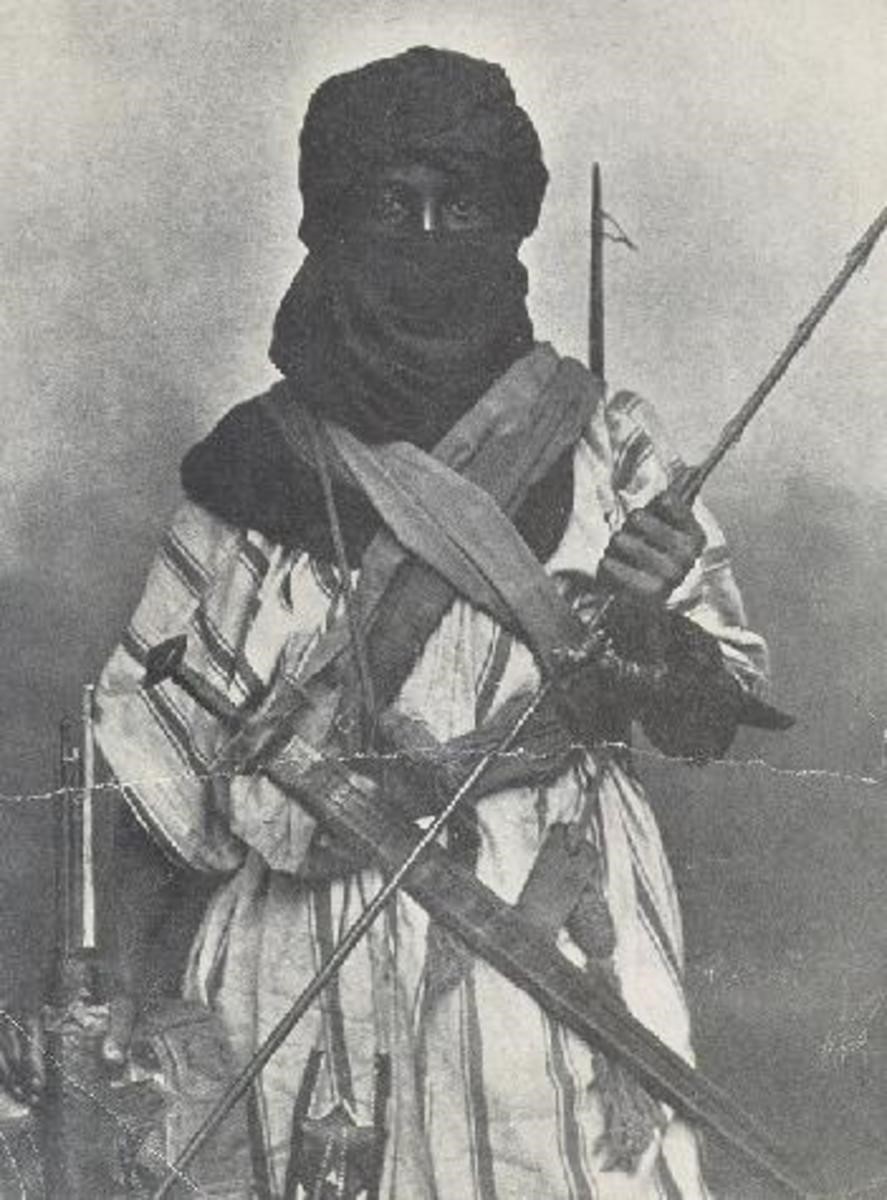
According to the Oxford English Dictionary, the Moors, as early as the Middle Ages and as late as the 17th century, were “commonly supposed to be black or very swarthy, and hence the word [Moor] is often used for Negro”. There is considerable difficulty, however, in determining the ethnicity of the early Moors through terminology alone.
Indeed, there are several terms that have been used to identify the Moors. Arabic texts, for example, rarely used the word Moor, and instead applied the term Berber (a word thought by some to be pejorative) to the early non-Arab peoples of Northwest Africa. And when not employing that term, they utilised the clan names of the Berbers themselves.
In addition, early Christian sources often applied the term Saracen indiscriminately to Muslim populations in general, including the Moors.
The term Moor
Although scholars generally agree that the word Moor is derived from Mauri, there are profound disagreements on what the word originally meant and how it was applied. Philip K. Hitti, author of the comprehensive History of the Arabs (published in 1970) contends that the term Moor has a geographic designation, meaning Western.
Hitti writes that: “The Romans called Western Africa Mauretania and its inhabitants Mauri (presumably of Phoenician origin, meaning ‘western’), whence [the] Spanish Moro, but the term was conventionally applied to all Moslems of Spain and north-western Africa.”
Glora M. Wysner, however, states in The Kabyle People (1945) that: “Mauretania is the ancient name of the northwestern angle of the African continent, and under the Roman empire also of a large territory eastward of that angle. The word Mauretania or Maurusia as it was called by the Greek writers, signifies the land of the Mauri which is still retained in the modern Morocco. Since 1904, the French have used the term to apply to the territory north of the lower Senegal under French protection.”
Similarly, using Greek and Roman sources, Frank M. Snowden, author of Before Colour Prejudice (1983), has pointed out that the Mauri (a northwest African people whose colour received a frequent notice) were described as nigri (black) and adusti (scorched).
The Roman dramatist, Platus (254-184 BC) maintained that the Latin word Maurus was a synonym for Niger.
In contrasting the Moors of the 6th century with another racial group in North Africa, Procopius (ca. 550), author of History of the Wars (1954) wrote that they were “not black-skinned like the Moors”. Isidore, a Catholic scholar and the Archbishop of Seville (585-636), wrote that the word Maurus meant black.
With the sudden eruption of the Arabs, during the middle of the 7th century, Mauri disappears for a time from the historical records. It re-emerges, however, in medieval literature. For example, in a Middle English romance called Kyng Alisaunder (ca. 1175), the conqueror Darius has among his troops a contingent of soldiers led by the Duke Mauryn. Regarding Mauryn, J. B. Friedman writes that: “It sounds rather like Moor in this context”.
As late as 1398, we find the following reference to the Moors: “Also the nacyn [nation] of Maurys [Moors] theyr blacke colour comyth of the inner partes (as narrated by The Compact Edition of the Oxford English Dictionary, vol.2, published in 1979).
There are also Irish records of a Viking raid on Spain and North Africa in 862 AD. During the raid a number of Blacks were captured and some carried to Dublin. In Ireland they were known as “blue men” (Irish, fir gorna; Old Norse, blamenn). The entry is under the title, “Three Fragments Copied from Ancient Sources”, and sheds further light on the ethnicity of the Moors.
The entry reads: “After that, the Scandinavians went through the country, and ravaged it; and they burned the whole land; and they brought a great host of [the Moors] in captivity with them to Ireland. These are the ‘blue men’ (fir gorna); because the Moors are the same as negroes; Mauretania is the same as negro-land.”
This is confirmed by Paul Edwards and James Walvin in their essay, Africans in Britain, 1500-1800, which was included in the publication, The African Diaspora: Interpretive Essays, edited by Martin Kilson and Robert Rotberg, and published by the Harvard University Press in 1976.
In that work, Edwards and Walvin state categorically that: “An Irish Gaelic saga of the 900s (copied in 1643) states that Danish-Irish raiders attacked Spain and Mauretania in the 800s. From the latter place they ‘carried off a great host of them as captives to Erin, and these are the blue men [of Erin], for Mauri is the same as black man, and Mauritania is the same as blackness … Long indeed were these blue men in Erin.’”
A vital source of information regarding medieval Spain is the Cantigas of Santa Maria. Sponsored and allegedly written by King Alfonso X (1254-1286), the Cantigas represent a survey of secular medieval attitudes and actions. At least 28 of the long poems deal primarily with Moors. One mentions Yusuf ibn Tachfin and the Almoravid conquests. This may indicate that the clearly distinct Blacks identified as Moors in most of the Cantigas are most intimately connected with the Almoravid invasions of Spain during the 11th century.
Medieval illuminators portrayed Blacks in the Cantigas in a variety of roles, from members of the aristocracy to the military. Included among the aristocratic images of Islamic Spain is a Black man receiving gifts from a caliph or emir. In another, two ‘Noble Moors” are shown playing chess while being attended by Black and White servants and musicians.
In the Almoravid army, Moors are shown as foot soldiers, bowmen, lancers on horseback, as well as high-ranking officers. They are also shown as menials, musicians, and Christian converts.

During the Middle Ages, because of his dark complexion and Islamic faith, the Moor became in Europe a symbol of guile, evil and hate. In medieval literature, demonic figures were commonly depicted with black faces. Among Satan’s titles in medieval folklore were: “Black Knight”, “Black Man”, “Black Ethiopian”, and “Big Negro”.
In the Cantiga 185 of King Alfonso the Wise of Spain, three Moors attacking the Castle of Chincoya are described as “black as Satan’. In Cantiga 329, an extremely black man who has stolen objects from a Christian church is identified as a Moor. In Poema de Fernan Gonzalez, devils and Moors are equally described as “carbonientos” – literally the “coal-faced ones”.
In The Image of the Black in Western Art: Smithsonian Institution Travelling Exhibition Service (1980), the Smithsonian Institution of Washington DC, states that: “Christian thought had come to equate sin and death with the colour black, and concluded that evil and the devil’s works were associated with blackness. To Christians, the Muslim invaders [of Europe] were infidels, and the black Moors in their ranks were fearsome symbols of living evil. Thus, in the art of the period illustrating tales of Christ and the saints, the executioners and torturers are often depicted as Blacks.”
The French historian, Jean Devisse, writes in his book, Image of the Black in Western Art (1979), under the chapter, “The Appeal to the Ethiopian”, that: “The Castilians were at first acutely aware of the power of the Black fighting men, and in time transferred the old feeling of hostility from Aethiops to the Black Moor.”
During the European Renaissance, explorers, writers, and scholars began to apply the term Moor to Blacks in general. A prominent example of this tendency can be found in the work of Richard Hakluyt, a 15th century traveller. He recorded that: “In old times, the people of Africa were called aethiops and nigritae, which we now call Moores, Moorens, or Negroes.”
In his book, The Principal Voyages, Traffiques and Discoveries of the English Nation (1905), Hakluyt acknowledged categorically that: “By the 16th century, the English and Scots were referring to the people of Africa as Moors.”
The Shakespearean scholar, Elmer E. Stoll, provides additional insight regarding the use of the word Moor as it relates to late Medieval and early Renaissance Europe. In his book, Othello, An Historical and Comparative Study (1915), Stoll acknowledged that: “A striking proof that the word Moor was, as among the Germans at this time, exactly equivalent to negro, is not only its use as applied to the curly-haired, thick-lipped Aaron in Titus Andronicus, but also the constant interchange of the two words as applied to the equally unmistakable negro Eleazar, in Lust’s Dominion.
In the Romance languages (Spanish, French and Italian) of Medieval Europe, Moor was translated as Moro, Moir, and Mor. Derivatives of the word Moor may be found even today in these same languages.
In Spanish, for example, the word for blackberry is mora – a noun which originally meant Moorish woman. Also in Spanish, the adjective for dark-complexioned, which now means brunette, is moreno.
We find a similar legacy in the French language. In French, moricaud means dark-skinned or blackamoor, while morillion means black grape. Again, as in the Spanish, the Italian word mora means negro or Moorish female. Also in Italian, mora means blackberry, while moraiola means black olive.
Generally, the term “more” and its equivalents were widely used in late-Medieval and early-Modern Europe. According to Simonet in his study of the language spoken by the Mozarabes (Christian Spaniards under Muslim-rule before 1492), mauro meant negro and corresponded to the Castillian usage in which moro was applied to horses whose colour was black.
The corresponding more (French), maurus (Hispanic Latin), and moro (Valencian) were derived from morus (negro) and ultimately from a Greek word meaning oscuro.
Similarly, the Mozarabic mauro (negro) was related to moro (Spanish and Italian), mouro (Potuguese and Gallego), mor (Provencal), mauro and more (French), meaning “moro; negro; hombre de colour”. These forms stemmed from the Latin maurus (also from Greek), “for the dark (oscuro) colour of the Mauritanos o’ Moros (peoples of Northwest Africa)”.
It is also useful to note that the medieval Dutch understood moor to mean a very dark colour, so that the colour of coal was compared with that of moor. Also it was said: “scijnt swaert ghelike den more” (“he is as black as a moor”).
The term Berber
“Strictly speaking”, writes Thomas F. Click in Islamic and Christian Spain in the Early Middle Ages (1979), “Moors were Mauri Berbers who lived in the Roman province of Mauritania; therefore, its use stresses, sometimes by design, the Berber contributions to al-Andalusian culture.”
In Arabic literature, the word moor was fairly non-existent, and the term Berber was applied to practically all the inhabitants of the Maghreb (Islamic North Africa west of Egypt).
The term Berber is thought to have derived from the Latin barbari, an appellation equivalent to the English “barbarian”, which the Romans called peoples who spoke neither Latin or Greek. The view that the ancient Berbers were a predominantly white-skinned, blue-eyed race of Hamites has been largely shaped by recent colonial attitudes towards Africa.
Another idea that seems to be gaining general acceptance is that the bulk of the population consisted of a mixture. Our view is that the Berbers emerged as the result of an intermixture between Caucasoid people (who had moved into the Maghreb by the second millennium BC) and the more ancient Africoid inhabitants of North Africa.
Among the Berbers, according to Roman documents, were the “black Gaetuli (Melanogaetuli) and black-skinned Asphodelodes”, as pointed out by Lloyd Thompson in Romans and Blacks (1989).
Other authorities point out that in the Maghreb, the term Berber is not racial dating from an earlier period, that it is simply the Latin word barbarus, or as was said in Roman Africa, barbar. Before the invasion of North Africa by the Arabs, Berber was designated as the indigenous population which remained resistant to the Latin civilisation.
The Tunisian-born scholar, Ibn Khaldun (1332-1406), says that when Ifricas invaded the Maghreb and saw the people and heard them speaking a language in which the varieties and dialects struck his attention, he gave way to his astonishment by crying: “What berbera is yours!” Thus, they were called Berbers. The word berbera signifying in Arabic, “a mixture of unintelligible cries”.
In fact, ancient historians and geographers mention the Berbers under various names: the Nasamones and Psylli in Cyrenaica and Tripolitania; the Garamanites leading a nomadic life in the Sahara, the Makyles and Maxices in the Tunisian Sahel, the Musulani and the Numidians in the eastern Maghreb, the Gaetuli on the borders of the desert and the high tablelands, and lastly the Mauri occupying the central and western Maghreb.
The Senegalese historian of note, Cheikh Anta Diop, offers another perspective on the Berbers in his widely acclaimed book, African Origin of Civilisation (1974). He writes: “The confusion over the term Berber must be pointed out … The root of this word, used during Antiquity, was probably of Negro rather than Indo-European origin. In reality, it is an onomatopoeic repetition of the root Ber. This kind of intensification of a root is general in African languages, especially in Egyptian.”
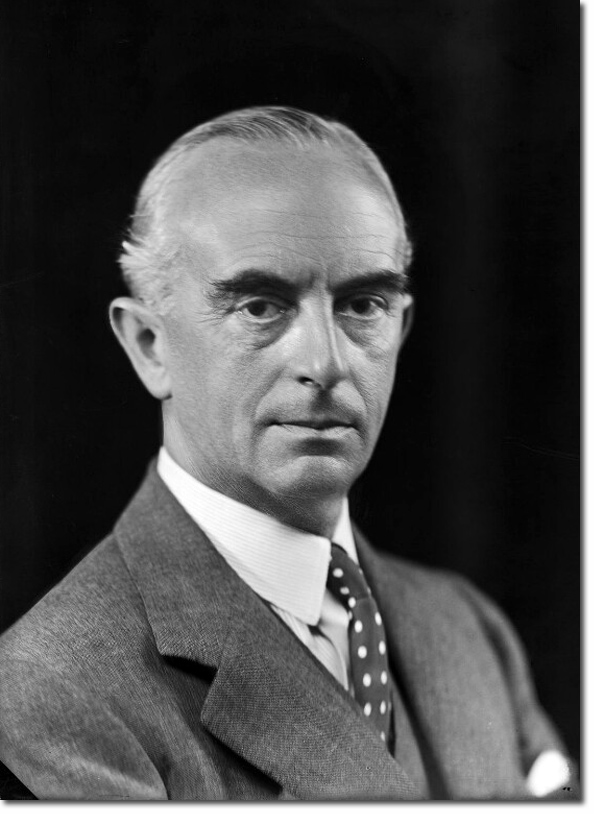
In addition, Harold A. MacMichael points out in his book, A History of the Arabs in the Sudan’ (1967) that Africoid Blacks – the Tibbu and Tuwarek – resembling the ancient Nigritians of the Sahara, are by origin Lamta Berbers. The Haratian, an ancient people whose descendants now occupy southern Morocco and Mauritania, have been called “black Berbers”.
In agreement, Uthman Amir ibn Bahr al-Jahiz (776-869), a brilliant Black Muslim writer, in a significant work entitled The Superiority of the Blacks Over the Whites, stated that “among the Blacks are counted the Sudanese, the Ethiopians, the Fezzan, the Berbers, the Copts, the Nubians, the Zaghawa, the Moors”.
Another Muslim scholar, while discussing the Berber women of the Sanhadja confederation, wrote that: “Their colour is black, though some pale ones can be found among them”, as quoted by Bernard Lewis in Race and Slavery in the Middle Ages (1990).
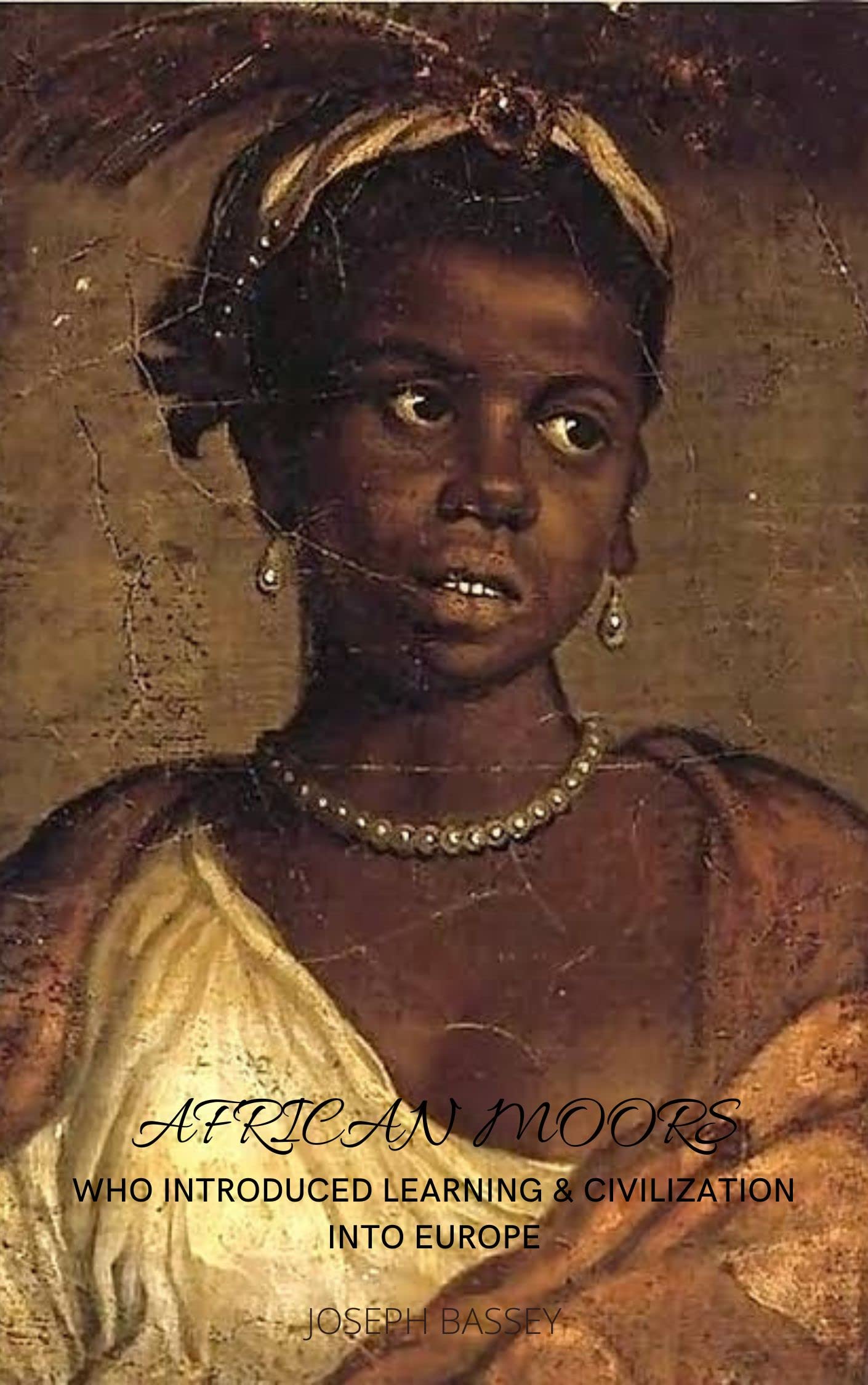
In the Romance of the Cid (by Rodrigo Diaz de Bivar) with its graphic references to the Almoravids, we are further informed of the ethnicity of at least some Berber women. This group of women consisted of 300 Almoravid Amazons led by a “black Moorish woman” named Nagaymath Turquia. “She appears in the Primera Cronica General of Alfonso X (El Sabio), king of Castile and Leon (1252-1284).”
The Primera was completed about 1289 under Alfonso’s successor Sancho IV. The events are associated with the Almoravid siege of Valencia after the death of the Cid. Nugaymath Turquia is the leader of a band of 300 Amazons. They are negresses, they have their heads shaven, leaving only a topknot, they are on a pilgrimage, and they are armed with Turkish bows.
According to the text: “King Bucar ordered that black Moorish woman to encamp nearest to the town with all her company … That Moorish woman was so shrewd a master archer with the Turkish bow that it was a wonder to behold, and for that reason (the History) says that the Moors called her in Arabic nugaymath turquia, which means ‘star of the archers of Turkey.’”
So, far from being primitive savages, the accumulated evidence points to industry, commerce, and technical proficiency amongst the ancient Berbers. Among the products introduced by them into Spain were olives, wheat, figs, ambergris, and saffron. Dyes and garments from North Africa were also highly prized. These North Africans engaged in the mining of silver and iron, and traded in gold and coral with the Sudan.
Moorish militarism
The discussion of Moorish militarism begins distinctly with the ancient martial conflicts between Rome and Carthage. Moorish soldiers are mentioned as early as the expedition to Sicily in 406 BC, in a revolt by a certain Hanno (c. 350 BC) and the Roman invasion of Africa in 256 BC.
In their bitter, prolonged and increasingly desperate struggle for national independence and control of the western Mediterranean, the Carthaginians utilised Moorish troops as integral elements in all of their battle campaigns. With the Numidians, the Moors fought on the side of the Carthaginians against the Romans.
The redoubtable Moorish warriors greatly aided the Carthaginians, and were particularly beneficial to Hannibal Barca – the illustrious African general. Indeed, Hannibal, “who had over 6,000 [Moors] at his disposal, suffered his only defeat when the Moors were no longer available, as narrated by B. H. Warmington in his book, Carthage (1969).
Nevertheless, with the destruction of Carthage in the Third Punic War (150-146 BC), Rome became the supreme power in North Africa. In spite of the Roman dominance, however, regional and national independence movements continued unceasingly.
One such rising, known as the Jugurthine War (112-105 BC), was initiated by the nationalist fervor of the North African patriot Jugurtha. Directing an unrelenting guerrilla war, Jugurtha became a formidable adversary to his enemies, inflicting embarrassing defeats upon the Roman legions.
“The wars of Jugurtha,” writes Graham Webster in The Roman Imperial Army of the First and Second Centuries (1969), “demonstrated the value of the nimble Moorish horsemen who Trajan later found so useful against the Dacians.”
Dacia was a Roman province north of the Danube, roughly present-day Romania. It was chiefly valuable for its gold and silver mines, which had probably been used since prehistoric times. The main cities of the province were Sarmizegethusa and Apulum.
During the Dacian Wars of eastern Europe (101-105), the Roman military relied heavily upon highly mobile units of Moorish cavalry. On a Roman column dedicated to the wars of Trajan in Dacia, there is a special relief devoted to a large body of galloping horsemen easily recognisable as Moors. They are depicted with tiered and plaited rows of curled hair, short tunics, saddleless with only a single bridle.
Another work dated to the same period is a terracotta human head found in the Dacian city of Suicidava. Described by archaeologists as the head of a “Negro or Moor”, it is in many respects similar to the horse cavalry depicted on the Roman column.

Black soldiers, specifically identified as Moors, were actively recruited by Rome and served tours of duty in Britain, France, Switzerland, Austria, Hungary, Poland, Romania, etc.
An original brass military diploma which dates from the middle of the second century AD, mentions Moorish soldiers in Moesia, which is modern Serbia. Another military diploma of 158 AD, speaks of Moorish soldiers from Africa in Dacia, or modern Romania, and also of auxiliary troops of the Dacian Moors.
A Roman document, Notitia Dignitatum, which dates from the beginning of the 5th century AD, mentions several Moorish battalions in the Balkans and the Moorish military colony of Ad Mauros which was located on the Inn River near Vienna. In what is modern Besarabia, there was a city called Maurocastrum.
According to the Notitia Dignitatum, 2,500 to 5,000 Illyrian Moorish soldiers, in five separate military units, had served in the Near East. From the document, we must deduce that at the beginning of the fifth century, at least 100,000 descendants of Moors lived in Illyricum, which was located in the present-day Balkans, as testified by F. H. Eterovich and C. Spalatin in The Roman Colonisation of Moors in the Balkans and in Other Regions of Europe (1970).
Regarding specific military men of Moorish extraction, there were several that served Rome honourably, or had ancestors that participated in Rome’s foreign wars. In 253, for example, “after his departure, the governor of Lower Moesia [modern Serbia], M. Aemilius Aemilianus, a Moor born in Mauretania, succeeded in defeating the Goths and was proclaimed emperor by his troops,” as told by M. Rostovtzeff in The Social and Economic History of the Roman Empire (1926).
In another case, Zenophilus, consul of Numidia, boasts that: “My grandfather is a soldier, he had served in the Commitatus, for our family is of Moorish origin.” To the Commitatus belonged the renowned Equites Mauri, a Black horse cavalry of North Africa.
A.H. M Jones tells in his book, The Later Roman Empire 284-602, volume 1 (1963) that: “Numidia was the name given in ancient times to a tract of country in the north of Africa extending along the Mediterranean from the confines of Mauretania to those of the Roman province of Africa. Numidia comes from the word nomad and was given by the Greeks.
“The limits of Numidia varied at different epochs of North African history. Finally, under the new organisation of the empire of Diocletian, Numidia became one of the seven provinces of Africa, being known as Numidia Cirtensis, closely corresponding in extent to the modern French province of Constantine,” Jones adds.
The Moors before the invasion of Spain
We should not lose sight of the fact that connections between North Africa and Spain were in existence centuries before the birth of Muhammad. It would not even be presumptuous to suggest that very early blood ties may have connected the regions. The fact that Blacks had lived in some of the same Iberian regions later occupied by Islamic Moors suggests this.
For example, the city of Osuna, in southern Spain, has yielded several archaeological works depicting Blacks with tightly curled hair which archaeologists have labelled “Negroid”.

As long ago as 170 AD, writes Will Durant in Caesar and Christ: A History of Roman Civilisation and of Christianity from their Beginnings to AD 325 (1944), “the Mauri or Moors invaded Spain from Africa”. Even earlier, according to Abdallah Laroui in The History of the Maghrib (1977), “the Berbers of that region [North Africa] made incursions into Baetica, Spain”.
But the use of the term “Berber” perhaps camouflages the issue here. Regarding the same event, W. T. Arnold in his book, Studies of Roman Imperialism (1906), speaks of “Moorish incursions in Baetica as early as the first century.” Interestingly enough, many of these Moors were Christians.
During the 6th century, the Byzantine historian Procopius and the Latin poet Corippus compiled precious documents regarding the Moors in post-Roman North Africa. During this period, the dominance of the Vandals, the Germanic tribes who had invaded North Africa in 429 and seized several provinces (including Mauretania), was challenged politically and militarily.
In providing a veritable war correspondent’s view, Procopius chronicled the ferocious assaults and ultimate victories of the Moorish rebels. This is recorded in in his volume, appropriately entitled The Wars: “When the Moors wrested Aurasium from the Vandals, not a single enemy had until now ever come there or so much as caused the barbarians to be afraid that they would come … And the Moors of that place also held the land west of Aurasium, a tract both extensive and fertile. And beyond these dwelt other nations of the Moors, who were ruled by Ortaias.”
This statement shows that the Moors were not only perceived by Procopius as numerically significant, but demonstrates that they occupied an extensive portion of northwest Africa.
During the same period, Byzantine arms began moving into Africa. With them came strong efforts to renew the grip of Roman dominance. The emperor, Justinian, sent in General Johannes Troglita to quell the challenge to Byzantine authority, but was forced to face a full-scale war. There was a great slaughter and taking of prisoners, as recounted by Corippus in the military epic, Iohannis.
Corippus recorded not only the slaying of several Moorish chieftains, he also mentioned a number of captives that were as “black as crows”. One Moorish ruler, Gamul (king of Mauretania), however, engineered the crushing of the Byzantine army in 571. Such events established the situation in North Africa prior to the Arab invasions late in the 7th century.
The Moorish conquest of Spain
Early in the 8th century, after a grim and extended resistance to the Arab invasions of North Africa, the Moors joined the triumphant surge of Islam. Following this, they crossed over to the Iberian Peninsula where their swift victories and remarkable feats soon became the substance of legends.
The man chosen to lead the probe into Iberia was Tarif, son of Zar’a ibn Abi Mudrik. Tarif was one of the young generation of Islamised Berbers imbued with the military thinking of Hassan ibn al-Nu’man and Musa ibn Nusayr – the two men who had just commanded the Arab conquest of northwest Africa.
In July 710, Tarif, with 400 foot soldiers – all Berbers – and 100 horses successfully carried out a reconnaissance mission in southern Iberia. Tarifa, a small port in southern Spain, is named after him.
It is clear, however, that the conquest of Spain was undertaken upon the initiative of Tarik ibn Ziyad ibn ‘Abd Allah ibn Walghu, a member of the Warfadjuma branch of the Nafza Berbers.
Musa ibn Nusayr had previously appointed Tarik governor of the far western Maghreb, which covered what is today the southern part of the kingdom of Morocco. Tarik was in command of an army of at least 10,000 men, mainly Sanhadja Berbers.
In 711, with a Berber expeditionary force and a small number of Arab translators and propagandists (some say 300), Tarik crossed the straits and disembarked near a rocky promontory which from that day since has borne his name: Djabal Tarik (Tarik’s mountain), or Gilbraltar.
In August 711, he won a decisive victory over the Visigoth army. It was during this conflict that Roderick (the last Visigoth king) was killed.
On the eve of the battle, Tarik is alleged to have roused his troops with the following words: “My brethren, the enemy is before you, the sea is behind; whither would ye fly? Follow your general: I am resolved either to lose my life or to trample on the prostrate king of the Romans.”
Tarik’s words are quoted by Edward Gibbon in his book, The Decline and Fall of the Roman Empire, Vol.3: 1185 AD -1453 AD. Gibbon explains that the Visigoths were a major division of the Goths – one of the chief groups of ancient Germans. Separated from the Ostrogoths (East Goths) around 376 AD, the Visigoths moved into Roman territory under pressure from the Huns.
Eventually, the Visigoths expanded north to the Loire, made Toulouse their capital, and seized the lands of the Vandals (another Germanic group) in Spain. They became Christians and gradually merged with the Spanish population.
So, wasting no time to relish his victory over the Visigoths, Tarik pushed on with his seemingly tireless Berber cavalry to Toledo and seized the Visigoth capital. Within a month’s time, Tarik had effectively terminated the Visigothic domination of the Iberian Peninsula.
Musa ibn Nusayr joined Tarik in Spain, and helped complete the conquest of Iberia with an army of 18,000 Arab and Berber troops. The two commanders met at Talavera. Here, Tarik and his Berbers were given the task of subduing the northwest of Spain. With vigour and speed, they set out about their mission, and within three months they had swept the entire territory north of the Ebro River, as far as the Pyrenees, and annexed the turbulent Basque country.
There they left a small detachment of men under Munusa, a Berber lieutenant who was later to play a decisive role in the Muslim campaigns in southern France.
In the aftermath of these brilliant struggles, Berbers by the thousands flooded into the Iberian Peninsula. So eager were they to come that some are said to have floated over on tree-trunks. Tarik himself, at the conclusion of his illustrious military career, retired to the distant East, we are informed, to spread the teachings of Islam.
While many modern historians refer to Tarik’s garrison as Berbers and Arabs, primary sources, such as Ibn Husayn (ca. 950), recorded that these troops were “Sudanese”, an Arabic word for Black people, as recounted by Abdulwahid Dhanun Taha in his book, The Muslim Conquest and Settlement of North Africa and Spain (1989).
Arab writers Ibn Hayyans and Ibn al-Athir (1160-1234), the authors of the Dhikr Bilad al-Andalus and the Akbar Majmu’a respectively, both refer to Tarik’s invading force. Hayyans specifically refers to a force of at least 700 Sudanese in Tarik’s garrison. This suggests that some modern writers have attempted to place an artificial wedge between these early Berbers and Blacks.
But there is really no need to speculate on the ethnicity of these early invaders of the conquest period. Primary Christian sources relating to the conquest, particularly the Primera Cronica General of Alfonso X, make the following observation on the Moors: “Their faces were as black as pitch, the handsomest amongst them was as black as a cooking pot.”
Arab bias
With the conquest and settlement of Spain, the Arabs developed patterns of racial bias towards the Berbers. This bias, sometimes blatant and other times subtler, manifested itself in various ways, including disproportionate tax assessments and poor land allotments.
For example, after founding the Almohad dynasty, the Berber ruler Abd al-Mu’min offered the Granadan post of “able secretary” to an Arab poet named Abu Ga’far. Scheduled to work with al-Mu’min’s son, Abu Said, the Arab poet hesitated “because the dark-skinned Berber seemed to him far below his own intellectual standards, as narrated by A. R. Nyki in Hispano-Arabic Poetry (1946).
This kind of attitude often led to hostile feelings, open rebellions, and shifting alliances between the Arab, Berber, and Christian factions of the Iberian Peninsula.
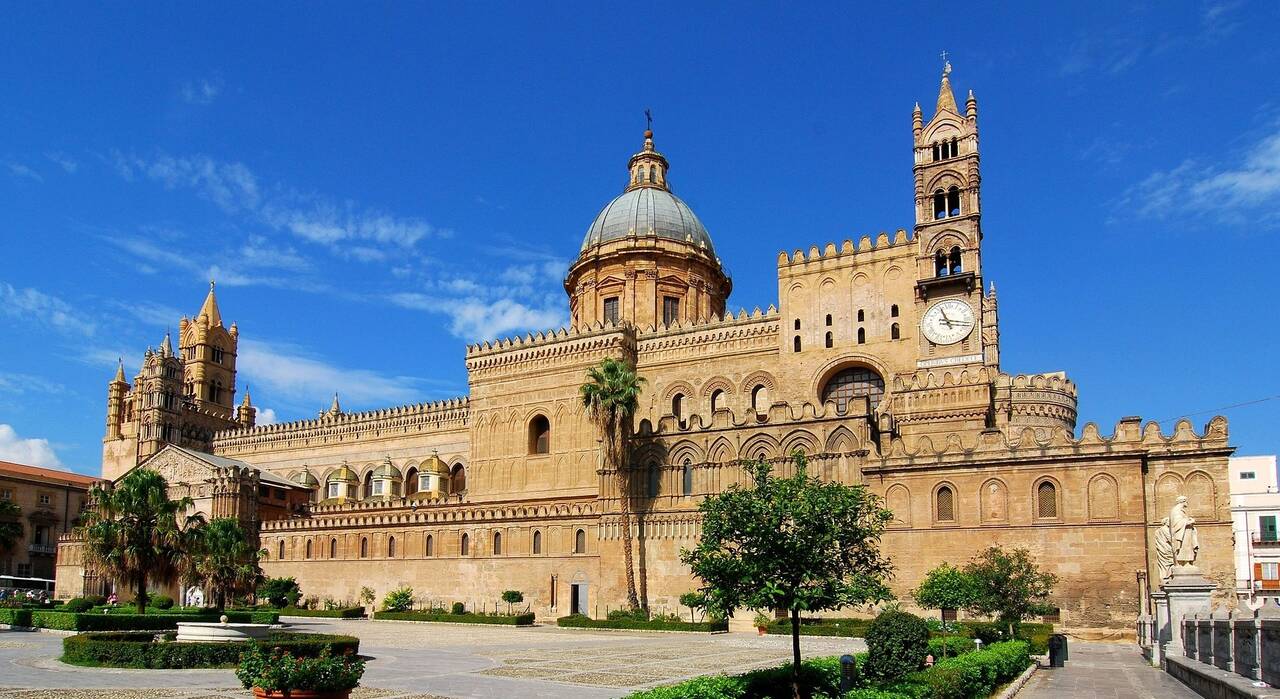
In the 9th century, in order to achieve commercial dominance in the region, Muslim powers in Tunisia launched an invasion of Sicily. The conquest was facilitated by “large and well-organised fleets” coming from the east coast of Spain and the western Maghreb, and manned chiefly by Berbers. It began in 827, and ended 10 years later with the storming of Palermo. The occupation of Palermo was followed by the occupation of Messina in 842 and Syracuse in 878.
In 937, Ibn Hawkal noted that Blacks were very common in Palermo. Regarding one of the city’s main entrances, Hawkal wrote that it was called the “Bab es Soudan”, or “Gate of the Blacks”, so named after its ebony-hued residents.
Pope Leo III referred to these Blacks variously as Moors, Agareni, and Saracens, as told by Ferdinand Gregorovious in his book, History of Rome, Vol.3: 800-1002 AD (1903). Islamic encroachment on the European mainland took place around 846 AD, when “Saracens” landed at the mouth of the Tiber River and besieged Rome.
Of this invasion, the German historian Hincmar (ca. 875) wrote that: “The Arabs and Moors assaulted Rome on the Tiber, and when they laid waste to the basilica of the blessed Peter, the prince of the apostles, and carried off all the ornaments and treasures, with the very altar which was situated above the tomb of the famous prince of apostles, they occupied strongly a fortified hill a hundred miles from the city,” as quoted by Norman Daniel in The Arabs and Medieval Europe (1979).
In the invasion of Rome, Pope John VII agreed to pay an annual tribute of 25,000 marks of silver to the Saracens to retreat. Frederick II (1197-1250), of the Hohenstaufen dynasty, developed especially close relationships with the remaining Blacks in Sicily, and retained a Moorish chamberlain who was constantly in his presence.
While admittedly breaking the Islamic powerbase, Frederick II also solicited the aid of the Moors from Palermo in his intense struggle with the papacy. After resettling conquered Muslims on the Italian mainland at Lucera, the monarch recruited an elite guard unit of 16,000 Black troops.
One of the independent sovereigns of Moorish descent with whom Frederick II came into contact was Morabit, a name whose attachment may be found with the Sanhadja Berber tribes known as Murabit. Growing conflicts and rebellion against the expansionist policies of Frederick II eventually led to the death of Morabit.
In 1239, however, another Black man, Johannes Maurus, attained a position of considerable authority at the Hohenstaufen royal court. “In South Italy and Sicily,” writes Paul Kaplan, “dark-skinned Moslems had already been visible for several centuries.”
The Moorish occupation of Spain
Among the most substantial Berber groups to occupy Spain were the Hawwara, Luwata, Nafza, Masmuda, Miknasa, Zanata, and Sanhadja. Before participating in the 8th century invasion of Spain, the Hawwara Berbers in Africa occupied the province of Tripolitania and the deserts of southern Tunisia.
After the invasion of Spain, the Hawwara Berbers settled in Cordoba, and established a fortified city near Jaen. A wealthy group of Hawwara also settled in Morida and Medellin. Abd-al-Rahman ibn Musa al-Hawwara was a judge in Ecija durig the reign of Abd-al-Rahman III (912-961).
The golden age of the Umayyad dynasty in Spain came during the 10th century. Under the reigns of Abd-al-Rahman III and Hakam II (961-976), the Umayyad dynasty established sovereignty over the most substantial portion of the Iberian Peninsula.
At the pinnacle of the Umayyad dynasty, the great city of Cordoba possessed 200,000 residences, 600 mosques, and 900 public baths that were patronised by all social classes. Among his many accomplishments, Hakam II added 27 schools for the free instruction of the poor.
It should be pointed out that, at least during this era of Islamic Spain, girls as well as boys went to school, and numerous Moorish women became prominent in the literary and artistic fields. Other Moorish women were involved in education, law, medicine, and library science.
Both Tarik ibn Ziyad and Abd-al-Rahman I – the founder of the Umayyad dynasty in Spain in 756, are said to have belonged to the Nafza Berbers. In fact, one of the most important keys to Abd-al-Rahman’s success as a monarch was his recruitment, directly from Africa, of a well-trained army of more than 40,000 Berbers.
Many of the Nafza settled in Spain. Rich and numerous, the Nafza Berbers of Osuna in Spain, became civic leaders, writers and theologians. The Nafza constituted a significant part of the population of Takurunna.
The Masmuda Berbers were described as Blacks by Abu Shama in his Kitab al-Ravdatyn, as quoted by Bernard Lewis in his book, Islam, Vol.2: Religion and Society (1974). They settled in several parts of Spain, including Mawrur, Cordoba, Valencia, Guadalajara, and Santaver.
The Masmuda Berbers also settled in southern Portugal. Neither did wealth and prestige escape the Masmuda, one of whom was the founder of the powerful Almohad dynasty, Abd-al Mumin.
Al-Kahina (ca. 690), the woman who led the most determined resistance to the early Arab invasion of North Africa, was a Zanata Berber. With the invasion of Spain, many Zanatas settled near Seville, in Sidonia, Alicante, Murcia, Guadalajara, and in the region of Saragossa.
The Marinids, who in 1275 invaded Spain from Morocco and defeated Christian Castile, were Zanata Berbers. Zanata is written several ways in various texts, including Zenata, Znaga and Zenaga.
The Zanata used a Libyco-Berber script and spoke Zenega, a Kushito-Hamitic language. This seems to be the basis for the name Senegal. The Zanata are also credited with having introduced the camel into the Maghreb.
The Sanhadja Berbers, known as the Mulaththamun (people of the veil), were responsible for the second significant Moorish invasion of Spain. In 1095, the Sanhadja Berbers initiated the Almoravid dynasty, also known as the “Empire of the Two Shores”. It lasted for 100 years and stretched from the Senegal River in West Africa to the Ebro River in northern Spain.
According to al-Bakri (he died in 1078), there were among the Sanhadja Berbers Blacks “professing Judaism”, as quoted by H. T. Norris in his book, Saharan Myth and Saga (1972). These Blacks are referred to as the Bafour. They practised Judaism before they were overcome and absorbed by the Almoravids. The Bafour and Sanhadja are both linked through their association with the early rulers of the Ghana Empire.
A prototype of the warrior-king, both as priest and potentate, the Almoravid emperor, Yusuf ibn Tashfin led veiled fighting men into al-Andalus beginning in 1086, at the request of the hard-pressed Muslim residents of Spain. Yusuf, a Sanhadja Berber from the Sudan, had his physical features described by the Arab chronicler al-Fasi as brown-skinned, small-framed, and hook-nosed, with heavy eyebrows and woolly hair.
Among Yusuf’s troops was a personal retinue of 4,000 Blacks carrying Lamti shields (covered in hippopotamus skin), peculiar bows, Yazani spears, Zabian javelins, and moving to the constant sound of drumming. “The bizarre aspect of the African army,” writes Norris, “was a valuable psychological weapon.”
The expulsion from Spain
In Iberia, Christian pressures on the Moors grew irresistible. Finally, in 1492, Granada, the last important Muslim stronghold in al-Andalus, was taken by the soldiers of King Ferdinand and Queen Isabella, and the Moors were expelled from Spain.

In 1496, King Manuel of Portugal announced a royal decree banishing the Moors from that portion of the peninsula. The Spanish king, Philip III, expelled the remaining Moors by a special decree issued in 1609. Fully 3.5 million Moors, or Moriscos, as their descendants were called, left Spain between 1492 and 1610.
Over a million Moors settled in France. Others moved into the Netherlands, where a very curious story is that of Zwarte Piet (Black Peter). By some accounts, Zwarte Piet, the companion of Sinteerklass (Santa Claus), was a Moorish orphan boy whom Sinterklaas adopted and trained as his assistant, as told by Allison Blakely in Santa’s Black Aide: A Glimpse at Race Relations in Holland (1980).
By 1507, there were numerous Moors at the court of King James IV of Scotland. One of them was called “Helenor” in the Court Accounts, possibly Ellen More, who reached Edinburgh by way of the port of Leith and acted a principal role in “the tournament of the black knight and the black lady” in which the king of Scotland played the part of the black knight, as narrated by Paul Edwards and James Walvin in Africans in Britain 1500-1800.
There were at least two other Black women of the royal court who held positions of some status, and they are stated as having had maidservants dress them in expensive gowns. There is also a reference, in 1569, to the payment of clothes for Nageir the Moor.
In 1596, Queen Elizabeth I of Britain, highly distressed at the growing Moorish presence in England, wrote to the lord mayors of the major cities that “there are of late divers blakamores brought into this realm, of which kinde of people there are already too manie, considering howe God hath blessed this land with great increase of people of our nation as anie countrie in the world.”
The Queen’s instructions were that “this kind of people” should be sent forth from the land. She repeated this later in the year, saying that “these kind of people may be well spared in this realme, being so populous.”
Leave a Reply