
… The world should not allow them
This month, The Third Eye has provided more than ample space, on the preceding pages, to let Russia and America to tell their own versions of why there is a war in Ukraine. As citizens of the world in which the Russians and Americans also inhabit, who will also be affected by an escalation of the war into a global confrontation, we deserve the right to tell the guilty party to pack its bags and go home and sit down.
From the two versions published on the preceding pages, we can tell, without any doubt, that the Americans and their NATO and EU allies are the guilty party.
For the sake of world peace and security, America, NATO and the EU should respect the world and the collective security of us all, and stop what they are doing in Ukraine, and let peace reign between Russia and its erstwhile ally, Ukraine.
It is astonishing, in fact more than astonishing, that politicians and statesmen (if they are) of the calibre we see in America and Europe can be so crass to embark on this Ukrainian misadventure and expect Russia not to react the way it has reacted by attacking Ukraine first as a pre-emptive strike to prevent an attack on it by what the Russian President Vladimir Putin calls “the collective West”.
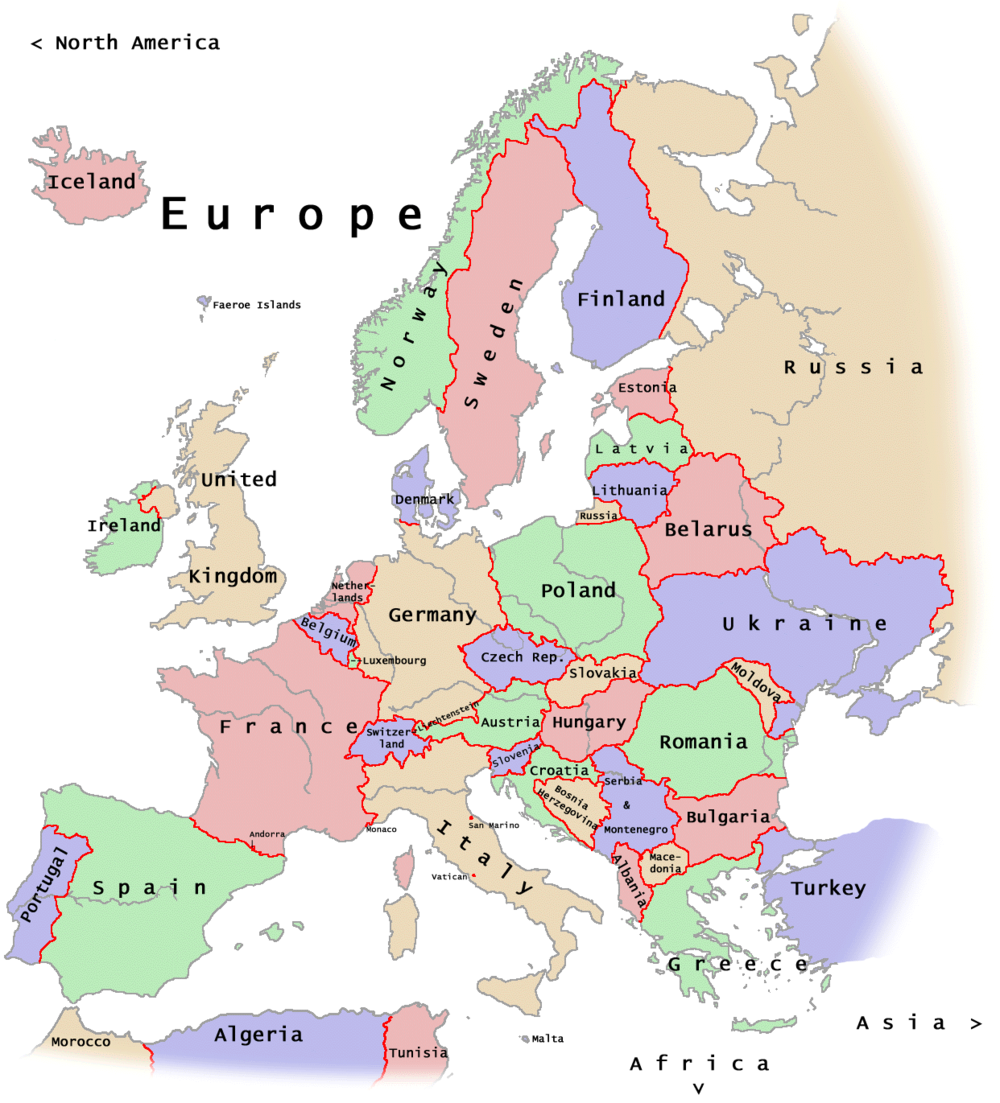
It beggars belief that “the collective West” pretends not know that by extending their reach or sphere of influence to Ukraine, after doing so all the way from Russia’s northern border with Finland, Estonia and Latvia, and now Ukraine, the Russians will just thank them and roll over.
Estonia, a former Russian ally, became an EU member state in 2004. At the same time, Latvia, Poland, Hungary, Lithuania, Czech Republic, Slovenia, and Slovakia, – all former Russian allies – joined the EU.
Western politicians are well aware that by extending its reaches to the Russian border, the EU was doing something dangerous to provoke Russian reaction. The miracle is how the Russians have taken all these provocations since the fall of the Berlin Wall in 1989 in their stride, and have not reached for their AK47s until now.
For “the collective West” to continue these provocations and think that Ukraine can become a NATO member, and thereby give NATO the right to put its missiles in Ukraine, right bang on the Russian border, which gives NATO a few minutes missile strike of Russia, and expect the Russians not to do anything in response, is utter madness. Madness of the first order!
That the American president, Joseph Biden, and his European counterparts can try to sell the Russian reaction to the world as Putin’s “greed for land”, is a huge insult to the world. Why is “the collective West” deliberately jeopardising world peace and security in this school-boyish manner?
Would America and Europe be pleased if the Russians were to put their missiles in Cuba? Or in the Czech Republic, if that country decides to become a Russian satellite state again?
The answer is obvious – a Big NO. And if America and Europe would not allow the Russians to put their missiles in Cuba and Czech Republic, how in devil’s hell do they think the Russians would allow them to put their missiles in Ukraine without a fight, a fight that could grow into a nuclear confrontation that will affect the whole world? That is crass statesmanship (if it is statesmanship).
If America and Europe have forgotten America’s own history, let us remind them of what they nearly did in October 1962, when the Soviet Union (which was essentially Russia cobbling together its satellite states) tried to put its missiles in Cuba.
The Cuban Missile Crisis
The American Department of State (known to the rest of the world as “The State Department”) has an official website which it calls the “Office of the Historian”. It has a piece which it calls “The Cuban Missile Crisis, October 1962”. In that piece, the State Department says matter-of-factly: “The Cuban Missile Crisis of October 1962 was a direct and dangerous confrontation between the United States and the Soviet Union during the Cold War and was the moment when the two superpowers came closest to nuclear conflict.”
So, America knows its own history, because the Office of the Historian goes on to admit that: “After the failed US attempt to overthrow the Castro regime in Cuba with the Bay of Pigs invasion [17 April-20 April 1961], and while the Kennedy administration planned Operation Mongoose, in July 1962 Soviet premier Nikita Khrushchev reached a secret agreement with Cuban premier Fidel Castro to place Soviet nuclear missiles in Cuba to deter any future invasion attempt.
“Construction of several missile sites began in the late summer, but US intelligence discovered evidence of a general Soviet arms build-up on Cuba, including Soviet IL–28 bombers, during routine surveillance flights, and on 4 September 1962, President Kennedy issued a public warning against the introduction of offensive weapons into Cuba.
“Despite the warning, on 14 October a US U–2 aircraft took several pictures clearly showing sites for medium-range and intermediate-range ballistic nuclear missiles under construction in Cuba. These images were processed and presented to the White House the next day, thus precipitating the onset of the Cuban Missile Crisis.”
The Office of the Historian tells how the then president, John F.K. Kennedy, summoned his closest advisers to consider options and direct a course of action that would resolve the crisis. “Some advisers – including all the Joint Chiefs of Staff – argued for an air strike to destroy the missiles, followed by a US invasion of Cuba; others favoured stern warnings to Cuba and the Soviet Union.”
But President Kennedy decided upon a middle course. “On 22 October, he ordered a naval ‘quarantine’ of Cuba,” the Office of the Historian recalls. “The use of ‘quarantine’ legally distinguished this action from a blockade, which assumed a state of war existed; the use of ‘quarantine’ instead of ‘blockade’ also enabled the United States to receive the support of the Organisation of American States (OAS).
“That same day, Kennedy sent a letter to Khrushchev declaring that the United States would not permit offensive weapons to be delivered to Cuba, and demanded that the Soviets dismantle the missile bases already under construction or completed, and return all offensive weapons to the USSR.
“The President also went on national television that evening to inform the public of the developments in Cuba, his decision to initiate and enforce a ‘quarantine’, and the potential global consequences if the crisis continued to escalate.”
The Office of the Historian says “the tone of the President’s remarks was stern, and the message unmistakable and evocative of the Monroe Doctrine: ‘It shall be the policy of this nation to regard any nuclear missile launched from Cuba against any nation in the Western Hemisphere as an attack by the Soviet Union on the United States, requiring a full retaliatory response upon the Soviet Union.’”
As America put the naval quarantine in place and accelerated its plans for a military strike on Cuba, President Khrushchev of USSR responded on 24 October 1962, that the US “blockade” was an “act of aggression” and that Soviet ships bound for Cuba would be ordered to proceed.
This heightened tensions, and with no apparent end to the crisis in sight, US forces were placed on a higher alert, meaning war involving the Strategic Air Command was imminent.
But war was only averted when Khrushchev sent Kennedy “a long, emotional message” in the evening of 26 October, saying in part: “If there is no intention to doom the world to the catastrophe of thermonuclear war, then let us not only relax the forces pulling on the ends of the rope, let us take measures to untie that knot. We are ready for this.”
An unsanitised version
Wikipedia has an unsanitised rendition of the crisis. It describes it as a “35-day (16 October-20 November 1962) confrontation between the United States and the Soviet Union, which escalated into an international crisis when American deployments of missiles in Italy and Turkey were matched by Soviet deployments of similar ballistic missiles in Cuba”.
It says “despite the short time frame, the Cuban Missile Crisis remains a defining moment in national security and nuclear war preparation. The confrontation is often considered the closest the Cold War came to escalating into a full-scale nuclear war.”
So the “crisis” again, like the events leading to the current Russia-Ukraine war, was started by the Americans, by deploying their missiles in Italy and Turkey to threaten the Soviet Union (or Russia), as they want to do again in Ukraine via NATO and EU membership.
For The Third Eye not to be accused of bias, we will let Wikipedia to tell the story in its own words.
“In 1961,” it says, “the US government put Jupiter nuclear missiles in Italy and Turkey, and attempted to invade Cuba. Starting in November of that year, the US government engaged in a campaign of terrorism and sabotage in Cuba, referred to as the ‘Cuban Project’, which continued throughout the first half of the 1960s.
“The Soviet administration was concerned about a Cuban drift towards China, with which the Soviets had an increasingly fractious relationship. In response to these factors, Soviet First Secretary, Nikita Khrushchev, agreed with the Cuban prime minister, Fidel Castro, to place nuclear missiles on the island of Cuba to deter a future invasion.
“An agreement was reached during a secret meeting between Khrushchev and Castro in July 1962, and construction of a number of missile launch facilities started later that summer.
“Meanwhile, campaigning for the 1962 United States elections was underway, and the White House denied charges for months that it was ignoring dangerous Soviet missiles 90 miles (140 km) from Florida. The missile preparations were confirmed when a US Air Force U-2 spy plane produced clear photographic evidence of medium-range R-12 ballistic missile facilities.
“When this was reported to President John F. Kennedy, he then convened a meeting of the nine members of the National Security Council and five other key advisers, in a group that became known as the Executive Committee of the National Security Council (EXCOMM).
“During this meeting, President Kennedy was originally advised to carry out an air strike on Cuban soil in order to compromise Soviet missile supplies, followed by an invasion of the Cuban mainland.
“After careful consideration, President Kennedy chose a less aggressive course of action, in order to avoid a declaration of war. After consultation with EXCOMM, Kennedy ordered a naval ‘quarantine’ on 22 October to prevent further missiles from reaching Cuba. By using the term ‘quarantine’, rather than ‘blockade’ (an act of war by legal definition), the United States was able to avoid the implications of a state of war.
“The US announced it would not permit offensive weapons to be delivered to Cuba and demanded that the weapons already in Cuba be dismantled and returned to the Soviet Union.”
Wikipedia reports that during the tensed faceoff, Khrushchev sent Kennedy a message, saying, in part: “You are disturbed over Cuba. You say that this disturbs you because it is ninety-nine miles by sea from the coast of the United States of America. But … you have placed destructive missile weapons, which you call offensive, in Italy and Turkey, literally next to us…
“I therefore make this proposal: We are willing to remove from Cuba the means which you regard as offensive… Your representatives will make a declaration to the effect that the United States … will remove its analogous means from Turkey … and after that, persons entrusted by the United Nations Security Council could inspect on the spot the fulfillment of the pledges made.”
Wikipedia recalls that “after several days of tense negotiations, an agreement was reached between Kennedy and Khrushchev: publicly, the Soviets would dismantle their offensive weapons in Cuba and return them to the Soviet Union, subject to United Nations verification, in exchange for a US public declaration and agreement to not invade Cuba again.
“Secretly, the United States agreed with the Soviets that it would dismantle all of the Jupiter MRBMs which had been deployed to Turkey against the Soviet Union. There has been debate on whether or not Italy was included in the agreement as well. While the Soviets dismantled their missiles, some Soviet bombers remained in Cuba, and the United States kept the naval quarantine in place until 20 November 1962.
“The negotiations between the United States and the Soviet Union pointed out the necessity of a quick, clear, and direct communication line between the two superpowers. As a result, the Moscow–Washington hotline was established. A series of agreements later reduced US–Soviet tensions for several years, until both parties eventually resumed expanding their nuclear arsenals.”
The history
Wikipedia goes back in time to trace the roots of the missile crisis to the end of World War II and the start of the Cold War. “The United States government,” it reports, “sought to promote private enterprise as an instrument for advancing US strategic interests in the developing world. It had grown concerned about the expansion of communism.
“Starting in 1959, under the Eisenhower administration, the US government had the Central Intelligence Agency (CIA) recruit operatives in Cuba to carry out terrorism and sabotage, kill civilians, and cause economic damage.
“The John F. Kennedy administration was publicly embarrassed by the failed ‘Bay of Pigs Invasion’ in April 1961. It had been launched at the initiative of Richard M. Bissell Jr. and approved by Kennedy, and used CIA-trained forces of Cuban exiles.
“The ‘Bay of Pigs Invasion’ was a failed military landing operation on the southwestern coast of Cuba in 1961 by Cuban exiles, covertly financed and directed by the United States. It was aimed at overthrowing Castro’s government. The operation took place at the height of the Cold War, and its failure influenced relations between Cuba, the United States, and the Soviet Union.”
Wikipedia tells how “in December 1958, dictator Fulgencio Batista was deposed by Castro’s 26th of July Movement during the Cuban Revolution. Castro nationalised American businesses – including banks, oil refineries, and sugar and coffee plantations – then severed Cuba’s formerly close relations with the United States and reached out to its Cold War rival, the Soviet Union.
“The CIA began planning the overthrow of Castro, which US President Dwight D. Eisenhower approved in March 1960. Cuban exiles who had moved to the US following Castro’s takeover had formed the counter-revolutionary military unit, Brigade 2506, which was the armed wing of the Democratic Revolutionary Front (DRF). The CIA funded the brigade, which also included some US military personnel, and trained the unit in Guatemala.
“Over 1,500 troops, divided into five infantry battalions and one paratrooper battalion, assembled and launched from Guatemala and Nicaragua by boat on 17 April 1961. Two days earlier, eight CIA-supplied B-26 bombers had attacked Cuban airfields and then returned to the US.
“On the night of 17 April, the main invasion force landed on the beach at Playa Girón in the Bay of Pigs, where it overwhelmed a local revolutionary militia. Initially, José Ramón Fernández led the Cuban Army counter-offensive; later, Castro took personal control.
“As the invasion force lost the strategic initiative, President Kennedy decided to withhold further air support after the international community became aware of the operation.”
American defeat
Wikipedia recalls that the plan, devised during Eisenhower’s presidency, had required involvement of both air and naval forces. “Without further air support, the invasion was being conducted with fewer forces than the CIA had deemed necessary.
“The invading force was defeated within three days by the Cuban Revolutionary Armed Forces and surrendered on 20 April. Most of the surrendered troops were publicly interrogated and put into Cuban prisons.
“The invasion was a US foreign policy failure. The Cuban government’s victory solidified Castro’s role as a national hero and widened the political division between the two formerly allied countries. It also pushed Cuba closer to the Soviet Union, setting the stage for the Cuban Missile Crisis in 1962.”
Wikipedia tells how because of the US harassment, Castro had asked for more Soviet SA-2 anti-aircraft missiles in late 1961. “The request was not acted upon by the Soviet leadership. In the interval, Castro began criticising the Soviets for the lack of ‘revolutionary boldness’, and began talking to China about agreements for economic assistance.
“In March 1962, Castro ordered the ousting of Anibal Escalante and his pro-Moscow comrades from Cuba’s Integrated Revolutionary Organisation. This affair alarmed the Soviet leadership as well as fears of a possible US invasion.
“In this crisis of international relations, the Soviet Union sent more SA-2 anti-aircraft missiles in April as well as a regiment of regular Soviet troops to Cuba.
“Timothy Naftali [the Canadian-American historian] has contended that Escalante’s dismissal was a motivating factor behind the Soviet decision to place nuclear missiles in Cuba in 1962. According to Naftali, Soviet foreign policy planners were concerned Castro’s break with Escalante foreshadowed a Cuban drift toward China and sought to solidify the Soviet-Cuban relationship through the missile-basing programme.”
The situation was not helped either by the American leadership. Wikipedia reports that after the Bay of Pigs invasion failed, former President Eisenhower told Kennedy that “the failure of the Bay of Pigs will embolden the Soviets to do something that they would otherwise not do”.
“The half-hearted invasion left the Soviet leader, Khrushchev, and his advisers with the impression that Kennedy was indecisive and, as one Soviet adviser wrote, ‘too young, intellectual, not prepared well for decision making in crisis situations… too intelligent and too weak.’”
However, following the failed invasion, says Wikipedia, “the US massively escalated its sponsorship of terrorism against Cuba. In late 1961, using the military and the CIA, the US government engaged in an extensive campaign of state-sponsored terrorism against civilian and military targets in Cuba.
“The terrorist attacks killed significant numbers of civilians. The US armed, trained, funded and directed the terrorists, most of whom were Cuban expatriates. Terrorist attacks were planned at the direction and with the participation of US government employees and launched from US territory.
“In January 1962, US Air Force General Edward Lansdale described the plans to overthrow the Cuban government in a top-secret report, addressed to Kennedy and officials involved with Operation Mongoose.
“CIA agents or ‘pathfinders’ from the Special Activities Division were to be infiltrated into Cuba to carry out sabotage and organisation, including radio broadcasts.
“In February 1962, the US launched an [economic] embargo against Cuba, and Lansdale presented a 26-page, top-secret timetable for implementation of the overthrow of the Cuban government, mandating guerrilla operations to begin in August and September. ‘Open revolt and overthrow of the communist regime’ was hoped by the planners to occur in the first two weeks of October 1962.”
Wikipedia acknowledges that: “The terrorism campaign and the threat of invasion were crucial factors in the Cuban government’s decision to accept the placement of Soviet nuclear missiles on Cuban territory. The US government was aware at the time, as reported to the president in a National Intelligence Estimate, that the invasion threat was a key reason for Cuban acceptance of the missiles.”
US interventions in Cuba
All in all, American interventions in Cuba have a bad history. Wikipedia tells how “since the middle of the 18th century, Cuba had been part of the Spanish colonial empire. But in the late 19th century, Cuban nationalist revolutionaries rebelled against Spanish dominance, resulting in three liberation wars: the Ten Years’ War (1868–1878), the Little War (1879–1880) and the Cuban War of Independence (1895–1898).
“In 1898, the United States government proclaimed war on the Spanish Empire, resulting in the Spanish–American War. The US subsequently invaded Cuba and forced the Spanish army out.
“Of note, a special operations attempt to land a group of at least 375 Cuban soldiers on the island succeeded in the Battle of Tayacoba. On 20 May 1902, a new independent government proclaimed the foundation of the Republic of Cuba, with US Military Governor Leonard Wood handing over control to President Tomás Estrada Palma, a Cuban-born US citizen.
“Subsequently, large numbers of US settlers and businessmen arrived in Cuba, and by 1905, 60% of rural properties were owned by non-Cuban-born North American citizens.
“Between 1906 and 1909, 5,000 US Marines were stationed across the island, and returned in 1912, 1917 and 1921 to intervene in internal affairs, sometimes at the behest of the Cuban government.
“Until Castro, the US was so overwhelmingly influential in Cuba that the American ambassador was the second most important man, sometimes even more important than the Cuban president, according to Earl E. T. Smith, the former American ambassador to Cuba, during his 1960 testimony to the US Senate.”
Continuing, Wikipedia recalls that: “In March 1952, a Cuban general and politician, Fulgencio Batista, seized power on the island, proclaimed himself president, and deposed the discredited president Carlos Prío Socarrás of the Partido Auténtico.
“Batista cancelled the planned presidential elections and described his new system as ‘disciplined democracy’. Although Batista gained some popular support, many Cubans saw it as the establishment of a one-man dictatorship.
“Many opponents of the Batista regime took to armed rebellion in an attempt to oust the government, sparking the Cuban Revolution. The best known of these anti-Batista groups was the ‘26th of July Movement’ (MR-26-7), founded by Fidel Castro.
“With Castro as the MR-26-7’s head, the organisation was based upon a clandestine cell system, with each cell containing 10 members, none of whom knew the whereabouts or activities of the other cells.
“Between December 1956 and 1959, Castro led a guerrilla army against the forces of Batista from his base camp in the Sierra Maestra mountains. Batista’s repression of revolutionaries had earned him widespread unpopularity, and by 1958 his armies were in retreat. On 31 December 1958, Batista resigned and fled into exile, taking with him an amassed fortune of more than US$300m.
“The presidency fell to Castro’s chosen candidate, the lawyer Manuel Urrutia Lleó, while members of the MR-26-7 took control of most positions in the cabinet.
“On 16 February 1959, Castro took on the role of prime minister. Dismissing the need for elections, Castro said the revolution had created direct democracy, in which the people and the government had a close bond.
“In contrast, critics condemned the new regime as un-democratic. The US Secretary of State Christian Herter announced that Cuba was adopting the Soviet model of communist rule, with a one-party state, government control of trade unions, suppression of civil liberties and the absence of freedom of speech and press.”
Naturally, after Castro nationalised American businesses and assets in Cuba, the once friendly relations between the two countries worsened. Sabotage of his government became the new word in Washington, and no punches were pulled, which within three years led to the Cuban Missile Crisis and the near nuclear confrontation between America and the Soviet Union.
Conclusion
In effect, one can safely say that President Biden and his NATO and EU partners are fully aware that if Russia attempts to put its missiles in Cuba, 99 miles from Florida, America and NATO will not permit it. So why do they think (we would like to repeat) that Russia will allow them to put their missiles in Ukraine merely by coopting Ukraine into NATO and EU membership?
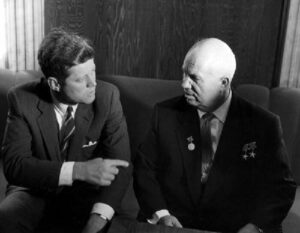
It is clear that Cuba is to America what Ukraine is to Russia. As Christian nations, or so they like to be known, America and the NATO countries know the “golden rule” of the Bible: “In everything, do to others what you would want them do to you, for this sums up the Law and the Prophets.” (Matthew 7:12).
As America, NATO and the EU countries don’t see how wrong they are on the Ukraine issue, Africa and the rest of the world should not keep silent any more. They should raise their voices at the United Nations and other fora in condemnation of the collective West’s crass statesmanship in Ukraine. They should tell them to leave Russia and Ukraine alone to sort out their differences amicably to prevent an escalation of the current war into a global nuclear conflagration between Russia and America, which will sulk in the entire world.
The peace and security of us all in the world is at stake. All the world should therefore rise up as one and tell the guilty “collective West” to withdraw from Ukraine.
Leave a Reply